I haven’t been to India even though I have wealthy friends there!!! So visiting a country like India in a Mercedes isn’t my thing. Too bad, but traveling alone, it’s just not safe enough for me—I always travel solo.
Between 1990 and 2020, during MY TRAVELS IN September, I never experienced temperatures above 30°C. Today, everything’s changed!!!!!
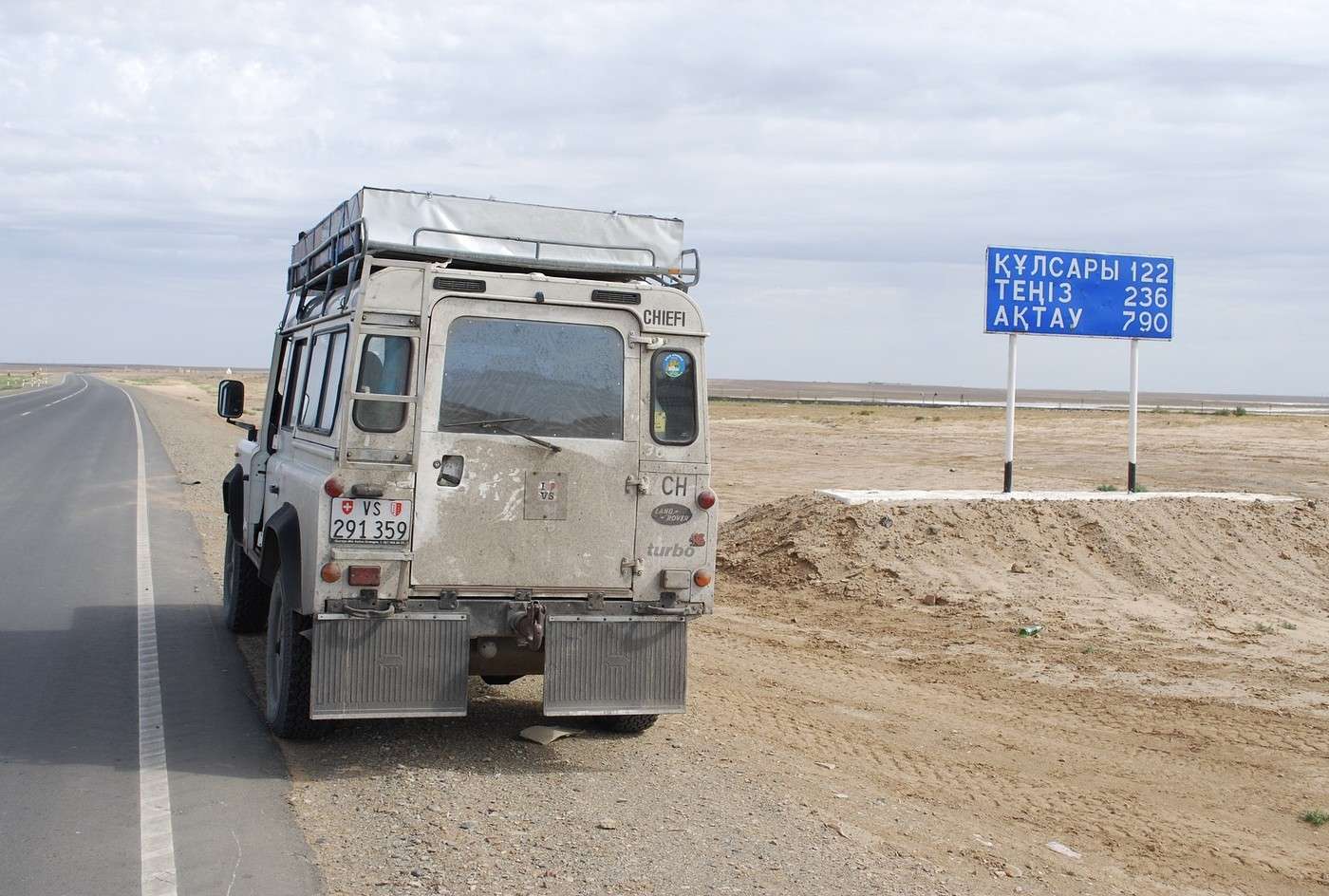
I’ve visited at least thirty countries alone with my Defender and five more renting a 4x4. No issues except for a minor one in France and another in Italy!!!!!
All of Asia is safer than Europe WHEN TRAVELING ALONE.
"En route, le mieux c'est de se perdre. Lorsqu'on s'égare, les projets font place aux surprises et c'est alors, mais alors seulement, que le voyage commence." (Nicolas Bouvier)
In India, you often need to have strong nerves and be used to traveling... (scams, harassment are commonplace!)
I can confirm that...🙁
Just in transit at Delhi airport recently! Your nerves can really be put to the test...
I won’t be going back for any other reason, but largely because of the growth in tourism for Chinese visitors—I imagine too many crowds, queues, and above all being "forced" to go to the "must-see" spots and not being able to go where I really want.
Yes, that’s a bit of a concern for me too. Just look up the on-site programs to see what I mean. Everything is meticulously organized and timed.
The ideal would be to rent and drive a vehicle to go wherever we please, but apparently, that’s very difficult.
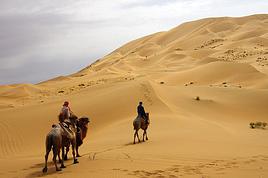
In Zhangye in Gansu, for example, you can’t stray from the tourist route to hike in the "Rainbow Mountains." In the dunes at Dunhuang, there are even traffic signs for camels!
Still, I think there must be places where you can walk or move around freely, like in Sichuan and Yunnan, which are more frequented by foreign tourists.
Anyway, we’ll see—we’re going back this autumn. Despite a few concerns, the strong desire to revisit this fascinating country (at least for me) wins out.
In Zhangye, Gansu, for example, you can’t just wander off the tourist trail to hike in the "Rainbow Mountains." In the dunes at Dunhuang, there are even traffic signs for camels!
That’s exactly the kind of issue I want to avoid. On VF, most trips stick to a set itinerary. But traveling like that, I feel like I’d end up at Disneyland! (I’m probably exaggerating a little.) Personally, I like to go wherever I please, and I don’t want to find myself in the same situation as my first trip.
I still think there must be places where you can walk or move around freely, like in Sichuan and Yunnan, which are more popular with foreign tourists.
It’s probably possible, but you’ve got to be careful...
"I wouldn’t go back for any other reason, but largely because of the tourism development aimed at Chinese visitors—I imagine too many crowds, queues, and especially feeling 'forced' to go to the 'must-see' spots instead of where I really want to go."
Well, turns out I’m not the only one who doesn’t want to return somewhere! But after thinking it over, I think I *will* go back to China—just not on an organized trip, and probably far from the big cities. I haven’t decided anything yet.
I’m also considering traveling from Hong Kong to northern Vietnam by bike, naturally passing through China. Two different projects.
I was also thinking of connecting northern Vietnam from Hong Kong by bike, naturally passing through China
The situation for foreign tourists in China has surely changed a lot, but I still recommend being cautious... Do your research beforehand (but where and how?)
When I was in Yangshuo in 1986, this small town was already very touristy. Yangshuo was on the list of authorized cities. It's even where I met the most foreigners: Europeans, Americans, Australians, etc.
You could rent bikes there! Which I did to explore the surrounding villages... I didn't go 50 km—just about ten at most. At a fork in the road, I had the choice between two directions and picked the wrong one. Both directions were written (like everywhere!) in Chinese. No prohibition signs. Nothing. I rode 1 or 2 km and ended up in a large village. I stopped there to have lunch at a roadside eatery... A Chinese hotpot—I think I even ate dog. They were selling them (in wire cages) everywhere.
I paid and was about to leave on my bike... That's when my troubles started. I was stopped by a plainclothes cop (who spoke perfect English). I had to follow him to the police station...
I had to wait for the "big boss" to arrive, who didn't speak a word of English...
Translation: You entered a "restricted area" illegally—this is a serious offense... The interrogation (always the same stupid questions like "Did you come here by bus or by bike!") lasted at least 4 hours!
In short, I spent the day at the station, they confiscated my bike, and I had to pay a fine. The legal amount ranged (for example) from 10 to 50 RMB. I had to pay the maximum amount!
Back in the 80s, there were no mobile phones. I might have to stop regularly along the way to fire up the translator 🤔🤔.
It reminds me that I wrote to the Chinese embassy twice a few months ago and I’m still waiting!!!
After a little stint in jail, it could be part of the travel experience 😄
I know a guy who left France and is now in Afghanistan. He got chased and spent a few days in jail in Iran—he was in a sensitive area. And this happened recently
China is always amazing. I’ve been there 3 times for a month each. Everywhere, the welcome you get is something you won’t find in Switzerland or France. Tibet is just incredible! Condition: avoid tourist hotels.
And I’m thinking of going back in 2027 to northern China.
"En route, le mieux c'est de se perdre. Lorsqu'on s'égare, les projets font place aux surprises et c'est alors, mais alors seulement, que le voyage commence." (Nicolas Bouvier)
I know a guy who left France and is now in Afghanistan, who got chased and spent a few days in jail in Iran. He was in a sensitive area. And this is recent
What you said matches exactly what I experienced during my trips to China. But I didn’t have the words to express it or the courage to say it—otherwise, it might’ve sounded like propaganda, haha.
Besides, I also ran into some downsides while traveling in China. Oh well, that’s just how travel goes—and life in general—ups and downs..😛
J’espère que les informations que je partage pourront vous aider à mieux découvrir la Chine, alliant authenticité et échanges culturels. lena.chinatour@outlook.com
Absolutely.
By the way, it did feel tough at times, but overall, I wasn’t traumatized since I’m going back in a few weeks!
Also, a quick question: I’ll be there during the May 1st holidays, and I know the Chinese travel a lot during this "bridge" period. But is it really necessary to book everything in advance—for example, the Hangzhou -> Shanghai trip on the afternoon of May 2nd (train or bus)? Or even Tangkou -> Hangzhou on the morning of April 30th (by bus, I think)?
Thanks.
The south: Fascinating: Tibet and the southern minorities.
The west: the big cities.
I’m totally lost with your take on the cardinal directions.
Since the comment about the big cities in the west has already been made (:-)), I’ll just react to the Tibet part. If Tibet is in the south, where should we place Yunnan, Guangxi, Guangdong, and Hainan?
No region in China is tropical, always pleasant temperatures
The climate in Xishuangbanna (Yunnan) is considered tropical. The same goes for Hainan, if I’m not mistaken (though I’ve never been there and can’t speak from experience).
Thierry
On dit souvent "Fermez la porte, il fait froid dehors !" Mais une fois la porte fermée, il fait toujours aussi froid dehors.
Both directions were written (as everywhere!) in Chinese.
For all we know, it might have said "restricted area" :-)
I think there are plenty of countries where you’d run into trouble if you wander into a "restricted area." And in some, if you get off with just a fine, you can probably consider yourself lucky. I’m not sure what 50 RMB was worth in 1986. My first thought is that it wasn’t much (especially for a French person).
Thierry
On dit souvent "Fermez la porte, il fait froid dehors !" Mais une fois la porte fermée, il fait toujours aussi froid dehors.
When it comes to food, the typical style of each province might not suit you.
Absolutely—I was actually bothered by Eric’s use of the term "Chinese cuisine." You just can’t compare what you eat in Beijing, Guangdong, or Hunan.
To me, it’s as inconsistent as lumping together dishes as different as choucroute, cassoulet, potée auvergnate, quenelle sauce Nantua, or marouflette au maroilles under the single label "French cuisine" :-)
For example, while Hunan cuisine is extremely spicy, that’s not the case with what you’ll find in Beijing.
By the way, the phrase "a bowl of rice and hundreds of gugus" is brilliant, but I’m wondering what "gugus" are
Since I see no one’s answered you yet, I’ll come to the rescue.
*Gugus* is a slang, somewhat derogatory term for a person who’s grotesque (or even comical).
Thierry
On dit souvent "Fermez la porte, il fait froid dehors !" Mais une fois la porte fermée, il fait toujours aussi froid dehors.
The south: Fascinating—the Tibet and the southern minorities.
The west: the big cities.
I’m completely lost with your take on the cardinal directions.
Since the comment about the big cities in the west has already been made (:-)), I’ll only react to Tibet. If it’s in the south, where should we place Yunnan, Guangxi, Guangdong, and Hainan?
No region in China is tropical, always pleasant temperatures
The climate in Xishuangbanna (in Yunnan) is considered tropical. The same goes for Hainan, if I’m not mistaken (though I’ve never been there and can’t speak from experience)
For me, everything south of Chongqing is southern China. I’ve visited all the regions in this south—three times in 10 years. Always in September, always with pleasant temperatures. Even cooking in
Sichuan. The first time was in 2004. And roaming around with my Defender in about twenty countries (in Asia). John
"En route, le mieux c'est de se perdre. Lorsqu'on s'égare, les projets font place aux surprises et c'est alors, mais alors seulement, que le voyage commence." (Nicolas Bouvier)
I sold the Defender. It had over 500,000 km and no issues at all.
Yes, in some countries like Iran, you have to leave a bank guarantee at the border so you don’t sell the vehicle. China was trickier if you’re not in a group.
And I always traveled solo. So for trips to China, I’d rent a 4x4 with a driver. In theory, it wasn’t too expensive, but for a permit, Beijing asked me for $2000 with no guarantee I’d be able to cross the Torugart Pass without problems.
And that’s that
"En route, le mieux c'est de se perdre. Lorsqu'on s'égare, les projets font place aux surprises et c'est alors, mais alors seulement, que le voyage commence." (Nicolas Bouvier)
I’m totally lost with your take on the cardinal directions.
Uh... Me too
The climate in Xishuangbanna (Yunnan) is considered tropical. The same goes for Hainan, if I’m not mistaken (though I’ve never been there and can’t speak from experience).
I went to Hainan about twenty years ago. It *is* a tropical island—overrated in some spots, but it’s really nice to relax there for a few days after a long trip around China...
Despite its "flaws," I find China fascinating, and we’re happily heading back this autumn. For the first time, we’ll take advantage of the 30-day "visa-free" stay, which will take us to Gansu, a small part of Yunnan, and—hopefully—a few days in Zhangjiajie Park.
I’m totally lost with your take on the cardinal points.
Uh... Me too
The climate in Xishuangbanna (Yunnan) is considered tropical. The same goes, if I’m not mistaken, for Hainan (though I’ve never been there and can’t speak from experience).
I went to Hainan about twenty years ago. It’s definitely a tropical island—somewhat overrated in places, but it’s really nice to relax there for a few days after a long trip around China...
Despite its "flaws," I find China fascinating, and we’re happily heading back this autumn. For the first time, we’ll take advantage of the 30-day visa-free stay, which will take us to Gansu, a small part of Yunnan, and—hopefully—a few days in Zhangjiajie Park.
AWESOME. I’ve already visited those regions for a whole month—
September, and the temperature never went above 30°C.
Yunnan, the food!! Amazing. Have a great trip.
"En route, le mieux c'est de se perdre. Lorsqu'on s'égare, les projets font place aux surprises et c'est alors, mais alors seulement, que le voyage commence." (Nicolas Bouvier)
If I had to guess, it probably said "regulated zone" :-)
I think there are many countries where you’ll run into trouble if you enter a "restricted area." And in some, if you get off with just a fine, you can probably consider yourself lucky. I have no idea what 50 RMB was worth in 1986. My first thought would be that it wasn’t much (especially for a French person).
I completely disagree with what you’re saying.
Actually, if my memory serves me right, there was nothing written. Both roads were the same width and paved. Nothing indicated that one of them was off-limits. In fact, once at the "police station," I explained that it was impossible for me to know the area was "restricted" since there was no sign to indicate it.
I was told, word for word: "It's a fact you inter a restricted area no matter the way you enter."
In other words, they don’t care about the reasons—it’s a fact that you entered a restricted area.
On top of that, the police told me these "restricted areas" only apply to foreign tourists, not Chinese people. So why not put up an explicit sign to prevent foreigners from entering illegally?
It seems pretty obvious to me that this "forbidden zone," very close to a tourist hub (Yangshuo/Guilin), which doesn’t benefit from tourism revenue, decided to extract money at the expense of lost tourists...
Besides, why station a plainclothes cop (who spoke perfect English) in the first village affected by this restriction instead of setting up a checkpoint at the road intersection?
Before going to China, I’ve traveled through dozens of countries and never encountered a situation like this. Here are a few I’ve been to: Yugoslavia, Turkey, Iran, Afghanistan, Pakistan, India, Nepal.
In all these countries, I’ve dealt with "restricted areas." In India and Nepal, you need a special permit to enter, and unless you avoid roads and paths, you can’t get in. There’s a checkpoint at every entrance where you have to show your permit. In Iran and Afghanistan, there’s no permit—just a strict ban. You don’t cross the checkpoint; the police turn foreigners away.
In Yugoslavia, near Lake Ohrid (Macedonia) and very close to the Albanian border, my wife and I were hiking in the mountains (we’re used to walking a lot). We ended up on a trail climbing into the heights when we saw a sign in Serbian (Cyrillic script) with exclamation marks, a skull, and danger signals... We quickly realized the trail was off-limits. Looking up, we spotted a watchtower with a guard watching us through binoculars...
In China, none of that.
As for the fine I had to pay (I still have it in a drawer at home), it doesn’t matter whether the amount was high or low—it’s the principle that’s outrageous! The rates I mentioned were purely indicative; I don’t remember the exact amount, except that the laws simply stated they ranged from X to Y. So why, when it was impossible for me to know I was at fault, was I charged the highest rate?
hi
thanks for the account, Djalma! If you see “access forbidden” signs in the former Yugoslav countries, it almost certainly means there are unexploded landmines and wartime ordnance.
The French Ministry of Foreign Affairs website mentions this for North Macedonia.
If you see "access forbidden" signs in the former Yugoslav countries, it’s almost certainly because there are landmines and unexploded ordnance there.
It’s mentioned on the French Ministry of Foreign Affairs website regarding North Macedonia.
Hi,
That dates back to 1981! The area I’m talking about is the border zone between Macedonia (Yugoslav at the time) and Albania (which was off-limits!). It was very possible the terrain was mined outside the path leading to the watchtower.
In that sector, we knew the Albanian border was nearby, and we had no intention of ignoring any warnings. The sign was clear even without understanding the exact words—we turned back.
I think there are many countries where you’d run into trouble if you enter a "restricted area." And in some, if you get away with just a fine, you can consider yourself lucky. I’m not sure what 50 RMB was worth in 1986. My first thought is that it wasn’t much (especially for a French person).
I completely disagree with what you’re saying.
Actually, if my memory serves me right, there was nothing written. Both roads were the same width and paved. Nothing indicated that one of them was off-limits. Besides, once at the "police station," I explained that it was impossible for me to know the area was "restricted" since there was no sign to prove it.
I was told, word for word: "It's a fact you inter a restricted area no matter the way you enter."
In other words, they don’t care about the reasons—it’s a fact that you entered a restricted area.
On top of that, the police told me these "restricted areas" only apply to foreign tourists, not Chinese people. So why not put up a clear sign to stop foreigners from entering illegally?
It seems pretty obvious to me that this "forbidden zone," so close to a tourist hub (Yangshuo/Guilin) but not benefiting from tourism revenue, decided to make money off tourists who got lost...
And why station a plainclothes cop (who spoke perfect English) in the first village affected by this ban instead of setting up a checkpoint at the road junction?
Before going to China, I’d traveled through dozens of countries and never encountered a situation like this. Here are a few: Yugoslavia, Turkey, Iran, Afghanistan, Pakistan, India, Nepal.
In all of these countries, I came across "restricted areas." In India and Nepal, you need a special permit to enter, and unless you avoid roads and paths, you can’t get in—there’s a checkpoint at every entrance where you have to show your permit. In Iran and Afghanistan, there’s no permit, just a total ban. You don’t cross the checkpoint; the police turn foreigners away.
In Yugoslavia, near Lake Ohrid (Macedonia) and very close to the Albanian border, my wife and I were hiking in the mountains (we’re used to walking a lot) when we found ourselves on a trail climbing up the hills. We saw a sign in Serbian (Cyrillic script) with exclamation marks, a skull, and danger symbols... We quickly realized the trail was off-limits. Looking up, we spotted a watchtower with a guard watching us through binoculars...
In China, none of that.
As for the fine I had to pay (I still have the receipt in a drawer at home), the rates were purely indicative—I don’t remember the exact amount, just that the law stated they ranged from X to Y. So why, when it was impossible for me to know I was at fault, did they make me pay the highest rate?
Your response is strange. Today, you can’t drive alone in China with your 4x4. Until now, I’d always been alone with my Defender. And in Yugoslavia, Turkey, Iran, Russia, Ukraine, Uzbekistan, Mongolia, Kazakhstan, etc., I never had any issues. In 2005,
the police in Turkey banned me from driving my 4x4 up Mount Ararat. That was the only restriction in all my travels. But in China, I had to change my approach because it’s *extremely* complicated to travel alone with a private 4x4.
So for the past 15 years, I’ve always traveled with a Chinese driver. In the end, it’s not much more expensive. I have to drive at least 8,000 km just to reach the Chinese border.
And that’s that.
"En route, le mieux c'est de se perdre. Lorsqu'on s'égare, les projets font place aux surprises et c'est alors, mais alors seulement, que le voyage commence." (Nicolas Bouvier)
I went to Hainan about twenty years ago. It’s a tropical island, a bit overhyped in places, but it’s really nice to relax there for a few days after a long trip around China...
I also went there during the trip I’m talking about. It was early November, and I got hit by a cyclone!
No planes or boats to leave... I had to get creative! My professional card with blue, white, and red stripes probably helped. That’s when I cut a line that must’ve been hundreds of meters long. By insisting a little and flashing my "VIP" card, the guard at the port entrance let me through
I was able to get back to the mainland on the first boat leaving...
Your response is odd. These days, you can’t drive alone in China with your 4x4. Up until now, I’ve always been alone with my Defender. And in Yugoslavia, Turkey, Iran, Russia, Ukraine, Uzbekistan, Mongolia, Kazakhstan, etc., I never had any problems. In 2005,
the Mount Ararat in Turkey, the police forbade me from going up in my 4x4. That was the only restriction in all my travels. In China, I changed my approach because it’s extremely complicated to travel alone with a private 4x4.
So for the past 15 years, I’ve always traveled with a Chinese driver. In the end, it’s not much more expensive. Because I have to drive at least 8,000 km just to reach the Chinese border.
And that’s that.
It seems you misunderstood (or misread)...
I only went to China in 1986, and not with a 4x4 but by public transport. First by bus from Hong Kong, then by bus, train, plane, and boat for the rest of the trip. Back then, you couldn’t enter China with your own vehicle. I don’t know about now, but what I do know is that I have no desire to go back at all.
PS: When I was stopped by the police, I was on a bike (a rental bike).
PS: With a Chinese driver, there’s no risk of entering a restricted zone—or at least no risk of getting fined. 😄
Back then, you couldn’t bring your own vehicle into China. I’ve no idea how it is these days, but what I do know is that I don’t want to go back at all.
It seems possible now, but only if you’re willing to go through a lot of heavy and restrictive administrative formalities.
You’ll obviously need a Chinese driver’s license.
That’s why our friend, who seems to have "done" every nook and cranny in China from north to south and east to west, had to resort—like most tourists—to renting a car with a driver...😉
But I’m getting off track here...
Back to your story, that really was bad luck. I hope and think the situation has improved since then.
Maybe it’s my age, but I can’t imagine traveling around China the way I used to, relying only on public transport. Of course, the budget isn’t the same anymore...
Yes, it’s highly recommended, since it’s a 7- or 8-day holiday bridge that’s considered peak tourist season. Because of that, it’s essential to book all parts of your trip (accommodation, transport, etc.) in advance—at least a week before you leave.
Also, keep in mind that train tickets can be booked 14 days before the travel date. To make sure you get a good deal, it’s important to book as soon as possible.
J’espère que les informations que je partage pourront vous aider à mieux découvrir la Chine, alliant authenticité et échanges culturels. lena.chinatour@outlook.com
...Nothing indicated that an es 2 was prohibited. Besides, once at the "police station," I explained that it was impossible for me to know the "region" was "restricted" since there was no specific sign stating so.
He literally replied, "It's a fact you enter a restricted area no matter the way you enter."
In other words, they don’t care about the reasons, and it’s a fact that you entered a restricted area.
Furthermore, these "restricted areas," as the police confirmed, only apply to foreign tourists, not Chinese. So why not put up an explicit sign to prevent foreigners from entering illegally?
It seems pretty obvious to me that this "forbidden zone," very close to a tourist center (Yangshuo/Guilin), not benefiting from tourism revenue, decided to extract money at the expense of lost tourists...
Besides, why place a plainclothes cop (who spoke perfect English) in the first village affected by this ban instead of a checkpoint at the road intersection?
Based on your explanation, this really sounds like extortion. At that time (I think it’s less true today), corruption was rampant in China.
I can understand how this experience could be extremely distressing and even traumatic.
I’ve never had such experiences in China, and my interactions with the police have always been very cordial (even if, for some, it started a bit unsettlingly 🤪).
Personally, to come back to the post’s title, I really hope to return to China.
Thierry
On dit souvent "Fermez la porte, il fait froid dehors !" Mais une fois la porte fermée, il fait toujours aussi froid dehors.
Hey Thierry,
Good to see you back here!
For me, I go to China and return with pleasure.
Just last year, I went twice. To Yunnan, to wander around Yuanyang, where I’ve been going since 2009.
Sure, there’s more tourism now, but it really depends on the time of year—the region is so vast. When I walk along the trails through the rice terraces, I’m alone, surrounded by villagers coming and going, going about their daily lives. Sometimes I run into a buffalo on the path.
This year, it’ll be Sichuan.
this strongly resembles extortion. Back then (I think it's less true today), corruption was very common in China.
I can understand that this experience could be extremely painful and even traumatic.
I wouldn’t say that. The fine was issued in accordance with the law. I got a stamped receipt with the red star! And signed by the authorities. I just think this law was probably passed locally to bring in foreign currency because of the lack of tourists who focus on Yangshuo: Guilin...
For me, it wasn’t really traumatic, but let’s just say I wasted half a day for nothing!
Absolutely! I’m from central China, Xi’an. Our cuisine blends northern and southern styles. You can find a bit of everything, especially ingredients like flour and complex carbs. That said, in real life, we also eat plenty of veggies and meat. Of course, costs vary from person to person.
These days, we’re focusing more on sustainable health by cutting back on salt and chili peppers. For example, I eat less spicy food if my stomach’s acting up—otherwise, my meals are *super* spicy. 😛
I’ve met Mongols who don’t like lamb or beef, and another time, I ran into some folks from Shaanxi (山西) who don’t care for vinegar—even though their province is famous for being "soaked in vinegar"! It’s like red wine for some French people!
Anyway, it’s the childhood flavors of each region and family that stick with you. For example, I didn’t find any dishes I liked in Hangzhou. My friends from Hangzhou just stay quiet about that one...
J’espère que les informations que je partage pourront vous aider à mieux découvrir la Chine, alliant authenticité et échanges culturels. lena.chinatour@outlook.com
It’s a shame you don’t want to go back, because since 1986, it’s probably the country that’s changed the most in the world.
What a wild "pioneer" experience, complete with all the adventures that come with it. There can’t have been many Europeans traveling in China back then!
It’s a shame you don’t want to go back, because since 1986 it’s probably the country that’s changed the most in the world.
I think I’d still prefer the China I knew back then, when very few Chinese traveled and there were only bikes.😏
What I see through the media and the behavior of hordes of Chinese tourists abroad (especially in Southeast Asia) doesn’t make me want to go back at all🙁
There probably weren’t that many Europeans traveling in China at that time
Who traveled the way I did—meaning with no plans in advance, not knowing where I’d stay each day, and without following a "classic" itinerary, a bit "off the beaten track"—not many, no.
For us, it’s the opposite—we loved China! I didn’t have great memories from over 20 years ago, so I decided to go back for a month, and wow, it was a real crush. The landscapes, the ease of getting around with super affordable and modern transport, the delicious and cheap food, the incredibly welcoming and curious locals, and hotels that are super cheap for 3- and 4-star quality. So, we’re heading back for another month at the end of October. It’s so vast that I think we’ll be returning several times.
After visiting Chongqing, Guiyang, Zhenyuan, Guilin, Liuzhou, and Nanning—a mix of modern and ancient cities—we’re planning to see Chengdu, Wuhan, the beaches of Xiamen, and Yunnan next.
For us, it was the opposite—we loved China! I didn’t have great memories from over 20 years ago, so I decided to go back for a month, and wow, it was amazing. The landscapes, the super affordable and modern transportation, the delicious and cheap food, the incredibly welcoming and curious locals, and the hotels—so inexpensive for 3- and 4-star quality. So, we’re heading back for another month at the end of October. It’s so vast that I think we’ll return several times.
After visiting Chongqing, Guiyang, Zhenyuan, Guilin, Liuzhou, and Nanning—a mix of cities and old towns—we’re planning to see Chengdu, Wuhan, the beaches of Xiamen, and Yunnan next.
Do you have any Chinese contacts around Nanning or Guilin?
hi everyone, I’m jumping in on this thread.
On YouTube, you see tons of videos about China’s massive infrastructure projects—mega-airports, high-speed trains, and so on...
There’s even a high-speed train project planned to reach 450 km/h.
@Chinevoyages, can you confirm or deny?
Thanks for the replies
hi, I’m jumping in on this thread.
On YouTube, there are tons of videos about China’s pharaonic infrastructure projects—mega-airports, high-speed trains, and so on...
There’s a high-speed train project planned to reach 450 km/h.
Ms. Chinevoyages can confirm or deny.
Thanks for the replies
J'ai fait une recherche avant de poster mais je n'ai pas trouvé le renseigement. j'ai souvent lu que les transports en comun en Chine étaient très enfumés, il…
J'ai voulu acheté des billets sur le site d'air china, mais on me demande le n°de passeport et la date d'expiration mais l'un des deux est expiré! Et pour…
J'ai l'intention d'aller 3 semaines en Chine en février/mars 2007. Et on veut les passer au maximum dans 2 endroits, qu'importe où, mais... On m'a déjà fait le…
Je pars probablement faire un tour en vélo dans le xinjiang (urumqi jusqu a kashgar via Yining) mais j aimerais savoir si il y a des zones non autorisées aux…
Comme je dois partir en Chine dans quelques semaine et que pour l'instant il n'y a aucune nouvelle du TO je me demande s'il faut anticiper ou non l'annulation…
Hi there,
My girlfriend (23) and I (24) are heading to Japan for the first time from October 20th to November 6th. Here’s our itinerary:
6 nights in Tokyo
1 night in Hakone (ryokan already booked)
4 nights in Kyoto (hotel already booked)
2 nights in Osaka
4 nights back in Tokyo
I’d like to book hotels for Tokyo (both stays) and Osaka, but I’ve gotten so many different recommendations.
I’ve read that Shinjuku is the place to be for its huge hub, accessibility, and things to do, but I’ve also heard about Shibuya, Asakusa, and Ueno.
I’ve looked at hotels, and first off, I’m surprised by the prices compared to what I’ve seen on forums (I guess inflation’s hit here too… and maybe I’m late to the booking game?). I’m feeling a bit overwhelmed with all the options.
For our first stay in Tokyo, I’d prefer a hotel (not a residence or Airbnb) since we’ll be arriving at night, and it’s our first time in Japan. It’d be great to have a place with a reception, staff who speak at least a little English, and can give us some guidance. For the second stay, we could consider other options if it’s better.
Budget-wise, we can go up to 150–180 € per night, but if we can save some money to spend elsewhere, that’d be amazing!
I’m open to all recommendations, hotel suggestions, or any other tips for Tokyo (first stay), Osaka, and Tokyo (second stay).
Hi there,
I’d like to do this cycling route over 2 or 3 days. I’m struggling to figure out and find a (good) bike rental that lets me start in Onomichi and drop off in Imabari. Can anyone help with great tips for rentals and accommodations along the route? How do I get back to Onomichi afterward?
We’re flying to China in a few days for a four-week trip—our first time in this fascinating country! 🇨🇳
We’ll be sharing our adventure live on our travel journal, with photos and daily updates. Our itinerary, though classic, will let us discover the wonders of this vast country:
I’m starting to look at neighborhoods in Seoul, and I’m leaning toward staying in a hotel in Insa-Dong—I’ve spotted one really close to Unhyeongung.
Is this a good area—nice and convenient for exploring the city?
Otherwise, I’ve also found another hotel in Yongsan-Gu, right near the station of the same name. Is that station useful for getting around Seoul?
Since I’ll be in South Korea for nearly two months, I plan to spend at least a week in Seoul to recover from jet lag (it takes me a while to adjust...). So, I’d love a neighborhood that’s pleasant and a hotel not too far from a subway station.
Hi there,
I’m getting ready for a classic tourist trip to China in May 2026.
The "Terres Lointaines" itinerary looks good to me, and the price is interesting.
Has anyone traveled with them before? Any feedback?
Is there a better option?
Thanks so much for sharing your experiences on this!
Michel
I just booked my hotel in Seoul—it’ll be near Unhyeongung, on Samil-Daero 30-Gil—and I’m wondering if there’s public transport from the airport to this address (bus or subway)? If not, what’s the taxi fare? I read it’s around 50 or 60 €.
I’m traveling to Japan with a young adult with autism (ASD) from July 28 to August 8, following a pretty classic route: Osaka, Hiroshima, Kyoto, and Tokyo. I’m looking for a schedule of the most spectacular fireworks displays during that time. So far, the dates for the major *hanabi* events aren’t available online yet. If anyone has them, I’d really appreciate it if you could share!
We’ll be doing a self-drive trip using public transport in May 2026.
On Day 6, we’ll arrive in Hakone by train from Tokyo in late morning. We’ll spend the night in Hakone before heading to Kyoto.
The main goal of this stop is clearly the view (no hiking) of Mount Fuji, not so much exploring Hakone, where the sights seem limited.
I’ve read on the forum that the view is great from Gotemba, but it also takes a good hour by bus to get there. And, apart from that view, there’s nothing else to see in Gotemba!
So, I’m not sure what to choose. Any thoughts? Or alternatives to suggest?
Maybe some spots in Hakone or Gotemba for a great view?
Hi everyone, I’m Julien!
This summer, from late June to late July, I’m planning a one-month solo trip to Japan—my first time!
I’d love to hear your thoughts and advice on the itinerary I’ve put together to explore this amazing country.
Here are the routes I’m considering:
**Option 1: More mountain and nature-focused**
Tokyo: 8 nights, with day trips to Nikko and maybe the Izu Peninsula
Kawaguchiko (Lake Kawaguchi/Mt. Fuji): 1 night. The place looks stunning, but I’m worried Mt. Fuji might not be visible due to the weather
Kyoto: 6–7 nights (including a trip to Nara)
Osaka: 1–2 nights, where I’d like to drop off my things to make the Kumano Kodo easier
Kumano Kodo: 3 nights—an experience I haven’t seen much elsewhere, but I thought it sounded really interesting
Hiroshima: 2 nights
Miyajima: 1 night
Takayama: 3 days
Kanazawa: 3 days (From what I understand, the Osaka–Takayama–Kanazawa–Tokyo route is convenient for transport)
Tokyo: 1 night (return)
**Option 2: More varied but a bit vague in parts**
Tokyo: 8 nights
Kyoto: 7 nights (+ Nara)
Osaka: 2 nights
Kobe + Himeji: just passing through—I’m not sure if it’s worth a night
Naoshima: 1 night—still pretty unclear for me
Takamatsu: 2 nights. An interesting city, but I’m not sure how long to stay
Shimanami Kaido: biking from Imabari to Onomichi, then heading to Hiroshima
Hiroshima: 2 nights
Miyajima: 1 night
Kyushu road trip (Aso + onsens + Fukuoka): 5 nights (also pretty vague—I could fly from Fukuoka back to Tokyo)
Tokyo: 1 night
**Option 3: More balanced/simplified**
Tokyo: 8 nights
Kawaguchiko: 1 night
Kyoto: 7 nights (+ Nara)
Osaka: 2 nights
Koya-san: 1 night
Kumano Kodo: 3 nights
Takayama: 3 nights
Kanazawa: 3 nights
Tokyo: 1 night
A few key points:
I haven’t made any reservations yet, except for the flight tickets.
I know my plans are too packed and will need to be adjusted.
I’m specifically looking for advice on which stops to cut or shorten.
Hello everyone,
Like Cedric13600, I’ve booked a flight ticket for 30 days / 29 nights in September 2026, from Beijing to Shanghai. We’re a couple in our sixties who love independent road trips.
I’d like to draw inspiration from the following private itinerary suggested by a travel agency:
Day 1: Arrival in Beijing
Day 2 to 4: Beijing
Day 5: Datong
Day 6 & 7: Pingyao
Day 8 to 10: Xi'an
Day 11: Luoyang
Day 12: Dengfeng
flight
Day 13 & 14: Chongqing
flight
Day 15 & 16: Lijiang
Day 17: Dali
Day 18: Kunming
Day 19: Jianshui
Day 20 & 21: Yuanyang
Day 22: Travel via Guilin
Day 23 & 24: Yangshuo
Day 25: Guilin
Day 26 & 27: Zhangjiajie
flight
Day 28 & 29: Shanghai
Day 30: Departure from Shanghai
But to do this itinerary independently:
1. This schedule seems very ambitious to me—what do you think?
2. If it’s too packed, what would you remove as a priority?
Thanks so much in advance for your help.
I’m planning a 5-week trip between Yunnan and Sichuan from mid-October to the end of November 2026:
Arriving in Kunming, I’ll do a loop in the far south of Yunnan via Thonghai, Jhiansu, Zhemi, Yuanyang, Nafa, Jinping, Mengzi, and Shilin (visiting markets, villages, and hiking), then head to northern Yunnan/southern Sichuan on the same theme (passing through Kunming again) via Dongchuan, Huize, Qiaojia, Puge, Xichang, Lanba, Butuo, Huolie, Dimo, Riha, Niuniuba, Meigu, Mabian, and Leshan, before arriving in Chengdu (where I’ll take my return flight to Paris).
This would be a trip with a strong ethnic/rural focus. Since I’ve never traveled in China, I’d love to hear your thoughts on doing this solo. Are there public transport options in the region? What tips do you have for traveling through this area as smoothly and enjoyably as possible? I’ve done quite a bit of backpacking in the mountains of northern Vietnam and really enjoyed using local motorbike drivers. Is something like that available in this region (through local tourist agencies or hotels)?
What should I be cautious about? Are local tourist agencies (or hotels) offering tours and guides reliable? If you know of any specialized sites sharing tips or experiences, or names of local agencies, hotels, etc., please don’t hesitate to share them! :)
In short, all your advice (on any topic that comes to mind!) is very welcome.
Thanks so much!
While researching South Korea, I came across the term "templestay," which refers to a Korean program that lets you stay in a traditional temple to discover Buddhism and Korean culture by living like the temple residents and doing activities like making lanterns.
A templestay isn’t just for foreign tourists—on the booking site, I saw that some temples are more geared toward foreigners, with English-speaking monks.
I was wondering if it’s still worth it, especially in temples where the monks don’t speak English?
I'm 69 years old and heading to China, where most tourist sites are free or discounted for me. However, trip.com either refuses to let me book because the sites are free or doesn’t apply the discount. Does WeChat apply this discount if I book through them? How can I just reserve without paying and pay on-site? Is that possible?
I’d love to get some feedback on our 30-day / 29-night itinerary in China. We’ll be there in September as a family with two kids (6 and 10 years old).
Do you think I should cut a few nights between Wulingyuan (Avatar Mountain) and Yangshuo? I’ve planned 15 nights total there.
We’ll be on a round-the-world trip starting May 2026 and will need to do schoolwork with the kids. Hoping to fit it in during train rides!!
Ever since I started planning this China itinerary, I’ve been discovering completely mind-blowing places I’d never heard of before—30 days feels way too short for China!!!
Here’s our itinerary:
Beijing - 4 nights
Forbidden City
Great Wall of China
Temple of Heaven
Xi’an - 3 nights
Terracotta Army
Muslim Quarter & Great Mosque
Chengdu - 3 nights
Zoo - Research Base of Giant Panda Breeding
Wenshu Yuan Temple
Hi there,
We just got back from a 2-week trip to China as a couple, and before we left, the budget was the hardest thing to picture concretely. We found plenty of info on visas, apps, transport, and itineraries, but way fewer detailed breakdowns of what you *actually* spend on the ground.
So, we took the time to share our real budget for 14 days. In our case, we spent around 1,800 € per person, with a big chunk of that going toward round-trip flights at about 600 € per person. We were also pretty surprised by how affordable China can be once you’re there—transport is often cheap, and a lot of everyday expenses stay reasonable.
The trickiest part, in the end, was figuring out how to pay while you’re there, since it’s not always obvious if you’re not prepared. But once everything’s set up and you get the hang of it, it’s really smooth.
If this can help other travelers get a better idea before they go, we’ve broken it all down here:
https://aventures-sans-mesaventure.com/budget-2-semaines-de-voyage-en-chine/
Hi everyone,
I’ve been planning several itineraries for a trip to Japan with my wife but would love your insights before we start booking!
In short, we want to go during Golden Week, see late-blooming cherry trees, and have the freedom to get around with a rental car.
Here’s the plan:
18-day itinerary in Japan (April 25 → May 12)
Goal: freedom, late cherry blossoms, culture & nature
---
Days 1–3: Tokyo (April 25–27)
Arrival and adjustment (no car needed yet).
Neighborhoods to visit: Shinjuku, Asakusa, Meiji Jingu, Shibuya, Odaiba.
Suggested activities: Ghibli Museum, Sumida River cruise, izakaya meals.
Late cherry blossoms (yaezakura) possible at Shinjuku Gyoen.
Pick up the rental car on the morning of April 27.
---
Days 4–5: Mount Fuji & Hakone (April 27–28)
Route: Tokyo → Kawaguchiko/Hakone (~2 h).
Activities:
Lake Kawaguchi, Chureito Pagoda (Fuji views + late cherry blossoms)
Onsen baths, Hakone Open-Air Museum.
Stay: ryokan with onsen and views of Mount Fuji.
Activities:
Preserved old town, sake breweries, UNESCO village of Shirakawa-go.
Stay: traditional minshuku (thatched-roof house).
Cherry blossoms are finishing at this altitude — beautiful mountain/nature contrasts.
---
Days 8–10: Kyoto & Nara (May 1–3)
Route: Takayama → Kyoto (~4 h 30).
Activities in Kyoto:
Fushimi Inari (red torii gates), Golden Pavilion, Arashiyama, Gion (geisha district).
Day trip to Nara:
Free-roaming deer in Nara Park, Todai-ji Temple, Kasuga Taisha Shrine.
Stay: Kyoto (3 nights).
---
Day 11: Osaka or Himeji (May 4)
Route: Kyoto → Osaka (~1 h) or Himeji (~1 h 30).
Option 1: Osaka → modern vibe, street food, castle.
Option 2: Himeji → stunning UNESCO-listed castle.
Stay: Osaka.
---
Days 12–13: Kanazawa (May 5–6)
Route: Osaka → Kanazawa (~4 h 30).
hi! Is it easy to use for paying for all the small purchases at the markets? INSTALLATION AND USE WITHOUT ISSUES—do you also need a VPN for China?
Secondly, for using phone and internet, I have Orange—is it reliable, or should I go with Airalo instead?
The info I found on the forum is a bit outdated, so I’m asking again!
1) What budget should I plan for 15 days, given that hotels with breakfast, transfers, and transport are already paid for? I know it depends on the person, but I’d love a rough idea. For meals, we’re thinking simple street food or small local restaurants.
2) I’ve heard that credit cards (we each have a Revolut + 1 Visa Premier) aren’t widely used and that it’s better to have cash. Can you confirm?
3) Are foreign credit cards still not accepted at bank ATMs? Still 7-Eleven or the Post Office? And what about American Express?
I'm planning a 19-day itinerary in Japan this summer.
For a first trip, Kyoto seems like a must. For the rest, I'm torn between:
- Matsumoto, Takayama, Kanazawa for 5 to 6 days
- Kyoto 4 days
- Nara 2 days
- Koyasan 1 day
- Hakone/Mount Fuji 2 to 3 days
- Tokyo 3 days
Or dedicating the first 6 days to Kyushu.
Maybe there’s less traditional Japan in Kyushu compared to the Japanese Alps?
Maybe Kyushu is less crowded?
Thanks for your thoughts!
We’re planning a 17-day trip to South Korea in October 2026 with my husband and our daughters, who’ll be 9 years old.
I’d love to get your thoughts on our draft itinerary.
First, some key details:
1/ Jeju Island is a must for us. I’ve personally dreamed of going there for years after reading a novel about it.
2/ Our girls are used to road-trip style travel since they were born, so this kind of trip won’t be an issue for them.
3/ We plan to travel by train, except on Jeju where we’ll rent a car (we already have an international driver’s permit).
Itinerary:
Seoul: 1 arrival day at 10 AM + 4 full days
Gyeongju: 2 days
Busan: 3 days
Jeju: 4 days
Seoul: 2 days
I’ll be in Hong Kong from December 31 to January 3, 2027.
Any recommendations for things to see or do?
I’ll be staying in the Kowloon district.
I’d love to visit Lantau Island—what’s the best way to get there? And would you recommend buying a skip-the-line ticket for the cable car? Also, is there an entry fee for the Big Buddha?
I’m heading to Taiwan soon and would love some up-to-date info on Wi-Fi.
From what I’ve gathered, Taiwan offers it for free, but I’ve heard it’s not secure since it’s not protected by a "password." Since I’ve been traveling outside the EU for years without a local SIM card, I only use Wi-Fi in hotels, restaurants, and cafés. For me, that’s more than enough. So, my question is: Do these places secure their Wi-Fi with a "password"? If not, does buying a SIM card or eSIM seem like the only alternative?
Also, if any of you have recommendations for budget-friendly hotels in the main "cities," I’d love to hear them!
We’re planning a trip to China for two at the beginning of April and want to spend 2 nights in the Longji Rice Terraces—either in Dazhai, Tiantouzhaï, or Ping'an. I’ve seen that most of the hotels are made of bamboo, and you can hear every little noise. Since my husband is a very light sleeper, he’d really like to be sure he’ll get a good night’s rest. Can you recommend any quiet, well-soundproofed hotels in the area?
I’m reaching out to you because I’m planning our next big trip (Japan is really tempting us for the autumn!) and I have to admit, I’m feeling a bit overwhelmed.
My husband and I have always loved traveling, and at 75, we have no intention of stopping... But I find that everything’s getting so complicated. I try to be "modern" by booking online, but as soon as there’s a problem, we hit a wall.
A friend nearly missed her departure last year because of a visa issue that wasn’t explained properly on a website... and no one to call for help, just automated messages.
It makes me a little nervous to be alone in front of a screen so far away, especially since at our age, we like knowing there’s real support if our health takes a turn while we’re there.
Anyway, I’m tired of seeing my file passed from one person to another without ever having the same contact... Do you know of any small, trustworthy agencies or people who still work the "old-fashioned" way and really look after their clients? I love my independence, but I need a real face behind my project.
Thanks in advance for your advice, and I look forward to reading your replies,
Catherine
I’m planning our trip to Japan from March 21 to April 11, 2026. We’re planning to travel by plane for long distances (Okinawa) and by train for the rest. I’d like to know if renting a car is easy and, most importantly, if driving with road signs written in Japanese isn’t too complicated. For trains, are there any tips to save money?
hi everyone, and first of all, I wish you all a happy new year and good health!
This coming October or November, we’re planning our first trip to Japan. The only downside is we’ll only have two weeks off.
For this first visit, I’m thinking of sticking to the Kyoto and Osaka area… saving Tokyo for another trip. Do you think that’s a good choice for a first-time visit?
I’ve put together a little itinerary below to get some feedback from those in the know. I’m only counting the days we’re actually there, not travel days.
Day 1: Kyoto
Ginkaku-ji – Philosopher’s Path with stops at a few shrines
temples Eikan-dō and Nanzen-ji
visit to the Samurai Ninja Museum in the late afternoon
Day 2: Kyoto
Fushimi Inari (allow 4 hours for the hike through the park)
visit to Sanjūsangen-dō temple
Shōseien garden
participate in a tea ceremony
Day 3: Kyoto
Kiyomizu-dera temple
stroll through the historic district up to Kennin-ji temple
visit Kennin-ji temple
Yasaka-jinja shrine and Gion district in the late afternoon
return to the hotel via Pontochō Street
Day 4: Kyoto
visit Kinkaku-ji and Nijō Castle
visit the Imperial Palace gardens
end the day in the shopping streets (Shibkyogoku and Teramachi, among others)
Day 5: Kyoto
Arashiyama area
Togetsukyo Bridge, walk along the river, visit the Bamboo Forest
explore the area up to Otagi Nenbutsu-ji temple
Day 6: Kyoto
hike from Kibune to Kurama
Day 7: Kyoto
day trip to Nara (full day)
Day 8:
stroll around Kyoto before heading to Osaka
Day 9: Osaka
Katsuo-ji temple, then head to Minoh Falls and hike back via the Minoh Trail
end the day in the Osaka Castle area
Day 10: Osaka
Himeji Castle and an afternoon in Osaka
Day 11: Osaka
Osaka and return to the airport in the late afternoon for the flight home
Do you think this itinerary is doable? Are some days too relaxed or too packed?
I was thinking of adding a trip to Lake Biwa and Uji, but in that case, I’d have to cut some things. Are those places worth dropping some of the planned spots? And if so, which ones would you recommend cutting or shortening?
Thanks in advance—I’m all ears for both positive and negative feedback!
stephane
Hi there,
I’m planning a trip to Japan in April/May.
I’ll start my journey in Tokyo for 3 to 4 days.
I’d love your advice on accommodation, transportation, an itinerary, and whether a guide would be useful.
I’m traveling solo and could use a little reassurance.
Before I forget... how do payments work?
Hi there,
I’m looking for someone who could help me organize a trip to Japan for my niece and her son. I’ve seen that French-speaking guides are expensive, and the same goes for going through a tour operator.
Airline, local transportation, hotels, etc.
Thanks for your replies!
Betsyl

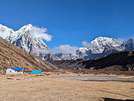


 September, and the temperature never went above 30°C.
Yunnan, the food!! Amazing. Have a great trip.
September, and the temperature never went above 30°C.
Yunnan, the food!! Amazing. Have a great trip.