Skip to content
Summer 2026 - 3 weeks in the Azores
Azores › Travel journals Bluequark

Summer 2026 - 3 weeks in the Azores

Translated into English.
Add a reply…

Sign in to reply

Your reply to “Summer 2026 - 3 weeks in the Azores” is one step away. We’ll bring you right back to it.

Create a free account

Why become a member?

51 replies

BluequarkOP· 3 weeks ago
July 31

Glancing out the window when I wake up: the cloud ceiling is low. The caldera won’t be visible today. Anyway, today we’re changing islands and leaving Corvo for Flores. To get there, we take the public ferry (booked well in advance). The boat is tiny-tiny: just 12 seats total, I counted. The crossing takes about an hour, uneventful: Philomène sleeps for part of the trip while Hippolyte keeps an eye on a passenger who’s seasick (though the sea isn’t even that rough).
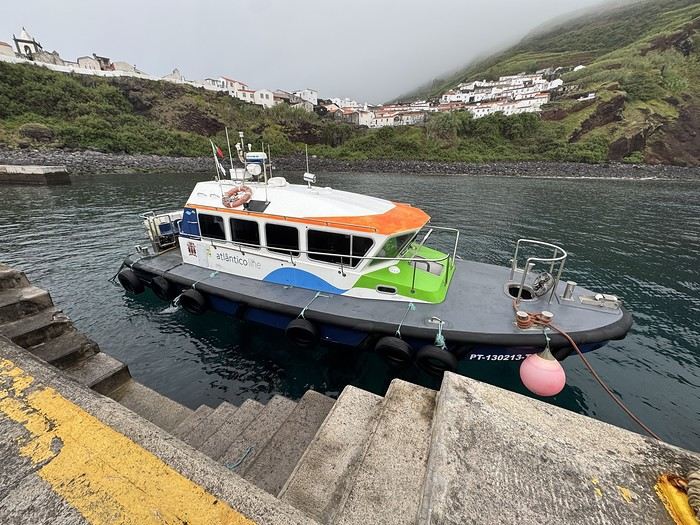


When we arrive on Flores, it’s drizzling. We pick up the car at the airport—a fifteen-minute walk from the port this time. Stop at the supermarket: Philomène read that the island is restocked once a week (on Wednesdays) and that by Saturday, the shelves could be empty. It’s Friday, and sure enough, the shelves are already looking sad. So, Philomène, gripped by fear of running out, starts compulsively stocking up on rice, pasta, and tomatoes.

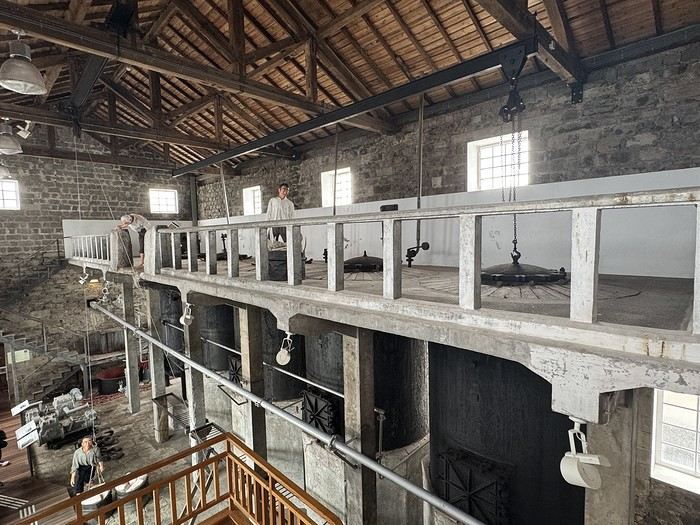
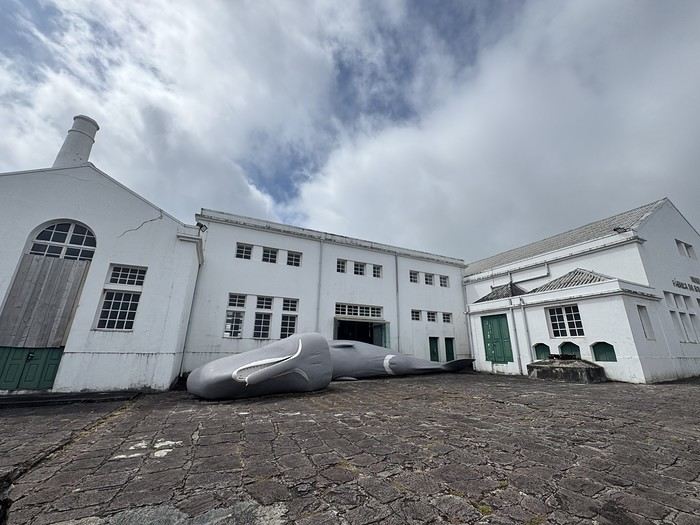
Since the accommodation isn’t available until noon, we visit (for 1 euro) the Fábrica da Baleia do Boqueirão, a former whaling station turned into a museum of the same name, located right next to the supermarket. It’s pretty gruesome but very informative. We learn how whales—or rather, sperm whales—were fished (locals didn’t say "fishing" or "hunting" whales but "embarking for the whale"), as well as how the catch was processed and transformed. In addition to the explanatory panels, there’s a short film (in French, with Portuguese and English subtitles, produced by an association from the Landes de Gascogne, very 1960s—interesting on multiple levels), objects, and photos. You see every step of the hunt, the flensing, and the processing of the animal’s body. It’s all quite bloody. And I won’t even mention the animal’s suffering. For the flensing, people are in shorts and shirts, barefoot in the sperm whale. Different times, different customs.


After this cultural interlude, it’s time to head to our lodging in Loma. It’s well-equipped, with a very attentive host (there are even beach towels she keeps offering to wash for us). The host, who lives right next door, welcomes us with a bottle of red wine and a platter: cheeses, salted flank, sun-dried tomatoes... That’ll be our meal. Then she comes back with four big pieces of fish, the result of her husband’s fishing. It’s super nice, but I still hope he won’t go hunting rabbits in the next few days. For now, Flores is hot, humid, and green.

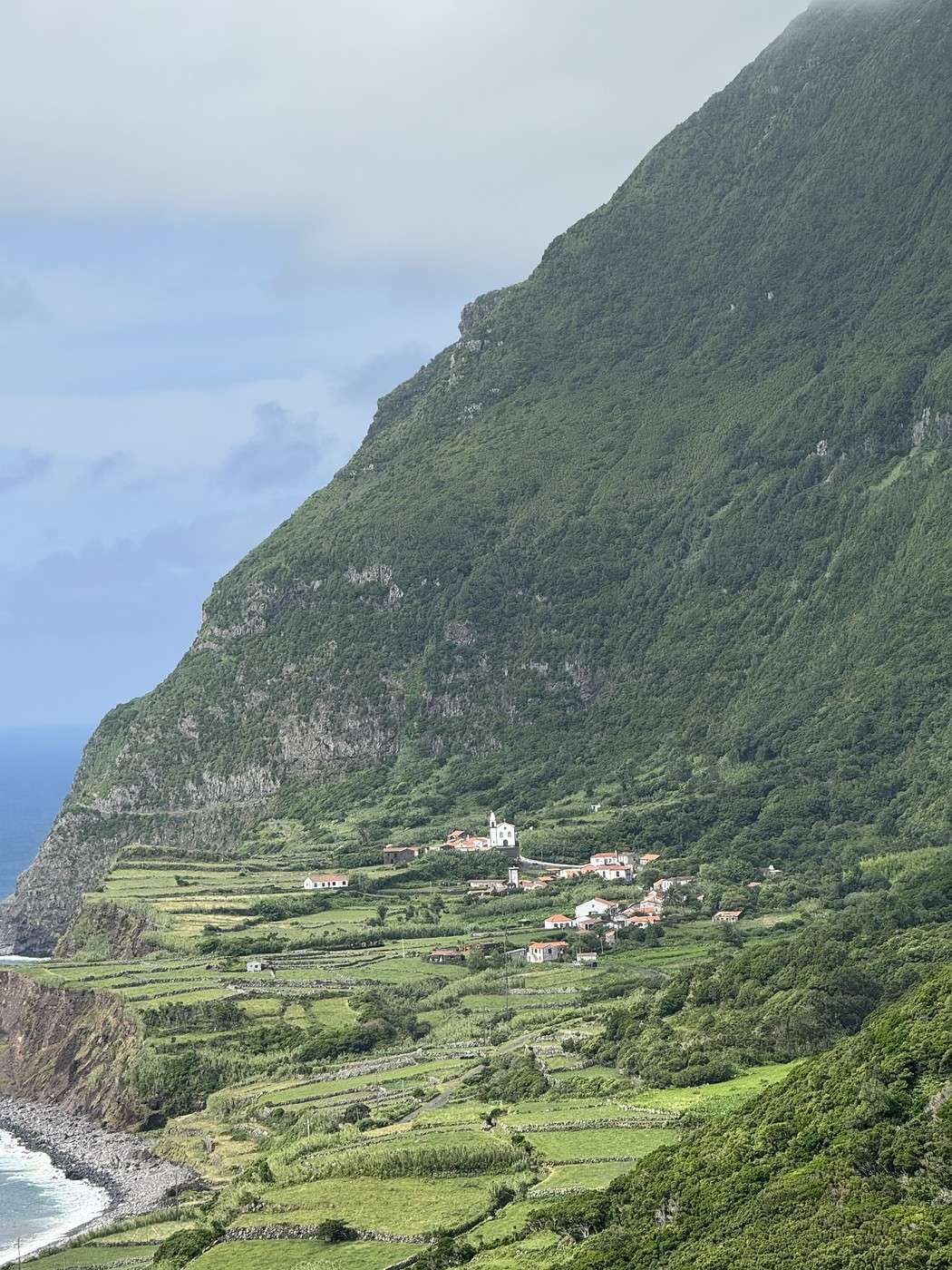
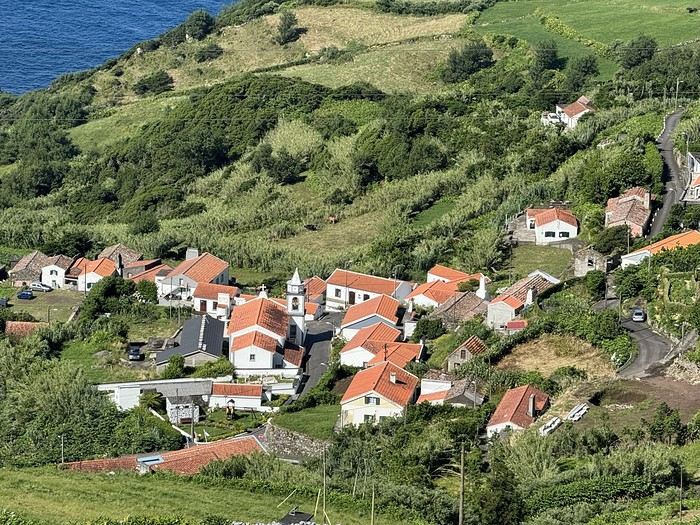
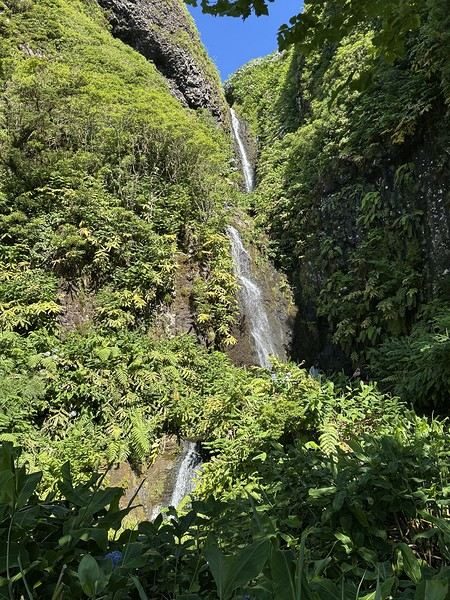
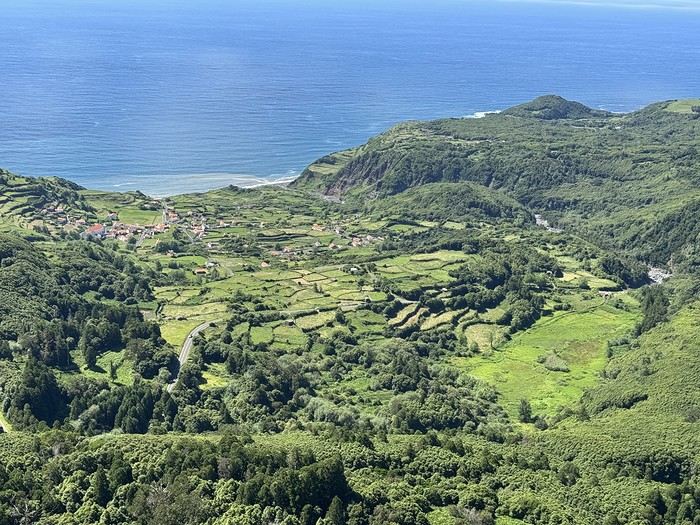
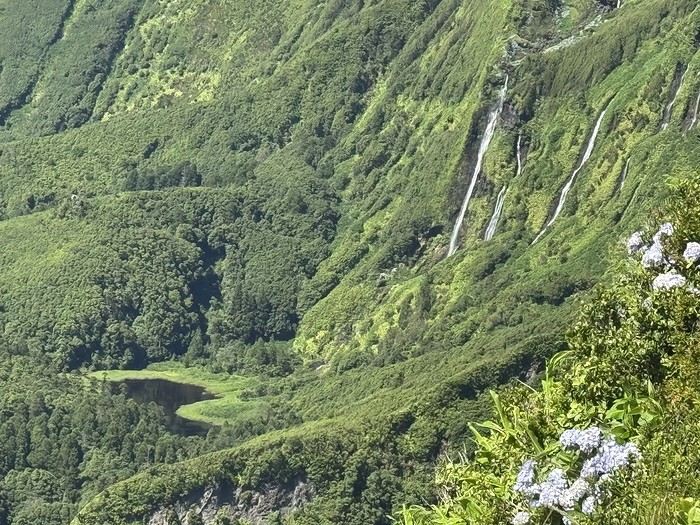
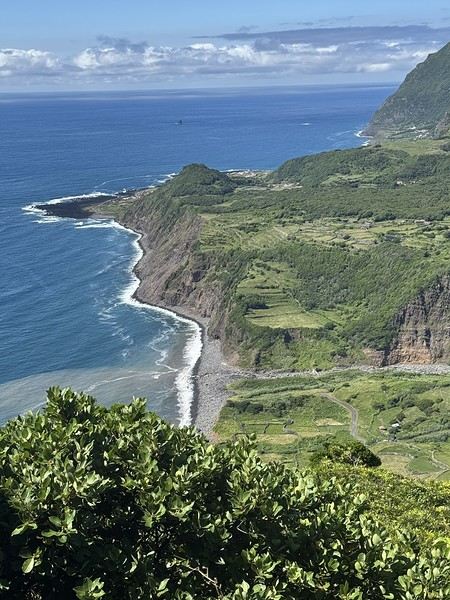
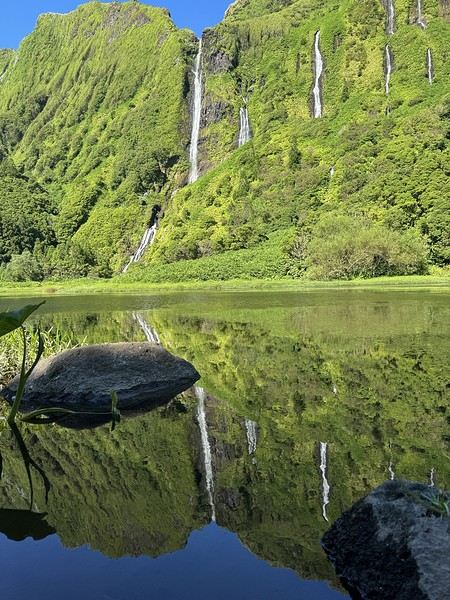
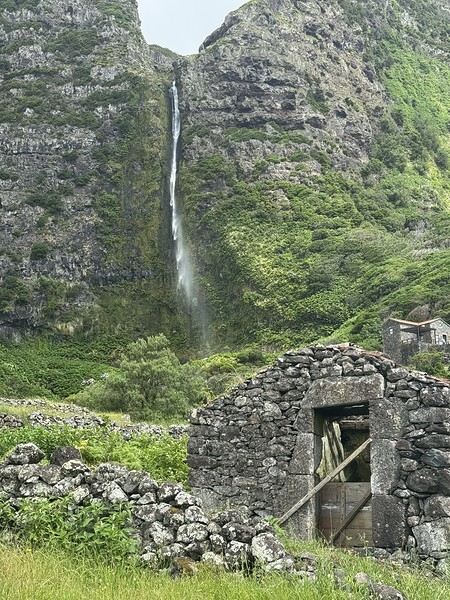
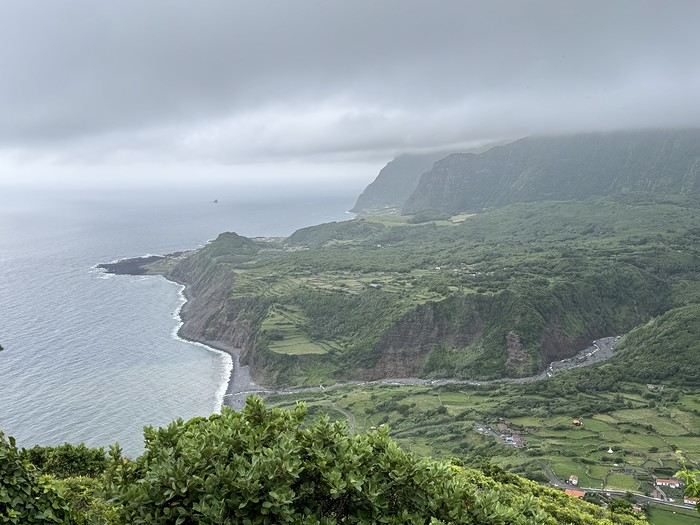
The weather clears up a bit but remains uncertain. Oh well, let’s go exploring. First, the island’s most famous waterfalls, Poço da Ribeira do Ferreiro. They’re still pretty despite the misty weather. We wait a little for the summit to clear. Then we hit the miradouros (what we call "viewpoints") in the area. The landscapes are really beautiful, and each miradouro reveals a different facet. I especially like the view of the fajã of Fajã Grande with the little church at the very end. But everything is really gorgeous. We explore a large part of the area—which, without wanting to sound obsessed with the weather, is below the clouds. In hindsight, this is the most beautiful part of the island, or at least the one with the most diversity per square kilometer.
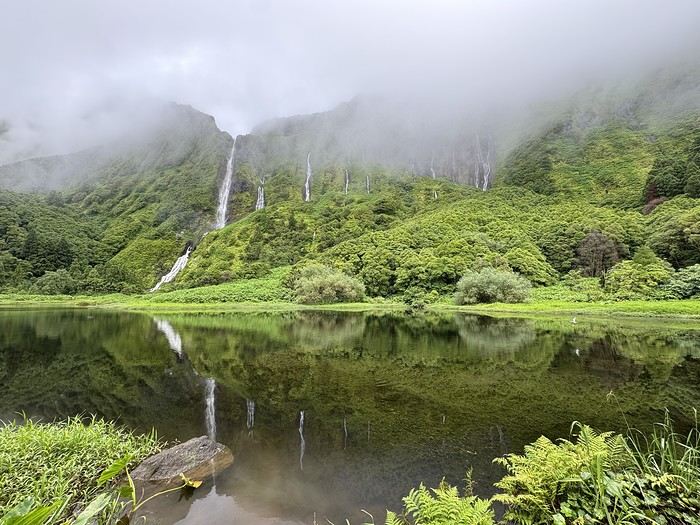
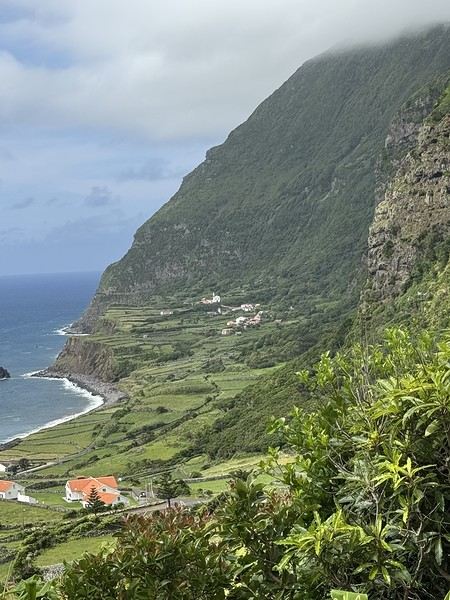
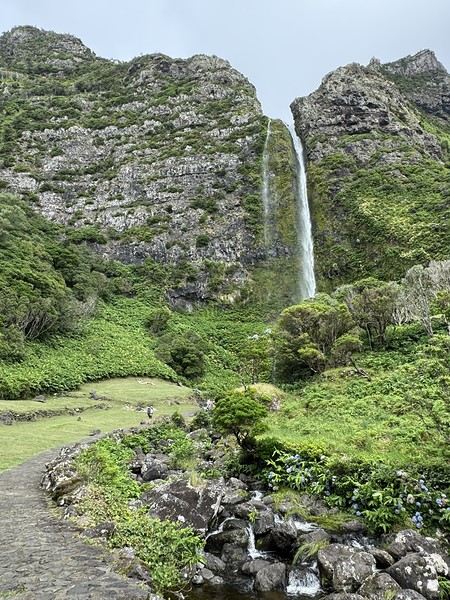
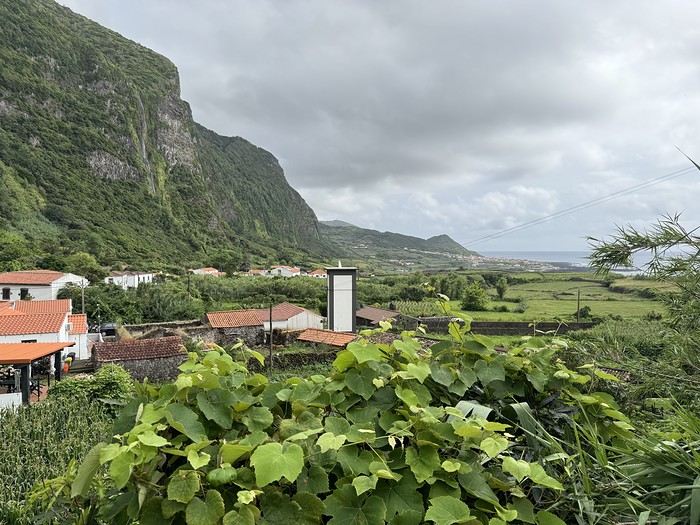


We go all the way to the end of the fajã to see the little church after stopping at the Cascata do Poço do Bacalhau, where you can swim. With a little regret for that waterfall, we decide to end the day with a splash in the natural pools of Fajã Grande.

A few last viewpoints on the way back because we deserve it.
BluequarkOP· 3 weeks ago
August 1st.

This morning, the weather is so-so. The plan is to check if the lakes we skipped yesterday because of the fog are visible today, then head to Santa Cruz and drive up the east coast toward Ponta Delgada.

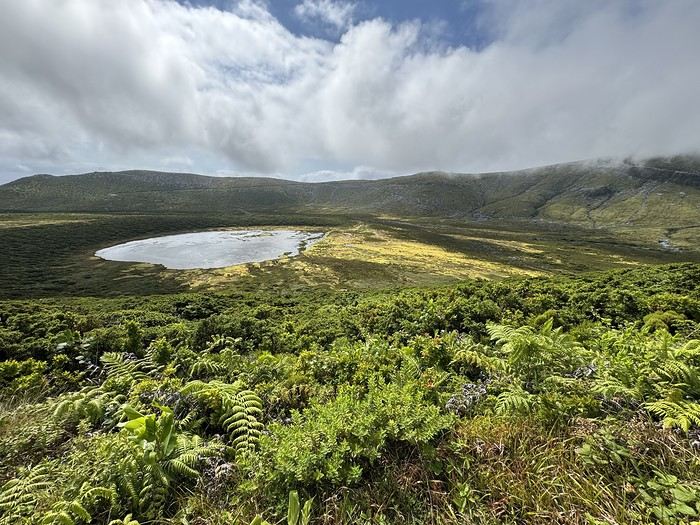
At the first lakes, Lagoa Rasa and Lagoa Funda (I’m noting the names—no one cares right now, but maybe it’ll be useful later), we have to wait a bit to get a good view. There’s also quite a bit of wind, and honestly, it’s pretty chilly. I’m this close to regretting not bringing my fleece on top of my light sweater and rain jacket.

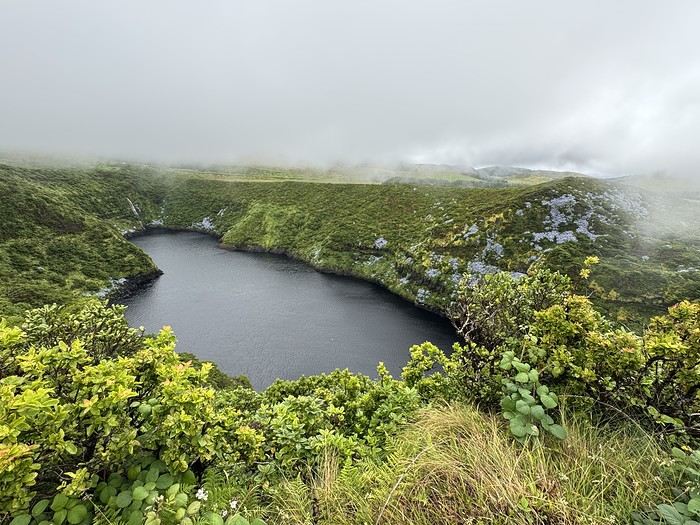
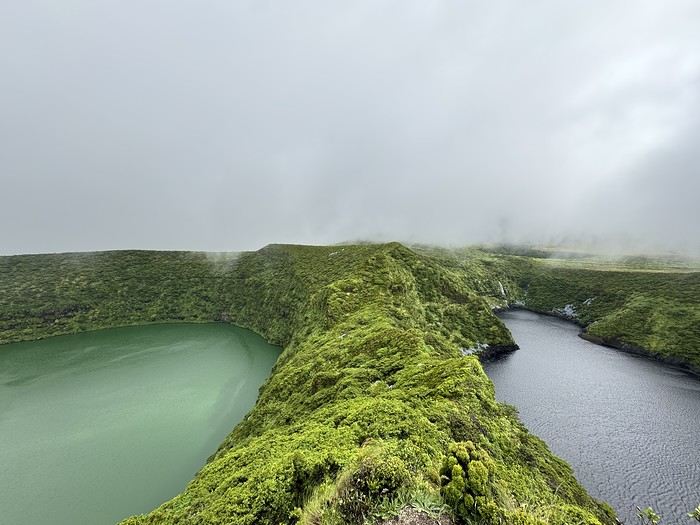
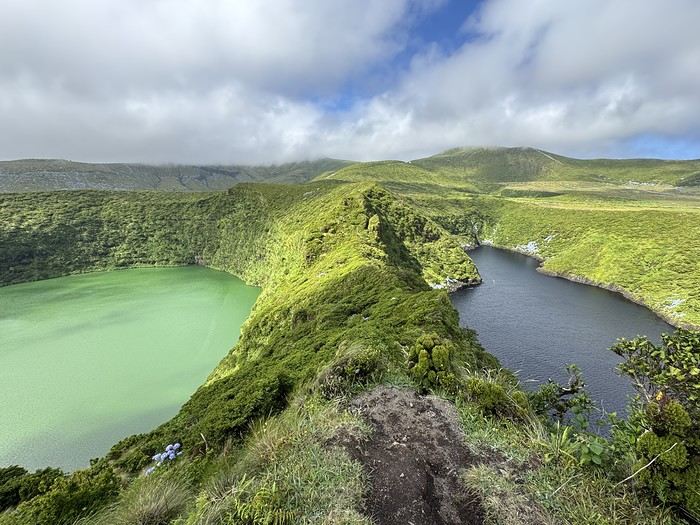
We continue with Lagoa Negra and Lagoa Comprida. The view is clearer, but there’s still a steady wind. Finally, we can see the lakes well, and it’s pretty cool: the two lakes that almost touch are different colors.


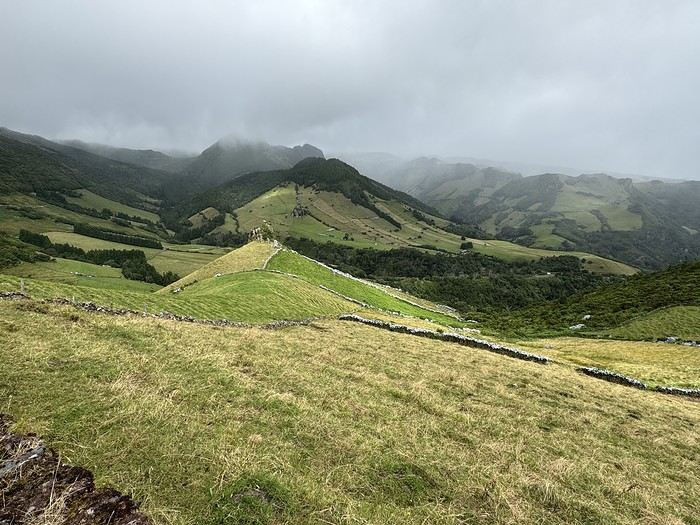
The rest of the trip takes us—or rather, our wheels—to Santa Cruz, with stops at every *miradouro* we pass. It’s great. Too bad the photos don’t turn out well in this weather. Oh, and I almost forgot: since this morning, we’ve seen tons of wild rabbits—nearly a dozen—and lots of birds pecking at stuff on the road. The birds, though, have the bad habit of flying right in front of the car or taking their sweet time to get out of the way. They must not get bothered often. It’s also impressive how many birds there are on Flores and Corvo—I didn’t notice as many on Terceira. Everywhere, all the time, it’s a frenzy of chirping.


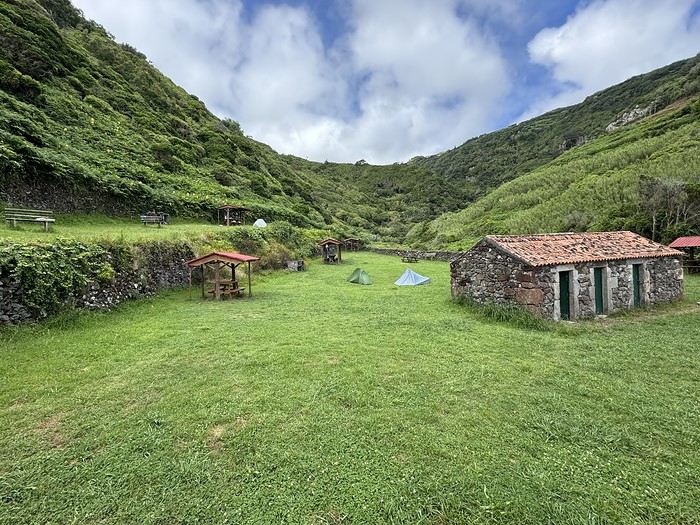
When we reach Alagoa Bay, we take a chance and turn onto the road leading there. For context, the parking lot only has three spots—four if someone parks like a jerk and doesn’t care about bothering others. Jackpot! When we arrive, only two cars are already there. Before the beach, there’s a free *campismo* (campsite) with plenty of space, as always equipped (toilets, probably showers, a water point with a sink, barbecues, sheltered tables and seats). A few tents are pitched. It’s total immersion in nature. You can’t say people are on top of each other.


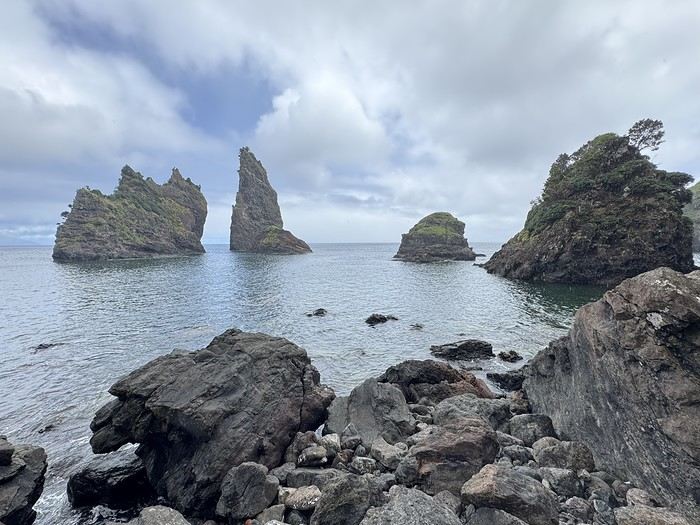
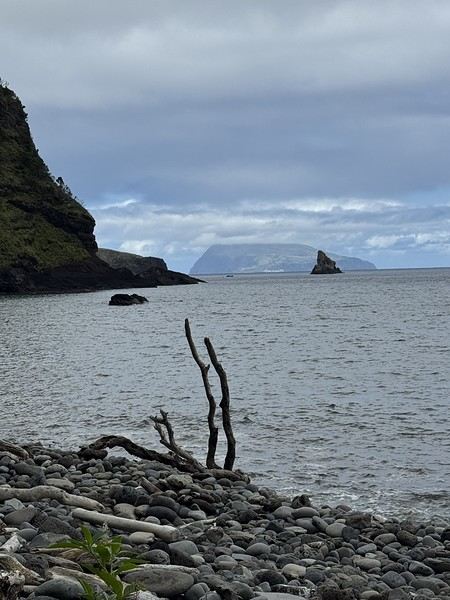
The beach is right there for us to explore. We have a picnic with a view of the rocks. It’s really chill. A few raindrops remind us we’re on Flores, though—even when it seems mostly nice out, water’s never far away. After eating, it’s time for a dip, but only Philomène goes in.


BluequarkOP· 3 weeks ago
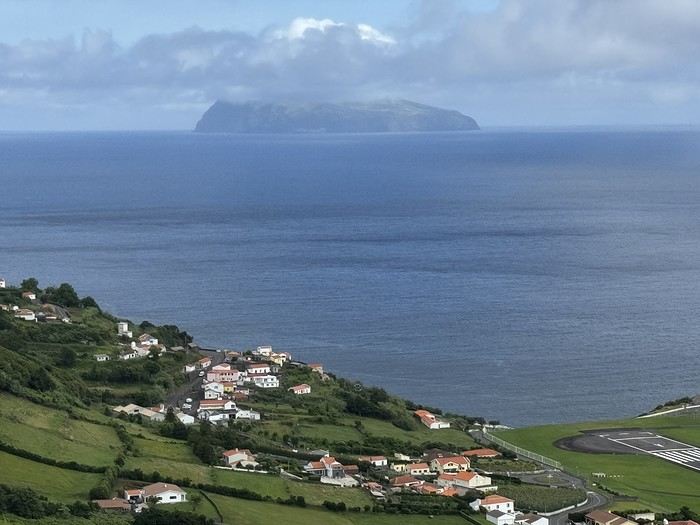
The afternoon continues with the climb back up to Ponta Delgada. The summit of Corvo, which we’ve been able to see for a while now, gradually comes into view.


We pass by some incredible peat bogs (turfeiras in Portuguese). I have this crazy urge to grab handfuls of them and squeeze to see how much water comes out.


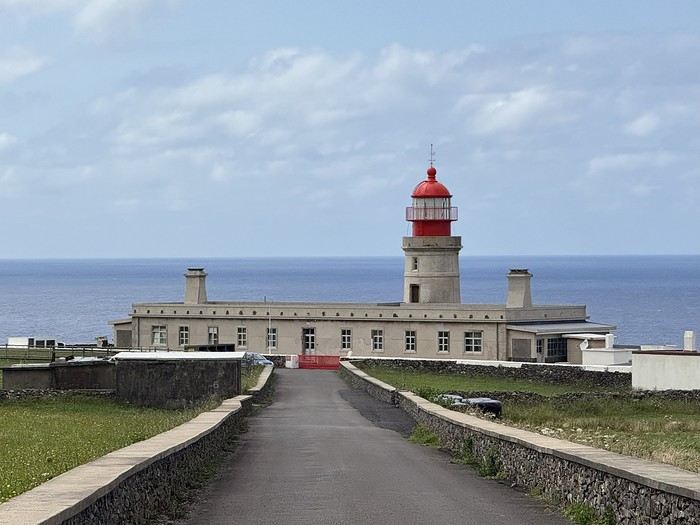
In Ponta Delgada, we discover the minimercado and its poorly stocked shelves (we wanted to buy bread, tomatoes, and a cucumber—total fail), the port, and the lighthouse. This lighthouse is symbolic since it marks the arrival point in Europe for boats coming from America.


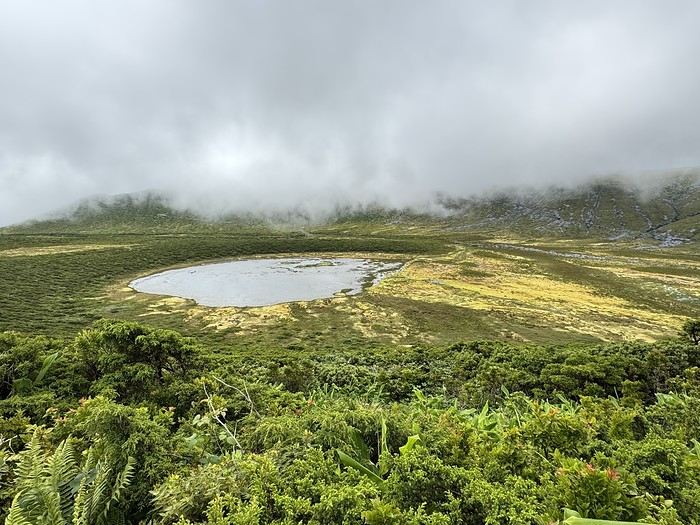
On the way back, we decide to take the inland route. The sky clears up more and more. We come across two new lakes: Lagoa Branca, which, despite its name, is yellow-green, and Lagoa Seca, which, though not exactly dry, isn’t full of water either.


Taking advantage of the nice weather, we decide to revisit Lagoa Negra and Lagoa Comprida. Even prettier than this morning. I try to take a panorama shot, but the wind keeps blowing, making it impossible.


The final descent lets us see Lagoas Rasa and Funda from a different angle—the first ones we saw this morning for those who’ve been half-following along. The difference in altitude is really fun. It’s funny because when you’re between the two lakes, you don’t really notice it.


We don’t linger too long at the next viewpoints so we can get to Lajes before the supermarket closes at 6 PM. Everything shuts early in the Azores, and by 6 PM, most people are already home. This is the first supermarket on Flores we’ve seen with normally stocked shelves. Mission accomplished: we’ve got our bread and tomatoes… but still no cucumber.
Muriel18· 3 weeks ago
Hi Bluequark

I’m jumping in a little late 😉

Beautiful landscapes, towns where you can see Portuguese influences... but as far as I’m concerned, the unpredictable weather might ruin the trip for me (I know myself! ).

But in stories and photos, it’s perfect! 😎
Captainbang· 3 weeks ago
Good evening!

Your lovely travel journal with all those beautiful photos makes those who haven’t been to the Azores yet want to discover them—and makes those who have want to go back (I took several very similar photos in Terceira to yours).

To answer Muriel: Oh yes! It rains in the Azores, even in summer (well, it *does* rain less in summer, in theory). That said, Flores is the island where it rains the most (over 1,400 mm/year). But it’d still be a shame to let that stop you because these islands are stunning, as Bluequark’s travel journal shows so well.
BluequarkOP· 3 weeks ago
Thanks for the message. Yes, it’s really gorgeous… even if a bit misty, or even rainy at times.
BluequarkOP· 3 weeks ago
Hi Muriel,

Thanks for the message. Don’t let the rain put you off—by moving around, you can always find a clear moment, and since it’s not cold, it’s quite bearable.

That said, there are so many amazing things to see around the world…
BluequarkOP· 3 weeks ago
Thanks for the compliment. It really means a lot to me. The Azores are truly magnificent. Beyond that, there’s such a unique and pleasant atmosphere. I had high expectations and was worried I’d be disappointed. That definitely wasn’t the case—far from it.
I’ll continue.
BluequarkOP· 3 weeks ago
August 2nd

Woke up to bright sunshine. Great! We’ll be able to make the most of it. (Warning: loads of photos for today since they’re so much prettier in the sun.)
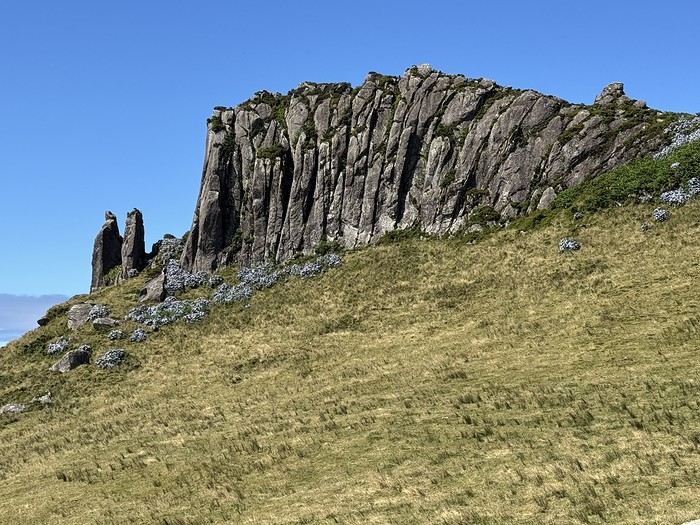
We start by heading to Poço da Ribeira do Ferreiro to admire them in the sunlight—they’re only 15 minutes away by road—before wondering if they might be in the shade in the morning. A quick detour to the right viewpoint confirms they are. We take the opportunity to get a better look at Rocha dos Bordões with its basalt columns.


We turn back to the starting point for the hike to Fajã de Lopo Vaz. Along the way, we spot three rabbits at once (just to give you an idea of how many there are). Fajã de Lopo Vaz is only accessible on foot (or probably by boat). The path down is short but steep, partly turned into stairs. Speaking of paths: in the Azores, never rely on safety barriers. Some are completely rotten, and we’ve already knocked two down—one each—just by barely leaning on them.


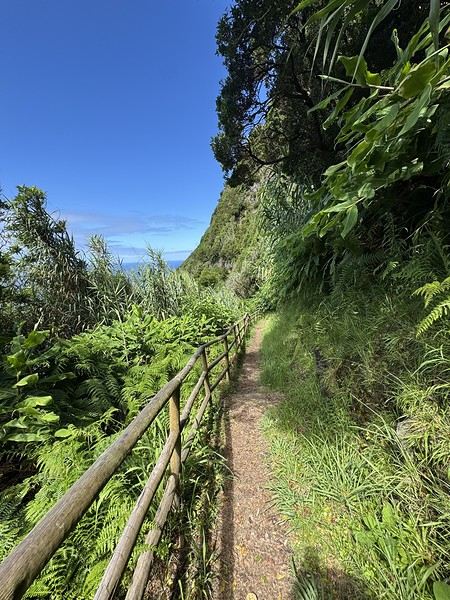
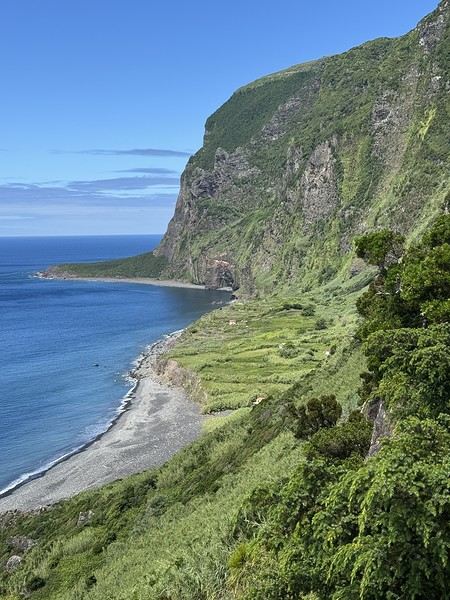
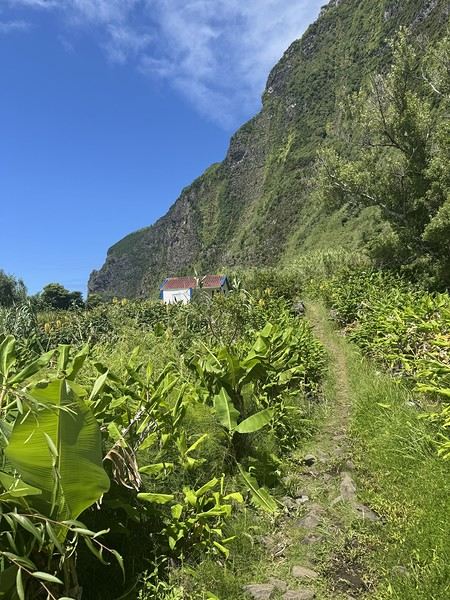
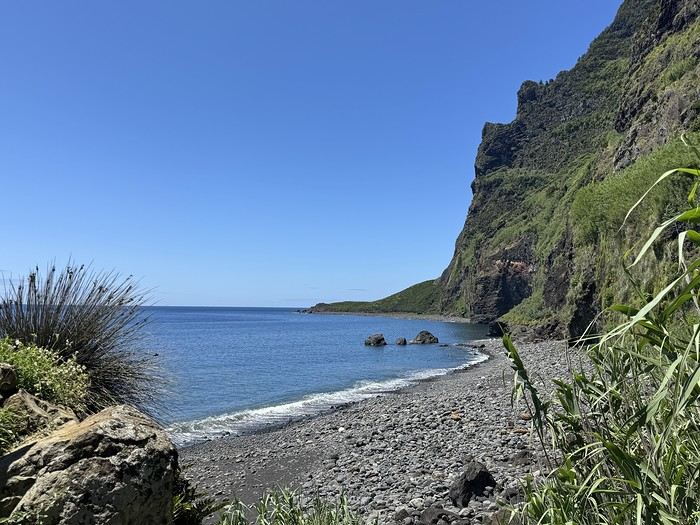
Once at the bottom, we explore the beach and the fajã. Apparently, there are loads of fruit trees in the area. Personally, I only recognized the banana trees. At the end, there’s another smaller but cute beach. It’s really hot. Hippolyte finds a tree to have lunch in the shade. A ram’s skull on the ground keeps us company. I wonder where the rest of the body is.


Back to the first beach. This time, Hippolyte goes for a swim with Philomène. Then it’s time to head back up to the car. Hippolyte’s going a bit too fast for Philomène, whose heart starts beating fast and hard. She grumbles a bit. Hippolyte lets her go ahead. It’s hot. At the top, the shade of the picnic area is welcome to dry off a little.

Show 10 more replies
BluequarkOP· 3 weeks ago
Then it’s off to Poço da Ribeira do Ferreiro. Of course, a few stops spice up the journey, especially the Cascata da Ribeira do Fundão, right by the road. We drove past it several times without ever stopping. It’s worth pulling over to see the three tiers of the waterfall—and, of course, a few miradouros (viewpoints).


A quick dip in the Cascata do Poço do Bacalhau—a view we’d seen (and regretted missing) the day before. It’s super refreshing.

Despite the early hour, we head to Fajãzinha to check out the food truck Philomène spotted. It’s tasty—but not exactly filling—and right in the middle of nature. Hipster food at tourist prices. The meatballs, in particular, are delicious: shredded pork in a creamy sauce, all deep-fried. Don’t hesitate. We’ve got a great view for dinner. While we’re eating, four groups of customers come by, and they’re all speaking French. The French make up the majority of tourists visiting Flores.


Muriel18· 3 weeks ago
That said, there’s so much to see around the world...


Exactly... you’ve got to make some tough choices 😕

Your latest photos (under that sunshine 😉) kinda remind me of Madeira...
BluequarkOP· 2 weeks ago
August 3rd.

The plan for this morning was a sea kayak tour to discover the cliffs from a different angle, along with the rocks and sea caves. The kayak guy was supposed to confirm "early morning" via WhatsApp depending on the weather conditions. But when we woke up, the weather was really overcast. So, the kayak tour was a no-go. We rescheduled it for the next day and took the opportunity to chill out a bit.

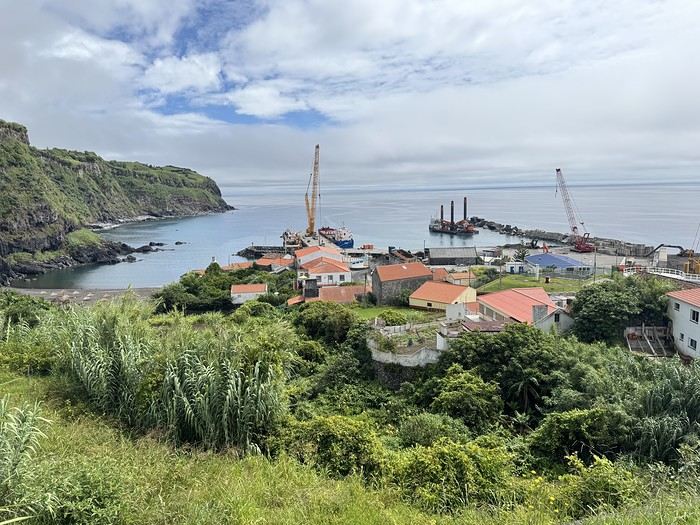
We decided to explore the different towns and villages in more detail. First, Lajes, with its lighthouse and port, which was completely destroyed by Hurricane Lorenzo in 2019 and is still under reconstruction. To build a seawall, they build a seawall.


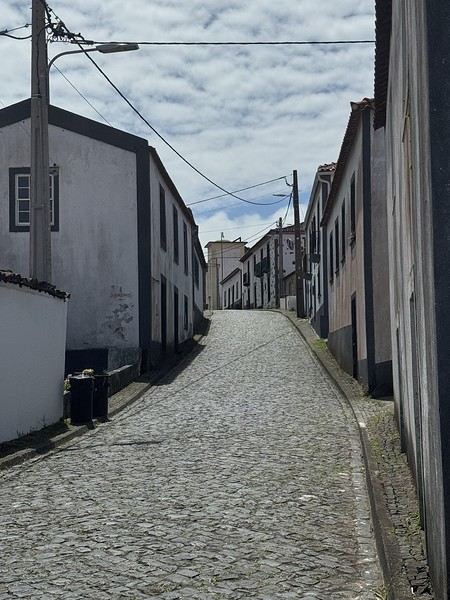
Then Fajã Grande, with its church and streets—well, its *street*, which is steep. We had lunch at another (ultra-)settled food truck. It’s run by an association you have to join to eat there. The membership is highly symbolic since you just sign up online without any payment or verification. Probably a regulatory thing. It’s too bad the "real" dishes are only served in the evening.


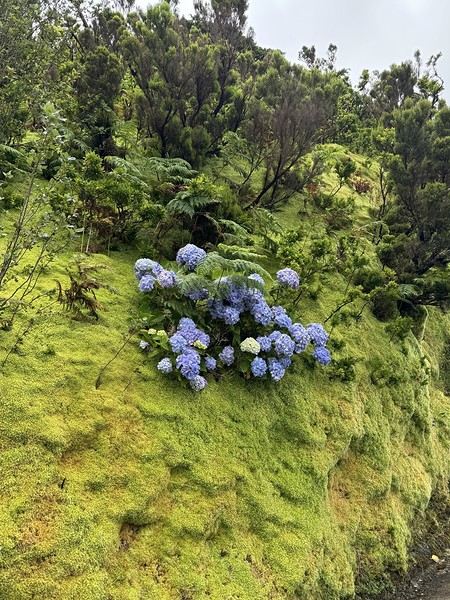
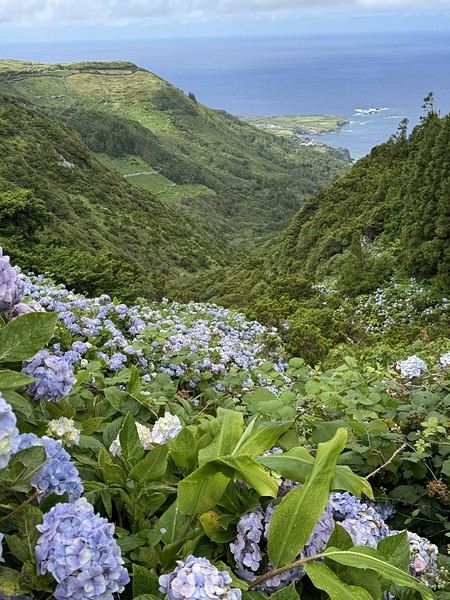
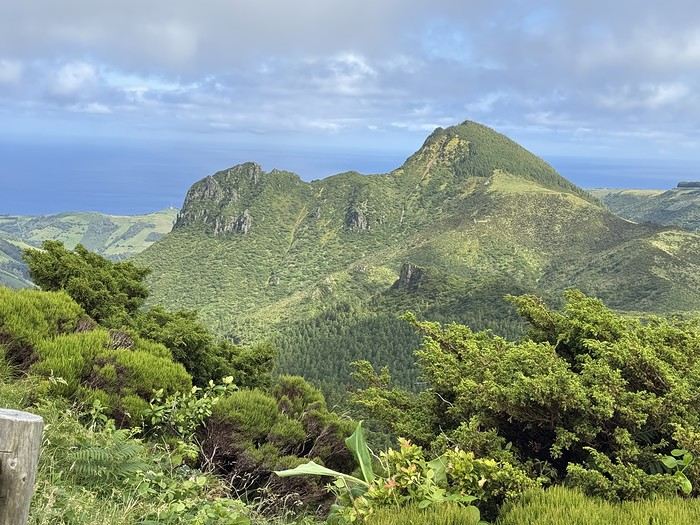
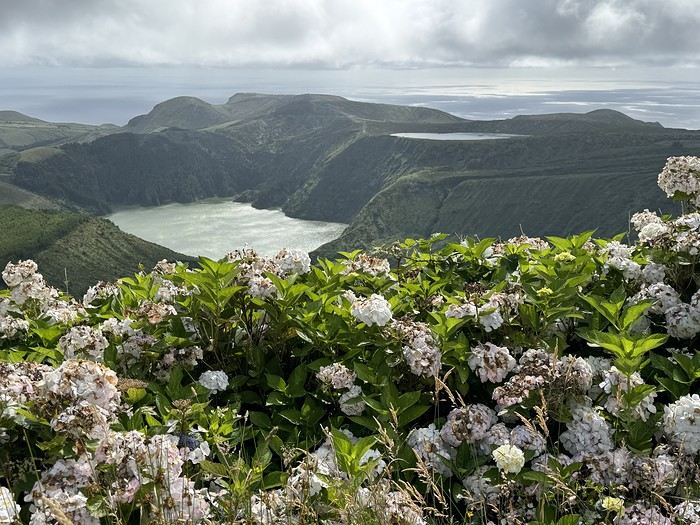
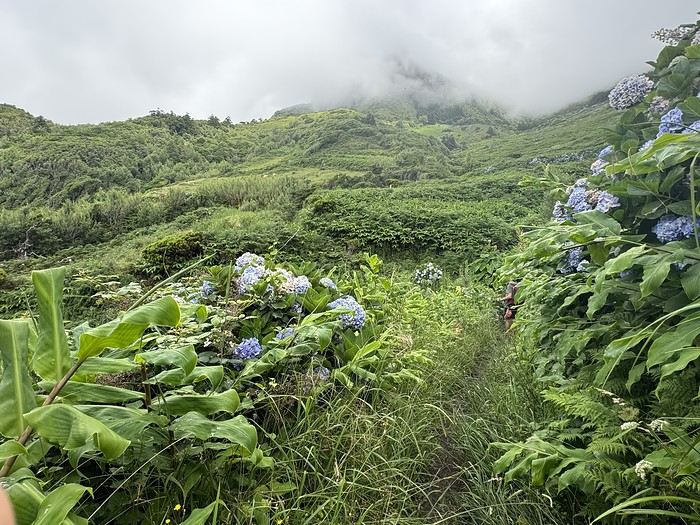
With full stomachs, we went back to Lagoa Branca, which we had only glimpsed the day before yesterday due to a lack of parking spots. Then we pushed on to Pico dos Sete Pés for a view of all the lakes. It must be stunning in good weather. Side note: usually in the mountains, when you see grayish-blue patches in the distance, it’s rocks. Here, it’s hydrangeas. There are huge patches of them everywhere.

We checked out Lagoas Rasa and Funda again in case the view was clearer, then headed to Lajedo via the smallest roads. Lajedo is tiny, but it has a cute little church and shaded benches to relax on.


No swimming today—Hippolyte and Philomène are both having trouble digesting lunch, though, without going into gross details, to varying degrees.

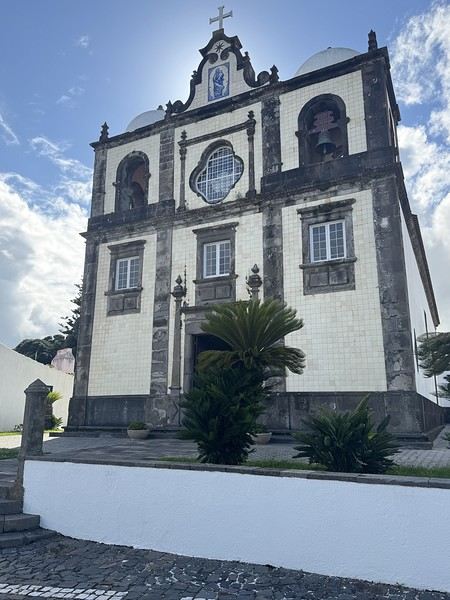
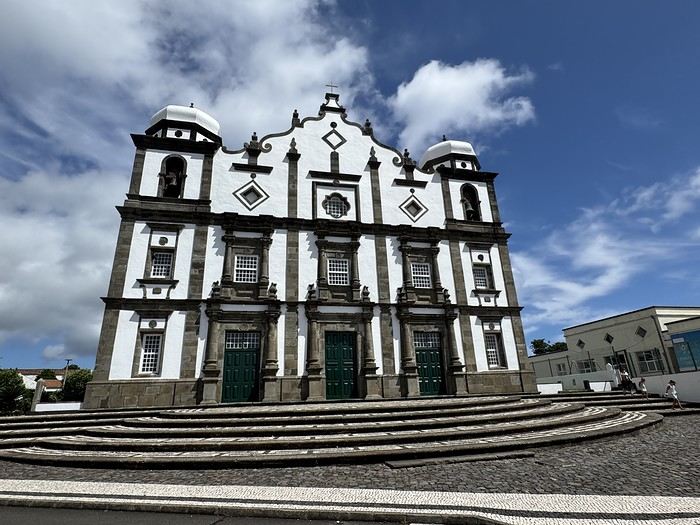
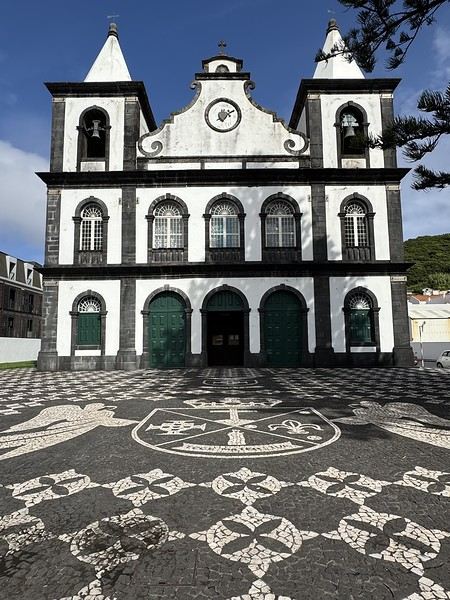
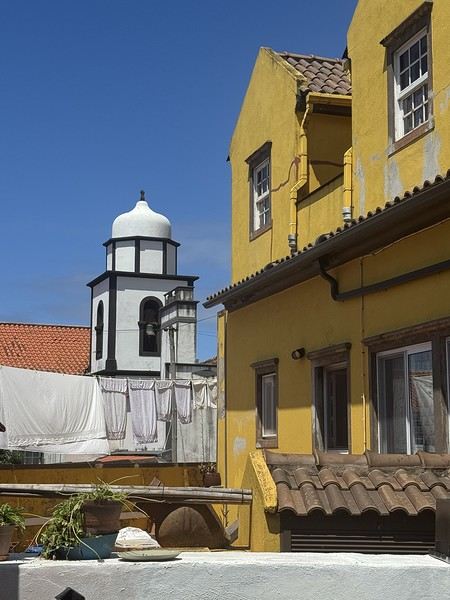
On the way back, we stopped at the churches in Lajes and Fazenda, which are pretty funny with their tiled facades. Two last little viewpoints to wrap up the day, including one with an old whaling station.


BluequarkOP· 2 weeks ago
August 4th

When we woke up, even though the weather wasn’t great, it seemed better than the day before. We were full of hope. But no—by 8:30 AM, the verdict was in: no tour today. We took another look around.

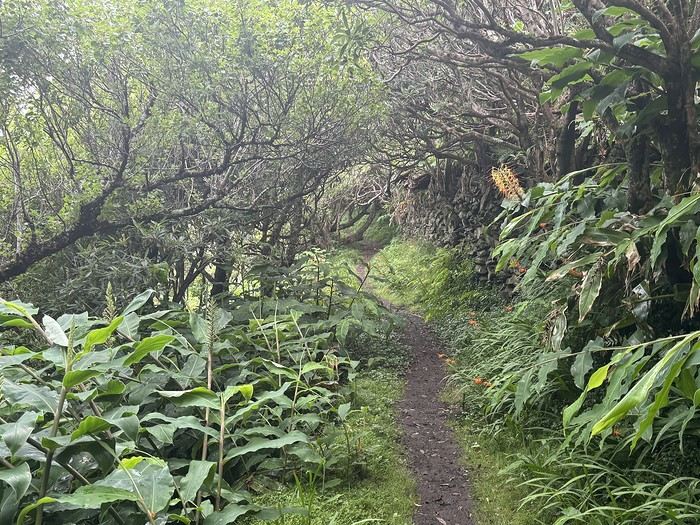
After a few "fails" due to either closures or lingering fog, we set off for the start of the hike from Lajedo to Fajã Grande. This hike, almost entirely downhill, is normally a one-way trip, but we decided to do a section as an out-and-back to avoid too much climbing on the return. The start worked best for that. The hike, which was completely deserted—we didn’t cross paths with anyone, and in some spots, the trail was barely marked—was really nice. We passed through several different ecosystems, mini-rivers, flowers… I’d actually recommend doing the whole thing if you can organize a taxi or bus (apparently, there’s one or two a day that go there) to get to the starting point. Philomène took a dip in one of the rivers thanks to a small pool blocking the path. To be honest, Hippolyte didn’t enjoy the hike as much as Philomène, though he didn’t seem unhappy.


To cool off, we headed to Cascata do Poço do Bacalhau. It was funny—with all the wind, the water blew away before it could even fall. Speaking of which, the Cascata da Ribeira do Fundão—which we never managed to reach due to construction and a landslide (that’s why you haven’t heard about it yet)—was shooting almost horizontally from some stretches of the road.


A waffle was waiting for us when we got home. Thanks again to our amazing host.
BluequarkOP· 2 weeks ago
August 5th.

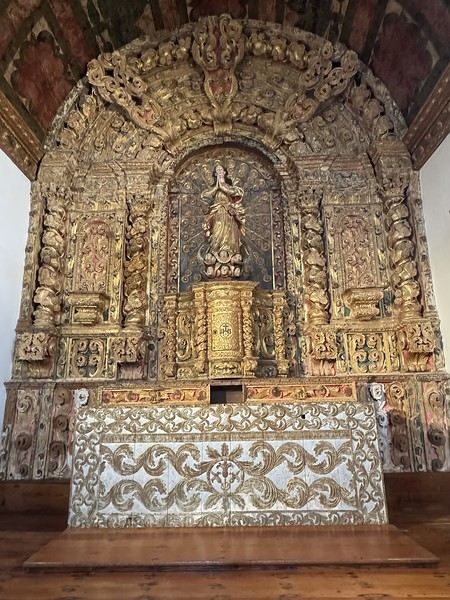
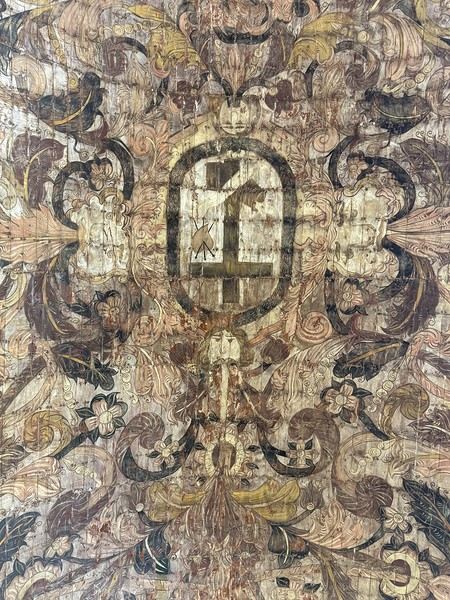
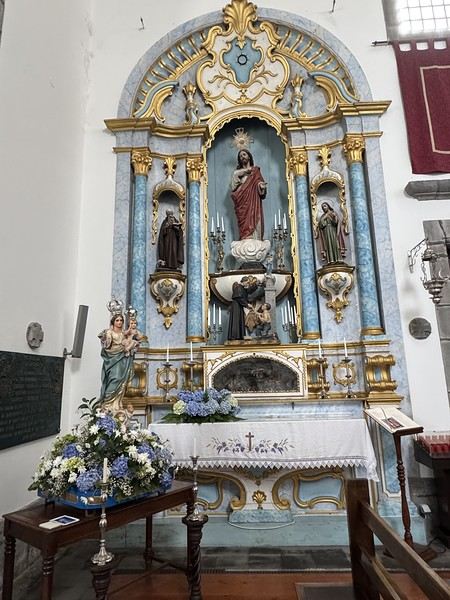
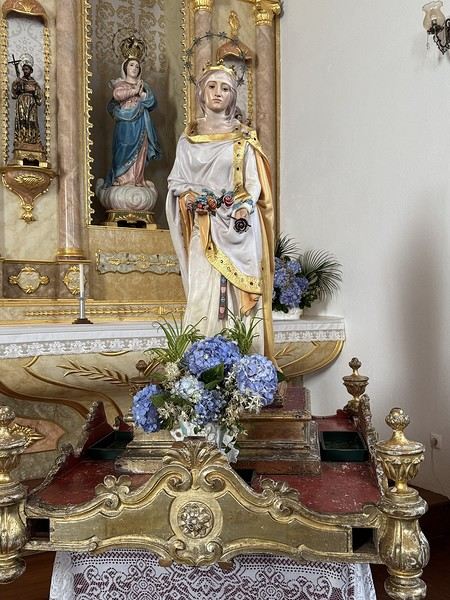
Today, we leave Flores, but our flight—whose schedule was also changed—doesn’t leave until 2 p.m. We have time to visit the Flores Museum. Interesting (and still just 1 €). We learn that starting in the 1970s, Flores hosted a French telemetry station to track missiles launched from the Landes test center (hence the whale film in the Whale Museum). Before each launch, two French ships would check that no other boats were in the missile’s projected landing zone. Then the missile was fired, the station tracked its trajectory, and they could recover the warhead to analyze the data it contained. The French presence lasted 27 years until digital simulations made live tests obsolete. What’s also fascinating is discovering how the French presence helped develop the island, which was among the poorest in the Azores (the Portuguese film says it helped the island "enter the 20th century"—remember, the Azores themselves were the poorest region of one of Portugal’s poorest areas in the 1970s). Infrastructure was built, including an expanded port, the Azores’ first airstrip, and roads. Local trade also grew. This presence even impacted the "way of life." The museum has other exhibits, including a model of the island we really liked. It’s housed in an old convent, so we also saw a cloister and a church with a stunning ceiling.

Fun fact: There were never any windmills on Flores—the many watermills were more than enough.


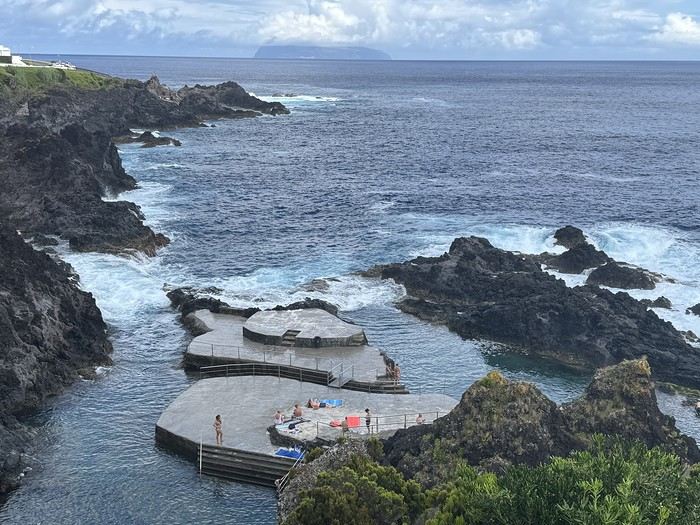
After the museum, we just had time to glance at the natural pools in Santa Cruz before heading to the airport.


Verdict on Flores: It’s really lovely. We had quite a bit of rain and fog—much more than usual for this time of year, our host told us—but it’s still really great. Of course, we’re sorry we couldn’t do the kayaking trip, especially Philomène. But at least the weather was pleasant, and we almost never got too hot. My advice? Stay the same amount of time but don’t plan too tightly so you can handle weather surprises.
BluequarkOP· 2 weeks ago
The next stop is Faial, a short one since we arrive in the middle of the afternoon and leave the next day at 9 a.m. for São Jorge. When planning the trip, I actually decided to sacrifice Faial in favor of other islands but to take advantage of the mandatory stop on this island to breathe in the air of Horta, Faial’s only city and, above all, a stopover port before crossing the Atlantic.


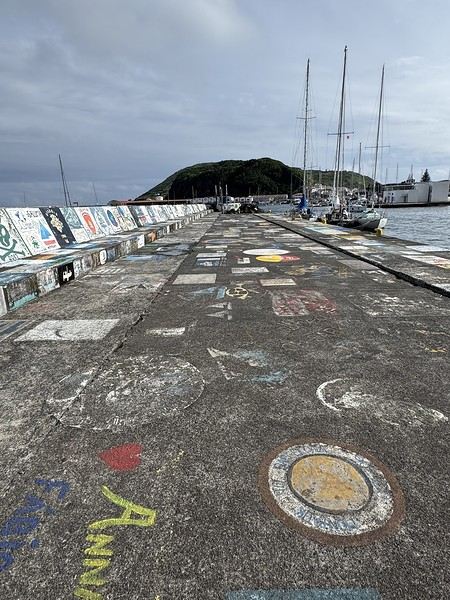
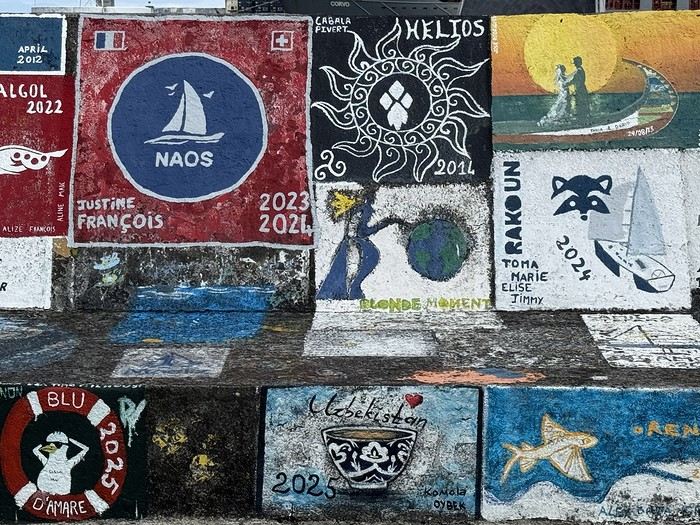
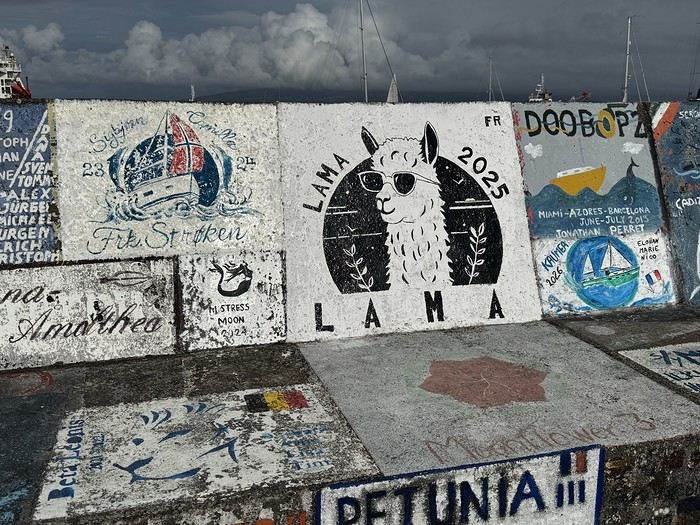
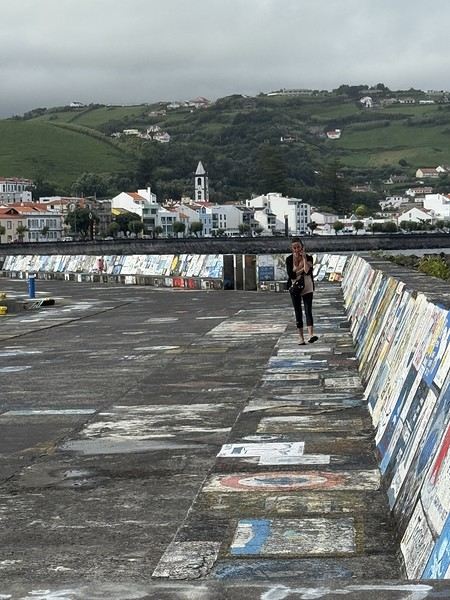
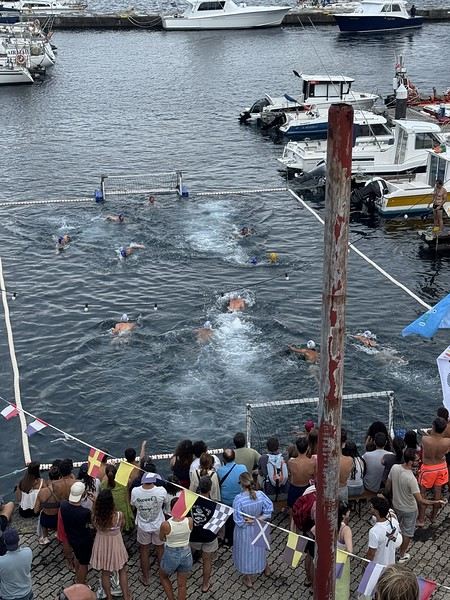
Our main activity for this second part of the afternoon is strolling along the harbor. There seems to be a lot of diving activity around here. We continue to the end of the pier, admiring the boats and murals. The tradition is that every crew stopping in Horta paints their own mural. Fun and charming. We also witness the arrival of a regatta and a water-polo match (in the harbor, yes, really!). On the other hand, there’s nothing too exciting at Peter’s Sport Pub, known as the crews’ bar. It’s become quite touristy, at least this season, but I expected that. No disappointment, then.


A stop at Porto Pim Beach near our accommodation so Philomène can take a dip.

For dinner, we’re too lazy to go to a restaurant (it looks pretty crowded, and we don’t feel like waiting) and finally use our freeze-dried meals bought at a steep price at the VC (aligot for the curious),
Captainbang· 2 weeks ago
Hi there,

It’s a shame you couldn’t spend more time on Faial because there are things to see outside Horta: the caldeira (when it’s not in the clouds 🙂), the Capelinhos volcano, the Fabrica da Baleia... but I imagine you already knew that. Plus, Faial has the advantage of easily combining Faial and Pico, since the two islands are so close to each other.

As for the Peter Café Sport, I obviously went there during my stay on Faial in 1989. It was a place like no other (did you visit the scrimshaw museum upstairs? A unique collection of sculptures and engravings on sperm whale teeth and whale bones), and back then, it still had the vibe of an authentic sailors’ bar. Then there was a *Thalassa* episode about the Azores (I think in 2006) that featured the café, which started to become well-known, and it doesn’t surprise me that the place has become super touristy now. Peter Café has become a concept: The Azevedo family, owners of the café, opened another Peter Café on Terceira, one on São Miguel, and even one on the mainland in Porto. Peter has even become a brand—you can now buy Peter-branded clothes and items, and of course, the famous Peter’s Gin do Mar (Peter's Gin do Mar | Shop | Peter Cafe Sport), which I haven’t tried—back in 1989, the recipe hadn’t been invented yet.

Ah, well! Modern life has reached the Azores too. But it’s still much less hectic than on the mainland. On São Miguel, I met some French people who had settled on the island—they really appreciated the calm (and safety) of the Azores.
BluequarkOP· last week
Hi there,

Yes, it’s with some regret that we didn’t visit Faial, but we had to make choices. Hypolite would have preferred Faial over Pico, but the vineyards drew me in more, and I thought it would be more different from the rest. No regrets—we really loved our stay. Each island has its own soul. And as you say, all of them—at least the ones we visited—are calm and zen. A little corner of Europe preserved from the hustle and bustle. It’s really quite lovely.

We didn’t visit the Peter’s Club museum: Hypolite wasn’t interested, and the crowd gathered in front of and inside the café probably had something to do with it. Maybe I didn’t sell it to him well enough (I also wanted to see the boats and didn’t push it). A regret! I’d seen that Peter’s Club had different branches, and partly because of that, I didn’t have high expectations, thinking it had become very commercial. But maybe at another time of year, it’s a bit different.
Zigomar67· last week
Hi there! You're absolutely right—each island is unique, and that’s what makes this archipelago so charming. I’ve visited São Miguel, Terceira, Pico, and Faial, which is why I love your travel journal featuring the less crowded islands.

By the way, if you’re interested in seeing photos from my 2013 trip in return: http://raymond.ostertag.free.fr/voyages/acores/index.html
BluequarkOP· last week
August 6:


The morning is dedicated to transit to São Jorge. For the ferry, you have to check in your luggage like on a plane. We didn’t know this and waited patiently to board with our bags next to us until one of us realized, "It’s weird, the other passengers don’t have any luggage." A mad dash to check in our bags followed. The boat leaves a little late. Whether it’s a plane or a boat, schedules in the Azores are, let’s say, pretty flexible.

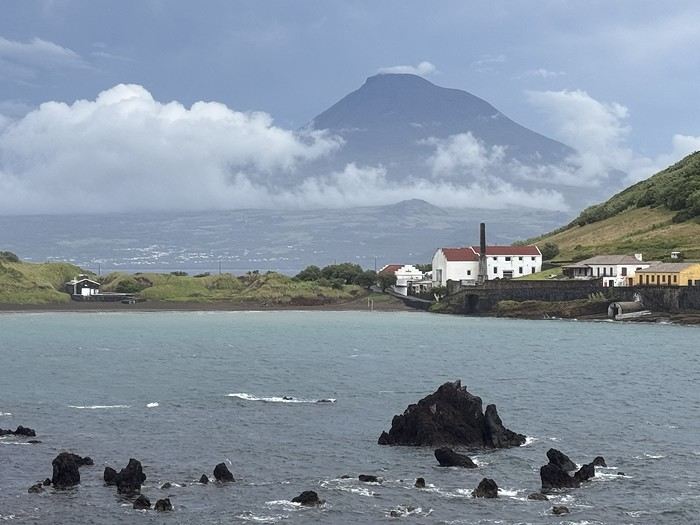
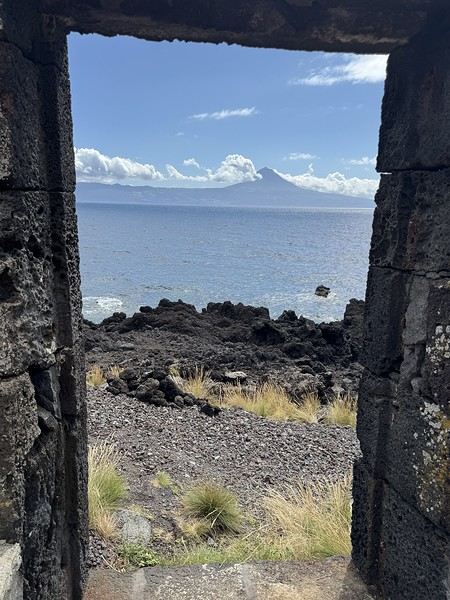
The boat stops at Pico, and of course, Philomène tries to photograph Mount Pico as best as she can, which is pretty silly since we’ll see it multiple times later—much better and with a clearer view from São Jorge. In fact, from our accommodation, we have a stunning view of Velas and especially Pico.

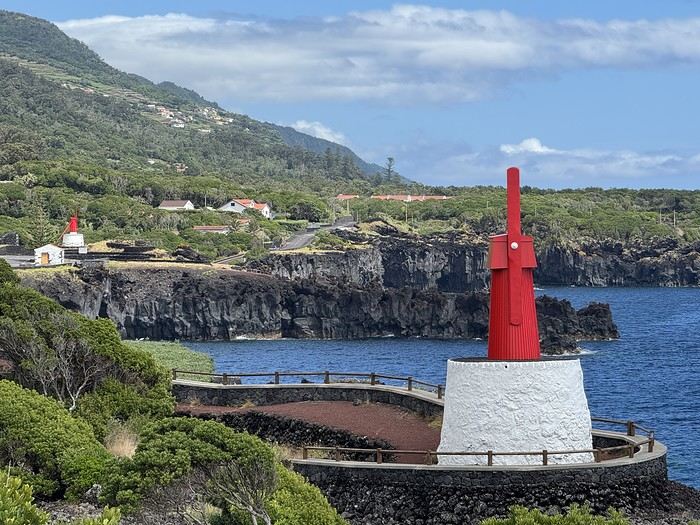
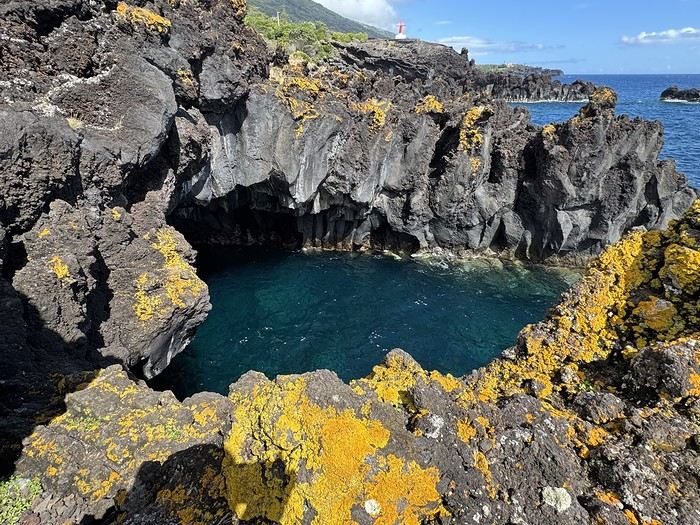
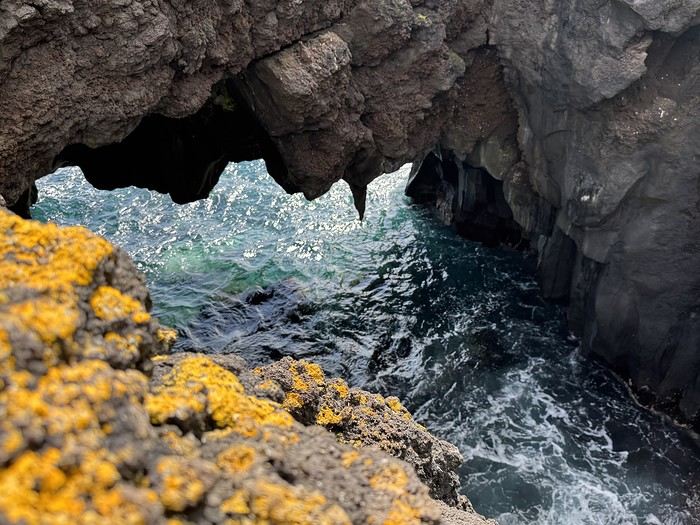
Leaving the view behind, we set off for our first exploration of the island. We head to the south coast with its red windmills and lava fields with quirky shapes. A small path lets you explore the lava fields and visit, among other things, the Arco da Velha.


You might also like