July 31
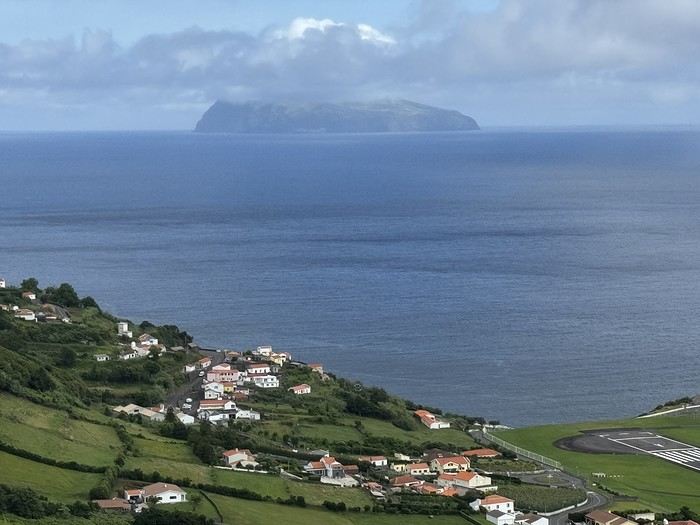
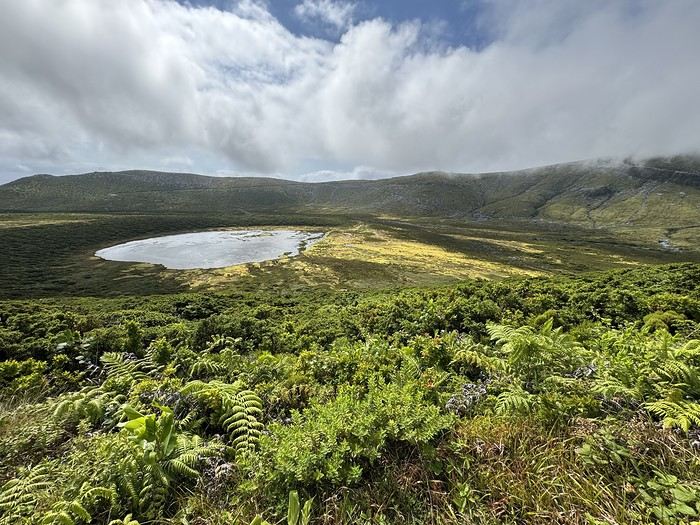
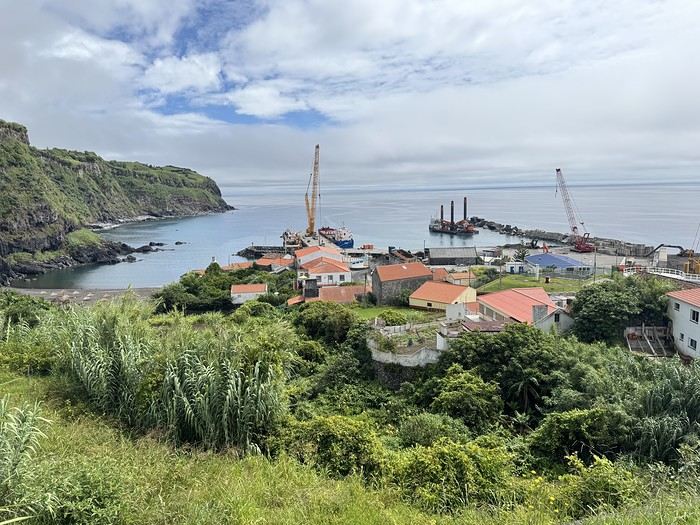
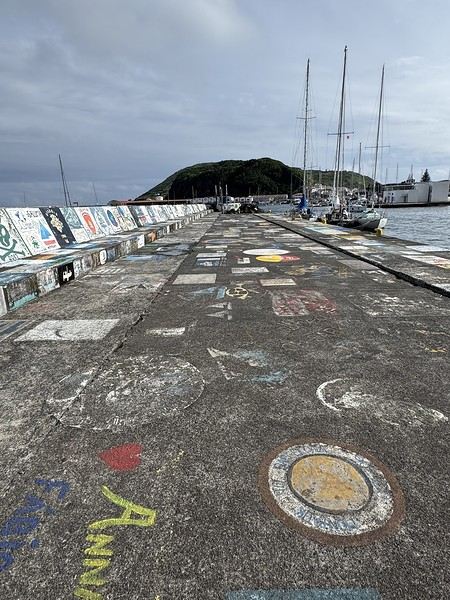
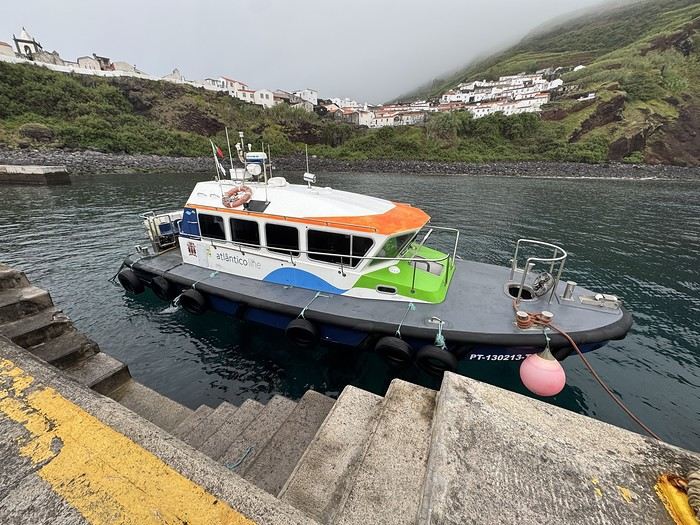
Glancing out the window when I wake up: the cloud ceiling is low. The caldera won’t be visible today. Anyway, today we’re changing islands and leaving Corvo for Flores. To get there, we take the public ferry (booked well in advance). The boat is tiny-tiny: just 12 seats total, I counted. The crossing takes about an hour, uneventful: Philomène sleeps for part of the trip while Hippolyte keeps an eye on a passenger who’s seasick (though the sea isn’t even that rough).
When we arrive on Flores, it’s drizzling. We pick up the car at the airport—a fifteen-minute walk from the port this time. Stop at the supermarket: Philomène read that the island is restocked once a week (on Wednesdays) and that by Saturday, the shelves could be empty. It’s Friday, and sure enough, the shelves are already looking sad. So, Philomène, gripped by fear of running out, starts compulsively stocking up on rice, pasta, and tomatoes.
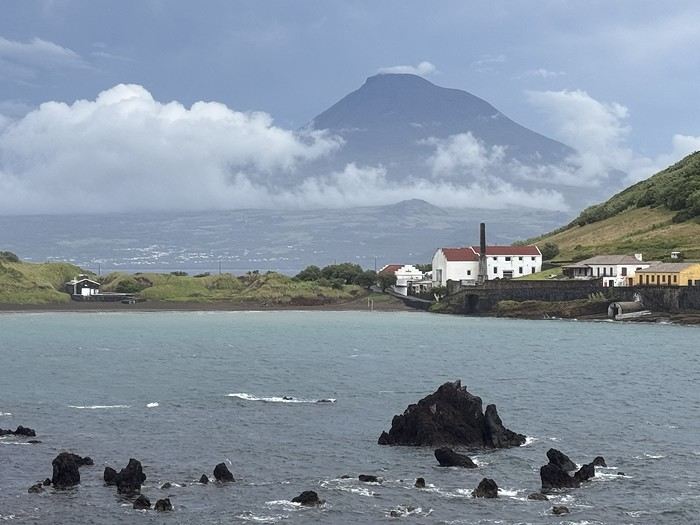
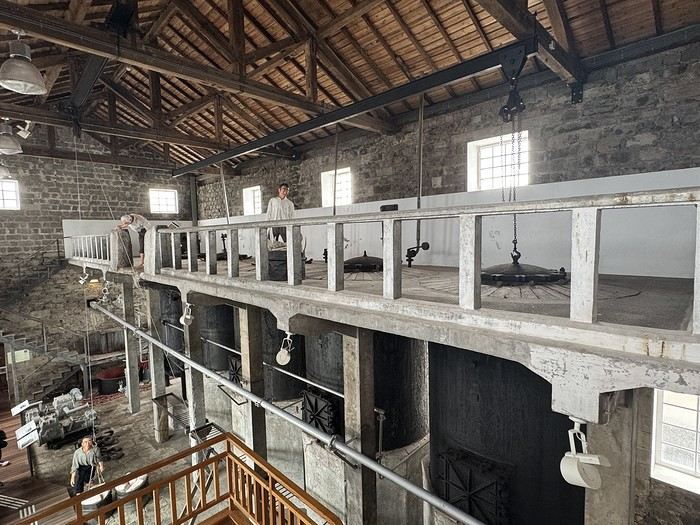
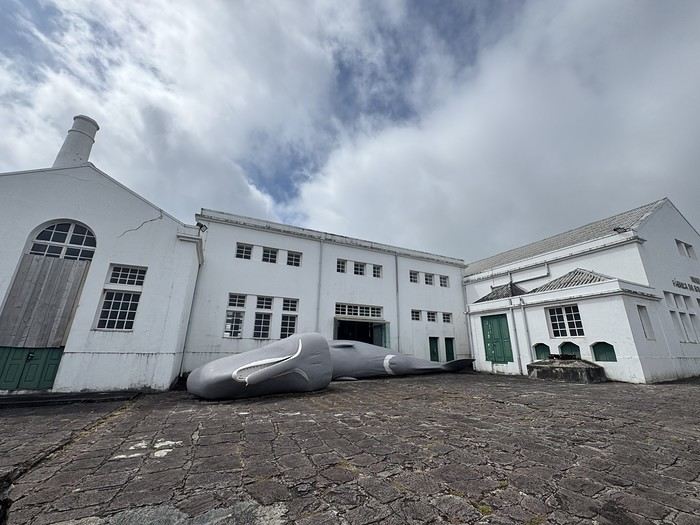
Since the accommodation isn’t available until noon, we visit (for 1 euro) the Fábrica da Baleia do Boqueirão, a former whaling station turned into a museum of the same name, located right next to the supermarket. It’s pretty gruesome but very informative. We learn how whales—or rather, sperm whales—were fished (locals didn’t say "fishing" or "hunting" whales but "embarking for the whale"), as well as how the catch was processed and transformed. In addition to the explanatory panels, there’s a short film (in French, with Portuguese and English subtitles, produced by an association from the Landes de Gascogne, very 1960s—interesting on multiple levels), objects, and photos. You see every step of the hunt, the flensing, and the processing of the animal’s body. It’s all quite bloody. And I won’t even mention the animal’s suffering. For the flensing, people are in shorts and shirts, barefoot in the sperm whale. Different times, different customs.
After this cultural interlude, it’s time to head to our lodging in Loma. It’s well-equipped, with a very attentive host (there are even beach towels she keeps offering to wash for us). The host, who lives right next door, welcomes us with a bottle of red wine and a platter: cheeses, salted flank, sun-dried tomatoes... That’ll be our meal. Then she comes back with four big pieces of fish, the result of her husband’s fishing. It’s super nice, but I still hope he won’t go hunting rabbits in the next few days. For now, Flores is hot, humid, and green.
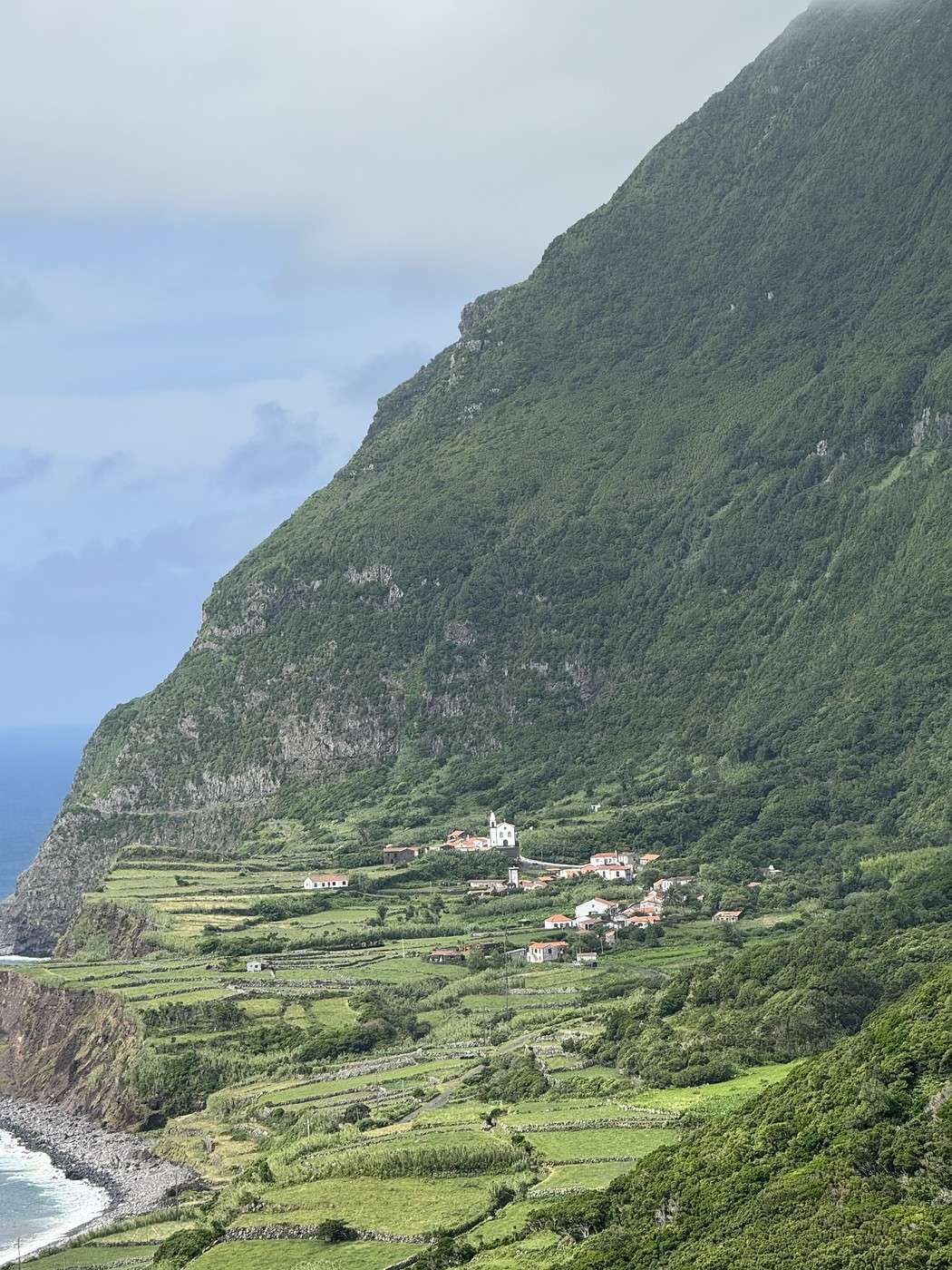
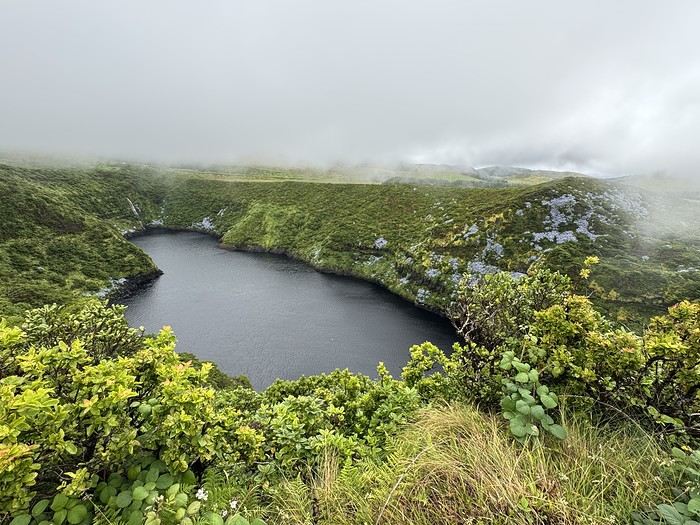
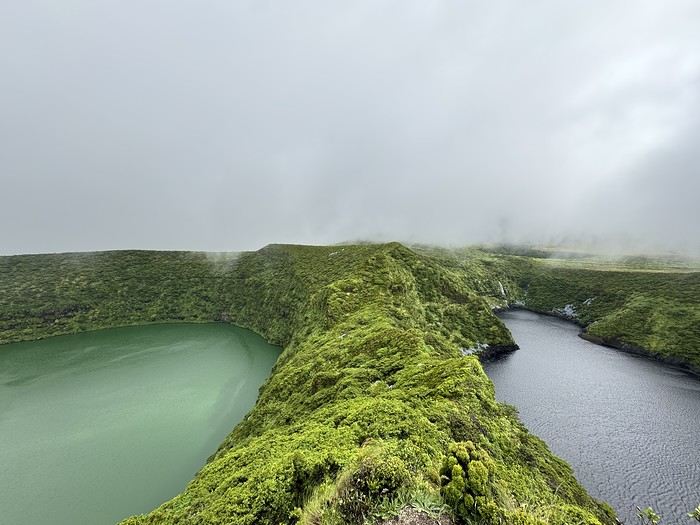
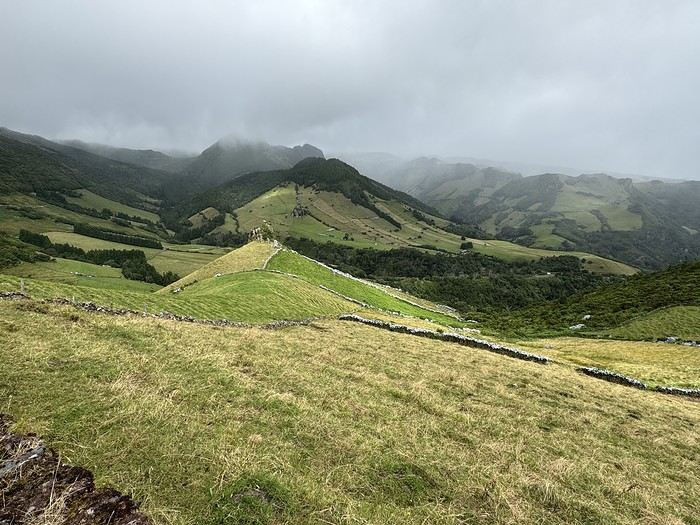
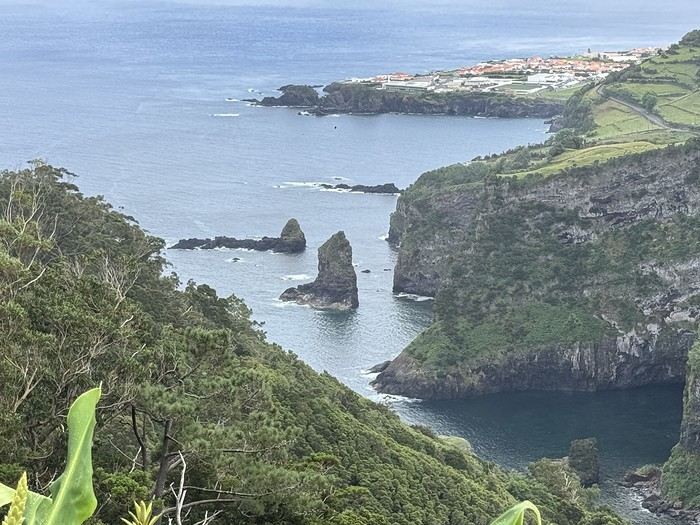
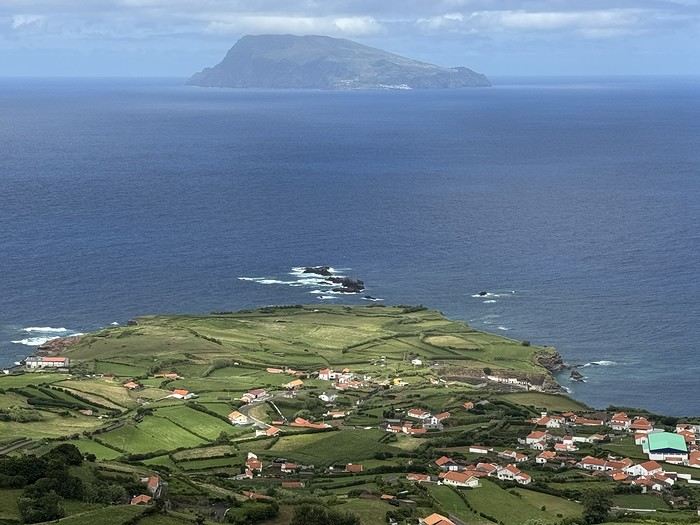
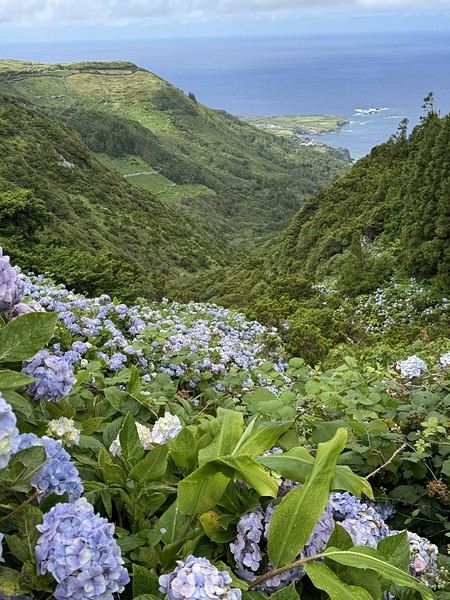
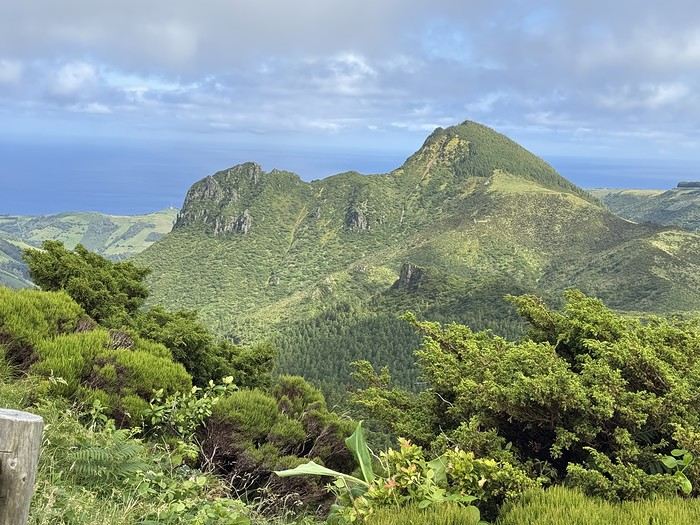
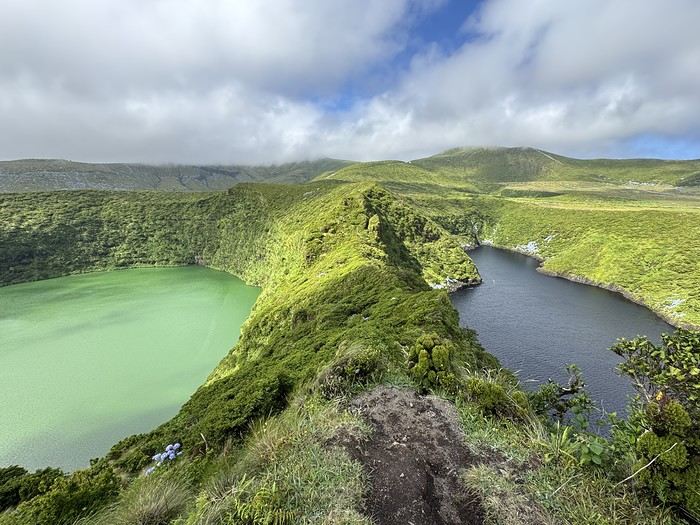
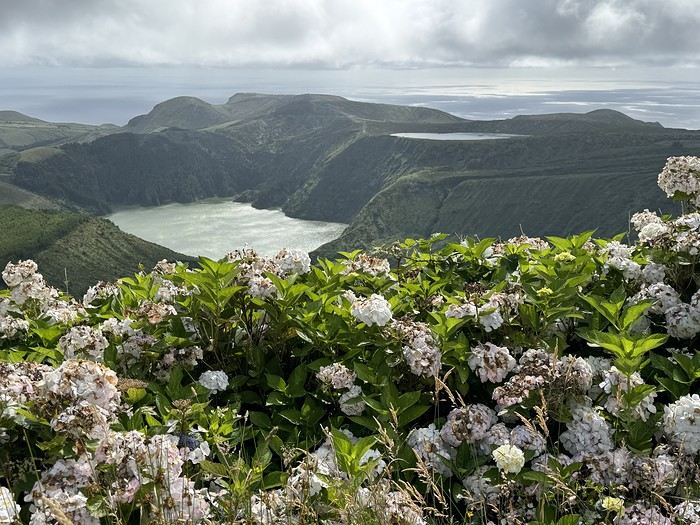
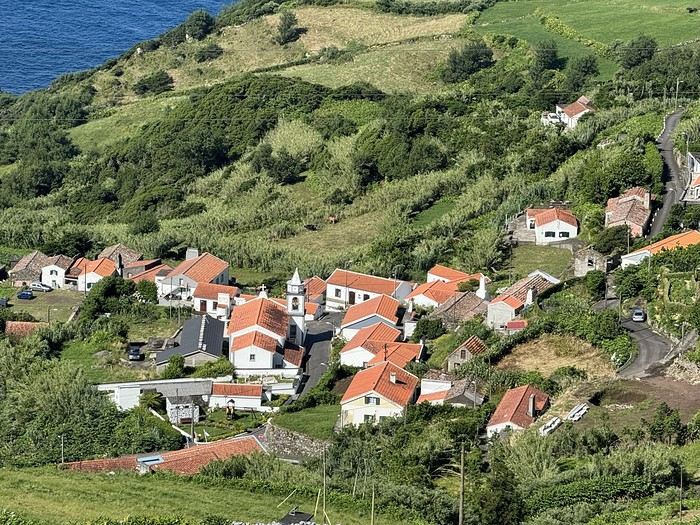
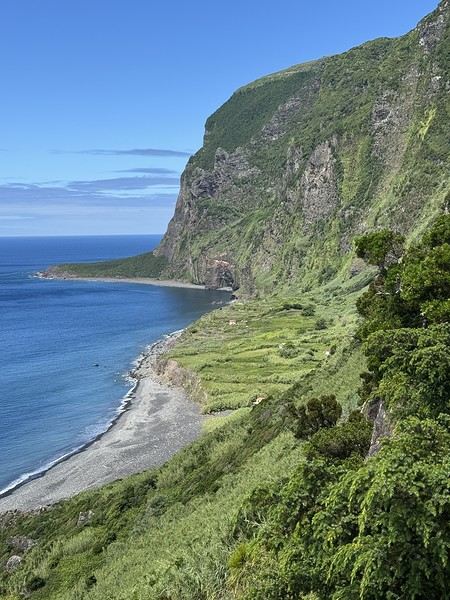
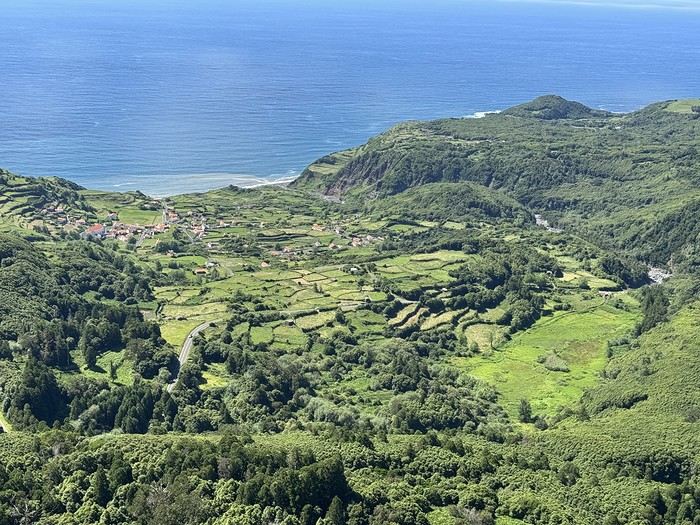
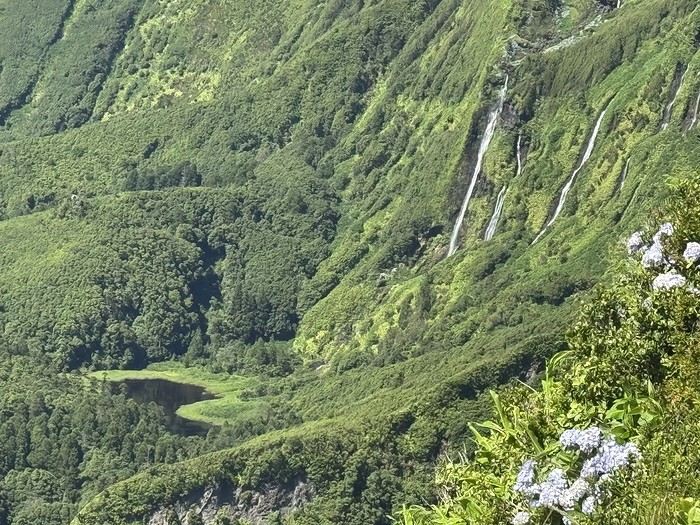
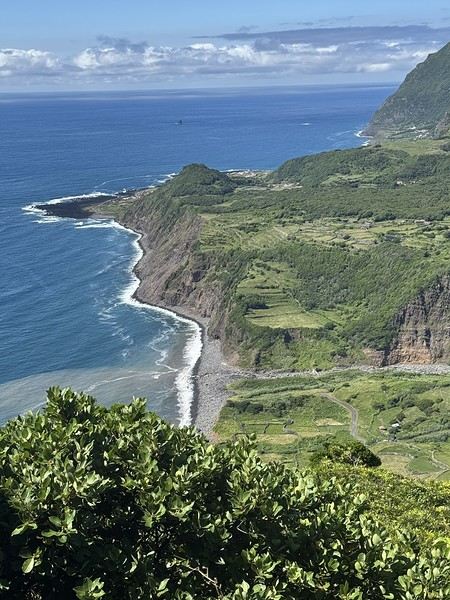
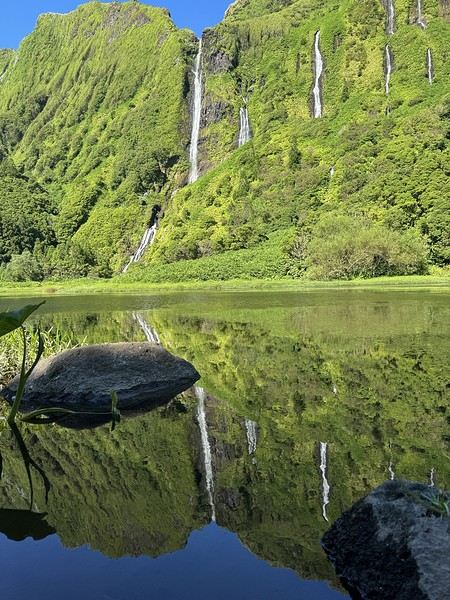
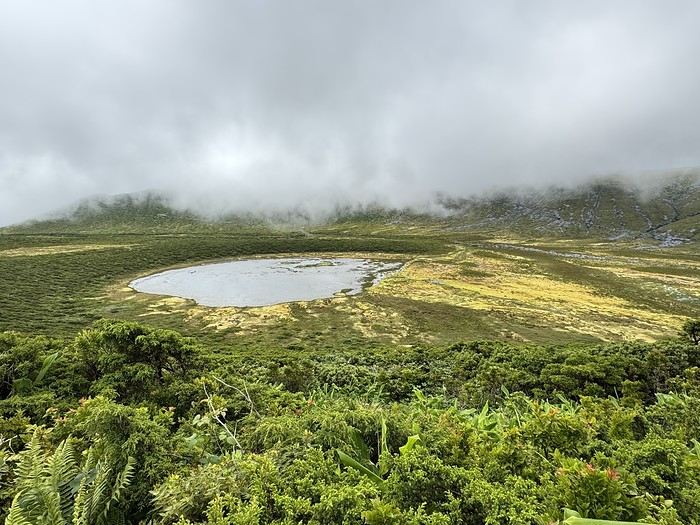
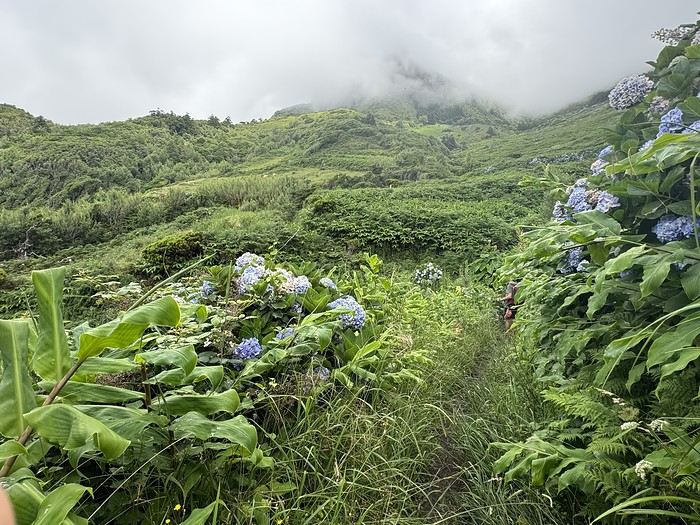
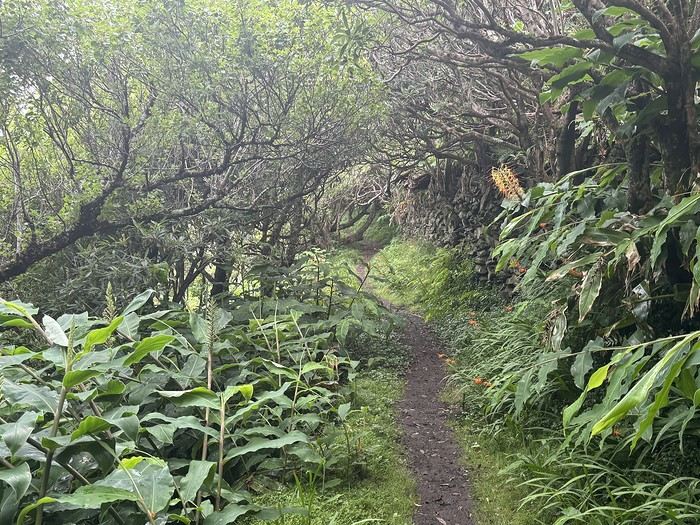
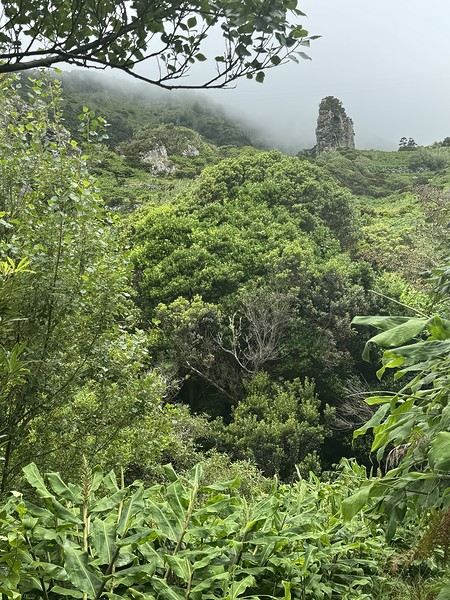
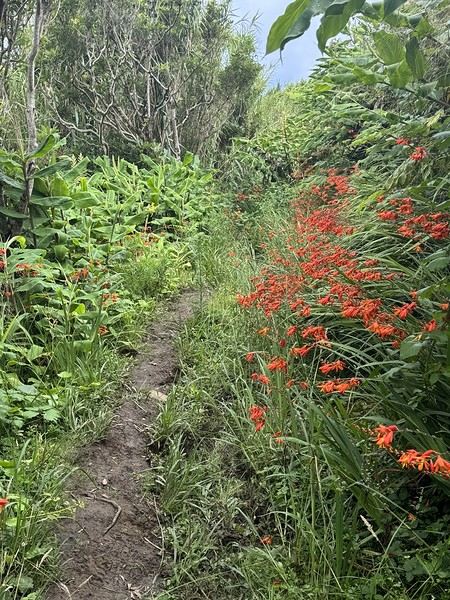
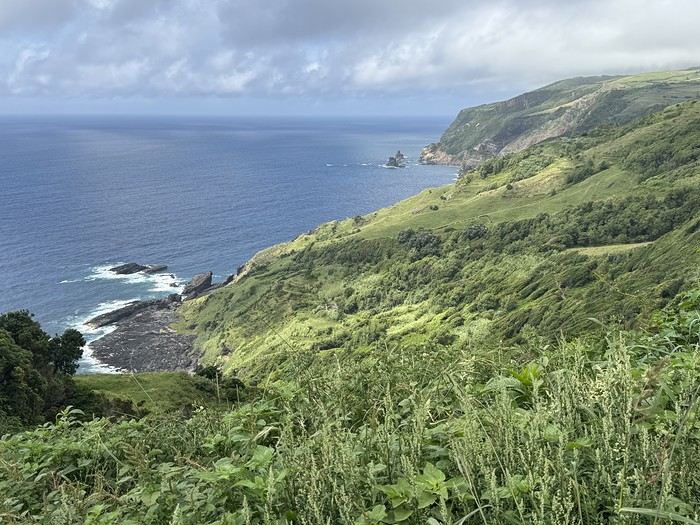
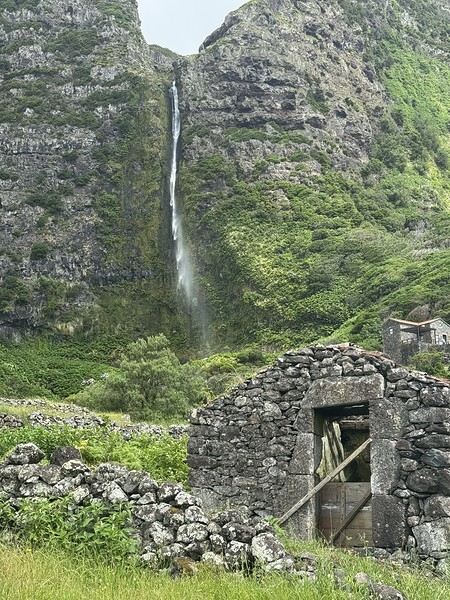
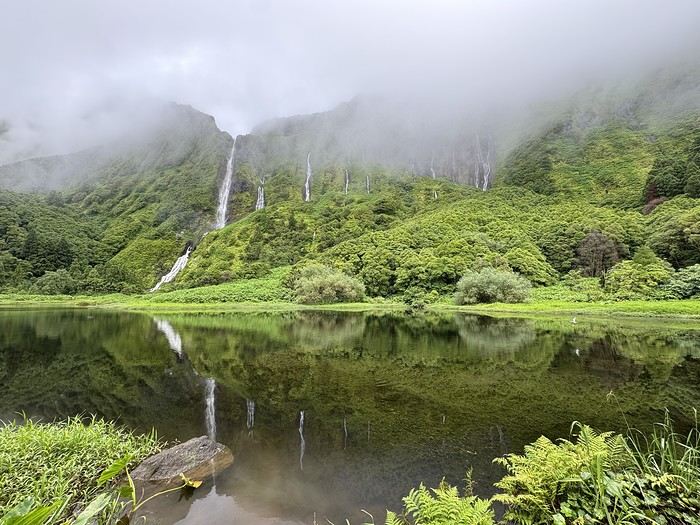
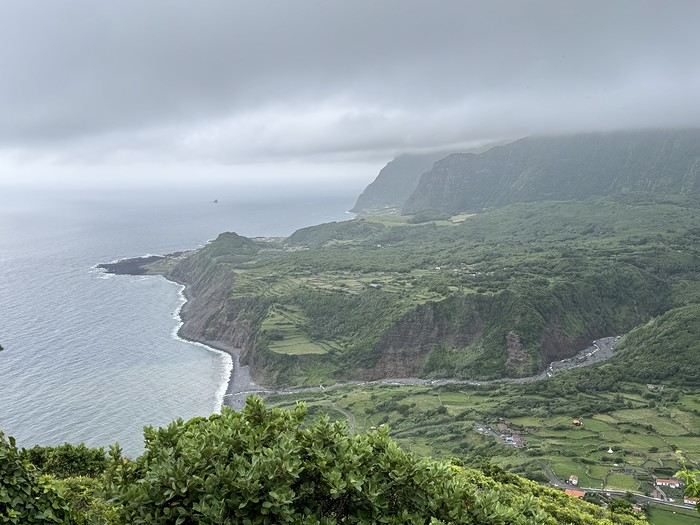
The weather clears up a bit but remains uncertain. Oh well, let’s go exploring. First, the island’s most famous waterfalls, Poço da Ribeira do Ferreiro. They’re still pretty despite the misty weather. We wait a little for the summit to clear. Then we hit the miradouros (what we call "viewpoints") in the area. The landscapes are really beautiful, and each miradouro reveals a different facet. I especially like the view of the fajã of Fajã Grande with the little church at the very end. But everything is really gorgeous. We explore a large part of the area—which, without wanting to sound obsessed with the weather, is below the clouds. In hindsight, this is the most beautiful part of the island, or at least the one with the most diversity per square kilometer.
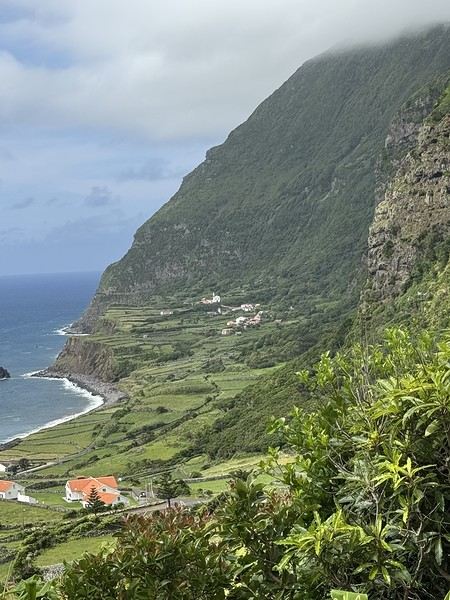
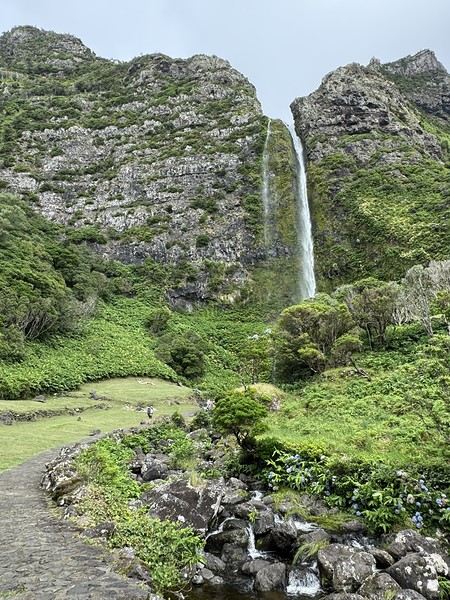
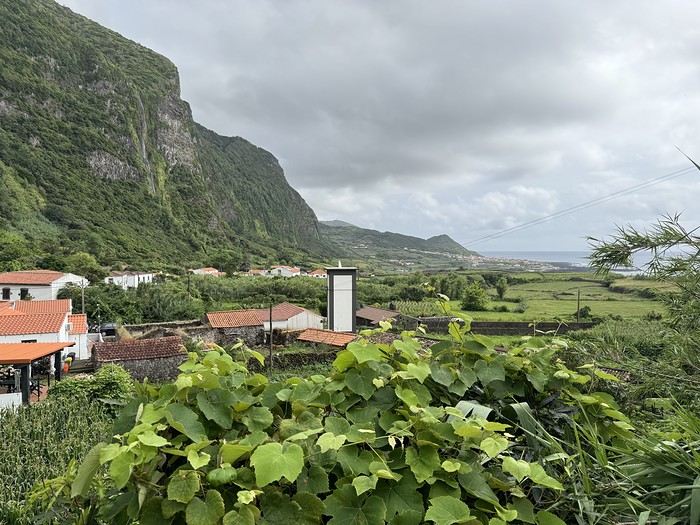
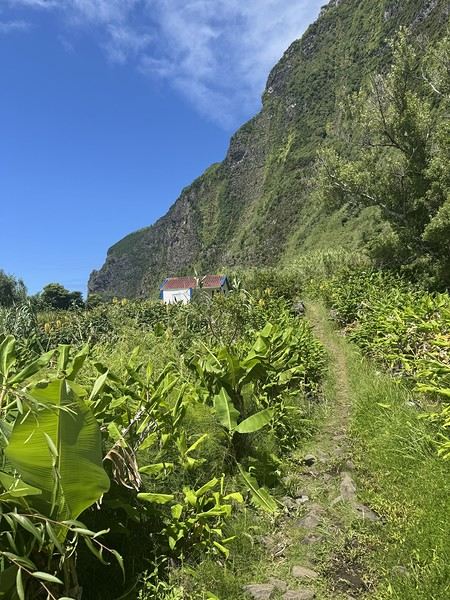
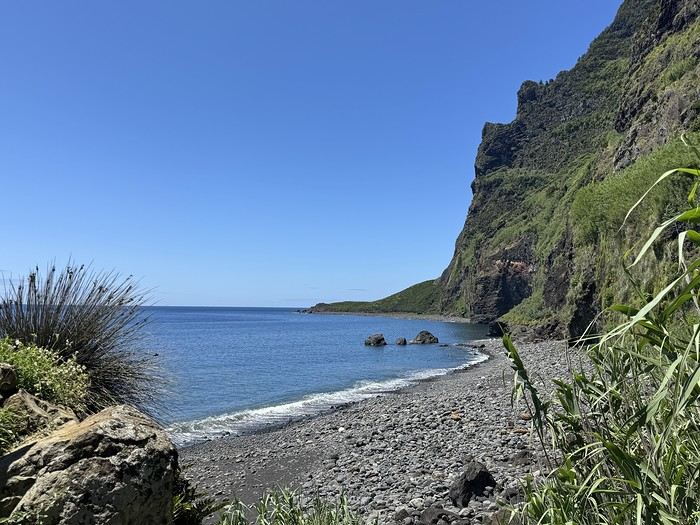
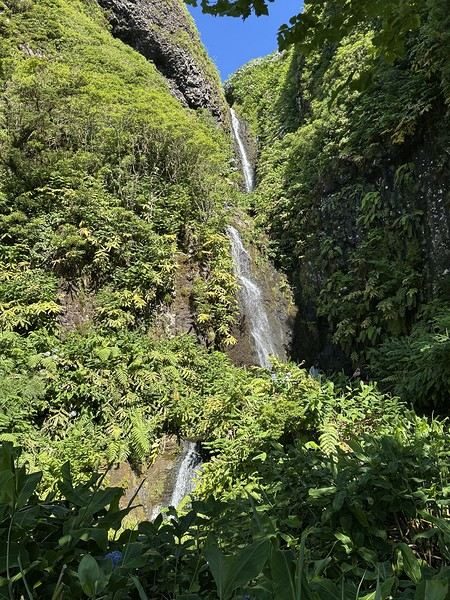
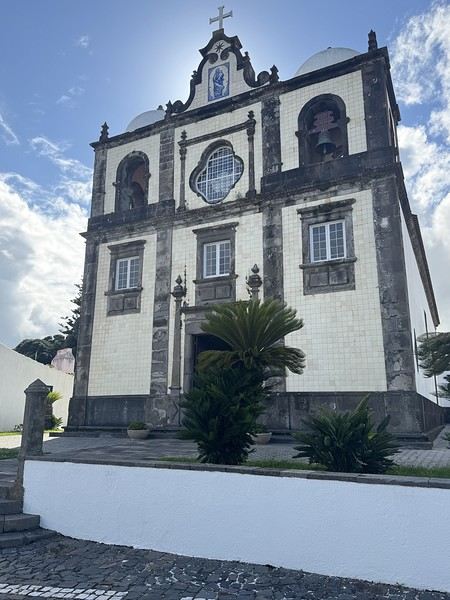
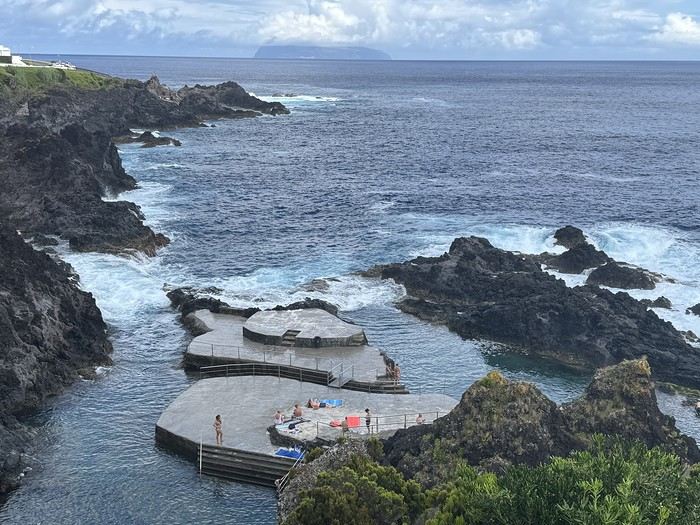
We go all the way to the end of the fajã to see the little church after stopping at the Cascata do Poço do Bacalhau, where you can swim. With a little regret for that waterfall, we decide to end the day with a splash in the natural pools of Fajã Grande.
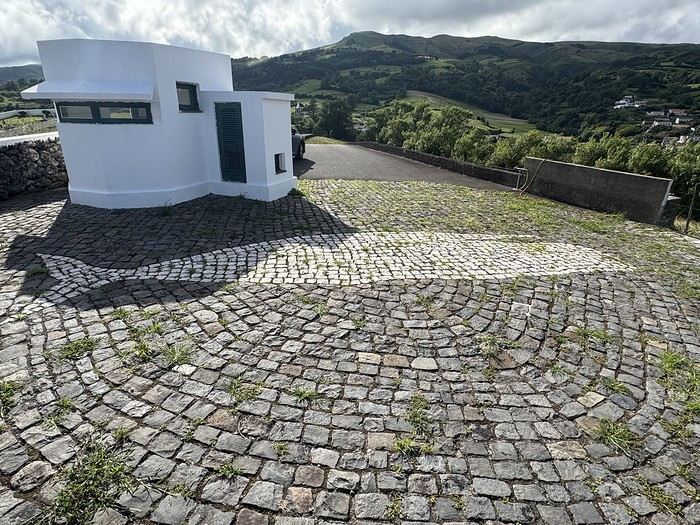
A few last viewpoints on the way back because we deserve it.
Glancing out the window when I wake up: the cloud ceiling is low. The caldera won’t be visible today. Anyway, today we’re changing islands and leaving Corvo for Flores. To get there, we take the public ferry (booked well in advance). The boat is tiny-tiny: just 12 seats total, I counted. The crossing takes about an hour, uneventful: Philomène sleeps for part of the trip while Hippolyte keeps an eye on a passenger who’s seasick (though the sea isn’t even that rough).
When we arrive on Flores, it’s drizzling. We pick up the car at the airport—a fifteen-minute walk from the port this time. Stop at the supermarket: Philomène read that the island is restocked once a week (on Wednesdays) and that by Saturday, the shelves could be empty. It’s Friday, and sure enough, the shelves are already looking sad. So, Philomène, gripped by fear of running out, starts compulsively stocking up on rice, pasta, and tomatoes.
Since the accommodation isn’t available until noon, we visit (for 1 euro) the Fábrica da Baleia do Boqueirão, a former whaling station turned into a museum of the same name, located right next to the supermarket. It’s pretty gruesome but very informative. We learn how whales—or rather, sperm whales—were fished (locals didn’t say "fishing" or "hunting" whales but "embarking for the whale"), as well as how the catch was processed and transformed. In addition to the explanatory panels, there’s a short film (in French, with Portuguese and English subtitles, produced by an association from the Landes de Gascogne, very 1960s—interesting on multiple levels), objects, and photos. You see every step of the hunt, the flensing, and the processing of the animal’s body. It’s all quite bloody. And I won’t even mention the animal’s suffering. For the flensing, people are in shorts and shirts, barefoot in the sperm whale. Different times, different customs.
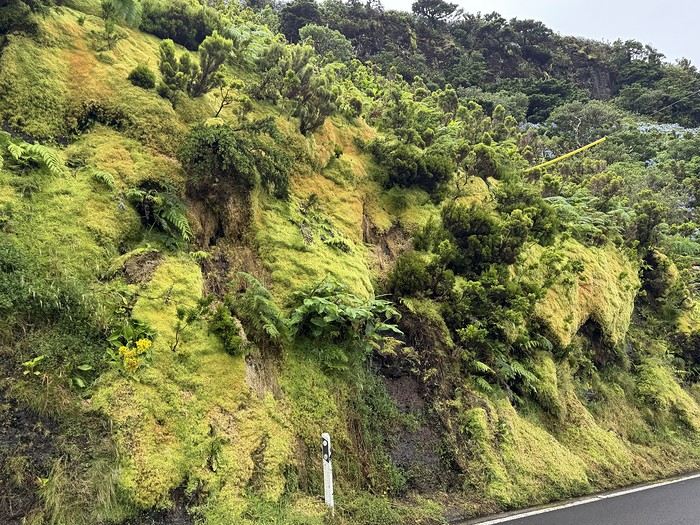
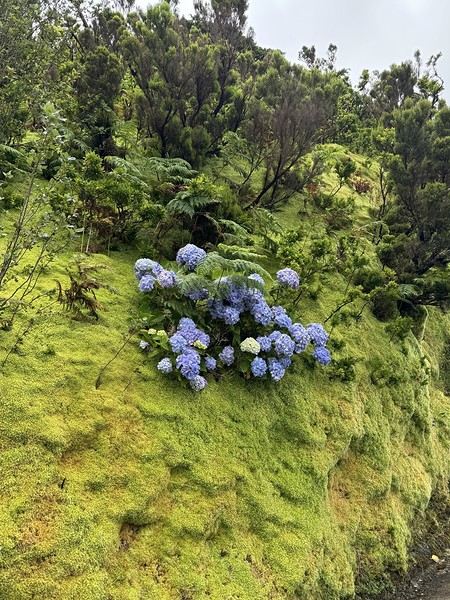
After this cultural interlude, it’s time to head to our lodging in Loma. It’s well-equipped, with a very attentive host (there are even beach towels she keeps offering to wash for us). The host, who lives right next door, welcomes us with a bottle of red wine and a platter: cheeses, salted flank, sun-dried tomatoes... That’ll be our meal. Then she comes back with four big pieces of fish, the result of her husband’s fishing. It’s super nice, but I still hope he won’t go hunting rabbits in the next few days. For now, Flores is hot, humid, and green.
The weather clears up a bit but remains uncertain. Oh well, let’s go exploring. First, the island’s most famous waterfalls, Poço da Ribeira do Ferreiro. They’re still pretty despite the misty weather. We wait a little for the summit to clear. Then we hit the miradouros (what we call "viewpoints") in the area. The landscapes are really beautiful, and each miradouro reveals a different facet. I especially like the view of the fajã of Fajã Grande with the little church at the very end. But everything is really gorgeous. We explore a large part of the area—which, without wanting to sound obsessed with the weather, is below the clouds. In hindsight, this is the most beautiful part of the island, or at least the one with the most diversity per square kilometer.
We go all the way to the end of the fajã to see the little church after stopping at the Cascata do Poço do Bacalhau, where you can swim. With a little regret for that waterfall, we decide to end the day with a splash in the natural pools of Fajã Grande.
A few last viewpoints on the way back because we deserve it.