Le volcan Merapi crache une grande quantité de nuées ardentes
Agence France-Presse
Volcan Merapi (Indonésie)
Le volcan Merapi crachait lundi matin une grande quantité de nuées ardentes, ces masses nuageuses composées de gaz brûlants et de fragments de lave solidifiée, un signe de l'augmentation de l'activité volcanique qui semble annoncer une prochaine éruption, selon un responsable.
«Entre minuit et 06h00 locales (17h00 et 23h00 GMT dimanche), il y a eu 88 rejets de nuées ardentes», a déclaré Jilal, du service de vulcanologie de Yogyakarta, une grande ville située à 30 kilomètres au sud du volcan, d'une altitude de 2914 mètres.
«Les nuées ardentes ont maintenant redescendu les pentes du volcan sur deux à trois kilomètres et demi en suivant le lit de la rivière Kali Krasak», a-t-il ajouté, désignant ainsi une zone située sur la pente sud-ouest du volcan dans la province centrale de Java, où la population est dense.
Cependant, selon ce responsable, ces rejets ne sont pas encore considérés comme une éruption du volcan, placé sous la cote d'alerte maximale samedi, avec pour conséquence l'évacuation de milliers de personnes de ces pentes fertiles.
«C'est seulement le signe d'une activité extraordinaire» du volcan, dont le nom signifie «Montagne de feu», a-t-il noté.
Les autorités n'ont pas publié le nombre total des personnes qui sont considérées comme habitant dans une zone de danger immédiat, mais le vice-président indonésien Yusuf Kalla avait cité la semaine dernière le chiffre de 34 000.
Les nuées ardentes, qui atteignent la température de 500 degrés Celsius, avaient tué 66 personnes lors de la dernière éruption du Merapi en 1994.
J'étais allée au pied du Merapi (Java) il y a quelques années. Le monstre était endormi...
Extrait de mon carnet de voyage en Indonésie :
Avant de quitter Java, nous avons rendez-vous avec le volcan Merapi, dont le chapeau orné d'un panache blanc émerge des brumes matinales. Une route sinueuse mène au redoutable sommet dont les éruptions fréquentes ont souvent provoqué des désastres mortels. Et pourtant les habitants n'ont pas renoncé à cultiver ses pentes fertiles malgré les soubresauts imprévisibles... Ils reconstruisent inlassablement leurs maisons après chaque catastrophe avec un entêtement surprenant. Il a l'air si calme, vu du belvédère, mais les profondes ravines qui sculptent le cône donnent une idée de l'énorme coulée de lave qui s'est échappée du cratère lors de la récente éruption. Quelques photos exposées donnent un aperçu de ce spectacle terrifiant...
J'avais fait son ascension en 1991 et nous (une poignée de fous) étions même descendus au fond du cratère. Les guides nous demandaient de suivre leurs pas pour éviter de mettre le pied sur une croûte mal durcie qui cache un filet de lave en fusion.
Mais l'arrivée au sommet de nuit avec les rougeoiements et les fumerolles de soufre est sans dout l'une de mes plus belles expériences de voyage. 5 heures de marche de nuit dont la dernière à 4 pattes sur le tas de cailloux qui constituait son flanc avec, en prime, un jet de soufre ou une pierre brûlante de temps en temps.
Le volcan indonésien Merapi crache des nuages funestes
Bhimanto Suwastoyo
Agence France-Presse
Volcan Merapi, Indonésie
Le volcan indonésien Merapi crachait lundi une grande quantité de nuées ardentes, des masses gazeuses brûlantes et destructrices, alors que se poursuivait la difficile évacuation de milliers de résidents.
«Entre minuit et 06h00 locales (13h00 et 19h00 HAE dimanche), il y a eu 88 dégagements de nuées ardentes», a déclaré Jilal, du service de volcanologie de Yogyakarta, une grande ville située à 35 kilomètres au sud du volcan.
«Les nuées ardentes ont maintenant descendu les pentes du volcan sur deux à trois kilomètres et demi en suivant le lit de la rivière Kali Krasak», a-t-il ajouté, désignant une zone située sur la pente sud-ouest du volcan.
Le niveau d'alerte sur le Merapi a été relevé samedi à son cran le plus haut, autorisant l'évacuation de quelque 34 000 habitants. Le Merapi est situé au coeur de l'île de Java où la population est dense.
À 17H00 lundi, près de 11 000 habitants avaient été déménagés de onze villages considérés comme particulièrement exposés. Les autorités espéraient faire de même avec 6000 autres personnes du district de Magelang.
Toutefois malgré les nouveaux dangers les représentants officiels continuaient à se heurter au scepticisme et aux résistances des habitants qui rechignaient à quitter leurs terres.
«Ils savent les risques mais ils se préparent à s'évacuer eux-mêmes avec des véhicules en cas d'éruption majeure», a indiqué à l'AFP Sapto, un responsable local du district de Sleman.
Dans la station d'altitude de Kaliurang, les rues étaient vides et les commerces fermés alors que des nuages menaçants apparaissaient à quelques kilomètres.
Mais ailleurs selon les autorités, de nombreux hommes jeunes et leurs pères choisissaient de rester près de leurs récoltes et de leur bétail, laissant femmes et enfants descendre vers les centres d'accueil.
Ces trois dernières semaines, un dôme de lave pâteuse, source de grande inquiétude, s'est élevé de plusieurs dizaines de mètres au sommet du Merapi.
«Nous redoutons qu'il s'effondre sur nous», a déclaré Albert Gintaryo, coordinateur des évacuations dans le district de Boyolali.
Selon le volcanologue français Jean-Paul Toutain, un spécialiste du Merapi, les nuées ardentes peuvent parcourir jusqu'à une quinzaine de kilomètres. Des centaines de résidents restaient donc menacés lundi, alors que les autorités confirmaient «ne pas forcer» les villageois à s'écarter du cratère.
Ratdomo Purbo, de l'Agence d'atténuation des risques volcaniques et géologiques indonésienne, a de son côté indiqué lundi à l'AFP ne pas voir d'apaisement rapide du volcan.
La plus violente éruption du Merapi a eu lieu en 1930, et a tué 1.369 personnes. Une autre éruption en 1994 avait fait plus de 60 morts et forcé 6000 riverains à fuir.
Cette montagne culminant à plus de 2.900 mètres est située à la rencontre des plaques tectoniques eurasienne et indo-australienne.
Selon l'Agence d'atténuation des risques volcaniques et géologiques indonésienne, une explosion paroxysmale du Merapi mettrait immédiatement en danger plus d'un million d'habitants dans la région de Yogyakarta.
L'Indonésie est un immense archipel formé de milliers d'îles et d'îlots situé sur la «ceinture de feu» du Pacifique.
Ce pays a connu les deux plus grands phénomènes terrestres des temps modernes: d'abord l'éruption du volcan Tambora en 1815, la plus meurtrière de l'histoire; ensuite l'explosion du Krakatoa en 1883, qui a déclenché des vagues qui firent le tour du monde et altéré les climats des cinq continents.
Hey salut la gang! He bien nous, on part justement pour l'Indonésie le 22 juin, pour 7 semaines. Nous allons être à Jogyakarta le 24 juin, hehehehhe! Nous ne voulions pas aller sur le Merapi, les guides le déconseillent fortement, mais étant donné son éruption iminente, nous allons nous y attarder un peu plus que prévu. Tenter de prendre des photos du volcans...etc.J'espère seuleemtn que le volcan nous attende avant d'exploser!
Encore trop d'Indonésiens menacés par le volcan Merapi
Bhimanto Suwastoyo
Agence France-Presse
Volcan Merapi, Indonésie
Plus de 22 000 personnes avaient été évacuées mardi des pentes du volcan indonésien Merapi mais des centaines d'autres risquaient de mourir en refusant de quitter leur village.
Le président Susilo Bambang Yudhoyono s'est rendu à plusieurs centres d'accueil d'urgence où il a solennellement demandé la «coopération, la compréhension et la patience» des personnes déplacées, trop nombreuses à retourner à leur maison après avoir été évacuées.
De nombreux Javanais imprégnés de mysticisme ont davantage tendance à croire aux esprits et à de mystérieux présages qu'aux autorités pour évaluer le péril volcanique, pourtant bien réel.
«Je sais qu'à Yogyakarta (la grande ville à 35 kilomètres du Merapi) il y a encore des croyances traditionnelles. Je respecte ces croyances mais quand on en vient à sauver des gens il nous faut bien faire notre travail», a lancé le chef de l'État indonésien à des responsables locaux.
La «Montagne de feu» ne crachait plus mardi de nuées ardentes, ces masses nuageuses brûlantes très destructrices qu'elle a produites en grande quantité lundi. Mais la menace restait vive.
Ratdomo Purbo, de l'Agence d'atténuation des risques volcaniques et géologiques indonésienne, a expliqué au président Yudhoyono que le dôme magmatique poussant au sommet du Merapi penchait vers le sud.
«Par conséquent il faut déclarer en danger les régions de Klaten, Sleman et Magelang», a déclaré le spécialiste.
«Les plus gros nuages brûlants sont en général précédés par des plus petits et il s'agit d'un des signaux que nous étudions», a-t-il ajouté.
Un total de 16 870 personnes avaient été évacuées mardi de trois districts de la province de Java Centre a indiqué Rudi, un responsable de l'agence anticatastrophes de la capitale provinciale Semarang.
Plus de 5600 autres avaient été mises à l'abri dans le district de Sleman, qui fait partie de la province de Yogyakarta, selon la cellule de crise locale.
Ces bilans incluaient toutefois les hommes qui ont choisi de rester pour garder leurs récoltes, leur bétail ou leur maison, a expliqué Harjo, un responsable local du village de Wonokerto.
«Ils sont quand même considérés comme des évacués vu qu'on leur envoie des vivres des abris et qu'ils se tiennent prêts à évacuer si le danger se rapproche», a-t-il dit à l'AFP.
Le niveau d'alerte sur le Merapi a été relevé samedi à son cran le plus haut, autorisant l'évacuation de quelque 34 000 habitants. Le Merapi est situé au coeur de l'île de Java, où la population est dense.
Selon Rudi les autorités pourraient commencer à être davantage coercitives avec les nombreux villageois qui décidaient malgré le danger de rester sur place.
«Nous pourrions en venir à les forcer à évacuer vu que cela serait pour leur propre bien et leur propre sécurité», a-t-il déclaré à l'AFP.
Mais dans le district de Sleman les responsables n'avaient pas de telles intentions. «Nous ne les forcerons pas à fuir mais nous préparerons tout ce qui est possible pour leur permettre de fuir à la dernière minute», a affirmé l'un d'entre eux, nommé Sutanto.
Des véhicules à cet effet avaient selon lui été positionnés dans les villages les plus en altitude ainsi que dans les coulées possibles de nuées ardentes.
Les nuées ardentes, qui atteignent la température de 500 degrés Celsius, avaient tué 66 personnes lors de la dernière éruption du Merapi en 1994.
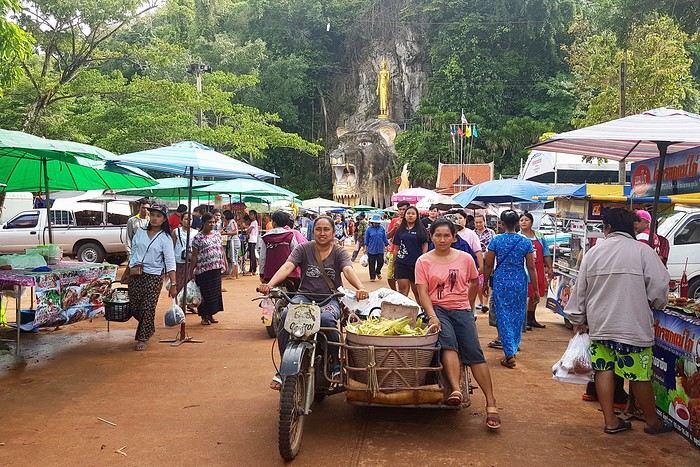
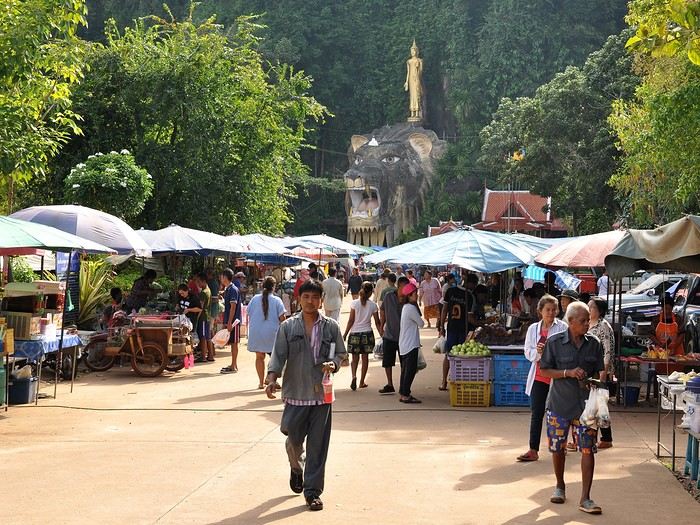
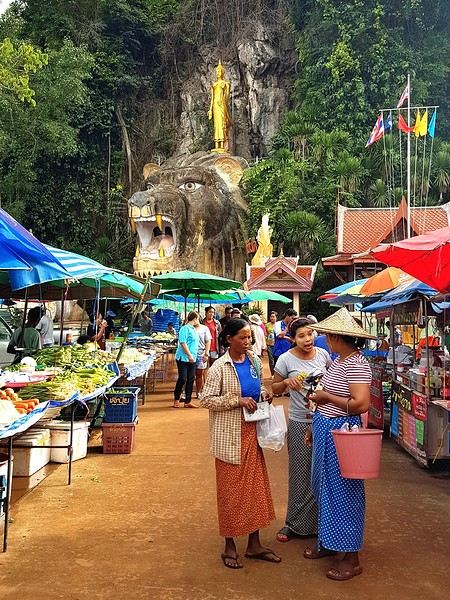
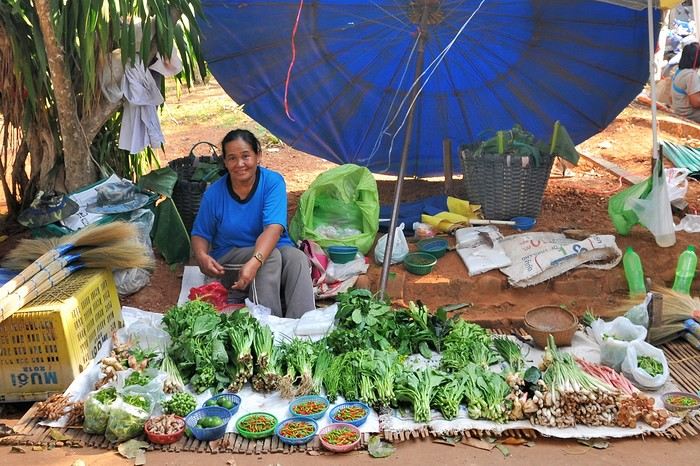
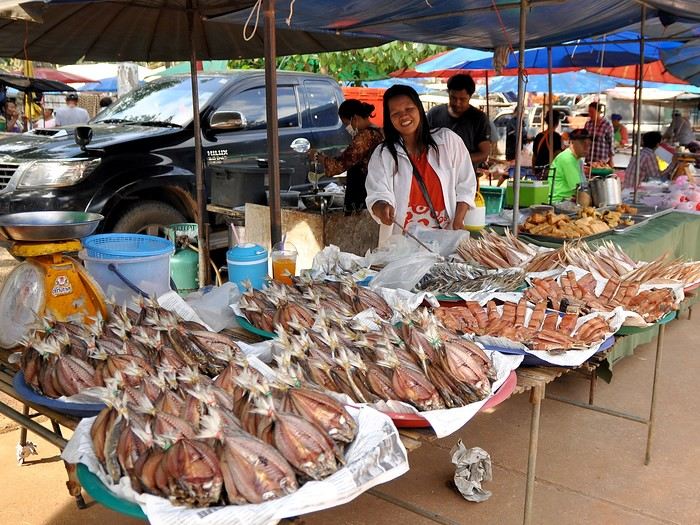
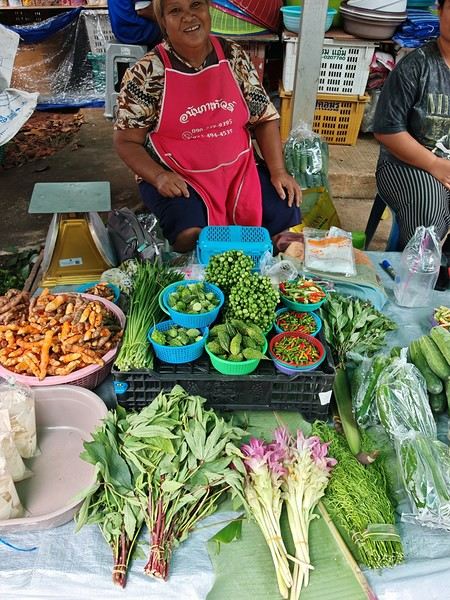
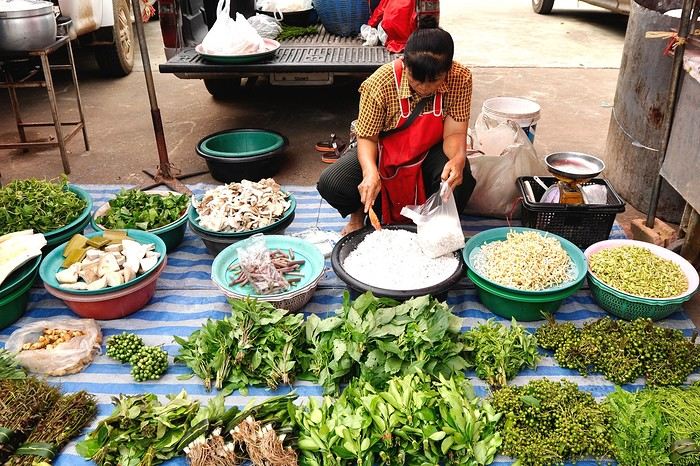
I don’t know about you, but I’m a huge fan of markets. No matter where I go, in every country or city I visit, I won’t leave without having seen one. I’m mostly talking about food markets. I love the smells, the colors, and watching people from all walks of life stroll around. It’s like a mirror of a country’s culture, and I love soaking it all in.
Thai markets are particularly appealing to me. In my province, there are so many. Maybe more than elsewhere—I’m not sure—but every day, you can find a "Talat Nat." These are traveling markets that set up in specific places on specific days. They only stay open for a few hours. Some attract more shoppers than others because they have more stalls and a wider variety of products. Sometimes, they’re set up in pretty unusual spots: temples, roadside, even on train tracks...
On top of these, there are also markets in the city that stay open all day.
I’d love for you to share your photos of markets, local product stalls, and why not, let’s talk about gastronomy and cuisine too!
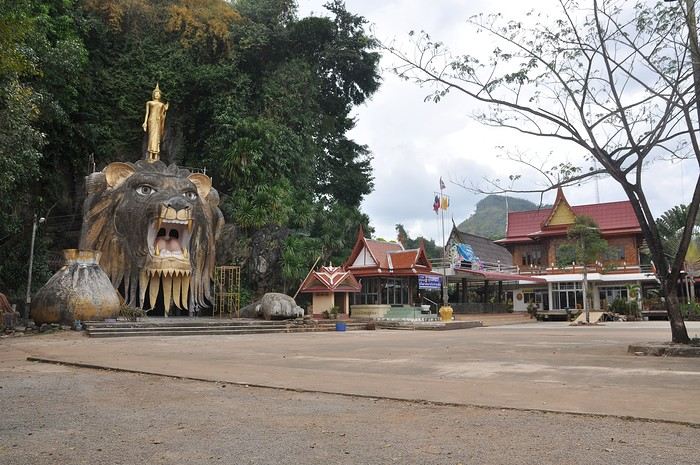
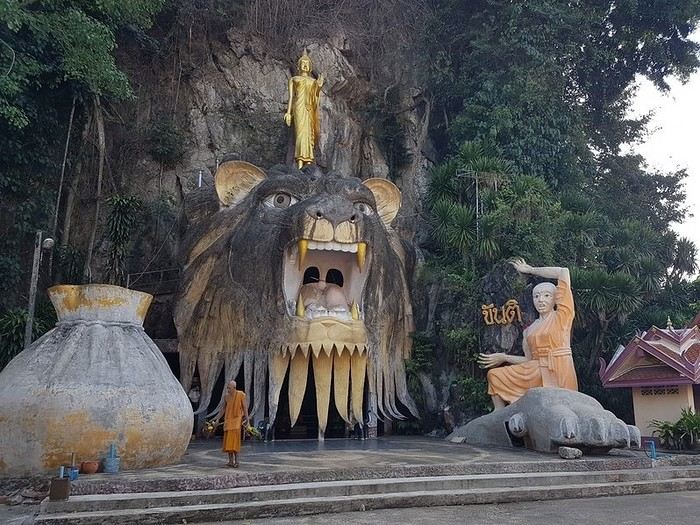
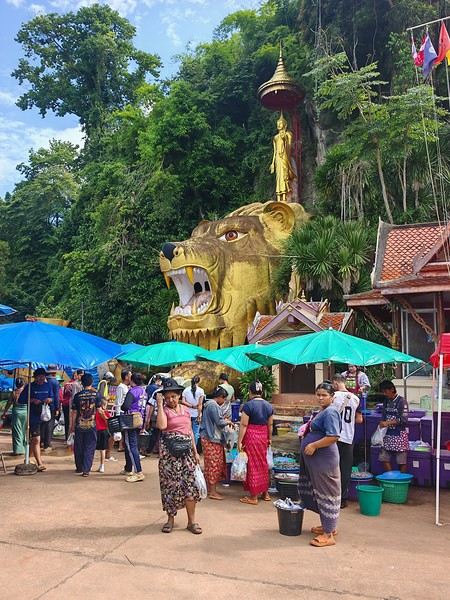
I’ll start with my favorite market—it’s 8 kilometers from my place and happens every Tuesday from 2 PM to 5 PM. I never miss a Tuesday unless there’s a downpour... 😉 It’s located in the countryside, in a village famous for its coffee (ThamSing), and inside the grounds of a slightly unusual temple. It’s easy to get to—over the past 10 years, the roads have been paved, which wasn’t the case before and made the trip a bit risky when it rained...
In the first two photos, you’ll see the temple courtyard on a normal day, without the market.
I’d like to do a kind of personal retreat this winter and I’m looking for a destination near the sea (preferably an island) that’s quiet. Is that possible in Thailand, or should I consider another destination?
Thanks for your thoughts.
Dayi
We’re 49 years old, love beautiful landscapes, meeting locals, discovering local food and traditions, and we avoid overly touristy places.
We enjoy hiking, cycling, running, and diving.
This is our first time in Thailand (my husband knows Bangkok).
We arrive on Friday, November 13th in Bangkok (city visit) and return on Friday, November 27th.
We’re considering heading south (possibly toward Krabi) from the 14th to the 18th to enjoy the beautiful beaches, go diving, and see Khao Sok...
Then back to Bangkok and on to Kanchanaburi to see the Sai Yok Noi waterfalls, followed by a bike visit to Ayutthaya.
From there, we’d take an overnight train to the north: Chiang Mai, Chiang Rai, and the Lantern Festival from November 21st to 25th.
On the 26th, we’d take a flight from Chiang Mai to Bangkok (city visit), and on the 27th, we have our flight back to France.
Does this itinerary seem too packed?
Should we remove some things to avoid feeling rushed and fully enjoy the trip?
Do you recommend anything other than Krabi?
This September, my partner and I are heading to North Sulawesi for 3 weeks. Our international flight is with Malaysia Airlines, departing from Paris. We have a layover in KL, then fly to Denpasar, followed by a domestic flight from Denpasar to Manado. We land in Bali Denpasar on 05/09 around 12:00 PM, and our flight to Manado is on 07/09 at 1:30 AM. The plan was to have at least one night (from the 5th to the 6th of September) between our international flight and our flight to Manado, just to recharge a bit since we're not 20 anymore 😛. My question is, given the very short stop in Bali (a day and a half), is it better to stay in Denpasar rather than go to Ubud for the night? I’ve been to Bali before, and from what I remember, even though the distances are short, transfers take a long time because of the extremely heavy traffic—but I was there in July, not September. I’m not sure if that makes a big difference?
If the answer is "it’s better to stay in Denpasar," are there any nice places to visit? There’s very little feedback about the city since tourists usually don’t stick around.
Thanks in advance for your replies.
Hi there,
I’ve found so many tips and reviews on this forum, so it’s my turn to contribute a little.
We spent just over two weeks with our family, with the following itinerary:
- Hanoi: 5 days
- Halong Bay: 3 days and 2 nights
- Tam Coc: 3 days
- Mai Chau: 2 days
- Sapa: 3 days
We got around by bike, scooter, Grab, and bus.
Our main accommodations were homestays and hotels in Hanoi.
We visited lots of museums, temples, and neighborhoods in Hanoi.
We did a 2-day, 1-night trek in Sapa with May, a Hmong local, without going through an agency.
A few small regrets: the weather was overcast, and we couldn’t make it to Fansipan, but nothing major 😅. We also couldn’t find transport to get from Sapa to Mu Cang Chai.
Other than that, this trip will stay in our memories for the kindness of the Vietnamese people, the connections we made, the food (street food, homestays...), the coffee 😋, the landscapes, and how easy it was to get around...
Our goal was to take our time and focus only on a small part of northern Vietnam.
If you need any tips or recommendations, don’t hesitate to ask.
Looking forward to hearing from you.
Cédric.
Hello everyone! I’m heading off solo in February and wanted to share my rough itinerary with you. Does this sound doable?
PS: I’m not really into beaches.
D1 Departure on February 17, 2027
D2 Arrival in Kuala Lumpur – stroll through Chinatown and visit the Petronas Towers
D3: Kuala Lumpur – Chow Kit Market, Batu Caves, Little India, Bukit Bintang downtown area
D4: Early morning bus to Malacca. Explore Malacca in the afternoon and evening
D5: Another 2–3 hours in Malacca in the morning, then bus back to Kuala Lumpur. Merdeka Square area. Stay in Chinatown
D6: Bus trip to Kuala Tahan. Night tour
D7: Morning – canopy walk and Bukit Terisek hike. Afternoon – off to Lata Berkoh
D8 & D9: 2-day jungle trek in Taman Negara National Park
D10: Head to Cameron Highlands
D11: Morning hike through the plantations. Afternoon still to be decided
D12: Morning – excursion to Mossy Forest and Sungei Plantation. Afternoon bus to Ipoh
D13: Morning – Mirror Lake / Sam Poh Temple area. Afternoon – explore downtown Ipoh
D14: Morning train to Penang. Afternoon – wander around Georgetown
D15: Morning – Penang Hill and Keh Loh Temple. Afternoon – Georgetown
D16: Bus to Butterfly Garden and Spice Garden. Late afternoon – Burmese and Thai temples
D17: Morning flight to Singapore. Afternoon – Chinatown and Marina Bay tour
D18: Morning – Gardens by the Bay area. Afternoon – Boat Quay, Clarke Quay, Kampong Glam
D19: Morning – The Ridges area and Botanical Garden. Afternoon – Little India, then back to Chinatown before 11:15 PM return flight
D20: Morning arrival
Hi everyone.
I’m heading to Malaysia for five weeks over the holiday season.
I just found out that tourists can pay by QR code like locals (street food, small shops) to avoid using cash.
This works with apps like Wise or TNG eWallet.
Has anyone tried this system before?
Hi everyone,
I’ll be in western Malaysia for 20 days in January and February.
I’m coming from southern Thailand to Ipoh for the Thaipusam festivities.
Then it’s off to Pangkor Island.
I’ll finish up in Malacca for the Chinese New Year celebrations before heading to Singapore.
I’ve got a 6-day gap.
I was thinking of going to K.Lipis for the jungle train and heading to Dabong, but the caves might not be open.
Any suggestions around K.L.?
Day treks?
A stopover between K.L. and Malacca?
Thanks
Hi, I’ve read that these two volcanoes are super popular and that there are *tons* of people for sunrise, especially in July. I’m looking for firsthand accounts from anyone who’s done it later, around 9–10 a.m.
Thanks for your help!
Laëtitia
I’m heading to Cambodia at the end of December 2026 – January 2027 for 3-4 weeks. Since I’ve already visited Cambodia twice, my itinerary is a bit different this time—I’d love to explore Botum Sakor Park, Chi Pat, the Tatai region, and the Cardamom Mountains. I’m traveling solo. If you have any tips on transportation, excursions, treks, sights, or accommodations in the area, I’d really appreciate it. Thanks for your feedback!
Has anyone traveled with the Laos travel agency ADV ?
I’m planning a trip to Laos and have received several quotes. Among them, this agency’s seem very reasonable, and so far, the interactions have been positive.
I’ve found a few positive reviews online, but I’d love to hear from travelers who’ve actually booked with them: how’s the organization, guide quality, accommodations, on-the-ground responsiveness, etc.
Thanks for sharing your experiences!
First stop on our discovery of the peninsula: Amphawa. It’s our first night in Thailand (we arrived at Suvarnabhumi at 8:50 AM).
Our initial plan was to explore the area before heading further south. The Mae Klong Railway Market is tempting... but what else is there to do????
We’ll be there on a Wednesday, and from what I’ve read on the forum, some say there’s absolutely nothing to do during the week—no floating market, barely any shops open, no restaurants, etc.
Others, though, say the place is actually more charming without the weekend crowds.
Could you share your thoughts? Missing the floating market is one thing, but if it’s really a ghost town on Wednesdays, I might just drop our bags somewhere else.
Amphawa seemed like a good first stop, just 1.5 hours from the airport, but I’d still like to settle somewhere a bit lively for our first evening.
We’ll be there at the end of October.
Thanks!
Hi,
I wanted to visit the plantations in the morning with GetYourGuide or by just showing up.
How much time should I really plan for?
I’d like to catch either the 3 PM or 5 PM bus back to KL.
Thanks
Hi,
I wanted to get some info about the cable car and the bridge—I see lots of different options...
How much time should we allow for these two activities? If we arrive around 4 PM, will we have enough time to visit without rushing?
Thanks
Hi there,
I didn’t plan to return to Thailand this year, but my health conditions mean it’ll be the best place for me to stay between two trips to India. The tourism setup there is so well-organized that it’s the most "comfortable" country for a short visit. Thailand feels too sanitized for my taste, and there’s too much religion, Buddha, and the King, but it’s still the best option given how my health has been evolving. I’d considered two weeks in ThaTon for hiking, but I got too sick from the burn-offs during my trips to the mountains around Chiang Rai. So I’m not sure where to go this year. Definitely not the sea, touristy spots, or the mountains with burn-offs...
Hi,
On September 1st, we're heading to Kalimantan for six weeks, probably from Pontianak to the Derawan Islands.
I've scoured this site, which is usually my go-to 😉, and others like VoyageForum, but recent info is pretty scarce.
I'd love any tips on places you've visited—our itinerary is still a work in progress.
We're two couples traveling with backpacks, using buses, boats, guesthouses, and homestays.
Thanks in advance!
Hi fellow travelers,
First trip to Vietnam.
We’ll be arriving in Ho Chi Minh City during Tet.
Is it complicated to find accommodation and get around during this period?
Any tips would be welcome.
Thanks for your replies.
Hi! I’d like to split my trip into two parts: 15 days in Phuket and 15 days in Krabi. Do you know if I can rent a car and drop it off in Krabi when I fly back to France?
Thanks for your feedback!
Have a great Sunday!
Martine
Hello,
After 1 night in Khao Sok, I’d like to find a 2 Days 1 Night package on the lake.
After reading a lot, I decided to "break the bank" and treat ourselves to a private tour—mainly to avoid the crowds.
But after contacting several operators, they offer "private tours" that are very expensive (around 700 €), yet in the details, the boats can only leave from the pier at 10 AM like everyone else. (I was hoping to leave much earlier.) The morning program is the same for everyone too (private or not). They drop us off at noon at our floating hotel (I’d chosen Phupha Waree). Free afternoon (swimming or kayaking in front of the hotel). We head back by boat for a 1-hour sunset ride. And the next morning, we leave the hotel at 8 AM to be at the pier by 9:30 AM at the latest—end of the trip.
So basically, we’re paying a lot for a private tour just to do the same thing as everyone else at the same time.
Or maybe I just had bad luck in my search.
I contacted Panida Ladi, who’s very popular on forums. We’d agreed on a private tour that matched my request (departure from the pier at 8 AM, very personalized itinerary). We settled on the itinerary and price, she asked for a Wise transfer for a 30% deposit, confirmed receipt of the deposit. Then 30 minutes later, she messaged me to say she was canceling everything because it was impossible to do the requested tour—and promised a quick refund of my deposit.
So here’s my question: Who’s done a *real* private tour on this lake? Who can recommend a reliable agency? Is it even really possible to do a private tour here?
I’m searching for a real gem for my 3rd stay in Koh Lanta: a lovely, high-quality hotel right by an easily accessible beach in a lively spot.
If you know of anything that fits what I’m looking for and want to share, don’t hesitate!
Hi, is anyone there in Flores right now? According to some websites, everything is closed and the situation is tough. But our guide says it's fine. Who should we believe? We're supposed to leave on September 2nd. Thanks to anyone in Flores at the moment!
Hi dear community,
I'm planning to visit Cambodia this winter, right after Christmas, for my first solo trip and my first trip to Asia. For two weeks (yes, I know it's short, but I really can't do more...). I have two main desires: Siem Reap and the countryside, the villages, the Mekong...
What do you think of this itinerary? Arrival in Siem Reap, departure from Phnom Penh.
SR: 5 days (1 day for arrival, 3 for the temples, 1 for the lake and its villages)
Kratie (stop on the way to Mondolkiri): 3 days (1 day of travel, 2 days there)
Mondolkiri/Sen Monorom: 4 days (1 day of travel, 1 day there, 2 days of treks)
PP: 3 days (1 day of travel, 2 days of sightseeing)
I think I need to cut one day somewhere if I travel from Saturday to Saturday or Sunday to Sunday. In Kratie, maybe? Or in PP? And I'll miss the boat trip that everyone recommends (SR-Battambang), but I don't see where to fit it in. Unless I do a PP-PP loop starting in the east, skip Kratie or just stay one night, then SR, then PP.
In my timing, Mondolkiri seems closer than Ratanakiri, which also tempted me a lot! Will it be too complicated alone? I'm thinking of using local guides or a small local agency for a nature and village getaway.
I've read that Siem Reap is very crowded between Christmas and New Year's. I could also do the circuit in the opposite direction. But I thought it would be easier to get familiar with the country by arriving in a touristy area—I might be wrong...
Thanks for your advice and opinions!
Hi everyone.
I’m planning my trip, and based on all the posts I’ve read, this country is amazing.
Of course, I’ve got a ton of questions for you.
Here’s a possible itinerary: Vientiane - Vang Vieng - Phonsavan - Sam Neua - Nong Khiaw + villages - Phongsali - Luang Namtha and the area - Udomxai - Huay Xai - Luang Prabang and back to Vientiane.
What do you think?
We’re planning to prioritize local transport—is it possible to do this loop?
We’d also love to go kayaking, but I’m not sure if the season’s right or where the best spot is.
For trekking—I read that Phongsali is the most authentic spot to visit villages and see wildlife. Do you know of a reliable agency and a guesthouse with reasonable prices?
Is it worth taking a slow boat for a stretch on the Mekong, and if so, which route?
For accommodations, is it better to book through Booking.com and Agoda or look when we arrive?
Are mosquitoes bad in Laos, and should we take malaria prophylaxis?
What’s the average daily budget (accommodation, food, visits)?
Is renting scooters a good option for exploring towns, and if so, which ones?
From what I’ve read, it’s best to carry cash—euros or dollars? Is it risky to walk around with that much cash?
I’ve still got tons of questions. Thanks to anyone who can help, and I’m open to all tips, info, etc.
Thanks again
Hi there,
I’m planning a family trip (my wife and I, both 47, and our two sons, aged 5 and 12) to Malaysia for the last week of June and the first two weeks of July 2027.
We used to love road trips as a couple, then as a trio, but since our second child arrived, we’ve taken a break with "camping village" style trips.
Now feels like the right time to get back to our old habits, while adjusting the pace for the kids.
We’re craving Asia. We’ve been lucky enough to visit Thailand, Indonesia (Bali and Lombok), and Sri Lanka before.
Friends have raved about Malaysia, so we’re definitely tempted.
For those who know and love Malaysia, what would be a good itinerary starting from Kuala Lumpur, with a maximum of 3-4 stops? We’d like a mix of culture, nature, and relaxation (just to clarify, we’re not big beach fans). All of this without rushing, of course.
Hello,
We’re a family of four with two teens aged 16 and 18. We’re heading to Thailand this summer. We’ll arrive in Bangkok and plan to take a flight to Luang Prabang.
I’ve seen there are some great visits and excursions to do (temples, markets, waterfalls) and maybe even venture a bit north to places like Nong Khiaw, Muang Xay, Muang Ngoy, or Oudom Xay.
But I’ve also heard about the Bokeo region with the Gibbon Experience.
Since we won’t be able to do everything, I’d love to hear about your experiences, impressions, and advice on the two options I’m considering, especially since we’ll be meeting family in Chiang Mai, Thailand, afterward.
Option 1: A loop from Luang Prabang heading slightly north, then a flight from Luang Prabang to Chiang Mai.
Option 2: A few days in Luang Prabang, exploring within a few dozen kilometers around, then heading to Bokeo province for the 2-day/1-night Gibbon Experience. For this option, I saw on Rome2Rio that it’s possible to book a ferry trip on the Mekong from Luang Prabang to Huay Xay—they mention about 8 hours. But is that realistic? What type of boat is it?
Then, to get to Chiang Mai, there aren’t many options—bus or minivan—but how does crossing the border work?
Finally, for those of you who’ve been to Laos in August, what was the weather like?
We’ve already visited Thailand, Vietnam, and Cambodia during the same period over the past four years and weren’t really bothered by bad weather.
I’m starting a discussion about guides in the Mekong Delta because we’ve just finished our trip in this region and had a hard time finding a French-speaking guide. We had Thanh—she speaks French really well and travels all over the delta region, including Ho Chi Minh City. She’s super friendly and flexible. I recommend her wholeheartedly. If it can help someone...
Feel free to contact us for her number.
Hi everyone,
I couldn’t find any recent info on Kuching.
Can anyone recommend a hotel or guesthouse for under 100 RM that’s nice and affordable? No dorms, please.
Also, does it rain a lot in November, and is it still worth visiting Semenggoh or Bako?


 Le volcan indonésien Merapi crache des nuages funestes
Bhimanto Suwastoyo
Agence France-Presse
Volcan Merapi, Indonésie
Le volcan indonésien Merapi crache des nuages funestes
Bhimanto Suwastoyo
Agence France-Presse
Volcan Merapi, Indonésie