Autumn trip from Puglia to Naples via Basilicata...
Translated into English.
182 replies
M
The next day... and here we are at the end of the morning!
Off to Torre Canne for a GPS test...
Heading to Monopoli, which, according to the guides, is a charming little white town with a stunning port. We got a first glimpse of it from the sea a few days ago. It’s Saturday, and we quickly realize we’ll be disappointed: the drive to the famous little port is smooth (the GPS is working fine, nothing special), but the traffic is so slow that it takes us half an hour just to go around it. We change strategy and try to stay as far from the center as possible—same story. Other cars are endlessly following the same route as us, and we’re all going in circles... After a full hour—it’s almost noon—we decide we’ve had enough stress for the day: *basta* Monopoli!
Feeling more confident, we enter the address of a restaurant on the way to Torre Canne, near our hotel. But we can’t find it (maybe an error or outdated info in the guides!), so never mind—it’ll be Savelletri: an excellent discovery!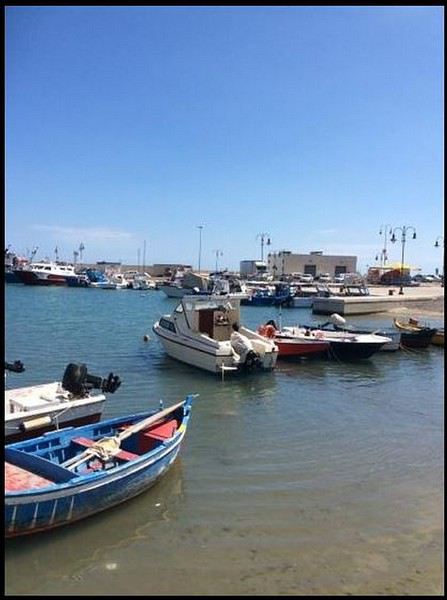
Savelletri is a hamlet in the town of Fasano, inland but close to Ostuni. It’s a seaside village, nothing out of the ordinary. At this time of year and lunchtime, things are quiet—Monopoli was the exception. Still, on the port, among the many little restaurants, one terrace catches our eye: Saporedisale. The menu looks tempting, so we sit down... It turned out to be the highlight of the day: excellent baked fish. Just a reminder—we eat light at lunch so we can save room for dinner! At the next table, a family of three was devouring a seafood feast, course after course: plates of sea urchins (a Savelletri specialty!), oysters, mussels, scampi in kadaifi style, fried squid, fish carpaccio... Empty plates were piling up on their table. "Would you like to try some scampi?"
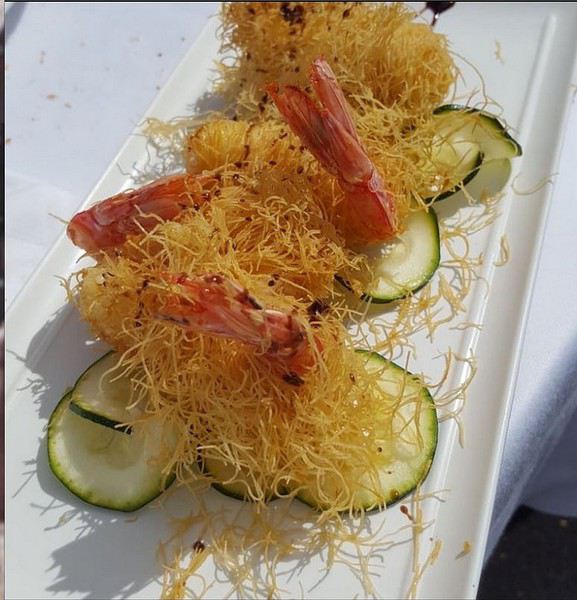
All that delicious food made us book a table for the next evening—we didn’t regret it! For now, we get back in the car... off to Torre Canne.
Heading to Monopoli, which, according to the guides, is a charming little white town with a stunning port. We got a first glimpse of it from the sea a few days ago. It’s Saturday, and we quickly realize we’ll be disappointed: the drive to the famous little port is smooth (the GPS is working fine, nothing special), but the traffic is so slow that it takes us half an hour just to go around it. We change strategy and try to stay as far from the center as possible—same story. Other cars are endlessly following the same route as us, and we’re all going in circles... After a full hour—it’s almost noon—we decide we’ve had enough stress for the day: *basta* Monopoli!
Feeling more confident, we enter the address of a restaurant on the way to Torre Canne, near our hotel. But we can’t find it (maybe an error or outdated info in the guides!), so never mind—it’ll be Savelletri: an excellent discovery!
Savelletri is a hamlet in the town of Fasano, inland but close to Ostuni. It’s a seaside village, nothing out of the ordinary. At this time of year and lunchtime, things are quiet—Monopoli was the exception. Still, on the port, among the many little restaurants, one terrace catches our eye: Saporedisale. The menu looks tempting, so we sit down... It turned out to be the highlight of the day: excellent baked fish. Just a reminder—we eat light at lunch so we can save room for dinner! At the next table, a family of three was devouring a seafood feast, course after course: plates of sea urchins (a Savelletri specialty!), oysters, mussels, scampi in kadaifi style, fried squid, fish carpaccio... Empty plates were piling up on their table. "Would you like to try some scampi?"
All that delicious food made us book a table for the next evening—we didn’t regret it! For now, we get back in the car... off to Torre Canne.
Jourdes· 7 years ago
Hi Mick013,
I’m not much of a "red meat" person, but I really enjoyed the Black Angus in the US!!
Is this Italian red meat any good, and more importantly, do Italians know how to serve it "blue"?
My husband has always been disappointed in the US, except in Silverton this year...
Thanks.
I’m not much of a "red meat" person, but I really enjoyed the Black Angus in the US!!
Is this Italian red meat any good, and more importantly, do Italians know how to serve it "blue"?
My husband has always been disappointed in the US, except in Silverton this year...
Thanks.
Hi Mick (and hi to Jourdes, who’s probably reading this...),
Talking about meat? I’m not vegetarian at all—I eat meat... white meat only, by preference, but mostly fish, shellfish, and seafood! So I really enjoyed the many chances to have it on the menu in Puglia. However, my husband was *very* happy with the *bracerie* and the local beef, which is way better than what we usually find in Belgium, even though that’s the home of the Belgian Blue...
For Jourdes: my husband finds red meat there to his taste—cooked rare if he insists—but he thinks it’s sliced too thinly! The flavor is there, though... It’s funny that the topic comes up just as I’m talking about meals in Savelletri, my favorite spot for seafood!!! Have a great day and bon appétit!
Second part of the visit, still in Puglia!
Why Torre Canne, so close to Polignano? Because we’re still hikers at heart—we can’t imagine a trip without adding a few walks in nature to the mix. I’d read about various strolls in the Regional Park of the Coastal Dunes, which borders this little village! The brochures promised “expanses of red earth” (?), olive groves, Romanesque churches, and prehistoric sites...
 So we drive calmly toward our second accommodation.
Three kilometers past Savelletri, the GPS delivers that fateful phrase we usually greet with joy: “You have arrived”???
Nothing around except an uninhabited shack... and the sea. We turn the device off, then back on, drive backward, restart it—and the same thing happens. A call to the hotel guides us, and we finally get there after 12 kilometers. Stress-wise, it wasn’t over, and we felt dumber by the minute...
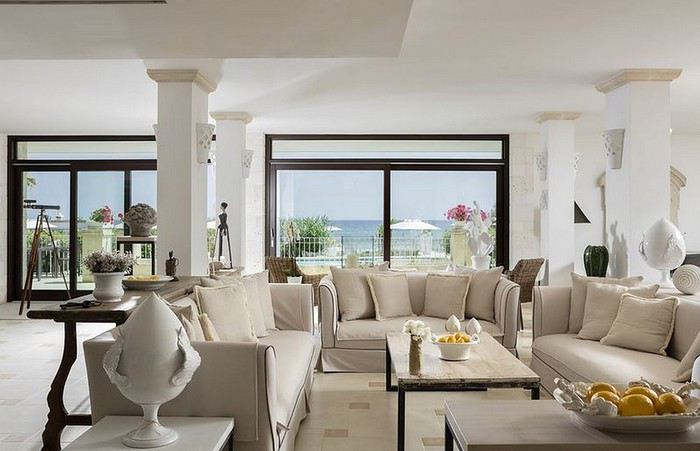
We figured out the explanation the next day: all the coastal villages in the area are crossed by the same road, the Via Appia. They all belong to Fasano and share the same postal code. Each locality had the bright idea to renumber the houses starting from 1, 2, 3... at the entrance of every hamlet, so there’s a number 3 in every village—just not the one we were looking for!!! The day was already well underway. By the time we settled in and got our bearings, night was falling. But what a reward: a beautiful all-white hotel, tastefully decorated and understated, with a stunning landscape and breathtaking colors of the water and sky.
A small disappointment: I’d chosen to stay three nights by the sea to walk with my feet in the water... But in front of the hotel, no beach for several kilometers. The sea had been high and quite rough for two days, calmed down a bit on the third, but it was still pretty risky to walk on the 50 cm of sand separating us from the waves.
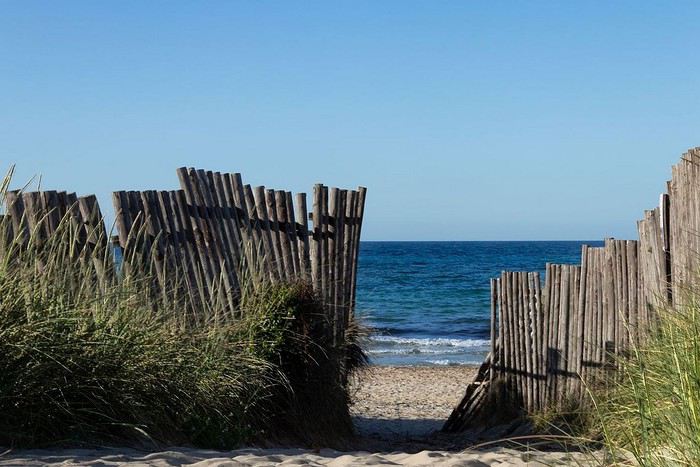
We’ll wait for a lull to hike in the dunes. Tomorrow, we’re off to Ostuni!
Why Torre Canne, so close to Polignano? Because we’re still hikers at heart—we can’t imagine a trip without adding a few walks in nature to the mix. I’d read about various strolls in the Regional Park of the Coastal Dunes, which borders this little village! The brochures promised “expanses of red earth” (?), olive groves, Romanesque churches, and prehistoric sites...
So we drive calmly toward our second accommodation.
Three kilometers past Savelletri, the GPS delivers that fateful phrase we usually greet with joy: “You have arrived”???
Nothing around except an uninhabited shack... and the sea. We turn the device off, then back on, drive backward, restart it—and the same thing happens. A call to the hotel guides us, and we finally get there after 12 kilometers. Stress-wise, it wasn’t over, and we felt dumber by the minute...We figured out the explanation the next day: all the coastal villages in the area are crossed by the same road, the Via Appia. They all belong to Fasano and share the same postal code. Each locality had the bright idea to renumber the houses starting from 1, 2, 3... at the entrance of every hamlet, so there’s a number 3 in every village—just not the one we were looking for!!! The day was already well underway. By the time we settled in and got our bearings, night was falling. But what a reward: a beautiful all-white hotel, tastefully decorated and understated, with a stunning landscape and breathtaking colors of the water and sky.
A small disappointment: I’d chosen to stay three nights by the sea to walk with my feet in the water... But in front of the hotel, no beach for several kilometers. The sea had been high and quite rough for two days, calmed down a bit on the third, but it was still pretty risky to walk on the 50 cm of sand separating us from the waves.
We’ll wait for a lull to hike in the dunes. Tomorrow, we’re off to Ostuni!
Good evening, a little aside!
I’m inserting the message from the young woman who was our guide in Matera. I’m quoting her, and it’s more than reassuring!
"A lot of water all at once. As soon as it rains, everything flows into the sassi, and it’s always impressive. Nothing too serious, but the images are striking. No injuries or deaths, which is already a good thing... The town hall has done a lot of concrete work instead of leaving the porous tuff, and that creates huge torrents right in the city. Some damage to shops along the main road, but nothing too serious."
See you soon...
Good evening everyone,
After this reassuring news, we're heading to Ostuni, which will be the last town we visit in Puglia this year.
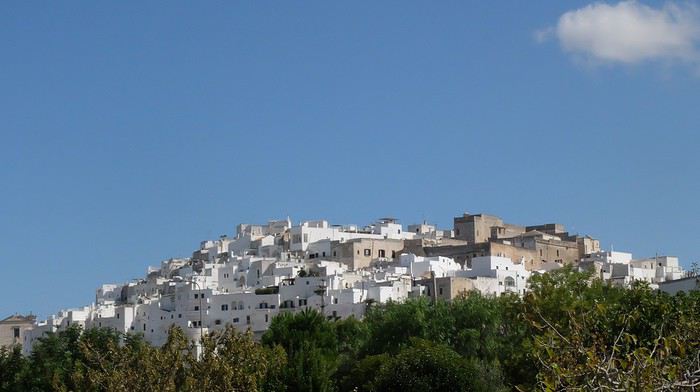
It's a large village sparkling with whiteness, perched atop a hill offering a beautiful view of the Ionian coast. The historic center is quite busy: we arrived early (10 a.m. ... it's vacation time!) and the climb to the Duomo was fairly clear—no big crowds, and we moved along easily. As soon as we arrived at the base of the hill, at the large parking lot for buses and cars, the buses were trickling in, but we didn’t dawdle and started climbing right away. Many groups with well-organized participants ("faster, ma'am, faster...") were already on their way!
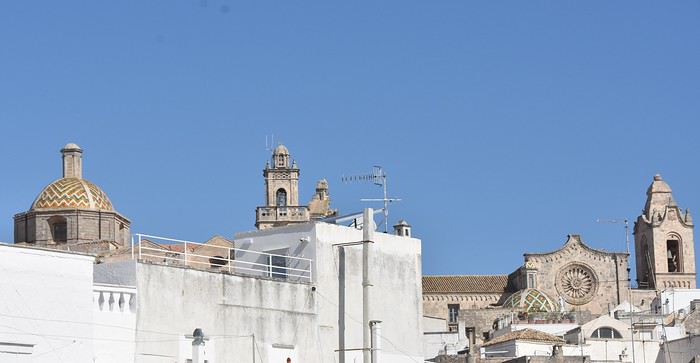
This is a village well-known to tour operators and a common stop on guided tours. Like in Polignano and Monopoli, it’s busy even off-season. Let’s not spoil our fun—just enjoy the stroll! Along the main street, winding from shop to shop, we made little detours into the side alleys...
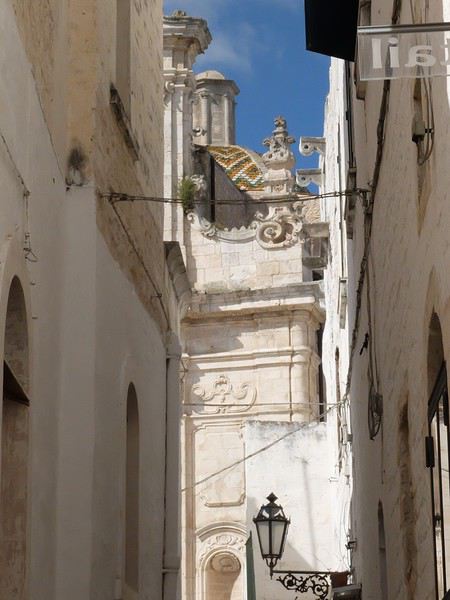
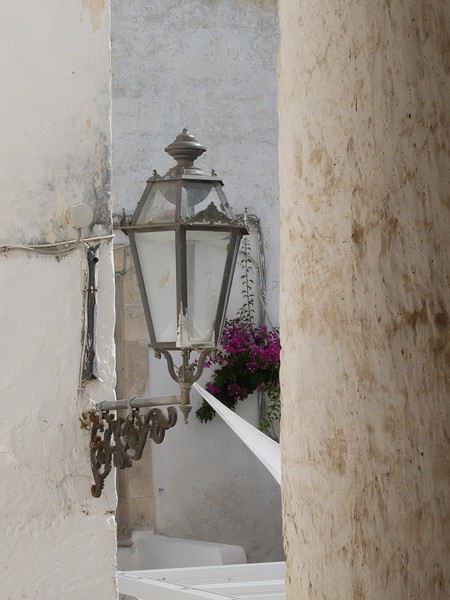
Then we climbed up to the highest point: the Duomo square and the bishop’s palace.
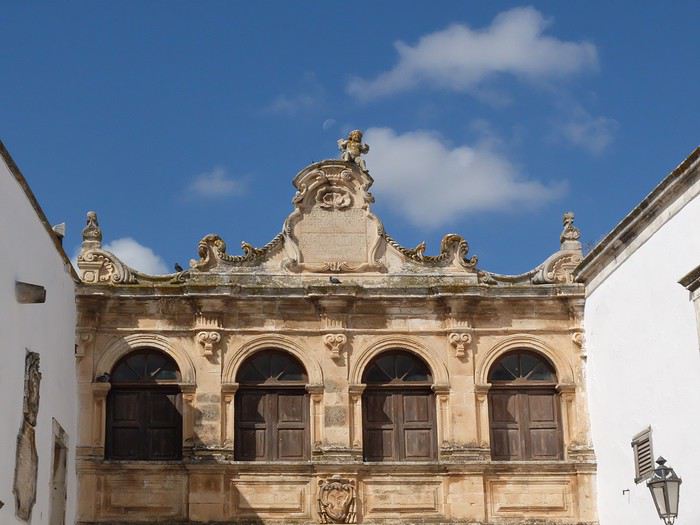
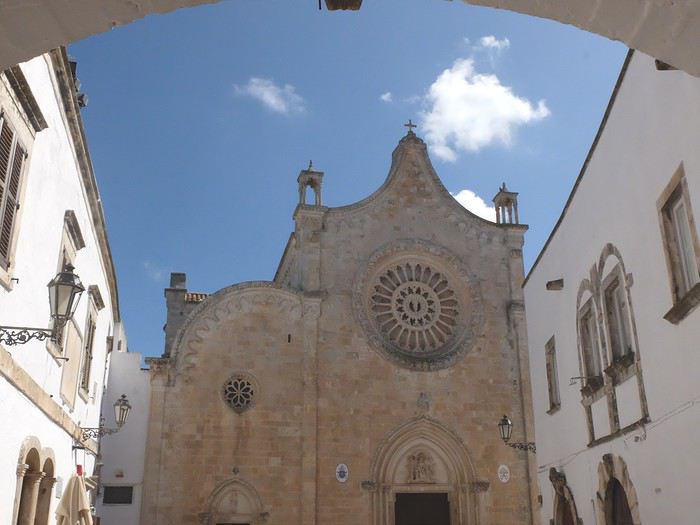
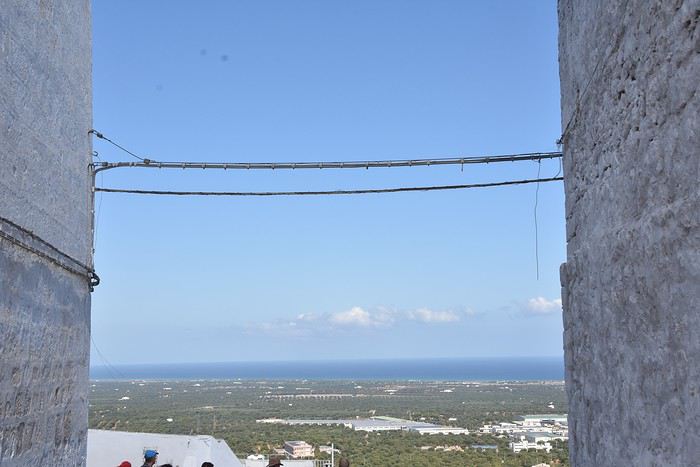
We descended calmly via the belvedere, where the view of the valley is stunning...
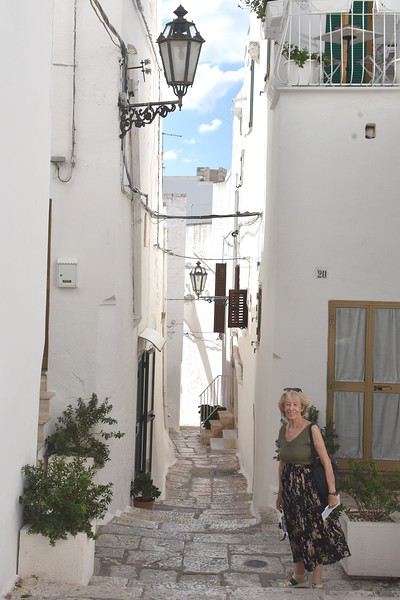
Then we finished the descent through the shadier alleys!
Back to the hotel—off to the pool!
Have a great evening, everyone...
It's a large village sparkling with whiteness, perched atop a hill offering a beautiful view of the Ionian coast. The historic center is quite busy: we arrived early (10 a.m. ... it's vacation time!) and the climb to the Duomo was fairly clear—no big crowds, and we moved along easily. As soon as we arrived at the base of the hill, at the large parking lot for buses and cars, the buses were trickling in, but we didn’t dawdle and started climbing right away. Many groups with well-organized participants ("faster, ma'am, faster...") were already on their way!
This is a village well-known to tour operators and a common stop on guided tours. Like in Polignano and Monopoli, it’s busy even off-season. Let’s not spoil our fun—just enjoy the stroll! Along the main street, winding from shop to shop, we made little detours into the side alleys...
Then we climbed up to the highest point: the Duomo square and the bishop’s palace.
We descended calmly via the belvedere, where the view of the valley is stunning...
Then we finished the descent through the shadier alleys!
Back to the hotel—off to the pool!
Have a great evening, everyone...
Show 10 more replies
M
Mguibentif· 7 years ago
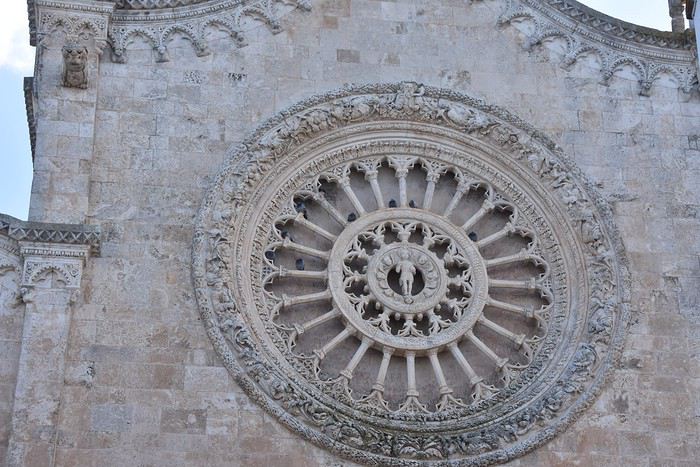
The rose window you photographed is said to be the largest in Italy...
Good evening!
On the tablet, you can zoom in on the photo: it stays sharp and the rose window is stunning. The funniest part: a flock of pigeons landed right between the rays...
A quick note: I'm feeling a bit tired... some mail to catch up on, errands to run... but I'm keeping up the pace because I really want to make it to Matera!!! Have a great evening!
A quick note: I'm feeling a bit tired... some mail to catch up on, errands to run... but I'm keeping up the pace because I really want to make it to Matera!!! Have a great evening!
New day, the last in the Puglia region: in the morning, we see that the sea has calmed down at Torre Canne.
This will be a transition day before moving on to Basilicata: a short hike by the water, a swim, and a good fish dinner on the agenda.
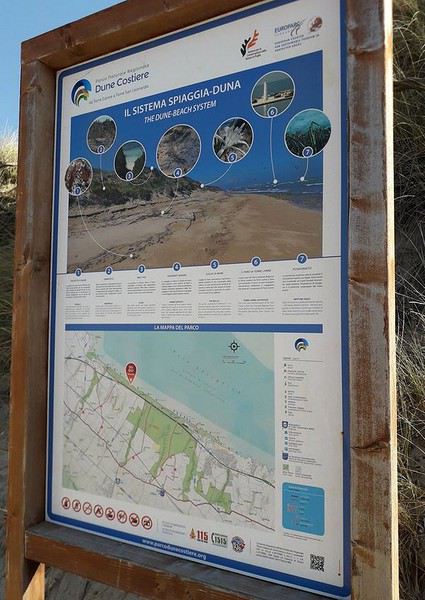
I’ve already mentioned the Parco Naturale delle Dune Costiere (Coastal Dunes Nature Park): it was created in 2006 to protect the dune system along the Adriatic, just below Torre Canne. We won’t get to explore all its aspects: -- Romanesque churches, yes (like Santa Maria de Cerrate, further south), which we saw on our way to Lecce. -- Archaeological sites: we would’ve liked to visit Egnazia, further north, but the info we got said the shoreline was covered in algae (???) and the beach alongside the site wasn’t recommended. As for the Montalbano dolmen, we’d have needed to bike there—about ten kilometers inland... We only wandered along the ‘coastal’ section...
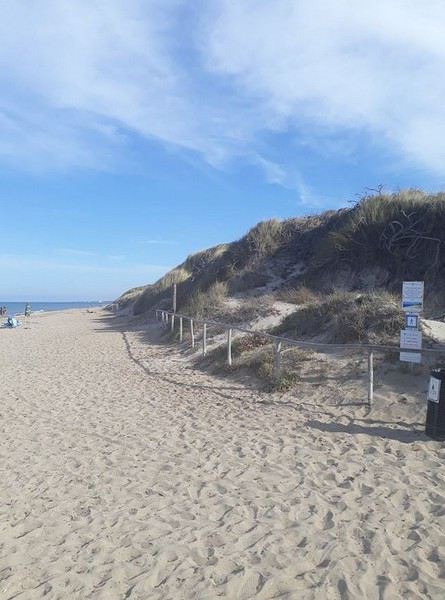
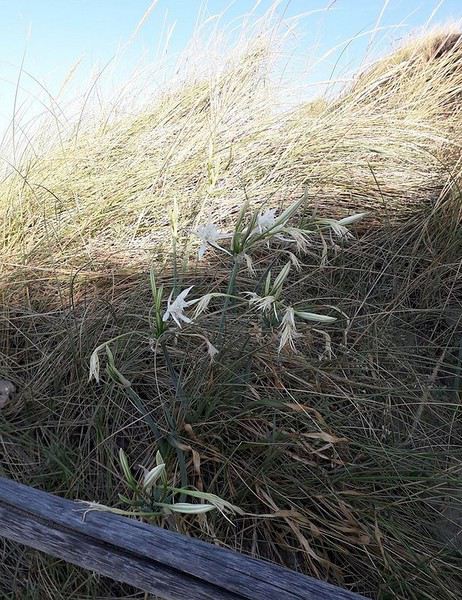
...and discovered some typical flora there. Note these very graceful sea daffodils, quite unexpected in the arid soil:
and others less known, like posidonia: it’s not an alga but a flowering underwater plant. It dates back to ancient times (record: 80,000 to 200,000 years old!) and its shoots form a real underwater meadow.
After 3 hours of walking, which was pretty tough due to the sand (wet or dry) or the waves, while dodging wooden barriers and barbed-wire gates that required careful crossing, we return to the hotel for a more relaxing combo: pool time and reading until early evening. Activity recap: let’s just say we could’ve skipped this walk—though it did help maintain our tan...
But the day isn’t over yet: in the evening, back to Savelletri for dinner... We were surprised by how lively this small port town was!
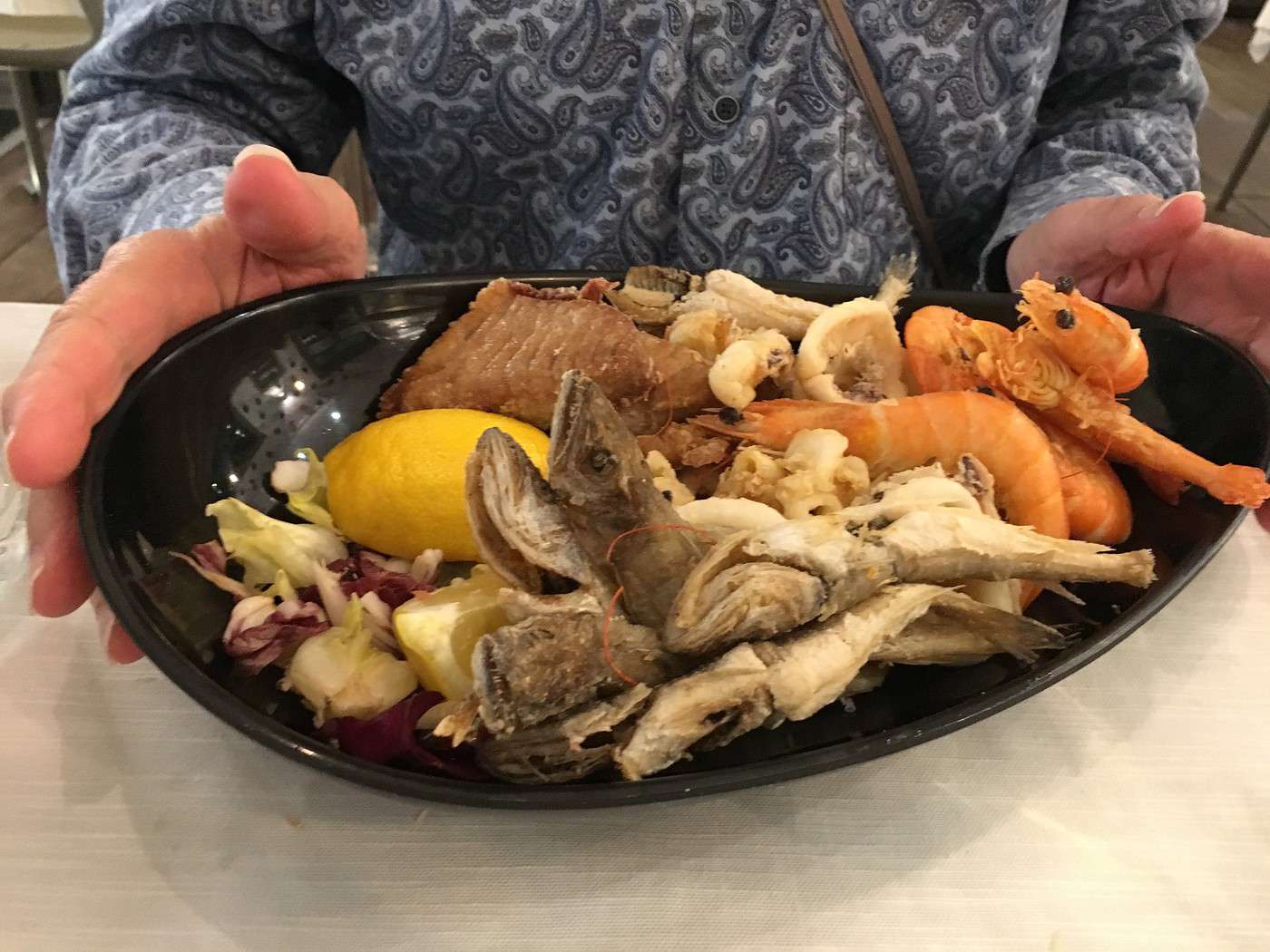
Earlier in the afternoon, we’d tried a quick trip to Torre Canne’s ‘town’ area, hoping to buy 1 or 2 bottles of Puglia wine, rightly renowned; the next day, we’re off to Basilicata... The village is surely bustling in summer: there are plenty of hotels and vacation homes, but by late September, everything’s empty and looks abandoned! Only our hotel, at the far end of the beach, seemed occupied and almost full—what a contrast with Polignano, for example, where tourists crowded the streets every night. In Savelletri, the village was far from deserted! Crowds in the restaurants, both on the terraces and indoors: large groups of friends or couples, all sharing the same goal—having a great evening AND enjoying seafood followed by fish. It wasn’t the same vibe as in Polignano or Ostuni: no tourists, just Italians, regulars who’d come from quite far away. We were the ONLY ‘foreigners,’ and our presence raised the average age of the customers... We followed the saying, ‘When in Rome, do as the Romans do...’ and went with the flow: we shared a bottle of white wine from Martina Franca with some scampi and a nice mixed fry of fish and calamari...
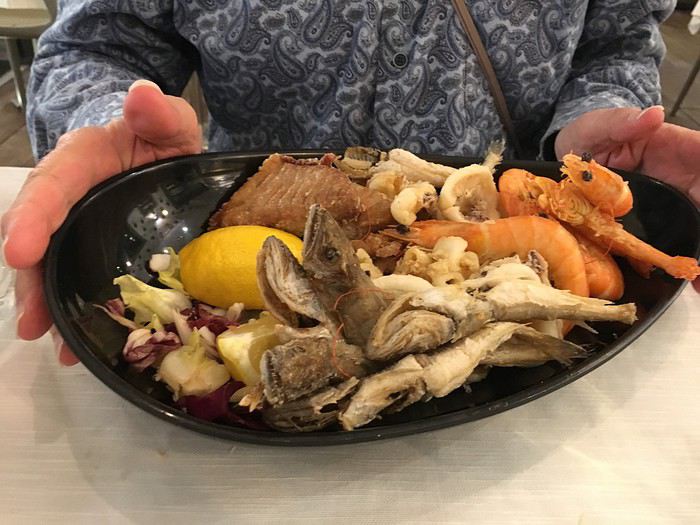
If you’re passing through the area, it’s worth a detour! See you tomorrow morning—the carriage awaits!
I’ve already mentioned the Parco Naturale delle Dune Costiere (Coastal Dunes Nature Park): it was created in 2006 to protect the dune system along the Adriatic, just below Torre Canne. We won’t get to explore all its aspects: -- Romanesque churches, yes (like Santa Maria de Cerrate, further south), which we saw on our way to Lecce. -- Archaeological sites: we would’ve liked to visit Egnazia, further north, but the info we got said the shoreline was covered in algae (???) and the beach alongside the site wasn’t recommended. As for the Montalbano dolmen, we’d have needed to bike there—about ten kilometers inland... We only wandered along the ‘coastal’ section...
...and discovered some typical flora there. Note these very graceful sea daffodils, quite unexpected in the arid soil:
and others less known, like posidonia: it’s not an alga but a flowering underwater plant. It dates back to ancient times (record: 80,000 to 200,000 years old!) and its shoots form a real underwater meadow.
After 3 hours of walking, which was pretty tough due to the sand (wet or dry) or the waves, while dodging wooden barriers and barbed-wire gates that required careful crossing, we return to the hotel for a more relaxing combo: pool time and reading until early evening. Activity recap: let’s just say we could’ve skipped this walk—though it did help maintain our tan...
But the day isn’t over yet: in the evening, back to Savelletri for dinner... We were surprised by how lively this small port town was!
Earlier in the afternoon, we’d tried a quick trip to Torre Canne’s ‘town’ area, hoping to buy 1 or 2 bottles of Puglia wine, rightly renowned; the next day, we’re off to Basilicata... The village is surely bustling in summer: there are plenty of hotels and vacation homes, but by late September, everything’s empty and looks abandoned! Only our hotel, at the far end of the beach, seemed occupied and almost full—what a contrast with Polignano, for example, where tourists crowded the streets every night. In Savelletri, the village was far from deserted! Crowds in the restaurants, both on the terraces and indoors: large groups of friends or couples, all sharing the same goal—having a great evening AND enjoying seafood followed by fish. It wasn’t the same vibe as in Polignano or Ostuni: no tourists, just Italians, regulars who’d come from quite far away. We were the ONLY ‘foreigners,’ and our presence raised the average age of the customers... We followed the saying, ‘When in Rome, do as the Romans do...’ and went with the flow: we shared a bottle of white wine from Martina Franca with some scampi and a nice mixed fry of fish and calamari...
If you’re passing through the area, it’s worth a detour! See you tomorrow morning—the carriage awaits!
Second part of the trip: Basilicata and MATERA!
This morning, we had a smooth drive to the heart of southern Italy: the city of Matera, where we’ll spend two nights.
We crossed the Trulli region again, snapping photos on the go as we drove. In Martina Franca, we took a regional road toward Massafra, a place we’d heard good things about...
It’s a small town clinging to the edge of a cliff, in the Gravine of Taranto, with landscapes that hint at what’s to come in Matera: narrow canyons and cave churches.
Our GPS, in top form, guided us straight into the center via a maze of tiny, tangled streets instead of taking a slight detour on a wider, busier road. My husband had to maneuver two or three times at each intersection just to get through... and we were relieved to finally spot sunlight and Piazza Garibaldi, our destination, at the end of the journey.
You’ve got to see the view of the ravines from the Ponte Vecchio, which spans the gravina: the silhouette of the castle looming above and, on the other side, the cave houses clinging to the cliffs. These are semi-troglodytic homes with their courtyards carved into the ground. They’re stacked one on top of the other, with only the upper floors built above ground.
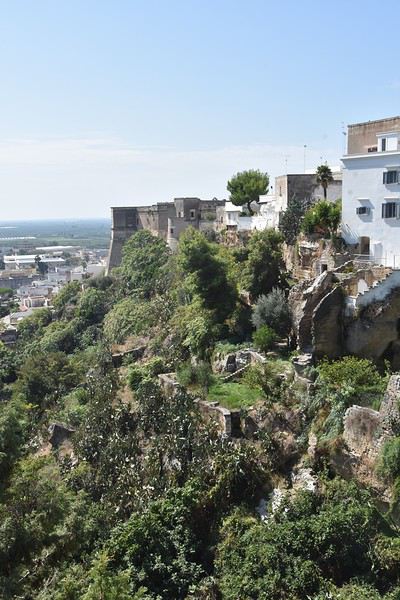
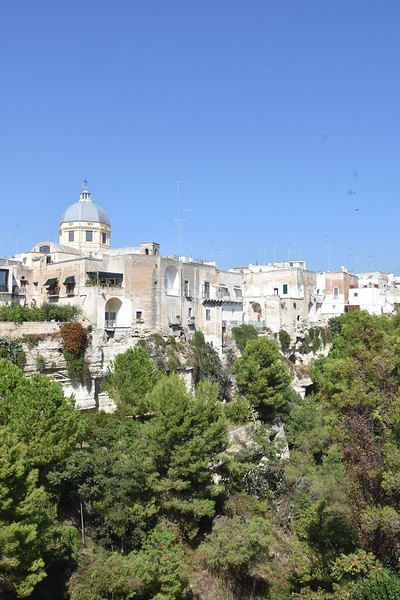
The medieval town, stretching on either side of the ravine, is small and charming. We spent a good hour exploring, but you could easily stretch the visit by adding the castle and an 18th-century sanctuary about 1 km away.
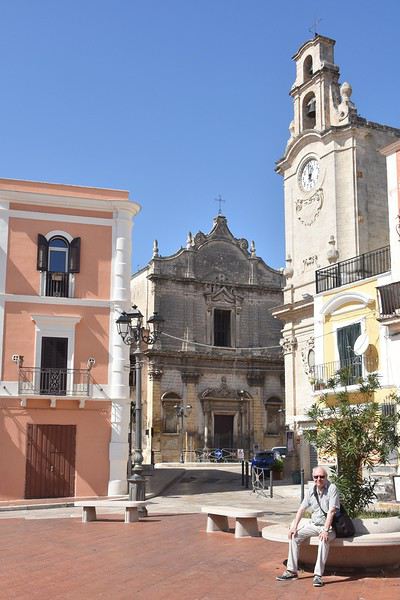
After enjoying a refreshing lemon granita, it was time to hit the road again—first the highway, then a national road—toward Matera. Along the way, we managed to grab (just in the nick of time, as we were leaving Puglia) some Locorotondo wine from a Lidl supermarket!!! (And it’s actually not bad at all.)
A personal tip for future travelers: if you’re short on time, Massafra is a pleasant stop. If we’d had half a day to spare, the best plan (which we didn’t do) would’ve been to swing by Grottaglie and visit the ceramic artisan workshops. Even more recommended if you’re traveling by car and can bring home not just trinkets, but a beautiful piece...
Next stop: finally, the city...
You’ve got to see the view of the ravines from the Ponte Vecchio, which spans the gravina: the silhouette of the castle looming above and, on the other side, the cave houses clinging to the cliffs. These are semi-troglodytic homes with their courtyards carved into the ground. They’re stacked one on top of the other, with only the upper floors built above ground.
The medieval town, stretching on either side of the ravine, is small and charming. We spent a good hour exploring, but you could easily stretch the visit by adding the castle and an 18th-century sanctuary about 1 km away.
After enjoying a refreshing lemon granita, it was time to hit the road again—first the highway, then a national road—toward Matera. Along the way, we managed to grab (just in the nick of time, as we were leaving Puglia) some Locorotondo wine from a Lidl supermarket!!! (And it’s actually not bad at all.)
A personal tip for future travelers: if you’re short on time, Massafra is a pleasant stop. If we’d had half a day to spare, the best plan (which we didn’t do) would’ve been to swing by Grottaglie and visit the ceramic artisan workshops. Even more recommended if you’re traveling by car and can bring home not just trinkets, but a beautiful piece...
Next stop: finally, the city...
S
D
Dominike· 7 years ago
Hello Brigitte,
I’m still following you with great pleasure 😉
We also went to Massafra (a round trip from Bari for us, since we’d booked quite a few days near Bari), and for the first time, we didn’t feel the same way about a place 😉… But that’s totally normal in the end 😎!
We were pretty disappointed with the little town of Massafra. After walking through it in every direction—up and down, left and right—after wandering through so many streets, and taking a few photos around the bridge, we drove to the sanctuary you mentioned since we had more time than you 😉. The Santuario della Madonna della Scala was a visit I really wanted to do! It was closed and looked very poorly maintained, at least from the outside 😊. Very few visiting hours were posted when we were there, but there were some nice views of the ravine (Phew).
I’m eagerly waiting for the rest of your story, your impressions, and your photos of Matera—it was a huge highlight for us, and unfortunately, we only spent one full day there 🤪. If we could do it again, we’d spend two full days.
PS: I tried to sneak in a few photos of that sanctuary in Massafra, whose exterior is unfortunately very poorly preserved, and its surroundings, which are sadly littered here and there with all kinds of trash. But as usual, my photos won’t upload here. The message every time: wrong photo format, etc.… And I can’t figure out how to fix it—I’m really not great at sharing my photos 😊.
As a result, I don’t make travel journals anymore, even though I’d like to… Have a great weekend, and see you soon 😉 Dominike
Hi Dominike,
Just a quick note since I’m "working" hard...
About your photos: it’s simple—one of the dimensions MUST be at least 2000 pixels.
So don’t shrink them like you would when attaching them to an email!
Yesterday, I had 3 that were too "small": there’s a ‘resizer’ function in my photo software, and—boom—my husband, who I trust more than myself for this kind of thing, multiplied the pixels by 2 or even 3, though he wasn’t convinced about the quality! In the end, they went through... I agree with you about Massafra: it’s nice for grabbing a bite and seeing... what’s possible, but it’s not worth a detour.
See you soon—I hope the photos work out!!! Cheers.
D
Dominike· 7 years ago
Hi Sissi,
Don’t worry 😉, our GPS also acted up in Puglia and Salento back in 2018, GRRRR 🤪
It was tough for it—and I’ll even admit it: it couldn’t find our lodgings near Cisternino or Scorrano (places in the countryside, down tiny little lanes). We drove around quite a bit to find them, and we were *this* close to getting dizzy 🤪😉🤪. Plus, we *hate* arriving late for our meet-ups with the owners, especially since we always leave with plenty of time 🤪.
But we were able to count on locals who even called the owners for us and then led us to them (we had to follow their car)! That Italian kindness we really appreciate 😉!
This year, though, our GPS was perfect in Tuscany, Lazio, and Umbria. It guided us without any issues to all six of our lodgings along our route from Pisa to Ancona—even though, once again, most were in the countryside, off the main roads, and sometimes on huge private properties. Nice!
Maybe GPS issues are just way more common in the small villages of Puglia and Salento 😉? Weird...
Oh, and a traveler I’d recommended a great rental in Scorrano to—who stayed there for a few days this year—had the same problem with their *top-notch* GPS. I’d warned them and they’d taken my directions, but it was still way less straightforward for them (that’s the feedback they gave me)!
See you soon, Dominike
Hello again!
In the early afternoon, we take the fastest route and arrive, according to the road signs, in the city of Matera: to our great surprise, the avenues are wide, lined with multi-story buildings and homes.
The GPS did its job well: we arrive at the garage without any detours, where we’ll leave the car for two nights.
Our hotel reserved this parking spot (20 € per night); an employee will pick up our luggage and take it to the hotel, a 10-minute walk away: it’s the 'In Pietra' hotel (see the end of the travel journal).
They even give us a little personalized map... and off we go!
A photo to whet your appetite... and a few words about this city with a very long history. For more historical details, just ask!
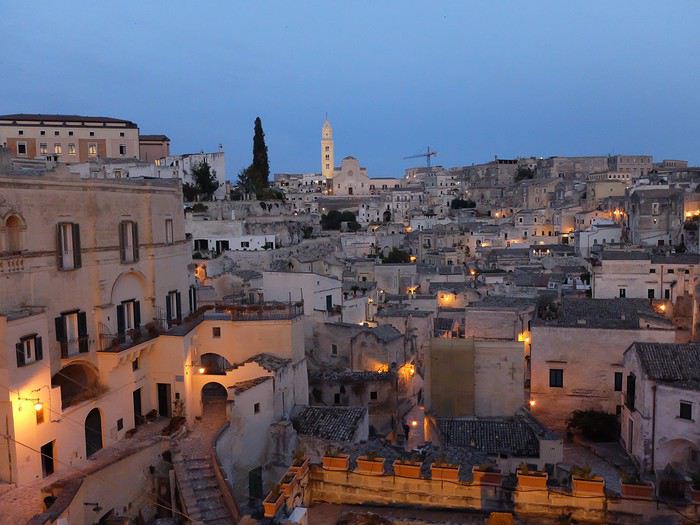
To keep it short, here’s a summary of the key milestones in Matera’s history! *** It’s important to know that cave dwellings carved into the soft limestone appeared in the region 250,000 years ago, as early as the Paleolithic era. *** The city has many rock-hewn churches beautifully decorated with Byzantine frescoes: hidden places of prayer for immigrants, particularly from Turkey, Armenia, or Asia Minor. *** In the 14th and 15th centuries, the city was enriched with numerous churches and monuments within the fortified walls surrounding the center... *** Unfortunately, in the last century (the 20th century!), living conditions—both sanitary and economic—became increasingly precarious for the growing population, which reached 16,000 inhabitants after World War II.
In 1950, following a visit by A. Gasperi, a prominent minister at the time, *La Gazzetta del Mezzogiorno* published a front-page article on Matera with the bold headline: "NATIONAL SHAME". In 1945, Carlo Levi’s autobiographical book, ‘Christ Stopped at Eboli,’ was published, which I’ll talk about later: it describes the miserable living conditions of the peasant world under fascist Italy. Politicians, having researched and been shocked by the reality in the book, sought a solution to the problem. They decided to build public housing (HLM) around the Sassi to relocate the peasants who lived there: these are the buildings we saw upon arrival. In 1952, forced transfers of the inhabitants began, and a law mandated the complete isolation of the Sassi: the districts were left in total ruin, caves were walled up, and access was blocked. Once again, it was Carlo Levi who advocated for preserving and enhancing the historical and social treasure we can see today.
In 1993, the Sassi were recognized as a UNESCO World Heritage Site, and in 2014, Matera was named the European Capital of Culture for 2019. From then on, the Sassi became symbols of the development and valorization of an Italian territory, in the eyes of the whole world!
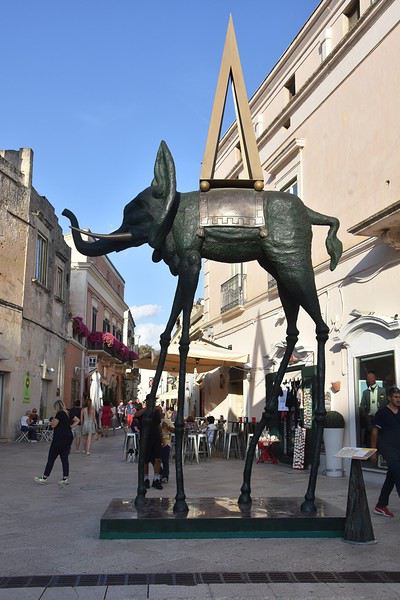
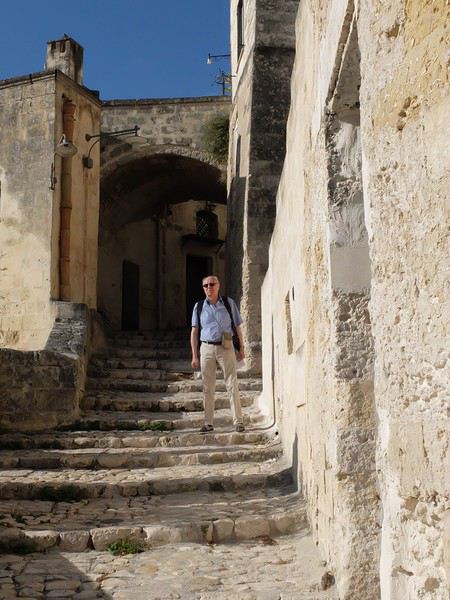
If you’re still with me, we were on our way to the hotel, and the luggage would follow: it almost arrived before we did! Even without the GPS, we managed to get lost and go in circles several times, and once night fell, it was even worse... Here are a few views of the Sassi Barisano, taken from the steep path leading to the 'In Pietra': -- the fork near Piazza Veneto, adorned with a beautiful sculpture by Salvador Dalí.
Then, the path...
-- in front of the hotel, a view of the Sassi and the Duomo...
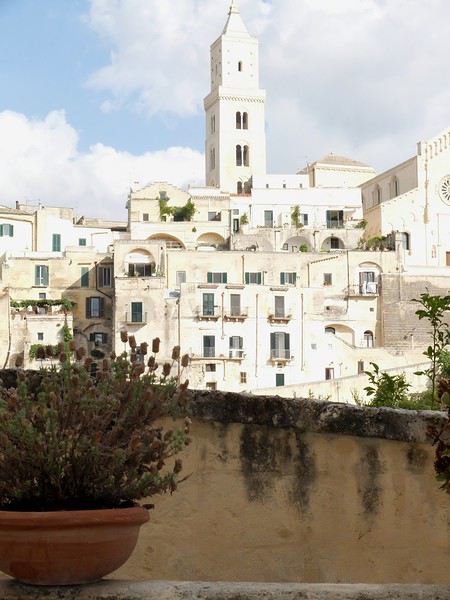
... and a general view:
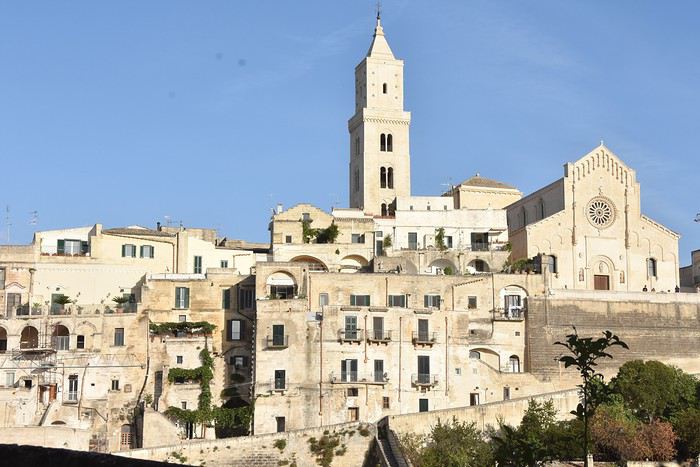
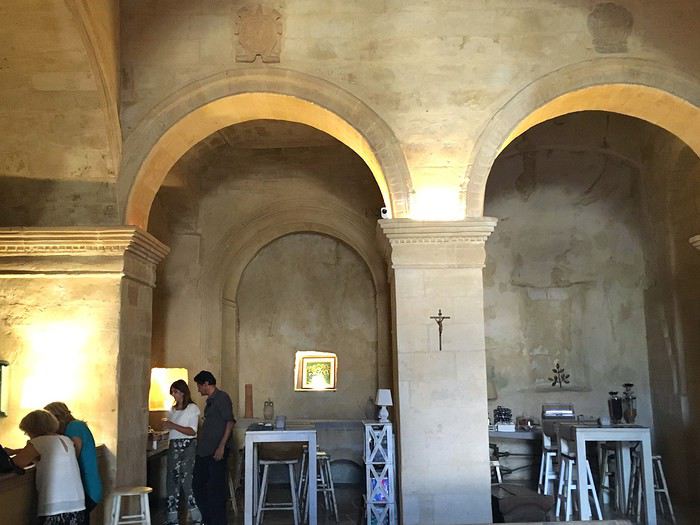
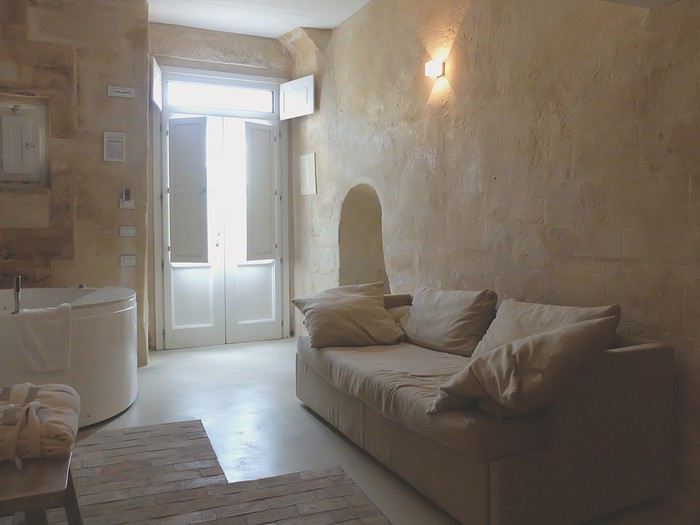
-- finally, the hotel itself, which is a former disused church. Tufa walls, beautiful colors, and perfect tranquility in a sumptuous setting!
See you tomorrow for an evening stroll through the Sassi, wandering the alleys!
A photo to whet your appetite... and a few words about this city with a very long history. For more historical details, just ask!
To keep it short, here’s a summary of the key milestones in Matera’s history! *** It’s important to know that cave dwellings carved into the soft limestone appeared in the region 250,000 years ago, as early as the Paleolithic era. *** The city has many rock-hewn churches beautifully decorated with Byzantine frescoes: hidden places of prayer for immigrants, particularly from Turkey, Armenia, or Asia Minor. *** In the 14th and 15th centuries, the city was enriched with numerous churches and monuments within the fortified walls surrounding the center... *** Unfortunately, in the last century (the 20th century!), living conditions—both sanitary and economic—became increasingly precarious for the growing population, which reached 16,000 inhabitants after World War II.
In 1950, following a visit by A. Gasperi, a prominent minister at the time, *La Gazzetta del Mezzogiorno* published a front-page article on Matera with the bold headline: "NATIONAL SHAME". In 1945, Carlo Levi’s autobiographical book, ‘Christ Stopped at Eboli,’ was published, which I’ll talk about later: it describes the miserable living conditions of the peasant world under fascist Italy. Politicians, having researched and been shocked by the reality in the book, sought a solution to the problem. They decided to build public housing (HLM) around the Sassi to relocate the peasants who lived there: these are the buildings we saw upon arrival. In 1952, forced transfers of the inhabitants began, and a law mandated the complete isolation of the Sassi: the districts were left in total ruin, caves were walled up, and access was blocked. Once again, it was Carlo Levi who advocated for preserving and enhancing the historical and social treasure we can see today.
In 1993, the Sassi were recognized as a UNESCO World Heritage Site, and in 2014, Matera was named the European Capital of Culture for 2019. From then on, the Sassi became symbols of the development and valorization of an Italian territory, in the eyes of the whole world!
If you’re still with me, we were on our way to the hotel, and the luggage would follow: it almost arrived before we did! Even without the GPS, we managed to get lost and go in circles several times, and once night fell, it was even worse... Here are a few views of the Sassi Barisano, taken from the steep path leading to the 'In Pietra': -- the fork near Piazza Veneto, adorned with a beautiful sculpture by Salvador Dalí.
Then, the path...
-- in front of the hotel, a view of the Sassi and the Duomo...
... and a general view:
-- finally, the hotel itself, which is a former disused church. Tufa walls, beautiful colors, and perfect tranquility in a sumptuous setting!
See you tomorrow for an evening stroll through the Sassi, wandering the alleys!
S
You might also like
 Palermo street art
Travel logs › Italy·38 photos
 Veneto: Dolomites and Opera
Travel logs › Italy·154 photos
 A "relaxed" 16-day tour of Corsica in autumn 2024
Travel logs › France › Corsica·274 photos
 Amalfi Coast stroll
Travel logs › Italy·81 photos
 Autumn trip from Puglia to Naples via Basilicata...
Travel logs › Italy·149 photos
 Two weeks under the Puglia sun
Travel logs › Italy·275 photos
 Tuscany: Arezzo province and the Siena area
Travel logs › Italy·286 photos
 Visiting Bologna in Photos
Travel logs › Italy·45 photos