Autumn trip from Puglia to Naples via Basilicata...
Translated into English.
182 replies
M
Mick013· 7 years ago
hi there
before they were Roman, Puglia was Greek; there’s still a small area (I’ve been there) near Lecce called Grecìa Salentina. You’ll see a few official bilingual signs (Greek-Italian), and according to my guide (Michelin) the locals supposedly speak a Greek dialect. I think it’s mostly folklore though—the old guys playing cards in a bar (I doubt they were tourists) were speaking Italian.
Hey Mick, I never got past Latin... thanks!
Have a great day.
A few days to catch our breath!
Beach stay in Maratea, on the Tyrrhenian Sea.
We haven’t left Basilicata yet: from Matera to its coastal counterpart and near-homonym, we had the choice between two routes—one via Altamura and the Gravine, and the other heading south, not far from Aliano and Craco, which served as the setting for Carlo Levi’s novel. He even requested to be buried in Aliano. That’s the route we took: we headed straight down to Pescheria and from there, took the small road crossing the Calanchi. The landscapes are absolutely stunning!
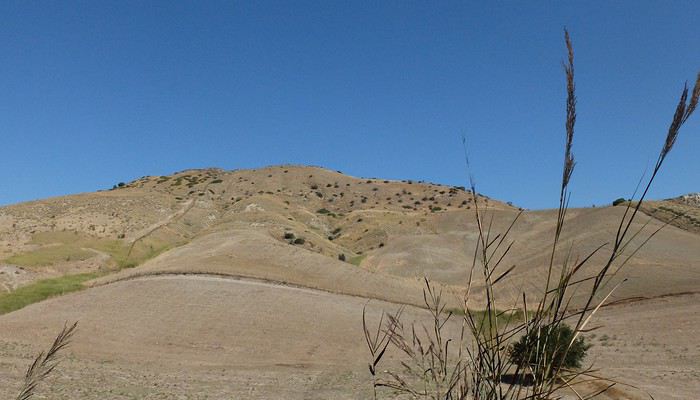
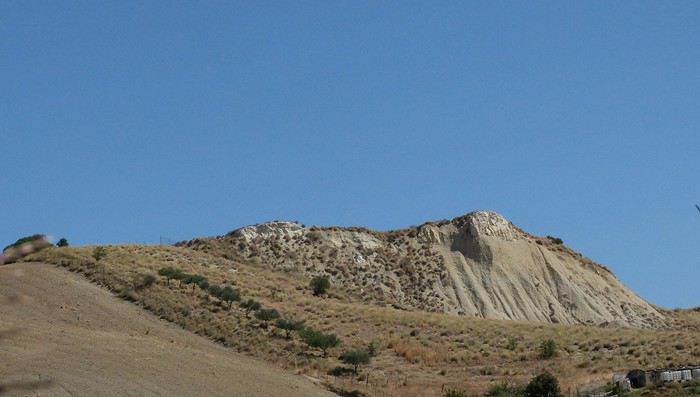
The Calanchi are fragile clay mountains rising from farmland, olive groves, and fields. In the middle of this arid, almost lunar landscape, Craco stands atop a mountain. Frequent landslides and earthquakes explain the many warning signs along the road, and Craco’s site can only be visited on a guided tour.
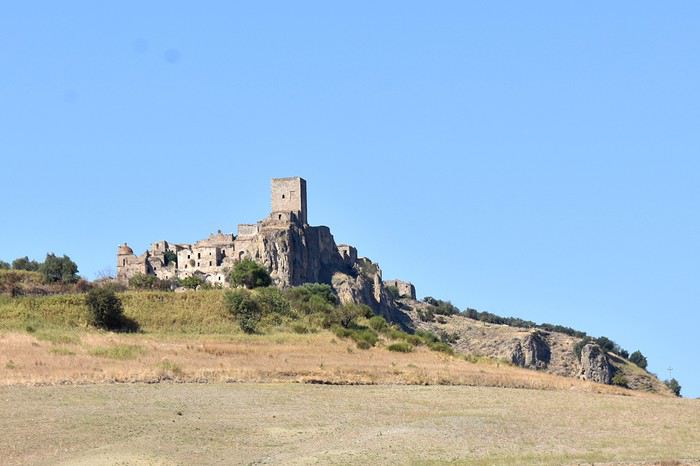
Even farther from “civilization” lies the village of Aliano, now a museum-village dedicated to Carlo Levi... The only tourists we met—aside from a few utility vehicles driven by locals—were a motorhome with two couples from northern Italy. They parked behind us, eyes wide, when Craco appeared on its mountain. They were peacefully discovering regions of their own country they barely knew and were surprised to meet us there. It was a lovely moment of connection!
We continued along a road flanked by mountains and greenery toward Lagonegro, then a narrow path with a thousand twists and hairpin turns—until the reward: Sapri... and the blue sea!
See you soon!
We haven’t left Basilicata yet: from Matera to its coastal counterpart and near-homonym, we had the choice between two routes—one via Altamura and the Gravine, and the other heading south, not far from Aliano and Craco, which served as the setting for Carlo Levi’s novel. He even requested to be buried in Aliano. That’s the route we took: we headed straight down to Pescheria and from there, took the small road crossing the Calanchi. The landscapes are absolutely stunning!
The Calanchi are fragile clay mountains rising from farmland, olive groves, and fields. In the middle of this arid, almost lunar landscape, Craco stands atop a mountain. Frequent landslides and earthquakes explain the many warning signs along the road, and Craco’s site can only be visited on a guided tour.
Even farther from “civilization” lies the village of Aliano, now a museum-village dedicated to Carlo Levi... The only tourists we met—aside from a few utility vehicles driven by locals—were a motorhome with two couples from northern Italy. They parked behind us, eyes wide, when Craco appeared on its mountain. They were peacefully discovering regions of their own country they barely knew and were surprised to meet us there. It was a lovely moment of connection!
We continued along a road flanked by mountains and greenery toward Lagonegro, then a narrow path with a thousand twists and hairpin turns—until the reward: Sapri... and the blue sea!
See you soon!
Here’s the sea again, and we’ve switched coasts: we chose this spot as the perfect relaxing interlude, based on those enchanting photos we found online.
A quick geographical description, inspired by Wikipedia or its equivalent: Maratea hugs the Tyrrhenian Sea and occupies a stunning location; its coastline is a patchwork of small bays, beaches, and rocks, while the mountains of the hinterland, covered in pine forests, plunge straight into the sea: the views are breathtaking.
Take my word for it—it’s even better in real life! A picture’s worth a thousand words:
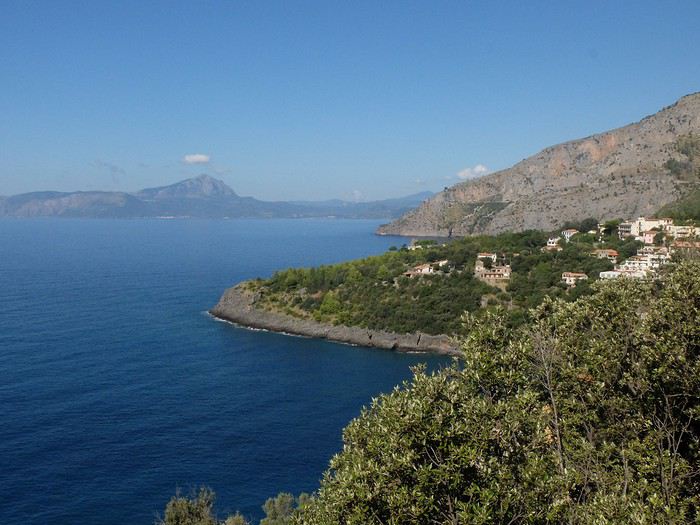
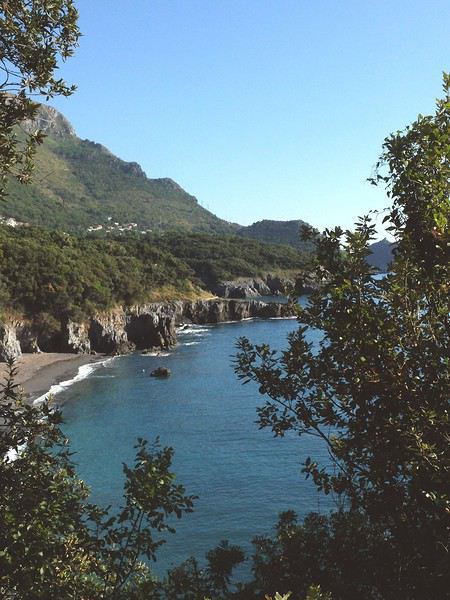
I’ll spare you the historical details: countless churches, isolated villages, and high-altitude trails. If we’d stayed longer—and if we hadn’t been so exhausted from the steep walks in Puglia’s villages and then nearly *finished off* by Matera’s stairs—you’d have gotten the full rundown! We slept and ate each evening at an idyllic hotel where we were pampered. It was the very end of the season, around September 27th, and most Italians were back at work... Too many people would’ve been unpleasant, but too few felt a little... gloomy. There was a bit of a crowd one weekend evening, though. View from the terrace:
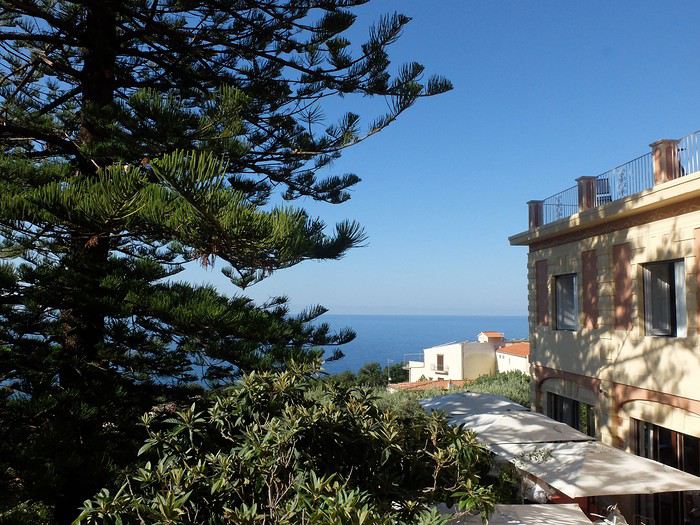
And from our room:
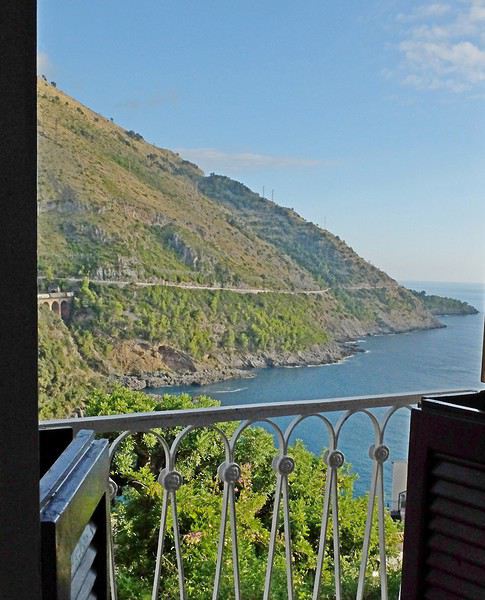
Still, I can’t even imagine our disappointment if the sun hadn’t been out! The town of Maratea isn’t really a town at all—it’s a collection of hamlets scattered over 30 km, with no seaside strip of shops or restaurants. It’s made up of many small settlements, some closer to the water than others; a few have charming little ports like Marina and Porto, while others sit higher up, like Acquafredda, where we stayed. Important heads-up: the Saturday morning market means the road is closed! A 20 km detour is mandatory...
Our only daily dilemma was picking *the* beach to spend a few hours at—based on sand vs. pebbles, whether there was a bar, and... how easy it was to get there! Let me explain: along the Gulf of Policastro, where we were, there’s only one road, and it’s dizzying and packed—one side the sea, the other the mountain. The coast has over twenty beaches, and access usually involves a sharp turn and a steep descent... The first route the GPS suggested was often a rocky, uphill trail that our car couldn’t handle, and after all the blind U-turns, my husband—exhausted—asked me to keep it simple!
I’d recommend our first pick: ‘o Macaro beach, a mix of sand and gravel, for its (relatively) easy access, its stunning setting between two rocky cliffs, its umbrellas (12 € for two, with two sunbeds), and its bar—you’ve got to go!
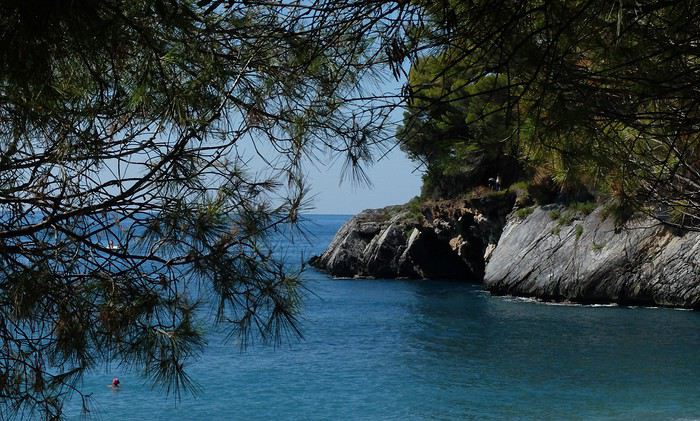
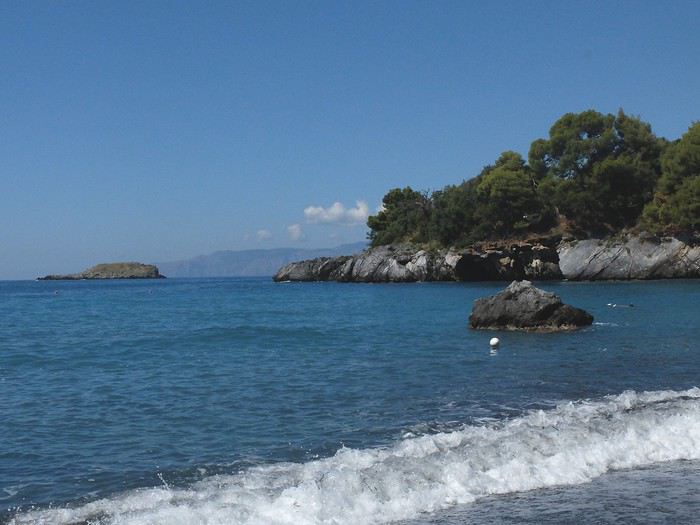
Its parking lot (5 € for the day) is worth the trip, nestled in a forest of umbrella pines!
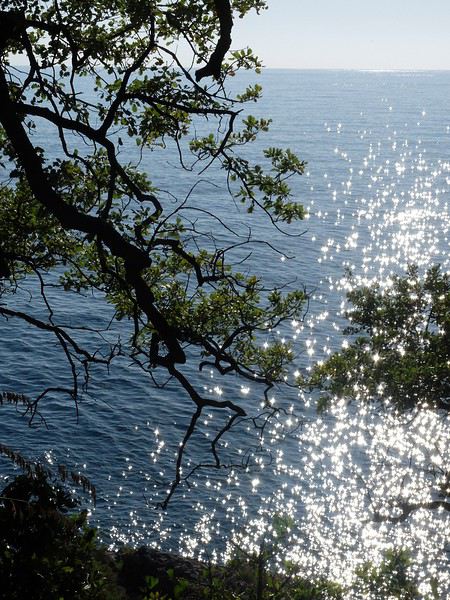
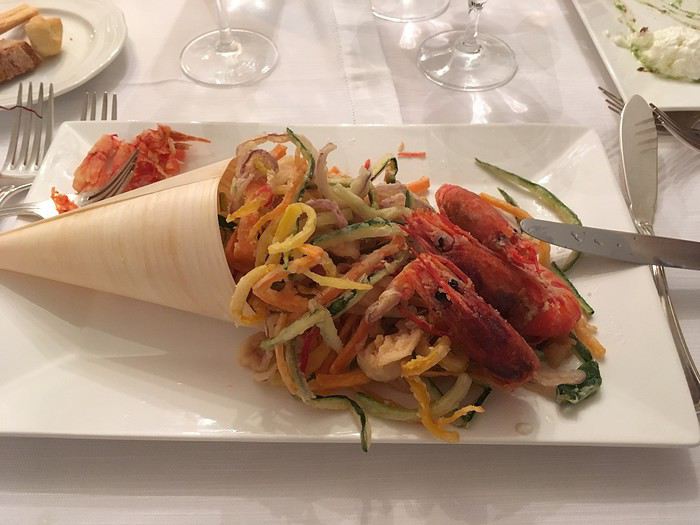
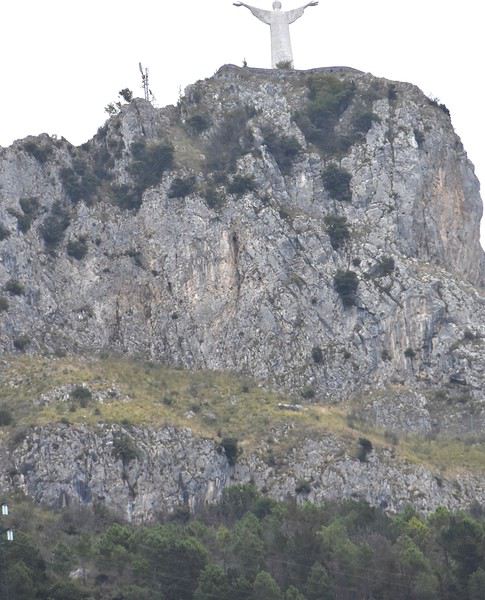
This beach is below Acquafredda, under the towering Christ the Redeemer statue that overlooks the coast. In the evening, you can wrap up your day with a fantastic seafood meal at Osteria 1999 in Porto, right by the little harbor, of course!!!
These were the three days of ‘Luxury, calm, and pleasure’ on our trip... Tomorrow, if you’re still with me, the final chapter in Campania...
Take my word for it—it’s even better in real life! A picture’s worth a thousand words:
I’ll spare you the historical details: countless churches, isolated villages, and high-altitude trails. If we’d stayed longer—and if we hadn’t been so exhausted from the steep walks in Puglia’s villages and then nearly *finished off* by Matera’s stairs—you’d have gotten the full rundown! We slept and ate each evening at an idyllic hotel where we were pampered. It was the very end of the season, around September 27th, and most Italians were back at work... Too many people would’ve been unpleasant, but too few felt a little... gloomy. There was a bit of a crowd one weekend evening, though. View from the terrace:
And from our room:
Still, I can’t even imagine our disappointment if the sun hadn’t been out! The town of Maratea isn’t really a town at all—it’s a collection of hamlets scattered over 30 km, with no seaside strip of shops or restaurants. It’s made up of many small settlements, some closer to the water than others; a few have charming little ports like Marina and Porto, while others sit higher up, like Acquafredda, where we stayed. Important heads-up: the Saturday morning market means the road is closed! A 20 km detour is mandatory...
Our only daily dilemma was picking *the* beach to spend a few hours at—based on sand vs. pebbles, whether there was a bar, and... how easy it was to get there! Let me explain: along the Gulf of Policastro, where we were, there’s only one road, and it’s dizzying and packed—one side the sea, the other the mountain. The coast has over twenty beaches, and access usually involves a sharp turn and a steep descent... The first route the GPS suggested was often a rocky, uphill trail that our car couldn’t handle, and after all the blind U-turns, my husband—exhausted—asked me to keep it simple!
I’d recommend our first pick: ‘o Macaro beach, a mix of sand and gravel, for its (relatively) easy access, its stunning setting between two rocky cliffs, its umbrellas (12 € for two, with two sunbeds), and its bar—you’ve got to go!
Its parking lot (5 € for the day) is worth the trip, nestled in a forest of umbrella pines!
This beach is below Acquafredda, under the towering Christ the Redeemer statue that overlooks the coast. In the evening, you can wrap up your day with a fantastic seafood meal at Osteria 1999 in Porto, right by the little harbor, of course!!!
These were the three days of ‘Luxury, calm, and pleasure’ on our trip... Tomorrow, if you’re still with me, the final chapter in Campania...
PapJ59· 7 years ago
Good evening Brigitte,
and what a job you’ve done again...
Bravo, it’s really interesting and detailed. I now understand why I should plan 2 full days in Matera, plus all those earlier tips.
My Belgian and Swiss friends are my travel guardian angels!
Best wishes to all of you (B.D.M.S) Jean
and what a job you’ve done again...
Bravo, it’s really interesting and detailed. I now understand why I should plan 2 full days in Matera, plus all those earlier tips.
My Belgian and Swiss friends are my travel guardian angels!
Best wishes to all of you (B.D.M.S) Jean
M
Mguibentif· 7 years ago
We stayed at Hotel Martino in Marina di Maratea. We went up to Maratea. Parked at the bottom of the town and walked up—there’s still a pretty big built-up area around Piazza Buraglia. Didn’t get around to visiting the surrounding hamlets.
Hi there,
I just saw your question while re-reading my post: yes, that’s exactly it!
As soon as we picked them up, he left...
We wouldn’t have been able to carry them back comfortably, even though just one suitcase was left in the car...
Have a great evening!
Have a great evening!
Hey there,
I was worried you’d dropped off!
In a few days, I’ll post some practical info and, most importantly, the highlights (and lowlights...) of the trip—let me know what lessons you’ve learned afterward!
I’m back in my role as Ms. Weather: in Brussels, it’s bright sunshine—the trees, still leafy and russet, are glowing! Cheers!
I’m back in my role as Ms. Weather: in Brussels, it’s bright sunshine—the trees, still leafy and russet, are glowing! Cheers!
Show 10 more replies
Hi Mathilde,
I’m adding a few photos of Maratea just for you—I was wondering if anyone knew this place! I read (about your hotel) that May isn’t ‘in season,’ and neither is September! It must be tough for people who rely on tourism to make their yearly income in just 3 months!
The day after we arrived, we went to Maratea (the town). We drove around wondering where to park and opted for ‘outside the town center’—we got lucky: just 100 meters away. The road to get there,
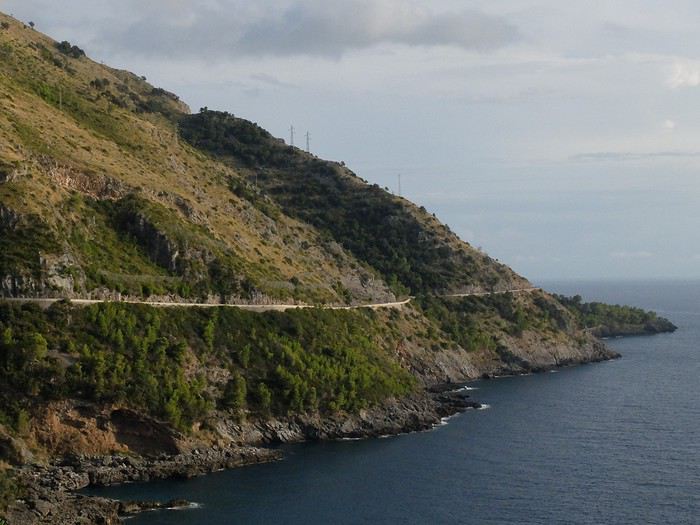
under the Christ the Redeemer statue:
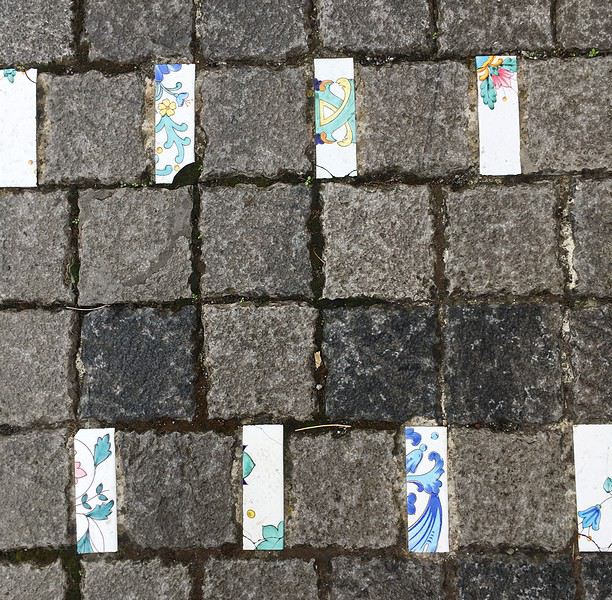
It was a weekday morning, and we walked through the alleys around the square: pastel-colored facades, no tourist shops at this time of year but grocery stores, butchers... and lots of small local shops with old-fashioned window displays showing only textiles—dish towels (or ‘torchons’ as the French say), doilies, and table sets. We figured there must be a factory nearby—and sure enough, there is! Along the cobblestone streets, the sidewalks are inlaid with ceramic tiles:
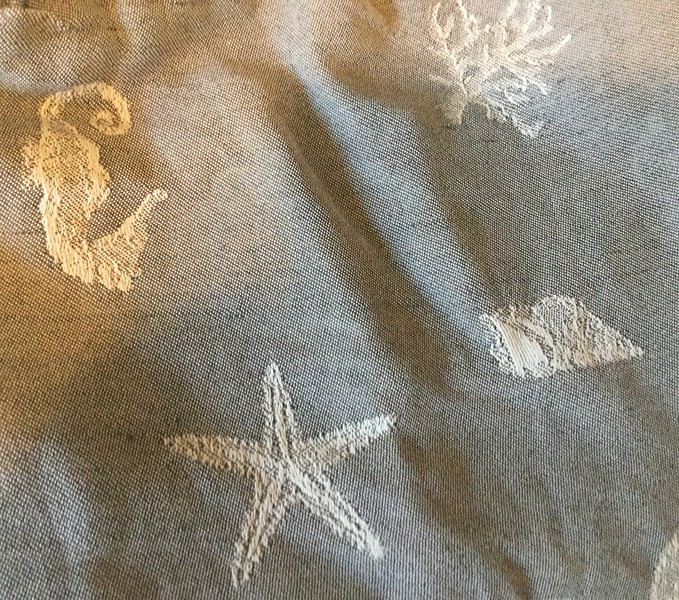
I’m including a photo of a bag I bought there, featuring Maratea’s iconic ‘lighthouse’ design...
A quick question: what route brought you to Maratea? It’s such a hidden gem, barely known to ‘outsiders’ like us!
Have a great day!
under the Christ the Redeemer statue:
It was a weekday morning, and we walked through the alleys around the square: pastel-colored facades, no tourist shops at this time of year but grocery stores, butchers... and lots of small local shops with old-fashioned window displays showing only textiles—dish towels (or ‘torchons’ as the French say), doilies, and table sets. We figured there must be a factory nearby—and sure enough, there is! Along the cobblestone streets, the sidewalks are inlaid with ceramic tiles:
I’m including a photo of a bag I bought there, featuring Maratea’s iconic ‘lighthouse’ design...
A quick question: what route brought you to Maratea? It’s such a hidden gem, barely known to ‘outsiders’ like us!
Have a great day!
M
Mguibentif· 7 years ago
On the way back from Sicily by car (we had taken the ferry on the way there), exactly on May 10, 2013... 😉
https://voyageforum.com/discussion/sicile-malte-retour-par-italie-continentale-avril-mai-2013-d5993939/
https://voyageforum.com/discussion/sicile-malte-retour-par-italie-continentale-avril-mai-2013-d5993939/
Hi there,
It was a great adventure too!
I really liked: " We're on the SS18, we turn at the Marina di Maratea junction, and we end up at the beach, a dead-end road. Okay, my paper map must not be accurate... We head back up to the road, we go to the Port of Maratea to ask for directions..."
Same for us, it was something we rarely see, and we thought it was just age... but not only that: phew!!! and also " Off to Sapri...: Small road, we're not moving fast... Spectacular views. Not recommended for those who are afraid of narrow, winding roads..."
We weren’t scared at all... but don’t push it!!! That explains why we didn’t move around much in Maratea!
I’ll continue... on the flat; have a great day!
A truly beautiful spot, indeed—lesser-known (almost a hidden gem!) and less crowded, but just as stunning as the Amalfi Coast!
I’d also compare it, depending on the views and hikes, to the trails of the Cinque Terre: best explored on foot, not just 'in passing.' You’ll want to set aside at least three days to really soak it in...
Have a great day, cheers.
Have a great day, cheers.
If you're reading this, thanks for sticking around! We're leaving Basilicata for Campania, destination: Paestum, which will be the last stop on our journey before heading back...
From Maratea, we head back up to Sapri via the winding road you know (hello, Campania!) and from there, we make our way to Agropoli. To our surprise, we're no longer following the coast but taking a highway, and we arrive in Paestum by midday.
Why the rush? Well, in Paestum, besides the famous Greek temples, there's a wonderful museum we want to revisit... but of course, it's closed on Mondays. Tomorrow, we'll find something else to do on our last day before returning!
A cultural stop: absolutely! But this is an exceptional site that combines history and the beauty of a natural landscape!
We let ourselves be guided to a parking lot—owners take advantage of the influx of travelers to rent out their land at a premium! The site is now enclosed by a walled perimeter, and you enter through two gates: to the south, the Gate of Justice, where we are now.
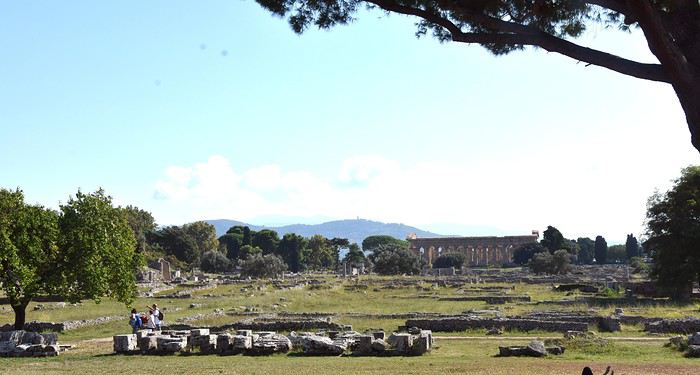
On Sunday, we won’t be alone—all the walkers are out with kids, strollers, and... dogs, along the Via Magna Grecia, which leads north to the Porta Aurea. The landscape is typical, arid and scorched by the sun, with a few umbrella pines providing some shade.
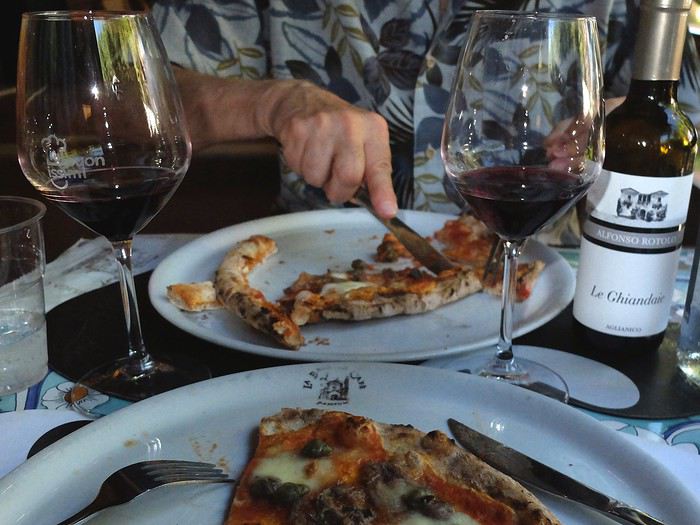
The further we go, the more souvenir shops and bars pop up. We quickly agree: first, we’ll grab something to eat, and then—off to explore the site! Near Naples, the choice was obvious...
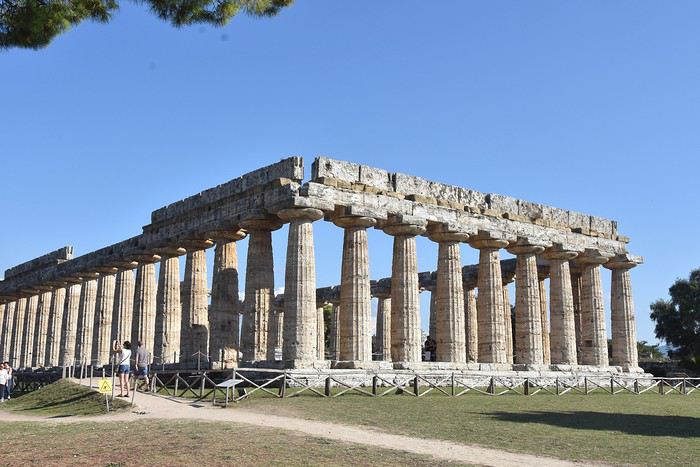
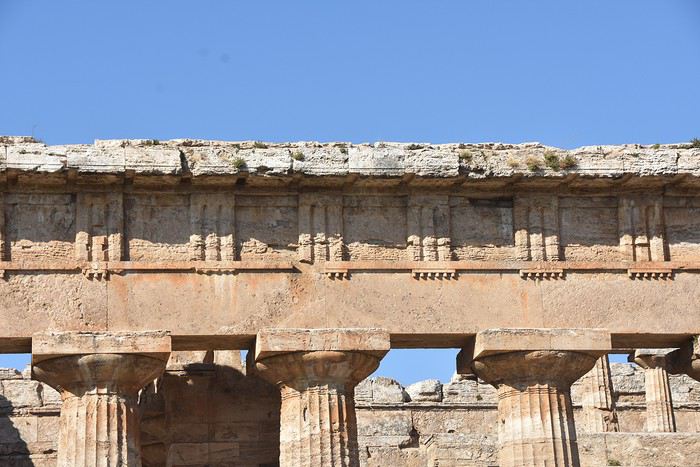
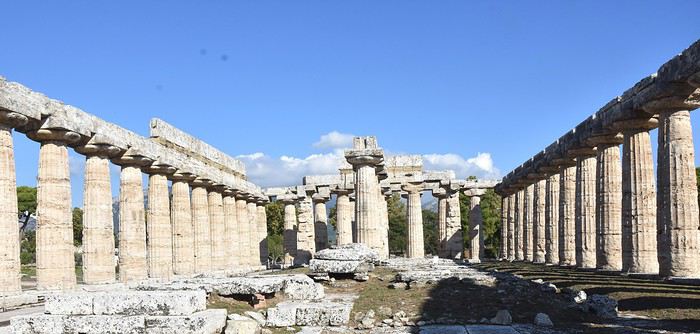
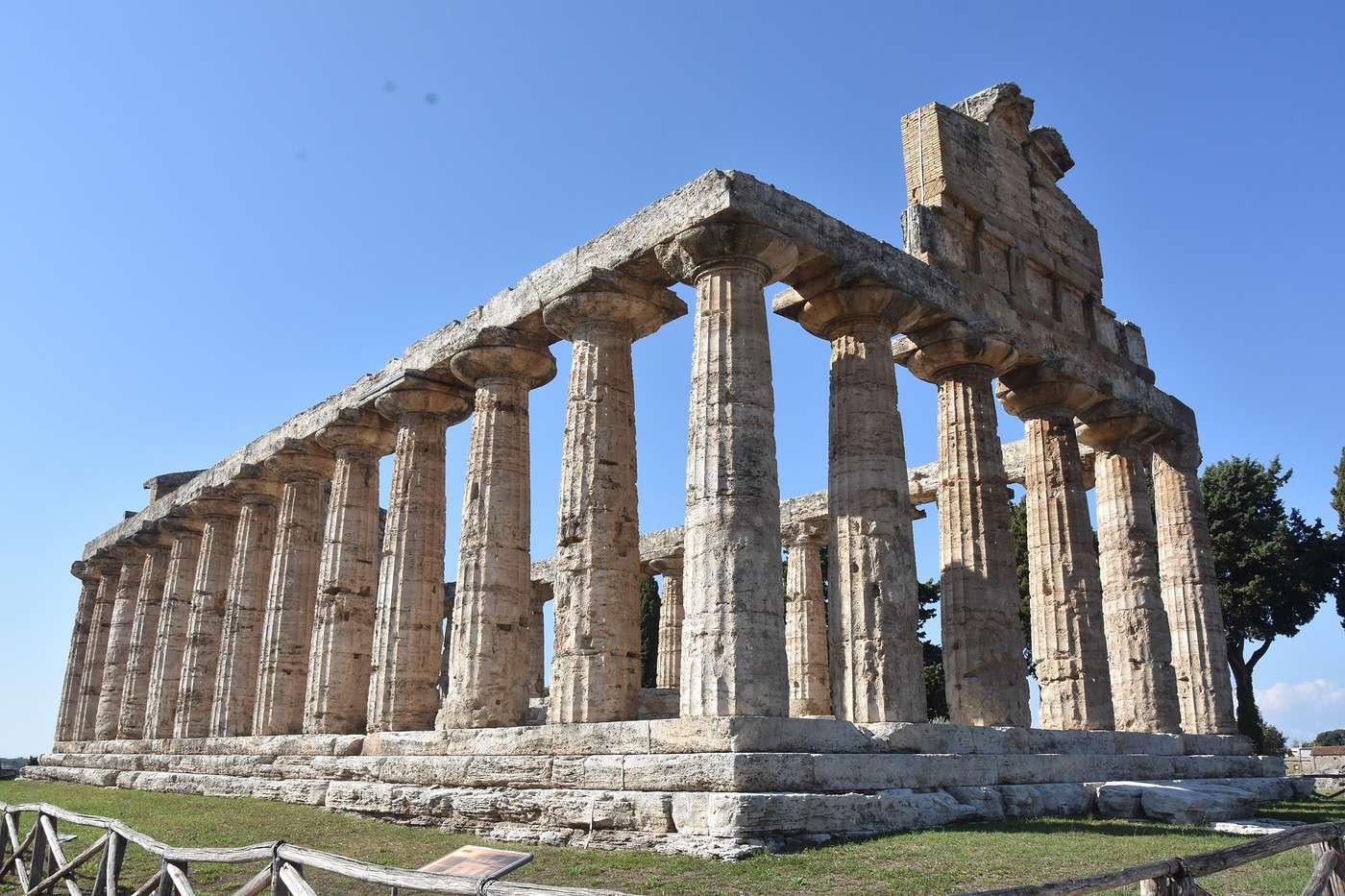
Let’s enter the archaeological site: first, note that these temples are the best-preserved Greek temples known, and all three are in the Doric style—the most classic and simple. Just look at the column sculptures and capitals! The names they’ve been given date back to the 18th century and don’t match reality at all... To keep it simple, I’ve arranged the photos in chronological order, which doesn’t match the order of the visit.
First, the oldest: the Temple of Hera, also called the Basilica, dating back to around 550 B.C. Next to the other two, it gives off a certain heaviness due to its dimensions and the thickness of its columns. The pediments, called metopes, are missing—some are on display in the museum.
Next, see the Temple of Athena, also called the Temple of Ceres: its architecture is more harmonious, and it dates back to 500 B.C.
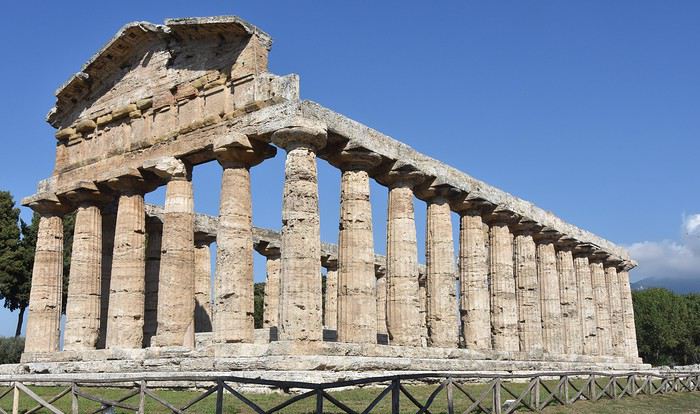
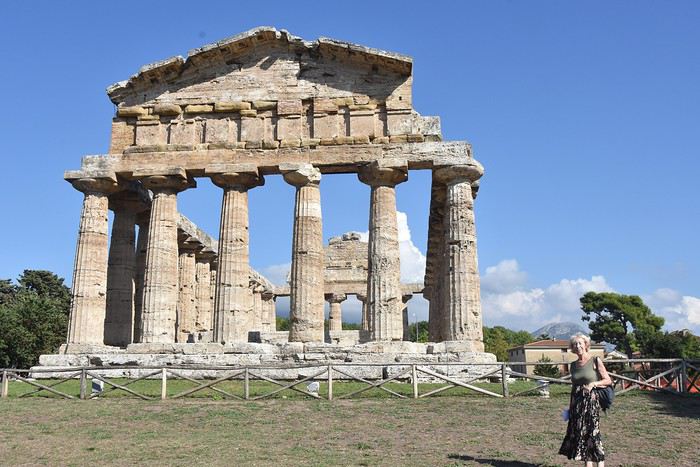
Finally, we reach the Temple of Neptune, the best-preserved of them all! It was built around 450 B.C. Its proportions follow the Golden Ratio, like the Parthenon in Athens, and it exudes perfect harmony and power. At sunset, the effect is stunning, enhanced by the beautiful golden light...
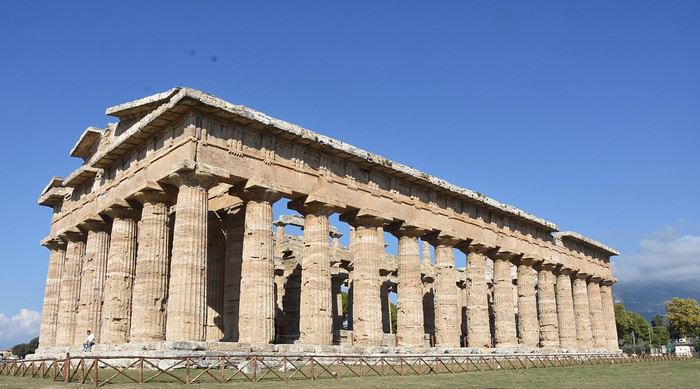
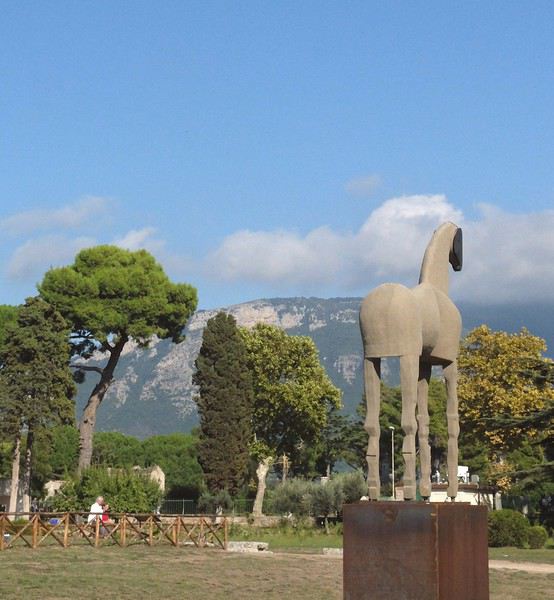
A note from the math enthusiast in me: the Golden Ratio is a remarkable number, especially for architects. Using it gives a building an obvious balance. For those unfamiliar, the length of the building equals the width multiplied by 1.62... (the approximate value of the famous Golden Ratio!). Between the temples, a modern sculpture stands out beautifully against the backdrop!
I’ll skip the other remains of the ancient city, and we head straight to the museum—some lovely surprises await us there!
From Maratea, we head back up to Sapri via the winding road you know (hello, Campania!) and from there, we make our way to Agropoli. To our surprise, we're no longer following the coast but taking a highway, and we arrive in Paestum by midday.
Why the rush? Well, in Paestum, besides the famous Greek temples, there's a wonderful museum we want to revisit... but of course, it's closed on Mondays. Tomorrow, we'll find something else to do on our last day before returning!
A cultural stop: absolutely! But this is an exceptional site that combines history and the beauty of a natural landscape!
We let ourselves be guided to a parking lot—owners take advantage of the influx of travelers to rent out their land at a premium! The site is now enclosed by a walled perimeter, and you enter through two gates: to the south, the Gate of Justice, where we are now.
On Sunday, we won’t be alone—all the walkers are out with kids, strollers, and... dogs, along the Via Magna Grecia, which leads north to the Porta Aurea. The landscape is typical, arid and scorched by the sun, with a few umbrella pines providing some shade.
The further we go, the more souvenir shops and bars pop up. We quickly agree: first, we’ll grab something to eat, and then—off to explore the site! Near Naples, the choice was obvious...
Let’s enter the archaeological site: first, note that these temples are the best-preserved Greek temples known, and all three are in the Doric style—the most classic and simple. Just look at the column sculptures and capitals! The names they’ve been given date back to the 18th century and don’t match reality at all... To keep it simple, I’ve arranged the photos in chronological order, which doesn’t match the order of the visit.
First, the oldest: the Temple of Hera, also called the Basilica, dating back to around 550 B.C. Next to the other two, it gives off a certain heaviness due to its dimensions and the thickness of its columns. The pediments, called metopes, are missing—some are on display in the museum.
Next, see the Temple of Athena, also called the Temple of Ceres: its architecture is more harmonious, and it dates back to 500 B.C.
Finally, we reach the Temple of Neptune, the best-preserved of them all! It was built around 450 B.C. Its proportions follow the Golden Ratio, like the Parthenon in Athens, and it exudes perfect harmony and power. At sunset, the effect is stunning, enhanced by the beautiful golden light...
A note from the math enthusiast in me: the Golden Ratio is a remarkable number, especially for architects. Using it gives a building an obvious balance. For those unfamiliar, the length of the building equals the width multiplied by 1.62... (the approximate value of the famous Golden Ratio!). Between the temples, a modern sculpture stands out beautifully against the backdrop!
I’ll skip the other remains of the ancient city, and we head straight to the museum—some lovely surprises await us there!
D
Dominike· 7 years ago
In my opinion, you're going to love Brigitte's gorgeous travel journal about Puglia and more—it's packed with great tips and stunning photos ;) After you've read Sissi's too ;)
Matera: we absolutely fell in love with it too—definitely worth spending 2 days there!!!
Happy planning😎
Dominike
Matera: we absolutely fell in love with it too—definitely worth spending 2 days there!!!
Happy planning😎
Dominike
D
Frampton37· 7 years ago
Hi there,
I’m still following along from my snowy Quebec! What a beautiful trip you had—so well summarized! We’ve been wanting to visit southern Italy for a long time. Your tips will be super helpful for planning.
I’m still following along from my snowy Quebec! What a beautiful trip you had—so well summarized! We’ve been wanting to visit southern Italy for a long time. Your tips will be super helpful for planning.
Hi Josiane,
I’m so glad my story gave you some travel ideas for Italy!
You mentioned it won’t be your first time there—what have you already visited? Puglia isn’t the first region people think of, but after this trip, we loved it!
We don’t know Quebec at all, which is a shame. On the other hand, we usually go to the U.S. once a year (family reasons) and know some areas pretty well: the Southeast, the American West (5 times), and cities like New York and Washington...
When you come back to our continent, let me know—we can talk about so many countries!
Have a great day! !

Fabiepot· 7 years ago
Hi Brigitte, and thanks for these new photos! I’m reading the rest of your trip carefully. About Carlo Levi, I had looked into visiting the village where he was placed under house arrest and where I think he’s buried, but it was too far from where I was staying in Puglia at the time. That forced stay inspired him to write *Christ Stopped at Eboli*—a beautiful book I highly recommend if you haven’t read it. He describes the life of the people in this very poor region at the time and their pain at being forgotten by the Italian government. He also mentions Matera in the book.
You might also like
 Tuscany: Arezzo province and the Siena area
Travel logs › Italy·286 photos
 A "relaxed" 16-day tour of Corsica in autumn 2024
Travel logs › France › Corsica·274 photos
 Off we go on an adventure in Puglia!
Travel logs › Italy·128 photos
 Autumn trip from Puglia to Naples via Basilicata...
Travel logs › Italy·149 photos
 Palermo street art
Travel logs › Italy·38 photos
 Veneto: Dolomites and Opera
Travel logs › Italy·154 photos
 Polynesia: How to choose between the Society Islands, Tuamotu, and the Marquesas?
Features › French Polynesia·4 photos
 A Few Days in Turkmenistan from Uzbekistan
Travel logs › Turkmenistan·73 photos