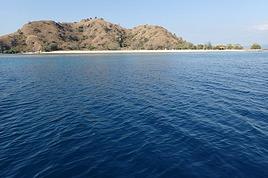
Hi everyone, we’re heading to Java in August, specifically to KAWAH IJEN. I’ve seen that there are new requirements like a medical certificate since 2024—is this still the case? Can our 6-year-old daughter do the ascent? Can she go down to see the blue flames at night with gas masks? If not, is it better during the day? Thanks for your feedback!
403 similar discussions in English
When you're trying to travel with your bike, SNCF sometimes tells you there's no solution, even though you could combine TGVs, TETs, and TERs.
- We used to check the Swiss CFF website https://www.sbb.ch/fr,
but it’s become useless since the "bike" option for France was removed.
- Next, we go to the Deutsche Bahn website https://www.bahn.com/fr, which has a "bike" option that combines TGVs, TETs (IC), and TERs. Then, you can either: - Buy the ticket directly on the Deutsche Bahn site, or - Note all the trains in the itinerary and, to use your discount cards, go to the SNCF website to purchase all the necessary tickets. The Deutsche Bahn site lets you adjust connection times in the "details" of an itinerary if the suggested one seems too short. I’ve found that 10 minutes is really risky—delays, crowds on the platform making it hard to move quickly, not to mention the line for the elevator and navigating an unfamiliar station. Still, it’s best to double-check that each train allows bikes.
- Now, thanks to the site "Biclous et bidouilles," check it out here:
https://biclousetbidouilles.com/un-site-en-or-pour-voyager-en-ter/
I discovered this site, which helps calculate bike-friendly routes in France:
https://www.horaires-de-trains.fr/horaires-ter.html
I gave it a quick test, but it seems limited to TERs—too bad, since the ideal is to combine all available train options.
One pitfall to avoid: always make sure you’re still on https://www.horaires-de-trains.fr/horaires-ter.html and haven’t accidentally switched to https://www.horaires-de-trains.fr/.
These days, SNCF is gradually converting all its TGVs to INOUI. Normally, they all have bike spaces, so these workarounds might not be needed much longer.
I'm planning a short stay in Ladakh from August 12th to 23rd, 2026.
Delhi to Leh to start.
I don’t have all the details yet, but I’m planning to visit Thiksey Monastery and other monasteries.
Accommodation: guesthouse at Thiksey Monastery
Accommodation: Nyerma Nunnery
ETC....
Everything needs to be planned and organized. I’d love to hear your suggestions and experiences.
Thanks, Dewa
Everything needs to be planned and organized. I’d love to hear your suggestions and experiences.
Thanks, Dewa
Hi everyone, after a stay in the South and one in the North, I’m planning a mini road trip in Corsica (Bastia-Bastia) in June to explore places I haven’t seen yet. Since we’re heading to the mountains later this year, we’ve deliberately skipped the Corsican mountains. Could you share your thoughts and, most importantly, suggest things to see? We love nature, reasonable hikes, peaceful spots, and small villages. No cities. No boat excursions (yes, that includes Piana and Scandola). We already know the area between Bastia and Calvi.
June 7 Flight arrival in Bastia and night at the hotel
June 8 Drive to Calvi (beach and/or fortress) Meal at Les Boucaniers restaurant Night in Calvi
June 9 Walk from Calvi fortress to Alga beach Charcuterie platter at A Casetta Calvi Night in Calvi
June 10 Drive from Calvi to Piana Buvette du col de la Croix and visit the orientation table Chemin des muletiers (Muleteers’ Path) Or Sentier de la source des roches bleues (Blue Rocks Spring Trail) counterclockwise Or (less scenic) Tête du chien (Dog’s Head, starting at the parking lot) Dinner at Épicerie Castellani in Piana Night in Piana
June 11 Drive from Piana to Propriano Arone beach and meal at Le Café de la plage Drive along the coast, stopping wherever we like Night in Propriano
June 12 Hike starting from Campomoro in the Jardin du Vent (Wind Garden), and visit the Genoese tower of Campomoro Meal in Campomoro: restaurant Chez Pierre Paul U spuntinu Night in Propriano
June 13 Around Propriano (avoid Capu Laurosu beach—sewage treatment plant...) Night in Propriano
June 14 Drive from Propriano to Bastia airport Meal at L’Éternisula in Zonza Aiguilles de Bavella (Hole of the Bomb) Night at the same hotel as arrival
June 15 Departure
Hi there,
I’m planning a trip to the White Villages and noticed that many are in the Province of Cádiz—like Setenil de las Bodegas, Olvera, Ubrique, Grazalema, Zahara de la Sierra, Medina-Sidonia, and Vejer de la Frontera. Are all of these worth visiting, or are there others you’d recommend? I’ve already been to Arcos de la Frontera and Ronda in the area and wouldn’t mind returning, of course. I’m also considering the Caminito del Rey, so maybe a few interesting villages in the province of Málaga too. Do you think an itinerary starting from Málaga (arriving at the airport) with 2 or 3 stops (like Ronda, Arcos, and a third in one of these villages) would work?
Thanks for your tips!
Hi there!
I’m heading to Thailand on February 22, 2025. After Chiang Mai, I’ve got a flight to Krabi, then 3 days in Koh Tao. Is it easy to get from Krabi to Koh Tao? On the island, I haven’t booked any activities—I figured I’d sort things out once I’m there. Anyone got tips for me?!
Thanks a bunch, Laurence from Bayonne
Hi everyone, due to my partner’s work training abroad, he can’t join us for our week-long trip to Morocco in early November. So I’ll be alone with my 3-year-old daughter. My in-laws live in Marrakech, where we’ll be staying with my little one, but I’ve never actually met them. I’m feeling a bit stressed—should I cancel (and lose my flight tickets) or go ahead and travel alone? We’ll be in Marrakech, but I still don’t have a car either. Are there others in the same situation—traveling with kids? Any advice would be greatly appreciated!
Hi there,
Has anyone taken a cruise to the Canary Islands and Madeira with Costa?
Thanks for your replies!
Jibé
Hi,
I’m looking for how to book a tent in Koh Surin to stay for several days. Does anyone know the current booking site?
Subject: Scam and trap by OPODO
Subject: Request for help and legal support —
Deceptive practices by OPODO
(Unconsented, unsigned Prime subscription)
Dear Sir/Madam,
I’m writing to ask for your help and advice regarding a difficult financial situation caused by OPODO’s practices.
The facts:
A promotional offer for a 1 € flight ticket led me to unknowingly subscribe to a Prime membership with an annual commitment of 10.90 € per month. I never requested this subscription, didn’t understand their process, and never gave my consent or authorization for withdrawals.
I paid for the 1 € promotional ticket by credit card. I never received the promised booking ticket. Since then, I’ve been subjected to automatic monthly withdrawals from my account without ever being clearly informed of this commitment.
Steps I’ve already taken:
- I’ve sent several complaint emails to OPODO, which remain unanswered to this day. - I’ve notified my bank and will make an appointment to block the payments and request a refund as soon as possible. - I’ve contacted the Lille Mediation service. They gave me an appointment on November 2nd with a lawyer. I was given a file to fill out for court.
- I’m reaching out to you today to seek legal support and have these fraudulent practices by OPODO examined.
My request:
I find these practices deceptive and abusive. I’m asking for advice on possible recourse, whether others have been victims of the same scheme, and for support in canceling this subscription and getting a refund for the amounts already withdrawn from my account.
I also want to warn the public: You must be very careful with OPODO’s site, which offers 1 € promotions supposedly to “lock in” a deal, then traps you with a subscription you never signed up for or understood. They use your banking details as if they were entering your home without permission and withdraw automatic monthly subscriptions for a year—a commitment you were never informed about.
Please share this information wherever you can to prevent others from ending up in the same financial mess. Life is already complicated enough; no one should have to deal with this kind of trap. Not to mention the time wasted and the toll on morale. 😞
I’m available for any additional information and thank you in advance for your understanding, support, and especially your help.
Yours sincerely,
Lille, Monday, October 19, 2026
Copies: - Mediator of Tourism and Travel - My bank (notified, appointment to be scheduled soon) - Lille Mediation consultation on Monday, October 19, 2026, at 2:00 PM - Copies of complaint emails sent to OPODO (remained unanswered)
Thank you for your trust, kindness, and especially for a positive response.
Lille, Monday, October 19, 2026
Hello,
I’ll be in Nepal from March 6th to 29th (we’re flying into Kathmandu via Varanasi and leaving via Delhi).
I’m a bit confused about the regulations requiring a guide.
My wife and I (we’re 63 and 64) aren’t experienced trekkers—we’re more used to walking on terrain with very moderate elevation changes. I’m looking for fairly easy hikes, possibly day trips. Here are my questions: - Does the Poon Hill trek from Pokhara require a guide, or is it better to go through a local agency? (I’ve seen a lot of them offering 4-day packages) - I’d like to do a few multi-day hikes around Jomsom (Kagbeni, Mukitinath, Lupra, Marpha)... Do you need a guide for those, and can you find accommodations easily without booking in advance?
Last question—I’m really hesitant to lug around a sleeping bag or down jacket during our 6 weeks in India. Can you easily find these kinds of items at reasonable prices in Pokhara?
Thanks in advance for any tips you can share! Yann
And we still haven’t seen everything!
Before setting off for new horizons at the end of this year, it’s time for me to share my trip to Cape Verde this summer 2025.
I particularly love these spontaneous trips, and our stay in Cape Verde is one of those because it was only at the beginning of April that we decided on this getaway, which had been catching our eye for a while, given our love for the mountains.
As always—well, when it’s open—I turned to VF, and I want to immediately thank Marie, aka ptitortue, who helped me a lot in planning this trip through her travel journals and our exchanges!
Because Cape Verde is both small and vast! We decided not to rush from one airport to another, to enjoy the places and the people, but also to relax, since the work backlog from being stuck in May (see my previous travel journal 😅) had to be caught up on in June.
So, 4 islands will be our winners from 06/28 to 07/19:
Santiago first for logistical reasons, as round-trip flights from the capital Praia were the cheapest (650 €/person from Lyon via Lisbon with TAP, still!)
São Vicente, because it’s the gateway to the next one but ultimately more than that...
Santo Antão, pretty much the main goal of the trip since Marie (and the photos) had really sold it to me.
And finally, Sal Island, for some rest—a non-negotiable condition for my other half—and we’ll see that I should’ve listened to Marie...
That said, what a chatterbox I am—buckle up, flight attendants at the doors, off we go on new beautiful escapes! (Thanks to Sophie for the easy loan)
Last note for my eager fan club 😏: yes, there will be alcohol—how could there not be in the land of grogue!
It starts here:
https://voyageforum.com/v.f?post=10790234;a=10790234
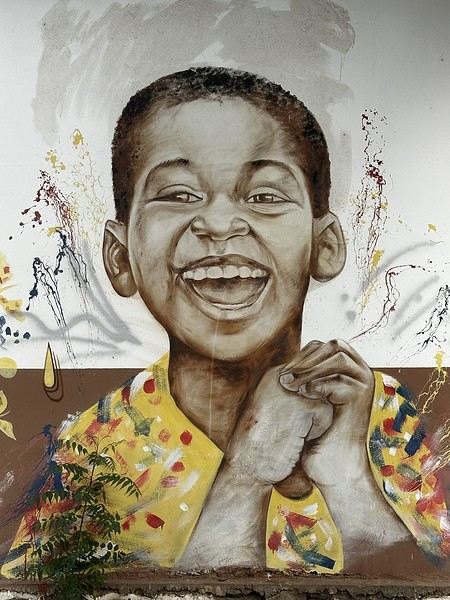
I particularly love these spontaneous trips, and our stay in Cape Verde is one of those because it was only at the beginning of April that we decided on this getaway, which had been catching our eye for a while, given our love for the mountains.
As always—well, when it’s open—I turned to VF, and I want to immediately thank Marie, aka ptitortue, who helped me a lot in planning this trip through her travel journals and our exchanges!
Because Cape Verde is both small and vast! We decided not to rush from one airport to another, to enjoy the places and the people, but also to relax, since the work backlog from being stuck in May (see my previous travel journal 😅) had to be caught up on in June.
So, 4 islands will be our winners from 06/28 to 07/19:
Santiago first for logistical reasons, as round-trip flights from the capital Praia were the cheapest (650 €/person from Lyon via Lisbon with TAP, still!)
São Vicente, because it’s the gateway to the next one but ultimately more than that...
Santo Antão, pretty much the main goal of the trip since Marie (and the photos) had really sold it to me.
And finally, Sal Island, for some rest—a non-negotiable condition for my other half—and we’ll see that I should’ve listened to Marie...
That said, what a chatterbox I am—buckle up, flight attendants at the doors, off we go on new beautiful escapes! (Thanks to Sophie for the easy loan)
Last note for my eager fan club 😏: yes, there will be alcohol—how could there not be in the land of grogue!
It starts here:
https://voyageforum.com/v.f?post=10790234;a=10790234
Hi everyone,
We’re planning a road trip on Route 66 in 2027 with our two kids, who’ll be 7 and 4 years old.
My husband would prefer to do it in an SUV, while I’d rather go in a camper van.
What are the pros and cons of each option?
Thanks for your input!
We’re planning a road trip on Route 66 in 2027 with our two kids, who’ll be 7 and 4 years old.
My husband would prefer to do it in an SUV, while I’d rather go in a camper van.
What are the pros and cons of each option?
Thanks for your input!
Hi there,
We’re heading to Panama from January 29 to February 13 as a couple, and I’m unsure about the order and duration of the stops. Here’s what I have in mind:
2 days in San Blas
2 days in Santa Fe (it’s either that or Boquete, but I think I’d prefer Santa Fe)
4 days in the Bocas del Toro archipelago
3 days in Panama City and surroundings
2 days in Valle de Antón? Not sure if it’s really worth it
1 "flexible" day
What do you think?
We’re also debating whether to take a direct flight to Bocas first, then rent a car to gradually make our way back to Panama City and do San Blas at the end—or do the opposite: start with San Blas, rent a car, and finish with the domestic flight from Bocas back to Panama City.
Any specific tips?
Thanks so much for your help! 😊
Hi there!
We’re planning a trip to Egypt from January 21 to 28, 2027.
J21 – Arrival in Cairo at 6 PM V22 – Visit the Pyramids S23 – Early flight to Aswan, visit Aswan D24 – Visit Aswan, depart mid-afternoon for Abu Simbel L25 – Morning visit to Abu Simbel, return to Aswan. Is it possible to go all the way to Luxor the same day? Private driver between Aswan and Luxor M26 – Visit Luxor M27 – Visit Luxor J28 – Early flight to Cairo, arrive around 9–10 AM, head back into the city to see 1 or 2 museums (probably just 1 due to time), then flight to Lyon at 7 PM
Does this itinerary seem realistic to you? Does it cover the highlights?
Thanks for your feedback! Best, Christophe
Hello,
We’re a group of four seventy-something retirees and we’re planning a 4-week trip to South Africa. We’re seasoned "adventurers" used to multi-week stays (we’ve been to India seven times, Mexico, Thailand, Laos, Myanmar, Australia, etc.).
For South Africa, we’re thinking of covering most of the trip in a private vehicle and taking flights for inter-state transfers. We’re interested in meeting people, learning about the country’s evolution, exploring major cities, visiting traditional villages, and seeing wildlife.
Here’s the itinerary we’re considering: Johannesburg – 2 days (we’ll pass through again later) Pretoria – 2 days Blyde River Canyon and Graskop – 1 day Acornhoek – 1 day Letaba – 2 days Lobamba – 2 days Johannesburg – 1 day
Flight to Cape Town
Cape Town – 3 days Cape of Good Hope – 1 day Stellenbosch – 1 day Hermanus – 1 day Mossel Bay – 2 days Oudtshoorn Wilderness – 2 days Knysna Port Elizabeth – 2 days Addo Elephant Park
Flight back to Johannesburg
Johannesburg – 1 day
Return to Paris
Could you share your thoughts on this itinerary? We’ll be renting a vehicle to explore both regions. We can easily add 4–5 more days to the trip if needed.
We’re looking at traveling either between April and May 2026 or in October/November 2026.
I’ll follow up later to discuss the best safari options and get a rough budget estimate.
Thanks to everyone who takes the time to read this and share their thoughts!
In South Africa, over the past few years, places offering interactions with lions have exploded across the country—but mainly in the most tourist-heavy areas (well, well...).
Under various names ("reserve," "center," "park," "institute"), tourists are lured in with the chance to pet lion cubs, walk alongside lions—all for a fee, of course. Volunteers are even recruited to support the animal cause—also for a fee.
The origin story of these big cats is always noble: orphaned cubs rescued from the wild, or from terrible places, or from an injured mother that was saved. (That’s an awful lot of orphaned lion cubs... a real epidemic?)
The future of these felines is supposedly bright—either a return to the wild or retirement in a reserve.
The "center’s" activities—the rescue of these poor cubs or lions, the study of their behavior, genetic improvement, repopulating the wild, and lately, advertising.
What will the tourist do?
How can you resist the incredible opportunity to pet a lion cub, walk beside a lion, get up close without barriers, see them so near? Plus, you’re doing a good deed by funding the rescue of these magnificent animals, cared for with such dedication by these passionate people!
What have you actually just done?
What are the facts? (Conclusions from a very interesting report)
There are over 200 lion breeding farms, currently holding more than 12,000 captive felines, most of which are lions. (Up from 8,000 in recent years.) More than 800 captive lions are killed each year by hunters. Who, by the way, try to establish ethical hunting rules. Almost none of these places have any real connection to animal protection agencies or wildlife conservation scientists. It’s a commercial operation, generating over $100,000 USD/month, particularly through volunteer programs. The real rescue centers can be counted on one hand! There are no reintroduction programs for captive lions. They aren’t needed—lions don’t require captive-bred animals for reintroduction, especially not those imprinted by humans or genetically compromised. And they don’t breed, sell, or interact with the animals in any way!
(They don’t breed, trade—mostly receiving animals rather than acquiring them—or interact with the animals in any way.)
Taking a lion cub from its mother is unnatural and only done to exploit the animals, visitors, and volunteers.
(Taking lion cubs away from their mothers isn’t natural and is only done to exploit the animals and you as the visitor or volunteer.)
Obviously, the number of animals actually "rescued from the wild" is minuscule. Information provided at these places is poor, confusing, and biased—or outright false. They exploit people’s gullibility and empathy for a commercial operation under the guise of animal welfare. Under the pretense of animal protection and research, many lions end up sold to zoos. Most are sold to hunting reserves. The use of big cat bones in traditional Chinese medicine is ancient and growing rapidly—over 1,000 lions are killed each year for this purpose.
The uncomfortable questions!
* Is there interaction with the lions? * Where are the old lions? * Do you buy or sell animals? * Where do the animals come from, and where do they go? Where do all these cubs come from? * Do you have a recognized predator specialist? * If you release animals, when and where?
The right answers!
We interact minimally, if at all! They need to stay wild! The old lions are here. Never buying. Selling is extremely rare. It’d be like an animal shelter buying dogs! We have few animals, all rescued. No breeding, ever. It’d be like an animal shelter breeding dogs! Yes. Extremely rare!
It’s clear this is purely a financial operation, and there’s a 99% chance you’re participating in what I’d call a scam.
Basically, lions are bred on farms. When they’re cubs, you pay to pet them. When they’re older, you pay to walk with them or get close. And when they’re fully grown, they either become breeders on the farm or end up as targets—in a zoo, as bone powder, or worse.
Pet a lion cub, and you’re sentencing it to a lifetime in captivity or death!
The same principle applies to leopards—though not exactly to cheetahs.
Real rescue and conservation centers exist, but they’re rare. The others are everywhere.
Please, keep this in mind on your next vacation!
Hi everyone,
I’m posting this because in about two weeks, my wife and I want to go to Myanmar. Ever since the country opened up, we’ve really wanted to visit. However, I’m wondering if there’s too much hype about it. Everywhere you read that it’s authentic, not too touristy, really different, etc. So I’m worried we might be getting our hopes up too high and risk being disappointed if it’s not the case. Because despite everything, it’s become a very popular destination in Asia, and a lot of tourists are heading there.
I’d love to hear your general thoughts. Were you disappointed? Or was it exactly what you expected?
Because if all this enthusiasm is a bit exaggerated, maybe we’ll choose another country instead.
Thanks in advance! :)
Hi everyone,
I’m planning a tour of the light trails in Paris and Île-de-France this winter. I’ve compiled the events still running or coming up for the 2026–2027 season, with dates, times, and prices. Maybe this’ll help others!
In Paris L’Odyssée Lumineuse — Parc floral, Paris 12th From November 14, 2026, to January 24, 2027. 5:30 PM to 10:00 PM, last entry at 9:30 PM. Note: several closures during the week. Dated ticket: 13 € adult / 11 € child aged 3 to 12; free for under 3s. On the program: giant lanterns, illuminated fountains, and northern lights effects.
Nuits Indiennes — Jardin d’Acclimatation, Paris 16th From November 27, 2026, to February 21, 2027. 6:00 PM to 9:30 PM, last entry at 9:00 PM. Closed Mondays and Tuesdays outside Zone C school holidays. Announced prices: 18 € adult / 12 € child. A trail around India, with around 2,000 lanterns and light sculptures.
In Seine-et-Marne — 77 Lumigny Safari de Lumières — Lumigny-Nesles-Ormeaux From October 15, 2026, to January 3, 2027. 6:00 PM to 10:00 PM, last entry at 8:30 PM. Thursday to Sunday outside school holidays, with more dates during the holidays. Closed December 24, 25, and 31, as well as January 1. Night trail only: 16.90 € for ages 11+ / 14.90 € for ages 3 to 10; free for under 3s. Lanterns on themes of the deep sea, animals, and fantastical creatures.
Le Grand Noël de Vaux-le-Vicomte — Maincy From November 14, 2026, to January 3, 2027, according to the schedule. Generally from 10:30 AM to 8:00 PM, with some evenings until 9:00 PM. Reduced hours on December 24 and 31; closed December 25 and January 1. Château + gardens: from 25.90 € adult / 20.90 € child aged 3 to 17. Higher prices on weekends and during holidays. This isn’t a lantern festival *per se*: more of a visit to the decorated château and gardens, with illuminations and projections on the façade.
In Yvelines — 78 Thoiry Lumières Sauvages — Thoiry From October 17, 2026, to March 7, 2027, according to the schedule. Generally from 5:00 PM to 9:00 PM, last entry at 8:00 PM, but hours vary by date. Night trail only: 23 € adult, or 25 € from December 19 to January 2; 19 € child aged 3 to 10. Nearly 3 km of walking among light sculptures, on the theme “In the Footsteps of Pachamama.”
La Nuit des Géants — France Miniature, Élancourt From November 28, 2026, to January 3, 2027, according to the schedule. Entry slots from 5:30 PM, with last entries at 8:30 PM or 9:00 PM depending on the period. Tickets start at 18 €; prices vary by date and category. A new light trail among miniature monuments, showcasing Christmas traditions from French regions.
One extra one-off event Parade lumineuse des Allebrilles — La Villette, Paris 19th December 5, 2026, free. Check the time. A procession of light creatures and puppets, rather than a trail open all winter.
Prices are based on the info I gathered, but it’s best to check the schedule and session prices on each official site before heading out.
I’d also like to film these outings to prepare a recap video for YouTube. If anyone’s already done these trails with a camera or stabilizer, I’d love your feedback: how was the equipment welcome, crowd levels, ability to stop and film? I’m also checking with the organizers about broadcasting permissions.
Know any others like this in Île-de-France, or have feedback on these?
15 days across Gran Canaria, El Hierro, and a dash of Tenerife under the storm Thérèse!
The planned itinerary will be slightly disrupted...
(The version without discussions is here)
The planned itinerary will be slightly disrupted...
(The version without discussions is here)
Hi there
We’re planning to do this route as a self-drive trip. There’ll be six of us, so with a large car—is the drive between Durban and Johannesburg manageable? Thanks for your feedback! Day 2: Cape Town Day 3: Cape of Good Hope Day 4: Hermanus, Cape Agulhas Day 5: Wine Route Day 6: Cape Town → Durban (flight) → St. Lucia Day 7: St. Lucia Day 8: Hluhluwe Day 9: Mlilwane Day 10: Sabi Sand Day 11: Sabi Sand Day 12: Kruger Day 13: Panoramic Route Day 14: Balule → Johannesburg
We’re planning to do this route as a self-drive trip. There’ll be six of us, so with a large car—is the drive between Durban and Johannesburg manageable? Thanks for your feedback! Day 2: Cape Town Day 3: Cape of Good Hope Day 4: Hermanus, Cape Agulhas Day 5: Wine Route Day 6: Cape Town → Durban (flight) → St. Lucia Day 7: St. Lucia Day 8: Hluhluwe Day 9: Mlilwane Day 10: Sabi Sand Day 11: Sabi Sand Day 12: Kruger Day 13: Panoramic Route Day 14: Balule → Johannesburg
Hi everyone.
Because that’s also what sparks the desire in every traveler (well, at least for me) to set foot on Australian soil: discovering a new continent.
Right now, I’ve got some time on my hands—those who follow me know that. A nasty muscle tear (which really doesn’t want to heal) is keeping me grounded for another week, so I’ve decided to open a new travel journal, recounting my recent trip from December 14, 2024, to January 12, 2025, in Australia.
The origins of this trip started last May in Crete, an island I chose for a 10-day break. It’s really lovely, by the way, but that’s not the point… It’s around this time every year that we decide on our next winter destination, and Argentina was at the top of the list—Sydney wasn’t even on the radar… I’d been looking at flights to Buenos Aires for a while, and the prices were shocking… But by the pool one lazy afternoon, scrolling on my iPhone, a promo from Geneva to Sydney caught my eye. The deal ticked two boxes on my traveler’s bucket list: a flight to Australia and a flight with Singapore Airlines, often ranked as the world’s best airline. A quick chat with the missus (well, of course!) and the decision was made: off to the land of kangaroos! Now, once you add luggage and Economy Plus, it still comes to 1600 € per person, but that’s a reasonable price. Either way, we already know what we’re in for—Australia is a budget commitment!

Thanks to 123rf for the image loan 😛
Right now, I’ve got some time on my hands—those who follow me know that. A nasty muscle tear (which really doesn’t want to heal) is keeping me grounded for another week, so I’ve decided to open a new travel journal, recounting my recent trip from December 14, 2024, to January 12, 2025, in Australia.
The origins of this trip started last May in Crete, an island I chose for a 10-day break. It’s really lovely, by the way, but that’s not the point… It’s around this time every year that we decide on our next winter destination, and Argentina was at the top of the list—Sydney wasn’t even on the radar… I’d been looking at flights to Buenos Aires for a while, and the prices were shocking… But by the pool one lazy afternoon, scrolling on my iPhone, a promo from Geneva to Sydney caught my eye. The deal ticked two boxes on my traveler’s bucket list: a flight to Australia and a flight with Singapore Airlines, often ranked as the world’s best airline. A quick chat with the missus (well, of course!) and the decision was made: off to the land of kangaroos! Now, once you add luggage and Economy Plus, it still comes to 1600 € per person, but that’s a reasonable price. Either way, we already know what we’re in for—Australia is a budget commitment!
Thanks to 123rf for the image loan 😛
Hi everyone, we're back from a DIY USA road trip we organized from July 31, 2026, to August 26, 2026.
The destination: The Southwest USA, including Texas, Arizona, and New Mexico. Roughly 7,000 kilometers covered.
The car: A Chevrolet Equinox for two, rented through BSP Auto and Avis. Inside, we had 2 suitcases, a travel bag, two carry-on bags, a Walmart cooler, photo gear, and water bottles (a 40-pack).
The route: Dallas DFW, Fort Worth, Houston, Austin, San Antonio, Alpine, El Paso, Tucson, Sedona, Albuquerque, Amarillo, and back to Dallas to finish with a departure from DFW.
The travelers: Two seniors well advanced in years (73 and 75) but still active (nothing too physically demanding—to stay alive and fund our trips), fully independent physically, though a bit less so mentally. Big USA fans, a country where anything is possible. More walkers than hikers, preferring 3-star hotels over roadside motels, Italian restaurants over US food, frequent stops for photos, museums over nothing, naps over forced marches. Not too whiny, just enough to stay French in the land of the "great Satan," as they say. Not great with languages—street English (but handy), and my Spanish is non-existent except for: "Hola! Una cerveza por favor!" That’s about it. My wife understands everything but refuses to speak.
The cost of the road trip: Around 12,000 €, including AF flights, the car, gas, gifts, visits, and everything else. Well managed, since we’d budgeted 13,500 € initially.
The positive side: A delight, with those endless open roads. Museums to discover. The realization of the Hispanic presence and its important history in this part of America. Lovely locals. Tourists who were more or less friendly. A terrible Texan accent that was hard to understand. Gas stations that were like real stores, with prepared food, alcohol sold in Arizona and New Mexico, and employees who were always up for a laugh!
The negative side: The heat throughout the trip... 43°C in Dallas at the end. Impossible to walk the streets. Lots of homeless people in downtown Dallas. Hotel breakfasts that were always the same. You get used to it.
So, it was positive overall, but the concept is starting to wear us out. We might rethink the DIY road trip model for next time. If the man upstairs grants us more time.
Next up, we’ll wait for the first batch of sorted photos to go through the wringer.
See you soon.
After our amazing experience in the Lofoten Islands in summer 2023, I suggested to Jean Marie another trek I’d been wanting to do for a long time: the Skye Trail in Scotland.
A few photos of this stunning island and he was sold and ready to go.
The route is available on the excellent WalkHighlands site HERE (there’s also a Cicerone guide on the subject). And since I thought it was a shame it avoided the Black Cuillins, I added a 3-day detour in that area.
We took advantage of the May bank holidays in 2024, partly to avoid the peak tourist season and also the midge period—because for some reason, mosquitoes love me 😠!!
27/04 – Day 1 – Transfer to Skye and start of the trek: Rubha Hunish - Flodigarry 28/04 – Day 2 – Flodigarry – just before the Old Man of Storr 29/04 – Day 3 – Old Man of Storr – Portree, then bus to Sligachan 30/04 - Day 4 - Sligachan - Glenbrittle campsite via the Fairy Pools 01/05 – Day 5 – Round trip to Sgùrr na Banachdich from Glenbrittle campsite 02/05 – Day 6 – Round trip to Coire Lagan and walk on the Rubh an Dùnain peninsula 03/05 – Day 7 – Return (hitchhiking) to Sligachan campsite and hike in the Red Cuillins 04/05 – Day 8 – Resuming the Skye Trail – Sligachan – Elgol 05/05 – Day 9 – Elgol – Somewhere on the climb to Bla Bheinn 06/05 – Day 10 – Somewhere on the climb to Bla Bheinn - Broadford 07/05 – Day 11 – Visit to the Armadale Castle and park 08 & 09/05 – Return to Glasgow, visit the city, and return flight And here’s the summary
Hello everyone,
I’m happy to be back at my keyboard to share a few adventures. 😉
Right now, two more trips are in the works for 2025, but for the moment, I’d rather share than ask questions.
Like many of you, Iceland has been a longtime love of mine. My first trip there was in February 2016, when we went as a family of five—including our three daughters, who were 1, 6, and 5 at the time. It was a very short stay with just one place to stay, north of the capital. We explored the south, from Vik to Grindavik, and of course, I was left wanting more. We returned in April 2018 during a stopover on our way back from New York. We spent three days near Borgarnes, but fatigue and the weather kept me from doing everything I’d planned. After my mom passed away in January 2023, I decided to go back to Iceland for a full week. Just to clear my head... I thought I’d go alone, but in the end, my 8-year-old daughter (at the time) is a huge horseback riding fan, so I decided to take her along. This road trip came together quickly thanks to another well-known French-speaking forum for Iceland lovers. As usual, I quickly checked availability on Booking and flights with Icelandair. Booked the flight, then the accommodations—with quite a few changes right up until departure. Goals for this trip:
Go where I haven’t been yet. Do a road trip because I love them. Go horseback riding with my daughter.
Icelandair was booked for May 6–13, 2023. Accommodations were reserved on Booking, and once again, I rented a 4x4 from Blue Car Rental, which I really like. Not wanting to deal with boredom while there, I got all the insurance and the option to skip the counter. My English isn’t great…
September 2017. I’m setting off on a journey from the Atlantic to the Black Sea—entirely by TRAIN—crossing Switzerland, Austria, Slovenia, Serbia, and Bulgaria all the way to Varna. I leave the house, walk briskly for half an hour to the station. Haven’t carried a backpack in years. I arrive at the station drenched in sweat. It’s a scorching late summer. My T-shirt is soaked. First minor challenge, first thought: travel is discomfort. You have to put yourself in a state of discomfort, accept it, and move beyond it. My T-shirt will dry on me—portable, self-contained heating at a steady 37°C.
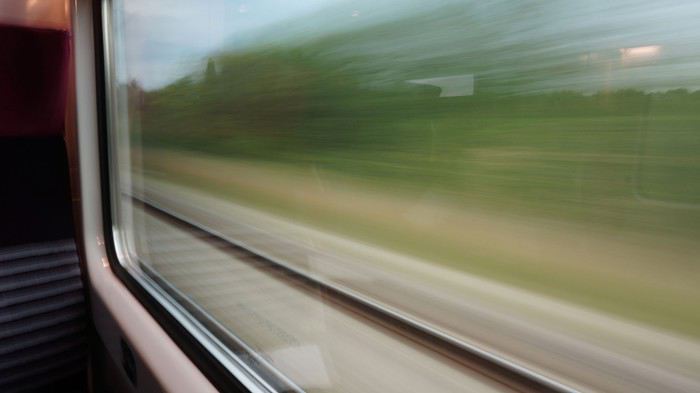
Departure on the Ouigo from Rennes station, arriving in Massy 1.5 hours later. And then the rush toward the exit. In a frantic rhythm, hundreds of passengers trample in the same direction like a single organism, as if driven by some urgency. The human snake with things to do. Meanwhile, the metal snake that teleported us here continues on its infinite path, perched on its two rails. At the station exit, ticket machines for the RER are under siege, lines stretching outside the building. I watch for a moment, then... veer off toward a café 200 meters away. A guy at the entrance greets me at the top of the stairs with humor. I stir my espresso and think how hot it is to be setting off on a trip—especially since I’m heading toward Southern Europe. Then comes a thought, maybe cliché but fitting: if you wait for ideal conditions to act, to leave, to do, you might wait forever.

PARIS, youth hostel at 8 Jules Ferry Street, 21 € for a bed in a dorm. Unbeatable price for sleeping in the capital. Friendly welcome and a nice neighborhood near République. They don’t ask for a hostel federation card. Paris is as beautiful as ever—and as polluted. My eyes and throat sting a little. I buy a ukulele (the reason for this stop in Paris), using my backpack as a case. First notes strummed in the empty hostel room. We’ll end up being four people sleeping here, mostly in their thirties or older. In the evening, I have a Grimp on the terrace of a nearby café. After a day of carrying my backpack in the heat, the first sips of cold beer are pure bliss. The window stays wide open all night because of the heat, to let in a little air. Feels like sleeping right on the boulevard, with motorcycles and cars passing all night long.

TGV from Paris to Strasbourg. The sound of the train is smooth and soft, almost nonexistent. I think to myself that the TGV is already a thing of the past—a time when we believed abolishing time would mean abolishing finitude, when in reality it only erased life. A time when we believed in the rise of a single, affluent upper-middle class with access to immediacy in a world of efficiency, profit, cleanliness, straight lines, no sweat, no dust. I think speed is part of the past. When you go fast, you rush, you’re never where you are—always just ahead, never here and now. Speed is a rejection of life, a sick movement, an illusion of power and joy. No yawning, no breathing, no dozing, no thinking. Speed abolishes time and space. People get sucked in. Quick, into the vacuum—never inspired, no time. Aspiration versus inspiration. A battle between unreal times (past and future) and the only real time: the present.

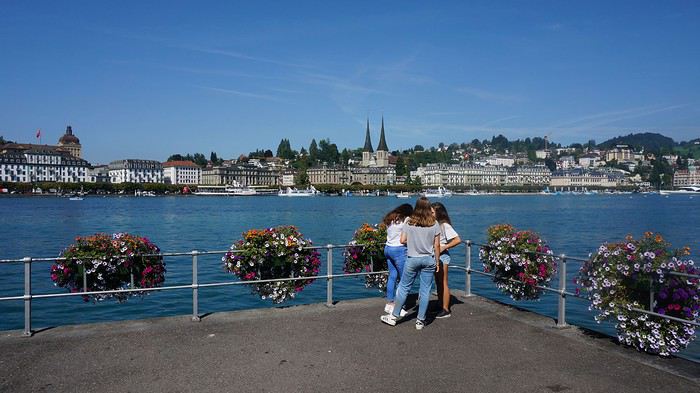
Second night. Youth hostel in Lucerne, Switzerland. Tough end to the day—tired, starting to get blisters. Lucerne, with its charms and hordes of tourists, wears me out. With my blisters, I drag myself to the station, buy some Asian takeaway, and wait for the bus to escape to the hostel. There, three massive Russian-speaking guys chat and down beers around a table on the terrace by the entrance. I sit a little apart. The Swiss hostel is twice as expensive as the one in Paris. The common areas are spacious, but the rooms are cramped and lack a sink. The opposite of the Parisian hostel, where the common spaces were minimal but the room was spacious and had a sink. I share the small room with two students from Singapore. Lights go out around 10 PM, but in the hallway, a group of overexcited girls from the next room scream, laugh, slam doors, and keep coming and going for over an hour. The next day, I’d find the girls’ bathroom floor covered in chips.
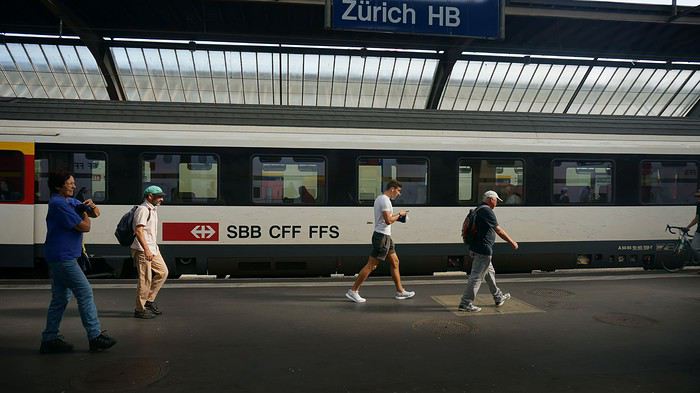
 Day three. Departure from Lucerne station in the morning, change in Zurich, heading to Villach in Austria near the Slovenian border. The train is slow, skirting a large lake with mountains where rocks jut out by the water. The view through the window is soothing. The sounds of the train are pleasant. In front of me, two women speak softly while eating Swiss crackers. Then the train speeds up as we leave the lakeside. I decide to get off at Wörgl, a small station surrounded by mountains, instead of continuing to Salzburg. The train I take in Wörgl looks like our TER. Not many people, just three small carriages, well-balanced air conditioning. Good call: this little train winds through the Austrian mountains. It stops often, but the scenery is beautiful, and I’m in no hurry. Typical little villages, chalets on the mountainside, coniferous forests. To be honest, after a while, I get a bit tired of these endless valleys. Lack of perspective and distant views.
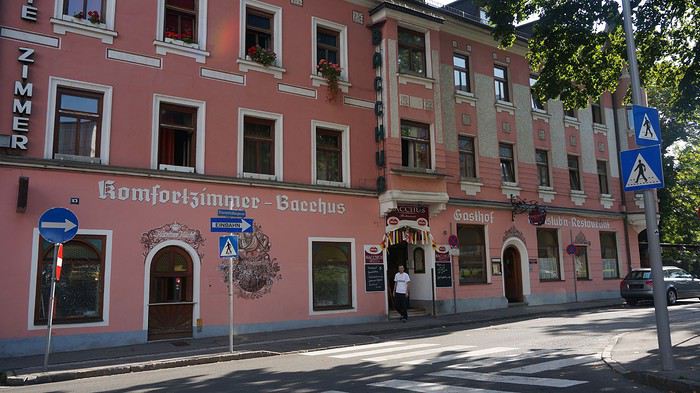
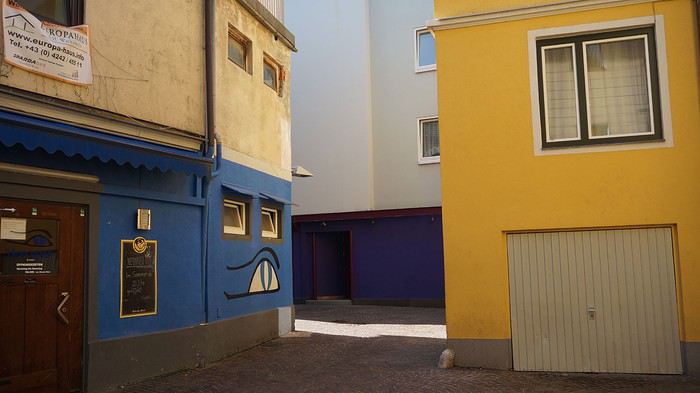
Villach. A pleasant town with a well-maintained old pedestrian center and its old bridge spanning the Drava. I arrive in the early evening. After a good walk, I pass through a mixed zone (industrial and sports) and find the youth hostel 2–3 km from the station. 25 € a night, but the hostel is "full," and of course, I haven’t booked. I never book in advance or use a phone to navigate. I prefer to improvise and ask for directions. I head back to the city center and find a room for 76 € in a three-star hotel. The guy at reception, very kind, looks like he stepped out of a comic book—a short, chubby guy with a serene face and voice. He’s not rushed at all, takes his time, which is really nice. The room isn’t great in terms of essentials, but a lot of effort (finishes, furniture) has gone into matching the hotel’s standards. No free space, window overlooking a narrow courtyard (smell of cooking in the morning), and a small, not-very-firm bed. Bathroom’s fine, and there’s a big screen (one channel in French). In the morning, a free breakfast with an incredibly varied spread—salty and sweet, meats, cooked dishes, pastries, dried fruits, cereals... Sitting with me in the room are mostly couples in their sixties.

Departure from Villach station. Train at 12:53 PM to Ljubljana. 17 €. Quite an old train, compartments with six seats, some patched up. I share a compartment with a very nice Croatian woman around 35. We start chatting, and I explain the nature of my trip. I also tell her about my first big train trip in Asia, which piques her interest, and she asks me quite a few questions. She’s seen documentaries about trains in Russia or India, and I give her a firsthand account from "reality." Her English is a bit better than mine, but we’re more or less on the same level, which I think helps the conversation flow and last. You could almost say we meet while traveling not because of shared interests but because our language levels match!


Ljubljana. No idea what this city looks like. I quickly checked a few forums and was expecting a somewhat dreary big city, pollution... Not at all. After a few minutes’ walk from the station, I enter a pedestrian and tourist area with beautiful, well-maintained, colorful buildings. The city seems immediately very pleasant, everything within reach. At the tourist office, I grab a map and see there’s no shortage of hostels. I find one in the city center in a large old building, with big rooms that haven’t been renovated in decades. 15 € a night. Ljubljana is actually a charming little city, touristy, with a completely pedestrianized center. Prices are already a bit lower than in big French cities. Example prices: 6 € for a large, very filling plate of excellent falafel, hummus, fries, and raw veggies; 2.5 € for a half-pint on a terrace in the city center; 1.50 € for a lungo coffee; 60 cents for a kind of jam-filled bread. In the narrow streets, you come across lots of bikes that seem to rule here. Pedestrians have to move aside. I reach a pedestrian crossing—maybe the only street in the city center open to cars. I’m about to cross (against the light for pedestrians), but a young Slovenian woman warns me in English; she says I could get fined for that.
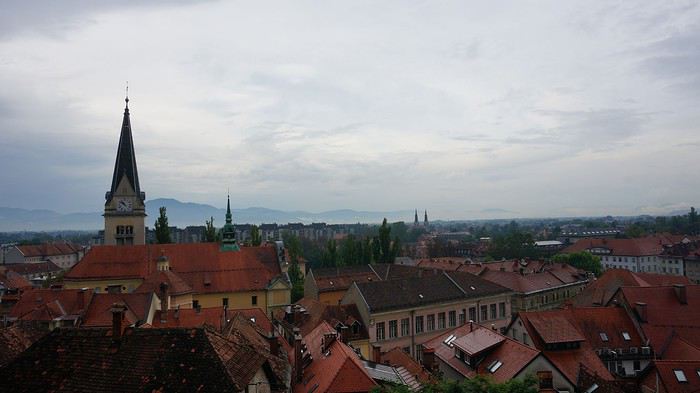
The next day, it’s raining. During a break in the clouds, I manage to have breakfast on a terrace. I find a slightly more expensive hostel (21 €) but with nice common areas. A smaller room but better designed, with a locker for securing your bag. It’s going to rain all morning. I head up to the castle—a walk that, besides getting the legs moving, offers a great view of Ljubljana rather than the castle itself. Midday. It’s raining, so I eat a plate of fish with potatoes cooked by a street vendor at a market, sheltered by a flimsy umbrella. Not many people at the market brave the rain. But I’m loving it. The vendor, very Slavic-looking, corrects my attempt to say "thank you" in Slovenian ("hvala"). A few minutes’ walk away, I reach Ljubljana’s big park. You quickly arrive after a small climb into wild forest—seemingly not maintained at all. And we’re only 1 or 2 km from the tourist office! My feet are soaked—damn shoes that were supposed to be waterproof!
More travels and train sounds on my site crilef.free.fr and also crilef.fr
Departure on the Ouigo from Rennes station, arriving in Massy 1.5 hours later. And then the rush toward the exit. In a frantic rhythm, hundreds of passengers trample in the same direction like a single organism, as if driven by some urgency. The human snake with things to do. Meanwhile, the metal snake that teleported us here continues on its infinite path, perched on its two rails. At the station exit, ticket machines for the RER are under siege, lines stretching outside the building. I watch for a moment, then... veer off toward a café 200 meters away. A guy at the entrance greets me at the top of the stairs with humor. I stir my espresso and think how hot it is to be setting off on a trip—especially since I’m heading toward Southern Europe. Then comes a thought, maybe cliché but fitting: if you wait for ideal conditions to act, to leave, to do, you might wait forever.
PARIS, youth hostel at 8 Jules Ferry Street, 21 € for a bed in a dorm. Unbeatable price for sleeping in the capital. Friendly welcome and a nice neighborhood near République. They don’t ask for a hostel federation card. Paris is as beautiful as ever—and as polluted. My eyes and throat sting a little. I buy a ukulele (the reason for this stop in Paris), using my backpack as a case. First notes strummed in the empty hostel room. We’ll end up being four people sleeping here, mostly in their thirties or older. In the evening, I have a Grimp on the terrace of a nearby café. After a day of carrying my backpack in the heat, the first sips of cold beer are pure bliss. The window stays wide open all night because of the heat, to let in a little air. Feels like sleeping right on the boulevard, with motorcycles and cars passing all night long.
TGV from Paris to Strasbourg. The sound of the train is smooth and soft, almost nonexistent. I think to myself that the TGV is already a thing of the past—a time when we believed abolishing time would mean abolishing finitude, when in reality it only erased life. A time when we believed in the rise of a single, affluent upper-middle class with access to immediacy in a world of efficiency, profit, cleanliness, straight lines, no sweat, no dust. I think speed is part of the past. When you go fast, you rush, you’re never where you are—always just ahead, never here and now. Speed is a rejection of life, a sick movement, an illusion of power and joy. No yawning, no breathing, no dozing, no thinking. Speed abolishes time and space. People get sucked in. Quick, into the vacuum—never inspired, no time. Aspiration versus inspiration. A battle between unreal times (past and future) and the only real time: the present.
Second night. Youth hostel in Lucerne, Switzerland. Tough end to the day—tired, starting to get blisters. Lucerne, with its charms and hordes of tourists, wears me out. With my blisters, I drag myself to the station, buy some Asian takeaway, and wait for the bus to escape to the hostel. There, three massive Russian-speaking guys chat and down beers around a table on the terrace by the entrance. I sit a little apart. The Swiss hostel is twice as expensive as the one in Paris. The common areas are spacious, but the rooms are cramped and lack a sink. The opposite of the Parisian hostel, where the common spaces were minimal but the room was spacious and had a sink. I share the small room with two students from Singapore. Lights go out around 10 PM, but in the hallway, a group of overexcited girls from the next room scream, laugh, slam doors, and keep coming and going for over an hour. The next day, I’d find the girls’ bathroom floor covered in chips.
Day three. Departure from Lucerne station in the morning, change in Zurich, heading to Villach in Austria near the Slovenian border. The train is slow, skirting a large lake with mountains where rocks jut out by the water. The view through the window is soothing. The sounds of the train are pleasant. In front of me, two women speak softly while eating Swiss crackers. Then the train speeds up as we leave the lakeside. I decide to get off at Wörgl, a small station surrounded by mountains, instead of continuing to Salzburg. The train I take in Wörgl looks like our TER. Not many people, just three small carriages, well-balanced air conditioning. Good call: this little train winds through the Austrian mountains. It stops often, but the scenery is beautiful, and I’m in no hurry. Typical little villages, chalets on the mountainside, coniferous forests. To be honest, after a while, I get a bit tired of these endless valleys. Lack of perspective and distant views.Villach. A pleasant town with a well-maintained old pedestrian center and its old bridge spanning the Drava. I arrive in the early evening. After a good walk, I pass through a mixed zone (industrial and sports) and find the youth hostel 2–3 km from the station. 25 € a night, but the hostel is "full," and of course, I haven’t booked. I never book in advance or use a phone to navigate. I prefer to improvise and ask for directions. I head back to the city center and find a room for 76 € in a three-star hotel. The guy at reception, very kind, looks like he stepped out of a comic book—a short, chubby guy with a serene face and voice. He’s not rushed at all, takes his time, which is really nice. The room isn’t great in terms of essentials, but a lot of effort (finishes, furniture) has gone into matching the hotel’s standards. No free space, window overlooking a narrow courtyard (smell of cooking in the morning), and a small, not-very-firm bed. Bathroom’s fine, and there’s a big screen (one channel in French). In the morning, a free breakfast with an incredibly varied spread—salty and sweet, meats, cooked dishes, pastries, dried fruits, cereals... Sitting with me in the room are mostly couples in their sixties.
Departure from Villach station. Train at 12:53 PM to Ljubljana. 17 €. Quite an old train, compartments with six seats, some patched up. I share a compartment with a very nice Croatian woman around 35. We start chatting, and I explain the nature of my trip. I also tell her about my first big train trip in Asia, which piques her interest, and she asks me quite a few questions. She’s seen documentaries about trains in Russia or India, and I give her a firsthand account from "reality." Her English is a bit better than mine, but we’re more or less on the same level, which I think helps the conversation flow and last. You could almost say we meet while traveling not because of shared interests but because our language levels match!
Ljubljana. No idea what this city looks like. I quickly checked a few forums and was expecting a somewhat dreary big city, pollution... Not at all. After a few minutes’ walk from the station, I enter a pedestrian and tourist area with beautiful, well-maintained, colorful buildings. The city seems immediately very pleasant, everything within reach. At the tourist office, I grab a map and see there’s no shortage of hostels. I find one in the city center in a large old building, with big rooms that haven’t been renovated in decades. 15 € a night. Ljubljana is actually a charming little city, touristy, with a completely pedestrianized center. Prices are already a bit lower than in big French cities. Example prices: 6 € for a large, very filling plate of excellent falafel, hummus, fries, and raw veggies; 2.5 € for a half-pint on a terrace in the city center; 1.50 € for a lungo coffee; 60 cents for a kind of jam-filled bread. In the narrow streets, you come across lots of bikes that seem to rule here. Pedestrians have to move aside. I reach a pedestrian crossing—maybe the only street in the city center open to cars. I’m about to cross (against the light for pedestrians), but a young Slovenian woman warns me in English; she says I could get fined for that.
The next day, it’s raining. During a break in the clouds, I manage to have breakfast on a terrace. I find a slightly more expensive hostel (21 €) but with nice common areas. A smaller room but better designed, with a locker for securing your bag. It’s going to rain all morning. I head up to the castle—a walk that, besides getting the legs moving, offers a great view of Ljubljana rather than the castle itself. Midday. It’s raining, so I eat a plate of fish with potatoes cooked by a street vendor at a market, sheltered by a flimsy umbrella. Not many people at the market brave the rain. But I’m loving it. The vendor, very Slavic-looking, corrects my attempt to say "thank you" in Slovenian ("hvala"). A few minutes’ walk away, I reach Ljubljana’s big park. You quickly arrive after a small climb into wild forest—seemingly not maintained at all. And we’re only 1 or 2 km from the tourist office! My feet are soaked—damn shoes that were supposed to be waterproof!
More travels and train sounds on my site crilef.free.fr and also crilef.fr
Good evening to all you photographers and photo enthusiasts on VF,
This is the place to exchange, debate, chat, philosophize, nitpick, ramble, bicker, and congratulate each other on this month’s theme: "The Street as a Livelihood."
Just a reminder that the photos expected in the contest thread should depict street scenes showing people using the street as a place to earn a living—whether it’s legal work, informal jobs, illegal activities, or begging. In the discussion thread, feel free to be much more open-ended.
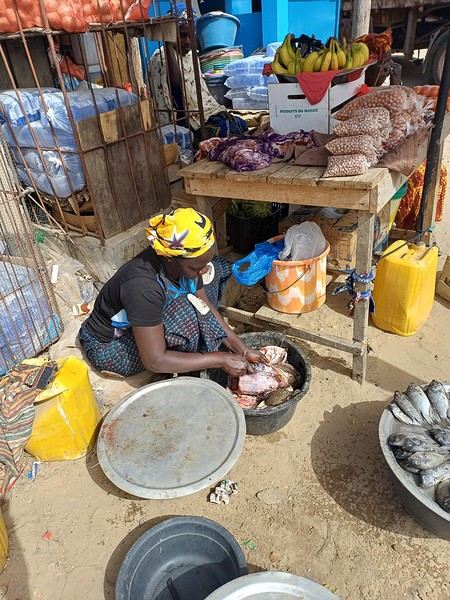
This is the place to exchange, debate, chat, philosophize, nitpick, ramble, bicker, and congratulate each other on this month’s theme: "The Street as a Livelihood."
Just a reminder that the photos expected in the contest thread should depict street scenes showing people using the street as a place to earn a living—whether it’s legal work, informal jobs, illegal activities, or begging. In the discussion thread, feel free to be much more open-ended.
The reopening of the forum is great news—let's keep it going! I’m going to share a little story about this 12-day trip, which was my second-to-last journey and my most recent one in Africa for now.
I went to this country for one very specific reason: to see two endemic animal species. A little suspense… you’ll find out what they are soon if you don’t already know!
The country is poor, very poor even. And it hits you even harder when you arrive in the capital: a massive open-air construction site that gives an impression of prosperity. A lot of roads were built by the Chinese, but to be honest, they’re far from perfect… and I mean *far*!
When it comes to restaurants, it’s pretty much the same story. Most offer endless menus, but in reality, there aren’t many choices. Once, I was flat-out told: “No rice today!” Ordering a dish? It’s a real gamble! The food is *very* spicy—I’m warning you, it’s intense! There’s chili in almost everything, so it’s best to ask beforehand if you don’t want your mouth on fire. Actually, this was the first time I didn’t like the food in a country I visited. Had to happen eventually, right?
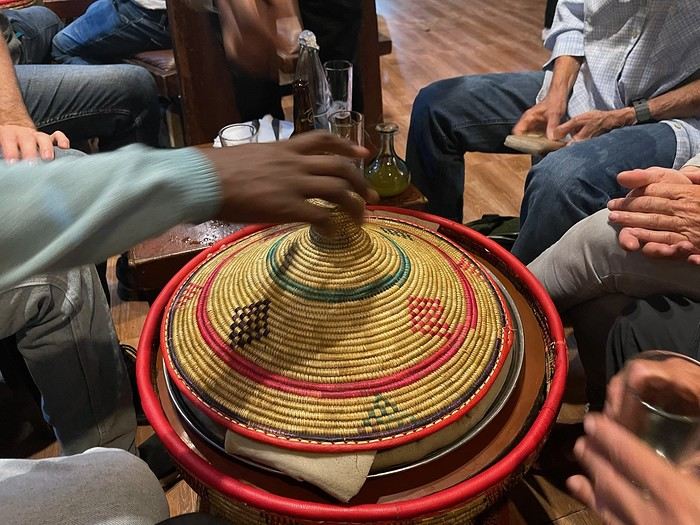
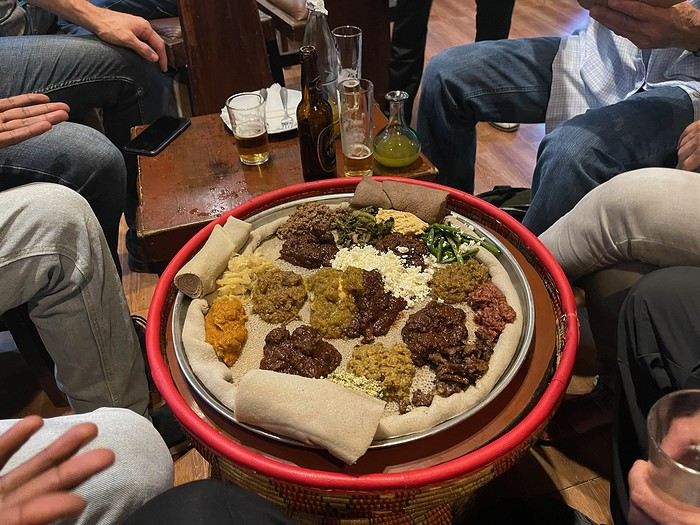
Their national dish? Injera. A large flatbread topped with sauces, vegetables, and meat. The taste is really unique—some love it, others… not so much.
I went to this country for one very specific reason: to see two endemic animal species. A little suspense… you’ll find out what they are soon if you don’t already know!
The country is poor, very poor even. And it hits you even harder when you arrive in the capital: a massive open-air construction site that gives an impression of prosperity. A lot of roads were built by the Chinese, but to be honest, they’re far from perfect… and I mean *far*!
When it comes to restaurants, it’s pretty much the same story. Most offer endless menus, but in reality, there aren’t many choices. Once, I was flat-out told: “No rice today!” Ordering a dish? It’s a real gamble! The food is *very* spicy—I’m warning you, it’s intense! There’s chili in almost everything, so it’s best to ask beforehand if you don’t want your mouth on fire. Actually, this was the first time I didn’t like the food in a country I visited. Had to happen eventually, right?
Their national dish? Injera. A large flatbread topped with sauces, vegetables, and meat. The taste is really unique—some love it, others… not so much.
CALL FOR PARTICIPANTS – GRANDS REPORTAGES (TF1)
“Motorhome: A Different Idea of Happiness”
Hi everyone,
I’m Julie Thierry, a journalist and director for Grands Reportages (TF1). I’m working on a documentary about families traveling in motorhomes or vans, and we’d love to follow one of them on the road across Asia—from Nepal to Thailand, Laos to India, all the way to the roads of Central Asia.
What we love filming It’s real life on the road: the little morning rituals, moments of connection, encounters, stops, and above all, that incredible freedom you experience every day. School on the road, unexpected bivouacs, breathtaking landscapes, shared meals, or conversations around a fire—everything that tells the story of a human adventure, sincere and alive.
Our team is very small (just 2 people), discreet, and respectful. We love blending in without disrupting, to capture authentic moments, from the perspective of those traveling.
Profiles we’re looking for: • Families with kids, all ages welcome • Departure recently or planned for 2025 / 2026 • Long-term travel (a few months or more) • All types of vehicles: motorhome, van, adventure truck, etc. The idea: to follow a few families throughout their journey to share a different idea of happiness—free, simple, and inspiring.
If you’re leaving soon, already on the road, or know a family who fits, email me at juliethierry@duritegroupe.com. Thanks for your shares and messages, and maybe see you soon somewhere on the trails of Asia! 🚐✨
Hi fellow travelers, do you think there’s a real benefit to spending 2-3 days in Yosemite when I’ll already be spending a week in Banff and Jasper in the Canadian Rockies? Won’t it feel a bit redundant? I’m asking because Yosemite is expensive (I’d go with an agency from SF, staying in a cabin, since I’ll be solo and without a car) and apparently packed.
Thanks for your feedback!