Since last year, the unification of the Russian visa with Belarus has been in effect.
For reference, EU citizens haven’t needed a visa for Belarus for two years. However, it wasn’t possible to travel to Russia. Only Belarusian and Russian citizens could move freely within the union.
With the unified system, if you enter one of the two countries with a visa from either, you can now travel between them freely.
In the case of a Russian visa, it must be a paper visa glued into your passport—not an electronic visa.
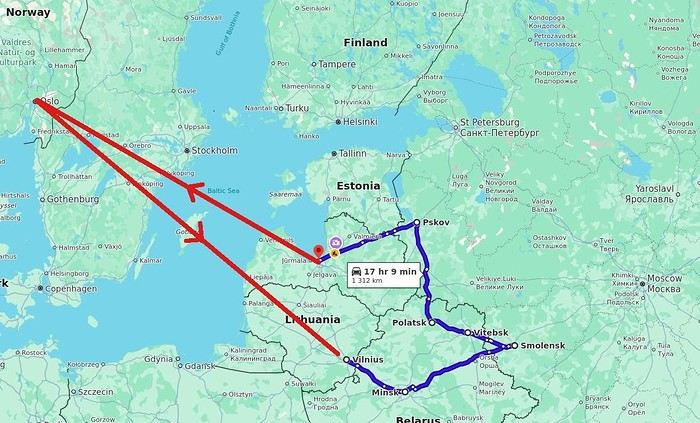
This opens up the possibility of traveling to Russia from Lithuania via Minsk, for example, starting from Vilnius.
It also allows for travel circuits that would otherwise be difficult, despite the proximity of the cities.
So, I’m leaving on June 12th for Vilnius. A one-hour flight for around thirty euros with a carry-on bag, and from Vilnius Airport, there’s a bus to Minsk.
My planned route for now is Vilnius-Minsk-Smolensk-Vitebsk-Polotsk-Pskov-Riga.
This crosses the Belarus-Russia border three times: from Minsk to Smolensk, then from Smolensk to Vitebsk, and finally from Polotsk to Pskov.
The region of this itinerary was, a thousand years ago, essentially that of the Krivichs, a local Slavic political entity. The term comes from "blood," *krew* in Polish, *krov* in Russian—basically "blood brothers." In Latvian, the word for Russians is *krievu*, by the way. Historically, the region corresponds to some of the old Russian principalities.
Later, what marks Belarusian regions in general is, after the Great Schism of 1054, the division between Catholic and Orthodox zones, particularly as the Polish-Lithuanian Commonwealth expanded and contracted.
In architecture, this corresponds to variations in Baroque styles, for example.
Vitebsk is known in France as the birthplace of Chagall. Born Russian, he first trained at the art school in Vitebsk, which was also attended by Malevich and Lissitzky, before completing his studies in Saint Petersburg, then moving to Berlin and later Paris.
In Paris, Chagall met Cendrars, who had spent three years in Russia before and spoke enough Russian to help the newcomer get by a bit.
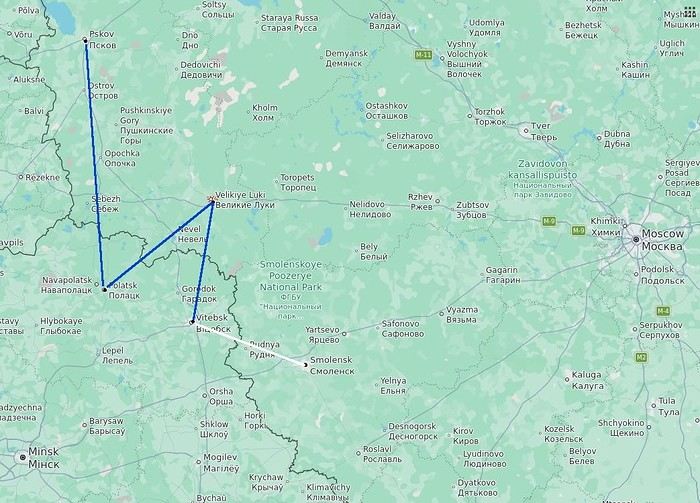
Back to the practical travel aspects: a local Pskov newspaper mentions that the Russian and Belarusian governments have a project for a Pskov-Polotsk train line. Previously, there were also plans for lines between Veliky Luki and Vitebsk, and Polotsk. A recently launched railway is Smolensk-Vitebsk, shown in white on the map, with projected lines in blue.
https://pln-pskov.ru/society/583817.htmlhttps://pln-pskov.ru/society/578335.html
These will likely be "Hirondelle"—that is, *Lastochka*—the fast, spacious regional trains in Russia.
Currently, all of this is done by bus, so the train is a very appealing and comfortable option. We’ll see how it goes.
Estonians have become real pests at the Narva border control.
EER is the Estonian public radio and television service. They have a website, err.ee, with a section in Russian.
The other day, on 26.06.2026, in Narva, a Swedish citizen was asked if she had any foreign currency. She mentioned $1,800 USD and 4,400 RUB. However, she was searched, and 21,000 SEK were found in her underwear (!) Here’s what the article says:
"They eventually discovered 21,000 Swedish kronor"
Maybe the stash seemed suspicious...
She tried to backpedal, meaning to return to Estonia with the Swedish kronor, but was fined 280 €:
While researching South Korea, I came across the term "templestay," which refers to a Korean program that lets you stay in a traditional temple to discover Buddhism and Korean culture by living like the temple residents and doing activities like making lanterns.
A templestay isn’t just for foreign tourists—on the booking site, I saw that some temples are more geared toward foreigners, with English-speaking monks.
I was wondering if it’s still worth it, especially in temples where the monks don’t speak English?
A little trip report from an 11-day journey to Albania at the end of April 2026, with two friends in their early sixties and beyond...
Our route: Berat, Gjirokastër, Himarë, Tirana
Here are some opinions, tips, and great deals to share:
Flight Round-trip Beauvais-Tirana: Ryanair, 260 € with checked baggage (20 kg) and seat selection. Flight was fine and on time. 2h 30min flight.
Exchange: 1 € was worth 95 lek in April 2026. We were advised to exchange in the airport hall at the Illiria counter (98 lek outside the security zone), saying we wouldn’t find a better rate. However, the exchange rate was 93 lek for 1 euro, while in the city it was 95...
Car rental at Tirana airport for 9 days via Booking.com: 144 € (56 € for the car rental and 88 € for optional full insurance deductible waiver).
Wheego agency: the car was fine, but be careful when signing the contract—they tried to convince us that the insurance taken through Booking didn’t cover everything and insisted we take their own insurance for 250 €... We refused.
After reading about driving in Tirana, instead of starting our trip by visiting the capital, we decided to head straight to Berat upon arrival and return the car at the end of the trip to explore the city on foot. This turned out to be a great choice!
Accommodations: All our stays were booked via Booking.com. Everyone prefers to be paid in euros and in cash—they mention this when booking.
Berat: 2-hour drive from the airport.
Accommodation: Vila Arben Elezi: 135 € for 3 nights with breakfast and private parking. The room was decent and clean but a bit dark, located slightly below ground level near the parking. However, the breakfast on the rooftop was excellent, especially with the stunning view of the "city of a thousand windows." Great location.
Berat was our favorite—there are lovely walks through the different neighborhoods on both sides of the river, each with a very different vibe. The citadel visit is also fascinating, as it’s like a small town within the fortress.
The walk along the river is pleasant, with plenty of restaurant choices. Other restaurants in the old town are also very nice. The White House Restaurant, on the first floor along the road, is good and offers a great view of the Gorica district.
Gjirokastër:
Accommodation: Te Ajdini Guest House: 120 € for 3 nights with breakfast. A private home stay. There’s free parking just before entering the city, a 5-minute walk from the accommodation, which is very convenient since the cobblestone streets are narrow and parking is tricky. Yes, it’s a climb to get to the place, but everything in this city is uphill... The room was bright and clean. Breakfast was very good, hearty, and served in the courtyard with a view of the castle. The guesthouse is a 5-minute walk from the city center (the bazaar) but in a quiet area.
Restaurants: Rrapi and Kujtimi—good and affordable with their little pergolas.
The old town of Gjirokastër is charming but very touristy, with streets packed with souvenir shops and restaurant tables and chairs. Lots of people.
-The bunker visit (near the tourist office) is very interesting: Cold War Tunnel.
The castle offers a beautiful view of the city.
-Visit to the Ottoman house Skenduli: very well done. Don’t forget to climb the ladder facing a trapdoor in the ceiling to see the roof’s framework—it’s like a forest of beams: impressive!
-The bridge Ura e Ali Pasha: A steep 45-minute climb from the city to the site is worth it, but once you reach the viewpoint (which is stunning), you have to go back down a path to reach the bridge. You can drive to the viewpoint, but parking is very tricky.
Around Gjirokastër:
-Just outside the city: Lake Liqeni i Viroit: a nice, ordinary-looking lake, but at the end, there’s a natural spring making the water crystal clear and a brilliant blue—really spectacular, like photos of Blue Eye near Sarandë.
-Drive to Përmet along the gorges: beautiful viewpoints along the way and lovely countryside.
Himarë:
Accommodation: Vila Kosteli: 120 € for 2 nights with breakfast—slightly overpriced for this type of place but very close to a small beach and not far from the promenade with all the restaurants. Private parking, but very tight (4 cars on a tiny lot along the road). The "sea view" room is a bit obstructed by the building across the street. However, the rooftop breakfast view is beautiful. Friendly staff.
Himarë is a pleasant seaside resort, quite calm (but it was April...). There’s a cute promenade with restaurants along the beach. The castle on the heights of Himarë is worth a visit.
Around Himarë:
-Qeparo is worth a quick stop, but Qeparo village is really worth the detour: a village lost in the heights after a scenic drive up from the coastal road—narrow but well-maintained. Beautiful view from the top and a charming village.
-The Big Bunker and Llogora Panorama: take a right turn several kilometers after Dhermi—a road that climbs steeply from the start... A breathtaking winding road that reaches 900 meters in altitude. The view is stunning.
-Several small villages between Dhermi and Himarë are worth a quick stop.
-Porto Palermo Castle is somewhat disappointing.
Tirana:
Taxi from Tirana airport to the city center: 15 € with electric taxis (Green Taxi, Bee Taxi, Do Taxi).
Accommodation: Hotel Nevi Apartment: 63 € for 2 nights. A private apartment in an older building but very clean and well-equipped, with a kitchen and small enclosed balcony.
Great welcome and contact—the owner even booked a taxi for our departure. Very well located, close to the main square, shops, and restaurants. A small supermarket nearby is perfect for stocking up on breakfast supplies.
The city is lively and dynamic, with plenty of green spaces and promenades. Buildings are popping up everywhere, often with surprising architecture—like a building shaped like a face, a huge golden cube, and many others under construction.
-Sky Tower: at the top, a rotating bar offers a 360° view of the city and its buildings. Drinks are a bit pricier than usual, but it’s totally worth it (6 € for a beer or a glass of white wine, 3 € for coffee). We were there for sunset, and it was amazing! A must-do. Arrive early, as it fills up quickly.
-The House of Leaves: a house used for secret surveillance and interrogations during the dictatorship... A great way to learn about the surveillance systems of that era.
-Bunk’Art 2: a bunker in the heart of the city—very interesting, covering the dictatorship period and its system...
-The Pazari i Ri Bazaar: the new bazaar district. The large hall is worth a visit, but souvenir prices are often higher than elsewhere... The area is nice.
Restaurant: Kastrati Restaurant—a bit like a canteen with lots of traditional dishes. It’s on the first floor of a building. Excellent value for money, and the waitress explains the dishes in French.
That’s a little overview of our trip and my personal impressions!
Albania is a beautiful and pleasant country to visit.
If you have any questions, feel free to ask!
I’m starting to look at neighborhoods in Seoul, and I’m leaning toward staying in a hotel in Insa-Dong—I’ve spotted one really close to Unhyeongung.
Is this a good area—nice and convenient for exploring the city?
Otherwise, I’ve also found another hotel in Yongsan-Gu, right near the station of the same name. Is that station useful for getting around Seoul?
Since I’ll be in South Korea for nearly two months, I plan to spend at least a week in Seoul to recover from jet lag (it takes me a while to adjust...). So, I’d love a neighborhood that’s pleasant and a hotel not too far from a subway station.
For our latest 3-week family trip (yes, the kids are growing up, and two of them are about to enter the working world), we’re heading to South America!
For our first time on this continent, I had planned a classic 3-week loop in Peru.
But since we won’t be returning to this part of the world anytime soon, I thought: why not follow in the footsteps of Franck, aka Bibouns51, who, in 18 days, didn’t just stick to Peru but also added two of the planet’s most stunning landscapes to his itinerary... the Salar de Uyuni in Bolivia and its neighbor, the fabulous Atacama Desert in northern Chile !!
So, I set about the tricky task of limiting the regions we’d visit in Peru to those we considered must-sees, to avoid rushing too much. The visit schedules were optimized, including several comfortable overnight buses that have the huge advantage of letting us hop between regions.
So, we’re off on a somewhat adventurous trip with three domestic flights (two on the first day and one on the last), two overnight buses for quick hops, several car rentals, the services of a few drivers to make the trip more comfortable, and even a tour operator for crossing the Salar...
Our main concern is altitude sickness, and we’re bringing Diamox, aspirin, etc., just in case.
Our second worry before departure was not even getting off the ground... Yes, for once, we’re leaving from France—Marseille, to be exact. The week before our departure, with the surprise air traffic controllers’ strike, I remembered why we usually prefer to leave from abroad, like Turin or Barcelona... In the end, it wasn’t the air traffic controllers who made us nervous but the early July wildfires that paralyzed the airport a few days before our departure. Fortunately, the fires were quickly brought under control, and on the big day, everything was smooth sailing!
Detailed itinerary (which changed on Day 1 due to departure hiccups):
Day 0: Flight Marseille - Madrid - Lima
PERU
Theoretical and abandoned Day 1: Flight Lima - Cuzco and visit Cuzco (Puka Pukara, Tambomachay, Cristo Blanco Observatory, Sacsayhuaman sunset) - Night in Cuzco
Day 2: Taxi -> Chinchero - Moray - Maras Salt Mines - Ollantaytambo - Train to Aguas Calientes
Day 3: Machu Picchu - Return train to Ollantaytambo
Day 4: 2-day taxi -> Pisac - Tipon - Andahuaylillas - Huaro - Night in San Pedro
Day 5: Palcoyo - Checacupe - Vinicunca - Return and night in Cuzco
Day 6: Day in Cuzco (catch-up on Sacsayhuaman, San Blas district, Temple of the Sun) - Overnight bus to Arequipa
Day 7: Rental car -> On the road to Colca Canyon, night in Cabanaconde
Day 8: Descent to the bottom of Colca Canyon, night at Oasis Sangalle
Day 9: Ascent from the canyon - Maca - Chivay - Return and night in Arequipa
Day 10: Visit Arequipa (Santa Catalina Convent, La Recoleta Church and Monastery, La Compañía Church, Cathedral) - Overnight bus to Puno
Day 11: Lake Titicaca - Night in Puno
BOLIVIA
Day 12: Shared taxi -> Road to La Paz, visit downtown La Paz - Night 1 in La Paz
Day 13: Moon Valley and Las Animas Valley - Night 2 in La Paz
Day 14: Day in La Paz - Night 3 in La Paz
Day 15: Flight to Uyuni - Day 1 of Salar de Uyuni tour - Night at the edge of the Salar
Day 16: Crossing the Lipez region and lagoons - Night near Laguna Colorada
Day 17: Sol de Mañana
CHILE
Day 17 cont.: Pre-booked transfer to SPDA - 4x4 rental - Pukara de Quitor - Stargazing tour - Night 1 in SPDA
Day 18: Death Valley and Moon Valley - Night 2 in SPDA
Day 19: Miscanti and Miniques Lagoons, Salar de Aguas Calientes and its Piedra Roja, Tebenquiche Lagoon and Quebrada del Diablo - Night 3 in SPDA
Day 20: Rainbow Valley and swim in the Puritama River - Night 4 in SPDA
Day 21: Tebenquiche Lagoon - Bus to Calama - Flight to Santiago
Day 22: Return Santiago - Madrid - Marseille
Day 0 - 11/07: Destination Lima
Our first flight from Marseille went smoothly to our Iberia layover in Madrid.
In Madrid, just after getting off the plane around 8 PM, and as we were walking through the terminal, we got a rude awakening!!
We saw the word "Cancelled" next to our flight number on the display boards. Thinking it must be a glitch, we checked another screen, but the system was stubborn, and the same dreaded word appeared !
So, we headed to the Iberia counter, where an agent confirmed that our Friday evening flight was canceled and rescheduled for the next morning. The reason? A breakdown and no replacement plane, even though we were in Madrid, Iberia’s home base!
To make matters worse, I remembered our super-tight schedule, planned to the minute, with no buffer day in Lima. Since I’m a bit phobic of megacities and hadn’t found anything appealing in the Peruvian capital in our guidebooks, we’d planned to leave Lima as soon as possible for Cusco, the heart of the Sacred Valley, to spend our first day there.
Bad idea, because we already knew the 4-hour buffer wouldn’t be enough, and we’d miss the domestic flight, which was, of course, non-refundable and non-changeable. So, we had to call LATAM from Madrid to find another flight for Saturday evening and negotiate a rate to recover some of our initial outlay.
After an hour on the phone with customer service, several endless holds, and three failed attempts to dictate our credit card number over the phone to a Spaniard speaking English with a thick accent, we finally managed to confirm the transaction, securing our new flight tickets for a moderate extra cost of just 150 € total.
At first, we were pretty bummed about losing a day and incurring extra fees to reschedule the domestic flight, but then, when we learned from an Iberia customer service rep that we’d receive the max compensation of 600 € per traveler, we even ended up grinning... because 3000 € in refunds for only losing the first day in Cusco? We’d sign up for that 10 times over!!
Iberia then took care of us, putting us up in a hotel where we had dinner before a short 5-hour night and an early morning departure. I took the opportunity to improvise a quick day of sightseeing in Lima, focusing on the Barranco and Miraflores districts.
Introduction:
For years, I’ve heard about Costa Rica, which seems like a country "made for me"—nature, not cities.
I almost went in 2019, but a family issue made me cancel.
Initially, I wanted to spend at least three weeks there, planning to go in our summer despite it being the rainy season. Then I realized what I wanted to do could fit into two weeks, so I ended up going in February.
Plus, January’s weather was so awful that some sunshine should do me good.
I found a flight at a decent price, but with two downsides.
The first is that it leaves from Paris CDG, and the second is that it’s with Air France—a airline I’d sworn off after my misadventures with them back in 2008. We’ll see how it goes!
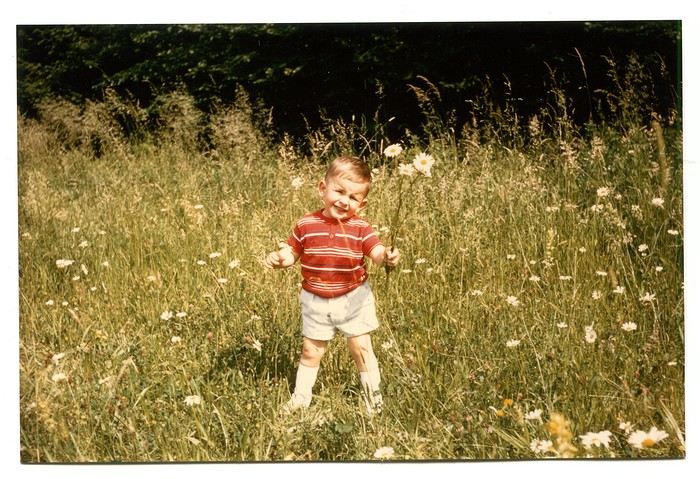
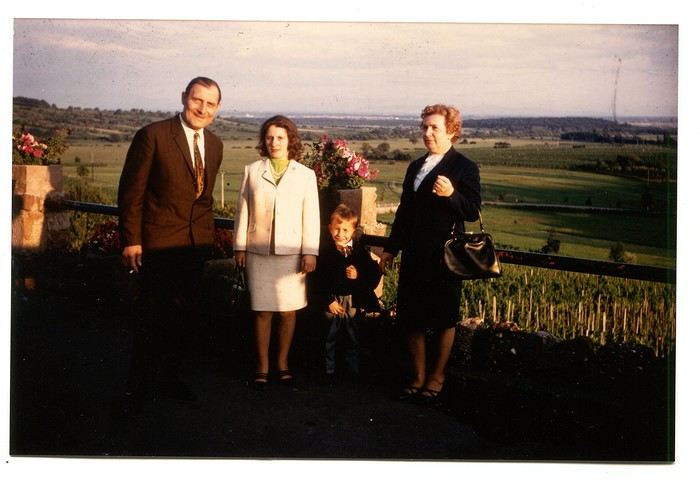
As I’ve mentioned elsewhere, I inherited my love of travel from my parents and some of my grandparents. A strong passion, but one that was unfortunately limited by our family’s modest resources. Back then, living in northern Alsace, a simple trip to the southern part of the region—with the Wine Route as our destination—felt like an extraordinary journey to a land of plenty for the little boy I was in the late 60s and early 70s.
Everything seemed so huge when you were still just a kid.
Back then, I was overwhelmed by countless sensations—I was already highly sensitive, with a keen mind and a nose and taste buds that were developing like a pro’s. Which, as I’d later realize, wasn’t always an advantage.
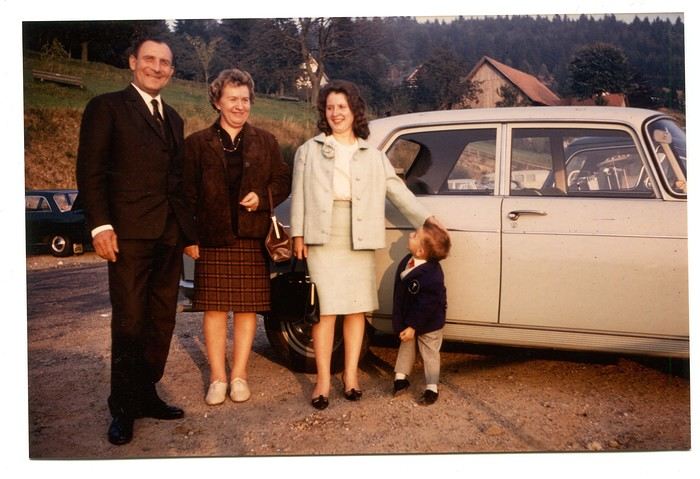
Those magical days always began with a gentle late-spring or midsummer morning. The interior of the white Peugeot 404, license plate 210 LZ 67, had already soaked up the sun before the engine purred to life, and the cabin gave off a scent I could still recognize today—a fragrance I found so pleasant. Back then, I had no idea it was just the smell of warm plastic from the car’s interior.
Yes, the scents of the 404 on sunny days became my madeleine de Proust...
What’s more, the whole family was unusually cheerful because those moments of relaxation and leisure were rare. Everyone worked, and no one had an easy job or was well paid. Without the *Trente Glorieuses*, these experiences might never have happened.
Once we crossed the canton’s borders, I felt like I was light-years away from my everyday surroundings, and every kilometer plunged me deeper into *terra incognita*. It was thrilling. Far from my so-called "medium-sized" town, wheat fields, cornfields, and cabbage patches stretched out, punctuated by tall poles connected by long wires and topped with vegetation—like giant clotheslines without laundry, where magical beanstalks might grow to touch the sky. Back then, I was still far from tasting their product, which was simply beer. At the time, there was still a significant local hop production. Fun fact: it wasn’t until 2002 that Anglo-Saxon scientists proved hops and cannabis belong to the same biological family.
After the fields, the landscape took another step up as it rolled past the little boy’s eyes, often glued to the windows. First came modest hills, then a succession of rolling slopes that soon formed an unbroken chain. Their 700 meters in altitude felt like Himalayan peaks to me—impressive, inert giants, a whole new world. Gazing at them, an intense emotion welled up somewhere between my stomach and lungs, nearly taking my breath away. What mysteries, what treasures did these heights hold?
And then there were the cherries on top—the crowning touch that made the scene even more magical: proud, majestic castles perched on the summits like impassive sentinels. Monuments from the past, yet firmly rooted in the present on their rocky spurs.
The little boy’s eyes sparkled—he’d been given a castle for Christmas, complete with battlements, towers, a drawbridge, and fully armed knights. He’d watched and lived *Ivanhoe* on the only French TV channel that existed back then.
Only once did my paternal grandfather join us on one of these trips. A tall, intelligent man with a face that could shift from stern to mischievous, clearly full of humor and charisma. Sadly, his relationship with alcohol had taken a toll on his life and, by extension, those of his loved ones. He had a strong personality—if his boss crossed the line, he wouldn’t hesitate to punch him, which meant he went through a lot of different jobs. Back then, you could quit one job and easily find another. It was quite something to see him in his final stages, hallucinating pink elephants and even drinking perfume when he had nothing else left. The last time I saw him, he’d slipped away from the doctors and nurses while hospitalized in pretty bad shape—at least, I assume his liver was the issue. We were sitting down for a family lunch when the door burst open, and there he stood in his pajamas, eyes twinkling with mischief, clearly pleased with the dramatic entrance. That theatrical moment didn’t spare us from burying him a few months later at the age of 71. One day, my mother told me the family doctor had quietly remarked that it was a shame—with his robust constitution, he could’ve lived to be a hundred. Yes, the family doctor—this was the man who’d come treat you any day, at almost any hour, just for a phone call. It really existed, it’s not a myth!
That day, his wife—my paternal grandmother—was also along for the ride. Everyone agreed that Jeannette was a good woman. She worked as a waitress at *Le Tigre*, the biggest brasserie in town, right in the center. Most customers preferred to be served by her, including local dignitaries and even the mayor. As a kid, I didn’t find her very fun, open, or warm—she seemed a bit stern. Back then, women in their fifties already had the face and build of grandmothers. Same went for men, don’t get me wrong. I had no idea about the struggles she faced because of her husband. I didn’t know that 30 years earlier, she’d had to flee Alsace while pregnant, under threat from Nazi fighter-bombers. I didn’t know she’d had several miscarriages, and that my father—her only surviving child, born prematurely in March 1940 at the other end of France—weighed less than a kilo at birth and was so tiny he could fit in a shoebox. Hard to imagine he’d grow into a strapping man nearly 1.80 meters tall, tipping the scales at 100 kilos.
When you come back from summer camp in early August and ask why she didn’t pick you up with your parents, and they gently tell you she’s "in heaven," you don’t realize she passed away at 54 after suffering greatly from stomach cancer that had spread.
Back to that family outing, that enchanted parenthesis. I even remembered where we’d had lunch when I passed through Dambach-la-Ville decades later. One of those charming, flower-filled towns Alsace produces in abundance—and preserves so well. This one sits high on a hill, and I was a bit stunned on the parking lot because the view stretched far, revealing the Alsace plain below—its fields, villages, hills, and forests. The world seemed so vast and enticing that day, even though I was only glimpsing a tiny fraction of it.
The region was already very touristy, but I wouldn’t notice the downsides until much later. That Sunday noon, I discovered a large restaurant filled with diners. I can still see the enormous piece of meat they served me, decorated with a little wooden skewer topped with a flag. I kept that one for a long time. Those were the golden days of rich, flowing, thick sauces—so flavorful—and the era of the world’s best fries, made on the spot with the best potatoes. To top it off, I was *exceptionally* allowed a small bottle of apple juice, Orangina, or—even better if possible—Sinalco. Yes, Sinalco—like Orangina, but better. A brand that must’ve disappeared in the 70s, but why, and what a shame! Since then, Orangina’s little bubbles have taken the brand to the other side of the planet—it’s now Japanese.
Year after year, I’d eagerly await that ecstatic moment when the most beautiful castle in Alsace, the Haut-Koenigsbourg, appeared in my field of vision. The perfect model, the archetype that blended into the landscape at the height of a child’s dreams.
The trip home always felt like a reality check—less jarring than an alarm clock, but more diffuse and melancholic. From then on, there was only one wish: *When do we leave again?*
It’s an understatement to say that Japan is a world apart. All around me, people exclaim: "How lucky you are to be able to go there! I’ve always dreamed of visiting, of finding myself in that culture blending tradition and technology!" Yes, they’re right. Until the moment their dreams become reality and things appear as they truly are, without the filter of fantasized preconceptions. Because in the collective unconscious, Japan indeed seems like a civilization—if not neutral—at least stripped of any social maturation. As if it had emerged all at once from its canonical ages, offering only the best of its traditions, and as if those traditions were undoubtedly the foundation of its extraordinary discipline. Yet, as always, the truth is far more complex. Modern Japan is likely shaped by its millennia-old traditions. But that Japan is also the result of its own uncertainties and contradictions. I’ve always been wary. I’ve never understood why the cleaning women on the platform bow when the train arrives. At some point, too much discipline, too much deference—it makes you smile, it raises questions.
Finally, thanks to F., a dream is coming true! Not the dream of going to Japan—a country I’ve visited more than any other, except for Réunion and the UK—but the dream of completing the fastest round-the-world trip of my career. Indeed, due to the restrictions imposed by the Russians*, the plane flies over the Caucasus and China on the way there; on the return, it gracefully heads toward the Arctic after skirting the Aleutian Islands, Alaska, and Greenland. So, in nearly 26 hours of flight, I complete my 6th round-the-world trip. A round-the-world trip with just one stopover. Or two, if you count our impromptu detour to Okinawa.
(* In response to Western sanctions, Russia closed its airspace to Western airlines on February 28, 2022, except for Air Serbia, Turkish Airlines, Pegasus, and Belavia. This decision adds 2 to 3 hours to flight times and, incidentally, increases operating costs.)
The empire of noise. The empire that dazzles. In Japan, the auditory and visual space is constantly fed. No respite. You have to be strong. Navigating public transport feels like playing the most advanced video game: moving between language barriers and a different organization, the hero tries to ignore the numerous visual and auditory distractions. Mostly auditory, though. Because in Japan, there’s a culture of noise that has undoubtedly inspired our national railways. Everything must be announced. So, here and there, all along the route, we find agents whose sole role is to endlessly repeat safety messages through megaphones more or less suited to the situation. The result is a constant murmur, a kind of tinnitus, a subtle but incessant buzz that fades only at bedtime and returns with a vengeance at first light, when we descend back into the supposedly sterile depths of Osaka’s subway. "To go right, please turn right, kudasaï. When descending the stairs, please mind the steps, kudasaï. To go straight, please take the left corridor, kudasaï." That *kudasaï* ("please" in Japanese), I assure you, has permanently lodged itself in my auditory cells.
Screens are no exception; the brain is constantly stimulated. But paradoxically, passengers massively retreat into their own worlds via their screens. Literally glued to their phones, earbuds firmly in place, people escape into the virtual aisles of a furniture store, a game, a movie... In the train cars, raised voices are rare. The field is clear for announcements and other jingles. Each stop is announced by a little tune unique to each station. Simply incredible.
If we usually judge a country by the welcome its inhabitants offer, in Japan, we’re left wanting. Indeed, the Lost in Translation* spirit doesn’t just apply to verbal exchanges—it applies to everything, especially non-verbal communication. In Japan, me, the slightly North African Corsican, I’m at a loss. I speak loudly, I gesture, in front of a hotel concierge just as lost. Each for our own reasons. Yes, he speaks some English, but we can’t seem to connect. It’s a losing battle trying to find a bit of compassion from a local who’s far from familiar with Western concerns. I try to buy tickets for the World Expo? I run into a systematization as rigid as it is abrupt, which the concierge can’t seem to navigate. While we might still have a shred of common sense, here in Japan, everything is digitized. Soon, no one will be surprised that a QR code becomes essential just to go to the bathroom.
(* Film by Sofia Coppola, released in 2003, which explores isolation, unease, Japanese culture, and language through the experiences of two protagonists.)
In the end, we get that ticket for the Expo. After providing personal information on yet another account created for the occasion, we buy electronic tickets—a QR code, then—to regulate the comings and goings, the souls and aspirations of all these wandering beings scattered across the globe. And it’s probably for the best... Because we’ll be tens of thousands of visitors—100,000 to 150,000 per day—walking the aisles of this enormous improvised amusement park, a kind of delirious superstructure surrounded by the Grand Ring, the largest wooden construction in the world. Inside the park, the pavilions, flagship vessels of their respective countries, compete in ingenuity, proportionate to their GDP, to attract visitors. But you have to wait up to two hours to visit the most popular ones! Fortunately, about a hundred countries can be explored without waiting in shared, more spacious areas. What will I remember from this adventure? The beauty of that wooden structure, despite any environmental or financial considerations—200M € for barely renewable elements; a certain poetry, even magic, in the expression of this event—conversing with Juliette Petit, the splendid representative of Vanuatu, had something indescribable; a close-up experience of Japanese discipline when it came time to return to the subway after that epic evening—thousands upon thousands of people converging at the same time toward a single place without any interruption in the flow.
But my real passion is the countryside. So, I’ll especially remember that brief escape, on the very first day, to the Mino-o waterfall, where the journey itself was already enchanting. Quickly leaving the underground lines, our train speeds through the city’s endless expanse and drops us at the foot of a hill, the abrupt edge of the urban sprawl. The slope was too steep to build anything? We leave behind an impressive hotel, a capitalist eyesore defying the laws of elevation to tackle the climb toward the waterfall. A bucolic walk where the stroller can choose between a paved path or more epic trails. Here and there, stalls, temples, everywhere, a certain serenity. The city’s pulse gives way to a magnificent spectacle magnified by giant sequoias. From the depths of a ravine, we try to glimpse the sky beyond the foliage. Everything is oversized. Here, you can breathe.
***
In reality, Japan has never undertaken any real work of memory. Aside from a few feeble gestures to appease Washington in its choice of Asian partners, one wonders if the Japanese have ever truly grasped the horror they were forced to participate in. While our Judeo-Christian society has more or less assimilated the notions of forgiveness and self-questioning, where does Japanese society stand, juggling a millennia-old Zen philosophy and the unabashed Machiavellianism of an emperor utterly possessed? Is it just me, or does there float in the atmosphere a kind of unease, a malaise, an awkward relationship with reality? For me, bowing to a train as it enters the station is just the result of a poorly directed moral dilemma...
Ah, how distant is the time of sakoku, that closure of the country—both concrete and ideological—that was in vogue for two centuries. Because if no one could enter, no one could leave either! A boon for neighboring countries. But from 1854, following the skirmishes of Commodore Matthew Perry, who demanded Japan’s participation in trade, the country suddenly became aware of the disparities separating it from the West. Bring Japan up to the level of other nations? Industrialization, competition, search for raw materials... Hirohito (1901–1989) emerges on the scene, a bit expansionist and willing to stop at nothing to achieve his goals. Above all, he knew how to use, in his own way, the incredible capacity for self-sacrifice of his people...
We protest, we condemn, we all rally behind an acceptable discourse when it comes to discussing the use of the atomic bomb. Yet, we forget one essential thing: Hiroshima wasn’t enough to make Hirohito yield. While we’re bombarded with anti-fascist elements, as if the sole purpose of school curricula were to prevent us from voting for the National Rally, we completely overlook those events of rare cruelty that took place on the other side of the globe at a time contemporary with Nazi atrocities. Why? Because it was farther away, on the other side of the world? Because we must both condemn the use of nuclear weapons and Nazism? What a dangerous game. Killing civilians is beyond comprehension, everyone agrees on that. But hasn’t Japan ever been guilty of such atrocities? Our empathy is legitimate; it won’t, however, remove from my mind the idea that there was no other solution. Nagasaki is the most telling proof of that.
At least in France, in school textbooks, Hitler will have completely overshadowed the existence of people crueler and more abject than him. Certainly, Adolf was a deeply disturbed man whom events propelled to power. But I’m justified in believing that his approach was probably more humane than that of Joseph Stalin at the height of his art*. And if Hirohito followed the same line as Hitler, in the sense that he represented the superior race, he would apply with conviction what was Stalin’s credo: contempt for his own people when sending them to slaughter, and an even fiercer contempt for the human race when it didn’t have the good fortune to be Japanese. Just look at how China was invaded and by what means millions of Chinese were annihilated, burned, deported, buried alive! Operation Scorched Earth or Three Alls Policy for kill all, burn all, loot all? No comment. Even today, the Japanese are convinced they waged a patriotic war, when clearly, that war served only vague ideological (and certainly economic) interests.
(* "In many ways, Hitler’s National Socialism was far more humane than Communism: it wasn’t unthinkable to speak to the SS or the Gestapo, and dissuading them from sending you to a prison camp wasn’t utopian. To some extent (compared to the Communists), you could still expect a semblance of justice. All those who lived under Hitler and under Communism will tell you: as the front lines shifted, they always managed to end up in Germany, where, though it was a strange place ruled by a madman, life went on. Under Communism, there was no life; totalitarianism was absolute. Probably, Hitler’s conservatism prevented him from fully imitating Bolshevism." Seraphim Rose in The Revolutions of the 19th and 20th Centuries (circa 1970))
In Naha, we visit two strategic sites: the Imperial Navy headquarters and Maeda Escarpment, in Urasoe, better known as Hacksaw Ridge. I love this confrontation with history. In the hand-dug tunnels of the headquarters, we meet Japanese people seeking information. They’re not responsible for this tragedy. Neither are we. I would have liked to tell them that, to hug them, to move on. To finally believe in those peace messages displayed here and there. Yes, it’s curious to read those calls for peace* when no real work of memory** has been undertaken. Two civilizations, two perspectives, a profound misunderstanding. When I analyze the waste of that war—and particularly the waste of those Pacific battles—like Peleliu in autumn 1944 and Okinawa in spring 1945—I can’t bring myself to share in the pathological patriotism that reigns within these walls. There, the room where the last message of Admiral Minoru Ōta was transmitted in Morse, praising the merits of the archipelago’s people. A tangled mix that, yes, is charged with positive emotions but, no, won’t remove from my mind the idea that this people was completely conditioned, completely disconnected from reality. Allying with the Axis powers? Invading the South Pacific? And finding that noble! Everyone sees things through their own lens.
(* Peace Declaration by Denny Tamaki, Governor of Okinawa, June 2020.
** "Recognizing the atrocities committed by one’s country requires a mix of democratic culture and self-confidence that is more the exception than the rule." Dominique Moïsi in Les Échos, April 30, 2015)
Okinawa. 200,000 dead. Stemming from bushido, the way of the warrior, this conditioning reached its peak with the kamikaze philosophy in particular and suicide in general. So, schematically, here’s how things went: as the island was encircled—Peleliu, Iwo Jima, Okinawa—and all hope was lost, the order was given to kill ten American soldiers before taking one’s own life. The deceit of this system, where surrender is synonymous with dishonor, involves creating tunnels and secret pockets where Japanese soldiers hide and from which they emerge. Long before the atomic bomb, the knell of their war had sounded. Hiroshima and Nagasaki are just the result of human pride, of which Hirohito’s reign is the finest example. Why was this henchman of Satan left in place until his death? I don’t understand. While the humiliation inflicted on Germany repeatedly was abject, especially for its people, the absence of any real and pressing accountability for Hirohito in this large-scale carnage he instigated leaves room for the wildest interpretations. As if to underscore my point, Emperor Naruhito visited Okinawa the same day we did, paying his respects to the inhabitants who fell in battle. I looked at the faces in the monorail serving the south of the island. There were elderly people who undoubtedly lost their parents eighty years ago. To what extent can they blame this tragedy on the delusional visions of their leaders?
On Maeda Escarpment, I salute the courage of Desmond Doss, that conscientious objector who fought to serve his country while refusing to ever carry a weapon. There, at the top of a steep ridge, you can see to the north the Allies’ advance, while to the south, the slope is gentler down to Shuri, in front of the headquarters. The underground is a Swiss cheese filled with enemies. Desmond works as a medic. He manages to save 75 wounded from certain death by evacuating them at night from the battlefield using makeshift ropes.
Back in Osaka, far from the somewhat dilapidated tropical islands, I rediscover the splendor and grandeur of Japan’s second-largest city. To tell the truth, and this applies to Okinawa too, the density is so insane on this archipelago that you sometimes wonder if it’s not just one giant city spread across the vast territory. Because between Tokyo and Osaka, while there are some mountains and forests, it’s the city that dominates; during rush hour, a rapid train connects the two cities every five minutes. We get lost in rather quiet alleys parallel to the main streets, only to find ourselves in the covered and lively galleries of Dōtonbori. We’re looking for a place to eat—above all, we’re trying to navigate the unlimited options stretching endlessly along the sidewalks. It’s absolutely mind-blowing. And while I introduce F. to a part of history that our Western societies have quickly forgotten, he initiates me into Japanese gastronomy despite my well-known aversion to Asian food. But nothing beats having a master in the field! We feast on okonomiyaki, Japanese pancakes expertly prepared and served on a teppan embedded in our table.
Night falls on Japan, and I still haven’t found the answer. Like in Singapore, one can praise the calm and serenity of human relationships, the delicacy that may just be hypocrisy, the politeness, the discipline. But above all, we notice that in the absence of freedom, in the absence of madness, poetry struggles to take root, boredom looms, as does real madness. Bushido still exists, honor is there and must be preserved. But the youth drowns in electronics and in willingly sterile cults (otaku), unable to discern what’s essential, failing to believe in their dreams. You have to succeed? Young people commit suicide because of school bullying, the slightly older ones because of work-related difficulties or marital problems. Nothing exceptional, we might say—average*—but you’d expect better from a country so well-organized, a country that makes so many Westerners dream. Yes, night falls on Japan. Empire of noise, empire of the senses, a very strange land where you find clean toilets in subway corridors but where the very meaning of life seems stifled by the mirages of technology. Above all, a civilization deprived of a penance that would prove salutary. We’re caught between two waters. Those of a shallow modernity without depth or anchor; those of a past that was majestic but irreparably tainted by the demonic madness of an overly adored emperor.
How can one fully thrive when guilt has no outlet?
(* France and Japan share a common statistic of 17 suicides per 100,000 inhabitants, which, depending on density, means 30 per day in France and 70 in Japan...)
I’m heading to Taiwan soon and would love some up-to-date info on Wi-Fi.
From what I’ve gathered, Taiwan offers it for free, but I’ve heard it’s not secure since it’s not protected by a "password." Since I’ve been traveling outside the EU for years without a local SIM card, I only use Wi-Fi in hotels, restaurants, and cafés. For me, that’s more than enough. So, my question is: Do these places secure their Wi-Fi with a "password"? If not, does buying a SIM card or eSIM seem like the only alternative?
Also, if any of you have recommendations for budget-friendly hotels in the main "cities," I’d love to hear them!
Hi there, we're planning our vacation in Indonesia. We're a family with two kids aged 11 and 14. We leave on July 26th and return on August 17th, 2026.
We initially planned to visit Bali, Komodo, and Flores, but after looking into it more, we came across Sumatra, which is less touristy... a real plus for us. However, skipping Bali might be a shame.
I was wondering if spending 12 days in Sumatra and finishing with about 7 days in Bali is a doable plan.
Hi there,
I’m flying from Marseille to Bali this year and have a 1h30 layover in Frankfurt, from Terminal 1 to Terminal 1. Do you think that’s enough time, considering I don’t know the airport or the language? Thanks. »
In 2024, I spent two months solo in El Salvador. While I’m still putting together my travel journal on Myatlas, here’s a quick recap.
It’s a country where it’s really easy to travel without a guide or agency.
SAFETY:
For a long time, the country was considered one of the most dangerous in the world because of the "maras," ultra-violent gangs. But today, I think it’s the safest country in Latin America.
BUDGET:
For French tourists, the country is very affordable, especially in the less touristy regions.
TRANSPORT:
I got around everywhere by local bus.
Local buses go everywhere and run all the time. For me, it’s the best way to travel in El Salvador—you’re fully immersed, moving at the pace of the locals, and interacting with Salvadorans who are eager to connect with travelers.
I saw all sorts of things on those buses—I’ve got dozens of stories!
PEOPLE:
I’m used to traveling all over Latin America, and for me, Salvadorans are the warmest and most welcoming. Everywhere you go, people say, "Welcome to El Salvador!"
The connections and long conversations with locals were my favorite part of the trip.
TOURIST CROWDS:
The country isn’t well-known among European tourists, but Americans and Quebecers visit. Overall, it’s still pretty low-key, especially compared to other Central American countries. That said, tourism has been growing since security improved significantly.
WHAT I LOVED ❤️
-Suchitoto, one of the most beautiful colonial towns in Central America.
-The volcanoes—there are so many! Santa Ana is the most touristy.
-The lakes—also plentiful. Coatepeque is the most famous, but there are lots of lagoons too.
-The mountainous regions, where the cooler weather is a nice break: La Palma, Perquín, Cerro El Pital, etc.
-The charming villages along the Ruta de las Flores, especially Nahuizalco with its nighttime atmosphere and food stalls. Juayúa and others are great too.
-The conversations with people who lived through the horrors of the civil war in Perquín and Cinquera. I met one of them by chance while waiting for a bus.
For surfers, El Salvador is a paradise, with world-famous beaches.
WHAT I LIKED LESS:
I loved almost everything, but I found the archaeological sites a bit underwhelming. Joyabaj de Cerén is billed as the "Pompeii of El Salvador," which is a stretch (though it *is* a UNESCO World Heritage Site for its historical value).
We’re a couple traveling with our 2.5-year-old baby. We’re heading to Patagonia in March or April 2026. We don’t have exact dates yet because this will be the start of a long trip around Latin America.
We’ll be traveling by public transport, with our backpacks and a baby carrier for support.
We’ll take a domestic flight from Buenos Aires to Ushuaia, and the rest will be by bus.
Here’s the itinerary we’ve planned:
- Buenos Aires (5 days)
- Ushuaia (5 days or more)
- El Calafate (3 days)
- El Chaltén (5 days)
- Los Antiguos + border crossing at Chile Chico
- Puerto Río Tranquilo (Chile) (5 days)
- Coyhaique (Chile) (3 days)
- Chiloé Island (Chile) (10 days)
- Puerto Varas (Chile) (3 days)
- Bariloche (5 days)
- San Martín de los Andes (3 days)
- Mendoza (5 days)
After that, we’re thinking of spending a few days in Córdoba, then a month in Salta.
We plan to head back down to Santiago (Chile) and then head north along the Chilean side toward Peru.
What do you think of this itinerary (especially the Patagonia part)? Is it doable with a young child just over 2.5 years old?
I’d also love to include Esquel and El Bolsón in Argentina, but I’m not sure how to fit them in or if they’re really worth it.
The durations are approximate, depending on what there is to do in each place...
Do you have any suggestions for improving it or any tips?
We want to do some easy hikes or half-day walks since we won’t be able to carry him all day. That’s why we’ve intentionally left out Torres del Paine National Park (very expensive and not very baby-friendly, I think).
Do you know of any hikes that are accessible with a little one?
Departure is fast approaching. The decision is made—we’ll be returning to Laos via the north.
We land at BKK at 7:30 AM. Buses to Chiang Rai leave in the evening starting at 5:30 PM.
We’ll head straight to Chiang Khong afterward.
Now, a lot of questions remain:
What’s the most budget-friendly way to get to Mochit 2 terminal?
Can we buy the bus ticket the same day at the terminal, or do we need to book it in advance?
So far, all my searches point me to 12GO for reservations.
Where can we leave our luggage while waiting for the bus to Chiang Rai?
In Chiang Rai, where can we take the bus from Bus Terminal 2 to Bus Terminal 1?
Do you know the bus number?
On Thailandee.com, the price is 70 THB/person, but on 12GO, the minimum price is 17 €—can you spot the mistake?
Do we need to redo the TDAC when we return to Thailand, or will the departure one still be valid?
The info I found on the forum is a bit outdated, so I’m asking again!
1) What budget should I plan for 15 days, given that hotels with breakfast, transfers, and transport are already paid for? I know it depends on the person, but I’d love a rough idea. For meals, we’re thinking simple street food or small local restaurants.
2) I’ve heard that credit cards (we each have a Revolut + 1 Visa Premier) aren’t widely used and that it’s better to have cash. Can you confirm?
3) Are foreign credit cards still not accepted at bank ATMs? Still 7-Eleven or the Post Office? And what about American Express?
And we still haven’t seen everything!
Before setting off for new horizons at the end of this year, it’s time for me to share my trip to Cape Verde this summer 2025.
I particularly love these spontaneous trips, and our stay in Cape Verde is one of those because it was only at the beginning of April that we decided on this getaway, which had been catching our eye for a while, given our love for the mountains.
As always—well, when it’s open—I turned to VF, and I want to immediately thank Marie, aka ptitortue, who helped me a lot in planning this trip through her travel journals and our exchanges!
Because Cape Verde is both small and vast! We decided not to rush from one airport to another, to enjoy the places and the people, but also to relax, since the work backlog from being stuck in May (see my previous travel journal 😅) had to be caught up on in June.
So, 4 islands will be our winners from 06/28 to 07/19:
Santiago first for logistical reasons, as round-trip flights from the capital Praia were the cheapest (650 €/person from Lyon via Lisbon with TAP, still!)
São Vicente, because it’s the gateway to the next one but ultimately more than that...
Santo Antão, pretty much the main goal of the trip since Marie (and the photos) had really sold it to me.
And finally, Sal Island, for some rest—a non-negotiable condition for my other half—and we’ll see that I should’ve listened to Marie...
That said, what a chatterbox I am—buckle up, flight attendants at the doors, off we go on new beautiful escapes! (Thanks to Sophie for the easy loan)
Last note for my eager fan club 😏: yes, there will be alcohol—how could there not be in the land of grogue!
Here’s my personal account (just my own opinion, of course):
My trip lasted 2 months (January to March 2025). Backpacking, solo, and on a very tight budget (15 € per day on average). I traveled from Havana to: Viñales, Santa Marta/Varadero, Cienfuegos, Trinidad, Sancti Spíritus, Camagüey, Bayamo, Santiago de Cuba, Guantánamo, Baracoa, Moa, Holguín, Santa Clara, Cienfuegos, and back to Havana.
In Cuba, if you stay in *casas particulares*, you’ll have plenty of options. They’re everywhere. When I did door-to-door, I negotiated prices based on my small budget. Not always accepted, but I still managed to find families willing to host me. The island has fewer and fewer tourists each year, so many now prefer to rent a room at a low price rather than leave it empty. Inflation is insane, and Cubans struggle to get by day to day.
Door-to-door works really well (look for the blue logo of a roof on the house, which means it’s licensed to rent to foreigners)—you’ll see them everywhere. If it makes you feel more secure, you can also book through Airb’n’b, but you won’t be able to negotiate there. Important: make sure to get a VPN subscription on your phone, otherwise you won’t be able to book anything (since Airbnb is a U.S. site).
Now, for the West:
- Viñales: very pretty but *super* touristy! So, food prices are a bit high… but it’s the cheapest place to stay I found in the whole country (3 €-4 per night!!!), because there’s so much competition with *casas* (you’ll find them on every street!).
- Cienfuegos: a human-scale city, I really liked it because it’s so peaceful. Waterfront, pretty square, good prices, wide and well-lit streets—very pleasant…
- Trinidad: very expensive and very touristy. Pretty (cobblestone streets, historic center, natural surroundings), but packed with people…
- Havana: easy to find cheap accommodation if you look in Chinatown. However, you shouldn’t mind the noise and street prostitution (getting approached every 10 meters)… Central Havana is the only well-maintained and upscale part of the city (so very expensive, for tourists with money). Outside of that, everything is run-down, in ruins, or very poor (and cheap as a result).
- Varadero: no interest at all. Very expensive, superficial, and ultra-touristy. Absolutely nothing Cuban about the place. If you still want to go, stay 3 km before in Santa Marta—it’s cheaper, and you can easily walk there.
- Santa Clara: a very pretty small city with its central square. Hard to find a good place to eat with electricity—if you can afford it, go to *El Sol* restaurant, no hesitation! Great welcome and a charming spot to enjoy a meal. For accommodation, I recommend a wonderful person, Juan Carlos. *Casa San Lorenzo* on Calle Martí! Always attentive, a great spirit, and good advice…
For the Center:
- Sancti Spíritus: nothing special… just a stopover city.
- Camagüey: a nice city with welcoming people (like everywhere else), but nothing particularly noteworthy.
For the Southeast:
- Bayamo: very small, nothing special.
- Santiago de Cuba: I loved it! It felt like San Francisco with its hilly layout! Lots of street life, musicians, affordable *casas*, easy to make friendly connections, quiet spots by the water, and lively areas downtown (despite the downside of being approached every 2 minutes). And always, a warm welcome from locals (shoutout to the adorable Erika, Souleydis, and her partner—I’m giving a shoutout to *Casa San Pedro* on Calle Princesa!).
- Guantánamo: no interest. Hard to find accommodation or even food. Nothing special and not very pretty either…
- Baracoa: very pretty, though! Kept in its own juice, very typical, authentic, a peaceful waterfront, and stunning natural surroundings… Easy to find cheap accommodation.
- Moa: the only small town where I stayed 3 days and couldn’t find bottled water… Not much interest, except to rest before hitting the road again.
- Holguín: one of the cities I loved! I stayed over 10 days. Human-scale, lots of places to stay and sleep. No one bothers you in the street (except money changers). It’s a great place to live, and the people are very friendly.
Overall positives: no need to worry—Cuba is ultra-safe, no aggression, no risks. Cubans are very welcoming, smiling, and always ready to help. Public transport everywhere—buses, trucks, *collectivos*, *taxi wha-wha*… The ice cream is to die for (just watch out for power outages and freezers). Great breakfasts in *casas*—hearty and delicious… Movie theaters are practically free (in Cuban pesos), so cheap it’d be a shame to skip them (they’re often empty, by the way). Chess clubs in every city, open to everyone and free (they’re really good!). The general vibe is warm and joyful despite the hardships…
Overall negatives: lots of scams, theft, and prostitution. Except in Havana, the rest of the island has no electricity for most of the day. Hard to find good cheap food (without going to big restaurants or hotels). Often mediocre: pasta or pizza usually have no taste. Paranoia among many people who fear crime, even though the country is very safe… Inflation is so bad that many Cubans struggle to eat or get healthcare (medicine is rare and expensive).
We did the Langtang trek (hike) from September 10th to 17th, with the first and last days being the trip from Kathmandu and back—so 6 days of actual walking. It’s a fairly well-known trek but certainly not as famous or crowded as those in the Annapurna or Everest regions, which is why we chose it.
In theory, it’s mandatory to have a guide for this trek. In reality, it seems there are ways to bypass the regulations: we met at least two people hiking without a guide—a South Korean, a New Zealander, and possibly also a couple of English women and an American couple, though we’re not sure if they had a guide.
The agency we booked with had told us it was an affordable trek for relatively older people in good shape—which is our case (I’m 72 myself). I have to say upfront that we found it quite challenging, maybe because we didn’t have good weather—it was the end of the monsoon season. To be clear, no matter your fitness level, I’d say doing this trek in the middle of the monsoon season would be suicidal.
Day 1 – Journey from Kathmandu to Syapru Besi
On Monday, September 8th, there had been violent protests in Kathmandu against the government, which had, among other things, blocked access to social media and been accused of nepotism and corruption. There were 19 deaths. The situation was very tense on the day of our departure, Wednesday the 10th. The agency warned us that public transport was very unreliable. So, we decided to take a jeep, at an additional cost of $100 ($160 minus what was already budgeted for the bus).
We left a little before 7 a.m. and it took us a good hour just to reach the outskirts of Kathmandu. Along the way, we saw several houses and vehicles set on fire by protesters.
The road to Syapru Besi is only 120 km, but it’s frankly awful. It’s always narrow, winds through endless mountains, and the shoulders range from bad to confusing to nonexistent. Several sections are just dirt tracks. We didn’t regret opting for the jeep, as we could stop several times at our convenience—if only to let Y (my Thai partner) throw up everything she had. She’d taken her usual motion sickness medication, but the constant turns, accelerations, and braking eventually made her terribly carsick.
In Nuwakot, we stopped for breakfast at a nice little restaurant, Jimbu. It was around 8:30 a.m., and we’d barely covered 60 km. The restaurant has a lovely garden overlooking the Trishuli Ganga, the river flowing down from Syapru Besi. First photo: the river in the bottom right corner, mist and clouds over the mountain on the other side.
An hour later, my second photo: the hills along the Trishuli Ganga. You can see the different crops—lush green rice paddies in the lower right and corn, already yellowed and likely harvested, in the foreground on the left. And of course, the mist and clouds through which you can glimpse the mountain on the other side of the river.
For once, given the destination, the author can’t set aside their religious beliefs, which inevitably shape this kind of journey.
The Trip
Early in the morning at Orly Airport, in the departure lounge for Tel Aviv, a group of about forty young men arrives, all looking identical! The same neatly trimmed beards, the same identical haircuts, the same outfits with a touch of whimsy… The effect of seeing these forty “clones” is striking and raises questions! Why such perfect uniformity among this group of guys? Do they belong to the same family, sports club, cultural association, or religious group? A mystery!
At the same time, the waiting area fills up with men who are more expected, given our destination: they wear large felt hats and dress in black suits with white shirts—Hassidim? The ones I’ve glimpsed fleetingly in Paris or New York, who have always been a mystery to me. More discreet-looking women accompany them.
I’m already in Israel without even setting foot there! Plus, I witness the preparations for an improvised show.
The “clones” start a flash mob at seven in the morning in a Paris airport departure lounge! Some pull out musical instruments, others begin singing and dancing. A music with strange, unfamiliar sounds enchants the waiting passengers.
The flight crew finally arrives, cutting through the flash mob, bringing us back to the reality of the moment: waiting to take off soon for this so troubling and mysterious Middle East.
We go through passport control, presenting our faces to the scanners that operate the exit gate. The group of “identical” young men gets held up by the system: logically, a scanner let the first one through but blocked the second because of his perfect resemblance to the first. To the machine, the same person shouldn’t be able to cross the border twice? But eventually, the whole group makes it through the glass doors, leaving the Republic behind. My simplistic explanation is left looking ridiculous.
At every new destination, I ask myself countless questions, revealing a certain anxiety tied to the unknown: fear of attacks (one just happened at a bus station in Jerusalem), possible police pressure, unexpected events. Israel isn’t known for being a relaxing destination. In reality, if I did face a serious difficulty in this country, it wasn’t one I had anticipated—and it wasn’t particularly tied to Israel!
I take my seat by the window, which is already occupied by a little girl. Her father, a Hassidic man, politely asks if I’d be willing to give up my seat for his daughter. I tell him I’d be happy to make her happy. Seeing me masked, he asks if I’d like him and his daughter to wear masks too. In response, I take off my mask so as not to impose any constraints on them and wish them a good flight.
It was the first time I’d approached and spoken to a Hassidic man. He didn’t speak the way I might have expected after watching *Rabbi Jacob* with Louis de Funès; he spoke perfectly without an accent, just like you and me! Beware of stereotypes! Throughout the flight, I sneak glances at my strange neighbor: he prayed silently without stopping for a minute. His daughter, as good as gold, never interrupted him. He used several religious accessories during his three-hour continuous prayer: a kippa, a prayer shawl, and a rosary?… I left that plane deeply impressed, me, who has a very distant relationship with my Creator and only prays now and then.
This journal recounts a trip to Rajasthan that’s already over a year old and that I’ve only now found the chance to write about. The summer of 2024 marked my return to India—my tenth trip—after six long years away since my last solo wanderings in Tamil Nadu in 2018 (the journal of which is published on this site). That absence was partly (but not only) due to the long COVID and post-COVID period, which saw a complete halt and then a major slowdown in global tourism. To top it off, Voyage Forum announced its closure in an end-of-the-world atmosphere. A sad time for our favorite social activity…
A few weeks after returning from Rajasthan, I tried to motivate myself to start writing a journal to publish on a forum claiming to be VF’s successor, which I’d eventually signed up for out of desperation. But I kept hesitating and putting the project off because, for one, I no longer have the time I used to. For another, the vibe wasn’t really taking off on that forum—it was overrun with ads and not very active, contrary to what its host’s name suggested. Despite its good intentions and commendable role as a stopgap, it also turned out to be very impractical to use, especially when you don’t have much time like me. I’ll admit I’d occasionally check back on VF to see if anything was happening. But all the discussions remained frozen in time, stuck in that fateful year, 2020. Then, rumors swirled online about shady reasons behind its closure, leaving little room for hope.
And then, one fine morning, I got a message at work from Marien informing me that VF had reopened. What a huge surprise! Even though the forum’s “end” had played out in a somewhat apocalyptic atmosphere, the memories of passionate and heated discussions, the frank debates, and the useful exchanges that made this site a traveler’s goldmine and a unique hub of conviviality all came rushing back to me like a breath of fresh air. I finally saw a sign and tried to motivate myself to find the time to publish the journal of this tenth trip to India and fifth to Rajasthan. But in the end, I got bogged down in professional and family obligations and never managed to find the time to get started. That’s now fixed, though, because I had two reasons for wanting to do it: I find that looking back on a trip to tell others about it is a highly beneficial introspective exercise. Also, I thought this journal could be useful to other travelers on a few points.
Because, “do we really need yet another journal about Rajasthan?” you might rightly ask! Especially in a time when so many journals about the “Land of Kings” have been published since VF’s return, not to mention the countless stories you can already find online about this region, one of India’s most touristy. And I’d add, why go back to Rajasthan for a fifth time, where I’ve already dragged my feet more than enough—through its forts, deserts, temples, cities, villages, bumpy roads, train stations, tasty street food stalls, cheap guesthouses, and more? Where some might see just another overhyped tourist destination full of the same old *Arabian Nights* clichés, worn to a thread, that I mentioned earlier, when there’s so much else to see in India?
Well, first because it’s a magnificent country I never tire of, where I started an academic study and made so many connections. It’s also packed with places where you won’t find a single tourist (right, Marie-Jo?), even in the heart of well-trodden paths and classic itineraries. And most importantly, as I said earlier, things have changed in recent years. First, after six years without traveling far, the urge to go back to India was getting stronger. But this time, no more solo trips (often) or duo adventures (sometimes)—now it’s a team of four that has to come along! And even if you can argue with that, what better place than Rajasthan to introduce India to people who’ve never seen it? To kids you want to amaze?
Plus, traveling with your new little family to your favorite country isn’t the same as going solo in often spartan conditions that only affect you. It’s a different challenge, but ultimately probably much harder. So, is it really reasonable to take two kids to India, including a two-year-old baby? That’s one of the main goals of this journal (but not the only one)—to try to answer that question.
As you can tell, it’s not so much the destination but the slightly unusual setup of this trip that, in my opinion, will make this journal interesting. Despite my experience and expertise (yes, I dare say it) in India, there were plenty of questions before we finalized the plan and said, “Alright, let’s go!” The questions were flying for us parents. Is it wise to travel to India with a two-year-old? What would we do (it happened) if the kids got very sick? Would they be able to handle a road trip on Rajasthan’s bumpy, dusty roads using public transport? Could they handle the shock of such a different world—the dirt, poverty, pollution, noise (…and the smell, as they say), the spicy food, monkeys, mosquitoes, snakes, tigers, leopards, and so on? In short, all the clichés that I usually joke about suddenly became potential realities. Another concern: as a mixed Franco-African family (not me, but my partner and her oldest), wouldn’t we risk not always being well received, given what you sometimes hear about that in India? How would Indians react to seeing a mixed-race family, the ultimate taboo in a country of purity and social segregation, which would undoubtedly raise many questions for them? Of course, not everything went as expected… Because, as you know, with India—and what makes it charming for some—there are always complications: sometimes where you don’t expect them… and sometimes where you do. I’ll go into detail about that in the journal to come (not right away) and in the final review (even later). These experiences could be useful to travelers who find themselves in similar situations and have the same questions we did before embarking on such a journey. And maybe it’ll spark the curiosity of those who aren’t concerned and will read yet another Rajasthan journal, but with its own unique twists.
Despite my unchanged constraints, which mean I have little time to write this, I don’t want to rush the story, so I’ll take my time. There will probably be lulls. I hope that won’t stop people from coming to react, debate, share their impressions, or ask for information.
Hey hey,
A great way to meet locals! I got hooked on it over the years, and after a few women-only trips with an all-female agency (bad experiences with 5 to 10 chicks every time—many of them think they’re well-educated but actually stick their noses in everything 🤪), I’m heading out solo again soon. (Don’t ask me where—I rarely plan my trips and usually leave on a whim within days. Thinking of Canada in September, should be cool!)
Little tip for those who are nervous but still want to travel solo:
It’s all about attitude because everything shows on your face.
Sometimes approached by aggressive or just rowdy groups, it’s easy to spot the ringleader (it’s the one running his mouth 😏). And that’s who you need to target—use a tone that’ll leave him speechless (after that, you’ve won, and sometimes they even become friends). Not always, though! 😄
Five years of an unintended break... The closure of VF, COVID... What a joy to rediscover the pleasure of sharing!
I’ve stayed true to my habits: the following account is a collection of practical tips rather than a travel journal...
Madagascar is as big as France and Belgium combined. In three weeks, choices have to be made! It was the Great Tsingy that inspired our trip. We decided to focus on the southwest and the RN7. We skipped the Deep South and the North. Oh well...
OUR ITINERARY IN 3 WEEKS:
Fri 6 June – Direct AF flight to Tana – Flight arrives at 10:30 PM – Tana
Sat – Antsirabe
Sun – Miandrivazo
Mon – Drive to the Masiakampy pier – Descent of the Tsiribihina River by pirogue - Bivouac
Tue – Descent of the Tsiribihina River by pirogue - Bivouac
Wed – Descent of the Tsiribihina River by pirogue – Bekopaka
Thu – Pirogue on the Manambolo River and Small Tsingy of Bemaraha – Bekopaka
Fri – Great Tsingy of Bemaraha – Bekopaka
Sat – Avenue of the Baobabs – Morondava
Sun – Belo sur Mer
Mon – Free day – Belo sur Mer
Tue – Manja
Wed – Andavadoaka
Thu – Free day – Andavadoaka
Fri – Salary Lagoon – Mangily
Sat – Ranohira
Sun – Isalo National Park - Ranohira
Mon – Anja Reserve - Ambalavao - Fianarantsoa
Tue – FCE train canceled – Visit to a Tanala village - Manakara
Wed – Pirogue on the Pangalanes Canal – Ranomafana
Thu – Ranomafana NP – Ranomafana
Fri – Ambositra – Antsirabe
Sat 28 June – AF flight to Paris – Flight departs at 11:55 PM
TRIP ORGANIZATION:
I prepared my trip using the usual guides (LP and Rough Guide), the internet, and the Freytag & Berndt map (1:1,000,000). I’m old-school—I still love visualizing my route on a paper map, even though in Madagascar, it’s misleading because some National Roads are only national in name!...
The agency:
Since we couldn’t deal directly with a driver-guide (we lacked reliable info to take the plunge), we went through an agency to organize the logistics of our trip. We didn’t feel like using bush taxis (not enough time) or driving a 4x4 ourselves (neither the skills nor the boldness).
The French agency connected us with a local agency, to whom I sent my detailed itinerary by email. A few exchanges via email and WhatsApp calls allowed us to finalize everything quickly after some adjustments.
As you’ve gathered... we multiplied the commissions, which inflated the budget. That said, in the end, we were thrilled with our decision and our choice.
Our trip was booked by the end of 2024, and reservations were made immediately. No bad surprises: the bookings in the planned hotels were honored, often with one of the best rooms.
On our last day in Tana, before departure, we were lucky enough to meet the director I’d been communicating with, who helped build and validate our circuit. A very warm debriefing.
The driver-guide:
The agency assigned us Faly, 33, a driver-guide for over 10 years.
He stayed with us from start to finish: he picked us up at the airport on arrival and dropped us off 23 days later.
A very experienced driver (which is important here), an open and cultured guide, reliable, punctual, and a great companion. And a provider of good advice throughout the trip.
We made the most of the long stretches on dirt roads or highways to listen to him talk about daily life, rituals, wildlife, and flora... No time wasted! With a great playlist in the background, we combined business with pleasure!
Faly’s accommodation and meals were included (quite often, hotels offer free lodging and meals to driver-guides who bring clients), as was the fuel. That didn’t stop us from inviting Faly to share a beer or our evening meal sometimes. He didn’t always accept, wanting to let us "enjoy our romantic evenings," as he put it. Present without being intrusive!
Faly is fully capable of organizing a tailor-made trip directly. I recommend him without any hesitation—we were delighted with his service. I’ll gladly share his contact details via PM to anyone who asks.
Local guides:
It’s the national guide’s prerogative to choose the local guides (mandatory in the parks).
Thanks to his experience, Faly always booked us amazing, competent, and interesting local guides.
Hotels:
I told the agency I wanted charming, comfortable accommodations, without falling into flashy luxury.
We loved all the hotels (except the Hôtel Kanto in Manja). The rooms, mostly bungalows, were always spacious and clean. Unfortunately, I can’t give the prices—I didn’t get the details.
Breakfast is always included, usually fresh and hearty. Very often, a small bottle of water is provided in the room.
Tana
Hôtel Les 3 Métis
Power cuts are common (!) in Tana. Bring a headlamp.
Antsirabe
Ecolodge – Les chambres du voyageur
Maybe our favorite! A few bungalows, beautifully arranged in a splendid tropical garden. The dog Kodak welcomes us warmly.
Miandrivazo
Hôtel Princesse Tsiribihina
Magnificent view of the valley.
Bekopaka
Hôtel Orchidée du Bemaraha
2 (yes, 2) beautiful pools, a large open common room.
Morondava
Hôtel Baobab Café
Brand new or at least, according to Faly, just renovated.
Very comfortable but without much charm (international style).
Belo sur Mer
Ecolodge du Menabe
The bungalows, all made of wood, bamboo, and thatch, are set on the beach. Very spacious and fully equipped!
Large open-air restaurant by the sea.
No hot water from the tap—it’s available in plastic bottles heated by the sun in front of each bungalow. Actually, we never used it...
Another very, very beautiful spot.
Manja
Hôtel Kanto
The only hotel on this leg of the journey, so no choice. The owner knows it and, as a result, doesn’t bother.
It’s a real dive! Tiny, dark room, a sordid bathroom with only a trickle of water—we skipped the shower! Clean sheets, though.
Obviously, no Wi-Fi.
The only place where I didn’t leave a tip.
We were well warned about the discomfort of this stop, both by the agency and Faly. We weren’t surprised, and it even became a running joke during the trip.
On the other hand, we found a nice little market in town.
Andavadoaka
Manga Lodge
What bliss! Especially after the horrible Hôtel Kanto.
A paradise-like spot, overlooking three beautiful deserted white-sand beaches.
Meals are served on the terrace facing the sea. Stunning sunset.
We loved spending a day lounging here! We were the only guests and were pampered.
Mangily (Ifaty)
Mangily is the "suburb" of Ifaty.
Hôtel Vovo Telo
A large beachfront bungalow complex. More touristy but pleasant—we spent a lovely evening there with our feet in the sand.
Ranohira
Le Relais de la Reine
A splendid resort built by a Frenchman, at the foot of the rocks, very well integrated into the environment.
Beautiful marked trail starting from the garden.
Fianarantsoa
Villa Sylvestre
Contrary to what its name suggests, it’s a hotel right in the city center. Quite decent, though.
Manakara
Parthenay Club
Pretty bungalows in a large garden by the sea, but swimming isn’t safe—the water is too dangerous and rough.
Ranomafana
Hôtel Thermal
Very spacious rooms.
Meals:
Not all our meals were included. It’s really not expensive.
1 meat or fish dish: around 35,000 Ar
1 full menu (starter, main, dessert): around 70,000 Ar
1 large THB beer (65 cl): between 8,000 and 12,000 Ar
1 piña colada: 15,000 Ar
1 flavored rum: 6,000 Ar (sometimes free)
1 glass of baobab juice (!): 5,000 Ar
We always ate very well. Rice is everywhere, served in large quantities.
Zebu meat is quite good if not overcooked.
Personally, I prefer fish, and I feasted: grouper, captain, crab, small lobsters...
We happily discovered baobab juice (especially in Belo, on the west coast).
And of course, flavored rums!
We bought 2 packs of 6 bottles of mineral water at Carrefour (!) (about 5,000 Ar per large bottle) at the start of our trip. That was enough, especially since we often got water in the bungalows.
We had a few picnics included in our trip. Instead of picking up the hotel’s lunchbox, Faly prepared delicious, fresh, and varied picnics for us: tuna pasta salad, fried rice with eggs, grilled vegetables, and avocado...
An exceptional address not to miss:
Mad Zébu – Belo sur Tsiribihina
A highly reputed restaurant, a favorite of LP and Rough Guide, and rightly so! Gourmet cuisine, refined and elegant. Barely more expensive than elsewhere, and it’s worth it.
We stopped there on our way up to Bekopaka and the Tsingy NP. Fully booked! So Faly reserved for our return, three days later. We’re still thanking him! What a treat!
THE BUDGET:
Ariary exchange rate: 5,000 Ar = 1 €
Pre-trip expenses:
Direct Air France flights: 930 € per person round trip
Cost of the circuit with the agency: 2,880 € per person
The visa:
Issued on arrival, very quickly. 35 € per person for a stay under 30 days. Super simple. Super fast.
On-site expenses:
As soon as we arrived at the airport (it was nearly midnight), Faly advised us to exchange our euros for all our needs. There are few opportunities on our route to find an ATM or an open bank with a good rate. To be more comfortable, he took us to a small office under military protection just outside the airport. I exchanged 1,200 € (I had asked the agency for advice on the amount to bring) at a rate of 4,750 Ar and became a millionaire. Faly recounted all the stacks.
That covered all our expenses (meals, drinks, tips) without ever feeling deprived. Personal purchases were made at the end of the trip. Convenient—it served as an adjustment variable. We spent our last million (200 €) on marquetry and vanilla.
Tip: We asked for 200,000 Ar in 5,000 Ar bills for tips. That wasn’t too much—I even ran short of small bills in the last two days.
Tips:
Madagascar is a poor country where every service deserves a small reward. While not mandatory, it’s customary. But no one ever demanded or expected it openly. On the contrary, I sometimes had to remind a porter to give them my small bill.
We never carried our luggage—porters were always present when the car arrived or waiting at our door to watch for our departure. I gave each of them 5,000 Ar.
In restaurants, I rounded up to the nearest ten and left the change.
Local guides also expect a tip: I gave around 20,000 Ar per day for the two of us.
Finally, the national guide also expects a gratuity. I had read online to budget 5 € per day per person. I added more since we were so happy with his services. The tip was given at the end of the trip, in euros, outside the budget.
Total budget all included (excluding personal purchases): 8,690 €
Clearly, Madagascar is a country where life isn’t expensive, but travel costs add up quickly due to the need to rent a 4x4 with a driver.
HIGHLIGHTS:
· The dirt roads
Yes, I’m listing them among the highlights!
We loved those long hours spent driving at 20 km/h on rocky, muddy, white, red, or gray sand tracks... surrounded by tropical vegetation, palm trees, pandanus, mango trees...
The experiences were sometimes thrilling: crossing a river on a ferry (just planks of wood fixed on two motorized pirogues side by side) or crossing a river without a ferry, with just a kid running ahead of the 4x4 to show the way; soft sand where the 4x4 easily gets stuck...
The tracks are quite narrow, and crossing paths with a bush taxi, a zebu cart, or a herd of goats is always epic. So many beautiful images, so many beautiful photos! Much more beautiful than on asphalt.
So yes, we loved those long stretches on dirt roads. For us, it was clearly part of the journey.
Faly was particularly careful, and the 4x4 was comfortable. No injuries, no fatigue, even after 7 or 8 hours on rough tracks.
The national roads (including the famous RN7) are badly damaged by cyclones, huge trucks, and lack of maintenance. Potholes have turned into ostrich nests, and we didn’t drive much faster than on the dirt roads.
· The landscapes, villages, encounters...
We crossed a variety of stunning landscapes: mountains with slopes covered in terraced crops, rice fields from apple green to emerald green, sugarcane fields, then tropical forests, baobab forests (they deserve a special paragraph below), traveler’s tree forests. And then coastlines with white sand dunes against a backdrop of blue hues!... Magical!
We also passed through many villages with houses whose architecture varied by region. The Betsileo houses display beautiful decorative brick reliefs. On the west coast, the houses are more precarious, made of bamboo with palm-thatched roofs. In the Highlands region, we found solid houses with pastel plaster. Each region has its own landscape, crops, habitat, and clothing.
Zebu carts are often the only means of transport in remote villages. We saw them very frequently. Again, the cart’s decoration depends on the region.
And then, we met many villagers coming out of the bush and walking to the next market, carrying their crops on their heads or shoulders.
More beautiful photos!
· The descent of the Tsiribihina River
We boarded around 9 AM in a long pirogue with Gana, the local guide, and two pirogue men. So, five of us. The pirogue is long but narrow, about 65 cm wide. We sat one behind the other at the front on seats padded with what would become our mattresses during the bivouacs.
We only took the bare essentials for two nights.
A little goodbye to Faly, whom we’d see again in three days! Don’t forget us!
The river is silty—meaning orange, opaque but clean.
We glided along silently. Gana showed us the trees, birds, crocodiles (we saw five—apparently, we were lucky). The pirogue men rowed to get us as close as possible to these crocs sunbathing on the roots of big trees. Yeah, right!... as soon as we got too close, *splash*, they disappeared into the water.
We marveled at the mini rice fields lining the river. Every tiny plot, no matter how small, is cultivated. Above them, banana fields. And on the water, a whole life of fishermen and villagers living with and from the river.
Gana warned us we’d eat on the pirogue because the journey was long. So, I expected chips... But no—fried rice and zebu steak, cooked right in the pirogue!! Incredible!
In the middle of the afternoon, we reached a small beach where we disembarked. Gana led us about a hundred meters to a sublime waterfall. We were alone there. We had time to swim. We’d brought our swimsuits and a towel (bought at the Carrefour in Antsirabe on Faly’s wise advice!). This swim in this paradise-like spot remains one of our best memories.
We found our pirogue again and set off until our first bivouac. We’d sailed for 7 hours today.
The tents were set up on a wide beach, without a single tree. A moment of solitude... Uh, where can we go to the bathroom?... Especially since it was a full moon, so we felt like we were in the spotlight. Anyway... we did as everyone else—walked away, dug a hole, and the others turned their backs.
A hearty meal on the beach before a comfortable and silent night.
The next day, same program, with slightly different landscapes. The gorges widened, the trees were different. But still many colorful birds. Again, we ate on the pirogue: grilled chicken and vegetables. 9 hours of sailing. A similar bivouac. This time, we got it.
On the third day, we finished the descent with 5 hours of sailing.
So, 7 hours, 9 hours, 5 hours... doing nothing. It might sound boring... but it wasn’t. Like the dirt roads, these were contemplative moments. It glides, it’s calm, relaxing, and there’s a lot of life on this river, animal and human. Contemplation. Suspended time.
On arrival, we disembarked at a sort of joyful, bustling river port. Of course, Faly was already there to pick us up.
· The Tsingy de Bemaraha NP (Small and Great)
I have vertigo.
During my research, several agencies advised me against visiting the Great Tsingy. "Stick to the Small ones," they said. Grrr, no, not what I wanted—we’ve dreamed of this for years! The agency we chose also warned me but didn’t discourage me.
So we started with the Small Tsingy, quite close to Bekopaka, guided by Alisha. This forest of sharp limestone rocks is impressive. No vertigo issues here.
The day was completed with a short pirogue ride on the Manambolo River and a visit to two caves with pretty formations.
The next day, Faly and Alisha drove us to the Great Tsingy (a good hour on a terrible track). Arriving at the park entrance, Alisha equipped us with harnesses, carabiners, and gave us some safety instructions. Faly was also equipped. Wait? He’s coming with us? I quickly understood he was there for me—if I got stuck, he could go back with me, and Philippe could continue with Alisha. A wise precaution that delighted and reassured me. In the end, it was unnecessary since the famous bridge crossing was fully secured by the harness and carabiners. 18 meters on planks, one by one, it didn’t sway too much—I walked looking straight ahead, not a glance down. I even managed to smile in the middle of the crossing—I have a photo to prove it! I was overjoyed!
The circuit in the Great Tsingy is a loop, so we didn’t have to cross the bridge again.
We climbed to viewpoints offering breathtaking panoramic views. It’s extraordinary, unique, incredible.
All this to say that if you have vertigo, don’t hesitate! It’s doable! It’s completely safe and really worth pushing your limits a bit! For those who’ve done treetop adventure courses, it’s similar. Also, no need to be a great athlete—just a bit of agility to climb a few ladders and high steps. Don’t censor yourself!
I even had a small regret—the loop was a bit short (about 2 hours). I would’ve liked to continue or even redo it, with less apprehension.
Tip: Do the Small Tsingy before the Great ones, or not at all. And if you can only do one, do the Great ones without hesitation.
· Canoeing in the Belo mangrove
The Belo sur Mer ecolodge lends small individual canoes for free to go to the mangrove. We left at high tide, paddled for about twenty minutes to reach a fairly sparse forest where we could easily venture in. Very shallow water, crystal clear—we could see the roots of all these trees, schools of tiny fish... It was quite surprising. Until then, I only knew impenetrable, tangled mangroves. Here, nothing like that—we walked through an aquatic forest. We loved this adventure so much we left a bit late. The tide had gone out, and we had to carry our canoes for the last few meters... Of course, the staff came to help (probably laughing silently!).
The lodge owners gave all the necessary explanations and lent a waterproof bag for the phone (because yes, it’s worth taking photos!). A very useful precaution—the canoes are small, low in the water, and paddling quickly soaks you.
Again, this isn’t just for Tony Estanguet! It didn’t cause us any problems, not even sore muscles the next day. A great experience. It’ll take about 2 hours.
· Isalo NP
Big surprise when we saw this huge rocky massif appear on the RN7! A massif of colored sandstone, carved with crevasses giving it a ruined look.
Le Relais de la Reine is a little gem cleverly nestled in the heart of these rocks. A small marked trail starts from the garden. We picked up the description at reception and set off. Without a guide, alone following the markers, it took us 2 hours to complete this magnificent little trail, giving us a first glimpse of the massif before the hike the next day. And we enjoyed being completely alone for this walk. It’s free, easy, and well-signposted. Don’t miss it.
In the evening, Faly took us to the so-called Isalo Window site—a hole in a wall through which we could see the sunset. We met all the tourists in the area here. We weren’t blown away by the show...
The next day, we left early to reach the start of the hike. We met Zozoly at the guides’ office in the small town of Ranohira. During this hike, we climbed through the rocks to a viewpoint offering stunning 360° views of the massif. Then we reached a site called the "natural pool," breathtakingly beautiful, especially since we were alone again. A sort of oasis, a cascading waterfall, palm trees and tree ferns, fine sand, all nestled at the bottom of a small canyon. Paradise-like. We resisted swimming, but it was really tempting.
A long walk on the plateaus then led us to a well-equipped picnic site where a local team prepared grills. Concrete tables were tiered in a spacious, shady clearing where a whole family of ring-tailed lemurs frolicked. They knew the tourists’ habits and tried to snatch food. Playful and not very shy, they amused us with their antics! We had to resist not luring them with a piece of banana!! Thousands of photos!!
After the meal, we set off again with Zozoly for another landscape. This time, we were by a small river at the bottom of a canyon with high walls covered in vegetation. The trail was narrow and slippery, on a ledge of the wall. We progressed carefully. No danger, though. We first reached the Blue Pool, which only turns blue in photos (surprise!), then the Black Pool fed by a shower of waterfalls. Two magnificent spots that showed us a completely different aspect of the massif.
· Anja Reserve
This ficus forest is home to many groups of lemurs. Used to humans, whom they don’t fear, they move around us, ignoring us completely. It’s almost annoying... The best place on our trip to see lemurs.
· The FCE train
To the great regret of Manakara’s inhabitants, the FCE train hasn’t reached here for over a year and a half. As a result, there are far fewer tourists—the train was part of the experience.
We drove there and didn’t regret coming to this port on the east coast.
· Visit to a Tanala village
This visit wasn’t part of our program—it was added by the agency to compensate for the train not running. Which was the case.
Not big fans of this kind of visit, where we feel like we’re at a zoo, voyeuristic, lacking authenticity, we followed the local guide with some skepticism and exchanged dubious looks. And yet... the guide’s explanations about village life and the warm, smiling welcome from the villagers charmed us and dispelled all our concerns. We learned a lot, met smiling families, and were able to enter these beautiful bamboo houses. A very pleasant surprise, rich in lessons.
· The Pangalanes Canal
Arriving in Manakara, we crossed a bridge overlooking the Pangalanes Canal. A cry of surprise: the water is turquoise!
We took a short pirogue ride with a team of three pirogue men and Joël, a local guide who explained the drama caused by the train’s halt. We stopped in a fishing village where Joël bought fish for the barbecue. We ended up on a beach where the team prepared the meal while we went to watch the fishermen return on the nearby beach.
We admired the fishermen’s dexterity in untangling their nets, sorting their fish, cleaning their gear. On our return, we found a small table set up on the beach, in the shade of palm trees and casuarinas. Lobsters, captain fish, grilled vegetables, sautéed potatoes. A real feast (included in the trip cost).
· Ranomafana NP
A 4-5 hour hike (some climbing) in a dense secondary forest to look for lemurs. As usual, we were accompanied by a local guide who, while waiting to find our furry friends, gave us lots of info on the vegetation, birds, and Tanala ethnic rituals. In the forest, we met 4 or 5 trackers, armed with radios to alert guides of their findings. In the end, we saw several lemurs of different types. Quite far, quite high... A nice complement to our lemur encounters in Isalo.
Here, it rains 200 days a year. We started the hike in thick fog, but the forest’s density protected us from the humidity.
Be careful—it can be a bit frustrating to see the lemurs so far away, so high. Nothing like the Anja Reserve or Isalo NP. Here, what’s fun is the hunt.
· The baobabs
We were captivated by these kings of the forest, noble, imposing, majestic. We spotted them from very far away, towering over the rest of the vegetation. Alone, in small groups, or in forests, our trip allowed us to see hundreds of them! Mainly on the west coast. All different—bald, hairy, shaggy, short and stout, tall and thin, like Laurel and Hardy. Philippe took to naming them. Respectfully!
OUR FAVORITES:
· The variety of landscapes.
· The Tsingy NP.
OUR DISAPPOINTMENTS:
· The Avenue of the Baobabs, very overrated and the only place where we saw crowds. We saw many other "forests" of baobabs that were much more impressive.
· It’s hard to approach the population calmly as swarms of children run up as soon as we arrive, asking for sweets. Without any aggression, their smiles and laughter quickly made us forget this small inconvenience. We never gave out candy, clothes, or money. We left pens at a school and clothes with Faly.
IF WE WERE TO DO IT AGAIN:
· Same period, same duration, same pace, same itinerary, but if we were to do it again today, I’d go through Faly directly!
· Maybe we should’ve stayed in Ambalavao instead of Fianarantsoa.
· Plan a longer loop in the Great Tsingy—it felt a bit too short.
MISCELLANEOUS:
The welcome: ‘Samala Vazaha,’ there are many, many kids, sometimes overwhelming, never aggressive. We were impressed by the villagers’ smiles and good humor, towards us or even among themselves—laughter was everywhere.
Safety: No problems. Out of (excessive?) caution, we spread all our money across several bags that we padlocked whenever we left the hotel.
Bribes: We were stopped several times on the road by police or gendarmes. They checked our papers, sometimes our passports. Faly was perfectly in order. No discussion, no bribes, a cordial greeting from the officers.
However, several times we found ourselves at small "tolls" on the tracks for villagers who had leveled the road or filled a hole, or for the young guy who ran through the river to show the way... Faly complied without discussion: every service deserves a small bill.
Language: French is still widely spoken.
Credit card: Unused.
Cash: You need it!
The climate at this time: Ideal—blue skies, sunshine, and mild temperatures (20-25°C) throughout our trip. Temperatures started to drop by our departure—winter was setting in.
Clothing: T-shirt or polo and a vest sometimes in the evening, sandals on our feet, hiking shoes for all the hikes.
Tip: We left a bag in the car (completely safe) with things we didn’t need daily and dirty laundry. The two bags to take out at each stop were much lighter.
Before leaving, we left several polos and T-shirts with Faly, which, once washed, will make a few people happy.
Tourist crowds at this time: Low—we were sometimes the only guests at the hotel. Faly explained that at the Isalo picnic site, in high season, you have to queue for a table, whereas we had our pick.
Photos: Lots! Too many! That’s the problem with digital—we take so many!
Health issues: Nothing serious, just the usual mild traveler’s diarrhea.
Mosquitoes: They’re voracious. We took anti-malaria treatment. I’m still not sure if it was the right thing to do... I’m always very skeptical about such precautions.
Internet: Free Wi-Fi at the lodges’ reception (except at Hôtel Kanto!), sometimes (rarely) in the bungalows.
Phone: We didn’t try to get a local SIM card—the evening Wi-Fi was enough for us to make calls and send messages via WhatsApp. Make sure to turn off mobile data and switch to airplane mode (I activated it a bit late—received calls, spam ones at that, were charged...).
Electricity: French plugs.
Personal purchases: Beautiful wooden objects (sculptures and marquetry) or zebu horn items in Ambositra. 1 kg of vanilla (400,000 Ar – 80 € per kg) in Tana.
IN CONCLUSION:
A trip of contemplation. A pause for admiration, as our local guide in Isalo NP said. Nothing else to do but walk, look, and enjoy. Here, there are no old stones, no museums—it’s a trip where nature reigns supreme. And what nature!
After visiting Newfoundland Island, we took the ferry to Blanc-Sablon, a municipality located on the Lower North Shore in Quebec, Canada.
Instead of heading back to Quebec via Sydney in Nova Scotia, we decided to explore the Lower North Shore—the least-known region of Quebec—as well as Labrador, which is part of the province of Newfoundland and Labrador.
From Blanc-Sablon, we drove to the municipality of Vieux-Fort via Route 138. This road ends in that municipality.
Afterward, we crossed Labrador to return to the Old Capital. Only one road allows this route. It wasn’t fully paved during our trip, but it is now.
We made stops in different areas to go on hikes that let us discover some incredible landscapes.
I hope this travel journal inspires you to venture into these stunning regions.
Videos are embedded throughout the summary. Click on the image to start the video.
Lower North Shore:
Lower North Shore - Blanc-Sablon - Brador Falls Lookout
Lower North Shore - Blanc-Sablon - Astragalus Trail (Milk-Vetch Trail)
Lower North Shore - Bonne-Espérance - Granny Hill Trail
Labrador:
Red Bay - Tracey Hill Trail
Mary's Harbour - White Water Falls Trail
Mary's Harbour - Gin Cove Hiking Trail
Mary's Harbour - Dr. Moret Hiking Trail
Happy Valley-Goose Bay - Birch Island Walk
North West River - Sunday Hill Lookout Trail
Churchill Falls - Bowdoin Canyon Nature Trail
Labrador City - Tanya Lake Loop Trail
Labrador City - Crystal Falls Hiking Trail
North Shore
North Shore - Manic 2, 3, 5 Hydroelectric Plants and Daniel-Johnson Dam
Baie-Comeau - Pioneers Park
Tadoussac Village
**********
More landscapes of the Lower North Shore, Labrador, and the North Shore
Hi everyone.
Because that’s also what sparks the desire in every traveler (well, at least for me) to set foot on Australian soil: discovering a new continent.
Right now, I’ve got some time on my hands—those who follow me know that. A nasty muscle tear (which really doesn’t want to heal) is keeping me grounded for another week, so I’ve decided to open a new travel journal, recounting my recent trip from December 14, 2024, to January 12, 2025, in Australia.
The origins of this trip started last May in Crete, an island I chose for a 10-day break. It’s really lovely, by the way, but that’s not the point… It’s around this time every year that we decide on our next winter destination, and Argentina was at the top of the list—Sydney wasn’t even on the radar… I’d been looking at flights to Buenos Aires for a while, and the prices were shocking…
But by the pool one lazy afternoon, scrolling on my iPhone, a promo from Geneva to Sydney caught my eye. The deal ticked two boxes on my traveler’s bucket list: a flight to Australia and a flight with Singapore Airlines, often ranked as the world’s best airline.
A quick chat with the missus (well, of course!) and the decision was made: off to the land of kangaroos!
Now, once you add luggage and Economy Plus, it still comes to 1600 € per person, but that’s a reasonable price.
Either way, we already know what we’re in for—Australia is a budget commitment!
The context:
The urge to return to the USA, to explore a new part of the country. I don’t need much convincing to go back to Uncle Sam’s land. My wife’s on board too.
So, off we go for my 9th trip to the USA! (I didn’t take notes, so this is from memory)
Day 1: The departure:
Flight with two layovers. I usually avoid layovers in the US before the final destination because of immigration.
This time, my flight was Lyon/Munich, then Munich/Chicago, and finally Chicago/New Orleans. The layover in Chicago was 3 hours, and since I’d been through this airport twice before and found it super efficient both times, I wasn’t too worried when I booked my tickets—especially with Lufthansa.
Unfortunately, there were several flight changes before departure, the last one leaving us with only a 2h14 layover in Chicago.
I called Lufthansa to check if that would be enough, and they told me immigration in Chicago takes about an hour and 45 minutes (according to their calculations).
So, I left feeling confident. A 15-minute delay leaving Lyon, then a 1-hour delay leaving Munich—now I’m starting to worry.
When we arrived in Chicago, we rushed, cut in line, and made it to immigration. And then—an impossible queue.
Game over, we missed our last flight.
Of course, Lufthansa rebooked us for the next morning, arriving around 10 AM, and booked us a hotel. I found someone to call Alamo in New Orleans to make sure my rental car would still be there.
Everything’s sorted—except our luggage, which we have no idea where it is!
My little worry is that we land at 9:45 AM the next morning, and we’ve booked a tour at 11 AM at Laura Plantation, which is about an hour’s drive away!
Wait and see…
The +: We're back in the USA
The -: Once again, flight delays
Hi there,
I'm starting a new travel journal with my itinerary and memories in mind, and maybe a few photos if I can find some.
The context:
April 2020, I was supposed to go to Uzbekistan, and October 2020 to Texas: both canceled due to COVID.
Summer vacations in 2020 weren’t gonna be fun.
Optimistic, I’d rescheduled both trips for roughly the same dates in 2021: the first was canceled again because of COVID, the second due to U.S. entry conditions (still COVID-related!).
Summer vacations in 2021 *had* to be more fun, or I was gonna lose it!!! Plus, our parents are dealing with health issues, which is weighing us down—we really need to get away!
So I looked into where we could go, somewhere we could live almost normally. I saw that Madeira had implemented strict COVID measures but that life on the island was pretty chill afterward.
For me, Madeira = sun + hiking + landscapes. BINGO.
Day 1: The flight and arrival on the island
Flight with TAP via Lisbon, departing around noon. We wore our masks properly on the plane. (My last flight was to Portugal, and I told myself I’d break the jinx and leave COVID behind us.)
Layover in Lisbon, then an afternoon flight to Madeira.
The landing went smoothly, no wind. Cristiano Ronaldo Airport in Funchal is known for being one of the trickiest in the world due to crosswinds.
The checks were standard, except COVID added an extra step. Before the trip, I had to fill out a questionnaire (Madeira Safe). Once there, a group of young people—probably students—greeted us, each with a tablet. The health questionnaire and vaccine check were super quick. Then we saw a doctor, and just like that, we were wished a great stay. Honestly, it was so well organized that it only took 10 minutes. We wouldn’t put our masks back on until we returned!
A taxi took us to our hotel in the hills above Funchal—a pretty upscale place, which isn’t our usual style, but we needed it this time!
Dinner on the hotel terrace with the city at our feet. Amazing!
Hi there,
As mentioned earlier, we're heading off for a month to explore some parts of Thailand in July/August, and I’ve got a few practical questions I’m hoping you can help with based on your experiences. Thanks in advance!
- Can you choose the denominations at exchange bureaus/ATMs? How do you avoid ending up with only 1000-baht notes when exchanging large sums?
- If not, is there an easy way to get change? Any alternatives to buying stuff at 7-Eleven?
- Can you buy train tickets from Thonburi to Kanchanaburi in advance? Is there usually space available, considering some people do the Death Railway day trip from Bangkok to Sai Yok Noi?
- Is there room for luggage on the trains to Kanchanaburi? We’ll be traveling as a group of four with two large checked-baggage-sized suitcases (25 kg each).
- Kanchanaburi: Most day tours allow around 3 hours at Erawan Falls. Is that enough, or is it worth spending the whole day there, especially at the start of the rainy season when it’s a bit greener?
- In Sam Roi Yot, are there taxis/Grab/Bolt available for exploring the surrounding areas? I’d appreciate any numbers or addresses.
- Does True (7-Eleven) have good coverage across Thailand, from Sam Roi Yot to Chiang Rai, or should we go with AIS?
- In Bangkok, if you need to switch BTS lines, do you need a new ticket, or can you change lines as long as you don’t exit the station?
Happy to provide any additional details if needed.
This first trip of 2025 will have the taste of Asia.
More precisely, Thailand!
It’s not my first time—I’ve often traveled across Southeast Asia between 2000 and 2015. (This travel journal, for example...)
But it’ll be my partner’s first steps in this part of the world.
The itinerary we’ve chosen will alternate between familiar sights for me and new discoveries for both of us.
I’ll get to see how the country has changed in 20 years—and what’s stayed the same!
We were torn between the north and the south of the kingdom. Fears of smoke from slash-and-burn farming and a desire to relax on the sand tipped the scales toward the south...
What if we rented a car?
I think driving in sprawling Bangkok would be a bit ambitious, so we’ll only book our vehicle from Hua Hin to return it in Surat Thani.
Other transportation will range from tuk-tuks to overnight trains and ride-hailing services.
And of course, the plane!
I’d love to travel from Auvergne to Bangkok by road, but 15 days wouldn’t be enough...
Plus, the current geopolitical situation isn’t exactly favorable...
So, once again, we’ll be stuck for hours in the less-than-comfortable economy class of Qatar Airways.
The arrival time was on schedule, entry formalities were quick, and all our luggage made it.
We left Lyon in wind and cold—now we’re breathing in the warm, humid air of กรุงเทพมหานคร.
To reach our hotel, we first took the metro, which dropped us off in the city center in about 30 minutes for the incredible price of 1.18 €.
A few taps on the GRAB app, and we booked a ride-hailing service for the last few kilometers.
We waited a while for our driver due to insane traffic in the area, but once in the 4x4, we were at our lodging in no time.
We chose this small hotel for its riverside location, tranquility, and price.
It’ll do the job perfectly—the only downside is the weak breakfast.
The room is inviting, and we collapse onto the bed for a well-deserved short nap.
I’m embarking on my first trip to Asia, starting with South Korea.
I’ll be traveling with my 15-year-old daughter, who came up with the idea...
We’ll be there from July 15th to 22nd.
I’ve currently planned to stay in Seoul from the 15th to the 19th, then head to Busan from the 19th to the 21st.
We need to be back in Seoul on the evening of the 21st because our flight is at 10 AM on the 22nd.
I love modern cities, but for a first trip to Asia, I’d also like to see some traditional sights. Do you think Busan is a good idea?
I’m considering staying in Gyeongju instead and spending two days in Busan...
What do you think?
Maybe another city in a different region of Korea?