Hi there,
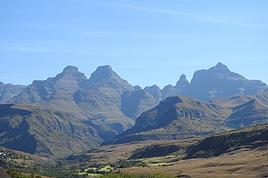
We’re heading to South Africa in August 2025 and planning a classic loop that I’d love to finish with the Drakensberg (I’m a big hiking fan) before returning to Johannesburg to catch our flight.
I’ve got 3 nights for this part of our trip. But I’m wondering if it’s actually a good idea to hike in the Drakensberg in August, since it’s the Southern Hemisphere winter (I’m from Réunion and we hike year-round there, but I don’t know what the climate’s like in South Africa, especially the Drakensberg).
I’m particularly worried about getting stuck because of snow and missing our flight... ;)
I’ve read so many different things that I’m totally confused!
If it’s okay to hike at this time of year, what would you recommend? I’m torn between Champagne Valley and Royal Natal National Park.
Thanks in advance for your firsthand tips!
Malijp
We spent a few days in Tajikistan with a Tajik guide, Remy Fayziddin, who speaks French and welcomed us into his home in his village of Voru. This village is very remote, located in the heart of the Fan Mountains, and reaching it in an old 4x4 is already a real expedition.
We stayed with this guide in the purest Tajik tradition: it was a very enriching experience because the Tajiks are extremely welcoming.
We were able to go on a trek on the Kulikalon Lakes plateau with the guide—it was truly stunning.
Then we took another walk around this village of Voru, which is nestled in a valley at over 2,000 meters in altitude.
This immersion in the village was very interesting and also very moving because we were able to discover a world so far removed from our own, yet where people truly live together and can all count on one another. Our guide is very involved in the development of his village and in welcoming travelers into his home, as well as sharing his knowledge of the region through organized treks—it’s a way to develop his village. We came back enchanted by this stay (even if the sanitary conditions weren’t always easy…).
- But that’s just a detail compared to everything we discovered: breathtaking landscapes and incredibly endearing people! !
Hi,
We’re planning to do the 4-day trek from Mestia to Ushguli without an agency. The descriptions mention that there are accommodations at each stop, but we can’t find any details about them. Has anyone got info or feedback on this route?
Thanks
Cat, Bruno.
Thanks
Cat, Bruno.
Hi there, for those who’ve been recently—is it possible to find other solo travelers in March on the island to share transport or room costs? It doesn’t seem easy to travel on a budget.
If you have any recommendations for simple lodgings or places with dorms, I’d love to hear them.
For those who’ve done multi-day treks while moving around: do you need to bring your own sleeping bag? I’d love to hear about itineraries you’ve done without a guide, just with a map and GPS.
Thanks, and have a great day!
Hello,
In mid-November, we’ll be in Mindelo and Santo Antão.
We’ve booked transportation with Kapverden Tours.
One trip is from Porto Novo to Ponta do Sol, including the hike from Corda to Coculi.
What’s the trail like?
Then we’ll be staying in Ponta do Sol,
Here’s what we’re planning: A hike to Fontainhas—what’s the best direction, considering we’re not great with climbs? No problem with flat terrain or descents. Take an aluguer to Ribeira Grande and continue along the coastal road.
With the agency: An excursion to Cruzinha with a short walk. Return to Porto Novo via the path from Cova to… I’m not sure where yet, to pick up the car for Porto Novo, since we’ll be taking the ferry that evening. We’ll have a guide for this hike.
We’d love to spend a day in Tarrafal, but getting back requires a boat or taxi, and it’s really expensive!
We’re a couple, 78 and 76 years old. What do you think of this itinerary?
Here’s what we’re planning: A hike to Fontainhas—what’s the best direction, considering we’re not great with climbs? No problem with flat terrain or descents. Take an aluguer to Ribeira Grande and continue along the coastal road.
With the agency: An excursion to Cruzinha with a short walk. Return to Porto Novo via the path from Cova to… I’m not sure where yet, to pick up the car for Porto Novo, since we’ll be taking the ferry that evening. We’ll have a guide for this hike.
We’d love to spend a day in Tarrafal, but getting back requires a boat or taxi, and it’s really expensive!
We’re a couple, 78 and 76 years old. What do you think of this itinerary?
My husband and I are planning a 10-day trip to Northern Vietnam in November, traveling independently (no agency organizing everything) and using local buses. We’d like to spend at least 3 days in each place (including Meo Vac). We’re wondering if it’s possible to find local guides for day hikes, and if so, in which towns/villages (Meo Vac plus one or two other spots to explore the surrounding area).
Thanks!
I’m heading to Nepal at the end of April 2026 with my brother, the two kids, and my mom.
My mom is 75, in good shape, she walks but isn’t a big sports enthusiast. My daughter is 16, she’s not really into hiking but with the right vibe, she’ll step up.
I’m looking for a 5-6 day trek that’s not too difficult—around 4-5 hours of walking and 500-600m of elevation gain per day. What’s our goal?
Well, like everyone, we’d love something not too crowded. We want to experience Nepali village life away from the main routes—terraced fields, all that. Some encounters, authenticity, sharing... And if we can catch a glimpse of some high peaks, even better.
Any suggestions?
Hello!
We’re spending a few days in Toraja country at the end of May. We’d love to do a day trek—taking our time—on a route that’s stunning in terms of scenery, but not a level 5 in difficulty!
Any suggestions you can share, please?
Thanks in advance
Hi there,
My wife and I are heading to Norwegian Lapland for a week soon. We arrive in Tromsø on January 9th and plan to visit Senja Island. We’d love to go snowshoeing there and would appreciate some tips:
1. Is it possible to go snowshoeing without a guide this time of year on Senja Island? Are there well-marked trails? If not, could anyone recommend some good local guides?
2. We’d also love recommendations for great snowshoeing routes on the island if possible.
3. Is 5 days in Dovær in the northern part of the island too long at this time of year?
4. Renting snowshoeing gear in Norway is super expensive—does anyone know a good place to rent between Tromsø and Senja Island?
Thanks!
Hi there,
I’m traveling to Quebec with my husband and our 20-year-old son for 15 days in August.
To finalize our itinerary, I’d love to know the differences between La Mauricie Park and Jacques Cartier Park. We have two days to dedicate to one of the two parks.
Thanks so much for your feedback!
Hello, I’d like to embark on a little trip in my home country, Switzerland. I’ll start walking from La Cure, heading toward Le Noirmont first, then I’ll improvise my route—but it’ll probably follow the French border... at least as far as Lac de Joux.
I’ll decide day by day how much farther to go after that. My goal is to stay in nature as much as possible, wander around for as long as I can, and restock food in villages or towns along the way.
I’m thinking of mostly camping, but we’ll see if I end up in a hotel or another campsite depending on my route.
I’d love to reach La Chaux-de-Fonds on foot... maybe even Delémont. The whole thing should take about a week, give or take.
I’ll be bringing my dog, and I’m preparing for this as soon as I’m ready.
Any tips to make sure everything goes smoothly for us? Things I should know—or avoid? What about shepherds with their flocks of sheep? And isn’t hunting season open right now?
I’m not sure if what I’m planning is even doable, which is why I’m asking around.
This’ll be my first time doing something like this—wandering in nature *and* with a dog. I’m really excited for this adventure... and I need it. Thanks!
I’ll decide day by day how much farther to go after that. My goal is to stay in nature as much as possible, wander around for as long as I can, and restock food in villages or towns along the way.
I’m thinking of mostly camping, but we’ll see if I end up in a hotel or another campsite depending on my route.
I’d love to reach La Chaux-de-Fonds on foot... maybe even Delémont. The whole thing should take about a week, give or take.
I’ll be bringing my dog, and I’m preparing for this as soon as I’m ready.
Any tips to make sure everything goes smoothly for us? Things I should know—or avoid? What about shepherds with their flocks of sheep? And isn’t hunting season open right now?
I’m not sure if what I’m planning is even doable, which is why I’m asking around.
This’ll be my first time doing something like this—wandering in nature *and* with a dog. I’m really excited for this adventure... and I need it. Thanks!
Hi there,
We’ve just returned from 15 days in Cape Verde, including 8 days of hiking in Santo Antão. It was a fantastic trip with great weather and heat that stayed manageable. Everything was organized by a highly competent local agency that really listened to our requests. I’m happy to share more details about the hikes, hotels, etc. if you’d like!
Because of a miscalculation on extra costs (non-hotel expenses and transfers), I’ve got 18,000 escudos left—I’d be more than happy to exchange them for a more widely used currency!
We’ve just returned from 15 days in Cape Verde, including 8 days of hiking in Santo Antão. It was a fantastic trip with great weather and heat that stayed manageable. Everything was organized by a highly competent local agency that really listened to our requests. I’m happy to share more details about the hikes, hotels, etc. if you’d like!
Because of a miscalculation on extra costs (non-hotel expenses and transfers), I’ve got 18,000 escudos left—I’d be more than happy to exchange them for a more widely used currency!
Hi there.
I’ve hiked the GR trail mentioned in the title from Wissembourg all the way to Menton.
Now I’ve got the section from Wissembourg to Rotterdam left.
But I can’t find any maps for this route—I’m looking for someone who’s done this part of the trail.
Thanks in advance! 😊
Hi everyone!
New to this forum, I’m planning a pretty big project for 2028. I’m heading to Nepal to do a trek from Kathmandu all the way to Everest Base Camp (a cool 5,300 m 😄). This trek is a bit special because even though I’ll be part of a group, I’m going solo (so far, no problem—I’m used to it). But it’s my first real trek, and it’s also a humanitarian one: once I reach base camp, I’ll stay an extra week to help clean up the waste left by tens of thousands of climbers! Since I’m originally from South America, from two countries that share the Andes, I have a deep respect for mountains—they fascinate me. So Everest… it’s kind of the trip of a lifetime!
So, a little question for those who’ve done treks to Everest before… any tips for good mental preparation (I’m already working on the physical side)?
Thanks in advance for your advice! 🙂
New to this forum, I’m planning a pretty big project for 2028. I’m heading to Nepal to do a trek from Kathmandu all the way to Everest Base Camp (a cool 5,300 m 😄). This trek is a bit special because even though I’ll be part of a group, I’m going solo (so far, no problem—I’m used to it). But it’s my first real trek, and it’s also a humanitarian one: once I reach base camp, I’ll stay an extra week to help clean up the waste left by tens of thousands of climbers! Since I’m originally from South America, from two countries that share the Andes, I have a deep respect for mountains—they fascinate me. So Everest… it’s kind of the trip of a lifetime!
So, a little question for those who’ve done treks to Everest before… any tips for good mental preparation (I’m already working on the physical side)?
Thanks in advance for your advice! 🙂
A study reveals that 60% of French people opt for trips within France, reflecting a strong preference for domestic tourism. Additionally, 51% want to reduce their carbon footprint, confirming a growing awareness of environmental issues. Trends also show a diversification in accommodation choices, with a rise in independent rentals and an emerging interest in artificial intelligence for travel planning—though its adoption remains limited. Read more...
According to a monthly travel sales barometer, bookings to the United States dropped by 32% in April 2025 compared to the previous year, pushing the country down to 18th place among the most popular destinations, from 11th place the year before.
This decline is part of an overall drop in travel sales, with a 7.6% decrease across all destinations.
Despite airfare promotions and a favorable exchange rate for French travelers, the U.S. is struggling to attract visitors, possibly due to political considerations.
Meanwhile, destinations like Italy (+12%) and Tunisia (+3.7%) saw an increase in bookings.
Read the article
This decline is part of an overall drop in travel sales, with a 7.6% decrease across all destinations.
Despite airfare promotions and a favorable exchange rate for French travelers, the U.S. is struggling to attract visitors, possibly due to political considerations.
Meanwhile, destinations like Italy (+12%) and Tunisia (+3.7%) saw an increase in bookings.
Read the article
I would’ve preferred to post this in the "Travel News" section, but it’s not open to new discussions. Still, this is definitely sensitive news directly related to travel.
"With growth twice as fast as the global economy, tourism has a heavy impact on climate balance. In this regard, aviation poses a specific challenge." (From Le Parisien with AFP)
You can read the rest HERE.
"With growth twice as fast as the global economy, tourism has a heavy impact on climate balance. In this regard, aviation poses a specific challenge." (From Le Parisien with AFP)
You can read the rest HERE.
I’ve kept quiet about them... to preserve them.
Those are the words of a passionate traveler who recently wrote to us.
For years, he’s been discovering rare, authentic places... and chooses to say nothing.
Out of respect. Out of fear of destruction. Out of love for secrecy.
What would you do?
You stumble upon a magical spot, still untouched by mass tourism.
Do you keep it to yourself... or do you open the door, gently, to other travelers?
At DIRECTRAVEL, we’re asking ourselves these questions.
Can sharing be an act of passing something on?
Or is it always the beginning of the end for these preserved places?
Read the article here.
Photo credit: Frédéric Soltan
Photo credit: Frédéric Soltan
Destination choices for summer 2025 are evolving, with some countries gaining popularity while others see a decline.
According to recent data, summer 2025 shows notable shifts in the preferences of French travelers. Spain, Greece, and France are seeing a drop in bookings compared to 2024. On the other hand, Tunisia (+11.2%), Italy (+10.6%), and especially Egypt (+36.1%) are experiencing a significant rise in popularity. The United Kingdom is also showing notable growth (+28.7%) among medium-haul destinations. For long-haul trips, the United States is surprising with a 17.3% increase in bookings, despite a complex geopolitical context. These trends reflect a diversification in travelers' choices for summer 2025. Read the article...
According to recent data, summer 2025 shows notable shifts in the preferences of French travelers. Spain, Greece, and France are seeing a drop in bookings compared to 2024. On the other hand, Tunisia (+11.2%), Italy (+10.6%), and especially Egypt (+36.1%) are experiencing a significant rise in popularity. The United Kingdom is also showing notable growth (+28.7%) among medium-haul destinations. For long-haul trips, the United States is surprising with a 17.3% increase in bookings, despite a complex geopolitical context. These trends reflect a diversification in travelers' choices for summer 2025. Read the article...
As summer 2025 approaches, a survey reveals that 50% of French people plan to go on vacation for at least a week, while 27% are still undecided and 23% don’t plan to go away at all.
The average budget for these vacations is 1 820 €, but 39% of vacationers are considering cutting back, mainly by limiting non-essential expenses like restaurants, shopping, or certain activities.
France remains the top destination for 68% of vacationers, followed by Europe (26%), especially among 18-34-year-olds, and non-European destinations (13%).
Among the new trends, "workation" (working from a vacation spot) appeals to 24% of vacationers, a figure that rises to 45% among 18-34-year-olds.
Alternative options like Wwoofing (working on farms in exchange for accommodation) interest 26% of young people aged 18-34.
Practices like Couchsurfing attract 13% of young travelers.
Finally, 19% of respondents see home exchanges as an interesting option, though few have tried it yet.
Read the article
The average budget for these vacations is 1 820 €, but 39% of vacationers are considering cutting back, mainly by limiting non-essential expenses like restaurants, shopping, or certain activities.
France remains the top destination for 68% of vacationers, followed by Europe (26%), especially among 18-34-year-olds, and non-European destinations (13%).
Among the new trends, "workation" (working from a vacation spot) appeals to 24% of vacationers, a figure that rises to 45% among 18-34-year-olds.
Alternative options like Wwoofing (working on farms in exchange for accommodation) interest 26% of young people aged 18-34.
Practices like Couchsurfing attract 13% of young travelers.
Finally, 19% of respondents see home exchanges as an interesting option, though few have tried it yet.
Read the article
Travel bookings to the United States are seeing a significant drop in France for summer 2025, with over a 30% decrease in the spring and around -11% for summer departures.
Several reasons explain this disengagement:
an unfavorable exchange rate at the start of the year, very high prices on the ground (accommodation, dining), negative experiences with immigration, as well as a political and social context perceived as off-putting (civil rights, safety, tense social climate).
Tourism professionals also note difficulties for Florida and some Southern states, while destinations like New York and Orlando are faring better.
The recent drop in the dollar and airfares could, however, encourage last-minute departures, and tourism stakeholders are betting on a gradual recovery starting this autumn, with major events planned for 2026 like the World Cup or the 250th anniversary of the United States.
Read the article
Several reasons explain this disengagement:
an unfavorable exchange rate at the start of the year, very high prices on the ground (accommodation, dining), negative experiences with immigration, as well as a political and social context perceived as off-putting (civil rights, safety, tense social climate).
Tourism professionals also note difficulties for Florida and some Southern states, while destinations like New York and Orlando are faring better.
The recent drop in the dollar and airfares could, however, encourage last-minute departures, and tourism stakeholders are betting on a gradual recovery starting this autumn, with major events planned for 2026 like the World Cup or the 250th anniversary of the United States.
Read the article
Big traveler survey! We want to know everything! 🌍
Dreaming of your next trip already? So are we, but to better understand the desires and habits of French travelers, we need your help to later offer the best tips, good deals, trips, and more. It’s a short form (promise, it only takes a few minutes). And... there might just be a 50 € gift voucher up for grabs for one of the participants. Just like that, to thank you for taking part✨
Just click on this link: https://tally.so/r/mRrj6J and check the box based on your travel preferences 🧳✈️ Thanks in advance for lending a hand!
Dreaming of your next trip already? So are we, but to better understand the desires and habits of French travelers, we need your help to later offer the best tips, good deals, trips, and more. It’s a short form (promise, it only takes a few minutes). And... there might just be a 50 € gift voucher up for grabs for one of the participants. Just like that, to thank you for taking part✨
Just click on this link: https://tally.so/r/mRrj6J and check the box based on your travel preferences 🧳✈️ Thanks in advance for lending a hand!
Notre-Dame Cathedral in Paris will reopen to the public on December 8th after five years of intensive restoration. The announcement has already sparked significant interest among both international tourists and French visitors.
Before the tragic fire on April 15, 2019—which deeply moved people and mobilized numerous patrons—Notre-Dame was one of Paris’s most iconic sites. With 12 million annual visitors, according to data from the Parisian Tourism Economic Observatory, it was the capital’s most popular cultural attraction, even outranking prestigious landmarks like the Louvre Museum.
The reopening of this Gothic masterpiece could mark a new chapter in Paris’s tourist appeal. Read more...
Before the tragic fire on April 15, 2019—which deeply moved people and mobilized numerous patrons—Notre-Dame was one of Paris’s most iconic sites. With 12 million annual visitors, according to data from the Parisian Tourism Economic Observatory, it was the capital’s most popular cultural attraction, even outranking prestigious landmarks like the Louvre Museum.
The reopening of this Gothic masterpiece could mark a new chapter in Paris’s tourist appeal. Read more...
This forum was closed for a long time after COVID, then due to its sale by the previous owner. Since 2022, there have been notable changes for Russia. It became possible to travel to Russia as a tourist again after COVID restrictions ended in summer 2022. But before that, in March 2022, the EU and member countries cut air links with Russia, as well as train lines. They also cut Russian banks off from the Euro-American banking network—meaning cards and wire transfers.
EU-based insurers stopped offering policies for Russia. The Green Card for cars in Russia was also discontinued. Then the EU abolished the simplified visa regime agreement with Russia. All in all, a summary of the current practical aspects would be helpful.
I’ve been traveling to Russia regularly for about twenty years, and after the long COVID break, I resumed in autumn 2022.
Visa
The usual paper visa is much more expensive. On one hand, because the previous regime was scrapped, and on the other, because invitations for multi-entry visas are pricier. A single-entry 30-day visa costs 80 €. The multi-entry one is 240 €. To be sure you’ll get a 12-month multi-entry, it’s best to buy a telex invitation from the MID (Russian Ministry of Foreign Affairs), though there are few resellers. Prices vary depending on the seller.
E-visas are now available for Schengen passport holders. A big simplification for trips up to 16 days within a 60-day validity period. You can apply from 40 days up to 5 days before your desired date. Issued in up to four days. The site is https://evisa.kdmid.ru/ Cost: 50 €. Processed through an Emirati bank (United Arab Emirates).
Medical Insurance
Medical insurance with repatriation is required to get a visa. So you’ll need to buy a policy. This brings up payment methods. If you’re already familiar with Russia and have a Russian bank account, you can pay with your Russian card. Otherwise, you’ll have to buy from a site that accepts payments via a Belarusian bank—which means your bank must work with Belarus—or go through https://goingrus.com/fr/insurance
Transport from the EU
Minibus (marshrutka) from Kirkenes (Norway) to Murmansk. Schedules are coordinated with flights from Oslo, which arrive between 11:00 and 12:00. They wait on the right as you exit the airport. Some are chartered by groups and leave directly, but may have space—ask the driver. Otherwise, two companies run the route, with a stop in town at the corner of the Scandic, where they depart around 14:00 or 15:00. Payment in cash (NOK or RUB) to the driver. Main operator: https://borodinbus.com Bus from Tallinn (Estonia) to St. Petersburg. The border crossing is on the Narva River. The Russian road checkpoint has been closed since January 2024 for construction expected to last 2.5 years, so reopening is possible in summer 2026. In the meantime, it’s a two-bus journey: Tallinn-Narva, then walk across the bridge between the Estonian and Russian checkpoints at Ivangorod, followed by another bus. Several companies: Luxexpress, Ecolines, Baltic Shuttle, Anniston, СКСавто. Bus from Riga to Pskov or St. Petersburg (final destination). Departs from Riga’s bus station (behind the train station) daily between 18:00 and 19:00. Arrives in Pskov between 01:00 and 02:00 (Russian time). Company: СКСавто. There’s another bus around 21:00 with Ecolines, but it’s longer, with a long stop at the border. Bus from Gdańsk to Kaliningrad. Several buses per day. From the PKS bus station, behind Gdańsk’s central station, on the other side of the boulevard. From Kaliningrad, a 1-hour flight to St. Petersburg costs around 5000 RUB.
Basically, unless you’re planning to go to Murmansk and the Kola Peninsula—and possibly from Murmansk, flights to Arkhangelsk, then Nenetsia (Naryan-Mar), etc.—the three main crossing points with airports are Tallinn, Riga, and Gdańsk.
The Gdańsk-Kaliningrad bus is the fastest, and the ticket to St. Petersburg is very reasonable.
The Narva-Ivangorod route is the riskiest in terms of potential queues and crossing time. Holiday periods are especially risky. Last mid-June, I took a 14:00 bus from Tallinn. I’d bought a single-berth compartment on the Grand Express St. Petersburg-Moscow train, leaving at 23:00, with the idea of a good night’s rest before a Moscow-Magadan flight. A 7-hour queue at the border meant I arrived at St. Petersburg’s bus station at 23:00—missed the train, had to book a room, and spent time finding a reasonably priced flight to Moscow the next day for the same airport as my Magadan flight.
The Riga-Pskov route is a bit long but relaxed. If you get off in Pskov, you can still get decent sleep between 02:00 and 12:00. The Oktyabrskaya Hotel is cheap. I’ve also stopped in Izborsk. You ask the driver when boarding in Riga. The stop is on the federal highway—cross the road, and the main inn is 200m away. You can explore the medieval site the next morning before taking a bus to Pskov (30 km).
From Pskov, there are fast regional Lastochka trains—three or four per day—to St. Petersburg, taking 3.5 hours. Very comfortable and affordable. Also, two daily flights with Azimuth to Moscow-Vnukovo from 5000 RUB. A one-hour flight. It’s a section of Pskov’s military airfield, just a few kilometers from the city center.
Money
Cash. The EU issued a nonsensical decree: a ban on importing EU currency (euros, zloty, kroner, forints, etc.) except for personal travel use. This doesn’t make sense because as a citizen of a eurozone country, you *have* to have euros—cash or electronic (card). You can’t travel without them. The stipulation about a limit for personal use is absurd because personal use can mean anything from a hostel bed to a luxury hotel room, plus transport (flight tickets, train tickets in Russia), restaurants, etc. Estonian customs officers ask about this at the border when leaving. They ask in Estonian, then Russian, then English, depending. Since I cross with a French passport, I just say, "Sorry, I don’t understand," no matter what. Then they ask with a questioning look, "Euro?" and I shake my head. I haven’t been searched, but they do ask to glance in your bag. Russians with large suitcases often get checked. Cards and phone apps: if you have a Russian bank account.
Telephony and Internet
Roaming works but is pricey. Okay for calls and SMS, but very expensive for data. In that case, use an e-SIM with your home carrier if your phone supports it. Otherwise, look into prepaid rechargeable SIMs in Russia for data only—like SIM cards for mobile modems.
Russian SIM: Since this year (2025), as of March, it’s mandatory to be registered in the EBS (Unified Biometric System) to buy a SIM card. For a non-resident foreigner, this means first registering for a SNILS at an MFC (Multifunctional Center)—also called "My Documents." The SNILS is the pension center, which doesn’t require residency. After getting your SNILS number and certificate, you register on the public services portal, Gosuslugi. Finally, you register in the EBS system (voice sample—you read numbers—and a biometric facial photo).
Personal Car
The Green Card no longer covers Russia, and neither do EU-based insurers. But third-party liability insurance (OSAGO) is mandatory. Since the closure of the Russian checkpoint at Ivangorod for construction and the Finnish border closure, the routes are from Kirkenes in Norway, the Estonia-Pskov route, and—since the Belarus-Russia joint visa this year—the Belarus route, e.g., Poland-Terespol-Brest or Lithuania-Belarus. No OSAGO sales if you cross via Kirkenes. I didn’t see any at Shumilkino, the Russian checkpoint after Estonia toward Pskov. If you have a Russian card, you can buy online, of course. Otherwise, pay in cash on-site at certain company offices (specific forms aren’t available at all agencies) or online by paying to a third-party account outside Russia—with added fees.
EU-based insurers stopped offering policies for Russia. The Green Card for cars in Russia was also discontinued. Then the EU abolished the simplified visa regime agreement with Russia. All in all, a summary of the current practical aspects would be helpful.
I’ve been traveling to Russia regularly for about twenty years, and after the long COVID break, I resumed in autumn 2022.
Visa
The usual paper visa is much more expensive. On one hand, because the previous regime was scrapped, and on the other, because invitations for multi-entry visas are pricier. A single-entry 30-day visa costs 80 €. The multi-entry one is 240 €. To be sure you’ll get a 12-month multi-entry, it’s best to buy a telex invitation from the MID (Russian Ministry of Foreign Affairs), though there are few resellers. Prices vary depending on the seller.
E-visas are now available for Schengen passport holders. A big simplification for trips up to 16 days within a 60-day validity period. You can apply from 40 days up to 5 days before your desired date. Issued in up to four days. The site is https://evisa.kdmid.ru/ Cost: 50 €. Processed through an Emirati bank (United Arab Emirates).
Medical Insurance
Medical insurance with repatriation is required to get a visa. So you’ll need to buy a policy. This brings up payment methods. If you’re already familiar with Russia and have a Russian bank account, you can pay with your Russian card. Otherwise, you’ll have to buy from a site that accepts payments via a Belarusian bank—which means your bank must work with Belarus—or go through https://goingrus.com/fr/insurance
Transport from the EU
Minibus (marshrutka) from Kirkenes (Norway) to Murmansk. Schedules are coordinated with flights from Oslo, which arrive between 11:00 and 12:00. They wait on the right as you exit the airport. Some are chartered by groups and leave directly, but may have space—ask the driver. Otherwise, two companies run the route, with a stop in town at the corner of the Scandic, where they depart around 14:00 or 15:00. Payment in cash (NOK or RUB) to the driver. Main operator: https://borodinbus.com Bus from Tallinn (Estonia) to St. Petersburg. The border crossing is on the Narva River. The Russian road checkpoint has been closed since January 2024 for construction expected to last 2.5 years, so reopening is possible in summer 2026. In the meantime, it’s a two-bus journey: Tallinn-Narva, then walk across the bridge between the Estonian and Russian checkpoints at Ivangorod, followed by another bus. Several companies: Luxexpress, Ecolines, Baltic Shuttle, Anniston, СКСавто. Bus from Riga to Pskov or St. Petersburg (final destination). Departs from Riga’s bus station (behind the train station) daily between 18:00 and 19:00. Arrives in Pskov between 01:00 and 02:00 (Russian time). Company: СКСавто. There’s another bus around 21:00 with Ecolines, but it’s longer, with a long stop at the border. Bus from Gdańsk to Kaliningrad. Several buses per day. From the PKS bus station, behind Gdańsk’s central station, on the other side of the boulevard. From Kaliningrad, a 1-hour flight to St. Petersburg costs around 5000 RUB.
Basically, unless you’re planning to go to Murmansk and the Kola Peninsula—and possibly from Murmansk, flights to Arkhangelsk, then Nenetsia (Naryan-Mar), etc.—the three main crossing points with airports are Tallinn, Riga, and Gdańsk.
The Gdańsk-Kaliningrad bus is the fastest, and the ticket to St. Petersburg is very reasonable.
The Narva-Ivangorod route is the riskiest in terms of potential queues and crossing time. Holiday periods are especially risky. Last mid-June, I took a 14:00 bus from Tallinn. I’d bought a single-berth compartment on the Grand Express St. Petersburg-Moscow train, leaving at 23:00, with the idea of a good night’s rest before a Moscow-Magadan flight. A 7-hour queue at the border meant I arrived at St. Petersburg’s bus station at 23:00—missed the train, had to book a room, and spent time finding a reasonably priced flight to Moscow the next day for the same airport as my Magadan flight.
The Riga-Pskov route is a bit long but relaxed. If you get off in Pskov, you can still get decent sleep between 02:00 and 12:00. The Oktyabrskaya Hotel is cheap. I’ve also stopped in Izborsk. You ask the driver when boarding in Riga. The stop is on the federal highway—cross the road, and the main inn is 200m away. You can explore the medieval site the next morning before taking a bus to Pskov (30 km).
From Pskov, there are fast regional Lastochka trains—three or four per day—to St. Petersburg, taking 3.5 hours. Very comfortable and affordable. Also, two daily flights with Azimuth to Moscow-Vnukovo from 5000 RUB. A one-hour flight. It’s a section of Pskov’s military airfield, just a few kilometers from the city center.
Money
Cash. The EU issued a nonsensical decree: a ban on importing EU currency (euros, zloty, kroner, forints, etc.) except for personal travel use. This doesn’t make sense because as a citizen of a eurozone country, you *have* to have euros—cash or electronic (card). You can’t travel without them. The stipulation about a limit for personal use is absurd because personal use can mean anything from a hostel bed to a luxury hotel room, plus transport (flight tickets, train tickets in Russia), restaurants, etc. Estonian customs officers ask about this at the border when leaving. They ask in Estonian, then Russian, then English, depending. Since I cross with a French passport, I just say, "Sorry, I don’t understand," no matter what. Then they ask with a questioning look, "Euro?" and I shake my head. I haven’t been searched, but they do ask to glance in your bag. Russians with large suitcases often get checked. Cards and phone apps: if you have a Russian bank account.
Telephony and Internet
Roaming works but is pricey. Okay for calls and SMS, but very expensive for data. In that case, use an e-SIM with your home carrier if your phone supports it. Otherwise, look into prepaid rechargeable SIMs in Russia for data only—like SIM cards for mobile modems.
Russian SIM: Since this year (2025), as of March, it’s mandatory to be registered in the EBS (Unified Biometric System) to buy a SIM card. For a non-resident foreigner, this means first registering for a SNILS at an MFC (Multifunctional Center)—also called "My Documents." The SNILS is the pension center, which doesn’t require residency. After getting your SNILS number and certificate, you register on the public services portal, Gosuslugi. Finally, you register in the EBS system (voice sample—you read numbers—and a biometric facial photo).
Personal Car
The Green Card no longer covers Russia, and neither do EU-based insurers. But third-party liability insurance (OSAGO) is mandatory. Since the closure of the Russian checkpoint at Ivangorod for construction and the Finnish border closure, the routes are from Kirkenes in Norway, the Estonia-Pskov route, and—since the Belarus-Russia joint visa this year—the Belarus route, e.g., Poland-Terespol-Brest or Lithuania-Belarus. No OSAGO sales if you cross via Kirkenes. I didn’t see any at Shumilkino, the Russian checkpoint after Estonia toward Pskov. If you have a Russian card, you can buy online, of course. Otherwise, pay in cash on-site at certain company offices (specific forms aren’t available at all agencies) or online by paying to a third-party account outside Russia—with added fees.
Dear members of VoyageForum,
It is with deep sadness that we share the news of the passing of François Boucher, the founder of VoyageForum.
We will remember his passion for travel, but most of all, the pride he took in this forum, which has become indispensable among travelers. While there may have been heated debates, we ask that you show respect for him.
François was still very active on the forum, especially in the technical development section. VoyageForum was his life’s work. He worked passionately to update the site and make up for the 4 years of closure due to the pandemic.
Today, VoyageForum has also lost its developer.
That’s why we’re reaching out to this community to continue François’s legacy. If there are any former or current developers among you who know PERL and would be willing to help, your support would be greatly appreciated.
Thank you for your loyalty.
Let’s keep this forum alive in his memory.
It is with deep sadness that we share the news of the passing of François Boucher, the founder of VoyageForum.
We will remember his passion for travel, but most of all, the pride he took in this forum, which has become indispensable among travelers. While there may have been heated debates, we ask that you show respect for him.
François was still very active on the forum, especially in the technical development section. VoyageForum was his life’s work. He worked passionately to update the site and make up for the 4 years of closure due to the pandemic.
Today, VoyageForum has also lost its developer.
That’s why we’re reaching out to this community to continue François’s legacy. If there are any former or current developers among you who know PERL and would be willing to help, your support would be greatly appreciated.
Thank you for your loyalty.
Let’s keep this forum alive in his memory.
The best time for a cruise depends on the destination and personal preferences, with plenty of options available year-round.
In January, ships are often less crowded, offering some great deals.
Valentine’s Day is perfect for romantic cruises to the Caribbean, the Seychelles, or French Polynesia. For a unique experience, Antarctica in February offers breathtaking landscapes and abundant wildlife.
In summer, the Arctic reveals pleasant temperatures and spectacular nature.
Finally, the holiday season can be a great opportunity to escape on a cruise and avoid the stress of traditional celebrations.
Read the article...
In January, ships are often less crowded, offering some great deals.
Valentine’s Day is perfect for romantic cruises to the Caribbean, the Seychelles, or French Polynesia. For a unique experience, Antarctica in February offers breathtaking landscapes and abundant wildlife.
In summer, the Arctic reveals pleasant temperatures and spectacular nature.
Finally, the holiday season can be a great opportunity to escape on a cruise and avoid the stress of traditional celebrations.
Read the article...
North Korea is diving into tourism development with the planned opening of its first international beach resort on the east coast, as part of the Wonsan-Kalma project. This hotel complex, overseen by Kim Jong Un, marks a step in the country's economic opening, according to North Korean state media. After reopening its borders in 2023, the country is targeting both North Korean and international tourists, particularly Russians, with whom relations have recently strengthened. While tourism remains restricted, this project highlights the regime's growing interest in the tourism industry. Read more...
"Les rencontres voyageurs" is a must-attend event for all travel enthusiasts, at the heart of France’s most beautiful gatherings.
Whether you're a seasoned traveler or a beginner looking for your first adventures, these meet-ups aim to bring people together, inspire, and share knowledge.
They offer a unique opportunity to chat with inspiring travelers, discover their authentic stories, their favorite spots around the world, and their practical tips for traveling peacefully and enrichingly 😉
"Les rencontres voyageurs" also feature conferences and masterclasses led by industry experts, covering a variety of topics such as responsible travel, content creation, and optimizing itineraries.
These sessions, both practical and inspiring, are designed to expand your knowledge and fuel your projects. On top of that, there are fun and educational activities, including the famous traveler quiz, encouraging exchanges and conviviality. Finally, visitors can explore an exhibition of travel vehicles, vans, 4x4s, nomadic equipment, and chat with professionals about van conversions, mobility, and innovations dedicated to vanlife. A complete, immersive experience that’s all about discovery.
Whether you're a seasoned traveler or a beginner looking for your first adventures, these meet-ups aim to bring people together, inspire, and share knowledge.
They offer a unique opportunity to chat with inspiring travelers, discover their authentic stories, their favorite spots around the world, and their practical tips for traveling peacefully and enrichingly 😉
"Les rencontres voyageurs" also feature conferences and masterclasses led by industry experts, covering a variety of topics such as responsible travel, content creation, and optimizing itineraries.
These sessions, both practical and inspiring, are designed to expand your knowledge and fuel your projects. On top of that, there are fun and educational activities, including the famous traveler quiz, encouraging exchanges and conviviality. Finally, visitors can explore an exhibition of travel vehicles, vans, 4x4s, nomadic equipment, and chat with professionals about van conversions, mobility, and innovations dedicated to vanlife. A complete, immersive experience that’s all about discovery.
Travelers in 2025 are leaning toward immersive and original experiences.
Here are 3 new trendy terms to casually drop in your next conversation 😉:
"Cowboy Core" is gaining popularity, with trips focused on country music and horseback riding across vast plains.
"Destination Dupes" offer less crowded and more affordable alternatives to overrun tourist spots, like Albania instead of the Greek islands.
Finally, "Goods Getaways" encourage tourists to discover gourmet products that have gone viral on social media—such as Japanese matcha or Dubai chocolate—by visiting their place of origin.
Check out the article
"Cowboy Core" is gaining popularity, with trips focused on country music and horseback riding across vast plains.
"Destination Dupes" offer less crowded and more affordable alternatives to overrun tourist spots, like Albania instead of the Greek islands.
Finally, "Goods Getaways" encourage tourists to discover gourmet products that have gone viral on social media—such as Japanese matcha or Dubai chocolate—by visiting their place of origin.
Check out the article
Europe is packed with spectacular carnivals where traditions and festivities blend in vibrant, colorful parades. In 2025, several must-see events will draw visitors, including:
1. Cologne Carnival (Karneval) in Germany 2. Menton Lemon Festival (Fête du Citron) in France 3. Santa Cruz de Tenerife Carnival in the Canary Islands 4. Binche Carnival in Belgium 5. Nice Carnival in France 6. Cádiz Carnival in Spain 7. Basel Carnival (Fasnacht) in Switzerland 8. Dunkirk Carnival in France 9. Rijeka Carnival in Croatia 10. London Carnival in the UK
A great opportunity to discover unique celebrations without heading to Venice, which is already well-known to the general public. See the slideshow
1. Cologne Carnival (Karneval) in Germany 2. Menton Lemon Festival (Fête du Citron) in France 3. Santa Cruz de Tenerife Carnival in the Canary Islands 4. Binche Carnival in Belgium 5. Nice Carnival in France 6. Cádiz Carnival in Spain 7. Basel Carnival (Fasnacht) in Switzerland 8. Dunkirk Carnival in France 9. Rijeka Carnival in Croatia 10. London Carnival in the UK
A great opportunity to discover unique celebrations without heading to Venice, which is already well-known to the general public. See the slideshow