Hi,
A friend is looking for a bike to embark on a long trip, but the issue is he’s only 1.55m tall.
In itself, that’s not a problem 😏, except that finding an XS-sized touring bike isn’t easy.
Some start at 1.55m, but it’s still a bit extreme.
If anyone knows of brands or models that might work...
Thanks in advance
I'm planning a 3-day weekend with my wife on this cycle path. The articles about this route are old, so if anyone has traveled it recently and can give me an update on its condition, that'd be great. We're riding 1994 ROCKRIDER 340 mountain bikes but with 1.5-inch tires suited for road touring—will that work, or should I switch back to MTB tires? Thanks for your replies!
A bit disappointed with the forum's revival—there isn’t much activity or shared travel stories anymore.
A bit disappointed with the forum's revival—there isn’t much activity or shared travel stories anymore.
Hey fellow cyclists,
Cyclists on trails, paths, or greenways—why do so few (if any) of you use your bells to warn walkers, runners, and other pedestrians when they’re moving in the same direction as you?
I exercise every day (brisk walking) among you in France and abroad, and it’s something I’ve noticed—often with a few scares (and I’m guessing some accidents between cyclists or with pedestrians).
Personally, I always stick to the rules, walking on the left (facing traffic) so I can see you coming, but not everyone does that—neither pedestrians nor cyclists, and let’s be honest, it’s a bit of a free-for-all. 🤪
Your bikes make little to no noise, so why take risks and put others at risk too?
A quick, light *ding-ding* would be enough to warn people—what do you think? 😅
France, Switzerland, Germany, Austria via Claudia Augusta and Italy via the Padana (AIDA) Alta Italia...
http://cbandiera.free.fr/recits/2025-via-augusta/
2024 already done, 2025 in sight
About 2,460 km with the Alps to cross, of course.
Faverges, Annecy, Geneva, Yverdon, Bienne, Bodensee, Danube sources, Ulm, Donauwörth, Augsburg, via Claudia Augusta, Innsbruck, Bolzano, Trento, Nervesa, Treviso, Mestre, Venice; Via AIDA (Alta Italia da attraversare / Padana) Padova, Vicenza, Verona, Brescia, Milan, Novara, Vercelli, Chivasso, Turin, Susa, Mont Cenis Pass, Maurienne, Albertville, Faverges. A fantasy of Glaude’s for n+1 years For 2025? The story is already formatted
To be seen
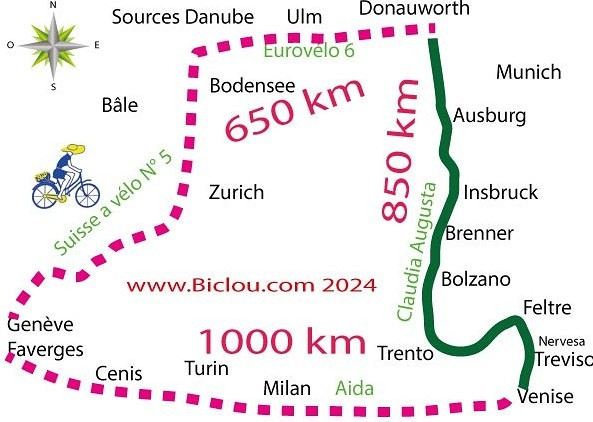
About 2,460 km with the Alps to cross, of course.
Faverges, Annecy, Geneva, Yverdon, Bienne, Bodensee, Danube sources, Ulm, Donauwörth, Augsburg, via Claudia Augusta, Innsbruck, Bolzano, Trento, Nervesa, Treviso, Mestre, Venice; Via AIDA (Alta Italia da attraversare / Padana) Padova, Vicenza, Verona, Brescia, Milan, Novara, Vercelli, Chivasso, Turin, Susa, Mont Cenis Pass, Maurienne, Albertville, Faverges. A fantasy of Glaude’s for n+1 years For 2025? The story is already formatted
To be seen
Hello,
We’d like to go on a 3- to 4-month bike trip starting in December, crossing from Assam (northeast India) to New Delhi via Nepal.
Are there routes with light traffic along the Brahmaputra and through Nepal?
We’re also looking for any info on accommodations, wild camping, local interactions, etc.
Thanks,
Michel
What’s the maximum weight of gear I can carry in my panniers:
- For a woman on an e-bike
- And for a man on a muscle-powered bike
Thanks
Hi
To attach this part [1]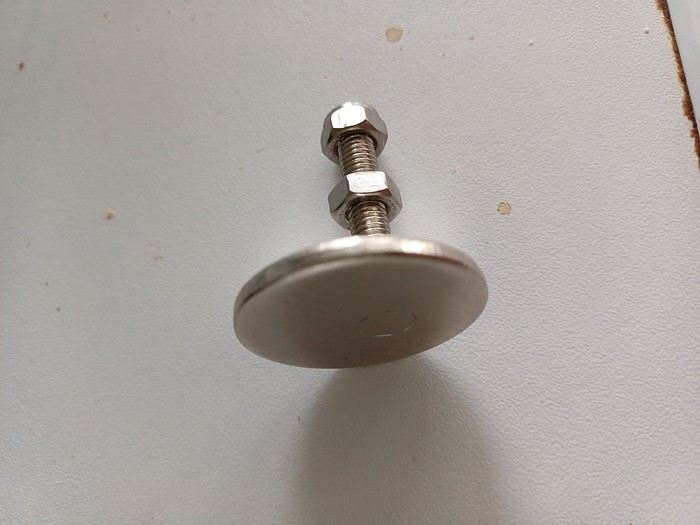 on the front fork with an oval cross-section, I need a clamp like this
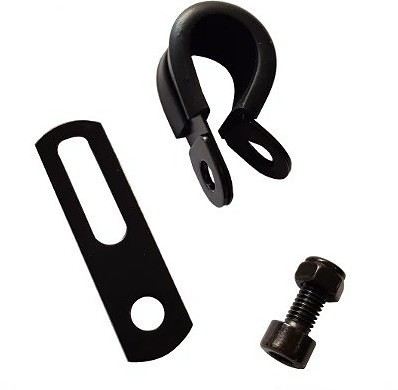 but with an oval shape, knowing that the fork’s larger diameter is 3 cm and the smaller diameter is 1.5 cm.
[1] It’s part of a magnetic locking clip. This keeps a folding bike in the folded position.
Thanks
To attach this part [1]
on the front fork with an oval cross-section, I need a clamp like this
but with an oval shape, knowing that the fork’s larger diameter is 3 cm and the smaller diameter is 1.5 cm.[1] It’s part of a magnetic locking clip. This keeps a folding bike in the folded position.
Thanks
Hi there,
I’m planning to build a new touring bike. I want to prioritize lightness. That said, I’m tempted by a suspension fork that could offer some comfort on rougher roads. The recent appearance of gravel suspension forks on the market might meet my needs—at least on paper. I’m particularly considering the RockShox Rudy Ultimate XPLR fork. Unlike MTB forks, its travel is short: either 30 mm or 40 mm. It weighs 1400 g, which is 400/500 g more than a steel fork.
Any thoughts or real-world feedback on this?
I’m also wondering about the durability of magnesium (lower leg) for long-distance bike touring. And what’s the impact of skipping the manufacturer-recommended maintenance every 50 and 200 hours? That’s bound to happen on a long trip unless you carry extra gear. More generally, how reliable are these kinds of forks?
Thanks in advance
I’m planning to build a new touring bike. I want to prioritize lightness. That said, I’m tempted by a suspension fork that could offer some comfort on rougher roads. The recent appearance of gravel suspension forks on the market might meet my needs—at least on paper. I’m particularly considering the RockShox Rudy Ultimate XPLR fork. Unlike MTB forks, its travel is short: either 30 mm or 40 mm. It weighs 1400 g, which is 400/500 g more than a steel fork.
Any thoughts or real-world feedback on this?
I’m also wondering about the durability of magnesium (lower leg) for long-distance bike touring. And what’s the impact of skipping the manufacturer-recommended maintenance every 50 and 200 hours? That’s bound to happen on a long trip unless you carry extra gear. More generally, how reliable are these kinds of forks?
Thanks in advance
hey everyone,
I’m landing in Madagascar with a buddy before the end of April 2026. We’re planning to bike around for about twenty days or so. We don’t have a specific goal other than exploring the country and meeting the locals.
Ideally, we’d prefer a loop route starting from Antananarivo with a good chunk of it along the coast. On the bike side, we’re used to riding 6 to 8 hours a day, depending on the needs, encounters, and mood 😉 Any feedback or tips from trips around this length?
Thanks in advance, Jérôme
I’m landing in Madagascar with a buddy before the end of April 2026. We’re planning to bike around for about twenty days or so. We don’t have a specific goal other than exploring the country and meeting the locals.
Ideally, we’d prefer a loop route starting from Antananarivo with a good chunk of it along the coast. On the bike side, we’re used to riding 6 to 8 hours a day, depending on the needs, encounters, and mood 😉 Any feedback or tips from trips around this length?
Thanks in advance, Jérôme
Hi there, we’re planning a Munich to Venice bike trip at the end of June 2026. Getting back from Venice to Toulouse by train with 4 bikes isn’t straightforward. What return options have others who’ve done this trip chosen? Any tips or great deals would be much appreciated. Thanks a bunch! !
Hi there,
We’re leaving from Montreal and planning to bike the Petit Train du Nord route.
Any ideas for loops so we don’t have to return the same way?
We’re thinking of a one-week trip.
Thanks in advance for your tips!
Rachel
I'm currently exploring how to create a travel itinerary using AI, specifically ChatGPT.
Question: Bike route from Bordeaux to Paris.
Rough response:
A bike route between Bordeaux and Paris is an incredible adventure, typically around 600 to 650 km depending on the chosen path. Here’s an example of an itinerary with key points:Main Option: La Scandibérique (EuroVelo 3) La Scandibérique is the French section of EuroVelo 3, connecting Bordeaux to Paris through stunning landscapes. This route is well-marked and takes you through small roads and greenways.Main Stages
Bordeaux → Libourne (about 40 km)
Follow the Garonne River, cross the vineyards of Entre-deux-Mers, and reach Libourne, a charming wine town. Greenways available.
Libourne → Périgueux (about 100 km)
Cross the Dordogne with stops in villages like Montpon-Ménestérol. Mix of quiet small roads and trails.
Périgueux → Châteauroux (about 160 km, in several stages)
Through the Parc Naturel Régional de la Brenne. This stage is longer but rich in nature and heritage.
Châteauroux → Orléans (about 110 km)
Reach the banks of the Loire to enjoy the famous Loire à Vélo, a beautiful section with châteaux.
Orléans → Paris (about 140 km)
Pass through the Forêt de Fontainebleau before joining the bike paths along the Seine all the way to Paris.
Question: Bike route from Bordeaux to Paris.
Rough response:
A bike route between Bordeaux and Paris is an incredible adventure, typically around 600 to 650 km depending on the chosen path. Here’s an example of an itinerary with key points:Main Option: La Scandibérique (EuroVelo 3) La Scandibérique is the French section of EuroVelo 3, connecting Bordeaux to Paris through stunning landscapes. This route is well-marked and takes you through small roads and greenways.Main Stages
Bordeaux → Libourne (about 40 km)
Follow the Garonne River, cross the vineyards of Entre-deux-Mers, and reach Libourne, a charming wine town. Greenways available.
Libourne → Périgueux (about 100 km)
Cross the Dordogne with stops in villages like Montpon-Ménestérol. Mix of quiet small roads and trails.
Périgueux → Châteauroux (about 160 km, in several stages)
Through the Parc Naturel Régional de la Brenne. This stage is longer but rich in nature and heritage.
Châteauroux → Orléans (about 110 km)
Reach the banks of the Loire to enjoy the famous Loire à Vélo, a beautiful section with châteaux.
Orléans → Paris (about 140 km)
Pass through the Forêt de Fontainebleau before joining the bike paths along the Seine all the way to Paris.
Hi,
what are the easiest ways to get back from Nordkapp without pedaling—
train, boat, or plane?
Has anyone already done this?
Thanks for sharing your tips!
Hello fellow cycling friends,
I’m heading out very soon for a few weeks in France and elsewhere on my trusty two-wheeled steel steed, with a total of me + luggage = around 120 kg gross weight, and I’ve never really tackled mountain passes before—something I’ll definitely be facing this time...
Currently, I’m running 700c wheels and a Deore XT 10-speed drivetrain (long-cage derailleur) with a 26/36/48 chainring setup and an 11-36 cassette. I’m considering two options (and possible modifications) to get a lower gear ratio (currently 0.72) and spin more easily on steep and mountainous climbs...
1 – Install an 11-42 cassette This would give me a gear ratio of 0.61. Would this be feasible with my current rear derailleur, please?
I have several new chains with 116 links—would these work for this cassette, which would have 6 more teeth on the largest cog, or would I need a longer chain?
2 – Swap the 26-tooth small chainring for a 24-tooth one This would give me a gear ratio of 0.66. Would this be feasible, please?
When switching to a 24T, will the gap be accepted by the 36-tooth middle chainring, and will shifting remain as smooth as it is now? Will this setup (24/36/48 + 11-36 cassette) still work well together, in your opinion?
Which of these two options do you think would be more feasible and preferable?
What drivetrain and gearing do you use on your bikes for loaded touring that sometimes involves climbing mountain passes and other steep ascents?
So many questions... Thanks for your answers and advice! Have a great day,
Spady
I’m heading out very soon for a few weeks in France and elsewhere on my trusty two-wheeled steel steed, with a total of me + luggage = around 120 kg gross weight, and I’ve never really tackled mountain passes before—something I’ll definitely be facing this time...
Currently, I’m running 700c wheels and a Deore XT 10-speed drivetrain (long-cage derailleur) with a 26/36/48 chainring setup and an 11-36 cassette. I’m considering two options (and possible modifications) to get a lower gear ratio (currently 0.72) and spin more easily on steep and mountainous climbs...
1 – Install an 11-42 cassette This would give me a gear ratio of 0.61. Would this be feasible with my current rear derailleur, please?
I have several new chains with 116 links—would these work for this cassette, which would have 6 more teeth on the largest cog, or would I need a longer chain?
2 – Swap the 26-tooth small chainring for a 24-tooth one This would give me a gear ratio of 0.66. Would this be feasible, please?
When switching to a 24T, will the gap be accepted by the 36-tooth middle chainring, and will shifting remain as smooth as it is now? Will this setup (24/36/48 + 11-36 cassette) still work well together, in your opinion?
Which of these two options do you think would be more feasible and preferable?
What drivetrain and gearing do you use on your bikes for loaded touring that sometimes involves climbing mountain passes and other steep ascents?
So many questions... Thanks for your answers and advice! Have a great day,
Spady
Hi there,
I’m planning to cycle from Morlaix to Brest (via Roscoff and the V45 coastal route). We’ll start riding on August 16th for 13 days (with stops for island visits, surfing, etc.). Is there a lot of traffic at this time of year? I’ve got two kids, 11 and 13, and we don’t like riding in the middle of cars (we’ve already done the Vélomaritime—Caen to Cherbourg—the Loire route from Orléans to Saumur, the Vélodyssée from Nantes to Royans, and the canals like the Nivernais and Bourgogne, where there were plenty of bike-only lanes, which isn’t the case on this route).
Thanks for your help if you’ve already done this route in late August! Virginie
I’m planning to cycle from Morlaix to Brest (via Roscoff and the V45 coastal route). We’ll start riding on August 16th for 13 days (with stops for island visits, surfing, etc.). Is there a lot of traffic at this time of year? I’ve got two kids, 11 and 13, and we don’t like riding in the middle of cars (we’ve already done the Vélomaritime—Caen to Cherbourg—the Loire route from Orléans to Saumur, the Vélodyssée from Nantes to Royans, and the canals like the Nivernais and Bourgogne, where there were plenty of bike-only lanes, which isn’t the case on this route).
Thanks for your help if you’ve already done this route in late August! Virginie
Hi there,
New to bike touring,
I’d love to start with a section of the Via Rhona to explore and share (route to be decided).
Looking forward to exchanging tips!
Hi there,
No recent discussion here on the topic (2025).
Anyone else interested?
Hi,
Like every summer, I’m looking for a (not too distant) destination to cycle with my family for about 3 weeks. I’m drawn to the EuroVelo 1 route in Portugal. Do any of you have information to share? Are there sections that are more or less difficult? Routes that are more or less safe? I’ve heard that Portuguese drivers aren’t very cautious on the road, especially around cyclists.
Thanks for your feedback and experiences!
Hi everyone,
After a break of a few years, I’m heading back to Madagascar this October. I’d like to travel from Diego to Maroantsetra via Cap Masoala as much as possible by bike—it’s my favorite way to travel. My questions: for the return trip to Diego once I’m in Maroantsetra, is there a possibility to take a flight, since the road option only starts much further south than Tamatave? Or where can I rent or buy a decent bike between Diego and Cap Masoala? For this bike trip, I’m open to any info—I love traveling rough. Someone might even want to join me on this adventure.
After that, I’d also like info on the northeast part (Mozambique Channel side) of Diego, which I’d like to explore by bike as well.
Thanks, and feel free to share any tips—just skip the paternalistic safety advice. Laurent
After that, I’d also like info on the northeast part (Mozambique Channel side) of Diego, which I’d like to explore by bike as well.
Thanks, and feel free to share any tips—just skip the paternalistic safety advice. Laurent
I'm developing a free and open-source web app for planning walking and cycling trips (and even car trips). You can create a route by clicking directly on the map to add waypoints, and it can consist of multiple stages. The app provides tools to edit the stages and the overall route, and to display useful information (distances, altitudes, and elevation changes). A relief profile can be shown as a graph for a specific stage or the entire route.
Once the route is ready, it can be exported as a GPX file, which can then be used with a GPS or a mobile navigation app.
The app is built in JavaScript and runs entirely in the web browser. It uses the Leaflet library and several OpenStreetMap-based services. Initially developed for my personal needs (I enjoy hiking and cycle touring), I’d be happy to share it with anyone who might find it useful. It’s free to use, doesn’t require an account, and the source code is available.
Source code: https://github.com/patricklmarie/GPX-Route-Planner Online demo: https://patricklmarie.github.io/GPX-Route-Planner/
Once the route is ready, it can be exported as a GPX file, which can then be used with a GPS or a mobile navigation app.
The app is built in JavaScript and runs entirely in the web browser. It uses the Leaflet library and several OpenStreetMap-based services. Initially developed for my personal needs (I enjoy hiking and cycle touring), I’d be happy to share it with anyone who might find it useful. It’s free to use, doesn’t require an account, and the source code is available.
Source code: https://github.com/patricklmarie/GPX-Route-Planner Online demo: https://patricklmarie.github.io/GPX-Route-Planner/
I’m planning a journey of about 2500 km starting from San Pedro de Atacama (duration: max. 2 months). This trip, almost entirely on remote trails, promises to be an extraordinary adventure.
Highlights of the trip - Crossing the Florido Desert (during the blooming season: October 15–30) - Hiking ascents of legendary volcanoes: - Ojos del Salado (6879 m) - Llullaillaco (6739 m) - Uturuncu (6008 m, with 5820 m reachable by mountain bike!) - A 300 km stage through the heart of the desert, with no resupply or habitation: the ultimate experience of solitude and self-transcendence.
Practical details - Daily distance: max. 100 km and 1000 m elevation gain per day - Average altitude: 4000 m (between 3500 and 5000 m) - Temperatures: ~15 °C during the day, down to -25 °C at night (in a tent) - Accommodation: ~50% in villages (with locals or small hostels), ~50% camping
Estimated budget - 1400 € for the flight ticket (including bike supplement) - 1000 € for on-the-ground expenses
Required equipment - Fatbike (essential for deep sand) - -25 °C comfort sleeping bag - Single-wheel trailer (indispensable for these tough terrains)
My experience In 2022, I completed a similar 1200 km trip north of San Pedro de Atacama: - Full crossing of the Salar de Uyuni (170 km) - Ascents of the Ollague (5868 m) and Aucanquilcha (6176 m) volcanoes - Two 200 km stages with no resupply or human presence Videos available for a glimpse of the adventure: - Atacama Crossing 2022 - Part 1 - Atacama Crossing 2022 - Part 2
Next steps If this adventure interests you, I suggest: 1. A first phone call to get to know each other 2. A meet-up over a drink or a test ride in the Bardenas Reales (similar terrain, and I live 100 km away)
Don’t hesitate to contact me for more info or to discuss the details!
Highlights of the trip - Crossing the Florido Desert (during the blooming season: October 15–30) - Hiking ascents of legendary volcanoes: - Ojos del Salado (6879 m) - Llullaillaco (6739 m) - Uturuncu (6008 m, with 5820 m reachable by mountain bike!) - A 300 km stage through the heart of the desert, with no resupply or habitation: the ultimate experience of solitude and self-transcendence.
Practical details - Daily distance: max. 100 km and 1000 m elevation gain per day - Average altitude: 4000 m (between 3500 and 5000 m) - Temperatures: ~15 °C during the day, down to -25 °C at night (in a tent) - Accommodation: ~50% in villages (with locals or small hostels), ~50% camping
Estimated budget - 1400 € for the flight ticket (including bike supplement) - 1000 € for on-the-ground expenses
Required equipment - Fatbike (essential for deep sand) - -25 °C comfort sleeping bag - Single-wheel trailer (indispensable for these tough terrains)
My experience In 2022, I completed a similar 1200 km trip north of San Pedro de Atacama: - Full crossing of the Salar de Uyuni (170 km) - Ascents of the Ollague (5868 m) and Aucanquilcha (6176 m) volcanoes - Two 200 km stages with no resupply or human presence Videos available for a glimpse of the adventure: - Atacama Crossing 2022 - Part 1 - Atacama Crossing 2022 - Part 2
Next steps If this adventure interests you, I suggest: 1. A first phone call to get to know each other 2. A meet-up over a drink or a test ride in the Bardenas Reales (similar terrain, and I live 100 km away)
Don’t hesitate to contact me for more info or to discuss the details!
Hi there,
I’m planning to cycle around Taiwan in 2026 and I’d love to know if it’s possible to do the whole island on bike paths, how many kilometers that would be, whether wild camping is easy, and so on…
I’ve gotten used to crossing Europe by bus to return by bike.
It was really convenient to take the bike without having to disassemble it.
But FlixBus no longer accepts bikes...
What alternatives do you know about?
Thanks.
I’d been watching this ultra-light travel movement or trend for a while.
So I gave it a try—goodbye to the 5 panniers and rear racks.
A 15L saddle bag for clothes and a stove cookset.
Two cages on the fork blades: 2x5L—mattress on one side, tent on the other.
A 5L frame bag for miscellaneous items: battery, camera, small bits and pieces.
And one on the handlebar for the sleeping bag.
I tested it this summer on a crossing from Valence to Perpignan via the Massif Central.
My conclusions: The obvious advantage is the reduced weight. In total, I had 12 kg on the bike, which makes climbing in the mountains much easier. Another benefit I hadn’t considered is the significantly lower wind resistance compared to a traditional setup—you really feel it when the wind’s against you. Of course, it’s not all perfect... For example, it’s impossible to carry a food stock. You buy just enough before each meal or go to a restaurant! You also have to accept a more spartan comfort level at stops.
In conclusion, I think for summer trips in regions where resupplying is easy, it’s an interesting option—especially if there’s significant elevation gain. On the other hand, it doesn’t allow for enough autonomy, so some trips are off the table.
I took the opportunity to replace my tent. Given the prices of lightweight gear, I went with Decathlon. For 150 €, I chose the MT900 tent/tarp (D4 model). https://www.decathlon.fr/p/tente-tarp-de-trekking-1-place-ultra-legere-et-ultra-compacte-mt900/343262/c193c382m8968612 Not the easiest to set up (at first) and it’s not freestanding. You can sit up inside, which isn’t common for this type of shelter. We’ll see how it holds up over time.
On the bike side, I swapped my Shimano 11/34 cassette for an 11/40. Even though Shimano doesn’t recommend it with a 105 derailleur and a 46/30 double chainring, it works really well. The only limit is avoiding the 46/40 gear ratio.
I tested it this summer on a crossing from Valence to Perpignan via the Massif Central.
My conclusions: The obvious advantage is the reduced weight. In total, I had 12 kg on the bike, which makes climbing in the mountains much easier. Another benefit I hadn’t considered is the significantly lower wind resistance compared to a traditional setup—you really feel it when the wind’s against you. Of course, it’s not all perfect... For example, it’s impossible to carry a food stock. You buy just enough before each meal or go to a restaurant! You also have to accept a more spartan comfort level at stops.
In conclusion, I think for summer trips in regions where resupplying is easy, it’s an interesting option—especially if there’s significant elevation gain. On the other hand, it doesn’t allow for enough autonomy, so some trips are off the table.
I took the opportunity to replace my tent. Given the prices of lightweight gear, I went with Decathlon. For 150 €, I chose the MT900 tent/tarp (D4 model). https://www.decathlon.fr/p/tente-tarp-de-trekking-1-place-ultra-legere-et-ultra-compacte-mt900/343262/c193c382m8968612 Not the easiest to set up (at first) and it’s not freestanding. You can sit up inside, which isn’t common for this type of shelter. We’ll see how it holds up over time.
On the bike side, I swapped my Shimano 11/34 cassette for an 11/40. Even though Shimano doesn’t recommend it with a 105 derailleur and a 46/30 double chainring, it works really well. The only limit is avoiding the 46/40 gear ratio.
Has anyone done the Atlantic cycling route crossing Norway (EuroVelo 1)?
Which direction is the hardest?
From NORTH to SOUTH or the other way around?
Hi there,
I’m planning to cycle the Vélodyssée from Hendaye to Saint-Brevin in July 2026. My issue: how do I get to Hendaye with my bike? FlixBus doesn’t take bikes, and SNCF is complicated. Any ideas? Has anyone got a solution to suggest? Thanks in advance! Cheers, Patrig
I’m planning to cycle the Vélodyssée from Hendaye to Saint-Brevin in July 2026. My issue: how do I get to Hendaye with my bike? FlixBus doesn’t take bikes, and SNCF is complicated. Any ideas? Has anyone got a solution to suggest? Thanks in advance! Cheers, Patrig
Hi there,
My friend and I are planning to bike down to Tierra del Fuego starting from Santiago, Chile, in early February. The big question is: "Is it possible to find decent and reasonably priced bikes in Santiago?" Are there local resale sites like Leboncoin, or any second-hand spots worth knowing about there? If anyone’s done this before, I’d love to hear your tips! ;)
Thanks! !
Good evening,
I’m planning a solo bike road trip along the EuroVelo 6, starting from Orléans all the way to Budapest, beginning May 1st, 2026!
Question: Have any of you used the Warmshowers site, and if so, I’d love to hear your thoughts on using this app—whether responses to hosting requests are generally satisfying, especially for the different countries I’ll be crossing!
Thanks in advance for your tips!
Philippe
Hi there,
I’m planning to ride the Dutch section of the EuroVelo 19, from Maastricht to Rotterdam.
Since it’s too complicated to bring my bike on the train, I’m looking to rent one locally.
I’d love any tips or bike rental shop recommendations—I’m struggling to find options even in Rotterdam.
The plan is to rent in Rotterdam, take the train to Maastricht with the bike, then cycle back to Rotterdam.
Thanks in advance for any advice or suggestions!
Nath
Hi there,
In 2022, I went to Japan where I planned to buy a bike (you need to know a trusted Japanese resident or similar, otherwise it's impossible, but you get a registration in return).
There are many websites selling second-hand bikes, accessories, and parts at all price points that you can find online.
I bought a suitable bike, the right size, for around 600 €, which allowed me to cover the 850 km I had planned.
For transport, you absolutely need a soft bike bag, because you must dismantle it to board any train or bus! And even to move it around the station!
For express trains in certain regions, you need to make a reservation for oversized luggage (check at the station), and in return, there will be a reserved space.
Keep in mind that Japanese people travel with little luggage since they rarely go away for more than a week. So, if you don’t end up with a crowd of tourists... (watch out on tourist routes in Tokyo and Hiroshima).
Avoid tourist areas during GOLDEN WEEK in April-May—trains and hotels are fully booked. Take the opportunity to escape to the countryside...
For hotel bookings, Booking and Agoda are safe options—you can confidently choose the cheapest ones.
In small towns, street life shuts down at sunset, so plan ahead for restaurants. Otherwise, there’s always the konbini!
For ferries, there’s no problem, but you may have to pay in some cases.
Otherwise, it’s all very pleasant: drivers are very respectful.
Bear in mind that driving is on the left side of the road.
I took a few trips around Tokyo and its suburbs without any issues, except for orientation. A GPS is essential because many people don’t speak much English or know exactly where they are in relation to your destination.
But luckily, there’s the KOBAN—a neighborhood police box where an officer has a big book of maps, and their mission is to help you find your way if you know the address, the neighborhood name, the subway station, or even the name of a bar (!)
Otherwise, I cycled on very small roads away from main routes, through small villages, and that’s where you really discover "deep" Japan.
Japan is a mix of landscapes, often wilder than what we’re used to in Europe, but also signs of an aging population, with rural exodus and many abandoned houses in the mountainous countryside of SHIKOKU or NOTO.
I explored or took rides from town to town, sometimes ahead of or behind my partner, who traveled by train or bus on her own.
I met few Japanese cyclists (with very basic bikes) or non-Japanese ones, except for cyclists on the SHIMANAMI route with amazing bikes.
No need for a heavy lock—you can find them there.
There are also shops for second-hand parts.
For safety, ideally, you should get a local SIM card. It’s good to know that in an emergency, your phone will work to call for help—dead zones are rare.
I brought the bike back to Europe as checked luggage in a properly sized box with no special formalities, for a transport cost of around 150 €. I got the box from an international bike shop in Tokyo after some searching and resizing it (with a knife and packing tape).