j aimerai partir en camping car en Norverge ou en Finlande pour photographier les aurores boreales .
La période la plus propice .? L état des routes? j ai des pneux neige + des chaines .
Mon camping car est équipé d un double plancher chauffé
j aimerai avoir des conseils car je ne connais pas le climat l hiver.et +
Cela reste un projet ou réve
Merci
Bie, Cordialement
EDITOR’S NOTE: As with every travel journal I publish, I won’t force anyone to agree with my comments—they’re my own, I share my feelings, and that’s it. Your comments are, of course, welcome, but I’ll refrain from responding to any hint of controversy, as has happened in the past.
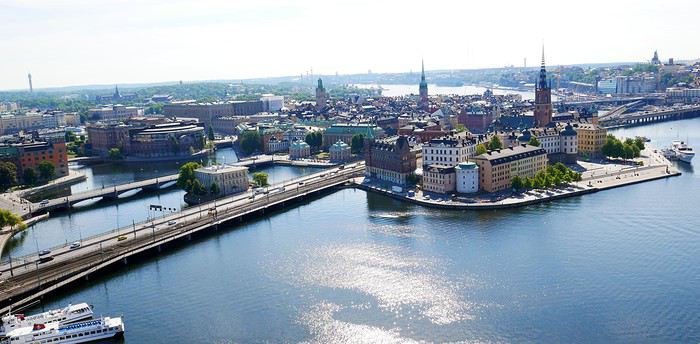
For the summer holidays of 2018, we decided to take a break from long-haul, transcontinental trips. They’re expensive and exhausting, and this year, we also had to consider our young student’s limited vacation days. So, it was a short 14-day circuit in Scandinavia. Very quickly, I had to abandon the unrealistic idea of driving door-to-door with our personal car (unlike last year—see my "Balkan Stroll" story). Too many kilometers and stops. Still, crossing Poland, Lithuania, Estonia, and Latvia before taking a ferry from Tallinn to Helsinki and Finland was tempting—what a shame.
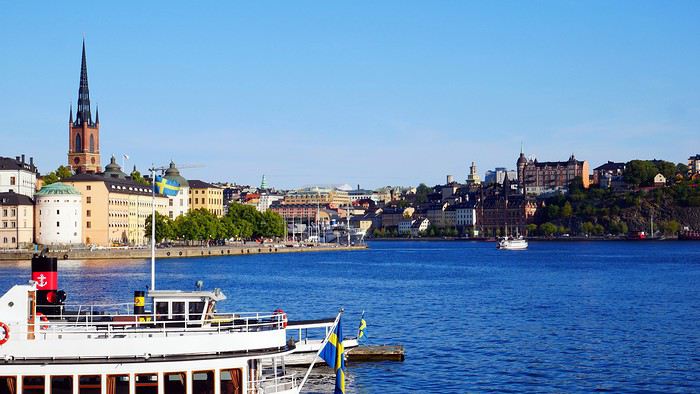
As usual, I planned ahead and started booking in early February for a mid-July departure, typically the best time weather-wise for this destination. Browsing tour operator catalogs didn’t offer much insight—just the usual circuits. Most aim for the North Cape, but we didn’t have time for that. First, via Expedia, we booked our flight tickets: Paris to Stockholm, Helsinki to Paris for the return (880 euros for three), plus a domestic flight from Oulu to Helsinki in Finland (220 euros). The unanimous advice was that there’s not much to see between the two cities, so this saved us a night’s accommodation and a day of car rental. However, the "drop-off" fees (not returning the car to the country of origin) were unavoidable. Out of 1,100 euros for 12 days of rental, this fee was significant—I say this from memory because I never received a detailed document or even the contract itself after picking up the car, despite my complaints. That said, Holiday Autos offered the best rates at the time with Hertz. Plus, I think we were unknowingly upgraded to a Volvo XC 40 T5 automatic, packed with electronics and an incredibly efficient GPS (so I lugged around my updated TomTom for nothing). I wasn’t used to it, and I’ll come back to that. For 50 euros, I also booked one of the many mandatory ferry crossings in Norway—unless you want to drive kilometers around the countless fjords. Specifically, the Bognes-Lødingen route to reach the Lofoten Islands, a must-see in Norway (though not necessarily the best choice I made—I’ll come back to that). Then, gradually via Booking.com, I reserved hotel accommodations, which wasn’t easy at reasonable prices. For three people, it’s nearly impossible to find a room with three real beds—often a sofa bed or even two separate rooms!!!! Norway isn’t a budget-friendly destination for us, yet French tourists are everywhere—groups or families traveling independently. Okay, you’re probably wondering when I’ll get started—I’m getting there... First up, Stockholm, a two-hour flight from Paris. A first for us: we’d gotten used to online check-in within 30 hours of the flight and sometimes printing our boarding passes. But, as progress never stops, at Roissy, we now also print our baggage tags at a kiosk, then place them on the conveyor belt ourselves, scan the barcode with the handheld scanner, and watch the luggage disappear—hoping it doesn’t get misrouted. With all this reduced staff, I hope ticket prices will drop. What? Huh? I’m naive... Okay, fine! Plus, during the flight, don’t expect any snacks—everything’s paid for now, except for water and coffee. I didn’t think I was on a low-cost flight!!! Picking up the car at Arlanda Airport went smoothly, except the contract signed on a tablet (progress, right?) was never emailed to me as promised—too bad... The Volvo SUV packed with electronics: as usual, aside from adjusting the mirrors and seat, I didn’t bother learning all the features and accessories for better handling. So, from the start, I felt jerky movements in the steering, independent of my control. The white-line detection was activated and corrected my direction whenever I got too close... And that’s not all—there’s also driving assistance. Besides the speed limiter, the car accelerates or brakes on its own based on the distance from the vehicle ahead. You still have to keep your hands on the wheel, though—too bad, we could’ve played cards and let it drive itself. When you slow down, if you signal to overtake and turn the wheel, it accelerates to pass. Soon, we won’t even need a driver’s license... Not to mention the little light in the side mirror to signal vehicles in the "blind spot"—very useful. But given the excessively strict speed limits in these parts, it’s still handy. I’ll unfortunately come back to this later!!!!!! In the end, we covered 4,700 km in 8 days of actual travel—no small feat!!!!!! Stockholm: still loyal to the hop-on-hop-off sightseeing buses (or the reverse), I booked our tickets online with a discount. It remains (for us) one of the best ways to visit and get around big cities. The tourist attractions aren’t that numerous. Forty kilometers from the airport, we reached our hotel, Clarion Amaranten. At reception, we were told our reservation was for four days, not two. I insisted, and they told me to call Booking.com to fix it—they couldn’t do anything themselves. Luckily, a nice blonde understood the situation and asked where we were from to lighten the mood. For me, it worked... After a few minutes of back-and-forth, we realized a namesake had booked at the same time. I think the intern got mixed up—oh well. We finally dropped off our bags and headed out under the sun for the included boat tour. It’s beautiful and relaxing under 26°C. We glided past massive cruise ships, very common in these Nordic countries, especially for fjord tours.
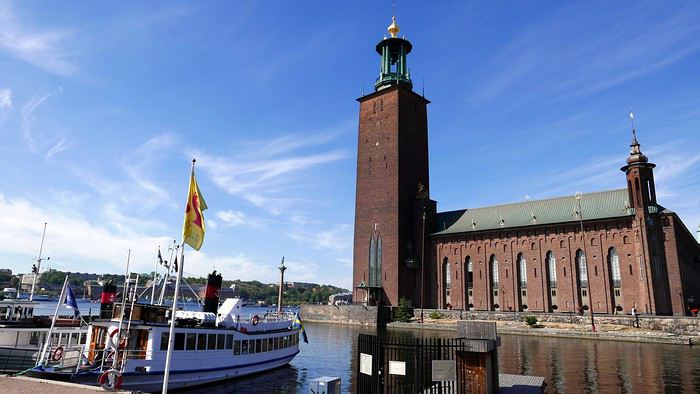
We passed Djurgården, one of the city’s 14 islands, home to the Tivoli amusement park and several museums, including the ABBA Museum and the Vasa Museum. I’m not talking about the crispy sandwiches sold since 1919 but the infamous warship that sank in the harbor on its maiden voyage in 1628 after sailing just a few hundred meters. Its intact hull was salvaged in 1961, and since then, it’s one of Sweden’s most visited museums. The country is a quarter smaller than France and has 10 million inhabitants, mostly in the three big cities (Stockholm, Gothenburg, Malmö). The rest is empty, filled with lakes and forests. The currency is the krona, with 1 euro worth about 10 SEK. Dinner in the Old Town consisted of a so-called Viking burger (more like a kebab) and meatballs—the famous Swedish meatballs with potatoes, just like at IKEA... I have to say, here, it seems the Vikings have long been just blond heads—I get it... It still cost us 550 SEK. A beer alone costs at least 9 euros!!!!
DAY 2. Sunny skies. After a hearty buffet breakfast with salmon, herring in all forms, eggs, cold cuts, bread, and pastries (don’t worry, the classics are there), we started the day by visiting the City Hall tower, famous for hosting the Nobel Prizes (except the Peace Prize, awarded in Oslo). At 106 meters tall, with 365 steps and 9 clocks, it weighs twice as much as the Eiffel Tower. Access is at fixed times in small groups for safety. You can climb up to 73 meters for a 360° view of the city. Next, we visited the Royal Palace, still the official residence of the King of Sweden, and its Treasury (entry: 160 SEK). We skipped the 12:15 PM changing of the guard—three-quarters of an hour before, dozens of onlookers were already crowding the front rows in the sun.
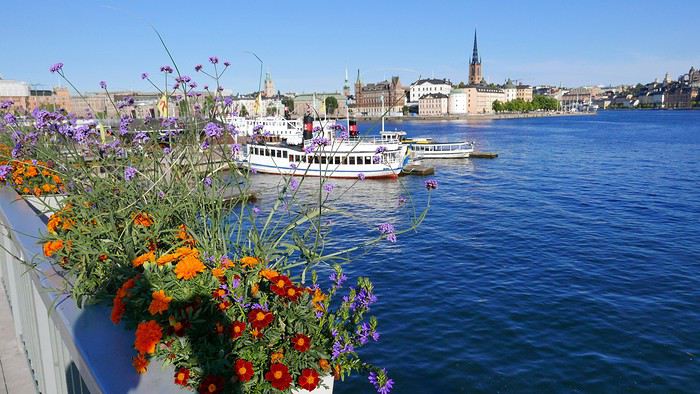
So, we took our favorite bus to rest a bit and tour the city. We also took the subway to see several "decorated" stations—love it or hate it, but it’s original. In the late afternoon, we returned to the Old Town and its Gamla Stan to find some souvenirs, even if it feels more like Bollywood than Viking country, complete with music in the shops—a nice sign of integration... One of the first things that surprised us was the very light car traffic—no traffic jams in this capital. But there are tons of electric and regular bikes, skateboards, and scooters. Also, lots of roadwork and housing construction—apparently a big need. For dinner (our only meal of the day), we treated ourselves to something local at Borgmästaren (Stora Nygatan 35). DECIDEDLY, I’M TELLING YOU EVERYTHING...
DAYS 3 & 4. Contrary to what I was told upon arrival, the hotel parking (700 SEK for 2 nights) didn’t open at 7:00 AM but at 9:00 AM on Saturday. After having to call myself (the French-speaking African receptionist couldn’t do it for me, especially after I told him I thought Croatia would win against France in the World Cup final), the kind parking attendant (partnered with the hotel—there’s the catch) arrived early and let us leave at 8:30 AM to start our east-to-west route to Norway and Oslo, 530 km away, finally beginning our summer adventure. At the border, absolutely no checks, and on the road, aside from lakes and forests, not much to see. However, tolls are very common—don’t overlook this in your budget. In Sweden, everything’s covered by the rental company, but not in other countries. In Norway, there are many automatic toll sections—cameras film your license plate and send you the bill later. So, you must register online at www.epcplc.com/rental, with or without your credit card details, and wait for the final bill. As of now, I haven’t received it, but after noting almost all of them, it should easily reach 200 euros. Roads, tunnels, and bridges are often toll-based to fund maintenance or new constructions. We reached the Norwegian capital at 3:00 PM and checked into our room. Small hiccup: the hotel parking, not reservable, was full on Saturday. Parking meters only take coins for a max of 2 hours. Luckily, tomorrow’s Sunday—free parking from 8:00 PM until Monday morning. After circling the neighborhood, I finally found a spot for my little car—even if it’s not mine, I still care about it...
The Thon Slottsparken Hotel is slightly off-center, but a little walking won’t hurt. The nearby Hertz agency was closed—too bad, I would’ve liked to complain about still not receiving my rental contract by email... With the nice weather, we started with a walking tour of the main sights: the palace, Karl Johans gate (the main street), and some souvenir shopping to fill the display cases back home—if there’s space. We also visited the deserted Akershus Fortress, where two poor young soldiers stood guard in the scorching sun. Below it, the World Cup final fan zone was being set up. Dinner was at Rorbua for 90 euros—ouch. Hard to find, tucked away from the harbor pier. We skipped the paid ascent of the city’s only "tower" with a panoramic view—tickets had to be paid by credit card, and given the fees my bank charges, I’d had enough. Note that card payments are widely accepted here, even for small amounts. When I tried to get change in cash for a 50-euro equivalent bill, some café owners were embarrassed.
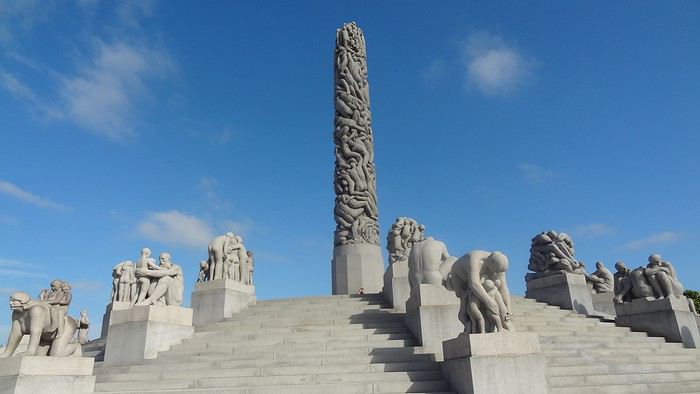
DAY 4. After discussion, we planned the day: first up, one of Oslo’s must-sees, the Vigeland Sculpture Park, featuring bronze, granite, and cast-iron works by Gustav Vigeland (1869–1943). Given the distance, we took the tram—some cars still had their old-school charm!!!! Despite the early hour, hordes of Asian tourists were already there, making photo-taking a nightmare—same everywhere they go. The park is a matter of taste... The 17-meter monolith with 121 intertwined bodies is remarkable, and rightly so. Lazy, we took the tram again to save time—same name, tight schedule. I stopped by the Hertz agency, where the overwhelmed employee promised to try to help. Given his enthusiasm, I doubted it. From the start, I’ve really felt the welcome here, at least for French visitors, isn’t great. Remember my previous reports—it’s becoming a habit. Tourist brochures aren’t available in French here either—strange... Anyway, we took a relaxing fjord cruise. Besides the quirky opera house, the beautiful summer homes on the islands were really tempting. Next, with another paid boat, we headed to the Bygdøy peninsula and its museums. We skipped the Viking Ship Museum in favor of the Norwegian Folk Museum. It features different buildings from across the country, by era and region. Unfortunately, few actors in period costumes—common in this type of tourist attraction. Its real highlight is the stave church, very beautiful. On this late Sunday afternoon, bars and restaurants competed to become World Cup 2018 fan zones—crowds everywhere. So, we decided to head back to rest and catch a glimpse of the African French team against Croatia. It’ll go down in history: a 4-2 victory, with a beautiful goal by Lloris... Go "Les Bleus"—I get it...
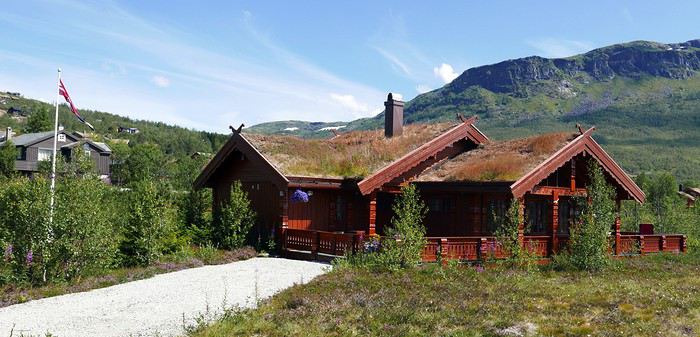
DAY 5. Oslo to Bergen: 450 km, but with detours, it was nearly 550. The real journey begins. Departure at 7:00 AM after sleeping in and a mediocre breakfast. Arrival at 5:00 PM—yes, driving’s slow... More tolls, but under 26°C, the real beauty starts around Geilo. First real fjord—it’s stunning. Then those houses with vegetated roofs blending perfectly into the landscape, sometimes nearly invisible... (Not bad, right? And it’s all me!!!)
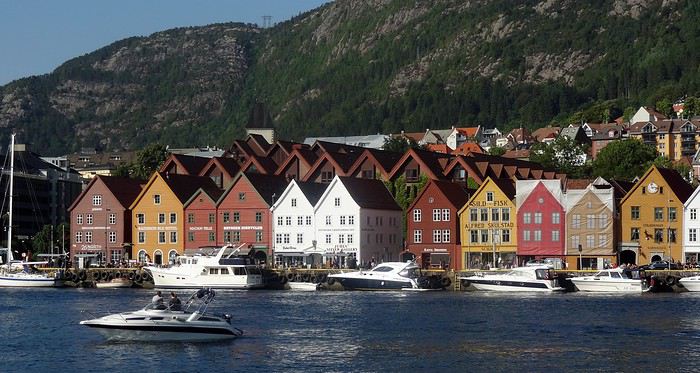
We also discovered tunnels with "indoor roundabouts" and underground roads crossing—never seen that before!! We followed the shores of Lake Tyrifjord and the Hallingdal valleys. After Geilo, views of the Hardangerjøkulen glacier (achoo!) and the Vøringfossen waterfall (Norway’s highest at 163 meters) and Steinsdalsfossen in the Hardangerfjord (the country’s second-longest). Bergen, Norway’s second city, is built between seven mountains. Aside from the colorful old docks along the wharf, there’s not much to see. At the market, stalls of fresh fish, jars of various fish eggs (all called "caviar" here), and cold cuts made from reindeer, moose, and whale.
For 10 euros per person, we queued for the steep funicular for a great view of the city. Dinner was at "Fish Me," very busy. The salmon looked appetizing, and my first whale steak for 27 euros was... interesting. Our hotel, Augustin, is near the center. They charged me 150 NOK to park in the nearby public lot...
DAY 6. Bøverdalen, our evening stop, was less than 300 km away, but along the way, we had our first two scenic routes and first ferry crossing. When I got back in the car, I noticed the seagulls—rightful tenants of the harbor—had turned it into a Picasso painting overnight... First stop in Voss to peek inside its Vangskyrkja church (for a fee). The mural icons all have a marked squint, making the angels on the ceiling smile—quite the original touch. In 1277, it shocked people.
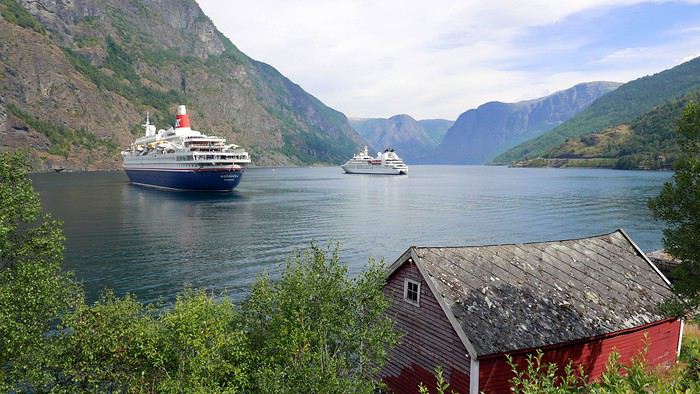
Gudvangen at the end of the Nærøyfjord offers beautiful views and a waterfall. An 11 km tunnel took us to Aurland and the Sognefjord, the king of fjords at 180 km long. Then we took Route 243 to Lærdal instead of a second long tunnel. A 47 km very narrow road with no passing except in designated spots. Buses, RVs, and trailers were in the mix—between backing up and moving forward, how do you expect me to... pass? At some spots, I had to "burn some oil" (non-edible). The beautiful viewpoints along Jotunheimen Park and its high peaks were hard-earned.
By midday, the 26°C of previous days gave way to 11°C with downpours and gusts. To reach Kaupanger, its stave church, and Route 55 (108 km), we took the Fodnes-Mannheller ferry for 119 kr (about 13 euros) for a 20-minute crossing. For these short trips, rotations are frequent, and wait times are short. The Sognefjellet route took us along lakes and snow-capped peaks—too bad the weather wasn’t cooperating. In Bøverdalen, in the middle of nowhere, we reached the Elveseter Hotel, the only one in the area, and it was packed. Luckily, it’s big. Recent reviews had us a bit worried, but personally, all the well-maintained wooden buildings gave the place charm. Our two small, simple rooms had character, and the common areas’ decor was interesting—a pile of antiques... Unless you dine on-site (reservations required for one of two sittings), the only option is to drive 20 km to Lom to see its beautiful stave church—but we didn’t go in (7 euros per person, and that’s enough). Dinner was three pizzas for 70 euros—yes, it’s expensive here.
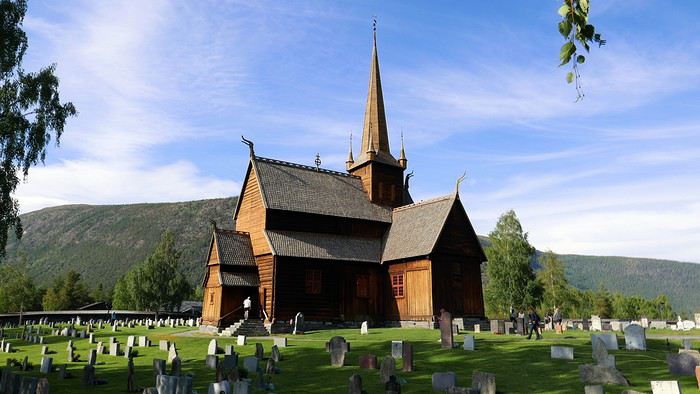
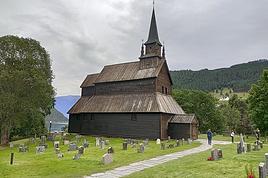
Note that in most establishments, bars, or restaurants, you have to order and pay at the counter yourself. A *stavkirke* or *stavkyrkje* (in Norwegian Bokmål and Nynorsk) is a medieval wooden church typical of Norway, though excavations suggest similar churches may have existed elsewhere in Northern Europe. About 1,300 medieval churches were recorded, with 28 preserved in Norway. In French, they’re called "églises en bois debout" (standing wood churches) because masts or posts support the roof and nave elevation, as well as the walls. The stave church is one of the most elaborate and technically advanced types of wooden construction in Northwestern Europe during the Middle Ages. This technique is represented by the Urnes Stave Church (a UNESCO World Heritage Site), Borgund (the best-preserved in its medieval form), and 25 others—from the largest, Heddal, to the smallest, Undredal, in the stunning Sognefjord, plus a few others in Northwestern Europe.
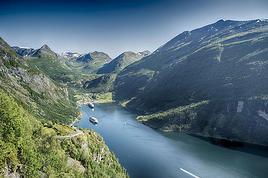
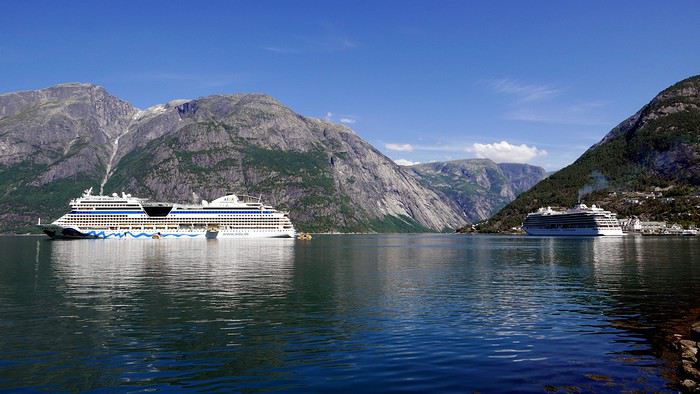
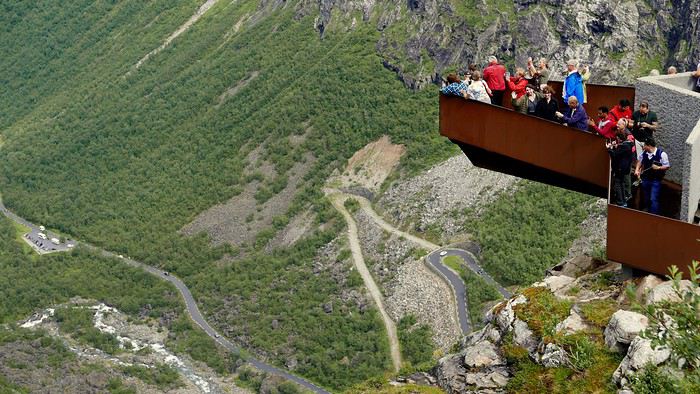
DAY 7. Heading to Trondheim—supposedly 320 km, but with detours, it was nearly 550. Unpredictable weather until about 1:00 PM, but it’s better because it’s the day of the "triples": 3 scenic routes, 3 ferries, and 3 "underwater" tunnels. No rush—here, there’s no need to "hurry to arrive before night" because as you head north, the sun lingers and sets less and less, eventually not setting at all. First, in Grotli, we took the 27 km of Route 258, *Gamle Strynefjellsvegen* (achoo), also very narrow and unpaved in the first section. Luckily, campers and RVs aren’t early risers—otherwise, I’d have had to make not just oil but olives this time. We only passed four other users. However, despite the early hour, local road workers were already on the job, and we had to ask the excavators to move several times to let us pass. At Langvatnet, we joined Route 63, called the Eagle Road here—mediocre, except for Geiranger at the end of the narrowest fjord in the country. A cruise ship had just unloaded its passengers, who rushed into the few shops. After the Eidsdal-Linge ferry (10 minutes) and Gudbrandsjuvet with its waterfalls, we tackled the famous Trollstigen (Troll’s Path), winding and very touristy. Coming from the south, we descended it. Mandatory photo stop at the tourist center and its impressive walkway. The descent into the valley was tough—the bus driver ahead of us must’ve been disabled, blind, and quadriplegic, taking two tries at every hairpin turn, causing a traffic jam behind and for those "going up" waiting at passing spots!!!
On Route 64, we took the Åfarnes-Solnes ferry instead of the initially planned 660 because my young passenger insisted on part of the "Atlantic Road." From what we’d read on blogs, only the last 11 km are spectacular, with arched bridges connecting islets. So, in Molde, we headed to Eide, then Vevang—beautiful but nothing more. The rain spoiled the scenery. Quick photo stop in Kristiansund, then a long underwater tunnel and the Kanestraum-Halsa ferry (7 km, 20 minutes) to reach the E39 toward Trondheim.
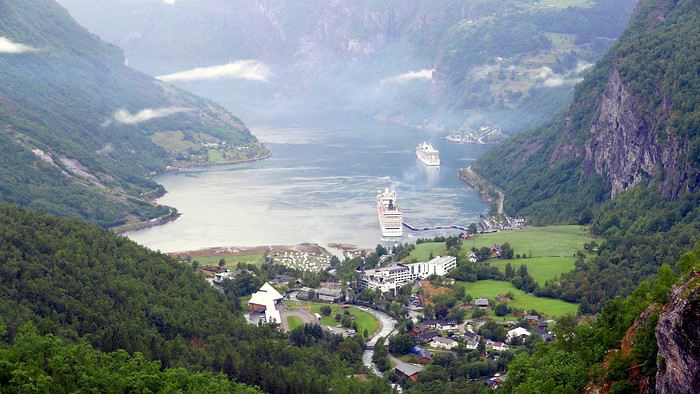
We all agreed that all these wooden houses and churches reminded us of the U.S. in their architecture—especially since, like there, a flagpole with the national flag often stands in front of homes. Trondheim, Norway’s third city, doesn’t have much to see. A university town in the country’s center, aside from its Nidaros Cathedral (closed when we arrived late), its wooden bridge, and colorful old docks on pilings—nothing else. Even finding food was complicated. As for accommodation, Booking.com had forgotten to mention that the Nidaros Pilgrimsgard is a "pilgrim hostel" on the Camino de Santiago. Monastic atmosphere and spartan rooms for reflection—same for the frugal breakfast in silence... Anyway... Luckily, the night before, in a kitschy place run by hip youngsters, I’d stocked up on a hearty assortment of marinated herring with aquavit that burned the rest of my esophagus. (BAKLANDET SKYDSSTATION) I’m really doing all the work for you...
DAY 8. Heading to Mo i Rana—633 km actually covered instead of the planned 480 through Nord-Trøndelag!!! After Steinkjer and its fjord, we decided to take Route 763, parallel to the E6, for less traffic and to see pretty mountain villages. We also stopped in Bola to see a petroglyph (Stone Age rock carving) of a reindeer. After Medja, we skipped Kjerringfoss and Europe’s largest salmon ladder (paid access). Instead, via the Holm-Vennesund ferry, we took a bit of the scenic Route 17 before reaching Mosjøen and Mo i Rana (too many ferries if you do the whole route). Along the way, we saw reindeer and moose relaxing on the road several times. Mo i Rana is small. The Ole Tobias Hotel was packed, and parking was complicated. For dinner, we crossed the street to "No. 3," the only option. Two spicy bacalao and a whale steak cost us 90 euros... At this rate, I had to find an ATM to finish the Norwegian stay properly. The 2,000 euros exchanged before leaving (at 9.28) were already partially gone. Cigarettes cost 13 euros a pack here—twice as much as in Sweden—while unleaded gas is 1.85 euros per liter.
DAY 9. Heading to the main event of the trip: the Lofoten Islands. First programming mistake: not studying the subject well, I preferred a shorter ferry crossing from further north on the mainland. But that also meant arriving further north on the islands.
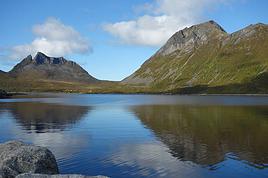
I booked for 50 euros (vehicle, driver, and two passengers included on the official Torghatten Nord site) for Bognes-Lødingen—a one-hour crossing. I should’ve left from Bodø to Leknes or better yet Moskenes and the town of Å for three hours—it would’ve saved time by avoiding the drive north and crossing to the south before heading back up the islands. Luckily, we still managed two different routes. Fortunately, the great weather returned, and I have to say, IT’S REALLY, REALLY, REALLY... BEAUTIFUL... Memory cards are melting—not just from the heat.
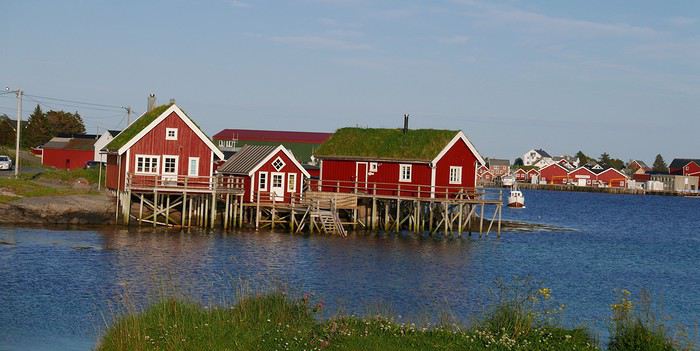
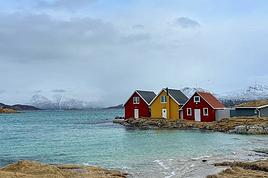
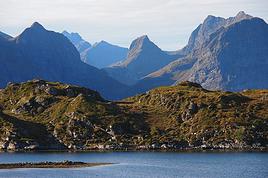
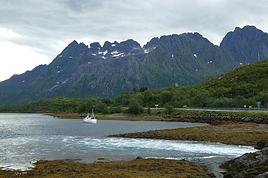
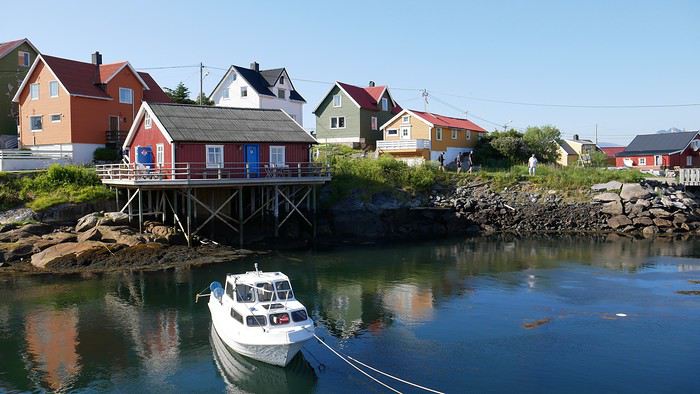
Two things worked in our favor, if I may say so, and countered my little blunder: first, I’d booked the 2:30 PM ferry, but arriving at the departure at noon, we easily took the earlier one—two hours saved. With the longer crossings, rotations with only two boats are much less frequent (8 to 12 per day depending on the season, vs. 6 to 8 for the southern route). Second, after Mo i Rana, we crossed the Arctic Circle, and today, the sun only "sets" from 12:20 AM to 1:50 AM. What luck! With a 7:40 AM departure (after sleeping in), I could drive until 11:00 PM easy!!!!!! And cover only 740 km!!!!!! Here, winters don’t drop below zero, but from early November to late January, it’s night almost all the time, with a supposed daylight clarity from 10:00 AM to 2:00 PM like a rainy day back home. But apparently, the northern lights and reflections on the snow also provide light!! I’d love to see that, but I’ll have to come back... We crisscrossed everything humanly possible, sometimes stopping abruptly in the middle of the road for photos—much to the locals’ dismay, but they’re used to the madness of temporary invaders enchanted by the place... These steep mountains "falling" into the water with all those colorful "rorbu" villages are magnificent. Rorbu are traditional fishermen’s cabins on stilts by the water, which over time have become the must-stay accommodation here—many have never housed any fishermen!!! The villages follow one after another, each more beautiful than the last. In Nusfjord, in season, pedestrians are even charged an access fee between 10:00 AM and 6:00 PM. At 7:00 PM, the booth was closed—lucky us, no crowd. The ochre wooden facades are beautiful, but don’t get too close—the seagulls nest there and see any approach as aggression. The result? Bomb-like droppings that can leave unpleasant memories. Go peek inside the grocery store—it’s kept its old-world charm. With the season, the many cod drying racks are empty. The hour turned, and our southward journey stopped in Reine—too bad for Å, not far, but fatigue got the better of me. We had to "go back up" to Kabelvåg for our rorbu at Nyvågar. We’d stocked up on groceries to eat quietly in this cozy little place (very small single beds upstairs).
DAY 10. We headed back north on the islands to reach Tromsø (grandiosely nicknamed the "Paris of the North"), with a late 7:50 AM departure despite 450 km to cover—things are getting lax at the end of the trip!!! However, this stop didn’t reveal much of interest—it’s the lake region, but meh. Tour operators include it as the last stop toward the far north. Aside from the Målselvfossen waterfall and its (paid) salmon ladder, nothing to report. We arrived at 3:00 PM, and the second room in our Quality Saga Hotel wasn’t ready yet. Plus, the parking we’d requested wasn’t accessible—the eight spots were taken. Even in this small town, free and easy parking is rare. Two souvenir shops and a main street (Storgata)—that’s it. Not to mention a nice storm that cooled things down. The only curiosity is the church, but it’s closed and under renovation—the exterior scaffolding ruins the only photo opportunity here. Otherwise, the Arctic Cathedral is visible from afar—that’s enough for us. The sun only sets for 20 minutes, from 12:40 AM to 1:00 AM!!!!! Last note before leaving this country: every morning at the breakfast buffet with all those eggs, I asked for a Norwegian omelet. Believe it or not, they don’t know the recipe for a Norwegian omelet!!!! 😏😛😉
DAY 11. Heading to Finland (with an extra hour time difference) and Rovaniemi, self-proclaimed official Santa Claus Village—it’s not nice to play on kids’ heartstrings for money!!!! On the 400 km of road (that or avoiding the Lofoten), nothing to see except two sad "Sami" shops. But there’s also AND ESPECIALLY: The run-in with a police radar mounted on the dashboard to welcome me to this country: alone, on a straight, flat road in the middle of the forest, I had this privilege—especially at a spot limited to 80 km/h instead of 100 as I thought. Of course, most well-meaning readers will think: serves him right... Only here’s the thing: in Finland, for years, speeding fines depend on the "Päiväsakko," meaning based on your income and number of children, a subtle calculation of average daily money is made and multiplied proportionally to the estimated severity of the offense... Ignorant of this, I naively but honestly answered the questions. The result? The fine was enormous—I won’t say the amount out of shame, but especially out of hatred for this country that ruined my vacation. Others like me, potential murderers, have been fined up to 170,000 euros (I wrote ONE HUNDRED SEVENTY THOUSAND EUROS) for a 40 km/h speeding offense!!!! I hope the clowns running France quickly adopt this particularly SOCIAL measure. Let the lazy and parasites of the country freely enjoy the road in their BMWs and MERCs!!! Let me tell you, I’ll spend my savings elsewhere in the future. So, a tip: be as dishonest as these conscientious police—say you’re unemployed with five kids, and maybe they’ll give you money!!!!! I’m really disgusted. No wonder in this nothing-to-see town, drivers sheepishly drive in a "little train" at 40 behind an RV without anyone daring to overtake. I think sometimes human stupidity should have limits, and the word freedom should regain its meaning!!! To those who understand, cheers. And as written at the start: trolls, abstain. I stand by what I said and sign it. After this brutal introduction to Finnish discriminatory laws, you can imagine Rovaniemi and its two-bit Santa Claus—I couldn’t care less. Even under the storm, at 6:00 PM on Sunday, even in summer, the scammer shops and profiteers of the Santa Claus Village (conveniently located on the Arctic Circle...) were already closed. Good riddance!!! The Arctic City Hotel is fine. I struggled to swallow my Tex-Mex at Pancho Villa (local chain).
DAY 12. Toward Oulu via Tornio, 200 km, and again, nothing to see in this land of lakes and forests. Detour and only photo stop in Tervola for a wooden church—my vacation is officially ruined... The Cumulus City Hotel is fine in this pleasant but empty and dull city, though it’s a university and tech hub. To cheer myself up, we splurged on a supposedly Viking meal at Harald—don’t know if the recipes are authentic, but my "Viking" knowledge stops at Vik, the animated boobs... Anyway, it’s good, unusual, and hearty.
DAY 13. After struggling to fill the tank (no station open with cash payment, only cards), we returned the chariot at the airport. The offices weren’t open yet at this early hour (8:35 AM flight), so I left the key in a mailbox without any inspection—I didn’t like that at all. I thought we’d get a propeller plane, but it was a well-filled Airbus. One-hour flight to Helsinki, the capital. Impossible to get clear information on buses to the city center, 40 km away. So, for 37 euros, we took a taxi with a trunk big enough for our three suitcases and three "cabin" bags. I’m not counting the cost anymore. At 10:00 AM, we could finally check into our large triple room at the Cumulus City Hotel on Hakaniemi Square—again, despite the size, with a fold-out armchair bed. Off to visit our last city, with the obvious purchase—you guessed it—a 24-hour bus ticket with a 1.5-hour mini-cruise for 43 euros per person...
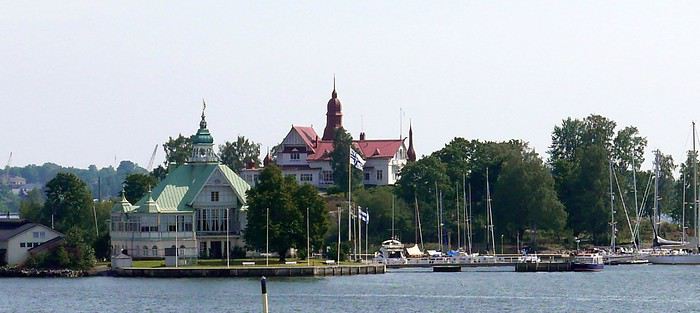
The boat tour showed that the standard of living seems high here too—summer homes (or not) on the islands are very beautiful. A small canal was even dug to save these lucky owners time on maritime transport. Apartments sell for a fortune. Back at Market Square, we grabbed a snack at the market—a reindeer kebab with dried reindeer, cheese, and a mini cracker—simple but delicious. No time to waste—ours is limited. Even if there’s not much to see tourist-wise. Four churches compete: the very busy and beautiful Helsinki Cathedral (better outside than in), its direct rival the Orthodox Uspenski Cathedral (same), the Rock Church (Temppeliaukio) and the Wooden Church (Kampin)—both as beautiful inside as out!!! Here too, very little car traffic, but tons of people—tourists or not—and joggers. In the evening, a bit tired, we headed to the off-center hotel to try the Scandinavian Hesburger chain. For connoisseurs and 29 euros, decent fries and burgers resembling Burger King’s—while the other American giant is left behind. Personal taste, I guess. The next day, we took the bus tour again, passing the Parliament and the controversial Sibelius Monument—a 24-ton pile of clanging iron pipes. Then, to kill time, we headed to Linnanmäki amusement park, on a hill overlooking the city. Rides are packed together, and a new one appears every year. Mostly family-oriented, but two or three thrill rides were packed. Despite my advancing age, I gave it a try—obviously regretted it afterward... Europe’s oldest wooden roller coaster (1950) shows the genius of its creators, with a brakeman at the back—worth the detour and passes the time. We ate (if you can call it that) on-site for 19 euros. Back "in town," classic shopping centers are numerous, but souvenir shops can be counted on one hand. No matter—we had to pack because tomorrow’s the return. We ate burgers again near the hotel and Hes... but served at the table for 67 euros. The next morning, to kill time before the 4:00 PM flight, we went to the port and its tourist market, where I splurged 15 euros on a cap to add to (or clutter) my already well-stocked collection. We finally learned that bus 615 goes to the airport, with a stop in front of our hotel where the luggage was left in storage after checking out. Still, count 40 minutes with this indirect route. Via an Air France flight operated by Finnair, after 3 hours, we returned to Roissy CDG—our vacation is truly over!!!!!!
CONCLUSION (if I may) Among the three capitals we visited, our unanimous ranking is: Oslo, Helsinki, and Stockholm—period. Despite a few imperfections in my itinerary, I’d say the Lofoten Islands are really worth it—two days on-site is a minimum. Finland, and not just because of the radars, is way below—nothing to see tourist-wise. I didn’t say nothing to do for those with time—nuance... Norwegian fjords, even if once you’ve seen one, you’ve seen them all, are really beautiful, though this destination is quite expensive for us. Norway, thanks to its oil and gas, is very wealthy, near full employment, with an annual GDP per capita of 70,000 euros!!! A pack of cigarettes at 13 euros and beer at 10 euros doesn’t make this a dream destination for an addict like me. We were very lucky with the weather—only two and a half days of rain over 14, unlike many bloggers whose stories I read before leaving. The welcome wasn’t always what we expected. Despite the massive French presence, we’re not always as welcome as Asian conquerors, to whom the West, racing to its doom, continues to roll out the red carpet—literally! I don’t regret our choice—it’s worth seeing once, but only once. At least now we know what we’re talking about!!!!! Finally, as always, here’s the link to my public slideshow on YouTube. For the private one, some spicy scenes (especially with Santa and a troll) could cause me more problems—I’ve had enough!!! www.youtube.com/...zbIgZC6Pk&t=165s See you soon, maybe for new adventures and getaways. DJ93.
For the summer holidays of 2018, we decided to take a break from long-haul, transcontinental trips. They’re expensive and exhausting, and this year, we also had to consider our young student’s limited vacation days. So, it was a short 14-day circuit in Scandinavia. Very quickly, I had to abandon the unrealistic idea of driving door-to-door with our personal car (unlike last year—see my "Balkan Stroll" story). Too many kilometers and stops. Still, crossing Poland, Lithuania, Estonia, and Latvia before taking a ferry from Tallinn to Helsinki and Finland was tempting—what a shame.
As usual, I planned ahead and started booking in early February for a mid-July departure, typically the best time weather-wise for this destination. Browsing tour operator catalogs didn’t offer much insight—just the usual circuits. Most aim for the North Cape, but we didn’t have time for that. First, via Expedia, we booked our flight tickets: Paris to Stockholm, Helsinki to Paris for the return (880 euros for three), plus a domestic flight from Oulu to Helsinki in Finland (220 euros). The unanimous advice was that there’s not much to see between the two cities, so this saved us a night’s accommodation and a day of car rental. However, the "drop-off" fees (not returning the car to the country of origin) were unavoidable. Out of 1,100 euros for 12 days of rental, this fee was significant—I say this from memory because I never received a detailed document or even the contract itself after picking up the car, despite my complaints. That said, Holiday Autos offered the best rates at the time with Hertz. Plus, I think we were unknowingly upgraded to a Volvo XC 40 T5 automatic, packed with electronics and an incredibly efficient GPS (so I lugged around my updated TomTom for nothing). I wasn’t used to it, and I’ll come back to that. For 50 euros, I also booked one of the many mandatory ferry crossings in Norway—unless you want to drive kilometers around the countless fjords. Specifically, the Bognes-Lødingen route to reach the Lofoten Islands, a must-see in Norway (though not necessarily the best choice I made—I’ll come back to that). Then, gradually via Booking.com, I reserved hotel accommodations, which wasn’t easy at reasonable prices. For three people, it’s nearly impossible to find a room with three real beds—often a sofa bed or even two separate rooms!!!! Norway isn’t a budget-friendly destination for us, yet French tourists are everywhere—groups or families traveling independently. Okay, you’re probably wondering when I’ll get started—I’m getting there... First up, Stockholm, a two-hour flight from Paris. A first for us: we’d gotten used to online check-in within 30 hours of the flight and sometimes printing our boarding passes. But, as progress never stops, at Roissy, we now also print our baggage tags at a kiosk, then place them on the conveyor belt ourselves, scan the barcode with the handheld scanner, and watch the luggage disappear—hoping it doesn’t get misrouted. With all this reduced staff, I hope ticket prices will drop. What? Huh? I’m naive... Okay, fine! Plus, during the flight, don’t expect any snacks—everything’s paid for now, except for water and coffee. I didn’t think I was on a low-cost flight!!! Picking up the car at Arlanda Airport went smoothly, except the contract signed on a tablet (progress, right?) was never emailed to me as promised—too bad... The Volvo SUV packed with electronics: as usual, aside from adjusting the mirrors and seat, I didn’t bother learning all the features and accessories for better handling. So, from the start, I felt jerky movements in the steering, independent of my control. The white-line detection was activated and corrected my direction whenever I got too close... And that’s not all—there’s also driving assistance. Besides the speed limiter, the car accelerates or brakes on its own based on the distance from the vehicle ahead. You still have to keep your hands on the wheel, though—too bad, we could’ve played cards and let it drive itself. When you slow down, if you signal to overtake and turn the wheel, it accelerates to pass. Soon, we won’t even need a driver’s license... Not to mention the little light in the side mirror to signal vehicles in the "blind spot"—very useful. But given the excessively strict speed limits in these parts, it’s still handy. I’ll unfortunately come back to this later!!!!!! In the end, we covered 4,700 km in 8 days of actual travel—no small feat!!!!!! Stockholm: still loyal to the hop-on-hop-off sightseeing buses (or the reverse), I booked our tickets online with a discount. It remains (for us) one of the best ways to visit and get around big cities. The tourist attractions aren’t that numerous. Forty kilometers from the airport, we reached our hotel, Clarion Amaranten. At reception, we were told our reservation was for four days, not two. I insisted, and they told me to call Booking.com to fix it—they couldn’t do anything themselves. Luckily, a nice blonde understood the situation and asked where we were from to lighten the mood. For me, it worked... After a few minutes of back-and-forth, we realized a namesake had booked at the same time. I think the intern got mixed up—oh well. We finally dropped off our bags and headed out under the sun for the included boat tour. It’s beautiful and relaxing under 26°C. We glided past massive cruise ships, very common in these Nordic countries, especially for fjord tours.
We passed Djurgården, one of the city’s 14 islands, home to the Tivoli amusement park and several museums, including the ABBA Museum and the Vasa Museum. I’m not talking about the crispy sandwiches sold since 1919 but the infamous warship that sank in the harbor on its maiden voyage in 1628 after sailing just a few hundred meters. Its intact hull was salvaged in 1961, and since then, it’s one of Sweden’s most visited museums. The country is a quarter smaller than France and has 10 million inhabitants, mostly in the three big cities (Stockholm, Gothenburg, Malmö). The rest is empty, filled with lakes and forests. The currency is the krona, with 1 euro worth about 10 SEK. Dinner in the Old Town consisted of a so-called Viking burger (more like a kebab) and meatballs—the famous Swedish meatballs with potatoes, just like at IKEA... I have to say, here, it seems the Vikings have long been just blond heads—I get it... It still cost us 550 SEK. A beer alone costs at least 9 euros!!!!
DAY 2. Sunny skies. After a hearty buffet breakfast with salmon, herring in all forms, eggs, cold cuts, bread, and pastries (don’t worry, the classics are there), we started the day by visiting the City Hall tower, famous for hosting the Nobel Prizes (except the Peace Prize, awarded in Oslo). At 106 meters tall, with 365 steps and 9 clocks, it weighs twice as much as the Eiffel Tower. Access is at fixed times in small groups for safety. You can climb up to 73 meters for a 360° view of the city. Next, we visited the Royal Palace, still the official residence of the King of Sweden, and its Treasury (entry: 160 SEK). We skipped the 12:15 PM changing of the guard—three-quarters of an hour before, dozens of onlookers were already crowding the front rows in the sun.
So, we took our favorite bus to rest a bit and tour the city. We also took the subway to see several "decorated" stations—love it or hate it, but it’s original. In the late afternoon, we returned to the Old Town and its Gamla Stan to find some souvenirs, even if it feels more like Bollywood than Viking country, complete with music in the shops—a nice sign of integration... One of the first things that surprised us was the very light car traffic—no traffic jams in this capital. But there are tons of electric and regular bikes, skateboards, and scooters. Also, lots of roadwork and housing construction—apparently a big need. For dinner (our only meal of the day), we treated ourselves to something local at Borgmästaren (Stora Nygatan 35). DECIDEDLY, I’M TELLING YOU EVERYTHING...
DAYS 3 & 4. Contrary to what I was told upon arrival, the hotel parking (700 SEK for 2 nights) didn’t open at 7:00 AM but at 9:00 AM on Saturday. After having to call myself (the French-speaking African receptionist couldn’t do it for me, especially after I told him I thought Croatia would win against France in the World Cup final), the kind parking attendant (partnered with the hotel—there’s the catch) arrived early and let us leave at 8:30 AM to start our east-to-west route to Norway and Oslo, 530 km away, finally beginning our summer adventure. At the border, absolutely no checks, and on the road, aside from lakes and forests, not much to see. However, tolls are very common—don’t overlook this in your budget. In Sweden, everything’s covered by the rental company, but not in other countries. In Norway, there are many automatic toll sections—cameras film your license plate and send you the bill later. So, you must register online at www.epcplc.com/rental, with or without your credit card details, and wait for the final bill. As of now, I haven’t received it, but after noting almost all of them, it should easily reach 200 euros. Roads, tunnels, and bridges are often toll-based to fund maintenance or new constructions. We reached the Norwegian capital at 3:00 PM and checked into our room. Small hiccup: the hotel parking, not reservable, was full on Saturday. Parking meters only take coins for a max of 2 hours. Luckily, tomorrow’s Sunday—free parking from 8:00 PM until Monday morning. After circling the neighborhood, I finally found a spot for my little car—even if it’s not mine, I still care about it...
The Thon Slottsparken Hotel is slightly off-center, but a little walking won’t hurt. The nearby Hertz agency was closed—too bad, I would’ve liked to complain about still not receiving my rental contract by email... With the nice weather, we started with a walking tour of the main sights: the palace, Karl Johans gate (the main street), and some souvenir shopping to fill the display cases back home—if there’s space. We also visited the deserted Akershus Fortress, where two poor young soldiers stood guard in the scorching sun. Below it, the World Cup final fan zone was being set up. Dinner was at Rorbua for 90 euros—ouch. Hard to find, tucked away from the harbor pier. We skipped the paid ascent of the city’s only "tower" with a panoramic view—tickets had to be paid by credit card, and given the fees my bank charges, I’d had enough. Note that card payments are widely accepted here, even for small amounts. When I tried to get change in cash for a 50-euro equivalent bill, some café owners were embarrassed.
DAY 4. After discussion, we planned the day: first up, one of Oslo’s must-sees, the Vigeland Sculpture Park, featuring bronze, granite, and cast-iron works by Gustav Vigeland (1869–1943). Given the distance, we took the tram—some cars still had their old-school charm!!!! Despite the early hour, hordes of Asian tourists were already there, making photo-taking a nightmare—same everywhere they go. The park is a matter of taste... The 17-meter monolith with 121 intertwined bodies is remarkable, and rightly so. Lazy, we took the tram again to save time—same name, tight schedule. I stopped by the Hertz agency, where the overwhelmed employee promised to try to help. Given his enthusiasm, I doubted it. From the start, I’ve really felt the welcome here, at least for French visitors, isn’t great. Remember my previous reports—it’s becoming a habit. Tourist brochures aren’t available in French here either—strange... Anyway, we took a relaxing fjord cruise. Besides the quirky opera house, the beautiful summer homes on the islands were really tempting. Next, with another paid boat, we headed to the Bygdøy peninsula and its museums. We skipped the Viking Ship Museum in favor of the Norwegian Folk Museum. It features different buildings from across the country, by era and region. Unfortunately, few actors in period costumes—common in this type of tourist attraction. Its real highlight is the stave church, very beautiful. On this late Sunday afternoon, bars and restaurants competed to become World Cup 2018 fan zones—crowds everywhere. So, we decided to head back to rest and catch a glimpse of the African French team against Croatia. It’ll go down in history: a 4-2 victory, with a beautiful goal by Lloris... Go "Les Bleus"—I get it...
DAY 5. Oslo to Bergen: 450 km, but with detours, it was nearly 550. The real journey begins. Departure at 7:00 AM after sleeping in and a mediocre breakfast. Arrival at 5:00 PM—yes, driving’s slow... More tolls, but under 26°C, the real beauty starts around Geilo. First real fjord—it’s stunning. Then those houses with vegetated roofs blending perfectly into the landscape, sometimes nearly invisible... (Not bad, right? And it’s all me!!!)
We also discovered tunnels with "indoor roundabouts" and underground roads crossing—never seen that before!! We followed the shores of Lake Tyrifjord and the Hallingdal valleys. After Geilo, views of the Hardangerjøkulen glacier (achoo!) and the Vøringfossen waterfall (Norway’s highest at 163 meters) and Steinsdalsfossen in the Hardangerfjord (the country’s second-longest). Bergen, Norway’s second city, is built between seven mountains. Aside from the colorful old docks along the wharf, there’s not much to see. At the market, stalls of fresh fish, jars of various fish eggs (all called "caviar" here), and cold cuts made from reindeer, moose, and whale.
For 10 euros per person, we queued for the steep funicular for a great view of the city. Dinner was at "Fish Me," very busy. The salmon looked appetizing, and my first whale steak for 27 euros was... interesting. Our hotel, Augustin, is near the center. They charged me 150 NOK to park in the nearby public lot...
DAY 6. Bøverdalen, our evening stop, was less than 300 km away, but along the way, we had our first two scenic routes and first ferry crossing. When I got back in the car, I noticed the seagulls—rightful tenants of the harbor—had turned it into a Picasso painting overnight... First stop in Voss to peek inside its Vangskyrkja church (for a fee). The mural icons all have a marked squint, making the angels on the ceiling smile—quite the original touch. In 1277, it shocked people.
Gudvangen at the end of the Nærøyfjord offers beautiful views and a waterfall. An 11 km tunnel took us to Aurland and the Sognefjord, the king of fjords at 180 km long. Then we took Route 243 to Lærdal instead of a second long tunnel. A 47 km very narrow road with no passing except in designated spots. Buses, RVs, and trailers were in the mix—between backing up and moving forward, how do you expect me to... pass? At some spots, I had to "burn some oil" (non-edible). The beautiful viewpoints along Jotunheimen Park and its high peaks were hard-earned.
By midday, the 26°C of previous days gave way to 11°C with downpours and gusts. To reach Kaupanger, its stave church, and Route 55 (108 km), we took the Fodnes-Mannheller ferry for 119 kr (about 13 euros) for a 20-minute crossing. For these short trips, rotations are frequent, and wait times are short. The Sognefjellet route took us along lakes and snow-capped peaks—too bad the weather wasn’t cooperating. In Bøverdalen, in the middle of nowhere, we reached the Elveseter Hotel, the only one in the area, and it was packed. Luckily, it’s big. Recent reviews had us a bit worried, but personally, all the well-maintained wooden buildings gave the place charm. Our two small, simple rooms had character, and the common areas’ decor was interesting—a pile of antiques... Unless you dine on-site (reservations required for one of two sittings), the only option is to drive 20 km to Lom to see its beautiful stave church—but we didn’t go in (7 euros per person, and that’s enough). Dinner was three pizzas for 70 euros—yes, it’s expensive here.
Note that in most establishments, bars, or restaurants, you have to order and pay at the counter yourself. A *stavkirke* or *stavkyrkje* (in Norwegian Bokmål and Nynorsk) is a medieval wooden church typical of Norway, though excavations suggest similar churches may have existed elsewhere in Northern Europe. About 1,300 medieval churches were recorded, with 28 preserved in Norway. In French, they’re called "églises en bois debout" (standing wood churches) because masts or posts support the roof and nave elevation, as well as the walls. The stave church is one of the most elaborate and technically advanced types of wooden construction in Northwestern Europe during the Middle Ages. This technique is represented by the Urnes Stave Church (a UNESCO World Heritage Site), Borgund (the best-preserved in its medieval form), and 25 others—from the largest, Heddal, to the smallest, Undredal, in the stunning Sognefjord, plus a few others in Northwestern Europe.
DAY 7. Heading to Trondheim—supposedly 320 km, but with detours, it was nearly 550. Unpredictable weather until about 1:00 PM, but it’s better because it’s the day of the "triples": 3 scenic routes, 3 ferries, and 3 "underwater" tunnels. No rush—here, there’s no need to "hurry to arrive before night" because as you head north, the sun lingers and sets less and less, eventually not setting at all. First, in Grotli, we took the 27 km of Route 258, *Gamle Strynefjellsvegen* (achoo), also very narrow and unpaved in the first section. Luckily, campers and RVs aren’t early risers—otherwise, I’d have had to make not just oil but olives this time. We only passed four other users. However, despite the early hour, local road workers were already on the job, and we had to ask the excavators to move several times to let us pass. At Langvatnet, we joined Route 63, called the Eagle Road here—mediocre, except for Geiranger at the end of the narrowest fjord in the country. A cruise ship had just unloaded its passengers, who rushed into the few shops. After the Eidsdal-Linge ferry (10 minutes) and Gudbrandsjuvet with its waterfalls, we tackled the famous Trollstigen (Troll’s Path), winding and very touristy. Coming from the south, we descended it. Mandatory photo stop at the tourist center and its impressive walkway. The descent into the valley was tough—the bus driver ahead of us must’ve been disabled, blind, and quadriplegic, taking two tries at every hairpin turn, causing a traffic jam behind and for those "going up" waiting at passing spots!!!
On Route 64, we took the Åfarnes-Solnes ferry instead of the initially planned 660 because my young passenger insisted on part of the "Atlantic Road." From what we’d read on blogs, only the last 11 km are spectacular, with arched bridges connecting islets. So, in Molde, we headed to Eide, then Vevang—beautiful but nothing more. The rain spoiled the scenery. Quick photo stop in Kristiansund, then a long underwater tunnel and the Kanestraum-Halsa ferry (7 km, 20 minutes) to reach the E39 toward Trondheim.
We all agreed that all these wooden houses and churches reminded us of the U.S. in their architecture—especially since, like there, a flagpole with the national flag often stands in front of homes. Trondheim, Norway’s third city, doesn’t have much to see. A university town in the country’s center, aside from its Nidaros Cathedral (closed when we arrived late), its wooden bridge, and colorful old docks on pilings—nothing else. Even finding food was complicated. As for accommodation, Booking.com had forgotten to mention that the Nidaros Pilgrimsgard is a "pilgrim hostel" on the Camino de Santiago. Monastic atmosphere and spartan rooms for reflection—same for the frugal breakfast in silence... Anyway... Luckily, the night before, in a kitschy place run by hip youngsters, I’d stocked up on a hearty assortment of marinated herring with aquavit that burned the rest of my esophagus. (BAKLANDET SKYDSSTATION) I’m really doing all the work for you...
DAY 8. Heading to Mo i Rana—633 km actually covered instead of the planned 480 through Nord-Trøndelag!!! After Steinkjer and its fjord, we decided to take Route 763, parallel to the E6, for less traffic and to see pretty mountain villages. We also stopped in Bola to see a petroglyph (Stone Age rock carving) of a reindeer. After Medja, we skipped Kjerringfoss and Europe’s largest salmon ladder (paid access). Instead, via the Holm-Vennesund ferry, we took a bit of the scenic Route 17 before reaching Mosjøen and Mo i Rana (too many ferries if you do the whole route). Along the way, we saw reindeer and moose relaxing on the road several times. Mo i Rana is small. The Ole Tobias Hotel was packed, and parking was complicated. For dinner, we crossed the street to "No. 3," the only option. Two spicy bacalao and a whale steak cost us 90 euros... At this rate, I had to find an ATM to finish the Norwegian stay properly. The 2,000 euros exchanged before leaving (at 9.28) were already partially gone. Cigarettes cost 13 euros a pack here—twice as much as in Sweden—while unleaded gas is 1.85 euros per liter.
DAY 9. Heading to the main event of the trip: the Lofoten Islands. First programming mistake: not studying the subject well, I preferred a shorter ferry crossing from further north on the mainland. But that also meant arriving further north on the islands.
I booked for 50 euros (vehicle, driver, and two passengers included on the official Torghatten Nord site) for Bognes-Lødingen—a one-hour crossing. I should’ve left from Bodø to Leknes or better yet Moskenes and the town of Å for three hours—it would’ve saved time by avoiding the drive north and crossing to the south before heading back up the islands. Luckily, we still managed two different routes. Fortunately, the great weather returned, and I have to say, IT’S REALLY, REALLY, REALLY... BEAUTIFUL... Memory cards are melting—not just from the heat.
Two things worked in our favor, if I may say so, and countered my little blunder: first, I’d booked the 2:30 PM ferry, but arriving at the departure at noon, we easily took the earlier one—two hours saved. With the longer crossings, rotations with only two boats are much less frequent (8 to 12 per day depending on the season, vs. 6 to 8 for the southern route). Second, after Mo i Rana, we crossed the Arctic Circle, and today, the sun only "sets" from 12:20 AM to 1:50 AM. What luck! With a 7:40 AM departure (after sleeping in), I could drive until 11:00 PM easy!!!!!! And cover only 740 km!!!!!! Here, winters don’t drop below zero, but from early November to late January, it’s night almost all the time, with a supposed daylight clarity from 10:00 AM to 2:00 PM like a rainy day back home. But apparently, the northern lights and reflections on the snow also provide light!! I’d love to see that, but I’ll have to come back... We crisscrossed everything humanly possible, sometimes stopping abruptly in the middle of the road for photos—much to the locals’ dismay, but they’re used to the madness of temporary invaders enchanted by the place... These steep mountains "falling" into the water with all those colorful "rorbu" villages are magnificent. Rorbu are traditional fishermen’s cabins on stilts by the water, which over time have become the must-stay accommodation here—many have never housed any fishermen!!! The villages follow one after another, each more beautiful than the last. In Nusfjord, in season, pedestrians are even charged an access fee between 10:00 AM and 6:00 PM. At 7:00 PM, the booth was closed—lucky us, no crowd. The ochre wooden facades are beautiful, but don’t get too close—the seagulls nest there and see any approach as aggression. The result? Bomb-like droppings that can leave unpleasant memories. Go peek inside the grocery store—it’s kept its old-world charm. With the season, the many cod drying racks are empty. The hour turned, and our southward journey stopped in Reine—too bad for Å, not far, but fatigue got the better of me. We had to "go back up" to Kabelvåg for our rorbu at Nyvågar. We’d stocked up on groceries to eat quietly in this cozy little place (very small single beds upstairs).
DAY 10. We headed back north on the islands to reach Tromsø (grandiosely nicknamed the "Paris of the North"), with a late 7:50 AM departure despite 450 km to cover—things are getting lax at the end of the trip!!! However, this stop didn’t reveal much of interest—it’s the lake region, but meh. Tour operators include it as the last stop toward the far north. Aside from the Målselvfossen waterfall and its (paid) salmon ladder, nothing to report. We arrived at 3:00 PM, and the second room in our Quality Saga Hotel wasn’t ready yet. Plus, the parking we’d requested wasn’t accessible—the eight spots were taken. Even in this small town, free and easy parking is rare. Two souvenir shops and a main street (Storgata)—that’s it. Not to mention a nice storm that cooled things down. The only curiosity is the church, but it’s closed and under renovation—the exterior scaffolding ruins the only photo opportunity here. Otherwise, the Arctic Cathedral is visible from afar—that’s enough for us. The sun only sets for 20 minutes, from 12:40 AM to 1:00 AM!!!!! Last note before leaving this country: every morning at the breakfast buffet with all those eggs, I asked for a Norwegian omelet. Believe it or not, they don’t know the recipe for a Norwegian omelet!!!! 😏😛😉
DAY 11. Heading to Finland (with an extra hour time difference) and Rovaniemi, self-proclaimed official Santa Claus Village—it’s not nice to play on kids’ heartstrings for money!!!! On the 400 km of road (that or avoiding the Lofoten), nothing to see except two sad "Sami" shops. But there’s also AND ESPECIALLY: The run-in with a police radar mounted on the dashboard to welcome me to this country: alone, on a straight, flat road in the middle of the forest, I had this privilege—especially at a spot limited to 80 km/h instead of 100 as I thought. Of course, most well-meaning readers will think: serves him right... Only here’s the thing: in Finland, for years, speeding fines depend on the "Päiväsakko," meaning based on your income and number of children, a subtle calculation of average daily money is made and multiplied proportionally to the estimated severity of the offense... Ignorant of this, I naively but honestly answered the questions. The result? The fine was enormous—I won’t say the amount out of shame, but especially out of hatred for this country that ruined my vacation. Others like me, potential murderers, have been fined up to 170,000 euros (I wrote ONE HUNDRED SEVENTY THOUSAND EUROS) for a 40 km/h speeding offense!!!! I hope the clowns running France quickly adopt this particularly SOCIAL measure. Let the lazy and parasites of the country freely enjoy the road in their BMWs and MERCs!!! Let me tell you, I’ll spend my savings elsewhere in the future. So, a tip: be as dishonest as these conscientious police—say you’re unemployed with five kids, and maybe they’ll give you money!!!!! I’m really disgusted. No wonder in this nothing-to-see town, drivers sheepishly drive in a "little train" at 40 behind an RV without anyone daring to overtake. I think sometimes human stupidity should have limits, and the word freedom should regain its meaning!!! To those who understand, cheers. And as written at the start: trolls, abstain. I stand by what I said and sign it. After this brutal introduction to Finnish discriminatory laws, you can imagine Rovaniemi and its two-bit Santa Claus—I couldn’t care less. Even under the storm, at 6:00 PM on Sunday, even in summer, the scammer shops and profiteers of the Santa Claus Village (conveniently located on the Arctic Circle...) were already closed. Good riddance!!! The Arctic City Hotel is fine. I struggled to swallow my Tex-Mex at Pancho Villa (local chain).
DAY 12. Toward Oulu via Tornio, 200 km, and again, nothing to see in this land of lakes and forests. Detour and only photo stop in Tervola for a wooden church—my vacation is officially ruined... The Cumulus City Hotel is fine in this pleasant but empty and dull city, though it’s a university and tech hub. To cheer myself up, we splurged on a supposedly Viking meal at Harald—don’t know if the recipes are authentic, but my "Viking" knowledge stops at Vik, the animated boobs... Anyway, it’s good, unusual, and hearty.
DAY 13. After struggling to fill the tank (no station open with cash payment, only cards), we returned the chariot at the airport. The offices weren’t open yet at this early hour (8:35 AM flight), so I left the key in a mailbox without any inspection—I didn’t like that at all. I thought we’d get a propeller plane, but it was a well-filled Airbus. One-hour flight to Helsinki, the capital. Impossible to get clear information on buses to the city center, 40 km away. So, for 37 euros, we took a taxi with a trunk big enough for our three suitcases and three "cabin" bags. I’m not counting the cost anymore. At 10:00 AM, we could finally check into our large triple room at the Cumulus City Hotel on Hakaniemi Square—again, despite the size, with a fold-out armchair bed. Off to visit our last city, with the obvious purchase—you guessed it—a 24-hour bus ticket with a 1.5-hour mini-cruise for 43 euros per person...
The boat tour showed that the standard of living seems high here too—summer homes (or not) on the islands are very beautiful. A small canal was even dug to save these lucky owners time on maritime transport. Apartments sell for a fortune. Back at Market Square, we grabbed a snack at the market—a reindeer kebab with dried reindeer, cheese, and a mini cracker—simple but delicious. No time to waste—ours is limited. Even if there’s not much to see tourist-wise. Four churches compete: the very busy and beautiful Helsinki Cathedral (better outside than in), its direct rival the Orthodox Uspenski Cathedral (same), the Rock Church (Temppeliaukio) and the Wooden Church (Kampin)—both as beautiful inside as out!!! Here too, very little car traffic, but tons of people—tourists or not—and joggers. In the evening, a bit tired, we headed to the off-center hotel to try the Scandinavian Hesburger chain. For connoisseurs and 29 euros, decent fries and burgers resembling Burger King’s—while the other American giant is left behind. Personal taste, I guess. The next day, we took the bus tour again, passing the Parliament and the controversial Sibelius Monument—a 24-ton pile of clanging iron pipes. Then, to kill time, we headed to Linnanmäki amusement park, on a hill overlooking the city. Rides are packed together, and a new one appears every year. Mostly family-oriented, but two or three thrill rides were packed. Despite my advancing age, I gave it a try—obviously regretted it afterward... Europe’s oldest wooden roller coaster (1950) shows the genius of its creators, with a brakeman at the back—worth the detour and passes the time. We ate (if you can call it that) on-site for 19 euros. Back "in town," classic shopping centers are numerous, but souvenir shops can be counted on one hand. No matter—we had to pack because tomorrow’s the return. We ate burgers again near the hotel and Hes... but served at the table for 67 euros. The next morning, to kill time before the 4:00 PM flight, we went to the port and its tourist market, where I splurged 15 euros on a cap to add to (or clutter) my already well-stocked collection. We finally learned that bus 615 goes to the airport, with a stop in front of our hotel where the luggage was left in storage after checking out. Still, count 40 minutes with this indirect route. Via an Air France flight operated by Finnair, after 3 hours, we returned to Roissy CDG—our vacation is truly over!!!!!!
CONCLUSION (if I may) Among the three capitals we visited, our unanimous ranking is: Oslo, Helsinki, and Stockholm—period. Despite a few imperfections in my itinerary, I’d say the Lofoten Islands are really worth it—two days on-site is a minimum. Finland, and not just because of the radars, is way below—nothing to see tourist-wise. I didn’t say nothing to do for those with time—nuance... Norwegian fjords, even if once you’ve seen one, you’ve seen them all, are really beautiful, though this destination is quite expensive for us. Norway, thanks to its oil and gas, is very wealthy, near full employment, with an annual GDP per capita of 70,000 euros!!! A pack of cigarettes at 13 euros and beer at 10 euros doesn’t make this a dream destination for an addict like me. We were very lucky with the weather—only two and a half days of rain over 14, unlike many bloggers whose stories I read before leaving. The welcome wasn’t always what we expected. Despite the massive French presence, we’re not always as welcome as Asian conquerors, to whom the West, racing to its doom, continues to roll out the red carpet—literally! I don’t regret our choice—it’s worth seeing once, but only once. At least now we know what we’re talking about!!!!! Finally, as always, here’s the link to my public slideshow on YouTube. For the private one, some spicy scenes (especially with Santa and a troll) could cause me more problems—I’ve had enough!!! www.youtube.com/...zbIgZC6Pk&t=165s See you soon, maybe for new adventures and getaways. DJ93.
Bonjour,
Nous souhaitons, ma mère, mes 2 enfants (3 & 5 ans) & moi partir une semaine en laponie en février 2019.
Nous souhaitons partir sans agence.
Notre objectif est d'aller directement à Rovianemi pour que l'on puisse tout de suite bénéficier d'activités dans la neige puis profiter des magnifiques paysages enneigés.
Conseillez vous d'autres petits villages autres que Rovianemi, moins connus, moins chers mais ou il y a le minimum (médecin, supermarché, etc) ? car je remarque que les couts des activités sont très importants ! De plus, je vois que l'on peut nous prêter des vêtements très chauds , on doit on se renseigner pour les louer ?
Concernant le train depuis helsinki vers rovianemi connnaissez vous les tarifs de nuits / de jours à peu près ?
Avez vous des conseils à me donner pour ce voyage ?
En famille vaut il mieux prendre un séjour quand même ou tout est inclus, vêtements, activites, transert, hotel, vol ou est ce facile de se débrouiller seul sans galérer ?
Je suis preneuse car je ne connais pas du tout la Finlande ! Merci !
A bientot Angie
Conseillez vous d'autres petits villages autres que Rovianemi, moins connus, moins chers mais ou il y a le minimum (médecin, supermarché, etc) ? car je remarque que les couts des activités sont très importants ! De plus, je vois que l'on peut nous prêter des vêtements très chauds , on doit on se renseigner pour les louer ?
Concernant le train depuis helsinki vers rovianemi connnaissez vous les tarifs de nuits / de jours à peu près ?
Avez vous des conseils à me donner pour ce voyage ?
En famille vaut il mieux prendre un séjour quand même ou tout est inclus, vêtements, activites, transert, hotel, vol ou est ce facile de se débrouiller seul sans galérer ?
Je suis preneuse car je ne connais pas du tout la Finlande ! Merci !
A bientot Angie
Bonjour à tous, nous souhaitons partir en Laponie Finlandaise en février, environ 10 jours, en 2018 ou 2019. Nous allons, comme à notre habitude, tout préparer nous même (ça fait commencer le voyage 😉).
Nous allons partir avec nos enfants, s'ils sont sages d'ici là, bien évidement😄. Le plus petit à 8 ans, donc pas de problème. Pendant notre séjour, nous voulons faire de la moto neige, chasse photographique de paysages et animaux, chiens de traîneau. Et surtout chasse aux aurores boréales, sachant que rien n'est sur .... Dame nature est capricieuse et elle a bien raison. Et plein d'autres choses, mais c'est que le début de l'organisation...
Nous avons donc commencé à regarder les différentes possibilités de destinations au nord du cercle polaire. A la lecture de beaucoup de personnes, Rovaniemi n'est pas des plus enchanteur, donc nous pensons aller plus au nord.
2 solutions s'offrent à nous, Kittila ou Ivalo.
Pour ceux qui connaissent la région, d'après vous, où vaut-il mieux aller ?
D'avance, merci pour votre retour.
Nous allons partir avec nos enfants, s'ils sont sages d'ici là, bien évidement😄. Le plus petit à 8 ans, donc pas de problème. Pendant notre séjour, nous voulons faire de la moto neige, chasse photographique de paysages et animaux, chiens de traîneau. Et surtout chasse aux aurores boréales, sachant que rien n'est sur .... Dame nature est capricieuse et elle a bien raison. Et plein d'autres choses, mais c'est que le début de l'organisation...
Nous avons donc commencé à regarder les différentes possibilités de destinations au nord du cercle polaire. A la lecture de beaucoup de personnes, Rovaniemi n'est pas des plus enchanteur, donc nous pensons aller plus au nord.
2 solutions s'offrent à nous, Kittila ou Ivalo.
Pour ceux qui connaissent la région, d'après vous, où vaut-il mieux aller ?
D'avance, merci pour votre retour.
Bonjour, j'aimerai passer le 1er de l'an au pays du Père Noël . Laponie......4 jours vers le 27 décembre 2019....le prix du voyage n'est pas dans mon budget 2500e ....départ Toulouse ou Paris....Merci à tous ...pour vos suggestions
Nous envisageons un circuit de 2 mois vers le Nord, sans tracé précis pour le moment, entre mai, juin, juillet 2018. Nous souhaiterions partir avec un autre CC (ou plusieurs) ou au moins, faire une partie du voyage à 2 ou plusieurs équipages, pour le plaisir de voyager accompagnés. Nous sommes randonneurs (à pied et en vélo) et emmenons nos vélos. Rien n'est fixé quant au circuit. Si quelqu'un a de judicieux conseils à ce sujet, nous sommes preneurs.
Dominique
Bonjour,
Nous prévoyions en décembre 2019 un voyage en Finlande. Donc nous nous sommes mis à la recherche de compagnie aérienne pour assurer le vol régional Helsinki-Ivalo ou Helsinki-Inari, sans succès 🙁. Peut-être que l'un , l'une d'entre vous pourrait m'aider.
Merci de votre attention.
Nous prévoyions en décembre 2019 un voyage en Finlande. Donc nous nous sommes mis à la recherche de compagnie aérienne pour assurer le vol régional Helsinki-Ivalo ou Helsinki-Inari, sans succès 🙁. Peut-être que l'un , l'une d'entre vous pourrait m'aider.
Merci de votre attention.
Bonjour,
Nous souhaitons partir à Rovaniemi entre noel et nouvel an. Idéalement donc du 27/12/2018 au 02/01/2019. J'ai déjà bien compris qu'un voyage organisé est impossible car trop cher (nous sommes 4 adultes et 2 enfants). Qqn a déjà été pendant les mêmes périodes sans passer par une agence? (réservation de vols et d'hôtels par soi même donc). Les activités à faire sur place sont elles facilement réservables sur place ou à distance? Quelle est la meilleure formule de logement pour ne pas que ca coute 10.000 euros ?
Merci à toute personne qui pourra partager son expérience :-)
Bonne journée! B
Nous souhaitons partir à Rovaniemi entre noel et nouvel an. Idéalement donc du 27/12/2018 au 02/01/2019. J'ai déjà bien compris qu'un voyage organisé est impossible car trop cher (nous sommes 4 adultes et 2 enfants). Qqn a déjà été pendant les mêmes périodes sans passer par une agence? (réservation de vols et d'hôtels par soi même donc). Les activités à faire sur place sont elles facilement réservables sur place ou à distance? Quelle est la meilleure formule de logement pour ne pas que ca coute 10.000 euros ?
Merci à toute personne qui pourra partager son expérience :-)
Bonne journée! B
Bonsoir,
Nous aimerions faire le voyage en Scandinavie l'année prochaine éventuellement de fin mai à juillet étant en retraite. Y aurait-il quelqu'un qui aurait fait ce parcours en passant par le pont au Danemark le sud de la Suéde et ferry pour la Finlande direction la Laponie, le pôle nord et redescendre par la Norvége ?
merci d'avance TELIO 56
Nous aimerions faire le voyage en Scandinavie l'année prochaine éventuellement de fin mai à juillet étant en retraite. Y aurait-il quelqu'un qui aurait fait ce parcours en passant par le pont au Danemark le sud de la Suéde et ferry pour la Finlande direction la Laponie, le pôle nord et redescendre par la Norvége ?
merci d'avance TELIO 56
Bonjour,
J'aimerais faire un parcours à vélo + train/autocar cet été en Scandinavie : Norvège, Suède, Finlande avec peut-être un retour par les pays baltes en direction de Paris.
Quelqu'un a-t-il une liste de parcours recommandés ?
Merci.
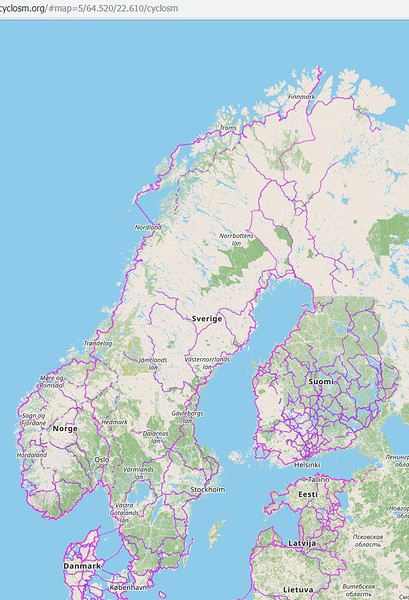
J'aimerais faire un parcours à vélo + train/autocar cet été en Scandinavie : Norvège, Suède, Finlande avec peut-être un retour par les pays baltes en direction de Paris.
Quelqu'un a-t-il une liste de parcours recommandés ?
Merci.
Bonjour
Voila notre récit de voyage de cet été 2017 en camping car.
Nos buts ? Aller jusqu’à Bervelag en Norvège pour voir le village où se déroule « Le festin de Babette », nouvelle de Karen Blixen. Mais surtout retrouver la Laponie et découvrir plus largement la Finlande. Nos centre d’intérêt sont la nature et la vie des gens. L’opéra et Sibélius conduiront aussi nos pas.
Jour 1-2- 3 Alençon – Travemunde Route + camping (Eijsden NL et Ivendorf D) Via Maastricht, nous resterons peu de temps à Lubeck, surchargée et qui nous offre deux PV pour stationnement interdit ? J 4 - 5 Travemunde – Helsinki Ferry 30 h de voyage Avec Finnlines, dans un Ro-ro très confortable. J 6 Helsinki – Porvoo Bivouac en bord de mer Nous allons directement vers la maison de Sibélius, Ainola, visitons la vieille ville de Porvoo et bivouaquons au bord de la Baltique. Rencontre avec un russe. J 7 Porvoo- Imatra Camping Imatra sur l’île Nous flânerons un peu à Loviisa, Kotka et Hanina, villes à l'ambiance russe. Le soir, camping de pécheurs à Imatra et premier contact avec les sanitaires finlandais ; Sauna. Les rapides d'Imatra sont en entretien, tans pis. Nous ne trouvons pas d'Office de Tourisme pour avoir la carte des campings. J 8 Imatra – Kerimaki Bivouac auprès du lac Passage et visite de Savonlinna, son château et son festival d'Opéra (l'an prochain?). L'après midi, Kerimaki et son église impressionnante, sa plage et ses laveries de tapis collectives près desquelles nous bivouaquerons. Rencontre avec un finlandais qui nous invite à prendre l'eau potable sur le port. J 9 Kerimaki – Kuhmo Bivouac en pleine ville Nous allons vers Joenssum, ville moderne à l'OTassez démuni (toujours pas de carte des campings, nous l'aurons au camping). Arrêt à Liksa pour visiter un beau et important musée sur la vie passée : bûcherons, bateliers, ... Le soir Kuhno où nous nous logeons près de l'église. J 10 Kuhmo – vers Juuma Bivouac près d'une route en terre Visite du centre d'information sur les prédateurs à Perola. Puis musée sur la « Guerre d'hiver », et rencontre du « peuple silencieux »... Nous nous engageons dans le dédale de la foret pour trouver difficilement un bivouac. Mais nous y serons bien. J 11 Juuma – Pyhatunturi Camping Caravaneige tout confort au pied des pistes Départ pour Kemisjarvi, laissons la foule sur Ruka et allons à Pyhatunturi, station de ski, qui nous offre son Caravaneige, avec douches, sauna et machine à laver en libre service. Un télésiège nous emmène au plus haut pour voir la foret et les lacs... J 12 Pyhatunturi – Inari Bivouac sur la route de Kittila Étape de liaison mais aussi de paysages et d'achats de peluche ; Harianna, Luosto... Difficile de trouver un bivouac, des interdictions et la route est très passagère et car nous sommes sur la route du cap Nord. Impossible sur Inari, sauf en allant un peu à l'extérieur près du départ des sentiers J 13 Inari – Naatamo Bivouac à la frontière norvégienne Visite du magnifique musée same Siida à Inari. Puis route sur Kirkenes avec étape avant la frontière. Achat dans un super marché totalement délirant, mélange des rayons... Les rennes s'abritent sous l'auvent des remises. Nous bivouaquons en pleine nature, une fois de plus. J 14 Naatamo – Kirkenes Camping de Kirkenes Départ pour Kirkenes, où nous déjeunerons après la visite du musée « Terre des frontières ». Salut à l'Hurtigruten puis direction la frontière russe, précisément Grense Jakobselv. Au bivouac possible, peu de places. Après une balade pour voir la Russie de haut, nous retournons sur le camping de Kirkenes. J 15 Kirkenes – Ekkeros Bivouac parking de la réserve d'oiseaux Visite de Kirkenes, recherche infructueuse de crabe royal puis en route sur le fjord de Varanger vers Vardo. Vision de forets brûlées, alors que c'est une chenille qui est responsable de ces dégâts. Chutes de Skollefossen et bivouac à Ekkeros après bien des déboires sur des aires ou campings disparus à Vadso. Indications de l'OT erronées. J 16 Ekkeroy – Vestjacobselv Camping VJ Camping confortable et accueil sympa Balade dans la réserve avec beaucoup d'oiseaux. Puis nous allons vers Vardo où l'aire a été déplacée. Musée Pomor, citadelle et monument aux « femmes brûlées pour sorcellerie ». Retour vers Vadso puis Vestjacobselv. J 17 Vestjakobselv – Tanabru Camping de l’hôtel cher et impersonnel Nous allons à Vadso pour visiter rapidement la ville et plus longuement la réserve d'oiseaux située derrière l’hôtel et la nouvelle aire. Sur la route, visites d'un site same ancien sur une presqu’île et du site de Nesseby. J 18 Tanabru – Berlevag Camping Pensjonat et C. près du terminal Hurtigriten Le long du fleuve Tana nous voyons quelques phoques puis découvrons la taïga. Arrivée sur Berlevag par une route dans un paysage magnifique, falaises et plages désertes. Le soir, escale rapide des 2 Hurtigriten. J 19 Berlevag Camping Pensjonat et Camping Nous restons au village, visitons le musée, cherchons du crabe royal, en voyons débarqués d'un bateau mais impossible de d'en mettre sous la dent. Balade dans la taïga voisine pour observer les oiseaux J 20 Berlevag – Kunes Bivouac avec vue sur le fjord Etape à Veines où nous voyons un faucon indigène et rencontrons un artiste-menuisier. Achat d'un souvenir. Coucher de soleil sur le fjord et décision définitive est prise, nous allons au Cap Nord. J 21 Kunes – Nordkapp Aire du site (parking) Encore une route de toute beauté et une étape pour voir des trolls pétrifiés (Trollholmen). Puis arrivée à Nordkapp, très ventée mais sous un beau ciel et finalement pas trop de monde. Nous excluons la projection du film à l'accueil et payons pour 2 nuits. Une fois les cars partis, nous profitons de la courte soirée. Cela aurait été une erreur de ne pas venir... J 22 Nordkapp – Alta Camping « Campalta » sympa et tout confort C'est le retour... mais d'abord balade sur le site, nous sommes seuls dès 200 m parcourus. Les falaises sont impressionnantes et il fait froid et venté. Arrêt à Honningsvag, envahi par les bateaux de croisière puis encore une route magique, ponctuée de lieu de pêche, rapides, cascades, lacs. J 23 Alta – Kautokeino Bivouac près de Julh et du tremplin de ski Visite au musée d'Alta, repas sur le port, puis nous montons sur Kautokeino par le route dans les gorges. Nous cherchons le « Méridien » sans succès et nous rapprochons de Julh. J 24 Kautokeino – Muonio Camping Harriniva Visite et achats à la galerie Juhl. Passage à notre « Bagdad Café », et à Sonkamothk à la boutique « Artc Knife »véritable capharnaüm qui nous rembourse les taxe sur les quelques achats en Norvège. Camping en bord de fleuve et repas au restaurant. J 25 Muonio – Levi-Sirkka Bivouac parking prévu pour le Caravaneige Visite du centre nature de « Pallas Tunturi », circuit pédagogique bien fait, puis nous montons en haut des pistes à Sirkka, regardons le point de vue mais préférons bivouaquer en bas. J 26 Levi – Rovaniemi Camping Ounaskoski en bord fleuve Traversée du parc Pallas de ses paysages somptueux, A Kolari, la serveuse du self parle français, elle a fait un stage dans le Perche. Visite nocturne de la ville. Cela nous incite à accélérer le départ le lendemain. J 27 Rovaniemi – Tornio-Haparanda Bivouac parking d'IKEA Rovaniemi est une ville moderne, et Napapirri « ville du père Noël » un centre commercial... Nous fuyons vers Aavasaka et sa foret (?) et sa colline au beau point de vue. Avant Tornio, nous assistons dans les rapides à une méthode ancienne de pêche à l'épuisette originale. J 28 Tornio – Raahe (Pattijoki) Camping Lohenpyrsto (membre C C International) Nuit peu calme, c'était samedi..... Passage à Oulu, Kemi et son brise glace un peu délaissé en cette mi saison, et camping à Raahe en bord de mer. Camping très confortable, bien installé mais cher sauf pour les membres du SF Caravan et Camping Caravaning International. J 29 Raahe – Karvia Bivouac en sortie de ville et en bord de lac Nous longeons la Baltique, ses réserves comme celle de Liminka, magnifique encore avec les oies cendrées, mais aussi ses dunes et plages aménagées comme à Kalajoki et son camping de plus de 1000 emplacements. Nous faisons un large détour par une route côtière entre Kokkola et Jacdostadt. Avant Tampéré nous aurons bien du mal à trouver un bivouac : 20 km de route forestière pour se retrouver sur la route ordinaire et sur un parking en bord de lac, comme celui de Kerimaki. J 30 Karvia – Helsinki Camping Rastila, tout confort Nous filons par l'autoroute vers Helsinki à travers une campagne bien verte et très agricole et nous nous installons au camping Rastila. Balade de détente le soir près du terrain et de la mer. J 31 Helsinki Camping Pas de musée à notre programme (ceux du nord nous ont comblés), mais tout le centre ville, l’île de Suomenlinna, l'Opéra, le monument Sibélius qui boucle notre périple finlandais. Nous sommes contrôles dans le métro... J 32 – 33 Helsinki – Wildeshausen ferry + route + Aire CCI Le matin centre ville en camping-car et centre commercial pour la boutiques Moomins, mais ce n'est pas original du tout. Embarquement à 16 h et le lendemain on débarque à Travemunde à 21 h et on est sans bruit sur l'aire à 1h du matin. J 33 Wildeshausen – Alençon route Et on est chez nous à 20 heures....
Total 11 300 km dont 2 800 en ferry entre Travemunde et Helsinki Beaucoup d'arret et de détours plus ou moins longs non évoqués ici pour admirer les paysages.
Bilan succinct : des paysages somptueux, des possibilités de bivouacs importantes, mais parfois difficiles d'accès surtout en Finlande de l'est ou intérieure (foret). Peu de rencontres mais des contacts sympathiques et des gens serviables. La nourriture peu variée et assez communes. Les prix, c'est cher, mais nous étions prévenus. Cela dit, le gazole était moins cher qu'en France ou Allemagne. La conduite sur route est exemplaire : c'est au sud d'Amiens que j'ai eu droit à ma première queue de poisson par un Intégral du 76....
Guides utilisés qui se complètent: Lonely Planet ; Finlande, Suède et Norvège Petit Futé ; Laponie ; Carnet de voyage Petit Futé ; Norvège, Finlande Cartes papier : IGN de Finlande, Norvège ; Carte Michelin Scandinavie Cartes numériques : GPS Igo ; Oruxmaps sur Tablette Campings et aires repérés sur Archie, Cc-info, Campercontact complétés par leurs applications Android. La carte des campings finlandais est incomplète. Il y a de bonnes surprises.
Des photos sont là: www.flickr.com/...ms/72157685555852964 Alain
Nos buts ? Aller jusqu’à Bervelag en Norvège pour voir le village où se déroule « Le festin de Babette », nouvelle de Karen Blixen. Mais surtout retrouver la Laponie et découvrir plus largement la Finlande. Nos centre d’intérêt sont la nature et la vie des gens. L’opéra et Sibélius conduiront aussi nos pas.
Jour 1-2- 3 Alençon – Travemunde Route + camping (Eijsden NL et Ivendorf D) Via Maastricht, nous resterons peu de temps à Lubeck, surchargée et qui nous offre deux PV pour stationnement interdit ? J 4 - 5 Travemunde – Helsinki Ferry 30 h de voyage Avec Finnlines, dans un Ro-ro très confortable. J 6 Helsinki – Porvoo Bivouac en bord de mer Nous allons directement vers la maison de Sibélius, Ainola, visitons la vieille ville de Porvoo et bivouaquons au bord de la Baltique. Rencontre avec un russe. J 7 Porvoo- Imatra Camping Imatra sur l’île Nous flânerons un peu à Loviisa, Kotka et Hanina, villes à l'ambiance russe. Le soir, camping de pécheurs à Imatra et premier contact avec les sanitaires finlandais ; Sauna. Les rapides d'Imatra sont en entretien, tans pis. Nous ne trouvons pas d'Office de Tourisme pour avoir la carte des campings. J 8 Imatra – Kerimaki Bivouac auprès du lac Passage et visite de Savonlinna, son château et son festival d'Opéra (l'an prochain?). L'après midi, Kerimaki et son église impressionnante, sa plage et ses laveries de tapis collectives près desquelles nous bivouaquerons. Rencontre avec un finlandais qui nous invite à prendre l'eau potable sur le port. J 9 Kerimaki – Kuhmo Bivouac en pleine ville Nous allons vers Joenssum, ville moderne à l'OTassez démuni (toujours pas de carte des campings, nous l'aurons au camping). Arrêt à Liksa pour visiter un beau et important musée sur la vie passée : bûcherons, bateliers, ... Le soir Kuhno où nous nous logeons près de l'église. J 10 Kuhmo – vers Juuma Bivouac près d'une route en terre Visite du centre d'information sur les prédateurs à Perola. Puis musée sur la « Guerre d'hiver », et rencontre du « peuple silencieux »... Nous nous engageons dans le dédale de la foret pour trouver difficilement un bivouac. Mais nous y serons bien. J 11 Juuma – Pyhatunturi Camping Caravaneige tout confort au pied des pistes Départ pour Kemisjarvi, laissons la foule sur Ruka et allons à Pyhatunturi, station de ski, qui nous offre son Caravaneige, avec douches, sauna et machine à laver en libre service. Un télésiège nous emmène au plus haut pour voir la foret et les lacs... J 12 Pyhatunturi – Inari Bivouac sur la route de Kittila Étape de liaison mais aussi de paysages et d'achats de peluche ; Harianna, Luosto... Difficile de trouver un bivouac, des interdictions et la route est très passagère et car nous sommes sur la route du cap Nord. Impossible sur Inari, sauf en allant un peu à l'extérieur près du départ des sentiers J 13 Inari – Naatamo Bivouac à la frontière norvégienne Visite du magnifique musée same Siida à Inari. Puis route sur Kirkenes avec étape avant la frontière. Achat dans un super marché totalement délirant, mélange des rayons... Les rennes s'abritent sous l'auvent des remises. Nous bivouaquons en pleine nature, une fois de plus. J 14 Naatamo – Kirkenes Camping de Kirkenes Départ pour Kirkenes, où nous déjeunerons après la visite du musée « Terre des frontières ». Salut à l'Hurtigruten puis direction la frontière russe, précisément Grense Jakobselv. Au bivouac possible, peu de places. Après une balade pour voir la Russie de haut, nous retournons sur le camping de Kirkenes. J 15 Kirkenes – Ekkeros Bivouac parking de la réserve d'oiseaux Visite de Kirkenes, recherche infructueuse de crabe royal puis en route sur le fjord de Varanger vers Vardo. Vision de forets brûlées, alors que c'est une chenille qui est responsable de ces dégâts. Chutes de Skollefossen et bivouac à Ekkeros après bien des déboires sur des aires ou campings disparus à Vadso. Indications de l'OT erronées. J 16 Ekkeroy – Vestjacobselv Camping VJ Camping confortable et accueil sympa Balade dans la réserve avec beaucoup d'oiseaux. Puis nous allons vers Vardo où l'aire a été déplacée. Musée Pomor, citadelle et monument aux « femmes brûlées pour sorcellerie ». Retour vers Vadso puis Vestjacobselv. J 17 Vestjakobselv – Tanabru Camping de l’hôtel cher et impersonnel Nous allons à Vadso pour visiter rapidement la ville et plus longuement la réserve d'oiseaux située derrière l’hôtel et la nouvelle aire. Sur la route, visites d'un site same ancien sur une presqu’île et du site de Nesseby. J 18 Tanabru – Berlevag Camping Pensjonat et C. près du terminal Hurtigriten Le long du fleuve Tana nous voyons quelques phoques puis découvrons la taïga. Arrivée sur Berlevag par une route dans un paysage magnifique, falaises et plages désertes. Le soir, escale rapide des 2 Hurtigriten. J 19 Berlevag Camping Pensjonat et Camping Nous restons au village, visitons le musée, cherchons du crabe royal, en voyons débarqués d'un bateau mais impossible de d'en mettre sous la dent. Balade dans la taïga voisine pour observer les oiseaux J 20 Berlevag – Kunes Bivouac avec vue sur le fjord Etape à Veines où nous voyons un faucon indigène et rencontrons un artiste-menuisier. Achat d'un souvenir. Coucher de soleil sur le fjord et décision définitive est prise, nous allons au Cap Nord. J 21 Kunes – Nordkapp Aire du site (parking) Encore une route de toute beauté et une étape pour voir des trolls pétrifiés (Trollholmen). Puis arrivée à Nordkapp, très ventée mais sous un beau ciel et finalement pas trop de monde. Nous excluons la projection du film à l'accueil et payons pour 2 nuits. Une fois les cars partis, nous profitons de la courte soirée. Cela aurait été une erreur de ne pas venir... J 22 Nordkapp – Alta Camping « Campalta » sympa et tout confort C'est le retour... mais d'abord balade sur le site, nous sommes seuls dès 200 m parcourus. Les falaises sont impressionnantes et il fait froid et venté. Arrêt à Honningsvag, envahi par les bateaux de croisière puis encore une route magique, ponctuée de lieu de pêche, rapides, cascades, lacs. J 23 Alta – Kautokeino Bivouac près de Julh et du tremplin de ski Visite au musée d'Alta, repas sur le port, puis nous montons sur Kautokeino par le route dans les gorges. Nous cherchons le « Méridien » sans succès et nous rapprochons de Julh. J 24 Kautokeino – Muonio Camping Harriniva Visite et achats à la galerie Juhl. Passage à notre « Bagdad Café », et à Sonkamothk à la boutique « Artc Knife »véritable capharnaüm qui nous rembourse les taxe sur les quelques achats en Norvège. Camping en bord de fleuve et repas au restaurant. J 25 Muonio – Levi-Sirkka Bivouac parking prévu pour le Caravaneige Visite du centre nature de « Pallas Tunturi », circuit pédagogique bien fait, puis nous montons en haut des pistes à Sirkka, regardons le point de vue mais préférons bivouaquer en bas. J 26 Levi – Rovaniemi Camping Ounaskoski en bord fleuve Traversée du parc Pallas de ses paysages somptueux, A Kolari, la serveuse du self parle français, elle a fait un stage dans le Perche. Visite nocturne de la ville. Cela nous incite à accélérer le départ le lendemain. J 27 Rovaniemi – Tornio-Haparanda Bivouac parking d'IKEA Rovaniemi est une ville moderne, et Napapirri « ville du père Noël » un centre commercial... Nous fuyons vers Aavasaka et sa foret (?) et sa colline au beau point de vue. Avant Tornio, nous assistons dans les rapides à une méthode ancienne de pêche à l'épuisette originale. J 28 Tornio – Raahe (Pattijoki) Camping Lohenpyrsto (membre C C International) Nuit peu calme, c'était samedi..... Passage à Oulu, Kemi et son brise glace un peu délaissé en cette mi saison, et camping à Raahe en bord de mer. Camping très confortable, bien installé mais cher sauf pour les membres du SF Caravan et Camping Caravaning International. J 29 Raahe – Karvia Bivouac en sortie de ville et en bord de lac Nous longeons la Baltique, ses réserves comme celle de Liminka, magnifique encore avec les oies cendrées, mais aussi ses dunes et plages aménagées comme à Kalajoki et son camping de plus de 1000 emplacements. Nous faisons un large détour par une route côtière entre Kokkola et Jacdostadt. Avant Tampéré nous aurons bien du mal à trouver un bivouac : 20 km de route forestière pour se retrouver sur la route ordinaire et sur un parking en bord de lac, comme celui de Kerimaki. J 30 Karvia – Helsinki Camping Rastila, tout confort Nous filons par l'autoroute vers Helsinki à travers une campagne bien verte et très agricole et nous nous installons au camping Rastila. Balade de détente le soir près du terrain et de la mer. J 31 Helsinki Camping Pas de musée à notre programme (ceux du nord nous ont comblés), mais tout le centre ville, l’île de Suomenlinna, l'Opéra, le monument Sibélius qui boucle notre périple finlandais. Nous sommes contrôles dans le métro... J 32 – 33 Helsinki – Wildeshausen ferry + route + Aire CCI Le matin centre ville en camping-car et centre commercial pour la boutiques Moomins, mais ce n'est pas original du tout. Embarquement à 16 h et le lendemain on débarque à Travemunde à 21 h et on est sans bruit sur l'aire à 1h du matin. J 33 Wildeshausen – Alençon route Et on est chez nous à 20 heures....
Total 11 300 km dont 2 800 en ferry entre Travemunde et Helsinki Beaucoup d'arret et de détours plus ou moins longs non évoqués ici pour admirer les paysages.
Bilan succinct : des paysages somptueux, des possibilités de bivouacs importantes, mais parfois difficiles d'accès surtout en Finlande de l'est ou intérieure (foret). Peu de rencontres mais des contacts sympathiques et des gens serviables. La nourriture peu variée et assez communes. Les prix, c'est cher, mais nous étions prévenus. Cela dit, le gazole était moins cher qu'en France ou Allemagne. La conduite sur route est exemplaire : c'est au sud d'Amiens que j'ai eu droit à ma première queue de poisson par un Intégral du 76....
Guides utilisés qui se complètent: Lonely Planet ; Finlande, Suède et Norvège Petit Futé ; Laponie ; Carnet de voyage Petit Futé ; Norvège, Finlande Cartes papier : IGN de Finlande, Norvège ; Carte Michelin Scandinavie Cartes numériques : GPS Igo ; Oruxmaps sur Tablette Campings et aires repérés sur Archie, Cc-info, Campercontact complétés par leurs applications Android. La carte des campings finlandais est incomplète. Il y a de bonnes surprises.
Des photos sont là: www.flickr.com/...ms/72157685555852964 Alain
Bonjour,
Si mes recherches avancent, notamment grâce à l'aide apportée par des adhérents VF, je galère encore pour le billet d'avion. Différentes propositions ( Opodo, Travel Genio, etc...) ou directement à la cie Finnair? Quelle a été votre expérience? Avec une arrivée très tardive ( 22h00), avez-vous trouvé une voiture à l'aéroport ( loueur Scandia) ou faut-il prévoir une nuit en ville, notamment à Kittila? Merci beaucoup. Cordialement. Chabcha
PS: en fait, je prendrai un billet avec un supplément bagage en soute ( tarif standard Finnair + cher).
Si mes recherches avancent, notamment grâce à l'aide apportée par des adhérents VF, je galère encore pour le billet d'avion. Différentes propositions ( Opodo, Travel Genio, etc...) ou directement à la cie Finnair? Quelle a été votre expérience? Avec une arrivée très tardive ( 22h00), avez-vous trouvé une voiture à l'aéroport ( loueur Scandia) ou faut-il prévoir une nuit en ville, notamment à Kittila? Merci beaucoup. Cordialement. Chabcha
PS: en fait, je prendrai un billet avec un supplément bagage en soute ( tarif standard Finnair + cher).
In Finnish Lapland, in Rovaniemi, the iconic Santa Claus Village is facing an unexpected challenge: a lack of snow, which is essential for the Christmas magic and the region's tourist appeal.
With record temperatures reaching up to 11.1°C in November and persistent rain, climate change is disrupting not only the landscapes but also the lives of reindeer and Arctic residents.
Despite this, tourists are flocking to meet Santa Claus and hoping to admire the northern lights, reflecting the global attachment to this unique destination, now weakened by climate change. Read more...
With record temperatures reaching up to 11.1°C in November and persistent rain, climate change is disrupting not only the landscapes but also the lives of reindeer and Arctic residents.
Despite this, tourists are flocking to meet Santa Claus and hoping to admire the northern lights, reflecting the global attachment to this unique destination, now weakened by climate change. Read more...
Bonjour tout est dans le titre!
Après avoir parcouru la Scandinavie cet été durant 6 semaines en cc avec les enfants et après avoir eu un énorme
Coup de cœur pour la région! Nous avons envie de partir découvrir les paysages polaire de la
Laponie cet hiver. Mais nos enfants auront 3 ans 1/2 et à peine 12 mois. Nous envisageons un séjour d’une semaine en hôtel pour un maximum de confort et le côté pratique. Mais j’ai quand même des réserves quand aux températures avec les enfants surtout avec bb qui ne marchera sûrement pas encore d’ici là... de plus est ce que nous trouverons des activités adaptées à la famille? Est ce que vous auriez des adresses ? Des régions à nous conseiller? Et autres conseils d’organisation, budget... tout est bien venue!! Merci à vous!
Bonjour à tous,
j'envisage un voyage en Laponie en hiver 2018 afin de tenter d'observer les aurores boréales entre autres. Malheureusement, tous les retours que je trouve sont surtout pour des séjours en février ou en été. J'ai donc besoin de votre aide pour dégrossir tout ça!
j'ai vu que la nouvelle lune serait le 7 novembre et 7 décembre , donc on irait à cette période-là pour optimiser nos chances. Cependant, l'ensoleillement serait de 4-5h en novembre et totalement nul en décembre? Clairement, une nuit aussi longue ne nous dérange pas et nous attire beaucoup. Mais de ce fait, que peut-on faire avec si peu d'ensoleillement? j'imagine que les activités telles que raquette, chien de traîneau et autres se font de jour, mais quid de la nuit?
de plus, avec si peu d'ensoleillement vaut-il mieux se baser sur une ville et rayonner ou un voyage de type "road-trip" est envisageable?
Merci d'avance
j'envisage un voyage en Laponie en hiver 2018 afin de tenter d'observer les aurores boréales entre autres. Malheureusement, tous les retours que je trouve sont surtout pour des séjours en février ou en été. J'ai donc besoin de votre aide pour dégrossir tout ça!
j'ai vu que la nouvelle lune serait le 7 novembre et 7 décembre , donc on irait à cette période-là pour optimiser nos chances. Cependant, l'ensoleillement serait de 4-5h en novembre et totalement nul en décembre? Clairement, une nuit aussi longue ne nous dérange pas et nous attire beaucoup. Mais de ce fait, que peut-on faire avec si peu d'ensoleillement? j'imagine que les activités telles que raquette, chien de traîneau et autres se font de jour, mais quid de la nuit?
de plus, avec si peu d'ensoleillement vaut-il mieux se baser sur une ville et rayonner ou un voyage de type "road-trip" est envisageable?
Merci d'avance
bonjour,
voila je souhaiterais aller en laponie mais je n'arrive pas a me décider entre la laponie suédoise ou finlandaise! ce serait pour aller observer les aurores boréales, faire de la randonnée en chien de traineau, moto neige et toutes autres activitées!
si vous avez des idées des astuces car je n'arrive pas a me fixer un lieu, une zone de villégiature
merci beaucoup
jb
voila je souhaiterais aller en laponie mais je n'arrive pas a me décider entre la laponie suédoise ou finlandaise! ce serait pour aller observer les aurores boréales, faire de la randonnée en chien de traineau, moto neige et toutes autres activitées!
si vous avez des idées des astuces car je n'arrive pas a me fixer un lieu, une zone de villégiature
merci beaucoup
jb
Bonjour!
Une idée nous trotte dans la tête. Mon copain et moi, on aimerait bien voir des aurores boréales. On peut partir une semaine pendant les vacances de Noël mais pas non plus envie de claquer plus de 2000€ de budget pour quelques jours à 2 (car on veut garder un budget pour l'été prochain). A première vue, j'hésite plus entre la Finlande et l'Islande. Avez vous des avis concernant les aurores boréales si vous y êtes déjà allés? On voudrait également voir d'autres choses, du culturel et de la nature. Mais pour un budget de 800€/personne est-ce possible si nous ne mangeons pas au restau et hébergements très simples? Cela peut être seulement 5 jours mais il faut qu'on ait le temps de profiter des activités. L'Islande L'Islande nous attire beaucoup mais peut-être plus en été vu les magnifiques paysages. Je me dis qu'en 4 jours on aura fait le tour mais en plein hiver avec le peu de vrai jour pendant la journée, je ne sais pas ce qu'on peut voir en profitant quand même. Le Blue lagoon j'imagine. On pourrait rayonner autour de Reykjavik. Des bons plans de vols depuis Genève ou la France ou éventuellement Bruxelles ou Amsterdam? Est-ce mieux de louer une voiture à cette période?
La Finlande La Finlande nous tente bien pour sa culture lapone, on aimerait caresser/voir des rennes (pourquoi pas une balade en rennes), le village du Père Noël et un musée par exemple et le parc animalier de Ranua. J'ai pensé à Ivalo, Irani ou Nellim et Rovaniemi et peut-être Helsinki selon les dates et si Nouvel An ou pas. Quelles sont vos impressions sur ces villes? Laquelle choisiriez vous? Une autre est aussi possible si vous partagez votre connaissance du pays. Comment relier Rovaniemi et une des autres villes: bus, train? Avez vous des bons plans pour y aller : compagnies, vol (on accepte une escale), activités sur place comme une bonne excursion pour voir les aurores boréales?
Plus je cherche et plus je me rends compte du budget (et encore je n'ai pas regardé les hébergements 😛 et j'imagine que c'est prisé à cette période mais nous ne pouvons pas partir en janvier et en février, nous préférons le soleil si nous partons. Je vois des séjours d'une semaine avec un budget conséquent. Peut-être qu'en construisant soi-même ou avec des bons plans de séjours, on pourrait y aller. Sinon, nous choisirons une autre ville d'Europe juste pour un weekend de Nouvel An.
Une idée nous trotte dans la tête. Mon copain et moi, on aimerait bien voir des aurores boréales. On peut partir une semaine pendant les vacances de Noël mais pas non plus envie de claquer plus de 2000€ de budget pour quelques jours à 2 (car on veut garder un budget pour l'été prochain). A première vue, j'hésite plus entre la Finlande et l'Islande. Avez vous des avis concernant les aurores boréales si vous y êtes déjà allés? On voudrait également voir d'autres choses, du culturel et de la nature. Mais pour un budget de 800€/personne est-ce possible si nous ne mangeons pas au restau et hébergements très simples? Cela peut être seulement 5 jours mais il faut qu'on ait le temps de profiter des activités. L'Islande L'Islande nous attire beaucoup mais peut-être plus en été vu les magnifiques paysages. Je me dis qu'en 4 jours on aura fait le tour mais en plein hiver avec le peu de vrai jour pendant la journée, je ne sais pas ce qu'on peut voir en profitant quand même. Le Blue lagoon j'imagine. On pourrait rayonner autour de Reykjavik. Des bons plans de vols depuis Genève ou la France ou éventuellement Bruxelles ou Amsterdam? Est-ce mieux de louer une voiture à cette période?
La Finlande La Finlande nous tente bien pour sa culture lapone, on aimerait caresser/voir des rennes (pourquoi pas une balade en rennes), le village du Père Noël et un musée par exemple et le parc animalier de Ranua. J'ai pensé à Ivalo, Irani ou Nellim et Rovaniemi et peut-être Helsinki selon les dates et si Nouvel An ou pas. Quelles sont vos impressions sur ces villes? Laquelle choisiriez vous? Une autre est aussi possible si vous partagez votre connaissance du pays. Comment relier Rovaniemi et une des autres villes: bus, train? Avez vous des bons plans pour y aller : compagnies, vol (on accepte une escale), activités sur place comme une bonne excursion pour voir les aurores boréales?
Plus je cherche et plus je me rends compte du budget (et encore je n'ai pas regardé les hébergements 😛 et j'imagine que c'est prisé à cette période mais nous ne pouvons pas partir en janvier et en février, nous préférons le soleil si nous partons. Je vois des séjours d'une semaine avec un budget conséquent. Peut-être qu'en construisant soi-même ou avec des bons plans de séjours, on pourrait y aller. Sinon, nous choisirons une autre ville d'Europe juste pour un weekend de Nouvel An.
Bonjour,
Je pars 6 jours en Laponie Finlandaise mi-Janvier.
J'ai trouvé 2 logements, l'un à proximité de Rovaniemi, l'autre à Salla. Éventuellement, un autre à Kittila mais plus chère.
J'ai envie d'opter pour Salla (plus retiré). J'ai trouvé un billet d'avion avec Finnair pour Rovaniemi, je pensais récupérer une voiture à l'aéroport et me rendre à Salla (d'après google map, 2 heures de route).
Pensez-vous que ce soit jouable à cette période de rejoindre aisément Salla de Rovaniemi en voiture ? A Salla, peut t'on s'adonner aux activités telles que motoneige, traineaux, ski de fond ... (et avec un peu de chance, voir des aurores boréales).
Merci d'avance pour votre aide.
Je pars 6 jours en Laponie Finlandaise mi-Janvier.
J'ai trouvé 2 logements, l'un à proximité de Rovaniemi, l'autre à Salla. Éventuellement, un autre à Kittila mais plus chère.
J'ai envie d'opter pour Salla (plus retiré). J'ai trouvé un billet d'avion avec Finnair pour Rovaniemi, je pensais récupérer une voiture à l'aéroport et me rendre à Salla (d'après google map, 2 heures de route).
Pensez-vous que ce soit jouable à cette période de rejoindre aisément Salla de Rovaniemi en voiture ? A Salla, peut t'on s'adonner aux activités telles que motoneige, traineaux, ski de fond ... (et avec un peu de chance, voir des aurores boréales).
Merci d'avance pour votre aide.
Bonjour,
Mon copain et moi sommes en train de préparer notre voyage en laponie finlandaise pour début février 2015, nous avons déjà réservé un appartement sur booking (on attend la confirmation mais on espère qu'il n'y aura pas de problème de ce côté là) On sera à akaslompolo, comme nous arrivons à l'aéroport de Rovaniemi nous avons prévu de louer une voiture et de la garder tout le séjour (une semaine) Nous avons prévu de faire une promenade en chien de traineaux, avec les rennes et en motoneige (si possible voir des aurores boréales) Comme on ne passe pas par un voyage organisé on essaye de penser à tout et de prévoir au maximum mais il nous reste quand même quelques questions, notamment pour les vêtements, en effet nous ne sommes pas du tout équipés (on habite à Nice) on se demande si on peut louer des vêtements à le semaine pas trop cher? On a vu que les activités prêtent des vêtements mais seulement le temps de l'activité, on on ne fait que 3 activités, et il faudra bien qu'on se couvre le reste du temps quand même. Deuxième point qui nous inquiète c'est la conduite? on a pas vraiment l'habitude de conduire dans ces conditions, est ce que ça va être difficile pour nous? Et troisième question, l'appareil photo, on a un compact et on se demande comment ça se passe pour prendre des photos là bas avec une température négative? On ne voudrait pas abimer notre appareil, si on doit acheter des accesoires pour le proteger (autre que la pochette dans laquelle il est déjà) ?
Merci à ceux qui auront le courage de me lire et éventuellement de me répondre.
Mon copain et moi sommes en train de préparer notre voyage en laponie finlandaise pour début février 2015, nous avons déjà réservé un appartement sur booking (on attend la confirmation mais on espère qu'il n'y aura pas de problème de ce côté là) On sera à akaslompolo, comme nous arrivons à l'aéroport de Rovaniemi nous avons prévu de louer une voiture et de la garder tout le séjour (une semaine) Nous avons prévu de faire une promenade en chien de traineaux, avec les rennes et en motoneige (si possible voir des aurores boréales) Comme on ne passe pas par un voyage organisé on essaye de penser à tout et de prévoir au maximum mais il nous reste quand même quelques questions, notamment pour les vêtements, en effet nous ne sommes pas du tout équipés (on habite à Nice) on se demande si on peut louer des vêtements à le semaine pas trop cher? On a vu que les activités prêtent des vêtements mais seulement le temps de l'activité, on on ne fait que 3 activités, et il faudra bien qu'on se couvre le reste du temps quand même. Deuxième point qui nous inquiète c'est la conduite? on a pas vraiment l'habitude de conduire dans ces conditions, est ce que ça va être difficile pour nous? Et troisième question, l'appareil photo, on a un compact et on se demande comment ça se passe pour prendre des photos là bas avec une température négative? On ne voudrait pas abimer notre appareil, si on doit acheter des accesoires pour le proteger (autre que la pochette dans laquelle il est déjà) ?
Merci à ceux qui auront le courage de me lire et éventuellement de me répondre.
Bonjour à toutes et tous,
Je sais que je m'y prend très tôt à l'avance mais j'aime prévoir les choses :)
Je prépare donc un séjour d'une semaine en janvier 2015 en Laponie en couple avec notre de fille qui aura 4 ans et demi. A la base je souhaitais aller à Rovaniemi et visiter le village du père Noel, mais d’après ce que je vois sur le net, il semble que ce soit hyper commercial et très cher pour ce que l'on y voit et fait. Pouvez vous me le confirmer?
Je pense donc remplacer Rovaniemy par Inari...
Pouvez vous me dire ce que vous pensez de cette ville? Janvier est il une bonne période ou vaut il mieux privilégier fevrier- mars? Au niveau des activités comme chien, rennes de traineau, etc...Faut il réserver cela à l'avance ou bien cela se trouve facilement sur place?
Au niveau de la location de voiture, les routes sont elles dégager et n'est il pas trop dangereux de rouler la bas?
Quel est le prix de la vie la bas, nourriture etc??
Toutes autres informations m'interesse.
D'avance merci
Je sais que je m'y prend très tôt à l'avance mais j'aime prévoir les choses :)
Je prépare donc un séjour d'une semaine en janvier 2015 en Laponie en couple avec notre de fille qui aura 4 ans et demi. A la base je souhaitais aller à Rovaniemi et visiter le village du père Noel, mais d’après ce que je vois sur le net, il semble que ce soit hyper commercial et très cher pour ce que l'on y voit et fait. Pouvez vous me le confirmer?
Je pense donc remplacer Rovaniemy par Inari...
Pouvez vous me dire ce que vous pensez de cette ville? Janvier est il une bonne période ou vaut il mieux privilégier fevrier- mars? Au niveau des activités comme chien, rennes de traineau, etc...Faut il réserver cela à l'avance ou bien cela se trouve facilement sur place?
Au niveau de la location de voiture, les routes sont elles dégager et n'est il pas trop dangereux de rouler la bas?
Quel est le prix de la vie la bas, nourriture etc??
Toutes autres informations m'interesse.
D'avance merci
Bonjour,
Je cherche à faire une surprise à mon ami pour Noel, notre rêve serait de partir en Laponie environ semaine, entre noel et jour de l'an, séjour multi activité : chien de traineau, et moto neige, visite des rennes...
Seulement les séjours proposés par des agences de voyages sont hors de prix surtout à cette période. Je ne peux changer nos périodes de vacances, vacances imposées ;(
Connaissez-vous des sites sur places des chenils qui proposerait des raids chien de traineaux et moto neige que vous auriez déjà testé ? Type d'hébergement ? ou une agence raisonnable niveau budget.
Merci pour votre aide.
Je cherche à faire une surprise à mon ami pour Noel, notre rêve serait de partir en Laponie environ semaine, entre noel et jour de l'an, séjour multi activité : chien de traineau, et moto neige, visite des rennes...
Seulement les séjours proposés par des agences de voyages sont hors de prix surtout à cette période. Je ne peux changer nos périodes de vacances, vacances imposées ;(
Connaissez-vous des sites sur places des chenils qui proposerait des raids chien de traineaux et moto neige que vous auriez déjà testé ? Type d'hébergement ? ou une agence raisonnable niveau budget.
Merci pour votre aide.
Bonjour,
Cette année pour les vacances d'hiver je fais plaisir à mon chéri et au lieu d'allé au soleil, direction le grand Nord. Le problème c'est qu'on a pas le choix des dates, nos vacances sont du 27 novembre au 7 décembre. On avait décidé d'aller au Canada faire de la moto neige et du chien de traineau mais on nous l'a déconseillé car c'est trop tôt dans la saison, il n'y aura pas de neige. Qu'en est -il pour la Finlande plus précisément en Laponie ? Est ce la bonne saison. On ne recherche pas une usine à touriste, plus des gîtes et pourquoi pas chez l'habitant. On voudrait tester les bains nordiques.
Merci d'avance Au plaisir de vous lire
Cette année pour les vacances d'hiver je fais plaisir à mon chéri et au lieu d'allé au soleil, direction le grand Nord. Le problème c'est qu'on a pas le choix des dates, nos vacances sont du 27 novembre au 7 décembre. On avait décidé d'aller au Canada faire de la moto neige et du chien de traineau mais on nous l'a déconseillé car c'est trop tôt dans la saison, il n'y aura pas de neige. Qu'en est -il pour la Finlande plus précisément en Laponie ? Est ce la bonne saison. On ne recherche pas une usine à touriste, plus des gîtes et pourquoi pas chez l'habitant. On voudrait tester les bains nordiques.
Merci d'avance Au plaisir de vous lire
Bonjour,
je suis nouveau membre de voyage forum, et aimerai avoir des renseignements afin
d'organiser notre voyage (6 adultes) en laponie en voiture (4x4) en avril.
Nous avons déjà souvent voyagé, en voiture, (en Afrique) et bien que frileuse, j'ai décidé la famille pour ce voyage
- les températures à cette époque, les activités (moto, pêche, traineau...) , l'état des routes, l'hébergement (simple), le coût de la vie, les vêtements nécessaires, les aurores boréales
Quel est le meilleur itinéraire à partir de la France.
je remercie tous ceux qui voudront bien répondre
Annie
Bonjour,
Je prépare mon voyage en Laponie Finlandaise pour le mois de Janvier 2012. Et plus précisément à Kuusamo. Malheureusement, je ne trouve que peu d'informations sur cet endroit. Nous aimerions louer un chalet au bord d'un lac. Mais je me pose beaucoup de questions quand à l'endroit, les activités proposées, faut il mieux louer une voiture ? une moto-neige ? Y'a t-il possibilité de faire du chien de traîneaux, et quel budget faut il prévoir pour ce genre d'activités (ainsi que le ski).
Tout conseil de la part de quelqu'un connaissant cet endroit serait le bienvenu.
Merci d'avance,
Juliette
Je prépare mon voyage en Laponie Finlandaise pour le mois de Janvier 2012. Et plus précisément à Kuusamo. Malheureusement, je ne trouve que peu d'informations sur cet endroit. Nous aimerions louer un chalet au bord d'un lac. Mais je me pose beaucoup de questions quand à l'endroit, les activités proposées, faut il mieux louer une voiture ? une moto-neige ? Y'a t-il possibilité de faire du chien de traîneaux, et quel budget faut il prévoir pour ce genre d'activités (ainsi que le ski).
Tout conseil de la part de quelqu'un connaissant cet endroit serait le bienvenu.
Merci d'avance,
Juliette
bonjour,
C'est décidé, nous irons nous ballader dans le nord de la finlande à Noël.
Oui mais...qui peut me renseigner sur :
- l'état des routes en cette période, ok pour conduire ? - la possibilité de louer un motorhome, peut-on se parquer n'importe où ? - rovaniemi ? Attrape touristes ou quand même à faire avec des jeunes enfants - la station de ski de levi , quelqu'un y a déjà séjourné ? - Muoni ? les routes secondaires et la région ? - Inari ? centre culturel de la région semble-t-il ?
Nous pensons atterir à Kittila, puis 2 jours à Muoni, puis 3 jours à Levi pour le ski et terminer par Rovaniemi pour les enfants (village de santa claus). Mais 150 km nous sépare de Kittila, cela en vaut-il vraiment la peine ?
Puis les hôtels sont hors prix et quasi full !!!! Nous pensons alors à la loc d'un motorhome mais ignorons si cela est faisable;
milles mercis pour les infos, c'est dingue, mais les logements se remplissent archi vite !
Marie
- l'état des routes en cette période, ok pour conduire ? - la possibilité de louer un motorhome, peut-on se parquer n'importe où ? - rovaniemi ? Attrape touristes ou quand même à faire avec des jeunes enfants - la station de ski de levi , quelqu'un y a déjà séjourné ? - Muoni ? les routes secondaires et la région ? - Inari ? centre culturel de la région semble-t-il ?
Nous pensons atterir à Kittila, puis 2 jours à Muoni, puis 3 jours à Levi pour le ski et terminer par Rovaniemi pour les enfants (village de santa claus). Mais 150 km nous sépare de Kittila, cela en vaut-il vraiment la peine ?
Puis les hôtels sont hors prix et quasi full !!!! Nous pensons alors à la loc d'un motorhome mais ignorons si cela est faisable;
milles mercis pour les infos, c'est dingue, mais les logements se remplissent archi vite !
Marie
Bonjour,
Je souhaite offrir à mon fiancé un voyage d'une semaine (plus ou moins) en Laponie. Ce dernier étant passionné des montagnes, je pense ne pas m'être trompée de destination...
En revanche n'étant pas du tout aguerrie à ce type de voyage et ne connaissant absolument pas la Laponie, je sollicite votre aide pour des idées de circuits ou activités... Y a-t-il une periode de l’année plutot qu’une autre conseillée ?
Je ne suis pas une skieuse hors-pair donc je ne pourrais pas me lancer dans un grand périple à skis… Nous sommes cavalier tous les deux, je ne sais pas si la rando à cheval se pratique en Laponie (il m'a semblé voir cette activité mais sans certitude)…
J’ai lu beaucoup également sur la possibilité de voir une aurore boréale mais malheureusement beaucoup d’informations sont contradictoires.
Bref, comme vous le voyez je suis pour le moment dans flou totalement artistique ! Mon seul point de départ serait d’arriver a Stockholm.
Merci de tous les précieux conseils, avis et recommandations que vous pourrez me donner.
Anaïs
Je souhaite offrir à mon fiancé un voyage d'une semaine (plus ou moins) en Laponie. Ce dernier étant passionné des montagnes, je pense ne pas m'être trompée de destination...
En revanche n'étant pas du tout aguerrie à ce type de voyage et ne connaissant absolument pas la Laponie, je sollicite votre aide pour des idées de circuits ou activités... Y a-t-il une periode de l’année plutot qu’une autre conseillée ?
Je ne suis pas une skieuse hors-pair donc je ne pourrais pas me lancer dans un grand périple à skis… Nous sommes cavalier tous les deux, je ne sais pas si la rando à cheval se pratique en Laponie (il m'a semblé voir cette activité mais sans certitude)…
J’ai lu beaucoup également sur la possibilité de voir une aurore boréale mais malheureusement beaucoup d’informations sont contradictoires.
Bref, comme vous le voyez je suis pour le moment dans flou totalement artistique ! Mon seul point de départ serait d’arriver a Stockholm.
Merci de tous les précieux conseils, avis et recommandations que vous pourrez me donner.
Anaïs
Nous envisageons de partir en laponie pour le 1° de l'an :donc fin décembre 2009
quel type de vêtements dans la valise?
quel type d'appareil photo?
Quel type de temps allons nous trouver, et combien d'heures de soleil ??
Avez vous essayé une sortie en brise glace ?? merci d'avance aux expérimentés
Avez vous essayé une sortie en brise glace ?? merci d'avance aux expérimentés
Bonjour,
J'arrive à Helsinki la semaine prochaine (fin avril). Je voulais rejoindre Rovaniemi en train, puis le Cap Nord en bus, pour redescendre la cote norvégienne avec l'hurtigruten.
Quelqu'un sait-il comment je peux ralier le cap nord depuis Rovaniemi ? J'ai regardé sur le site des bus Matkahuolto mais il semblerait que la ligne ne soit desservie qu'à partir de juin ???
Merci pour vos rapides et précieux conseils !
Je commence à réfléchir pour notre voyage de noce, j'hésite entre laponie et Canada en Hiver et en allant en agence de voyage on m'a plutôt conseillé le Canada....
Qu'en pensez vous?
J'ai peur que le Canada soit moins proche de la nature, je ne veux pas faire une randonnée et voir au loin les fumées de la ville toute proche, je veux me sentir dépaysée, proche de la nature et loin de la ville....