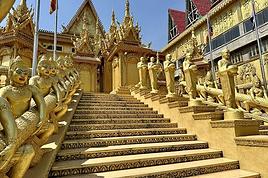
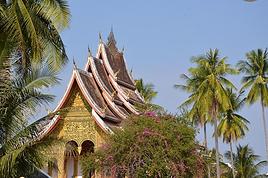
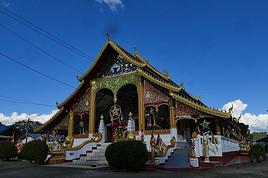
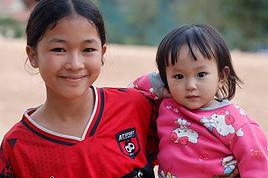
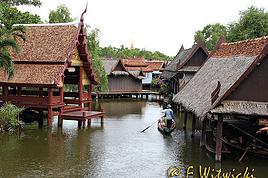
What would be the ideal time to travel to northern Laos without it being too cold or too hot, and to enjoy the landscapes with green rice paddies and water? We love photography, hiking, and meeting people.
We’re considering April/May—is that a good choice?
2,457 similar discussions in English
Hi there,
I’m planning a 6-day trip from Orléans to Tours.
There are very few detailed maps to figure out the main stages and what you’ll find along the way. Even though I’ve downloaded the Miam Miam Dodo app, it’s pretty tedious (everything is split into small map sections).
I’ve settled on the first leg: Orléans to Meung-sur-Loire, about 18 km. For the next one, I’m hesitating because I’d like to do around 20–25 km, but I see Beaugency is only about 10 km away, and Mer is almost 30 km. So, I’m stuck.
On top of that, I’m torn between taking the GR 3 route or the GR 655 (south).
If any of you know the area or have already done this hike/pilgrimage, I’d love to hear your tips for this section that goes through Blois and ends in Tours.
For the last legs, I’ve planned Blois -> ? Chaumont (no accommodations) -> Amboise -> Tours, knowing the final stage is about 30 km.
Thanks in advance for your help! 😉
Thanks in advance for your help! 😉
Hello,
We returned last night from the LE RHIN EN FETE cruise with Croisieurope.
We were notified the day before boarding of a change in boat and itinerary. Here’s what was originally planned: - Day 1: Boarding in Strasbourg at 6 PM. Departure on the cruise. - Day 2: Oberwesel-DUDESHEIM Sailing toward ST GOAR to see the LORELEI rock, then a visit to Reichenstein Castle and sailing toward Rudesheim. - Day 3: Rudesheim-MANNHEIM Up the Rhine to Mannheim and a visit to Heidelberg Castle. Sailing back to Strasbourg. - Day 4: Strasbourg by *bateau mouche* in the morning. Afternoon show at the Royal Palace in KIRWILLER and return to the boat. - Day 5: Disembarkation in Strasbourg at 9 AM.
Here’s what we actually did due to the change in boat and itinerary because of the Rhine’s water level. I assume this had been known for some time...
- Day 1: Strasbourg to Mainz or nearby by COACH. Departure around 4:30 PM. About 217 km. We arrived at the boat at 9 PM because the driver had trouble finding it. - Day 2: MAINZ-RUDESHEIM Morning sailing to ST GOAR to see the LORELEI. Lunch at Reichenstein Castle (as originally planned). 30-minute coach ride each way. - Day 3: RUDESHEIM-MAINZ Morning sailing to Mainz. Afternoon excursion to Heidelberg Castle (originally planned). 91 km each way. - Day 4: Mainz to Kirwiller by coach, about 207 km each way. Lunch and show at the Royal Palace: very good. - Day 5: MAINZ-STRASBOURG, about 194 km by coach. We left Mainz at 7:30 AM to arrive at Strasbourg train station at 10:05 AM.
In short, 110 km of sailing and over 1000 km by coach... a joke for a cruise, and about 14-15 hours of coach travel. We came back exhausted. We had booked a PRM cabin on the FRANCE but ended up with a standard cabin on the MONET... about 11 m², separate beds that couldn’t be moved together, and difficulty showering (only one shower taken in 4 days, not to mention the struggle to get up from the toilet... sorry, but it’s really problematic for a PRM person).
The visits were very interesting. All the crew on the MONET: excellent. Meals were also excellent.
Following this change in boat and itinerary, Croisieurope is offering us a 150 € voucher per person for a future cruise. We booked this cruise after a promotion (1 paying, 1 free) during their conference in Angers on 07/10/26. We think Croisieurope was already aware of the navigation difficulties on the Rhine. There were no company boats in Strasbourg... and cruises are still being sold with departures from Strasbourg. We’re very skeptical about traveling with Croisieurope again... Have a great day, everyone! Mum49
Trip with “assistance” – we just got back from a Brest/BKK round-trip in business class with Air France, and the assistance went really smoothly, both in PAR and BKK.
But at an outrageous price: over 4,000 € per person.
Next time, in November, we’re going with Thaiways, departing from PAR.
Question: if I book Brest/PAR with Air France and then BKK with Thai, will the assistance system still work between the two airlines?
Question: if I book Brest/PAR with Air France and then BKK with Thai, will the assistance system still work between the two airlines?
Hi there, I’m planning to travel by bus during my stay in Greece, mainly in November. Since I’ll be spending a few days in Nafplio, is it easy to get to Olympia by bus, or is it better to take a guided tour from Nafplio? It’s not ideal, but it would be my only option to see the site. Also, since I want to go to Delphi, is it possible to take public transport, staying one night in Olympia and leaving from there the next day for Delphi? That would save me from having to go back to Athens. If anyone has already done this route, I’d love to hear about your experience. Thanks!
Well, I still feel a bit lonely about this destination—no requests for info, no travel journals, or trip reports since I last posted over a year ago. A little disheartening.
That said, I did cross paths with slightly more tourists this time. Not a ton, but enough to notice compared to my last stay. Beyond that, not much has changed—the people are just as lovely, and every interaction, whether at the market, in the medinas, in town, or in the countryside, was positive. It was so pleasant; my "alert meter" stayed at zero the whole time (which is pretty different from some other places I visit now and then). The roads outside the cities remain dangerous, and the accident rate seems high. Best to drive during the day and take it easy (on some rough stretches, you don’t really have a choice anyway). The scattered plastic and metal waste hasn’t magically disappeared, and it’s still pretty discouraging to see the most beautiful beaches surrounded by empty bottles, straws, diapers, and rusted carcasses of an old Xantia or a skeletal Espace. When it’s not on the beach itself (since those are cleaned), it’s just a few meters away. Usually, there’s not much in the water or close to shore—the seabeds are gorgeous, with coral and a wide variety of scaly friends... But stepping back onto the hardened lava, you dodge a chip bag or a shriveled battery. Such a paradox. Honestly, it’s like this almost everywhere except on hotel beaches or those far from human settlements. But otherwise, in places like Chomoni, Bouni, Itsandra, Moya, and Domoni (on Anjouan), Nioumachoua (on Mohéli, and even on the nearby islets), it’s hard to ignore. And it unfortunately tarnishes the beauty of these otherwise stunning spots.
That said, you can still find secluded micro-bays, protected and remote, where this isn’t an issue. And where there are hotels—like in Petite Itsandra in Moroni, in front of Laka Lodge in Nioumachoua, Trou du Prophète, or even Chomoni (though the surrounding areas are so littered...)—the beaches are cleaned, so...
So why go? Why still love it despite all this? Well, first, the Comorians themselves—that’s already essential and probably the main reason. Then there’s the breathtaking topography: the imposing Karthala, the dizzying peaks and cliffs of Anjouan, vast ravines, a tortured geology covered in lush nature, and Mohéli, much more serene and gentle, blanketed in spice plants and trees with names that make you dream, like an open-air spice market. The flora across the islands—the fields, trees, scents: clove trees, cinnamon trees, lychee, mango, cardamom, nutmeg, vanilla, coconut palms, banana trees, coffee plants, cocoa... A profusion of green dotted with red, white, and yellow berries and flowers... The seabeds are stunning in many places, and there are some beautiful beaches/oceanfront spots, especially near Trou du Prophète (but not only there). The history and culture—between traditional festivals, but especially the medinas with their staircases, covered passages, palaces, and mosques that create Escher-like constructions. I love wandering through them for hours, stumbling upon an unlikely shop, a more or less philosophical saying like "pain is a warning," "a promise is a debt," or the less original "little by little, the bird makes its nest." A grocery store, women negotiating freshly caught fish (usually tuna, immediately cut and ready to sell), kids playing, old men playing checkers, a call to prayer... In Moroni, Mutsamudu, and Domoni, I spent most of my "urban" time.
If anyone’s interested—though given the hype about Comoros on the forum, I doubt it—but if you need info on accommodation across the three islands, some restaurants, or sites to visit, don’t hesitate to ask.
This message is another message in a bottle (one more, if I dare...) for the Comoros destination.
Hello everyone,
We’re 49 years old, love beautiful landscapes, meeting locals, discovering local food and traditions, and we avoid overly touristy places. We enjoy hiking, cycling, running, and diving.
This is our first time in Thailand (my husband knows Bangkok). We arrive on Friday, November 13th in Bangkok (city visit) and return on Friday, November 27th. We’re considering heading south (possibly toward Krabi) from the 14th to the 18th to enjoy the beautiful beaches, go diving, and see Khao Sok... Then back to Bangkok and on to Kanchanaburi to see the Sai Yok Noi waterfalls, followed by a bike visit to Ayutthaya. From there, we’d take an overnight train to the north: Chiang Mai, Chiang Rai, and the Lantern Festival from November 21st to 25th. On the 26th, we’d take a flight from Chiang Mai to Bangkok (city visit), and on the 27th, we have our flight back to France.
Does this itinerary seem too packed? Should we remove some things to avoid feeling rushed and fully enjoy the trip? Do you recommend anything other than Krabi?
Thanks for your help
Imagination or reality, fiction or true story.
Everything blends together, and if the characters really existed, if their story is partly true, I freely transcribed what Surya told me in her English as precarious as mine.
Have I already posted this on vf? I can't find it. Maybe on the small forum Wapiti created to continue our wild stories that went on for pages and pages and no longer pleased anyone on vf.
No matter.
I heard from Bavani—life is crazy, isn’t it?
That’s why I’m bringing her story back.
I’m settling into the -miscellaneous- section; I like being away from the noise.
When the house is overrun with running feet, laughter, arguments, and music, I go to the barn turned into a honey house. It’s cool, it smells of wax and honey, and among the disorder of hive frames, supers, and stacked jars, I refocus.
Here, in -miscellaneous-, no one rants. I can let my fingers glide over the keyboard in peace.
Alright, enough digressions. At the end of the notebook, I’ll tell you what became of this little girl.
Bavani
“Bavani, stop daydreaming, work.”
I’m not daydreaming, I’m thinking.
My teacher is Surya, and she asked us to write a story. She doesn’t like us—I heard her talking to the teacher in the little kids’ class. She said: I stay here because the white people pay better than in government schools, but it’s a shame to teach gypsies. Filthy street urchins.
I’m not a gypsy, I’m a Narikuravar. Grandmother told me: you’re going to this school, you’ll learn English well, and when you come back, you’ll be richer than the others because you’ll beg better from the tourists. Grandmother makes necklaces and sells them, but often she sells nothing at all.
There are lots of tourists in my town, Tiruvannamalai. Before, I lived behind the temple with dad and mom. We had our spot and were happy, especially when mom cooked rice on the brazier. Then we’d lie down, and I’d press my back against mom’s huge belly, and it would move inside. One day, mom told me: stay here, I’ll be back very soon. I waited a long time, and neither dad nor mom came back. After a long time, dad came, and we went to Salem to my grandmother, who’s dad’s mom.
I asked: where’s mom? “Shut up, two was too many.” “Two what? He didn’t say.”
So I went to Salem to grandmother’s hut, and there was no rice, and Muriga came to get me with his minibus. Now I live here. We eat several times a day—yellow rice, then white rice to digest, and eggs and bananas.
And we have to study.
Papom *
.../...
Papom: in common language, it’s the equivalent of -see ya-
"400 pages of verbal pyrotechnics and animal magic" — The Times
"Bulawayo leans into exaggeration and irony to tell hard truths. *Glory* is jam-packed with comedy and farce, poking fun at an autocratic regime while illustrating the absurdity and surreal nature of a police state." — The Guardian
The cruelty and savagery of Zimbabwe’s (and Africa’s in general) "powerful animals"
Zimbabwean author NoViolet Bulawayo has written a novel that illustrates better than any documentary the complexity of colonial legacy. In doing so, she revisits George Orwell’s Animal Farm. Her novel *Glory* is a political satire about Zimbabwe—and it’s brimming with humor.
For thirty years, Zimbabwe has been stagnating under Robert Mugabe’s presidency. Human rights violations, corruption, and international sanctions have kept the population mired in poverty and oppression, while the regime exploits the meager earnings of the economy. As the 2017 elections approach, a power struggle erupts over the succession of the very elderly Father of the Nation (Mugabe). On the streets, people hope for long-awaited reforms; the people feel their moment has come.
And indeed, the army ousts Mugabe and his wife—"with her Gucci heels" (p.32)—who was positioning herself for the presidency. Hopes are dashed, however. The generals install former vice-president Emmerson Mnangagwa in power; the regime merely changes faces, but the problems remain the same.
In the novel, the country is called "Jidada, with a -da and another -da" (p.1); there’s no mistaking that this fictional state is Zimbabwe.
For *Glory*, her second novel, NoViolet Bulawayo invents a whole series of codes whose strength lies precisely in how easy they are to decipher. Like George Orwell’s Animal Farm, the characters populating Bulawayo’s universe aren’t humans but horses, goats, or crocodiles with all-too-human traits. Mugabe and Mnangagwa are horses, the spiritual leader is a pig, the soldiers are all bloodthirsty dogs, while the populace consists of goats, chickens, donkeys, and cats. The shift to the animal world serves only to better grasp the laws of despotism—and to ridicule real-life models. On one hand, the animals are humanized: they tweet, torture, travel in private jets. On the other, their greed, stupidity, and brutality stem from their animal nature.
It’s the old trick of fable: dressing men in animal disguises to make them easier to recognize. That’s how Orwell, in Animal Farm, traced how the promise of liberation from the Russian Revolution turned into Stalinist terror. In his 1945 fable, George Orwell describes how the animals of a farm drive out their farmer to organize the exploitation themselves, collectively. For a time, they truly taste freedom, but a clique of pigs ends up taking control. The central figures of the Soviet story—Stalin, Trotsky, Molotov—were easily recognizable.
Yet Bulawayo departs sharply from Orwell. She’s less concerned with precision and the force of argument than with satirical exaggeration. The deposed president is a senile old man who believes he can control even the sun’s course. The new stallion in power is a greedy debaucher. His soldiers sniff respectfully at his tail and backside.
In Bulawayo’s *Glory*, things are more complicated, but her novel also tells of a failed, incomplete liberation. In the author’s Animal Farm, Jidada, the colonial exploiters are followed by new forms of oppression. Because the former liberators become tyrants themselves. And because global power dynamics persist in neocolonial structures.
Wouldn’t that be enough to fuel a deeply depressing narrative? No—Bulawayo turns it into a blazing satire, full of wit and uncompromising criticism of power, a thread running through contemporary (not just) Zimbabwean history. The old warhorses in NoViolet Bulawayo’s Jidada, who continue to act as pack leaders, are easily recognizable as caricatures of the longtime dictator Robert Mugabe and his successor, current president Emmerson Mnangagwa.
The plot kicks off in high gear with independence day festivities. From the crack of dawn, everyone waits on Jidada Square for the Old Horse, the Father of the Nation and former liberator, whose reign "was nearing all of—not one, not two, not three, but four solid decades" (p.1). Everywhere, the colors of the Jidada Party shine; everywhere, true supporters cheer. Even the scorching sun plays its part: "At this point the sun, upon seeing arrive the leader who was decreed by God himself to rule and rule and keep ruling, a leader who'd in turn decreed the very sun to head his cheerleading squad, took a deep, deep breath and thoroughly blazed to impress" (p.2).
Finally, the Old Horse’s luxury carriage approaches "with the slowness of a hearse" (p.2), and "hoping to catch a glimpse of the legendary Father of the Nation," which causes "the animals fell over themselves like intoxicated frogs" (p.2). The sovereign’s speech is delayed a moment longer: "what I really want is a nap," groans the Old Horse as he takes his seat with such care "like his backside was made of expensive porcelain" (p.6).
Meanwhile, Bulawayo parades his entourage: the president’s wife (who earns her doctorate at Jidada University faster than "you could say diss, for dissertation. Tholukuthi it was as easy as ordering from a KFC drive-through, or perhaps even easier being that it was cheaper than KFC; it in fact cost her nothing and the degree actually came with a zero-calorie Diet Coke and a purple straw" (p.41), and she’s now known as Dr Sweet Mother. The cabinet includes "the Minister of the Revolution, the Minister of Corruption, the Minister of Order, the Minister of Things, the Minister of Nothing, the Minister of Propaganda, the Minister of Homophobic Affairs, the Minister of Disinformation and the Minister of Looting" (p.9). And of course the vice-president, who will soon become interim president when the Old Horse finally kicks the bucket—and then settle in as the new long-term president, who in the novel is called Tuvius Delight Shasha, or "Tuvy" for short (p.253), none other than Emmerson Mnangagwa. It’s him Bulawayo reserves her most merciless character description for.
"New Dispensation" (p.109) is Tuvy’s slogan for Jidada, and he loves repeating it so much he even named his parrot after it ("So inspired was Tuvy by the realisation that he rechristened his new pet parrot with the name New Dispensation—tholukuthi the bird having been acquired explicitly for the purposes of tweeting eulogies and accordingly glorifying the Saviour throughout the airs and skies of the nation. Tuvy then went on to hire a lecturer in English from the University of Jidada to teach New Dispensation to say the phrase 'New Dispensation'" p.110). But Tuvy’s Zimbabwe remains a nation without free, fair, and credible elections ("#freefairncredibleelection" p.161), and the promised equal treatment applies only insofar as Zimbabweans now queue up without discrimination in endless lines—and everyone is as poor as the next in the "queuenation" (p.283). Except for the powerful. They can "yes, tholukuthi, her immeasurable riches theirs to take. And take they did—
just take—take—take—take—take—take—take—take—take—take—take—take—take—take—take—take—take—take—take—take—take—take—take—take—take—take—take" (p.249-250).
In short: Bulawayo brilliantly depicts how former independence fighters become exploiters themselves. And how the country threatens to suffocate under the weight of corruption and repression. But she also literally stages the polyphony with which the people oppose imposed obedience to the official line.
Controversial online discussions keep interrupting the narrative—dialogues and social threads (see photo below) that Bulawayo masterfully integrates. From a literary standpoint, it’s a brilliant idea. And it shows, above all, that the author’s sympathy—so likeable—goes to all those who refuse to let their dream of true freedom be stolen, not even by the corrupt elites of their own country.
In the book’s acknowledgments, the first tribute goes to "The Jidadas of the world, clamouring for freedom on many fronts—A luta continua." (p.401) This reflects the realization that, not only in Jidada-Zimbabwe but in many other corners of the world, the end of colonial domination is still far from meaning the freedom hoped for by the vast majority of people. But it also means, more broadly, that this freedom must be won "on many fronts" (see above), both domestically and geopolitically.
That’s precisely what *Glory* so vividly highlights: how complex the project behind the term "postcolonialism" really is. With *Glory*, Bulawayo also delivers a scathing critique of the persistence of colonial mindsets in the West.
In the novel, the murder of George Floyd, racist police violence, and white-supremacist ideology in Trump’s United States perfectly illustrate the persistence of racism. It’s especially in the final chapters that Bulawayo lets Jidada’s inhabitants explicitly and unflinchingly criticize a neocolonial world order:
"It was not lost on us how the West, which loved to 'save' Africa and announce every action to the whole world, did so with one limb while manipulating, looting and fleecing us with the rest of its limbs so that more money in fact poured out of the continent than trickled in." (p.376)
"It was no mistake that multinational corporations yearly reaped and shipped colossal profits from Africa back to their countries as had been the case during colonial times. Even the sticks and stones would tell you that the African earth at any given time howled and shook and heaved from the extraction of its precious minerals that rarely benefited its own miserable children." (p.376)
"(...) we vowed to wage yet another war for Africa's second Liberation from neocolonial oppression. From exploitation. From plunder. From Western dominion. From indignity. From Abuse. We wanted real freedom. We wanted greedy, thieving paws off our wealth. We wanted Justice. We wanted a new world; we wanted a brand-new world so much we didn't sleep a wink that night." (p.377)
The Jidadas of this world must fight two enemies: Western neocolonialism and the autocratic instrumentalization of that argument; the persistence of Western racism and the populist appropriation of that humiliation by tyrants from their own ranks. Neither of these obstacles to freedom diminishes the historical and current guilt of the other. But the path to postcolonial liberation must overcome all these forms of oppression. After all, the colonizers didn’t bequeath democracies to formerly dominated nations, but instability and the principles of oppression and exploitation—which the so-called liberators have also internalized. Yet the fact that a satirical novel can capture the complexity of historical relationships while remaining, despite all the darkness of the subject, hilarious—well, that’s truly astonishing.
Finally, *Glory* ties into a major trauma in Zimbabwe’s post-independence history: the so-called Gukurahundi massacres. Between 1983 and 1987, tens of thousands of civilians were murdered by Mugabe’s bloody henchmen, most of them Ndebele. The State Security Minister and head of secret services at the time? You guessed it—Emmerson Mnangagwa.
When *Glory* turns to the massacres, the novel’s tone shifts completely. The story is now told through the narrative of the goat called Destiny, who, like NoViolet Bulawayo herself, left her home country at 18 for the United States and only returned after 13 years. In the book, the city of Bulawayo becomes a village where Destiny retraces her family’s history—and learns that part of it was also brutally murdered during the massacres.
The abuse of power and life under a dictatorship, dispossession, and a fiercely proud awareness of the psychological wounds and emotional vulnerability of a uprooted and disenfranchised people who had to forge a new language—a new set of names—to express their lived experiences are at the heart of this wonderful Zimbabwean author’s literary work, NoViolet Bulawayo. Shortly after her studies, she was already writing short stories about postcolonial power dynamics in Africa. But her playful, masterful, and often unconventional approach to language also plays a key role in her work. With virtuosity, she shifts from cynical images of power-obsessed elites to compassionate descriptions of the people’s suffering, ending with a hopeful sermon on courage—the courage to break free from fear and thus gain the strength for change ("And every one of them understood that whatever they heard within those hearts was the new national anthem, tholukuthi an anthem that spoke of the kind of glory that burns eternal and glows with living light." p.400). This novel is a genuine pleasure to read. And it’s exceptional. Good, African...
Book info (original English and German translation):
NoViolet Bulawayo. Glory. Chatto & Windus, 2022. NoViolet Bulawayo. Glory. Suhrkamp, 2023.
Hery
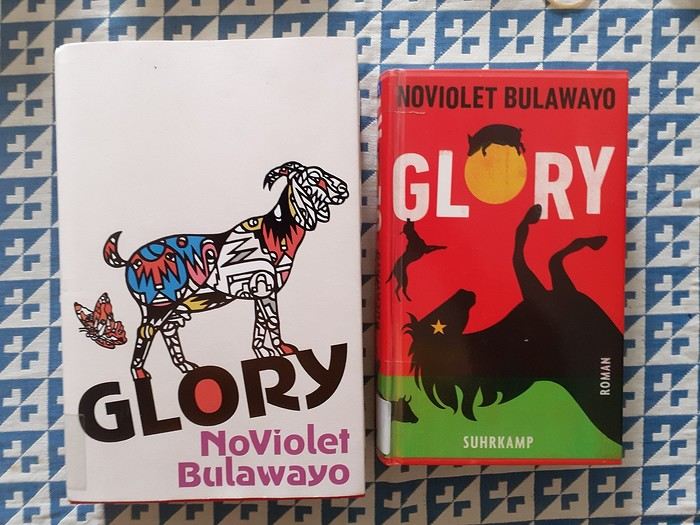 The books (in English, in German)
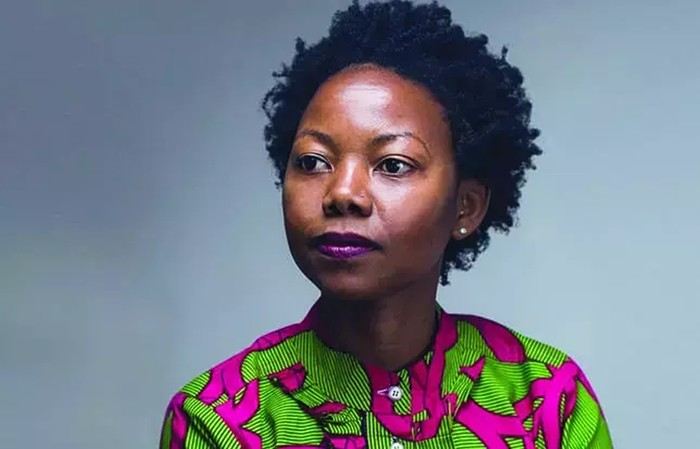 Author NoViolet Bulawayo, Zimbabwe
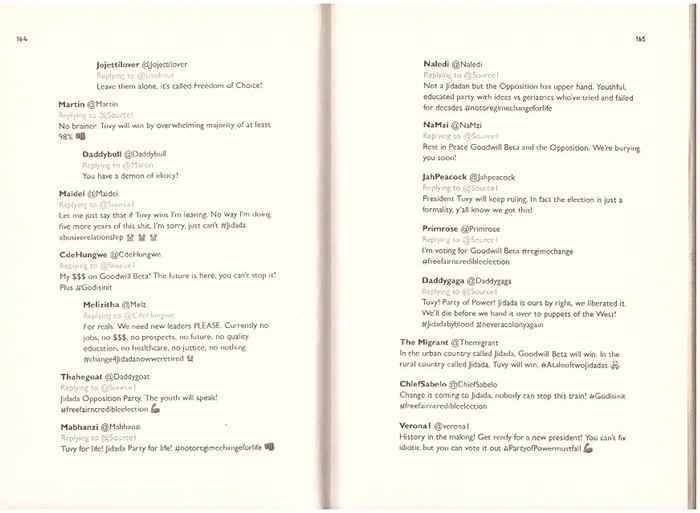 Threads (p.164-165)
"Bulawayo leans into exaggeration and irony to tell hard truths. *Glory* is jam-packed with comedy and farce, poking fun at an autocratic regime while illustrating the absurdity and surreal nature of a police state." — The Guardian
The cruelty and savagery of Zimbabwe’s (and Africa’s in general) "powerful animals"
Zimbabwean author NoViolet Bulawayo has written a novel that illustrates better than any documentary the complexity of colonial legacy. In doing so, she revisits George Orwell’s Animal Farm. Her novel *Glory* is a political satire about Zimbabwe—and it’s brimming with humor.
For thirty years, Zimbabwe has been stagnating under Robert Mugabe’s presidency. Human rights violations, corruption, and international sanctions have kept the population mired in poverty and oppression, while the regime exploits the meager earnings of the economy. As the 2017 elections approach, a power struggle erupts over the succession of the very elderly Father of the Nation (Mugabe). On the streets, people hope for long-awaited reforms; the people feel their moment has come.
And indeed, the army ousts Mugabe and his wife—"with her Gucci heels" (p.32)—who was positioning herself for the presidency. Hopes are dashed, however. The generals install former vice-president Emmerson Mnangagwa in power; the regime merely changes faces, but the problems remain the same.
In the novel, the country is called "Jidada, with a -da and another -da" (p.1); there’s no mistaking that this fictional state is Zimbabwe.
For *Glory*, her second novel, NoViolet Bulawayo invents a whole series of codes whose strength lies precisely in how easy they are to decipher. Like George Orwell’s Animal Farm, the characters populating Bulawayo’s universe aren’t humans but horses, goats, or crocodiles with all-too-human traits. Mugabe and Mnangagwa are horses, the spiritual leader is a pig, the soldiers are all bloodthirsty dogs, while the populace consists of goats, chickens, donkeys, and cats. The shift to the animal world serves only to better grasp the laws of despotism—and to ridicule real-life models. On one hand, the animals are humanized: they tweet, torture, travel in private jets. On the other, their greed, stupidity, and brutality stem from their animal nature.
It’s the old trick of fable: dressing men in animal disguises to make them easier to recognize. That’s how Orwell, in Animal Farm, traced how the promise of liberation from the Russian Revolution turned into Stalinist terror. In his 1945 fable, George Orwell describes how the animals of a farm drive out their farmer to organize the exploitation themselves, collectively. For a time, they truly taste freedom, but a clique of pigs ends up taking control. The central figures of the Soviet story—Stalin, Trotsky, Molotov—were easily recognizable.
Yet Bulawayo departs sharply from Orwell. She’s less concerned with precision and the force of argument than with satirical exaggeration. The deposed president is a senile old man who believes he can control even the sun’s course. The new stallion in power is a greedy debaucher. His soldiers sniff respectfully at his tail and backside.
In Bulawayo’s *Glory*, things are more complicated, but her novel also tells of a failed, incomplete liberation. In the author’s Animal Farm, Jidada, the colonial exploiters are followed by new forms of oppression. Because the former liberators become tyrants themselves. And because global power dynamics persist in neocolonial structures.
Wouldn’t that be enough to fuel a deeply depressing narrative? No—Bulawayo turns it into a blazing satire, full of wit and uncompromising criticism of power, a thread running through contemporary (not just) Zimbabwean history. The old warhorses in NoViolet Bulawayo’s Jidada, who continue to act as pack leaders, are easily recognizable as caricatures of the longtime dictator Robert Mugabe and his successor, current president Emmerson Mnangagwa.
The plot kicks off in high gear with independence day festivities. From the crack of dawn, everyone waits on Jidada Square for the Old Horse, the Father of the Nation and former liberator, whose reign "was nearing all of—not one, not two, not three, but four solid decades" (p.1). Everywhere, the colors of the Jidada Party shine; everywhere, true supporters cheer. Even the scorching sun plays its part: "At this point the sun, upon seeing arrive the leader who was decreed by God himself to rule and rule and keep ruling, a leader who'd in turn decreed the very sun to head his cheerleading squad, took a deep, deep breath and thoroughly blazed to impress" (p.2).
Finally, the Old Horse’s luxury carriage approaches "with the slowness of a hearse" (p.2), and "hoping to catch a glimpse of the legendary Father of the Nation," which causes "the animals fell over themselves like intoxicated frogs" (p.2). The sovereign’s speech is delayed a moment longer: "what I really want is a nap," groans the Old Horse as he takes his seat with such care "like his backside was made of expensive porcelain" (p.6).
Meanwhile, Bulawayo parades his entourage: the president’s wife (who earns her doctorate at Jidada University faster than "you could say diss, for dissertation. Tholukuthi it was as easy as ordering from a KFC drive-through, or perhaps even easier being that it was cheaper than KFC; it in fact cost her nothing and the degree actually came with a zero-calorie Diet Coke and a purple straw" (p.41), and she’s now known as Dr Sweet Mother. The cabinet includes "the Minister of the Revolution, the Minister of Corruption, the Minister of Order, the Minister of Things, the Minister of Nothing, the Minister of Propaganda, the Minister of Homophobic Affairs, the Minister of Disinformation and the Minister of Looting" (p.9). And of course the vice-president, who will soon become interim president when the Old Horse finally kicks the bucket—and then settle in as the new long-term president, who in the novel is called Tuvius Delight Shasha, or "Tuvy" for short (p.253), none other than Emmerson Mnangagwa. It’s him Bulawayo reserves her most merciless character description for.
"New Dispensation" (p.109) is Tuvy’s slogan for Jidada, and he loves repeating it so much he even named his parrot after it ("So inspired was Tuvy by the realisation that he rechristened his new pet parrot with the name New Dispensation—tholukuthi the bird having been acquired explicitly for the purposes of tweeting eulogies and accordingly glorifying the Saviour throughout the airs and skies of the nation. Tuvy then went on to hire a lecturer in English from the University of Jidada to teach New Dispensation to say the phrase 'New Dispensation'" p.110). But Tuvy’s Zimbabwe remains a nation without free, fair, and credible elections ("#freefairncredibleelection" p.161), and the promised equal treatment applies only insofar as Zimbabweans now queue up without discrimination in endless lines—and everyone is as poor as the next in the "queuenation" (p.283). Except for the powerful. They can "yes, tholukuthi, her immeasurable riches theirs to take. And take they did—
just take—take—take—take—take—take—take—take—take—take—take—take—take—take—take—take—take—take—take—take—take—take—take—take—take—take—take" (p.249-250).
In short: Bulawayo brilliantly depicts how former independence fighters become exploiters themselves. And how the country threatens to suffocate under the weight of corruption and repression. But she also literally stages the polyphony with which the people oppose imposed obedience to the official line.
Controversial online discussions keep interrupting the narrative—dialogues and social threads (see photo below) that Bulawayo masterfully integrates. From a literary standpoint, it’s a brilliant idea. And it shows, above all, that the author’s sympathy—so likeable—goes to all those who refuse to let their dream of true freedom be stolen, not even by the corrupt elites of their own country.
In the book’s acknowledgments, the first tribute goes to "The Jidadas of the world, clamouring for freedom on many fronts—A luta continua." (p.401) This reflects the realization that, not only in Jidada-Zimbabwe but in many other corners of the world, the end of colonial domination is still far from meaning the freedom hoped for by the vast majority of people. But it also means, more broadly, that this freedom must be won "on many fronts" (see above), both domestically and geopolitically.
That’s precisely what *Glory* so vividly highlights: how complex the project behind the term "postcolonialism" really is. With *Glory*, Bulawayo also delivers a scathing critique of the persistence of colonial mindsets in the West.
In the novel, the murder of George Floyd, racist police violence, and white-supremacist ideology in Trump’s United States perfectly illustrate the persistence of racism. It’s especially in the final chapters that Bulawayo lets Jidada’s inhabitants explicitly and unflinchingly criticize a neocolonial world order:
"It was not lost on us how the West, which loved to 'save' Africa and announce every action to the whole world, did so with one limb while manipulating, looting and fleecing us with the rest of its limbs so that more money in fact poured out of the continent than trickled in." (p.376)
"It was no mistake that multinational corporations yearly reaped and shipped colossal profits from Africa back to their countries as had been the case during colonial times. Even the sticks and stones would tell you that the African earth at any given time howled and shook and heaved from the extraction of its precious minerals that rarely benefited its own miserable children." (p.376)
"(...) we vowed to wage yet another war for Africa's second Liberation from neocolonial oppression. From exploitation. From plunder. From Western dominion. From indignity. From Abuse. We wanted real freedom. We wanted greedy, thieving paws off our wealth. We wanted Justice. We wanted a new world; we wanted a brand-new world so much we didn't sleep a wink that night." (p.377)
The Jidadas of this world must fight two enemies: Western neocolonialism and the autocratic instrumentalization of that argument; the persistence of Western racism and the populist appropriation of that humiliation by tyrants from their own ranks. Neither of these obstacles to freedom diminishes the historical and current guilt of the other. But the path to postcolonial liberation must overcome all these forms of oppression. After all, the colonizers didn’t bequeath democracies to formerly dominated nations, but instability and the principles of oppression and exploitation—which the so-called liberators have also internalized. Yet the fact that a satirical novel can capture the complexity of historical relationships while remaining, despite all the darkness of the subject, hilarious—well, that’s truly astonishing.
Finally, *Glory* ties into a major trauma in Zimbabwe’s post-independence history: the so-called Gukurahundi massacres. Between 1983 and 1987, tens of thousands of civilians were murdered by Mugabe’s bloody henchmen, most of them Ndebele. The State Security Minister and head of secret services at the time? You guessed it—Emmerson Mnangagwa.
When *Glory* turns to the massacres, the novel’s tone shifts completely. The story is now told through the narrative of the goat called Destiny, who, like NoViolet Bulawayo herself, left her home country at 18 for the United States and only returned after 13 years. In the book, the city of Bulawayo becomes a village where Destiny retraces her family’s history—and learns that part of it was also brutally murdered during the massacres.
The abuse of power and life under a dictatorship, dispossession, and a fiercely proud awareness of the psychological wounds and emotional vulnerability of a uprooted and disenfranchised people who had to forge a new language—a new set of names—to express their lived experiences are at the heart of this wonderful Zimbabwean author’s literary work, NoViolet Bulawayo. Shortly after her studies, she was already writing short stories about postcolonial power dynamics in Africa. But her playful, masterful, and often unconventional approach to language also plays a key role in her work. With virtuosity, she shifts from cynical images of power-obsessed elites to compassionate descriptions of the people’s suffering, ending with a hopeful sermon on courage—the courage to break free from fear and thus gain the strength for change ("And every one of them understood that whatever they heard within those hearts was the new national anthem, tholukuthi an anthem that spoke of the kind of glory that burns eternal and glows with living light." p.400). This novel is a genuine pleasure to read. And it’s exceptional. Good, African...
Book info (original English and German translation):
NoViolet Bulawayo. Glory. Chatto & Windus, 2022. NoViolet Bulawayo. Glory. Suhrkamp, 2023.
Hery
The books (in English, in German)
Author NoViolet Bulawayo, Zimbabwe
Threads (p.164-165)Some trips are born twice.
Ours was supposed to happen in 2020. Everything was ready: the itinerary, the flight tickets, the hotel reservations and Machu Picchu, the rental car, the dreams of high altitudes and wide-open spaces. And then the world stopped.
Ours was supposed to happen in 2020. Everything was ready: the itinerary, the flight tickets, the hotel reservations and Machu Picchu, the rental car, the dreams of high altitudes and wide-open spaces. And then the world stopped.
Some trips are born twice.
Ours was supposed to happen in 2020. Everything was ready: the itinerary, the flight tickets, hotel reservations and Machu Picchu, the rental car, dreams of high altitudes and wide-open spaces. And then the world stopped.
Like so many other plans, our trip to Peru was put on hold. Disappointment was followed by a more concrete reality: paperwork, endless back-and-forth, and battles to recover some of the costs we’d already paid.
The years went by. Life moved on, with its shifting priorities and unexpected twists. Rescheduling this trip wasn’t possible until 2025.
The itinerary stayed mostly true to what we’d imagined five years earlier. One major difference, though—in 2020, we’d planned to rent a car and explore the roads completely independently. Most importantly, we hadn’t included the three-day Ausangate trek, due to lack of time.
For 2025, our plans evolved. 4x4 rental prices had skyrocketed, and when we looked at our schedule more closely, we realized quite a few days didn’t actually need a vehicle. So we made a different choice and opted for private drivers instead. A decision we never regretted. Always punctual, thoughtful, and available... they were so much more than just drivers.
All our reservations were made in January, except for the trek, which we booked in February.
Finding reliable drivers on our own was tough, so we asked Laurent from Tout Pérou to handle it for us. Going through Tout Pérou also gave us a discount on the train ride to Aguas Calientes, so Laurent booked those tickets too. He also bought our Machu Picchu entrance tickets at the same price we would’ve paid on the official website. When comparing domestic flight prices, we found it was cheaper to book from Peru, so Laurent took care of those as well.
This time, nothing was going to stop us. Peru was waiting. And we were ready. 🙂
Namibia forever—or our 4th trip to this stunning country.
A few surprises this year: brown hyenas, lots of rhinos, and a desert that was almost lush with oases.
From Okonjima to the Ongava Reserve, through Damaraland, the incredible lights of Spitzkoppe, the dunes of Sossusvlei with water, the nearly green NamibRand Reserve, and ending in the Kalahari. That’s the hearty journey we just completed between August 26 and September 14, my wife and I, with 3,500 km of tracks in this amazing Namibia.
We’re regulars and totally crazy about stays in Southern and South Africa, and we’ve returned to Namibia for the 4th time. Not sure this will be the last!
We’ll present two parts.
The first part is a video showcasing our trip, hosted on our travel channel: https://www.youtube.com/@lolodetoul54
Namibia 2026 video: https://www.youtube.com/watch?v=Db9StdkERPs&t=4404s
The second part will recount the journey day by day once my wife finishes sorting through our thousands of photos from our two cameras and our smartphones. So many photos! Gone are the days of film when we shot sparingly. Today, it’s a photographic feast.
Our Namibia 2026 journey: We decided to switch things up by doing a counterclockwise loop around Namibia. Okay, it’s not a groundbreaking choice since you start with more wildlife-focused areas and end with landscape regions.
Our itinerary:
Frankfurt-Windhoek with Discover Airlines, direct flight, then 18 nights:
- Okonjima: 2 nights
- Mushara, east of Etosha: 2 nights
- Okaukuejo in Etosha: 1 night
- Ongava: 2 nights
- Damaraland at Grootberg: 2 nights
- Damaraland at Spitzkoppe: 2 nights
- Namib: 1 night
- Sossusvlei: 2 nights
- NamibRand: 3 nights
- Kalahari: 2 nights
Then back from Windhoek to Frankfurt.
Very soon, I’ll share this Namibian journey day by day. Patience!
For wildlife photography lovers, I’ll remind you about the 29th International Festival of Wildlife and Nature Photography in Montier-en-Der (52) from November 19 to 22: https://www.photo-montier.org/
For wildlife photography lovers, I’ll remind you about the 29th International Festival of Wildlife and Nature Photography in Montier-en-Der (52) from November 19 to 22: https://www.photo-montier.org/
First time in Thailand next January. Which islands are away from mass tourism? 😊😊 Thanks everyone!
For once, given the destination, the author can’t set aside their religious beliefs, which inevitably shape this kind of journey.
The Trip
Early in the morning at Orly Airport, in the departure lounge for Tel Aviv, a group of about forty young men arrives, all looking identical! The same neatly trimmed beards, the same identical haircuts, the same outfits with a touch of whimsy… The effect of seeing these forty “clones” is striking and raises questions! Why such perfect uniformity among this group of guys? Do they belong to the same family, sports club, cultural association, or religious group? A mystery! At the same time, the waiting area fills up with men who are more expected, given our destination: they wear large felt hats and dress in black suits with white shirts—Hassidim? The ones I’ve glimpsed fleetingly in Paris or New York, who have always been a mystery to me. More discreet-looking women accompany them.
I’m already in Israel without even setting foot there! Plus, I witness the preparations for an improvised show.
The “clones” start a flash mob at seven in the morning in a Paris airport departure lounge! Some pull out musical instruments, others begin singing and dancing. A music with strange, unfamiliar sounds enchants the waiting passengers.
The flight crew finally arrives, cutting through the flash mob, bringing us back to the reality of the moment: waiting to take off soon for this so troubling and mysterious Middle East. We go through passport control, presenting our faces to the scanners that operate the exit gate. The group of “identical” young men gets held up by the system: logically, a scanner let the first one through but blocked the second because of his perfect resemblance to the first. To the machine, the same person shouldn’t be able to cross the border twice? But eventually, the whole group makes it through the glass doors, leaving the Republic behind. My simplistic explanation is left looking ridiculous.
At every new destination, I ask myself countless questions, revealing a certain anxiety tied to the unknown: fear of attacks (one just happened at a bus station in Jerusalem), possible police pressure, unexpected events. Israel isn’t known for being a relaxing destination. In reality, if I did face a serious difficulty in this country, it wasn’t one I had anticipated—and it wasn’t particularly tied to Israel!
I take my seat by the window, which is already occupied by a little girl. Her father, a Hassidic man, politely asks if I’d be willing to give up my seat for his daughter. I tell him I’d be happy to make her happy. Seeing me masked, he asks if I’d like him and his daughter to wear masks too. In response, I take off my mask so as not to impose any constraints on them and wish them a good flight.
It was the first time I’d approached and spoken to a Hassidic man. He didn’t speak the way I might have expected after watching *Rabbi Jacob* with Louis de Funès; he spoke perfectly without an accent, just like you and me! Beware of stereotypes! Throughout the flight, I sneak glances at my strange neighbor: he prayed silently without stopping for a minute. His daughter, as good as gold, never interrupted him. He used several religious accessories during his three-hour continuous prayer: a kippa, a prayer shawl, and a rosary?… I left that plane deeply impressed, me, who has a very distant relationship with my Creator and only prays now and then.
For once, I'm sharing my experience after benefiting from other travelers' tips to take the plunge and rent a car (without a driver).
First, don’t hesitate! (Unless you just got your license the day before.) The roads are good—even very good in the north (the situation seems to have improved a lot). Driving is "Italian-style"—you can fit 3 or even 4 cars on a two-lane road. Sri Lankans aren’t suicidal (I wouldn’t have done it in India, though...). No issues with police checkpoints: we were never stopped in 25 days (unlike Sri Lankans...). These days, with Google and connectivity, you can’t get lost. Plan short trips (for us, it was between 2 and 4 hours with Google Maps estimates). Price: for a basic car, between 23 and 25 € per day, and gas isn’t expensive. I didn’t rent a car in Colombo (we used the PickMe app for tuk-tuks or car transfers with luggage). I also left the car parked in Kandy—it was a bit more intense there with narrow hillside streets and motorbikes/tuk-tuks driving a little wild. Big advantage: automatic transmission.
For me, aside from the first intersection, no stress—if you’re tired or not feeling it, you can drive as slowly as you want (unlike in France). I also drove and overtook like the Sri Lankans naturally.
Basic tips (but if you’re a driver, they’re obvious): - The bus is the boss: you’ve got to yield. - Unlike Sri Lankans, avoid overtaking without visibility. - Stay aware of your surroundings: cows, dogs, monitor lizards, pedestrians... so if there’s something, slow down!
I caught myself driving up to 90 km/h without realizing it but then slowed down (speed limits: 70 on rural roads, 100 on highways).
Of course, you’ll need an international driver’s permit or a temporary Sri Lankan license (I had both, but no one asked for them).
Renting a tuk-tuk was trendy among young travelers (I don’t get the appeal for a long trip—maybe 2 or 3 days since they’re slow, not that economical, more dangerous, and you can’t leave your stuff inside. Plus, the passenger sits behind the driver, and we had temps up to 37°C).
For a car, it’s great because it makes you independent: schedules, routes, supermarkets, restaurants...
Hope my feedback helps! !
Hi there,
Once again, I’m turning to VoyageForum to kick off my trip planning—this time, it’s Croatia!
I’m treating my 29-year-old daughter to a trip where we’d love to combine hiking and snorkelling. I’m not sure if we can focus on just one region, but that’d be ideal since we’ll only have 10–15 days in August this year.
Could anyone point me in the right direction for a first lead?
Are transport links easy to navigate? Is it better to go with Airbnb or a hostel?
Thanks in advance for your tips!
Laurence from Bayonne
This was my first time returning to Japan since the COVID lockdown.
My trips are always intense. We're not here to relax. We're here to explore, mingle with locals, be welcomed into associations and museums, and discover things most people wouldn’t even suspect exist on the other side of the world.
Hi, it's my first time taking a plane and I chose EasyJet for a Geneva -> Barcelona flight.
I booked my ticket.
I received my booking reference by email, but I don’t see the actual ticket (barcode or QR code?).
Then I checked in to get the boarding pass with the flight details, QR code, etc. But does this boarding pass act as the ticket?
Because I’ve seen several times online that the flight ticket and the boarding pass aren’t the same thing.
Thanks in advance!
Thanks in advance!
We’ll be in Dahab again this October—we’ve been going since 1979—to freedive. In 2025, to our surprise, access to the Blue Hole is now paid: on top of the 10 € taxi fare, you have to pay $10 per person to enter the park. So we’re heading outside Dahab to the Three Pools site by bike, rented locally. Is there a bus that goes there, or shared taxis, instead of the tourist taxis? And where can we catch them? We’ve seen big buses full of local families on the site, but we don’t know where to find them. Thanks in advance!
hi there
I’ve been to Rwanda twice before, in November 1991 and December 1993, mostly for solidarity work. I’m looking into going back this November or December for three weeks, but I’m a bit hesitant when I see the tourist offerings—it’s so far from how I like to travel...
I travel solo using public transport and stay in places like guesthouses (GH), or accommodations run by cooperatives, associations, or religious groups. I love villages, markets, hikes, and local crafts. So far, my searches for these kinds of lodging options haven’t turned up much.
For now, I’m considering visiting (in no particular order):
Butare: Kibeho, Bisesero, Nyanza Ngenda Akagera, Kibungo, Lake Muazi Dian Fossey’s tomb (with the possibility of seeing gorillas) Kibuye??? Is the political situation stable there? Or Cyangugu?
So here are my first questions: -Is French still widely spoken? -Are there lists of the types of accommodations I mentioned above, or places to find that info? -Is what I’m planning doable using public transport? From the towns, are moto-taxis still available to get to villages, sites, and—most importantly—back? -Is it possible to go hiking solo? -Which are the best markets and what days are they held?
I know that’s a lot of questions already, and I really appreciate any relevant answers you can share. Looking forward to exchanging more!
Hi there,
This is my first time traveling to Italy, and I’m planning to go by car.
From what I’ve read, parking is tough in cities like Florence.
I’m looking for a small town not too far from Florence where I can stay and park my car, then take the train to visit Florence.
Any ideas or suggestions?
Thanks in advance
Hi everyone! 🙂
For once, I'm heading north... I’ve decided to spend a short time in Iceland, alone, during the first week of July. I’ll only have 5 full days there. Sure, it’s not much, so I’ll focus on what attracts me the most: the Highlands. Obviously, renting a 4x4—or even a regular car—on my own isn’t an option. That’s why I’m breaking my (probably unfounded) principles and have contacted local agencies for "day tours" in small-group format. Well, small-group up to 15 people, anyway... Oh well, I’m going for it! I’m really hesitant about visiting the Golden Circle on the last day, since I’ve read it’s become super crowded. I’d love your thoughts on this. Plus, if I visit that area, I’d want to include Bruarfoss, and as far as I know, only the Troll agency offers that detour. There’s also the Snaefellsnes Peninsula excursion that appeals to me, but it seems time-consuming. Time-consuming like the Jokulsarlon tour I’ve already booked. (But that’s on the first day, so I’ll still be full of energy!) By the last day, I’ll probably be running on empty... Otherwise, I’ll be doing 3 4x4 excursions that I’m really excited about: 1 in Thorsmork Valley, 1 in Landmannalaugar, and 1 in Kerlingarfjöll.
So, Golden Circle or no Golden Circle—that’s the question... Or maybe a relaxed day visiting Reykjavik and a lagoon. Blue Lagoon? Sky Lagoon? Meh...
Alright, this time it's definite—I'm heading to South Africa next October! 😎
Two weeks for a Kruger-Cape Town combo is short... but better than nothing 😉 Before booking the flight tickets, two quick preliminary questions (more will definitely follow): Is there a preferred direction (Kruger first or Cape Town first)? Is it better to go during the first half of October, the second half (or the middle 😏), or does the current unpredictable weather make it all pretty much the same in the end?
Two weeks for a Kruger-Cape Town combo is short... but better than nothing 😉 Before booking the flight tickets, two quick preliminary questions (more will definitely follow): Is there a preferred direction (Kruger first or Cape Town first)? Is it better to go during the first half of October, the second half (or the middle 😏), or does the current unpredictable weather make it all pretty much the same in the end?
We’d like to go to Morocco for the first time at the end of November or beginning of December in our camper van! 😊
Looking for someone to share the road and the crossing with, and head down to Agadir. We’re in no rush—we love seeing beautiful things. Retirement suits us just fine! Couple in our mid-60s. ;)
As we’ve said many times, 10 days is pretty short for Brazil! But it’s still enough for a “little introduction.” My very recent experience (April 2025) with a 2½-week itinerary might give you some ideas.
Hello fellow travel forum members,
This time, it's real, concrete stuff.
We’ll be going on a road trip in September this year (if all goes well, yes, I know it’s a bit superstitious, but I can’t help it, especially with the current family circumstances).
There’ll be four of us: my husband, our two grown kids (20 and 24), and me.
The flights aren’t booked yet because I’m still hesitating over the dates (it’s down to a day or two). They should be finalized by the end of this week or sometime next week.
J1 - Friday, August 29: Brussels-SLC via Amsterdam with KLM (I’d love your opinions on this airline since I’ve never flown with them before) – arrival scheduled for early afternoon. J2 - Saturday, August 30: SLC-Moab J3 - Sunday, August 31: Arches – we’ll see if we can get tickets; otherwise, we’ll wake up at dawn (entries possible without a reservation before 7 am) J4 - Monday, September 1: Arches J5 - Tuesday, September 2: Moab - Grand Teton – night booked J6 - Wednesday, September 3: Grand Teton – night booked J7 - Thursday, September 4: Grand Teton - Jackson J8 - Friday, September 5: Jackson J9 - Saturday, September 6: Jackson – evening: Rodeo (tickets booked) J10 - Sunday, September 7: Jackson - Yellowstone – night booked at Lake Yellowstone J11 - Monday, September 8: Yellowstone – night booked at Canyon Lodge J12 - Tuesday, September 9: Yellowstone – night booked at Canyon Lodge J13 - Wednesday, September 10: Yellowstone – night booked at Old Faithful Snow J14 - Thursday, September 11: Yellowstone – night booked at Old Faithful Snow J15 - Friday, September 12: Yellowstone - SLC J16 - Saturday, September 13: departure from SLC J17 - Sunday, September 14: arrival in Brussels
As I mentioned in the intro, the departure and return dates aren’t set in stone yet. Normally, we’d leave on August 29, which would mean visiting Moab and Arches. Otherwise, we’d leave on August 30 and stay in SLC. Around SLC, we’d explore the area, but I’ll admit I’m a bit stuck on what to do there.
For the return, we’d leave SLC on Saturday, September 13, or Sunday, September 14. Our youngest starts classes on Monday, September 15, but he doesn’t mind starting a day later.
Some things are already booked and paid for and can’t be changed (or only with difficulty), so please keep that in mind in your comments. 😕
I’d love to hear about your experiences with a few questions:
* Is it too ambitious to include Arches in the road trip? Especially since the drives are long, particularly the Moab-Grand Teton stretch.
* What do you recommend doing around SLC?
* Same for Jackson. We’ve decided to spend two full days there to take a break between the national parks.
* For the return, I was wondering if spending a day in SLC before heading back to Europe might be a good idea.
Thanks so much in advance for your advice!
Patricia
I’ve been to Corsica once (Bonifacio) and Italy once (Tuscany), and I have great memories of both. I’d love to go back to one of these places, but this time on a road trip (with my car).
I enjoy walking (nothing too intense like 8-hour hikes), wandering around nature or cities at random, local crafts and specialties, a little beach time, lots of food and culinary discoveries, meeting people, music, and dancing (Latin).
This is the first time I’m posting here to find a travel buddy—up until now, I’ve mostly traveled solo or met up with friends already on location. It could be a great way to share the experience. I’m open to some planning to outline the itinerary, but also leaving room to adjust based on what feels good in the moment or any opportunities that come up. So, I’m thinking of booking accommodations last-minute sometimes—Airbnb, guesthouses, hotels, camping, etc.
Everything’s on the table, and I’d love to chat about it.
Hope to see you soon! Raphaël
Hi there,
For our second trip to Japan, we’ll be spending 22 full days in Kyushu. 😎 Here’s our draft itinerary:
1 - FUKUOKA 2 - FUKUOKA 3 - FUKUOKA 4 - FUKUOKA / SASEBO / OJIKA 5 - OJIKA 6 - OJIKA / SASEBO / NAGASAKI 7 - NAGASAKI 8 - NAGASAKI 9 - NAGASAKI / KUMAMOTO +++ car rental +++ 10 - KUMAMOTO / ASO 11 - ASO 12 - ASO / KUROKAWA ONSEN 13 - KUROKAWA ONSEN / KUMAMOTO +++ end of car rental +++ 14 - KUMAMOTO / KAGOSHIMA 15 - IBUSUKI / CHIRAN 16 - SAKURAJIMA (car?) 17 - KAGOSHIMA / YAKUSHIMA 18 - YAKUSHIMA (car?) 19 - YAKUSHIMA (car?) 20 - YAKUSHIMA / KAGOSHIMA 21 - ??? 22 - FUKUOKA
We’ve deliberately skipped the eastern part (from Beppu to Miyazaki…)
We still have a few questions about our itinerary:
Car: For most of our travel, we plan to take the train or bus, except in the Aso region where we’ll rent a car. We’re wondering about Sakurajima and Yakushima: is a car necessary there?
Ojika: Would one night be enough?
Yakushima: Are two full days (plus two half-days) sufficient?
If we keep the schedule as is, we have one extra day to fit in somewhere—any suggestions?
Thanks for your help! 🙂
Hi there! 🙂
Once again, I’m back looking for advice
So, here’s the thing: in September, I’m planning a trip to Africa. There’ll be four of us—my husband, my 24-year-old daughter, my 20-year-old son, and me.
I’ve had this idea in my head for a while, but now it’s starting to feel real. The tricky part is that I’m on team "I organize my trip without an agency and handle things on the spot." But here’s the catch—my husband, who’s usually up for anything, doesn’t want to hear about a do-it-yourself trip. From what I’ve gathered, only Namibia allows that if I’m not mistaken. But if it’s possible in Tanzania (or maybe Kenya), I think I could convince him.
Anyway, here’s my first double question—more will probably follow! Can you travel without an agency in Tanzania? If not, which agency would you recommend, given that I live in Belgium?
Thanks so much in advance for your help!
Hi everyone!
First time for me in the States from March 24 to April 7, 2025—only 15 days, so choices have to be made. I want to explore part of the West, but obviously planning the route is the trickiest part, so here’s what I’ve come up with and where I have doubts:
-Leaving Paris for LA
1 or 2 nights to visit
-Heading to Vegas, where one couple would go by motorcycle (they’re fans and want the thrill of Route 66) and another by plane (I won’t linger here either—1 or 2 days max!)
Then, Lake Powell, Monument Valley, Grand Canyon, all by rental car for everyone, so the motorcycle gets returned in Vegas.
Now here’s where it gets tricky: either I continue the road trip through the big parks to finish in San Francisco (but it doesn’t seem like the best time—might be too cold), or I head down to San Diego for the return flight. But which itinerary? Kingman, Joshua Tree, Palm Springs, and San Diego—does that make sense? Is it better to go back to Vegas to take a plane or drive the whole way?
So many questions—your help and advice would be super welcome! Thanks in advance, Anne from Périgord Noir