Hello,
I’ve just discovered this forum and I’m looking for your valuable advice. We’re planning to spend a month in Quebec from mid-July to mid-August 2027 with our young adult daughters. Everything looks so beautiful that we’re struggling to decide how to organize our trip beyond our stops in Montreal and Quebec City. We’ll be renting a vehicle to explore the province, but we don’t want to spend our entire vacation racking up kilometers. Do you have any suggestions for an itinerary?
We’re heading to Québec from July 7 to 24, 2025, and we’d love some advice on our itinerary. We’re flying in and out of Montréal and want to visit Montréal, Québec City, Parc de la Gaspésie, and the Saguenay Fjord. What do you think would be the best route to make the most of these spots without racking up too many kilometers each day?
Thanks in advance for your help!
Catherine
We’re thinking of heading back to the US but we’re still debating the itinerary. We’d love to revisit New York, but after that...? We’ve already explored the East Coast without making it down to Florida. So we’re wondering if we should go there. New Orleans has been catching our eye, and Memphis with its blues-rock vibe is also really appealing.
A road trip that would start on the East Coast and head inland/mid-country. Any suggestions?
Or... we’re even considering stretching all the way to the West Coast:
- Passing through LA, which we’d ultimately skipped on our West Coast trip, but maybe it’s not the best time to go with all those wildfires that have devastated iconic spots...
- Or heading north to Washington and/or Oregon states, or closer, Montana.
Anyway, I’d love to hear your thoughts on what kind of loop we could do in 4 weeks... Given that in 2023, we spent nearly 6 weeks in the West, covering San Francisco, Yosemite, Death Valley, Mammoth Lake, Monument Valley, Grand Canyon, Page and its surroundings, Arches, Canyonlands, Grand Teton, Yellowstone, Zion, Bryce, and Las Vegas.
On that note, I have to give a big shout-out to Thibaut, aka ITAT, for his time and invaluable advice in planning that West Coast trip. Since then, I’ve really enjoyed taking the time to share tips about places I’ve visited!
Speaking of which, don’t hesitate to PM me for West Coast advice! Otherwise, I’ll be sharing a recap of that trip in a travel journal—currently in Word—that I’ll post on the forum later. For those interested, I also made a video montage (with clickable chapters in the description) of those 5 weeks here: https://www.youtube.com/watch?v=Wx8d4ommhv4. Just a heads-up: the Bodie videos aren’t mine (my GoPro died), and the grass was completely green when we passed through, unlike in the video.
Hi there, I’m heading to Quebec from 08/07/26 to 08/21/26 with my wife and our two sons, aged 8 and 10. I’m sharing my itinerary below—if you have any suggestions or feedback, I’d love to hear it!
Day 1: Arrival in Montreal on Friday, August 7th around 2 PM (it’s also one of my sons’ 8th birthday!). We’ll head to Westmount via public transit or taxi to pick up our Airbnb.
Day 2 & 3: Exploring Montreal.
Day 4: Picking up our rental car (not yet booked, but likely with Hertz via BSP Auto). We’ll explore the area around Montreal and then head to Montebello for the night.
Day 5: Visit to Parc Omega, staying overnight in Montebello (Airbnb).
Day 6: Heading to Shawinigan, possibly catching an evening show at Cité de l’Énergie. I’ve spotted Motel Auberge Pique-Nique for the night.
Day 7: Mauricie National Park. Overnight in Shawinigan.
Day 8: Heading to Lac Saint-Jean. I’ve looked into the Village Historique Val-Jalbert, but many say there are better options for visiting an old village, like the Village Québécois d’Antan near Quebec City. We’ll stay somewhere around the lake.
Day 9: Day around the lake, then overnight in Saguenay. FYI, August 15th is a holiday in Quebec (like in France), so some places might be busier or closed.
Day 10: Heading to Tadoussac. Staying overnight at the youth hostel to meet other travelers.
Day 11: Day in Tadoussac—whale watching and a guided forest excursion to see bears. Another night in Tadoussac.
Day 12: Heading to Quebec City, possibly stopping at Montmorency Falls along the way. We’ll pick up our Airbnb along the St. Lawrence River, not far from the aquarium.
Day 13 & 14: Exploring Quebec City and its surroundings.
Day 15: Returning to Montreal to catch our flight in the late afternoon.
I’ve tried to stay in the same place for two nights in a row for logistical reasons—it’s easier with kids. So far, only the Airbnbs are booked. For the rest, motels seem like the most budget-friendly option.
I’d also love to find B&Bs with meals included, like Gîtes de France, but I’m not sure if that’s a thing here—I’m struggling to find options.
Don’t hesitate to let me know if this itinerary seems too packed. I’ve been mindful of the distances, but unfortunately, we can’t do everything, so we’ve had to make some tough choices.
After spending some time reading through the forum posts, I’m finally taking the plunge to ask for your help. We’re planning a family trip—a couple with two kids aged 10 and 12—and we’ll be driving from the Paris region. Flying isn’t an option for us. We’ll pass through Munich on the way out and Mantua on the way back. I’ve tried to design an itinerary that suits our preferences: moving at a relaxed pace, avoiding constant packing and unpacking, and keeping the kids engaged. To give you an idea, our oldest wasn’t too impressed with Corsica because "it was meh, just pretty landscapes to look at." Our youngest is only happy when she can dip her feet in the water, and the parents aren’t fans of lounging on a towel for too long.
After all my research, I’ll admit I’m feeling a bit overwhelmed. Is this itinerary doable without turning into a mad dash? Am I missing any must-see spots? Is the Croatia leg realistic? Is it worth staying 4 nights on Brač, given we’re not big beach fans? Have I accounted for enough time at the border crossings? I’d love to hear your thoughts and advice.
Here’s the planned itinerary from July 21 to August 17:
Day 1 to 4: Munich
Day 5: Depart Munich for Plitvice Lakes (overnight there)
Day 6: Visit Plitvice Lakes (overnight there)
Day 7: Drive to Una (overnight in Cardaklije)
Day 8: Visit Una (overnight in Cardaklije)
Day 9: Rafting? (overnight in Cardaklije)
Day 10: Drive to Sarajevo. Visit Jajce and Travnik? (overnight in Sarajevo)
Day 11: Visit Sarajevo (overnight in Sarajevo)
Day 12: Skakavac Waterfalls or other points of interest in the area (overnight in Sarajevo)
Day 13: Drive to Mostar. Visit Konjic and Jablanica (overnight in Mostar or Blagaj?)
Day 14: Kravica Waterfalls (overnight in Mostar or Blagaj?)
Day 15: Visit Blagaj (overnight in Mostar or Blagaj?)
Day 16: Visit Počitelj—drive to Hutovo Blato (overnight where???)
Day 17: Visit (overnight where??)
Day 18: Visit Split (and Trogir?) (overnight in Split or nearby)
Day 19: Ferry to Brač (4 nights on Brač)
Day 23: Ferry back to Split—drive to Šibenik (overnight in Šibenik or nearby)
Day 24: Day trip to the Kornati Islands? (overnight in Šibenik)
Day 25: Krka National Park (overnight in Šibenik)
Day 26: Depart for Mantua
What do you think? I’m eagerly awaiting your responses. Thanks so much for your help!
hi everyone,
my flight’s all booked (Sept 19–Oct 4), with 1.5 days in Montreal + 1.5 days in Quebec City...
then I’ve got 11 days starting from Quebec City for a road trip—what route do you recommend?
(I’ve seen these stops come up a lot: Parc Omega, Charlevoix, Tadoussac, Bas-Saint-Laurent, Saguenay, Parc de la Gaspésie, Parc Forillon, Mauricie...)
The idea is no more than 2–3 hours of driving per day on average.
I’m traveling solo :-( (if you’re in the area around the same dates, hit me up!)
45 years old, I love sports (so I’m hoping to do hikes, kayaking, and other activities, see whales...discover beautiful landscapes). I’m not sure if there are any events in the area during those dates, but I’d also like to meet some people...
Thanks in advance for your tips!
Hi there, I live in Quebec and I’m planning a trip to Italy. We’re thinking of visiting Rome, Florence, Venice, and Tuscany. Here are a few questions I haven’t been able to find clear answers to online. If anyone can help, I’d really appreciate it—thanks in advance!
- There are different City Passes for Rome. I’ve found the differences between them, but whenever I try to simulate a purchase, I’m always redirected to another site like Tiquet. Is there an official Tourism Office website for these?
- Is it easy to get around Tuscany by public transport, especially in the Chianti region?
- For guided tours (or not), which company do you prefer? Get Your Guide? Viator?
Looking forward to your recommendations—thanks again!
With our two teens, we’re heading to Morocco for two weeks at the end of December and beginning of January. It’ll be our first trip that’s more "off the beaten path," even though we’ve visited several countries before. Given the overwhelming amount of info, I’m feeling a bit swamped with the prep this trip requires, and I’ll admit I’m a little lost when it comes to figuring out what’s realistic to visit in two weeks 😕 So, all your tips, personal experiences, and suggestions are more than welcome!
- Which places should we prioritize during this time of year? (I’ve read that some spots are less accessible in winter?)
- What’s the best way to get around? (rental car, train, private transport, buses, etc.? — just a heads-up, we’ll have a few suitcases!)
- In terms of "safety," are there any areas to avoid?
- Any recommendations for reliable local tour companies (beyond the big names like "Get Your Guide") that offer excursions or private transport to help us explore the country?
- A doable 2-week itinerary that lets us enjoy the country’s diversity without having to change accommodations every two days?
Hello everyone.
We’ve already traveled to Canada in 2018.
This time, we’re prioritizing heading to Quebec City right after arriving in Montreal to stay for 3 days, then moving on to Rivière-du-Loup for 2 to 3 days before heading toward New Brunswick.
We want to see Acadia, Prince Edward Island, the Bay of Fundy, etc., before returning to Quebec City to drop off the rental car.
We were thinking of taking the bus from Montreal Airport to Quebec City and only renting the car 3 days later. Same route on the way back, with one night in Quebec City.
We arrive in Montreal around June 25 (11 AM) and return on July 26 (6 PM).
Could you give us some advice? Routes, sights, accommodations, and chalet rentals.
On our first trip, we went through an agency, but this time we’d prefer to organize everything ourselves.
Thank you so much for your tips and suggestions!
See you soon,
Fabienne
Hi,
Part of the family is Canadian, and we usually go there every two years. We’ve already visited quite a bit, but since the family is in New Brunswick, we’ve never really explored Quebec (aside from the two main cities). I’m starting to plan a new little loop for late July 2026 to finally enjoy Quebec a bit more. We’re aiming for about ten days before heading to NB.
Here’s a first draft:
Montreal (1 night)
Mauricie National Park (1 night)
Lac Saint-Jean via Route 155 (2 nights for the zoo and the historic village)
Saguenay Fjord National Park (1 night)
Then two options to get down to Quebec City:
A- Jacques-Cartier National Park via Route 175
B- Tadoussac, then down the St. Lawrence River
We have an 11-year-old and plan to do some hikes. Driving doesn’t bother us, but we also want to take the time to explore. The traditional whale-watching cruise in Tadoussac isn’t planned this time since we’ve already seen whales in Saint Andrews, NB, during our last trip.
Does the itinerary seem reasonable? Which option is nicer for getting down to Quebec City? Is there anything we shouldn’t miss on this loop?
We’re planning a 15-day family trip in February 2026 (with 3 teens). We’ll be visiting friends who live in Puebla. Initially, I was thinking of the Yucatán, but after reading up on it, I don’t think it’s the right fit for us (too crowded, too touristy).
So, we’re leaning toward something like this:
- Mexico City: 2 days (Teotihuacán + city)
- Puebla: 3 days
- Tehuacán: 2 days (to break up the trip—is this a good choice? Is there enough to do for 2 days?)
- Oaxaca: 3 days (Hierve el Agua, Monte Albán, city/tours)
- Pacific Coast: 4 days (snorkeling, excursions)
Does this seem balanced? We’d like to end on the coast for some relaxation, ocean time, and fun for the kids. I’ve seen lots of excursions offered along the coast but can’t decide where to stay. Puerto Escondido? Huatulco? The beaches seem better for snorkeling in Huatulco, but I’ve read mixed things, and it’s farther away. What do you think?
For transportation, is this doable by bus? I’m struggling to find a decent bus between Tehuacán and Oaxaca (overnight schedules), and I’m not sure how to get around the coast. Also, how do we handle luggage between cities? We usually rent a car.
Finally, I’d love feedback on the Pacific Coast excursions—I get the feeling some are worth it and others aren’t. Is bioluminescence really magical? Are dolphin-watching tours ethical and not too "factory-like"? (We skipped them in Quebec and just watched whales from shore.) Can you see sea turtles up close?
Hi!
I’m planning a pénichette (canal boat) cruise on the Canal du Midi. We’re flying in from Quebec, so we’ll arrive in Toulouse (4 adults).
We’ll have about 7 days before boarding, and we’d like to explore the stretch between Toulouse and Narbonne since we want to see the Mediterranean.
Besides Carcassonne, where we’ve already planned to spend a day, what else is worth visiting? And where’s the best place to stay for good value, considering we’ll have a car?
Hello,
After much hesitation about the direction, we finally bought our flight tickets (we splurged on Premium): it’ll be a 15-day road trip starting from Los Angeles in June 2025. We want to do our "farewell tour" by saying goodbye one last time to the landscapes of the "Grand Circle" that amazed and fascinated us during 4 trips between 2008 and 2012.
Practical question for choosing a vehicle (possibly a Toyota RAV4 from Alamo): should we opt for the GPS supplement (over 200 € for 15 days; they only "gift" the second driver)?
In our previous trips, we didn’t have one, and we don’t really remember struggling in L.A., San Francisco, Las Vegas, Salt Lake City, or Denver. It would mainly be useful for driving through Los Angeles at the start and end of the trip, but not really elsewhere...
On the other hand, I’m thinking that there must be few vehicles without GPS in service in the U.S. these days, and maybe an upgrade at pickup isn’t out of the question (?). If that doesn’t happen and we have last-minute regrets, can we change our minds and take the option without being too financially penalized compared to booking in advance?
That’s the (very 😉) little dilemma of the moment. Thanks for your insights and advice!
I’m planning a trip to Canada this fall.
I have 19 days total. The trip will start in Quebec, then continue to Gaspésie, New Brunswick, and finally Nova Scotia.
I’ve already mapped out my itinerary, and it only leaves me with 3 days (including the departure day) in Nova Scotia. We’ll be flying out of Halifax for the return. That’s really not much time—just enough to see Halifax and the surrounding area.
I’d love to hear your thoughts: would it be better to cut some days from Gaspésie or New Brunswick to have more time in Nova Scotia? Do you think I’d be missing out by not spending more time in the region?
Thanks in advance to anyone who’s visited these parts and takes the time to reply.
Hi there,
We’re flying from Montreal to Lyon this August to go hiking in the French Alps. We’ve rented a car and will be staying at campgrounds. We’re planning to do day hikes and want to stay a few days in one spot, do a few hikes, then move on to our next camping spot. Could you share your favorite spots or any recommendations for places to spend a few days with great hikes?
A few details:
We arrive in early August and leave in early September.
We’re looking for day hikes (or shorter), moderate difficulty, with a cumulative elevation gain of no more than 1000m, and of course, beautiful scenery!
We’d prefer not to drive too much—maybe it’s best not to head too far south and deal with unnecessary heat?
Along the same lines, if you know of any great campgrounds where we can start our hike directly without needing the car, we’d love to hear your suggestions!
Hi,
This autumn, we’re planning to explore the Oriental region and we’re wondering where the best place to land would be. We’ll have three weeks ahead of us and we’ll be renting a car.
Any tips would be much appreciated. Thanks.
Hi there,
I’m planning a trip to the White Villages and noticed that many are in the Province of Cádiz—like Setenil de las Bodegas, Olvera, Ubrique, Grazalema, Zahara de la Sierra, Medina-Sidonia, and Vejer de la Frontera. Are all of these worth visiting, or are there others you’d recommend? I’ve already been to Arcos de la Frontera and Ronda in the area and wouldn’t mind returning, of course. I’m also considering the Caminito del Rey, so maybe a few interesting villages in the province of Málaga too. Do you think an itinerary starting from Málaga (arriving at the airport) with 2 or 3 stops (like Ronda, Arcos, and a third in one of these villages) would work?
Thanks for your tips!
Hi there,
I know these aren’t the most popular destinations on the forum, but I thought I’d give it a shot.
I’d love to do a road trip loop next April, and I really want to visit Nashville and Memphis first.
Browsing the forum, I saw that Atlanta / Memphis / Nashville / Charlotte / Charleston / Savannah / Atlanta might be a good route. But I’m only planning to go for 14 days, and it seems like that might be too much. What do you think?
I mostly want to enjoy the music scene in the area and pass through the Smoky Mountains. I know I won’t have much time to stop for hiking, but oh well...
I’m saving Louisiana and New Orleans for another trip.
Thanks to anyone who can help me map out my route and make the most of this part of the U.S. that I don’t know at all yet.
In this age of zero-commission cards and fee-free accounts, I’m curious why some travelers still prefer to set off with a wallet stuffed with bills and exchange money on the spot.
I get it for those whose income comes from undeclared activities, but what about everyone else?
Between the risk of theft, scams at exchange counters, and fees that often end up being higher, I’m really puzzled.
The last time I traveled with a wad of cash was because I had to pay for accommodation in cash only, the local currency was the dollar (easy to exchange at a very low cost), and I was still paying some fees.
I’m still wondering about my next trip to Argentina because the situation there is very specific, but otherwise?
Is it an allergy to modern payment methods?
A budget so tight that an extra 20 € (the fees some local banks charge for withdrawals) on a 2000 € budget would be impossible to manage?
It’s been almost six months since we returned from our 15-day trip to Botswana, ending in front of the majestic Victoria Falls in Zimbabwe.
Our itinerary:
1 night at Maun Lodge in Maun
3 nights in the Central Kalahari at Deception Valley Lodge
1 night at Maun Lodge in Maun
3 nights in the Okavango Delta at Sango Safari Camp
3 nights in Chobe National Park at Chobe Safari Lodge
2 nights at Victoria Falls at A’Zambezi River Lodge
We were on a tight budget, so we opted to rent a vehicle for the Central Kalahari and the Okavango Delta.
The lodges are expensive but all-inclusive—meals, drinks (alcohol included), laundry, and the usual two daily safaris. In short, everything.
The lodges mentioned above offer a very high-end experience, with a guide and a 4x4 for each tent. We shared a 4x4 once at Sango Safari with an English couple.
Another little tip: I’d avoid staying at Chobe Riverfront like we did. It’s extremely touristy and overpriced. I think we should’ve spent one night there for the cruise and two other nights at a lodge deeper in Chobe National Park.
We arrived in Maun after an endless flight: Paris-Frankfurt-Johannesburg-Maun. We headed to the car rental agency to pick up our 4x4, and what a surprise to learn they’d canceled our booking—no vehicle! After 6 hours of waiting, we finally received our 4x4 at our hotel, fell asleep peacefully, and were ready to head to our first destination: the Central Kalahari!
So, I’m putting into action an idea I had two years ago... I’m inviting anyone who’s interested to help build a beautiful collaborative project—a shared travel journal!!!
The concept: one post =
a photo you’ve taken in the American West that means something to you
and your thoughts on that photo or about it: where and when it was taken, the story behind it, why it’s special to you...
Grab your pens!!!!
(And I hope this doesn’t flop, but if it does, at least I’ll have tried!!!)
We’re thinking of spending 3 weeks in Asia this fall to visit some of the major capitals on this vast continent. We’d like to get a (very rough) sense of just how fast Asia is moving compared to what we see in the West (we’re from Quebec). For now, our very preliminary list includes Tokyo, Hong Kong, and Singapore. There are obviously plenty of other options—Seoul, Shanghai, etc.
In 2024, I spent two months solo in El Salvador. While I’m still putting together my travel journal on Myatlas, here’s a quick recap.
It’s a country where it’s really easy to travel without a guide or agency.
SAFETY:
For a long time, the country was considered one of the most dangerous in the world because of the "maras," ultra-violent gangs. But today, I think it’s the safest country in Latin America.
BUDGET:
For French tourists, the country is very affordable, especially in the less touristy regions.
TRANSPORT:
I got around everywhere by local bus.
Local buses go everywhere and run all the time. For me, it’s the best way to travel in El Salvador—you’re fully immersed, moving at the pace of the locals, and interacting with Salvadorans who are eager to connect with travelers.
I saw all sorts of things on those buses—I’ve got dozens of stories!
PEOPLE:
I’m used to traveling all over Latin America, and for me, Salvadorans are the warmest and most welcoming. Everywhere you go, people say, "Welcome to El Salvador!"
The connections and long conversations with locals were my favorite part of the trip.
TOURIST CROWDS:
The country isn’t well-known among European tourists, but Americans and Quebecers visit. Overall, it’s still pretty low-key, especially compared to other Central American countries. That said, tourism has been growing since security improved significantly.
WHAT I LOVED ❤️
-Suchitoto, one of the most beautiful colonial towns in Central America.
-The volcanoes—there are so many! Santa Ana is the most touristy.
-The lakes—also plentiful. Coatepeque is the most famous, but there are lots of lagoons too.
-The mountainous regions, where the cooler weather is a nice break: La Palma, Perquín, Cerro El Pital, etc.
-The charming villages along the Ruta de las Flores, especially Nahuizalco with its nighttime atmosphere and food stalls. Juayúa and others are great too.
-The conversations with people who lived through the horrors of the civil war in Perquín and Cinquera. I met one of them by chance while waiting for a bus.
For surfers, El Salvador is a paradise, with world-famous beaches.
WHAT I LIKED LESS:
I loved almost everything, but I found the archaeological sites a bit underwhelming. Joyabaj de Cerén is billed as the "Pompeii of El Salvador," which is a stretch (though it *is* a UNESCO World Heritage Site for its historical value).
My partner and I traveled from Sunday, July 5, 2026, to Wednesday, July 22, 2026.
We spent a long time debating whether to rent a car or use public transportation. In the end, after reading so many posts about travelers getting scammed by police or rental companies—even those recommended by blogs and reviews—we decided to stick with public transport. It worked out really well. Sure, we had a little less freedom to go where we wanted, but it was way less stressful for us.
Sunday, July 5:
Arrived at Cancun Airport. Withdrew cash from the ATM in the terminal just before exiting. The ADO bus counter (they pronounce it "A-Jee-O") is right behind you when you're facing the ATM. Bus to downtown Cancun cost 145 pesos per person.
Stayed at "Rose 5," booked on Booking. The studio was super clean and perfect for one night. The owner’s instructions for accessing the place were very precise, with photos included. Check-in was self-service with a code. The ADO bus terminal isn’t far, and there are shops and restaurants nearby. We really appreciated that the AC was already on when we arrived. By the way, I’d recommend always booking places with AC—it’s *really* hot in Mexico.
Monday, July 6:
Bought a SIM card with data from a TELCEL store. My partner, who’s on Free Mobile, was able to use her regular plan. Just so you know, I found the network pretty unstable. As soon as we left the cities, neither of us—me with TELCEL or her with Free—had any signal.
Another thing to watch out for: roaming charges. I had to turn my SIM back on for less than 30 seconds to get a bank SMS code, and my phone apparently connected to the internet—resulting in an 8-euro roaming fee.
Left on an ADO bus to Chiquila for 278 pesos per person. During our trip, ADO buses were always on time, comfortable, and clean. The AC is *cranked* though, so bring something to cover up with—it gets cold. Some routes were fully booked even in the low season, so try to reserve 1 or 2 days in advance either via the app (when it works) or at the counter.
When we arrived at the ADO terminal in Chiquila, the ferry company counters were right next to it. Ferries leave every 30 minutes, alternating between companies, so no need to book ahead. Just take whichever one is leaving next (330 pesos per person).
When we got to Holbox (pronounced "Hol-bosh"), we’d booked a place via Booking called "Casa de Nana." It was a huge studio with a fridge, cooking plate, and utensils. The best part? The *location*. It was 100 meters from the beach and 200 meters from a Chedraui supermarket. They provided bath towels and beach towels, and the AC worked perfectly. There’s a key box so you can leave your keys inside when you go out. The only downside was that no one was there to let us in when we arrived, so we had to wait a while. The Wi-Fi was good, which was lucky because during our 4-day stay in Holbox, the phone network *never* worked. According to locals, that’s pretty common in Holbox, along with water outages.
Luckily, I’d had the good idea to download an offline map, which helped us find our way back to the place more easily. You can walk there from the dock.
The restaurant next to our place (La Barracuda) was great if you like seafood—I’d recommend their octopus dishes.
Tuesday, July 7:
We did a kayak tour in Holbox’s mangroves at 6 AM. We were looking for a sunrise kayak tour with a French-speaking guide. That’s exactly what we got with "Kayaking Holbox," where Diego, the owner, speaks English and French. He was joined by Gustavo, another guide.
We’d booked for a group tour, but we were the only ones. Diego still went ahead with it instead of canceling due to lack of participants, so we got a private tour at the group rate—really professional of him. They showed us this amazing ecosystem for over 3 hours. We saw all kinds of birds: pink flamingos, pelicans, egrets, frigatebirds... rays, a horseshoe crab, and a little crocodile that was *so* well hidden. Diego and Gustavo have a real eye for spotting animals—I could’ve passed by the crocodile 100 times and never seen it, it blended in so well. Their explanations about the flora and fauna were super interesting. We also got a little break where we tasted mangoes and bananas that taste *nothing* like the ones in France. A real treat—those little Mexican yellow mangoes! I’d definitely recommend Diego and his agency for a French-language kayak tour (1000 pesos per person).
In the evening, we walked to Punta Coco to see the bioluminescence. No need for a guided tour—if you really don’t want to walk, you can take a taxi. At Punta Coco, you have to pass the beach bar/restaurant and then go left into a kind of inlet that forms a lagoon. You have to wiggle your feet or move your hands in the water to create movement, which makes the light appear. Just don’t expect the kind of photos you’ve seen online—they’re all edited! It’s fun to see, but you won’t be dazzled by the light...
Wednesday, July 8:
Whale shark tour with "My Holbox Tours." Why recommend this agency over others for swimming with whale sharks? Simply because Valérie surrounds herself with top professionals to make your experience unforgettable. We were with Captain Fernando, who does everything to position the boat perfectly and make your swim easier. In the water, we were with Humberto, who also goes above and beyond to make sure you have an incredible time. He doesn’t just "supervise" like some guides from other companies who leave you on your own. No, Humberto reads the whale shark’s trajectory and guides you—all you have to do is follow him. He really puts in the effort, even holding your hand to guide you through this quick but intense encounter. Humberto also films the moment and will offer to show you the videos and sell them to you. His footage is really high quality.
Fernando and Humberto also prepared food for us. Special mention for their guacamole! Valérie is there to make sure everything goes smoothly on the boat and to answer your questions in French, English, or Spanish about these animals. If you choose My Holbox Tours, you can be sure you’ll get a top-notch experience.
About the tour itself: before you go, you should know that the sharks can be *really* far away. The day we went, it took 3.5 hours by boat to reach them. The boats are small, and let me tell you—on the way there, when we weren’t going with the waves, it was *rough*. Out of 9 passengers, 4 got seasick. But once you’re face-to-face with the shark, you forget all about that. Even if swimming with a whale shark isn’t exactly a walk in the park—they swim pretty fast, so you need some endurance to keep up. You’ll usually get 2 turns. Our first swim lasted a little over 4 minutes, and the second about 2 minutes because the shark was moving fast and we were still tired from the first swim. It might seem short, but when you’re swimming, it feels *long*. Either way, it’s an experience you *have* to do—but choose your company wisely. On the way back, there’s a stop at Cabo Catoche. Honestly, the snorkeling is pretty disappointing if you’ve done it elsewhere in the world. But the lunch stop at Cabo Catoche is really nice for relaxing (white sand and hammocks).
Thursday, July 9:
Short morning walk to Punta Mosquito at 6 AM. Really nice.
Ferry to Chiquila (330 pesos per person) + ADO bus to Valladolid (300 pesos per person).
In Valladolid, we booked "Casa Lucia" via Booking. The hotel is gorgeous, with a colonial style, and very close to the ADO bus terminal and downtown. It’s super quiet and clean. There’s a shared kitchen you can use with a fridge, microwave, and water dispenser, plus a big table by the pool and a nice indoor terrace. Breakfast was simple but included. The only small downsides were the tiny room and bathroom, no mirror in the room, and a noisy fan.
Friday, July 10:
Not far from the ADO bus terminal is the colectivo station for Chichen Itza. They offer a round-trip to Chichen Itza with an option to stop at Ik Kil cenote on the way back and then drop you off in Valladolid for 370 pesos per person (Ik Kil entrance included).
For the Chichen Itza visit, we’d booked a tour with a guide often mentioned in groups—his name is Juan Pat. He’s a Maya who lives near the site and speaks excellent French. He reserves spots in advance for you and queues up to be the first on-site. It cost 500 pesos per person + entrance fees. His tour lasts 2 hours and focuses mainly on the main pyramid and the ball court. He’s passionate and fascinating, even if some of his claims, as a Maya, might be a little biased. I think it’s *really* important to have a guide—otherwise, you’ll miss so much. You can contact Juan Pat on WhatsApp at +52 985 121 2381.
Afterward, we went to Ik Kil cenote (showers and life jackets mandatory, lockers available). It’s *very* crowded, but still really beautiful with its lush vegetation.
Saturday, July 11:
Since we didn’t have a car but still wanted to visit other cenotes that seemed hard to reach by public transport, we decided to book a taxi for the day. We agreed on 1200 pesos to take us to 3 different cenotes and wait for us at each one. (To find taxis, just look where they park near the ADO bus station.)
He picked us up at Zaci cenote, which we’d walked to. We got there at opening time and were the first ones there—had the place to ourselves for a while! 150 pesos per person. A pretty cenote in the city center with lush vegetation. It’s a bit like Ik Kil but without the deep cylindrical effect.
Cenote Xcanahaltun: the most beautiful cenote we visited. Entry 250 pesos per person. It’s a closed cenote with a hole that lets light in—a cave-like setting. You can kayak inside. There are little fish at the edge that nibble dead skin off your feet. Since it’s closed, the water is *freezing*!
Cenote Palomitas: entry 250 pesos per person. Another stunning closed cenote, even more enclosed than Xcanahaltun. The hole in the ceiling is smaller, so it was pretty dark when we arrived—kind of an eerie vibe. But when the staff turned on the lights, it looked like a "Gothic cathedral" full of bright stalactites.
Cenote Sac Aua: entry 290 pesos per person. The ticket includes a guided cave tour (tip-based). This cenote is really unique with its central island and way less crowded than Suytun. Just so you know, the water is *really* cold in cenotes. In these three, in July, we had the place to ourselves for a while and never saw more than 2 families at once—so peaceful!
Sunday, July 12:
ADO bus to Bacalar (536 pesos per person).
In Bacalar, we stayed via Airbnb with a host named Luli, who offers several rooms with shared bathroom and kitchen.
The room is nicely decorated in a pleasant setting. It’s ideally located near the lagoon and downtown. The shared kitchen is handy. The mosquito net over the bed is useful because there are *a lot* of mosquitoes in Bacalar. Luli provides a water jug, which is really nice. The only big downside is the lack of water pressure in the shower—we had to rinse off by filling a bucket. Also, there’s no real door separating the room from the bathroom. We never met Luli in person, but she was very responsive via messages. The terrace in the middle of the vegetation is lovely.
From the ADO terminal to the place, we took a taxi for 40 pesos. Since this driver was honest about the price (we’d checked beforehand), we decided to use him every time we needed a taxi in Bacalar. Here’s his WhatsApp: +52 983 184 3585.
Monday, July 13:
We did a boat tour on the lagoon with "Bacalar Francophone Activities." Since we were just the two of us, it cost 3500 pesos. If we’d managed to be 4 people, it would’ve been 1000 pesos per person.
We had a private 4-hour tour on the lagoon with Steeve and his very comfortable boat. He’s from Quebec, so his French is perfect. During those 4 hours, Steeve showed us the lagoon’s iconic spots *and* places other boats don’t go. He told us about the lagoon’s history and gave great tips on where to go and where to eat. As a little bonus, he gave us a video taken with his drone during our swimming break.
Tuesday, July 14:
We went to Los Rapidos by taxi (400 pesos round trip) and entry was 225 pesos per person. It’s *very* touristy but really beautiful. You can eat there (expensive), relax, and go down the "rapids" as many times as you want. It’s worth it if you spend a few hours there. You can’t bring in food or drinks—you leave them at the entrance and pick them up on the way out.
Wednesday, July 15:
On Wednesdays, navigation is banned on Bacalar Lagoon, so we’d planned another excursion.
Visit to Calakmul from Bacalar with ABCtours (WhatsApp +52 983 319 8359).
This agency organized a trip from Bacalar to Calakmul with a French-speaking guide. Communication beforehand via WhatsApp was smooth. Mr. Checo, the driver, and Fernando, the guide (who spoke great French), picked us up on the day. Mr. Checo drove very carefully on the long road and always made sure we were comfortable. Fernando is passionate about flora and fauna—he’s a biologist with a degree in ornithology, so he knows *everything* about animals. The slightest sound or song, and he knows what it is. He’s got an eye for spotting them, from the biggest to the smallest.
During the trip, we stopped at km 27 for a short forest walk, then went to see the two main pyramids on the site. On the way back, we stopped at the bat cave for the magical spectacle of millions of bats flying out at dusk. In the end, we saw or glimpsed (some briefly) spider monkeys, howler monkeys, a toucan, 2 tapirs, turkeys, 2 deer, and lots of birds. If, like us, you’re more into flora and fauna than archaeology, I’d *highly* recommend this agency and tour with Fernando.
It’s not cheap, but the road between Bacalar and the site is *long* (3.5 hours). Price: 3900 pesos per person for 2 (3500 for 3, 3200 for 4).
Thursday, July 16:
ADO bus to Playa del Carmen (614 pesos per person).
In Playa del Carmen, we stayed in an Airbnb. The building is on the town hall square, next to the casino.
The best thing about this place is the *location*—super close to Fifth Avenue (La Quinta). The kitchen is pretty basic, but the fridge works well. There are supermarkets nearby. The rooftop pool is really nice. The two big downsides, though, are the soundproofing (you can *hear* the neighbor’s alarm and all the events on the square) and the *total* lack of water pressure in the shower. We had to fill a trash can with water to pour over ourselves. When we told the owner, he said it wasn’t normal and someone would come fix it, but we never heard back. Based on previous reviews, this seems to be a known issue that never gets resolved.
Playa del Carmen is *very* touristy on Fifth Avenue, but in a fun, musical vibe—we never felt unsafe. There are *tons* of little souvenir shops for tourists on this street. There’s a beautiful monumental sculpture on the beach (the two figures meeting in the air), next to which you can see the Voladores show (men climbing a pole, tying themselves with ropes, and descending headfirst while "flying" around the pole). The show is tip-based and happens several times a day. In our opinion, Calle 38 is prettier than Fifth Avenue—it’s lush, green, and quieter, with the sea at the end. Great for an early evening stroll. We had really good meals at great prices at "El Tio Noy" tacos, just a few meters from Fifth Avenue in a side street.
For souvenirs, we’d recommend going to Walmart instead of Fifth Avenue—you’ll find skulls, tequila, mezcal, keychains, mugs, glasses... at good, fixed prices.
Friday, July 17:
We did the excursion to Isla Contoy. Isla Contoy is an uninhabited, highly protected island. Only 200 people are allowed to land per day on a rotating basis, so only a few companies have permission to dock there. Most agencies subcontract the day to a third-party company.
We booked through VRM (Viviendo Riviera Maya), but it was Ocean Tours Mexico that handled the tour. Contoy is a little paradise. We were accompanied by multilingual guides, including French speakers, throughout the day. Steffy gave us info about the island during a short walk on the marked trails, and Leño Tlatemoa kept the mood up on the boat rides with music and dancing. Isla Contoy is *truly* stunning, and the lunch was delicious: grilled fish and chicken, guacamole and tortilla chips, rice, fruit, drinks (everything is brought and taken back by the guides). The snorkeling part was pretty disappointing if you’ve done it in Cozumel, though. The stop at Isla Mujeres isn’t very interesting either—it’s too short to explore, and the island is *extremely* touristy. Still, the excursion was very well organized, and we had a great day (2970 pesos per person).
Saturday, July 18:
We wanted to go snorkeling in Cozumel but thought the prices from French-speaking agencies were too high. Plus, for snorkeling, we figured we didn’t *need* a French-speaking guide.
So we found a much cheaper solution by taking the ferry from Playa del Carmen ourselves and choosing an agency in Playa. The round-trip ferry cost 663.50 pesos per person. Then we took a taxi to the snorkeling boat (100 pesos). The agency we chose is called Mystic Snorkel—they don’t have a physical office. The tour cost 1400 pesos per person. It was a small boat, but that day we were the only ones, so we got a private tour at the group rate. We stopped at 4 different sites, all very different and beautiful. We saw all kinds of fish, corals, a nurse shark, and turtles. El Cielo, with its huge starfish, is *exceptional*. If you’re going snorkeling in the Yucatan Peninsula, this is *the* tour to do—the other sites are pretty "poor" in comparison.
Sunday, July 19:
Morning dive with Triton Diving. I chose the Cozumel dive option. Great experience.
Booking via WhatsApp was easy. On the day of the dive, Selene, who speaks French, was our guide. She’s *very* attentive to the group’s safety. The briefings are clear and precise. In Cozumel, we did 2 very different sites: the first was a drift dive with lots of life—beautiful corals and fish. The second was a wreck, the C53, a 56-meter boat you can enter. Not much marine life, but a beautiful wreck intentionally sunk for divers—still in great condition. An unforgettable moment. Selene even took videos during the dive, which the club sends you for free afterward. I’d *highly* recommend this club.
Just so you know, in Playa del Carmen, the beaches were full of sargassum during our stay, despite barriers and daily cleanup. Locals told us the problem is getting worse and the sargassum is arriving earlier in the season. Tourism has taken a *big* hit this summer, and they’re wondering if tourism can even survive the sargassum season anymore. A lot of tourists are heading to the islands—Isla Mujeres and Cozumel—to enjoy the beaches, as the west side of those islands is sargassum-free.
Monday, July 20:
Colectivo to Puerto Morelos. First, a colectivo toward Cancun that drops you off between Puerto Morelos town and Puerto Morelos beach (40 pesos per person), then another from that junction to the beach (10 pesos per person).
In Puerto Morelos, we’d booked a room via Airbnb at "Piedra del Caribe." *Best* place we stayed in Mexico. It’s an aparthotel. Our room was ready before check-in, so they let us in early. The place matched the description—spacious, with a comfortable king-size bed. The shower had *great* pressure, which isn’t a given in Mexico. The staff was super friendly and welcoming. They let us use the pool, restrooms, and rooftop shower after check-out while we waited for our ride to Cancun Airport. They even kept our luggage. I *highly* recommend this place.
In Puerto Morelos, there was *way* less sargassum than in Playa del Carmen—it was actually swimmable.
We did the snorkeling tour with the fishermen’s cooperative for 450 pesos per person for 2 hours. The reef is close to the beach (you’re not allowed to swim there), so the boat ride is short. It’s not as pretty as Cozumel, but it’s nice and affordable. On Puerto Morelos’s page, you can also access a small, not-very-well-preserved reef. There’s also a cenote in the sea where fresh water mixes with saltwater—the water is murky there. We had a great dinner and excellent cocktails at "La Choza del Puerto."
Tuesday, July 21:
Wandered around Puerto Morelos (check out the church and read everything—it’s entertaining!), relaxed by the hotel pool, and left for Cancun Airport by taxi (400 pesos) booked via InDrive to head back to France.
Our highlights:
- Holbox
- The whale shark tour
- The cenotes
- The local flora and fauna (so present!)
- Isla Contoy
- Cabo Catoche (except for the snorkeling)
What we liked least:
- The bioluminescence (barely visible despite good conditions)
- The food—we found it not very diverse in taquerias
- The constant tipping
- The lack of water pressure in showers (fixed, wall-mounted, no hose or showerhead)
Don’t hesitate to ask if you have any questions while it’s still fresh in our minds.
This three-week trip to Namibia was a big first for us:
- Visiting a country in winter, for someone who starts feeling comfortable at 25°C (77°F).
- Camping, when we usually feel at home in a starred hotel.
- Sleeping on the roof of a car—what an idea... when a comfy bed is waiting just a bit further.
- Grocery shopping, cooking, doing the dishes... all the things we usually avoid to fully enjoy our vacation.
- Washing up when and how we can, when we can’t imagine going a day without a shower.
- Driving a big 4x4 on the left, with a manual transmission, when we usually opt for an automatic for more comfort.
Yep! You guessed it—we stepped way out of our comfort zone during this trip.
I had quite a few doubts while planning this adventure, but the more I read travel journals about Namibia, the more I wanted to go.
Personally, without this forum, I never would’ve dared to hit the Namibian roads in a 4x4. I was really anxious during the planning, so I want to thank everyone who contributed with their journals and forum discussions for helping me leave more peacefully.
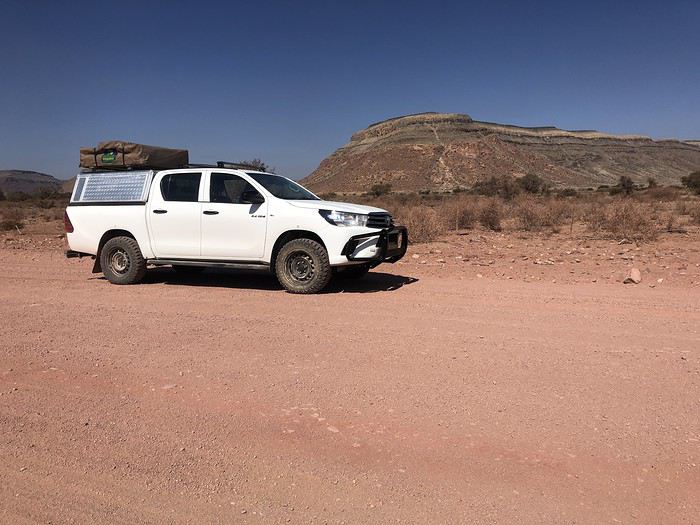
At first, I wasn’t even considering sleeping in a tent. But after my husband’s persuasion—and my own curiosity to experience what I’d read in those travel journals—I gave in. So off we went in a double-cab Hilux with a rooftop tent.
And of course, let’s talk about me—the big cold-weather wimp. One of the biggest pre-trip challenges was choosing a sleeping bag. After a while, sleeping bags had no more secrets for me: temperature ratings (comfort, limit, extreme), shapes (mummy, rectangular), fillings (synthetic, down), compression rate, and weight... all these factors were a real puzzle.
In the end, to make sure I wouldn’t be put off camping in winter (Australian winter, mind you), I went for a sleeping bag with a comfort rating of -10°C. And just to be *extra* sure I wouldn’t get cold, I bought a liner (never knew what that was before) in Thermolite, which boosts the sleeping bag’s temperature by 11°C. There are liners that add up to 15°C, but let’s not exaggerate—we’re not heading to the North Pole!
My husband, on the other hand, got a sleeping bag with a -5°C comfort rating and a silk liner.
Was it enough? You’ll find out soon. In the meantime, another big thank you to everyone who helped me make this choice with their advice and experience.
Over a year in advance, we planned a three-week itinerary for our first trip to Namibia—classic route, nothing too out there.
We chose to do the circuit clockwise because we wanted to finish on a high note in Etosha and its wildlife. They say it’s like Noah’s Ark out there!
And why not, the cherry on top... some big cats.
We used Tourmaline’s services to book our accommodations and the 4x4.
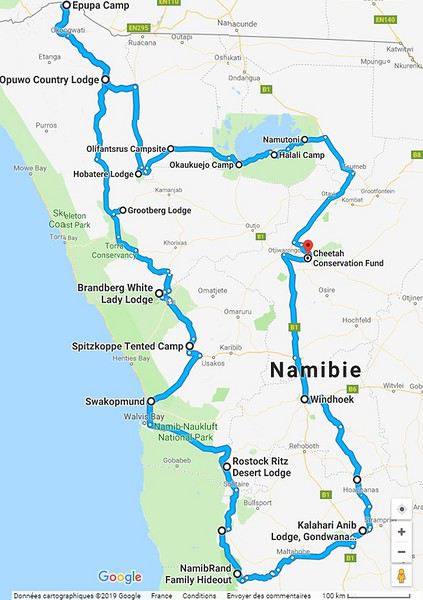
Here’s our planned itinerary with campsites and lodgings—yes, there are a few solid roofs in there; we didn’t want to push it too far.
Day 1: Windhoek – Windhoek Gardens Guesthouse
Day 2: Kalahari Anib Campsite
Day 3: Namibrand Family Hideout
Day 4: Sesriem Camp
Day 5: Sesriem Camp
Day 6: Rostock Ritz Camp
Day 7: Swakopmund - Sea Breeze Guesthouse
Day 8: Swakopmund - Sea Breeze Guesthouse
Day 9: Spitzkoppe Camp Tented
Day 10: Brandberg White Lady Campsite
Day 11: Grootberg Lodge
Day 12: Opuwo Country Campsite
Day 13: Epupa Camp
Day 14: Hobatere Lodge
Day 15: Etosha Olifantsrus Camp
Day 16: Etosha Okaukuejo Camp
Day 17: Etosha Halali Camp
Day 18: Etosha Namutoni Camp
Day 19: Cheetah Eco Lodge
Day 20: Windhoek – Londiningi B&B
Alright! Are you ready to follow this adventure with us in our Hilux?
I’m planning an 8-night trip to Norway in early March 2019, specifically around Tromsø and the surrounding area.
I’d love to experience the Nordic winter, its vast landscapes, the northern lights, discover the local wildlife, and most of all, take some amazing photos in these magical settings.
But I’ve got a few questions, especially about how to split my nights and plan the route.
I’m planning to land in Tromsø and stay there for 2 or maybe 3 nights—so far, so good—but after that, I’m torn between the Lofoten Islands or Senja Island for the remaining nights.
The Lofoten Islands seem magical for a photography enthusiast like me, with their little harbors and steep mountains, but the downside is the distance from Tromsø, especially in winter. What do you think? Is it doable to make a round trip from Tromsø to Lofoten in a week, especially in winter (are the roads passable? Is the weather unpredictable? Is the drive worth it?)? Because ideally, I’d like to return the rental car to the same agency in Tromsø to avoid extra costs.
After doing some more research, I came across Senja Island, which some blogs call a "mini Norway."
The big advantage is that it’s only a 2-hour drive from Tromsø, but is it as charming as the Lofoten Islands?
And if you’ve got any tips for this route, I’m all ears! 😛
I’d love to hear about your experiences or knowledge, and thanks in advance for your replies! 😉
And there you have it—promise made, promise kept. Here I go! I’m going to try and share our adventure under the Moroccan sun. I’ll do my best to capture how we felt during this trip. And I hope you’ll be kind to a newbie at this!
We planned this trip with the tips we got from this forum, so thank you to everyone who helped us prepare. Thanks to you, we had unforgettable moments.
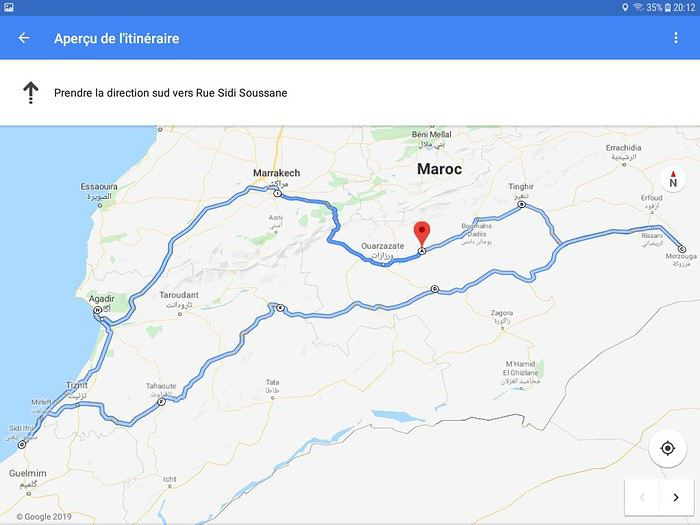
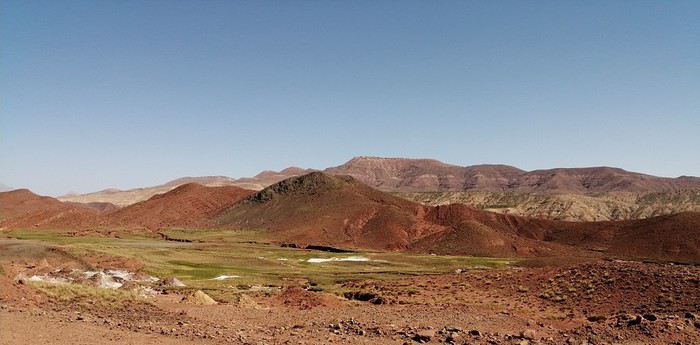
Here’s our itinerary, which let us see the Atlas Mountains, the oases of the South, the sandy desert, and the Atlantic coast. We landed in Marrakech early in the morning, and our rental car agent was waiting for us at the airport. After sorting out the formalities, we left Marrakech heading toward Ouarzazate.
The heavy traffic in Marrakech quickly gave way to smooth driving. As soon as we left the city, it was calm.
And right outside the city, we came across shepherds grazing their sheep by the roadside... It’s definitely a surprise at first! But yes... We’re in Morocco... No doubt about it... We’re in the thick of it!
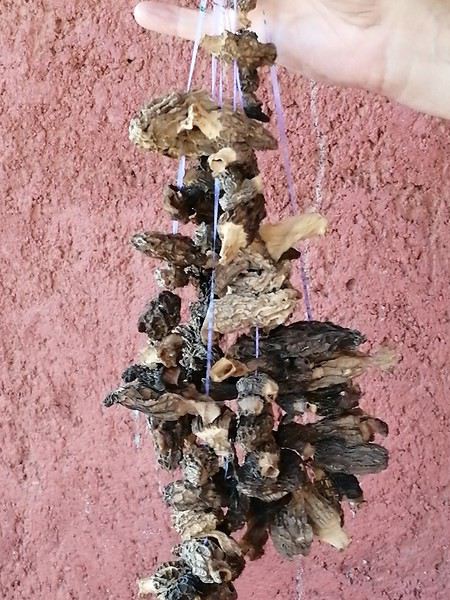
As we started gaining altitude, vendors waved at us, offering dried morels. At first, we weren’t sure what they were selling, but we stopped for tea on a terrace to admire the mountain scenery, and they offered us those famous morels again.
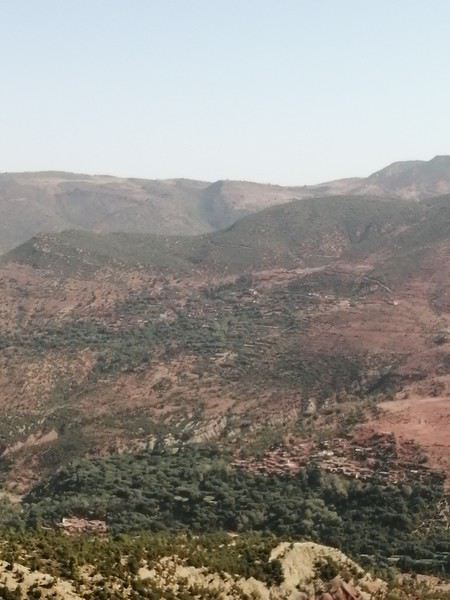
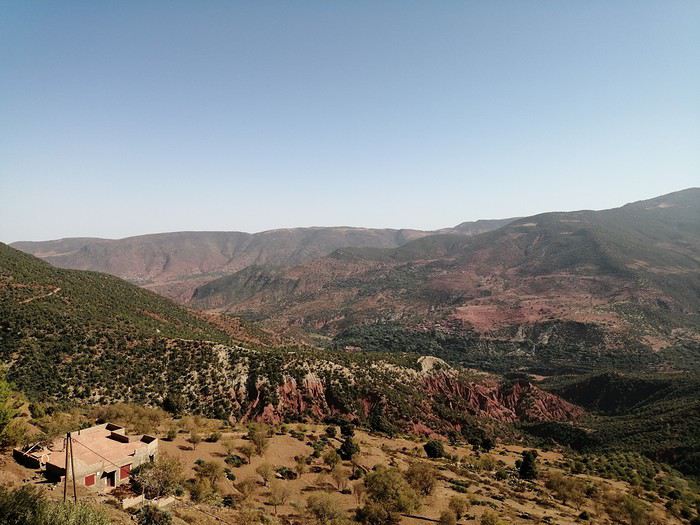
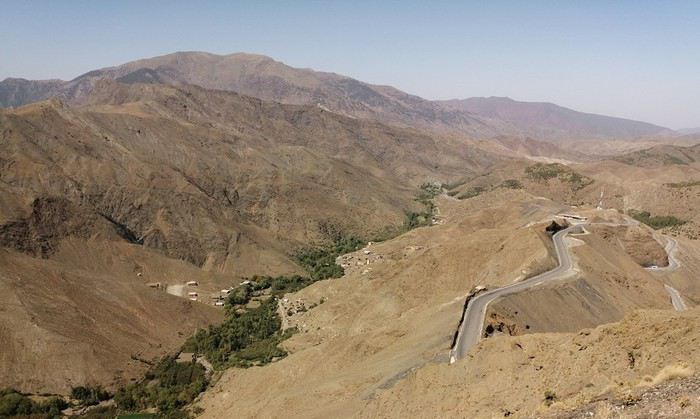
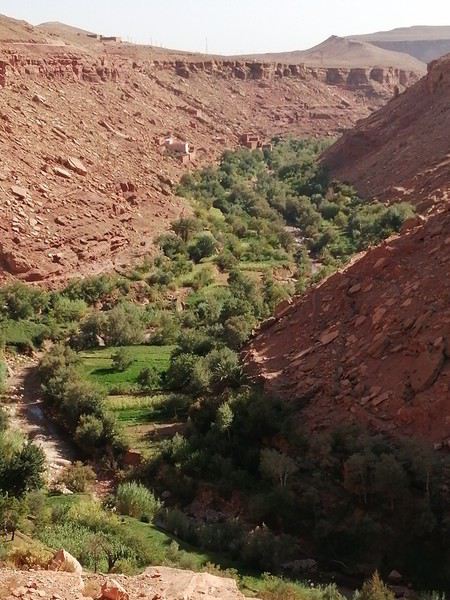
We continued our climb toward Tizi N Tichka... Gigantic valleys stretched out before us. With every turn, we discovered breathtaking landscapes.
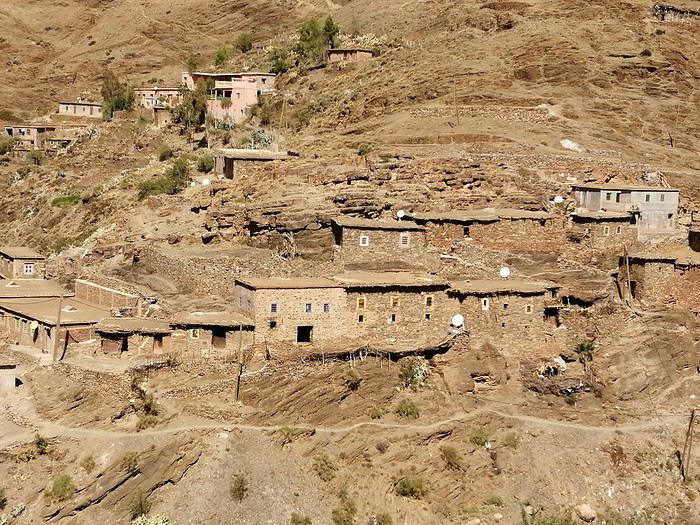
Villages built into the hillsides blended into the earth. It was strikingly simple yet harmonious.
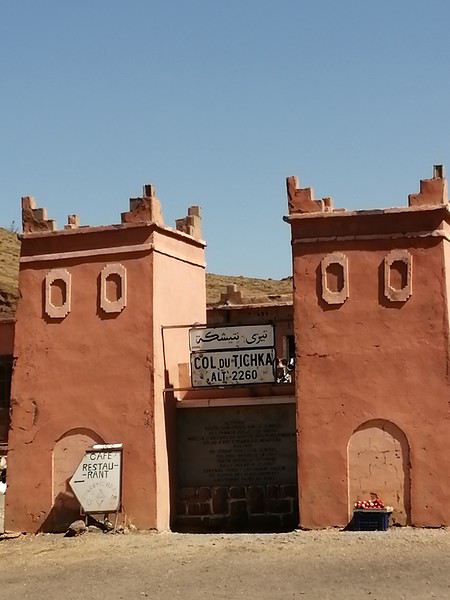
At the top of the pass, 2200m up, we stopped to soak in the moment, the fresh air, and the view.
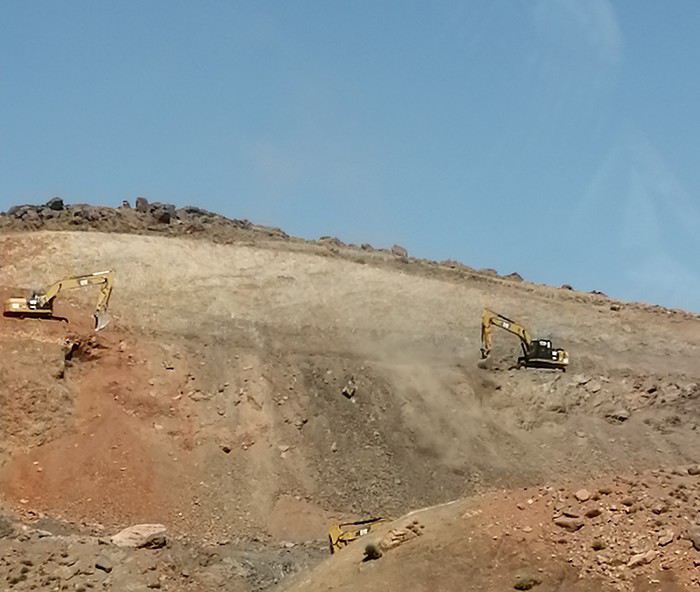
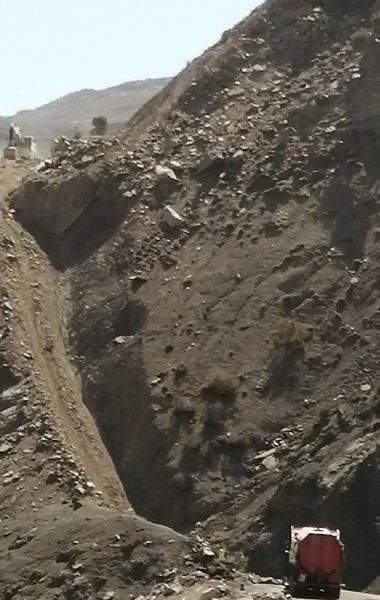
And we carried on toward Ouarzazate. The road was under construction. Mechanical giants were tackling the mountain. But the mountain was enormous. We were impressed by the scale of the work.
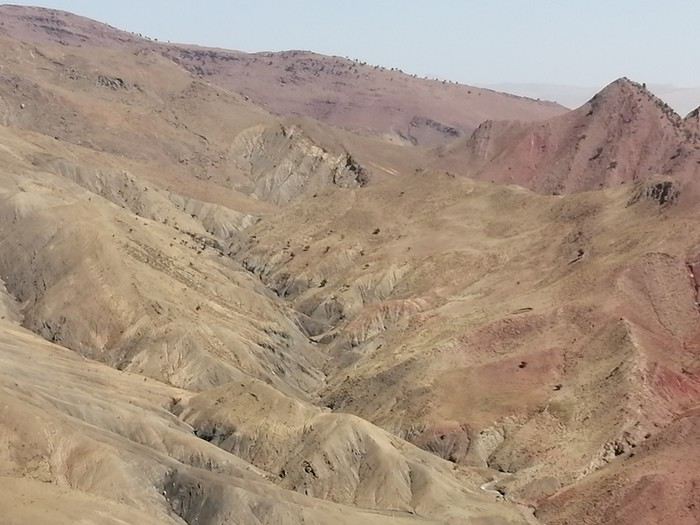
Then, we left the main road to head left toward Telouet... It was stunning. The colors changed. Maybe we felt less overwhelmed by the imposing Atlas.
Just a personal impression!
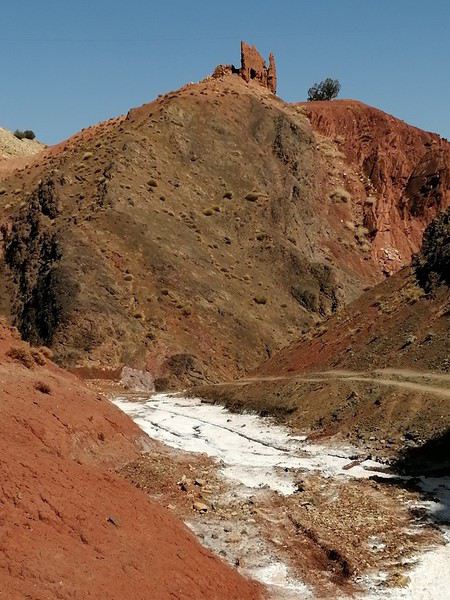
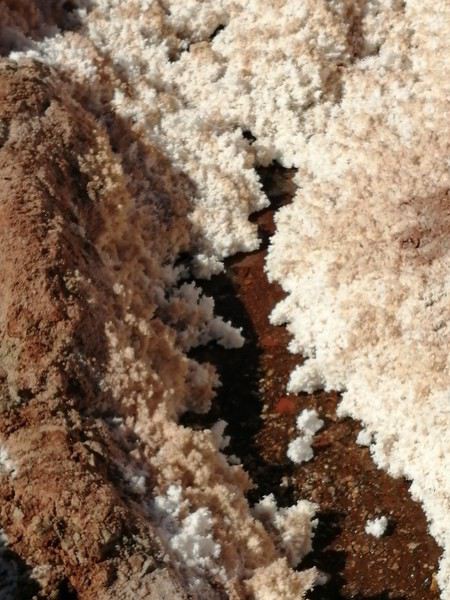
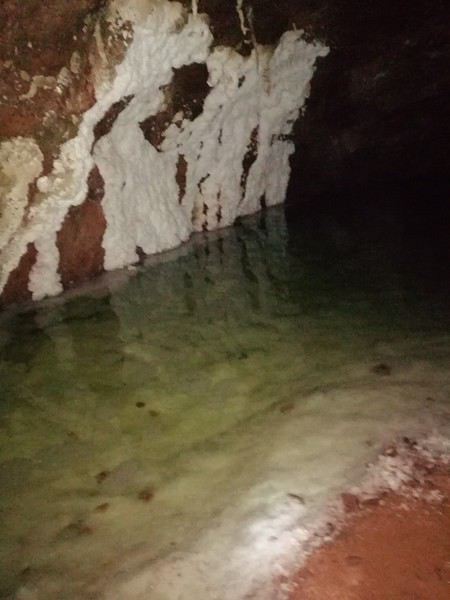
Right after passing through Telouet (maybe we’ll shock history buffs—we didn’t visit the kasbah), we went to see the salt mine. It was unexpected. Salt was everywhere. The stream water wound its way between salt crystals and waterfalls. It was really pretty. And then there was the cave. We had a guide for the visit. Stalactites and stalagmites crisscrossed here and there. At the back of the cave, we saw a small lake surrounded by crystals. It was beautiful.
We hit the road again. We drove through stunning landscapes: vast plains for grazing herds, rivers nestled deep in the valleys.
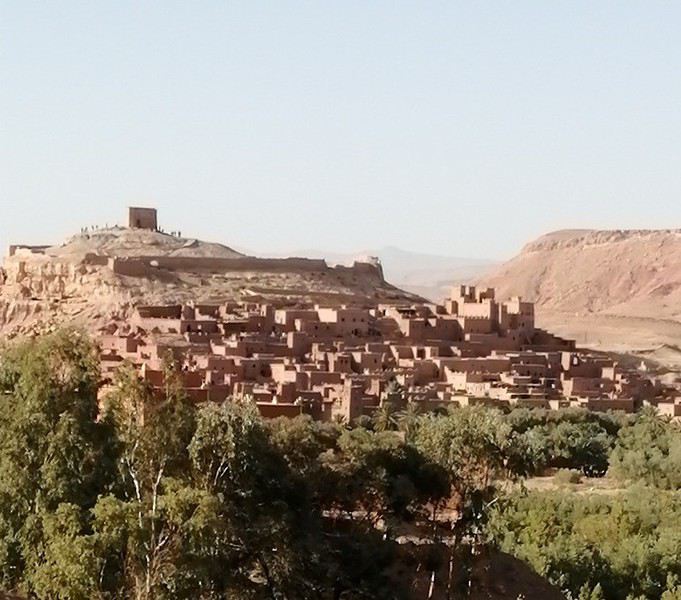
We proudly drove past the ksar Ait Benhaddou without stopping—just long enough to snap a quick photo and keep going so we’d arrive before nightfall.
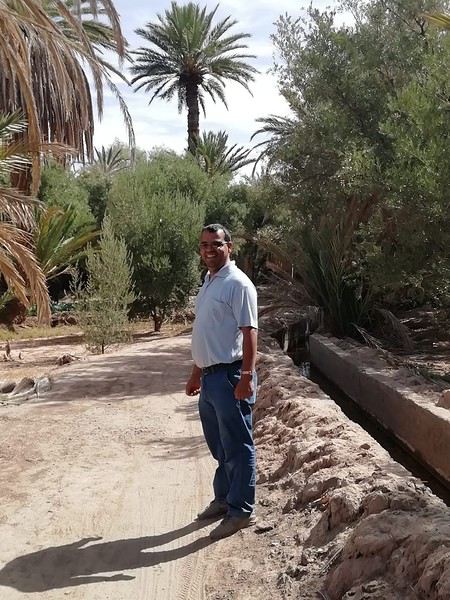
We made a few small purchases in Ouarzazate and headed straight for the Skoura palm grove, where we’d booked three nights at the guesthouse Kasbah La Palmeraie.
Mohamed, the owner, welcomed us warmly, and we shared tea with the family. We felt right at home. We were made to feel welcome.
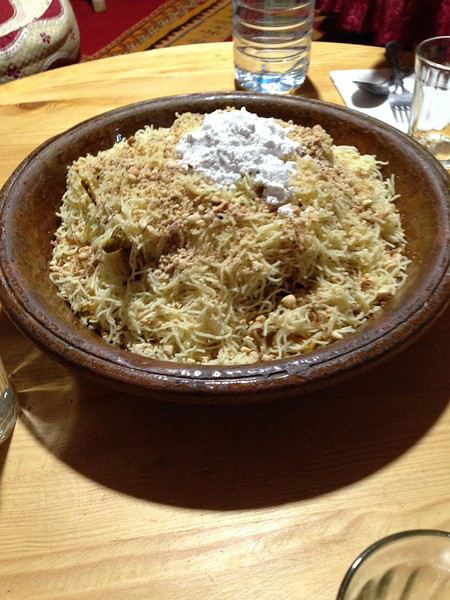
Dinner was a hit—a real Moroccan meal, a sweet-and-savory dish with steamed vermicelli and chicken. Delicious! A great surprise for us—we’d never tried it before.
After such a long day that started so early, we were happy to crawl into bed.
But we felt like the trip was off to the best possible start.
Hello everyone, what a pleasure to be back on this forum!
My partner and I are heading to Japan for the first time from mid-December to mid-January for 31 days. It’s a long-held dream we’ve been saving for over two years, and we want to enjoy ourselves while also being mindful of our budget for parts of the trip. We’d love to explore Tokyo, but we’ve chosen to spend more time in nature. My partner plans to get his driver’s license translated locally so we can rent a car. We’ve heard from friends who’ve been that Japan isn’t the best place for improvisation, so we’ve tried to allow plenty of time in each location to avoid rushing.
Still, I’d love to hear your thoughts on the itinerary we’ve planned—whether it’s feasible in terms of travel and how interesting it seems. Given the recent increase in the JR Pass price and the fact that we’ll spend about ten days on Goto, Ojika, and Yakushima (where the JR Pass doesn’t cover travel), we don’t think it’s worth it for us. Instead, we’re planning to take the train from Tokyo to Fukuoka and then use buses and ferries for the rest of Kyushu. Here’s our itinerary:
1- December 13 / Arrival in Tokyo, one night in Tokyo, then departure for Fukuoka by train on the morning of the 14th.
2 - December 14-16 / 2 nights in Fukuoka, sightseeing, then departure on the evening/night of the 16th by ferry to Ojika Islands.
3 - December 17-21 / 4 nights on Ojika, cycling and exploring, then departure on the 21st by ferry to Fukue on the Goto Islands.
4 - December 21-24 / 3 nights on the Goto Islands, renting a car to explore, maybe a trip to Hisaka. Departure for Nagasaki by ferry on the morning of the 24th.
5- December 24-26 / 2 nights in Nagasaki, visiting the city and memorials, possibly the hot springs in Unzen. Departure on the evening of the 26th by bus or ferry (?) to Kumamoto.
6- December 26-29 / 3 nights in Kumamoto, sightseeing, day trip by car to Mount Aso and surrounding areas. Departure on the 29th in the late afternoon by bus to Kagoshima, overnight in Kagoshima.
7- December 30 to January 2 / Morning departure by ferry to Yakushima for 3 nights, hiking and exploring the island. Departure on January 2 on the only ferry (?) in the early afternoon back to Kagoshima.
8- January 2 to 5 / Uncertain leg... We’d like to spend the night of the 4th to the 5th at a ryokan in Kurokawa Onsen and then head back to Fukuoka and Tokyo by train on the 5th. From the 2nd to the 4th, since we’ll arrive in Kagoshima in the late afternoon, we thought we could head back up to Kumamoto by train or bus—going to Yufuin or Beppu would take much longer and leave us with very little time. But is it worth staying another 2 nights in Kumamoto to explore the area, given we’ll already be there for 3 days from December 26-29? Or should we stay in Kagoshima and head up to Kurokawa Onsen on the afternoon of the 4th for our overnight stay?
9- January 5 to 13, Tokyo and its endless things to do and see, then back to France!
If you have any advice on any of these stops, we’d love to hear it! Have a wonderful day.
 A Few Days in Turkmenistan from Uzbekistan
 Slovak travel journal
 14 Days in Japan – September-October 2026
 Trek in Norway: Jotunheimen and Dovrefjell, you’ll adapt to the rain...
 CARIBBEAN: The island of SAINT-MARTIN, a different perspective
 Northern Morocco, the kingdom of kif?
 Summer 2026 - 3 weeks in the Azores
 The Pearl of Africa - July-August 2026
 A little piece of Sulawesi with the family: Rantepao and Selayar
 Tanzania Classics (Safari & Zanzibar)
 Getting Away to Ireland
 On the Roads of Costa Rica