Hi everyone!
I’m planning my dream trip for next September, lasting about a month. Here’s my itinerary:
Amsterdam: 3 days (departing from Montreal)
Tanzania: 3-day safari
Zanzibar: 6 days
Istanbul: 7 days
Return to Montreal.
Since my budget is pretty tight, I’m looking for tips and advice to cut costs without sacrificing the experience. Here are my questions:
Multi-destination flights: What’s the best way to book these connections? Is it better to buy a one-way ticket from Montreal to Amsterdam, then a separate internal flight, or use comparison tools for a multi-destination ticket?
Budget safari: Do you have recommendations for local agencies or tips to do a 3-day safari (Serengeti/Ngorongoro) at an affordable price (e.g., camping/glamping instead of luxury lodges)?
Accommodation in Zanzibar: Which villages or types of lodging are the most budget-friendly and accessible via local transport for these 6 days?
Istanbul: Any tips for well-located but cheap accommodation and great food deals?
Hi
Any feedback on the agency Mon Guide Zanzibar?
Hello,
We got back from Tanzania a month ago, on March 5th. I’ve started this trip report at the link the moderator asked me to use:
https://voyageforum.com/forum/decouverte-ruaha-nyerere-ex-selous-en-fevrier-mars-2026-d11466010/
You’ll find a video of our trip on my YouTube channel there.
Now I’ll tell you about our 10-night trip in Tanzania, with 8 nights spent in two parks we didn’t know. Tanzania isn’t new to us—it was even our first African safari destination back in 2012. https://www.youtube.com/@lolodetoul54 Since then, we’ve visited several East and Southern African countries: Kenya, South Africa, Namibia, Botswana, some of them multiple times. We usually travel in September during the dry season. We tried March 2024 for nine nights in the Okavango and loved it, except everything was dry, which wasn’t normal for the rainy season.
So for this second March trip during the wet season, we really got what we asked for… rain. But before that, we had to fight just to get to Tanzania.
Saturday, February 21, 2026:
It’s D-Day—the departure. What a hassle to organize flights to and within Tanzania! I’ll tell you all about it in another post: https://voyageforum.com/forum/toutes-compagnies-aeriennes-tanzaniennes-interdites-d10758360/ On top of that, Rwandair canceled our outbound flight a month before departure. They offered to reschedule us 3-4 days later—ridiculous for a 10-night trip we’d already booked. We had to cancel our tickets and buy new ones with Kenya Airways. We’re still waiting for our refund from Rwandair!!!!!!! So on Saturday, February 1st, our bags were packed. We headed to the Lorraine TGV station, about 30 km from home.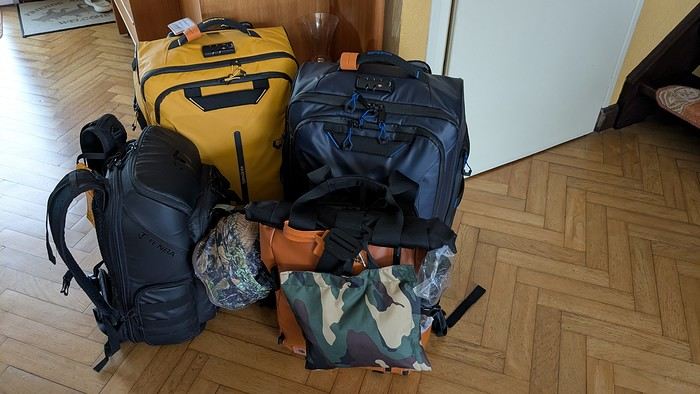 Direct train to Roissy—just 1h15. Quick and efficient.
All that was left was to wait for our overnight flight. We took off on time, just before 11 PM. Smooth flight, nothing unusual. Arrived in Nairobi around 9 AM. A few hours’ wait, then a flight to Dar es Salaam, landing at our first destination around 12:45 PM.
Our local contact, Anne from Asanterra agency, picked us up at the airport. It was hot and humid—it was raining.
Direct train to Roissy—just 1h15. Quick and efficient.
All that was left was to wait for our overnight flight. We took off on time, just before 11 PM. Smooth flight, nothing unusual. Arrived in Nairobi around 9 AM. A few hours’ wait, then a flight to Dar es Salaam, landing at our first destination around 12:45 PM.
Our local contact, Anne from Asanterra agency, picked us up at the airport. It was hot and humid—it was raining.
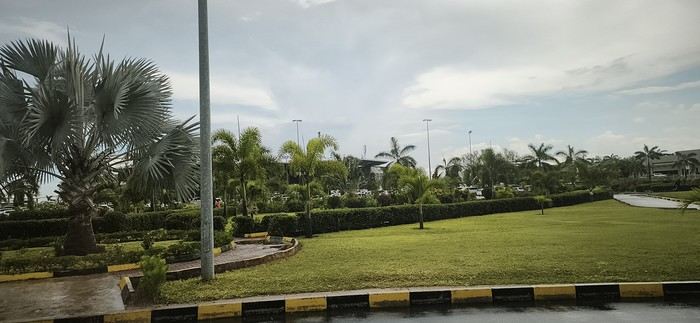
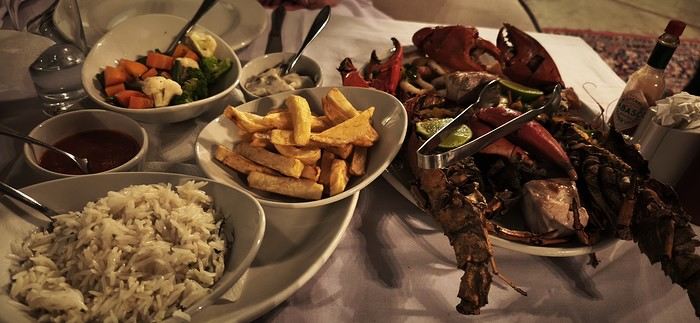
Our first night was at the Alexander Hotel. That evening, we treated ourselves to fish and shellfish at the hotel restaurant:
Sunday, February 22, 2026:
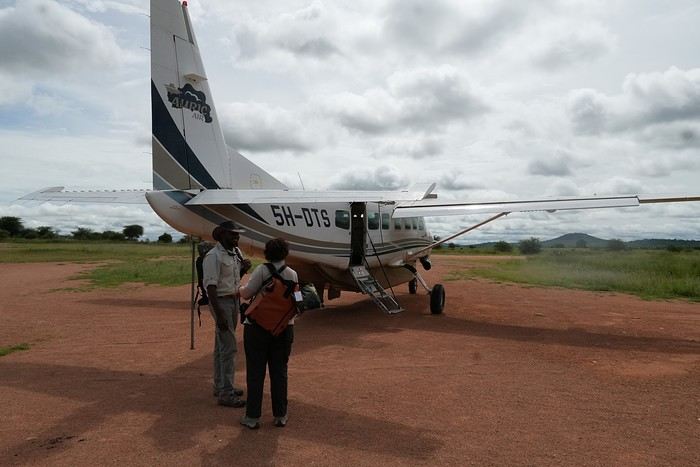
A driver picked us up at dawn to take us to the domestic airport so we could finally head to our first destination: Ruaha National Park. We flew with Auric.air for a 2-hour flight with two stops (Nyerere and Zkima airstrips).
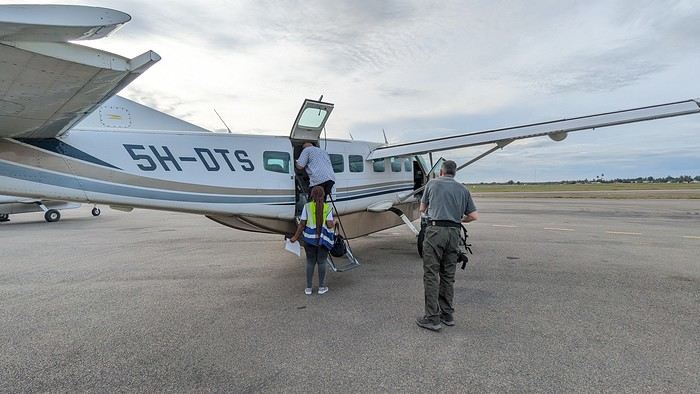
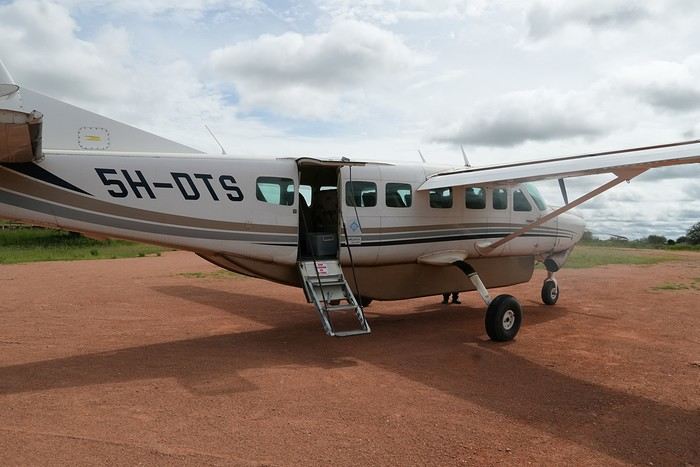
I’m always amazed at how easily these Cessnas take off and land on dirt runways—especially when they’re wet:
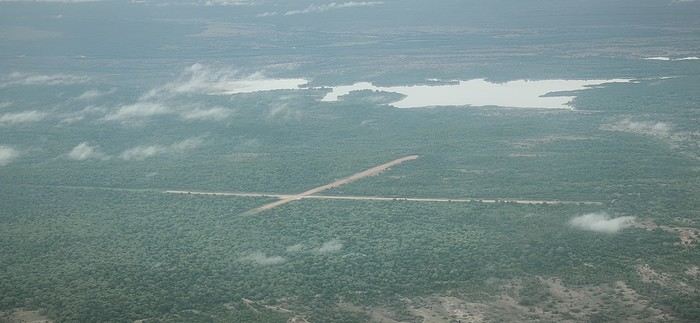
Aerial view of Zkima airstrip, where we’d landed just minutes earlier:
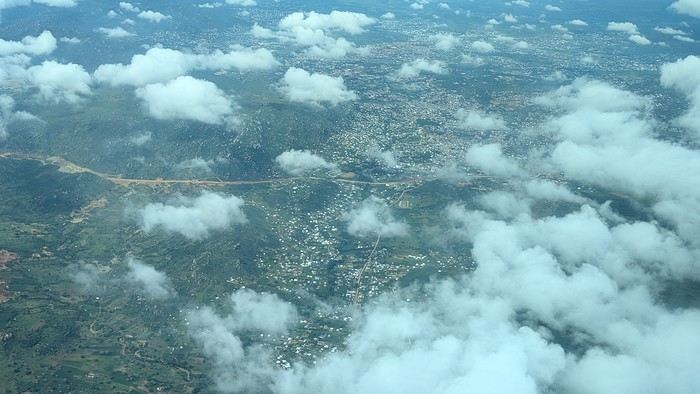
Flyover of Iringa, a "big" city in the country near Ruaha National Park:
We’re getting close. The plane descends and flies over the Ruaha River, which gave the park its name:
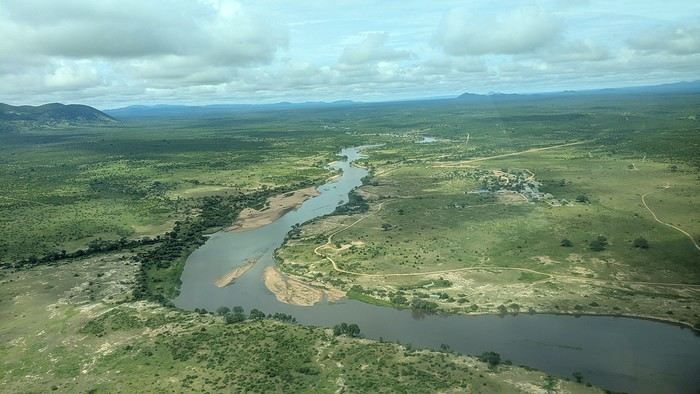
We land for the third and final time that day, reaching our destination: Msembe airstrip, the gateway to Ruaha.
We got back from Tanzania a month ago, on March 5th. I’ve started this trip report at the link the moderator asked me to use:
https://voyageforum.com/forum/decouverte-ruaha-nyerere-ex-selous-en-fevrier-mars-2026-d11466010/
You’ll find a video of our trip on my YouTube channel there.
Now I’ll tell you about our 10-night trip in Tanzania, with 8 nights spent in two parks we didn’t know. Tanzania isn’t new to us—it was even our first African safari destination back in 2012. https://www.youtube.com/@lolodetoul54 Since then, we’ve visited several East and Southern African countries: Kenya, South Africa, Namibia, Botswana, some of them multiple times. We usually travel in September during the dry season. We tried March 2024 for nine nights in the Okavango and loved it, except everything was dry, which wasn’t normal for the rainy season.
So for this second March trip during the wet season, we really got what we asked for… rain. But before that, we had to fight just to get to Tanzania.
Saturday, February 21, 2026:
It’s D-Day—the departure. What a hassle to organize flights to and within Tanzania! I’ll tell you all about it in another post: https://voyageforum.com/forum/toutes-compagnies-aeriennes-tanzaniennes-interdites-d10758360/ On top of that, Rwandair canceled our outbound flight a month before departure. They offered to reschedule us 3-4 days later—ridiculous for a 10-night trip we’d already booked. We had to cancel our tickets and buy new ones with Kenya Airways. We’re still waiting for our refund from Rwandair!!!!!!! So on Saturday, February 1st, our bags were packed. We headed to the Lorraine TGV station, about 30 km from home.
Direct train to Roissy—just 1h15. Quick and efficient.
All that was left was to wait for our overnight flight. We took off on time, just before 11 PM. Smooth flight, nothing unusual. Arrived in Nairobi around 9 AM. A few hours’ wait, then a flight to Dar es Salaam, landing at our first destination around 12:45 PM.
Our local contact, Anne from Asanterra agency, picked us up at the airport. It was hot and humid—it was raining.Our first night was at the Alexander Hotel. That evening, we treated ourselves to fish and shellfish at the hotel restaurant:
Sunday, February 22, 2026:
A driver picked us up at dawn to take us to the domestic airport so we could finally head to our first destination: Ruaha National Park. We flew with Auric.air for a 2-hour flight with two stops (Nyerere and Zkima airstrips).
I’m always amazed at how easily these Cessnas take off and land on dirt runways—especially when they’re wet:
Aerial view of Zkima airstrip, where we’d landed just minutes earlier:
Flyover of Iringa, a "big" city in the country near Ruaha National Park:
We’re getting close. The plane descends and flies over the Ruaha River, which gave the park its name:
We land for the third and final time that day, reaching our destination: Msembe airstrip, the gateway to Ruaha.
We went on a safari in Tanzania from February 7th, 2026, to February 17th, 2026. It remains a wonderful memory. There were six of us in the group. Here’s the itinerary and the images that are still etched in our minds:
02/07/2026 – 6:40 AM – 8:30 PM – Flight from LYON to ARUSHA
02/08/2026 – Day 2 – MATURENI Waterfall – Coffee making and tasting at a plantation – Day 2 video (you may need to click "BROWSE YOUTUBE")
02/09/2026 – Day 3 – Maasai village of BOMA – https://youtu.be/9lwBONmBIVU
Visit to local schools and the dispensary – Donation of school supplies.
02/10/2026 – Day 4 – TARANGIRE National Park – https://youtu.be/OPpTgUECj0Q
02/11/2026 – Day 5 – Lake Manyara National Park – https://youtu.be/ZFt3tLtum5A
02/12/2026 – Day 6 – SERENGETI Park – https://youtu.be/5TYJE-3IO4w and https://youtu.be/t08g-XJlmdY
02/13/2026 – Day 7 – SERENGETI National Park (continued) – https://youtu.be/ZQkD1YmPzY0
02/14/2026 – Day 8 – Access to Ngorongoro National Park – https://youtu.be/1F__NeCRxhg
02/15/2026 – Day 9 – Ngorongoro Crater – https://youtu.be/BFw7tbjuO5s, then https://youtu.be/WdbHtPcYu8o and https://youtu.be/RBp_H9OMJxY
02/16/2026 – Day 10 – Visit to Arusha
02/17/2026 – Day 10 – 1:30 AM – Transfer to Kilimanjaro Airport
FINANCIAL SUMMARY FLIGHTS 1,500 €
SEJOUIR PACKAGE 1,526 €
TIPS AND MISC. 100 €
TOTAL 3,126 €
Trip duration: from 02/07/26 to 02/17/26 => 11 days total, or 9 days excluding travel time.
1- FLIGHT DURATION WITH AIR FRANCE OUTBOUND: from 6:40 AM to 8:30 PM => 12 hours (plus 2-hour time difference in Arusha) RETURN: from 2:45 AM to 2:00 PM => 13 hours 15 minutes (not including a 1-hour 15-minute departure delay)
FINANCIAL SUMMARY FLIGHTS 1,500 €
SEJOUIR PACKAGE 1,526 €
TIPS AND MISC. 100 €
TOTAL 3,126 €
Trip duration: from 02/07/26 to 02/17/26 => 11 days total, or 9 days excluding travel time.
1- FLIGHT DURATION WITH AIR FRANCE OUTBOUND: from 6:40 AM to 8:30 PM => 12 hours (plus 2-hour time difference in Arusha) RETURN: from 2:45 AM to 2:00 PM => 13 hours 15 minutes (not including a 1-hour 15-minute departure delay)
Hello,
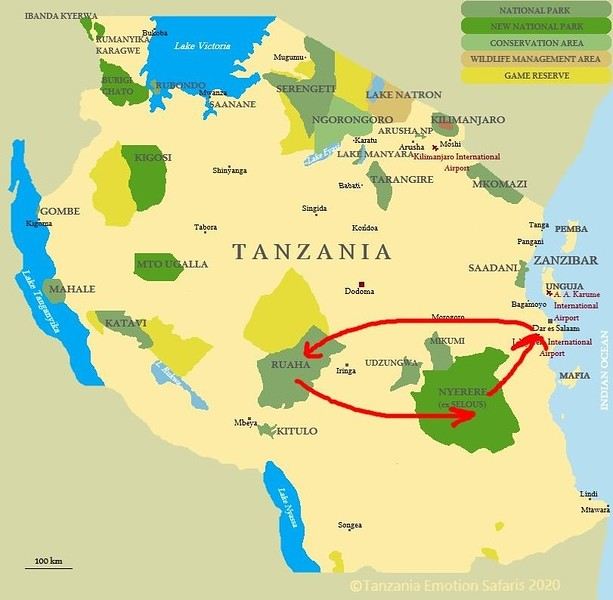
Well, this trip to Tanzania in the southern parks—Ruaha and Nyerere (formerly Selous)—finally happened in late February to early March.
It was a bit more complicated to organize than usual, with a few hiccups. As I’ve mentioned elsewhere (link), the ban on booking domestic flights in Tanzania through a French agency made things a little tricky.
However, my friend Vincent Beccaro from Objectif Nature found a solution by having a local ground operator step in—one I’d recommend if you run into similar issues.
With flight tickets secured through Kenya Airways (after Rwandair canceled our outbound flight), we easily made it to Dar es Salaam on February 22. Side note: my dealings with Rwandair to get a refund for the flights they canceled are still ongoing. This airline is dragging its feet, constantly pushing back the refund date every time I check in (which is about once a week). I won’t back down.
Back to our 10-night trip: we spent our first night in Dar es Salaam before heading to Ruaha with Auric Air.
We stayed in some incredible lodges—4 nights at Ikuka Safari Camp in Ruaha, then 4 nights at Laba Siwada in Nyerere, before returning to Dar es Salaam.
Before I share a full recap with photos, I’ve just finished editing a video I’d like to show you.
You’ll see beautiful lodges, rainy safaris, and some amazing wildlife encounters, like wild dogs and bat-eared foxes.
Sorting and identifying all the animals (especially the birds) from the thousands of photos I took will take a bit of time. Bear with me!
Watch the video here
Well, this trip to Tanzania in the southern parks—Ruaha and Nyerere (formerly Selous)—finally happened in late February to early March.
It was a bit more complicated to organize than usual, with a few hiccups. As I’ve mentioned elsewhere (link), the ban on booking domestic flights in Tanzania through a French agency made things a little tricky.
However, my friend Vincent Beccaro from Objectif Nature found a solution by having a local ground operator step in—one I’d recommend if you run into similar issues.
With flight tickets secured through Kenya Airways (after Rwandair canceled our outbound flight), we easily made it to Dar es Salaam on February 22. Side note: my dealings with Rwandair to get a refund for the flights they canceled are still ongoing. This airline is dragging its feet, constantly pushing back the refund date every time I check in (which is about once a week). I won’t back down.
Back to our 10-night trip: we spent our first night in Dar es Salaam before heading to Ruaha with Auric Air.
We stayed in some incredible lodges—4 nights at Ikuka Safari Camp in Ruaha, then 4 nights at Laba Siwada in Nyerere, before returning to Dar es Salaam.
Before I share a full recap with photos, I’ve just finished editing a video I’d like to show you.
You’ll see beautiful lodges, rainy safaris, and some amazing wildlife encounters, like wild dogs and bat-eared foxes.
Sorting and identifying all the animals (especially the birds) from the thousands of photos I took will take a bit of time. Bear with me!
Watch the video here
Hi everyone,
We’re a family of four (two daughters aged 18 and 21) and we’re planning a three-week trip to Tanzania. Zanzibar would be our main base, but we’d also like to do a safari on the mainland. Could you share any tips on: - the ideal length for such a safari, the best place to go during this period (and easily accessible by flight from Zanzibar) - your recommendations for the most suitable type of stay for a family like ours - reliable local agencies with reasonable prices that could help us with this plan
Thanks in advance!
Albin
We’re a family of four (two daughters aged 18 and 21) and we’re planning a three-week trip to Tanzania. Zanzibar would be our main base, but we’d also like to do a safari on the mainland. Could you share any tips on: - the ideal length for such a safari, the best place to go during this period (and easily accessible by flight from Zanzibar) - your recommendations for the most suitable type of stay for a family like ours - reliable local agencies with reasonable prices that could help us with this plan
Thanks in advance!
Albin
Hello everyone,
Previously, I shared a trip report/safari in southern Tanzania in June 2024, in the Mikumi and Selous reserves. This time, still in southern Tanzania, I invite you to join us in the Ruaha Reserve.
Previously, I shared a trip report/safari in southern Tanzania in June 2024, in the Mikumi and Selous reserves. This time, still in southern Tanzania, I invite you to join us in the Ruaha Reserve.
Hello,
With so many agencies out there, we're feeling a bit lost. Could you please share your experience—like recommending your agency if you were happy with them—and tell us why, and if possible, what budget we should expect? Feel free to send it in a private message :)
We’re just the two of us, and ideally, we’d like to go in a 4x4 alone or with another couple, or in a very small group.
Thanks so much in advance!
We’re just the two of us, and ideally, we’d like to go in a 4x4 alone or with another couple, or in a very small group.
Thanks so much in advance!
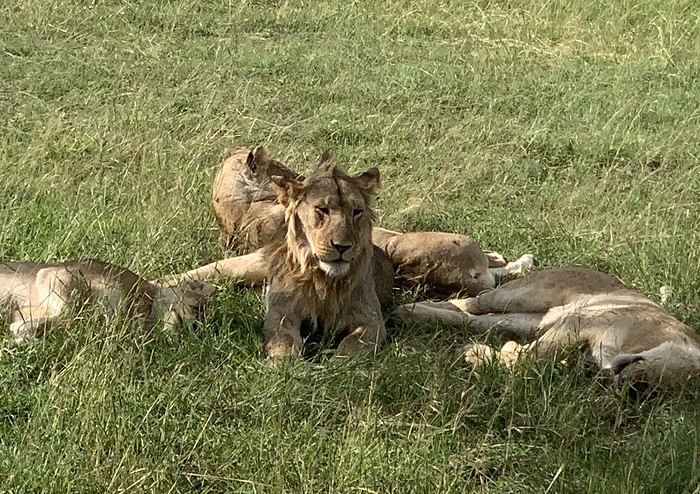 My three little girls and I went on a family safari in Tanzania. It was magnificent—unbelievable how the animals don’t even notice us. They just go about their lives right before our eyes.
I’ll answer some of the common questions that come up. It’s expensive, but I’d say it costs about the same as a week at a Club Med in Martinique, and honestly, we preferred this. Is it dangerous? Not with the animals if you don’t get out of the car. The real risks are being swept away by water if you go from late February to June, especially in the Serengeti, and car accidents if your guide drives a little too fast (though you can just tell them you’re scared if they overtake without visibility). Should you go to the Serengeti even though it’s far? My answer is yes—it’s where you’ll see lions, lionesses, cheetahs, and leopards (we only saw one).
Booking an agency is a must because the guides call each other as soon as they spot a lion, cheetah, leopard, or especially when it’s safe to cross rivers. We were often alone (just our two cars) except when there was a call—then everyone rushes over, and you end up with about twenty cars.
That’s all for now—feel free to message me privately for more details.
...
" We’re ALL different, and so are our expectations when it comes to travel or leisure ". There are—without a doubt—as many ways to experience a trip as there are travelers!! For the two of us, it’s only our love of wild nature that guides us to East Africa. The stated goal of this trip was purely wildlife-focused, and NOT about discovering the country or its people.
...
Hello everyone,
Previously, I shared the account of a trip/safari in southern Tanzania in June 2024, in the Mikumi and Selous reserves.
This time, still in southern Tanzania, I invite you to join us in Ruaha National Park. (Then, depending on the number of images allowed in my quota, at the end of my story, we’ll return to Selous for the second part of the same trip.)
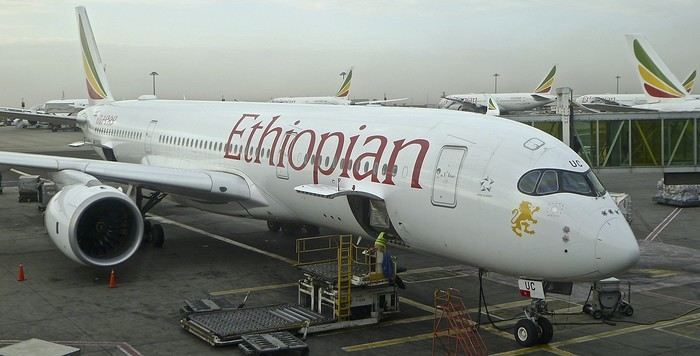
- This trip/safari took place in November 2022. - Our flight started in Marseille, heading to Addis Ababa, then Dar es Salaam (via Ethiopian Airlines). In Dar, we spent one night at a hotel near the airfield.
-1- During the layover in Addis Ababa. The Airbus A-350 in the early morning mist.
Reminder: Click on each image to enlarge it, if needed. .
From Dar es Salaam, if you want to go by road to Ruaha, it’ll take a very long and tiring day. 🤪
On previous trips, we’ve always taken a bush plane for this route. In this case, it took just over an hour and a half, with two short intermediate stops to drop off passengers at other bush airstrips.
Since I’m also passionate about aviation, I love these flights where you can admire the landscapes from low altitude while sitting right behind the pilot 🙂.
-2- These routes mainly use Cessna 208 Caravans.
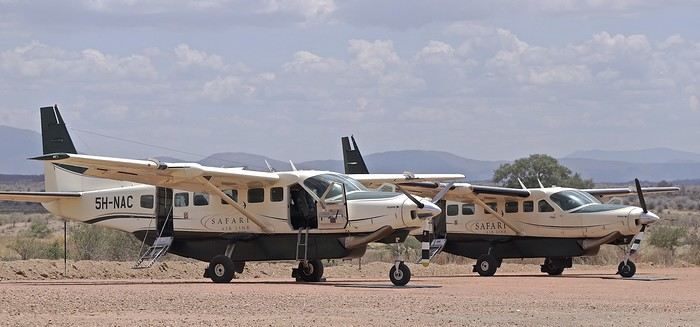
At the Msembe airstrip, we’re greeted around 1:30 PM by a guide and a driver from our chosen lodge. They brought a picnic basket, which we enjoy at a nearby picnic area. We’re by the Ruaha River, completely dry—it’s scorching hot.
-3- The first mammals we encounter are a pair of female impalas, accompanied by a young male.
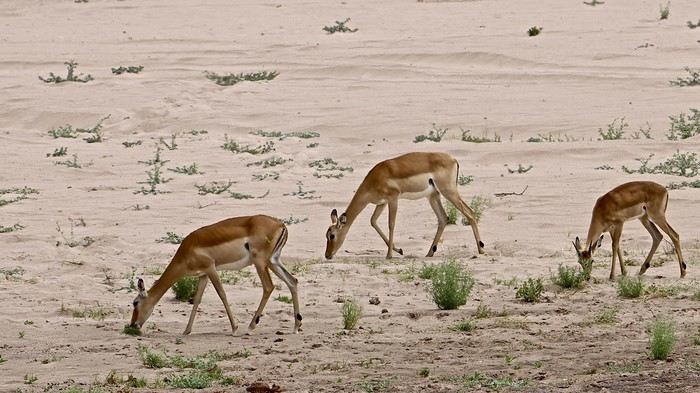
Reminder: Click on the image to view it in larger size. 😉
-4- To save the hippopotamus populations from certain death, rangers had to dig holes in the sand with bulldozers. Fortunately, water is present beneath the sand layer.
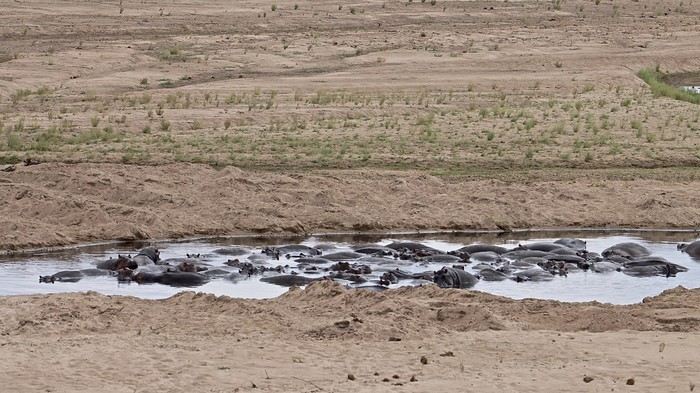
-5- This crocodile doesn’t seem to have been accepted as a swimming neighbor by the hippos...
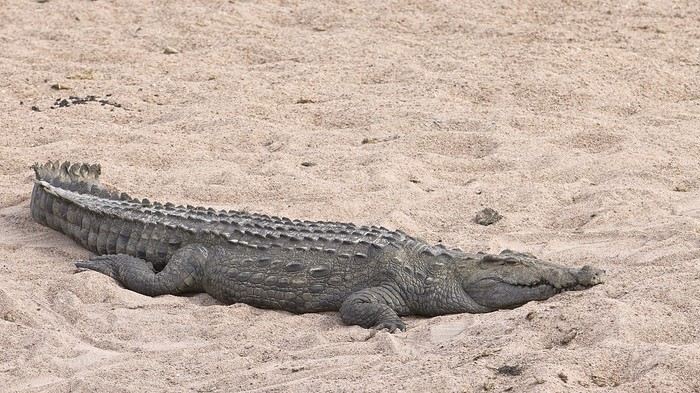
We’ll explore along the river for 2-3 hours before crossing it at a ford toward the southern part of the reserve.
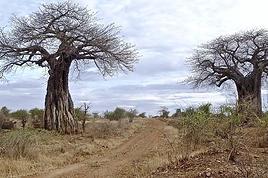
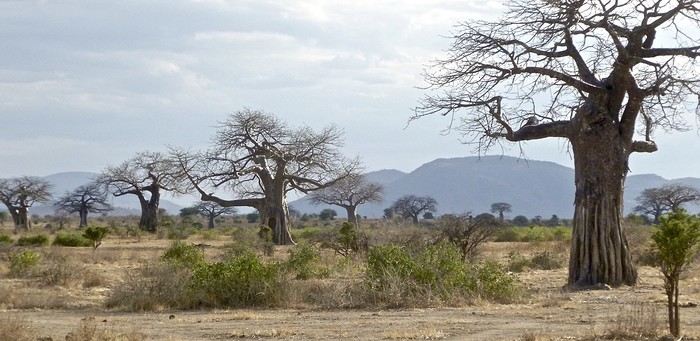
-6- The typical landscape of Ruaha, with its many baobabs.
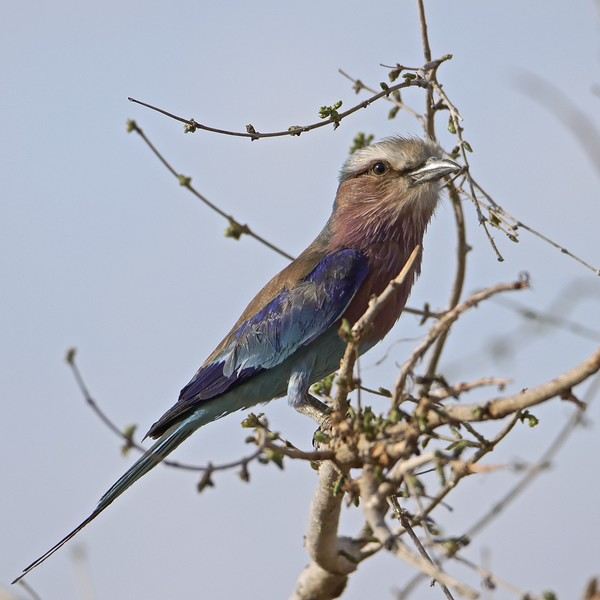
-7- My buddy the R.L.B. is also here to welcome me.... 🙂 🙂
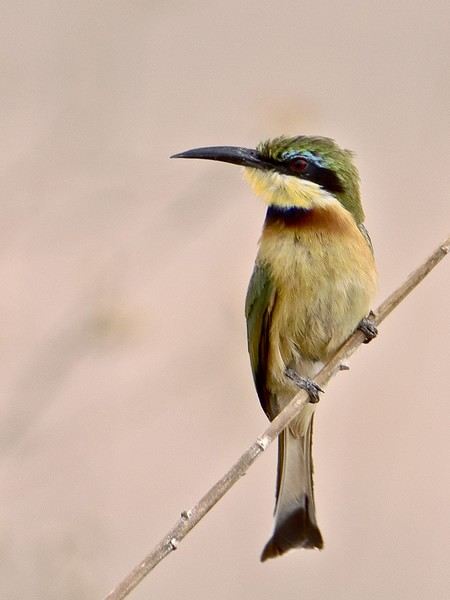
-8- As well as this little bee-eater... 😎
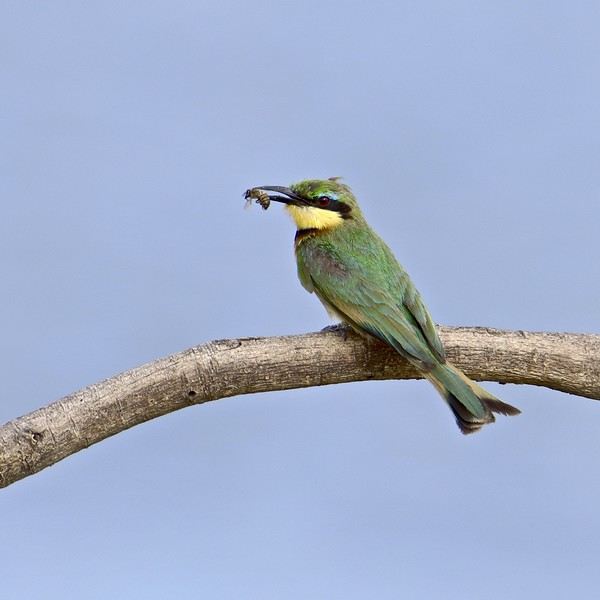
-9- ...which reminds us of the origin of its name...!
-10- Above a rare waterhole, a fish eagle keeps watch for fish...
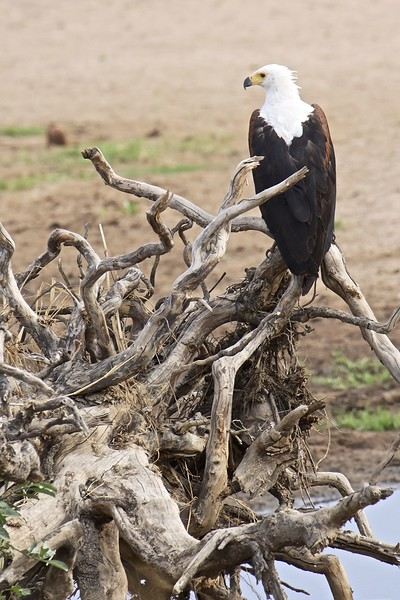
...
*** Please wait until the end of the story for any questions or to share your own experiences in Ruaha. (Or via PM.) Thanks in advance for keeping this account smooth and enjoyable. 😉
...
*** I’m not an ornithologist, but birds are an important and unavoidable part of safari discoveries. You’ll find quite a few in the images of my story. 😎
...
" We’re ALL different, and so are our expectations when it comes to travel or leisure ". There are—without a doubt—as many ways to experience a trip as there are travelers!! For the two of us, it’s only our love of wild nature that guides us to East Africa. The stated goal of this trip was purely wildlife-focused, and NOT about discovering the country or its people.
...
Hello everyone,
Previously, I shared the account of a trip/safari in southern Tanzania in June 2024, in the Mikumi and Selous reserves.
This time, still in southern Tanzania, I invite you to join us in Ruaha National Park. (Then, depending on the number of images allowed in my quota, at the end of my story, we’ll return to Selous for the second part of the same trip.)
- This trip/safari took place in November 2022. - Our flight started in Marseille, heading to Addis Ababa, then Dar es Salaam (via Ethiopian Airlines). In Dar, we spent one night at a hotel near the airfield.
-1- During the layover in Addis Ababa. The Airbus A-350 in the early morning mist.
Reminder: Click on each image to enlarge it, if needed. .
From Dar es Salaam, if you want to go by road to Ruaha, it’ll take a very long and tiring day. 🤪
On previous trips, we’ve always taken a bush plane for this route. In this case, it took just over an hour and a half, with two short intermediate stops to drop off passengers at other bush airstrips.
Since I’m also passionate about aviation, I love these flights where you can admire the landscapes from low altitude while sitting right behind the pilot 🙂.
-2- These routes mainly use Cessna 208 Caravans.
At the Msembe airstrip, we’re greeted around 1:30 PM by a guide and a driver from our chosen lodge. They brought a picnic basket, which we enjoy at a nearby picnic area. We’re by the Ruaha River, completely dry—it’s scorching hot.
-3- The first mammals we encounter are a pair of female impalas, accompanied by a young male.
Reminder: Click on the image to view it in larger size. 😉
-4- To save the hippopotamus populations from certain death, rangers had to dig holes in the sand with bulldozers. Fortunately, water is present beneath the sand layer.
-5- This crocodile doesn’t seem to have been accepted as a swimming neighbor by the hippos...
We’ll explore along the river for 2-3 hours before crossing it at a ford toward the southern part of the reserve.
-6- The typical landscape of Ruaha, with its many baobabs.
-7- My buddy the R.L.B. is also here to welcome me.... 🙂 🙂
-8- As well as this little bee-eater... 😎
-9- ...which reminds us of the origin of its name...!
-10- Above a rare waterhole, a fish eagle keeps watch for fish...
...
*** Please wait until the end of the story for any questions or to share your own experiences in Ruaha. (Or via PM.) Thanks in advance for keeping this account smooth and enjoyable. 😉
...
*** I’m not an ornithologist, but birds are an important and unavoidable part of safari discoveries. You’ll find quite a few in the images of my story. 😎
...
I would wish never to go to bed where I had woken up, to wander my tent from the shores of Egypt to those of the Persian Gulf; to have no goal for the evening other than the evening itself; to traverse on foot, with my eyes and my heart, all these unknown lands, all these races of people so different from my own; to contemplate humanity, God’s finest creation, in all its forms.
Lamartine in Fatalla Sayeghir’s Account (1861)
As soon as it’s about flying, I lose all willpower. Being reasonable and thoughtful, I still lose all my composure at the mere possibility of a flight—especially if it’s piloted by F.—and even more so if that flight can take me to unexplored lands. I’ve long wanted to unravel the mystery of animal tourism, and why not in Tanzania, following up on my trip from four years ago, when I was already questioning the glaring inequalities in Zanzibar: the coastal strip sacrificed to capitalism, and the inland areas, just a hundred meters from the waves, where you find—though a bit more peaceful than elsewhere on the continent—the chaos of Africa.
I’m an adventurer at heart. When it comes to the terrain, though, it’s a whole different story. I see people setting off for months at a time; I know my endurance doesn’t last beyond three days. It’s not that I’m afraid of this unfamiliar environment when it comes to embracing different realities. I’m mostly afraid of myself—of this heightened sensitivity that makes me see things I’d rather not see and understand others that sometimes overwhelm me.
After an absolutely fantastic daytime flight, I land in Zanzibar and have to resign myself—this is the whole point of the trip—to what feels like a real spacewalk. I’m alone. My lucky star, backed up by my phone, will serve as my lifeline. I step out of the airport and breathe in the scent of Africa full-on: a mix of exotic perfumes, baked earth, and poorly refined fuel, inevitably mingled with the smell of wood smoke. So many images come flooding back. So many stories. Another world.
I head to Arusha the very next day. The gateway to the country’s northern national parks, this city of half a million offers one of those rare breath-holding dives that Africa keeps secret. As the only white person walking the streets, I know I’m visible and vulnerable, yet I move forward confidently, barely bothered. But where are all my fellow Westerners? While this city draws countless tourists, I only cross paths with one white couple in nearly three hours of walking. Because you have to hold on tight to wander here. You have to stay alert. The traffic is dense and erratic—don’t even trust the fact that in Tanzania, people drive on the left. That can change from one minute to the next, especially with motorbikes. With barely centimeters between vehicles, I weave my way through the urban jungle, trying not to stumble into the huge ditch on my left or get sideswiped by cars brushing past me on the right. Speakers blare music, ads, or political speeches at will—the explosion of yellow and green tells us we’re on the eve of the presidential election—but they barely compete with the calls to prayer, nearly nonstop on this holy Friday. The vital space is as saturated as the sound. Imagine an unbroken line of shops and stalls of every kind—supermarkets haven’t made it here yet—where you can find just about anything: phones, copper pipes, Chinese-made hardware, shoes, clothes, basins, and professional tools… The luckiest own a big store; others spend their lives trying to survive on the profits from selling toothbrushes one at a time on the streets. But maybe it’s more lucrative than spending the day slumped on the sidewalk, preferably missing a limb, trusting your survival to the mercy of passersby.
I think I’ll escape the street by slipping into the narrow alleys of the central market. Here, I know I won’t run into anyone like me! The vendors’ stalls start at waist height; the sellers, perched higher up, haggle or not while discussing prices. Here, colorful fruits and vegetables; there, huge piles of dried fish. Spices, seeds, roots. Smells. Noises. Africa. Life. Further on, the fresh fish aisle makes a right angle with the butchers’. Everywhere, flies—everywhere, the same gesture from vendors swatting blindly at these relentless pests. Aware that I’ll be eating this same meat within the hour, displayed with total disregard for basic hygiene, I reassure myself that Arusha sits at 1400m altitude. Yes, we can probably do without a fridge.
*
It’s time to leave the city and go wildlife spotting in the surrounding parks. To that end, I’ve negotiated a package deal with a local agency that prides itself on grouping solo travelers into a vehicle meant for seven. We leave behind the imposing masses of Mount Meru and Kilimanjaro, peaking at 4565m and 5895m respectively, and head west to conquer Tarangire and Ngorongoro parks. I’ve been promised a spectacle; I remain cautious. I’ve read rave reviews; I know how to temper my expectations. Above all, I know what I came for—and paradoxically, my hopes are less about animals than strictly anthropological. So I’m sure I won’t go home disappointed.
I’m in the thick of it. Since 2021, tourism has been booming: I’m one of the two million tourists who come here every year seeking thrills. I also contribute, in a small way, to the 20% of the country’s GDP generated by tourism revenue. Around 3 billion € annually… Tanzania has 16 national parks, twice as many reserves; it charges meticulously for every entry, every night, every activity, to the tune of several dozen euros. I calculated that Tarangire Park alone rakes in around 15 million € a year. Mind-boggling. Yet to get there, a dusty, rickety old track is used daily by hundreds of vehicles that literally saturate the surrounding area with white dust and exhaust fumes. At the park entrance, we wait a good hour while the driver pays the entry fees. Then it’s a free-for-all: dozens of 4x4s try to enter at the same time through the single access point, to the left of the building, while the three barriers are stuck due to a computer glitch. It’s pure chaos: no way to buy your ticket in advance—the QR code revolution hasn’t arrived; no smart layout before the barriers; nothing smooth, nothing practical, everything improvised.
So, the animals? Given the time and money involved, I’d be tempted to say it’s not worth the hassle and there’s really no need to break five legs off one of the too-many zebras we pass. Hours and hours of travel to get to Tanzania, specifically Arusha; hours and hours on the road—up to 12 hours a day—to spend barely three in the parks; at least 200 € per day for the most basic option, so 400 € in my case, and up to several thousand for those wealthy couples opting for the luxury package with a private vehicle. Sure, I saw zebras and elephants in their natural habitat, wildebeest, buffalo, and a few hippos, but I didn’t feel the thrill touted in the articles or even by my two-day trip organizer. Would I have been more satisfied if I’d seen the lion, the leopard, and the rhino? Maybe. But the story won’t be rewritten in light of those assumptions.
Yet I’m not disappointed. As I said earlier: I know what I came for. I wanted to see the world as it is with my own eyes. And the safari world fascinates me more for its anthropological aspect than for what it offers. Yes, the fact that people from all over the world come here, juggling hotels and big 4x4s—while notably avoiding the streets of cities and villages—truly fascinates me. Two worlds coexist on either side of a barely porous border. As soon as the tourist sets foot in the airport, they’re whisked away, sight unseen, into a tourist vehicle. Dropped off at the hotel, they rest there, shielded from view, until the 4x4 departs. Then they speed through those same cities and villages they scorn out of fear or disdain, leaving on the roadside the Maasai herding their flocks and all those poignant or mundane scenes that make up daily African life. In the evening, in their lodge, far from the city’s pulse, they fall asleep thinking about the images they’ve collected, those long hours on the road, the wait for the animals. And the days go by… Maybe the term *luxury*, whether for food or accommodation, refers to what we experience as utterly ordinary in the West? Forgetting that you’re there, in Africa, just steps away from poverty and a certain arbitrariness. And at the end of the journey: back to the airport, back to normal life.
Maybe we need to take a broader view. All that money seems invisible, yet it must serve the population at some point, right? The main roads are passable, the power grid seems well-maintained—I can tell by the excellent condition of the high-voltage transmission towers. Is it really too expensive to significantly improve all the infrastructure? I hoped this windfall would truly serve the people’s interests. The driver taking me back to the airport on the last evening dashes my sweet illusions: « All this is bad. Africa is bad. But you have no choice. The hospitals don’t work, the schools don’t work, the roads don’t work (just as he says this, roadworks force us onto a terrible detour for several kilometers—a rutted track, in fact), and if you say anything, if you speak up too much, they come for you and then you disappear. » That’s just one opinion. Nothing empirical. But I don’t need to be a West Point graduate to realize how rampant corruption is in these regions: while the muezzin bellows the greatness of Allah, I consider the dilapidated equipment and the energy expended by the masses just to survive here. But maybe all that money keeps the country afloat by paying civil servants’ salaries? Meanwhile, one thing is certain: regardless of where the profits go, tourism supports millions of people, and I’m in no position to judge this system too harshly. Maybe I’m too much of an aesthete to appreciate the almost exclusive use of corrugated iron at its true value…
*
I’ll give this system credit for one thing: the chance to set foot in spaces impossible to visit otherwise. At one point, in the heart of the Ngorongoro Crater—a vast 20km-wide plain topped by a 600m-high caldera—I was simply happy to be there. Barely bothered by the constant ballet of 4x4s—the space is vast—I contemplate the simple life of the local animals. Buffalo, wildebeest, zebras as numerous as the flamingos patiently standing on one leg, waiting for the day to pass. Over there, you can make out a few hyenas with vultures circling above. Finally, in a large body of water, hippos surface at regular intervals. I’m aware of my luck. I’m especially aware that, unlike all the people I’ve met there, a lot of money and a little resourcefulness greatly favor the luck factor.
I’m heading home. I soak up the last images of this improbable Africa as night falls quickly over the countryside. I’m fascinated by the number of Maasai herding their livestock along the main road. Some pass the time, globalization obliges, on an old phone; others, sometimes as young as my eldest—barely 10 years old—watch us pass, indifferent. We overtake or are overtaken; the two-lane road is the stage for a majestic ballet of semi-trailers, *dalas-dalas*, and other 4x4s, as numerous as the names of their companies: Leopard Tours, Climbing Kilimanjaro, Smiling Zebra, Nomad Life Enhanced, Elephant Roaming, Mountain Warrior, Master of the Ambush… They drop me off at the hotel, where I have an hour to shower and change into clean clothes before my return flight. Already, I’m slipping back into my own world without really seeing it, leaving behind the hotel’s glass window that African life to which nothing truly binds me. Then that chaotic, suffocating nighttime drive to the airport. Check-in; the stupid questions (« Where are you going? »); the slow police officer who, in the end, stamps my passport anywhere; the idiocy of the security agent (my empty 33cl bottle is forbidden); the rather shabby lounge at Kilimanjaro Airport. Then the return to the vessel—to the Air France plane that left Zanzibar an hour earlier—after this 72-hour spacewalk without a real lifeline. I’ve never been so happy to see F. again.
As soon as it’s about flying, I lose all willpower. Being reasonable and thoughtful, I still lose all my composure at the mere possibility of a flight—especially if it’s piloted by F.—and even more so if that flight can take me to unexplored lands. I’ve long wanted to unravel the mystery of animal tourism, and why not in Tanzania, following up on my trip from four years ago, when I was already questioning the glaring inequalities in Zanzibar: the coastal strip sacrificed to capitalism, and the inland areas, just a hundred meters from the waves, where you find—though a bit more peaceful than elsewhere on the continent—the chaos of Africa.
I’m an adventurer at heart. When it comes to the terrain, though, it’s a whole different story. I see people setting off for months at a time; I know my endurance doesn’t last beyond three days. It’s not that I’m afraid of this unfamiliar environment when it comes to embracing different realities. I’m mostly afraid of myself—of this heightened sensitivity that makes me see things I’d rather not see and understand others that sometimes overwhelm me.
After an absolutely fantastic daytime flight, I land in Zanzibar and have to resign myself—this is the whole point of the trip—to what feels like a real spacewalk. I’m alone. My lucky star, backed up by my phone, will serve as my lifeline. I step out of the airport and breathe in the scent of Africa full-on: a mix of exotic perfumes, baked earth, and poorly refined fuel, inevitably mingled with the smell of wood smoke. So many images come flooding back. So many stories. Another world.
I head to Arusha the very next day. The gateway to the country’s northern national parks, this city of half a million offers one of those rare breath-holding dives that Africa keeps secret. As the only white person walking the streets, I know I’m visible and vulnerable, yet I move forward confidently, barely bothered. But where are all my fellow Westerners? While this city draws countless tourists, I only cross paths with one white couple in nearly three hours of walking. Because you have to hold on tight to wander here. You have to stay alert. The traffic is dense and erratic—don’t even trust the fact that in Tanzania, people drive on the left. That can change from one minute to the next, especially with motorbikes. With barely centimeters between vehicles, I weave my way through the urban jungle, trying not to stumble into the huge ditch on my left or get sideswiped by cars brushing past me on the right. Speakers blare music, ads, or political speeches at will—the explosion of yellow and green tells us we’re on the eve of the presidential election—but they barely compete with the calls to prayer, nearly nonstop on this holy Friday. The vital space is as saturated as the sound. Imagine an unbroken line of shops and stalls of every kind—supermarkets haven’t made it here yet—where you can find just about anything: phones, copper pipes, Chinese-made hardware, shoes, clothes, basins, and professional tools… The luckiest own a big store; others spend their lives trying to survive on the profits from selling toothbrushes one at a time on the streets. But maybe it’s more lucrative than spending the day slumped on the sidewalk, preferably missing a limb, trusting your survival to the mercy of passersby.
I think I’ll escape the street by slipping into the narrow alleys of the central market. Here, I know I won’t run into anyone like me! The vendors’ stalls start at waist height; the sellers, perched higher up, haggle or not while discussing prices. Here, colorful fruits and vegetables; there, huge piles of dried fish. Spices, seeds, roots. Smells. Noises. Africa. Life. Further on, the fresh fish aisle makes a right angle with the butchers’. Everywhere, flies—everywhere, the same gesture from vendors swatting blindly at these relentless pests. Aware that I’ll be eating this same meat within the hour, displayed with total disregard for basic hygiene, I reassure myself that Arusha sits at 1400m altitude. Yes, we can probably do without a fridge.
*
It’s time to leave the city and go wildlife spotting in the surrounding parks. To that end, I’ve negotiated a package deal with a local agency that prides itself on grouping solo travelers into a vehicle meant for seven. We leave behind the imposing masses of Mount Meru and Kilimanjaro, peaking at 4565m and 5895m respectively, and head west to conquer Tarangire and Ngorongoro parks. I’ve been promised a spectacle; I remain cautious. I’ve read rave reviews; I know how to temper my expectations. Above all, I know what I came for—and paradoxically, my hopes are less about animals than strictly anthropological. So I’m sure I won’t go home disappointed.
I’m in the thick of it. Since 2021, tourism has been booming: I’m one of the two million tourists who come here every year seeking thrills. I also contribute, in a small way, to the 20% of the country’s GDP generated by tourism revenue. Around 3 billion € annually… Tanzania has 16 national parks, twice as many reserves; it charges meticulously for every entry, every night, every activity, to the tune of several dozen euros. I calculated that Tarangire Park alone rakes in around 15 million € a year. Mind-boggling. Yet to get there, a dusty, rickety old track is used daily by hundreds of vehicles that literally saturate the surrounding area with white dust and exhaust fumes. At the park entrance, we wait a good hour while the driver pays the entry fees. Then it’s a free-for-all: dozens of 4x4s try to enter at the same time through the single access point, to the left of the building, while the three barriers are stuck due to a computer glitch. It’s pure chaos: no way to buy your ticket in advance—the QR code revolution hasn’t arrived; no smart layout before the barriers; nothing smooth, nothing practical, everything improvised.
So, the animals? Given the time and money involved, I’d be tempted to say it’s not worth the hassle and there’s really no need to break five legs off one of the too-many zebras we pass. Hours and hours of travel to get to Tanzania, specifically Arusha; hours and hours on the road—up to 12 hours a day—to spend barely three in the parks; at least 200 € per day for the most basic option, so 400 € in my case, and up to several thousand for those wealthy couples opting for the luxury package with a private vehicle. Sure, I saw zebras and elephants in their natural habitat, wildebeest, buffalo, and a few hippos, but I didn’t feel the thrill touted in the articles or even by my two-day trip organizer. Would I have been more satisfied if I’d seen the lion, the leopard, and the rhino? Maybe. But the story won’t be rewritten in light of those assumptions.
Yet I’m not disappointed. As I said earlier: I know what I came for. I wanted to see the world as it is with my own eyes. And the safari world fascinates me more for its anthropological aspect than for what it offers. Yes, the fact that people from all over the world come here, juggling hotels and big 4x4s—while notably avoiding the streets of cities and villages—truly fascinates me. Two worlds coexist on either side of a barely porous border. As soon as the tourist sets foot in the airport, they’re whisked away, sight unseen, into a tourist vehicle. Dropped off at the hotel, they rest there, shielded from view, until the 4x4 departs. Then they speed through those same cities and villages they scorn out of fear or disdain, leaving on the roadside the Maasai herding their flocks and all those poignant or mundane scenes that make up daily African life. In the evening, in their lodge, far from the city’s pulse, they fall asleep thinking about the images they’ve collected, those long hours on the road, the wait for the animals. And the days go by… Maybe the term *luxury*, whether for food or accommodation, refers to what we experience as utterly ordinary in the West? Forgetting that you’re there, in Africa, just steps away from poverty and a certain arbitrariness. And at the end of the journey: back to the airport, back to normal life.
Maybe we need to take a broader view. All that money seems invisible, yet it must serve the population at some point, right? The main roads are passable, the power grid seems well-maintained—I can tell by the excellent condition of the high-voltage transmission towers. Is it really too expensive to significantly improve all the infrastructure? I hoped this windfall would truly serve the people’s interests. The driver taking me back to the airport on the last evening dashes my sweet illusions: « All this is bad. Africa is bad. But you have no choice. The hospitals don’t work, the schools don’t work, the roads don’t work (just as he says this, roadworks force us onto a terrible detour for several kilometers—a rutted track, in fact), and if you say anything, if you speak up too much, they come for you and then you disappear. » That’s just one opinion. Nothing empirical. But I don’t need to be a West Point graduate to realize how rampant corruption is in these regions: while the muezzin bellows the greatness of Allah, I consider the dilapidated equipment and the energy expended by the masses just to survive here. But maybe all that money keeps the country afloat by paying civil servants’ salaries? Meanwhile, one thing is certain: regardless of where the profits go, tourism supports millions of people, and I’m in no position to judge this system too harshly. Maybe I’m too much of an aesthete to appreciate the almost exclusive use of corrugated iron at its true value…
*
I’ll give this system credit for one thing: the chance to set foot in spaces impossible to visit otherwise. At one point, in the heart of the Ngorongoro Crater—a vast 20km-wide plain topped by a 600m-high caldera—I was simply happy to be there. Barely bothered by the constant ballet of 4x4s—the space is vast—I contemplate the simple life of the local animals. Buffalo, wildebeest, zebras as numerous as the flamingos patiently standing on one leg, waiting for the day to pass. Over there, you can make out a few hyenas with vultures circling above. Finally, in a large body of water, hippos surface at regular intervals. I’m aware of my luck. I’m especially aware that, unlike all the people I’ve met there, a lot of money and a little resourcefulness greatly favor the luck factor.
I’m heading home. I soak up the last images of this improbable Africa as night falls quickly over the countryside. I’m fascinated by the number of Maasai herding their livestock along the main road. Some pass the time, globalization obliges, on an old phone; others, sometimes as young as my eldest—barely 10 years old—watch us pass, indifferent. We overtake or are overtaken; the two-lane road is the stage for a majestic ballet of semi-trailers, *dalas-dalas*, and other 4x4s, as numerous as the names of their companies: Leopard Tours, Climbing Kilimanjaro, Smiling Zebra, Nomad Life Enhanced, Elephant Roaming, Mountain Warrior, Master of the Ambush… They drop me off at the hotel, where I have an hour to shower and change into clean clothes before my return flight. Already, I’m slipping back into my own world without really seeing it, leaving behind the hotel’s glass window that African life to which nothing truly binds me. Then that chaotic, suffocating nighttime drive to the airport. Check-in; the stupid questions (« Where are you going? »); the slow police officer who, in the end, stamps my passport anywhere; the idiocy of the security agent (my empty 33cl bottle is forbidden); the rather shabby lounge at Kilimanjaro Airport. Then the return to the vessel—to the Air France plane that left Zanzibar an hour earlier—after this 72-hour spacewalk without a real lifeline. I’ve never been so happy to see F. again.
Hi everyone,
We have the opportunity to spend about ten days somewhere for Christmas, and I’m really tempted by Zanzibar. I’ve been dreaming for a long time about the Spice Island, Stone Town, diving...
Which hotels could you recommend? Not a big "resort"—we’re more into "boutique hotels" or even an Airbnb house. Somewhere quiet (we’re not party animals).
I’m thinking of staying the first few nights in Stone Town and then moving to a beach, preferably one where we can swim regardless of the tides, without ending up in seaweed and mud at low tide.
I’m a bit lost with all the beaches because apparently, the north is very crowded, the south is very windy, and the east has some good and some not-so-good spots, with big tides or not... HELP! 🤪
I’d like to limit myself to a maximum of 2 different places to stay over the 10 days.
Thanks in advance! 😉
We have the opportunity to spend about ten days somewhere for Christmas, and I’m really tempted by Zanzibar. I’ve been dreaming for a long time about the Spice Island, Stone Town, diving...
Which hotels could you recommend? Not a big "resort"—we’re more into "boutique hotels" or even an Airbnb house. Somewhere quiet (we’re not party animals).
I’m thinking of staying the first few nights in Stone Town and then moving to a beach, preferably one where we can swim regardless of the tides, without ending up in seaweed and mud at low tide.
I’m a bit lost with all the beaches because apparently, the north is very crowded, the south is very windy, and the east has some good and some not-so-good spots, with big tides or not... HELP! 🤪
I’d like to limit myself to a maximum of 2 different places to stay over the 10 days.
Thanks in advance! 😉
Hi there,
I’m planning a trip to Zanzibar.
Do you think it’s possible to do a safari from Zanzibar in 1 or 2 days?
Thanks for your feedback!
Hi there,
I’ve reached out to a few agencies for a week-long family safari next summer before heading to Zanzibar.
So far, the itinerary looks like this: Day 1: Late arrival at JRO and overnight in Arusha Day 2: Drive to Tarangire, park visit, and overnight in Tarangire Day 3: Tarangire, drive to and overnight in Karatu Day 4: Ngorongoro and overnight in Ngorongoro Day 5: Drive to Serengeti and safari in Seronera Day 6: Serengeti and overnight near Lobo Day 7: Serengeti and overnight in Seronera Day 8: Flight from Seronera to Zanzibar
On paper, it covers "everything," but maybe there’s a bit too much time lost on the road... Any alternatives?
To simplify (and cut costs), I was thinking: Day 1: Late arrival at JRO and overnight in Arusha Day 2: Arusha National Park with a walking safari and meeting the Maasai (?) Day 3: Drive to Tarangire, park visit, and overnight in Tarangire Day 4: Full day in Tarangire Day 5: Tarangire, drive to and overnight in Karatu Day 6: Ngorongoro and overnight in Ngorongoro Day 7: Morning in Manyara or Natron and drive to JRO Day 8: Flight to Zanzibar
Your thoughts and recommendations are welcome... Thanks
So far, the itinerary looks like this: Day 1: Late arrival at JRO and overnight in Arusha Day 2: Drive to Tarangire, park visit, and overnight in Tarangire Day 3: Tarangire, drive to and overnight in Karatu Day 4: Ngorongoro and overnight in Ngorongoro Day 5: Drive to Serengeti and safari in Seronera Day 6: Serengeti and overnight near Lobo Day 7: Serengeti and overnight in Seronera Day 8: Flight from Seronera to Zanzibar
On paper, it covers "everything," but maybe there’s a bit too much time lost on the road... Any alternatives?
To simplify (and cut costs), I was thinking: Day 1: Late arrival at JRO and overnight in Arusha Day 2: Arusha National Park with a walking safari and meeting the Maasai (?) Day 3: Drive to Tarangire, park visit, and overnight in Tarangire Day 4: Full day in Tarangire Day 5: Tarangire, drive to and overnight in Karatu Day 6: Ngorongoro and overnight in Ngorongoro Day 7: Morning in Manyara or Natron and drive to JRO Day 8: Flight to Zanzibar
Your thoughts and recommendations are welcome... Thanks
hi,
We’re thinking of traveling to Tanzania in June (more specifically the first half) and would love to hear about your experiences, especially regarding the Serengeti safari. Is it a good time to see the animals? Would it be better to go later? For those who’ve been there during this period, do you recommend it?
thanks in advance
Hi there,
We’re heading to Zanzibar in early January and I was wondering if it’s really safe given the post-election events that happened earlier this month. We heard there was severe repression during the protests (that’s putting it mildly) and that the internet was shut down. How’s the situation now? What’s the vibe like in Zanzibar? Is it safe to travel there?
If any of you are currently there, I’d really appreciate hearing your firsthand experience.
Have a great day,
Lazurite
Hi,
We're heading to Zanzibar in 6 weeks.
I've been stuck for several days on the website https://visa.immigration.go.tz/ because we need to specify whether we're employed or self-employed, but the "employer" and "profession" fields are grayed out. It's a roadblock—I can't move on to the next step.
I thought it might be a temporary bug, but that's not the case.
I've tried filling out the form on my computer using two different browsers, on my phone, but I keep getting stuck at the same step.
I emailed their contact address but haven't heard back.
Has this happened to any of you?
I don't know how to resolve this issue, especially to get our visas before our departure.
Thanks for your help.
Stéphanie
Hi there, we’re planning a trip for two couples in October 2025—ideally to Tanzania and Zanzibar for a safari circuit and 2 to 3 nights in Zanzibar.
If anyone has already traveled with Tanzanisa Specialist, Comptoir des Voyages, or another agency, we’d love to hear about your experience or any tips you might have.
Thanks everyone!
Thanks everyone!
Hi there,
Seen in various media outlets, a new tax on flight tickets was introduced on Nov. 1 by the Tanzanian government. A tax related to security... !!!??
Amount: around $90 per round-trip flight ticket.....
...
Seen in various media outlets, a new tax on flight tickets was introduced on Nov. 1 by the Tanzanian government. A tax related to security... !!!??
Amount: around $90 per round-trip flight ticket.....
...
Hi everyone,
I’m reaching out for your advice since we’re planning a trip to Tanzania for our 10th wedding anniversary, with a continental part (4 nights) followed by Zanzibar for some relaxation (7 nights). A childhood dream.
My first question is: have families with kids this age already done this trip? Is it relatively safe, because I know that if there’s even the slightest health issue, the infrastructure can be tricky, especially on the mainland in Tanzania. We’ll of course take our precautions (vaccines and Malarone), but I want to make sure we’re not being reckless, as my in-laws seem to suggest (they’ve never traveled).
Also, for the safari, I need your opinions. I’m in advanced talks with the agency *Tanzania Wise Safari*. Has anyone heard of them?
Day 1 - night in Arusha to rest Day 2 - departure for Tarangire and safari (likely in the early afternoon), night in a lodge near the northern part of the lake at the crater entrance Day 3 - crater - night in the same lodge (I want to limit changes for my kids, but I’m not sure if that’s smart) Day 4 - I’m hesitating - what to do in the morning? Lake Manyara? Or return to Arusha at a relaxed pace and spend the night there? The guide suggested Arusha National Park, but I think it’s too much driving for the kids, since there’s already the trip from the crater to Arusha to get to the park. Day 5 - departure for Zanzibar. Do you have a recommended airline?
For flights, I tried a multi-destination option, but it seems complicated.
Thanks so much for your feedback
I’m reaching out for your advice since we’re planning a trip to Tanzania for our 10th wedding anniversary, with a continental part (4 nights) followed by Zanzibar for some relaxation (7 nights). A childhood dream.
My first question is: have families with kids this age already done this trip? Is it relatively safe, because I know that if there’s even the slightest health issue, the infrastructure can be tricky, especially on the mainland in Tanzania. We’ll of course take our precautions (vaccines and Malarone), but I want to make sure we’re not being reckless, as my in-laws seem to suggest (they’ve never traveled).
Also, for the safari, I need your opinions. I’m in advanced talks with the agency *Tanzania Wise Safari*. Has anyone heard of them?
Day 1 - night in Arusha to rest Day 2 - departure for Tarangire and safari (likely in the early afternoon), night in a lodge near the northern part of the lake at the crater entrance Day 3 - crater - night in the same lodge (I want to limit changes for my kids, but I’m not sure if that’s smart) Day 4 - I’m hesitating - what to do in the morning? Lake Manyara? Or return to Arusha at a relaxed pace and spend the night there? The guide suggested Arusha National Park, but I think it’s too much driving for the kids, since there’s already the trip from the crater to Arusha to get to the park. Day 5 - departure for Zanzibar. Do you have a recommended airline?
For flights, I tried a multi-destination option, but it seems complicated.
Thanks so much for your feedback
Hi everyone, I’m planning a two-week trip to Tanzania at the end of December and beginning of January, including 3 or 4 days in Zanzibar. But after reading some posts about the island, I’m wondering if it’s really worth it.
Are the beaches on the mainland just as idyllic as Zanzibar’s? I’ve also seen there are other islands, like Mafia Island, which is less touristy.
Another question: for my arrival, I don’t want to stay in Dar es Salaam, as big cities don’t really appeal to me. Would Bagamoyo be a good base, or would you recommend somewhere else?
To give you more details, I’m not traveling with a tour operator—I’m more of a backpacker and prefer local transport.
Thanks for your advice!
Are the beaches on the mainland just as idyllic as Zanzibar’s? I’ve also seen there are other islands, like Mafia Island, which is less touristy.
Another question: for my arrival, I don’t want to stay in Dar es Salaam, as big cities don’t really appeal to me. Would Bagamoyo be a good base, or would you recommend somewhere else?
To give you more details, I’m not traveling with a tour operator—I’m more of a backpacker and prefer local transport.
Thanks for your advice!
Following the post-election chaos this week, read carefully:
https://www.diplomatie.gouv.fr/fr/conseils-aux-voyageurs/conseils-par-pays-destination/tanzanie/
In particular:
"For French travelers needing to take flights from Tanzanian airports, most international flights are canceled until further notice. It’s recommended to go to the airport only if your flight is confirmed by your airline.
It’s advised to postpone any travel plans to Tanzania unless absolutely necessary."
...
...
Hello everyone,
My husband and I are planning our honeymoon in Tanzania, hoping to go on a safari and spend a few days in Zanzibar, or even on Mafia Island.
We’d like to work with a local agency, both for financial reasons and because we usually travel backpacker-style, adapting activities as we go. Apparently, for safaris, it’s better to plan a bit ahead.
We’re thinking of going in September–October 2026.
My mother has health issues that could worsen, so I’d like to have a backup plan in case I need to cancel at the last minute. Do you know if credit card insurance covers trips booked with local agencies? Or is there another way to insure it?
Have any of you had to cancel a trip last-minute for personal reasons?
Thanks in advance for your feedback,
Sandra
Hi everyone,
I’m planning a Tanzania trip combined with Zanzibar for 15 days (8+6 days). The setup: a private trip for two, in July or August.
We’re heading to Tanzania primarily for the safari experience—the animals, photography, and stunning landscapes. The classic Northern Circuit for beginners is Arusha / Tarangire / Ngorongoro / Serengeti.
But that’s a lot of driving if we do the full loop... and I’ve read it’s better to take your time in the parks rather than spend all day in transfers (saw that in Lonely Planet).
So, beginner’s question... Do you think Arusha / Tarangire / Ngorongoro is a good alternative? We’d skip the legendary Serengeti but could spend more time in the parks and avoid long stretches of rough roads (prioritizing paved routes instead)... Maybe adding Lake Manyara to the mix.
For context, we did Kruger about ten years ago (5 days self-drive).
I’m planning a Tanzania trip combined with Zanzibar for 15 days (8+6 days). The setup: a private trip for two, in July or August.
We’re heading to Tanzania primarily for the safari experience—the animals, photography, and stunning landscapes. The classic Northern Circuit for beginners is Arusha / Tarangire / Ngorongoro / Serengeti.
But that’s a lot of driving if we do the full loop... and I’ve read it’s better to take your time in the parks rather than spend all day in transfers (saw that in Lonely Planet).
So, beginner’s question... Do you think Arusha / Tarangire / Ngorongoro is a good alternative? We’d skip the legendary Serengeti but could spend more time in the parks and avoid long stretches of rough roads (prioritizing paved routes instead)... Maybe adding Lake Manyara to the mix.
For context, we did Kruger about ten years ago (5 days self-drive).
Hi there,
I'm looking for a reliable agency for a safari in Tanzania starting from Arusha.
I was considering Sumbi Extra Miles Safari. Has anyone got any feedback on them? Thanks in advance! Arnaud
I'm looking for a reliable agency for a safari in Tanzania starting from Arusha.
I was considering Sumbi Extra Miles Safari. Has anyone got any feedback on them? Thanks in advance! Arnaud
Hi everyone!
My mom (75 years old, in great shape!) and I (40) are planning a trip to Tanzania between October 26th and November 16th (duration: 2 to 3 weeks). Yes, it’s a bit short notice to organize, but we don’t really have a choice :)
Here’s the rough idea:
Exploring the country on the go, with a touch of spontaneity and local encounters (not a 100% fixed itinerary). Personally, I’m used to total improvisation when traveling solo, but in this case, I’d prefer to be a bit more informed/structured.
Potentially climbing Kilimanjaro (for me) before ending with a few relaxing days in Zanzibar.
Maybe renting a 4x4 to stay independent?
No luxury requirements: we prioritize authenticity over comfort (as long as it’s at least clean). We’re not opposed to camping either if it lets us do some cool stuff! Not a huge budget, but this time we’re not completely broke either :)
I’m reaching out to you here for:
Ideas for off-the-beaten-path itineraries.
Advice on whether a guide is necessary in certain places or recommendations for reliable and friendly local contacts/tour operators.
If you have any recommendations, experiences, or great tips, we’re all ears! Thanks in advance for your advice and kindness.
See you soon.
Exploring the country on the go, with a touch of spontaneity and local encounters (not a 100% fixed itinerary). Personally, I’m used to total improvisation when traveling solo, but in this case, I’d prefer to be a bit more informed/structured.
Potentially climbing Kilimanjaro (for me) before ending with a few relaxing days in Zanzibar.
Maybe renting a 4x4 to stay independent?
No luxury requirements: we prioritize authenticity over comfort (as long as it’s at least clean). We’re not opposed to camping either if it lets us do some cool stuff! Not a huge budget, but this time we’re not completely broke either :)
I’m reaching out to you here for:
Ideas for off-the-beaten-path itineraries.
Advice on whether a guide is necessary in certain places or recommendations for reliable and friendly local contacts/tour operators.
If you have any recommendations, experiences, or great tips, we’re all ears! Thanks in advance for your advice and kindness.
See you soon.
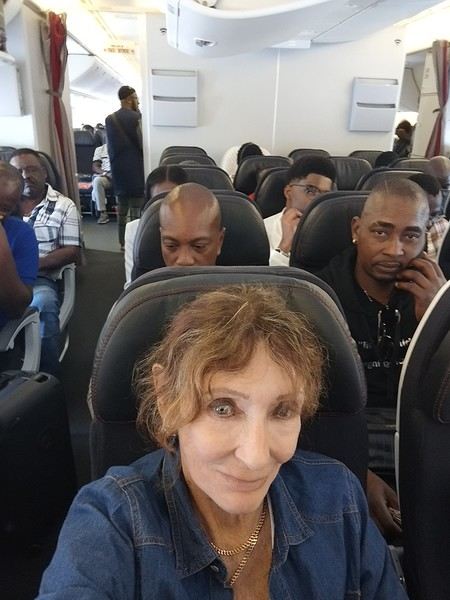 I’m planning to go to Zanzibar from mid-January to mid-April. Looking for a comfortable, clean place with AC or a fan, really close to a beach (max 600m on foot). I’ll be traveling with my Jack Russell, who’s also a seasoned traveler.
Any tips, good deals, or recommendations are welcome! 😊 I spent 4 months in Zanzibar… 20 years ago!! Thanks in advance. It’d be great to find a travel companion. I know the trip might be a bit long for some folks 🤷🏽♀️
Hi there!
I’m looking for one or two (or more) people to climb the Maasai sacred mountain, Ol Doinyo volcano.
I already have a guide.
The dates are January 12, 13, and 14.
It’ll be a full moon, so it’ll be easier to see during the night ascent.
Good physical fitness is required.
Otherwise, to anyone who’s been there before—I’d love some tips!
hi
which side of the island should I pick for October?
thanks for your tips
Hi there,
for a 15-day trip to Zanzibar,
I’d love all your tips and help (where to go, accommodation, etc.).
Thanks in advance!