Discussions Lhorizon took part in
About 278 results.
More options
Many results are in French, the community’s main language. English translations are added over time.
Search results
Nisyros: Greece’s most beautiful island?
Hi everyone,
I hesitated for a long time before publishing this travel journal since it’s been 8 months now since I left Nisyros. But in the end, I found it too beautiful to keep quiet about. So here we go—I finally got around to writing it. Nisyros is a stunning little Greek island, and luckily, it’s well hidden. Located a good twenty hours by boat from Athens, its distance from the Greek mainland deters most tourists from visiting. That’s what makes it an off-the-beaten-path destination. So much for the general info.
Before diving into the details, I should mention that I visited by bike (despite its severe and constant volcanic elevation) as part of a solo trip from France to Turkey. Why this detail? Because out of the ten countries I crossed and the dozens of sites I saw, Nisyros is one of my top three favorites (along with Pag Island, off-season, in Croatia, and Albania for its overall beauty—stunning natural landscapes and the incredible hospitality of its people). Anyway, welcome to this travel journal dedicated to the lovely little volcanic island of Nisyros…
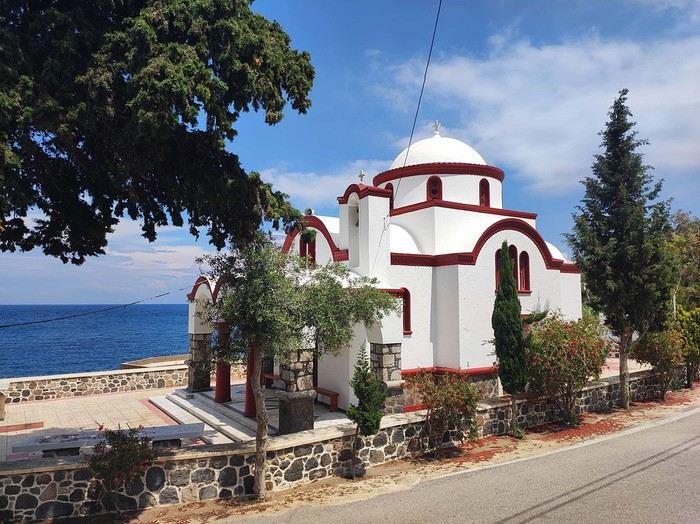
I arrived one beautiful morning in Mandraki, the island’s main port. The twenty-hour boat ride from Athens went by like a breeze. I slept on the deck for three or four hours, sprawled on a bench that was more or less sheltered from the wind. At this time of year (it’s May 2nd), tourists aren’t exactly flocking here, so the boat was far from full. My first glimpse of Nisyros is classic Greek island scenery: blazing sun, an azure sky, and an even deeper blue sea. The trip is off to a great start. I quickly found a small, out-of-the-way hotel (I’m one of those people who avoids crowds as much as possible when traveling, which is getting harder and harder to do). While everyone else from the boat turned right out of the port toward the center of Mandraki, I went left! My nice little hotel was just a hundred meters away, facing a pretty little Orthodox church whose red color contrasted beautifully with the deep blue sea.
I dropped off my panniers in my room so I could ride light for once, then headed toward the next village: Pali. It’s a small fishing village that apparently comes to life a bit in the summer with a few tourists.
As I pedaled along the dock, I passed right by a guy sitting in a chair in full sun. Unfazed despite the sweat pouring down his forehead, he untangled his fishing net with a precision that commanded respect. I gave him the obligatory kalimera (good morning), but he reacted like a deaf-mute—no response at all. On the other hand, his employee answered me kindly from the trawler docked right next to him. Standing on deck, he was also untangling a mess of nets and invited me aboard to chat. That’s Mohamed.
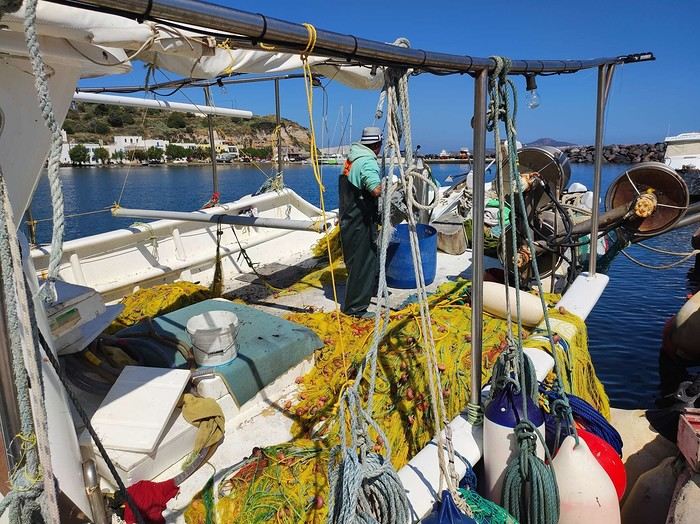
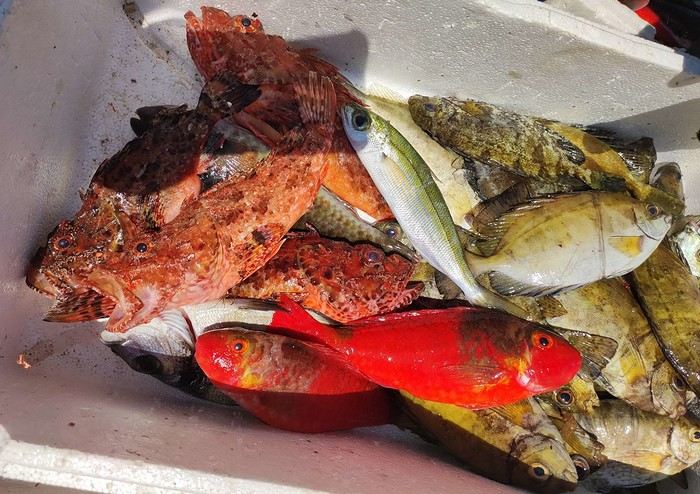
Communication wasn’t easy since he only spoke Greek and I didn’t, but he was cheerful, and his joy was contagious. He proudly showed off their catch of the day: two beautiful rays and a few brightly colored fish. We chatted like that for about fifteen minutes.
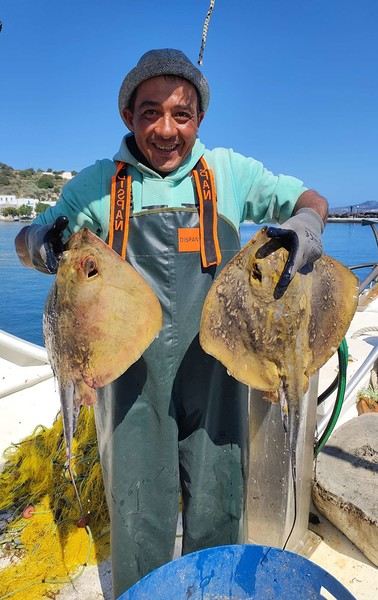
When it was time to hit the road again, I said goodbye to Mohamed, who smiled back. But this time, his boss—still dripping sweat in his chair under the scorching sun—greeted me too. Turns out he wasn’t deaf or mute after all.
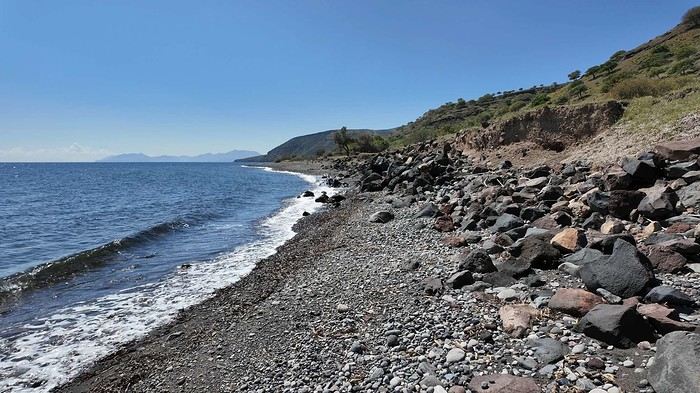
I continued along the coast since that’s where most of Nisyros’ beaches are. They start lining up just outside Pali. These are black sand beaches, which can’t hide their volcanic origins.
Yesterday afternoon in Athens, I met Peter and Michelle, a Dutch-French couple, while we were waiting for the ferry to depart. The Greek sailors were on strike, so we ended up waiting about twelve hours before setting off. Anyway, we had plenty of time to chat, and Peter, who’s lived on Tilos—a small island near Nisyros—for about twenty years, told me that many migrants pass through these two islands. Most come from Afghanistan and Syria, fleeing authoritarian regimes and the massacres that come with them. They’re looking for *anywhere* else where the future can’t possibly be worse. Peter explained that you often find their belongings on the local beaches. And sure enough, I didn’t have to look far to spot some—clothes, life jackets…
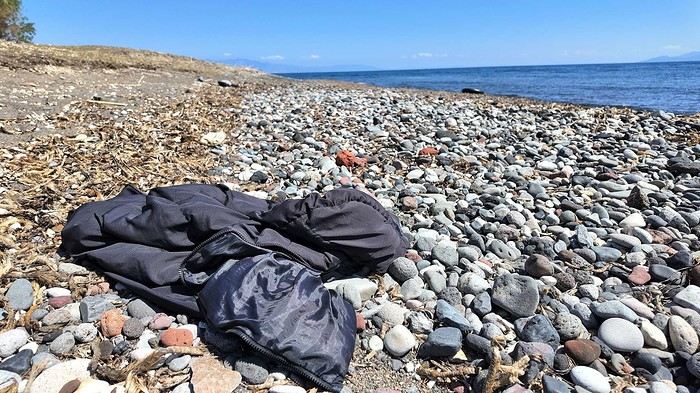
I glanced around, hoping to see one of them to maybe exchange a few words, but no—no one. I was completely alone.
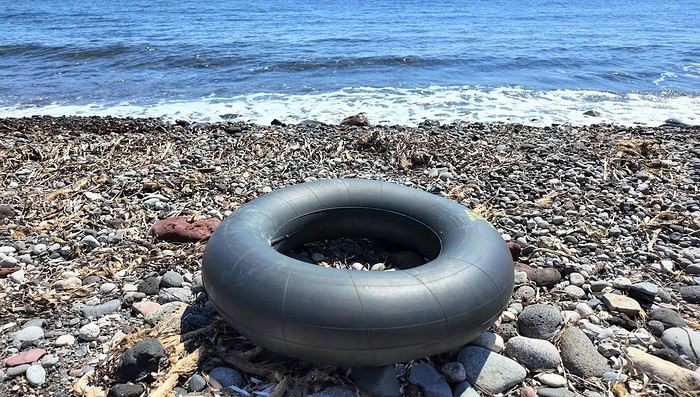
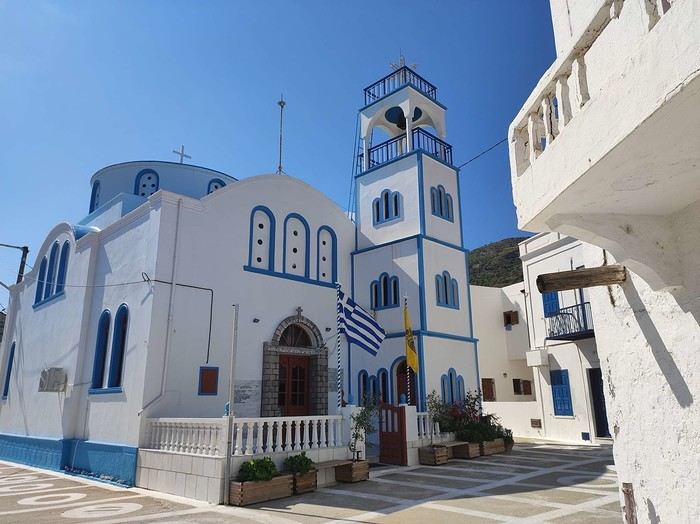
I got back on my bike and spent the rest of the day wandering aimlessly, just exploring this beautiful part of Nisyros. I also picked up some supplies because tomorrow, I’d be heading inland for two days, deep into its four-kilometer-wide caldera to explore the volcano. I’d be sleeping in a tent, so I needed to stock up on food. After a restful night in a real bed—something rare on this bike trip (and I won’t even mention the shower…)—I finally set off for the volcano (I’ll share details about that charming little hotel with the amazing breakfasts at the end of the journal). To reach Stefanos (the name of the main crater), I had to climb to the top of the caldera. It was hot, and some of the slopes were between 10 and 15%, which is steep, especially with a 54 kg bike. But who cares? I was admiring the scenery, and I have to say, I was surprised by how green it was. The higher I climbed, the more beautiful the vegetation became. It stood out against the blue of the sea, and the landscapes inside the island were truly stunning. So, I stopped every five minutes to take photos. Every now and then, I’d come across cows in the middle of the road—or goats in the trees! They climbed with the agility of monkeys to munch on the leaves. I couldn’t get a photo of them because they’d all scatter before I got close. It was actually the noise they made climbing down that tipped me off to their presence. Two villages sit at the top of the caldera: Emporios and Nikia. I passed the first one without climbing up to it, then continued to the second. And let me tell you, Nikia was love at first sight! I found myself pedaling through tiny streets, some barely wider than my bike with its panniers. The walls were white, and the doors were painted in all sorts of colors—green, blue, red… The streets were empty, and silence reigned. But it wasn’t a dead silence. It was more like the kind you find in small, secret, peaceful places. The village exuded tranquility, calm, and well-being. I leaned my bike—with all its gear—against a wall without locking it. It was the first time on this trip that I’d done that. Sure, its weight made it more like a tank than a bike, so you’d have to be *really* motivated to steal it, but here, for some reason, I felt completely at ease. Maybe it wasn’t the smartest move, but I go a lot by instinct, and here, it felt right. So I left my bike there and went to eat a little farther away, at a small restaurant on the village’s main square. It’s famous all over Greece for the beautiful mosaic that covers and decorates the floor. Once I’d eaten and drunk my fill, I hopped back on my bike, which had waited patiently without running off. And the best part? After riding uphill all morning to reach the top of the caldera, all I had to do now was coast downhill to the volcano. Pure bliss in such breathtaking scenery.
I hesitated for a long time before publishing this travel journal since it’s been 8 months now since I left Nisyros. But in the end, I found it too beautiful to keep quiet about. So here we go—I finally got around to writing it. Nisyros is a stunning little Greek island, and luckily, it’s well hidden. Located a good twenty hours by boat from Athens, its distance from the Greek mainland deters most tourists from visiting. That’s what makes it an off-the-beaten-path destination. So much for the general info.
Before diving into the details, I should mention that I visited by bike (despite its severe and constant volcanic elevation) as part of a solo trip from France to Turkey. Why this detail? Because out of the ten countries I crossed and the dozens of sites I saw, Nisyros is one of my top three favorites (along with Pag Island, off-season, in Croatia, and Albania for its overall beauty—stunning natural landscapes and the incredible hospitality of its people). Anyway, welcome to this travel journal dedicated to the lovely little volcanic island of Nisyros…
I arrived one beautiful morning in Mandraki, the island’s main port. The twenty-hour boat ride from Athens went by like a breeze. I slept on the deck for three or four hours, sprawled on a bench that was more or less sheltered from the wind. At this time of year (it’s May 2nd), tourists aren’t exactly flocking here, so the boat was far from full. My first glimpse of Nisyros is classic Greek island scenery: blazing sun, an azure sky, and an even deeper blue sea. The trip is off to a great start. I quickly found a small, out-of-the-way hotel (I’m one of those people who avoids crowds as much as possible when traveling, which is getting harder and harder to do). While everyone else from the boat turned right out of the port toward the center of Mandraki, I went left! My nice little hotel was just a hundred meters away, facing a pretty little Orthodox church whose red color contrasted beautifully with the deep blue sea.
I dropped off my panniers in my room so I could ride light for once, then headed toward the next village: Pali. It’s a small fishing village that apparently comes to life a bit in the summer with a few tourists.
As I pedaled along the dock, I passed right by a guy sitting in a chair in full sun. Unfazed despite the sweat pouring down his forehead, he untangled his fishing net with a precision that commanded respect. I gave him the obligatory kalimera (good morning), but he reacted like a deaf-mute—no response at all. On the other hand, his employee answered me kindly from the trawler docked right next to him. Standing on deck, he was also untangling a mess of nets and invited me aboard to chat. That’s Mohamed.
Communication wasn’t easy since he only spoke Greek and I didn’t, but he was cheerful, and his joy was contagious. He proudly showed off their catch of the day: two beautiful rays and a few brightly colored fish. We chatted like that for about fifteen minutes.
When it was time to hit the road again, I said goodbye to Mohamed, who smiled back. But this time, his boss—still dripping sweat in his chair under the scorching sun—greeted me too. Turns out he wasn’t deaf or mute after all.
I continued along the coast since that’s where most of Nisyros’ beaches are. They start lining up just outside Pali. These are black sand beaches, which can’t hide their volcanic origins.
Yesterday afternoon in Athens, I met Peter and Michelle, a Dutch-French couple, while we were waiting for the ferry to depart. The Greek sailors were on strike, so we ended up waiting about twelve hours before setting off. Anyway, we had plenty of time to chat, and Peter, who’s lived on Tilos—a small island near Nisyros—for about twenty years, told me that many migrants pass through these two islands. Most come from Afghanistan and Syria, fleeing authoritarian regimes and the massacres that come with them. They’re looking for *anywhere* else where the future can’t possibly be worse. Peter explained that you often find their belongings on the local beaches. And sure enough, I didn’t have to look far to spot some—clothes, life jackets…
I glanced around, hoping to see one of them to maybe exchange a few words, but no—no one. I was completely alone.
I got back on my bike and spent the rest of the day wandering aimlessly, just exploring this beautiful part of Nisyros. I also picked up some supplies because tomorrow, I’d be heading inland for two days, deep into its four-kilometer-wide caldera to explore the volcano. I’d be sleeping in a tent, so I needed to stock up on food. After a restful night in a real bed—something rare on this bike trip (and I won’t even mention the shower…)—I finally set off for the volcano (I’ll share details about that charming little hotel with the amazing breakfasts at the end of the journal). To reach Stefanos (the name of the main crater), I had to climb to the top of the caldera. It was hot, and some of the slopes were between 10 and 15%, which is steep, especially with a 54 kg bike. But who cares? I was admiring the scenery, and I have to say, I was surprised by how green it was. The higher I climbed, the more beautiful the vegetation became. It stood out against the blue of the sea, and the landscapes inside the island were truly stunning. So, I stopped every five minutes to take photos. Every now and then, I’d come across cows in the middle of the road—or goats in the trees! They climbed with the agility of monkeys to munch on the leaves. I couldn’t get a photo of them because they’d all scatter before I got close. It was actually the noise they made climbing down that tipped me off to their presence. Two villages sit at the top of the caldera: Emporios and Nikia. I passed the first one without climbing up to it, then continued to the second. And let me tell you, Nikia was love at first sight! I found myself pedaling through tiny streets, some barely wider than my bike with its panniers. The walls were white, and the doors were painted in all sorts of colors—green, blue, red… The streets were empty, and silence reigned. But it wasn’t a dead silence. It was more like the kind you find in small, secret, peaceful places. The village exuded tranquility, calm, and well-being. I leaned my bike—with all its gear—against a wall without locking it. It was the first time on this trip that I’d done that. Sure, its weight made it more like a tank than a bike, so you’d have to be *really* motivated to steal it, but here, for some reason, I felt completely at ease. Maybe it wasn’t the smartest move, but I go a lot by instinct, and here, it felt right. So I left my bike there and went to eat a little farther away, at a small restaurant on the village’s main square. It’s famous all over Greece for the beautiful mosaic that covers and decorates the floor. Once I’d eaten and drunk my fill, I hopped back on my bike, which had waited patiently without running off. And the best part? After riding uphill all morning to reach the top of the caldera, all I had to do now was coast downhill to the volcano. Pure bliss in such breathtaking scenery.
Slovenia, a nature destination
Slovenia was the originally planned destination for summer 2022, as a complement to a road trip through Croatia and Montenegro. Plans changed on a whim in February of that year. Our Balkans road trip would ultimately be limited to Slovenia and take place over 10 days during the Easter school holidays. Flight tickets and car rental were booked right away; all that was left was to finalize our itinerary, already sketched out, and the accommodation reservations.
I decided to add Plitvice Lakes in Croatia to our program. I really wanted to discover them, and for my husband, it was a chance to revisit them several years after a trip to Yugoslavia when he was a teenager.
I’m happy to contribute to the reopening of our forum by posting this travel journal (originally posted in 2022 on another forum, the text has been partially revised and photos added). As usual, a few photos to start with—maybe they’ll inspire you to join in!

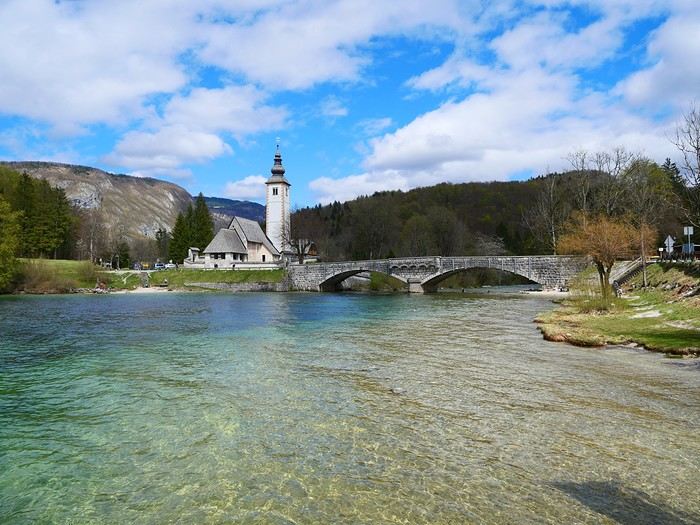
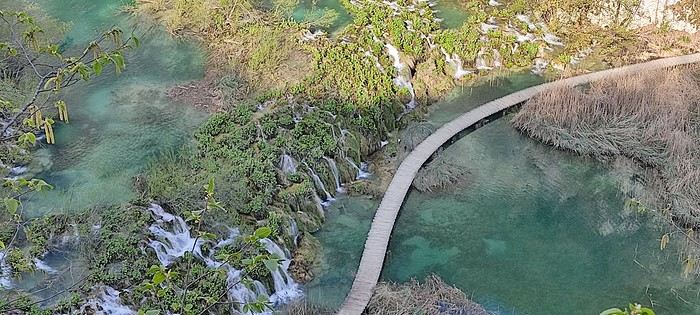

I decided to add Plitvice Lakes in Croatia to our program. I really wanted to discover them, and for my husband, it was a chance to revisit them several years after a trip to Yugoslavia when he was a teenager.
I’m happy to contribute to the reopening of our forum by posting this travel journal (originally posted in 2022 on another forum, the text has been partially revised and photos added). As usual, a few photos to start with—maybe they’ll inspire you to join in!
Mexico: The Magic of the Yucatán
Hello everyone,
What a pleasure to be back on VF after a few difficult years 😎 So, before diving into the topic, welcome back to VF and above all... keep going!
Well, I’m finally picking up my old habit of posting a new travel journal.
Before heading to Mexico in the summer of 2023 with my family (my partner and our two boys, aged 18 and 16), I had somehow convinced myself—though I can’t even remember why—that the Yucatán was too touristy, too cliché, too expensive, and overrated!
The country didn’t particularly appeal to me, but faced with my wife’s insistence—she’d been there years ago, before we met, and had promised to show our sons this incredible place—my arguments didn’t hold much weight.
And thank goodness, because I have to admit she was absolutely right to take us there! In the end, we encountered far fewer tourists than we’d feared (except at a few sites), and the prices, which we’d been told were geared toward American neighbors (US), turned out to be quite affordable. In short, it was pure joy on both counts. All that was left was for the trip itself to be beautiful and memorable—and it was...
1st stop: Isla Holbox and the whale sharks
Holbox (pronounced “Hol-bosh”) is a stunning island where you can relax in an enchanting setting.
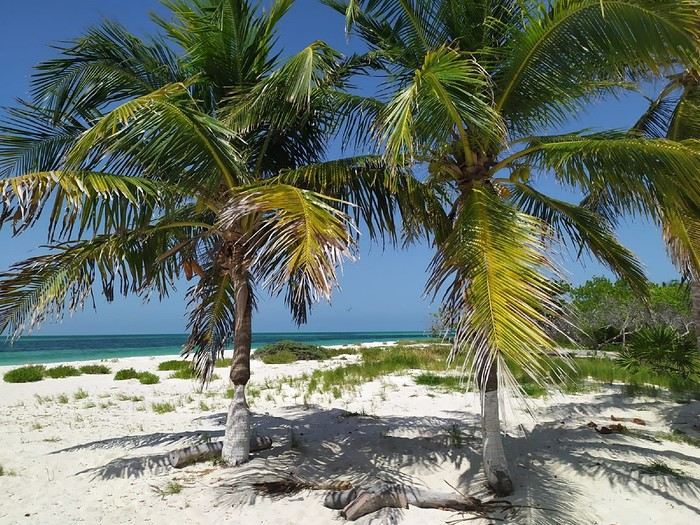
Our main goal in coming to Holbox was to swim with whale sharks. So, the first thing we told our hotel, Los Arcos Holbox, upon arrival was to arrange an excursion with one of the island’s many tour operators: Glendy Tours Holbox. We set off the next morning, bright and early.
The itinerary for this outing is the same for all tour operators (and there are about thirty of them!): roughly two hours by speedboat, then snorkeling with the whale sharks, followed by another boat ride to Cabo Catoche for lunch, then more boating to a fish-filled snorkeling spot before heading back. In total, the excursion can take eight hours—or even longer.
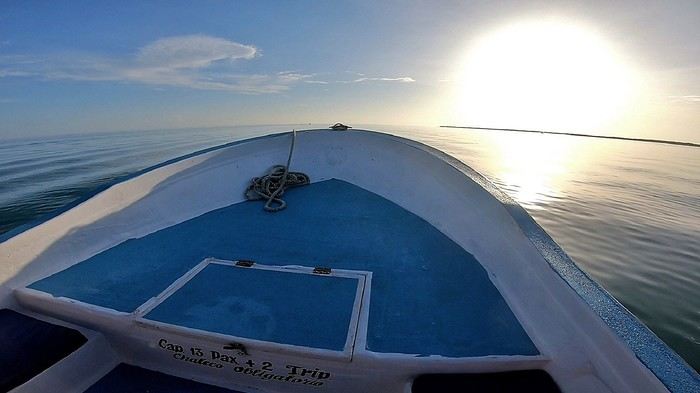
Besides my two sons and me, there were only two other clients on board—a French couple. Our boat was one of the very first to leave, but after ten minutes, the pilot got a radio call. We turned back without any explanation, returning to the departure dock.
There, a young woman who clearly fancied herself a diva was waiting for us. She was Mexican and boarded the boat, snubbing all five of us while flirting with the pilot and guide, who were suddenly all eyes for her. We couldn’t understand how this diva had convinced our tour operator to turn the boat around just to pick her up when she hadn’t even booked and we were already far out. We left 20 minutes late.
The two-hour journey passed surprisingly quickly, and for good reason: we spotted dolphins six times! They were leaping out of the water as they moved. Pure joy. We stopped whenever they were near the boat.
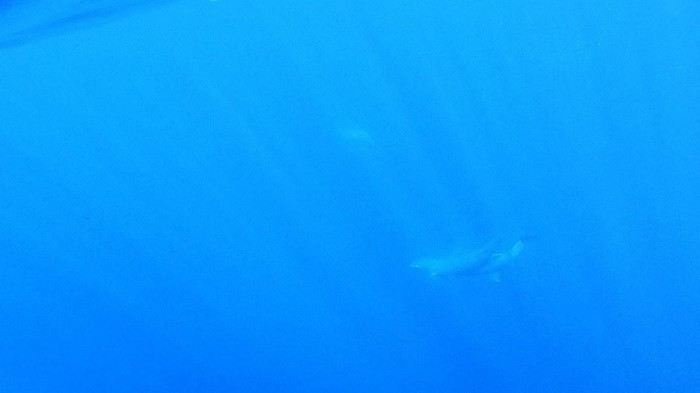
The photo isn’t great—the ultra-wide-angle lens on my GoPro makes the dolphins look smaller—but at least I got a souvenir.
A few flying fish (exocets) also glided a meter or two above the water as we sped along. The false start was forgotten, and the day was off to a fantastic start in this stunning marine environment...
When we reached the area where the whale sharks were supposed to be, the guide explained that we’d now have to scan the sea until we spotted one. It could take five minutes or forty-five, he said, and if we were unlucky, we might not see any at all!
An hour and a half later—still nothing! The captain then headed toward a distant area where about twenty other boats were already gathered.
Sure enough, there was a juvenile whale shark (still a good eight meters long) there, and all the boats were lining up to approach it slowly, one by one, so as not to scare the animal. Each boat got about thirty seconds within a few meters of it, engine idling, before making way for the next. We were allowed to approach three times, but we weren’t permitted to dive in. That’s normal—such a crowd of divers around a single animal would stress it out, and here, whale sharks are protected by regulations: swimming with them is strictly controlled. There was even a coast guard boat with us at all times, monitoring everyone’s behavior.
We were torn between the luck of seeing such a magnificent animal, even from the surface, and the discomfort we felt about the absurd situation. All those boats lined up just to catch a fleeting glimpse of the shark for a few seconds—let’s be honest, it was ridiculous. In short, the whole thing was unpleasant, and probably even more so for the shark than for us, though it did keep gulping down kilos of plankton as if nothing were happening...
When it was our turn to approach, I dipped my GoPro into the water at arm’s length and framed the shot blindly, hoping for a decent image of the shark.
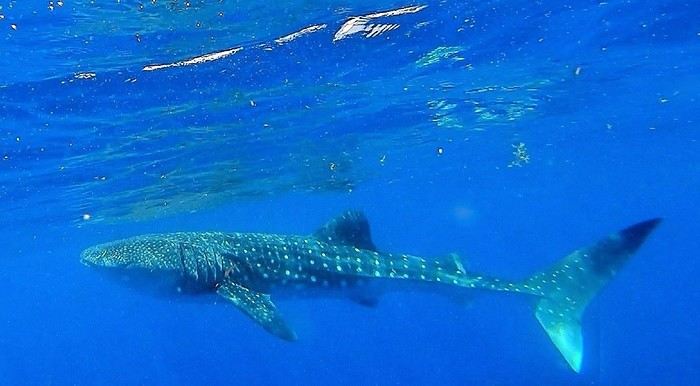
On the third and final approach, the sixth passenger on board—the one we’d had to turn back for ten minutes after departure—quietly spoke to the guide and captain after putting on her flippers (even though, I’ll remind you, no one was allowed to dive). She wanted them to ask the coast guard for permission to dive with the shark—just her! She whispered so we couldn’t hear what she was offering in exchange.
The two lackeys complied and shouted the request to the officials in front of all the other boats, with no shame whatsoever. With so many witnesses, the coast guard had no choice but to refuse. The diva wouldn’t let it go and asked them to insist, which they did, but the refusal was firm and final.
On the nearest boats, everyone had heard and was stunned. They openly mocked this bimbo who clearly had no shame. Hidden behind her star sunglasses, she responded with a dismissive smile. Pathetic.
The encounter with the shark ended, and we set off for Cabo Catoche, a site on Holbox Island where we were to have lunch.
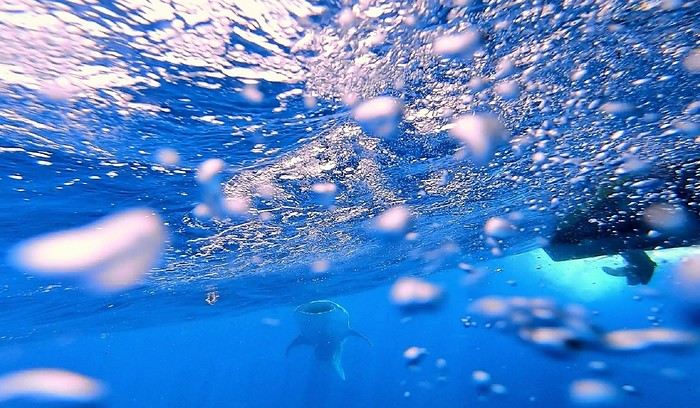
We were a little disappointed not to have had the chance to see the usual school of whale sharks (they’re often dozens swimming together!), but that’s nature’s way, and we knew it.
And then, an unlikely stroke of luck: a boat ahead of us was putting divers in the water with a pair of adult whale sharks. We joined them, and while we were putting on our masks and snorkels, the guide briefed us. He said my sons and I would go first, followed by the French couple and the diva.
But Miss World, clearly unhappy with this order, quietly complained to the guide, who eventually switched the order. It didn’t bother us since we’d only get a minute in the water anyway—what’s a minute more or less?
So the three of them got in the water, and a moment later, they were done. My two sons and I, sitting on the edge of the boat with masks on and snorkels in our mouths, were ready to finally take the plunge. But instead of continuing to follow the shark, the captain was suddenly all eyes for Miss Silicone! He even let go of the wheel for a moment to help her back on board.
One of the two sharks had already left minutes earlier, and the second was swimming farther away. Other boats were arriving, and the captain went to join the queue 100 meters from the shark. Soon, even more boats showed up. There were way too many people, the shark left, and diving was no longer possible.
I was, of course, a little disappointed not to have fulfilled my long-time dream of swimming with a whale shark, even briefly. But I was mostly disgusted for my two boys, who had been so excited about it. I told the guide exactly what I thought and asked for compensation—not for missing out on swimming with the shark (you can never guarantee seeing one, nature isn’t at our beck and call), but for clearly skipping our turn to dive. He promised a refund.
At the end of the day, back on land, he dropped us all off, and as he was about to leave, I reminded him about the refund. He agreed again, calmly got back on board, and sped off as if nothing had happened—just him and the captain, two total cowards. I couldn’t believe it.
Of course, back at our hotel (which had booked this tour operator—Glendy Tours), I explained the situation and asked for my refund again. The receptionist called the manager, who arrived with the guide. Our runaway wasn’t so cocky anymore. Inside, I was fuming, but I kept my cool during the discussion that followed.
Right off the bat, I made a point of looking the so-called guide in the eyes while telling him he’d run off like a coward. I did my best to stay calm, speaking clearly, staring him down the whole time, and repeating several times that he was a coward, in front of the manager, who didn’t say a word. The guide had clearly been told by his boss to keep quiet because he didn’t utter a word during the entire twenty-minute conversation.
Anyway, I’ll spare you the details, but in the end, the manager only offered us another excursion the next day as compensation for the “inconvenience.” It was just snorkeling with fish, not another whale shark trip. He admitted their fault, but since we had to leave early the next morning and had other bookings for the rest of the trip, we couldn’t accept. And he refused to refund us.
On Tripadvisor, Glendy Tours has a mediocre rating (3 out of 5), but more importantly, it ranks 29th out of 36 nautical tour operators rated by customers. I was pretty upset with the hotel for booking such an amateur for us.

If you want to swim with whale sharks in Holbox, you might end up with Glendy Tours. And it might go well—I certainly hope so. But given the price of such an excursion (3,000 pesos per person, about 160 €!), I’d still suggest quickly checking online before you go to see which providers have the best ratings. You’ll have a much better chance of things going smoothly with the top-rated ones than with those as poorly ranked as Glendy Tours.
On the other hand, if you’re a beautiful young woman, you can choose them without worry—you’ll get better treatment than the rest of us...
To wrap up this excursion, I have to mention the “respect for nature” angle that all these tour operators highlight. They tell us they respect the whale sharks: only two or three people can dive at a time, and only for a few minutes, so as not to disturb these gentle giants...
We believed them before we left, but that’s not what we saw. When the sharks are hard to find except for one, everyone rushes it, and only the constant presence of the coast guard prevents the tour operators from putting their clients in the water.
Because for the second shark we saw, when the divers from our boat got out of the water and we left to join the queue while it was our turn to dive, other boats quickly arrived and started swarming the poor shark, which eventually left.
In other words, it’s clear these companies only respect the sharks when they’re being watched.
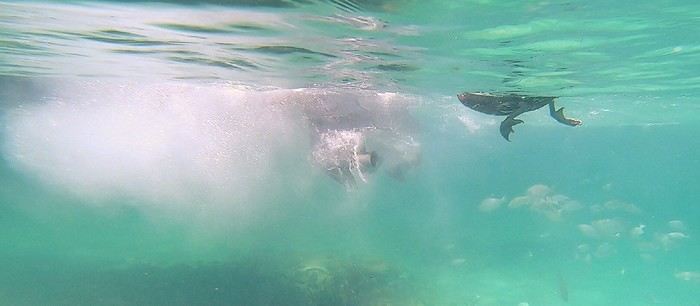 Boat reversing a meter away from a pelican
And for the snorkeling near Cabo Catoche, they attract fish daily by feeding them—a practice that’s normally discouraged. Afterward, these fish can’t feed naturally anymore and become dependent on Glendy Tours and its competitors.
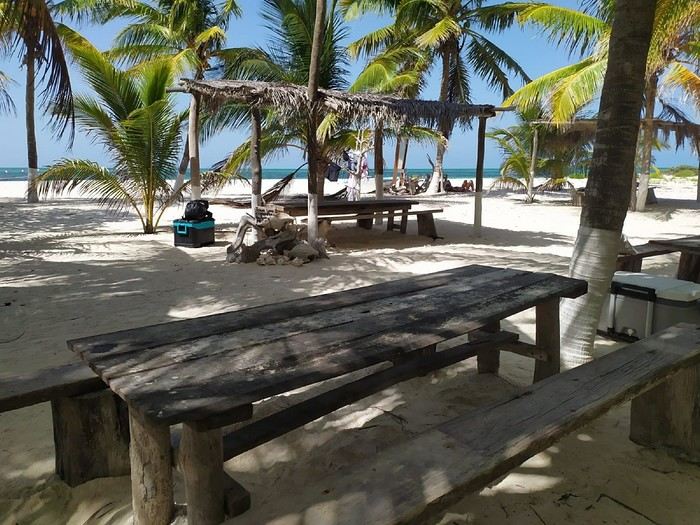
A quick note on the rest of the excursion: Cabo Catoche (the site where we had lunch, on Holbox Island) is the northernmost point of the entire Yucatán. The place is paradise.
On the way back, we spent half an hour snorkeling at a site that turned out to be fish-filled only because the tour operators had the bad habit of feeding the fish. But this practice, which isn’t respectful of nature, is normally discouraged.
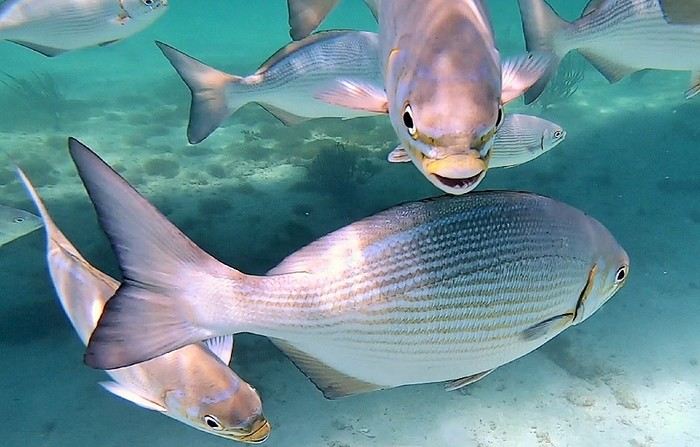
Plus, life jackets—like in many places in the Yucatán—are mandatory!!
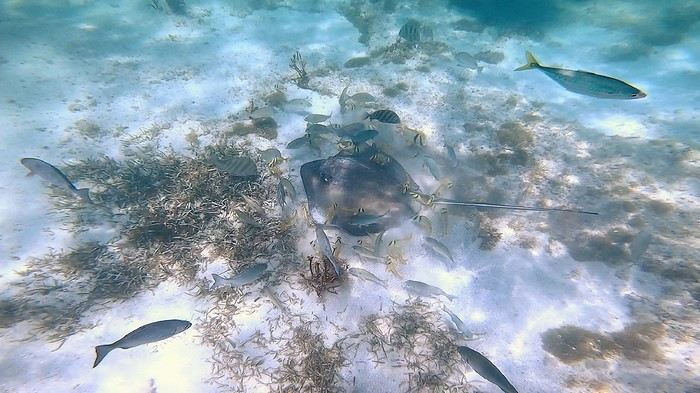
As divers, we didn’t find the site very interesting, but objectively, it should delight those who aren’t used to putting their heads underwater in beautiful dive spots.
We hated feeling trapped in those life jackets, stuck at the surface, and for me, the highlight was swimming next to a pelican that wasn’t too shy—it was paddling right beside me in green water.
Anyway, it seems we can’t post more than 10 photos at once on VF, so I’ll come back with the rest of the journal in another message. Because after these early trip mishaps, the rest of the journey turned out to be magnificent...
What a pleasure to be back on VF after a few difficult years 😎 So, before diving into the topic, welcome back to VF and above all... keep going!
Well, I’m finally picking up my old habit of posting a new travel journal.
Before heading to Mexico in the summer of 2023 with my family (my partner and our two boys, aged 18 and 16), I had somehow convinced myself—though I can’t even remember why—that the Yucatán was too touristy, too cliché, too expensive, and overrated!
The country didn’t particularly appeal to me, but faced with my wife’s insistence—she’d been there years ago, before we met, and had promised to show our sons this incredible place—my arguments didn’t hold much weight.
And thank goodness, because I have to admit she was absolutely right to take us there! In the end, we encountered far fewer tourists than we’d feared (except at a few sites), and the prices, which we’d been told were geared toward American neighbors (US), turned out to be quite affordable. In short, it was pure joy on both counts. All that was left was for the trip itself to be beautiful and memorable—and it was...
1st stop: Isla Holbox and the whale sharks
Holbox (pronounced “Hol-bosh”) is a stunning island where you can relax in an enchanting setting.
Our main goal in coming to Holbox was to swim with whale sharks. So, the first thing we told our hotel, Los Arcos Holbox, upon arrival was to arrange an excursion with one of the island’s many tour operators: Glendy Tours Holbox. We set off the next morning, bright and early.
The itinerary for this outing is the same for all tour operators (and there are about thirty of them!): roughly two hours by speedboat, then snorkeling with the whale sharks, followed by another boat ride to Cabo Catoche for lunch, then more boating to a fish-filled snorkeling spot before heading back. In total, the excursion can take eight hours—or even longer.
Besides my two sons and me, there were only two other clients on board—a French couple. Our boat was one of the very first to leave, but after ten minutes, the pilot got a radio call. We turned back without any explanation, returning to the departure dock.
There, a young woman who clearly fancied herself a diva was waiting for us. She was Mexican and boarded the boat, snubbing all five of us while flirting with the pilot and guide, who were suddenly all eyes for her. We couldn’t understand how this diva had convinced our tour operator to turn the boat around just to pick her up when she hadn’t even booked and we were already far out. We left 20 minutes late.
The two-hour journey passed surprisingly quickly, and for good reason: we spotted dolphins six times! They were leaping out of the water as they moved. Pure joy. We stopped whenever they were near the boat.
The photo isn’t great—the ultra-wide-angle lens on my GoPro makes the dolphins look smaller—but at least I got a souvenir.
A few flying fish (exocets) also glided a meter or two above the water as we sped along. The false start was forgotten, and the day was off to a fantastic start in this stunning marine environment...
When we reached the area where the whale sharks were supposed to be, the guide explained that we’d now have to scan the sea until we spotted one. It could take five minutes or forty-five, he said, and if we were unlucky, we might not see any at all!
An hour and a half later—still nothing! The captain then headed toward a distant area where about twenty other boats were already gathered.
Sure enough, there was a juvenile whale shark (still a good eight meters long) there, and all the boats were lining up to approach it slowly, one by one, so as not to scare the animal. Each boat got about thirty seconds within a few meters of it, engine idling, before making way for the next. We were allowed to approach three times, but we weren’t permitted to dive in. That’s normal—such a crowd of divers around a single animal would stress it out, and here, whale sharks are protected by regulations: swimming with them is strictly controlled. There was even a coast guard boat with us at all times, monitoring everyone’s behavior.
We were torn between the luck of seeing such a magnificent animal, even from the surface, and the discomfort we felt about the absurd situation. All those boats lined up just to catch a fleeting glimpse of the shark for a few seconds—let’s be honest, it was ridiculous. In short, the whole thing was unpleasant, and probably even more so for the shark than for us, though it did keep gulping down kilos of plankton as if nothing were happening...
When it was our turn to approach, I dipped my GoPro into the water at arm’s length and framed the shot blindly, hoping for a decent image of the shark.
On the third and final approach, the sixth passenger on board—the one we’d had to turn back for ten minutes after departure—quietly spoke to the guide and captain after putting on her flippers (even though, I’ll remind you, no one was allowed to dive). She wanted them to ask the coast guard for permission to dive with the shark—just her! She whispered so we couldn’t hear what she was offering in exchange.
The two lackeys complied and shouted the request to the officials in front of all the other boats, with no shame whatsoever. With so many witnesses, the coast guard had no choice but to refuse. The diva wouldn’t let it go and asked them to insist, which they did, but the refusal was firm and final.
On the nearest boats, everyone had heard and was stunned. They openly mocked this bimbo who clearly had no shame. Hidden behind her star sunglasses, she responded with a dismissive smile. Pathetic.
The encounter with the shark ended, and we set off for Cabo Catoche, a site on Holbox Island where we were to have lunch.
We were a little disappointed not to have had the chance to see the usual school of whale sharks (they’re often dozens swimming together!), but that’s nature’s way, and we knew it.
And then, an unlikely stroke of luck: a boat ahead of us was putting divers in the water with a pair of adult whale sharks. We joined them, and while we were putting on our masks and snorkels, the guide briefed us. He said my sons and I would go first, followed by the French couple and the diva.
But Miss World, clearly unhappy with this order, quietly complained to the guide, who eventually switched the order. It didn’t bother us since we’d only get a minute in the water anyway—what’s a minute more or less?
So the three of them got in the water, and a moment later, they were done. My two sons and I, sitting on the edge of the boat with masks on and snorkels in our mouths, were ready to finally take the plunge. But instead of continuing to follow the shark, the captain was suddenly all eyes for Miss Silicone! He even let go of the wheel for a moment to help her back on board.
One of the two sharks had already left minutes earlier, and the second was swimming farther away. Other boats were arriving, and the captain went to join the queue 100 meters from the shark. Soon, even more boats showed up. There were way too many people, the shark left, and diving was no longer possible.
I was, of course, a little disappointed not to have fulfilled my long-time dream of swimming with a whale shark, even briefly. But I was mostly disgusted for my two boys, who had been so excited about it. I told the guide exactly what I thought and asked for compensation—not for missing out on swimming with the shark (you can never guarantee seeing one, nature isn’t at our beck and call), but for clearly skipping our turn to dive. He promised a refund.
At the end of the day, back on land, he dropped us all off, and as he was about to leave, I reminded him about the refund. He agreed again, calmly got back on board, and sped off as if nothing had happened—just him and the captain, two total cowards. I couldn’t believe it.
Of course, back at our hotel (which had booked this tour operator—Glendy Tours), I explained the situation and asked for my refund again. The receptionist called the manager, who arrived with the guide. Our runaway wasn’t so cocky anymore. Inside, I was fuming, but I kept my cool during the discussion that followed.
Right off the bat, I made a point of looking the so-called guide in the eyes while telling him he’d run off like a coward. I did my best to stay calm, speaking clearly, staring him down the whole time, and repeating several times that he was a coward, in front of the manager, who didn’t say a word. The guide had clearly been told by his boss to keep quiet because he didn’t utter a word during the entire twenty-minute conversation.
Anyway, I’ll spare you the details, but in the end, the manager only offered us another excursion the next day as compensation for the “inconvenience.” It was just snorkeling with fish, not another whale shark trip. He admitted their fault, but since we had to leave early the next morning and had other bookings for the rest of the trip, we couldn’t accept. And he refused to refund us.
On Tripadvisor, Glendy Tours has a mediocre rating (3 out of 5), but more importantly, it ranks 29th out of 36 nautical tour operators rated by customers. I was pretty upset with the hotel for booking such an amateur for us.
If you want to swim with whale sharks in Holbox, you might end up with Glendy Tours. And it might go well—I certainly hope so. But given the price of such an excursion (3,000 pesos per person, about 160 €!), I’d still suggest quickly checking online before you go to see which providers have the best ratings. You’ll have a much better chance of things going smoothly with the top-rated ones than with those as poorly ranked as Glendy Tours.
On the other hand, if you’re a beautiful young woman, you can choose them without worry—you’ll get better treatment than the rest of us...
To wrap up this excursion, I have to mention the “respect for nature” angle that all these tour operators highlight. They tell us they respect the whale sharks: only two or three people can dive at a time, and only for a few minutes, so as not to disturb these gentle giants...
We believed them before we left, but that’s not what we saw. When the sharks are hard to find except for one, everyone rushes it, and only the constant presence of the coast guard prevents the tour operators from putting their clients in the water.
Because for the second shark we saw, when the divers from our boat got out of the water and we left to join the queue while it was our turn to dive, other boats quickly arrived and started swarming the poor shark, which eventually left.
In other words, it’s clear these companies only respect the sharks when they’re being watched.
Boat reversing a meter away from a pelicanAnd for the snorkeling near Cabo Catoche, they attract fish daily by feeding them—a practice that’s normally discouraged. Afterward, these fish can’t feed naturally anymore and become dependent on Glendy Tours and its competitors.
A quick note on the rest of the excursion: Cabo Catoche (the site where we had lunch, on Holbox Island) is the northernmost point of the entire Yucatán. The place is paradise.
On the way back, we spent half an hour snorkeling at a site that turned out to be fish-filled only because the tour operators had the bad habit of feeding the fish. But this practice, which isn’t respectful of nature, is normally discouraged.
Plus, life jackets—like in many places in the Yucatán—are mandatory!!
As divers, we didn’t find the site very interesting, but objectively, it should delight those who aren’t used to putting their heads underwater in beautiful dive spots.
We hated feeling trapped in those life jackets, stuck at the surface, and for me, the highlight was swimming next to a pelican that wasn’t too shy—it was paddling right beside me in green water.
Anyway, it seems we can’t post more than 10 photos at once on VF, so I’ll come back with the rest of the journal in another message. Because after these early trip mishaps, the rest of the journey turned out to be magnificent...
Bike trip: from Carcans Maubuisson to Plaisir (Yvelines)
Monday, August 21, 2023 - Rochefort - Marans
No journal for the first two days. Day 1 - CARCANS-ROYAN Day 2 - ROYAN - ROCHEFORT Tonight I'm in MARANS in the "dry marsh" according to the campsite manager—it’s the first time I’ve heard of a "dry marsh"?!
Photos from the first two days
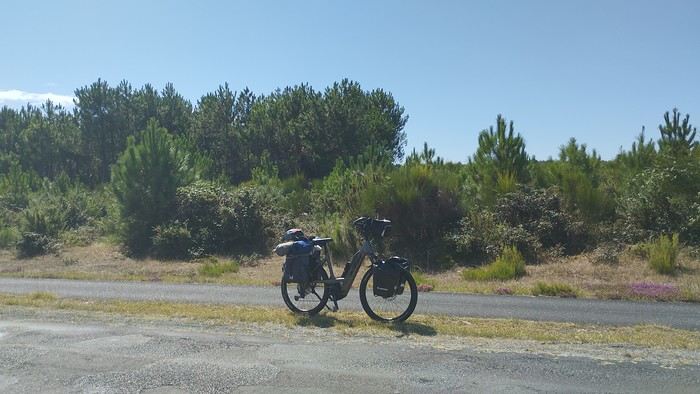 My gear
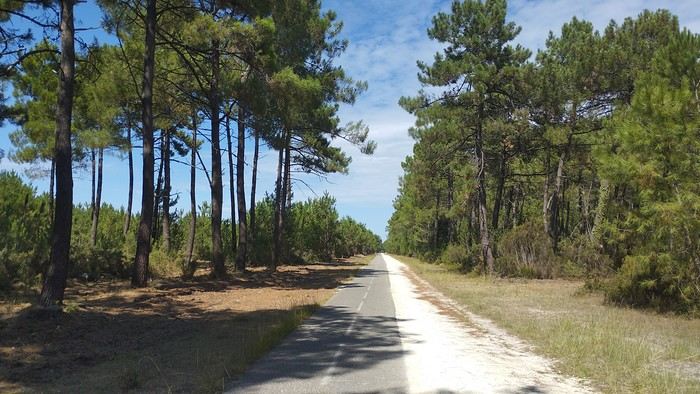
The Landes region—nothing extraordinary, but the calm and serenity are nice.

Le Verdon
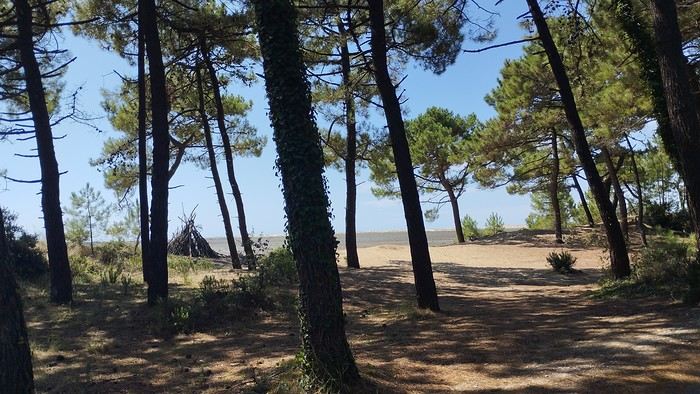
The wild coast
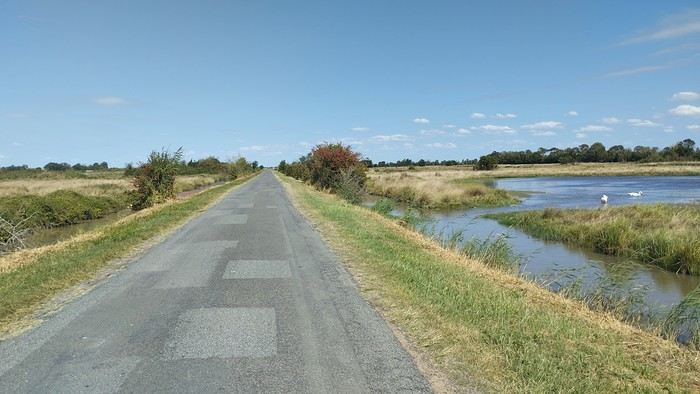
This marsh isn’t dry, though.
Today is the third day of my trip, and I’m writing to you from a campsite in Marans. I’ve set out to bike from Carcans Maubuisson back to Plaisir. Why Carcans? Because we spent a week there as a family—a great week that lets everyone reconnect for a long stretch. Also, on Saturday, we all headed home—some by car, and me by bike. This journey is about 850 km via bike paths and small cycling roads. It’s not a sporting feat, just a nice long ride for fun. As the old Chinese sage says, "The destination doesn’t matter—it’s the journey that counts." But he also told me, "Traveling is great, but what’s the point if you don’t share it?" You see, this old sage has told me a lot of things—he often keeps me company when I’m biking. Of course, he doesn’t pedal, but we travel in harmony. Sure, he can be a bit annoying sometimes, but we still get along. All this to say I’ve created a group to share my story. I’d be happy to share this experience with you—it’s an adventure for me. On Saturday, I wasn’t sure I’d even leave because I’d been dealing with sciatica for days. Luckily, Juliette, a friend of the old Chinese sage, recommended a lifesaving remedy: Alternately stretching your legs with an elastic band under your foot. Obviously, a jam jar rubber band won’t cut it.
From Marans - The mosquitoes are attacking; time to head back to shelter.
The first two legs took me to Royan and then Rochefort. The Sèvre Niortaise flows nearby, and I followed a canal from La Rochelle. You could say the area is as dry as the marsh, judging by the state of the crops.
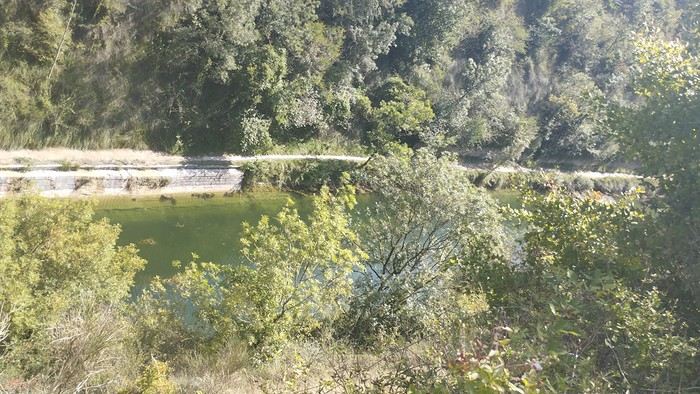
As I mentioned, it’s the third day, and if Jesus rose again on this day, for me it was more like the crucifixion. The scorching heat—only bearable when you’re moving—combined with rough trail conditions, and the old Chinese sage says, "Terrible roads, slow speed, and watch your limbs." I set out to do 60 km but ended up doing 80, and the last 20 were tough. I kept checking the GPS to see how much farther until the campsite. Today: Rochefort to Marans, sticking to the coast until La Rochelle, then no notable towns after that—just a constant canal. But since the sky isn’t too low, it hasn’t gotten lost. I’ve still got plenty of anecdotes to share, but it’s pitch black out, and the mosquitoes are still around. This morning, I counted ten in my tent, all full of my blood. Yesterday, at the end of the leg to Rochefort, I was really looking forward to crossing the Charente using the transporter bridge, but a sneaky GPS conspiracy led me far from it. I ended up crossing the Charente on a completely ordinary bridge, watching the transporter bridge in the distance with disappointment.
End of the first episode. Until tomorrow, if you’d like!
No journal for the first two days. Day 1 - CARCANS-ROYAN Day 2 - ROYAN - ROCHEFORT Tonight I'm in MARANS in the "dry marsh" according to the campsite manager—it’s the first time I’ve heard of a "dry marsh"?!
Photos from the first two days
My gearThe Landes region—nothing extraordinary, but the calm and serenity are nice.
Le Verdon
The wild coast
This marsh isn’t dry, though.
Today is the third day of my trip, and I’m writing to you from a campsite in Marans. I’ve set out to bike from Carcans Maubuisson back to Plaisir. Why Carcans? Because we spent a week there as a family—a great week that lets everyone reconnect for a long stretch. Also, on Saturday, we all headed home—some by car, and me by bike. This journey is about 850 km via bike paths and small cycling roads. It’s not a sporting feat, just a nice long ride for fun. As the old Chinese sage says, "The destination doesn’t matter—it’s the journey that counts." But he also told me, "Traveling is great, but what’s the point if you don’t share it?" You see, this old sage has told me a lot of things—he often keeps me company when I’m biking. Of course, he doesn’t pedal, but we travel in harmony. Sure, he can be a bit annoying sometimes, but we still get along. All this to say I’ve created a group to share my story. I’d be happy to share this experience with you—it’s an adventure for me. On Saturday, I wasn’t sure I’d even leave because I’d been dealing with sciatica for days. Luckily, Juliette, a friend of the old Chinese sage, recommended a lifesaving remedy: Alternately stretching your legs with an elastic band under your foot. Obviously, a jam jar rubber band won’t cut it.
From Marans - The mosquitoes are attacking; time to head back to shelter.
The first two legs took me to Royan and then Rochefort. The Sèvre Niortaise flows nearby, and I followed a canal from La Rochelle. You could say the area is as dry as the marsh, judging by the state of the crops.
As I mentioned, it’s the third day, and if Jesus rose again on this day, for me it was more like the crucifixion. The scorching heat—only bearable when you’re moving—combined with rough trail conditions, and the old Chinese sage says, "Terrible roads, slow speed, and watch your limbs." I set out to do 60 km but ended up doing 80, and the last 20 were tough. I kept checking the GPS to see how much farther until the campsite. Today: Rochefort to Marans, sticking to the coast until La Rochelle, then no notable towns after that—just a constant canal. But since the sky isn’t too low, it hasn’t gotten lost. I’ve still got plenty of anecdotes to share, but it’s pitch black out, and the mosquitoes are still around. This morning, I counted ten in my tent, all full of my blood. Yesterday, at the end of the leg to Rochefort, I was really looking forward to crossing the Charente using the transporter bridge, but a sneaky GPS conspiracy led me far from it. I ended up crossing the Charente on a completely ordinary bridge, watching the transporter bridge in the distance with disappointment.
End of the first episode. Until tomorrow, if you’d like!
La Bolivie, un voyage riche en émotions!
Bonjour à tous,
Ce carnet, je ne pensais pas le rédiger, à mon retour de Bolivie. Certains d’entre vous le savent d’ailleurs. Trop amère, trop choquée.
Et puis heureusement, le temps fait son affaire et estompe les mauvais souvenirs pour laisser principalement les bons. Rédiger ce carnet m’aide aussi je pense à tourner la page sur certains (très) mauvais moments, quand bien même ils datent déjà de huit mois. Certains épisodes auront été riches en émotions….
La Bolivie, j’en rêvais depuis plusieurs années. Envie de grands espaces, de nature, de kaléidoscope coloré. Envie de voir des lamas, des viscaches, des vigognes, des condors. Envie de voir les lagunes, LE salar, les couleurs du désert de Dali. Envie de découvrir l’Amérique du Sud et ce pays encore peu prisé des touristes. Envie de réaliser ce voyage tel que nous le pouvons sans nos enfants : peu de réservations d’hôtels, du camping sauvage et un itinéraire décidé pour les grandes étapes mais ajusté au jour le jour selon nos coups de cœur.
Les carnets lus au fil des mois confirmaient que le Sud Lipez reste accessible en individuel et autonome, même s’il est évidemment préférable de voyager à deux voitures. Mes beaux-parents acceptant de venir garder nos fils quelques jours avant le début des vacances scolaires de la Toussaint, je commence à organiser dès le mois de mai un périple de 16 jours entiers sur place. Depuis plusieurs mois, je m’étais forgé un début d’itinéraire selon ces différents critères :
J’exclus La Paz. Nous visiterons la capitale lors d’un futur voyage au Pérou où nous ajouterons quelques étapes nord-boliviennes. Je choisis d’atterrir à Santa Cruz de la Sierra avant de reprendre dans la foulée un avion pour Sucre. En effet, notre loueur de voiture, Biz Rent a Car, est situé à Sucre et a bonne réputation sur forum, notamment grâce à l’une des employées, Alejandra et sa maîtrise du français. Je prévois la majorité de notre temps dans le Sud Lipez afin de pouvoir admirer notamment les lagunes et le salar. Le carnet d’AirOne me donne envie de découvrir Tajira, région viticole et par conséquent plus verdoyante que le Sud Lipez désertique. Je réserve auprès de Vicente deux nuits dans sa ferme-auberge à Rosillas et un trek d’une journée permettant d’observer les condors Difficultés d’acclimatation liées à l’altitude : ne pas atterrir à La Paz permet déjà d’éviter une mise dans le bain d’entrée à 3600 mètres. Il sera plus aisé d’atterrir à Santa Cruz (416 mètres) et même Sucre (2750 mètres), d’autant que nous prévoyons de partir rapidement sur la région de Tajira (1900 mètres).
L’Amérique du Sud offrant plusieurs pays nous attirant depuis quelques années, mon mari a commencé à apprendre l’espagnol deux ans auparavant. Heureusement, car nous n’avons rencontré que très peu de Boliviens parlant (un peu) l’anglais. Comme beaucoup de voyageurs, nous avions téléchargé des cartes sous Maps.me qui une fois stockées sur les téléphones permettent de circuler sans accès au réseau.
J’apprends dans le courant de l’été 2019 que les élections présidentielles auront lieu pendant notre séjour. Soit ! Ce ne sera pas notre premier voyage en pleine campagne présidentielle. Au départ, je n’y prête pas tellement attention. Et puis fin août, Carmen (Ticapi) m’apprend qu’il sera interdit de circuler lors du premier tour des élections, le dimanche 20 octobre. Après consultation de mon ébauche d’itinéraire, nous avions justement prévu de repartir ce jour-là de Rosillas pour rejoindre Tupiza avant d’enchaîner sur le Sud Lipez. Avec seize jours sur place, nous n’avions pas envie de « perdre » une journée à Rosillas et reporter notre départ d’une journée. Il était également difficile de prévoir le trek le dimanche 20 car Vincent nous a précisé qu’en raison des élections, les villageois ne seraient pas disponibles pour faire office de guide dans la montagne. Il nous fallait trouver un endroit où nous pourrions passer la journée entière sans utiliser la voiture. Pas si simple. Alors finalement, plutôt qu’entamer notre séjour par Rosillas, cette étape sera la dernière de notre voyage. Nous devons atterrir à Sucre le matin du mercredi 17 et je prévois d’y séjourner deux jours. Direction ensuite Tupiza puis Guadalupe et enfin la laguna Celeste où nous resterons la fameuse journée des élections présidentielles à randonner dans les environs. Ça, c’était le programme initial. Ça ne s’est pas tout à fait déroulé ainsi !
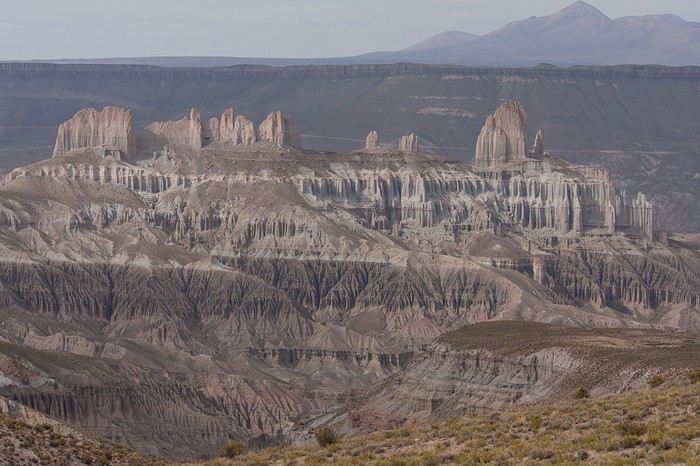
Allez, quelques photos pour, peut-être, vous donner envie de poursuivre la lecture de ce carnet 🙂
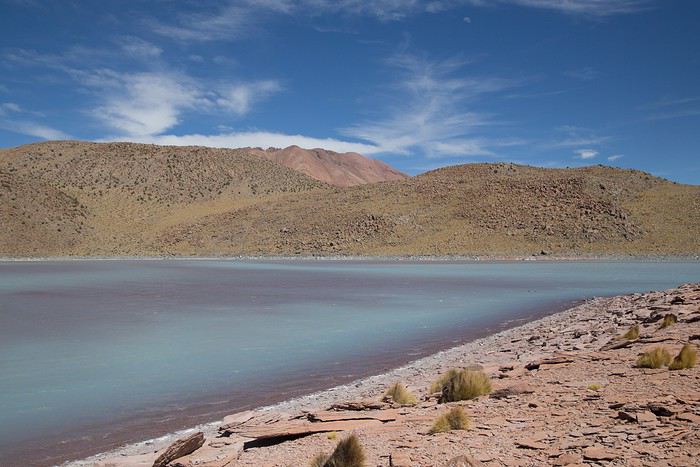
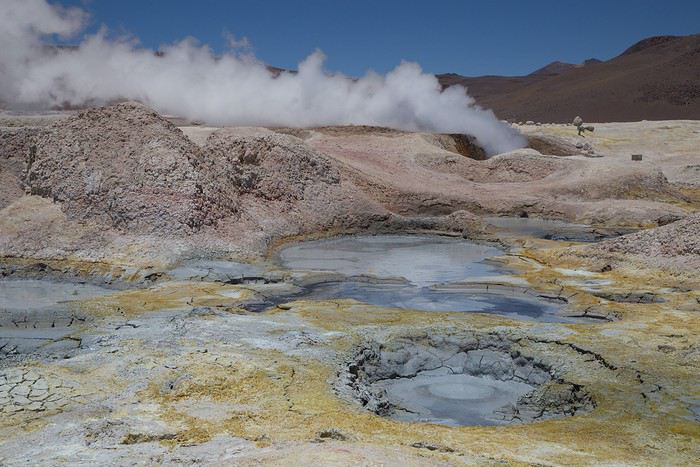
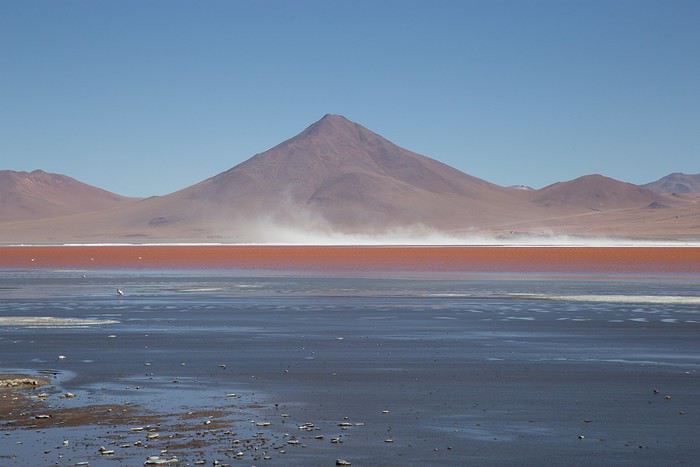
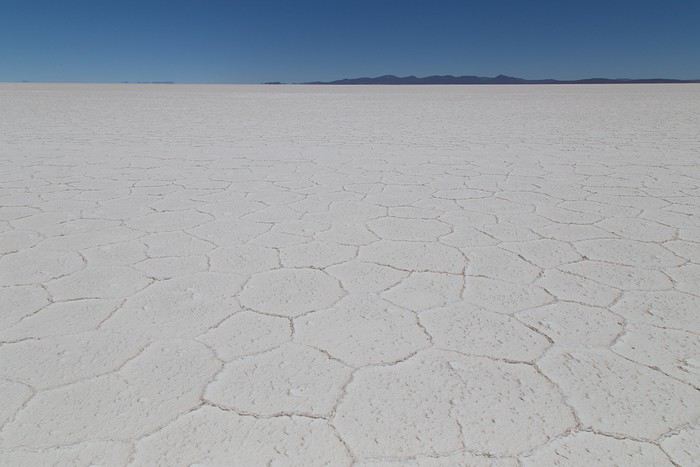
Et puis heureusement, le temps fait son affaire et estompe les mauvais souvenirs pour laisser principalement les bons. Rédiger ce carnet m’aide aussi je pense à tourner la page sur certains (très) mauvais moments, quand bien même ils datent déjà de huit mois. Certains épisodes auront été riches en émotions….
La Bolivie, j’en rêvais depuis plusieurs années. Envie de grands espaces, de nature, de kaléidoscope coloré. Envie de voir des lamas, des viscaches, des vigognes, des condors. Envie de voir les lagunes, LE salar, les couleurs du désert de Dali. Envie de découvrir l’Amérique du Sud et ce pays encore peu prisé des touristes. Envie de réaliser ce voyage tel que nous le pouvons sans nos enfants : peu de réservations d’hôtels, du camping sauvage et un itinéraire décidé pour les grandes étapes mais ajusté au jour le jour selon nos coups de cœur.
Les carnets lus au fil des mois confirmaient que le Sud Lipez reste accessible en individuel et autonome, même s’il est évidemment préférable de voyager à deux voitures. Mes beaux-parents acceptant de venir garder nos fils quelques jours avant le début des vacances scolaires de la Toussaint, je commence à organiser dès le mois de mai un périple de 16 jours entiers sur place. Depuis plusieurs mois, je m’étais forgé un début d’itinéraire selon ces différents critères :
J’exclus La Paz. Nous visiterons la capitale lors d’un futur voyage au Pérou où nous ajouterons quelques étapes nord-boliviennes. Je choisis d’atterrir à Santa Cruz de la Sierra avant de reprendre dans la foulée un avion pour Sucre. En effet, notre loueur de voiture, Biz Rent a Car, est situé à Sucre et a bonne réputation sur forum, notamment grâce à l’une des employées, Alejandra et sa maîtrise du français. Je prévois la majorité de notre temps dans le Sud Lipez afin de pouvoir admirer notamment les lagunes et le salar. Le carnet d’AirOne me donne envie de découvrir Tajira, région viticole et par conséquent plus verdoyante que le Sud Lipez désertique. Je réserve auprès de Vicente deux nuits dans sa ferme-auberge à Rosillas et un trek d’une journée permettant d’observer les condors Difficultés d’acclimatation liées à l’altitude : ne pas atterrir à La Paz permet déjà d’éviter une mise dans le bain d’entrée à 3600 mètres. Il sera plus aisé d’atterrir à Santa Cruz (416 mètres) et même Sucre (2750 mètres), d’autant que nous prévoyons de partir rapidement sur la région de Tajira (1900 mètres).
L’Amérique du Sud offrant plusieurs pays nous attirant depuis quelques années, mon mari a commencé à apprendre l’espagnol deux ans auparavant. Heureusement, car nous n’avons rencontré que très peu de Boliviens parlant (un peu) l’anglais. Comme beaucoup de voyageurs, nous avions téléchargé des cartes sous Maps.me qui une fois stockées sur les téléphones permettent de circuler sans accès au réseau.
J’apprends dans le courant de l’été 2019 que les élections présidentielles auront lieu pendant notre séjour. Soit ! Ce ne sera pas notre premier voyage en pleine campagne présidentielle. Au départ, je n’y prête pas tellement attention. Et puis fin août, Carmen (Ticapi) m’apprend qu’il sera interdit de circuler lors du premier tour des élections, le dimanche 20 octobre. Après consultation de mon ébauche d’itinéraire, nous avions justement prévu de repartir ce jour-là de Rosillas pour rejoindre Tupiza avant d’enchaîner sur le Sud Lipez. Avec seize jours sur place, nous n’avions pas envie de « perdre » une journée à Rosillas et reporter notre départ d’une journée. Il était également difficile de prévoir le trek le dimanche 20 car Vincent nous a précisé qu’en raison des élections, les villageois ne seraient pas disponibles pour faire office de guide dans la montagne. Il nous fallait trouver un endroit où nous pourrions passer la journée entière sans utiliser la voiture. Pas si simple. Alors finalement, plutôt qu’entamer notre séjour par Rosillas, cette étape sera la dernière de notre voyage. Nous devons atterrir à Sucre le matin du mercredi 17 et je prévois d’y séjourner deux jours. Direction ensuite Tupiza puis Guadalupe et enfin la laguna Celeste où nous resterons la fameuse journée des élections présidentielles à randonner dans les environs. Ça, c’était le programme initial. Ça ne s’est pas tout à fait déroulé ainsi !
Allez, quelques photos pour, peut-être, vous donner envie de poursuivre la lecture de ce carnet 🙂
Aller au Nicaragua à partir d'un aéroport européen
Bonjour amis voyageurs, plus je parcours les différents carnets de voyages plus l envie d aller au Nicaragua grandît.
Il y a quelques moi j ai laissé filer des billets à 630e en partant de paris ( ma ville) et il se trouve qu aujourd’hui ces derniers frôlent les 750euros.
Voilà ma petite question: nous partons avec mon époux et nos 2 filles de 5et 6 ans
( habitués aux voyages)
La période sera de 1 mois ( août) et je me demandai si partir d un autre aéroport européen ne serai pas moins onéreux ?
J ai fait quelques recherches mais cela n a pas donné grand chose de mon côté
Riches de vos expériences, auriez vous une astuce ou un autre aéroport que celui de paris à me conseiller ?
Je vous remercie pour vos conseils et je vous souhaite de belles destinations à tous et à toutes.
Ange.
Retour d'une semaine à Singapour février 2020
Bonjour,
je tente ma deuxième expérience de carnet de voyage, après celui d'il y a quelques semaines à mon retour de Malte, que vous pouvez retrouver dans la rubrique Malte de VoyageForum.
Je voyage beaucoup (je déteste quand la routine dérange ma vie😉), mais quasiment jamais avec Air France. La fois précédente c'était pour aller au Pérou en 2013. Cette fois-ci, pour Singapour. J'ai pris mes billets mi décembre, deux mois à l'avance seulement, sur un coup de tête. Du coup ils étaient chers, avec toutes les compagnies. La moins chère bizarrement, c'était Air France. Hum... Air France, pendant les vacances scolaires et avec le mouvement de grèves débuté en décembre, je cherche vraiment les problèmes... mais j'ai pris nos billets quand même, très optimiste pour une fois !
Jours 1 et 2
Notre vol est donc prévu pour ce soir à 20h50. On se fait déposer rapidement à CDG, on passe au parafe sans la moindre attente, puis le contrôle bagages (on n'a que des bagages cabine). Tiens d'ailleurs, Air France fait payer les bagages en soute comme une low cost ? fait payer pour choisir son siège ? fait payer pour un repas sans viande ? Eh beh, que de changements pour moi qui ne voyage qu'avec des compagnies qui ne pratiquent aucun supplément pour ça !! Bref, on se retrouve en salle d'embarquement où on sera parmi les tout derniers à embarquer car on est en queue d'avion. Plantons le décor pour les lecteurs du futur : on est en pleine épidémie de coronavirus avec, au moment de notre départ, environ 1 700 morts en Chine, une cinquantaine de cas à Singapour. Les voyageurs qui ont mis les pieds en Chine au cours des deux dernières semaines ne sont pas autorisés à embarquer. J'avais pris les deux seules places cote à cote proposées sans supplément lors de l'enregistrement en ligne pile 30h avant le vol. Près d'un hublot, comme toujours. On s'installe et c'est parti pour 12h45 de vol dont au moins 8h à dormir.
Arrivés à Singapour sous un ciel bien sombre alors qu'il faisait bien beau au dessus de Phuket. On a le choix entre le passage à l'immigration C ou D. On va au C, et on y est seuls. Première fois que je vois ça ! on est les deux seules personnes. On remplit le formulaire, on passe le contrôle, puis on change un peu d'argent et on s'en va prendre la navette pour le terminal 3. De là, on achète deux tickets standard et on prend le MRT pour deux stations, changement pour poursuivre sur la ligne verte, deuxième changement pour la ligne bleue, et un dernier pour la violette. En sortant du métro, il pleut des cordes, l'orage a éclaté. On attend deux minutes et c'est fini.
On a choisi un petit hotel tout simple dans le quartier Little India, juste à coté de Mustafa Center. C'est simple, mais déjà au dessus de mes standards du sud-est asiatique : climatisation, articles de toilette, chaussons, coffre fort, tv, bouilloire, café/thé, frigo. Et une fenêtre aussi, ça augmente le prix de la chambre ! D'habitude, on prend fan + salle de bain privative, c'est tout. Du coup, c'est beaucoup plus cher que d'habitude aussi, 58 € par nuit contre 12/15 € dans d'autres pays du coin. Mais on est à Singapour ! Check in rapide et on ressort faire un tour dans le quartier. La nuit est tombée. C'est très vivant, plein de boutiques, de restos, beaucoup de monde dans les rues. On compare les cours du change mais ils sont tous à 1,51 $ pour 1 €. A l'aéroport on a changé à 1,49 $, pas de grande différence. Par contre c'est étonnant de voir qu'ils changent quasiment à la valeur réelle et sans commission.
On se pose dans un food court pour un bon repas à petit prix, l'équivalent de 7 € pour deux.

Puis on poursuit notre visite de nuit du quartier. On tombe sur un distributeur automatique de saumon lol😏, mais on n'en achète pas pour ce soir !! En revenant vers l'hotel, on fait nos premiers achats au Mustafa Center : fonds de teint à 3 $, baumes du tigre à 4 $ le grand pot (on en consomme beaucoup tout au long de l'année)... Et la fatigue nous prend, surtout en voyant l'immensité du centre Mustafa... on décide de rentrer et de revenir faire un étage du centre chaque jour à la recherche de bonnes affaires.
Pas d'autres photos pour ce soir, mais on va se rattraper les jours suivants !
je tente ma deuxième expérience de carnet de voyage, après celui d'il y a quelques semaines à mon retour de Malte, que vous pouvez retrouver dans la rubrique Malte de VoyageForum.
Je voyage beaucoup (je déteste quand la routine dérange ma vie😉), mais quasiment jamais avec Air France. La fois précédente c'était pour aller au Pérou en 2013. Cette fois-ci, pour Singapour. J'ai pris mes billets mi décembre, deux mois à l'avance seulement, sur un coup de tête. Du coup ils étaient chers, avec toutes les compagnies. La moins chère bizarrement, c'était Air France. Hum... Air France, pendant les vacances scolaires et avec le mouvement de grèves débuté en décembre, je cherche vraiment les problèmes... mais j'ai pris nos billets quand même, très optimiste pour une fois !
Jours 1 et 2
Notre vol est donc prévu pour ce soir à 20h50. On se fait déposer rapidement à CDG, on passe au parafe sans la moindre attente, puis le contrôle bagages (on n'a que des bagages cabine). Tiens d'ailleurs, Air France fait payer les bagages en soute comme une low cost ? fait payer pour choisir son siège ? fait payer pour un repas sans viande ? Eh beh, que de changements pour moi qui ne voyage qu'avec des compagnies qui ne pratiquent aucun supplément pour ça !! Bref, on se retrouve en salle d'embarquement où on sera parmi les tout derniers à embarquer car on est en queue d'avion. Plantons le décor pour les lecteurs du futur : on est en pleine épidémie de coronavirus avec, au moment de notre départ, environ 1 700 morts en Chine, une cinquantaine de cas à Singapour. Les voyageurs qui ont mis les pieds en Chine au cours des deux dernières semaines ne sont pas autorisés à embarquer. J'avais pris les deux seules places cote à cote proposées sans supplément lors de l'enregistrement en ligne pile 30h avant le vol. Près d'un hublot, comme toujours. On s'installe et c'est parti pour 12h45 de vol dont au moins 8h à dormir.
Arrivés à Singapour sous un ciel bien sombre alors qu'il faisait bien beau au dessus de Phuket. On a le choix entre le passage à l'immigration C ou D. On va au C, et on y est seuls. Première fois que je vois ça ! on est les deux seules personnes. On remplit le formulaire, on passe le contrôle, puis on change un peu d'argent et on s'en va prendre la navette pour le terminal 3. De là, on achète deux tickets standard et on prend le MRT pour deux stations, changement pour poursuivre sur la ligne verte, deuxième changement pour la ligne bleue, et un dernier pour la violette. En sortant du métro, il pleut des cordes, l'orage a éclaté. On attend deux minutes et c'est fini.
On a choisi un petit hotel tout simple dans le quartier Little India, juste à coté de Mustafa Center. C'est simple, mais déjà au dessus de mes standards du sud-est asiatique : climatisation, articles de toilette, chaussons, coffre fort, tv, bouilloire, café/thé, frigo. Et une fenêtre aussi, ça augmente le prix de la chambre ! D'habitude, on prend fan + salle de bain privative, c'est tout. Du coup, c'est beaucoup plus cher que d'habitude aussi, 58 € par nuit contre 12/15 € dans d'autres pays du coin. Mais on est à Singapour ! Check in rapide et on ressort faire un tour dans le quartier. La nuit est tombée. C'est très vivant, plein de boutiques, de restos, beaucoup de monde dans les rues. On compare les cours du change mais ils sont tous à 1,51 $ pour 1 €. A l'aéroport on a changé à 1,49 $, pas de grande différence. Par contre c'est étonnant de voir qu'ils changent quasiment à la valeur réelle et sans commission.
On se pose dans un food court pour un bon repas à petit prix, l'équivalent de 7 € pour deux.
Puis on poursuit notre visite de nuit du quartier. On tombe sur un distributeur automatique de saumon lol😏, mais on n'en achète pas pour ce soir !! En revenant vers l'hotel, on fait nos premiers achats au Mustafa Center : fonds de teint à 3 $, baumes du tigre à 4 $ le grand pot (on en consomme beaucoup tout au long de l'année)... Et la fatigue nous prend, surtout en voyant l'immensité du centre Mustafa... on décide de rentrer et de revenir faire un étage du centre chaque jour à la recherche de bonnes affaires.
Pas d'autres photos pour ce soir, mais on va se rattraper les jours suivants !
Hébergement, restauration, activités... à Florès et Komodo
Bonjour à tout le monde.
Je pars avec 3 potes en mai prochain à Flores et Komodo.
J'ai le lonely planète donc vais pouvoir trouver qqs infos utiles.
Mais mon post concerne des avis de voyageurs qui pourraient me donner des infos très utiles, que je ne trouverait pas dans mon guide.
A savoir des bons plans auberges cool et aps trop chères,
Des endroits à recommander en mode hors des entiers battus ?
J'observe les oiseaux donc si qq1 peut m'orienter vers des supers spots ce serait génial.
J'aimerais également faire 1 croisière plongée à Komodo sachant que j'ai mon open water.
1 dive center à recommander ?
Voilà en gros je cherche, vous l'aurez compris, tout les plans utiles, (hébergement, restauration, activités, etc...) qui nous serviraient à moi et mes potes à passer 1 bon séjour, à savoir que ce sera entre 1 mois et 1mois et demi sur place.
Merci d'avance à ceux qui prendront le temps de répondre.
Bon vent à toutes et tous !!
Ferry avec voiture pour visiter Gozo et Comino (Malte)
Bonjour.nous partons pour Malte en avril.les 2 premiers jours de notre périple nous voulons visiter les îles de Gozo et Comino , nous aurons loué notre voiture a l arrivée à l aéroport..je sais que le ferry traverse pour Gozo avec les voitures (ce qui sera pratique pour faire le tour de la petite île...) mais le lendemain quand nous prendrons le bateau pour Comino?! J ai lu que sur cette petite île il n y avait pas de voiture ..donc si on veut s y arrêter que fait on de la notre? Impossible de trouver réponse dans les différents guides et sites! Merci beaucoup de vos réponses !
Trajet Croatie - Grèce à pied en un mois
Bonjour à tous j'ai vu que la question du voyage en voiture de la Croatie à la Grèce a déjà été évoqué mais j'ai pour projet de descendre de la Croatie à la Grèce à pied en 1 mois et seul. C'est mon première vrai voyage et j'aurai aimé avoir quelques avis avant de me lancer dans le grand bain.
Merci d'avance à tous
Voir toutes les facettes de Malte en 10 jours
Bonjour à tous,
Je vais certainement m'expatrier à Malte l'an prochain. Je n'y suis encore jamais allé.
Je vais y passer 10 jours fin mars et j'aimerais que vous me conseilliez sur la répartition mes logements sur ces 10 jours. Le but étant que j'ai un aperçu le plus complet possible de ces belles îles. Je pense rester 2 nuits maximum par endroit, et il faudrait que je découvre les différentes facettes (ville, nature, Malte, Gozo...) afin que je puisse avoir une idée plus précise des endroits que j'aime et ceux qui au contraire m'attirent moins.
Merci beaucoup pour votre aide 🙂
Prague ou Istanbul après un séjour en Crète
Nous envisageons un séjour en Crète de 10/12 jours peut etre jusqu'à 15, il nous restera alors 5-6 jrs de congés et nous aimerions en profiter pour visiter l'une de ces villes. Les 2 nous attirent, on a bien conscience qu'elle sont différentes et ont chacune leur charme, pour ceux qui ont visité les 2, dites nous votre ressenti , surtout pour 5-6 jrs est ce assez ? Merci Christophe
Trajet pour 2 semaines en Croatie en famille en août
Bonjour à tous,
Après avoir bien réfléchi de notre côté, je viens vers vous pour avoir des avis/retours/suggestions sur le trajet que l'on a établi.
Nous partons en famille (à 7 dont 1 enfant de 4 ans) au mois d’août. Nous avons déjà réservé l'avion (arrivée et départ de Split) et les voitures (nous les prenons et rendons à l'aéroport).
Voici notre trajet:
Dimanche 9 : Paris – Split - Pakostane (nuit Pakostane) Pourquoi Pakostane ? Car sur le forum, une bretonne habite là et offre des hébergements. A voir mais ça a l'air sympa et ça coupe le trajet vers Plitvice.
Lundi 10 : Split – Visite Zadar - Plitvice (nuit Plitvice) Nous pensons que la visite de Zadar peut être sympa pour cette journée.
Mardi 11 : Parc Plitvice (nuit Plitvice)
Mercredi 12 : Plitvice – Valbiska (ile Krk) – Cres (nuit Cres)
Jeudi 13 : Cres (nuit Cres)
Vendredi 14 : Cres (nuit Cres)
Samedi 15 : Cres – Sibenik (nuit Sibenik)
Dimanche 16 : Parc Krka (nuit Sibenik)
Lundi 17 : Sibenik – Trogir – Dubrovnik (nuit Dubrovnik)
Mardi 18 : Dubrovnik (nuit Dubrovnik)
Mercredi 19 : Ile Mjet (nuit Dubrovnik)
Jeudi 20 : Dubrovnik – Split (nuit Split)
Vendredi 21 : Split – Paris
Nous avons essayé d'alterner les visites, la nature et la farniente.
Quelques interrogations: - On veut rester un peu sur Cres pour la farniente et nature. Est-ce un bon choix ? - L'ile de Mjet vaut-elle vraiment le détour ? Ou y-a-t-il aussi sympa dans le coin? Lokrum ? Cavtat ? Ou un peu plus de temps sur Dubrovnik (après, il a l'air d'y avoir beaucoup de monde comme à Plitvice) ?
Qu'en pensez-vous ? N'est-ce pas trop speed ?
Hvala !
Voyage d'un mois en Thaïlande et ensuite le Laos, le Cambodge...
Bonjour,
Avec ma copine on part mardi prochain en Thaïlande pour un mois et ensuite partir sur d'autre pays comme le Laos ou le Cambodge.
Nous voyageons en sac dos et dormons en auberge de jeunesse ou chez l'habitant si l'occasion arrivera.
Voilà ma question est simple : Je vous demande votre expérience si vous avez déjà voyagé en Thaïlande nous voulons savoir les incontournable à visiter mais aussi les aussi les coins insolites sans trop de touristes.
Merci de votre expérience et en échange si vous vous voulez visiter la Nouvelle Calédonie ou la Nouvelle Zélande je peux vous donner des infos !! :-)
A très vite.
Baptiste
Se poser un mois avec bébé et les grands parents en Croatie ou au Monténégro?
Bonjour tout le monde!
Super entousiastes à l idée de notre prochaine aventure Nous sommes a la recherche d un endroit ou nous poser pour un mois en mai/juin avec notre bebe de 9 mois. Nous cherchons peut etre une perle rare.. Un endroit calme avec jolis paysages, avec acces facile a la plage et a une ville/village pour faire les courses. On pense louer une voiture pour faire des petites visites d un jour autour, et aller chercher les grand parents a l aeroport.
Des suggestions??
Merci!!
Avis sur itinéraire au Nicaragua et au Costa Rica
Bonjour
Je prévois de faire un voyage au Costa Rica et Nicaragua fin février, avec location de 4*4
Voila l'itinéraire prévu sur la partie Nicaragua, est-ce trop chargé en terme de trajet ? en utilisant les gmaps et autres outils ca me parait faisable
J1-J5 : Costa Rica J 6 Trajet Costa Rica / Ometepe Arrivée en debut d'après midi / A voir Ojo de Agua, Playa Santo Domingo
J7 Ometepe Volcan concepcion / aller voir les singes / autre ??
J8 Ometepe / Granada Trajet pour Granada le matin apres mid : Volcan Mombacho et/ou Laguna Apoyo Nuit Granada
J9 Granada / Masaya Visite Granada / Départ pour Masaya Nuit Masaya / aller voir les laves de nuit
J10 Masaya / (Managua) / Leon Route le matin, apres mid volcan Cerro Negro Nuit a Leon
J11 Leon / San Jacinto / Las Penitas Visite Leon, detour par san jacinto et les boulloires volcanique, puis route vers Playa Las Panitas pour 2 nuit
J12 Las Penitas
J13 Las Penitas / San Juan del Sur Etape retour vers le Costa Rica Nuit San Juan del sur
J14 San Juan Del Sur - Costa Rica retour sur Costa Rica
merci pour votre aide.
Itinéraire 2 semaines au Cap Vert avec notre fille de 2 ans en mai
Bonjour,
Nous avons un projet de voyage au Cap Vert avec notre fille de 2 ans en Mai. La météo est elle favorable en Mai ? Quel itinéraire sur 2 semaine ? Objectif du voyage : visiter, un peu de rando, rencontre culturelle, et détente/plage. On ne souhaite pas changer de logement tous les jours. Quelles sont les îles à privilégier ? Quels sont les incontournables ? Pour le transport est-ce préférable de louer une voiture ? Pour rejoindre les îles en bateau est ce facile avec la voiture ? Question sécurité, alimentation, hygiène avec bébé ? Y a t'il des vaccins a faire ? Quel est le coût de la vie ? Je suis preneuse de tous vos conseils. Merci
Nous avons un projet de voyage au Cap Vert avec notre fille de 2 ans en Mai. La météo est elle favorable en Mai ? Quel itinéraire sur 2 semaine ? Objectif du voyage : visiter, un peu de rando, rencontre culturelle, et détente/plage. On ne souhaite pas changer de logement tous les jours. Quelles sont les îles à privilégier ? Quels sont les incontournables ? Pour le transport est-ce préférable de louer une voiture ? Pour rejoindre les îles en bateau est ce facile avec la voiture ? Question sécurité, alimentation, hygiène avec bébé ? Y a t'il des vaccins a faire ? Quel est le coût de la vie ? Je suis preneuse de tous vos conseils. Merci
Un petit coin de Malaisie pour éclairer notre hiver...
Bonjour,
Je profite des journées maussades que nous sommes un certains nombre à affronter ces temps-ci 😠 pour mettre en avant un article sur la Malaisie récemment publié sur mon blog : derrière l'horizon.


J'y parle aussi d'Indonésie :


... et de bien d'autres destinations encore...
Et bien sûr, je réponds avec plaisir à toute question...
Merci d'avoir lu jusqu'ici 🙂
DLH
Je profite des journées maussades que nous sommes un certains nombre à affronter ces temps-ci 😠 pour mettre en avant un article sur la Malaisie récemment publié sur mon blog : derrière l'horizon.
J'y parle aussi d'Indonésie :
... et de bien d'autres destinations encore...
Et bien sûr, je réponds avec plaisir à toute question...
Merci d'avoir lu jusqu'ici 🙂
DLH
Sulawesi centrale: Luwuk et les iles Banggai
Bonjour à tous,
J’ai envie de partager avec vous cette magnifique région que j’ai découverte en Indonésie, sur l’île de Sulawesi, la région de Luwuk Banggai dans l’est de la Sulawesi Centrale. C’est une région à découvrir, encore peu touchée par le tourisme et pourtant splendide, avec un accueil chaleureux et attentionné des indonésiens.
J’ai découvert Luwuk et sa région par hasard en 2019 car c’était la région dont était originaire la famille avec laquelle je vivais à Makassar à l’époque.
La richesse de ce lieu est impressionnante : des chutes d’eau à la couleur turquoise, des randonnées en forêts, de la pêche en pirogue de nuit au ciel étoilé, de la plongée dans des fonds marins intouchés, des minorités ethniques de rendez-vous en terre inconnue, bref, tout y est.
Bonne lecture !
Partie I : Région de Luwuk
Episode 1 : Dormir chez l’habitant dans le village de Tangkiang
La ville de Luwuk est souvent une option choisie par les voyageurs pour aller rapidement vers les iles Toggians. La ville est accessible par avion de Makassar, Menado et Palu et permet de rejoindre Ampana en 4h de voiture, point de départ pour les iles Toggians.
Mais Luwuk et sa région valent le temps que l’on s’y arrête ! Ma première étape fut le village de Tangkiang, à 40mn en moto de Luwuk.
Tangkiang est un village traditionnel de pêcheurs et de cultivateurs, au bord de la mer, hors des sentiers battus. Les villageois sont très accueillants et étaient ravis d’avoir un bule (dit « boulet » pour dire « touriste » 😉 ) découvrant leur quotidien.
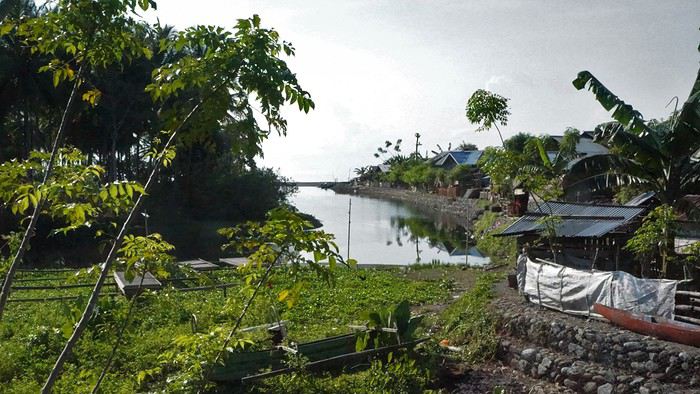
L’entrée du village, entre rivière et mer
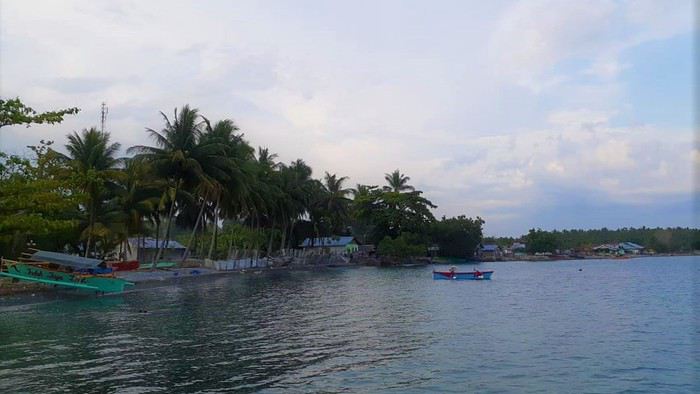 Le bord de mer
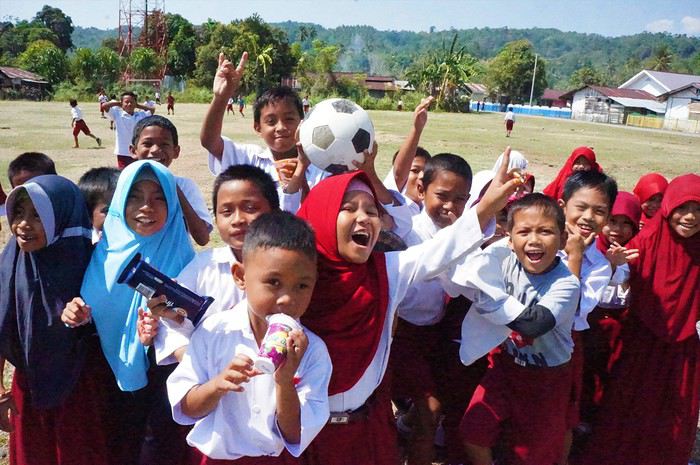
Le foot et le volley-ball
Je dormais chez l’habitant, l’occasion de partager la vie d’une famille. J’avais une chambre confortable et ils étaient aux petits soins pour me préparer de délicieux plats. Mes plats préférés restant le poisson frais et le tempé, à base de soja - Un délice !
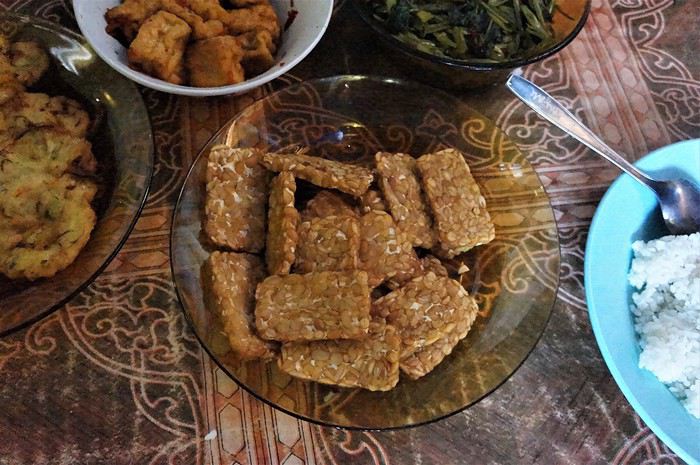
Le tempé, du tofu, beignets de crevettes et kangkung (ou liseron d’eau)
J’allais aussi me baigner dans la rivière du village bien rafraichissante au moment le plus chaud de la journée.
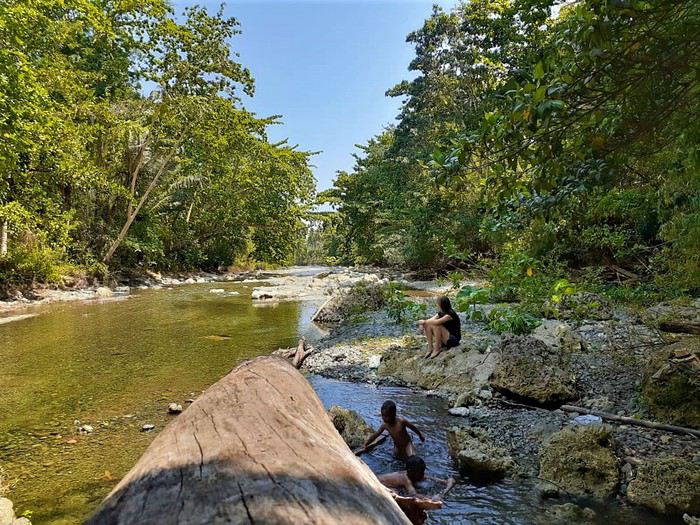
A l’eau !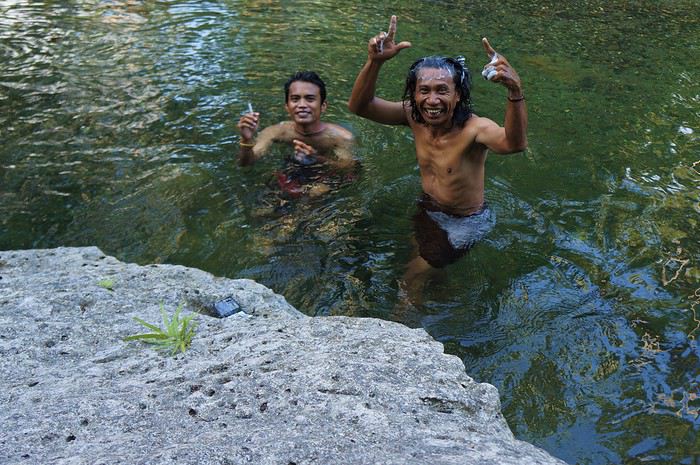 La douche dans la rivière 😎
J’ai découvert la pêche au fil. Ils utilisent des pirogues et des « rompong », des plates-formes en bambou au milieu de la mer pour attirer les poissons. Je suis allée pêcher le poulpe de nuit, en utilisant des petites lumières que l’on mettait dans l’eau pour attirer les poulpes. Fantastique.
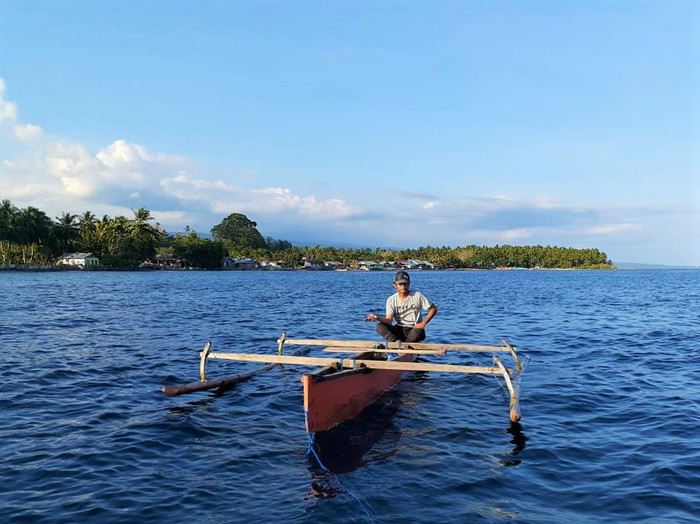 La pêche au fil
Je me suis également baladée dans les collines avoisinantes, qui donnent une très belle vue sur la mer. J’ai adoré récolter le piment, très relaxant, au milieu de la montagne, au calme. J’ai également appris à faire de l’huile de noix de coco avec la coopérative agricole du village.
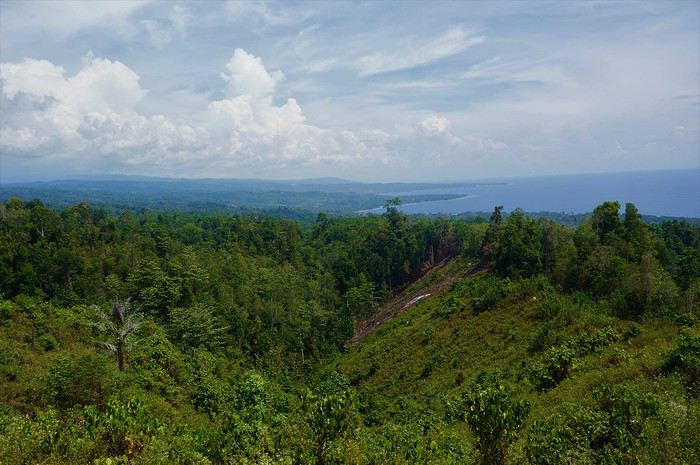
Vue des hauteurs de Tangkiang
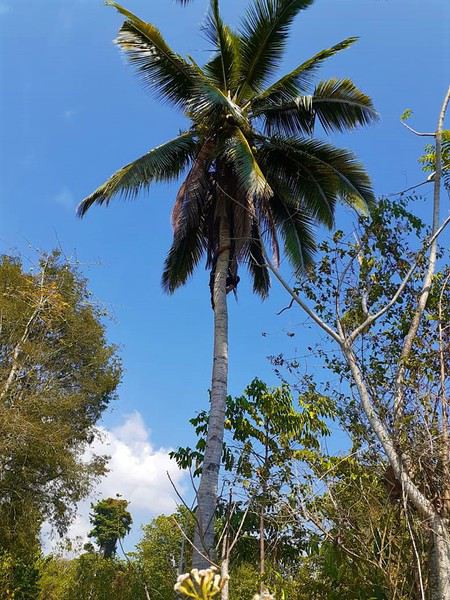
L’escalade du cocotier
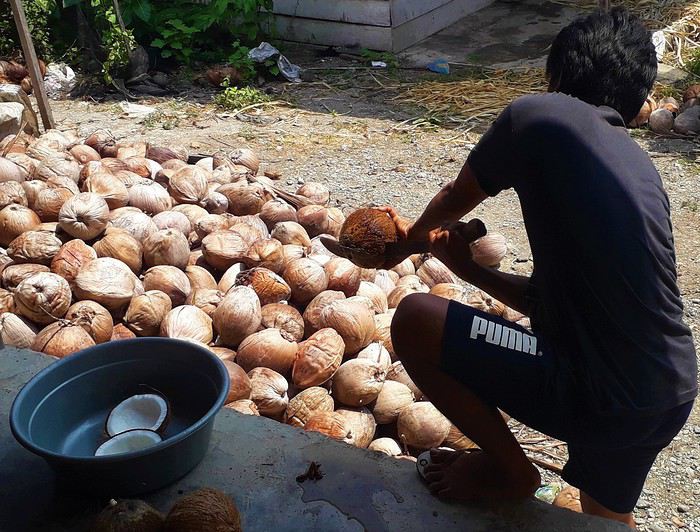 La préparation de l’huile de noix de coco
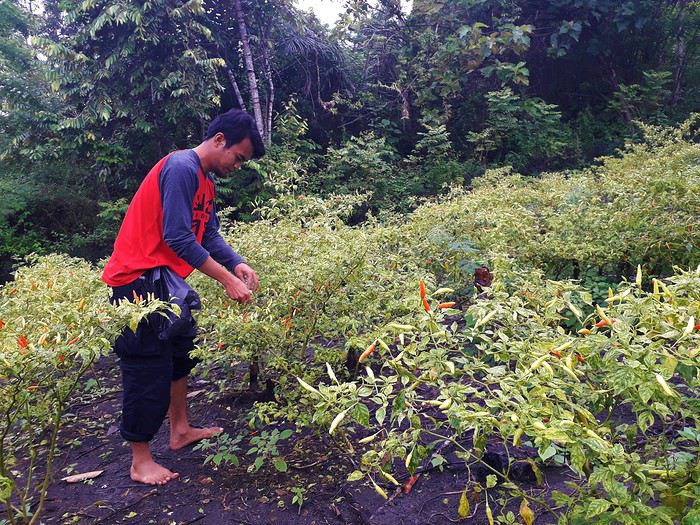
La récolte du piment
Entre Luwuk et Tangkiang, il y a d’autres villages, dont celui de Nambo, où une tisseuse locale vend de très beaux tissus avec l’emblème local, l’oiseau maléo.
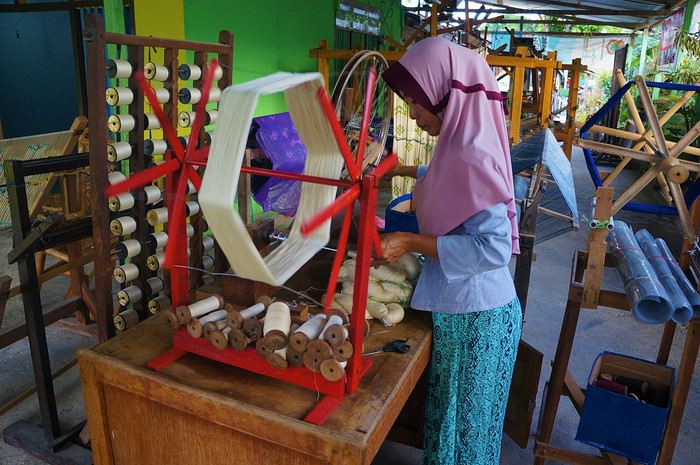 La tisseuse du village de Nambo
INFOS PRATIQUES
Pour accéder à Tangkiang, le plus simple est qu’on vienne vous chercher en moto ou en voiture en fonction de vos besoins à Luwuk.
Kahar, qui est le responsable de la coopérative de noix de coco et de piment et qui se débrouille en anglais, pourra vous accueillir et organiser votre séjour au village. Il m’a donné son accord pour partager ses coordonnées et serait ravi d’aider des « bule » à visiter la région. Son mail est donc abd.kahar024@gmail.com et son numéro Whats App est le +62 853-9424-8801.
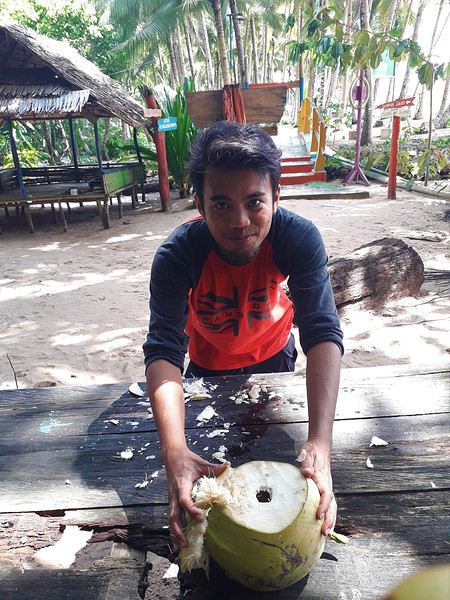
Voici Kahar
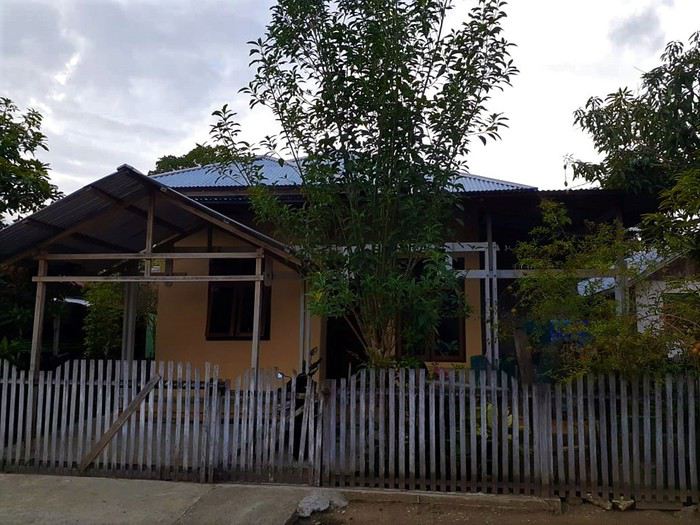
Une des maisons dont les habitants sont prêts à accueillir les touristes
Il faut savoir que les indonésiens de cette région ne sont pas habitués aux touristes. Ils n’osent pas toujours parler d’argent. Personnellement, j’ai décidé de leur donner 150 000 RP par nuit incluant la nourriture.
La suite au prochain épisode 🙂
J’ai envie de partager avec vous cette magnifique région que j’ai découverte en Indonésie, sur l’île de Sulawesi, la région de Luwuk Banggai dans l’est de la Sulawesi Centrale. C’est une région à découvrir, encore peu touchée par le tourisme et pourtant splendide, avec un accueil chaleureux et attentionné des indonésiens.
J’ai découvert Luwuk et sa région par hasard en 2019 car c’était la région dont était originaire la famille avec laquelle je vivais à Makassar à l’époque.
La richesse de ce lieu est impressionnante : des chutes d’eau à la couleur turquoise, des randonnées en forêts, de la pêche en pirogue de nuit au ciel étoilé, de la plongée dans des fonds marins intouchés, des minorités ethniques de rendez-vous en terre inconnue, bref, tout y est.
Bonne lecture !
Partie I : Région de Luwuk
Episode 1 : Dormir chez l’habitant dans le village de Tangkiang
La ville de Luwuk est souvent une option choisie par les voyageurs pour aller rapidement vers les iles Toggians. La ville est accessible par avion de Makassar, Menado et Palu et permet de rejoindre Ampana en 4h de voiture, point de départ pour les iles Toggians.
Mais Luwuk et sa région valent le temps que l’on s’y arrête ! Ma première étape fut le village de Tangkiang, à 40mn en moto de Luwuk.
Tangkiang est un village traditionnel de pêcheurs et de cultivateurs, au bord de la mer, hors des sentiers battus. Les villageois sont très accueillants et étaient ravis d’avoir un bule (dit « boulet » pour dire « touriste » 😉 ) découvrant leur quotidien.
L’entrée du village, entre rivière et mer
Le bord de merLe foot et le volley-ball
Je dormais chez l’habitant, l’occasion de partager la vie d’une famille. J’avais une chambre confortable et ils étaient aux petits soins pour me préparer de délicieux plats. Mes plats préférés restant le poisson frais et le tempé, à base de soja - Un délice !
Le tempé, du tofu, beignets de crevettes et kangkung (ou liseron d’eau)
J’allais aussi me baigner dans la rivière du village bien rafraichissante au moment le plus chaud de la journée.
A l’eau !
La douche dans la rivière 😎J’ai découvert la pêche au fil. Ils utilisent des pirogues et des « rompong », des plates-formes en bambou au milieu de la mer pour attirer les poissons. Je suis allée pêcher le poulpe de nuit, en utilisant des petites lumières que l’on mettait dans l’eau pour attirer les poulpes. Fantastique.
La pêche au filJe me suis également baladée dans les collines avoisinantes, qui donnent une très belle vue sur la mer. J’ai adoré récolter le piment, très relaxant, au milieu de la montagne, au calme. J’ai également appris à faire de l’huile de noix de coco avec la coopérative agricole du village.
Vue des hauteurs de Tangkiang
L’escalade du cocotier
La préparation de l’huile de noix de cocoLa récolte du piment
Entre Luwuk et Tangkiang, il y a d’autres villages, dont celui de Nambo, où une tisseuse locale vend de très beaux tissus avec l’emblème local, l’oiseau maléo.
La tisseuse du village de NamboINFOS PRATIQUES
Pour accéder à Tangkiang, le plus simple est qu’on vienne vous chercher en moto ou en voiture en fonction de vos besoins à Luwuk.
Kahar, qui est le responsable de la coopérative de noix de coco et de piment et qui se débrouille en anglais, pourra vous accueillir et organiser votre séjour au village. Il m’a donné son accord pour partager ses coordonnées et serait ravi d’aider des « bule » à visiter la région. Son mail est donc abd.kahar024@gmail.com et son numéro Whats App est le +62 853-9424-8801.
Voici Kahar
Une des maisons dont les habitants sont prêts à accueillir les touristes
Il faut savoir que les indonésiens de cette région ne sont pas habitués aux touristes. Ils n’osent pas toujours parler d’argent. Personnellement, j’ai décidé de leur donner 150 000 RP par nuit incluant la nourriture.
La suite au prochain épisode 🙂
Circuit de 20 jours en Malaisie-Singapour en juillet avec enfants
bonjour Chers amis voyageurs,
Les billets pour cet été sont bookés, après l' Afrique du Sud l' été dernier, ce sera la Malaisie cet été ( l' appel de l' Asie! 🙂) .On se plonge maintenant dans l'itinéraire pour commencer à anticiper les réservations ( j'ai vu que pour les iles Pérenthian c'est déjà plutôt full 😕). Nous sommes une famille de 2 adultes et 2 grands enfants de 11 et 17 ans. Nous avons l'habitude de partir en autonomie et plutôt louer des voitures car on aime particulièrement notre liberté et les road trip, se perdre sur les routes et faire des découvertes inattendues )
Voici une 1er ébauche du circuit: jour 1 arrivée en fin de soirée à KL jour 2: KL jour 3: Batu Caves et KL Jour 4: prise de la voiture à KL et route Penang jour 5 : Penang jour 6 Penang jour 7: Penang ( 3 jours plein à Penang, est ce trop ?) Jour 8: route Taman Négara , si j'ai bien compris, il faut laisser la voiture pour s'y rendre ensuite en Pirogue ? jour 9: Teman Négara jour 10: Route vers les iles Péranthian, là aussi on laisse la voiture. est ce assez sécure ? y a -t-il des endroits de stationnement dédiés? jour 11: Péranthian Palau Besar Jour 12: Péranthian Palau Besar jour 13: route Cheranting , nuit Chérating jour 14; route Malacca jour 15: Malacca rendre la voiture à Malacca : est ce possible de louer à KL et rendre Malacca, y a t-il des frais d'abandon? jour 16: bus pour Singapour Jour 17 Singapour jour 18 Singapour jour 19 Singapour jour 20 Singapour 4 jours plein à Singapour, est ce trop ? jour 21 départ
Cet itinéraire vous parait il cohérent , n'y a t-il pas trop de jour à Singapour et pas assez ailleurs. Pour info, comme nous sommes 4 , tout le monde a ses activités préférés: les parents veulent profiter de la nature et de la culture, le grand ad est féru de villes modernes et buildings, quant à la fille de 11 ans, elle veut voir des animaux et tous on veut de la découverte , mais aussi des baignades .
je vous remercie pour toutes vos suggestions et échanges .