Posts by VP44
About 111 results.
More options
Search results
A Few Days in Turkmenistan from Uzbekistan
This wasn’t part of the original plan with the agency. But since Turkmenistan Airlines isn’t exactly popular in the West (it was on the blacklist for a long time), I asked to take the overnight train instead. It was rustic and amazing! Younger people speak a little English, but most folks over 45 don’t.
A Few Days in Turkmenistan from Uzbekistan
Arriving at the station is quite unique. Many young military personnel, sometimes finishing their service, are on the platform waiting for the overnight train at Mary station, heading to the capital, Ashgabat.
It’s a bit frustrating because you can’t take any photos of the station’s exterior, the inside of the station, the platform, or even the arriving train. The rules are strict—no photos of sites considered strategic are allowed.
Still, the arriving train looks like the Chinese trains from the early 2010s—slow but relatively comfortable, with an attendant in each carriage.
This is the only time during the trip when my guide, who’s necessary for this stay, isn’t with me. The compartments have soft berths with four beds. The two on top are really high up.
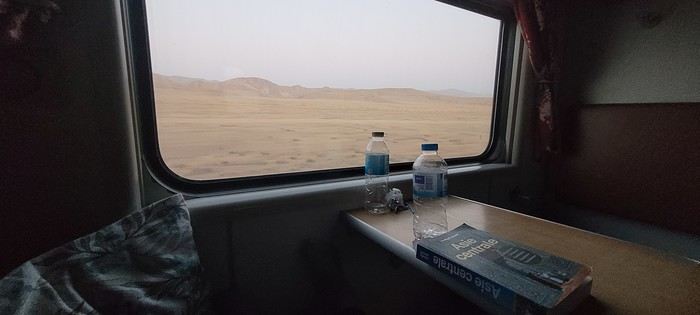
I end up with a Turkmen family—a mother and her daughter, a Russian literature student at Astrakhan University in Russia. She translates for me and explains many aspects of Turkmen life.
The passengers are quiet, and some even offer me candy. The beds are a bit short but relatively comfortable.
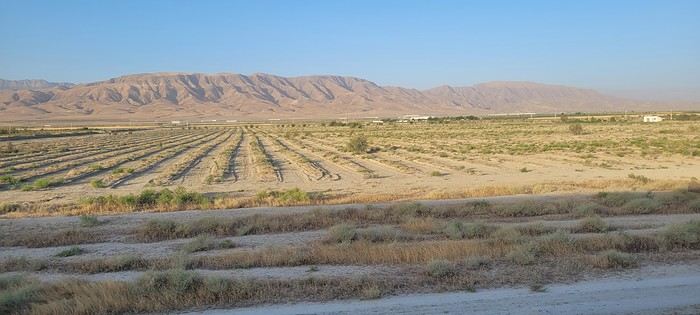
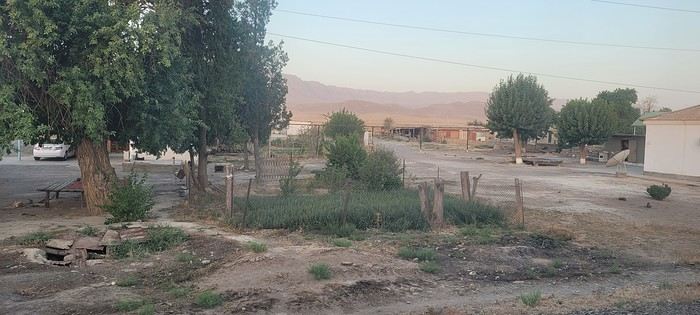
At dawn, the light is visible as early as 5 AM. We’re skirting the Turkmen-Iranian border, and my phone even gets a notification that it’s connected to cell towers on the other side of the border.
The landscapes are really beautiful. We pass through sleepy villages, rugged terrain marking the border, and vast desert areas, some under cultivation.
During a long conversation with the Turkmen family, I learn that the average salary is around $150 per month, and people are considered well-off starting at $200 per month (doctors, for example).
They ask me lots of questions about Europe—emigration possibilities, how I travel, and the cost of living there.
When I tell them a meal at a restaurant costs around $22-23, they’re shocked. In Turkmenistan, even at slightly upscale restaurants, meals cost around $8.
One of the first questions I was asked was about my salary, followed quickly by whether I knew of a free VPN to access international networks.
Many restrictions are in place, and many Turkmen want to watch Turkish or even Russian series on their phones. Access to social media, especially Facebook or Instagram, is highly sought after by young people.
Once in the capital, Ashgabat, it’s the discovery of a particularly unique city. Everything is white, gold, or silver.
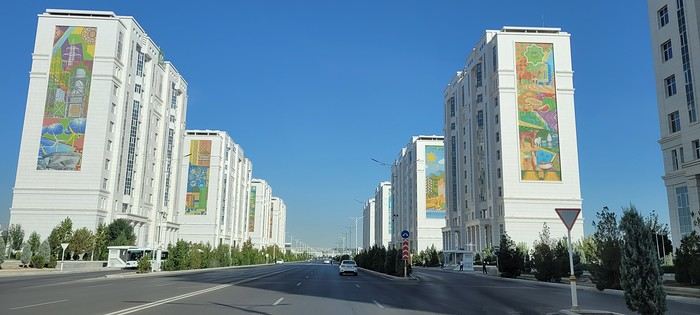
That’s the case for cars, too—only white, gold, or silver vehicles are allowed into the city. About 90% are white, with some gold or silver ones.
Very large, recent buildings with vast murals in the form of frescoes line wide avenues.
We start the visit at the Nisa site, located in the capital’s suburbs and one of the first Parthian capitals.
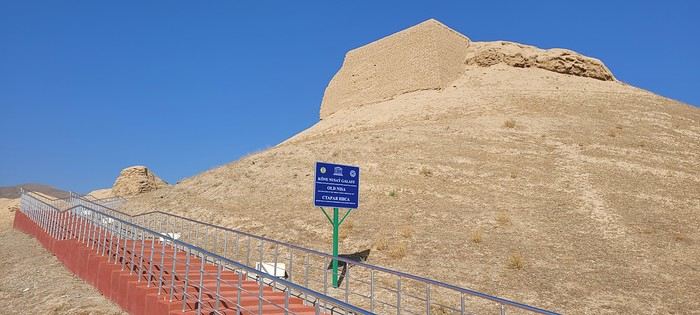
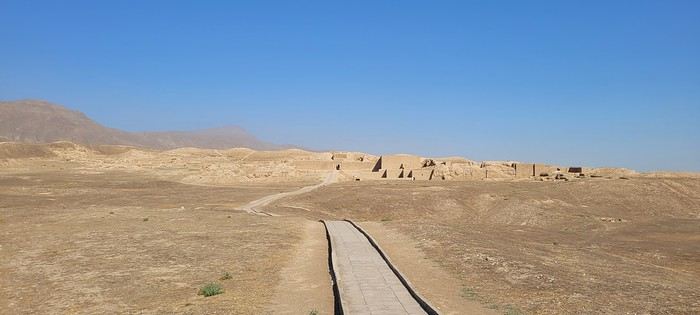
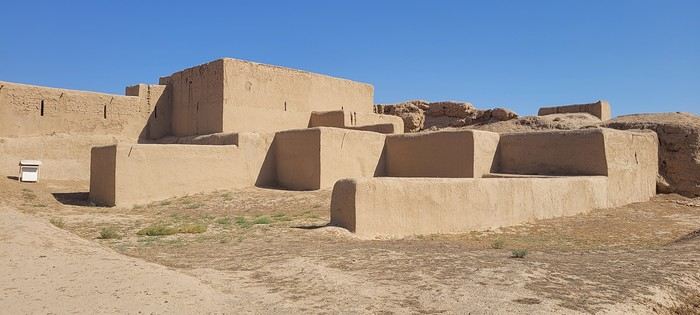
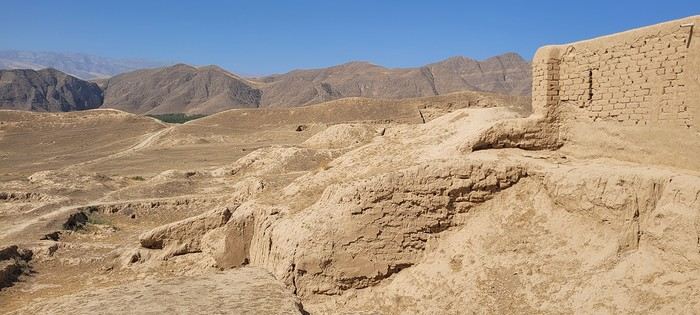
There aren’t many people around. Some young military personnel visit the fortress as part of their training. It’s a relatively well-preserved site at the foot of the mountains but practically empty.
On the way back, we visit the capital’s grand mosque, entirely made of white marble and topped with a large golden dome. It also houses the mausoleum of President Saparmurat Niyazov and his family on the side.
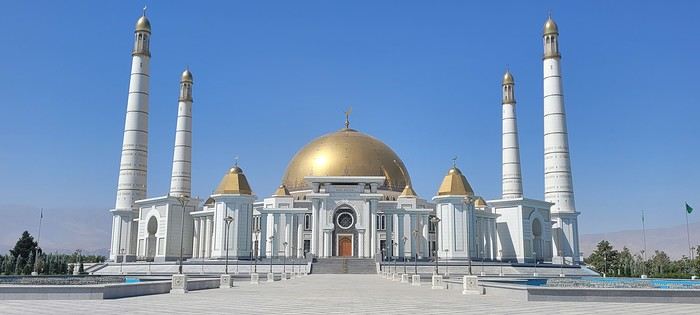
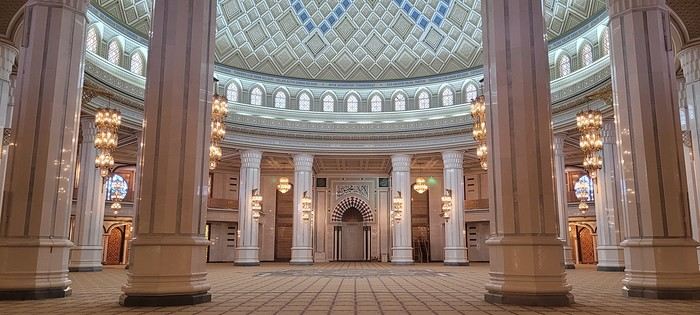
It’s impressive. But completely empty.
It’s a bit frustrating because you can’t take any photos of the station’s exterior, the inside of the station, the platform, or even the arriving train. The rules are strict—no photos of sites considered strategic are allowed.
Still, the arriving train looks like the Chinese trains from the early 2010s—slow but relatively comfortable, with an attendant in each carriage.
This is the only time during the trip when my guide, who’s necessary for this stay, isn’t with me. The compartments have soft berths with four beds. The two on top are really high up.
I end up with a Turkmen family—a mother and her daughter, a Russian literature student at Astrakhan University in Russia. She translates for me and explains many aspects of Turkmen life.
The passengers are quiet, and some even offer me candy. The beds are a bit short but relatively comfortable.
At dawn, the light is visible as early as 5 AM. We’re skirting the Turkmen-Iranian border, and my phone even gets a notification that it’s connected to cell towers on the other side of the border.
The landscapes are really beautiful. We pass through sleepy villages, rugged terrain marking the border, and vast desert areas, some under cultivation.
During a long conversation with the Turkmen family, I learn that the average salary is around $150 per month, and people are considered well-off starting at $200 per month (doctors, for example).
They ask me lots of questions about Europe—emigration possibilities, how I travel, and the cost of living there.
When I tell them a meal at a restaurant costs around $22-23, they’re shocked. In Turkmenistan, even at slightly upscale restaurants, meals cost around $8.
One of the first questions I was asked was about my salary, followed quickly by whether I knew of a free VPN to access international networks.
Many restrictions are in place, and many Turkmen want to watch Turkish or even Russian series on their phones. Access to social media, especially Facebook or Instagram, is highly sought after by young people.
Once in the capital, Ashgabat, it’s the discovery of a particularly unique city. Everything is white, gold, or silver.
That’s the case for cars, too—only white, gold, or silver vehicles are allowed into the city. About 90% are white, with some gold or silver ones.
Very large, recent buildings with vast murals in the form of frescoes line wide avenues.
We start the visit at the Nisa site, located in the capital’s suburbs and one of the first Parthian capitals.
There aren’t many people around. Some young military personnel visit the fortress as part of their training. It’s a relatively well-preserved site at the foot of the mountains but practically empty.
On the way back, we visit the capital’s grand mosque, entirely made of white marble and topped with a large golden dome. It also houses the mausoleum of President Saparmurat Niyazov and his family on the side.
It’s impressive. But completely empty.
A few days in Turkmenistan from Uzbekistan
You're right. The villages are quiet because the population density is lower than in any other Central Asian country, except Kazakhstan.
There are two interesting bazaars in the capital. Just so you know, it's normally forbidden to take photos in these places. I'll post a few in my next update. You'll find merchants selling spices, Caspian caviar, and even meat. A very Russian atmosphere.
For interacting with the locals, the key is the train. Turkmen people will come up to you and ask questions. But on the street? No—the social control over the population is very present, though discreet.
For interacting with the locals, the key is the train. Turkmen people will come up to you and ask questions. But on the street? No—the social control over the population is very present, though discreet.
A Few Days in Turkmenistan from Uzbekistan
I spent the end of the day in Mary without my guide. In fact, I negotiated with my Turkmen agency to be able to reach the capital by overnight train. While my guide takes the road to the capital, Ashgabat, I enjoyed the afternoon and evening in Mary, strolling around the city.
Foreigners can move freely around their hotel. So, I took the opportunity to visit the mosque, the funfair, and the Merv FK football stadium.
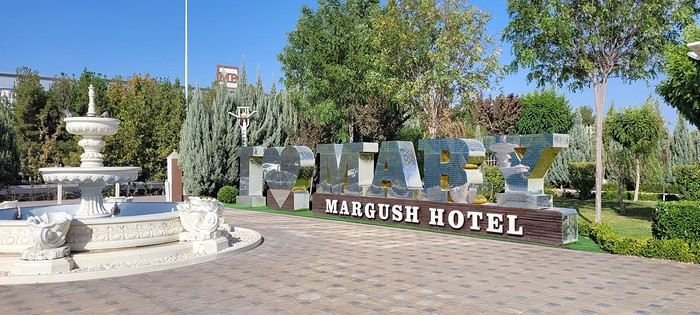
A second hotel, this one private, welcomes foreign tourists. That was my case for a few hours. It has a nice swimming pool and Wi-Fi (Bulgarian!). The place is modern and mainly hosts Turkish businessmen or American retirees who want to discover the secrets of Turkmen fabrics and carpets. On TV, it’s not very complicated. Almost all the programs are folk singing, recitations from the book of the former president with propaganda clips glorifying local tribes, documentaries about Akhal-Teke horses, or tours of the main monuments in the capital.
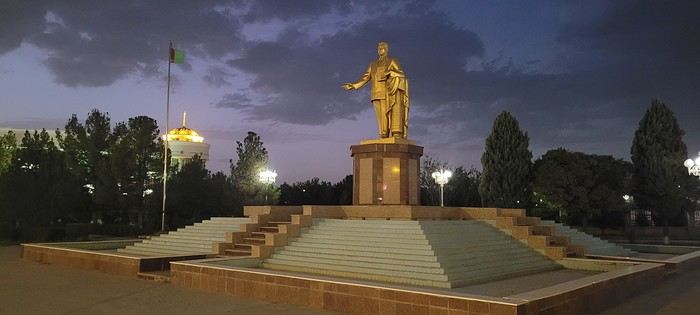
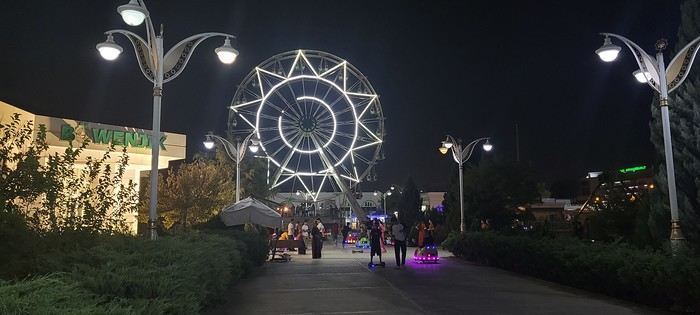
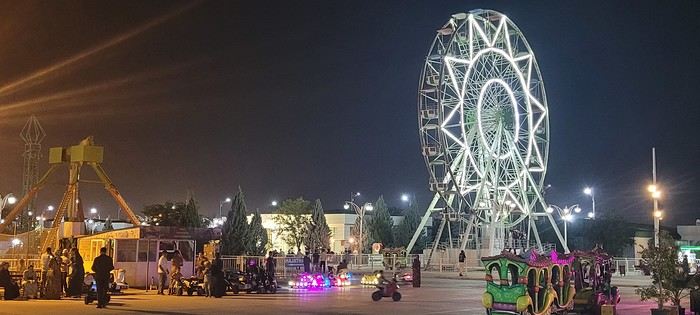
In the city, portraits of the president are quite numerous and displayed in front of every official building. In the evening, the local first-division football club’s stadium becomes a social hub where young and old alike play sports, take walks, or chat. The funfair feels like a throwback to the Soviet era. Most of the rides and stalls seem to date back to the 1970s. The Ferris wheel costs only seven euro cents.
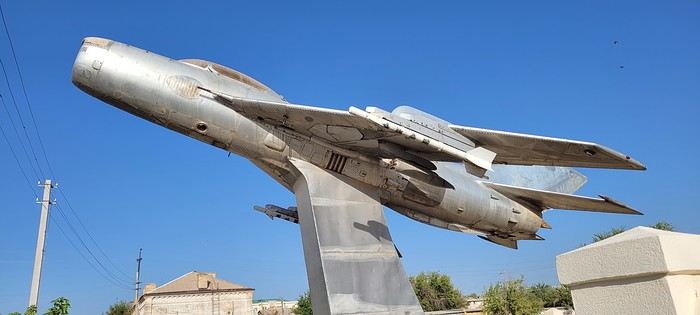
Regarding Wi-Fi, this private hotel has access to the global network with few restrictions, which wasn’t the case at the public hotel the night before. You can access almost any foreign websites, but you can’t access Turkmen sites, whereas it was the opposite at the public hotel. Among the main buildings in the city, you’ll find an Orthodox cathedral, an old Soviet plane, and the train station. By the way, it’s forbidden to photograph the trains and the station due to the presence of many military personnel.
A second hotel, this one private, welcomes foreign tourists. That was my case for a few hours. It has a nice swimming pool and Wi-Fi (Bulgarian!). The place is modern and mainly hosts Turkish businessmen or American retirees who want to discover the secrets of Turkmen fabrics and carpets. On TV, it’s not very complicated. Almost all the programs are folk singing, recitations from the book of the former president with propaganda clips glorifying local tribes, documentaries about Akhal-Teke horses, or tours of the main monuments in the capital.
In the city, portraits of the president are quite numerous and displayed in front of every official building. In the evening, the local first-division football club’s stadium becomes a social hub where young and old alike play sports, take walks, or chat. The funfair feels like a throwback to the Soviet era. Most of the rides and stalls seem to date back to the 1970s. The Ferris wheel costs only seven euro cents.
Regarding Wi-Fi, this private hotel has access to the global network with few restrictions, which wasn’t the case at the public hotel the night before. You can access almost any foreign websites, but you can’t access Turkmen sites, whereas it was the opposite at the public hotel. Among the main buildings in the city, you’ll find an Orthodox cathedral, an old Soviet plane, and the train station. By the way, it’s forbidden to photograph the trains and the station due to the presence of many military personnel.
A few days in Turkmenistan from Uzbekistan
Thanks for your feedback. I’ll keep going bit by bit! It’s motivating to read that there are readers who want to learn more. I think the country is opening up, and that it’ll become relatively common to visit, just like the other Central Asian countries, which are much more touristy.
A Few Days in Turkmenistan from Uzbekistan
The second day in Mary is dedicated to visiting the archaeological site of Gonur-Tepe. This site is located over three hours' drive from Mary, on a rough gravel road, followed by about thirty kilometers of sandy desert track.
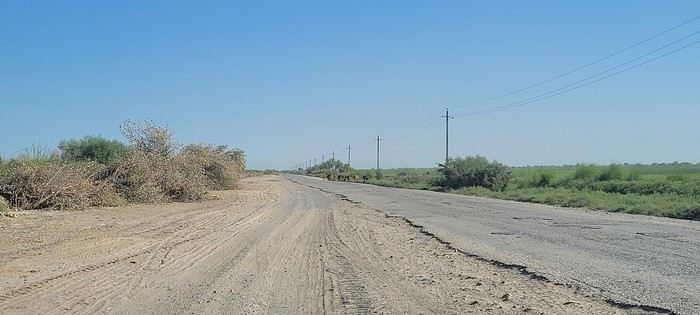
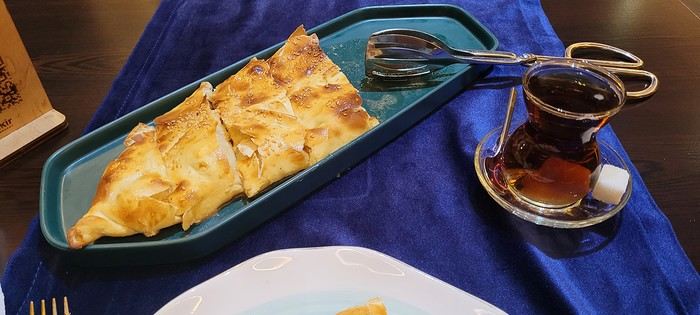
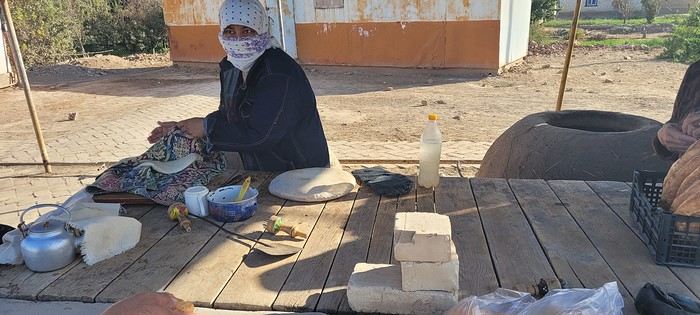
A 4x4 is really necessary, along with an experienced driver, to be able to drive mostly on the left lane, which is in much better condition than the central road, severely damaged. Taking the earthen shoulders is more comfortable than the big potholes in the central paved road. Small villages are visible along the roads and allow you to buy a modestly priced breakfast. This is the case, for example, with many women who prepare samsas (a type of triangular samosa) in traditional round-shaped ovens.
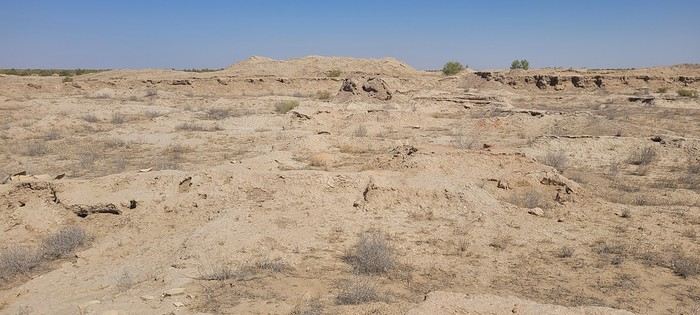
The journey is long, and little by little, the vegetation and cultivated fields give way to a particularly arid steppe and the Karakum Desert.
Upon arriving at the Gonur-Tepe site, a simple shepherd’s hut indicates where the entrance is. A man and his many cats guard the site and have visitors who make it there sign in. Today, I’m the first visitor of the day—and maybe the last.
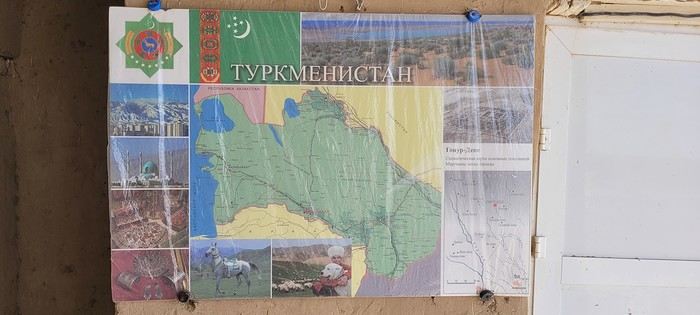
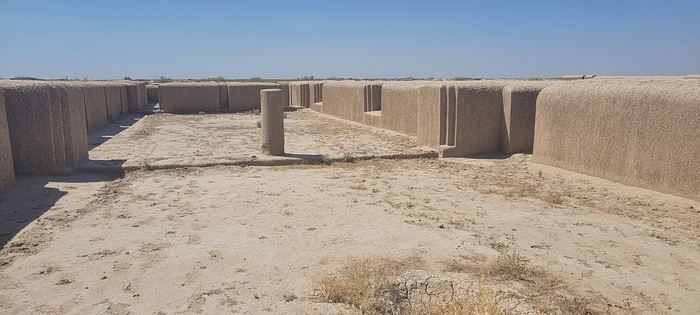
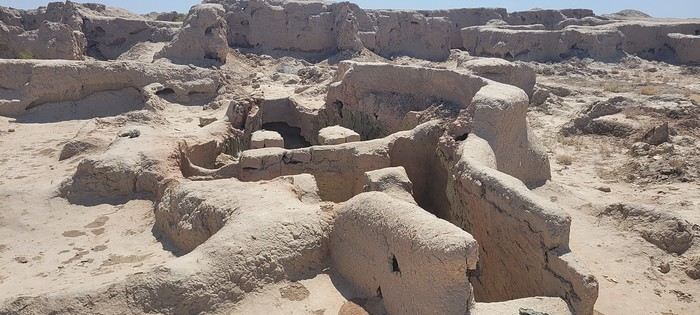
A local historian working for the Mary History Museum gives me a tour in Russian for $60, which is 50 years old. My English-speaking guide translates the Russian’s words into English for me. It’s definitely worth it. The tour is really fascinating thanks to his field experience. Indeed, if you limit yourself to the site without external explanations, you might be quite disappointed. The ruins aren’t that tall, part of it has been slightly restored, and it’s not always easy to immediately understand the functions of the different places visited. You’ll find an astronomical observation site, ovens, a cemetery, stables, dwellings, a palace, a throne room, and city entrance gates.
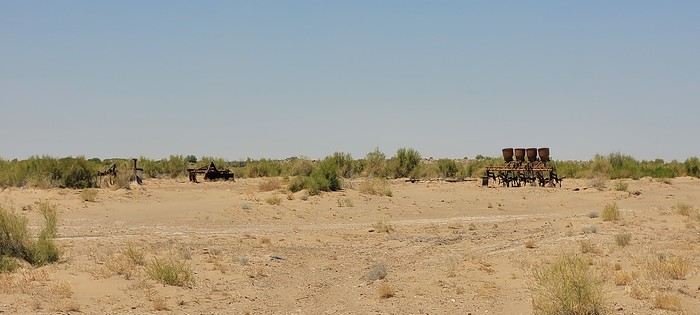
This site of ancient Margiana dates back to around 2000 BCE. There are no visitors (local or tourist). It’s really off the beaten path! Around the site, you won’t run into many people—just a few old Soviet tractor carcasses and a steppe stretching as far as the eye can see.
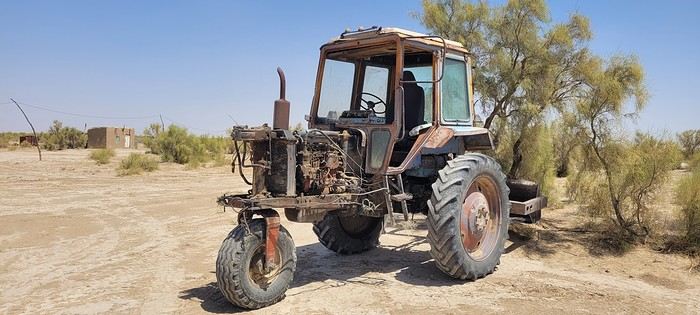
After this great visit, the sun is really beating down in early August. We cross irrigated fields again after the thirty kilometers of sandy tracks where only a few off-road vehicles and trucks pass.
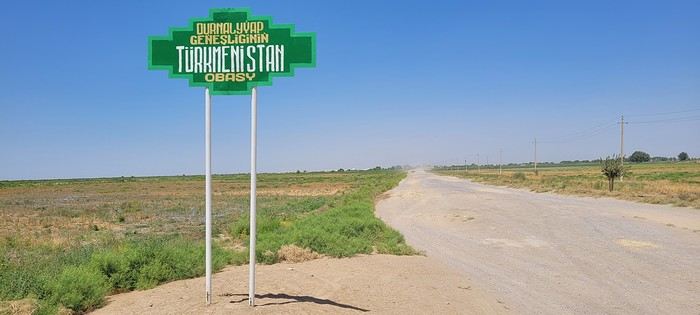
The Turkmen population is sparse and gathers in villages, as shown by the supermarket in the last photo.
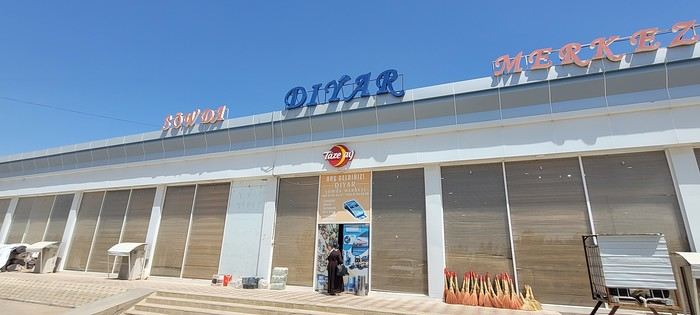
A 4x4 is really necessary, along with an experienced driver, to be able to drive mostly on the left lane, which is in much better condition than the central road, severely damaged. Taking the earthen shoulders is more comfortable than the big potholes in the central paved road. Small villages are visible along the roads and allow you to buy a modestly priced breakfast. This is the case, for example, with many women who prepare samsas (a type of triangular samosa) in traditional round-shaped ovens.
The journey is long, and little by little, the vegetation and cultivated fields give way to a particularly arid steppe and the Karakum Desert.
Upon arriving at the Gonur-Tepe site, a simple shepherd’s hut indicates where the entrance is. A man and his many cats guard the site and have visitors who make it there sign in. Today, I’m the first visitor of the day—and maybe the last.
A local historian working for the Mary History Museum gives me a tour in Russian for $60, which is 50 years old. My English-speaking guide translates the Russian’s words into English for me. It’s definitely worth it. The tour is really fascinating thanks to his field experience. Indeed, if you limit yourself to the site without external explanations, you might be quite disappointed. The ruins aren’t that tall, part of it has been slightly restored, and it’s not always easy to immediately understand the functions of the different places visited. You’ll find an astronomical observation site, ovens, a cemetery, stables, dwellings, a palace, a throne room, and city entrance gates.
This site of ancient Margiana dates back to around 2000 BCE. There are no visitors (local or tourist). It’s really off the beaten path! Around the site, you won’t run into many people—just a few old Soviet tractor carcasses and a steppe stretching as far as the eye can see.
After this great visit, the sun is really beating down in early August. We cross irrigated fields again after the thirty kilometers of sandy tracks where only a few off-road vehicles and trucks pass.
The Turkmen population is sparse and gathers in villages, as shown by the supermarket in the last photo.
A few days in Turkmenistan from Uzbekistan
Could you give us the names of local agencies and their contact details, please?
It’s Travel Notoria. The manager’s name is Artem. I emailed 5-6 Turkmen agencies—much cheaper than UK agencies for organizing trips. Simple and efficient. Unbeatable prices when traveling solo. A guide is mandatory anyway, except for wandering around Mary and Ashgabat.
Did you have any contact with the local population? Under what conditions? Is it possible?
Yes, I’ll talk about that. The best way is to take the overnight train. You meet loads of people... without the guide!
Are there villages with traditional housing?
There are villages that look like what you see in the Russian or Uzbek countryside. They’re poor villages. But the population is mostly concentrated in a few cities and towns. Population density remains very low.
Are there markets or souks?
Yes, I’ll cover that in the Ashgabat section. I’m dragging my feet on writing and sorting photos, but the feedback motivates me to keep going!
I’d like to know if visiting the country is just about going to sites where meeting people and discovering the local way of life is possible?
You *can* meet locals, but it’s clearly not the top destination for that. It’s far from Southeast Asia or Uzbekistan. It’s better to speak Russian or use your phone (offline!) to translate and chat with people. Young people speak a little English and want to talk (mostly about money, life in Europe, and... VPNs!). But it’s possible—in bazaars, buses, rural villages, etc.
A few days in Turkmenistan from Uzbekistan
Thanks, I’ll continue the story in the coming days. I still have about forty photos to upload and a few more stories to share.
The country is indeed quite unique. In terms of clothing, you sometimes feel like you’ve stepped back to the late Soviet era—but without the hammer and sickle!
The country is indeed quite unique. In terms of clothing, you sometimes feel like you’ve stepped back to the late Soviet era—but without the hammer and sickle!
A few days in Turkmenistan from Uzbekistan
Thanks for the info. That confirms what I saw this summer: for the past year, it’s been much easier to visit the country than before.
The country needs to diversify its economy, and tourism is part of that.
A few days in Turkmenistan from Uzbekistan
Oh, it's interesting to read that you could already go out in Turkmenbashi back in 2014. At the same time, it's so far west in the country. That's the part I didn’t want to visit in the middle of summer, especially the Yangykala Canyon.
So the round-trip flight was with Turkmenistan Airlines? They’ve bought some planes in recent years. But maintenance is still poor.
The internet was way more accessible than what I’d read online before leaving. Most Turkmen have phones limited to the country itself. A lot of people use VPNs, especially to follow Turkish, Korean, or Russian series. My guide even watched the NBA on American channels. Except at the Dashoguz crater, we had signal in many remote desert spots. At the Aladdin restaurant in Mary, one of the slightly upscale Turkish restaurants in town (dishes for 6–8 €), there’s a pretty reliable internet connection. In Ashgabat, at the Aka Altyn hotel where foreigners often stay, it didn’t work in my room but was slow in the lobby next to the president’s portrait and the breakfast room. One thing all hotels have in common: breakfasts are definitely not the country’s specialty! Most of the time, they’re awful. It’s better to buy samosas from street stalls in the suburbs or the countryside. They’re excellent, around 30 euro cents, and piping hot.
A few days in Turkmenistan from Uzbekistan
I’m totally charmed by the description of this country 🙂 (which I’ll probably never visit).
Only white, gold, and silver cars are allowed in the capital.
Is there a reason for this somewhat surprising rule?
These are three colors chosen by the former president to emphasize the clean and slightly flashy character of the city. Red, yellow, or green cars stay outside the city. All the buildings in the city center are white, gold, or silver. Just like the cars.
A few days in Turkmenistan from Uzbekistan
What route did you take? How many days did it take? It's definitely easier to get there in 2026 than it was in 2014.
A few days in Turkmenistan from Uzbekistan
You can see many statues in the cities. The vibe feels different compared to Uzbekistan: you might still come across Lenin statues here and there, and Russian Orthodox churches. The Turkmen people I met dream of Moscow, but even more so of Istanbul—or surprisingly, Egypt, Poland, and Belarus!
A few days in Turkmenistan from Uzbekistan
A few additional photos for Mary and Merv.
A Few Days in Turkmenistan from Uzbekistan
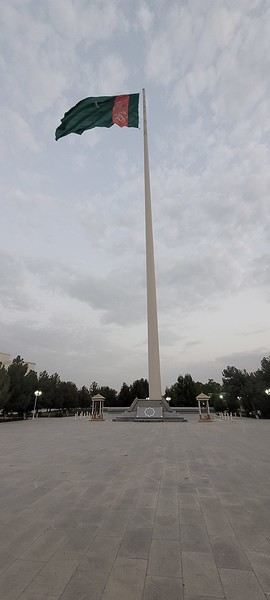
Arriving in Merv, the first impressions are surprising. The country is unique: a vast desert, trucks everywhere (especially gas trucks). 95% of the cars are white—the only ones that aren’t are the few old Ladas still on the road. The rule about white cars only applies in the capital. White, gold, and silver cars are the only ones allowed in the capital. But in Mary, you’ll find some colorful Ladas or Chinese cars.
We filled up the tank. LPG for the car costs 0.001 cents per liter. Unbeatable—world record!
On the way to Merv, old French trucks, including some from Leclerc at the border, get a second life there.
The country isn’t as poor as you might think. It’s very sanitized in a purely authoritarian style.
At the supermarket, it was like a Super U back home. Lots of Russian and Iranian products in the stores. There’s Président cheese and French wine, including sparkling wines and cognac.
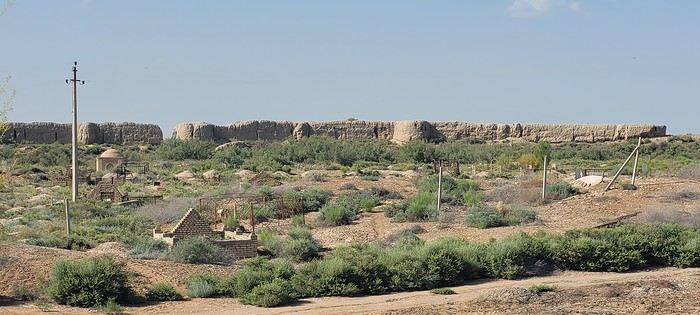
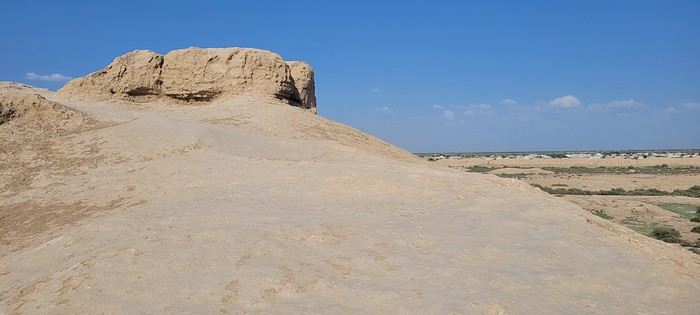
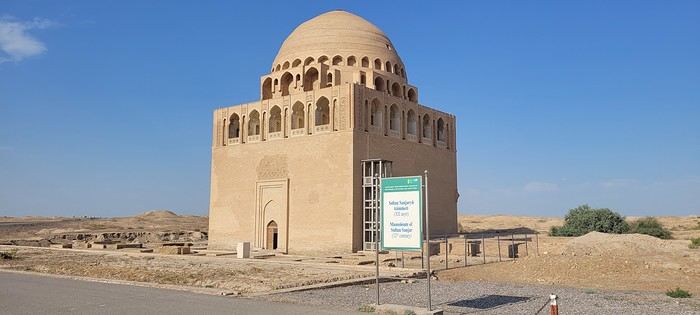
Merv is a large archaeological site near the city of Mary. The archaeological park is about thirty kilometers northeast and features ruins that aren’t overrun with visitors. These fortresses resemble those north of Khiva in Uzbekistan but are less restored.
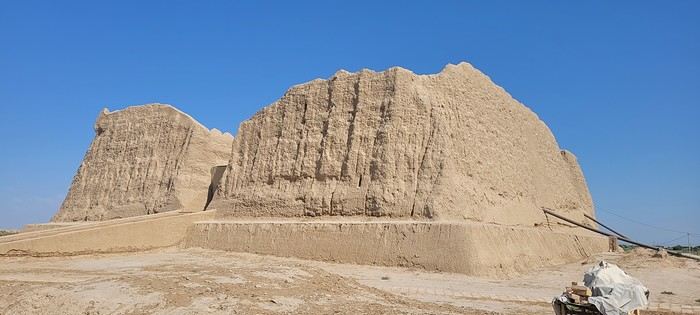
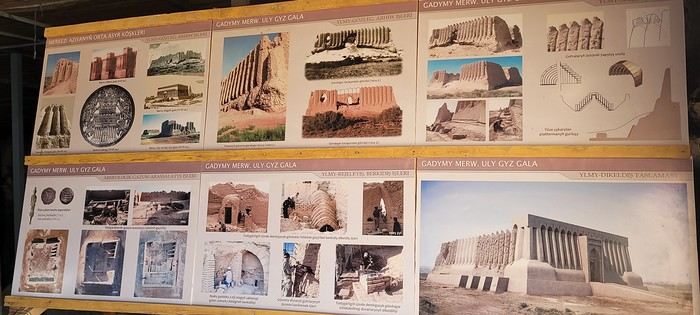
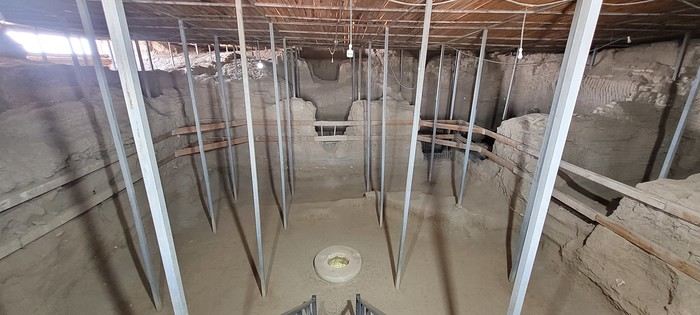
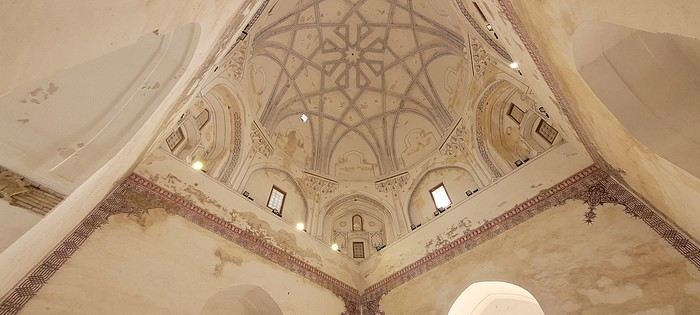
Among the most important buildings, you’ll find a Greek fortress from the Hellenistic era, Achaemenid walls, and even an icehouse used to store ice for the scorching summers. Several mausoleums are also open to visitors on the archaeological site. What’s a bit surprising is seeing that many graves were set up between the 1930s and 1960s within the current archaeological park and weren’t moved. Hellenistic ruins stand alongside 17th-century mausoleums and 20th-century graves.
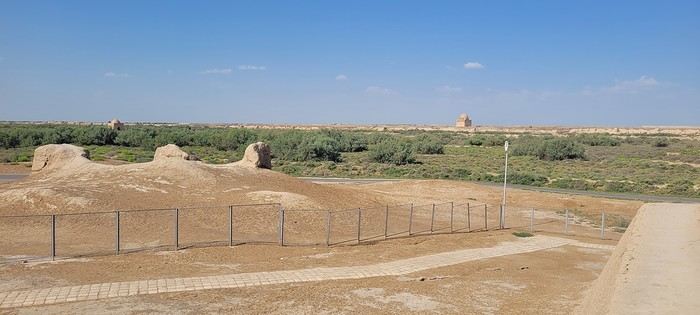
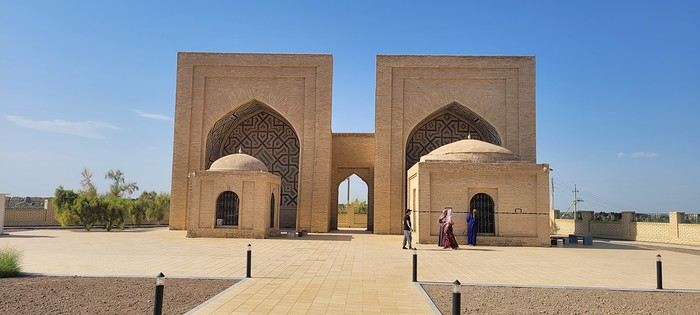
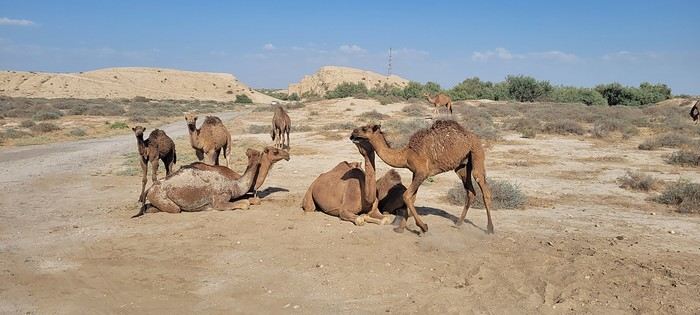
Herders walk or watch their camels between the different points of interest.
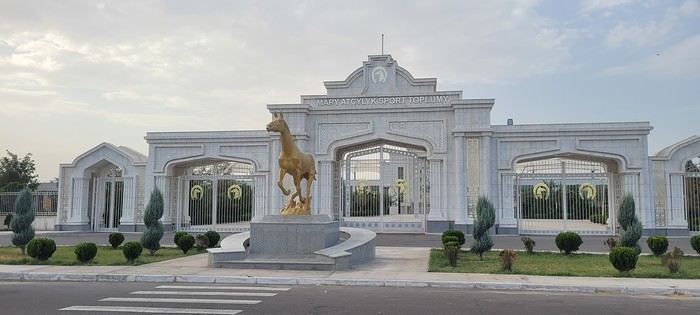
The city of Mary is one of the most important in the provinces, aside from Ashgabat. A large hippodrome with a golden equestrian statue stands out on the outskirts of the city. Tourists can stay in public hotels, which are government-owned, or private ones. No contest—the private hotels are much more comfortable and have much stronger Wi-Fi. In fact, at the private Margush Hotel, the Wi-Fi is geolocated in Bulgaria, which lets you access pretty much any site you’d use in Europe.
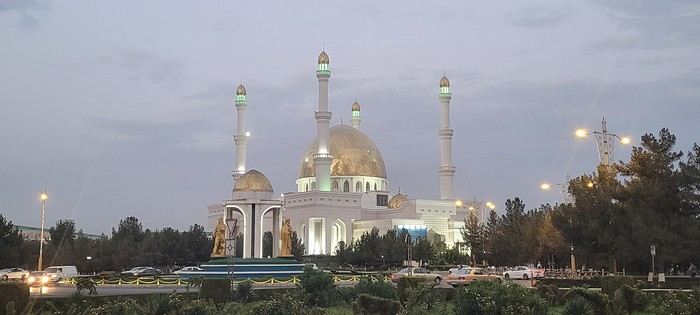
The rules are changing. It’s now possible to walk around in the evening, alone, without a guide, near the hotel and admire the city’s main mosque with its large golden dome. Before, you could only wander freely in the capital. Worshippers aren’t that numerous, since although the country is officially Muslim, religious practice is controlled by the government.
On TV, it’s simple—either folk singing or recitations from the former president’s book, with propaganda clips glorifying local tribes, Ahal Teke horses, or the capital’s monuments.
A small fair lets kids have fun, just like anywhere else in the world. Worth noting: the Ferris wheel costs 0.08 € in 2026.
We filled up the tank. LPG for the car costs 0.001 cents per liter. Unbeatable—world record!
On the way to Merv, old French trucks, including some from Leclerc at the border, get a second life there.
The country isn’t as poor as you might think. It’s very sanitized in a purely authoritarian style.
At the supermarket, it was like a Super U back home. Lots of Russian and Iranian products in the stores. There’s Président cheese and French wine, including sparkling wines and cognac.
Merv is a large archaeological site near the city of Mary. The archaeological park is about thirty kilometers northeast and features ruins that aren’t overrun with visitors. These fortresses resemble those north of Khiva in Uzbekistan but are less restored.
Among the most important buildings, you’ll find a Greek fortress from the Hellenistic era, Achaemenid walls, and even an icehouse used to store ice for the scorching summers. Several mausoleums are also open to visitors on the archaeological site. What’s a bit surprising is seeing that many graves were set up between the 1930s and 1960s within the current archaeological park and weren’t moved. Hellenistic ruins stand alongside 17th-century mausoleums and 20th-century graves.
Herders walk or watch their camels between the different points of interest.
The city of Mary is one of the most important in the provinces, aside from Ashgabat. A large hippodrome with a golden equestrian statue stands out on the outskirts of the city. Tourists can stay in public hotels, which are government-owned, or private ones. No contest—the private hotels are much more comfortable and have much stronger Wi-Fi. In fact, at the private Margush Hotel, the Wi-Fi is geolocated in Bulgaria, which lets you access pretty much any site you’d use in Europe.
The rules are changing. It’s now possible to walk around in the evening, alone, without a guide, near the hotel and admire the city’s main mosque with its large golden dome. Before, you could only wander freely in the capital. Worshippers aren’t that numerous, since although the country is officially Muslim, religious practice is controlled by the government.
On TV, it’s simple—either folk singing or recitations from the former president’s book, with propaganda clips glorifying local tribes, Ahal Teke horses, or the capital’s monuments.
A small fair lets kids have fun, just like anywhere else in the world. Worth noting: the Ferris wheel costs 0.08 € in 2026.
A Few Days in Turkmenistan from Uzbekistan
Thanks. I’ll keep adding to the trip story bit by bit! Next stop: Merv.
A few days in Turkmenistan from Uzbekistan
Thanks, it's one of the least visited countries.
For anecdotes, it's tricky to take photos in public places. For example, it's forbidden to photograph in train stations, trains, banks, and town halls.
For anecdotes, it's tricky to take photos in public places. For example, it's forbidden to photograph in train stations, trains, banks, and town halls.
A guide for Kashmir
Thanks for this great overview. Have any of his books been translated into French?
A Few Days in Turkmenistan from Uzbekistan
The latest travel journal about Turkmenistan dates back to 2019. Here’s a quick update on this vast desert country, which is now a bit easier to visit than before.
This is my first travel journal. If you have any questions, don’t hesitate to ask. The country is slowly opening up, but it’s still possible to visit sites where you’ll be completely alone. In five days, I saw two Hongkongers, a few Germans, and a Chilean at the crater, ten Chinese people in a capital bazaar, and that’s it!
It’s possible to visit Turkmenistan from Uzbekistan. The easiest and most economical way is to take a taxi to the border from Bukhara. The trip takes a little over an hour.
Crossing the border takes quite a while because many Turkmen bring back items bought in Uzbekistan to resell in Turkmenistan. For example, diapers, baby products, or beauty products. It took me over 2.5 hours to cross the border. To visit Turkmenistan, it’s mandatory to have a guide and go through a travel agency. British agencies often offer three-, five-, or seven-day trips for over 1,500 or 2,000 €. But if your budget is more limited, you can contact a few Turkmen agencies directly by email, and they’ll make you an offer between 700 and 1,300 € for three to seven days. I took a five-day trip from Turkmenabat in the northeast of the country to Dashoguz in the north. The goal was to visit the main UNESCO-listed sites, including Merv, and archaeological sites like Nisa or Gonur Tepe.
Your guide will also be your driver. They’ll pick you up at the border. The formalities are very long because customs officers have to stamp multiple documents, and obtaining the visa you previously requested from your travel agency requires several checks. But the process goes relatively smoothly, even if each step takes a while.
Once on the other side, the first surprise is the brand-new highway all the way to Turkmenabat. A very long line of trucks stretches for several kilometers on the Turkmen side to cross the border into Uzbekistan. According to my guide, Turkmen trucks transport gas and cotton (though not this season, since the harvest is in September), but they mainly fill up their tanks because fuel is much cheaper in Turkmenistan. A full tank for a car costs about 3 €, which is unbeatable.

From the Farap border post, the goal is to reach the city of Mary, which is home to the UNESCO-listed site of Merv in its suburbs, about thirty kilometers away. This city is known as a foundation by Alexander the Great in the 4th century BC under the name Alexandria of Margiana. Several fortresses are visible.
After more than three hours on the road, we have lunch at a Turkish restaurant called Aladdin. Several quotes from the president are visible along the highway, but the road is in good condition, and we move along easily. This will be by far the best road in the country—things will get much worse later.


 Roundabouts are particularly interesting because they feature emblems of Turkmen culture, like the dog, a carpet, the Ahal Teke horse, or Muslim symbols, even though the presence of Islamic artifacts is quite limited.

This is my first travel journal. If you have any questions, don’t hesitate to ask. The country is slowly opening up, but it’s still possible to visit sites where you’ll be completely alone. In five days, I saw two Hongkongers, a few Germans, and a Chilean at the crater, ten Chinese people in a capital bazaar, and that’s it!
It’s possible to visit Turkmenistan from Uzbekistan. The easiest and most economical way is to take a taxi to the border from Bukhara. The trip takes a little over an hour.
Crossing the border takes quite a while because many Turkmen bring back items bought in Uzbekistan to resell in Turkmenistan. For example, diapers, baby products, or beauty products. It took me over 2.5 hours to cross the border. To visit Turkmenistan, it’s mandatory to have a guide and go through a travel agency. British agencies often offer three-, five-, or seven-day trips for over 1,500 or 2,000 €. But if your budget is more limited, you can contact a few Turkmen agencies directly by email, and they’ll make you an offer between 700 and 1,300 € for three to seven days. I took a five-day trip from Turkmenabat in the northeast of the country to Dashoguz in the north. The goal was to visit the main UNESCO-listed sites, including Merv, and archaeological sites like Nisa or Gonur Tepe.
Your guide will also be your driver. They’ll pick you up at the border. The formalities are very long because customs officers have to stamp multiple documents, and obtaining the visa you previously requested from your travel agency requires several checks. But the process goes relatively smoothly, even if each step takes a while.
Once on the other side, the first surprise is the brand-new highway all the way to Turkmenabat. A very long line of trucks stretches for several kilometers on the Turkmen side to cross the border into Uzbekistan. According to my guide, Turkmen trucks transport gas and cotton (though not this season, since the harvest is in September), but they mainly fill up their tanks because fuel is much cheaper in Turkmenistan. A full tank for a car costs about 3 €, which is unbeatable.
From the Farap border post, the goal is to reach the city of Mary, which is home to the UNESCO-listed site of Merv in its suburbs, about thirty kilometers away. This city is known as a foundation by Alexander the Great in the 4th century BC under the name Alexandria of Margiana. Several fortresses are visible.
After more than three hours on the road, we have lunch at a Turkish restaurant called Aladdin. Several quotes from the president are visible along the highway, but the road is in good condition, and we move along easily. This will be by far the best road in the country—things will get much worse later.
Roundabouts are particularly interesting because they feature emblems of Turkmen culture, like the dog, a carpet, the Ahal Teke horse, or Muslim symbols, even though the presence of Islamic artifacts is quite limited.
My first trip to Iceland, over 50 years ago.
A rich account full of little stories (including the skyr). Thanks for posting it! A delight to read with that vintage touch.