Results for "Russie+hébergement"
About 14,868 results.
More options
Many results are in French, the community’s main language. English translations are added over time.
Search results
Tour d'Europe, Asie, Orient et Méditerranée en une semaine
S'il y a bien une tare pire pour un voyageur que celle d'être pressé, c'est celle d'être indécis. Et lorsque le malheureux voyageur non seulement cumule ces deux tares, mais en plus est boulimique de découvertes et d'expériences, se posent à lui des dilemmes insolubles comme celui du toujours délicat choix de la destination. Pour la dernière semaine de décembre, voudrais-je rester en Asie, retrouver mes racines européennes et méditerranéennes, ou bien encore approcher une fois de plus cet Orient millénaire qui me séduit de plus en plus?
Le seul moyen de résoudre cette délicate équation restait encore de mettre cette semaine à profit pour tout faire. Non, pas faire, le mot est moche, disons plutôt voir, approcher, effleurer, mais certainement pas approfondir ni encore moins vivre, faute de temps. Quelques brefs calculs m'ont vite prouvé qu'il était possible de tout "faire" en partant le 24 décembre au soir pour être de retour le 1er janvier à Shanghai.
Décollant une heure avant minuit - à temps pour pouvoir dire que je n'ai pas fêté Noel en Chine, ni d'ailleurs nulle part - j'ai fini par toucher terre quelques heures plus tard et quelques fuseaux horaires plus à l'Ouest. Le grand tour allait enfin commencer.
Le seul moyen de résoudre cette délicate équation restait encore de mettre cette semaine à profit pour tout faire. Non, pas faire, le mot est moche, disons plutôt voir, approcher, effleurer, mais certainement pas approfondir ni encore moins vivre, faute de temps. Quelques brefs calculs m'ont vite prouvé qu'il était possible de tout "faire" en partant le 24 décembre au soir pour être de retour le 1er janvier à Shanghai.
Décollant une heure avant minuit - à temps pour pouvoir dire que je n'ai pas fêté Noel en Chine, ni d'ailleurs nulle part - j'ai fini par toucher terre quelques heures plus tard et quelques fuseaux horaires plus à l'Ouest. Le grand tour allait enfin commencer.
Les GP chez Air France
Bonjour,
Ma fille travail à Air France, je bénéficie donc des billets GP. J'ai vu ceci sur un site
Billet accompagnant:Un quota pour tous ( que l’on soit marié, pacsé, concubin, conjoint) de 4 R1 ou R2 A/R, pour les accompagnants de son choix. Avec comme obligation de voyager avec l’ayant droit, mais la possibilité de le faire en fonction ou en MEP, et utilisables pour 2 personnes maximum, et par voyage.
Comment cela marche ? Puis-je faire voyager n'importe qui avec moi en lui faisant profiter de mon tarif GP ? Et si oui comme obtenir ce billet ? De plus j'ai plus de 60 ans savez vous s'il existe d'autre avantage pour moi ? merci à vous et bon weekend
Billet accompagnant:Un quota pour tous ( que l’on soit marié, pacsé, concubin, conjoint) de 4 R1 ou R2 A/R, pour les accompagnants de son choix. Avec comme obligation de voyager avec l’ayant droit, mais la possibilité de le faire en fonction ou en MEP, et utilisables pour 2 personnes maximum, et par voyage.
Comment cela marche ? Puis-je faire voyager n'importe qui avec moi en lui faisant profiter de mon tarif GP ? Et si oui comme obtenir ce billet ? De plus j'ai plus de 60 ans savez vous s'il existe d'autre avantage pour moi ? merci à vous et bon weekend
Situation actuelle au Sri Lanka et changement de destination?
bonjour, je dois partir au SL le 9 Novembre (région de Weligama - Galle)et suis bien indécise vu les événemens de ces jours derniers.
J'ai un vol sec acheté sur go voyages et nous voyagerons seuls là-bas. Que faut-il faire? partir? ou ne pas partir et perdre ses billets d'avion? Est-il possibe avec des vols secs de changer de destination? Qui a déjà rencontré une telle situation? Merci pour vos conseils. JOSI
Let's go in UK!
Bon, c'est un carnet de voyage qui va se faire au fur et a mesure sachant que le voyage commence mardi 23 mai.
Mardi 23 Mai : J'arrive facilement en stop a l'aeroport de Montpellier pour partir a Londres via Ryan air. L'avion part, je suis cote hublot et je suis assis a cote d'un anglais sympathique mais semblant parler surtout par politesse. Comme je me suis amuse a preparer mon sac la veille, je me suis couche tard ce qui fait que je passe mon voyage a dormir. Je me reveille juste pour l'aterrissage, ce fut l'un de mes trajets les plus courts de ma courte vie de voyageur. Arrive a l'aeroport, je sais que je suis a une trentaine de kilometres de Londres. J'ai des amis pouvant m'y herberger, je commence a faire du stop pour y aller. Il commence a pleuvoir, j'ai l'impressin que ce qu'on dit sur le climat anglais n'est pas exageration. Je suis pris en stop assez vite, le conducteur, un somalien, est plutot sympathique. Au bout de 10 minutes, je vois une vignette sur la boite a gants : Max passenger : 6. J'ai peur de comprendre. "- Are you a taxi driver? Yes Er... Will I have to pay? Yes Well... Er.. How much? 60£"
Erf, 100 euros dans la tete pour aller jusqu'a Londres. Je l'ai senti passer. Surtout que c'est pas un taxi qui fait payer selon la distance, qu'on fasse trois metres ou cent kilometres, ca me coute autant... Je commence a appeler mes contacts sur Londres, pas moyen de les joindre. J'en avais 5 et personne qui daigne repondre...
Finalement, j'arrive a joindre ma cousine une fois qu'on arrive en ville. Elle habite dans le Sud Ouest et nous nous trouvons au Nord est, evidemment. Il nous faut deux heures pour traverser la ville et mon chauffeur joue le guide, je decouvre la tour de londres, big ben, et autres. Je decouvre les grands parcs de Londres, ca fait rever quand meme. Mais bon, temps pourri.
Je retrouve ma cousine a hammersmith, elle vit dans une residence pour jeunes completement delabree. Ils sont a quatre dans 20 metres carre. On m'explique que je n'ai pas le droit d'etre la, que je devrai me cacher du manager de l'etablissement.
Enfin, bon, on me presente les gens de la residence, je retiens quatre des vingt prenoms qu'on me presente. La soiree s'enchaine tranquillement. Bon, petite particularite, tout le monde parle francais, pour ameliorer mon anglais, on a vu mieux...
Euh, la je vais devoir faire vite mais j'elaborerai quand je reviendrai. Le manager a fini par se rendre compte de mon existence mercredi soir et m'a demande, hier, si j'avais dormi dans son etablissement, je nie, evidemment et pars en quete d'un autre logement dans Londres. Je squatte un ordinateur dans une agence pour acceder au net gratuitement et je recherche sur des sites style hospitalityclub et couchsurfing des gens pouvant me loger sur Londres jusqu'a mercredi, jour ou je quitterai Londres pour Birmingham. J'ai rencontre un couple de francais qui vivent sur Londres, dans le quartier juif, hier, dans le bus et sont apparemment pret a m'heberger. Je me la joue homeless guy mais c'est vrai que je suis dans une drole de situation.
Mardi 23 Mai : J'arrive facilement en stop a l'aeroport de Montpellier pour partir a Londres via Ryan air. L'avion part, je suis cote hublot et je suis assis a cote d'un anglais sympathique mais semblant parler surtout par politesse. Comme je me suis amuse a preparer mon sac la veille, je me suis couche tard ce qui fait que je passe mon voyage a dormir. Je me reveille juste pour l'aterrissage, ce fut l'un de mes trajets les plus courts de ma courte vie de voyageur. Arrive a l'aeroport, je sais que je suis a une trentaine de kilometres de Londres. J'ai des amis pouvant m'y herberger, je commence a faire du stop pour y aller. Il commence a pleuvoir, j'ai l'impressin que ce qu'on dit sur le climat anglais n'est pas exageration. Je suis pris en stop assez vite, le conducteur, un somalien, est plutot sympathique. Au bout de 10 minutes, je vois une vignette sur la boite a gants : Max passenger : 6. J'ai peur de comprendre. "- Are you a taxi driver? Yes Er... Will I have to pay? Yes Well... Er.. How much? 60£"
Erf, 100 euros dans la tete pour aller jusqu'a Londres. Je l'ai senti passer. Surtout que c'est pas un taxi qui fait payer selon la distance, qu'on fasse trois metres ou cent kilometres, ca me coute autant... Je commence a appeler mes contacts sur Londres, pas moyen de les joindre. J'en avais 5 et personne qui daigne repondre...
Finalement, j'arrive a joindre ma cousine une fois qu'on arrive en ville. Elle habite dans le Sud Ouest et nous nous trouvons au Nord est, evidemment. Il nous faut deux heures pour traverser la ville et mon chauffeur joue le guide, je decouvre la tour de londres, big ben, et autres. Je decouvre les grands parcs de Londres, ca fait rever quand meme. Mais bon, temps pourri.
Je retrouve ma cousine a hammersmith, elle vit dans une residence pour jeunes completement delabree. Ils sont a quatre dans 20 metres carre. On m'explique que je n'ai pas le droit d'etre la, que je devrai me cacher du manager de l'etablissement.
Enfin, bon, on me presente les gens de la residence, je retiens quatre des vingt prenoms qu'on me presente. La soiree s'enchaine tranquillement. Bon, petite particularite, tout le monde parle francais, pour ameliorer mon anglais, on a vu mieux...
Euh, la je vais devoir faire vite mais j'elaborerai quand je reviendrai. Le manager a fini par se rendre compte de mon existence mercredi soir et m'a demande, hier, si j'avais dormi dans son etablissement, je nie, evidemment et pars en quete d'un autre logement dans Londres. Je squatte un ordinateur dans une agence pour acceder au net gratuitement et je recherche sur des sites style hospitalityclub et couchsurfing des gens pouvant me loger sur Londres jusqu'a mercredi, jour ou je quitterai Londres pour Birmingham. J'ai rencontre un couple de francais qui vivent sur Londres, dans le quartier juif, hier, dans le bus et sont apparemment pret a m'heberger. Je me la joue homeless guy mais c'est vrai que je suis dans une drole de situation.
Best and worst travel memories?
Hi everyone,
Who’d like to share their best and worst travel memories in a few lines? For me, it’s watching the TAJ MAHAL at sunrise and getting chased by dogs at the top of a mountain pass in GREECE on the way back from ISTANBUL. THANKS GUYS
Who’d like to share their best and worst travel memories in a few lines? For me, it’s watching the TAJ MAHAL at sunrise and getting chased by dogs at the top of a mountain pass in GREECE on the way back from ISTANBUL. THANKS GUYS
Quand l'un part et l'autre reste....
Bonsoir je vous ecris ce soir car vous lire m'a fait du bien, m'a émue, fait sourire ou carrément halluciner....voilà j'aimerai avoir l'avis de tout les gens concernés et surtout les hommes a propos de ce sujet....quel est-il? ..mon chéri est parti pour 5 mois en asie du sud est ( thailande, cambodge, vietnam et laos) ça fait 2 mois et demi kil est parti et c'est son premier grand voyage (pourtant kil avait dans les tripes depuis des années sa raison de vivre) et .....donc moi je suis restée...non pas par manque d'envie de partir (je compte partir en fin d'année 3 mois en asie du sud)...mais car mon homme voulait entreprendre sa quête seul...je le comprends, je l'aime et je le soutien...je suis sa première fan et sans me voiler la face bien que ce soit difficile, l'amour est au-delà des frontières dans l'accomplissement personnel, dans la recherche de soi afin de mieux accepter l'autre (ça fait un peu cucu mais je le pense vraiment)....
désolée c'est long à venir... donc ça fait plus de 3 ans kon vit ensemble, c'est vraiment quelqu'un d'unique et....bon pleins d'autres choses mais voila j'ai peur qu'un décalage se créer...inexorablement entre celui ki part et celui ki reste....pourtant je crois dur comme fer ke l'on vit ce ke l'on doit vivre et ke la vie nous présentent des opportunités qui nous permettent de grandir....il n'y a pas de hasard......et j'ai beau essayer de partager via ses ressentis et ses lettres ce kil vit je ne crois plus etre à la hauteur (pour lui)....car à ce ke je crois et ce ke j'ai pu lire la réalité se floutte, devient sélective, mon homme n'arrete pas de me dire "ke c'est la plus belle expérience de savie" (et ça doit l'être) " ke c'est du condensé la bas" "ke les gens sont simples" et "kil appréhende un eventuel retour"....c'est quelqu'un de nostalgique, comment guérir un coeur en souffrance de l'ailleurs quand il revient ?
je souhaite partir avec lui.....comment ne pas sembler fade alors ke la bas vs etes 10 fois mariés si vous le souhaitez à des jeunes filles simples authentiques et formidables vous acceptant sans connaitre votre passif.....je crois (j'en suis sure il me l'a dit) que mon chéri à le coeur mitigé entre l'ailleurs, une vietnamienne, et moi et kil souffre (moi aussi) et j'arrive pas à croire ken 10 jours il soit autt bouleversé par une fille, je sais kon est en dehors de tte contrainte de tt contexte et ke c'est l'ailleurs.....comment dire à son homme qu'on est là malgré tout (bien que la france veuille dire retour et dur choc avec la réalité, boulot, factures...)...voilà messieurs les voyageurs, vous avez du tous à un moment donné ou un autre etre pris entre deux feu, que conseilleriez vous à une amoureuse en peine ki souhaite ke le bonheur de son routard d'homme...? MERCI désolé j'ai plus la patate d'habitude c'est seulemnt mon 2ème message...merciii
désolée c'est long à venir... donc ça fait plus de 3 ans kon vit ensemble, c'est vraiment quelqu'un d'unique et....bon pleins d'autres choses mais voila j'ai peur qu'un décalage se créer...inexorablement entre celui ki part et celui ki reste....pourtant je crois dur comme fer ke l'on vit ce ke l'on doit vivre et ke la vie nous présentent des opportunités qui nous permettent de grandir....il n'y a pas de hasard......et j'ai beau essayer de partager via ses ressentis et ses lettres ce kil vit je ne crois plus etre à la hauteur (pour lui)....car à ce ke je crois et ce ke j'ai pu lire la réalité se floutte, devient sélective, mon homme n'arrete pas de me dire "ke c'est la plus belle expérience de savie" (et ça doit l'être) " ke c'est du condensé la bas" "ke les gens sont simples" et "kil appréhende un eventuel retour"....c'est quelqu'un de nostalgique, comment guérir un coeur en souffrance de l'ailleurs quand il revient ?
je souhaite partir avec lui.....comment ne pas sembler fade alors ke la bas vs etes 10 fois mariés si vous le souhaitez à des jeunes filles simples authentiques et formidables vous acceptant sans connaitre votre passif.....je crois (j'en suis sure il me l'a dit) que mon chéri à le coeur mitigé entre l'ailleurs, une vietnamienne, et moi et kil souffre (moi aussi) et j'arrive pas à croire ken 10 jours il soit autt bouleversé par une fille, je sais kon est en dehors de tte contrainte de tt contexte et ke c'est l'ailleurs.....comment dire à son homme qu'on est là malgré tout (bien que la france veuille dire retour et dur choc avec la réalité, boulot, factures...)...voilà messieurs les voyageurs, vous avez du tous à un moment donné ou un autre etre pris entre deux feu, que conseilleriez vous à une amoureuse en peine ki souhaite ke le bonheur de son routard d'homme...? MERCI désolé j'ai plus la patate d'habitude c'est seulemnt mon 2ème message...merciii
Questions légales: mariage avec un Cubain
😕j'ai un problème et j'espère que quelqu'un peu m'aider! Celè fait un ans que j'ai rencontrer mon ami de coeur, c'est un cubain et il vit à cuba maintenant nous prochetons de nous marié mais je ne sais pas ou m'adresser ici pour avoir les info dont j'ai besoin! Par où je commence ???? J'ai entendue parler d'une lettre d'invitation mais je ne sais qu'est-ce que sais! Qu'est-ce que j'ai comme papier pour le mariage les cout? Je suis totalement perdus!
Single Russia-Belarus visa and new train routes
Since last year, the unification of the Russian visa with Belarus has been in effect.
For reference, EU citizens haven’t needed a visa for Belarus for two years. However, it wasn’t possible to travel to Russia. Only Belarusian and Russian citizens could move freely within the union.
With the unified system, if you enter one of the two countries with a visa from either, you can now travel between them freely.
In the case of a Russian visa, it must be a paper visa glued into your passport—not an electronic visa.
This opens up the possibility of traveling to Russia from Lithuania via Minsk, for example, starting from Vilnius.
It also allows for travel circuits that would otherwise be difficult, despite the proximity of the cities.
So, I’m leaving on June 12th for Vilnius. A one-hour flight for around thirty euros with a carry-on bag, and from Vilnius Airport, there’s a bus to Minsk. My planned route for now is Vilnius-Minsk-Smolensk-Vitebsk-Polotsk-Pskov-Riga.
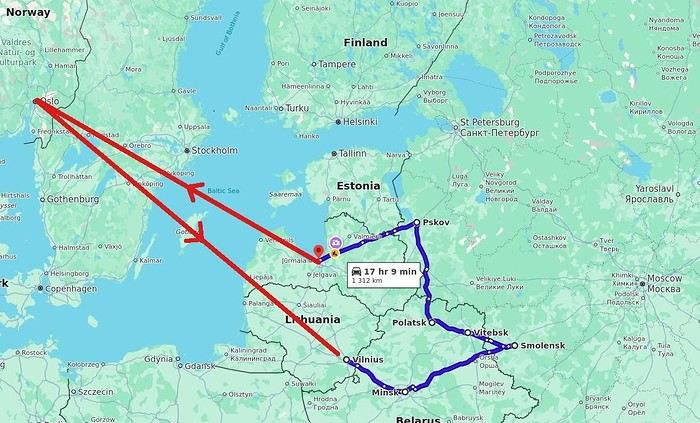
This crosses the Belarus-Russia border three times: from Minsk to Smolensk, then from Smolensk to Vitebsk, and finally from Polotsk to Pskov.
The region of this itinerary was, a thousand years ago, essentially that of the Krivichs, a local Slavic political entity. The term comes from "blood," *krew* in Polish, *krov* in Russian—basically "blood brothers." In Latvian, the word for Russians is *krievu*, by the way. Historically, the region corresponds to some of the old Russian principalities. Later, what marks Belarusian regions in general is, after the Great Schism of 1054, the division between Catholic and Orthodox zones, particularly as the Polish-Lithuanian Commonwealth expanded and contracted. In architecture, this corresponds to variations in Baroque styles, for example.
Vitebsk is known in France as the birthplace of Chagall. Born Russian, he first trained at the art school in Vitebsk, which was also attended by Malevich and Lissitzky, before completing his studies in Saint Petersburg, then moving to Berlin and later Paris. In Paris, Chagall met Cendrars, who had spent three years in Russia before and spoke enough Russian to help the newcomer get by a bit.
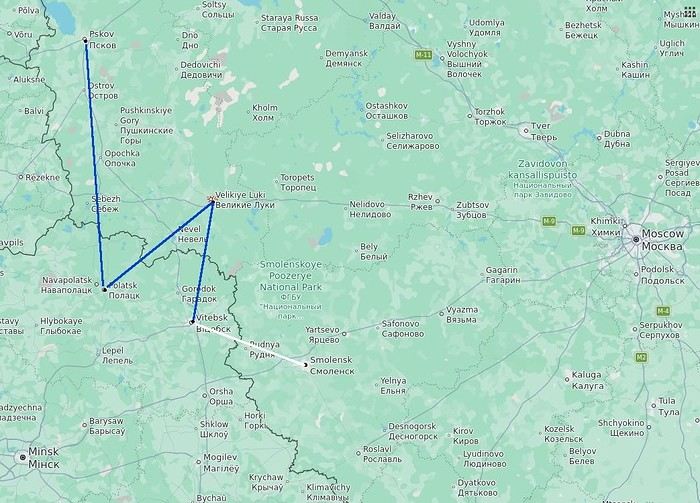
Back to the practical travel aspects: a local Pskov newspaper mentions that the Russian and Belarusian governments have a project for a Pskov-Polotsk train line. Previously, there were also plans for lines between Veliky Luki and Vitebsk, and Polotsk. A recently launched railway is Smolensk-Vitebsk, shown in white on the map, with projected lines in blue. https://pln-pskov.ru/society/583817.html https://pln-pskov.ru/society/578335.html
These will likely be "Hirondelle"—that is, *Lastochka*—the fast, spacious regional trains in Russia. Currently, all of this is done by bus, so the train is a very appealing and comfortable option. We’ll see how it goes.
With the unified system, if you enter one of the two countries with a visa from either, you can now travel between them freely.
In the case of a Russian visa, it must be a paper visa glued into your passport—not an electronic visa.
This opens up the possibility of traveling to Russia from Lithuania via Minsk, for example, starting from Vilnius.
It also allows for travel circuits that would otherwise be difficult, despite the proximity of the cities.
So, I’m leaving on June 12th for Vilnius. A one-hour flight for around thirty euros with a carry-on bag, and from Vilnius Airport, there’s a bus to Minsk. My planned route for now is Vilnius-Minsk-Smolensk-Vitebsk-Polotsk-Pskov-Riga.
This crosses the Belarus-Russia border three times: from Minsk to Smolensk, then from Smolensk to Vitebsk, and finally from Polotsk to Pskov.
The region of this itinerary was, a thousand years ago, essentially that of the Krivichs, a local Slavic political entity. The term comes from "blood," *krew* in Polish, *krov* in Russian—basically "blood brothers." In Latvian, the word for Russians is *krievu*, by the way. Historically, the region corresponds to some of the old Russian principalities. Later, what marks Belarusian regions in general is, after the Great Schism of 1054, the division between Catholic and Orthodox zones, particularly as the Polish-Lithuanian Commonwealth expanded and contracted. In architecture, this corresponds to variations in Baroque styles, for example.
Vitebsk is known in France as the birthplace of Chagall. Born Russian, he first trained at the art school in Vitebsk, which was also attended by Malevich and Lissitzky, before completing his studies in Saint Petersburg, then moving to Berlin and later Paris. In Paris, Chagall met Cendrars, who had spent three years in Russia before and spoke enough Russian to help the newcomer get by a bit.
Back to the practical travel aspects: a local Pskov newspaper mentions that the Russian and Belarusian governments have a project for a Pskov-Polotsk train line. Previously, there were also plans for lines between Veliky Luki and Vitebsk, and Polotsk. A recently launched railway is Smolensk-Vitebsk, shown in white on the map, with projected lines in blue. https://pln-pskov.ru/society/583817.html https://pln-pskov.ru/society/578335.html
These will likely be "Hirondelle"—that is, *Lastochka*—the fast, spacious regional trains in Russia. Currently, all of this is done by bus, so the train is a very appealing and comfortable option. We’ll see how it goes.
Practical aspects spring 2026: border to Murmansk, to Pskov, SIM cards, internet.
I took a few days to get some fresh air outside the Schengen-NATO prison. Between March 18, 2026, and March 25, 2026, as shown by the passport stamps:
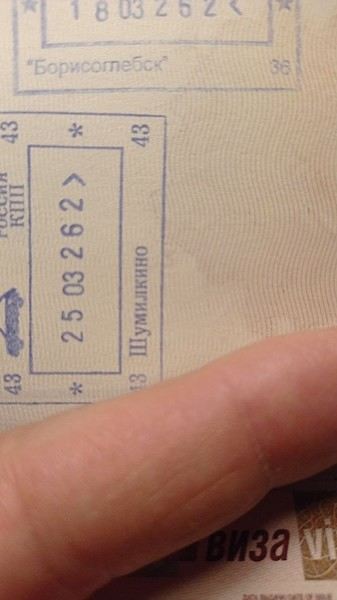
Borisoglebsk is the Russian border checkpoint after Kirkenes, on the road to Murmansk.
Kirkenes is a tiny town with a correspondingly small airport. Nothing has changed there: the minibuses to Murmansk wait on the right as you exit the airport. They’re synchronized with the two daily flights from Oslo—the SAS around 11:00 AM and Norwegian around 11:30 AM. They stop in Kirkenes at the corner of the Scandic for an hour, where other passengers can board, then head straight to the nearby border.
This is the least hassle Frontex/Schengen border. The Norwegian agent quickly scans your passport, and that’s it. No customs, since Norway is Schengen but not in the EU. On the Russian side, there’s a passport check and a quick customs inspection. All in all, crossing both the Norwegian and Russian checkpoints takes about 15 minutes.
A paper visa is required; e-visas aren’t accepted.
Two companies run the route: Avto Ekspress and Borodin: https://ae51.ru/routes/kirkenes-murmansk/ https://borodinbus.com/
The one-way fare is 5,500 ₽. You can either buy it online in rubles with a MIR card or make a formal reservation and pay in NOK cash to the driver. I took Borodin, and the price in NOK was much more expensive than in ₽.
=========================
On March 25, I left from Pskov via the Estonian border post at Luhaama. I spent three days in Murmansk, flew to St. Petersburg (SPB), stayed there for two days, then took an evening train to Pskov.
Since the end of February—and reportedly until the end of May—the Estonians have restricted the opening hours of the two border crossings near Pskov: Koidula (Pechory on the Russian side) and Luhaama (Izborsk on the Russian side). They’re closed at night between 7:00 PM and 7:00 AM. Right now, there’s a bus from Pskov at 7:00 AM to the border. It drops you off at the end of the road where truckers—many Kazakh and Serbian—are parked on the side. You finish the rest on foot to the barrier, where there’s a quick initial check for Ukrainian stamps in passports. Then you walk to the customs building, followed by passport control at the kiosk for motorists. After that, it’s a 500-meter walk to the Estonian checkpoint. At the moment, things seem calmer. Passport control is quick. The usual silly questions in English: "Where were you? Where are you going?" I just gave my most clueless smile: "Sorry, I don’t understand." Yeah, right—I don’t speak English, especially not at an Estonian border with a French passport. If they’re in a mood, though... A very quick bag inspection. Once you exit the Estonian post, walk to the bus stop sign by the road where another coach takes you to Riga.
The catch: in my case, last Wednesday, there were two passengers (Russians) with old Ukrainian stamps in their passports. The bus from the Estonian post to Riga was supposed to leave around 9:30 AM. We ended up leaving around noon after the two were grilled by the FSB. Since it was a weekday outside of holidays, the bus was half-empty. The fuller the bus and the more people with Ukrainian stamps, the worse the nightmare. Don’t book a same-day flight from Riga. I had a flight at 6:00 PM, so it worked out.
=============
The Kirkenes-Murmansk route is still clearly the easiest and fastest. But it’s not the most convenient since it’s way up north.
Next, I’d say the Gdansk-Kaliningrad route in the middle of the week. Avoid weekends and holiday departures/returns.
Avoid the Narva-Ivangorod route during Christmas, Easter, May 9, and *all* summer.
==============
About flights from Murmansk to St. Petersburg: prices are good. I bought my ticket the day before departure on Rossiya for 7,500 ₽, including 10 kg of luggage + a handbag.
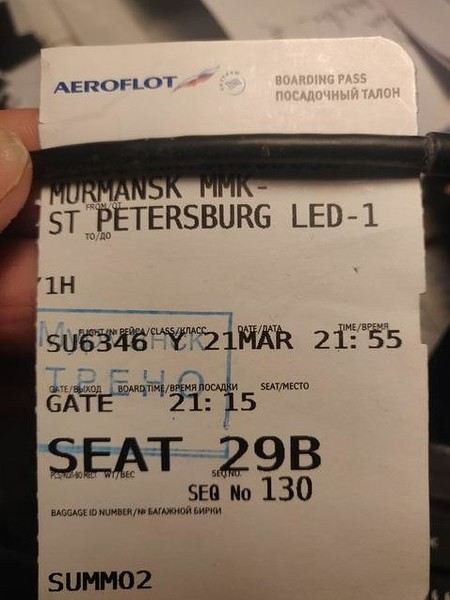
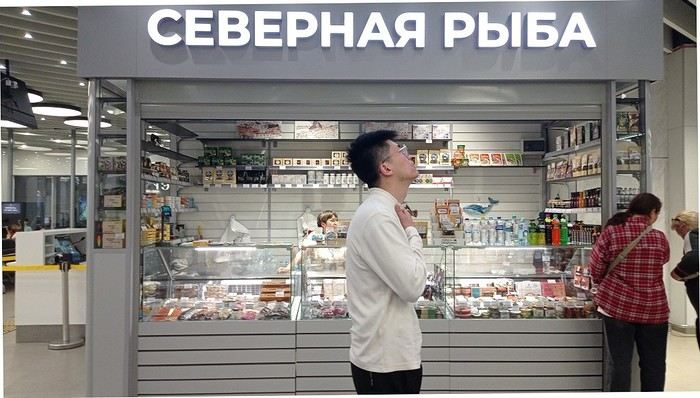
It’s the tail end of the northern lights season, and there were still crowds of Chinese tourists.
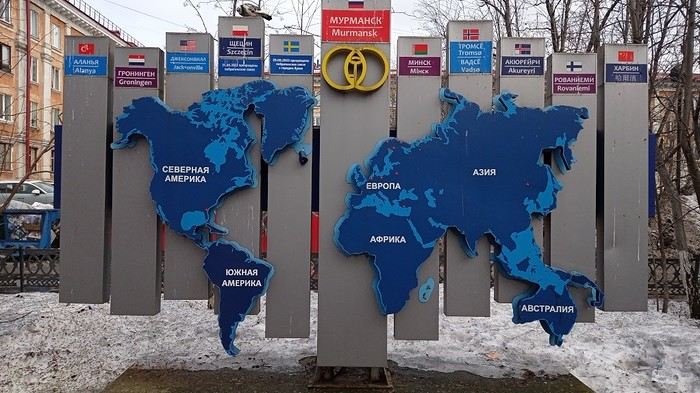
By the way, Murmansk is twinned with Harbin:
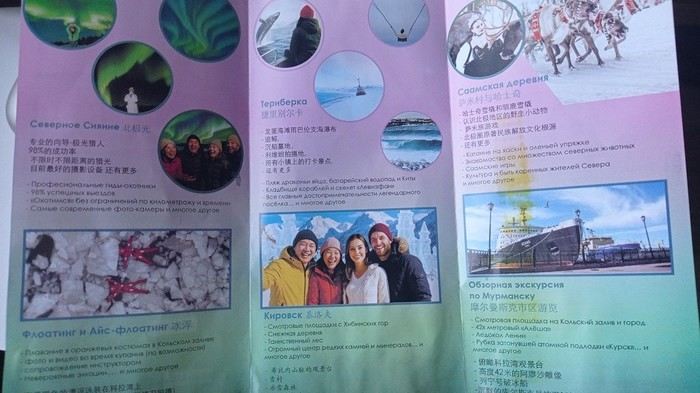
Chinese tourists are the largest foreign group, followed by Indians, then a mix of others from the Far East, Turks, Arabs, etc. Brochures are bilingual—Russian and Chinese:
============================
But let’s talk practical stuff. --
My domestic SIM card was restricted for SMS and internet for 24 hours. After that, if you want to keep using SMS, don’t turn off your phone—restarting triggers another 24-hour purgatory.
My Russian SIM cards (Megafon, MTS, Beeline) were activated as soon as I logged into their respective apps with my credentials.
Internet --
Telegram is heavily slowed down by authorities. To use it, you need to connect through proxy servers, which you load into the latest version of the app. Traffic is then rerouted internally within Telegram to servers outside Russia (Germany, Poland, Sweden, etc.). You can find these proxies on various channels. One is ChatVPN—check their website too.
For general internet use, like browsing the web, VPNs that work right now use the VLESS protocol. You can find several on Telegram by searching "VPN." A few free days, then payment in rubles or crypto.
Rozkomnadzor’s team are experts at this, so things can change. It’s a constant cat-and-mouse game.
Pskov is a special case. The city is near Estonia and has a large military base. Depending on NATO drone swarms launched from the Baltics, Wi-Fi can be completely suspended except for the most essential mobile apps. The drone swarms use the 4G network, and the powerful electronic jamming and drone suppression systems cause periods without Wi-Fi—including in hotels. Wired connections aren’t affected.
Borisoglebsk is the Russian border checkpoint after Kirkenes, on the road to Murmansk.
Kirkenes is a tiny town with a correspondingly small airport. Nothing has changed there: the minibuses to Murmansk wait on the right as you exit the airport. They’re synchronized with the two daily flights from Oslo—the SAS around 11:00 AM and Norwegian around 11:30 AM. They stop in Kirkenes at the corner of the Scandic for an hour, where other passengers can board, then head straight to the nearby border.
This is the least hassle Frontex/Schengen border. The Norwegian agent quickly scans your passport, and that’s it. No customs, since Norway is Schengen but not in the EU. On the Russian side, there’s a passport check and a quick customs inspection. All in all, crossing both the Norwegian and Russian checkpoints takes about 15 minutes.
A paper visa is required; e-visas aren’t accepted.
Two companies run the route: Avto Ekspress and Borodin: https://ae51.ru/routes/kirkenes-murmansk/ https://borodinbus.com/
The one-way fare is 5,500 ₽. You can either buy it online in rubles with a MIR card or make a formal reservation and pay in NOK cash to the driver. I took Borodin, and the price in NOK was much more expensive than in ₽.
=========================
On March 25, I left from Pskov via the Estonian border post at Luhaama. I spent three days in Murmansk, flew to St. Petersburg (SPB), stayed there for two days, then took an evening train to Pskov.
Since the end of February—and reportedly until the end of May—the Estonians have restricted the opening hours of the two border crossings near Pskov: Koidula (Pechory on the Russian side) and Luhaama (Izborsk on the Russian side). They’re closed at night between 7:00 PM and 7:00 AM. Right now, there’s a bus from Pskov at 7:00 AM to the border. It drops you off at the end of the road where truckers—many Kazakh and Serbian—are parked on the side. You finish the rest on foot to the barrier, where there’s a quick initial check for Ukrainian stamps in passports. Then you walk to the customs building, followed by passport control at the kiosk for motorists. After that, it’s a 500-meter walk to the Estonian checkpoint. At the moment, things seem calmer. Passport control is quick. The usual silly questions in English: "Where were you? Where are you going?" I just gave my most clueless smile: "Sorry, I don’t understand." Yeah, right—I don’t speak English, especially not at an Estonian border with a French passport. If they’re in a mood, though... A very quick bag inspection. Once you exit the Estonian post, walk to the bus stop sign by the road where another coach takes you to Riga.
The catch: in my case, last Wednesday, there were two passengers (Russians) with old Ukrainian stamps in their passports. The bus from the Estonian post to Riga was supposed to leave around 9:30 AM. We ended up leaving around noon after the two were grilled by the FSB. Since it was a weekday outside of holidays, the bus was half-empty. The fuller the bus and the more people with Ukrainian stamps, the worse the nightmare. Don’t book a same-day flight from Riga. I had a flight at 6:00 PM, so it worked out.
=============
The Kirkenes-Murmansk route is still clearly the easiest and fastest. But it’s not the most convenient since it’s way up north.
Next, I’d say the Gdansk-Kaliningrad route in the middle of the week. Avoid weekends and holiday departures/returns.
Avoid the Narva-Ivangorod route during Christmas, Easter, May 9, and *all* summer.
==============
About flights from Murmansk to St. Petersburg: prices are good. I bought my ticket the day before departure on Rossiya for 7,500 ₽, including 10 kg of luggage + a handbag.
It’s the tail end of the northern lights season, and there were still crowds of Chinese tourists.
By the way, Murmansk is twinned with Harbin:
Chinese tourists are the largest foreign group, followed by Indians, then a mix of others from the Far East, Turks, Arabs, etc. Brochures are bilingual—Russian and Chinese:
============================
But let’s talk practical stuff. --
My domestic SIM card was restricted for SMS and internet for 24 hours. After that, if you want to keep using SMS, don’t turn off your phone—restarting triggers another 24-hour purgatory.
My Russian SIM cards (Megafon, MTS, Beeline) were activated as soon as I logged into their respective apps with my credentials.
Internet --
Telegram is heavily slowed down by authorities. To use it, you need to connect through proxy servers, which you load into the latest version of the app. Traffic is then rerouted internally within Telegram to servers outside Russia (Germany, Poland, Sweden, etc.). You can find these proxies on various channels. One is ChatVPN—check their website too.
For general internet use, like browsing the web, VPNs that work right now use the VLESS protocol. You can find several on Telegram by searching "VPN." A few free days, then payment in rubles or crypto.
Rozkomnadzor’s team are experts at this, so things can change. It’s a constant cat-and-mouse game.
Pskov is a special case. The city is near Estonia and has a large military base. Depending on NATO drone swarms launched from the Baltics, Wi-Fi can be completely suspended except for the most essential mobile apps. The drone swarms use the 4G network, and the powerful electronic jamming and drone suppression systems cause periods without Wi-Fi—including in hotels. Wired connections aren’t affected.
Private visa request for Russia
Hi there,
I’d like to know if anyone has already applied for a private visa to Russia with an invitation from a Russian resident. I traveled earlier this year with an e-visa, but since I want to stay longer, I’ll be visiting my friend who lives in eastern Russia. For the visa application, does the invitation need to be on an official paper form issued by the Russian ministry? And most importantly, do I need to present the original for the application, or is there an electronic version that can be sent directly to the consulate in France? Thanks for any info if you’ve gone through this process before!
Best regards,
Gilles
I’d like to know if anyone has already applied for a private visa to Russia with an invitation from a Russian resident. I traveled earlier this year with an e-visa, but since I want to stay longer, I’ll be visiting my friend who lives in eastern Russia. For the visa application, does the invitation need to be on an official paper form issued by the Russian ministry? And most importantly, do I need to present the original for the application, or is there an electronic version that can be sent directly to the consulate in France? Thanks for any info if you’ve gone through this process before!
Best regards,
Gilles
Getting a taxi in Saint Petersburg
Hi there,
We’re heading to Saint Petersburg from June 30 to July 7, 2026, and we’ll be arriving late (9 PM) at our hotel on June 30. Unfortunately, the hotel can’t pick us up from the train station. Is it easy to get a taxi at Saint Petersburg coach station?
Thanks for your help!
Gosuslugi with biometrics: for SIM cards and banks, among others.
Gosuslugi / Госуслуги is the Russian administrative portal. EBS / ЕБС is the unified biometric system.
Since 2025, foreigners (residents or not) must have a biometric profile in addition to a Gosuslugi profile to obtain SIM cards and open a bank account.
Administrative services are mostly centralized in MFCs, МФЦ (Multi-Functional Center), nicknamed "My Documents" Мои документы.
A non-resident foreigner can register with the pension fund, which provides a social security number, SNILS / СНИЛС. To do this, you must present your passport and a notarized translation at an MFC. The SNILS can be issued on the spot or within a maximum of five days. If not issued immediately, you receive a receipt, and the deadline is communicated by the administrative agent. You return to the MFC after the deadline to collect the certificate with the SNILS.
Once the SNILS is obtained, you revisit an MFC counter to register on the Gosuslugi portal. You must present your passport and notarized translation again, along with a phone number and email. The Gosuslugi portal authenticates users with three pieces of data: SNILS, email or phone number, and password. The agent creates the profile and completes the initial email and SMS confirmations on your phone.
After the Gosuslugi profile is active, you register on the biometric portal. If last year’s law centralization measures are fully implemented, you can do this at any MFC; otherwise, you go to a SBERBANK (or VTB) branch. Again, as always for foreigners, you must present your passport with its translation and show your open Gosuslugi profile on your phone. The employee records your voice (reading a series of numbers) and takes a photo of your face.
After that, you can go to a telecom agency to buy a SIM card. The staff will take your passport details with the translation and your Gosuslugi profile info. Then, they’ll take a photo with their webcam, which is verified by the online EBS biometric portal. However, procedures may vary depending on the provider (Megafon, MTS, Beeline), and some employees may not be familiar with the process.
Potential delays can be caused by network maintenance or slowdowns due to peaks in administrative activity.
I’ll illustrate this process as I experienced it in February and April 2025 in the next post. Just need to gather the photos I took on the spot.
Since 2025, foreigners (residents or not) must have a biometric profile in addition to a Gosuslugi profile to obtain SIM cards and open a bank account.
Administrative services are mostly centralized in MFCs, МФЦ (Multi-Functional Center), nicknamed "My Documents" Мои документы.
A non-resident foreigner can register with the pension fund, which provides a social security number, SNILS / СНИЛС. To do this, you must present your passport and a notarized translation at an MFC. The SNILS can be issued on the spot or within a maximum of five days. If not issued immediately, you receive a receipt, and the deadline is communicated by the administrative agent. You return to the MFC after the deadline to collect the certificate with the SNILS.
Once the SNILS is obtained, you revisit an MFC counter to register on the Gosuslugi portal. You must present your passport and notarized translation again, along with a phone number and email. The Gosuslugi portal authenticates users with three pieces of data: SNILS, email or phone number, and password. The agent creates the profile and completes the initial email and SMS confirmations on your phone.
After the Gosuslugi profile is active, you register on the biometric portal. If last year’s law centralization measures are fully implemented, you can do this at any MFC; otherwise, you go to a SBERBANK (or VTB) branch. Again, as always for foreigners, you must present your passport with its translation and show your open Gosuslugi profile on your phone. The employee records your voice (reading a series of numbers) and takes a photo of your face.
After that, you can go to a telecom agency to buy a SIM card. The staff will take your passport details with the translation and your Gosuslugi profile info. Then, they’ll take a photo with their webcam, which is verified by the online EBS biometric portal. However, procedures may vary depending on the provider (Megafon, MTS, Beeline), and some employees may not be familiar with the process.
Potential delays can be caused by network maintenance or slowdowns due to peaks in administrative activity.
I’ll illustrate this process as I experienced it in February and April 2025 in the next post. Just need to gather the photos I took on the spot.
Requirements for travel to Russia and Mongolia
Hi there,
I’m planning a trip to Russia and Mongolia, starting from France.
Crossing the border at Poland/Belarus or Georgia/Russia—other borders seem either closed or complicated.
Tourist visas for 3 months with multiple entries.
Do you have any info on Russian companies that cover a 4x4 vehicle for 3 months, and what prices in rubles or euros you’ve paid?
Which bank did you use for expenses? (EuroMastercard and Visa cards no longer work.)
Regarding Russian SIM cards, a new system called "Gosuslugi" has been introduced. How long did it take you to get one, and what steps did you follow?
Thanks
Which bank did you use for expenses? (EuroMastercard and Visa cards no longer work.)
Regarding Russian SIM cards, a new system called "Gosuslugi" has been introduced. How long did it take you to get one, and what steps did you follow?
Thanks
General 2022+ Update for Russia
This forum was closed for a long time after COVID, then due to its sale by the previous owner. Since 2022, there have been notable changes for Russia. It became possible to travel to Russia as a tourist again after COVID restrictions ended in summer 2022. But before that, in March 2022, the EU and member countries cut air links with Russia, as well as train lines. They also cut Russian banks off from the Euro-American banking network—meaning cards and wire transfers.
EU-based insurers stopped offering policies for Russia. The Green Card for cars in Russia was also discontinued. Then the EU abolished the simplified visa regime agreement with Russia. All in all, a summary of the current practical aspects would be helpful.
I’ve been traveling to Russia regularly for about twenty years, and after the long COVID break, I resumed in autumn 2022.
Visa
The usual paper visa is much more expensive. On one hand, because the previous regime was scrapped, and on the other, because invitations for multi-entry visas are pricier. A single-entry 30-day visa costs 80 €. The multi-entry one is 240 €. To be sure you’ll get a 12-month multi-entry, it’s best to buy a telex invitation from the MID (Russian Ministry of Foreign Affairs), though there are few resellers. Prices vary depending on the seller.
E-visas are now available for Schengen passport holders. A big simplification for trips up to 16 days within a 60-day validity period. You can apply from 40 days up to 5 days before your desired date. Issued in up to four days. The site is https://evisa.kdmid.ru/ Cost: 50 €. Processed through an Emirati bank (United Arab Emirates).
Medical Insurance
Medical insurance with repatriation is required to get a visa. So you’ll need to buy a policy. This brings up payment methods. If you’re already familiar with Russia and have a Russian bank account, you can pay with your Russian card. Otherwise, you’ll have to buy from a site that accepts payments via a Belarusian bank—which means your bank must work with Belarus—or go through https://goingrus.com/fr/insurance
Transport from the EU
Minibus (marshrutka) from Kirkenes (Norway) to Murmansk. Schedules are coordinated with flights from Oslo, which arrive between 11:00 and 12:00. They wait on the right as you exit the airport. Some are chartered by groups and leave directly, but may have space—ask the driver. Otherwise, two companies run the route, with a stop in town at the corner of the Scandic, where they depart around 14:00 or 15:00. Payment in cash (NOK or RUB) to the driver. Main operator: https://borodinbus.com Bus from Tallinn (Estonia) to St. Petersburg. The border crossing is on the Narva River. The Russian road checkpoint has been closed since January 2024 for construction expected to last 2.5 years, so reopening is possible in summer 2026. In the meantime, it’s a two-bus journey: Tallinn-Narva, then walk across the bridge between the Estonian and Russian checkpoints at Ivangorod, followed by another bus. Several companies: Luxexpress, Ecolines, Baltic Shuttle, Anniston, СКСавто. Bus from Riga to Pskov or St. Petersburg (final destination). Departs from Riga’s bus station (behind the train station) daily between 18:00 and 19:00. Arrives in Pskov between 01:00 and 02:00 (Russian time). Company: СКСавто. There’s another bus around 21:00 with Ecolines, but it’s longer, with a long stop at the border. Bus from Gdańsk to Kaliningrad. Several buses per day. From the PKS bus station, behind Gdańsk’s central station, on the other side of the boulevard. From Kaliningrad, a 1-hour flight to St. Petersburg costs around 5000 RUB.
Basically, unless you’re planning to go to Murmansk and the Kola Peninsula—and possibly from Murmansk, flights to Arkhangelsk, then Nenetsia (Naryan-Mar), etc.—the three main crossing points with airports are Tallinn, Riga, and Gdańsk.
The Gdańsk-Kaliningrad bus is the fastest, and the ticket to St. Petersburg is very reasonable.
The Narva-Ivangorod route is the riskiest in terms of potential queues and crossing time. Holiday periods are especially risky. Last mid-June, I took a 14:00 bus from Tallinn. I’d bought a single-berth compartment on the Grand Express St. Petersburg-Moscow train, leaving at 23:00, with the idea of a good night’s rest before a Moscow-Magadan flight. A 7-hour queue at the border meant I arrived at St. Petersburg’s bus station at 23:00—missed the train, had to book a room, and spent time finding a reasonably priced flight to Moscow the next day for the same airport as my Magadan flight.
The Riga-Pskov route is a bit long but relaxed. If you get off in Pskov, you can still get decent sleep between 02:00 and 12:00. The Oktyabrskaya Hotel is cheap. I’ve also stopped in Izborsk. You ask the driver when boarding in Riga. The stop is on the federal highway—cross the road, and the main inn is 200m away. You can explore the medieval site the next morning before taking a bus to Pskov (30 km).
From Pskov, there are fast regional Lastochka trains—three or four per day—to St. Petersburg, taking 3.5 hours. Very comfortable and affordable. Also, two daily flights with Azimuth to Moscow-Vnukovo from 5000 RUB. A one-hour flight. It’s a section of Pskov’s military airfield, just a few kilometers from the city center.
Money
Cash. The EU issued a nonsensical decree: a ban on importing EU currency (euros, zloty, kroner, forints, etc.) except for personal travel use. This doesn’t make sense because as a citizen of a eurozone country, you *have* to have euros—cash or electronic (card). You can’t travel without them. The stipulation about a limit for personal use is absurd because personal use can mean anything from a hostel bed to a luxury hotel room, plus transport (flight tickets, train tickets in Russia), restaurants, etc. Estonian customs officers ask about this at the border when leaving. They ask in Estonian, then Russian, then English, depending. Since I cross with a French passport, I just say, "Sorry, I don’t understand," no matter what. Then they ask with a questioning look, "Euro?" and I shake my head. I haven’t been searched, but they do ask to glance in your bag. Russians with large suitcases often get checked. Cards and phone apps: if you have a Russian bank account.
Telephony and Internet
Roaming works but is pricey. Okay for calls and SMS, but very expensive for data. In that case, use an e-SIM with your home carrier if your phone supports it. Otherwise, look into prepaid rechargeable SIMs in Russia for data only—like SIM cards for mobile modems.
Russian SIM: Since this year (2025), as of March, it’s mandatory to be registered in the EBS (Unified Biometric System) to buy a SIM card. For a non-resident foreigner, this means first registering for a SNILS at an MFC (Multifunctional Center)—also called "My Documents." The SNILS is the pension center, which doesn’t require residency. After getting your SNILS number and certificate, you register on the public services portal, Gosuslugi. Finally, you register in the EBS system (voice sample—you read numbers—and a biometric facial photo).
Personal Car
The Green Card no longer covers Russia, and neither do EU-based insurers. But third-party liability insurance (OSAGO) is mandatory. Since the closure of the Russian checkpoint at Ivangorod for construction and the Finnish border closure, the routes are from Kirkenes in Norway, the Estonia-Pskov route, and—since the Belarus-Russia joint visa this year—the Belarus route, e.g., Poland-Terespol-Brest or Lithuania-Belarus. No OSAGO sales if you cross via Kirkenes. I didn’t see any at Shumilkino, the Russian checkpoint after Estonia toward Pskov. If you have a Russian card, you can buy online, of course. Otherwise, pay in cash on-site at certain company offices (specific forms aren’t available at all agencies) or online by paying to a third-party account outside Russia—with added fees.
EU-based insurers stopped offering policies for Russia. The Green Card for cars in Russia was also discontinued. Then the EU abolished the simplified visa regime agreement with Russia. All in all, a summary of the current practical aspects would be helpful.
I’ve been traveling to Russia regularly for about twenty years, and after the long COVID break, I resumed in autumn 2022.
Visa
The usual paper visa is much more expensive. On one hand, because the previous regime was scrapped, and on the other, because invitations for multi-entry visas are pricier. A single-entry 30-day visa costs 80 €. The multi-entry one is 240 €. To be sure you’ll get a 12-month multi-entry, it’s best to buy a telex invitation from the MID (Russian Ministry of Foreign Affairs), though there are few resellers. Prices vary depending on the seller.
E-visas are now available for Schengen passport holders. A big simplification for trips up to 16 days within a 60-day validity period. You can apply from 40 days up to 5 days before your desired date. Issued in up to four days. The site is https://evisa.kdmid.ru/ Cost: 50 €. Processed through an Emirati bank (United Arab Emirates).
Medical Insurance
Medical insurance with repatriation is required to get a visa. So you’ll need to buy a policy. This brings up payment methods. If you’re already familiar with Russia and have a Russian bank account, you can pay with your Russian card. Otherwise, you’ll have to buy from a site that accepts payments via a Belarusian bank—which means your bank must work with Belarus—or go through https://goingrus.com/fr/insurance
Transport from the EU
Minibus (marshrutka) from Kirkenes (Norway) to Murmansk. Schedules are coordinated with flights from Oslo, which arrive between 11:00 and 12:00. They wait on the right as you exit the airport. Some are chartered by groups and leave directly, but may have space—ask the driver. Otherwise, two companies run the route, with a stop in town at the corner of the Scandic, where they depart around 14:00 or 15:00. Payment in cash (NOK or RUB) to the driver. Main operator: https://borodinbus.com Bus from Tallinn (Estonia) to St. Petersburg. The border crossing is on the Narva River. The Russian road checkpoint has been closed since January 2024 for construction expected to last 2.5 years, so reopening is possible in summer 2026. In the meantime, it’s a two-bus journey: Tallinn-Narva, then walk across the bridge between the Estonian and Russian checkpoints at Ivangorod, followed by another bus. Several companies: Luxexpress, Ecolines, Baltic Shuttle, Anniston, СКСавто. Bus from Riga to Pskov or St. Petersburg (final destination). Departs from Riga’s bus station (behind the train station) daily between 18:00 and 19:00. Arrives in Pskov between 01:00 and 02:00 (Russian time). Company: СКСавто. There’s another bus around 21:00 with Ecolines, but it’s longer, with a long stop at the border. Bus from Gdańsk to Kaliningrad. Several buses per day. From the PKS bus station, behind Gdańsk’s central station, on the other side of the boulevard. From Kaliningrad, a 1-hour flight to St. Petersburg costs around 5000 RUB.
Basically, unless you’re planning to go to Murmansk and the Kola Peninsula—and possibly from Murmansk, flights to Arkhangelsk, then Nenetsia (Naryan-Mar), etc.—the three main crossing points with airports are Tallinn, Riga, and Gdańsk.
The Gdańsk-Kaliningrad bus is the fastest, and the ticket to St. Petersburg is very reasonable.
The Narva-Ivangorod route is the riskiest in terms of potential queues and crossing time. Holiday periods are especially risky. Last mid-June, I took a 14:00 bus from Tallinn. I’d bought a single-berth compartment on the Grand Express St. Petersburg-Moscow train, leaving at 23:00, with the idea of a good night’s rest before a Moscow-Magadan flight. A 7-hour queue at the border meant I arrived at St. Petersburg’s bus station at 23:00—missed the train, had to book a room, and spent time finding a reasonably priced flight to Moscow the next day for the same airport as my Magadan flight.
The Riga-Pskov route is a bit long but relaxed. If you get off in Pskov, you can still get decent sleep between 02:00 and 12:00. The Oktyabrskaya Hotel is cheap. I’ve also stopped in Izborsk. You ask the driver when boarding in Riga. The stop is on the federal highway—cross the road, and the main inn is 200m away. You can explore the medieval site the next morning before taking a bus to Pskov (30 km).
From Pskov, there are fast regional Lastochka trains—three or four per day—to St. Petersburg, taking 3.5 hours. Very comfortable and affordable. Also, two daily flights with Azimuth to Moscow-Vnukovo from 5000 RUB. A one-hour flight. It’s a section of Pskov’s military airfield, just a few kilometers from the city center.
Money
Cash. The EU issued a nonsensical decree: a ban on importing EU currency (euros, zloty, kroner, forints, etc.) except for personal travel use. This doesn’t make sense because as a citizen of a eurozone country, you *have* to have euros—cash or electronic (card). You can’t travel without them. The stipulation about a limit for personal use is absurd because personal use can mean anything from a hostel bed to a luxury hotel room, plus transport (flight tickets, train tickets in Russia), restaurants, etc. Estonian customs officers ask about this at the border when leaving. They ask in Estonian, then Russian, then English, depending. Since I cross with a French passport, I just say, "Sorry, I don’t understand," no matter what. Then they ask with a questioning look, "Euro?" and I shake my head. I haven’t been searched, but they do ask to glance in your bag. Russians with large suitcases often get checked. Cards and phone apps: if you have a Russian bank account.
Telephony and Internet
Roaming works but is pricey. Okay for calls and SMS, but very expensive for data. In that case, use an e-SIM with your home carrier if your phone supports it. Otherwise, look into prepaid rechargeable SIMs in Russia for data only—like SIM cards for mobile modems.
Russian SIM: Since this year (2025), as of March, it’s mandatory to be registered in the EBS (Unified Biometric System) to buy a SIM card. For a non-resident foreigner, this means first registering for a SNILS at an MFC (Multifunctional Center)—also called "My Documents." The SNILS is the pension center, which doesn’t require residency. After getting your SNILS number and certificate, you register on the public services portal, Gosuslugi. Finally, you register in the EBS system (voice sample—you read numbers—and a biometric facial photo).
Personal Car
The Green Card no longer covers Russia, and neither do EU-based insurers. But third-party liability insurance (OSAGO) is mandatory. Since the closure of the Russian checkpoint at Ivangorod for construction and the Finnish border closure, the routes are from Kirkenes in Norway, the Estonia-Pskov route, and—since the Belarus-Russia joint visa this year—the Belarus route, e.g., Poland-Terespol-Brest or Lithuania-Belarus. No OSAGO sales if you cross via Kirkenes. I didn’t see any at Shumilkino, the Russian checkpoint after Estonia toward Pskov. If you have a Russian card, you can buy online, of course. Otherwise, pay in cash on-site at certain company offices (specific forms aren’t available at all agencies) or online by paying to a third-party account outside Russia—with added fees.
From Ulaanbaatar to Irkutsk by Train (Russia-Mongolia)
Hi everyone,
I’m planning to travel from Ulaanbaatar to Irkutsk by train this summer but I’m a bit worried about crossing the borders. How does it work? Could anyone share their experience? (I’ve found quite a few accounts of people going *from* Russia *to* Mongolia, but entering a country is never the same as leaving it—especially in this context!)
Thanks in advance! 😊
Thanks in advance! 😊
Biking Route from Russia to China
Hi, I’m looking for info on doing a solo bike trip from Chelyabinsk to northern China via Omsk. What’s the best time of year to go? Can I do it staying only in hotels and restaurants—without having to haul a tent, stove, etc.? Also, is there a border crossing point in northern China, because I can’t find anything on Google Maps? What’s the road condition like? Thanks
Crossing the Georgia / Russia border
Hey everyone who survived that killer rum that was supposed to take us all out...
I took a trip to Russia in August 2024—16 unforgettable days. Entered via KARSAVA, Ostrov, then Saint Petersburg, Moscow, Voronezh, Ostrov on the Don, and exited at VLADIKAVKAZ through Georgia, Turkey, etc... I’d love to know if anyone’s done the reverse route—entering via Vladikavkaz from Georgia by personal vehicle, car, or motorcycle—and how long the wait was to cross the border. At the Karsava crossing in Latvia last August, it took between 2 and 3 days. The holdup is on the Russian side due to lack of staff and equipment since the formalities are so complicated...
I’m looking for a smoother crossing point for 2025. Thanks for any tips!
Achat d'un bien immobiler en Russie
Bonjour, j'aimerai savoir comment il faut faire quand on veut acheter un bien immobilier en Russie, pour payer d'une banque française à un destinataire en Russie (le vendeur). Sachant que la somme est assez conséquente. En gros comment ramener les fonds en Russie. Merci :)
État de la route entre Tchita et Vladivostok (Russie, à vélo)
Bonjour,
Je voudrais savoir si l'état de la route entre Tchita et Vladivostok s'est amélioré depuis 2010. J'ai en effet vu sur ce forum des conversations disant que la route y était en très mauvais état. Y a-t-il eu des travaux depuis ?
Merci
Je voudrais savoir si l'état de la route entre Tchita et Vladivostok s'est amélioré depuis 2010. J'ai en effet vu sur ce forum des conversations disant que la route y était en très mauvais état. Y a-t-il eu des travaux depuis ?
Merci
Informations sur l'assurance voiture pour l'Asie Centrale
Bonjour, j ai le projet de partir en Ouzbékistan en voiture depuis la France.
Traversée par l Allemagne, la Pologne, l Ukraine, la Russie, le Kazakhstan puis arrivée en Ouzbékistan.
Est ce qu un peut me dire si des papiers spécifiques concernant l assurance sont demandés par les pays traversés et si oui, quels type de documents sont demandés.
Merci par avance de vos réponses.
Belle journée