Results for "Nord+de+la+France"
About 159,279 results.
More options
Many results are in French, the community’s main language. English translations are added over time.
Search results
La Slovénie à vélo
Bonjour,
cet été " fin septembre ", nous avons fait un petit périple en traversant la Slovenie du Triglav à Zagreb à vélo. Pour ceux et celles qui seraient intéressés par des infos sur le pays, état des routes etc... n'hésitez pas.
cet été " fin septembre ", nous avons fait un petit périple en traversant la Slovenie du Triglav à Zagreb à vélo. Pour ceux et celles qui seraient intéressés par des infos sur le pays, état des routes etc... n'hésitez pas.
Cherche emploi dans le domaine de l'imprimerie en Belgique
Bonjour,
Je suis Québécoise, en amour avec la Belgique. Je cherche du boulot dans le domaine de l'imprimerie, agence de pub ou maison d'édition. J'ai quelques amis pouvant m'héberger mais j'aimerais mieux me rendre ayant un emploi du moins temporaire avant de m'y rendre et pouvoir ainsi sur place chercher un travail permanent avec permis, bien sûr.
Si quelqu'un avait un filon se serait bien apprécié!
Merci à l'avance
Je suis Québécoise, en amour avec la Belgique. Je cherche du boulot dans le domaine de l'imprimerie, agence de pub ou maison d'édition. J'ai quelques amis pouvant m'héberger mais j'aimerais mieux me rendre ayant un emploi du moins temporaire avant de m'y rendre et pouvoir ainsi sur place chercher un travail permanent avec permis, bien sûr.
Si quelqu'un avait un filon se serait bien apprécié!
Merci à l'avance
Quels cadeaux offrir à l'habitant canadien?
bonjour,
je vais etre hebergee 1 nuit chez l habitant en septembre.
Quels cadeaux provenant de France leurs feraient le + plaisirs ?
merci
Achat de bijoux à Bangkok
je relance une nouvelle discussion sur ce fameux "lyonnais" qui arnaque les touristes en leur faisant croire qu'ils peuvent s'enrichir en achetant des bijoux et en les revendant le double en france. j'ai eu l'Honneur de le rencontrer dans un temple a bangkok. le chauffeur du tuk-tuk etant complice, m'a emmener dans ce temple lors de la tournée de tous les temples de bangkok. En rentrant un homme assis sur un banc me dit: attendez les moines prient. ensuite il me raconte sa vie et m'explique son buisness avec certificat officiel a l'appui. a ce moment arrive un europeen qui demande a rentrer dans le temple, il voit le certificat et me dit que lui aussi fait pareil avec la france. heureusement je connaissait la combine puisque j'avais lu sur vos post cette arnaque. il m'a dit qu'il etait lyonnais, j'ai faillit le photographier pour tout les gens qui se sont fait arnaquer et qui le cherche. malheureusement je n'ai pas reussit. prudence a tous.
Route Montréal-Chicago cet été
Nous projetons de nous rendre à Chicago cet été à partir de Montréal.
Je cherche de l'information sur le forum et je n'en trouve aucune.
Nous aimerions rendu à Chicago faire un circuit des projets architecturaux de Frank Loyd Wright.
Savez-vous le nombre d'heures pour s'y rendre, la route est-elle belle, y a-t-il des choses intéressantes en route.
Connaissez-vous une destination pour relaxer (belle plage, etc) dans les environs de Chicago?
J'attends vos réponses
Merci
J'attends vos réponses
Merci
Tour de l'Europe en 2 mois: réalisable ou pas?
Bonjour, je suis québécoise, 19 ans, j'entreprend un voyage en Europe à l'automne 2006. Je fais les vendanges en France en septembre, puis je fais le tour de l'Europe en 2 mois, 2 mois et demi (jusqu'à ce que je n'aie plus d'argent :p), puis je m'installe à Dublin pour quelques mois trouver un travail et tout...
Je veux TOUT voir, je rêve de visiter l'Europe, voici l'itinéraire que j'ai planifié:
Départ de la région de Bordeaux... Madrid 2 jours Lisbonne 2 jours Barcelone 7 jours Marseille 2 jours Florence 3 jours Rome 7 jours Athènes et îles grecques 7 jours Venise 2 jours Genève 2 jours Munich 3 jours Berlin 5 jours autre ville allemande? 2 jours Amsterdam 3 jours Bruxelles 3 jours Paris 7 jours Londres et autre ville anglaise? 7 jours Dublin
Total : environ 64 jours
Je ne suis pas du genre à visiter tous les musées de la ville, mais je veux voir les lieux historiques, les immanquables, je m'intéresse aux rues, aux gens, aux cafés et aux bars, à l'atmosphère générale... Je veux avoir le temps d'en profiter...
Est-ce que j'essaie d'en faire trop? Est-ce que 2-3 jours pour visiter une ville c'est assez? Est-ce que je vais être toujours en train de courir? Est-ce que pour les distances c'est irréaliste?
J'ai bien peur que la réponse soit oui, mais j'attend vos commentaires...
Qu'est-ce que je devrais couper? Où est-ce que je devrais passer le plus de temps?
Merci BEAUCOUP :D
Départ de la région de Bordeaux... Madrid 2 jours Lisbonne 2 jours Barcelone 7 jours Marseille 2 jours Florence 3 jours Rome 7 jours Athènes et îles grecques 7 jours Venise 2 jours Genève 2 jours Munich 3 jours Berlin 5 jours autre ville allemande? 2 jours Amsterdam 3 jours Bruxelles 3 jours Paris 7 jours Londres et autre ville anglaise? 7 jours Dublin
Total : environ 64 jours
Je ne suis pas du genre à visiter tous les musées de la ville, mais je veux voir les lieux historiques, les immanquables, je m'intéresse aux rues, aux gens, aux cafés et aux bars, à l'atmosphère générale... Je veux avoir le temps d'en profiter...
Est-ce que j'essaie d'en faire trop? Est-ce que 2-3 jours pour visiter une ville c'est assez? Est-ce que je vais être toujours en train de courir? Est-ce que pour les distances c'est irréaliste?
J'ai bien peur que la réponse soit oui, mais j'attend vos commentaires...
Qu'est-ce que je devrais couper? Où est-ce que je devrais passer le plus de temps?
Merci BEAUCOUP :D
Haschich en Turquie
bonjour, quelles sont les realités face au haschich en turquie, outre la legislation ("a la midnight express") je cherche a savoir si les risques sont minim ou pas à cet égard, si lon est constement solicité en tant que tourist à en acheter (comme dans moult pays : nepal inde, france...), est ce que la population local en consomme egalement, si istambul est une ville dangereuse à ce niveau et enfin si le haschich de fabrication turc est de bonne qualité!! j'insiste pour ma decharge que je ne vais pas la bas pour ça mais que le mirage de l'orient m'invite à me nouer avec ça. 😉😉
Vous pouvez tout me dire, jaccepte toute sorte de commentaire mais en echange jaurai le droit de me defendre parce quau vu des autres discutions concernant de pres ou de loin a la consommation de hash, jai pu entrevoir le malaise decertain forumers, apres tout nous sommes en democratie et libre a moi si je veux planer un peu, mais jaimerai qd même avoir des avis pragmatiques et objectifs sur la question...merci
Conseils pour un voyage d'une famille en France
🙂Bonjour a tous.
J'ai vraiment besoin de vos précieux conseils. Le 16 avril nous partons pour 12 jours, nous resterons quelques jours a Paris mais nous aimerions visiter d'autres endroits qui peuvent plaire aux enfants. Je dois préciser que beaucoup de gens nous disent de ne pas emmener nos enfants car ce n'est pas un voyage pour eux. Nous aimerions prendre le TGV etc... Nous avons beaucoup voyagé mais c'est la première fois en Europe.
Un gros merci pour tous vos conseils.
J'ai vraiment besoin de vos précieux conseils. Le 16 avril nous partons pour 12 jours, nous resterons quelques jours a Paris mais nous aimerions visiter d'autres endroits qui peuvent plaire aux enfants. Je dois préciser que beaucoup de gens nous disent de ne pas emmener nos enfants car ce n'est pas un voyage pour eux. Nous aimerions prendre le TGV etc... Nous avons beaucoup voyagé mais c'est la première fois en Europe.
Un gros merci pour tous vos conseils.
Idées de circuit pour 4 semaines en Australie en août
Bonjour à tous !🙂
Je souhaite partir avec mon ami au mois d'août en Australie pour 4 semaines. Etant donné le climat, je pensais atterrir à Sydney (dommage de ne pas la visiter même si ce sera l'hiver) puis remonter la côte Est jusqu'au Nord et peut être décoller du Nord pour ne pas perdre du temps.
A part ça, je n'ai pas beaucoup avancé. Si j'ai l'habitude de concocter mes circuits moi-même, le dernier en date fut le Rajasthan, je suis un peu perdue dans l'immensité de l'Australie...🤪 J'ai regardé avec le moteur de recherche de VF mais je ne trouve pas grand chose pour m'aider. Je fais donc appel à vous qui êtes allés fouler le sol ozien...😊
Pour vous "aider" à cerner le type de voyage que nous cherchons : nous aimons les vieilles pierres dans une mesure raisonnable, nous aimons la nature et les grands espaces (bonus pour les coins de pêche en eau douce) nous aimons la plongée sans être des pros (aller là-bas et ne pas plonger sur la barrière de corail serait pour moi bien dommage...mais je ne veux pas jouer à collé/serré avec les autres touristes...dons pas de hot spot s'il vous plait ! 😉 ) nous aimons les villes quand elles sont extraordinaires (je pense à New York, Prague et donc Sydney !) et sont pleines de surprises pour des français comme nous...vivant à Marseille de surcroît !😉 nous aimons rencontrer les gens, connaitre la culture du pays, etc. nous pensons voyager "backpackers" mais des bonnes adresses de charme pour un jeune couple seront appréciées !😊
En gros nous aimons rencontrer un pays et pas trop nos collègues touristes (mais ça je crois que c'est un mode de voyage assez répandu sur VF !😇). Nous ne courrons pas après les lieux incontournables même si certains le seront pour nous (vous me suivez ?!). En fait, je me pose la question de l'intérêt d'aller à Ayers Rock...ça semble prendre pas mal de temps...
Je suis aussi preneuse de toutes les bonnes adresses sur les circuits que vous me proposerez. Je me demande aussi comment me déplacer, location d'un 4x4 voire d'un camping-car ? Quels sont les temps de trajet ? Quel est le budget à prévoir ?
Merci d'avance à vous !🙂🙂🙂
Je souhaite partir avec mon ami au mois d'août en Australie pour 4 semaines. Etant donné le climat, je pensais atterrir à Sydney (dommage de ne pas la visiter même si ce sera l'hiver) puis remonter la côte Est jusqu'au Nord et peut être décoller du Nord pour ne pas perdre du temps.
A part ça, je n'ai pas beaucoup avancé. Si j'ai l'habitude de concocter mes circuits moi-même, le dernier en date fut le Rajasthan, je suis un peu perdue dans l'immensité de l'Australie...🤪 J'ai regardé avec le moteur de recherche de VF mais je ne trouve pas grand chose pour m'aider. Je fais donc appel à vous qui êtes allés fouler le sol ozien...😊
Pour vous "aider" à cerner le type de voyage que nous cherchons : nous aimons les vieilles pierres dans une mesure raisonnable, nous aimons la nature et les grands espaces (bonus pour les coins de pêche en eau douce) nous aimons la plongée sans être des pros (aller là-bas et ne pas plonger sur la barrière de corail serait pour moi bien dommage...mais je ne veux pas jouer à collé/serré avec les autres touristes...dons pas de hot spot s'il vous plait ! 😉 ) nous aimons les villes quand elles sont extraordinaires (je pense à New York, Prague et donc Sydney !) et sont pleines de surprises pour des français comme nous...vivant à Marseille de surcroît !😉 nous aimons rencontrer les gens, connaitre la culture du pays, etc. nous pensons voyager "backpackers" mais des bonnes adresses de charme pour un jeune couple seront appréciées !😊
En gros nous aimons rencontrer un pays et pas trop nos collègues touristes (mais ça je crois que c'est un mode de voyage assez répandu sur VF !😇). Nous ne courrons pas après les lieux incontournables même si certains le seront pour nous (vous me suivez ?!). En fait, je me pose la question de l'intérêt d'aller à Ayers Rock...ça semble prendre pas mal de temps...
Je suis aussi preneuse de toutes les bonnes adresses sur les circuits que vous me proposerez. Je me demande aussi comment me déplacer, location d'un 4x4 voire d'un camping-car ? Quels sont les temps de trajet ? Quel est le budget à prévoir ?
Merci d'avance à vous !🙂🙂🙂
Quoi voir en Provence?
Nous serons en Provence vers la fin septembre et nous sommes encore à établir notre itinéraire. Avez-vous des suggestions d'endroits et de choses à voir. Nous louons une voiture et nous logeons près d'Avignon chez des amis pour une semaine. Nous envisageons visiter le Palais des Papes et Avignon, Marseille, Vaison-la-Romaine. Pour le reste... on sais pas trop encore.
Alors... vos suggestions!
Alors... vos suggestions!
Hôtel Alliance Africana Sea Lodge de Mombasa (Kenya)
bonjour, quelqu'un aurait-il des informations sur l'hotel Alliance Africana Sea Lodge sur la côte nord de Mombassa?
chambres, restauration, clientiéle, plage?
merci d'avance à tous
chambres, restauration, clientiéle, plage?
merci d'avance à tous
Nos impressions de retour de l'Ile Maurice
Nous revenons tout juste de l'île Maurice.😎 Un conseil : n'hésitez pas, bougez...Faites l'île du nord au sud, d'est en Ouest. Tout est à voir...Le sud, sauvage et beau, l'ouest avec ses plages magnifiques, ses villages de pêcheurs, le nord avec toujours ses belles plages, et l'est plus venté mais aussi beau que le reste. Près de Port St Louis, le domaine des pailles avec une virée en 4, 4, Les îles à ne pas manquer: l'île aux bénitiers (négocier avec Kissen le pêcheur du village LA GAULETTE, la sortie sur l'île avec grillade de poissons et de langoustes et Tamarin pour voir les dauphins) l'île plate au nord (demander les mêmes prestations) et l'île aux cerfs qu'on dit très touristique....( je connais le terme TOURISTIQUE, puisque j'habite la Côte d'Azur, mais à Maurice ça n'a pas le même sens...)n'est pas à manquer non plus, loin de là. A Trou d'eau Douce, une table d'hôte (possibilité de louer des chambres) des plus chaleureuse et succulente avec des prix très très raisonnables où Marie-Line et son mari José sont aux petits soins avec vous. Ils ont la gentillesse de venir vous chercher en voiture à votre hôtel ou pension et vous y ramène après dîner. Ce sont devenus des amis, ces mauriciens adorables. Je me souviendrais que le soir de notre départ pour la France, ils nous ont apporté des gâteaux à la noix de coco, du (vrai) sirop de sucre de canne fait par José lui-même, 2 énormesssssss avocats et deux petits manguiers à replanter chez nous en Europe....Je ne peux que faire des éloges à leur égard et j'encourage tous ceux qui visitent l'île à faire un p'tit tour chez eux. Pour visiter l'île, ne pas avoir peur de louer un véhicule. La conduite à gauche n'est pas traumatisante puisque le volant est à droite. Bien sûr les commandes sont à gauche (ne pas l'oublier !!) Mais on n'atteint jamais les vitesses que nous pratiquons, nous les européens sur nos routes. Il suffit de conduire à une allure raisonnable et traverser les villages permet de voir déambuler sur la route, les piétons, les écoliers en uniforme à la sortie des écoles, les vélos, les chiens (par dizaine), la vie quoi!!! Sortir de l'hôtel et prendre un taxi, c'est ça faire le touriste...🙁 Conduire, c'est super, c'est être libre et c'est un peu s'imprégner de la vie mauricienne. Alors let's go. De plus, le seul permis suffit. Et pour clore le tout, un p'tit coup d'aile et hop... à Rodrigues. Après avoir visité ce 2ème petit bijou (ne pas oublier surtout l'île Coco) repartir chez nous (France) dans le froid, l'indifférence de nos concitoyens mais en ayant dans nos coeurs, la chaleur et le sourire de nos amis des mascareignes. On en a bien besoin....
Les vieilles pierres...
Salut à tertous,
J'ai bien aimé la discussion sur les églises et cathédrales préférrées de chacun. Et cette discussion m'a porté vers une autre réflexion: j'aime les vieilles pierres, sous de nombreuses formes, mais j'ai un petit faible pour les vieilles villes ayant encore leurs fortifications, ou tout du moins une partie. Etant né dans une ville chargée d'histoire (Tournai est une des deux plus vieilles villes de Belgique, disputant le titre à Tongres), je ne pouvais pas y être indifférent. Tournai dispose encore de certains morceaux de ses fortifications, dont le pont des trous, probablement le plus beau "reste" de ses murailles, mais ma préférence va à une ville d'Allemagne: Rothenburg ob der Tauber. Pour moi, celle-ci remporte la palme. Vient ensuite Dinkelsbühl, quelques kilomètres plus au sud... Carcassone est également célèbre pour ses murailles, mais je n'y ai pas encore mis les pieds... et il y en a encore tant d'autres...
Et vous? Quelles sont les plus belles "vieilles pierres" que vous connaissez?
Ben
J'ai bien aimé la discussion sur les églises et cathédrales préférrées de chacun. Et cette discussion m'a porté vers une autre réflexion: j'aime les vieilles pierres, sous de nombreuses formes, mais j'ai un petit faible pour les vieilles villes ayant encore leurs fortifications, ou tout du moins une partie. Etant né dans une ville chargée d'histoire (Tournai est une des deux plus vieilles villes de Belgique, disputant le titre à Tongres), je ne pouvais pas y être indifférent. Tournai dispose encore de certains morceaux de ses fortifications, dont le pont des trous, probablement le plus beau "reste" de ses murailles, mais ma préférence va à une ville d'Allemagne: Rothenburg ob der Tauber. Pour moi, celle-ci remporte la palme. Vient ensuite Dinkelsbühl, quelques kilomètres plus au sud... Carcassone est également célèbre pour ses murailles, mais je n'y ai pas encore mis les pieds... et il y en a encore tant d'autres...
Et vous? Quelles sont les plus belles "vieilles pierres" que vous connaissez?
Ben
Qui peut me parler de Bornéo en Indonésie?
Je voudrais revoir l'Indonésie côté Java, côté Bali et... faire un saut au nord de Bornéo.
Alors il y a le haut de BornéO et il y a le Bas . Alors le O on est daccord c'est la malaisie dans toute son authenticité, et le BornéA c'est le kalimantan de l'Indonésie mais Ô rage, ô désespoir ! pas d'infos sur le Lonely.
Mes questions: qui peut me conter BornéO ? Qui peut me dire si je peux accéder à Bornéoh / Ah ! par l'Indonésie (Bali, Flores, Java) et si je peux facilement aller au O par le bas ? Logique. Le kalimantan présente-il un intérêt ? Est-il dangereux ? Cher ? Facile d'accès ? Idem pour la Malaisie orientale ?
Des réponses ! des réponses !
Merci
Alors il y a le haut de BornéO et il y a le Bas . Alors le O on est daccord c'est la malaisie dans toute son authenticité, et le BornéA c'est le kalimantan de l'Indonésie mais Ô rage, ô désespoir ! pas d'infos sur le Lonely.
Mes questions: qui peut me conter BornéO ? Qui peut me dire si je peux accéder à Bornéoh / Ah ! par l'Indonésie (Bali, Flores, Java) et si je peux facilement aller au O par le bas ? Logique. Le kalimantan présente-il un intérêt ? Est-il dangereux ? Cher ? Facile d'accès ? Idem pour la Malaisie orientale ?
Des réponses ! des réponses !
Merci
Coequipier pour un Chine-France a vélo par l'Asie Centrale, départ imminent!
SALUT A TOI
Je suis a pekin depuis 6 mois. J'ai decide il y a quelques semaines de rentrer a velo.
Je pense partir fin mars du Yunan (sud )remontai au Xinjian et me debrouillerai pour passer au kirgistan, puis ce serra l'Ousbekistan, le Turkmenistan, la mer Caspienne, la Turquie, on verra apres...( je pense rouler 5 mois environs )
Si quelqun veut ce joindre a mon autonome et tres flexible aventure, des le depart ou en route il ou elle est le (la )bienvenu(e), je suis seul pour l'instant .
Merci de m'avoir lu .
: "Ils ne savaient pas que c'etait impossible .Alors ils l'ont fait." Antoine de Saint Exupery
Merci de m'avoir lu .
: "Ils ne savaient pas que c'etait impossible .Alors ils l'ont fait." Antoine de Saint Exupery
Tour de l'Europe en autocar
 bonjour
nous nous appretons faire le tour de l'Europe avec TRAFALGAR le circuit 21 jours.
j'aimerais avoir votre avis
😏mikette
From the Awakening to Travel to Morocco in the 90s
As I’ve mentioned elsewhere, I inherited my love of travel from my parents and some of my grandparents. A strong passion, but one that was unfortunately limited by our family’s modest resources. Back then, living in northern Alsace, a simple trip to the southern part of the region—with the Wine Route as our destination—felt like an extraordinary journey to a land of plenty for the little boy I was in the late 60s and early 70s.
Everything seemed so huge when you were still just a kid.
Back then, I was overwhelmed by countless sensations—I was already highly sensitive, with a keen mind and a nose and taste buds that were developing like a pro’s. Which, as I’d later realize, wasn’t always an advantage.
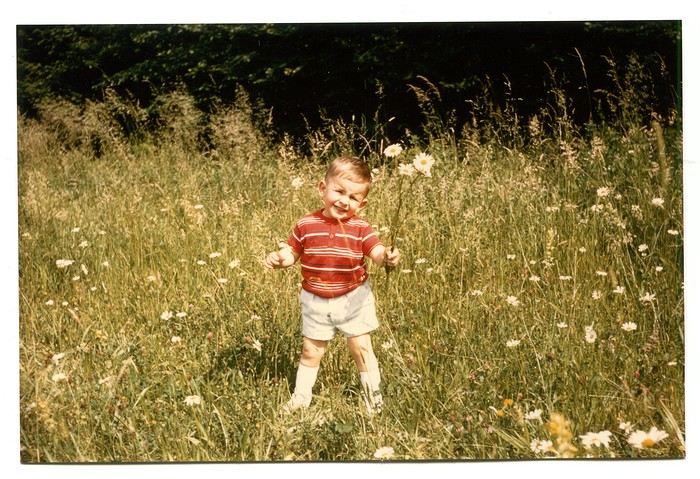
Those magical days always began with a gentle late-spring or midsummer morning. The interior of the white Peugeot 404, license plate 210 LZ 67, had already soaked up the sun before the engine purred to life, and the cabin gave off a scent I could still recognize today—a fragrance I found so pleasant. Back then, I had no idea it was just the smell of warm plastic from the car’s interior. Yes, the scents of the 404 on sunny days became my madeleine de Proust... What’s more, the whole family was unusually cheerful because those moments of relaxation and leisure were rare. Everyone worked, and no one had an easy job or was well paid. Without the *Trente Glorieuses*, these experiences might never have happened.
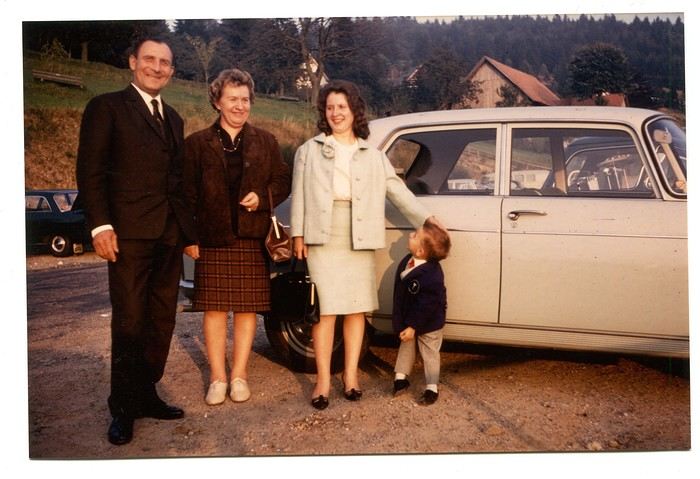
Once we crossed the canton’s borders, I felt like I was light-years away from my everyday surroundings, and every kilometer plunged me deeper into *terra incognita*. It was thrilling. Far from my so-called "medium-sized" town, wheat fields, cornfields, and cabbage patches stretched out, punctuated by tall poles connected by long wires and topped with vegetation—like giant clotheslines without laundry, where magical beanstalks might grow to touch the sky. Back then, I was still far from tasting their product, which was simply beer. At the time, there was still a significant local hop production. Fun fact: it wasn’t until 2002 that Anglo-Saxon scientists proved hops and cannabis belong to the same biological family.
After the fields, the landscape took another step up as it rolled past the little boy’s eyes, often glued to the windows. First came modest hills, then a succession of rolling slopes that soon formed an unbroken chain. Their 700 meters in altitude felt like Himalayan peaks to me—impressive, inert giants, a whole new world. Gazing at them, an intense emotion welled up somewhere between my stomach and lungs, nearly taking my breath away. What mysteries, what treasures did these heights hold? And then there were the cherries on top—the crowning touch that made the scene even more magical: proud, majestic castles perched on the summits like impassive sentinels. Monuments from the past, yet firmly rooted in the present on their rocky spurs. The little boy’s eyes sparkled—he’d been given a castle for Christmas, complete with battlements, towers, a drawbridge, and fully armed knights. He’d watched and lived *Ivanhoe* on the only French TV channel that existed back then.
Only once did my paternal grandfather join us on one of these trips. A tall, intelligent man with a face that could shift from stern to mischievous, clearly full of humor and charisma. Sadly, his relationship with alcohol had taken a toll on his life and, by extension, those of his loved ones. He had a strong personality—if his boss crossed the line, he wouldn’t hesitate to punch him, which meant he went through a lot of different jobs. Back then, you could quit one job and easily find another. It was quite something to see him in his final stages, hallucinating pink elephants and even drinking perfume when he had nothing else left. The last time I saw him, he’d slipped away from the doctors and nurses while hospitalized in pretty bad shape—at least, I assume his liver was the issue. We were sitting down for a family lunch when the door burst open, and there he stood in his pajamas, eyes twinkling with mischief, clearly pleased with the dramatic entrance. That theatrical moment didn’t spare us from burying him a few months later at the age of 71. One day, my mother told me the family doctor had quietly remarked that it was a shame—with his robust constitution, he could’ve lived to be a hundred. Yes, the family doctor—this was the man who’d come treat you any day, at almost any hour, just for a phone call. It really existed, it’s not a myth!
That day, his wife—my paternal grandmother—was also along for the ride. Everyone agreed that Jeannette was a good woman. She worked as a waitress at *Le Tigre*, the biggest brasserie in town, right in the center. Most customers preferred to be served by her, including local dignitaries and even the mayor. As a kid, I didn’t find her very fun, open, or warm—she seemed a bit stern. Back then, women in their fifties already had the face and build of grandmothers. Same went for men, don’t get me wrong. I had no idea about the struggles she faced because of her husband. I didn’t know that 30 years earlier, she’d had to flee Alsace while pregnant, under threat from Nazi fighter-bombers. I didn’t know she’d had several miscarriages, and that my father—her only surviving child, born prematurely in March 1940 at the other end of France—weighed less than a kilo at birth and was so tiny he could fit in a shoebox. Hard to imagine he’d grow into a strapping man nearly 1.80 meters tall, tipping the scales at 100 kilos. When you come back from summer camp in early August and ask why she didn’t pick you up with your parents, and they gently tell you she’s "in heaven," you don’t realize she passed away at 54 after suffering greatly from stomach cancer that had spread.
Back to that family outing, that enchanted parenthesis. I even remembered where we’d had lunch when I passed through Dambach-la-Ville decades later. One of those charming, flower-filled towns Alsace produces in abundance—and preserves so well. This one sits high on a hill, and I was a bit stunned on the parking lot because the view stretched far, revealing the Alsace plain below—its fields, villages, hills, and forests. The world seemed so vast and enticing that day, even though I was only glimpsing a tiny fraction of it.
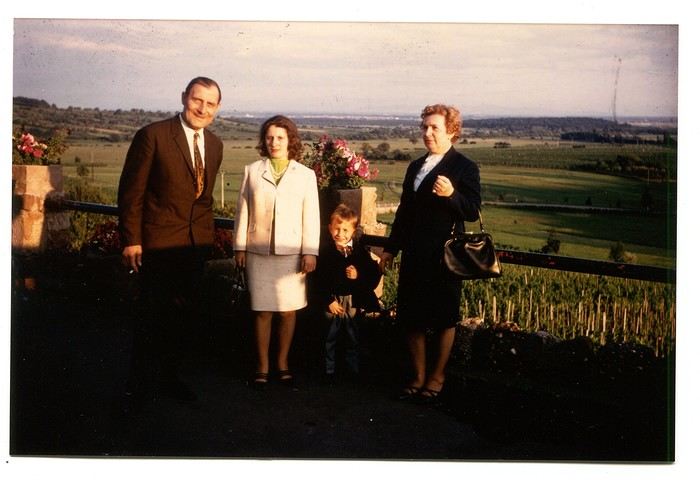
The region was already very touristy, but I wouldn’t notice the downsides until much later. That Sunday noon, I discovered a large restaurant filled with diners. I can still see the enormous piece of meat they served me, decorated with a little wooden skewer topped with a flag. I kept that one for a long time. Those were the golden days of rich, flowing, thick sauces—so flavorful—and the era of the world’s best fries, made on the spot with the best potatoes. To top it off, I was *exceptionally* allowed a small bottle of apple juice, Orangina, or—even better if possible—Sinalco. Yes, Sinalco—like Orangina, but better. A brand that must’ve disappeared in the 70s, but why, and what a shame! Since then, Orangina’s little bubbles have taken the brand to the other side of the planet—it’s now Japanese.
Year after year, I’d eagerly await that ecstatic moment when the most beautiful castle in Alsace, the Haut-Koenigsbourg, appeared in my field of vision. The perfect model, the archetype that blended into the landscape at the height of a child’s dreams. The trip home always felt like a reality check—less jarring than an alarm clock, but more diffuse and melancholic. From then on, there was only one wish: *When do we leave again?*
Those magical days always began with a gentle late-spring or midsummer morning. The interior of the white Peugeot 404, license plate 210 LZ 67, had already soaked up the sun before the engine purred to life, and the cabin gave off a scent I could still recognize today—a fragrance I found so pleasant. Back then, I had no idea it was just the smell of warm plastic from the car’s interior. Yes, the scents of the 404 on sunny days became my madeleine de Proust... What’s more, the whole family was unusually cheerful because those moments of relaxation and leisure were rare. Everyone worked, and no one had an easy job or was well paid. Without the *Trente Glorieuses*, these experiences might never have happened.
Once we crossed the canton’s borders, I felt like I was light-years away from my everyday surroundings, and every kilometer plunged me deeper into *terra incognita*. It was thrilling. Far from my so-called "medium-sized" town, wheat fields, cornfields, and cabbage patches stretched out, punctuated by tall poles connected by long wires and topped with vegetation—like giant clotheslines without laundry, where magical beanstalks might grow to touch the sky. Back then, I was still far from tasting their product, which was simply beer. At the time, there was still a significant local hop production. Fun fact: it wasn’t until 2002 that Anglo-Saxon scientists proved hops and cannabis belong to the same biological family.
After the fields, the landscape took another step up as it rolled past the little boy’s eyes, often glued to the windows. First came modest hills, then a succession of rolling slopes that soon formed an unbroken chain. Their 700 meters in altitude felt like Himalayan peaks to me—impressive, inert giants, a whole new world. Gazing at them, an intense emotion welled up somewhere between my stomach and lungs, nearly taking my breath away. What mysteries, what treasures did these heights hold? And then there were the cherries on top—the crowning touch that made the scene even more magical: proud, majestic castles perched on the summits like impassive sentinels. Monuments from the past, yet firmly rooted in the present on their rocky spurs. The little boy’s eyes sparkled—he’d been given a castle for Christmas, complete with battlements, towers, a drawbridge, and fully armed knights. He’d watched and lived *Ivanhoe* on the only French TV channel that existed back then.
Only once did my paternal grandfather join us on one of these trips. A tall, intelligent man with a face that could shift from stern to mischievous, clearly full of humor and charisma. Sadly, his relationship with alcohol had taken a toll on his life and, by extension, those of his loved ones. He had a strong personality—if his boss crossed the line, he wouldn’t hesitate to punch him, which meant he went through a lot of different jobs. Back then, you could quit one job and easily find another. It was quite something to see him in his final stages, hallucinating pink elephants and even drinking perfume when he had nothing else left. The last time I saw him, he’d slipped away from the doctors and nurses while hospitalized in pretty bad shape—at least, I assume his liver was the issue. We were sitting down for a family lunch when the door burst open, and there he stood in his pajamas, eyes twinkling with mischief, clearly pleased with the dramatic entrance. That theatrical moment didn’t spare us from burying him a few months later at the age of 71. One day, my mother told me the family doctor had quietly remarked that it was a shame—with his robust constitution, he could’ve lived to be a hundred. Yes, the family doctor—this was the man who’d come treat you any day, at almost any hour, just for a phone call. It really existed, it’s not a myth!
That day, his wife—my paternal grandmother—was also along for the ride. Everyone agreed that Jeannette was a good woman. She worked as a waitress at *Le Tigre*, the biggest brasserie in town, right in the center. Most customers preferred to be served by her, including local dignitaries and even the mayor. As a kid, I didn’t find her very fun, open, or warm—she seemed a bit stern. Back then, women in their fifties already had the face and build of grandmothers. Same went for men, don’t get me wrong. I had no idea about the struggles she faced because of her husband. I didn’t know that 30 years earlier, she’d had to flee Alsace while pregnant, under threat from Nazi fighter-bombers. I didn’t know she’d had several miscarriages, and that my father—her only surviving child, born prematurely in March 1940 at the other end of France—weighed less than a kilo at birth and was so tiny he could fit in a shoebox. Hard to imagine he’d grow into a strapping man nearly 1.80 meters tall, tipping the scales at 100 kilos. When you come back from summer camp in early August and ask why she didn’t pick you up with your parents, and they gently tell you she’s "in heaven," you don’t realize she passed away at 54 after suffering greatly from stomach cancer that had spread.
Back to that family outing, that enchanted parenthesis. I even remembered where we’d had lunch when I passed through Dambach-la-Ville decades later. One of those charming, flower-filled towns Alsace produces in abundance—and preserves so well. This one sits high on a hill, and I was a bit stunned on the parking lot because the view stretched far, revealing the Alsace plain below—its fields, villages, hills, and forests. The world seemed so vast and enticing that day, even though I was only glimpsing a tiny fraction of it.
The region was already very touristy, but I wouldn’t notice the downsides until much later. That Sunday noon, I discovered a large restaurant filled with diners. I can still see the enormous piece of meat they served me, decorated with a little wooden skewer topped with a flag. I kept that one for a long time. Those were the golden days of rich, flowing, thick sauces—so flavorful—and the era of the world’s best fries, made on the spot with the best potatoes. To top it off, I was *exceptionally* allowed a small bottle of apple juice, Orangina, or—even better if possible—Sinalco. Yes, Sinalco—like Orangina, but better. A brand that must’ve disappeared in the 70s, but why, and what a shame! Since then, Orangina’s little bubbles have taken the brand to the other side of the planet—it’s now Japanese.
Year after year, I’d eagerly await that ecstatic moment when the most beautiful castle in Alsace, the Haut-Koenigsbourg, appeared in my field of vision. The perfect model, the archetype that blended into the landscape at the height of a child’s dreams. The trip home always felt like a reality check—less jarring than an alarm clock, but more diffuse and melancholic. From then on, there was only one wish: *When do we leave again?*
Off on an adventure to Java (and a bit of Bali)
Hey there, community! Back this weekend, below is my travel journal from my adventure in Indonesia. Enjoy the read!!!
Day 1 - August 10, 2025 New life downloading for three weeks! And for that, Flo and I launched a public tender... A public tender? What’s that got to do with a travel journal???... Well, when you think about it, few destinations tick all the boxes for an August adventure: Meaning, finding a place that’s exotic in the middle of August, not too expensive, not too packed with tourists, warm but not *too* warm, with postcard-perfect landscapes, dreamy beaches, tasty cuisine with a hint of exoticism, friendly and welcoming locals, where you’re free to sleep under the stars among the mosquitos, take transport surrounded by chickens, and even eat from a pig trough if you feel like it—well, turns out it’s not that easy to find! I’d even say, given how thick the list of requirements is, there’s a big risk the tender could be declared unsuccessful for failing to meet just one criterion. Let’s just say the candidates better submit a rock-solid proposal!
After reviewing all the responses and presentations from the candidates, the obvious choice for us is... Indonesia! Except that trying to explore a country as vast as Indonesia and its 17,504 islands in less than five years is a bit like reading the summary of a Proust novel without taking the time to savor each of its 950 pages! Don’t worry, I won’t name them all here. Besides, do they even all have names? No! Only 7,870 have been named—their parents clearly ran out of ideas for the rest. Anyway, our society, which worships the "work more to earn more" mantra, unfortunately limits our adventure time. So we’ll only get to see a small part of Indonesia, and we’ll have to make a tough choice to head for the best of the best in this archipelago of over seventeen thousand islands. Each one has its own selling points: Sumatra, Sulawesi, Java, the Celebes, Bali, Borneo, Papua, Timor, the Moluccas... So many names that smell of adventure... Another tender, another list of requirements, another review of proposals... Drumroll... Splash splash... And the lucky winner is... Ta-da... Java, Bali’s big sister, where I’ve already been eight years ago... Java the programming language. The Java of Broadway. We’re gonna *do* the Java. Java the coffee. And yes, Java is also an island!
This island, four times smaller than France, is home to 136 million people, making it the most populated island in the world! Fun fact: Indonesia, with its 260 million inhabitants, is just shy of the podium for the world’s most populated countries, after the winning trio of India, China, and the United States. And it’s on this island of Java that you’ll find Jakarta, the (soon-to-be-former) capital and main airport of the country, where we’ll soon land after our nineteen-hour flight! Yep, nineteen hours! I mean, Indonesia in general—and Java in particular—is a *tad* farther than going on vacation to Grandma Yoyo’s! Not sure where it is? Easy. Grab a map. Plant your finger on the big island at the bottom right—aka Australia for those who struggle with geography—move it up two centimeters, and bam, welcome to Indonesia!
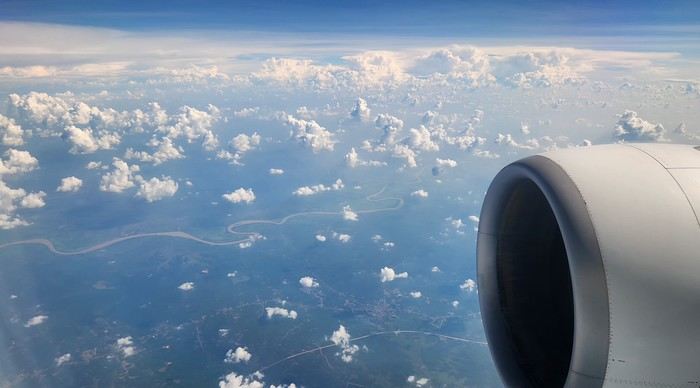
Nice transition, right? Because "Welcome to Indonesia" is exactly what the friendly flight attendant just said to me as we got off the plane! That’s it, our chakras are open, we’ve arrived at our (air)port. Time for rest, pool, cocktails, and a beach with our toes spread out... Wait, if you bought that, you clearly don’t know us yet! Since we still have energy to burn and need to adjust to the flight and time difference, we tackle the long administrative formalities to enter Indonesia, just to earn the right to hop in a 45-minute Grab taxi to the train station. The train station? What train station?... What do you usually do at a train station? Take a train, of course! Off we go for a three-hour train ride to Bandung, where we’ll officially start our adventure tomorrow after our first Indonesian night...
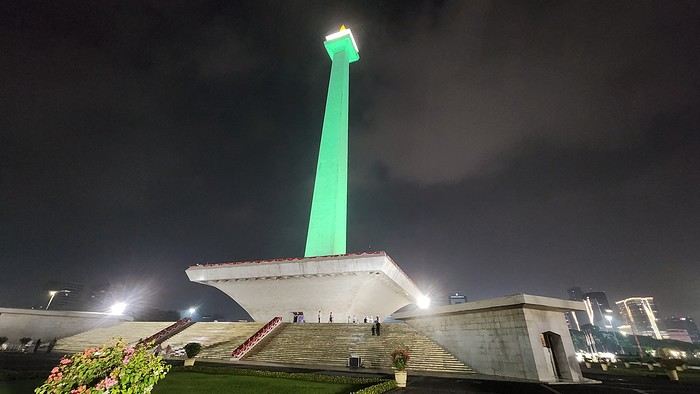
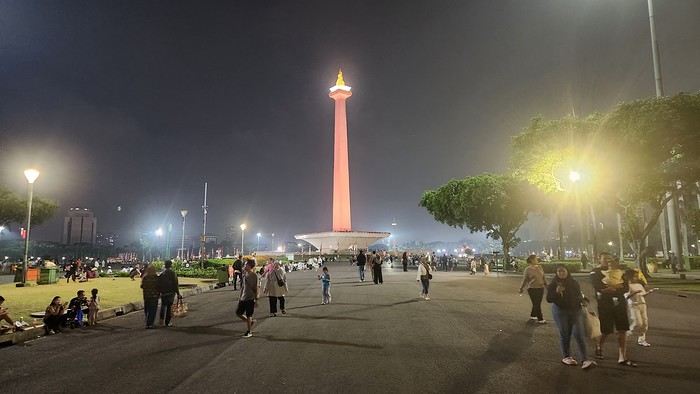
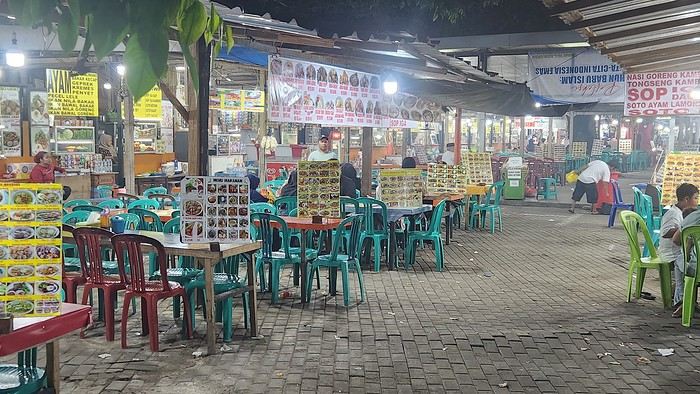
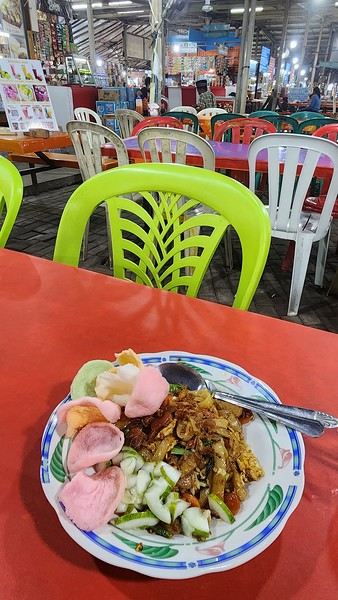
Unfortunately, we were a bit slow off the mark, which meant we missed the 6:25 PM train by two minutes. Oh well, we’ll have to wait until 11 PM. We take the opportunity to stretch our legs in Jakarta, soak up the atmosphere, and enjoy the delicious smells wafting from the *warungs*—those little typical street restaurants. A quick stop at the National Monument, a detour to a night market to devour our first *kwetiaw goreng* and *teh manis* for 60,000 rupiahs (that’s 3 € for two), and just like that, our penalty is lifted, and we’re allowed to hit the road again. Off to Bandung, where we arrive at 2 AM for... a *very* short night...
Day 1 - August 10, 2025 New life downloading for three weeks! And for that, Flo and I launched a public tender... A public tender? What’s that got to do with a travel journal???... Well, when you think about it, few destinations tick all the boxes for an August adventure: Meaning, finding a place that’s exotic in the middle of August, not too expensive, not too packed with tourists, warm but not *too* warm, with postcard-perfect landscapes, dreamy beaches, tasty cuisine with a hint of exoticism, friendly and welcoming locals, where you’re free to sleep under the stars among the mosquitos, take transport surrounded by chickens, and even eat from a pig trough if you feel like it—well, turns out it’s not that easy to find! I’d even say, given how thick the list of requirements is, there’s a big risk the tender could be declared unsuccessful for failing to meet just one criterion. Let’s just say the candidates better submit a rock-solid proposal!
After reviewing all the responses and presentations from the candidates, the obvious choice for us is... Indonesia! Except that trying to explore a country as vast as Indonesia and its 17,504 islands in less than five years is a bit like reading the summary of a Proust novel without taking the time to savor each of its 950 pages! Don’t worry, I won’t name them all here. Besides, do they even all have names? No! Only 7,870 have been named—their parents clearly ran out of ideas for the rest. Anyway, our society, which worships the "work more to earn more" mantra, unfortunately limits our adventure time. So we’ll only get to see a small part of Indonesia, and we’ll have to make a tough choice to head for the best of the best in this archipelago of over seventeen thousand islands. Each one has its own selling points: Sumatra, Sulawesi, Java, the Celebes, Bali, Borneo, Papua, Timor, the Moluccas... So many names that smell of adventure... Another tender, another list of requirements, another review of proposals... Drumroll... Splash splash... And the lucky winner is... Ta-da... Java, Bali’s big sister, where I’ve already been eight years ago... Java the programming language. The Java of Broadway. We’re gonna *do* the Java. Java the coffee. And yes, Java is also an island!
This island, four times smaller than France, is home to 136 million people, making it the most populated island in the world! Fun fact: Indonesia, with its 260 million inhabitants, is just shy of the podium for the world’s most populated countries, after the winning trio of India, China, and the United States. And it’s on this island of Java that you’ll find Jakarta, the (soon-to-be-former) capital and main airport of the country, where we’ll soon land after our nineteen-hour flight! Yep, nineteen hours! I mean, Indonesia in general—and Java in particular—is a *tad* farther than going on vacation to Grandma Yoyo’s! Not sure where it is? Easy. Grab a map. Plant your finger on the big island at the bottom right—aka Australia for those who struggle with geography—move it up two centimeters, and bam, welcome to Indonesia!
Nice transition, right? Because "Welcome to Indonesia" is exactly what the friendly flight attendant just said to me as we got off the plane! That’s it, our chakras are open, we’ve arrived at our (air)port. Time for rest, pool, cocktails, and a beach with our toes spread out... Wait, if you bought that, you clearly don’t know us yet! Since we still have energy to burn and need to adjust to the flight and time difference, we tackle the long administrative formalities to enter Indonesia, just to earn the right to hop in a 45-minute Grab taxi to the train station. The train station? What train station?... What do you usually do at a train station? Take a train, of course! Off we go for a three-hour train ride to Bandung, where we’ll officially start our adventure tomorrow after our first Indonesian night...
Unfortunately, we were a bit slow off the mark, which meant we missed the 6:25 PM train by two minutes. Oh well, we’ll have to wait until 11 PM. We take the opportunity to stretch our legs in Jakarta, soak up the atmosphere, and enjoy the delicious smells wafting from the *warungs*—those little typical street restaurants. A quick stop at the National Monument, a detour to a night market to devour our first *kwetiaw goreng* and *teh manis* for 60,000 rupiahs (that’s 3 € for two), and just like that, our penalty is lifted, and we’re allowed to hit the road again. Off to Bandung, where we arrive at 2 AM for... a *very* short night...
A "relaxed" 16-day tour of Corsica in autumn 2024
CORSICA From September 24, 2024 to October 9, 2024
Thank you, thank you, thank you for reactivating my favorite forum, which has given me so many ideas for my trips since... 2008—it’s been ages, as they say!
So, to celebrate its return, I’m sharing this little travel journal from our latest road trip, not too long ago, since it was Corsica in the autumn.
Autumn is the ideal season to visit Corsica: fewer tourists, perfect temperatures around 25°C, and, most importantly, less stress on the roads. You can feel it everywhere. Servers and shopkeepers are more relaxed and have time to chat (yes, Corsicans do talk... but not all of them!)
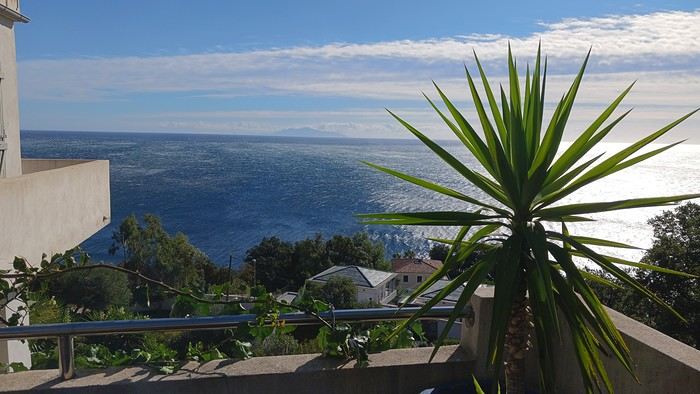
09/24 Arrival in Erbalunga Whether you're from northern France or Belgium, like us, the easiest way to reach the Isle of Beauty is by flying from Lille-Lesquin Airport. Volotea offers two destinations: Bastia and Ajaccio. Be careful, though—while the ticket prices are attractive, the airline makes up for it with baggage fees. A 25kg suitcase for 212 €—that really drives up the cost of transportation! For us, it’ll be Bastia. After this short flight and an arrival that lets you clearly see the east coast of Cap Corse, we’re welcomed by our friend Jean-Claude, who’s kindly hosting us for a few days. We met this Corsican and his wife during our four-year stay in French Guiana, and I have to say, he completely changed my opinion of Corsicans and even made me want to visit his island. The house, clinging to the rock above the sea, is stunning and offers a breathtaking view of the island of Elba. I’d always heard of Elba but must admit I wouldn’t have known where to place it before. We’ll stay here for five nights, long enough to explore the north of the island.
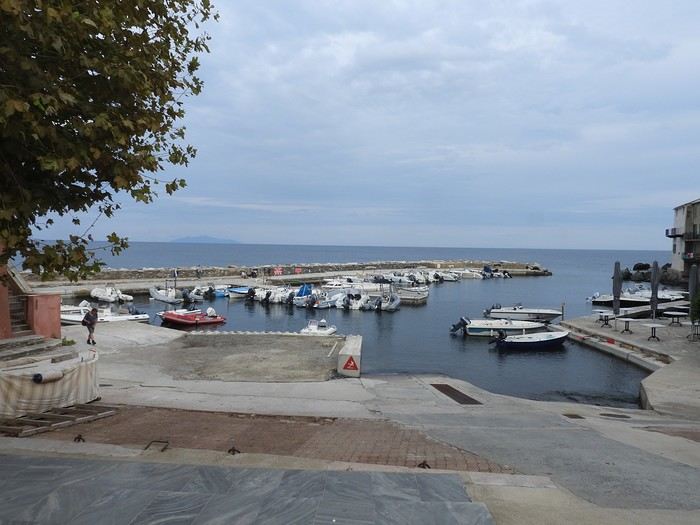
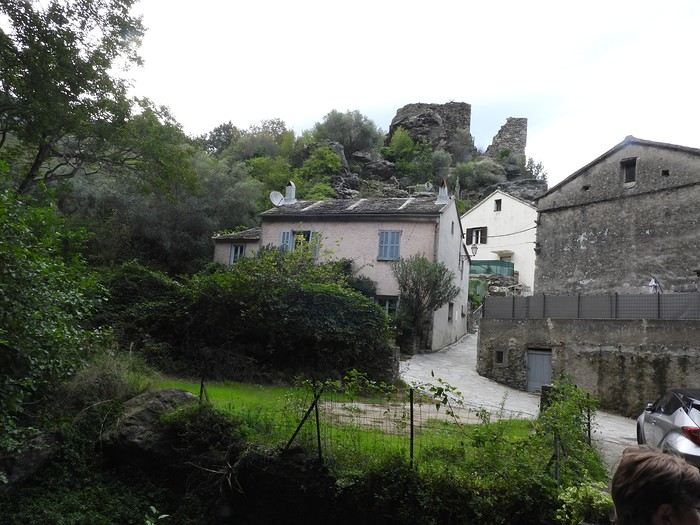
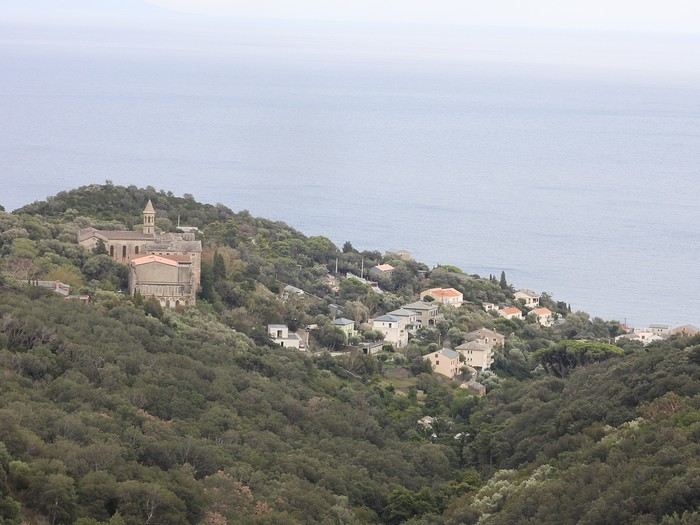
Since we’ve just arrived, Jean-Claude wants to show us his village, ERLALUNGA, a quiet little port, and the small village of CASTELLO above it, where he spent a lot of time in his childhood...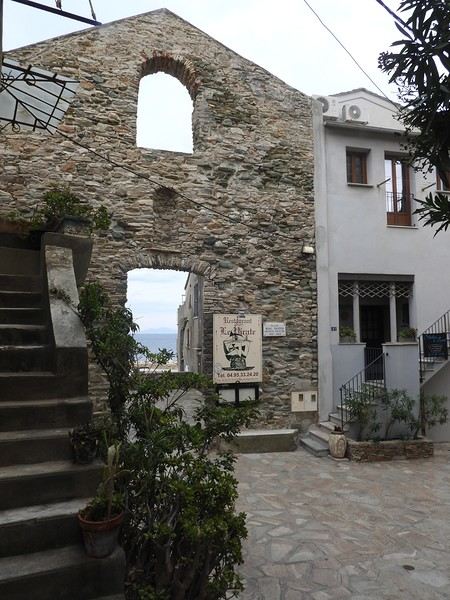

09/24 Arrival in Erbalunga Whether you're from northern France or Belgium, like us, the easiest way to reach the Isle of Beauty is by flying from Lille-Lesquin Airport. Volotea offers two destinations: Bastia and Ajaccio. Be careful, though—while the ticket prices are attractive, the airline makes up for it with baggage fees. A 25kg suitcase for 212 €—that really drives up the cost of transportation! For us, it’ll be Bastia. After this short flight and an arrival that lets you clearly see the east coast of Cap Corse, we’re welcomed by our friend Jean-Claude, who’s kindly hosting us for a few days. We met this Corsican and his wife during our four-year stay in French Guiana, and I have to say, he completely changed my opinion of Corsicans and even made me want to visit his island. The house, clinging to the rock above the sea, is stunning and offers a breathtaking view of the island of Elba. I’d always heard of Elba but must admit I wouldn’t have known where to place it before. We’ll stay here for five nights, long enough to explore the north of the island.
Since we’ve just arrived, Jean-Claude wants to show us his village, ERLALUNGA, a quiet little port, and the small village of CASTELLO above it, where he spent a lot of time in his childhood...
To the Top West End
In this time of general travel-journal scarcity, I’m stepping up to tell you about a far-too-short getaway to the Top West End, a local term for the very northern part of Western Australia, right on the border ( ;) ) with the Northern Territory.
As usual, I didn’t manage to keep it short, but this time I’ve got photos to go with it!
August 2020. Since the opportunities to explore the world are extremely limited right now, all we (R&X) can do is explore our own island! Well, just a part of it, because with the state borders still closed, we’re stuck in Western Australia (WA).
Luckily, we’re pretty fortunate because this state is huge: over 2.5 million km² (that’s more than four times the size of France or 1.5 times Quebec). What’s more, stretching over 20 degrees of latitude between the Antarctic Ocean and the Timor Sea, you’ll find climates ranging from Mediterranean to arid to tropical. That’s actually why we decided to head as far north as possible. Sick of the endless rainy winter in Perth, bring on the heat of the Kimberley... way up Nooorth!
Friday. At the airport, the main terminal was closed (not enough flights), so we ended up in the annex (where flights to the various mines usually depart from). There was no crowd at the gate, and in this huge, single departure lounge, empty seats were plentiful. Only three flights were listed on the screens for the rest of the morning: the first to Coondewanna (?), the second to Darwin, and ours to Kununurra (code KNX).
A cool breeze swept through the half-open corridors along the runways. At the top of the walkway leading to the Fokker 100 (the Airbuses and Boeings are now parked!), a flight attendant greeted us with a basket full of sanitary masks. We were actually the only masked passengers (the staff weren’t wearing them either). With zero Covid-19 cases in WA at the time, the only rule was to maintain social distancing—something pretty hard to do on a full plane!
It was also my first time wearing a mask—it felt weird, pretty uncomfortable, and after a while, painful behind the ears. I really feel for those who have to wear one all day, every day. The flight lasted three long hours, but luckily, I had a good book. From the window, I watched an endless expanse of salt lakes in all shapes and sizes—round, elongated, gray, white, sometimes blue and green—and an infinity of winding, capricious meanders, along with long straight lines that led nowhere. The last half-hour got more interesting as rocky, swollen formations and long, sloping plateaus appeared. Against the vast ochre landscape, green patches became more frequent.
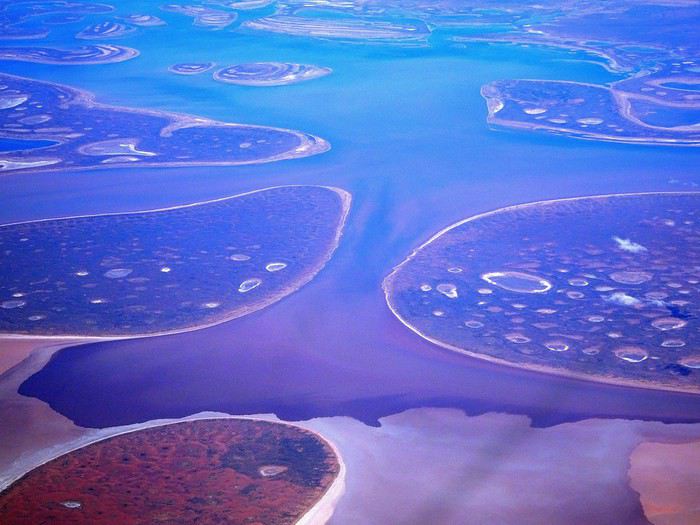
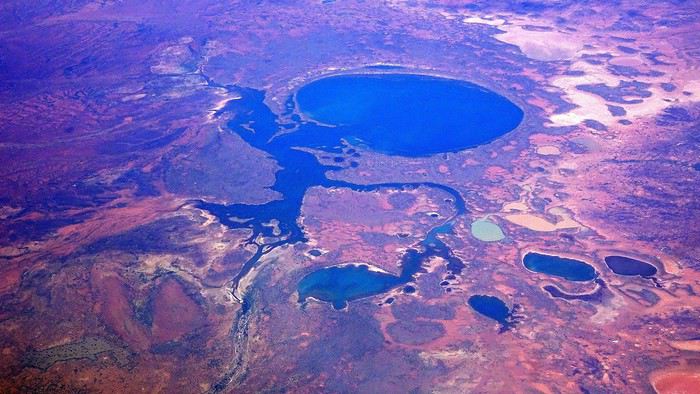
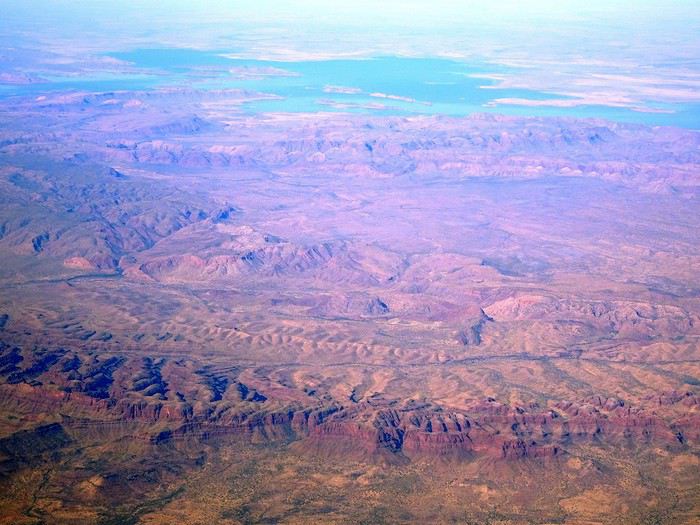
Just before landing, rows of green fields briefly appeared, along with an surprisingly wide river—but we were already rolling down the tarmac. A few hangars, a myriad of small, stationary planes, and a tiny terminal topped with a sign: “Welcome to Kununurra.”
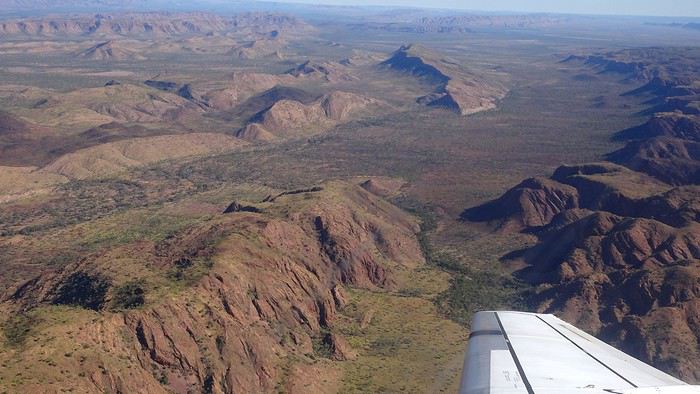
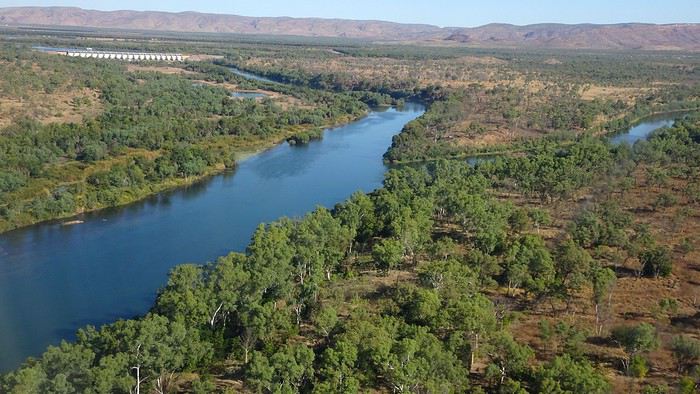
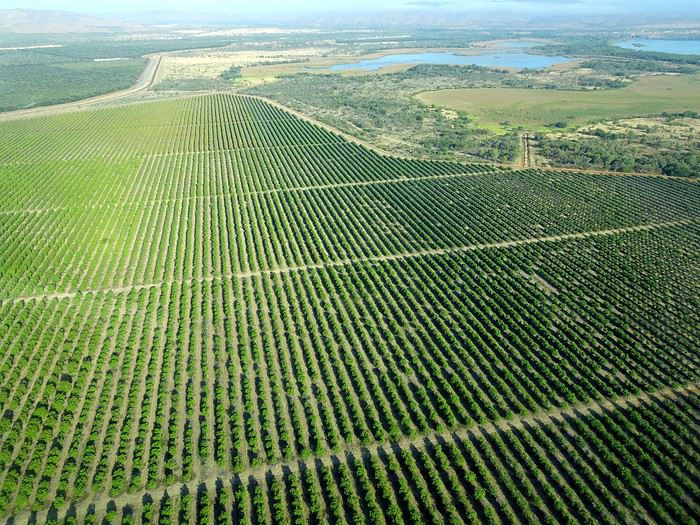
We wanted heat, and here it was—34°C the moment we stepped off the plane! We felt alive again and totally ridiculous in our jeans and sweaters. We quickly grabbed our suitcase and picked up the 4x4 we’d rented—more out of necessity, since only that type of vehicle can access the national parks we planned to visit.
Just four kilometers separated us from Kununurra, a town of 5,000 people founded in 1961 during the construction of the Lake Argyle Dam and the development of the Ord River Irrigation Area Scheme (more on that later). On the horizon, mountain ranges (a bit of an exaggeration, since we know Mt. Meharry, WA’s highest ‘mountain,’ doesn’t even reach 1,250 meters!) and closer to the road, a few irrigation canals cutting through stretches of bush, then a huge park overlooking a small lake lined with reeds.
A row of baobabs (yes, there are baobabs in Australia too!), a series of motels with immaculate lawns, a gas station, and there’s the main street leading to the town center—that is, the parking lots of the two supermarkets, the bottleshop, the pub, the Town Hall, the municipal pool, and the Tourist Office (already closed!), and at the next roundabout, another park, the Presbyterian church, and a few other shops. In short, two or three green blocks that you can explore in no time.
One road leads to the small industrial area and one of the town’s three or four campgrounds, while another heads toward the residential neighborhoods, which look just like the typical suburbs you find in any Australian city—except with tropical vegetation. We stocked up at Coles, an identical copy of the one near our place, and—surprise—the prices were practically the same.
We checked into one of the motels. The receptionist listed the town’s three or four restaurants, insisting that it’s always better to book a table. She recommended the Pump House, a bit outside town on the lake’s edge. “Best spot to watch the sunset, but hurry up.” she told us. It was only 5:00 PM!
When we got there half an hour later, the place was packed, and the sun had already disappeared behind a row of trees! Sure enough, we’d see a few days later that the sunset can be a stunning spectacle—if you wait a bit for the sky (especially if it’s cloudy) to blaze and reflect in the lake’s calm waters. A little disappointed, we headed back into town, where we easily found the other lively spot in town: the pub (nothing like an old English pub). Above the long L-shaped bar, several giant screens (thankfully muted) were broadcasting live footy, rugby league, etc. In one corner, players circled the pool table, while in another, customers were digging into plates of the day’s special. Instead of rooms, there were various patios where groups of friends and coworkers (easily recognizable by the fluoro vests they were still wearing) were gathered. We found a table under a mango tree—unfortunately, a little too close to the guitarist strumming his entire Country Music repertoire, complete with Keith Urban-style tremolos. Guaranteed culture shock!
Since it’s the custom here, we called the Country Club to book a table before the kitchen closed! The CC is the town’s—and even the region’s—fancy spot. Dark decor, modern furniture, dim lighting, and the air conditioning blasting. The twenty or so customers had taken refuge on the vast terrace, lit by torches. The view of the tall eucalyptus trees, illuminated by spotlights shifting from red to blue, was breathtaking.
The menu was minimal, but the grilled salmon was excellent, and the Pavlova (the meringue dessert Kiwis and Aussies have been arguing over since 1906) with melon and watermelon was absolutely divine.
It wasn’t even 9:00 PM, and we were already in bed. Had we already adopted the Top West End’s chicken schedule?!
To be continued... Journal dedicated to Attila
As usual, I didn’t manage to keep it short, but this time I’ve got photos to go with it!
August 2020. Since the opportunities to explore the world are extremely limited right now, all we (R&X) can do is explore our own island! Well, just a part of it, because with the state borders still closed, we’re stuck in Western Australia (WA).
Luckily, we’re pretty fortunate because this state is huge: over 2.5 million km² (that’s more than four times the size of France or 1.5 times Quebec). What’s more, stretching over 20 degrees of latitude between the Antarctic Ocean and the Timor Sea, you’ll find climates ranging from Mediterranean to arid to tropical. That’s actually why we decided to head as far north as possible. Sick of the endless rainy winter in Perth, bring on the heat of the Kimberley... way up Nooorth!
Friday. At the airport, the main terminal was closed (not enough flights), so we ended up in the annex (where flights to the various mines usually depart from). There was no crowd at the gate, and in this huge, single departure lounge, empty seats were plentiful. Only three flights were listed on the screens for the rest of the morning: the first to Coondewanna (?), the second to Darwin, and ours to Kununurra (code KNX).
A cool breeze swept through the half-open corridors along the runways. At the top of the walkway leading to the Fokker 100 (the Airbuses and Boeings are now parked!), a flight attendant greeted us with a basket full of sanitary masks. We were actually the only masked passengers (the staff weren’t wearing them either). With zero Covid-19 cases in WA at the time, the only rule was to maintain social distancing—something pretty hard to do on a full plane!
It was also my first time wearing a mask—it felt weird, pretty uncomfortable, and after a while, painful behind the ears. I really feel for those who have to wear one all day, every day. The flight lasted three long hours, but luckily, I had a good book. From the window, I watched an endless expanse of salt lakes in all shapes and sizes—round, elongated, gray, white, sometimes blue and green—and an infinity of winding, capricious meanders, along with long straight lines that led nowhere. The last half-hour got more interesting as rocky, swollen formations and long, sloping plateaus appeared. Against the vast ochre landscape, green patches became more frequent.
Just before landing, rows of green fields briefly appeared, along with an surprisingly wide river—but we were already rolling down the tarmac. A few hangars, a myriad of small, stationary planes, and a tiny terminal topped with a sign: “Welcome to Kununurra.”
We wanted heat, and here it was—34°C the moment we stepped off the plane! We felt alive again and totally ridiculous in our jeans and sweaters. We quickly grabbed our suitcase and picked up the 4x4 we’d rented—more out of necessity, since only that type of vehicle can access the national parks we planned to visit.
Just four kilometers separated us from Kununurra, a town of 5,000 people founded in 1961 during the construction of the Lake Argyle Dam and the development of the Ord River Irrigation Area Scheme (more on that later). On the horizon, mountain ranges (a bit of an exaggeration, since we know Mt. Meharry, WA’s highest ‘mountain,’ doesn’t even reach 1,250 meters!) and closer to the road, a few irrigation canals cutting through stretches of bush, then a huge park overlooking a small lake lined with reeds.
A row of baobabs (yes, there are baobabs in Australia too!), a series of motels with immaculate lawns, a gas station, and there’s the main street leading to the town center—that is, the parking lots of the two supermarkets, the bottleshop, the pub, the Town Hall, the municipal pool, and the Tourist Office (already closed!), and at the next roundabout, another park, the Presbyterian church, and a few other shops. In short, two or three green blocks that you can explore in no time.
One road leads to the small industrial area and one of the town’s three or four campgrounds, while another heads toward the residential neighborhoods, which look just like the typical suburbs you find in any Australian city—except with tropical vegetation. We stocked up at Coles, an identical copy of the one near our place, and—surprise—the prices were practically the same.
We checked into one of the motels. The receptionist listed the town’s three or four restaurants, insisting that it’s always better to book a table. She recommended the Pump House, a bit outside town on the lake’s edge. “Best spot to watch the sunset, but hurry up.” she told us. It was only 5:00 PM!
When we got there half an hour later, the place was packed, and the sun had already disappeared behind a row of trees! Sure enough, we’d see a few days later that the sunset can be a stunning spectacle—if you wait a bit for the sky (especially if it’s cloudy) to blaze and reflect in the lake’s calm waters. A little disappointed, we headed back into town, where we easily found the other lively spot in town: the pub (nothing like an old English pub). Above the long L-shaped bar, several giant screens (thankfully muted) were broadcasting live footy, rugby league, etc. In one corner, players circled the pool table, while in another, customers were digging into plates of the day’s special. Instead of rooms, there were various patios where groups of friends and coworkers (easily recognizable by the fluoro vests they were still wearing) were gathered. We found a table under a mango tree—unfortunately, a little too close to the guitarist strumming his entire Country Music repertoire, complete with Keith Urban-style tremolos. Guaranteed culture shock!
Since it’s the custom here, we called the Country Club to book a table before the kitchen closed! The CC is the town’s—and even the region’s—fancy spot. Dark decor, modern furniture, dim lighting, and the air conditioning blasting. The twenty or so customers had taken refuge on the vast terrace, lit by torches. The view of the tall eucalyptus trees, illuminated by spotlights shifting from red to blue, was breathtaking.
The menu was minimal, but the grilled salmon was excellent, and the Pavlova (the meringue dessert Kiwis and Aussies have been arguing over since 1906) with melon and watermelon was absolutely divine.
It wasn’t even 9:00 PM, and we were already in bed. Had we already adopted the Top West End’s chicken schedule?!
To be continued... Journal dedicated to Attila