Results for "Italie+souvenir+artisanat"
About 33,477 results.
More options
Many results are in French, the community’s main language. English translations are added over time.
Search results
l'Albanie, ça vaut le coup?
Salut,
On prévoit faire un petit détour par l'Albanie avant d'aller en Grèce cet été. Est-ce que ça vaut le coup?
Ce qui nous intéresse c'est la montagne et la mer.
Pierre
On prévoit faire un petit détour par l'Albanie avant d'aller en Grèce cet été. Est-ce que ça vaut le coup?
Ce qui nous intéresse c'est la montagne et la mer.
Pierre
Proust en voyage...
Bonjour,
Vous connaissez sûrement le questionnaire de Proust, mais appliqué aux voyages en changeant quelques questions, ça pourrait le faire, non…Pour mieux se connaître…et vous connaître aussi vu que je suis nouveau sur ce site. (C’est un p’tit jeu sans prétention, et ça mange pas de pain)…(Toutes les questions s’entendent en voyage……)
1/ Les moments de bonheur les plus parfaits. 2/ Votre odeur préférée. 3/ Votre son préféré. 4/ Votre souvenir en avion le plus grisant.. 5/ Le paysage le plus renversant. 6/ Votre plage préférée, et votre montagne… 7/ Le ou les visages qui vous ont le + marqué. 8/ La rencontre la + effrayante. 9/ Votre défaut principal en voyage. 10/ Vos principales peurs 11/ Votre livre de voyage préféré…et votre road movie… 12/ Votre boisson préférée, et votre plaisir gastronomique favori. 13/ Votre souvenir musical le plus émouvant… 14/ Votre ou vos voyages rêvés que vous ne ferez jamais. 15/ et enfin…le premier réflexe quand vous rentrez…. Il pourrait y avoir tant d’autres questions, et chacun peut en rajouter ! ! !
1/ Les moments de bonheur les plus parfaits. 2/ Votre odeur préférée. 3/ Votre son préféré. 4/ Votre souvenir en avion le plus grisant.. 5/ Le paysage le plus renversant. 6/ Votre plage préférée, et votre montagne… 7/ Le ou les visages qui vous ont le + marqué. 8/ La rencontre la + effrayante. 9/ Votre défaut principal en voyage. 10/ Vos principales peurs 11/ Votre livre de voyage préféré…et votre road movie… 12/ Votre boisson préférée, et votre plaisir gastronomique favori. 13/ Votre souvenir musical le plus émouvant… 14/ Votre ou vos voyages rêvés que vous ne ferez jamais. 15/ et enfin…le premier réflexe quand vous rentrez…. Il pourrait y avoir tant d’autres questions, et chacun peut en rajouter ! ! !
Vos plus beaux paysages
Devant le succès de la rubrique "vos plus beaux portraits", et la qualité ainsi que la variété des photos publiées, je me propose d'ouvrir cette rubrique. Je commence avec cette modeste contribution :
Beub
Beub
Fous de l'Inde
avez vous lu ce bouquin de Régis Airault à propos des délires d'occidentaux en inde?
"L'INDE rendrait elle fou? un psychiatre, Régis Airault, a constaté que, de BOMBAY a GOA, de DELHI à PONDICHERY, un véritable syndrome indien touche les occidentaux- pour la plupart des adolescents et des jeunes adultes- qui se rendent dans ce pays.là plus qu'ailleurs, et de manière plus spectaculaire, il semble que notre identité vacille. des personnes jusque là indemnes de tout trouble psychiatrique éprouvent soudain, sans prise de drogue, un sentiment d'étrangeté et perdent contact avec la réalité.plus curieux:ces troubles sont presque tous sans lendemain.revenu chez lui, le voyageur en garde même un bon souvenir et, quelque temps plus tard, il n'a souvent plus qu'une idée en tête:retourner en inde.... qu'est ce donc qui nous attire en inde? pourquoi sommes nous si fragiles là-bas? que nous apprend sur nous mêmes cette expérience qui transforme notre vision du monde?"
ceux qui ont lu ce livre, j'aimerai avoir vos avis sur ce bouquin et comment vous avez ressentis les témoignages de ces délires......
merci
"L'INDE rendrait elle fou? un psychiatre, Régis Airault, a constaté que, de BOMBAY a GOA, de DELHI à PONDICHERY, un véritable syndrome indien touche les occidentaux- pour la plupart des adolescents et des jeunes adultes- qui se rendent dans ce pays.là plus qu'ailleurs, et de manière plus spectaculaire, il semble que notre identité vacille. des personnes jusque là indemnes de tout trouble psychiatrique éprouvent soudain, sans prise de drogue, un sentiment d'étrangeté et perdent contact avec la réalité.plus curieux:ces troubles sont presque tous sans lendemain.revenu chez lui, le voyageur en garde même un bon souvenir et, quelque temps plus tard, il n'a souvent plus qu'une idée en tête:retourner en inde.... qu'est ce donc qui nous attire en inde? pourquoi sommes nous si fragiles là-bas? que nous apprend sur nous mêmes cette expérience qui transforme notre vision du monde?"
ceux qui ont lu ce livre, j'aimerai avoir vos avis sur ce bouquin et comment vous avez ressentis les témoignages de ces délires......
merci
Où aller, Turquie ou Tunisie?
Je souhaite partir une semaine en janvier (du 12 au 18 janvier 2004) avec ma fille de 19 ans et vu que la date approche, j'ai besoin d'aide pour m'orienter.
Je n'ai pas fait beaucoup de voyages et je compte m'y mettre dès l'année prochaine.
Pour commencer, je préfère ne partir qu'une semaine, pour pas trop cher, mais surtout en voyage "encadré". Mon objectif pour l'instant est détente-repos dans un endroit agréable et plutôt confortable. Je compte mettre le cap sur la découverte (des gens, des modes de vie, des cultures et coutumes...) un peu plus tard.
J'ai pensé à la Tunisie, la Turquie n'ayant pas un très gros budget. Mais ces destinations ne sont-elles pas à risques ?
Alors si vous pouvez m'apporter des indications de toutes sortes et des conseils ou même des propositions pour d'autres destinations, pourquoi pas.
L'idée de passer cette semaine de janvier chez l'habitant, dans n'importe quel pays, même dans le Nord, me plairai énormément également.
Merci beaucoup pour votre aide
Hébergement au Portugal
Bonjour,
Ayant effectué le tour du Portugal l'année derniére, j'ai une adresse à communiquer à COIMBRA. C'est tres sympa, simple, pas cher du tout et très propre. Les 2 personnes qui ont cette pension sont tout le temps en train de laver !! Elles nous ont prete leur frigo et bien d'autres services!! Souriantes et acceuillantes.Elles parlent plusieurs langues.
Pensào Lorvanense Rua da Sota, 27 3000-392 Coimbra 239 823 481
A part ça evitez l'auberge de jeunesse de Lisbonne en aout qui n'est pas tres propre et bondé ! ou alors juste pour une nuit. La forêt de Busaco est tres belle mais il vaut mieux prendre une journée entiere pour la faire en entier et prevoir une carte et un casse croute !!! On peut y aller de Coimbra en bus depart tôt le matin retour tard le soir : c 'est une tres belle excursion.
Nous avons adoré Lisbonne et Porto. Il y a une fête de la biere à Porto en aôut avec une nourriture pas cher et excellente ! C'est aussi tres bien pour avoir un vrai contact avec la population.
Mention speciale pour l 'auberge de jeunesse de Porto qui est tres classe .Elle ressemble beaucoup plus à un hôtel qu'à une auberge!!! L'accueil y est aussi tres tres chaleureux. Leiria est une ville tres bien pour rayonner, flanner, se reposeret se sentir au portugal . La encore l'auberge de jeunesse est extra !
Pour la locaton de voiture :Leiria possede un loueur de voiture qui ne nous a meme pas demander de caution avant de nous louer une clio neuve climatisée à un prix record!!
Une derniere chose : la mer de la côte est glaciale, plus froide qu'en Bretagne. ...mais les plages sont magnifiques et desertes à certains endroits.( vous pouvez prendre des combi) Nous avons louer une chambre chez l'habitant dans un village de pecheur.Souvenir inoubliable! Bonnes vacances à tous !
Ayant effectué le tour du Portugal l'année derniére, j'ai une adresse à communiquer à COIMBRA. C'est tres sympa, simple, pas cher du tout et très propre. Les 2 personnes qui ont cette pension sont tout le temps en train de laver !! Elles nous ont prete leur frigo et bien d'autres services!! Souriantes et acceuillantes.Elles parlent plusieurs langues.
Pensào Lorvanense Rua da Sota, 27 3000-392 Coimbra 239 823 481
A part ça evitez l'auberge de jeunesse de Lisbonne en aout qui n'est pas tres propre et bondé ! ou alors juste pour une nuit. La forêt de Busaco est tres belle mais il vaut mieux prendre une journée entiere pour la faire en entier et prevoir une carte et un casse croute !!! On peut y aller de Coimbra en bus depart tôt le matin retour tard le soir : c 'est une tres belle excursion.
Nous avons adoré Lisbonne et Porto. Il y a une fête de la biere à Porto en aôut avec une nourriture pas cher et excellente ! C'est aussi tres bien pour avoir un vrai contact avec la population.
Mention speciale pour l 'auberge de jeunesse de Porto qui est tres classe .Elle ressemble beaucoup plus à un hôtel qu'à une auberge!!! L'accueil y est aussi tres tres chaleureux. Leiria est une ville tres bien pour rayonner, flanner, se reposeret se sentir au portugal . La encore l'auberge de jeunesse est extra !
Pour la locaton de voiture :Leiria possede un loueur de voiture qui ne nous a meme pas demander de caution avant de nous louer une clio neuve climatisée à un prix record!!
Une derniere chose : la mer de la côte est glaciale, plus froide qu'en Bretagne. ...mais les plages sont magnifiques et desertes à certains endroits.( vous pouvez prendre des combi) Nous avons louer une chambre chez l'habitant dans un village de pecheur.Souvenir inoubliable! Bonnes vacances à tous !
June 2026 Photo Contest Theme: Such a Beautiful Landscape
Hello,
It might not be very original, but I see it hasn’t been suggested—or at least not for a very long time. I’d like to invite you to discover the beauty of the great outdoors through landscape photos. Whether they’re desert, sea, countryside, or mountain scenes—with or without other elements (people, buildings, animals, etc.)—they should make us want to dive right in without hesitation.
To participate: Photo submissions until Wednesday, June 24 at 11:59 PM You can post up to 3 photos, numbered and shared in separate messages, along with a short description of the place and the story behind it.
To vote: from Thursday, June 25 at 12:01 AM to Monday, June 29 at 11:59 PM After the deadline, it’s too late!
Please include the photo number, username, and the points awarded: Photo #1 = 3 pts Photo #2 = 2 pts Photo #3 = 1 pt
All VF members can vote (even those who didn’t submit photos). In case of a tie for first place, the winning photo will be the one with the most first-place votes, then second-place votes! The lucky winner will get to organize July 2026’s photo contest.
For discussions about the theme, it’s here: Discussion thread for June 2026’s theme: Such a Beautiful Landscape
Good luck to everyone!
Philippe
Chumphon, Thailand: Doi Tapang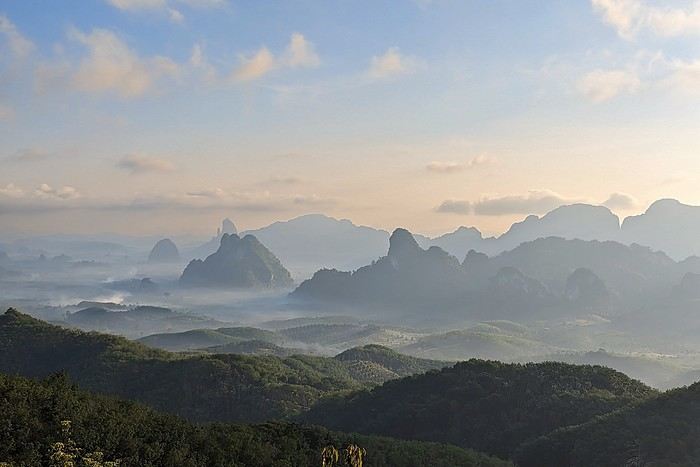
It might not be very original, but I see it hasn’t been suggested—or at least not for a very long time. I’d like to invite you to discover the beauty of the great outdoors through landscape photos. Whether they’re desert, sea, countryside, or mountain scenes—with or without other elements (people, buildings, animals, etc.)—they should make us want to dive right in without hesitation.
To participate: Photo submissions until Wednesday, June 24 at 11:59 PM You can post up to 3 photos, numbered and shared in separate messages, along with a short description of the place and the story behind it.
To vote: from Thursday, June 25 at 12:01 AM to Monday, June 29 at 11:59 PM After the deadline, it’s too late!
Please include the photo number, username, and the points awarded: Photo #1 = 3 pts Photo #2 = 2 pts Photo #3 = 1 pt
All VF members can vote (even those who didn’t submit photos). In case of a tie for first place, the winning photo will be the one with the most first-place votes, then second-place votes! The lucky winner will get to organize July 2026’s photo contest.
For discussions about the theme, it’s here: Discussion thread for June 2026’s theme: Such a Beautiful Landscape
Good luck to everyone!
Philippe
Chumphon, Thailand: Doi Tapang
Staircases. Photo contest theme for May 2026.
Hello
This month’s photo contest theme for May 2026 is "Staircases"
Plural or singular? Does it really matter as long as you’re told you’ve gone up or down them well?
Anyway, it’s not that complicated, even though I’m sure some will manage to overcomplicate it—after all, why keep things simple when making them complicated is so much more fun (as an Indian proverb goes).
To participate: Submit your photos until Monday, May 25 at 11:59 PM You can post up to 3 photos, numbered and shared in separate messages, along with a short description of the location and the story behind it.
To vote: From Tuesday, May 26 at 12:01 AM until Saturday, May 30 at 11:59 PM After the deadline, it’s too late.
Please include the photo number, username, and the points awarded: Photo #1 = 3 pts Photo #2 = 2 pts Photo #3 = 1 pt
All VF members can vote (even those who didn’t submit photos). In case of a tie for first place, the winning photo will be the one with the most first-place votes, then second-place votes! The lucky winner will get to organize June 2026’s photo contest.
For discussions about the theme, click here: Discussion thread for May 2026’s theme: Staircases
This month’s photo contest theme for May 2026 is "Staircases"
Plural or singular? Does it really matter as long as you’re told you’ve gone up or down them well?
Anyway, it’s not that complicated, even though I’m sure some will manage to overcomplicate it—after all, why keep things simple when making them complicated is so much more fun (as an Indian proverb goes).
To participate: Submit your photos until Monday, May 25 at 11:59 PM You can post up to 3 photos, numbered and shared in separate messages, along with a short description of the location and the story behind it.
To vote: From Tuesday, May 26 at 12:01 AM until Saturday, May 30 at 11:59 PM After the deadline, it’s too late.
Please include the photo number, username, and the points awarded: Photo #1 = 3 pts Photo #2 = 2 pts Photo #3 = 1 pt
All VF members can vote (even those who didn’t submit photos). In case of a tie for first place, the winning photo will be the one with the most first-place votes, then second-place votes! The lucky winner will get to organize June 2026’s photo contest.
For discussions about the theme, click here: Discussion thread for May 2026’s theme: Staircases
Bright red and a headache
Hello 🙂
I should be serving a warming drink to the participants in the discussion about gardens and parks that provide us with beautiful photos, I could mention the delicious buttery scent wafting from bakeries in the thread about returning to France, but my heart, its powerful pulse that nourishes my entire being, is elsewhere.
Dasht-e Lut, Yazd, Esfahan, Bam, Kerman, Qeshm, Hormuz—a melody, a prayer at the heart of desire.
A dream, an unattainable fantasy? No. Not anymore. A very serious Italian travel agency is organizing this trip for 6 people this winter. I’m signed up, I’m going, I’m living. Maybe.
"But you’re completely crazy!!!!"
I know... I know that every civilization, every society has a vital need to create scapegoats to define and justify itself, pathetically. And Iran is one of them, top of the list. I laugh or sigh, and it doesn’t bother me.
But that unchanging red, deep red and garnet, so beautiful in itself, in all the Western chancelleries repeats, whispers, shouts: don’t go, don’t go, don’t go, you’re putting yourself in danger and we can’t do anything for you. You’ll be turned into mere bargaining chips, into arguments for endless negotiations. Fear must be instilled, its power absolutely preserved, no concessions made to the enemy. The information (how many French hostages, real or fake, compared to the number of travelers?) is always lacking.
Traveling becomes a merciless confrontation between desire, the vital pulse, and anxiety, its ghosts.
Catherine
I should be serving a warming drink to the participants in the discussion about gardens and parks that provide us with beautiful photos, I could mention the delicious buttery scent wafting from bakeries in the thread about returning to France, but my heart, its powerful pulse that nourishes my entire being, is elsewhere.
Dasht-e Lut, Yazd, Esfahan, Bam, Kerman, Qeshm, Hormuz—a melody, a prayer at the heart of desire.
A dream, an unattainable fantasy? No. Not anymore. A very serious Italian travel agency is organizing this trip for 6 people this winter. I’m signed up, I’m going, I’m living. Maybe.
"But you’re completely crazy!!!!"
I know... I know that every civilization, every society has a vital need to create scapegoats to define and justify itself, pathetically. And Iran is one of them, top of the list. I laugh or sigh, and it doesn’t bother me.
But that unchanging red, deep red and garnet, so beautiful in itself, in all the Western chancelleries repeats, whispers, shouts: don’t go, don’t go, don’t go, you’re putting yourself in danger and we can’t do anything for you. You’ll be turned into mere bargaining chips, into arguments for endless negotiations. Fear must be instilled, its power absolutely preserved, no concessions made to the enemy. The information (how many French hostages, real or fake, compared to the number of travelers?) is always lacking.
Traveling becomes a merciless confrontation between desire, the vital pulse, and anxiety, its ghosts.
Catherine
Climbing Haut-Folin via the southern route, in stages
Hello everyone,
I’m so happy to share my climb with you, and if it inspires you to take it on, then it’ll be a success. Sometimes I’ll use the local language because I think it’s essential to connect with the people we meet along the way.
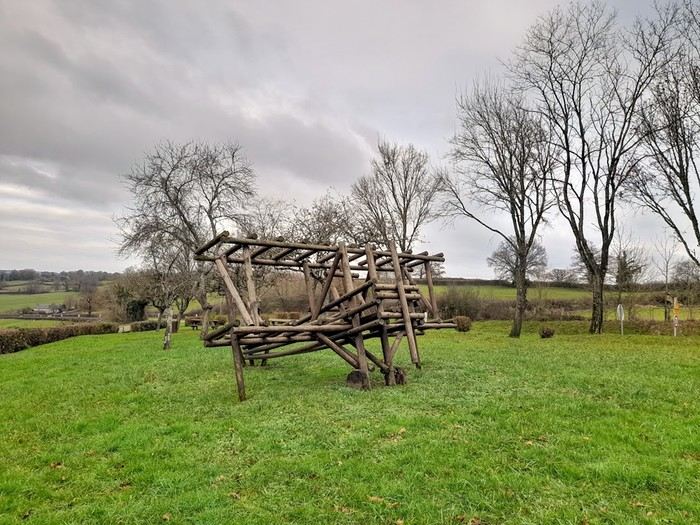
This adventure took place last year, just before winter, right after summer, and smack in the middle of autumn. That really sets the time of year. After climbing Mont-Beuvray—a story I shared here ages ago—I decided to tackle a much more adventurous peak: the summit of Haut-Folin, which rises to 901 m, and that’s no small feat, let’s be honest. It’s located in the Bois du Roi massif. Up there, you often brush against the clouds, which seem to take a mischievous pleasure in wrapping around you.
I’m going fully self-sufficient—no porters, no guide, no cook. I’m just treating myself to a very short approach flight. The flight is early in the morning on a small plane, the *Spirit of St Bernadette*, and it’s perfect. I’ll enjoy watching it deliver mail in the mountains. The pilot will drop me off at the hamlet of *La Pierre en Eau*, near Anost, a small village at the foot of this forest-covered giant.
Physical condition I’m now really seasoned for such an expedition because I’ve trained every day by walking to the village grocery store—round trip, in all weather, that’s 2.1 km. The 451 m elevation gain won’t be a problem for me. .../...
I’m so happy to share my climb with you, and if it inspires you to take it on, then it’ll be a success. Sometimes I’ll use the local language because I think it’s essential to connect with the people we meet along the way.
This adventure took place last year, just before winter, right after summer, and smack in the middle of autumn. That really sets the time of year. After climbing Mont-Beuvray—a story I shared here ages ago—I decided to tackle a much more adventurous peak: the summit of Haut-Folin, which rises to 901 m, and that’s no small feat, let’s be honest. It’s located in the Bois du Roi massif. Up there, you often brush against the clouds, which seem to take a mischievous pleasure in wrapping around you.
I’m going fully self-sufficient—no porters, no guide, no cook. I’m just treating myself to a very short approach flight. The flight is early in the morning on a small plane, the *Spirit of St Bernadette*, and it’s perfect. I’ll enjoy watching it deliver mail in the mountains. The pilot will drop me off at the hamlet of *La Pierre en Eau*, near Anost, a small village at the foot of this forest-covered giant.
Physical condition I’m now really seasoned for such an expedition because I’ve trained every day by walking to the village grocery store—round trip, in all weather, that’s 2.1 km. The 451 m elevation gain won’t be a problem for me. .../...
White as snow: February 2025 friendly photo contest
I could just as easily have written white as marble, white as salt, white as coconut milk...
This month’s theme is white in every way imaginable.
Not just a little touch in the top right corner of the photo!
Nor a white square on a white background...
Also, black and white won’t be allowed.
For the rest, I’ll let the voters be the sole judges of whether the theme is respected!
I’m now borrowing Ragamuffin’s wording for the rules:
Every VF member can submit up to 3 photos, until Sunday, February 23 at 11:59 PM, Clermont-Ferrand time.
Each photo must be posted in a separate message, with its number (1, 2, or 3).
Don’t forget to add a little explanation (comment, location, etc.).
Voting:
Every VF member can vote for the 3 photos they think are the best, based on their own criteria and the theme.
Voting will take place from Monday, February 24 to Friday, February 28 at 2:00 PM, Clermont-Ferrand time.
The chosen photos should be listed in order of preference: - 1st photo: 3 points - 2nd: 2 points - 3rd: 1 point
The winner is the author of the photo with the most points.
Results will be published on February 28 in the late afternoon. In case of a tie, the number of first-place votes will decide. The winner will have the honor of organizing March’s contest.
Photos that have already been nominated (1st, 2nd, or 3rd) in another contest are not eligible to participate in this one.
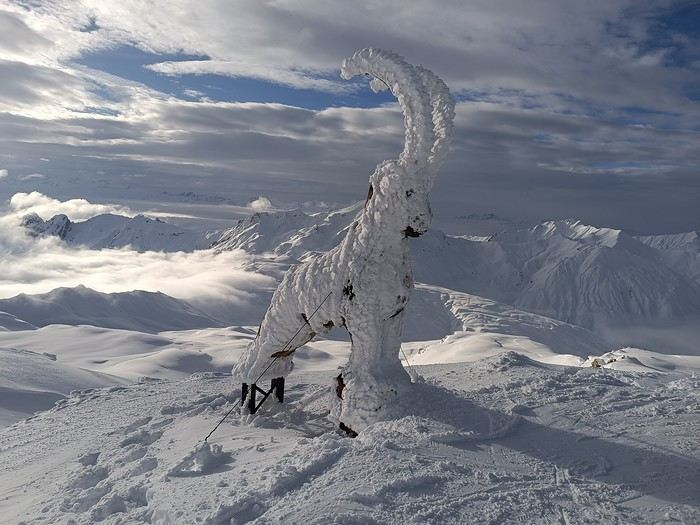
The off-topic contest discussion is happening here
This month’s theme is white in every way imaginable.
Not just a little touch in the top right corner of the photo!
Nor a white square on a white background...
Also, black and white won’t be allowed.
For the rest, I’ll let the voters be the sole judges of whether the theme is respected!
I’m now borrowing Ragamuffin’s wording for the rules:
Every VF member can submit up to 3 photos, until Sunday, February 23 at 11:59 PM, Clermont-Ferrand time.
Each photo must be posted in a separate message, with its number (1, 2, or 3).
Don’t forget to add a little explanation (comment, location, etc.).
Voting:
Every VF member can vote for the 3 photos they think are the best, based on their own criteria and the theme.
Voting will take place from Monday, February 24 to Friday, February 28 at 2:00 PM, Clermont-Ferrand time.
The chosen photos should be listed in order of preference: - 1st photo: 3 points - 2nd: 2 points - 3rd: 1 point
The winner is the author of the photo with the most points.
Results will be published on February 28 in the late afternoon. In case of a tie, the number of first-place votes will decide. The winner will have the honor of organizing March’s contest.
Photos that have already been nominated (1st, 2nd, or 3rd) in another contest are not eligible to participate in this one.
The off-topic contest discussion is happening here
Discussion Embracing Dawn: December 2024 Photo Contest
Hey there,
This is where we chat and share photos outside the contest.
Good night! 😛
This is where we chat and share photos outside the contest.
Good night! 😛
Has overtourism changed your relationship with travel?
Good evening! 🙂,
I’m paraphrasing the title of discussions that were popping up back in 2020. Back then, the obstacles were travel restrictions and all sorts of often very arbitrary "health" rules. Today, it feels like we’re facing an epidemic of wanderlust that’s piling up in certain places—places that keep expanding. Places that end up feeling like wallpaper, just part of the scenery, more or less exotic, since the people, the dominant crowd, are always the same. And they’re especially overwhelming in limited spaces like villages, museums, and other remarkable sites.
Personally, it tends to send my cortisol levels through the roof, leading to desperate attempts to salvage what I can (the stress when I saw a travel journal about eastern Crete—then, phew, at least this little piece of old Greece hasn’t been exposed yet. Maybe it’ll survive a little longer). So, no more weekends in beautiful European cities. So, adjusted visiting hours, but that’s not always enough (I’ll still have to say goodbye to Caravaggio’s *Madeleine* since I can’t have a quiet moment with her anymore, even late in the day). So, outright giving up: I’ll never see Machu Picchu. Too late. So, shifting travel dates to minimize the damage (Uzbekistan was originally planned for Easter—with April 24th and May 1st to limit vacation days—but the anxiety of tourist crowds during that mild climate period, with few days off, led me to reschedule the trip for winter. Short days and possible rain are a thousand times better).
Avoiding crowds has become a fundamental criterion for choosing destinations and timing.
And you? Are you able to tune out this identical crowd everywhere, or has it changed your relationship with travel/tourism?
Catherine
I’m paraphrasing the title of discussions that were popping up back in 2020. Back then, the obstacles were travel restrictions and all sorts of often very arbitrary "health" rules. Today, it feels like we’re facing an epidemic of wanderlust that’s piling up in certain places—places that keep expanding. Places that end up feeling like wallpaper, just part of the scenery, more or less exotic, since the people, the dominant crowd, are always the same. And they’re especially overwhelming in limited spaces like villages, museums, and other remarkable sites.
Personally, it tends to send my cortisol levels through the roof, leading to desperate attempts to salvage what I can (the stress when I saw a travel journal about eastern Crete—then, phew, at least this little piece of old Greece hasn’t been exposed yet. Maybe it’ll survive a little longer). So, no more weekends in beautiful European cities. So, adjusted visiting hours, but that’s not always enough (I’ll still have to say goodbye to Caravaggio’s *Madeleine* since I can’t have a quiet moment with her anymore, even late in the day). So, outright giving up: I’ll never see Machu Picchu. Too late. So, shifting travel dates to minimize the damage (Uzbekistan was originally planned for Easter—with April 24th and May 1st to limit vacation days—but the anxiety of tourist crowds during that mild climate period, with few days off, led me to reschedule the trip for winter. Short days and possible rain are a thousand times better).
Avoiding crowds has become a fundamental criterion for choosing destinations and timing.
And you? Are you able to tune out this identical crowd everywhere, or has it changed your relationship with travel/tourism?
Catherine
15-day itinerary from Bangkok to the southern classics
Hi there,
The round trip to Bangkok is almost booked.
Here’s the itinerary I’ve planned for this new trip to Thailand:
Arrival – 2 nights in Bangkok (any hotel recommendations? Very quiet, near Chinatown or by the river)
Train or taxi (which app should I use for Thailand?) to Phetchaburi – 2 nights (any hotel recommendations?)
Daytime train to Surat Thani – 1 night there (any hotel recommendations?)
Pick up the rental car and head to Khao Sok – 1 night there (any hotel recommendations?)
Drive to Ko Kho Khao – 3 nights – relaxation (any hotel recommendations?)
Drive to Phang Nga Bay – 1 night (any base recommendations?)
Excursion in the bay, then drive to Krabi – 2 nights (any hotel recommendations) or any other spot with beautiful, quiet beaches that you might know?
Return to Surat Thani – overnight train to Bangkok, then Ayutthaya (any hotel recommendations?)
Visit the site and transfer to the airport – sniff, time to head back!
If you have other suggestions, keeping in mind the trip’s vibe: beach time without crowds or entertainment, a bit of nature, a bit of culture, no stress... No domestic flights and charming accommodations (not at 150 € per night, even though the budget is reasonable!)
Not sure I’ll follow them all, but all your ideas are welcome! 😉
Thanks. 🙂
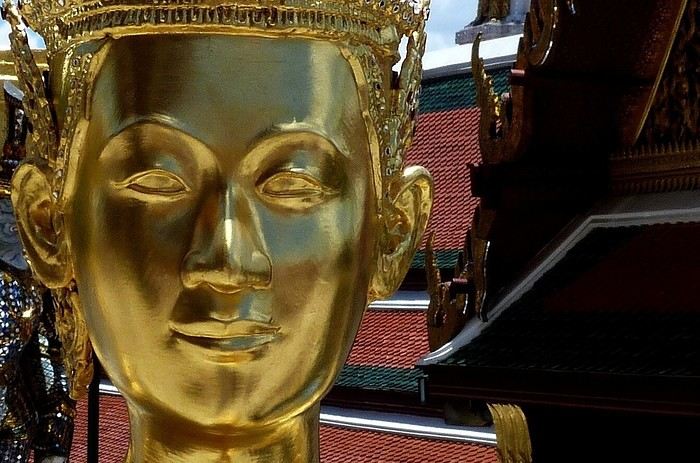
The round trip to Bangkok is almost booked.
Here’s the itinerary I’ve planned for this new trip to Thailand:
Arrival – 2 nights in Bangkok (any hotel recommendations? Very quiet, near Chinatown or by the river)
Train or taxi (which app should I use for Thailand?) to Phetchaburi – 2 nights (any hotel recommendations?)
Daytime train to Surat Thani – 1 night there (any hotel recommendations?)
Pick up the rental car and head to Khao Sok – 1 night there (any hotel recommendations?)
Drive to Ko Kho Khao – 3 nights – relaxation (any hotel recommendations?)
Drive to Phang Nga Bay – 1 night (any base recommendations?)
Excursion in the bay, then drive to Krabi – 2 nights (any hotel recommendations) or any other spot with beautiful, quiet beaches that you might know?
Return to Surat Thani – overnight train to Bangkok, then Ayutthaya (any hotel recommendations?)
Visit the site and transfer to the airport – sniff, time to head back!
If you have other suggestions, keeping in mind the trip’s vibe: beach time without crowds or entertainment, a bit of nature, a bit of culture, no stress... No domestic flights and charming accommodations (not at 150 € per night, even though the budget is reasonable!)
Not sure I’ll follow them all, but all your ideas are welcome! 😉
Thanks. 🙂
Dream Islands: Greece, French Polynesia, Mauritius...
Hello,
Who among us hasn’t dreamed of having a ticket to Tahiti, Bora Bora, or the Marquesas in their pocket—preferably a one-way ticket to “paradise”?
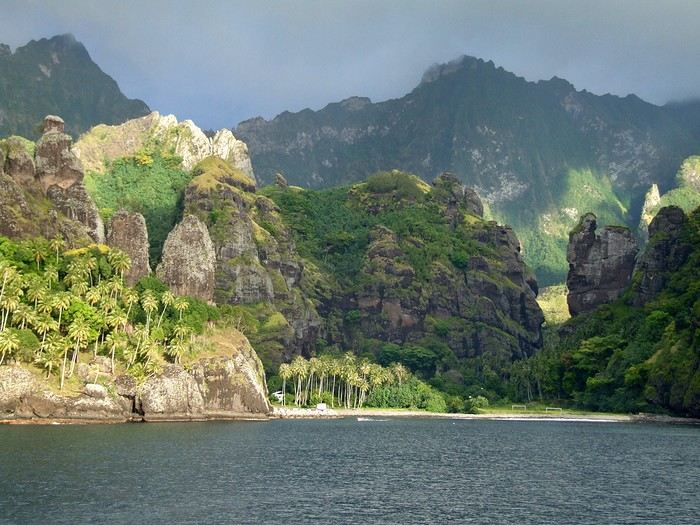 Idyllic landscape of a dream island, but difficult to access: the Bay of Virgins in Fatu Hiva, Marquesas Islands
Among the values conveyed by literature, tourism, and advertising is the quest for “elsewhere,” for a change of scenery, in the truest sense of the word—that is, the need to leave one’s country. This need for otherness, for difference, is projected onto dreamlike, idealized, even mythicized places. In our imaginary world, the island is often that place.
Yet we forget that islands have also been ideal prisons. The examples are numerous: Elba and Saint Helena, Alcatraz and Poulo Condor, If and Yeu, the Devil’s Islands and Leros. The latter, located in Greece in the Dodecanese, hosted a sinister forced labor camp during the colonels’ dictatorship as well as a psychiatric hospital. Despite the beauty of its bay, tourism has remained marginal there due to its bad reputation, unlike the neighboring island of Patmos.
I’d like to share a selection of about a dozen islands from across the world’s seas and oceans. For dreaming...
°°°°°°°°°°°°°°°
SANTORINI
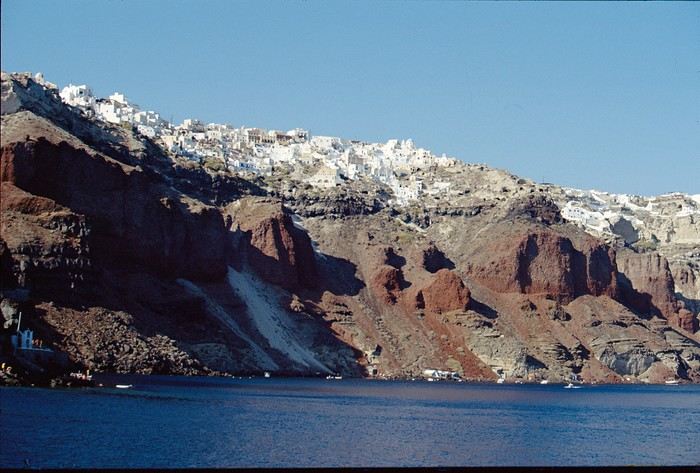
July 27, 1967
At dawn, the ferry from Agios Nikolaos (Crete) enters the immense caldera of Santorini. From the ship’s deck, Rainer, my travel companion, and I are left in awe by the sight of these towering, multicolored cliffs looming over us. We disembark and begin the steep climb on foot via the winding mule path up to the village of Fira, the capital perched above the cliff. Though it’s still very early, we head to the youth hostel. There wasn’t a soul in the alleys that morning—or rather, there were only cats! I have a fond memory of that encounter with Santorini: a sensory shock, a breathtaking volcanic site, a harmony of blue, ochre-red, and white. A welcoming island, as it was traditional to welcome the xénou, an island that hadn’t yet fully recovered from the terrible 1956 earthquake, a Cycladic architectural marvel where local life was still preserved.
It’s easy to see why, in antiquity, the island was named Kallisté (καλλίστη), “the most beautiful,” as it’s nearly impossible to resist gazing at this landscape shaped by tectonic forces. Indeed, a massive volcanic cataclysm—the Minoan eruption—shaped this scenery in the 17th century BCE, creating a caldera that was quickly filled by the sea. The enormous tsunamis that followed reached Crete, leading to the disappearance of the Minoan civilization.
A cliffside path along the caldera leads us to the peaceful village of Oia, at the northern tip of the island. Blue-domed churches and flower-filled villages with whitewashed houses line the way. This walk is a continuous marvel, offering splendid views of the caldera and the neighboring islands formed by the breakup of the ancient volcano (Thirissa, Nea Kameni). Oia is a large, picturesque village, like Fira perched on the cliff’s edge, which was severely damaged by the 1956 earthquake, and its scars are still visible. Its cave-like houses with vaulted roofs haven’t yet been turned into luxury hotels or shops. Absolute tranquility reigns here.
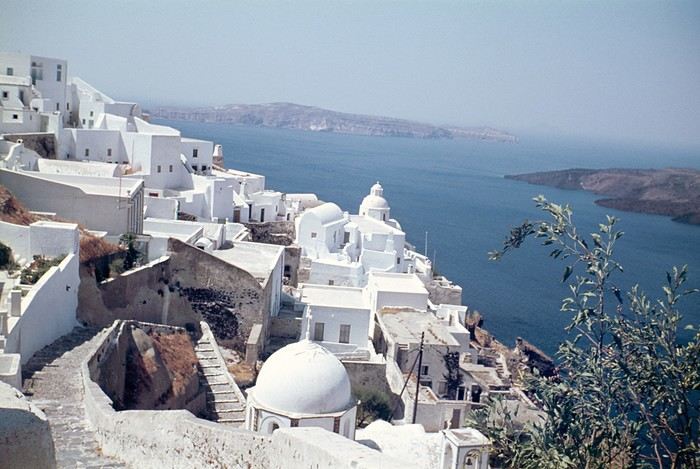 Oia in 1967—a peaceful village overlooking the caldera. But where are the pools and trendy bars?
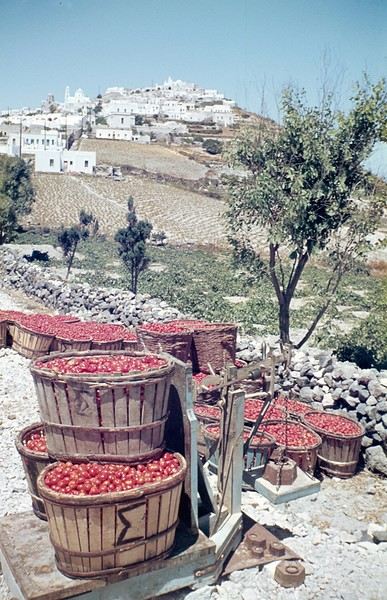
A lush countryside covered in olive trees and vineyards welcomes us for a pleasant hike, interrupted by the kindness of a friendly islander who gives us a lift in his truck for a few kilometers. He’s off to harvest his tomatoes, which he grows at the foot of Pyrgos Hill. The delicious little cherry tomato of Santorini earned an EU Protected Designation of Origin (PDO) in 2013. We climb up to the village of Pyrgos, perched on a hill and dominated by the elegant bell tower of its church. Finally, we reach the black sand beach of Kamari on the island’s eastern coast to enjoy a swim.
{...} To be continued

°°°°°°°°°°°°°°°°°
RAIVAVAE (French Polynesia)
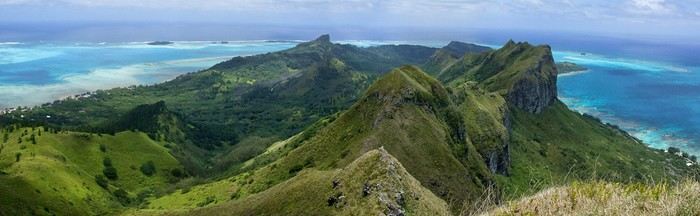
November 15, 2007
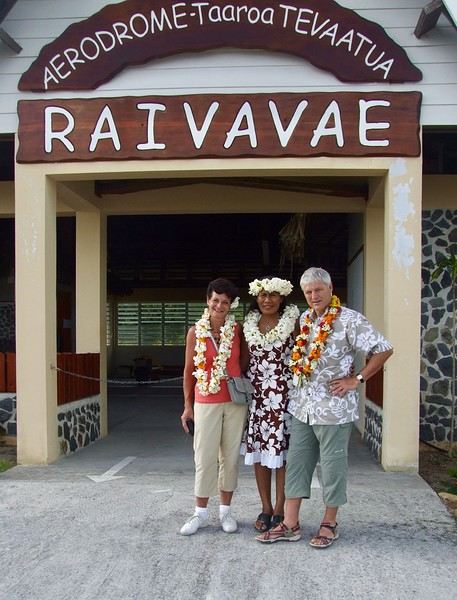
Éléonore from Pension Tama welcomes us with traditional flower leis, as if she’d been waiting for old friends she hadn’t seen in ages. The small airport terminal is lively, the atmosphere warm—people hugging, rejoicing in reunions, all under kilos of flowers. Then, just as quickly, the place empties until the next flight... in a few days.
In the Austral Islands, a ninety-minute flight from Tahiti, Raivavae is a world away from the frenetic pace of Papeete or the tourist crowds of the Leeward Islands. The true paradise of the South Seas can still be savored here—it’s a bit like Bora Bora half a century ago. Our first feeling upon arriving on this island is wonder, with smiles that could melt even the gloomiest among us, landscapes so stunning they take your breath away, and above all, a sense of disorientation and fulfillment. Picture a mountainous island, about ten kilometers by three and a half, encircled by a coral reef and wild motu, cradling a lagoon with shades of blue that would make Bora Bora green with envy.
The roughly one thousand inhabitants of Raivavae are spread across four villages around the island. Children are everywhere, as is typical in Polynesia, and they greet you with open, genuine smiles. Here, ancestral values have survived progress. The predominantly Protestant population is very devout, as evidenced by the several temples built across the island. Religious fervor sets the rhythm of daily life. Sundays are reserved for worship and Sunday school (catechism). Work is forbidden on that day, and tourist activities are suspended. These rules are strict and respected.
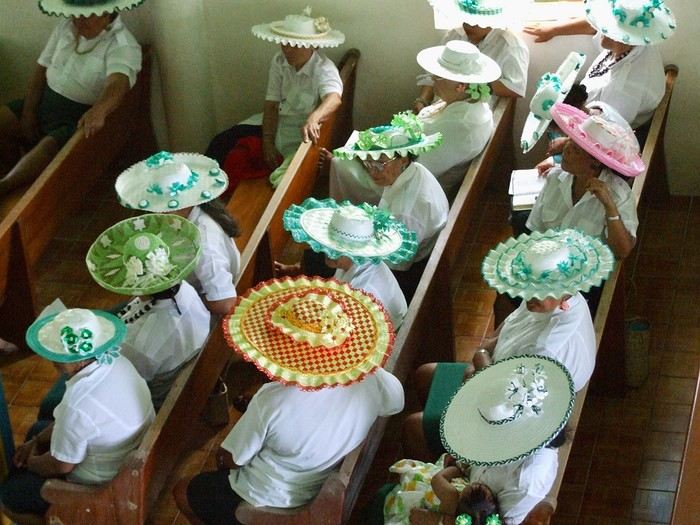 Hat contest for the worship celebration
Yet a sense of resignation is ever-present. The people of Raivavae know they are—and will remain—isolated. Despite the construction of an airstrip in 2004 and a few weekly flights to Tahiti and its nearest neighbor, Tubuai (200 km away), the island remains on the fringes of the world. One painful aspect is the separation of children from their parents when they leave for middle school in Tubuai starting in fifth grade. Television brings daily images of a world the islanders will likely never know, but one they often aspire to.
We are privileged. We have the pristine white-sand beaches of the motu and some of the most beautiful bays in Polynesia all to ourselves. The jewel in the crown, the island’s emblematic spot, is the “motu-pool,” about twenty minutes by boat. A natural, exquisite basin with crystal-clear water, gradients of blue, and white sand. And best of all, there’s almost no one there. In fact, lounging on the beach is frowned upon, especially for young women. Religion looks very unfavorably on sunbathing and lazing around. And yet, everything here leans toward that philosophy of life.
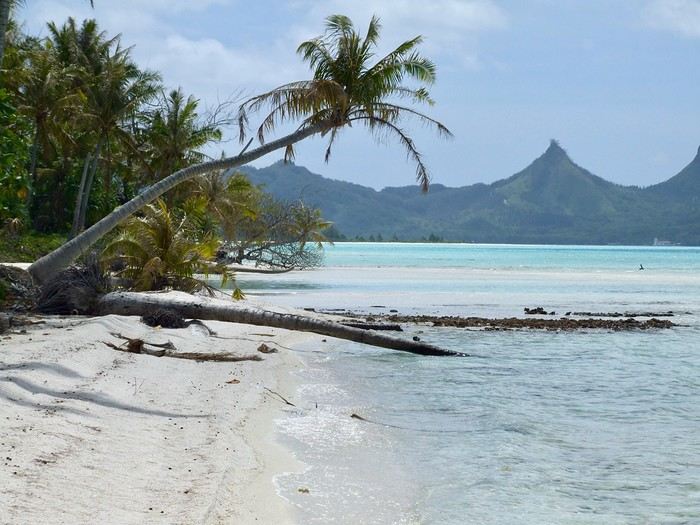
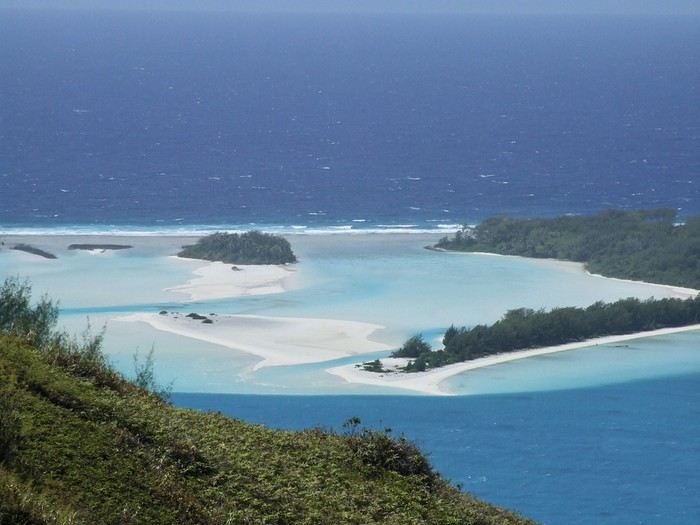 The "motu-pool"
{...} To be continued
Who among us hasn’t dreamed of having a ticket to Tahiti, Bora Bora, or the Marquesas in their pocket—preferably a one-way ticket to “paradise”?
Idyllic landscape of a dream island, but difficult to access: the Bay of Virgins in Fatu Hiva, Marquesas IslandsAmong the values conveyed by literature, tourism, and advertising is the quest for “elsewhere,” for a change of scenery, in the truest sense of the word—that is, the need to leave one’s country. This need for otherness, for difference, is projected onto dreamlike, idealized, even mythicized places. In our imaginary world, the island is often that place.
Yet we forget that islands have also been ideal prisons. The examples are numerous: Elba and Saint Helena, Alcatraz and Poulo Condor, If and Yeu, the Devil’s Islands and Leros. The latter, located in Greece in the Dodecanese, hosted a sinister forced labor camp during the colonels’ dictatorship as well as a psychiatric hospital. Despite the beauty of its bay, tourism has remained marginal there due to its bad reputation, unlike the neighboring island of Patmos.
I’d like to share a selection of about a dozen islands from across the world’s seas and oceans. For dreaming...
°°°°°°°°°°°°°°°
SANTORINI
July 27, 1967
At dawn, the ferry from Agios Nikolaos (Crete) enters the immense caldera of Santorini. From the ship’s deck, Rainer, my travel companion, and I are left in awe by the sight of these towering, multicolored cliffs looming over us. We disembark and begin the steep climb on foot via the winding mule path up to the village of Fira, the capital perched above the cliff. Though it’s still very early, we head to the youth hostel. There wasn’t a soul in the alleys that morning—or rather, there were only cats! I have a fond memory of that encounter with Santorini: a sensory shock, a breathtaking volcanic site, a harmony of blue, ochre-red, and white. A welcoming island, as it was traditional to welcome the xénou, an island that hadn’t yet fully recovered from the terrible 1956 earthquake, a Cycladic architectural marvel where local life was still preserved.
It’s easy to see why, in antiquity, the island was named Kallisté (καλλίστη), “the most beautiful,” as it’s nearly impossible to resist gazing at this landscape shaped by tectonic forces. Indeed, a massive volcanic cataclysm—the Minoan eruption—shaped this scenery in the 17th century BCE, creating a caldera that was quickly filled by the sea. The enormous tsunamis that followed reached Crete, leading to the disappearance of the Minoan civilization.
A cliffside path along the caldera leads us to the peaceful village of Oia, at the northern tip of the island. Blue-domed churches and flower-filled villages with whitewashed houses line the way. This walk is a continuous marvel, offering splendid views of the caldera and the neighboring islands formed by the breakup of the ancient volcano (Thirissa, Nea Kameni). Oia is a large, picturesque village, like Fira perched on the cliff’s edge, which was severely damaged by the 1956 earthquake, and its scars are still visible. Its cave-like houses with vaulted roofs haven’t yet been turned into luxury hotels or shops. Absolute tranquility reigns here.
Oia in 1967—a peaceful village overlooking the caldera. But where are the pools and trendy bars?A lush countryside covered in olive trees and vineyards welcomes us for a pleasant hike, interrupted by the kindness of a friendly islander who gives us a lift in his truck for a few kilometers. He’s off to harvest his tomatoes, which he grows at the foot of Pyrgos Hill. The delicious little cherry tomato of Santorini earned an EU Protected Designation of Origin (PDO) in 2013. We climb up to the village of Pyrgos, perched on a hill and dominated by the elegant bell tower of its church. Finally, we reach the black sand beach of Kamari on the island’s eastern coast to enjoy a swim.
{...} To be continued
°°°°°°°°°°°°°°°°°
RAIVAVAE (French Polynesia)
November 15, 2007
Éléonore from Pension Tama welcomes us with traditional flower leis, as if she’d been waiting for old friends she hadn’t seen in ages. The small airport terminal is lively, the atmosphere warm—people hugging, rejoicing in reunions, all under kilos of flowers. Then, just as quickly, the place empties until the next flight... in a few days.
In the Austral Islands, a ninety-minute flight from Tahiti, Raivavae is a world away from the frenetic pace of Papeete or the tourist crowds of the Leeward Islands. The true paradise of the South Seas can still be savored here—it’s a bit like Bora Bora half a century ago. Our first feeling upon arriving on this island is wonder, with smiles that could melt even the gloomiest among us, landscapes so stunning they take your breath away, and above all, a sense of disorientation and fulfillment. Picture a mountainous island, about ten kilometers by three and a half, encircled by a coral reef and wild motu, cradling a lagoon with shades of blue that would make Bora Bora green with envy.
The roughly one thousand inhabitants of Raivavae are spread across four villages around the island. Children are everywhere, as is typical in Polynesia, and they greet you with open, genuine smiles. Here, ancestral values have survived progress. The predominantly Protestant population is very devout, as evidenced by the several temples built across the island. Religious fervor sets the rhythm of daily life. Sundays are reserved for worship and Sunday school (catechism). Work is forbidden on that day, and tourist activities are suspended. These rules are strict and respected.
Hat contest for the worship celebrationYet a sense of resignation is ever-present. The people of Raivavae know they are—and will remain—isolated. Despite the construction of an airstrip in 2004 and a few weekly flights to Tahiti and its nearest neighbor, Tubuai (200 km away), the island remains on the fringes of the world. One painful aspect is the separation of children from their parents when they leave for middle school in Tubuai starting in fifth grade. Television brings daily images of a world the islanders will likely never know, but one they often aspire to.
We are privileged. We have the pristine white-sand beaches of the motu and some of the most beautiful bays in Polynesia all to ourselves. The jewel in the crown, the island’s emblematic spot, is the “motu-pool,” about twenty minutes by boat. A natural, exquisite basin with crystal-clear water, gradients of blue, and white sand. And best of all, there’s almost no one there. In fact, lounging on the beach is frowned upon, especially for young women. Religion looks very unfavorably on sunbathing and lazing around. And yet, everything here leans toward that philosophy of life.
The "motu-pool"{...} To be continued
French company CFC
Hi
Has anyone sailed with the French company CFC? What do you think?
Haven’t seen many reviews about this company.
Safety in "self-drive" in South Africa
Hi there,
I know this question has been discussed many times before, but I’d love to hear recent opinions (post-COVID crisis) about tourist safety in South Africa. My husband is offering me the chance to take a self-drive trip in South Africa in July 2025. It’s a dream of mine—we’ve never been to Africa before, but we’ve regularly driven on the left side of the road before ;-) I’ve already booked the hotels and a rental car for a 3-week family trip (my husband and our 19-year-old son). But after talking to some acquaintances, I’ve been warned about the risks of carjacking, theft, scams by fake police, and even kidnapping… basically, a pretty apocalyptic picture of the region!!! I’ve already carefully read the recommendations from embassies and foreign affairs offices. Our itinerary would start at Johannesburg Airport with a rental car, sticking to main roads and avoiding night driving. First stop: Blyde River Canyon (exploring the area), then heading to Kruger National Park (one week), entering through the Numbi or Phabeni Gate and exiting via Crocodile Bridge to reach Eswatini (stopping at Mlilwane Sanctuary) before continuing to St. Lucia (a few days there). From St. Lucia, we’ll go to Durban to catch a flight to Cape Town. There, we’ll spend a few days with a rental car in the Camps Bay area. What do you think? I know there’s no such thing as zero risk (you could even fall out of bed!), but I don’t want to spend the whole trip on edge, constantly worried about being attacked or putting my family in danger. During vacations, we take a lot of photos—I know we shouldn’t flaunt valuables, but photography is a big part of our trips… Should we postpone this trip to a "quieter" time? If you can shed some light, I’d really appreciate it—I’m feeling a bit lost…
I know this question has been discussed many times before, but I’d love to hear recent opinions (post-COVID crisis) about tourist safety in South Africa. My husband is offering me the chance to take a self-drive trip in South Africa in July 2025. It’s a dream of mine—we’ve never been to Africa before, but we’ve regularly driven on the left side of the road before ;-) I’ve already booked the hotels and a rental car for a 3-week family trip (my husband and our 19-year-old son). But after talking to some acquaintances, I’ve been warned about the risks of carjacking, theft, scams by fake police, and even kidnapping… basically, a pretty apocalyptic picture of the region!!! I’ve already carefully read the recommendations from embassies and foreign affairs offices. Our itinerary would start at Johannesburg Airport with a rental car, sticking to main roads and avoiding night driving. First stop: Blyde River Canyon (exploring the area), then heading to Kruger National Park (one week), entering through the Numbi or Phabeni Gate and exiting via Crocodile Bridge to reach Eswatini (stopping at Mlilwane Sanctuary) before continuing to St. Lucia (a few days there). From St. Lucia, we’ll go to Durban to catch a flight to Cape Town. There, we’ll spend a few days with a rental car in the Camps Bay area. What do you think? I know there’s no such thing as zero risk (you could even fall out of bed!), but I don’t want to spend the whole trip on edge, constantly worried about being attacked or putting my family in danger. During vacations, we take a lot of photos—I know we shouldn’t flaunt valuables, but photography is a big part of our trips… Should we postpone this trip to a "quieter" time? If you can shed some light, I’d really appreciate it—I’m feeling a bit lost…
Chorizo ou pas dans la paëlla?
Tout fout le camp...
Chorizo ou pas ? Un illustre chef espagnol ravive le «paellagate»
(Mais moi j'en ai toujours mis... 😛 )
Plan de reprise des croisières Costa
Bonjour
Voilà ce qui serait prévu à partir de la mi-août :
http://crew-center.com/costa-cruises-plans-re-start-voyages-7-ships-5-phases
Cordialement
Voilà ce qui serait prévu à partir de la mi-août :
http://crew-center.com/costa-cruises-plans-re-start-voyages-7-ships-5-phases
Cordialement
Humour corse
12 FAÇONS D'ÉNERVER UN CORSE
Les clichés ont la peau dure ; beaucoup de gens sont persuadés que les Corses ont le sang chaud et s’offensent pour un rien.
Ce n’est bien sûr qu’une image d’Épinal, mais si vous voulez énerver un Corse, vous pouvez toujours tenter une des méthodes suivantes.
1. DEMANDER AU SERVEUR DE DIVISER LA NOTE.
En Corse, demander au serveur de faire des additions pour que chacun puisse payer uniquement ce qu’il a consommé est assez mal vu.
Ne faites pas ça si vous dînez avec des amis corses.
L’argent est généralement un sujet délicat.
Être généreux, dépenser sans compter est pour les Corses une marque de politesse.
2. ALLER AU SUPERMARCHÉ EN MAILLOT DE BAIN.
Si vous voulez passer pour une cloche et agacer les gens, promenez-vous au supermarché en tenue de plage, maillot de bain dégoulinant et sable encore collé sur le dos.
Aucun Corse qui se respecte n’irait en maillot de bain n’importe où ailleurs qu’à la plage.
3. MENTIONNER VOTRE ADMIRATION POUR NAPOLÉON.
Les continentaux, pleins de bonnes intentions, croient souvent faire plaisir à leurs interlocuteurs corses en mentionnant l’Empereur natif d’Ajaccio.
Or les Corses n’ont que peu d’admiration pour Napoléon, qui, poussé par sa dévorante ambition personnelle et familiale, a toujours négligé son île natale pour se consacrer à sa formidable carrière européenne, forgeant ainsi un Empire français et distribuant terres et distinctions aux membres de sa famille et à ses amis proches.
4. PASCAL QUI ?
Les Corses vous citeront certainement Pascal Paoli comme un meilleur exemple de Corse célèbre.
Il a été un personnage important et connu en Europe à l’époque des Lumières, les programmes d’histoire ont tendance à négliger la Corse et à occulter les faits importants qui la concernent.
Or Paoli est LE héros, LE personnage historique de la Corse.
IL est aux Corses ce que Simon Bolivar est à l’Amérique du sud, ce que Thomas Jefferson est aux Américains : le « Babbu di a Patria », le père de la patrie.
5. DIRE QUE LES CORSES SONT IMPOLIS.
La Corse est un pays qui a subi en permanence des hordes d’envahisseurs divers et variés à travers les âges : les Romains, les Goths, les Sarrasins, les Vandales, les Génois, puis les Français, la Corse a toujours été occupée, conquise par la violence.
Toujours conquise, jamais soumise, dit l’adage populaire.
Au plus profond de la psyché corse se niche une certaine peur de ce qui vient de l’extérieur.
Ceci dit, la Corse a assimilé une grande part de ses envahisseurs et a toujours été capable de fabriquer des Corses.
Si vous brisez la glace, les Corses peuvent être incroyablement gentils, généreux et solidaires.
S’ils ouvrent à vous, ils le font sans réserve et offrent une amitié authentique.
6. ROULER COMME UNE LIMACE.
Nos routes sont étroites et pleines de virages, ce qui rend les dépassements rares et difficiles.
En pleine saison, il suffit d’une personne qui roule à la moitié de la vitesse autorisée pour former une queue interminable de véhicules.
Cela rend les gens dingues et ils ont tendance à prendre des risques inconsidérés pour se débarrasser des charrettes, ce qui peut vite devenir dangereux.
En Corse nous klaxonnons pour dire bonjour à un ami ; vous ne connaissez personne, ne klaxonnez pas !
7. DORMIR DANS VOTRE VOITURE SUR UN PARKING.
Si vous voulez passer pour un boulet aux yeux des Corses, dormez dans votre voiture sur un parking pendant votre séjour, mangez des sandwichs faits maison tout le temps sans jamais aller dans un restaurant, bref, soyez aussi avares que possible. De toute façon le bivouac et le camping sauvage sont interdits sur toute l’île.
L’attitude Picsou, on l’a dit, est une grave offense en Corse.
Il y a un mot corse spécial pour cette catégorie de touristes, on les appelle les pumataghji, c’est-à-dire les mangeurs de tomates.
8. COMPARER LES CORSES AUX ITALIENS.
Si vous comparez sans cesse la Corse à l’Italie, et les Corses aux Italiens, vous risquez d’en agacer plus d’un.
La Corse a été génoise durant de nombreux siècles, bien plus longtemps qu’elle n’a été française à ce jour.
Pisans et Génois ont laissé leur empreinte sur l’architecture et la toponymie de la Corse, la plupart des noms de familles sont originaires de la péninsule, certains remontent même au temps des Romains, et l’italien est restée la langue officielle jusqu’au milieu du 19e siècle.
Cependant, les Corses ont toujours eu des sentiments mitigés vis-à-vis de leurs voisins et cousins de la péninsule.
L’occupation génoise, particulièrement brutale, a laissé de mauvais souvenirs et plus récemment, la période mussolinienne a provoqué un certain ressentiment vis-à-vis de l’Italie qui voulait purement et simplement annexer la Corse.
9. DIRE QUE LA LANGUE CORSE EST UN DIALECTE ITALIEN.
Le Corse est une langue latine romane apparentée aux dialectes italiens (et beaucoup d’Italiens vous diront que leur dialecte est une langue).
Elle est même plus proche du toscan, qui a donné naissance à l’italien standard, que bien des dialectes de la péninsule.
Toutefois, le nord et le sud de l’île présentent des mots, des termes et des versions différents ; l’accent dans l’extrême sud présentant plus de similitudes avec les langues du sud de l’Italie.
10. DIRE QUE VOUS AVEZ PEUR DE VENIR EN CORSE À CAUSE DE LA VIOLENCE.
C’est probablement une des choses les plus irritantes que vous puissiez dire à un Corse.
La vérité, c’est que si vous n’êtes pas dans le business du crime organisé, vous n’avez absolument rien à craindre en Corse, où la délinquance de droit commun est extrêmement basse. Même si il y a un % de voitures blindées qui dépasse largement le % en Arabie Saoudite ou les pays du Golfe.
Cambriolages, vols à l’arrachée ou agressions sexuelles dans les transports en commun, la Corse semblerait être épargnée par tous ces fléaux des grandes villes.
On peut pratiquement laisser les clés sur sa voiture mais pas son arme à feu dans la boîte à gants.
Bonus à vérifier : si vous êtes une femme, vous n’avez aucune crainte à avoir pour votre sécurité physique, les Corses sont très respectueux des femmes et malheur à ceux qui les agressent.
Si vous êtes un homme, n’essayez même pas d’être lourd avec une nana, ça peut mal finir.
Les Corses sont très fiers de cette situation, cela les console de bien des choses.
Gare à ceux qui porteraient atteinte à cette tranquillité.
11. CRITIQUER LA CORSE.
Si vous ne voulez pas finir avec trois dents en moins, évitez toute critique virulent de l’île de Beauté devant des Corses. Seuls les Corses on le droit de critiquer le « « pays ami ».
Comme le dit l’adage populaire, « il y a deux types d’individus dans le monde : les Corses et ceux qui rêvent de l’être ».
Plus sérieusement, après des siècles d’histoire violente et d’exil, les Corses demeurent très attachés à leur île.
Cet amour inconditionnel de la terre natale est sans doute ce qui nous unit par-delà nos différences.
La Corse manque à un Corse comme le paradis manquait à Adam et Eve.
Tout Corse a un village, qu’il considère comme le jardin d’Éden.
Beaucoup d’exilés ne peuvent même pas envisager de passer leurs vacances ailleurs.
Alors certes, les Corses sont assez chauvins, mais qui ne l’est pas ?
Là où un continental ne verra que des chiffres, nous, nous sentons l’odeur du maquis après une chaude journée d’été, nous voyons la beauté d’un lever de soleil sur les sommets, le bleu de la mer dans un golfe, le goût du miel du maquis sur une tartine, et toutes ces choses qui font que la Corse restera pour nous à jamais le plus beau pays du monde, et que nous sommes incroyablement heureux d’y être nés.
Comme disait l'humoriste bastiais Pido dans le film l’Enquête corse :
« Peut-on critiquer les Corses ?
- Oui, on peut,
- Mais il faut pas le faire ! »
12 TÉLÉPHONER À L'HEURE DE LA SIESTE.
Chez nous il fait chaud, après le repas nous apprécions un moment de repos.
Et le repos chez nous est sacré.