Results for "Lesotho"
About 981 results.
More options
Many results are in French, the community’s main language. English translations are added over time.
Search results
Conférence de Sonia et Alexandre Poussin
j'ai repris le travail après un mois d'absence, un peu dur ce matin, je me suis dit "ça y est la routine reprend, prendre le métro le train, et plus d'accès internet, plus de VF dans la journée"...
et en arrivant qu'est ce que je découvre ??
demain conférence débat organisée par l'entreprise où je travaille "afrikatrek : vivre l'afrique autrement" avec Sonia et Alexandre Poussin....
du coup ma journée a été radieuse, oubliées les galères de la reprise, les dossiers empilés sur mon bureau, Vivement demain !!
je vous ferais part de mes impressions, je venais juste de finir "la chevauchée des steppes", après ""afrikatrek"
Durant tout mon arrêt maladie, nos aventuriers mo'nt emmené loin de chez moi, et demain je pourrais les écouter... vraiment hâte d'y être !!
et en arrivant qu'est ce que je découvre ??
demain conférence débat organisée par l'entreprise où je travaille "afrikatrek : vivre l'afrique autrement" avec Sonia et Alexandre Poussin....
du coup ma journée a été radieuse, oubliées les galères de la reprise, les dossiers empilés sur mon bureau, Vivement demain !!
je vous ferais part de mes impressions, je venais juste de finir "la chevauchée des steppes", après ""afrikatrek"
Durant tout mon arrêt maladie, nos aventuriers mo'nt emmené loin de chez moi, et demain je pourrais les écouter... vraiment hâte d'y être !!
Le plus beau treck/longue randonnée
Bonjour,
Voilà j'aimerais avoir vos expériences et avis; sur ce que vous avez faits et que vous avez aimés;
sachant que ce à quoi je pense (le voyage) ne sera pas avant l'été 2006... ben oui l'été prochain je pars déjà en Chine, donc, j'envisage juste de...
je suis ouverte à toute suggestion sachant que j'ai pas un organisme de sportive de haut niveau.... mais que la marche, plusieurs kilomètres par jour, ne me fais pas peur; que je ne veux pas faire de l'escalade....
tout ceci serait pour une durée d'1mois, 1mois et demi...
Merci de vos conseils et expériences...
Voilà j'aimerais avoir vos expériences et avis; sur ce que vous avez faits et que vous avez aimés;
sachant que ce à quoi je pense (le voyage) ne sera pas avant l'été 2006... ben oui l'été prochain je pars déjà en Chine, donc, j'envisage juste de...
je suis ouverte à toute suggestion sachant que j'ai pas un organisme de sportive de haut niveau.... mais que la marche, plusieurs kilomètres par jour, ne me fais pas peur; que je ne veux pas faire de l'escalade....
tout ceci serait pour une durée d'1mois, 1mois et demi...
Merci de vos conseils et expériences...
Nos médecins nous conseillent... site santé
Nous nous posons parfois des questions du style :
Pourquoi les médecins ont des avis si différents par rapport à d'autres quant à la médication des futurs voyageurs, en parcourant le site du ministère de la santé, je suis tombée sur ça : http://www.sante.gouv.fr/
Recommandations sanitaires pour les voyageurs 2003 (à l'attention des professionnels de santé) BEH n° 26- 27/ 2003 117
Deux critères interviennent dans l'établissement d'un programme de vaccinations destiné à un voyageur. Le premier de ces critères est l'obligation administrative qui correspond plus à la protection du pays contre un risque infectieux venant de l'extérieur qu'aux risques encourus par le voyageur. Les risques réels encourus par le voyageur constituent, quant à eux, le second critère et varient en fonction de plusieurs paramètres : la situation sanitaire du pays visité ; les conditions et la durée du séjour ; les caractéristiques propres du voyageur, en particulier l'âge et aussi le statut vaccinal antérieur.
Le choix de la prophylaxie médicamenteuse tient compte des zones visitées (classées en groupe 1, 2 et 3 selon la fréquence de la résistance à la chloroquine et au proguanil, le groupe 0 correspondant à un risque nul de paludisme), de la durée du voyage et aussi de la personne : l'âge, les antécédents pathologiques, une intolérance aux antipaludiques, une possible interaction médicamenteuse, une grossesse (ou son éventualité). Quelque soit l'antipaludique choisi, il est conseillé de prendre ce médicament au cours d'un repas. Aucun antipaludique n'étant toujours parfaitement toléré, il peut être admissible, dans une zone à très faible transmission et correctement médicalisée, d'avoir recours à la seule protection contre les moustiques. La répartition des zones de résistance de Plasmodium falciparum : la chimiorésistance peut être appréciée de façon quantitative par l'étude in vivo ou in vitro, ou par le génotypage des souches responsables d'accès, auprès d'échantillons de populations non immunes vivant en zone d'endémie ou de voyageurs non chimioprophylactisés. 2.2.3.1 - Cas général Pays du groupe 0 : zones sans paludisme, pas de chimioprophylaxie Afrique : Lesotho, Libye, Ile de la Réunion, Ile Sainte Hélène, Seychelles, Tunisie. Amérique : toutes les villes et Antigua et Barbuda, Antilles néerlandaises, Bahamas, Barbade, Bermudes, Canada, Chili, Cuba, Dominique, Etats- Unis, Guadeloupe, Grenade, Iles Caïmans, IIes Malouines, Iles Vierges, Jamaïque, Martinique, Porto- Rico, Sainte- Lucie, Trinidad et Tobago, Uruguay. Asie : toutes les villes et Brunei, Georgie, Guam, HongKong, îles Christmas, îles Cook, Japon, Kazakhstan, Kirghizistan, Macao, Maldives, Mongolie, Singapour, Taiwan. Europe : tous les pays (y compris Açores, Canaries, Chypre, Fédération de Russie, Etats Baltes, Ukraine, Belarus et Turquie d'Europe). Proche et Moyen Orient : toutes les villes et Bahreïn, Israël, Jordanie, Koweït, Liban, Qatar. Océanie : toutes les villes et Australie, Fidji, Hawaï, Mariannes, Marshall, Micronésie, Nouvelle- Calédonie, Nouvelle- Zélande, île de Pâques, Polynésie française, Samoa, Tonga, Tuvalu, Wallis et Futuna, Kiribati, Cook, Samoa occidentales, Nive, Nauru, Palau. Cas particulier des zones de transmission faible Compte tenu de la faiblesse de la transmission dans ces pays, il est admissible de ne pas prendre de chimioprophylaxie, quelle que soit la durée du séjour. Il est cependant indispensable d'être en mesure, dans les mois qui suivent le retour, de consulter en urgence en cas de fièvre. Afrique : Algérie, Cap- Vert, Egypte, Maroc, Ile Maurice Asie : Arménie, Azerbaïdjan, Corée du Sud, Corée du Nord, Ouzbékistan, Turkménistan. Proche et Moyen Orient : Emirats arabes unis, Oman, Syrie, Turquie Pour tous les autres pays, il est nécessaire de prendre une chimioprophylaxie adaptée à la zone visitée.
Par ailleurs, il est important de savoir que la répartition des zones de résistance de Plasmodium falciparum telle qu'indiquée dans le tableau 1 doit être nuancée en fonction des niveaux de transmission. La connaissance du pays de destination est insuffisante et il faut aussi tenir compte de la région visitée, des conditions de séjour, de la saison, des particularités locales... Par exemple, un séjour en Thaïlande ou au Vietnam mais sans nuitée en zones forestières ne nécessite, a priori, pas de prévention anti- paludique. Il en est de même pour toutes les villes d'Asie (sauf parfois en Inde) ou d'Amérique. De la même façon, le paludisme ne se transmet habituellement pas au- dessus de 1 500 mètres d'altitude en Afrique et de 2 500 mètres en Amérique ou en Asie. Ainsi, d'une manière générale, pour un court séjour touristique ou professionnel (inférieur à sept jours : durée minimum d'incubation du paludisme
La possession d'un médicament de réserve en zone d'endémie palustre peut se justifier lors d'un séjour de plus d'une semaine avec déplacements en zone très isolée mais aussi dans des circonstances qui incitent à ne plus poursuivre la chimioprophylaxie antipaludique, telles que les voyages fréquents et répétés ou une expatriation très prolongée
C'est en séjournant dans les pays à faible niveau d'hygiène que les voyageurs en provenance des pays industrialisés sont le plus exposés au risque de diarrhée. L'incidence est influencée par la saison, la pathologie pré- existante du voyageur et son comportement alimentaire. La prudence recommande d'éviter l'ingestion d'aliments et de boissons à risque (crudités ou aliments cuits consommés froids, même conservés au réfrigérateur, eau locale non embouteillée et glaçons). Il n'y a pas encore de vaccination disponible. La chimioprophylaxie est déconseillée, à l'exception de situations particulières. Le traitement curatif est souvent un auto- traitement pour lequel il est pratique de disposer de médicaments dont on se sera muni avant le départ.
et bien d'autres encore... maintenant je sais pourquoi certains médecins préconisent toutes sortes de traitements et vaccins !
Mon médecin me conseille les vaccins habituels à jour et la savarine et surtout des répulsifs et précautions d'usages car je vais dans une partie du Mékong où il y a énormément d'animaux et d'eaux stagnantes ! Il ne m'a pas conseillé ni l'hép. A ni contre l'encéphalite Jap... quoique comme il dit nous ne sommes pas encore en nov et d'ici là il y aura des avis sanitaires si un danger survenait dans ces pays !!!
Donc, comme le dit LI, il est important de voir avec son médecin et son itinéraire de voyage pour prendre les précautions qui s'imposent.
Si vous partez à l'aveuglette... au hasard des rencontres qu'elles soient humaines ou animales... il est normal que les médecins restent dans la prévention et vous indiquent plusieurs traitements ! Si vous ne savez pas où vous allez, eux savent ce que vous pouvez rencontrez comme maladies !!!
Et puis, je pars du principe qu'il vaut mieux prévenir que guérir... et le trou de la sécu est suffisamment grand pour ne pas en rajouter !
C'est certain que les voyageurs avertis et rôdés ne prennent pas ou plus de traitement, mais pour celui qui se posent des questions et bien, voilà un début de réponse... à étudier avec votre médecin !
Bon voyage !
Pourquoi les médecins ont des avis si différents par rapport à d'autres quant à la médication des futurs voyageurs, en parcourant le site du ministère de la santé, je suis tombée sur ça : http://www.sante.gouv.fr/
Recommandations sanitaires pour les voyageurs 2003 (à l'attention des professionnels de santé) BEH n° 26- 27/ 2003 117
Deux critères interviennent dans l'établissement d'un programme de vaccinations destiné à un voyageur. Le premier de ces critères est l'obligation administrative qui correspond plus à la protection du pays contre un risque infectieux venant de l'extérieur qu'aux risques encourus par le voyageur. Les risques réels encourus par le voyageur constituent, quant à eux, le second critère et varient en fonction de plusieurs paramètres : la situation sanitaire du pays visité ; les conditions et la durée du séjour ; les caractéristiques propres du voyageur, en particulier l'âge et aussi le statut vaccinal antérieur.
Le choix de la prophylaxie médicamenteuse tient compte des zones visitées (classées en groupe 1, 2 et 3 selon la fréquence de la résistance à la chloroquine et au proguanil, le groupe 0 correspondant à un risque nul de paludisme), de la durée du voyage et aussi de la personne : l'âge, les antécédents pathologiques, une intolérance aux antipaludiques, une possible interaction médicamenteuse, une grossesse (ou son éventualité). Quelque soit l'antipaludique choisi, il est conseillé de prendre ce médicament au cours d'un repas. Aucun antipaludique n'étant toujours parfaitement toléré, il peut être admissible, dans une zone à très faible transmission et correctement médicalisée, d'avoir recours à la seule protection contre les moustiques. La répartition des zones de résistance de Plasmodium falciparum : la chimiorésistance peut être appréciée de façon quantitative par l'étude in vivo ou in vitro, ou par le génotypage des souches responsables d'accès, auprès d'échantillons de populations non immunes vivant en zone d'endémie ou de voyageurs non chimioprophylactisés. 2.2.3.1 - Cas général Pays du groupe 0 : zones sans paludisme, pas de chimioprophylaxie Afrique : Lesotho, Libye, Ile de la Réunion, Ile Sainte Hélène, Seychelles, Tunisie. Amérique : toutes les villes et Antigua et Barbuda, Antilles néerlandaises, Bahamas, Barbade, Bermudes, Canada, Chili, Cuba, Dominique, Etats- Unis, Guadeloupe, Grenade, Iles Caïmans, IIes Malouines, Iles Vierges, Jamaïque, Martinique, Porto- Rico, Sainte- Lucie, Trinidad et Tobago, Uruguay. Asie : toutes les villes et Brunei, Georgie, Guam, HongKong, îles Christmas, îles Cook, Japon, Kazakhstan, Kirghizistan, Macao, Maldives, Mongolie, Singapour, Taiwan. Europe : tous les pays (y compris Açores, Canaries, Chypre, Fédération de Russie, Etats Baltes, Ukraine, Belarus et Turquie d'Europe). Proche et Moyen Orient : toutes les villes et Bahreïn, Israël, Jordanie, Koweït, Liban, Qatar. Océanie : toutes les villes et Australie, Fidji, Hawaï, Mariannes, Marshall, Micronésie, Nouvelle- Calédonie, Nouvelle- Zélande, île de Pâques, Polynésie française, Samoa, Tonga, Tuvalu, Wallis et Futuna, Kiribati, Cook, Samoa occidentales, Nive, Nauru, Palau. Cas particulier des zones de transmission faible Compte tenu de la faiblesse de la transmission dans ces pays, il est admissible de ne pas prendre de chimioprophylaxie, quelle que soit la durée du séjour. Il est cependant indispensable d'être en mesure, dans les mois qui suivent le retour, de consulter en urgence en cas de fièvre. Afrique : Algérie, Cap- Vert, Egypte, Maroc, Ile Maurice Asie : Arménie, Azerbaïdjan, Corée du Sud, Corée du Nord, Ouzbékistan, Turkménistan. Proche et Moyen Orient : Emirats arabes unis, Oman, Syrie, Turquie Pour tous les autres pays, il est nécessaire de prendre une chimioprophylaxie adaptée à la zone visitée.
Par ailleurs, il est important de savoir que la répartition des zones de résistance de Plasmodium falciparum telle qu'indiquée dans le tableau 1 doit être nuancée en fonction des niveaux de transmission. La connaissance du pays de destination est insuffisante et il faut aussi tenir compte de la région visitée, des conditions de séjour, de la saison, des particularités locales... Par exemple, un séjour en Thaïlande ou au Vietnam mais sans nuitée en zones forestières ne nécessite, a priori, pas de prévention anti- paludique. Il en est de même pour toutes les villes d'Asie (sauf parfois en Inde) ou d'Amérique. De la même façon, le paludisme ne se transmet habituellement pas au- dessus de 1 500 mètres d'altitude en Afrique et de 2 500 mètres en Amérique ou en Asie. Ainsi, d'une manière générale, pour un court séjour touristique ou professionnel (inférieur à sept jours : durée minimum d'incubation du paludisme
La possession d'un médicament de réserve en zone d'endémie palustre peut se justifier lors d'un séjour de plus d'une semaine avec déplacements en zone très isolée mais aussi dans des circonstances qui incitent à ne plus poursuivre la chimioprophylaxie antipaludique, telles que les voyages fréquents et répétés ou une expatriation très prolongée
C'est en séjournant dans les pays à faible niveau d'hygiène que les voyageurs en provenance des pays industrialisés sont le plus exposés au risque de diarrhée. L'incidence est influencée par la saison, la pathologie pré- existante du voyageur et son comportement alimentaire. La prudence recommande d'éviter l'ingestion d'aliments et de boissons à risque (crudités ou aliments cuits consommés froids, même conservés au réfrigérateur, eau locale non embouteillée et glaçons). Il n'y a pas encore de vaccination disponible. La chimioprophylaxie est déconseillée, à l'exception de situations particulières. Le traitement curatif est souvent un auto- traitement pour lequel il est pratique de disposer de médicaments dont on se sera muni avant le départ.
et bien d'autres encore... maintenant je sais pourquoi certains médecins préconisent toutes sortes de traitements et vaccins !
Mon médecin me conseille les vaccins habituels à jour et la savarine et surtout des répulsifs et précautions d'usages car je vais dans une partie du Mékong où il y a énormément d'animaux et d'eaux stagnantes ! Il ne m'a pas conseillé ni l'hép. A ni contre l'encéphalite Jap... quoique comme il dit nous ne sommes pas encore en nov et d'ici là il y aura des avis sanitaires si un danger survenait dans ces pays !!!
Donc, comme le dit LI, il est important de voir avec son médecin et son itinéraire de voyage pour prendre les précautions qui s'imposent.
Si vous partez à l'aveuglette... au hasard des rencontres qu'elles soient humaines ou animales... il est normal que les médecins restent dans la prévention et vous indiquent plusieurs traitements ! Si vous ne savez pas où vous allez, eux savent ce que vous pouvez rencontrez comme maladies !!!
Et puis, je pars du principe qu'il vaut mieux prévenir que guérir... et le trou de la sécu est suffisamment grand pour ne pas en rajouter !
C'est certain que les voyageurs avertis et rôdés ne prennent pas ou plus de traitement, mais pour celui qui se posent des questions et bien, voilà un début de réponse... à étudier avec votre médecin !
Bon voyage !
Carnet de passage en douane pour l'Afrique de l'ouest
Bonjour a vous tous,
Est-ce que quelqun aurait des liens vers des sites donnant enfin des informations claires et a jour sur le fameux carnet de passage en douane? Comment se le procurer en France? Pour quels pays est-il necessaire (en Afrique de l'ouest particulierement), bref toutes cs informations si utiles a savoir avant de faire la demande.
Merci beaucoup
Denis G
Est-ce que quelqun aurait des liens vers des sites donnant enfin des informations claires et a jour sur le fameux carnet de passage en douane? Comment se le procurer en France? Pour quels pays est-il necessaire (en Afrique de l'ouest particulierement), bref toutes cs informations si utiles a savoir avant de faire la demande.
Merci beaucoup
Denis G
Seule en Afrique du Sud
je suis très jeune (18 ans) et je suis des etudes sois disant tres interessantes (science po), mais ce qui m'interesse c'est de voyager...Et mon pays de prédilection est l'afrique du sud...J'ai envie d'y partir, seule, sans rien trop prévoir. Conseillez moi, s'il vous plait, j'ai besoin d'axes. mer��i d'avance.
MARIE
MARIE
Best of des destinations
Petite pensee que j'ai en surfant un peu partout dans ce forum, quand on regarde le nombre de discussions et messages postes sur les destinations, l'Asie du Sud-Est et l'Afrique sont largement en tete talones par l'Europe et l'Asie du Sud.
J'ai le sentiment que c'est representatif des choix des voyageurs que nous sommes. 😎
Donc pour eviter la foule et les bains a touristes, il n'y a plus qu'a chercher la destination qui n'a aucune question sur ce forum ! 😏
Bon, c'etait ma reflexion du soir apres une overdose de boulot. Reflexion a 2 balles, basee sur aucune etude scientifique !
Bonne soiree a tous
Douya
J'ai le sentiment que c'est representatif des choix des voyageurs que nous sommes. 😎
Donc pour eviter la foule et les bains a touristes, il n'y a plus qu'a chercher la destination qui n'a aucune question sur ce forum ! 😏
Bon, c'etait ma reflexion du soir apres une overdose de boulot. Reflexion a 2 balles, basee sur aucune etude scientifique !
Bonne soiree a tous
Douya
Malaria medication for Namibia
Hi,
I’m planning a trip to Namibia for 3 weeks in November: should I take malaria prophylaxis, which medication, when to take it, and are there any side effects?
At the end of my trip, I’ll spend 5 days up north near the Angolan border and in Etosha National Park.
Thanks for sharing your travel tips and advice!
Martine
June 2026 Theme Thread: Such a Beautiful Landscape
This is where we chat.
Planning a 3-month Southern Africa trip with kids in a camper van
Hello,
I’m reaching out because I’ve already read tons of info from other forums (thanks a million, by the way!) and blogs, but now I’m overwhelmed with details and have so many questions. I’m really hoping you can help us figure this out! Here’s the plan: We’re leaving France for Senegal in our camper van (with two kids, aged 4 and 7), then shipping the van to South Africa before heading to Namibia. We’re planning to leave this summer and should arrive in South Africa in early September. The goal is to reach Réunion by early December, which gives us 3 months to explore Southern Africa. Originally, we wanted to pick up the van in Cape Town, head up to Namibia, and visit the main parks and iconic spots, then go north to Botswana (Etosha Park) and Zimbabwe (Victoria Falls) before heading back down to South Africa to enjoy the milder temperatures while exploring the country. But now we’re wondering how to get back to South Africa. We’ve come up with three options: - Head back down through Botswana: I’ve read everywhere that Botswana isn’t recommended for kids under 6 (most parks) because it can be potentially dangerous—few enclosures for animals (even though we have a camper van with "secure" beds), and the agencies we’ve contacted don’t recommend it. Plus, southern Botswana is tough to navigate in a camper van. - Return from central Botswana (Maun) to Windhoek and drive back to Cape Town via Namibia. - Cross Zimbabwe and potentially Mozambique to head down to Kruger Park and Johannesburg.
Anyone familiar with this region have any recommendations?
Also, is it necessary to book accommodations in advance? Is that only required in certain countries (maybe Botswana/Zimbabwe)? We’d like a mix of camping and lodges.
All advice is welcome!
I’m reaching out because I’ve already read tons of info from other forums (thanks a million, by the way!) and blogs, but now I’m overwhelmed with details and have so many questions. I’m really hoping you can help us figure this out! Here’s the plan: We’re leaving France for Senegal in our camper van (with two kids, aged 4 and 7), then shipping the van to South Africa before heading to Namibia. We’re planning to leave this summer and should arrive in South Africa in early September. The goal is to reach Réunion by early December, which gives us 3 months to explore Southern Africa. Originally, we wanted to pick up the van in Cape Town, head up to Namibia, and visit the main parks and iconic spots, then go north to Botswana (Etosha Park) and Zimbabwe (Victoria Falls) before heading back down to South Africa to enjoy the milder temperatures while exploring the country. But now we’re wondering how to get back to South Africa. We’ve come up with three options: - Head back down through Botswana: I’ve read everywhere that Botswana isn’t recommended for kids under 6 (most parks) because it can be potentially dangerous—few enclosures for animals (even though we have a camper van with "secure" beds), and the agencies we’ve contacted don’t recommend it. Plus, southern Botswana is tough to navigate in a camper van. - Return from central Botswana (Maun) to Windhoek and drive back to Cape Town via Namibia. - Cross Zimbabwe and potentially Mozambique to head down to Kruger Park and Johannesburg.
Anyone familiar with this region have any recommendations?
Also, is it necessary to book accommodations in advance? Is that only required in certain countries (maybe Botswana/Zimbabwe)? We’d like a mix of camping and lodges.
All advice is welcome!
Chatting by the water
For those who want to chat quietly by the riverbanks, this is the place!
Discussion: Waterways Around the World - January 2026 Photo Contest
To chat about waterways, this is the place.
4-Week Itinerary in South Africa
Hello,
We’re a group of four seventy-something retirees and we’re planning a 4-week trip to South Africa. We’re seasoned "adventurers" used to multi-week stays (we’ve been to India seven times, Mexico, Thailand, Laos, Myanmar, Australia, etc.).
For South Africa, we’re thinking of covering most of the trip in a private vehicle and taking flights for inter-state transfers. We’re interested in meeting people, learning about the country’s evolution, exploring major cities, visiting traditional villages, and seeing wildlife.
Here’s the itinerary we’re considering: Johannesburg – 2 days (we’ll pass through again later) Pretoria – 2 days Blyde River Canyon and Graskop – 1 day Acornhoek – 1 day Letaba – 2 days Lobamba – 2 days Johannesburg – 1 day
Flight to Cape Town
Cape Town – 3 days Cape of Good Hope – 1 day Stellenbosch – 1 day Hermanus – 1 day Mossel Bay – 2 days Oudtshoorn Wilderness – 2 days Knysna Port Elizabeth – 2 days Addo Elephant Park
Flight back to Johannesburg
Johannesburg – 1 day
Return to Paris
Could you share your thoughts on this itinerary? We’ll be renting a vehicle to explore both regions. We can easily add 4–5 more days to the trip if needed.
We’re looking at traveling either between April and May 2026 or in October/November 2026.
I’ll follow up later to discuss the best safari options and get a rough budget estimate.
Thanks to everyone who takes the time to read this and share their thoughts!
For South Africa, we’re thinking of covering most of the trip in a private vehicle and taking flights for inter-state transfers. We’re interested in meeting people, learning about the country’s evolution, exploring major cities, visiting traditional villages, and seeing wildlife.
Here’s the itinerary we’re considering: Johannesburg – 2 days (we’ll pass through again later) Pretoria – 2 days Blyde River Canyon and Graskop – 1 day Acornhoek – 1 day Letaba – 2 days Lobamba – 2 days Johannesburg – 1 day
Flight to Cape Town
Cape Town – 3 days Cape of Good Hope – 1 day Stellenbosch – 1 day Hermanus – 1 day Mossel Bay – 2 days Oudtshoorn Wilderness – 2 days Knysna Port Elizabeth – 2 days Addo Elephant Park
Flight back to Johannesburg
Johannesburg – 1 day
Return to Paris
Could you share your thoughts on this itinerary? We’ll be renting a vehicle to explore both regions. We can easily add 4–5 more days to the trip if needed.
We’re looking at traveling either between April and May 2026 or in October/November 2026.
I’ll follow up later to discuss the best safari options and get a rough budget estimate.
Thanks to everyone who takes the time to read this and share their thoughts!
Zambia in Summer 2024 – Self-Drive Trip
Well, here we go,
despite the lack of info on Zambia, I managed to pull off this pretty special trip.
I’d posted asking for tips but got very few replies. So I leaned heavily on Giradhino’s travel journal to plan the route.
The context: After visiting Kenya, then Namibia, then Botswana, I wanted to see another Southern African country—hence Zambia. This time, we’re two couples: us (of course) and our friends we’ve traveled with to the last two countries mentioned. The idea was to do a self-drive trip, picking up a 4x4 at the airport and figuring it out as we went.
We rented our fully equipped vehicle from Hemingways, an agency in Livingstone. Great agency (really), I’ll talk more about them later. It came with rooftop tents and all the gear for cooking and everything... However, our goal was to sleep in lodges and only use the tents as a last resort. Mission accomplished—we never even unfolded the tents. Guess we’re getting old 🙂
The route (summary): Lusaka - Kasanka NP - Bangweulu NP - Mutinondo - Kapishya - North Luangwa - South Luangwa and back to Lusaka.
That said, let’s hit the road for this travel journal of a pretty lively trip. Reminder: I’m more of a filmmaker, so I’ve got tons of footage but very few photos. The ones I have were taken on my phone, so they’re not great quality. My wife’s the one who handles that side of things.
Day 1:
At 9 a.m. sharp (or close enough), we leave the Lyon area, heading to Paris CDG. Our flight’s at 9:30 p.m., but it’s a busy Saturday with holiday traffic, so we play it safe to avoid jams—especially since the Olympics (hosted in Paris, in case you didn’t know) are causing extra traffic issues.
We’re relaxed and happy to be on our way. The drive goes smoothly. We take the eastern route around Paris to reach a hotel with parking at a better price than the airport lots. We leave the car there, and a shuttle takes us to Terminal 2. Bad luck—we’re actually flying from Terminal 1! The transfer between terminals is quick, though, so no stress.
After the usual formalities (with Rwandair), we end up in the Duty Free.
A rare rant-free moment: Usually, I let off steam in my travel journals now and then, but this time it’s the opposite. I had a terrible memory of CDG and had been avoiding it for years. But this time—Olympics effect? A big change? What a pleasant surprise! The staff were plentiful and super friendly at every pre-flight step, making everything easier. Comfortable seats for waiting to board. Well done, CDG!
We buy Ricard, Jack Daniel’s, and Get 27 to handle any situation that might come up. We board on time, and that’s when our adventures with Rwandair really begin. Yep, the first hiccup!
We’d booked our tickets back in October and (since we don’t hold back!) had paid extra for preferred seats on all our flights. Since October, we’d received emails about schedule changes—just a few minutes here and there. Unfortunately, we never got an email saying that *on top of* the schedule change, the plane’s configuration had also changed. So when we boarded with our seats (all four of us together at row 25), we were furious to see that the preferred seats were now row 23. We’d been *completely* scammed. We’d paid extra to end up in seats we’d been trying to avoid! You could say Rwandair double-dipped on the same seats. What a rip-off! We tried to negotiate an upgrade, but the flight was full. So our flight to Kigali started with a real sense of anger.
The +: We’re on our way The -: Rwandair
The context: After visiting Kenya, then Namibia, then Botswana, I wanted to see another Southern African country—hence Zambia. This time, we’re two couples: us (of course) and our friends we’ve traveled with to the last two countries mentioned. The idea was to do a self-drive trip, picking up a 4x4 at the airport and figuring it out as we went.
We rented our fully equipped vehicle from Hemingways, an agency in Livingstone. Great agency (really), I’ll talk more about them later. It came with rooftop tents and all the gear for cooking and everything... However, our goal was to sleep in lodges and only use the tents as a last resort. Mission accomplished—we never even unfolded the tents. Guess we’re getting old 🙂
The route (summary): Lusaka - Kasanka NP - Bangweulu NP - Mutinondo - Kapishya - North Luangwa - South Luangwa and back to Lusaka.
That said, let’s hit the road for this travel journal of a pretty lively trip. Reminder: I’m more of a filmmaker, so I’ve got tons of footage but very few photos. The ones I have were taken on my phone, so they’re not great quality. My wife’s the one who handles that side of things.
Day 1:
At 9 a.m. sharp (or close enough), we leave the Lyon area, heading to Paris CDG. Our flight’s at 9:30 p.m., but it’s a busy Saturday with holiday traffic, so we play it safe to avoid jams—especially since the Olympics (hosted in Paris, in case you didn’t know) are causing extra traffic issues.
We’re relaxed and happy to be on our way. The drive goes smoothly. We take the eastern route around Paris to reach a hotel with parking at a better price than the airport lots. We leave the car there, and a shuttle takes us to Terminal 2. Bad luck—we’re actually flying from Terminal 1! The transfer between terminals is quick, though, so no stress.
After the usual formalities (with Rwandair), we end up in the Duty Free.
A rare rant-free moment: Usually, I let off steam in my travel journals now and then, but this time it’s the opposite. I had a terrible memory of CDG and had been avoiding it for years. But this time—Olympics effect? A big change? What a pleasant surprise! The staff were plentiful and super friendly at every pre-flight step, making everything easier. Comfortable seats for waiting to board. Well done, CDG!
We buy Ricard, Jack Daniel’s, and Get 27 to handle any situation that might come up. We board on time, and that’s when our adventures with Rwandair really begin. Yep, the first hiccup!
We’d booked our tickets back in October and (since we don’t hold back!) had paid extra for preferred seats on all our flights. Since October, we’d received emails about schedule changes—just a few minutes here and there. Unfortunately, we never got an email saying that *on top of* the schedule change, the plane’s configuration had also changed. So when we boarded with our seats (all four of us together at row 25), we were furious to see that the preferred seats were now row 23. We’d been *completely* scammed. We’d paid extra to end up in seats we’d been trying to avoid! You could say Rwandair double-dipped on the same seats. What a rip-off! We tried to negotiate an upgrade, but the flight was full. So our flight to Kigali started with a real sense of anger.
The +: We’re on our way The -: Rwandair
Drakensberg in August: is it the right time?
Hi there,
We’re heading to South Africa in August 2025 and planning a classic loop that I’d love to finish with the Drakensberg (I’m a big hiking fan) before returning to Johannesburg to catch our flight.
I’ve got 3 nights for this part of our trip. But I’m wondering if it’s actually a good idea to hike in the Drakensberg in August, since it’s the Southern Hemisphere winter (I’m from Réunion and we hike year-round there, but I don’t know what the climate’s like in South Africa, especially the Drakensberg).
I’m particularly worried about getting stuck because of snow and missing our flight... ;)
I’ve read so many different things that I’m totally confused!
If it’s okay to hike at this time of year, what would you recommend? I’m torn between Champagne Valley and Royal Natal National Park.
Thanks in advance for your firsthand tips!
Malijp
Sao Tomé, the forgotten island
Hey there, it's me again—back with my usual travel journal share for our loved ones, from our 15-day trip in October 2019.
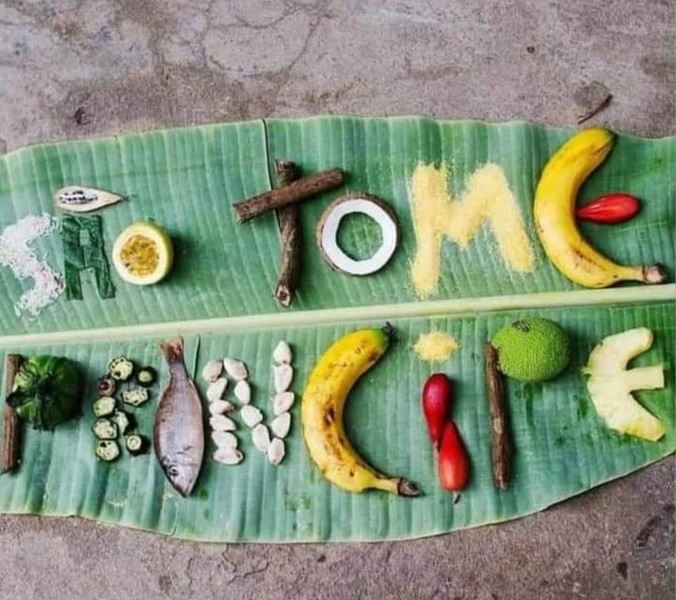
"Ah, here it is at last—that sweet scent of elsewhere so dear to Cricri and Lulu’s noses, that mix of apprehension and desire when facing the unknown.
We’re really diving into the unknown this time, taking you to the island of SAO TOMÉ... also known as the island: *‘Wait, what did you say?’* 😄. Because apparently, no one’s heard of Sao Tomé—except our Portuguese friends.
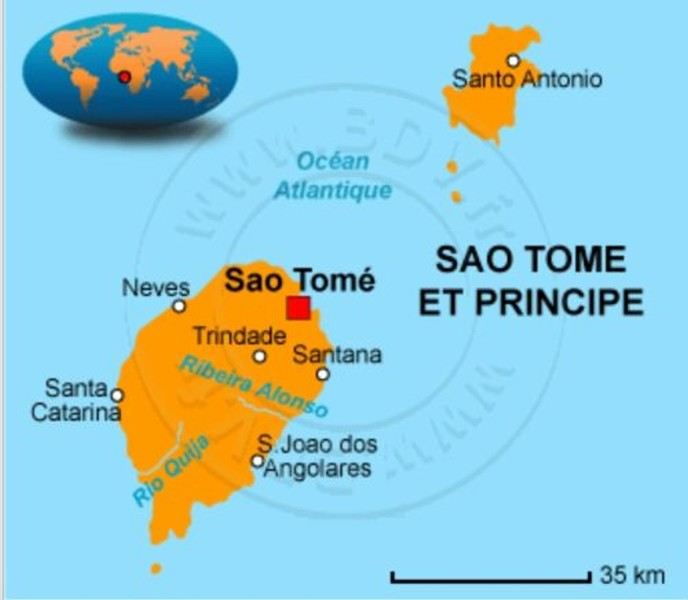
It’s an archipelago of three islands smack in the middle of the world, right on the equator, off the coast of Gabon.
No, these aren’t the sun-soaked, Polynesian lagoon islands. Here, *‘it rains, it pours...’* pretty much all the time, it seems.
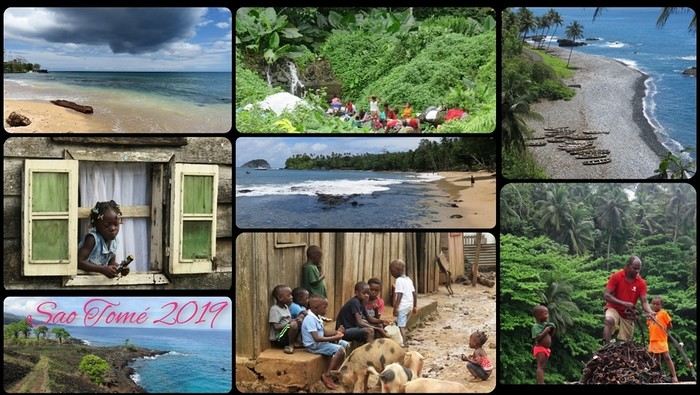
There’s not much to *‘see’* in the traditional tourist sense—EXCEPT for stunning landscapes, lush vegetation, a few beaches with golden or black sand, colonial buildings still in their original state, a single main road, and plenty of *‘tracks’* that are more or less drivable. All this surrounded by an African population that speaks Portuguese and is known for its warm welcome.
Well, that should be enough for our happiness—and hopefully yours too! 😊
Ready for landing?
"Ah, here it is at last—that sweet scent of elsewhere so dear to Cricri and Lulu’s noses, that mix of apprehension and desire when facing the unknown.
We’re really diving into the unknown this time, taking you to the island of SAO TOMÉ... also known as the island: *‘Wait, what did you say?’* 😄. Because apparently, no one’s heard of Sao Tomé—except our Portuguese friends.
It’s an archipelago of three islands smack in the middle of the world, right on the equator, off the coast of Gabon.
No, these aren’t the sun-soaked, Polynesian lagoon islands. Here, *‘it rains, it pours...’* pretty much all the time, it seems.
There’s not much to *‘see’* in the traditional tourist sense—EXCEPT for stunning landscapes, lush vegetation, a few beaches with golden or black sand, colonial buildings still in their original state, a single main road, and plenty of *‘tracks’* that are more or less drivable. All this surrounded by an African population that speaks Portuguese and is known for its warm welcome.
Well, that should be enough for our happiness—and hopefully yours too! 😊
Ready for landing?
Hiking fees in national parks in South Africa
Hi! In March, we’ll be spending two weeks in the Drakensberg region and Golden Highlands National Park (Clarens). From what I understand, you have to pay to hike if you're in a national park. I can’t find the rates or info on whether there are multi-day passes if we hike for several days. Could you help me out, please?
Thanks
Trip to the Drakensberg in South Africa
So, on these rainy days, I’m finally getting around to writing a little travel journal about the Drakensberg.
The Dragon Mountains, known as uKhahlamba in Zulu and Maluti in Sotho or Tswana.
Roughly speaking, we can break it down into: * The far north in the Free State at Golden Gate NP (managed by Sanparks, while the rest is run by KZN Wildlife). * Royal Natal National Park with the Amphitheatre, Sentinel Peak, and its famous "hike" (which I won’t talk about since I’ve never been there—it’s still on my to-do list!). * Cathedral Peak and Didima * Monk's Cowl * Giant's Castle * Hihghmoor and Kamberg * Sani Pass (which I haven’t visited in ages and won’t cover here).
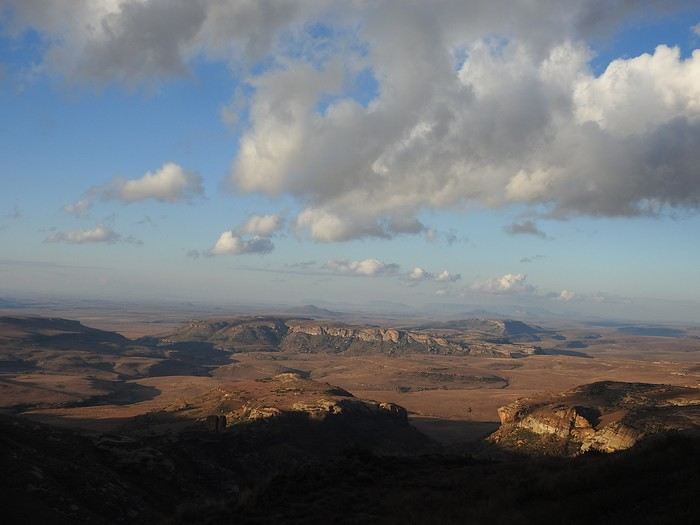
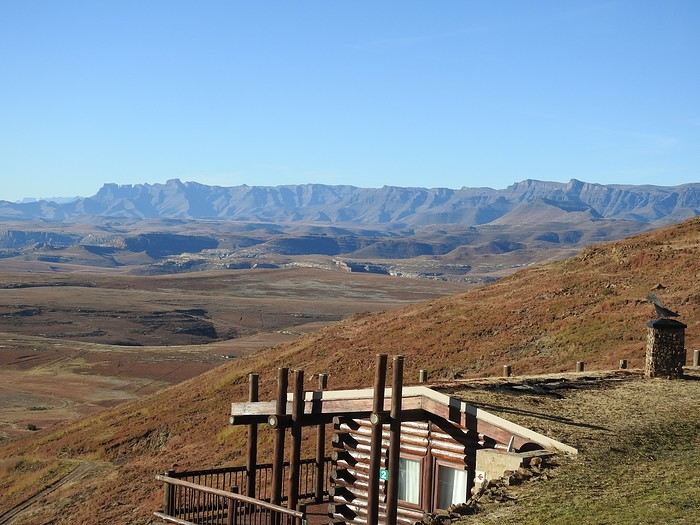
Highlands Mountain Retreat is the place to stay in Golden Gate if you can snag it. When the weather’s nice, the view is absolutely incredible—probably the most beautiful I’ve ever seen in South Africa!
Just a heads-up: it’s stunning but high up and cold, even *very* cold. The bungalows are cozy, and the little road leading there is charming. The park offers hikes ranging from easy to tough, but be warned—the maps are... not very clear or reliable, and we ended up on an endless, exhausting trek. There are plenty of animals (mostly antelopes, so not super diverse in terms of wildlife), hikes as mentioned... game drives on a paved road, and various walks. You feel remote but aren’t *that* far from civilization.

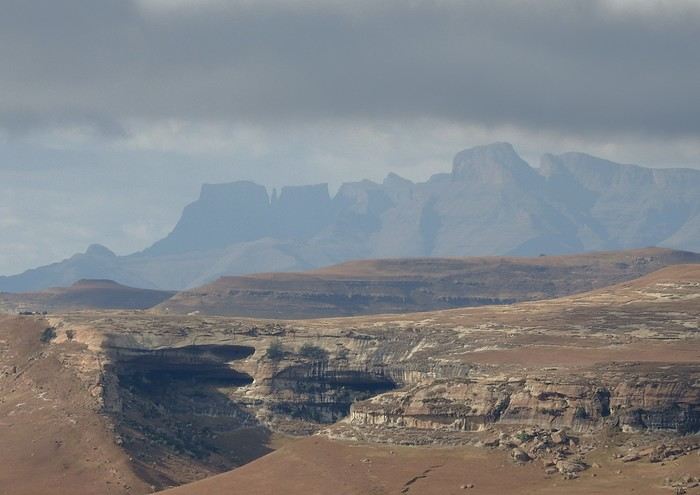

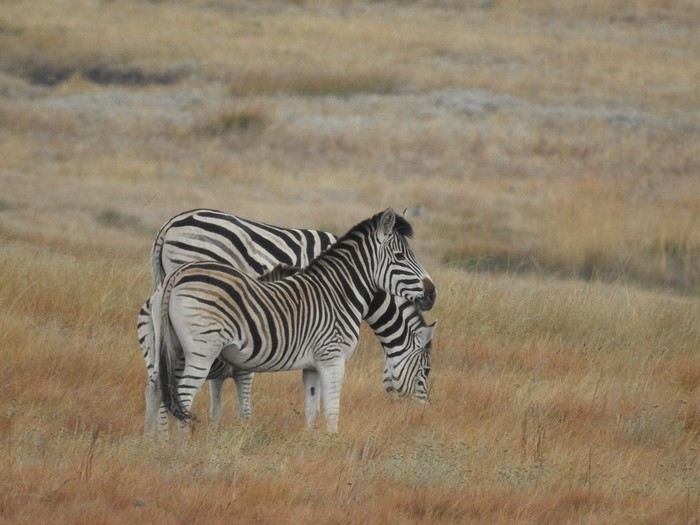


The Dragon Mountains, known as uKhahlamba in Zulu and Maluti in Sotho or Tswana.
Roughly speaking, we can break it down into: * The far north in the Free State at Golden Gate NP (managed by Sanparks, while the rest is run by KZN Wildlife). * Royal Natal National Park with the Amphitheatre, Sentinel Peak, and its famous "hike" (which I won’t talk about since I’ve never been there—it’s still on my to-do list!). * Cathedral Peak and Didima * Monk's Cowl * Giant's Castle * Hihghmoor and Kamberg * Sani Pass (which I haven’t visited in ages and won’t cover here).
Highlands Mountain Retreat is the place to stay in Golden Gate if you can snag it. When the weather’s nice, the view is absolutely incredible—probably the most beautiful I’ve ever seen in South Africa!
Just a heads-up: it’s stunning but high up and cold, even *very* cold. The bungalows are cozy, and the little road leading there is charming. The park offers hikes ranging from easy to tough, but be warned—the maps are... not very clear or reliable, and we ended up on an endless, exhausting trek. There are plenty of animals (mostly antelopes, so not super diverse in terms of wildlife), hikes as mentioned... game drives on a paved road, and various walks. You feel remote but aren’t *that* far from civilization.
4x4 Expeditions in Southern Africa
Hi there,
Here’s a quick summary of six trips across Southern Africa, covering South Africa, Namibia, Botswana, Zimbabwe, and more. I traveled for a total of 23 months, over 100,000 km, and crossed 9 countries from South Africa to Tanzania. To do this, I bought an old Land Cruiser—a 1989 BJ 75 with a long chassis and a 3.4L turbo engine—which I converted into a bush camper set up for self-sufficiency in Africa: dual fuel tanks (235 L total) plus 2 x 20-liter jerry cans of diesel, 2 spare tires, a compressor, a toolbox with repair gear, a 50-liter water tank plus 2 x 30-liter and 2 x 10-liter jerry cans, a roof tent, multiple storage boxes, a sturdy roof rack, and even a paramotor. I also packed a first-aid kit and shipped the camper to South Africa by freight. My son joined me for part of the journey.
Key countries and highlights: South Africa in every direction, including its wildlife parks; in Namibia, the classics like Etosha, Fish River, Sossusvlei, Kaudum, but especially Damaraland and Kaokoland; in Botswana, a full loop of the Okavango, crossing the Makgadikgadi Pan, Moremi Park, the Linyanti River; and a tour of Zimbabwe with its national parks. During the last trip in 2020, due to COVID, we found refuge on a 250 km² Namibian farm with its own wildlife reserve. While crossing Damaraland and Kaokoland, we were completely self-sufficient, with supplies for over a month and 130 L of water.
In South Africa and Namibia, one issue that surprised us was the fences stretching for millions of kilometers along the tracks. Namibia is one and a half times the size of France but has a population of only about 2.5 million, mostly concentrated in a dozen small towns of 10,000 to 50,000 people—except for the capital, Windhoek (296,000). Paradoxically, compared to France, the space for freedom is extremely limited. Everything is private and requires payment. Even the Namib Desert is fenced... and you need a permit just to pick up a rock! For someone used to wild camping, it can get frustrating. Sometimes we ignored the rules, but the best solution is to ask a farmer (a real one, like a sheep or cattle rancher—not the ones with 3-meter electrified fences, which are lodges or private reserves) if you can camp on their land.
To truly enjoy freedom in Namibia, you need to venture into the northwest, along the Skeleton Coast, in Damaraland and Kaokoland. However, it’s essential to know your vehicle inside out, be a good mechanic, bring spare parts, and plan for potential breakdowns. Take care of your ride because a major issue out there can be a matter of survival. My motto: "Don’t break down, don’t break down, don’t break down..." Safari pros only venture into this region with two 4x4s. In Messum Crater, we met a couple waiting for rescue (thanks to a satellite device from their rental company) after their driveshaft broke. Keep in mind that in these areas, you’ll cover about 80 km in 8 hours.
Here are some of the issues we faced: a broken rear suspension leaf, several broken bolts on the front leaf springs, the spare tire mount breaking multiple times (replaced on the spot), a cracked water radiator in 1998 causing overheating and a seized valve stem in its guide, plus a bent rocker arm (field repair, valve adjustment, damaged head gasket, daily radiator refills, and a scratched cylinder—engine fully rebuilt upon return). Five roof rack mounts broke and were repaired at a technical high school in South Africa. The battery mount also broke (fixed with a steel plate found on the trail). The fuel filter clogged several times (changed or cleaned on the spot). A huge impact on the windshield from a piece of coal falling from a power plant supply truck (temporary repair with Araldite). The brake master cylinder failed in Marienfluss (repaired, seals replaced in Tsumeb). Multiple flat tires from acacia thorns. The rear door latch broke (homemade aluminum rod repair in Franschhoek). The voltmeter and ammeter failed (repaired on the spot). During the freight trip, despite locking the doors and having a partition between the front and back, someone managed to get in through the small side window, forced open the locks on two accessible storage boxes, and stole my tools (replaced later). A ball joint on the paramotor frame came loose mid-flight, damaging the wing and propeller (propeller shipped from France, homemade repair).
Health issues on the way to Tanzania: a painful sciatica and many sleepless nights (cortisone injection in Dodoma).
Kaokoland, Namibia—the northwest region: https://youtu.be/DzGepFsrnZs
Damaraland: https://youtu.be/DITQj8NvLZ4
Botswana: https://youtu.be/TEvDG0S62hg
Kaudom and Mohembo Parks: https://youtu.be/wq_Yf7jNLhw
Here’s a quick summary of six trips across Southern Africa, covering South Africa, Namibia, Botswana, Zimbabwe, and more. I traveled for a total of 23 months, over 100,000 km, and crossed 9 countries from South Africa to Tanzania. To do this, I bought an old Land Cruiser—a 1989 BJ 75 with a long chassis and a 3.4L turbo engine—which I converted into a bush camper set up for self-sufficiency in Africa: dual fuel tanks (235 L total) plus 2 x 20-liter jerry cans of diesel, 2 spare tires, a compressor, a toolbox with repair gear, a 50-liter water tank plus 2 x 30-liter and 2 x 10-liter jerry cans, a roof tent, multiple storage boxes, a sturdy roof rack, and even a paramotor. I also packed a first-aid kit and shipped the camper to South Africa by freight. My son joined me for part of the journey.
Key countries and highlights: South Africa in every direction, including its wildlife parks; in Namibia, the classics like Etosha, Fish River, Sossusvlei, Kaudum, but especially Damaraland and Kaokoland; in Botswana, a full loop of the Okavango, crossing the Makgadikgadi Pan, Moremi Park, the Linyanti River; and a tour of Zimbabwe with its national parks. During the last trip in 2020, due to COVID, we found refuge on a 250 km² Namibian farm with its own wildlife reserve. While crossing Damaraland and Kaokoland, we were completely self-sufficient, with supplies for over a month and 130 L of water.
In South Africa and Namibia, one issue that surprised us was the fences stretching for millions of kilometers along the tracks. Namibia is one and a half times the size of France but has a population of only about 2.5 million, mostly concentrated in a dozen small towns of 10,000 to 50,000 people—except for the capital, Windhoek (296,000). Paradoxically, compared to France, the space for freedom is extremely limited. Everything is private and requires payment. Even the Namib Desert is fenced... and you need a permit just to pick up a rock! For someone used to wild camping, it can get frustrating. Sometimes we ignored the rules, but the best solution is to ask a farmer (a real one, like a sheep or cattle rancher—not the ones with 3-meter electrified fences, which are lodges or private reserves) if you can camp on their land.
To truly enjoy freedom in Namibia, you need to venture into the northwest, along the Skeleton Coast, in Damaraland and Kaokoland. However, it’s essential to know your vehicle inside out, be a good mechanic, bring spare parts, and plan for potential breakdowns. Take care of your ride because a major issue out there can be a matter of survival. My motto: "Don’t break down, don’t break down, don’t break down..." Safari pros only venture into this region with two 4x4s. In Messum Crater, we met a couple waiting for rescue (thanks to a satellite device from their rental company) after their driveshaft broke. Keep in mind that in these areas, you’ll cover about 80 km in 8 hours.
Here are some of the issues we faced: a broken rear suspension leaf, several broken bolts on the front leaf springs, the spare tire mount breaking multiple times (replaced on the spot), a cracked water radiator in 1998 causing overheating and a seized valve stem in its guide, plus a bent rocker arm (field repair, valve adjustment, damaged head gasket, daily radiator refills, and a scratched cylinder—engine fully rebuilt upon return). Five roof rack mounts broke and were repaired at a technical high school in South Africa. The battery mount also broke (fixed with a steel plate found on the trail). The fuel filter clogged several times (changed or cleaned on the spot). A huge impact on the windshield from a piece of coal falling from a power plant supply truck (temporary repair with Araldite). The brake master cylinder failed in Marienfluss (repaired, seals replaced in Tsumeb). Multiple flat tires from acacia thorns. The rear door latch broke (homemade aluminum rod repair in Franschhoek). The voltmeter and ammeter failed (repaired on the spot). During the freight trip, despite locking the doors and having a partition between the front and back, someone managed to get in through the small side window, forced open the locks on two accessible storage boxes, and stole my tools (replaced later). A ball joint on the paramotor frame came loose mid-flight, damaging the wing and propeller (propeller shipped from France, homemade repair).
Health issues on the way to Tanzania: a painful sciatica and many sleepless nights (cortisone injection in Dodoma).
Kaokoland, Namibia—the northwest region: https://youtu.be/DzGepFsrnZs
Damaraland: https://youtu.be/DITQj8NvLZ4
Botswana: https://youtu.be/TEvDG0S62hg
Kaudom and Mohembo Parks: https://youtu.be/wq_Yf7jNLhw
Getting around Zambia and choosing wildlife parks
Hello,
We’re planning a trip to Zambia in 2 years. This will be our 4th trip to Southern Africa—the last one this year was Moremi, Boteti, KCGR, and KTP as a self-drive with campsites and no guide, just my wife and me. For this year’s trip, we prepared 2 years in advance—bookings are really complicated. We were lucky to get a spot at Bitterpan in KTP (there are only 4 chalets).
We’d like to know if it’s easy to get around Zambia, especially when it comes to restocking supplies. Should we rent a 4x4 in Zambia, Namibia, or South Africa? Botswana is very expensive. Which parks are the most interesting? We’re into wildlife photography.
Looking forward to hearing from you. Thanks in advance! Best regards, Jean-Marc
We’d like to know if it’s easy to get around Zambia, especially when it comes to restocking supplies. Should we rent a 4x4 in Zambia, Namibia, or South Africa? Botswana is very expensive. Which parks are the most interesting? We’re into wildlife photography.
Looking forward to hearing from you. Thanks in advance! Best regards, Jean-Marc
La prière dans le monde!
La nuit tombe d’un coup et je suis sans cesse étonnée de passer ainsi du clair au noir.
Après cette journée fatigante, je rentre à la maison et jette mes sandales dans un coin.
Dans son petit bassin de bronze, la fleur de lotus est déjà refermée.
Tout est silencieux mais j’entends le léger murmure incantatoire de Tiago.
Il prie.
Assis devant son petit autel, les volutes odorantes des bâtonnets d’encens s’enroulent autour de ses cheveux noirs. Son dos dur et sombre luit et la lueur de la flamme dans la coupelle de ghee danse sur ses épaules.
La grande image de Shiva fixée au mur se décolle dans un angle, pliant les pointes du trident.
Le dieu garde ses yeux mi-clos sur la création du monde et les cycles de l’univers.
Dans sa longue chevelure, au sommet de sa tête s’enroule un serpent.
Un dieu coloré bienveillant dans cette représentation, l’une de ses quatre mains ouverte sur le genou.
Tiago a posé son offrande, une noix de coco est une guirlande de fleurs jaune dont je ne retiens jamais le nom.
Immobile.
Il prie.
__
J’ai vu des gens agenouillés, des gens couchés face contre terre, assis en tailleur, assis mains jointes. J’ai vu des gens danser, j’ai vu des processions colorées, j’ai entendu des mélopées hypnotiques, j’ai écouté des cymbales, des trompettes, de grandes orgues, des chants liturgiques, des psaumes, le fanbai, des chants grégoriens et des gospels, des chants diphoniques qui remuent le ventre.
J’ai vu des flèches perçant les nuages, des coupoles dorées, des dômes de pierre, des cathédrales, des temples, des autels flamboyant de dorures, des allées de chevaux de pierre, des temples de feu et des chapelles de pierre blotties sous les ombrages, de bois ensevelies sous la neige, des cryptes froides et silencieuses, des maisons d’adoration sans effigie, des monastères accrochés à la montagne , des cloîtres dans la ville.
j’ai vu des costumes de cérémonies multicolores, des tenues de fourrure, des saris de fêtes soyeux, des chapeaux rouge étranges, des plumets et des têtes rasées. J’ai vu des hommes tirer des chars la peau du dos distendue par des crochets, j’ai été subjuguée par des mandala de sable, tout est éphémère.
Partout où mes pas ont foulé d’autres terres, j’ai vu des croyants réunis, rassemblés, unis, bruyants, silencieux, exaltés, recueillis.
J’ai touché des chapelets de buis, d’ivoire, en corail, en noyaux, les perles égrenant le nom divin, les mantras, les prières, tenu des croix de roseaux, de feuilles de maïs, porté des couronnes de fleurs, tenu des moulins de prière. J’ai regardé des dieux vêtus d’oripeaux décolorés, vêtus d’habits précieux, nus ceints d’un pagne, l’arbre à souhaits aux rubans multicolores agités par les tourbillons de neige.
J’ai respiré l’odeur de l’encens, j’ai respiré l’odeur de la cire fondue, j’ai respiré le parfum des fleurs fraîches et l’odeur surette des offrandes pourrissantes.
J’ai fermé les yeux, souvent, pour mieux entendre, pour mieux comprendre.
Et je sais, qu’aujourd’hui, je ne sais rien de cette ferveur puissante qui soulève et porte et emporte les peuples du monde. Je sais aussi que le tremblement de mes jambes et les yeux qui picotent devant la ferveur de Tiago, ce soir là, il y a des lustres, huit peut-être, c’est tellement loin, fut ce qui s’approchait le plus d’une prière. Ou, peut-être étais-je secrètement amoureuse...
Ainsi, je crois que beaucoup ont vécu ces instants étranges de communion, d’observation respectueuse, que beaucoup connaissent les rites et rituels, les byzantins, coptes, maronites, et tant d’autres, des rites de passage et des rites d’intercessions appelant la pluie, la fécondité . Ces rites qui rythment la vie dans tous ces pays que je n’aurais plus le temps de connaître.
Comment se vit la prière en Afrique, chez les aborigènes d’Australie, à Madagascar, à Cuba, en Chine, au Japon, en Indonésie ou ailleurs ?. Comment se vit-elle, la prière, aujourd’hui où partout des moments religieux forts s’annoncent ? Monothéiste, animiste, shintoïsme, bouddhisme, syncrétisme religieux, l’aspect religieux est toujours présents dans mes voyages, l’est-il pour vous aussi ?
Z’avez lu jusqu’au bout ? Bravo, vous avez gagné une image pieuse ou non. Pour ce faire, aller dans la rubrique -jeux voyages – sur le fil -défilés et processions -, il y en a des magnifiques.
J’ai vu des gens agenouillés, des gens couchés face contre terre, assis en tailleur, assis mains jointes. J’ai vu des gens danser, j’ai vu des processions colorées, j’ai entendu des mélopées hypnotiques, j’ai écouté des cymbales, des trompettes, de grandes orgues, des chants liturgiques, des psaumes, le fanbai, des chants grégoriens et des gospels, des chants diphoniques qui remuent le ventre.
J’ai vu des flèches perçant les nuages, des coupoles dorées, des dômes de pierre, des cathédrales, des temples, des autels flamboyant de dorures, des allées de chevaux de pierre, des temples de feu et des chapelles de pierre blotties sous les ombrages, de bois ensevelies sous la neige, des cryptes froides et silencieuses, des maisons d’adoration sans effigie, des monastères accrochés à la montagne , des cloîtres dans la ville.
j’ai vu des costumes de cérémonies multicolores, des tenues de fourrure, des saris de fêtes soyeux, des chapeaux rouge étranges, des plumets et des têtes rasées. J’ai vu des hommes tirer des chars la peau du dos distendue par des crochets, j’ai été subjuguée par des mandala de sable, tout est éphémère.
Partout où mes pas ont foulé d’autres terres, j’ai vu des croyants réunis, rassemblés, unis, bruyants, silencieux, exaltés, recueillis.
J’ai touché des chapelets de buis, d’ivoire, en corail, en noyaux, les perles égrenant le nom divin, les mantras, les prières, tenu des croix de roseaux, de feuilles de maïs, porté des couronnes de fleurs, tenu des moulins de prière. J’ai regardé des dieux vêtus d’oripeaux décolorés, vêtus d’habits précieux, nus ceints d’un pagne, l’arbre à souhaits aux rubans multicolores agités par les tourbillons de neige.
J’ai respiré l’odeur de l’encens, j’ai respiré l’odeur de la cire fondue, j’ai respiré le parfum des fleurs fraîches et l’odeur surette des offrandes pourrissantes.
J’ai fermé les yeux, souvent, pour mieux entendre, pour mieux comprendre.
Et je sais, qu’aujourd’hui, je ne sais rien de cette ferveur puissante qui soulève et porte et emporte les peuples du monde. Je sais aussi que le tremblement de mes jambes et les yeux qui picotent devant la ferveur de Tiago, ce soir là, il y a des lustres, huit peut-être, c’est tellement loin, fut ce qui s’approchait le plus d’une prière. Ou, peut-être étais-je secrètement amoureuse...
Ainsi, je crois que beaucoup ont vécu ces instants étranges de communion, d’observation respectueuse, que beaucoup connaissent les rites et rituels, les byzantins, coptes, maronites, et tant d’autres, des rites de passage et des rites d’intercessions appelant la pluie, la fécondité . Ces rites qui rythment la vie dans tous ces pays que je n’aurais plus le temps de connaître.
Comment se vit la prière en Afrique, chez les aborigènes d’Australie, à Madagascar, à Cuba, en Chine, au Japon, en Indonésie ou ailleurs ?. Comment se vit-elle, la prière, aujourd’hui où partout des moments religieux forts s’annoncent ? Monothéiste, animiste, shintoïsme, bouddhisme, syncrétisme religieux, l’aspect religieux est toujours présents dans mes voyages, l’est-il pour vous aussi ?
Z’avez lu jusqu’au bout ? Bravo, vous avez gagné une image pieuse ou non. Pour ce faire, aller dans la rubrique -jeux voyages – sur le fil -défilés et processions -, il y en a des magnifiques.