Results for "Alaska"
About 3,363 results.
More options
Many results are in French, the community’s main language. English translations are added over time.
Search results
Obtenir un visa russe depuis l'étranger?
Bonjour,
bientôt nous arrivons en Alaska, nous souhaitons trouver un cargo pour aller à Vladivostok, pouvez vous me renseigner sur les démarches à suivre et délais pour obtenir le visa Russe.
merci.
Croisière sur le Millenium
Bonjour, en août prochain je voyagerai (Alaska-Vancouver) sur le paquebot de croisière Millenium.🙂
Je n'ai jamais fait ce genre de voyage et j'aimerais bien connaître l'avis de personnes ayant navigué sur ce paquebot. Ce qui m'intéresse c'est la tenue vestimenaire appropriée pour le repas du soir....😊
Je vous remercie de votre prochain message.
Formalités aux passages des frontières en voiture en Amérique du Nord, Centrale et du Sud
nous avons l'intention de traverser Alaska Argentine en voiture particulière que nous amènerions de France. Pouvez vous nous dire que faut il faire comme paperasserie administrative, pour assurer notre voiture à chaque passage de frontière. Canada Etats unis- Etats Unis -Mexique - Guatemala - Honduras - Salvador- Nicaragua- COsta Rica - Panama - COlombie - Equateur - Perou - Bolivie - Argentine. Merci de votre réponse
chicago 1 jour
bonjour, ns allons en alaska cet ete et au retour ns avons une escale de 12 heures à chicago. que conseillez vous de faire pdt ce temps? est ce facile d'aller au centre depuis l'aeroport?
merci d'avance
Chien de traineau dans le Yukon
Salut à tous !
Je souhaite prochainement voyager en Alaska !!
Mais voila un vieux rêve me tiens à coeur : effectuer une escapade au Yukon en chien de traineau avec un musher : )
Ma volonté serait de trouver un format assez « engagé » (sportif , pas forcément à la recherche de confort...) sur une période assez longue pour se permettre de sortir des sentiers battus....
La première étape dans cette démarche : j’ai trouvé très peu d’informations/carnet de voyage pour des voyages de ce type là !
Mais peut-être que la communautée aura d’avantage d’information : - avez-vous des expériences similaires à partager ? - des coordonnées ?
Merci pour votre aide dans ma démarche !!! A++
Alex
Je souhaite prochainement voyager en Alaska !!
Mais voila un vieux rêve me tiens à coeur : effectuer une escapade au Yukon en chien de traineau avec un musher : )
Ma volonté serait de trouver un format assez « engagé » (sportif , pas forcément à la recherche de confort...) sur une période assez longue pour se permettre de sortir des sentiers battus....
La première étape dans cette démarche : j’ai trouvé très peu d’informations/carnet de voyage pour des voyages de ce type là !
Mais peut-être que la communautée aura d’avantage d’information : - avez-vous des expériences similaires à partager ? - des coordonnées ?
Merci pour votre aide dans ma démarche !!! A++
Alex
Kayaking in Greenland - Disko Bay: Circumnavigation of Arve Princess Island
After two rather rainy kayaking experiences in Alaska at the end of summer in recent years, we chose a slightly drier destination for this late August 2018: the west coast of Greenland. The temperature will certainly be a bit colder, especially at this time of year, but we’re betting on a beautiful end to the season. According to temperature charts, it should be around 5 to 10°C with a few night frosts. The tundra will already have its autumn colors, and by the end of the trip, we might be lucky enough to see the northern lights when the nights get darker.
We’re setting off as a group of three in two inflatable double-seater kayaks (Gumotex) brought from France. The plan is to spend two weeks circumnavigating Arve Princess Island, located north of Ilulissat in Disko Bay, with a possible boat drop-off at the southern tip of the island.
This seems like a fairly classic route in the area—we found several descriptions online (thanks to the authors). With their help and Google Earth, we identified all potential campsites and entered their coordinates into a GPS. The western part of the island, facing the bay, seems ideal for whale watching, while the more rugged eastern side offers access to several glacial walls. We’re somewhat familiar with the area from two winter expeditions on skis and pulkas.
Plus, the commitment is limited due to the island’s proximity to several small villages, including Qeqertaq, Oqaatsut, and even Ilulissat. In fact, we saw fishing boats almost every day. The distance suits us well: 200 kilometers in 16 full days on site, which should leave some leeway in case of bad weather or for hiking.
We booked our flights in June with Air Greenland to Ilulissat for the last week of August and the first week of September. On both the outbound and return trips, we stayed overnight in Copenhagen. The France-Copenhagen flight was with Air France.
We were allowed 3 x 20 kg in the hold. Each kayak with its accessories fits into a 20 kg bag; the last hold bag is for shared gear: tent, stoves, dry bags… We only brought 1.5 kg of semolina for food. In the end, we had 61 kg of gear, and no excess baggage was charged.
Individual gear (clothes and sleeping bags…) was distributed in the cabin luggage.
For the boat transfer, we contacted an agency: Blue Jay, which gave us a number to call upon arrival.
Day 0: Wednesday, August 22 Departure day. After work, I drove from Gap to Marseille’s Marignane Airport for the first leg of the trip to Copenhagen. I enjoyed the rather mild local temperatures: 35°C in the shade. After a layover in Paris, I arrived at the Copenhagen hotel, located two train stops from the airport, where my companions were already settled. No issues—everyone was on time with their luggage.
Day 1 The flight to Greenland was at 9 AM. We had a layover in Kangerlussuaq, where we changed planes, then stopped in Aasiaat before reaching Ilulissat Airport at 3 PM under beautiful sunshine.
We called Blue Jay for the boat transfer: they could take us to the island as early as 6 PM; otherwise, we’d have to wait until the next day. That left us 3 hours to prepare our gear and, most importantly, do our shopping for the two-week trip—it seemed tight, but we gave it a shot.
A quick taxi ride took us to Pisiffik, where we easily found everything we needed: bread, butter, cheese, cold cuts, rice, pasta, jam, muesli… There was no C fuel or methylated spirits for the stoves, but this time we knew the trick: at Stark, a bit uphill from the town, we found the precious liquids. Two hours later, we filled our dry bags and containers with our purchases, and by 5:30 PM, we met Klaus, the Blue Jay manager, directly at the port.
The vacation seemed to truly begin as we sped by boat through the icebergs toward Arve Princess Island. Forty-five minutes later, we spotted a beach lined with rocks where Klaus dropped us off quickly (he had another transfer to make right after).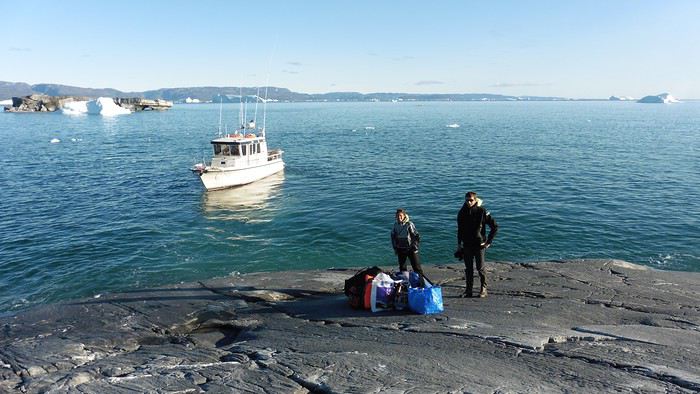
Here we were on the island, in the middle of nowhere, with all our luggage and food to organize, the tent to set up, and the kayaks to inflate—just 10 hours after leaving the Copenhagen hotel. We got to work, bothered by the flies. Despite our head nets, it was barely tolerable—there were so many of them. They swarmed by the dozens into every bag we opened. It was quite mild: 10°C.
Everything was ready by evening, and we were very happy to have completed all these transfers (planes and boat in a single day) as we slipped into our sleeping bags.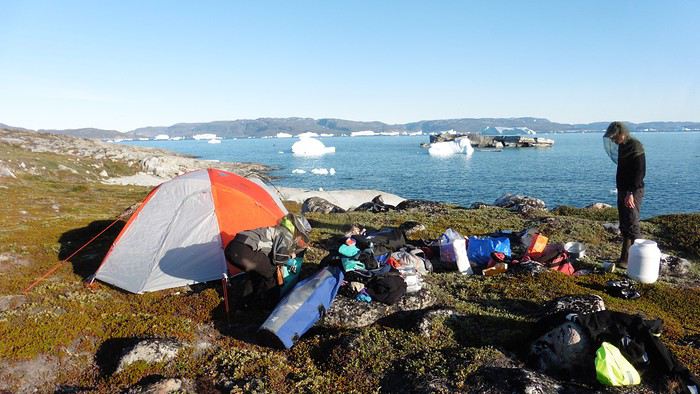
During the night, the wind picked up, and we went out several times to check the tent and kayak anchors. We noticed how bright it was—it was still quite twilight even at 1 AM.
Day 2 5:30 AM wake-up—the south wind was still strong, but since we were heading north, we decided to give it a try anyway.
This was also the moment we loaded the kayaks: since there were only three of us for two double-seater kayaks, we filled the hatch of one kayak, which allowed us to fit all our food. It would have been very difficult if there had been four of us for two kayaks.
Finally, we set off north along the western coast of the island. The conditions were far from ideal—the sea was rough, and the kayaks had a lot of wind resistance. But the main problem was the spray skirt: the gear on deck weighed it down, and the skirt kept coming off… We’d have to deal with it. Barely underway, and whales were already breaking the surface—it was our first time seeing them, and we were very impressed. Too bad the wind didn’t allow for longer contemplation; stopping paddling was impossible with such strong gusts.
We passed a few headlands and even considered stopping due to the conditions. To find some semblance of shelter, we had to hug the coast closely without cutting across the numerous bays, which significantly lengthened the journey. But as the morning went on, the wind died down, and the sea calmed. We spotted several whales and our first seals. It was almost pleasant during the picnic break. By late afternoon, we reached Kangerup Sarqâ Bay, where we had identified a great campsite with a very large beach and a river. But the wind had shifted—it was now coming from the north, making the last hour difficult due to fatigue and headwinds.
The campsite was ideal and beautiful, facing numerous icebergs grounded in the bay.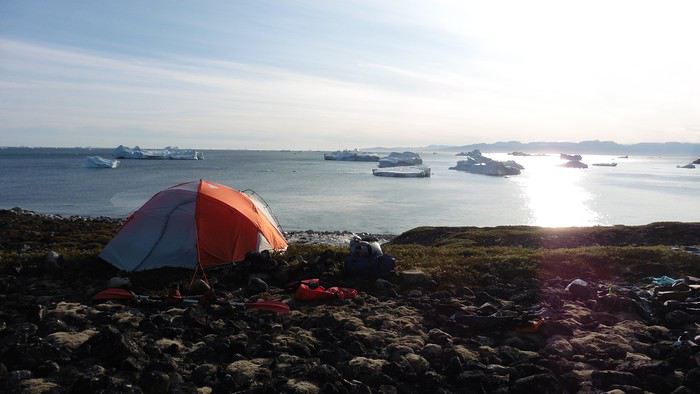
The GPS alerted us to another major drawback of inflatable kayaks: their slowness. It took us 7.5 hours of actual paddling (excluding breaks) to cover 28 km, averaging 3.7 km/h—somewhat disappointing. But we knew this before leaving, and once again, we’d have to make do!
Day 3 Surprise: at 6 AM wake-up, it was raining, foggy, with a south wind, and the sea was choppy even in the bay. It seemed wise to skip paddling, even though stopping on the second day was tough on morale. We went back to sleep, especially since the travel fatigue and the harsh conditions of the previous day had taken their toll.
At 11 AM, the navigation conditions weren’t any better—at the ends of the bay, we saw huge waves crashing onto the rocks, and giving up for the day became obvious. However, the rain had stopped, so we set off for a hike along the large lake bordering the bay. The wind hadn’t let up, and it was quite cold.
The tundra was starting to take on its autumn colors, and the contrast between the white lichens and the red vegetation was stunning. At the lake, we took out the fishing rods and quickly caught two beautiful Arctic char over 50 cm long.
As the afternoon wore on, the sun seemed closer. Along the beach, we gathered driftwood (mostly old planks) to cook our catch in foil over a fire. Eating our own food in such a beautiful place next to a good fire was comforting after the day’s setback.
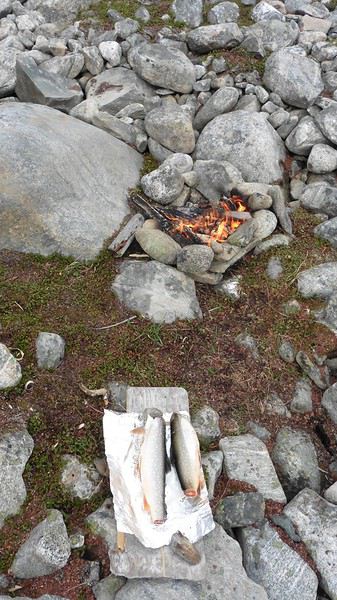
In the middle of the night, an Arctic fox entered the tent’s rear awning. It seemed barely intimidated when we shooed it away with loud shouts and then with stones.
Day 4 6:15 AM wake-up—3°C. We were on the water by 8 AM. The wind had dropped significantly, but the sea was shrouded in fog, and it was very cold in these damp conditions.
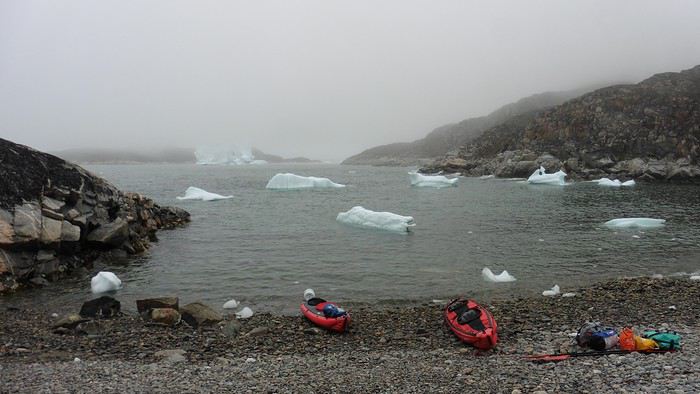
We passed the bay’s headland, Kangea, and headed toward the abandoned village of Agpat. The atmosphere was very austere—we hugged black rocks in fog that limited visibility to 50 meters, revealing large icebergs as we went.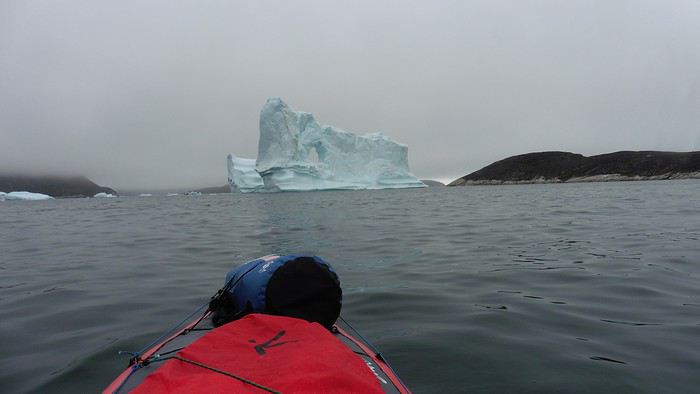
Suddenly, the water’s surface stirred in front of my kayak, and a huge gray back emerged from the sea. The collision was inevitable, but the whale seemed to understand and dove immediately, passing under the kayak and resurfacing a few meters away. I felt the kayak rock in the white foam and quickly paddled to escape the turbulence. What an emotion!
A light wind began to clear the fog, and the sun made beautiful appearances. Despite the cold, we stopped to visit the abandoned village, which left a strange impression. All the houses were still in good condition and wide open—some must have been very spacious in their time. We went back to sea, and in front of the large Kaangerdluk Bay, we hesitated—the headwind was strong, and large waves split the water. The next beach, from the island of Nua where we stopped to think, was over 8 km away. It was barely 2 PM, but caution led us to stop here for the day. We had covered 12 km—exactly the distance needed to stay on schedule. The afternoon was spent hiking on the island’s hills and gathering mussels and wood.
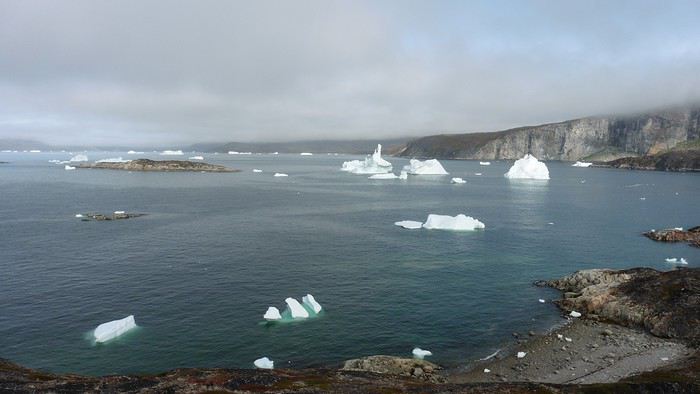
In the evening, we cooked these large Greenlandic mussels over a wood fire and savored them under the beautiful evening light. The weather was now fine, but the thermometer read -5°C in the sun…
Day 5 Bright sunshine, a glassy sea, and -8°C at 6 AM. Everything was green for setting off, even if putting on damp kayaking gear was a bit unpleasant in the cold. It was the first time we’d paddled on a flat sea since the start of the trip, and our average speed increased slightly.
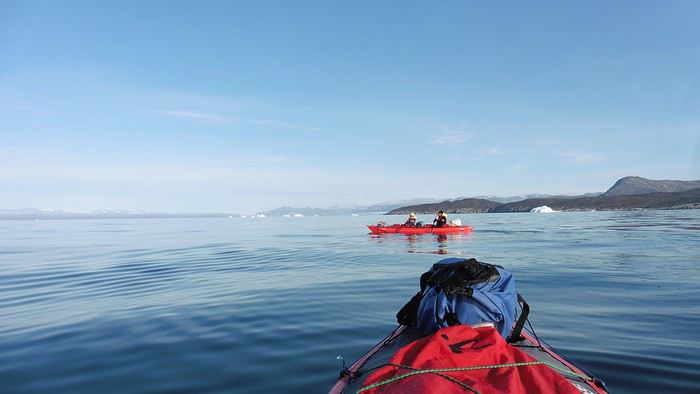
We entered the Smallesund Strait, marking the end of the island’s west coast. We were close to the large Torssukatak Fjord, where two glaciers flow. The access pass to the fjord was very narrow, and numerous ice chunks blocked access to the beaches. The wind had picked up and was now hitting us head-on (again). Just before entering the fjord, we landed on a steep beach made of large pebbles on Oqaitsut Island. It was very cold with the wind, and moving forward became difficult. We decided to stop for the day both because of the conditions and because the next campsite was far away, given how rugged the fjord was.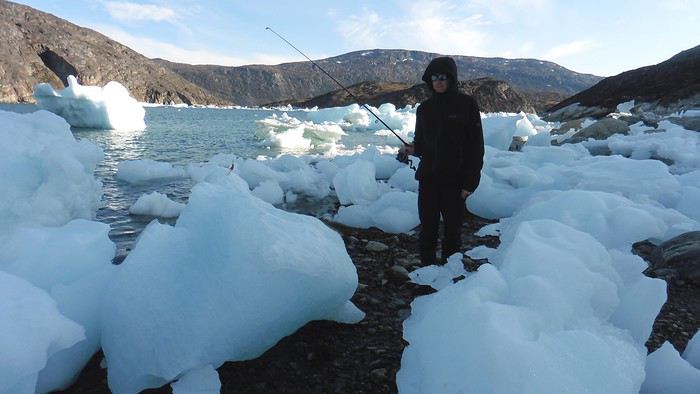
We eventually found a flat spot for the tent despite the steep slope. Even with the wind, the weather was beautiful, and we set off on foot for the northeastern cape of the island, overlooking the fjord. The view was far-reaching and exceptional—up close, the large fjord filled with ice and its steep granite cliffs, and in the distance, the ice cap and glacial walls.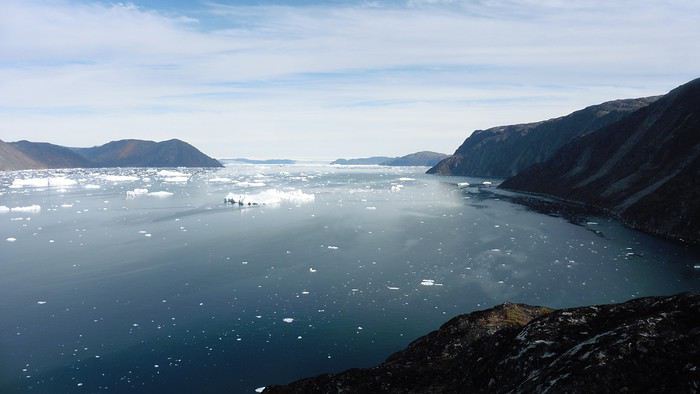
We spotted the village of Qeqertaq, whose network we could pick up, allowing us to check the weather forecast, which was rather good. While securing the kayaks in the evening, I noticed the strange behavior of one kayak at the end of the stage was due to the loss of the skeg—impossible to know where it detached. We’d have to do without it.
Day 6 Still that icy headwind from the northeast. We set off anyway for a long stage to reach the large pass connecting the Torssukatak and Ata Fjords.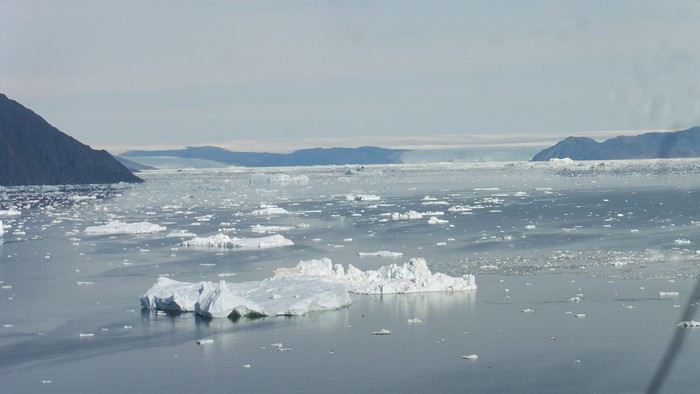
We advanced laboriously along the high cliffs of the fjord’s southern shore. They faced due north and blocked the sun. We felt the cold and dampness of the rock. It was really cold, especially in the extremities. We picnicked on the western cape of Qeqertakavasak Island. The cold didn’t allow us to stop for more than 20 minutes… But the wind dropped, and the sea was now very smooth. It was heavily cluttered with ice between the icebergs and old pack ice. The goal was to reach the large rocky promontory of Anapnuna, wedged between the Kujatdleq and Kangilerngata Glaciers, but the ice made progress difficult. We stopped to gain height on a small island and spot a passage of open water, but all we saw was white—passing seemed impossible. The currents were very complex, and entire sections of ice were being swept in one direction and then another at an impressive speed.
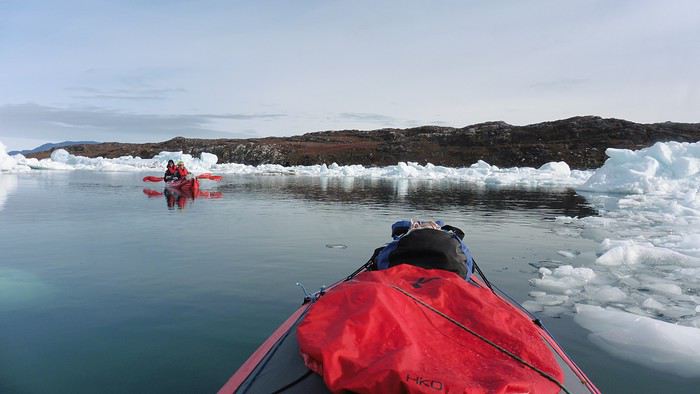
We wandered through this labyrinth until landing on a beach on the small island of Takissut, where we set up camp, exhausted from the 30 km covered and the vigilance required by the abundance of ice. The place was sublime under the evening sun—we were surrounded by ice and mountains, with the Kangilerngata Glacier in the distance. The summer contrasts were striking between the water, icebergs, sky, and flaming tundra—all colors were represented. Absolute calm reigned.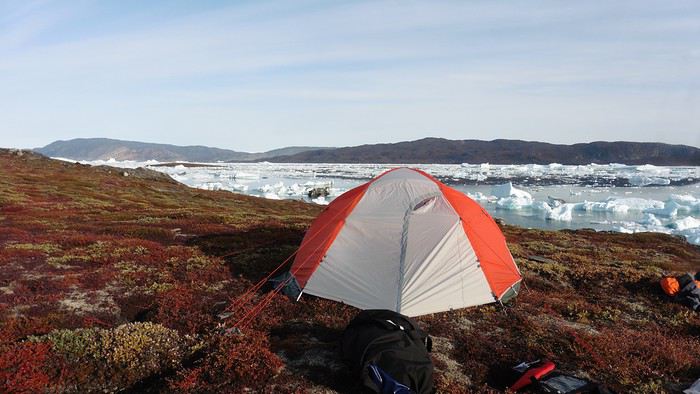
The lack of drinking water at this spot wasn’t too much of a constraint: as soon as we arrived on the beach, we placed containers under the icebergs stranded in the intertidal zone. They were all full by the time we finished setting up.
Day 7 We had to change our plans: we wouldn’t reach the rocky promontory, too well protected by the ice. We set off under the sun for Igdluluarssuit Island. Although we had spotted a passage just before launching, we quickly found ourselves surrounded by ice. It was everywhere, and finding water to paddle became complicated. We tried to force our way in every direction, even retracing our steps. Everything moved at an impressive speed—we were in the middle of a whirlpool of ice.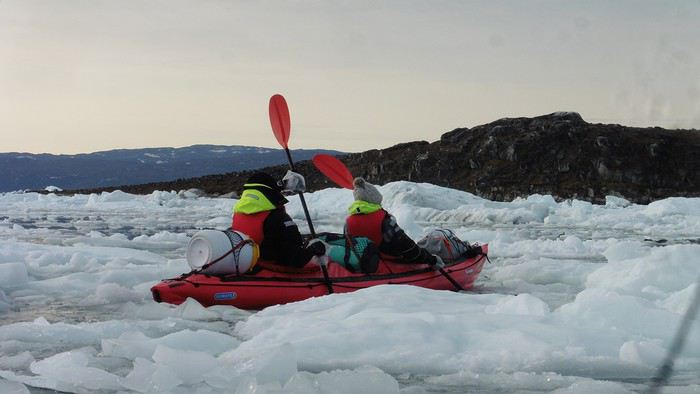
The tension rose, and each boat had its share of big scares. I was trapped against ice floes that dragged me toward an iceberg—the pressure on the kayak was enormous; it was going to capsize or puncture! But with a few strong strokes and paddling against the ice, I managed to free myself from the trap. Barely 10 minutes later, my companions were sandwiched perpendicularly between two icebergs that were closing in. The situation was desperate—the kayak was bending and twisting more and more, but with some strong paddle strokes, it finally freed itself. After these particularly unpleasant moments, we were completely blocked. The drifting ice floes had tightened, and the kayaks were no longer even in the water… The only solution: wait with the kayaks on these floes, which were too thin to walk on (even though we didn’t try). Within minutes, the situation cleared—a waterway opened, and we rushed into it. We paddled with one goal: find a larger pool of water. After going back and forth, our path took shape—we had to force the passage several times, attacking the ice directly with the kayaks, and finally, we escaped the worst of the labyrinth. We reached land on the west side of the island and saw that the rest would be easier. To reach the island, we just had to cross the Arsiviup Ikera Strait, which was lightly cluttered. We reached the eastern cape of the island, ideal for camping, even though we had only paddled for 3 hours. We set up camp and hiked to the island’s summit, which overlooks the entire pass and the glaciers.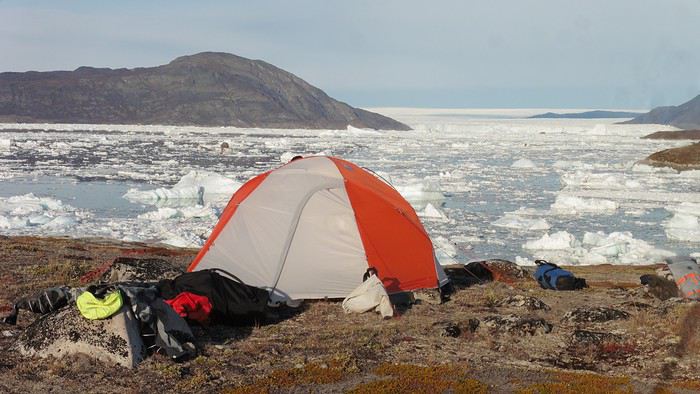
Everything was magnificent, no matter the direction. At 2 PM, we were at the summit—the beauty of the place and the picnic facing the glacier in the sun without wind made us forget the near-disaster from a few hours earlier. It would be impossible to approach the glacier by kayak, but from our summit on foot, it seemed so close, and contemplating it safely on solid ground was a great moment.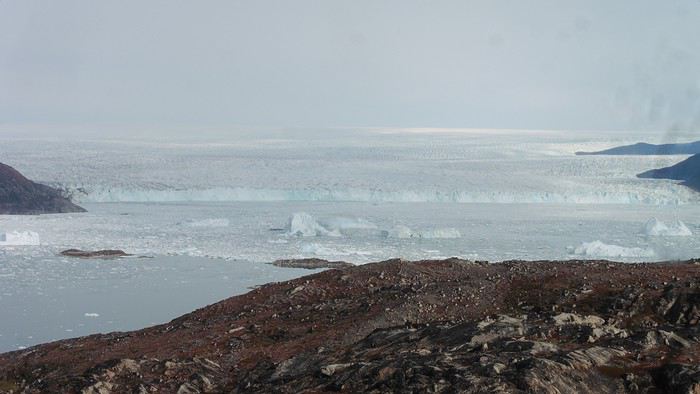
The pass was incredibly complex—everything was in motion, and an impassable passage could become open water within minutes. We were delighted when we returned to camp. A slightly lost whale among the ice accompanied us along the shore. The place was truly beautiful, but the temperature dropped again under the clear sky, preventing us from eating outside.
Day 8 Clear and cold at wake-up: -9°C. The sea had frozen in many places. We hesitated about the rest of the trip—should we start heading back to Ilulissat or linger in the pass, especially to approach the Eqi Glacier? After the incidents of the previous day, we decided to think carefully and paddled to the southern cape of our island to check the ice conditions toward Eqi. The weather had clouded over in the meantime, and the sky was quite gray. At the cape, we spotted the glacier’s wall, still 15 km away.
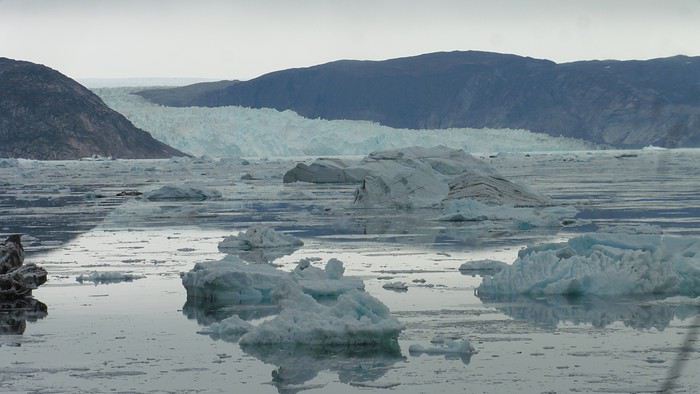
The fjord was quite cluttered, but it seemed passable. However, there was no guarantee the view would be much better 1 km from the glacier than 15 km away, especially since the front was quite active and therefore dangerous. We decided to head south without passing by the glacier. The cold temperatures encountered in the pass also motivated us to move away from the glaciers and the ice cap. We navigated under a threatening sky but without wind. The kayaks cut through the thin layer of ice on the surface with a crinkling paper sound. We reached the Ata campsite in the late afternoon after 5 hours of rowing without a single break…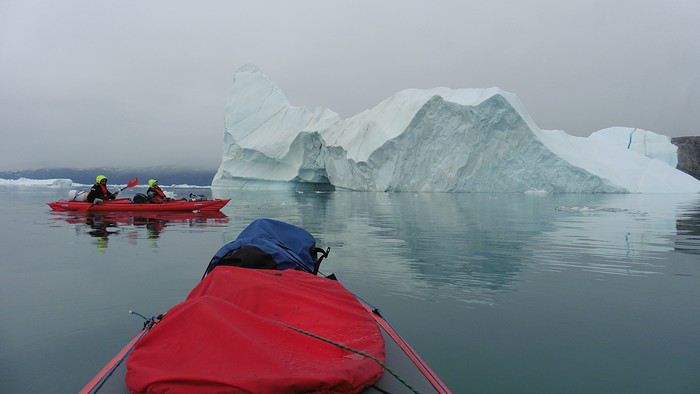
The wind had picked up, and we discovered a nice surprise: a refuge with a table and a comfortable bench lined with mattresses. Facing the worsening weather, we settled in comfortably. The kerosene stove was too complex for our three brains—we couldn’t get it started, too bad, as it was 0°C inside. The rest of the afternoon was spent fishing in the large lake, where we landed a beautiful Arctic char, more than enough for three. A good night’s sleep without the risk of foxes or the sound of a tent shaking in the wind.
Day 9 6 AM wake-up to the sound of rain hitting the cabin. The decision was made looking out the window—wind, rain, and fog obscured the sea: we went back to sleep.
New wake-up, and the rain had stopped—we could go out and stock up on fish. We set off on foot toward the lake, following its western shore. It was very overcast, and the wind encouraged us to keep moving. We made our way to a smaller lake at the end of the large one, where we caught a huge Arctic char. A small clearing brightened the picnic, and we headed back to our cabin.
This 20 km hike kept us busy all day: walking on slippery scree and the micro-relief of the peat bogs took time.
Day 10 The sky was clear, but a light south wind made paddling intense. We set off southeast to reach the opposite shore of the fjord. It was very cold, and it was impossible to stop paddling for even a moment without immediately losing ground due to the wind. We crossed the Kangerluarsuk Fjord. I recognized the cape I had reached on skis in the winter of 2017. We found a nice campsite on the southern shore of the fjord: Uiartag. It wasn’t even noon, but facing this headwind, we preferred to stop here rather than exhaust ourselves for a few extra kilometers. Like the previous ones, this campsite was very comfortable: the ground was covered with a thick layer of lichens and mosses, very pleasant to lie on.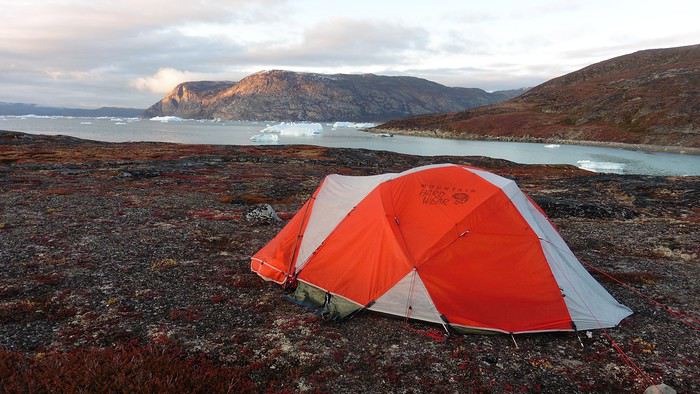
We set off on a hike to the heights of the cape, where the weather alternated between large clearings and snow showers. We noticed the loss of the thermometer, poorly attached to the backpack. On the way back, in the small bay of our beach, a whale swam calmly 10 meters from the shore—a beautiful surprise.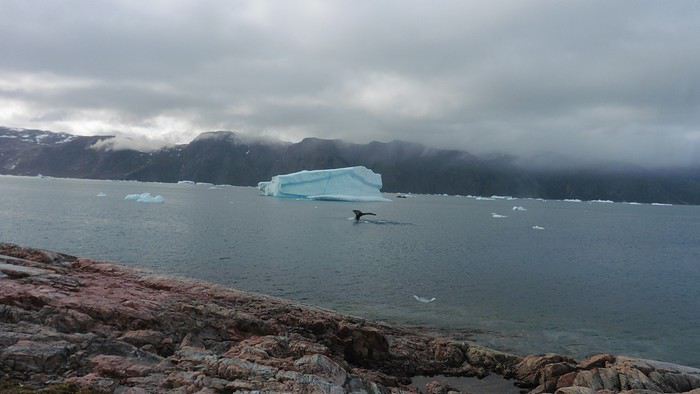
The sky cleared completely, and the temperature dropped as night approached.
We’re setting off as a group of three in two inflatable double-seater kayaks (Gumotex) brought from France. The plan is to spend two weeks circumnavigating Arve Princess Island, located north of Ilulissat in Disko Bay, with a possible boat drop-off at the southern tip of the island.
This seems like a fairly classic route in the area—we found several descriptions online (thanks to the authors). With their help and Google Earth, we identified all potential campsites and entered their coordinates into a GPS. The western part of the island, facing the bay, seems ideal for whale watching, while the more rugged eastern side offers access to several glacial walls. We’re somewhat familiar with the area from two winter expeditions on skis and pulkas.
Plus, the commitment is limited due to the island’s proximity to several small villages, including Qeqertaq, Oqaatsut, and even Ilulissat. In fact, we saw fishing boats almost every day. The distance suits us well: 200 kilometers in 16 full days on site, which should leave some leeway in case of bad weather or for hiking.
We booked our flights in June with Air Greenland to Ilulissat for the last week of August and the first week of September. On both the outbound and return trips, we stayed overnight in Copenhagen. The France-Copenhagen flight was with Air France.
We were allowed 3 x 20 kg in the hold. Each kayak with its accessories fits into a 20 kg bag; the last hold bag is for shared gear: tent, stoves, dry bags… We only brought 1.5 kg of semolina for food. In the end, we had 61 kg of gear, and no excess baggage was charged.
Individual gear (clothes and sleeping bags…) was distributed in the cabin luggage.
For the boat transfer, we contacted an agency: Blue Jay, which gave us a number to call upon arrival.
Day 0: Wednesday, August 22 Departure day. After work, I drove from Gap to Marseille’s Marignane Airport for the first leg of the trip to Copenhagen. I enjoyed the rather mild local temperatures: 35°C in the shade. After a layover in Paris, I arrived at the Copenhagen hotel, located two train stops from the airport, where my companions were already settled. No issues—everyone was on time with their luggage.
Day 1 The flight to Greenland was at 9 AM. We had a layover in Kangerlussuaq, where we changed planes, then stopped in Aasiaat before reaching Ilulissat Airport at 3 PM under beautiful sunshine.
We called Blue Jay for the boat transfer: they could take us to the island as early as 6 PM; otherwise, we’d have to wait until the next day. That left us 3 hours to prepare our gear and, most importantly, do our shopping for the two-week trip—it seemed tight, but we gave it a shot.
A quick taxi ride took us to Pisiffik, where we easily found everything we needed: bread, butter, cheese, cold cuts, rice, pasta, jam, muesli… There was no C fuel or methylated spirits for the stoves, but this time we knew the trick: at Stark, a bit uphill from the town, we found the precious liquids. Two hours later, we filled our dry bags and containers with our purchases, and by 5:30 PM, we met Klaus, the Blue Jay manager, directly at the port.
The vacation seemed to truly begin as we sped by boat through the icebergs toward Arve Princess Island. Forty-five minutes later, we spotted a beach lined with rocks where Klaus dropped us off quickly (he had another transfer to make right after).
Here we were on the island, in the middle of nowhere, with all our luggage and food to organize, the tent to set up, and the kayaks to inflate—just 10 hours after leaving the Copenhagen hotel. We got to work, bothered by the flies. Despite our head nets, it was barely tolerable—there were so many of them. They swarmed by the dozens into every bag we opened. It was quite mild: 10°C.
Everything was ready by evening, and we were very happy to have completed all these transfers (planes and boat in a single day) as we slipped into our sleeping bags.
During the night, the wind picked up, and we went out several times to check the tent and kayak anchors. We noticed how bright it was—it was still quite twilight even at 1 AM.
Day 2 5:30 AM wake-up—the south wind was still strong, but since we were heading north, we decided to give it a try anyway.
This was also the moment we loaded the kayaks: since there were only three of us for two double-seater kayaks, we filled the hatch of one kayak, which allowed us to fit all our food. It would have been very difficult if there had been four of us for two kayaks.
Finally, we set off north along the western coast of the island. The conditions were far from ideal—the sea was rough, and the kayaks had a lot of wind resistance. But the main problem was the spray skirt: the gear on deck weighed it down, and the skirt kept coming off… We’d have to deal with it. Barely underway, and whales were already breaking the surface—it was our first time seeing them, and we were very impressed. Too bad the wind didn’t allow for longer contemplation; stopping paddling was impossible with such strong gusts.
We passed a few headlands and even considered stopping due to the conditions. To find some semblance of shelter, we had to hug the coast closely without cutting across the numerous bays, which significantly lengthened the journey. But as the morning went on, the wind died down, and the sea calmed. We spotted several whales and our first seals. It was almost pleasant during the picnic break. By late afternoon, we reached Kangerup Sarqâ Bay, where we had identified a great campsite with a very large beach and a river. But the wind had shifted—it was now coming from the north, making the last hour difficult due to fatigue and headwinds.
The campsite was ideal and beautiful, facing numerous icebergs grounded in the bay.
The GPS alerted us to another major drawback of inflatable kayaks: their slowness. It took us 7.5 hours of actual paddling (excluding breaks) to cover 28 km, averaging 3.7 km/h—somewhat disappointing. But we knew this before leaving, and once again, we’d have to make do!
Day 3 Surprise: at 6 AM wake-up, it was raining, foggy, with a south wind, and the sea was choppy even in the bay. It seemed wise to skip paddling, even though stopping on the second day was tough on morale. We went back to sleep, especially since the travel fatigue and the harsh conditions of the previous day had taken their toll.
At 11 AM, the navigation conditions weren’t any better—at the ends of the bay, we saw huge waves crashing onto the rocks, and giving up for the day became obvious. However, the rain had stopped, so we set off for a hike along the large lake bordering the bay. The wind hadn’t let up, and it was quite cold.
The tundra was starting to take on its autumn colors, and the contrast between the white lichens and the red vegetation was stunning. At the lake, we took out the fishing rods and quickly caught two beautiful Arctic char over 50 cm long.
As the afternoon wore on, the sun seemed closer. Along the beach, we gathered driftwood (mostly old planks) to cook our catch in foil over a fire. Eating our own food in such a beautiful place next to a good fire was comforting after the day’s setback.
In the middle of the night, an Arctic fox entered the tent’s rear awning. It seemed barely intimidated when we shooed it away with loud shouts and then with stones.
Day 4 6:15 AM wake-up—3°C. We were on the water by 8 AM. The wind had dropped significantly, but the sea was shrouded in fog, and it was very cold in these damp conditions.
We passed the bay’s headland, Kangea, and headed toward the abandoned village of Agpat. The atmosphere was very austere—we hugged black rocks in fog that limited visibility to 50 meters, revealing large icebergs as we went.
Suddenly, the water’s surface stirred in front of my kayak, and a huge gray back emerged from the sea. The collision was inevitable, but the whale seemed to understand and dove immediately, passing under the kayak and resurfacing a few meters away. I felt the kayak rock in the white foam and quickly paddled to escape the turbulence. What an emotion!
A light wind began to clear the fog, and the sun made beautiful appearances. Despite the cold, we stopped to visit the abandoned village, which left a strange impression. All the houses were still in good condition and wide open—some must have been very spacious in their time. We went back to sea, and in front of the large Kaangerdluk Bay, we hesitated—the headwind was strong, and large waves split the water. The next beach, from the island of Nua where we stopped to think, was over 8 km away. It was barely 2 PM, but caution led us to stop here for the day. We had covered 12 km—exactly the distance needed to stay on schedule. The afternoon was spent hiking on the island’s hills and gathering mussels and wood.
In the evening, we cooked these large Greenlandic mussels over a wood fire and savored them under the beautiful evening light. The weather was now fine, but the thermometer read -5°C in the sun…
Day 5 Bright sunshine, a glassy sea, and -8°C at 6 AM. Everything was green for setting off, even if putting on damp kayaking gear was a bit unpleasant in the cold. It was the first time we’d paddled on a flat sea since the start of the trip, and our average speed increased slightly.
We entered the Smallesund Strait, marking the end of the island’s west coast. We were close to the large Torssukatak Fjord, where two glaciers flow. The access pass to the fjord was very narrow, and numerous ice chunks blocked access to the beaches. The wind had picked up and was now hitting us head-on (again). Just before entering the fjord, we landed on a steep beach made of large pebbles on Oqaitsut Island. It was very cold with the wind, and moving forward became difficult. We decided to stop for the day both because of the conditions and because the next campsite was far away, given how rugged the fjord was.
We eventually found a flat spot for the tent despite the steep slope. Even with the wind, the weather was beautiful, and we set off on foot for the northeastern cape of the island, overlooking the fjord. The view was far-reaching and exceptional—up close, the large fjord filled with ice and its steep granite cliffs, and in the distance, the ice cap and glacial walls.
We spotted the village of Qeqertaq, whose network we could pick up, allowing us to check the weather forecast, which was rather good. While securing the kayaks in the evening, I noticed the strange behavior of one kayak at the end of the stage was due to the loss of the skeg—impossible to know where it detached. We’d have to do without it.
Day 6 Still that icy headwind from the northeast. We set off anyway for a long stage to reach the large pass connecting the Torssukatak and Ata Fjords.
We advanced laboriously along the high cliffs of the fjord’s southern shore. They faced due north and blocked the sun. We felt the cold and dampness of the rock. It was really cold, especially in the extremities. We picnicked on the western cape of Qeqertakavasak Island. The cold didn’t allow us to stop for more than 20 minutes… But the wind dropped, and the sea was now very smooth. It was heavily cluttered with ice between the icebergs and old pack ice. The goal was to reach the large rocky promontory of Anapnuna, wedged between the Kujatdleq and Kangilerngata Glaciers, but the ice made progress difficult. We stopped to gain height on a small island and spot a passage of open water, but all we saw was white—passing seemed impossible. The currents were very complex, and entire sections of ice were being swept in one direction and then another at an impressive speed.
We wandered through this labyrinth until landing on a beach on the small island of Takissut, where we set up camp, exhausted from the 30 km covered and the vigilance required by the abundance of ice. The place was sublime under the evening sun—we were surrounded by ice and mountains, with the Kangilerngata Glacier in the distance. The summer contrasts were striking between the water, icebergs, sky, and flaming tundra—all colors were represented. Absolute calm reigned.
The lack of drinking water at this spot wasn’t too much of a constraint: as soon as we arrived on the beach, we placed containers under the icebergs stranded in the intertidal zone. They were all full by the time we finished setting up.
Day 7 We had to change our plans: we wouldn’t reach the rocky promontory, too well protected by the ice. We set off under the sun for Igdluluarssuit Island. Although we had spotted a passage just before launching, we quickly found ourselves surrounded by ice. It was everywhere, and finding water to paddle became complicated. We tried to force our way in every direction, even retracing our steps. Everything moved at an impressive speed—we were in the middle of a whirlpool of ice.
The tension rose, and each boat had its share of big scares. I was trapped against ice floes that dragged me toward an iceberg—the pressure on the kayak was enormous; it was going to capsize or puncture! But with a few strong strokes and paddling against the ice, I managed to free myself from the trap. Barely 10 minutes later, my companions were sandwiched perpendicularly between two icebergs that were closing in. The situation was desperate—the kayak was bending and twisting more and more, but with some strong paddle strokes, it finally freed itself. After these particularly unpleasant moments, we were completely blocked. The drifting ice floes had tightened, and the kayaks were no longer even in the water… The only solution: wait with the kayaks on these floes, which were too thin to walk on (even though we didn’t try). Within minutes, the situation cleared—a waterway opened, and we rushed into it. We paddled with one goal: find a larger pool of water. After going back and forth, our path took shape—we had to force the passage several times, attacking the ice directly with the kayaks, and finally, we escaped the worst of the labyrinth. We reached land on the west side of the island and saw that the rest would be easier. To reach the island, we just had to cross the Arsiviup Ikera Strait, which was lightly cluttered. We reached the eastern cape of the island, ideal for camping, even though we had only paddled for 3 hours. We set up camp and hiked to the island’s summit, which overlooks the entire pass and the glaciers.
Everything was magnificent, no matter the direction. At 2 PM, we were at the summit—the beauty of the place and the picnic facing the glacier in the sun without wind made us forget the near-disaster from a few hours earlier. It would be impossible to approach the glacier by kayak, but from our summit on foot, it seemed so close, and contemplating it safely on solid ground was a great moment.
The pass was incredibly complex—everything was in motion, and an impassable passage could become open water within minutes. We were delighted when we returned to camp. A slightly lost whale among the ice accompanied us along the shore. The place was truly beautiful, but the temperature dropped again under the clear sky, preventing us from eating outside.
Day 8 Clear and cold at wake-up: -9°C. The sea had frozen in many places. We hesitated about the rest of the trip—should we start heading back to Ilulissat or linger in the pass, especially to approach the Eqi Glacier? After the incidents of the previous day, we decided to think carefully and paddled to the southern cape of our island to check the ice conditions toward Eqi. The weather had clouded over in the meantime, and the sky was quite gray. At the cape, we spotted the glacier’s wall, still 15 km away.
The fjord was quite cluttered, but it seemed passable. However, there was no guarantee the view would be much better 1 km from the glacier than 15 km away, especially since the front was quite active and therefore dangerous. We decided to head south without passing by the glacier. The cold temperatures encountered in the pass also motivated us to move away from the glaciers and the ice cap. We navigated under a threatening sky but without wind. The kayaks cut through the thin layer of ice on the surface with a crinkling paper sound. We reached the Ata campsite in the late afternoon after 5 hours of rowing without a single break…
The wind had picked up, and we discovered a nice surprise: a refuge with a table and a comfortable bench lined with mattresses. Facing the worsening weather, we settled in comfortably. The kerosene stove was too complex for our three brains—we couldn’t get it started, too bad, as it was 0°C inside. The rest of the afternoon was spent fishing in the large lake, where we landed a beautiful Arctic char, more than enough for three. A good night’s sleep without the risk of foxes or the sound of a tent shaking in the wind.
Day 9 6 AM wake-up to the sound of rain hitting the cabin. The decision was made looking out the window—wind, rain, and fog obscured the sea: we went back to sleep.
New wake-up, and the rain had stopped—we could go out and stock up on fish. We set off on foot toward the lake, following its western shore. It was very overcast, and the wind encouraged us to keep moving. We made our way to a smaller lake at the end of the large one, where we caught a huge Arctic char. A small clearing brightened the picnic, and we headed back to our cabin.
This 20 km hike kept us busy all day: walking on slippery scree and the micro-relief of the peat bogs took time.
Day 10 The sky was clear, but a light south wind made paddling intense. We set off southeast to reach the opposite shore of the fjord. It was very cold, and it was impossible to stop paddling for even a moment without immediately losing ground due to the wind. We crossed the Kangerluarsuk Fjord. I recognized the cape I had reached on skis in the winter of 2017. We found a nice campsite on the southern shore of the fjord: Uiartag. It wasn’t even noon, but facing this headwind, we preferred to stop here rather than exhaust ourselves for a few extra kilometers. Like the previous ones, this campsite was very comfortable: the ground was covered with a thick layer of lichens and mosses, very pleasant to lie on.
We set off on a hike to the heights of the cape, where the weather alternated between large clearings and snow showers. We noticed the loss of the thermometer, poorly attached to the backpack. On the way back, in the small bay of our beach, a whale swam calmly 10 meters from the shore—a beautiful surprise.
The sky cleared completely, and the temperature dropped as night approached.
Miami - Austin en 2 mois, sans voiture et avec un petit budget
Bonjour à tous,
Après avoir passé un mois en Alaska (sans voiture et avec un petit budget), je jette mon dévolu sur le Sud des US. J'atteri à Miami le 13 mars.
A partir de là, j'aimerais visiter un peu la Floride (mais je ne suis pas fan des "grosses cités", parcs d'attraction etc ...), puis Georgie, Alabama, Mississippi, Louisiane ... Je pensais repartir d"Austin mais en 2 mois et sans véhicule je ne sais pas si j'aurais le temps de pousser jusqu'au Texas, donc jhésite encore.
Je ne suis pas contre l"idée de prendre des bus ou des trains du moment que ce n'est pas trop cher. Si vous avez des compagnies à me conseiller, nhésitez pas ! En Alaska, le stop n'était pas du tout un problème; savez-vous ce qu'il en est de ces états ? Adepte du couchsurfing, savez-vous si cela fonctionne bien de ce côté là ? Je pensais prendre ma tente et mon duvet, mauvaise ou bonne idée ? ou avez-vous de bonnes adresses à me conseiller ... ?
bref, je suis preneuse de bons plans :)
Ps : je voyage seule.
Merci beaucoup !
Après avoir passé un mois en Alaska (sans voiture et avec un petit budget), je jette mon dévolu sur le Sud des US. J'atteri à Miami le 13 mars.
A partir de là, j'aimerais visiter un peu la Floride (mais je ne suis pas fan des "grosses cités", parcs d'attraction etc ...), puis Georgie, Alabama, Mississippi, Louisiane ... Je pensais repartir d"Austin mais en 2 mois et sans véhicule je ne sais pas si j'aurais le temps de pousser jusqu'au Texas, donc jhésite encore.
Je ne suis pas contre l"idée de prendre des bus ou des trains du moment que ce n'est pas trop cher. Si vous avez des compagnies à me conseiller, nhésitez pas ! En Alaska, le stop n'était pas du tout un problème; savez-vous ce qu'il en est de ces états ? Adepte du couchsurfing, savez-vous si cela fonctionne bien de ce côté là ? Je pensais prendre ma tente et mon duvet, mauvaise ou bonne idée ? ou avez-vous de bonnes adresses à me conseiller ... ?
bref, je suis preneuse de bons plans :)
Ps : je voyage seule.
Merci beaucoup !
Retourner aux États-Unis malgré une grosse amende non payée?
Bonjour à tous les forumeurs!
Je souhaite partir en Alaska avec ma copine pendant un mois. Nous n'avons pas encore pris nos billets car nous avons un petit doute concernant l'entrée sur le territoire américain.
En effet ma copine a déjà fait 6 mois d'études au Quebec accompagné d'un petit road-trip de Montréal à San Francisco (c'était il y a 5 ans). Hélas pendant ce voyage, elle a un peu fait n'importe quoi au niveau du stationnement, ce qui fait qu'elle s'est retrouvé avec une somme très conséquente à payer. Toutes ces amendes ont été envoyé à son domicile au Quebec, et vu qu'elle partait juste après son voyage, elle ne les a jamais payé.
Plusieurs questions donc: Pensez-vous que ça peut passer quand même? Un agent de l'immigration peut-il avoir des renseignements sur des tickets de parkings non payés? Que risque t-on si on tente quand même de rentrer? Est ce que les amendes de stationnement sont gérées au niveau fédéral, ou devrais t-on s'inquiéter plutôt de rentrer dans un état où elle a commis une infraction? (Normalement l'Alaska c'est ok).
Merci d'avance pour vos retours.
PS: Pour avoir vadrouiller longuement sur ce forum pour trouver une réponse, je sais que certains vont répondre à côté. Je n'ai spécialement besoin de leçon de moral, et ma copine non plus (je l'ai déjà grondé ), je souhaite juste avoir des retours d'expérience similires ou des personnes bien familières avec le système d'entrée aux Etats Unis.
Je souhaite partir en Alaska avec ma copine pendant un mois. Nous n'avons pas encore pris nos billets car nous avons un petit doute concernant l'entrée sur le territoire américain.
En effet ma copine a déjà fait 6 mois d'études au Quebec accompagné d'un petit road-trip de Montréal à San Francisco (c'était il y a 5 ans). Hélas pendant ce voyage, elle a un peu fait n'importe quoi au niveau du stationnement, ce qui fait qu'elle s'est retrouvé avec une somme très conséquente à payer. Toutes ces amendes ont été envoyé à son domicile au Quebec, et vu qu'elle partait juste après son voyage, elle ne les a jamais payé.
Plusieurs questions donc: Pensez-vous que ça peut passer quand même? Un agent de l'immigration peut-il avoir des renseignements sur des tickets de parkings non payés? Que risque t-on si on tente quand même de rentrer? Est ce que les amendes de stationnement sont gérées au niveau fédéral, ou devrais t-on s'inquiéter plutôt de rentrer dans un état où elle a commis une infraction? (Normalement l'Alaska c'est ok).
Merci d'avance pour vos retours.
PS: Pour avoir vadrouiller longuement sur ce forum pour trouver une réponse, je sais que certains vont répondre à côté. Je n'ai spécialement besoin de leçon de moral, et ma copine non plus (je l'ai déjà grondé ), je souhaite juste avoir des retours d'expérience similires ou des personnes bien familières avec le système d'entrée aux Etats Unis.
Assurance moto Canada - États-Unis
Bonjour
je pars en moto faire une transameriacaine alaska ushuaia au mois de Juin au départ de Vancouver.Je voudrai assurer ma moto pour la traversee du Canada et des Etats Unis.
Ma compagnie francaise ne le fais pas , à qui puis je m'adresser?
merci
Trek dans les Alpes
Bonjour,
Après des treks dans les pays scandinaves, en Alaska et en Amérique du sud, nous envisageons avec mon compagnon de faire, cet été, un trek dans les Alpes. Les possibilités sont nombreuses mais comme nous avons quelques critères déterminants, je sollicite votre aide pour m'aider dans notre choix. Nous souhaitons faire un trek d'au moins 12 jours, en bivouac. Il faut donc que l'on ait la possibilité de nous ravitailler en chemin. Nous aimons les coins sauvages et peu fréquentés (en reste-t-il dans les Alpes ?). Nous ne craignons pas de marcher hors sentiers balisés. J'ai vu le tour des Ecrins, intéressant de par sa longueur et le caractère sportif du trek mais je crains qu'il soit assez fréquenté. Si vous avez des suggestions ......
Après des treks dans les pays scandinaves, en Alaska et en Amérique du sud, nous envisageons avec mon compagnon de faire, cet été, un trek dans les Alpes. Les possibilités sont nombreuses mais comme nous avons quelques critères déterminants, je sollicite votre aide pour m'aider dans notre choix. Nous souhaitons faire un trek d'au moins 12 jours, en bivouac. Il faut donc que l'on ait la possibilité de nous ravitailler en chemin. Nous aimons les coins sauvages et peu fréquentés (en reste-t-il dans les Alpes ?). Nous ne craignons pas de marcher hors sentiers balisés. J'ai vu le tour des Ecrins, intéressant de par sa longueur et le caractère sportif du trek mais je crains qu'il soit assez fréquenté. Si vous avez des suggestions ......
Projet "into the wild" Islande mars 2016
Bonjour !
Après un roadtrip de deux mois en Alaska sur les traces de Supertramp, je me permets de créer une nouvelle discussion pour simplement vous faire part de ma prochaine aventure, le 07 Mars 2016 : une traversée de l'Islande en skis et pulka du Nord au Sud, en binôme, avec une personne atteinte d'un lymphœdème à la jambe gauche, une première mondiale pour cet handicap. Nous préparons cette aventure depuis plus d'un an, le départ est imminent !
Pour nous suivre, voici nos pages Facebook : - Projet "into the wild" - Terre2Glace
Merci !
Après un roadtrip de deux mois en Alaska sur les traces de Supertramp, je me permets de créer une nouvelle discussion pour simplement vous faire part de ma prochaine aventure, le 07 Mars 2016 : une traversée de l'Islande en skis et pulka du Nord au Sud, en binôme, avec une personne atteinte d'un lymphœdème à la jambe gauche, une première mondiale pour cet handicap. Nous préparons cette aventure depuis plus d'un an, le départ est imminent !
Pour nous suivre, voici nos pages Facebook : - Projet "into the wild" - Terre2Glace
Merci !
Escale à l'aeroport de Keflavik: Que faire
Bonjour
Nous partons l'été prochain pour l'Alaska et notre vol nous amène à faire une escale de 10 heures en Islande.
Quelqu'un saurait-il s'il existe une possibilité de faire un petit circuit en car sur quelques heures pour profiter du paysage ?
J'ai lu que beaucoup vantent Blue Lagon mais nous ne sommes pas attirés par ce type de distraction.
Merci à ceux qui pourront nous faire des propositions
Framboise95
Nous partons l'été prochain pour l'Alaska et notre vol nous amène à faire une escale de 10 heures en Islande.
Quelqu'un saurait-il s'il existe une possibilité de faire un petit circuit en car sur quelques heures pour profiter du paysage ?
J'ai lu que beaucoup vantent Blue Lagon mais nous ne sommes pas attirés par ce type de distraction.
Merci à ceux qui pourront nous faire des propositions
Framboise95
Deux voyages aux USA
Je prépare actuellement un premier voyage, en Alaska, du 9 au 24 juillet 2014.
Le tampon qui sera porté par l'officier d'immigration sera daté du 9/07/2014 pour une durée de 90j, c'est à dire jusqu'au 9/10/2014.
Or, je prévoie une deuxième voyage, de San Francisco à Albuquerque, du 24/09 au 13/10/2014. ce deuxième voyage ne peut pas se terminer avant, la Fiesta Balloon se terminant le 12/10/2014.
L'officier d'immigration portera-t-il un deuxième tampon du 24/09 au 23/12? Si non je suis obligé de quitter les US beaucoup + tôt? merci pour vos réponses..
Or, je prévoie une deuxième voyage, de San Francisco à Albuquerque, du 24/09 au 13/10/2014. ce deuxième voyage ne peut pas se terminer avant, la Fiesta Balloon se terminant le 12/10/2014.
L'officier d'immigration portera-t-il un deuxième tampon du 24/09 au 23/12? Si non je suis obligé de quitter les US beaucoup + tôt? merci pour vos réponses..
1700 km dans les rocheuses canadiennes
Bonjour,
Après avoir passé près d'un an en Alaska notre visa a pris fin. Nous voulions profites de notre situation géographique pour découvrir le Canada sans avoir a payer de billets d'avions. On a donc passé la frontière la semaine dernière et sommes maintenant en direction de Waterton ou va commencer notre randonnée de 1700km au travers des rocheuses voir carte ici https://maps.google.com/maps?q=http:%2F%2Fescape-life.net%2Fimages%2FChemins.kmz&hl=en&sll=37.0625, -95.677068&sspn=60.806372,135.263672&t=h&z=7 .
Pour le moment nous sommes en voiture et a whitehorse, nous la laisserons dans un mois a Prince George et continuerons en auto stop jusqu'au départ de notre rando a la frontiere des USA. Pour la première partie, nous suivrons le Great divide trail, un sentier plus ou moins entretenu d'environ 1000km traversant un grand nombre de parcs nationaux et de sublimes paysages. Le sentier passe par Jasper et Banff haut lieux touristique de la région.
Nous avons créer un site web regroupant nos aventures en Alaska et permettant de nous suivre sur une carte. Nous avons un SPOT messenger qui nous permet d'envoyer notre location géographique tous les soirs et actualise automatiquement la carte sur notre site web. On a pensé que ce serait une bonne opportunité pour les malchanceux n'ayant pas de vacances cet été de voyager virtuellement. http://escape-life.net/index.php/en/ Il y a une description un peu plus complete de la randonnée ainsi qu'une liste du matériel emporté (en anglais).
on espère pouvoir ramener de jolies photos!
Pour le moment nous sommes en voiture et a whitehorse, nous la laisserons dans un mois a Prince George et continuerons en auto stop jusqu'au départ de notre rando a la frontiere des USA. Pour la première partie, nous suivrons le Great divide trail, un sentier plus ou moins entretenu d'environ 1000km traversant un grand nombre de parcs nationaux et de sublimes paysages. Le sentier passe par Jasper et Banff haut lieux touristique de la région.
Nous avons créer un site web regroupant nos aventures en Alaska et permettant de nous suivre sur une carte. Nous avons un SPOT messenger qui nous permet d'envoyer notre location géographique tous les soirs et actualise automatiquement la carte sur notre site web. On a pensé que ce serait une bonne opportunité pour les malchanceux n'ayant pas de vacances cet été de voyager virtuellement. http://escape-life.net/index.php/en/ Il y a une description un peu plus complete de la randonnée ainsi qu'une liste du matériel emporté (en anglais).
on espère pouvoir ramener de jolies photos!
Visiter la Nouvelle-Zélande
Bonjour à tous,
Après mon voyage en Alaska ... je pars vers une destination opposée : la Nouvelle Zélande !
nous sommes 2, avons l'intention de louer une voiture, de faire du camping environ 3 à 4 semaines.
Y a t-il quelqu'un qui a fait ce voyage, mais oui bien sûr !
j'aimerais connaître les plus beaux sites à visiter : sommes très intéressés par la faune et les beaux paysages.
Pour l'instant ce n'est qu'un projet qui ne demande qu'à mûrir.
Bonnes fêtes de fin d'année 2012 à tous et à toutes.
Andréa
Islande en juin, réservation des hébergements, visites?
Bonjour à tous,
Je pensais partir pour l'Alaska en juin avec mon père mais nous avons changé d'idée et nous opterons probablement pour l'Islande.
- Nos dates sont flexibles mais ce sera au mois de juin. Bien??
- Croyez vous qu'il est nécessaire de réserver les auberges?? Nous aimerions être plus libre..Nous sommes ouvert à dormir presque n'importe où(habitant, motel, auberge jeunesse) sauf camping puisque mon père a 79 ans...Y'a t-il beaucoup d'hébergement un peu partout sur le pays ou très peu??
- Y a t il des aurores en juin??
- Comme mon père est un peu limité physiquement vu son age, sera t-il facile pour nous de visiter quand même ?? (avec plus de restrictions évidemment..)
Bref, tous les conseils seront précieux...merci beaucoup
- Nos dates sont flexibles mais ce sera au mois de juin. Bien??
- Croyez vous qu'il est nécessaire de réserver les auberges?? Nous aimerions être plus libre..Nous sommes ouvert à dormir presque n'importe où(habitant, motel, auberge jeunesse) sauf camping puisque mon père a 79 ans...Y'a t-il beaucoup d'hébergement un peu partout sur le pays ou très peu??
- Y a t il des aurores en juin??
- Comme mon père est un peu limité physiquement vu son age, sera t-il facile pour nous de visiter quand même ?? (avec plus de restrictions évidemment..)
Bref, tous les conseils seront précieux...merci beaucoup
Croisière au départ de Seattle: hôtel proche du port? (Etats-Unis)
L'embarquement pour ma croisière en Alaska se fait à SEATTLE.
Quelqu'un pourrait-il me dire où est le port de départ du bateau et si vous pouviez me dire le nom d'un hôtel proche de ce port cela me permettrait de réserver une chambre pour la nuit précédant le départ du bateau.
Merci.
Appareil photo ultraléger et ultracompact pour la randonnée/trek?
Salut
Je projette une traversée du continent américain de l'Alaska à l'Argentine avec le maximum de rando/trek au cours de l'aventure et je prépare déjà le matériel. Je vise le léger voir l'ultraléger.
J'aimerais aborder avec vous le sujet de l'appareil photo pour ce genre de voyage et je n'ai pas trouvé de post dessus dans l'outil de recherche et sur le net. La plupart des randonneurs aiment la photo et ont des appareils de bonne qualité et ce n'est pas ce que je recherche.
En fait, au départ, je ne voulais pas prendre d'appareil photo car je ne voulais pas me préoccuper du vol ou de la charge et surtout je ne voulais pas ajouter de poids à mon sac. Mais là je me dis que, dans quelques années, quand les souvenirs s'estomperont peu à peu, je pense que je regretterai mon choix. Et puis je me dis que c'est toujours sympa d'envoyer quelques photos à son entourage pour qu'il puisse visualiser ce que tu vis.
Je recherche donc un appareil photo selon les critères suivants : - Numérique : plus simple d'utilisation, plus léger, stockage des photos sur le web, envoi par e-mail... - Ultra-léger : moins de 200g piles comprises - Ultra-compact : petit dans la poche - Grande autonomie : à piles pour ne pas tomber en rade, peut-être sans écran LCD pour optimiser - Qualité moyenne : je ne veux pas faire des superbes photos de paysages mais juste immortaliser certaines situations (bivouac, animal qui s'approche près, fleur, compagnons de route...) - Prix : moins de 100€
Avez-vous un appareil de ce type ? En connaissez-vous ?
En fait, je ne veux pas faire de la grande photo, je veux juste aider ma mémoire par la suite.
Merci d'avance pour vos réponses !!
Je projette une traversée du continent américain de l'Alaska à l'Argentine avec le maximum de rando/trek au cours de l'aventure et je prépare déjà le matériel. Je vise le léger voir l'ultraléger.
J'aimerais aborder avec vous le sujet de l'appareil photo pour ce genre de voyage et je n'ai pas trouvé de post dessus dans l'outil de recherche et sur le net. La plupart des randonneurs aiment la photo et ont des appareils de bonne qualité et ce n'est pas ce que je recherche.
En fait, au départ, je ne voulais pas prendre d'appareil photo car je ne voulais pas me préoccuper du vol ou de la charge et surtout je ne voulais pas ajouter de poids à mon sac. Mais là je me dis que, dans quelques années, quand les souvenirs s'estomperont peu à peu, je pense que je regretterai mon choix. Et puis je me dis que c'est toujours sympa d'envoyer quelques photos à son entourage pour qu'il puisse visualiser ce que tu vis.
Je recherche donc un appareil photo selon les critères suivants : - Numérique : plus simple d'utilisation, plus léger, stockage des photos sur le web, envoi par e-mail... - Ultra-léger : moins de 200g piles comprises - Ultra-compact : petit dans la poche - Grande autonomie : à piles pour ne pas tomber en rade, peut-être sans écran LCD pour optimiser - Qualité moyenne : je ne veux pas faire des superbes photos de paysages mais juste immortaliser certaines situations (bivouac, animal qui s'approche près, fleur, compagnons de route...) - Prix : moins de 100€
Avez-vous un appareil de ce type ? En connaissez-vous ?
En fait, je ne veux pas faire de la grande photo, je veux juste aider ma mémoire par la suite.
Merci d'avance pour vos réponses !!
Sac de couchage pour une traversée des Amériques?
Bonsoir à tous,
Je prévois un trip entre l'Alaska et l'Argentine par la voie terrestre, départ Juillet 2012, en faisant différentes randonnées/treks toute au lond de mon périple et en privilégiant le camping et le bivouac. J'ai prévu un an mais ça sera peut être plus ou moins en fonction de mon budget.
Je commence déjà à regarder le matériel pour pouvoir le tester avant de partir et j'ai donc besoin de vos lumières sur le choix du sac de couchage. J'ai lu pas mal de choses et je sais que pas mal de discussions se ressemblent à ce sujet mais c'est vrai que je n'ai pas trouvé la réponse à mes questions.
Mes premières réflexions : 1. Matière Sachant que je vais traverser des régions très humides, les fibres synthétiques semblent être la matière à privilégier car elles gardent la chaleur même mouillées. De plus, elles sèchent plus vite que du duvet, plus simples à laver et les sacs sont souvent plus costauds ce qui peut être des avantages sur un périple. 2. Température Aucune idée de la température de confort. Je prévois de faire des treks en montagne jusqu'à peut-être 4000-4500 m d'altitude. Je me disais peut-être prendre un sac de couchage moyennement chaud que je doublerai avec un moins chaud. De ce fait, dans les régions froides, j'utilise les deux, en région tempérée, le moyennement chaud et en régions plus chaudes, le moins chaud. Qu'en pensez-vous ? 3. Poids Je vise un sac pesant 8-10 Kg hors nourriture et eau donc je cherche également la légèreté. 4. Prix Indifférent. Si il faut mettre le prix pour être bien, je le mettrai.
Voilà si vous avez des conseils et des modèles à me donner ce serait super.
Je vous remercie d'avance
Je prévois un trip entre l'Alaska et l'Argentine par la voie terrestre, départ Juillet 2012, en faisant différentes randonnées/treks toute au lond de mon périple et en privilégiant le camping et le bivouac. J'ai prévu un an mais ça sera peut être plus ou moins en fonction de mon budget.
Je commence déjà à regarder le matériel pour pouvoir le tester avant de partir et j'ai donc besoin de vos lumières sur le choix du sac de couchage. J'ai lu pas mal de choses et je sais que pas mal de discussions se ressemblent à ce sujet mais c'est vrai que je n'ai pas trouvé la réponse à mes questions.
Mes premières réflexions : 1. Matière Sachant que je vais traverser des régions très humides, les fibres synthétiques semblent être la matière à privilégier car elles gardent la chaleur même mouillées. De plus, elles sèchent plus vite que du duvet, plus simples à laver et les sacs sont souvent plus costauds ce qui peut être des avantages sur un périple. 2. Température Aucune idée de la température de confort. Je prévois de faire des treks en montagne jusqu'à peut-être 4000-4500 m d'altitude. Je me disais peut-être prendre un sac de couchage moyennement chaud que je doublerai avec un moins chaud. De ce fait, dans les régions froides, j'utilise les deux, en région tempérée, le moyennement chaud et en régions plus chaudes, le moins chaud. Qu'en pensez-vous ? 3. Poids Je vise un sac pesant 8-10 Kg hors nourriture et eau donc je cherche également la légèreté. 4. Prix Indifférent. Si il faut mettre le prix pour être bien, je le mettrai.
Voilà si vous avez des conseils et des modèles à me donner ce serait super.
Je vous remercie d'avance
Yukon: Dawson City ou pas? (Canada)
Bonjour,
je regarde pour un itineraire Yukon/Alaska en ete. Je compte passer par Whitehorse avant de me diriger vers l'Alaska. Ma question est de savoir si il vaut mieux y aller directement ou faire un detour par Dawson City. Ca rallonge pas mal la route, mais je voulais savoir si ca valait vraiment le coup de part les paysages vu sur le chemin et la ville de Dawson City. Dans certains guides Dawson City semble considere comme un incontournable du Yukon. Quel est votre avis?
Merci d'avance pour vos conseils!
je regarde pour un itineraire Yukon/Alaska en ete. Je compte passer par Whitehorse avant de me diriger vers l'Alaska. Ma question est de savoir si il vaut mieux y aller directement ou faire un detour par Dawson City. Ca rallonge pas mal la route, mais je voulais savoir si ca valait vraiment le coup de part les paysages vu sur le chemin et la ville de Dawson City. Dans certains guides Dawson City semble considere comme un incontournable du Yukon. Quel est votre avis?
Merci d'avance pour vos conseils!