Results for "Iran+sécurité"
About 6,663 results.
More options
Many results are in French, the community’s main language. English translations are added over time.
Search results
Maroc en camping-car?
Bonjour,
Nous souhaitons partir en CC mon mari et moi, pour l'été 2006, mais nous hésitons entre 2 destinations :le maroc ou l'autriche . Pour le Maroc, nous aimerions partir à plusieurs CC.Si des personnes sont intéressées, nous aimerions partir soit en Mai/Juin, soit en septembre.D'après lesdifférents sites visitées, ilvaut mieux partir de Sète, que d'essayer de faire le voyage en traversant l'Espagne : trop cher. Nous aimerions faire les villes imperiales, les chutes d'Ouzoud, Essaouira. Si vous souhaitez vous joindre à nous et si vous avez d'autres idées de circuits, écrivez-nous. Peut--être à bientôt,
Nous souhaitons partir en CC mon mari et moi, pour l'été 2006, mais nous hésitons entre 2 destinations :le maroc ou l'autriche . Pour le Maroc, nous aimerions partir à plusieurs CC.Si des personnes sont intéressées, nous aimerions partir soit en Mai/Juin, soit en septembre.D'après lesdifférents sites visitées, ilvaut mieux partir de Sète, que d'essayer de faire le voyage en traversant l'Espagne : trop cher. Nous aimerions faire les villes imperiales, les chutes d'Ouzoud, Essaouira. Si vous souhaitez vous joindre à nous et si vous avez d'autres idées de circuits, écrivez-nous. Peut--être à bientôt,
Utilisateurs de chauffage à gas oil?
Je suis en train d'équiper une cellule amovible sur un 4x4 prévu pour aller en Amérique du sud .
J'ai choisi un chauffage à gas-oil de chez Eberspacher. Mais à priori il y a des limitations pour l'utiliser en altitude.
Avez vous déjà utilisé ce type de chauffage en altitude au delà de 2000m et même au dela de 4000m comme je le prévoyais ?
Quelles modifications avez vous faite ?
Merci de me répondre.
France - Himalaya en 4x4
Bonjour, 😉😉😉
Nous sommes partis vers le Nepal via le Moyen Orient en 4x4 Land Rover depuis avril dernier pour une duree d'un an. Ce periple nous a demande une longue preparation sur la voiture aussi bien qu'administrative.
Nous sommes actuellement au Pakistan et allons passer en Inde prochainement. Si vous avez besoin de renseignements pratiques sur cette route, nous serons heureux de faire partager notre experience.
Vous pouvez consulter la preparation du vehicule sur notre site web : www.ye-team.com
Bonne route a tous,
Nous sommes partis vers le Nepal via le Moyen Orient en 4x4 Land Rover depuis avril dernier pour une duree d'un an. Ce periple nous a demande une longue preparation sur la voiture aussi bien qu'administrative.
Nous sommes actuellement au Pakistan et allons passer en Inde prochainement. Si vous avez besoin de renseignements pratiques sur cette route, nous serons heureux de faire partager notre experience.
Vous pouvez consulter la preparation du vehicule sur notre site web : www.ye-team.com
Bonne route a tous,
Voyager seule, de quoi avez-vous peur?
Hello 🙂
A mon premier voyage, j'avais 22 ans. Je voulais partir avec quelqu'un, mais personne dans mes amis, n'avait le temps ni les sous pour m'accompagner. Bon tant pis me suis je dit, j'y vais. J'avais peur de me retrouver au bout du monde, (en Indonésie) seule surtout. Et si il m'arrivait quelque chose? Et si je me faisais tout voler? Et si je me faisais violer? Et si je perdais mon passeport et ticket d'avion? Et si.... Zut, c'était mon grand rêve de petite fille, partir loin, alors voila.
Et bien, 17 ans plus tard, ca a été la chose la plus intelligente que j'ai faite! 😎
En revenant je me suis dite " Mon premier grand voyage... Surement le plus beau de tous? Comment est ce possible autrement?" Alors je suis repartie, toujours seule, et je n'ai quasi plus arrêté. Parfois un seul mois, parfois 20, mais voyager, apprendre le monde, et découvrir toutes les beautés que le monde recèle et qu'il n'y a pas chez nous.
J'ai toujours mes deux jambes, je ne me suis jamais rien fait volé, (sauf en Belgique) je n'ai jamais rien perdu (sauf ma virginité 😏) il ne m'est jamais arrivé qque chose de grave, sauf que j'ai réalisé que le metro boulot dodo était pas pour moi, ben oui c'est grave, non? 😉
J'ai commencé par des pays "cools" Java, Bali, la Thailande, un beau jour je me suis enfin décidée à aller en Inde, un autre en Iran, puis au Pakistan, et je le répète, rien de facheux ne m'est arrivé, jamais. Une fois une main au fesses en Inde, une autre fois au cambodge j'ai eu très chaud, mais il ne s'est rien passé de méchant.
Ah oui, je ne mets jamais de vetements moulants et courts, sauf une fois au Cambodge ou j'ai eu très chaud 😏
N'hésitez plus... Foncez! 🙂
Parvat' dit aussi "la mama"😏
A mon premier voyage, j'avais 22 ans. Je voulais partir avec quelqu'un, mais personne dans mes amis, n'avait le temps ni les sous pour m'accompagner. Bon tant pis me suis je dit, j'y vais. J'avais peur de me retrouver au bout du monde, (en Indonésie) seule surtout. Et si il m'arrivait quelque chose? Et si je me faisais tout voler? Et si je me faisais violer? Et si je perdais mon passeport et ticket d'avion? Et si.... Zut, c'était mon grand rêve de petite fille, partir loin, alors voila.
Et bien, 17 ans plus tard, ca a été la chose la plus intelligente que j'ai faite! 😎
En revenant je me suis dite " Mon premier grand voyage... Surement le plus beau de tous? Comment est ce possible autrement?" Alors je suis repartie, toujours seule, et je n'ai quasi plus arrêté. Parfois un seul mois, parfois 20, mais voyager, apprendre le monde, et découvrir toutes les beautés que le monde recèle et qu'il n'y a pas chez nous.
J'ai toujours mes deux jambes, je ne me suis jamais rien fait volé, (sauf en Belgique) je n'ai jamais rien perdu (sauf ma virginité 😏) il ne m'est jamais arrivé qque chose de grave, sauf que j'ai réalisé que le metro boulot dodo était pas pour moi, ben oui c'est grave, non? 😉
J'ai commencé par des pays "cools" Java, Bali, la Thailande, un beau jour je me suis enfin décidée à aller en Inde, un autre en Iran, puis au Pakistan, et je le répète, rien de facheux ne m'est arrivé, jamais. Une fois une main au fesses en Inde, une autre fois au cambodge j'ai eu très chaud, mais il ne s'est rien passé de méchant.
Ah oui, je ne mets jamais de vetements moulants et courts, sauf une fois au Cambodge ou j'ai eu très chaud 😏
N'hésitez plus... Foncez! 🙂
Parvat' dit aussi "la mama"😏
Liste des compagnies aériennes à risque
Bonjour je vous transmets un article publié par le journal VSD du 06 au 12 juillet 2005 relatif à la "blacklist" des compagnies aériennes, en aucun cas pour polémiquer, uniquement pour porter à votre connaissance cette liste 😉
ooo0ooo
"Cette liste noire a été réalisée selon plusieurs critères non exclusifs. Nous avons fait figurer les compagnies interdites pr le Direction générale de l'aviation civile (DGAC) et celles interdites par les aviations civiles britannique et suisse connues pour être intransigeantes. Puis nous avons fait appel à un expert international en investigations aériennes, Serge Roche, qui a mis à notre disposition sa base de données compilant tous les accidents ou incidents d'avions, mortels ou non (crash, sortie de piste, etc...) depuis 1952. VSD s'est concentré sur l'analyse des années 1995-2005.
1 AEROFLOT. RUSSIE 2 AIR ALGERIE. ALGERIE 3 AIR KORYO. COREE DU NORD (interdite en France) 4 AEROMEXICO. MEXIQUE 5 AIR MEMPHIS. EGYPTE 6 AIR MAURITANIA. MAURITANIE (interdite en Grande-Bretagne) 7 AIR UNIVERSAL. SIERRA LEONE (interdite en Grande-Bretagne) 8 ALBANIAN AIRLINES. ALBANIE (interdite en Grande-Bretagne) 9 CAMEROON AIRLINES. CAMEROUN (interdite en Grande-Bretagne) 10 CENTRAL AIR EXPRESS. REPUBLIQUE DEMOCRATIQUE DU CONGO (interdite en Grande-Bretagne) 11 CHINA AIRLINES. TAIWAN 12 CHINA SOUTHERN AIRLINES. CHINE 13 CHINA NORTHERN AIRLINES. CHINE 14 CONTINENTAL WINGS COMORES AIRLINES. COMORES (interdite en France) 15 CUBANA DE AVIACION. CUBA 16 CROSSAIR. SUISSE 17 DNIPROVIA. UKRAINE (interdite en Suisse) 18 EGYPTAIR. EGYPTE 19 GHANA AIRWAYS. GHANA 20 GIRJET. ESPAGNE (interdite en Suisse) 21 GULF AIR. BAHREIN 22 HEMUS AIR. BULGARIE (interdite en Suisse) 23 IRAN AIR. IRAN 24 LION AIR. INDONESIE 25 PAKISTAN AIRLINES. PAKISTAN 26 PREMIUM AIR SHUTTLE. NIGERIA (interdite en Suisse) 27 SAUDI ARABIAN AIRLINES. ARABIE SAOUDITE 28 SUDAN AIRWAYS. SOUDAN 29 SIBIR AIRLINES. RUSSIE 30 SRILANKAN. SRI LANKA 31 TAJKISTAN AIRLINES. TADJIKISTAN (interdite en Grande-Bretagne) 32 TAM. BRESIL 33 TAME. EQUATEUR 34 TURKISH AIRLINES. TURQUIE 35 VARIG. BRESIL 36 VIETNAM AIRLINES. VIETNAM
Sans grosse surprise, cette liste pointe les trois grandes zones du monde où il est plus dangereux de voler : l'Afrique, l'Asie et les républiques de l'ex-URSS. Si beaucoup de compagnies mentionnées sont inconnues du grand public ou volent dans des zones peu fréquentées par le touriste lambda (Sierra Leone, Tadjikistan), quelques grandes compagniesd'aviation nationale y figurent également. Certaines comme Varig, la compagnie brésiliennes, ou Turkish airlines, sont concernées sur leurs vols intérieurs, parfois moins sécurisés. Ainsi que le reconnait Marc Foucault, directeur de cabinet de l'ex-ministre des transports Gilles de Robien, qui fut l'initiateur du futur "label bleu" pour les compagnies aériennes, "c'est sur les petites distances, les bouts de ligne ou correspondances pour une petite ville d'un grand pays que se rencontrent souvent les gros problème". Parce que les avions sont vieux (Boeing 707, 727, Ilyushin II, Douglas DC-3, Fokker F-70...) et tournent beaucoup, que le personnel formé pour leur maintenance est de plus en plus rare et que le coût des formations est élevé, etc. "Certaines petites compagnies étrangères utilisent ainsi des Caravelle abandonnées par Air Inter en 1982 ! explose Serge Roche. Et les DC-3 datent des années cinquante. Mais même les grande compagnies ne sont pas exemptes de pépins, comme le montre cette blacklist, et le nombre de morts n'est pas forcément le critère en matière de sécurité". En ligne de mire par exemple : Aeroflot, qui, si elle n'a eu qu'un seul crash fatal en dix ans, connaît pratiquement un accident par an. " ooo0ooo
Voilà bon voyage à tous et toutes...
"Cette liste noire a été réalisée selon plusieurs critères non exclusifs. Nous avons fait figurer les compagnies interdites pr le Direction générale de l'aviation civile (DGAC) et celles interdites par les aviations civiles britannique et suisse connues pour être intransigeantes. Puis nous avons fait appel à un expert international en investigations aériennes, Serge Roche, qui a mis à notre disposition sa base de données compilant tous les accidents ou incidents d'avions, mortels ou non (crash, sortie de piste, etc...) depuis 1952. VSD s'est concentré sur l'analyse des années 1995-2005.
1 AEROFLOT. RUSSIE 2 AIR ALGERIE. ALGERIE 3 AIR KORYO. COREE DU NORD (interdite en France) 4 AEROMEXICO. MEXIQUE 5 AIR MEMPHIS. EGYPTE 6 AIR MAURITANIA. MAURITANIE (interdite en Grande-Bretagne) 7 AIR UNIVERSAL. SIERRA LEONE (interdite en Grande-Bretagne) 8 ALBANIAN AIRLINES. ALBANIE (interdite en Grande-Bretagne) 9 CAMEROON AIRLINES. CAMEROUN (interdite en Grande-Bretagne) 10 CENTRAL AIR EXPRESS. REPUBLIQUE DEMOCRATIQUE DU CONGO (interdite en Grande-Bretagne) 11 CHINA AIRLINES. TAIWAN 12 CHINA SOUTHERN AIRLINES. CHINE 13 CHINA NORTHERN AIRLINES. CHINE 14 CONTINENTAL WINGS COMORES AIRLINES. COMORES (interdite en France) 15 CUBANA DE AVIACION. CUBA 16 CROSSAIR. SUISSE 17 DNIPROVIA. UKRAINE (interdite en Suisse) 18 EGYPTAIR. EGYPTE 19 GHANA AIRWAYS. GHANA 20 GIRJET. ESPAGNE (interdite en Suisse) 21 GULF AIR. BAHREIN 22 HEMUS AIR. BULGARIE (interdite en Suisse) 23 IRAN AIR. IRAN 24 LION AIR. INDONESIE 25 PAKISTAN AIRLINES. PAKISTAN 26 PREMIUM AIR SHUTTLE. NIGERIA (interdite en Suisse) 27 SAUDI ARABIAN AIRLINES. ARABIE SAOUDITE 28 SUDAN AIRWAYS. SOUDAN 29 SIBIR AIRLINES. RUSSIE 30 SRILANKAN. SRI LANKA 31 TAJKISTAN AIRLINES. TADJIKISTAN (interdite en Grande-Bretagne) 32 TAM. BRESIL 33 TAME. EQUATEUR 34 TURKISH AIRLINES. TURQUIE 35 VARIG. BRESIL 36 VIETNAM AIRLINES. VIETNAM
Sans grosse surprise, cette liste pointe les trois grandes zones du monde où il est plus dangereux de voler : l'Afrique, l'Asie et les républiques de l'ex-URSS. Si beaucoup de compagnies mentionnées sont inconnues du grand public ou volent dans des zones peu fréquentées par le touriste lambda (Sierra Leone, Tadjikistan), quelques grandes compagniesd'aviation nationale y figurent également. Certaines comme Varig, la compagnie brésiliennes, ou Turkish airlines, sont concernées sur leurs vols intérieurs, parfois moins sécurisés. Ainsi que le reconnait Marc Foucault, directeur de cabinet de l'ex-ministre des transports Gilles de Robien, qui fut l'initiateur du futur "label bleu" pour les compagnies aériennes, "c'est sur les petites distances, les bouts de ligne ou correspondances pour une petite ville d'un grand pays que se rencontrent souvent les gros problème". Parce que les avions sont vieux (Boeing 707, 727, Ilyushin II, Douglas DC-3, Fokker F-70...) et tournent beaucoup, que le personnel formé pour leur maintenance est de plus en plus rare et que le coût des formations est élevé, etc. "Certaines petites compagnies étrangères utilisent ainsi des Caravelle abandonnées par Air Inter en 1982 ! explose Serge Roche. Et les DC-3 datent des années cinquante. Mais même les grande compagnies ne sont pas exemptes de pépins, comme le montre cette blacklist, et le nombre de morts n'est pas forcément le critère en matière de sécurité". En ligne de mire par exemple : Aeroflot, qui, si elle n'a eu qu'un seul crash fatal en dix ans, connaît pratiquement un accident par an. " ooo0ooo
Voilà bon voyage à tous et toutes...
Frontiere Kazakhstan - Ouzbekistan
Hello,
J'aimerais savoir si il existe une possibilite de passage entre Aqtau au Kazakhstan et l'Ouzbekistan sans devoir contourner la mer d'Aral et devoir aller jusqu'a Tachkent...
J'ai un bus WV et avec ce vehicule, j'ai prevu passer par la Turquie, la Georgie, l'Azerbaijan, a Baku prendre le ferry pour Aqtau au Kazakhstan car pour le Turkmenistan la douanne demande entre 100$ et 250$ (400$ selon un Hollandais croise en Iran et qui est passe par la...). Ensuite, depuis Aqtau il y a une voie chemin de fer pour Khiva, et une piste caravanniere, mais je ne sais pas si on peut passer?
J'ai deja le visa Ouzbek et En plus c'est tout nouveau, le Kazakhstan ne demande plus de lettre d'invitation et le visa est facile a obtenir.
merci
J'aimerais savoir si il existe une possibilite de passage entre Aqtau au Kazakhstan et l'Ouzbekistan sans devoir contourner la mer d'Aral et devoir aller jusqu'a Tachkent...
J'ai un bus WV et avec ce vehicule, j'ai prevu passer par la Turquie, la Georgie, l'Azerbaijan, a Baku prendre le ferry pour Aqtau au Kazakhstan car pour le Turkmenistan la douanne demande entre 100$ et 250$ (400$ selon un Hollandais croise en Iran et qui est passe par la...). Ensuite, depuis Aqtau il y a une voie chemin de fer pour Khiva, et une piste caravanniere, mais je ne sais pas si on peut passer?
J'ai deja le visa Ouzbek et En plus c'est tout nouveau, le Kazakhstan ne demande plus de lettre d'invitation et le visa est facile a obtenir.
merci
Seule en 4X4 au Costa Rica
Bonjour,
Je pars au Costa Rica début avril et je souhaite louer un 4X4. Je voyage seule et mes connaissances en mécanique se résument à pas grand chose. J'ai beaucoup d'expérience de voyages aux quatre coins de la planète mais j'ai rarement loué un véhicule (sauf en NZ et en Alaska ... où l'on risque guère d'avoir de gros problèmes).
J'aimerais donc savoir: Combien ça coûte approximativement? Est-ce dangereux de parcourir le pays seule en 4X4? Comment est la conduite dans la capitale et ailleurs sur les petites routes ou chemins? Pour celles et ceux qui ont visité l'Inde, la Chine ou le Népal, dois-je m'attendre à une conduite un peu olé olé comme dans ces pays? Trouve t-on de l'essence facilement ou bien est-il préférable d'en remplir quelques bidons de réserve à chaque étape? Peut-on se faire dépanner relativement efficacement en cas de problème? Et enfin, d'après vos expériences, me conseilleriez-vous de faire cela?
Merci et à bientôt sur le forum.
Takayalé.
Je pars au Costa Rica début avril et je souhaite louer un 4X4. Je voyage seule et mes connaissances en mécanique se résument à pas grand chose. J'ai beaucoup d'expérience de voyages aux quatre coins de la planète mais j'ai rarement loué un véhicule (sauf en NZ et en Alaska ... où l'on risque guère d'avoir de gros problèmes).
J'aimerais donc savoir: Combien ça coûte approximativement? Est-ce dangereux de parcourir le pays seule en 4X4? Comment est la conduite dans la capitale et ailleurs sur les petites routes ou chemins? Pour celles et ceux qui ont visité l'Inde, la Chine ou le Népal, dois-je m'attendre à une conduite un peu olé olé comme dans ces pays? Trouve t-on de l'essence facilement ou bien est-il préférable d'en remplir quelques bidons de réserve à chaque étape? Peut-on se faire dépanner relativement efficacement en cas de problème? Et enfin, d'après vos expériences, me conseilleriez-vous de faire cela?
Merci et à bientôt sur le forum.
Takayalé.
Caucase: frontières Azerbaïdjan, Georgie, Arménie?
Je souhaiterais savoir à quels endroits se trouvent les frontières internationales entre ces différents pays et comment se passent les formalités aux postes frontières.
Quels sont les endroits à ne pas rater dans ces 3 pays?
Qui a déjà pris le bateau istambul- Bat'umi?🙂
Quels sont les endroits à ne pas rater dans ces 3 pays?
Qui a déjà pris le bateau istambul- Bat'umi?🙂
France-Népal en voiture
Je voudrais savoir si qqn a déja tenté l'aventure, bon je sais pas si d'ici que je me lance j'aurai le combi, bien pratique pr un péripe com ça, mai je voulais savoir si il y a bcp de pièces de rechanges à prévoir, et si des notions en mécanique st indispensables! (pr un combi mai aussi pr une voiture)
Avec les détours pour ne pas faire de la route "pure" bien sur(ex. un crochet vers samarcande) je table sur 10 000km. Je suis pessimiste?c'est moins ou il faut bien ça? Et je pense étaler ça sur deux mois et demi(aller-retour bien sur!) Si vs avez des infos, merci!!!
Avec les détours pour ne pas faire de la route "pure" bien sur(ex. un crochet vers samarcande) je table sur 10 000km. Je suis pessimiste?c'est moins ou il faut bien ça? Et je pense étaler ça sur deux mois et demi(aller-retour bien sur!) Si vs avez des infos, merci!!!
Traveling to Cuba and its impact on ESTA applications
Hi everyone.
For those traveling to Cuba and then planning to go to the USA, you won’t be able to get your ESTA for the United States (same applies) if you’ve been to Cuba after 2021 due to a law passed by Donald Trump (a law that Biden later repealed).
You’ll have no choice but to apply for a visa, which costs 200 € (and approval isn’t guaranteed even after payment).
If you’re in this situation, the process to get this visa will be a real hassle—you’ll need to book an appointment at the U.S. Embassy in Paris. It’s the only embassy in France authorized to handle your application after you’ve filled out the visa request on the official website.
If you try to cheat by applying for an ESTA for the USA, just know that the American administration has ways of finding out if you’ve been to Cuba. 😉
Cycling Algeria’s Coast – January 2025 Trip Report
Hi everyone,
First post here to share a quick recap of our west-to-east bike trip along Algeria’s coast in January 2025. It was just the two of us—my partner and I—with French passports and not a word of Arabic. No friends or welcoming hosts in the country.
Under those conditions, we’d strongly advise against going.
Our original plan was to follow the coast from Algiers to Tunis. We ended up cycling from Algiers to Béjaia, then took the train from Béjaia to Annaba (with a stop in Constantine), and finally biked to the border. We were tailed by police the whole way—whether on our bikes, on the train, or even on foot while exploring towns. On top of that, we couldn’t wild camp and were limited to the few state-approved hotels that accept foreigners. Under those circumstances, connecting with locals was especially tough.
With such an omnipresent and intrusive police presence, we’d definitely recommend against this destination for bike touring. A really sad situation that completely cuts you off from the local population...
We’d been warned, we went to check it out, and we weren’t disappointed!
You’ve been warned.
First post here to share a quick recap of our west-to-east bike trip along Algeria’s coast in January 2025. It was just the two of us—my partner and I—with French passports and not a word of Arabic. No friends or welcoming hosts in the country.
Under those conditions, we’d strongly advise against going.
Our original plan was to follow the coast from Algiers to Tunis. We ended up cycling from Algiers to Béjaia, then took the train from Béjaia to Annaba (with a stop in Constantine), and finally biked to the border. We were tailed by police the whole way—whether on our bikes, on the train, or even on foot while exploring towns. On top of that, we couldn’t wild camp and were limited to the few state-approved hotels that accept foreigners. Under those circumstances, connecting with locals was especially tough.
With such an omnipresent and intrusive police presence, we’d definitely recommend against this destination for bike touring. A really sad situation that completely cuts you off from the local population...
We’d been warned, we went to check it out, and we weren’t disappointed!
You’ve been warned.
Kyushu between Fukuoka and Nagasaki in autumn 2024 (Japan)
Fellow travelers,
Don’t they say "never two without three"? It seems so. Here I am again on the forum to share—and let’s be honest, indulge a bit of selfish pleasure—by recounting the story of this third installment in the Land of the Rising Sun.
Where? It’s all in the title. On the island of Kyushu in southern Japan, more precisely in the northwest between Fukuoka and Nagasaki. I hope to take you along with me for 19 nights and 18 full days this autumn of 2024. On the itinerary: gastronomy, crafts, festivals, waterfalls, encounters, and leisurely strolls in all simplicity.
A last-minute flight booked just 7 days before departure, and the route evolved regularly based on whims and accommodation availability, eventually settling on this:
- 5 nights in Fukuoka: Fukuoka city, Ukiha, Itoshima, Dazaifu, Yanagawa - 4 nights in Hasami, Nagasaki Prefecture: Okawachiyama, Arita, Takeo, Kashima, Yobuko, Karatsu, Kabeshima - 6 nights in Nagasaki: Ureshino, Higashi-Sonogi, Nagasaki city, Unzen, Sotome - 4 nights in Fukuoka: Karatsu, Fukuoka city
Most of the trip was done by car for practical reasons—easier access to certain places and freedom of movement—but also for the sheer joy of it. Despite slow traffic at times, driving in rural Japan is a delight.
If the program interests you, see you soon for the start of the journey.
Don’t they say "never two without three"? It seems so. Here I am again on the forum to share—and let’s be honest, indulge a bit of selfish pleasure—by recounting the story of this third installment in the Land of the Rising Sun.
Where? It’s all in the title. On the island of Kyushu in southern Japan, more precisely in the northwest between Fukuoka and Nagasaki. I hope to take you along with me for 19 nights and 18 full days this autumn of 2024. On the itinerary: gastronomy, crafts, festivals, waterfalls, encounters, and leisurely strolls in all simplicity.
A last-minute flight booked just 7 days before departure, and the route evolved regularly based on whims and accommodation availability, eventually settling on this:
- 5 nights in Fukuoka: Fukuoka city, Ukiha, Itoshima, Dazaifu, Yanagawa - 4 nights in Hasami, Nagasaki Prefecture: Okawachiyama, Arita, Takeo, Kashima, Yobuko, Karatsu, Kabeshima - 6 nights in Nagasaki: Ureshino, Higashi-Sonogi, Nagasaki city, Unzen, Sotome - 4 nights in Fukuoka: Karatsu, Fukuoka city
Most of the trip was done by car for practical reasons—easier access to certain places and freedom of movement—but also for the sheer joy of it. Despite slow traffic at times, driving in rural Japan is a delight.
If the program interests you, see you soon for the start of the journey.
Vol Sydney - Paris par Thai Airways avec escale à Bangkok
Bonjour,
Le vol a été réservé hier pour un départ jeudi 26 mars. En l'état actuel des choses, et bien sûr cela pourrait changer, est-ce qu'un ressortissant français peut embarquer à Sydney, effectuer 8h d'escale à Bangkok, avant de réembarquer pour Paris ? Y'a t'il à votre connaissance des contraintes, une procédure à respecter voire une impossibilité en raison des restrictions qui ferment petit à petit de nombreuses frontières... et si c'était le cas, quelle solution pour revenir en France ?
Merci pour vos avis éclairés.
Le vol a été réservé hier pour un départ jeudi 26 mars. En l'état actuel des choses, et bien sûr cela pourrait changer, est-ce qu'un ressortissant français peut embarquer à Sydney, effectuer 8h d'escale à Bangkok, avant de réembarquer pour Paris ? Y'a t'il à votre connaissance des contraintes, une procédure à respecter voire une impossibilité en raison des restrictions qui ferment petit à petit de nombreuses frontières... et si c'était le cas, quelle solution pour revenir en France ?
Merci pour vos avis éclairés.
On the Silk Road: Chronicles of a Sixty-Something Traveling Completely Independently
From Beijing to Khiva: China, Kyrgyzstan, Tajikistan, Uzbekistan
Chronicle of anecdotes, highlights, and other adventures that marked this eight-week journey in 2018.
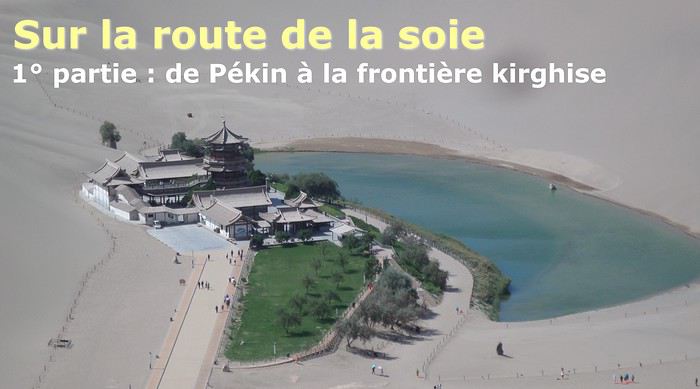
The Chinese Far West More than 30 years after my first trip to eastern China, I finally fulfilled an old dream: traveling solo from Beijing to the far west, discovering Xinjiang, the Uyghur people and the oppression they endure, the oases of Turpan and Kashgar, the Taklamakan Desert, the end of the Great Wall... The route was covered by train.
MENU PART 1: CHINA
1- Beijing (Jiankou) : the authentic Great Wall, without tourists 2- Cycling in Beijing, the best way to get around 3- Beijing : departure for the far west 4- Jiayuguan : getting by without English 5- Jiayuguan : scams and heritage 6- Dunhuang : abundance in the middle of the desert 7- Turpan : the Uyghurs under heavy surveillance 8- Kashgar : love at first sight for the old city 9- Kashgar : China’s recipe for controlling the populace 10- Tashkurgan : what on earth was I thinking going there! Kyrgyz border: a surreal epic Photo album from the 80s, contributions from other travelers (page 2)
1- JIANKOU Finding the authentic Great Wall, without tourists or a guide Friday, August 24, 2018 Thirty years later, I didn’t feel like revisiting the Great Wall at Badaling or any other overcrowded site. I chose to explore it at Jiankou, in its wildest, most authentic, and unrestored section, starting from a lost village deep in a valley—though it wasn’t *that* lost, since it had everything for communication.
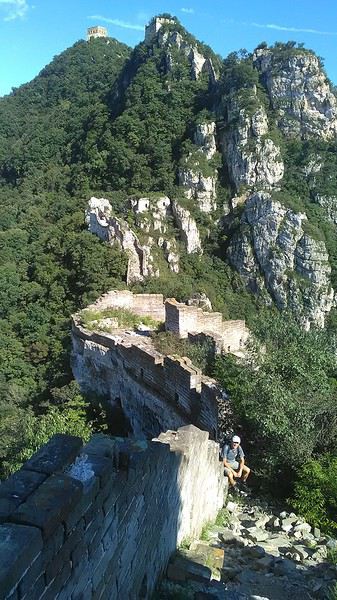
No need to pay for a taxi to get there—by timing it right, you can take the bus for just a few yuan. You have to get off at Xizhazi, the bus terminus. Be careful, there are only two buses a day in each direction. At the Xizhazi bus stop, I met a young couple who’d arrived with zero information about what to expect. We hiked the three of us toward the restored section of Mutianyu.
Still, be cautious With GPS and a topographic map (OpenTopoMap), you can set off without a problem or guide. The trail up to Jiankou is easy and well-marked. The trails down are too. But be careful—once you’re on the Wall, it’s real mountain hiking, with easy but dangerous climbing sections (over sheer drops). Not for amateurs or those afraid of heights! But what a reward. The Wall all to yourself, where it’s at its most daring. Truly mesmerizing.
More photos...
2- BEIJING The best way to get around the capital Sunday, August 26 The best way to explore the city is still by bike. Most are in a bike-share system, but you need to use an app—WeChat, the app that does everything, like monitoring your every move. No way I was installing that.
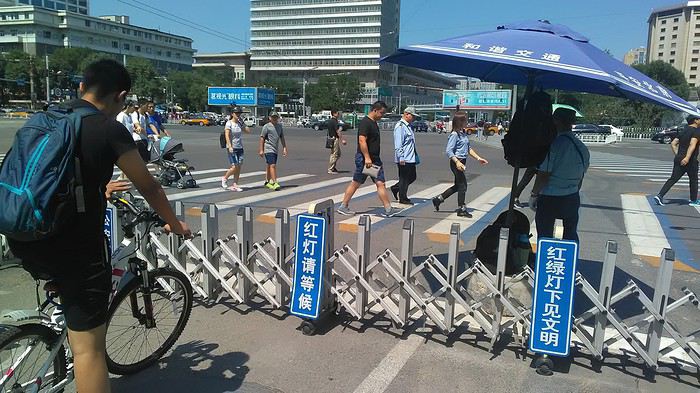
I found one at a rental shop near the hostel. The key is to quickly learn local traffic customs to minimize risks. Bike lanes are wide along the avenues.
But you still have to: - Watch out for anything parked on the bike paths—the most annoying are people napping or talking on the phone in their cars - Keep an eye on everything coming the wrong way—the list is long - The worst is right turns on red, which in Chinese traffic rules seem to have priority Once you get the hang of it, it’s fine. The city is huge but flat, so you can just wing it.
3- BEIJING By train to the far west Sunday, August 26 Beijing West Station is the size and operates like an airport. With your e-ticket from the agency, you first have to pick up your ticket at the special "English" counter, after passing through security. With your ticket in hand, you have to exit and enter through the boarding waiting area—not the platform—after a second security check.
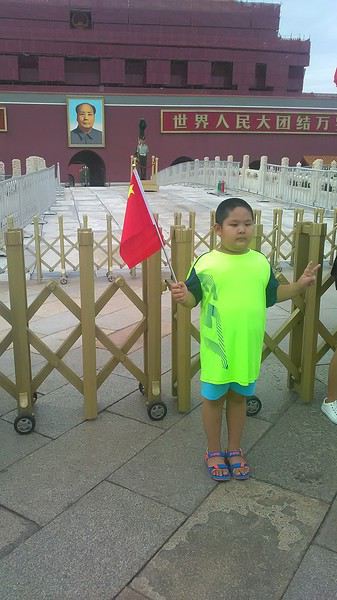 Then you find the right hall and wait for the sign to finally access the platform. In the end, it works pretty well given the incredible number of passengers to manage. Everywhere in Beijing, I saw that the Chinese have mastered crowd flow management.
Nice surprise: second-class carriages are clean, air-conditioned, and bright. Perfect, since I was in for 20 hours. One uniformed attendant per carriage, mobile meal service—luxury! Small downside: no luggage space. Hauling your suitcase up to the top bunk is quite a workout. I was in the middle, so it wasn’t too bad. The landscape, though, whether rural or urban, is pretty bleak. That should change once we leave the eastern plains.
Of course, I got my first police visit, with a thorough passport check and bag search. I was warned—going to the Chinese far west exposes you to this kind of hassle. But they were polite and respectful.
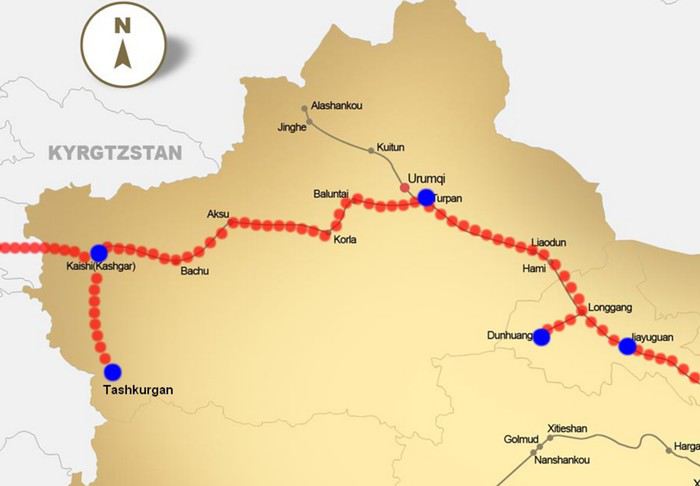 The Chinese Far West
4- JIAYUGUAN Getting by without English Monday, August 27 At the gates of two deserts (Gobi and Taklamakan) and at the foot of the Tibetan highlands, the Great Wall ends at Jiayuguan. Here, I found the deeper China I’d somewhat rediscovered during my bike ride, even if now everyone gets around on electric bikes and I’m no longer stared at like an alien.
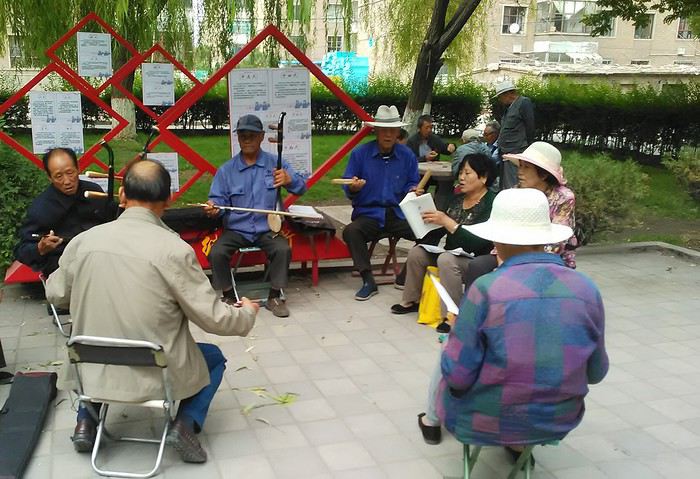
Prices are nothing like Beijing: you can find a full meal for 2 €, and my bike cost 7 € for two days. Plus, few people speak English—neither the owner of the HI hostel where I stayed, nor the ticket sellers at the sites, let alone the servers at the small eateries where I ate. Everything is written in Chinese. So I had to use the little Chinese I know to communicate about essentials. It makes the locals laugh to see a European trying to speak their language, but it earns respect. With Google Translate’s help, I managed.
Rant: With their avenues blocked for construction for kilometers without warning, and new roads not yet on maps, I must’ve taken 15 km of detours. More photos...
5- JIAYUGUAN Scams and heritage Tuesday, August 28 The Great Wall doesn’t exactly end at the fort I visited yesterday but 10 km further, at the entrance to a river gorge at the foot of the mountains. All that’s left is a badly damaged tower (more like a mound of earth) and a section of clay wall, similar to the one I biked yesterday.
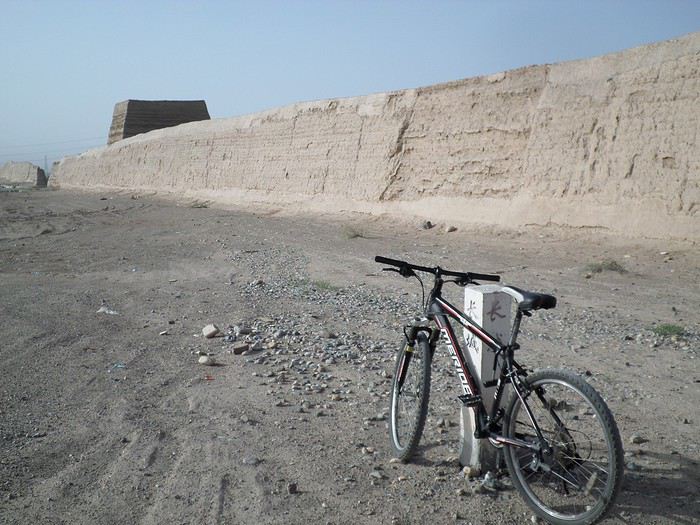
This morning, I hopped on my bike, determined to venture into the desert to see this highly symbolic site. First, you access it via a wide, brand-new road with not a soul in sight. Just before the site, I came across a grand welcome gate, very period-style, but it’s actually the inevitable toll booth.
Behind the gate, the road continues straight to the site, which you can see in the distance—at least 2 km away—the remains of the tower and wall. I had to leave my bike here. Fine. I went to the ticket counter and asked the price: 120 yuan! I couldn’t believe it—over 15 € for a simple mound of earth.
I showed my displeasure to the attendant, who couldn’t care less, and immediately turned back. 120 yuan—that’s the price for a new road, a fancy gate planted 2 km before the site just to force you to take a shuttle, and employees with nothing to do all day... Now I understand why I didn’t meet anyone!
Heritage China is a bit pricey Generally, sites are expensive for the country’s standard of living, but travelers are supposed to have money, so why hold back? I even gave up on the Forbidden City—reservations required days in advance (or on the black market at an impossible price). I prefer to keep the memory of my first visit, when entry must’ve cost a few dozen cents, and there were only a handful of visitors.
This morning, I took a taxi to see remarkable tombs of common people from the 3rd to 6th centuries. They’re small vaulted caves made of painted bricks, depicting scenes of daily life. Very pretty and moving. But even here, though the price was more reasonable, I was left wanting—only one of the 16 tombs is open to visitors, and it’s apparently not the most beautiful.
The authentic China—at least what’s left of it... Wandering the impersonal avenues of the city, you stumble upon a market. There, you still find traditional China—small shops with questionable hygiene, Go players, musicians, and even a dental prosthetist. The last refuge for those untouched by modernity. More photos...
6- DUNHUANG Abundance in the middle of the desert Wednesday, August 29 Well, I thought the landscape would be less bleak as I headed west. Nope. The only distraction in this expanse of dark, clayey sand is the forests of pylons and wind turbines, plus wild camels racing each other.
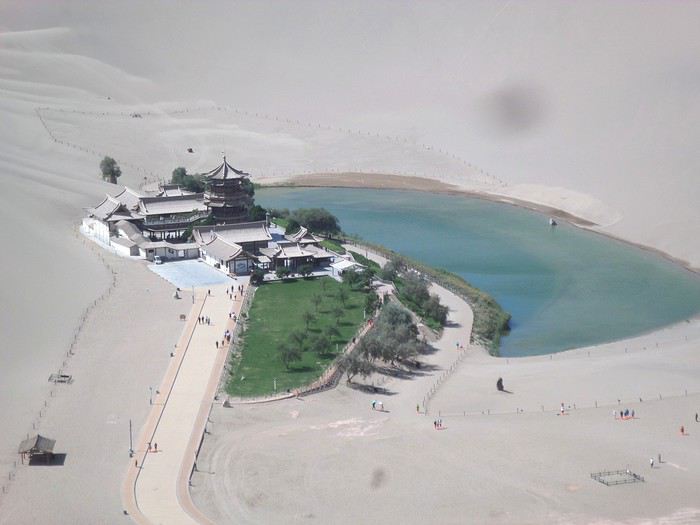 However, Dunhuang, the gateway to the Taklamakan, is by far the most pleasant Chinese city I know. There’s a real city center you can explore on foot. It’s hot but not unbearable, with a light, dry breeze. Much nicer than Beijing. The Han Chinese are still the majority, but the Muslim Uyghurs are more numerous, and the muezzin’s call to prayer echoes around the mosque.
The most surprising thing is the abundance and diversity of fruits and vegetables. You wonder how it all grows here. Well-irrigated, the desert sands are very fertile. Here, raisins have subtle, mysterious flavors, and the lamb really tastes like lamb.
Today, I visited the must-see Mingshashan, a dune complex next to which Pila is a molehill. The Basque Country, but covered in sand... More photos...
7- TURPAN The Uyghurs under heavy surveillance Friday, August 31 Surveillance cameras everywhere in the city, armed police stationed at intersections, in front of public buildings, at the entrance and inside tourist sites, police stations on every corner, patrols on foot or by car, khaki uniforms even for middle schoolers... here, the Han Chinese are in the minority, and you can feel it. Turpan feels like a city under siege.
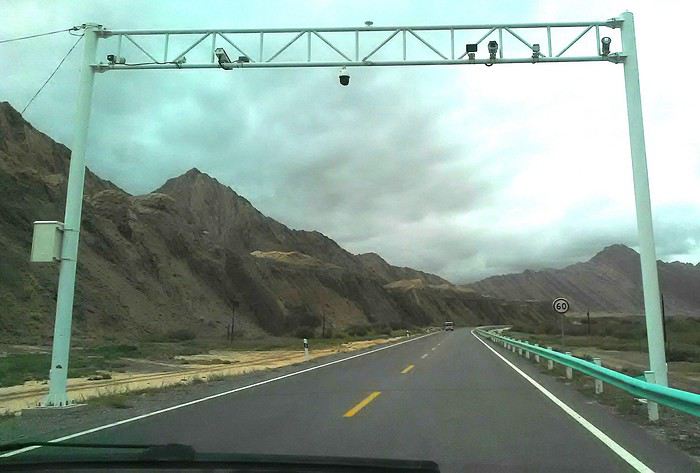
To enter the youth hostel where I stayed, there’s even a security gate, and the receptionist (a Han, like everyone in tourism) wears a bulletproof vest! Reassuring. Still, you don’t feel particularly threatened here, especially as a European. The troublemakers are the Chinese, not the Uyghurs. Generally, China is a very safe country for visitors.
Smile, you’re on camera! I was biking on an avenue when the car in front of me got flashed for driving slowly. I quickly understood why when I got flashed too.
Here, the official time is Beijing time, but it gets dark two hours later. It’ll be even worse in Kashgar. Trickier to manage: everything is displayed in Chinese and Arabic. Nothing in English. Choosing a menu is a shot in the dark. Apart from a few young Chinese, no one here speaks English, and my Chinese doesn’t seem very understandable...
Mogao, the end of the road for the Han Yesterday, near Dunhuang, I went to Mogao, a complex of decorated caves with Buddha sculptures and paintings. Stunning, but so crowded! Luckily, here in Turpan, Chinese tourists barely venture out. So I visited a Silk Road ghost town with only a handful of other visitors and under a howling wind.
The modern Chinese city is swallowing up the old Uyghur neighborhoods—only a museum-like district remains in the center, and pockets of resistance on the outskirts are doomed to disappear soon. More photos...
8- KASHGAR A (relative) love at first sight for the old city Sunday, September 2 After three overnight trains, here I am in the far west of China, nearly 4,000 km from the capital. Despite the omnipresent police and an old city preserved UNESCO-style, Kashgar is my Chinese love at first sight.
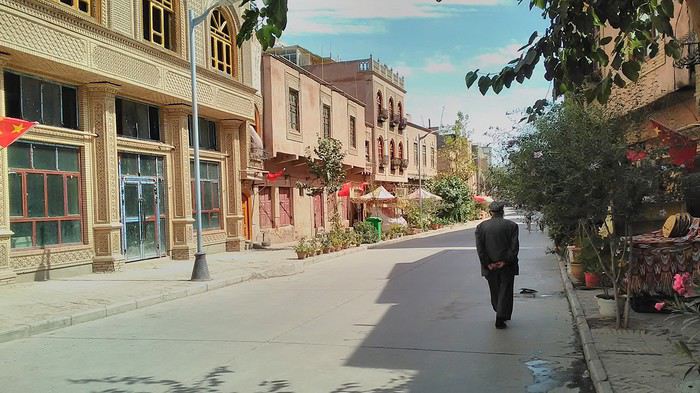
Finally, Chinese... well, sort of, because we’re in Uyghur territory here—a Turkic people with nothing culturally in common with the Han, the eastern Chinese. It started badly yesterday at Turfan station, where after three security gate passes, at least five passport checks, and a bag search, three adorable policewomen confiscated my antibacterial lotion because it had a flammable logo...
Then came the welcoming committee of armed cops at Kashgar station. Once all that was over, they left me alone—except you still have to go through security checks like everyone else to enter the old city, the bazaar, the livestock market... The further west you go, the more the siege mentality is evident. Luckily, the border isn’t far...
Despite the inevitable destruction-reconstruction, the city center has been well preserved. Thankfully, because it’s a very original style, a mix of local and colonial. I love it, even if it’s a bit too artificial, sanitized, and watered-down, and rather empty of residents. On the Silk Road, the city was famous for its great food. And it still is—rarely have I seen such richness and abundance of food! And not just scorpions or snakes. More photos...
9- KASHGAR China’s recipe for controlling the populace Saturday, September 1 Xinjiang, along with Tibet, is a "sensitive" area of rebellion in the eyes of Chinese authorities. As a result, the state has these regions and their populations under total control. Tourists also feel the consequences, even if they’re not at risk of re-education camps.
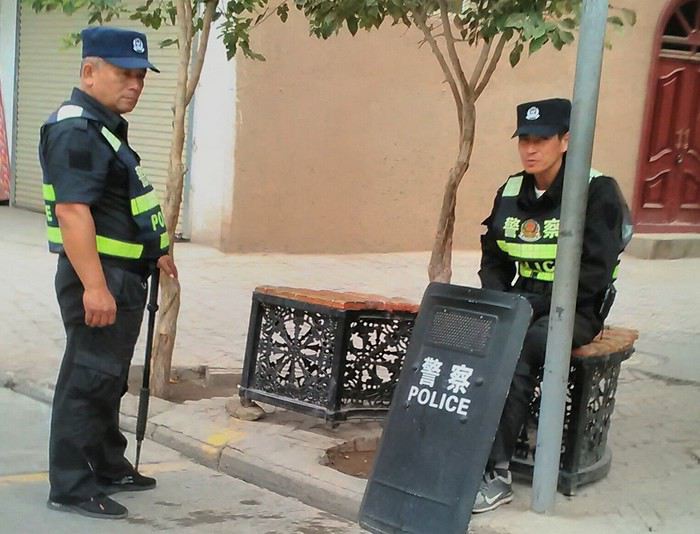 - Putting barbed wire and anti-ramming barriers around sensitive sites (schools, big hotels, government buildings...)
- Installing traffic surveillance gates with cameras and photo flashes (for all vehicles passing, including bikes) throughout the city and even in the countryside
- Posting uniformed guards with tasers, batons, or huge baseball bats every 100 meters
- Training the Han population (ethnic Chinese) in self-defense with sticks, preferably in the morning on the street. Men and women of all ages
- Starting school with the national anthem, doing military exercises, and receiving political indoctrination, all neatly lined up in the courtyard. (The dream school for any teacher)
- Placing a snitch in uniform (a pseudo-guard) in public gathering places, like youth hostels. Mine spends the day loafing around the courtyard
- Putting Chinese flags everywhere on the streets to remind everyone who’s in charge
- Installing security gates at every entrance to areas frequented by tourists (thanks for that) but not just there
- Never photographing cops, or else! I tried, but it’s not easy...
- Putting barbed wire and anti-ramming barriers around sensitive sites (schools, big hotels, government buildings...)
- Installing traffic surveillance gates with cameras and photo flashes (for all vehicles passing, including bikes) throughout the city and even in the countryside
- Posting uniformed guards with tasers, batons, or huge baseball bats every 100 meters
- Training the Han population (ethnic Chinese) in self-defense with sticks, preferably in the morning on the street. Men and women of all ages
- Starting school with the national anthem, doing military exercises, and receiving political indoctrination, all neatly lined up in the courtyard. (The dream school for any teacher)
- Placing a snitch in uniform (a pseudo-guard) in public gathering places, like youth hostels. Mine spends the day loafing around the courtyard
- Putting Chinese flags everywhere on the streets to remind everyone who’s in charge
- Installing security gates at every entrance to areas frequented by tourists (thanks for that) but not just there
- Never photographing cops, or else! I tried, but it’s not easy...
With all that, you can stroll around safely Not much crime! As for the amount the Chinese state spends to maintain such a system, it’s staggering! A third of the Han living in Xinjiang work in security. Today, I wandered freely around old Kashgar, which is quite large after all. More photos...
10- TASHKURGAN What on earth was I thinking going there! Wednesday, September 5 First, there’s the taxi—pretty crappy, with a driver who doesn’t speak a word of English and won’t stop smoking. Over six hours in that... shared with a completely out-of-it American.
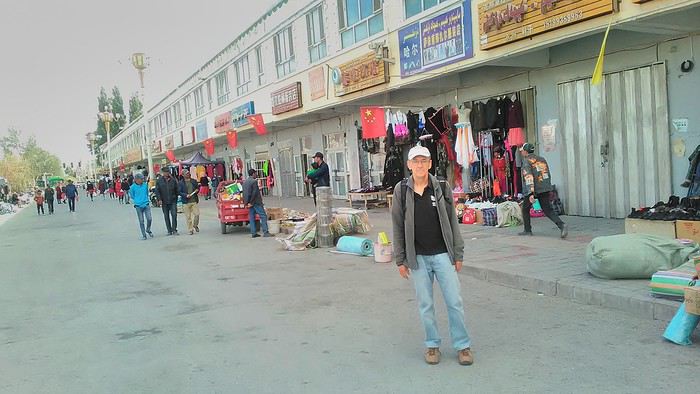
Then there are all the checkpoints along the way. I won’t go on—you know the drill by now.
After that, there’s Tashkurgan—a town with nothing to see, nothing to do. Deserted as soon as night falls. There’s this huge youth hostel and a few lost Chinese tapping away on their smartphones, chain-smoking. This lost American-European crowd, swapping tips on how to enter Pakistan or Tajikistan.
Luckily, there’s the Chinese Pamir Highway, lined with peaks over 7,000m. There’s the feeling of no longer being in China, with a population whose features are Middle Eastern. And these Tajik women with their stunning hairstyles and vibrant costumes. There’s the fact of having reached the westernmost Chinese city, far from crowds and tourist sites. A sort of end of the world. More photos...
11- KYRGYZ BORDER A surreal epic Thursday, September 6 The road from Kashgar to the Kyrgyzstan border is a little over 200 km and passes through beautiful landscapes of colorful, desert-like mountains with acrobatic folds. That’s the bucolic part of the trip.
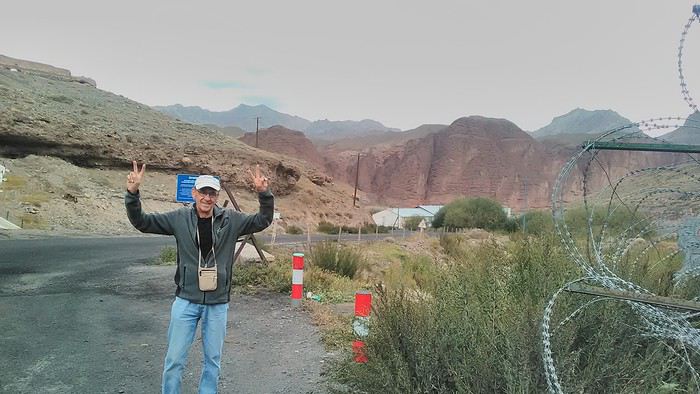 Yesterday, I managed to gather four people to rent a minibus to reach the border more easily: a Spaniard and an Argentine I’d already met in Turpan, and two New Zealanders who responded to the ad left at the hostel.
Absurdity and paranoia of Chinese authorities The highlight was crossing the town of Wuqia, 50 km past Kashgar. After tallying up with my fellow sufferers, we must’ve passed about ten checkpoints with: - Passport checks: 14 times, sometimes by two cops side by side - Bag checks: 4 times - Smartphone checks: 2 times, with deletion of "non-compliant" photos, and registration of your IMEI in the exit log!... Absurd and surreal at the same time, since my camera stayed in my bag, my apps are in French, and my photos have been online for ages...
With all that, we arrived just as the last checkpoint before the no man’s land marking the border between the two countries was on lunch break. And bam! Another 1.5-hour wait, alongside truckers who were much more used to this than we were.
What to think? The cops themselves aren’t fooled. They play the role they’re asked to, but sometimes you can coax a smile out of them—they realize how ridiculous the situation is.
What’s the point? That’s the big question my companions and I were tempted to answer with "to piss people off." To show you your place isn’t here, but with the other tourists, over there in the east, in Shanghai, Xi’an, or Guangzhou.
As for you, a traveler from a democratic country, you really experience this as aggression, humiliation, a violation of your private space. And yet, I’m respected, they speak to me properly. Today, I better understand what a Palestinian or a citizen of an occupied country might feel daily. A unique experience! Thanks, China.
And to top it off, the cherry on the cake! It’s still this glowing button you press to rate your passage after clearing the last obstacle before the exit stamp. I was so surprised it turned off before I could react. The Spaniard, with great humor and irony, had time to vote "excellent." In the end, he wasn’t wrong—you can hardly do better!
PS: I ditched my buddies at the border. They didn’t want to pay for a taxi to continue. So I took a direct taxi to Osh. The first 100 km are fabulous. I couldn’t take many photos, but I’ll be back on Monday to go to Tajikistan.
More photos...
The rest of the Silk Road, Part 2, in these travel journals: Kyrgyzstan, Tajikistan, Uzbekistan.
The Chinese Far West More than 30 years after my first trip to eastern China, I finally fulfilled an old dream: traveling solo from Beijing to the far west, discovering Xinjiang, the Uyghur people and the oppression they endure, the oases of Turpan and Kashgar, the Taklamakan Desert, the end of the Great Wall... The route was covered by train.
MENU PART 1: CHINA
1- Beijing (Jiankou) : the authentic Great Wall, without tourists 2- Cycling in Beijing, the best way to get around 3- Beijing : departure for the far west 4- Jiayuguan : getting by without English 5- Jiayuguan : scams and heritage 6- Dunhuang : abundance in the middle of the desert 7- Turpan : the Uyghurs under heavy surveillance 8- Kashgar : love at first sight for the old city 9- Kashgar : China’s recipe for controlling the populace 10- Tashkurgan : what on earth was I thinking going there! Kyrgyz border: a surreal epic Photo album from the 80s, contributions from other travelers (page 2)
1- JIANKOU Finding the authentic Great Wall, without tourists or a guide Friday, August 24, 2018 Thirty years later, I didn’t feel like revisiting the Great Wall at Badaling or any other overcrowded site. I chose to explore it at Jiankou, in its wildest, most authentic, and unrestored section, starting from a lost village deep in a valley—though it wasn’t *that* lost, since it had everything for communication.
No need to pay for a taxi to get there—by timing it right, you can take the bus for just a few yuan. You have to get off at Xizhazi, the bus terminus. Be careful, there are only two buses a day in each direction. At the Xizhazi bus stop, I met a young couple who’d arrived with zero information about what to expect. We hiked the three of us toward the restored section of Mutianyu.
Still, be cautious With GPS and a topographic map (OpenTopoMap), you can set off without a problem or guide. The trail up to Jiankou is easy and well-marked. The trails down are too. But be careful—once you’re on the Wall, it’s real mountain hiking, with easy but dangerous climbing sections (over sheer drops). Not for amateurs or those afraid of heights! But what a reward. The Wall all to yourself, where it’s at its most daring. Truly mesmerizing.
More photos...
2- BEIJING The best way to get around the capital Sunday, August 26 The best way to explore the city is still by bike. Most are in a bike-share system, but you need to use an app—WeChat, the app that does everything, like monitoring your every move. No way I was installing that.
I found one at a rental shop near the hostel. The key is to quickly learn local traffic customs to minimize risks. Bike lanes are wide along the avenues.
But you still have to: - Watch out for anything parked on the bike paths—the most annoying are people napping or talking on the phone in their cars - Keep an eye on everything coming the wrong way—the list is long - The worst is right turns on red, which in Chinese traffic rules seem to have priority Once you get the hang of it, it’s fine. The city is huge but flat, so you can just wing it.
3- BEIJING By train to the far west Sunday, August 26 Beijing West Station is the size and operates like an airport. With your e-ticket from the agency, you first have to pick up your ticket at the special "English" counter, after passing through security. With your ticket in hand, you have to exit and enter through the boarding waiting area—not the platform—after a second security check.
Then you find the right hall and wait for the sign to finally access the platform. In the end, it works pretty well given the incredible number of passengers to manage. Everywhere in Beijing, I saw that the Chinese have mastered crowd flow management.Nice surprise: second-class carriages are clean, air-conditioned, and bright. Perfect, since I was in for 20 hours. One uniformed attendant per carriage, mobile meal service—luxury! Small downside: no luggage space. Hauling your suitcase up to the top bunk is quite a workout. I was in the middle, so it wasn’t too bad. The landscape, though, whether rural or urban, is pretty bleak. That should change once we leave the eastern plains.
Of course, I got my first police visit, with a thorough passport check and bag search. I was warned—going to the Chinese far west exposes you to this kind of hassle. But they were polite and respectful.
The Chinese Far West4- JIAYUGUAN Getting by without English Monday, August 27 At the gates of two deserts (Gobi and Taklamakan) and at the foot of the Tibetan highlands, the Great Wall ends at Jiayuguan. Here, I found the deeper China I’d somewhat rediscovered during my bike ride, even if now everyone gets around on electric bikes and I’m no longer stared at like an alien.
Prices are nothing like Beijing: you can find a full meal for 2 €, and my bike cost 7 € for two days. Plus, few people speak English—neither the owner of the HI hostel where I stayed, nor the ticket sellers at the sites, let alone the servers at the small eateries where I ate. Everything is written in Chinese. So I had to use the little Chinese I know to communicate about essentials. It makes the locals laugh to see a European trying to speak their language, but it earns respect. With Google Translate’s help, I managed.
Rant: With their avenues blocked for construction for kilometers without warning, and new roads not yet on maps, I must’ve taken 15 km of detours. More photos...
5- JIAYUGUAN Scams and heritage Tuesday, August 28 The Great Wall doesn’t exactly end at the fort I visited yesterday but 10 km further, at the entrance to a river gorge at the foot of the mountains. All that’s left is a badly damaged tower (more like a mound of earth) and a section of clay wall, similar to the one I biked yesterday.
This morning, I hopped on my bike, determined to venture into the desert to see this highly symbolic site. First, you access it via a wide, brand-new road with not a soul in sight. Just before the site, I came across a grand welcome gate, very period-style, but it’s actually the inevitable toll booth.
Behind the gate, the road continues straight to the site, which you can see in the distance—at least 2 km away—the remains of the tower and wall. I had to leave my bike here. Fine. I went to the ticket counter and asked the price: 120 yuan! I couldn’t believe it—over 15 € for a simple mound of earth.
I showed my displeasure to the attendant, who couldn’t care less, and immediately turned back. 120 yuan—that’s the price for a new road, a fancy gate planted 2 km before the site just to force you to take a shuttle, and employees with nothing to do all day... Now I understand why I didn’t meet anyone!
Heritage China is a bit pricey Generally, sites are expensive for the country’s standard of living, but travelers are supposed to have money, so why hold back? I even gave up on the Forbidden City—reservations required days in advance (or on the black market at an impossible price). I prefer to keep the memory of my first visit, when entry must’ve cost a few dozen cents, and there were only a handful of visitors.
This morning, I took a taxi to see remarkable tombs of common people from the 3rd to 6th centuries. They’re small vaulted caves made of painted bricks, depicting scenes of daily life. Very pretty and moving. But even here, though the price was more reasonable, I was left wanting—only one of the 16 tombs is open to visitors, and it’s apparently not the most beautiful.
The authentic China—at least what’s left of it... Wandering the impersonal avenues of the city, you stumble upon a market. There, you still find traditional China—small shops with questionable hygiene, Go players, musicians, and even a dental prosthetist. The last refuge for those untouched by modernity. More photos...
6- DUNHUANG Abundance in the middle of the desert Wednesday, August 29 Well, I thought the landscape would be less bleak as I headed west. Nope. The only distraction in this expanse of dark, clayey sand is the forests of pylons and wind turbines, plus wild camels racing each other.
However, Dunhuang, the gateway to the Taklamakan, is by far the most pleasant Chinese city I know. There’s a real city center you can explore on foot. It’s hot but not unbearable, with a light, dry breeze. Much nicer than Beijing. The Han Chinese are still the majority, but the Muslim Uyghurs are more numerous, and the muezzin’s call to prayer echoes around the mosque.The most surprising thing is the abundance and diversity of fruits and vegetables. You wonder how it all grows here. Well-irrigated, the desert sands are very fertile. Here, raisins have subtle, mysterious flavors, and the lamb really tastes like lamb.
Today, I visited the must-see Mingshashan, a dune complex next to which Pila is a molehill. The Basque Country, but covered in sand... More photos...
7- TURPAN The Uyghurs under heavy surveillance Friday, August 31 Surveillance cameras everywhere in the city, armed police stationed at intersections, in front of public buildings, at the entrance and inside tourist sites, police stations on every corner, patrols on foot or by car, khaki uniforms even for middle schoolers... here, the Han Chinese are in the minority, and you can feel it. Turpan feels like a city under siege.
To enter the youth hostel where I stayed, there’s even a security gate, and the receptionist (a Han, like everyone in tourism) wears a bulletproof vest! Reassuring. Still, you don’t feel particularly threatened here, especially as a European. The troublemakers are the Chinese, not the Uyghurs. Generally, China is a very safe country for visitors.
Smile, you’re on camera! I was biking on an avenue when the car in front of me got flashed for driving slowly. I quickly understood why when I got flashed too.
Here, the official time is Beijing time, but it gets dark two hours later. It’ll be even worse in Kashgar. Trickier to manage: everything is displayed in Chinese and Arabic. Nothing in English. Choosing a menu is a shot in the dark. Apart from a few young Chinese, no one here speaks English, and my Chinese doesn’t seem very understandable...
Mogao, the end of the road for the Han Yesterday, near Dunhuang, I went to Mogao, a complex of decorated caves with Buddha sculptures and paintings. Stunning, but so crowded! Luckily, here in Turpan, Chinese tourists barely venture out. So I visited a Silk Road ghost town with only a handful of other visitors and under a howling wind.
The modern Chinese city is swallowing up the old Uyghur neighborhoods—only a museum-like district remains in the center, and pockets of resistance on the outskirts are doomed to disappear soon. More photos...
8- KASHGAR A (relative) love at first sight for the old city Sunday, September 2 After three overnight trains, here I am in the far west of China, nearly 4,000 km from the capital. Despite the omnipresent police and an old city preserved UNESCO-style, Kashgar is my Chinese love at first sight.
Finally, Chinese... well, sort of, because we’re in Uyghur territory here—a Turkic people with nothing culturally in common with the Han, the eastern Chinese. It started badly yesterday at Turfan station, where after three security gate passes, at least five passport checks, and a bag search, three adorable policewomen confiscated my antibacterial lotion because it had a flammable logo...
Then came the welcoming committee of armed cops at Kashgar station. Once all that was over, they left me alone—except you still have to go through security checks like everyone else to enter the old city, the bazaar, the livestock market... The further west you go, the more the siege mentality is evident. Luckily, the border isn’t far...
Despite the inevitable destruction-reconstruction, the city center has been well preserved. Thankfully, because it’s a very original style, a mix of local and colonial. I love it, even if it’s a bit too artificial, sanitized, and watered-down, and rather empty of residents. On the Silk Road, the city was famous for its great food. And it still is—rarely have I seen such richness and abundance of food! And not just scorpions or snakes. More photos...
9- KASHGAR China’s recipe for controlling the populace Saturday, September 1 Xinjiang, along with Tibet, is a "sensitive" area of rebellion in the eyes of Chinese authorities. As a result, the state has these regions and their populations under total control. Tourists also feel the consequences, even if they’re not at risk of re-education camps.
- Putting barbed wire and anti-ramming barriers around sensitive sites (schools, big hotels, government buildings...)
- Installing traffic surveillance gates with cameras and photo flashes (for all vehicles passing, including bikes) throughout the city and even in the countryside
- Posting uniformed guards with tasers, batons, or huge baseball bats every 100 meters
- Training the Han population (ethnic Chinese) in self-defense with sticks, preferably in the morning on the street. Men and women of all ages
- Starting school with the national anthem, doing military exercises, and receiving political indoctrination, all neatly lined up in the courtyard. (The dream school for any teacher)
- Placing a snitch in uniform (a pseudo-guard) in public gathering places, like youth hostels. Mine spends the day loafing around the courtyard
- Putting Chinese flags everywhere on the streets to remind everyone who’s in charge
- Installing security gates at every entrance to areas frequented by tourists (thanks for that) but not just there
- Never photographing cops, or else! I tried, but it’s not easy...With all that, you can stroll around safely Not much crime! As for the amount the Chinese state spends to maintain such a system, it’s staggering! A third of the Han living in Xinjiang work in security. Today, I wandered freely around old Kashgar, which is quite large after all. More photos...
10- TASHKURGAN What on earth was I thinking going there! Wednesday, September 5 First, there’s the taxi—pretty crappy, with a driver who doesn’t speak a word of English and won’t stop smoking. Over six hours in that... shared with a completely out-of-it American.
Then there are all the checkpoints along the way. I won’t go on—you know the drill by now.
After that, there’s Tashkurgan—a town with nothing to see, nothing to do. Deserted as soon as night falls. There’s this huge youth hostel and a few lost Chinese tapping away on their smartphones, chain-smoking. This lost American-European crowd, swapping tips on how to enter Pakistan or Tajikistan.
Luckily, there’s the Chinese Pamir Highway, lined with peaks over 7,000m. There’s the feeling of no longer being in China, with a population whose features are Middle Eastern. And these Tajik women with their stunning hairstyles and vibrant costumes. There’s the fact of having reached the westernmost Chinese city, far from crowds and tourist sites. A sort of end of the world. More photos...
11- KYRGYZ BORDER A surreal epic Thursday, September 6 The road from Kashgar to the Kyrgyzstan border is a little over 200 km and passes through beautiful landscapes of colorful, desert-like mountains with acrobatic folds. That’s the bucolic part of the trip.
Yesterday, I managed to gather four people to rent a minibus to reach the border more easily: a Spaniard and an Argentine I’d already met in Turpan, and two New Zealanders who responded to the ad left at the hostel.Absurdity and paranoia of Chinese authorities The highlight was crossing the town of Wuqia, 50 km past Kashgar. After tallying up with my fellow sufferers, we must’ve passed about ten checkpoints with: - Passport checks: 14 times, sometimes by two cops side by side - Bag checks: 4 times - Smartphone checks: 2 times, with deletion of "non-compliant" photos, and registration of your IMEI in the exit log!... Absurd and surreal at the same time, since my camera stayed in my bag, my apps are in French, and my photos have been online for ages...
With all that, we arrived just as the last checkpoint before the no man’s land marking the border between the two countries was on lunch break. And bam! Another 1.5-hour wait, alongside truckers who were much more used to this than we were.
What to think? The cops themselves aren’t fooled. They play the role they’re asked to, but sometimes you can coax a smile out of them—they realize how ridiculous the situation is.
What’s the point? That’s the big question my companions and I were tempted to answer with "to piss people off." To show you your place isn’t here, but with the other tourists, over there in the east, in Shanghai, Xi’an, or Guangzhou.
As for you, a traveler from a democratic country, you really experience this as aggression, humiliation, a violation of your private space. And yet, I’m respected, they speak to me properly. Today, I better understand what a Palestinian or a citizen of an occupied country might feel daily. A unique experience! Thanks, China.
And to top it off, the cherry on the cake! It’s still this glowing button you press to rate your passage after clearing the last obstacle before the exit stamp. I was so surprised it turned off before I could react. The Spaniard, with great humor and irony, had time to vote "excellent." In the end, he wasn’t wrong—you can hardly do better!
PS: I ditched my buddies at the border. They didn’t want to pay for a taxi to continue. So I took a direct taxi to Osh. The first 100 km are fabulous. I couldn’t take many photos, but I’ll be back on Monday to go to Tajikistan.
More photos...
The rest of the Silk Road, Part 2, in these travel journals: Kyrgyzstan, Tajikistan, Uzbekistan.
Circuit "La boucle des oasis: les jardins de la Saoura" (Algérie)
Bonjour,
Est-ce que quelqu'un a déjà fait ce circuit intitulé "La boucle des oasis : les jardins de la Saoura" ? C'est un circuit proposé par TUI/Nouvelles frontières. Le circuit passe par Oran, Tlemcen, Taghit, Bénis Abbès, Timmimoune, El Goléa, Ghardaïa, Alger, Cherchell, Tipaza. Si oui, pouvez-vous me faire un petit retour d'expérience ? 😉
Le circuit est prévu 2ème quinzaine d'octobre, est-ce une bonne période ? Il y a aussi 2ème quinzaine de septembre mais il semble qu'il n'y ai plus de place.
Autre question : sur les "us et coutumes" à respecter en Algérie et listés sur la brochure, il est indiqué : "Ne refusez pas le repas que l'on vous offre". Or j'ai de multiples allergies alimentaires et en voyage, je ne mange que très peu, principalement des bananes et riz nature afin de ne pas risquer le rapatriement médical voire pire. Jusqu'à présent ça a été assez bien accepté dans les différents pays (beaucoup mieux accepté par la population locale que par mes compatriotes français du groupe....). Pensez-vous que ça puisse aller aussi en Algérie ou sont-ils très susceptibles sur le sujet ?
Bonne journée à tout le monde.
Est-ce que quelqu'un a déjà fait ce circuit intitulé "La boucle des oasis : les jardins de la Saoura" ? C'est un circuit proposé par TUI/Nouvelles frontières. Le circuit passe par Oran, Tlemcen, Taghit, Bénis Abbès, Timmimoune, El Goléa, Ghardaïa, Alger, Cherchell, Tipaza. Si oui, pouvez-vous me faire un petit retour d'expérience ? 😉
Le circuit est prévu 2ème quinzaine d'octobre, est-ce une bonne période ? Il y a aussi 2ème quinzaine de septembre mais il semble qu'il n'y ai plus de place.
Autre question : sur les "us et coutumes" à respecter en Algérie et listés sur la brochure, il est indiqué : "Ne refusez pas le repas que l'on vous offre". Or j'ai de multiples allergies alimentaires et en voyage, je ne mange que très peu, principalement des bananes et riz nature afin de ne pas risquer le rapatriement médical voire pire. Jusqu'à présent ça a été assez bien accepté dans les différents pays (beaucoup mieux accepté par la population locale que par mes compatriotes français du groupe....). Pensez-vous que ça puisse aller aussi en Algérie ou sont-ils très susceptibles sur le sujet ?
Bonne journée à tout le monde.
Réenregistrement bagages sur Air Tahiti Nui à Los Angeles
Bonjour, Ia ora na.
J'ai acheté pour ma compagne et moi même 2 billets allers retour : Voyage 1 : de Tahiti à Los Angeles / de Los angeles à Tahiti aller le 08.02 retour le 29.02
Voyage 2 : De los angeles à Paris / de Paris à los angeles , aller le 09.02 retour le 29.02 .
En fait , afin de payer moins cher j'ai choisis le même avion, même vol qui devait alelr en direct de Tahiti Vers Paris avec escale technique à Los angeles, mais en choisissant 2 allers retours différents...
Je viens d'apprendre que je ne pourrai apparament pas voyager car je ne dispose pas du temps nécessaire afin de récupérer mes bagages et les réenregistrer! Sauf qu'il s'agit de la même compagnie aérienne Air Tahiti Nui et du même avion....
Y a T'il un moyen de se faire enregistrer en une seule fois afin de ne pas avoir à récupérer nos bagages ! je n'ai pas pris de billet modifiables donc j'aimerais ne pas avoir perdu ces billets ....
Je précise également que le temps entre les 2 vols est de 2h ( arrivée à 8h55 départ 11h35 à Los angeles et arrivé à 14h15 et départ à 16h15 ) SVP aidez nous :( SVP aidez nous :(
J'ai acheté pour ma compagne et moi même 2 billets allers retour : Voyage 1 : de Tahiti à Los Angeles / de Los angeles à Tahiti aller le 08.02 retour le 29.02
Voyage 2 : De los angeles à Paris / de Paris à los angeles , aller le 09.02 retour le 29.02 .
En fait , afin de payer moins cher j'ai choisis le même avion, même vol qui devait alelr en direct de Tahiti Vers Paris avec escale technique à Los angeles, mais en choisissant 2 allers retours différents...
Je viens d'apprendre que je ne pourrai apparament pas voyager car je ne dispose pas du temps nécessaire afin de récupérer mes bagages et les réenregistrer! Sauf qu'il s'agit de la même compagnie aérienne Air Tahiti Nui et du même avion....
Y a T'il un moyen de se faire enregistrer en une seule fois afin de ne pas avoir à récupérer nos bagages ! je n'ai pas pris de billet modifiables donc j'aimerais ne pas avoir perdu ces billets ....
Je précise également que le temps entre les 2 vols est de 2h ( arrivée à 8h55 départ 11h35 à Los angeles et arrivé à 14h15 et départ à 16h15 ) SVP aidez nous :( SVP aidez nous :(
Budget to plan for the Three Passes Trek in Nepal
Hi there,
I’m heading to Nepal very soon to do the Three Passes Trek, among other things. Could anyone tell me what the average daily budget is for this trek? From what I’ve heard, this area seems more expensive than others.
Thanks in advance for your replies! :)
I’m heading to Nepal very soon to do the Three Passes Trek, among other things. Could anyone tell me what the average daily budget is for this trek? From what I’ve heard, this area seems more expensive than others.
Thanks in advance for your replies! :)
Visa US et comptes sur les réseaux sociaux
Bonjour
Pour obtenir un Visa US il faut désormais indiquer obligatoirement ses comptes sur les réseaux sociaux : www.nytimes.com/...on-social-media.html
Pour obtenir un Visa US il faut désormais indiquer obligatoirement ses comptes sur les réseaux sociaux : www.nytimes.com/...on-social-media.html
Bénin: les otages français libérés, mais à quel prix?
Bonjour
Je viens de lire que les otages Français enlevés au nord du Bénin ont été libérés ainsi que 2 autres otages étrangers, 2 fusiliers marins ont perdus la vie dans cette opération de sauvetage .
Cette information m' a mis assez mal à l' aide et m' a poussé à m' interroger sur ces voyages que nous effectuons dans des régions annoncées dangeureuses comme toutes les parties frontalières du Nord du Bénin, nord Cameroun , le Mali , le Burkina ect......et autres régions du monde .
Certaines personnes sur les forums ventent ces destinations en minimisant les risques puisque ils y sont allés et en reviennent enchantés , il n' y a donc aucun problème , "il faut arreter de raconter n' importe quoi , arreter de prendre au serieux les informations du ministère des AE , beaucoup trop alarmiste " nous disent - il .
Alors si l' on souhaite prendre des risques , pas de soucis , chacun mène sa vie à sa guise mais il faut alors en assumer les conséquences.
Je pense aux 2 jeunes homme ( a leurs familles ) qui sont morts pour sauver d' autres vies , quel gâchis .
Itinéraire 16 jours en Thaïlande en famille en février
Bonjour.
Je vous transmets mon programme. De la même manière si vous avez des remarques ou des questions n'hésitez pas. Nous partons avec deux enfants (9 et 13 ans).
Jour 1: vol Emirates, départ Genève à 14h45. Escale de deux heures à Dubaï
Jour 2: arrivée à 12h à Bangkok. On rejoint notre Airbnb à Sukhumvit, le long de la MRT. J'ai fais ce choix d'un logement un peu excentré afin de faciliter les déplacements et d'éviter de trop marcher avec les bagages.
Un peu de repos, piscine sur le toit de la résidence puis premiers pas dans Bangkok. Se faire violence pour ne pas aller dormir trop tôt...
Jour 3: visite du palais royal et du Wat Pho. Voir si le temps de faire un marché. Dernière soirée à Bangkok. Que 1 journée et demi à Bangkok. C'est un choix fait pour plusieurs raisons dont la principale est la chaleur.
Jour 4: départ pour Ayutthaya en train. Avec la MRT a coté de notre logement, facile de rejoindre la gare de Hua Lamphong. Location de vélo, visite de Ayutthaya (on laisse les bagages à la consigne de la gare). Départ pour Chiang mai en train de nuit
Jour 5: visite Chiang Mai. Programme à affiner
Jour 6: Chiang Mai. Départ en bus dans l'après midi pour Chiang Rai. Visite du temple blanc. Soirée et nuit Chiang Rai
Jour 7: louer une voiture ou deux scooters pour faire le triangle d'or. Nuit à Chiang Rai
Jour 8: le matin, un employé d'éléphantsteps vient nous récupérer à l'hôtel. Journée Éléphants dans ce petit sanctuaire où les éléphants ne sont ni attachés ni montés. Tenu par une française qui gère aussi une association qui aide à la scolarisation les enfants des villages. Elle propose même des séjours pendant lesquels, en plus de s'occuper d'éléphants, possibilités de passer du temps dans l'école du village pour initier les enfants au français, à l'anglais... Je ne suis pas passée par un tour pour cette journée. Je suis directement entrée en contact avec la responsable. Nous passons la nuit dans le village.
Jour 9: l'association nous dépose à l'aéroport de Chiang rai (cool). Vol Chiang Rai-Phuket. Arrivée à 12h30. ferry vers Ko Yao Noi. Choix de cette île pour plusieurs raisons : jolie, préservée, optimisation des transports depuis Phuket... On rejoint notre hôtel. De jolis petits bungalows sur la plage. Avec piscine afin de pouvoir se baigner même quand la marée est basse...
Jour 10-11-12: Ko Yao Noi. Programme à affiner. Probablement une journée scooter pour découvrir l'île. Une sortie bateau pour les îles alentours pour faire un peu de snorkeling... Et du repos, de la baignade ...
Jour 13: ferry vers Phuket, transport vers le parc de Khao Sok (bus, taxi???). Découverte du village et installation dans notre bungalow.
Jour 14: départ pour une découverte du parc avec un guide. Nuit sur le lac
Jour 15: découverte du lac, jungle... Retour au village. Départ vers Phuket. Arrivée à l'hôtel vers l'aéroport (sur Nai Yang Beach). Dernière soirée
Jour 16: vol Phuket-Genève. Départ 9h30. Fin du voyage
Ce programme peut sembler chargé mais c'est un peu notre style. De plus, je préfère privilégier la découverte des trésors culturels et naturels de la Thaïlande. Peu de plages (mais un peu quand même). On s'est dit que des belles plages, on aurait encore l'occasion d'en voir dans d'autres pays, tandis que le reste pas forcément...
Avez vous des remarques, des conseils ???
Merci
Marie
Ce programme peut sembler chargé mais c'est un peu notre style. De plus, je préfère privilégier la découverte des trésors culturels et naturels de la Thaïlande. Peu de plages (mais un peu quand même). On s'est dit que des belles plages, on aurait encore l'occasion d'en voir dans d'autres pays, tandis que le reste pas forcément...
Avez vous des remarques, des conseils ???
Merci
Marie