Results for "Gabon"
About 4,158 results.
More options
Many results are in French, the community’s main language. English translations are added over time.
Search results
Visa chilien, départ pour décembre 2014
Bonjour je suis Amoureuse du Chili et sa population je suis interéssé a le visiter territorialement pendant 1 mois et découvrir ce beau pays qui est le terminus du monde! Ai-je besoin d'un visa? Quelles sont les lois locales au Chili? Je ne bois pas je ne fumes pas mais est-ce que c'est aussi dangereux pour une femme de voyager toute seule dans un pays comme le Chili? Comment les femmes seules sont-elles vues dans la société Chilienne?
Merci.
Merci.
Température supportable en mai aux Philippines?
Bonjour!
Je pars début mai en asie et je serais une dizaine de jours aux phillipinnes (excactement du 1er au 12 mai). Pour corser le tout je pars avec ma femme et mon fils de 6 mois....
J'aborde un sujet récurrent mais je n'ai pas trouvé la réponse à ma question donc :
Je sais que le mois de mai est le plus chaud et que la saison des pluies n'a pas vraiment démarré dans pas mal d'endroits aux phil mais :
-est ce que la température est vraiment insuportable ?
-quel coin privilégié (je pensais soit bohol/siquijor soit nord palawan) ?
-faut il absoluement louer des chambres / bungalow avec clim ?
-faut il que j'annule mon voyage ?
J'attends avec impatience vos commentaires/votre vécu afin de préciser ou annuler mon voyage.
PS : je suis parti au cambodge au mois d'avril et au sri lanka l'été et c'était vraiment la fournaise, les nuits sans clim étaient difficilement supportable alors si c'est pareil ....déjà pour nous c'est dur alors pour mon petit....:(
Merci de vos retour!
J'attends avec impatience vos commentaires/votre vécu afin de préciser ou annuler mon voyage.
PS : je suis parti au cambodge au mois d'avril et au sri lanka l'été et c'était vraiment la fournaise, les nuits sans clim étaient difficilement supportable alors si c'est pareil ....déjà pour nous c'est dur alors pour mon petit....:(
Merci de vos retour!
Séjour aux États-Unis avec agence
Bonjour beautiful people.....je m'apelles Franck arnauld et je vis au Ghana....voyager et decouvrir de nouvelles terres a toujours etE mon sport preferE(rires).mais parfois les moyens financiers nous font defaut jusqu'au jour ou je suis tomber sur ce forum....et la j'ai recommencer a rever....mais un probleme se met en travers de mon reve.....le ic est que les societEs qui font ces offres sont baser en France, et depart de chaque voyage est soit a Paris ou dans une ville Francaise..et meme quand j'essai d'apeller Promovacances depuis ici, ca passe pas, apparemen le numero n'est plus d'actualitE....alors je me demandais, dois-je venir en France avant de jouir de ces offres?j'avais l'intention d'aller visiter mon frere aux USA ces vacances de noel......y-a t'il des societes qui font des offres pareils et baser aux etats-unis?j'ai besoin de votre aide........merci beaucoup
S'expatrier au Congo-Brazzaville avec des enfants?
bonjour,
j'ai deux enfants (6 et 11 ans) et j'aurais voulu savoir comment se passe la scolarisation dans le lycée français de Brazzaville. je pars avec eux et j'aimerais les renvoyer en France à chaque vacances scolaires. y a t-il des tarifs préférentiels quand on prend régulièrement l'avion ?
merci d'avance pour l'aide que vous pourrez m'apporter.
delphine
j'ai deux enfants (6 et 11 ans) et j'aurais voulu savoir comment se passe la scolarisation dans le lycée français de Brazzaville. je pars avec eux et j'aimerais les renvoyer en France à chaque vacances scolaires. y a t-il des tarifs préférentiels quand on prend régulièrement l'avion ?
merci d'avance pour l'aide que vous pourrez m'apporter.
delphine
Travailler et prendre des cours d'anglais à Cape Town
Bonjour à tous, je suis un nouveau voyageur sur le forum ! =)
En cherchant des infos sur l'Afrique du sud, plus précisément Cape Town, je suis arrivé ici et ça m'a tout de suite plu..
Je crée un post car je n'ai pas trouvé les infos que je cherche...
En fait, je prévois de partir environ 2 mois à Cape town (janvier-février). Soit je chercherai une occupation ou travail quelconque, soit je prendrais des cours d'anglais. Cependant j'appréhende un peu la chose.. Est-ce que quelqu'un a déjà fait cette expérience ? Je me pose quelques questions comme :
Serait-ce mieux une famille d'accueil ou un "internat" ? Les gens sont-ils sociables, se fait-on des amis facilement ? Comment est la vie nocturne? beaucoup de clubs, bonne ambiance, .. ? Je n'ai que 19 ans et c'est pour moi un point essentiel 😛 2 mois, est-ce trop long ?
Je suis désolé mon post ressemble plus à un interrogatoire de la gestapo, mais je suis assez inquiet en fait.. Donc si vous avez de l'expérience ou des conseils à me donner, c'est avec plaisir que je les lirai !
Merci d'avance!
En fait, je prévois de partir environ 2 mois à Cape town (janvier-février). Soit je chercherai une occupation ou travail quelconque, soit je prendrais des cours d'anglais. Cependant j'appréhende un peu la chose.. Est-ce que quelqu'un a déjà fait cette expérience ? Je me pose quelques questions comme :
Serait-ce mieux une famille d'accueil ou un "internat" ? Les gens sont-ils sociables, se fait-on des amis facilement ? Comment est la vie nocturne? beaucoup de clubs, bonne ambiance, .. ? Je n'ai que 19 ans et c'est pour moi un point essentiel 😛 2 mois, est-ce trop long ?
Je suis désolé mon post ressemble plus à un interrogatoire de la gestapo, mais je suis assez inquiet en fait.. Donc si vous avez de l'expérience ou des conseils à me donner, c'est avec plaisir que je les lirai !
Merci d'avance!
Recherche logement pour la rentrée scolaire 2009 à Accra (Ghana)
Recherche de Logement à Accra dans le quartier de l'école française (cantonnements) pour la rentrée scolaire 2009
Je pars enseigner à l'école française d'accra (GHANA) à la rentrée scolaire 2009 .Le problème c'est le logement pour lequel semble t-il les propiriétaires réclament 12 à 24 mois de loyer.Comment pourrais-je m'en sortir? J'ai déjà lu un certain nombre de discussions sur le site à ce sujet et je suis toujours inquiet.Mes capacités mensuelles pour le logement sont limitées à 6OO€. Qui peut me donner quelques adresses d'agences immobilières auprès de qui je pourrai déjà commencer les démarches?Je suis à la recherche d'une villa d'au moins 2 chambres à coucher située pas trop loin de l'école Française.Je me passerai volontiers de jardin compte tenu des problèmes d'eau.
Découvrir l'Inde avec le livre "Le nabab" d'Irène Frain
bonjour à vous!
qui à ce jour à entendu parler de ce petit mousse, parti de quimper, avec la compagnie des indes, à l'age de 13ans, ;ce fils d'instituteur, . misérable marin, par sa bravoure, sa loyauté, a réussi, dans cet empire mongol, à devenir ...NABAB !! ??
Le grand moghol, shâh Alam, l'ayant pris à son service, (comme chef de son armée)lui attribuera ce titre.Plus tard il sera aussi;roi du dekkan, défenseur des indes pour le roi de france (louis XV);amassera une grande fortune.
A son retour en france(après 25années tumultueuses), il sera anobli par louis XVI, et nommé colonel.
Il aura plusieurs enfants avec ses belles princesses indiennes
Il vécu surtout à:delhi, pondichéry, et hydérabad.
Sa mort, une chute de cheval, dans la campagne quimpéroise, est peu glorieuse pour un tel aventurier, !!
Plusieurs livres parlent de ce nabab breton: deux historiens, qui sont aussi deux de ses descendants, :MAX LAVIGNES et albert LE BAIL ont rendu hommage à cet homme hors du commun.
Si je vous en parle avec tant de passion;c'est parcequ'il est un lointain ancêtre:son nom:RENE MADEC Mon grand père parlait de lui, en ces termes:"c'était l'homme qui venait de loin!" ou encore:"le prince des îles", lui même tenait ces propos de son...grand père! j'avais environ 9ans, et je rêvais de l'inde déjà, que je n'ai jamais vue !
Qu'elle ne fut pas ma surpise quand à l'émission de bernard PIVOT"apostrohes" vers 1985, la romancière IRENE FRAIN présenta son livre :LE NABAB !!elles étaient donc vraies les histoires du grand père !! ce roman est fabuleux pour les amoureux de l'inde, et les autres!
aujourdhui, LE MANOIR DES INDES à quimper, est parait il un excellent restaurant gastronomique, ou l'on retrouve le style et les odeurs épicées de l'inde!
Belle aventure, n'est ce pas?
Peut être que nos voyageurs ont entendu parler de mon vieux cousin ? "gougeule" lui il le connait bien, le bonhomme !!
qui à ce jour à entendu parler de ce petit mousse, parti de quimper, avec la compagnie des indes, à l'age de 13ans, ;ce fils d'instituteur, . misérable marin, par sa bravoure, sa loyauté, a réussi, dans cet empire mongol, à devenir ...NABAB !! ??
Le grand moghol, shâh Alam, l'ayant pris à son service, (comme chef de son armée)lui attribuera ce titre.Plus tard il sera aussi;roi du dekkan, défenseur des indes pour le roi de france (louis XV);amassera une grande fortune.
A son retour en france(après 25années tumultueuses), il sera anobli par louis XVI, et nommé colonel.
Il aura plusieurs enfants avec ses belles princesses indiennes
Il vécu surtout à:delhi, pondichéry, et hydérabad.
Sa mort, une chute de cheval, dans la campagne quimpéroise, est peu glorieuse pour un tel aventurier, !!
Plusieurs livres parlent de ce nabab breton: deux historiens, qui sont aussi deux de ses descendants, :MAX LAVIGNES et albert LE BAIL ont rendu hommage à cet homme hors du commun.
Si je vous en parle avec tant de passion;c'est parcequ'il est un lointain ancêtre:son nom:RENE MADEC Mon grand père parlait de lui, en ces termes:"c'était l'homme qui venait de loin!" ou encore:"le prince des îles", lui même tenait ces propos de son...grand père! j'avais environ 9ans, et je rêvais de l'inde déjà, que je n'ai jamais vue !
Qu'elle ne fut pas ma surpise quand à l'émission de bernard PIVOT"apostrohes" vers 1985, la romancière IRENE FRAIN présenta son livre :LE NABAB !!elles étaient donc vraies les histoires du grand père !! ce roman est fabuleux pour les amoureux de l'inde, et les autres!
aujourdhui, LE MANOIR DES INDES à quimper, est parait il un excellent restaurant gastronomique, ou l'on retrouve le style et les odeurs épicées de l'inde!
Belle aventure, n'est ce pas?
Peut être que nos voyageurs ont entendu parler de mon vieux cousin ? "gougeule" lui il le connait bien, le bonhomme !!
Travailler en tant qu'instituteur en Afrique?
bonjour,
je suis instit titulaire ans le privé, mon fiançé idem et on aimerait d'ici 2 ou 3 ans partir pour 1 an, 1 an et demi dans un pays d'Afrique centrale/australe pour travailler (plutôt dans un établissement local, une classe locale (pas école française)).
Comment ça marche ? Doit-on démissionner et chercher un emploi dans le pays directement ? S'adresser au diocèse pour voir les jumelages éventuels ? Se mettre en mouvement ? Prendre une année sabbatique ou qqch comme ça ? A-t-on a garantie de retrouver un emploi en France au retour ?
Merci pour vos réponses
je suis instit titulaire ans le privé, mon fiançé idem et on aimerait d'ici 2 ou 3 ans partir pour 1 an, 1 an et demi dans un pays d'Afrique centrale/australe pour travailler (plutôt dans un établissement local, une classe locale (pas école française)).
Comment ça marche ? Doit-on démissionner et chercher un emploi dans le pays directement ? S'adresser au diocèse pour voir les jumelages éventuels ? Se mettre en mouvement ? Prendre une année sabbatique ou qqch comme ça ? A-t-on a garantie de retrouver un emploi en France au retour ?
Merci pour vos réponses
Étudier à l'Université de La Havane
Bonjour!
J'aimerais aller étudier l'espagnol à l'Université de La Havane à Cuba!Quelqu'un pourrait me donner des conseils sur la marche à suivre(pour une canadienne) et comment ça se passe là-bas (les cours, etc.).
Je connais déjà un peu Cuba pour y être allée une semaine en novembre dernier et j'y retournes dans 1 semaine 1/2 (du 9 au 23 avril).
Merci!
J'aimerais aller étudier l'espagnol à l'Université de La Havane à Cuba!Quelqu'un pourrait me donner des conseils sur la marche à suivre(pour une canadienne) et comment ça se passe là-bas (les cours, etc.).
Je connais déjà un peu Cuba pour y être allée une semaine en novembre dernier et j'y retournes dans 1 semaine 1/2 (du 9 au 23 avril).
Merci!
Tous renseignements sur Trinidad
J aimerai avoir les plus de renseignement possible sur Trinidad et les trinidadiens!!!
J espere en faire ma prochaine destination...
Merci.
Vivre et travailler à Trinidad et Tobago et la Barbade.
Bonjour, 😉
j'envisage de m'installer et de faire mes études sur Trinidad et Tobago et la Barbade.
Je souhaiterai quelques renseignements sur la vie locale, sur les logements, sur le coût de la vie, sur les meilleures écoles....
Je vous remercie par avance pour les réponses😏
j'envisage de m'installer et de faire mes études sur Trinidad et Tobago et la Barbade.
Je souhaiterai quelques renseignements sur la vie locale, sur les logements, sur le coût de la vie, sur les meilleures écoles....
Je vous remercie par avance pour les réponses😏
Megacom SIM card, how does it work?
Hi there,
I’ve never bought a SIM card abroad or even used prepaid cards in France...
So I’m wondering how it all works?
You buy a SIM card and pop it into your phone. Okay, so far so good... 😏
But after that?
I can’t find the price of prepaid cards or how they work with MegaCom.
If someone could give me a step-by-step guide... 😊
Thanks! 🙂
I’ve never bought a SIM card abroad or even used prepaid cards in France...
So I’m wondering how it all works?
You buy a SIM card and pop it into your phone. Okay, so far so good... 😏
But after that?
I can’t find the price of prepaid cards or how they work with MegaCom.
If someone could give me a step-by-step guide... 😊
Thanks! 🙂
Africa: A Heartfelt Love for a Continent
“When the Whites came to Africa, we had the land and they had the Bible. They taught us to pray with our eyes closed: when we opened them, the Whites had the land and we had the Bible.” Jomo Kenyatta (p.7)
The Maggi cube, an unchallenged hegemony, and so much more
“The hopeless continent,” headlined The Economist, a British magazine, in July 2000 about Africa. Eleven years later, the same magazine headlined “Africa rising” instead. Images of Africa in the prosperous North constantly oscillate between apocalyptic scenarios and enthusiastic projections. A key issue with such images lies in the generalization they entail. If you look at the continent, considerable contrasts emerge depending on space and time. It’s no surprise that a region of the world encompassing such diverse ecological zones, maintaining such varied ties with other continents, comprising nearly fifty nation-states in sub-Saharan Africa alone, and characterized by a great diversity of languages, belief systems, and historical paths, doesn’t share a single destiny.
And yet, for many people outside Africa, as well as for many Africans, the continent constitutes a single entity, defined by criteria such as skin color, a colonial past, poverty, and the art of survival. Until now, these perspectives were generally accompanied by the idea that Africa had to—or should have—followed a single path together, sometimes called development, sometimes modernization, sometimes liberation, then a market economy. None of these paths delivered on their promises.
The two writers Alain Mabanckou and Abdourahman Waberi—one from Congo, the other raised in Djibouti, both long settled in France and now professors at renowned North American universities (Los Angeles, Washington)—have had enough of pessimistic scenarios: “We are aware that Africa is in the world and the world is in Africa. The same goes for all other continents, as our destinies are inextricably linked for better or worse. We refuse to see Africa as a reservoir of misfortunes or a continent cursed by atavistic misfortune and characterized by ethnic conflicts. [...] It’s this passionate flame we wanted to capture in a book [...] a kind of stroll through African cultures, without any demands, each letter of the alphabet leading us to a notion, a practice, a concept, a moment in history, literature, painting, politics, economics, cuisine, etc.” (p.10-11). Africa, they write, is on the verge of “imposing a signature, a style, a way of being in the world and in relation to the rest of the world.” (p.11) To put words to the continent’s diversity and dynamism, the two authors created a “rambling ABC,” a kind of portrait—or more precisely, a mythography—that lets you see and feel the pulse of a vast continent whose cultural power is unfolding before our eyes. Once marginalized or even mocked, the voice and importance of the Continent in global affairs are now undeniable” (p.11), containing over a hundred entries, mostly concise, written in a relaxed and casual style. The optimistic, even exuberant tone is set from the brief introduction. The duo of authors wants to “sing a love song to the cultures of our continent, to its inhabitants past and present, to its exceptional resources and its spectacular globalization despite a certain pollution that still clouds our skies due to the unmatched duration of dictatorships in some of our regions.” (p.12) In doing so, they don’t want to be too distracted by today’s Afewerki-Biya-Bongo-Déby & Co. ...
Of course, you’ll find tributes to great precursors like Frantz Fanon (“[...] it was a love story and admiration that wasn’t dimmed by the four decades separating his birth from ours. Let’s add that we were born while the native of Fort-de-France had left the world’s stage four years earlier, in the prime of life” p.141), Mongo Beti (“You must read and reread Mongo Beti, a genius who used his fame to support often just causes in Africa, like defending oppressed groups. His place is already in History. His oppressors, like the dictators Ahmadou Ahidjo and Paul Biya, can’t compete in the same category” p.64), the Malian Amadou Hampâté Bâ
(“Posterity remembers him mainly as an tireless defender of African cultures. His plea for the collection and preservation of traditional African knowledge remains a major event for all men and women of good will. One day in 1960, at the UNESCO podium, the native of Bandiagara sounded the alarm: ‘[...] Since we’ve admitted that the humanity of each people is the heritage of all humanity, if African traditions aren’t collected in time and written down, they’ll one day be missing from the universal archives of humanity.’” p.51),
Kwame Nkrumah, “one of the founders of Pan-Africanism, father of Ghana’s independence” (p.239), as well as the historian Cheikh Anta Diop, the writer, poet, and politician Aimé Césaire, and the economist and thinker Samir Amin, but also very warm tributes to certain contemporary African intellectuals like Souleymane Bachir Diagne and Achille Mbembe
(“A few years ago, in dominant economic circles, a rumor often resurfaced, usually disguised as a cold and scientifically proven analysis: Africa is useless. It’s a burden for the rest of the human community. With its 2% share in world trade, it would disappear from stock market radars without anyone noticing. So? Maybe it’ll be pulled up by other continents. Wanting to surpass itself is a crazy bet for Africans, they concluded. Arrogant or clueless, President Nicolas Sarkozy declared before an audience of students and teachers at Cheikh Anta Diop University in Dakar: ‘The African man hasn’t entered history enough [...] He only knows the eternal repetition of time marked by the endless repetition of the same gestures and words.’ That was in 2007. For decades, armed only with reason, an intellectual often steps up to debunk prejudices, lazy readings, and dishonest frameworks used as false fronts by those who, like Nicolas Sarkozy or former journalist Stephen Smith, out of ignorance, contempt, or condescension, distort African reality. This intellectual is none other than the historian and political scientist Achille Mbembe. This heir of Frantz Fanon, Amílcar Cabral, Jean-Marc Ela, and Fabien Eboussi-Boulaga was born in 1957 in Cameroon, in the Bassa region. Marked early by the upheavals of a fratricidal war, Achille Mbembe became the guardian of the memory of martyrs. After brilliant studies in Paris, he went on to teach at the best American universities, but the call of the Continent was stronger than anything else. In Dakar, he once directed CODESRIA (Council for the Development of Social Science Research in Africa) before joining the University of the Witwatersrand in Johannesburg, South Africa. Even though the author of *Critique of Black Reason* (Éditions La Découverte, 2015) spends a few months at Duke University in North Carolina, his observation post remains South Africa. From Johannesburg, Achille Mbembe scrutinizes Africa and the whole world. A lucid observer with an elegant and generous pen, Achille Mbembe knows how to blend big and small history: ‘I was born one day in July, as the month was drawing to a close. It was 1957, in that part of Africa recently named ‘Cameroon,’ a memory of the wonder that seized Portuguese sailors in the 15th century when, sailing up the river near Douala, they couldn’t help but note the presence of a multitude of crustaceans, and named it *Rio dos Camarões*, meaning ‘River of Shrimp.’ I grew up in the shadow of this nameless land, since, in a way, the name it bears is only the product of someone else’s astonishment: a lexical mistake, if you will.’ From this mistake or wound, he made leaven, a springboard to compose a rich work, recognized worldwide. To denounce barriers and barbarians too. But that’s not enough. Among his peers in circles of thought and action, Achille Mbembe passionately and consistently defends human dignity and the beauty of the world. In doing so, he fulfills the mission Frantz Fanon entrusted to him.” (p.227-229),
as well as entries dedicated to lesser-known artists and intellectuals, like the French journalist and activist Rokhaya Diallo, daughter of Senegalese and Gambian parents, or the Ethiopian filmmaker Haile Gerima, who has long lived in the United States. Other names from politics, sports, music, art, and literature: Kofi Annan, p.36; Barack Obama, p.243; Thomas Sankara, p.277; Ousmane Sow, p.285; Yambo Ouologuem, p.250; Léopold Sédar Senghor, p.282; Muhammad Ali, p.30; Nuruddin Farah, p.146; Salif Keita, p.203; Ahmadou Kourouma, p.206; Ngũgĩ wa Thiong’o, p.236; Winnie Mandela, p.224; Kylian Mbappé, p.226 ...
The authors, who resolutely commit to a “mythography” (p.11) of Africa, also pay special attention to local social movements, cultural events, and aspects of daily life. *Y’en a marre*, “which also meant ‘we’re fed up with sitting on our hands’” (p.320-321), emerged about a decade ago in Senegal as a citizen movement of peaceful resistance and symbolizes, the authors emphasize, the fact that African youth are increasingly fed up “with the political circus deployed in Africa since independence, as our parents would say, ‘since the White man left’...” (p.321). A full entry is dedicated to the Maggi bouillon cube, which has flooded African markets for about forty years and enjoys immense popularity (“It’s everywhere in Africa, from Dakar to Djibouti, and from Tangier to Cape Town. It’s in every pot, every stew. Little hands put it in every sauce, every local or adapted dish. An unchallenged hegemony! You’ll find it in diasporas too. The culinary strolls in Paris, in the [...] neighborhood” p.90). Critics blame it not only for impoverishing the aromatic diversity of local dishes but also for being harmful to health. And yet, “he poorest Africans, those who eat only once a day, a few spoonfuls of white beans and a ball of *foufou*, for example, are the most fervent users of the magic cube.” (p.92-93)
For *fonio*, “the new trendy cereal. [...] From the millet family, fonio is probably the oldest cereal cultivated in West Africa, and mainly in its sub-Saharan part, for millennia. [...] Easy to grow, water-efficient, fonio grows everywhere except on clay soils. Long neglected because it was considered the poor man’s crop, fonio is now a source of pride for the farmers who cultivate it and cherish it like the apple of their eye” (p.156-157), the authors immediately offer a detailed recipe, letting the reader know that “e can’t resist sharing this fonio with chicken recipe from Mali with you:
Ingredients: 1 chicken 3 large ripe red tomatoes 4 tbsp tomato paste 4 large onions 1 garlic clove 1/2 cup oil 2 Maggi cubes or salt 2 large carrots 1 turnip 1 large cabbage 2 large potatoes 1 celery stalk 1 packet pre-cooked fonio 4 okra (or okra powder) salt, pepper
Preparation: 1. Prepare the sauce: wash and cut the chicken. Peel the onions, garlic, and vegetables. 2. In a pot, fry the chicken pieces. 3. Dice the onions, tomatoes, carrots, and turnip very small and add them to the pot. 4. Add the tomato paste, salt, and pepper. 5. Simmer for 15 min, then add 2 L of water and the cooked chicken pieces. 6. Simmer for 30 min, then add the crushed garlic and celery, plus the cabbage cut into 4 and the potatoes cut in half. 7. Prepare the fonio: cover it with warm water, let it rest for 15 min, and cook it over low heat. 8. In a small pot, boil the okra and crush them. 9. Mix the crushed okra with the cooked fonio, then salt. Serve hot.” (p.158-159)
The comedy *Black Mic Mac*, released in French theaters in 1986 and addressing France’s increasingly restrictive immigration policy at the time, also gets an entry, as do *Tintin in the Congo*, the popular comic, and *Jip’s Café* (“[...] a little Africa in the heart of Paris, with passersby stopping to admire the ‘ambianceurs’ on the dance floor or attend the cultural events offered by the place” (p.194), an African establishment in Paris that Alain Mabanckou already immortalized in one of his novels.
The duo of authors also tackles thorny subjects like jihadism (p.119), the Rwandan genocide (p.272), the CFA franc (p.82), and dictatorship (p.110). While the two strike the right tone here, many entries leave a slightly bitter taste. Two examples: why doesn’t the text on Barack Obama mention the great disappointment of many people in Africa, who expected more from the African policy of the first U.S. president with African roots than just occasional warm words? Why do the comments on Winnie Mandela gloss over the fact that she was a highly controversial icon of the anti-apartheid movement due to her involvement in kidnappings, acts of torture, and murders of alleged apartheid collaborators? Instead, there’s a compassion that brings tears to the eyes: “She was often reduced to a secondary role, the wife of a great man” or “When victory came, she didn’t taste its fruits. Divorced, isolated. She would never be a ‘first lady’ in an evening gown, posing before a bed of chrysanthemums. They’d keep her far from the circles of power” (p.224-225). At this point, I would’ve liked the authors to take a slightly more critical stance...
That said, these “weaknesses” (if you can call them that) shouldn’t overshadow the book as a whole. It remains an informative, sometimes very entertaining, and often even original work in its own way.
Book information (the original French and the German translation):
Alain Mabanckou/Abdourahman Waberi. Dictionnaire enjoué des cultures africaines. Fayard, 2019. Alain Mabanckou/Abdourahman Waberi. Der Puls Afrikas. Eine Liebeserklärung von A bis Z. Reclam, 2022.
Hery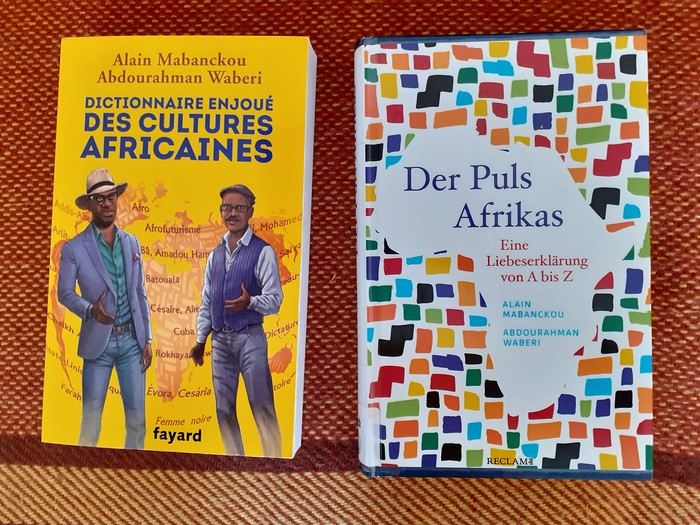
The Maggi cube, an unchallenged hegemony, and so much more
“The hopeless continent,” headlined The Economist, a British magazine, in July 2000 about Africa. Eleven years later, the same magazine headlined “Africa rising” instead. Images of Africa in the prosperous North constantly oscillate between apocalyptic scenarios and enthusiastic projections. A key issue with such images lies in the generalization they entail. If you look at the continent, considerable contrasts emerge depending on space and time. It’s no surprise that a region of the world encompassing such diverse ecological zones, maintaining such varied ties with other continents, comprising nearly fifty nation-states in sub-Saharan Africa alone, and characterized by a great diversity of languages, belief systems, and historical paths, doesn’t share a single destiny.
And yet, for many people outside Africa, as well as for many Africans, the continent constitutes a single entity, defined by criteria such as skin color, a colonial past, poverty, and the art of survival. Until now, these perspectives were generally accompanied by the idea that Africa had to—or should have—followed a single path together, sometimes called development, sometimes modernization, sometimes liberation, then a market economy. None of these paths delivered on their promises.
The two writers Alain Mabanckou and Abdourahman Waberi—one from Congo, the other raised in Djibouti, both long settled in France and now professors at renowned North American universities (Los Angeles, Washington)—have had enough of pessimistic scenarios: “We are aware that Africa is in the world and the world is in Africa. The same goes for all other continents, as our destinies are inextricably linked for better or worse. We refuse to see Africa as a reservoir of misfortunes or a continent cursed by atavistic misfortune and characterized by ethnic conflicts. [...] It’s this passionate flame we wanted to capture in a book [...] a kind of stroll through African cultures, without any demands, each letter of the alphabet leading us to a notion, a practice, a concept, a moment in history, literature, painting, politics, economics, cuisine, etc.” (p.10-11). Africa, they write, is on the verge of “imposing a signature, a style, a way of being in the world and in relation to the rest of the world.” (p.11) To put words to the continent’s diversity and dynamism, the two authors created a “rambling ABC,” a kind of portrait—or more precisely, a mythography—that lets you see and feel the pulse of a vast continent whose cultural power is unfolding before our eyes. Once marginalized or even mocked, the voice and importance of the Continent in global affairs are now undeniable” (p.11), containing over a hundred entries, mostly concise, written in a relaxed and casual style. The optimistic, even exuberant tone is set from the brief introduction. The duo of authors wants to “sing a love song to the cultures of our continent, to its inhabitants past and present, to its exceptional resources and its spectacular globalization despite a certain pollution that still clouds our skies due to the unmatched duration of dictatorships in some of our regions.” (p.12) In doing so, they don’t want to be too distracted by today’s Afewerki-Biya-Bongo-Déby & Co. ...
Of course, you’ll find tributes to great precursors like Frantz Fanon (“[...] it was a love story and admiration that wasn’t dimmed by the four decades separating his birth from ours. Let’s add that we were born while the native of Fort-de-France had left the world’s stage four years earlier, in the prime of life” p.141), Mongo Beti (“You must read and reread Mongo Beti, a genius who used his fame to support often just causes in Africa, like defending oppressed groups. His place is already in History. His oppressors, like the dictators Ahmadou Ahidjo and Paul Biya, can’t compete in the same category” p.64), the Malian Amadou Hampâté Bâ
(“Posterity remembers him mainly as an tireless defender of African cultures. His plea for the collection and preservation of traditional African knowledge remains a major event for all men and women of good will. One day in 1960, at the UNESCO podium, the native of Bandiagara sounded the alarm: ‘[...] Since we’ve admitted that the humanity of each people is the heritage of all humanity, if African traditions aren’t collected in time and written down, they’ll one day be missing from the universal archives of humanity.’” p.51),
Kwame Nkrumah, “one of the founders of Pan-Africanism, father of Ghana’s independence” (p.239), as well as the historian Cheikh Anta Diop, the writer, poet, and politician Aimé Césaire, and the economist and thinker Samir Amin, but also very warm tributes to certain contemporary African intellectuals like Souleymane Bachir Diagne and Achille Mbembe
(“A few years ago, in dominant economic circles, a rumor often resurfaced, usually disguised as a cold and scientifically proven analysis: Africa is useless. It’s a burden for the rest of the human community. With its 2% share in world trade, it would disappear from stock market radars without anyone noticing. So? Maybe it’ll be pulled up by other continents. Wanting to surpass itself is a crazy bet for Africans, they concluded. Arrogant or clueless, President Nicolas Sarkozy declared before an audience of students and teachers at Cheikh Anta Diop University in Dakar: ‘The African man hasn’t entered history enough [...] He only knows the eternal repetition of time marked by the endless repetition of the same gestures and words.’ That was in 2007. For decades, armed only with reason, an intellectual often steps up to debunk prejudices, lazy readings, and dishonest frameworks used as false fronts by those who, like Nicolas Sarkozy or former journalist Stephen Smith, out of ignorance, contempt, or condescension, distort African reality. This intellectual is none other than the historian and political scientist Achille Mbembe. This heir of Frantz Fanon, Amílcar Cabral, Jean-Marc Ela, and Fabien Eboussi-Boulaga was born in 1957 in Cameroon, in the Bassa region. Marked early by the upheavals of a fratricidal war, Achille Mbembe became the guardian of the memory of martyrs. After brilliant studies in Paris, he went on to teach at the best American universities, but the call of the Continent was stronger than anything else. In Dakar, he once directed CODESRIA (Council for the Development of Social Science Research in Africa) before joining the University of the Witwatersrand in Johannesburg, South Africa. Even though the author of *Critique of Black Reason* (Éditions La Découverte, 2015) spends a few months at Duke University in North Carolina, his observation post remains South Africa. From Johannesburg, Achille Mbembe scrutinizes Africa and the whole world. A lucid observer with an elegant and generous pen, Achille Mbembe knows how to blend big and small history: ‘I was born one day in July, as the month was drawing to a close. It was 1957, in that part of Africa recently named ‘Cameroon,’ a memory of the wonder that seized Portuguese sailors in the 15th century when, sailing up the river near Douala, they couldn’t help but note the presence of a multitude of crustaceans, and named it *Rio dos Camarões*, meaning ‘River of Shrimp.’ I grew up in the shadow of this nameless land, since, in a way, the name it bears is only the product of someone else’s astonishment: a lexical mistake, if you will.’ From this mistake or wound, he made leaven, a springboard to compose a rich work, recognized worldwide. To denounce barriers and barbarians too. But that’s not enough. Among his peers in circles of thought and action, Achille Mbembe passionately and consistently defends human dignity and the beauty of the world. In doing so, he fulfills the mission Frantz Fanon entrusted to him.” (p.227-229),
as well as entries dedicated to lesser-known artists and intellectuals, like the French journalist and activist Rokhaya Diallo, daughter of Senegalese and Gambian parents, or the Ethiopian filmmaker Haile Gerima, who has long lived in the United States. Other names from politics, sports, music, art, and literature: Kofi Annan, p.36; Barack Obama, p.243; Thomas Sankara, p.277; Ousmane Sow, p.285; Yambo Ouologuem, p.250; Léopold Sédar Senghor, p.282; Muhammad Ali, p.30; Nuruddin Farah, p.146; Salif Keita, p.203; Ahmadou Kourouma, p.206; Ngũgĩ wa Thiong’o, p.236; Winnie Mandela, p.224; Kylian Mbappé, p.226 ...
The authors, who resolutely commit to a “mythography” (p.11) of Africa, also pay special attention to local social movements, cultural events, and aspects of daily life. *Y’en a marre*, “which also meant ‘we’re fed up with sitting on our hands’” (p.320-321), emerged about a decade ago in Senegal as a citizen movement of peaceful resistance and symbolizes, the authors emphasize, the fact that African youth are increasingly fed up “with the political circus deployed in Africa since independence, as our parents would say, ‘since the White man left’...” (p.321). A full entry is dedicated to the Maggi bouillon cube, which has flooded African markets for about forty years and enjoys immense popularity (“It’s everywhere in Africa, from Dakar to Djibouti, and from Tangier to Cape Town. It’s in every pot, every stew. Little hands put it in every sauce, every local or adapted dish. An unchallenged hegemony! You’ll find it in diasporas too. The culinary strolls in Paris, in the [...] neighborhood” p.90). Critics blame it not only for impoverishing the aromatic diversity of local dishes but also for being harmful to health. And yet, “he poorest Africans, those who eat only once a day, a few spoonfuls of white beans and a ball of *foufou*, for example, are the most fervent users of the magic cube.” (p.92-93)
For *fonio*, “the new trendy cereal. [...] From the millet family, fonio is probably the oldest cereal cultivated in West Africa, and mainly in its sub-Saharan part, for millennia. [...] Easy to grow, water-efficient, fonio grows everywhere except on clay soils. Long neglected because it was considered the poor man’s crop, fonio is now a source of pride for the farmers who cultivate it and cherish it like the apple of their eye” (p.156-157), the authors immediately offer a detailed recipe, letting the reader know that “e can’t resist sharing this fonio with chicken recipe from Mali with you:
Ingredients: 1 chicken 3 large ripe red tomatoes 4 tbsp tomato paste 4 large onions 1 garlic clove 1/2 cup oil 2 Maggi cubes or salt 2 large carrots 1 turnip 1 large cabbage 2 large potatoes 1 celery stalk 1 packet pre-cooked fonio 4 okra (or okra powder) salt, pepper
Preparation: 1. Prepare the sauce: wash and cut the chicken. Peel the onions, garlic, and vegetables. 2. In a pot, fry the chicken pieces. 3. Dice the onions, tomatoes, carrots, and turnip very small and add them to the pot. 4. Add the tomato paste, salt, and pepper. 5. Simmer for 15 min, then add 2 L of water and the cooked chicken pieces. 6. Simmer for 30 min, then add the crushed garlic and celery, plus the cabbage cut into 4 and the potatoes cut in half. 7. Prepare the fonio: cover it with warm water, let it rest for 15 min, and cook it over low heat. 8. In a small pot, boil the okra and crush them. 9. Mix the crushed okra with the cooked fonio, then salt. Serve hot.” (p.158-159)
The comedy *Black Mic Mac*, released in French theaters in 1986 and addressing France’s increasingly restrictive immigration policy at the time, also gets an entry, as do *Tintin in the Congo*, the popular comic, and *Jip’s Café* (“[...] a little Africa in the heart of Paris, with passersby stopping to admire the ‘ambianceurs’ on the dance floor or attend the cultural events offered by the place” (p.194), an African establishment in Paris that Alain Mabanckou already immortalized in one of his novels.
The duo of authors also tackles thorny subjects like jihadism (p.119), the Rwandan genocide (p.272), the CFA franc (p.82), and dictatorship (p.110). While the two strike the right tone here, many entries leave a slightly bitter taste. Two examples: why doesn’t the text on Barack Obama mention the great disappointment of many people in Africa, who expected more from the African policy of the first U.S. president with African roots than just occasional warm words? Why do the comments on Winnie Mandela gloss over the fact that she was a highly controversial icon of the anti-apartheid movement due to her involvement in kidnappings, acts of torture, and murders of alleged apartheid collaborators? Instead, there’s a compassion that brings tears to the eyes: “She was often reduced to a secondary role, the wife of a great man” or “When victory came, she didn’t taste its fruits. Divorced, isolated. She would never be a ‘first lady’ in an evening gown, posing before a bed of chrysanthemums. They’d keep her far from the circles of power” (p.224-225). At this point, I would’ve liked the authors to take a slightly more critical stance...
That said, these “weaknesses” (if you can call them that) shouldn’t overshadow the book as a whole. It remains an informative, sometimes very entertaining, and often even original work in its own way.
Book information (the original French and the German translation):
Alain Mabanckou/Abdourahman Waberi. Dictionnaire enjoué des cultures africaines. Fayard, 2019. Alain Mabanckou/Abdourahman Waberi. Der Puls Afrikas. Eine Liebeserklärung von A bis Z. Reclam, 2022.
Hery
So where are they and what are they doing?
This catchy and somewhat mysterious title comes from several questions I’ve been asking myself.
VF has been back open for a reasonable number of weeks and months now. The number of visitors overall matches past averages, but the number of members online in the last 24 hours seems relatively lower than what we used to see.
Yet, to my surprise, I’m seeing fewer travel journals, way fewer messages, and way fewer questions. I don’t see many new registered users online, and I notice a number of members who are logged in but either aren’t participating or have stopped participating.
Something’s not adding up for me because, in my opinion, VF is still appealing, and I don’t see which other sites could really compete.
Was there a real break between pre- and post-Covid? Does it just take more time for some people to discover the site or learn that it’s active again? Do people now prefer quick consumption on sites like FB or others I’m not familiar with? Where have the site’s old-timers gone, and what are they doing with their time now? What’s really going on here?
VF has been back open for a reasonable number of weeks and months now. The number of visitors overall matches past averages, but the number of members online in the last 24 hours seems relatively lower than what we used to see.
Yet, to my surprise, I’m seeing fewer travel journals, way fewer messages, and way fewer questions. I don’t see many new registered users online, and I notice a number of members who are logged in but either aren’t participating or have stopped participating.
Something’s not adding up for me because, in my opinion, VF is still appealing, and I don’t see which other sites could really compete.
Was there a real break between pre- and post-Covid? Does it just take more time for some people to discover the site or learn that it’s active again? Do people now prefer quick consumption on sites like FB or others I’m not familiar with? Where have the site’s old-timers gone, and what are they doing with their time now? What’s really going on here?
A lovely wander at the mercy of the wind in this amazing Rajasthan
Hey there, forum friends 😉
Some of you have mentioned missing the activity on this Indian "page," so let’s try to liven things up a bit—with joy and good vibes (mandatory with me 😜). Plus, it’ll make Jojoone happy 😊.
As big lovers of India—we’ve been six times—my co-traveler husband and I decided to explore Rajasthan this time around. The reason we waited so long to come here? We were dreading the tourist crowds in this state. But thanks to the timing (late March to early April 2024, which is starting to get pretty hot) and Aleph’s great tips, we were *very* far from mass tourism.
We spent three weeks getting around on our own for transport: mostly taxis and trains.
And I’ll admit, we had a rather "Arabian Nights" experience, far from the "real" India (Marien, if you’re reading this 😉). So this travel journal makes no claims other than to share what we saw, experienced, and felt—with all our ignorance about this country (which I’m fully aware of).
But fair warning: I go overboard with emojis, and this journal is super casual because it’s the one I share, almost in "live" mode, with our loved ones.
So, if you’re here, consider yourself almost part of the family 😄.
See you soon and....
Some of you have mentioned missing the activity on this Indian "page," so let’s try to liven things up a bit—with joy and good vibes (mandatory with me 😜). Plus, it’ll make Jojoone happy 😊.
As big lovers of India—we’ve been six times—my co-traveler husband and I decided to explore Rajasthan this time around. The reason we waited so long to come here? We were dreading the tourist crowds in this state. But thanks to the timing (late March to early April 2024, which is starting to get pretty hot) and Aleph’s great tips, we were *very* far from mass tourism.
We spent three weeks getting around on our own for transport: mostly taxis and trains.
And I’ll admit, we had a rather "Arabian Nights" experience, far from the "real" India (Marien, if you’re reading this 😉). So this travel journal makes no claims other than to share what we saw, experienced, and felt—with all our ignorance about this country (which I’m fully aware of).
But fair warning: I go overboard with emojis, and this journal is super casual because it’s the one I share, almost in "live" mode, with our loved ones.
So, if you’re here, consider yourself almost part of the family 😄.
See you soon and....
Les "ailleurs hexagonaux"... le top des paysages exotiques en France
🙂Beaux Jours!
(Des airs d') Australie, Amazonie, Equateur, Irlande, Cambodge, Thaïlande, Colorado, Canada, Cappadoce, Polynésie...en France???!!! 😮
https://www.youtube.com/watch?v=8ZebFDvefOs
#cetétéjevisitelafrance
Bons voyages!
Sânouk3😎
ps: Y a aussi Ses paysages/territoires uniques, hein (Camargue, Paris, Calanques de Marseille, Châteaux d'la Loire, Baie de Somme, Corse, Sète.... 😉
(Des airs d') Australie, Amazonie, Equateur, Irlande, Cambodge, Thaïlande, Colorado, Canada, Cappadoce, Polynésie...en France???!!! 😮
https://www.youtube.com/watch?v=8ZebFDvefOs
#cetétéjevisitelafrance
Bons voyages!
Sânouk3😎
ps: Y a aussi Ses paysages/territoires uniques, hein (Camargue, Paris, Calanques de Marseille, Châteaux d'la Loire, Baie de Somme, Corse, Sète.... 😉
L'île de Bréhat, Paimpol et les environs...
Sitôt déconfinés, on a mis le cap sur la côte bretonne, projet qui avait dû être reporté pour cause de corona.
Et dès notre arrivée, on a souhaité aller sur l'île de Bréhat pour la découvrir avec le minimum de visiteurs.
Alors, on a commencé par réserver nos billets sur le net, réservation obligatoire pour permettre d'organiser les traversées en respectant au mieux les mesures de sécurité sanitaire.
Dès 9h30, on embarquait à l'Arcouest pour une traversée de 10 minutes en direction de Bréhat.
Notre arrivée au port clos de Bréhat s'est faite dans la brume.
On a posé le pied sur une île mystérieuse.
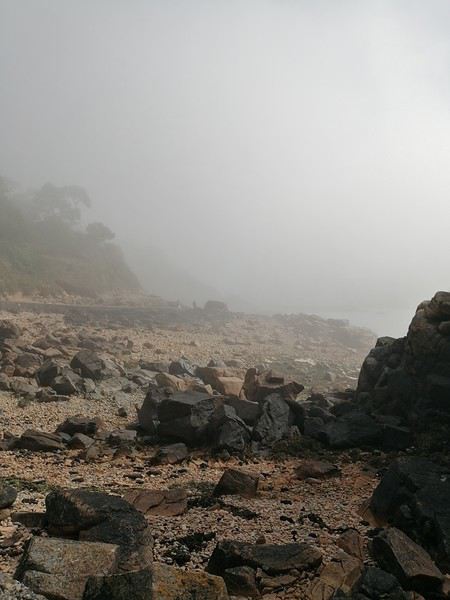
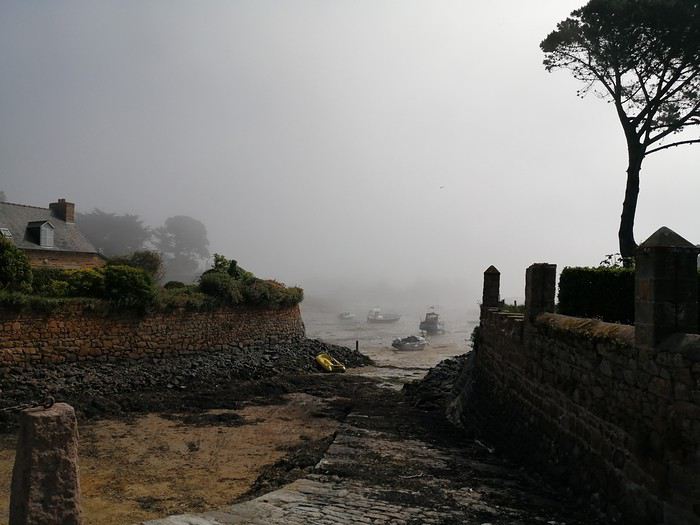
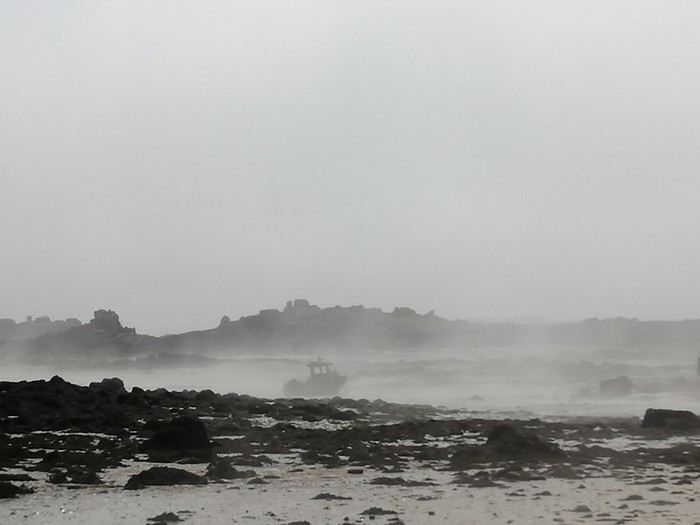
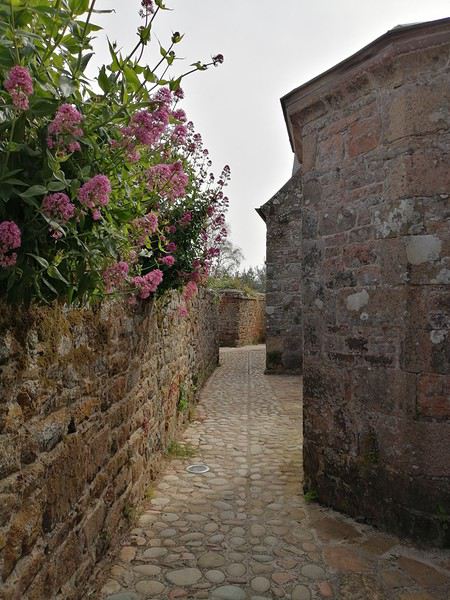
Ne sachant pas précisément combien de temps il nous faudrait pour faire le tour de l'île à pied, on a fait le choix d'aller d'abord jusqu'au phare du Paon , au nord, à l'opposé de l'embarcadère. On a donc traversé le village, emprunté nombre de petits chemins et admiré les jardins et les sentiers fleuris. Bréhat, c'est l'île des fleurs.
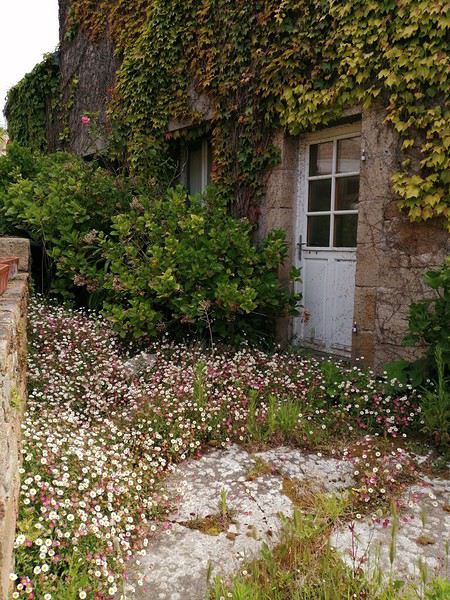
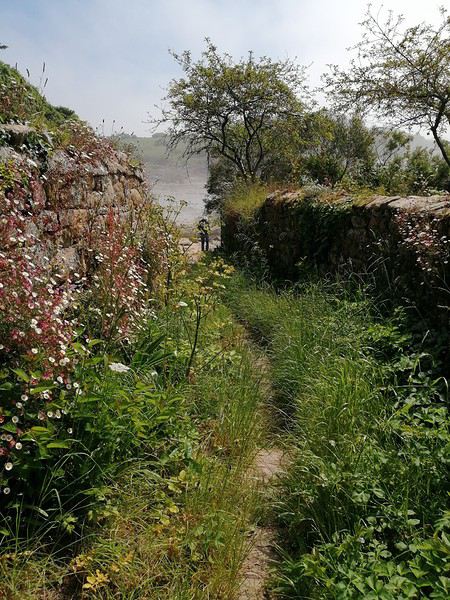
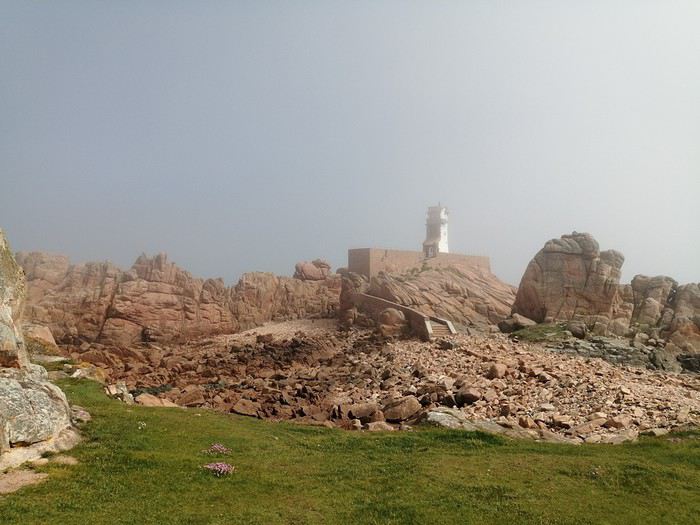
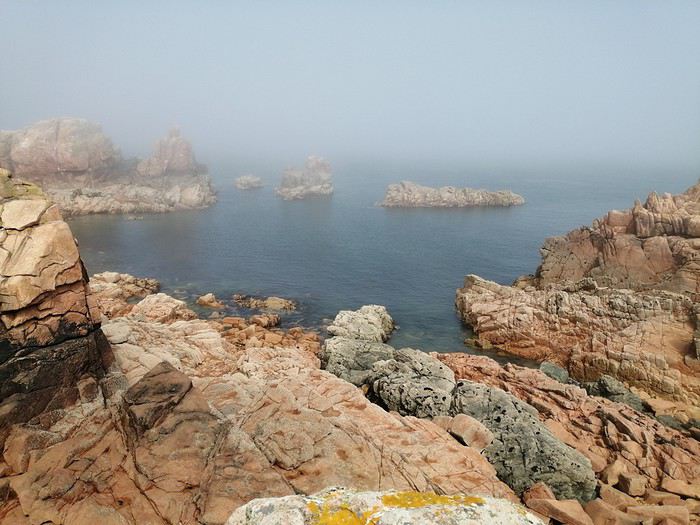
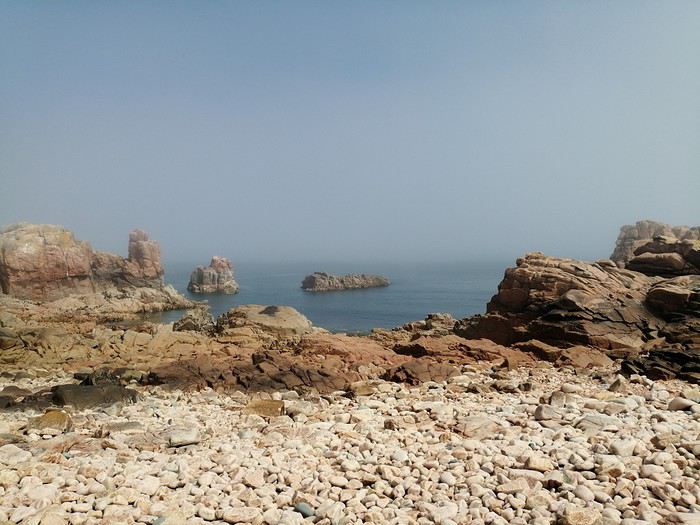
A notre arrivée au phare du Paon la brume commence à se dissiper. On découvre une côte sauvage, magnifique!
On poursuit notre découverte. Au bord d'un chemin, on complète notre pique- ni que en achetant des fraises du pays.
 Et on s'installe sur une petite plage, pour recharger les batteries avant de repartir sur les chemins.
Ne sachant pas précisément combien de temps il nous faudrait pour faire le tour de l'île à pied, on a fait le choix d'aller d'abord jusqu'au phare du Paon , au nord, à l'opposé de l'embarcadère. On a donc traversé le village, emprunté nombre de petits chemins et admiré les jardins et les sentiers fleuris. Bréhat, c'est l'île des fleurs.
A notre arrivée au phare du Paon la brume commence à se dissiper. On découvre une côte sauvage, magnifique!
On poursuit notre découverte. Au bord d'un chemin, on complète notre pique- ni que en achetant des fraises du pays.
Et on s'installe sur une petite plage, pour recharger les batteries avant de repartir sur les chemins.La prière dans le monde!
La nuit tombe d’un coup et je suis sans cesse étonnée de passer ainsi du clair au noir.
Après cette journée fatigante, je rentre à la maison et jette mes sandales dans un coin.
Dans son petit bassin de bronze, la fleur de lotus est déjà refermée.
Tout est silencieux mais j’entends le léger murmure incantatoire de Tiago.
Il prie.
Assis devant son petit autel, les volutes odorantes des bâtonnets d’encens s’enroulent autour de ses cheveux noirs. Son dos dur et sombre luit et la lueur de la flamme dans la coupelle de ghee danse sur ses épaules.
La grande image de Shiva fixée au mur se décolle dans un angle, pliant les pointes du trident.
Le dieu garde ses yeux mi-clos sur la création du monde et les cycles de l’univers.
Dans sa longue chevelure, au sommet de sa tête s’enroule un serpent.
Un dieu coloré bienveillant dans cette représentation, l’une de ses quatre mains ouverte sur le genou.
Tiago a posé son offrande, une noix de coco est une guirlande de fleurs jaune dont je ne retiens jamais le nom.
Immobile.
Il prie.
__
J’ai vu des gens agenouillés, des gens couchés face contre terre, assis en tailleur, assis mains jointes. J’ai vu des gens danser, j’ai vu des processions colorées, j’ai entendu des mélopées hypnotiques, j’ai écouté des cymbales, des trompettes, de grandes orgues, des chants liturgiques, des psaumes, le fanbai, des chants grégoriens et des gospels, des chants diphoniques qui remuent le ventre.
J’ai vu des flèches perçant les nuages, des coupoles dorées, des dômes de pierre, des cathédrales, des temples, des autels flamboyant de dorures, des allées de chevaux de pierre, des temples de feu et des chapelles de pierre blotties sous les ombrages, de bois ensevelies sous la neige, des cryptes froides et silencieuses, des maisons d’adoration sans effigie, des monastères accrochés à la montagne , des cloîtres dans la ville.
j’ai vu des costumes de cérémonies multicolores, des tenues de fourrure, des saris de fêtes soyeux, des chapeaux rouge étranges, des plumets et des têtes rasées. J’ai vu des hommes tirer des chars la peau du dos distendue par des crochets, j’ai été subjuguée par des mandala de sable, tout est éphémère.
Partout où mes pas ont foulé d’autres terres, j’ai vu des croyants réunis, rassemblés, unis, bruyants, silencieux, exaltés, recueillis.
J’ai touché des chapelets de buis, d’ivoire, en corail, en noyaux, les perles égrenant le nom divin, les mantras, les prières, tenu des croix de roseaux, de feuilles de maïs, porté des couronnes de fleurs, tenu des moulins de prière. J’ai regardé des dieux vêtus d’oripeaux décolorés, vêtus d’habits précieux, nus ceints d’un pagne, l’arbre à souhaits aux rubans multicolores agités par les tourbillons de neige.
J’ai respiré l’odeur de l’encens, j’ai respiré l’odeur de la cire fondue, j’ai respiré le parfum des fleurs fraîches et l’odeur surette des offrandes pourrissantes.
J’ai fermé les yeux, souvent, pour mieux entendre, pour mieux comprendre.
Et je sais, qu’aujourd’hui, je ne sais rien de cette ferveur puissante qui soulève et porte et emporte les peuples du monde. Je sais aussi que le tremblement de mes jambes et les yeux qui picotent devant la ferveur de Tiago, ce soir là, il y a des lustres, huit peut-être, c’est tellement loin, fut ce qui s’approchait le plus d’une prière. Ou, peut-être étais-je secrètement amoureuse...
Ainsi, je crois que beaucoup ont vécu ces instants étranges de communion, d’observation respectueuse, que beaucoup connaissent les rites et rituels, les byzantins, coptes, maronites, et tant d’autres, des rites de passage et des rites d’intercessions appelant la pluie, la fécondité . Ces rites qui rythment la vie dans tous ces pays que je n’aurais plus le temps de connaître.
Comment se vit la prière en Afrique, chez les aborigènes d’Australie, à Madagascar, à Cuba, en Chine, au Japon, en Indonésie ou ailleurs ?. Comment se vit-elle, la prière, aujourd’hui où partout des moments religieux forts s’annoncent ? Monothéiste, animiste, shintoïsme, bouddhisme, syncrétisme religieux, l’aspect religieux est toujours présents dans mes voyages, l’est-il pour vous aussi ?
Z’avez lu jusqu’au bout ? Bravo, vous avez gagné une image pieuse ou non. Pour ce faire, aller dans la rubrique -jeux voyages – sur le fil -défilés et processions -, il y en a des magnifiques.
J’ai vu des gens agenouillés, des gens couchés face contre terre, assis en tailleur, assis mains jointes. J’ai vu des gens danser, j’ai vu des processions colorées, j’ai entendu des mélopées hypnotiques, j’ai écouté des cymbales, des trompettes, de grandes orgues, des chants liturgiques, des psaumes, le fanbai, des chants grégoriens et des gospels, des chants diphoniques qui remuent le ventre.
J’ai vu des flèches perçant les nuages, des coupoles dorées, des dômes de pierre, des cathédrales, des temples, des autels flamboyant de dorures, des allées de chevaux de pierre, des temples de feu et des chapelles de pierre blotties sous les ombrages, de bois ensevelies sous la neige, des cryptes froides et silencieuses, des maisons d’adoration sans effigie, des monastères accrochés à la montagne , des cloîtres dans la ville.
j’ai vu des costumes de cérémonies multicolores, des tenues de fourrure, des saris de fêtes soyeux, des chapeaux rouge étranges, des plumets et des têtes rasées. J’ai vu des hommes tirer des chars la peau du dos distendue par des crochets, j’ai été subjuguée par des mandala de sable, tout est éphémère.
Partout où mes pas ont foulé d’autres terres, j’ai vu des croyants réunis, rassemblés, unis, bruyants, silencieux, exaltés, recueillis.
J’ai touché des chapelets de buis, d’ivoire, en corail, en noyaux, les perles égrenant le nom divin, les mantras, les prières, tenu des croix de roseaux, de feuilles de maïs, porté des couronnes de fleurs, tenu des moulins de prière. J’ai regardé des dieux vêtus d’oripeaux décolorés, vêtus d’habits précieux, nus ceints d’un pagne, l’arbre à souhaits aux rubans multicolores agités par les tourbillons de neige.
J’ai respiré l’odeur de l’encens, j’ai respiré l’odeur de la cire fondue, j’ai respiré le parfum des fleurs fraîches et l’odeur surette des offrandes pourrissantes.
J’ai fermé les yeux, souvent, pour mieux entendre, pour mieux comprendre.
Et je sais, qu’aujourd’hui, je ne sais rien de cette ferveur puissante qui soulève et porte et emporte les peuples du monde. Je sais aussi que le tremblement de mes jambes et les yeux qui picotent devant la ferveur de Tiago, ce soir là, il y a des lustres, huit peut-être, c’est tellement loin, fut ce qui s’approchait le plus d’une prière. Ou, peut-être étais-je secrètement amoureuse...
Ainsi, je crois que beaucoup ont vécu ces instants étranges de communion, d’observation respectueuse, que beaucoup connaissent les rites et rituels, les byzantins, coptes, maronites, et tant d’autres, des rites de passage et des rites d’intercessions appelant la pluie, la fécondité . Ces rites qui rythment la vie dans tous ces pays que je n’aurais plus le temps de connaître.
Comment se vit la prière en Afrique, chez les aborigènes d’Australie, à Madagascar, à Cuba, en Chine, au Japon, en Indonésie ou ailleurs ?. Comment se vit-elle, la prière, aujourd’hui où partout des moments religieux forts s’annoncent ? Monothéiste, animiste, shintoïsme, bouddhisme, syncrétisme religieux, l’aspect religieux est toujours présents dans mes voyages, l’est-il pour vous aussi ?
Z’avez lu jusqu’au bout ? Bravo, vous avez gagné une image pieuse ou non. Pour ce faire, aller dans la rubrique -jeux voyages – sur le fil -défilés et processions -, il y en a des magnifiques.
Mais où donc est ce truc là? (5)
Bonjour
Où se trouve cette serre ?
En premier chercher le pays et ensuite la ville
Françoise

Un voyage... une étape inattendue!
Bonjour à tous,
Le voyage - pour ne pas trop sortir de VF - c'est bien sur la vie. L'étape inattendue, elle nous vient de l'orient et sans doute d' un Pangolin.
J'ai 72 ans, un peu d’hypertension, pas grand chose d'autre, alors, au delà du 11 mai je suis bon !
Bon pour continuer à voir mes petits enfants sur Skype, bon pour voir mes enfants masqués qui viennent nous voir de temps à autres à distance respectable, bon pour oublier les embrassades, les câlins, les gestes de tendresse, bon pour....un temps indéterminé à subir ces frustrations que portant je respecterait. Peu en parlent dans les médias, mais c'est une contrainte autre que de simplement porter un masque !!
Merci de m'avoir lu et belle journée confinée
Le voyage - pour ne pas trop sortir de VF - c'est bien sur la vie. L'étape inattendue, elle nous vient de l'orient et sans doute d' un Pangolin.
J'ai 72 ans, un peu d’hypertension, pas grand chose d'autre, alors, au delà du 11 mai je suis bon !
Bon pour continuer à voir mes petits enfants sur Skype, bon pour voir mes enfants masqués qui viennent nous voir de temps à autres à distance respectable, bon pour oublier les embrassades, les câlins, les gestes de tendresse, bon pour....un temps indéterminé à subir ces frustrations que portant je respecterait. Peu en parlent dans les médias, mais c'est une contrainte autre que de simplement porter un masque !!
Merci de m'avoir lu et belle journée confinée