Results for "Féroé+(îles)"
About 37,968 results.
More options
Many results are in French, the community’s main language. English translations are added over time.
Search results
Madère et les Açores
Bonjour à tous !
Etant perpetuellement en quête de découverte de nouveaux paysages, et revenant d'un périple au coeur du pacifique sud, je me tourne aujourd'hui vers les richesses de l'océan atlantique et deux destinations ont pu retenir mon attention, bien que je ne connaisse rien d'aucune d'entre elles ! Il s'agit de l'archipel des Açores et de Madère. Vous qui connaissez l'une, l'autre, voire chacune de ces destinations, quelles ont été vos impressions, qu'en avez vous retenu, pourquoi les avez vous aimées et, pour ceux que cela concernerait, laquelle des deux destinations vous a le plus séduite ; quels sont vos conseils, simples avis ou recommandations ?
Au plaisir de vous lire !
AlariK
Etant perpetuellement en quête de découverte de nouveaux paysages, et revenant d'un périple au coeur du pacifique sud, je me tourne aujourd'hui vers les richesses de l'océan atlantique et deux destinations ont pu retenir mon attention, bien que je ne connaisse rien d'aucune d'entre elles ! Il s'agit de l'archipel des Açores et de Madère. Vous qui connaissez l'une, l'autre, voire chacune de ces destinations, quelles ont été vos impressions, qu'en avez vous retenu, pourquoi les avez vous aimées et, pour ceux que cela concernerait, laquelle des deux destinations vous a le plus séduite ; quels sont vos conseils, simples avis ou recommandations ?
Au plaisir de vous lire !
AlariK
Achat de bouteilles de propane en Islande?
Peut-on acheter (ou recharger ) des bouteilles de propane en Islande
Merci d'avance
Gérard
Japan in August: Is it really a bad time?
Hey everyone,
Next year, we’re celebrating 20 years of marriage (and travel 🙂), and we’re looking for something new, pretty legendary, and something the teens will enjoy too.
The family council has settled on Japan for now. And it’d have to be a summer trip—no choice there.
The catch: I keep reading that August isn’t the right season for southern Japan. It’s hot, humid, and there’s a risk of typhoons… Okay, but what does that *actually* mean in practice? Are there any travelers who’ve been there during this time? Is it *that* unbearable? We’re pretty familiar with Southeast Asia—last year, we dealt with scorching heat in Vietnam and insane humidity, plus a typhoon we experienced from a distance, and visiting Angkor in the blazing sun. Is it worse than that?
Thanks for your feedback 😉
Next year, we’re celebrating 20 years of marriage (and travel 🙂), and we’re looking for something new, pretty legendary, and something the teens will enjoy too.
The family council has settled on Japan for now. And it’d have to be a summer trip—no choice there.
The catch: I keep reading that August isn’t the right season for southern Japan. It’s hot, humid, and there’s a risk of typhoons… Okay, but what does that *actually* mean in practice? Are there any travelers who’ve been there during this time? Is it *that* unbearable? We’re pretty familiar with Southeast Asia—last year, we dealt with scorching heat in Vietnam and insane humidity, plus a typhoon we experienced from a distance, and visiting Angkor in the blazing sun. Is it worse than that?
Thanks for your feedback 😉
Islande à moto en juin 2013
Bonjour à tous,
Je pars en Islande fin mai pour 2 semaines à moto, en solitaire (25/05 à Hirtshals(DK) & 12/06 à Seyðisfjörður(IS)). Je logerai en tente. J'ai prévu de faire le tour en sens horlogique. En gros, à la louche, ça donne :
Seyðisfjörður Hofn jokulsarlon skalafell kirk vik skogar thormosk HJÁLPARFOSS Gulfoss Kerid grindavik reykjavik thingvellir F550 - F52 vers borgarnes eldbork snaefell les fjords de l'est akureyri mivatn selfoss egilstadir
Etant donné la période, ce sera sans doute trop tôt pour les pistes intérieures (F35, F206 & F208), cela limite déjà pas mal les choix d'itinéraires...
Néanmoins, je me pose quelques questions on niveau de la préparation de la moto :
-Quel pneus? -Quels outils? -Quelles pièces de rechanges? (ampoules, ...)
Si des personnes y sont à cette période et qu'elles seraient partantes pour une étape ou deux ensemble, faite le moi savoir ^^
Je pars en Islande fin mai pour 2 semaines à moto, en solitaire (25/05 à Hirtshals(DK) & 12/06 à Seyðisfjörður(IS)). Je logerai en tente. J'ai prévu de faire le tour en sens horlogique. En gros, à la louche, ça donne :
Seyðisfjörður Hofn jokulsarlon skalafell kirk vik skogar thormosk HJÁLPARFOSS Gulfoss Kerid grindavik reykjavik thingvellir F550 - F52 vers borgarnes eldbork snaefell les fjords de l'est akureyri mivatn selfoss egilstadir
Etant donné la période, ce sera sans doute trop tôt pour les pistes intérieures (F35, F206 & F208), cela limite déjà pas mal les choix d'itinéraires...
Néanmoins, je me pose quelques questions on niveau de la préparation de la moto :
-Quel pneus? -Quels outils? -Quelles pièces de rechanges? (ampoules, ...)
Si des personnes y sont à cette période et qu'elles seraient partantes pour une étape ou deux ensemble, faite le moi savoir ^^
De retour d'une croisière en Antarctique sur le Celebrity Infinity
Bonjour à Tous,
Je suis dans le lounge d'Air France à Roissy 8 heures d'attente entre notre atterrissage et le vol pour Montpellier. J'en profite donc pour vous livrer à chaud mes premières impressions.
En ce qui concerne la partie Ushuaia, Cap Horn navigation en Antarctique et l'escale des Malouines ça a été merveilleux et tout à fait conforme à nos attentes.
Par contre le reste de la croisière, les 3 jours de navigations pour arriver à Ushuaia et la remontée avec les escales de Puerto Madrid et Montevideo a été très décevant.
Le seul point positif est un personnel très gentil, souriant et prêt à rendre service, la déco est sobre et de bon gout, mais les spectacles sont nuls, il n'y a aucune animation ou bien des trucs "lourdingues" très adaptés à l'humour américain et aussi raz des pâquerettes que chez Costa mais dans un autre registre😕 la nourriture est beaucoup trop riche, impossible d'avoir des légumes verts, tout est accompagné de sauces. Nous avons même zappé le brunch mais heureusement car quand on a vu ce qui était proposé cela nous a donné envie de jeuner.
Pour finir un petit mot sur les excursions aussi mal organisé que chez Costa, tout le monde au théâtre et les plus malins courent pour se mettre devant dans les cars
Quand je pense à l'organisation Princess l'année dernière quelle surprise😐
En conclusion Celebrity dont j'avais entendu tant de bien a fini de nous dégoûter des croisières
Le seul point positif est un personnel très gentil, souriant et prêt à rendre service, la déco est sobre et de bon gout, mais les spectacles sont nuls, il n'y a aucune animation ou bien des trucs "lourdingues" très adaptés à l'humour américain et aussi raz des pâquerettes que chez Costa mais dans un autre registre😕 la nourriture est beaucoup trop riche, impossible d'avoir des légumes verts, tout est accompagné de sauces. Nous avons même zappé le brunch mais heureusement car quand on a vu ce qui était proposé cela nous a donné envie de jeuner.
Pour finir un petit mot sur les excursions aussi mal organisé que chez Costa, tout le monde au théâtre et les plus malins courent pour se mettre devant dans les cars
Quand je pense à l'organisation Princess l'année dernière quelle surprise😐
En conclusion Celebrity dont j'avais entendu tant de bien a fini de nous dégoûter des croisières
Discussion around March 2026's Theme: Metal, Metallic
This is where we share stories (or post extra photos) around March’s theme Metal, Metallic.
Back to the March 2026 contest: HERE
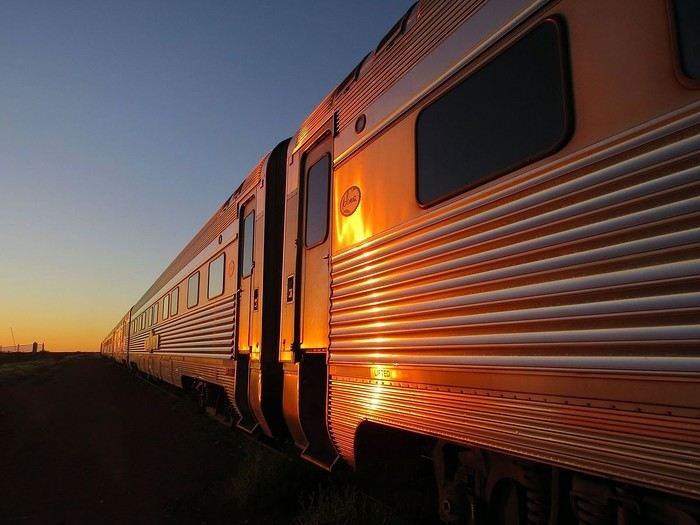
The Ghan (train connecting Adelaide to Darwin), at dawn.
Back to the March 2026 contest: HERE
The Ghan (train connecting Adelaide to Darwin), at dawn.
Trip to Thailand and Laos
Hello! 🙂
January 2026 Here we go again for new adventures and the pleasure of sharing them with you here! First of all, I’d like to thank everyone who helped me with the preparations, even with some last-minute improvisations just days before departure. Thanks to Montagnard74, Jojoone1, Songsam, Attila, Dennis2, NadegerFERM, and the authors whose travel journals about Laos inspired me (Montagnard74, Muriel18, Mavietongs...).
In this story, written by Richard and illustrated by me, we’ll tell you about the journey of four friends: Catherine, Richard, Nathalie, and Bruno. A reinvented but overall successful trip, filled with discoveries and surprises, the scents of spices and frangipani flowers, (too) spicy food, sunsets, and... one big mess.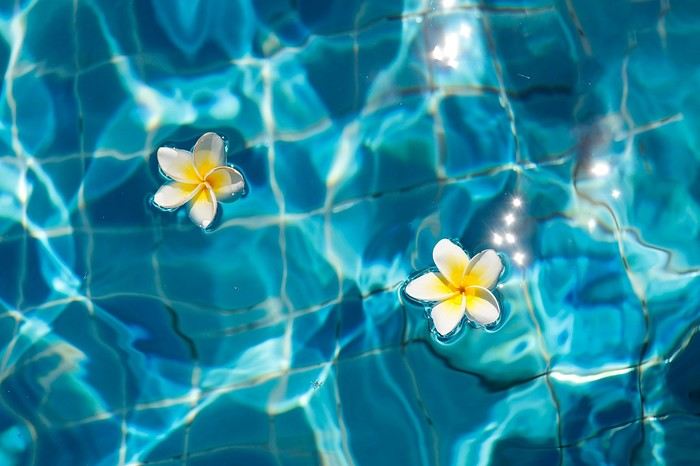
January 2026 Here we go again for new adventures and the pleasure of sharing them with you here! First of all, I’d like to thank everyone who helped me with the preparations, even with some last-minute improvisations just days before departure. Thanks to Montagnard74, Jojoone1, Songsam, Attila, Dennis2, NadegerFERM, and the authors whose travel journals about Laos inspired me (Montagnard74, Muriel18, Mavietongs...).
In this story, written by Richard and illustrated by me, we’ll tell you about the journey of four friends: Catherine, Richard, Nathalie, and Bruno. A reinvented but overall successful trip, filled with discoveries and surprises, the scents of spices and frangipani flowers, (too) spicy food, sunsets, and... one big mess.
My first trip to Iceland, over 50 years ago.
My first trip to Iceland, in 1974.
Yes, you might be surprised: my first trip to Iceland dates back to July 1974. It’s been a little over 50 years since I first set foot on Icelandic soil. I was 23 years old. At the time, I was a geography student. I had just earned my bachelor’s degree and was finishing my master’s (what we’d now call a "master’s 2") in physical geography, with two specialties: glaciology and volcanology. In both fields, professors showed us slides of Iceland—glaciers and volcanoes—and in tutorials, we worked on maps and documents related to the physical geography of Iceland. So there you have it: ice and fire, in Icelandic « ís og eldur », I learned that year that it was Iceland’s national motto, and that’s what drew me there for my first big trip.
Iceland in 1974 was very different from today. It wasn’t a common destination. There were practically no tourists or tourist infrastructure. Some sites now famous and overcrowded were only accessible after hours of hiking on rough, unmarked trails. GPS didn’t exist, but I had managed to get local 1:100,000 maps that were pretty well done. I took my time to circle the entire island, camping in the wild. Most of my meager budget went toward the flight ticket and renting a Volkswagen "Beetle."
There were no paved roads in the country except in central Reykjavík and the main street of Akureyri. What’s now called Route 1 was everywhere dirt and gravel, pretty bumpy in places. According to my maps, this road didn’t allow for a full loop around Iceland: a section of about a hundred kilometers was missing on the south coast. But when I arrived in that area, I learned at a gas station that the last missing section had just been completed, finally allowing a full loop without backtracking. It was the section crossing the vast Skeiðarársandur, southwest of Vatnajökull. The new road was just a bulldozer track through this black ash desert. We crossed the multiple channels of the sandur on long single-lane wooden bridges. On these long pilings, the road was made of roughly nailed thick planks that made an awful racket when the car drove over them.
A nasty surprise: the cost of living. The difference with France seemed huge—everything was two to three times more expensive than back home. Prices were way beyond my tiny budget, and I wondered how I’d manage to get by.
The Icelanders back then were very different from today. From the start, I felt like a real outsider, ostracized, even outright rejected. Several times, when I asked for permission to pitch my small tent near a farm, the door would slam shut as soon as I asked (in English). Without a word… *Bam!*
So I struggled to feed myself, lacking money. I mostly bought loaves of sliced bread and corn flakes (unknown in France at the time), which I ate with cold, sugary milk. It was the cheapest and most filling thing I could find.
In Reykjavík, my only luxury was daring to enter a snack bar. There, I’d treat myself to a coffee or tea, having quickly learned that after paying for a cup once, you could go back to the counter and have it refilled as much as you wanted. I dreaded being asked if I wanted something to eat because I couldn’t afford it. Luckily, no one asked. So, alone in my corner, I’d pull out my loaf of sliced bread from my backpack and make sandwiches with the contents of the two plastic bottles on every table—one red, one yellow: ketchup and sweet mustard. I avoided the sideways glances from other customers. I’d eat my sandwiches and leave, both full and warmed up.
One time, near Selfoss, I saw a truck stop by the road and pick up two large aluminum cans left at the end of a farm track. A little further down the road, two more similar cans. I realized these cans were there to be collected by… well, I didn’t know who. No one in sight for miles. So, I’ll admit it: I stopped and opened one of those large cans, which contained a dairy product—a kind of very dense, compact white cheese (I later learned it was skyr). I scooped a nice layer from the top, smoothed the surface with my spoon, and carefully closed the can again. Yes, I know it wasn’t right, but that was over fifty years ago, and I can admit it now since the statute of limitations has surely passed, right? Another time, I boiled a piece of dried fish, hard as wood, for a long time on my camping stove—fish I’d taken from huge outdoor drying racks by the side of the road. On the road heading north from Reykjavík, the Akranes underwater tunnel didn’t exist yet. To get to Borgarnes and Snæfellsnes, you had to go around Hvalfjörður. Following the shore of this long fjord, I stumbled upon a whaling station in full operation. Intrigued by the plumes of steam and the sounds of machinery from the road, I stopped, and surprisingly, no one stopped me from entering the vast platform where workers were butchering a large whale. I’ll never forget the acrid smell of those huge piles of meat and bones, fat and guts, the screams of saws and winches, the steam from the boilers… A monstrous, hallucinatory sight that would shape a major interest for the rest of my life: whales.
At the end of my journey, I spent three days in the Westman Islands. The famous eruption of the Eldfell volcano had happened just months earlier, in 1973, and was barely over. Visiting Heimaey was one of the goals of my trip to Iceland, given my volcanology studies. Part of the fishing port was filled in by lava flows, and the entrance channel was reduced to just a few meters wide. Most of the village was covered by a layer of black, hot ash eight to ten meters thick. I walked on the roofs of houses—every now and then, a chimney or skylight would stick out. In the rain, this hot ash released intense steam; you couldn’t see twenty meters ahead. It felt like being in a giant outdoor sauna. The entire population had been evacuated during the eruption, but some residents were starting to return. Bulldozers and excavators were gradually clearing this gigantic mass of ash, street by street, layer by layer, avoiding demolishing the buried houses. A constant stream of trucks dumped these millions of tons of ash into the sea from a cliff. To finish clearing the houses, it was done with shovels and wheelbarrows, and this task was left to the homeowners. One day, I had the chance to lend a hand (or rather, a shovel) to a couple finishing clearing their house. They offered to let me pitch my tent near their place, on a thick layer of warm ash (I’d never experienced such comfort through my sleeping mat), and I’ll never forget that they gave me a big bowl of delicious soup they’d just made. The best meal I had during that trip. The next day, climbing the volcano, which was still smoking and spewing furiously, I nearly suffocated from sulfur dioxide and almost melted the soles of my shoes. So it was during this initiatory trip, 50 years ago, that my addiction to Iceland was born. The following year in Paris, by sheer chance—and perhaps helped by the magic of my amazing Kodachrome slides—I met a young woman who would become my wife. Very quickly, she became as hooked as I was on "the island of the world’s creation" (as I called it back then), and later, it was often her who’d say, "So… how about going back to Iceland this year?" We went back many times, in every season, summer and winter, and in every region of the country. And every time, when the plane starts its descent toward Keflavík Airport, we look at each other like kids invited to a birthday party, discovering the cake buffet… "Here we are… we’re back!"
Our travel conditions changed a lot afterward. With a better budget but still traveling independently, renting well-equipped 4x4s that let us go almost anywhere, at our own pace, including the highlands of the country’s interior. But always taking our time, dedicating each trip to fully exploring one region rather than rushing through kilometers. And leaving time for beautiful hikes or simply doing nothing—sitting at a viewpoint and just watching, observing the wild nature, in contemplative mode… Always staying with locals in the countryside, preferably on real farms with animals, thanks to an association of farmers offering accommodations. We speak fluent English and have learned a few common Icelandic phrases and expressions over time. With a bit of experience, we developed our little techniques for starting interesting conversations with Icelanders… who, thankfully, are no longer as distant as they were in 1974! We even made friends there.
We particularly loved the rugged, wild Iceland—not necessarily the desolate highlands of the interior, but rather the isolated regions where a few very old families still cling to their land and roots. With a soft spot for the Snæfellsnes Peninsula and especially the Westfjords, the "Vestfirðir," as the Icelanders call them. But we also love the Northeast, and even the far Northeast, so remote and where almost no one goes. Over time, we’ve done a lot of reading. We’ve learned a great deal about Iceland—its painful history, its tormented geography, its economy, its incredible medieval literature (the Sagas), and some quirks of its culture. And we greatly appreciate its contemporary authors, whose books fill several shelves in our library.
In 2008, on a return trip to Iceland, we went to the Westman Islands, to Heimaey. I hadn’t been back since my first trip in 1974, right after the Eldfell eruption. It was a pilgrimage for me, so many years later! An emotional moment seeing the huge frozen lava flow again. On the trails now set up to explore this vast chaos, people have put up signs indicating the names of the streets buried under the lava and the nature of the crushed buildings fifteen meters below. Plaques mark the locations of public buildings—here was the school, down there was the hospital… The part of the town that was under ash has been cleared, but not entirely—two streets were left partially buried, probably to show tourists. The volcano is still hot at the top. We climbed it, but this time I didn’t melt my soles.
We often talk about Iceland. We still call it "the island of the world’s creation" and tell our traveler friends how much this country fascinated and enchanted us. Those who’ve never been find it a bit odd, but everyone who’s been there understands.
You may have noticed I’m talking about it in the past tense… Indeed, I’ll admit that for several years now, we haven’t been back to Iceland, and I don’t think we’ll return. What we see on social media and in the news puts us off a bit. Mass tourism has arrived, and many developments have been made—not always for the best. Now, with two and a half million visitors a year, Iceland welcomes nearly six times its population. Tourism has become a key source of income for Icelanders. Good for them, maybe, but we don’t like it at all. We’re a bit wild, perhaps. And besides… the world is vast… We loved Iceland passionately, but we’ve always been inveterate travelers in general. So over the past fifty years, we’ve certainly explored all of Iceland’s regions, but also in the North Atlantic—the beautiful Norway, the stunning Lofoten Islands, the Shetland archipelago, the rugged and grand Faroe Islands, and then further north in the Arctic—the icy Greenland, Svalbard at the edge of the world, and even the Sjuøyane, the last islands before the North Pole, with small groups of enthusiasts and scientists on expedition ships. And many other regions of the world, but always with a taste for slightly offbeat places, both in terms of landscapes and nature and ways of life. Central Asia, the Azores, Peru, Bolivia, the Andes, Chile, Argentina, the vast Patagonia, Tierra del Fuego… and other little secret gems we won’t reveal. Not even on Voyage Forum.
But everywhere—yes, I mean everywhere—wherever you are, wherever you go, there’s always a moment when you think of Iceland…
Chris 51 - November 2025.
Yes, you might be surprised: my first trip to Iceland dates back to July 1974. It’s been a little over 50 years since I first set foot on Icelandic soil. I was 23 years old. At the time, I was a geography student. I had just earned my bachelor’s degree and was finishing my master’s (what we’d now call a "master’s 2") in physical geography, with two specialties: glaciology and volcanology. In both fields, professors showed us slides of Iceland—glaciers and volcanoes—and in tutorials, we worked on maps and documents related to the physical geography of Iceland. So there you have it: ice and fire, in Icelandic « ís og eldur », I learned that year that it was Iceland’s national motto, and that’s what drew me there for my first big trip.
Iceland in 1974 was very different from today. It wasn’t a common destination. There were practically no tourists or tourist infrastructure. Some sites now famous and overcrowded were only accessible after hours of hiking on rough, unmarked trails. GPS didn’t exist, but I had managed to get local 1:100,000 maps that were pretty well done. I took my time to circle the entire island, camping in the wild. Most of my meager budget went toward the flight ticket and renting a Volkswagen "Beetle."
There were no paved roads in the country except in central Reykjavík and the main street of Akureyri. What’s now called Route 1 was everywhere dirt and gravel, pretty bumpy in places. According to my maps, this road didn’t allow for a full loop around Iceland: a section of about a hundred kilometers was missing on the south coast. But when I arrived in that area, I learned at a gas station that the last missing section had just been completed, finally allowing a full loop without backtracking. It was the section crossing the vast Skeiðarársandur, southwest of Vatnajökull. The new road was just a bulldozer track through this black ash desert. We crossed the multiple channels of the sandur on long single-lane wooden bridges. On these long pilings, the road was made of roughly nailed thick planks that made an awful racket when the car drove over them.
A nasty surprise: the cost of living. The difference with France seemed huge—everything was two to three times more expensive than back home. Prices were way beyond my tiny budget, and I wondered how I’d manage to get by.
The Icelanders back then were very different from today. From the start, I felt like a real outsider, ostracized, even outright rejected. Several times, when I asked for permission to pitch my small tent near a farm, the door would slam shut as soon as I asked (in English). Without a word… *Bam!*
So I struggled to feed myself, lacking money. I mostly bought loaves of sliced bread and corn flakes (unknown in France at the time), which I ate with cold, sugary milk. It was the cheapest and most filling thing I could find.
In Reykjavík, my only luxury was daring to enter a snack bar. There, I’d treat myself to a coffee or tea, having quickly learned that after paying for a cup once, you could go back to the counter and have it refilled as much as you wanted. I dreaded being asked if I wanted something to eat because I couldn’t afford it. Luckily, no one asked. So, alone in my corner, I’d pull out my loaf of sliced bread from my backpack and make sandwiches with the contents of the two plastic bottles on every table—one red, one yellow: ketchup and sweet mustard. I avoided the sideways glances from other customers. I’d eat my sandwiches and leave, both full and warmed up.
One time, near Selfoss, I saw a truck stop by the road and pick up two large aluminum cans left at the end of a farm track. A little further down the road, two more similar cans. I realized these cans were there to be collected by… well, I didn’t know who. No one in sight for miles. So, I’ll admit it: I stopped and opened one of those large cans, which contained a dairy product—a kind of very dense, compact white cheese (I later learned it was skyr). I scooped a nice layer from the top, smoothed the surface with my spoon, and carefully closed the can again. Yes, I know it wasn’t right, but that was over fifty years ago, and I can admit it now since the statute of limitations has surely passed, right? Another time, I boiled a piece of dried fish, hard as wood, for a long time on my camping stove—fish I’d taken from huge outdoor drying racks by the side of the road. On the road heading north from Reykjavík, the Akranes underwater tunnel didn’t exist yet. To get to Borgarnes and Snæfellsnes, you had to go around Hvalfjörður. Following the shore of this long fjord, I stumbled upon a whaling station in full operation. Intrigued by the plumes of steam and the sounds of machinery from the road, I stopped, and surprisingly, no one stopped me from entering the vast platform where workers were butchering a large whale. I’ll never forget the acrid smell of those huge piles of meat and bones, fat and guts, the screams of saws and winches, the steam from the boilers… A monstrous, hallucinatory sight that would shape a major interest for the rest of my life: whales.
At the end of my journey, I spent three days in the Westman Islands. The famous eruption of the Eldfell volcano had happened just months earlier, in 1973, and was barely over. Visiting Heimaey was one of the goals of my trip to Iceland, given my volcanology studies. Part of the fishing port was filled in by lava flows, and the entrance channel was reduced to just a few meters wide. Most of the village was covered by a layer of black, hot ash eight to ten meters thick. I walked on the roofs of houses—every now and then, a chimney or skylight would stick out. In the rain, this hot ash released intense steam; you couldn’t see twenty meters ahead. It felt like being in a giant outdoor sauna. The entire population had been evacuated during the eruption, but some residents were starting to return. Bulldozers and excavators were gradually clearing this gigantic mass of ash, street by street, layer by layer, avoiding demolishing the buried houses. A constant stream of trucks dumped these millions of tons of ash into the sea from a cliff. To finish clearing the houses, it was done with shovels and wheelbarrows, and this task was left to the homeowners. One day, I had the chance to lend a hand (or rather, a shovel) to a couple finishing clearing their house. They offered to let me pitch my tent near their place, on a thick layer of warm ash (I’d never experienced such comfort through my sleeping mat), and I’ll never forget that they gave me a big bowl of delicious soup they’d just made. The best meal I had during that trip. The next day, climbing the volcano, which was still smoking and spewing furiously, I nearly suffocated from sulfur dioxide and almost melted the soles of my shoes. So it was during this initiatory trip, 50 years ago, that my addiction to Iceland was born. The following year in Paris, by sheer chance—and perhaps helped by the magic of my amazing Kodachrome slides—I met a young woman who would become my wife. Very quickly, she became as hooked as I was on "the island of the world’s creation" (as I called it back then), and later, it was often her who’d say, "So… how about going back to Iceland this year?" We went back many times, in every season, summer and winter, and in every region of the country. And every time, when the plane starts its descent toward Keflavík Airport, we look at each other like kids invited to a birthday party, discovering the cake buffet… "Here we are… we’re back!"
Our travel conditions changed a lot afterward. With a better budget but still traveling independently, renting well-equipped 4x4s that let us go almost anywhere, at our own pace, including the highlands of the country’s interior. But always taking our time, dedicating each trip to fully exploring one region rather than rushing through kilometers. And leaving time for beautiful hikes or simply doing nothing—sitting at a viewpoint and just watching, observing the wild nature, in contemplative mode… Always staying with locals in the countryside, preferably on real farms with animals, thanks to an association of farmers offering accommodations. We speak fluent English and have learned a few common Icelandic phrases and expressions over time. With a bit of experience, we developed our little techniques for starting interesting conversations with Icelanders… who, thankfully, are no longer as distant as they were in 1974! We even made friends there.
We particularly loved the rugged, wild Iceland—not necessarily the desolate highlands of the interior, but rather the isolated regions where a few very old families still cling to their land and roots. With a soft spot for the Snæfellsnes Peninsula and especially the Westfjords, the "Vestfirðir," as the Icelanders call them. But we also love the Northeast, and even the far Northeast, so remote and where almost no one goes. Over time, we’ve done a lot of reading. We’ve learned a great deal about Iceland—its painful history, its tormented geography, its economy, its incredible medieval literature (the Sagas), and some quirks of its culture. And we greatly appreciate its contemporary authors, whose books fill several shelves in our library.
In 2008, on a return trip to Iceland, we went to the Westman Islands, to Heimaey. I hadn’t been back since my first trip in 1974, right after the Eldfell eruption. It was a pilgrimage for me, so many years later! An emotional moment seeing the huge frozen lava flow again. On the trails now set up to explore this vast chaos, people have put up signs indicating the names of the streets buried under the lava and the nature of the crushed buildings fifteen meters below. Plaques mark the locations of public buildings—here was the school, down there was the hospital… The part of the town that was under ash has been cleared, but not entirely—two streets were left partially buried, probably to show tourists. The volcano is still hot at the top. We climbed it, but this time I didn’t melt my soles.
We often talk about Iceland. We still call it "the island of the world’s creation" and tell our traveler friends how much this country fascinated and enchanted us. Those who’ve never been find it a bit odd, but everyone who’s been there understands.
You may have noticed I’m talking about it in the past tense… Indeed, I’ll admit that for several years now, we haven’t been back to Iceland, and I don’t think we’ll return. What we see on social media and in the news puts us off a bit. Mass tourism has arrived, and many developments have been made—not always for the best. Now, with two and a half million visitors a year, Iceland welcomes nearly six times its population. Tourism has become a key source of income for Icelanders. Good for them, maybe, but we don’t like it at all. We’re a bit wild, perhaps. And besides… the world is vast… We loved Iceland passionately, but we’ve always been inveterate travelers in general. So over the past fifty years, we’ve certainly explored all of Iceland’s regions, but also in the North Atlantic—the beautiful Norway, the stunning Lofoten Islands, the Shetland archipelago, the rugged and grand Faroe Islands, and then further north in the Arctic—the icy Greenland, Svalbard at the edge of the world, and even the Sjuøyane, the last islands before the North Pole, with small groups of enthusiasts and scientists on expedition ships. And many other regions of the world, but always with a taste for slightly offbeat places, both in terms of landscapes and nature and ways of life. Central Asia, the Azores, Peru, Bolivia, the Andes, Chile, Argentina, the vast Patagonia, Tierra del Fuego… and other little secret gems we won’t reveal. Not even on Voyage Forum.
But everywhere—yes, I mean everywhere—wherever you are, wherever you go, there’s always a moment when you think of Iceland…
Chris 51 - November 2025.
World gardens and parks, chatter goes here.
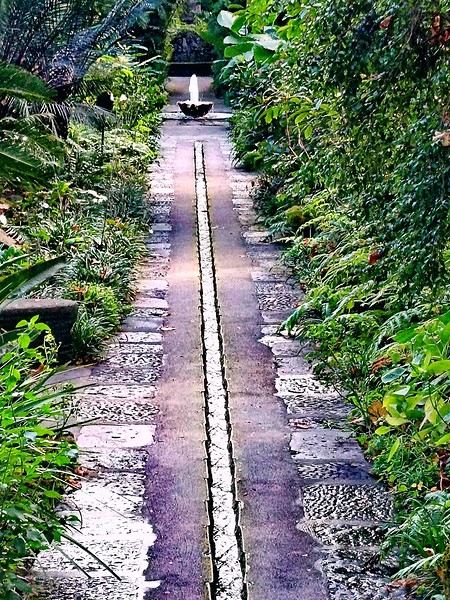
Good evening everyone,
This is where we chat and post non-competition photos. Happy wandering (jogging is also welcome).
See you soon.
Cat
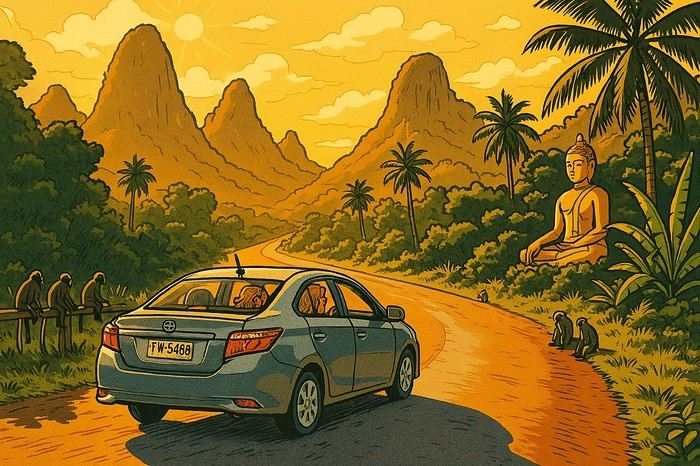
From Bangkok to Krabi, Thailand by Car!
This first trip of 2025 will have the taste of Asia.
More precisely, Thailand!
It’s not my first time—I’ve often traveled across Southeast Asia between 2000 and 2015. (This travel journal, for example...)
But it’ll be my partner’s first steps in this part of the world.
The itinerary we’ve chosen will alternate between familiar sights for me and new discoveries for both of us.
I’ll get to see how the country has changed in 20 years—and what’s stayed the same!
We were torn between the north and the south of the kingdom. Fears of smoke from slash-and-burn farming and a desire to relax on the sand tipped the scales toward the south...
What if we rented a car?
I think driving in sprawling Bangkok would be a bit ambitious, so we’ll only book our vehicle from Hua Hin to return it in Surat Thani.
Other transportation will range from tuk-tuks to overnight trains and ride-hailing services.
And of course, the plane!
I’d love to travel from Auvergne to Bangkok by road, but 15 days wouldn’t be enough...
Plus, the current geopolitical situation isn’t exactly favorable...
So, once again, we’ll be stuck for hours in the less-than-comfortable economy class of Qatar Airways.
The arrival time was on schedule, entry formalities were quick, and all our luggage made it.
We left Lyon in wind and cold—now we’re breathing in the warm, humid air of กรุงเทพมหานคร.
To reach our hotel, we first took the metro, which dropped us off in the city center in about 30 minutes for the incredible price of 1.18 €.
A few taps on the GRAB app, and we booked a ride-hailing service for the last few kilometers.
We waited a while for our driver due to insane traffic in the area, but once in the 4x4, we were at our lodging in no time.
We chose this small hotel for its riverside location, tranquility, and price.
It’ll do the job perfectly—the only downside is the weak breakfast.
The room is inviting, and we collapse onto the bed for a well-deserved short nap.
Wake-up call in an hour for our first visits!
See you soon...
More precisely, Thailand!
It’s not my first time—I’ve often traveled across Southeast Asia between 2000 and 2015. (This travel journal, for example...)
But it’ll be my partner’s first steps in this part of the world.
The itinerary we’ve chosen will alternate between familiar sights for me and new discoveries for both of us.
I’ll get to see how the country has changed in 20 years—and what’s stayed the same!
We were torn between the north and the south of the kingdom. Fears of smoke from slash-and-burn farming and a desire to relax on the sand tipped the scales toward the south...
What if we rented a car?
I think driving in sprawling Bangkok would be a bit ambitious, so we’ll only book our vehicle from Hua Hin to return it in Surat Thani.
Other transportation will range from tuk-tuks to overnight trains and ride-hailing services.
And of course, the plane!
I’d love to travel from Auvergne to Bangkok by road, but 15 days wouldn’t be enough...
Plus, the current geopolitical situation isn’t exactly favorable...
So, once again, we’ll be stuck for hours in the less-than-comfortable economy class of Qatar Airways.
The arrival time was on schedule, entry formalities were quick, and all our luggage made it.
We left Lyon in wind and cold—now we’re breathing in the warm, humid air of กรุงเทพมหานคร.
To reach our hotel, we first took the metro, which dropped us off in the city center in about 30 minutes for the incredible price of 1.18 €.
A few taps on the GRAB app, and we booked a ride-hailing service for the last few kilometers.
We waited a while for our driver due to insane traffic in the area, but once in the 4x4, we were at our lodging in no time.
We chose this small hotel for its riverside location, tranquility, and price.
It’ll do the job perfectly—the only downside is the weak breakfast.
The room is inviting, and we collapse onto the bed for a well-deserved short nap.
Wake-up call in an hour for our first visits!
See you soon...
3 weeks in Kazakhstan and Kyrgyzstan, preliminary travel questions
Hi there, 🙂
I’m thinking of taking a trip to these two countries in 2026 (late spring to early summer).
I’d arrive in Almaty and leave from Bishkek, and I’d be driving myself.
I plan to spend 1 week in Kazakhstan and 2 in Kyrgyzstan. The itinerary isn’t set yet.
My preliminary questions are about formalities, hassle levels, and the car.
From what I understand, no visa is needed, the passport must be valid for 6 months after entry, and there’s no longer a requirement to register with the authorities at each stop. In short, once you’re in, no administrative headaches.
Except for permits needed to drive in certain regions?
---/---
About crossing between the two countries:
- On foot - In a rental car
Quick? Easy?
---/---
Are both countries safe? (Meaning you don’t have to stay on guard all the time.) Are the cops corrupt? (A little, a lot, passionately, not at all?)
---/---
Is it better to rent a car for both countries or rent a vehicle in each country?
A 4x4 or something else?
Is accommodation plentiful enough that I can skip a rooftop tent, or is it better to rent a 4x4 with one?
I’ll definitely have more questions later...😉
Thanks for your answers !
I’m thinking of taking a trip to these two countries in 2026 (late spring to early summer).
I’d arrive in Almaty and leave from Bishkek, and I’d be driving myself.
I plan to spend 1 week in Kazakhstan and 2 in Kyrgyzstan. The itinerary isn’t set yet.
My preliminary questions are about formalities, hassle levels, and the car.
From what I understand, no visa is needed, the passport must be valid for 6 months after entry, and there’s no longer a requirement to register with the authorities at each stop. In short, once you’re in, no administrative headaches.
Except for permits needed to drive in certain regions?
---/---
About crossing between the two countries:
- On foot - In a rental car
Quick? Easy?
---/---
Are both countries safe? (Meaning you don’t have to stay on guard all the time.) Are the cops corrupt? (A little, a lot, passionately, not at all?)
---/---
Is it better to rent a car for both countries or rent a vehicle in each country?
A 4x4 or something else?
Is accommodation plentiful enough that I can skip a rooftop tent, or is it better to rent a 4x4 with one?
I’ll definitely have more questions later...😉
Thanks for your answers !
So where are they and what are they doing?
This catchy and somewhat mysterious title comes from several questions I’ve been asking myself.
VF has been back open for a reasonable number of weeks and months now. The number of visitors overall matches past averages, but the number of members online in the last 24 hours seems relatively lower than what we used to see.
Yet, to my surprise, I’m seeing fewer travel journals, way fewer messages, and way fewer questions. I don’t see many new registered users online, and I notice a number of members who are logged in but either aren’t participating or have stopped participating.
Something’s not adding up for me because, in my opinion, VF is still appealing, and I don’t see which other sites could really compete.
Was there a real break between pre- and post-Covid? Does it just take more time for some people to discover the site or learn that it’s active again? Do people now prefer quick consumption on sites like FB or others I’m not familiar with? Where have the site’s old-timers gone, and what are they doing with their time now? What’s really going on here?
VF has been back open for a reasonable number of weeks and months now. The number of visitors overall matches past averages, but the number of members online in the last 24 hours seems relatively lower than what we used to see.
Yet, to my surprise, I’m seeing fewer travel journals, way fewer messages, and way fewer questions. I don’t see many new registered users online, and I notice a number of members who are logged in but either aren’t participating or have stopped participating.
Something’s not adding up for me because, in my opinion, VF is still appealing, and I don’t see which other sites could really compete.
Was there a real break between pre- and post-Covid? Does it just take more time for some people to discover the site or learn that it’s active again? Do people now prefer quick consumption on sites like FB or others I’m not familiar with? Where have the site’s old-timers gone, and what are they doing with their time now? What’s really going on here?
Pseudo offre MSC pour novembre 2019 (circuit Europe du Nord )
Bonjour,
Susceptible d'être intéressés par un circuit Europe du Nord en juillet 2020, nous avions repéré une croisière de 14 jours sur Splendida dans les offres Msc Voyager le mois dernier à 3230 € (avec remise de 15 % + 5 %) en cabine double intérieure.
Aujourd'hui, avec l'offre de MSC à 50 % pour le second passager, elle est proposée à 3700 € (avec ou sans l'offre Msc Voyager) !
Je ne suis jamais surpris de ces pratiques commerciales qui consistent à augmenter les tarifs avant les offres promotionnelles, mais il me semble que dans ce cas, c'est un peu abusé...
(ps : même remarque pour avril en Méditerranée sur le Divina)
Certains ont ils constaté la même chose ?
Cdt
Est-ce possible de voyager en Islande pour des personnes âgées
bonjour tout le forum
Je m’explique est-ce possible de voir les endroits merveilleux d’Islande alors que nous ne sommes plus capables de marcher pendant très longtemps, nous avons beaucoup voyagé en camping car jusqu’en 1995 fait beaucoup de randonnées, mais ça c’était avant 😉 nous allons fêter très bientôt nos 50 ans de mariage en décembre, et j’aurais voulu faire ce voyage, pour le moment je n’en ai parlé à personne car je voudrais faire la surprise 😄 à mon cher et tendre bon j’ai toujours considéré que pour voir les endroits époustouflants il fallait le mériter, donc j’ai bien peur que mon idée soit légèrement utopique, je ne sais pas quelle formule serait la plus adaptée, de toute façon j’ai encore un peu de temps ce serait en juin. Nous pourrions louer un 4/4 et faire un circuit défini avec hébergement. Enfin j’attends vos conseils avisés
Croisière Holland America Line
Bonsoir. Qui a fait une traversee mediterranee avec cette compagnie . Nous avons fait de multiples croisieres avec costa et msc . Qu’est ce qui change à part la langue ? L’organisation ? Le confort ? Les taxes ? Merci
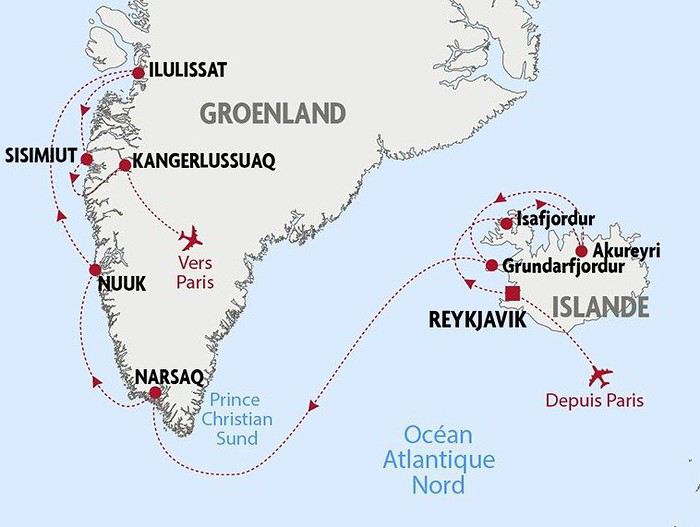
Review of a disappointing cruise with Rivages du Monde in Iceland and Greenland
Hello everyone,
The itinerary was tempting, and we decided to take this cruise with friends. It also gave us a chance to discover this company, which offers many river cruises in a French-speaking atmosphere. The boat is only rated 3 stars, so we knew we wouldn’t have the same comfort or services as usual, but we accepted that. After all, the price is half that of a cruise with Ponant in the same area.
From the booking stage, this company was unlike any other. We later learned that Rivages du Monde isn’t a shipowner but just a service provider.
It operates in a somewhat outdated, old-fashioned, or even backward way, depending on how you see it. Information about the cruise, excursions, and the boat comes in the form of a very brief PDF. Documents, quotes, and invoices are sent by mail.
There’s no personal account on the company’s website, no passenger form to fill out, and no online check-in.
Fifteen days before the balance was due, I received the invoice with its share of surprises. I had to send my credit card details by mail (well, why not?), or pay by check.
The bad surprise was a fuel surcharge. The good one was that we were upgraded from category 3 to category 7, moving from deck 6 to deck 4. Since the information was so lacking, I had no idea what the benefits of this upgrade would be. I almost complained and asked to keep the cabin I had chosen, but I read in some comments that cabins on deck 6 were to be avoided due to loud creaking. So I said nothing.
Booking excursions, which had to be paid at the same time as the balance, was strongly recommended before departure. They were reserved by filling out an A4 sheet after reading a 3- or 4-line description in the PDF. The duration of the excursion and the departure time weren’t indicated. No information about disembarkation—would it be at the dock or by tender?
The boat. The MS Astoria is the oldest passenger ship in the world. Built in 1948, it started its career as a transatlantic liner until 1960. Often restored, it has retained an old-fashioned, vintage charm... or so the ads say. In the end, it didn’t look that old, as it had been modified and refurbished so much. Only its original bell remains in a display case. Its vintage look is more visible on the outside than inside. The outdoor decks are spacious, great for sightseeing. There weren’t too many passengers for the size of the ship. Inside, it’s not very modern or beautiful, but it was decent. A pleasant surprise—it handled the sea better than we expected.
The cabin was outdated and small, as we expected—no desk, no sofa, and two portholes that made it very bright. Well-equipped with new storage furniture, it even had a fridge. The bathroom would have been spacious if it didn’t have a bidet. The bed had a board instead of a proper base, but the mattress was good, and we slept well the whole cruise. Don’t look too closely at the finishing details, but overall, it was better than I expected. On deck 4, the cabin creaked a little at night, but it didn’t bother us. The cabins are different sizes on the plan, but in reality, they all have the same surface area.
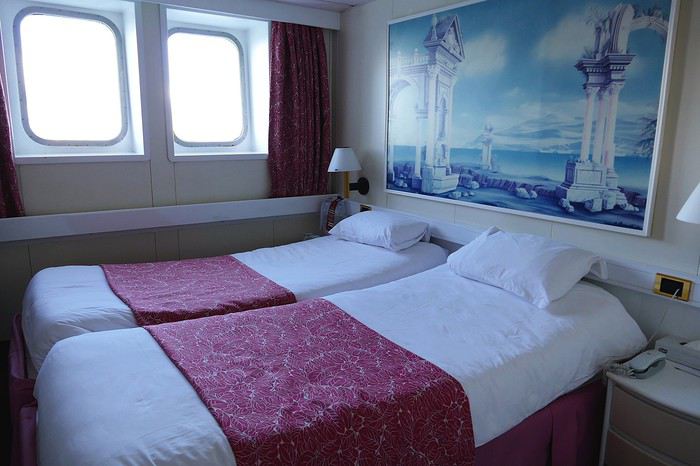
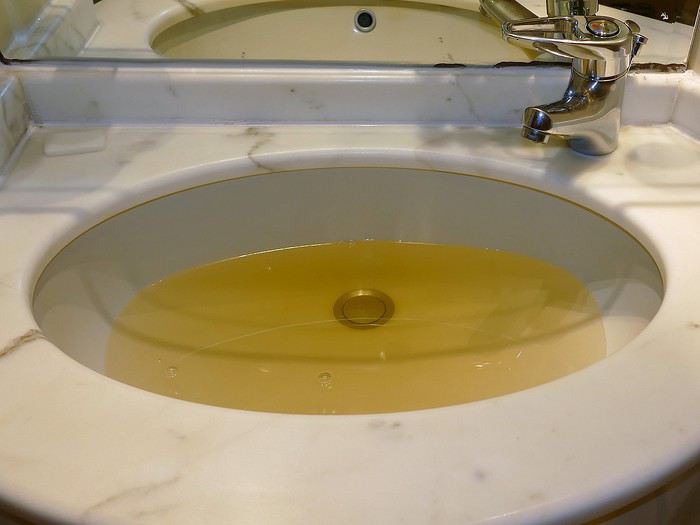
Note the strange color of the hot water.
The buffet was tiny, with few choices and very basic, ordinary dishes. A few mixed industrial salads, some fresh salad and cold cuts. For the main course, chicken, pork, some kind of minced meat, or fish. Then potatoes, rice, pasta, or steamed vegetables (always the same ones). For dessert, flavorless pastries in various colors or fresh melon and watermelon salad. That was the sad, single menu for the entire cruise at the buffet. Note that the buffet was only open for 2 hours at lunchtime and 1 hour in the afternoon for a snack.
Tea, coffee, and water were available all day.
The restaurant. The table was nicely set and pretty, but the meals weren’t much better than at the buffet. The “beef fillet in pastry” was like boiled beef stew—it fell apart easily (even though we asked for it rare or at least medium-rare). The “asparagus velouté” was actually leek soup with “hay” that crunched under your teeth. The poire belle Hélène or profiteroles were sad, distant relatives of the well-known desserts—very skimpy. And those were just a few examples.
Drinks were included with meals: still or sparkling bottled water, white, red, or rosé wine, coffee, tea, or herbal tea.
The bar. The servers were nice but far from having the class and know-how you find on other cruise lines. We wanted to try the cocktails, but only once. The margarita was warm, with bottled chemical lemon, no ice, and no salt. The caipirinha was brown! And later, we noticed that in the Singapore Sling, they replaced the Champagne with soda!!! What a skill set!!!
The lectures were very popular. Almost all passengers eagerly attended the talks by the two naturalists.
The musical entertainment was French variety—good-natured and friendly most of the time. A little classical music, chamber music so sad it made you sleepy. Nothing like the pianos and violins you find elsewhere... (Princess or HAL).
The shows. With very limited resources, the dancers did their best. The outfits were very revealing in certain strategic areas, and that was the rule for all themes.
The “red vests.” The atmosphere on board was more like a company outing than a cruise. There was a lot of staff to run the excursions desk, assist and supervise passengers during stops, or act as guides during excursions. These “red vests” behaved like they were on a summer camp—they had a great time and gathered as often as possible to laugh and have fun. They didn’t hesitate to roll their eyes behind passengers’ backs. But the “group leaders” became very authoritarian and directive when addressing passengers.
One evening, our friend asked a “red vest” about the excursion time the next day. That was top-secret information, impossible to get (I’ll come back to that). The “red vest” replied that they wouldn’t tell him because, by the next day, he would have forgotten anyway. That shows the level of respect this staff had for the passengers.
Also worth noting: among the passengers was a man in a wheelchair. For the entire cruise, he couldn’t go ashore. No one ever offered to help his wife get him off the ship.
My perception of this cruise is inevitably shaped by my past experiences. Some passengers shared my opinion, but others were completely satisfied with everything and found the food good. They also swallowed all the bad excuses, cooked up with a security sauce, without question—reassured and delighted that “everything” was done for “their safety,” which is the most important thing, isn’t it?
To be continued—the stops and the organization, even more pitiful than the hospitality...
Petting a lion in South Africa?
In South Africa, over the past few years, places offering interactions with lions have exploded across the country—but mainly in the most tourist-heavy areas (well, well...).
Under various names ("reserve," "center," "park," "institute"), tourists are lured in with the chance to pet lion cubs, walk alongside lions—all for a fee, of course. Volunteers are even recruited to support the animal cause—also for a fee.
The origin story of these big cats is always noble: orphaned cubs rescued from the wild, or from terrible places, or from an injured mother that was saved. (That’s an awful lot of orphaned lion cubs... a real epidemic?)
The future of these felines is supposedly bright—either a return to the wild or retirement in a reserve.
The "center’s" activities—the rescue of these poor cubs or lions, the study of their behavior, genetic improvement, repopulating the wild, and lately, advertising.
What will the tourist do?
How can you resist the incredible opportunity to pet a lion cub, walk beside a lion, get up close without barriers, see them so near? Plus, you’re doing a good deed by funding the rescue of these magnificent animals, cared for with such dedication by these passionate people!
What have you actually just done?
What are the facts? (Conclusions from a very interesting report)
There are over 200 lion breeding farms, currently holding more than 12,000 captive felines, most of which are lions. (Up from 8,000 in recent years.) More than 800 captive lions are killed each year by hunters. Who, by the way, try to establish ethical hunting rules. Almost none of these places have any real connection to animal protection agencies or wildlife conservation scientists. It’s a commercial operation, generating over $100,000 USD/month, particularly through volunteer programs. The real rescue centers can be counted on one hand! There are no reintroduction programs for captive lions. They aren’t needed—lions don’t require captive-bred animals for reintroduction, especially not those imprinted by humans or genetically compromised. And they don’t breed, sell, or interact with the animals in any way!
(They don’t breed, trade—mostly receiving animals rather than acquiring them—or interact with the animals in any way.)
Taking a lion cub from its mother is unnatural and only done to exploit the animals, visitors, and volunteers.
(Taking lion cubs away from their mothers isn’t natural and is only done to exploit the animals and you as the visitor or volunteer.)
Obviously, the number of animals actually "rescued from the wild" is minuscule. Information provided at these places is poor, confusing, and biased—or outright false. They exploit people’s gullibility and empathy for a commercial operation under the guise of animal welfare. Under the pretense of animal protection and research, many lions end up sold to zoos. Most are sold to hunting reserves. The use of big cat bones in traditional Chinese medicine is ancient and growing rapidly—over 1,000 lions are killed each year for this purpose.
The uncomfortable questions!
* Is there interaction with the lions? * Where are the old lions? * Do you buy or sell animals? * Where do the animals come from, and where do they go? Where do all these cubs come from? * Do you have a recognized predator specialist? * If you release animals, when and where?
The right answers!
We interact minimally, if at all! They need to stay wild! The old lions are here. Never buying. Selling is extremely rare. It’d be like an animal shelter buying dogs! We have few animals, all rescued. No breeding, ever. It’d be like an animal shelter breeding dogs! Yes. Extremely rare!
It’s clear this is purely a financial operation, and there’s a 99% chance you’re participating in what I’d call a scam.
Basically, lions are bred on farms. When they’re cubs, you pay to pet them. When they’re older, you pay to walk with them or get close. And when they’re fully grown, they either become breeders on the farm or end up as targets—in a zoo, as bone powder, or worse.
Pet a lion cub, and you’re sentencing it to a lifetime in captivity or death!
The same principle applies to leopards—though not exactly to cheetahs.
Real rescue and conservation centers exist, but they’re rare. The others are everywhere.
Please, keep this in mind on your next vacation!
Under various names ("reserve," "center," "park," "institute"), tourists are lured in with the chance to pet lion cubs, walk alongside lions—all for a fee, of course. Volunteers are even recruited to support the animal cause—also for a fee.
The origin story of these big cats is always noble: orphaned cubs rescued from the wild, or from terrible places, or from an injured mother that was saved. (That’s an awful lot of orphaned lion cubs... a real epidemic?)
The future of these felines is supposedly bright—either a return to the wild or retirement in a reserve.
The "center’s" activities—the rescue of these poor cubs or lions, the study of their behavior, genetic improvement, repopulating the wild, and lately, advertising.
What will the tourist do?
How can you resist the incredible opportunity to pet a lion cub, walk beside a lion, get up close without barriers, see them so near? Plus, you’re doing a good deed by funding the rescue of these magnificent animals, cared for with such dedication by these passionate people!
What have you actually just done?
What are the facts? (Conclusions from a very interesting report)
There are over 200 lion breeding farms, currently holding more than 12,000 captive felines, most of which are lions. (Up from 8,000 in recent years.) More than 800 captive lions are killed each year by hunters. Who, by the way, try to establish ethical hunting rules. Almost none of these places have any real connection to animal protection agencies or wildlife conservation scientists. It’s a commercial operation, generating over $100,000 USD/month, particularly through volunteer programs. The real rescue centers can be counted on one hand! There are no reintroduction programs for captive lions. They aren’t needed—lions don’t require captive-bred animals for reintroduction, especially not those imprinted by humans or genetically compromised. And they don’t breed, sell, or interact with the animals in any way!
(They don’t breed, trade—mostly receiving animals rather than acquiring them—or interact with the animals in any way.)
Taking a lion cub from its mother is unnatural and only done to exploit the animals, visitors, and volunteers.
(Taking lion cubs away from their mothers isn’t natural and is only done to exploit the animals and you as the visitor or volunteer.)
Obviously, the number of animals actually "rescued from the wild" is minuscule. Information provided at these places is poor, confusing, and biased—or outright false. They exploit people’s gullibility and empathy for a commercial operation under the guise of animal welfare. Under the pretense of animal protection and research, many lions end up sold to zoos. Most are sold to hunting reserves. The use of big cat bones in traditional Chinese medicine is ancient and growing rapidly—over 1,000 lions are killed each year for this purpose.
The uncomfortable questions!
* Is there interaction with the lions? * Where are the old lions? * Do you buy or sell animals? * Where do the animals come from, and where do they go? Where do all these cubs come from? * Do you have a recognized predator specialist? * If you release animals, when and where?
The right answers!
We interact minimally, if at all! They need to stay wild! The old lions are here. Never buying. Selling is extremely rare. It’d be like an animal shelter buying dogs! We have few animals, all rescued. No breeding, ever. It’d be like an animal shelter breeding dogs! Yes. Extremely rare!
It’s clear this is purely a financial operation, and there’s a 99% chance you’re participating in what I’d call a scam.
Basically, lions are bred on farms. When they’re cubs, you pay to pet them. When they’re older, you pay to walk with them or get close. And when they’re fully grown, they either become breeders on the farm or end up as targets—in a zoo, as bone powder, or worse.
Pet a lion cub, and you’re sentencing it to a lifetime in captivity or death!
The same principle applies to leopards—though not exactly to cheetahs.
Real rescue and conservation centers exist, but they’re rare. The others are everywhere.
Please, keep this in mind on your next vacation!
Namibie, une grande boucle de 24 jours en famille, août 2017
Hello,
Voilà un carnet de plus sur la Namibie. Il semble que le pays a eu la cote cet été 🙂
Pour nous ça aura été le voyage des grandes premières : 1er voyage en Afrique, 1er voyage en camping, 1er voyage organisé non par moi mais via une agence locale ..... Et au final, un voyage fabuleux qui nous a donné envie de réitérer l'expérience dès que possible 😎
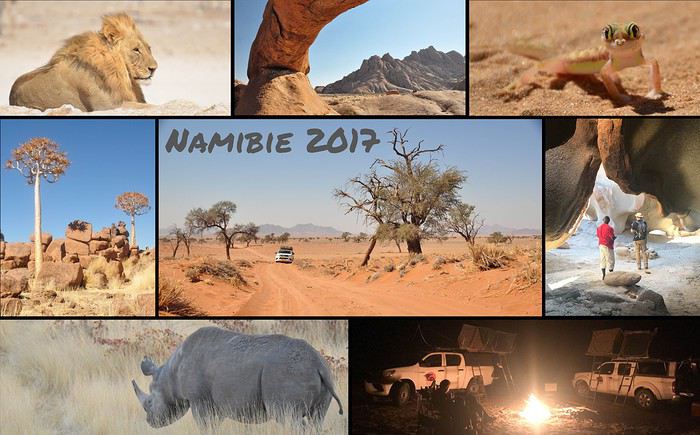
L'itinéraire Comme nous aimons prendre notre temps et qu'on n'avait pas envie de rouler pendant des heures sur la journée, nous avons choisi de faire l'impasse sur le grand sud du pays (on ne descend pas jusqu'au Fish River Canyon) et sur le nord (pas d'Epupa Falls, pas de Caprivi). Au final, nous avons fait une boucle assez classique et les 24 jours nous ont permis de nous poser à certains endroits.
Day 1 - Central Namibia, Windhoek Day 2 – Kalahari Namibia - <> Day 3 – Mesosaurus Fossil Camp Day 4 – Klein-Aus-Vista - <> Day 5 – Luderitz & Kolmanskop - <> Day 6 – la D707 et arrivée au NamibRand - <> Day 7 – NamibRand Nature Reserve - <> Day 8 – Naukluft Mountain - <> Day 9 – Sossusvlei - <> Day 10 – Sesriem Canyon & Rostock Ritz <> Day 11 – Swakopmund <> Day 12 – Living Desert Tour, Moon Valley & Welwishia Drive <> Day 13 – Wüstenquell <> Day 14 – Spitzkoppe <> Day 15 – Twyfelfontein <> Day 16/17/18 – Safari guidé dans la concession de Palmwag, du sud au nord <> <> <> Day 19 – Journée repos à la House-in-the-Rock <> Day 20/21/22 – Etosha National Park <> <> <> Day 23 – Duesternbrook Safari Guest Farm <>
Nos énormes coups de coeur
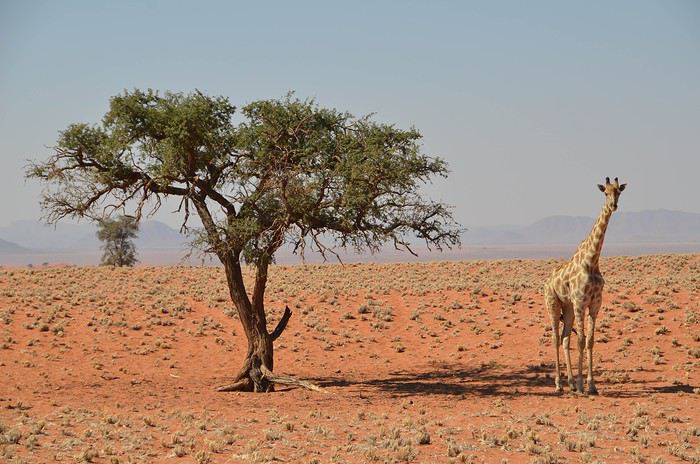
LE coup de coeur unanime de toute la famille (adultes et ados) : nos 2 nuits au campsite Orion au NamibRand Family Hideout. Un endroit où on se sent seul au monde, dans un décor fabuleux, face à un trou d'eau où les animaux viennent se désaltérer, nos 1eres girafes alors qu'on ne s'y attendait pas du tout et le sandboarding, qui nous a donné des grands moments de fou rires.
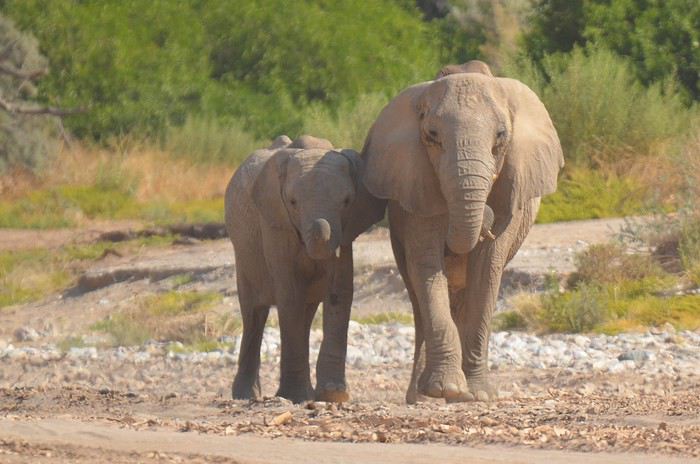
Pour nos ados, le 2e coup de coeur a été le safari guidé dans la concession de Palmwag. On y a pourtant vu très peu d'animaux. Le steak/frites préparé par nos guides la dernière soirée et le petit coup d'adrénaline avec un lion doivent y être pour beaucoup 😛 Il faut aussi dire que les paysages sont fabuleux et que la rencontre avec les éléphants du désert est vraiment magique.
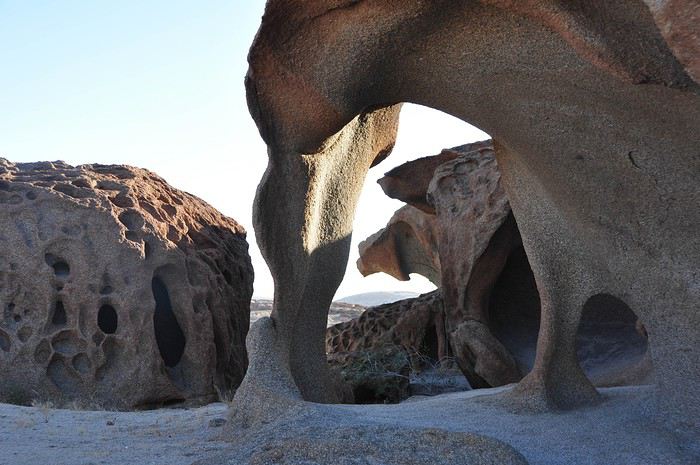
Le grand coup de coeur pour nous, les adultes, a été nos 2 nuits à Wustenquell et ses paysages totalement inattendus. Et encore cette impression d'être seul au monde.
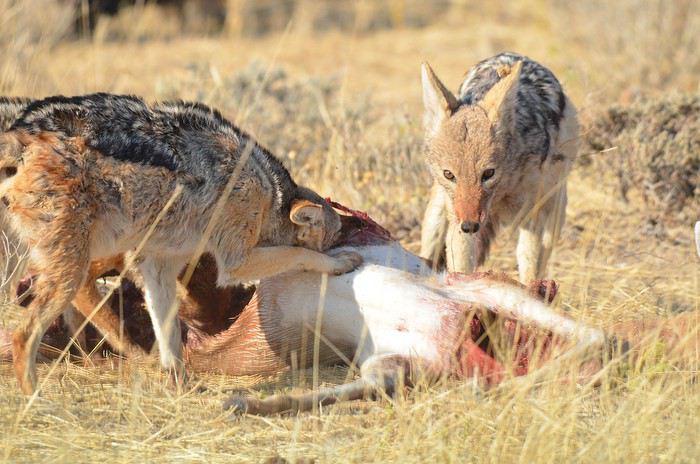
Et enfin, le dernier coup de coeur : Etosha et sa foison d'animaux. Avec le moment préféré des enfants : la chasse et le repas des chacals sous l'oeil attentif des vautours qui attendaient patiemment leur tour.
A bientôt pour la suite, Pascale
Voilà un carnet de plus sur la Namibie. Il semble que le pays a eu la cote cet été 🙂
Pour nous ça aura été le voyage des grandes premières : 1er voyage en Afrique, 1er voyage en camping, 1er voyage organisé non par moi mais via une agence locale ..... Et au final, un voyage fabuleux qui nous a donné envie de réitérer l'expérience dès que possible 😎
L'itinéraire Comme nous aimons prendre notre temps et qu'on n'avait pas envie de rouler pendant des heures sur la journée, nous avons choisi de faire l'impasse sur le grand sud du pays (on ne descend pas jusqu'au Fish River Canyon) et sur le nord (pas d'Epupa Falls, pas de Caprivi). Au final, nous avons fait une boucle assez classique et les 24 jours nous ont permis de nous poser à certains endroits.
Day 1 - Central Namibia, Windhoek Day 2 – Kalahari Namibia - <> Day 3 – Mesosaurus Fossil Camp Day 4 – Klein-Aus-Vista - <> Day 5 – Luderitz & Kolmanskop - <> Day 6 – la D707 et arrivée au NamibRand - <> Day 7 – NamibRand Nature Reserve - <> Day 8 – Naukluft Mountain - <> Day 9 – Sossusvlei - <> Day 10 – Sesriem Canyon & Rostock Ritz <> Day 11 – Swakopmund <> Day 12 – Living Desert Tour, Moon Valley & Welwishia Drive <> Day 13 – Wüstenquell <> Day 14 – Spitzkoppe <> Day 15 – Twyfelfontein <> Day 16/17/18 – Safari guidé dans la concession de Palmwag, du sud au nord <> <> <> Day 19 – Journée repos à la House-in-the-Rock <> Day 20/21/22 – Etosha National Park <> <> <> Day 23 – Duesternbrook Safari Guest Farm <>
Nos énormes coups de coeur
LE coup de coeur unanime de toute la famille (adultes et ados) : nos 2 nuits au campsite Orion au NamibRand Family Hideout. Un endroit où on se sent seul au monde, dans un décor fabuleux, face à un trou d'eau où les animaux viennent se désaltérer, nos 1eres girafes alors qu'on ne s'y attendait pas du tout et le sandboarding, qui nous a donné des grands moments de fou rires.
Pour nos ados, le 2e coup de coeur a été le safari guidé dans la concession de Palmwag. On y a pourtant vu très peu d'animaux. Le steak/frites préparé par nos guides la dernière soirée et le petit coup d'adrénaline avec un lion doivent y être pour beaucoup 😛 Il faut aussi dire que les paysages sont fabuleux et que la rencontre avec les éléphants du désert est vraiment magique.
Le grand coup de coeur pour nous, les adultes, a été nos 2 nuits à Wustenquell et ses paysages totalement inattendus. Et encore cette impression d'être seul au monde.
Et enfin, le dernier coup de coeur : Etosha et sa foison d'animaux. Avec le moment préféré des enfants : la chasse et le repas des chacals sous l'oeil attentif des vautours qui attendaient patiemment leur tour.
A bientôt pour la suite, Pascale
Retour d'un premier Yacht Club MSC Fantasia
Bonjour 😎
Me voici revenue d une très belle semaine de croisière.
Ce compte rendu aura pour objet de comparer les prestations du YACHT CLUB du MSC FANTASIA et l AQUACLASS de CELEBRITY.
chapitre 1: introduction et avertissement
A) introduction
Cette croisière est la 18 ème apres
- 8 croisières COSTA
- 3 Croisières ROYAL CARIBBEAN
- 3 croisières CELEBRITY ( dont 2 an aquaclass)
- 1 croisière MSC
- 1 croisière NCL
- 1 croisière PRINCESS
Pourquoi avoir choisi cette Croisière en yacht club ?
Nous avions envie d essayer le concept et les curieux que nous sommes , se demandaient ce que valait réellement le yacht club....
De plus les prestations annoncées correspondent a ce que l on recherche : du calme , la qualité du service, un restaurant gastronomique....
Enfin le dernier facteur déterminant a été le prix ! Nous ne voulions pas payer trop cher sans savoir si cela nous plairait vraiment ....
1150 euros la semaine par personne nous a paru être un prix raisonnable.
B) avertissement
Le titre peut sembler très protocolaire mais comme tout le monde le sait, le yacht club est un sujet très sensible sur le forum.... 😕
Beaucoup de polémiques de railleries a la limite des insultes ... 😠
A qui s adresse donc ce compte rendu ?
- a tous ceux qui aimeraient savoir.ce que vaut vraiment le yacht club
- aux personnes qui se demandent s il vaut mieux choisir le yacht club ou une compagnie premium
- a tous les forumeurs qui comme moi se sont toujours demande a quoi servait réellement un majordome
- a toutes les personnes bien intentionnées qui aiment lire les comptes rendus et participer a des échanges constructifs.
A qui ne s adresse pas ce compte rendu ? - aux âmes sensibles qui supportent très mal les critiques négatives et comparaisons entre le yacht club et les compagnies premium - aux personnes pensant qu on n' est pas légitime d écrire un compte rendu sur le yacht club après une seule croisière - aux chasseurs de Pokemon, j ai le regret de leur annoncer qu' aucun pokemon rare n a été trouvé au yacht club - aux cruciverbistes, extra terrestres , champions olympiques.. Le sujet risque de les ennuyer .... 😄
Les choses étant clairement énoncées , libre à chacun maintenant d arrêter le lecture ici ou de poursuivre
Pour ceux qui ont choisi de poursuivre je les invite donc a se préparer pour l embarquement en yacht club a travers les thèmes suivants : - la pré croisière - les embarquements et débarquements - la cabine , les espaces privatifs , le service, le room service - les escales - la restauration et les bars - les espaces piscines et le spa - l'animation et les spectacles - conclusion
A qui ne s adresse pas ce compte rendu ? - aux âmes sensibles qui supportent très mal les critiques négatives et comparaisons entre le yacht club et les compagnies premium - aux personnes pensant qu on n' est pas légitime d écrire un compte rendu sur le yacht club après une seule croisière - aux chasseurs de Pokemon, j ai le regret de leur annoncer qu' aucun pokemon rare n a été trouvé au yacht club - aux cruciverbistes, extra terrestres , champions olympiques.. Le sujet risque de les ennuyer .... 😄
Les choses étant clairement énoncées , libre à chacun maintenant d arrêter le lecture ici ou de poursuivre
Pour ceux qui ont choisi de poursuivre je les invite donc a se préparer pour l embarquement en yacht club a travers les thèmes suivants : - la pré croisière - les embarquements et débarquements - la cabine , les espaces privatifs , le service, le room service - les escales - la restauration et les bars - les espaces piscines et le spa - l'animation et les spectacles - conclusion
Petit album photos danois
Rapide "feed-back visuel" de dix jours de vacances au Danemark en lien ci-dessous :
www.flickr.com/...ms/72157672555569681
Avec mes principes philosophico-photographiques habituels, à savoir :
- Pas plus de trente photos sur un voyage (pour éviter les interminables soirées diapos voyageuses de Tata Georgette ou de Tonton Marcel des années 80, dans la chaleur moite et la pénombre d'un salon surpeuplé)
- Pas de photo "perso" (donc ni voiture de location en gros plan , ni chambre d'hôtel, ni selfie , ni assiette de restaurant, ...) pour ne conserver que la vision du pays visité et pas le reste, qui n'intéresse que moi !
- Peu de cartes postales (quelques-unes quand même), mais plutôt des impressions visuelles glanées au hasard du voyage, sans véritable cohésion ni prétention artistique, donc juste pour le plaisir visuel instantané... Ceux qui sont accros aux cartes postales iront taper "Danemark" sur Google Images, ils en trouveront des dizaines de milliers 😉
- Pas de recadrage (une seule exception, en semi-panoramique, sur les 27 photos présentées) et quasiment pas de post-traitement, excepté quelques points de contraste ou de saturation lorsque ça le méritait, mais le post-traitement doit se faire oublier
- Des titres à la c... pour chaque photo, car ils me permettent de mieux les mémoriser (et parfois le titre surgit dans mon cerveau dérangé au moment du déclenchement et ça participe à ma concentration dans le viseur 😛)
- Un lien vers une galerie plutôt que des photos saupoudrées en direct sur la discussion... Je sais que certains n'aiment pas cela, mais la lisibilité avez zoom sur flickr est beaucoup plus confortable que sur VF pour juger vraiment de la qualité photo, et on doit aussi avoir pitié des propriétaires de VF qui investissent, année après année, dans la capacité mémoire de leur serveur dans le seul but d'y stocker nos milliers d'horreurs voyageuses ! (et c'est pas écologique de stocker à deux endroits différents ! 🤪)
- J'ai aussi renoncé à la formule diaporama et préféré l'album où l'on n'ouvre que les photos qui plaisent, ce qui n'oblige pas le visiteur de passage à ingurgiter sous la torture la totalité des photos disponibles, bonnes ou mauvaises...
Les critiques positives ou négatives sont non seulement autorisées, mais recommandées... Si possible toujours avec une argumentation à la clé, pour m'aider à progresser (j'ai encore de la marge !)
On peut aussi désigner sa photo préférée (ça peut m'aider, car si les 27 photos sont "montrables" il y en a certainement qu'une minorité de "bonnes" ! Que celui qui fait plus de deux bonnes photos par jour en voyage me jette la première pierre !)
Dernier détail technique : Toutes les photos ont été produites avec un seul matériel : Boitier Nikon D750 (capteur plein format) et petit zoom trans-standard 24-70 2.8
Bonne "lecture" et bon week-end
www.flickr.com/...ms/72157672555569681
Avec mes principes philosophico-photographiques habituels, à savoir :
- Pas plus de trente photos sur un voyage (pour éviter les interminables soirées diapos voyageuses de Tata Georgette ou de Tonton Marcel des années 80, dans la chaleur moite et la pénombre d'un salon surpeuplé)
- Pas de photo "perso" (donc ni voiture de location en gros plan , ni chambre d'hôtel, ni selfie , ni assiette de restaurant, ...) pour ne conserver que la vision du pays visité et pas le reste, qui n'intéresse que moi !
- Peu de cartes postales (quelques-unes quand même), mais plutôt des impressions visuelles glanées au hasard du voyage, sans véritable cohésion ni prétention artistique, donc juste pour le plaisir visuel instantané... Ceux qui sont accros aux cartes postales iront taper "Danemark" sur Google Images, ils en trouveront des dizaines de milliers 😉
- Pas de recadrage (une seule exception, en semi-panoramique, sur les 27 photos présentées) et quasiment pas de post-traitement, excepté quelques points de contraste ou de saturation lorsque ça le méritait, mais le post-traitement doit se faire oublier
- Des titres à la c... pour chaque photo, car ils me permettent de mieux les mémoriser (et parfois le titre surgit dans mon cerveau dérangé au moment du déclenchement et ça participe à ma concentration dans le viseur 😛)
- Un lien vers une galerie plutôt que des photos saupoudrées en direct sur la discussion... Je sais que certains n'aiment pas cela, mais la lisibilité avez zoom sur flickr est beaucoup plus confortable que sur VF pour juger vraiment de la qualité photo, et on doit aussi avoir pitié des propriétaires de VF qui investissent, année après année, dans la capacité mémoire de leur serveur dans le seul but d'y stocker nos milliers d'horreurs voyageuses ! (et c'est pas écologique de stocker à deux endroits différents ! 🤪)
- J'ai aussi renoncé à la formule diaporama et préféré l'album où l'on n'ouvre que les photos qui plaisent, ce qui n'oblige pas le visiteur de passage à ingurgiter sous la torture la totalité des photos disponibles, bonnes ou mauvaises...
Les critiques positives ou négatives sont non seulement autorisées, mais recommandées... Si possible toujours avec une argumentation à la clé, pour m'aider à progresser (j'ai encore de la marge !)
On peut aussi désigner sa photo préférée (ça peut m'aider, car si les 27 photos sont "montrables" il y en a certainement qu'une minorité de "bonnes" ! Que celui qui fait plus de deux bonnes photos par jour en voyage me jette la première pierre !)
Dernier détail technique : Toutes les photos ont été produites avec un seul matériel : Boitier Nikon D750 (capteur plein format) et petit zoom trans-standard 24-70 2.8
Bonne "lecture" et bon week-end