Results for "Tanzanie+sécurité"
About 4,024 results.
More options
Many results are in French, the community’s main language. English translations are added over time.
Search results
Objectif Kilimandjaro en Tanzanie
hello, nous allons faire le kili au mois d'aout/septembre.
on se renseigne un peu car les tarifs sont pas donnés, notament les taxes d'entrée du parc national, on est de jeunes etudiants fauchés lol, et on voudrait savoir si vous aviez des bons plans pour payer moins un peu moins cher et/ou des bonnes agences a qui s'adresser 🙂
on se renseigne un peu car les tarifs sont pas donnés, notament les taxes d'entrée du parc national, on est de jeunes etudiants fauchés lol, et on voudrait savoir si vous aviez des bons plans pour payer moins un peu moins cher et/ou des bonnes agences a qui s'adresser 🙂
Retour de Tanzanie
Bonjour à vous, voyageurs au long cours, (pas bien sûr de l'orthographe),
Je suis rentré il y a 15 jours de tanzanie, après un séjour safari/trek privé de 10 jours absolument extraordinaire.
Tout a commencé par un vol paris/nairobi/arusha délicieux, l'avion à moitié plein (ou à moitié vide selon votre humeur) nous permettant de dormir profondément jusqu'à nairobi.
Puis, le petit avion dans lequel nous étions 6 nous amena jusqu'à arusha pour goûter à l'afrique pour la première fois...🙂
Nuit en lodge avant la prise en charge matinal par notre compagnie (latitude tz pour ne pas la citer, branche tanzanienne d'african latitude...super compagnie) et notre super génial guide, le bien nommé chacha.
Je ne developperai pas précisément la première partie de notre séjour puisque notre safari nous a mené dans le parc national et la zone de conservation du ngorongoro et dans le parc national et la zone de conservation du serengueti.Tout ce que je peux vous dire, c'est que la nature était absolument superbe quoique cruel parfois (pauvres bébés gnous...)Nous avons vu tous les big 5 (buffles, lions, lepoard de loin, rhinoceros de loin aussi et éléphants).
Nous avons logé deux nuits en lodge et le reste en camping privé (et je peux vous dire que le camping dans ces conditions, c'est absolument unique).
La seconde partie de notre séjour nous a ammené à marcher durant 3 jours dans les merveilleux paysages des gol mountains et leurs environs jusqu'au lac natron.Quel bonheur de rencontrer des masais, curieux de notre couleur de peau et de l'abondance de notre chevelure, des croiser des guerriers partant à la chasse au lion (véridique), et de nous reposer le soir dans des sites fabuleux.
Bref, un séjour formidable, je vous recommande particulièrement la tanzanie (beaucoup plus authentique que le kenya d'après les renseignements glanés auprès des voyageurs).Si vous avez des questions à me poser notamment sur les tarifs, n'hésitez pas.
Si vous souhaitez partir là bas, je peux vous donner l'adresse mail de notre guide, qui vous organisera un safari sur mesure tout à fait à votre goût et à un prix beaucoup plus interessant (on évite deux intermédiaires qui doivent bien se rémunèrer sur le prix facturé...).Bref, posez moi toutes les questions que vous voulez, j'essaierai d'y répondre.
A bientôt.
P.S: Je vous joins des photos en petit format, j'espère que ça va marcher...
Meilleur moyen de transport Kenya-Zanzibar?
Bonsoir,
Je souhaiterais aller à zanzibar depuis le kenya (nairobi ou mombasa, je ne sais pas encore...). Quel est le meilleur moyen (le plus rapide, le moins couteux) pour s'y rendre? Merci par avance pour vos conseils que je sais déjà avisés, et pour vos bons plans....car le départ, s'il se fait, approche....
Je souhaiterais aller à zanzibar depuis le kenya (nairobi ou mombasa, je ne sais pas encore...). Quel est le meilleur moyen (le plus rapide, le moins couteux) pour s'y rendre? Merci par avance pour vos conseils que je sais déjà avisés, et pour vos bons plans....car le départ, s'il se fait, approche....
Ascension du Kilimandjaro
Bonjour à tous,
Plusieur post traitent déja de ce sujet mais en fait pas exactement ! 😉
Je voudrais pour l'anniversaire de mon père organiser l'ascension du kili pour notre famille (4 personnes) Je précise que sans forcément rechercher la difficulté extrême, nous sommes tous les quatre en excellente condition physique.
En regardant les prestations des voyagistes je me rend compte que le prix indiqué (aux alentours des 1900€ en moyenne) ne comprennent pas les vols ou les taxes d'ascension.
Bref, ma question est la suivante, est-il possible en ne prenant en compte que les frais incompressible (vols+taxes d'ascension) d'organiser soi même le trip.
Un guide est-il obligatoire ? ( d'après ce que j'ai pu lire, l'itinéraire semble assez évident que ce soit par la machamé ou la marangu) Qu'en est-il des voies Rongai et Umbwé ? et des voies Shira et Lemosho ?
Possibilité de bivouaquer ? ou à défaut de réserver de France des places en refuge pour la marangu
En gros pensez vous qu'avec une préparation solide on puisse se débrouiller sans passer par un voyagiste.
Merci !
Je voudrais pour l'anniversaire de mon père organiser l'ascension du kili pour notre famille (4 personnes) Je précise que sans forcément rechercher la difficulté extrême, nous sommes tous les quatre en excellente condition physique.
En regardant les prestations des voyagistes je me rend compte que le prix indiqué (aux alentours des 1900€ en moyenne) ne comprennent pas les vols ou les taxes d'ascension.
Bref, ma question est la suivante, est-il possible en ne prenant en compte que les frais incompressible (vols+taxes d'ascension) d'organiser soi même le trip.
Un guide est-il obligatoire ? ( d'après ce que j'ai pu lire, l'itinéraire semble assez évident que ce soit par la machamé ou la marangu) Qu'en est-il des voies Rongai et Umbwé ? et des voies Shira et Lemosho ?
Possibilité de bivouaquer ? ou à défaut de réserver de France des places en refuge pour la marangu
En gros pensez vous qu'avec une préparation solide on puisse se débrouiller sans passer par un voyagiste.
Merci !
Ascension du Kilimandjaro: peut-on choisir de redescendre le deuxième jour?
bonjour, nous comptons decouvrir le Kili 😎en septembre ou debut octobre pour y feter mon anniversaire (bouteille de champagne dans le sac a dos😛 !) ; en fait, c'est mon idee et mon mari n'est pas tout a fait enthousiaste a l'idee de monter pendant 5 ou 6jours 😕🏴☠️ et aimerait ne monter que le premier jour donc, en fait, redescendre apres la 1ere nuit. Moi je continuerais avec le groupe jusqu'au sommet .
Questions :- Est-ce techniquement possible ? les agences peremttent-elles la descente apres le 1er jour ? y aurait-il un accompagnateur pour ce faire ?- vaut-il mieux partir d'Arusha (machame) ou je suppose qu'il y a des hotels sympas ou il pourrait m''attendre pendant 5 jours, ou vaut-il mieux partir du Kenya via Loitokitoki (route Rongai) au cas ou les hotels y seraient plus sympas qu'a Arusha ?
Je viens de lire tous les messages concernant le Kili et j ai note plein de renseignements super pratiques !! merci a tous . Mais je n'ai toujours pas pu vraiment resoudre le 2eme probleme car les avis ont l air tres partages . : vaut-il mieux tout reserver a partir d"Europe (avec Atalante ou Nomade aventures, p.ex.) ou pouvons-nous arriver sur place et y prendre la meilleure agence (j ai vu que Nature Discovery a ete citee plusieurs fois) ; nous aimerions ocntinuer sur Malindi ou les Seychelles, une tres bonne agence sur place pourrait peut-etre etre plus efficace ?? Merci
Je viens de lire tous les messages concernant le Kili et j ai note plein de renseignements super pratiques !! merci a tous . Mais je n'ai toujours pas pu vraiment resoudre le 2eme probleme car les avis ont l air tres partages . : vaut-il mieux tout reserver a partir d"Europe (avec Atalante ou Nomade aventures, p.ex.) ou pouvons-nous arriver sur place et y prendre la meilleure agence (j ai vu que Nature Discovery a ete citee plusieurs fois) ; nous aimerions ocntinuer sur Malindi ou les Seychelles, une tres bonne agence sur place pourrait peut-etre etre plus efficace ?? Merci
Bed and Breakfast Kitete à Zanzibar?
Bonjour à toutes et tous,
J'aurais apprécié d'avoir l'avis de someone qui aurait séjourné à Kitete B&B à Zanzibar..J'ai quelques doutes, juste avant de partir sur ce petit hotel. Quelqu'un l'a vu 😕 ouf! c'est déjà ça!
Mais certains y aurait-il séjourné ? Bonne journée aux téméraires voyageurs (les autres aussi😛
J'aurais apprécié d'avoir l'avis de someone qui aurait séjourné à Kitete B&B à Zanzibar..J'ai quelques doutes, juste avant de partir sur ce petit hotel. Quelqu'un l'a vu 😕 ouf! c'est déjà ça!
Mais certains y aurait-il séjourné ? Bonne journée aux téméraires voyageurs (les autres aussi😛
Zambie: sécurité pour deux femmes et itinéraire
Je pars ds 15 jours en Namibie, puis comme j'ai qq mois de liberté à suivre (et qq économies..), suis très tentée de partir ensuite en Zambie et profiter de la période sèche.
Est - ce assez safe pour partir en étant deux femmes ?
Est-ce mieux de revenir à JBG, pour prendre un vol pour lusaka ? (je songeais initialement faire windhoek- maun - moremi- chobe-vic falls-Luangwa-bande de caprivi- et terminer par etosha, damaraland et namib, ça sur 7 / 8 semaines).
Quels sont les bons plans récents pour la Zambie (camps, etc..)
Je précise que je loue un 4X4 avec roof tent, pour être plus indépendante.
Au plaisir de lire les réponses !
Je précise que je loue un 4X4 avec roof tent, pour être plus indépendante.
Au plaisir de lire les réponses !
Informations pour voyage en sac à dos au Kenya et en Tanzanie
bonjour à tous,
je pars cet été au kenya et en tanzanie avec mon ami pendant un mois et demie. on souhaite voyager en sac à dos. je suis à la recherche de personne qui serait partie en routard et pourrais nous donner quelques tuyaux
merci😉
manue
je pars cet été au kenya et en tanzanie avec mon ami pendant un mois et demie. on souhaite voyager en sac à dos. je suis à la recherche de personne qui serait partie en routard et pourrais nous donner quelques tuyaux
merci😉
manue
Sécurité de la régon de Sidamo en Ethiopie
Bonjour à tous,
Je prépare un petit périple botanique dans le sud de l'Ethiopie, région de Bale et Sidamo pour y collecter diverses graines.Je me pose la question de la sécurité de la région de Sidamo.Seul avec sac à dos, c'est apparement risqué. Peut-être que parmi vous certains ont déjà traversé la région pour aller au Kenya (ou inversement).Qu'en est-il? Je suis assez refroidi après la lecture de la traversée de l'Ethiopie de Sonia et Alexandre Poussin...Je n'ai pas envie de bader... Toutes infos sont les bienvenues! Merci par avance! Jean-Luc
Je prépare un petit périple botanique dans le sud de l'Ethiopie, région de Bale et Sidamo pour y collecter diverses graines.Je me pose la question de la sécurité de la région de Sidamo.Seul avec sac à dos, c'est apparement risqué. Peut-être que parmi vous certains ont déjà traversé la région pour aller au Kenya (ou inversement).Qu'en est-il? Je suis assez refroidi après la lecture de la traversée de l'Ethiopie de Sonia et Alexandre Poussin...Je n'ai pas envie de bader... Toutes infos sont les bienvenues! Merci par avance! Jean-Luc
Safari en Tanzanie
Bonjour,
j'ai fait une recherche sur le forum pour voir si JMT African Heart est connu...ils nous proposent un safari moins cher que Shidolya.
On a 3 enfants de 10, 8, 6 ans qui ont l'habitude de voyager, on aimerait faire le safari en camp, pas en lodge pour le cout.
Merci,
Karine😉
j'ai fait une recherche sur le forum pour voir si JMT African Heart est connu...ils nous proposent un safari moins cher que Shidolya.
On a 3 enfants de 10, 8, 6 ans qui ont l'habitude de voyager, on aimerait faire le safari en camp, pas en lodge pour le cout.
Merci,
Karine😉
Attaques violentes à Zanzibar
bonjour, il est de notre devoir de prévenir tous ceux qui souhaitent se rendre en tanzanie de ce qui nous est arrivé.
mon ami et moi venons d'être rapatriés en france hier par europ assistance. nous avons été victimes à Zanzibar d'une attaque par un groupe de 10 individus à notre hotel (plage de Bwejuu sur la côte est) dans la nuit de samedi 25 septembre 2004 à dimanche.ils ont pénétré violemment dans notre bungalow alors que nous dormions. ils tiraient des coups de feu partout, ils hurlaient. nous avons été menacés avec des pistolets et des machettes, frappés violemment, reçus de multiples coups de poing au visage et j'ai subi des attouchements.... nous avons cru que nous allions mourir.
ils nous ont volés beaucoup de biens et d'argent. mais le plus important, ils nout ont laissé la vie.
nous avons été 10 touristes à avoir subi cette attaque.
Ont suivi 48h de cauchemar car la police a retrouvé les coupables, les a tabassé sous nos yeux, a récupéré certains de nos biens dont l'argent (mais ne nous ont rendu qu'un sac a dos, une lampe de poche, une moustiquaire et des crayons...). on a du assister et témoigner au procés dès le lendemain, sans aucune compassion pour les victimes, ni assistance de la part du consulat français (qui n'a rien fait pour nous).
le pire, c'est que nous avons appris que ce n'était pas la 1ere fois que ça arrivait à zanzibar (c'était la 3e fois rien qu'en 2 mois) et je trouve scandaleux que personne (ni le ministère des affaires étrangères, ni les agences de voyage, ni les guides) ne prévienne les touristes français des risques...même là-bas, ils préférent cacher les choses aux touristes...
nous sommes complètement détruits psychologiquement, impuissants, tristes et perdus... (sans compter les blessures physiques, mais peu grave heureusement) et je ne souhaite qu'une chose, c'est que personne d'autre ne vive une fois dans sa vie ce cauchemar.
alors, svp, si vous vous rendez dans ce pays barbare, faites attention, prenez soin de votre vie, et dites vous que ça n'arrive pas qu'aux autres....
alexandra
Conseils sur Zanzibar et la Tanzanie
Bonjour à tous !
Je suis nouvelle sur ce forum sur lequel je suis tombée par hasard en cherchant des infos sur les hotels du nord Tanzanie et de Zanzibar pour mon futur voyage de noces. Nous avons prévu un safari privé en passant par Amboseli, Manyara, Serengeti et Ngorogonro puis une semaine à Zanzibar. Si certains d'entre vous ont déjà fait ce voyage et que vous avez des conseils à me donner je suis preneuse. Nous avons pour l'instant pris les lodges de la chaine Serena, le Tembo hotel à Stone town et le Blue Bay sur la côté est de Zanzibar.
D'autre part, j'aimerai savoir quelles sont les choses à faire ou à voir absolument sur Zanzibar. Est-ce que quelqu'un est déjà allé nager avec les dauphins ? si oui cela vaut-il le coût et pour quel coût 😉 ?
Merci d'avance à tous de vos tuyaux !! 🙂
Carine
Je suis nouvelle sur ce forum sur lequel je suis tombée par hasard en cherchant des infos sur les hotels du nord Tanzanie et de Zanzibar pour mon futur voyage de noces. Nous avons prévu un safari privé en passant par Amboseli, Manyara, Serengeti et Ngorogonro puis une semaine à Zanzibar. Si certains d'entre vous ont déjà fait ce voyage et que vous avez des conseils à me donner je suis preneuse. Nous avons pour l'instant pris les lodges de la chaine Serena, le Tembo hotel à Stone town et le Blue Bay sur la côté est de Zanzibar.
D'autre part, j'aimerai savoir quelles sont les choses à faire ou à voir absolument sur Zanzibar. Est-ce que quelqu'un est déjà allé nager avec les dauphins ? si oui cela vaut-il le coût et pour quel coût 😉 ?
Merci d'avance à tous de vos tuyaux !! 🙂
Carine
Voyage Kenya-Tanzanie
salut
nous étions en février 2004 au KENYA, TANZANIE, si quelqun a besion d'infos adresse, agence, pas de problème (KILIMANJARO, SAFARI etc…).
super voyage.@+
Quel hôtel à Zanzibar?
Bonjour,
Moi et mon futur mari partons nous marier à Zanzibar au mois de décembre 2004. Si vous avez des hôtels à me recommander, des endoits où manger ou des conseils à me donner, c'est avec grand plaisir 😉.
J'ai déjà surfé pas mal. J'ai vu qu'il fallait découvrir la route des épices. Comment? faut il recourrir à un guide?lequel?où?
Nous comptons nager avec les dauphins. Savez-vous comment s'y prendre? pareil faut il un guide?lequel?où?
Nous voulons aussi partir faire de la voile. Si vous connaissez de bonnes adresses ca m'intéresse!
En fin de compte toutes les infos sur les bons guides, infos pour faire de la voile, nager avec les dauphins, bien manger et boire😎.
J'oubliais, nous allons nous marier et passer notre lune de miel à Zanzibar. Auriez vous une chambre d'hôtel luxieuse à nous conseiller genre traditionnelle, lit à baldaquin, vue sur la mer...??????
Merci d'avance pour vos conseils😄
Lolo 🙂
Moi et mon futur mari partons nous marier à Zanzibar au mois de décembre 2004. Si vous avez des hôtels à me recommander, des endoits où manger ou des conseils à me donner, c'est avec grand plaisir 😉.
J'ai déjà surfé pas mal. J'ai vu qu'il fallait découvrir la route des épices. Comment? faut il recourrir à un guide?lequel?où?
Nous comptons nager avec les dauphins. Savez-vous comment s'y prendre? pareil faut il un guide?lequel?où?
Nous voulons aussi partir faire de la voile. Si vous connaissez de bonnes adresses ca m'intéresse!
En fin de compte toutes les infos sur les bons guides, infos pour faire de la voile, nager avec les dauphins, bien manger et boire😎.
J'oubliais, nous allons nous marier et passer notre lune de miel à Zanzibar. Auriez vous une chambre d'hôtel luxieuse à nous conseiller genre traditionnelle, lit à baldaquin, vue sur la mer...??????
Merci d'avance pour vos conseils😄
Lolo 🙂
Safari en Tanzanie sans trop se ruiner?
Bonjour,
De ce que j'ai pu constater, un sarafi est assez cher en Tanzanie, j'avais le budget pour me faire plaisir mais ma voiture a décidé de partir à la casse la vilaine 🏴☠️ et de ma laisser dans la m**** 😕. Mon budget Tanzanie est donc bien réduit, je pars du 6 au 23 Janvier. Je pense faire un safari, le kilimanjaro et Zanzibar. Ce que je recherche pour le safari c'est vous l'avez compris est un prix raisonable, et pas trop de personnes, cela m'est égal d'aller dans le plus connu et cité par tous les guides, je cherche plus de l'authentique, et le manque de confort n'est absolument pas un problème.
D'avance merci pour vos réponses .
De ce que j'ai pu constater, un sarafi est assez cher en Tanzanie, j'avais le budget pour me faire plaisir mais ma voiture a décidé de partir à la casse la vilaine 🏴☠️ et de ma laisser dans la m**** 😕. Mon budget Tanzanie est donc bien réduit, je pars du 6 au 23 Janvier. Je pense faire un safari, le kilimanjaro et Zanzibar. Ce que je recherche pour le safari c'est vous l'avez compris est un prix raisonable, et pas trop de personnes, cela m'est égal d'aller dans le plus connu et cité par tous les guides, je cherche plus de l'authentique, et le manque de confort n'est absolument pas un problème.
D'avance merci pour vos réponses .
Arusha, Tanzania - October 2025
I would wish never to go to bed where I had woken up, to wander my tent from the shores of Egypt to those of the Persian Gulf; to have no goal for the evening other than the evening itself; to traverse on foot, with my eyes and my heart, all these unknown lands, all these races of people so different from my own; to contemplate humanity, God’s finest creation, in all its forms.
Lamartine in Fatalla Sayeghir’s Account (1861)
As soon as it’s about flying, I lose all willpower. Being reasonable and thoughtful, I still lose all my composure at the mere possibility of a flight—especially if it’s piloted by F.—and even more so if that flight can take me to unexplored lands. I’ve long wanted to unravel the mystery of animal tourism, and why not in Tanzania, following up on my trip from four years ago, when I was already questioning the glaring inequalities in Zanzibar: the coastal strip sacrificed to capitalism, and the inland areas, just a hundred meters from the waves, where you find—though a bit more peaceful than elsewhere on the continent—the chaos of Africa.
I’m an adventurer at heart. When it comes to the terrain, though, it’s a whole different story. I see people setting off for months at a time; I know my endurance doesn’t last beyond three days. It’s not that I’m afraid of this unfamiliar environment when it comes to embracing different realities. I’m mostly afraid of myself—of this heightened sensitivity that makes me see things I’d rather not see and understand others that sometimes overwhelm me.
After an absolutely fantastic daytime flight, I land in Zanzibar and have to resign myself—this is the whole point of the trip—to what feels like a real spacewalk. I’m alone. My lucky star, backed up by my phone, will serve as my lifeline. I step out of the airport and breathe in the scent of Africa full-on: a mix of exotic perfumes, baked earth, and poorly refined fuel, inevitably mingled with the smell of wood smoke. So many images come flooding back. So many stories. Another world.
I head to Arusha the very next day. The gateway to the country’s northern national parks, this city of half a million offers one of those rare breath-holding dives that Africa keeps secret. As the only white person walking the streets, I know I’m visible and vulnerable, yet I move forward confidently, barely bothered. But where are all my fellow Westerners? While this city draws countless tourists, I only cross paths with one white couple in nearly three hours of walking. Because you have to hold on tight to wander here. You have to stay alert. The traffic is dense and erratic—don’t even trust the fact that in Tanzania, people drive on the left. That can change from one minute to the next, especially with motorbikes. With barely centimeters between vehicles, I weave my way through the urban jungle, trying not to stumble into the huge ditch on my left or get sideswiped by cars brushing past me on the right. Speakers blare music, ads, or political speeches at will—the explosion of yellow and green tells us we’re on the eve of the presidential election—but they barely compete with the calls to prayer, nearly nonstop on this holy Friday. The vital space is as saturated as the sound. Imagine an unbroken line of shops and stalls of every kind—supermarkets haven’t made it here yet—where you can find just about anything: phones, copper pipes, Chinese-made hardware, shoes, clothes, basins, and professional tools… The luckiest own a big store; others spend their lives trying to survive on the profits from selling toothbrushes one at a time on the streets. But maybe it’s more lucrative than spending the day slumped on the sidewalk, preferably missing a limb, trusting your survival to the mercy of passersby.
I think I’ll escape the street by slipping into the narrow alleys of the central market. Here, I know I won’t run into anyone like me! The vendors’ stalls start at waist height; the sellers, perched higher up, haggle or not while discussing prices. Here, colorful fruits and vegetables; there, huge piles of dried fish. Spices, seeds, roots. Smells. Noises. Africa. Life. Further on, the fresh fish aisle makes a right angle with the butchers’. Everywhere, flies—everywhere, the same gesture from vendors swatting blindly at these relentless pests. Aware that I’ll be eating this same meat within the hour, displayed with total disregard for basic hygiene, I reassure myself that Arusha sits at 1400m altitude. Yes, we can probably do without a fridge.
*
It’s time to leave the city and go wildlife spotting in the surrounding parks. To that end, I’ve negotiated a package deal with a local agency that prides itself on grouping solo travelers into a vehicle meant for seven. We leave behind the imposing masses of Mount Meru and Kilimanjaro, peaking at 4565m and 5895m respectively, and head west to conquer Tarangire and Ngorongoro parks. I’ve been promised a spectacle; I remain cautious. I’ve read rave reviews; I know how to temper my expectations. Above all, I know what I came for—and paradoxically, my hopes are less about animals than strictly anthropological. So I’m sure I won’t go home disappointed.
I’m in the thick of it. Since 2021, tourism has been booming: I’m one of the two million tourists who come here every year seeking thrills. I also contribute, in a small way, to the 20% of the country’s GDP generated by tourism revenue. Around 3 billion € annually… Tanzania has 16 national parks, twice as many reserves; it charges meticulously for every entry, every night, every activity, to the tune of several dozen euros. I calculated that Tarangire Park alone rakes in around 15 million € a year. Mind-boggling. Yet to get there, a dusty, rickety old track is used daily by hundreds of vehicles that literally saturate the surrounding area with white dust and exhaust fumes. At the park entrance, we wait a good hour while the driver pays the entry fees. Then it’s a free-for-all: dozens of 4x4s try to enter at the same time through the single access point, to the left of the building, while the three barriers are stuck due to a computer glitch. It’s pure chaos: no way to buy your ticket in advance—the QR code revolution hasn’t arrived; no smart layout before the barriers; nothing smooth, nothing practical, everything improvised.
So, the animals? Given the time and money involved, I’d be tempted to say it’s not worth the hassle and there’s really no need to break five legs off one of the too-many zebras we pass. Hours and hours of travel to get to Tanzania, specifically Arusha; hours and hours on the road—up to 12 hours a day—to spend barely three in the parks; at least 200 € per day for the most basic option, so 400 € in my case, and up to several thousand for those wealthy couples opting for the luxury package with a private vehicle. Sure, I saw zebras and elephants in their natural habitat, wildebeest, buffalo, and a few hippos, but I didn’t feel the thrill touted in the articles or even by my two-day trip organizer. Would I have been more satisfied if I’d seen the lion, the leopard, and the rhino? Maybe. But the story won’t be rewritten in light of those assumptions.
Yet I’m not disappointed. As I said earlier: I know what I came for. I wanted to see the world as it is with my own eyes. And the safari world fascinates me more for its anthropological aspect than for what it offers. Yes, the fact that people from all over the world come here, juggling hotels and big 4x4s—while notably avoiding the streets of cities and villages—truly fascinates me. Two worlds coexist on either side of a barely porous border. As soon as the tourist sets foot in the airport, they’re whisked away, sight unseen, into a tourist vehicle. Dropped off at the hotel, they rest there, shielded from view, until the 4x4 departs. Then they speed through those same cities and villages they scorn out of fear or disdain, leaving on the roadside the Maasai herding their flocks and all those poignant or mundane scenes that make up daily African life. In the evening, in their lodge, far from the city’s pulse, they fall asleep thinking about the images they’ve collected, those long hours on the road, the wait for the animals. And the days go by… Maybe the term *luxury*, whether for food or accommodation, refers to what we experience as utterly ordinary in the West? Forgetting that you’re there, in Africa, just steps away from poverty and a certain arbitrariness. And at the end of the journey: back to the airport, back to normal life.
Maybe we need to take a broader view. All that money seems invisible, yet it must serve the population at some point, right? The main roads are passable, the power grid seems well-maintained—I can tell by the excellent condition of the high-voltage transmission towers. Is it really too expensive to significantly improve all the infrastructure? I hoped this windfall would truly serve the people’s interests. The driver taking me back to the airport on the last evening dashes my sweet illusions: « All this is bad. Africa is bad. But you have no choice. The hospitals don’t work, the schools don’t work, the roads don’t work (just as he says this, roadworks force us onto a terrible detour for several kilometers—a rutted track, in fact), and if you say anything, if you speak up too much, they come for you and then you disappear. » That’s just one opinion. Nothing empirical. But I don’t need to be a West Point graduate to realize how rampant corruption is in these regions: while the muezzin bellows the greatness of Allah, I consider the dilapidated equipment and the energy expended by the masses just to survive here. But maybe all that money keeps the country afloat by paying civil servants’ salaries? Meanwhile, one thing is certain: regardless of where the profits go, tourism supports millions of people, and I’m in no position to judge this system too harshly. Maybe I’m too much of an aesthete to appreciate the almost exclusive use of corrugated iron at its true value…
*
I’ll give this system credit for one thing: the chance to set foot in spaces impossible to visit otherwise. At one point, in the heart of the Ngorongoro Crater—a vast 20km-wide plain topped by a 600m-high caldera—I was simply happy to be there. Barely bothered by the constant ballet of 4x4s—the space is vast—I contemplate the simple life of the local animals. Buffalo, wildebeest, zebras as numerous as the flamingos patiently standing on one leg, waiting for the day to pass. Over there, you can make out a few hyenas with vultures circling above. Finally, in a large body of water, hippos surface at regular intervals. I’m aware of my luck. I’m especially aware that, unlike all the people I’ve met there, a lot of money and a little resourcefulness greatly favor the luck factor.
I’m heading home. I soak up the last images of this improbable Africa as night falls quickly over the countryside. I’m fascinated by the number of Maasai herding their livestock along the main road. Some pass the time, globalization obliges, on an old phone; others, sometimes as young as my eldest—barely 10 years old—watch us pass, indifferent. We overtake or are overtaken; the two-lane road is the stage for a majestic ballet of semi-trailers, *dalas-dalas*, and other 4x4s, as numerous as the names of their companies: Leopard Tours, Climbing Kilimanjaro, Smiling Zebra, Nomad Life Enhanced, Elephant Roaming, Mountain Warrior, Master of the Ambush… They drop me off at the hotel, where I have an hour to shower and change into clean clothes before my return flight. Already, I’m slipping back into my own world without really seeing it, leaving behind the hotel’s glass window that African life to which nothing truly binds me. Then that chaotic, suffocating nighttime drive to the airport. Check-in; the stupid questions (« Where are you going? »); the slow police officer who, in the end, stamps my passport anywhere; the idiocy of the security agent (my empty 33cl bottle is forbidden); the rather shabby lounge at Kilimanjaro Airport. Then the return to the vessel—to the Air France plane that left Zanzibar an hour earlier—after this 72-hour spacewalk without a real lifeline. I’ve never been so happy to see F. again.
As soon as it’s about flying, I lose all willpower. Being reasonable and thoughtful, I still lose all my composure at the mere possibility of a flight—especially if it’s piloted by F.—and even more so if that flight can take me to unexplored lands. I’ve long wanted to unravel the mystery of animal tourism, and why not in Tanzania, following up on my trip from four years ago, when I was already questioning the glaring inequalities in Zanzibar: the coastal strip sacrificed to capitalism, and the inland areas, just a hundred meters from the waves, where you find—though a bit more peaceful than elsewhere on the continent—the chaos of Africa.
I’m an adventurer at heart. When it comes to the terrain, though, it’s a whole different story. I see people setting off for months at a time; I know my endurance doesn’t last beyond three days. It’s not that I’m afraid of this unfamiliar environment when it comes to embracing different realities. I’m mostly afraid of myself—of this heightened sensitivity that makes me see things I’d rather not see and understand others that sometimes overwhelm me.
After an absolutely fantastic daytime flight, I land in Zanzibar and have to resign myself—this is the whole point of the trip—to what feels like a real spacewalk. I’m alone. My lucky star, backed up by my phone, will serve as my lifeline. I step out of the airport and breathe in the scent of Africa full-on: a mix of exotic perfumes, baked earth, and poorly refined fuel, inevitably mingled with the smell of wood smoke. So many images come flooding back. So many stories. Another world.
I head to Arusha the very next day. The gateway to the country’s northern national parks, this city of half a million offers one of those rare breath-holding dives that Africa keeps secret. As the only white person walking the streets, I know I’m visible and vulnerable, yet I move forward confidently, barely bothered. But where are all my fellow Westerners? While this city draws countless tourists, I only cross paths with one white couple in nearly three hours of walking. Because you have to hold on tight to wander here. You have to stay alert. The traffic is dense and erratic—don’t even trust the fact that in Tanzania, people drive on the left. That can change from one minute to the next, especially with motorbikes. With barely centimeters between vehicles, I weave my way through the urban jungle, trying not to stumble into the huge ditch on my left or get sideswiped by cars brushing past me on the right. Speakers blare music, ads, or political speeches at will—the explosion of yellow and green tells us we’re on the eve of the presidential election—but they barely compete with the calls to prayer, nearly nonstop on this holy Friday. The vital space is as saturated as the sound. Imagine an unbroken line of shops and stalls of every kind—supermarkets haven’t made it here yet—where you can find just about anything: phones, copper pipes, Chinese-made hardware, shoes, clothes, basins, and professional tools… The luckiest own a big store; others spend their lives trying to survive on the profits from selling toothbrushes one at a time on the streets. But maybe it’s more lucrative than spending the day slumped on the sidewalk, preferably missing a limb, trusting your survival to the mercy of passersby.
I think I’ll escape the street by slipping into the narrow alleys of the central market. Here, I know I won’t run into anyone like me! The vendors’ stalls start at waist height; the sellers, perched higher up, haggle or not while discussing prices. Here, colorful fruits and vegetables; there, huge piles of dried fish. Spices, seeds, roots. Smells. Noises. Africa. Life. Further on, the fresh fish aisle makes a right angle with the butchers’. Everywhere, flies—everywhere, the same gesture from vendors swatting blindly at these relentless pests. Aware that I’ll be eating this same meat within the hour, displayed with total disregard for basic hygiene, I reassure myself that Arusha sits at 1400m altitude. Yes, we can probably do without a fridge.
*
It’s time to leave the city and go wildlife spotting in the surrounding parks. To that end, I’ve negotiated a package deal with a local agency that prides itself on grouping solo travelers into a vehicle meant for seven. We leave behind the imposing masses of Mount Meru and Kilimanjaro, peaking at 4565m and 5895m respectively, and head west to conquer Tarangire and Ngorongoro parks. I’ve been promised a spectacle; I remain cautious. I’ve read rave reviews; I know how to temper my expectations. Above all, I know what I came for—and paradoxically, my hopes are less about animals than strictly anthropological. So I’m sure I won’t go home disappointed.
I’m in the thick of it. Since 2021, tourism has been booming: I’m one of the two million tourists who come here every year seeking thrills. I also contribute, in a small way, to the 20% of the country’s GDP generated by tourism revenue. Around 3 billion € annually… Tanzania has 16 national parks, twice as many reserves; it charges meticulously for every entry, every night, every activity, to the tune of several dozen euros. I calculated that Tarangire Park alone rakes in around 15 million € a year. Mind-boggling. Yet to get there, a dusty, rickety old track is used daily by hundreds of vehicles that literally saturate the surrounding area with white dust and exhaust fumes. At the park entrance, we wait a good hour while the driver pays the entry fees. Then it’s a free-for-all: dozens of 4x4s try to enter at the same time through the single access point, to the left of the building, while the three barriers are stuck due to a computer glitch. It’s pure chaos: no way to buy your ticket in advance—the QR code revolution hasn’t arrived; no smart layout before the barriers; nothing smooth, nothing practical, everything improvised.
So, the animals? Given the time and money involved, I’d be tempted to say it’s not worth the hassle and there’s really no need to break five legs off one of the too-many zebras we pass. Hours and hours of travel to get to Tanzania, specifically Arusha; hours and hours on the road—up to 12 hours a day—to spend barely three in the parks; at least 200 € per day for the most basic option, so 400 € in my case, and up to several thousand for those wealthy couples opting for the luxury package with a private vehicle. Sure, I saw zebras and elephants in their natural habitat, wildebeest, buffalo, and a few hippos, but I didn’t feel the thrill touted in the articles or even by my two-day trip organizer. Would I have been more satisfied if I’d seen the lion, the leopard, and the rhino? Maybe. But the story won’t be rewritten in light of those assumptions.
Yet I’m not disappointed. As I said earlier: I know what I came for. I wanted to see the world as it is with my own eyes. And the safari world fascinates me more for its anthropological aspect than for what it offers. Yes, the fact that people from all over the world come here, juggling hotels and big 4x4s—while notably avoiding the streets of cities and villages—truly fascinates me. Two worlds coexist on either side of a barely porous border. As soon as the tourist sets foot in the airport, they’re whisked away, sight unseen, into a tourist vehicle. Dropped off at the hotel, they rest there, shielded from view, until the 4x4 departs. Then they speed through those same cities and villages they scorn out of fear or disdain, leaving on the roadside the Maasai herding their flocks and all those poignant or mundane scenes that make up daily African life. In the evening, in their lodge, far from the city’s pulse, they fall asleep thinking about the images they’ve collected, those long hours on the road, the wait for the animals. And the days go by… Maybe the term *luxury*, whether for food or accommodation, refers to what we experience as utterly ordinary in the West? Forgetting that you’re there, in Africa, just steps away from poverty and a certain arbitrariness. And at the end of the journey: back to the airport, back to normal life.
Maybe we need to take a broader view. All that money seems invisible, yet it must serve the population at some point, right? The main roads are passable, the power grid seems well-maintained—I can tell by the excellent condition of the high-voltage transmission towers. Is it really too expensive to significantly improve all the infrastructure? I hoped this windfall would truly serve the people’s interests. The driver taking me back to the airport on the last evening dashes my sweet illusions: « All this is bad. Africa is bad. But you have no choice. The hospitals don’t work, the schools don’t work, the roads don’t work (just as he says this, roadworks force us onto a terrible detour for several kilometers—a rutted track, in fact), and if you say anything, if you speak up too much, they come for you and then you disappear. » That’s just one opinion. Nothing empirical. But I don’t need to be a West Point graduate to realize how rampant corruption is in these regions: while the muezzin bellows the greatness of Allah, I consider the dilapidated equipment and the energy expended by the masses just to survive here. But maybe all that money keeps the country afloat by paying civil servants’ salaries? Meanwhile, one thing is certain: regardless of where the profits go, tourism supports millions of people, and I’m in no position to judge this system too harshly. Maybe I’m too much of an aesthete to appreciate the almost exclusive use of corrugated iron at its true value…
*
I’ll give this system credit for one thing: the chance to set foot in spaces impossible to visit otherwise. At one point, in the heart of the Ngorongoro Crater—a vast 20km-wide plain topped by a 600m-high caldera—I was simply happy to be there. Barely bothered by the constant ballet of 4x4s—the space is vast—I contemplate the simple life of the local animals. Buffalo, wildebeest, zebras as numerous as the flamingos patiently standing on one leg, waiting for the day to pass. Over there, you can make out a few hyenas with vultures circling above. Finally, in a large body of water, hippos surface at regular intervals. I’m aware of my luck. I’m especially aware that, unlike all the people I’ve met there, a lot of money and a little resourcefulness greatly favor the luck factor.
I’m heading home. I soak up the last images of this improbable Africa as night falls quickly over the countryside. I’m fascinated by the number of Maasai herding their livestock along the main road. Some pass the time, globalization obliges, on an old phone; others, sometimes as young as my eldest—barely 10 years old—watch us pass, indifferent. We overtake or are overtaken; the two-lane road is the stage for a majestic ballet of semi-trailers, *dalas-dalas*, and other 4x4s, as numerous as the names of their companies: Leopard Tours, Climbing Kilimanjaro, Smiling Zebra, Nomad Life Enhanced, Elephant Roaming, Mountain Warrior, Master of the Ambush… They drop me off at the hotel, where I have an hour to shower and change into clean clothes before my return flight. Already, I’m slipping back into my own world without really seeing it, leaving behind the hotel’s glass window that African life to which nothing truly binds me. Then that chaotic, suffocating nighttime drive to the airport. Check-in; the stupid questions (« Where are you going? »); the slow police officer who, in the end, stamps my passport anywhere; the idiocy of the security agent (my empty 33cl bottle is forbidden); the rather shabby lounge at Kilimanjaro Airport. Then the return to the vessel—to the Air France plane that left Zanzibar an hour earlier—after this 72-hour spacewalk without a real lifeline. I’ve never been so happy to see F. again.
In MIKUMI and SELOUS, Southern Tanzania (June 2024)
Hi everyone,
I’m a newbie to this forum, passionate about wildlife, the landscapes of East Africa, and Tanzania in particular. This June 2024 trip/safari is our 7th visit to Tanzania and our 5th in the south, which has drawn us more than the north ever since we discovered it in 2015.
In 2024, the entrance fees for the reserves and services have gone up again since our last visit. I chose to return first to Mikumi Reserve, which was the very first one we visited in the south. Then, we’ll head to Selous (J. Nyerere N. P.) as usual. Initially, we wanted to spend 2/3 days on Mafia Island at the end of the trip, but it made the total cost too high, so we gave up... We usually go to Ruaha and Selous, but I wanted to mix it up a bit—also to save some money...
As for the timing, June is a new experience for us. I thought it might be interesting to come just after the lodges reopen... hoping for some great wildlife encounters??
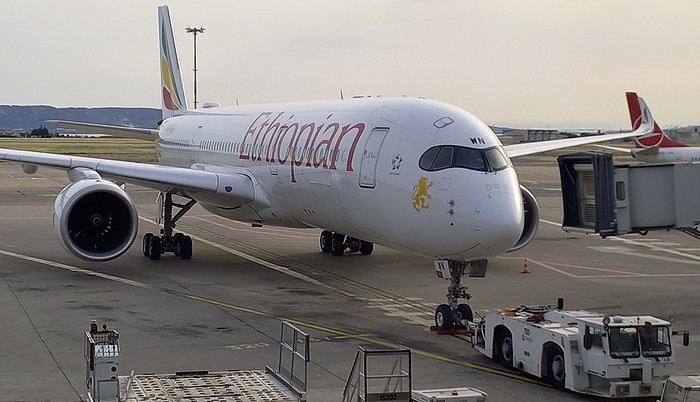
The trip starts in Marseille with our first flight on Ethiopian Airlines to Addis Ababa, then continues to Dar es Salaam, where we’ll finally set foot on Tanzanian soil again.
In Addis... "our" A-350.
.....
After arriving in Dar, we spent one night at a hotel near the airport. The next morning, we headed to the domestic flights terminal, which hasn’t changed in years.
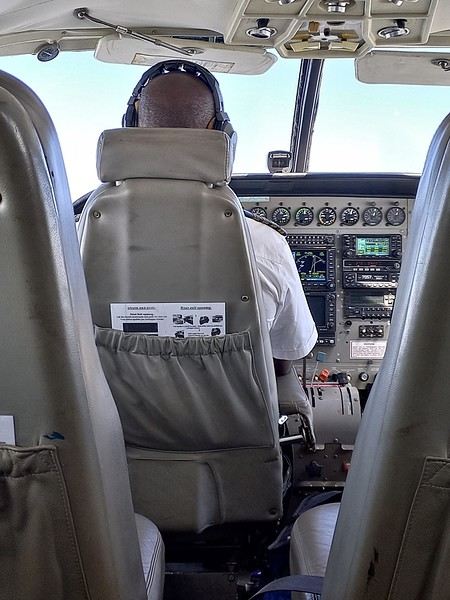
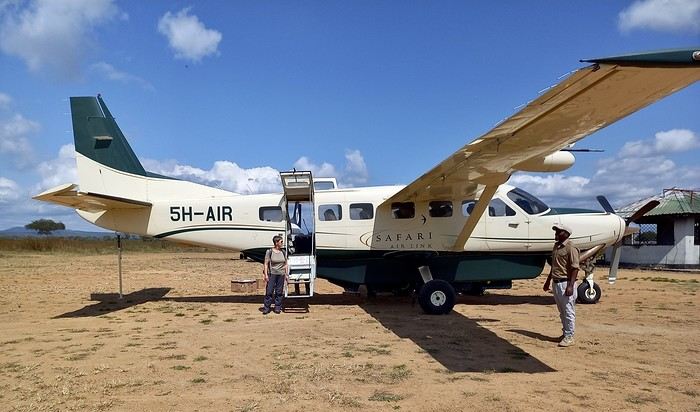
By mid-morning, we boarded a Cessna 208B Caravan with Safari Air Link, heading to the Kikoboga bush airstrip in Mikumi, which we reached 45 minutes later. Fun fact: the pilot was the same one as on our return flight two years ago.
Welcome on board:
Of course, a driver/guide team from our chosen lodge was waiting for us upon arrival:
I was surprised to see so many aircraft parked there... even twin-engine Embraer Brasilias?? As a fan of vintage planes, I loved it...
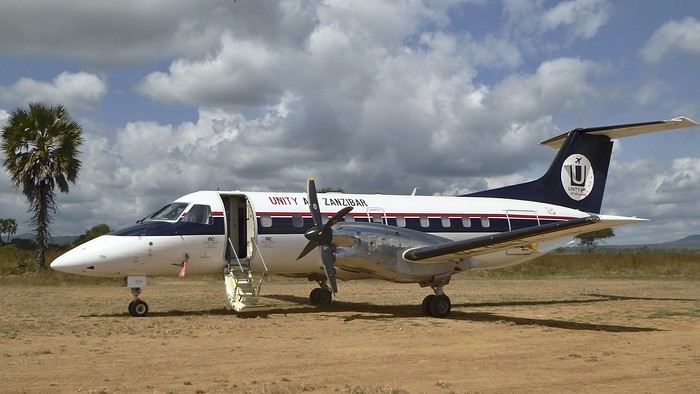
On the other hand, the light was incredibly harsh.....!! Our guides only speak English. We knew that in advance. In the south, it’s very rare to find someone who speaks French. This’ll force us to dig into our high school English memories... from 60 years ago... at least.
It’s noon, and we head toward the lodge. Near the airstrip, next to the Mikumi rangers’ base, there are quite a few herbivores. They find a bit more peace here—the big cats don’t venture this way...
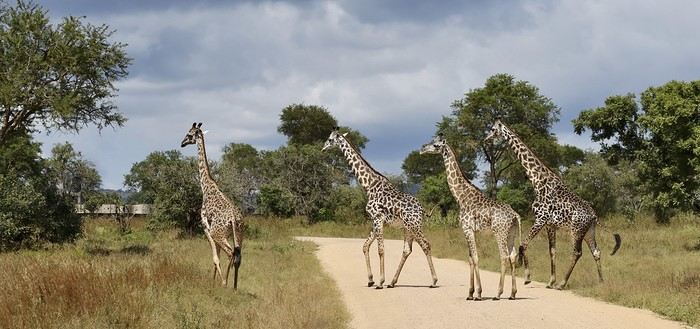
Our first encounter was a group of Masai giraffes.
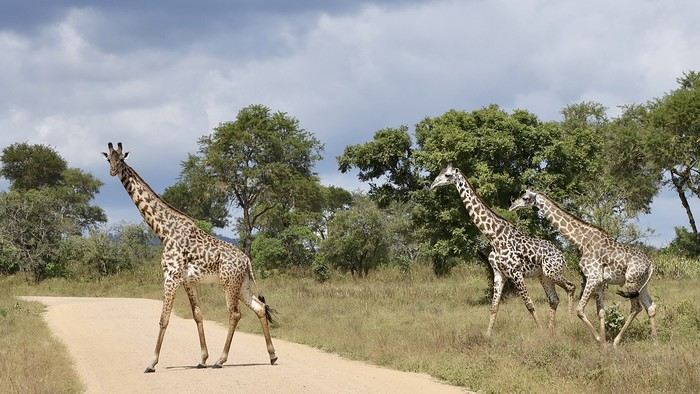
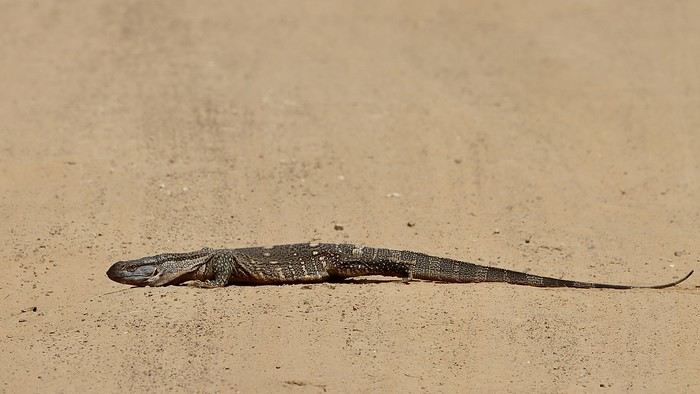
Rarer (for us), a savanna monitor lizard basking in the sun right in the middle of the track...??
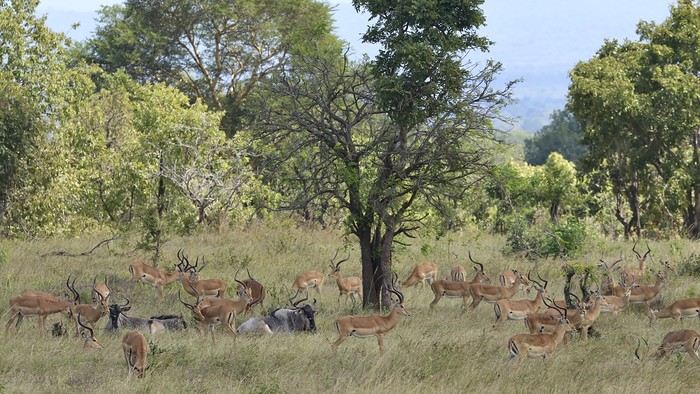
A large gathering of impalas (mostly males) along with a few blue wildebeest:

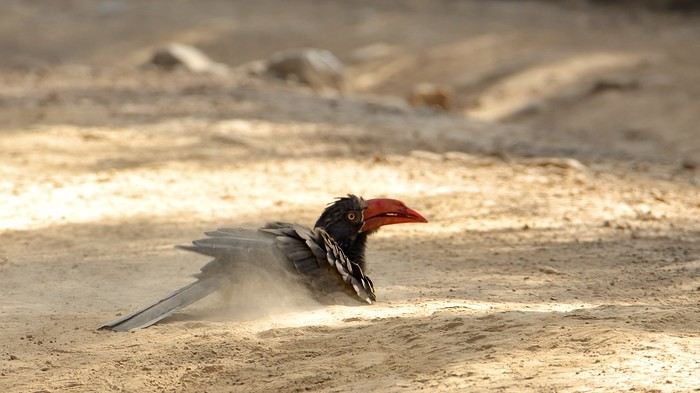
Also unusual: a African crowned hornbill taking a dust bath in the middle of the track...!!
When it comes to identifying mammals or birds, I don’t know everything... so I might make mistakes. Please forgive me. I’m counting on my friend Blesl’s active participation... 😉
...
I’m a newbie to this forum, passionate about wildlife, the landscapes of East Africa, and Tanzania in particular. This June 2024 trip/safari is our 7th visit to Tanzania and our 5th in the south, which has drawn us more than the north ever since we discovered it in 2015.
In 2024, the entrance fees for the reserves and services have gone up again since our last visit. I chose to return first to Mikumi Reserve, which was the very first one we visited in the south. Then, we’ll head to Selous (J. Nyerere N. P.) as usual. Initially, we wanted to spend 2/3 days on Mafia Island at the end of the trip, but it made the total cost too high, so we gave up... We usually go to Ruaha and Selous, but I wanted to mix it up a bit—also to save some money...
As for the timing, June is a new experience for us. I thought it might be interesting to come just after the lodges reopen... hoping for some great wildlife encounters??
The trip starts in Marseille with our first flight on Ethiopian Airlines to Addis Ababa, then continues to Dar es Salaam, where we’ll finally set foot on Tanzanian soil again.
In Addis... "our" A-350.
.....
After arriving in Dar, we spent one night at a hotel near the airport. The next morning, we headed to the domestic flights terminal, which hasn’t changed in years.
By mid-morning, we boarded a Cessna 208B Caravan with Safari Air Link, heading to the Kikoboga bush airstrip in Mikumi, which we reached 45 minutes later. Fun fact: the pilot was the same one as on our return flight two years ago.
Welcome on board:
Of course, a driver/guide team from our chosen lodge was waiting for us upon arrival:
I was surprised to see so many aircraft parked there... even twin-engine Embraer Brasilias?? As a fan of vintage planes, I loved it...
On the other hand, the light was incredibly harsh.....!! Our guides only speak English. We knew that in advance. In the south, it’s very rare to find someone who speaks French. This’ll force us to dig into our high school English memories... from 60 years ago... at least.
It’s noon, and we head toward the lodge. Near the airstrip, next to the Mikumi rangers’ base, there are quite a few herbivores. They find a bit more peace here—the big cats don’t venture this way...
Our first encounter was a group of Masai giraffes.
Rarer (for us), a savanna monitor lizard basking in the sun right in the middle of the track...??
A large gathering of impalas (mostly males) along with a few blue wildebeest:
Also unusual: a African crowned hornbill taking a dust bath in the middle of the track...!!
When it comes to identifying mammals or birds, I don’t know everything... so I might make mistakes. Please forgive me. I’m counting on my friend Blesl’s active participation... 😉
...
Tanzania 2019 - Polé Polé
KARIBUUU
Over 5 years later, I’m finally getting around to writing the travel journal for our first trip to East Africa: Tanzania. *Polé Polé*, as they say! 😎
A trip I’d started planning just 6 years ago, in February 2019, for my post-internship exam vacation. After returning to South Africa in July 2019 with my family, this trip, planned for September 2019, would be all about discovery and a few firsts: first trip with friends, first trek, first time in East Africa. I really wanted to attempt the Kilimanjaro ascent, try to still see some of its "eternal" ice, and Alison wanted to do as much safari as possible. Unlike with the Zulus, Himbas, or San, visiting a Maasai village wasn’t on the agenda. Thanks to the Kessy Brothers agency, who were super responsive, Sandy from VF, and other members who helped prepare our trip, we settled on the following itinerary:
Day -1 (8/30): Departure from Pointe-à-Pitre Day 0 (8/31): Departure from Paris Day 1 (9/01): Arrival at Kilimanjaro Airport / Ameg Lodge (Moshi) DAY 2 (9/02): Machame gate / Machame camp DAY 3 (9/03): Shira / Shira camp DAY 4 (9/04): Baranco / Baranco camp DAY 5 (9/05): Barafu / Barafu camp DAY 6 (9/06): Barafu + Summit at midnight / Mweka camp DAY 7 (9/07): Mweka gate / Sal Salnero Hotel (Moshi) DAY 8 (9/08): Arusha National Park / Kanga camp DAY 9 (9/09): Tarangire National Park / Kanga camp DAY 10 (9/10): Tarangire National Park / Twiga Lodge DAY 11 (9/11): Lake Manyara / Twiga Lodge DAY 12 (9/12): Ngorongoro Crater / Simba campsite DAY 13 (9/13): Serengeti National Park / Seronera campsite DAY 14 (9/14): Serengeti National Park - Uoga Kuria Camp DAY 15 (9/15): Serengeti National Park / Waso campsite DAY 16 (9/16): Lake Natron / Maasai Giraffe Ecolodge DAY 17 (9/17): Kilimanjaro Airport Day 18 (9/18): Zanzibar Day 19 (9/19): Zanzibar Day 20 (9/20): Zanzibar Day 21 (9/21): Zanzibar
As I mentioned in my first travel journal about our South Africa trip, I’ve had a special connection to Tanzania for a long time. Growing up in the Indian Ocean without ever visiting Africa, those wildlife documentaries on TV when I skipped my pharmacy classes... I imagined and dreamed about this land and country so much.
The original plan was to go just the two of us with Alison, but somehow—though I don’t quite remember how—we ended up organizing the trip with our friends Mélissa and Doriane, who joined us in Arusha after our Kilimanjaro trek for the last two weeks and their very first safari. I think it was Melissa who had the idea to crash our trip, and she was right to do so! 😉 Flights: Pointe-à-Pitre-Grand Case and Grand Case-Paris with Air Caraïbes. Flights: Paris-JRO and ZNZ-Paris with Kenya Airways (layover in Nairobi). Flight: JRO-ZNZ with Air Tanzania.
Safe travels! !
Over 5 years later, I’m finally getting around to writing the travel journal for our first trip to East Africa: Tanzania. *Polé Polé*, as they say! 😎
A trip I’d started planning just 6 years ago, in February 2019, for my post-internship exam vacation. After returning to South Africa in July 2019 with my family, this trip, planned for September 2019, would be all about discovery and a few firsts: first trip with friends, first trek, first time in East Africa. I really wanted to attempt the Kilimanjaro ascent, try to still see some of its "eternal" ice, and Alison wanted to do as much safari as possible. Unlike with the Zulus, Himbas, or San, visiting a Maasai village wasn’t on the agenda. Thanks to the Kessy Brothers agency, who were super responsive, Sandy from VF, and other members who helped prepare our trip, we settled on the following itinerary:
Day -1 (8/30): Departure from Pointe-à-Pitre Day 0 (8/31): Departure from Paris Day 1 (9/01): Arrival at Kilimanjaro Airport / Ameg Lodge (Moshi) DAY 2 (9/02): Machame gate / Machame camp DAY 3 (9/03): Shira / Shira camp DAY 4 (9/04): Baranco / Baranco camp DAY 5 (9/05): Barafu / Barafu camp DAY 6 (9/06): Barafu + Summit at midnight / Mweka camp DAY 7 (9/07): Mweka gate / Sal Salnero Hotel (Moshi) DAY 8 (9/08): Arusha National Park / Kanga camp DAY 9 (9/09): Tarangire National Park / Kanga camp DAY 10 (9/10): Tarangire National Park / Twiga Lodge DAY 11 (9/11): Lake Manyara / Twiga Lodge DAY 12 (9/12): Ngorongoro Crater / Simba campsite DAY 13 (9/13): Serengeti National Park / Seronera campsite DAY 14 (9/14): Serengeti National Park - Uoga Kuria Camp DAY 15 (9/15): Serengeti National Park / Waso campsite DAY 16 (9/16): Lake Natron / Maasai Giraffe Ecolodge DAY 17 (9/17): Kilimanjaro Airport Day 18 (9/18): Zanzibar Day 19 (9/19): Zanzibar Day 20 (9/20): Zanzibar Day 21 (9/21): Zanzibar
As I mentioned in my first travel journal about our South Africa trip, I’ve had a special connection to Tanzania for a long time. Growing up in the Indian Ocean without ever visiting Africa, those wildlife documentaries on TV when I skipped my pharmacy classes... I imagined and dreamed about this land and country so much.
The original plan was to go just the two of us with Alison, but somehow—though I don’t quite remember how—we ended up organizing the trip with our friends Mélissa and Doriane, who joined us in Arusha after our Kilimanjaro trek for the last two weeks and their very first safari. I think it was Melissa who had the idea to crash our trip, and she was right to do so! 😉 Flights: Pointe-à-Pitre-Grand Case and Grand Case-Paris with Air Caraïbes. Flights: Paris-JRO and ZNZ-Paris with Kenya Airways (layover in Nairobi). Flight: JRO-ZNZ with Air Tanzania.
Safe travels! !
Durée de séjour à Zanzibar?
Bonjour,
Nous planifions la découverte de cette île sur 5 jours en juin. Faut-il mieux passer: - 5 jours dans un hôtel tout compris (au nord très probablement) - 3 jours à Stone Town et 2 en hôtel tout compris ou - 2 jours à Stone Town et 3 en hôtel tout compris
Le choix se portera sur l'un de ces établissement, en connaissez vous un? Le(s)quel(s) a (ont) une restriction stricte sur l’alcool? Qu'en est-il à Stone Town et les bars (nous y serons pendant l'Euro 2020)? Quelle côte vous semble la mieux/agréable/jolie à cette période?
- Sea Cliff Resort and Spa, west coast https://seacliffzanzibar.com
- Gold Zanzibar Beach House & Spa in Kendwa, west coast http://www.goldzanzibar.com
- Riu Palace Zanzibar on Nungwi - north coast https://www.riu.com/fr/hotel/tanzani...lace-zanzibar/
- Essque Zalu Zanzibar Nungwi - North https://www.essquehotels.com
- Melia Zanzibar in Kiwengwa - east coast https://www.melia.com/fr/hotels/la-t...elia-zanzibar/
- Diamonds Mapenzi Beach in Kiwengwa - east coast https://mapenzibeach.diamondsresorts.com/fr/
Merci d'avance
Nous planifions la découverte de cette île sur 5 jours en juin. Faut-il mieux passer: - 5 jours dans un hôtel tout compris (au nord très probablement) - 3 jours à Stone Town et 2 en hôtel tout compris ou - 2 jours à Stone Town et 3 en hôtel tout compris
Le choix se portera sur l'un de ces établissement, en connaissez vous un? Le(s)quel(s) a (ont) une restriction stricte sur l’alcool? Qu'en est-il à Stone Town et les bars (nous y serons pendant l'Euro 2020)? Quelle côte vous semble la mieux/agréable/jolie à cette période?
- Sea Cliff Resort and Spa, west coast https://seacliffzanzibar.com
- Gold Zanzibar Beach House & Spa in Kendwa, west coast http://www.goldzanzibar.com
- Riu Palace Zanzibar on Nungwi - north coast https://www.riu.com/fr/hotel/tanzani...lace-zanzibar/
- Essque Zalu Zanzibar Nungwi - North https://www.essquehotels.com
- Melia Zanzibar in Kiwengwa - east coast https://www.melia.com/fr/hotels/la-t...elia-zanzibar/
- Diamonds Mapenzi Beach in Kiwengwa - east coast https://mapenzibeach.diamondsresorts.com/fr/
Merci d'avance
Visite de tribus au lac Eyasi (Tanzanie)
(re)Bonjour,
Dans le cadre de mon organisation d'un safari avec Philipo Kimgoni, j'aurais voulu savoir quelles ont été les expériences de lecteurs du forum lors de la visite de tribus au Lac Eyasi.
J'avoue être un peu réservé sur ce que je lis là-dessus, notamment ici même un message de 2018 de Rotsaka. Ayant fait ce genre d'expériences ailleurs, je ne suis pas trop à l'aise avec les visites organisées à des "tribus" autochtones, d'abord à cause du côté très organisé, souvent sous couvert d'authenticité et je me dis toujours que ce n'est pas nécessairement très favorable à la préservation de cultures rares et encore très fermées de voir défiler des touristes toute l'année. Mais en même temps celle-ci est peut-être réellement très différente? D'autre part je ne vois pas forcément ce que nous ferions à la place avant de rentrer à Arusha, quelles sont les alternatives, ou alors un jour de plus au Serengeti ou Ngorongoro mais j'imagine que le prix augmenterait drastiquement.
Merci bien!
Meilleures salutations,
Yvan
Dans le cadre de mon organisation d'un safari avec Philipo Kimgoni, j'aurais voulu savoir quelles ont été les expériences de lecteurs du forum lors de la visite de tribus au Lac Eyasi.
J'avoue être un peu réservé sur ce que je lis là-dessus, notamment ici même un message de 2018 de Rotsaka. Ayant fait ce genre d'expériences ailleurs, je ne suis pas trop à l'aise avec les visites organisées à des "tribus" autochtones, d'abord à cause du côté très organisé, souvent sous couvert d'authenticité et je me dis toujours que ce n'est pas nécessairement très favorable à la préservation de cultures rares et encore très fermées de voir défiler des touristes toute l'année. Mais en même temps celle-ci est peut-être réellement très différente? D'autre part je ne vois pas forcément ce que nous ferions à la place avant de rentrer à Arusha, quelles sont les alternatives, ou alors un jour de plus au Serengeti ou Ngorongoro mais j'imagine que le prix augmenterait drastiquement.
Merci bien!
Meilleures salutations,
Yvan