Results for "Perche+|+127+>+346"
21220 results found.
Love at First Sight in Kenya
Hello,
After several years, I’ve finally decided to repost a travel journal on the forum. We returned a few weeks ago from an incredible trip to Kenya, and it’s reignited my desire to share our emotions in the face of these animals.
Kenya wasn’t originally a priority for us in terms of safari—we had the impression it was too touristy. So, we started with other destinations: Namibia, Tanzania, Botswana, and South Africa. But as I did more research, especially on the forum (thanks in part to Sylvie’s many trips), I eventually convinced myself that Kenya could be magnificent, as long as we chose our itinerary carefully and avoided peak seasons.
We ended up going in January, from the 17th to the 31st. We worked with a travel agency (TP) that crafted a custom itinerary for us: Samburu-Ol Pejeta-Naivasha-Maji Moto-Maasai Mara-Diani. They partnered with a local French-speaking agency, and everything was perfectly organized. Our trip exceeded all our expectations, and none of it would’ve been as amazing without our guide, Alfred. He accompanied us for 10 days and was a fantastic travel companion—professional, respectful of the animals, and always in good spirits. We formed a great bond with him in such a short time.
- **January 17th** After meeting up with Juliette and Charlotte in Rennes the night before, we left at 4 AM for Roissy Charles de Gaulle Airport. The thick fog made the drive pretty rough, but we arrived safely around 7:45 AM. A Blue Valet driver was waiting to take our car. Check-in went smoothly, and we waited patiently for our 10:40 AM flight. Unfortunately, despite boarding on time, a passenger was missing, and we had to find a replacement last minute. Then, another passenger who had checked in and dropped off their luggage wasn’t on the plane, so they had to unload their bags. After a long period of uncertainty and spotty communication from the crew, we finally took off over an hour late.
We arrived in Nairobi in the late afternoon, 45 minutes behind schedule. The administrative formalities were endless—it took nearly 1.5 hours from landing to leaving the airport with our luggage. When we stepped out, Alfred, our guide, was waiting with a big smile and drove us to the Eka Hotel, not far from the airport. Exhausted from the long journey, we fell asleep quickly.
- **January 18th** Alfred met us at 7 AM for a long drive to Samburu Reserve. We had a peaceful night, unlike the girls, who barely slept because their neighbors were talking loudly all night. Things even escalated when Charlotte started shouting insults to get them to quiet down, but it didn’t work.
It was Sunday, so traffic around Nairobi and along the route was light. Aside from a quick "technical stop," we drove straight through and arrived in Samburu after just under 6 hours. Because of the lower altitude (around 1,000m on average), it was hot—over 30°C in mid-January.
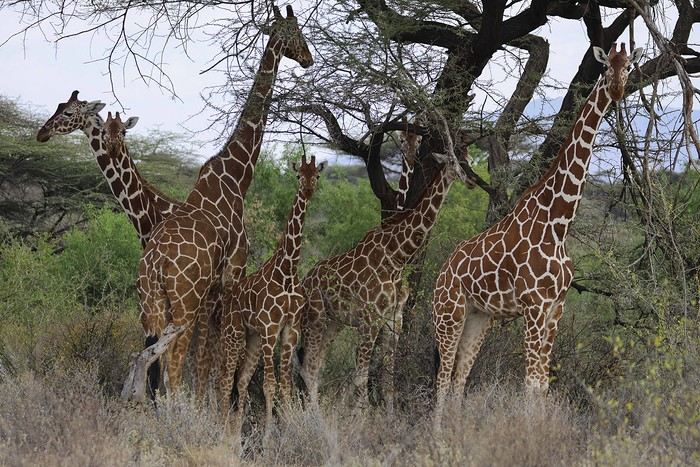
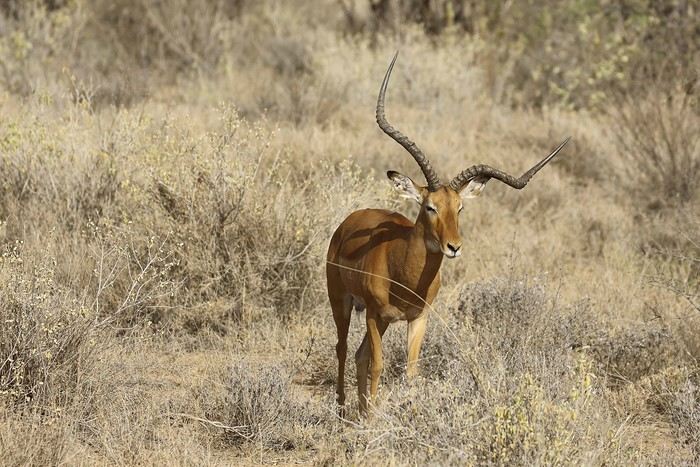
As soon as we entered the reserve, we spotted some impalas and quickly came across one of the region’s endemic species: the reticulated giraffe, which is absolutely stunning.
While heading to our camp for lunch, Alfred crossed paths with another vehicle and learned that a leopard was nearby. We started searching, and a few minutes later, Anny spotted a shape in a tree—it was our leopard!
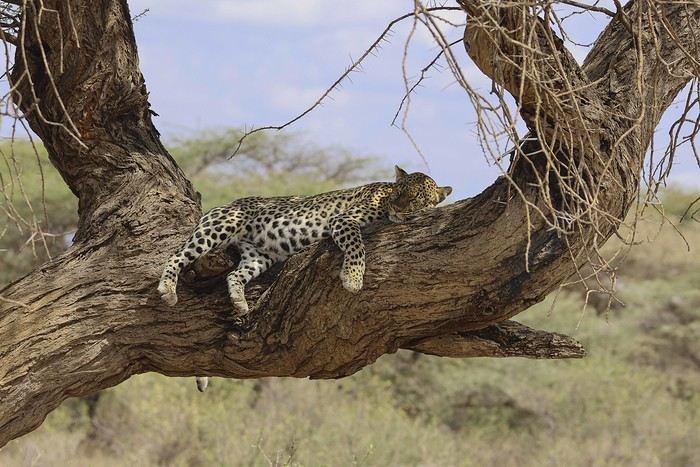
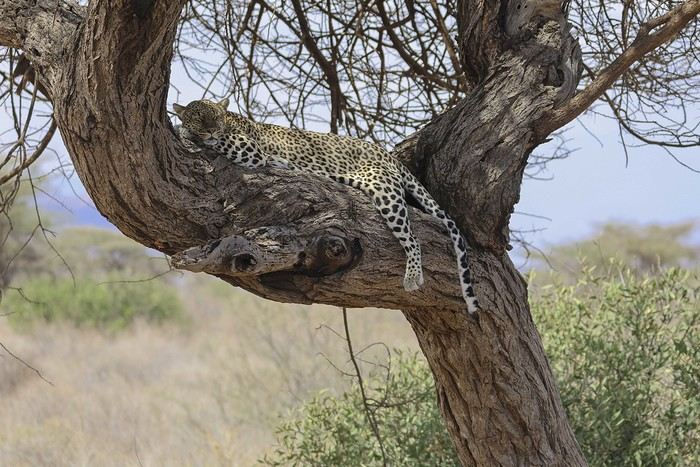
There were actually two of them—a mother and her adolescent. The young one was perched high in the tree, in the shade. We got to observe them for a good half-hour in excellent conditions, with just one other vehicle nearby.
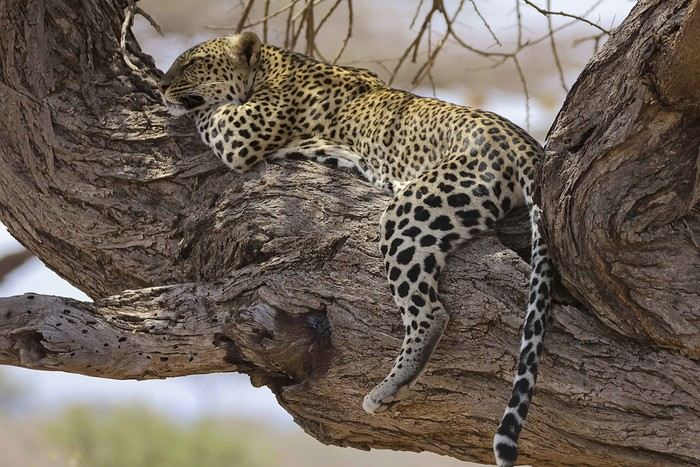
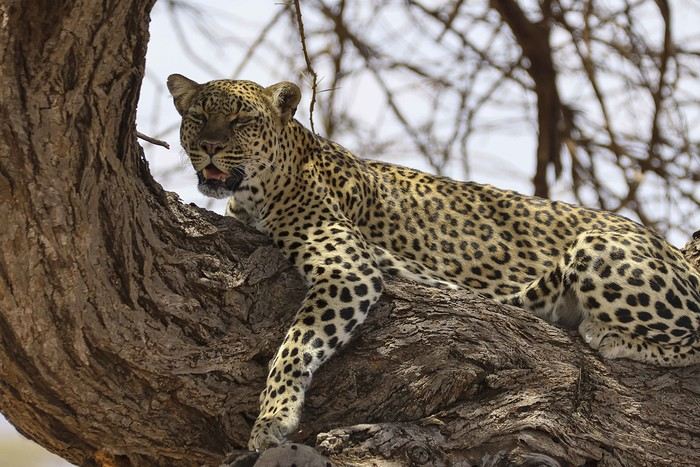
Alfred also noticed that the mother had hidden prey (a gerenuk gazelle) in the vegetation, away from prying eyes.
It was time to head to our camp, the Ashnil Samburu Camp, located in the Buffalo Springs area, by the river, in an idyllic setting surrounded by the region’s typical vegetation.
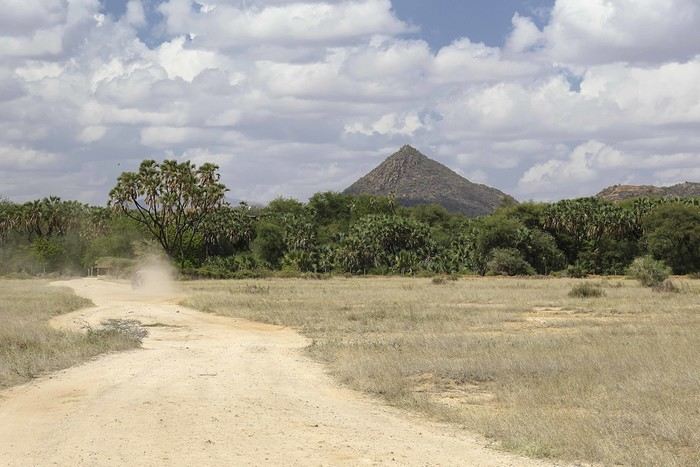
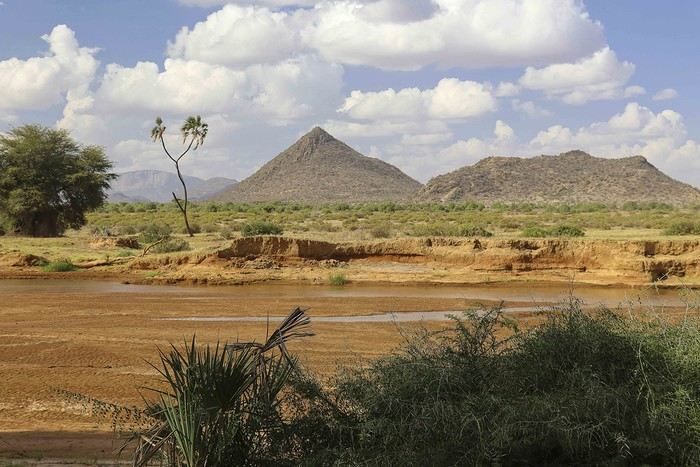
The welcome was fantastic—we immediately felt at home, and that feeling lasted throughout our 3-day stay in the reserve. It was 2 PM, but no one rushed us to the table. Our waitress, Sheila, who took care of us the whole time, was as lovely as the rest of the team. Barely seated, we were invited to watch an elephant passing right by the camp, in front of the restaurant. This trip was off to a great start!
After lunch, we relaxed by the pool. Monkeys, especially vervets, were everywhere, and a camp employee was assigned to keep an eye on them and shoo them away if needed (especially the baboons).
A little before 4 PM, we met up with Alfred for our first game drive. Just outside the camp, a few elephants were in the valley near the river.
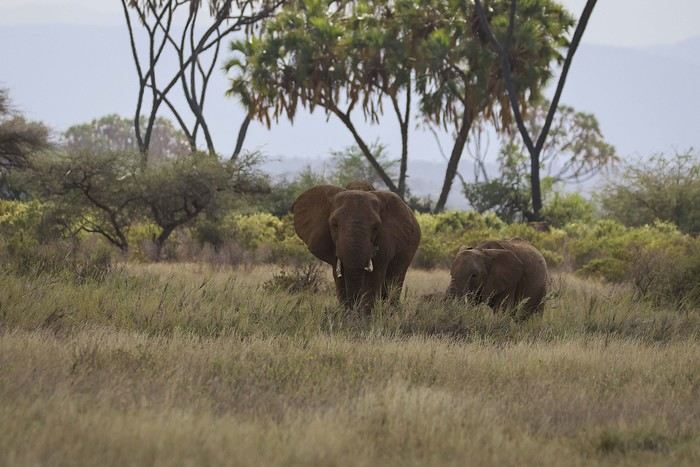
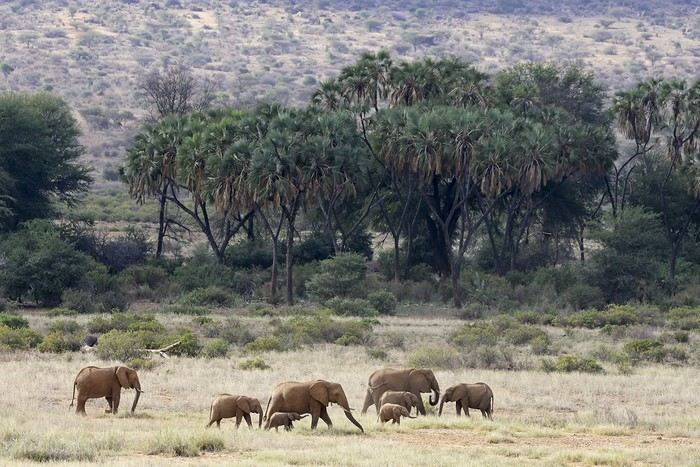
We’d see them in the same area almost every day. We also spotted some gazelles.
After several years, I’ve finally decided to repost a travel journal on the forum. We returned a few weeks ago from an incredible trip to Kenya, and it’s reignited my desire to share our emotions in the face of these animals.
Kenya wasn’t originally a priority for us in terms of safari—we had the impression it was too touristy. So, we started with other destinations: Namibia, Tanzania, Botswana, and South Africa. But as I did more research, especially on the forum (thanks in part to Sylvie’s many trips), I eventually convinced myself that Kenya could be magnificent, as long as we chose our itinerary carefully and avoided peak seasons.
We ended up going in January, from the 17th to the 31st. We worked with a travel agency (TP) that crafted a custom itinerary for us: Samburu-Ol Pejeta-Naivasha-Maji Moto-Maasai Mara-Diani. They partnered with a local French-speaking agency, and everything was perfectly organized. Our trip exceeded all our expectations, and none of it would’ve been as amazing without our guide, Alfred. He accompanied us for 10 days and was a fantastic travel companion—professional, respectful of the animals, and always in good spirits. We formed a great bond with him in such a short time.
- **January 17th** After meeting up with Juliette and Charlotte in Rennes the night before, we left at 4 AM for Roissy Charles de Gaulle Airport. The thick fog made the drive pretty rough, but we arrived safely around 7:45 AM. A Blue Valet driver was waiting to take our car. Check-in went smoothly, and we waited patiently for our 10:40 AM flight. Unfortunately, despite boarding on time, a passenger was missing, and we had to find a replacement last minute. Then, another passenger who had checked in and dropped off their luggage wasn’t on the plane, so they had to unload their bags. After a long period of uncertainty and spotty communication from the crew, we finally took off over an hour late.
We arrived in Nairobi in the late afternoon, 45 minutes behind schedule. The administrative formalities were endless—it took nearly 1.5 hours from landing to leaving the airport with our luggage. When we stepped out, Alfred, our guide, was waiting with a big smile and drove us to the Eka Hotel, not far from the airport. Exhausted from the long journey, we fell asleep quickly.
- **January 18th** Alfred met us at 7 AM for a long drive to Samburu Reserve. We had a peaceful night, unlike the girls, who barely slept because their neighbors were talking loudly all night. Things even escalated when Charlotte started shouting insults to get them to quiet down, but it didn’t work.
It was Sunday, so traffic around Nairobi and along the route was light. Aside from a quick "technical stop," we drove straight through and arrived in Samburu after just under 6 hours. Because of the lower altitude (around 1,000m on average), it was hot—over 30°C in mid-January.
As soon as we entered the reserve, we spotted some impalas and quickly came across one of the region’s endemic species: the reticulated giraffe, which is absolutely stunning.
While heading to our camp for lunch, Alfred crossed paths with another vehicle and learned that a leopard was nearby. We started searching, and a few minutes later, Anny spotted a shape in a tree—it was our leopard!
There were actually two of them—a mother and her adolescent. The young one was perched high in the tree, in the shade. We got to observe them for a good half-hour in excellent conditions, with just one other vehicle nearby.
Alfred also noticed that the mother had hidden prey (a gerenuk gazelle) in the vegetation, away from prying eyes.
It was time to head to our camp, the Ashnil Samburu Camp, located in the Buffalo Springs area, by the river, in an idyllic setting surrounded by the region’s typical vegetation.
The welcome was fantastic—we immediately felt at home, and that feeling lasted throughout our 3-day stay in the reserve. It was 2 PM, but no one rushed us to the table. Our waitress, Sheila, who took care of us the whole time, was as lovely as the rest of the team. Barely seated, we were invited to watch an elephant passing right by the camp, in front of the restaurant. This trip was off to a great start!
After lunch, we relaxed by the pool. Monkeys, especially vervets, were everywhere, and a camp employee was assigned to keep an eye on them and shoo them away if needed (especially the baboons).
A little before 4 PM, we met up with Alfred for our first game drive. Just outside the camp, a few elephants were in the valley near the river.
We’d see them in the same area almost every day. We also spotted some gazelles.
10-day itinerary starting from Ouarzazate and returning via Marrakech - family of 5
Hi everyone,
We’re a family of 5—2 adults and 3 kids aged 8, 10, and 16.
We arrive on 20/04/2026 at noon at Ouarzazate Airport and return on 29/04/2026 at noon from Marrakech Airport.
We plan to rent a car in Ouarzazate and drop it off in Marrakech.
What we’d love: discovering the landscapes of southern Morocco, meeting locals, and experiencing the desert. We’d prefer to stay in comfortable, clean places with nature views—not too noisy. We’re aiming for half-board (except in Marrakech). We don’t want to feel rushed, but I’m not sure what to skip.
This is our first time doing a somewhat itinerant trip, and it’s our first family trip abroad. We don’t want the kids to get tired of daily hotel changes, which is why I’m questioning the options in my draft itinerary. I’d be so grateful for your thoughts on it, and if you have any great recommendations—especially some with pools!
As for prices, I’m struggling to gauge what’s reasonable. For 5 people, we quickly need 2 rooms, and for nicer places with pools, I’m seeing rates around 160 € to 190 € per night. That seems expensive to me.
What we’d love: discovering the landscapes of southern Morocco, meeting locals, and experiencing the desert. We’d prefer to stay in comfortable, clean places with nature views—not too noisy. We’re aiming for half-board (except in Marrakech). We don’t want to feel rushed, but I’m not sure what to skip.
This is our first time doing a somewhat itinerant trip, and it’s our first family trip abroad. We don’t want the kids to get tired of daily hotel changes, which is why I’m questioning the options in my draft itinerary. I’d be so grateful for your thoughts on it, and if you have any great recommendations—especially some with pools!
As for prices, I’m struggling to gauge what’s reasonable. For 5 people, we quickly need 2 rooms, and for nicer places with pools, I’m seeing rates around 160 € to 190 € per night. That seems expensive to me.
Exploring Senja Island and the Lofoten Archipelago
Hi everyone,
We traveled to Norway in the summer of 2025, from July 17 to 29, to visit Senja Island and the Lofoten archipelago with a rental car. The common thread of these twelve days was clearly hiking, along with a few visits and experiences, and nights spent in a tent or in the car (which made it possible). We chose Narvik Airport for both arrival and departure for several complementary reasons: the desire to visit nearby Senja Island, slightly more affordable airfare, and finally, the rental price of the vehicle—especially the car model we were looking for. We only made one reservation, for the first campsite, as sleeping in a tent made things much easier. But we had the whole structure of the trip planned, a flexible outline that could adapt to the weather conditions we’d encounter. Senja Island isn’t part of the Lofoten archipelago, and during the early stages of planning this trip, we hadn’t planned to visit it. But its relative proximity to Narvik Airport and, above all, its unique geography definitely made us change our minds. We arrived in Evenes, where Narvik Airport is located, nearly 60 km from the city itself. Our first stop was 40 km further in Bjerkvik on the way to Senja, where there’s a Rema 1000 (a very common supermarket chain in Norway). We needed to buy some food and a gas cartridge for our stove. I’d emailed the store manager beforehand, who told me they didn’t sell them but that the two gas stations in the village were likely to have some in stock.
It was only at the Esso station that I found what I needed, but unfortunately, only one cartridge. Luckily, we quickly realized that most campsites (like in Iceland) have a shared kitchen with hotplates. That single small cartridge was just enough for the few nights we spent outside of campsites... We got our first taste of Norway’s characteristic landscapes: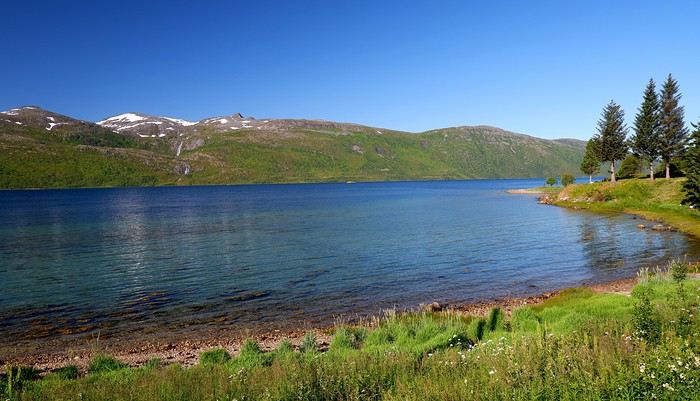
When we arrived at the Senja campsite, it was already 9:30 PM. A sign announced it was full, but luckily, I’d booked it 10 days earlier. By 10:30 PM, as we settled in to eat, it was still broad daylight, and the thermometer read 25°C—despite being at a latitude of 69° North! We went to bed around midnight, exhausted but under the light of a sun that was still very much present. Thanks to Earth’s tilted axis. We’d anticipated this by buying opaque sleep masks because, yes, at this time of year, it’s daylight all the time.
Friday, July 18:
Today, we planned two hikes on the island and a few stops along the way. The map clearly shows that the deepest fjords are in the north and west. Due to time and accessibility, we focused on the northern part of the island. Our first stop was at the viewing platform in Bergbotn:
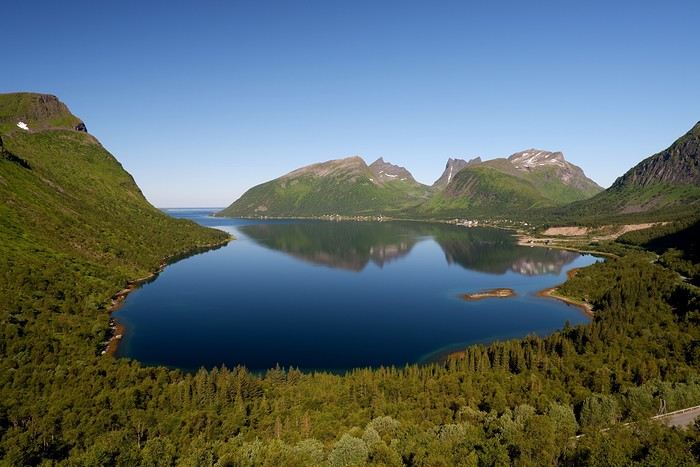
Then we headed toward Skaland, the starting point for our first hike. Along the way, we found plenty of reasons to stop—especially since, on this first day of travel, our thirst for Nordic landscapes was far from quenched.
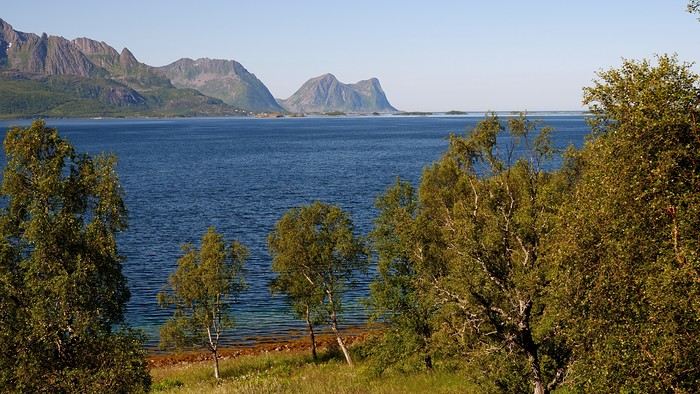
The town of Skaland is very practical: free parking, picnic tables for after the hike, and a Joker convenience store right next door. Our goal was the summit of Husfjellet: 670 m of elevation gain, between 8 and 9 km in length, and an estimated 4 hours and 30 minutes.
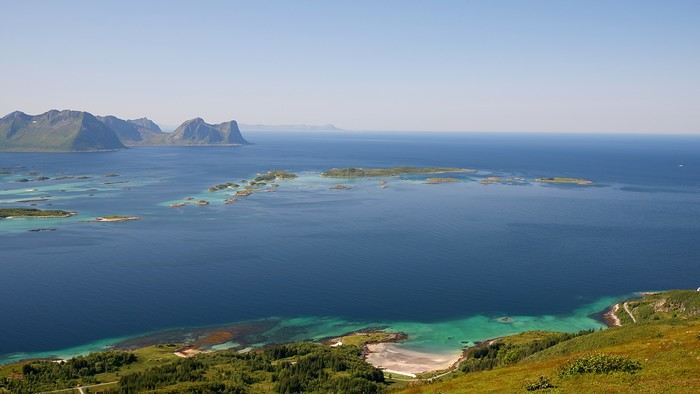
This hike offers two major viewpoints. The first overlooks the Bergsoyan islands to the west:
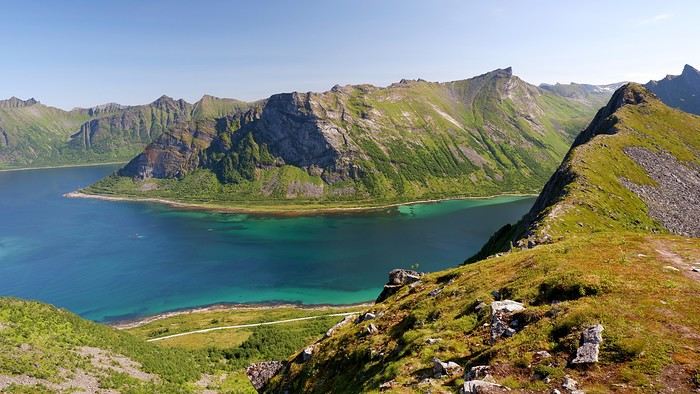
At the summit, the view shifts to the Steinfjorden fjord:
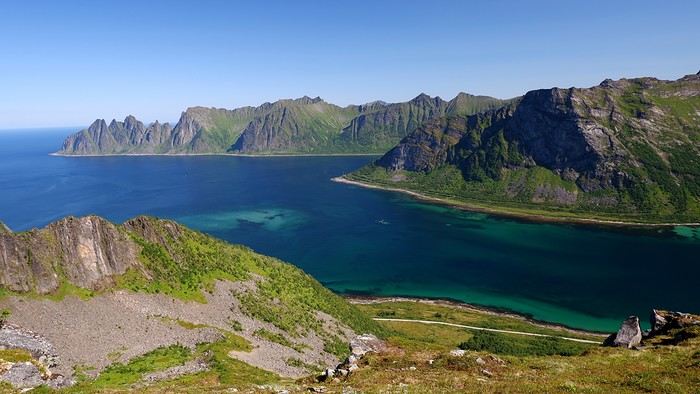
You can even clearly see the "Devil’s Teeth," which we’d see from below later:
In total, the hike took us 4 hours and 30 minutes, including all the breaks. We treated ourselves to an ice cream in Skaland to recharge for the next hike. We hit the road again and stopped at Tungeneset to get a closer look at the Devil’s Teeth:
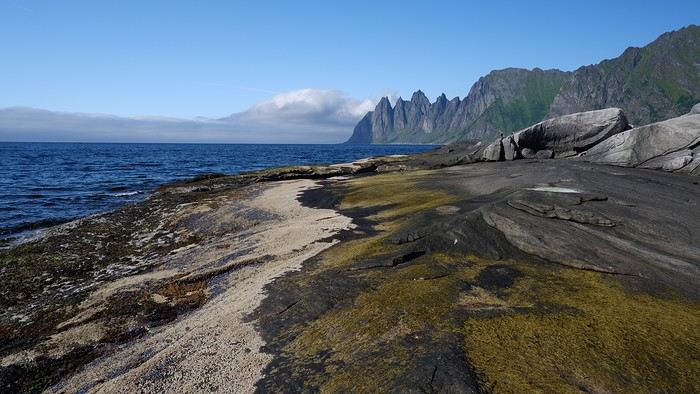
We continued to Fjordgard, the starting point for our second hike. Fjordgard isn’t very welcoming. There was a time when you could park right at the start of the hike up Mount Segla. Now, everything’s blocked off, and locals have even taken to blocking all possible parking spots nearby. You now have to park outside the town at a paid parking lot (90 NOK for 3 hours), adding an extra 2 km (round trip) of walking. Still, that was just a minor inconvenience because the hike that followed quickly made us forget all about it. The hike is fairly short (2 hours) but still has 520 m of elevation gain. This hike was a stark contrast to the first. This morning, we had sweeping views of the vast landscape. Here, Mount Segla, perched on the edge of the cliff, dominates the foreground:
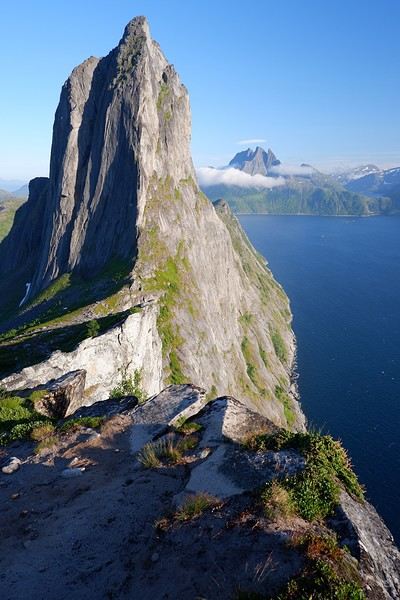
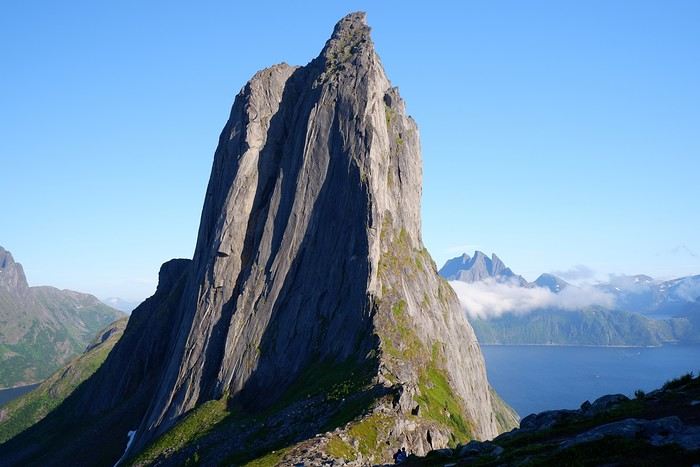
For those prone to vertigo, it might be best to stay at the foot of the mountain, as the trail climbs right along the cliff edge. And from that point on, you quickly understand what verticality really means...
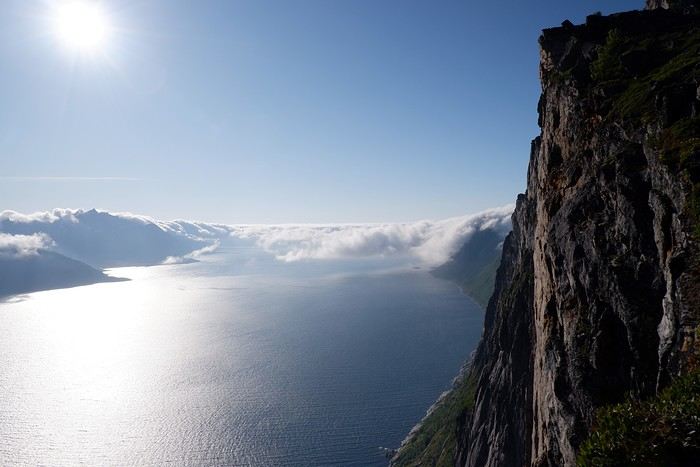
In total, we took 2 hours and 50 minutes, including breaks and the extra walk to the parking lot. The day was already well underway, and with 1,200 m of cumulative elevation gain, it was time to find a spot to eat and sleep. Since we hadn’t made any reservations, we’d planned to bivouac for the night. We weren’t too picky—just practical—so we decided to sleep in the car at the parking lot for tomorrow morning’s hike, just 5 km from Fjordgard.
We traveled to Norway in the summer of 2025, from July 17 to 29, to visit Senja Island and the Lofoten archipelago with a rental car. The common thread of these twelve days was clearly hiking, along with a few visits and experiences, and nights spent in a tent or in the car (which made it possible). We chose Narvik Airport for both arrival and departure for several complementary reasons: the desire to visit nearby Senja Island, slightly more affordable airfare, and finally, the rental price of the vehicle—especially the car model we were looking for. We only made one reservation, for the first campsite, as sleeping in a tent made things much easier. But we had the whole structure of the trip planned, a flexible outline that could adapt to the weather conditions we’d encounter. Senja Island isn’t part of the Lofoten archipelago, and during the early stages of planning this trip, we hadn’t planned to visit it. But its relative proximity to Narvik Airport and, above all, its unique geography definitely made us change our minds. We arrived in Evenes, where Narvik Airport is located, nearly 60 km from the city itself. Our first stop was 40 km further in Bjerkvik on the way to Senja, where there’s a Rema 1000 (a very common supermarket chain in Norway). We needed to buy some food and a gas cartridge for our stove. I’d emailed the store manager beforehand, who told me they didn’t sell them but that the two gas stations in the village were likely to have some in stock.
It was only at the Esso station that I found what I needed, but unfortunately, only one cartridge. Luckily, we quickly realized that most campsites (like in Iceland) have a shared kitchen with hotplates. That single small cartridge was just enough for the few nights we spent outside of campsites... We got our first taste of Norway’s characteristic landscapes:
When we arrived at the Senja campsite, it was already 9:30 PM. A sign announced it was full, but luckily, I’d booked it 10 days earlier. By 10:30 PM, as we settled in to eat, it was still broad daylight, and the thermometer read 25°C—despite being at a latitude of 69° North! We went to bed around midnight, exhausted but under the light of a sun that was still very much present. Thanks to Earth’s tilted axis. We’d anticipated this by buying opaque sleep masks because, yes, at this time of year, it’s daylight all the time.
Friday, July 18:
Today, we planned two hikes on the island and a few stops along the way. The map clearly shows that the deepest fjords are in the north and west. Due to time and accessibility, we focused on the northern part of the island. Our first stop was at the viewing platform in Bergbotn:
Then we headed toward Skaland, the starting point for our first hike. Along the way, we found plenty of reasons to stop—especially since, on this first day of travel, our thirst for Nordic landscapes was far from quenched.
The town of Skaland is very practical: free parking, picnic tables for after the hike, and a Joker convenience store right next door. Our goal was the summit of Husfjellet: 670 m of elevation gain, between 8 and 9 km in length, and an estimated 4 hours and 30 minutes.
This hike offers two major viewpoints. The first overlooks the Bergsoyan islands to the west:
At the summit, the view shifts to the Steinfjorden fjord:
You can even clearly see the "Devil’s Teeth," which we’d see from below later:
In total, the hike took us 4 hours and 30 minutes, including all the breaks. We treated ourselves to an ice cream in Skaland to recharge for the next hike. We hit the road again and stopped at Tungeneset to get a closer look at the Devil’s Teeth:
We continued to Fjordgard, the starting point for our second hike. Fjordgard isn’t very welcoming. There was a time when you could park right at the start of the hike up Mount Segla. Now, everything’s blocked off, and locals have even taken to blocking all possible parking spots nearby. You now have to park outside the town at a paid parking lot (90 NOK for 3 hours), adding an extra 2 km (round trip) of walking. Still, that was just a minor inconvenience because the hike that followed quickly made us forget all about it. The hike is fairly short (2 hours) but still has 520 m of elevation gain. This hike was a stark contrast to the first. This morning, we had sweeping views of the vast landscape. Here, Mount Segla, perched on the edge of the cliff, dominates the foreground:
For those prone to vertigo, it might be best to stay at the foot of the mountain, as the trail climbs right along the cliff edge. And from that point on, you quickly understand what verticality really means...
In total, we took 2 hours and 50 minutes, including breaks and the extra walk to the parking lot. The day was already well underway, and with 1,200 m of cumulative elevation gain, it was time to find a spot to eat and sleep. Since we hadn’t made any reservations, we’d planned to bivouac for the night. We weren’t too picky—just practical—so we decided to sleep in the car at the parking lot for tomorrow morning’s hike, just 5 km from Fjordgard.
Must-See Spots in Vanoise National Park
I’ve lived in Savoie long enough to tell you one thing: Vanoise National Park isn’t just a pretty postcard. Here, nature is vast, untamed, and incredibly alive. Whether you're visiting for a holiday or live in a nearby valley, here are my top picks you shouldn’t miss.
Sleeping in a mountain hut—the best way to experience the mountains
Hiking in Vanoise National Park is already magical, but spending a night in a refuge? That’s sacred. I recommend the glacier tour, a 4- to 7-day trek with stops at huts like L’Arpont, Dent Parrachée, or Leisse. The food’s great, you’ll meet other hikers, and in the early morning, when the sun lights up the peaks, I guarantee you won’t be thinking about your emails. Even a single night at Refuge du Fond d’Aussois or La Valette is enough to unplug.
High-altitude lakes: when the peaks reflect in the water
High-altitude lakes are a bit like my madeleine de Proust. I love climbing up early in the morning when everything’s still quiet. Lac Blanc, starting from Termignon, is a pretty accessible hike, often punctuated by the whistling of marmots. Wilder, Lac de la Glière near Champagny-en-Vanoise is one of my favorite spots for a picnic far from everything.
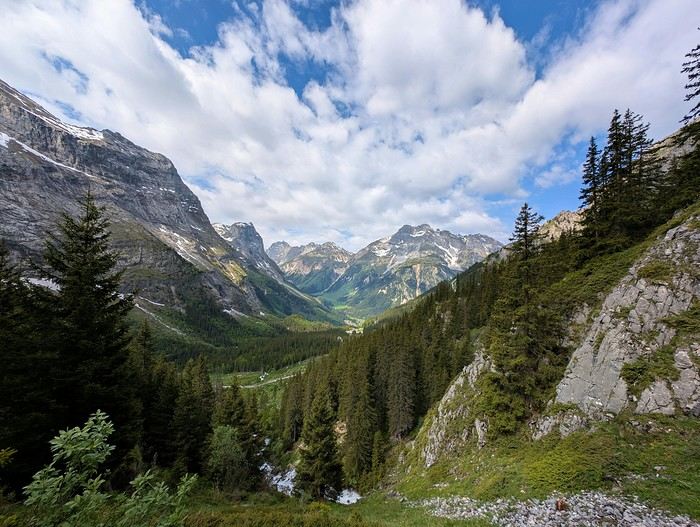
Glacial valleys—my breath of fresh air
I often go there to reconnect with the mountains, especially when I want a spectacular setting without hours of climbing. The Orgère valley, starting from Saint-André in Maurienne, is a gem. Easy to access, super wild, with its Swiss pine trees and singing streams... You’re instantly immersed in the alpine atmosphere. A little higher up, from Val Cenis/Termignon, I recommend the Cirque du Génépy. It’s an old glacial landscape just the way we love it: rocks smoothed by ice, near-total silence, and a real sense of the end of the world.
Glacier mountaineering at the heart of the ice
For the more athletic (and always with a guide, of course), climbing the Grande Casse, 3,855 m, remains a legendary goal. I’ve only done it once, but what a rush! You’ll need crampons, an ice axe, and good fitness, but the view up there is indescribable. There are also more accessible glacial routes around Pointe de la Réchasse or the Dôme de Chasseforêt.
Gateways to Vanoise National Park
Bonneval-sur-Arc... this little village perched at 1,835 meters, I never get tired of it. It’s kept its charm: stone houses, slate roofs, fountains... It’s simple, everything’s beautiful. It’s also a great base for hiking in the park. And then there’s Pralognan-la-Vanoise, my favorite gateway. It’s a mountain village just the way I like them—quiet streets, typical chalets, and above all, direct access to incredible landscapes.
Sleeping in a mountain hut—the best way to experience the mountains
Hiking in Vanoise National Park is already magical, but spending a night in a refuge? That’s sacred. I recommend the glacier tour, a 4- to 7-day trek with stops at huts like L’Arpont, Dent Parrachée, or Leisse. The food’s great, you’ll meet other hikers, and in the early morning, when the sun lights up the peaks, I guarantee you won’t be thinking about your emails. Even a single night at Refuge du Fond d’Aussois or La Valette is enough to unplug.
High-altitude lakes: when the peaks reflect in the water
High-altitude lakes are a bit like my madeleine de Proust. I love climbing up early in the morning when everything’s still quiet. Lac Blanc, starting from Termignon, is a pretty accessible hike, often punctuated by the whistling of marmots. Wilder, Lac de la Glière near Champagny-en-Vanoise is one of my favorite spots for a picnic far from everything.
Glacial valleys—my breath of fresh air
I often go there to reconnect with the mountains, especially when I want a spectacular setting without hours of climbing. The Orgère valley, starting from Saint-André in Maurienne, is a gem. Easy to access, super wild, with its Swiss pine trees and singing streams... You’re instantly immersed in the alpine atmosphere. A little higher up, from Val Cenis/Termignon, I recommend the Cirque du Génépy. It’s an old glacial landscape just the way we love it: rocks smoothed by ice, near-total silence, and a real sense of the end of the world.
Glacier mountaineering at the heart of the ice
For the more athletic (and always with a guide, of course), climbing the Grande Casse, 3,855 m, remains a legendary goal. I’ve only done it once, but what a rush! You’ll need crampons, an ice axe, and good fitness, but the view up there is indescribable. There are also more accessible glacial routes around Pointe de la Réchasse or the Dôme de Chasseforêt.
Gateways to Vanoise National Park
Bonneval-sur-Arc... this little village perched at 1,835 meters, I never get tired of it. It’s kept its charm: stone houses, slate roofs, fountains... It’s simple, everything’s beautiful. It’s also a great base for hiking in the park. And then there’s Pralognan-la-Vanoise, my favorite gateway. It’s a mountain village just the way I like them—quiet streets, typical chalets, and above all, direct access to incredible landscapes.
Authentic Greece: Immersion in the Hellenic Soul
Beyond Athens' iconic sites and Santorini's popular beaches, Greece reveals its hidden treasures to those who dare venture off the beaten path. FairMoove travel agency offers eco-responsible stays in Greece for an authentic experience at the heart of Hellenic traditions.
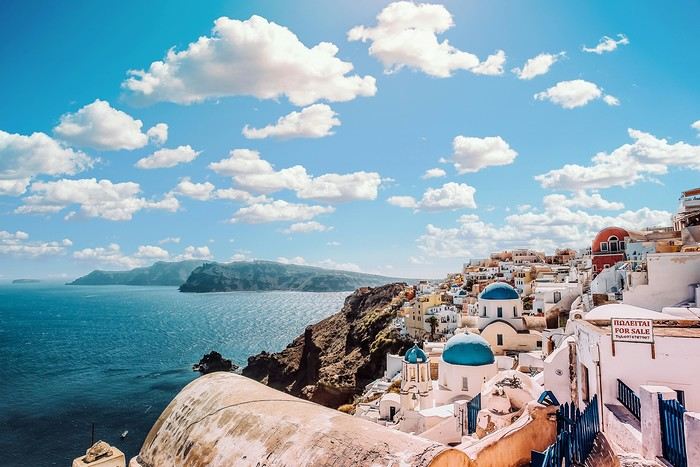
Authentic Peloponnese: A Land of Living Traditions
The Peloponnese peninsula is home to traditional villages where time seems to have stood still. In Dimitsana, perched in the Arcadian mountains, locals keep centuries-old traditions alive in their craft workshops. The cobbled streets echo with the sound of traditional looms, where artisans still create textiles using age-old methods.
In the Mani region, ancient stone towers tell the story of an untamed land. Local families welcome you into their traditional homes to share their culinary art: olive oil preparation, olive bread making, and dolmades crafted according to recipes passed down through generations. The Unknown Islands: Preserved Jewels of the Aegean Sea
Far from Mykonos' hustle and bustle, Ikaria island reveals its longevity secrets. This blue island, known for its inhabitants' exceptional lifespan, invites you to discover a unique way of life. Join the panigiria, traditional festivals where the entire community gathers to dance, sing, and share local dishes prepared in large communal ovens.
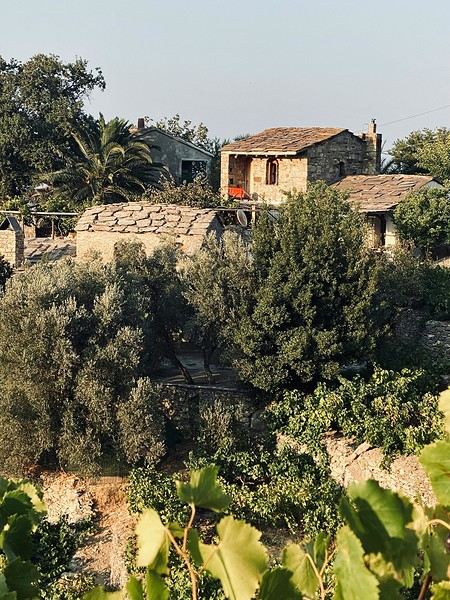
On Lemnos island, fishermen introduce you to their traditional sustainable fishing techniques. The ancient salt pans, still in operation, bear witness to ancestral know-how. In family-run tavernas by the harbor, taste thallasomelo, a unique sea honey produced by bees foraging on wild thyme from coastal cliffs. Greek Macedonia: A Living Heritage
In the northern mountains, the villages of Zagoria preserve their characteristic stone architecture. Eighteenth-century arched bridges still span deep gorges, showcasing a unique construction art. Locals invite you to discover medicinal herb gathering and traditional herbal tea preparation, knowledge passed down through generations.
In Nymfaio, a village perched at 1,350 meters altitude, ecotourism initiatives help preserve the natural habitat of brown bears. Traditional stone guesthouses offer an ideal base for exploring the region and observing wildlife in its natural environment. Agritourism and Authentic Rural Life
Traditional farms in Thessaly open their doors to travelers eager to discover sustainable agriculture. Participate in the autumn olive harvest, traditional feta cheese making, or the cultivation of aromatic herbs that flavor Greek cuisine. These experiences not only support the local economy but also help preserve ancestral farming practices.
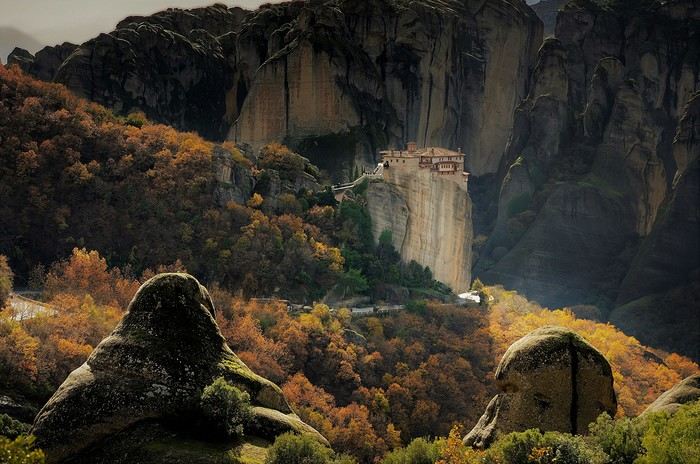
Traditional Festivals and Local Celebrations
The Greek calendar is marked by authentic celebrations that vary by region. In Pelion, the Goat Carnival transforms villages into living theater stages, where pagan traditions blend with Christian folklore. On Syros, the rebetiko festival lets you discover this UNESCO-listed music in its original context. Sustainable Initiatives and Heritage Preservation
Many Greek communities are committed to sustainable tourism projects. On Thirassia, Santorini's lesser-known neighbor, a traditional troglodyte house rehabilitation project allows visitors to stay in authentic dwellings while contributing to architectural heritage preservation. Supporting Local Communities
Women's cooperatives, particularly active in rural areas, offer traditional craft workshops. In Arnaia, Chalkidiki, learn to weave on traditional looms or prepare preserves using age-old methods. These initiatives help women maintain economic independence while preserving local traditions.
For more responsible tourism, many accommodations adopt eco-friendly practices. Using local products, sustainable water management, and solar energy production are among the initiatives that help preserve places' authenticity while respecting the environment.
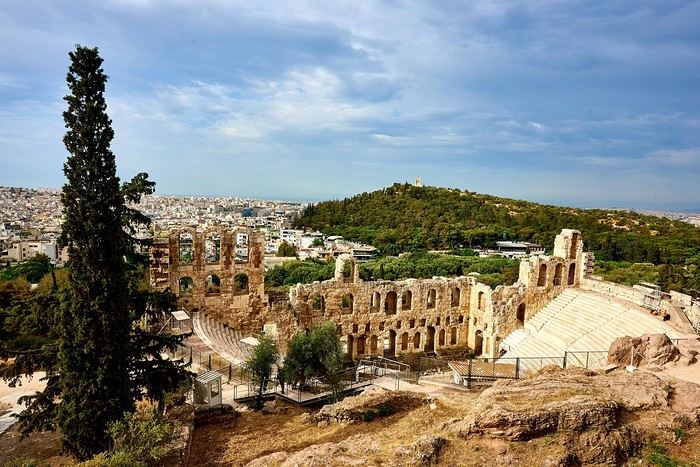
Tips for an Authentic Trip
To discover the real Greece, choose off-season stays from October to April. Milder temperatures and fewer crowds allow for more authentic encounters with locals. Opt for small family-run guesthouses and host tables that offer true immersion in local culture.
Greece's regions thus invite you to discover another facet of this millennia-old country, far from tourist clichés. Each village, each island, each mountain holds authentic treasures waiting to be discovered by travelers who respect traditions and the environment.
Authentic Peloponnese: A Land of Living Traditions
The Peloponnese peninsula is home to traditional villages where time seems to have stood still. In Dimitsana, perched in the Arcadian mountains, locals keep centuries-old traditions alive in their craft workshops. The cobbled streets echo with the sound of traditional looms, where artisans still create textiles using age-old methods.
In the Mani region, ancient stone towers tell the story of an untamed land. Local families welcome you into their traditional homes to share their culinary art: olive oil preparation, olive bread making, and dolmades crafted according to recipes passed down through generations. The Unknown Islands: Preserved Jewels of the Aegean Sea
Far from Mykonos' hustle and bustle, Ikaria island reveals its longevity secrets. This blue island, known for its inhabitants' exceptional lifespan, invites you to discover a unique way of life. Join the panigiria, traditional festivals where the entire community gathers to dance, sing, and share local dishes prepared in large communal ovens.
On Lemnos island, fishermen introduce you to their traditional sustainable fishing techniques. The ancient salt pans, still in operation, bear witness to ancestral know-how. In family-run tavernas by the harbor, taste thallasomelo, a unique sea honey produced by bees foraging on wild thyme from coastal cliffs. Greek Macedonia: A Living Heritage
In the northern mountains, the villages of Zagoria preserve their characteristic stone architecture. Eighteenth-century arched bridges still span deep gorges, showcasing a unique construction art. Locals invite you to discover medicinal herb gathering and traditional herbal tea preparation, knowledge passed down through generations.
In Nymfaio, a village perched at 1,350 meters altitude, ecotourism initiatives help preserve the natural habitat of brown bears. Traditional stone guesthouses offer an ideal base for exploring the region and observing wildlife in its natural environment. Agritourism and Authentic Rural Life
Traditional farms in Thessaly open their doors to travelers eager to discover sustainable agriculture. Participate in the autumn olive harvest, traditional feta cheese making, or the cultivation of aromatic herbs that flavor Greek cuisine. These experiences not only support the local economy but also help preserve ancestral farming practices.
Traditional Festivals and Local Celebrations
The Greek calendar is marked by authentic celebrations that vary by region. In Pelion, the Goat Carnival transforms villages into living theater stages, where pagan traditions blend with Christian folklore. On Syros, the rebetiko festival lets you discover this UNESCO-listed music in its original context. Sustainable Initiatives and Heritage Preservation
Many Greek communities are committed to sustainable tourism projects. On Thirassia, Santorini's lesser-known neighbor, a traditional troglodyte house rehabilitation project allows visitors to stay in authentic dwellings while contributing to architectural heritage preservation. Supporting Local Communities
Women's cooperatives, particularly active in rural areas, offer traditional craft workshops. In Arnaia, Chalkidiki, learn to weave on traditional looms or prepare preserves using age-old methods. These initiatives help women maintain economic independence while preserving local traditions.
For more responsible tourism, many accommodations adopt eco-friendly practices. Using local products, sustainable water management, and solar energy production are among the initiatives that help preserve places' authenticity while respecting the environment.
Tips for an Authentic Trip
To discover the real Greece, choose off-season stays from October to April. Milder temperatures and fewer crowds allow for more authentic encounters with locals. Opt for small family-run guesthouses and host tables that offer true immersion in local culture.
Greece's regions thus invite you to discover another facet of this millennia-old country, far from tourist clichés. Each village, each island, each mountain holds authentic treasures waiting to be discovered by travelers who respect traditions and the environment.
A lovely wander at the mercy of the wind in this amazing Rajasthan
Hey there, forum friends 😉
Some of you have mentioned missing the activity on this Indian "page," so let’s try to liven things up a bit—with joy and good vibes (mandatory with me 😜). Plus, it’ll make Jojoone happy 😊.
As big lovers of India—we’ve been six times—my co-traveler husband and I decided to explore Rajasthan this time around. The reason we waited so long to come here? We were dreading the tourist crowds in this state. But thanks to the timing (late March to early April 2024, which is starting to get pretty hot) and Aleph’s great tips, we were *very* far from mass tourism.
We spent three weeks getting around on our own for transport: mostly taxis and trains.
And I’ll admit, we had a rather "Arabian Nights" experience, far from the "real" India (Marien, if you’re reading this 😉). So this travel journal makes no claims other than to share what we saw, experienced, and felt—with all our ignorance about this country (which I’m fully aware of).
But fair warning: I go overboard with emojis, and this journal is super casual because it’s the one I share, almost in "live" mode, with our loved ones.
So, if you’re here, consider yourself almost part of the family 😄.
See you soon and....
Some of you have mentioned missing the activity on this Indian "page," so let’s try to liven things up a bit—with joy and good vibes (mandatory with me 😜). Plus, it’ll make Jojoone happy 😊.
As big lovers of India—we’ve been six times—my co-traveler husband and I decided to explore Rajasthan this time around. The reason we waited so long to come here? We were dreading the tourist crowds in this state. But thanks to the timing (late March to early April 2024, which is starting to get pretty hot) and Aleph’s great tips, we were *very* far from mass tourism.
We spent three weeks getting around on our own for transport: mostly taxis and trains.
And I’ll admit, we had a rather "Arabian Nights" experience, far from the "real" India (Marien, if you’re reading this 😉). So this travel journal makes no claims other than to share what we saw, experienced, and felt—with all our ignorance about this country (which I’m fully aware of).
But fair warning: I go overboard with emojis, and this journal is super casual because it’s the one I share, almost in "live" mode, with our loved ones.
So, if you’re here, consider yourself almost part of the family 😄.
See you soon and....
Tuscany with 3 kids
Hi there,
A little travel journal of our few days in Tuscany in August 2024 with our three daughters aged 16 months, 4, and 6. A beautiful trip but ruined by extreme heat. The same thing in spring or autumn would have been magical.
Itinerary We used our own car for this mini-trip.
Carpentras-Isolalunga: 1 night
Isolalunga-Barberino (Val d’Elsa): 4 nights
Lucca and Pisa
Siena
Val d’Orcia
Volterra
Barberino-Carpentras
Visits
Lucca is less well-known than its neighbors Florence, Pisa, and Siena. Yet it was already a prosperous city during the Renaissance. The Duomo is magnificent, and strolling along the ramparts in the shade of the trees is very pleasant. The large square, where the buildings were constructed using the walls of the amphitheater, is a curiosity. We used the stroller.
Pisa needs no introduction, but it’s also impossible to pass by without stopping. Alexandre and I had already visited it 15 years ago, so this time we didn’t climb the tower or go inside the Duomo. We arrived around 5 PM, so we were short on time, but the heat had dropped, which made the visit very enjoyable.
Siena is a magnificent city but dry. There’s no watercourse here, which has always been the city’s problem. Everything was designed, including the slope of the main square to collect water. The Duomo is absolutely stunning. We bought the pass to visit the Duomo, the baptistery, the crypt, the museum of the works, the panorama, and the “Gate of Heaven.”
The “Gate of Heaven” is a guided tour that allows you to climb to the top of the Duomo, walk under the roof to see the framework, and admire the beautiful frescoes on the floor from above, as well as the stained glass and ceiling paintings from much closer. Of course, the view of Siena from up there is splendid. It’s really worth it. We left the stroller downstairs, and Alex carried Artemisia.
The museum of the works contains some magnificent paintings and original sculptures from the Duomo.
We didn’t find a park for a picnic. We had to settle for a public garden that wasn’t really well-maintained.
Our visit for the “Gate of Heaven” was at 6:30 PM, so we had dinner in Siena. The restaurant was expensive and disappointing. However, we enjoyed the city’s parade—lots of people in costume, plenty of colors, and brass band music. Nice.
Val d’Orcia
The first goal was to see the famous “Gladiator” house, which was used as a set in Ridley Scott’s film. You’ll have to settle for a photo because it’s not open for visits. The place is pretty, but no more so than many Tuscan estates, so I’d say it’s not worth the detour.
We visited the lovely village of San Quirico d’Orcia, where we had a picnic. In the afternoon, we saw the beautiful Abbey of San Galgano and the Chapel of San Lorenzo, where a sword is planted in the stone (its owner stopped waging war to dedicate his life to God—no apparent connection to the legend of King Arthur). The abbey is in ruins, but the site, planted with cypress trees and sunflower fields, is very beautiful.
Volterra
Volterra is a hilltop village with many facets, aside from a still-active penitentiary in the old fortification.
We bought the “Volterra Card” to visit, in particular, the Palazzo dei Priori, which is as beautiful inside as it is outside, and to climb to the top of the tower, where the view is magnificent.
The Roman ruins (especially the amphitheater and arenas under excavation)
The alabaster museum is very small but highlights one of the region’s ongoing activities.
The Etruscan art museum is a must-see. It’s a high-quality museum with many pieces, mainly richly decorated tombs depicting the lives of the deceased. And it’s air-conditioned!
It’s a bit of a hassle with the stroller. A baby carrier would have been more practical.
We had a picnic in the lovely Enrico Fiumi Park (with playgrounds for kids), which overlooks the city.
There are many charming shops in Volterra for bringing back souvenirs, especially food-related ones.
I find that hotels are very expensive in Italy, so I opted for a farmhouse rental.
We picnicked at lunchtime and ate at restaurants or in our accommodation in the evening. Unfortunately, I can’t recommend any great restaurants.
Budget
Accommodation: 120 € per night
Volterra family card: 20 €
A little travel journal of our few days in Tuscany in August 2024 with our three daughters aged 16 months, 4, and 6. A beautiful trip but ruined by extreme heat. The same thing in spring or autumn would have been magical.
Itinerary We used our own car for this mini-trip.
Carpentras-Isolalunga: 1 night
Isolalunga-Barberino (Val d’Elsa): 4 nights
Lucca and Pisa
Siena
Val d’Orcia
Volterra
Barberino-Carpentras
Visits
Lucca is less well-known than its neighbors Florence, Pisa, and Siena. Yet it was already a prosperous city during the Renaissance. The Duomo is magnificent, and strolling along the ramparts in the shade of the trees is very pleasant. The large square, where the buildings were constructed using the walls of the amphitheater, is a curiosity. We used the stroller.
Pisa needs no introduction, but it’s also impossible to pass by without stopping. Alexandre and I had already visited it 15 years ago, so this time we didn’t climb the tower or go inside the Duomo. We arrived around 5 PM, so we were short on time, but the heat had dropped, which made the visit very enjoyable.
Siena is a magnificent city but dry. There’s no watercourse here, which has always been the city’s problem. Everything was designed, including the slope of the main square to collect water. The Duomo is absolutely stunning. We bought the pass to visit the Duomo, the baptistery, the crypt, the museum of the works, the panorama, and the “Gate of Heaven.”
The “Gate of Heaven” is a guided tour that allows you to climb to the top of the Duomo, walk under the roof to see the framework, and admire the beautiful frescoes on the floor from above, as well as the stained glass and ceiling paintings from much closer. Of course, the view of Siena from up there is splendid. It’s really worth it. We left the stroller downstairs, and Alex carried Artemisia.
The museum of the works contains some magnificent paintings and original sculptures from the Duomo.
We didn’t find a park for a picnic. We had to settle for a public garden that wasn’t really well-maintained.
Our visit for the “Gate of Heaven” was at 6:30 PM, so we had dinner in Siena. The restaurant was expensive and disappointing. However, we enjoyed the city’s parade—lots of people in costume, plenty of colors, and brass band music. Nice.
Val d’Orcia
The first goal was to see the famous “Gladiator” house, which was used as a set in Ridley Scott’s film. You’ll have to settle for a photo because it’s not open for visits. The place is pretty, but no more so than many Tuscan estates, so I’d say it’s not worth the detour.
We visited the lovely village of San Quirico d’Orcia, where we had a picnic. In the afternoon, we saw the beautiful Abbey of San Galgano and the Chapel of San Lorenzo, where a sword is planted in the stone (its owner stopped waging war to dedicate his life to God—no apparent connection to the legend of King Arthur). The abbey is in ruins, but the site, planted with cypress trees and sunflower fields, is very beautiful.
Volterra
Volterra is a hilltop village with many facets, aside from a still-active penitentiary in the old fortification.
We bought the “Volterra Card” to visit, in particular, the Palazzo dei Priori, which is as beautiful inside as it is outside, and to climb to the top of the tower, where the view is magnificent.
The Roman ruins (especially the amphitheater and arenas under excavation)
The alabaster museum is very small but highlights one of the region’s ongoing activities.
The Etruscan art museum is a must-see. It’s a high-quality museum with many pieces, mainly richly decorated tombs depicting the lives of the deceased. And it’s air-conditioned!
It’s a bit of a hassle with the stroller. A baby carrier would have been more practical.
We had a picnic in the lovely Enrico Fiumi Park (with playgrounds for kids), which overlooks the city.
There are many charming shops in Volterra for bringing back souvenirs, especially food-related ones.
I find that hotels are very expensive in Italy, so I opted for a farmhouse rental.
We picnicked at lunchtime and ate at restaurants or in our accommodation in the evening. Unfortunately, I can’t recommend any great restaurants.
Budget
Accommodation: 120 € per night
Volterra family card: 20 €
14-Day Trip Report to Milos and Kimolos in September-October 2021
14-Day Trip Report to Milos and Kimolos in September-October 2021
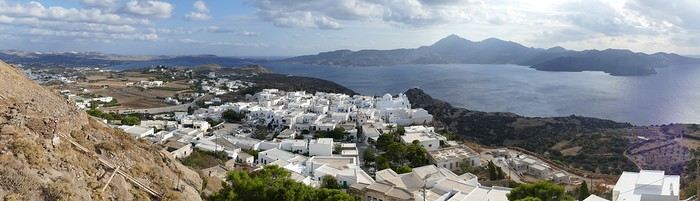
The village of Plaka in Milos
It was with great pleasure that we finally reconnected with our old habits as inveterate travelers! Greece, and more specifically the Greek islands, was the natural choice for us. After having already visited many Greek islands during around 18 trips, we decided to revisit islands we had seen over 40 years ago, like Milos, where our memories were extremely hazy. Our route was well-planned and familiar: a low-cost flight from Basel-Mulhouse to Athens, then a traditional ferry from Piraeus to Milos. Taking a speedboat, which is faster, would have forced us to spend a night in Piraeus. Plus, we felt that the traditional ferry was part of the journey, and with good weather, spending eight hours on deck wasn’t unpleasant at all. Watching the docking maneuvers with the comings and goings of trucks and cars, observing the passengers, reading a book, or admiring the scenery—all of that is part of the travel experience. Milos Island: Accommodation in Adamas We arrived quite late, around 11 PM, in Adamas, the port of Milos. No worries—the friendly couple managing the apartment was waiting for us, and it was just a 10-minute walk from the port. The first two days were spent unwinding, with swimming at the nearby beach, strolling through Adamas, and relaxing.
Discovering Plaka On the third day, we took the path along the small beach west of town toward a French military cemetery! A historical reminder of our presence here during the Crimean War, among others. The path climbs toward a beacon perched on top of a hill before disappearing into the scrubland. We returned to Adamas for lunch on our terrace.
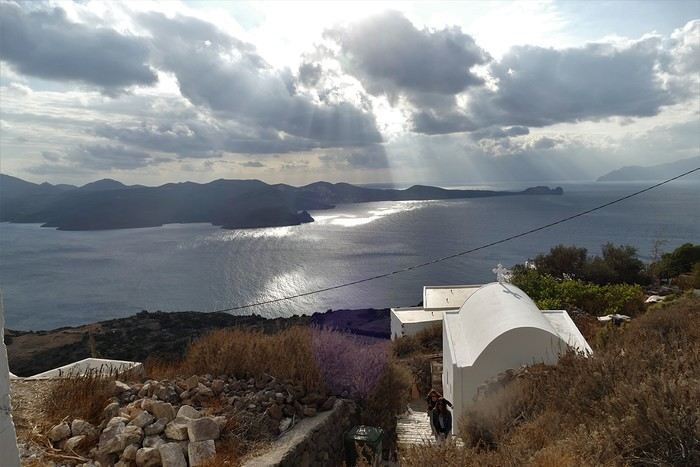
In the afternoon, we visited the hilltop village of Plaka by bus from Adamas. Plaka is the original old town, dominated by a church and, even higher up, the ruins of the Kastro. The view is magnificent. We stopped at a pastry shop in the village to enjoy excellent orange cakes and baklavas. Back in Adamas, we checked out car rental agencies to be more mobile, though the bus network seemed quite extensive. It costs around 40 € per day, plus 8 € if you want to significantly reduce the deductible. Port of Klima.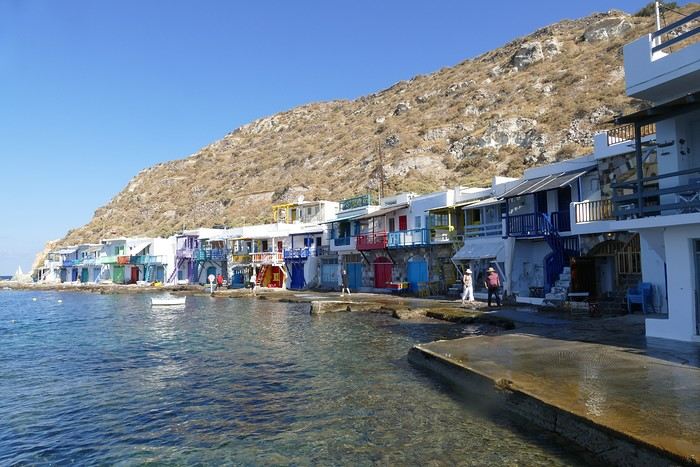
Yesterday’s weather was quite mixed with lots of clouds, but today the sun is shining again. We drove to the small port of Klima, famous for its boat garages called "sirmatas." It’s true that in the morning sun, these boat garages carved into the volcanic tuff are beautifully lit, turning the village into a colorful mosaic. Above the village, a path climbs directly to the magnificent Roman theater overlooking the surroundings and the sea.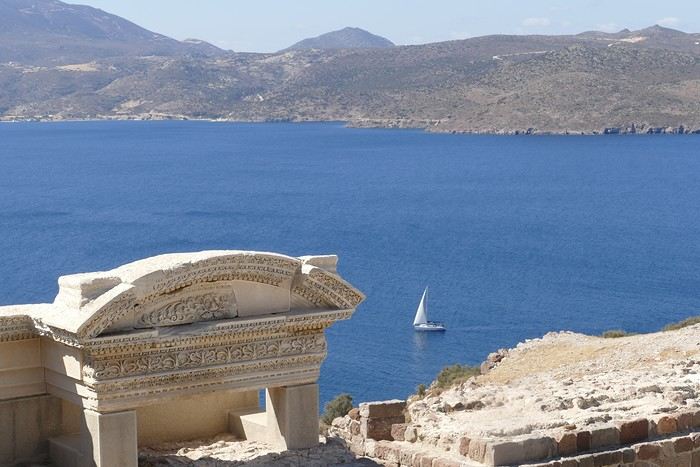 Following the well-marked path, we reached the road leading 200 meters down to the catacombs. It’s an impressive complex of 3rd and 4th-century catacombs, though only a small part is open to visitors—it’s still very moving. In the mid-afternoon, we got back in the car to visit the tiny ports of Firopotamos and Mandraki, which also have their colorful sirmatas. We took the opportunity to swim at the small beach in Mandraki, where the water was warm and calm.
Mandraki Port. We had a decent dinner at a seaside restaurant in Adamas, though you have to be selective—we had a bad experience at Kynigos on the second night!
Moving to Polonia in Eastern Milos, Sarakiniko Site
Following the well-marked path, we reached the road leading 200 meters down to the catacombs. It’s an impressive complex of 3rd and 4th-century catacombs, though only a small part is open to visitors—it’s still very moving. In the mid-afternoon, we got back in the car to visit the tiny ports of Firopotamos and Mandraki, which also have their colorful sirmatas. We took the opportunity to swim at the small beach in Mandraki, where the water was warm and calm.
Mandraki Port. We had a decent dinner at a seaside restaurant in Adamas, though you have to be selective—we had a bad experience at Kynigos on the second night!
Moving to Polonia in Eastern Milos, Sarakiniko Site
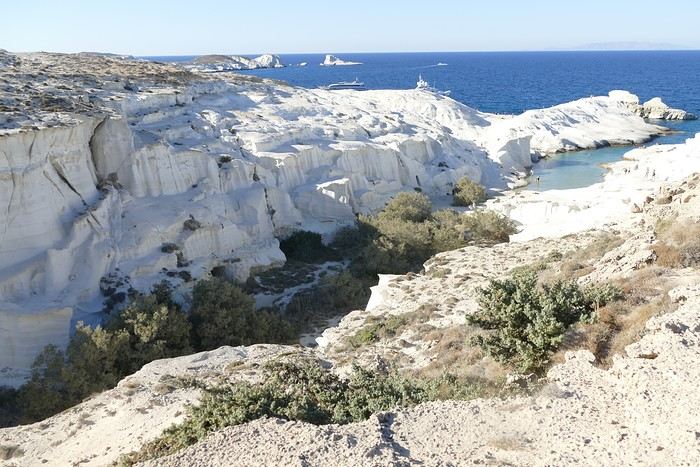
The Sarakiniko site We left Adamas for a second stay on Milos, this time in Polonia. The rental Panda was packed with the four of us and our luggage! Our apartment was in a beautiful house surrounded by a grove, so our lovely terrace was well-shaded. Luckily, there was a small beach nearby, and we went for a swim right away. Apart from us, there were only three other swimmers—definitely the end of the season!
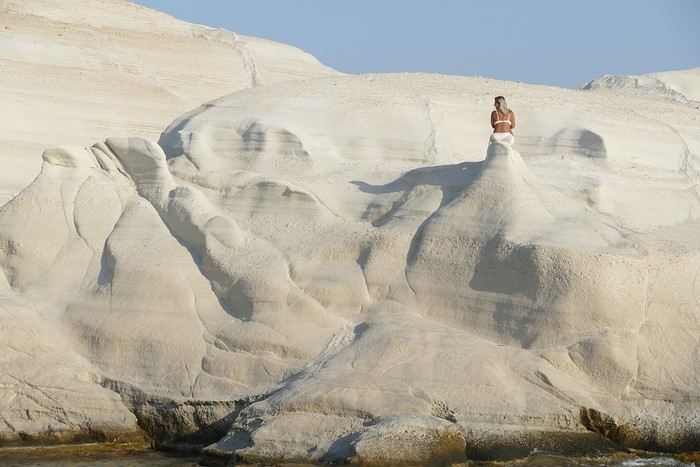
"Fairy chimney"! In the afternoon, we visited the famous Sarakiniko site, Milos’ emblematic spot. Judging by the number of cars in the parking lot, we wouldn’t be alone. As we approached, we heard an indefinable rock/punk/metal music: some young people had brought a sound system and a foghorn and were having fun diving off a fairly high cliff to impress the crowd. It definitely spoiled the visit. Most spots were taken by couples busy taking selfies, so getting photos of the site without tourists was impossible. Still, the site is magnificent, with its white cliffs looking like they’re covered in whipped cream! The sun was still very bright, reflecting strongly off the cliffs, making photography difficult due to the excessive brightness. We had a fish dinner in Polonia at the Enalion restaurant: while the octopus and squid were good, the fish soup tasted more like vegetable soup with a few fish crumbs—too bad.
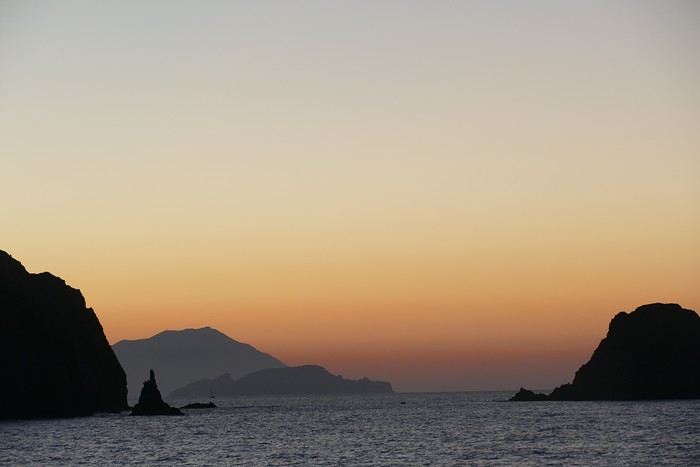
Sunset in Polonia
Ports of Papafranga and Mytikos We continued our exploration of Milos with the Papafranga gorge, a narrow and deep gorge that opens to the sea, where the water is a stunning color. Access via an unstable and dangerous path is prohibited, but that didn’t stop a couple of tourists in flip-flops from venturing in!!! We then swam in the tiny, calm, and sheltered cove of the small port of Mytikos. We returned to Polonia for lunch at Alkis: excellent moussaka. In the late afternoon, Pat and I went out to take some photos just before sunset near the Agios Nikolaos chapel, the beacon, and the new Petakoudia neighborhood next to Polonia to the north.
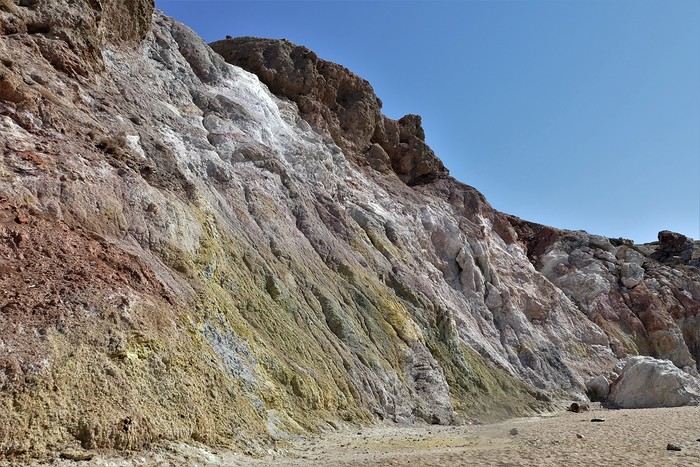
Paleochori Beach
Toward the Multicolored Beach of Paleochori Another sunny day: we still had to discover Paleochori Beach in the south of the island. It was 10:30 AM, and the beach was almost deserted! The water was pleasant, though a bit chilly when we first entered. The beach is bordered by a cliff that, in some places, displays a beautiful multicolored palette. We returned to Polonia in the late afternoon, and Pat and I headed toward Vouddhia Beach south of Polonia—bad choice. The beach is surrounded by a huge mining site served by a dusty road where lines of trucks loaded with ore cross paths. It’s the other side of the coin, and Greece still has progress to make in this area. Dinner at Alki’s was just as good as always. Return to the Sarakiniko Site Early this morning, Pat and I went back to the Sarakiniko site, hoping to take photos in better conditions. While there were fewer people, the parking lot was still full because sunrise is a must in Milos. Still, the conditions were good, and the sunrise spectators left quickly once the sun had risen above the horizon. During the day, an increasingly strong wind cooled the atmosphere, making swimming less enjoyable. Departure for Kimolos Island We changed islands and left Milos for Kimolos, a nearby island—just a 30-minute trip from Polonia’s port. Our apartment was at the entrance of the hilltop village. It’s a village with typical Cycladic architecture, featuring the remains of an old kastro, a few old churches, and windmill towers perched on the hill. We dined in a tiny tavern where the small outdoor tables were squeezed against the walls to let passersby through! As soon as the sun disappeared, it got cold, especially because of the wind. Ports of Kara and Goupa This morning, we explored the small hamlets of Kara and Goupa by Rema Beach, east of the main port. There, we found the sirmatas again—those boat garages partly carved into the volcanic tuff. The path winds between several sirmatas before climbing back up to the Praça road to return to the apartment.
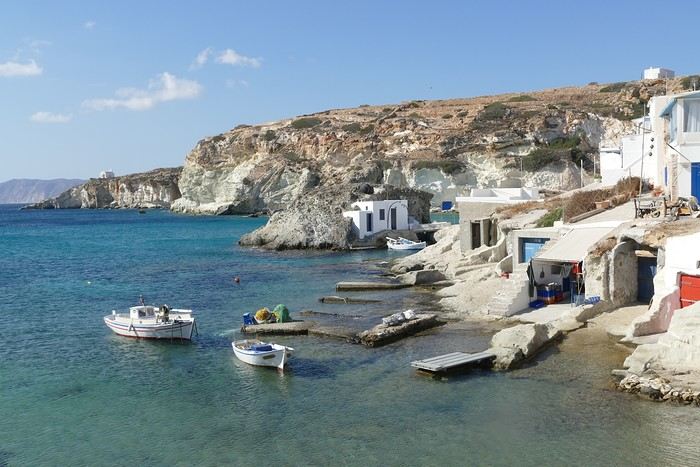
Ports of Kara and Goupa
In the afternoon, we strolled through town, and Pat and I climbed the hill overlooking the village to get a closer look at the few more or less ruined windmills dotting the ridge. Only one mill still had its complete mechanism in place under the roof; the others were empty. The view over the village, port, and sea was beautiful. That evening, we tried another restaurant in the village center, Kali Kardia Bohoris, which was well-frequented by locals, and we didn’t regret it: delicious food, efficient and friendly service, and reasonable prices.
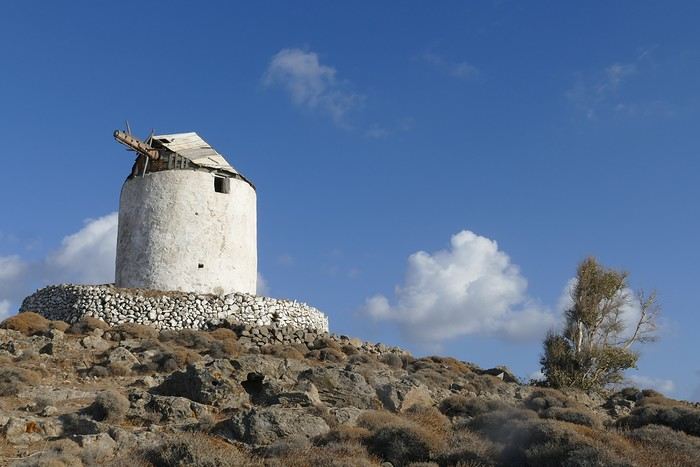
The Kastro Mill
Toward Aliki Beach We walked to Aliki Beach, west of the main village. It’s a large sandy beach shaded by tamarisk trees, but the strong wind prevented us from enjoying it. In the afternoon, I set off on a hike toward the fairy chimney at Skiadi (1.5 hours one way). The paths were very well-marked with signs indicating the trail number and the time to reach the destination. The countryside was beautiful but very dry at this time of year, and as always in Greece, many white chapels dotted the landscape. The numerous dry stone walls testify to the immense labor done by the island’s inhabitants over the centuries! For our last day in Kimolos, we decided to visit the beautiful Praça Beach, one of the most beautiful according to the guides! To get there, we took a path through the interior before joining the paved road near a large dump overflowing with various waste. It’s the flip side of the scenery, and Greece still has progress to make in this area. In the end, Praça Beach left us underwhelmed. The environment, marred by mining operations, detracts from the charm of the beautiful sandy beach. End of the Trip, Return to Piraeus and France And that’s it—we took the Zanteferries ferry back to Piraeus, arriving after a calm and sunny 10-hour journey. We had dinner at Souvlaki Street on the port and spent a good night at the Faros I Hotel in Piraeus—a great spot, close to the port, very clean, and reasonably priced. We flew from Athens to Basel-Mulhouse EuroAirport without any issues. N.B. Budget: around 1850 € all included for 14 days per couple The photo album is available by clicking this link: https://photos.app.goo.gl/wRpxRipg4erpzGj99
The village of Plaka in Milos
It was with great pleasure that we finally reconnected with our old habits as inveterate travelers! Greece, and more specifically the Greek islands, was the natural choice for us. After having already visited many Greek islands during around 18 trips, we decided to revisit islands we had seen over 40 years ago, like Milos, where our memories were extremely hazy. Our route was well-planned and familiar: a low-cost flight from Basel-Mulhouse to Athens, then a traditional ferry from Piraeus to Milos. Taking a speedboat, which is faster, would have forced us to spend a night in Piraeus. Plus, we felt that the traditional ferry was part of the journey, and with good weather, spending eight hours on deck wasn’t unpleasant at all. Watching the docking maneuvers with the comings and goings of trucks and cars, observing the passengers, reading a book, or admiring the scenery—all of that is part of the travel experience. Milos Island: Accommodation in Adamas We arrived quite late, around 11 PM, in Adamas, the port of Milos. No worries—the friendly couple managing the apartment was waiting for us, and it was just a 10-minute walk from the port. The first two days were spent unwinding, with swimming at the nearby beach, strolling through Adamas, and relaxing.
Discovering Plaka On the third day, we took the path along the small beach west of town toward a French military cemetery! A historical reminder of our presence here during the Crimean War, among others. The path climbs toward a beacon perched on top of a hill before disappearing into the scrubland. We returned to Adamas for lunch on our terrace.
In the afternoon, we visited the hilltop village of Plaka by bus from Adamas. Plaka is the original old town, dominated by a church and, even higher up, the ruins of the Kastro. The view is magnificent. We stopped at a pastry shop in the village to enjoy excellent orange cakes and baklavas. Back in Adamas, we checked out car rental agencies to be more mobile, though the bus network seemed quite extensive. It costs around 40 € per day, plus 8 € if you want to significantly reduce the deductible. Port of Klima.
Yesterday’s weather was quite mixed with lots of clouds, but today the sun is shining again. We drove to the small port of Klima, famous for its boat garages called "sirmatas." It’s true that in the morning sun, these boat garages carved into the volcanic tuff are beautifully lit, turning the village into a colorful mosaic. Above the village, a path climbs directly to the magnificent Roman theater overlooking the surroundings and the sea.
Following the well-marked path, we reached the road leading 200 meters down to the catacombs. It’s an impressive complex of 3rd and 4th-century catacombs, though only a small part is open to visitors—it’s still very moving. In the mid-afternoon, we got back in the car to visit the tiny ports of Firopotamos and Mandraki, which also have their colorful sirmatas. We took the opportunity to swim at the small beach in Mandraki, where the water was warm and calm.
Mandraki Port. We had a decent dinner at a seaside restaurant in Adamas, though you have to be selective—we had a bad experience at Kynigos on the second night!
Moving to Polonia in Eastern Milos, Sarakiniko SiteThe Sarakiniko site We left Adamas for a second stay on Milos, this time in Polonia. The rental Panda was packed with the four of us and our luggage! Our apartment was in a beautiful house surrounded by a grove, so our lovely terrace was well-shaded. Luckily, there was a small beach nearby, and we went for a swim right away. Apart from us, there were only three other swimmers—definitely the end of the season!
"Fairy chimney"! In the afternoon, we visited the famous Sarakiniko site, Milos’ emblematic spot. Judging by the number of cars in the parking lot, we wouldn’t be alone. As we approached, we heard an indefinable rock/punk/metal music: some young people had brought a sound system and a foghorn and were having fun diving off a fairly high cliff to impress the crowd. It definitely spoiled the visit. Most spots were taken by couples busy taking selfies, so getting photos of the site without tourists was impossible. Still, the site is magnificent, with its white cliffs looking like they’re covered in whipped cream! The sun was still very bright, reflecting strongly off the cliffs, making photography difficult due to the excessive brightness. We had a fish dinner in Polonia at the Enalion restaurant: while the octopus and squid were good, the fish soup tasted more like vegetable soup with a few fish crumbs—too bad.
Sunset in Polonia
Ports of Papafranga and Mytikos We continued our exploration of Milos with the Papafranga gorge, a narrow and deep gorge that opens to the sea, where the water is a stunning color. Access via an unstable and dangerous path is prohibited, but that didn’t stop a couple of tourists in flip-flops from venturing in!!! We then swam in the tiny, calm, and sheltered cove of the small port of Mytikos. We returned to Polonia for lunch at Alkis: excellent moussaka. In the late afternoon, Pat and I went out to take some photos just before sunset near the Agios Nikolaos chapel, the beacon, and the new Petakoudia neighborhood next to Polonia to the north.
Paleochori Beach
Toward the Multicolored Beach of Paleochori Another sunny day: we still had to discover Paleochori Beach in the south of the island. It was 10:30 AM, and the beach was almost deserted! The water was pleasant, though a bit chilly when we first entered. The beach is bordered by a cliff that, in some places, displays a beautiful multicolored palette. We returned to Polonia in the late afternoon, and Pat and I headed toward Vouddhia Beach south of Polonia—bad choice. The beach is surrounded by a huge mining site served by a dusty road where lines of trucks loaded with ore cross paths. It’s the other side of the coin, and Greece still has progress to make in this area. Dinner at Alki’s was just as good as always. Return to the Sarakiniko Site Early this morning, Pat and I went back to the Sarakiniko site, hoping to take photos in better conditions. While there were fewer people, the parking lot was still full because sunrise is a must in Milos. Still, the conditions were good, and the sunrise spectators left quickly once the sun had risen above the horizon. During the day, an increasingly strong wind cooled the atmosphere, making swimming less enjoyable. Departure for Kimolos Island We changed islands and left Milos for Kimolos, a nearby island—just a 30-minute trip from Polonia’s port. Our apartment was at the entrance of the hilltop village. It’s a village with typical Cycladic architecture, featuring the remains of an old kastro, a few old churches, and windmill towers perched on the hill. We dined in a tiny tavern where the small outdoor tables were squeezed against the walls to let passersby through! As soon as the sun disappeared, it got cold, especially because of the wind. Ports of Kara and Goupa This morning, we explored the small hamlets of Kara and Goupa by Rema Beach, east of the main port. There, we found the sirmatas again—those boat garages partly carved into the volcanic tuff. The path winds between several sirmatas before climbing back up to the Praça road to return to the apartment.
Ports of Kara and Goupa
In the afternoon, we strolled through town, and Pat and I climbed the hill overlooking the village to get a closer look at the few more or less ruined windmills dotting the ridge. Only one mill still had its complete mechanism in place under the roof; the others were empty. The view over the village, port, and sea was beautiful. That evening, we tried another restaurant in the village center, Kali Kardia Bohoris, which was well-frequented by locals, and we didn’t regret it: delicious food, efficient and friendly service, and reasonable prices.
The Kastro Mill
Toward Aliki Beach We walked to Aliki Beach, west of the main village. It’s a large sandy beach shaded by tamarisk trees, but the strong wind prevented us from enjoying it. In the afternoon, I set off on a hike toward the fairy chimney at Skiadi (1.5 hours one way). The paths were very well-marked with signs indicating the trail number and the time to reach the destination. The countryside was beautiful but very dry at this time of year, and as always in Greece, many white chapels dotted the landscape. The numerous dry stone walls testify to the immense labor done by the island’s inhabitants over the centuries! For our last day in Kimolos, we decided to visit the beautiful Praça Beach, one of the most beautiful according to the guides! To get there, we took a path through the interior before joining the paved road near a large dump overflowing with various waste. It’s the flip side of the scenery, and Greece still has progress to make in this area. In the end, Praça Beach left us underwhelmed. The environment, marred by mining operations, detracts from the charm of the beautiful sandy beach. End of the Trip, Return to Piraeus and France And that’s it—we took the Zanteferries ferry back to Piraeus, arriving after a calm and sunny 10-hour journey. We had dinner at Souvlaki Street on the port and spent a good night at the Faros I Hotel in Piraeus—a great spot, close to the port, very clean, and reasonably priced. We flew from Athens to Basel-Mulhouse EuroAirport without any issues. N.B. Budget: around 1850 € all included for 14 days per couple The photo album is available by clicking this link: https://photos.app.goo.gl/wRpxRipg4erpzGj99
Eastern Crete in September 2024
Travel journal in Eastern Crete from September 8th to 29th, 2024
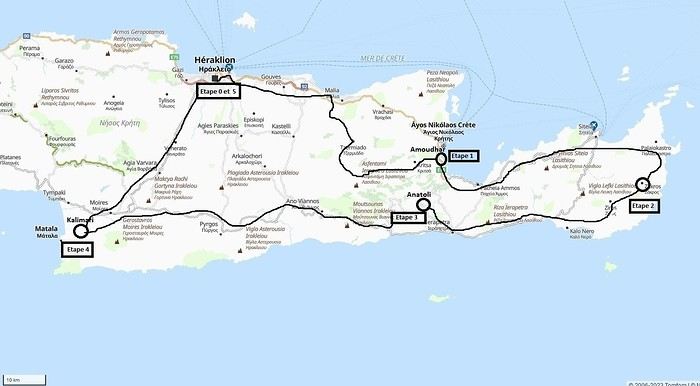 Our 21-day itinerary
Sunday, 08/09: Once again—and this is the eighth time—we’re setting off, the four of us: Patrick, Michelle, Jacques, and Monique, for the Greek islands. This time, we’ve chosen Crete. No need to wake up at 3 or 4 a.m. to reach Basel-Mulhouse Airport at dawn to catch the first flight to Greece at 6 a.m.! Given the prohibitive prices charged by EasyJet, we found flights that were half the price from Zurich Airport, which is accessible in 3 hours by train from Colmar. Pierre-Paul drives all four of us to Colmar train station, where we take the train to Basel and then, 20 minutes later, the direct train to Zurich Airport. After wandering around the airport, we go for a coffee at 6 € each! We’re in Switzerland, after all. The other dining areas all have vending machines for selecting and paying for meals—soon, there won’t be anyone left to serve you! After a short wait, we take off at 7:45 p.m. (20 minutes late) in an Aegean Airbus A321. Free in-flight meal service isn’t bad either! We land in Heraklion around 11:15 p.m. We pick up our rental car (a red Seat Ibiza) at the airport and head straight to our apartment, located 2 km from the city center. Thanks to the GPS, we find it quickly. It’s a beautiful, fully renovated apartment with all the comforts and well-equipped. On the table, there’s wine, bottles of water, jam, coffee, etc. Given the late hour, we won’t stay up long.
Monday, 09/09: To enhance our breakfast, Michelle and Monique set off to find a bakery nearby. They return with croissants and donuts—yum... Then we head to the west coast. The highway follows the coastline, but we prefer taking the old road to Malia, our first stop. We visit the major archaeological site of this Minoan city under the hot sun. The site covers a vast area, but the ruins aren’t very evocative except for a few beautiful amphorae scattered around. The explanations in a small house at the entrance are interesting and help us better understand the organization of the ancient city with its different districts. From there, we head toward the nearby mountains to see the thousand-year-old plane tree in the village of Krasi. We take the opportunity to enjoy an excellent lunch of moussaka and delicious gemista at the Krassopsychia taverna in the village center. Pleasant surprise: the prices are still reasonable, with a bill of 70 € for four, including wine and water. The friendly tradition of complimentary dessert and glasses of raki continues—great! We’ve set the bar high right away! Let’s hope the rest lives up to it! On the way back toward the Lassithi Plateau, we stop at the Kardiotisa Monastery perched high on the mountain to enjoy a magnificent view of the entire region. Just a little further, we arrive at the Lassithi Plateau: the presence of small windmills used to pump water from the ground is the typical feature of this plateau. We complete a full loop around the plateau, passing by numerous orchards and vegetable gardens that occupy the entire space. At the end of the plateau, we once again cross mountain passes via winding roads that bring us near Agios Nikolaos. Our apartment is located about ten kilometers further south in Amoudhara. The owner, who was notified, waits for us and shows us her superb apartment, whose large terrace overlooks the entire Mirabello Bay. She then gives us valuable information about the different beaches in the area. Dinner will be frugal, given our hearty lunch in Krasi!
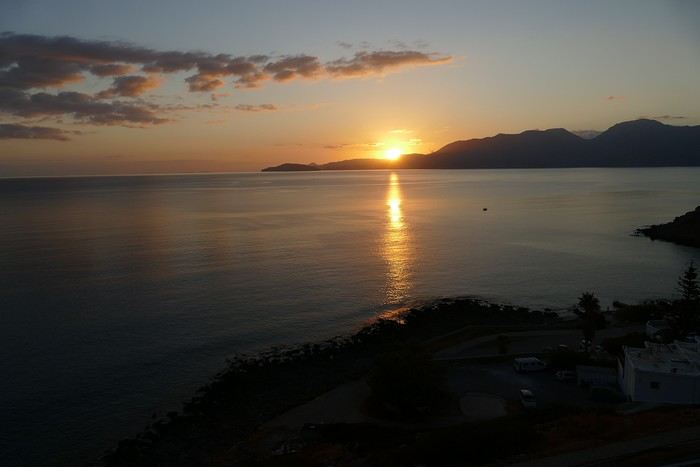 Sunset over Mirabello Bay
Tuesday, 10/09: A bit of a gray sky when we wake up around 8 a.m., but the sun will soon triumph over the scattered clouds. For our first swim, we opt for Voulisma Beach, even though our host warned us it was a bit “crowdy.” That’s understandable given the beautiful emerald color of the sea and the lovely curve of the beach. To avoid the big crowds, we move toward the eastern part of the beach, accessible via a steep staircase. The water is very warm, and this first dip is very pleasant. Before returning to the apartment, we stop at the bakery to buy spinach pies, essential ingredients to accompany our Greek salad for lunch. Of course, everything will be washed down with ouzo, which will remain our favorite drink for the next three weeks—but in moderation!!! A nap is in order after all that effort. In the late afternoon, we drive to Agios Nikolaos, the main seaside resort in Crete. We’re not too enthusiastic about visiting this mass-tourism resort, but the center of Agios, concentrated around the small inner harbor, is pleasant to see despite the plethora of shops and restaurants. We dine a little outside the harbor in the shaded courtyard of the Avli taverna: the oven-baked lamb, squid with spinach, and cuttlefish ink orzo pasta are all highly appreciated. We still stay under a 75 € bill for four.
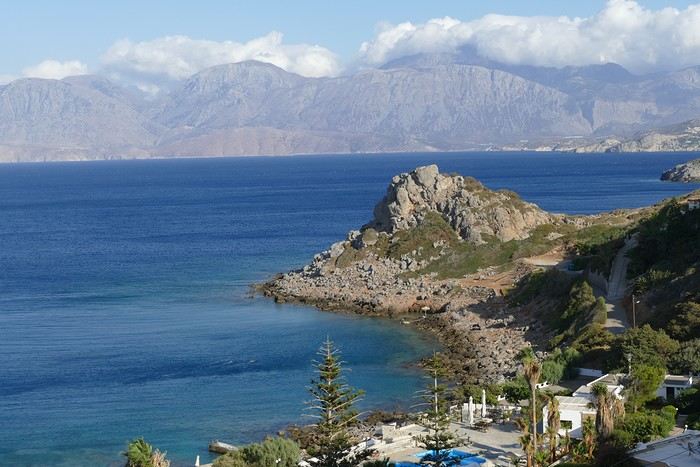 Mirabello Bay seen from our terrace
Wednesday, 11/09: At 8 a.m., the terrace is already bathed in sunlight, and it’s already quite hot. The small parasol barely gives us enough shade, but we’re not complaining! For our second swim, we head to a tiny beach recommended by our host, just 3 minutes by car from our place. The path leading to it is very discreet, and we don’t find it right away! It’s a small sandy cove with a few welcome tamarisk trees for shade. When we arrive, there are two swimmers, and there won’t be more than five or six in the morning. After lunch and a nap, we head to the beautiful village of Kritsa, just a few kilometers away. It’s too late to visit the beautiful church of Kera Panagia, which is already closed. We settle for the exterior, which is worth a look. The weather is clouding over, and big clouds are gathering. Upon arriving in Kritsa, a heavy shower forces us to take shelter in the Platanos taverna in the village center, and since it’s nearly 7 p.m., we decide to stay and dine there. Good choice—excellent meze: croquettes and stuffed zucchini flowers, gigantes beans, grilled tomatoes and feta, and pancetta as the main dish. The rain stops just as we decide to head back.
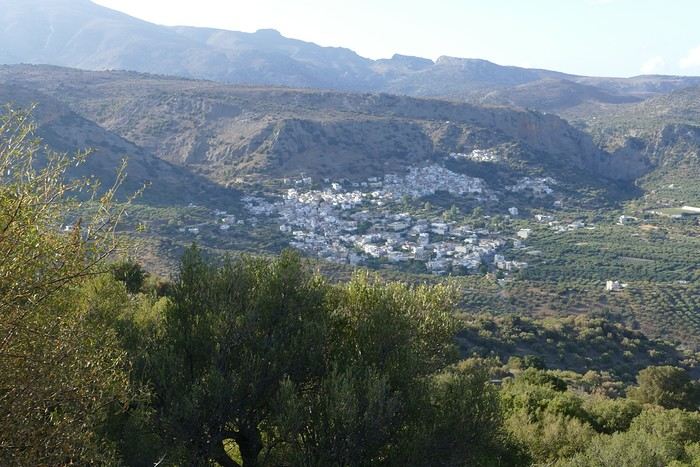 Village of Kritsa
Thursday, 12/09: Our terrace faces east, so we get to watch the sunrise around 7 a.m.—it’s truly a beautiful sight we never tire of. Around 9 a.m., we head to the village of Plaka, where boats depart for the island of Spinalonga, located north of Agios Nikolaos. We board the first boat, which sets sail at 10 a.m., and we’re not alone—the boat is practically full. After 10 minutes, we land on the island at the same time as several other boats from Elounda or Agios. Needless to say, there are already quite a few people walking through the streets of the leper village. The visit remains interesting and moving as we read the explanatory panels recounting the island’s history under Byzantine and then Turkish rule, followed by its transformation into a leper colony. As soon as we climb toward the top of the island via more or less maintained paths, there’s almost no one left. The 360° view from up there is stunning.
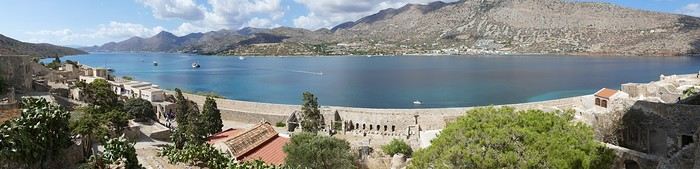
Spinalonga Island
The heat is now unbearable, and we can’t wait to get back home to have lunch on our terrace and rest. In the late afternoon, we go grocery shopping at the AB supermarket at the entrance of Agios. We had spotted another nice restaurant in our guide, but unfortunately, there’s a different one at the indicated location that doesn’t inspire us. So, we return to the Avli taverna for another dinner just as good as the first.
Friday, 13/09: We repeat yesterday’s successful program: a swim in our little cove, lunch on the terrace, a nap, and then, in the late afternoon, we discover another nearby village, Kroustas, nestled in the olive groves near Kritsa. Much less touristy than Kritsa, it’s mostly inhabited by locals, especially the elderly who are enjoying the cool air on their chairs—if you can call it cool given the still-high temperatures in the late afternoon! We then return to visit Kritsa, which we hadn’t been able to explore due to the rain. Dinner at a taverna in the village center at a very reasonable price.
Saturday, 14/09: Today, we move to our new base further east. We start with a high viewpoint at the Faneromeni Monastery, which overlooks Mirabello Bay. The monastery itself is of little interest as it’s under renovation with excessive concrete work. We continue to the village of Kavoussi to see another exceptional tree after a few kilometers on a dusty, bumpy track. It’s an olive tree said to be about 3,200 years old—impressive, and the countryside is very beautiful. It’s time to find a place for lunch. We find one in the charming little port of Mohlos, where a few tavernas surround a very nice small beach. Our choice falls on the Bogazzi taverna, where we enjoy fried fish. To reach our new base in Zakros, we still have to drive through the mountains before reaching Sitia, Paleokastro, and finally Zakros. The region is beautiful, with olive groves and rows of wind turbines taking advantage of the strong wind near the northern tip of the island. In Zakros, we’re greeted by our very friendly host. Here too, we have all the comforts and a beautiful terrace overlooking the village. The apartment has reversible air conditioners, but the overly simple instructions leave us puzzled. Thinking we’ve set it correctly, we realize a little too late that it’s blowing hot air over 30°C! After numerous attempts and testing several confusing programs, we finally succeed! Dinner on our new terrace.
Sunday, 15/09: This morning, we get up early to hike in the “Gorge of the Dead” while it’s still cool. The sky is blue as usual! We park in the nearest parking lot and start our descent via a beautiful path winding through the olive groves. A little further on, the landscape opens up, and the path, now a stony trail, begins the descent to the dry riverbed. On either side of the riverbed rise beautiful reddish cliffs.
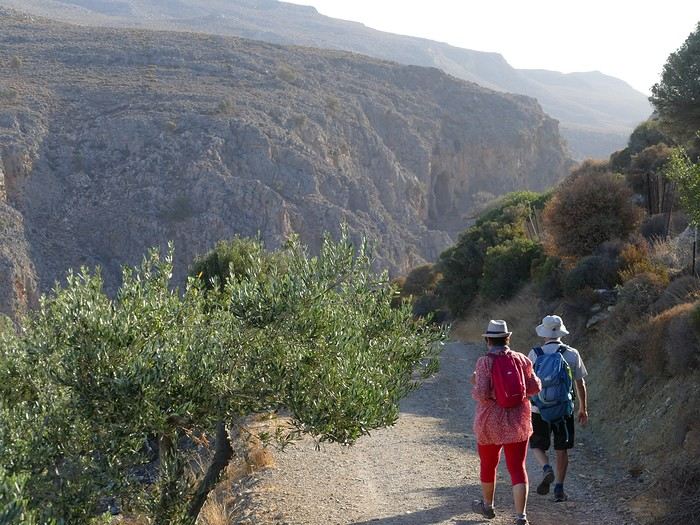
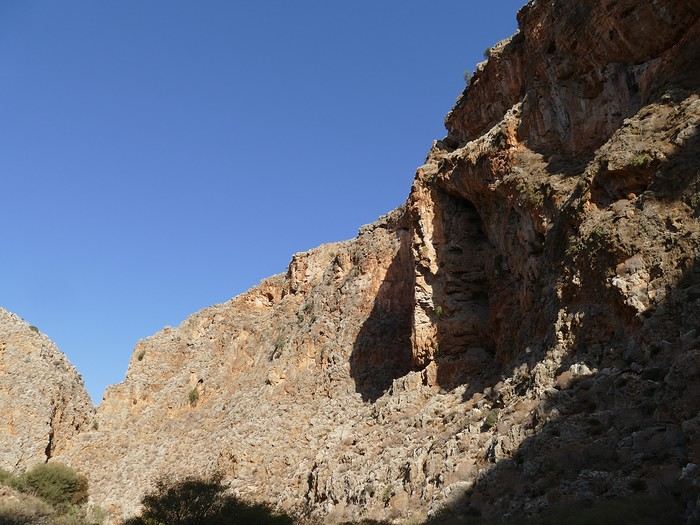
Gorge of the Dead
The trail winds its way through this narrow gorge with difficulty. It was in the many caves visible halfway up the slope that the Minoans buried their dead, hence the name “Gorge of the Dead.” The gorge opens onto a beautiful small pebble beach. A swim is welcome after this hike that made us sweat. The hike took us 1 hour and 25 minutes, and a little less on the way back. Meanwhile, Monique did some shopping and prepared an excellent lunch. In the late afternoon, we go down to dine at Platanakis, a taverna in the small village of Kato Zakros.
Monday, 16/09: This morning, we explore the northern part of the east coast near Palekastro. We start with a dip at the beautiful Hionia Beach near Palekastro. The water is still just as nice, but a light breeze is blowing—not enough to spoil our fun! Seeing all the wind turbines lining the ridges, it’s no surprise.
 Grocery shopping in Palekastro and return to Zakros. A little rain in the late afternoon and an excellent dinner at Iannis Mitsakakis’ Taverna in Adravastis. These are the kind of small tavernas we love—unpretentious, a few tables on a terrace, a warm welcome, a short menu guaranteeing freshness, tasty dishes prepared by the server’s mom, and a light bill. What more could you ask for!
Tuesday, 17/09: We head back toward Palekastro to do some shopping, but it’s also the road to the Toplou Monastery. There, we see a collection of magnificent icons dating from the 15th to the 20th century. We can also admire drawings of Orthodox religious architecture. We continue toward the Mavros Akrotiri headland to enjoy the view of the sea and rocky capes. On the way back to our place, we make a small detour to see the famous Vai palm grove. Meh... As for Vai Beach, it’s filled with paid umbrellas and sunbeds, and there are so many people that we flee. Plus, having to pay for parking is another reason to snub this trendy beach. We prefer our Hionia Beach, which we already appreciated the other day. In the late afternoon, Pat and I start the trail that begins at Kato Zakros Beach heading south. The poorly marked path crosses a plateau of sharp limestone. The paint and cairn markings are no longer very visible, and with dusk approaching, we turn back toward Kato Zakros. Dinner at the Platanakis taverna—less good than last time.
Wednesday, 18/09: To avoid the scorching sun, Pat, Mimi, and I get up earlier than usual to hike the Hohlakies Gorge. At this early hour, the sky is quite cloudy, and it’s drizzling. When we arrive in the village of Hohlakies, we park in front of a small chapel, the start of the hike. The sky is now completely clear. The trail starts among the olive groves, then after passing through a gate, we descend into the gorge filled with large rocks. We’re alone in the world, and the landscape is magnificent. A few wild goats clinging to the cliff watch us from above. After 1 hour and 15 minutes, we emerge onto the wonderful Karoumès Beach. A pleasant swim, then back to civilization! A walk in the late afternoon in Zakros to discover the beautiful springs route. Dinner in Adravastis.
Thursday, 19/09: Another move: Before heading to our next stop, we make a detour to see the beautiful Keratokampos Beach and can’t resist a swim in the still-warm, clear water. We continue our journey via Ziros, then reach the south coast and have lunch at the Stephi taverna in Ferma—excellent meal! The south coast is quite urbanized and has much less charm than the east coast we’ve just left! The numerous plastic greenhouses are partly to blame. We stop for groceries in Ierapetra. Around 3 p.m., we arrive at our destination in the small perched village of Anatoli. Our lodging is at the top of the village, and from the path leading to it, we have a magnificent view of the coastal plain, unfortunately overloaded with plastic greenhouses. It reminds us of the landscapes of El Ejido in Andalusia.
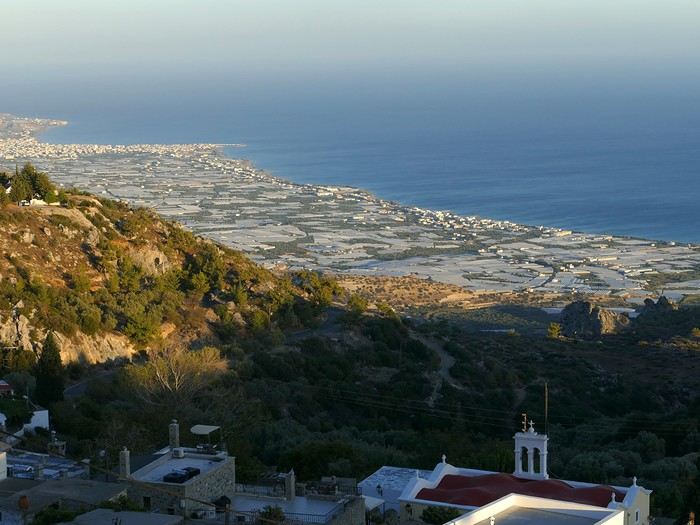 View of the Ierapetra coast from Anatoli
Friday, 20/09: A walk and discovery of the hamlet of Anatoli. There are few services—a tiny grocery store, a taverna, and that’s it. Fortunately, the traveling baker arrives and honks. We take the opportunity to buy fresh bread. Leaving the village, we take a path that should lead us to the hamlet of Drygies. The landscape is beautiful. We walk through a lovely pine forest before arriving at the hamlet. The path continues to a taverna that’s closed today, with a superb terrace overlooking the coast. Luckily, the owner arrives and informs us that the taverna will be open next Sunday and that we can enjoy barbecued meat. Noted! We head back to Anatoli via the small paved road with, fortunately, very limited traffic. Lunch on our terrace, then a dip in our private pool! The water is noticeably cooler than at the beach. Dinner at the village taverna: there’s only one menu—meze starters, souvlaki, water, wine, and bread—all for 35 €! We think we’re dreaming—was there a mistake? No.
Saturday, 21/09: We discover the beach of the village of Myrtos, a small seaside resort that’s quite touristy but on a human scale. We swim in the western part of the beach, and once again, we’re alone in the water. The best part: warm water and tamarisk trees for welcome shade. There’s even a shower to rinse off! In the late afternoon, Pat and I decide to go for a hike in the Selakano pine forest. To get there, we take a narrow, winding, and poorly paved road after the village of Christos. Plus, at this altitude, we encounter clouds clinging to the mountain, so it’s drizzling, and visibility is reduced. We decide to turn back and return to Anatoli. As compensation, we take the path that passes in front of the lodging and leads us to the Timios Stavros chapel, which crowns the summit of the nearby mountain. We arrive at the summit just in time for the sunset at 7 p.m. Breathtaking 360° panorama and magnificent colors!
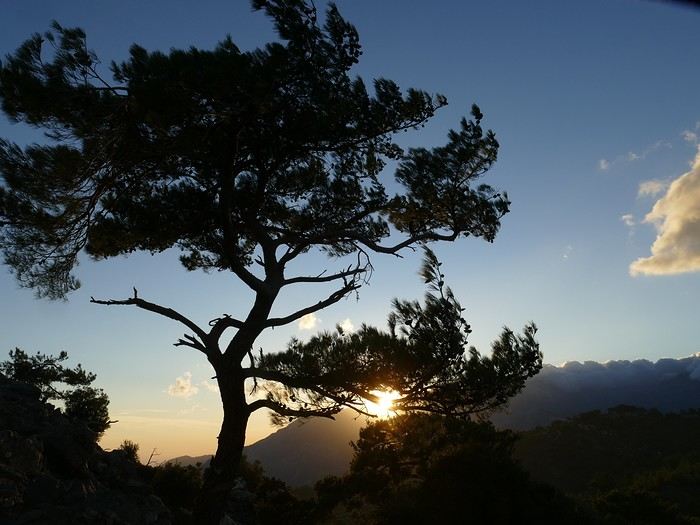 Sunset from Anatoli
Sunday, 22/09: This morning, Pat, Mimi, and I go for a hike in the Sarakina Gorge, located about 12 km from Anatoli via a beautiful road winding through irrigated olive groves. We park in the small parking lot before the trail. At the start, the path follows a levada (small irrigation canal) and quickly enters a very narrow gorge flanked by high cliffs. The riverbed is cluttered with huge rocks blocking the passage. No matter—in the technical sections, ropes or ladders allow us to overcome these obstacles with a bit of skill. You can imagine how quickly the riverbed must rise during a storm, given the narrowness of the gorge!
We progress slowly through this magnificent and impressive rocky chaos. At the exit of the gorge, we take another return path that partly follows the paved road. Back in Anatoli, we go to lunch at the Drygies taverna. We sit at the edge of the terrace under a huge tree that covers almost the entire terrace and order grilled lamb dishes prepared according to the ancient “antikristo” method.
Monday, 23/09: Departure for our last stop before Heraklion. We thought about swimming at Tertsa Beach, but it turns out to be less pleasant than expected, with pebbles and an uneven rocky plateau. So, we return to Myrtos Beach, which we know well and suits us perfectly. We head west, leaving the coast a bit. Around 3:30 p.m., we arrive at our destination in the village of Kamilari, near the famous Matala spot. We’ve rented a beautiful, modern, well-equipped apartment with a lovely shaded terrace. The owner is very friendly and explains everything necessary for a good stay. We explore the quite touristy village with its few tavernas, all full of tourists, mostly Germans.
Tuesday, 24/09: Visit to the village of Sivas, well restored thanks to the Germans, who have invested a lot here. We take the opportunity to scout out “friendly” tavernas, then go for a swim at Kalamaki Beach. Apart from a small sandy access, you have to enter the water via a chaotic limestone plateau—proof of this is that Monique trips slightly when entering the water. A group of very unfriendly German women blocks the sandy passage and doesn’t hesitate to push swimmers they deem too close. Back home, lunch, and a nap. In the late afternoon, we drive to visit the nearby Phaistos site. We benefit from very beautiful lighting. From the elevated site, we overlook the Messara Plain with a beautiful view of the olive grove checkerboards highlighted by the late afternoon sun. The site itself is quite vast, but to appreciate it, it’s better to read the explanatory panels placed throughout the different quarters. At this hour, the site is almost empty, and the beautiful light adds charm to the visit.
Wednesday, 25/09: Departure for the village of Matala, which doesn’t interest us in itself, having been there during the “hippie” era in 1976. However, going to Red Beach, only accessible by taking a path overlooking this area, appeals to us much more. We park in the large parking lot just outside the village and start our climb, which brings us to a pass from where we can admire this beautiful red-sand beach framed by beautiful cliffs plunging into the sea. The weather is magnificent, and at this early hour, there aren’t many people yet. We swim in the free part located near the cliff on the right when arriving at the beach. The sea is like glass, warm, and without a single ripple—a real treat! After half an hour, we turn back, and now there are many people rushing on this path, not at all made for feet in sandals or flip-flops, yet many vacationers venture out like this! Matala lives up to its image—a trendy place, full of shops, bars, and restaurants. You could be in any seaside resort with a standard global urbanism, lacking particular charm. Back home. In the late afternoon, a walk through the olive groves surrounding Kamilari, then dinner at Evangelina’s, who runs the Minoan Parassies taverna in the middle of the olive groves. Evangelina is quite a character: we came to reserve a table for 8 p.m. when it was only 7 p.m., but since we lingered near her restaurant, she prepares a table for us and urges us to sit down! And there she takes our order, and a little later, the meze arrive, followed by the main dishes. We finish this good dinner with several generous glasses of raki, accompanied by Evangelina’s encouragements, repeating “poya poya bravo bravo” in a loop. We’re in great shape too, by the way! We return in the middle of the night, on foot, fortunately, with the path vaguely lit by our phones...
Thursday, 26/09: This morning, we discover a new beach, Kommos Beach, not far from Kamilari either. It’s a long sandy beach, a small part of which is dedicated to paid umbrellas and sunbeds, and the rest is free. We spot a tamarisk tree to take shelter from the still-hot sun, and once again, we enjoy clear, warm water. The few swimmers spread out easily over nearly 500 meters of beach. In the late afternoon, Pat and I go to admire the sunset from the hill near our lodging. The hill, covered with olive trees, is threatened by a planned housing development of large cubic villas—trends dictate. Concrete never stops...
Friday, 27/09: We thought about leaving the car at the Odiyitria Monastery, the end of the paved road, but since the track descending to the cave remains drivable, we park 3 km further at the junction of the track leading to Kali Limenes Beach. We still have to walk for half an hour on a less drivable track, and then we’re at the entrance of the Farango Gorge. It’s a beautiful, easy hike since we follow the dry pebble riverbed. Before arriving at the beach, there’s a very beautiful small chapel sheltered under a large cliff, beautifully lit at this early hour.
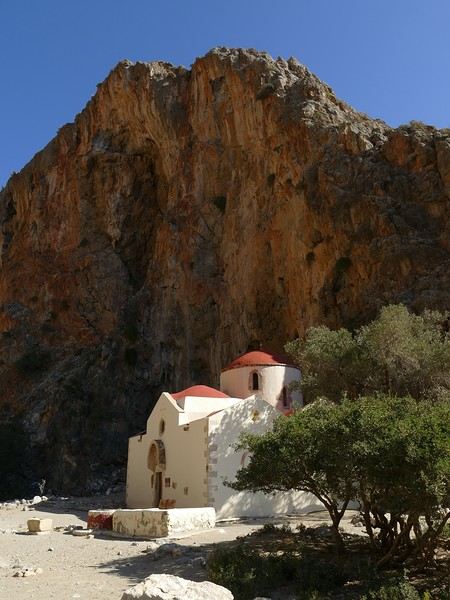
Agio Farango Chapel
A few climbers are scaling the cliff, and about ten swimmers are enjoying the sea. Return to the car under the hot sun. In the late afternoon, we all return to visit the interesting Odiyitria Monastery. Last swim at Kommos Beach and an excellent dinner at the Sigelakis taverna in Sivas.
Saturday, 28/09: There’s an end-of-vacation atmosphere... We pack our bags and head north. A short stop to see the village of Vorri, and a little over an hour later, we arrive in the big city of Heraklion. Since it’s too early to check into the apartment, we park in the city center to visit the famous archaeological museum. It’s indeed a must-see highlight of our stay in Crete. All four of us are amazed by the quantity and quality of the objects presented from the Minoan civilization. After more than 2 hours, we come out without having seen everything, but we’re a bit overwhelmed by all these wonders. Lunch at a nice little taverna very close to the Titus Church. We go to take possession of our apartment—the same as on the way there, still just as satisfying. In the late afternoon, I go alone for a walk in the historic district of the city, passing by the Morosini Fountain, which is bustling with people—some seated at café terraces, others standing and chatting. There’s a lively atmosphere here. A little further on are the Venetian loggia and the Agios Titos Church. I walk down to the old Venetian port to stroll along the jetty and admire the fortifications under beautiful late-afternoon lighting, then return to the apartment. Dinner near our place at Kiriakis, a “chic” restaurant but with very reasonable prices and excellent cuisine.
Sunday, 29/09: Wake-up at 3:30 a.m., quick coffee, and drive to the nearby airport. We leave the car in the parking lot. Already a lot of people at this early hour. Since we don’t have checked luggage, we go straight to security, which goes fairly quickly, then it’s waiting time and takeoff on time in an Airbus A321 for a 45-minute flight to Athens. We take off again in another Airbus A321 with a 50-minute delay to arrive in Zurich at 11:10 a.m. local time. Then we have to take the train to Basel and then the one to Colmar. With fewer Sunday services, we won’t arrive in Colmar until around 4 p.m.
Conclusion All four of us returned very satisfied with this stay in Crete for several reasons: - We found superb beaches with clear, warm water and often very few vacationers. - The few hikes we did were magnificent, especially those where the trails went through gorges leading to deserted beaches. - We greatly appreciated Cretan gastronomy—there were so few disappointments that we can count them on one hand. - All the accommodations we booked turned out to be superb, with the icing on the cake being the very friendly welcome from our hosts. - Generally, contacts with Cretans were always very warm despite the language barrier—we speak a little Greek. - We also appreciated the diversity of landscapes in this eastern part of Crete, with plateaus and mountains with splendid rugged reliefs.
Note: The photo album is available by clicking on this link: https://photos.app.goo.gl/hfdjQndA5eXkL5k7 Captions are only visible per photo by clicking on the circled “i” in the top right. Budget: approximately 3,300 € per couple for 21 days, including train and flights Budget details per couple: - Flight Zurich-Heraklion: 440 € - Trains Colmar-Basel-Zurich round trip for 4: 442.40 € (221 € per couple) - Accommodation: 2,431 € / 21 = 115.80 € per night for 4 (1,216 € per couple) - Car rental for 21 days: 684 € + 145 € fuel (1,150 km) (414 € per couple) - Restaurants, food, etc.: 1,009 €
Our 21-day itinerarySunday, 08/09: Once again—and this is the eighth time—we’re setting off, the four of us: Patrick, Michelle, Jacques, and Monique, for the Greek islands. This time, we’ve chosen Crete. No need to wake up at 3 or 4 a.m. to reach Basel-Mulhouse Airport at dawn to catch the first flight to Greece at 6 a.m.! Given the prohibitive prices charged by EasyJet, we found flights that were half the price from Zurich Airport, which is accessible in 3 hours by train from Colmar. Pierre-Paul drives all four of us to Colmar train station, where we take the train to Basel and then, 20 minutes later, the direct train to Zurich Airport. After wandering around the airport, we go for a coffee at 6 € each! We’re in Switzerland, after all. The other dining areas all have vending machines for selecting and paying for meals—soon, there won’t be anyone left to serve you! After a short wait, we take off at 7:45 p.m. (20 minutes late) in an Aegean Airbus A321. Free in-flight meal service isn’t bad either! We land in Heraklion around 11:15 p.m. We pick up our rental car (a red Seat Ibiza) at the airport and head straight to our apartment, located 2 km from the city center. Thanks to the GPS, we find it quickly. It’s a beautiful, fully renovated apartment with all the comforts and well-equipped. On the table, there’s wine, bottles of water, jam, coffee, etc. Given the late hour, we won’t stay up long.
Monday, 09/09: To enhance our breakfast, Michelle and Monique set off to find a bakery nearby. They return with croissants and donuts—yum... Then we head to the west coast. The highway follows the coastline, but we prefer taking the old road to Malia, our first stop. We visit the major archaeological site of this Minoan city under the hot sun. The site covers a vast area, but the ruins aren’t very evocative except for a few beautiful amphorae scattered around. The explanations in a small house at the entrance are interesting and help us better understand the organization of the ancient city with its different districts. From there, we head toward the nearby mountains to see the thousand-year-old plane tree in the village of Krasi. We take the opportunity to enjoy an excellent lunch of moussaka and delicious gemista at the Krassopsychia taverna in the village center. Pleasant surprise: the prices are still reasonable, with a bill of 70 € for four, including wine and water. The friendly tradition of complimentary dessert and glasses of raki continues—great! We’ve set the bar high right away! Let’s hope the rest lives up to it! On the way back toward the Lassithi Plateau, we stop at the Kardiotisa Monastery perched high on the mountain to enjoy a magnificent view of the entire region. Just a little further, we arrive at the Lassithi Plateau: the presence of small windmills used to pump water from the ground is the typical feature of this plateau. We complete a full loop around the plateau, passing by numerous orchards and vegetable gardens that occupy the entire space. At the end of the plateau, we once again cross mountain passes via winding roads that bring us near Agios Nikolaos. Our apartment is located about ten kilometers further south in Amoudhara. The owner, who was notified, waits for us and shows us her superb apartment, whose large terrace overlooks the entire Mirabello Bay. She then gives us valuable information about the different beaches in the area. Dinner will be frugal, given our hearty lunch in Krasi!
Sunset over Mirabello BayTuesday, 10/09: A bit of a gray sky when we wake up around 8 a.m., but the sun will soon triumph over the scattered clouds. For our first swim, we opt for Voulisma Beach, even though our host warned us it was a bit “crowdy.” That’s understandable given the beautiful emerald color of the sea and the lovely curve of the beach. To avoid the big crowds, we move toward the eastern part of the beach, accessible via a steep staircase. The water is very warm, and this first dip is very pleasant. Before returning to the apartment, we stop at the bakery to buy spinach pies, essential ingredients to accompany our Greek salad for lunch. Of course, everything will be washed down with ouzo, which will remain our favorite drink for the next three weeks—but in moderation!!! A nap is in order after all that effort. In the late afternoon, we drive to Agios Nikolaos, the main seaside resort in Crete. We’re not too enthusiastic about visiting this mass-tourism resort, but the center of Agios, concentrated around the small inner harbor, is pleasant to see despite the plethora of shops and restaurants. We dine a little outside the harbor in the shaded courtyard of the Avli taverna: the oven-baked lamb, squid with spinach, and cuttlefish ink orzo pasta are all highly appreciated. We still stay under a 75 € bill for four.
Mirabello Bay seen from our terraceWednesday, 11/09: At 8 a.m., the terrace is already bathed in sunlight, and it’s already quite hot. The small parasol barely gives us enough shade, but we’re not complaining! For our second swim, we head to a tiny beach recommended by our host, just 3 minutes by car from our place. The path leading to it is very discreet, and we don’t find it right away! It’s a small sandy cove with a few welcome tamarisk trees for shade. When we arrive, there are two swimmers, and there won’t be more than five or six in the morning. After lunch and a nap, we head to the beautiful village of Kritsa, just a few kilometers away. It’s too late to visit the beautiful church of Kera Panagia, which is already closed. We settle for the exterior, which is worth a look. The weather is clouding over, and big clouds are gathering. Upon arriving in Kritsa, a heavy shower forces us to take shelter in the Platanos taverna in the village center, and since it’s nearly 7 p.m., we decide to stay and dine there. Good choice—excellent meze: croquettes and stuffed zucchini flowers, gigantes beans, grilled tomatoes and feta, and pancetta as the main dish. The rain stops just as we decide to head back.
Village of KritsaThursday, 12/09: Our terrace faces east, so we get to watch the sunrise around 7 a.m.—it’s truly a beautiful sight we never tire of. Around 9 a.m., we head to the village of Plaka, where boats depart for the island of Spinalonga, located north of Agios Nikolaos. We board the first boat, which sets sail at 10 a.m., and we’re not alone—the boat is practically full. After 10 minutes, we land on the island at the same time as several other boats from Elounda or Agios. Needless to say, there are already quite a few people walking through the streets of the leper village. The visit remains interesting and moving as we read the explanatory panels recounting the island’s history under Byzantine and then Turkish rule, followed by its transformation into a leper colony. As soon as we climb toward the top of the island via more or less maintained paths, there’s almost no one left. The 360° view from up there is stunning.
Spinalonga Island
The heat is now unbearable, and we can’t wait to get back home to have lunch on our terrace and rest. In the late afternoon, we go grocery shopping at the AB supermarket at the entrance of Agios. We had spotted another nice restaurant in our guide, but unfortunately, there’s a different one at the indicated location that doesn’t inspire us. So, we return to the Avli taverna for another dinner just as good as the first.
Friday, 13/09: We repeat yesterday’s successful program: a swim in our little cove, lunch on the terrace, a nap, and then, in the late afternoon, we discover another nearby village, Kroustas, nestled in the olive groves near Kritsa. Much less touristy than Kritsa, it’s mostly inhabited by locals, especially the elderly who are enjoying the cool air on their chairs—if you can call it cool given the still-high temperatures in the late afternoon! We then return to visit Kritsa, which we hadn’t been able to explore due to the rain. Dinner at a taverna in the village center at a very reasonable price.
Saturday, 14/09: Today, we move to our new base further east. We start with a high viewpoint at the Faneromeni Monastery, which overlooks Mirabello Bay. The monastery itself is of little interest as it’s under renovation with excessive concrete work. We continue to the village of Kavoussi to see another exceptional tree after a few kilometers on a dusty, bumpy track. It’s an olive tree said to be about 3,200 years old—impressive, and the countryside is very beautiful. It’s time to find a place for lunch. We find one in the charming little port of Mohlos, where a few tavernas surround a very nice small beach. Our choice falls on the Bogazzi taverna, where we enjoy fried fish. To reach our new base in Zakros, we still have to drive through the mountains before reaching Sitia, Paleokastro, and finally Zakros. The region is beautiful, with olive groves and rows of wind turbines taking advantage of the strong wind near the northern tip of the island. In Zakros, we’re greeted by our very friendly host. Here too, we have all the comforts and a beautiful terrace overlooking the village. The apartment has reversible air conditioners, but the overly simple instructions leave us puzzled. Thinking we’ve set it correctly, we realize a little too late that it’s blowing hot air over 30°C! After numerous attempts and testing several confusing programs, we finally succeed! Dinner on our new terrace.
Sunday, 15/09: This morning, we get up early to hike in the “Gorge of the Dead” while it’s still cool. The sky is blue as usual! We park in the nearest parking lot and start our descent via a beautiful path winding through the olive groves. A little further on, the landscape opens up, and the path, now a stony trail, begins the descent to the dry riverbed. On either side of the riverbed rise beautiful reddish cliffs.
Gorge of the Dead
The trail winds its way through this narrow gorge with difficulty. It was in the many caves visible halfway up the slope that the Minoans buried their dead, hence the name “Gorge of the Dead.” The gorge opens onto a beautiful small pebble beach. A swim is welcome after this hike that made us sweat. The hike took us 1 hour and 25 minutes, and a little less on the way back. Meanwhile, Monique did some shopping and prepared an excellent lunch. In the late afternoon, we go down to dine at Platanakis, a taverna in the small village of Kato Zakros.
Monday, 16/09: This morning, we explore the northern part of the east coast near Palekastro. We start with a dip at the beautiful Hionia Beach near Palekastro. The water is still just as nice, but a light breeze is blowing—not enough to spoil our fun! Seeing all the wind turbines lining the ridges, it’s no surprise.
Grocery shopping in Palekastro and return to Zakros. A little rain in the late afternoon and an excellent dinner at Iannis Mitsakakis’ Taverna in Adravastis. These are the kind of small tavernas we love—unpretentious, a few tables on a terrace, a warm welcome, a short menu guaranteeing freshness, tasty dishes prepared by the server’s mom, and a light bill. What more could you ask for!Tuesday, 17/09: We head back toward Palekastro to do some shopping, but it’s also the road to the Toplou Monastery. There, we see a collection of magnificent icons dating from the 15th to the 20th century. We can also admire drawings of Orthodox religious architecture. We continue toward the Mavros Akrotiri headland to enjoy the view of the sea and rocky capes. On the way back to our place, we make a small detour to see the famous Vai palm grove. Meh... As for Vai Beach, it’s filled with paid umbrellas and sunbeds, and there are so many people that we flee. Plus, having to pay for parking is another reason to snub this trendy beach. We prefer our Hionia Beach, which we already appreciated the other day. In the late afternoon, Pat and I start the trail that begins at Kato Zakros Beach heading south. The poorly marked path crosses a plateau of sharp limestone. The paint and cairn markings are no longer very visible, and with dusk approaching, we turn back toward Kato Zakros. Dinner at the Platanakis taverna—less good than last time.
Wednesday, 18/09: To avoid the scorching sun, Pat, Mimi, and I get up earlier than usual to hike the Hohlakies Gorge. At this early hour, the sky is quite cloudy, and it’s drizzling. When we arrive in the village of Hohlakies, we park in front of a small chapel, the start of the hike. The sky is now completely clear. The trail starts among the olive groves, then after passing through a gate, we descend into the gorge filled with large rocks. We’re alone in the world, and the landscape is magnificent. A few wild goats clinging to the cliff watch us from above. After 1 hour and 15 minutes, we emerge onto the wonderful Karoumès Beach. A pleasant swim, then back to civilization! A walk in the late afternoon in Zakros to discover the beautiful springs route. Dinner in Adravastis.
Thursday, 19/09: Another move: Before heading to our next stop, we make a detour to see the beautiful Keratokampos Beach and can’t resist a swim in the still-warm, clear water. We continue our journey via Ziros, then reach the south coast and have lunch at the Stephi taverna in Ferma—excellent meal! The south coast is quite urbanized and has much less charm than the east coast we’ve just left! The numerous plastic greenhouses are partly to blame. We stop for groceries in Ierapetra. Around 3 p.m., we arrive at our destination in the small perched village of Anatoli. Our lodging is at the top of the village, and from the path leading to it, we have a magnificent view of the coastal plain, unfortunately overloaded with plastic greenhouses. It reminds us of the landscapes of El Ejido in Andalusia.
View of the Ierapetra coast from AnatoliFriday, 20/09: A walk and discovery of the hamlet of Anatoli. There are few services—a tiny grocery store, a taverna, and that’s it. Fortunately, the traveling baker arrives and honks. We take the opportunity to buy fresh bread. Leaving the village, we take a path that should lead us to the hamlet of Drygies. The landscape is beautiful. We walk through a lovely pine forest before arriving at the hamlet. The path continues to a taverna that’s closed today, with a superb terrace overlooking the coast. Luckily, the owner arrives and informs us that the taverna will be open next Sunday and that we can enjoy barbecued meat. Noted! We head back to Anatoli via the small paved road with, fortunately, very limited traffic. Lunch on our terrace, then a dip in our private pool! The water is noticeably cooler than at the beach. Dinner at the village taverna: there’s only one menu—meze starters, souvlaki, water, wine, and bread—all for 35 €! We think we’re dreaming—was there a mistake? No.
Saturday, 21/09: We discover the beach of the village of Myrtos, a small seaside resort that’s quite touristy but on a human scale. We swim in the western part of the beach, and once again, we’re alone in the water. The best part: warm water and tamarisk trees for welcome shade. There’s even a shower to rinse off! In the late afternoon, Pat and I decide to go for a hike in the Selakano pine forest. To get there, we take a narrow, winding, and poorly paved road after the village of Christos. Plus, at this altitude, we encounter clouds clinging to the mountain, so it’s drizzling, and visibility is reduced. We decide to turn back and return to Anatoli. As compensation, we take the path that passes in front of the lodging and leads us to the Timios Stavros chapel, which crowns the summit of the nearby mountain. We arrive at the summit just in time for the sunset at 7 p.m. Breathtaking 360° panorama and magnificent colors!
Sunset from AnatoliSunday, 22/09: This morning, Pat, Mimi, and I go for a hike in the Sarakina Gorge, located about 12 km from Anatoli via a beautiful road winding through irrigated olive groves. We park in the small parking lot before the trail. At the start, the path follows a levada (small irrigation canal) and quickly enters a very narrow gorge flanked by high cliffs. The riverbed is cluttered with huge rocks blocking the passage. No matter—in the technical sections, ropes or ladders allow us to overcome these obstacles with a bit of skill. You can imagine how quickly the riverbed must rise during a storm, given the narrowness of the gorge!
We progress slowly through this magnificent and impressive rocky chaos. At the exit of the gorge, we take another return path that partly follows the paved road. Back in Anatoli, we go to lunch at the Drygies taverna. We sit at the edge of the terrace under a huge tree that covers almost the entire terrace and order grilled lamb dishes prepared according to the ancient “antikristo” method.
Monday, 23/09: Departure for our last stop before Heraklion. We thought about swimming at Tertsa Beach, but it turns out to be less pleasant than expected, with pebbles and an uneven rocky plateau. So, we return to Myrtos Beach, which we know well and suits us perfectly. We head west, leaving the coast a bit. Around 3:30 p.m., we arrive at our destination in the village of Kamilari, near the famous Matala spot. We’ve rented a beautiful, modern, well-equipped apartment with a lovely shaded terrace. The owner is very friendly and explains everything necessary for a good stay. We explore the quite touristy village with its few tavernas, all full of tourists, mostly Germans.
Tuesday, 24/09: Visit to the village of Sivas, well restored thanks to the Germans, who have invested a lot here. We take the opportunity to scout out “friendly” tavernas, then go for a swim at Kalamaki Beach. Apart from a small sandy access, you have to enter the water via a chaotic limestone plateau—proof of this is that Monique trips slightly when entering the water. A group of very unfriendly German women blocks the sandy passage and doesn’t hesitate to push swimmers they deem too close. Back home, lunch, and a nap. In the late afternoon, we drive to visit the nearby Phaistos site. We benefit from very beautiful lighting. From the elevated site, we overlook the Messara Plain with a beautiful view of the olive grove checkerboards highlighted by the late afternoon sun. The site itself is quite vast, but to appreciate it, it’s better to read the explanatory panels placed throughout the different quarters. At this hour, the site is almost empty, and the beautiful light adds charm to the visit.
Wednesday, 25/09: Departure for the village of Matala, which doesn’t interest us in itself, having been there during the “hippie” era in 1976. However, going to Red Beach, only accessible by taking a path overlooking this area, appeals to us much more. We park in the large parking lot just outside the village and start our climb, which brings us to a pass from where we can admire this beautiful red-sand beach framed by beautiful cliffs plunging into the sea. The weather is magnificent, and at this early hour, there aren’t many people yet. We swim in the free part located near the cliff on the right when arriving at the beach. The sea is like glass, warm, and without a single ripple—a real treat! After half an hour, we turn back, and now there are many people rushing on this path, not at all made for feet in sandals or flip-flops, yet many vacationers venture out like this! Matala lives up to its image—a trendy place, full of shops, bars, and restaurants. You could be in any seaside resort with a standard global urbanism, lacking particular charm. Back home. In the late afternoon, a walk through the olive groves surrounding Kamilari, then dinner at Evangelina’s, who runs the Minoan Parassies taverna in the middle of the olive groves. Evangelina is quite a character: we came to reserve a table for 8 p.m. when it was only 7 p.m., but since we lingered near her restaurant, she prepares a table for us and urges us to sit down! And there she takes our order, and a little later, the meze arrive, followed by the main dishes. We finish this good dinner with several generous glasses of raki, accompanied by Evangelina’s encouragements, repeating “poya poya bravo bravo” in a loop. We’re in great shape too, by the way! We return in the middle of the night, on foot, fortunately, with the path vaguely lit by our phones...
Thursday, 26/09: This morning, we discover a new beach, Kommos Beach, not far from Kamilari either. It’s a long sandy beach, a small part of which is dedicated to paid umbrellas and sunbeds, and the rest is free. We spot a tamarisk tree to take shelter from the still-hot sun, and once again, we enjoy clear, warm water. The few swimmers spread out easily over nearly 500 meters of beach. In the late afternoon, Pat and I go to admire the sunset from the hill near our lodging. The hill, covered with olive trees, is threatened by a planned housing development of large cubic villas—trends dictate. Concrete never stops...
Friday, 27/09: We thought about leaving the car at the Odiyitria Monastery, the end of the paved road, but since the track descending to the cave remains drivable, we park 3 km further at the junction of the track leading to Kali Limenes Beach. We still have to walk for half an hour on a less drivable track, and then we’re at the entrance of the Farango Gorge. It’s a beautiful, easy hike since we follow the dry pebble riverbed. Before arriving at the beach, there’s a very beautiful small chapel sheltered under a large cliff, beautifully lit at this early hour.
Agio Farango Chapel
A few climbers are scaling the cliff, and about ten swimmers are enjoying the sea. Return to the car under the hot sun. In the late afternoon, we all return to visit the interesting Odiyitria Monastery. Last swim at Kommos Beach and an excellent dinner at the Sigelakis taverna in Sivas.
Saturday, 28/09: There’s an end-of-vacation atmosphere... We pack our bags and head north. A short stop to see the village of Vorri, and a little over an hour later, we arrive in the big city of Heraklion. Since it’s too early to check into the apartment, we park in the city center to visit the famous archaeological museum. It’s indeed a must-see highlight of our stay in Crete. All four of us are amazed by the quantity and quality of the objects presented from the Minoan civilization. After more than 2 hours, we come out without having seen everything, but we’re a bit overwhelmed by all these wonders. Lunch at a nice little taverna very close to the Titus Church. We go to take possession of our apartment—the same as on the way there, still just as satisfying. In the late afternoon, I go alone for a walk in the historic district of the city, passing by the Morosini Fountain, which is bustling with people—some seated at café terraces, others standing and chatting. There’s a lively atmosphere here. A little further on are the Venetian loggia and the Agios Titos Church. I walk down to the old Venetian port to stroll along the jetty and admire the fortifications under beautiful late-afternoon lighting, then return to the apartment. Dinner near our place at Kiriakis, a “chic” restaurant but with very reasonable prices and excellent cuisine.
Sunday, 29/09: Wake-up at 3:30 a.m., quick coffee, and drive to the nearby airport. We leave the car in the parking lot. Already a lot of people at this early hour. Since we don’t have checked luggage, we go straight to security, which goes fairly quickly, then it’s waiting time and takeoff on time in an Airbus A321 for a 45-minute flight to Athens. We take off again in another Airbus A321 with a 50-minute delay to arrive in Zurich at 11:10 a.m. local time. Then we have to take the train to Basel and then the one to Colmar. With fewer Sunday services, we won’t arrive in Colmar until around 4 p.m.
Conclusion All four of us returned very satisfied with this stay in Crete for several reasons: - We found superb beaches with clear, warm water and often very few vacationers. - The few hikes we did were magnificent, especially those where the trails went through gorges leading to deserted beaches. - We greatly appreciated Cretan gastronomy—there were so few disappointments that we can count them on one hand. - All the accommodations we booked turned out to be superb, with the icing on the cake being the very friendly welcome from our hosts. - Generally, contacts with Cretans were always very warm despite the language barrier—we speak a little Greek. - We also appreciated the diversity of landscapes in this eastern part of Crete, with plateaus and mountains with splendid rugged reliefs.
Note: The photo album is available by clicking on this link: https://photos.app.goo.gl/hfdjQndA5eXkL5k7 Captions are only visible per photo by clicking on the circled “i” in the top right. Budget: approximately 3,300 € per couple for 21 days, including train and flights Budget details per couple: - Flight Zurich-Heraklion: 440 € - Trains Colmar-Basel-Zurich round trip for 4: 442.40 € (221 € per couple) - Accommodation: 2,431 € / 21 = 115.80 € per night for 4 (1,216 € per couple) - Car rental for 21 days: 684 € + 145 € fuel (1,150 km) (414 € per couple) - Restaurants, food, etc.: 1,009 €
5 days on Easter Island
Easter Island, located between Tahiti and Chile, fascinated me with its volcanic landscapes and legendary Moai statues, erected by the first Polynesian inhabitants to honor their ancestors. Mysterious and iconic, this isolated land intrigues with its history and the enigmas that researchers and explorers are still trying to unravel.
To help you prepare for your trip, here’s my five-day itinerary. I was able to explore major sites while leaving room for some free and adventurous moments. Here’s the program I followed:
Day 1: Discovering Hanga Roa and nearby moais
For my arrival, I started slowly by visiting the village of Hanga Roa. I took the time to stroll around, check out some local shops, and especially admire the first moais accessible for free, to ease into the island’s fascinating history.
Day 2: The must-see sites with a guide (Vaihu, Te Pito Kura, Anakena, Tongariki, Rano Raraku)
The second day was dedicated to the highlights. With a guide, I explored the island’s iconic sites, including the imposing aligned moais of Tongariki and the ancient "statue factory" of Rano Raraku. This intense day helped me understand more about the island’s culture and mysterious history, especially with the paradise-like beach of Anakena at the end of the day.
Day 3: Historical sites and museum (Orongo, Rano Kau, Puna Pau, Akivi)
On the third day, I continued with a guided morning, particularly at the ceremonial village of Orongo, perched atop Rano Kau. After visiting Puna Pau and Akivi, I spent the afternoon at the museum to deepen my knowledge of the Rapa Nui civilization.
Day 4: Bike ride in nature
Craving freedom, I devoted this day to a bike ride along the coastline and through the island’s natural spots. It was the perfect opportunity to explore at my own pace and stop at secret coves, enjoying the tranquility of the landscapes.
Day 5: Hike to the summit of Terevaka
For my last day, I set off on a hike to the summit of Terevaka, the island’s highest point. From there, the 360° view of the island and the ocean is breathtaking and gave me a memorable souvenir of this trip.
This five-day stay was a real journey through time, landscapes, and the mysteries of Easter Island!
If you want more details on my favorite spots, accommodation ideas, or practical tips, you can check out my article: https://un-tour-dans-le-sac.fr/ile-de-paques-5-jours/
Dream Islands: Greece, French Polynesia, Mauritius...
Hello,
Who among us hasn’t dreamed of having a ticket to Tahiti, Bora Bora, or the Marquesas in their pocket—preferably a one-way ticket to “paradise”?
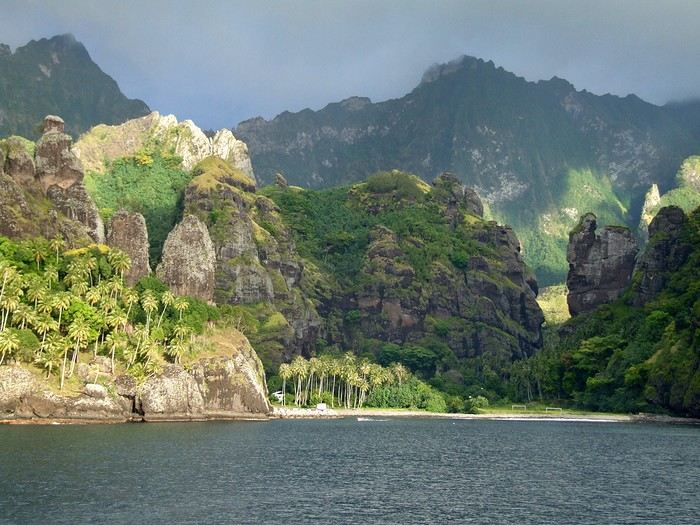 Idyllic landscape of a dream island, but difficult to access: the Bay of Virgins in Fatu Hiva, Marquesas Islands
Among the values conveyed by literature, tourism, and advertising is the quest for “elsewhere,” for a change of scenery, in the truest sense of the word—that is, the need to leave one’s country. This need for otherness, for difference, is projected onto dreamlike, idealized, even mythicized places. In our imaginary world, the island is often that place.
Yet we forget that islands have also been ideal prisons. The examples are numerous: Elba and Saint Helena, Alcatraz and Poulo Condor, If and Yeu, the Devil’s Islands and Leros. The latter, located in Greece in the Dodecanese, hosted a sinister forced labor camp during the colonels’ dictatorship as well as a psychiatric hospital. Despite the beauty of its bay, tourism has remained marginal there due to its bad reputation, unlike the neighboring island of Patmos.
I’d like to share a selection of about a dozen islands from across the world’s seas and oceans. For dreaming...
°°°°°°°°°°°°°°°
SANTORINI
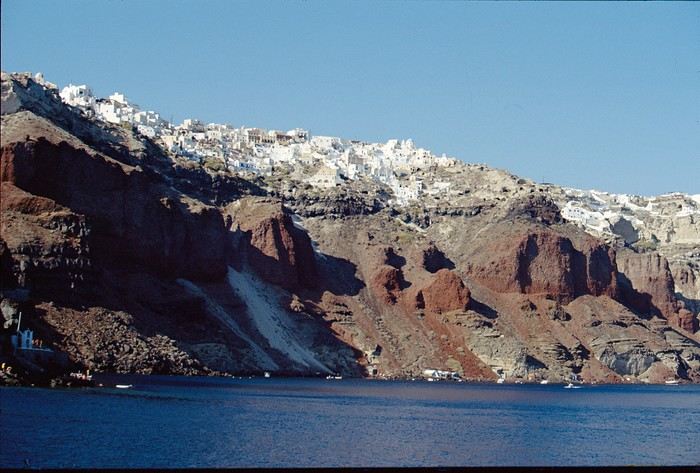
July 27, 1967
At dawn, the ferry from Agios Nikolaos (Crete) enters the immense caldera of Santorini. From the ship’s deck, Rainer, my travel companion, and I are left in awe by the sight of these towering, multicolored cliffs looming over us. We disembark and begin the steep climb on foot via the winding mule path up to the village of Fira, the capital perched above the cliff. Though it’s still very early, we head to the youth hostel. There wasn’t a soul in the alleys that morning—or rather, there were only cats! I have a fond memory of that encounter with Santorini: a sensory shock, a breathtaking volcanic site, a harmony of blue, ochre-red, and white. A welcoming island, as it was traditional to welcome the xénou, an island that hadn’t yet fully recovered from the terrible 1956 earthquake, a Cycladic architectural marvel where local life was still preserved.
It’s easy to see why, in antiquity, the island was named Kallisté (καλλίστη), “the most beautiful,” as it’s nearly impossible to resist gazing at this landscape shaped by tectonic forces. Indeed, a massive volcanic cataclysm—the Minoan eruption—shaped this scenery in the 17th century BCE, creating a caldera that was quickly filled by the sea. The enormous tsunamis that followed reached Crete, leading to the disappearance of the Minoan civilization.
A cliffside path along the caldera leads us to the peaceful village of Oia, at the northern tip of the island. Blue-domed churches and flower-filled villages with whitewashed houses line the way. This walk is a continuous marvel, offering splendid views of the caldera and the neighboring islands formed by the breakup of the ancient volcano (Thirissa, Nea Kameni). Oia is a large, picturesque village, like Fira perched on the cliff’s edge, which was severely damaged by the 1956 earthquake, and its scars are still visible. Its cave-like houses with vaulted roofs haven’t yet been turned into luxury hotels or shops. Absolute tranquility reigns here.
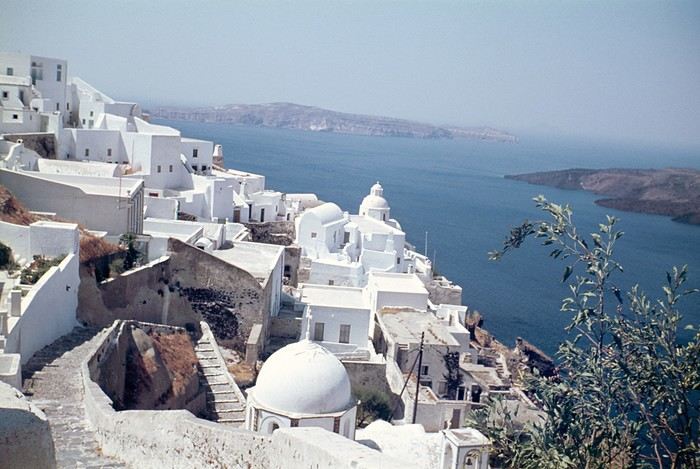 Oia in 1967—a peaceful village overlooking the caldera. But where are the pools and trendy bars?
A lush countryside covered in olive trees and vineyards welcomes us for a pleasant hike, interrupted by the kindness of a friendly islander who gives us a lift in his truck for a few kilometers. He’s off to harvest his tomatoes, which he grows at the foot of Pyrgos Hill. The delicious little cherry tomato of Santorini earned an EU Protected Designation of Origin (PDO) in 2013. We climb up to the village of Pyrgos, perched on a hill and dominated by the elegant bell tower of its church. Finally, we reach the black sand beach of Kamari on the island’s eastern coast to enjoy a swim.
{...} To be continued
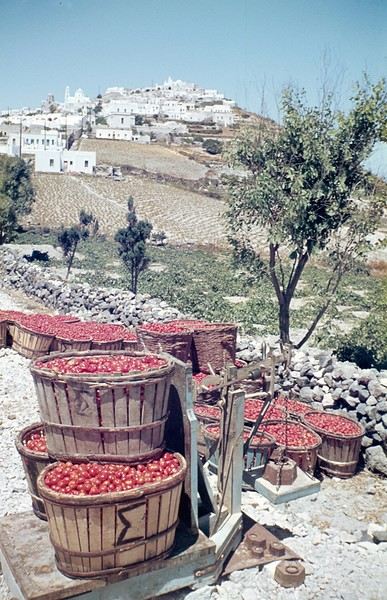

°°°°°°°°°°°°°°°°°
RAIVAVAE (French Polynesia)
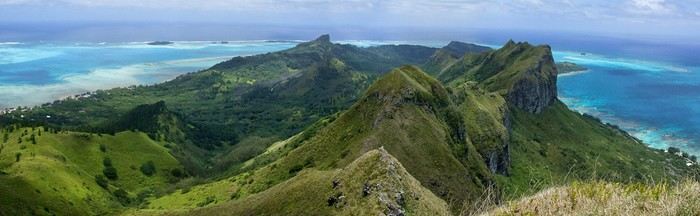
November 15, 2007
Éléonore from Pension Tama welcomes us with traditional flower leis, as if she’d been waiting for old friends she hadn’t seen in ages. The small airport terminal is lively, the atmosphere warm—people hugging, rejoicing in reunions, all under kilos of flowers. Then, just as quickly, the place empties until the next flight... in a few days.
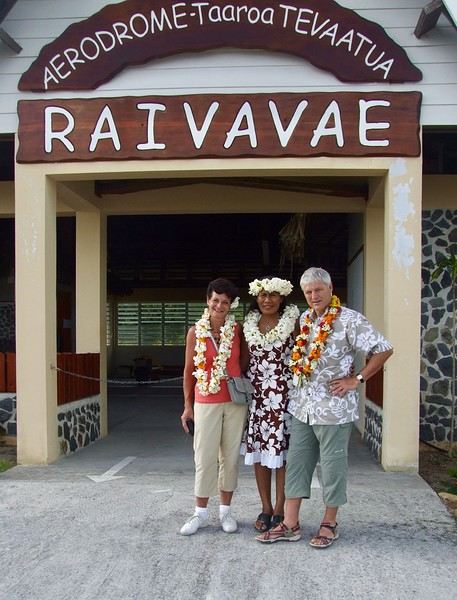
In the Austral Islands, a ninety-minute flight from Tahiti, Raivavae is a world away from the frenetic pace of Papeete or the tourist crowds of the Leeward Islands. The true paradise of the South Seas can still be savored here—it’s a bit like Bora Bora half a century ago. Our first feeling upon arriving on this island is wonder, with smiles that could melt even the gloomiest among us, landscapes so stunning they take your breath away, and above all, a sense of disorientation and fulfillment. Picture a mountainous island, about ten kilometers by three and a half, encircled by a coral reef and wild motu, cradling a lagoon with shades of blue that would make Bora Bora green with envy.
The roughly one thousand inhabitants of Raivavae are spread across four villages around the island. Children are everywhere, as is typical in Polynesia, and they greet you with open, genuine smiles. Here, ancestral values have survived progress. The predominantly Protestant population is very devout, as evidenced by the several temples built across the island. Religious fervor sets the rhythm of daily life. Sundays are reserved for worship and Sunday school (catechism). Work is forbidden on that day, and tourist activities are suspended. These rules are strict and respected.
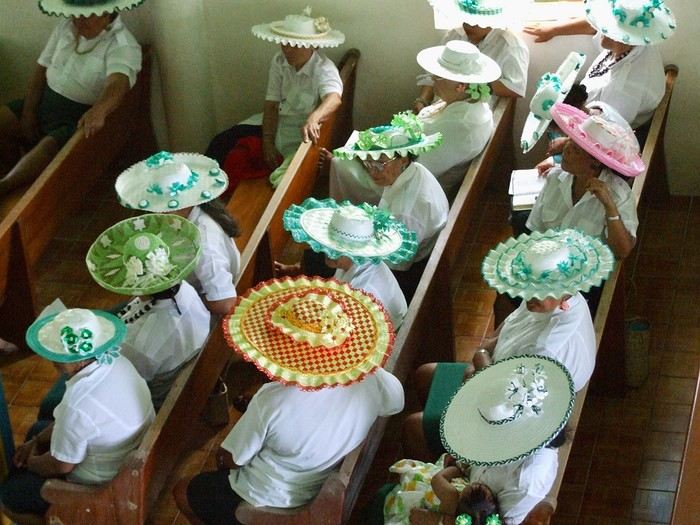 Hat contest for the worship celebration
Yet a sense of resignation is ever-present. The people of Raivavae know they are—and will remain—isolated. Despite the construction of an airstrip in 2004 and a few weekly flights to Tahiti and its nearest neighbor, Tubuai (200 km away), the island remains on the fringes of the world. One painful aspect is the separation of children from their parents when they leave for middle school in Tubuai starting in fifth grade. Television brings daily images of a world the islanders will likely never know, but one they often aspire to.
We are privileged. We have the pristine white-sand beaches of the motu and some of the most beautiful bays in Polynesia all to ourselves. The jewel in the crown, the island’s emblematic spot, is the “motu-pool,” about twenty minutes by boat. A natural, exquisite basin with crystal-clear water, gradients of blue, and white sand. And best of all, there’s almost no one there. In fact, lounging on the beach is frowned upon, especially for young women. Religion looks very unfavorably on sunbathing and lazing around. And yet, everything here leans toward that philosophy of life.
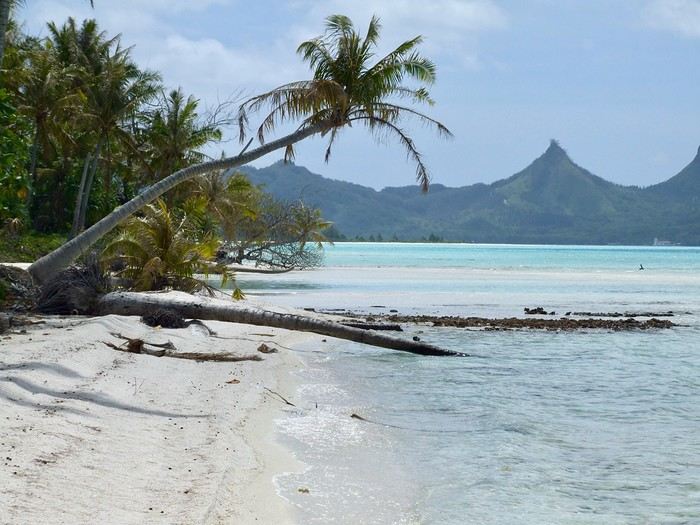
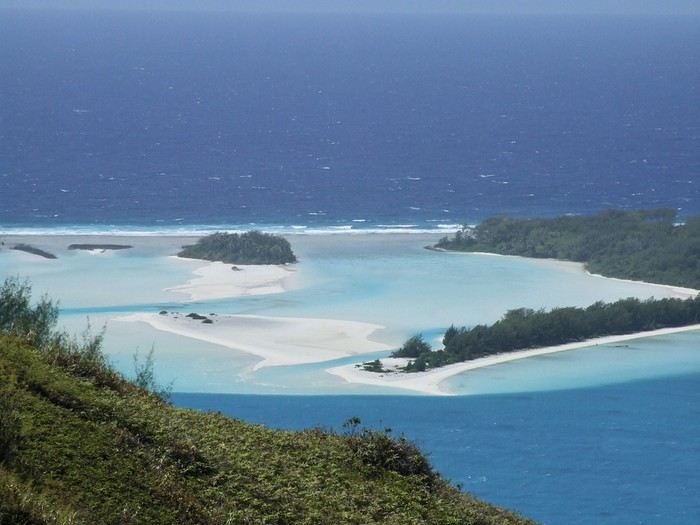 The "motu-pool"
{...} To be continued
Who among us hasn’t dreamed of having a ticket to Tahiti, Bora Bora, or the Marquesas in their pocket—preferably a one-way ticket to “paradise”?
Idyllic landscape of a dream island, but difficult to access: the Bay of Virgins in Fatu Hiva, Marquesas IslandsAmong the values conveyed by literature, tourism, and advertising is the quest for “elsewhere,” for a change of scenery, in the truest sense of the word—that is, the need to leave one’s country. This need for otherness, for difference, is projected onto dreamlike, idealized, even mythicized places. In our imaginary world, the island is often that place.
Yet we forget that islands have also been ideal prisons. The examples are numerous: Elba and Saint Helena, Alcatraz and Poulo Condor, If and Yeu, the Devil’s Islands and Leros. The latter, located in Greece in the Dodecanese, hosted a sinister forced labor camp during the colonels’ dictatorship as well as a psychiatric hospital. Despite the beauty of its bay, tourism has remained marginal there due to its bad reputation, unlike the neighboring island of Patmos.
I’d like to share a selection of about a dozen islands from across the world’s seas and oceans. For dreaming...
°°°°°°°°°°°°°°°
SANTORINI
July 27, 1967
At dawn, the ferry from Agios Nikolaos (Crete) enters the immense caldera of Santorini. From the ship’s deck, Rainer, my travel companion, and I are left in awe by the sight of these towering, multicolored cliffs looming over us. We disembark and begin the steep climb on foot via the winding mule path up to the village of Fira, the capital perched above the cliff. Though it’s still very early, we head to the youth hostel. There wasn’t a soul in the alleys that morning—or rather, there were only cats! I have a fond memory of that encounter with Santorini: a sensory shock, a breathtaking volcanic site, a harmony of blue, ochre-red, and white. A welcoming island, as it was traditional to welcome the xénou, an island that hadn’t yet fully recovered from the terrible 1956 earthquake, a Cycladic architectural marvel where local life was still preserved.
It’s easy to see why, in antiquity, the island was named Kallisté (καλλίστη), “the most beautiful,” as it’s nearly impossible to resist gazing at this landscape shaped by tectonic forces. Indeed, a massive volcanic cataclysm—the Minoan eruption—shaped this scenery in the 17th century BCE, creating a caldera that was quickly filled by the sea. The enormous tsunamis that followed reached Crete, leading to the disappearance of the Minoan civilization.
A cliffside path along the caldera leads us to the peaceful village of Oia, at the northern tip of the island. Blue-domed churches and flower-filled villages with whitewashed houses line the way. This walk is a continuous marvel, offering splendid views of the caldera and the neighboring islands formed by the breakup of the ancient volcano (Thirissa, Nea Kameni). Oia is a large, picturesque village, like Fira perched on the cliff’s edge, which was severely damaged by the 1956 earthquake, and its scars are still visible. Its cave-like houses with vaulted roofs haven’t yet been turned into luxury hotels or shops. Absolute tranquility reigns here.
Oia in 1967—a peaceful village overlooking the caldera. But where are the pools and trendy bars?A lush countryside covered in olive trees and vineyards welcomes us for a pleasant hike, interrupted by the kindness of a friendly islander who gives us a lift in his truck for a few kilometers. He’s off to harvest his tomatoes, which he grows at the foot of Pyrgos Hill. The delicious little cherry tomato of Santorini earned an EU Protected Designation of Origin (PDO) in 2013. We climb up to the village of Pyrgos, perched on a hill and dominated by the elegant bell tower of its church. Finally, we reach the black sand beach of Kamari on the island’s eastern coast to enjoy a swim.
{...} To be continued
°°°°°°°°°°°°°°°°°
RAIVAVAE (French Polynesia)
November 15, 2007
Éléonore from Pension Tama welcomes us with traditional flower leis, as if she’d been waiting for old friends she hadn’t seen in ages. The small airport terminal is lively, the atmosphere warm—people hugging, rejoicing in reunions, all under kilos of flowers. Then, just as quickly, the place empties until the next flight... in a few days.
In the Austral Islands, a ninety-minute flight from Tahiti, Raivavae is a world away from the frenetic pace of Papeete or the tourist crowds of the Leeward Islands. The true paradise of the South Seas can still be savored here—it’s a bit like Bora Bora half a century ago. Our first feeling upon arriving on this island is wonder, with smiles that could melt even the gloomiest among us, landscapes so stunning they take your breath away, and above all, a sense of disorientation and fulfillment. Picture a mountainous island, about ten kilometers by three and a half, encircled by a coral reef and wild motu, cradling a lagoon with shades of blue that would make Bora Bora green with envy.
The roughly one thousand inhabitants of Raivavae are spread across four villages around the island. Children are everywhere, as is typical in Polynesia, and they greet you with open, genuine smiles. Here, ancestral values have survived progress. The predominantly Protestant population is very devout, as evidenced by the several temples built across the island. Religious fervor sets the rhythm of daily life. Sundays are reserved for worship and Sunday school (catechism). Work is forbidden on that day, and tourist activities are suspended. These rules are strict and respected.
Hat contest for the worship celebrationYet a sense of resignation is ever-present. The people of Raivavae know they are—and will remain—isolated. Despite the construction of an airstrip in 2004 and a few weekly flights to Tahiti and its nearest neighbor, Tubuai (200 km away), the island remains on the fringes of the world. One painful aspect is the separation of children from their parents when they leave for middle school in Tubuai starting in fifth grade. Television brings daily images of a world the islanders will likely never know, but one they often aspire to.
We are privileged. We have the pristine white-sand beaches of the motu and some of the most beautiful bays in Polynesia all to ourselves. The jewel in the crown, the island’s emblematic spot, is the “motu-pool,” about twenty minutes by boat. A natural, exquisite basin with crystal-clear water, gradients of blue, and white sand. And best of all, there’s almost no one there. In fact, lounging on the beach is frowned upon, especially for young women. Religion looks very unfavorably on sunbathing and lazing around. And yet, everything here leans toward that philosophy of life.
The "motu-pool"{...} To be continued
Ios durant 3 jours en juillet? English translation pending
Salut tout le monde!
J'ai 66 ans, ma femme 60 ans... Nous ne sommes pas fans des plages, mais nous aimons prendre un bain naturel de temps en temps... Et nous aimons être dans une atmosphère animée.
1)- Est-ce que Ios Chora est une ville assez belle pour y trouver de quoi nous occuper pendant 3 jours en juillet sans nous ennuyer, biensur en alternance avec Gialos et les autres parties de l'île ?
2)- Pensez-vous que Ios, combinée avec Syros, Amorgos et Astypalea, pourrait être une bonne option après avoir visité toutes les cyclades, sauf Andros, Serifos et Milos ?
3) Tinos qui a une bonne connexion avec syros et amorgos est-elle une meilleure alternative à Ios ?
Merci d'avance.
Riadhou
J'ai 66 ans, ma femme 60 ans... Nous ne sommes pas fans des plages, mais nous aimons prendre un bain naturel de temps en temps... Et nous aimons être dans une atmosphère animée.
1)- Est-ce que Ios Chora est une ville assez belle pour y trouver de quoi nous occuper pendant 3 jours en juillet sans nous ennuyer, biensur en alternance avec Gialos et les autres parties de l'île ?
2)- Pensez-vous que Ios, combinée avec Syros, Amorgos et Astypalea, pourrait être une bonne option après avoir visité toutes les cyclades, sauf Andros, Serifos et Milos ?
3) Tinos qui a une bonne connexion avec syros et amorgos est-elle une meilleure alternative à Ios ?
Merci d'avance.
Riadhou
Merveilles d'Abyssinie English translation pending
Au moment de Noël 2019, c'est l'occasion de me faire un cadeau. Je fouille une nouvelle fois dans mes rêves d'enfant et l'Abyssinie sort de mon chapeau.
Toute la magie à l'évocation de ce nom me revient en pleine face : Les hauts plateaux, le loup, la reine Saba, Salomon, Lalibela, l'homme aux semelles de vent ...
Et puis je ne suis plus allé en Afrique depuis 2011. Cela me manque.
C'est décidé, j'irai en Ethiopie avant la saison des pluies. Je peux poser 2 semaines de vacances après le 7 mars.
Je me rapproche d'une agence avec qui je définis un itinéraire classique dans le Nord du Pays qui sera affiné grâce aux renseignements et conseils glanés sur ce forum. Je précise que je me mets bien avec un 4x4, un chauffeur et un guide francophone.
Le 9 mars, je suis donc à CDG dans la file d'enregistrement du vol Ethiopian Airlines avec mon sac léger : quelques affaires, quelques médicaments, du saucisson sec et des pastilles Ricola à l'orange, le livre l'Abyssin de Ruffier, le guide Olizane, et mon smartphone ( je regrette de ne pas avoir pris un vrai appareil photo !!!) . J'ai aussi un bon paquet de tshirt et sweat, des paquets de stylos qui alourdissent mon bagage mais qui feront nombre d'heureux sur les routes des hauts plateaux.
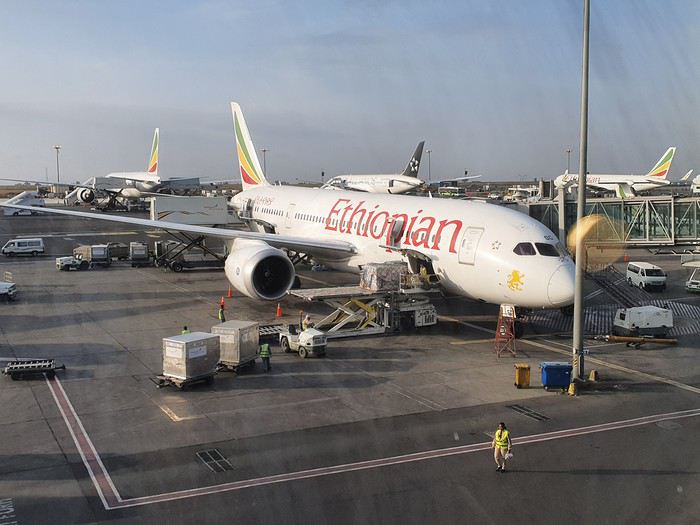
Le 10 mars au petit matin, après avoir changé des euros au rutilant terminal international de l'aéroport d'Adis , je rejoins le terminal des vols domestiques, moins rutilant. Je cherche un peu pour rejoindre ce terminal, je repasse par les contrôles de sécurité par lesquels je viens de passer mais cette fois ci à l'envers.
Et j'attends mon vol pour Lalibela. Attendre, c'est aussi ce que j'aime en Afrique, cette conception du temps tellement différente de la notre. Je m'y cale rapidement et éprouve une certaine joie à contempler tantôt le monde extérieur, tantôt mon monde intérieur. Je dois contempler trop longtemps une jolie jeune fille. Quelques minutes après, elle vient briser mon silence et s’asseoir à coté de moi. La salle d'embarquement se vide, le vol pour Baher Dar va décoller. Ma jolie voisine reste, elle habite Lalibela et va prendre comme moi le prochain vol.
Je me rapproche d'une agence avec qui je définis un itinéraire classique dans le Nord du Pays qui sera affiné grâce aux renseignements et conseils glanés sur ce forum. Je précise que je me mets bien avec un 4x4, un chauffeur et un guide francophone.
Le 9 mars, je suis donc à CDG dans la file d'enregistrement du vol Ethiopian Airlines avec mon sac léger : quelques affaires, quelques médicaments, du saucisson sec et des pastilles Ricola à l'orange, le livre l'Abyssin de Ruffier, le guide Olizane, et mon smartphone ( je regrette de ne pas avoir pris un vrai appareil photo !!!) . J'ai aussi un bon paquet de tshirt et sweat, des paquets de stylos qui alourdissent mon bagage mais qui feront nombre d'heureux sur les routes des hauts plateaux.
Le 10 mars au petit matin, après avoir changé des euros au rutilant terminal international de l'aéroport d'Adis , je rejoins le terminal des vols domestiques, moins rutilant. Je cherche un peu pour rejoindre ce terminal, je repasse par les contrôles de sécurité par lesquels je viens de passer mais cette fois ci à l'envers.
Et j'attends mon vol pour Lalibela. Attendre, c'est aussi ce que j'aime en Afrique, cette conception du temps tellement différente de la notre. Je m'y cale rapidement et éprouve une certaine joie à contempler tantôt le monde extérieur, tantôt mon monde intérieur. Je dois contempler trop longtemps une jolie jeune fille. Quelques minutes après, elle vient briser mon silence et s’asseoir à coté de moi. La salle d'embarquement se vide, le vol pour Baher Dar va décoller. Ma jolie voisine reste, elle habite Lalibela et va prendre comme moi le prochain vol.
Concours photo du mois de mars 2020: Seul(e) au monde ou la solitude English translation pending
Bonjour 😉
Pour ce mois de Mars 2020, un thème humain : être seul(e) au monde ou la solitude
Il faut bien sûr que cette notion de solitude soit bien marquée dans l'attitude ou le regard de la personne que vous avez photographiée.
Cette personne peut être entourée d'autres mais il faut qu'on remarque qu'elle est "seule", détachée des autres par un regard, une attitude, un positionnement.
 Photo trouvée sur le net.
Une explication du contexte qui vous a fait choisir telle ou telle personne peut également être prise en compte. Pour la photo ci-dessous proposée dans le concours du mois de Janvier 2011 sur le thème "Le monde en musique" j'expliquais que cet homme dansait seul et sans musique sur les gaths de Mathura en Inde
Pour participer : Dépôt des photos jusqu’au Mercredi 25 Mars à 23h59 Vous pouvez poster jusqu’à 3 photos, numérotées et postées dans des messages différents, accompagnées d’un petit descriptif du lieu et de l’histoire qui s’y rattache.
Pour voter : du Jeudi 26 Mars 0h01 au Lundi 30 Mars 22h Après l'heure de clôture c'est trop tard
Merci d’indiquer le numéro de la photo, le pseudo et le nombre de points attribués. Photo n°1 = 3 pts Photo n°2 = 2 pts Photo n°3 = 1 pt
Merci de faire un copié/collé de chaque photo pour bien illustrer votre vote. Pour se faire, ouvrir une deuxième fenêtre reprenant toutes les photos proposées par les différents participants. Quand on voit : Photo N°1 de trucmuche et qu'il n'y a pas de photo ... en fait on ne voit rien 🤪 or une photo c'est quand même quelque chose qu'on voit, non ? On vote pour des photos, pas pour des photographes 😇
Tous les membres de VF peuvent voter (même ceux qui n’ont pas déposé de photos). En cas d’égalité de points pour la première position, la photo gagnante sera celle ayant obtenu le plus grand nombre de 1ères places, puis de secondes places ! L’heureux gagnant pourra organiser le concours photo du mois d’Avril 2020
Pour les discussions autour du thème, c'est ici : Discussion autour du concours du mois de Mars 2020: Seul(e) au monde
Pour ce mois de Mars 2020, un thème humain : être seul(e) au monde ou la solitude
Il faut bien sûr que cette notion de solitude soit bien marquée dans l'attitude ou le regard de la personne que vous avez photographiée.
Cette personne peut être entourée d'autres mais il faut qu'on remarque qu'elle est "seule", détachée des autres par un regard, une attitude, un positionnement.
Photo trouvée sur le net.Une explication du contexte qui vous a fait choisir telle ou telle personne peut également être prise en compte. Pour la photo ci-dessous proposée dans le concours du mois de Janvier 2011 sur le thème "Le monde en musique" j'expliquais que cet homme dansait seul et sans musique sur les gaths de Mathura en Inde
Pour participer : Dépôt des photos jusqu’au Mercredi 25 Mars à 23h59 Vous pouvez poster jusqu’à 3 photos, numérotées et postées dans des messages différents, accompagnées d’un petit descriptif du lieu et de l’histoire qui s’y rattache.
Pour voter : du Jeudi 26 Mars 0h01 au Lundi 30 Mars 22h Après l'heure de clôture c'est trop tard
Merci d’indiquer le numéro de la photo, le pseudo et le nombre de points attribués. Photo n°1 = 3 pts Photo n°2 = 2 pts Photo n°3 = 1 pt
Merci de faire un copié/collé de chaque photo pour bien illustrer votre vote. Pour se faire, ouvrir une deuxième fenêtre reprenant toutes les photos proposées par les différents participants. Quand on voit : Photo N°1 de trucmuche et qu'il n'y a pas de photo ... en fait on ne voit rien 🤪 or une photo c'est quand même quelque chose qu'on voit, non ? On vote pour des photos, pas pour des photographes 😇
Tous les membres de VF peuvent voter (même ceux qui n’ont pas déposé de photos). En cas d’égalité de points pour la première position, la photo gagnante sera celle ayant obtenu le plus grand nombre de 1ères places, puis de secondes places ! L’heureux gagnant pourra organiser le concours photo du mois d’Avril 2020
Pour les discussions autour du thème, c'est ici : Discussion autour du concours du mois de Mars 2020: Seul(e) au monde
Étapes, restaurants et hébergements sur itinéraire de 18 jours en Sicile English translation pending
Bonjour,
Je prépare un voyage de 18 jours en Sicile avec mes cousins australiens pour Avril 2021. J'aimerais avoir des conseils sur mon itinéraire, si nous passons à côté de choses indispensables, si au contraire, il y a des étapes que nous pourrions annuler et des conseils pour des restaurants et des hébergements ( en MP si vous préférez).
Merci pour votre aide!
Voici l'itinéraire auquel j'ai pensé : ( nous venons de Nice) Jour 1 - Naples jour 2 - Pompei jour 3 et 4 - Palerme - Monreale Jour 5 - Segeste - reserve de Zingaro - nuit dans le coin ? jour 6 - Erice Jour 7 - iles Egades - salines de Stagnone - nuit à Mazara Del vallo Jour 8 - Marinella di Selinunte - nuit à Marinella Jour 9 - Journée dans la région d'Agrigente Realmonte, Scala dei Turchi - nuit à Agrigente Jour 10 - Piazza Armerina, Villa Romana del Casale - nuit à Raguse Jour 11 - Palazzo Acreide, journée relax dans la reserve de Vendicari, soirée à Noto - nuit à Noto Jour 12 - Syracuse - nuit à Ortigia Jour 13 - Catane - nuit en dehors de la ville ? Jour 14 - Etna - nuit à Linguagrossa Jour 15 - villages perchés - nuit à Milazzo Jour 16 et 17 : Lipari Jour 18 - Cefalu - reserve delle madonna - nuit à Petralia Soprana ? Jour 19 - Palerme - retour
Je prépare un voyage de 18 jours en Sicile avec mes cousins australiens pour Avril 2021. J'aimerais avoir des conseils sur mon itinéraire, si nous passons à côté de choses indispensables, si au contraire, il y a des étapes que nous pourrions annuler et des conseils pour des restaurants et des hébergements ( en MP si vous préférez).
Merci pour votre aide!
Voici l'itinéraire auquel j'ai pensé : ( nous venons de Nice) Jour 1 - Naples jour 2 - Pompei jour 3 et 4 - Palerme - Monreale Jour 5 - Segeste - reserve de Zingaro - nuit dans le coin ? jour 6 - Erice Jour 7 - iles Egades - salines de Stagnone - nuit à Mazara Del vallo Jour 8 - Marinella di Selinunte - nuit à Marinella Jour 9 - Journée dans la région d'Agrigente Realmonte, Scala dei Turchi - nuit à Agrigente Jour 10 - Piazza Armerina, Villa Romana del Casale - nuit à Raguse Jour 11 - Palazzo Acreide, journée relax dans la reserve de Vendicari, soirée à Noto - nuit à Noto Jour 12 - Syracuse - nuit à Ortigia Jour 13 - Catane - nuit en dehors de la ville ? Jour 14 - Etna - nuit à Linguagrossa Jour 15 - villages perchés - nuit à Milazzo Jour 16 et 17 : Lipari Jour 18 - Cefalu - reserve delle madonna - nuit à Petralia Soprana ? Jour 19 - Palerme - retour
Circuit au Népal en avril pour 18 jours sur place sans trek English translation pending
Bonjour,
je devais partir en Chine avec mon fils de 22 ans du 1er au 20 avril mais, évidemment, nous nous préparons à annuler (d'autant que c'était dans les régions juste au nord du Hubei). Du coup, nous cherchons à pivoter parce qu'on les attend depuis un moment ces vacances... Nous sommes bien tentés par le Népal. J'ai commencé à regarder les vols, ça semble jouable avec Air India à peu près sur les mêmes dates.
Un gros mois pour tout réorganiser, pas peur...
Sur les formalités, le routard signale qu'on peut télécharger un truc en ligne mais qu'il faut régler à l'arrivée en dollars, le MAE signale qu'on peut aussi passer au consulat. C'est pas très clair de comprendre quelle est la solution la plus facile... Votre avis ?
Concernant le contenu, on est plutôt tournés ambiance, culture, etc. On était au Yunnan l'an dernier et les hautes terres autour de Shangri-Là nous ont bien plût. Nous allons au Sichuan cet été (si...) et nous allons aller aussi sur les contreforts de l'Himalaya. On a fait des marches (20 km) à 3.000m et c'était agréable mais on ne se sent pas à faire une marche de plusieurs jours.
Sur le circuit, si on suppose qu'on arrive le 2 et qu'on repart le 19, ça doit pouvoir faire deux sous-circuits : Un circuit Katmandou-Bandipur Pokhara - Lumbini - Chitwan un circuit dans la vallée de Katmandou (qui semble déjà très riche)
Et, visiblement, coup de bol, on aura l'occasion de vivre le nouvel an ?
Qu'en pensez-vous ?
Un gros mois pour tout réorganiser, pas peur...
Sur les formalités, le routard signale qu'on peut télécharger un truc en ligne mais qu'il faut régler à l'arrivée en dollars, le MAE signale qu'on peut aussi passer au consulat. C'est pas très clair de comprendre quelle est la solution la plus facile... Votre avis ?
Concernant le contenu, on est plutôt tournés ambiance, culture, etc. On était au Yunnan l'an dernier et les hautes terres autour de Shangri-Là nous ont bien plût. Nous allons au Sichuan cet été (si...) et nous allons aller aussi sur les contreforts de l'Himalaya. On a fait des marches (20 km) à 3.000m et c'était agréable mais on ne se sent pas à faire une marche de plusieurs jours.
Sur le circuit, si on suppose qu'on arrive le 2 et qu'on repart le 19, ça doit pouvoir faire deux sous-circuits : Un circuit Katmandou-Bandipur Pokhara - Lumbini - Chitwan un circuit dans la vallée de Katmandou (qui semble déjà très riche)
Et, visiblement, coup de bol, on aura l'occasion de vivre le nouvel an ?
Qu'en pensez-vous ?
Antelope Canyon, Horseshoe Bend, etc... "overcrowded". Effet de Panurge ou Instagram? English translation pending
trop de touristes dans les lieux … touristiques ( air connu😛)
Les derniers vingt ans et surtout la dernière décennie ont vu grimper en flèche la fréquentation des Parcs nationaux, enfin au moins de certains, ainsi que de certains sites tels que Antelope Canyon et Horseshoe Bend
Antelope Canyon, parce que c’est payant, revient souvent sur les forums francophones, anglophones, hispanophones et certainement d’autres . Taper ‘’ Antelope Canyon rip-off ( ou scam) ‘’ et vous verrez que les Français ne sont pas les seuls à râler !
Voici quelques uns des repères qui ont jalonné la montée en puissance d’Antelope Canyon dans le monde du tourisme !
Dans les années 70 ces parages étaient parcourus par les bergers Navajos, quelques scientifiques, naturalistes ou géologues, de rares photographes et c’était à peu près tout ! Par exemple c’est par un collègue senior que j’en ai entendu parler …
L’histoire dit qu’un jour un berger Navajo rencontre un photographe tout équipé, marchant dans le désert, quelque peu hagard, qui cherchait désespérément un certain canyon aux couleurs et formes étonnantes dont il avait entendu parler . Il l’y aurait conduit et aurait vite réalisé que les ‘Américains’ étaient prêts à payer pour y venir.
Ça aurait donc commencé comme cela… !
En tous cas vers le milieu ou la fin des années 70 deux revues importantes présentent le site aux Américains…
- au niveau régional Arizona Highways
- au niveau national National Geographic qui lui apporte une première consécration
En 1997 les Français et autres Européens notamment font partie de la nouvelle clientèle internationale qui commence à affluer. Cette période est évidemment marquée par la tragédie du flash flood au cours duquel plusieurs touristes français trouvent la mort. Selon les responsables locaux du moment la fréquentation aurait en fait sensiblement augmentée après cette tragédie !
En 2009 quand Microsoft décide d’incorporer une série de photos à Windows 7 les choses changent d’échelle. En deux ans Microsoft vend plus de 450 millions de licences et fait ainsi visionner les images à haute fidélité du site à des centaines de millions de personnes ( les titulaires de la licence et toute le reste de la famille ou du bureau!)
En 2010 c’est le lancement de Instagramdont la presse américaine s’accorde à dire qu’il a été instrumental dans le flux touristique toujours croissant et pas seulement à Antelope Canyon !
En 2019 on vient de faire le constat que les requêtes Google sur Antelope Canyon ont explosé depuis : elles auraient augmenté de 660 % !
L’année 2019 marque aussi la fin des créneaux horaires réservés aux ‘’photographes avec tripode’’ les tours ''standard'' étant devenus trop difficiles à gérer
Antelope Canyon is Shutting Down Its Photo Tours Due to …
Antelope Canyon photography tours are canceled. Here's why
En 2020 les opérateurs affirment que cette décision devrait réduire la pression sur les groupes de visiteurs ‘’standard’’ ceux qui arrivent en masse, le portable au bout d’une perche pour le selfie de rigueur ( paraît-il)
…
Si vous avez aimez la montée en puissance d’ Antelope Canyon et le rôle des réseaux sociaux (Instagram etc….)
.. vous allez adorer celle de Horseshoe Bend….
… en 10 ans (2009-2019) la fréquentation touristique annuelle y est passée de moins de 40 000 personnes à environ 2 200 000 mais ce sont surtout les cinq dernières années qui ont vu s’emballer le flux, la fièvre Antelope canyon se serait alors propagée via Instagram selon le Wall Street Journal lui-même l’été dernier
Instagram Turns Obscure U.S. Sights Into Social-Media …
Et comme nous l’expliquait ABC TV, également en juillet dernier
Link to ABC News story
pas étonnant donc que le prix des chambres d’hôtel à PAGE flambe!
Les derniers vingt ans et surtout la dernière décennie ont vu grimper en flèche la fréquentation des Parcs nationaux, enfin au moins de certains, ainsi que de certains sites tels que Antelope Canyon et Horseshoe Bend
Antelope Canyon, parce que c’est payant, revient souvent sur les forums francophones, anglophones, hispanophones et certainement d’autres . Taper ‘’ Antelope Canyon rip-off ( ou scam) ‘’ et vous verrez que les Français ne sont pas les seuls à râler !
Voici quelques uns des repères qui ont jalonné la montée en puissance d’Antelope Canyon dans le monde du tourisme !
Dans les années 70 ces parages étaient parcourus par les bergers Navajos, quelques scientifiques, naturalistes ou géologues, de rares photographes et c’était à peu près tout ! Par exemple c’est par un collègue senior que j’en ai entendu parler …
L’histoire dit qu’un jour un berger Navajo rencontre un photographe tout équipé, marchant dans le désert, quelque peu hagard, qui cherchait désespérément un certain canyon aux couleurs et formes étonnantes dont il avait entendu parler . Il l’y aurait conduit et aurait vite réalisé que les ‘Américains’ étaient prêts à payer pour y venir.
Ça aurait donc commencé comme cela… !
En tous cas vers le milieu ou la fin des années 70 deux revues importantes présentent le site aux Américains…
- au niveau régional Arizona Highways
- au niveau national National Geographic qui lui apporte une première consécration
En 1997 les Français et autres Européens notamment font partie de la nouvelle clientèle internationale qui commence à affluer. Cette période est évidemment marquée par la tragédie du flash flood au cours duquel plusieurs touristes français trouvent la mort. Selon les responsables locaux du moment la fréquentation aurait en fait sensiblement augmentée après cette tragédie !
En 2009 quand Microsoft décide d’incorporer une série de photos à Windows 7 les choses changent d’échelle. En deux ans Microsoft vend plus de 450 millions de licences et fait ainsi visionner les images à haute fidélité du site à des centaines de millions de personnes ( les titulaires de la licence et toute le reste de la famille ou du bureau!)
En 2010 c’est le lancement de Instagramdont la presse américaine s’accorde à dire qu’il a été instrumental dans le flux touristique toujours croissant et pas seulement à Antelope Canyon !
En 2019 on vient de faire le constat que les requêtes Google sur Antelope Canyon ont explosé depuis : elles auraient augmenté de 660 % !
L’année 2019 marque aussi la fin des créneaux horaires réservés aux ‘’photographes avec tripode’’ les tours ''standard'' étant devenus trop difficiles à gérer
Antelope Canyon is Shutting Down Its Photo Tours Due to …
Antelope Canyon photography tours are canceled. Here's why
En 2020 les opérateurs affirment que cette décision devrait réduire la pression sur les groupes de visiteurs ‘’standard’’ ceux qui arrivent en masse, le portable au bout d’une perche pour le selfie de rigueur ( paraît-il)
…
Si vous avez aimez la montée en puissance d’ Antelope Canyon et le rôle des réseaux sociaux (Instagram etc….)
.. vous allez adorer celle de Horseshoe Bend….
… en 10 ans (2009-2019) la fréquentation touristique annuelle y est passée de moins de 40 000 personnes à environ 2 200 000 mais ce sont surtout les cinq dernières années qui ont vu s’emballer le flux, la fièvre Antelope canyon se serait alors propagée via Instagram selon le Wall Street Journal lui-même l’été dernier
Instagram Turns Obscure U.S. Sights Into Social-Media …
Et comme nous l’expliquait ABC TV, également en juillet dernier
Link to ABC News story
pas étonnant donc que le prix des chambres d’hôtel à PAGE flambe!
Voyage de cinq semaines en Afrique du Sud en janvier English translation pending
Bonjour à tous,
Nous partons en couple fin janvier 2020 en Afrique du Sud pour 5 semaines.
Pour notre 1er voyage dans ce grand pays, nous avons choisi de ne pas courir et d'explorer l'ouest du pays : régions du Cap Occidental (péninsule du Cap, West Coast, Cederberg, Winelands, Garden Route, Karoo), du Cap Oriental (Côte, Addo Elephant NP, Amathole, Wild Coast, Highlands), et peut-être du Cap Nord (Kagalagadi Transfrontier Park, Augrabies Falls).
Nous avons des billets Paris / Le Cap aller-retour. Nous allons passer 2 à 3 jours au Cap puis allons louer une voiture pendant 30 jours.
J'ai plusieurs questions à poser à ceux qui connaissent le pays : 1 - Nous voyageons "lentement". Est-ce que nous aurons le temps d'aller jusqu'au Kgalagadi Transfrontier Park ? ou est-ce que vous nous conseillez de rester dans les régions du Cap Occidental et du Cap Oriental ? 2. Nous arrivons au Cap vers 23 h. Est-ce que vous nous conseillez de réserver un hôtel près de l'aéroport et d'y aller avec la navette de l'hôtel ou de réserver un hôtel dans le centre et d'y aller en taxi ? 3. Nous allons louer une voiture de type "berline moyenne". Est-ce que nous pourrons rouler sur des routes non goudronnées ou est-ce qu'il y a, comme en Australie, une clause qui l'interdit ? 4. Nous conseillez-vous d'emporter du matériel de camping pour dormir dans les parcs ? (tente, sacs de couchage, matériel de cuisine)
Tous vos conseils sont les bienvenus, merci d'avance pour vos réponses !
Marie Christine
Nous partons en couple fin janvier 2020 en Afrique du Sud pour 5 semaines.
Pour notre 1er voyage dans ce grand pays, nous avons choisi de ne pas courir et d'explorer l'ouest du pays : régions du Cap Occidental (péninsule du Cap, West Coast, Cederberg, Winelands, Garden Route, Karoo), du Cap Oriental (Côte, Addo Elephant NP, Amathole, Wild Coast, Highlands), et peut-être du Cap Nord (Kagalagadi Transfrontier Park, Augrabies Falls).
Nous avons des billets Paris / Le Cap aller-retour. Nous allons passer 2 à 3 jours au Cap puis allons louer une voiture pendant 30 jours.
J'ai plusieurs questions à poser à ceux qui connaissent le pays : 1 - Nous voyageons "lentement". Est-ce que nous aurons le temps d'aller jusqu'au Kgalagadi Transfrontier Park ? ou est-ce que vous nous conseillez de rester dans les régions du Cap Occidental et du Cap Oriental ? 2. Nous arrivons au Cap vers 23 h. Est-ce que vous nous conseillez de réserver un hôtel près de l'aéroport et d'y aller avec la navette de l'hôtel ou de réserver un hôtel dans le centre et d'y aller en taxi ? 3. Nous allons louer une voiture de type "berline moyenne". Est-ce que nous pourrons rouler sur des routes non goudronnées ou est-ce qu'il y a, comme en Australie, une clause qui l'interdit ? 4. Nous conseillez-vous d'emporter du matériel de camping pour dormir dans les parcs ? (tente, sacs de couchage, matériel de cuisine)
Tous vos conseils sont les bienvenus, merci d'avance pour vos réponses !
Marie Christine
Aide sur itinéraire de 2 semaines au Maroc en décembre English translation pending
Bonjour,
Nous partons à 3 personnes en décembre au Maroc pour 2 semaines.
Projet : Fès, Meknès, louer une voiture pour descendre vers le Sud et rejoindre Marrakech pour le vol retour. On aime rouler dans de beaux paysages, s'arrêter dans les villages.
Que pensez-vous de cette ébauche d'itinéraire ?
Route Fès - Azrou - Er-Rachidia - Goulmina - boucle gorges de Todra et Dadès - vallée du Drâa - M'Hamid - Tazenakht - N9 puis bifurcation vers Aït Ben Haddou - Telouet - Marrakech
Est-ce que ça n'est pas trop sur 2 semaines ? Sachant qu'il va faire nuit tôt, qu'on risque d'être retardés par le mauvais temps. Mais si c'est trop juste, on peut garder la visite de Marrakech comme départ d'un prochain voyage.
Je n'ai pas réservé les vols mais on arriverait le 6/12, Fès et Meknès du 7 au 10/12, vol retour le 21/12. Il resterait donc 10 jours pour le reste.
J'aimerais connaître votre avis, vos suggestions. Pour la partie désert j'hésitais avec Merzouga. Je ne sais pas trop ce qui est le mieux pour aller faire une ballade dans le désert ?
Merci pour vos commentaires,
Nicole
Nous partons à 3 personnes en décembre au Maroc pour 2 semaines.
Projet : Fès, Meknès, louer une voiture pour descendre vers le Sud et rejoindre Marrakech pour le vol retour. On aime rouler dans de beaux paysages, s'arrêter dans les villages.
Que pensez-vous de cette ébauche d'itinéraire ?
Route Fès - Azrou - Er-Rachidia - Goulmina - boucle gorges de Todra et Dadès - vallée du Drâa - M'Hamid - Tazenakht - N9 puis bifurcation vers Aït Ben Haddou - Telouet - Marrakech
Est-ce que ça n'est pas trop sur 2 semaines ? Sachant qu'il va faire nuit tôt, qu'on risque d'être retardés par le mauvais temps. Mais si c'est trop juste, on peut garder la visite de Marrakech comme départ d'un prochain voyage.
Je n'ai pas réservé les vols mais on arriverait le 6/12, Fès et Meknès du 7 au 10/12, vol retour le 21/12. Il resterait donc 10 jours pour le reste.
J'aimerais connaître votre avis, vos suggestions. Pour la partie désert j'hésitais avec Merzouga. Je ne sais pas trop ce qui est le mieux pour aller faire une ballade dans le désert ?
Merci pour vos commentaires,
Nicole
Septembre (2019) en Grèce English translation pending
Grèce
Ayant profité des interventions de forumistes et de routards, c’est donc avec plaisir que je relate mon expérience qui pourra aider des prochains voyageurs. Mon épouse et moi, dans la « joyeuse » 70aine, avons pendant le mois de septembre, visité la Grèce. Il s’agissait de notre premier voyage dans ce pays. …………………… Jour 0. Vol avec Air Transat Montréal-Athènes (3 septembre 2019) …parti avec 6 heures de retard mais la compagnie a vraiment été reconnaissante de la docilité manifestée par ses passagers : un ti-verre de soda et un ti-chips pour tenir de 21:00 à 3:00. Que demander de mieux !!! …………………….. Jour 1 et 2 : Athènes : Visite de l’Acropole et de son musée et longues promenades dans divers quartiers de la ville tels Plaka, Psiri, Exarchia, .. Nous avons suivi les itinéraires proposés dans LeRoutard et dans Michelin. On peut en se rendant au musée de l’Acropole accéder gratuitement au restaurant et à la terrasse de celui-ci et profiter d’une magnifique vue sur le site de l’Acropole juste devant vous. Logement : Cecil Hôtel : (booking.com) Je ne suggèrerais pas cet hôtel pour un voyage de noces…plutôt vétuste, sdb pour les moins de 75 kg, ti-déj b’en ordinaire (heureusement de bonnes boulangeries-pâtisseries tout près) mais propre, bonne literie et bien situé. Suite : Athènes : jour 9. ………………….. Jour 3, 4 et 5 : Sifnos : Traversée Pyrée-Sifnos avec Sea Jet (catamaran : 3 heures). Sifnos : Superbe ! Les Cyclades comme nous les rêvions ! De bons transports publics qui permettent des déplacements faciles dans toute l’île. On a bien aimé la plage de Christopighi (et quelle vue !), Apollonia oû nous logions et le village haut perché de Kastro. De bonnes tables au centre d’Apollonia. Logement: Margarita GH, à Apollonia. (booking.com Au-dessus d’un café, mais calme et agréable, bien situé, construction récente et moderne, belle vue sur la mer au loin depuis le balcon, joli jardin à l’arrière, proprio très sympathique. Je recommande. On a adoré Sifnos. J’avais quelques inquiétudes concernant le Pyrée : prendre la bonne ligne de métro, identifier le bureau de SeaJet, récupérer les billets, trouver le quai, le bateau, etc. Finalement tout s’est bien passé. PS : si vous prenez possession de vos billets au bureau de la cie au port, il y a risque de vous trouver séparés –si vous êtes deux- pour la traversée car plusieurs rangées de 3 sièges. …………………… Jour 6, 7 et 8 : Milos : Traversée Sifnos-Milos en catamaran avec la cie Agean. À privilégier. Andamas, oû nous logions est beaucoup plus axée sur le tourisme. Ça bouge et on le sent dès que nous mettons le pied dans l’île. Ici aussi, les transports en commun sont très efficaces. Excellent restaurant –nous y sommes allés 2 fois- le long de la mer/plage à environ 1,5 kilomètre du centre-ville. Achalandé. Promenade-croisière autour de l’île avec baignade - repas - groupe retreint : de superbes points de vue, des couleurs incroyables, des formations rocheuses uniques…. Nous avons aimé, nous ne regrettons pas mais avons trouvé la « balade » un peu longue (mais les plus jeunes ou les moins vieux que nous ont davantage apprécié !!!). Notre coup de cœur le Kastro/Plaka : en prime le coucher de soleil. Hôtel : Dionysis Studios, à Andamas. (booking.com) Logement correct. Bien situé. Mini balcon et vue sur des champs. Près de tout. Prix négociable. Le propriétaire a également un hôtel situé en face, dans un e petite rue parallèle, oû un excellent petit-déjeuner est servi : le Semiramis a beaucoup plus de caractère et représente un meilleur RQP. ………………. En conclusion, nous avons adoré notre séjour dans ces deux îles -avec une préférence marquée pour Sifnos- et croyons avoir fait un bon choix car nous ne voulions pas faire des trajets de plus de 3 heures en bateau…mais on rêve de découvrir 2 ou 3 autres îles des Cyclades le printemps prochain. À suivre ! Pour un séjour de 3-4 jours, dans ces deux îles, à moins de vouloir vous rendre dans des coins isolés, le transport en autobus est efficace pour rejoindre les lieux touristiques intéressants et les principales plages. Et le pouce marche bien ! Cinq ou six fois, des gens nous ont pris avec eux : ils ont peut-être eu pitié des deux vieux sur le bord de la route au soleil……hahaha ! PS : Agean: catamarans plus confortables et propres que SeaJet.
……………………. Jour 9 : Athènes : Traversée Milos-Pyrée avec Agean (catamaran). Retour en fin d’après-midi à Athènes. Profitons des heures qui suivent pour nous promener jusque sur la colline de Lycabette. Hôtel : Cecil Hotel (voir jour 1) Restaurants : dans Monastiraki : Euxapis et Maiandros …mais évitez Scholarchio Ouzeri Kouklis (j’aurais dû écouter mon épouse !) Nous aimons « marcher » une ville et nous pensons avoir un portrait d’ensemble satisfaisant de la capitale à la suite de ces 2-3 journées. Nous avons beaucoup apprécié l’animation nocturne de la ville. Il y a une belle effervescence qui est palpable… Et Mythos et freddo cappuccino font bien les choses ! PS : Si + de 65 ans : billet métro aéroport-centre-ville moitié prix. …………………. Location d’une voiture : Budget via AutoEurope –une Volks Polo- pour la continuation de notre voyage en Grèce continentale. Prise et remise de la voiture à l’aéroport. J’ai bien apprécié la transmission manuelle dans les régions montagneuses. Jour 10 : Delphes : Le haut fait culturel de notre voyage. En dépit de nos connaissances limitées de la civilisation grecque, nous avons vraiment été impressionnés, ébahis par la visite du Sanctuaire d’Apollon. Le Sanctuaire d’Athéna vaut grandement le petit détour. Visite rapide d’Itéa et d’Amfissa (initiation aux routes essouFFlantes et aux paysages époustouFFlants) avant de rejoindre l’autoroute qui nous mènera à Kalambaka. Souvenir de la ville même : deux rues parallèles et à sens unique !!! Hébergement : Hôtel Hermès (réservation directe) : Sans être un 5-étoiles un R Q/P imbattable. Confort. Balcon. Vue sur la vallée. Petit déjeuner complet. ………………….. Jour 11 et 12 : Les Météores. Tout un spectacle ! Visite de trois monastères : Grand Météore, Varlaam et Agios Nikolaos. Vaut mieux y aller tôt le matin. La visite intérieure des monastères nous a laissés quelque peu sur notre appétit … mais l’emplacement et l’architecture des monastères et la vue que nous avons de chacun sont remarquables. Bien peu de spiritualité émane de ces lieux devenus trop touristiques. Nous avons repris l’auto pour nous rendre à Vlachava, un joli village en hauteur. Vue superbe sur la vallée – une ‘image’ que je conserve- et un accueil enthousiaste dans une toute petite taverne que vous ne pouvez rater tout en haut. Nous avons logé à Kalambaka et nous n’avons nullement regretté notre choix car la ville est plutôt intéressante et une belle animation règne au centre-ville. Nous avons pris les deux repas du soir à Kalambaka dans un restaurant de la Place de la Mairie : le dimanche en soirée, de la terrasse du Météora -cuisine très correcte et service enjoué-, nous avons profité d’une procession religieuse accompagnée d’une fanfare ( !) puis avons partiellement assisté à un office religieux et à un spectacle musical sympathique sur une place voisine de l’église. Hébergement : à Kalambaka. Nous avions réservé directement à l’Alosos House (le 29-07) une chambre double avec balcon et vue sur les Météores. Jolie déconvenue ! Le proprio tente de nous refiler une espèce de chambre-dortoir de 4 lits - oui, oui, 4 lits – à la propreté plus que douteuse avec une toute petite fenêtre offrant une vue imprenable sur la maison voisine et le palier de l’escalier faisant office de balcon! Seul petit nuage de tout notre voyage ! On passe à un autre appel ! Fort heureusement, nous avons trouvé facilement à nous loger à l’hôtel voisin. ………………. Jour 13 et 14 : Au Pays des Zagoria. Des Météores à Ioannina, nous avons emprunté en bonne partie la vieille route et avons joui de très beaux paysages. Visite de la Grotte de Péranna : Vaut amplement le petit détour. Une forêt magique ! Et une jeune guide bien allumée. Pour moi, Québécois, le spectacle de ces ‘chandelles de cire’ est fascinant. La deuxième journée, nous sommes partis tôt pour découvrir le pays des Zagoria…et nous n’avons pas été déçus. Woah ! À couper le souffle ! Un majestueux pont de pierre avec ses trois arches, les gorges de Vikos, de hautes parois rocheuses, des villages, Monodendri, Oxia, Aristi, Vikos, ayant conservé de belles demeures typiques et oû le temps semble s’être arrêté. Nous aurions pu passer une journée additionnelle dans ce coin de pays. Bien loin de l’image que les dépliants touristiques nous donnent de la Grèce. Hébergement : à Ioannina : Hôtel Kentrikon (booking.com). Impeccable. Excellent RQ/P. Balcon sur le toit. Bien situé, dans une rue piétonnière tout près de la belle place composée d’édifices gouvernementaux. La ville d’Ioannina représente une bonne halte (promenade agréable et les abords du lac) et la restauration est à signaler : nous avons fait deux excellents dîners au Stoa Louli (classe et cadre… et vin blanc) et au Il Pazzo (la pizza comme on l’aime!). Une ville qui bouge. PS : un formidable horloger dans le passage commercial face à l’hôtel …………………. Jour 15 et 16 : Île de Leucade. Petit choc en arrivant. Oû est mon hôtel ? Comment y accéder avec le valises ? Oû laisser la voiture ? Tout rentre vite dans l’ordre …mais nous pouvons imaginer le plaisir à garer sa voiture et à circuler au mois d’août! Deux journées majoritairement consacrées à la plage. L’une, sur la côte ouest : nous avons partagé notre temps entre Agios Nikitas et Kathisma. La seconde journée, sur la côte opposée, partagée entre pause à deux plages et randonnée jusqu’à Katahori. Pour une rare fois, nous avons pris un repas en journée : le meilleur plat de poisson de notre séjour: un petit restau dans la rue portuaire de Nidri : le nom ??? mais un auvent rayé de rouge et de blanc. Lefkada a des airs d’une petite ville balnéaire provençale (du moins pour nous qui venons du Québec). L’entrée dans « l’île », la rue qui longe le port, la grande place avec son hôtel et la terrasse du café. Une ou deux Mythos et on passe rapidement en mode vacances. Belle animation en soirée autour de la place portuaire et dans l’artère commerciale piétonnière. On ne s’y ennuie pas ! Hébergement : à Lefkada : Santa Maura Hôtel (sur booking.com). À deux pas de la grande place, pas de vue sur la mer, tranquille, un certain charme désuet, balcon étroit, grande chambre, propre, accueil gentil et de bons conseils. Pour 2-3 nuitées, ça va! Bon RQP. Restauration à Lefkada : rien de transcendant même le restau-poissonnerie des locaux dans une petite rue hors du centre-ville. ……………………….. Jour 17 : On roule jusqu’à Kyparissia : Dans un voyage, il y a parfois une « journée asphalte » et c’était celle-ci : 350 kilomètres ! Faut reconnaître que nous avons profité de bonnes conditions routières. Bien peu d’autos sur les routes et encore moins-moins sur les autoroutes Pont de Patra : superbe architecture …mais ça se paie : 13,50 euros ! Patra : passage rapide, pause-collation dans une taverne dans la rue qui longe le port : la ville ne nous est pas apparue bien souriante, invitante et circulation pas facile. Katakolon : deuxième pause-collation au joli petit port …ça sentait la fin de saison, quelques fermetures annuelles. Qu’est-ce qui nous attend ? Nous nous dirigeons plus au sud pour les prochains dix jours. Kyparissia : Petite promenade dans le centre en soirée. Joli point de vue sur la mer au pied de la ville. Parc bien aménagé. Spectacle musical donné par des militaires et bien apprécié de la foule. Retour en ville le lendemain matin, samedi, pour faire quelques provisions et c’est journée de marché. On s’attarde un peu et un Grec nous entendant parler devant un étal de légumes reconnaît notre accent –il a vécu une dizaine d’années à Montréal- et nous offre le café pour « faire un brin de jasette » et prendre des nouvelles de la ville !!! Hébergement: Apollo Resort Art Hotel. (sur place). Quelque peu en retrait de la ville : auto nécessaire pour aller (manger) dans la ville. Piscine extra. Confort moderne. Accueil correct. Beaux espaces intérieurs et extérieurs. Super ti-déj ! Excellent R Q/P. Et la mer est tout près ! Restauration : dans une rue attenante au parc, face à une crème glacée. Accueil et service enjoués. Terrasse intime. Cuisine savoureuse (poisson et porc) Ça fait du bien! ………………………. Péloponnèse : Jour 18, 19 et 20 : Méthoni En chemin vers Méthoni, nous avons fait une longue mais belle pause à Pylos. Quel site ! Époustoufflante vue du haut et une place portuaire très accueillante et des remparts qui imposent le respect. D’ailleurs, nous y reviendrons passer une soirée tant nous sommes tombés sous le charme de cette belle place. Un peu avant Pylos, au nord, arrêt palais de Nestor. Pauvre Nestor, il ne l’a pas eu facile ! Il en reste bien peu ! Décevant à moins de posséder de solides connaissances ! Pylos, en fait, constitue « la porte d’entrée du bonheur » ! Hébergement à Méthoni : Achilles Hill Hôtel (booking.com) Construction récente, chambre aérée, vue dégagée sur la mer au loin, grand balcon pour l’apéro, un peu (2 km) à l’écart de du village (nécessite une auto pour les a-r) et excellent ti-déj sur une belle terrasse. Je recommande. Restauration : À Méthoni : Taverna Klimataria : Poisson bien apprêté et très bonne tarte aux épinards. À Finikounda : Elena : oui, oui allez-y même si touristique! À Pylos : un vrai bon gyros, dans un « petit boui-boui » au haut d’une rue-escalier….nombreux locaux, c’est bon signe + personnel enjoué. À Pylos : restaurant sur la place du port : Aétos La citadelle de Méthoni est impressionnante par sa taille, ses nombreux bâtiments, et son emplacement. ……………….. Jour 21, 22 et 23 : Areopolis C’est petit mais un joli cadre et bien situé pour rayonner dans la région. Hébergement à Areopolis : Hôtel Trapela (sans réservation): central, architecture régionale avec murs de pierre dans les chambres, propreté, confort et superbe ti-déj (et quelles confitures!!!...Sommes repartis avec 2 pots). Notre coup de cœur ! Restauration : à Aréopolis : O Poulos : cuisine originale (enfin !) et savoureuse et service attentionné…dans ‘nos’ meilleurs tables. Accueil pro dans ce petit restaurant familial! Restau … : juste en face de O Poulos : également très bon. Que du bonheur dans tout cette grandiose partie encore préservée du tourisme de masse et s’étendant depuis Kyparissia jusqu’au Cap Tanaro. Nous avons passé six (6) merveilleuses journées à nous balader tranquillement en alternant plages, ports et villages -de belles maisons de pierres- au fil des routes qui serpentent, grimpent, et descendent et dans un décor aride, minéral, rocheux mais combien grandiose de Mani qui souvent me rappelle l’Ouest américain des grands westerns de Hollywood. PS : Nous aurions choisi un hébergement à Koroni, Limeni, Kardamyli, Gerolimenas ou … que nous ne l’aurions pas regretté… Deux boucles, deux expériences : au départ de Méthoni : la route Koroni (adorable village) -Longa-Pylos-Méthoni ne nous a pas emballés : longue et de peu d’intérêt. Tandis que la route Aéropolis-Gérolimenas (plutôt commercial)- Vatheia-Porto Kagio (déjeuner pris à une table les pieds dans l’eau)-Kotronas-Aéropolis est vraiment scénique : retenez votre souffle ! Entre Kalamata et Kardamyli, dans une montée nous l’avons échappé belle. OUF ! Plus de peur que de mal ! Soyez alertes au volant !
…………………… Jour 24 et 25 : Monemvassia : En route, pause à Gythion : ville qui m’a semblé constituer une bonne étape pour une nuit : l’avenue de la mer a un certain charme. Le Routard dit bien vrai quand il fait un parallèle entre Monemvassia et le Mont-Saint-Michel : le seul endroit de notre voyage, si nous faisons exception d’Athènes, oû nous ressentons la présence des touristes autour de nous … et des boutiques. Mais il faut voir « le » rocher et la mer tout autour, de préférence tôt le matin parce qu’il faut grimper – pas toujours facile et à éviter à 35C - pour découvrir le grandiose du kastro. La petite plage de Xiphias, au nord, est très sympathique et peut se remplir rapidement. Hébergement : À Géfira : Villa Cazala (booking.com) En hauteur –nécessite une voiture à moins d’avoir de gros mollets – mais quel coup d’œil ! Au calme. Grande chambre à l’étage avec beau balcon. Construction récente. Un très bon plan à Géfira! Restauration : Taverne Scorpios : bonne cuisine. Située en bord de la mer… un des derniers du long défilé de restaurants et tous le même menu ! Tout près du pont : 2- 3 bonnes crèmes glacées et viennoiseries pour compléter le repas ! ………………….. Jour 26-27 et 28 : Nauplie : Partis très tôt, le matin, de Monemvassia, nous avons fait une courte halte café-brioche à Gerarki et filer à Mystras. Mystras : La chance est de notre côté : entrée libre en ce dernier dimanche de septembre contrairement à ce que j’avais lu. Un autre site remarquable et impressionnant : nous aurions souhaité davantage d’informations sur les lieux surtout dans la partie haute. Planifiez facilement une visite de trois heures : c’est le temps que nous avons passé sur les lieux et nous ne sommes pas connaisseurs. Nauplie ou comment terminer en Beauté un voyage en Grèce ! Il y a à coup sûr un aspect de cette ville qui accrochera le plus blasé des voyageurs…seul ‘petit’ hic : trouver une place pour se garer. Mais ce n’est plus la Grèce profonde ! Épidaure : si l’acoustique peut vous en mettre plein les oreilles, la vue de ce théâtre, l’état de conservation de ce monument gigantesque, unique plus de 2000 ans plus tard vous en met plein les yeux ! Un incontournable au même titre que Delphes ! Une jolie mais toute petite plage à Archea Epidavros –vs- la grande plage touristique de Tolo : le choix est facile. Hébergement : Rigas Pension (booking.com) Hôtel bien positionné et personnalisé. Proprio australienne sympathique et accomodante. Un personnage ! Chambres bien décorées quoique petites. Ti-déj bien dans un joli cadre. J’y retourne. Restauration : Omorfo : Variété et qualité. Un peu expéditif s’il y a file. Bon R Q-P. O Noulis : Une bonne table. Un peu en retrait de la foule. Je n’hésite pas à recommander (mais « le plateau de 10 mezzes » –Michelin 2019- n’est plus au menu depuis trois ans. Et le vin blanc coule bien. Jour 29 ; Nauplie -Athènes-Montréal: Retour de l'auto (Budget) à l'aéroport sans difficulté ...et sans égratinure! Vol de retour ...10 heures, c'est long-long... avec AirTransat.
………………… Ce que je retiens: La gentillesse des Grecs ***** accompagnée d’un large sourire quand vous baragouinez 4-5 mots de grec. L’honnêteté des commerçants. Partout et en tout temps un sentiment de totale sécurité. Les vibrations intérieures ressenties à Delphes, au sanctuaire d’Apollon. La Grèce ne se résume pas aux Cyclades : la côte et l’intérieur de la Messénie, du Péloponnèse (Mani) et de la Laconie sont inoubliables. L’effervescence communicative dans les cafés à l’heure de l’apéro. La propreté des hôtels et des restaurants… et même des toilettes publiques. La facilité d’accès à la mer, aux plages…et leS couleurS de la mer… et avons bien apprécié trouver une douche à l’eau douce. Les petits-déjeûners à l’hôtel souvent copieux et excellents. Menu des restaus souvent ré-ré-répititif. Aucun souci à circuler sur les routes. Qu’est-ce que ça doit être au mois d’août à Delphes, aux Météores, à…, à…, à Milos !!!
Ayant profité des interventions de forumistes et de routards, c’est donc avec plaisir que je relate mon expérience qui pourra aider des prochains voyageurs. Mon épouse et moi, dans la « joyeuse » 70aine, avons pendant le mois de septembre, visité la Grèce. Il s’agissait de notre premier voyage dans ce pays. …………………… Jour 0. Vol avec Air Transat Montréal-Athènes (3 septembre 2019) …parti avec 6 heures de retard mais la compagnie a vraiment été reconnaissante de la docilité manifestée par ses passagers : un ti-verre de soda et un ti-chips pour tenir de 21:00 à 3:00. Que demander de mieux !!! …………………….. Jour 1 et 2 : Athènes : Visite de l’Acropole et de son musée et longues promenades dans divers quartiers de la ville tels Plaka, Psiri, Exarchia, .. Nous avons suivi les itinéraires proposés dans LeRoutard et dans Michelin. On peut en se rendant au musée de l’Acropole accéder gratuitement au restaurant et à la terrasse de celui-ci et profiter d’une magnifique vue sur le site de l’Acropole juste devant vous. Logement : Cecil Hôtel : (booking.com) Je ne suggèrerais pas cet hôtel pour un voyage de noces…plutôt vétuste, sdb pour les moins de 75 kg, ti-déj b’en ordinaire (heureusement de bonnes boulangeries-pâtisseries tout près) mais propre, bonne literie et bien situé. Suite : Athènes : jour 9. ………………….. Jour 3, 4 et 5 : Sifnos : Traversée Pyrée-Sifnos avec Sea Jet (catamaran : 3 heures). Sifnos : Superbe ! Les Cyclades comme nous les rêvions ! De bons transports publics qui permettent des déplacements faciles dans toute l’île. On a bien aimé la plage de Christopighi (et quelle vue !), Apollonia oû nous logions et le village haut perché de Kastro. De bonnes tables au centre d’Apollonia. Logement: Margarita GH, à Apollonia. (booking.com Au-dessus d’un café, mais calme et agréable, bien situé, construction récente et moderne, belle vue sur la mer au loin depuis le balcon, joli jardin à l’arrière, proprio très sympathique. Je recommande. On a adoré Sifnos. J’avais quelques inquiétudes concernant le Pyrée : prendre la bonne ligne de métro, identifier le bureau de SeaJet, récupérer les billets, trouver le quai, le bateau, etc. Finalement tout s’est bien passé. PS : si vous prenez possession de vos billets au bureau de la cie au port, il y a risque de vous trouver séparés –si vous êtes deux- pour la traversée car plusieurs rangées de 3 sièges. …………………… Jour 6, 7 et 8 : Milos : Traversée Sifnos-Milos en catamaran avec la cie Agean. À privilégier. Andamas, oû nous logions est beaucoup plus axée sur le tourisme. Ça bouge et on le sent dès que nous mettons le pied dans l’île. Ici aussi, les transports en commun sont très efficaces. Excellent restaurant –nous y sommes allés 2 fois- le long de la mer/plage à environ 1,5 kilomètre du centre-ville. Achalandé. Promenade-croisière autour de l’île avec baignade - repas - groupe retreint : de superbes points de vue, des couleurs incroyables, des formations rocheuses uniques…. Nous avons aimé, nous ne regrettons pas mais avons trouvé la « balade » un peu longue (mais les plus jeunes ou les moins vieux que nous ont davantage apprécié !!!). Notre coup de cœur le Kastro/Plaka : en prime le coucher de soleil. Hôtel : Dionysis Studios, à Andamas. (booking.com) Logement correct. Bien situé. Mini balcon et vue sur des champs. Près de tout. Prix négociable. Le propriétaire a également un hôtel situé en face, dans un e petite rue parallèle, oû un excellent petit-déjeuner est servi : le Semiramis a beaucoup plus de caractère et représente un meilleur RQP. ………………. En conclusion, nous avons adoré notre séjour dans ces deux îles -avec une préférence marquée pour Sifnos- et croyons avoir fait un bon choix car nous ne voulions pas faire des trajets de plus de 3 heures en bateau…mais on rêve de découvrir 2 ou 3 autres îles des Cyclades le printemps prochain. À suivre ! Pour un séjour de 3-4 jours, dans ces deux îles, à moins de vouloir vous rendre dans des coins isolés, le transport en autobus est efficace pour rejoindre les lieux touristiques intéressants et les principales plages. Et le pouce marche bien ! Cinq ou six fois, des gens nous ont pris avec eux : ils ont peut-être eu pitié des deux vieux sur le bord de la route au soleil……hahaha ! PS : Agean: catamarans plus confortables et propres que SeaJet.
……………………. Jour 9 : Athènes : Traversée Milos-Pyrée avec Agean (catamaran). Retour en fin d’après-midi à Athènes. Profitons des heures qui suivent pour nous promener jusque sur la colline de Lycabette. Hôtel : Cecil Hotel (voir jour 1) Restaurants : dans Monastiraki : Euxapis et Maiandros …mais évitez Scholarchio Ouzeri Kouklis (j’aurais dû écouter mon épouse !) Nous aimons « marcher » une ville et nous pensons avoir un portrait d’ensemble satisfaisant de la capitale à la suite de ces 2-3 journées. Nous avons beaucoup apprécié l’animation nocturne de la ville. Il y a une belle effervescence qui est palpable… Et Mythos et freddo cappuccino font bien les choses ! PS : Si + de 65 ans : billet métro aéroport-centre-ville moitié prix. …………………. Location d’une voiture : Budget via AutoEurope –une Volks Polo- pour la continuation de notre voyage en Grèce continentale. Prise et remise de la voiture à l’aéroport. J’ai bien apprécié la transmission manuelle dans les régions montagneuses. Jour 10 : Delphes : Le haut fait culturel de notre voyage. En dépit de nos connaissances limitées de la civilisation grecque, nous avons vraiment été impressionnés, ébahis par la visite du Sanctuaire d’Apollon. Le Sanctuaire d’Athéna vaut grandement le petit détour. Visite rapide d’Itéa et d’Amfissa (initiation aux routes essouFFlantes et aux paysages époustouFFlants) avant de rejoindre l’autoroute qui nous mènera à Kalambaka. Souvenir de la ville même : deux rues parallèles et à sens unique !!! Hébergement : Hôtel Hermès (réservation directe) : Sans être un 5-étoiles un R Q/P imbattable. Confort. Balcon. Vue sur la vallée. Petit déjeuner complet. ………………….. Jour 11 et 12 : Les Météores. Tout un spectacle ! Visite de trois monastères : Grand Météore, Varlaam et Agios Nikolaos. Vaut mieux y aller tôt le matin. La visite intérieure des monastères nous a laissés quelque peu sur notre appétit … mais l’emplacement et l’architecture des monastères et la vue que nous avons de chacun sont remarquables. Bien peu de spiritualité émane de ces lieux devenus trop touristiques. Nous avons repris l’auto pour nous rendre à Vlachava, un joli village en hauteur. Vue superbe sur la vallée – une ‘image’ que je conserve- et un accueil enthousiaste dans une toute petite taverne que vous ne pouvez rater tout en haut. Nous avons logé à Kalambaka et nous n’avons nullement regretté notre choix car la ville est plutôt intéressante et une belle animation règne au centre-ville. Nous avons pris les deux repas du soir à Kalambaka dans un restaurant de la Place de la Mairie : le dimanche en soirée, de la terrasse du Météora -cuisine très correcte et service enjoué-, nous avons profité d’une procession religieuse accompagnée d’une fanfare ( !) puis avons partiellement assisté à un office religieux et à un spectacle musical sympathique sur une place voisine de l’église. Hébergement : à Kalambaka. Nous avions réservé directement à l’Alosos House (le 29-07) une chambre double avec balcon et vue sur les Météores. Jolie déconvenue ! Le proprio tente de nous refiler une espèce de chambre-dortoir de 4 lits - oui, oui, 4 lits – à la propreté plus que douteuse avec une toute petite fenêtre offrant une vue imprenable sur la maison voisine et le palier de l’escalier faisant office de balcon! Seul petit nuage de tout notre voyage ! On passe à un autre appel ! Fort heureusement, nous avons trouvé facilement à nous loger à l’hôtel voisin. ………………. Jour 13 et 14 : Au Pays des Zagoria. Des Météores à Ioannina, nous avons emprunté en bonne partie la vieille route et avons joui de très beaux paysages. Visite de la Grotte de Péranna : Vaut amplement le petit détour. Une forêt magique ! Et une jeune guide bien allumée. Pour moi, Québécois, le spectacle de ces ‘chandelles de cire’ est fascinant. La deuxième journée, nous sommes partis tôt pour découvrir le pays des Zagoria…et nous n’avons pas été déçus. Woah ! À couper le souffle ! Un majestueux pont de pierre avec ses trois arches, les gorges de Vikos, de hautes parois rocheuses, des villages, Monodendri, Oxia, Aristi, Vikos, ayant conservé de belles demeures typiques et oû le temps semble s’être arrêté. Nous aurions pu passer une journée additionnelle dans ce coin de pays. Bien loin de l’image que les dépliants touristiques nous donnent de la Grèce. Hébergement : à Ioannina : Hôtel Kentrikon (booking.com). Impeccable. Excellent RQ/P. Balcon sur le toit. Bien situé, dans une rue piétonnière tout près de la belle place composée d’édifices gouvernementaux. La ville d’Ioannina représente une bonne halte (promenade agréable et les abords du lac) et la restauration est à signaler : nous avons fait deux excellents dîners au Stoa Louli (classe et cadre… et vin blanc) et au Il Pazzo (la pizza comme on l’aime!). Une ville qui bouge. PS : un formidable horloger dans le passage commercial face à l’hôtel …………………. Jour 15 et 16 : Île de Leucade. Petit choc en arrivant. Oû est mon hôtel ? Comment y accéder avec le valises ? Oû laisser la voiture ? Tout rentre vite dans l’ordre …mais nous pouvons imaginer le plaisir à garer sa voiture et à circuler au mois d’août! Deux journées majoritairement consacrées à la plage. L’une, sur la côte ouest : nous avons partagé notre temps entre Agios Nikitas et Kathisma. La seconde journée, sur la côte opposée, partagée entre pause à deux plages et randonnée jusqu’à Katahori. Pour une rare fois, nous avons pris un repas en journée : le meilleur plat de poisson de notre séjour: un petit restau dans la rue portuaire de Nidri : le nom ??? mais un auvent rayé de rouge et de blanc. Lefkada a des airs d’une petite ville balnéaire provençale (du moins pour nous qui venons du Québec). L’entrée dans « l’île », la rue qui longe le port, la grande place avec son hôtel et la terrasse du café. Une ou deux Mythos et on passe rapidement en mode vacances. Belle animation en soirée autour de la place portuaire et dans l’artère commerciale piétonnière. On ne s’y ennuie pas ! Hébergement : à Lefkada : Santa Maura Hôtel (sur booking.com). À deux pas de la grande place, pas de vue sur la mer, tranquille, un certain charme désuet, balcon étroit, grande chambre, propre, accueil gentil et de bons conseils. Pour 2-3 nuitées, ça va! Bon RQP. Restauration à Lefkada : rien de transcendant même le restau-poissonnerie des locaux dans une petite rue hors du centre-ville. ……………………….. Jour 17 : On roule jusqu’à Kyparissia : Dans un voyage, il y a parfois une « journée asphalte » et c’était celle-ci : 350 kilomètres ! Faut reconnaître que nous avons profité de bonnes conditions routières. Bien peu d’autos sur les routes et encore moins-moins sur les autoroutes Pont de Patra : superbe architecture …mais ça se paie : 13,50 euros ! Patra : passage rapide, pause-collation dans une taverne dans la rue qui longe le port : la ville ne nous est pas apparue bien souriante, invitante et circulation pas facile. Katakolon : deuxième pause-collation au joli petit port …ça sentait la fin de saison, quelques fermetures annuelles. Qu’est-ce qui nous attend ? Nous nous dirigeons plus au sud pour les prochains dix jours. Kyparissia : Petite promenade dans le centre en soirée. Joli point de vue sur la mer au pied de la ville. Parc bien aménagé. Spectacle musical donné par des militaires et bien apprécié de la foule. Retour en ville le lendemain matin, samedi, pour faire quelques provisions et c’est journée de marché. On s’attarde un peu et un Grec nous entendant parler devant un étal de légumes reconnaît notre accent –il a vécu une dizaine d’années à Montréal- et nous offre le café pour « faire un brin de jasette » et prendre des nouvelles de la ville !!! Hébergement: Apollo Resort Art Hotel. (sur place). Quelque peu en retrait de la ville : auto nécessaire pour aller (manger) dans la ville. Piscine extra. Confort moderne. Accueil correct. Beaux espaces intérieurs et extérieurs. Super ti-déj ! Excellent R Q/P. Et la mer est tout près ! Restauration : dans une rue attenante au parc, face à une crème glacée. Accueil et service enjoués. Terrasse intime. Cuisine savoureuse (poisson et porc) Ça fait du bien! ………………………. Péloponnèse : Jour 18, 19 et 20 : Méthoni En chemin vers Méthoni, nous avons fait une longue mais belle pause à Pylos. Quel site ! Époustoufflante vue du haut et une place portuaire très accueillante et des remparts qui imposent le respect. D’ailleurs, nous y reviendrons passer une soirée tant nous sommes tombés sous le charme de cette belle place. Un peu avant Pylos, au nord, arrêt palais de Nestor. Pauvre Nestor, il ne l’a pas eu facile ! Il en reste bien peu ! Décevant à moins de posséder de solides connaissances ! Pylos, en fait, constitue « la porte d’entrée du bonheur » ! Hébergement à Méthoni : Achilles Hill Hôtel (booking.com) Construction récente, chambre aérée, vue dégagée sur la mer au loin, grand balcon pour l’apéro, un peu (2 km) à l’écart de du village (nécessite une auto pour les a-r) et excellent ti-déj sur une belle terrasse. Je recommande. Restauration : À Méthoni : Taverna Klimataria : Poisson bien apprêté et très bonne tarte aux épinards. À Finikounda : Elena : oui, oui allez-y même si touristique! À Pylos : un vrai bon gyros, dans un « petit boui-boui » au haut d’une rue-escalier….nombreux locaux, c’est bon signe + personnel enjoué. À Pylos : restaurant sur la place du port : Aétos La citadelle de Méthoni est impressionnante par sa taille, ses nombreux bâtiments, et son emplacement. ……………….. Jour 21, 22 et 23 : Areopolis C’est petit mais un joli cadre et bien situé pour rayonner dans la région. Hébergement à Areopolis : Hôtel Trapela (sans réservation): central, architecture régionale avec murs de pierre dans les chambres, propreté, confort et superbe ti-déj (et quelles confitures!!!...Sommes repartis avec 2 pots). Notre coup de cœur ! Restauration : à Aréopolis : O Poulos : cuisine originale (enfin !) et savoureuse et service attentionné…dans ‘nos’ meilleurs tables. Accueil pro dans ce petit restaurant familial! Restau … : juste en face de O Poulos : également très bon. Que du bonheur dans tout cette grandiose partie encore préservée du tourisme de masse et s’étendant depuis Kyparissia jusqu’au Cap Tanaro. Nous avons passé six (6) merveilleuses journées à nous balader tranquillement en alternant plages, ports et villages -de belles maisons de pierres- au fil des routes qui serpentent, grimpent, et descendent et dans un décor aride, minéral, rocheux mais combien grandiose de Mani qui souvent me rappelle l’Ouest américain des grands westerns de Hollywood. PS : Nous aurions choisi un hébergement à Koroni, Limeni, Kardamyli, Gerolimenas ou … que nous ne l’aurions pas regretté… Deux boucles, deux expériences : au départ de Méthoni : la route Koroni (adorable village) -Longa-Pylos-Méthoni ne nous a pas emballés : longue et de peu d’intérêt. Tandis que la route Aéropolis-Gérolimenas (plutôt commercial)- Vatheia-Porto Kagio (déjeuner pris à une table les pieds dans l’eau)-Kotronas-Aéropolis est vraiment scénique : retenez votre souffle ! Entre Kalamata et Kardamyli, dans une montée nous l’avons échappé belle. OUF ! Plus de peur que de mal ! Soyez alertes au volant !
…………………… Jour 24 et 25 : Monemvassia : En route, pause à Gythion : ville qui m’a semblé constituer une bonne étape pour une nuit : l’avenue de la mer a un certain charme. Le Routard dit bien vrai quand il fait un parallèle entre Monemvassia et le Mont-Saint-Michel : le seul endroit de notre voyage, si nous faisons exception d’Athènes, oû nous ressentons la présence des touristes autour de nous … et des boutiques. Mais il faut voir « le » rocher et la mer tout autour, de préférence tôt le matin parce qu’il faut grimper – pas toujours facile et à éviter à 35C - pour découvrir le grandiose du kastro. La petite plage de Xiphias, au nord, est très sympathique et peut se remplir rapidement. Hébergement : À Géfira : Villa Cazala (booking.com) En hauteur –nécessite une voiture à moins d’avoir de gros mollets – mais quel coup d’œil ! Au calme. Grande chambre à l’étage avec beau balcon. Construction récente. Un très bon plan à Géfira! Restauration : Taverne Scorpios : bonne cuisine. Située en bord de la mer… un des derniers du long défilé de restaurants et tous le même menu ! Tout près du pont : 2- 3 bonnes crèmes glacées et viennoiseries pour compléter le repas ! ………………….. Jour 26-27 et 28 : Nauplie : Partis très tôt, le matin, de Monemvassia, nous avons fait une courte halte café-brioche à Gerarki et filer à Mystras. Mystras : La chance est de notre côté : entrée libre en ce dernier dimanche de septembre contrairement à ce que j’avais lu. Un autre site remarquable et impressionnant : nous aurions souhaité davantage d’informations sur les lieux surtout dans la partie haute. Planifiez facilement une visite de trois heures : c’est le temps que nous avons passé sur les lieux et nous ne sommes pas connaisseurs. Nauplie ou comment terminer en Beauté un voyage en Grèce ! Il y a à coup sûr un aspect de cette ville qui accrochera le plus blasé des voyageurs…seul ‘petit’ hic : trouver une place pour se garer. Mais ce n’est plus la Grèce profonde ! Épidaure : si l’acoustique peut vous en mettre plein les oreilles, la vue de ce théâtre, l’état de conservation de ce monument gigantesque, unique plus de 2000 ans plus tard vous en met plein les yeux ! Un incontournable au même titre que Delphes ! Une jolie mais toute petite plage à Archea Epidavros –vs- la grande plage touristique de Tolo : le choix est facile. Hébergement : Rigas Pension (booking.com) Hôtel bien positionné et personnalisé. Proprio australienne sympathique et accomodante. Un personnage ! Chambres bien décorées quoique petites. Ti-déj bien dans un joli cadre. J’y retourne. Restauration : Omorfo : Variété et qualité. Un peu expéditif s’il y a file. Bon R Q-P. O Noulis : Une bonne table. Un peu en retrait de la foule. Je n’hésite pas à recommander (mais « le plateau de 10 mezzes » –Michelin 2019- n’est plus au menu depuis trois ans. Et le vin blanc coule bien. Jour 29 ; Nauplie -Athènes-Montréal: Retour de l'auto (Budget) à l'aéroport sans difficulté ...et sans égratinure! Vol de retour ...10 heures, c'est long-long... avec AirTransat.
………………… Ce que je retiens: La gentillesse des Grecs ***** accompagnée d’un large sourire quand vous baragouinez 4-5 mots de grec. L’honnêteté des commerçants. Partout et en tout temps un sentiment de totale sécurité. Les vibrations intérieures ressenties à Delphes, au sanctuaire d’Apollon. La Grèce ne se résume pas aux Cyclades : la côte et l’intérieur de la Messénie, du Péloponnèse (Mani) et de la Laconie sont inoubliables. L’effervescence communicative dans les cafés à l’heure de l’apéro. La propreté des hôtels et des restaurants… et même des toilettes publiques. La facilité d’accès à la mer, aux plages…et leS couleurS de la mer… et avons bien apprécié trouver une douche à l’eau douce. Les petits-déjeûners à l’hôtel souvent copieux et excellents. Menu des restaus souvent ré-ré-répititif. Aucun souci à circuler sur les routes. Qu’est-ce que ça doit être au mois d’août à Delphes, aux Météores, à…, à…, à Milos !!!
Pour un quatrième voyage aux Philippines English translation pending
Partant une 4 ème fois aux Philippines, j 'ai besoin de vous.
Pour 3 semaines, j' hésite entre
SAMAR LEYTE SIARGAO SURIGAO
ou
MINDORO CORON
Ou
MINDANAO
Merci de me dire vos avis sachant que j'aime la nature, peu de monde, des endroits avec de la vie locale, nocturne notamment même si loin des sterotypes de boracay ou El nido.
Que faire sur ces spots où peu de renseignements sont disponibles. Hormis mindoro coron. Quels sont les jolis endoits à voir ? Merci
Paul
Merci de me dire vos avis sachant que j'aime la nature, peu de monde, des endroits avec de la vie locale, nocturne notamment même si loin des sterotypes de boracay ou El nido.
Que faire sur ces spots où peu de renseignements sont disponibles. Hormis mindoro coron. Quels sont les jolis endoits à voir ? Merci
Paul
De Cahors à Aire-sur-l'Adour par le Chemin de Compostelle (GR65) English translation pending
21 septembre, 10:53 · Cahors ·
Chaque année, j'effectue un tronçon du Chemin de Compostelle. Après avoir parcouru ce chemin mythique du Puy à Aumont-Aubrac et l'année dernière de Aumont-Aubrac à Cahors me voici reparti pour 2 semaines sur la Via Podiensis.
Afin de ne pas me charger d’un livre, j’ai acheté l’application « Compostelle » qui fonctionne parfaitement sur mon téléphone Android. Après avoir téléchargé la carte du parcours, grâce au GPS je peux localiser ma position, voir les gîtes, points d’eau, magasins d’alimentation… J’ai réservé les gîtes la veille de mon arrivée et parfois le jour même. Ma première étape me conduira de Cahors à Lascabanes, soit 22 km.
Tout de suite après le pont de Valentré, vous vous engagez dans une montée très raide pour atteindre le plateau : vue superbe sur la ville de Cahors.
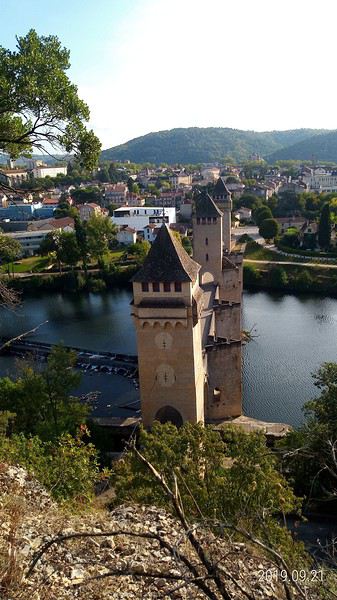
Pause déjeuner à Labastide-Marnhac où l'on trouve un café épicerie puis poursuite du chemin en ligne de crête avant de plonger dans la vallée de Lascabanes où j'arrive vers 16h30.
J'ai choisi Le Nid des Anges pour cette première étape : situé au coeur de Lascabanes, village fleuri du Quercy Blanc. Gîte d'une capacité d'accueil de 17 places, aménagé dans l'ancien presbytère datant du 19ème siècle. Bâtiment possédant une grande salle à manger voûtée et un très agréable jardin. Nous sommes une douzaine de pélerins ce toutes origines (Américains, Québécois, Australiens et Français à partager l'excellent dîner préparé par Cécile qui fait le maximum pour rendre cette étape agréable.
 Le nid des Anges
Chaque année, j'effectue un tronçon du Chemin de Compostelle. Après avoir parcouru ce chemin mythique du Puy à Aumont-Aubrac et l'année dernière de Aumont-Aubrac à Cahors me voici reparti pour 2 semaines sur la Via Podiensis.
Afin de ne pas me charger d’un livre, j’ai acheté l’application « Compostelle » qui fonctionne parfaitement sur mon téléphone Android. Après avoir téléchargé la carte du parcours, grâce au GPS je peux localiser ma position, voir les gîtes, points d’eau, magasins d’alimentation… J’ai réservé les gîtes la veille de mon arrivée et parfois le jour même. Ma première étape me conduira de Cahors à Lascabanes, soit 22 km.
Tout de suite après le pont de Valentré, vous vous engagez dans une montée très raide pour atteindre le plateau : vue superbe sur la ville de Cahors.
Pause déjeuner à Labastide-Marnhac où l'on trouve un café épicerie puis poursuite du chemin en ligne de crête avant de plonger dans la vallée de Lascabanes où j'arrive vers 16h30.
J'ai choisi Le Nid des Anges pour cette première étape : situé au coeur de Lascabanes, village fleuri du Quercy Blanc. Gîte d'une capacité d'accueil de 17 places, aménagé dans l'ancien presbytère datant du 19ème siècle. Bâtiment possédant une grande salle à manger voûtée et un très agréable jardin. Nous sommes une douzaine de pélerins ce toutes origines (Américains, Québécois, Australiens et Français à partager l'excellent dîner préparé par Cécile qui fait le maximum pour rendre cette étape agréable.
Le nid des AngesProgramme deux semaines aux Philippines en février English translation pending
Bonjour à tous.
Nous partons ( 3 adultes) pour les Philippines en février 2020 pour 13 /14 nuits. Notre programme: Trek rizières Banaue et Sagada 3 jours/2nuits Le reste sur les îles Cebu, Bohol et Siquijor. Est il préférable de passer par une agence locale qui organise le tout ou se débrouiller seul? Merci de partager vos expériences. A bientôt
Nous partons ( 3 adultes) pour les Philippines en février 2020 pour 13 /14 nuits. Notre programme: Trek rizières Banaue et Sagada 3 jours/2nuits Le reste sur les îles Cebu, Bohol et Siquijor. Est il préférable de passer par une agence locale qui organise le tout ou se débrouiller seul? Merci de partager vos expériences. A bientôt
Monténégro (sud): époustouflant English translation pending
Bonjour,
Nous revenons de 10 jours au Monténégro + Dubrovnik. Vacances fabuleuses, paysages époustouflants, gentillesse des habitants. Nous ne sommes pas sportifs, nous aimons les paysages maritimes (mais nous n'aimons pas bronzer ni nous baigner😎), mais nous adorons les roads-trips, zig-zaguer dans le pays, nous imprégner de l'atmosphère, manger la cuisine locale, apprendre un peu d'histoire, bref revenir + riches de connaissances et d'expérience.
Notre lieu préféré : Le lac de Skadar (frontière avec Albanie) nous a émerveillé. Nous y sommes retournés pour faire un tour en bateau, le matin, voir les cormorans, dans le calme, avant l'arrivée des touristes. Les paysages montagneux surplombant la rivière Crnojevika, le lac, les îlettes, les routes (ou plutôt chemin de chèvres goudronnés😉).
En résumé (incomplet) ce que nous avons beaucoup aimé (nous avons évité les lieux hyper touristiques comme les stations balnéaires) : nous sentir dépayser avec les pancartes (parfois) en cyrillique (le pays utilise l'alphabet latin aussi, surtout sur la côte), se régaler avec la cuisine savoureuse (et très bon marché, monnaie : l'euro), bavarder (en anglais) et profiter de l'accueil sympa du personnel de nos hôtels, ressentir l'ambiance détendue et familiale (dans le Sud), croiser des touristes serbes, bosniaques, russes, entendre d'autres langues, apprendre qqes mots de monténégrin, être transporter dans une autre époque à Cetinje (ancienne capitale du royaume du Monténégro au début du 20ème siècle) et connaître (un peu) l'histoire de ce petit pays, , manger le prsut + le sir (jambon + fromage) proposé par les paysans dans le village de Nejuski ("la rue du jambon"), le mausolée haut perché de Njegos, circuler sur des petites routes montagneuses et ne croiser personne pendant des kilomètres (heureusement vu la largeur de la voie) et avoir le souffle coupé par les paysages, voir les montagnes albanaises, ressentir encore la détente et le plaisir plusieurs jours après notre retour...
Nous avons atterri à Dubrovnik et nous avons décidé de rester 3 jours là-bas sur le chemin du retour. Ambiance totalement différente : Croatie hyper touristique, après l'atmosphère familiale du Sud Monténégro : ça change brutalement !
Visite guidée (en anglais) à Kotor : trés trés chaud, bcp de monde... à refaire hors saison.
Visite guidée privée (en français) à Dubrovnik : trés belle visite, instructive. Visiter le fort de Napoléon et son musée du bombardement de la ville en 1991.92.
A retenir : pour nous, il y a (au moins) 2 "Monténégro" : le Monténégro (du Nord, vers frontière croate) de Kotor, Budva, Sveti Stefan, trés touristique, hotel à prix élevés, ambiance "européenne" (ce n'est pas ce que l'on recherche) et puis le Monténégro du Sud (vers frontière albanaise), beaucoup de touristes slaves, dépaysant.
Nous aimerions retourner au Monténégro et aller dans le parc national du Durmitor. Une autre fois...
Nous sommes à votre disposition si vous avez des questions (et que nous connaissons la réponse 😎).
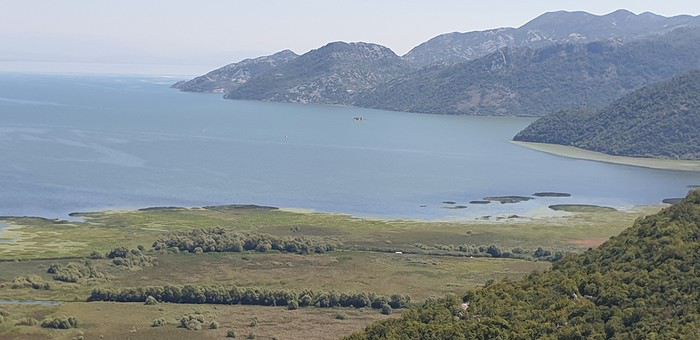
Préparatifs pour une balade de deux mois à Sumatra English translation pending
Bonjour à vous
Je cherche a affiner quelques infos auprès de vous chers voyageurs intrépides.
Vol Kuala puis Banda Aceh. Un hotel pas trop excentré dans cette ville a me conseillé ?
Pour démarrer tranquille direction Pulau Weh et la grande question Gapang ou Iboih ? Un hébergement qui sort du lot ? Peu être un saut a LhokNga et Lampuuk sans doute plus tranquille.
Puis looong trajet pour Ketambe. Ensuite mes doutes et interrogations commencent :
Quid de Simeulue ?
NIAS est elle simplement un repaire de surfCamp en dollars australiens ? Y a t'il des coins petit budget et sympathiques ?
Les BANYAK ? Difficle d'avoir des infos pratique sur quel coin sont agréables, de bon gout et accessibles ? Le LP parle de Pulau Tailana et Pulau Sikandang plus une autre ile, tuangku avec lodge et Surfcamp et bastas. Avez vous des infos récentes ? Tout le monde a l'air de regretter de pas y avoir été. C'est sur que l'accés est un peu compliqué quand on a pas trop de temps. Ensuite saute montagne pour le lac Toba. mais c'est peu être plus judicieux de faire cette étape avant et de rejoindre Singkil après. Avez vous des adresses inoubliables, incontournables, inavouables sur les pourtours de ce fameux Lac Toba ? (dont j'entends parlé depuis si longtemps). Ensuite cap au sud. Et les classiques mais sans doute formidable vallée d'Harau, Bukittinggi et Danau Maninjau. la encore si vous avez des infos. Grosse interrogation sur les iles Mentawai (double ??). Je peux pas trop faire de long treck avec un genou qui couine rapidement cela vaut t'il le deplacement pour aller suer dans la boue ou est ce vraiment intéressant ? Pour finir un peu de plage autour de Padang et retour. Je suis donc preneur d'adresses, d'avis, de remarques et d'informations sur Sumatra que je ne connais pas et j'en trépigne d'avance. (mon 5e voyage en indonesie, le premier il y a .... bien longtemps).
Postcriptum révérencieux : Je ne peux pas poster un message sur l'Indonésie sans m'incliner chapeau bas devant le triptyque qui nous font réver, nous donne le pouls du pays, de leur avis et remarques, parfois sans appels, mais à lire avec une délectation toujours nouvelle, (calme, tu part dans les aigus mon gars, bouge tranquille) donc hommage a l'archimandrite Mohamma2 aux conseil sur et avisé dont on se demande quel ilot n'a t'il pas exploré, ; a l'indispensable ange Gabriel Lolo des iles, moine copiste de l'Indonésie, valeureux Sasak, toujours prompt a généreusement partager des infos et dont l'image perché sur son bateau vous rassure tout de suite (c'est la clé de quoi autour du cou, ça fait 25 ans que je me le demande ???) et pour finir je ne saurai oublier la sombre figure tutélaire, magnanime, implacable, intrépide au possible, Mr Naps bien sur, le roi des petits moustachu, nabab des 13466 iles. Donc chapeau bas messieurs. Ca doit être un avant gout de la chaleur qui tape sur ma calbasse. Didier
Je cherche a affiner quelques infos auprès de vous chers voyageurs intrépides.
Vol Kuala puis Banda Aceh. Un hotel pas trop excentré dans cette ville a me conseillé ?
Pour démarrer tranquille direction Pulau Weh et la grande question Gapang ou Iboih ? Un hébergement qui sort du lot ? Peu être un saut a LhokNga et Lampuuk sans doute plus tranquille.
Puis looong trajet pour Ketambe. Ensuite mes doutes et interrogations commencent :
Quid de Simeulue ?
NIAS est elle simplement un repaire de surfCamp en dollars australiens ? Y a t'il des coins petit budget et sympathiques ?
Les BANYAK ? Difficle d'avoir des infos pratique sur quel coin sont agréables, de bon gout et accessibles ? Le LP parle de Pulau Tailana et Pulau Sikandang plus une autre ile, tuangku avec lodge et Surfcamp et bastas. Avez vous des infos récentes ? Tout le monde a l'air de regretter de pas y avoir été. C'est sur que l'accés est un peu compliqué quand on a pas trop de temps. Ensuite saute montagne pour le lac Toba. mais c'est peu être plus judicieux de faire cette étape avant et de rejoindre Singkil après. Avez vous des adresses inoubliables, incontournables, inavouables sur les pourtours de ce fameux Lac Toba ? (dont j'entends parlé depuis si longtemps). Ensuite cap au sud. Et les classiques mais sans doute formidable vallée d'Harau, Bukittinggi et Danau Maninjau. la encore si vous avez des infos. Grosse interrogation sur les iles Mentawai (double ??). Je peux pas trop faire de long treck avec un genou qui couine rapidement cela vaut t'il le deplacement pour aller suer dans la boue ou est ce vraiment intéressant ? Pour finir un peu de plage autour de Padang et retour. Je suis donc preneur d'adresses, d'avis, de remarques et d'informations sur Sumatra que je ne connais pas et j'en trépigne d'avance. (mon 5e voyage en indonesie, le premier il y a .... bien longtemps).
Postcriptum révérencieux : Je ne peux pas poster un message sur l'Indonésie sans m'incliner chapeau bas devant le triptyque qui nous font réver, nous donne le pouls du pays, de leur avis et remarques, parfois sans appels, mais à lire avec une délectation toujours nouvelle, (calme, tu part dans les aigus mon gars, bouge tranquille) donc hommage a l'archimandrite Mohamma2 aux conseil sur et avisé dont on se demande quel ilot n'a t'il pas exploré, ; a l'indispensable ange Gabriel Lolo des iles, moine copiste de l'Indonésie, valeureux Sasak, toujours prompt a généreusement partager des infos et dont l'image perché sur son bateau vous rassure tout de suite (c'est la clé de quoi autour du cou, ça fait 25 ans que je me le demande ???) et pour finir je ne saurai oublier la sombre figure tutélaire, magnanime, implacable, intrépide au possible, Mr Naps bien sur, le roi des petits moustachu, nabab des 13466 iles. Donc chapeau bas messieurs. Ca doit être un avant gout de la chaleur qui tape sur ma calbasse. Didier
Cinq jours dans la province de Varese (Lombardie) English translation pending
Je commence ce carnet environ 15 jours après mon retour. Je suis allé en Lombardie en septembre 2018, mais j'étais passé un peu trop vite à Milano à mon goût et j'ai décidé d'y retourner en Juin 2019. Le voyage de Juin 2019 comporte un séjour de 6 jours à Milano et, à la suite , un séjour de 5 jours et demi dans la province de Varese (pas du tout abordée l'an dernier) ; ce carnet de voyage porte sur les 5 jours et demi dans la province de Varese.
La province de Varese. Cette province fait partie de la Lombardie ; c'est la province la plus au nord-ouest de la région. Elle est bordée : - à l'ouest par le lac Majeur et le " fiume Ticino" (Tessin), - au nord par la Suisse, - à l'est par la Suisse et la province de Como (Côme), - au sud par la province de Milano. Elle présente au sud une partie de plaine, au centre une zone de collines, au nord les préalpes.
Le séjour a eu lieu du vendredi 28 Juin au Mercredi 3 Juillet inclus. Je voyage en caravane et je suis resté les 6 nuits dans le même camping. Je ferai un message par jour, avec des modifications successives jusqu'à ce que la journée soit terminée.
La province de Varese. Cette province fait partie de la Lombardie ; c'est la province la plus au nord-ouest de la région. Elle est bordée : - à l'ouest par le lac Majeur et le " fiume Ticino" (Tessin), - au nord par la Suisse, - à l'est par la Suisse et la province de Como (Côme), - au sud par la province de Milano. Elle présente au sud une partie de plaine, au centre une zone de collines, au nord les préalpes.
Le séjour a eu lieu du vendredi 28 Juin au Mercredi 3 Juillet inclus. Je voyage en caravane et je suis resté les 6 nuits dans le même camping. Je ferai un message par jour, avec des modifications successives jusqu'à ce que la journée soit terminée.
La Véloscénie en juillet English translation pending
Bonjour, nous voilà de retour du mont Saint Michel, par la véloscenie.
Nous sommes parties avec nos vélos de tous les jours :
Un btwin original 5 pour madame et mon vtc sirrus.
Nous avons dormi en camping toutes les nuits sans jamais réserver. Le matériel de camping a été acheté chez d4 car il a fallu tout acheter avec un petit budget et le bon et léger matériel ça monte très vite en prix.
Les vélos étaient équipés de 4 sacoches étanches de 20l, une sacoche de guidon pour les affaires sensibles (argent, portable, crème solaire...) et de nombreux tendeurs pour le coté artistique du chargement matinale...
La vélo route commence à Paris, mais nous sommes partis du camping de Villiers les Morhier car d'après le topoguide la voie est peu balisée sur sa 1ère partie. Info qui nous a été confirmée par un groupe de voyageurs.
Voici les étapes de notre parcours :
Villiers Chartres 25 km
Chartres Thiron-Gardais 64km
Thiron-Gardais Remalard 35 km
Remalard Alençon 60km
Alençon Carrouges 29km
Carrouges Domfront 45km
Domfront Saint hilaire du harcouet 45km
Saint hilaire le mont Saint Michel 45 km
Soit 8 jours pour un peu moins de 400 km avec les détours pour visiter.
Le retour en train :
Le mont/pontorson via une voie verte 12km
Pontorson Granville en train (6 places pour vélo, 16 vélos)
Granville Montparnasse ter, pas de pb pour les velos
Montparnasse gare de l'est en vélo 6km 30 mn: j'aime pas rouler en ville, j'ai été servi...
Puis le train jusqu'à chez nous. Le tout pour 100€ et 7 heures de transport.
Niveau matériel, quasi pas de casse sauf un matelas qui a lâché à Chartres (échange fait au d4, heureusement que le soucis est arrivé un jour où on était proche d'un magasin). Les vitesses du vélo à madame qu'il a fallu régler, j'ai fait l'erreur de ne pas m'y intéresser avant le départ et j'y connais rien.
Une très belle ballade, mi voie verte mi petites routes de campagne, la coupure entre la vie de tout les jours et la vie en vélo est très rapide.
Des commerces tous les jours pour manger soit à table soit à la popote (prévoir un repas en sacoche au cas où ).Pour l'eau il a fallu demander au gens, jamais un refus : les gens en vélo sont plutôt bien vus !
Les étapes sont simples sauf Alençon Carrouges qui est très vallonné pour notre petit niveau (peut être de la rigolade pour d'autres) . Les voies verte sont ombragées et très douces en pentes. De jolies paysages, de beaux châteaux et de belles rencontres.
Si vous avez des questions, n'hésitez pas 😊
Amsterdam sans papiers d'identité English translation pending
Bonjour !
M'étant fait volé ma carte d'identité, je n'ai en ma possession que les déclarations de vol, les photocopies/scan de la carte d'identité, mon permis de conduire, et un récépissé de ma mairie attestant la création de la nouvelle carte.
Je pars dans 2 jours à Amsterdam (depuis la France) en voiture.
Je ne compte pas ramener ou consommer de drogue, mais connaissez vous le risque en cas de contrôle douanier?
Est il préférable de faire un Lille-Amsterdam en bus au lieu d'accompagner mes amis dans la voiture ?
Merci de vos réponses !
Thibault
Je pars dans 2 jours à Amsterdam (depuis la France) en voiture.
Je ne compte pas ramener ou consommer de drogue, mais connaissez vous le risque en cas de contrôle douanier?
Est il préférable de faire un Lille-Amsterdam en bus au lieu d'accompagner mes amis dans la voiture ?
Merci de vos réponses !
Thibault
La Bonette (à vélo) English translation pending
Bonjour à toutes et à tous
aprés mon petit WE cyclocamping Montpellier/La Bouilladisse par la Camargue et la digue à la mer, j'envisage vers le 15/8 de faire Nice / La Bouilladisse par la Bonette (Nice-StEtienne de Tinée/St Etienne de Tinée-Tallard/Tallard-La Bouilladisse)
ma question est la suivante : quelqu'un à t'il monté la Bonette avec les sacoches ? et en gros combien faut il de temps? un collégue a mis 2 heures en vélo route 3 heures est ce réaliste? je ne suis pas une fusée mais déjà plus de 1600 kms vélo depuis le début de l'année et + de 450 kms de course à pied sans compter les randos notamment en montagne en ce moment
Merci par avance pour la ou les réponses
Serge
aprés mon petit WE cyclocamping Montpellier/La Bouilladisse par la Camargue et la digue à la mer, j'envisage vers le 15/8 de faire Nice / La Bouilladisse par la Bonette (Nice-StEtienne de Tinée/St Etienne de Tinée-Tallard/Tallard-La Bouilladisse)
ma question est la suivante : quelqu'un à t'il monté la Bonette avec les sacoches ? et en gros combien faut il de temps? un collégue a mis 2 heures en vélo route 3 heures est ce réaliste? je ne suis pas une fusée mais déjà plus de 1600 kms vélo depuis le début de l'année et + de 450 kms de course à pied sans compter les randos notamment en montagne en ce moment
Merci par avance pour la ou les réponses
Serge
Notre voyage en Sicile et îles Éoliennes English translation pending
Bonjour à tous,
Depuis bientôt 2ans, je rêvais d’aller explorer la Sicile et les îles Eoliennes. Nous effectuons enfin ce voyage, du 13 au 24 avril 2019. Voyage en famille (2 adultes et 2 enfants de 11 et 14 ans). Nous aimons tout particulièrement la nature, la randonnée, et les volcans ! Nous fuyons les villes, que nous n’aimons pas du tout...
JOUR 1: Notre voyage a debuté la veille, où nous nous rendons depuis l’est de la France, à Roissy. Nuit courte à l’hôtel. Debouts à 4h, petit dej rapide et transfert à l’aéroport, pour un décollage prévu à 7h. Notre vol, réservé avec Easyjet, décolle avec quasiment 1h de retard suite à des interminables contrôles bagages. A l’arrivée, également une longue attente pour les récupérer. Nous prenons notre voiture de location, chez Sixt. Plutôt bonne pioche car nous héritons d’une belle BMW noire , boite auto, qui ravit mon mari !
Arrivés à Catane, il fait beau et chaud, mais moi qui pensait quitter l’aéroport vers 10h, il est déjà plus de midi... Nous filons en direction du parc des Madonies, en ayant notre première vue sur l’Etna, où nous aurons l’occasion de revenir plus tard... J’avais prévu une belle rando dans ce parc, mais avec tous ces contretemps, il est déjà tard et le temps s’est gâté : pluie, brouillard et froid... Nous renonçons et on se contente d’admirer le paysage en voiture.
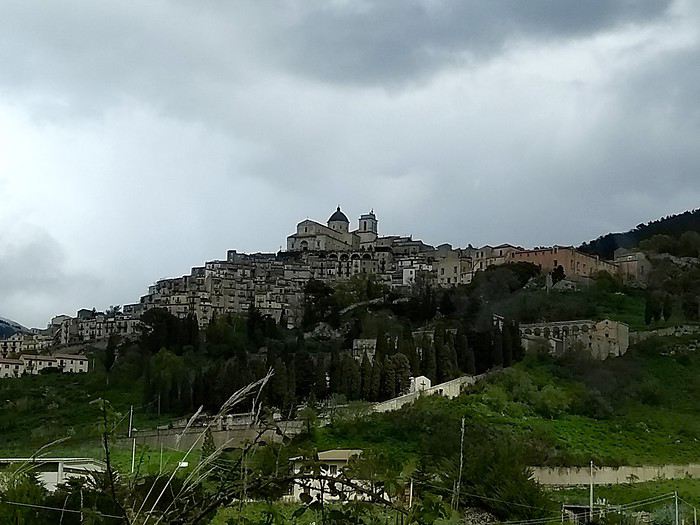
Après cette longue montée sur les hauteurs à presque 2000m, on redescend vers la ville de Cefalu, en bord de mer. Nous allons nous poser à notre premier hébergement, un bungalow dans un camping. bonne surprise, il est superbe, en forme de tonneau, petite cuisine extérieure, terrasse couverte ... super sympa ! Il y a même un accès privatif à la mer. Pour 50€ la nuit à 4, c’est extra, mais en été c’est beaucoup plus cher naturellement.
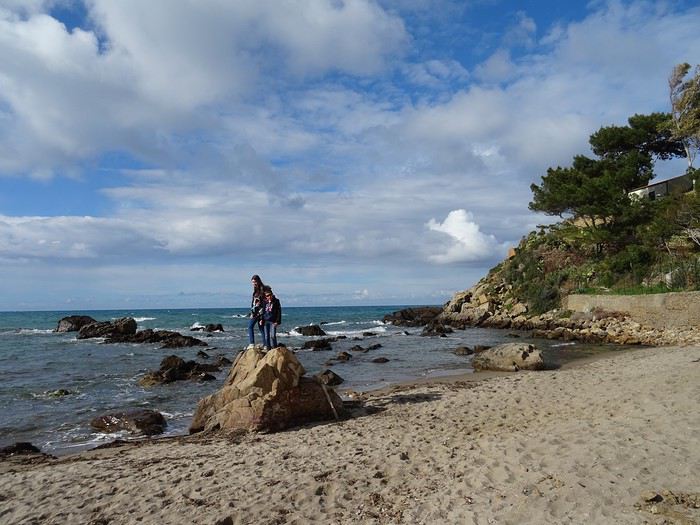
On fait un petit tour à la mer, puis allons visiter Cefalu, à quelques minutes du camping. Nous commençons à monter les petites ruelles, en direction du gros rocher, appelé la Rocca. A mi-chemin, l’accès est payant, on n’avait pas prévu ça ! Il est bientôt 18h et ça va pas tarder à fermer, de plus un orage nous tombe dessus. On s’abrite sous un porche le temps que ça se calme... La vue ici est déjà très belle, tant pis pour le sommet.

Nous décidons ensuite d’aller dans le centre historique, entièrement piéton. Un petit apéro sur la place del Duomo, où le soleil vient frapper la cathédrale et lui donner une superbe couleur.
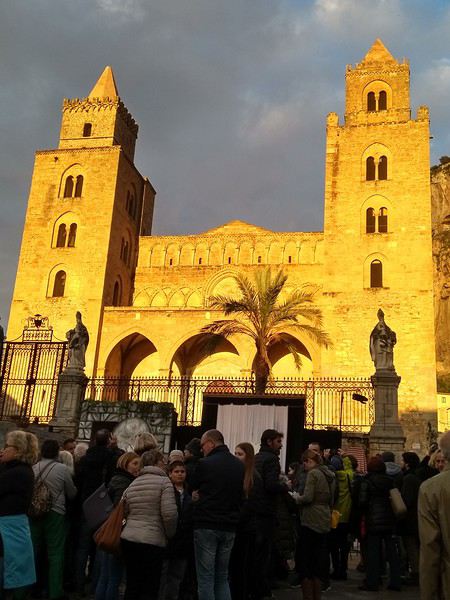
On finit la soirée avec une bonne glace, et pour moi un canoli : spécialité feuilletée fourré à la ricotta au citron que je voulais goûter, c’est très bon ! Assez pour ce soir, on se couche tôt, car on est fatigués...
Depuis bientôt 2ans, je rêvais d’aller explorer la Sicile et les îles Eoliennes. Nous effectuons enfin ce voyage, du 13 au 24 avril 2019. Voyage en famille (2 adultes et 2 enfants de 11 et 14 ans). Nous aimons tout particulièrement la nature, la randonnée, et les volcans ! Nous fuyons les villes, que nous n’aimons pas du tout...
JOUR 1: Notre voyage a debuté la veille, où nous nous rendons depuis l’est de la France, à Roissy. Nuit courte à l’hôtel. Debouts à 4h, petit dej rapide et transfert à l’aéroport, pour un décollage prévu à 7h. Notre vol, réservé avec Easyjet, décolle avec quasiment 1h de retard suite à des interminables contrôles bagages. A l’arrivée, également une longue attente pour les récupérer. Nous prenons notre voiture de location, chez Sixt. Plutôt bonne pioche car nous héritons d’une belle BMW noire , boite auto, qui ravit mon mari !
Arrivés à Catane, il fait beau et chaud, mais moi qui pensait quitter l’aéroport vers 10h, il est déjà plus de midi... Nous filons en direction du parc des Madonies, en ayant notre première vue sur l’Etna, où nous aurons l’occasion de revenir plus tard... J’avais prévu une belle rando dans ce parc, mais avec tous ces contretemps, il est déjà tard et le temps s’est gâté : pluie, brouillard et froid... Nous renonçons et on se contente d’admirer le paysage en voiture.
Après cette longue montée sur les hauteurs à presque 2000m, on redescend vers la ville de Cefalu, en bord de mer. Nous allons nous poser à notre premier hébergement, un bungalow dans un camping. bonne surprise, il est superbe, en forme de tonneau, petite cuisine extérieure, terrasse couverte ... super sympa ! Il y a même un accès privatif à la mer. Pour 50€ la nuit à 4, c’est extra, mais en été c’est beaucoup plus cher naturellement.
On fait un petit tour à la mer, puis allons visiter Cefalu, à quelques minutes du camping. Nous commençons à monter les petites ruelles, en direction du gros rocher, appelé la Rocca. A mi-chemin, l’accès est payant, on n’avait pas prévu ça ! Il est bientôt 18h et ça va pas tarder à fermer, de plus un orage nous tombe dessus. On s’abrite sous un porche le temps que ça se calme... La vue ici est déjà très belle, tant pis pour le sommet.
Nous décidons ensuite d’aller dans le centre historique, entièrement piéton. Un petit apéro sur la place del Duomo, où le soleil vient frapper la cathédrale et lui donner une superbe couleur.
On finit la soirée avec une bonne glace, et pour moi un canoli : spécialité feuilletée fourré à la ricotta au citron que je voulais goûter, c’est très bon ! Assez pour ce soir, on se couche tôt, car on est fatigués...