Results for "Digue+|+122+>+79"
11559 results found.
Cycling Thread – Europe’s Most Beautiful Bike Paths
Hi there! I’m Simon, and for years I’ve been exploring some of Europe’s most beautiful and well-equipped bike paths. My passion for cycling led me to start a blog where I share my travel impressions, practical tips, and photos taken along the way. I ride both well-known routes like the Alpe-Adria, the Loire à Vélo, and the Rhein Route, as well as lesser-known but equally charming regions.
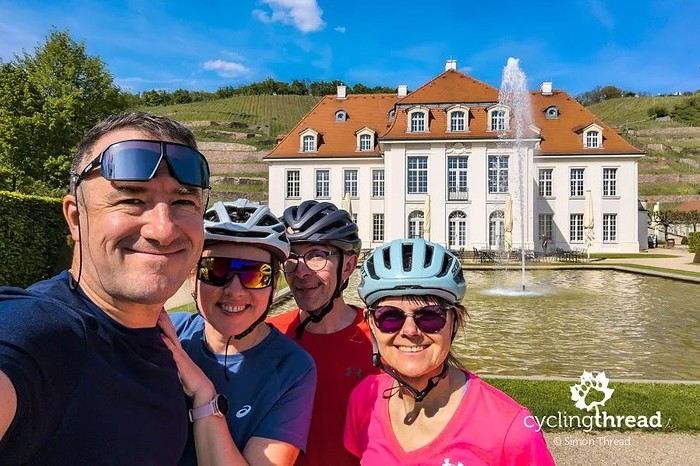
In my stories, I pay special attention to the quality of infrastructure, cyclist safety, and route accessibility—for young and old, experienced riders and beginners alike. I love discovering and sharing spots that are truly welcoming for cycle tourists: well-marked, with rest areas and easy train access.
On the blog, you’ll find ready-to-follow route suggestions, tips for preparing your bike trips, and plenty of inspiration for your next adventures. I travel with my panniers, a camera in the front bag, and always keep an eye out for what’s around me. Feel free to check out my blog, Cycling Thread—you might find some ideas for your next bike getaway! :-)
* * *
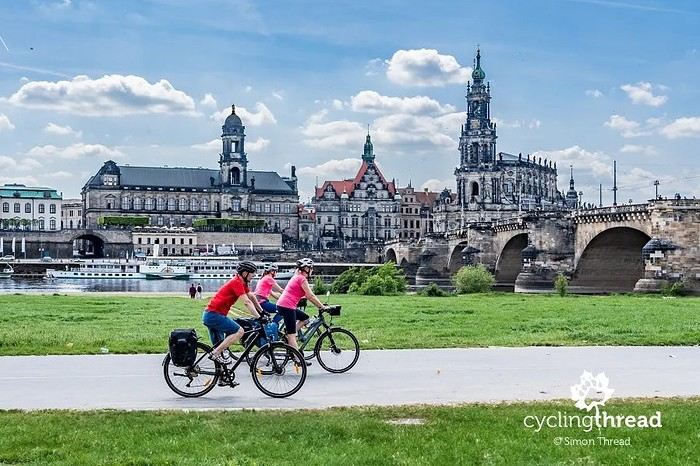
I hope this won’t just be a one-off post—I’ll try to share our bike trips with you here regularly. To start: our May trip on the Elberadweg, the queen of German bike paths, between the stunning city of Dresden and Magdeburg. I invite you to visit:
Elberadweg in Germany – From Dresden to Magdeburg
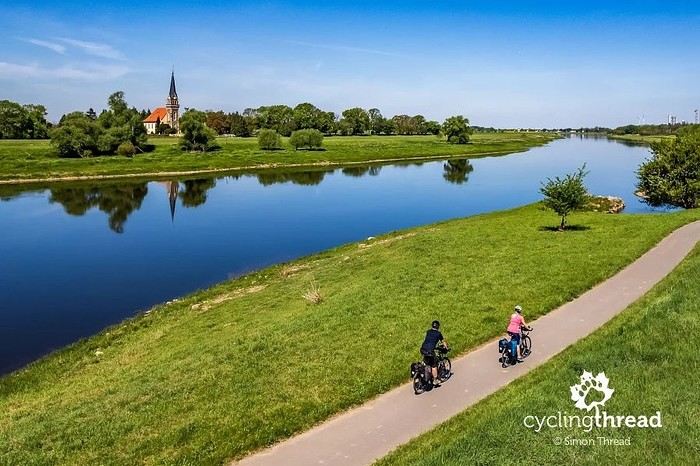
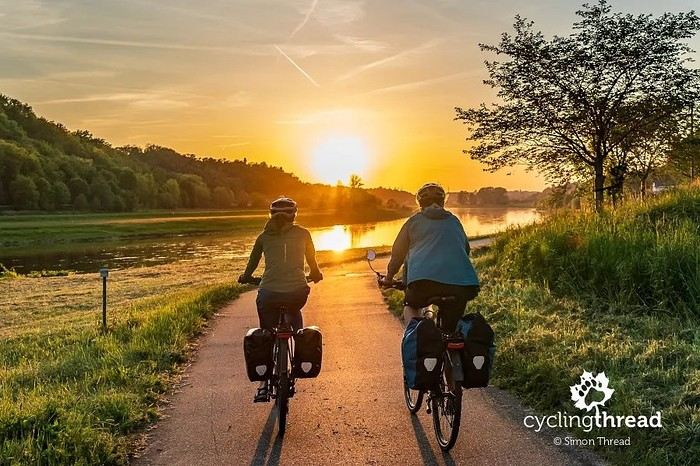
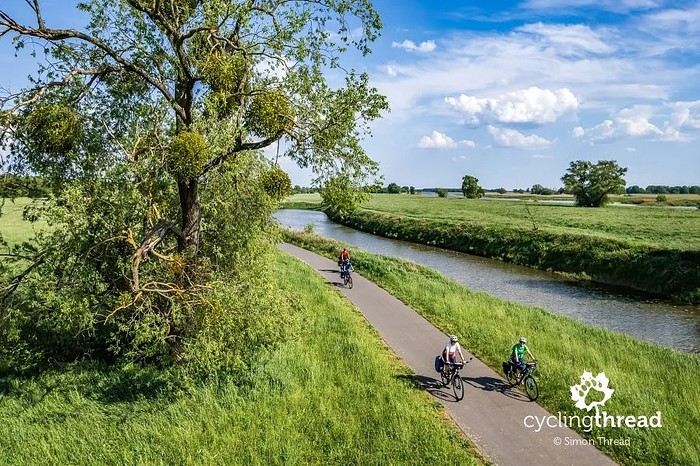
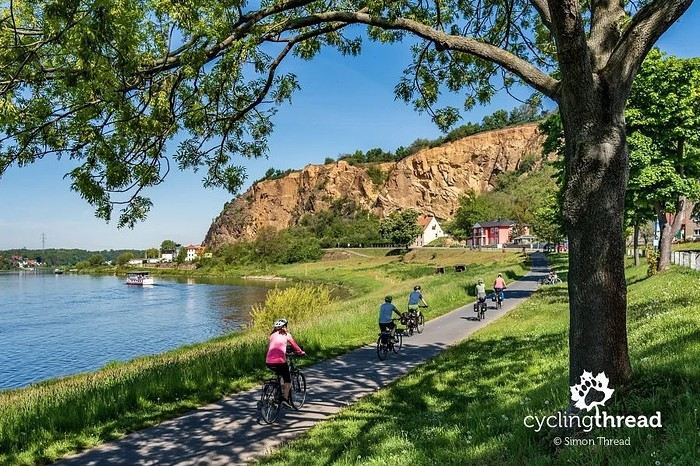
The Elbe bike path is about 1200 km long, following the river from its source in the Giant Mountains in the Czech Republic to its mouth in Cuxhaven, on the North Sea. The route crosses a variety of landscapes: mountain valleys, vineyards, open plains, and coastline. As is often the case in Germany, the signage is excellent and the route easy to follow.
But what surprised us was the number of cobblestone sections! Sure, the cobblestones are well-laid and fairly smooth—but they’re still cobblestones. And when they disappear, they’re often replaced by concrete slabs, typical of river dikes. That’s just part of the face of this 30-year-old "queen"—a heritage that’s hard to replace entirely with fresh asphalt.
Along the way, don’t miss the many cultural highlights. Dresden impresses with its restored old town, the Frauenkirche, and the Brühl Terraces along the Elbe—it’s one of Germany’s most elegant cities. In Meissen, you can visit the famous porcelain factory and its Gothic cathedral. Wittenberg is a must-stop to follow in Martin Luther’s footsteps, with its castle church and Reformation Museum. And to finish, in Dessau-Roßlau, besides the Bauhaus, don’t miss the stunning Dessau-Wörlitz landscape gardens—one of the oldest English-style parks in Europe.
A few photos to give you a feel for the route and inspire you to check out our blog! :-)
Happy cycling!
Simon
In my stories, I pay special attention to the quality of infrastructure, cyclist safety, and route accessibility—for young and old, experienced riders and beginners alike. I love discovering and sharing spots that are truly welcoming for cycle tourists: well-marked, with rest areas and easy train access.
On the blog, you’ll find ready-to-follow route suggestions, tips for preparing your bike trips, and plenty of inspiration for your next adventures. I travel with my panniers, a camera in the front bag, and always keep an eye out for what’s around me. Feel free to check out my blog, Cycling Thread—you might find some ideas for your next bike getaway! :-)
* * *
I hope this won’t just be a one-off post—I’ll try to share our bike trips with you here regularly. To start: our May trip on the Elberadweg, the queen of German bike paths, between the stunning city of Dresden and Magdeburg. I invite you to visit:
Elberadweg in Germany – From Dresden to Magdeburg
The Elbe bike path is about 1200 km long, following the river from its source in the Giant Mountains in the Czech Republic to its mouth in Cuxhaven, on the North Sea. The route crosses a variety of landscapes: mountain valleys, vineyards, open plains, and coastline. As is often the case in Germany, the signage is excellent and the route easy to follow.
But what surprised us was the number of cobblestone sections! Sure, the cobblestones are well-laid and fairly smooth—but they’re still cobblestones. And when they disappear, they’re often replaced by concrete slabs, typical of river dikes. That’s just part of the face of this 30-year-old "queen"—a heritage that’s hard to replace entirely with fresh asphalt.
Along the way, don’t miss the many cultural highlights. Dresden impresses with its restored old town, the Frauenkirche, and the Brühl Terraces along the Elbe—it’s one of Germany’s most elegant cities. In Meissen, you can visit the famous porcelain factory and its Gothic cathedral. Wittenberg is a must-stop to follow in Martin Luther’s footsteps, with its castle church and Reformation Museum. And to finish, in Dessau-Roßlau, besides the Bauhaus, don’t miss the stunning Dessau-Wörlitz landscape gardens—one of the oldest English-style parks in Europe.
A few photos to give you a feel for the route and inspire you to check out our blog! :-)
Happy cycling!
Simon
Middle East Conflict and Flights to the USA
Hi,
My friend is supposed to leave on June 26th for Philadelphia. American Airlines called him last night to ask him to cancel or postpone his flight because they’re canceling around a hundred flights from Europe, mainly due to fears of retaliatory attacks after the bombings in Iran. Their offer is either to postpone with compensation (the amount would be known once he accepts) or to cancel completely with a refund and the standard compensation for flights departing from Europe. The airline gave him until 24 hours before departure to decide. Otherwise, he can still go to the airport for now with no obligation to board since he’s traveling alone—they’re prioritizing families in case of overbooking due to some flight cancellations. The same goes for the return flight. In short, it’s total chaos. We’re waiting until tonight or tomorrow to decide whether to cancel outright.
My friend is supposed to leave on June 26th for Philadelphia. American Airlines called him last night to ask him to cancel or postpone his flight because they’re canceling around a hundred flights from Europe, mainly due to fears of retaliatory attacks after the bombings in Iran. Their offer is either to postpone with compensation (the amount would be known once he accepts) or to cancel completely with a refund and the standard compensation for flights departing from Europe. The airline gave him until 24 hours before departure to decide. Otherwise, he can still go to the airport for now with no obligation to board since he’s traveling alone—they’re prioritizing families in case of overbooking due to some flight cancellations. The same goes for the return flight. In short, it’s total chaos. We’re waiting until tonight or tomorrow to decide whether to cancel outright.
Itinerary and tips after our 2-week family trip to Uzbekistan
Hi everyone,
We’re back from our vacation in Uzbekistan with our kids—a wonderful trip with amazing memories! I’m sharing our itinerary and a few tips.
**Khiva + Aral Sea (3 days)**
- Arrived in Urgench at 5 AM on Saturday - Transferred to Khiva and spent the day exploring the city (that’s enough time). Among other sights, we struggled to find the Tash Khauli harem—it’s totally worth it! - Sunday: headed to Moynaq (the ship graveyard of the Aral Sea). On the way, we stopped to visit two fortresses in the desert—there are about fifty in varying states of repair. Really beautiful, especially Ayaz-Kala. We continued to Moynaq on a rough road (4-hour drive). - Monday: visited the ship graveyard and the small museum. There isn’t much to see, but we thought it was worth it to understand the consequences of human activity—a real eye-opener. It’s true that it’s a long drive, so you’ll have to decide for yourselves. On the way back to Nukus, we stopped to visit the Mizdakhan necropolis (worth it, even if it doesn’t compare to Bukhara or Samarkand’s buildings—it’s no match for them ;-)) - Evening: flight to Tashkent (saved us a day of travel to get to Bukhara from Khiva)
**Ferghana Valley (3 days)**
- Tuesday morning: left Tashkent by train to reach Margilan by noon. - Tuesday afternoon and Wednesday: visited Margilan’s market, silk/ceramic workshops, and dutar-making (a traditional two-stringed, bulging violin). Arrived in Kokand in the evening. - Thursday: explored Kokand (the palace is worth it) - Summary: Margilan and Fergana aren’t very pretty—only the workshops are interesting. Don’t miss Kokand. This leg could’ve been done in 2 days. - Left Kokand by overnight train to Bukhara (note on overnight trains: *very* small cabins—but for us, overnight train rides are a must ;-)!)
**Bukhara (3 days)**
- Arrived Friday morning: 3 days there—perfect for seeing (and revisiting) everything at our own pace. - Hired a French-speaking guide for one day—really helpful for understanding the history and politics, and getting a better grasp of Uzbekistan.
**Toward Lake Aydar Kul (2 days)**
- Left Monday morning by car for the lake. On the way, stopped at a renowned ceramicist’s workshop and to see Neolithic petroglyphs. Note on the petroglyphs: there’s apparently a 3 km walk to see quite a few, but we skipped it due to time—we regret it! For the kids, it was like a treasure hunt, searching for the petroglyphs among the rocks—they loved it. - Arrived in the evening at a yurt camp with traditional music. The yurts were fun, but we ate in a very Westernized restaurant with way too many tourist groups for our taste. - The next day: a 2-hour camel ride in the desert to see plants and animals. We saw a few things, but it wasn’t very interesting unless you’re going from point A to point B. Then left the camp for Lake Aydar Kul—we ate at a lakeside restaurant, but it was pointless. There must be nice spots, but this one was a bust. - Drove to Samarkand (4 hours)
**Samarkand (2 days)**
- Wednesday–Thursday: explored this stunning city. Two days are enough to see everything, but three would’ve been better to take more time to wander and revisit certain spots. - Another day with a French-speaking guide—we confirm it’s worth it!
**Urgut (1 day)**
- Friday: 1.5 hours from Samarkand, in the mountains. AMAZING! A 3-hour hike in the mountains with a guide (you can do longer). We stayed in a guesthouse—so peaceful, with the sound of the stream and mountain views. It deserves 2 days. - Left by train that evening for Tashkent
**Tashkent (2 days)**
- Saturday: visited Chorsu Market (incredible—even though we’d been to several markets, Tashkent’s is wild), the TV Tower (for the view, but not much else), and lunch at The Plov Center (at the base of the tower)—a plov factory, so cool! You can see the kitchens, it’s insane! Spent a relaxed afternoon on Broadway: a park with ping-pong tables, archery, ice cream stands—great with the kids. - Sunday: Chimgan—took the cable car at a ski resort (no snow this time of year), had a picnic at the top of the mountain—nice. - Evening: off to Tashkent Airport and goodbye, Uzbekistan!
**A few tips:**
- In cities, *must* download Yandex Go—super practical, fast, and cheap for getting around. - We bought a Ucell SIM card: 80 GB of data for 50,000 sums (around 3 €). We put it in an old phone and connected our two phones to it—so handy! - Uzbeks are *so* nice, welcoming, and helpful. - Thank you, Google Translate—few people speak English. - The beds are hard… I think it’s an Uzbek thing!! - Guesthouses: between 50 and 70 € per night for the four of us. Comfortable enough, private bathroom, but not luxury. - Meals: we mostly looked for Uzbek restaurants without tourists. Around 200,000 sums per meal (about 15 €). If you add wine, it adds up fast—one glass of wine = the price of a dish. - Don’t hesitate to buy from markets for picnics (samsa, dried cheese balls, fruits and veggies, bread). You can even taste before buying. Some good (and not-so-good) discoveries ;) - Everything is very clean: the streets, the cities, the accommodations.
**Special thanks to our organizer, Sardor (fluent in French):**
I contacted him by email before we left; he optimized the program we’d planned. He set us up with French-speaking guides and handled all the transport and activities outside the four main cities. Super available via WhatsApp and phone while we were there. All the drivers/guides were *very* punctual. DM me if you need his info.
There you go. Sorry for the long post, but I looked for some of this info before we left—I figured it might help someone.
Happy travels in Uzbekistan! We’ll remember this trip for a long time!
We’re back from our vacation in Uzbekistan with our kids—a wonderful trip with amazing memories! I’m sharing our itinerary and a few tips.
**Khiva + Aral Sea (3 days)**
- Arrived in Urgench at 5 AM on Saturday - Transferred to Khiva and spent the day exploring the city (that’s enough time). Among other sights, we struggled to find the Tash Khauli harem—it’s totally worth it! - Sunday: headed to Moynaq (the ship graveyard of the Aral Sea). On the way, we stopped to visit two fortresses in the desert—there are about fifty in varying states of repair. Really beautiful, especially Ayaz-Kala. We continued to Moynaq on a rough road (4-hour drive). - Monday: visited the ship graveyard and the small museum. There isn’t much to see, but we thought it was worth it to understand the consequences of human activity—a real eye-opener. It’s true that it’s a long drive, so you’ll have to decide for yourselves. On the way back to Nukus, we stopped to visit the Mizdakhan necropolis (worth it, even if it doesn’t compare to Bukhara or Samarkand’s buildings—it’s no match for them ;-)) - Evening: flight to Tashkent (saved us a day of travel to get to Bukhara from Khiva)
**Ferghana Valley (3 days)**
- Tuesday morning: left Tashkent by train to reach Margilan by noon. - Tuesday afternoon and Wednesday: visited Margilan’s market, silk/ceramic workshops, and dutar-making (a traditional two-stringed, bulging violin). Arrived in Kokand in the evening. - Thursday: explored Kokand (the palace is worth it) - Summary: Margilan and Fergana aren’t very pretty—only the workshops are interesting. Don’t miss Kokand. This leg could’ve been done in 2 days. - Left Kokand by overnight train to Bukhara (note on overnight trains: *very* small cabins—but for us, overnight train rides are a must ;-)!)
**Bukhara (3 days)**
- Arrived Friday morning: 3 days there—perfect for seeing (and revisiting) everything at our own pace. - Hired a French-speaking guide for one day—really helpful for understanding the history and politics, and getting a better grasp of Uzbekistan.
**Toward Lake Aydar Kul (2 days)**
- Left Monday morning by car for the lake. On the way, stopped at a renowned ceramicist’s workshop and to see Neolithic petroglyphs. Note on the petroglyphs: there’s apparently a 3 km walk to see quite a few, but we skipped it due to time—we regret it! For the kids, it was like a treasure hunt, searching for the petroglyphs among the rocks—they loved it. - Arrived in the evening at a yurt camp with traditional music. The yurts were fun, but we ate in a very Westernized restaurant with way too many tourist groups for our taste. - The next day: a 2-hour camel ride in the desert to see plants and animals. We saw a few things, but it wasn’t very interesting unless you’re going from point A to point B. Then left the camp for Lake Aydar Kul—we ate at a lakeside restaurant, but it was pointless. There must be nice spots, but this one was a bust. - Drove to Samarkand (4 hours)
**Samarkand (2 days)**
- Wednesday–Thursday: explored this stunning city. Two days are enough to see everything, but three would’ve been better to take more time to wander and revisit certain spots. - Another day with a French-speaking guide—we confirm it’s worth it!
**Urgut (1 day)**
- Friday: 1.5 hours from Samarkand, in the mountains. AMAZING! A 3-hour hike in the mountains with a guide (you can do longer). We stayed in a guesthouse—so peaceful, with the sound of the stream and mountain views. It deserves 2 days. - Left by train that evening for Tashkent
**Tashkent (2 days)**
- Saturday: visited Chorsu Market (incredible—even though we’d been to several markets, Tashkent’s is wild), the TV Tower (for the view, but not much else), and lunch at The Plov Center (at the base of the tower)—a plov factory, so cool! You can see the kitchens, it’s insane! Spent a relaxed afternoon on Broadway: a park with ping-pong tables, archery, ice cream stands—great with the kids. - Sunday: Chimgan—took the cable car at a ski resort (no snow this time of year), had a picnic at the top of the mountain—nice. - Evening: off to Tashkent Airport and goodbye, Uzbekistan!
**A few tips:**
- In cities, *must* download Yandex Go—super practical, fast, and cheap for getting around. - We bought a Ucell SIM card: 80 GB of data for 50,000 sums (around 3 €). We put it in an old phone and connected our two phones to it—so handy! - Uzbeks are *so* nice, welcoming, and helpful. - Thank you, Google Translate—few people speak English. - The beds are hard… I think it’s an Uzbek thing!! - Guesthouses: between 50 and 70 € per night for the four of us. Comfortable enough, private bathroom, but not luxury. - Meals: we mostly looked for Uzbek restaurants without tourists. Around 200,000 sums per meal (about 15 €). If you add wine, it adds up fast—one glass of wine = the price of a dish. - Don’t hesitate to buy from markets for picnics (samsa, dried cheese balls, fruits and veggies, bread). You can even taste before buying. Some good (and not-so-good) discoveries ;) - Everything is very clean: the streets, the cities, the accommodations.
**Special thanks to our organizer, Sardor (fluent in French):**
I contacted him by email before we left; he optimized the program we’d planned. He set us up with French-speaking guides and handled all the transport and activities outside the four main cities. Super available via WhatsApp and phone while we were there. All the drivers/guides were *very* punctual. DM me if you need his info.
There you go. Sorry for the long post, but I looked for some of this info before we left—I figured it might help someone.
Happy travels in Uzbekistan! We’ll remember this trip for a long time!
Recommendations for Hanoi and Halong Bay
Hello fellow travelers! We’re planning to visit Vietnam at the end of 2025, arriving in HANOI, which we’d like to explore, along with HALONG BAY. I’ve seen that the ideal option is to take a 2-day boat trip. We’re retirees aged 79 and 75, used to traveling, so I’d love to hear your thoughts and recommendations for spending 4-5 days in this region.
Could you share some hotel addresses with private rooms and bathrooms, as well as tour agencies for Halong Bay that offer reasonable prices?
Thanks in advance!
Could you share some hotel addresses with private rooms and bathrooms, as well as tour agencies for Halong Bay that offer reasonable prices?
Thanks in advance!
Campervan Road Trips: Freedom and Adventure in New Zealand
Ah! New Zealand, the ultimate road trip destination. If you've been dreaming of trying out a campervan adventure, it's definitely one of the best places in the world to take the plunge. With its diverse landscapes—white sand beaches, volcanoes, glaciers, fjords, and glacial lakes—the country also boasts top-notch infrastructure for campers, making it ideal for campervan circuits, even for beginners!
Why is New Zealand the perfect country for your first campervan trip?
Safe and Scenic Roads
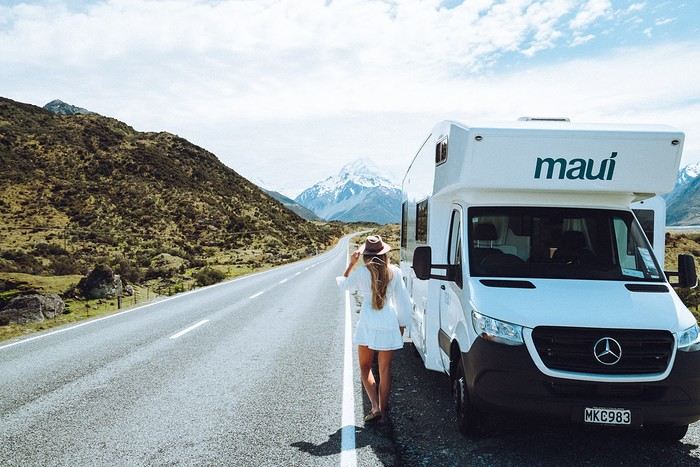
New Zealand offers a well-maintained road network, usually not too busy outside major cities. This is a huge plus if you're new to driving a campervan. The routes often feature spectacular viewpoints. You'll also find a vast network of campgrounds, and while freedom camping is regulated, there are still plenty of spots where you can sleep for free. Speed limits are reasonable, and the driving culture is pretty relaxed.
Adapted Infrastructure
There are plenty of campervan rental companies offering different models, from converted vans to large family motorhomes. You'll find rental depots in major cities (Auckland, Christchurch, Queenstown), along with shuttle services between the airport and the depot. Campgrounds in New Zealand, whether private or managed by the Department of Conservation (DOC), are easy to find and well-marked. Plus, since New Zealand is a country of campers, you'll often get helpful tips from the locals.
Diverse and Accessible Landscapes
Beaches, volcanoes, deep fjords, or subtropical forests—you can experience a completely different setting in just a few hours of driving. No need to be a 4x4 expert: most roads leading to these stunning sites are campervan-friendly. This variety of landscapes, combined with easy access, makes New Zealand a top choice for a first road trip experience.
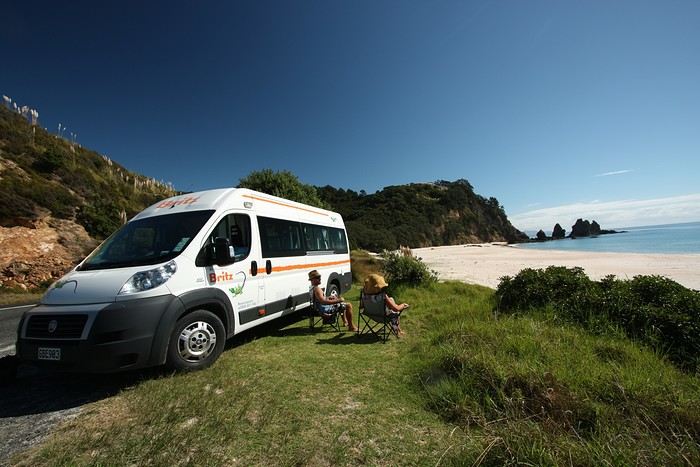
The Most Beautiful Places to Discover in a Campervan
To give you an idea, here’s a selection of must-see spots to inspire your next adventure.
1. The Coromandel Peninsula (North Island)
Just a few hours from Auckland, the Coromandel Peninsula is famous for its white sand beaches, hot springs, and lush vegetation. Hot Water Beach is a must-visit—dig your own "thermal bath" on the shore at low tide. You’ll easily find campgrounds by the ocean, perfect for your first taste of campervan life.
2. Rotorua and the Geothermal Wonders (North Island)
A little further south, Rotorua is the geothermal heart of New Zealand. Geysers, bubbling pools, and sulfur lakes with amazing colors—there’s no shortage of things to do. It’s also a major hub for Māori culture. Take the time to visit a traditional village or watch a haka performance. In the evening, relax at a campground with natural hot pools.
3. Tongariro National Park (North Island)
A UNESCO World Heritage site, this volcanic park is a paradise for hikers, especially with the famous Tongariro Alpine Crossing. Even if you're not an experienced hiker, you can enjoy stunning views from the roads or short marked trails. The campgrounds in the area will immerse you in a postcard-worthy setting.
4. Abel Tasman, Coastal Gem (South Island)
After taking the ferry from Wellington to Picton, head to Abel Tasman National Park. Its golden beaches, crystal-clear waters, and coastal trails are perfect for unwinding. One of the perks of a campervan is exploring at your own pace, choosing spots near the beaches or deeper in the forest.
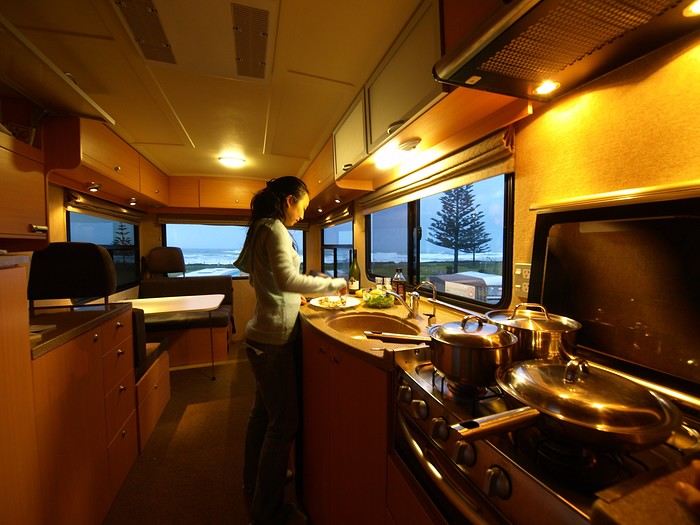
5. Punakaiki and the Pancake Rocks (South Island)
As you drive along the West Coast’s thick rainforests and wild beaches, stop at Punakaiki to see the Pancake Rocks—surprising rock formations that look like stacks of pancakes. A marked trail runs along the coast, letting you watch waves crash into the "blowholes" (marine geysers). Spending the night at a seaside campground, lulled by the sound of waves, is an experience not to be missed.
6. The Franz Josef and Fox Glaciers (South Island)
Further south, the glacier region is a must for lovers of breathtaking landscapes. You can admire the icy giants from a distance on an easy trail or take a helicopter to fly over them—or even walk on them. The campgrounds in Franz Josef or Fox Glacier let you wake up in an alpine atmosphere, contrasting with the lush vegetation around you.
7. Queenstown and Wanaka (South Island)
Queenstown, on the shore of a sparkling lake surrounded by majestic peaks, is known as the adventure capital: bungee jumping, paragliding, rafting—anything’s possible. If you prefer a quieter vibe, Wanaka is just as charming, with its beautiful lake and accessible walks. The road between these two towns is stunning, with plenty of perfect spots for a picnic stop.
8. Te Anau and Milford Sound (South Island)
New Zealand’s fjords are world-famous. Te Anau is the gateway to exploring Milford Sound or, for something wilder, Doubtful Sound. A cruise through these deep fjords, surrounded by towering cliffs, is one of the highlights of any trip to New Zealand. Staying overnight in a campervan in Te Anau saves you a long round trip in a day and lets you set off at dawn for more adventures.
9. Lake Tekapo and Mount Cook (South Island)
In the heart of the Southern Alps, Lake Tekapo charms with its unique turquoise color and its picturesque church by the water. The area is known for its starry skies (it’s an International Dark Sky Reserve). Mount Cook, the country’s highest peak, stands majestically in the background. Several campgrounds offer views of these mountains.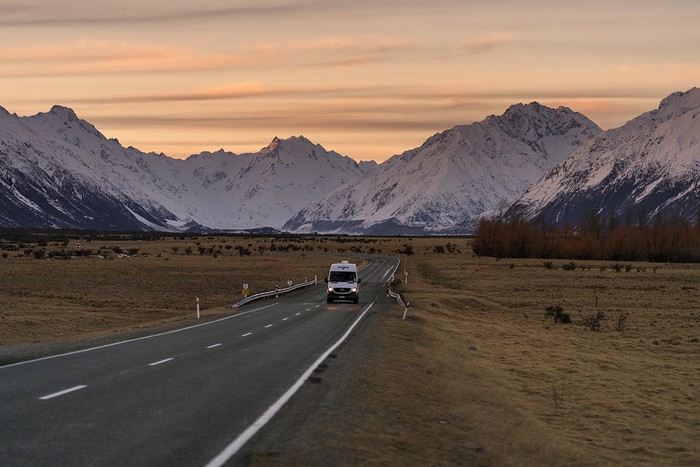
Practical Tips for a Successful Campervan Road Trip
Where to start? Between choosing the right vehicle, the best time to go, parking rules, and tips for where to sleep, here are our practical tips to plan your road trip stress-free.
Duration and Itinerary Choices
Less than 15 days: Focus on one island to avoid spending too much time on the road.
More than 15 days: Consider a North-South combo with a one-way trip (e.g., Auckland to Christchurch).
Book Early
In peak season (November to March), demand is high, especially for family-sized vehicles. Book your campervan ideally 6 to 8 months in advance.
Opt for full insurance to avoid high excess fees and hassles in case of issues. Standard bank insurance rarely covers campervans.
Choosing the Right Vehicle
Watch out for campervans over 3 years old—they can be "tired" in terms of both equipment and driving. If your budget allows, go for a newer model for better reliability and comfort.
Check the depot’s opening hours for pick-up. If you arrive late or after a long trip, it’s better to spend the first night in accommodation rather than driving straight away.
Where to Spend the Night
Freedom camping: Allowed in some remote areas but heavily regulated. Fines for breaking the rules can reach $200. Use comprehensive apps to identify legal spots and avoid penalties!
Basic campsites / DOC: Basic facilities but often in idyllic settings. These are campgrounds managed by the Department of Conservation, perfect for getting close to nature.
Private campgrounds: More expensive but offer hot showers, electricity, playgrounds for kids, pools, and laundry. Ideal for recharging—both your campervan’s batteries and your own.
Respect Nature
New Zealand is known for its pristine landscapes. Manage your waste, use designated dumping areas, and follow local signage. New Zealanders care deeply about keeping their environment clean and warmly welcome responsible tourists. For support, consider a local French-speaking agency like Frogs, which can help with administrative steps, planning your itinerary, and of course, renting a campervan.
Why is New Zealand the perfect country for your first campervan trip?
Safe and Scenic Roads
New Zealand offers a well-maintained road network, usually not too busy outside major cities. This is a huge plus if you're new to driving a campervan. The routes often feature spectacular viewpoints. You'll also find a vast network of campgrounds, and while freedom camping is regulated, there are still plenty of spots where you can sleep for free. Speed limits are reasonable, and the driving culture is pretty relaxed.
Adapted Infrastructure
There are plenty of campervan rental companies offering different models, from converted vans to large family motorhomes. You'll find rental depots in major cities (Auckland, Christchurch, Queenstown), along with shuttle services between the airport and the depot. Campgrounds in New Zealand, whether private or managed by the Department of Conservation (DOC), are easy to find and well-marked. Plus, since New Zealand is a country of campers, you'll often get helpful tips from the locals.
Diverse and Accessible Landscapes
Beaches, volcanoes, deep fjords, or subtropical forests—you can experience a completely different setting in just a few hours of driving. No need to be a 4x4 expert: most roads leading to these stunning sites are campervan-friendly. This variety of landscapes, combined with easy access, makes New Zealand a top choice for a first road trip experience.
The Most Beautiful Places to Discover in a Campervan
To give you an idea, here’s a selection of must-see spots to inspire your next adventure.
1. The Coromandel Peninsula (North Island)
Just a few hours from Auckland, the Coromandel Peninsula is famous for its white sand beaches, hot springs, and lush vegetation. Hot Water Beach is a must-visit—dig your own "thermal bath" on the shore at low tide. You’ll easily find campgrounds by the ocean, perfect for your first taste of campervan life.
2. Rotorua and the Geothermal Wonders (North Island)
A little further south, Rotorua is the geothermal heart of New Zealand. Geysers, bubbling pools, and sulfur lakes with amazing colors—there’s no shortage of things to do. It’s also a major hub for Māori culture. Take the time to visit a traditional village or watch a haka performance. In the evening, relax at a campground with natural hot pools.
3. Tongariro National Park (North Island)
A UNESCO World Heritage site, this volcanic park is a paradise for hikers, especially with the famous Tongariro Alpine Crossing. Even if you're not an experienced hiker, you can enjoy stunning views from the roads or short marked trails. The campgrounds in the area will immerse you in a postcard-worthy setting.
4. Abel Tasman, Coastal Gem (South Island)
After taking the ferry from Wellington to Picton, head to Abel Tasman National Park. Its golden beaches, crystal-clear waters, and coastal trails are perfect for unwinding. One of the perks of a campervan is exploring at your own pace, choosing spots near the beaches or deeper in the forest.
5. Punakaiki and the Pancake Rocks (South Island)
As you drive along the West Coast’s thick rainforests and wild beaches, stop at Punakaiki to see the Pancake Rocks—surprising rock formations that look like stacks of pancakes. A marked trail runs along the coast, letting you watch waves crash into the "blowholes" (marine geysers). Spending the night at a seaside campground, lulled by the sound of waves, is an experience not to be missed.
6. The Franz Josef and Fox Glaciers (South Island)
Further south, the glacier region is a must for lovers of breathtaking landscapes. You can admire the icy giants from a distance on an easy trail or take a helicopter to fly over them—or even walk on them. The campgrounds in Franz Josef or Fox Glacier let you wake up in an alpine atmosphere, contrasting with the lush vegetation around you.
7. Queenstown and Wanaka (South Island)
Queenstown, on the shore of a sparkling lake surrounded by majestic peaks, is known as the adventure capital: bungee jumping, paragliding, rafting—anything’s possible. If you prefer a quieter vibe, Wanaka is just as charming, with its beautiful lake and accessible walks. The road between these two towns is stunning, with plenty of perfect spots for a picnic stop.
8. Te Anau and Milford Sound (South Island)
New Zealand’s fjords are world-famous. Te Anau is the gateway to exploring Milford Sound or, for something wilder, Doubtful Sound. A cruise through these deep fjords, surrounded by towering cliffs, is one of the highlights of any trip to New Zealand. Staying overnight in a campervan in Te Anau saves you a long round trip in a day and lets you set off at dawn for more adventures.
9. Lake Tekapo and Mount Cook (South Island)
In the heart of the Southern Alps, Lake Tekapo charms with its unique turquoise color and its picturesque church by the water. The area is known for its starry skies (it’s an International Dark Sky Reserve). Mount Cook, the country’s highest peak, stands majestically in the background. Several campgrounds offer views of these mountains.
Practical Tips for a Successful Campervan Road Trip
Where to start? Between choosing the right vehicle, the best time to go, parking rules, and tips for where to sleep, here are our practical tips to plan your road trip stress-free.
Duration and Itinerary Choices
Less than 15 days: Focus on one island to avoid spending too much time on the road.
More than 15 days: Consider a North-South combo with a one-way trip (e.g., Auckland to Christchurch).
Book Early
In peak season (November to March), demand is high, especially for family-sized vehicles. Book your campervan ideally 6 to 8 months in advance.
Opt for full insurance to avoid high excess fees and hassles in case of issues. Standard bank insurance rarely covers campervans.
Choosing the Right Vehicle
Watch out for campervans over 3 years old—they can be "tired" in terms of both equipment and driving. If your budget allows, go for a newer model for better reliability and comfort.
Check the depot’s opening hours for pick-up. If you arrive late or after a long trip, it’s better to spend the first night in accommodation rather than driving straight away.
Where to Spend the Night
Freedom camping: Allowed in some remote areas but heavily regulated. Fines for breaking the rules can reach $200. Use comprehensive apps to identify legal spots and avoid penalties!
Basic campsites / DOC: Basic facilities but often in idyllic settings. These are campgrounds managed by the Department of Conservation, perfect for getting close to nature.
Private campgrounds: More expensive but offer hot showers, electricity, playgrounds for kids, pools, and laundry. Ideal for recharging—both your campervan’s batteries and your own.
Respect Nature
New Zealand is known for its pristine landscapes. Manage your waste, use designated dumping areas, and follow local signage. New Zealanders care deeply about keeping their environment clean and warmly welcome responsible tourists. For support, consider a local French-speaking agency like Frogs, which can help with administrative steps, planning your itinerary, and of course, renting a campervan.
On the Derisive Thread (Episode 1)
Dear members of this forum,
*With the pandemic, travel guides were replaced by cookbooks. With lockdown, there’s no need for the *Guía del Trotamundos*—the cookbook is gospel, and your daily life turns into a *Spaghetti Western*. It’s no longer about good and bad actors but good and bad fats. And for a few extra pinches of salt. To the tune of Ennio Morricone, it’s hard to diagnose pastalogy—sorry, the pathology—you’re suffering from. Italy, now confined, and pasta—no more aimless gondola rides on Venice’s canals or *Dolce Vita* weekends in Rome. The beauty of the soul blends with minestrone preparation.
*With the pandemic, Professor Didier Raoult became the new Christ-like figure; like the Indira Gandhi of medicine, like Moses showing the way to the people across the Dead Sea, for tormented souls, the value of a medical prescription doesn’t wait for the years to pass. And plexiglass reigned over the world.
*With the pandemic and gender theory, in particular, pushing us to become androgynous, hermaphroditic beings—*patatras*—the Colossi of Rhodes we are waver because of a tiny nuisance.
*Phew, the pandemic has receded... but watch out for a new swine flu pandemic, because on this forum, it’ll be followed by long-winded rants. Political/historical revisionism with such a pandemic—Fidel Castro wouldn’t have been able to invade the *Bahía de los Cochinos*. And that’s where his comrade Ernesto *Che* Guevara becomes a perfect scam. A fierce opponent of capitalist ideology, yet many clothing sellers got rich selling T-shirts with his face on them.
*Neutrality and the Helvetic underground. Last summer, I found myself passing the *Chalet Gaillard* deep in the *Forêt du Risoux* in the Jura, then crossing the border into the Canton of Vaud on foot. My disappointment was great: no sign indicating we were in neutral territory. And what kind of neutrality are we talking about? Since neutrality is an abstract concept. It’s like those visitors eager to see Calais who, spotting the sign for the *Pas-de-Calais* department, turn around on the road.
*There’s always a traveler quick to recommend a local guide. I know an excellent guide named Michel who lives in Cairo—Michel of Cairo. He has a truck and takes you to see the pharaoh’s ruins by truck. Still, be careful—good guides aren’t that common, because there are only eight Cairenes.
*The mix between large mammals and humans. Or how infantilism rules the world. The ultimate quest for happiness is petting rhinos in Nepal—we’ll confirm if this kind of animal is visible on the streets of Sauraha, a town near Chitwan National Park. The downside of this animal? It takes up too much space as a pet—better to raise a Yorkshire terrier in your modest apartment.
*I’m tired of recurring topics like, *‘Do I have time for my connection at New York airport?’* Aren’t you? There’s the discussion about *Gare de Lyon Part-Dieu*—*Gare de Lyon Part-Dieu*, God bless you. In the name of the Father, the taxman, and the Holy Spirit, don’t miss your connection. *Gare de Lyon-Part-Dieu*—apparently, a great French actor, Gérard de Part-Dieu, was born there. If you think you’ll miss your connection, just get rich and fly private. The working masses of the *lumpenproletariat*—they dare everything, that’s how you recognize them.
*Experts in non-events: learning that some members don’t like Spanish-speaking countries because, supposedly, the people are too loud. That’s it, I’m not going to China anymore—too many stairs on the Great Wall. So, too bad, I’m not going. It’s like two people crossing paths—one asks, *‘Going fishing?’* and the other says no. These experts are probably natives of Arles, because with people like that, it’s *l’Arlésienne*...
*The art of taking selfies at every turn. You’d think it’s an ancient practice, almost an anthropological ritual—everything suggests it dates back to prehistoric times. Back in the days of the Lascaux caves, instead of photographing the meal they were about to eat (it’s crazy how many food photos we see on this forum, especially in travel journals), prehistoric men and women could only make cave paintings. From there, it’s only a small step to conclude that cave art was nothing more than the menu served in caves that doubled as *Buffalo Grills* long before the chain existed. By the way, if you want to visit the caves, ask for a guide named Josiane. When it comes to parietal art skills, Josiane beats Lascaux... (Only the French on this forum will get that one.)
*Mythology of an object: the suitcase (a nod to Mr. Éric Libiot, whose columns I enjoy) An object that gets lost during a flight, especially during a transfer at an airport. And it’s stuffed to the brim with clothes and other useless items, like Mickey Mouse slippers. You’re in despair: when going through customs, the officers find those slightly risqué photos hidden in your laundry, taken at Cap d’Agde on a naturist beach. The suitcase is an object that makes noise when rolling because of its wheels—you’re quickly spotted.
*Hurry up and visit New York while you still can. Because of *Woke* ideology, more and more statues are being torn down, and the Statue of Liberty will likely meet the same fate. *Queer* culture isn’t everyone’s cup of tea.
*The Dead Poets Society I admired the beautiful photos of Venice, and *click*—I check the new discussions when I come across one where Mr. J.M.B. offers money loans. This person probably works at the Ministry of Finance and risks loosening the purse strings of your wallets.
*Toward the independence of New Caledonia: will we call it *Nouvelle Nouvelle-Calédonie*? From what I know, Chinese authorities want to settle there and invest; apparently, they want to send (fake) tourists—facsimiles of real travelers. So, it’ll be hard to separate the wheat from the chaff (the *ivraie* tourists).
*There’s a topic about hitchhiking in Scotland: apparently, Scots are very welcoming people. I imagine arriving at Aberdeen Airport to a typical welcoming committee—men in kilts and a bagpiper playing. Just like arriving in Papeete, where you’re greeted with flower leis—*Aloha! (Jacta Est)*. To attract tourists, Scottish cities will end up installing whisky vending machines.
*Eskimo pies banned for sale because of *cancel culture*—you can’t go to Iqaluit anymore. Panicked, ice cream manufacturers had to revise their *packaging*—sorry for the anglicism. Because of *cancel culture*, we can no longer say *Eskimo* without it being pejorative. The identity of the Arctic people of the same name takes a hit—it’s crazy how *bien-pensance* wreaks havoc in our minds... We can’t even bite into a chocolate *Eskimo* pie anymore.
*Diplomatic tensions between France and Australia: and there goes the submarine sale project, canceled. Given that the cost of these machines is a fifth of Australia’s public finances budget, it’s tough to pay in didgeridoos and kangaroo skins.
Thanks for reading, and see you soon for more chronicles.
*With the pandemic, travel guides were replaced by cookbooks. With lockdown, there’s no need for the *Guía del Trotamundos*—the cookbook is gospel, and your daily life turns into a *Spaghetti Western*. It’s no longer about good and bad actors but good and bad fats. And for a few extra pinches of salt. To the tune of Ennio Morricone, it’s hard to diagnose pastalogy—sorry, the pathology—you’re suffering from. Italy, now confined, and pasta—no more aimless gondola rides on Venice’s canals or *Dolce Vita* weekends in Rome. The beauty of the soul blends with minestrone preparation.
*With the pandemic, Professor Didier Raoult became the new Christ-like figure; like the Indira Gandhi of medicine, like Moses showing the way to the people across the Dead Sea, for tormented souls, the value of a medical prescription doesn’t wait for the years to pass. And plexiglass reigned over the world.
*With the pandemic and gender theory, in particular, pushing us to become androgynous, hermaphroditic beings—*patatras*—the Colossi of Rhodes we are waver because of a tiny nuisance.
*Phew, the pandemic has receded... but watch out for a new swine flu pandemic, because on this forum, it’ll be followed by long-winded rants. Political/historical revisionism with such a pandemic—Fidel Castro wouldn’t have been able to invade the *Bahía de los Cochinos*. And that’s where his comrade Ernesto *Che* Guevara becomes a perfect scam. A fierce opponent of capitalist ideology, yet many clothing sellers got rich selling T-shirts with his face on them.
*Neutrality and the Helvetic underground. Last summer, I found myself passing the *Chalet Gaillard* deep in the *Forêt du Risoux* in the Jura, then crossing the border into the Canton of Vaud on foot. My disappointment was great: no sign indicating we were in neutral territory. And what kind of neutrality are we talking about? Since neutrality is an abstract concept. It’s like those visitors eager to see Calais who, spotting the sign for the *Pas-de-Calais* department, turn around on the road.
*There’s always a traveler quick to recommend a local guide. I know an excellent guide named Michel who lives in Cairo—Michel of Cairo. He has a truck and takes you to see the pharaoh’s ruins by truck. Still, be careful—good guides aren’t that common, because there are only eight Cairenes.
*The mix between large mammals and humans. Or how infantilism rules the world. The ultimate quest for happiness is petting rhinos in Nepal—we’ll confirm if this kind of animal is visible on the streets of Sauraha, a town near Chitwan National Park. The downside of this animal? It takes up too much space as a pet—better to raise a Yorkshire terrier in your modest apartment.
*I’m tired of recurring topics like, *‘Do I have time for my connection at New York airport?’* Aren’t you? There’s the discussion about *Gare de Lyon Part-Dieu*—*Gare de Lyon Part-Dieu*, God bless you. In the name of the Father, the taxman, and the Holy Spirit, don’t miss your connection. *Gare de Lyon-Part-Dieu*—apparently, a great French actor, Gérard de Part-Dieu, was born there. If you think you’ll miss your connection, just get rich and fly private. The working masses of the *lumpenproletariat*—they dare everything, that’s how you recognize them.
*Experts in non-events: learning that some members don’t like Spanish-speaking countries because, supposedly, the people are too loud. That’s it, I’m not going to China anymore—too many stairs on the Great Wall. So, too bad, I’m not going. It’s like two people crossing paths—one asks, *‘Going fishing?’* and the other says no. These experts are probably natives of Arles, because with people like that, it’s *l’Arlésienne*...
*The art of taking selfies at every turn. You’d think it’s an ancient practice, almost an anthropological ritual—everything suggests it dates back to prehistoric times. Back in the days of the Lascaux caves, instead of photographing the meal they were about to eat (it’s crazy how many food photos we see on this forum, especially in travel journals), prehistoric men and women could only make cave paintings. From there, it’s only a small step to conclude that cave art was nothing more than the menu served in caves that doubled as *Buffalo Grills* long before the chain existed. By the way, if you want to visit the caves, ask for a guide named Josiane. When it comes to parietal art skills, Josiane beats Lascaux... (Only the French on this forum will get that one.)
*Mythology of an object: the suitcase (a nod to Mr. Éric Libiot, whose columns I enjoy) An object that gets lost during a flight, especially during a transfer at an airport. And it’s stuffed to the brim with clothes and other useless items, like Mickey Mouse slippers. You’re in despair: when going through customs, the officers find those slightly risqué photos hidden in your laundry, taken at Cap d’Agde on a naturist beach. The suitcase is an object that makes noise when rolling because of its wheels—you’re quickly spotted.
*Hurry up and visit New York while you still can. Because of *Woke* ideology, more and more statues are being torn down, and the Statue of Liberty will likely meet the same fate. *Queer* culture isn’t everyone’s cup of tea.
*The Dead Poets Society I admired the beautiful photos of Venice, and *click*—I check the new discussions when I come across one where Mr. J.M.B. offers money loans. This person probably works at the Ministry of Finance and risks loosening the purse strings of your wallets.
*Toward the independence of New Caledonia: will we call it *Nouvelle Nouvelle-Calédonie*? From what I know, Chinese authorities want to settle there and invest; apparently, they want to send (fake) tourists—facsimiles of real travelers. So, it’ll be hard to separate the wheat from the chaff (the *ivraie* tourists).
*There’s a topic about hitchhiking in Scotland: apparently, Scots are very welcoming people. I imagine arriving at Aberdeen Airport to a typical welcoming committee—men in kilts and a bagpiper playing. Just like arriving in Papeete, where you’re greeted with flower leis—*Aloha! (Jacta Est)*. To attract tourists, Scottish cities will end up installing whisky vending machines.
*Eskimo pies banned for sale because of *cancel culture*—you can’t go to Iqaluit anymore. Panicked, ice cream manufacturers had to revise their *packaging*—sorry for the anglicism. Because of *cancel culture*, we can no longer say *Eskimo* without it being pejorative. The identity of the Arctic people of the same name takes a hit—it’s crazy how *bien-pensance* wreaks havoc in our minds... We can’t even bite into a chocolate *Eskimo* pie anymore.
*Diplomatic tensions between France and Australia: and there goes the submarine sale project, canceled. Given that the cost of these machines is a fifth of Australia’s public finances budget, it’s tough to pay in didgeridoos and kangaroo skins.
Thanks for reading, and see you soon for more chronicles.
Review of the Renaissance ship
Hi everyone,
In a month, I’ll be on the *Renaissance* with Compagnie Française de Croisières.
I’d just love to hear your thoughts on this ship—what you liked, what you liked less, etc.
Thanks to all of you!
Have a great day
Visa for transit in India en route to Sri Lanka
Hi there,
I’ve been reading conflicting info about whether an Indian visa might be required for a few-hour layover in Mumbai.
Do we need anything besides the Sri Lankan ETA if we’re just transiting through India without leaving Terminal 2 at the airport? We’re flying from Brussels via Frankfurt and then Mumbai with Lufthansa.
Thanks so much—I’m totally lost here! 😅
I’ve been reading conflicting info about whether an Indian visa might be required for a few-hour layover in Mumbai.
Do we need anything besides the Sri Lankan ETA if we’re just transiting through India without leaving Terminal 2 at the airport? We’re flying from Brussels via Frankfurt and then Mumbai with Lufthansa.
Thanks so much—I’m totally lost here! 😅
The rule of the three unities
"In one place, in one day, a single deed accomplished,
May hold the theater filled until the end."
- Sunday morning, a chilly dawn - The kitchen - Smell of coffee and toast, a jar of honey on the table.
- Tits pecking at sunflower seeds in the transparent feeder stuck to the window.
- France Musique on the radio: Brahms, violin concerto by the lovely Hilary Hahn - Characters: - An old man in a plush dark blue dressing gown - An old woman in a worn-out duck-blue dressing gown. They dance cheek to cheek, the woman’s head resting on the old man’s broad chest. The old man breathes in the tangled hair of the lady. She smiles. Happy. Tomorrow, they’re off on a trip.
- Sunday morning, a chilly dawn - The kitchen - Smell of coffee and toast, a jar of honey on the table.
- Tits pecking at sunflower seeds in the transparent feeder stuck to the window.
- France Musique on the radio: Brahms, violin concerto by the lovely Hilary Hahn - Characters: - An old man in a plush dark blue dressing gown - An old woman in a worn-out duck-blue dressing gown. They dance cheek to cheek, the woman’s head resting on the old man’s broad chest. The old man breathes in the tangled hair of the lady. She smiles. Happy. Tomorrow, they’re off on a trip.
What to see and do in Chiang Rai and the surrounding area?
Hi there,
I’m finally planning to spend 9 days/9 nights in Chiang Rai. What’s the best area to stay in?
Do you know any interesting spots within a 50–60 km radius? Preferably ones that aren’t overrun by mass tourism (sorry about that).
Thanks!
Joël—I’m reading your latest travel journal on this region...😉
Bangkok - Chiang Mai - Koh Samui in summer
Hi everyone, I’ve spent two solid months reading the Lonely Planet and pretty much every post about Thailand here, plus French and English blogs. Now I’d love to get your expert opinions on our itinerary.
We’re heading off in August 2025 with our 7-year-old daughter. We only have a maximum of three weeks off, and I’m keeping an eye on flight prices before booking (1400 € per person really stings 😕).
So here’s what I’ve planned—let me know if you spot any major issues or if I’ve been way too "optimistic."
D1 - Arrival in Bangkok / rest, quick visit, overnight stay D2 - More temple visits, etc. D3 - Morning flight to Chiang Mai D4 - More Chiang Mai sightseeing D5 - Day trip to Chiang Rai (guided tour to book: blue and white temple), return to Chiang Mai late in the evening D6 - More Chiang Mai visits / Elephant Nature Park in the afternoon D7 - Morning flight to Koh Samui, sightseeing D8 to D10 - More Koh Samui visits D11 to D13 - Ferry to Koh Phangan D14 to D15 - Ferry to Koh Tao D16 - Return to Koh Samui, then flight to Bangkok D17 - Day trip to Ayutthaya, return to Bangkok in the evening D18 - Flight back to France :(
I know a lot of you recommend heading straight to Chiang Mai to recover from the international flight, but my partner and I NEVER sleep on planes (personally, I’ve been flying to Taiwan since I was little and have never slept more than an hour on a 14-hour flight...), so it’s essential for us to rest upon arrival . That’s also why I opted for domestic flights instead of the sleeper train—I know we’d lose over 10 hours and wouldn’t be able to rest properly in those conditions. And I’m sure you’ll also say BKK > North > South is too much for three weeks, but I really want to see as much as possible. Given how much the flights will cost, I’m not sure when we’ll be able to come back 🏴☠️.
So, questions: 1. Since we’ll only be in Bangkok for a maximum of two nights and need to easily reach the airport with luggage (and a child), which neighborhood should we prioritize? We’d love to experience the evening vibe of Asian night markets, ideally within walking distance of the hotel or just a few metro stops away. I’ve looked at Chinatown, but the BTS seems far... Should we go for somewhere near BTS Saphan Taksin or BTS Krungthonburi? But is the area lively in the evening with food courts, etc.? We’d also like to treat ourselves to a hotel with a pool.
2. Have we planned too many days in the south? Should I skip Koh Tao and just do Koh Samui + Koh Phangan? My partner and daughter aren’t strong swimmers, so we’re looking for beautiful beaches without too much current. Crowded beaches don’t bother us—we just want stunning turquoise waters without killer waves . Going all the way to Koh Tao and then back to Koh Samui to catch the flight to Bangkok seems too stressful. Is it still possible these days (I haven’t seen any recent posts on this) to head to Koh Samui in August and decide on the spot how many nights to spend in Koh Phangan or Koh Tao based on how we feel, booking hotels as we go? Or is that too risky?
If you have any better suggestions for fitting all this in while reducing internal flights, I’m all ears for your great tips
D1 - Arrival in Bangkok / rest, quick visit, overnight stay D2 - More temple visits, etc. D3 - Morning flight to Chiang Mai D4 - More Chiang Mai sightseeing D5 - Day trip to Chiang Rai (guided tour to book: blue and white temple), return to Chiang Mai late in the evening D6 - More Chiang Mai visits / Elephant Nature Park in the afternoon D7 - Morning flight to Koh Samui, sightseeing D8 to D10 - More Koh Samui visits D11 to D13 - Ferry to Koh Phangan D14 to D15 - Ferry to Koh Tao D16 - Return to Koh Samui, then flight to Bangkok D17 - Day trip to Ayutthaya, return to Bangkok in the evening D18 - Flight back to France :(
I know a lot of you recommend heading straight to Chiang Mai to recover from the international flight, but my partner and I NEVER sleep on planes (personally, I’ve been flying to Taiwan since I was little and have never slept more than an hour on a 14-hour flight...), so it’s essential for us to rest upon arrival . That’s also why I opted for domestic flights instead of the sleeper train—I know we’d lose over 10 hours and wouldn’t be able to rest properly in those conditions. And I’m sure you’ll also say BKK > North > South is too much for three weeks, but I really want to see as much as possible. Given how much the flights will cost, I’m not sure when we’ll be able to come back 🏴☠️.
So, questions: 1. Since we’ll only be in Bangkok for a maximum of two nights and need to easily reach the airport with luggage (and a child), which neighborhood should we prioritize? We’d love to experience the evening vibe of Asian night markets, ideally within walking distance of the hotel or just a few metro stops away. I’ve looked at Chinatown, but the BTS seems far... Should we go for somewhere near BTS Saphan Taksin or BTS Krungthonburi? But is the area lively in the evening with food courts, etc.? We’d also like to treat ourselves to a hotel with a pool.
2. Have we planned too many days in the south? Should I skip Koh Tao and just do Koh Samui + Koh Phangan? My partner and daughter aren’t strong swimmers, so we’re looking for beautiful beaches without too much current. Crowded beaches don’t bother us—we just want stunning turquoise waters without killer waves . Going all the way to Koh Tao and then back to Koh Samui to catch the flight to Bangkok seems too stressful. Is it still possible these days (I haven’t seen any recent posts on this) to head to Koh Samui in August and decide on the spot how many nights to spend in Koh Phangan or Koh Tao based on how we feel, booking hotels as we go? Or is that too risky?
If you have any better suggestions for fitting all this in while reducing internal flights, I’m all ears for your great tips
16 days in Peru in August 2023
Hi everyone,
The years go by and Machu Picchu has been on our "to-do list" for a few decades now...
But Peru is, fortunately, so much more than this legendary site...
We went as a couple for a 15-day trip. For the first time, we delegated the logistics to a local agency (Paprika in Arequipa). This agency offers "classic" small-group tours and the option to do it privately, which we chose.
No complaints—they were perfect for organizing transportation, hotels, and French-speaking guides.
The "classic" southern Peru loop is: Lima, Paracas, Nazca, Arequipa, Colca, Titicaca, Cusco, Sacred Valley, Cusco. Nothing very original... but why get creative when there’s already so much beauty to discover?
We opted for a shorter loop, skipping Paracas/Nazca because the small planes in Nazca weren’t a unanimous hit, and it saved us dozens of hours on the bus. But we added a stop at Palccoyo (the rainbow mountains) between Titicaca and Cusco.
It might seem like a shame, but we don’t regret it at all.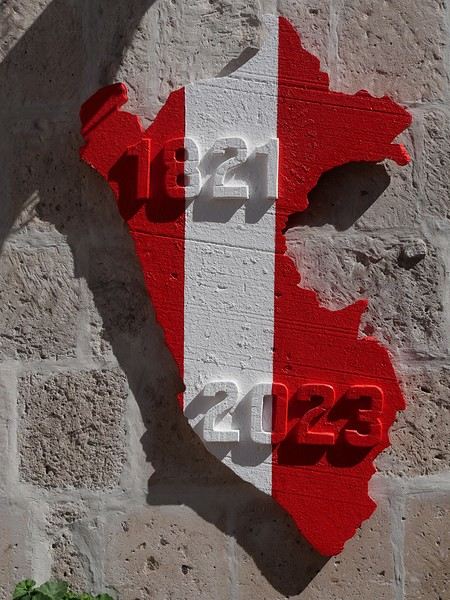
We went as a couple for a 15-day trip. For the first time, we delegated the logistics to a local agency (Paprika in Arequipa). This agency offers "classic" small-group tours and the option to do it privately, which we chose.
No complaints—they were perfect for organizing transportation, hotels, and French-speaking guides.
The "classic" southern Peru loop is: Lima, Paracas, Nazca, Arequipa, Colca, Titicaca, Cusco, Sacred Valley, Cusco. Nothing very original... but why get creative when there’s already so much beauty to discover?
We opted for a shorter loop, skipping Paracas/Nazca because the small planes in Nazca weren’t a unanimous hit, and it saved us dozens of hours on the bus. But we added a stop at Palccoyo (the rainbow mountains) between Titicaca and Cusco.
It might seem like a shame, but we don’t regret it at all.
Abdulrazak Gurnah, an author with a unique journey and identity (Tanzania)
(A belated tribute on this forum)
Abdulrazak Gurnah, an author with a unique journey and identity (Tanzania)
Big surprise in Stockholm: the 2021 Nobel Prize in Literature was awarded to novelist Abdulrazak Gurnah. The Tanzanian author, who writes in English, is best known for his novels Paradise (1994) and By the Sea (2001). He was recognized for his "uncompromising and compassionate portrayal of the effects of colonialism and the fate of refugees caught between cultures and continents", according to the Nobel Committee.His work moves away from "stereotypical descriptions and opens our eyes to a culturally diverse East Africa that is little known in many parts of the world".
Gurnah is the first African author since 2003 to win the prestigious prize, and the fifth from the African continent overall—following Wole Soyinka (1986), Naguib Mahfouz (1988), Nadine Gordimer (1991), and J.M. Coetzee (2003). Once again, the prize passed over Kenyan Ngugi wa Thiong’o, who has long been among the favorites for the award.
Born in Zanzibar (now part of Tanzania) in 1948, Abdulrazak Gurnah grew up in an Arab family originally from Yemen. He sought refuge in the UK in the late 1960s, a few years after independence, at a time when the Muslim minority there was being persecuted. He wasn’t able to return to Zanzibar until 1984.
Since 1987, he has published around ten novels and several short stories in English (his native language is Swahili). None have become bestsellers, but his body of work as a whole offers a different perspective on issues like immigration and cultural diversity. His work sheds light on the effects of colonialism, exile, and the plight of refugees, "speaking" of his love for Africa and his fight against neocolonialism. Though Gurnah’s stories aren’t explicitly autobiographical, they’re inspired by his life as an immigrant in the UK.
Gurnah was also a professor of English and postcolonial literature at the University of Kent in Canterbury until his recent retirement.
Does this award bring more attention to African literature? Who knows? At the very least, it might give it a boost. If African literature is less visible in the West, it’s partly because it isn’t widely accessible: Gurnah is rarely translated into French or German, and not at all into Arabic.
In Tanzania and its Zanzibar archipelago, he’s being celebrated with joy. "This means a lot for Zanzibar’s struggle for self-determination," says Ismail Jussa, a literary critic from Zanzibar. "It helps put Zanzibar back on the map." The Swedish Committee acknowledged that his work has helped understand "the divisions caused by colonialists, but also the heartbreak of being torn between the homeland one comes from and the life of exile one is forced into."
By the Sea. Bloomsbury Publishing, 2001 (Fr.: Près de la Mer. Galaade Éd., 2006)
Paradise. Bloomsbury Publishing, 1994/2004 (Fr.: Paradis. Motifs, 1999)
Desertion. Bloomsbury Publishing, 2005 (Fr.: Adieu Zanzibar. Galaade Éd., 2009)
Afterlives. Bloomsbury Publishing, 2020 (Fr.: Les vies d’après. Denoël, 2023)
Hery
Abdulrazak Gurnah, an author with a unique journey and identity (Tanzania)
Big surprise in Stockholm: the 2021 Nobel Prize in Literature was awarded to novelist Abdulrazak Gurnah. The Tanzanian author, who writes in English, is best known for his novels Paradise (1994) and By the Sea (2001). He was recognized for his "uncompromising and compassionate portrayal of the effects of colonialism and the fate of refugees caught between cultures and continents", according to the Nobel Committee.His work moves away from "stereotypical descriptions and opens our eyes to a culturally diverse East Africa that is little known in many parts of the world".
Gurnah is the first African author since 2003 to win the prestigious prize, and the fifth from the African continent overall—following Wole Soyinka (1986), Naguib Mahfouz (1988), Nadine Gordimer (1991), and J.M. Coetzee (2003). Once again, the prize passed over Kenyan Ngugi wa Thiong’o, who has long been among the favorites for the award.
Born in Zanzibar (now part of Tanzania) in 1948, Abdulrazak Gurnah grew up in an Arab family originally from Yemen. He sought refuge in the UK in the late 1960s, a few years after independence, at a time when the Muslim minority there was being persecuted. He wasn’t able to return to Zanzibar until 1984.
Since 1987, he has published around ten novels and several short stories in English (his native language is Swahili). None have become bestsellers, but his body of work as a whole offers a different perspective on issues like immigration and cultural diversity. His work sheds light on the effects of colonialism, exile, and the plight of refugees, "speaking" of his love for Africa and his fight against neocolonialism. Though Gurnah’s stories aren’t explicitly autobiographical, they’re inspired by his life as an immigrant in the UK.
Gurnah was also a professor of English and postcolonial literature at the University of Kent in Canterbury until his recent retirement.
Does this award bring more attention to African literature? Who knows? At the very least, it might give it a boost. If African literature is less visible in the West, it’s partly because it isn’t widely accessible: Gurnah is rarely translated into French or German, and not at all into Arabic.
In Tanzania and its Zanzibar archipelago, he’s being celebrated with joy. "This means a lot for Zanzibar’s struggle for self-determination," says Ismail Jussa, a literary critic from Zanzibar. "It helps put Zanzibar back on the map." The Swedish Committee acknowledged that his work has helped understand "the divisions caused by colonialists, but also the heartbreak of being torn between the homeland one comes from and the life of exile one is forced into."
By the Sea. Bloomsbury Publishing, 2001 (Fr.: Près de la Mer. Galaade Éd., 2006)
Paradise. Bloomsbury Publishing, 1994/2004 (Fr.: Paradis. Motifs, 1999)
Desertion. Bloomsbury Publishing, 2005 (Fr.: Adieu Zanzibar. Galaade Éd., 2009)
Afterlives. Bloomsbury Publishing, 2020 (Fr.: Les vies d’après. Denoël, 2023)
Hery
The Extraordinary Painted-House Village of Tam Thanh near Hoi An
Imagine a peaceful fishing village, completely transformed by artists who worked their magic on the walls of 100 residential houses. That’s the remarkable story of the Tam Thanh mural village in Quang Nam province. Once similar to many other coastal villages in the area, it now firmly stands out on the tourist map for a day trip from Hoi An.
In the summer of 2016, Tam Thanh was selected by a Korean-Vietnamese joint project called Art For A Better Community. The village was chosen to be their blank canvas, inspired by the success of mural villages in Korea. The project aimed to make Tam Thanh the first painted village of its kind in Vietnam.
The joint project included five Korean artists and seven Vietnamese artists, along with local volunteers. They aimed to show Vietnamese people that art could be part of everyday life, no matter where you stand in society. The effort began with about three weeks of wall washing, followed by painting the walls of over 100 residents' houses.
The project was a success, and the village came alive with the paintings. The entire village is now a breathtaking gallery just waiting to be explored. The murals capture the life and soul of the village—from young children playing to fishermen in the ocean. A mix of fantastic pieces offers stunning backdrops for photos.
The painted art around the town didn’t just have a visual impact; it also had a social one. The village itself was chosen not only for the layout of the houses but also to contribute to economic development opportunities in Tam Thanh. Tourists now visit the once-overlooked village, creating more income for locals and making it a successful "art for a cause" project. For example, an entrepreneurial resident who owned a small local café invested 1,000,000 VND ($390 USD) in a sugarcane press a week before the paintings were completed. Sugarcane juice vendors then multiplied with the growth of tourism (5,000 VND - $0.20 USD).
Walking down the village’s single street, it’s common to find locals selling refreshments and handmade crafts. In one house in particular, a tailor and his family are painted on an outer wall with incredible detail. The family started selling tote bags decorated by their young daughter. The asking price for the bags is 100,000 VND ($4 USD). If you’re looking for a way to support the village’s economy, this is it. Since there’s no middleman here, you can be sure your money goes directly to the community.
Since the project’s completion, two other villages in the province have now been painted. The new mural villages were created with different local Vietnamese artists to raise awareness about each community’s issues. Tam Hai Island was redecorated to highlight the serious waste problem the population faces due to the lack of treatment plants. Another village on An Binh Island was painted to raise awareness among locals and tourists about the importance of environmental protection.
How to get there
Route No. 1: Cross the large Cua Dai bridge. Once you’ve crossed it, continue onto Duong 129/Duong Ven Bien. Stay on this road for 33 kilometers. Upside: this route has light traffic, no traffic lights, and no trucks or buses. It’s a great direct route to the village but offers little to see. You’ll eventually reach a crossroads. Turn right toward Tam Ky town, while the left will take you toward the mural village; stay on Road 608 as it turns twice before reaching a bridge. Cross the bridge, and you’ll arrive at Thanh Nien Road. Finally, turn right to reach the village. This route takes about an hour.
Route #2: Cross the large Cua Dai bridge. Once you’ve crossed it, continue onto Duong 129/Duong Ven Bien. Stay on this road for 12 kilometers, then turn left onto Road 613, where you’ll continue for 1.5 kilometers until you reach Thanh Nien Road. Finally, turn right and drive 23 kilometers to the painted village. For most of the trip, taking Thanh Nien Road will take you through a much more local part of the region. The journey takes about an hour and a half.
Bike Route and AI
I'm currently exploring how to create a travel itinerary using AI, specifically ChatGPT.
Question: Bike route from Bordeaux to Paris.
Rough response:
A bike route between Bordeaux and Paris is an incredible adventure, typically around 600 to 650 km depending on the chosen path. Here’s an example of an itinerary with key points:Main Option: La Scandibérique (EuroVelo 3) La Scandibérique is the French section of EuroVelo 3, connecting Bordeaux to Paris through stunning landscapes. This route is well-marked and takes you through small roads and greenways.Main Stages
Bordeaux → Libourne (about 40 km)
Follow the Garonne River, cross the vineyards of Entre-deux-Mers, and reach Libourne, a charming wine town. Greenways available.
Libourne → Périgueux (about 100 km)
Cross the Dordogne with stops in villages like Montpon-Ménestérol. Mix of quiet small roads and trails.
Périgueux → Châteauroux (about 160 km, in several stages)
Through the Parc Naturel Régional de la Brenne. This stage is longer but rich in nature and heritage.
Châteauroux → Orléans (about 110 km)
Reach the banks of the Loire to enjoy the famous Loire à Vélo, a beautiful section with châteaux.
Orléans → Paris (about 140 km)
Pass through the Forêt de Fontainebleau before joining the bike paths along the Seine all the way to Paris.
Question: Bike route from Bordeaux to Paris.
Rough response:
A bike route between Bordeaux and Paris is an incredible adventure, typically around 600 to 650 km depending on the chosen path. Here’s an example of an itinerary with key points:Main Option: La Scandibérique (EuroVelo 3) La Scandibérique is the French section of EuroVelo 3, connecting Bordeaux to Paris through stunning landscapes. This route is well-marked and takes you through small roads and greenways.Main Stages
Bordeaux → Libourne (about 40 km)
Follow the Garonne River, cross the vineyards of Entre-deux-Mers, and reach Libourne, a charming wine town. Greenways available.
Libourne → Périgueux (about 100 km)
Cross the Dordogne with stops in villages like Montpon-Ménestérol. Mix of quiet small roads and trails.
Périgueux → Châteauroux (about 160 km, in several stages)
Through the Parc Naturel Régional de la Brenne. This stage is longer but rich in nature and heritage.
Châteauroux → Orléans (about 110 km)
Reach the banks of the Loire to enjoy the famous Loire à Vélo, a beautiful section with châteaux.
Orléans → Paris (about 140 km)
Pass through the Forêt de Fontainebleau before joining the bike paths along the Seine all the way to Paris.
MSC Voyagers Club Reform
Good evening everyone, since many loyal MSC customers have been asking for it, it seems that the tier system and benefits of the MSC Voyagers Club are undergoing a major reform!
Does anyone here have any information?
Thanks in advance.
Foxpyzy
Which itinerary to choose for 15 days in the American West
Hi everyone!
First time for me in the States from March 24 to April 7, 2025—only 15 days, so choices have to be made. I want to explore part of the West, but obviously planning the route is the trickiest part, so here’s what I’ve come up with and where I have doubts:
-Leaving Paris for LA
1 or 2 nights to visit
-Heading to Vegas, where one couple would go by motorcycle (they’re fans and want the thrill of Route 66) and another by plane (I won’t linger here either—1 or 2 days max!)
Then, Lake Powell, Monument Valley, Grand Canyon, all by rental car for everyone, so the motorcycle gets returned in Vegas.
Now here’s where it gets tricky: either I continue the road trip through the big parks to finish in San Francisco (but it doesn’t seem like the best time—might be too cold), or I head down to San Diego for the return flight. But which itinerary? Kingman, Joshua Tree, Palm Springs, and San Diego—does that make sense? Is it better to go back to Vegas to take a plane or drive the whole way?
So many questions—your help and advice would be super welcome! Thanks in advance, Anne from Périgord Noir
Now here’s where it gets tricky: either I continue the road trip through the big parks to finish in San Francisco (but it doesn’t seem like the best time—might be too cold), or I head down to San Diego for the return flight. But which itinerary? Kingman, Joshua Tree, Palm Springs, and San Diego—does that make sense? Is it better to go back to Vegas to take a plane or drive the whole way?
So many questions—your help and advice would be super welcome! Thanks in advance, Anne from Périgord Noir
Dates for the Most Beautiful Christmas Markets in Europe in 2024
Here are the dates for some of the most beautiful Christmas markets in Europe in 2024 (not an exhaustive list): 🎄🎁❄️
🇩🇪 Berlin (Gendarmenmarkt), Germany - 25 November to 31 December 🇸🇰 Bratislava, Slovakia - 21 November to 6 January 🇧🇪 Bruges, Belgium - 22 November to 5 January 🇧🇪 Brussels, Belgium - 29 November to 5 January 🇭🇺 Budapest, Hungary - 15 November to 1 January 🇩🇪 Cologne, Germany - 18 November to 23 December 🇫🇷 Colmar, France - 26 November to 29 December 🇩🇰 Copenhagen (Tivoli Gardens), Denmark - 16 November to 2 January 🇵🇱 Krakow, Poland - 29 November to 26 December 🇷🇴 Craiova, Romania - 15 November to 5 January 🇩🇪 Dresden (Striezelmarkt), Germany - 27 November to 24 December 🏴 Edinburgh, Scotland - 15 November to 4 January 🇸🇪 Gothenburg (Liseberg), Sweden - 16 November to 30 December 🇩🇪 Hamburg, Germany - 13 November to 29 December 🇫🇮 Helsinki, Finland - 1 December to 22 December 🇫🇷 Le Barcarès, France - 16 November to 5 January 🇧🇪 Liège, Belgium - 29 November to 30 December 🏴 London (Hyde Park), England - 21 November to 5 January 🇱🇺 Luxembourg City, Luxembourg - 23 November to 24 December 🇵🇹 Madeira, Portugal - 1 December to 5 January 🏴 Manchester, England - 8 November to 22 December 🇫🇷 Metz, France - 24 November to 30 December 🇫🇷 Montbéliard, France - 23 November to 24 December 🇫🇷 Mulhouse, France - 22 November to 23 December 🇩🇪 Munich, Germany - 25 November to 24 December 🇩🇪 Nuremberg, Germany - 29 November to 24 December 🇵🇱 Poznan, Poland - 19 November to 23 December 🇨🇿 Prague, Czech Republic - 30 November to 6 January 🇱🇻 Riga, Latvia - 29 November to 2 January 🇫🇮 Rovaniemi, Finland - 30 November to 22 December 🇸🇪 Stockholm (Skansen), Sweden - 30 November to 23 December 🇫🇷 Strasbourg, France - 27 November to 27 December 🇪🇪 Tallinn, Estonia - 22 November to 27 December 🇳🇱 Valkenburg, Netherlands - 16 November to 29 December 🇵🇱 Warsaw, Poland - 29 November to 6 January 🇦🇹 Vienna, Austria - 13 November to 23 December 🇵🇱 Wroclaw, Poland - 29 November to 7 January 🇨🇭 Zurich, Switzerland - 23 November to 24 December
Feel free to suggest other beautiful Christmas markets in Europe with their 2024 dates!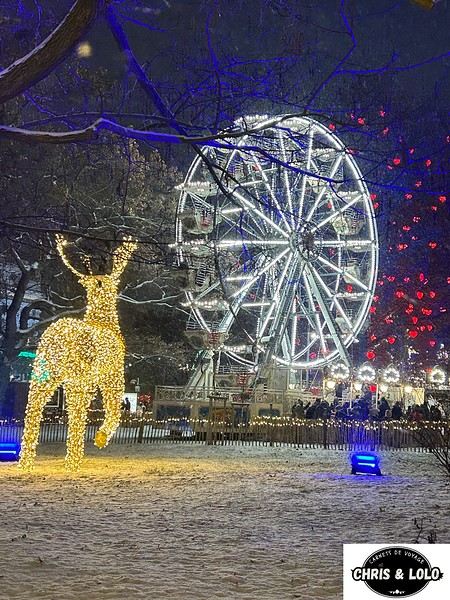
🇩🇪 Berlin (Gendarmenmarkt), Germany - 25 November to 31 December 🇸🇰 Bratislava, Slovakia - 21 November to 6 January 🇧🇪 Bruges, Belgium - 22 November to 5 January 🇧🇪 Brussels, Belgium - 29 November to 5 January 🇭🇺 Budapest, Hungary - 15 November to 1 January 🇩🇪 Cologne, Germany - 18 November to 23 December 🇫🇷 Colmar, France - 26 November to 29 December 🇩🇰 Copenhagen (Tivoli Gardens), Denmark - 16 November to 2 January 🇵🇱 Krakow, Poland - 29 November to 26 December 🇷🇴 Craiova, Romania - 15 November to 5 January 🇩🇪 Dresden (Striezelmarkt), Germany - 27 November to 24 December 🏴 Edinburgh, Scotland - 15 November to 4 January 🇸🇪 Gothenburg (Liseberg), Sweden - 16 November to 30 December 🇩🇪 Hamburg, Germany - 13 November to 29 December 🇫🇮 Helsinki, Finland - 1 December to 22 December 🇫🇷 Le Barcarès, France - 16 November to 5 January 🇧🇪 Liège, Belgium - 29 November to 30 December 🏴 London (Hyde Park), England - 21 November to 5 January 🇱🇺 Luxembourg City, Luxembourg - 23 November to 24 December 🇵🇹 Madeira, Portugal - 1 December to 5 January 🏴 Manchester, England - 8 November to 22 December 🇫🇷 Metz, France - 24 November to 30 December 🇫🇷 Montbéliard, France - 23 November to 24 December 🇫🇷 Mulhouse, France - 22 November to 23 December 🇩🇪 Munich, Germany - 25 November to 24 December 🇩🇪 Nuremberg, Germany - 29 November to 24 December 🇵🇱 Poznan, Poland - 19 November to 23 December 🇨🇿 Prague, Czech Republic - 30 November to 6 January 🇱🇻 Riga, Latvia - 29 November to 2 January 🇫🇮 Rovaniemi, Finland - 30 November to 22 December 🇸🇪 Stockholm (Skansen), Sweden - 30 November to 23 December 🇫🇷 Strasbourg, France - 27 November to 27 December 🇪🇪 Tallinn, Estonia - 22 November to 27 December 🇳🇱 Valkenburg, Netherlands - 16 November to 29 December 🇵🇱 Warsaw, Poland - 29 November to 6 January 🇦🇹 Vienna, Austria - 13 November to 23 December 🇵🇱 Wroclaw, Poland - 29 November to 7 January 🇨🇭 Zurich, Switzerland - 23 November to 24 December
Feel free to suggest other beautiful Christmas markets in Europe with their 2024 dates!
Road trip in Iceland with my daughter from May 6 to 13, 2023
Hello everyone,
I’m happy to be back at my keyboard to share a few adventures. 😉
Right now, two more trips are in the works for 2025, but for the moment, I’d rather share than ask questions.
Like many of you, Iceland has been a longtime love of mine. My first trip there was in February 2016, when we went as a family of five—including our three daughters, who were 1, 6, and 5 at the time. It was a very short stay with just one place to stay, north of the capital. We explored the south, from Vik to Grindavik, and of course, I was left wanting more. We returned in April 2018 during a stopover on our way back from New York. We spent three days near Borgarnes, but fatigue and the weather kept me from doing everything I’d planned. After my mom passed away in January 2023, I decided to go back to Iceland for a full week. Just to clear my head... I thought I’d go alone, but in the end, my 8-year-old daughter (at the time) is a huge horseback riding fan, so I decided to take her along. This road trip came together quickly thanks to another well-known French-speaking forum for Iceland lovers. As usual, I quickly checked availability on Booking and flights with Icelandair. Booked the flight, then the accommodations—with quite a few changes right up until departure. Goals for this trip:
Go where I haven’t been yet. Do a road trip because I love them. Go horseback riding with my daughter.
Icelandair was booked for May 6–13, 2023. Accommodations were reserved on Booking, and once again, I rented a 4x4 from Blue Car Rental, which I really like. Not wanting to deal with boredom while there, I got all the insurance and the option to skip the counter. My English isn’t great…
I’m happy to be back at my keyboard to share a few adventures. 😉
Right now, two more trips are in the works for 2025, but for the moment, I’d rather share than ask questions.
Like many of you, Iceland has been a longtime love of mine. My first trip there was in February 2016, when we went as a family of five—including our three daughters, who were 1, 6, and 5 at the time. It was a very short stay with just one place to stay, north of the capital. We explored the south, from Vik to Grindavik, and of course, I was left wanting more. We returned in April 2018 during a stopover on our way back from New York. We spent three days near Borgarnes, but fatigue and the weather kept me from doing everything I’d planned. After my mom passed away in January 2023, I decided to go back to Iceland for a full week. Just to clear my head... I thought I’d go alone, but in the end, my 8-year-old daughter (at the time) is a huge horseback riding fan, so I decided to take her along. This road trip came together quickly thanks to another well-known French-speaking forum for Iceland lovers. As usual, I quickly checked availability on Booking and flights with Icelandair. Booked the flight, then the accommodations—with quite a few changes right up until departure. Goals for this trip:
Go where I haven’t been yet. Do a road trip because I love them. Go horseback riding with my daughter.
Icelandair was booked for May 6–13, 2023. Accommodations were reserved on Booking, and once again, I rented a 4x4 from Blue Car Rental, which I really like. Not wanting to deal with boredom while there, I got all the insurance and the option to skip the counter. My English isn’t great…
How surprising this Sultanate of Oman is
Hey fellow travelers,
We’re a couple in our fifties who’ve been traveling independently for ages—mostly in Asia, a bit in Africa, very little in the Americas, and never ever in West Asia until November 2023, when we discovered the Sultanate of Oman.
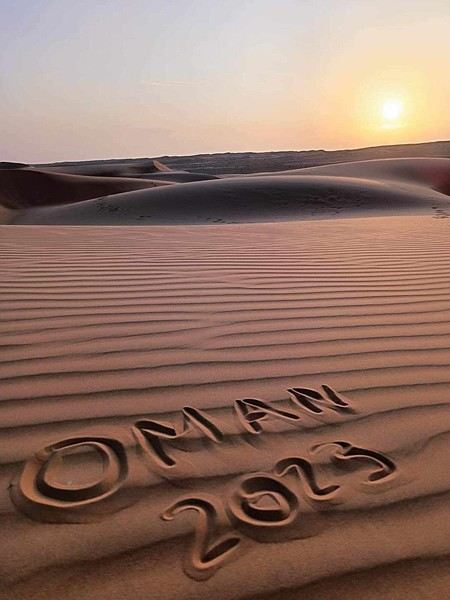
If we waited so long to explore this part of the world, it’s because a few questions were nagging at us, like: Can two Landais party lovers like us survive 15 days without apéro 😄? Or, more seriously: Can a feminist like me enjoy traveling in such a conservative country?
That is the question (and I feel your pain with this unbearable suspense 😅).
Ready to dive in?
PS: Apologies in advance for the casual tone of this travel journal—it’s the one I shared with our loved ones in real time, which explains everything.
We’re a couple in our fifties who’ve been traveling independently for ages—mostly in Asia, a bit in Africa, very little in the Americas, and never ever in West Asia until November 2023, when we discovered the Sultanate of Oman.
If we waited so long to explore this part of the world, it’s because a few questions were nagging at us, like: Can two Landais party lovers like us survive 15 days without apéro 😄? Or, more seriously: Can a feminist like me enjoy traveling in such a conservative country?
That is the question (and I feel your pain with this unbearable suspense 😅).
Ready to dive in?
PS: Apologies in advance for the casual tone of this travel journal—it’s the one I shared with our loved ones in real time, which explains everything.
Pertes et déchirements (Italie) English translation pending
« Era da tanto che volevo scrivere un romanzo con una protagonista. Volevo dire “io” e essere una donna. Adesso posso dire che questa è stata una delle esperienze più importanti che ho provato scrivendo. Tutto è diventato ancestrale, viscerale, materno. Fragilità e coraggio, due sentimenti che non ho mai considerato in contrapposizione, si sono amplificati in maniera assolutamente inedita. Trina (Caterina) – così si chiama la protagonista – ha il nome […] dell’ultima donna che ha lasciato il borgo dopo che la Montecatini […] e ha riempito l’invaso sommergendo per sempre ogni cosa » (Marco Balzano, dans le blog LetteratitudineNews, 2019)
Les drames subis d’un village tyrolien
Ce clocher, il se situe justement à Curon (en all. Graun), un petit village italien situé dans le Tyrol du Sud. C’est en visitant l’endroit et parce qu’il a été lui aussi frappé par cette vision presque surréaliste que Marco Balzano a décidé de lui consacrer un roman. Pour être tout à fait exacte, Je reste ici n’est pas à proprement parler l’histoire de ce lieu. Curon est plutôt le décor du récit qui prend la forme d’un témoignage, la confession d’une mère et femme, Trina, à Marica, sa fille disparue. Cette absence, vive blessure jamais guérie chez Trina, est le moteur de son récit. Elle ne cache rien des fractures apparaissant dans la famille ou dans le village, des trahisons, des violences, mais aussi des joies, traitées avec finesse et pudeur.
Au début, dans les années 1920 Trina est une toute jeune fille. Elle vit à Curon, ancien territoire autrichien annexé par l’Italie à la suite de la Première Guerre mondiale, dans une vallée qui voit soudainement arriver des italophones, des nationalistes qui ne tardent pas à être franchement fascistes, qui lui ferment la porte de l’école pour attribuer les places d’institutrices à des Italiens envoyés là, de toute l’Italie : les adeptes de Mussolini veulent italianiser ces nouveaux territoires nationaux au pas de charge. La langue allemande y est interdite et Trina, devenue institutrice, enseigne clandestinement dans sa langue natale, malgré la chasse que les nationalistes font à ces écoles interdites. Au risque de représailles. Au risque d’un exil à l’autre bout du pays, très loin à l’autre bout de la botte.
Malgré tout, la vie suit son cours. Trina épouse Erich, un paysan, avec qui elle a deux enfants, Marica et Michael. En 1939, la population locale subit un nouveau déchirement. Un accord entre les régimes nazi et fasciste leur demande de choisir : rester chez eux et garder la nationalité italienne ou émigrer vers le Troisième Reich pour devenir Allemands et retrouver leur langue natale : un choix entre la peste et le choléra. Trina et son époux restent, mais ce choix n’est pas sans conséquences : un jour de 1936, Anita, la sœur d’Erich, venue d’Innsbruck, s’installe à Curon avec son mari Lorenz pour échapper au tourbillon urbain et aux voyages incessants de Lorenz, dit-elle. Jusqu’à cette nuit où Anita et Lorenz sont partis comme des voleurs en emmenant avec eux la petite Marica, laissant Trina, Erich et Michael sans nouvelle, désemparés et perdus. Puis la Seconde Guerre mondiale, la mobilisation des hommes qui vont combattre auprès des fascistes et la fuite dans les montagnes alentours. Mais un malheur n’arrivant jamais seul, le gouvernement italien décide de construire dans la région un immense barrage qui aura pour conséquence d’inonder, d’anéantir même, plusieurs villages, dont Curon. Donc, il faut que Trina passe par deux tragédies, qu’elle endure deux déchirements : la séparation d’avec sa fille, d’un côté, et, de l’autre, la perte de son village natal, de ses origines, de son identité. Car les deux sont intimement liés.
Des années plus tard, Trina prend la plume. Elle écrit à cette fille qui est partie de la maison, qui n’a jamais donné d’autre nouvelle, qui n’est jamais reparue alors que, eux, malgré les ennuis, malgré la guerre, malgré le barrage, sont restés ici. Dans le pays qui les a vu naître. Dans leur pays. Sur leur terre pourtant tellement malmenée.
Elle raconte le quotidien d'un monde rural simple et paisible, rattrapé par la folie des hommes. Elle raconte comment le village qui se situe sur la frontière italo-germanique. est annexé par l'Italie en dédommagement de guerre et comment commence pour les habitants une italianisation à marche forcée. Elle raconte comment certains partent s'installer dans le Tyrol autrichien, et d'autres restent au village et tentent de résister car c'est la terre de leur père. Elle raconte leur fol espoir lorsqu'Hitler arrive au pouvoir et signe une alliance avec le Duce. Elle raconte… Enfin, elle raconte la dernière trahison des hommes lorsqu'ils décident de mettre en œuvre le projet de barrage qui inondera et engloutira le village.
Fascisme, nationalisme, dictats industriels, passivité et dirigisme étatique, tout cela constitue le fil rouge de ces vies que Trina raconte dans une langue crue, forte, pleine de la violence de ceux qui n’ont qu’elle pour rempart, pleine de l’impuissance de l’être fruste, toujours dans une tentative de renaissance après une défaite, toujours dans l’espérance, même quand l’espoir a disparu.
Et ce clocher, noyé, qui orne la première de couverture mérite d’illustrer une autre histoire que celle qui est aujourd’hui racontée aux touristes qu’il attire : celle que nous livre Marco Balzano dans ce livre beau, très fort, magnifique. Un roman sympa, mêlant avec talent la grande et la petite histoires, qui fait résonner longtemps la voix de Trina qui, malgré les violences de la guerre, reste fidèle à ses passions de jeunesse, courageuse, indépendante et digne : le récit d'une femme forte, amoureuse, fidèle à elle-même, qui admire la liberté de sa propre mère et qui restera debout face à cette histoire qui ne lui laisse presque rien.
L’auteur milanais évite des effets stylistiques et littéraires. Il écrit l’histoire de Curon sur le ton calme d’une chronique et dans un langage simple. C’est précisément cet understatement qui rend ce drame historique d’autant plus évident.
(le titre original est Resto qui, le titre allemand est Ich bleibe hier, le titre français est Je reste ici)
Hery
https://www.youtube.com/watch?v=ryNAOJg31PY
Les drames subis d’un village tyrolien
Ce clocher, il se situe justement à Curon (en all. Graun), un petit village italien situé dans le Tyrol du Sud. C’est en visitant l’endroit et parce qu’il a été lui aussi frappé par cette vision presque surréaliste que Marco Balzano a décidé de lui consacrer un roman. Pour être tout à fait exacte, Je reste ici n’est pas à proprement parler l’histoire de ce lieu. Curon est plutôt le décor du récit qui prend la forme d’un témoignage, la confession d’une mère et femme, Trina, à Marica, sa fille disparue. Cette absence, vive blessure jamais guérie chez Trina, est le moteur de son récit. Elle ne cache rien des fractures apparaissant dans la famille ou dans le village, des trahisons, des violences, mais aussi des joies, traitées avec finesse et pudeur.
Au début, dans les années 1920 Trina est une toute jeune fille. Elle vit à Curon, ancien territoire autrichien annexé par l’Italie à la suite de la Première Guerre mondiale, dans une vallée qui voit soudainement arriver des italophones, des nationalistes qui ne tardent pas à être franchement fascistes, qui lui ferment la porte de l’école pour attribuer les places d’institutrices à des Italiens envoyés là, de toute l’Italie : les adeptes de Mussolini veulent italianiser ces nouveaux territoires nationaux au pas de charge. La langue allemande y est interdite et Trina, devenue institutrice, enseigne clandestinement dans sa langue natale, malgré la chasse que les nationalistes font à ces écoles interdites. Au risque de représailles. Au risque d’un exil à l’autre bout du pays, très loin à l’autre bout de la botte.
Malgré tout, la vie suit son cours. Trina épouse Erich, un paysan, avec qui elle a deux enfants, Marica et Michael. En 1939, la population locale subit un nouveau déchirement. Un accord entre les régimes nazi et fasciste leur demande de choisir : rester chez eux et garder la nationalité italienne ou émigrer vers le Troisième Reich pour devenir Allemands et retrouver leur langue natale : un choix entre la peste et le choléra. Trina et son époux restent, mais ce choix n’est pas sans conséquences : un jour de 1936, Anita, la sœur d’Erich, venue d’Innsbruck, s’installe à Curon avec son mari Lorenz pour échapper au tourbillon urbain et aux voyages incessants de Lorenz, dit-elle. Jusqu’à cette nuit où Anita et Lorenz sont partis comme des voleurs en emmenant avec eux la petite Marica, laissant Trina, Erich et Michael sans nouvelle, désemparés et perdus. Puis la Seconde Guerre mondiale, la mobilisation des hommes qui vont combattre auprès des fascistes et la fuite dans les montagnes alentours. Mais un malheur n’arrivant jamais seul, le gouvernement italien décide de construire dans la région un immense barrage qui aura pour conséquence d’inonder, d’anéantir même, plusieurs villages, dont Curon. Donc, il faut que Trina passe par deux tragédies, qu’elle endure deux déchirements : la séparation d’avec sa fille, d’un côté, et, de l’autre, la perte de son village natal, de ses origines, de son identité. Car les deux sont intimement liés.
Des années plus tard, Trina prend la plume. Elle écrit à cette fille qui est partie de la maison, qui n’a jamais donné d’autre nouvelle, qui n’est jamais reparue alors que, eux, malgré les ennuis, malgré la guerre, malgré le barrage, sont restés ici. Dans le pays qui les a vu naître. Dans leur pays. Sur leur terre pourtant tellement malmenée.
Elle raconte le quotidien d'un monde rural simple et paisible, rattrapé par la folie des hommes. Elle raconte comment le village qui se situe sur la frontière italo-germanique. est annexé par l'Italie en dédommagement de guerre et comment commence pour les habitants une italianisation à marche forcée. Elle raconte comment certains partent s'installer dans le Tyrol autrichien, et d'autres restent au village et tentent de résister car c'est la terre de leur père. Elle raconte leur fol espoir lorsqu'Hitler arrive au pouvoir et signe une alliance avec le Duce. Elle raconte… Enfin, elle raconte la dernière trahison des hommes lorsqu'ils décident de mettre en œuvre le projet de barrage qui inondera et engloutira le village.
Fascisme, nationalisme, dictats industriels, passivité et dirigisme étatique, tout cela constitue le fil rouge de ces vies que Trina raconte dans une langue crue, forte, pleine de la violence de ceux qui n’ont qu’elle pour rempart, pleine de l’impuissance de l’être fruste, toujours dans une tentative de renaissance après une défaite, toujours dans l’espérance, même quand l’espoir a disparu.
Et ce clocher, noyé, qui orne la première de couverture mérite d’illustrer une autre histoire que celle qui est aujourd’hui racontée aux touristes qu’il attire : celle que nous livre Marco Balzano dans ce livre beau, très fort, magnifique. Un roman sympa, mêlant avec talent la grande et la petite histoires, qui fait résonner longtemps la voix de Trina qui, malgré les violences de la guerre, reste fidèle à ses passions de jeunesse, courageuse, indépendante et digne : le récit d'une femme forte, amoureuse, fidèle à elle-même, qui admire la liberté de sa propre mère et qui restera debout face à cette histoire qui ne lui laisse presque rien.
L’auteur milanais évite des effets stylistiques et littéraires. Il écrit l’histoire de Curon sur le ton calme d’une chronique et dans un langage simple. C’est précisément cet understatement qui rend ce drame historique d’autant plus évident.
(le titre original est Resto qui, le titre allemand est Ich bleibe hier, le titre français est Je reste ici)
Hery
https://www.youtube.com/watch?v=ryNAOJg31PY
My USA dream: voyage de 6 semaines sur la côte Est et Ouest English translation pending
Bonjour à tous,
Le confinement puis la quasi impossibilité de voyager m'ont poussés ces derniers mois à passer beaucoup de temps sur le forum. J'ai relu un grand nombre de carnet de voyage, je me suis immergée dans les albums photos et replongée sur le blog que j'avais créer à l'occasion de mon road trip de six semaines aux USA.
Au départ, je n'avais pas prévu diffuser ce journal intime de voyage à d'autres personnes que mon entourage.Mais un commentaire de Grillonne en manque de carnet sur les États Unis m'a fait revoir ma copie. Si je me délecte avec bonheur des témoignages des autres, mes aventures américaines pourraient peut être elles aussi, occuper les esprits en mal d'évasion.
Avant de continuer le voyage ensemble, je sors mon passeport (à l'effigie du drapeau américain of course !).
Prénom : Estelle (souvent surnommée la ptite, allez savoir pourquoi !!) Age : 32 ans (enfin au moment du séjour il y a deux ans 😎😎) Passion : les voyages et plus particulièrement les USA Signe particulier : forte tendance à l'organisation Situation familiale : en couple avec Dimitry
Préambule
Comme beaucoup d'entre vous, je suis une fan de voyage et depuis quelques années mon coeur et ma tête font une fixette sur les États Unis !
Tout à commencer avec New York, un classique me direz-vous ! A force de baigner dans la culture new yorkaise à travers les films, les séries, la musique et autre, j'ai fini par développer un besoin irrépressible de découvrir la Big Apple! En avril 2015, je réalise enfin ce rêve avec ma soeur lors d'un séjour fantastique d'une semaine.
Puis en Mai 2016, mon CE organise un circuit de 13 jours sur les routes de l'ouest américain. Un voyage enchanteur mais frustrant car au bout du compte j'ai eu l'impression de passer plus de temps dans le bus que sur les sites.
De ces deux formidables expériences, est né un rêve un peu dingue: réaliser un road trip à la découverte de la côte est et de l'ouest américain. Au départ, c'était plus de l'ordre d'un fantasme, vous savez le traditionnel "un jour j'irai", "un jour je ferai". Pour nourrir cette douce rêverie, j'ai pu compter sur les très nombreux carnets de voyage dont regorge le forum. Et c'est ainsi, en lisant les récits des uns et des autres que ma Wishlist est né. J'en profite pour remercier chaleureusement tous les contributeurs du site qui par leurs textes m'ont permis de voyager depuis mon salon en attendant de partir à la conquête de mon rêve !
En juin 2018 après presque deux ans a lire, à penser, à imaginer ce périple, une opportunité unique s'offre à nous. Dimitry change de boulot et a une période de flottement de deux mois. De mon côté, en cumulant mes congés et mes RTT, j'arrive à presque 7 semaines d'affilés. L'occasion est trop belle pour la laisser passer. Ni une, ni deux, on décide de saisir notre chance avant qu'elle ne s'éloigne.
On fait l'état des comptes pour savoir si tout cela est bien réalisable. Et bonne nouvelle, mon épargne salariale après avoir dormi durant dix longues années a été débloquée il y a quelques mois. Nous disposons donc d'une belle enveloppe! Je négocie ensuite avec mon boulot pour une absence exceptionnelle. Mon chef, valide ma dérogation à condition que je lui ramène du chocolat Reese car il n'en a plus manger depuis son dernier séjour aux USA !
Et voilà comment le voyage de notre vie à commencer à prendre forme. Autant vous dire que nous sommes surexcités, mais plus le temps de rêvasser, il faut désormais tout organiser en deux mois à peine. En effet, nous disposons d'un timing contraint car nous devons impérativement revenir au plus tard le 1er novembre, quelques jours avant la prise de poste de Dimitry. De mon côté, je suis également tenue par des engagements professionnels. Nous partirons donc du 17 septembre au 30 octobre 2018.
La préparation
Nous avons beaucoup de chance car nous avons la possibilité d'explorer les USA pendant 6 semaines ce qui est un vrai luxe je dois bien le reconnaitre. Sauf que le problème, c'est qu'à force d'avoir lu des tas de choses, j'ai envie de tout voir et Dimitry aussi. On finit par se raisonner en se rappelant mon expérience avec le tour opérateur de mon boulot. Mieux vaut voir moins et mieux que beaucoup mais trop vite.
A l'est, New York apparait comme un incontournable surtout pour Dim car c'est le berceau de la culture hip hop. Pour un danseur comme lui c'est un passage obligé d'un séjour aux USA. Cela me convient parfaitement car j'ai vraiment adoré ma première excursion. Washington DC et ses mémoriaux sont également sélectionnés. On ne peut pas décemment faire l'impasse sur la capitale de la première puissance mondiale en passant 45 jours sur le sol américain. Boston fait son entrée dans notre planning sur les conseils de Redaska, un ami de Dim qui vit la-bas depuis 6 ans. Ce sera l'occasion de le saluer et de visiter cette ville moins connue.
A l'ouest, San Francisco requiert toutes les faveurs. J'ai beaucoup aimé cet endroit lors de mon premier passage en 2016 et Dim est emballé aussi. Las Vegas et Los Angeles seront également de la partie. Pour ce qui est des parcs, l'affaire se corse. Il y en a tellement que c'est difficile de choisir. Le grand canyon et Bryce canyon sont noté d'office. Antilope canyon et Monument Valley sont indissociables de l'imagerie de l'ouest américain, tout comme la route 66. Ils sont donc ajoutés avec bonheur.La vallée de la mort et le lac Powell sont des étapes clés sur notre route. Pour les autres, je suis plus hésitante. J'ai envie de retourner à Séquoia Park mais c'est compliqué de l'inclure dans le programme. Joshua tree me tente bien mais certains avis me font douter. Yosemite et Zion semblent plus indiqués pour les vrais randonneurs ce qui n'est pas vraiment notre cas. Une fois de plus, je prends conseil auprès des experts du forum. Après consultation des "sages" et au regard de notre planning, nous retenons Yosemite avec le secteur de Mariposa Grove pour ses séquoias; Mono lac à la sortie du parc et Joshua tree pour son dépaysement. Zion et Séquoia Park sont éjectés avec un petit pincement au coeur mais c'est ainsi.
Quelques jours avant de réserver les billets d'avion, Dimitry apprend que l'un des jeunes qu'il entraine a gagné son billet pour la prestigieuse compétition mondiale de break dance qui se déroulera fin octobre à Philadelphie. C'est sans aucun doute, un joli clin d'oeil du destin. Nous décidons donc de modifier nos plans. Nous remplaçons donc les quelques jours prévues pour longer la route C1 entre San Francisco et Los Angeles par une étape à Phily. Là encore, nous sommes déçus mais impossible de tout faire.
Comme, nous ne souhaitons pas déconstruire tout notre programme pour cette nouvelle étape, nous décidons d'attaquer notre périple comme prévue par la côte est. En effet, c'est un choix un peu stratégique car il nous semble plus probable d'espérer une météo clémente en septembre que fin octobre ou nous risquons d'avoir plus de pluie. Nous poursuivrons notre exploration par la côte ouest avant de revenir à l'est pour un dernier stop. Au passage, cela rajoute un vol à la grande joie de Dimitry qui a la phobie de l'avion !!!
Le circuit
lundi 17 septembre : vol Lyon/Londres + vol Londres/Boston mardi 18 septembre : Boston mercredi 19 septembre :Boston jeudi 20 septembre : Boston vendredi 21 septembre : trajet Boston/New York samedi 22 septembre : New York dimanche 23 septembre : New York lundi 24 septembre : New York mardi 25 septembre : New York mercredi 26 septembre : New York jeudi 27 septembre : New York vendredi 28 septembre : New York samedi 29 septembre : trajet New York / WashingtonDC dimanche 3O septembre : Washington DC lundi 1er octobre : Washington DC mardi 2 octobre : Washington DC mercredi 3 octobre : vol Washington DC/ San Francisco jeudi 4 octobre : San Francisco vendredi 5 octobre : San Francisco samedi 6 octobre : San Francisco dimanche 7 octobre : Mariposa Grove lundi 8 octobre : Yosemite Valley mardi 9 octobre : Yosemite Tiago road mercredi 10 octobre : Bodie State Park/ Mono Lake jeudi 11 octobre : Death Valley/ Las Vegas vendredi 12 octobre : Las Vegas samedi 13 octobre : Valley of fire dimanche 14 octobre : Bryce canyon lundi 15 octobre : Upper antilope canyon, Lake Powell recreation, horseshoebend mardi 16 octobre : Monument Valley mercredi 17 octobre : Grand canyon jeudi 18 octobre : road 66 Williams, Seligman, Hackberry général store, Kingman vendredi 19 octobre : Oatman, Joshua tree park samedi 20 octobre : Los Angeles dimanche 21 octobre : Los Angeles lundi 22 octobre : Los Angeles mardi 23 octobre: Los Angeles mercredi 24 octobre : Los Angeles jeudi 25 octobre : Los Angeles (Santa Monica)+vol LA/ Philadelphie vendredi 26 octobre : Philadelphie samedi 27 octobre : Philadelphie dimanche 28 octobre : Philadelphie lundi 29 octobre: Philadelphie + vol Philadelphie/Londres mardi 30 octobre : vol Londres/ Lyon
On the road
Let's go! Cette fois on rentre dans le vif du sujet.
Je vous mets le lien ci-dessous de mon blog qui reprend jour après jour le récit de notre incroyable voyage.
Adresse du blog : http://myusadream.canalblog.com
Je vous préviens tout de suite, il s'agit d'un blog personnel et non d'un site d'un pro, il ya donc quelques remarques à destination de mes proches. Vous n'y trouverez pas selfie à outrance comme les youtubeurs, ni de photos parfaites retouchées avec 200 filtres comme sur Insta. Juste quelques photos pour agrémenter mon récit, essentiellement des paysages, des monuments. Bref, un échantillon des meilleurs instants que nous avons passé.Sorry par avance car il y a des fautes et quelques coquilles. (j'ai écris notre récit quotidien chaque soir souvent au bord de la fatigue après de longues journées). Je ne les ai pas corrigés pour conserver le côté authentique du premier écrit et un peu par flemme aussi je l'avoue 😉. C'est mon journal de bord, donc il me reflète, mes coups de coeur et mes avis me sont propres.
J'espère qu'il saura retranscrire le bonheur que nous avons vécu durant ces six merveilleuses semaines. Avec un peu de chance, cela fera patienter un peu les voyageurs en mal d'évasion et donnera peut être l'envie à certains de réaliser à leur tour le voyage de leur rêve!
Bonne lecture!
Estelle
Le confinement puis la quasi impossibilité de voyager m'ont poussés ces derniers mois à passer beaucoup de temps sur le forum. J'ai relu un grand nombre de carnet de voyage, je me suis immergée dans les albums photos et replongée sur le blog que j'avais créer à l'occasion de mon road trip de six semaines aux USA.
Au départ, je n'avais pas prévu diffuser ce journal intime de voyage à d'autres personnes que mon entourage.Mais un commentaire de Grillonne en manque de carnet sur les États Unis m'a fait revoir ma copie. Si je me délecte avec bonheur des témoignages des autres, mes aventures américaines pourraient peut être elles aussi, occuper les esprits en mal d'évasion.
Avant de continuer le voyage ensemble, je sors mon passeport (à l'effigie du drapeau américain of course !).
Prénom : Estelle (souvent surnommée la ptite, allez savoir pourquoi !!) Age : 32 ans (enfin au moment du séjour il y a deux ans 😎😎) Passion : les voyages et plus particulièrement les USA Signe particulier : forte tendance à l'organisation Situation familiale : en couple avec Dimitry
Préambule
Comme beaucoup d'entre vous, je suis une fan de voyage et depuis quelques années mon coeur et ma tête font une fixette sur les États Unis !
Tout à commencer avec New York, un classique me direz-vous ! A force de baigner dans la culture new yorkaise à travers les films, les séries, la musique et autre, j'ai fini par développer un besoin irrépressible de découvrir la Big Apple! En avril 2015, je réalise enfin ce rêve avec ma soeur lors d'un séjour fantastique d'une semaine.
Puis en Mai 2016, mon CE organise un circuit de 13 jours sur les routes de l'ouest américain. Un voyage enchanteur mais frustrant car au bout du compte j'ai eu l'impression de passer plus de temps dans le bus que sur les sites.
De ces deux formidables expériences, est né un rêve un peu dingue: réaliser un road trip à la découverte de la côte est et de l'ouest américain. Au départ, c'était plus de l'ordre d'un fantasme, vous savez le traditionnel "un jour j'irai", "un jour je ferai". Pour nourrir cette douce rêverie, j'ai pu compter sur les très nombreux carnets de voyage dont regorge le forum. Et c'est ainsi, en lisant les récits des uns et des autres que ma Wishlist est né. J'en profite pour remercier chaleureusement tous les contributeurs du site qui par leurs textes m'ont permis de voyager depuis mon salon en attendant de partir à la conquête de mon rêve !
En juin 2018 après presque deux ans a lire, à penser, à imaginer ce périple, une opportunité unique s'offre à nous. Dimitry change de boulot et a une période de flottement de deux mois. De mon côté, en cumulant mes congés et mes RTT, j'arrive à presque 7 semaines d'affilés. L'occasion est trop belle pour la laisser passer. Ni une, ni deux, on décide de saisir notre chance avant qu'elle ne s'éloigne.
On fait l'état des comptes pour savoir si tout cela est bien réalisable. Et bonne nouvelle, mon épargne salariale après avoir dormi durant dix longues années a été débloquée il y a quelques mois. Nous disposons donc d'une belle enveloppe! Je négocie ensuite avec mon boulot pour une absence exceptionnelle. Mon chef, valide ma dérogation à condition que je lui ramène du chocolat Reese car il n'en a plus manger depuis son dernier séjour aux USA !
Et voilà comment le voyage de notre vie à commencer à prendre forme. Autant vous dire que nous sommes surexcités, mais plus le temps de rêvasser, il faut désormais tout organiser en deux mois à peine. En effet, nous disposons d'un timing contraint car nous devons impérativement revenir au plus tard le 1er novembre, quelques jours avant la prise de poste de Dimitry. De mon côté, je suis également tenue par des engagements professionnels. Nous partirons donc du 17 septembre au 30 octobre 2018.
La préparation
Nous avons beaucoup de chance car nous avons la possibilité d'explorer les USA pendant 6 semaines ce qui est un vrai luxe je dois bien le reconnaitre. Sauf que le problème, c'est qu'à force d'avoir lu des tas de choses, j'ai envie de tout voir et Dimitry aussi. On finit par se raisonner en se rappelant mon expérience avec le tour opérateur de mon boulot. Mieux vaut voir moins et mieux que beaucoup mais trop vite.
A l'est, New York apparait comme un incontournable surtout pour Dim car c'est le berceau de la culture hip hop. Pour un danseur comme lui c'est un passage obligé d'un séjour aux USA. Cela me convient parfaitement car j'ai vraiment adoré ma première excursion. Washington DC et ses mémoriaux sont également sélectionnés. On ne peut pas décemment faire l'impasse sur la capitale de la première puissance mondiale en passant 45 jours sur le sol américain. Boston fait son entrée dans notre planning sur les conseils de Redaska, un ami de Dim qui vit la-bas depuis 6 ans. Ce sera l'occasion de le saluer et de visiter cette ville moins connue.
A l'ouest, San Francisco requiert toutes les faveurs. J'ai beaucoup aimé cet endroit lors de mon premier passage en 2016 et Dim est emballé aussi. Las Vegas et Los Angeles seront également de la partie. Pour ce qui est des parcs, l'affaire se corse. Il y en a tellement que c'est difficile de choisir. Le grand canyon et Bryce canyon sont noté d'office. Antilope canyon et Monument Valley sont indissociables de l'imagerie de l'ouest américain, tout comme la route 66. Ils sont donc ajoutés avec bonheur.La vallée de la mort et le lac Powell sont des étapes clés sur notre route. Pour les autres, je suis plus hésitante. J'ai envie de retourner à Séquoia Park mais c'est compliqué de l'inclure dans le programme. Joshua tree me tente bien mais certains avis me font douter. Yosemite et Zion semblent plus indiqués pour les vrais randonneurs ce qui n'est pas vraiment notre cas. Une fois de plus, je prends conseil auprès des experts du forum. Après consultation des "sages" et au regard de notre planning, nous retenons Yosemite avec le secteur de Mariposa Grove pour ses séquoias; Mono lac à la sortie du parc et Joshua tree pour son dépaysement. Zion et Séquoia Park sont éjectés avec un petit pincement au coeur mais c'est ainsi.
Quelques jours avant de réserver les billets d'avion, Dimitry apprend que l'un des jeunes qu'il entraine a gagné son billet pour la prestigieuse compétition mondiale de break dance qui se déroulera fin octobre à Philadelphie. C'est sans aucun doute, un joli clin d'oeil du destin. Nous décidons donc de modifier nos plans. Nous remplaçons donc les quelques jours prévues pour longer la route C1 entre San Francisco et Los Angeles par une étape à Phily. Là encore, nous sommes déçus mais impossible de tout faire.
Comme, nous ne souhaitons pas déconstruire tout notre programme pour cette nouvelle étape, nous décidons d'attaquer notre périple comme prévue par la côte est. En effet, c'est un choix un peu stratégique car il nous semble plus probable d'espérer une météo clémente en septembre que fin octobre ou nous risquons d'avoir plus de pluie. Nous poursuivrons notre exploration par la côte ouest avant de revenir à l'est pour un dernier stop. Au passage, cela rajoute un vol à la grande joie de Dimitry qui a la phobie de l'avion !!!
Le circuit
lundi 17 septembre : vol Lyon/Londres + vol Londres/Boston mardi 18 septembre : Boston mercredi 19 septembre :Boston jeudi 20 septembre : Boston vendredi 21 septembre : trajet Boston/New York samedi 22 septembre : New York dimanche 23 septembre : New York lundi 24 septembre : New York mardi 25 septembre : New York mercredi 26 septembre : New York jeudi 27 septembre : New York vendredi 28 septembre : New York samedi 29 septembre : trajet New York / WashingtonDC dimanche 3O septembre : Washington DC lundi 1er octobre : Washington DC mardi 2 octobre : Washington DC mercredi 3 octobre : vol Washington DC/ San Francisco jeudi 4 octobre : San Francisco vendredi 5 octobre : San Francisco samedi 6 octobre : San Francisco dimanche 7 octobre : Mariposa Grove lundi 8 octobre : Yosemite Valley mardi 9 octobre : Yosemite Tiago road mercredi 10 octobre : Bodie State Park/ Mono Lake jeudi 11 octobre : Death Valley/ Las Vegas vendredi 12 octobre : Las Vegas samedi 13 octobre : Valley of fire dimanche 14 octobre : Bryce canyon lundi 15 octobre : Upper antilope canyon, Lake Powell recreation, horseshoebend mardi 16 octobre : Monument Valley mercredi 17 octobre : Grand canyon jeudi 18 octobre : road 66 Williams, Seligman, Hackberry général store, Kingman vendredi 19 octobre : Oatman, Joshua tree park samedi 20 octobre : Los Angeles dimanche 21 octobre : Los Angeles lundi 22 octobre : Los Angeles mardi 23 octobre: Los Angeles mercredi 24 octobre : Los Angeles jeudi 25 octobre : Los Angeles (Santa Monica)+vol LA/ Philadelphie vendredi 26 octobre : Philadelphie samedi 27 octobre : Philadelphie dimanche 28 octobre : Philadelphie lundi 29 octobre: Philadelphie + vol Philadelphie/Londres mardi 30 octobre : vol Londres/ Lyon
On the road
Let's go! Cette fois on rentre dans le vif du sujet.
Je vous mets le lien ci-dessous de mon blog qui reprend jour après jour le récit de notre incroyable voyage.
Adresse du blog : http://myusadream.canalblog.com
Je vous préviens tout de suite, il s'agit d'un blog personnel et non d'un site d'un pro, il ya donc quelques remarques à destination de mes proches. Vous n'y trouverez pas selfie à outrance comme les youtubeurs, ni de photos parfaites retouchées avec 200 filtres comme sur Insta. Juste quelques photos pour agrémenter mon récit, essentiellement des paysages, des monuments. Bref, un échantillon des meilleurs instants que nous avons passé.Sorry par avance car il y a des fautes et quelques coquilles. (j'ai écris notre récit quotidien chaque soir souvent au bord de la fatigue après de longues journées). Je ne les ai pas corrigés pour conserver le côté authentique du premier écrit et un peu par flemme aussi je l'avoue 😉. C'est mon journal de bord, donc il me reflète, mes coups de coeur et mes avis me sont propres.
J'espère qu'il saura retranscrire le bonheur que nous avons vécu durant ces six merveilleuses semaines. Avec un peu de chance, cela fera patienter un peu les voyageurs en mal d'évasion et donnera peut être l'envie à certains de réaliser à leur tour le voyage de leur rêve!
Bonne lecture!
Estelle
Le Douro en croisière avec Nicko cruise English translation pending
Revenus hier enchantés
l'1 de nos plus belles croisières avec des paysages magnifiques, une nourriture excellente et variée, 1 spectacle de Fado et 1 de flamenco, un musicien en soirée super, un manager hôtel qui parle 7 langues dont le français et fait très bien son travail
Pas une fausse note sauf qu'il a tt de même fallu débarquer..
NB distanciation respectée, désinfection répétée, au retour au bateau sommes "désinfectés" avant de monter à bord
Le buffet du petit déjeuner est magnifique : pour les plats chauds le pain etc qq ns sert pour le reste chaque petite assiette de fromage etc est couverte, les fruits frais sont dans de petits bocaux
Vraiment c'est très très bien
NB le prix en cabine normale était à 200€ p p.... avec 2 excursions gratuites y c repas...
je ne pense pas revoir cela
Enfin passage d'écluses impressionnants
Je vous souhaite de la faire
Babette
«Je ne veux plus gueuler: "Comment va le monde?" Et qu'on me réponde: «Il va comme il va» English translation pending
Dans la tiédeur d’un soir d’été, deux amies devisaient paisiblement.
Elles parlaient d’amour.
L’une de l’amour de sa compagne qui la rendait plus forte, l’autre de l’amour de son mari qui la rendait plus douce.
Elles parlaient voyages Les voyages d’autrefois où les anecdotes s’enrubannent année après année de détails sortis de leur imagination fertile et qui rendaient leurs récits plus épiques et ceux récents encore à l’état de fraîche émotion.
La bouteille de vin blanc s’embuait sur la table blanche en fer, l’herbe roussie chatouillait leurs pieds nus, elles se sentaient comblées, heureuses et libres et, sans doute pour cette raison, il leur était facile de parler du monde d’aujourd’hui, facile d’évoquer les conflits, les émeutes, les violences, les épidémies.
Epargnées, tranquilles, trempant avec gourmandise leurs lèvres dans le gewurztraminer frais, elles s’interrogeaient :
« T’as vu avec le covid on ne parle plus des guerres, c’est covid partout, encore que ça commence à ralentir, y’a le foot » « Ah oui, t’as raison, tu crois que ça pète encore en Syrie, en Lybie, au Yémen, en Somalie, au Sahel ? » « Chais pas, mais au Liban, quelle horreur cette explosion et tous ces gens morts ou sans maison » « T’as entendu les humanitaires au Niger ? » « Oui, pas les premiers pas les derniers à mourir bêtement » « Et au Brésil et en Colombie, ça c’est calmé ? » « Aucune idée » « Et à Hong-Kong et au Brésil et au Vénézuela, je me demande si ça manifeste toujours » « Chais pas, mais aux Etats-Unis entre blancs et noirs c’est pas cool, t’as vu les émeutes et ça va continuer, tu peux croire » « moi, c’qui me rend dingue c’est tous les gens dans le monde qui ont faim, qui n’ont pas de boulot ou qui l’ont perdu » « oui, c’est triste » « En tout cas, on entend plus parler des migrants, ni ceux de Lampedusa, ni ceux des jungles là-haut » « T’imagines un peu le monde entier à l’arrêt. Comment veux-tu que la terre reste en paix » « Et ceux qui se battent, qui sont en guerre, se tapent le covid en plus » « Et t’as vu en Bielorussie, pareil, ça chauffe aussi » « T’as déjà vu des révolutions pacifiques toi ? » « Ouais, c’est plus embêtant c’est pas loin d’chez nous » « Et le mec empoisonné par les russes, paraît qu’il est en Allemagne » « Chez nous ça va être chaud à la rentrée, j’te l’dis, tu verras, avec les chômeurs, le covid, les gosses à l’école, le télétravail oui et non, on va pas rire »
« Moi, j’te dis qu’il n’y a pas que les incendies de forêts qui bousillent la terre, y’a les incendies de fureur dans le coeur des hommes »
« Oh , t’as pas parlé des masques, des mesures barrières, etoussaettoussa » « Et toi de ton dada favori, l’eau, l’or du monde » « Eh ne me branche pas sur ce sujet, je suis intarissable »
« Allez, t’es pas marrante, tiens, on finit la bouteille, l’est super bon ce vin »
Ainsi, dans la tiédeur d’un soir d’été, deux amies devisaient. A l’abri sous le tilleul, comme à l’abri derrière un écran, comme sur vf, la vie défile, bouleverse, secoue, agace, exaspère ou indiffère et « passent les jours, passent les semaines.../... »
« Comment va le monde? Il est rouge sang Et à mon avis, il l'est pour longtemps Comment va la vie? Il y a des endroits Elle vaut dix dollars combien je te dois
Comment va la guerre? Elle va comme elle va Elle est planétaire, on se reverra Comment va la banque? La banque surnage Pour les grands requins y a pas de naufrage Comment va la mort? Record absolu Toujours très discrète, je n'en sais pas plus » .../… B. Lavilliers
(Vos voyages vous ont fait réfléchir sur l'art de bien voyager, de bien vivre, l'état du monde ou le sens de la vie? Partagez vos pensées et réflexions dans cette rubrique.
Euhhhh, chuis dans la bonne rubrique.)
Elles parlaient voyages Les voyages d’autrefois où les anecdotes s’enrubannent année après année de détails sortis de leur imagination fertile et qui rendaient leurs récits plus épiques et ceux récents encore à l’état de fraîche émotion.
La bouteille de vin blanc s’embuait sur la table blanche en fer, l’herbe roussie chatouillait leurs pieds nus, elles se sentaient comblées, heureuses et libres et, sans doute pour cette raison, il leur était facile de parler du monde d’aujourd’hui, facile d’évoquer les conflits, les émeutes, les violences, les épidémies.
Epargnées, tranquilles, trempant avec gourmandise leurs lèvres dans le gewurztraminer frais, elles s’interrogeaient :
« T’as vu avec le covid on ne parle plus des guerres, c’est covid partout, encore que ça commence à ralentir, y’a le foot » « Ah oui, t’as raison, tu crois que ça pète encore en Syrie, en Lybie, au Yémen, en Somalie, au Sahel ? » « Chais pas, mais au Liban, quelle horreur cette explosion et tous ces gens morts ou sans maison » « T’as entendu les humanitaires au Niger ? » « Oui, pas les premiers pas les derniers à mourir bêtement » « Et au Brésil et en Colombie, ça c’est calmé ? » « Aucune idée » « Et à Hong-Kong et au Brésil et au Vénézuela, je me demande si ça manifeste toujours » « Chais pas, mais aux Etats-Unis entre blancs et noirs c’est pas cool, t’as vu les émeutes et ça va continuer, tu peux croire » « moi, c’qui me rend dingue c’est tous les gens dans le monde qui ont faim, qui n’ont pas de boulot ou qui l’ont perdu » « oui, c’est triste » « En tout cas, on entend plus parler des migrants, ni ceux de Lampedusa, ni ceux des jungles là-haut » « T’imagines un peu le monde entier à l’arrêt. Comment veux-tu que la terre reste en paix » « Et ceux qui se battent, qui sont en guerre, se tapent le covid en plus » « Et t’as vu en Bielorussie, pareil, ça chauffe aussi » « T’as déjà vu des révolutions pacifiques toi ? » « Ouais, c’est plus embêtant c’est pas loin d’chez nous » « Et le mec empoisonné par les russes, paraît qu’il est en Allemagne » « Chez nous ça va être chaud à la rentrée, j’te l’dis, tu verras, avec les chômeurs, le covid, les gosses à l’école, le télétravail oui et non, on va pas rire »
« Moi, j’te dis qu’il n’y a pas que les incendies de forêts qui bousillent la terre, y’a les incendies de fureur dans le coeur des hommes »
« Oh , t’as pas parlé des masques, des mesures barrières, etoussaettoussa » « Et toi de ton dada favori, l’eau, l’or du monde » « Eh ne me branche pas sur ce sujet, je suis intarissable »
« Allez, t’es pas marrante, tiens, on finit la bouteille, l’est super bon ce vin »
Ainsi, dans la tiédeur d’un soir d’été, deux amies devisaient. A l’abri sous le tilleul, comme à l’abri derrière un écran, comme sur vf, la vie défile, bouleverse, secoue, agace, exaspère ou indiffère et « passent les jours, passent les semaines.../... »
« Comment va le monde? Il est rouge sang Et à mon avis, il l'est pour longtemps Comment va la vie? Il y a des endroits Elle vaut dix dollars combien je te dois
Comment va la guerre? Elle va comme elle va Elle est planétaire, on se reverra Comment va la banque? La banque surnage Pour les grands requins y a pas de naufrage Comment va la mort? Record absolu Toujours très discrète, je n'en sais pas plus » .../… B. Lavilliers
(Vos voyages vous ont fait réfléchir sur l'art de bien voyager, de bien vivre, l'état du monde ou le sens de la vie? Partagez vos pensées et réflexions dans cette rubrique.
Euhhhh, chuis dans la bonne rubrique.)
Retour Amsterdam-Dunkerque en train avec vélos English translation pending
Bonjour à tous, nous projetons de partir 15 jours à deux avec une petite fille de 3ans, de Dunkerque à Amsterdam en vélo, en laissant notre voiture à Dunkerque, seulement voilà pour le retour il semblerait que ce soit compliqué. Soit énormément de changement et en plus les vélos sont apparemment pas les bienvenus. Avez vous une idée ?
275 jours autour de la France à pied English translation pending
Cette fois ci le départ approche , après bien des vicissitudes la covid19 qui bouleverse et prolonge ma vie d’ élu, j’anticipe et je prends le départ dimanche 21 juin de Crouy GrandSoissons et j’attaque par le GR 12 l’objectif pour la première cession le Nord Est rallier Sarreguemines en 17 jours... ce sera un test révélateur pour la suite du projet.
Le problème de l’ hébergement ( a prix raisonnable) reste le plus aléatoire , malgré mes demandes dans les mairies. Si quelqu’un a des possibilités ou des idées sur les étapes de Joigny sur Meuse, Nouvion sur Meuse, Mouzon, le long de la voie verte. Stenay, Pierrepont, Fontoy GR 5 et Courcelles Chaussy sur le GR 5g . Je suis preneur.
À bientôt
JM2
Titres de transport pour Paris English translation pending
Je sais que l'on peut acheter une passe pour le train RER, l'autobus etc. pour 1,3, où 5 jours consécutifs mais y a t'il une passe pour une semaine pour les zones 1 à 5 pour touristes que l'on peut acheter et à quel prix? C'est pour une semaine au mois d'octobre
Voyage en camping-car poids lourd Arménie/Géorgie English translation pending
Bonjour,
Nouvelle sur ce forum je projette de partir en Arménie d ici 2021 ou 2022, je voyage souvent en Europe en partant un peu sur un coup de tête. Ce voyage là ça me demander plus d'organisation évidemment.
Je suis à la recherche d'infos pratiques, certains d'entre vous sont ils déjà partis en poids lourds dans ces pays ?
Je suis adepte du camping sauvage et me suis toujours sentie en sécurité partout, seule ou avec un ami, mes deux molosses (non catégorisés) je ne vais jamais au camping. Je suis autonome en électricité et avec une cuve d'eau de 500l je n'ai besoin d'un accès à l'eau qu'une fois par mois.
Comment se passe les passages de frontières, pensez vous que les ferrys prennent un camion camping car poids lourd ? Les chiens sont ils acceptés et y a t il une quarantaine ou une sérologie particulière ? Si ce n'est pas indiscret quel budget comptez vous dans ces pays ? Mon véhicule fait 10m de long.. parmis tous mes voyages jamais de galères ni sur les pistes marocaines parfois chaotiques ni sur les routes de Roumanie...
Bref j'ai mille et une question et je suis curieuse de vos expériences les plus récentes notamment par exemple sur le fait de voyager en tant que femme seule.
Merci d'avance, wahou c'est un pavé, je n'ai pas l'habitude des forums...
Voyage relax dans la nature au Colorado English translation pending
Bonjour,
après presque 3 mois en lockdown, nous avons décider de nous rendre dans le Colorado, pour se prendre une bonne dose de nature et de montagne. Nous souhaiterions, faire pas plus de 3 arrêts en 2 semaines 1/2 afin de profiter du paysage, les petites balades avec enfants de 4 ans, profiter d'un bel espace une maison ou un appartement à louer.
si quelqu'un aurait des pistes ou des bonnes adresses ou des recommandations nous serions preneurs.
On pensait louer à Denver ou environ pour faire une découverte de la ville ( au tant que faire ce peu avec les conditions actuelles bien sure). On pense aussi à Colorado Spring.
Merci
Merci
Itinéraire dans le delta du Mékong seule ou avec agence English translation pending
Bonjour, je voudrais aller 3 ou 4 jours sur le Delta Mékong (en mai). Possible seule ou c'est mieux de passer par une agence (pas trop chère). Itinéraire souhaité : Sa Dec, Ben tre, my tho, cai be, can tho. J'habite à HCMC. A plus, bonne journée