Results for "Forts+Rajasthan+|+7+>+8"
78757 results found.
Attention à l'hôtel Catalonia Bavaro Resort English translation pending
🙁 je ne vous conseil pas cette hôtel, car il ne vaut même pas les 3*, car effectivement, à notre arrivé, personne pour nous accompagné à la chambre.
3h00 pour avoir les valises dans la chambre.
Ensuite nous avons été volé dans le coffre, je dis bien dans le coffre avec la clé sur nous, les sommes de 100€ et 40$ US, ensuite, je me suis ouvert le pied sur 1 cm de profondeur dans la piscine car mal entretenu, j'ai du payer au médecin de l'hôtel la somme de 300$ US pour me faire recoudre. 🤪
1 semaine après cette accident, le sang que j'avais perdu auprès de la piscine été toujours là.
Les chambre faites entre 15h00 et 16h00. La plage et la mer remplie d'algue. Et bien d'autre chose...
La reception très désagréable, moqueur... 🏴☠️
3h00 pour avoir les valises dans la chambre.
Ensuite nous avons été volé dans le coffre, je dis bien dans le coffre avec la clé sur nous, les sommes de 100€ et 40$ US, ensuite, je me suis ouvert le pied sur 1 cm de profondeur dans la piscine car mal entretenu, j'ai du payer au médecin de l'hôtel la somme de 300$ US pour me faire recoudre. 🤪
1 semaine après cette accident, le sang que j'avais perdu auprès de la piscine été toujours là.
Les chambre faites entre 15h00 et 16h00. La plage et la mer remplie d'algue. Et bien d'autre chose...
La reception très désagréable, moqueur... 🏴☠️
Louisiana: The American South Between Wild Nature, Vibrant Culture, and an Inspiring Road Trip
There’s a region in the United States that stands apart—deeply American yet surprisingly familiar. A destination where landscapes seem to pulse with the rhythm of water, where music naturally weaves into daily life, and where every day feels like you’re living something new:
Welcome to Louisiana!
Located in the southern U.S., bordering the Gulf of Mexico and carved by the legendary Mississippi River, Louisiana is a land of contrasts and cultural blends. Shaped by its history with France, Spain, and Creole and Cajun traditions, it now offers a unique travel experience—far from the clichés you might expect.
While New Orleans, jazz, and Mardi Gras are part of its identity, Louisiana today reveals itself in a different light: as a destination deeply rooted in nature, exploration, and freedom.
And that’s exactly what makes it such an appealing trip idea, especially for those seeking a different kind of road trip—one that’s accessible and packed with experiences.
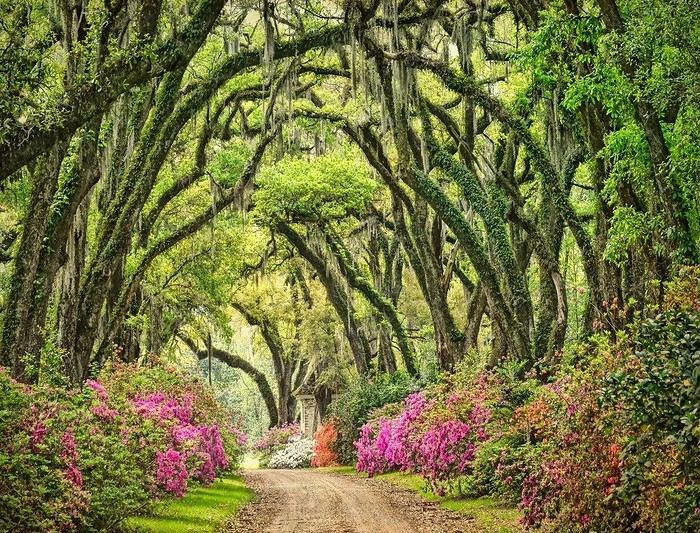
The journey quickly takes on a new dimension. As soon as you leave the urban centers, the scenery shifts. The roads grow quieter, the vegetation denser, and water appears everywhere—in every form. It’s in the bayous where the experience truly comes alive. Paddling gently by kayak on Lake Martin, gliding between centuries-old cypress trees near Breaux Bridge, observing wildlife in an almost surreal silence... Here, nature isn’t just something you look at—it’s something you *live*. You slow down, observe, and soak it all in. And this immersion isn’t complicated or reserved for experts. That’s the beauty of Louisiana: it offers accessible outdoor adventures without constraints, yet deeply immersive ones. A little farther north of New Orleans, the Tammany Trace offers another way to explore the region. By bike, on this repurposed rail trail, you ride through forests and small towns at a relaxed pace—perfect for enjoying the scenery without effort.
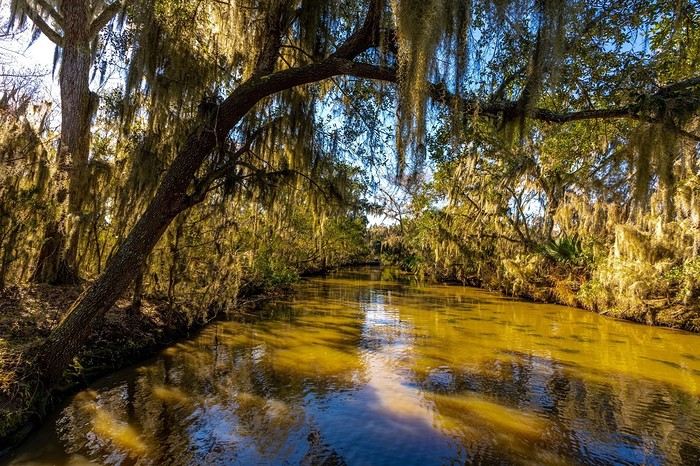
In Kisatchie National Forest, hiking trails reveal a lesser-known side of Louisiana—almost unexpected. Gentle hills, deep forests, and a peaceful atmosphere create a striking contrast to the state’s usual image. And always, that sense of ease. Nothing feels complicated; everything flows naturally.
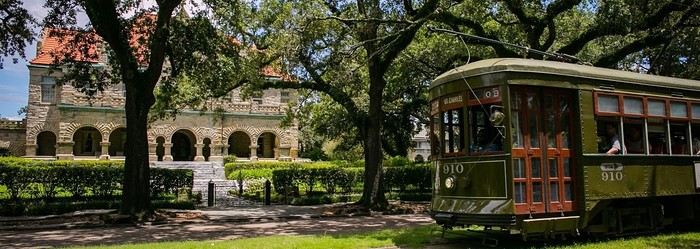
But what truly makes Louisiana unique is its ability to seamlessly blend nature and culture—never pitting one against the other. After a morning in the swamps, you might find yourself in Lafayette, seated in front of a Cajun music group. After a day on the road, you could end the evening in a jazz club in New Orleans. Here, the transitions feel smooth, natural, almost effortless. Culture isn’t just something you visit—it’s an atmosphere. French influences, still very present in certain names, traditions, and expressions, give the trip a warm, familiar feel. Encounters are easy, conversations authentic, and every stop seems to tell a different story. Music, of course, is everywhere. Jazz, blues, zydeco—so many styles that accompany your journey and give it a unique rhythm. You don’t just *visit* Louisiana; you *feel* it.
Exploring Louisiana by road trip also means enjoying an especially fluid itinerary. Distances are always manageable, the roads easy, and the stops flow without excessive fatigue. You move from one environment to another effortlessly: from the river to the swamps, from the city to nature, from lively cultural moments to more contemplative ones. This fluidity changes everything. It lets you take your time, stop, and truly *live* each place without feeling like you’re rushing from one point to the next. And that’s often where the best memories are made.
Unlike some more demanding destinations, Louisiana can be explored in summer—if you adjust your pace. But it’s really from September onward that the destination shines. Temperatures become milder, the light softer, and the overall vibe more serene. October, in particular, offers the perfect balance of climate, crowds, and experience quality. It’s an ideal time to fully enjoy outdoor activities without constraints, in especially pleasant conditions. Good news: there’s still time! Whether for summer 2026 or the late season, opportunities are still open. The best, most fluid, and balanced itineraries are built in advance. Because not all Louisiana trips are the same. It’s easy to replicate a classic route focused on a few major stops. But a more modern approach means rethinking the experience as a whole: fully integrating the outdoors, balancing cultural highlights with nature moments, and setting a pace that truly suits the traveler. That’s the vision that turns a simple itinerary into a real experience. A more immersive, natural, and cohesive Louisiana. One that isn’t just *visited* but *lived* to the fullest.
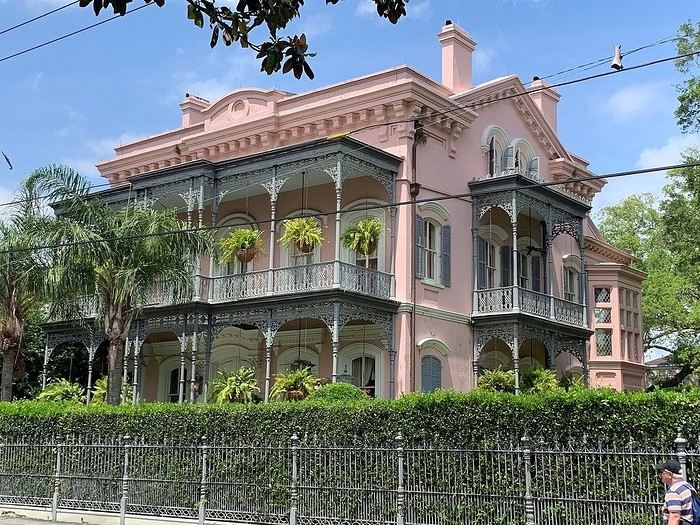
You’ve probably gathered by now—we’re huge fans of Louisiana! It naturally stands out as a unique destination in the American landscape. Accessible yet exotic, rich without being complicated, cultural without feeling rigid, natural without being extreme. A destination that appeals to a wide audience precisely because it doesn’t cater to just one type of traveler. And perhaps that’s its greatest strength in our eyes: offering everyone the chance to find their own rhythm, their own discoveries, their own emotions. So whether it’s for this summer or to fully enjoy the gentle autumn season, Louisiana is waiting to welcome you and leave you amazed. Like a living, balanced, and deeply inspiring destination. And maybe... your next trip.
Want more information about Louisiana? Contact *Partir aux États-Unis* for advice and exclusive rates for Voyage Forum members: click here.
And that’s exactly what makes it such an appealing trip idea, especially for those seeking a different kind of road trip—one that’s accessible and packed with experiences.
The journey quickly takes on a new dimension. As soon as you leave the urban centers, the scenery shifts. The roads grow quieter, the vegetation denser, and water appears everywhere—in every form. It’s in the bayous where the experience truly comes alive. Paddling gently by kayak on Lake Martin, gliding between centuries-old cypress trees near Breaux Bridge, observing wildlife in an almost surreal silence... Here, nature isn’t just something you look at—it’s something you *live*. You slow down, observe, and soak it all in. And this immersion isn’t complicated or reserved for experts. That’s the beauty of Louisiana: it offers accessible outdoor adventures without constraints, yet deeply immersive ones. A little farther north of New Orleans, the Tammany Trace offers another way to explore the region. By bike, on this repurposed rail trail, you ride through forests and small towns at a relaxed pace—perfect for enjoying the scenery without effort.
In Kisatchie National Forest, hiking trails reveal a lesser-known side of Louisiana—almost unexpected. Gentle hills, deep forests, and a peaceful atmosphere create a striking contrast to the state’s usual image. And always, that sense of ease. Nothing feels complicated; everything flows naturally.
But what truly makes Louisiana unique is its ability to seamlessly blend nature and culture—never pitting one against the other. After a morning in the swamps, you might find yourself in Lafayette, seated in front of a Cajun music group. After a day on the road, you could end the evening in a jazz club in New Orleans. Here, the transitions feel smooth, natural, almost effortless. Culture isn’t just something you visit—it’s an atmosphere. French influences, still very present in certain names, traditions, and expressions, give the trip a warm, familiar feel. Encounters are easy, conversations authentic, and every stop seems to tell a different story. Music, of course, is everywhere. Jazz, blues, zydeco—so many styles that accompany your journey and give it a unique rhythm. You don’t just *visit* Louisiana; you *feel* it.
Exploring Louisiana by road trip also means enjoying an especially fluid itinerary. Distances are always manageable, the roads easy, and the stops flow without excessive fatigue. You move from one environment to another effortlessly: from the river to the swamps, from the city to nature, from lively cultural moments to more contemplative ones. This fluidity changes everything. It lets you take your time, stop, and truly *live* each place without feeling like you’re rushing from one point to the next. And that’s often where the best memories are made.
Unlike some more demanding destinations, Louisiana can be explored in summer—if you adjust your pace. But it’s really from September onward that the destination shines. Temperatures become milder, the light softer, and the overall vibe more serene. October, in particular, offers the perfect balance of climate, crowds, and experience quality. It’s an ideal time to fully enjoy outdoor activities without constraints, in especially pleasant conditions. Good news: there’s still time! Whether for summer 2026 or the late season, opportunities are still open. The best, most fluid, and balanced itineraries are built in advance. Because not all Louisiana trips are the same. It’s easy to replicate a classic route focused on a few major stops. But a more modern approach means rethinking the experience as a whole: fully integrating the outdoors, balancing cultural highlights with nature moments, and setting a pace that truly suits the traveler. That’s the vision that turns a simple itinerary into a real experience. A more immersive, natural, and cohesive Louisiana. One that isn’t just *visited* but *lived* to the fullest.
You’ve probably gathered by now—we’re huge fans of Louisiana! It naturally stands out as a unique destination in the American landscape. Accessible yet exotic, rich without being complicated, cultural without feeling rigid, natural without being extreme. A destination that appeals to a wide audience precisely because it doesn’t cater to just one type of traveler. And perhaps that’s its greatest strength in our eyes: offering everyone the chance to find their own rhythm, their own discoveries, their own emotions. So whether it’s for this summer or to fully enjoy the gentle autumn season, Louisiana is waiting to welcome you and leave you amazed. Like a living, balanced, and deeply inspiring destination. And maybe... your next trip.
Want more information about Louisiana? Contact *Partir aux États-Unis* for advice and exclusive rates for Voyage Forum members: click here.
Discussion around March 2026's Theme: Metal, Metallic
This is where we share stories (or post extra photos) around March’s theme Metal, Metallic.
Back to the March 2026 contest: HERE
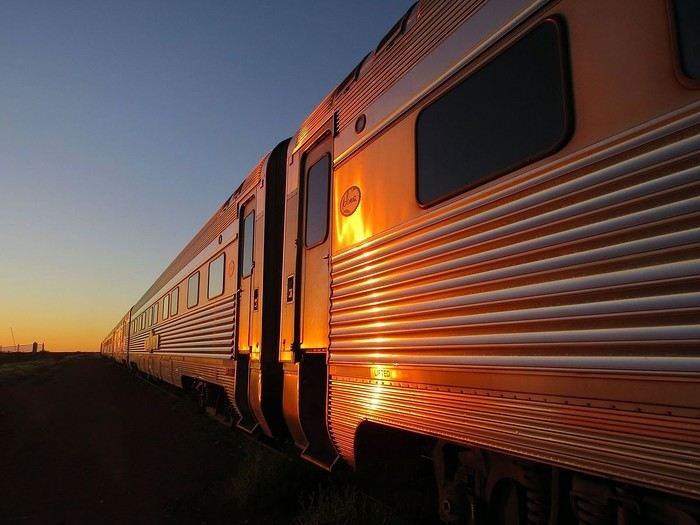
The Ghan (train connecting Adelaide to Darwin), at dawn.
Back to the March 2026 contest: HERE
The Ghan (train connecting Adelaide to Darwin), at dawn.
Tenerife trip feedback – February 2026
After spending 15 days in Tenerife in February 2026, here are a few observations that might be useful for you:
- Choosing Puerto de la Cruz turned out to be an excellent decision (compared to Santa Cruz, which is Lonely Planet’s pick, for example). Puerto de la Cruz has two large beaches just a 10-minute walk from the center. The atmosphere around the small port is lovely. It’s a human-scale town. The bus station makes it easy to get anywhere on the island. Carnival season is an exceptional time to visit!
- Opting for the unlimited weekly bus pass for 50 € is economical (especially if you're traveling solo), eco-friendly, and practical (lots of departures and returns). The roads on major routes are often congested, and the bus network is improving—you can support this effort by traveling this way.
- For hikes, I tested Teide National Park (arrival and departure by bus). Starting from El Portillo at the park entrance, the Arenas Negra circuit (2.5 to 3 hours) is stunning toward the end. You can add a section of Route 1 on the other side of the road (maps and great info at the tourist office). At the other end of the park, "Roques de Garcia" is a spectacular route—crowded but a must-see...
- Tourist towns like La Orotava or La Laguna are worth the visit. Garachico has a certain charm too...
What foods can I bring to Kyrgyzstan?
Hi there! 🙂
I’m not planning to bring all my meals for the 3 weeks of travel, but I’d like to spice up my picnic lunches and a few dinners in this country that’s not exactly known for its cuisine...
I’ve seen that fruits and vegetables are easy to find. Bread is also no problem.
I’m a bit unsure about the local cheese, but I’ll manage.
Actually, it’s what I’d put in my sandwiches that I’d like to pack: cured sausage, pâtés.
Are these foods allowed through customs?
Also, I’m thinking that bringing 3-4 freeze-dried meals could be a good option. I’ve never bought any before. Which brands are the most flavorful?
I’ve also noticed that real coffee is rare. (Meaning Kyrgyz people drink Nescafé. Sacrilege!) Can I easily find coffee there to make my own?
Finally, which supermarket chain is the best? (Meaning the one with the most variety and, above all, quality!)
Last question: where can I buy a gas stove in Bishkek? (I’ve heard that local gas canisters aren’t compatible with the stove I already own)
Thanks!
I’m not planning to bring all my meals for the 3 weeks of travel, but I’d like to spice up my picnic lunches and a few dinners in this country that’s not exactly known for its cuisine...
I’ve seen that fruits and vegetables are easy to find. Bread is also no problem.
I’m a bit unsure about the local cheese, but I’ll manage.
Actually, it’s what I’d put in my sandwiches that I’d like to pack: cured sausage, pâtés.
Are these foods allowed through customs?
Also, I’m thinking that bringing 3-4 freeze-dried meals could be a good option. I’ve never bought any before. Which brands are the most flavorful?
I’ve also noticed that real coffee is rare. (Meaning Kyrgyz people drink Nescafé. Sacrilege!) Can I easily find coffee there to make my own?
Finally, which supermarket chain is the best? (Meaning the one with the most variety and, above all, quality!)
Last question: where can I buy a gas stove in Bishkek? (I’ve heard that local gas canisters aren’t compatible with the stove I already own)
Thanks!
Nepal Feedback
NAMASTE NEPAL! PRACTICAL INFO AND EXPERIENCE FEEDBACK
Stay from March 25 to April 16, 2025
· Flight tickets Air India (via Delhi) (via Skyscanner) = 1130 € per person · Planned budget (and respected without too many restrictions and while buying a few small gifts) = 2000 € for the stay for two. Buses, taxis, and entrance fees to various sites represent a budget to consider. Meals are cheap. Drinks like beer/Coke, however, are not cheap and cost the equivalent of a meal. · Exchange rate of the rupee during our stay = 0.0064 € (the exchange rate is almost identical everywhere, including at the airport). · At the airport, purchase of two SIM cards (phone) = 1000 NPR x 2 for 28 days. · Kathmandu: we had booked the hotel upon arrival: Kathmandu Boutique Hotel (+977 015 357 446 – email: booking@kathmanduboutiquehotel.com), very well located in a quiet alley off the street, south of Thamel, a 10-minute walk from Durbar Square. A hotel like Nepal knows how to do, where tall people will have to duck. Night + breakfast = 18 € for two. Very warm welcome, great location, excellent value for money. · Bhaktapur: we had also booked a hotel for the end of our stay because the chance of the year 2025 made the Nepali New Year and Bisket Jatra particularly festive in Bhaktapur: Manju Baha Hotel School (+977 976 7234014 – email: manjubahahotel@gmail.com) located in an old monastery. "A social enterprise transforming an old monastery into a charming hotel, offering professional hospitality training to underprivileged Nepali youth." Night + breakfast = 32 € for two. Beautifully decorated room. Very warm welcome. Don’t miss the Changunarayan site (near Bhaktapur), it’s amazing. And if you’re lucky enough to be in Bhaktapur in mid-April for 3 days, there’s the Bisket Jatra festivities (Newari festival), joyful, noisy, fun, and wild… · Pokhara (hotel recommended by the Kathmandu hotel): Hotel Green Tara, Lakeside, 10th street, set back, quiet (Tel. +977 61 462698 – email: greentara_67@hotmail.com) · Trek permit (Lower Mustang, no need for an agency or guide, permits checked at Ghasa and Jomsom) = 2000 NPR per person (2 ID photos) · Bus Kathmandu/Pokhara and return = 2000 NPR per person · Bus Pokhara/Jomsom, 2 one-way tickets = 2800 NPR. · Taxi: negotiation with a driver we recommend, Vicky (+977 984 075 599). You explain what you want, negotiate the price, and he waits for you during the visit. Very charming, we used him several times. For example: departure from our hotel at 10 AM -> Boudhanath/Pashupatinath/Patan return at 5 PM to the hotel = 6500 NPR – Swayambhunath (round trip) = 1200 NPR · Site prices: https://ntb.gov.np/plan-your-trip/before-you-come/heritage-site-entry-fees o Visitor Pass for Kathmandu Durbar Square (for the duration of the stay, show your visa) = 1000 NPR per person (1 ID photo) o Bhaktapur Durbar Square (old town) = 1800 NPR per person o Patan = 1000 NPR per person o Swayambhu Stupa = 200 NPR per person o Boudha Stupa = 200 NPR per person o Pashupatinath Temple = 1000 NPR per person (interesting to take a guide) o Changunarayan Temple (6 km north of Bhaktapur) = 400 NPR per person o Mountain Museum in Pokhara = 750 NPR per person · E-cigarettes: e-cigarettes are banned in India and confiscated whether they’re in carry-on or checked luggage. On the way there, we had kept them in our carry-on, they were confiscated in Delhi. On the way back, learning from our previous experience, we put them in our checked luggage. Someone came to get us to take them out of our bags and confiscate them… You can find e-cigarettes and products in Kathmandu.
* * *
I’m 74 years old. I went to Nepal in 1982, 1983, and the last time in 1986. I wanted to introduce this beautiful and endearing country to my husband, and it was… now or never. So we decided it was now.
I knew the trek starting from Pokhara: Naudanda/Birethanti/Ghorepani/Tatopani/Kalopani. There was no way I was going to do that trek, especially the 1000-meter staircase to reach Ghorepani… You have to stay humble with age.
Back then, the road didn’t exist. I didn’t consider, with the construction of this road (NH48) along the western bank of the Kali Gandaki, doing a trek along a windy and dusty road. Was there an alternative hiking trail on the eastern bank? No one answered my question on VoyageForum, so I did my research online. And I found this site: "Andrées de Ruiter and Prem Rai - Trekking the Annapurna Circuit, including the new NATT trails that avoid the road - A guide to one of the most beautiful trekking regions in Nepal and the world (2011) - NATT = New Annapurna Trekking Trail".
Phew! A solution was emerging. This circuit from 2011 wasn’t fully marked. The idea was to go from Jomsom to Tatopani, so we needed to make sure the path was well-marked all the way, which we did, and the path exists, marked in red and white!
So, with the walking times information, we built our 8-day circuit:
· Jomsom/Thinigaon · Thinigaon/Chimang · Chimang/Saura · Saura/Kokhetanti · Rest day or, if in good shape: loop to Sekong Lake · Kokhetanti/Jhipra Deurali · Jhipra Deurali/Kopchepani · Kopchepani/Tatopani
It’s a senior trek, after all. So the walking times noted on the sites indicated 3 hours or even 4 hours for the two longest stages. That pace suited us fine.
On March 29, we left Kathmandu (1400m), after visiting the must-see sites, by bus to Pokhara: 200 km and 8.5 hours on a chaotic road under construction. I had a memory of Pokhara where it was the first city where you could see the Himalayan range, especially Machhapuchhare. But the pollution is such, the dust raised by traffic and construction, that no horizon is visible except the first hills around Pokhara.
We stayed 24 hours in Pokhara (820m), and on March 31, we left our luggage at the hotel and set off with our lightest backpacks: change of clothes, toiletries, first aid kit, anti-chafing cream, water bottle, sleeping bag liner, and light shoes for the stages.
We took the bus to Jomsom: 160 km/7.5 hours including stops for bathroom breaks, tea, and lunch. The road is nothing but a chaos of potholes, landslides, construction, dust, rebuilding, and mudslides. In Ghasa, the bus stops, and we’re told we’re at a checkpoint and that the two foreigners in the bus, my husband and I, need to have our permits checked, which takes a few minutes. The driving is rock-and-roll, surprising, and courteous. The drivers have their codes, and on these improbable roads, they’re virtuosos.
We could have chosen the plane, but several reasons dissuaded us: if there’s too much wind, the planes don’t take off; personally, I wasn’t reassured about landing in Jomsom, and this transport has a cost.
We arrived around 2 PM in Jomsom (2720m), and despite the early wake-up, the nearly 8 hours on the bus, and the altitude, we decided to head straight to Thinigaon (2840m). At the Jomsom checkpoint, they told us it was a 30-minute walk. Great! Except we took an hour and a half on an uphill road, bent over to fight a strong wind. But the Himalayan range is there! The Dhaulagiri, the Nilgiri, the Annapurnas as a reward.
In Thinigaon, we found a room at the "Nilgiri View Hotel" run by a didi (big sister in Nepali). From the lodge’s roof, she proudly showed us the different peaks surrounding the village and told us, worried, that it hadn’t snowed here for 3 years. She said there are very few tourists, that the season is rather in September/October/November. It seems there’s not a soul in this village, yet mules pass through the narrow street paved with large flat stones, their bells ringing. We dine at 6 PM and go to bed… Room = 1200 NPR and dinner, breakfast, and drinks = 2560 NPR.
On April 1, we set off at 9 AM, not for Chimang as planned but for Marpha! The didi from the Thinigaon lodge had said it was a 3-hour walk. The first part of this stage is attractive, the mountains are magnificent and imposing, the landscape is superb, there’s no one around, a feeling of being "alone in the world." We follow Dhumbra Tal, this small green lake. The path is a rocky track that climbs steeply. Then, around a hill, we start the big descent that joins the Kali Gandaki. We face the wind head-on, and the violent gusts take our breath away, throw us off balance, and envelop us in dust. We see the road on the other side of the Kali Gandaki. We arrive in the village of Chhairo at 2 PM, completely exhausted and with blistered feet, after 5 hours of walking instead of the planned 3.5 hours.
We’re welcomed by the village nurse, who tells us there’s a lodge in the village. Chhairo is a Tibetan village, a 20-minute walk from Marpha (according to the locals, multiply by 2 or even 3 for us…). We’re going to revise our trek plan and, first of all, spend the night in Chhairo.
The lodge is quite pleasant, and Karma, the hostess, is very friendly. She asks about our plans and suggests we stay in Chhairo the next day, from where we can visit Marpha and also Chimang, a 1-hour walk away, in light mode, meaning without backpacks. She invites us to participate in a village ceremony the next evening.
We immediately accept the proposal, as our feet need rest and the welcome is so warm… Dinner and bed!
We reworked our trek plan, which was too ambitious for our untrained bodies and, let’s face it… no longer in our first youth. In the initial plan, we thought there wouldn’t be too much elevation gain following the Kali Gandaki, but checking the map, we realize there might be significant elevation changes between Sauru and Sirkung. So we plan:
· Tomorrow: visit Marpha (2670m) and Chimang (2744m) · April 3: bus from Chhairo (2700m) to Kalopani (2530m) and continue on foot to Ghasa (2010m) · April 4: Ghasa/Pairataplo (1940m) · April 5: Pairatapla/Gadpar (1580m) · April 6: Gadpar/Narchyang (1510m) · April 7: Narchyang/Tatopani (1190m) · April 8: return to Pokhara.
Normally, it’s all downhill…
April 2, a rest day then… We set off in the morning to explore Marpha. We have to take a temporary bridge because the suspension bridge is closed due to road construction. We join the road and arrive in Marpha, a village famous for its apple orchards, brandy, cider, and apple juice production. This village is magnificent with its stone houses and monastery clinging to the hillside. The road construction spared it. There are people, but very few Western tourists.
We have lunch in Marpha and go back through Chhairo to take the path to Chimang. We cross a fragrant pine forest and find the rocky path; the landscape is splendid. We walk quietly, passing peaceful buffaloes and cows, and arrive at the foot of a stone staircase… 275 steps (which we counted on the way back) leading us to the village of Chimang. Chimang is an isolated Newari village that seems a bit desolate. Despite the slopes, there are crops on every little bit of land. Thankfully, we changed our initial program because there’s no lodge in this village, contrary to what we saw on a map… We wander through the village, which seems very deserted, have coffee in a house from another world, and then head back to Chhairo.
A rest day? = 5 hours of walking!!
Dinner and village ceremony. From what we understand, this ceremony is in honor of the Dalai Lama. Men, women, and children in traditional costumes gather twice a month; they dance, make, and offer small sweet cakes with Tibetan tea (made from tea, yak butter—often rancid—water, and salt). Surprising for first-timers…
Around 10 PM, we leave the ceremony; tomorrow morning, we need to be on the roadside by 7 AM to catch the bus to Kalopani…
This village of Chhairo is very pleasant and welcoming, no tourists, just two motorcyclists who arrived in the evening, one of whom participated in the ceremony and discreetly poured his Tibetan tea outside.
Lodge: "Norsang Tibetan Guesthouse and Restaurant". Total bill for 2 nights, 2 dinners, 2 breakfasts, and drinks = 8000 NPR.
April 3: bus from Chhairo to Kalopani, about 1.5 hours for the 20 km (200 NPR per person). We descend on the right bank of the Kali Gandaki. We find the red and white markings to resume the trek toward Ghasa. We’re in a fragrant pine forest, the Dhaulagiri on one side and the Annapurnas on the other, magnificent, and the path is pleasant and easy. We get a bit lost in this forest, always looking for the markings. Near Lete, two trekkers pass us, and we meet them again a little further on with two very young children, to whom we give the 2 hard-boiled eggs I didn’t eat this morning. They accepted them without hesitation.
We arrive in a village and ask for directions to Ghasa. The young girls point the way. But we come across a forest being logged, trees cut in all directions. We turn back and ask for confirmation. They confirm… But the two young girls catch up with us and clear the way. We have to step over, go around, and cross the felled trees, with no indication at all. Through this pick-up sticks of felled trees, the girls lead us to the top of a stone staircase, indicating that was the path. It’s the only place where we saw rhododendrons in bloom.
We descend the staircase. At the bottom, to the left, there’s a bridge to go toward Choyo, and to the right, a path to Ghasa. We take the right path and join the road. We should normally find the red and white markings, but we don’t… So we continue on the western bank road of the Kali Gandaki.
A little before the village of Misi, we see fumaroles on the opposite bank that seem to come from the ground. We don’t understand. We stopped to eat in the village of Misi (noodle soup = 600 NPR), but it’s hard to communicate with the elderly people running the guesthouse.
We continued on the road, not finding the marked path parallel to the road. Landslides, both on the left and right banks, seem to have taken over the marked routes. It’s a place where the Kali Gandaki gorge narrows, and on the opposite bank, the mountain smokes more and more, and we now hear the crackling of fire. Across from us, the mountain is burning… Our initial plan had us passing on that burning bank right now…
We arrive in Ghasa at 3:30 PM, a 6.5-hour stage but with a 1-hour stop at noon. We’re at the "Florida Guesthouse and Restaurant." From our room, we see the mountain smoking on the other side of the river, and at night, we see the flames. In this village, posters show Himalayan eagles and vultures that seem to be protected species. Indeed, we saw (and heard) 3 eagles circling today.
April 4 – Today, heading to Pairothapla or Kopchepani depending on our feet, accommodation options, and simply our desires.
No more smoke on the mountain this morning. It’s chilly, 7:45 AM, the sky is clear, just a smell of smoke outside.
Price of the lodge = 1000 NPR for the night + 3580 NPR for meals.
We cross Ghasa, which stretches over more than a kilometer. We have a drink at the last guesthouse in the village, and the didi, when she learns our destination, tells us to be careful because the villages we’re going to aren’t safe. Should we distribute our rupees in different pockets? Nah, we kept going.
At the exit of Ghasa, we find the red and white markings and take the suspension bridge to cross the boiling waters of the Kali Gandaki. The passage is impressive because the river is tumultuous. Lots of climbs and even more descents. We’re back on the eastern bank. It’s hot! On the narrow path, we meet a group of buffaloes. Who has the right of way? We decide to stick as close as possible to the rock wall and move forward calmly. The buffaloes look at us, chewing placidly, with no intention of jumping on us. Phew!
After a 5-hour stage (including stops), we arrive in Pairothapla, with hot feet and firm thighs, and decide we won’t go any further. It’s a good thing because there’s a lodge, the most basic so far, but with a great welcome. We have a meal and a short nap. The buffaloes we met on the way belong to this house. They come to drink at the fountain by the path.
Our host, very pleasant, doesn’t know what to do to please us and is very attentive. He wants to chat. He has two children, a 4-year-old girl and a 7-year-old boy. Where do they go to school? Do they go? He tells us that the fires in the mountain are caused by people, but for what reason? We won’t find out, but it’s illegal. From here, we can still see smoke rising in the distance. The wife is a bit less friendly. Corn kernels dry on a woven straw mat on the ground, and the mom sorts them.
From where we are, we overlook the valley and see the road under construction winding along the mountainside on the other bank.
Dinner on the terrace of the house overlooking the path, windbreaker and fleece on: dal bhat chicken for me and chicken curry for my husband: "organic" products, at least local production. There are small vegetable gardens everywhere with all sorts of vegetables.
April 5 – While we’re having breakfast on the terrace of our lodge, 5 porters, straps on their foreheads, heavily loaded, pass by on the path. A few minutes later, a group of 9 people appears. It must be said that since the beginning of our journey, we’ve met very few hikers. Two backpackers in Chhairo, the two hikers near Lete, two female hikers passed us before Pairothapla, a solo female hiker passed us…
The lodge in Pairothapla is called "Bimala Lodge & Thakali Kitchen" – Price for night + 4 meals + 2 breakfasts = 3000 NPR.
The descent toward the Kali Gandaki involves climbs whose steps we didn’t count. Clearly, the landslides on the mountain cause changes to the official ACAP trek marked in red and white, and the marking updates can’t keep up with the pace of these landslides. It’s almost always by chance that we find the markings. Fortunately, we can follow the power line that guides us somewhat.
Drink stop in Kopchepani, the legs are fine, but the feet don’t like being tightly enclosed. A group of trekkers with porters passes on the path. We met buffaloes that we kindly let pass; the path was wide enough, but it was a staircase going up, and we didn’t want to take any risks.
Across, a view of the magnificent Rupse Waterfall on the other bank of the Kali Gandaki, at the bottom, lots of vehicles and people.
Arrival in Gadpar after crossing a rather unwelcoming small village and cultivated gardens between dry stone walls, each better built than the last.
First lodge spotted, first lodge adopted to answer the call of our feet, and a very warm welcome from the owner. Since we hadn’t eaten at noon, we had Tibetan bread/jam. 6-hour stage including 1 hour of stops. Night + dinner + breakfast + drinks = 5060 NPR
April 6 – Today, heading to Narchyang.
For several days, we’ve seen banana trees with their bunches of fruit and even a prickly pear with large fruits ripening.
This stage is quite peaceful and pleasant. We take a suspension bridge to cross a tributary of the Kali Gandaki. While we’re resting for a moment before crossing the bridge, a couple of porters, a man and a woman, arrive and start across the bridge with their wood load in a basket held by a strap on their forehead, making them bend. We set off too… lighter than them.
On the other side of the bridge… a stone staircase, and it climbs steeply. The porter couple didn’t take this staircase; they went right on the path.
At the top of the staircase, we arrive in Narchyang after a 4-hour stage. A magnificent waterfall overlooks the village. We get lost in this fairly large village looking for a lodge. After wandering around for a while, we ask for directions, and an 84-year-old man takes us through the whole village and accompanies us to a very nice lodge run by a woman.
We chat with our hostess, who asks where we’re from and where we’re going. We explain that we want to reach Tatopani the next day and then return to Pokhara. She tells us there are 4x4s going directly to Pokhara and that it would probably be easier than taking a bus that might be full in Tatopani. After a quick consultation, we decide to return to Pokhara the next day by 4x4. She finds us a 4x4 with 2 seats left, departure at 8 AM – 5 hours on the road and 1500 NPR per person. A charming didi who does everything to be pleasant and helpful.
Narchyang community lodge = night + snacks + dinner + breakfast = 3000 NPR.
There you go, our trek ends tomorrow. Many necessary changes and adaptations to our initial trek, but no regrets, it was superb and a great experience that, for my part, I won’t be able to repeat. Always this encounter with the endearing, welcoming, curious, and very kind Nepali people. It was now or never, and we did it!
* * *
In conclusion, 3 full weeks in Nepal is a duration that allows visiting Kathmandu, Patan, and Bhaktapur, enjoying the various sites, and soaking in the atmosphere and urban Nepali life.
The trek, even revised and corrected, allowed us to get close to the impressive Annapurna and Dhaulagiri peaks. One or two acclimatization days might be necessary to get the body in tune with this magical and extraordinary land.
Stay from March 25 to April 16, 2025
· Flight tickets Air India (via Delhi) (via Skyscanner) = 1130 € per person · Planned budget (and respected without too many restrictions and while buying a few small gifts) = 2000 € for the stay for two. Buses, taxis, and entrance fees to various sites represent a budget to consider. Meals are cheap. Drinks like beer/Coke, however, are not cheap and cost the equivalent of a meal. · Exchange rate of the rupee during our stay = 0.0064 € (the exchange rate is almost identical everywhere, including at the airport). · At the airport, purchase of two SIM cards (phone) = 1000 NPR x 2 for 28 days. · Kathmandu: we had booked the hotel upon arrival: Kathmandu Boutique Hotel (+977 015 357 446 – email: booking@kathmanduboutiquehotel.com), very well located in a quiet alley off the street, south of Thamel, a 10-minute walk from Durbar Square. A hotel like Nepal knows how to do, where tall people will have to duck. Night + breakfast = 18 € for two. Very warm welcome, great location, excellent value for money. · Bhaktapur: we had also booked a hotel for the end of our stay because the chance of the year 2025 made the Nepali New Year and Bisket Jatra particularly festive in Bhaktapur: Manju Baha Hotel School (+977 976 7234014 – email: manjubahahotel@gmail.com) located in an old monastery. "A social enterprise transforming an old monastery into a charming hotel, offering professional hospitality training to underprivileged Nepali youth." Night + breakfast = 32 € for two. Beautifully decorated room. Very warm welcome. Don’t miss the Changunarayan site (near Bhaktapur), it’s amazing. And if you’re lucky enough to be in Bhaktapur in mid-April for 3 days, there’s the Bisket Jatra festivities (Newari festival), joyful, noisy, fun, and wild… · Pokhara (hotel recommended by the Kathmandu hotel): Hotel Green Tara, Lakeside, 10th street, set back, quiet (Tel. +977 61 462698 – email: greentara_67@hotmail.com) · Trek permit (Lower Mustang, no need for an agency or guide, permits checked at Ghasa and Jomsom) = 2000 NPR per person (2 ID photos) · Bus Kathmandu/Pokhara and return = 2000 NPR per person · Bus Pokhara/Jomsom, 2 one-way tickets = 2800 NPR. · Taxi: negotiation with a driver we recommend, Vicky (+977 984 075 599). You explain what you want, negotiate the price, and he waits for you during the visit. Very charming, we used him several times. For example: departure from our hotel at 10 AM -> Boudhanath/Pashupatinath/Patan return at 5 PM to the hotel = 6500 NPR – Swayambhunath (round trip) = 1200 NPR · Site prices: https://ntb.gov.np/plan-your-trip/before-you-come/heritage-site-entry-fees o Visitor Pass for Kathmandu Durbar Square (for the duration of the stay, show your visa) = 1000 NPR per person (1 ID photo) o Bhaktapur Durbar Square (old town) = 1800 NPR per person o Patan = 1000 NPR per person o Swayambhu Stupa = 200 NPR per person o Boudha Stupa = 200 NPR per person o Pashupatinath Temple = 1000 NPR per person (interesting to take a guide) o Changunarayan Temple (6 km north of Bhaktapur) = 400 NPR per person o Mountain Museum in Pokhara = 750 NPR per person · E-cigarettes: e-cigarettes are banned in India and confiscated whether they’re in carry-on or checked luggage. On the way there, we had kept them in our carry-on, they were confiscated in Delhi. On the way back, learning from our previous experience, we put them in our checked luggage. Someone came to get us to take them out of our bags and confiscate them… You can find e-cigarettes and products in Kathmandu.
* * *
I’m 74 years old. I went to Nepal in 1982, 1983, and the last time in 1986. I wanted to introduce this beautiful and endearing country to my husband, and it was… now or never. So we decided it was now.
I knew the trek starting from Pokhara: Naudanda/Birethanti/Ghorepani/Tatopani/Kalopani. There was no way I was going to do that trek, especially the 1000-meter staircase to reach Ghorepani… You have to stay humble with age.
Back then, the road didn’t exist. I didn’t consider, with the construction of this road (NH48) along the western bank of the Kali Gandaki, doing a trek along a windy and dusty road. Was there an alternative hiking trail on the eastern bank? No one answered my question on VoyageForum, so I did my research online. And I found this site: "Andrées de Ruiter and Prem Rai - Trekking the Annapurna Circuit, including the new NATT trails that avoid the road - A guide to one of the most beautiful trekking regions in Nepal and the world (2011) - NATT = New Annapurna Trekking Trail".
Phew! A solution was emerging. This circuit from 2011 wasn’t fully marked. The idea was to go from Jomsom to Tatopani, so we needed to make sure the path was well-marked all the way, which we did, and the path exists, marked in red and white!
So, with the walking times information, we built our 8-day circuit:
· Jomsom/Thinigaon · Thinigaon/Chimang · Chimang/Saura · Saura/Kokhetanti · Rest day or, if in good shape: loop to Sekong Lake · Kokhetanti/Jhipra Deurali · Jhipra Deurali/Kopchepani · Kopchepani/Tatopani
It’s a senior trek, after all. So the walking times noted on the sites indicated 3 hours or even 4 hours for the two longest stages. That pace suited us fine.
On March 29, we left Kathmandu (1400m), after visiting the must-see sites, by bus to Pokhara: 200 km and 8.5 hours on a chaotic road under construction. I had a memory of Pokhara where it was the first city where you could see the Himalayan range, especially Machhapuchhare. But the pollution is such, the dust raised by traffic and construction, that no horizon is visible except the first hills around Pokhara.
We stayed 24 hours in Pokhara (820m), and on March 31, we left our luggage at the hotel and set off with our lightest backpacks: change of clothes, toiletries, first aid kit, anti-chafing cream, water bottle, sleeping bag liner, and light shoes for the stages.
We took the bus to Jomsom: 160 km/7.5 hours including stops for bathroom breaks, tea, and lunch. The road is nothing but a chaos of potholes, landslides, construction, dust, rebuilding, and mudslides. In Ghasa, the bus stops, and we’re told we’re at a checkpoint and that the two foreigners in the bus, my husband and I, need to have our permits checked, which takes a few minutes. The driving is rock-and-roll, surprising, and courteous. The drivers have their codes, and on these improbable roads, they’re virtuosos.
We could have chosen the plane, but several reasons dissuaded us: if there’s too much wind, the planes don’t take off; personally, I wasn’t reassured about landing in Jomsom, and this transport has a cost.
We arrived around 2 PM in Jomsom (2720m), and despite the early wake-up, the nearly 8 hours on the bus, and the altitude, we decided to head straight to Thinigaon (2840m). At the Jomsom checkpoint, they told us it was a 30-minute walk. Great! Except we took an hour and a half on an uphill road, bent over to fight a strong wind. But the Himalayan range is there! The Dhaulagiri, the Nilgiri, the Annapurnas as a reward.
In Thinigaon, we found a room at the "Nilgiri View Hotel" run by a didi (big sister in Nepali). From the lodge’s roof, she proudly showed us the different peaks surrounding the village and told us, worried, that it hadn’t snowed here for 3 years. She said there are very few tourists, that the season is rather in September/October/November. It seems there’s not a soul in this village, yet mules pass through the narrow street paved with large flat stones, their bells ringing. We dine at 6 PM and go to bed… Room = 1200 NPR and dinner, breakfast, and drinks = 2560 NPR.
On April 1, we set off at 9 AM, not for Chimang as planned but for Marpha! The didi from the Thinigaon lodge had said it was a 3-hour walk. The first part of this stage is attractive, the mountains are magnificent and imposing, the landscape is superb, there’s no one around, a feeling of being "alone in the world." We follow Dhumbra Tal, this small green lake. The path is a rocky track that climbs steeply. Then, around a hill, we start the big descent that joins the Kali Gandaki. We face the wind head-on, and the violent gusts take our breath away, throw us off balance, and envelop us in dust. We see the road on the other side of the Kali Gandaki. We arrive in the village of Chhairo at 2 PM, completely exhausted and with blistered feet, after 5 hours of walking instead of the planned 3.5 hours.
We’re welcomed by the village nurse, who tells us there’s a lodge in the village. Chhairo is a Tibetan village, a 20-minute walk from Marpha (according to the locals, multiply by 2 or even 3 for us…). We’re going to revise our trek plan and, first of all, spend the night in Chhairo.
The lodge is quite pleasant, and Karma, the hostess, is very friendly. She asks about our plans and suggests we stay in Chhairo the next day, from where we can visit Marpha and also Chimang, a 1-hour walk away, in light mode, meaning without backpacks. She invites us to participate in a village ceremony the next evening.
We immediately accept the proposal, as our feet need rest and the welcome is so warm… Dinner and bed!
We reworked our trek plan, which was too ambitious for our untrained bodies and, let’s face it… no longer in our first youth. In the initial plan, we thought there wouldn’t be too much elevation gain following the Kali Gandaki, but checking the map, we realize there might be significant elevation changes between Sauru and Sirkung. So we plan:
· Tomorrow: visit Marpha (2670m) and Chimang (2744m) · April 3: bus from Chhairo (2700m) to Kalopani (2530m) and continue on foot to Ghasa (2010m) · April 4: Ghasa/Pairataplo (1940m) · April 5: Pairatapla/Gadpar (1580m) · April 6: Gadpar/Narchyang (1510m) · April 7: Narchyang/Tatopani (1190m) · April 8: return to Pokhara.
Normally, it’s all downhill…
April 2, a rest day then… We set off in the morning to explore Marpha. We have to take a temporary bridge because the suspension bridge is closed due to road construction. We join the road and arrive in Marpha, a village famous for its apple orchards, brandy, cider, and apple juice production. This village is magnificent with its stone houses and monastery clinging to the hillside. The road construction spared it. There are people, but very few Western tourists.
We have lunch in Marpha and go back through Chhairo to take the path to Chimang. We cross a fragrant pine forest and find the rocky path; the landscape is splendid. We walk quietly, passing peaceful buffaloes and cows, and arrive at the foot of a stone staircase… 275 steps (which we counted on the way back) leading us to the village of Chimang. Chimang is an isolated Newari village that seems a bit desolate. Despite the slopes, there are crops on every little bit of land. Thankfully, we changed our initial program because there’s no lodge in this village, contrary to what we saw on a map… We wander through the village, which seems very deserted, have coffee in a house from another world, and then head back to Chhairo.
A rest day? = 5 hours of walking!!
Dinner and village ceremony. From what we understand, this ceremony is in honor of the Dalai Lama. Men, women, and children in traditional costumes gather twice a month; they dance, make, and offer small sweet cakes with Tibetan tea (made from tea, yak butter—often rancid—water, and salt). Surprising for first-timers…
Around 10 PM, we leave the ceremony; tomorrow morning, we need to be on the roadside by 7 AM to catch the bus to Kalopani…
This village of Chhairo is very pleasant and welcoming, no tourists, just two motorcyclists who arrived in the evening, one of whom participated in the ceremony and discreetly poured his Tibetan tea outside.
Lodge: "Norsang Tibetan Guesthouse and Restaurant". Total bill for 2 nights, 2 dinners, 2 breakfasts, and drinks = 8000 NPR.
April 3: bus from Chhairo to Kalopani, about 1.5 hours for the 20 km (200 NPR per person). We descend on the right bank of the Kali Gandaki. We find the red and white markings to resume the trek toward Ghasa. We’re in a fragrant pine forest, the Dhaulagiri on one side and the Annapurnas on the other, magnificent, and the path is pleasant and easy. We get a bit lost in this forest, always looking for the markings. Near Lete, two trekkers pass us, and we meet them again a little further on with two very young children, to whom we give the 2 hard-boiled eggs I didn’t eat this morning. They accepted them without hesitation.
We arrive in a village and ask for directions to Ghasa. The young girls point the way. But we come across a forest being logged, trees cut in all directions. We turn back and ask for confirmation. They confirm… But the two young girls catch up with us and clear the way. We have to step over, go around, and cross the felled trees, with no indication at all. Through this pick-up sticks of felled trees, the girls lead us to the top of a stone staircase, indicating that was the path. It’s the only place where we saw rhododendrons in bloom.
We descend the staircase. At the bottom, to the left, there’s a bridge to go toward Choyo, and to the right, a path to Ghasa. We take the right path and join the road. We should normally find the red and white markings, but we don’t… So we continue on the western bank road of the Kali Gandaki.
A little before the village of Misi, we see fumaroles on the opposite bank that seem to come from the ground. We don’t understand. We stopped to eat in the village of Misi (noodle soup = 600 NPR), but it’s hard to communicate with the elderly people running the guesthouse.
We continued on the road, not finding the marked path parallel to the road. Landslides, both on the left and right banks, seem to have taken over the marked routes. It’s a place where the Kali Gandaki gorge narrows, and on the opposite bank, the mountain smokes more and more, and we now hear the crackling of fire. Across from us, the mountain is burning… Our initial plan had us passing on that burning bank right now…
We arrive in Ghasa at 3:30 PM, a 6.5-hour stage but with a 1-hour stop at noon. We’re at the "Florida Guesthouse and Restaurant." From our room, we see the mountain smoking on the other side of the river, and at night, we see the flames. In this village, posters show Himalayan eagles and vultures that seem to be protected species. Indeed, we saw (and heard) 3 eagles circling today.
April 4 – Today, heading to Pairothapla or Kopchepani depending on our feet, accommodation options, and simply our desires.
No more smoke on the mountain this morning. It’s chilly, 7:45 AM, the sky is clear, just a smell of smoke outside.
Price of the lodge = 1000 NPR for the night + 3580 NPR for meals.
We cross Ghasa, which stretches over more than a kilometer. We have a drink at the last guesthouse in the village, and the didi, when she learns our destination, tells us to be careful because the villages we’re going to aren’t safe. Should we distribute our rupees in different pockets? Nah, we kept going.
At the exit of Ghasa, we find the red and white markings and take the suspension bridge to cross the boiling waters of the Kali Gandaki. The passage is impressive because the river is tumultuous. Lots of climbs and even more descents. We’re back on the eastern bank. It’s hot! On the narrow path, we meet a group of buffaloes. Who has the right of way? We decide to stick as close as possible to the rock wall and move forward calmly. The buffaloes look at us, chewing placidly, with no intention of jumping on us. Phew!
After a 5-hour stage (including stops), we arrive in Pairothapla, with hot feet and firm thighs, and decide we won’t go any further. It’s a good thing because there’s a lodge, the most basic so far, but with a great welcome. We have a meal and a short nap. The buffaloes we met on the way belong to this house. They come to drink at the fountain by the path.
Our host, very pleasant, doesn’t know what to do to please us and is very attentive. He wants to chat. He has two children, a 4-year-old girl and a 7-year-old boy. Where do they go to school? Do they go? He tells us that the fires in the mountain are caused by people, but for what reason? We won’t find out, but it’s illegal. From here, we can still see smoke rising in the distance. The wife is a bit less friendly. Corn kernels dry on a woven straw mat on the ground, and the mom sorts them.
From where we are, we overlook the valley and see the road under construction winding along the mountainside on the other bank.
Dinner on the terrace of the house overlooking the path, windbreaker and fleece on: dal bhat chicken for me and chicken curry for my husband: "organic" products, at least local production. There are small vegetable gardens everywhere with all sorts of vegetables.
April 5 – While we’re having breakfast on the terrace of our lodge, 5 porters, straps on their foreheads, heavily loaded, pass by on the path. A few minutes later, a group of 9 people appears. It must be said that since the beginning of our journey, we’ve met very few hikers. Two backpackers in Chhairo, the two hikers near Lete, two female hikers passed us before Pairothapla, a solo female hiker passed us…
The lodge in Pairothapla is called "Bimala Lodge & Thakali Kitchen" – Price for night + 4 meals + 2 breakfasts = 3000 NPR.
The descent toward the Kali Gandaki involves climbs whose steps we didn’t count. Clearly, the landslides on the mountain cause changes to the official ACAP trek marked in red and white, and the marking updates can’t keep up with the pace of these landslides. It’s almost always by chance that we find the markings. Fortunately, we can follow the power line that guides us somewhat.
Drink stop in Kopchepani, the legs are fine, but the feet don’t like being tightly enclosed. A group of trekkers with porters passes on the path. We met buffaloes that we kindly let pass; the path was wide enough, but it was a staircase going up, and we didn’t want to take any risks.
Across, a view of the magnificent Rupse Waterfall on the other bank of the Kali Gandaki, at the bottom, lots of vehicles and people.
Arrival in Gadpar after crossing a rather unwelcoming small village and cultivated gardens between dry stone walls, each better built than the last.
First lodge spotted, first lodge adopted to answer the call of our feet, and a very warm welcome from the owner. Since we hadn’t eaten at noon, we had Tibetan bread/jam. 6-hour stage including 1 hour of stops. Night + dinner + breakfast + drinks = 5060 NPR
April 6 – Today, heading to Narchyang.
For several days, we’ve seen banana trees with their bunches of fruit and even a prickly pear with large fruits ripening.
This stage is quite peaceful and pleasant. We take a suspension bridge to cross a tributary of the Kali Gandaki. While we’re resting for a moment before crossing the bridge, a couple of porters, a man and a woman, arrive and start across the bridge with their wood load in a basket held by a strap on their forehead, making them bend. We set off too… lighter than them.
On the other side of the bridge… a stone staircase, and it climbs steeply. The porter couple didn’t take this staircase; they went right on the path.
At the top of the staircase, we arrive in Narchyang after a 4-hour stage. A magnificent waterfall overlooks the village. We get lost in this fairly large village looking for a lodge. After wandering around for a while, we ask for directions, and an 84-year-old man takes us through the whole village and accompanies us to a very nice lodge run by a woman.
We chat with our hostess, who asks where we’re from and where we’re going. We explain that we want to reach Tatopani the next day and then return to Pokhara. She tells us there are 4x4s going directly to Pokhara and that it would probably be easier than taking a bus that might be full in Tatopani. After a quick consultation, we decide to return to Pokhara the next day by 4x4. She finds us a 4x4 with 2 seats left, departure at 8 AM – 5 hours on the road and 1500 NPR per person. A charming didi who does everything to be pleasant and helpful.
Narchyang community lodge = night + snacks + dinner + breakfast = 3000 NPR.
There you go, our trek ends tomorrow. Many necessary changes and adaptations to our initial trek, but no regrets, it was superb and a great experience that, for my part, I won’t be able to repeat. Always this encounter with the endearing, welcoming, curious, and very kind Nepali people. It was now or never, and we did it!
* * *
In conclusion, 3 full weeks in Nepal is a duration that allows visiting Kathmandu, Patan, and Bhaktapur, enjoying the various sites, and soaking in the atmosphere and urban Nepali life.
The trek, even revised and corrected, allowed us to get close to the impressive Annapurna and Dhaulagiri peaks. One or two acclimatization days might be necessary to get the body in tune with this magical and extraordinary land.
Back from two months in Guatemala
Hi there,
I spent two months alone in Guatemala this summer, without a guide or agency, and I’d love to share a quick recap of my impressions.
● First off, it’s really easy to travel without a guide or agency. If you want a guide for excursions, you can easily find one through the many agencies in Antigua or Panajachel. In Flores, there are also plenty of agencies offering multi-day jungle treks.
● I got around by shuttle for part of the "classic" and more touristy route. To step off that path, I took "camionetas" (chicken buses) or minibuses.
For me, "camionetas" are the best way to get around Guatemala. They let you travel everywhere, fully immersed, at the local pace. They run all the time and are even an adventure in themselves.
Shuttles are direct, but local buses aren’t. No matter how you travel, trips take a while because roads are often in bad shape, and in the mountains, you can’t overtake.
● As for safety, there’s nothing unusual compared to other Latin American countries. Just keep in mind it’s not Europe. As a solo woman, I try not to draw too much attention—though traveling alone already does that. Like in other countries, I was often asked where my kids and husband were, and I just gave whatever answer I felt like.
● Budget-wise, Guatemala isn’t too expensive for French tourists, but Antigua and Panajachel—two very touristy spots—are pricier.
● Guatemala is a small country but incredibly rich in culture and nature (volcanoes, mountains, beaches, etc.). You can easily spend several days (or even weeks) in each region.
● My top picks ❤️:
- The Mayan markets, especially the one in San Francisco El Alto - The Ixil Triangle: Nebaj, Chajul, Acul - The stunning landscapes around Todos Santos Cuchumatán - Antigua, very touristy but beautiful - Lake Atitlán, also touristy but gorgeous
I planned to climb Pacaya Volcano, but early in my trip, there was an earthquake in Antigua, and by the end, I wasn’t in the mood. Climbing Acatenango is more spectacular but also more challenging.
● Biggest highlights ❤️ ❤️:
- Tikal—it’s THE must-see site, an incredible mix of archaeology and nature!
- The Joyabaj Fair, which I hadn’t planned to visit but ended up spending a week at: Mayan ceremonies, equestrian parades, diverse dances, processions with Mayan priests, and especially the "palo volador"—the highlight of the festival!
● Small letdown 👎:
- Ranchitos del Quetzal, where I went hoping to spot the quetzal. I knew it wasn’t the right season, but I was still disappointed—I didn’t see any other birds either, and the hiking options were limited. It also took me a slight detour from Cobán.
If you have any questions, I’d be happy to answer them.
● If you’re interested, I kept a more detailed travel journal, and I’m working on another one just about the Joyabaj Fair:
https://www.myatlas.com/borboleta/guatemala-deux-mois-au-pays-de-la-couleur
I spent two months alone in Guatemala this summer, without a guide or agency, and I’d love to share a quick recap of my impressions.
● First off, it’s really easy to travel without a guide or agency. If you want a guide for excursions, you can easily find one through the many agencies in Antigua or Panajachel. In Flores, there are also plenty of agencies offering multi-day jungle treks.
● I got around by shuttle for part of the "classic" and more touristy route. To step off that path, I took "camionetas" (chicken buses) or minibuses.
For me, "camionetas" are the best way to get around Guatemala. They let you travel everywhere, fully immersed, at the local pace. They run all the time and are even an adventure in themselves.
Shuttles are direct, but local buses aren’t. No matter how you travel, trips take a while because roads are often in bad shape, and in the mountains, you can’t overtake.
● As for safety, there’s nothing unusual compared to other Latin American countries. Just keep in mind it’s not Europe. As a solo woman, I try not to draw too much attention—though traveling alone already does that. Like in other countries, I was often asked where my kids and husband were, and I just gave whatever answer I felt like.
● Budget-wise, Guatemala isn’t too expensive for French tourists, but Antigua and Panajachel—two very touristy spots—are pricier.
● Guatemala is a small country but incredibly rich in culture and nature (volcanoes, mountains, beaches, etc.). You can easily spend several days (or even weeks) in each region.
● My top picks ❤️:
- The Mayan markets, especially the one in San Francisco El Alto - The Ixil Triangle: Nebaj, Chajul, Acul - The stunning landscapes around Todos Santos Cuchumatán - Antigua, very touristy but beautiful - Lake Atitlán, also touristy but gorgeous
I planned to climb Pacaya Volcano, but early in my trip, there was an earthquake in Antigua, and by the end, I wasn’t in the mood. Climbing Acatenango is more spectacular but also more challenging.
● Biggest highlights ❤️ ❤️:
- Tikal—it’s THE must-see site, an incredible mix of archaeology and nature!
- The Joyabaj Fair, which I hadn’t planned to visit but ended up spending a week at: Mayan ceremonies, equestrian parades, diverse dances, processions with Mayan priests, and especially the "palo volador"—the highlight of the festival!
● Small letdown 👎:
- Ranchitos del Quetzal, where I went hoping to spot the quetzal. I knew it wasn’t the right season, but I was still disappointed—I didn’t see any other birds either, and the hiking options were limited. It also took me a slight detour from Cobán.
If you have any questions, I’d be happy to answer them.
● If you’re interested, I kept a more detailed travel journal, and I’m working on another one just about the Joyabaj Fair:
https://www.myatlas.com/borboleta/guatemala-deux-mois-au-pays-de-la-couleur
Preparing for France to Nepal by Bike
I have 5 months left to prepare for the most ambitious project of my life...
In 5 months, I’ll hit the road, heading to Nepal. Not by plane. Not by train. But by bike.
13,000 km, 18 countries crossed. Powered only by my legs, my will, and a dream.
This journey isn’t just a physical challenge. It’s:
🌍 A human and cultural adventure, meeting locals, landscapes, and traditions. 🌱 A meaningful project: discussing climate change and, above all, listening to those who experience it daily. 🔥 An inner quest, to push my limits and inspire others to step out of their comfort zones. A message of hope for self-discovery.
I have 20 weeks left to: ✅ Finalize my route ✅ Gather the budget and equipment ✅ Sort out the logistics ✅ And most importantly… find committed sponsors to bring this adventure to life.
Any help is welcome!
In 5 months, I’ll hit the road, heading to Nepal. Not by plane. Not by train. But by bike.
13,000 km, 18 countries crossed. Powered only by my legs, my will, and a dream.
This journey isn’t just a physical challenge. It’s:
🌍 A human and cultural adventure, meeting locals, landscapes, and traditions. 🌱 A meaningful project: discussing climate change and, above all, listening to those who experience it daily. 🔥 An inner quest, to push my limits and inspire others to step out of their comfort zones. A message of hope for self-discovery.
I have 20 weeks left to: ✅ Finalize my route ✅ Gather the budget and equipment ✅ Sort out the logistics ✅ And most importantly… find committed sponsors to bring this adventure to life.
Any help is welcome!
3-week Sri Lanka itinerary with three kids
Hi there!
I’m planning a trip with my wife and our three kids (ages 9, 6, and 3) from April 16 to May 6.
I’ve started sketching out the itinerary, trying to alternate between visits, hikes, safaris, and downtime. I want to keep the pace relaxed given the kids’ ages.
Could you let me know what you think of this route? I removed Nuwara Eliya, which I had originally planned before Ella, to cut down on stops. I was also wondering if I should break up the Arugam Bay to Colombo leg with an overnight in Galle, since it’s a long drive.
Thanks in advance for your feedback!
Day 1 – 04/16: Wilpattu Arrival at the airport (08:00) + transfer to Wilpattu (180 km, 4–5 h) + afternoon safari Overnight: Wilpattu Day 2 – 04/17: Wilpattu Morning & afternoon safari Overnight: Wilpattu Day 3 – 04/18: Trincomalee Transfer Wilpattu → Trincomalee (200 km, 4–5 h) + beach relaxation Overnight: Trincomalee Day 4 – 04/19: Trincomalee Nilaveli Beach Overnight: Trincomalee Day 5 – 04/20: Trincomalee Pigeon Island snorkeling Overnight: Trincomalee Day 6 – 04/21: Trincomalee Fort Frederick & relaxation Overnight: Trincomalee Day 7 – 04/22: Sigiriya Transfer Trincomalee → Sigiriya (120 km, ~3 h) + visit to Dambulla Overnight: Sigiriya Day 8 – 04/23: Sigiriya Sigiriya Rock Overnight: Sigiriya Day 9 – 04/24: Sigiriya Minneriya safari Overnight: Sigiriya Day 10 – 04/25: Sigiriya Polonnaruwa & village tour Overnight: Sigiriya Day 11 – 04/26: Ella Transfer Sigiriya → Ella (230 km, 5–6 h) + rest Overnight: Ella Day 12 – 04/27: Ella Little Adam’s Peak & Nine Arches Bridge Overnight: Ella Day 13 – 04/28: Ella Ella Rock Overnight: Ella Day 14 – 04/29: Ella Tea Factory & relaxation Overnight: Ella Day 15 – 04/30: Yala Transfer Ella → Yala (110 km, 2–3 h) + afternoon safari Overnight: Yala Day 16 – 05/01: Arugam Bay Transfer Yala → Arugam Bay (80 km, 2.5–3 h) + beach time Overnight: Arugam Bay Day 17 – 05/02: Arugam Bay Surfing & relaxation Overnight: Arugam Bay Day 18 – 05/03: Arugam Bay Local exploration Overnight: Arugam Bay Day 19 – 05/04: Colombo Transfer Arugam Bay → Colombo (320 km, 7–8 h) + rest Overnight: Colombo Day 20 – 05/05: Colombo City tour & shopping Overnight: Colombo Day 21 – 05/06: Colombo Morning return flight from Colombo
Day 1 – 04/16: Wilpattu Arrival at the airport (08:00) + transfer to Wilpattu (180 km, 4–5 h) + afternoon safari Overnight: Wilpattu Day 2 – 04/17: Wilpattu Morning & afternoon safari Overnight: Wilpattu Day 3 – 04/18: Trincomalee Transfer Wilpattu → Trincomalee (200 km, 4–5 h) + beach relaxation Overnight: Trincomalee Day 4 – 04/19: Trincomalee Nilaveli Beach Overnight: Trincomalee Day 5 – 04/20: Trincomalee Pigeon Island snorkeling Overnight: Trincomalee Day 6 – 04/21: Trincomalee Fort Frederick & relaxation Overnight: Trincomalee Day 7 – 04/22: Sigiriya Transfer Trincomalee → Sigiriya (120 km, ~3 h) + visit to Dambulla Overnight: Sigiriya Day 8 – 04/23: Sigiriya Sigiriya Rock Overnight: Sigiriya Day 9 – 04/24: Sigiriya Minneriya safari Overnight: Sigiriya Day 10 – 04/25: Sigiriya Polonnaruwa & village tour Overnight: Sigiriya Day 11 – 04/26: Ella Transfer Sigiriya → Ella (230 km, 5–6 h) + rest Overnight: Ella Day 12 – 04/27: Ella Little Adam’s Peak & Nine Arches Bridge Overnight: Ella Day 13 – 04/28: Ella Ella Rock Overnight: Ella Day 14 – 04/29: Ella Tea Factory & relaxation Overnight: Ella Day 15 – 04/30: Yala Transfer Ella → Yala (110 km, 2–3 h) + afternoon safari Overnight: Yala Day 16 – 05/01: Arugam Bay Transfer Yala → Arugam Bay (80 km, 2.5–3 h) + beach time Overnight: Arugam Bay Day 17 – 05/02: Arugam Bay Surfing & relaxation Overnight: Arugam Bay Day 18 – 05/03: Arugam Bay Local exploration Overnight: Arugam Bay Day 19 – 05/04: Colombo Transfer Arugam Bay → Colombo (320 km, 7–8 h) + rest Overnight: Colombo Day 20 – 05/05: Colombo City tour & shopping Overnight: Colombo Day 21 – 05/06: Colombo Morning return flight from Colombo
Transatlantic Cruise on Norwegian Viva
Hello,
We’re sailing on the Norwegian Viva from Lisbon to Galveston. From what I’ve read on the NCL site, there’s no formal night; is that correct? If so, that’ll lighten the suitcase! 😊
The ship stops in Cabo Rojo in the Dominican Republic, and I haven’t found much info on this stop—it seems to be recent. I’m thinking of just heading to the seaside near the ship, but if you’ve got another **bon plan**, I’m all ears. Same for La Romana: last time we went to Bayahibe Beach, so if you’ve got another idea...
Thanks in advance!
Back from a 3-week trip to South Africa and Mozambique
Hi everyone,
We’ve just returned from a 3-week trip to South Africa:
2 weeks in Kruger Park, Manyeleti, and White River
5 days in Vilankulo
1 day in Johannesburg
If you have any questions or are planning your trip, don’t hesitate! 🙂
Tips for solo travel in Senegal
Hi everyone,
I’m 66 and just discovered solo travel in Uzbekistan—I loved it! So I’ve decided to explore Africa, starting with Senegal. I’m just beginning my research, but if anyone can give me advice on which month to go, what to see, and whether this destination is safe—or maybe suggest another African country—I’d really appreciate your tips!
Access to the GR52 via ZOU!, the public transport service for the PACA region
Zou! is the public transport service for the Région Sud Provence-Alpes-Côte d'Azur. We're Canadian and our plan was to hike the Mercantour Great Crossing (GR52). After landing in Nice, we needed to find transport to the trailhead in the village of Entraunes. It took us two months to figure out that the only service available was Zou!'s shuttle, and—after countless calls (not easy from Canada)—to actually speak to someone at the company. Even though they confirmed our reservation, on the day of the trip, they weren’t waiting for us. We ended up stranded in Guillaumes because the driver hadn’t been "informed" that he was supposed to go all the way to the terminus that day. In 40 years of traveling the world, I’ve never encountered a situation where customer service was this nonexistent and access to a region this difficult. I just wanted to share this experience to warn you if you’re planning to rely on public transport to reach the GR52...
Kangaroo Island after the fires: what's still worth seeing?
Hi there,
I’ve blocked out 3 weeks at the end of March/beginning of April, arriving in Sydney and departing from Adelaide while following the coast.
Kangaroo Island is a bit of a question mark for me. If I go, I can dedicate 2.5 days to it. Is it worth the time and the cost? I’ve read plenty of travel journals highlighting the landscapes and wildlife, but I’m sure I’ll see plenty of that along my route anyway. I’m not factoring in the financial side (which isn’t negligible for KI), but I’d rather not be disappointed. What are the real added values of KI, especially since the island has been affected by fires? I’ve also come across people online calling it a tourist trap. For example, I ruled out Phillip Island because it felt too organized and structured. Sorry if I’m opening Pandora’s box here!
Thanks for your feedback.
I’ve blocked out 3 weeks at the end of March/beginning of April, arriving in Sydney and departing from Adelaide while following the coast.
Kangaroo Island is a bit of a question mark for me. If I go, I can dedicate 2.5 days to it. Is it worth the time and the cost? I’ve read plenty of travel journals highlighting the landscapes and wildlife, but I’m sure I’ll see plenty of that along my route anyway. I’m not factoring in the financial side (which isn’t negligible for KI), but I’d rather not be disappointed. What are the real added values of KI, especially since the island has been affected by fires? I’ve also come across people online calling it a tourist trap. For example, I ruled out Phillip Island because it felt too organized and structured. Sorry if I’m opening Pandora’s box here!
Thanks for your feedback.
Discussion on the April 2025 photo contest theme "Fish"
To chat about the side topics of the theme "Fish," this is the place!
Back to the contest theme: Fish: April 2025 Photo Contest Theme
Back to the contest theme: Fish: April 2025 Photo Contest Theme
Great tips and advice for buying tea in China
Hello,
As a tea enthusiast, I’m a bit frustrated that I can’t find anything on this topic in the forum.
I’m familiar with the concept of Chinese tea shops where you can stay a while and sample, but are there any travelers here who have experience or tips to share for finding, buying, and bringing back good tea at fair prices? Tourist traps to avoid, expected level of negotiation, good/bad spots (for tea and maybe even equipment), reasonable prices, visiting gardens independently, etc.
Just to clarify: my budget is limited. I usually spend between 10 and 15 € per 100g on Chinese websites.
For my part, I’d love a closer look at these areas:
Hangzhou and the entire West Lake area for Longjing and maybe Anji bai cha Huangshan and Tangkou for Huangshan mao feng and Qimen/Keemun. Wuyi for yan cha (oolong rock teas) and jin jun mei Xiamen and Anxi for Tie guan yin and white teas (Yin zhen, Bai mu dan, and Shou mei) Shanghai for… everything!
Thanks.
As a tea enthusiast, I’m a bit frustrated that I can’t find anything on this topic in the forum.
I’m familiar with the concept of Chinese tea shops where you can stay a while and sample, but are there any travelers here who have experience or tips to share for finding, buying, and bringing back good tea at fair prices? Tourist traps to avoid, expected level of negotiation, good/bad spots (for tea and maybe even equipment), reasonable prices, visiting gardens independently, etc.
Just to clarify: my budget is limited. I usually spend between 10 and 15 € per 100g on Chinese websites.
For my part, I’d love a closer look at these areas:
Hangzhou and the entire West Lake area for Longjing and maybe Anji bai cha Huangshan and Tangkou for Huangshan mao feng and Qimen/Keemun. Wuyi for yan cha (oolong rock teas) and jin jun mei Xiamen and Anxi for Tie guan yin and white teas (Yin zhen, Bai mu dan, and Shou mei) Shanghai for… everything!
Thanks.
Solo traveler: Discovering Argentina differently
If you dream of an extraordinary adventure, you’ve come to the right place! Argentina, this land at the end of the world, offers a unique change of scenery and the perfect opportunity to travel solo. With its spectacular landscapes, stretching from the ends of Tierra del Fuego to the high Andean plateaus, this vast country captivates both nature lovers and those passionate about authentic encounters. Here, the notions of borders and distance fade away: the glaciers of Patagonia, the Iguazu Falls in the heart of the tropical forest, wild steppes, and Andean villages nestled in colorful valleys. In Argentina, you quickly forget the passing of time, as the human experience and the beauty of the places leave their mark on every moment.
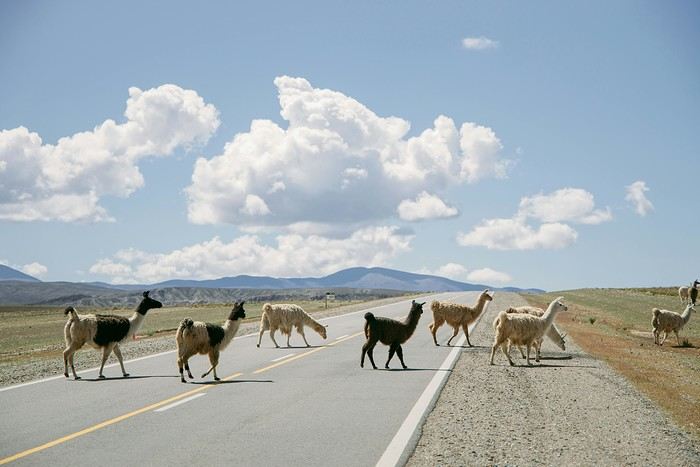
The perfect place to escape mass tourism
When traveling solo, there’s nothing like Argentina to get off the beaten path and avoid the crowds. Of course, some iconic spots like the Perito Moreno Glacier in El Calafate or Tierra del Fuego National Park in Ushuaia attract travelers from all over the world. However, the country’s vastness offers plenty of opportunities to find yourself almost alone in nature. A sunrise over the Andes, an afternoon riding with gauchos in the pampa, or a hike deep in Patagonia—these suspended moments happen far from the crowds.
A country ideal for connecting with local communities
One of Argentina’s strengths is the warmth of its people. Deeply attached to their traditions and genuinely curious about visitors, Argentinians have a knack for breaking down barriers, whether linguistic or cultural. You might find yourself chatting in Spanish over a mate (the local herbal tea), joining an impromptu barbecue, or even trying a few tango steps in a milonga. Simply showing interest in their culture and history is often enough to start a conversation. With Argentinians’ innate sense of hospitality, you never feel alone, even as a solo traveler.
Meeting local communities: a unique human adventure
Traveling solo in Argentina also means encountering its diverse communities. Staying with a local family or in an estancia (an Argentine ranch) lets you dive into the daily lives of families who often live self-sufficiently. In the Northwest, for example, you can share the life of an Andean community and learn to cook delicious local specialties. In Bariloche, some stays even include discovering a Mapuche community, offering a chance to better understand their relationship with the land and the importance of their ancestral traditions.
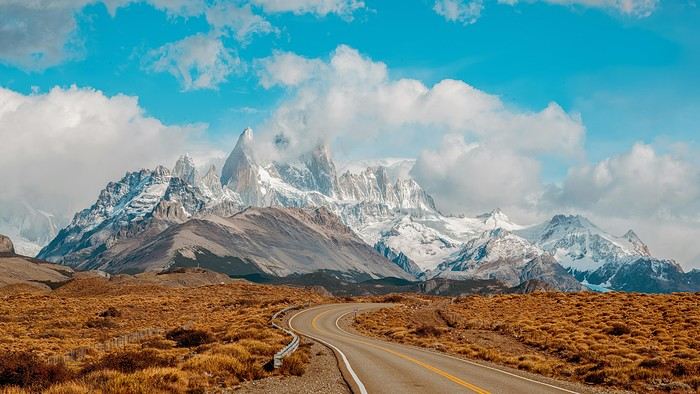
Diverse experiences for an unforgettable trip
Argentina is a true playground for outdoor enthusiasts: hikes in the steppes, sailing on the Beagle Channel in Tierra del Fuego, whale watching in Puerto Madryn (from June to December), or exploring the Iguazu jungle to encounter its wildlife and flora. And just when you think you’ve seen it all, Argentina still has surprises in store. In the Salta region, the Quebrada de Humahuaca reveals mountains with seven colors that tell the geological history of the Andes. It’s a feast for the eyes!
Why not join a small group with Tierra Latina?
Traveling alone doesn’t mean you can’t share parts of your journey with other enthusiasts. That’s what Tierra Latina offers: small-group tours (between 2 and 12 people), designed to balance the freedom of traveling in a small group with the camaraderie of exchanges between travelers. Each itinerary is crafted to alternate highlights (like visiting must-sees: Buenos Aires, Ushuaia, Perito Moreno…) with more intimate moments, far from mass tourism.
The focus is on authentic encounters and respect for local communities—that’s Tierra Latina’s signature. For example, in northwestern Argentina, Tierra Latina offers the chance to spend time in an Andean community to learn about traditional dish preparation during a cooking workshop. It’s an opportunity to exchange recipes and knowledge passed down through generations. The goal: to go beyond simple sightseeing and experience true moments of sharing.
In a small group, you quickly feel like part of a family of travelers, all united by the beauty of the landscapes. You also benefit from French-speaking guides who share their tips and anecdotes while leaving plenty of free time to explore at your own pace. Whether you’re traveling solo, as a couple, or with friends, you’ll find the perfect balance between independence and the comfort of being surrounded.
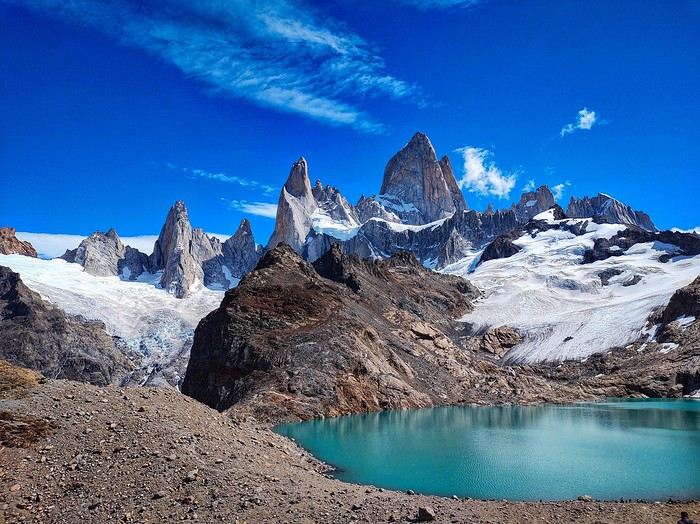
Human connections at the heart of the journey
At Tierra Latina, the goal is to put people at the center of the experience. Accommodations are chosen for their authentic character, often tested and approved by the team itself. Whether you’re staying with an Andean family in a small village in the Quebrada de Humahuaca or in an estancia in the heart of the Patagonian steppe, you’ll take part in local life and contribute to the economy of these sometimes isolated regions.
This responsible approach to travel helps minimize environmental impact while maintaining a privileged connection with those who make Argentina so rich: its people. You’ll leave with intense memories, marked by moments of sharing that are hard to replicate elsewhere. So, ready to pack your bags? Follow the guide and fly off to this fascinating country—you’ll only want one thing: to come back!
The perfect place to escape mass tourism
When traveling solo, there’s nothing like Argentina to get off the beaten path and avoid the crowds. Of course, some iconic spots like the Perito Moreno Glacier in El Calafate or Tierra del Fuego National Park in Ushuaia attract travelers from all over the world. However, the country’s vastness offers plenty of opportunities to find yourself almost alone in nature. A sunrise over the Andes, an afternoon riding with gauchos in the pampa, or a hike deep in Patagonia—these suspended moments happen far from the crowds.
A country ideal for connecting with local communities
One of Argentina’s strengths is the warmth of its people. Deeply attached to their traditions and genuinely curious about visitors, Argentinians have a knack for breaking down barriers, whether linguistic or cultural. You might find yourself chatting in Spanish over a mate (the local herbal tea), joining an impromptu barbecue, or even trying a few tango steps in a milonga. Simply showing interest in their culture and history is often enough to start a conversation. With Argentinians’ innate sense of hospitality, you never feel alone, even as a solo traveler.
Meeting local communities: a unique human adventure
Traveling solo in Argentina also means encountering its diverse communities. Staying with a local family or in an estancia (an Argentine ranch) lets you dive into the daily lives of families who often live self-sufficiently. In the Northwest, for example, you can share the life of an Andean community and learn to cook delicious local specialties. In Bariloche, some stays even include discovering a Mapuche community, offering a chance to better understand their relationship with the land and the importance of their ancestral traditions.
Diverse experiences for an unforgettable trip
Argentina is a true playground for outdoor enthusiasts: hikes in the steppes, sailing on the Beagle Channel in Tierra del Fuego, whale watching in Puerto Madryn (from June to December), or exploring the Iguazu jungle to encounter its wildlife and flora. And just when you think you’ve seen it all, Argentina still has surprises in store. In the Salta region, the Quebrada de Humahuaca reveals mountains with seven colors that tell the geological history of the Andes. It’s a feast for the eyes!
Why not join a small group with Tierra Latina?
Traveling alone doesn’t mean you can’t share parts of your journey with other enthusiasts. That’s what Tierra Latina offers: small-group tours (between 2 and 12 people), designed to balance the freedom of traveling in a small group with the camaraderie of exchanges between travelers. Each itinerary is crafted to alternate highlights (like visiting must-sees: Buenos Aires, Ushuaia, Perito Moreno…) with more intimate moments, far from mass tourism.
The focus is on authentic encounters and respect for local communities—that’s Tierra Latina’s signature. For example, in northwestern Argentina, Tierra Latina offers the chance to spend time in an Andean community to learn about traditional dish preparation during a cooking workshop. It’s an opportunity to exchange recipes and knowledge passed down through generations. The goal: to go beyond simple sightseeing and experience true moments of sharing.
In a small group, you quickly feel like part of a family of travelers, all united by the beauty of the landscapes. You also benefit from French-speaking guides who share their tips and anecdotes while leaving plenty of free time to explore at your own pace. Whether you’re traveling solo, as a couple, or with friends, you’ll find the perfect balance between independence and the comfort of being surrounded.
Human connections at the heart of the journey
At Tierra Latina, the goal is to put people at the center of the experience. Accommodations are chosen for their authentic character, often tested and approved by the team itself. Whether you’re staying with an Andean family in a small village in the Quebrada de Humahuaca or in an estancia in the heart of the Patagonian steppe, you’ll take part in local life and contribute to the economy of these sometimes isolated regions.
This responsible approach to travel helps minimize environmental impact while maintaining a privileged connection with those who make Argentina so rich: its people. You’ll leave with intense memories, marked by moments of sharing that are hard to replicate elsewhere. So, ready to pack your bags? Follow the guide and fly off to this fascinating country—you’ll only want one thing: to come back!
Vietnam or New Zealand for a woman traveling solo?
Hello everyone!
I REALLY need some advice because I’m feeling lost with my choices for my next solo trip—I’d like to book within the month .
Just so you know, my trip will be in September 2025 for about 17 days.
My top pick is Vietnam; I’ve never been to Asia.
I know the rainy season will be in full swing in September, but several reviews seemed to say it’s not necessarily a dealbreaker, even though it might affect a few hours each day.
PS: I was considering Cambodia, but apparently, the situation isn’t safe for a woman or a tourist right now.
I’ve also heard a lot about New Zealand, but I don’t know anyone who’s been there—especially solo. The nature looks amazing, but does 100% nature get boring quickly when you’re alone? Are there meet-up spots or restaurants/cafés in all the must-see places?
To give you some background, I’ve traveled solo before: Seville, Sweden (Stockholm and Lapland), and I spent 6 months exploring Marseille on my own. I love discovering places and cultures by myself.
Fun fact: my favorite trip was South Africa—for the change of scenery, the people I met, the landscapes, and the nature—but I wasn’t solo there.
Do you have any firsthand experience with these two destinations for a solo trip as a woman?
Or do you have other ideas that fit a similar budget and are interesting for 15–17 days, with a real sense of adventure? And, of course, safe and not too stressful for a woman!
(I’d also love to hear about any custom travel agencies you’ve had good experiences with—I really want to plan this trip as best as I can, but all the agencies I’ve found have mixed reviews.)
Thank you so much for your help!! I’ll keep you posted on my choice and I’m happy to answer any questions you might have!
Feedback on Livingston-Cape Town itinerary (Africa)
My partner and I are planning a 21-day self-drive trip from Victoria Falls to Cape Town, flying from Montreal to Victoria Falls and renting a 4x4. I’d love to hear members’ thoughts on our itinerary and its feasibility, along with your recommendations for must-see spots, essential parks, lodges, etc.
Our ideal is to start our stay at the falls and head south to South Africa, finishing in Cape Town by the sea for two days of relaxation before returning to Canada. We’re big on photography, not so much on cities, and we usually book accommodations where we can prepare our own dinner. Is this itinerary too ambitious? I’ve read a lot of travel journals and sometimes it seems very doable, other times completely the opposite...
Proposed itinerary: 17 October: Montreal-Livingstone, Zambia (Z) 18-19 Oct.: Victoria Falls, Z 20 Oct.: Kasane, Botswana (BO) 21-22 Oct.: Chobe Park, BO 23 Oct.: Francistown, BO 24 Oct.: Khama Rhino Sanctuary, BO 25 Oct.: Palapye, BO 26 Oct.: Polokwane, South Africa (SA) 27 Oct.: Phalaborwa, SA 28-29 Oct.: Kruger Park, SA 30 Oct.: Malelane Gate, SA 31 Oct.: Winburg, SA 1 November: Bloemfontein, SA 2 November: Beaufort West, SA 3-5 November: Cape Town, SA
Our ideal is to start our stay at the falls and head south to South Africa, finishing in Cape Town by the sea for two days of relaxation before returning to Canada. We’re big on photography, not so much on cities, and we usually book accommodations where we can prepare our own dinner. Is this itinerary too ambitious? I’ve read a lot of travel journals and sometimes it seems very doable, other times completely the opposite...
Proposed itinerary: 17 October: Montreal-Livingstone, Zambia (Z) 18-19 Oct.: Victoria Falls, Z 20 Oct.: Kasane, Botswana (BO) 21-22 Oct.: Chobe Park, BO 23 Oct.: Francistown, BO 24 Oct.: Khama Rhino Sanctuary, BO 25 Oct.: Palapye, BO 26 Oct.: Polokwane, South Africa (SA) 27 Oct.: Phalaborwa, SA 28-29 Oct.: Kruger Park, SA 30 Oct.: Malelane Gate, SA 31 Oct.: Winburg, SA 1 November: Bloemfontein, SA 2 November: Beaufort West, SA 3-5 November: Cape Town, SA
Feedback on 3-week itinerary: Atlantic Coast - Spanish Basque Country - Northern Spain
Hello everyone,
So, summer 2025 is when I turn 40, and to mark the occasion, I had the idea of doing a road trip through Northern Spain. Since I’ll be traveling with my two kids (9 and 6½ years old), I’m tied to school holidays, but I’m hoping the northern regions of Spain are a little less crowded than the Costa Brava.
We’d leave from Lyon to reach the Atlantic coast, head down to the Basque Country, cross the Spanish border, and then visit: Cantabria - Asturias - Galicia. It’s not exactly around the corner—I’ve seen that it’s about 1,500 km (one way) from Lyon to Galicia. But for this adventure, I’ve got 3 to 3½ weeks. The twist would be doing it in an electric car, stopping for 2-3 days here and there before moving on (alternating between wild camping and hotels). Why electric? Because it’s my company car, and my employer covers the charging and toll costs. Over 3 weeks of vacation, that adds up to big savings.
Question: Do you think this plan is doable? Aside from the charging stops, does the route seem too ambitious for 3 weeks with two kids? And in July/August, are these regions not too packed?
Thanks for your feedback and experiences!
So, summer 2025 is when I turn 40, and to mark the occasion, I had the idea of doing a road trip through Northern Spain. Since I’ll be traveling with my two kids (9 and 6½ years old), I’m tied to school holidays, but I’m hoping the northern regions of Spain are a little less crowded than the Costa Brava.
We’d leave from Lyon to reach the Atlantic coast, head down to the Basque Country, cross the Spanish border, and then visit: Cantabria - Asturias - Galicia. It’s not exactly around the corner—I’ve seen that it’s about 1,500 km (one way) from Lyon to Galicia. But for this adventure, I’ve got 3 to 3½ weeks. The twist would be doing it in an electric car, stopping for 2-3 days here and there before moving on (alternating between wild camping and hotels). Why electric? Because it’s my company car, and my employer covers the charging and toll costs. Over 3 weeks of vacation, that adds up to big savings.
Question: Do you think this plan is doable? Aside from the charging stops, does the route seem too ambitious for 3 weeks with two kids? And in July/August, are these regions not too packed?
Thanks for your feedback and experiences!
The Great Ocean Road in Australia
Tuesday, December 5, 2023
Melbourne – Lorne
We pick up the car 500 meters away, in a Chinatown parking lot that the hotel has a deal with, then it’s off with a *vroom vroom* while listening to a podcast about the victim of a compulsive mythomaniac—who also happens to be her husband—leading a completely compartmentalized double life. Later, he discovers, after contacting his alter-ego from this parallel universe, that he was actually living a *third* life... and maybe even more? We arrive in Torquay, where we stretch our legs along the Koorie Cultural Walk with a view of Bells Beach...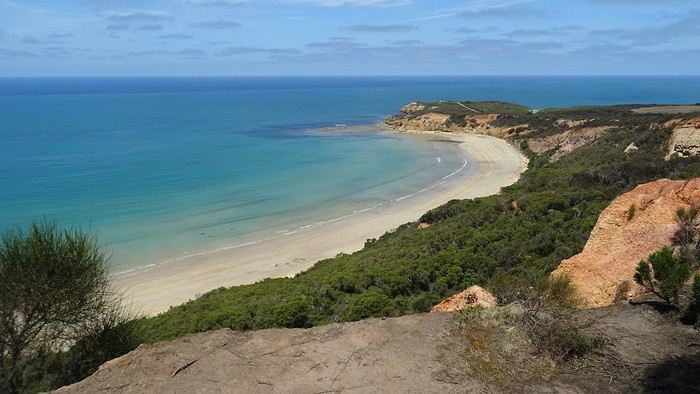
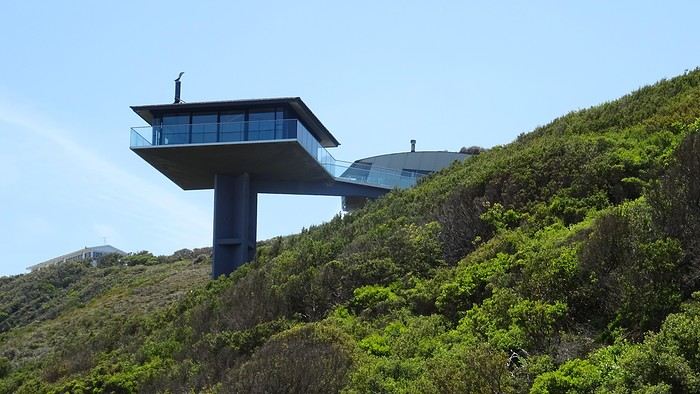
It’s here, just outside Lorne, that the Great Ocean Road officially begins...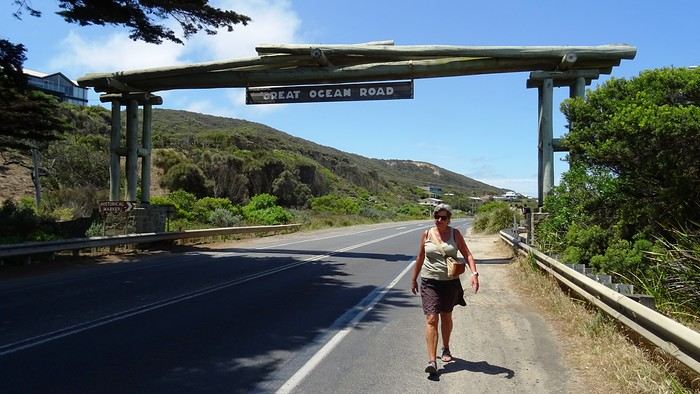
We arrive at our apartment, which is pretty nice—Dom and I are really particular about the quality of our terraces. I’ve never really talked about the practical quirks of daily life in Australia. For example, I could tell you that *every single* power outlet we used on this trip had a switch to turn it on or off. No exceptions, ever! Why? They must find it useful, but for us, it’s a total mystery... And of course, their power outlets require an adapter. Just one of many little peculiarities. Another odd observation: *every* toilet, even the most remote ones hidden deep in the bush, always had a roll of toilet paper available. No shortages here!
And then we’re greeted by a big family of cute sparrows...
Another odd observation: *every* toilet, even the most remote ones hidden deep in the bush, always had a roll of toilet paper available. No shortages here!
And then we’re greeted by a big family of cute sparrows...
We spent a long time enjoying their pool before heading out for a walk—all the way to Erskine Falls, about ten kilometers away...
We pick up the car 500 meters away, in a Chinatown parking lot that the hotel has a deal with, then it’s off with a *vroom vroom* while listening to a podcast about the victim of a compulsive mythomaniac—who also happens to be her husband—leading a completely compartmentalized double life. Later, he discovers, after contacting his alter-ego from this parallel universe, that he was actually living a *third* life... and maybe even more? We arrive in Torquay, where we stretch our legs along the Koorie Cultural Walk with a view of Bells Beach...
It’s here, just outside Lorne, that the Great Ocean Road officially begins...
We arrive at our apartment, which is pretty nice—Dom and I are really particular about the quality of our terraces. I’ve never really talked about the practical quirks of daily life in Australia. For example, I could tell you that *every single* power outlet we used on this trip had a switch to turn it on or off. No exceptions, ever! Why? They must find it useful, but for us, it’s a total mystery... And of course, their power outlets require an adapter. Just one of many little peculiarities.
Another odd observation: *every* toilet, even the most remote ones hidden deep in the bush, always had a roll of toilet paper available. No shortages here!
And then we’re greeted by a big family of cute sparrows...We spent a long time enjoying their pool before heading out for a walk—all the way to Erskine Falls, about ten kilometers away...
Kenya or Tanzania: which safari to choose?
Hi everyone,
I’m planning a safari and I’m torn between Kenya and Tanzania. I’ve read quite a few articles online, and one in particular really helped me see things more clearly. I’m now leaning more toward Kenya for its authentic vibe and local culture, but I’d love to hear some opinions before making my final decision.
Have any of you hesitated between these two destinations? Even better, has anyone done a safari in both countries? What were the factors that tipped the scales for you? I’d love to hear all your experiences!
While I wait for your replies, and if it might be helpful to some, I’ll share the article I found really useful on the topic.
Thanks in advance for your tips! Fabien A.
I’m planning a safari and I’m torn between Kenya and Tanzania. I’ve read quite a few articles online, and one in particular really helped me see things more clearly. I’m now leaning more toward Kenya for its authentic vibe and local culture, but I’d love to hear some opinions before making my final decision.
Have any of you hesitated between these two destinations? Even better, has anyone done a safari in both countries? What were the factors that tipped the scales for you? I’d love to hear all your experiences!
While I wait for your replies, and if it might be helpful to some, I’ll share the article I found really useful on the topic.
Thanks in advance for your tips! Fabien A.
Hambourg-Vienne-Munich en vélo solo, malgré la covid English translation pending
 Trop frustré de projets avortés et en manque de raids au long cours à cause de cette saloperie de virus, j'ai décidé de partir quand même. Ce sera donc la suite de ma transeuropéenne démarrée il y a un an à Oslo. Voir carnet Oslo - Hambourg.
Randonnées "faciles" dans le Mercantour English translation pending
Existe-t'il des randonnées "faciles" dans le Mercantour ou dans les environs avec bivouac ?
Je suis surpris du niveau de difficulté des parcours (difficiles à très difficiles)
Avis sur rando itinérante dans les Hautes-Pyrénées English translation pending
bonsoir
je prévois une randonnée itinérante dans les Hautes Pyrénées pendant 2 semaines fin juillet début août, avec mes jeunes garçons. Le Massif de Néouvielle et de Gavarnie semblent s'imposer à moi pour l'instant, mais je redoute la forte affluence. Nous allons bivouaquer, alors autant en profiter et trouver des coins tranquilles. (Si je plante la tente sur une autoroute de randonneurs, le dépaysement ne sera pas vraiment assuré !)
Est-ce possible en cette saison, ou illusoire, dans ces deux zones ? ou bien faut-il se rendre dans d'autres zones des Pyrénées moins fréquentées ? Pour faire plaisir à mes enfants, mon cahier des charges est le suivant : voir des glaciers (!), des marmottes, des ours (bon là, faut pas exagérer !), si possible des Isards, des sommets pointus (!), aller en Espagne, voir des lacs et des cascades. Et pas trop de monde, vous l'aurez compris.
auriez-vous des avis ? (je prévois environ 8 kms par jour)
merci !
"Overseas": héroïnes de la nation et esclaves modernes English translation pending
Les Philippines sont l'un des plus gros pourvoyeurs de main-d'oeuvre au monde.
Programmé il y a quelques jours sur France 2 à une heure très tardive, un film documentaire sur ces O.F.W (Overseas Filipino Workers) envoyées à l'étranger en tant qu'aides ménagères ou nounous.
Vous avez sans doute croisé quelques unes à travers le monde sans y prêter attention...
Disponible en Replay jusqu'au 2 Aout: https://www.france.tv/france-2/25-nuances-de-doc/1508287-overseas.html Aux Philippines, on déploie les femmes en masse à l’étranger comme aides ménagères ou nounous. Elles laissent souvent derrière elles leurs propres enfants, avant de se jeter dans l’inconnu. Dans un centre de formation au travail domestique, comme tant d’autres aux Philippines, un groupe de candidates au départ se préparent au mal du pays et aux maltraitances qui pourraient les atteindre. Lors d’exercices de jeux de rôles, les femmes se mettent tant dans la peau de l’employée que des employeurs. Aux abords de la fiction, OVERSEAS traite de la servitude moderne de notre monde globalisé, tout en révélant la détermination de ces femmes, leur sororité et les stratégies mises en place face aux épreuves que leur réserve l’avenir.
https://www.youtube.com/watch?v=mKnLYz2OQiY
Disponible en Replay jusqu'au 2 Aout: https://www.france.tv/france-2/25-nuances-de-doc/1508287-overseas.html Aux Philippines, on déploie les femmes en masse à l’étranger comme aides ménagères ou nounous. Elles laissent souvent derrière elles leurs propres enfants, avant de se jeter dans l’inconnu. Dans un centre de formation au travail domestique, comme tant d’autres aux Philippines, un groupe de candidates au départ se préparent au mal du pays et aux maltraitances qui pourraient les atteindre. Lors d’exercices de jeux de rôles, les femmes se mettent tant dans la peau de l’employée que des employeurs. Aux abords de la fiction, OVERSEAS traite de la servitude moderne de notre monde globalisé, tout en révélant la détermination de ces femmes, leur sororité et les stratégies mises en place face aux épreuves que leur réserve l’avenir.
https://www.youtube.com/watch?v=mKnLYz2OQiY
La prière dans le monde! English translation pending
La nuit tombe d’un coup et je suis sans cesse étonnée de passer ainsi du clair au noir.
Après cette journée fatigante, je rentre à la maison et jette mes sandales dans un coin.
Dans son petit bassin de bronze, la fleur de lotus est déjà refermée.
Tout est silencieux mais j’entends le léger murmure incantatoire de Tiago.
Il prie.
Assis devant son petit autel, les volutes odorantes des bâtonnets d’encens s’enroulent autour de ses cheveux noirs. Son dos dur et sombre luit et la lueur de la flamme dans la coupelle de ghee danse sur ses épaules.
La grande image de Shiva fixée au mur se décolle dans un angle, pliant les pointes du trident.
Le dieu garde ses yeux mi-clos sur la création du monde et les cycles de l’univers.
Dans sa longue chevelure, au sommet de sa tête s’enroule un serpent.
Un dieu coloré bienveillant dans cette représentation, l’une de ses quatre mains ouverte sur le genou.
Tiago a posé son offrande, une noix de coco est une guirlande de fleurs jaune dont je ne retiens jamais le nom.
Immobile.
Il prie.
__
J’ai vu des gens agenouillés, des gens couchés face contre terre, assis en tailleur, assis mains jointes. J’ai vu des gens danser, j’ai vu des processions colorées, j’ai entendu des mélopées hypnotiques, j’ai écouté des cymbales, des trompettes, de grandes orgues, des chants liturgiques, des psaumes, le fanbai, des chants grégoriens et des gospels, des chants diphoniques qui remuent le ventre.
J’ai vu des flèches perçant les nuages, des coupoles dorées, des dômes de pierre, des cathédrales, des temples, des autels flamboyant de dorures, des allées de chevaux de pierre, des temples de feu et des chapelles de pierre blotties sous les ombrages, de bois ensevelies sous la neige, des cryptes froides et silencieuses, des maisons d’adoration sans effigie, des monastères accrochés à la montagne , des cloîtres dans la ville.
j’ai vu des costumes de cérémonies multicolores, des tenues de fourrure, des saris de fêtes soyeux, des chapeaux rouge étranges, des plumets et des têtes rasées. J’ai vu des hommes tirer des chars la peau du dos distendue par des crochets, j’ai été subjuguée par des mandala de sable, tout est éphémère.
Partout où mes pas ont foulé d’autres terres, j’ai vu des croyants réunis, rassemblés, unis, bruyants, silencieux, exaltés, recueillis.
J’ai touché des chapelets de buis, d’ivoire, en corail, en noyaux, les perles égrenant le nom divin, les mantras, les prières, tenu des croix de roseaux, de feuilles de maïs, porté des couronnes de fleurs, tenu des moulins de prière. J’ai regardé des dieux vêtus d’oripeaux décolorés, vêtus d’habits précieux, nus ceints d’un pagne, l’arbre à souhaits aux rubans multicolores agités par les tourbillons de neige.
J’ai respiré l’odeur de l’encens, j’ai respiré l’odeur de la cire fondue, j’ai respiré le parfum des fleurs fraîches et l’odeur surette des offrandes pourrissantes.
J’ai fermé les yeux, souvent, pour mieux entendre, pour mieux comprendre.
Et je sais, qu’aujourd’hui, je ne sais rien de cette ferveur puissante qui soulève et porte et emporte les peuples du monde. Je sais aussi que le tremblement de mes jambes et les yeux qui picotent devant la ferveur de Tiago, ce soir là, il y a des lustres, huit peut-être, c’est tellement loin, fut ce qui s’approchait le plus d’une prière. Ou, peut-être étais-je secrètement amoureuse...
Ainsi, je crois que beaucoup ont vécu ces instants étranges de communion, d’observation respectueuse, que beaucoup connaissent les rites et rituels, les byzantins, coptes, maronites, et tant d’autres, des rites de passage et des rites d’intercessions appelant la pluie, la fécondité . Ces rites qui rythment la vie dans tous ces pays que je n’aurais plus le temps de connaître.
Comment se vit la prière en Afrique, chez les aborigènes d’Australie, à Madagascar, à Cuba, en Chine, au Japon, en Indonésie ou ailleurs ?. Comment se vit-elle, la prière, aujourd’hui où partout des moments religieux forts s’annoncent ? Monothéiste, animiste, shintoïsme, bouddhisme, syncrétisme religieux, l’aspect religieux est toujours présents dans mes voyages, l’est-il pour vous aussi ?
Z’avez lu jusqu’au bout ? Bravo, vous avez gagné une image pieuse ou non. Pour ce faire, aller dans la rubrique -jeux voyages – sur le fil -défilés et processions -, il y en a des magnifiques.
J’ai vu des gens agenouillés, des gens couchés face contre terre, assis en tailleur, assis mains jointes. J’ai vu des gens danser, j’ai vu des processions colorées, j’ai entendu des mélopées hypnotiques, j’ai écouté des cymbales, des trompettes, de grandes orgues, des chants liturgiques, des psaumes, le fanbai, des chants grégoriens et des gospels, des chants diphoniques qui remuent le ventre.
J’ai vu des flèches perçant les nuages, des coupoles dorées, des dômes de pierre, des cathédrales, des temples, des autels flamboyant de dorures, des allées de chevaux de pierre, des temples de feu et des chapelles de pierre blotties sous les ombrages, de bois ensevelies sous la neige, des cryptes froides et silencieuses, des maisons d’adoration sans effigie, des monastères accrochés à la montagne , des cloîtres dans la ville.
j’ai vu des costumes de cérémonies multicolores, des tenues de fourrure, des saris de fêtes soyeux, des chapeaux rouge étranges, des plumets et des têtes rasées. J’ai vu des hommes tirer des chars la peau du dos distendue par des crochets, j’ai été subjuguée par des mandala de sable, tout est éphémère.
Partout où mes pas ont foulé d’autres terres, j’ai vu des croyants réunis, rassemblés, unis, bruyants, silencieux, exaltés, recueillis.
J’ai touché des chapelets de buis, d’ivoire, en corail, en noyaux, les perles égrenant le nom divin, les mantras, les prières, tenu des croix de roseaux, de feuilles de maïs, porté des couronnes de fleurs, tenu des moulins de prière. J’ai regardé des dieux vêtus d’oripeaux décolorés, vêtus d’habits précieux, nus ceints d’un pagne, l’arbre à souhaits aux rubans multicolores agités par les tourbillons de neige.
J’ai respiré l’odeur de l’encens, j’ai respiré l’odeur de la cire fondue, j’ai respiré le parfum des fleurs fraîches et l’odeur surette des offrandes pourrissantes.
J’ai fermé les yeux, souvent, pour mieux entendre, pour mieux comprendre.
Et je sais, qu’aujourd’hui, je ne sais rien de cette ferveur puissante qui soulève et porte et emporte les peuples du monde. Je sais aussi que le tremblement de mes jambes et les yeux qui picotent devant la ferveur de Tiago, ce soir là, il y a des lustres, huit peut-être, c’est tellement loin, fut ce qui s’approchait le plus d’une prière. Ou, peut-être étais-je secrètement amoureuse...
Ainsi, je crois que beaucoup ont vécu ces instants étranges de communion, d’observation respectueuse, que beaucoup connaissent les rites et rituels, les byzantins, coptes, maronites, et tant d’autres, des rites de passage et des rites d’intercessions appelant la pluie, la fécondité . Ces rites qui rythment la vie dans tous ces pays que je n’aurais plus le temps de connaître.
Comment se vit la prière en Afrique, chez les aborigènes d’Australie, à Madagascar, à Cuba, en Chine, au Japon, en Indonésie ou ailleurs ?. Comment se vit-elle, la prière, aujourd’hui où partout des moments religieux forts s’annoncent ? Monothéiste, animiste, shintoïsme, bouddhisme, syncrétisme religieux, l’aspect religieux est toujours présents dans mes voyages, l’est-il pour vous aussi ?
Z’avez lu jusqu’au bout ? Bravo, vous avez gagné une image pieuse ou non. Pour ce faire, aller dans la rubrique -jeux voyages – sur le fil -défilés et processions -, il y en a des magnifiques.
Déréclusion! English translation pending
Déréclusion !
Je ne suis pas à un néologisme près.
Parce que j’me demande : Suis-je libre ? En liberté surveillée ? Contrainte ? Coercition sanitaire et salubrité publique... J’crois que secouer les peurs est mille fois plus efficace qu’un bracelet électronique. Voir le monde entier en pause, je ne pensais pas le vivre. Je comprends aujourd’hui avec quelle rapidité pourrait s’installer une dictature.
J’me demande pourquoi je ne ressens aucune crainte, pourquoi je me sens à mille lieux des peurs dont j’entends parler. Suis-je normale ? Suis-je inconsciente ? J’ai vu des gens avec un masque en voiture, mettre des gants pour tenir un chariot de magasin, où s’arrête le bon sens ? C’est quand même horripilant de se sentir infantilisé. Quand j’entends toutes ces sommités parler, j’ai l’impression qu’elles s’adressent à une population de mômes.
Parait que certains sont porteurs sains et transmettent le virus, paraît que certains ont eu la maladie sans s’en apercevoir et ont des anticorps, paraît que certains ont été malades et ont développé des anticorps, paraît que certains n’ont jamais été en contact et ne seront jamais malades, paraît qu’il faut qu’il y ait 60 % au moins de gens avec des anticorps pour l’immunité collective. Ca s’appelle RO lala.
Et beaucoup sont morts et au regard de l’humanité sur nos plus de 7 milliards, c’est une goutte. Une goutte d’acide et de chagrin pour les familles et amis des décédés, c’est certain. Des cataractes de panique pour des millions d’autres qui tremblent d’entendre un reniflement ou un éternuement. J’me demande aussi combien sont morts de faim et de maladie dans le même temps et aussi combien vont mourir des dégâts induits par le monde à l’arrêt.
Combien de pandémies ont-elles eu lieu sans que le monde occidental ne bouge un cil ? Un virus à la volette et qui disparaîtra comme tous les virus avant qu’un autre ne prenne le relais. C’est ainsi depuis toujours.
Ma solution : je respecte les peurs et angoisses des autres. Je respecte les consignes assenées à longueur de temps. Mais dans l’absolu, au fond de ma p’tite tête, j’pense tout autre chose et me tiens coite.
Je ne suis pas à un néologisme près.
Parce que j’me demande : Suis-je libre ? En liberté surveillée ? Contrainte ? Coercition sanitaire et salubrité publique... J’crois que secouer les peurs est mille fois plus efficace qu’un bracelet électronique. Voir le monde entier en pause, je ne pensais pas le vivre. Je comprends aujourd’hui avec quelle rapidité pourrait s’installer une dictature.
J’me demande pourquoi je ne ressens aucune crainte, pourquoi je me sens à mille lieux des peurs dont j’entends parler. Suis-je normale ? Suis-je inconsciente ? J’ai vu des gens avec un masque en voiture, mettre des gants pour tenir un chariot de magasin, où s’arrête le bon sens ? C’est quand même horripilant de se sentir infantilisé. Quand j’entends toutes ces sommités parler, j’ai l’impression qu’elles s’adressent à une population de mômes.
Parait que certains sont porteurs sains et transmettent le virus, paraît que certains ont eu la maladie sans s’en apercevoir et ont des anticorps, paraît que certains ont été malades et ont développé des anticorps, paraît que certains n’ont jamais été en contact et ne seront jamais malades, paraît qu’il faut qu’il y ait 60 % au moins de gens avec des anticorps pour l’immunité collective. Ca s’appelle RO lala.
Et beaucoup sont morts et au regard de l’humanité sur nos plus de 7 milliards, c’est une goutte. Une goutte d’acide et de chagrin pour les familles et amis des décédés, c’est certain. Des cataractes de panique pour des millions d’autres qui tremblent d’entendre un reniflement ou un éternuement. J’me demande aussi combien sont morts de faim et de maladie dans le même temps et aussi combien vont mourir des dégâts induits par le monde à l’arrêt.
Combien de pandémies ont-elles eu lieu sans que le monde occidental ne bouge un cil ? Un virus à la volette et qui disparaîtra comme tous les virus avant qu’un autre ne prenne le relais. C’est ainsi depuis toujours.
Ma solution : je respecte les peurs et angoisses des autres. Je respecte les consignes assenées à longueur de temps. Mais dans l’absolu, au fond de ma p’tite tête, j’pense tout autre chose et me tiens coite.
Choix d'un 4x4 pour l'Afrique (HDJ 80/100 versus Patrol Y60/Y61) English translation pending
Bonjour les voyageurs,
Je lance cette discussion sur le choix du 4*4 pour un road trip en Afrique en 2021, et je voulais avoir vos différents retours d'expériences.
On prépare à deux ce voyage d'une année en Afrique, l'idée sera de descendre de l’Afrique du nord vers l’Afrique du sud par la côte Ouest. Si tout se passe bien, pourquoi pas remonter par la côte Est jusqu'en Egypte, si la voiture et le budget le permettent.
On a décidé d’aménager le 4*4 nous même cette été et comme vous le savez tous, le choix de la voiture est très important. Donc, j'ai passé quelques semaines à faire des recherches, je vous propose un tableau comparatif (capture attachée) que j'ai effectué, c'est entre les modèles qu'on a choisi (HDJ 80/100 vs Patrol Y60/Y61) sur la base des annonces du bon coin les 4 derniers mois. ça reste un comparatif assez global, il existe toujours des différences par rapport aux moteurs et le kilométrage des voitures, de plus... on peut toujours tomber sur l’exception ;) Au delà du débat Toyota VS Nissan, on cherche le meilleur rapport qualité/prix en prenant en compte le kilométrage de la voiture et les dépenses qui en découlent. Quelles sont vos retours d'expériences sur ces modèles ? Quels sont les critères qui peuvent rentrer dans le choix du véhicule ? ex: le modèle de voiture qui se répare facilement en Afrique, disponibilité des pièces... etc
« Le plus important, ce n’est pas la destination, mais les mésaventures et les souvenirs que l’on crée le long du chemin. » – Penelope Riley
Merci à tous. Cordialement, Mehdi
Je lance cette discussion sur le choix du 4*4 pour un road trip en Afrique en 2021, et je voulais avoir vos différents retours d'expériences.
On prépare à deux ce voyage d'une année en Afrique, l'idée sera de descendre de l’Afrique du nord vers l’Afrique du sud par la côte Ouest. Si tout se passe bien, pourquoi pas remonter par la côte Est jusqu'en Egypte, si la voiture et le budget le permettent.
On a décidé d’aménager le 4*4 nous même cette été et comme vous le savez tous, le choix de la voiture est très important. Donc, j'ai passé quelques semaines à faire des recherches, je vous propose un tableau comparatif (capture attachée) que j'ai effectué, c'est entre les modèles qu'on a choisi (HDJ 80/100 vs Patrol Y60/Y61) sur la base des annonces du bon coin les 4 derniers mois. ça reste un comparatif assez global, il existe toujours des différences par rapport aux moteurs et le kilométrage des voitures, de plus... on peut toujours tomber sur l’exception ;) Au delà du débat Toyota VS Nissan, on cherche le meilleur rapport qualité/prix en prenant en compte le kilométrage de la voiture et les dépenses qui en découlent. Quelles sont vos retours d'expériences sur ces modèles ? Quels sont les critères qui peuvent rentrer dans le choix du véhicule ? ex: le modèle de voiture qui se répare facilement en Afrique, disponibilité des pièces... etc
« Le plus important, ce n’est pas la destination, mais les mésaventures et les souvenirs que l’on crée le long du chemin. » – Penelope Riley
Merci à tous. Cordialement, Mehdi
Idées de visites pour road trip en Bourgogne English translation pending
Bonjour à tous.
Je vous espère tous en forme pendant ce confinement.
Qui aurait fait un road trip en Bourgogne ?
Les states sont reportés. Nous allons donc anticiper notre visite de la France un peu plus tôt que prévu. Et comme cela fait des années que nous parlions de la Bourgogne nous allons nous y plonger.
Merci à vous si vous avez aime ou si vous avez des idées de visites
Prenez soin de vous et de vos proches 😛
Lisbeth