Results for "Saleh+|+99+>+68"
17250 results found.
Où aller en République Dominicaine? English translation pending
Bonjour !!! 🙂
Voilà je souhaiterais un conseil car je voudrais me rendre en R.D. Sachant que je ne connais RIEN là bas...
J'ai presque lu tous les messages sur ce forum qui concernaient la R.D. mais je vois que les avis sont très partagés, c'est limite si ça me donne envie de partir 🤪, je souhaite vraiment un séjour de rêve, je ne suis pas à 100 euros prêts...
J'ai un budget de 700-1000 euros, je souhaite séjourner dans un hôtel :
- situé non loin d'une plage de rêve (sable blanc fin, pas de rocher dans la mer(!), eau transparente ou turquoise ... très luxueux avec du personnel aimable toujours au service du client, pas trop sale, belle piscine non loin d'endroits incontournables comme PAR EXEMPLE l'île de Semana je crois (ou d'autres endroits interressants, j'ai entendu dire qu'il y avait pas mal d'îles incontournables, bref pas un hôtel loin de tout) si possible "all inclusive" ...
Merci d'avance pour vos précieux conseils, j'attends avec impatience, j'espère que je n'aurai pas trop d'avis différents ou en tout cas que les critiques seront constructives!
Enfin, j'aimerais connaître la meilleure période pour partir, vu que j'ai le choix (pour l'instant j'ai prévu novembre, et par Promovacances, Degriftour/Lastminute, ou Partirpascher/Switch)
Merci encore à tous et à toutes 😎 !
Fanny
Voilà je souhaiterais un conseil car je voudrais me rendre en R.D. Sachant que je ne connais RIEN là bas...
J'ai presque lu tous les messages sur ce forum qui concernaient la R.D. mais je vois que les avis sont très partagés, c'est limite si ça me donne envie de partir 🤪, je souhaite vraiment un séjour de rêve, je ne suis pas à 100 euros prêts...
J'ai un budget de 700-1000 euros, je souhaite séjourner dans un hôtel :
- situé non loin d'une plage de rêve (sable blanc fin, pas de rocher dans la mer(!), eau transparente ou turquoise ... très luxueux avec du personnel aimable toujours au service du client, pas trop sale, belle piscine non loin d'endroits incontournables comme PAR EXEMPLE l'île de Semana je crois (ou d'autres endroits interressants, j'ai entendu dire qu'il y avait pas mal d'îles incontournables, bref pas un hôtel loin de tout) si possible "all inclusive" ...
Merci d'avance pour vos précieux conseils, j'attends avec impatience, j'espère que je n'aurai pas trop d'avis différents ou en tout cas que les critiques seront constructives!
Enfin, j'aimerais connaître la meilleure période pour partir, vu que j'ai le choix (pour l'instant j'ai prévu novembre, et par Promovacances, Degriftour/Lastminute, ou Partirpascher/Switch)
Merci encore à tous et à toutes 😎 !
Fanny
Le chemin de l'Inca au Pérou English translation pending
Bonjour,
Mes parents voudraient partir au Perou au mois D'octobre, ils voudraient des renseignements sur "le chemin de l'inca" tarifs, ......
Merci😉
Mes parents voudraient partir au Perou au mois D'octobre, ils voudraient des renseignements sur "le chemin de l'inca" tarifs, ......
Merci😉
Votre avis sur l'hôtel Villas Bavaro Beach Resort English translation pending
Salut tout le monde, je cherche des renseignements sur l'hôtel Villas Bavaro, tels que le confort, la propreté, la clim dans les chambres, etc..., ainsi que l'environnement de l'hôtel
D'autre part, y-a-t'il dans ce ce secteur de la République Dominicaine, des plages avec vagues pour faire du bodyboard et du surf?D'avance, merci à ceux qui connaissent l'endroit.@ bientôt.😎
D'autre part, y-a-t'il dans ce ce secteur de la République Dominicaine, des plages avec vagues pour faire du bodyboard et du surf?D'avance, merci à ceux qui connaissent l'endroit.@ bientôt.😎
Recette de la Moambe English translation pending
😛 ...pour ceux et celles ...qui ont envie d'un petit goût d'exotisme ... Voici la recette de la Moambe (façon Afrique Centrale) Risoler cuisses et blancs de poulet dans de l'huile de palme avec des oignons - assaisonner. Ajouter un fond d'eau et laissez mijoter à feux doux ...jusqu'à cuisson complète. Ajouter ensuite de la sauce Moambe (huile & chair des noix de palme) ...et une touche de pili-pili Laisser les aliments s'impregner mutuellement. Cuire du riz séparément (blanc ou sauvage ...selon) Cuire le saka-saka (sorte d'épinard local) ...avec un oignon, une gousse ail dans ...toujours de l'huile de palme. Risoler les bananes plantin dans une poêle avec un peu de beurre ... servir le tout : poulet & sauce de palme - riz - saka-saka et bananes ...Pour nos amis (les belges) un petit tour par le quartier Matonge à Bxl ...fera l'affaire.
PS : et dire que j'avais des régimes de noix de palme dans mon jardin ...avant en Afrique! Ah! Nostalgie quand tu nous tient.Bon appetit! 😛
PS : et dire que j'avais des régimes de noix de palme dans mon jardin ...avant en Afrique! Ah! Nostalgie quand tu nous tient.Bon appetit! 😛
Budget moyen en Jordanie? English translation pending
Hello tlm,
J'aurai aimé savoir quel était le budget moyen pour un voyage de +/-9 nuits en Jordanie ? Il est préférable de loger où et à quel prix ? Qu'est ce qu'il coûte cher ?
Par ailleurs, pour ceux qui sont allé en Jordanie, qu'est ce qu'il n'est pas indispensable de visiter...étant donné qu'on ne passera qu'une dizaine de jours.
Toute adresse, info, conseil etc sont les bienvenue et d'avance je vous en remercie !
A+ Birzouki
J'aurai aimé savoir quel était le budget moyen pour un voyage de +/-9 nuits en Jordanie ? Il est préférable de loger où et à quel prix ? Qu'est ce qu'il coûte cher ?
Par ailleurs, pour ceux qui sont allé en Jordanie, qu'est ce qu'il n'est pas indispensable de visiter...étant donné qu'on ne passera qu'une dizaine de jours.
Toute adresse, info, conseil etc sont les bienvenue et d'avance je vous en remercie !
A+ Birzouki
"Molee de poisson" recette du Kérala Inde sud English translation pending
Le Kérala, presque le paradis! végétation luxuriante, montagnes, plantations d'épices et de thé, des canaux pour relier les villages, des plages superbes...
recette très facile !
ingrédients : 1/4 de cuillérée à café (cc) de curcuma, sel. jus d'1/2 citron. 400 ml de lait de coco en conserve. 3 cc d'huile.1 gros oignon haché.6 piments verts fendus en long. 6 gousses d'ail écrasées. 2 morceaux de gingembre frais (2, 5cms chacun). 1 petite tomate. 2 grains de poivre.1 clou de girofle. 2 cardamones. 1 petite tomate écrasée. filets de poisson.
1 : préparer une marinade avec la moitié du curcuma, le citron et le sel. Enduire le poisson avec cette marinade.(15 minutes).
2 : faire chauffer l'huile ds une grande cocotte. Y faire revenir les oignons, les piments, l'ail et le gingembre (feu doux) jusqu'à coloration des oignons. (environ 10 mn). Ajouter la tomate, les grains de poivre, le clou de girofle, les cardamones.Attendre 2 minutes avant d'ajouter la moitié du lait de coco et le reste du curcuma, saler, laisser encore cuire 10 minutes, feu doux.
3 : ajouter les morceaux de poisson et l'autre moitié du lait de coco. Laisser cuire (3 à 5 minutes selon le filet de poisson.) Oter les épices entières avant de servir.
Accompagnement : riz nature, basmati.
Bon appétit !
recette très facile !
ingrédients : 1/4 de cuillérée à café (cc) de curcuma, sel. jus d'1/2 citron. 400 ml de lait de coco en conserve. 3 cc d'huile.1 gros oignon haché.6 piments verts fendus en long. 6 gousses d'ail écrasées. 2 morceaux de gingembre frais (2, 5cms chacun). 1 petite tomate. 2 grains de poivre.1 clou de girofle. 2 cardamones. 1 petite tomate écrasée. filets de poisson.
1 : préparer une marinade avec la moitié du curcuma, le citron et le sel. Enduire le poisson avec cette marinade.(15 minutes).
2 : faire chauffer l'huile ds une grande cocotte. Y faire revenir les oignons, les piments, l'ail et le gingembre (feu doux) jusqu'à coloration des oignons. (environ 10 mn). Ajouter la tomate, les grains de poivre, le clou de girofle, les cardamones.Attendre 2 minutes avant d'ajouter la moitié du lait de coco et le reste du curcuma, saler, laisser encore cuire 10 minutes, feu doux.
3 : ajouter les morceaux de poisson et l'autre moitié du lait de coco. Laisser cuire (3 à 5 minutes selon le filet de poisson.) Oter les épices entières avant de servir.
Accompagnement : riz nature, basmati.
Bon appétit !
Infos sur l'Amérique du sud? (Chili) English translation pending
Bonjour à tous les voyageurs,
Avec ma femme nous préparons un voyage (de noces😉) en amérique du sud. Pour l'instant notre destination est le Chilie🙂. Mais rien n'est fixe. On cherche une destination nous permettant de vivre deux temps distincts: un temps de relaxation sur des belles plages( brésil??) . Ma femme adore cela!😎! Mais également un temps de découverte de la culture locale et de balade en montagne ( niveau intermédiaire).
Nous ne connaissons guère ce coin du monde, c'st pourquoi j'espère avoir quelques informations utiles.
Merci pour tous vos renseignements sur cette régions.
Bon voyage!!😇
Guiguch
Avec ma femme nous préparons un voyage (de noces😉) en amérique du sud. Pour l'instant notre destination est le Chilie🙂. Mais rien n'est fixe. On cherche une destination nous permettant de vivre deux temps distincts: un temps de relaxation sur des belles plages( brésil??) . Ma femme adore cela!😎! Mais également un temps de découverte de la culture locale et de balade en montagne ( niveau intermédiaire).
Nous ne connaissons guère ce coin du monde, c'st pourquoi j'espère avoir quelques informations utiles.
Merci pour tous vos renseignements sur cette régions.
Bon voyage!!😇
Guiguch
Partir 6 mois travailler dans un autre pays, est-ce possible? English translation pending
Bonjour,
Je m'appelle Michelle j'habite Québec au Canada j'ai 19 ans. J'aimerais partir en voyage pour une durée de 6 mois minimum dans un autre pays. Je veux travailler ( faire n'importe quoi ), découvrir un autre pays et de nouvelles cultures et faire de nouvelles rencontres. Si vous avais quelque conseil pour m'aider à réaliser mon rêve ou si vous connaîsser quelqu'un qui serait près à m'acceuillir et trouver un emploi s.v.p réécriver moi au plus vite. j'ai beaucoup d'expérience et je suis bilingue Français/anglais.
Une fille qui est tanné de l'hiver québéquois!
Michelle
Je m'appelle Michelle j'habite Québec au Canada j'ai 19 ans. J'aimerais partir en voyage pour une durée de 6 mois minimum dans un autre pays. Je veux travailler ( faire n'importe quoi ), découvrir un autre pays et de nouvelles cultures et faire de nouvelles rencontres. Si vous avais quelque conseil pour m'aider à réaliser mon rêve ou si vous connaîsser quelqu'un qui serait près à m'acceuillir et trouver un emploi s.v.p réécriver moi au plus vite. j'ai beaucoup d'expérience et je suis bilingue Français/anglais.
Une fille qui est tanné de l'hiver québéquois!
Michelle
Un mois au Vietnam (novembre/décembre 2001) English translation pending
🙂Globalement voici ce que nous pensons du Vietnam, après y avoir séjourné un mois, du 1 Novembre au 1 Décembre 2001.
Généralités
Le paysage est superbe et très varié. Rizières dans les plaines, et en plateaux là où c’est possible. Bords de mer escarpés et plages sablonneuses. Quelques forets de pins et évidemment plusieurs forets tropicales. Les routes sont généralement étroites et leur état très variable. Nous avons souvent du rouler plusieurs kilomètres au milieu de travaux, et il reste encore malheureusement plusieurs chemins de terre plus ou moins carrossables. En ville les rues sont en général acceptables, mais les trottoirs sont affreusement embarrassés de motos, bicyclettes tables de restaurants et il faut toujours se méfier des dénivellations et des canalisations d’égouts sans couvercles. Circuler à pied en ville est très éprouvant et on finit par marcher dans la rue. S’il y a un mur, plus haut que un mètre et si ce n’est pas une bâtisse officielle ou une pagode, on est certains d’y voir des excréments et de sentir une forte odeur d’urine. Très souvent on a vu des hommes et même des femmes uriner devant nous sans aucune gêne.
On ne respecte pratiquement jamais les feux de circulation (Sauf à Saigon peut être). On a même vu aux intersections des compteur a rebours, indiquant aux gens impatients de rouler, les secondes restantes avant le changement de feux. Les villes sont sales. Tout le monde jette tout parterre, on pousse tout a la rue avec des balais a manche court, et le soir les éboueurs ramassent le tout. Et on recommence le lendemain matin avec comme résultat que c’est toujours sale.
Les nouvelles maisons ont trois mètres de façade, et sont assez profondes. Voir plusieurs de ces maisons alignées sur une rue nous rappelle un peu Amsterdam, en plus bas mais surtout plus coloré. A l’intérieur d’un bloc de hautes maisons, il y a souvent des ruelles qui mènent a de plus petites demeures.
Le Delta du Mékong mérite 3 jours de visite. Les organisateurs de tours offrent d’excellents forfaits qui utilisent l’autobus, le bateau et même le tout petit bateau à rames à 4 places. On se promène dans de petits canaux bordés de forets, de champs ou on peut voir les gens travailler aux champs, ou dans leurs échoppes d’artisanat Selon moi, ces îles et ces îlots, représentent vraiment le Vietnam et sont uniques au monde.
La baie de Halong vaut elle aussi le déplacement. On a été très chanceux. Lors de notre trajet vers l’île de Catba on a eu un soleil radieux, et au retour de gros nuages, et de la brume donnaient à ce paysage, déjà fantastique, une allure de repère de pirates hallucinant.
Les Transports
Se déplacer au Vietnam peut être facile ou difficile selon le choix de moyens de transport qu’on fait. Les autobus sont archibondés, 3 par siège, l’allée centrale pleine de monde debout, bagages entassés sur le toit et vitres ouvertes pour éviter de suffoquer. Les terminus sont souvent loin des centres et occasionnent une dépense supplémentaire souvent non négligeable. Le train est relativement confortable, très lent mais surtout très cher pour l’Asie. Les touristes paient 5 fois le prix des locaux et doivent invariablement utiliser le guichet touriste dans les gares.
La très grande majorité des touristes se rabattent donc sur Open Tour (ou ses équivalents) . Leurs prix sont super abordables et ils vous rendent la vie tellement facile que même les routards les plus aguerris finissent pas céder… Ils vous ramassent à votre hôtel, et vous déposent devant leur hôtel, que vous êtes libres de choisir évidemment. Ils s’arrêtent aux deux heures, pour vous restaurer et pour aller aux toilettes, toujours dans un endroit ou vous pourrez, évidemment, choisir un souvenir .
En ville, les cyclo offrent leurs services à 15, 000 dongs l’heure, par personne. On a pas réussi a trouver de cartes pour les routes d’autobus dans les grandes villes. Il y a des taxis avec compteur, la possibilité de louer une moto avec ou sans chauffeur et les vélos. Nous avons opté pour la marche, le meilleur moyen de ne rien manquer.
Nous avons utilisé TM Brothers pour nos tours et avons été très satisfaits. Les tours sont bien équilibrés, ils savent doser les trajets en autobus, les arrêts pauses, les trajets en bateau et même à pied. Il est pratiquement impossible de réaliser ces tours par nos propres moyens. Le coût serait de beaucoup supérieur, et les possibilités de louer des bateaux pour explorer les canaux par exemple, quasi impossible. On nous a dit qu’il était défendu à tout Vietnamien, ne possédant pas un permis du gouvernement, de transiger avec les touristes, donc mieux vaut se résigner. 2 jours d’excursion à la baie d’Halong, incluant l’hôtel, et les repas coûte 15 $US par personne, difficile à battre. Les guides Vietnamiens sont endoctrinés et répondent aux questions trop curieuses par de belles phrases toutes faites qui vantent le bon gouvernement Vietnamien et promettent un avenir meilleur au pays. TM Brothers nous a fait marcher dans des rizières, dans des villages perdus dans les montagnes, prendre le thé dans une maison familiale en plein milieu de la forêt tropicale, visiter des artisans tisserands, faiseurs de nouilles etc.…toujours en douceur et avec le sourire. Les hôtels étaient toujours très propres et là ou les repas étaient inclus, c’était toujours copieux et délicieux. Évidemment tout est orchestré par les Tours Opérators, mais encore une fois, il serait pratiquement impossible d’en voir autant en individuel.
La bouffe
Se nourrir au Vietnam ne coûte pas cher si on mange Vietnamien. Dans les restos touristiques on peut s’attendre à débourser un peu plus, et comme partout ailleurs dans le monde les Hôtels Internationaux peuvent vous arracher la peau des fesses. Dans les restos Vietnamiens, tout tourne autour du plat de riz, un peu de viande et beaucoup de légumes. On assaisonne le tout de sauces fortes ou salées. On s’en tire pour environ 1$ par personne avant breuvages. Les poissons et fruits de mer sont, comme partout, beaucoup plus cher, mais ils sont bien apprêtés et très frais. Le Pho est le plat idéal pour le lunch. La qualité peut varier d’un endroit à l’autre, la meilleure garantie c’est encore l’achalandage de Vietnamiens. Les gargotes sur la rue vont du meilleur au pire . Vous êtes installés sur une mini-chaise ou un mini-tabouret, le nez à la hauteur des échappements des autobus, ou des égouts… Vous enfilez votre repas en moins de dix minutes et ca ne coûte que quelques cents.
Les petits déjeuners sont copieux, Un pain croûté entier par personne, œufs frits, confiture fruits et café Vietnamien. Pour le café il faut être patients, souvent les filtres sont très lents, on rallonge avec l’eau bouillante qu’on vous sert avec le café.
La bière est excellente et pas chère dutout. La locale, 70 a 80 cents, et la Bia Oi (pression) 35 cents le litre. Avec la bière pression les problèmes de constipation dus au riz se règlent très très rapidement. On s’est bien régalés pendant ce mois au Vietnam.
Le logement
Ce qu’on a préféré comme logement, c’est la villa Française à Hué. Grande chambre, grande salle de bain, meubles massifs, belle grande galerie avec les colonnes typiques dans un jardin fleuri et ombragé, c’était super reposant. Ailleurs les chambres sont toujours correctes. Les prix varient de 9$ à 14$ avec ventilateur, TV, et frigo. Dans les villes plus petites, les prix sont autour de 7$. Les tours organisateurs vous déposent devant leurs hôtels, libre à vous de le choisir ou d’en chercher un autre; généralement ils sont très bien. Les prix demandés sont souvent négociables. Les chambres sont bien équipées et fournissent serviettes, draps savon et papier hygiénique et télévision ( TV5 presque partout, Fait étrange les doublages en Vietnamien se font par une seule personne, et tout sur le même ton) Il y a de l’eau chaude partout. L’accueil varie d’un endroit à l’autre selon l’humeur des employés, généralement dans les hôtels familiaux, l’accueils est plus sympathique.
Les Gens
A première vue les Vietnamiens ne sont pas des gens heureux. Ils semblent préoccupés à vivre leur quotidien. Ceux qui ont des contacts avec les touristes, ont le sourire et la gentillesse orientés sur vos dollars. Nous avons souvent constatés un brusque changement d’attitude, lorsqu’ils réalisent qu’il n’y aura pas de `Business`` ou pas de pourboire pour eux. La multitude de vendeurs de rue finit par tomber sur les nerfs. Les cyclos sont carrément accablants. Souvent ils s’y prennent tellement mal qu’il est difficile de garder son sourire quand on leur dit non. ``Where do you go `` Pas de mauvaise volonté mais triste manque de finesse, et même du savoir vivre minimum. Les rabatteurs d’hôtels de restaurants et autres commerces poussent régulièrement trop fort. Ils sont brusques, vous poussent littéralement un manque de respect qui tape royalement sur les nerfs. On voit des enfants quêteurs ou vendeurs dressés par les parents. Ils les transportent à bicyclette dans tous les coins de la ville ou il y a des touristes jusqu’aux petites heures pour vendre leurs produits. Ils vous collent dessus, vous flattent les bras, et sont nettement trop collants à notre goût.
Les gens qui n’ont rien a gagner des touristes sont beaucoup plus plaisants. Ils répondent généreusement aux sourires et incitent les enfants à nous dire Hello.
L’argent
Nous nous sommes déplacés de Hanoi à Saigon. En train de Hanoi à Hué, puis avec Open Tour pour le reste. Nous avons pris 3 tours organisés. Le delta du Mékong, Mai Chau, et la baie de Halong (2 jours chaque tour) Nous avons extrêmement bien mangé et avons étés très bien logés pendant tout le mois de Novembre. Nous avons dépensé une moyenne de 40$ CND par jour pour les deux. Le Vietnam n’est pas un pays cher si on fait juste un petit peu attention. Tout est négociable ( et devrait être négocié) sauf les billets de transports et les restaurants. Au Vietnam il faut être prêts à dire NON . Partout même dans les restaurants on est toujours sollicités Livres, briquets, Lunettes soleil, journaux, cartes postales gomme ça ne s’arrête jamais.
N'hésitez pas à me contacter
Généralités
Le paysage est superbe et très varié. Rizières dans les plaines, et en plateaux là où c’est possible. Bords de mer escarpés et plages sablonneuses. Quelques forets de pins et évidemment plusieurs forets tropicales. Les routes sont généralement étroites et leur état très variable. Nous avons souvent du rouler plusieurs kilomètres au milieu de travaux, et il reste encore malheureusement plusieurs chemins de terre plus ou moins carrossables. En ville les rues sont en général acceptables, mais les trottoirs sont affreusement embarrassés de motos, bicyclettes tables de restaurants et il faut toujours se méfier des dénivellations et des canalisations d’égouts sans couvercles. Circuler à pied en ville est très éprouvant et on finit par marcher dans la rue. S’il y a un mur, plus haut que un mètre et si ce n’est pas une bâtisse officielle ou une pagode, on est certains d’y voir des excréments et de sentir une forte odeur d’urine. Très souvent on a vu des hommes et même des femmes uriner devant nous sans aucune gêne.
On ne respecte pratiquement jamais les feux de circulation (Sauf à Saigon peut être). On a même vu aux intersections des compteur a rebours, indiquant aux gens impatients de rouler, les secondes restantes avant le changement de feux. Les villes sont sales. Tout le monde jette tout parterre, on pousse tout a la rue avec des balais a manche court, et le soir les éboueurs ramassent le tout. Et on recommence le lendemain matin avec comme résultat que c’est toujours sale.
Les nouvelles maisons ont trois mètres de façade, et sont assez profondes. Voir plusieurs de ces maisons alignées sur une rue nous rappelle un peu Amsterdam, en plus bas mais surtout plus coloré. A l’intérieur d’un bloc de hautes maisons, il y a souvent des ruelles qui mènent a de plus petites demeures.
Le Delta du Mékong mérite 3 jours de visite. Les organisateurs de tours offrent d’excellents forfaits qui utilisent l’autobus, le bateau et même le tout petit bateau à rames à 4 places. On se promène dans de petits canaux bordés de forets, de champs ou on peut voir les gens travailler aux champs, ou dans leurs échoppes d’artisanat Selon moi, ces îles et ces îlots, représentent vraiment le Vietnam et sont uniques au monde.
La baie de Halong vaut elle aussi le déplacement. On a été très chanceux. Lors de notre trajet vers l’île de Catba on a eu un soleil radieux, et au retour de gros nuages, et de la brume donnaient à ce paysage, déjà fantastique, une allure de repère de pirates hallucinant.
Les Transports
Se déplacer au Vietnam peut être facile ou difficile selon le choix de moyens de transport qu’on fait. Les autobus sont archibondés, 3 par siège, l’allée centrale pleine de monde debout, bagages entassés sur le toit et vitres ouvertes pour éviter de suffoquer. Les terminus sont souvent loin des centres et occasionnent une dépense supplémentaire souvent non négligeable. Le train est relativement confortable, très lent mais surtout très cher pour l’Asie. Les touristes paient 5 fois le prix des locaux et doivent invariablement utiliser le guichet touriste dans les gares.
La très grande majorité des touristes se rabattent donc sur Open Tour (ou ses équivalents) . Leurs prix sont super abordables et ils vous rendent la vie tellement facile que même les routards les plus aguerris finissent pas céder… Ils vous ramassent à votre hôtel, et vous déposent devant leur hôtel, que vous êtes libres de choisir évidemment. Ils s’arrêtent aux deux heures, pour vous restaurer et pour aller aux toilettes, toujours dans un endroit ou vous pourrez, évidemment, choisir un souvenir .
En ville, les cyclo offrent leurs services à 15, 000 dongs l’heure, par personne. On a pas réussi a trouver de cartes pour les routes d’autobus dans les grandes villes. Il y a des taxis avec compteur, la possibilité de louer une moto avec ou sans chauffeur et les vélos. Nous avons opté pour la marche, le meilleur moyen de ne rien manquer.
Nous avons utilisé TM Brothers pour nos tours et avons été très satisfaits. Les tours sont bien équilibrés, ils savent doser les trajets en autobus, les arrêts pauses, les trajets en bateau et même à pied. Il est pratiquement impossible de réaliser ces tours par nos propres moyens. Le coût serait de beaucoup supérieur, et les possibilités de louer des bateaux pour explorer les canaux par exemple, quasi impossible. On nous a dit qu’il était défendu à tout Vietnamien, ne possédant pas un permis du gouvernement, de transiger avec les touristes, donc mieux vaut se résigner. 2 jours d’excursion à la baie d’Halong, incluant l’hôtel, et les repas coûte 15 $US par personne, difficile à battre. Les guides Vietnamiens sont endoctrinés et répondent aux questions trop curieuses par de belles phrases toutes faites qui vantent le bon gouvernement Vietnamien et promettent un avenir meilleur au pays. TM Brothers nous a fait marcher dans des rizières, dans des villages perdus dans les montagnes, prendre le thé dans une maison familiale en plein milieu de la forêt tropicale, visiter des artisans tisserands, faiseurs de nouilles etc.…toujours en douceur et avec le sourire. Les hôtels étaient toujours très propres et là ou les repas étaient inclus, c’était toujours copieux et délicieux. Évidemment tout est orchestré par les Tours Opérators, mais encore une fois, il serait pratiquement impossible d’en voir autant en individuel.
La bouffe
Se nourrir au Vietnam ne coûte pas cher si on mange Vietnamien. Dans les restos touristiques on peut s’attendre à débourser un peu plus, et comme partout ailleurs dans le monde les Hôtels Internationaux peuvent vous arracher la peau des fesses. Dans les restos Vietnamiens, tout tourne autour du plat de riz, un peu de viande et beaucoup de légumes. On assaisonne le tout de sauces fortes ou salées. On s’en tire pour environ 1$ par personne avant breuvages. Les poissons et fruits de mer sont, comme partout, beaucoup plus cher, mais ils sont bien apprêtés et très frais. Le Pho est le plat idéal pour le lunch. La qualité peut varier d’un endroit à l’autre, la meilleure garantie c’est encore l’achalandage de Vietnamiens. Les gargotes sur la rue vont du meilleur au pire . Vous êtes installés sur une mini-chaise ou un mini-tabouret, le nez à la hauteur des échappements des autobus, ou des égouts… Vous enfilez votre repas en moins de dix minutes et ca ne coûte que quelques cents.
Les petits déjeuners sont copieux, Un pain croûté entier par personne, œufs frits, confiture fruits et café Vietnamien. Pour le café il faut être patients, souvent les filtres sont très lents, on rallonge avec l’eau bouillante qu’on vous sert avec le café.
La bière est excellente et pas chère dutout. La locale, 70 a 80 cents, et la Bia Oi (pression) 35 cents le litre. Avec la bière pression les problèmes de constipation dus au riz se règlent très très rapidement. On s’est bien régalés pendant ce mois au Vietnam.
Le logement
Ce qu’on a préféré comme logement, c’est la villa Française à Hué. Grande chambre, grande salle de bain, meubles massifs, belle grande galerie avec les colonnes typiques dans un jardin fleuri et ombragé, c’était super reposant. Ailleurs les chambres sont toujours correctes. Les prix varient de 9$ à 14$ avec ventilateur, TV, et frigo. Dans les villes plus petites, les prix sont autour de 7$. Les tours organisateurs vous déposent devant leurs hôtels, libre à vous de le choisir ou d’en chercher un autre; généralement ils sont très bien. Les prix demandés sont souvent négociables. Les chambres sont bien équipées et fournissent serviettes, draps savon et papier hygiénique et télévision ( TV5 presque partout, Fait étrange les doublages en Vietnamien se font par une seule personne, et tout sur le même ton) Il y a de l’eau chaude partout. L’accueil varie d’un endroit à l’autre selon l’humeur des employés, généralement dans les hôtels familiaux, l’accueils est plus sympathique.
Les Gens
A première vue les Vietnamiens ne sont pas des gens heureux. Ils semblent préoccupés à vivre leur quotidien. Ceux qui ont des contacts avec les touristes, ont le sourire et la gentillesse orientés sur vos dollars. Nous avons souvent constatés un brusque changement d’attitude, lorsqu’ils réalisent qu’il n’y aura pas de `Business`` ou pas de pourboire pour eux. La multitude de vendeurs de rue finit par tomber sur les nerfs. Les cyclos sont carrément accablants. Souvent ils s’y prennent tellement mal qu’il est difficile de garder son sourire quand on leur dit non. ``Where do you go `` Pas de mauvaise volonté mais triste manque de finesse, et même du savoir vivre minimum. Les rabatteurs d’hôtels de restaurants et autres commerces poussent régulièrement trop fort. Ils sont brusques, vous poussent littéralement un manque de respect qui tape royalement sur les nerfs. On voit des enfants quêteurs ou vendeurs dressés par les parents. Ils les transportent à bicyclette dans tous les coins de la ville ou il y a des touristes jusqu’aux petites heures pour vendre leurs produits. Ils vous collent dessus, vous flattent les bras, et sont nettement trop collants à notre goût.
Les gens qui n’ont rien a gagner des touristes sont beaucoup plus plaisants. Ils répondent généreusement aux sourires et incitent les enfants à nous dire Hello.
L’argent
Nous nous sommes déplacés de Hanoi à Saigon. En train de Hanoi à Hué, puis avec Open Tour pour le reste. Nous avons pris 3 tours organisés. Le delta du Mékong, Mai Chau, et la baie de Halong (2 jours chaque tour) Nous avons extrêmement bien mangé et avons étés très bien logés pendant tout le mois de Novembre. Nous avons dépensé une moyenne de 40$ CND par jour pour les deux. Le Vietnam n’est pas un pays cher si on fait juste un petit peu attention. Tout est négociable ( et devrait être négocié) sauf les billets de transports et les restaurants. Au Vietnam il faut être prêts à dire NON . Partout même dans les restaurants on est toujours sollicités Livres, briquets, Lunettes soleil, journaux, cartes postales gomme ça ne s’arrête jamais.
N'hésitez pas à me contacter
Where to find the non-digital paper toll sticker for Austria-Slovenia highways?
hi
I’d like to know the opening hours of physical stores between Germany and Austria, and between Austria and Slovenia, that sell the PAPER STICKER toll vignettes that still exist for 2026—non-digital ones. I don’t think they’re open 24/7, and I can’t find the info anywhere. Thanks
I’d like to know the opening hours of physical stores between Germany and Austria, and between Austria and Slovenia, that sell the PAPER STICKER toll vignettes that still exist for 2026—non-digital ones. I don’t think they’re open 24/7, and I can’t find the info anywhere. Thanks
Business trip to Tel Aviv with a stop at the Dead Sea, July 19-26
Hi everyone!
I’m heading to Israel this weekend for work, and I’m going to take the opportunity to explore a bit since it’s my first time there.
I’ll be working until Wednesday evening, then I’ve planned to spend Friday and Saturday in Ein Gedi near the Dead Sea—hiking up Masada for sunrise on Saturday, probably checking out the Dodim Caves on Friday, and of course, a float in the salty water.
I’m also thinking of visiting Haifa on Thursday, but I’m not completely decided yet.
If anyone’s around during my trip and is into hiking, maybe climbing, or rappelling, let me know!
Bruno
Travel companion for exploring Armenia in September 2026
I’m 72 years old but in great shape and a seasoned long-term traveler. I’m looking for a travel companion to join me in Armenia this coming September (I’ll be booking my flight ticket soon—I live in Auvergne, so I’ll be flying out of Lyon). Just so you know, I’m not after luxury hotels, guest houses, or Airbnbs—I love street food and get around by bus or taxi using local apps!
... Looking forward to hearing from you! :-))
Off on an adventure in Namibia!
April 11 – Day 1
It was winter, a winter with beautiful weather, A season that only exists in the southwest of America, I remember very well what I told you that morning A month ago... A century ago, an eternity ago... We’ll go... wherever you want, whenever you want...
Well, yeah, back from our adventure in our enchanting American West just a month ago, we’re already taking a bite out of one of its lesser-known competitors. "Flo, if you had to pick just one reason to justify your love for the U.S., what would it be?" The greasy, dripping burgers? No, I don’t think I’m going out on a limb by saying it’d be the wide-open spaces... And that’s exactly what our new quest is taking us to—a land on the other side of the globe where the horizon also seems endless, where silence tastes like salty wind and sand, where freedom is measured in kilometers of desert tracks, where the GPS is mostly there to confirm you’re lost in the middle of nowhere... Add to that magic formula the fact that you’ll see more zebras, giraffes, wildebeest, and elephants than people per square kilometer, and you can imagine us setting foot in Southern Africa for the first time, more precisely at the small airport in Windhoek, capital of... of...? Brush up on your geography, damn it! We’re landing in Namibia!!!
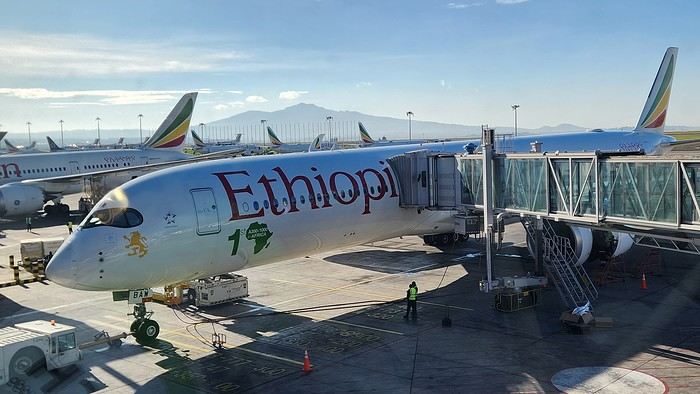
To be honest, Namibian landscapes have been flirting with me for ages. So how did I resist this island of temptation for so long? First, the budget. Let’s just say that for the same amount of effort (and kidneys), the bank lets you choose two other adventures almost anywhere else on the planet. Then there were my girls. Yeah, back then, they were too little to dose up on Malarone, the only malaria remedy at the time... Long story short, ten years later, all the planets have aligned. First, I won the Euromillions! Well, almost... Let’s just say my girls are now old enough... not to take Malarone, but to stop following me on all my adventures! Jackpot! "Flo, how about a little two-person caprice, just the two of us, tackling the Namibian tracks?"
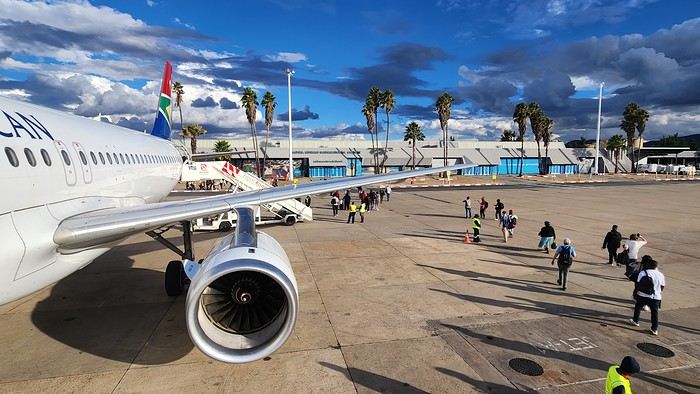
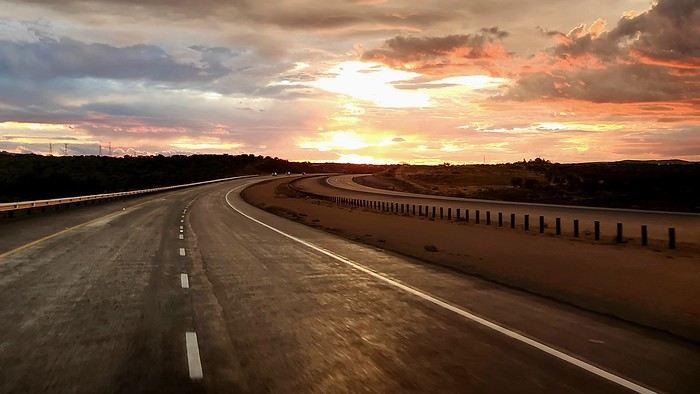
As we landed on the runway, first wow effect: The horizon is immense. It’s flat as can be, incredibly flat... So much flat space! Did I mention it was flat?... Looking into the distance, it feels like your gaze could circle the Earth without hitting a single obstacle—until you end up staring at your own backside. "Oh, what a nice view!" Well, it’s the first time I’ve seen my butt from this angle! Touching moment... Sorry, I’m rambling—must be the exhaustion from the three-flight marathon we just powered through via Ethiopia and South Africa... And yet, no time to philosophize about my anatomy. As usual, we want to rack up our first kilometers to be front and center at dawn tomorrow. After wrapping up the tedious Namibian immigration formalities and meeting the 4x4 that’ll be our companion day and night for the next fifteen days, we’re off! We’re not exactly fresh, but we’re ready to tackle the next five hundred kilometers in night mode, cruise control set due south! Just outside Windhoek, the local wildlife—a jackal—welcomes us with a smile: "Welcome to Namibia!" That’s what it said! Honest... Okay, first endless straight road, first flaming sunset, first corrugated dirt track, first Milky Way with zero light pollution... You get it—it’s definitely the day of firsts... First night camping, too, in the big trunk of our Toyota Fortuner parked by the side of the track... The real adventure, the kind that smells under the arms, can finally begin...
It was winter, a winter with beautiful weather, A season that only exists in the southwest of America, I remember very well what I told you that morning A month ago... A century ago, an eternity ago... We’ll go... wherever you want, whenever you want...
Well, yeah, back from our adventure in our enchanting American West just a month ago, we’re already taking a bite out of one of its lesser-known competitors. "Flo, if you had to pick just one reason to justify your love for the U.S., what would it be?" The greasy, dripping burgers? No, I don’t think I’m going out on a limb by saying it’d be the wide-open spaces... And that’s exactly what our new quest is taking us to—a land on the other side of the globe where the horizon also seems endless, where silence tastes like salty wind and sand, where freedom is measured in kilometers of desert tracks, where the GPS is mostly there to confirm you’re lost in the middle of nowhere... Add to that magic formula the fact that you’ll see more zebras, giraffes, wildebeest, and elephants than people per square kilometer, and you can imagine us setting foot in Southern Africa for the first time, more precisely at the small airport in Windhoek, capital of... of...? Brush up on your geography, damn it! We’re landing in Namibia!!!
To be honest, Namibian landscapes have been flirting with me for ages. So how did I resist this island of temptation for so long? First, the budget. Let’s just say that for the same amount of effort (and kidneys), the bank lets you choose two other adventures almost anywhere else on the planet. Then there were my girls. Yeah, back then, they were too little to dose up on Malarone, the only malaria remedy at the time... Long story short, ten years later, all the planets have aligned. First, I won the Euromillions! Well, almost... Let’s just say my girls are now old enough... not to take Malarone, but to stop following me on all my adventures! Jackpot! "Flo, how about a little two-person caprice, just the two of us, tackling the Namibian tracks?"
As we landed on the runway, first wow effect: The horizon is immense. It’s flat as can be, incredibly flat... So much flat space! Did I mention it was flat?... Looking into the distance, it feels like your gaze could circle the Earth without hitting a single obstacle—until you end up staring at your own backside. "Oh, what a nice view!" Well, it’s the first time I’ve seen my butt from this angle! Touching moment... Sorry, I’m rambling—must be the exhaustion from the three-flight marathon we just powered through via Ethiopia and South Africa... And yet, no time to philosophize about my anatomy. As usual, we want to rack up our first kilometers to be front and center at dawn tomorrow. After wrapping up the tedious Namibian immigration formalities and meeting the 4x4 that’ll be our companion day and night for the next fifteen days, we’re off! We’re not exactly fresh, but we’re ready to tackle the next five hundred kilometers in night mode, cruise control set due south! Just outside Windhoek, the local wildlife—a jackal—welcomes us with a smile: "Welcome to Namibia!" That’s what it said! Honest... Okay, first endless straight road, first flaming sunset, first corrugated dirt track, first Milky Way with zero light pollution... You get it—it’s definitely the day of firsts... First night camping, too, in the big trunk of our Toyota Fortuner parked by the side of the track... The real adventure, the kind that smells under the arms, can finally begin...
February contest theme: lakes and ponds around the world
Let’s stick with the water theme—it’s definitely the season (maybe a bit *too* much for some of those dealing with floods 😕).
After the flowing waters (with varying energy levels), let’s take it easy with still waters:
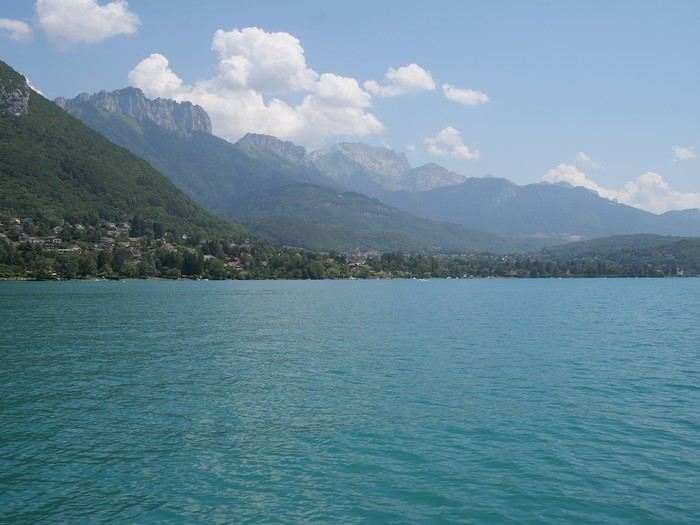 Lakes (Annecy)
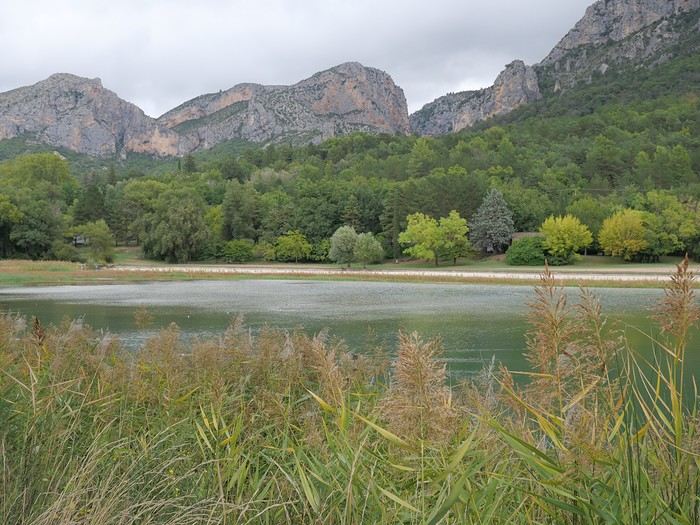 Ponds (near Moustiers Saint Marie)
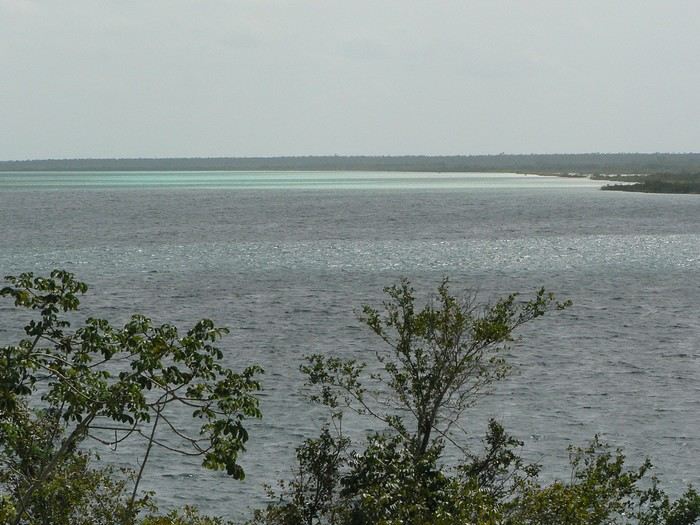 Lagoons (Bacalar)
If you’ve got nice photos of a pond—or even a puddle—why not? Natural bodies of water only: no pools or fountains (reservoir lakes are accepted… because they often look like natural lakes ).
The contest rules are the same as always 😉: Up to 3 photos per member, one photo per post (a little explanation is better), and past winning photos from other VF contests aren’t allowed. You have until Sunday, February 22nd at 11:59 PM (Paris time) to post your photos. Voting starts Monday the 23rd at midnight—rank your top 3 photos in order (3, 2, and 1 points). Voting ends Saturday, February 28th at 11:59 PM. Results will be announced on March 1st. The winning photo is the one with the most points (in case of a tie, the photo ranked first the most times wins). The lucky winner gets to organize March’s contest 😎.
Dig into your archives…
Lakes (Annecy)
Ponds (near Moustiers Saint Marie)
Lagoons (Bacalar)If you’ve got nice photos of a pond—or even a puddle—why not? Natural bodies of water only: no pools or fountains (reservoir lakes are accepted… because they often look like natural lakes ).
The contest rules are the same as always 😉: Up to 3 photos per member, one photo per post (a little explanation is better), and past winning photos from other VF contests aren’t allowed. You have until Sunday, February 22nd at 11:59 PM (Paris time) to post your photos. Voting starts Monday the 23rd at midnight—rank your top 3 photos in order (3, 2, and 1 points). Voting ends Saturday, February 28th at 11:59 PM. Results will be announced on March 1st. The winning photo is the one with the most points (in case of a tie, the photo ranked first the most times wins). The lucky winner gets to organize March’s contest 😎.
Dig into your archives…
Where to buy alcohol in Chefchaouen and Merzouga?
Hi, I’d like to know where we can buy beer or wine in Chefchaouen and around Merzouga. We’ll be doing a circuit and staying at the Parador Hotel in Chefchaouen and in a bivouac in Merzouga.
Thanks for any info you can share!
Crossing the border from 4000 Islands (Laos) to Cambodia and ongoing conflict
Hi,
I’m arriving soon in southern Laos and the 4000 Islands, with plans to head to Cambodia next.
The latest news I got this morning (Paksé, La Boulange) isn’t great—the Cambodian border is also in a latent conflict with Laos for the same reasons as with Thailand...
So, what’s the best site to check for updates on the border opening? Since the situation isn’t stable right now and could change from one day to the next?
Thanks for your input.
So, what’s the best site to check for updates on the border opening? Since the situation isn’t stable right now and could change from one day to the next?
Thanks for your input.
Flores or Sulawesi? Can't decide!
Hi everyone,
First post in years on the forum—I’m so happy it’s back up and running!
I’ve been wrestling with this question for weeks now: Flores or Sulawesi?
I’m leaving in July for 24 days, followed by 2 weeks around Makassar/Wakatobi for work. For the first part, I’m traveling with my family (my partner + 3 kids aged 6 to 14).
I’ve had a long-time dream of Komodo, but I’m worried it’s become super touristy... though the crossing to Maumere still sounds amazing. I’m also not thrilled about all the internal flights.
On the other hand, since I’ll be in Sulawesi anyway, I’m thinking a crossing from Gorontalo to Luwuk via the Togians (maybe even a few days in Banggai) + a detour to Toraja (which I visited 10 years ago) could be an incredible trip too.
For my family, this is their first trip to Indonesia, so I’d love it to feel *mythic* ;).
Any advice is welcome—I’m really struggling to decide! I know it’s a choice between two great options...
Thanks!
I’ve been wrestling with this question for weeks now: Flores or Sulawesi?
I’m leaving in July for 24 days, followed by 2 weeks around Makassar/Wakatobi for work. For the first part, I’m traveling with my family (my partner + 3 kids aged 6 to 14).
I’ve had a long-time dream of Komodo, but I’m worried it’s become super touristy... though the crossing to Maumere still sounds amazing. I’m also not thrilled about all the internal flights.
On the other hand, since I’ll be in Sulawesi anyway, I’m thinking a crossing from Gorontalo to Luwuk via the Togians (maybe even a few days in Banggai) + a detour to Toraja (which I visited 10 years ago) could be an incredible trip too.
For my family, this is their first trip to Indonesia, so I’d love it to feel *mythic* ;).
Any advice is welcome—I’m really struggling to decide! I know it’s a choice between two great options...
Thanks!
Trip to Morocco in September-October 2025, in our camper van
Hi everyone,
We’re just back from a month-long trip to Morocco in our camper van.
After crossing France (we left from the Nantes area) and Spain, we arrived in Algeciras where we bought our boat tickets to Tangier. When we got to Tangier, as we were going through customs, you can imagine our surprise when the customs officer took our road map of Morocco and pointed out the label "Western Sahara" (just like in the forum’s destination section, by the way!).
He wanted it to say "Moroccan Sahara" instead!!! But there was nothing we could do—it was an old map... He wouldn’t listen, and after long discussions with the other (younger) customs officers, he finally gave it back and let us through... Unbelievable! Later, we heard that other travelers had their maps confiscated outright.
So, hide it well if you want to keep yours!!!
Anyway, we skirted around Tangier’s suburbs—pretty grim—and finally arrived in Asilah.
Following the coast and the long promenade along the beach, we reached the campsite. It was a bit crowded, not much shade, but it wasn’t far from the medina or the beach, and it wasn’t expensive. There’s some life here: Moroccan families seem to live on-site, in tents or basic bungalows. A woman was cooking tagine on a brazier—we were right in the atmosphere! The night was quiet, and we slept well. We set off on foot, walking along the seafront to the medina... We’d already been here in 2009. It was less touristy back then! Still, at this early hour, the little streets inside were very quiet. The walls had been freshly whitewashed, and there were even more murals than before. Around 11:30 AM, we strolled along the ramparts by the sea. There was a nice breeze! And a lot more people around. We enjoyed a milkshake on the terrace of a café overlooking the beach that stretches out at the foot of the medina. Some young guys were having fun diving off the rocks—and even off the top of the wall!
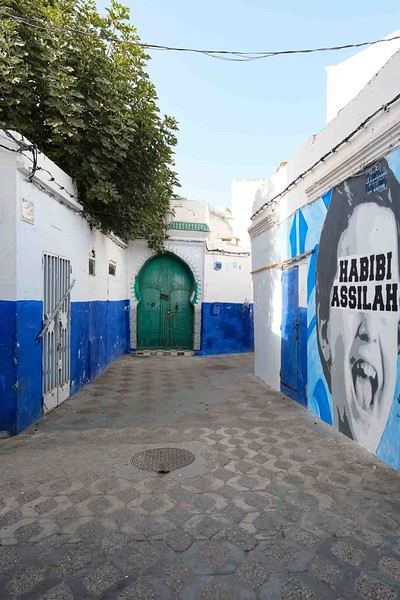
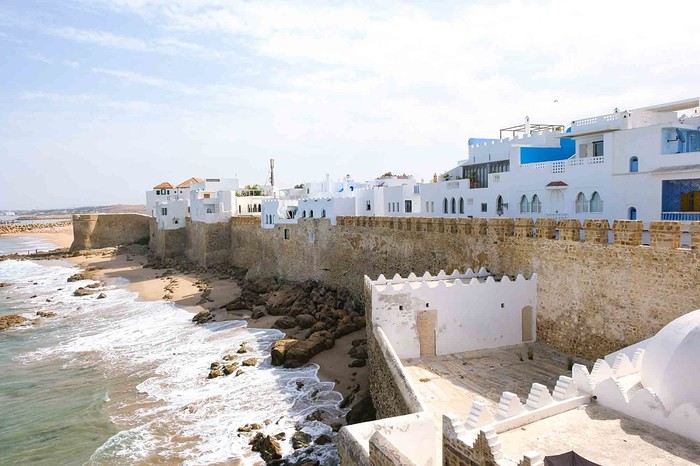
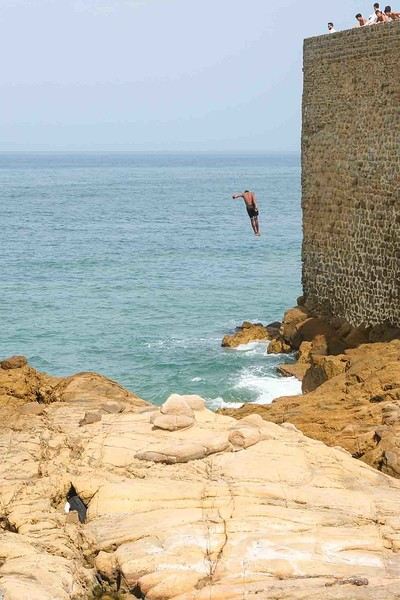
Anyway, we skirted around Tangier’s suburbs—pretty grim—and finally arrived in Asilah.
Following the coast and the long promenade along the beach, we reached the campsite. It was a bit crowded, not much shade, but it wasn’t far from the medina or the beach, and it wasn’t expensive. There’s some life here: Moroccan families seem to live on-site, in tents or basic bungalows. A woman was cooking tagine on a brazier—we were right in the atmosphere! The night was quiet, and we slept well. We set off on foot, walking along the seafront to the medina... We’d already been here in 2009. It was less touristy back then! Still, at this early hour, the little streets inside were very quiet. The walls had been freshly whitewashed, and there were even more murals than before. Around 11:30 AM, we strolled along the ramparts by the sea. There was a nice breeze! And a lot more people around. We enjoyed a milkshake on the terrace of a café overlooking the beach that stretches out at the foot of the medina. Some young guys were having fun diving off the rocks—and even off the top of the wall!
Berlin impressions (live)
Hi there,
I arrived in Berlin last night. In another discussion, I shared how much of a "nightmare" the flights from Nice were.
I’ll be posting some impressions here—what I liked and what I didn’t like as much.
This is my first time in Berlin. I’m staying for two weeks. For now, I’m alone, but I’ll be joined by someone in a few days.
Just to clarify, I won’t be posting any photos because my camera gave up the ghost the day before I left. It refused to read memory cards, and I don’t have a smartphone—just a tablet that I leave at the hotel.
Speaking of photos, a few years ago, at the Ducasse d’Ath in Belgium, I met a retired teacher who wasn’t taking any pictures of the festival. I asked her, "You’re not taking any photos?" She told me that during a trip to Nicaragua, she’d photographed howler monkeys and only noticed when looking at the pictures later that the males had huge testicles—something she hadn’t realized in person. She said, "Since then, I don’t bother with photos anymore!" I’ve thought about that often and wonder if I should do the same and stop taking pictures. Still, I’ll probably get a smartphone since it’s hard to go without one these days.
I arrived in Berlin last night. In another discussion, I shared how much of a "nightmare" the flights from Nice were.
I’ll be posting some impressions here—what I liked and what I didn’t like as much.
This is my first time in Berlin. I’m staying for two weeks. For now, I’m alone, but I’ll be joined by someone in a few days.
Just to clarify, I won’t be posting any photos because my camera gave up the ghost the day before I left. It refused to read memory cards, and I don’t have a smartphone—just a tablet that I leave at the hotel.
Speaking of photos, a few years ago, at the Ducasse d’Ath in Belgium, I met a retired teacher who wasn’t taking any pictures of the festival. I asked her, "You’re not taking any photos?" She told me that during a trip to Nicaragua, she’d photographed howler monkeys and only noticed when looking at the pictures later that the males had huge testicles—something she hadn’t realized in person. She said, "Since then, I don’t bother with photos anymore!" I’ve thought about that often and wonder if I should do the same and stop taking pictures. Still, I’ll probably get a smartphone since it’s hard to go without one these days.
Unsure about destinations in Northern and Eastern India
Hi everyone! 🙂
My partner (who’s a teacher—hence the summer holidays) and I are heading to Eastern India for 23 days in July. This is my 5th trip to India, but her first.
We fly into Delhi on July 7th and leave from Delhi on the 23rd (since our flight to Kolkata arrived late at night, and I wanted to show Agra and Varanasi to my partner).
We love getting off the beaten track and meeting people, so we’ll mostly be taking the train.
Here’s what we’re planning:
- **DELHI**: 1 night on the way (short because the plane is supposed to land at 01:55), then we take the train at 13:00 - **GWALIOR**: 3 nights, including a day trip to **AGRA** by train to see the Taj Mahal and the Red Fort (I find Agra too touristy to stay overnight). Otherwise, in Gwalior, the Fort, the temples, the Man Mandir Palace, and the Jai Vilas Palace if we have time. - **ORCHHA**: 2 nights... *maybe skip this to spend more time in VARANASI?* - **VARANASI**: overnight train + 3 nights, the Ghats, temples... maybe a day trip to **SARNATH**. - **KOLKATA**: overnight train + 3 nights. Maybe a countryside excursion to the ashram in Channa. *- Here we’re hesitating over 2 nights: either 2 nights in **SHANTINIKETAN** with a visit to **CHANNA** on the way, or a 2-day excursion to the **SUNDARBAN** nature park. But is it worth it in July during the monsoon?* - **PURI**: overnight train + 4 nights. *We’re planning to do everything from Puri, as it seems nicer than staying in BHUBANESWAR. What do you think?* Visit **KONARK** and **CHILIKA LAKE**. *Is it worth visiting Chilika Lake this season? Another question: can you swim in Puri, or is it too dangerous (waves)?* - Train to **BHUBANESWAR**, then a flight from BHUBANESWAR to **DELHI**, - 2 nights in **DELHI**, visiting Jama Masjid, and *either Humayun’s Tomb, Safdarjung’s Tomb, or Qutb Minar.*
Back to Paris. Total: 23 nights.
What do you think of these choices? What about the options we’re still unsure about *(in bold/italics)*? Thanks so much! 🙂
We fly into Delhi on July 7th and leave from Delhi on the 23rd (since our flight to Kolkata arrived late at night, and I wanted to show Agra and Varanasi to my partner).
We love getting off the beaten track and meeting people, so we’ll mostly be taking the train.
Here’s what we’re planning:
- **DELHI**: 1 night on the way (short because the plane is supposed to land at 01:55), then we take the train at 13:00 - **GWALIOR**: 3 nights, including a day trip to **AGRA** by train to see the Taj Mahal and the Red Fort (I find Agra too touristy to stay overnight). Otherwise, in Gwalior, the Fort, the temples, the Man Mandir Palace, and the Jai Vilas Palace if we have time. - **ORCHHA**: 2 nights... *maybe skip this to spend more time in VARANASI?* - **VARANASI**: overnight train + 3 nights, the Ghats, temples... maybe a day trip to **SARNATH**. - **KOLKATA**: overnight train + 3 nights. Maybe a countryside excursion to the ashram in Channa. *- Here we’re hesitating over 2 nights: either 2 nights in **SHANTINIKETAN** with a visit to **CHANNA** on the way, or a 2-day excursion to the **SUNDARBAN** nature park. But is it worth it in July during the monsoon?* - **PURI**: overnight train + 4 nights. *We’re planning to do everything from Puri, as it seems nicer than staying in BHUBANESWAR. What do you think?* Visit **KONARK** and **CHILIKA LAKE**. *Is it worth visiting Chilika Lake this season? Another question: can you swim in Puri, or is it too dangerous (waves)?* - Train to **BHUBANESWAR**, then a flight from BHUBANESWAR to **DELHI**, - 2 nights in **DELHI**, visiting Jama Masjid, and *either Humayun’s Tomb, Safdarjung’s Tomb, or Qutb Minar.*
Back to Paris. Total: 23 nights.
What do you think of these choices? What about the options we’re still unsure about *(in bold/italics)*? Thanks so much! 🙂
New Navi Mumbai International Airport
India inaugurates the new Navi Mumbai International Airport and the final phase of Mumbai’s Metro Line 3—a major turning point for the country’s infrastructure.
Mumbai, India’s economic capital, is entering a new era of modernization. The Indian government has officially inaugurated the Navi Mumbai International Airport, one of the country’s most ambitious infrastructure projects, along with the final phase of Metro Line 3, a key axis to ease congestion in the megacity.
The Navi Mumbai International Airport (NMIA), located about 35 km from the city center, aims to eventually handle up to 60 million passengers per year. Built to reduce pressure on the already saturated Chhatrapati Shivaji Maharaj Airport, it features ultra-modern facilities, sustainable design, and cutting-edge technologies for air traffic management and energy efficiency.
At the same time, the completion of Mumbai’s Metro Line 3, connecting Colaba to Bandra-SEEPZ, marks a major advancement in urban mobility. This 33.5 km underground section will significantly reduce travel time and congestion in a city known for its chronic traffic jams.
These two projects reflect the Indian government’s commitment to transforming Mumbai into a global hub, combining connectivity, sustainability, and economic development.
The Navi Mumbai International Airport (NMIA), a project two decades in the making, has finally come to fruition. Phase one of the airport was inaugurated Wednesday by Prime Minister Narendra Modi, in the presence of Chief Minister Devendra Fadnavis and Deputy Chief Ministers Eknath Shinde and Ajit Pawar. Although the first phase, which includes Terminal 1 and Runway 1 with 10 bus gates and 29 aero bridges, has been inaugurated, flight operations will not begin immediately.
"Post-inauguration, the airport will be handed over to the Central Industrial Security Force (CISF) for a security sweep, which could take 30 to 45 days. We also need to mobilize customs and immigration teams and complete end-to-end testing, which is a 45-60-day process," said Arun Bansal, CEO of Adani Airports Holdings Ltd, developer and operator of the NMIA, during a press briefing at the NMIA premises Monday. Even though an exact date hasn’t been announced, NMIA CEO Captain B V J K Sharma and Bansal said commercial flights are expected to begin in December 2025. Plans of major carriers Three major airlines—Air India, Akasa Air, and IndiGo—have already signed on to shift part of their operations to NMIA. Last month, Air India announced plans to start with 20 daily departures (40 air traffic movements) through Air India Express, connecting 15 Indian cities in the first phase. By mid-2026, it aims to scale up to 55 daily departures, including up to five international flights. IndiGo, which made its announcement in May, plans to operate 18 daily flights to more than 15 cities from the first day of commercial operations and intends to expand to 140 daily flights—30 of which will be international—within 18 months. In June, Akasa Air said it will start with 15 daily domestic flights, scaling up to over 300 domestic and 50 international flights a week within a few months. When asked which airline will operate the first flight, Bansal said, "We want all three airlines to be there on Day 1. It depends on who has the earliest slot that day, and the destination choice lies entirely with the airlines." Operations to begin with 12-hour window In the first month, flights will operate between 8 am and 8 pm, with the 12-hour window likely to be extended as operations stabilize. Although NMIA’s full capacity is 40 air traffic movements (ATMs) per hour, the initial phase will handle 10 ATMs—allowing 10 aircraft to land or take off every hour. Airlines are expected to announce routes and ticket sales soon. Touted as an international aviation hub, NMIA positions Mumbai alongside global twin-airport cities such as London, Dubai, and New York, and plans to launch both domestic and international operations from Day 1. Concession for international carriers When asked if international carriers will be given any concessions, Bansal said, "For international airlines, we will not charge them parking fees for the first year." The duo added that NMIA aims to reclaim Mumbai’s rightful place on the global aviation map. "For a decade… travelers didn’t have a choice—airlines couldn’t get additional slots (at the Mumbai airport), so traffic shifted to Delhi. We are course-correcting that with NMIA. It won’t happen overnight, but over the next five–seven years, you’ll see the change," said Bansal. He noted that Mumbai currently lacks direct flights to major destinations in Europe and the U.S., something NMIA hopes to change. "If you see east-to-west flights, Mumbai is a natural stop," added Sharma. As reported earlier, NMIA will eventually feature four terminals and two parallel runways, with a total capacity to handle up to 90 million passengers per annum (MPPA), compared to 20 MPPA in the first phase. In the long term, the airport aims to serve as a key transfer hub between the East and the West, enabling passengers from Southeast Asia to connect seamlessly to Europe and North America.
The Navi Mumbai International Airport (NMIA), a project two decades in the making, has finally come to fruition. Phase one of the airport was inaugurated Wednesday by Prime Minister Narendra Modi, in the presence of Chief Minister Devendra Fadnavis and Deputy Chief Ministers Eknath Shinde and Ajit Pawar. Although the first phase, which includes Terminal 1 and Runway 1 with 10 bus gates and 29 aero bridges, has been inaugurated, flight operations will not begin immediately.
"Post-inauguration, the airport will be handed over to the Central Industrial Security Force (CISF) for a security sweep, which could take 30 to 45 days. We also need to mobilize customs and immigration teams and complete end-to-end testing, which is a 45-60-day process," said Arun Bansal, CEO of Adani Airports Holdings Ltd, developer and operator of the NMIA, during a press briefing at the NMIA premises Monday. Even though an exact date hasn’t been announced, NMIA CEO Captain B V J K Sharma and Bansal said commercial flights are expected to begin in December 2025. Plans of major carriers Three major airlines—Air India, Akasa Air, and IndiGo—have already signed on to shift part of their operations to NMIA. Last month, Air India announced plans to start with 20 daily departures (40 air traffic movements) through Air India Express, connecting 15 Indian cities in the first phase. By mid-2026, it aims to scale up to 55 daily departures, including up to five international flights. IndiGo, which made its announcement in May, plans to operate 18 daily flights to more than 15 cities from the first day of commercial operations and intends to expand to 140 daily flights—30 of which will be international—within 18 months. In June, Akasa Air said it will start with 15 daily domestic flights, scaling up to over 300 domestic and 50 international flights a week within a few months. When asked which airline will operate the first flight, Bansal said, "We want all three airlines to be there on Day 1. It depends on who has the earliest slot that day, and the destination choice lies entirely with the airlines." Operations to begin with 12-hour window In the first month, flights will operate between 8 am and 8 pm, with the 12-hour window likely to be extended as operations stabilize. Although NMIA’s full capacity is 40 air traffic movements (ATMs) per hour, the initial phase will handle 10 ATMs—allowing 10 aircraft to land or take off every hour. Airlines are expected to announce routes and ticket sales soon. Touted as an international aviation hub, NMIA positions Mumbai alongside global twin-airport cities such as London, Dubai, and New York, and plans to launch both domestic and international operations from Day 1. Concession for international carriers When asked if international carriers will be given any concessions, Bansal said, "For international airlines, we will not charge them parking fees for the first year." The duo added that NMIA aims to reclaim Mumbai’s rightful place on the global aviation map. "For a decade… travelers didn’t have a choice—airlines couldn’t get additional slots (at the Mumbai airport), so traffic shifted to Delhi. We are course-correcting that with NMIA. It won’t happen overnight, but over the next five–seven years, you’ll see the change," said Bansal. He noted that Mumbai currently lacks direct flights to major destinations in Europe and the U.S., something NMIA hopes to change. "If you see east-to-west flights, Mumbai is a natural stop," added Sharma. As reported earlier, NMIA will eventually feature four terminals and two parallel runways, with a total capacity to handle up to 90 million passengers per annum (MPPA), compared to 20 MPPA in the first phase. In the long term, the airport aims to serve as a key transfer hub between the East and the West, enabling passengers from Southeast Asia to connect seamlessly to Europe and North America.
Hospitalized, very seriously ill in India
Hello,
I’m looking for people who’ve been very seriously ill or had major surgery in India (especially in Kerala). Thanks for sharing your experience.
Two weeks in Corfu with the family – our feedback
Hi everyone,
Here’s a little account of our two-week family trip (with two boys aged 7 and 10) to Corfu. I hope it helps other travelers! We chose Corfu because there are direct flights from Paris, and we were looking for a destination where it’d be easy to swim with the kids. We were there from August 14 to 28.
Since I wasn’t sure about the distances and had read quite a bit about Greek driving and the state of the roads, I decided to split the trip into three parts: Corfu Town, the North, and the South.
Corfu Town (3 nights) Day 1: We landed in the late afternoon. Booked three nights via Booking on the edge of the old town (Sueno Garden Apartment), which is walkable from the airport—no need to rent a car for the first few days or stay in Corfu Town. First evening in the old town, dinner at Pane e Souvlaki on Dimarchiou Square. Touristy, but good vibes.
Day 2: Visited the Old Fort. Nice for the Church of St. George, which looks like an ancient Greek temple, and especially for the 360° view from the top. By 11 a.m., the sun was already beating down. Left the fort and strolled through the People’s Gardens. Lunch at Mouragia a bit further away, then backtracked to let the kids swim at Faliraki Bathing Beach.
Day 3: We took bus line 2A from Spinada (in front of the Old Fort) to the end of the runway (stop ΚΑΛΟΚΑΙΡΙ Ε). Poorly signposted when you’re at the top—you have to go down via the bar. Not well set up, which is a shame. The Panagia Vlacherna Monastery is pretty on its little island, but don’t turn around—the landings are impressive. Returned via the 2A with a stop at Mon Repos Beach, where the kids loved jumping off the pier.
North (6 nights) Day 4: Headed to Sidari, rented a small Fiat Panda from Europcar—no issues with this rental company (I booked late, so it’s probably possible to find cheaper). We’d also booked via Booking at Blue Dreams Apartment, just south of Sidari. A family-run hotel with a nice pool, we had a great stay (it’s just been taken over by Belgians who speak French). We wandered around Sidari to the Canal d’Amour. Not easy to access—you have to walk through all the bars, and the tiny beach is pretty dirty. Still, it’s fun for a swim and exploring the cave.
Day 5: Quick breakfast to be at Cap Drastis by 9 a.m. Parked at the top, but there’s very little space (we couldn’t park on the way back), and it’s a dirt road. The signs saying “To the sea” actually lead to a boat dock for a cape tour. You only see the cape from above, not below. A bit of a letdown, but since it was early and no one was down there yet, we treated ourselves to a quick swim. Brunch back in Sidari at Eviva—I recommend it: not Greek at all, but high quality. Agios Stefanos in the late afternoon after the heat. The port is awful (dirty and uninteresting), but there’s a swimming spot just before the beach, near the old port (park above, by the church). No one was there—great moment with the kids.
Day 6: Left around 9 a.m. for Mount Pantokrator. A bit of a climb at the end in the Fiat Panda—it’s steep! The road is long, but I think it’s worth it for the lunar landscape at the top, the monastery-antenna, and the 360° view. Then down to Kassiopi (we paid 5 euros for the Kassiopi Car Park—I think it’s the best option, as there’s no big free parking like in Sidari) and a swim at Paralia Mpataria (small but nice). Really relaxing in the late afternoon. Walked around the peninsula and saw several dolphin pods with amazing jumps. Unforgettable. Kassiopi is more family-friendly than Sidari and has more charm (Sidari has none, so that’s easy!).
Day 7: Morning off at the hotel, then afternoon at Paralia Kalamaki for the inflatable playground the kids had spotted on the way back from Kassiopi. 10 euros per person for an hour, not many people around 4 p.m., and we had a blast. Shallow sandy beach. Not much marine life, but safe for young kids. Note: free freshwater shower. Dinner at Nikos Family Restaurant in Roda. Great welcome and atmosphere. The stifado and soutzoukakia were delicious, and the Greek desserts were amazing too. Next door, at Roda Park restaurant, there was a Greek party with traditional dancing and plaster plate-smashing. Even though we didn’t eat there, everyone was invited to join in the street—it was fun. Probably touristy, but pretty spontaneous, and it was a good time.
Day 8: I’d booked two dives in Paleokastritsa with Achilleon Diving Center, directly via WhatsApp. Great international vibe, two easy but interesting dives (a barracuda school and a “cow” nudibranch at Colovri Reefs, cool crevasses and holes at Donald’s Place). In the afternoon, we visited the Paleokastritsa Monastery (well-maintained, pretty nice) and spent some time at the beach (very crowded).
Day 9: Day off—we enjoyed the hotel pool and went to Olea next door to buy a small olive wood souvenir. Note that the old man who works the wood doesn’t have many fingers left…
South (5 nights) Day 10: Headed to Lefkimmi. Stopped at Achilleion on the way. I knew from reviews that only the gardens were accessible, but I think it’s worth it, even at 7 euros. We passed by the French military cemetery nearby (nothing special, poorly signposted but quiet and peaceful) and ate at Elia Tavern right next door: super good, best calamari of the trip. We’d booked our accommodation at Villa Rosa South Corfu, a bit outside Lefkimmi, near Alikes. Pretty isolated, but the beach is a 3-minute walk away, right next to the old salt pans. On the way, we saw a poster (use Google Lens to translate) for a local festival near Linia. We went that evening: barbecue, concert, and local dancing. Lots of people, but only locals—it was a great time.
Day 11: Short “hike” to Arkoudilas. We parked at the exit of Kavos, just before The Rose Tree restaurant. Some people drive all the way to the beach, but it’s very rocky. We followed the “Monastery” path to see Cape Asprokavos and the ruins of the monastery nearby. To avoid backtracking, we continued through the woods after the monastery to reach Arkoudilas Beach. Nice shaded walk, but dusty road. Dinner at Agali on the Potami Canal (friendly family vibe, but long wait).
Day 12: Boat trip to Sivota with Pegasus. A wooden boat, human-sized. Crowded, but not cramped. Two swimming stops (Blue Lagoon in the morning and a beach in the afternoon) and a 2-hour stop at noon in Sivota. We knew it’d be touristy, but the vibe was good, with some dancing on the way back. Not too many people at the swimming stops.
Day 13: Kouris Museum in Lefkimmi. Okay, don’t go for the history—the guide cracks more jokes than gives rational explanations. Still, we laughed a lot and had a great time. Lunch at The Village on the main road: very fresh, very good. Perfect homemade dip platter. Not the best location since it’s right on the road, but it’s worth it. Free ice cream for the kids, super-friendly owner. Fresh ratatouille (finally, some veggies!). Afternoon at Paralia Issos. View of Korission Lagoon and a walk through the sand dunes, a bit like the Sahara in places (hard to do before 5 p.m., even 6 p.m., because of the heat).
Day 14: I’d booked a visit/tasting at Pontiglio Winery. Short tour of the small site and tasting of the 4 wines produced there: 2 whites, 1 red, 1 rosé. Fresh homemade snacks, fruit for the kids, great welcome. Then to Paralia Kanoula Beach. Mikro Nisi Bar, sunbeds at 20 euros—expensive. But a nice beach with some rocks, so a bit of marine life. We saw octopuses while snorkeling with the kids—great moment.
Honest take on Corfu The island is dirty—not just at the garbage sites, which aren’t collected often enough and overflow constantly, but everywhere. Not a single square meter without cigarette butts, even if you get off the main paths. Stray cats everywhere, wasps everywhere, sewage smells often.
The natural heritage is stunning but ruined by private encroachment on the coastline. Bars and restaurants take over the land right up to the sea. I’d only been to Santorini and Paros about ten years ago, and I don’t remember it being like this at all. Maybe the Cyclades are different now. From talking to a few tourists here and there, it seems Crete is better managed. We still had a good vacation, even if it was sometimes hard to overlook the dirtiness.
Here’s a little account of our two-week family trip (with two boys aged 7 and 10) to Corfu. I hope it helps other travelers! We chose Corfu because there are direct flights from Paris, and we were looking for a destination where it’d be easy to swim with the kids. We were there from August 14 to 28.
Since I wasn’t sure about the distances and had read quite a bit about Greek driving and the state of the roads, I decided to split the trip into three parts: Corfu Town, the North, and the South.
Corfu Town (3 nights) Day 1: We landed in the late afternoon. Booked three nights via Booking on the edge of the old town (Sueno Garden Apartment), which is walkable from the airport—no need to rent a car for the first few days or stay in Corfu Town. First evening in the old town, dinner at Pane e Souvlaki on Dimarchiou Square. Touristy, but good vibes.
Day 2: Visited the Old Fort. Nice for the Church of St. George, which looks like an ancient Greek temple, and especially for the 360° view from the top. By 11 a.m., the sun was already beating down. Left the fort and strolled through the People’s Gardens. Lunch at Mouragia a bit further away, then backtracked to let the kids swim at Faliraki Bathing Beach.
Day 3: We took bus line 2A from Spinada (in front of the Old Fort) to the end of the runway (stop ΚΑΛΟΚΑΙΡΙ Ε). Poorly signposted when you’re at the top—you have to go down via the bar. Not well set up, which is a shame. The Panagia Vlacherna Monastery is pretty on its little island, but don’t turn around—the landings are impressive. Returned via the 2A with a stop at Mon Repos Beach, where the kids loved jumping off the pier.
North (6 nights) Day 4: Headed to Sidari, rented a small Fiat Panda from Europcar—no issues with this rental company (I booked late, so it’s probably possible to find cheaper). We’d also booked via Booking at Blue Dreams Apartment, just south of Sidari. A family-run hotel with a nice pool, we had a great stay (it’s just been taken over by Belgians who speak French). We wandered around Sidari to the Canal d’Amour. Not easy to access—you have to walk through all the bars, and the tiny beach is pretty dirty. Still, it’s fun for a swim and exploring the cave.
Day 5: Quick breakfast to be at Cap Drastis by 9 a.m. Parked at the top, but there’s very little space (we couldn’t park on the way back), and it’s a dirt road. The signs saying “To the sea” actually lead to a boat dock for a cape tour. You only see the cape from above, not below. A bit of a letdown, but since it was early and no one was down there yet, we treated ourselves to a quick swim. Brunch back in Sidari at Eviva—I recommend it: not Greek at all, but high quality. Agios Stefanos in the late afternoon after the heat. The port is awful (dirty and uninteresting), but there’s a swimming spot just before the beach, near the old port (park above, by the church). No one was there—great moment with the kids.
Day 6: Left around 9 a.m. for Mount Pantokrator. A bit of a climb at the end in the Fiat Panda—it’s steep! The road is long, but I think it’s worth it for the lunar landscape at the top, the monastery-antenna, and the 360° view. Then down to Kassiopi (we paid 5 euros for the Kassiopi Car Park—I think it’s the best option, as there’s no big free parking like in Sidari) and a swim at Paralia Mpataria (small but nice). Really relaxing in the late afternoon. Walked around the peninsula and saw several dolphin pods with amazing jumps. Unforgettable. Kassiopi is more family-friendly than Sidari and has more charm (Sidari has none, so that’s easy!).
Day 7: Morning off at the hotel, then afternoon at Paralia Kalamaki for the inflatable playground the kids had spotted on the way back from Kassiopi. 10 euros per person for an hour, not many people around 4 p.m., and we had a blast. Shallow sandy beach. Not much marine life, but safe for young kids. Note: free freshwater shower. Dinner at Nikos Family Restaurant in Roda. Great welcome and atmosphere. The stifado and soutzoukakia were delicious, and the Greek desserts were amazing too. Next door, at Roda Park restaurant, there was a Greek party with traditional dancing and plaster plate-smashing. Even though we didn’t eat there, everyone was invited to join in the street—it was fun. Probably touristy, but pretty spontaneous, and it was a good time.
Day 8: I’d booked two dives in Paleokastritsa with Achilleon Diving Center, directly via WhatsApp. Great international vibe, two easy but interesting dives (a barracuda school and a “cow” nudibranch at Colovri Reefs, cool crevasses and holes at Donald’s Place). In the afternoon, we visited the Paleokastritsa Monastery (well-maintained, pretty nice) and spent some time at the beach (very crowded).
Day 9: Day off—we enjoyed the hotel pool and went to Olea next door to buy a small olive wood souvenir. Note that the old man who works the wood doesn’t have many fingers left…
South (5 nights) Day 10: Headed to Lefkimmi. Stopped at Achilleion on the way. I knew from reviews that only the gardens were accessible, but I think it’s worth it, even at 7 euros. We passed by the French military cemetery nearby (nothing special, poorly signposted but quiet and peaceful) and ate at Elia Tavern right next door: super good, best calamari of the trip. We’d booked our accommodation at Villa Rosa South Corfu, a bit outside Lefkimmi, near Alikes. Pretty isolated, but the beach is a 3-minute walk away, right next to the old salt pans. On the way, we saw a poster (use Google Lens to translate) for a local festival near Linia. We went that evening: barbecue, concert, and local dancing. Lots of people, but only locals—it was a great time.
Day 11: Short “hike” to Arkoudilas. We parked at the exit of Kavos, just before The Rose Tree restaurant. Some people drive all the way to the beach, but it’s very rocky. We followed the “Monastery” path to see Cape Asprokavos and the ruins of the monastery nearby. To avoid backtracking, we continued through the woods after the monastery to reach Arkoudilas Beach. Nice shaded walk, but dusty road. Dinner at Agali on the Potami Canal (friendly family vibe, but long wait).
Day 12: Boat trip to Sivota with Pegasus. A wooden boat, human-sized. Crowded, but not cramped. Two swimming stops (Blue Lagoon in the morning and a beach in the afternoon) and a 2-hour stop at noon in Sivota. We knew it’d be touristy, but the vibe was good, with some dancing on the way back. Not too many people at the swimming stops.
Day 13: Kouris Museum in Lefkimmi. Okay, don’t go for the history—the guide cracks more jokes than gives rational explanations. Still, we laughed a lot and had a great time. Lunch at The Village on the main road: very fresh, very good. Perfect homemade dip platter. Not the best location since it’s right on the road, but it’s worth it. Free ice cream for the kids, super-friendly owner. Fresh ratatouille (finally, some veggies!). Afternoon at Paralia Issos. View of Korission Lagoon and a walk through the sand dunes, a bit like the Sahara in places (hard to do before 5 p.m., even 6 p.m., because of the heat).
Day 14: I’d booked a visit/tasting at Pontiglio Winery. Short tour of the small site and tasting of the 4 wines produced there: 2 whites, 1 red, 1 rosé. Fresh homemade snacks, fruit for the kids, great welcome. Then to Paralia Kanoula Beach. Mikro Nisi Bar, sunbeds at 20 euros—expensive. But a nice beach with some rocks, so a bit of marine life. We saw octopuses while snorkeling with the kids—great moment.
Honest take on Corfu The island is dirty—not just at the garbage sites, which aren’t collected often enough and overflow constantly, but everywhere. Not a single square meter without cigarette butts, even if you get off the main paths. Stray cats everywhere, wasps everywhere, sewage smells often.
The natural heritage is stunning but ruined by private encroachment on the coastline. Bars and restaurants take over the land right up to the sea. I’d only been to Santorini and Paros about ten years ago, and I don’t remember it being like this at all. Maybe the Cyclades are different now. From talking to a few tourists here and there, it seems Crete is better managed. We still had a good vacation, even if it was sometimes hard to overlook the dirtiness.
Two-week family trip to Colombia in August with 8-year-olds
Hi everyone,
I’d like to share my family trip to Colombia with kids aged 8. After spending hours browsing the forum and only having two weeks there, we decided to focus on two regions: the Coffee Zone for one week and the Caribbean coast for another. We traveled from August 8 to 23.
Day 1 – First stop: Bogotá
We arrived in Bogotá in the evening on an Air France flight—nothing to complain about, decent service, comfortable, and on time. However, the first night was a miss. We’d booked a hotel near the airport (Abitel Prime) for convenience, but the soundproofing was almost nonexistent; we heard planes as if we were on the runway. Luckily, exhaustion helped us sleep well anyway.
Day 2 – Off to the Coffee Zone and Salento
The next morning, we headed to the airport for a domestic flight to Pereira with LATAM. No issues: punctual and efficient, and in 30 minutes, we landed in Pereira. The landing already set a different mood: lush valleys, endless plantations, and humid air. We picked up our rental car from Localiza. Unfortunately, the experience wasn’t smooth—the paperwork took forever, and the wait tested our patience. Finally free, we hit the road to Salento, one of Quindío’s gems. We arrived in the late afternoon and discovered a colorful village bustling with artisan shops and cafés. Our first stroll helped us soak in the atmosphere before dinner at Bambú restaurant—a great surprise with careful cooking and local flavors. We spent the night at Casa Serafín, a charming little hotel, nicely decorated and well-located… but unfortunately very noisy.
Day 3 – The magic of Cocora Valley
This was one of the trip’s highlights. We set off early for Cocora Valley, famous for its giant wax palms, Colombia’s emblem. We chose the 12 km loop recommended by the *Routard*. The landscapes were spectacular: towering palms, rivers, suspension bridges. It felt like walking through a postcard. The weather was perfect. That evening, we dined at Barnabé restaurant—pleasant setting, decent food, but the bill was a bit steep for what it was. Back to Casa Serafín.
Day 4 – Coffee and panoramic views
The plan was a visit to Finca El Ocaso. For 1.5 hours, we followed a passionate guide who explained the entire coffee process, from harvest to cup. Very educational, accessible for both kids and adults, all in a stunning setting. The tour was in English for us, and we translated for our kids, who aren’t bilingual yet. In the afternoon, we climbed to Salento’s viewpoint. The valley view was superb. That evening, we ate at Veggie Garden, a simple and pleasant spot that was a nice change from the heavier meals of previous days.
Day 5 – Horseback ride to Santa Rita Waterfall
We booked a horseback ride with Cocora Magic. It was a real success: calm horses, a beautiful trail, mountain and meadow landscapes, and finally the refreshing and wild Santa Rita Waterfall. Without a doubt, one of the best moments of our time in the region. We even got a bonus ride up a 300-meter hill. We then headed to Filandia, less known than Salento but just as charming. We spent the late afternoon enjoying the pool at MuchoSur Filandia. The hotel is beautiful, in an idyllic setting. However, we also had soundproofing issues and could hear our neighbors.
Day 6 – Rainy detour through Filandia and Manizales
Rain caught up with us in the early morning: torrents of water made it impossible to go out. We stayed at the hotel, reading quietly. By noon, the rain let up: a quick walk in Filandia, a quick lunch, then off to Manizales. We chose to stay at El Otoño hot springs. Great choice: as soon as we arrived, we plunged into the hot pools, perfect after hours on the road.
Day 7 – Hiking and hot springs
In the morning, we hiked the Camino de Super Coco (found somewhat randomly on Google). A pleasant trail with mountain views and a peaceful atmosphere. The afternoon was spent in the hotel’s thermal pools, with a short marked hike down to the river. Dinner on-site at the hot springs’ restaurant. A simple but very relaxing day.
Day 8 – Rain, jacuzzi, and games
We continued to Finca Los Alpes. The rain greeted us again, but this time it turned into an asset: nothing like a steaming jacuzzi with a view of the misty mountains. The kids enjoyed the facilities too: mini-golf, ping-pong, billiards. Dinner and night at the hotel, cozy vibes.
Day 9 – Off to the Caribbean coast
Back to the airport to return the car (still a bit long). Flight to Cartagena with Avianca: punctual and comfortable. Upon arrival, we picked up another car and headed straight to the Hyatt Regency, a modern hotel with a pool. That evening, we dined at the hotel—practical after a travel day.
Day 10 – Colonial Cartagena
We set off to explore Cartagena’s old town. It was enchanting: colorful facades, flowered balconies, colonial charm—just magical. However, the heat was stifling and very humid. Afternoon relaxation by the pool. Dinner at Gestlani, a good restaurant in town.
Day 11 – Road to Barú
A hearty breakfast, then one last swim in the pool before heading to Barú. We checked into Las Islas Hotel. The setting was enchanting: wooden cabins nestled in the vegetation, a private beach, turquoise sea, impeccable service. Dinner at the hotel’s restaurant.
Day 12 – Beach and relaxation
A full beach day in Barú. Warm water, white sand, coconut trees, peace and quiet. A real postcard scene with iguanas and birds.
Day 13 – On to Santa Marta
Another morning at the beach before hitting the road to Santa Marta. The drive was a bit long (6 hours), especially with traffic jams in Barranquilla. It was the longest car ride of the trip. We spent the night at Villa María Tayrona, a beautiful place near the park.
Day 14 – Tayrona Park
We left early for Tayrona Park. We entered through **El Zaino**, parked the car, and set off on a hike to La Piscina (about 2 hours). We stopped along the way at Playa Arenilla, a stunning little beach, to rest. Lunch on-site, a swim, then back by 4 PM. The hike was a bit tiring, but the nature was spectacular: dense jungle, the sound of waves, and even a monkey encounter along the way. Evening and dinner at the hotel.
Day 15 – Last swim and return flight to Bogotá
Our last morning was split between the pool and the beach (the hotel has direct access via a 7-minute trail through vegetation and flowers)—hard to leave this paradise. We drove to Santa Marta’s airport to return the car, then flew back to Bogotá. We spent the night at Casa Dann Carlton, a comfortable hotel. We simply ordered room service, arriving too late to go out.
Day 16 – Bogotá and the end of the trip
Our last day in Colombia. After a good breakfast, we explored La Candelaria. Its cobbled streets and colorful houses were worth the visit. We visited the Botero Museum (free) and the Gold Museum, both fascinating. Back to the airport for our 11:55 PM Air France flight.
That’s a wrap on a varied trip—lush mountains, colorful villages, dream beaches, and tropical jungle. The pace was pretty relaxed, well-suited for our kids. They absolutely loved the trip to Colombia. Driving in Colombia was very easy, and we didn’t regret renting a car at all—it gave us more freedom to get around.
If I were to do it again, here’s what I’d change: - I’d spend less time in the Coffee Zone to stay a bit longer on the Caribbean coast, which was more relaxing for the kids. Or I’d head to Medellín, but I didn’t think the city was very kid-friendly. - Bogotá is a city that deserves a day’s visit, but it’s not a must-see. Maybe I’d have taken the KLM flight from Cartagena to Amsterdam instead.
If you have any questions, don’t hesitate!
Antoine
I’d like to share my family trip to Colombia with kids aged 8. After spending hours browsing the forum and only having two weeks there, we decided to focus on two regions: the Coffee Zone for one week and the Caribbean coast for another. We traveled from August 8 to 23.
Day 1 – First stop: Bogotá
We arrived in Bogotá in the evening on an Air France flight—nothing to complain about, decent service, comfortable, and on time. However, the first night was a miss. We’d booked a hotel near the airport (Abitel Prime) for convenience, but the soundproofing was almost nonexistent; we heard planes as if we were on the runway. Luckily, exhaustion helped us sleep well anyway.
Day 2 – Off to the Coffee Zone and Salento
The next morning, we headed to the airport for a domestic flight to Pereira with LATAM. No issues: punctual and efficient, and in 30 minutes, we landed in Pereira. The landing already set a different mood: lush valleys, endless plantations, and humid air. We picked up our rental car from Localiza. Unfortunately, the experience wasn’t smooth—the paperwork took forever, and the wait tested our patience. Finally free, we hit the road to Salento, one of Quindío’s gems. We arrived in the late afternoon and discovered a colorful village bustling with artisan shops and cafés. Our first stroll helped us soak in the atmosphere before dinner at Bambú restaurant—a great surprise with careful cooking and local flavors. We spent the night at Casa Serafín, a charming little hotel, nicely decorated and well-located… but unfortunately very noisy.
Day 3 – The magic of Cocora Valley
This was one of the trip’s highlights. We set off early for Cocora Valley, famous for its giant wax palms, Colombia’s emblem. We chose the 12 km loop recommended by the *Routard*. The landscapes were spectacular: towering palms, rivers, suspension bridges. It felt like walking through a postcard. The weather was perfect. That evening, we dined at Barnabé restaurant—pleasant setting, decent food, but the bill was a bit steep for what it was. Back to Casa Serafín.
Day 4 – Coffee and panoramic views
The plan was a visit to Finca El Ocaso. For 1.5 hours, we followed a passionate guide who explained the entire coffee process, from harvest to cup. Very educational, accessible for both kids and adults, all in a stunning setting. The tour was in English for us, and we translated for our kids, who aren’t bilingual yet. In the afternoon, we climbed to Salento’s viewpoint. The valley view was superb. That evening, we ate at Veggie Garden, a simple and pleasant spot that was a nice change from the heavier meals of previous days.
Day 5 – Horseback ride to Santa Rita Waterfall
We booked a horseback ride with Cocora Magic. It was a real success: calm horses, a beautiful trail, mountain and meadow landscapes, and finally the refreshing and wild Santa Rita Waterfall. Without a doubt, one of the best moments of our time in the region. We even got a bonus ride up a 300-meter hill. We then headed to Filandia, less known than Salento but just as charming. We spent the late afternoon enjoying the pool at MuchoSur Filandia. The hotel is beautiful, in an idyllic setting. However, we also had soundproofing issues and could hear our neighbors.
Day 6 – Rainy detour through Filandia and Manizales
Rain caught up with us in the early morning: torrents of water made it impossible to go out. We stayed at the hotel, reading quietly. By noon, the rain let up: a quick walk in Filandia, a quick lunch, then off to Manizales. We chose to stay at El Otoño hot springs. Great choice: as soon as we arrived, we plunged into the hot pools, perfect after hours on the road.
Day 7 – Hiking and hot springs
In the morning, we hiked the Camino de Super Coco (found somewhat randomly on Google). A pleasant trail with mountain views and a peaceful atmosphere. The afternoon was spent in the hotel’s thermal pools, with a short marked hike down to the river. Dinner on-site at the hot springs’ restaurant. A simple but very relaxing day.
Day 8 – Rain, jacuzzi, and games
We continued to Finca Los Alpes. The rain greeted us again, but this time it turned into an asset: nothing like a steaming jacuzzi with a view of the misty mountains. The kids enjoyed the facilities too: mini-golf, ping-pong, billiards. Dinner and night at the hotel, cozy vibes.
Day 9 – Off to the Caribbean coast
Back to the airport to return the car (still a bit long). Flight to Cartagena with Avianca: punctual and comfortable. Upon arrival, we picked up another car and headed straight to the Hyatt Regency, a modern hotel with a pool. That evening, we dined at the hotel—practical after a travel day.
Day 10 – Colonial Cartagena
We set off to explore Cartagena’s old town. It was enchanting: colorful facades, flowered balconies, colonial charm—just magical. However, the heat was stifling and very humid. Afternoon relaxation by the pool. Dinner at Gestlani, a good restaurant in town.
Day 11 – Road to Barú
A hearty breakfast, then one last swim in the pool before heading to Barú. We checked into Las Islas Hotel. The setting was enchanting: wooden cabins nestled in the vegetation, a private beach, turquoise sea, impeccable service. Dinner at the hotel’s restaurant.
Day 12 – Beach and relaxation
A full beach day in Barú. Warm water, white sand, coconut trees, peace and quiet. A real postcard scene with iguanas and birds.
Day 13 – On to Santa Marta
Another morning at the beach before hitting the road to Santa Marta. The drive was a bit long (6 hours), especially with traffic jams in Barranquilla. It was the longest car ride of the trip. We spent the night at Villa María Tayrona, a beautiful place near the park.
Day 14 – Tayrona Park
We left early for Tayrona Park. We entered through **El Zaino**, parked the car, and set off on a hike to La Piscina (about 2 hours). We stopped along the way at Playa Arenilla, a stunning little beach, to rest. Lunch on-site, a swim, then back by 4 PM. The hike was a bit tiring, but the nature was spectacular: dense jungle, the sound of waves, and even a monkey encounter along the way. Evening and dinner at the hotel.
Day 15 – Last swim and return flight to Bogotá
Our last morning was split between the pool and the beach (the hotel has direct access via a 7-minute trail through vegetation and flowers)—hard to leave this paradise. We drove to Santa Marta’s airport to return the car, then flew back to Bogotá. We spent the night at Casa Dann Carlton, a comfortable hotel. We simply ordered room service, arriving too late to go out.
Day 16 – Bogotá and the end of the trip
Our last day in Colombia. After a good breakfast, we explored La Candelaria. Its cobbled streets and colorful houses were worth the visit. We visited the Botero Museum (free) and the Gold Museum, both fascinating. Back to the airport for our 11:55 PM Air France flight.
That’s a wrap on a varied trip—lush mountains, colorful villages, dream beaches, and tropical jungle. The pace was pretty relaxed, well-suited for our kids. They absolutely loved the trip to Colombia. Driving in Colombia was very easy, and we didn’t regret renting a car at all—it gave us more freedom to get around.
If I were to do it again, here’s what I’d change: - I’d spend less time in the Coffee Zone to stay a bit longer on the Caribbean coast, which was more relaxing for the kids. Or I’d head to Medellín, but I didn’t think the city was very kid-friendly. - Bogotá is a city that deserves a day’s visit, but it’s not a must-see. Maybe I’d have taken the KLM flight from Cartagena to Amsterdam instead.
If you have any questions, don’t hesitate!
Antoine
Flights to Salt Lake City or Jackson Hole
Hi there,
We're planning to visit Yellowstone between mid and late September (yes, I'm leaving it to the last minute for bookings...). I was initially planning to arrive and depart from Salt Lake City, which I’d also like to explore. It turns out that flights to SLC are 300 € more expensive than flights to Jackson Hole, even though the connection goes through... SLC! I’ve checked on several comparison sites from different locations, and these prices remain pretty consistent.
Does anyone know what it would cost if I skip the connection to Jackson Hole from SLC to take advantage of the cheaper fare and then fly back from JH instead?
Thanks in advance!
Sylvain.
We're planning to visit Yellowstone between mid and late September (yes, I'm leaving it to the last minute for bookings...). I was initially planning to arrive and depart from Salt Lake City, which I’d also like to explore. It turns out that flights to SLC are 300 € more expensive than flights to Jackson Hole, even though the connection goes through... SLC! I’ve checked on several comparison sites from different locations, and these prices remain pretty consistent.
Does anyone know what it would cost if I skip the connection to Jackson Hole from SLC to take advantage of the cheaper fare and then fly back from JH instead?
Thanks in advance!
Sylvain.
Holiday in Brittany: Pink Granite Coast and Cornwall
We were invited to a friend’s wedding in this beautiful part of Brittany, so we took the opportunity to spend a few days there—first on the Pink Granite Coast and then in Cornwall.
Our friends, who are from the Trégor region, had found us a really nice little gîte in Tonquédec, just a stone’s throw from the coast. It was the perfect base for exploring the area’s iconic sites. We stayed in a lovely little house that combined authenticity, comfort, elegance, and tranquility.
Our first trip to the coast was to Ploumanac’h, a small village we discovered thanks to Stéphane Bern’s show. It’s an adorable little fishing port where we parked the car before continuing on foot along the sea. It’s charming—more than that, it’s magical!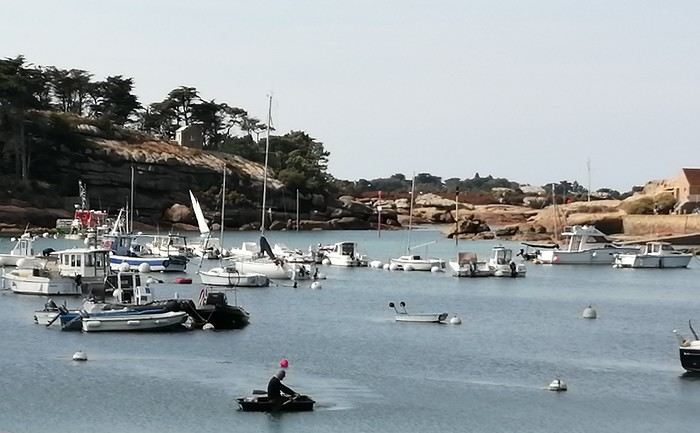
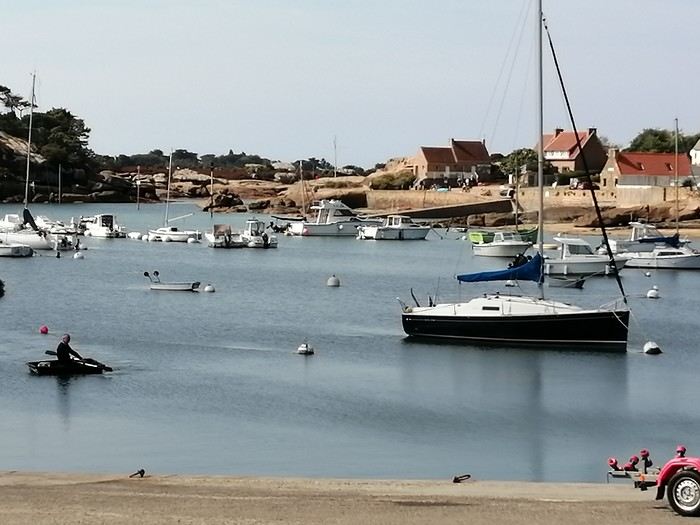
Our first walk, our first hike along the coastal path, and our first photos of these massive rocks bathed in light.
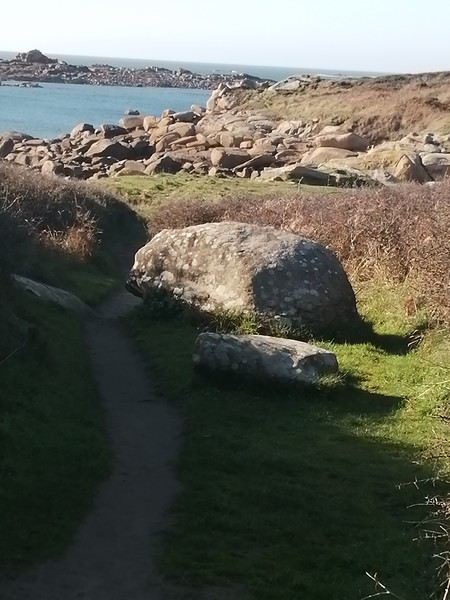
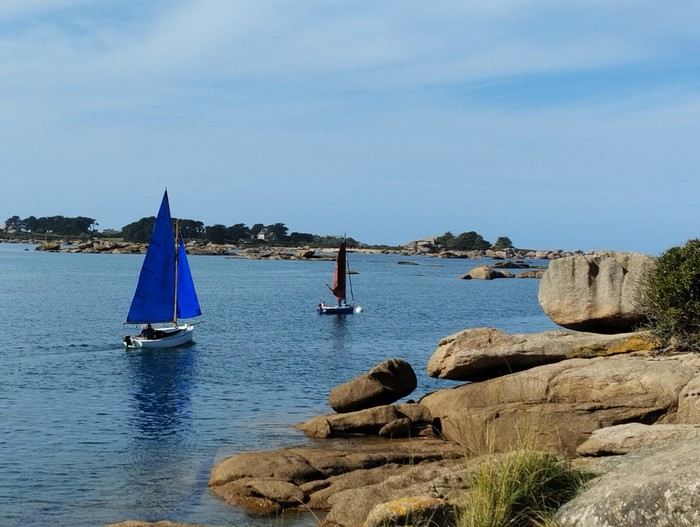
The views change with every turn, and so do the surprises—especially the view of the Château de Costaérès.
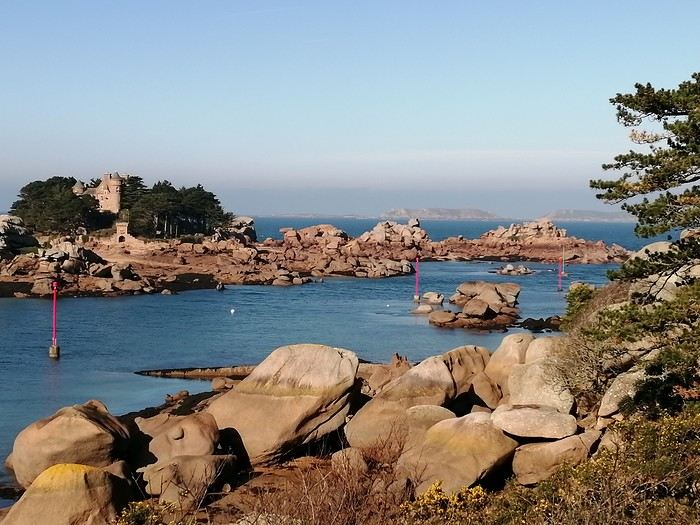
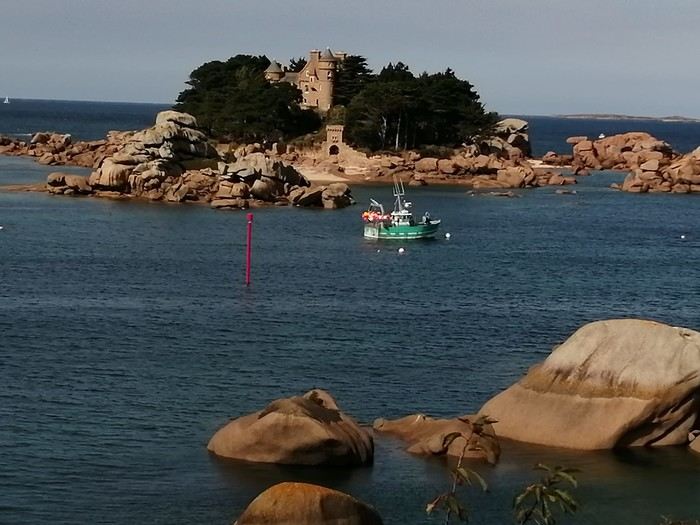 The path through the woods leads us to the Chapel of Saint Guirec, which overlooks the beach.
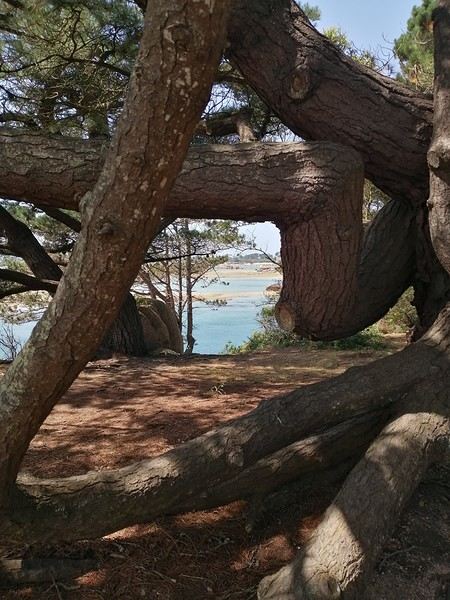
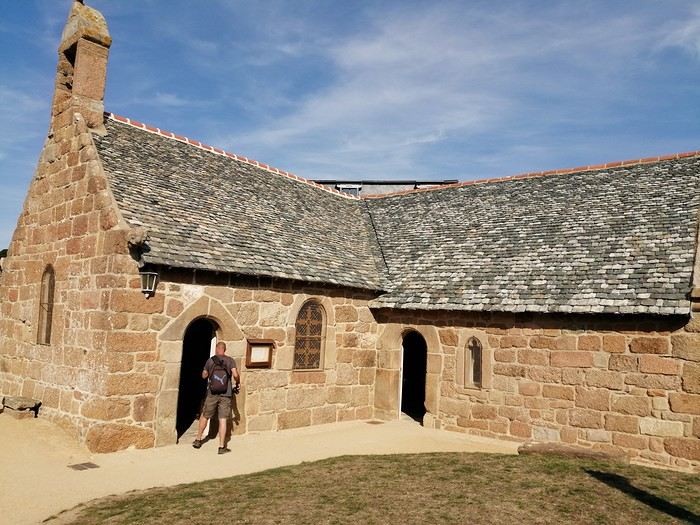
This pretty little beach is famous for its oratory, which sits in the middle of the sand and houses the statue of St. Guirec. In the past, young women hoping to marry within the year would often pray to him—they’d stick a needle into his nose! Today, the statue is made of stone, but back then, it was wooden, which must’ve made it easier.
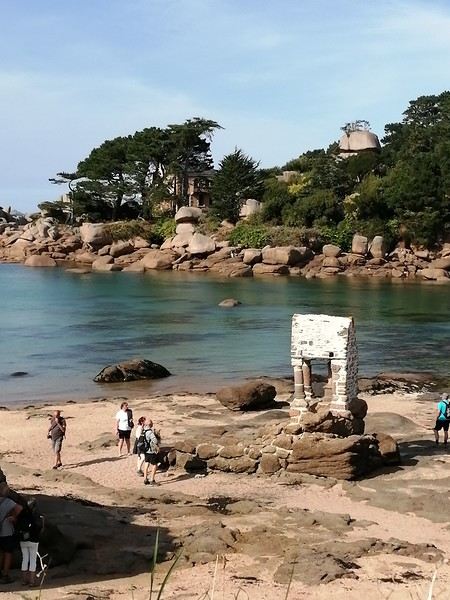
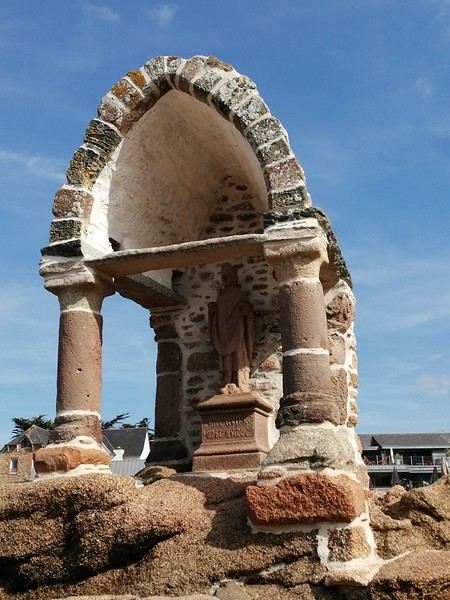
It’s really charming, well-sheltered, and the water is crystal clear. We noticed that everywhere we went!
Our first trip to the coast was to Ploumanac’h, a small village we discovered thanks to Stéphane Bern’s show. It’s an adorable little fishing port where we parked the car before continuing on foot along the sea. It’s charming—more than that, it’s magical!
Our first walk, our first hike along the coastal path, and our first photos of these massive rocks bathed in light.
The views change with every turn, and so do the surprises—especially the view of the Château de Costaérès.
The path through the woods leads us to the Chapel of Saint Guirec, which overlooks the beach.This pretty little beach is famous for its oratory, which sits in the middle of the sand and houses the statue of St. Guirec. In the past, young women hoping to marry within the year would often pray to him—they’d stick a needle into his nose! Today, the statue is made of stone, but back then, it was wooden, which must’ve made it easier.
It’s really charming, well-sheltered, and the water is crystal clear. We noticed that everywhere we went!
Terrible experience at MMV Arêches-Beaufort – bed bugs + total disregard
Hi everyone,
I’m posting this as a not-so-pleasant experience, but one I think is important to share.
We stayed at MMV Arêches-Beaufort at the end of June 2025 (from the 21st to the 28th), in room 317, as a family with our young daughter.
Everything was fine until the night of June 25th to 26th, when we discovered a bed bug infestation right next to our bedhead. We’d already slept 4 nights in that infested room without noticing anything. Needless to say, the shock was huge, especially with a little one.
MMV offered to relocate us, but by that point, trust was completely broken. The rest of the stay was spent in constant stress: disinfecting, isolating our belongings, and worrying about bringing these pests home with us.
They refunded our stay (which was the least they could do), but they’d also promised compensation of 150 €, which was never paid. Since then, no news at all. We felt erased, ignored, and not taken seriously.
I’m sharing this not to stir up controversy, but to warn other travelers. We thought we were staying in a reliable residence with responsive customer service—it wasn’t the case.
I’m genuinely wondering: Am I an isolated case with MMV? Have others experienced similar situations (bed bugs or a lack of consideration when problems arise)?
Thanks to those who take the time to read this. And above all, be wary when everything seems "too good on paper."
I’m posting this as a not-so-pleasant experience, but one I think is important to share.
We stayed at MMV Arêches-Beaufort at the end of June 2025 (from the 21st to the 28th), in room 317, as a family with our young daughter.
Everything was fine until the night of June 25th to 26th, when we discovered a bed bug infestation right next to our bedhead. We’d already slept 4 nights in that infested room without noticing anything. Needless to say, the shock was huge, especially with a little one.
MMV offered to relocate us, but by that point, trust was completely broken. The rest of the stay was spent in constant stress: disinfecting, isolating our belongings, and worrying about bringing these pests home with us.
They refunded our stay (which was the least they could do), but they’d also promised compensation of 150 €, which was never paid. Since then, no news at all. We felt erased, ignored, and not taken seriously.
I’m sharing this not to stir up controversy, but to warn other travelers. We thought we were staying in a reliable residence with responsive customer service—it wasn’t the case.
I’m genuinely wondering: Am I an isolated case with MMV? Have others experienced similar situations (bed bugs or a lack of consideration when problems arise)?
Thanks to those who take the time to read this. And above all, be wary when everything seems "too good on paper."
Camping and homestays in Slovenia
We're planning to cycle through Slovenia on touring bikes from July 14th to August 14th. We're used to camping, but I get the feeling there are large areas without campsites. Is wild camping allowed? If not, is it easy to stay with locals?
Could you tell me about the must-see spots in Slovenia? I'm thinking of finishing in Istria, at a seaside campsite to relax and enjoy the sea. Is it pretty quiet there?
Thanks so much, Mireille.
Could you tell me about the must-see spots in Slovenia? I'm thinking of finishing in Istria, at a seaside campsite to relax and enjoy the sea. Is it pretty quiet there?
Thanks so much, Mireille.
A Series: June 2025 Photo Contest Theme
The theme for June is: A SERIES
"A series is a set of coherent images that share several common points while still being different from one another."
In 3 photos, posted simultaneously in the same message, I’d like you to tell me a little story with a few words. You’re allowed 2 series.
They can be narrative or thematic. For example: 3 shots representing 3 professions, 3 places of worship, 3 market stalls, 3 trains... the ideas are endless—whether in the same place or in different countries... or 3 images of the same place, photographed from 3 different angles, under 3 different lights... or 3 images where the predominant color is the same... Narrative and theme can, of course, overlap.
Practical details:
Participation Each VF member can submit up to 2 series, until Saturday, June 21 at 11:59 PM Paris time. Each series of 3 photos must be presented in a single message, with its number indicated (series 1, series 2).
Voting: Each VF member can vote for the 3 series they consider the best, based on their own criteria and the theme.
Voting will take place from Saturday, June 21 at midnight until Saturday, June 28 at 11:59 PM Paris time.
The selected series will be ranked in order of preference: - 1st series: 3 points - 2nd: 2 points - 3rd: 1 point
The winner is the author of the series with the most points.
Results will be published on June 29 during the day. In case of a tie, the number of first-place votes will decide. The winner will have the honor of organizing July 2025’s contest.
Photos that have won (1st, 2nd, or 3rd place) in another VF contest are not eligible for this one.
This thread is exclusively for series submitted to the contest. All discussions, comments, and other chatter should take place in this thread.
...................................................................
Narrative: In Bali, I took a cooking class. We went to the market to shop with the teacher. We cleaned and prepped the ingredients to make, among other things, a lovely salad.
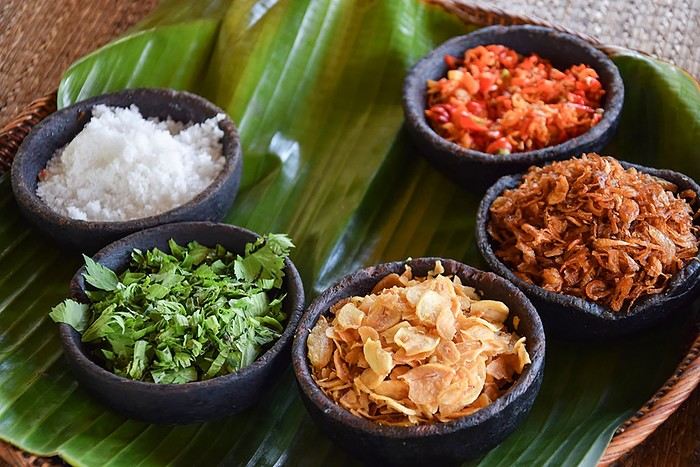
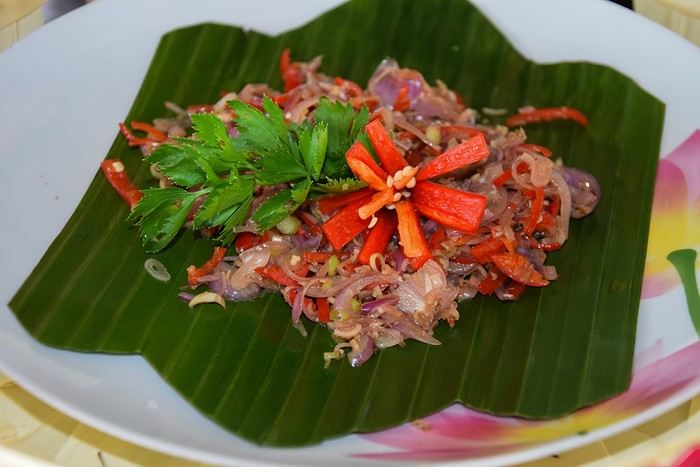
...........................................................................
Narrative and thematic: I really loved this place 30 km from Essaouira. A little souk "just as it is," as they say. The souk of Ida Ougourd.
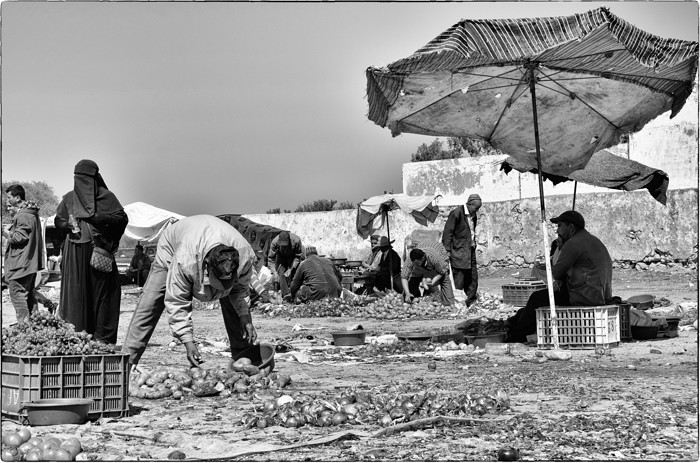
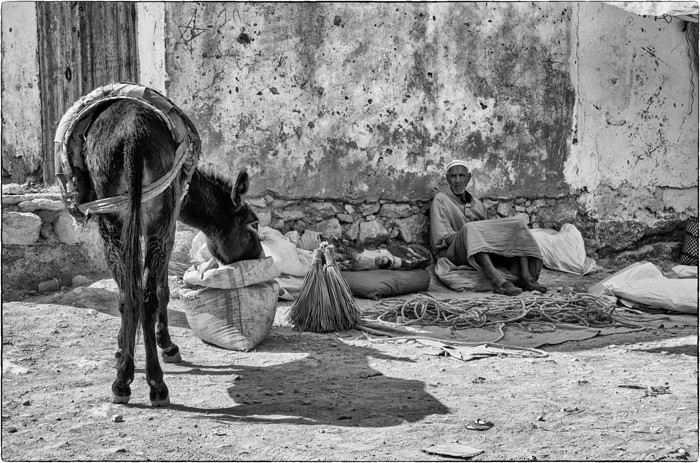
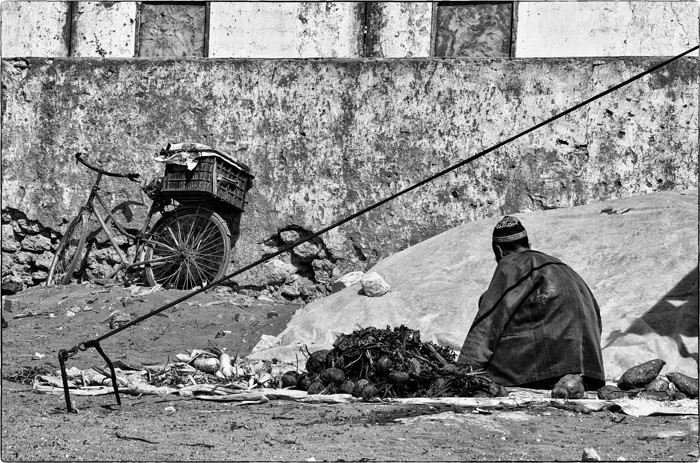
...........................................................................
Thematic: Green in nature. The green of tea plantations in Munnar, a bamboo forest in Les Landes, and a park in Tokyo.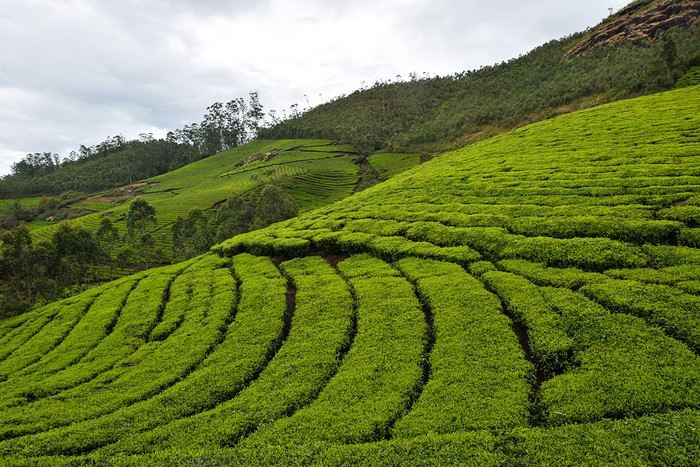
In 3 photos, posted simultaneously in the same message, I’d like you to tell me a little story with a few words. You’re allowed 2 series.
They can be narrative or thematic. For example: 3 shots representing 3 professions, 3 places of worship, 3 market stalls, 3 trains... the ideas are endless—whether in the same place or in different countries... or 3 images of the same place, photographed from 3 different angles, under 3 different lights... or 3 images where the predominant color is the same... Narrative and theme can, of course, overlap.
Practical details:
Participation Each VF member can submit up to 2 series, until Saturday, June 21 at 11:59 PM Paris time. Each series of 3 photos must be presented in a single message, with its number indicated (series 1, series 2).
Voting: Each VF member can vote for the 3 series they consider the best, based on their own criteria and the theme.
Voting will take place from Saturday, June 21 at midnight until Saturday, June 28 at 11:59 PM Paris time.
The selected series will be ranked in order of preference: - 1st series: 3 points - 2nd: 2 points - 3rd: 1 point
The winner is the author of the series with the most points.
Results will be published on June 29 during the day. In case of a tie, the number of first-place votes will decide. The winner will have the honor of organizing July 2025’s contest.
Photos that have won (1st, 2nd, or 3rd place) in another VF contest are not eligible for this one.
This thread is exclusively for series submitted to the contest. All discussions, comments, and other chatter should take place in this thread.
...................................................................
Narrative: In Bali, I took a cooking class. We went to the market to shop with the teacher. We cleaned and prepped the ingredients to make, among other things, a lovely salad.
...........................................................................
Narrative and thematic: I really loved this place 30 km from Essaouira. A little souk "just as it is," as they say. The souk of Ida Ougourd.
...........................................................................
Thematic: Green in nature. The green of tea plantations in Munnar, a bamboo forest in Les Landes, and a park in Tokyo.
Hiking the "Jordan Trail" without a guide
Hi there.
Is it legally possible to do this hike without a guide?
Thanks.