Results for "taxi"
72591 results found.
Limousines à l'aéroport de Las Vegas? English translation pending
j'aimerai savoir si des limousines attendent à l'aéroport de las- vegas comme les taxis sans être commandée d'avance , merci pour la ou les réponses.
Gran Bahia Principe Akumal en mars 2010 English translation pending
Bonjour , je vais me rendre a cet hôtel en mars prochain. J'ai lu sur plusieurs forum qu'il existe des taxis en collectivité qui ne coute pas trop cher et qui peuvent nous apporter soit au ruine de Tulum, Playa del Carmen ou bien aller nager avec les tortues sur la plage Akumal non loin de l'hôtel.
Mes questions c'est le prix pour y aller et surtout quel sont les moyens de transport pour le retour? Est-ce plus avantagé de louer une voiture à l'hôtel ? Je me débrouille très bien en espagnol donc la barrière de langue n'est pas un problème.
Je n'ai pas pris l'option Golden mais seulement un chambre Standard est-ce qu'il y a une grande différence ?
Mes questions c'est le prix pour y aller et surtout quel sont les moyens de transport pour le retour? Est-ce plus avantagé de louer une voiture à l'hôtel ? Je me débrouille très bien en espagnol donc la barrière de langue n'est pas un problème.
Je n'ai pas pris l'option Golden mais seulement un chambre Standard est-ce qu'il y a une grande différence ?
Transports dans le Xinjiang? (Chine) English translation pending
Bonjour
Je souhaiterais savoir quels sont les moyens de transports au Xinjiang, notament autour du Taklamakan. Y a t il des taxis collectifs frequents sur les grands axes, ou seulement des bus? Le reseau ferré est existant au nord du désert, mais quel est son état et sa vitesse de progression?
Merci de vos réponses!
Yoann
Temps requis pour sortir de l'aéroport d'Orly? English translation pending
Combien de temps environ faut-il compter environ à Orly pour passer les formalités, récupérer nos bagages et se rendre aux taxis.
Si nous comptons 1 hre. est-ce que c'est raisonnable?
Si nous comptons 1 hre. est-ce que c'est raisonnable?
Temps de trajet et moyens de locomotion a partir d'Oulan Bator? English translation pending
Salut
j'arrive en Mongolie par le transsi et je voulez partir direction arvayheer, il y a t-il des taxis qui vont dans cette direction? Si oui en combien de temps et pour combien environ d'argent en gros,
et est il possible de récupérer un de ces fameux taxis a arvayheer ou un bus pour rejoindre mandalgovi, pour ensuite récupérer vers l'est la voie ferrée qui va vers la frontière chinoise .
Sur une carte au niveau de la ville d'arvayheer on voit que la route va au nord puis vers le sud pour rejoindre mandalgovi, rejoindre a pieds ces deux villes en partant directement vers l'est au départ arvayheer prend combien de temps ?
en gros, vous l'aurez compris, je n'ai qu'une petite quinzaine de jours avant de passer en chine, et je voulez savoir si avec les transports etc etc, je pouvez m'aventurer un peu a l'ouest d'oulan pour profitez des paysages de ce magnifique pays
Merci d'avance pour vos réponse...😕😉
Navette de Lille pour l'aéroport de Roissy? English translation pending
Je recherche une navette qui pourrait m'emmener de lille à l'aéroport de roissy ; je sais que les taxis belges sont moins chers ; auriez vous des adresses ? merci;
Afrique de l'Ouest au départ du Maroc, où voir des animaux? English translation pending
je serai au maroc fin novembre
j aimerai aller en afrique de l ouest
par la route avec transports bus et taxis
ou y a t il des mammiferes? pas comparable avec kenya mais il parait que parc du w au niger est bien
comment y aller du maroc? mauritanie? nouakchot?et puis? mali-bamako? bourkina- ouaga? puis niamey? ca prend combien de temps? me coutera combien? puis retour par une autre route pour changer? ou prendre avion niamey - casablanca? coute combien?
sino niokolo koba senegal? mais le w au niger est mieux? (et ca me fait voir plus de pays)
merci
Circuler en métro à Rio de Janeiro English translation pending
Bonsoir 🙂
J'ai épluché tous les post concernant Rio sur VF (si si !!!) et pour les déplacements on ne parle que de taxis ou de bus et quasiment jamais du métro. Y-a-t'il une raison à cela ? N'est-ce pas un moyen de transport pratique pour la visite de la ville ?
Merci pour vos avis !!!
Stef
J'ai épluché tous les post concernant Rio sur VF (si si !!!) et pour les déplacements on ne parle que de taxis ou de bus et quasiment jamais du métro. Y-a-t'il une raison à cela ? N'est-ce pas un moyen de transport pratique pour la visite de la ville ?
Merci pour vos avis !!!
Stef
Qui connait ce coin sur Siam square à Bangkok? English translation pending
food stall a Siam square : qui connait le coin / quelle rue ? / comment formuler a un taximan ?
http://www.revver.com/video/270636/siam-square-food-stalls-bangkok-thailand/
merci
http://www.revver.com/video/270636/siam-square-food-stalls-bangkok-thailand/
merci
Bangkok-Pattaya en bateau/ferry? (Thaïlande) English translation pending
Bonjour à tous,
M'étant renseigné, j'ai compris qu'il y avait pour aller de Bangkok à Pattaya : les taxis et bus de toutes sortes, le train...
Et le bateau ? 🙂 En effet, les deux villes sont sur la côte...
Quelqu'un connaitrait-il un service de ferry ou autre moyen de transport nautique (pas trop long quand même) entre les deux villes ?
Amoureux de la Thaïlande, merci d'avance pour vos réponses ! 😊
Cordialement,
M'étant renseigné, j'ai compris qu'il y avait pour aller de Bangkok à Pattaya : les taxis et bus de toutes sortes, le train...
Et le bateau ? 🙂 En effet, les deux villes sont sur la côte...
Quelqu'un connaitrait-il un service de ferry ou autre moyen de transport nautique (pas trop long quand même) entre les deux villes ?
Amoureux de la Thaïlande, merci d'avance pour vos réponses ! 😊
Cordialement,
Risques de paludisme en Bolivie? English translation pending
Hola viajero/as!!
Je suis actuellement a Cochabamba (ou plus precisement a Punata, coince entre deux bloqueos de taxistas!!!). Je souhaite des que possible me rendre dans le Chapare, du cote de Villa Tunari, et peut etre poursuivre ensuite vers l'oriente et Santa Cruz avant de me rendre dans le Beni.
G emporte dans ma trousse a pharma d'occidental hypocondriaque qlq comprime de malarone contre le paludisme. Mais etant donne la duree aleatoire de mon passage dans ces zones, je ne sais pas si cela sera suffisant. Qulequ'un(e) peut il/elle m'informer sur les risques de transmission du paludisme dans ses differentes regions??
Suerte amigo/as y buenos viajes!! Mateo
Je suis actuellement a Cochabamba (ou plus precisement a Punata, coince entre deux bloqueos de taxistas!!!). Je souhaite des que possible me rendre dans le Chapare, du cote de Villa Tunari, et peut etre poursuivre ensuite vers l'oriente et Santa Cruz avant de me rendre dans le Beni.
G emporte dans ma trousse a pharma d'occidental hypocondriaque qlq comprime de malarone contre le paludisme. Mais etant donne la duree aleatoire de mon passage dans ces zones, je ne sais pas si cela sera suffisant. Qulequ'un(e) peut il/elle m'informer sur les risques de transmission du paludisme dans ses differentes regions??
Suerte amigo/as y buenos viajes!! Mateo
Bus de la station de train Nérang Gold Coast à Surfers Paradise? (Australie) English translation pending
bonjour,
nous allons prendre le train brisbane - nérang
est ce qu'il existe des bus ou des taxis qui emmènent jusqu'à surfers paradise de la station de train nérang qui est à 10 kms de surfers paradise?
PS: les trains sont ils confortables?
nous allons prendre le train brisbane - nérang
est ce qu'il existe des bus ou des taxis qui emmènent jusqu'à surfers paradise de la station de train nérang qui est à 10 kms de surfers paradise?
PS: les trains sont ils confortables?
Déplacements en Syrie English translation pending
Bonjour,
je pars en Syrie dans 2 semaines je compte surtout utiliser les transports en commun mais aussi louer des taxis pour faire des excursions sur une ou une demi journée ( nous serons 3 )
Quelqu'un a-til une idée des prix pratiqués
Merci 🙂
Déplacements en Inde English translation pending
Bonjour, quelqu'un peut il me dire s'il est facile à partir de Leh, de trouver des touristes pour partager des taxis, jeep, et repartir vers Manali, puis d'autres villes (Dharamsala, ...), etant seul et sans l'organiser à l'avance. Je pars dans 3 semaines pour la premiere fois en Inde. Pour revenir vers Dehli ensuite, meme question avec en plus quels sont les moyens de transport à eviter, quel est le delais pour avoir des billets de train a Pathankot, et les taxis collectifs? Plein de questions pour essayer de ne pas trop perdre de temps en allant vers Delhi et ne pas manquer mon avion retour, donc merci de partager votre expérience.
Odo
Current Situation and Atmosphere in the Middle East Due to the War
Hello,
I’m planning to leave on April 27th for Bangkok via AF (Air France), direct flight. We’re quite familiar with this destination (we’ve been there about a dozen times).
My question is: what’s the current situation and atmosphere like there? Is it easy to get around—taxis, buses, flights, etc.?
I know there’s always a gap between what the articles and French TV news say and the reality on the ground.
Thanks in advance!
From Mexico to the Wonderful Chiapas
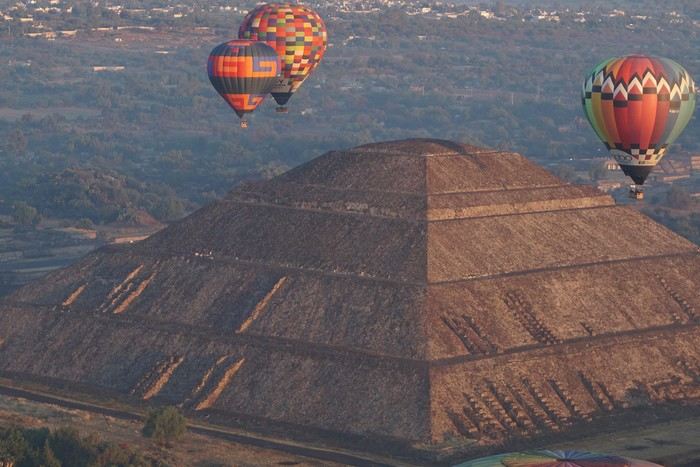
This one-month trip, from January 18 to February 17, 2026, allowed us to visit Mexico City and travel through the states of Puebla, Oaxaca, and Chiapas. We mainly used buses (ADO company) for medium and long distances and colectivos or taxis (or Uber) for shorter trips. Before leaving, I had contacted several people on the ground: Harry, a Vendéan settled in Oaxaca offering, among other things, discoveries of artisan villages or the Monte Albán site, and Oscar in Comitán de Domínguez. I’ll come back to our meeting with Oscar, who runs a local agency (CVL Travel Turismo Alternativo & Corre la voz) and owns a very pleasant hostel, a real highlight of our trip. Our journey took place in 8 stages on a loop starting from Mexico City. The connections between each were made by day or night buses depending on the trip duration. I had booked our seats in advance, either directly on the ADO company’s website or through booking platforms depending on the rates offered. Note that by planning ahead, I was able to benefit from very interesting "Early Booking" rates. There are several comfort classes. For all our trips, I had booked seats in Primera class buses, except for two in GL (Grand Luxe) class. The rates are very reasonable, and the buses turned out to be comfortable or even very comfortable (only the basic seat recline might surprise you).
Our itinerary and number of days per stage: Stage 1 – Mexico City: 4 days Stage 2 – Puebla: 2 days Stage 3 – Oaxaca: 4 days Stage 4 – San Agustinillo: 4 days Stage 5 – San Cristóbal de las Casas: 3 days Stage 6 – Comitán de Domínguez: 6 days Stage 7 – Palenque: 4 days Stage 8 – Mexico City: 2 days If I were to do it again, I’d remove one day from Palenque and add it either to Puebla or San Cristóbal to visit nearby sites or villages, or to San Agustinillo to enjoy one more day by the Pacific Ocean.
Stage 1: Mexico City (2,200 m / 9.2 million inhabitants) We arrived in the Mexican capital around 10:00 PM. The simplified customs process was very quick. After exchanging some money at the airport, we took a taxi to our youth hostel. We got around the capital on foot, of course, but also by metro. Signs are very rare, and we took the train in the wrong direction several times. After a few mistakes, we systematically asked on the platform if we were going the right way. The metro is very affordable. You need to get a rechargeable card (the Tarjeta de Movilidad Integrada) and top it up as needed. This card (less than 1 €) isn’t personal, so there’s no need to get one per person.
Mexico City: Day 1.
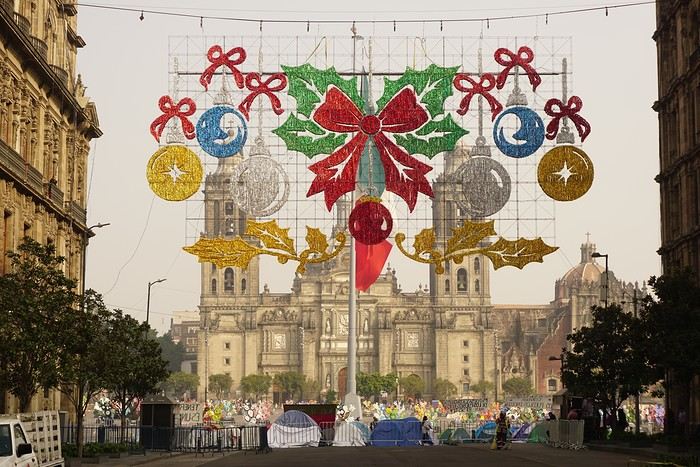
Visits and walks of the day (note: many museums are closed on Mondays): The Zócalo or Constitution Square: it’s one of the most beautiful, largest (195m x 240m), and oldest squares in the world. This is where Cortés decided to build the center of the new Spanish city on the site of the former Tenochtitlan market. Stones from the pyramids were used to pave the esplanade and build the surrounding colonial churches and buildings. During our visit, the huge square was covered with (resin) cacti, the theme of the temporary exhibition at the time. Indeed, temporary events or exhibitions take place here throughout the year. It’s also the endpoint for many protest marches.
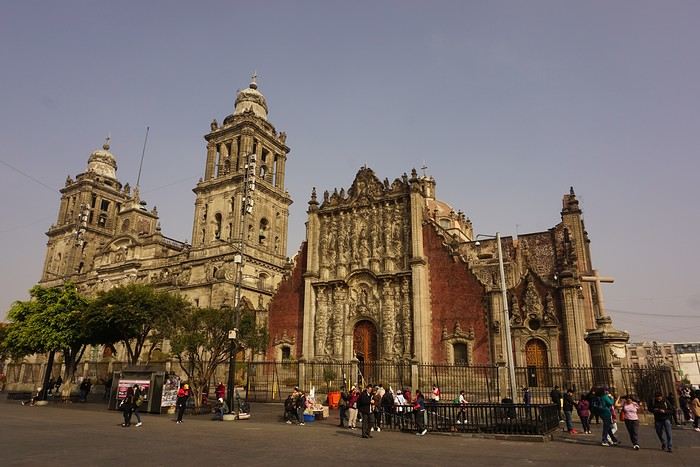
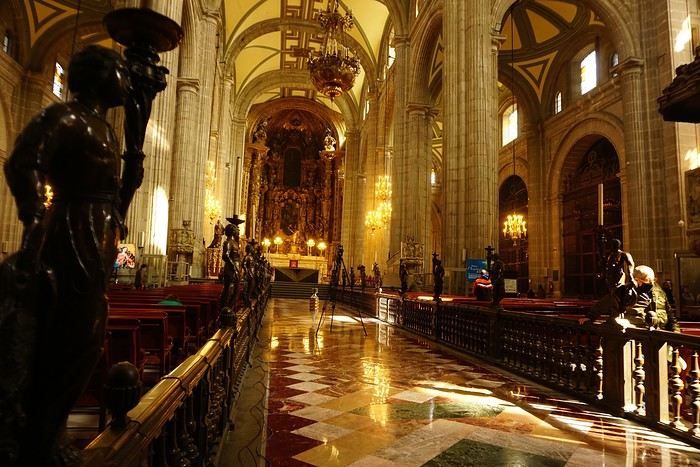


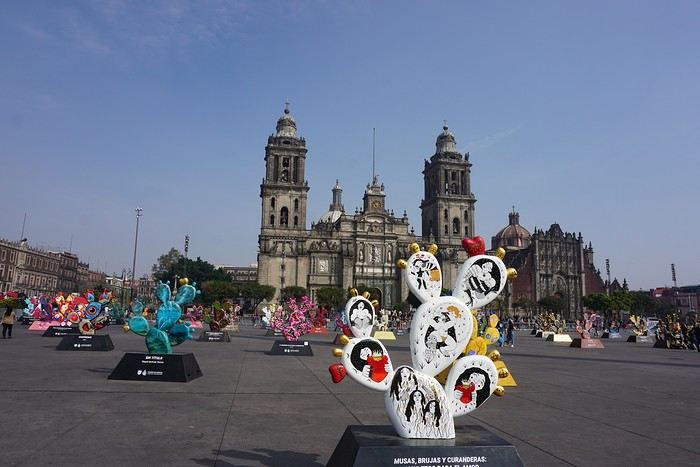
The cathedral: it’s sinking by one centimeter per year despite massive stabilization work (the collapse of many Mexican buildings—30 cm/year—is due to groundwater pumping). It was built starting in 1571 and completed in... 1813. The modest remains of the Templo Mayor (exterior view): they have high symbolic value, as this monument was the most important in the Mexica Empire.
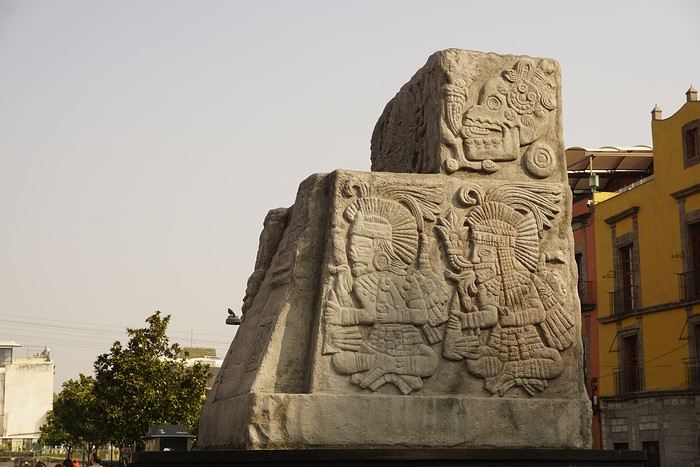 We then walked through the streets of the historic center to the Santísima Church, unfortunately closed for renovation work.
Next, we took the metro to visit one of Mexico’s most important pilgrimage sites: the Insigne y Nacional Basílicas de Santa María de Guadalupe, as well as the Capilla del Cerrito on the hill.
The first, dating from the colonial era, is really leaning a lot.
We then walked through the streets of the historic center to the Santísima Church, unfortunately closed for renovation work.
Next, we took the metro to visit one of Mexico’s most important pilgrimage sites: the Insigne y Nacional Basílicas de Santa María de Guadalupe, as well as the Capilla del Cerrito on the hill.
The first, dating from the colonial era, is really leaning a lot.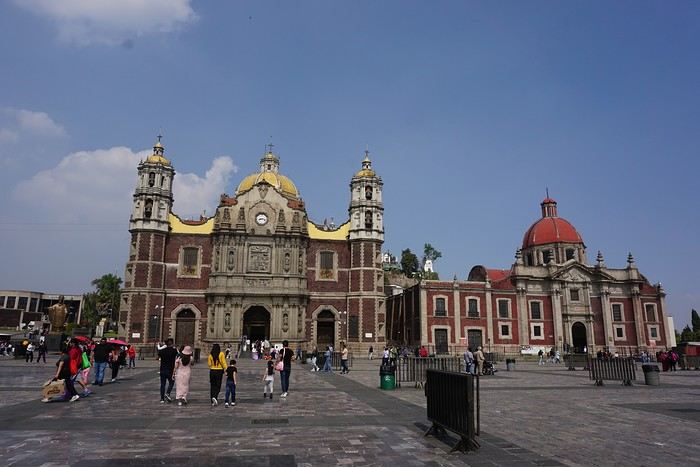
The second, shaped like a rotunda, is very impressive from the inside.
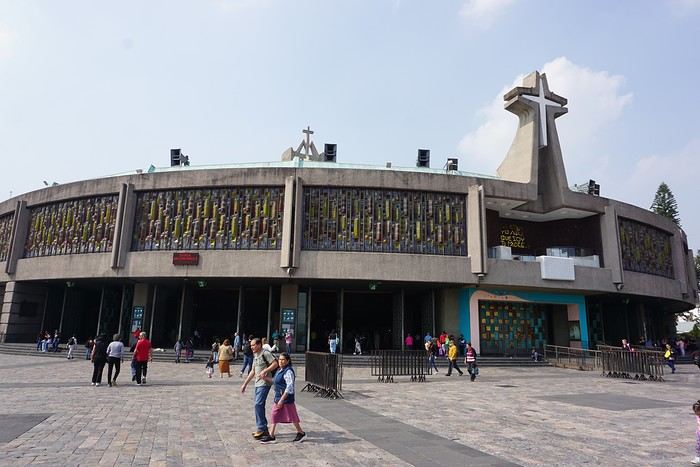
In the basement, there’s a sacred tunic where, in 1531, an image of the Virgin Mary is said to have appeared. A real mystery for scientists, the garment has never deteriorated since that date. Slow-moving conveyor belts allow pilgrims to admire it, preventing crowds from gathering in front of the image for hours. Well thought out!
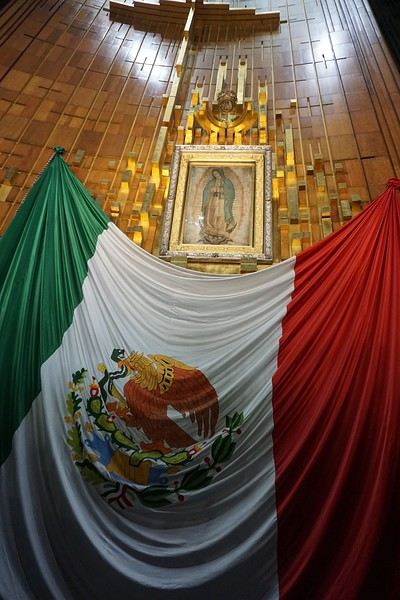 From the top of the Capilla del Cerrito, you get beautiful views of huge Mexico City.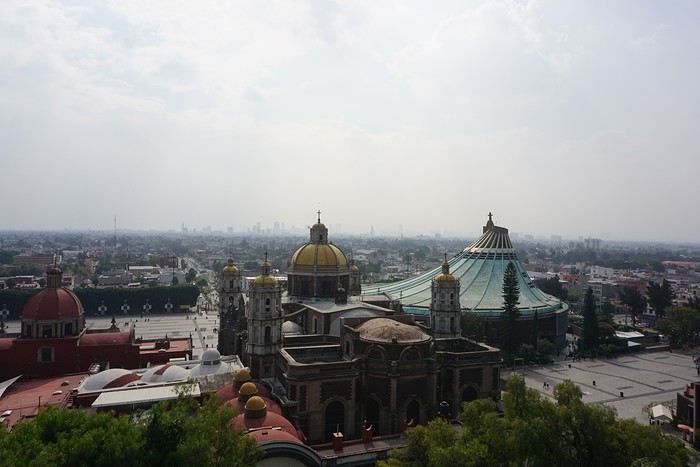
Santo Antão: organizing luggage transfer
Hi,
Without booking in advance through an agency, is it possible/easy to organize luggage transfer from one night to the next between accommodations in Santo Antão?
Thanks.
4 days in Agadir
Hi everyone,
Third trip to Morocco. For a 4-day getaway, we’ve chosen Agadir in early March. I’m looking for advice on where to stay, while being close to the city center and the seaside. Riad? Apartment? Any recommendations?
We’re landing in Agadir, so I assume we’ll need to take a taxi—anyone have a particular one to recommend? Also, we’d like to do a quad bike outing—any agencies you’d suggest? Thanks for your replies!
Florence and Bruno PS: We’re planning a 10-day road trip at the end of May/beginning of June to explore northern Morocco
We’re landing in Agadir, so I assume we’ll need to take a taxi—anyone have a particular one to recommend? Also, we’d like to do a quad bike outing—any agencies you’d suggest? Thanks for your replies!
Florence and Bruno PS: We’re planning a 10-day road trip at the end of May/beginning of June to explore northern Morocco
Nepal Feedback
NAMASTE NEPAL! PRACTICAL INFO AND EXPERIENCE FEEDBACK
Stay from March 25 to April 16, 2025
· Flight tickets Air India (via Delhi) (via Skyscanner) = 1130 € per person · Planned budget (and respected without too many restrictions and while buying a few small gifts) = 2000 € for the stay for two. Buses, taxis, and entrance fees to various sites represent a budget to consider. Meals are cheap. Drinks like beer/Coke, however, are not cheap and cost the equivalent of a meal. · Exchange rate of the rupee during our stay = 0.0064 € (the exchange rate is almost identical everywhere, including at the airport). · At the airport, purchase of two SIM cards (phone) = 1000 NPR x 2 for 28 days. · Kathmandu: we had booked the hotel upon arrival: Kathmandu Boutique Hotel (+977 015 357 446 – email: booking@kathmanduboutiquehotel.com), very well located in a quiet alley off the street, south of Thamel, a 10-minute walk from Durbar Square. A hotel like Nepal knows how to do, where tall people will have to duck. Night + breakfast = 18 € for two. Very warm welcome, great location, excellent value for money. · Bhaktapur: we had also booked a hotel for the end of our stay because the chance of the year 2025 made the Nepali New Year and Bisket Jatra particularly festive in Bhaktapur: Manju Baha Hotel School (+977 976 7234014 – email: manjubahahotel@gmail.com) located in an old monastery. "A social enterprise transforming an old monastery into a charming hotel, offering professional hospitality training to underprivileged Nepali youth." Night + breakfast = 32 € for two. Beautifully decorated room. Very warm welcome. Don’t miss the Changunarayan site (near Bhaktapur), it’s amazing. And if you’re lucky enough to be in Bhaktapur in mid-April for 3 days, there’s the Bisket Jatra festivities (Newari festival), joyful, noisy, fun, and wild… · Pokhara (hotel recommended by the Kathmandu hotel): Hotel Green Tara, Lakeside, 10th street, set back, quiet (Tel. +977 61 462698 – email: greentara_67@hotmail.com) · Trek permit (Lower Mustang, no need for an agency or guide, permits checked at Ghasa and Jomsom) = 2000 NPR per person (2 ID photos) · Bus Kathmandu/Pokhara and return = 2000 NPR per person · Bus Pokhara/Jomsom, 2 one-way tickets = 2800 NPR. · Taxi: negotiation with a driver we recommend, Vicky (+977 984 075 599). You explain what you want, negotiate the price, and he waits for you during the visit. Very charming, we used him several times. For example: departure from our hotel at 10 AM -> Boudhanath/Pashupatinath/Patan return at 5 PM to the hotel = 6500 NPR – Swayambhunath (round trip) = 1200 NPR · Site prices: https://ntb.gov.np/plan-your-trip/before-you-come/heritage-site-entry-fees o Visitor Pass for Kathmandu Durbar Square (for the duration of the stay, show your visa) = 1000 NPR per person (1 ID photo) o Bhaktapur Durbar Square (old town) = 1800 NPR per person o Patan = 1000 NPR per person o Swayambhu Stupa = 200 NPR per person o Boudha Stupa = 200 NPR per person o Pashupatinath Temple = 1000 NPR per person (interesting to take a guide) o Changunarayan Temple (6 km north of Bhaktapur) = 400 NPR per person o Mountain Museum in Pokhara = 750 NPR per person · E-cigarettes: e-cigarettes are banned in India and confiscated whether they’re in carry-on or checked luggage. On the way there, we had kept them in our carry-on, they were confiscated in Delhi. On the way back, learning from our previous experience, we put them in our checked luggage. Someone came to get us to take them out of our bags and confiscate them… You can find e-cigarettes and products in Kathmandu.
* * *
I’m 74 years old. I went to Nepal in 1982, 1983, and the last time in 1986. I wanted to introduce this beautiful and endearing country to my husband, and it was… now or never. So we decided it was now.
I knew the trek starting from Pokhara: Naudanda/Birethanti/Ghorepani/Tatopani/Kalopani. There was no way I was going to do that trek, especially the 1000-meter staircase to reach Ghorepani… You have to stay humble with age.
Back then, the road didn’t exist. I didn’t consider, with the construction of this road (NH48) along the western bank of the Kali Gandaki, doing a trek along a windy and dusty road. Was there an alternative hiking trail on the eastern bank? No one answered my question on VoyageForum, so I did my research online. And I found this site: "Andrées de Ruiter and Prem Rai - Trekking the Annapurna Circuit, including the new NATT trails that avoid the road - A guide to one of the most beautiful trekking regions in Nepal and the world (2011) - NATT = New Annapurna Trekking Trail".
Phew! A solution was emerging. This circuit from 2011 wasn’t fully marked. The idea was to go from Jomsom to Tatopani, so we needed to make sure the path was well-marked all the way, which we did, and the path exists, marked in red and white!
So, with the walking times information, we built our 8-day circuit:
· Jomsom/Thinigaon · Thinigaon/Chimang · Chimang/Saura · Saura/Kokhetanti · Rest day or, if in good shape: loop to Sekong Lake · Kokhetanti/Jhipra Deurali · Jhipra Deurali/Kopchepani · Kopchepani/Tatopani
It’s a senior trek, after all. So the walking times noted on the sites indicated 3 hours or even 4 hours for the two longest stages. That pace suited us fine.
On March 29, we left Kathmandu (1400m), after visiting the must-see sites, by bus to Pokhara: 200 km and 8.5 hours on a chaotic road under construction. I had a memory of Pokhara where it was the first city where you could see the Himalayan range, especially Machhapuchhare. But the pollution is such, the dust raised by traffic and construction, that no horizon is visible except the first hills around Pokhara.
We stayed 24 hours in Pokhara (820m), and on March 31, we left our luggage at the hotel and set off with our lightest backpacks: change of clothes, toiletries, first aid kit, anti-chafing cream, water bottle, sleeping bag liner, and light shoes for the stages.
We took the bus to Jomsom: 160 km/7.5 hours including stops for bathroom breaks, tea, and lunch. The road is nothing but a chaos of potholes, landslides, construction, dust, rebuilding, and mudslides. In Ghasa, the bus stops, and we’re told we’re at a checkpoint and that the two foreigners in the bus, my husband and I, need to have our permits checked, which takes a few minutes. The driving is rock-and-roll, surprising, and courteous. The drivers have their codes, and on these improbable roads, they’re virtuosos.
We could have chosen the plane, but several reasons dissuaded us: if there’s too much wind, the planes don’t take off; personally, I wasn’t reassured about landing in Jomsom, and this transport has a cost.
We arrived around 2 PM in Jomsom (2720m), and despite the early wake-up, the nearly 8 hours on the bus, and the altitude, we decided to head straight to Thinigaon (2840m). At the Jomsom checkpoint, they told us it was a 30-minute walk. Great! Except we took an hour and a half on an uphill road, bent over to fight a strong wind. But the Himalayan range is there! The Dhaulagiri, the Nilgiri, the Annapurnas as a reward.
In Thinigaon, we found a room at the "Nilgiri View Hotel" run by a didi (big sister in Nepali). From the lodge’s roof, she proudly showed us the different peaks surrounding the village and told us, worried, that it hadn’t snowed here for 3 years. She said there are very few tourists, that the season is rather in September/October/November. It seems there’s not a soul in this village, yet mules pass through the narrow street paved with large flat stones, their bells ringing. We dine at 6 PM and go to bed… Room = 1200 NPR and dinner, breakfast, and drinks = 2560 NPR.
On April 1, we set off at 9 AM, not for Chimang as planned but for Marpha! The didi from the Thinigaon lodge had said it was a 3-hour walk. The first part of this stage is attractive, the mountains are magnificent and imposing, the landscape is superb, there’s no one around, a feeling of being "alone in the world." We follow Dhumbra Tal, this small green lake. The path is a rocky track that climbs steeply. Then, around a hill, we start the big descent that joins the Kali Gandaki. We face the wind head-on, and the violent gusts take our breath away, throw us off balance, and envelop us in dust. We see the road on the other side of the Kali Gandaki. We arrive in the village of Chhairo at 2 PM, completely exhausted and with blistered feet, after 5 hours of walking instead of the planned 3.5 hours.
We’re welcomed by the village nurse, who tells us there’s a lodge in the village. Chhairo is a Tibetan village, a 20-minute walk from Marpha (according to the locals, multiply by 2 or even 3 for us…). We’re going to revise our trek plan and, first of all, spend the night in Chhairo.
The lodge is quite pleasant, and Karma, the hostess, is very friendly. She asks about our plans and suggests we stay in Chhairo the next day, from where we can visit Marpha and also Chimang, a 1-hour walk away, in light mode, meaning without backpacks. She invites us to participate in a village ceremony the next evening.
We immediately accept the proposal, as our feet need rest and the welcome is so warm… Dinner and bed!
We reworked our trek plan, which was too ambitious for our untrained bodies and, let’s face it… no longer in our first youth. In the initial plan, we thought there wouldn’t be too much elevation gain following the Kali Gandaki, but checking the map, we realize there might be significant elevation changes between Sauru and Sirkung. So we plan:
· Tomorrow: visit Marpha (2670m) and Chimang (2744m) · April 3: bus from Chhairo (2700m) to Kalopani (2530m) and continue on foot to Ghasa (2010m) · April 4: Ghasa/Pairataplo (1940m) · April 5: Pairatapla/Gadpar (1580m) · April 6: Gadpar/Narchyang (1510m) · April 7: Narchyang/Tatopani (1190m) · April 8: return to Pokhara.
Normally, it’s all downhill…
April 2, a rest day then… We set off in the morning to explore Marpha. We have to take a temporary bridge because the suspension bridge is closed due to road construction. We join the road and arrive in Marpha, a village famous for its apple orchards, brandy, cider, and apple juice production. This village is magnificent with its stone houses and monastery clinging to the hillside. The road construction spared it. There are people, but very few Western tourists.
We have lunch in Marpha and go back through Chhairo to take the path to Chimang. We cross a fragrant pine forest and find the rocky path; the landscape is splendid. We walk quietly, passing peaceful buffaloes and cows, and arrive at the foot of a stone staircase… 275 steps (which we counted on the way back) leading us to the village of Chimang. Chimang is an isolated Newari village that seems a bit desolate. Despite the slopes, there are crops on every little bit of land. Thankfully, we changed our initial program because there’s no lodge in this village, contrary to what we saw on a map… We wander through the village, which seems very deserted, have coffee in a house from another world, and then head back to Chhairo.
A rest day? = 5 hours of walking!!
Dinner and village ceremony. From what we understand, this ceremony is in honor of the Dalai Lama. Men, women, and children in traditional costumes gather twice a month; they dance, make, and offer small sweet cakes with Tibetan tea (made from tea, yak butter—often rancid—water, and salt). Surprising for first-timers…
Around 10 PM, we leave the ceremony; tomorrow morning, we need to be on the roadside by 7 AM to catch the bus to Kalopani…
This village of Chhairo is very pleasant and welcoming, no tourists, just two motorcyclists who arrived in the evening, one of whom participated in the ceremony and discreetly poured his Tibetan tea outside.
Lodge: "Norsang Tibetan Guesthouse and Restaurant". Total bill for 2 nights, 2 dinners, 2 breakfasts, and drinks = 8000 NPR.
April 3: bus from Chhairo to Kalopani, about 1.5 hours for the 20 km (200 NPR per person). We descend on the right bank of the Kali Gandaki. We find the red and white markings to resume the trek toward Ghasa. We’re in a fragrant pine forest, the Dhaulagiri on one side and the Annapurnas on the other, magnificent, and the path is pleasant and easy. We get a bit lost in this forest, always looking for the markings. Near Lete, two trekkers pass us, and we meet them again a little further on with two very young children, to whom we give the 2 hard-boiled eggs I didn’t eat this morning. They accepted them without hesitation.
We arrive in a village and ask for directions to Ghasa. The young girls point the way. But we come across a forest being logged, trees cut in all directions. We turn back and ask for confirmation. They confirm… But the two young girls catch up with us and clear the way. We have to step over, go around, and cross the felled trees, with no indication at all. Through this pick-up sticks of felled trees, the girls lead us to the top of a stone staircase, indicating that was the path. It’s the only place where we saw rhododendrons in bloom.
We descend the staircase. At the bottom, to the left, there’s a bridge to go toward Choyo, and to the right, a path to Ghasa. We take the right path and join the road. We should normally find the red and white markings, but we don’t… So we continue on the western bank road of the Kali Gandaki.
A little before the village of Misi, we see fumaroles on the opposite bank that seem to come from the ground. We don’t understand. We stopped to eat in the village of Misi (noodle soup = 600 NPR), but it’s hard to communicate with the elderly people running the guesthouse.
We continued on the road, not finding the marked path parallel to the road. Landslides, both on the left and right banks, seem to have taken over the marked routes. It’s a place where the Kali Gandaki gorge narrows, and on the opposite bank, the mountain smokes more and more, and we now hear the crackling of fire. Across from us, the mountain is burning… Our initial plan had us passing on that burning bank right now…
We arrive in Ghasa at 3:30 PM, a 6.5-hour stage but with a 1-hour stop at noon. We’re at the "Florida Guesthouse and Restaurant." From our room, we see the mountain smoking on the other side of the river, and at night, we see the flames. In this village, posters show Himalayan eagles and vultures that seem to be protected species. Indeed, we saw (and heard) 3 eagles circling today.
April 4 – Today, heading to Pairothapla or Kopchepani depending on our feet, accommodation options, and simply our desires.
No more smoke on the mountain this morning. It’s chilly, 7:45 AM, the sky is clear, just a smell of smoke outside.
Price of the lodge = 1000 NPR for the night + 3580 NPR for meals.
We cross Ghasa, which stretches over more than a kilometer. We have a drink at the last guesthouse in the village, and the didi, when she learns our destination, tells us to be careful because the villages we’re going to aren’t safe. Should we distribute our rupees in different pockets? Nah, we kept going.
At the exit of Ghasa, we find the red and white markings and take the suspension bridge to cross the boiling waters of the Kali Gandaki. The passage is impressive because the river is tumultuous. Lots of climbs and even more descents. We’re back on the eastern bank. It’s hot! On the narrow path, we meet a group of buffaloes. Who has the right of way? We decide to stick as close as possible to the rock wall and move forward calmly. The buffaloes look at us, chewing placidly, with no intention of jumping on us. Phew!
After a 5-hour stage (including stops), we arrive in Pairothapla, with hot feet and firm thighs, and decide we won’t go any further. It’s a good thing because there’s a lodge, the most basic so far, but with a great welcome. We have a meal and a short nap. The buffaloes we met on the way belong to this house. They come to drink at the fountain by the path.
Our host, very pleasant, doesn’t know what to do to please us and is very attentive. He wants to chat. He has two children, a 4-year-old girl and a 7-year-old boy. Where do they go to school? Do they go? He tells us that the fires in the mountain are caused by people, but for what reason? We won’t find out, but it’s illegal. From here, we can still see smoke rising in the distance. The wife is a bit less friendly. Corn kernels dry on a woven straw mat on the ground, and the mom sorts them.
From where we are, we overlook the valley and see the road under construction winding along the mountainside on the other bank.
Dinner on the terrace of the house overlooking the path, windbreaker and fleece on: dal bhat chicken for me and chicken curry for my husband: "organic" products, at least local production. There are small vegetable gardens everywhere with all sorts of vegetables.
April 5 – While we’re having breakfast on the terrace of our lodge, 5 porters, straps on their foreheads, heavily loaded, pass by on the path. A few minutes later, a group of 9 people appears. It must be said that since the beginning of our journey, we’ve met very few hikers. Two backpackers in Chhairo, the two hikers near Lete, two female hikers passed us before Pairothapla, a solo female hiker passed us…
The lodge in Pairothapla is called "Bimala Lodge & Thakali Kitchen" – Price for night + 4 meals + 2 breakfasts = 3000 NPR.
The descent toward the Kali Gandaki involves climbs whose steps we didn’t count. Clearly, the landslides on the mountain cause changes to the official ACAP trek marked in red and white, and the marking updates can’t keep up with the pace of these landslides. It’s almost always by chance that we find the markings. Fortunately, we can follow the power line that guides us somewhat.
Drink stop in Kopchepani, the legs are fine, but the feet don’t like being tightly enclosed. A group of trekkers with porters passes on the path. We met buffaloes that we kindly let pass; the path was wide enough, but it was a staircase going up, and we didn’t want to take any risks.
Across, a view of the magnificent Rupse Waterfall on the other bank of the Kali Gandaki, at the bottom, lots of vehicles and people.
Arrival in Gadpar after crossing a rather unwelcoming small village and cultivated gardens between dry stone walls, each better built than the last.
First lodge spotted, first lodge adopted to answer the call of our feet, and a very warm welcome from the owner. Since we hadn’t eaten at noon, we had Tibetan bread/jam. 6-hour stage including 1 hour of stops. Night + dinner + breakfast + drinks = 5060 NPR
April 6 – Today, heading to Narchyang.
For several days, we’ve seen banana trees with their bunches of fruit and even a prickly pear with large fruits ripening.
This stage is quite peaceful and pleasant. We take a suspension bridge to cross a tributary of the Kali Gandaki. While we’re resting for a moment before crossing the bridge, a couple of porters, a man and a woman, arrive and start across the bridge with their wood load in a basket held by a strap on their forehead, making them bend. We set off too… lighter than them.
On the other side of the bridge… a stone staircase, and it climbs steeply. The porter couple didn’t take this staircase; they went right on the path.
At the top of the staircase, we arrive in Narchyang after a 4-hour stage. A magnificent waterfall overlooks the village. We get lost in this fairly large village looking for a lodge. After wandering around for a while, we ask for directions, and an 84-year-old man takes us through the whole village and accompanies us to a very nice lodge run by a woman.
We chat with our hostess, who asks where we’re from and where we’re going. We explain that we want to reach Tatopani the next day and then return to Pokhara. She tells us there are 4x4s going directly to Pokhara and that it would probably be easier than taking a bus that might be full in Tatopani. After a quick consultation, we decide to return to Pokhara the next day by 4x4. She finds us a 4x4 with 2 seats left, departure at 8 AM – 5 hours on the road and 1500 NPR per person. A charming didi who does everything to be pleasant and helpful.
Narchyang community lodge = night + snacks + dinner + breakfast = 3000 NPR.
There you go, our trek ends tomorrow. Many necessary changes and adaptations to our initial trek, but no regrets, it was superb and a great experience that, for my part, I won’t be able to repeat. Always this encounter with the endearing, welcoming, curious, and very kind Nepali people. It was now or never, and we did it!
* * *
In conclusion, 3 full weeks in Nepal is a duration that allows visiting Kathmandu, Patan, and Bhaktapur, enjoying the various sites, and soaking in the atmosphere and urban Nepali life.
The trek, even revised and corrected, allowed us to get close to the impressive Annapurna and Dhaulagiri peaks. One or two acclimatization days might be necessary to get the body in tune with this magical and extraordinary land.
Stay from March 25 to April 16, 2025
· Flight tickets Air India (via Delhi) (via Skyscanner) = 1130 € per person · Planned budget (and respected without too many restrictions and while buying a few small gifts) = 2000 € for the stay for two. Buses, taxis, and entrance fees to various sites represent a budget to consider. Meals are cheap. Drinks like beer/Coke, however, are not cheap and cost the equivalent of a meal. · Exchange rate of the rupee during our stay = 0.0064 € (the exchange rate is almost identical everywhere, including at the airport). · At the airport, purchase of two SIM cards (phone) = 1000 NPR x 2 for 28 days. · Kathmandu: we had booked the hotel upon arrival: Kathmandu Boutique Hotel (+977 015 357 446 – email: booking@kathmanduboutiquehotel.com), very well located in a quiet alley off the street, south of Thamel, a 10-minute walk from Durbar Square. A hotel like Nepal knows how to do, where tall people will have to duck. Night + breakfast = 18 € for two. Very warm welcome, great location, excellent value for money. · Bhaktapur: we had also booked a hotel for the end of our stay because the chance of the year 2025 made the Nepali New Year and Bisket Jatra particularly festive in Bhaktapur: Manju Baha Hotel School (+977 976 7234014 – email: manjubahahotel@gmail.com) located in an old monastery. "A social enterprise transforming an old monastery into a charming hotel, offering professional hospitality training to underprivileged Nepali youth." Night + breakfast = 32 € for two. Beautifully decorated room. Very warm welcome. Don’t miss the Changunarayan site (near Bhaktapur), it’s amazing. And if you’re lucky enough to be in Bhaktapur in mid-April for 3 days, there’s the Bisket Jatra festivities (Newari festival), joyful, noisy, fun, and wild… · Pokhara (hotel recommended by the Kathmandu hotel): Hotel Green Tara, Lakeside, 10th street, set back, quiet (Tel. +977 61 462698 – email: greentara_67@hotmail.com) · Trek permit (Lower Mustang, no need for an agency or guide, permits checked at Ghasa and Jomsom) = 2000 NPR per person (2 ID photos) · Bus Kathmandu/Pokhara and return = 2000 NPR per person · Bus Pokhara/Jomsom, 2 one-way tickets = 2800 NPR. · Taxi: negotiation with a driver we recommend, Vicky (+977 984 075 599). You explain what you want, negotiate the price, and he waits for you during the visit. Very charming, we used him several times. For example: departure from our hotel at 10 AM -> Boudhanath/Pashupatinath/Patan return at 5 PM to the hotel = 6500 NPR – Swayambhunath (round trip) = 1200 NPR · Site prices: https://ntb.gov.np/plan-your-trip/before-you-come/heritage-site-entry-fees o Visitor Pass for Kathmandu Durbar Square (for the duration of the stay, show your visa) = 1000 NPR per person (1 ID photo) o Bhaktapur Durbar Square (old town) = 1800 NPR per person o Patan = 1000 NPR per person o Swayambhu Stupa = 200 NPR per person o Boudha Stupa = 200 NPR per person o Pashupatinath Temple = 1000 NPR per person (interesting to take a guide) o Changunarayan Temple (6 km north of Bhaktapur) = 400 NPR per person o Mountain Museum in Pokhara = 750 NPR per person · E-cigarettes: e-cigarettes are banned in India and confiscated whether they’re in carry-on or checked luggage. On the way there, we had kept them in our carry-on, they were confiscated in Delhi. On the way back, learning from our previous experience, we put them in our checked luggage. Someone came to get us to take them out of our bags and confiscate them… You can find e-cigarettes and products in Kathmandu.
* * *
I’m 74 years old. I went to Nepal in 1982, 1983, and the last time in 1986. I wanted to introduce this beautiful and endearing country to my husband, and it was… now or never. So we decided it was now.
I knew the trek starting from Pokhara: Naudanda/Birethanti/Ghorepani/Tatopani/Kalopani. There was no way I was going to do that trek, especially the 1000-meter staircase to reach Ghorepani… You have to stay humble with age.
Back then, the road didn’t exist. I didn’t consider, with the construction of this road (NH48) along the western bank of the Kali Gandaki, doing a trek along a windy and dusty road. Was there an alternative hiking trail on the eastern bank? No one answered my question on VoyageForum, so I did my research online. And I found this site: "Andrées de Ruiter and Prem Rai - Trekking the Annapurna Circuit, including the new NATT trails that avoid the road - A guide to one of the most beautiful trekking regions in Nepal and the world (2011) - NATT = New Annapurna Trekking Trail".
Phew! A solution was emerging. This circuit from 2011 wasn’t fully marked. The idea was to go from Jomsom to Tatopani, so we needed to make sure the path was well-marked all the way, which we did, and the path exists, marked in red and white!
So, with the walking times information, we built our 8-day circuit:
· Jomsom/Thinigaon · Thinigaon/Chimang · Chimang/Saura · Saura/Kokhetanti · Rest day or, if in good shape: loop to Sekong Lake · Kokhetanti/Jhipra Deurali · Jhipra Deurali/Kopchepani · Kopchepani/Tatopani
It’s a senior trek, after all. So the walking times noted on the sites indicated 3 hours or even 4 hours for the two longest stages. That pace suited us fine.
On March 29, we left Kathmandu (1400m), after visiting the must-see sites, by bus to Pokhara: 200 km and 8.5 hours on a chaotic road under construction. I had a memory of Pokhara where it was the first city where you could see the Himalayan range, especially Machhapuchhare. But the pollution is such, the dust raised by traffic and construction, that no horizon is visible except the first hills around Pokhara.
We stayed 24 hours in Pokhara (820m), and on March 31, we left our luggage at the hotel and set off with our lightest backpacks: change of clothes, toiletries, first aid kit, anti-chafing cream, water bottle, sleeping bag liner, and light shoes for the stages.
We took the bus to Jomsom: 160 km/7.5 hours including stops for bathroom breaks, tea, and lunch. The road is nothing but a chaos of potholes, landslides, construction, dust, rebuilding, and mudslides. In Ghasa, the bus stops, and we’re told we’re at a checkpoint and that the two foreigners in the bus, my husband and I, need to have our permits checked, which takes a few minutes. The driving is rock-and-roll, surprising, and courteous. The drivers have their codes, and on these improbable roads, they’re virtuosos.
We could have chosen the plane, but several reasons dissuaded us: if there’s too much wind, the planes don’t take off; personally, I wasn’t reassured about landing in Jomsom, and this transport has a cost.
We arrived around 2 PM in Jomsom (2720m), and despite the early wake-up, the nearly 8 hours on the bus, and the altitude, we decided to head straight to Thinigaon (2840m). At the Jomsom checkpoint, they told us it was a 30-minute walk. Great! Except we took an hour and a half on an uphill road, bent over to fight a strong wind. But the Himalayan range is there! The Dhaulagiri, the Nilgiri, the Annapurnas as a reward.
In Thinigaon, we found a room at the "Nilgiri View Hotel" run by a didi (big sister in Nepali). From the lodge’s roof, she proudly showed us the different peaks surrounding the village and told us, worried, that it hadn’t snowed here for 3 years. She said there are very few tourists, that the season is rather in September/October/November. It seems there’s not a soul in this village, yet mules pass through the narrow street paved with large flat stones, their bells ringing. We dine at 6 PM and go to bed… Room = 1200 NPR and dinner, breakfast, and drinks = 2560 NPR.
On April 1, we set off at 9 AM, not for Chimang as planned but for Marpha! The didi from the Thinigaon lodge had said it was a 3-hour walk. The first part of this stage is attractive, the mountains are magnificent and imposing, the landscape is superb, there’s no one around, a feeling of being "alone in the world." We follow Dhumbra Tal, this small green lake. The path is a rocky track that climbs steeply. Then, around a hill, we start the big descent that joins the Kali Gandaki. We face the wind head-on, and the violent gusts take our breath away, throw us off balance, and envelop us in dust. We see the road on the other side of the Kali Gandaki. We arrive in the village of Chhairo at 2 PM, completely exhausted and with blistered feet, after 5 hours of walking instead of the planned 3.5 hours.
We’re welcomed by the village nurse, who tells us there’s a lodge in the village. Chhairo is a Tibetan village, a 20-minute walk from Marpha (according to the locals, multiply by 2 or even 3 for us…). We’re going to revise our trek plan and, first of all, spend the night in Chhairo.
The lodge is quite pleasant, and Karma, the hostess, is very friendly. She asks about our plans and suggests we stay in Chhairo the next day, from where we can visit Marpha and also Chimang, a 1-hour walk away, in light mode, meaning without backpacks. She invites us to participate in a village ceremony the next evening.
We immediately accept the proposal, as our feet need rest and the welcome is so warm… Dinner and bed!
We reworked our trek plan, which was too ambitious for our untrained bodies and, let’s face it… no longer in our first youth. In the initial plan, we thought there wouldn’t be too much elevation gain following the Kali Gandaki, but checking the map, we realize there might be significant elevation changes between Sauru and Sirkung. So we plan:
· Tomorrow: visit Marpha (2670m) and Chimang (2744m) · April 3: bus from Chhairo (2700m) to Kalopani (2530m) and continue on foot to Ghasa (2010m) · April 4: Ghasa/Pairataplo (1940m) · April 5: Pairatapla/Gadpar (1580m) · April 6: Gadpar/Narchyang (1510m) · April 7: Narchyang/Tatopani (1190m) · April 8: return to Pokhara.
Normally, it’s all downhill…
April 2, a rest day then… We set off in the morning to explore Marpha. We have to take a temporary bridge because the suspension bridge is closed due to road construction. We join the road and arrive in Marpha, a village famous for its apple orchards, brandy, cider, and apple juice production. This village is magnificent with its stone houses and monastery clinging to the hillside. The road construction spared it. There are people, but very few Western tourists.
We have lunch in Marpha and go back through Chhairo to take the path to Chimang. We cross a fragrant pine forest and find the rocky path; the landscape is splendid. We walk quietly, passing peaceful buffaloes and cows, and arrive at the foot of a stone staircase… 275 steps (which we counted on the way back) leading us to the village of Chimang. Chimang is an isolated Newari village that seems a bit desolate. Despite the slopes, there are crops on every little bit of land. Thankfully, we changed our initial program because there’s no lodge in this village, contrary to what we saw on a map… We wander through the village, which seems very deserted, have coffee in a house from another world, and then head back to Chhairo.
A rest day? = 5 hours of walking!!
Dinner and village ceremony. From what we understand, this ceremony is in honor of the Dalai Lama. Men, women, and children in traditional costumes gather twice a month; they dance, make, and offer small sweet cakes with Tibetan tea (made from tea, yak butter—often rancid—water, and salt). Surprising for first-timers…
Around 10 PM, we leave the ceremony; tomorrow morning, we need to be on the roadside by 7 AM to catch the bus to Kalopani…
This village of Chhairo is very pleasant and welcoming, no tourists, just two motorcyclists who arrived in the evening, one of whom participated in the ceremony and discreetly poured his Tibetan tea outside.
Lodge: "Norsang Tibetan Guesthouse and Restaurant". Total bill for 2 nights, 2 dinners, 2 breakfasts, and drinks = 8000 NPR.
April 3: bus from Chhairo to Kalopani, about 1.5 hours for the 20 km (200 NPR per person). We descend on the right bank of the Kali Gandaki. We find the red and white markings to resume the trek toward Ghasa. We’re in a fragrant pine forest, the Dhaulagiri on one side and the Annapurnas on the other, magnificent, and the path is pleasant and easy. We get a bit lost in this forest, always looking for the markings. Near Lete, two trekkers pass us, and we meet them again a little further on with two very young children, to whom we give the 2 hard-boiled eggs I didn’t eat this morning. They accepted them without hesitation.
We arrive in a village and ask for directions to Ghasa. The young girls point the way. But we come across a forest being logged, trees cut in all directions. We turn back and ask for confirmation. They confirm… But the two young girls catch up with us and clear the way. We have to step over, go around, and cross the felled trees, with no indication at all. Through this pick-up sticks of felled trees, the girls lead us to the top of a stone staircase, indicating that was the path. It’s the only place where we saw rhododendrons in bloom.
We descend the staircase. At the bottom, to the left, there’s a bridge to go toward Choyo, and to the right, a path to Ghasa. We take the right path and join the road. We should normally find the red and white markings, but we don’t… So we continue on the western bank road of the Kali Gandaki.
A little before the village of Misi, we see fumaroles on the opposite bank that seem to come from the ground. We don’t understand. We stopped to eat in the village of Misi (noodle soup = 600 NPR), but it’s hard to communicate with the elderly people running the guesthouse.
We continued on the road, not finding the marked path parallel to the road. Landslides, both on the left and right banks, seem to have taken over the marked routes. It’s a place where the Kali Gandaki gorge narrows, and on the opposite bank, the mountain smokes more and more, and we now hear the crackling of fire. Across from us, the mountain is burning… Our initial plan had us passing on that burning bank right now…
We arrive in Ghasa at 3:30 PM, a 6.5-hour stage but with a 1-hour stop at noon. We’re at the "Florida Guesthouse and Restaurant." From our room, we see the mountain smoking on the other side of the river, and at night, we see the flames. In this village, posters show Himalayan eagles and vultures that seem to be protected species. Indeed, we saw (and heard) 3 eagles circling today.
April 4 – Today, heading to Pairothapla or Kopchepani depending on our feet, accommodation options, and simply our desires.
No more smoke on the mountain this morning. It’s chilly, 7:45 AM, the sky is clear, just a smell of smoke outside.
Price of the lodge = 1000 NPR for the night + 3580 NPR for meals.
We cross Ghasa, which stretches over more than a kilometer. We have a drink at the last guesthouse in the village, and the didi, when she learns our destination, tells us to be careful because the villages we’re going to aren’t safe. Should we distribute our rupees in different pockets? Nah, we kept going.
At the exit of Ghasa, we find the red and white markings and take the suspension bridge to cross the boiling waters of the Kali Gandaki. The passage is impressive because the river is tumultuous. Lots of climbs and even more descents. We’re back on the eastern bank. It’s hot! On the narrow path, we meet a group of buffaloes. Who has the right of way? We decide to stick as close as possible to the rock wall and move forward calmly. The buffaloes look at us, chewing placidly, with no intention of jumping on us. Phew!
After a 5-hour stage (including stops), we arrive in Pairothapla, with hot feet and firm thighs, and decide we won’t go any further. It’s a good thing because there’s a lodge, the most basic so far, but with a great welcome. We have a meal and a short nap. The buffaloes we met on the way belong to this house. They come to drink at the fountain by the path.
Our host, very pleasant, doesn’t know what to do to please us and is very attentive. He wants to chat. He has two children, a 4-year-old girl and a 7-year-old boy. Where do they go to school? Do they go? He tells us that the fires in the mountain are caused by people, but for what reason? We won’t find out, but it’s illegal. From here, we can still see smoke rising in the distance. The wife is a bit less friendly. Corn kernels dry on a woven straw mat on the ground, and the mom sorts them.
From where we are, we overlook the valley and see the road under construction winding along the mountainside on the other bank.
Dinner on the terrace of the house overlooking the path, windbreaker and fleece on: dal bhat chicken for me and chicken curry for my husband: "organic" products, at least local production. There are small vegetable gardens everywhere with all sorts of vegetables.
April 5 – While we’re having breakfast on the terrace of our lodge, 5 porters, straps on their foreheads, heavily loaded, pass by on the path. A few minutes later, a group of 9 people appears. It must be said that since the beginning of our journey, we’ve met very few hikers. Two backpackers in Chhairo, the two hikers near Lete, two female hikers passed us before Pairothapla, a solo female hiker passed us…
The lodge in Pairothapla is called "Bimala Lodge & Thakali Kitchen" – Price for night + 4 meals + 2 breakfasts = 3000 NPR.
The descent toward the Kali Gandaki involves climbs whose steps we didn’t count. Clearly, the landslides on the mountain cause changes to the official ACAP trek marked in red and white, and the marking updates can’t keep up with the pace of these landslides. It’s almost always by chance that we find the markings. Fortunately, we can follow the power line that guides us somewhat.
Drink stop in Kopchepani, the legs are fine, but the feet don’t like being tightly enclosed. A group of trekkers with porters passes on the path. We met buffaloes that we kindly let pass; the path was wide enough, but it was a staircase going up, and we didn’t want to take any risks.
Across, a view of the magnificent Rupse Waterfall on the other bank of the Kali Gandaki, at the bottom, lots of vehicles and people.
Arrival in Gadpar after crossing a rather unwelcoming small village and cultivated gardens between dry stone walls, each better built than the last.
First lodge spotted, first lodge adopted to answer the call of our feet, and a very warm welcome from the owner. Since we hadn’t eaten at noon, we had Tibetan bread/jam. 6-hour stage including 1 hour of stops. Night + dinner + breakfast + drinks = 5060 NPR
April 6 – Today, heading to Narchyang.
For several days, we’ve seen banana trees with their bunches of fruit and even a prickly pear with large fruits ripening.
This stage is quite peaceful and pleasant. We take a suspension bridge to cross a tributary of the Kali Gandaki. While we’re resting for a moment before crossing the bridge, a couple of porters, a man and a woman, arrive and start across the bridge with their wood load in a basket held by a strap on their forehead, making them bend. We set off too… lighter than them.
On the other side of the bridge… a stone staircase, and it climbs steeply. The porter couple didn’t take this staircase; they went right on the path.
At the top of the staircase, we arrive in Narchyang after a 4-hour stage. A magnificent waterfall overlooks the village. We get lost in this fairly large village looking for a lodge. After wandering around for a while, we ask for directions, and an 84-year-old man takes us through the whole village and accompanies us to a very nice lodge run by a woman.
We chat with our hostess, who asks where we’re from and where we’re going. We explain that we want to reach Tatopani the next day and then return to Pokhara. She tells us there are 4x4s going directly to Pokhara and that it would probably be easier than taking a bus that might be full in Tatopani. After a quick consultation, we decide to return to Pokhara the next day by 4x4. She finds us a 4x4 with 2 seats left, departure at 8 AM – 5 hours on the road and 1500 NPR per person. A charming didi who does everything to be pleasant and helpful.
Narchyang community lodge = night + snacks + dinner + breakfast = 3000 NPR.
There you go, our trek ends tomorrow. Many necessary changes and adaptations to our initial trek, but no regrets, it was superb and a great experience that, for my part, I won’t be able to repeat. Always this encounter with the endearing, welcoming, curious, and very kind Nepali people. It was now or never, and we did it!
* * *
In conclusion, 3 full weeks in Nepal is a duration that allows visiting Kathmandu, Patan, and Bhaktapur, enjoying the various sites, and soaking in the atmosphere and urban Nepali life.
The trek, even revised and corrected, allowed us to get close to the impressive Annapurna and Dhaulagiri peaks. One or two acclimatization days might be necessary to get the body in tune with this magical and extraordinary land.
Question about Rome2Rio in Thailand
Hi there,
I have a question about the Rome2Rio app. Can you set it up to show routes using the BTS and MRT (for Bangkok) instead of buses or taxis? For example, I’d like to know how long the trip from Chong Nonsi to Bang Khun Non will take, but the app doesn’t suggest the MRT or BTS, even though it’s totally doable. Any tips on how to fix this?
I have a question about the Rome2Rio app. Can you set it up to show routes using the BTS and MRT (for Bangkok) instead of buses or taxis? For example, I’d like to know how long the trip from Chong Nonsi to Bang Khun Non will take, but the app doesn’t suggest the MRT or BTS, even though it’s totally doable. Any tips on how to fix this?
Best snorkeling destination in Malaysia from Singapore?
Hi, I'm looking for the best snorkeling destination from Singapore for August. Any thoughts on Tioman? Is it easy to get there by bus or taxi?
2 nights there or more? Thanks for your help
2 nights there or more? Thanks for your help
Back from Guadeloupe
Hi! We spent 10 wonderful days in Guadeloupe’s gorgeous climate. Our arrival got off to a shaky start, though—our suitcase was left behind at the airport, which caused quite a stir. A police officer was shouting at us to get out and cross the street. Then, a taxi driver refused to take us after we showed him where we were staying, right by the port in Pointe-à-Pitre. "No one goes there," he told us! Good thing we arrived during Carnival! A second driver finally agreed to take us, and I can say he knew every nook and cranny of his city.
The rest of the trip was amazing. The locals were smiling and welcoming. We didn’t rent a car, so we didn’t get around much and stayed in the Deshaies area—a real favorite. Plage de la Perle (Pearl Beach) truly lives up to its name! We liked Grande Anse Beach less because of the steep slope, which made walking tricky, and the waves were pretty intense. The landscapes in this part of the island are idyllic. We visited the botanical garden—it’s worth it—and went to the port in Deshaies. If we ever go back, we’ll rent a vehicle so we can explore more, because taxis aren’t cheap!
The rest of the trip was amazing. The locals were smiling and welcoming. We didn’t rent a car, so we didn’t get around much and stayed in the Deshaies area—a real favorite. Plage de la Perle (Pearl Beach) truly lives up to its name! We liked Grande Anse Beach less because of the steep slope, which made walking tricky, and the waves were pretty intense. The landscapes in this part of the island are idyllic. We visited the botanical garden—it’s worth it—and went to the port in Deshaies. If we ever go back, we’ll rent a vehicle so we can explore more, because taxis aren’t cheap!
Transfer from Maun to Kasane
Happy New Year 2026!
We’re planning a trip to Botswana.
Thanks in advance for your tips on getting from Maun to Kasane (or the other way around) by road (taxi or rental car) or by air.
Is it possible by road? If so, which route is best?
And by air, what do you think of Air Botswana? Mackair seems really expensive to us.
Best regards
Trip report: San José del Guaviare
Hi everyone, here’s a little trip report from San José del Guaviare, in the Guaviare department of Colombia.
First, the journey: an overnight bus from Bogotá. The bus terminal is a 20-minute taxi ride from the airport (30,000 COP). The bus company that goes down to San José is Flota Macarena, located in sector 2 of the terminal. The bus terminal is big, with plenty of places to eat and lots of little shops. The bus seats are pretty small but manageable—comfortable enough. We left at 10:30 PM and arrived around 7:00 AM the next morning.
First thing to note: the center of San José, right by the river, is really dirty, noisy, and not very pleasant. We stayed at Hotel Malecon, by the river, where the Malecon promenade is supposed to be the nice spot to walk along the river. Well, no—it’s completely abandoned, with trash everywhere. The hotel itself is in what we nicknamed the "scrap metal district," since that’s pretty much all you see—scrap yards and garages. Not exactly pleasant and kind of sketchy at first glance. A room with AC and a balcony at Hotel Malecon costs 120,000 COP per night. For one night, it was fine since we hadn’t booked anything in advance. After that, we moved to an Airbnb in the neighborhood with the soccer stadium—a really nice and quiet area. The little tip here is that there’s a pool behind the stadium—8,000 COP to swim, and there’s a bar right across the street. Honestly, it’s great to have a place to cool off because it was *really* hot in San José.
Now, let’s talk about the main attraction here: the natural sites. We visited Puerta de Orión (free entry, but the guide—mandatory—costs 10,000 COP per person), the natural pools (15,000 COP entry), Balneario La Lindosa (5,000 COP to swim), and Las Delicias waterfall (10,000 COP)—that last one was our favorite. The sites are really cool, and I’d definitely recommend visiting them. It’s pure nature out there.
For accommodations, a lot of places are located outside San José, near the tourist sites. At first, we wanted to stay out there, but without a car, it’s a real hassle. So if you’re not driving, stick to San José.
Getting to all these sites by taxi costs around 30,000 COP one way, except for Las Delicias waterfall, which is farther away—70,000 COP one way. Taxis within the urban area of San José cost 6,000 COP. The bus from San José to Villavicencio with Flota Macarena costs 78,000 COP and takes between 5 and 6 hours.
To wrap up, our 5 days in San José were really great. We were pleasantly surprised by how friendly the people there are—it really stands out.
So if you’re looking for a spot that’s still off the mass-tourism radar, come here! It’s nice, and there are plenty of other sites we didn’t get to see.
First, the journey: an overnight bus from Bogotá. The bus terminal is a 20-minute taxi ride from the airport (30,000 COP). The bus company that goes down to San José is Flota Macarena, located in sector 2 of the terminal. The bus terminal is big, with plenty of places to eat and lots of little shops. The bus seats are pretty small but manageable—comfortable enough. We left at 10:30 PM and arrived around 7:00 AM the next morning.
First thing to note: the center of San José, right by the river, is really dirty, noisy, and not very pleasant. We stayed at Hotel Malecon, by the river, where the Malecon promenade is supposed to be the nice spot to walk along the river. Well, no—it’s completely abandoned, with trash everywhere. The hotel itself is in what we nicknamed the "scrap metal district," since that’s pretty much all you see—scrap yards and garages. Not exactly pleasant and kind of sketchy at first glance. A room with AC and a balcony at Hotel Malecon costs 120,000 COP per night. For one night, it was fine since we hadn’t booked anything in advance. After that, we moved to an Airbnb in the neighborhood with the soccer stadium—a really nice and quiet area. The little tip here is that there’s a pool behind the stadium—8,000 COP to swim, and there’s a bar right across the street. Honestly, it’s great to have a place to cool off because it was *really* hot in San José.
Now, let’s talk about the main attraction here: the natural sites. We visited Puerta de Orión (free entry, but the guide—mandatory—costs 10,000 COP per person), the natural pools (15,000 COP entry), Balneario La Lindosa (5,000 COP to swim), and Las Delicias waterfall (10,000 COP)—that last one was our favorite. The sites are really cool, and I’d definitely recommend visiting them. It’s pure nature out there.
For accommodations, a lot of places are located outside San José, near the tourist sites. At first, we wanted to stay out there, but without a car, it’s a real hassle. So if you’re not driving, stick to San José.
Getting to all these sites by taxi costs around 30,000 COP one way, except for Las Delicias waterfall, which is farther away—70,000 COP one way. Taxis within the urban area of San José cost 6,000 COP. The bus from San José to Villavicencio with Flota Macarena costs 78,000 COP and takes between 5 and 6 hours.
To wrap up, our 5 days in San José were really great. We were pleasantly surprised by how friendly the people there are—it really stands out.
So if you’re looking for a spot that’s still off the mass-tourism radar, come here! It’s nice, and there are plenty of other sites we didn’t get to see.
Cruise stopover in Messina: is it possible to get to Taormina?
Hi, I have a stopover in Messina—is it possible to get to Taormina without booking the ship’s excursions?
Should we book airport-hotel and Krabi-Ko Phi Phi trips in advance?
Hi there, I’m arriving in Thailand with my family on February 9th (2026). We land at BKK that day and then take a direct flight to Krabi.
My first little question is this: We’ve booked a hotel 4 km from the airport (B2Krabi). Should I reserve a taxi through an app (which one?) to get there, or do you think I’ll easily find a taxi/tuk-tuk on the spot, considering we’ll arrive around 8/9 PM? Any idea of the expected price (for three people) for this short trip?
For the Krabi/Ko Phi Phi route, I’m not entirely sure where the departure point is—I’ve attached a photo of the map. Which company is the most affordable? Do you think I can buy my ticket the day before departure and still be sure to get seats? Is it better to book in advance (and if so, on which site)? Same question for the return trip from Ko Phi Phi to Krabi!
My first little question is this: We’ve booked a hotel 4 km from the airport (B2Krabi). Should I reserve a taxi through an app (which one?) to get there, or do you think I’ll easily find a taxi/tuk-tuk on the spot, considering we’ll arrive around 8/9 PM? Any idea of the expected price (for three people) for this short trip?
For the Krabi/Ko Phi Phi route, I’m not entirely sure where the departure point is—I’ve attached a photo of the map. Which company is the most affordable? Do you think I can buy my ticket the day before departure and still be sure to get seats? Is it better to book in advance (and if so, on which site)? Same question for the return trip from Ko Phi Phi to Krabi!
Ferries from Krabi to Ko Phi Phi
Hi there, I’m arriving in Thailand with my family on February 9, 2025. We land at BKK that day and then take a direct flight to Krabi.
My first little question is this: we’ve booked a hotel 4 km from the airport (B2Krabi). Should I book a taxi through an app (which one?) to get there, or do you think I’ll easily find a taxi/tuk-tuk on the spot, considering we’ll arrive around 8/9 PM?
Any idea of the price to expect (for three people) for this short trip?
About the Krabi/Ko Phi Phi route, I’m not entirely sure where the departure point is—I’ve attached a photo of the map. Which company is the most affordable? Do you think I can buy my ticket on the day just before departure and still be sure to get seats? Is it better to book in advance (if so, on which site)? Same question for the return trip from Ko Phi Phi to Krabi!
About the Krabi/Ko Phi Phi route, I’m not entirely sure where the departure point is—I’ve attached a photo of the map. Which company is the most affordable? Do you think I can buy my ticket on the day just before departure and still be sure to get seats? Is it better to book in advance (if so, on which site)? Same question for the return trip from Ko Phi Phi to Krabi!
Moving and luggage between Palccoyo and Puno
Hi, how did you all organize your luggage for your excursions?
For example, if we plan a hike to Palccoyo by taxi, can the driver keep our suitcases and then drive us to Puno?
Thanks for your feedback. »
Does Uber work from Marsa Alam?
Hi,
I’d like to know if Uber works for a trip between Marsa Alam and Hurghada Airport? Thanks
What to see and do in Agadir?
We're heading to Agadir in early December. What outings do you recommend? Just so you know, I have trouble walking (foot paralysis).