Results for "Chutes+Carbet+|+50+>+144"
27136 results found.
Encore et toujours des photos English translation pending
Maillon suivant de la chaîne du jeu des photos🙂.
Où est-ce ?
Où est-ce ?
Québec-Costa Rica: compagnies aériennes et location de voiture? English translation pending
Bonjour,
J'aimerais commencer à me faire une meilleur idée pour un voyage au Costa Rica en février prochain. Nous sommes de Québec. Je me lance pour avoir vos conseils !
Avion: Quelles sont les cies aériennes qui déservent le Costa Rica ? Devrais-je partir de Québec, Montréal, ou payer pour trajet et nuit afin de partir de Boston ou Burlington et économiser (il faut que l'économie vaille la route et les dépenses supp. ainsi que la perte de temps) ? De quoi a l'air un bon tarif en classe économique ? À quel moment devrait-on commencer à regarder les prix et envisager réserver (quelques mois, semaines ou jours ??)
Petit 4x4: Prix que l'on peut s'attendre à payer pour 3 semaines avec assurance supp. par jour ? Devrais-je penser à sauver quelques jours de location auto car nous envisageons quelques jours à Tortugero et la voiture sera inutile. Serait-il envisageable qu'un hôtel de Tortuguero vienne nous chercher à Alajuela ou San José et qu'on prenne la voiture d'un autre endroit quelques jours plus tard ?
Merci à l'avance isabelle
J'aimerais commencer à me faire une meilleur idée pour un voyage au Costa Rica en février prochain. Nous sommes de Québec. Je me lance pour avoir vos conseils !
Avion: Quelles sont les cies aériennes qui déservent le Costa Rica ? Devrais-je partir de Québec, Montréal, ou payer pour trajet et nuit afin de partir de Boston ou Burlington et économiser (il faut que l'économie vaille la route et les dépenses supp. ainsi que la perte de temps) ? De quoi a l'air un bon tarif en classe économique ? À quel moment devrait-on commencer à regarder les prix et envisager réserver (quelques mois, semaines ou jours ??)
Petit 4x4: Prix que l'on peut s'attendre à payer pour 3 semaines avec assurance supp. par jour ? Devrais-je penser à sauver quelques jours de location auto car nous envisageons quelques jours à Tortugero et la voiture sera inutile. Serait-il envisageable qu'un hôtel de Tortuguero vienne nous chercher à Alajuela ou San José et qu'on prenne la voiture d'un autre endroit quelques jours plus tard ?
Merci à l'avance isabelle
Guide "Footprint" sur la vallée du Cachemire et le Ladakh en Inde English translation pending
Bonjour,
Dans un mois je part pour la vallée du Cachemire et ensuite le Ladakh. J'ai lu quelque part que le guide footprint était très bien. Mais je ne sais pas s'il y a qq ch. sur la vallée du Cachemire, ce n'est pas le cas pour le guide du routard et lonely planet ne met partiquement rien.
Le Ladakh a l'air très populaire et je voudrais savoir si ce n'est pas surpeuplé de touriste.
Merci d'avance
Mabout
Dans un mois je part pour la vallée du Cachemire et ensuite le Ladakh. J'ai lu quelque part que le guide footprint était très bien. Mais je ne sais pas s'il y a qq ch. sur la vallée du Cachemire, ce n'est pas le cas pour le guide du routard et lonely planet ne met partiquement rien.
Le Ladakh a l'air très populaire et je voudrais savoir si ce n'est pas surpeuplé de touriste.
Merci d'avance
Mabout
Voyage en quad sur le Sénégal English translation pending
😉Bonjour! j'ai décidé de quitter Marseille en Quad pour rallyer le Senegal en date du mois de juin.Est ce que cette facon de voyager en quad as déja était faite par une ou plusieurs personnes ?J'aimerais votre avis et si l'aventure vous tente et désirez vous joindre à moi aucun probléme .Temps estimé de la balade 10 à 15 jours pour la descente .😏😏
Cordialement .SENEGAULOIS
Visiter le Australia Zoo (Steve et Terry Irwin)? English translation pending
Bonjour
J'aimerai un jour visiter cet endroit mais l'Australie ... c'est loin ... et le bout du monde pour moi.
Existe-t'il des voyages organisés pour un séjour dans ce zoo ? Si oui à qui s'adresser ?
Quelqu'un y a-t-il déjà été ? Quelles sont vos impressions ?
Merci par avance pour votre réponse.
Elvira
18 jours au Costa Rica English translation pending
Bonjour,
Premier séjour en Amérique Centrale. Départ dans 10 jours. Comme nous sommes un peu fatigués après de longs mois ininterrompus, nous avons décidé de passer trois semaines au CR. Habitués aux voyages "sac à dos" mais conscients de notre forme, nous avons décidé de louer un 4x4. Nous aimons bcp la nature, les gens, la plongée, les chevaux... La première nuit d'hotel réservée à Heredia. Pour le reste: encore des questions: nous aimons bcp la formule des chambres d'hôtes: y-a-t-il des adresses que certains d'entre vous peuvent recommander? Autre question: aux diverses lectures, y c dans ce forum, je comprend que les distances sont à apprécier en fonction de la météo et de l'état des routes. Nous avions l'intention de nous balader avec un petit détour sur la côte Est, après avoir flirté avec la forêt et un ou deux volcans (Poas, Irazu?), une incursion dans Osa/ Corcovado (et peut être le jardin botanique Wilson) et une promendae cotière vers Nicoya & Guanacaste (plongée à El Coco?). Merci aux avertis de nous indiquer si ce programme est délirant ou pas ( compte tenu de notre calendrier). S'il y a un sens pour faire les choses? S'il vaut mieux revenir l'année prochaine.... S'il y a un site de plongée à recommander... etc... etc... Merci!!
Premier séjour en Amérique Centrale. Départ dans 10 jours. Comme nous sommes un peu fatigués après de longs mois ininterrompus, nous avons décidé de passer trois semaines au CR. Habitués aux voyages "sac à dos" mais conscients de notre forme, nous avons décidé de louer un 4x4. Nous aimons bcp la nature, les gens, la plongée, les chevaux... La première nuit d'hotel réservée à Heredia. Pour le reste: encore des questions: nous aimons bcp la formule des chambres d'hôtes: y-a-t-il des adresses que certains d'entre vous peuvent recommander? Autre question: aux diverses lectures, y c dans ce forum, je comprend que les distances sont à apprécier en fonction de la météo et de l'état des routes. Nous avions l'intention de nous balader avec un petit détour sur la côte Est, après avoir flirté avec la forêt et un ou deux volcans (Poas, Irazu?), une incursion dans Osa/ Corcovado (et peut être le jardin botanique Wilson) et une promendae cotière vers Nicoya & Guanacaste (plongée à El Coco?). Merci aux avertis de nous indiquer si ce programme est délirant ou pas ( compte tenu de notre calendrier). S'il y a un sens pour faire les choses? S'il vaut mieux revenir l'année prochaine.... S'il y a un site de plongée à recommander... etc... etc... Merci!!
Iran, Pakistan, Inde, Népal et Thaïlande en camping car English translation pending
bonjour a tous, nous partons à 6, chien compris courant 2006, en camping car, et nous démarrons notre voyage autour du monde par l'est .Puisque traverser la Chine s'avere tres cher et un vrai chemin de croix, nous choisissons l'option par le sud:
1) quelqu'un pourrait-il nous confirmer si on peut traverser sans probleme le Pakistan depuis l'Iran du sud pour rejoindre l'Inde? quels sont les points de passage?
2) peut-on traverser le Bengladesh et la Birmanie en camping car pour rejoindre la Thailande? et si non, quels ports de départ et d'arrivée entre l'Inde et la Thailande ?
Merci beaucoup pour toute info, et bon voyage .
De France au Bénin en voiture English translation pending
Bonjour,
Avez-vous déja fait ce voyage ? Je connais le Bénin, que j'ai beaucoup apprécié il y a un mois, et maintenant, j'aimerais y retourner en voiture deouis la Vendée, avec mon compagnon.
Quelqu'un, parmi vous a-t-il fait ce voyage ? J'aimerais bien quelques impressions et éventuellement des renseignements techniques dans le genre circuit, traversée du Sahara, type de véhicules, consommation, points de chute, rencontres etc ...
A bientôt !
Michèle.
Avez-vous déja fait ce voyage ? Je connais le Bénin, que j'ai beaucoup apprécié il y a un mois, et maintenant, j'aimerais y retourner en voiture deouis la Vendée, avec mon compagnon.
Quelqu'un, parmi vous a-t-il fait ce voyage ? J'aimerais bien quelques impressions et éventuellement des renseignements techniques dans le genre circuit, traversée du Sahara, type de véhicules, consommation, points de chute, rencontres etc ...
A bientôt !
Michèle.
Trek Népal ou Tibet English translation pending
Je pratique le trek assez régulièrement surtout Hautes Alpes, en septembre dernier je suis allé faire un petit tour solo en pré-cordillère des andes.
J'envisage mon prochain grand trek au Népal ou au Tibet pour 3 semaines sans forcément de sommet mais en passant de hauts cols, trek du type tour des Anapurna d'après ce que j'ai lu. Apparemment le Népal ça bouge en ce moment... est-ce qu'il y a quelque chose dans ce gout là au Tibet ? Est-ce que c'est peu-un peu-beaucoup risqué au Népal ? Je suis plutôt du genre peu impressionable.
Toutes les infos seront les bienvenues.
Bub
J'envisage mon prochain grand trek au Népal ou au Tibet pour 3 semaines sans forcément de sommet mais en passant de hauts cols, trek du type tour des Anapurna d'après ce que j'ai lu. Apparemment le Népal ça bouge en ce moment... est-ce qu'il y a quelque chose dans ce gout là au Tibet ? Est-ce que c'est peu-un peu-beaucoup risqué au Népal ? Je suis plutôt du genre peu impressionable.
Toutes les infos seront les bienvenues.
Bub
Corée du Nord English translation pending
En octobre 2003, je suis parti en vacances en Corée du Nord, dans le cadre d'un voyage bien évidemment organisé qui a duré cinq ou six jours. Extrêmement dense, ce voyage fut étonnant à tous les égards, même si je n'ai évidemment vu que ce qu'on m'autorisait à voir. Ces visites, ainsi que la propagande omniprésente qui nous était assenée ont fait de ces quelques jours mon expérience de voyage la plus dépaysante: voyage dans un pays étonnant bien sûr, mais surtout voyage dans le temps. A quelques petits détails près, on se serait cru dans l'Europe de l'Est des années 60, et c'est bel et bien "une autre planète" que j'avais l'impression de visiter.
A mon retour, j'ai donc rédigé un carnet de route - ce que je ne fais en principe jamais -, tant que mes souvenirs étaient encore frais, et y ai noté presque tous les détails de ce voyage. Je l'ai posté sur le forum généraliste que j'ai l'habitude de fréquenter, et l'ai divisé en 27 chapitres. Vous le voyez, c'est plutôt long pour un voyage de même pas une semaine! Puisque je vois ici qu'on a l'habitude de poster ses carnets de voyage, je vais aussi vous en faire profiter, en vous demandant d'être indulgent pour les nombreuses maladresses de style et les idées parfois quelque peu extravagantes qui me traversent l'esprit. Je ne vais tout poster d'un coup, car il faut que j'épure le récit initial (pas mal de fautes à corriger, et des références à l'autre forum - réponses à des intervenants à supprimer).
Naturellement, vos commentaires sont les bienvenus.
A mon retour, j'ai donc rédigé un carnet de route - ce que je ne fais en principe jamais -, tant que mes souvenirs étaient encore frais, et y ai noté presque tous les détails de ce voyage. Je l'ai posté sur le forum généraliste que j'ai l'habitude de fréquenter, et l'ai divisé en 27 chapitres. Vous le voyez, c'est plutôt long pour un voyage de même pas une semaine! Puisque je vois ici qu'on a l'habitude de poster ses carnets de voyage, je vais aussi vous en faire profiter, en vous demandant d'être indulgent pour les nombreuses maladresses de style et les idées parfois quelque peu extravagantes qui me traversent l'esprit. Je ne vais tout poster d'un coup, car il faut que j'épure le récit initial (pas mal de fautes à corriger, et des références à l'autre forum - réponses à des intervenants à supprimer).
Naturellement, vos commentaires sont les bienvenus.
Une fille en rouge et or... English translation pending
Au pied d’un genévrier, les doigts de pied en bouquet de violettes.
Une fille en rouge et or traverse un champ de luzerne. Un vieil homme irrigue ses champs, l’eau… la vie, pain et fourrage assurés. Au bord de la séguia une femme danse sur un pierre plate, une épaisse mousse grise sous ses pieds. Burnous et couvertures seront propres ce soir. Comme un frisbee lancé d’un coin du ciel, un grand rollier bleu plane au ras de l’eau. Panique chez les libellules. Des enfants pèchent dans la rivière. Immobiles ça et là, des mulets hument la brise déjà chaude et parfumée.
C’est jour de souk. Jaky se charge des achats. Je bulle et médite sur les hauteurs d’Anergui, loin du chahut, loin du chaos et de mes repères d’occidental qui sont ici bien superflus. Loin des rumeurs de la ville où l’on ne peut que partager son temps entre des rêves sublimes et la routine souvent monotone du quotidien. Loin du vacarme qui prétend nous faire honte de vouloir savoir plus du printemps, des ruisseaux, des couleurs, des nuages que des potins de l’art, de la mode ou de la littérature et des cours de la bourse.
La brillante lumière d’automne qui baignait le versant ouest et le fond de la vallée depuis le lever du jour, gagne peu à peu la barrière du Mourik face à la maison. Elle dévoile insidieusement dans la pente le relief et les détails masqués jusque-là dans le gris brumeux du contre jour. Ravins, corniches, pierriers, vires, thuyas centenaires et genévriers noueux suspendus dans le vide, accrochés désespérément à la moindre faille, apparaissent graduellement.
Je me laisse aller facilement à la contemplation, cette « écriture de l’esprit que nul ne lira jamais, même à l’aide d’un scanner ». Formule dont je ne revendique pas la paternité.
Le maïs est à hauteur d’homme. C’est la fin d’une tranche de vie commencée il y a cinq mois. Blé et orge sont engrangés. Les vallées sont au repos dans l’attente de la deuxième récolte.
Deux chiens se parlent dans le lointain. La caravane ne passe pas. Heureusement car ils aboient toute la nuit. Toutes les nuits. Mais on s’y fait ! C’est comme le beurre rance, pourtant triste souvenir, fondu, diversement épicé et bien relevé au piment, j’ai fini par apprécier. Même au petit déjeuner ! Et puis il y a les mouches… auxquelles on ne se fait pas. Génocide au torchon. Fuite. Elles reviennent. Insecticide. Chute, agonie bourdonnante. Je ne pleure pas la mort. Mortes. Et puis le soleil. Sieste ! Ne reste que le corps à l’ombre. La tête est partie, dans les rêves, loin dans les centigrades.
Un carnet sous la main, j’écris. J’écris je ne sais quoi. Des mots pour le temps qui passe, qui ne donne sa force qu’à ceux qui ont du temps à vivre. Pas à pleurer. Les os sont au repos et l’esprit en paix. Et pourtant, bientôt sera pour moi le temps du souvenir ; le son lourd des taadlount, un sourire, des yeux de braise un soir de fête, les couleurs des écheveaux de laine au soleil, les aboiements des chiens dans la nuit, les chants des lavandières, les feux des campements, la volupté de la fumée portée par les étoiles, une théière sur les braises, les parfum de timija, les rires d’enfants dans la rivière, le retour des troupeaux au coucher du soleil, l’appel à la prière. Mais aussi la mort qui emporte les enfants malades ou les mères mal accouchées car c’était écrit … dans les nuages, dans le cours des rivières, dans les saisons et les étoiles. Mektoub.
Il est dix heures du matin et du haut de mon observatoire je sens déjà tafouït annoncer clairement ses intentions : briller haut et fort jusqu’à la prière du soir ; la dernière des cinq incantations quotidiennes, et autant d’invitations à la prosternation face au soleil levant. Des scènes devant lesquelles je ne peux rester insensible même si je suis persuadé de l’inutilité concrète de cet acte dans le devenir de ces êtres reclus, et dans le même temps ne cesse de m’étonner de leur crédulité et de leur simplicité. Et si c’était la foi, cette foi si profonde qui leur faisait supporter leur indigence comme s’il s’agissait d’un don du « Tout puissant » ?
Questionnements, sensations diverses, profondes émotions. Cent cinquante jours d’une tranche de vie hors du commun, de notre commun. Redécouverte de la générosité, de l’humilité, de la simplicité. Humblement, faire ou voir, pétrir le pain, moissonner, labourer, laver la laine fraîchement tondue, filer, tisser, chanter, servir le thé…
Nous avons vécu ici des jours précieux, oubliant le temps futur et ses incertitudes. Que de visages marqués par le temps, la dureté de l’existence sur cette terre oubliée par le commandeur des croyants et ses serviteurs, soumis à ses lois, sans se poser de questions car la réponse existe avant la question : Mektoub.
Et malgré tout que de sourires chaleureux. Jamais vu tant de sourires, de rires, sur toutes les lèvres d’un soleil levant à l’autre ; fascination des regards pleins des lueurs de la vie.
Alors j’écris « Vie », toujours, dans tout ce qui m’entoure. dans les objets, les êtres et leurs gestes. Dans la couleur des tapis sur les métiers à tisser. Dans la mélodie d’une flûte aux lèvres d’un berger. Dans la brise chaude qui te prend parfois dès l’aube. Dans les épis dorés sur les aires de battage. Dans un ballet de flamants roses sur les eaux sombres d’un lac. Dans les chants quotidiens sortis de toutes les bouches, moissonneurs, muletier, tisseuse, lavandière, laboureur ou chercheuse d’eau.
Dans…
Mais le périple prend fin.
Trois jours, trois nuits encore avant de réapprendre à matérialiser le temps qui passe, retrouver les principes élémentaires de notre société et toutes les contraintes oubliées durant ce séjour dans les montagnes berbères. Dans trois jours nous quitterons cette vallée pour « l’ autre monde ». Notre « vagabondage » s’achève là où il commença, dans cette vallée d’Anergui où les hommes ont choisi la liberté intérieure dans la soumission à la nature, au ciel et parfois à Dieu. Mais seul ce dernièr saurait conduire leur destinée, pourvu qu’on y croie et qu’on lui fît confiance… « l’année prochaine la récolte sera meilleure. Inch Allah. »
De plaisir en générosité, de partage en offrandes, nous vivions ensemble, citoyens du monde, comme des frères. La paix, le calme n’ont cessé de nous accompagner durant cette aventure merveilleuse. Corps et esprit rassasiés, je regagnerai la ville avec force et sérénité. Fini l’insouciance, l’errance. Resteront les images, l’amitié, les émotions, comme mille et un témoins, si besoin était, de ces moments vécus pleinement. Vécus au présent.
Le rollier s’est posé sur le pin voisin, il s’est secoué, reposé quelques secondes, puis il est reparti, éclair bleu à travers les branches. Il n’a même pas pensé à chanter un petit peu. Dommage. Peut-être était-il pressé d’aller chanter ailleurs, sur une autre terre où l’homme aurait perdu l’espoir.
Va ! … les hommes et les femmes d’Anergui espèrent encore en la terre nourricière, et d’autres oiseaux d’autres couleurs entretiennent cet espoir. La hauteur des blés aussi.
Et dans cet espoir vibrent les rouges, les safrans, le gris-bleu des regards quand le khôl est présent, le noir, le vert ou le grenat des habits des femmes et des filles … autant de fleurs dans les champs …
Et les sourires … à vendre mulet et sac à dos pour constituer la dot.
Trois jours, trois nuits encore, "encore", pas "seulement", qui fileront comme l’eau de source entre les doigts. Tu ne te rends compte de rien et déjà la main est vide sans que la soif soit apaisée. Alors il faudra recommencer. Replonger dans cette eau claire et froide.
Mais les sources sont trop rares...
Que revienne le temps du souvenir. Que revienne vite le temps de l'errance.
La fille en rouge et or quitte son champ de luzerne.
Je jette ce crayon pour toujours…
Une fille en rouge et or traverse un champ de luzerne. Un vieil homme irrigue ses champs, l’eau… la vie, pain et fourrage assurés. Au bord de la séguia une femme danse sur un pierre plate, une épaisse mousse grise sous ses pieds. Burnous et couvertures seront propres ce soir. Comme un frisbee lancé d’un coin du ciel, un grand rollier bleu plane au ras de l’eau. Panique chez les libellules. Des enfants pèchent dans la rivière. Immobiles ça et là, des mulets hument la brise déjà chaude et parfumée.
C’est jour de souk. Jaky se charge des achats. Je bulle et médite sur les hauteurs d’Anergui, loin du chahut, loin du chaos et de mes repères d’occidental qui sont ici bien superflus. Loin des rumeurs de la ville où l’on ne peut que partager son temps entre des rêves sublimes et la routine souvent monotone du quotidien. Loin du vacarme qui prétend nous faire honte de vouloir savoir plus du printemps, des ruisseaux, des couleurs, des nuages que des potins de l’art, de la mode ou de la littérature et des cours de la bourse.
La brillante lumière d’automne qui baignait le versant ouest et le fond de la vallée depuis le lever du jour, gagne peu à peu la barrière du Mourik face à la maison. Elle dévoile insidieusement dans la pente le relief et les détails masqués jusque-là dans le gris brumeux du contre jour. Ravins, corniches, pierriers, vires, thuyas centenaires et genévriers noueux suspendus dans le vide, accrochés désespérément à la moindre faille, apparaissent graduellement.
Je me laisse aller facilement à la contemplation, cette « écriture de l’esprit que nul ne lira jamais, même à l’aide d’un scanner ». Formule dont je ne revendique pas la paternité.
Le maïs est à hauteur d’homme. C’est la fin d’une tranche de vie commencée il y a cinq mois. Blé et orge sont engrangés. Les vallées sont au repos dans l’attente de la deuxième récolte.
Deux chiens se parlent dans le lointain. La caravane ne passe pas. Heureusement car ils aboient toute la nuit. Toutes les nuits. Mais on s’y fait ! C’est comme le beurre rance, pourtant triste souvenir, fondu, diversement épicé et bien relevé au piment, j’ai fini par apprécier. Même au petit déjeuner ! Et puis il y a les mouches… auxquelles on ne se fait pas. Génocide au torchon. Fuite. Elles reviennent. Insecticide. Chute, agonie bourdonnante. Je ne pleure pas la mort. Mortes. Et puis le soleil. Sieste ! Ne reste que le corps à l’ombre. La tête est partie, dans les rêves, loin dans les centigrades.
Un carnet sous la main, j’écris. J’écris je ne sais quoi. Des mots pour le temps qui passe, qui ne donne sa force qu’à ceux qui ont du temps à vivre. Pas à pleurer. Les os sont au repos et l’esprit en paix. Et pourtant, bientôt sera pour moi le temps du souvenir ; le son lourd des taadlount, un sourire, des yeux de braise un soir de fête, les couleurs des écheveaux de laine au soleil, les aboiements des chiens dans la nuit, les chants des lavandières, les feux des campements, la volupté de la fumée portée par les étoiles, une théière sur les braises, les parfum de timija, les rires d’enfants dans la rivière, le retour des troupeaux au coucher du soleil, l’appel à la prière. Mais aussi la mort qui emporte les enfants malades ou les mères mal accouchées car c’était écrit … dans les nuages, dans le cours des rivières, dans les saisons et les étoiles. Mektoub.
Il est dix heures du matin et du haut de mon observatoire je sens déjà tafouït annoncer clairement ses intentions : briller haut et fort jusqu’à la prière du soir ; la dernière des cinq incantations quotidiennes, et autant d’invitations à la prosternation face au soleil levant. Des scènes devant lesquelles je ne peux rester insensible même si je suis persuadé de l’inutilité concrète de cet acte dans le devenir de ces êtres reclus, et dans le même temps ne cesse de m’étonner de leur crédulité et de leur simplicité. Et si c’était la foi, cette foi si profonde qui leur faisait supporter leur indigence comme s’il s’agissait d’un don du « Tout puissant » ?
Questionnements, sensations diverses, profondes émotions. Cent cinquante jours d’une tranche de vie hors du commun, de notre commun. Redécouverte de la générosité, de l’humilité, de la simplicité. Humblement, faire ou voir, pétrir le pain, moissonner, labourer, laver la laine fraîchement tondue, filer, tisser, chanter, servir le thé…
Nous avons vécu ici des jours précieux, oubliant le temps futur et ses incertitudes. Que de visages marqués par le temps, la dureté de l’existence sur cette terre oubliée par le commandeur des croyants et ses serviteurs, soumis à ses lois, sans se poser de questions car la réponse existe avant la question : Mektoub.
Et malgré tout que de sourires chaleureux. Jamais vu tant de sourires, de rires, sur toutes les lèvres d’un soleil levant à l’autre ; fascination des regards pleins des lueurs de la vie.
Alors j’écris « Vie », toujours, dans tout ce qui m’entoure. dans les objets, les êtres et leurs gestes. Dans la couleur des tapis sur les métiers à tisser. Dans la mélodie d’une flûte aux lèvres d’un berger. Dans la brise chaude qui te prend parfois dès l’aube. Dans les épis dorés sur les aires de battage. Dans un ballet de flamants roses sur les eaux sombres d’un lac. Dans les chants quotidiens sortis de toutes les bouches, moissonneurs, muletier, tisseuse, lavandière, laboureur ou chercheuse d’eau.
Dans…
Mais le périple prend fin.
Trois jours, trois nuits encore avant de réapprendre à matérialiser le temps qui passe, retrouver les principes élémentaires de notre société et toutes les contraintes oubliées durant ce séjour dans les montagnes berbères. Dans trois jours nous quitterons cette vallée pour « l’ autre monde ». Notre « vagabondage » s’achève là où il commença, dans cette vallée d’Anergui où les hommes ont choisi la liberté intérieure dans la soumission à la nature, au ciel et parfois à Dieu. Mais seul ce dernièr saurait conduire leur destinée, pourvu qu’on y croie et qu’on lui fît confiance… « l’année prochaine la récolte sera meilleure. Inch Allah. »
De plaisir en générosité, de partage en offrandes, nous vivions ensemble, citoyens du monde, comme des frères. La paix, le calme n’ont cessé de nous accompagner durant cette aventure merveilleuse. Corps et esprit rassasiés, je regagnerai la ville avec force et sérénité. Fini l’insouciance, l’errance. Resteront les images, l’amitié, les émotions, comme mille et un témoins, si besoin était, de ces moments vécus pleinement. Vécus au présent.
Le rollier s’est posé sur le pin voisin, il s’est secoué, reposé quelques secondes, puis il est reparti, éclair bleu à travers les branches. Il n’a même pas pensé à chanter un petit peu. Dommage. Peut-être était-il pressé d’aller chanter ailleurs, sur une autre terre où l’homme aurait perdu l’espoir.
Va ! … les hommes et les femmes d’Anergui espèrent encore en la terre nourricière, et d’autres oiseaux d’autres couleurs entretiennent cet espoir. La hauteur des blés aussi.
Et dans cet espoir vibrent les rouges, les safrans, le gris-bleu des regards quand le khôl est présent, le noir, le vert ou le grenat des habits des femmes et des filles … autant de fleurs dans les champs …
Et les sourires … à vendre mulet et sac à dos pour constituer la dot.
Trois jours, trois nuits encore, "encore", pas "seulement", qui fileront comme l’eau de source entre les doigts. Tu ne te rends compte de rien et déjà la main est vide sans que la soif soit apaisée. Alors il faudra recommencer. Replonger dans cette eau claire et froide.
Mais les sources sont trop rares...
Que revienne le temps du souvenir. Que revienne vite le temps de l'errance.
La fille en rouge et or quitte son champ de luzerne.
Je jette ce crayon pour toujours…
Page by Page on the Assisi Way – 1,200 km on Foot
Preamble
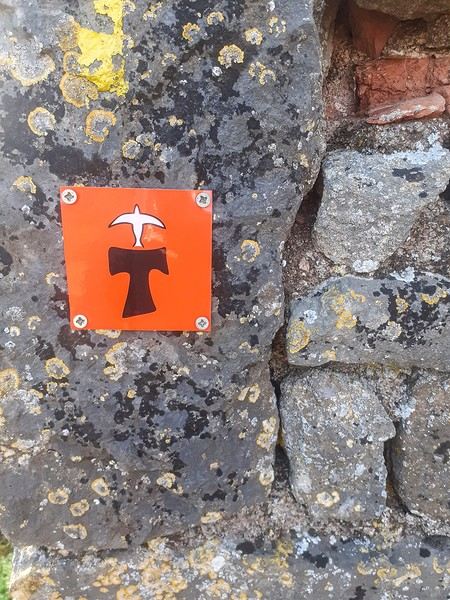
June 2024. While hiking with my brother on the GR 36 Tour du Morvan, I catch sight now and then of strange rectangular markers fixed to tree trunks. Against a bright orange background, a deep black Greek tau topped with a white dove. My first encounter with the Assisi Way. The Way of St. Francis: a pilgrimage route linking Vézelay in Burgundy to Assisi in Italy, covering nearly 1,800 km. It felt like an obvious next step—I immediately knew I’d take it on, attempt the adventure solo.
In the months that followed, I talked about my project to everyone—family, friends, my partner. An avalanche of comments, more or less the same but varying depending on each person’s character and life experiences. But deep down, it all boiled down to one legitimate question: why?
And the answers? Hesitant, awkward, partial, even confused. I quickly realized they weren’t so easy to find. It was as if my project seemed more like a whim, a kind of intimate caprice, rather than a well-thought-out plan. Of course, I knew the reasons that pushed me to leave—you always have to give some. Loved ones need to understand to feel reassured, and that’s understandable. But I fear that when I list them, they’ll sound like the same old checklist anyone embarking on this kind of journey might give. Of all the reasons I could mention, I’ll highlight just one here: the call of the road, the solo adventure that brings a powerful sense of freedom. A bit like Monsieur Seguin’s goat, who from her comfortable pen gazes longingly at the unconstrained horizon of the mountain. But if I’m being honest, I think I didn’t really know what I was looking for—or, more importantly, what I’d find. Deep down, when I reflect on it, one word keeps coming up that explains nothing and everything at once: desire.
Now well past sixty, I know that when I ask myself who I am or where I’m going, two things bring me fully back to myself: hiking and writing. And my intention was also to anchor this adventure through words, day by day. Writing down my feelings, emotions, discoveries, and reflections each evening. The famous travel journal that grounds the daily experience in reality. When I discovered the app "Polarstep," which was initially just meant to keep my loved ones updated and reassured, inform them of my progress, and maintain a connection, I found an opportunity to do it a little differently than usual. No retrospective notes polished up after returning, but spontaneous writing—recounting everything that crossed my mind during the day and publishing it immediately. A journey lived in real time.
This text is the exact transcription of my daily writings. Rereading them, I didn’t change a thing—just corrected a few mistakes and tweaked some awkward phrasing here and there. Short texts, fitting the format imposed by this kind of app. Writing as if addressing others.
Now, all that was left was to walk. April 18, 2026 – Vézelay.
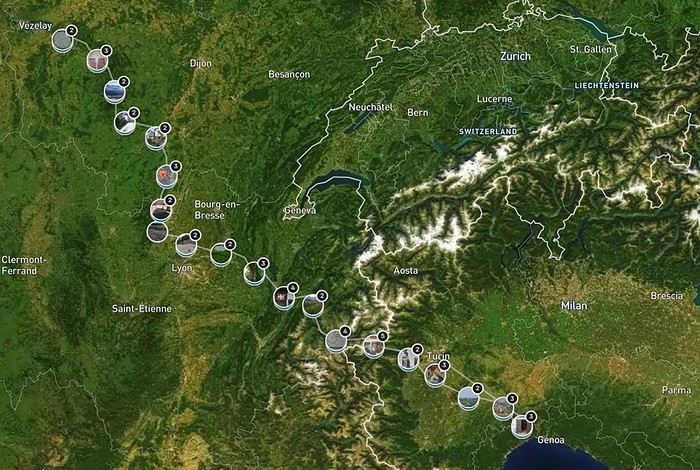
June 2024. While hiking with my brother on the GR 36 Tour du Morvan, I catch sight now and then of strange rectangular markers fixed to tree trunks. Against a bright orange background, a deep black Greek tau topped with a white dove. My first encounter with the Assisi Way. The Way of St. Francis: a pilgrimage route linking Vézelay in Burgundy to Assisi in Italy, covering nearly 1,800 km. It felt like an obvious next step—I immediately knew I’d take it on, attempt the adventure solo.
In the months that followed, I talked about my project to everyone—family, friends, my partner. An avalanche of comments, more or less the same but varying depending on each person’s character and life experiences. But deep down, it all boiled down to one legitimate question: why?
And the answers? Hesitant, awkward, partial, even confused. I quickly realized they weren’t so easy to find. It was as if my project seemed more like a whim, a kind of intimate caprice, rather than a well-thought-out plan. Of course, I knew the reasons that pushed me to leave—you always have to give some. Loved ones need to understand to feel reassured, and that’s understandable. But I fear that when I list them, they’ll sound like the same old checklist anyone embarking on this kind of journey might give. Of all the reasons I could mention, I’ll highlight just one here: the call of the road, the solo adventure that brings a powerful sense of freedom. A bit like Monsieur Seguin’s goat, who from her comfortable pen gazes longingly at the unconstrained horizon of the mountain. But if I’m being honest, I think I didn’t really know what I was looking for—or, more importantly, what I’d find. Deep down, when I reflect on it, one word keeps coming up that explains nothing and everything at once: desire.
Now well past sixty, I know that when I ask myself who I am or where I’m going, two things bring me fully back to myself: hiking and writing. And my intention was also to anchor this adventure through words, day by day. Writing down my feelings, emotions, discoveries, and reflections each evening. The famous travel journal that grounds the daily experience in reality. When I discovered the app "Polarstep," which was initially just meant to keep my loved ones updated and reassured, inform them of my progress, and maintain a connection, I found an opportunity to do it a little differently than usual. No retrospective notes polished up after returning, but spontaneous writing—recounting everything that crossed my mind during the day and publishing it immediately. A journey lived in real time.
This text is the exact transcription of my daily writings. Rereading them, I didn’t change a thing—just corrected a few mistakes and tweaked some awkward phrasing here and there. Short texts, fitting the format imposed by this kind of app. Writing as if addressing others.
Now, all that was left was to walk. April 18, 2026 – Vézelay.
Greece or Canary Islands for swimming and partying at the end of October?
Hi everyone!!
I’d love to get your opinions and advice on a destination. It’s actually for my 19-year-old son who wants to go to Greece with his cousin, who’s the same age. They’re looking at leaving on October 24th for 7 to 10 days. For their trip, they want gorgeous beaches where they can swim, beautiful typical villages and historic cities, stunning landscapes, but also lively spots for their nights out. In short, they’re not just going there to laze around—they want to make the most of it...
But here’s the thing: will the weather be too iffy at that time, especially for swimming? Also, would Crete be the best choice for what they’re looking for? Then, a travel agent suggested Tenerife instead because of the weather at that time of year—he said the climate there is the same all year round. But will they find landscapes and beaches as beautiful as in Crete?
Thanks in advance for your help
I’d love to get your opinions and advice on a destination. It’s actually for my 19-year-old son who wants to go to Greece with his cousin, who’s the same age. They’re looking at leaving on October 24th for 7 to 10 days. For their trip, they want gorgeous beaches where they can swim, beautiful typical villages and historic cities, stunning landscapes, but also lively spots for their nights out. In short, they’re not just going there to laze around—they want to make the most of it...
But here’s the thing: will the weather be too iffy at that time, especially for swimming? Also, would Crete be the best choice for what they’re looking for? Then, a travel agent suggested Tenerife instead because of the weather at that time of year—he said the climate there is the same all year round. But will they find landscapes and beaches as beautiful as in Crete?
Thanks in advance for your help
Oman, at the edge of the sands and the horizon
If I close my eyes and think of the Sultanate of Oman, I first smell a light scent of incense, feel the warmth of a sunbeam on my skin, before sand slips through my fingers. I taste the sweetness of a date, a real candy, then the flavor of coffee with a hint of cardamom and rosewater... I hear the desert wind whistling in my ears, the distant call of a muezzin, then the murmur of water. I open my eyes to see smiles, welcoming gestures, a turquoise sea, rocks ranging from ochre to purple, deep wadis where torrents burst forth, orange dunes, white sandy beaches where tiny crabs scurry at full speed. I see incredible oases emerging between arid mountains. I see abandoned villages that I’d dream were full of life, imposing fortresses overlooking valleys, and lively souks where offers are delicate and negotiation is a mutual courtesy.
All that, and so much more.
This is what I tried to capture in my illustrated travel journal, which I’ll fill in here and there with photos. I drew this journal “cold,” after my return (actually, I made it this summer, while our trip was last winter). It’s a pretty special format—I bought it in Japan without really knowing what I’d do with it. Well, it found its purpose! Below is a photo of this accordion-style journal: here, it’s only partially open, because when fully unfolded, it’s 5 meters long!
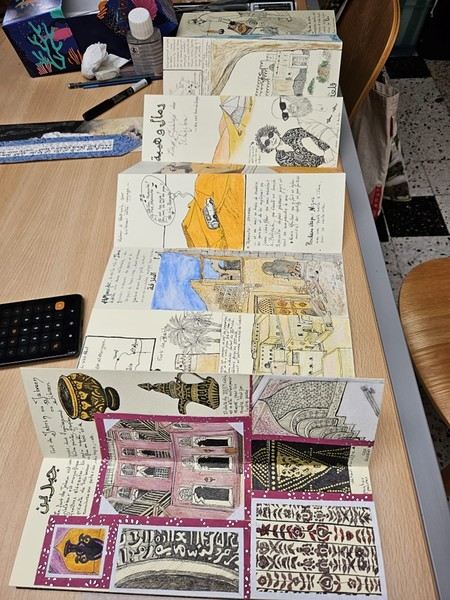
For drawing enthusiasts: The accordion format is both a constraint (each sheet is 9 cm x 27 cm) and a freedom (you can create a fresco). The paper is also a bit special: it doesn’t allow for fine lines, but it takes ink well (liner pen). However, everything has to be done almost in one go (with a very light pencil sketch) because it erases poorly. It absorbs too much water for coloring with markers or watercolors (unless you avoid soaking it), but it works well with oil pastels and their use with a brush and solvent. Since it’s yellowish, it allowed me to create contrasts even with white pastel.
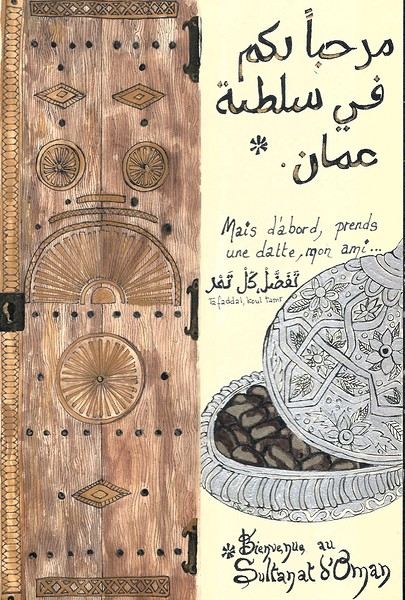 On the right, the "welcome marker"—those dates offered everywhere as a sign of hospitality. On the left, a tribute to those stunning doors worn by time, admired all over the old quarters, including the abandoned ones.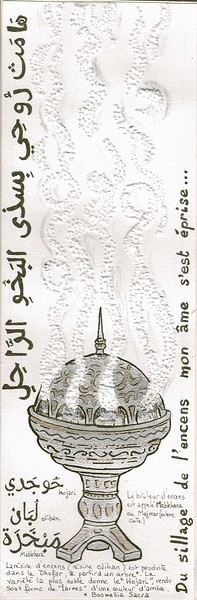
Oman is one of the world’s largest producers of frankincense resin. Incense burners are everywhere, from the simplest clay ones to the most precious handcrafted silver ones...
 Hospitality will often lead you to accept a small coffee, an "Omani coffee," very light, subtly flavored with cardamom, maybe a touch of saffron, and occasionally rosewater.
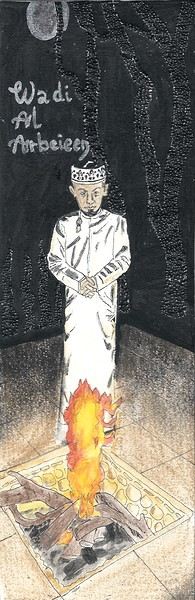
Here, I’ve depicted a man in the common everyday attire of Omanis: the dishdasha, mostly white (during the week and daytime; colors are more common in the evening or on Fridays and Saturdays). While you’ll see some men dressed in Western clothes, they’re very few. The white dishdasha is truly the shared attire of all men. The dishdasha, which has no hood, is distinguished by a small pom-pom attached to the collar, the furakha, which is soaked in perfume. And believe me, Omanis go overboard with it! "It smells like the pom-pom" is an expression that’s now part of our shared language, my husband and I.
Another must of men’s attire is the kuma, a small round head covering, usually white with brightly colored patterns. The keffiyeh is also worn (but without the cord called an agal in Arab countries), and it’s mostly worn by those with roots in the desert, from what I understood.
And what about the women, you might ask? Some are veiled, some in full black (but not a burka—more like a chador + abaya), due to the influence of Saudi Arabia and the United Arab Emirates, whereas the traditional outfit used to be a layering of very colorful dresses. Most of the women we saw wore neutral clothing, a plain veil over their hair, but with their faces uncovered. We also saw many saris and colorful veils—don’t forget that 40% of the population consists of Indian, Nepalese, and Bangladeshi immigrants, who work a lot in tourism, hospitality, restaurants, services, and construction.
Just to clarify, as a tourist, there’s no pressure to wear a veil, and never any disapproving looks. Of course, you’ll save the mini shorts, plunging necklines, bare shoulders, and midriffs for the hotel terrace—but I’d say that’s the same for men and women, and with the sun being strong, it’s better for your skin too.
Here’s the introduction! In the next post, I’ll tell you about my itinerary, and we can dive in!
Hospitality will often lead you to accept a small coffee, an "Omani coffee," very light, subtly flavored with cardamom, maybe a touch of saffron, and occasionally rosewater.
Here, I’ve depicted a man in the common everyday attire of Omanis: the dishdasha, mostly white (during the week and daytime; colors are more common in the evening or on Fridays and Saturdays). While you’ll see some men dressed in Western clothes, they’re very few. The white dishdasha is truly the shared attire of all men. The dishdasha, which has no hood, is distinguished by a small pom-pom attached to the collar, the furakha, which is soaked in perfume. And believe me, Omanis go overboard with it! "It smells like the pom-pom" is an expression that’s now part of our shared language, my husband and I.
Another must of men’s attire is the kuma, a small round head covering, usually white with brightly colored patterns. The keffiyeh is also worn (but without the cord called an agal in Arab countries), and it’s mostly worn by those with roots in the desert, from what I understood.
And what about the women, you might ask? Some are veiled, some in full black (but not a burka—more like a chador + abaya), due to the influence of Saudi Arabia and the United Arab Emirates, whereas the traditional outfit used to be a layering of very colorful dresses. Most of the women we saw wore neutral clothing, a plain veil over their hair, but with their faces uncovered. We also saw many saris and colorful veils—don’t forget that 40% of the population consists of Indian, Nepalese, and Bangladeshi immigrants, who work a lot in tourism, hospitality, restaurants, services, and construction.
Just to clarify, as a tourist, there’s no pressure to wear a veil, and never any disapproving looks. Of course, you’ll save the mini shorts, plunging necklines, bare shoulders, and midriffs for the hotel terrace—but I’d say that’s the same for men and women, and with the sun being strong, it’s better for your skin too.
Here’s the introduction! In the next post, I’ll tell you about my itinerary, and we can dive in!Gran Canaria... a trip that wasn't exactly thrilling
Okay, it wasn’t a total disaster either. Actually, I hesitated before starting this travel journal: is it even worth writing about a holiday that won’t leave an unforgettable memory?
In the end, I went for it (there aren’t many recent travel journals about this destination).
So, read on... or don’t .
Every time we’ve been to the Canary Islands, it’s been by default (basically: where can we go in winter or early spring when we only have a week—so not too far, not too much jet lag, but with decent weather?).
This time, we had two weeks, but the winter plan kept changing: first Thailand (dropped for personal reasons), then Martinique (dropped because of work leave dates that weren’t up to me), and finally, the Canary Islands.
We’ve already been to Tenerife (which we really liked) and Lanzarote (which we liked a little less). This year, two options: Gran Canaria or one of the smaller islands west of Tenerife (La Palma, or even La Gomera or El Hierro). We chose Gran Canaria... not sure it was the right call! Whose fault is it? Storm Thérèse’s! Yes, Storm Thérèse followed us on arrival, and its effects lasted quite a while. We had to adapt, cancel visits, change activities...
But even without Thérèse...
Saturday 21/03 Departure from Orly at 6:10 AM with Transavia. The plane took off on time and landed a little early, tossed around by strong winds before touching down. It had just rained, but it was (almost) no longer raining.
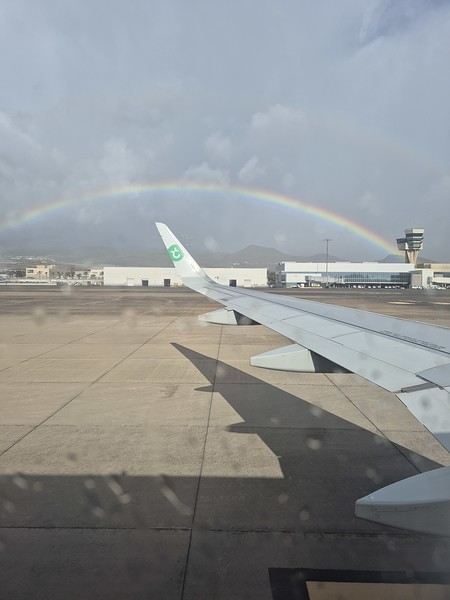
We quickly picked up our luggage and then the car at the Cicar counter. We got a Seat Arona instead of the Corsa we’d booked. Well, while the driving position didn’t feel great at first (I got used to it), the engine’s smoothness and power were much appreciated on the island’s winding and sometimes steep roads.
It was only 10 AM, and we couldn’t theoretically check into our accommodation until 3 PM (the owner promised to message me if it was ready earlier). So, we headed to the (big) *Jardín Botánico Viera y Clavijo*, where we planned to spend a few hours. We found a huge parking lot... empty. The passenger in the car in front of us (yes, we weren’t the only ones at the closed gate—there was a car in front and one behind) went to ask for info: it was closed due to the storm 😕. So, we calmly headed toward Puerto de las Nieves, on the northwest coast of the island.
The plan: go to a restaurant, visit the village, and do some shopping while waiting for early afternoon. As soon as we got out of the car, it started raining... we took shelter under the awning of a shop, waiting for it to pass. But the rain turned into a downpour, and within minutes, awning or not, Gore-Tex or not, we were soaked!
Since we were already wet, we might as well go to the restaurant—they weren’t far! But here’s the thing: contrary to what Google Maps said, they all opened at 1 PM, not noon! Back to the car, wading through 5 cm of water because all the village streets were flooded . The rain let up, we did some shopping, went to eat, and I got a message from the owner saying the accommodation was ready 🙂.
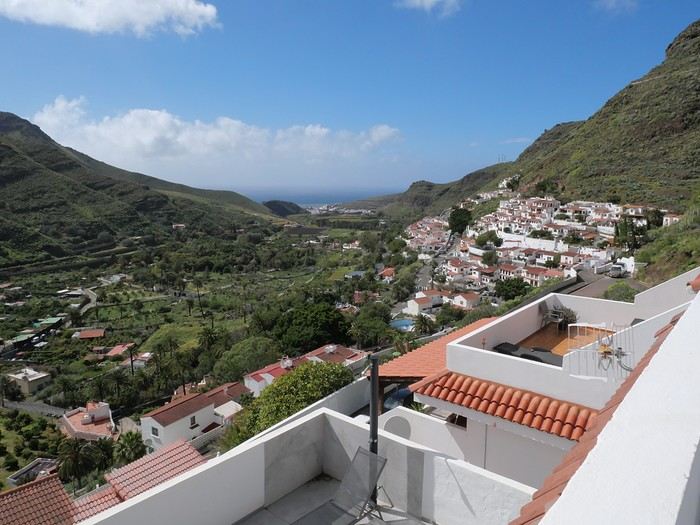
So, off we went to La Suerte, a few kilometers north of Agaete. The downside of the place, especially with luggage, is that you have to climb several flights of stairs via an outdoor staircase (after parking more or less far away on a steep street) to get there 😛). Of course, on the way from the car to the apartment, it started pouring again—the bags got soaked! Enough rain for today! We settled in quietly, and by late afternoon, we could (finally!) go admire the view from the terrace.
Every time we’ve been to the Canary Islands, it’s been by default (basically: where can we go in winter or early spring when we only have a week—so not too far, not too much jet lag, but with decent weather?).
This time, we had two weeks, but the winter plan kept changing: first Thailand (dropped for personal reasons), then Martinique (dropped because of work leave dates that weren’t up to me), and finally, the Canary Islands.
We’ve already been to Tenerife (which we really liked) and Lanzarote (which we liked a little less). This year, two options: Gran Canaria or one of the smaller islands west of Tenerife (La Palma, or even La Gomera or El Hierro). We chose Gran Canaria... not sure it was the right call! Whose fault is it? Storm Thérèse’s! Yes, Storm Thérèse followed us on arrival, and its effects lasted quite a while. We had to adapt, cancel visits, change activities...
But even without Thérèse...
Saturday 21/03 Departure from Orly at 6:10 AM with Transavia. The plane took off on time and landed a little early, tossed around by strong winds before touching down. It had just rained, but it was (almost) no longer raining.
We quickly picked up our luggage and then the car at the Cicar counter. We got a Seat Arona instead of the Corsa we’d booked. Well, while the driving position didn’t feel great at first (I got used to it), the engine’s smoothness and power were much appreciated on the island’s winding and sometimes steep roads.
It was only 10 AM, and we couldn’t theoretically check into our accommodation until 3 PM (the owner promised to message me if it was ready earlier). So, we headed to the (big) *Jardín Botánico Viera y Clavijo*, where we planned to spend a few hours. We found a huge parking lot... empty. The passenger in the car in front of us (yes, we weren’t the only ones at the closed gate—there was a car in front and one behind) went to ask for info: it was closed due to the storm 😕. So, we calmly headed toward Puerto de las Nieves, on the northwest coast of the island.
The plan: go to a restaurant, visit the village, and do some shopping while waiting for early afternoon. As soon as we got out of the car, it started raining... we took shelter under the awning of a shop, waiting for it to pass. But the rain turned into a downpour, and within minutes, awning or not, Gore-Tex or not, we were soaked!
Since we were already wet, we might as well go to the restaurant—they weren’t far! But here’s the thing: contrary to what Google Maps said, they all opened at 1 PM, not noon! Back to the car, wading through 5 cm of water because all the village streets were flooded . The rain let up, we did some shopping, went to eat, and I got a message from the owner saying the accommodation was ready 🙂.
So, off we went to La Suerte, a few kilometers north of Agaete. The downside of the place, especially with luggage, is that you have to climb several flights of stairs via an outdoor staircase (after parking more or less far away on a steep street) to get there 😛). Of course, on the way from the car to the apartment, it started pouring again—the bags got soaked! Enough rain for today! We settled in quietly, and by late afternoon, we could (finally!) go admire the view from the terrace.
Your recommendations for 20 days in Thailand
Hello,
Our flights are booked, and we’ll arrive in Thailand at the beginning of January.
Originally, we were supposed to spend 14 days there. But after booking the flights and seeing the prices, we’ll now be there for 20 days instead.
Our initial plan was: 2 days in Bangkok 1 day in Ayutthaya 4 days in Chiang Mai 6 days around Krabi
So we have 7 more days to fill. What do you recommend?
An extra day in Bangkok? Adding more days in the north? If so, where? Exploring another region, like Kanchanaburi or Cheow Lan Lake? Traveling north in stages instead of taking the overnight train?
A few extra details about us: For us, vacation isn’t about relaxation—we love walking, exploring, and packed days don’t bother us. Hiking for hours and doing active things is what makes us happy. That said, we also enjoy visiting villages and towns if they’re worth the detour. In Thailand, we’d like to visit temples too. We’re early risers, so our days tend to be long. 🙂 In short, we like to keep things moving during our trips. 😉
Unfortunately, seeing terraced rice fields isn’t possible in January. I read there are rice fields around Sukhothai. Are they green in January?
In the north, do you recommend Doi Inthanon, Huai Nam Dang, or Doi Chiang Dao National Parks? Which one is the most beautiful and best for January?
Our flights are booked, and we’ll arrive in Thailand at the beginning of January.
Originally, we were supposed to spend 14 days there. But after booking the flights and seeing the prices, we’ll now be there for 20 days instead.
Our initial plan was: 2 days in Bangkok 1 day in Ayutthaya 4 days in Chiang Mai 6 days around Krabi
So we have 7 more days to fill. What do you recommend?
An extra day in Bangkok? Adding more days in the north? If so, where? Exploring another region, like Kanchanaburi or Cheow Lan Lake? Traveling north in stages instead of taking the overnight train?
A few extra details about us: For us, vacation isn’t about relaxation—we love walking, exploring, and packed days don’t bother us. Hiking for hours and doing active things is what makes us happy. That said, we also enjoy visiting villages and towns if they’re worth the detour. In Thailand, we’d like to visit temples too. We’re early risers, so our days tend to be long. 🙂 In short, we like to keep things moving during our trips. 😉
Unfortunately, seeing terraced rice fields isn’t possible in January. I read there are rice fields around Sukhothai. Are they green in January?
In the north, do you recommend Doi Inthanon, Huai Nam Dang, or Doi Chiang Dao National Parks? Which one is the most beautiful and best for January?
Far from the daily grind*
Hello,
Since I enjoy not only the countryside but also everything related to rail travel, I’m starting this photo thread dedicated to trains in Thailand (I’d guess most of us have taken one at some point...).
Feel free to post your pictures here as long as they fit the theme: rolling stock**, stations**, platforms, tracks (even without a train on them), technical equipment, engineering structures (bridges, viaducts), etc.—all in Thailand.
For each photo, I’ll (or you can) note the station or line where it was taken.
Comments and questions are welcome.
* train ** interiors or exteriors
All aboard!
* train ** interiors or exteriors
All aboard!
Trip report: Our South Africa journey in July
Hi there,
We’re back from our 3-week trip to South Africa in July. It was a family trip with our four grown-up kids (ages 18 to 25).
First off, I’d like to thank everyone on this forum for their great tips—they really helped us plan this trip!
The trip: We spent 15 days between Port Elizabeth and Cape Town, then a week around Kruger (including Blyde River Canyon). We found South Africans to be welcoming and always ready to help. We never felt unsafe (just followed basic safety rules). The police are very visible, especially on the roads.
Logistics: We’d booked our accommodations in advance but made a few changes on the spot based on how we felt at the time. We rented two vehicles from Firefly (Hertz). No complaints—recent cars, quick returns, and the deposit wasn’t charged. We’d gotten our international driver’s permits... which stayed in France! Luckily, no one asked for them. Driving on the left wasn’t an issue (it wasn’t our first time). The roads we took were in good, even great, condition. Only a few tracks to lodges or parks were rough and required extra caution. Lots of pedestrians on the sides of roads, even highways. And plenty of very slow trucks. But they pull over to let you pass. It’s also common for cars to cross into the opposite lane to overtake, even with white lines. We took two domestic flights: one early in the morning (Johannesburg to Port Elizabeth) and one in the late afternoon (Cape Town to Johannesburg) to save time.
We had some highlights and a few disappointments—all part of the journey! More details coming soon.
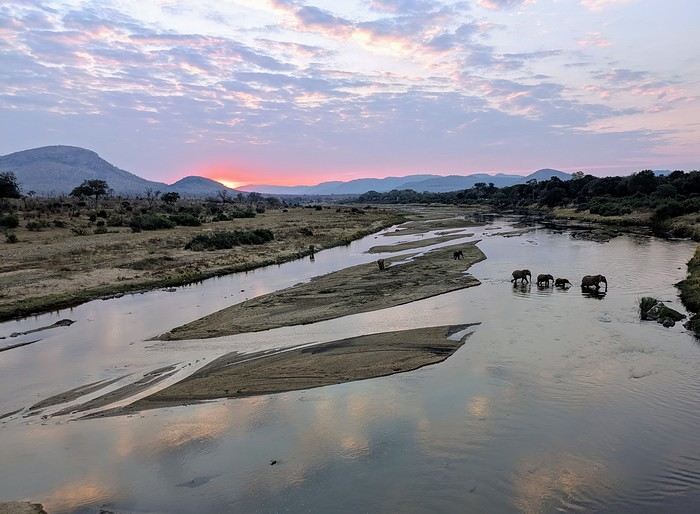
We’re back from our 3-week trip to South Africa in July. It was a family trip with our four grown-up kids (ages 18 to 25).
First off, I’d like to thank everyone on this forum for their great tips—they really helped us plan this trip!
The trip: We spent 15 days between Port Elizabeth and Cape Town, then a week around Kruger (including Blyde River Canyon). We found South Africans to be welcoming and always ready to help. We never felt unsafe (just followed basic safety rules). The police are very visible, especially on the roads.
Logistics: We’d booked our accommodations in advance but made a few changes on the spot based on how we felt at the time. We rented two vehicles from Firefly (Hertz). No complaints—recent cars, quick returns, and the deposit wasn’t charged. We’d gotten our international driver’s permits... which stayed in France! Luckily, no one asked for them. Driving on the left wasn’t an issue (it wasn’t our first time). The roads we took were in good, even great, condition. Only a few tracks to lodges or parks were rough and required extra caution. Lots of pedestrians on the sides of roads, even highways. And plenty of very slow trucks. But they pull over to let you pass. It’s also common for cars to cross into the opposite lane to overtake, even with white lines. We took two domestic flights: one early in the morning (Johannesburg to Port Elizabeth) and one in the late afternoon (Cape Town to Johannesburg) to save time.
We had some highlights and a few disappointments—all part of the journey! More details coming soon.
First trip to South Korea
Hi everyone,
I’m embarking on my first trip to Asia, starting with South Korea.
I’ll be traveling with my 15-year-old daughter, who came up with the idea...
We’ll be there from July 15th to 22nd.
I’ve currently planned to stay in Seoul from the 15th to the 19th, then head to Busan from the 19th to the 21st. We need to be back in Seoul on the evening of the 21st because our flight is at 10 AM on the 22nd.
I love modern cities, but for a first trip to Asia, I’d also like to see some traditional sights. Do you think Busan is a good idea?
I’m considering staying in Gyeongju instead and spending two days in Busan...
What do you think?
Maybe another city in a different region of Korea?
Thanks for your help
I’m embarking on my first trip to Asia, starting with South Korea.
I’ll be traveling with my 15-year-old daughter, who came up with the idea...
We’ll be there from July 15th to 22nd.
I’ve currently planned to stay in Seoul from the 15th to the 19th, then head to Busan from the 19th to the 21st. We need to be back in Seoul on the evening of the 21st because our flight is at 10 AM on the 22nd.
I love modern cities, but for a first trip to Asia, I’d also like to see some traditional sights. Do you think Busan is a good idea?
I’m considering staying in Gyeongju instead and spending two days in Busan...
What do you think?
Maybe another city in a different region of Korea?
Thanks for your help
First trip to South Africa: what itinerary?
Hello forum,
We’re a family of 4 adults (2 grown daughters) planning our first trip to South Africa for 3 weeks in August 2025, traveling independently. I’ve been drawing inspiration from several posts on the forum. I’d like to book our flight tickets and nights in Kruger Park as soon as possible since that’s the most urgent part to finalize, if I understood correctly.
Here’s a first draft of our itinerary (with lots of unknowns about what there’ll be to see/do in Eswatini, Lesotho, Durban, etc.—I feel like the Lesotho leg involves a lot of driving).
I’d really appreciate input from the experts to help us craft a great trip. Thanks in advance!
Day 1
Departure from Paris Day 2
Morning Early arrival in Johannesburg Pick up rental car Groceries Afternoon Sightseeing Night in AirBNB near Johannesburg (1/1) Day 3
Morning Drive to Blyde River Canyon (500 km - 6h30) Afternoon Visit the canyon Night in AirBNB near Blyde River Canyon (1/1) Day 4
Morning Drive to central Kruger (200 km - 3h30) Night in Rest Camp (1/2) Day 5
Night in Rest Camp (2/2) Day 6
Morning Drive to southern Kruger (150 km - 3h) Night in Rest Camp (1/3) Day 7
Night in Rest Camp (2/3) Day 8
Night in Rest Camp (3/3) Day 9
Morning Drive to Mbabane (Eswatini) (250 km - 4h) Night in AirBNB or other (1/1) Day 10
Morning Drive to Maputaland (300 km - 4h) Afternoon Swimming (hippos and crocs?) Night in AirBNB or other (1/1) Day 11
Morning Drive to Hluhluwe-Umfolozi (130 km - 2h) Night in Rest Camp (1/2) Day 12
Night in Rest Camp (2/2) Day 13
Morning Drive to Durban (250 km - 3h) Night in AirBNB (1/1) Day 14
Morning First half of drive to Lesotho (225 km - 4h) Night in AirBNB or other (1/1) Day 15
Morning Second half of drive to Lesotho (225 km - 4h) Night in AirBNB or other (1/1) Day 16
Morning First half of drive to Drakensberg (250 km - 4h) Night in AirBNB or other (1/1) Day 17
Morning Second half of drive to Drakensberg (250 km - 4h) Night in AirBNB or other (1/2) Day 18
Night in AirBNB or other (2/2) Day 19
Morning Drive to Johannesburg (300 km - 4h) Night in AirBNB (1/2) Day 20
Night in AirBNB (2/2) Day 21
Morning Departure in early afternoon Day 22
Arrival in Paris
We’re a family of 4 adults (2 grown daughters) planning our first trip to South Africa for 3 weeks in August 2025, traveling independently. I’ve been drawing inspiration from several posts on the forum. I’d like to book our flight tickets and nights in Kruger Park as soon as possible since that’s the most urgent part to finalize, if I understood correctly.
Here’s a first draft of our itinerary (with lots of unknowns about what there’ll be to see/do in Eswatini, Lesotho, Durban, etc.—I feel like the Lesotho leg involves a lot of driving).
I’d really appreciate input from the experts to help us craft a great trip. Thanks in advance!
Day 1
Departure from Paris Day 2
Morning Early arrival in Johannesburg Pick up rental car Groceries Afternoon Sightseeing Night in AirBNB near Johannesburg (1/1) Day 3
Morning Drive to Blyde River Canyon (500 km - 6h30) Afternoon Visit the canyon Night in AirBNB near Blyde River Canyon (1/1) Day 4
Morning Drive to central Kruger (200 km - 3h30) Night in Rest Camp (1/2) Day 5
Night in Rest Camp (2/2) Day 6
Morning Drive to southern Kruger (150 km - 3h) Night in Rest Camp (1/3) Day 7
Night in Rest Camp (2/3) Day 8
Night in Rest Camp (3/3) Day 9
Morning Drive to Mbabane (Eswatini) (250 km - 4h) Night in AirBNB or other (1/1) Day 10
Morning Drive to Maputaland (300 km - 4h) Afternoon Swimming (hippos and crocs?) Night in AirBNB or other (1/1) Day 11
Morning Drive to Hluhluwe-Umfolozi (130 km - 2h) Night in Rest Camp (1/2) Day 12
Night in Rest Camp (2/2) Day 13
Morning Drive to Durban (250 km - 3h) Night in AirBNB (1/1) Day 14
Morning First half of drive to Lesotho (225 km - 4h) Night in AirBNB or other (1/1) Day 15
Morning Second half of drive to Lesotho (225 km - 4h) Night in AirBNB or other (1/1) Day 16
Morning First half of drive to Drakensberg (250 km - 4h) Night in AirBNB or other (1/1) Day 17
Morning Second half of drive to Drakensberg (250 km - 4h) Night in AirBNB or other (1/2) Day 18
Night in AirBNB or other (2/2) Day 19
Morning Drive to Johannesburg (300 km - 4h) Night in AirBNB (1/2) Day 20
Night in AirBNB (2/2) Day 21
Morning Departure in early afternoon Day 22
Arrival in Paris
Visiting collective granaries in Morocco
Hello everyone,
I’m currently planning our next trip to Morocco. We really enjoy visiting one or two collective granaries on each of our trips. We’ve seen some already, like the one in Aït Kine, or the one in Tasguent, and of course those in Amtoudi, as well as the cliffside granary of Ifri. There are still many left to explore. I’d love to hear which ones you’d recommend—preferably ones that aren’t too hard to access. I’m counting on you! Thanks
Crete Spring 2024
CRETE
Spring 2024 from April 11 to May 9
Thursday, April 11: Flight Montreal – Athens (Air Canada # AC 898) Flight Athens – Heraklion (Air Agean # A 3318) Fri 12, Sat 13, and Sun 14 April: Heraklion: Marin Dream Hotel: room great (a bit cramped); location great; breakfast excellent. Spectacular view (5th floor) of the port, balcony, close to the center and restaurants, cleanliness and comfort. I’ll definitely go back! We enjoyed this city, often unfairly criticized because it’s compared to the "three beauties." It’s a great entry point to the island, lets you catch your breath after a few hours of flying and jet lag, and you won’t get bored for 2-3 days. Monday, April 15 am: Car rental (pickup at the airport) Rental company: Auto Europe / Enterprise. Opel Corsica. Efficient and courteous service. Clean car in good condition. No issues. Quick return. I’ll rent again. PS: The two trips between the city center and the airport: public transport (bus): fast, efficient, and cheap.
Mon 15, Tue 16, and Wed 17 April: Agios Nikolaos Highlights: Kritsa, Knossos, Spinalonga, and Mochlos (for the breathtaking descent and the restaurant (Taverna Natural) a short distance from the descent). Accommodation in Ammoudara 72 100 (7-8 km from A.N.): Panorama Bay Villas Apartments. Location (elevated with a view of the blue sea), setting (unbeatable view), convenience, cleanliness, pool: Excellent. I’d run back here. A breakfast in Kritsa is lovely.
Thu 18 and Fri 19 April: Mirtos 720 56: A small seaside town, a bit sleepy, that can be summed up by a main street parallel and very close to the sea, with simple and smiling people. A base for lovely mountain hikes... and Gortyn. Accommodation: Hotel Mirtos: I’ve seen better! But it was only for 2 nights, and considering the rates, the enormous breakfast, and the kindness of the lady... it’s hard to complain. I’d go back if I’m in the area... for 1 or 2 nights. A taverna worth mentioning: Sigelakis, in Sivas. Sat 20, Sun 21, and Mon 22 April: Matala area: Matala: can someone explain the hype? But we were charmed by the region, its small villages (a little nod to Agia Galini), a small mountain school with its students and teacher, and its hidden little beaches... and a taverna (whose owner was a shepherd in another life) and a restaurant where we had our 3 dinners (no need to look elsewhere!). Accommodation in Kamilari(on) 700 20: Aelia Apartments: A long, narrow road through olive groves... the further we went, the more we thought we were on the wrong track! Phew! What an apartment (kitchenette, living room, two bedrooms including one in a mezzanine, balcony). Phew! What a setting, overlooking the surroundings from the terrace! I’d book again right away! Tue 23, Wed 24, and Thu 25 April: Plakias: A favorite! A lovely seaside walk with several terrace bars for an aperitif and really feeling on vacation. Morning hikes and discoveries, and in the afternoon, beach-pool at all-inclusive resorts a few kilometers away (one drink gets you in) and other small beaches. The charm of Spili, the softness of Loutro, and the enchantment of the Imbros Gorge. Accommodation: Horizon Beach Hotel: on the upper floor, a large bright room, a big balcony, and the vast sea right in front of us. Great location. A 10-15 minute walk from the center of Plakias. A great find: I’ll remember this address. In the center, on a street perpendicular to the sea, at the end of this street on your left (facing a tiny bar), one of our best dinners in Crete. The Plakias-Chora Sfakion road is breathtaking, but avoid the road—or rather the path—that hugs the sea too closely... which we didn’t do. Guaranteed sweating!
Fri 26, Sat 27, Sun 28, and Mon 29: Chania: The "big" city. The contrast with the Cretan countryside! Chania offers many attractions for tourists. We happily got "lost" in its alleys. We really enjoyed the quays for a drink at any time and for the lively atmosphere... but I wouldn’t want to be there in July! Accommodation: Boutique Hotel Del Doge. Good location. Close to the port and well soundproofed. A slightly faded decor but very decent. Spacious room and a somewhat narrow bathroom. Parking in a vacant lot along the sea: a 15-20 minute walk. I’d go back unless I find something better! Our favorite spots: we’ll remember Faka, To Stachi, and a restaurant in the center of a small square in the old part (every time we passed by, the TV was on a sports channel!) for the food, service, and friendliness of the staff. AND the ice cream! Great excursions to Valmos and Balos, Kefalas, Kaviles, Almirida, and Gavalochori. Three (3) days would have been enough to get a good sense of the city and the immediate area. It’s not a city—and I’m not even talking about the historic part—where it’s easy to drive. Tue 30, Wed May 1, and Thu 2: Paleochora. Or rather near Paleochora, in Kountoura Selinou (730 01), we stayed at Vienna Rooms Apartments. A few kilometers from the city, a short 10-minute drive, in a lovely olive grove that makes you forget the greenhouses that proliferate in the neighborhood. A large green garden, a big pool, tranquility, and the sea in front of you. Lovely apartments, well furnished, functional, and brand new (still smells new!) On the P-KS road, halfway, on the sea side, there’s a small, brand-new hotel where I’ll stop next time. What a view from the upper floor! Paleochora is a charming little town with a pleasant seaside promenade and an inner street parallel to it, lined with pretty shops. And an important detail: there’s a well-stocked wine bar, Monika Wine Bar, with attentive staff. A good selection of restaurants and a superb breakfast offering. What extraordinary excursions! Elafonissi, Sougia by boat, and up high, many tiny villages and breathtaking panoramas! Fri 03, Sat 04, and Happy Easter May 05: Rethymnon Accommodation: Hotel Casa dei Delfini. Very well located, comfortable, modern, with a certain prestige. A large dining room, stone walls, and a monumental staircase... feels like a castle (parador) in Spain... and a great breakfast. Friendly staff. The market where you can park is a 10-minute walk away. I’ll book again. Of the three "beauties" of Crete, this is our favorite. The center doesn’t (yet) have the "shopping mall" vibe that Chania has a bit too much. It feels good there. It has a cheerful air. Great restaurants. Easter day: visit around Arkadi. Otherwise, we strolled through the city to soak in the beauty of this island. Mon 06, Tue 07, and Wed 08 May: Athens. Flight Aegean #3307 (from Heraklion) Thu 09 May: Return flight: Athens-Montreal. Air Canada #899.
This was our second trip to Greece but our first to Crete. I say "first" because we’re seriously thinking of coming back in May 2025. We traveled in the blooming spring, so without the tourist crowds, and with restaurant and hotel staff in good shape... we could imagine what Crete must be like between July 15 and August 15!!! So our comments should be considered with that in mind. We’re a couple, she’s 76, and he—the driver, GPS, road map, and more—is 79. We’re living proof that Cretan roads are good. They wind, which is normal—we’re in the mountains—sometimes narrow, which is normal—we’re in the mountains—but they’re in very good condition, and Cretan drivers are respectful. Ideal travel climate: not a drop of rain or I don’t remember any! We’ll come back in May for a bit more warmth to enjoy the sea more. Food: the quality and quantity of breakfasts; dinners are good or even very good but sometimes a bit "copy-paste." Landscapes, green mountains, dark canyons (what we saw at 76+79), and endless deep blue, breathtaking. Tomatoes, olives, and honey: we’d want more. The trust restaurateurs show: you have to insist to get the bill!!! Easter: we were in Rethymnon: the crowd was much less oppressive than in Chania two weeks earlier. The kindness and eagerness of people in shops and on the street... which doubles or triples when you stammer a few words of Greek. Our favorites: Kamilari, Plakias, and... Heraklion, yes. In short, we loved it!
PS: Car rental: Why Auto Europe (Enterprise)? The ‘small local rental companies’ don’t rent (re: insurance) to people over 75 springs old!
Thursday, April 11: Flight Montreal – Athens (Air Canada # AC 898) Flight Athens – Heraklion (Air Agean # A 3318) Fri 12, Sat 13, and Sun 14 April: Heraklion: Marin Dream Hotel: room great (a bit cramped); location great; breakfast excellent. Spectacular view (5th floor) of the port, balcony, close to the center and restaurants, cleanliness and comfort. I’ll definitely go back! We enjoyed this city, often unfairly criticized because it’s compared to the "three beauties." It’s a great entry point to the island, lets you catch your breath after a few hours of flying and jet lag, and you won’t get bored for 2-3 days. Monday, April 15 am: Car rental (pickup at the airport) Rental company: Auto Europe / Enterprise. Opel Corsica. Efficient and courteous service. Clean car in good condition. No issues. Quick return. I’ll rent again. PS: The two trips between the city center and the airport: public transport (bus): fast, efficient, and cheap.
Mon 15, Tue 16, and Wed 17 April: Agios Nikolaos Highlights: Kritsa, Knossos, Spinalonga, and Mochlos (for the breathtaking descent and the restaurant (Taverna Natural) a short distance from the descent). Accommodation in Ammoudara 72 100 (7-8 km from A.N.): Panorama Bay Villas Apartments. Location (elevated with a view of the blue sea), setting (unbeatable view), convenience, cleanliness, pool: Excellent. I’d run back here. A breakfast in Kritsa is lovely.
Thu 18 and Fri 19 April: Mirtos 720 56: A small seaside town, a bit sleepy, that can be summed up by a main street parallel and very close to the sea, with simple and smiling people. A base for lovely mountain hikes... and Gortyn. Accommodation: Hotel Mirtos: I’ve seen better! But it was only for 2 nights, and considering the rates, the enormous breakfast, and the kindness of the lady... it’s hard to complain. I’d go back if I’m in the area... for 1 or 2 nights. A taverna worth mentioning: Sigelakis, in Sivas. Sat 20, Sun 21, and Mon 22 April: Matala area: Matala: can someone explain the hype? But we were charmed by the region, its small villages (a little nod to Agia Galini), a small mountain school with its students and teacher, and its hidden little beaches... and a taverna (whose owner was a shepherd in another life) and a restaurant where we had our 3 dinners (no need to look elsewhere!). Accommodation in Kamilari(on) 700 20: Aelia Apartments: A long, narrow road through olive groves... the further we went, the more we thought we were on the wrong track! Phew! What an apartment (kitchenette, living room, two bedrooms including one in a mezzanine, balcony). Phew! What a setting, overlooking the surroundings from the terrace! I’d book again right away! Tue 23, Wed 24, and Thu 25 April: Plakias: A favorite! A lovely seaside walk with several terrace bars for an aperitif and really feeling on vacation. Morning hikes and discoveries, and in the afternoon, beach-pool at all-inclusive resorts a few kilometers away (one drink gets you in) and other small beaches. The charm of Spili, the softness of Loutro, and the enchantment of the Imbros Gorge. Accommodation: Horizon Beach Hotel: on the upper floor, a large bright room, a big balcony, and the vast sea right in front of us. Great location. A 10-15 minute walk from the center of Plakias. A great find: I’ll remember this address. In the center, on a street perpendicular to the sea, at the end of this street on your left (facing a tiny bar), one of our best dinners in Crete. The Plakias-Chora Sfakion road is breathtaking, but avoid the road—or rather the path—that hugs the sea too closely... which we didn’t do. Guaranteed sweating!
Fri 26, Sat 27, Sun 28, and Mon 29: Chania: The "big" city. The contrast with the Cretan countryside! Chania offers many attractions for tourists. We happily got "lost" in its alleys. We really enjoyed the quays for a drink at any time and for the lively atmosphere... but I wouldn’t want to be there in July! Accommodation: Boutique Hotel Del Doge. Good location. Close to the port and well soundproofed. A slightly faded decor but very decent. Spacious room and a somewhat narrow bathroom. Parking in a vacant lot along the sea: a 15-20 minute walk. I’d go back unless I find something better! Our favorite spots: we’ll remember Faka, To Stachi, and a restaurant in the center of a small square in the old part (every time we passed by, the TV was on a sports channel!) for the food, service, and friendliness of the staff. AND the ice cream! Great excursions to Valmos and Balos, Kefalas, Kaviles, Almirida, and Gavalochori. Three (3) days would have been enough to get a good sense of the city and the immediate area. It’s not a city—and I’m not even talking about the historic part—where it’s easy to drive. Tue 30, Wed May 1, and Thu 2: Paleochora. Or rather near Paleochora, in Kountoura Selinou (730 01), we stayed at Vienna Rooms Apartments. A few kilometers from the city, a short 10-minute drive, in a lovely olive grove that makes you forget the greenhouses that proliferate in the neighborhood. A large green garden, a big pool, tranquility, and the sea in front of you. Lovely apartments, well furnished, functional, and brand new (still smells new!) On the P-KS road, halfway, on the sea side, there’s a small, brand-new hotel where I’ll stop next time. What a view from the upper floor! Paleochora is a charming little town with a pleasant seaside promenade and an inner street parallel to it, lined with pretty shops. And an important detail: there’s a well-stocked wine bar, Monika Wine Bar, with attentive staff. A good selection of restaurants and a superb breakfast offering. What extraordinary excursions! Elafonissi, Sougia by boat, and up high, many tiny villages and breathtaking panoramas! Fri 03, Sat 04, and Happy Easter May 05: Rethymnon Accommodation: Hotel Casa dei Delfini. Very well located, comfortable, modern, with a certain prestige. A large dining room, stone walls, and a monumental staircase... feels like a castle (parador) in Spain... and a great breakfast. Friendly staff. The market where you can park is a 10-minute walk away. I’ll book again. Of the three "beauties" of Crete, this is our favorite. The center doesn’t (yet) have the "shopping mall" vibe that Chania has a bit too much. It feels good there. It has a cheerful air. Great restaurants. Easter day: visit around Arkadi. Otherwise, we strolled through the city to soak in the beauty of this island. Mon 06, Tue 07, and Wed 08 May: Athens. Flight Aegean #3307 (from Heraklion) Thu 09 May: Return flight: Athens-Montreal. Air Canada #899.
This was our second trip to Greece but our first to Crete. I say "first" because we’re seriously thinking of coming back in May 2025. We traveled in the blooming spring, so without the tourist crowds, and with restaurant and hotel staff in good shape... we could imagine what Crete must be like between July 15 and August 15!!! So our comments should be considered with that in mind. We’re a couple, she’s 76, and he—the driver, GPS, road map, and more—is 79. We’re living proof that Cretan roads are good. They wind, which is normal—we’re in the mountains—sometimes narrow, which is normal—we’re in the mountains—but they’re in very good condition, and Cretan drivers are respectful. Ideal travel climate: not a drop of rain or I don’t remember any! We’ll come back in May for a bit more warmth to enjoy the sea more. Food: the quality and quantity of breakfasts; dinners are good or even very good but sometimes a bit "copy-paste." Landscapes, green mountains, dark canyons (what we saw at 76+79), and endless deep blue, breathtaking. Tomatoes, olives, and honey: we’d want more. The trust restaurateurs show: you have to insist to get the bill!!! Easter: we were in Rethymnon: the crowd was much less oppressive than in Chania two weeks earlier. The kindness and eagerness of people in shops and on the street... which doubles or triples when you stammer a few words of Greek. Our favorites: Kamilari, Plakias, and... Heraklion, yes. In short, we loved it!
PS: Car rental: Why Auto Europe (Enterprise)? The ‘small local rental companies’ don’t rent (re: insurance) to people over 75 springs old!
Northern Chile, Andean impressions.
Alright, this year, we're heading back to South America!
The initial plan was to retrace the route we imagined in the summer of 2020: a trip to northern Argentina starting from Córdoba.
Unfortunately, the flight to Córdoba no longer exists, and airfares to Javier Milei’s country are both outrageously priced and involve multiple layovers.
So, I tweaked Google Flights every which way and finally found a flight within my budget—departing from Clermont-Ferrand!
Not to Argentina, though...
Our transatlantic flight will cross the snow-capped Andes, landing in Santiago, Chile, with a return from Lima!
In between, two domestic flights and a big road trip loop starting from the coastal city of Arica to explore the treasures of northern Chile.
Our mode of transport: a pseudo 4x4 that won’t take us through sand dunes or devilish tracks but will let us tackle the entire secondary network, including unpaved main roads, while still being insured.
Is the suitcase packed with all-season clothes?
Are the driver’s license and passport ready?
Bank cards and a few euros too?
Off we go for just over 3 weeks of southern wanderings!
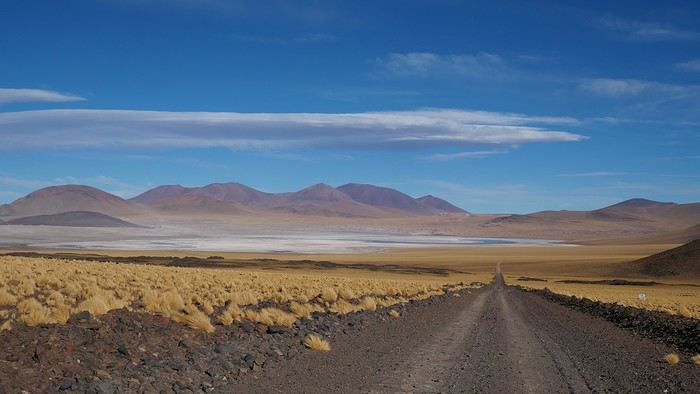
--/--
To keep all my esteemed readers on track, here are a few maps outlining the Arica-Arica loop!
1- From Arica to San Pedro de Atacama via Pica and the Salar de Huasco
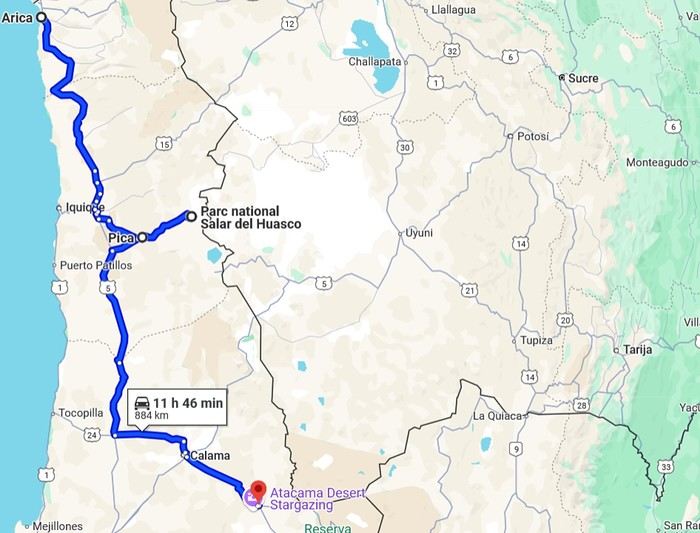 2- Around San Pedro
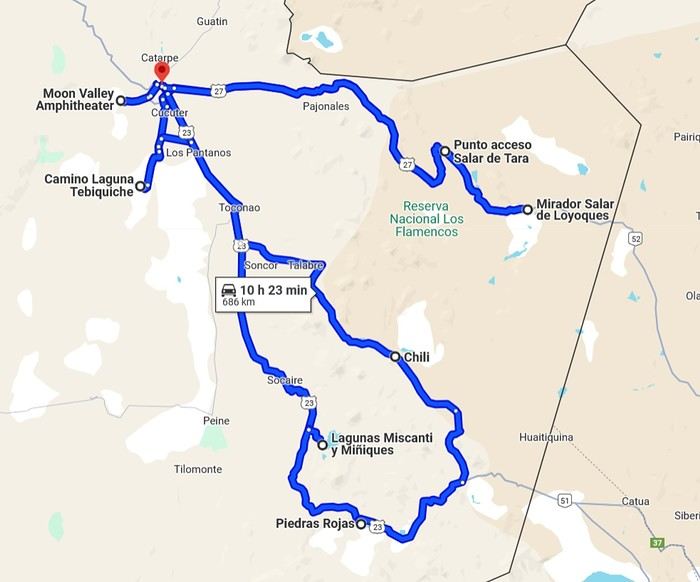
3- From San Pedro to Cariquima
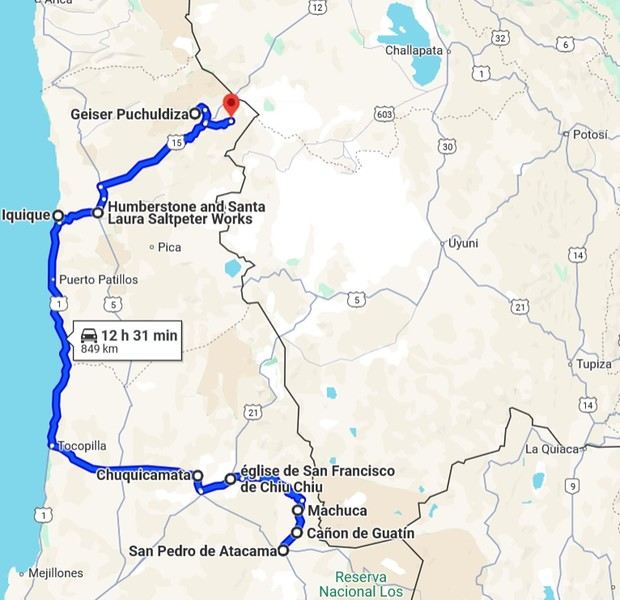
4- From Cariquima to Putre
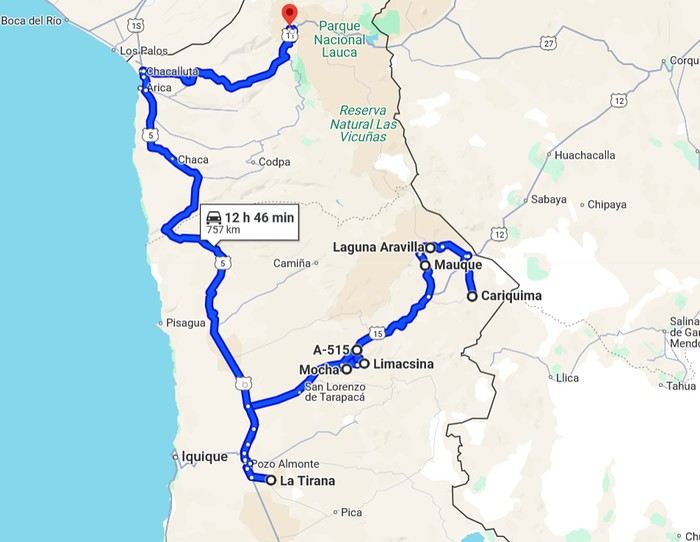
5 - From Putre to Arica
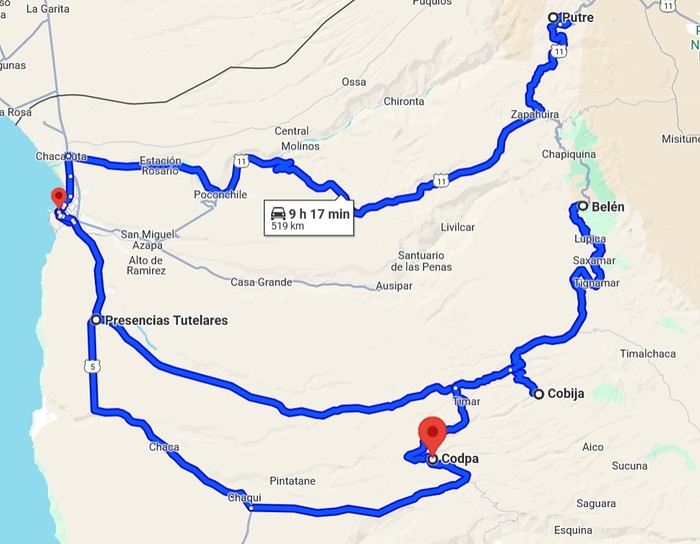
Gas stations in this part of Chile are located in Arica, Iquique, Pozo Almonte, Pica, Calama, and San Pedro de Atacama.
The initial plan was to retrace the route we imagined in the summer of 2020: a trip to northern Argentina starting from Córdoba.
Unfortunately, the flight to Córdoba no longer exists, and airfares to Javier Milei’s country are both outrageously priced and involve multiple layovers.
So, I tweaked Google Flights every which way and finally found a flight within my budget—departing from Clermont-Ferrand!
Not to Argentina, though...
Our transatlantic flight will cross the snow-capped Andes, landing in Santiago, Chile, with a return from Lima!
In between, two domestic flights and a big road trip loop starting from the coastal city of Arica to explore the treasures of northern Chile.
Our mode of transport: a pseudo 4x4 that won’t take us through sand dunes or devilish tracks but will let us tackle the entire secondary network, including unpaved main roads, while still being insured.
Is the suitcase packed with all-season clothes?
Are the driver’s license and passport ready?
Bank cards and a few euros too?
Off we go for just over 3 weeks of southern wanderings!
--/--
To keep all my esteemed readers on track, here are a few maps outlining the Arica-Arica loop!
1- From Arica to San Pedro de Atacama via Pica and the Salar de Huasco
2- Around San Pedro3- From San Pedro to Cariquima
4- From Cariquima to Putre
5 - From Putre to Arica
Gas stations in this part of Chile are located in Arica, Iquique, Pozo Almonte, Pica, Calama, and San Pedro de Atacama.
Three weeks in Norway (July 2022): fantastic memories despite the rain
Our trip to Norway was two years ago already, but I thought it might still be of interest—and it’ll let me relive it a bit by proxy.
Before booking our flight tickets, we debated the route: should we prioritize the north with the Lofoten and Senja islands, or the south with its countless fjords? I was tempted to stay in the south—the country is so vast, and the drive north is long... but my husband really didn’t want to miss the Lofoten. In the end, we figured that since Norway is known for being expensive, we might only visit once (funny how we said the same thing before our first trip to the American West, and look how that turned out 😎), so we didn’t want to skip anything. That meant a 2–3 day drive up north. With 22 days on the ground, it was doable. Especially since, as usual, we skip big cities and gave Oslo a pass.
Practical details: - Flight tickets: 1195 € for 4 with Air France (Paris–Oslo outbound, Tromsø–Bergen–Paris return) - Car rental: 2020 € for 21 days (including the outrageous drop-off fee between Oslo and Tromsø—about 1000 €) - Tolls and ferries: 250 € for the portion billed directly by the rental company. Some ferries required advance booking and payment at the time of reservation—I’ll note their prices as I go through the story. - Hotels: 4135 €, averaging 188 € per night. We blew past our usual budgets from trips to the U.S., but oh well... - Food: 1570 €, averaging 71 € per day for 4 in a country where everything’s expensive... How’d we manage? We rarely ate out, mostly grocery shopped, and even packed half a suitcase with non-perishables: pasta, rice, a few cans, and even some cured sausage! We also stayed 3 nights at Clarion Collection hotels, where an evening buffet was included in the room rate.
Before booking our flight tickets, we debated the route: should we prioritize the north with the Lofoten and Senja islands, or the south with its countless fjords? I was tempted to stay in the south—the country is so vast, and the drive north is long... but my husband really didn’t want to miss the Lofoten. In the end, we figured that since Norway is known for being expensive, we might only visit once (funny how we said the same thing before our first trip to the American West, and look how that turned out 😎), so we didn’t want to skip anything. That meant a 2–3 day drive up north. With 22 days on the ground, it was doable. Especially since, as usual, we skip big cities and gave Oslo a pass.
Practical details: - Flight tickets: 1195 € for 4 with Air France (Paris–Oslo outbound, Tromsø–Bergen–Paris return) - Car rental: 2020 € for 21 days (including the outrageous drop-off fee between Oslo and Tromsø—about 1000 €) - Tolls and ferries: 250 € for the portion billed directly by the rental company. Some ferries required advance booking and payment at the time of reservation—I’ll note their prices as I go through the story. - Hotels: 4135 €, averaging 188 € per night. We blew past our usual budgets from trips to the U.S., but oh well... - Food: 1570 €, averaging 71 € per day for 4 in a country where everything’s expensive... How’d we manage? We rarely ate out, mostly grocery shopped, and even packed half a suitcase with non-perishables: pasta, rice, a few cans, and even some cured sausage! We also stayed 3 nights at Clarion Collection hotels, where an evening buffet was included in the room rate.
Jerusalem, the Earthly
5 AM, I’m shivering.
The icy February 2022 fog wraps around the deserted Terminal 2, closed for renovations, on the outskirts of which my hotel stands. I wait alone at the stop in the pitch-black night for the first shuttle of the day, which is supposed to take me to T1. I have no idea where I’m going. All I know is the name: Jerusalem. I’m entirely goy, just as entirely atheist, but I’ve been visiting that imaginary city for decades. It haunts, fantastical, the medieval images that once occupied me for so long. It regularly creeps into my ears through the misfortune of news reports from radios around the world. It crystallizes so many of humanity’s delusions, of which I’m a part. I know nothing about it, haven’t read a single guidebook. But I want to see it, walk its streets, live it for a few days. Make it real, tangible.
The flight is on time. This is the era of mandatory FFP2 masks on all flights landing in Italy (Europe?). The crew valiantly fights against passengers’ ingenious attempts to remove them: sipping their drinks milliliter by milliliter, nibbling their snacks cubic millimeter by cubic millimeter, feigning breathing difficulties, yanking off the elastic bands... A rabbi passes through the rows collecting donations. Men put on their tefillin, drape their prayer shawls, and rock to the rhythm of their prayers. Already, the sense of elsewhere.
Ben Gurion Airport is a stunning airport—monumental, bright, functional, adorned with archaeological remnants and enormous photographs showcasing the country’s great leader in its works. I collect my visa from a kiosk, quickly endure the routine interrogation from a military officer slumped in his seat, withdraw some shekels from an ATM, get my nostrils swabbed at one of the many molecular testing stations in exchange for a yellow all-inclusive resort-style wristband that grants me passage through the outer doors. I spend ages (I think I’m just not good at this) in the crowd trying to find a sherut heading to Jerusalem, then lose myself in the landscape. Mediterranean-style—red earth, stunted vegetation, overrun with sprawling construction. I do glute exercises in this traffic, where a Neapolitan driver would embody road indolence. Endless traffic jams signal the city’s approach. The sherut drops me a few steps from my hotel, the Saint George’s Cathedral Pilgrim Guest House, right on the edge of the dotted lines on maps marking the divide between Jewish and Arab Jerusalem. It’s a pleasant complex with an inner garden and beautiful rooms featuring exposed stone vaults—and thank goodness, because I’m not allowed to leave until I get my test results. The reception staff, incredibly helpful, guide me through the myriad of meal delivery options. A roof over my head, a full stomach—all that’s left is to wait. Read Caillois, check the increasingly precise, increasingly ominous rumors of war brewing, yet again, in Europe, and navigate the city’s virtual map to get a sense of where to head once freed.
The next day, it’s done, and my first destination is, quite naturally, the Old City. The first gate I come across is Jaffa Gate, so Jaffa Gate it is—leading from the chaos of vehicles of all kinds into the labyrinth of alleys packed with goods of all kinds.
The flight is on time. This is the era of mandatory FFP2 masks on all flights landing in Italy (Europe?). The crew valiantly fights against passengers’ ingenious attempts to remove them: sipping their drinks milliliter by milliliter, nibbling their snacks cubic millimeter by cubic millimeter, feigning breathing difficulties, yanking off the elastic bands... A rabbi passes through the rows collecting donations. Men put on their tefillin, drape their prayer shawls, and rock to the rhythm of their prayers. Already, the sense of elsewhere.
Ben Gurion Airport is a stunning airport—monumental, bright, functional, adorned with archaeological remnants and enormous photographs showcasing the country’s great leader in its works. I collect my visa from a kiosk, quickly endure the routine interrogation from a military officer slumped in his seat, withdraw some shekels from an ATM, get my nostrils swabbed at one of the many molecular testing stations in exchange for a yellow all-inclusive resort-style wristband that grants me passage through the outer doors. I spend ages (I think I’m just not good at this) in the crowd trying to find a sherut heading to Jerusalem, then lose myself in the landscape. Mediterranean-style—red earth, stunted vegetation, overrun with sprawling construction. I do glute exercises in this traffic, where a Neapolitan driver would embody road indolence. Endless traffic jams signal the city’s approach. The sherut drops me a few steps from my hotel, the Saint George’s Cathedral Pilgrim Guest House, right on the edge of the dotted lines on maps marking the divide between Jewish and Arab Jerusalem. It’s a pleasant complex with an inner garden and beautiful rooms featuring exposed stone vaults—and thank goodness, because I’m not allowed to leave until I get my test results. The reception staff, incredibly helpful, guide me through the myriad of meal delivery options. A roof over my head, a full stomach—all that’s left is to wait. Read Caillois, check the increasingly precise, increasingly ominous rumors of war brewing, yet again, in Europe, and navigate the city’s virtual map to get a sense of where to head once freed.
The next day, it’s done, and my first destination is, quite naturally, the Old City. The first gate I come across is Jaffa Gate, so Jaffa Gate it is—leading from the chaos of vehicles of all kinds into the labyrinth of alleys packed with goods of all kinds.
Questions about Tamil Nadu and Kerala
Hi there,
I’ve got a few questions about my upcoming 3.5-week trip to Tamil Nadu and Kerala (January 2025).
On the itinerary, we’re supposed to spend 3 or 4 days in Thanjavur (Tanjore). I thought the location would let us explore the surrounding area, but I’m realizing everything I want to see won’t fit into the schedule! I’d planned: 1 day to arrive from Pondicherry 1 day to go to Darasuram 1 day to go to Tiruchirappalli 1 day to head to Madurai with a stop in Chettinad Basically, we won’t see anything of Thanjavur itself! Should I skip one of the destinations?
In Kerala, after 3 days in Munnar, I’ve planned to spend a few days in Munroe Island since I didn’t get great feedback about Alleppey. I wanted to "wander" through the backwaters. Has anyone been there?
Finally, we’re ending the trip in Cherai. After booking, I realized the beaches seemed unusable (trash, rough sea...) and I’m pretty frustrated about not being able to swim. Unless there’s a better spot nearby?
Thanks for your input!
I’ve got a few questions about my upcoming 3.5-week trip to Tamil Nadu and Kerala (January 2025).
On the itinerary, we’re supposed to spend 3 or 4 days in Thanjavur (Tanjore). I thought the location would let us explore the surrounding area, but I’m realizing everything I want to see won’t fit into the schedule! I’d planned: 1 day to arrive from Pondicherry 1 day to go to Darasuram 1 day to go to Tiruchirappalli 1 day to head to Madurai with a stop in Chettinad Basically, we won’t see anything of Thanjavur itself! Should I skip one of the destinations?
In Kerala, after 3 days in Munnar, I’ve planned to spend a few days in Munroe Island since I didn’t get great feedback about Alleppey. I wanted to "wander" through the backwaters. Has anyone been there?
Finally, we’re ending the trip in Cherai. After booking, I realized the beaches seemed unusable (trash, rough sea...) and I’m pretty frustrated about not being able to swim. Unless there’s a better spot nearby?
Thanks for your input!
Petit tour dans le Péloponnèse English translation pending
Tous nos séjours en Grèce nous ont enchantées alors, après un séjour en Crète, à Rhodes, à Zakynthos et en Grèce centrale, pourquoi pas un tour du Péloponnèse?
Nous avons quelques hésitations quant à la chaleur possible (notamment pour les randonn��es) mais finalement, hop! la réservation des billets d'avion est faite fin janvier: ce sera un départ de Bruxelles (avec Brussels airlines) le 05/07 à 7h30. Puis arrive le (la) Covid avec son lot d'incertitudes: partira? Partira pas? Partira? Partira pas? Faut-il tout annuler, reporter? Au mois de juin les règles d'ouverture des frontières changent en permanence mais il arrive un moment où il faut bien se décider car certains hébergements ne sont plus annulables. Les frontières de la Grèce doivent théoriquement ouvrir totalement le 1er juillet (sous réserve de...) on doit partir le 5 ...alors, c'est décidé, on part! ...enfin, si tout se passe comme prévu!
L'ouest du Péloponnèse ne m'inspire pas plus que ça. Par contre Cythère me tente bien, alors voilà à quoi ressemblera notre circuit (on prendra le bateau pour Cythère à Neapoli):
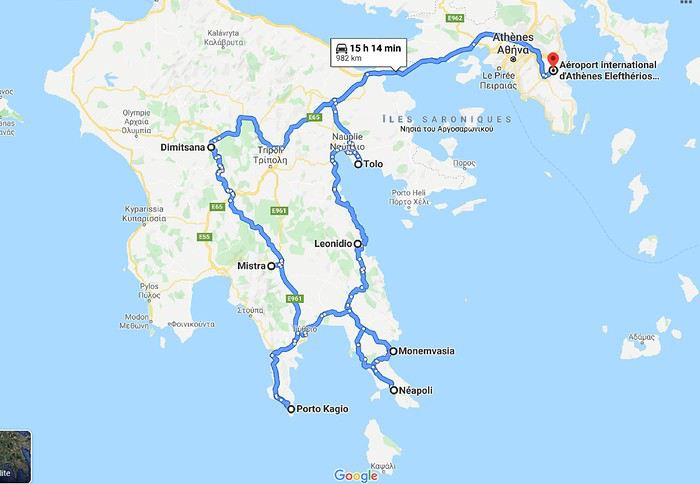 Muriel
Nous avons quelques hésitations quant à la chaleur possible (notamment pour les randonn��es) mais finalement, hop! la réservation des billets d'avion est faite fin janvier: ce sera un départ de Bruxelles (avec Brussels airlines) le 05/07 à 7h30. Puis arrive le (la) Covid avec son lot d'incertitudes: partira? Partira pas? Partira? Partira pas? Faut-il tout annuler, reporter? Au mois de juin les règles d'ouverture des frontières changent en permanence mais il arrive un moment où il faut bien se décider car certains hébergements ne sont plus annulables. Les frontières de la Grèce doivent théoriquement ouvrir totalement le 1er juillet (sous réserve de...) on doit partir le 5 ...alors, c'est décidé, on part! ...enfin, si tout se passe comme prévu!
L'ouest du Péloponnèse ne m'inspire pas plus que ça. Par contre Cythère me tente bien, alors voilà à quoi ressemblera notre circuit (on prendra le bateau pour Cythère à Neapoli):
MurielOsaka ou pas Osaka? English translation pending
Bonjour,
Nous devions partir 3 semaines en mai pour notre 1er voyage au japon . Ce fut un crève cœur d'annuler.
Nous avons décidé de reprogrammer notre voyage l'an prochain en mai (🤪 si c'est possible) et ce sera pour 5 semaines, histoire de nous venger 😉
notre 1er programme était assez classique, avec un transport en shinkansen. Tokyo 8 nuits Kanazawa 2 nuits takayama 2 nuits Hiroshima ( et Myajyma) 2 nuits Kyoto 5 nuits
sur 5 semaines, nous avons rajouté : 3 nuits à Tokyo (soit 11 nuits) pour prendre notre temps dans nos quartiers préférés et visiter quelques quartiers plus ignorés des touristes ( Koenji, Shimokitazawa) 2 nuits à Kanazawa (soit 4) pour louer une voiture et visiter la peninsule de Noto 2 nuits à Hiroshima (soit 4 nuits) en louant une voiture pour pousser jusqu'à Onomichi, peut-être Takehara ou l'arrière pays au nord Hiroshima, vers Akiota. 1 nuit à Kyoto (soit 6 nuits) pour prendre son temps.
Et voilà, il nous reste 5 nuits à programmer et la question est : Osaka ou pas Osaka? on pourrait rester 5 jours de plus à Kyoto et en profiter pour visiter Osaka que nous n'avions pas prévu dans notre 1er programme. ou alors louer une voiture et visiter autour de Kyoto?
Merci pour vos avis sur Osaka 🙂
notre 1er programme était assez classique, avec un transport en shinkansen. Tokyo 8 nuits Kanazawa 2 nuits takayama 2 nuits Hiroshima ( et Myajyma) 2 nuits Kyoto 5 nuits
sur 5 semaines, nous avons rajouté : 3 nuits à Tokyo (soit 11 nuits) pour prendre notre temps dans nos quartiers préférés et visiter quelques quartiers plus ignorés des touristes ( Koenji, Shimokitazawa) 2 nuits à Kanazawa (soit 4) pour louer une voiture et visiter la peninsule de Noto 2 nuits à Hiroshima (soit 4 nuits) en louant une voiture pour pousser jusqu'à Onomichi, peut-être Takehara ou l'arrière pays au nord Hiroshima, vers Akiota. 1 nuit à Kyoto (soit 6 nuits) pour prendre son temps.
Et voilà, il nous reste 5 nuits à programmer et la question est : Osaka ou pas Osaka? on pourrait rester 5 jours de plus à Kyoto et en profiter pour visiter Osaka que nous n'avions pas prévu dans notre 1er programme. ou alors louer une voiture et visiter autour de Kyoto?
Merci pour vos avis sur Osaka 🙂
Promenades au Rwanda English translation pending
C'est un voyage qui date un peu, mais il se trouve que les circonstances de la vie m'offrent du temps libre... L'occasion de replonger dans mes souvenirs et partager un voyage qui reste probablement d’actualité même si nous habitons un monde qui change de plus en plus vite...
dimanche 4 juin 2017 Mulhouse-Kigali
Le décollage approche, il faut choisir son Macron, heu, je voulais dire, son livre, pardon. Bon, dans la France du mois de juin 2017, cela revient strictement au même…

09:30 embarquement 11:20 Départ Basel Turkish Airlines (TK1924) 3 heures de vol 15:20 Arrivée Istanbul (heure locale) Changement d'Avion 18:35 TK 569 Turkich Airline
durée 6h30
00:05 Arrivée: Kigali (KGL), Kigali, Rwanda
Je précise que le mobile de ce voyage est que ma sœur vit à Kigali depuis quelques années. Son mari travaille "dans la diplomatie". Nous sommes attendus à l’aéroport par un chauffeur de l’ambassade. Ma soeur nous avait dit qu’ils seraient au lit, que la maison était ouverte et des infos pour retrouver sans aide notre chambre. Ceux qui connaissent mon célèbre sens de l’orientation ont déjà deviné que je suis allé me vautrer directement dans la chambre de nos hôtes…
lundi 5 juin 2017
Kigali C’est le lendemain qu’on a vraiment réalisé qu’on était en Afrique...
Bon, mais faut manger…On part faire des courses en ville, excellent moyen de prendre la température de l’endroit…Avec ma soeur, c’est tout de suite magouilles et compagnies…Elle me fait changer ma bonne vieille puce Bouygues contre une puce MTN locale. Elle alpague ensuite un gamin dans la rue qui tape sur mon clavier des suites de chiffres cabalistiques pour m’ouvrir les chemins d’une 3g low cost…
Comme souvent dans les pays qui se sont déversés dans le courant consumériste trop vite, les villes sont un gigantesque foutoir où l’architecture s’inspire beaucoup des gâteaux à la meringue, on côtoie le pire et le meilleur, un flot d’humains qui se débattent pour survivre, des raz de marée de véhicules, gigantesques 4*4 en concurrence avec des myriades de deux roues hétéroclites…C’est une ambiance, à l’africaine, des sonos déversent de la rumba congolaise, des types jouent au tam-tam…
Partout des portefaix s’activent avec des montagnes posées sur la tête…
On arrive au marché. Ma sœur y est en territoire connu, négocie, interpelle
dimanche 4 juin 2017 Mulhouse-Kigali
Le décollage approche, il faut choisir son Macron, heu, je voulais dire, son livre, pardon. Bon, dans la France du mois de juin 2017, cela revient strictement au même…
09:30 embarquement 11:20 Départ Basel Turkish Airlines (TK1924) 3 heures de vol 15:20 Arrivée Istanbul (heure locale) Changement d'Avion 18:35 TK 569 Turkich Airline
durée 6h30
00:05 Arrivée: Kigali (KGL), Kigali, Rwanda
Je précise que le mobile de ce voyage est que ma sœur vit à Kigali depuis quelques années. Son mari travaille "dans la diplomatie". Nous sommes attendus à l’aéroport par un chauffeur de l’ambassade. Ma soeur nous avait dit qu’ils seraient au lit, que la maison était ouverte et des infos pour retrouver sans aide notre chambre. Ceux qui connaissent mon célèbre sens de l’orientation ont déjà deviné que je suis allé me vautrer directement dans la chambre de nos hôtes…
lundi 5 juin 2017
Kigali C’est le lendemain qu’on a vraiment réalisé qu’on était en Afrique...
Bon, mais faut manger…On part faire des courses en ville, excellent moyen de prendre la température de l’endroit…Avec ma soeur, c’est tout de suite magouilles et compagnies…Elle me fait changer ma bonne vieille puce Bouygues contre une puce MTN locale. Elle alpague ensuite un gamin dans la rue qui tape sur mon clavier des suites de chiffres cabalistiques pour m’ouvrir les chemins d’une 3g low cost…
Comme souvent dans les pays qui se sont déversés dans le courant consumériste trop vite, les villes sont un gigantesque foutoir où l’architecture s’inspire beaucoup des gâteaux à la meringue, on côtoie le pire et le meilleur, un flot d’humains qui se débattent pour survivre, des raz de marée de véhicules, gigantesques 4*4 en concurrence avec des myriades de deux roues hétéroclites…C’est une ambiance, à l’africaine, des sonos déversent de la rumba congolaise, des types jouent au tam-tam…
Partout des portefaix s’activent avec des montagnes posées sur la tête…
On arrive au marché. Ma sœur y est en territoire connu, négocie, interpelle
L'île de Bréhat, Paimpol et les environs... English translation pending
Sitôt déconfinés, on a mis le cap sur la côte bretonne, projet qui avait dû être reporté pour cause de corona.
Et dès notre arrivée, on a souhaité aller sur l'île de Bréhat pour la découvrir avec le minimum de visiteurs.
Alors, on a commencé par réserver nos billets sur le net, réservation obligatoire pour permettre d'organiser les traversées en respectant au mieux les mesures de sécurité sanitaire.
Dès 9h30, on embarquait à l'Arcouest pour une traversée de 10 minutes en direction de Bréhat.
Notre arrivée au port clos de Bréhat s'est faite dans la brume.
On a posé le pied sur une île mystérieuse.
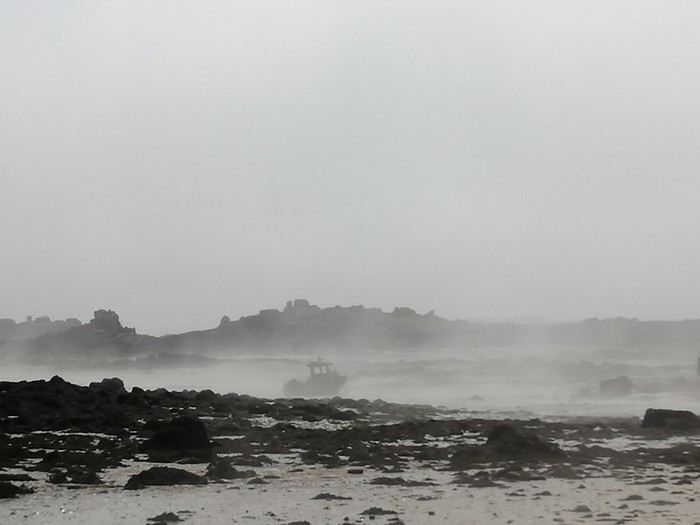
Ne sachant pas précisément combien de temps il nous faudrait pour faire le tour de l'île à pied, on a fait le choix d'aller d'abord jusqu'au phare du Paon , au nord, à l'opposé de l'embarcadère. On a donc traversé le village, emprunté nombre de petits chemins et admiré les jardins et les sentiers fleuris. Bréhat, c'est l'île des fleurs.
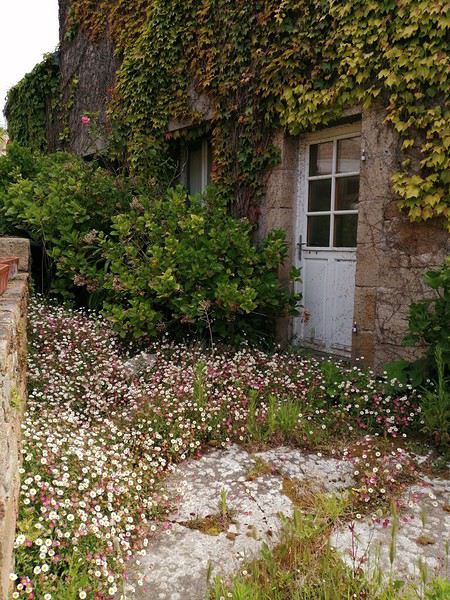
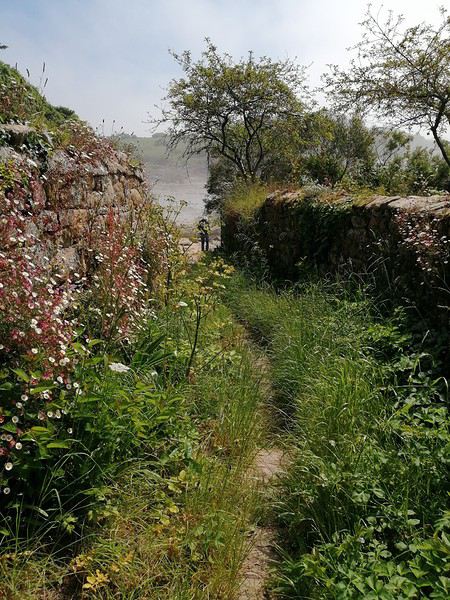
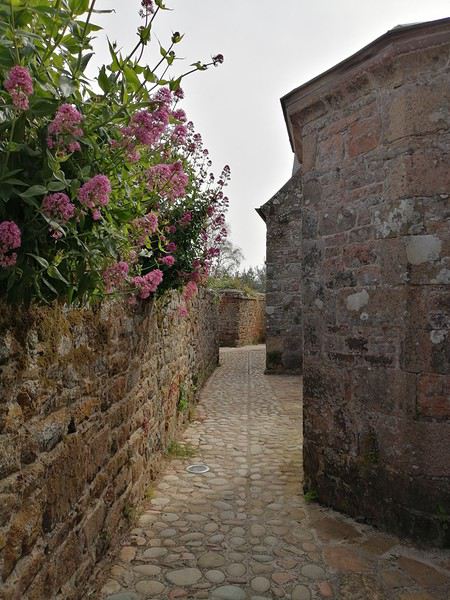
A notre arrivée au phare du Paon la brume commence à se dissiper. On découvre une côte sauvage, magnifique!
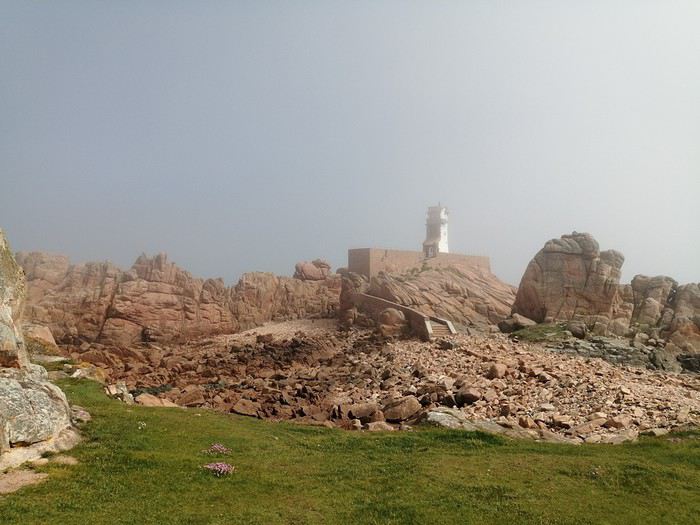
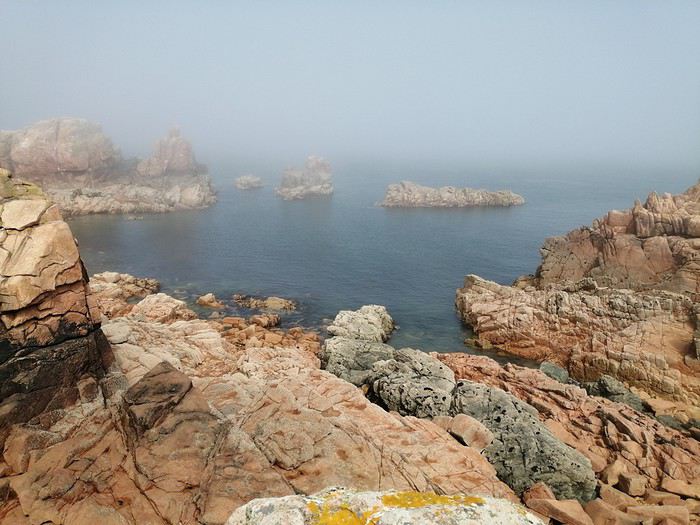
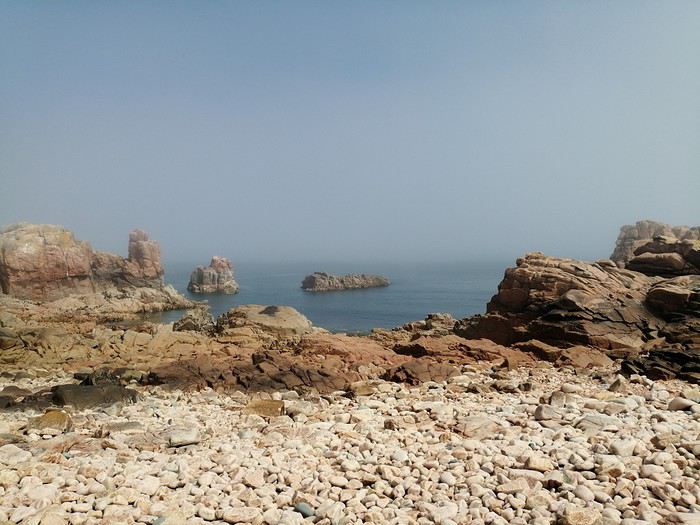
On poursuit notre découverte. Au bord d'un chemin, on complète notre pique- ni que en achetant des fraises du pays.
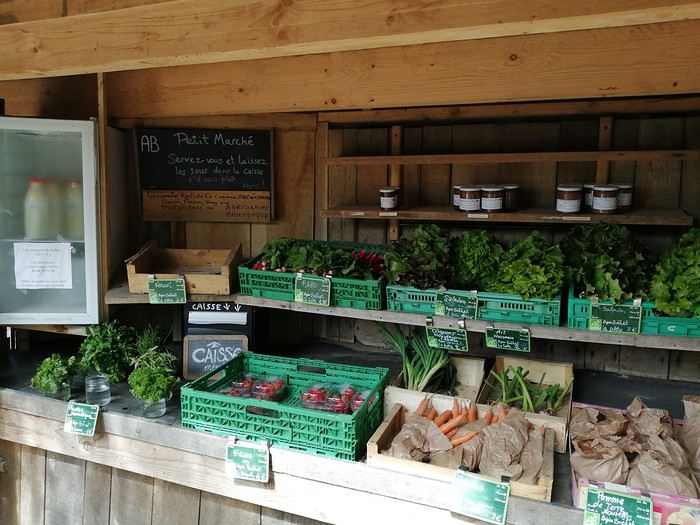 Et on s'installe sur une petite plage, pour recharger les batteries avant de repartir sur les chemins.
Ne sachant pas précisément combien de temps il nous faudrait pour faire le tour de l'île à pied, on a fait le choix d'aller d'abord jusqu'au phare du Paon , au nord, à l'opposé de l'embarcadère. On a donc traversé le village, emprunté nombre de petits chemins et admiré les jardins et les sentiers fleuris. Bréhat, c'est l'île des fleurs.
A notre arrivée au phare du Paon la brume commence à se dissiper. On découvre une côte sauvage, magnifique!
On poursuit notre découverte. Au bord d'un chemin, on complète notre pique- ni que en achetant des fraises du pays.
Et on s'installe sur une petite plage, pour recharger les batteries avant de repartir sur les chemins.