Results for "Vieux-Lille+|+127"
160746 results found.
On the Silk Road: Chronicles of a Sixty-Something Traveling Completely Independently
From Beijing to Khiva: China, Kyrgyzstan, Tajikistan, Uzbekistan
Chronicle of anecdotes, highlights, and other adventures that marked this eight-week journey in 2018.
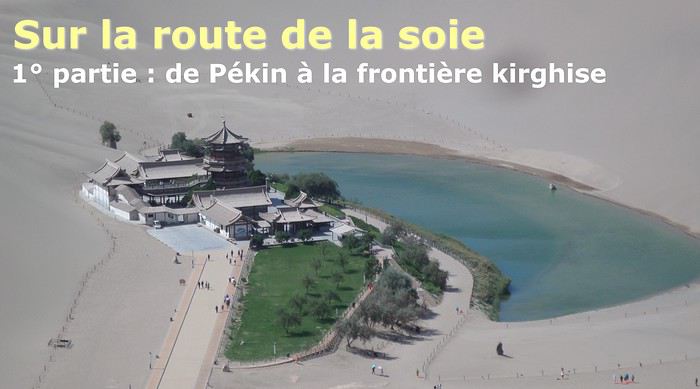
The Chinese Far West More than 30 years after my first trip to eastern China, I finally fulfilled an old dream: traveling solo from Beijing to the far west, discovering Xinjiang, the Uyghur people and the oppression they endure, the oases of Turpan and Kashgar, the Taklamakan Desert, the end of the Great Wall... The route was covered by train.
MENU PART 1: CHINA
1- Beijing (Jiankou) : the authentic Great Wall, without tourists 2- Cycling in Beijing, the best way to get around 3- Beijing : departure for the far west 4- Jiayuguan : getting by without English 5- Jiayuguan : scams and heritage 6- Dunhuang : abundance in the middle of the desert 7- Turpan : the Uyghurs under heavy surveillance 8- Kashgar : love at first sight for the old city 9- Kashgar : China’s recipe for controlling the populace 10- Tashkurgan : what on earth was I thinking going there! Kyrgyz border: a surreal epic Photo album from the 80s, contributions from other travelers (page 2)
1- JIANKOU Finding the authentic Great Wall, without tourists or a guide Friday, August 24, 2018 Thirty years later, I didn’t feel like revisiting the Great Wall at Badaling or any other overcrowded site. I chose to explore it at Jiankou, in its wildest, most authentic, and unrestored section, starting from a lost village deep in a valley—though it wasn’t *that* lost, since it had everything for communication.
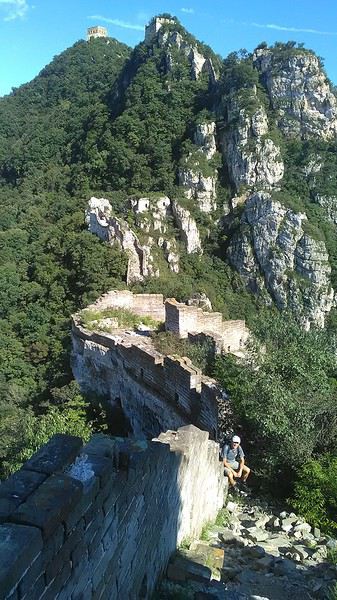
No need to pay for a taxi to get there—by timing it right, you can take the bus for just a few yuan. You have to get off at Xizhazi, the bus terminus. Be careful, there are only two buses a day in each direction. At the Xizhazi bus stop, I met a young couple who’d arrived with zero information about what to expect. We hiked the three of us toward the restored section of Mutianyu.
Still, be cautious With GPS and a topographic map (OpenTopoMap), you can set off without a problem or guide. The trail up to Jiankou is easy and well-marked. The trails down are too. But be careful—once you’re on the Wall, it’s real mountain hiking, with easy but dangerous climbing sections (over sheer drops). Not for amateurs or those afraid of heights! But what a reward. The Wall all to yourself, where it’s at its most daring. Truly mesmerizing.
More photos...
2- BEIJING The best way to get around the capital Sunday, August 26 The best way to explore the city is still by bike. Most are in a bike-share system, but you need to use an app—WeChat, the app that does everything, like monitoring your every move. No way I was installing that.
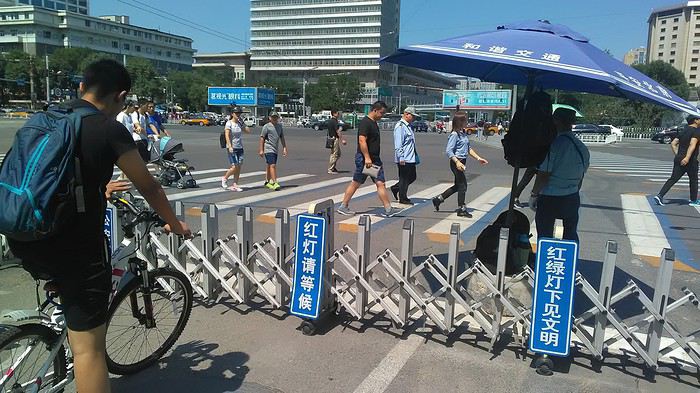
I found one at a rental shop near the hostel. The key is to quickly learn local traffic customs to minimize risks. Bike lanes are wide along the avenues.
But you still have to: - Watch out for anything parked on the bike paths—the most annoying are people napping or talking on the phone in their cars - Keep an eye on everything coming the wrong way—the list is long - The worst is right turns on red, which in Chinese traffic rules seem to have priority Once you get the hang of it, it’s fine. The city is huge but flat, so you can just wing it.
3- BEIJING By train to the far west Sunday, August 26 Beijing West Station is the size and operates like an airport. With your e-ticket from the agency, you first have to pick up your ticket at the special "English" counter, after passing through security. With your ticket in hand, you have to exit and enter through the boarding waiting area—not the platform—after a second security check.
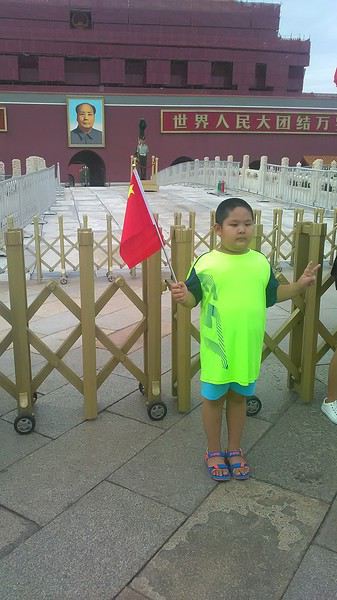 Then you find the right hall and wait for the sign to finally access the platform. In the end, it works pretty well given the incredible number of passengers to manage. Everywhere in Beijing, I saw that the Chinese have mastered crowd flow management.
Nice surprise: second-class carriages are clean, air-conditioned, and bright. Perfect, since I was in for 20 hours. One uniformed attendant per carriage, mobile meal service—luxury! Small downside: no luggage space. Hauling your suitcase up to the top bunk is quite a workout. I was in the middle, so it wasn’t too bad. The landscape, though, whether rural or urban, is pretty bleak. That should change once we leave the eastern plains.
Of course, I got my first police visit, with a thorough passport check and bag search. I was warned—going to the Chinese far west exposes you to this kind of hassle. But they were polite and respectful.
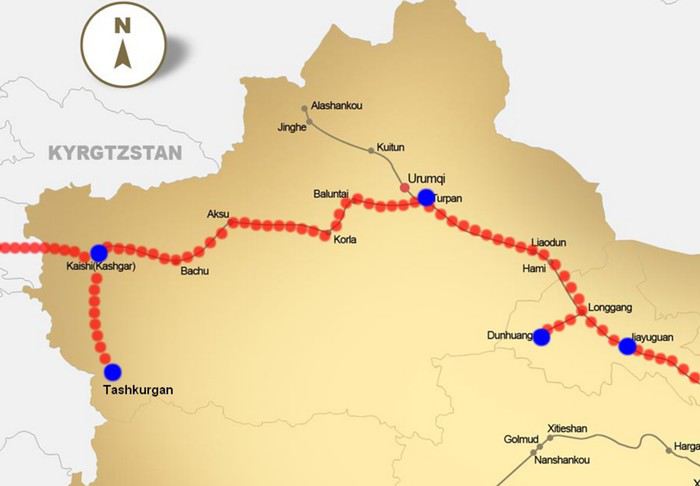 The Chinese Far West
4- JIAYUGUAN Getting by without English Monday, August 27 At the gates of two deserts (Gobi and Taklamakan) and at the foot of the Tibetan highlands, the Great Wall ends at Jiayuguan. Here, I found the deeper China I’d somewhat rediscovered during my bike ride, even if now everyone gets around on electric bikes and I’m no longer stared at like an alien.
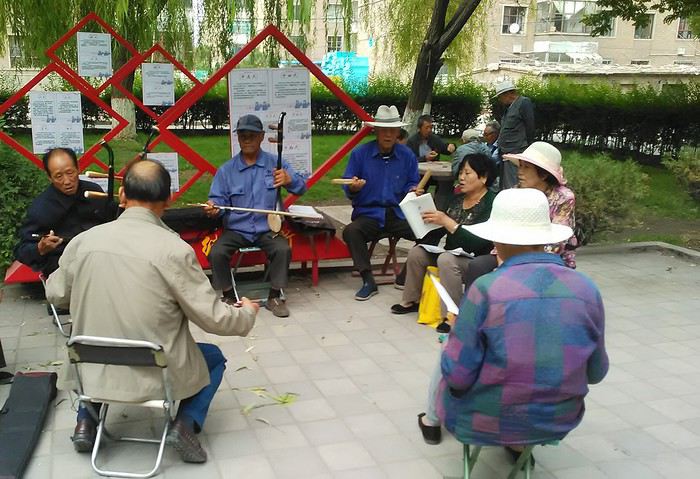
Prices are nothing like Beijing: you can find a full meal for 2 €, and my bike cost 7 € for two days. Plus, few people speak English—neither the owner of the HI hostel where I stayed, nor the ticket sellers at the sites, let alone the servers at the small eateries where I ate. Everything is written in Chinese. So I had to use the little Chinese I know to communicate about essentials. It makes the locals laugh to see a European trying to speak their language, but it earns respect. With Google Translate’s help, I managed.
Rant: With their avenues blocked for construction for kilometers without warning, and new roads not yet on maps, I must’ve taken 15 km of detours. More photos...
5- JIAYUGUAN Scams and heritage Tuesday, August 28 The Great Wall doesn’t exactly end at the fort I visited yesterday but 10 km further, at the entrance to a river gorge at the foot of the mountains. All that’s left is a badly damaged tower (more like a mound of earth) and a section of clay wall, similar to the one I biked yesterday.
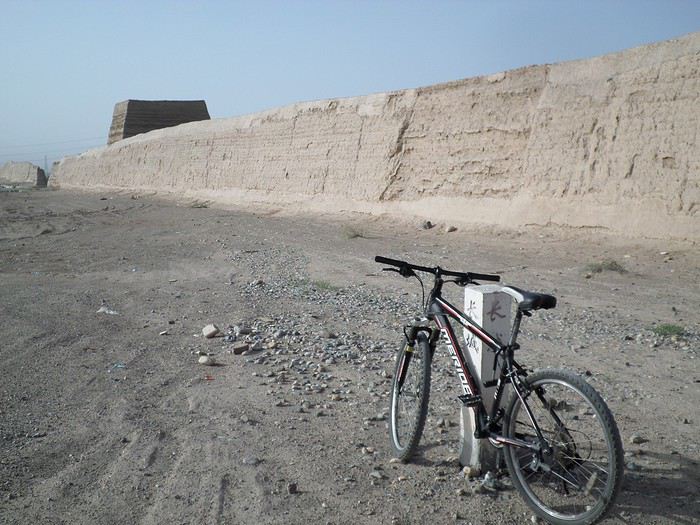
This morning, I hopped on my bike, determined to venture into the desert to see this highly symbolic site. First, you access it via a wide, brand-new road with not a soul in sight. Just before the site, I came across a grand welcome gate, very period-style, but it’s actually the inevitable toll booth.
Behind the gate, the road continues straight to the site, which you can see in the distance—at least 2 km away—the remains of the tower and wall. I had to leave my bike here. Fine. I went to the ticket counter and asked the price: 120 yuan! I couldn’t believe it—over 15 € for a simple mound of earth.
I showed my displeasure to the attendant, who couldn’t care less, and immediately turned back. 120 yuan—that’s the price for a new road, a fancy gate planted 2 km before the site just to force you to take a shuttle, and employees with nothing to do all day... Now I understand why I didn’t meet anyone!
Heritage China is a bit pricey Generally, sites are expensive for the country’s standard of living, but travelers are supposed to have money, so why hold back? I even gave up on the Forbidden City—reservations required days in advance (or on the black market at an impossible price). I prefer to keep the memory of my first visit, when entry must’ve cost a few dozen cents, and there were only a handful of visitors.
This morning, I took a taxi to see remarkable tombs of common people from the 3rd to 6th centuries. They’re small vaulted caves made of painted bricks, depicting scenes of daily life. Very pretty and moving. But even here, though the price was more reasonable, I was left wanting—only one of the 16 tombs is open to visitors, and it’s apparently not the most beautiful.
The authentic China—at least what’s left of it... Wandering the impersonal avenues of the city, you stumble upon a market. There, you still find traditional China—small shops with questionable hygiene, Go players, musicians, and even a dental prosthetist. The last refuge for those untouched by modernity. More photos...
6- DUNHUANG Abundance in the middle of the desert Wednesday, August 29 Well, I thought the landscape would be less bleak as I headed west. Nope. The only distraction in this expanse of dark, clayey sand is the forests of pylons and wind turbines, plus wild camels racing each other.
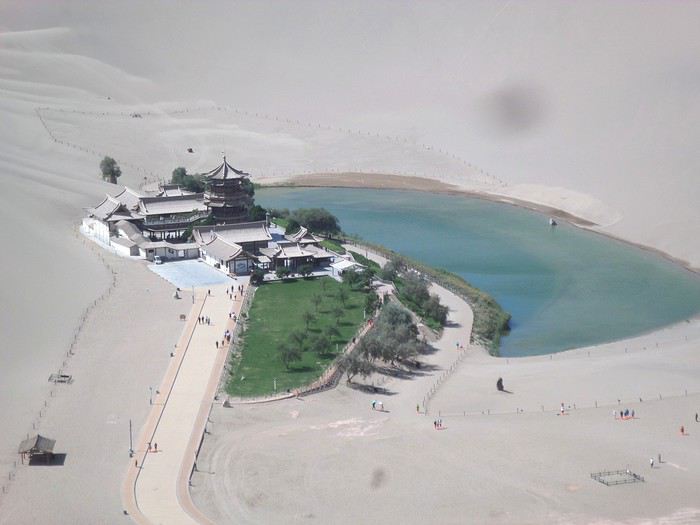 However, Dunhuang, the gateway to the Taklamakan, is by far the most pleasant Chinese city I know. There’s a real city center you can explore on foot. It’s hot but not unbearable, with a light, dry breeze. Much nicer than Beijing. The Han Chinese are still the majority, but the Muslim Uyghurs are more numerous, and the muezzin’s call to prayer echoes around the mosque.
The most surprising thing is the abundance and diversity of fruits and vegetables. You wonder how it all grows here. Well-irrigated, the desert sands are very fertile. Here, raisins have subtle, mysterious flavors, and the lamb really tastes like lamb.
Today, I visited the must-see Mingshashan, a dune complex next to which Pila is a molehill. The Basque Country, but covered in sand... More photos...
7- TURPAN The Uyghurs under heavy surveillance Friday, August 31 Surveillance cameras everywhere in the city, armed police stationed at intersections, in front of public buildings, at the entrance and inside tourist sites, police stations on every corner, patrols on foot or by car, khaki uniforms even for middle schoolers... here, the Han Chinese are in the minority, and you can feel it. Turpan feels like a city under siege.
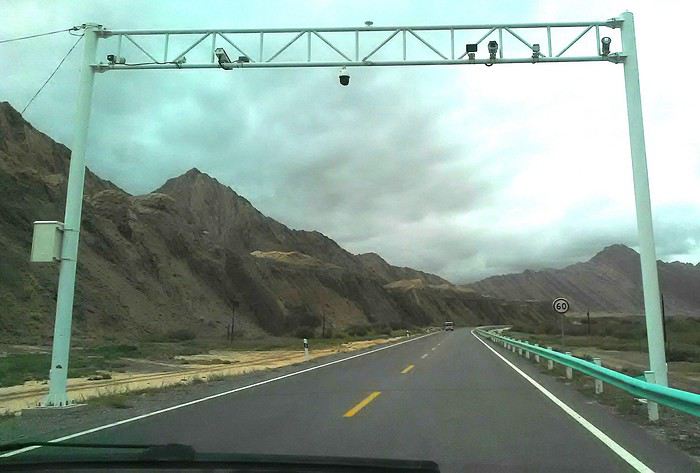
To enter the youth hostel where I stayed, there’s even a security gate, and the receptionist (a Han, like everyone in tourism) wears a bulletproof vest! Reassuring. Still, you don’t feel particularly threatened here, especially as a European. The troublemakers are the Chinese, not the Uyghurs. Generally, China is a very safe country for visitors.
Smile, you’re on camera! I was biking on an avenue when the car in front of me got flashed for driving slowly. I quickly understood why when I got flashed too.
Here, the official time is Beijing time, but it gets dark two hours later. It’ll be even worse in Kashgar. Trickier to manage: everything is displayed in Chinese and Arabic. Nothing in English. Choosing a menu is a shot in the dark. Apart from a few young Chinese, no one here speaks English, and my Chinese doesn’t seem very understandable...
Mogao, the end of the road for the Han Yesterday, near Dunhuang, I went to Mogao, a complex of decorated caves with Buddha sculptures and paintings. Stunning, but so crowded! Luckily, here in Turpan, Chinese tourists barely venture out. So I visited a Silk Road ghost town with only a handful of other visitors and under a howling wind.
The modern Chinese city is swallowing up the old Uyghur neighborhoods—only a museum-like district remains in the center, and pockets of resistance on the outskirts are doomed to disappear soon. More photos...
8- KASHGAR A (relative) love at first sight for the old city Sunday, September 2 After three overnight trains, here I am in the far west of China, nearly 4,000 km from the capital. Despite the omnipresent police and an old city preserved UNESCO-style, Kashgar is my Chinese love at first sight.
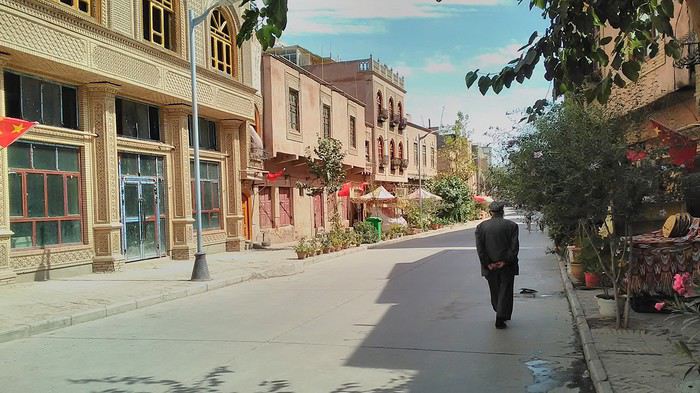
Finally, Chinese... well, sort of, because we’re in Uyghur territory here—a Turkic people with nothing culturally in common with the Han, the eastern Chinese. It started badly yesterday at Turfan station, where after three security gate passes, at least five passport checks, and a bag search, three adorable policewomen confiscated my antibacterial lotion because it had a flammable logo...
Then came the welcoming committee of armed cops at Kashgar station. Once all that was over, they left me alone—except you still have to go through security checks like everyone else to enter the old city, the bazaar, the livestock market... The further west you go, the more the siege mentality is evident. Luckily, the border isn’t far...
Despite the inevitable destruction-reconstruction, the city center has been well preserved. Thankfully, because it’s a very original style, a mix of local and colonial. I love it, even if it’s a bit too artificial, sanitized, and watered-down, and rather empty of residents. On the Silk Road, the city was famous for its great food. And it still is—rarely have I seen such richness and abundance of food! And not just scorpions or snakes. More photos...
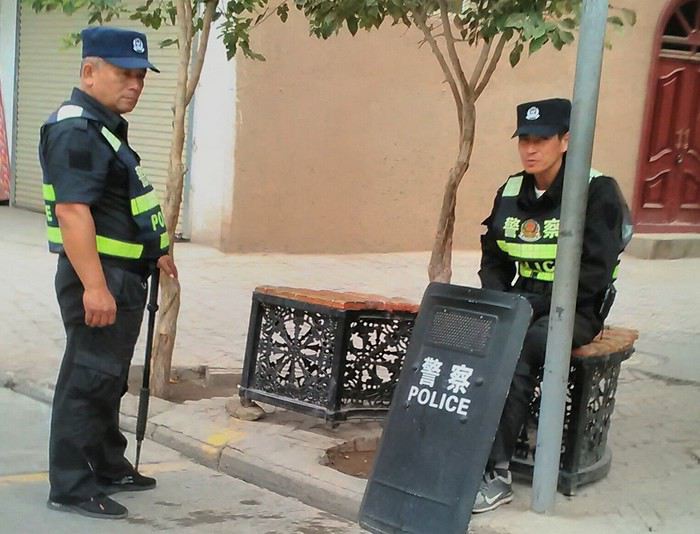
9- KASHGAR China’s recipe for controlling the populace Saturday, September 1 Xinjiang, along with Tibet, is a "sensitive" area of rebellion in the eyes of Chinese authorities. As a result, the state has these regions and their populations under total control. Tourists also feel the consequences, even if they’re not at risk of re-education camps.
 - Putting barbed wire and anti-ramming barriers around sensitive sites (schools, big hotels, government buildings...)
- Installing traffic surveillance gates with cameras and photo flashes (for all vehicles passing, including bikes) throughout the city and even in the countryside
- Posting uniformed guards with tasers, batons, or huge baseball bats every 100 meters
- Training the Han population (ethnic Chinese) in self-defense with sticks, preferably in the morning on the street. Men and women of all ages
- Starting school with the national anthem, doing military exercises, and receiving political indoctrination, all neatly lined up in the courtyard. (The dream school for any teacher)
- Placing a snitch in uniform (a pseudo-guard) in public gathering places, like youth hostels. Mine spends the day loafing around the courtyard
- Putting Chinese flags everywhere on the streets to remind everyone who’s in charge
- Installing security gates at every entrance to areas frequented by tourists (thanks for that) but not just there
- Never photographing cops, or else! I tried, but it’s not easy...
- Putting barbed wire and anti-ramming barriers around sensitive sites (schools, big hotels, government buildings...)
- Installing traffic surveillance gates with cameras and photo flashes (for all vehicles passing, including bikes) throughout the city and even in the countryside
- Posting uniformed guards with tasers, batons, or huge baseball bats every 100 meters
- Training the Han population (ethnic Chinese) in self-defense with sticks, preferably in the morning on the street. Men and women of all ages
- Starting school with the national anthem, doing military exercises, and receiving political indoctrination, all neatly lined up in the courtyard. (The dream school for any teacher)
- Placing a snitch in uniform (a pseudo-guard) in public gathering places, like youth hostels. Mine spends the day loafing around the courtyard
- Putting Chinese flags everywhere on the streets to remind everyone who’s in charge
- Installing security gates at every entrance to areas frequented by tourists (thanks for that) but not just there
- Never photographing cops, or else! I tried, but it’s not easy...
With all that, you can stroll around safely Not much crime! As for the amount the Chinese state spends to maintain such a system, it’s staggering! A third of the Han living in Xinjiang work in security. Today, I wandered freely around old Kashgar, which is quite large after all. More photos...
10- TASHKURGAN What on earth was I thinking going there! Wednesday, September 5 First, there’s the taxi—pretty crappy, with a driver who doesn’t speak a word of English and won’t stop smoking. Over six hours in that... shared with a completely out-of-it American.
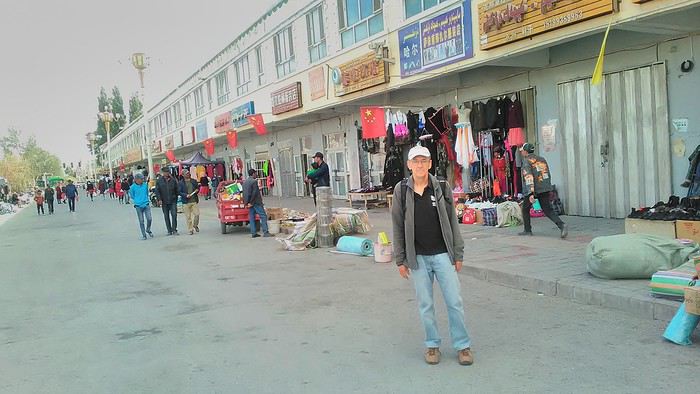
Then there are all the checkpoints along the way. I won’t go on—you know the drill by now.
After that, there’s Tashkurgan—a town with nothing to see, nothing to do. Deserted as soon as night falls. There’s this huge youth hostel and a few lost Chinese tapping away on their smartphones, chain-smoking. This lost American-European crowd, swapping tips on how to enter Pakistan or Tajikistan.
Luckily, there’s the Chinese Pamir Highway, lined with peaks over 7,000m. There’s the feeling of no longer being in China, with a population whose features are Middle Eastern. And these Tajik women with their stunning hairstyles and vibrant costumes. There’s the fact of having reached the westernmost Chinese city, far from crowds and tourist sites. A sort of end of the world. More photos...
11- KYRGYZ BORDER A surreal epic Thursday, September 6 The road from Kashgar to the Kyrgyzstan border is a little over 200 km and passes through beautiful landscapes of colorful, desert-like mountains with acrobatic folds. That’s the bucolic part of the trip.
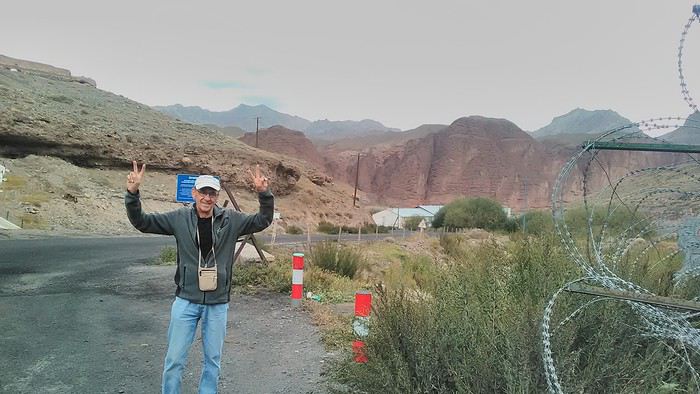 Yesterday, I managed to gather four people to rent a minibus to reach the border more easily: a Spaniard and an Argentine I’d already met in Turpan, and two New Zealanders who responded to the ad left at the hostel.
Absurdity and paranoia of Chinese authorities The highlight was crossing the town of Wuqia, 50 km past Kashgar. After tallying up with my fellow sufferers, we must’ve passed about ten checkpoints with: - Passport checks: 14 times, sometimes by two cops side by side - Bag checks: 4 times - Smartphone checks: 2 times, with deletion of "non-compliant" photos, and registration of your IMEI in the exit log!... Absurd and surreal at the same time, since my camera stayed in my bag, my apps are in French, and my photos have been online for ages...
With all that, we arrived just as the last checkpoint before the no man’s land marking the border between the two countries was on lunch break. And bam! Another 1.5-hour wait, alongside truckers who were much more used to this than we were.
What to think? The cops themselves aren’t fooled. They play the role they’re asked to, but sometimes you can coax a smile out of them—they realize how ridiculous the situation is.
What’s the point? That’s the big question my companions and I were tempted to answer with "to piss people off." To show you your place isn’t here, but with the other tourists, over there in the east, in Shanghai, Xi’an, or Guangzhou.
As for you, a traveler from a democratic country, you really experience this as aggression, humiliation, a violation of your private space. And yet, I’m respected, they speak to me properly. Today, I better understand what a Palestinian or a citizen of an occupied country might feel daily. A unique experience! Thanks, China.
And to top it off, the cherry on the cake! It’s still this glowing button you press to rate your passage after clearing the last obstacle before the exit stamp. I was so surprised it turned off before I could react. The Spaniard, with great humor and irony, had time to vote "excellent." In the end, he wasn’t wrong—you can hardly do better!
PS: I ditched my buddies at the border. They didn’t want to pay for a taxi to continue. So I took a direct taxi to Osh. The first 100 km are fabulous. I couldn’t take many photos, but I’ll be back on Monday to go to Tajikistan.
More photos...
The rest of the Silk Road, Part 2, in these travel journals: Kyrgyzstan, Tajikistan, Uzbekistan.
The Chinese Far West More than 30 years after my first trip to eastern China, I finally fulfilled an old dream: traveling solo from Beijing to the far west, discovering Xinjiang, the Uyghur people and the oppression they endure, the oases of Turpan and Kashgar, the Taklamakan Desert, the end of the Great Wall... The route was covered by train.
MENU PART 1: CHINA
1- Beijing (Jiankou) : the authentic Great Wall, without tourists 2- Cycling in Beijing, the best way to get around 3- Beijing : departure for the far west 4- Jiayuguan : getting by without English 5- Jiayuguan : scams and heritage 6- Dunhuang : abundance in the middle of the desert 7- Turpan : the Uyghurs under heavy surveillance 8- Kashgar : love at first sight for the old city 9- Kashgar : China’s recipe for controlling the populace 10- Tashkurgan : what on earth was I thinking going there! Kyrgyz border: a surreal epic Photo album from the 80s, contributions from other travelers (page 2)
1- JIANKOU Finding the authentic Great Wall, without tourists or a guide Friday, August 24, 2018 Thirty years later, I didn’t feel like revisiting the Great Wall at Badaling or any other overcrowded site. I chose to explore it at Jiankou, in its wildest, most authentic, and unrestored section, starting from a lost village deep in a valley—though it wasn’t *that* lost, since it had everything for communication.
No need to pay for a taxi to get there—by timing it right, you can take the bus for just a few yuan. You have to get off at Xizhazi, the bus terminus. Be careful, there are only two buses a day in each direction. At the Xizhazi bus stop, I met a young couple who’d arrived with zero information about what to expect. We hiked the three of us toward the restored section of Mutianyu.
Still, be cautious With GPS and a topographic map (OpenTopoMap), you can set off without a problem or guide. The trail up to Jiankou is easy and well-marked. The trails down are too. But be careful—once you’re on the Wall, it’s real mountain hiking, with easy but dangerous climbing sections (over sheer drops). Not for amateurs or those afraid of heights! But what a reward. The Wall all to yourself, where it’s at its most daring. Truly mesmerizing.
More photos...
2- BEIJING The best way to get around the capital Sunday, August 26 The best way to explore the city is still by bike. Most are in a bike-share system, but you need to use an app—WeChat, the app that does everything, like monitoring your every move. No way I was installing that.
I found one at a rental shop near the hostel. The key is to quickly learn local traffic customs to minimize risks. Bike lanes are wide along the avenues.
But you still have to: - Watch out for anything parked on the bike paths—the most annoying are people napping or talking on the phone in their cars - Keep an eye on everything coming the wrong way—the list is long - The worst is right turns on red, which in Chinese traffic rules seem to have priority Once you get the hang of it, it’s fine. The city is huge but flat, so you can just wing it.
3- BEIJING By train to the far west Sunday, August 26 Beijing West Station is the size and operates like an airport. With your e-ticket from the agency, you first have to pick up your ticket at the special "English" counter, after passing through security. With your ticket in hand, you have to exit and enter through the boarding waiting area—not the platform—after a second security check.
Then you find the right hall and wait for the sign to finally access the platform. In the end, it works pretty well given the incredible number of passengers to manage. Everywhere in Beijing, I saw that the Chinese have mastered crowd flow management.Nice surprise: second-class carriages are clean, air-conditioned, and bright. Perfect, since I was in for 20 hours. One uniformed attendant per carriage, mobile meal service—luxury! Small downside: no luggage space. Hauling your suitcase up to the top bunk is quite a workout. I was in the middle, so it wasn’t too bad. The landscape, though, whether rural or urban, is pretty bleak. That should change once we leave the eastern plains.
Of course, I got my first police visit, with a thorough passport check and bag search. I was warned—going to the Chinese far west exposes you to this kind of hassle. But they were polite and respectful.
The Chinese Far West4- JIAYUGUAN Getting by without English Monday, August 27 At the gates of two deserts (Gobi and Taklamakan) and at the foot of the Tibetan highlands, the Great Wall ends at Jiayuguan. Here, I found the deeper China I’d somewhat rediscovered during my bike ride, even if now everyone gets around on electric bikes and I’m no longer stared at like an alien.
Prices are nothing like Beijing: you can find a full meal for 2 €, and my bike cost 7 € for two days. Plus, few people speak English—neither the owner of the HI hostel where I stayed, nor the ticket sellers at the sites, let alone the servers at the small eateries where I ate. Everything is written in Chinese. So I had to use the little Chinese I know to communicate about essentials. It makes the locals laugh to see a European trying to speak their language, but it earns respect. With Google Translate’s help, I managed.
Rant: With their avenues blocked for construction for kilometers without warning, and new roads not yet on maps, I must’ve taken 15 km of detours. More photos...
5- JIAYUGUAN Scams and heritage Tuesday, August 28 The Great Wall doesn’t exactly end at the fort I visited yesterday but 10 km further, at the entrance to a river gorge at the foot of the mountains. All that’s left is a badly damaged tower (more like a mound of earth) and a section of clay wall, similar to the one I biked yesterday.
This morning, I hopped on my bike, determined to venture into the desert to see this highly symbolic site. First, you access it via a wide, brand-new road with not a soul in sight. Just before the site, I came across a grand welcome gate, very period-style, but it’s actually the inevitable toll booth.
Behind the gate, the road continues straight to the site, which you can see in the distance—at least 2 km away—the remains of the tower and wall. I had to leave my bike here. Fine. I went to the ticket counter and asked the price: 120 yuan! I couldn’t believe it—over 15 € for a simple mound of earth.
I showed my displeasure to the attendant, who couldn’t care less, and immediately turned back. 120 yuan—that’s the price for a new road, a fancy gate planted 2 km before the site just to force you to take a shuttle, and employees with nothing to do all day... Now I understand why I didn’t meet anyone!
Heritage China is a bit pricey Generally, sites are expensive for the country’s standard of living, but travelers are supposed to have money, so why hold back? I even gave up on the Forbidden City—reservations required days in advance (or on the black market at an impossible price). I prefer to keep the memory of my first visit, when entry must’ve cost a few dozen cents, and there were only a handful of visitors.
This morning, I took a taxi to see remarkable tombs of common people from the 3rd to 6th centuries. They’re small vaulted caves made of painted bricks, depicting scenes of daily life. Very pretty and moving. But even here, though the price was more reasonable, I was left wanting—only one of the 16 tombs is open to visitors, and it’s apparently not the most beautiful.
The authentic China—at least what’s left of it... Wandering the impersonal avenues of the city, you stumble upon a market. There, you still find traditional China—small shops with questionable hygiene, Go players, musicians, and even a dental prosthetist. The last refuge for those untouched by modernity. More photos...
6- DUNHUANG Abundance in the middle of the desert Wednesday, August 29 Well, I thought the landscape would be less bleak as I headed west. Nope. The only distraction in this expanse of dark, clayey sand is the forests of pylons and wind turbines, plus wild camels racing each other.
However, Dunhuang, the gateway to the Taklamakan, is by far the most pleasant Chinese city I know. There’s a real city center you can explore on foot. It’s hot but not unbearable, with a light, dry breeze. Much nicer than Beijing. The Han Chinese are still the majority, but the Muslim Uyghurs are more numerous, and the muezzin’s call to prayer echoes around the mosque.The most surprising thing is the abundance and diversity of fruits and vegetables. You wonder how it all grows here. Well-irrigated, the desert sands are very fertile. Here, raisins have subtle, mysterious flavors, and the lamb really tastes like lamb.
Today, I visited the must-see Mingshashan, a dune complex next to which Pila is a molehill. The Basque Country, but covered in sand... More photos...
7- TURPAN The Uyghurs under heavy surveillance Friday, August 31 Surveillance cameras everywhere in the city, armed police stationed at intersections, in front of public buildings, at the entrance and inside tourist sites, police stations on every corner, patrols on foot or by car, khaki uniforms even for middle schoolers... here, the Han Chinese are in the minority, and you can feel it. Turpan feels like a city under siege.
To enter the youth hostel where I stayed, there’s even a security gate, and the receptionist (a Han, like everyone in tourism) wears a bulletproof vest! Reassuring. Still, you don’t feel particularly threatened here, especially as a European. The troublemakers are the Chinese, not the Uyghurs. Generally, China is a very safe country for visitors.
Smile, you’re on camera! I was biking on an avenue when the car in front of me got flashed for driving slowly. I quickly understood why when I got flashed too.
Here, the official time is Beijing time, but it gets dark two hours later. It’ll be even worse in Kashgar. Trickier to manage: everything is displayed in Chinese and Arabic. Nothing in English. Choosing a menu is a shot in the dark. Apart from a few young Chinese, no one here speaks English, and my Chinese doesn’t seem very understandable...
Mogao, the end of the road for the Han Yesterday, near Dunhuang, I went to Mogao, a complex of decorated caves with Buddha sculptures and paintings. Stunning, but so crowded! Luckily, here in Turpan, Chinese tourists barely venture out. So I visited a Silk Road ghost town with only a handful of other visitors and under a howling wind.
The modern Chinese city is swallowing up the old Uyghur neighborhoods—only a museum-like district remains in the center, and pockets of resistance on the outskirts are doomed to disappear soon. More photos...
8- KASHGAR A (relative) love at first sight for the old city Sunday, September 2 After three overnight trains, here I am in the far west of China, nearly 4,000 km from the capital. Despite the omnipresent police and an old city preserved UNESCO-style, Kashgar is my Chinese love at first sight.
Finally, Chinese... well, sort of, because we’re in Uyghur territory here—a Turkic people with nothing culturally in common with the Han, the eastern Chinese. It started badly yesterday at Turfan station, where after three security gate passes, at least five passport checks, and a bag search, three adorable policewomen confiscated my antibacterial lotion because it had a flammable logo...
Then came the welcoming committee of armed cops at Kashgar station. Once all that was over, they left me alone—except you still have to go through security checks like everyone else to enter the old city, the bazaar, the livestock market... The further west you go, the more the siege mentality is evident. Luckily, the border isn’t far...
Despite the inevitable destruction-reconstruction, the city center has been well preserved. Thankfully, because it’s a very original style, a mix of local and colonial. I love it, even if it’s a bit too artificial, sanitized, and watered-down, and rather empty of residents. On the Silk Road, the city was famous for its great food. And it still is—rarely have I seen such richness and abundance of food! And not just scorpions or snakes. More photos...
9- KASHGAR China’s recipe for controlling the populace Saturday, September 1 Xinjiang, along with Tibet, is a "sensitive" area of rebellion in the eyes of Chinese authorities. As a result, the state has these regions and their populations under total control. Tourists also feel the consequences, even if they’re not at risk of re-education camps.
- Putting barbed wire and anti-ramming barriers around sensitive sites (schools, big hotels, government buildings...)
- Installing traffic surveillance gates with cameras and photo flashes (for all vehicles passing, including bikes) throughout the city and even in the countryside
- Posting uniformed guards with tasers, batons, or huge baseball bats every 100 meters
- Training the Han population (ethnic Chinese) in self-defense with sticks, preferably in the morning on the street. Men and women of all ages
- Starting school with the national anthem, doing military exercises, and receiving political indoctrination, all neatly lined up in the courtyard. (The dream school for any teacher)
- Placing a snitch in uniform (a pseudo-guard) in public gathering places, like youth hostels. Mine spends the day loafing around the courtyard
- Putting Chinese flags everywhere on the streets to remind everyone who’s in charge
- Installing security gates at every entrance to areas frequented by tourists (thanks for that) but not just there
- Never photographing cops, or else! I tried, but it’s not easy...With all that, you can stroll around safely Not much crime! As for the amount the Chinese state spends to maintain such a system, it’s staggering! A third of the Han living in Xinjiang work in security. Today, I wandered freely around old Kashgar, which is quite large after all. More photos...
10- TASHKURGAN What on earth was I thinking going there! Wednesday, September 5 First, there’s the taxi—pretty crappy, with a driver who doesn’t speak a word of English and won’t stop smoking. Over six hours in that... shared with a completely out-of-it American.
Then there are all the checkpoints along the way. I won’t go on—you know the drill by now.
After that, there’s Tashkurgan—a town with nothing to see, nothing to do. Deserted as soon as night falls. There’s this huge youth hostel and a few lost Chinese tapping away on their smartphones, chain-smoking. This lost American-European crowd, swapping tips on how to enter Pakistan or Tajikistan.
Luckily, there’s the Chinese Pamir Highway, lined with peaks over 7,000m. There’s the feeling of no longer being in China, with a population whose features are Middle Eastern. And these Tajik women with their stunning hairstyles and vibrant costumes. There’s the fact of having reached the westernmost Chinese city, far from crowds and tourist sites. A sort of end of the world. More photos...
11- KYRGYZ BORDER A surreal epic Thursday, September 6 The road from Kashgar to the Kyrgyzstan border is a little over 200 km and passes through beautiful landscapes of colorful, desert-like mountains with acrobatic folds. That’s the bucolic part of the trip.
Yesterday, I managed to gather four people to rent a minibus to reach the border more easily: a Spaniard and an Argentine I’d already met in Turpan, and two New Zealanders who responded to the ad left at the hostel.Absurdity and paranoia of Chinese authorities The highlight was crossing the town of Wuqia, 50 km past Kashgar. After tallying up with my fellow sufferers, we must’ve passed about ten checkpoints with: - Passport checks: 14 times, sometimes by two cops side by side - Bag checks: 4 times - Smartphone checks: 2 times, with deletion of "non-compliant" photos, and registration of your IMEI in the exit log!... Absurd and surreal at the same time, since my camera stayed in my bag, my apps are in French, and my photos have been online for ages...
With all that, we arrived just as the last checkpoint before the no man’s land marking the border between the two countries was on lunch break. And bam! Another 1.5-hour wait, alongside truckers who were much more used to this than we were.
What to think? The cops themselves aren’t fooled. They play the role they’re asked to, but sometimes you can coax a smile out of them—they realize how ridiculous the situation is.
What’s the point? That’s the big question my companions and I were tempted to answer with "to piss people off." To show you your place isn’t here, but with the other tourists, over there in the east, in Shanghai, Xi’an, or Guangzhou.
As for you, a traveler from a democratic country, you really experience this as aggression, humiliation, a violation of your private space. And yet, I’m respected, they speak to me properly. Today, I better understand what a Palestinian or a citizen of an occupied country might feel daily. A unique experience! Thanks, China.
And to top it off, the cherry on the cake! It’s still this glowing button you press to rate your passage after clearing the last obstacle before the exit stamp. I was so surprised it turned off before I could react. The Spaniard, with great humor and irony, had time to vote "excellent." In the end, he wasn’t wrong—you can hardly do better!
PS: I ditched my buddies at the border. They didn’t want to pay for a taxi to continue. So I took a direct taxi to Osh. The first 100 km are fabulous. I couldn’t take many photos, but I’ll be back on Monday to go to Tajikistan.
More photos...
The rest of the Silk Road, Part 2, in these travel journals: Kyrgyzstan, Tajikistan, Uzbekistan.
Sac de couchage en duvet et sur-sac pour la Norvège English translation pending
Bonjour à tous,
Je m'apprête à partir en Norvège pour plusieurs mois. Je ne prévois pas de camper , régulièrement, mais j'emporte un sac de couchage et un sur-sac au cas où, car les températures sont proches de zéro, et j'ai des solutions d'hébergement incertaines (couchsurfing, etc).
Sur les conseils d'un vendeur au vieux campeur, j'ai acheté un sac de couchage en duvet, un sur-sac, et un tapis de sol. J'ai deux questions :
- Je me demande si je n'ai pas fait une bêtise en prenant un sac de couchage en duvet, car il paraît qu'il prend facilement l'humidité, et j'ai peur de me retrouver avec un sac de couchage qui n'isole plus. Le vendeur m'assure qu'avec le sursac, je n'aurais pas de problème d'humidité, mais je me pose de plus en plus de questions (la rosée, la pluie...). Un de vous aurait-il déjà utilisé cette combinaison dans ces conditions? (Sac de couchage en duvet + sur-sac entre -3°C et 3°C?)
- Question bête : est-ce que je mets le tapis de sol en-dessous du sur-sac ou dans le sur-sac?
Au pire j'ai un sac de couchage en synthétique, mais il est vraiment lourd et encombrant (2,25 ou 2,5kg, contre 1,25 pour l'autre), et pour l'instant je suis pile à 10kg (donc pas de bagage en soute) Merci beaucoup pour votre aide!
Juliette
- Je me demande si je n'ai pas fait une bêtise en prenant un sac de couchage en duvet, car il paraît qu'il prend facilement l'humidité, et j'ai peur de me retrouver avec un sac de couchage qui n'isole plus. Le vendeur m'assure qu'avec le sursac, je n'aurais pas de problème d'humidité, mais je me pose de plus en plus de questions (la rosée, la pluie...). Un de vous aurait-il déjà utilisé cette combinaison dans ces conditions? (Sac de couchage en duvet + sur-sac entre -3°C et 3°C?)
- Question bête : est-ce que je mets le tapis de sol en-dessous du sur-sac ou dans le sur-sac?
Au pire j'ai un sac de couchage en synthétique, mais il est vraiment lourd et encombrant (2,25 ou 2,5kg, contre 1,25 pour l'autre), et pour l'instant je suis pile à 10kg (donc pas de bagage en soute) Merci beaucoup pour votre aide!
Juliette
Bateau Costa Victoria classe Pearl Diamante English translation pending
J’embarque le 29/02 a bombay sur le victoria , je ne connais pas ce bateau , merci d’avance pour tout renseignements sur ce navire, mon niveau est diamante.
Infos qui peuvent vous aider à préparer votre voyage au Cambodge English translation pending
Important : Les vols à l’arraché sont de plus en plus importants à Phnom Penh. Moi-même j’ai assisté à ce vol, une personne qui se trouvait juste à côté de moi sur le trottoir s’est faite arracher le téléphone qu’elle tenait à la main par deux jeunes en cyclomoteur. Si vous le pouvez, emmenez de préférence un vieux smartphone !!
Notre séjour au Cambodge s’est déroulé du 12 au 28 janvier 2020. Je ne mettrais aucunes photos de notre voyage car déjà beaucoup de gens ont montré les leurs. Notre circuit a été : 3 nuits à Phnom Pen, 4 nuits à Siem Reap, 2 nuits à Battambang, 1 nuit à Phnom Penh, 4 nuits à Kampot, 1 nuit à Phnom Penh. Je fais plutôt un recueil des infos qui pourront vous être utiles. Le vol AR: Nice – Dubai – Bangkok – Phnom Penh avec Emirates pour 570€ (réservé 6 mois à l’avance). Très bonne compagnie ! L’arrivée à l’aéroport de Phnom Penh : Le visa coute 30$, pas besoin de photos à fournir comme le disaient certaines personnes. Téléphone : achetez une carte sim locale. Personnellement j’ai pris une « cellcard 4Glte » de 1.2 Go, valable 1 mois que j’ai payée 4$. Les transports : - Les tuk tuks classiques et les tuk tuk kmers (une remorque attachée à un scooter, c’est très sympa). Pour éviter de payer 3 à 4 fois le prix normal, il faut que vous téléchargiez sur votre smartphone l’application PassAppTaxi qui correspond à un Uber local. Vous pouvez choisir le type de véhicule que vous souhaitez, vous aurez le prix fixe et le temps d’attente. Pour exemple : en arrivant au terminal du bus Mekong express, il y avait un rabatteur qui nous demandait 8$ pour faire un trajet d’environ 4 kms. Après discussion il proposait 6$ ……avec l’application PassAppTaxi le prix était de 4500 riels (1, 25$) et le chauffeur était tout heureux quand nous lui avons donné 2$. - Les bus : o Trajet Phnom Penh à Siem Reap : la compagnie Giant Ibis. Les conducteurs étaient prudents …. donc pas de stress ! 350 kms en 6h00.. avec 30 minutes d’arrêt. Bonne compagnie qui vous donne une viennoiserie et une bouteille d’eau. o Trajet Siem Reap à Battambang, 150 kms en 4H00 avec 20 minutes d’arrêt. : La compagnie Mekong Express en mini bus. Le conducteur était prudent …. à nouveau pas de stress. Bonne compagnie ! o Trajet Battambang à Phnom Penh, 300 kms en 7h00 avec 30 minutes d’arrêt (250 kms de travaux sur la route !!!). La compagnie Mekong Express en van VIP. Le conducteur était prudent …. à nouveau pas de stress. Bonne compagnie ! o Trajet Phnom Penh à Kampot 150 kms en 4h00.. avec 15 minutes d’arrêt: la compagnie Giant Ibis en bus. Les conducteurs étaient prudents …. donc pas de stress !. Bonne compagnie qui vous donne une viennoiserie et une bouteille d’eau. o Trajet Kampot à Phnom Penh 150 kms en 4h00.. avec 15 minutes d’arrêt: la compagnie Giant Ibis en bus. Les conducteurs étaient prudents …. donc pas de stress !. Bonne compagnie qui vous donne une bouteille d’eau. - Le scooter à Kampot : 125cc loué à 5$ par jour ….. mais attention car il n’y a pas d’assurance. S’il vous arrive quelque chose … ça peut couter très cher. A ne louer que si vous vous sentez sûr de vous.
Les hôtels (réservés avec Booking.com) : - Phnom Penh : Okay Boutique hôtel situé à côté du palais royal. Très bel hôtel mais personnel à la réception pas très souriant. Prix de la chambre double premier avec petit déjeuner : 51$/nuit - Siem Reap : Savada Angkor Boutique hôtel à 2,5 kms du centre-ville. Très bel hôtel avec personnel très souriant. Prix de la chambre double Deluxe avec balcon et petit déjeuner : 41$/nuit. Je recommande vivement. Les tuk tuk vous emmènent en ville pour 2$ (un trajet par jour offert par l’hôtel). - Battambang : Moloppor Villa à 2,5 kms du centre-ville. Très bel hôtel avec personnel très souriant. Prix de la chambre lit King Size Deluxe avec petit déjeuner : 45$/nuit. Je recommande vivement. Les tuk tuk vous emmènent en ville pour 2$ (un trajet par jour offert par l’hôtel). Guillaume (un des patrons) est très sympa. - Kampot : Fish Island Bungalows à 2,5 kms du centre-ville. Bungalows très jolis mais attention au bruit et aux moustiques. Des chambres avec clim sont proposées Prix du bungalow Deluxe sans petit déjeuner : 35$/nuit. Je recommande vivement car le la patron Mr Leng est vraiment très convivial (toute sa famille est très gentille). Il nous a proposé des activités qui ont rendues notre séjour à Kampot inoubliable. Les tuk tuk vous emmènent en ville pour 2$. Les visites : - Phnom Penh : Le musée National (10$/personne), le Palais Royal (10$/personne), le marché Russe ( où nous avons entre autre acheté des noix de cajou à 12$ le kg ….. je regrette d’en avoir acheté que 500g ….2 jours après être arrivés chez nous il n’y en avait plus ..), balade en bateau le soir sur le fleuve Tonlé Sap pour aller jusqu’au Mékong et revenir (Durée 45 minutes, prix 5$/personne avec une boisson, l’idéal est d’emmener à manger car il y a des tables sur le pont supérieurs), ballades dans les ruelles de Phnom Penh mais attention à la circulation. - Siem Reap, visites des temples d’Angkor proposées par notre hôtel, ces prix sont tout à fait corrects : o Achat du Pass des Temples d’Angkor 3 jours à 32$ que l’on peut payer aux guichets du site par carte bancaire !!! o Le petit circuit avec lever de soleil (environ 6H00) pour 22$ en tuk tuk Kmer. o Le grand circuit (environ 5H00) pour 20$ en tuk tuk Kmer. o Les Ligams de Kbal Spean et le temple de Banteay Srei (située à 60 kms de Siemp Reap, dure environ 7H00) pour 35$ en tuk tuk Kmer.
- Battambang : o Circuit proposé par tout le monde (hôtel, tuk tuk , ..)dure environ 7H00 en tuk tuk kmer pour 25$, parcours en bamboo train à 5$ par personne (un peu l’arnaque), visite d’une fabrique artisanale de crêpe de riz pour faire des nems et rouleaux de printemps, visite d’une distillerie clandestine d’alcool de riz (1$ par personne), visite de temples, grotte où l’on peut voir l’envol de centaines de milliers de chauve-souris à la nuit tombante (attention aux excréments qui tombent …) o Soirée au cirque, 14$ par personne, très sympa - Kampot : o Visite de Kep et repas avec le crabe bleu au poivre de Kampot o Visite d’une plantation de poivrier o Ballade dans le parc national de Kep (1$ par personne) o Ballades sur le fleuve proposées par Mr Leng ….super !! Coût des repas : en moyenne 5$ pour un Curry ou Amok ou Lo lak accompagné de riz. La bière pression Cambodia (33cl) est entre 50 cents et 1 $.
Notre séjour au Cambodge s’est déroulé du 12 au 28 janvier 2020. Je ne mettrais aucunes photos de notre voyage car déjà beaucoup de gens ont montré les leurs. Notre circuit a été : 3 nuits à Phnom Pen, 4 nuits à Siem Reap, 2 nuits à Battambang, 1 nuit à Phnom Penh, 4 nuits à Kampot, 1 nuit à Phnom Penh. Je fais plutôt un recueil des infos qui pourront vous être utiles. Le vol AR: Nice – Dubai – Bangkok – Phnom Penh avec Emirates pour 570€ (réservé 6 mois à l’avance). Très bonne compagnie ! L’arrivée à l’aéroport de Phnom Penh : Le visa coute 30$, pas besoin de photos à fournir comme le disaient certaines personnes. Téléphone : achetez une carte sim locale. Personnellement j’ai pris une « cellcard 4Glte » de 1.2 Go, valable 1 mois que j’ai payée 4$. Les transports : - Les tuk tuks classiques et les tuk tuk kmers (une remorque attachée à un scooter, c’est très sympa). Pour éviter de payer 3 à 4 fois le prix normal, il faut que vous téléchargiez sur votre smartphone l’application PassAppTaxi qui correspond à un Uber local. Vous pouvez choisir le type de véhicule que vous souhaitez, vous aurez le prix fixe et le temps d’attente. Pour exemple : en arrivant au terminal du bus Mekong express, il y avait un rabatteur qui nous demandait 8$ pour faire un trajet d’environ 4 kms. Après discussion il proposait 6$ ……avec l’application PassAppTaxi le prix était de 4500 riels (1, 25$) et le chauffeur était tout heureux quand nous lui avons donné 2$. - Les bus : o Trajet Phnom Penh à Siem Reap : la compagnie Giant Ibis. Les conducteurs étaient prudents …. donc pas de stress ! 350 kms en 6h00.. avec 30 minutes d’arrêt. Bonne compagnie qui vous donne une viennoiserie et une bouteille d’eau. o Trajet Siem Reap à Battambang, 150 kms en 4H00 avec 20 minutes d’arrêt. : La compagnie Mekong Express en mini bus. Le conducteur était prudent …. à nouveau pas de stress. Bonne compagnie ! o Trajet Battambang à Phnom Penh, 300 kms en 7h00 avec 30 minutes d’arrêt (250 kms de travaux sur la route !!!). La compagnie Mekong Express en van VIP. Le conducteur était prudent …. à nouveau pas de stress. Bonne compagnie ! o Trajet Phnom Penh à Kampot 150 kms en 4h00.. avec 15 minutes d’arrêt: la compagnie Giant Ibis en bus. Les conducteurs étaient prudents …. donc pas de stress !. Bonne compagnie qui vous donne une viennoiserie et une bouteille d’eau. o Trajet Kampot à Phnom Penh 150 kms en 4h00.. avec 15 minutes d’arrêt: la compagnie Giant Ibis en bus. Les conducteurs étaient prudents …. donc pas de stress !. Bonne compagnie qui vous donne une bouteille d’eau. - Le scooter à Kampot : 125cc loué à 5$ par jour ….. mais attention car il n’y a pas d’assurance. S’il vous arrive quelque chose … ça peut couter très cher. A ne louer que si vous vous sentez sûr de vous.
Les hôtels (réservés avec Booking.com) : - Phnom Penh : Okay Boutique hôtel situé à côté du palais royal. Très bel hôtel mais personnel à la réception pas très souriant. Prix de la chambre double premier avec petit déjeuner : 51$/nuit - Siem Reap : Savada Angkor Boutique hôtel à 2,5 kms du centre-ville. Très bel hôtel avec personnel très souriant. Prix de la chambre double Deluxe avec balcon et petit déjeuner : 41$/nuit. Je recommande vivement. Les tuk tuk vous emmènent en ville pour 2$ (un trajet par jour offert par l’hôtel). - Battambang : Moloppor Villa à 2,5 kms du centre-ville. Très bel hôtel avec personnel très souriant. Prix de la chambre lit King Size Deluxe avec petit déjeuner : 45$/nuit. Je recommande vivement. Les tuk tuk vous emmènent en ville pour 2$ (un trajet par jour offert par l’hôtel). Guillaume (un des patrons) est très sympa. - Kampot : Fish Island Bungalows à 2,5 kms du centre-ville. Bungalows très jolis mais attention au bruit et aux moustiques. Des chambres avec clim sont proposées Prix du bungalow Deluxe sans petit déjeuner : 35$/nuit. Je recommande vivement car le la patron Mr Leng est vraiment très convivial (toute sa famille est très gentille). Il nous a proposé des activités qui ont rendues notre séjour à Kampot inoubliable. Les tuk tuk vous emmènent en ville pour 2$. Les visites : - Phnom Penh : Le musée National (10$/personne), le Palais Royal (10$/personne), le marché Russe ( où nous avons entre autre acheté des noix de cajou à 12$ le kg ….. je regrette d’en avoir acheté que 500g ….2 jours après être arrivés chez nous il n’y en avait plus ..), balade en bateau le soir sur le fleuve Tonlé Sap pour aller jusqu’au Mékong et revenir (Durée 45 minutes, prix 5$/personne avec une boisson, l’idéal est d’emmener à manger car il y a des tables sur le pont supérieurs), ballades dans les ruelles de Phnom Penh mais attention à la circulation. - Siem Reap, visites des temples d’Angkor proposées par notre hôtel, ces prix sont tout à fait corrects : o Achat du Pass des Temples d’Angkor 3 jours à 32$ que l’on peut payer aux guichets du site par carte bancaire !!! o Le petit circuit avec lever de soleil (environ 6H00) pour 22$ en tuk tuk Kmer. o Le grand circuit (environ 5H00) pour 20$ en tuk tuk Kmer. o Les Ligams de Kbal Spean et le temple de Banteay Srei (située à 60 kms de Siemp Reap, dure environ 7H00) pour 35$ en tuk tuk Kmer.
- Battambang : o Circuit proposé par tout le monde (hôtel, tuk tuk , ..)dure environ 7H00 en tuk tuk kmer pour 25$, parcours en bamboo train à 5$ par personne (un peu l’arnaque), visite d’une fabrique artisanale de crêpe de riz pour faire des nems et rouleaux de printemps, visite d’une distillerie clandestine d’alcool de riz (1$ par personne), visite de temples, grotte où l’on peut voir l’envol de centaines de milliers de chauve-souris à la nuit tombante (attention aux excréments qui tombent …) o Soirée au cirque, 14$ par personne, très sympa - Kampot : o Visite de Kep et repas avec le crabe bleu au poivre de Kampot o Visite d’une plantation de poivrier o Ballade dans le parc national de Kep (1$ par personne) o Ballades sur le fleuve proposées par Mr Leng ….super !! Coût des repas : en moyenne 5$ pour un Curry ou Amok ou Lo lak accompagné de riz. La bière pression Cambodia (33cl) est entre 50 cents et 1 $.
Terminus désormais définitif à Hauptbahnhof pour la ligne de bus Berlin TXL English translation pending
Bonjour,
Je viens de m’apercevoir que la ligne de bus TXL reliant l’aéroport de Berlin-Tegel au centre-ville est dorénavant terminus à Hauptbahnhof (gare centrale) au lieu Alexanderplatz depuis cet été (circulation difficile soi-disant). Donc attention aux vieux documents de la route 2.
Diesel en Ouzbékistan, Tadjikistan, Kirghizstan (en camping-car) English translation pending
Bonjour,
Je prépare un voyage en Asie centrale en camion en dehors des axes principaux. Il consomme ~20 l/100 km sur route "normale" et son autonomie est de ~500 km (donc réservoir de 100 litres). Il a un vieux moteur, il peut rouler à l'huile !
Je lis ça et là qu'il est difficile de trouver du DIESEL dans ces différents pays. Qu'en est-il ?
Cordialement, Kastor
Je prépare un voyage en Asie centrale en camion en dehors des axes principaux. Il consomme ~20 l/100 km sur route "normale" et son autonomie est de ~500 km (donc réservoir de 100 litres). Il a un vieux moteur, il peut rouler à l'huile !
Je lis ça et là qu'il est difficile de trouver du DIESEL dans ces différents pays. Qu'en est-il ?
Cordialement, Kastor
Garagiste pour Land Rover Defender au Maroc (4x4) English translation pending
Salut à tous
Je souhaiterai connaître un très bon garagiste pour Land rover Defender au Maroc
Si quelqu'un en connaît un j'aimerai connaître la ville ou il se trouve
D'avance merci bcp
Cordialement
Andalousie et trains de montagne English translation pending
Passionné par tout ce qui touche au train et à la montagne, j'aimerai savoir s'il existe des trains de montagne (à crémaillère, funiculaire, ...) en Andalousie. Merci d'avance pour vos conseils.
Recherche grossistes bijoux et perles traditionnels à Marrakech English translation pending
Bonjour
Je me rend prochainement au Maroc à Marrakech. Connaissez vous des grossistes (vente en gros) en bijoux et perles traditionnels (style touaregs, berbères) ???? Merci beaucoup pour vos réponses
Aurore
Je me rend prochainement au Maroc à Marrakech. Connaissez vous des grossistes (vente en gros) en bijoux et perles traditionnels (style touaregs, berbères) ???? Merci beaucoup pour vos réponses
Aurore
Partager une journée en voilier à Marseille English translation pending
Bonjour🙂
De retour d une merveilleuse journée en mer je souhaite partager avec vous ce moment.
Il s' agit d un très beau bateau à voile qui vous emmènera du Vieux Port de Marseille pour une belle ballade dans la rade de Marseille ainsi qu aux îles du Frioul. Le Frioul est un archipel.
Départ 11 h Retour 18h.
Le skipper est originaire d une famille de marin et est très fiable.
Le bateau est très propre et bien entretenu . Le prix intéressant.
Je peux vous envoyer des photos supplémentaires en mp .
Il s' agit d un particulier que j ai rencontré par hasard par intermédiaire d une autre personne. Bonne ballade en voilier. Profone
Il s' agit d un particulier que j ai rencontré par hasard par intermédiaire d une autre personne. Bonne ballade en voilier. Profone
Louer les services d'un bateau pour la journée au départ d'Alleppey English translation pending
bonjour,
je dois aller au Kerala en fevrier et j'aurais souhaiter louer les service d'un bateau pour la journée et nuit pour deux pers au départ d'Alleppey ... merci de vos conseils, avis, retour d'expérience ...etc (je sais que le sujet a déjà été discuté mais les post sont vieux pour la plupart ...)
amicalement
je dois aller au Kerala en fevrier et j'aurais souhaiter louer les service d'un bateau pour la journée et nuit pour deux pers au départ d'Alleppey ... merci de vos conseils, avis, retour d'expérience ...etc (je sais que le sujet a déjà été discuté mais les post sont vieux pour la plupart ...)
amicalement
Cherche une guest house confortable et pas trop chère à Hoi An centre English translation pending
Bonjour je cherche une guest house a Hoi AN dans le centre confortable pas trop chére merc pour votre aide Fanfancom
Reportage Arte "La grande histoire des peuples d'Amérique" English translation pending
Ce samedi soir sur arte reportage sur les natives amérindien aux usa ..
A voir aussi en Replay
Objectif cassé en plein voyage! English translation pending
Bonjour,
Je ne sais pas vraiment si je suis dans la bonne rubrique... mais j'ai besoin d'aide concernant un objectif.
Nous sommes actuellement à Florence et là, le drame, mon appareil photo est tombé et l'objectif (un zoom pour être précis) ne marche plus. Nous ne pouvons plus faire de photos qu'avec nos très vieux portables qui ne font vraiment pas de belles photos...
Du coup, est-ce que quelqu'un connaît une boutique qui vend des objectifs/zooms ?
Pour infos, nous avons déjà testé "Ottica Bongi" pas loin du Ponte Vecchio mais le monsieur n'avait pas ce qu'il nous fallait.
Merci d'avance !
Je ne sais pas vraiment si je suis dans la bonne rubrique... mais j'ai besoin d'aide concernant un objectif.
Nous sommes actuellement à Florence et là, le drame, mon appareil photo est tombé et l'objectif (un zoom pour être précis) ne marche plus. Nous ne pouvons plus faire de photos qu'avec nos très vieux portables qui ne font vraiment pas de belles photos...
Du coup, est-ce que quelqu'un connaît une boutique qui vend des objectifs/zooms ?
Pour infos, nous avons déjà testé "Ottica Bongi" pas loin du Ponte Vecchio mais le monsieur n'avait pas ce qu'il nous fallait.
Merci d'avance !
La justice européenne a tranché sur "qui paie quand un vol avec correspondance arrive en retard" English translation pending
Bonjour,
L’arrêt a été rendu par la Cour de justice de l’Union européenne le 11 juillet et change la donne pour pas mal de passagers du Vieux Continent se rendant vers des destinations lointaines via un vol avec correspondance.
Selon la justice européenne, en cas de retards sur un vol avec correspondance au départ d’un État membre et à destination d’un État tiers via un autre État tiers et ayant fait l’objet d’une réservation unique, c’est le transporteur aérien ayant effectué le premier vol qui est tenu d’indemniser les passagers.
Voir : www.lalibre.be/...c071f20d5a58a8361acf
Joseph 😉
L’arrêt a été rendu par la Cour de justice de l’Union européenne le 11 juillet et change la donne pour pas mal de passagers du Vieux Continent se rendant vers des destinations lointaines via un vol avec correspondance.
Selon la justice européenne, en cas de retards sur un vol avec correspondance au départ d’un État membre et à destination d’un État tiers via un autre État tiers et ayant fait l’objet d’une réservation unique, c’est le transporteur aérien ayant effectué le premier vol qui est tenu d’indemniser les passagers.
Voir : www.lalibre.be/...c071f20d5a58a8361acf
Joseph 😉
Hôtels à Chengdu English translation pending
Bonjoir
Nous serons à Chengdu du 22 septembre au 29 septembre. Je voudrais savoir dans quel quartier il faut choisir l'hôtel. Je pense que le mieux est centre ville ou à défaut très proche d'une station de métro. Ou dans la vieille ville si toutefois elle existe car plusieurs messages semblent dire qu'il n'y a pas de vieux quartiers à Chengdu...
Le projet est aussi d'aller à Leshan, la journée suffira-t-elle ou bien devons-nous envisager une nuit vers Leshan?
Le système d'irrigation de Dujiangyuan? Cela vaut-il le déplacement?
Dernière question: j'aime bien me promener dans la campagne chinoise, dans les petits villages pas touristiques, y en a-t-il proches de Chengdu?je pensais prendre un bus (lequel?) et me rendre un peu au hasard dans la campagne. Des infos là-dessus?
Merci de toutes vos suggestions à venir!
Lyon or Marseille for a train layover?
Hi there,
If you had to book a hotel (arriving in the evening, leaving early the next morning) near a train station, would you choose Lyon Part-Dieu or Marseille Saint-Charles?
Catherine
If you had to book a hotel (arriving in the evening, leaving early the next morning) near a train station, would you choose Lyon Part-Dieu or Marseille Saint-Charles?
Catherine
Avis sur la compagnie Kuwait Airways English translation pending
Bonjour, Pouvez vous me donner vos avis sur cette compagnie pour un trajet Genève Bangkok avec escale au Koweit. Je vous remercie de votre aide, billets à prendre très vite et j'ai lu de tout sur cette compagnie et du vieux (datant de qq années), j'aimerais des avis récents...
Votre avis sur un van Toyota Hiace? English translation pending
Bonjour à tous!
Nous projetons de faire un road trip en Europe voire peut-être Canada / USA. Nous recherchons un véhicule que l'on pourrait aménager. Notre attention se porte actuellement sur le Toyota Hiace mais plutôt les vieux modèles (avant 2000). Est-ce que quelqu'un a déjà voyagé avec ce véhicule ? Si oui, est-ce que vous conseillez un essence ou diesel? Y a t'il des modèles ou des années à privilégier? Êtes-vous satisfait de ce véhicule ou y a t'il d'autres modèles de van / utilitaires que vous pourriez nous conseiller?
Merci à tous pour vos avis et retour d'expériences !
Nous projetons de faire un road trip en Europe voire peut-être Canada / USA. Nous recherchons un véhicule que l'on pourrait aménager. Notre attention se porte actuellement sur le Toyota Hiace mais plutôt les vieux modèles (avant 2000). Est-ce que quelqu'un a déjà voyagé avec ce véhicule ? Si oui, est-ce que vous conseillez un essence ou diesel? Y a t'il des modèles ou des années à privilégier? Êtes-vous satisfait de ce véhicule ou y a t'il d'autres modèles de van / utilitaires que vous pourriez nous conseiller?
Merci à tous pour vos avis et retour d'expériences !
Les "rooftops" à La Havane English translation pending
J’ai fait le tour des rooftops bars (toits-terrasses) de La Havane (soit 18 au total). La majorité d’entre eux se trouvent dans le Vieux Havane, mais il y a aussi quelques adresses dans les quartier du Centro et Vedado. Voici ma liste des toits-terrasses à ne pas manquer lors de votre prochaine visite dans la capitale de Cuba. Voici un article qui vous fera découvrir les meilleurs adresses: https://www.tripteste.com/2019/05/les-meilleurs-rooftops-de-la-havane.html
Entre le Somport et Teruel English translation pending
Holà amigos !
Comme tous les ans je pars en Andalousie. Nous prévoyons de descendre via le Somport vers Teruel. ..etc On voudrait s’arrêter dormir entre les deux car on a pas envie de se taper 530 km ( distance de chez nous à Teruel) d’une traite avec notre vieux CC qui se traîne.😎 Pouvez vous me recommander une petite ville sympa ou un petit village sur le trajet ? Merci bien.
Comme tous les ans je pars en Andalousie. Nous prévoyons de descendre via le Somport vers Teruel. ..etc On voudrait s’arrêter dormir entre les deux car on a pas envie de se taper 530 km ( distance de chez nous à Teruel) d’une traite avec notre vieux CC qui se traîne.😎 Pouvez vous me recommander une petite ville sympa ou un petit village sur le trajet ? Merci bien.
Via Rhôna entre Valence et Port-Louis English translation pending
Bonjour,
Nouvelle sur ce forum, je recherche des infos sur la via Rhôna entre Valence, et Port Louis, comment faire pour l'hébergement, la restauration du soir, les conseils, les idées et les petits trucs des vieux routards......
Par avance, merci
Louloue
Hébergement sur l'île de Tioman English translation pending
Bonjour, nous allons sur l’ile de Tioman 5 jours en juillet et nous avons réservé à l’hotel « Aman Tioman beach resort ». Cet hotel est bien noté mais ne dispose pas de wifi. Nous regardons également l’hotel « X Rector Minsu » aussi très bien noté mais plus vieux, et plus au sud. Quel est le meilleur considérant le site et l’hotel, les escapades dans la jungles etc. Nous recherchons du 4 étoiles a bon prix. Nous sommes également préoccupés par les puces de sable... quelles sont vos conseils ? Merci ! Sophie.
Que faire en 3 jours à Astana? English translation pending
Bonjour en fin de compte je vais passaer 3 jours a Nur sultan (Astana), Avez vous un petit circuit a me proposer et des bonnes adresses ou manger un beau centre commercial pour mes ados?
merci
Norwegian Star rénové English translation pending
Bonjour à tous,
Avez-vous croisé sur le NCL Star depuis sa rénovation de 2018 ? J'aimerais connaitre votre avis sur les prestations générales de ce bateau. Merci d'avance !
Avez-vous croisé sur le NCL Star depuis sa rénovation de 2018 ? J'aimerais connaitre votre avis sur les prestations générales de ce bateau. Merci d'avance !
Acheter un 4x4 en Mongolie English translation pending
Salut les routards !
Je vous écris car je souhaite prochainement me rendre en Mongolie pour 1 mois et demi. Je souhaiterais me déplacer en 4x4 sans chauffeur et après avoir écrit à quelques agences, je me rends compte que cela a un certain prix.
J'aimerais donc, si cela est possible, acheter un vieux 4x4 russe. Pensez-vous cela faisable ? Connaissez-vous des personnes de confiance sur place qui peuvent m'aider dans mes recherches ?
Je vous remercie infiniment !
Thierry
Je vous écris car je souhaite prochainement me rendre en Mongolie pour 1 mois et demi. Je souhaiterais me déplacer en 4x4 sans chauffeur et après avoir écrit à quelques agences, je me rends compte que cela a un certain prix.
J'aimerais donc, si cela est possible, acheter un vieux 4x4 russe. Pensez-vous cela faisable ? Connaissez-vous des personnes de confiance sur place qui peuvent m'aider dans mes recherches ?
Je vous remercie infiniment !
Thierry
Chandernagor (photos) English translation pending
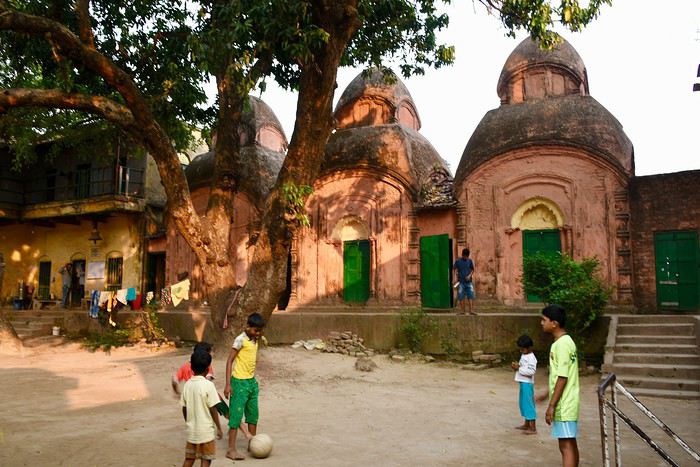
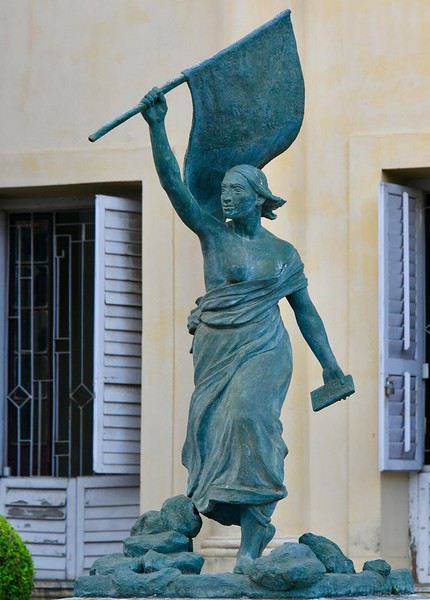
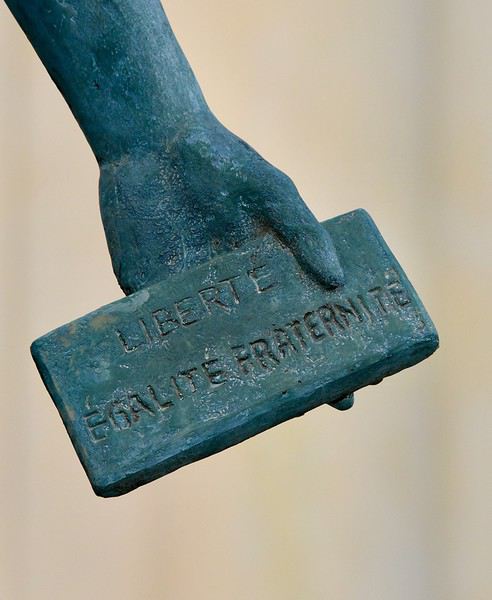
L’un des anciens établissements français d’Inde, Chandernagor, nommée aujourd’hui Chandannagar, Chandannagore... mérite à mon sens plus de quelques heures de visite.
Outre sa très agréable promenade le long du fleuve Hoogly, le Chandannagore Strand, la ville a conservé son église, l’ancien palais du gouverneur devenu musée, de vieux temples et un patrimoine urbain, certes souvent en mauvais état, voire en ruines.
A quelques kilomètres, à Hooghly, se visite un ancien complexe religieux d’origine chiite, l’Imambara Hoogly.
Construit à partir de 1841, il fait, aujourd’hui, l’objet d’une très importante restauration.
Plus loin, au nord, à moins de 200 kilomètres, le visiteur ne peut manquer la visite de Murshidabad, ancienne capitale moghole du Bengale.
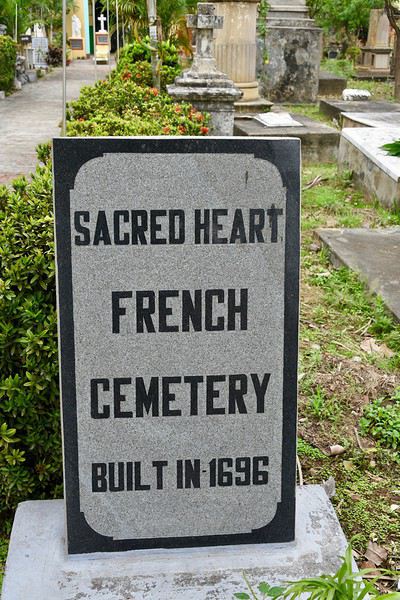
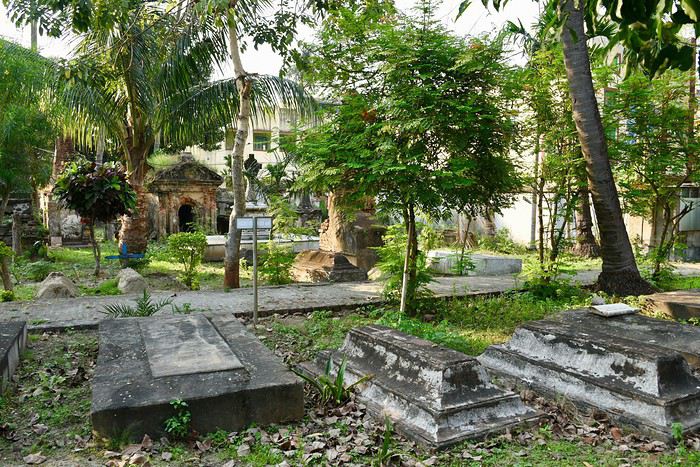
J’avais à cœur de réaliser l’inventaire photographique des tombes du cimetière français de Chandernagor. C’est fait, il sera transmis à un site de généalogie.
Patrimoine longtemps délaissé, ce cimetière est aujourd’hui entretenu mais en très mauvais état, de nombreux édifices sont irrémédiablement ruinés.
L’offre d’hôtels est confidentielle, j’ai visité deux établissements.
L’un est situé le long du fleuve et est géré par des fonctionnaires assoupis, le second se nomme Mariam Guesthouse.
Cet petit établissement offre un nombre réduit de propres et vastes chambres dotées de la climatisation ou d’un ventilateur. Le confort reste modeste, le matelas est ferme et la rustique « salle d’eau » se trouve à l’extérieur de la chambre. Pas de wifi.
Les tarifs sont négociables.
Le propriétaire, Red, se révèle précieux. Il connaît parfaitement la région et vous véhiculera, peut-être, sur sa moto. Mac, francophone est présent de temps à autre.
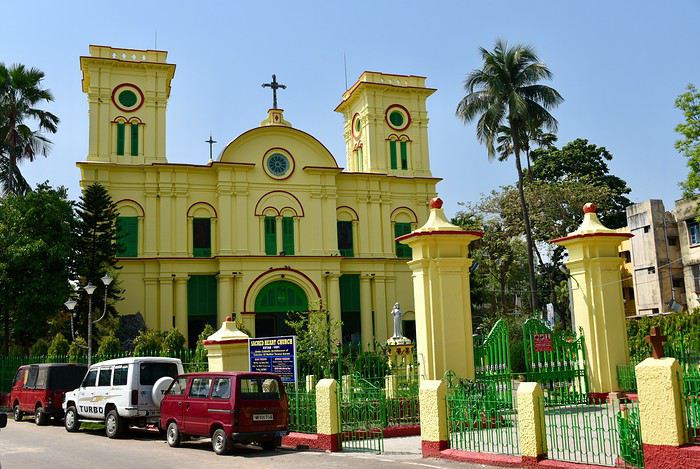 L’église de Chandernagor
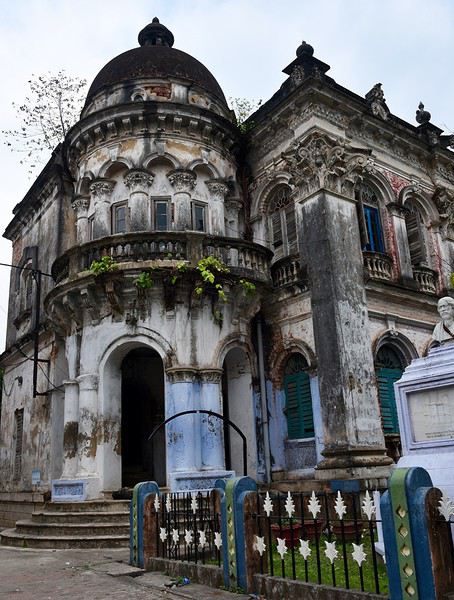
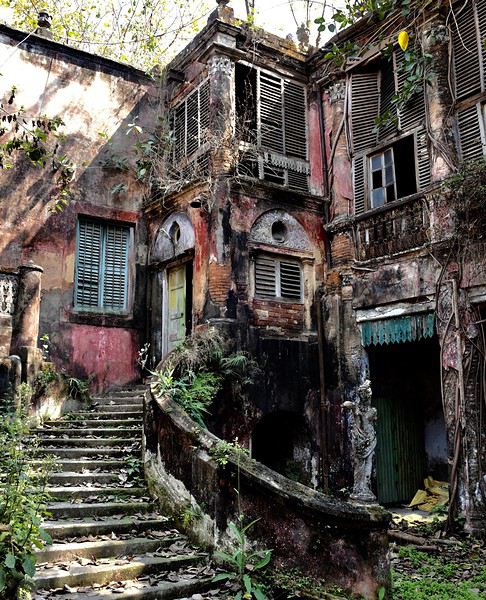
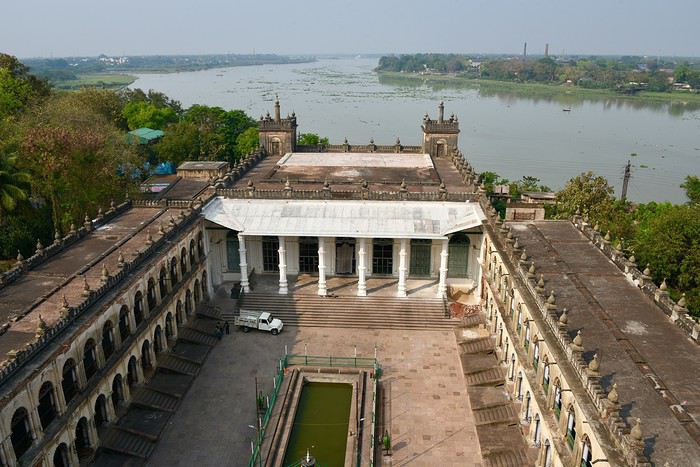 Imambara Hoogly
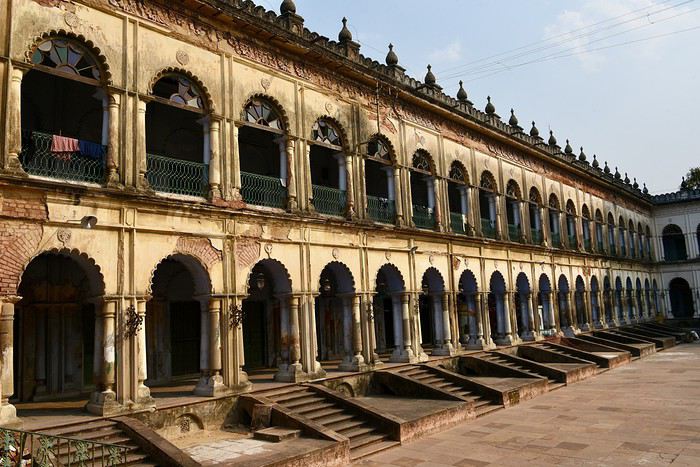
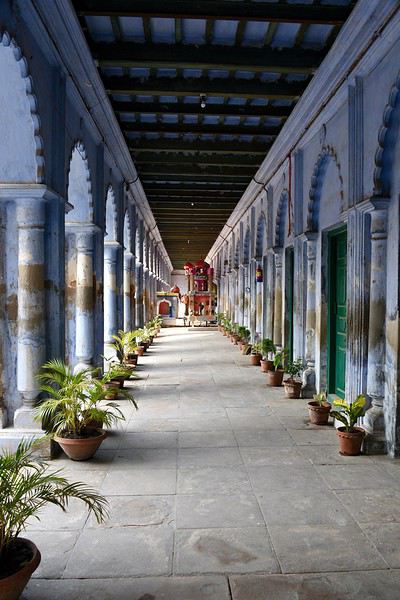
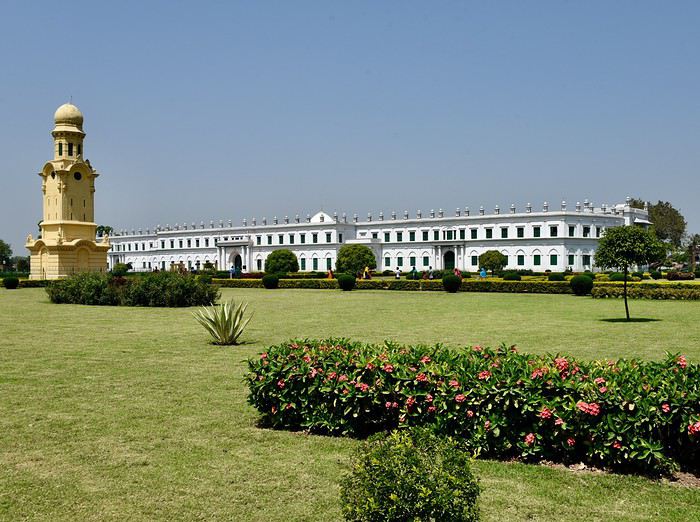 Bara imambara
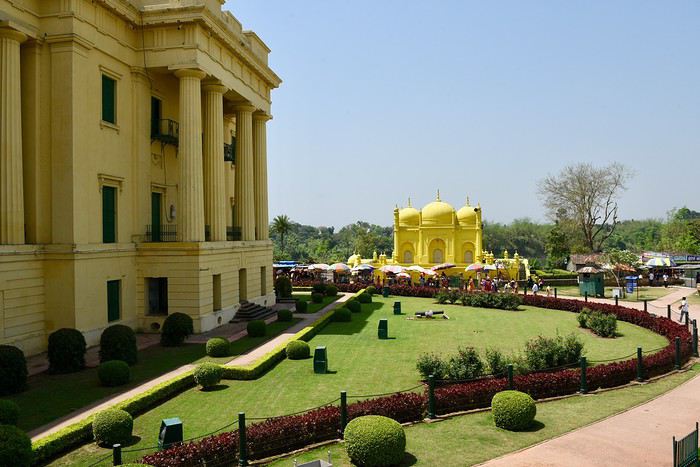 Hazarduari palace devenu musée et la mosquée jaune
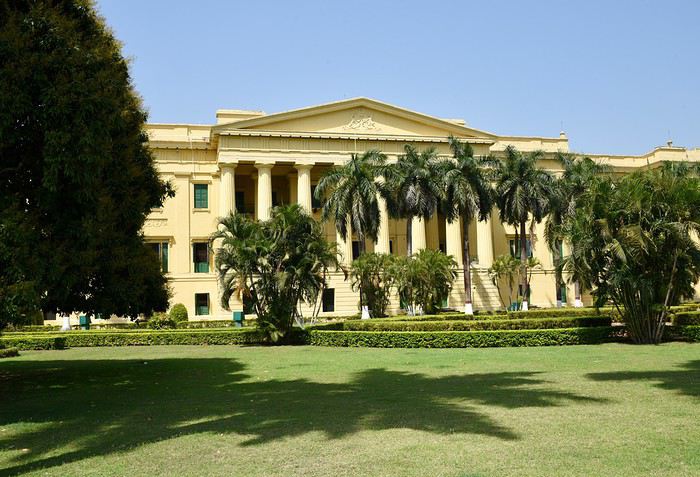 La façade arrière du Hazarduari
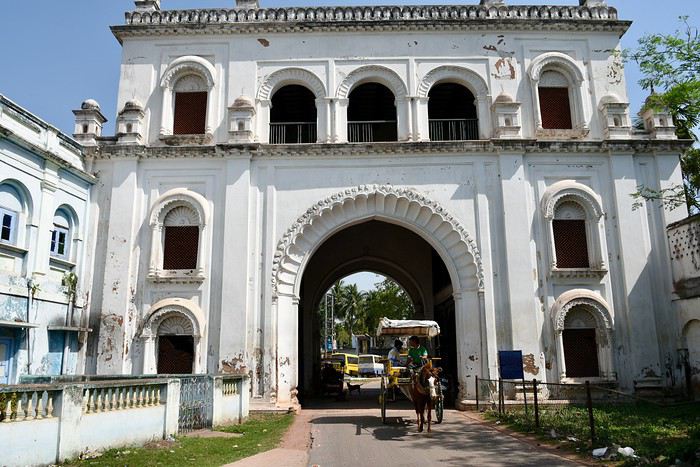 Une des portes de la ville de Murshidabad
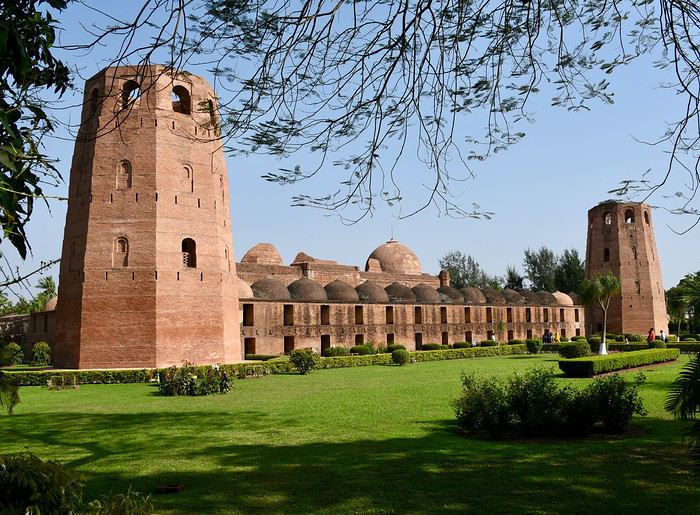 La mosquée Murshid Kuki Khan où Katra mosque
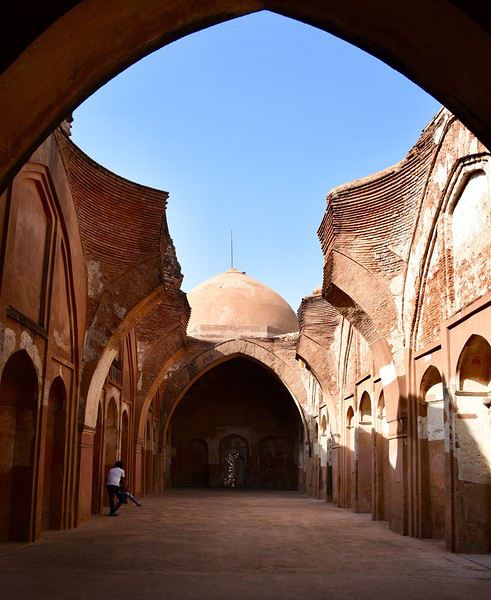
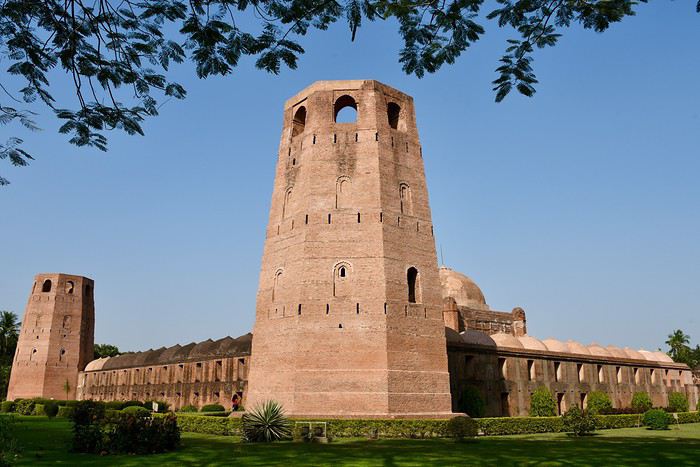
L’église de Chandernagor
Imambara Hoogly
Bara imambara
Hazarduari palace devenu musée et la mosquée jaune
La façade arrière du Hazarduari
Une des portes de la ville de Murshidabad
La mosquée Murshid Kuki Khan où Katra mosqueBoutique de vêtements et artisanats canadiens à Montréal English translation pending
Bonjour,
je fais appel à vos connaissances : savez vous ou je peux trouver à Montréal centre une boutique de vêtements canadiens et de specialites d avance je vous remercie
je fais appel à vos connaissances : savez vous ou je peux trouver à Montréal centre une boutique de vêtements canadiens et de specialites d avance je vous remercie
Vos coups de coeur dans la région nord du Vietnam English translation pending
Bonjour les voyageurs!
Quels sont vos coups de coeur dans la région nord du Vietnam (toutes activités ou lieux confondus)?
Quel est le type d'hébergement conseillez-vous dans cette région?
Quel est le type de transport conseillez-vous dans cette région?
Merci! :)
Merci! :)
"Digital nomade senior" English translation pending
Allo,
drôle de titre mais bon... est-ce qu'il y a des seniors en digital nomade? ET est-ce vrai que ça fonctionne? j'en suis pas convaincu à moins d'avoir des témoignages🤪
pour ma part trop vieux pour être employé et situation financière précaire...donc je pense à partir mais comment trouver des contrats ailleurs? en mettant des pancartes dans la rue rendu à un endroit? ou des annonces sur des sites du pays genre offre de services temporaire dans une région donnée...
moi quand je pense à digital nomade je pense à comment un digital nomade fait pour travailler pour quelqu'un dans un autre pays quand on a pas de visa de travail? payer en argent comptant? ou par Paypal? ça me semble bizarre tout ça...
si j'ai un client au Canada et je suis canadien là je comprends mais quand on voyage en Inde comment faire pour trouver un contrat sur place? et se faire payer en CAD? Paypal? en cash? mmmhhh
en tout cas si il y a du monde qui font ça vous pouvez me dire des trucs...merci
drôle de titre mais bon... est-ce qu'il y a des seniors en digital nomade? ET est-ce vrai que ça fonctionne? j'en suis pas convaincu à moins d'avoir des témoignages🤪
pour ma part trop vieux pour être employé et situation financière précaire...donc je pense à partir mais comment trouver des contrats ailleurs? en mettant des pancartes dans la rue rendu à un endroit? ou des annonces sur des sites du pays genre offre de services temporaire dans une région donnée...
moi quand je pense à digital nomade je pense à comment un digital nomade fait pour travailler pour quelqu'un dans un autre pays quand on a pas de visa de travail? payer en argent comptant? ou par Paypal? ça me semble bizarre tout ça...
si j'ai un client au Canada et je suis canadien là je comprends mais quand on voyage en Inde comment faire pour trouver un contrat sur place? et se faire payer en CAD? Paypal? en cash? mmmhhh
en tout cas si il y a du monde qui font ça vous pouvez me dire des trucs...merci