Results for "Cité+radieuse+|+127"
21009 results found.
Partir à Gênes sans gène… English translation pending
J’envisage de partir une petite semaine à la Toussaint à Gênes (Italie) pour visiter la ville. Je partirai en train au départ de Marseille via Nice.
Je souhaiterai recevoir des conseils pour que cette excursion de quelques jours me coûte le moins cher possible, en particulier sur le logement (j’envisage le camping, qu’en pensez-vous ?) ou existe t-il un autre moyen d’hébergement assez bon marché et pas trop éloigné du centre-ville.
Je voudrais aussi des infos sur ce qu’il ne faut absolument visiter dans cette cité et tous les bons plans et les bons conseils sont les bienvenus.
Merci d’avance pour votre aide…😉
Stéphane, Marseille - France - s.jehle@voila.fr
Je souhaiterai recevoir des conseils pour que cette excursion de quelques jours me coûte le moins cher possible, en particulier sur le logement (j’envisage le camping, qu’en pensez-vous ?) ou existe t-il un autre moyen d’hébergement assez bon marché et pas trop éloigné du centre-ville.
Je voudrais aussi des infos sur ce qu’il ne faut absolument visiter dans cette cité et tous les bons plans et les bons conseils sont les bienvenus.
Merci d’avance pour votre aide…😉
Stéphane, Marseille - France - s.jehle@voila.fr
Bons plans pour la Tunisie English translation pending
Hello à tous!!
Je lance un appel à quiconque pourra me donner des infos sur la tunisie ( les villes où séjourner, les sites à visiter ...bref les endroits à ne manquer sous aucun prétexte 😉)
Je souhaiterais savoir si qqn connait la chaîne hotellière ABOU NAWAS????
Merci d'avance pour ces renseignements!!
Have a nice day 🙂
Je lance un appel à quiconque pourra me donner des infos sur la tunisie ( les villes où séjourner, les sites à visiter ...bref les endroits à ne manquer sous aucun prétexte 😉)
Je souhaiterais savoir si qqn connait la chaîne hotellière ABOU NAWAS????
Merci d'avance pour ces renseignements!!
Have a nice day 🙂
Romantic weekend in Italy between April and May: what should we prioritize?
I'd love to organize a romantic weekend in Italy.
What do you recommend?
What do you recommend?
3 weeks in Laos, stress-free
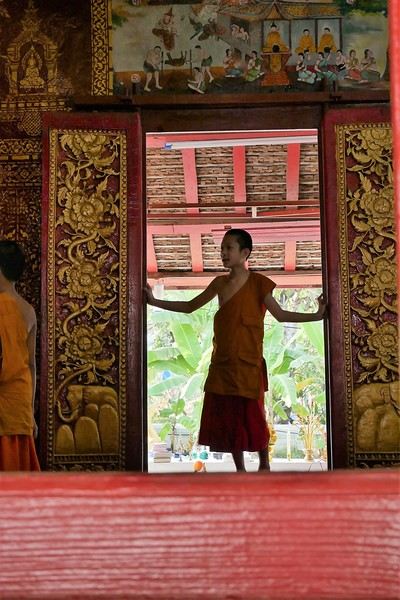 Come along, I'm taking you to this country where it's so nice to wander and slow down...
This trip was in 2023, but when I wanted to write my travel journal, VF was still closed to contributions... So, now that I've just finished my Japan travel journal here, I figured it was high time to honor this destination we came back from so enchanted. Disclaimer 1: This is a written travel journal. There’ll be text! Too much, for some! Disclaimer 2: This is an illustrated travel journal. There’ll be photos! Too many, for some!
I have to say, every time I try to discipline myself, to keep it shorter, to include fewer photos... I end up adding more. It feels like my dear Aunt Nicole, who exhausted us with her slide-show evenings in the 70s/80s, decided to take her revenge. The upside for you, readers, is that you can slip away anytime without offending Aunt Nicole. I won’t even notice!
Anyway, since I love maps, here’s one to give you an idea of where I’m taking you. As you can see, we only saw a tiny part of Laos (the areas circled in red); we only had 3 weeks for ourselves (my husband’s newly retired, I still work), and we prefer taking our time over rushing around like crazy.
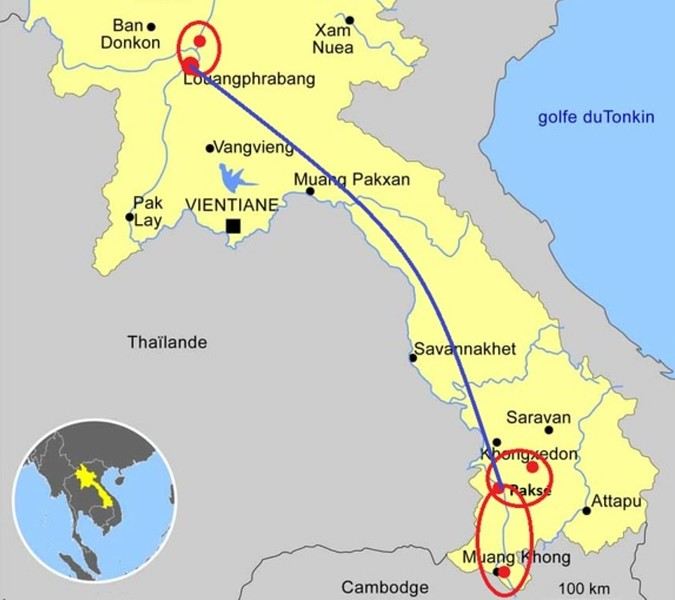
In broad strokes, it was very classic:
First, we “settled in” at Luang Prabang (8 days), because we wanted and needed to. From there, we took three days to venture a little further north—not far in kilometers, but as we know, distances aren’t just about km! Then we flew south to Paksé, letting ourselves drift down to the 4,000 Islands while stopping by the pre-Angkorian archaeological sites. We wrapped up with the Bolaven Plateau.
A few practical notes: We arrived via Bangkok, then took a Bangkok-Luang Prabang flight, having picked up our luggage in Bangkok to check it in for Luang Prabang. No issues—the Bangkok airport, which many of you know, is very well organized. We got our visas on arrival in Luang Prabang. Quick, but to be fair, we were on a “small” plane, and the big flights had arrived earlier, so we weren’t too crowded in line! At the end of our trip, we didn’t fly out of Paksé but from the nearby airport in Thailand, Ubon Ratchathani (a 2.5-hour drive from Paksé), then Bangkok and Paris. You’ll notice we skipped Vientiane to stay longer in Luang Prabang. That said, there’s now a high-speed train between Vientiane and Luang Prabang—good to know—and soon the (Chinese) train will go all the way to Bangkok and even Kuala Lumpur!
With that intro out of the way, let’s dive into the heart of the matter. To be continued: Slowing down the pace... in Luang Prabang
Feeling lost trying to plan my solo trip to French Polynesia: snorkeling and homestays or budget guesthouses
I'm feeling a bit overwhelmed with all the scattered info out there and I'm struggling to organize my solo trip to French Polynesia. I'm all about snorkeling—no hiking for me—so it's all about the water, water, water... I'd love to meet whales (what's the best season?), stay with locals or in budget guesthouses (I'm pretty low-key, no worries about comfort), and most importantly, be as close to the coral reefs as possible (all day long...).
I'm retired, so I've got plenty of time... If you can help, it would mean the world to me. Thanks everyone! !
I'm retired, so I've got plenty of time... If you can help, it would mean the world to me. Thanks everyone! !
Staircases. Photo contest theme for May 2026.
Hello
This month’s photo contest theme for May 2026 is "Staircases"
Plural or singular? Does it really matter as long as you’re told you’ve gone up or down them well?
Anyway, it’s not that complicated, even though I’m sure some will manage to overcomplicate it—after all, why keep things simple when making them complicated is so much more fun (as an Indian proverb goes).
To participate: Submit your photos until Monday, May 25 at 11:59 PM You can post up to 3 photos, numbered and shared in separate messages, along with a short description of the location and the story behind it.
To vote: From Tuesday, May 26 at 12:01 AM until Saturday, May 30 at 11:59 PM After the deadline, it’s too late.
Please include the photo number, username, and the points awarded: Photo #1 = 3 pts Photo #2 = 2 pts Photo #3 = 1 pt
All VF members can vote (even those who didn’t submit photos). In case of a tie for first place, the winning photo will be the one with the most first-place votes, then second-place votes! The lucky winner will get to organize June 2026’s photo contest.
For discussions about the theme, click here: Discussion thread for May 2026’s theme: Staircases
This month’s photo contest theme for May 2026 is "Staircases"
Plural or singular? Does it really matter as long as you’re told you’ve gone up or down them well?
Anyway, it’s not that complicated, even though I’m sure some will manage to overcomplicate it—after all, why keep things simple when making them complicated is so much more fun (as an Indian proverb goes).
To participate: Submit your photos until Monday, May 25 at 11:59 PM You can post up to 3 photos, numbered and shared in separate messages, along with a short description of the location and the story behind it.
To vote: From Tuesday, May 26 at 12:01 AM until Saturday, May 30 at 11:59 PM After the deadline, it’s too late.
Please include the photo number, username, and the points awarded: Photo #1 = 3 pts Photo #2 = 2 pts Photo #3 = 1 pt
All VF members can vote (even those who didn’t submit photos). In case of a tie for first place, the winning photo will be the one with the most first-place votes, then second-place votes! The lucky winner will get to organize June 2026’s photo contest.
For discussions about the theme, click here: Discussion thread for May 2026’s theme: Staircases
Best destinations for a first solo trip?
Hi there! I’m in the middle of planning my first solo trip (as a woman). Do you have any ideal destinations with activities like hiking, diving, sightseeing, and easy ways to meet locals—all on a small budget?
I’d love to hear from anyone who’s had this experience before! :)
I’d love to hear from anyone who’s had this experience before! :)
Feedback on 13-day loop in May starting and ending in Essaouira
Hi everyone! :)
I’m finalizing the loop I’d like to do in May over 13 days, starting and ending in Essaouira.
We’re planning to rent a vehicle and are pretty active—we’re not really into crowds (that’s why I’ve decided to skip Marrakech).
Here’s my proposed itinerary:
Trip Proposal Summary: From May 13 (morning arrival) to May 26 (morning departure) Arrival and departure: Essaouira Day 1 (May 13): Arrival in Essaouira – Settling in / Exploring / Rest Day 2 (May 14): Essaouira – Water activities Day 3 (May 15): Essaouira to Tafraoute (~5h30) – route via Agadir – arrival and first exploration; Question: Is a detour to Taroudant worth considering? Day 4 (May 16): Tafraoute – Hike in the granite rocks – wild bivouac Day 5 (May 17): Tafraoute – Aït Mansour gorges – oasis – night in a hostel Day 6 (May 18): Tafraoute → Foum Zguid (~5h) – transition route – simple overnight or bivouac Day 7 (May 19): Foum Zguid → Zagora (~3h) – Draa Valley – desert prep Day 8 (May 20): Zagora → M'Hamid El Ghizlane → Erg Chigaga – departure with 4x4 guide – entering the dunes – bivouac Day 9 (May 21): Erg Chigaga – full desert day – walking, exploring – bivouac Day 10 (May 22): Desert → Ouarzazate (~5–6h) – leaving the desert – rest Day 11 (May 23): Aït Benhaddou – early visit – short hike – overnight stay Day 12 (May 24): Aït Benhaddou → Telouet – route toward the Atlas – start of trek – bivouac Day 13 (May 25): Atlas → Essaouira (~5–6h) – end of trek – return to Essaouira (overnight) Day 14 (May 26): Essaouira – free time + return flight
What do you think?
I aimed for an excursion to the Chigaga desert from M’Hamid because it seems less touristy and allows for a more compact loop. Is that a good idea? Is the drive to M’Hamid maybe too tedious?
Open to your great tips if there’s room for optimization!
All ears! :)
Thanks in advance and have a great day!
Clément
I’m finalizing the loop I’d like to do in May over 13 days, starting and ending in Essaouira.
We’re planning to rent a vehicle and are pretty active—we’re not really into crowds (that’s why I’ve decided to skip Marrakech).
Here’s my proposed itinerary:
Trip Proposal Summary: From May 13 (morning arrival) to May 26 (morning departure) Arrival and departure: Essaouira Day 1 (May 13): Arrival in Essaouira – Settling in / Exploring / Rest Day 2 (May 14): Essaouira – Water activities Day 3 (May 15): Essaouira to Tafraoute (~5h30) – route via Agadir – arrival and first exploration; Question: Is a detour to Taroudant worth considering? Day 4 (May 16): Tafraoute – Hike in the granite rocks – wild bivouac Day 5 (May 17): Tafraoute – Aït Mansour gorges – oasis – night in a hostel Day 6 (May 18): Tafraoute → Foum Zguid (~5h) – transition route – simple overnight or bivouac Day 7 (May 19): Foum Zguid → Zagora (~3h) – Draa Valley – desert prep Day 8 (May 20): Zagora → M'Hamid El Ghizlane → Erg Chigaga – departure with 4x4 guide – entering the dunes – bivouac Day 9 (May 21): Erg Chigaga – full desert day – walking, exploring – bivouac Day 10 (May 22): Desert → Ouarzazate (~5–6h) – leaving the desert – rest Day 11 (May 23): Aït Benhaddou – early visit – short hike – overnight stay Day 12 (May 24): Aït Benhaddou → Telouet – route toward the Atlas – start of trek – bivouac Day 13 (May 25): Atlas → Essaouira (~5–6h) – end of trek – return to Essaouira (overnight) Day 14 (May 26): Essaouira – free time + return flight
What do you think?
I aimed for an excursion to the Chigaga desert from M’Hamid because it seems less touristy and allows for a more compact loop. Is that a good idea? Is the drive to M’Hamid maybe too tedious?
Open to your great tips if there’s room for optimization!
All ears! :)
Thanks in advance and have a great day!
Clément
South Africa in safari mode: February/March 2026
Hi everyone,
With my girlfriend Christelle, we’ve chosen South Africa for our first trip to Southern Africa, focusing on safaris—after a long debate with a Cape Town/Kruger combo. But that would’ve meant cutting out St Lucia, which would’ve been harder to fit into another trip. And St Lucia—thanks to Michel and all those travel journals—we really wanted to go there.
So our 11-night itinerary ended up like this, mostly shaped by school holidays: - 3 nights in St Lucia - 1 night in Hluhluwe - 1 night at Mkhaya Game Reserve (Eswatini) - 1 night at Hlane Royal National Park (Eswatini) - 3 nights in Kruger (Berg en Dal / Satara / Tamboti) - 1 night at Shindzela Tented Camp in the Timbavati private reserve - 1 final night in Kruger at Lower Sabie
All of this in the off-season and rainy season, just a month after catastrophic floods that killed over 150 people and seriously damaged Kruger’s infrastructure.
I’ll jump straight to St Lucia and skip the loooong journey to get there (with a layover in Frankfurt, landing in Johannesburg, a domestic flight to Durban, and the rest by rental SUV—First Car Rental, perfect, no complaints).
To motivate readers—especially some familiar faces here—I’ll drop in a first photo.
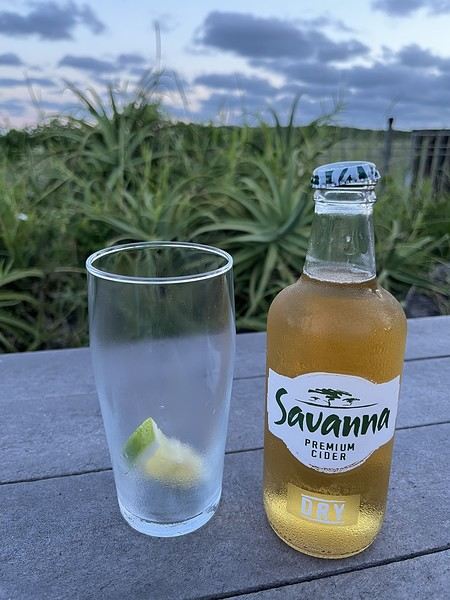
With my girlfriend Christelle, we’ve chosen South Africa for our first trip to Southern Africa, focusing on safaris—after a long debate with a Cape Town/Kruger combo. But that would’ve meant cutting out St Lucia, which would’ve been harder to fit into another trip. And St Lucia—thanks to Michel and all those travel journals—we really wanted to go there.
So our 11-night itinerary ended up like this, mostly shaped by school holidays: - 3 nights in St Lucia - 1 night in Hluhluwe - 1 night at Mkhaya Game Reserve (Eswatini) - 1 night at Hlane Royal National Park (Eswatini) - 3 nights in Kruger (Berg en Dal / Satara / Tamboti) - 1 night at Shindzela Tented Camp in the Timbavati private reserve - 1 final night in Kruger at Lower Sabie
All of this in the off-season and rainy season, just a month after catastrophic floods that killed over 150 people and seriously damaged Kruger’s infrastructure.
I’ll jump straight to St Lucia and skip the loooong journey to get there (with a layover in Frankfurt, landing in Johannesburg, a domestic flight to Durban, and the rest by rental SUV—First Car Rental, perfect, no complaints).
To motivate readers—especially some familiar faces here—I’ll drop in a first photo.
Storm in the Canary Islands
15 days across Gran Canaria, El Hierro, and a dash of Tenerife under the storm Thérèse!
The planned itinerary will be slightly disrupted...
(The version without discussions is here)
The planned itinerary will be slightly disrupted...
(The version without discussions is here)
From Avignon to Casamance Without Flying
Hi there,
Last February, I made a trip using "public transport" from France to southern Senegal via Spain, Morocco, Western Sahara, and Mauritania.
It’s a journey of about 5,000 km, where I took trains (as far as Marrakech), ferries (to cross Gibraltar and then to reach Casamance from Dakar), and mostly buses on the long desert straightaways. I hadn’t planned any stops in advance or booked any hotels, except for the very first train to Spain, which left plenty of room for the unexpected. Why travel by land and sea? In recent years, flight-free travel has been gaining popularity. On social media, posts explaining how to cross Europe by train as quickly as possible go viral. Traveling without flying—and making sure people know about it—has become a great way to earn a badge of eco-responsibility: an essential totem for anyone wanting to prove both their dedication to the ecological cause and the wisdom of slow travel. I haven’t flown in years, and this journey to West Africa could easily be filed under "responsible travel." But it wouldn’t be honest to say that: in reality, it wasn’t really my aversion to flying that motivated this long trek. I see overland travel primarily as a way to experience the world’s geography at a grounded, earthly pace—the pace of the locals. Besides, I’ll be flying back, which disqualifies any claim to being a model of sustainability. So no eco-badge, and no adventurer’s badge either: you won’t find any heroic tales of camel rides in lost lands or mineral train wagons in this account (popular with influencers, the Mauritania iron ore train now attracts tourists from all over the world, turning "the experience" into something you "have to do at least once in your life"). This five-part story, written on the road, has no other ambition than to recount a journey through places and people, and to share the thoughts they inspire in me. As simply and, I hope, as humbly as possible.
I’m posting the episodes here, which you can also find on my blog (with more photos) at the following links:
Episode 1: Spain, from Avignon to Algeciras
Episode 2: Morocco, from Tangier to Tarfaya
Episode 3: Western Sahara, from Tarfaya to Guerguerat
Episode 4: Mauritania, from Guerguerat to Nouakchott
Episode 5: Senegal, from Rosso to Saloulou
To help those who might want to make the same trip, I’ve also put together a summary of the route with recommendations—you can read it at the end of the story and on the blog: From France to Senegal Without Flying: Route and Itinerary Recommendations
Happy reading, and safe travels!
Last February, I made a trip using "public transport" from France to southern Senegal via Spain, Morocco, Western Sahara, and Mauritania.
It’s a journey of about 5,000 km, where I took trains (as far as Marrakech), ferries (to cross Gibraltar and then to reach Casamance from Dakar), and mostly buses on the long desert straightaways. I hadn’t planned any stops in advance or booked any hotels, except for the very first train to Spain, which left plenty of room for the unexpected. Why travel by land and sea? In recent years, flight-free travel has been gaining popularity. On social media, posts explaining how to cross Europe by train as quickly as possible go viral. Traveling without flying—and making sure people know about it—has become a great way to earn a badge of eco-responsibility: an essential totem for anyone wanting to prove both their dedication to the ecological cause and the wisdom of slow travel. I haven’t flown in years, and this journey to West Africa could easily be filed under "responsible travel." But it wouldn’t be honest to say that: in reality, it wasn’t really my aversion to flying that motivated this long trek. I see overland travel primarily as a way to experience the world’s geography at a grounded, earthly pace—the pace of the locals. Besides, I’ll be flying back, which disqualifies any claim to being a model of sustainability. So no eco-badge, and no adventurer’s badge either: you won’t find any heroic tales of camel rides in lost lands or mineral train wagons in this account (popular with influencers, the Mauritania iron ore train now attracts tourists from all over the world, turning "the experience" into something you "have to do at least once in your life"). This five-part story, written on the road, has no other ambition than to recount a journey through places and people, and to share the thoughts they inspire in me. As simply and, I hope, as humbly as possible.
I’m posting the episodes here, which you can also find on my blog (with more photos) at the following links:
Episode 1: Spain, from Avignon to Algeciras
Episode 2: Morocco, from Tangier to Tarfaya
Episode 3: Western Sahara, from Tarfaya to Guerguerat
Episode 4: Mauritania, from Guerguerat to Nouakchott
Episode 5: Senegal, from Rosso to Saloulou
To help those who might want to make the same trip, I’ve also put together a summary of the route with recommendations—you can read it at the end of the story and on the blog: From France to Senegal Without Flying: Route and Itinerary Recommendations
Happy reading, and safe travels!
A Brief A to Z of Peru
Foreword
This text has been proofread many times.
Sorry if some points in this A to Z have already been covered on this forum.
Text and drawings by the author.
Peru is still a very vast country, with so much to see, and obviously this text can't list all the attractions of the country.
*Abiseo (River) A national park that's very hard to access and doesn’t seem open to visitors. Includes the Gran Pajaten site (see below). Personally, it really sparks my imagination (not visited personally)
*Aguas Calientes the town next to Machu Picchu, more precisely below the archaeological site. As far as I know, you can only get there by train. Reminds me of the market where stalls line both sides of the tracks near Bangkok. I love it
*Altiplano: somewhere the "heart" of the Andes. I was able to trek across it on foot, starting from Caracollo in Bolivia, and of course, it’s vast plains to explore. This is where people live in a very rural way. Andean populations are quite austere compared to those in the lowlands or on the coast. You really have to appreciate the harshness of life to live there. Life is anything but superficial. I set a compass heading and found myself walking west toward the expanse of water near a place called La Joya. For pitching the tent, the nights were still chilly
*Canyon del Colca One of the deepest canyons in the world. Personally, I hiked down and back up on foot. The toughest stretch I’ve ever covered in my life.
*Ceviche More or less the national dish. A marinade of fish, shellfish, and lime. But you can find it in some restaurants in Europe, France, and certainly in Belgium or Switzerland. In the small restaurants of Pisco, you can eat excellent ceviche
*Cerro Sechín: Mostly bas-reliefs. A site little known to travelers in the Casma province. The first vestiges of a pre-Inca civilization with iconography similar to that of Chavín (not visited personally)
*Chan Chan A large city of the Chimú civilization and relatively vast to visit. You can see adobe walls with bas-reliefs. Visit from Trujillo, take a colectivo. Plan for the whole day
*Charango: a small guitar widely used in Andean music
*Chauchilla A necropolis near Nazca where you can see mummies exposed on the ground. YouTubers can do paranormal experiments there. And for anyone wondering about the fate of the soul and body after death, here’s the answer: the body remains after death. You can imagine your own flesh and body exposed to the winds of the Pampa and before eternity... (not visited personally)
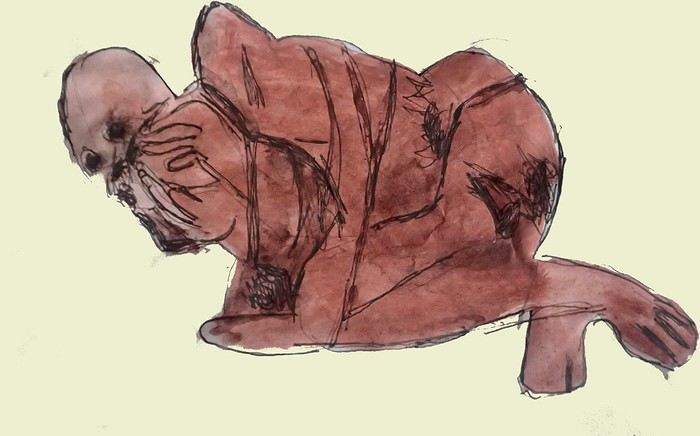
*Chavín de Huántar (Lanzón) The site’s appeal lies in its mountainous surroundings, the Lanzón stela, and the sculpted heads on the façades. What few people know is that the Chavín civilization began its expansion centuries before the Incas. Unfortunately, you can’t get too close to see the Lanzón—the day I was there, it was protected by grilles. To get there: minibus from Huaraz or trek from Olleros. Then cross a high pass (over 5,000m). If you do it solo on foot, be careful—the path isn’t obvious from Olleros
*Chullpa: funerary tower, notably at Sillustani in the Lake Titicaca region
*Chimú: pre-Inca civilization whose center was Chan Chan.
*Chola/Cholitas (Bolivia): typical clothing style of women from the Andean plateaus
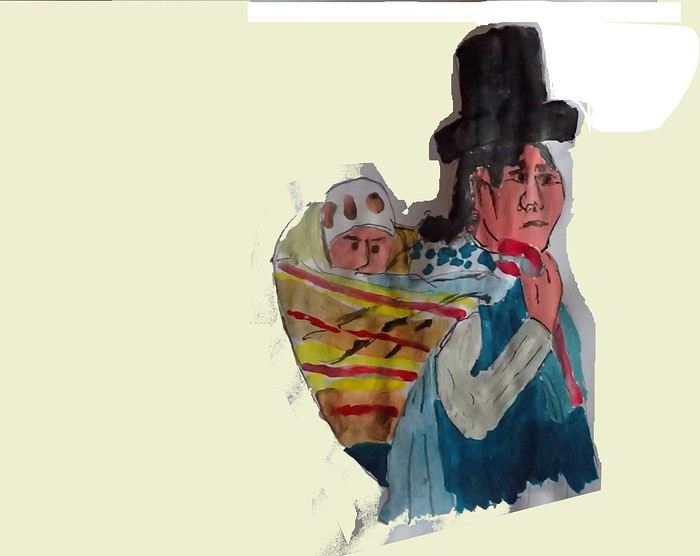
*Chompa: pronounce it *Chompaaa!* A common term for a wool sweater with vicuña patterns, often knitted from alpaca wool. If you dress like this, it’s a bit kitschy around the edges
*Cuy That one isn’t a guinea pig like in Guyana but an actual guinea pig. During a trip to Peru, I was hiking near a village north of Quillabamba (the terminus of the train line that passes through Aguas Calientes), and I was invited to stay in a house. The family raised a few of these pets. Apparently, the locals eat them. Since I’m not much of a meat-eater, it doesn’t really tempt me. How about you?
*Pacific Coast or how to talk about a place you haven’t visited? Except for the coast near Pisco and San Andrés, I haven’t visited any coastal cities. But that doesn’t mean these places lack interest or poetry. For fans of clichéd images, pelicans, seabirds, and fishing boats appear by the sea.
*Gran Pajaten: also closed to the public. Features anthropomorphic bas-reliefs. (not visited personally)
*Huaca. Visit the Huaca del Sol and Huaca de la Luna, especially near Trujillo. However, you can skip them—Chan Chan is still more interesting. Don’t forget to spend time visiting Chan Chan
*Huacachina A small oasis in the desert near Ica. Yes, we’re talking about an oasis because for those who’ve never traveled to Peru, the coastal strip along the Pacific is almost entirely desert, from north to south. Peru is territorially made up of three different regions: the desert coast, the Altiplano stretching north to south with mountain ranges (the Cordilleras), and the Amazon basin to the east. (not visited personally)
*Inca Kola It’s neither Coca-Cola nor Pepsi but a unique cola with a slightly orange color. Tastes like bubble gum
*Intiwatana: a carved rock shaped like a parallelepiped. Is it a sundial?
*Ballestas Islands: a highlight in Peru, though very touristy. You can only get there by boat from the port of San Andrés, a few kilometers from Pisco. It’s a surreal place to me—actually islets with cavities where sea lions and fur seals live. Since it’s a protected area, you’re not allowed to disembark. Guano is harvested there, which can be used as fertilizer.
*Kuelap: a fortress built by the Chachapoyas people. Rarely visited by travelers. (not visited personally)
*Larco Museum: an iconic museum in Lima with a large collection of pieces from archaeological and pre-Columbian sites. From what I remember, it has many pieces from the Moche civilization. As for the Moche statuettes, the prudish might look away. Probably a veneration of the god Priapus without knowing it.
*Nazca Lines Discovered by German archaeologist Maria Reiche, they stretch for kilometers. The designs in the desert around Nazca depict animals and cabalistic signs. The question I ask myself is why the creators of these lines represented a monkey and a hummingbird—species endemic to the tropical forest, not the desert plains around Nazca.
*Machu Picchu: means "old mountain" in Quechua. There’s also Wayna Picchu. The ruins of the site emerge from a sort of small plateau above Aguas Calientes. When the mist rises above the site and the bend of the Urubamba River, it’s truly magical... Also the starting point of the Inca Trail.
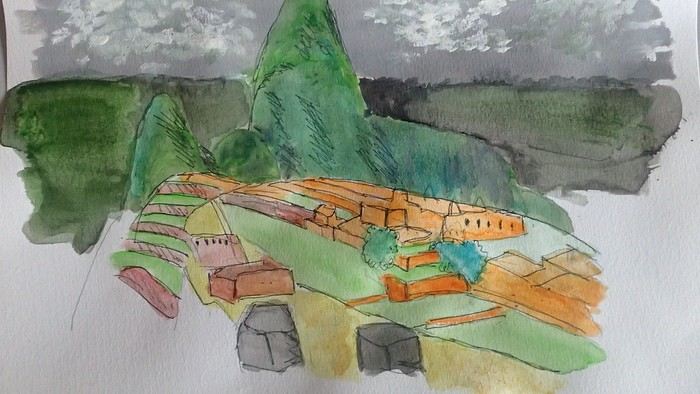
*Coca tea A decoction/infusion of the coca plant, meant to ease altitude sickness or *soroche*
*Chullo A rough translation would be a Peruvian wool hat.
*Moche: a civilization established in the Moche Valley, hence the term *Mochica*. What characterizes this civilization are the distinctive clay pieces representing faces and erotic statuettes
*Papa a la Huancaína A local potato dish
*Pisac: a typical market near Cusco
*Pisco Sour: perhaps the Peruvian equivalent of the *caipirinha* you drink in Brazil.
*Puya Raimondii A Bromeliaceae that still looks like a cactus, endemic to the Altiplano
*Quechua The language spoken by the indigenous people of the high plateaus (as well as Aymara in Bolivia)
*Quipu A knotted string used for counting. Widely used by the Inca administration.
*Sacsayhuamán (Q’enqo, Inca Bath) From Cusco’s Plaza de Armas, take the streets that climb above the city. Sacsayhuamán is called a fortress and is made up of large stone blocks. You wonder how the Incas could cut such huge blocks to assemble them—just like some streets in Cusco. The Q’enqo block is enigmatic; no one really knows what it represents.
*Savia Andina An Andean folk group.
*Tambo (=> Ollantaytambo) The Inca emperor (Atahualpa, Manco Capac) had the mission of controlling a vast empire. An empire that was still very extensive. Hence the importance of these *tambos* or relay stations. Napoleon created the civil code; the Incas invented the *tambos* and *quipus*.
*Tawantinsuyu: the Inca Empire
*Tinku: a warrior dance practiced mainly in Bolivia
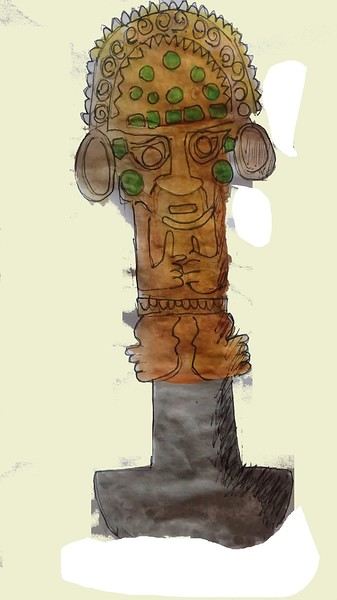
*Golden Tumi: a sacrificial weapon. Often featured in Peru travel guides. See illustration
*Terra X: a documentary series from the German TV channel that aired on Arte. Some episodes focused on pre-Inca and Inca Peru. I must have some old recording tapes. In memory of Gottfried Kirchner as a source of inspiration.
*Uros: I checked—it actually refers to the people who live on these floating islands. Even if it’s touristy, it’s a must-visit because it’s incredible how people can live on islets made from nothing. Take the boat from Puno
*Vicuña, llama, guanaco: camelids characteristic of the Altiplano
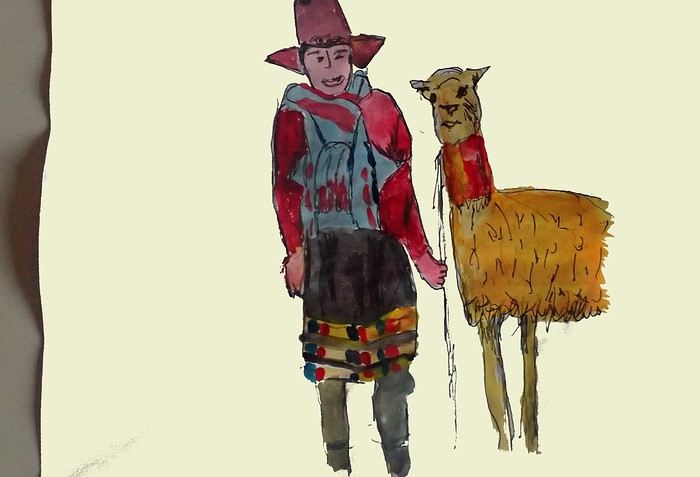
*Wayna Picchu The young Picchu mountain. In the first minutes of *Aguirre, the Wrath of God*, you see Klaus Kinski—well, Aguirre—making his way along the Inca Trail. Werner Herzog must have broken his back filming those sequences.
*Zampoña: pan flute
Peru is still a very vast country, with so much to see, and obviously this text can't list all the attractions of the country.
*Abiseo (River) A national park that's very hard to access and doesn’t seem open to visitors. Includes the Gran Pajaten site (see below). Personally, it really sparks my imagination (not visited personally)
*Aguas Calientes the town next to Machu Picchu, more precisely below the archaeological site. As far as I know, you can only get there by train. Reminds me of the market where stalls line both sides of the tracks near Bangkok. I love it
*Altiplano: somewhere the "heart" of the Andes. I was able to trek across it on foot, starting from Caracollo in Bolivia, and of course, it’s vast plains to explore. This is where people live in a very rural way. Andean populations are quite austere compared to those in the lowlands or on the coast. You really have to appreciate the harshness of life to live there. Life is anything but superficial. I set a compass heading and found myself walking west toward the expanse of water near a place called La Joya. For pitching the tent, the nights were still chilly
*Canyon del Colca One of the deepest canyons in the world. Personally, I hiked down and back up on foot. The toughest stretch I’ve ever covered in my life.
*Ceviche More or less the national dish. A marinade of fish, shellfish, and lime. But you can find it in some restaurants in Europe, France, and certainly in Belgium or Switzerland. In the small restaurants of Pisco, you can eat excellent ceviche
*Cerro Sechín: Mostly bas-reliefs. A site little known to travelers in the Casma province. The first vestiges of a pre-Inca civilization with iconography similar to that of Chavín (not visited personally)
*Chan Chan A large city of the Chimú civilization and relatively vast to visit. You can see adobe walls with bas-reliefs. Visit from Trujillo, take a colectivo. Plan for the whole day
*Charango: a small guitar widely used in Andean music
*Chauchilla A necropolis near Nazca where you can see mummies exposed on the ground. YouTubers can do paranormal experiments there. And for anyone wondering about the fate of the soul and body after death, here’s the answer: the body remains after death. You can imagine your own flesh and body exposed to the winds of the Pampa and before eternity... (not visited personally)
*Chavín de Huántar (Lanzón) The site’s appeal lies in its mountainous surroundings, the Lanzón stela, and the sculpted heads on the façades. What few people know is that the Chavín civilization began its expansion centuries before the Incas. Unfortunately, you can’t get too close to see the Lanzón—the day I was there, it was protected by grilles. To get there: minibus from Huaraz or trek from Olleros. Then cross a high pass (over 5,000m). If you do it solo on foot, be careful—the path isn’t obvious from Olleros
*Chullpa: funerary tower, notably at Sillustani in the Lake Titicaca region
*Chimú: pre-Inca civilization whose center was Chan Chan.
*Chola/Cholitas (Bolivia): typical clothing style of women from the Andean plateaus
*Chompa: pronounce it *Chompaaa!* A common term for a wool sweater with vicuña patterns, often knitted from alpaca wool. If you dress like this, it’s a bit kitschy around the edges
*Cuy That one isn’t a guinea pig like in Guyana but an actual guinea pig. During a trip to Peru, I was hiking near a village north of Quillabamba (the terminus of the train line that passes through Aguas Calientes), and I was invited to stay in a house. The family raised a few of these pets. Apparently, the locals eat them. Since I’m not much of a meat-eater, it doesn’t really tempt me. How about you?
*Pacific Coast or how to talk about a place you haven’t visited? Except for the coast near Pisco and San Andrés, I haven’t visited any coastal cities. But that doesn’t mean these places lack interest or poetry. For fans of clichéd images, pelicans, seabirds, and fishing boats appear by the sea.
*Gran Pajaten: also closed to the public. Features anthropomorphic bas-reliefs. (not visited personally)
*Huaca. Visit the Huaca del Sol and Huaca de la Luna, especially near Trujillo. However, you can skip them—Chan Chan is still more interesting. Don’t forget to spend time visiting Chan Chan
*Huacachina A small oasis in the desert near Ica. Yes, we’re talking about an oasis because for those who’ve never traveled to Peru, the coastal strip along the Pacific is almost entirely desert, from north to south. Peru is territorially made up of three different regions: the desert coast, the Altiplano stretching north to south with mountain ranges (the Cordilleras), and the Amazon basin to the east. (not visited personally)
*Inca Kola It’s neither Coca-Cola nor Pepsi but a unique cola with a slightly orange color. Tastes like bubble gum
*Intiwatana: a carved rock shaped like a parallelepiped. Is it a sundial?
*Ballestas Islands: a highlight in Peru, though very touristy. You can only get there by boat from the port of San Andrés, a few kilometers from Pisco. It’s a surreal place to me—actually islets with cavities where sea lions and fur seals live. Since it’s a protected area, you’re not allowed to disembark. Guano is harvested there, which can be used as fertilizer.
*Kuelap: a fortress built by the Chachapoyas people. Rarely visited by travelers. (not visited personally)
*Larco Museum: an iconic museum in Lima with a large collection of pieces from archaeological and pre-Columbian sites. From what I remember, it has many pieces from the Moche civilization. As for the Moche statuettes, the prudish might look away. Probably a veneration of the god Priapus without knowing it.
*Nazca Lines Discovered by German archaeologist Maria Reiche, they stretch for kilometers. The designs in the desert around Nazca depict animals and cabalistic signs. The question I ask myself is why the creators of these lines represented a monkey and a hummingbird—species endemic to the tropical forest, not the desert plains around Nazca.
*Machu Picchu: means "old mountain" in Quechua. There’s also Wayna Picchu. The ruins of the site emerge from a sort of small plateau above Aguas Calientes. When the mist rises above the site and the bend of the Urubamba River, it’s truly magical... Also the starting point of the Inca Trail.
*Coca tea A decoction/infusion of the coca plant, meant to ease altitude sickness or *soroche*
*Chullo A rough translation would be a Peruvian wool hat.
*Moche: a civilization established in the Moche Valley, hence the term *Mochica*. What characterizes this civilization are the distinctive clay pieces representing faces and erotic statuettes
*Papa a la Huancaína A local potato dish
*Pisac: a typical market near Cusco
*Pisco Sour: perhaps the Peruvian equivalent of the *caipirinha* you drink in Brazil.
*Puya Raimondii A Bromeliaceae that still looks like a cactus, endemic to the Altiplano
*Quechua The language spoken by the indigenous people of the high plateaus (as well as Aymara in Bolivia)
*Quipu A knotted string used for counting. Widely used by the Inca administration.
*Sacsayhuamán (Q’enqo, Inca Bath) From Cusco’s Plaza de Armas, take the streets that climb above the city. Sacsayhuamán is called a fortress and is made up of large stone blocks. You wonder how the Incas could cut such huge blocks to assemble them—just like some streets in Cusco. The Q’enqo block is enigmatic; no one really knows what it represents.
*Savia Andina An Andean folk group.
*Tambo (=> Ollantaytambo) The Inca emperor (Atahualpa, Manco Capac) had the mission of controlling a vast empire. An empire that was still very extensive. Hence the importance of these *tambos* or relay stations. Napoleon created the civil code; the Incas invented the *tambos* and *quipus*.
*Tawantinsuyu: the Inca Empire
*Tinku: a warrior dance practiced mainly in Bolivia
*Golden Tumi: a sacrificial weapon. Often featured in Peru travel guides. See illustration
*Terra X: a documentary series from the German TV channel that aired on Arte. Some episodes focused on pre-Inca and Inca Peru. I must have some old recording tapes. In memory of Gottfried Kirchner as a source of inspiration.
*Uros: I checked—it actually refers to the people who live on these floating islands. Even if it’s touristy, it’s a must-visit because it’s incredible how people can live on islets made from nothing. Take the boat from Puno
*Vicuña, llama, guanaco: camelids characteristic of the Altiplano
*Wayna Picchu The young Picchu mountain. In the first minutes of *Aguirre, the Wrath of God*, you see Klaus Kinski—well, Aguirre—making his way along the Inca Trail. Werner Herzog must have broken his back filming those sequences.
*Zampoña: pan flute
From Mexico to the Wonderful Chiapas
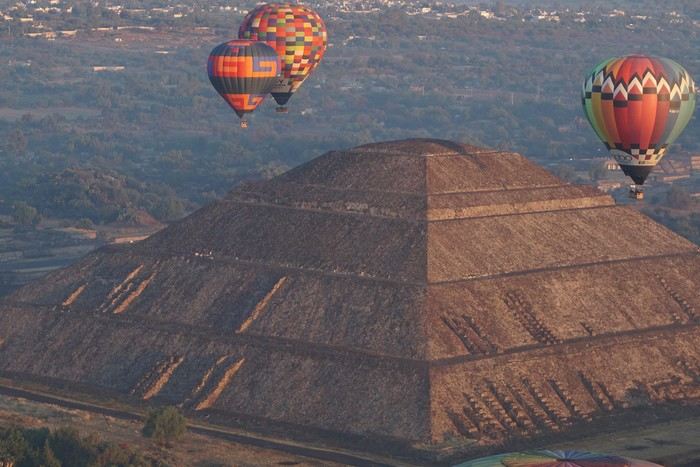
This one-month trip, from January 18 to February 17, 2026, allowed us to visit Mexico City and travel through the states of Puebla, Oaxaca, and Chiapas. We mainly used buses (ADO company) for medium and long distances and colectivos or taxis (or Uber) for shorter trips. Before leaving, I had contacted several people on the ground: Harry, a Vendéan settled in Oaxaca offering, among other things, discoveries of artisan villages or the Monte Albán site, and Oscar in Comitán de Domínguez. I’ll come back to our meeting with Oscar, who runs a local agency (CVL Travel Turismo Alternativo & Corre la voz) and owns a very pleasant hostel, a real highlight of our trip. Our journey took place in 8 stages on a loop starting from Mexico City. The connections between each were made by day or night buses depending on the trip duration. I had booked our seats in advance, either directly on the ADO company’s website or through booking platforms depending on the rates offered. Note that by planning ahead, I was able to benefit from very interesting "Early Booking" rates. There are several comfort classes. For all our trips, I had booked seats in Primera class buses, except for two in GL (Grand Luxe) class. The rates are very reasonable, and the buses turned out to be comfortable or even very comfortable (only the basic seat recline might surprise you).
Our itinerary and number of days per stage: Stage 1 – Mexico City: 4 days Stage 2 – Puebla: 2 days Stage 3 – Oaxaca: 4 days Stage 4 – San Agustinillo: 4 days Stage 5 – San Cristóbal de las Casas: 3 days Stage 6 – Comitán de Domínguez: 6 days Stage 7 – Palenque: 4 days Stage 8 – Mexico City: 2 days If I were to do it again, I’d remove one day from Palenque and add it either to Puebla or San Cristóbal to visit nearby sites or villages, or to San Agustinillo to enjoy one more day by the Pacific Ocean.
Stage 1: Mexico City (2,200 m / 9.2 million inhabitants) We arrived in the Mexican capital around 10:00 PM. The simplified customs process was very quick. After exchanging some money at the airport, we took a taxi to our youth hostel. We got around the capital on foot, of course, but also by metro. Signs are very rare, and we took the train in the wrong direction several times. After a few mistakes, we systematically asked on the platform if we were going the right way. The metro is very affordable. You need to get a rechargeable card (the Tarjeta de Movilidad Integrada) and top it up as needed. This card (less than 1 €) isn’t personal, so there’s no need to get one per person.
Mexico City: Day 1.
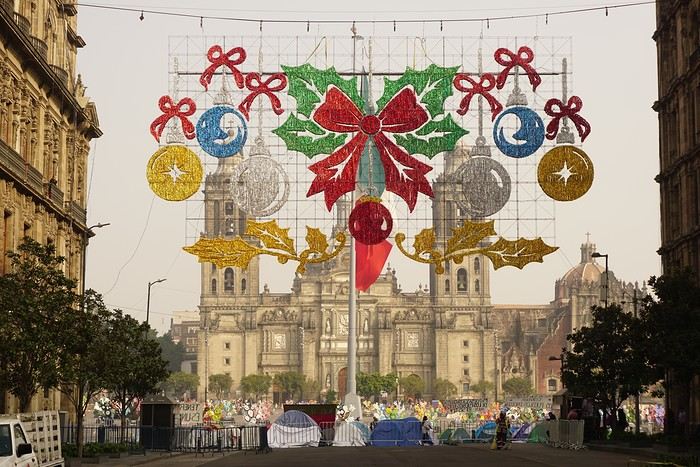
Visits and walks of the day (note: many museums are closed on Mondays): The Zócalo or Constitution Square: it’s one of the most beautiful, largest (195m x 240m), and oldest squares in the world. This is where Cortés decided to build the center of the new Spanish city on the site of the former Tenochtitlan market. Stones from the pyramids were used to pave the esplanade and build the surrounding colonial churches and buildings. During our visit, the huge square was covered with (resin) cacti, the theme of the temporary exhibition at the time. Indeed, temporary events or exhibitions take place here throughout the year. It’s also the endpoint for many protest marches.
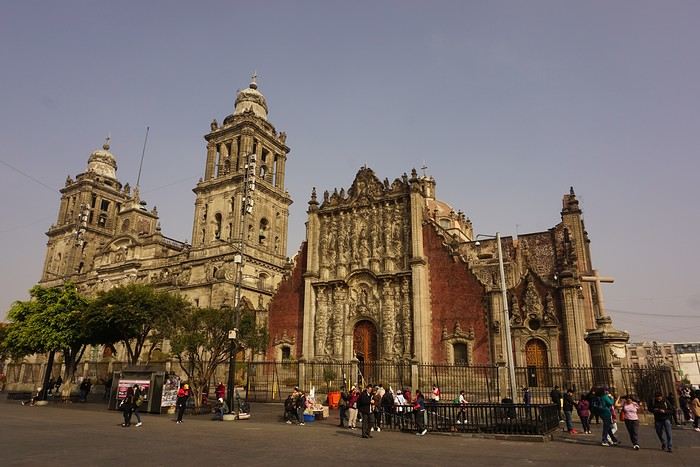
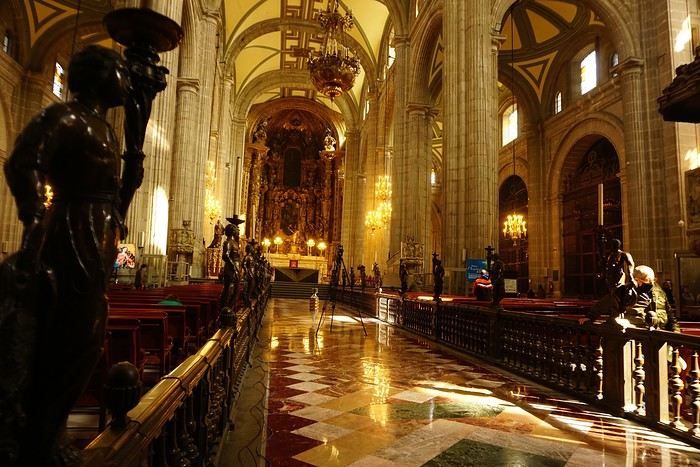


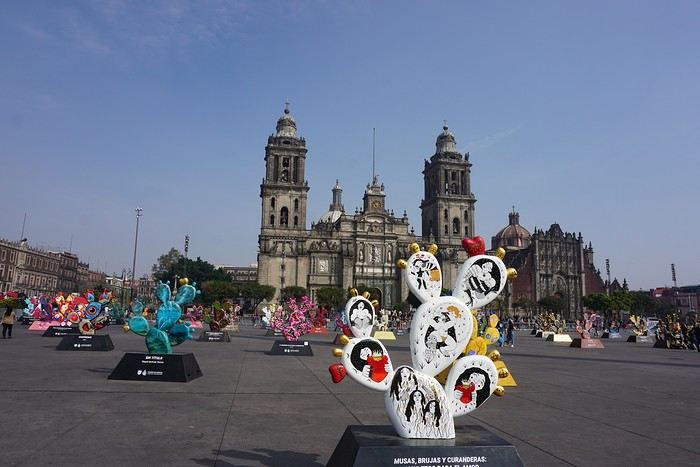
The cathedral: it’s sinking by one centimeter per year despite massive stabilization work (the collapse of many Mexican buildings—30 cm/year—is due to groundwater pumping). It was built starting in 1571 and completed in... 1813. The modest remains of the Templo Mayor (exterior view): they have high symbolic value, as this monument was the most important in the Mexica Empire.
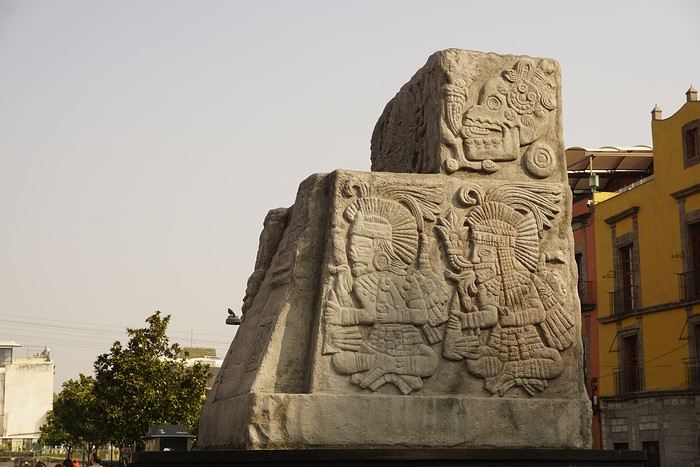 We then walked through the streets of the historic center to the Santísima Church, unfortunately closed for renovation work.
Next, we took the metro to visit one of Mexico’s most important pilgrimage sites: the Insigne y Nacional Basílicas de Santa María de Guadalupe, as well as the Capilla del Cerrito on the hill.
The first, dating from the colonial era, is really leaning a lot.
We then walked through the streets of the historic center to the Santísima Church, unfortunately closed for renovation work.
Next, we took the metro to visit one of Mexico’s most important pilgrimage sites: the Insigne y Nacional Basílicas de Santa María de Guadalupe, as well as the Capilla del Cerrito on the hill.
The first, dating from the colonial era, is really leaning a lot.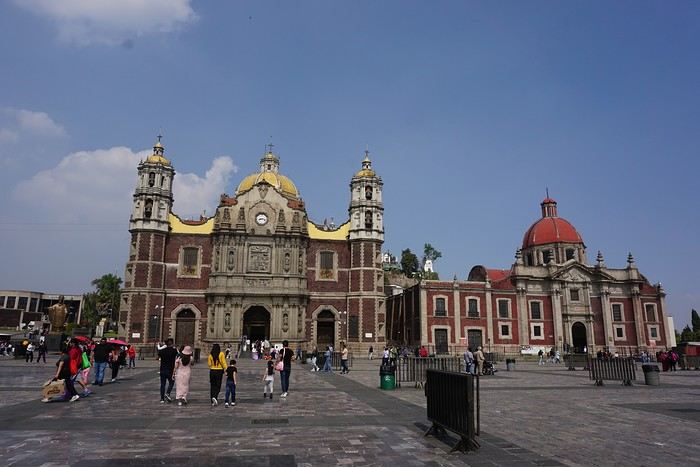
The second, shaped like a rotunda, is very impressive from the inside.
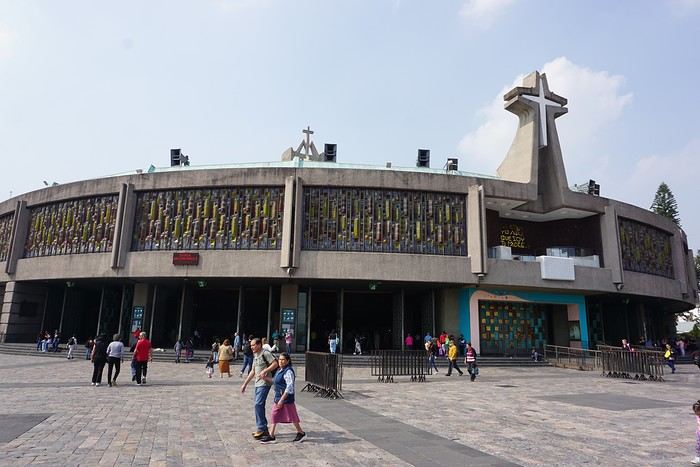
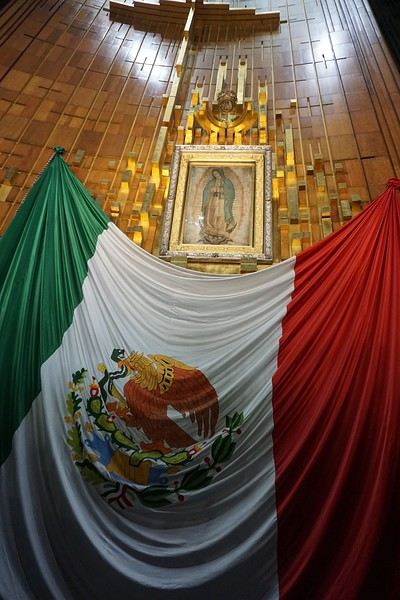
In the basement, there’s a sacred tunic where, in 1531, an image of the Virgin Mary is said to have appeared. A real mystery for scientists, the garment has never deteriorated since that date. Slow-moving conveyor belts allow pilgrims to admire it, preventing crowds from gathering in front of the image for hours. Well thought out!
 From the top of the Capilla del Cerrito, you get beautiful views of huge Mexico City.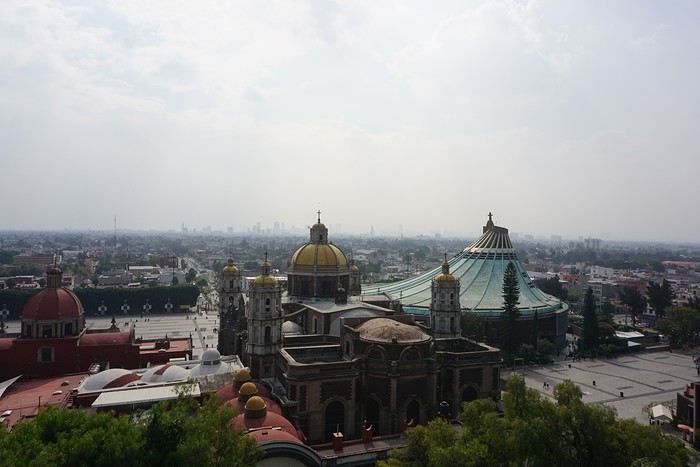
Cycling trip through the Po Valley and Venice
Hello there, pedal-powered Young Boys!
Claudio (still from Faverges)
dreaming about a cycling getaway in Italy from Faverges (train all the way to Turin)
from Turin down to Venice along the Po River and back via the Padana (Alta Italia da attraversare – Northern Italy to cross)
The tricky part is getting from Chioggia to Venice.
I read it’s possible by hopping on a boat from island to island,
but it sounds a bit stressful.
Has anyone already tackled this route?
Thanks, and cheers to all! http://cbandiera.free.fr/parcours/Padania/
Claudio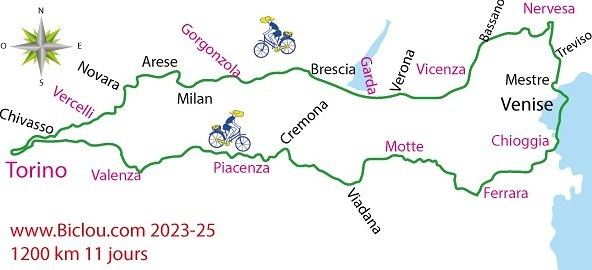
Thanks, and cheers to all! http://cbandiera.free.fr/parcours/Padania/
Claudio
What to see around La Spezia besides the Cinque Terre?
Hi,
I’m planning my trip to La Spezia and I’m struggling to find nice places to visit besides the Cinque Terre and Portovenere.
Budget: Mid-range
NO hiking
Can you help me out?
Thanks!
Can you help me out?
Thanks!
Veneto: Dolomites and Opera
I'm starting a new travel journal in Italy.
It's about a month-long trip (from September 3, 2025, to October 4, 2025), or rather a part of it. This section matches the title: an opera festival in Verona (one evening) and the Dolomites in the Veneto region.
I'm posting the part of the trip I think will interest French-speaking readers the most (since this is where I saw the most French travelers).
Here’s a quick summary:
- Trip in September 2025
- Solo travel with camping (caravan)
- Small geographic area: besides Verona, the surroundings of the Marmolada massif and Cortina d'Ampezzo.
- Main but not exclusive activity: hiking.
Since I have limited internet access where I am now, I’ll be writing slowly. Here we go!
Day 1: Thursday, September 4, 2025
I arrived in Veneto under the sun and with warm weather. I drove to Verona and tried to find a spot at the campsite (Verona Village) located south of the city. Unfortunately, it was full. Booking on the website was mandatory, but when I tried to reserve a few days ago, the site never moved from the "reservation" step to the "payment" step (I don’t know why—it’s always like that in these cases). I found another solution over the phone; the drive from southern Verona to the northeast was a bit long, but I finally settled at the "Oro Verde" campsite. It’s an "agricampeggio" (farm camping or rural campsite) on the outskirts of the city, and its name (green gold) suggests they produce olives there. Since it wasn’t late, I biked to the Adige River, following the recommended route into the city.
Since I have limited internet access where I am now, I’ll be writing slowly. Here we go!
Day 1: Thursday, September 4, 2025
I arrived in Veneto under the sun and with warm weather. I drove to Verona and tried to find a spot at the campsite (Verona Village) located south of the city. Unfortunately, it was full. Booking on the website was mandatory, but when I tried to reserve a few days ago, the site never moved from the "reservation" step to the "payment" step (I don’t know why—it’s always like that in these cases). I found another solution over the phone; the drive from southern Verona to the northeast was a bit long, but I finally settled at the "Oro Verde" campsite. It’s an "agricampeggio" (farm camping or rural campsite) on the outskirts of the city, and its name (green gold) suggests they produce olives there. Since it wasn’t late, I biked to the Adige River, following the recommended route into the city.
Court Ruling on Compensation for Delays of "3 Hours or More" by Airlines
Hi,
On October 30, 2025, the Court of Justice of the European Union issued its ruling in case C-558/24 Corendon.
When an airline issues a ticket (or booking confirmation) and later issues a new ticket delaying the arrival time at the final destination, the delay of "3 hours or more"—which entitles passengers to compensation of 250, 400, or 600 euros (depending on the distance) per paying passenger—must be calculated based on the arrival time stated in the initial booking.
In the case examined, the airline had issued a new booking confirmation that delayed the flight. The passenger arrived less than 3 hours late compared to the arrival time in the new confirmation but was more than 3 hours late compared to the original booking confirmation.
This puts an end to interpretations that the previous texts allowed.
The ruling states:
"Article 5(1)(c) and Article 7(1) of Regulation (EC) No 261/2004 of the European Parliament and of the Council of 11 February 2004 [...] must be interpreted as meaning that: in the event of a change to the departure and arrival times of a flight, announced in advance by an air carrier and accompanied by the issuance of a new booking confirmation to the passengers concerned, the duration of the delay suffered by those passengers upon arrival must be determined by taking into consideration the initially scheduled arrival time."
Full ruling here:
https://eur-lex.europa.eu/legal-content/FR/TXT/PDF/?uri=CELEX:62024CJ0558
Best regards
When an airline issues a ticket (or booking confirmation) and later issues a new ticket delaying the arrival time at the final destination, the delay of "3 hours or more"—which entitles passengers to compensation of 250, 400, or 600 euros (depending on the distance) per paying passenger—must be calculated based on the arrival time stated in the initial booking.
In the case examined, the airline had issued a new booking confirmation that delayed the flight. The passenger arrived less than 3 hours late compared to the arrival time in the new confirmation but was more than 3 hours late compared to the original booking confirmation.
This puts an end to interpretations that the previous texts allowed.
The ruling states:
"Article 5(1)(c) and Article 7(1) of Regulation (EC) No 261/2004 of the European Parliament and of the Council of 11 February 2004 [...] must be interpreted as meaning that: in the event of a change to the departure and arrival times of a flight, announced in advance by an air carrier and accompanied by the issuance of a new booking confirmation to the passengers concerned, the duration of the delay suffered by those passengers upon arrival must be determined by taking into consideration the initially scheduled arrival time."
Full ruling here:
https://eur-lex.europa.eu/legal-content/FR/TXT/PDF/?uri=CELEX:62024CJ0558
Best regards
Transport questions for a 9-day Northern/Central Vietnam itinerary
Hi everyone,
We’re heading to Vietnam in February as a family (2 adults and 2 kids) for 9 full days, and I was thinking of this itinerary:
Day 1: Hanoi Day 2: Halong Bay (Lan Ha) Day 3: Halong Bay (Lan Ha) Day 4: Hue Day 5: Danang Day 6: Danang Day 7: Hoi An Day 8: Hoi An/My Son Day 9: Hanoi
After reading almost all the discussions about Vietnam, I don’t see anything about transportation options for getting from Hue to Danang, then from Danang to Hoi An. Any ideas (train, bus)? From the map, it looks like Danang is close to Hoi An—easily accessible by taxi, right?
Also, after reading lots of comments and websites, I’ve noticed that Danang, aside from being a big developing city, seems to be more about hotels for relaxing on the beach—very laid-back, isn’t it? Not really a place to visit like Hanoi or Hoi An.
Generally speaking, if you have any recommendations for the itinerary or tips, I’d love to hear them.
I’ll post a trip report when we get back.
Merry Christmas to all!
Alex
We’re heading to Vietnam in February as a family (2 adults and 2 kids) for 9 full days, and I was thinking of this itinerary:
Day 1: Hanoi Day 2: Halong Bay (Lan Ha) Day 3: Halong Bay (Lan Ha) Day 4: Hue Day 5: Danang Day 6: Danang Day 7: Hoi An Day 8: Hoi An/My Son Day 9: Hanoi
After reading almost all the discussions about Vietnam, I don’t see anything about transportation options for getting from Hue to Danang, then from Danang to Hoi An. Any ideas (train, bus)? From the map, it looks like Danang is close to Hoi An—easily accessible by taxi, right?
Also, after reading lots of comments and websites, I’ve noticed that Danang, aside from being a big developing city, seems to be more about hotels for relaxing on the beach—very laid-back, isn’t it? Not really a place to visit like Hanoi or Hoi An.
Generally speaking, if you have any recommendations for the itinerary or tips, I’d love to hear them.
I’ll post a trip report when we get back.
Merry Christmas to all!
Alex
Is it safe to travel to Benin in 2026?
Hi there,
I’d planned to go to Benin in 2026, but given the recent events and upcoming elections, I’m thinking I’ll wait to see what happens after the elections.
Has anyone traveled to Benin recently or is planning to go soon?
I’d planned to go to Benin in 2026, but given the recent events and upcoming elections, I’m thinking I’ll wait to see what happens after the elections.
Has anyone traveled to Benin recently or is planning to go soon?
Solo travel project in the Himalayas to discover wildlife and flora
Hi everyone,
I’m currently on the lookout for adventure and can’t stop thinking about the Himalayas. My main goal is this: I’d like to make a documentary about the region’s wildlife and flora using my own resources.
For now, I’m planning to stay there for a few months. I’d love to exchange ideas with you all to help me prepare for this trip as best as possible.
I’ve got a few questions in particular: - On this kind of trip, where and how do you find food?
- Which are the quiet spots where you won’t see another soul, and which are the best places to spot wild animals? (I’m guessing the two are connected)
- I’ve read several times that adventure/independent travel can be tricky in certain countries or areas—is that still the case today?
This is also my first solo trip, and I’m wondering if I’m being too ambitious. What do you think?
Thanks in advance for your feedback,
Axel
I’m currently on the lookout for adventure and can’t stop thinking about the Himalayas. My main goal is this: I’d like to make a documentary about the region’s wildlife and flora using my own resources.
For now, I’m planning to stay there for a few months. I’d love to exchange ideas with you all to help me prepare for this trip as best as possible.
I’ve got a few questions in particular: - On this kind of trip, where and how do you find food?
- Which are the quiet spots where you won’t see another soul, and which are the best places to spot wild animals? (I’m guessing the two are connected)
- I’ve read several times that adventure/independent travel can be tricky in certain countries or areas—is that still the case today?
This is also my first solo trip, and I’m wondering if I’m being too ambitious. What do you think?
Thanks in advance for your feedback,
Axel
Switzerland-Paris walking route
Hi,
I’m planning the Switzerland-Paris hike for 2026. If any of you know a route where I can stay with locals or in other lodging (no camping), I’d really appreciate your tips.
Thanks!
M Brunner
Three weeks in Yunnan in October 2025
We just spent three weeks in Yunnan.
I’ve started writing up a travel journal about the trip.
Road trip from Nice to Livorno by car, then Corsica
I'd love some destination suggestions for a road trip from Nice to Livorno by car, including the routes, tolls to cross, distance, and estimated travel time. We're planning a 5-day trip, with 2 nights near Nice, 1 night along the way, and finally 2 nights in Livorno. There are 4 of us in a rental car, and we'd like to stay in either an apartment, a mobile home near the sea, or a campsite. Our budget isn't too extravagant!!!! We want to visit the Promenade des Anglais, and I've heard Menton is really interesting. Once we reach Livorno, we'll take the ferry to Corsica for 12 days with the same rental car. We're planning to leave the last week of May and the first two weeks of June 2026, so around 17-18 days total.
Thanks
Feedback on Vietnam itinerary in December
Hello everyone,
We’re heading to Vietnam for 14 nights over the Christmas holidays as a family of four—I haven’t booked anything yet.
I’d love your insights on Halong Bay (or Lan Ha Bay).
We’re torn between going or not and spending an extra night in Ninh Binh (or somewhere else you’d recommend! Somewhere with a more picturesque vibe) given the late-December weather and cost (which agency do you recommend?). The upside might be that we’ll be there during the low season, so maybe fewer tourists? (Even though it’d be New Year’s Eve night.)
Here’s our itinerary:
Arrival in Ho Chi Minh City around 1 p.m.
2nd night in HCMC (no time for the Mekong Delta ☹️)
Flight to Da Nang
3 nights in Hoi An
Bus to Hue, 1 night in Hue
City visit, overnight train to Ninh Binh
2 or 3 nights in Ninh Binh?
Halong Bay or Lan Ha Bay?
2 nights in Hanoi
Departure
Thank you so much in advance for your invaluable tips!
The unique characteristics of French regions
Hello everyone.
First and foremost, I hope this topic won’t just focus on my region—the South of France—and that those of you who enjoy exchanging ideas will share what makes your own regions special.
Personally, I’ve often wanted to push back when people call us vulgar (though I’ll admit I sometimes play it up). At heart, we pure-blooded Southerners just have our own way of expressing ourselves, which differs from other regions. We also get heated in conversations pretty easily (some researchers say it’s the influence of the sun and climate in general).
What some perceive as vulgar, we don’t see that way at all.
Do you want a uniform world with no differences? If so, how do you handle traveling to places with cultures completely different from your own?
In the travel community, the word "authenticity" comes up a lot, and it often takes priority in people’s searches.
In my specific case, speaking a purely regional language without having gone to school for it doesn’t help with understanding on this forum. That’s what creates what you call controversies—and what I call passionate exchanges.
I remember a reply from a member in this thread: https://voyageforum.com/forum/ma-vie-en-camargue-pays-origine-en-colombie-pays-c-ur-d10778555/
It left me speechless and ended the conversation because, for him, that’s just how he sees things, and he refuses to debate it, sticking to his position. I’ll quote him, hoping he won’t hold it against me:
"For me, things like bullfighting, boxing, football, and MMA are just tangible proof that human evolution is still at a primitive stage."
For him, our Latin-origin bullfights are barbaric customs. For us *taurins*, we need to see men face wild beasts (bulls and *toros*) at the risk of their lives every day. Does that make us barbarians?
We’ve always had this need to confront death—it’s in our genes.
Take the example he gave about football: fans of the sport would be considered mentally underdeveloped. But what about a kid who’s passionate about the game and has that drive to be a winner, just like a boxer or athletes in other violent sports?
As a traveler myself, passionate about old stones and beautiful historic buildings, I’ve visited Rome but couldn’t fully appreciate it. Religion is everywhere, and I felt like I had a lead weight on my head realizing that millions of people worldwide have believed in a god for millennia.
I’ve also judged believers for basing their faith on archaic texts that don’t prove a god (or gods) ever existed—I still think that, but I’m open to being proven wrong so I can say, "You’ve convinced me I was mistaken."
- If everyone clings to their own ideas and positions, no discussion is possible, and that’s a shame.
I’ll take away two things from my forum interactions: some accuse me of being omnipresent when I just love exchanging ideas. My way of speaking is misunderstood (regional differences), even if I’ll admit I sometimes turn up the heat—or rather, the *aïoli* —which for me is just lively debates 🔥 (a regional specialty).
And my "mocking" side, which I really need to work on.
This topic isn’t just about me—I hope other forum members will share their own regional "specialties" . For example, in Alsace, some older folks switch to their local language when they don’t want outsiders to understand, and I still don’t know if it’s German or something else.
https://www.marseille-tourisme.com/decouvrez-marseille/traditions/le-parler-marseillais/
https://www.lexpress.fr/informations/accent-du-midi-ave-ou-sans_642635.html
First and foremost, I hope this topic won’t just focus on my region—the South of France—and that those of you who enjoy exchanging ideas will share what makes your own regions special.
Personally, I’ve often wanted to push back when people call us vulgar (though I’ll admit I sometimes play it up). At heart, we pure-blooded Southerners just have our own way of expressing ourselves, which differs from other regions. We also get heated in conversations pretty easily (some researchers say it’s the influence of the sun and climate in general).
What some perceive as vulgar, we don’t see that way at all.
Do you want a uniform world with no differences? If so, how do you handle traveling to places with cultures completely different from your own?
In the travel community, the word "authenticity" comes up a lot, and it often takes priority in people’s searches.
In my specific case, speaking a purely regional language without having gone to school for it doesn’t help with understanding on this forum. That’s what creates what you call controversies—and what I call passionate exchanges.
I remember a reply from a member in this thread: https://voyageforum.com/forum/ma-vie-en-camargue-pays-origine-en-colombie-pays-c-ur-d10778555/
It left me speechless and ended the conversation because, for him, that’s just how he sees things, and he refuses to debate it, sticking to his position. I’ll quote him, hoping he won’t hold it against me:
"For me, things like bullfighting, boxing, football, and MMA are just tangible proof that human evolution is still at a primitive stage."
For him, our Latin-origin bullfights are barbaric customs. For us *taurins*, we need to see men face wild beasts (bulls and *toros*) at the risk of their lives every day. Does that make us barbarians?
We’ve always had this need to confront death—it’s in our genes.
Take the example he gave about football: fans of the sport would be considered mentally underdeveloped. But what about a kid who’s passionate about the game and has that drive to be a winner, just like a boxer or athletes in other violent sports?
As a traveler myself, passionate about old stones and beautiful historic buildings, I’ve visited Rome but couldn’t fully appreciate it. Religion is everywhere, and I felt like I had a lead weight on my head realizing that millions of people worldwide have believed in a god for millennia.
I’ve also judged believers for basing their faith on archaic texts that don’t prove a god (or gods) ever existed—I still think that, but I’m open to being proven wrong so I can say, "You’ve convinced me I was mistaken."
- If everyone clings to their own ideas and positions, no discussion is possible, and that’s a shame.
I’ll take away two things from my forum interactions: some accuse me of being omnipresent when I just love exchanging ideas. My way of speaking is misunderstood (regional differences), even if I’ll admit I sometimes turn up the heat—or rather, the *aïoli* —which for me is just lively debates 🔥 (a regional specialty).
And my "mocking" side, which I really need to work on.
This topic isn’t just about me—I hope other forum members will share their own regional "specialties" . For example, in Alsace, some older folks switch to their local language when they don’t want outsiders to understand, and I still don’t know if it’s German or something else.
https://www.marseille-tourisme.com/decouvrez-marseille/traditions/le-parler-marseillais/
https://www.lexpress.fr/informations/accent-du-midi-ave-ou-sans_642635.html
Discussion for October's Theme (Doors)
Hello again!
If you'd like to post non-contest photos or chat about this month's theme, this is the place! 🙂
If you'd like to post non-contest photos or chat about this month's theme, this is the place! 🙂
Green Card Diploma Eligibility
Hi everyone,
I’d like to get some information about my eligibility for the DV Lottery.
About my background: • I earned a *Bac Pro* through VAE (*Validation des Acquis de l’Expérience*), issued by the *Éducation nationale*. • I also have a professional certification as a *Conseiller en Insertion* (Employment Counselor), issued by the Ministry of Labor. • Altogether, this adds up to a *Bac+2* level.
I’d like to know if this level qualifies me to apply for the DV Lottery.
Regarding my work experience: • I work as an *Employment Counselor*. • I checked on O*Net Online for the classification: Job Zone 4, SVP Range: 7.0 – <8.0. • I only have one year of experience, but I handle similar tasks in business creation.
So my question is: can I apply for the DV Lottery despite my relatively short experience, given that my job falls under Job Zone 4?
Thanks in advance for your answers and advice! !
I’d like to get some information about my eligibility for the DV Lottery.
About my background: • I earned a *Bac Pro* through VAE (*Validation des Acquis de l’Expérience*), issued by the *Éducation nationale*. • I also have a professional certification as a *Conseiller en Insertion* (Employment Counselor), issued by the Ministry of Labor. • Altogether, this adds up to a *Bac+2* level.
I’d like to know if this level qualifies me to apply for the DV Lottery.
Regarding my work experience: • I work as an *Employment Counselor*. • I checked on O*Net Online for the classification: Job Zone 4, SVP Range: 7.0 – <8.0. • I only have one year of experience, but I handle similar tasks in business creation.
So my question is: can I apply for the DV Lottery despite my relatively short experience, given that my job falls under Job Zone 4?
Thanks in advance for your answers and advice! !
Vietnam for 3 weeks in March: your recommendations
Hi fellow travelers!
I’m planning a little 3-week trip to Vietnam in mid-to-late March. It’ll probably be the only time I can go.
I enjoyed Thailand but clearly preferred Laos—it was calmer.
For Vietnam, I don’t have a precise idea of what I want to see yet, and I’m the type to improvise a bit once I’m there. I’m not super adventurous but I’m curious, and I prefer street food over restaurants, markets and off-the-beaten-path villages over big attractions.
But I don’t want to miss the must-sees either.
So, given that I’ll only be there for 3 weeks, I’m wondering: should I absolutely stick to either the north or the south? Or is it possible to have a nice, not-too-hectic trip by spending, say, one week in the south and two in the north?...
(I’d take a multi-city flight for arrival and departure)
What do you think?
Thanks! 🙂
Visiting Japan in the summer for O-Bon festival
Hi everyone,
Next summer, we (2 adults and a 12-year-old child) have decided to visit Japan.
Admittedly, it’s still early to plan everything, but my wife will soon need to request her vacation time—either in August or July... and we’re hesitating.
I know summer isn’t the ideal time to visit Japan, but we don’t really have a choice... It’s either July or August. On one hand, I’d love to experience the O-Bon festivities from August 14th to 16th, and I’ve drafted an initial itinerary that would let us experience the Gujo Hachiman Bon Odori, possibly visit the Okunoin Cemetery in Koyasan, and be in Kyoto on the 16th for the Gozan Okuribi fires. But on the other hand, I’m worried it’ll be *packed*, especially in Kyoto, and less enjoyable than in July. So, have any of you experienced these celebrations? Are they worth it? Too crowded? Do you know of other celebrations or festivals in July? Thanks for your input!
Next summer, we (2 adults and a 12-year-old child) have decided to visit Japan.
Admittedly, it’s still early to plan everything, but my wife will soon need to request her vacation time—either in August or July... and we’re hesitating.
I know summer isn’t the ideal time to visit Japan, but we don’t really have a choice... It’s either July or August. On one hand, I’d love to experience the O-Bon festivities from August 14th to 16th, and I’ve drafted an initial itinerary that would let us experience the Gujo Hachiman Bon Odori, possibly visit the Okunoin Cemetery in Koyasan, and be in Kyoto on the 16th for the Gozan Okuribi fires. But on the other hand, I’m worried it’ll be *packed*, especially in Kyoto, and less enjoyable than in July. So, have any of you experienced these celebrations? Are they worth it? Too crowded? Do you know of other celebrations or festivals in July? Thanks for your input!
Which hikes should we prioritize in Réunion?
Hello,
I’m heading to Réunion in early October with my girlfriend for two weeks.
Out of the 15 days, we’d like to do about 5 days of hiking—maybe a 3-day/2-night trek and two day hikes.
I’ve seen tons of hiking options online, but I’m a bit overwhelmed when it comes to choosing. Hikes like the Tour de Mafate trek, Piton des Neiges, Piton de la Fournaise… we’d love to do those too.
We’ll have a rental car if needed. No problem walking for 6 hours a day (we’re pretty active).
Which hikes would you recommend?
Thanks in advance!
I’ve seen tons of hiking options online, but I’m a bit overwhelmed when it comes to choosing. Hikes like the Tour de Mafate trek, Piton des Neiges, Piton de la Fournaise… we’d love to do those too.
We’ll have a rental car if needed. No problem walking for 6 hours a day (we’re pretty active).
Which hikes would you recommend?
Thanks in advance!