Results for "frontière"
52650 results found.
Transport from Dakhla to Nouadhibou
Hi there,
I’m looking for recent info on buses or shared taxis between Dakhla and Nouadhibou.
Schedules, fares, great tips...
Thanks
Thailand and TDAC: How does it work?
Hello to all the Thailand regulars.
I’ve been to Thailand several times, but it was about 20 years ago…
There’s a new system in place now, it seems.
TDAC – Thailand Digital Arrival Card.
Before arriving, I apply for a TDAC, okay. If during my stay I cross the border to spend a few days in Malaysia and then re-enter Thailand, do I need to submit a new TDAC application? Do I use the same TDAC as when I first entered the country?
Or do I initially have to pay for a Thai multi-entry visa?
Thanks in advance for your insights—I can’t find the answer online.
Pierre
I’ve been to Thailand several times, but it was about 20 years ago…
There’s a new system in place now, it seems.
TDAC – Thailand Digital Arrival Card.
Before arriving, I apply for a TDAC, okay. If during my stay I cross the border to spend a few days in Malaysia and then re-enter Thailand, do I need to submit a new TDAC application? Do I use the same TDAC as when I first entered the country?
Or do I initially have to pay for a Thai multi-entry visa?
Thanks in advance for your insights—I can’t find the answer online.
Pierre
Question about Northern Namibia itinerary
Hello,
We already did a self-organized trip to Namibia in March 2019, covering Windhoek and the southern part up to the South African border, then heading back via Lüderitz, the dunes, the Atlantic coast, Swakopmund, and Erongo.
We’ve organized a second trip for May 2026. Here’s our itinerary and the bookings we’ve made directly or through Booking. The 4x4 Toyota Hilux is reserved with Africa on Wheels in Windhoek—we used them five years ago and were happy with the service.
May 9: Arrival in Windhoek via Lufthansa; Okahandja Country Hotel in Okahandja May 10: Spitzkoppe, Spitzkoppe Tented Camp May 11: Brandberg, White Lady Lodge Tree House May 12 & 13: Twyfelfontein, Twyfelfontein Adventure Camp May 14 & 15: Palmwag, Grootberg Lodge May 16: Opuwo, Opuwo Country Lodge May 17 & 18: Epupa Falls, Omarunga Epupa Falls May 19: Etosha, Dolomite Resort May 20: Okaukuejo, NWR waterhole chalet May 21: Onguma, Mushara Bush Camp May 22 & 23: Waterberg, Waterberg Wilderness Valley Lodge May 24: Brakwater, Windhoek Gama Camp May 25: Return to Windhoek and flight home
- My first question is about the route between Opuwo and Epupa Falls. We’ll take the C43 and D3700. According to the Tracks4Africa map, it’s about a 3-hour drive. What’s the condition of the road? I’ve also heard that the local population, including children and adults, can be insistent and sometimes exhibit dangerous behavior toward tourists and vehicles, asking for food or other things. Is this accurate? After our stay in Epupa, we’ll retrace our steps back to Opuwo, then take the C41 to Galton Gate to enter Etosha National Park. - Do you know what time Galton Gate at Hobatere closes? We’ll need to leave Epupa very early to arrive before the gate shuts, as we’re heading straight to Dolomite Resort.
Thanks for your advice and experiences! Christine
May 9: Arrival in Windhoek via Lufthansa; Okahandja Country Hotel in Okahandja May 10: Spitzkoppe, Spitzkoppe Tented Camp May 11: Brandberg, White Lady Lodge Tree House May 12 & 13: Twyfelfontein, Twyfelfontein Adventure Camp May 14 & 15: Palmwag, Grootberg Lodge May 16: Opuwo, Opuwo Country Lodge May 17 & 18: Epupa Falls, Omarunga Epupa Falls May 19: Etosha, Dolomite Resort May 20: Okaukuejo, NWR waterhole chalet May 21: Onguma, Mushara Bush Camp May 22 & 23: Waterberg, Waterberg Wilderness Valley Lodge May 24: Brakwater, Windhoek Gama Camp May 25: Return to Windhoek and flight home
- My first question is about the route between Opuwo and Epupa Falls. We’ll take the C43 and D3700. According to the Tracks4Africa map, it’s about a 3-hour drive. What’s the condition of the road? I’ve also heard that the local population, including children and adults, can be insistent and sometimes exhibit dangerous behavior toward tourists and vehicles, asking for food or other things. Is this accurate? After our stay in Epupa, we’ll retrace our steps back to Opuwo, then take the C41 to Galton Gate to enter Etosha National Park. - Do you know what time Galton Gate at Hobatere closes? We’ll need to leave Epupa very early to arrive before the gate shuts, as we’re heading straight to Dolomite Resort.
Thanks for your advice and experiences! Christine
Looking for two travel companions for Central Asia in July
Hi there,
For our upcoming trip to Central Asia starting on July 7th, we have two spots available in our car with a French-speaking driver.
We’ll depart from Almaty in Kazakhstan, visiting the Charyn Canyon, then the Kolsay and Kayindy lakes. After crossing the border into Kyrgyzstan, our itinerary in this nomadic country includes Karakol, Djety Oguz, and the southern shore of Lake Issyk-Kul: Skazka Canyon, Barskoon Gorges... all the way to Lake Song-Kul, where we’ll take a rest day to enjoy the surroundings. We’ll return to Bishkek via Kyzyl-Oi and the Suusamyr Valley on July 16th.
Two people can join us for this part of our journey from Almaty to Bishkek.
DM us if you're interested.
Best,
Marie
Back from Yunnan and Guizhou
We’re a retired French couple.
We’ve just spent 4 weeks in China:
- 1. Exploring Yunnan in a group (12 people); a journey that took us from the Vietnamese border in the south to the edges of Tibet in the north.
- 2. A private trip to Guizhou with just a driver.
We’re absolutely delighted with what we discovered: a modern country with excellent infrastructure (especially the low level of urban pollution thanks to the high number of electric vehicles, the absence of diesel, and no noisy motorbikes in these two less industrialized provinces), friendly Chinese people who were always ready to help us when we had difficulties or questions, and a rich natural and cultural heritage.
The language barrier remains the biggest challenge, despite instant translation tools.
For both trips, we booked through the agency CIELCHINE, which we highly recommend.
The value for money is unbeatable.
The services were luxurious, especially for us since we usually travel alone on a tight budget for accommodation and food.
The agency’s staff were perfectly competent and, what’s more, warm and welcoming.
For Yunnan, our guide SEBASTIEN, who was experienced and knowledgeable, won everyone over.
In Guizhou, our driver HUANG was professionally flawless and guided us through villages he knows well. Friendly and full of humor, he’d spontaneously talk to people he met, which made us be treated with much more kindness and allowed us to exchange a few basic words.
As you can see, I haven’t ticked anything negative—not because I’m hiding anything or have any ulterior motive, but because I’m completely satisfied and the experience even exceeded all my expectations.
Road Trip NAM BOT 25
Hi everyone,
We're heading out again for a little road trip through South Africa, Botswana, and Namibia.
Quick question: we're leaving from Midrand, taking the N14 to Vryburg, then heading toward the McCarthy's Border crossing. After that, we want to reach the Mabuasehube Gate.
The question is, how long does it take to get from Midrand to the Mabuasehube Gate?
We plan to make one stop near Vryburg to fill up on drinks and snacks.
Thanks in advance for your replies, especially if anyone's done this route before!
JP M
Declaring Medications at Uzbek Customs
Hi there.
I’d like to know if all medications need to be declared at Uzbek customs.
E.g., antidepressants?
Thanks for your reply
Sharing a Central Asia trip - July 2025
I’m giving it another shot to share a trip I’ve planned for next July. My itinerary starts in Almaty, Kazakhstan, with hikes around Lake Kaindy and Lake Kolsay, then the Charyn Canyon. After crossing the border into Kyrgyzstan, we’ll head to the southern shore of Lake Issyk-Kul and finally to Lake Song Kul. There’ll be walks at Fairy Tale Canyon, Seven Bulls, and Barskoon Gorge...
After a flight from Bishkek to Tashkent, we’ll visit the cities of Uzbekistan: Samarkand, Bukhara, and Khiva.
Transport will be by car with a driver.
We’re a couple in our sixties and would love to share this trip with another couple or two solo travelers.
If you have any questions, feel free to get in touch.
After a flight from Bishkek to Tashkent, we’ll visit the cities of Uzbekistan: Samarkand, Bukhara, and Khiva.
Transport will be by car with a driver.
We’re a couple in our sixties and would love to share this trip with another couple or two solo travelers.
If you have any questions, feel free to get in touch.
Traveling in the Altai Mountains in Mongolia: staying with a nomadic family and taking the Trans-Siberian
Hi there,
I’m planning to spend two months in Mongolia, and I’d love to be welcomed by a nomadic or semi-nomadic family in the Altai Mountains. I can work and, of course, contribute money for my stay! Has anyone already had this experience? Also, is it still possible today to take the Trans-Siberian to Novosibirsk and then cross the Russia-Mongolia border at Tashanta?
Looking forward to your replies!
Thanks
St. Lucia and iSimangaliso: Stories from Different Trips
Hello there,

As mentioned in the title, this is a travel journal focused on St. Lucia and iSimangaliso ("this place is miraculous" in Zulu) over various trips spanning about twenty years.
The Elephant Coast stretches from Hluhluwe Umfolozi, through St. Lucia and iSimangaliso, all the way to the Mozambique border near Kosi Bay and Tembe. This region was conquered by the Zulus (for context, in the 19th century, the Zulus were just one Bantu group among many—it was a local Napoleon, Shaka, who was both cruel and inventive, conquering and subjugating all other groups to form the Zulu nation). The Tonga were the big losers in this area, and a certain "animosity" is still very noticeable... With our two guides (one Zulu and the other Tonga), we ran into some Tonga folks—definitely not a warm atmosphere. The Tonga were pushed back into the marshes. Fish traps are their main source of wealth. (iSimangaliso is a lagoon and marshland area with several interconnected lakes—it used to be called Vetland Park, and for good reason.) So, lakes, fishing with fish traps...
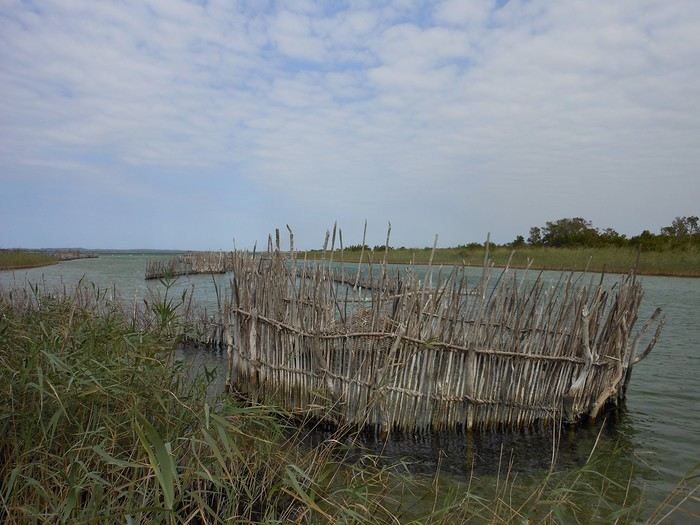
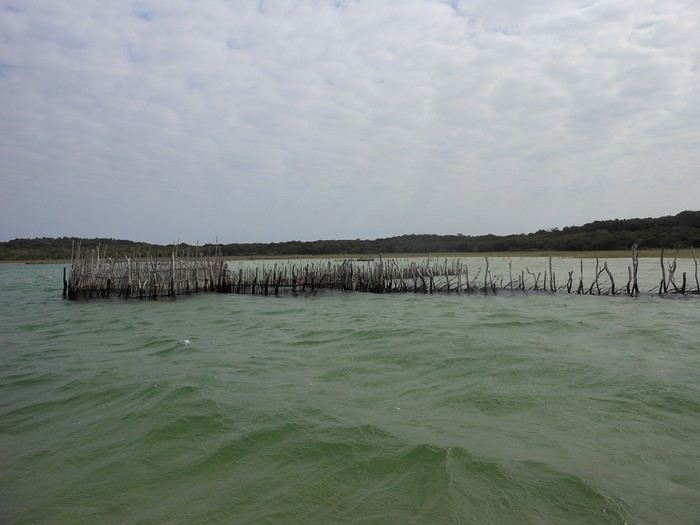
Traditionally done with raffia boats
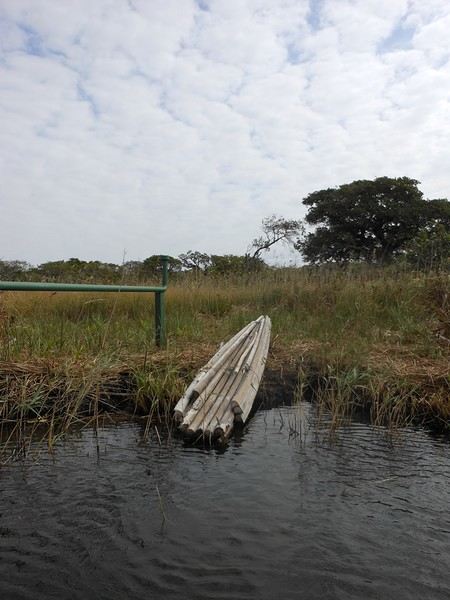
Made from forest raffia
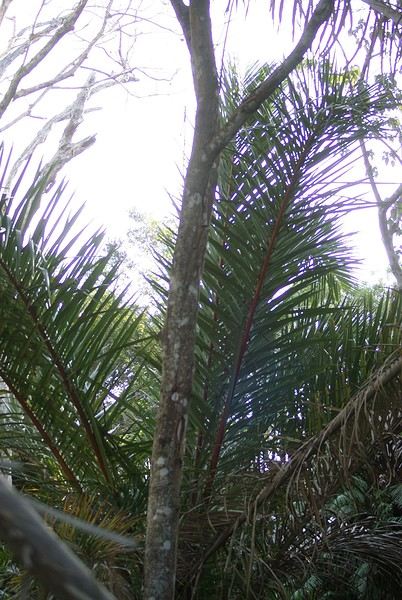
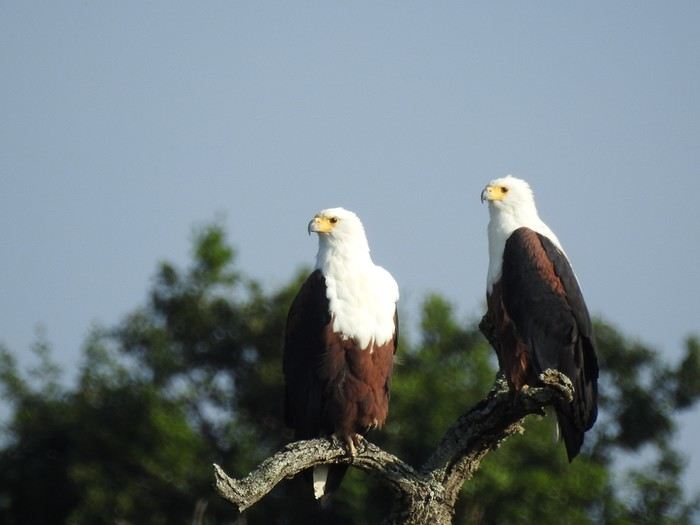
Where we spotted a particularly rare and endemic bird (whose name I can’t remember... and I can’t be bothered to dig through my notes)
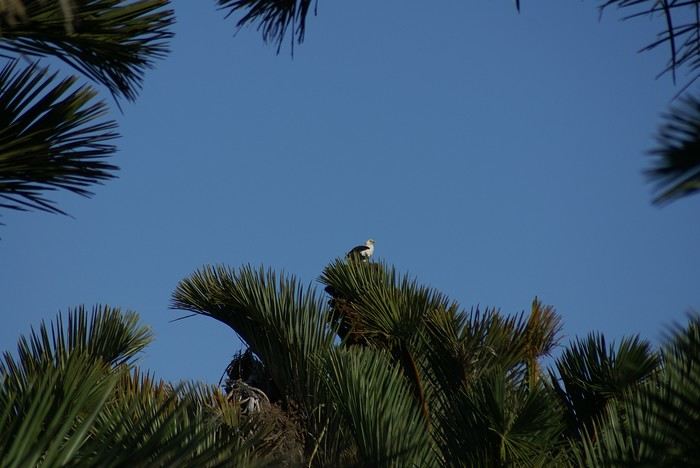 Here, those are eagles
And they’re pretty brave because... they’re not far away...
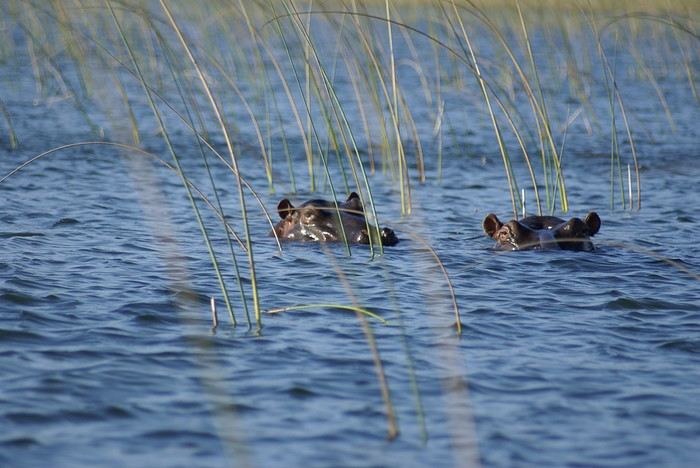
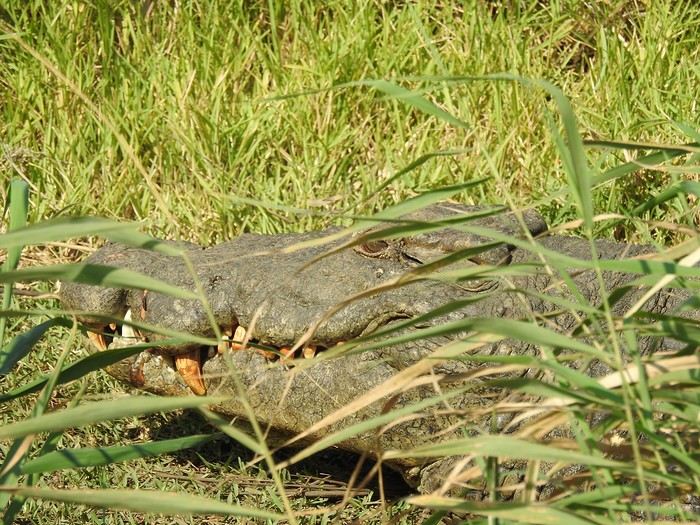
Yet we still swim there... with supervision...
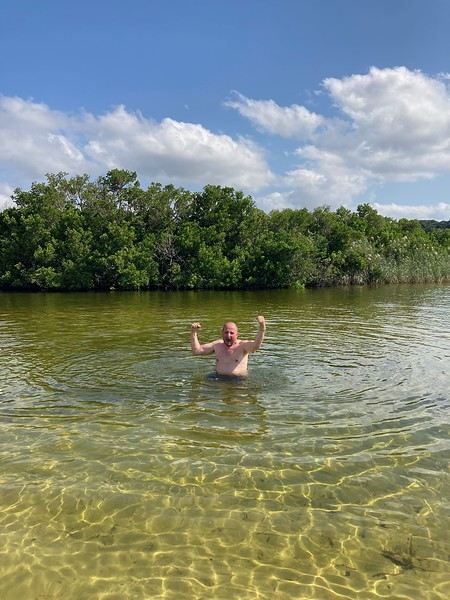
So, between St. Lucia and Mozambique, you’ll find marshes, lagoons, lakes, and coastline, with our Tonga friends, Zulu friends, and—just a bit further up—the Tembe... and their king. (I’m showing off a bit because I got to see a king up close, ate in the same room as him, and even talked to him!)
Originally, the Boers tried to farm there... including sugarcane...
But... between the hippos, snakes, crocs, and malaria-carrying mosquitoes... They lost count of the deaths and disappearances.
The story goes that when Madiba (Mandela) came to power, he passed through the area and convinced them to turn it into a natural space that would attract tourists—and that’s when the big change happened.
And it’s pretty incredible to see how this place has evolved, going from extreme poverty to a certain level of gentrification... How this once "chaotic" area saw shops, roads, and housing spring up (I’m mainly talking about Mtubatuba, the nearby Black town). In fact, in St. Lucia now, the homes that aren’t tourist accommodations can be counted on one hand.
St. Lucia has become a "seaside resort"... very busy during school holidays and certain weekends, increasingly cosmopolitan (20 years ago, speaking French was exotic—now it’s completely ordinary).
As mentioned in the title, this is a travel journal focused on St. Lucia and iSimangaliso ("this place is miraculous" in Zulu) over various trips spanning about twenty years.
The Elephant Coast stretches from Hluhluwe Umfolozi, through St. Lucia and iSimangaliso, all the way to the Mozambique border near Kosi Bay and Tembe. This region was conquered by the Zulus (for context, in the 19th century, the Zulus were just one Bantu group among many—it was a local Napoleon, Shaka, who was both cruel and inventive, conquering and subjugating all other groups to form the Zulu nation). The Tonga were the big losers in this area, and a certain "animosity" is still very noticeable... With our two guides (one Zulu and the other Tonga), we ran into some Tonga folks—definitely not a warm atmosphere. The Tonga were pushed back into the marshes. Fish traps are their main source of wealth. (iSimangaliso is a lagoon and marshland area with several interconnected lakes—it used to be called Vetland Park, and for good reason.) So, lakes, fishing with fish traps...
Traditionally done with raffia boats
Made from forest raffia
Where we spotted a particularly rare and endemic bird (whose name I can’t remember... and I can’t be bothered to dig through my notes)
Here, those are eagles
And they’re pretty brave because... they’re not far away...
Yet we still swim there... with supervision...
So, between St. Lucia and Mozambique, you’ll find marshes, lagoons, lakes, and coastline, with our Tonga friends, Zulu friends, and—just a bit further up—the Tembe... and their king. (I’m showing off a bit because I got to see a king up close, ate in the same room as him, and even talked to him!)
Originally, the Boers tried to farm there... including sugarcane...
But... between the hippos, snakes, crocs, and malaria-carrying mosquitoes... They lost count of the deaths and disappearances.
The story goes that when Madiba (Mandela) came to power, he passed through the area and convinced them to turn it into a natural space that would attract tourists—and that’s when the big change happened.
And it’s pretty incredible to see how this place has evolved, going from extreme poverty to a certain level of gentrification... How this once "chaotic" area saw shops, roads, and housing spring up (I’m mainly talking about Mtubatuba, the nearby Black town). In fact, in St. Lucia now, the homes that aren’t tourist accommodations can be counted on one hand.
St. Lucia has become a "seaside resort"... very busy during school holidays and certain weekends, increasingly cosmopolitan (20 years ago, speaking French was exotic—now it’s completely ordinary).
From Ulaanbaatar to Irkutsk by Train (Russia-Mongolia)
Hi everyone,
I’m planning to travel from Ulaanbaatar to Irkutsk by train this summer but I’m a bit worried about crossing the borders. How does it work? Could anyone share their experience? (I’ve found quite a few accounts of people going *from* Russia *to* Mongolia, but entering a country is never the same as leaving it—especially in this context!)
Thanks in advance! 😊
Thanks in advance! 😊
Entering Mexico without a return ticket
Hi, does anyone know if it’s necessary to have a return ticket to go to Mexico? I’d like to go there—I’ve bought a one-way ticket and plan to cross the border by bus to Guatemala. I’m worried they won’t let me board the plane if I don’t have a return ticket.
Ed
Road trip to the United Arab Emirates from France
I'm planning to drive to the UAE by road, going through Iraq. Has anyone done this and can give me some info? Specifically about the border crossings Turkey/Iraq and Iraq/Kuwait.
Traveling to Thimphu (Bhutan) from Kolkata by land
Hi everyone!
So great to be back on this Forum!
My question is in the title: is it possible to reach Bhutan from Kolkata by entering through the Phuntsholing border crossing? If anyone has already done this route, it would really put my mind at ease... 😉
Thanks in advance for all your replies! 🤪
Lydie
Travel companion for France-Bamako in a Mercedes Sprinter
Hello,
I’m planning to leave for Bamako in three to six months.
Here’s my itinerary: Toulouse (France) via Barcelona, Tangier, crossing Morocco to GUERGUERAT, entering Mauritania, Nouakchott up to the GOGUI border (Mali), and arriving in Bamako. I might go through Algeciras depending on costs.
I plan to stop for a week in Nouakchott with family.
I’ll be traveling in a half-loaded Mercedes Sprinter.
For this reason, I’m looking for a travel companion due to my age and health.
I’ve made this crossing several times, including two round trips in 2018.
I’m open to any serious proposals.
Many thanks for this site, which has been a great source of information.
France-Benin Trip via Senegal
Hello fellow travelers,
I've made the France-Benin trip several times via the Mali "Route de l'Espoir," and the last journey was pretty tense—2013, 🥵🔥 military convoys and all the chaos in Mali from the border to Bamako. 😅
So, I’m planning to take the route again but this time via Senegal and Côte d'Ivoire, with a good old J9 (the mayor’s vehicles I used to travel in… 😎. Though the Mercedes 308 wasn’t bad either).
Has anyone done this recently?
A friend of mine did it 4 years ago, but things can change pretty quickly.
If you’d like to share your latest experiences, I’m all ears! 😊 Have a great weekend! 👋
From Northern Laos to Angkor Temples – Looking for Travel Companions for February 2025
Who’s up for an amazing trip alternating karst landscapes, jungle, rice terraces, plains, easy hikes, and a paradise island off Sihanoukville? We’ll arrive via Chiang Rai in northern Thailand, cross the border, take a boat on the Mekong, and travel by road to discover mountain tribes, Luang Prabang and its wonders, then hop on an ultra-fast TGV train to Vientiane. From there, a flight to Siem Reap for the Angkor temples, floating villages on Tonlé Sap Lake, Battambang, and mountain jungle before reaching Phnom Penh. Finally, a road trip to Sihanoukville to embark on a 3-day paradise getaway before flying back to Paris from Phnom Penh.
Mix of 3-star accommodations and resorts. February–March 2025
Dare to join this exceptional journey I’ve planned with an adventure travel agency—small groups and tailor-made! My co-traveler just dropped out. See you soon! Gigi
Mix of 3-star accommodations and resorts. February–March 2025
Dare to join this exceptional journey I’ve planned with an adventure travel agency—small groups and tailor-made! My co-traveler just dropped out. See you soon! Gigi
To the Top West End
In this time of general travel-journal scarcity, I’m stepping up to tell you about a far-too-short getaway to the Top West End, a local term for the very northern part of Western Australia, right on the border ( ;) ) with the Northern Territory.
As usual, I didn’t manage to keep it short, but this time I’ve got photos to go with it!
August 2020. Since the opportunities to explore the world are extremely limited right now, all we (R&X) can do is explore our own island! Well, just a part of it, because with the state borders still closed, we’re stuck in Western Australia (WA).
Luckily, we’re pretty fortunate because this state is huge: over 2.5 million km² (that’s more than four times the size of France or 1.5 times Quebec). What’s more, stretching over 20 degrees of latitude between the Antarctic Ocean and the Timor Sea, you’ll find climates ranging from Mediterranean to arid to tropical. That’s actually why we decided to head as far north as possible. Sick of the endless rainy winter in Perth, bring on the heat of the Kimberley... way up Nooorth!
Friday. At the airport, the main terminal was closed (not enough flights), so we ended up in the annex (where flights to the various mines usually depart from). There was no crowd at the gate, and in this huge, single departure lounge, empty seats were plentiful. Only three flights were listed on the screens for the rest of the morning: the first to Coondewanna (?), the second to Darwin, and ours to Kununurra (code KNX).
A cool breeze swept through the half-open corridors along the runways. At the top of the walkway leading to the Fokker 100 (the Airbuses and Boeings are now parked!), a flight attendant greeted us with a basket full of sanitary masks. We were actually the only masked passengers (the staff weren’t wearing them either). With zero Covid-19 cases in WA at the time, the only rule was to maintain social distancing—something pretty hard to do on a full plane!
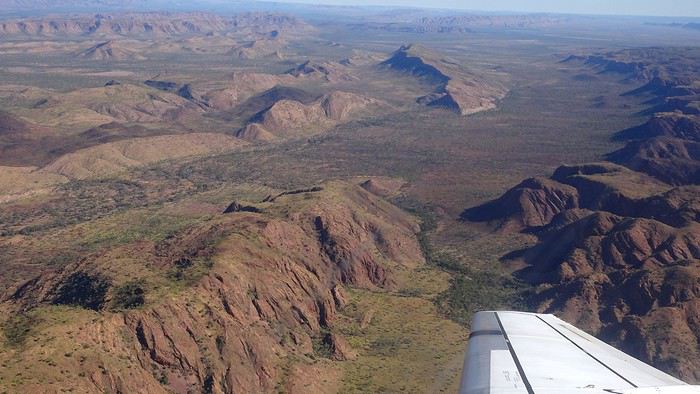
It was also my first time wearing a mask—it felt weird, pretty uncomfortable, and after a while, painful behind the ears. I really feel for those who have to wear one all day, every day. The flight lasted three long hours, but luckily, I had a good book. From the window, I watched an endless expanse of salt lakes in all shapes and sizes—round, elongated, gray, white, sometimes blue and green—and an infinity of winding, capricious meanders, along with long straight lines that led nowhere. The last half-hour got more interesting as rocky, swollen formations and long, sloping plateaus appeared. Against the vast ochre landscape, green patches became more frequent.
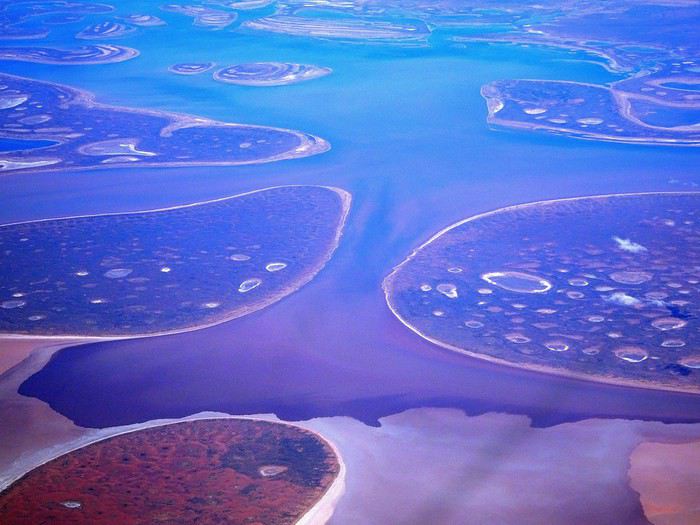
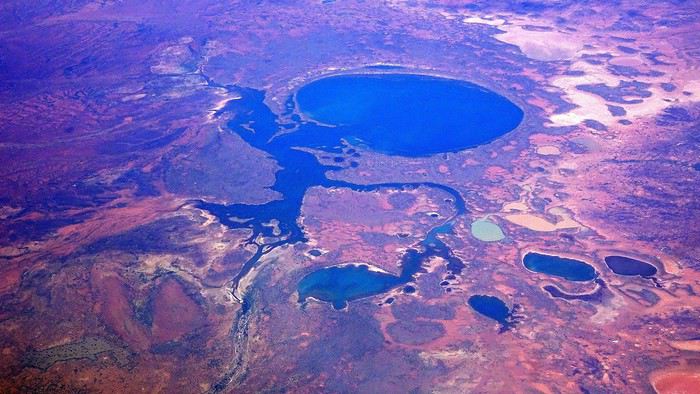
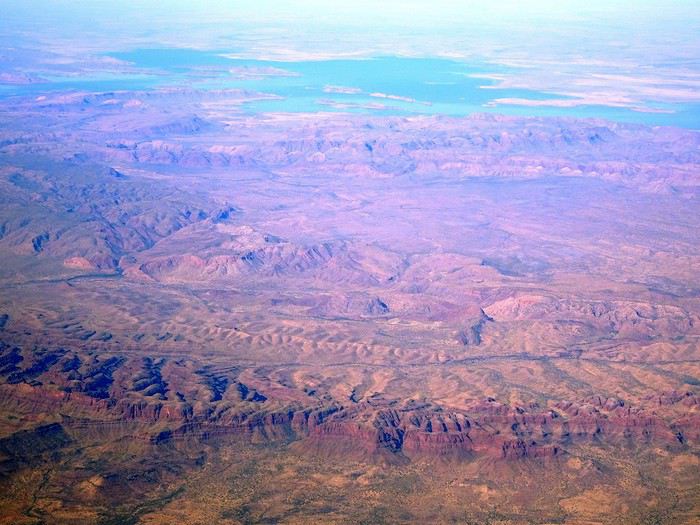
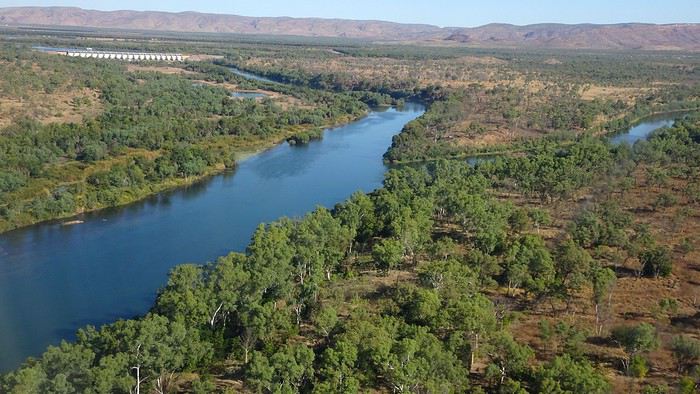
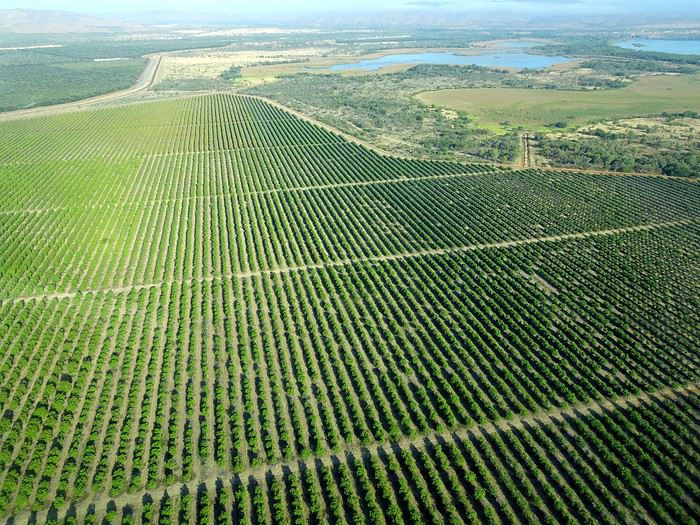
Just before landing, rows of green fields briefly appeared, along with an surprisingly wide river—but we were already rolling down the tarmac. A few hangars, a myriad of small, stationary planes, and a tiny terminal topped with a sign: “Welcome to Kununurra.”
We wanted heat, and here it was—34°C the moment we stepped off the plane! We felt alive again and totally ridiculous in our jeans and sweaters. We quickly grabbed our suitcase and picked up the 4x4 we’d rented—more out of necessity, since only that type of vehicle can access the national parks we planned to visit.
Just four kilometers separated us from Kununurra, a town of 5,000 people founded in 1961 during the construction of the Lake Argyle Dam and the development of the Ord River Irrigation Area Scheme (more on that later). On the horizon, mountain ranges (a bit of an exaggeration, since we know Mt. Meharry, WA’s highest ‘mountain,’ doesn’t even reach 1,250 meters!) and closer to the road, a few irrigation canals cutting through stretches of bush, then a huge park overlooking a small lake lined with reeds.
A row of baobabs (yes, there are baobabs in Australia too!), a series of motels with immaculate lawns, a gas station, and there’s the main street leading to the town center—that is, the parking lots of the two supermarkets, the bottleshop, the pub, the Town Hall, the municipal pool, and the Tourist Office (already closed!), and at the next roundabout, another park, the Presbyterian church, and a few other shops. In short, two or three green blocks that you can explore in no time.
One road leads to the small industrial area and one of the town’s three or four campgrounds, while another heads toward the residential neighborhoods, which look just like the typical suburbs you find in any Australian city—except with tropical vegetation. We stocked up at Coles, an identical copy of the one near our place, and—surprise—the prices were practically the same.
We checked into one of the motels. The receptionist listed the town’s three or four restaurants, insisting that it’s always better to book a table. She recommended the Pump House, a bit outside town on the lake’s edge. “Best spot to watch the sunset, but hurry up.” she told us. It was only 5:00 PM!
When we got there half an hour later, the place was packed, and the sun had already disappeared behind a row of trees! Sure enough, we’d see a few days later that the sunset can be a stunning spectacle—if you wait a bit for the sky (especially if it’s cloudy) to blaze and reflect in the lake’s calm waters. A little disappointed, we headed back into town, where we easily found the other lively spot in town: the pub (nothing like an old English pub). Above the long L-shaped bar, several giant screens (thankfully muted) were broadcasting live footy, rugby league, etc. In one corner, players circled the pool table, while in another, customers were digging into plates of the day’s special. Instead of rooms, there were various patios where groups of friends and coworkers (easily recognizable by the fluoro vests they were still wearing) were gathered. We found a table under a mango tree—unfortunately, a little too close to the guitarist strumming his entire Country Music repertoire, complete with Keith Urban-style tremolos. Guaranteed culture shock!
Since it’s the custom here, we called the Country Club to book a table before the kitchen closed! The CC is the town’s—and even the region’s—fancy spot. Dark decor, modern furniture, dim lighting, and the air conditioning blasting. The twenty or so customers had taken refuge on the vast terrace, lit by torches. The view of the tall eucalyptus trees, illuminated by spotlights shifting from red to blue, was breathtaking.
The menu was minimal, but the grilled salmon was excellent, and the Pavlova (the meringue dessert Kiwis and Aussies have been arguing over since 1906) with melon and watermelon was absolutely divine.
It wasn’t even 9:00 PM, and we were already in bed. Had we already adopted the Top West End’s chicken schedule?!
To be continued... Journal dedicated to Attila
As usual, I didn’t manage to keep it short, but this time I’ve got photos to go with it!
August 2020. Since the opportunities to explore the world are extremely limited right now, all we (R&X) can do is explore our own island! Well, just a part of it, because with the state borders still closed, we’re stuck in Western Australia (WA).
Luckily, we’re pretty fortunate because this state is huge: over 2.5 million km² (that’s more than four times the size of France or 1.5 times Quebec). What’s more, stretching over 20 degrees of latitude between the Antarctic Ocean and the Timor Sea, you’ll find climates ranging from Mediterranean to arid to tropical. That’s actually why we decided to head as far north as possible. Sick of the endless rainy winter in Perth, bring on the heat of the Kimberley... way up Nooorth!
Friday. At the airport, the main terminal was closed (not enough flights), so we ended up in the annex (where flights to the various mines usually depart from). There was no crowd at the gate, and in this huge, single departure lounge, empty seats were plentiful. Only three flights were listed on the screens for the rest of the morning: the first to Coondewanna (?), the second to Darwin, and ours to Kununurra (code KNX).
A cool breeze swept through the half-open corridors along the runways. At the top of the walkway leading to the Fokker 100 (the Airbuses and Boeings are now parked!), a flight attendant greeted us with a basket full of sanitary masks. We were actually the only masked passengers (the staff weren’t wearing them either). With zero Covid-19 cases in WA at the time, the only rule was to maintain social distancing—something pretty hard to do on a full plane!
It was also my first time wearing a mask—it felt weird, pretty uncomfortable, and after a while, painful behind the ears. I really feel for those who have to wear one all day, every day. The flight lasted three long hours, but luckily, I had a good book. From the window, I watched an endless expanse of salt lakes in all shapes and sizes—round, elongated, gray, white, sometimes blue and green—and an infinity of winding, capricious meanders, along with long straight lines that led nowhere. The last half-hour got more interesting as rocky, swollen formations and long, sloping plateaus appeared. Against the vast ochre landscape, green patches became more frequent.
Just before landing, rows of green fields briefly appeared, along with an surprisingly wide river—but we were already rolling down the tarmac. A few hangars, a myriad of small, stationary planes, and a tiny terminal topped with a sign: “Welcome to Kununurra.”
We wanted heat, and here it was—34°C the moment we stepped off the plane! We felt alive again and totally ridiculous in our jeans and sweaters. We quickly grabbed our suitcase and picked up the 4x4 we’d rented—more out of necessity, since only that type of vehicle can access the national parks we planned to visit.
Just four kilometers separated us from Kununurra, a town of 5,000 people founded in 1961 during the construction of the Lake Argyle Dam and the development of the Ord River Irrigation Area Scheme (more on that later). On the horizon, mountain ranges (a bit of an exaggeration, since we know Mt. Meharry, WA’s highest ‘mountain,’ doesn’t even reach 1,250 meters!) and closer to the road, a few irrigation canals cutting through stretches of bush, then a huge park overlooking a small lake lined with reeds.
A row of baobabs (yes, there are baobabs in Australia too!), a series of motels with immaculate lawns, a gas station, and there’s the main street leading to the town center—that is, the parking lots of the two supermarkets, the bottleshop, the pub, the Town Hall, the municipal pool, and the Tourist Office (already closed!), and at the next roundabout, another park, the Presbyterian church, and a few other shops. In short, two or three green blocks that you can explore in no time.
One road leads to the small industrial area and one of the town’s three or four campgrounds, while another heads toward the residential neighborhoods, which look just like the typical suburbs you find in any Australian city—except with tropical vegetation. We stocked up at Coles, an identical copy of the one near our place, and—surprise—the prices were practically the same.
We checked into one of the motels. The receptionist listed the town’s three or four restaurants, insisting that it’s always better to book a table. She recommended the Pump House, a bit outside town on the lake’s edge. “Best spot to watch the sunset, but hurry up.” she told us. It was only 5:00 PM!
When we got there half an hour later, the place was packed, and the sun had already disappeared behind a row of trees! Sure enough, we’d see a few days later that the sunset can be a stunning spectacle—if you wait a bit for the sky (especially if it’s cloudy) to blaze and reflect in the lake’s calm waters. A little disappointed, we headed back into town, where we easily found the other lively spot in town: the pub (nothing like an old English pub). Above the long L-shaped bar, several giant screens (thankfully muted) were broadcasting live footy, rugby league, etc. In one corner, players circled the pool table, while in another, customers were digging into plates of the day’s special. Instead of rooms, there were various patios where groups of friends and coworkers (easily recognizable by the fluoro vests they were still wearing) were gathered. We found a table under a mango tree—unfortunately, a little too close to the guitarist strumming his entire Country Music repertoire, complete with Keith Urban-style tremolos. Guaranteed culture shock!
Since it’s the custom here, we called the Country Club to book a table before the kitchen closed! The CC is the town’s—and even the region’s—fancy spot. Dark decor, modern furniture, dim lighting, and the air conditioning blasting. The twenty or so customers had taken refuge on the vast terrace, lit by torches. The view of the tall eucalyptus trees, illuminated by spotlights shifting from red to blue, was breathtaking.
The menu was minimal, but the grilled salmon was excellent, and the Pavlova (the meringue dessert Kiwis and Aussies have been arguing over since 1906) with melon and watermelon was absolutely divine.
It wasn’t even 9:00 PM, and we were already in bed. Had we already adopted the Top West End’s chicken schedule?!
To be continued... Journal dedicated to Attila
Voyage en famille aux Amériques English translation pending
Bonjour à tous,
Avec mon épouse et mes 3 garçons nous envisageons un très long voyage aux Amériques. Notre objectif est d'arriver au canada et de descendre jusqu'au sud sud. Pour cela et pour l'instant nous envisageons de descendre en hymer S660 de 84. Pour ceux qui ont déjà passé ces frontières, quels sont les problèmes que nous pouvons rencontrer au douanes. Par exemple, les permis de conduire B (francais et international) sont ils ok pour conduire des cc la bas? Le poids du véhicule est il problématiques (risque de surcharge).
Une autre option que nous envisageons est d'acheter un CC la bas directement. Mais j'ai peur que les problèmes de frontières soient plus importantes avec un CC canadien en amérique du sud.
Avez vous des expériences à partager ? Tous vos conseils sont les bienvenues.
Avec mon épouse et mes 3 garçons nous envisageons un très long voyage aux Amériques. Notre objectif est d'arriver au canada et de descendre jusqu'au sud sud. Pour cela et pour l'instant nous envisageons de descendre en hymer S660 de 84. Pour ceux qui ont déjà passé ces frontières, quels sont les problèmes que nous pouvons rencontrer au douanes. Par exemple, les permis de conduire B (francais et international) sont ils ok pour conduire des cc la bas? Le poids du véhicule est il problématiques (risque de surcharge).
Une autre option que nous envisageons est d'acheter un CC la bas directement. Mais j'ai peur que les problèmes de frontières soient plus importantes avec un CC canadien en amérique du sud.
Avez vous des expériences à partager ? Tous vos conseils sont les bienvenues.
Visa et zone de transit à l'aéroport English translation pending
bonjour
je renouvelle ma question , avons nous la possibilité HORS COVID d'arriver par un vol internationnale dans un aeroport et reprendre un autre vol avec une autre compagnie , tout en restant dans la zone sans franchir la frontiere du pays sans visa
merci
Les racines du besoin de voyager English translation pending
Certains ne quittent jamais leur ville ou leur province et ne le souhaitent pas.
Nous autres voyageurs avons un beau jour attrapé le virus de la decouverte et il nous faut voir l Ailleurs.
il y a eu une fois une petite semence qui a germé : un voyage de classe, un pays decouvert avec des amis, des vacances avec les parents, un passage de frontiere. un moment qui nous a donné le goût, un moment qu on veut revivre à tout jamais, a chaque fois.
il y a eu une fois une petite semence qui a germé : un voyage de classe, un pays decouvert avec des amis, des vacances avec les parents, un passage de frontiere. un moment qui nous a donné le goût, un moment qu on veut revivre à tout jamais, a chaque fois.
Visite des chutes d'Iguazu (Brésil) English translation pending
Bonjour
Nous etions a ciudad del este nous nous pas pris le tete pour passer au bresil visiter les chutes d iguazu affretant un taxi cout aller retour 50 dollar us la passage de la frontiere comme de la france a l espagne rien on passes la frontiere tout droit sans aucuns controle pour juste une journée il est vrai.
Les pesos argentin sont acceptés sans soucis, les guaranis non pour les autres monnaies etrangeres je ne sais pas.
bon voyage quand les frontiéres seront reouvertes.
Quel est le risque d'aller à Marbella du 25 juillet au 15 août? English translation pending
Bonjour
On doit aller au camping cabopino pendant 3 semaines, le camping le dit que tout va bien pour le moment sur place.
On y va en voiture et on entend certains jours que la frontière risque de fermer entre la France et l’Espagne.
Quel est le risque ? Si cela devait arriver laisserait il les gens rentrer chez eux ?
Je vous remercie
On doit aller au camping cabopino pendant 3 semaines, le camping le dit que tout va bien pour le moment sur place.
On y va en voiture et on entend certains jours que la frontière risque de fermer entre la France et l’Espagne.
Quel est le risque ? Si cela devait arriver laisserait il les gens rentrer chez eux ?
Je vous remercie
Trajet Dubrovnik - Split via Neum en Bosnie English translation pending
Bonjour à tous,
Nous souhaitons séjourner à Dubrovnik du 29 juillet aux 01 aout en départ de Bordeaux. Ce séjour comprend la location d'un véhicule pour différentes balades mais surtout pour atteindre Split pour y séjourner du 01 aux 05 aout.
Après lecture de plusieurs post, j'ai bien pris connaissance du formulaire à remplir pour tout déplacement entre frontières. Qu'il fallait vérifier auprès de la compagnie de location que la carte verte permettait le déplacement outre frontières (carte verte non barrée)
Mais je m'interroge quant à la possibilité et la complexité de franchir la frontière de Neum en cette période. Avez-vous des retours?
Merci d'avance 🙂
Théo
Nous souhaitons séjourner à Dubrovnik du 29 juillet aux 01 aout en départ de Bordeaux. Ce séjour comprend la location d'un véhicule pour différentes balades mais surtout pour atteindre Split pour y séjourner du 01 aux 05 aout.
Après lecture de plusieurs post, j'ai bien pris connaissance du formulaire à remplir pour tout déplacement entre frontières. Qu'il fallait vérifier auprès de la compagnie de location que la carte verte permettait le déplacement outre frontières (carte verte non barrée)
Mais je m'interroge quant à la possibilité et la complexité de franchir la frontière de Neum en cette période. Avez-vous des retours?
Merci d'avance 🙂
Théo
Peut-on traverser le Danemark pour se rendre en Finlande? English translation pending
Bonjour,
Je vais probablement me rendre en Finlande ce mois-ci faire du bénévolat. Je vais recevoir une autorisation pour ne pas être bloqué à la frontière. J'y vais en véhicule. Pour aller au Danemark, il faut prouver notre lieu résidence, soit la Belgique et une preuve qu'on reste minimum 6 nuits dans le pays. Sauf que moi, je veux simplement traverser le pays, pas m'y arrêter. Avez-vous des informations là dessus ou il est préférable d'appeler l'ambassade du Danemark à Bruxelles ?
Merci d'avance.
Je vais probablement me rendre en Finlande ce mois-ci faire du bénévolat. Je vais recevoir une autorisation pour ne pas être bloqué à la frontière. J'y vais en véhicule. Pour aller au Danemark, il faut prouver notre lieu résidence, soit la Belgique et une preuve qu'on reste minimum 6 nuits dans le pays. Sauf que moi, je veux simplement traverser le pays, pas m'y arrêter. Avez-vous des informations là dessus ou il est préférable d'appeler l'ambassade du Danemark à Bruxelles ?
Merci d'avance.
Suggestions pour l'ouest de la Lettonie? English translation pending
Hello.
Je me rends en Lituanie et en Lettonie d'ici quelques jours et j'aimerais peaufiner mon itinéraire de voyage.
Après une bonne semaine passée en Lituanie (séjour qui se terminera par l'isthme de Courlande), j'aimerais traverser la frontière depuis la route de Palanga pour me rendre en Lettonie.
Je resterai a priori une nouvelle semaine en Lettonie, notamment à Jurmala/Tukums, Riga puis Rundale pour la fin de mon séjour (5 jours), et je m'interroge sur les coins intéressants à visiter dans la partie occidentale de la Lettonie, pendant 2 jours.
J'ai cru lire quelques informations sur Liepaja & Kuldiga...
Des commentaires ou des suggestions ?
Merci !
Je me rends en Lituanie et en Lettonie d'ici quelques jours et j'aimerais peaufiner mon itinéraire de voyage.
Après une bonne semaine passée en Lituanie (séjour qui se terminera par l'isthme de Courlande), j'aimerais traverser la frontière depuis la route de Palanga pour me rendre en Lettonie.
Je resterai a priori une nouvelle semaine en Lettonie, notamment à Jurmala/Tukums, Riga puis Rundale pour la fin de mon séjour (5 jours), et je m'interroge sur les coins intéressants à visiter dans la partie occidentale de la Lettonie, pendant 2 jours.
J'ai cru lire quelques informations sur Liepaja & Kuldiga...
Des commentaires ou des suggestions ?
Merci !
Voyage en Ukraine avec son véhicule personnel English translation pending
BONJOUR
Je suis marié à une citoyenne ukrainienne , je compte me rendre en ukraine en "PLAN B" par la route en août 2020 dès que les frontières terrestres seront rouvertes , ( car nos vols AIR FRANCE ont été annulés ) le seul hic, c'est que mon assurance française ne me couvre pas en Ukraine , malgré mon insistance je n'ai pas pu avoir une extension de garantie d'assurance, j'ai entendu dire qu'il existait aux postes frontières Pologne/Ukraine ou Hongrie/Ukraine , des bureaux d'assurances, aux fins d'établir un contrat "d'assurance auto temporaire" pour une période , en ce qui me concerne ce serait pour 1 mois maximum" , y-a-t-il quelqu'un sur le forum, qui a déjà été dans ce cas de figure , c'est à dire d'avoir été obligé de prendre une assurance temporaire hors Union européenne car ma compagnie d'assurance ne valide pas cette option, et en l'occurrence l'UKRAINE ( UA) est barrée au dos de mon attestation d'assurance , merci pour votre retour d'expérience, si possible. Dans mon cas précis, je compte passer la frontière entre la hongrie à Zahony et arriver sur Tchop en ukraine , Mon itinéraire depuis le sud de la france , par la suisse, l'autriche , la hongrie merci bien cordialement
Je suis marié à une citoyenne ukrainienne , je compte me rendre en ukraine en "PLAN B" par la route en août 2020 dès que les frontières terrestres seront rouvertes , ( car nos vols AIR FRANCE ont été annulés ) le seul hic, c'est que mon assurance française ne me couvre pas en Ukraine , malgré mon insistance je n'ai pas pu avoir une extension de garantie d'assurance, j'ai entendu dire qu'il existait aux postes frontières Pologne/Ukraine ou Hongrie/Ukraine , des bureaux d'assurances, aux fins d'établir un contrat "d'assurance auto temporaire" pour une période , en ce qui me concerne ce serait pour 1 mois maximum" , y-a-t-il quelqu'un sur le forum, qui a déjà été dans ce cas de figure , c'est à dire d'avoir été obligé de prendre une assurance temporaire hors Union européenne car ma compagnie d'assurance ne valide pas cette option, et en l'occurrence l'UKRAINE ( UA) est barrée au dos de mon attestation d'assurance , merci pour votre retour d'expérience, si possible. Dans mon cas précis, je compte passer la frontière entre la hongrie à Zahony et arriver sur Tchop en ukraine , Mon itinéraire depuis le sud de la france , par la suisse, l'autriche , la hongrie merci bien cordialement
Suisse, pays de lacs et montagnes du 16 au 28 mai 2020 English translation pending
Bonjour,
Comme pour beaucoup de voyageurs, le Coronavirus a perturbé nos plans pour cette année. Notre road trip au Pérou est tombé à l’eau et la fermeture des frontières ne nous permettait pas de quitter la Suisse.
Heureusement, en Suisse, nous n’avons pas subi un confinement strict et nous pouvions nous déplacer librement dans le pays, en respectant certaines règles (distance de 2 mètres entres les personnes, rassemblements de maximum 5 personnes). De plus, une semaine avant notre départ, les magasins, restaurants et musées pouvaient ouvrir. Par contre, les campings, télécabines et télésièges sont restés fermés jusqu’au 6 juin.
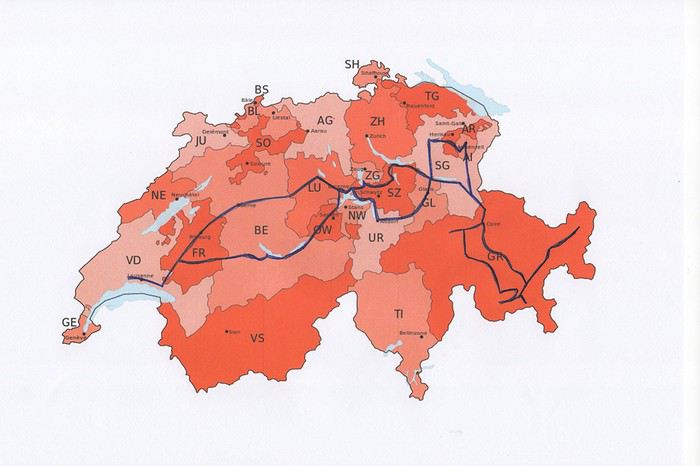
Nous avons décidé de ne pas préparer un itinéraire fixe. Le but principal était le canton des Grisons que nous connaissions très peu. Pour y aller et pour revenir, nous avons traversé d’autres cantons où nous avons profité de faire des visites et randonnées. Certains endroits nous étaient bien connus, mais les voir sans les touristes habituels, asiatiques, indiens et américains, change complètement la perception des lieux. Imaginez, le fameux pont de la Chapelle à Lucerne, sans les hordes de touristes asiatiques qui l’envahissent tous les jours.
Nous avons loué un van, afin d’être autonome et libre. Notre choix s’est porté sur le VW California Ocean. Ce van est passe-partout, on peut facilement emprunter toutes les petites routes de montagnes et se parquer partout. Seul inconvénient, il n’a pas de salle de bain. La douche se fait à l’extérieur (eau froide), mais nous avons des toilettes portables. Le California Ocean est équipé avec une petite cuisine (un réchaud à gaz avec deux feux, un frigo de 42 litres, un petit évier). Il y a des placards sous la cuisine, au-dessus de la banquette et à l’arrière, ainsi qu’un grand tiroir sous la banquette. Les sièges avant se tournent, il y a deux tables, une à l’intérieur et une autre, encastrée dans la portière, pour l’extérieur. Les deux chaises pour l’extérieur sont encastrées dans la porte du coffre. Le toit se lève, on peut donc se mettre debout à l’intérieur du van. Le lit sous le toit est confortable, avec son sommier sur lequel sont fixé des ressorts. Un store extérieur nous protège du soleil lorsqu’on est à l’arrêt. Le chauffage stationnaire est bien agréable pour chauffer l’habitacle lorsqu’il fait froid. Il y a aussi plusieurs prises, dont une qui fonctionne avec la deuxième batterie et permet de charger le téléphone, tablette, etc. la nuit. Bref, ce petit van est vraiment fonctionnel.
Au dernier moment, nous avons décidé de prendre notre chien Tidou avec nous. Il a fallu adapter nos randonnées et visites. Eh oui, notre Tidou n’est plus tout jeune et il a des soucis avec son dos. Nous avons acheté un sac à dos spécifique, pour pouvoir le porter en terrain abrupte et lorsqu’il sera trop fatigué.
Nous avons chargé l’application park4night sur nos iPhones. Cette application est bien utile pour trouver des emplacements pour passer la nuit. Contrairement, à ce que l’on peut souvent lire, nous n’avons rencontré aucune difficulté pour passer la nuit. Le camping sauvage est donc possible en Suisse, si on ne s’installe pas pour plusieurs jours au même endroit. Concernant l’eau potable, on trouve de nombreuses fontaines, le plus souvent avec de l’eau potable.
Comme pour beaucoup de voyageurs, le Coronavirus a perturbé nos plans pour cette année. Notre road trip au Pérou est tombé à l’eau et la fermeture des frontières ne nous permettait pas de quitter la Suisse.
Heureusement, en Suisse, nous n’avons pas subi un confinement strict et nous pouvions nous déplacer librement dans le pays, en respectant certaines règles (distance de 2 mètres entres les personnes, rassemblements de maximum 5 personnes). De plus, une semaine avant notre départ, les magasins, restaurants et musées pouvaient ouvrir. Par contre, les campings, télécabines et télésièges sont restés fermés jusqu’au 6 juin.
Nous avons décidé de ne pas préparer un itinéraire fixe. Le but principal était le canton des Grisons que nous connaissions très peu. Pour y aller et pour revenir, nous avons traversé d’autres cantons où nous avons profité de faire des visites et randonnées. Certains endroits nous étaient bien connus, mais les voir sans les touristes habituels, asiatiques, indiens et américains, change complètement la perception des lieux. Imaginez, le fameux pont de la Chapelle à Lucerne, sans les hordes de touristes asiatiques qui l’envahissent tous les jours.
Nous avons loué un van, afin d’être autonome et libre. Notre choix s’est porté sur le VW California Ocean. Ce van est passe-partout, on peut facilement emprunter toutes les petites routes de montagnes et se parquer partout. Seul inconvénient, il n’a pas de salle de bain. La douche se fait à l’extérieur (eau froide), mais nous avons des toilettes portables. Le California Ocean est équipé avec une petite cuisine (un réchaud à gaz avec deux feux, un frigo de 42 litres, un petit évier). Il y a des placards sous la cuisine, au-dessus de la banquette et à l’arrière, ainsi qu’un grand tiroir sous la banquette. Les sièges avant se tournent, il y a deux tables, une à l’intérieur et une autre, encastrée dans la portière, pour l’extérieur. Les deux chaises pour l’extérieur sont encastrées dans la porte du coffre. Le toit se lève, on peut donc se mettre debout à l’intérieur du van. Le lit sous le toit est confortable, avec son sommier sur lequel sont fixé des ressorts. Un store extérieur nous protège du soleil lorsqu’on est à l’arrêt. Le chauffage stationnaire est bien agréable pour chauffer l’habitacle lorsqu’il fait froid. Il y a aussi plusieurs prises, dont une qui fonctionne avec la deuxième batterie et permet de charger le téléphone, tablette, etc. la nuit. Bref, ce petit van est vraiment fonctionnel.
Au dernier moment, nous avons décidé de prendre notre chien Tidou avec nous. Il a fallu adapter nos randonnées et visites. Eh oui, notre Tidou n’est plus tout jeune et il a des soucis avec son dos. Nous avons acheté un sac à dos spécifique, pour pouvoir le porter en terrain abrupte et lorsqu’il sera trop fatigué.
Nous avons chargé l’application park4night sur nos iPhones. Cette application est bien utile pour trouver des emplacements pour passer la nuit. Contrairement, à ce que l’on peut souvent lire, nous n’avons rencontré aucune difficulté pour passer la nuit. Le camping sauvage est donc possible en Suisse, si on ne s’installe pas pour plusieurs jours au même endroit. Concernant l’eau potable, on trouve de nombreuses fontaines, le plus souvent avec de l’eau potable.
Air France revolera au 1er juin vers l'Italie puis ensuite d'autres destinations vacances English translation pending
Bsr
Les vols commerciaux européen reprennent le 1er juin chez AF vers l'Italie pour commencer. Rome d'abord puis Milan, Venise, Bologne, Florence, Naples et Bari pour atteindre fin juin 78 vols par semaine vers ce pays. La Grèce qui ouvre aussi ses frontières à compter du 15 juin et l'Espagne le 1er juillet suivront pour les destinations vacances. La plupart des des destinations européennes seront ouvertes après le 15 juin. A suivre.
Les vols commerciaux européen reprennent le 1er juin chez AF vers l'Italie pour commencer. Rome d'abord puis Milan, Venise, Bologne, Florence, Naples et Bari pour atteindre fin juin 78 vols par semaine vers ce pays. La Grèce qui ouvre aussi ses frontières à compter du 15 juin et l'Espagne le 1er juillet suivront pour les destinations vacances. La plupart des des destinations européennes seront ouvertes après le 15 juin. A suivre.
Tubeless ou chambre à air? (à vélo) English translation pending
Je commence ce sujet suite a la lecture de plusieurs récits de personnes ayant parcourus des itinéraires longs et difficiles avec des pneus montés en Tubeless.
L'un sur la Great Divide , itinéraire TT sur les rocheuses de la frontière canadienne à celle du Mexique : 0 crevaisons !
L'autre de Tanger à Dakar 1 crevaison
Cela fait bien longtemps que j'ai adopté cette technique sur mon VTT , avec beaucoup de bonheur (crevaisons rarissimes, confort supérieur) Du coup je tenterais bien le coup en voyage...
Qui l'a déjà fait ? Quel bilan en tirez vous ?
Au plaisir de partager nos expériences
Cela fait bien longtemps que j'ai adopté cette technique sur mon VTT , avec beaucoup de bonheur (crevaisons rarissimes, confort supérieur) Du coup je tenterais bien le coup en voyage...
Qui l'a déjà fait ? Quel bilan en tirez vous ?
Au plaisir de partager nos expériences