Results for "Dhabi+ou+Dabi+|+5+>+158"
2242 results found.
travailler à Dubai English translation pending
salut je vais bientot a dubai en aout propablement je cherche du travail alors votre aide ne sera pas de refu je ne connait personne labas et je ne sais pas comment faire ni ou commencer alors mes amis svp
Transit à Dubaï: formalités médicaments English translation pending
bonjour,
Je part bientôt en australie avec EMIRATES; Je fais une escale de 2h à Dubai , en transit;
Dans mes bagages à mains j'ai tous mes médicament avec une ordonnance du médecin pour l'un d'entre eux un antidépresseur. J'ai liu sur les sites diplomatiques des choses horrible concernant des personne qui en transit se sont fait arrêtée et jetée en prison pour de simples gouttes nasales contenant de l'éphrédrines;
Ces contrôles concernent ils aussi les bagages de soute ??? quand on parle de problemes de suspiçions des médicaments est ce UNIQUEMENT pour ceux en bagages à main ou également en valises en soute car je pars toujours avec une armada de médicaments pour faire face a beaucoup de probleme ( je reste 3 mois en Australie) et ne pas avoir à consulter sans bien sur avoir d'ordonnances pour tout !
Je part bientôt en australie avec EMIRATES; Je fais une escale de 2h à Dubai , en transit;
Dans mes bagages à mains j'ai tous mes médicament avec une ordonnance du médecin pour l'un d'entre eux un antidépresseur. J'ai liu sur les sites diplomatiques des choses horrible concernant des personne qui en transit se sont fait arrêtée et jetée en prison pour de simples gouttes nasales contenant de l'éphrédrines;
Ces contrôles concernent ils aussi les bagages de soute ??? quand on parle de problemes de suspiçions des médicaments est ce UNIQUEMENT pour ceux en bagages à main ou également en valises en soute car je pars toujours avec une armada de médicaments pour faire face a beaucoup de probleme ( je reste 3 mois en Australie) et ne pas avoir à consulter sans bien sur avoir d'ordonnances pour tout !
Vol CDG - Dubaï presque le même prix que CDG - Bangkok English translation pending
bonjour,
je suis étonné de constater que chez EMIRATES les prix A/R pour Dubaï est preque le même prix que pour Bangkok (via Dubai), il y'a 40 € de différence.
quelque soit la période.
question de taxe d'aéroport? une explication?
question de taxe d'aéroport? une explication?
8-Day Trip to the Marquesas Islands from Papeete
This trip is a more budget-friendly—and shorter—alternative to the 14-day Aranui 5 cruise, which includes a few days at sea and a detour to Bora Bora in the Leeward Islands on the way back. The advantage of the cruise is that it lets you see and visit (though far too quickly) the two islands of Tahuata and Fatu Hiva, which don’t have airports. By plane, you’ll only be able to land on 4 of the 6 islands. However, Tahuata is accessible from Hiva Oa via a day trip (or two-day trip) shuttle. Plan for two extra days in your total time dedicated to the Marquesas Islands (called *Fenua Enata* in Marquesan language).
Our itinerary is perfect for those who aren’t excited by cruises and prefer to get closer to the local communities. This 9-day trip cost us around 2500 € all-inclusive. For a 14-day cruise on the Aranui, expect to pay 2300 € per person for a basic cabin for four, or 3800 € per person for a superior double cabin.
Air Tahiti offers a 4-island Marquesas Pass (Nuku Hiva, Ua Pou, Ua Huka, and Hiva Oa) for 86,000 XPF (about 700 €). The journey is made on an ATR 72 from Tahiti to Nuku Hiva or Hiva Oa, and on a 19-seat Twin Otter between the islands (often only 13 or 15 seats are available due to cargo, so book well in advance). We’re traveling as a couple. We booked our family-run guesthouse stays at the Tourism Fair in early February, where you can meet the owners and make your choice. Stays are almost always half-board or breakfast-only. Transfers are usually included, but you can always book a car or taxi.
**NUKU HIVA**
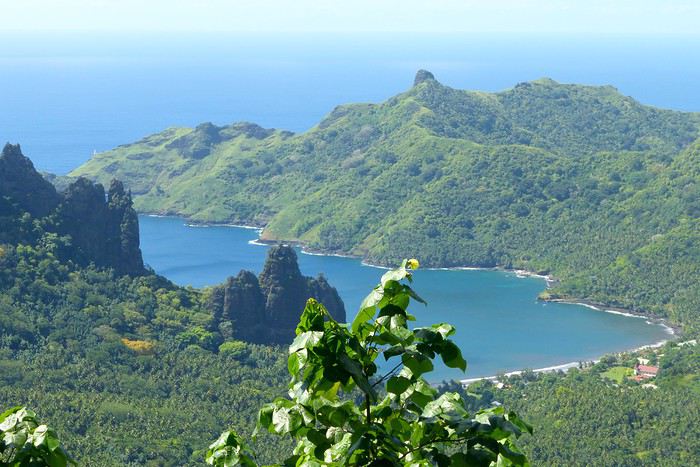
**A LITTLE GEOGRAPHY** Nuku Hiva (NH) is located about 1,500 km from Tahiti, in the north of French Polynesia. At 387 km², it’s the second-largest island in French Polynesia after Tahiti. It was formed by incredible volcanic phenomena and cataclysms between 1 and 6 million years ago, which lifted the island thousands of meters above the sea. Even after millennia of slow erosion, collapses, and settling, NH remains the most majestic of the Marquesas, with its sheer cliffs, deep valleys featuring immense waterfalls, and black walls that were once the inner walls of enormous volcanoes.
**A LITTLE HISTORY** The first contact between NH’s inhabitants and Europeans was in 1595 with Spanish navigators who only stayed briefly. It wasn’t until the late 18th century that Europeans arrived in greater numbers on NH (and the other Marquesas Islands), disrupting a very fragile social and cultural balance. It’s believed that nearly 100,000 people lived on Nuku Hiva at that time—a population decimated over the decades by epidemics, diseases brought by Europeans, and alcohol used for barter. The disastrous result: by the 1930s, only 2,500 people remained, having largely lost their identity and living in poverty. Today, the island has about 2,600 inhabitants spread across several villages, with Taiohae as the main one.
**NUKU HIVA IN LITERATURE**
1 / One of the famous writers who visited NH and stayed there was Herman Melville, who arrived in July 1842, the author of *Moby Dick*. The island had just come under French protectorate. Seduced by the enchanting *vahinés* and dazzled by his paradisiacal vision of the place, Melville deserted his ship. He ended up a prisoner of a local tribe, the Taipi, in Taipivai, where he stayed for a month and a half until an Australian ship captain secured his release in exchange for a musket and a roll of cotton fabric! Melville wrote a novel about this tumultuous episode in his life, considered a classic of travel literature. The book, *Typee: A Peep at Polynesian Life*, published in 1846 in the United States, was a huge success.
2 / Another famous Scottish writer, Robert Louis Stevenson, arrived in NH aboard a yacht that anchored in Anaho Bay, the island’s most beautiful, in July 1888. Stevenson was already known for two magnificent novels that marked their era: *Treasure Island* and *Dr. Jekyll & Mr. Hyde*. Stevenson, too, was captivated by the island’s natural beauty, though he also noted the devastating decline in identity, socio-cultural life, and physical health of a population ravaged by disease and alcohol. His account of his stay, *In the South Seas: An Account of Experiences and Observations in the Marquesas, Paumotus, and Gilbert Islands During Two Cruises on the Yacht Casco (1888) and the Schooner Equator (1889)*, was published in 1896 in New York, four years after his death in Apia, Western Samoa, where he had settled. It was also published in London in 1900.
3 / In August 1903, Victor Segalen, a French naval doctor, ethnologist, and archaeologist, landed in NH from the ship *La Durance*, sent to Polynesia to recover the possessions of the painter Paul Gauguin, who had died in April of that year. He, too, was enthralled by the Marquesas but lamented the loss of identity, dignity, and pride of the Māori, alienated by a Christianization that destroyed their culture and customs, denied their gods, and erased their past. He wrote about his experience, doubts, and fears in *Les Immémoriaux*.
4 / In December 1907, Jack London arrived in NH aboard the sailboat *Stark*, following in the footsteps of his illustrious predecessor, Herman Melville. London was in poor physical condition, exhausted from his relentless travels that had taken him from the Klondike in Canada to Japan, Australia, and London in Europe. He was appalled and shocked by Nuku Hiva’s degraded health situation: where Melville had encountered over 2,000 vigorous and healthy Marquesan warriors, London found only 12 suffering from various diseases—the rest had been wiped out by tuberculosis! His approach remained humanistic, and he maintained a sharp geopolitical awareness of these traditional Polynesian cultures, weakened by the inexorable advance of modernity in the early 20th century. He continued his journey to the Tuamotu Islands and Tahiti, publishing *Martin Eden*, the moving account of his initiatory voyage in the South Pacific, in 1911.
5 / Finally, Alain Gerbault, a writer, linguist, ethnologist, and tireless traveler, arrived in the Marquesas via the Panama Canal in December 1933. He was completely exhausted after an endless crossing on a small sailboat, the *Firecrest*. Enthralled by his stay in the Marquesas, he continued to the Tuamotu Islands in 1934, then Tahiti in 1935. Gerbault fought for the preservation of traditions, as well as the songs and dances banned by the Churches and the French Administration (these bans lasted over 50 years, mind you...!!!). Bora Bora remained his favorite island. A staunch Pétainist during World War II, he was forced to flee Bora Bora for Samoa, then Tonga, and finally Timor, a half-Portuguese island and thus neutral during the war. His travel accounts, *In Pursuit of the Sun: Logbook from New York to Tahiti* and *A Paradise Is Dying*, were published in the late 1940s. He died in Timor in 1941, and his ashes were repatriated to Bora Bora.
Back to our trip and stay.
**Day 1: April 27**
Departure from Papeete at 6:30 AM—we had to wake up two hours earlier and reach the airport in the dark. Takeoff at dawn, good weather en route, flight duration: 4 hours.
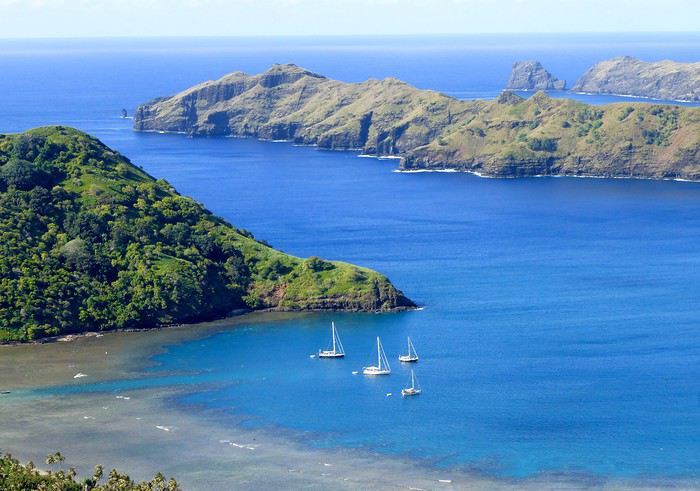
Arrival around 10:30 AM in Nuku Hiva, the first stop of this trip. We booked two nights in half-board at Pension Koku’u, transfers included. Maybe not such a great idea, those included transfers, especially on this unique island where the airport is located on *Terre Déserte*, on the other side of the mountain, opposite and about 45 km from the main village of Taiohae. They’re charged at a steep price. Expect 6,000 XPF round-trip by taxi, but 15,000 XPF charged by guesthouses or hotels. The difference is notable. It wasn’t the best idea, but we can’t go back. Even for residents like us who know how to travel in Polynesia, the Air Tahiti employee who sold me the Pass couldn’t give any useful advice about the stay itself—probably because he’d never been to the Marquesas. It’s really annoying! In short, the good idea to remember is renting a car (like a Suzuki) to be free to manage your time and stop at leisure. The road signage is a bit basic, but you’ll manage just fine. Our host Alvane waits for us—without a sign (sic!)—and after searching for each other for 5 minutes, we’re off on a journey of over an hour (with photo stops) in a Land Rover with smooth tires (luckily, it’s not raining!). The recently paved and marked mountain road is impeccable. No time to catch our breath at the guesthouse; we leave immediately (not a great idea after waking up at dawn plus 4 hours on a plane) for a half-day hike that was also included in the prepaid stay. A sandwich was provided (really pathetic for the physical effort required), we have water, and we fill a few bottles at the spring near the ceremonial site of Taipivai, our first stop. Then the hike begins in the Hanaheu Valley, descending toward Anaho Bay and its namesake beach. A magnificent and wild spot, a few sailboats anchored, we swim—the water is really warm, over 30°C at the shore. That warm is rare and not necessarily pleasant. We then have to climb a very steep slope; this hike is actually quite tough. The air is still, humid, and stifling under the foliage, there’s a bit of mud, and tiny ants (which don’t bite, I’ll have you know), locally called *fofolles*, running over shoes, ankles, and calves. Not very pleasant...! On top of that, there are mosquitoes to protect against! In hindsight, it seems wise to bring energy bars from Papeete if you plan to hike on the afternoon of your arrival day. We weren’t careful... Result: a moment of weakness for me and a hyperventilation attack climbing back up from Anaho Bay!!! We return to the guesthouse at night. There we find Claudine and her four children—Marquesan-style atmosphere, friendly and casual. We share family life. Very simple room with a bathroom, no mosquitoes, we can sleep with the window open, but the night will be noisy, as is often the case in Polynesia. Roosters are everywhere and don’t sleep, dogs bark or whine. So we end up waking up early... like everyone else.
**Day 2: April 28**
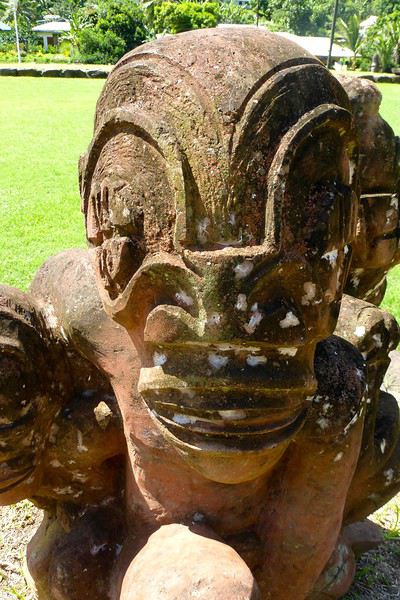
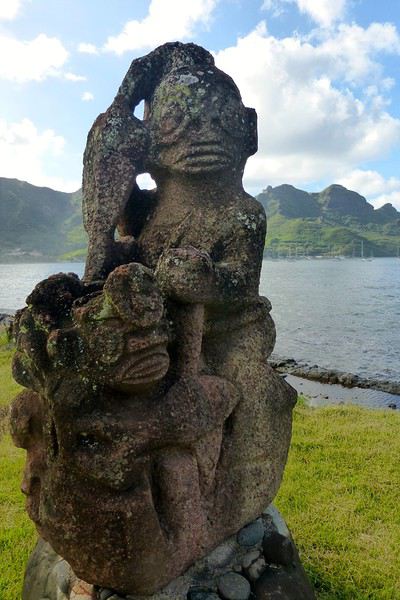
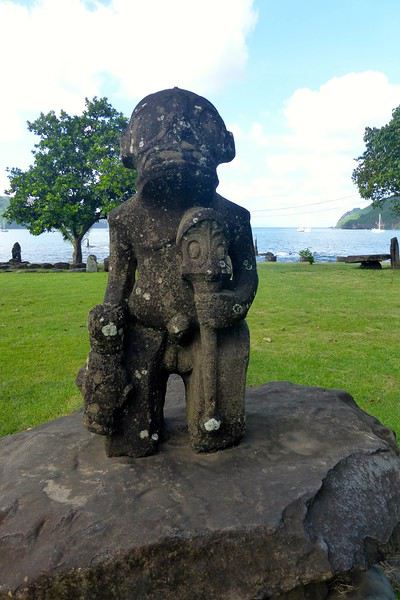
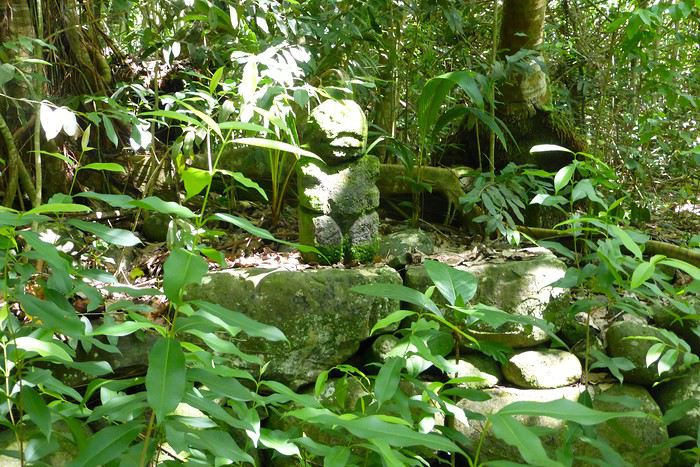
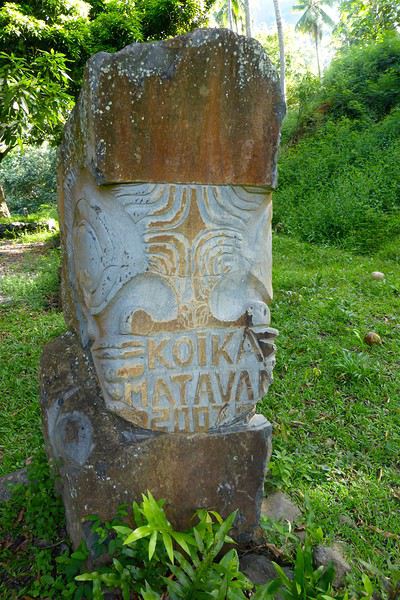
We booked a full-day excursion with Thierry: it starts with a 45-minute boat ride to reach Hakatea Beach, hidden in a small secret bay like many along Nuku Hiva’s coasts. From there, the hike lasts all day—11 km round-trip on flat but also rugged terrain (ancient paved and elevated paths over 1,000 years old)—and river crossings. Bring the right shoes (like plastic Crocs with high socks—not very stylish but practical). We cross the former village of Hakaui, walk along the foundations of dwellings, and there are still weathered tikis in the lush vegetation. The ultimate goal of this hike is to reach the tall Vaipo waterfall. The place is magical, with openings in the vegetation and immense trees allowing photos of the treetops and caves where funeral canoes containing the bones of chiefs or great warriors were once placed. We return the same way to the beach and take another boat ride to reach Taihoae’s port. Back at the guesthouse after a glimpse of Taihoae’s waterfront.
**UA POU**
**Day 3: April 29**
Back to the airport in the late morning for the second flight of the trip to Ua Pou. 20-minute crossing in a Twin Otter (18 seats but only 13 occupied due to cargo between the islands). Beautiful weather, blue sea, nice photos to take upon departure from NH and arrival in UP. We’re greeted by Jérôme, a former military man turned tourism professional, who runs Pension Pukue’e with his wife Elisa, a native of UP. We’re in for two exceptional days. The guesthouse is comfortable, Jérôme and Elisa are very professional and pleasant. Jérôme is also a professional hiker, and Elisa is an excellent cook. We leave quickly for a half-day excursion to Hohoi, after a stop at the archaeological, cultural, and religious site of Maui’a, the Tavaka tribe’s territory. Jérôme is there to explain how Marquesan society functioned at the time and the events that took place on a site still largely buried under vegetation. Then we visit a flower-stone sculptor he knows—the only place in the Marquesas where you’ll find these stones. They’re collected in the river flowing into the sea at Hohoi, sometimes on the beach itself. Back to the guesthouse.
**Day 4: April 30**
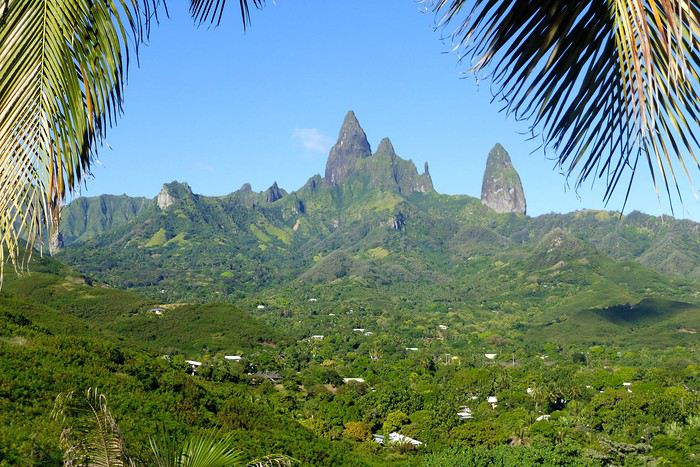
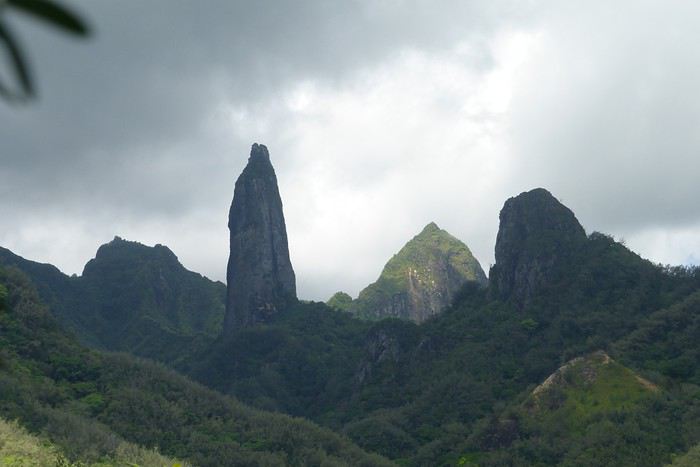
A nature hike in the mountains—moderately difficult—toward the Vaiea waterfall is on our program for a good 4 hours. It’s hot, there are mosquitoes, and the dip in the pool under the waterfall (24°C water) is a rare pleasure. Lunch at a friend of Jérôme’s, a former chef for French minister François Fillon, who prepares delicious food. Elisa picks us up by car to return to the guesthouse. Ua Pou is a beautiful and elegant island with its sharp peaks and wild nature. Our favorite, thanks to Jérôme and his wife.
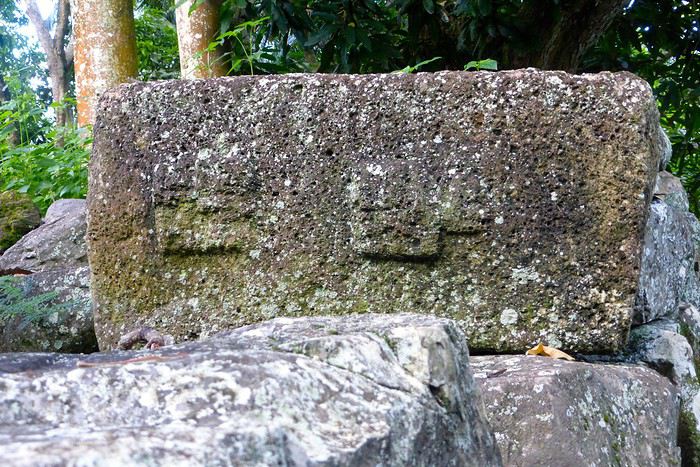
**UA HUKA**
**Day 4: May 1**
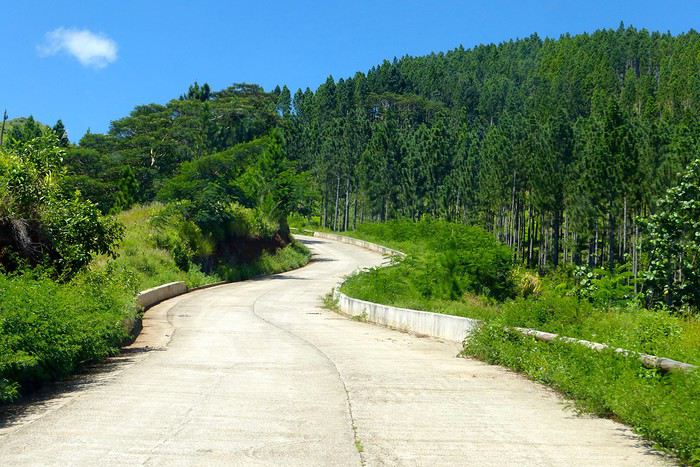
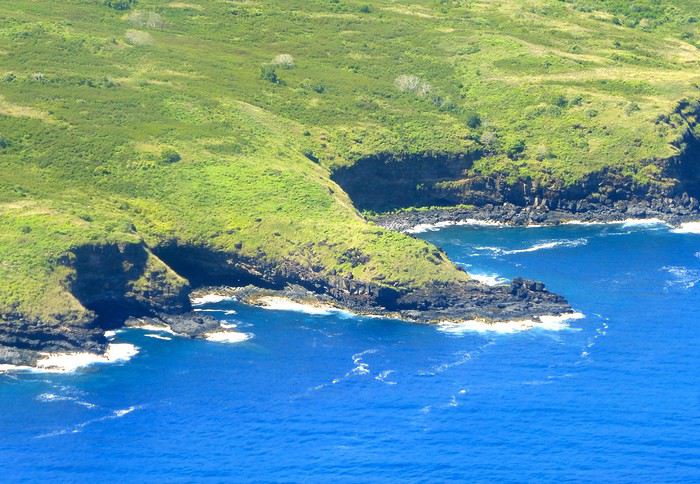
Departure for Ua Huka, the smallest inhabited island in the northern group of the Marquesas, located about 1,300 km northeast of Tahiti. Landing is at the oldest airfield in the Marquesas, built in 1972, between the villages of Vaipaee and Hane. Ua Huka has about 680 inhabitants, according to the last census, spread across 3 villages (since the 1870s): Vaipaee, Hane, and Hokatu. The island peaks at Mount Hitikau at only 884 meters. Its origin: a Hawaiian-type shield volcano that—over a few million years—collapsed to become a caldera (or elliptical depression) in which two small volcanoes appeared, the craters of Tahoatikiau and Teepoepo, now part of the Vaikivi Park. The island is rugged and wild, lower than the others, so less cloud-covered and drier. The bays are jagged, the coastline in ochre tones above the intense blue of the sea, and the beaches are constantly disturbed by the powerful surf. The village of Hokatu is only a few kilometers away (just 14 km of road on the island), but Maurice, our host, drives slowly, and it takes time to go up and down. The road is entirely paved or concreted, which isn’t the case on Ua Pou, for example. The guesthouse is disappointing, perched above the village and thus isolated. Beautiful view of the famous Hane motu and the sparkling sea under the bright sun. Apart from that, there are mosquitoes and cockroaches, the bungalow isn’t clean. Meals are taken with Maurice and Delphine in the village—fine dining isn’t on the menu! Ouch!!! We didn’t luck out...
**Day 5: May 2**
Early in the morning, after breakfast, Delphine takes us to the craft center, which turns out to be a letdown—the items for sale are, in my opinion, crude and poorly carved. Nothing like what’s offered at the Marquesas Fair, held twice a year in Papeete, where you can admire and buy small wonders: wood carvings, flower stone, and coral. Delphine is disappointed we’re not interested, and it shows... She’s a bit sulky! These are items meant for Aranui cruise passengers who land on Ua Huka once every two weeks... Solo travelers like us don’t seem to interest her much. The rest of the day—spent with Maurice—is dedicated to visiting cultural centers and small museums, like the Sea Museum in Hane with its ancient canoes, the municipal archaeological museum on the Te Tumu site above the airfield, the petroglyph house near Hokatu Beach, and finally the Papuakeikaraa arboretum, which gathers endemic plants from all over Polynesia and an impressive citrus collection. No excursion planned to Vaikivi Park, toward the previously mentioned craters that recall the island’s volcanic past. Also missing are the viewpoints, the unique endemic vegetation, and especially the petroglyphs. Too bad... at that price!!! Still, in the evening, we go fishing—with sandwiches and drinks in coolers—with other villagers from the dock at the end of the paved road. It’s cool, windy, no mosquitoes, lots of fish caught, and a great atmosphere. Plus, magnificently starry skies.
Ua Huka is one of the rare islands not invaded by the black rat, which has preserved its birdlife, particularly the ultramarine lorikeet (or *pihiti* in Marquesan), which feeds almost exclusively on flower nectar (banana, coconut, hibiscus, mango, guava trees). A dog imported from New Zealand has been specially trained to detect rats: it inspects cargo unloaded from boats and the docks.
I recommend spending two full days on the island—one for visiting the various museums, the other for hiking in the island’s center park, where the archaeological sites are in their raw state: foundations of agricultural terrace walls, gathering places (or *tohua*), dwelling pavements (or *paepae*), sacred sites (or *me’ae* in Marquesan, *marae* in Tahitian) with their tikis and petroglyphs.
To finish, a bit of info on the island’s name, tied to Marquesan oral culture: according to the legend of the creation of the six Marquesas Islands, Ua Huka is the one that puts the finishing touch on the construction of the god Oatea’s house, each island having a defined architectural function. Ua Huka represents the hole (*ua*) where the god deposits what’s left (*huka* in Marquesan) of the unused materials during construction.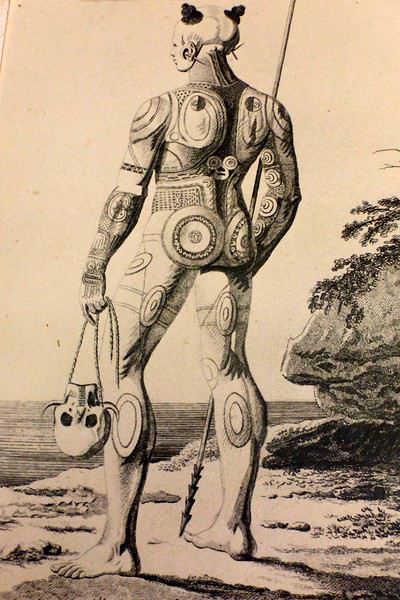
**HIVA OA**
**Day 6: May 3**
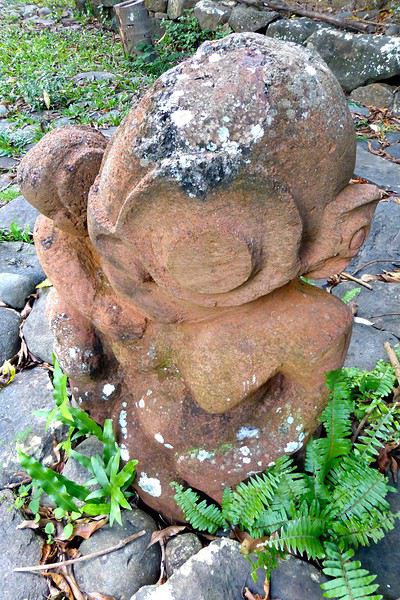
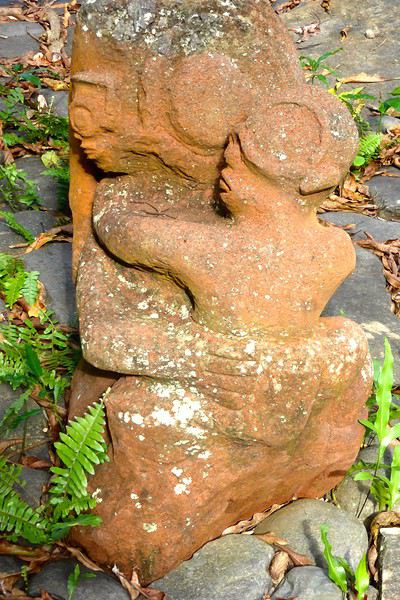
Departure in the late morning for Hiva Oa. Maurice—who had other things to do—dropped us off at the airfield 3 hours early... so this stop is a bit of a flop, even if we decided to stay positive! Hiva Oa is the third-largest island in French Polynesia after Tahiti and Nuku Hiva, and before Raiatea in the Leeward Islands. The island is beautiful, lush, verdant, and jagged. The mountains soar into the sky, the sea views are grand, the light is sublime—we’re lucky. Beautiful weather. Tania from Pension Kanahau waits for us at the airport. We’re in for two wonderful days with her. Tania is welcoming, smiling, and dynamic. What a pleasure to be with her, at her place—she cooks divinely and serves the best tuna in the world (the Big Eye reserved for the Japanese) and croquettes made with lobster, shrimp, and crab with breadfruit cubes, for example. Comfortable bungalow, no mosquitoes at night, we can sleep with the window open. It’s fantastic! After settling in, Tania takes us to town in Atuona, a pleasant and well-laid-out little village. We start with lunch—a delicious raw fish in coconut milk—then continue with the must-see attractions: the Catholic cemetery where Paul Gauguin and Jacques Brel’s graves are, overlooking the town; the abandoned Protestant cemetery, reclaimed by the bush, with impressive Marquesan warrior tombs made of huge coral slabs and adorned with a tiki head (harder to find, as no one goes there... ask for directions!); the craft center; the Gauguin Museum (and the Jacques Brel Museum); and the waterfront. While we stroll peacefully, Tania organizes an excursion for the next day, May 4, a full day with Pifa O’Connor, a 36-year-old who knows his island inside out, is passionate about local history, and with whom we’ll hit it off.
**Day 7: May 4**
Pifa arrives at 8 AM sharp at the guesthouse, and we immediately buy sandwiches and water at a small supermarket in Atuona. First, we make a brief stop by the roadside at an unmarked spot, from which we descend a small path through dense vegetation leading to the famous smiling tiki—the only one of its kind in the Marquesas and Polynesia. The place is improbable, the tiki isn’t huge, but it’s beautiful and impressive. Then we’re off on the road that, dizzyingly, runs along and overlooks the island’s northern coast, at the edge of the ancient volcano. Few vehicles pass, the road—now a rocky track—is full of potholes, and we proceed slowly. (Note that this road has been fully paved since 2018.) The panoramas are majestic, with every shade of green against the blue sea. We stop again at the top of a cliff adorned with a huge stone, the *sacrifice stone*, from which young virgin girls were once thrown into the sea to appease angry gods. Another pause for lunch this time, at a small restaurant near the exceptional archaeological site of Puamau. We’ll experience the highlights of this trip during this excursion with our guide, Pifa, who spares no explanations. We discover, on a vast esplanade, the ceremonial complexes of Ta’a Oa and Meae Te I’Ipona, the latter featuring superb tikis, particularly the reclining tiki—or *Maki Taua Pepe*—representing Motherhood, a woman giving birth in a squatting position, as was often the case in many civilizations. Also notable is the *Takaii*, the largest tiki recorded in Polynesia to date. There’s also a huge stone with a now-blunt edge, on which the circumcision of chiefs’ and notables’ pre-adolescent sons was performed. A tough ordeal! But that’s not all! It seems there are more on the mountainside rising steeply behind the archaeological site—overturned tikis, platforms, and, apparently, a giant tiki at the top, which must have fallen but was visible from afar on the sea 30 or 40 years ago, according to the island’s elders. This meeting, worship, and living place—it was actually a small town—is immense. Thousands of people once lived in this part of the island. The site—a religious, social, and cultural sanctuary—would be the size of the largest Mayan sites in Yucatán, but the few concerned owners—two or three families who own the mountainside—don’t want to hear about intensive clearing or tree cutting for now. UNESCO rightly asks for some compliance efforts to grant special treatment to Hiva Oa in particular and the Marquesas in general. We’re not there yet, unfortunately, due to insurmountable local rigidities! This kind of attitude is quite typical in Polynesia: people are afraid to uncover *marae* buried under vegetation—they’re taboo and sometimes said to emit negative and deadly waves, so it’s better not to disturb or anger the ancient spirits or gods who might take revenge. The old religion is never far away in Polynesia, despite the successes of the missionaries.
We return to the guesthouse in the late afternoon. Last night in the Marquesas with Tania, who prepares a fine and delicious meal. Note that dinner costs 2,500 XPF per person.
**Day 8: May 5**
We take the plane as planned, via Nuku Hiva (short stopover). Arrival on time in Papeete.
May this travel journal inspire many of you to visit the Marquesas one day. It’s far, it’s expensive, it’s the trip of a lifetime—it’s unforgettable and unmissable.
Our itinerary is perfect for those who aren’t excited by cruises and prefer to get closer to the local communities. This 9-day trip cost us around 2500 € all-inclusive. For a 14-day cruise on the Aranui, expect to pay 2300 € per person for a basic cabin for four, or 3800 € per person for a superior double cabin.
Air Tahiti offers a 4-island Marquesas Pass (Nuku Hiva, Ua Pou, Ua Huka, and Hiva Oa) for 86,000 XPF (about 700 €). The journey is made on an ATR 72 from Tahiti to Nuku Hiva or Hiva Oa, and on a 19-seat Twin Otter between the islands (often only 13 or 15 seats are available due to cargo, so book well in advance). We’re traveling as a couple. We booked our family-run guesthouse stays at the Tourism Fair in early February, where you can meet the owners and make your choice. Stays are almost always half-board or breakfast-only. Transfers are usually included, but you can always book a car or taxi.
**NUKU HIVA**
**A LITTLE GEOGRAPHY** Nuku Hiva (NH) is located about 1,500 km from Tahiti, in the north of French Polynesia. At 387 km², it’s the second-largest island in French Polynesia after Tahiti. It was formed by incredible volcanic phenomena and cataclysms between 1 and 6 million years ago, which lifted the island thousands of meters above the sea. Even after millennia of slow erosion, collapses, and settling, NH remains the most majestic of the Marquesas, with its sheer cliffs, deep valleys featuring immense waterfalls, and black walls that were once the inner walls of enormous volcanoes.
**A LITTLE HISTORY** The first contact between NH’s inhabitants and Europeans was in 1595 with Spanish navigators who only stayed briefly. It wasn’t until the late 18th century that Europeans arrived in greater numbers on NH (and the other Marquesas Islands), disrupting a very fragile social and cultural balance. It’s believed that nearly 100,000 people lived on Nuku Hiva at that time—a population decimated over the decades by epidemics, diseases brought by Europeans, and alcohol used for barter. The disastrous result: by the 1930s, only 2,500 people remained, having largely lost their identity and living in poverty. Today, the island has about 2,600 inhabitants spread across several villages, with Taiohae as the main one.
**NUKU HIVA IN LITERATURE**
1 / One of the famous writers who visited NH and stayed there was Herman Melville, who arrived in July 1842, the author of *Moby Dick*. The island had just come under French protectorate. Seduced by the enchanting *vahinés* and dazzled by his paradisiacal vision of the place, Melville deserted his ship. He ended up a prisoner of a local tribe, the Taipi, in Taipivai, where he stayed for a month and a half until an Australian ship captain secured his release in exchange for a musket and a roll of cotton fabric! Melville wrote a novel about this tumultuous episode in his life, considered a classic of travel literature. The book, *Typee: A Peep at Polynesian Life*, published in 1846 in the United States, was a huge success.
2 / Another famous Scottish writer, Robert Louis Stevenson, arrived in NH aboard a yacht that anchored in Anaho Bay, the island’s most beautiful, in July 1888. Stevenson was already known for two magnificent novels that marked their era: *Treasure Island* and *Dr. Jekyll & Mr. Hyde*. Stevenson, too, was captivated by the island’s natural beauty, though he also noted the devastating decline in identity, socio-cultural life, and physical health of a population ravaged by disease and alcohol. His account of his stay, *In the South Seas: An Account of Experiences and Observations in the Marquesas, Paumotus, and Gilbert Islands During Two Cruises on the Yacht Casco (1888) and the Schooner Equator (1889)*, was published in 1896 in New York, four years after his death in Apia, Western Samoa, where he had settled. It was also published in London in 1900.
3 / In August 1903, Victor Segalen, a French naval doctor, ethnologist, and archaeologist, landed in NH from the ship *La Durance*, sent to Polynesia to recover the possessions of the painter Paul Gauguin, who had died in April of that year. He, too, was enthralled by the Marquesas but lamented the loss of identity, dignity, and pride of the Māori, alienated by a Christianization that destroyed their culture and customs, denied their gods, and erased their past. He wrote about his experience, doubts, and fears in *Les Immémoriaux*.
4 / In December 1907, Jack London arrived in NH aboard the sailboat *Stark*, following in the footsteps of his illustrious predecessor, Herman Melville. London was in poor physical condition, exhausted from his relentless travels that had taken him from the Klondike in Canada to Japan, Australia, and London in Europe. He was appalled and shocked by Nuku Hiva’s degraded health situation: where Melville had encountered over 2,000 vigorous and healthy Marquesan warriors, London found only 12 suffering from various diseases—the rest had been wiped out by tuberculosis! His approach remained humanistic, and he maintained a sharp geopolitical awareness of these traditional Polynesian cultures, weakened by the inexorable advance of modernity in the early 20th century. He continued his journey to the Tuamotu Islands and Tahiti, publishing *Martin Eden*, the moving account of his initiatory voyage in the South Pacific, in 1911.
5 / Finally, Alain Gerbault, a writer, linguist, ethnologist, and tireless traveler, arrived in the Marquesas via the Panama Canal in December 1933. He was completely exhausted after an endless crossing on a small sailboat, the *Firecrest*. Enthralled by his stay in the Marquesas, he continued to the Tuamotu Islands in 1934, then Tahiti in 1935. Gerbault fought for the preservation of traditions, as well as the songs and dances banned by the Churches and the French Administration (these bans lasted over 50 years, mind you...!!!). Bora Bora remained his favorite island. A staunch Pétainist during World War II, he was forced to flee Bora Bora for Samoa, then Tonga, and finally Timor, a half-Portuguese island and thus neutral during the war. His travel accounts, *In Pursuit of the Sun: Logbook from New York to Tahiti* and *A Paradise Is Dying*, were published in the late 1940s. He died in Timor in 1941, and his ashes were repatriated to Bora Bora.
Back to our trip and stay.
**Day 1: April 27**
Departure from Papeete at 6:30 AM—we had to wake up two hours earlier and reach the airport in the dark. Takeoff at dawn, good weather en route, flight duration: 4 hours.
Arrival around 10:30 AM in Nuku Hiva, the first stop of this trip. We booked two nights in half-board at Pension Koku’u, transfers included. Maybe not such a great idea, those included transfers, especially on this unique island where the airport is located on *Terre Déserte*, on the other side of the mountain, opposite and about 45 km from the main village of Taiohae. They’re charged at a steep price. Expect 6,000 XPF round-trip by taxi, but 15,000 XPF charged by guesthouses or hotels. The difference is notable. It wasn’t the best idea, but we can’t go back. Even for residents like us who know how to travel in Polynesia, the Air Tahiti employee who sold me the Pass couldn’t give any useful advice about the stay itself—probably because he’d never been to the Marquesas. It’s really annoying! In short, the good idea to remember is renting a car (like a Suzuki) to be free to manage your time and stop at leisure. The road signage is a bit basic, but you’ll manage just fine. Our host Alvane waits for us—without a sign (sic!)—and after searching for each other for 5 minutes, we’re off on a journey of over an hour (with photo stops) in a Land Rover with smooth tires (luckily, it’s not raining!). The recently paved and marked mountain road is impeccable. No time to catch our breath at the guesthouse; we leave immediately (not a great idea after waking up at dawn plus 4 hours on a plane) for a half-day hike that was also included in the prepaid stay. A sandwich was provided (really pathetic for the physical effort required), we have water, and we fill a few bottles at the spring near the ceremonial site of Taipivai, our first stop. Then the hike begins in the Hanaheu Valley, descending toward Anaho Bay and its namesake beach. A magnificent and wild spot, a few sailboats anchored, we swim—the water is really warm, over 30°C at the shore. That warm is rare and not necessarily pleasant. We then have to climb a very steep slope; this hike is actually quite tough. The air is still, humid, and stifling under the foliage, there’s a bit of mud, and tiny ants (which don’t bite, I’ll have you know), locally called *fofolles*, running over shoes, ankles, and calves. Not very pleasant...! On top of that, there are mosquitoes to protect against! In hindsight, it seems wise to bring energy bars from Papeete if you plan to hike on the afternoon of your arrival day. We weren’t careful... Result: a moment of weakness for me and a hyperventilation attack climbing back up from Anaho Bay!!! We return to the guesthouse at night. There we find Claudine and her four children—Marquesan-style atmosphere, friendly and casual. We share family life. Very simple room with a bathroom, no mosquitoes, we can sleep with the window open, but the night will be noisy, as is often the case in Polynesia. Roosters are everywhere and don’t sleep, dogs bark or whine. So we end up waking up early... like everyone else.
**Day 2: April 28**
We booked a full-day excursion with Thierry: it starts with a 45-minute boat ride to reach Hakatea Beach, hidden in a small secret bay like many along Nuku Hiva’s coasts. From there, the hike lasts all day—11 km round-trip on flat but also rugged terrain (ancient paved and elevated paths over 1,000 years old)—and river crossings. Bring the right shoes (like plastic Crocs with high socks—not very stylish but practical). We cross the former village of Hakaui, walk along the foundations of dwellings, and there are still weathered tikis in the lush vegetation. The ultimate goal of this hike is to reach the tall Vaipo waterfall. The place is magical, with openings in the vegetation and immense trees allowing photos of the treetops and caves where funeral canoes containing the bones of chiefs or great warriors were once placed. We return the same way to the beach and take another boat ride to reach Taihoae’s port. Back at the guesthouse after a glimpse of Taihoae’s waterfront.
**UA POU**
**Day 3: April 29**
Back to the airport in the late morning for the second flight of the trip to Ua Pou. 20-minute crossing in a Twin Otter (18 seats but only 13 occupied due to cargo between the islands). Beautiful weather, blue sea, nice photos to take upon departure from NH and arrival in UP. We’re greeted by Jérôme, a former military man turned tourism professional, who runs Pension Pukue’e with his wife Elisa, a native of UP. We’re in for two exceptional days. The guesthouse is comfortable, Jérôme and Elisa are very professional and pleasant. Jérôme is also a professional hiker, and Elisa is an excellent cook. We leave quickly for a half-day excursion to Hohoi, after a stop at the archaeological, cultural, and religious site of Maui’a, the Tavaka tribe’s territory. Jérôme is there to explain how Marquesan society functioned at the time and the events that took place on a site still largely buried under vegetation. Then we visit a flower-stone sculptor he knows—the only place in the Marquesas where you’ll find these stones. They’re collected in the river flowing into the sea at Hohoi, sometimes on the beach itself. Back to the guesthouse.
**Day 4: April 30**
A nature hike in the mountains—moderately difficult—toward the Vaiea waterfall is on our program for a good 4 hours. It’s hot, there are mosquitoes, and the dip in the pool under the waterfall (24°C water) is a rare pleasure. Lunch at a friend of Jérôme’s, a former chef for French minister François Fillon, who prepares delicious food. Elisa picks us up by car to return to the guesthouse. Ua Pou is a beautiful and elegant island with its sharp peaks and wild nature. Our favorite, thanks to Jérôme and his wife.
**UA HUKA**
**Day 4: May 1**
Departure for Ua Huka, the smallest inhabited island in the northern group of the Marquesas, located about 1,300 km northeast of Tahiti. Landing is at the oldest airfield in the Marquesas, built in 1972, between the villages of Vaipaee and Hane. Ua Huka has about 680 inhabitants, according to the last census, spread across 3 villages (since the 1870s): Vaipaee, Hane, and Hokatu. The island peaks at Mount Hitikau at only 884 meters. Its origin: a Hawaiian-type shield volcano that—over a few million years—collapsed to become a caldera (or elliptical depression) in which two small volcanoes appeared, the craters of Tahoatikiau and Teepoepo, now part of the Vaikivi Park. The island is rugged and wild, lower than the others, so less cloud-covered and drier. The bays are jagged, the coastline in ochre tones above the intense blue of the sea, and the beaches are constantly disturbed by the powerful surf. The village of Hokatu is only a few kilometers away (just 14 km of road on the island), but Maurice, our host, drives slowly, and it takes time to go up and down. The road is entirely paved or concreted, which isn’t the case on Ua Pou, for example. The guesthouse is disappointing, perched above the village and thus isolated. Beautiful view of the famous Hane motu and the sparkling sea under the bright sun. Apart from that, there are mosquitoes and cockroaches, the bungalow isn’t clean. Meals are taken with Maurice and Delphine in the village—fine dining isn’t on the menu! Ouch!!! We didn’t luck out...
**Day 5: May 2**
Early in the morning, after breakfast, Delphine takes us to the craft center, which turns out to be a letdown—the items for sale are, in my opinion, crude and poorly carved. Nothing like what’s offered at the Marquesas Fair, held twice a year in Papeete, where you can admire and buy small wonders: wood carvings, flower stone, and coral. Delphine is disappointed we’re not interested, and it shows... She’s a bit sulky! These are items meant for Aranui cruise passengers who land on Ua Huka once every two weeks... Solo travelers like us don’t seem to interest her much. The rest of the day—spent with Maurice—is dedicated to visiting cultural centers and small museums, like the Sea Museum in Hane with its ancient canoes, the municipal archaeological museum on the Te Tumu site above the airfield, the petroglyph house near Hokatu Beach, and finally the Papuakeikaraa arboretum, which gathers endemic plants from all over Polynesia and an impressive citrus collection. No excursion planned to Vaikivi Park, toward the previously mentioned craters that recall the island’s volcanic past. Also missing are the viewpoints, the unique endemic vegetation, and especially the petroglyphs. Too bad... at that price!!! Still, in the evening, we go fishing—with sandwiches and drinks in coolers—with other villagers from the dock at the end of the paved road. It’s cool, windy, no mosquitoes, lots of fish caught, and a great atmosphere. Plus, magnificently starry skies.
Ua Huka is one of the rare islands not invaded by the black rat, which has preserved its birdlife, particularly the ultramarine lorikeet (or *pihiti* in Marquesan), which feeds almost exclusively on flower nectar (banana, coconut, hibiscus, mango, guava trees). A dog imported from New Zealand has been specially trained to detect rats: it inspects cargo unloaded from boats and the docks.
I recommend spending two full days on the island—one for visiting the various museums, the other for hiking in the island’s center park, where the archaeological sites are in their raw state: foundations of agricultural terrace walls, gathering places (or *tohua*), dwelling pavements (or *paepae*), sacred sites (or *me’ae* in Marquesan, *marae* in Tahitian) with their tikis and petroglyphs.
To finish, a bit of info on the island’s name, tied to Marquesan oral culture: according to the legend of the creation of the six Marquesas Islands, Ua Huka is the one that puts the finishing touch on the construction of the god Oatea’s house, each island having a defined architectural function. Ua Huka represents the hole (*ua*) where the god deposits what’s left (*huka* in Marquesan) of the unused materials during construction.
**HIVA OA**
**Day 6: May 3**
Departure in the late morning for Hiva Oa. Maurice—who had other things to do—dropped us off at the airfield 3 hours early... so this stop is a bit of a flop, even if we decided to stay positive! Hiva Oa is the third-largest island in French Polynesia after Tahiti and Nuku Hiva, and before Raiatea in the Leeward Islands. The island is beautiful, lush, verdant, and jagged. The mountains soar into the sky, the sea views are grand, the light is sublime—we’re lucky. Beautiful weather. Tania from Pension Kanahau waits for us at the airport. We’re in for two wonderful days with her. Tania is welcoming, smiling, and dynamic. What a pleasure to be with her, at her place—she cooks divinely and serves the best tuna in the world (the Big Eye reserved for the Japanese) and croquettes made with lobster, shrimp, and crab with breadfruit cubes, for example. Comfortable bungalow, no mosquitoes at night, we can sleep with the window open. It’s fantastic! After settling in, Tania takes us to town in Atuona, a pleasant and well-laid-out little village. We start with lunch—a delicious raw fish in coconut milk—then continue with the must-see attractions: the Catholic cemetery where Paul Gauguin and Jacques Brel’s graves are, overlooking the town; the abandoned Protestant cemetery, reclaimed by the bush, with impressive Marquesan warrior tombs made of huge coral slabs and adorned with a tiki head (harder to find, as no one goes there... ask for directions!); the craft center; the Gauguin Museum (and the Jacques Brel Museum); and the waterfront. While we stroll peacefully, Tania organizes an excursion for the next day, May 4, a full day with Pifa O’Connor, a 36-year-old who knows his island inside out, is passionate about local history, and with whom we’ll hit it off.
**Day 7: May 4**
Pifa arrives at 8 AM sharp at the guesthouse, and we immediately buy sandwiches and water at a small supermarket in Atuona. First, we make a brief stop by the roadside at an unmarked spot, from which we descend a small path through dense vegetation leading to the famous smiling tiki—the only one of its kind in the Marquesas and Polynesia. The place is improbable, the tiki isn’t huge, but it’s beautiful and impressive. Then we’re off on the road that, dizzyingly, runs along and overlooks the island’s northern coast, at the edge of the ancient volcano. Few vehicles pass, the road—now a rocky track—is full of potholes, and we proceed slowly. (Note that this road has been fully paved since 2018.) The panoramas are majestic, with every shade of green against the blue sea. We stop again at the top of a cliff adorned with a huge stone, the *sacrifice stone*, from which young virgin girls were once thrown into the sea to appease angry gods. Another pause for lunch this time, at a small restaurant near the exceptional archaeological site of Puamau. We’ll experience the highlights of this trip during this excursion with our guide, Pifa, who spares no explanations. We discover, on a vast esplanade, the ceremonial complexes of Ta’a Oa and Meae Te I’Ipona, the latter featuring superb tikis, particularly the reclining tiki—or *Maki Taua Pepe*—representing Motherhood, a woman giving birth in a squatting position, as was often the case in many civilizations. Also notable is the *Takaii*, the largest tiki recorded in Polynesia to date. There’s also a huge stone with a now-blunt edge, on which the circumcision of chiefs’ and notables’ pre-adolescent sons was performed. A tough ordeal! But that’s not all! It seems there are more on the mountainside rising steeply behind the archaeological site—overturned tikis, platforms, and, apparently, a giant tiki at the top, which must have fallen but was visible from afar on the sea 30 or 40 years ago, according to the island’s elders. This meeting, worship, and living place—it was actually a small town—is immense. Thousands of people once lived in this part of the island. The site—a religious, social, and cultural sanctuary—would be the size of the largest Mayan sites in Yucatán, but the few concerned owners—two or three families who own the mountainside—don’t want to hear about intensive clearing or tree cutting for now. UNESCO rightly asks for some compliance efforts to grant special treatment to Hiva Oa in particular and the Marquesas in general. We’re not there yet, unfortunately, due to insurmountable local rigidities! This kind of attitude is quite typical in Polynesia: people are afraid to uncover *marae* buried under vegetation—they’re taboo and sometimes said to emit negative and deadly waves, so it’s better not to disturb or anger the ancient spirits or gods who might take revenge. The old religion is never far away in Polynesia, despite the successes of the missionaries.
We return to the guesthouse in the late afternoon. Last night in the Marquesas with Tania, who prepares a fine and delicious meal. Note that dinner costs 2,500 XPF per person.
**Day 8: May 5**
We take the plane as planned, via Nuku Hiva (short stopover). Arrival on time in Papeete.
May this travel journal inspire many of you to visit the Marquesas one day. It’s far, it’s expensive, it’s the trip of a lifetime—it’s unforgettable and unmissable.
Rallier Dubaï et Pologne en transit vers Kaliningrad English translation pending
Bonjour !
C'est Antoine je vis au Cameroun et je désire arriver à Kaliningrad . mais bien avant je souhaite passer par Dubaï puis Kaliningrad avec escale de moins de 24 heures en Pologne. Je voudrais donc savoir si à Dubaï je serai embarqué sans soucis ? Y'a t-il des conditions nécessaires à remplir pour rallier Dubaï et Pologne? Merci d'avance!
Mésaventure dès notre arrivée à Delhi English translation pending
Bonjour à ceux qui me lisent,
Je prends le temps de raconter ce qui nous est arrivé avec mon compagnon à notre arrivée à Delhi il y a deux semaines.
Je précise que c'est mon 4 ième séjour en Inde, comme quoi il ne suffit pas d'être débutant pour se faire arnaquer.
Nous avions réservé un hotel à Pahar ganj, et au sortir de l'avion, nous avions pris le métro et étions sortis à la station New Delhi.
Tout allait bien jusque là.
Arrivés devant la gare des trains qui se trouve juste avant Pahar ganj, impossible de la traverser.
Là plusieurs personnes nous disent que c'est impossible en raison de normes de sécurité...patin couffin.
Du coup nous embarquons dans un rickshaw, supposé nous faire entrer dans le quartier (car du coup il y avait soit disant un détour de 2km à faire).
Bref, par un ensemble de relais malencontreux, nous nous retrouvons soit disant dans un bureau officiel qui nous explique que le quartier de notre hotel est bouclé, interdit aux touristes et dangereux pour les 3 prochains jours.
Soit disant plus aucune possibilité de rester à Delhi et plus aucun train ni bus de dispo pour bouger ailleurs. (le type du bureau officiel te montre le site de réservation de train et te dis que tout a changé et que tu ne peux plus bouger en train.Il appelle soit disant la station de bus et le type du bureau te dit que tout est plein ou annulé pour trois jours).
Impossible de rester ou de prendre un transport à un prix normal: nous devons payer un taxi privé.
Je sais, ca a l'air gros à tête reposée mais le jour ou tu débarque à 35 degrés avec ton gros sac et 28 heures de voyages dans les pattes....tu es super vulnérable.
Résultat: nous sommes quasiment forcés de quitter Delhi illico et en voiture privée le double du prix qu'on aurait jamais payé à la base. Je raconte ca ici car j'ai entendu une autre personne raconter mots pour mots la même mésaventure.
Résultat: on s'est fait voler une semaine de budget et on s'est retrouvés à Richikech, on a perdu notre résa d'hôtel, qui vraisemblablement n'était pas fermé.
Au prétexte d'un festival et par une concordance de malveillance, on est tombés dans le panneau :(. L'inde a mal démarrée et la seule chose qui console ma naïveté, c'est de pouvoir éviter à d'autres la même mésaventure. Avec un reçu j'aurais pu porter plainte, c'est ce que m'a suggéré un indien à qui j'ai raconté l'histoire.
Bref, La bande est organisée, faites gaffe en arrivant à Delhi. Pour info la somme en question s'est élevée à 160 euros, pour 226 km.
Tchuss à tutti
Erika
Vol Paris-Bangkok à 585 euros avec Austrian Airlines English translation pending
Bonjour à tous,
Tout est dans le titre, un forumeur m'avait alerté sur ce tarif du 7 au 27 juillet pour 3 adultes et un enfant... je ne connaissais pas la compagnie mais apparememnt elle a plutot bonne reputation. Le vol se fait sur air france sur la premiere partie et en boeing 777 ensuite...
Qu'en pensez vous? Je souhaitais voyager sur une des compagnies du golfe mais le fait d'attendre me stresse, vont ils reellement faire des promos?
Par contre, le vol est a 585 euros sur gotogate!!! et à 716 sur le site d'austrian airlines ce qui fait une sacrée difference... Me conseillez vous de prendre par gotogate ou faut il eviter, y en a t il que vous me conseillez, austrian va t il baisser les prix sur son site??
Merci pour vos renseignements...
Tout est dans le titre, un forumeur m'avait alerté sur ce tarif du 7 au 27 juillet pour 3 adultes et un enfant... je ne connaissais pas la compagnie mais apparememnt elle a plutot bonne reputation. Le vol se fait sur air france sur la premiere partie et en boeing 777 ensuite...
Qu'en pensez vous? Je souhaitais voyager sur une des compagnies du golfe mais le fait d'attendre me stresse, vont ils reellement faire des promos?
Par contre, le vol est a 585 euros sur gotogate!!! et à 716 sur le site d'austrian airlines ce qui fait une sacrée difference... Me conseillez vous de prendre par gotogate ou faut il eviter, y en a t il que vous me conseillez, austrian va t il baisser les prix sur son site??
Merci pour vos renseignements...
3 semaines en Thaïlande été 2014 English translation pending
Bonjour à tous,
J'organise un voyage de 3 semaines en Thailande. Je m'y prends à l'avance, car c'est pour juillet/aout 2014.
Nous sommes un jeune couple de 27 ans avec notre fille de 5 ans, à la recherche de visites culturelles, de beaux paysages, de repos aussi. Ce sera pour ma femme un premier voyage en dehors de l'Europe.
Je souhaite prendre les billets d'avion à la fin de l'année. Je réserverais les 2 premières nuits sur Bankok, après je verrais sur place. Je ne veux pas m'obliger à accélérer ou ralentir notre périple parceque tel, ou tel hôtels sont réservés.
Je prévois notre circuit :
3 jours à Bankok (temples, khlongs, marché Chauchak, ..) Si vous avez un hôtel à me conseiller et des choses à voir ou à faire sur Bangkok...
2 jours Kanchanaburi et chutes d'Erawan. Ya t il des bus ou navette pour se rendre facilement sur place?
Après plusieurs possibilités; 2 jours sur Ayutthaya (Est ce que sa vaut le coup?) ou départ direct sur Chiang mai, soit en rertournant sur Bangkok pour prendre le vol correspondant, soit en train, à voir, que me conseillez vous?
3, 4 jours sur Chiang Mai (Temple aux 300 marches, night bazar, Zoo) Si vous avez un hôtel à me conseiller et des choses à voir ou à faire sur Chiang Mai...
Vol pour Phuket.
2, 3 jours dans les allentours, programme à voir sur place, j'attends vos précieux conseils...
départ de Phuket vers Krabi en bâteau avec escale à Ko Phi Phi. Je penssais peut être en profiter pour rester une journée sur Ko phi phi.
6, 7 jours dans les îles aux allentours de Krabi (Ao Nang, Emerold Pool, Tup Island, Baie de Phang Nga, ferry de Krabe vers Ko Lanta, Ko lipe.
Vol Hat Yai vers Bangkok
Départ Bangkok pour Paris
Qu'en pensez vous? Est ce un programme trop chargé? Ne connaissant pas du tout la Thailande, j'ai réaliser cette base de voyage sur tous ce que j'ai pu lire sur les divers forum. Je vais acheter le guide du routard aussi. Je voudrais également faire une ballade avec les éléphants, pouvoir approcher les tigres, serpants, ect? Ou tous celà est il possible? J'ai aussi lu que c'était la plus mauvaise période pour partir à cause de mousson, ... Qu'en est il des vaccinations? Enfin, pour ceux qui ont le même projet de voyage, n'hésitez pas à entrez en contact avec moi par message privé pour pouvoir echangé nos idées...
Je prévois notre circuit :
3 jours à Bankok (temples, khlongs, marché Chauchak, ..) Si vous avez un hôtel à me conseiller et des choses à voir ou à faire sur Bangkok...
2 jours Kanchanaburi et chutes d'Erawan. Ya t il des bus ou navette pour se rendre facilement sur place?
Après plusieurs possibilités; 2 jours sur Ayutthaya (Est ce que sa vaut le coup?) ou départ direct sur Chiang mai, soit en rertournant sur Bangkok pour prendre le vol correspondant, soit en train, à voir, que me conseillez vous?
3, 4 jours sur Chiang Mai (Temple aux 300 marches, night bazar, Zoo) Si vous avez un hôtel à me conseiller et des choses à voir ou à faire sur Chiang Mai...
Vol pour Phuket.
2, 3 jours dans les allentours, programme à voir sur place, j'attends vos précieux conseils...
départ de Phuket vers Krabi en bâteau avec escale à Ko Phi Phi. Je penssais peut être en profiter pour rester une journée sur Ko phi phi.
6, 7 jours dans les îles aux allentours de Krabi (Ao Nang, Emerold Pool, Tup Island, Baie de Phang Nga, ferry de Krabe vers Ko Lanta, Ko lipe.
Vol Hat Yai vers Bangkok
Départ Bangkok pour Paris
Qu'en pensez vous? Est ce un programme trop chargé? Ne connaissant pas du tout la Thailande, j'ai réaliser cette base de voyage sur tous ce que j'ai pu lire sur les divers forum. Je vais acheter le guide du routard aussi. Je voudrais également faire une ballade avec les éléphants, pouvoir approcher les tigres, serpants, ect? Ou tous celà est il possible? J'ai aussi lu que c'était la plus mauvaise période pour partir à cause de mousson, ... Qu'en est il des vaccinations? Enfin, pour ceux qui ont le même projet de voyage, n'hésitez pas à entrez en contact avec moi par message privé pour pouvoir echangé nos idées...
Air France, l'A380 sur Singapour et Shanghai English translation pending
- A/c 02 Septembre 2013, mise en ligne de l´A380 sur la ligne Paris - Shanghai
Les vols AF 116 et AF 111 seront opérés 3 fois par semaine en A380 Au départ de Paris : Lundi - Jeudi - Vendredi : A380 - autres jours : B777 Au départ de Shanghai : Mardi - Vendredi - Samedi : A380 - autres jours : B777
La deuxième fréquence quotidienne AF 112 et 117 n´est pas modifiée (opérée en B777)
L´augmentation d´offre en sièges vers Shanghai sera de 15 % (dont 20 % pour la cabine Economy)
- A/c 01 Septembre 2013 , retrait de l´A380 sur la ligne Paris - Singapour Le vol quotidien sera opéré en B773
Les vols AF 116 et AF 111 seront opérés 3 fois par semaine en A380 Au départ de Paris : Lundi - Jeudi - Vendredi : A380 - autres jours : B777 Au départ de Shanghai : Mardi - Vendredi - Samedi : A380 - autres jours : B777
La deuxième fréquence quotidienne AF 112 et 117 n´est pas modifiée (opérée en B777)
L´augmentation d´offre en sièges vers Shanghai sera de 15 % (dont 20 % pour la cabine Economy)
- A/c 01 Septembre 2013 , retrait de l´A380 sur la ligne Paris - Singapour Le vol quotidien sera opéré en B773
Partir à Oman avec sac à dos English translation pending
bonjour , j'aimerais connaitre les expériences de ceux qui sont partis à OMAN sans agence avec sac à dos, et éventuellement toile de tente. est-il nécessaire de louer une voiture ? Au niveau hébergement , existe t'il des guest house pour petit budget ?
Nous partirions 2 à 3 semaine en août, merci d'avance pour vos infos
Croisière Msc Lirica au départ de Dubai, excursions? English translation pending
Je ferai le voyage avec MSC Libera se DubaiBonjour,
je partirais en croisiere sur MSC LIRICA en partant de DUBAI et descendant à AbuDabi, Muscat, Fhajaira, Khasab et fin du voyage retourner à DUBAI. Quelqu'un fait déjà cette croisiere ?
Peut on faire des excursions par taxi???MERCI!.
Billets d'avion Paris-Bangkok puis Bangkok - Chiang Mai: compagnies aériennes? English translation pending
Bonjour,
Nouveau parmis vous , j'ai une question à vous soumettre :
Après des recherches sur internet , j'ai constaté que le coût du vol Paris-Chiang Mai pour le 4 décembre 2010 était moins cher en le disséquant soit Paris-Bangkok puis Bangkok-Chiang Mai . L'économie ainsi réalisée représente environ ( pour 3 adultes ) 600€ , somme non négligeable , ne trouvez vous pas ?
Le problème est le suivant :
Je dois utiliser ( ou non ) 2 compagnies differentes ce qui entraîne à l'arrivée de Bangkok un réenregistrement des bagages ( sauf si j'arrive à les acheminer directement depuis Paris à Chiang Mai ) ou tout au moins un nouveau passage à l'enregistrement avec une attente de 2 heures . Il me faut donc prévoir ce laps de temps entre mon arrivée à Bangkok et mon départ pour Chiang Mai ?
Si vous avez une meilleure solution pour me faire économiser ces 600 € , j'attends vos réponses et vous remercie d'avance.
Préparation de mon voyage Inde-Népal de janvier à avril 2011 English translation pending
 Supprimer
j'habite la haute savoie j'ai 27 ans, et souhaite entreprendre le voyage de ma vie, celui qui j'espere va m'ouvrir l'esprit ainsi que la sagesse que je recherche....
Supprimer
j'habite la haute savoie j'ai 27 ans, et souhaite entreprendre le voyage de ma vie, celui qui j'espere va m'ouvrir l'esprit ainsi que la sagesse que je recherche....Je souhaite partir 3 mois de janvier 2011 a avril 2011 en inde ou au Nepal voir faire new dehli katmandou a pieds ou location moto, de plus je souhaiterai suivre un seminaire bouddhiste mais je suis perdu complet. Es qu'il faut mieu ne faire qu'un seul pays comment puis je louer une moto pour me deplacer si je ne revien pas sur mon point de départ. Que pensez vous aussi entre une initiation bouddhique en inde ou au Nepal ?. je pratique beaucoup le méditation mais ne suis que débutant dans le bouddhisme toutefois j'ai une passion incompréhensible pour bouddha. Je ne sais pas par où commencer...
vous remerciant d'avance pour le temps qui vous prendrez à lire et peut être me repondre. Merci et à très bientôt
jochi😄😄😄😉Nombre de cartouches de cigarettes autorisées d'Indonésie? English translation pending
Bonjour à tous, 😇
Est-ce que quelqu'un pourrait me renseigner sur le nombre de cartouches de cigarettes autorisées par personne au départ d'Indonésie jusqu'en France? J'ai entendu dire que c'était une par personne mais je tenais juste à en avoir la confirmation...
Merci beaucoup !!
Bonne journée 😎
Est-ce que quelqu'un pourrait me renseigner sur le nombre de cartouches de cigarettes autorisées par personne au départ d'Indonésie jusqu'en France? J'ai entendu dire que c'était une par personne mais je tenais juste à en avoir la confirmation...
Merci beaucoup !!
Bonne journée 😎
Part 2: Mixed (or even disappointed) review of the NCL Sky Indian Ocean cruise from April 19 to May 3, 2025
Hi there,
I hit my photo limit on the other post, so I’m forced to start a new one to continue this travel journal.
Victoria / Mahé continued:
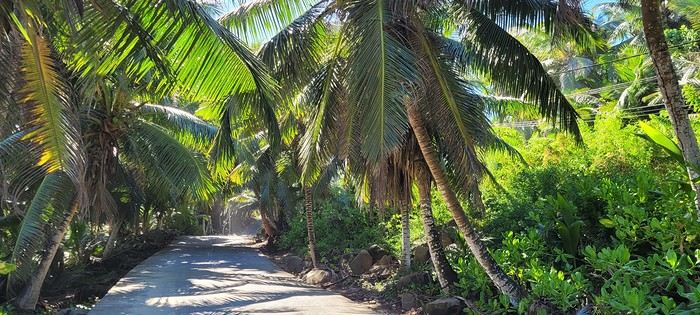
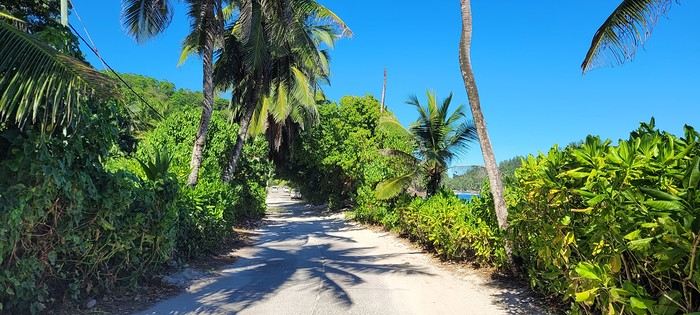
After Anse Intendance, we head to Police Bay, located at the very southern tip of Mahé. Swimming and snorkeling aren’t ideal there (lots of waves)—just for the view!
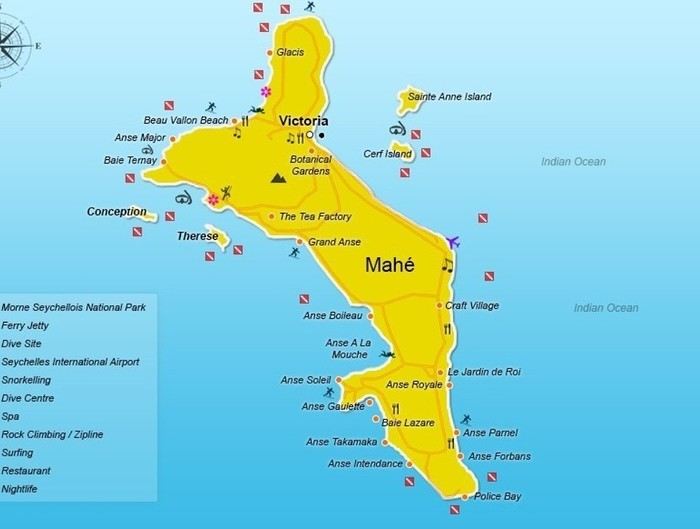
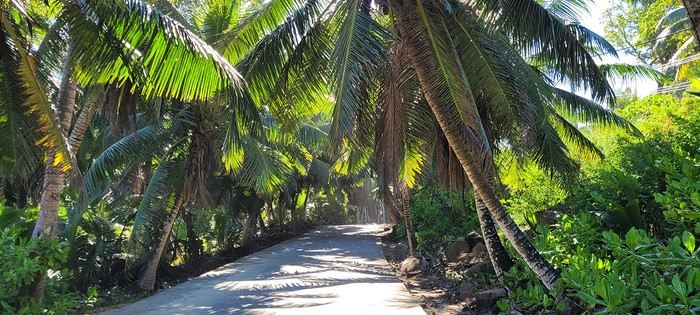
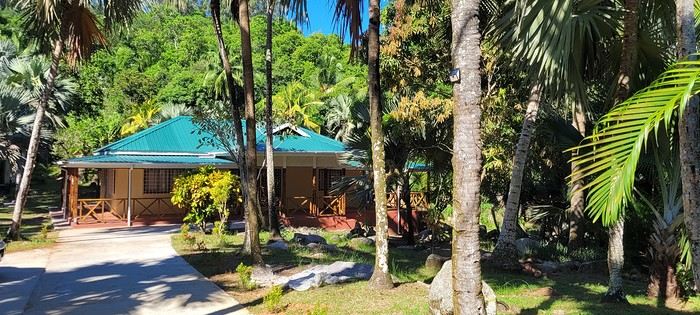
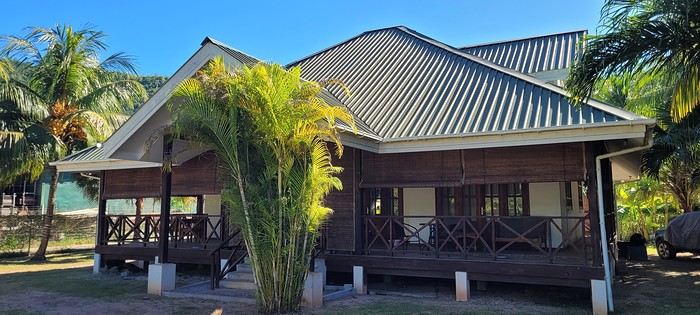
On the way back, we stopped to visit some "typical" Seychellois houses, including one of the oldest.
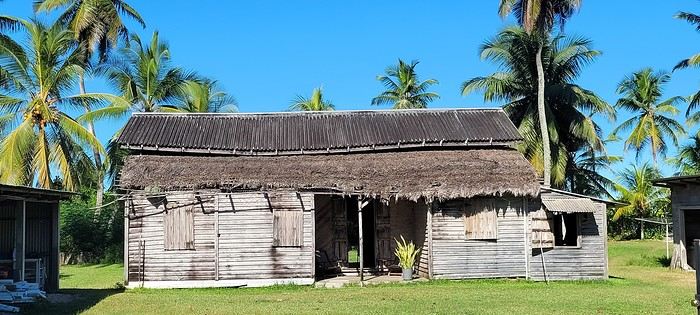
We got back to the port around 6:30 PM, with memories filling our heads.
We were really happy with this day, and our guide/driver was exceptional! We even gave him a nice tip.
Dinner at the restaurant:
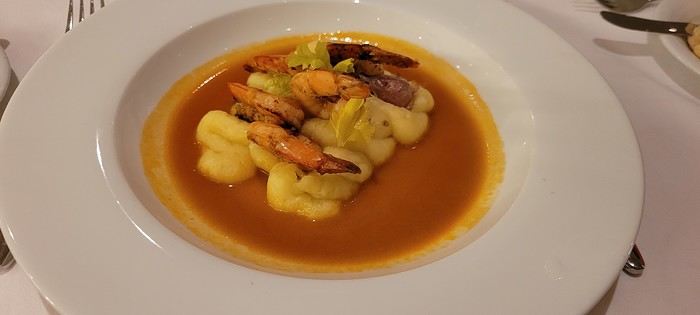
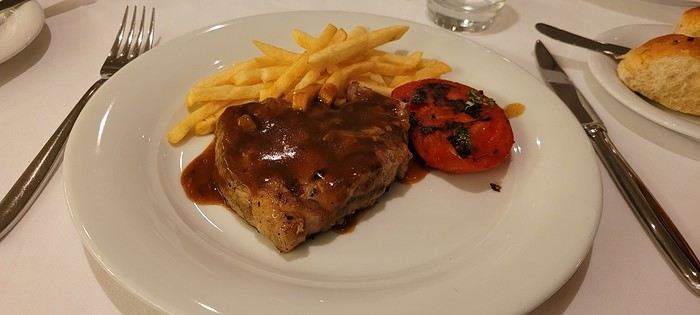
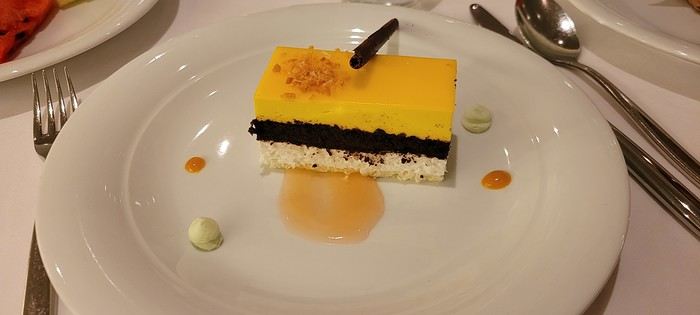
To be continued: Day at sea and Nosy Be
I hit my photo limit on the other post, so I’m forced to start a new one to continue this travel journal.
Victoria / Mahé continued:
After Anse Intendance, we head to Police Bay, located at the very southern tip of Mahé. Swimming and snorkeling aren’t ideal there (lots of waves)—just for the view!
On the way back, we stopped to visit some "typical" Seychellois houses, including one of the oldest.
We got back to the port around 6:30 PM, with memories filling our heads.
We were really happy with this day, and our guide/driver was exceptional! We even gave him a nice tip.
Dinner at the restaurant:
To be continued: Day at sea and Nosy Be
Encore des arrestations "d'ATM scammers" à Phuket English translation pending
Compte-rendu croisière Emirats MSC Lirica janvier 2014 English translation pending
Voici le début du compte-rendu promis!
Vous y trouverez plein de détails mais rien sur les excursions proposées car nous n'avons pris aucune préférant tout faire par nous-mêmes.
Nous habitons en région parisienne (ouest), étions en couple, je parle à peu près l'anglais (mon mari le comprend mais n'est pas à l'aise pour le parler) mais on déteste les marchandages ce qui pouvait poser problème en terre arabe...
Nous ne sommes pas de "grands croisiéristes" (1 catamaran aux Grenadines, 1 fluviale en Russie, 1 sur le MSC Musica en juillet 2013 en Norvège). Donc mon seul point de comparaison en matière de grand navire est le Musica.
Le Lirica est un "petit Musica" et il nous convient : rien à redire.
Vendredi 24 au soir : cap sur Roissy en fin d'après-midi avec une bonne avance sur l'horaire du vol (4h) pour être sûrs de voyager côte à côte. Comme MSC fait les réservations en tant que groupe (ici 34 passagers MSC à bord) nous ne pouvons pas effectuer le check-in on-line par nous-mêmes. Pas de hublot disponible mais nous serons ensemble avec un accès couloir. Nous partirons finalement avec 1h de retard. L'avion est magnifique (A380 d'Emirates), l'écran incorporé au siège vous propose un choix immense de films, séries, musique, jeux, le dîner est bon et le service attentionné. Tout roule!
Samedi 25 janvier : Arrivée donc à Dubaï avec une heure de retard et choc attendu devant cet immense aéroport : l'A380 arrive à un terminal d'où vous devez prendre un metro dans l'enceinte même de l'aéroport pour aller récupérer vos valises. Mais, d'abord, il y a les formalités de police et c'est un peu long car beaucoup de vols arrivent en même temps. Beaucoup de travailleurs immigrés dans les files d'attente : pakistanais, phillippins et autres. On récupère les valises et on s'achemine vers la sortie avec au passage arrêt à un distributeur automatique pour prendre des AED (5AED = environ 1€). On retrouve du personnel MSC avec des panneaux bien visibles mais là déception : même si nous sommes rapidement au complet côté passagers on devra attendre le bus effectuant le transfert plus d'une demie-heure, ceci dû certainement au retard de notre avion le bus ayant pris entretemps d'autres croisiéristes arrivés sur d'autres vols. Arrivée au port vers 10h30, formalités d'embarquement assez rapides et découverte de la cabine 92026. C'est assez petit car le lit immense et très confortable prend presque toute la place mais tout est propre. La prochaine fois on reviendra aux cabines avec balcon plus vastes mais, finalement, on passera très peu de temps dans la cabine. Nous montons sur un pont supérieur pour essayer de grignoter quelque chose (pas de petit-déjeuner dans l'avion, pas même une tasse de café et ça c'est critiquable) et là encore le choix est restreint! MSC pourrait penser aux passagers qui arrivent avant le déjeuner et élargir un peu le choix ce jour-là. Pain, viennoiseries et quelques fruits. Ca ira car nous voulons partir au plus vite en ville sans attendre ni le déjeuner ni l'arrivée des valises en cabine. A la sortie du bateau on cherche des yeux la station de taxi et une dame chauffeur qui vient de déposer des passagers nous fait signe : on lui demande un tour d'orientation en ville avec des arrêts photo et...le compteur en marche (prise en charge de 20AED à l'intérieur du port). D'ailleurs elle n'essaie pas de négocier en "hors compteur" comme bcp d'autres taxis. Il y a de la brume sur Dubaï mais c'est quand même incroyable toutes ces tours différentes les unes des autres qui s'élancent vers le ciel : sensation d'un vaste EuroDisney pour grandes personnes mais ceci est une sensation toute personnelle. Arrêts successifs à la mosquée Jumeirah, au pied de la Burj Khalifa, au Madinat Jumeirah , à l'entrée du Burj Al-Arab. On admire les murs et les portails d'entrée des vastes propriétés des riches émiratis et on fait l'avenue principale du Palm jusqu'à l'hôtel Atlantis. Le palm est assez décevant car c'est une vaste succession de blocs d'appartements de part et d'autre de l'avenue centrale. C'est certainement très beau vu du ciel et la prochaine fois (on aimerait faire la croisière "Retour des Emirats" qui fait le passage du canal de Suez) on se constituera une cagnotte helicoptère pour un vol de 25mn au-dessus de la ville (250€ par personne). On retraverse ensuite la ville en sens inverse (les distances sont grandes) : on a demandé à être déposés à Bur Dubai devant le musée, il y a pas mal de traffic. Bilan : 2h15 en taxi pour 250 AED (50€) et le seul chauffeur de taxi de tout le voyage qui parlait correctement anglais. Elle s'appelle Mariah, vient des Philippines et conduit très bien un "ladies taxi", les taxis beige à toit rose réservées en priorité aux femmes et aux familles. Visite du Musée de Dubaï (3 AED) : c'est bien présenté, rapide à visiter et ça donne une première vision d'un tas de petites choses. Jolie salle décrivant le travail des pêcheurs de perles. Pas loin se trouve le quartier de Bastakiya : on admire les tours à vent, l'architecture traditionnelle, les anciens remparts récemment mis à jour mais tout est vide et sans vie. Question d'heure? Possible, car ça doit s'animer en fin de journée. Encore un petit tour dans le coin et c'est l'heure de prendre un taxi pour le bateau car l'exercice de sécurité nous attend. Le taxi ne coûte que 16AED (moins de 4€) jusqu'au bateau qui n'est pas loin. Le port est immense et il y a plusieurs km entre le navire et la sortie du port. En arrivant au bateau on trouve nos valises devant notre cabine et (mauvaise) surprise : on constate la disparition du cadenas d'une des valises et celui de la seconde valise est irrémédiablement cassé. mais tout est intacte! Au départ de l'aéroport de Dubaï les cadenas étaient en parfait état. Je signale que vous pourrez trouver des cadenas au magasin Duty Free du bord. Exercice de sécurité habituel et sans histoire. Départ de Dubaï toujours avec cette brume planante qui empêche d'avoir une belle vision de la ville... Nous sommes au premier service du dîner au restaurant La Boussola et nous faisons connaissance de notre serveuse Runa qui vient de l'Ile Maurice et qui est à bord avec son mari qui est le second serveur de notre table. Service en français et grande gentillesse. Table de 8 occupée par 6 (3 couples). Là, on va avoir la grande chance de notre voyage : nous faisons connaissance d'un couple de niçois avec qui le courant passe rapidement et nous décidons de faire équipe dès le lendemain lors de la visite d'Abu Dhabi. Spectacle au théatre de bonne qualité (excellents danseurs, chanteurs corrects, bons numeros "de force" et d'équilibre) et gros dodo pour récupérer de nos émotions.
Suite au plus vite...
Vendredi 24 au soir : cap sur Roissy en fin d'après-midi avec une bonne avance sur l'horaire du vol (4h) pour être sûrs de voyager côte à côte. Comme MSC fait les réservations en tant que groupe (ici 34 passagers MSC à bord) nous ne pouvons pas effectuer le check-in on-line par nous-mêmes. Pas de hublot disponible mais nous serons ensemble avec un accès couloir. Nous partirons finalement avec 1h de retard. L'avion est magnifique (A380 d'Emirates), l'écran incorporé au siège vous propose un choix immense de films, séries, musique, jeux, le dîner est bon et le service attentionné. Tout roule!
Samedi 25 janvier : Arrivée donc à Dubaï avec une heure de retard et choc attendu devant cet immense aéroport : l'A380 arrive à un terminal d'où vous devez prendre un metro dans l'enceinte même de l'aéroport pour aller récupérer vos valises. Mais, d'abord, il y a les formalités de police et c'est un peu long car beaucoup de vols arrivent en même temps. Beaucoup de travailleurs immigrés dans les files d'attente : pakistanais, phillippins et autres. On récupère les valises et on s'achemine vers la sortie avec au passage arrêt à un distributeur automatique pour prendre des AED (5AED = environ 1€). On retrouve du personnel MSC avec des panneaux bien visibles mais là déception : même si nous sommes rapidement au complet côté passagers on devra attendre le bus effectuant le transfert plus d'une demie-heure, ceci dû certainement au retard de notre avion le bus ayant pris entretemps d'autres croisiéristes arrivés sur d'autres vols. Arrivée au port vers 10h30, formalités d'embarquement assez rapides et découverte de la cabine 92026. C'est assez petit car le lit immense et très confortable prend presque toute la place mais tout est propre. La prochaine fois on reviendra aux cabines avec balcon plus vastes mais, finalement, on passera très peu de temps dans la cabine. Nous montons sur un pont supérieur pour essayer de grignoter quelque chose (pas de petit-déjeuner dans l'avion, pas même une tasse de café et ça c'est critiquable) et là encore le choix est restreint! MSC pourrait penser aux passagers qui arrivent avant le déjeuner et élargir un peu le choix ce jour-là. Pain, viennoiseries et quelques fruits. Ca ira car nous voulons partir au plus vite en ville sans attendre ni le déjeuner ni l'arrivée des valises en cabine. A la sortie du bateau on cherche des yeux la station de taxi et une dame chauffeur qui vient de déposer des passagers nous fait signe : on lui demande un tour d'orientation en ville avec des arrêts photo et...le compteur en marche (prise en charge de 20AED à l'intérieur du port). D'ailleurs elle n'essaie pas de négocier en "hors compteur" comme bcp d'autres taxis. Il y a de la brume sur Dubaï mais c'est quand même incroyable toutes ces tours différentes les unes des autres qui s'élancent vers le ciel : sensation d'un vaste EuroDisney pour grandes personnes mais ceci est une sensation toute personnelle. Arrêts successifs à la mosquée Jumeirah, au pied de la Burj Khalifa, au Madinat Jumeirah , à l'entrée du Burj Al-Arab. On admire les murs et les portails d'entrée des vastes propriétés des riches émiratis et on fait l'avenue principale du Palm jusqu'à l'hôtel Atlantis. Le palm est assez décevant car c'est une vaste succession de blocs d'appartements de part et d'autre de l'avenue centrale. C'est certainement très beau vu du ciel et la prochaine fois (on aimerait faire la croisière "Retour des Emirats" qui fait le passage du canal de Suez) on se constituera une cagnotte helicoptère pour un vol de 25mn au-dessus de la ville (250€ par personne). On retraverse ensuite la ville en sens inverse (les distances sont grandes) : on a demandé à être déposés à Bur Dubai devant le musée, il y a pas mal de traffic. Bilan : 2h15 en taxi pour 250 AED (50€) et le seul chauffeur de taxi de tout le voyage qui parlait correctement anglais. Elle s'appelle Mariah, vient des Philippines et conduit très bien un "ladies taxi", les taxis beige à toit rose réservées en priorité aux femmes et aux familles. Visite du Musée de Dubaï (3 AED) : c'est bien présenté, rapide à visiter et ça donne une première vision d'un tas de petites choses. Jolie salle décrivant le travail des pêcheurs de perles. Pas loin se trouve le quartier de Bastakiya : on admire les tours à vent, l'architecture traditionnelle, les anciens remparts récemment mis à jour mais tout est vide et sans vie. Question d'heure? Possible, car ça doit s'animer en fin de journée. Encore un petit tour dans le coin et c'est l'heure de prendre un taxi pour le bateau car l'exercice de sécurité nous attend. Le taxi ne coûte que 16AED (moins de 4€) jusqu'au bateau qui n'est pas loin. Le port est immense et il y a plusieurs km entre le navire et la sortie du port. En arrivant au bateau on trouve nos valises devant notre cabine et (mauvaise) surprise : on constate la disparition du cadenas d'une des valises et celui de la seconde valise est irrémédiablement cassé. mais tout est intacte! Au départ de l'aéroport de Dubaï les cadenas étaient en parfait état. Je signale que vous pourrez trouver des cadenas au magasin Duty Free du bord. Exercice de sécurité habituel et sans histoire. Départ de Dubaï toujours avec cette brume planante qui empêche d'avoir une belle vision de la ville... Nous sommes au premier service du dîner au restaurant La Boussola et nous faisons connaissance de notre serveuse Runa qui vient de l'Ile Maurice et qui est à bord avec son mari qui est le second serveur de notre table. Service en français et grande gentillesse. Table de 8 occupée par 6 (3 couples). Là, on va avoir la grande chance de notre voyage : nous faisons connaissance d'un couple de niçois avec qui le courant passe rapidement et nous décidons de faire équipe dès le lendemain lors de la visite d'Abu Dhabi. Spectacle au théatre de bonne qualité (excellents danseurs, chanteurs corrects, bons numeros "de force" et d'équilibre) et gros dodo pour récupérer de nos émotions.
Suite au plus vite...
Prier lors d'un vol avec Etihad? English translation pending
Bonjour, je dois prochainement voyager sur ETIHAD , et j aurai voulu savoir si il etait possible de prier pendant le voyage ; j ai au ami qui a voyagé avec QATAR et il m a dit qu il faisait la priere durant le vol .
Vous en savez quelque chose vous ??
COrdialement .
COrdialement .
Pourquoi des avions toujours plus gros? English translation pending
Bonjour,
Je viens de voir un reportage sur l' A 380 . Il est géant !!! Il propose un grand confort, du grand luxe comme par exemple des sièges à 60000 $ l'unité (pour la classe business) ! Il paraît qu'il faut faire des économies d'énergie car les réserves de pétrole s'épuisent... Qu'il faut préserver la planète... Et que nous sommes en période de crise !?!?
Je m'interroge donc, car cet avion me semble vraiment démesuré et absolument anachronique, déjà périmé.
Je viens de voir un reportage sur l' A 380 . Il est géant !!! Il propose un grand confort, du grand luxe comme par exemple des sièges à 60000 $ l'unité (pour la classe business) ! Il paraît qu'il faut faire des économies d'énergie car les réserves de pétrole s'épuisent... Qu'il faut préserver la planète... Et que nous sommes en période de crise !?!?
Je m'interroge donc, car cet avion me semble vraiment démesuré et absolument anachronique, déjà périmé.
Visiter Abu Dhabi sur la journée: taxi ou location de voiture? English translation pending
Bonjour,
Nous allons passer une semaine à Dubai en mai et avons l'intention de visiter Abu Dhabi sur une journée. L'objectif est de voir un maximum de choses dans cette journée (principalement : mosquée Sheik Zayed, hôtel Emirates Palace, Hôtel Yas Viceroy, Heritage Village, Fort Al Maqtaa, souks d'Al Mina, course de chameaux a Al Wathba) Qu'est-ce que vous nous conseilleriez ? -De faire l'aller-retour en bus depuis Dubai et de se débrouiller avec les taxis/bus sur place? - Ou de louer à Dubai une voiture pour la journée et partir visiter Abu Dhabi en voiture ?
En cas de location de voiture, savez-vous s'il est facile de se garer à Abu Dhabi (on veut éviter de tourner en rond à chaque fois qu'on veut s'arrêter à un endroit) ?
Merci beaucoup d'avance, Sébastien
Nous allons passer une semaine à Dubai en mai et avons l'intention de visiter Abu Dhabi sur une journée. L'objectif est de voir un maximum de choses dans cette journée (principalement : mosquée Sheik Zayed, hôtel Emirates Palace, Hôtel Yas Viceroy, Heritage Village, Fort Al Maqtaa, souks d'Al Mina, course de chameaux a Al Wathba) Qu'est-ce que vous nous conseilleriez ? -De faire l'aller-retour en bus depuis Dubai et de se débrouiller avec les taxis/bus sur place? - Ou de louer à Dubai une voiture pour la journée et partir visiter Abu Dhabi en voiture ?
En cas de location de voiture, savez-vous s'il est facile de se garer à Abu Dhabi (on veut éviter de tourner en rond à chaque fois qu'on veut s'arrêter à un endroit) ?
Merci beaucoup d'avance, Sébastien
Où acheter mon nouvel objectif: en France ou à Abu Dhabi? English translation pending
Bonjour à tous !
Je pars dans 2 semaine spour un périple de 3 mois en asie du sud est. J'utilise un appareil photo reflex (canon 7D) et je passe par Abu Dhabi à l'aller. J'aurais voulu savoir s'il est plus judicieux d'acheter ma nouvelle optique en France via internet, ou d'espérer trouver un truc sympa (le 10-22 de chez canon pour tout dire) moins cher sur Abu Dhabi ? D'après ce que j'ai compris à Bangkok ça ne vaut pas franchement le coup ??
Merci d'avance pour vos réponses !!
Je pars dans 2 semaine spour un périple de 3 mois en asie du sud est. J'utilise un appareil photo reflex (canon 7D) et je passe par Abu Dhabi à l'aller. J'aurais voulu savoir s'il est plus judicieux d'acheter ma nouvelle optique en France via internet, ou d'espérer trouver un truc sympa (le 10-22 de chez canon pour tout dire) moins cher sur Abu Dhabi ? D'après ce que j'ai compris à Bangkok ça ne vaut pas franchement le coup ??
Merci d'avance pour vos réponses !!
Google Map, carte SIM ou GPS Dubaï, Abu Dhabi et Oman English translation pending
bonjours
je vais voyager au Emirats plus précisément dubai , abu dahbi , oman pour une
dizaine de jours et je voudrai savoir c"est quoi la meilleur solution pour utiliser googel maps est ce que il vaut mieux de prendre une carte sim ou bien louer un gps directement a l'aéroport.
et si je prend une carte sim est ce que je peux utiliser internet ilmiter pendant mes séjour et la utiliser aussi a oman et abu dahbi et quelle sont les tarifs de la carte sim.
merci d"avance
lynda
Coût voiture avec chauffeur à Abu Dhabi pour visiter Dubaï ou l'oasis Al Aïn English translation pending
Bonjour
J'aimerais savoir si l'un d'entre vous connait le coût de location d'une voiture avec chauffeur pour la journée, pour se rendre et visiter par exemple Dubai (A/R) ou l'Oasis Al Ain?..et si vous connaissez une société de taxi logue distance ou une personne/chauffeur de confiance je suis preneur de leurs coordonnées.
merci d'avance GG68
J'aimerais savoir si l'un d'entre vous connait le coût de location d'une voiture avec chauffeur pour la journée, pour se rendre et visiter par exemple Dubai (A/R) ou l'Oasis Al Ain?..et si vous connaissez une société de taxi logue distance ou une personne/chauffeur de confiance je suis preneur de leurs coordonnées.
merci d'avance GG68
Tarif vol pour Abou Dhabi English translation pending
Ou trouver le meilleur tarif pour aller à Abu d'abhi?
Trajet de Dubaï à Abu Dhabi en bus English translation pending
bonjour , je souhaiterai savoir ou est situe la gare routiere des bus pour aller a abu dhabi j'aimerai savoir le tarif et quel bus prendre cordialement.
Première classe de Etihad Airways ou de Emirates? English translation pending
Bonjour, je souhaiterai partir à Abu Dhabi et je conte partir en première classe mais j'hésite entre Emirates et Etihad airways.
Merci de me répondre rapidement 😉
Croisière MSC: Abu Dhabi, Mascate, Foudjairah, Khasab, Dubai English translation pending
Bonjour,
Nous projetons de partir avec MSC le 6 ou 13 novembre 2011. pour la croisière:
Abu dhabi, Mascatte, Foudjairah, Khasab, Dubai.
Départ avion de Paris.
Si quelqu'un a déjà fait ces escales, merci de me donner vos commentaires.
Excursions MSC ou seuls ?
Habits à porter ou a proscrire pour les femmes pendant les excursions ( j'ai 50 ans je ne vais pas y aller en mini jupe :) ).
Merci
sylvie
Par où passer pour faire Bangkok - Buenos Aires? English translation pending
Pour aller de Bangkok a buenos aires. Billet aller simple
Merci
Où voir des faucons et dromadaires aux Émirats? English translation pending
bonjour,
ou peut on voir des faucons aux emirats (a part a l hopital des faucons d abu dhabi) , je recherche un endroit ou les emiratis se retrouvent "dans le desert" avec les leurs, j avais vu ça dans une emission mais impossible de retrouver l endroit.
j aimerai bien aussi trouver un endroit ou l on organise des courses de dromadaires ou meme juste un lieu ou il y a un elevage ou quelque chose de ce style.
merci
sylvain
ou peut on voir des faucons aux emirats (a part a l hopital des faucons d abu dhabi) , je recherche un endroit ou les emiratis se retrouvent "dans le desert" avec les leurs, j avais vu ça dans une emission mais impossible de retrouver l endroit.
j aimerai bien aussi trouver un endroit ou l on organise des courses de dromadaires ou meme juste un lieu ou il y a un elevage ou quelque chose de ce style.
merci
sylvain
Où partir une semaine au départ des Emirats? English translation pending
Bonjour à tous,
Je viens à la recherche de bons conseils.
Nous vivons actuellement à Abu Dhabi, et nous nous recherchons une destination pour (seulement :( ) une semaine au mois de décembre. Plusieurs paramètres sont à prendre en compte: - Nous avons une petite puce de 4 ans et étant actuellement enceinte , nous voyagerons avec un autre bébé de 4 mois. Mon mari souhaite faire les îles maldives / seychelles. Pour ma part, je trouve cela un peu trop ennuyeux ^^. Nous étions il n'y a pas si longtemps en Malaisie et sommes restés 3/4 jours sur les Iles Perhentians , c'était déjà bien assez.
Nous aimons quand même bouger/ visiter...
Une destination comme la turquie a déjà été faite. La thaïlande? mais ça me paraît trop court... j'aime voir un maximum de choses dans un pays.
Une idée ?
Merci d'avance
Je viens à la recherche de bons conseils.
Nous vivons actuellement à Abu Dhabi, et nous nous recherchons une destination pour (seulement :( ) une semaine au mois de décembre. Plusieurs paramètres sont à prendre en compte: - Nous avons une petite puce de 4 ans et étant actuellement enceinte , nous voyagerons avec un autre bébé de 4 mois. Mon mari souhaite faire les îles maldives / seychelles. Pour ma part, je trouve cela un peu trop ennuyeux ^^. Nous étions il n'y a pas si longtemps en Malaisie et sommes restés 3/4 jours sur les Iles Perhentians , c'était déjà bien assez.
Nous aimons quand même bouger/ visiter...
Une destination comme la turquie a déjà été faite. La thaïlande? mais ça me paraît trop court... j'aime voir un maximum de choses dans un pays.
Une idée ?
Merci d'avance