Results for "quartier+Barcelone+|+9+>+206"
48819 results found.
Where to stay in Rio, Paraty, and Iguazu Falls?
Hi everyone! I’m looking for accommodation in these three destinations, with a budget of 100 € per person max including breakfast. I’d prefer places by the water for the first two spots and somewhere halfway between the main sights for Iguazu. Could you help me out? Thanks! 😊
Discover the 10 Must-See Spots in Sardinia
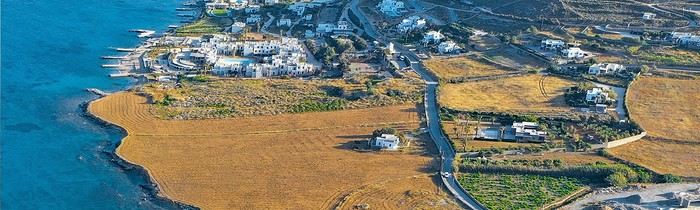
If you're dreaming of idyllic beaches and picturesque villages, you're in the right place! Known for its crystal-clear waters, millennia-old traditions, and preserved nature, Sardinia captivates travelers seeking a change of scenery. Here, you can enjoy a spectacular coastline, but also discover the authentic heart of the island, with its wild mountains and history-laden towns. Visiting Sardinia means taking the time to let yourself be lulled by the song of cicadas and the scent of the maquis. Escape to Sardinia with an all-inclusive stay at a 5-star hotel, allowing you to get away from it all.
To help you plan your itinerary, here’s an overview of ten must-see spots and a few off-the-beaten-path escapes.
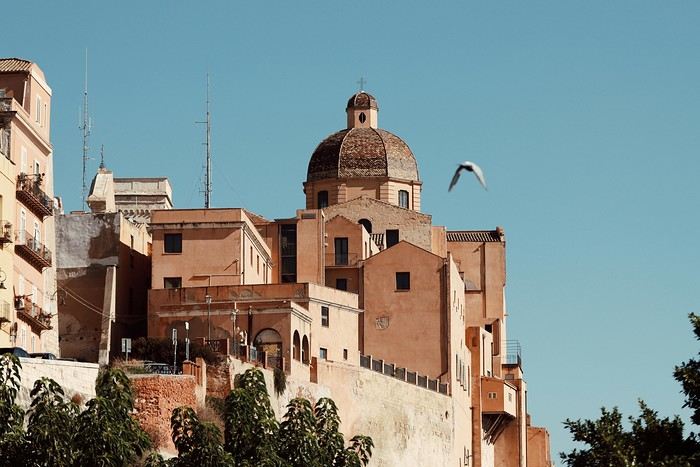
Cagliari, the vibrant capital
Often the first point of contact with the island, Cagliari charms with its historic center, dominated by the medieval Castello district. Stroll through the narrow streets to reach the Santa Maria Cathedral, then climb up to the Saint-Remy Bastion, where the view of the city and the sea is well worth the effort. Be sure to visit the San Benedetto market, where stalls of cheeses, cured meats, and fish reflect Sardinia’s culinary diversity.
Villasimius, fine sand and turquoise waters
Less than an hour’s drive from Cagliari, the Villasimius area is famous for its dreamy beaches, including Porto Giunco and Simius Beach. The white sand contrasts beautifully with the crystal-clear blue of the sea—a postcard-perfect setting. Diving enthusiasts will be delighted, while hikers can explore Capo Carbonara, a protected area home to pink flamingos.
Costa Smeralda, the glamorous side of the island
Renowned for its prestigious seaside resorts, the Costa Smeralda attracts yachts and lively evenings. Porto Cervo, its iconic port, draws travelers from around the world. Don’t worry—if you venture a little off the beaten path, you’ll find small, wild coves and trails lined with umbrella pines. A stop at a local wine bar to taste a glass of vermentino is highly recommended, if only to admire the view.
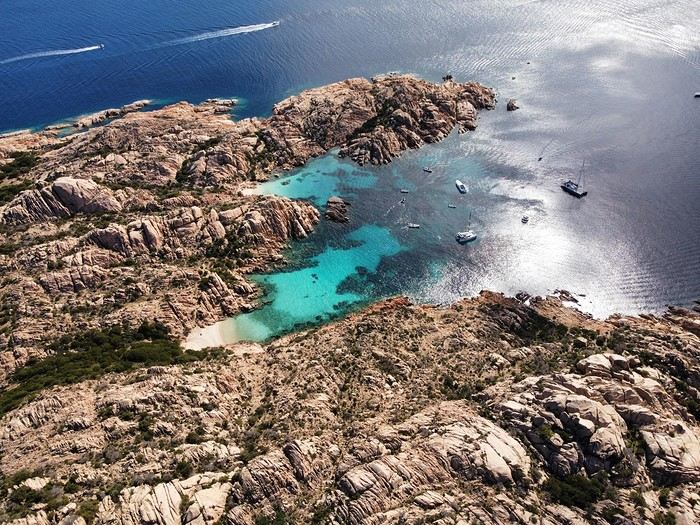
The La Maddalena Archipelago, a marine gem
In the northeast, this national marine park comprises several islands with stunning beaches. La Maddalena, the main island, charms with its colorful houses and lively port. Offshore, wonders like Spargi Island or the famous Pink Beach of Budelli await visitors. It’s best to dedicate a full day—or more—to exploring this paradise by boat.
Alghero, the Catalan city
On the northwest coast, Alghero reveals a historic center encircled by ramparts, where the Catalan influence is still strong. Walk along the fortifications to watch the sunset, then sample the local cuisine, focused on seafood and wine. A short drive away, Neptune’s Grotto is a spectacular site: you can reach it via a staircase of 654 steps carved into the cliff or by boat for a more romantic approach.
Bosa, a painting under the open sky
Heading south along the coast from Alghero, you’ll reach Bosa, one of Sardinia’s most charming villages. Its colorful houses line the Temo River, overlooked by the Serravalle Castle. Wander the streets, admiring the vibrant facades, then settle into a small restaurant to taste the famous bottarga. The atmosphere is peaceful—this is la dolce vita.
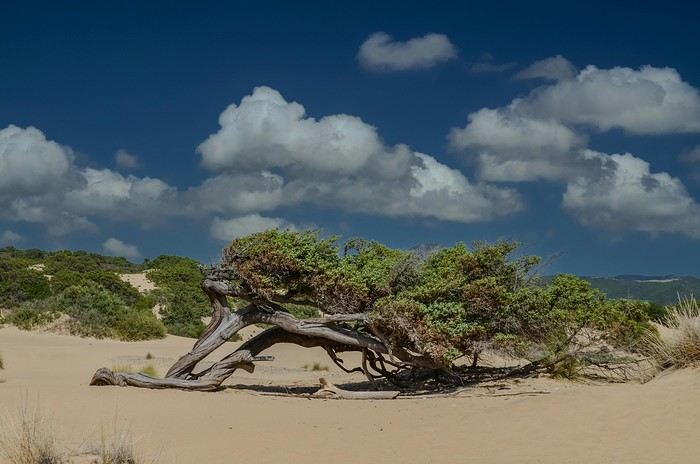
The Piscinas Dunes, a desert by the sea
Head southwest to discover Piscinas, a natural site where sand dunes evoke a desert. Between sparse vegetation and turquoise sea, the contrast is simply stunning. The beaches, rarely crowded, offer a soothing tranquility. A perfect spot for lovers of wild landscapes, far from the hustle and bustle of seaside resorts.
Su Nuraxi di Barumini, a prehistoric relic
You can’t truly understand Sardinian history without mentioning the nuraghes, mysterious stone towers left by the Nuragic civilization. In Barumini, you can explore Su Nuraxi, the most famous, a UNESCO World Heritage site. Its millennia-old architecture and vast complex make it a must-visit for anyone wanting to delve into the island’s past.
Orgosolo and the mountainous interior
To experience the deep soul of Sardinia, head to the Supramonte massif. Orgosolo, once a bandit hideout, is known for its mural paintings adorning house facades. These artworks tell the local history, social struggles, and Sardinian pride. The surrounding nature is breathtaking: forests, canyons, and panoramic views invite you to hike.
The Gulf of Orosei, dreamy coves
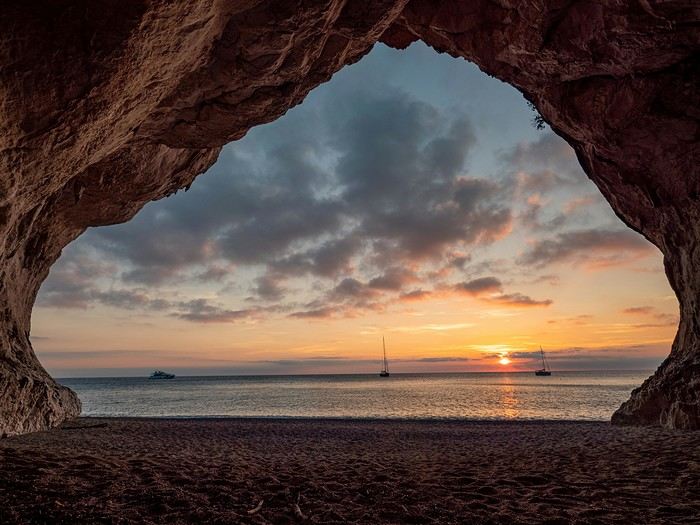
Finally, it’s hard to miss the beaches of the Gulf of Orosei. Cala Luna, Cala Mariolu, and Cala Goloritzé are among the most beautiful in the Mediterranean. Accessible by boat or on foot, each reveals transparent waters perfect for diving. Time seems to stand still in these wild landscapes, immersing you in the charm of a preserved Sardinia. From its sandy beaches to its rugged mountains, the island offers a stunning array of scenery. Far beyond the Costa Smeralda, Sardinia is full of hidden corners where nature reigns supreme and traditions are still very much alive. Once there, let yourself be swept up by the Sardinian dolce vita, savor its generous cuisine, and soak in its legends.
Happy travels!
Discover Japan with the "Immersion in Japan" tour
Set off on a journey to the heart of Japan with the "Immersion in Japan" tour. Over thirteen days, explore a country where tradition and modernity intertwine harmoniously. This trip will take you through dynamic metropolises, picturesque villages, majestic mountains, and spiritually charged places, offering a comprehensive glimpse into the many facets of this fascinating destination.
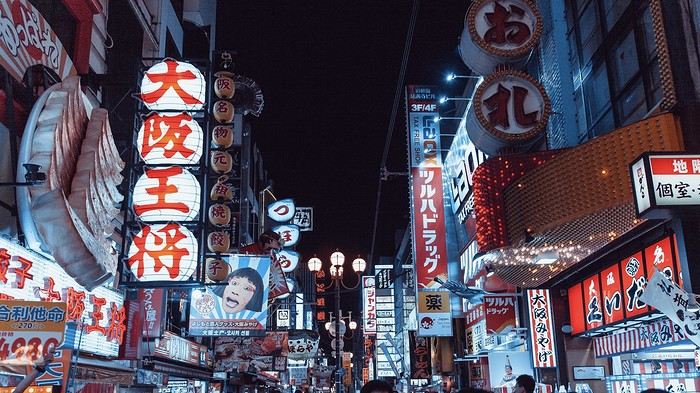
Your adventure begins in Osaka, Japan’s third-largest city, famous for its lively atmosphere and gastronomy. The Dotonbori district, with its colorful neon lights, restaurants serving takoyaki and okonomiyaki, and karaoke bars, provides a vibrant first taste of contemporary Japan. On the second day, you head to Himeji, home to the famous White Heron Castle, a majestic and perfectly preserved fortress. This visit is a dive into feudal Japan.
Next, you reach Kyoto, the former imperial capital and a cultural gem. Every street corner breathes history and elegance. You stroll through the Arashiyama bamboo grove, visit the Golden Pavilion (Kinkaku-ji), and participate in a tea ceremony, an experience steeped in serenity. A trip to Nara, where sacred deer roam freely in the parks, completes your exploration. The Great Buddha of Nara, housed in the Todai-ji temple, impresses with its size and splendor.
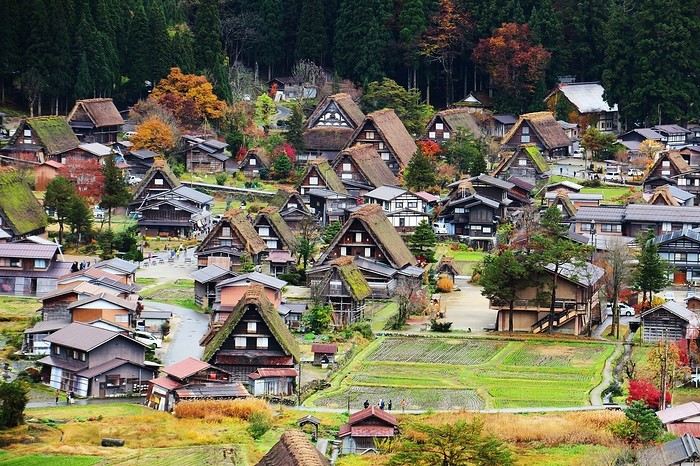
The journey continues in the Japanese Alps, in Takayama and Shirakawago. These picturesque villages, with their thatched-roof houses, seem frozen in time. A UNESCO World Heritage site, Shirakawago is a true treasure of authenticity. You spend a night in Gero Onsen, a renowned hot spring resort, where you can enjoy relaxing hot baths and savor refined Japanese cuisine served in a traditional ryokan.
Finally, Tokyo, the bustling capital, awaits with its many faces. From the futuristic Akihabara district, dedicated to geek culture enthusiasts, to the traditional charm of Asakusa and the Senso-ji temple, every moment is a discovery. A side trip to Kamakura, famous for its Great Buddha and temples, adds a spiritual dimension to your stay.
This trip wouldn’t be complete without immersive experiences. Learn to wield a katana in a samurai workshop, take a cooking class to master the art of sushi, or explore the world of manga with a drawing lesson. Each activity is designed to deepen your connection to the local culture.
The carefully selected accommodations blend modern comfort with Japanese charm. From contemporary hotels in Kyoto and Tokyo to traditional ryokans in the mountains, every night is an experience in itself. With a passionate local guide and free time to explore at your own pace, this tour offers the perfect balance between adventure and relaxation.
The "Immersion in Japan" tour is much more than just a trip. It’s an invitation to discover the soul of a country rich in contrasts, through diverse landscapes, living traditions, and fascinating modernity. Whether you're a culture lover, nature enthusiast, or simply in search of wonder, this journey promises a memorable and transformative experience.
Your adventure begins in Osaka, Japan’s third-largest city, famous for its lively atmosphere and gastronomy. The Dotonbori district, with its colorful neon lights, restaurants serving takoyaki and okonomiyaki, and karaoke bars, provides a vibrant first taste of contemporary Japan. On the second day, you head to Himeji, home to the famous White Heron Castle, a majestic and perfectly preserved fortress. This visit is a dive into feudal Japan.
Next, you reach Kyoto, the former imperial capital and a cultural gem. Every street corner breathes history and elegance. You stroll through the Arashiyama bamboo grove, visit the Golden Pavilion (Kinkaku-ji), and participate in a tea ceremony, an experience steeped in serenity. A trip to Nara, where sacred deer roam freely in the parks, completes your exploration. The Great Buddha of Nara, housed in the Todai-ji temple, impresses with its size and splendor.
The journey continues in the Japanese Alps, in Takayama and Shirakawago. These picturesque villages, with their thatched-roof houses, seem frozen in time. A UNESCO World Heritage site, Shirakawago is a true treasure of authenticity. You spend a night in Gero Onsen, a renowned hot spring resort, where you can enjoy relaxing hot baths and savor refined Japanese cuisine served in a traditional ryokan.
Finally, Tokyo, the bustling capital, awaits with its many faces. From the futuristic Akihabara district, dedicated to geek culture enthusiasts, to the traditional charm of Asakusa and the Senso-ji temple, every moment is a discovery. A side trip to Kamakura, famous for its Great Buddha and temples, adds a spiritual dimension to your stay.
This trip wouldn’t be complete without immersive experiences. Learn to wield a katana in a samurai workshop, take a cooking class to master the art of sushi, or explore the world of manga with a drawing lesson. Each activity is designed to deepen your connection to the local culture.
The carefully selected accommodations blend modern comfort with Japanese charm. From contemporary hotels in Kyoto and Tokyo to traditional ryokans in the mountains, every night is an experience in itself. With a passionate local guide and free time to explore at your own pace, this tour offers the perfect balance between adventure and relaxation.
The "Immersion in Japan" tour is much more than just a trip. It’s an invitation to discover the soul of a country rich in contrasts, through diverse landscapes, living traditions, and fascinating modernity. Whether you're a culture lover, nature enthusiast, or simply in search of wonder, this journey promises a memorable and transformative experience.
Continuing Greece trip preparations: the itinerary
Hello,
We’ve finally decided on which Cycladic island to visit...
My partner and I are planning our first trip to Greece for June 2025. We’re leaving France for 15 days.
Here’s our itinerary, and I’d love your feedback on whether it’s doable, plus any other suggestions...
Arrival in Athens for 2 nights =
- Visiting the Acropolis, Parthenon, Theatre of Dionysus, Archaeological Museum, Syntagma Square for the changing of the guard, and strolling through the Plaka neighborhood...
4 nights in Nafplio
- To explore the town of Nafplio, the Theatre of Epidaurus, Mycenae, and Olympia
Then off to Milos for 7/8 nights (it was so hard to pick just one island). I’m considering flying from Athens with Olympic Air.
Is it worth doing a guided tour of the Acropolis or the other sites?
I’m open to all your tips.
Thanks so much.
Itinerary dilemma in Louisiana and Texas
After days of reading, I've put together the following route... the issue is that we can't find many travelers who've done this exact itinerary. We've already done a road trip on the West Coast.
My round-trip ticket to New Orleans is booked—it's my home base.
What do you think? Too much time spent in some stops, not enough in others? Could I get your thoughts?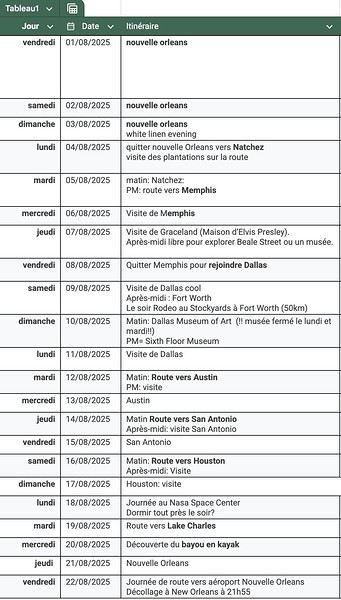
My round-trip ticket to New Orleans is booked—it's my home base.
What do you think? Too much time spent in some stops, not enough in others? Could I get your thoughts?
Vienna in February 2025: Which exhibitions to see?
Hi,
I’ll be visiting Vienna in February and I’d love recommendations for temporary exhibitions (it’s not my first trip, so I already know the museums well). Thanks!
Under Antalya's Sky (Turkey)
Saturday, November 9, 2024
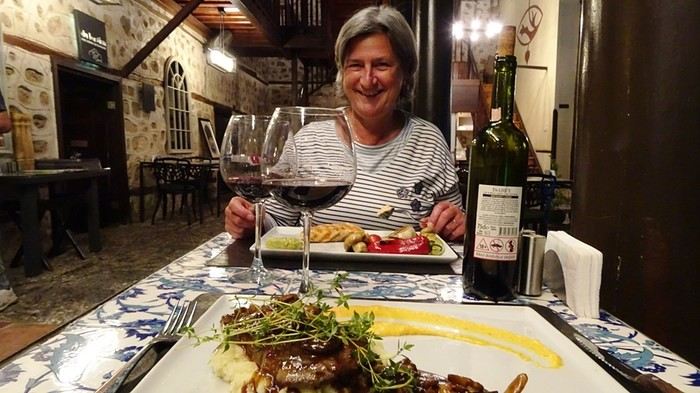
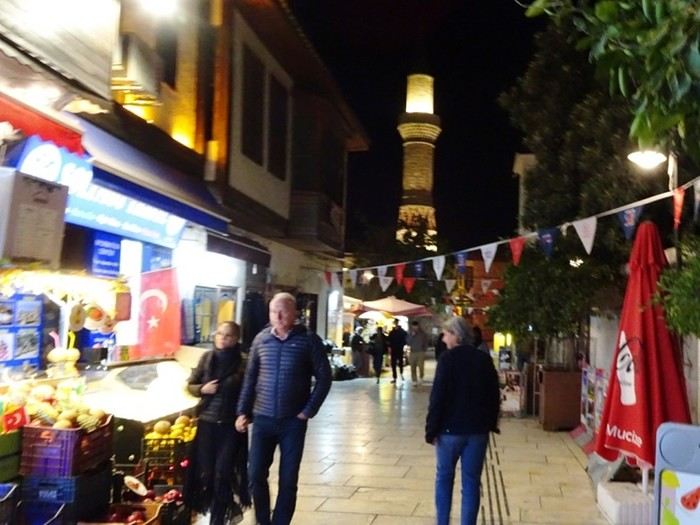
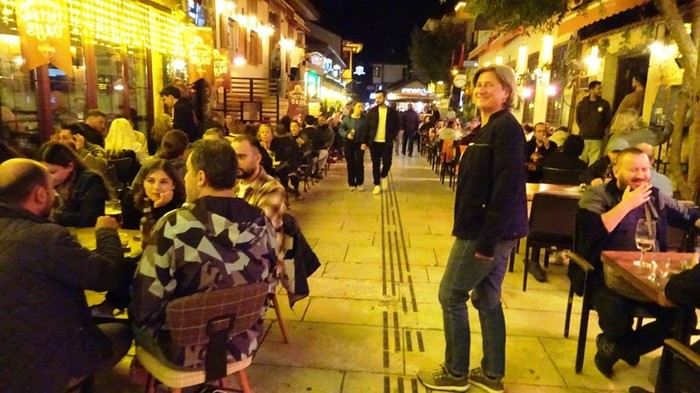
We left the house in the late morning, heading to the nearby airport parking lot, shuttle, formalities, and a quiet flight on a half-empty plane. Three hours eastward, we arrived in pitch-black night. Like everywhere in the world, we entered the city by crossing a vast, garish commercial zone, then the roads turned into streets, then alleys. Eventually, our driver had to stop to move poorly parked scooters so his oversized minibus could pass. We arrived in the middle of the old town, in a huge old house. We’re thrilled. The neighborhood is lively, full of atmosphere. Hungry and exhausted, we ate (very well) at the hotel restaurant, then strolled around. First impressions are promising!
Sunday, November 10, 2024 Antalya In this part of the world, there are some quirks that don’t always suit us infidels! Here in Antalya, the religious influence is still pretty light. You can drink freely, girls can save a lot on fabric—it’s all good, no one’s gonna say anything. But there’s the muezzin. That lanky guy who belts out his tune five times a day from the top of his minaret didn’t spare us this morning. Just a heads-up, we’ve got a two-hour time difference, and this guy starts his serenade at 4 AM, right in the middle of the night. That’s early!
Anyway, we recover, have breakfast, and realize that in terms of revered figures, Atatürk doesn’t take a backseat to the prophet responsible for our nighttime disturbances. We’d already been surprised by how ubiquitous his portrait is, but on the restaurant terrace, we see it’s a full-blown cult. There’s a little altar with rose petals under his portrait. First thing in the morning, the staff lines up to pay their respects, then sings a stirring hymn while some customers stand, hand on heart.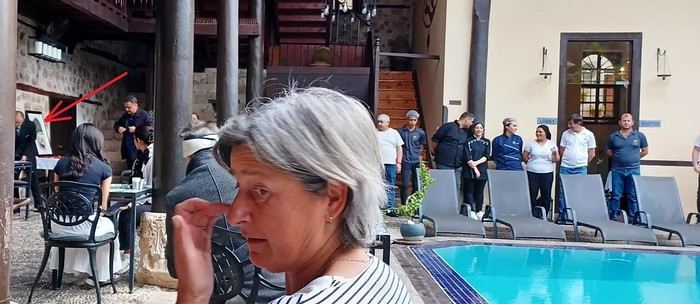
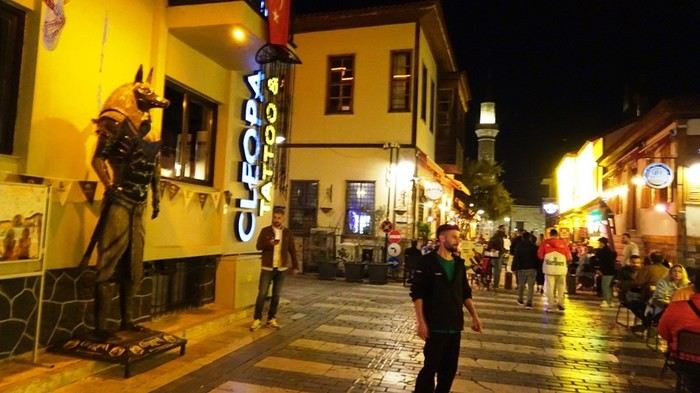
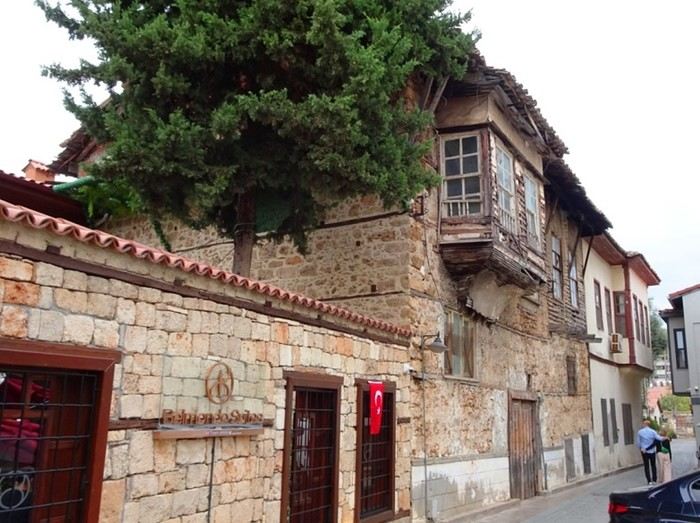
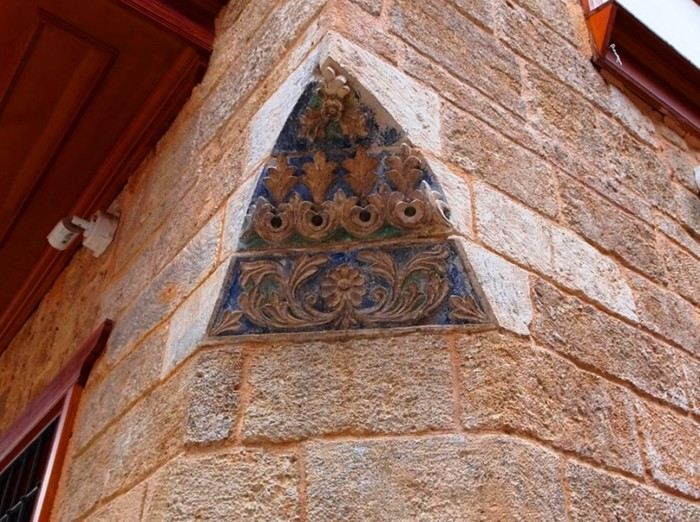
Right after breakfast, we set off like explorers through the old town. It’s incredible how many walls, monuments, and statues have survived from the glorious Greek and Roman eras. Back then, they built things to last!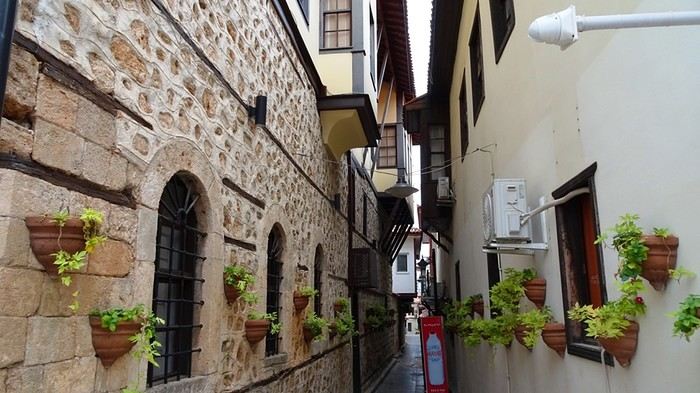


Sunday, November 10, 2024 Antalya In this part of the world, there are some quirks that don’t always suit us infidels! Here in Antalya, the religious influence is still pretty light. You can drink freely, girls can save a lot on fabric—it’s all good, no one’s gonna say anything. But there’s the muezzin. That lanky guy who belts out his tune five times a day from the top of his minaret didn’t spare us this morning. Just a heads-up, we’ve got a two-hour time difference, and this guy starts his serenade at 4 AM, right in the middle of the night. That’s early!
Anyway, we recover, have breakfast, and realize that in terms of revered figures, Atatürk doesn’t take a backseat to the prophet responsible for our nighttime disturbances. We’d already been surprised by how ubiquitous his portrait is, but on the restaurant terrace, we see it’s a full-blown cult. There’s a little altar with rose petals under his portrait. First thing in the morning, the staff lines up to pay their respects, then sings a stirring hymn while some customers stand, hand on heart.
Right after breakfast, we set off like explorers through the old town. It’s incredible how many walls, monuments, and statues have survived from the glorious Greek and Roman eras. Back then, they built things to last!
16 days in Peru in August 2023
Hi everyone,
The years go by and Machu Picchu has been on our "to-do list" for a few decades now...
But Peru is, fortunately, so much more than this legendary site...
We went as a couple for a 15-day trip. For the first time, we delegated the logistics to a local agency (Paprika in Arequipa). This agency offers "classic" small-group tours and the option to do it privately, which we chose.
No complaints—they were perfect for organizing transportation, hotels, and French-speaking guides.
The "classic" southern Peru loop is: Lima, Paracas, Nazca, Arequipa, Colca, Titicaca, Cusco, Sacred Valley, Cusco. Nothing very original... but why get creative when there’s already so much beauty to discover?
We opted for a shorter loop, skipping Paracas/Nazca because the small planes in Nazca weren’t a unanimous hit, and it saved us dozens of hours on the bus. But we added a stop at Palccoyo (the rainbow mountains) between Titicaca and Cusco.
It might seem like a shame, but we don’t regret it at all.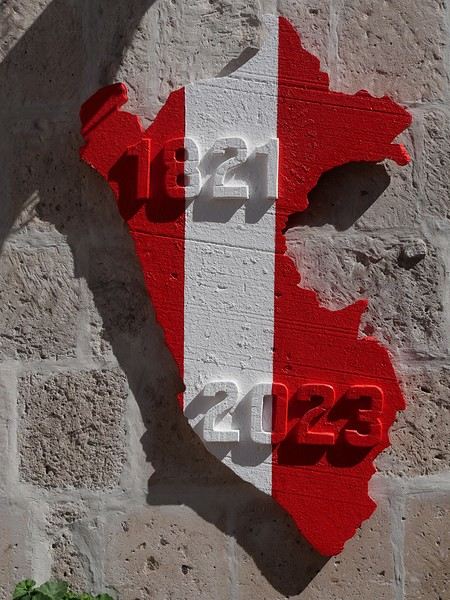
We went as a couple for a 15-day trip. For the first time, we delegated the logistics to a local agency (Paprika in Arequipa). This agency offers "classic" small-group tours and the option to do it privately, which we chose.
No complaints—they were perfect for organizing transportation, hotels, and French-speaking guides.
The "classic" southern Peru loop is: Lima, Paracas, Nazca, Arequipa, Colca, Titicaca, Cusco, Sacred Valley, Cusco. Nothing very original... but why get creative when there’s already so much beauty to discover?
We opted for a shorter loop, skipping Paracas/Nazca because the small planes in Nazca weren’t a unanimous hit, and it saved us dozens of hours on the bus. But we added a stop at Palccoyo (the rainbow mountains) between Titicaca and Cusco.
It might seem like a shame, but we don’t regret it at all.
Florida Itinerary with 2 Kids
Hi everyone,
We’re heading to Florida as a family from April 6 to 19, 2025, with our two daughters, aged 5 and almost 8. I’ve been working on our itinerary for a while now and would love to get your thoughts and/or recommendations on this road trip. Just to let you know, we’re traveling with our kids and have tried to adapt the activities so everyone can enjoy themselves. Thanks so much for your help!
Day 1 - Sunday, April 6: Miami - Arrival in Miami at 8:55 PM local time - Pick up the rental car and night in Miami Beach
Day 2 - Monday, April 7: Miami Beach - Rent bikes and ride around Miami Beach in the morning - Beach at South Beach in the afternoon - Night in Miami Beach
Day 3 - Tuesday, April 8: Miami - Marathon (2.5-hour drive) - Stroll through the Wynwood neighborhood in the morning - Walk around Little Havana or downtown, or hit the beach in the afternoon, depending on the kids - Drive to Marathon for the night
Day 4 - Wednesday, April 9: Day trip to Key West (2-hour round trip from Marathon) - Fort Zachary Taylor State Park - Stroll through Old Town in the late afternoon and sunset at Mallory Square - Night in Marathon
Day 5 - Thursday, April 10: Marathon - Florida City (1.75-hour drive) - Bahia Honda State Park - If we’re up for it: Turtle Hospital or kayaking - Night in Florida City
Day 6 - Friday, April 11: Everglades - Fort Myers Beach - Start with the Anhinga Trail, then an airboat tour in the area—but where? Any recommendations? - Morning: Shark Valley? Loop Road in Big Cypress National Preserve? I’d love your input here. My youngest is too small to handle biking in Shark Valley on her own (unless there are cargo bikes available?). On foot, it seems tricky, and the shuttles don’t really appeal to us. Is it better to skip Shark Valley and focus on Loop Road? Is the day too ambitious with the drive back to Fort Myers Beach? I wanted to avoid Naples because I’d prefer to stay two nights in each place to avoid changing hotels every day. But if it’s too tight, we’ll do one night in Naples and one in Fort Myers Beach. - Night in Fort Myers Beach
Day 7 - Saturday, April 12: Sanibel Island - Day on the island with bike rentals to reach J.N. "Ding" Darling National Wildlife Refuge, then beach time (Bowman’s Beach?) - Night in Fort Myers Beach
Day 8 - Sunday, April 13: Fort Myers Beach - Crystal River (3.5-hour drive) - Beach at Siesta Key, then drive to Crystal River - If time and energy allow, Ellie Schiller Homosassa Springs Wildlife State Park upon arrival - Night in Crystal River
Day 9 - Monday, April 14: Crystal River - Weeki Wachee Springs for kayaking to see manatees if we’re lucky, plus the mermaid show (mostly for the kids ) Any other spots for manatees or kayaking? I know it’s not the best month to see them, but you never know! Anything else to do or see in this area? - Night in Crystal River
Day 10 - Tuesday, April 15: Crystal River - Orlando (1.75-hour drive) - A bit of a transition day—maybe Disney Springs and/or an outlet mall - Night in Orlando
Day 11 - Wednesday, April 16: Disney World - Day at Animal Kingdom - Night in Orlando
Day 12 - Thursday, April 17: Disney World - Day at Magic Kingdom - Night in Orlando
Day 13 - Friday, April 18: Cape Canaveral - Visit to the Kennedy Space Center - Night in Orlando
Day 14 - Saturday, April 19: Return - Flight departs Orlando at 1:05 PM
It was tough making choices for the Orlando parks. As a huge Harry Potter fan, I was leaning toward Universal, but the girls have never been to Disney in Paris and are huge Disney fans, so skipping Magic Kingdom seemed tricky.
And that’s my long post! Thanks so much for reading and for your invaluable help.
Carole
3 weeks in Colombia in August 2024
Hi there,
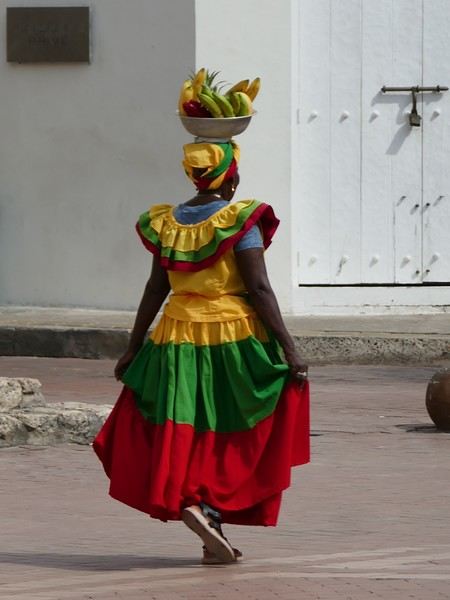
This summer, we spent 3 weeks in northern Colombia. A vibrant trip that complemented our southern Peru adventure from the previous year perfectly. Two neighboring countries, but completely different.
To start, we had to make a choice because the country is vast.
So we focused on 3 different regions for our 3 weeks: - Week 1: Bogotá and the colonial villages (Villa de Leyva, Barichara) - Week 2: Medellín and the Coffee Region - Week 3: the Caribbean coast
We entrusted the organization to a small local agency that handled accommodations, guides, and transportation. Transportation is key. The country is large, the road network isn’t very efficient, and we spent a lot of time traveling (cars, planes, and boats...), but it was the price to pay to explore it.
The overall budget isn’t exactly "backpacker" level. We spent 7,500 € (excluding Air France) for our 3-week stay (hotels, drivers, guides, flights, visits, meals). But we treated ourselves to nice accommodations—you’ll see as we share more posts.
For vacations, I try to follow Philippe Noiret’s motto: "Travel is short. Let’s try to do it first class."
This summer, we spent 3 weeks in northern Colombia. A vibrant trip that complemented our southern Peru adventure from the previous year perfectly. Two neighboring countries, but completely different.
To start, we had to make a choice because the country is vast.
So we focused on 3 different regions for our 3 weeks: - Week 1: Bogotá and the colonial villages (Villa de Leyva, Barichara) - Week 2: Medellín and the Coffee Region - Week 3: the Caribbean coast
We entrusted the organization to a small local agency that handled accommodations, guides, and transportation. Transportation is key. The country is large, the road network isn’t very efficient, and we spent a lot of time traveling (cars, planes, and boats...), but it was the price to pay to explore it.
The overall budget isn’t exactly "backpacker" level. We spent 7,500 € (excluding Air France) for our 3-week stay (hotels, drivers, guides, flights, visits, meals). But we treated ourselves to nice accommodations—you’ll see as we share more posts.
For vacations, I try to follow Philippe Noiret’s motto: "Travel is short. Let’s try to do it first class."
21-Day Trip to La Gomera and La Palma
Travel Journal: 21 Days in La Gomera and La Palma
From February 6 to February 26, 2024
Tuesday, February 6 We left around 9 AM with our car, along with Pierre-Paul and Patricia, heading to the Bluepark parking lot in Bartenheim. As expected, we were awaited and left promptly for EuroAirport Basel. Took off at 12:25 PM for a 4-hour-15-minute flight under excellent conditions. Beautiful arrival in Tenerife with Teide in sight under a clear blue sky. Fifteen minutes later, we waited for bus No. 40 to Los Cristianos with quite a few other tourists, but we managed to find four seats. From the bus station, it was a 20-minute walk to our hotel. We checked into a lovely apartment for the four of us, complete with all the comforts. Outside, it was quite warm—at least 25°C! After dropping off our luggage, we went for a stroll. The immediate surroundings of the hotel held no interest for us: a modern, concrete area filled with hotels, bars, tourist agencies, and unappealing restaurants all offering the same bland international cuisine. Pat went to cool off at the pool, unfortunately overrun by loud, drunk English tourists. I took a walk to the paseo maritimo that leads to the port, skirting the seafront. The promenade was pleasant, but it could have been any seaside resort in the world—same old scene: a succession of bars with blaring music where many elderly people sipped cold beers waiting for the sunset, the backdrop a wall of resort-style hotels resembling rabbit hutches! Upon reaching the port, I scouted the route we’d take the next day to the Fred Olsen ferry. Back at the apartment, in the early evening, we looked for a non-touristy restaurant for dinner. Monique stopped a woman to ask her opinion! In this area, she told us, there’s no restaurant that serves Canarian or Spanish cuisine! The only place with decent restaurants is at the port. Off we went to the port, where we sat down at Al Bordo restaurant and ordered a seafood paella for four. Excellent, and at a very reasonable price (36 € for two). We returned to the hotel along the seafront.
Wednesday, February 7
Woke up at 6 AM. Had breakfast in the apartment with what we’d bought the day before at a supermarket. It was still dark when we left on foot toward the port, walking along the calm seafront at this early hour. Forty minutes later, we arrived and waited 10 minutes before the ferry docked. At 9:30 AM, we left the port of Los Cristianos for a 50-minute crossing on a calm sea under a beautiful blue sky. There were quite a few people on this large ferry, but many had no luggage, meaning they were visiting La Gomera for the day and would take the ferry back in the evening. Upon disembarking, we went straight to our rental car agency to pick up the car we’d booked online a few months earlier. It was a nice Peugeot 2008, spacious enough for the four of us and our luggage. We immediately took the beautiful road from San Sebastián that climbs directly into the mountains toward our rental in Vallehermoso. The road was in perfect condition—it seemed brand new, like all the others we’d take on this island later. This side of the island is very arid with little vegetation, and the terrain is particularly rugged, as it is throughout the island. We stopped at our first miradors, which would be followed by many more throughout our Canarian trip. Our first visit was to the small village of Agulo, perched on a promontory above the sea and at the foot of a high cliff. The village features typical Canarian houses with windows flush with the façade and black volcanic stone masonry on white or reddish-brown walls. The first recommended restaurant was already booked for a group, so we settled for the shaded terrace of the excellent El Alameda bar-restaurant. From Agulo, you can access the Abrante viewpoint via a winding road, where the view of Agulo, 600 meters below, is exceptional. A glass ledge over the void lets you test your fear of heights!
We drove to Vallehermoso to do our grocery shopping at the supermarket—a habit that would continue until the end of the trip. Our little house, "Casa rural El Encatadora," is located in a beautiful flower-filled valley a few kilometers west of Vallehermoso. Each of us had a bedroom with an en-suite bathroom, plus a living room, kitchen, and a small terrace overlooking the quiet street at the valley’s end, which didn’t bother us at all.
Thursday, February 8 The good weather seemed to follow us since our arrival in the Canary Islands. This morning, we took the road—still as beautiful and new—toward Arure, high up to the west. The landscape was magnificent, with breathtaking glimpses of the sea far below. In Arure, we parked in front of Conchita’s bar, where a hike (Rother No. 30) starts toward two viewpoints: Alojera, which we reached after 45 minutes on a lovely path. Monique, tired from the first steep climb, stopped at the first viewpoint and hitchhiked back to Arure. Meanwhile, we continued toward the second viewpoint, Los Barranquillos, where the view of the surroundings was partially hidden by misty clouds rising from the sea. The entire mountain is sculpted by ancient, endless terraces climbing until the slope becomes too steep for construction—visible traces of the hard work of past inhabitants trying to survive in a harsh environment. We had a decent lunch at La Conchita bar, then drove to the small seaside town of Puerto la Caleta, sheltered by an immense cliff plunging into the sea. Black sand beach, rough sea—despite our encouragement, Pat didn’t dare to swim! As for the old village of Caleta, it’s perched on the mountainside, and visiting it requires climbing steep, stair-filled alleys to discover a few traditional houses. Back at the casa, dinner in, and card games...
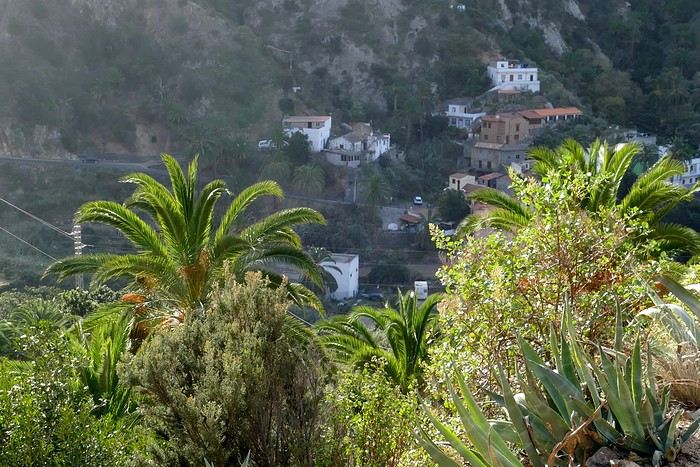 Vallehermoso
Friday, February 9 This morning, the sky was overcast, and the peaks around us were shrouded in clouds. We took the same road as yesterday to hike Las Creces. Quickly gaining altitude, we entered a thick fog—visibility was very limited. We stopped at the Las Creces parking lot; visibility improved, and the sun wasn’t far off. The hike is entirely within a beautiful laurel forest, with the sun playing hide-and-seek, but it wasn’t cold despite the altitude. After finishing the loop trail, we decided to picnic—not there, as it was too chilly—but on Vallehermoso’s beach, where we found a nice picnic area sheltered by large black rocks. A short digestive walk on the surrounding hill to admire the little beach from above. Back in Vallehermoso, we did some grocery shopping, then tried to return to the casa—only to find ourselves locked out because we’d left the key in the lock inside! After several attempts and with the help of Yéli, a relative of the owner we called for help, we were finally able to get back in!
Saturday, February 10
It rained last night, and the sky remained overcast. Monique decided to rest this morning. PP, Pat, and I set off on the hike that starts from the house toward the Marichal reservoir. The sun wasn’t far off, and by 11 AM, it was fully out. The pleasant hike passed by many flower-filled gardens and orchards—orange, lemon, and mandarin trees in fruit. The path climbed gently toward the reservoir, where the view of the Cano rock dominating the landscape was magnificent. The last part of the climb was a bit tough, overgrown with lush vegetation, and the trail was slippery from last night’s rain. We descended via a different, much more pleasant path and returned to the casa just in time for lunch, prepared by Monique. This valley is rich with its many farmers and market gardeners who’ve cultivated the entire valley, taking advantage of the water flowing down from the mountain, captured upstream and redistributed through countless pipes snaking along the paths. Numerous tanks also store water during dry periods. The houses are scattered across both sides of the valley, and these colorful little homes add a beautiful touch to the landscape. The many palm trees give this valley a distinctly tropical feel—you could almost imagine yourself in the Caribbean. Add to that some salsa music drifting from a hut where farmers were working, and the picture is complete. A well-chilled beer apéro capped off a lovely morning. The afternoon was dedicated to rest, relaxation, reading, and games.
Sunday, February 11 The blue sky returned, though a few clouds still capped the highest peaks. Today, we visited Garajonay National Park, which covers the highest central mountains. Up there, we were above the clouds, and the panoramas from the various viewpoints were stunning: first, Cherelepin, accessible from the Laguna Grande parking lot, then Alto de Garajonay, offering an exceptional view of Teide—over 3,000 meters high—emerging from the clouds on Tenerife, far in the distance. We continued to the Los Roques viewpoints, then stopped for lunch at the Degollada de Peraza restaurant, where the view of the barranco was impressive. We descended toward San Sebastián and checked into our new lodging, La Cabezada, located in the countryside about 3 km above San Sebastián. It’s a small apartment adjacent to the owner’s, with a lovely terrace overlooking the surrounding mountains and surrounded by a beautiful garden. Apéro, then dinner on our beautiful terrace.
Monday, February 12 This morning, we went down to visit San Sebastián de La Gomera: its old tower, main street with some beautiful traditional houses, and the Church of the Assumption. Back at the casa for lunch. In the afternoon, Pat, PP, and I set off on the short hike from San Sebastián beach to La Guancha beach. We drove down and parked on the beach. The path climbs along the hill overlooking San Sebastián, passes by the tall Christ statue dominating the landscape, and roughly follows the coast down to the isolated Guancha beach. A beautiful hike under a hot sun, and a swim was welcome, even if the beach and sea access weren’t very comfortable due to large pebbles and quickly deepening water. Apart from two nudist bathers, there was no one on this beach. We returned the same way.
Tuesday, February 13 Rest day. We went down to town to stroll and do some shopping. I took the opportunity to visit the parador, beautifully situated above the city in a lovely garden overlooking the port and town. Together, we went for a cuba libre at the "Cuba Libre" bar, then had lunch at Breñusca (mediocre paella!). Back at the casa, then we went back down to town to see a carnival parade, a "passacalles," which actually passed an hour earlier than scheduled. Oh well.
Wednesday, February 14 Each to their own program this morning. Pat went swimming at San Sebastián beach, Monique rested at the casa, and PP and I set off on the hike from Playa de Avalos to the Ermita de Guadalupe on Playa del Cangrejo. It wasn’t easy to find the right road or the parking spot, but we managed. The path seemed to have suffered landslides, according to a sign at the trailhead! We decided to check it out, ready to turn back if it seemed too dangerous. In the end, apart from one or two slightly tricky spots where we had to climb a pile of rocks, the trail remained passable, though a bit vertigo-inducing in places. The narrow path clings to very vertical cliffs nearly 300 meters above sea level! But what a magnificent view. At one point, the trail runs alongside a wall of basaltic pipes. We returned via the drivable track that parallels the trail a bit lower. Back at the house for lunch. In the late afternoon, we returned to town to attend the "Entierro de las Sardinas" (Burial of the Sardine), which closes the Canarian carnival festivities. While waiting, we strolled through the parador’s gardens and had mojitos in town. Around 9 PM, we heard the noise and cries of the mourners. The procession advanced, led by a large papier-mâché sardine on a float, surrounded by wailing mourners. The procession headed toward the sea, where the sardine was burned, and a mini fireworks display ended the procession. It was all very good-natured, and everyone had fun. We ended the evening with dinner at a good fish restaurant, El Pajar.
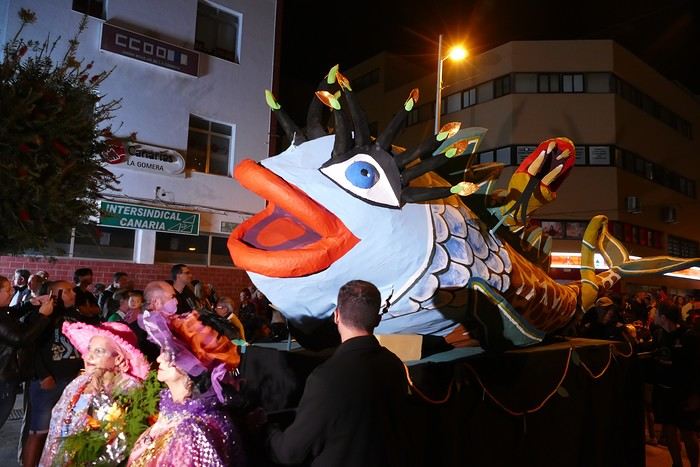 Entierro de la Sardina in San Sebastián de La Gomera
Thursday, February 15
Woke up at 5:15 AM. The only suitable ferry was at 7 AM, which would get us to La Palma by late morning rather than evening. We packed our bags, had breakfast, then headed to the port, left our rental car, and boarded the ferry to Tenerife, from where we’d continue to La Palma. Calm sea, beautiful sun—by 10:30 AM, we disembarked in La Palma. We picked up our car and immediately headed to our new apartment in Breña Alta. It’s a large apartment with a superb terrace facing the sea, fully equipped and very comfortable. The hosts recommended Casa Goyo restaurant, near the airport and close to us. It’s a restaurant with many small rooms, some of which can be reserved for families. The fish-based cuisine (chipirones, pulpo) was excellent, hearty, and reasonably priced. Since it’s in the airport’s flight path, we occasionally heard planes landing. Quick and efficient service. Afterward, we visited Santa Cruz de La Palma, which reminded us of the historic quarters of La Orotava in Tenerife or the capital of Gran Canaria.
Friday, February 16
Beautiful weather, blue sky. We headed to the San Bartolo viewpoint toward the northeast coast, then to the lovely village of San Andrés, which we explored. From there, we walked along the shore to the natural pools of Charco Azul, where we swam in the cool but "swimmable" sea. Back in San Andrés for lunch at the "San Andrés" restaurant on the beautiful church square. Very good fish-based meal. We got back in the car and continued along the north coast to the port of Espindola and the natural pools of Fajana near the Cumplida lighthouse. A fairly strong wind whipped up beautiful waves crashing onto the rocky coast in bursts of foam. Back in Santa Cruz, we stopped at the Mercadona supermarket to buy fresh shrimp for dinner.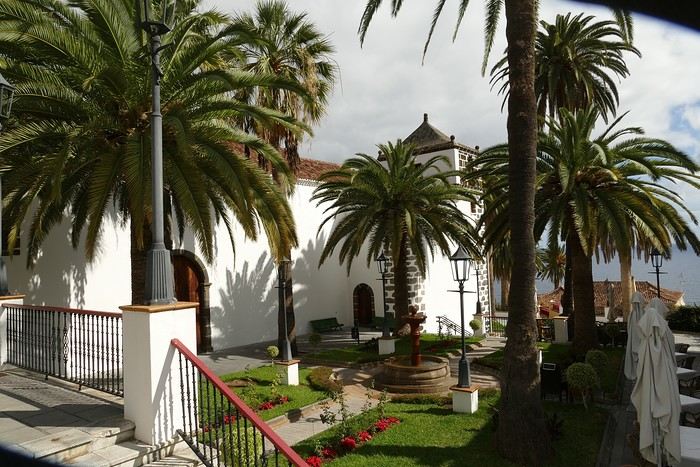 San Andrés
Saturday, February 17
Uniform blue sky, even on the heights. We took the beautiful road that winds up to the summit of the Caldera de Taburiente. Several viewpoints offer 360° views of the entire island and beyond: you can make out La Gomera, El Hierro, and, of course, Tenerife with the perfect triangle of Teide. We parked at the Los Andes viewpoint parking lot and started our hike to Pico de la Cruz along a trail following the ridge, offering superb views into the caldera. We got back in the car and passed by the Roque de los Muchachos astronomical complex, composed of numerous observatories, some with very aesthetic mirror telescopes. We hiked from the Roque de los Muchachos parking lot to the various viewpoints, always as impressive. Picnic on site, then back to Santa Cruz. We stopped by our car dealer because the oil warning light came on—better safe than sorry. The representative reassured us but preferred to give us a Fiat Cross SUV instead.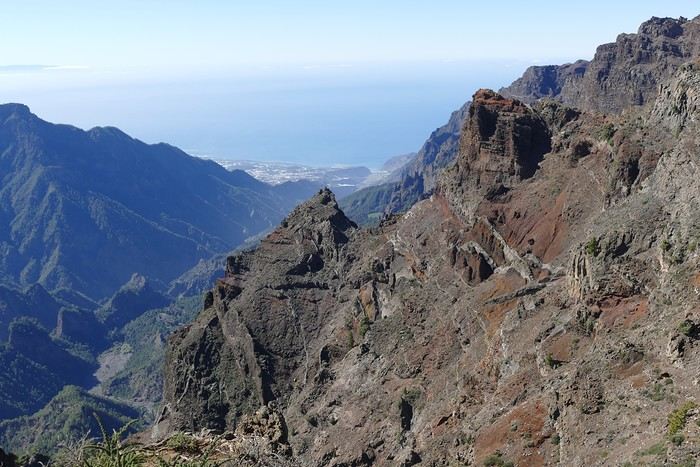 The Caldera de Taburiente
Sunday, February 18 The weather was a bit mixed, with cloudy patches. We set off to hike the Barranco de la Cuba de Galga. Unfortunately, the Los Tilos trail had been closed for several months due to a major landslide. The parking lot by the road was already quite full, and indeed, we crossed paths with many hikers along the way—it’s an easy hike with little elevation gain, which is rare here in La Palma! The beautiful path winds through a very narrow, deep gorge covered in lush tropical vegetation—you’d think you were in a Southeast Asian forest, especially with the humidity in the gorge bringing out earthy and floral scents. Halfway through, Monique turned back while the rest of us continued to the Cuba de Galga. A light drizzle accompanied us on the return. For lunch, we went to Chipi Chipi restaurant in the heights of Santa Cruz. The cool air forced us to leave the lovely terrace for the slightly noisy dining room. The meal was very good and hearty. Afternoon spent resting at our house.
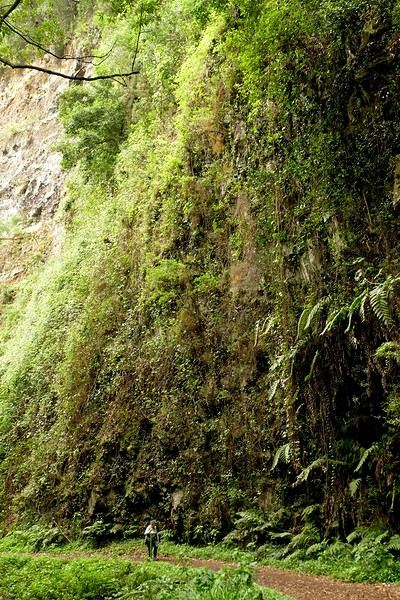 La Cuba de la Galga
Monday, February 19 A few clouds still clung to the nearby mountain peaks. We headed south to Los Canarios. We stopped in front of the small San Antonio Abad church, where a path leads to the viewpoint in 15 minutes. Then we visited the San Antonio Volcano Interpretation Center and climbed to the viewpoint via the trail along the crater’s edge, offering a plunging view into the crater. Then PP, Pat, and I headed toward the Teneguía volcano but turned back given the remaining distance and the intense heat bearing down on us! Plus, the landscape was rather arid and not very interesting. We got back in the car and drove down to the salt flats at the island’s southern tip. The ocean crashes here in large waves, exploding against the volcanic rocks and feeding a "blowhole" carved into the rock. We stopped for drinks at the salt flats restaurant, then headed home.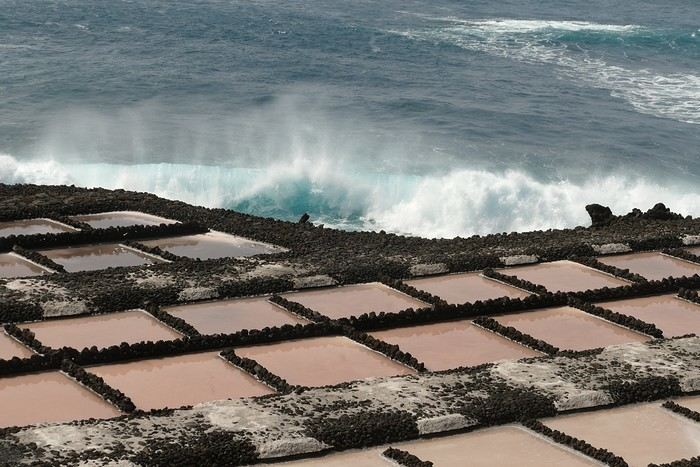 The salt flats in Fuencaliente
Tuesday, February 20 Beautiful weather with a few clouds clinging to the mountains, as usual. A relaxed morning since my parking reservation at La Cumbrecita didn’t start until 1 PM. It takes about 30 minutes from Santa Cruz to reach the valley floor via a beautiful but narrow road toward the end, though there’s very little traffic. Meanwhile, the clouds had disappeared, and the view from the La Cumbrecita viewpoint was superb. We recognized Pico de la Cruz in the distance, where we’d been a few days earlier. We then took the path leading to the Las Chozas viewpoint through a magnificent Canarian pine forest. We picnicked on site, then took the path to the Los Roques viewpoint. We returned the same way since the direct route was closed for construction. Back in Santa Cruz, we visited the Sanctuary of Las Nieves, with its beautiful golden Baroque altar.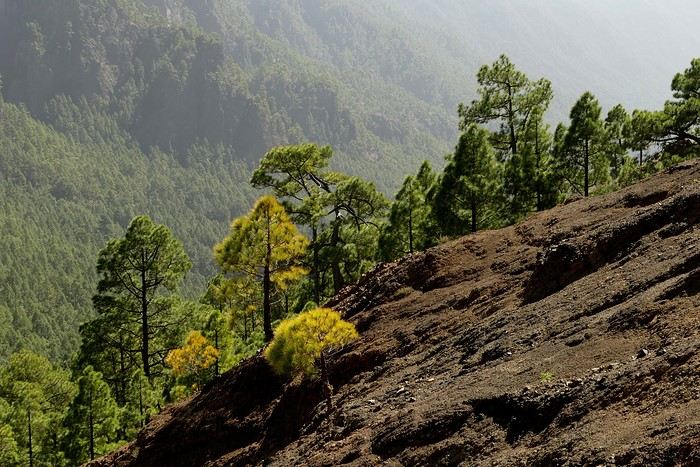 Hike from La Cumbrecita
Wednesday, February 21 After packing our things and loading the car, we left Santa Cruz under a very blue sky for Los Llanos de Aridane, where we stopped to visit this lovely town. The Church of Nuestra Señora de los Remedios has a beautiful coffered ceiling and an original papier-mâché Christ statue from the 16th century. Around it, colorful old Canarian houses brighten the streets of the town center. We took the opportunity to stroll, do some shopping, and finally sat down at La Pergola restaurant for a mediocre lunch. We got back in the car to check into our new house in Arecida. On the way, we stopped at the Mirador del Time, which once again offered an impressive panorama, allowing us—for the first time—to see the damage caused by the Tajogaite volcano eruption in 2021. You can clearly see the still-smoking crater and the large black lava flow covering the landscape down to the sea. We really liked our new accommodation: a local house that’s been renovated on the heights of Arecida, not far from the Canarian pine forest. From several terraces, we have a 360° view of the sea and mountains. We even have a private pool! There are two beautiful, brand-new bedrooms, each with its own bathroom—the best. Plus, we’re on the GR 131 trail that runs along the Barranco de las Angustias toward the northeast.
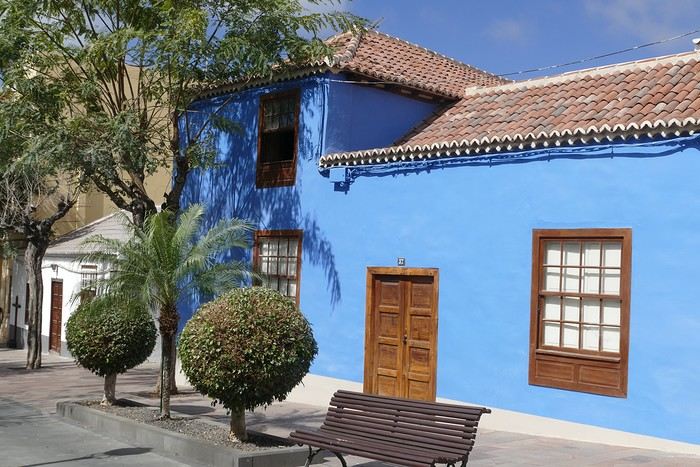 Los Llanos de Aridane
Thursday, February 22 Once again, beautiful weather greeted us when we woke up. We started the GR 131 with the goal of reaching the Torre del Time viewpoint—about 400 meters of elevation gain. The path, quite steep at first, winds through a superb Canarian pine forest. A few viewpoints let you appreciate the sheer drop of the Barranco de las Angustias—watch out for vertigo! At the Torre del Time viewpoint, there’s a nearly 1,000-meter vertical drop. We returned via another path, the PLP1, which meanders first through this beautiful forest, then along lovely flower-filled gardens adjacent to beautiful properties that cascade from the forest down to the road serving these neighborhoods. This afternoon, we tried to get closer to the area devastated by the 2021 lava flows. Several roads are still closed or reserved for residents, while others—brand new—have been rebuilt to open up this densely populated and cultivated region. In some places, the lava flow slightly diverted, sparing some properties that logically should have disappeared. Now, they’re encircled by a massive cooled lava field. In other spots, twisted and charred metal scraps or greenhouse remains protrude from the lava—all that’s left of the former banana plantations. A little higher up, you can see the slightly smoking crater of Tajogaite, responsible for this disaster. Back to Casa Barreros.
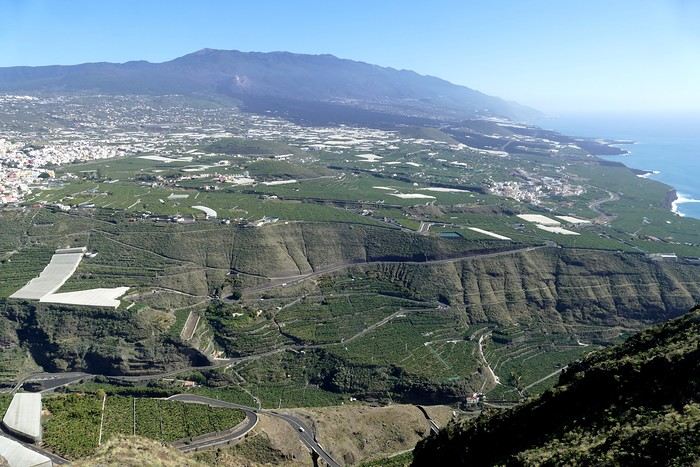 View of Los Llanos and, in the background, the 2021 lava flow
Friday, February 23
Though the sky was still blue, the temperature had dropped due to a chilly wind. By midday, it still rose to 22°C. Today, we headed north, specifically to the town of Tijarafe, where a very narrow road descends to the small port, Porís de Candelaria. The 3.7-kilometer road drops 700 meters in elevation, with gradients up to 30%—it was going to be intense! Indeed, the descent was scary, with the void right next to the very narrow road where passing was impossible except at a few rare spots. Everything went well—there was little traffic at this early hour. From the parking lot at the bottom, a path leads to Porís de Candelaria. It’s surprising to see this small fishing hamlet nestled in the shelter of an immense cave opening onto the sea, which was quite rough today. The sun, at this time of year, would appear late in the cave, which remained in shadow for much of the day. We returned via the same road, strolled through the small town of Puntagorda, and had lunch at El Jardín de los Naranjos restaurant—excellent meal.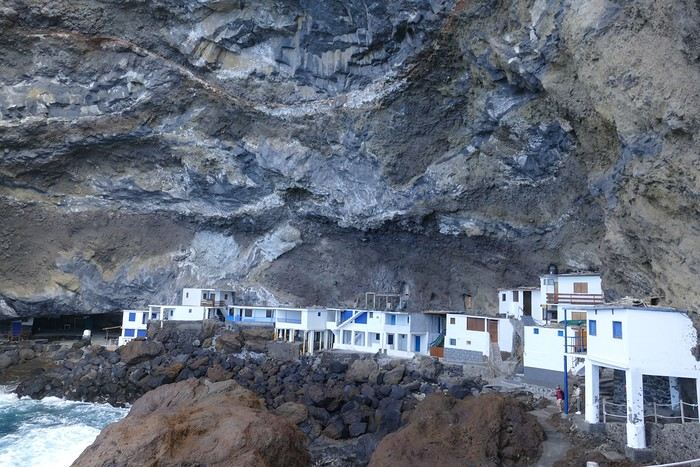 Fishing hamlet of Candelaria
Saturday, February 24 The air was still cool, but the sun was beautiful. While Monique stayed home to rest, the three of us headed to the village of Las Tricias to hike the Buracas Caves trail. We left the car parked on the LP1 road and took the small paved road down to the sign marking the trail’s start. The signage for all the trails we took here, as in La Gomera, was very well done. The path descended steadily, then more steeply toward the caves where the island’s first inhabitants lived—some petroglyphs are still visible in certain caves. The path then climbed back up, passing magnificent dragon trees and more or less elaborate huts occupied by Germans who’ve lived here for many years. Back at Casa Barreros for some rest.
Sunday, February 25 The weather once again blessed us with a beautiful day. This morning, we visited the local produce market held on weekends in Puntagorda. You’ll find agricultural products, crafts, and food to keep you going. A little further on, there’s a glass viewpoint overlooking the barranco plunging toward the sea, with a view of the thrill-seekers trying the zip line right next to it. Lunch at Naranjos—definitely a good spot—with their shrimp and spice tagliatelle. Back home for an afternoon of relaxation.
Monday, February 26 We left Arecida under a cloudy sky. Driving up from Los Llanos de Aridane toward the east, an enormous cascade of clouds poured from the mountain peaks into the Los Llanos plain—very impressive. Arriving in Santa Cruz, we went for a stroll, did some last-minute shopping, then had a final good-quality paella at La Chalana on the paseo maritimo. We left the car in the parking lot and took the 5 PM Olsen ferry to Tenerife on a slightly choppy sea, but the ferry didn’t rock too much. Arriving at 7:15 PM, we dropped off our things near the port in our reserved apartment and went for dinner at Abordo—rubbery chipirones. A digestive stroll among the ever-increasing number of tourists in Los Cristianos—restaurants were packed to the brim, the season is in full swing here. Gone is the calm of La Gomera and La Palma, and the laid-back tourism of German hikers among whom a few French were hiding!
Tuesday, February 27 To make our homemade breakfast more enjoyable, we went to buy pastries at the local bakery, then took one last walk on the paseo along the beaches, mingling with the many mobility scooters driven by elderly or disabled people, joggers, and tourists. Last apéro near the bus station, then off to the airport. After a smooth 4-hour-30-minute flight, we arrived in Basel-Mulhouse at 10:20 PM.
THE END
Conclusion A fantastic trip to two islands with magnificent and diverse nature, where landscapes range from desert-like to tropical depending on exposure to winds and clouds. Thanks to the many beautiful viewpoints, you can truly appreciate these exceptionally dynamic reliefs. A hiker’s paradise, the trails are all very well marked, though the choice of easy or moderate paths for "casual walkers" is quite limited. Another notable advantage, in our opinion, is that these islands are very lightly developed—you’ll hardly see any of those ugly hotel blocks that spoil the landscapes of some other Canary Islands. It’s true that the beaches on these two islands don’t meet traditional international tourism criteria: they’re small, with black sand, and often difficult to access. Special mention for the quality of the road network (except for a few small local roads), which seems brand new, well-paved, and well-signposted. We also enjoyed exceptional weather for February, with fewer than three days of gray or rainy weather out of 21.
Almost all the accommodations we chose met or exceeded our expectations, often at reasonable prices: an average of 98 € per night for an apartment or house with two bedrooms for four people.
All photos can be viewed by clicking this link: https://photos.app.goo.gl/G44pPk4g9PW1rNzg8
Tuesday, February 6 We left around 9 AM with our car, along with Pierre-Paul and Patricia, heading to the Bluepark parking lot in Bartenheim. As expected, we were awaited and left promptly for EuroAirport Basel. Took off at 12:25 PM for a 4-hour-15-minute flight under excellent conditions. Beautiful arrival in Tenerife with Teide in sight under a clear blue sky. Fifteen minutes later, we waited for bus No. 40 to Los Cristianos with quite a few other tourists, but we managed to find four seats. From the bus station, it was a 20-minute walk to our hotel. We checked into a lovely apartment for the four of us, complete with all the comforts. Outside, it was quite warm—at least 25°C! After dropping off our luggage, we went for a stroll. The immediate surroundings of the hotel held no interest for us: a modern, concrete area filled with hotels, bars, tourist agencies, and unappealing restaurants all offering the same bland international cuisine. Pat went to cool off at the pool, unfortunately overrun by loud, drunk English tourists. I took a walk to the paseo maritimo that leads to the port, skirting the seafront. The promenade was pleasant, but it could have been any seaside resort in the world—same old scene: a succession of bars with blaring music where many elderly people sipped cold beers waiting for the sunset, the backdrop a wall of resort-style hotels resembling rabbit hutches! Upon reaching the port, I scouted the route we’d take the next day to the Fred Olsen ferry. Back at the apartment, in the early evening, we looked for a non-touristy restaurant for dinner. Monique stopped a woman to ask her opinion! In this area, she told us, there’s no restaurant that serves Canarian or Spanish cuisine! The only place with decent restaurants is at the port. Off we went to the port, where we sat down at Al Bordo restaurant and ordered a seafood paella for four. Excellent, and at a very reasonable price (36 € for two). We returned to the hotel along the seafront.
Wednesday, February 7
Woke up at 6 AM. Had breakfast in the apartment with what we’d bought the day before at a supermarket. It was still dark when we left on foot toward the port, walking along the calm seafront at this early hour. Forty minutes later, we arrived and waited 10 minutes before the ferry docked. At 9:30 AM, we left the port of Los Cristianos for a 50-minute crossing on a calm sea under a beautiful blue sky. There were quite a few people on this large ferry, but many had no luggage, meaning they were visiting La Gomera for the day and would take the ferry back in the evening. Upon disembarking, we went straight to our rental car agency to pick up the car we’d booked online a few months earlier. It was a nice Peugeot 2008, spacious enough for the four of us and our luggage. We immediately took the beautiful road from San Sebastián that climbs directly into the mountains toward our rental in Vallehermoso. The road was in perfect condition—it seemed brand new, like all the others we’d take on this island later. This side of the island is very arid with little vegetation, and the terrain is particularly rugged, as it is throughout the island. We stopped at our first miradors, which would be followed by many more throughout our Canarian trip. Our first visit was to the small village of Agulo, perched on a promontory above the sea and at the foot of a high cliff. The village features typical Canarian houses with windows flush with the façade and black volcanic stone masonry on white or reddish-brown walls. The first recommended restaurant was already booked for a group, so we settled for the shaded terrace of the excellent El Alameda bar-restaurant. From Agulo, you can access the Abrante viewpoint via a winding road, where the view of Agulo, 600 meters below, is exceptional. A glass ledge over the void lets you test your fear of heights!
We drove to Vallehermoso to do our grocery shopping at the supermarket—a habit that would continue until the end of the trip. Our little house, "Casa rural El Encatadora," is located in a beautiful flower-filled valley a few kilometers west of Vallehermoso. Each of us had a bedroom with an en-suite bathroom, plus a living room, kitchen, and a small terrace overlooking the quiet street at the valley’s end, which didn’t bother us at all.
Thursday, February 8 The good weather seemed to follow us since our arrival in the Canary Islands. This morning, we took the road—still as beautiful and new—toward Arure, high up to the west. The landscape was magnificent, with breathtaking glimpses of the sea far below. In Arure, we parked in front of Conchita’s bar, where a hike (Rother No. 30) starts toward two viewpoints: Alojera, which we reached after 45 minutes on a lovely path. Monique, tired from the first steep climb, stopped at the first viewpoint and hitchhiked back to Arure. Meanwhile, we continued toward the second viewpoint, Los Barranquillos, where the view of the surroundings was partially hidden by misty clouds rising from the sea. The entire mountain is sculpted by ancient, endless terraces climbing until the slope becomes too steep for construction—visible traces of the hard work of past inhabitants trying to survive in a harsh environment. We had a decent lunch at La Conchita bar, then drove to the small seaside town of Puerto la Caleta, sheltered by an immense cliff plunging into the sea. Black sand beach, rough sea—despite our encouragement, Pat didn’t dare to swim! As for the old village of Caleta, it’s perched on the mountainside, and visiting it requires climbing steep, stair-filled alleys to discover a few traditional houses. Back at the casa, dinner in, and card games...
VallehermosoFriday, February 9 This morning, the sky was overcast, and the peaks around us were shrouded in clouds. We took the same road as yesterday to hike Las Creces. Quickly gaining altitude, we entered a thick fog—visibility was very limited. We stopped at the Las Creces parking lot; visibility improved, and the sun wasn’t far off. The hike is entirely within a beautiful laurel forest, with the sun playing hide-and-seek, but it wasn’t cold despite the altitude. After finishing the loop trail, we decided to picnic—not there, as it was too chilly—but on Vallehermoso’s beach, where we found a nice picnic area sheltered by large black rocks. A short digestive walk on the surrounding hill to admire the little beach from above. Back in Vallehermoso, we did some grocery shopping, then tried to return to the casa—only to find ourselves locked out because we’d left the key in the lock inside! After several attempts and with the help of Yéli, a relative of the owner we called for help, we were finally able to get back in!
Saturday, February 10
It rained last night, and the sky remained overcast. Monique decided to rest this morning. PP, Pat, and I set off on the hike that starts from the house toward the Marichal reservoir. The sun wasn’t far off, and by 11 AM, it was fully out. The pleasant hike passed by many flower-filled gardens and orchards—orange, lemon, and mandarin trees in fruit. The path climbed gently toward the reservoir, where the view of the Cano rock dominating the landscape was magnificent. The last part of the climb was a bit tough, overgrown with lush vegetation, and the trail was slippery from last night’s rain. We descended via a different, much more pleasant path and returned to the casa just in time for lunch, prepared by Monique. This valley is rich with its many farmers and market gardeners who’ve cultivated the entire valley, taking advantage of the water flowing down from the mountain, captured upstream and redistributed through countless pipes snaking along the paths. Numerous tanks also store water during dry periods. The houses are scattered across both sides of the valley, and these colorful little homes add a beautiful touch to the landscape. The many palm trees give this valley a distinctly tropical feel—you could almost imagine yourself in the Caribbean. Add to that some salsa music drifting from a hut where farmers were working, and the picture is complete. A well-chilled beer apéro capped off a lovely morning. The afternoon was dedicated to rest, relaxation, reading, and games.
Sunday, February 11 The blue sky returned, though a few clouds still capped the highest peaks. Today, we visited Garajonay National Park, which covers the highest central mountains. Up there, we were above the clouds, and the panoramas from the various viewpoints were stunning: first, Cherelepin, accessible from the Laguna Grande parking lot, then Alto de Garajonay, offering an exceptional view of Teide—over 3,000 meters high—emerging from the clouds on Tenerife, far in the distance. We continued to the Los Roques viewpoints, then stopped for lunch at the Degollada de Peraza restaurant, where the view of the barranco was impressive. We descended toward San Sebastián and checked into our new lodging, La Cabezada, located in the countryside about 3 km above San Sebastián. It’s a small apartment adjacent to the owner’s, with a lovely terrace overlooking the surrounding mountains and surrounded by a beautiful garden. Apéro, then dinner on our beautiful terrace.
Monday, February 12 This morning, we went down to visit San Sebastián de La Gomera: its old tower, main street with some beautiful traditional houses, and the Church of the Assumption. Back at the casa for lunch. In the afternoon, Pat, PP, and I set off on the short hike from San Sebastián beach to La Guancha beach. We drove down and parked on the beach. The path climbs along the hill overlooking San Sebastián, passes by the tall Christ statue dominating the landscape, and roughly follows the coast down to the isolated Guancha beach. A beautiful hike under a hot sun, and a swim was welcome, even if the beach and sea access weren’t very comfortable due to large pebbles and quickly deepening water. Apart from two nudist bathers, there was no one on this beach. We returned the same way.
Tuesday, February 13 Rest day. We went down to town to stroll and do some shopping. I took the opportunity to visit the parador, beautifully situated above the city in a lovely garden overlooking the port and town. Together, we went for a cuba libre at the "Cuba Libre" bar, then had lunch at Breñusca (mediocre paella!). Back at the casa, then we went back down to town to see a carnival parade, a "passacalles," which actually passed an hour earlier than scheduled. Oh well.
Wednesday, February 14 Each to their own program this morning. Pat went swimming at San Sebastián beach, Monique rested at the casa, and PP and I set off on the hike from Playa de Avalos to the Ermita de Guadalupe on Playa del Cangrejo. It wasn’t easy to find the right road or the parking spot, but we managed. The path seemed to have suffered landslides, according to a sign at the trailhead! We decided to check it out, ready to turn back if it seemed too dangerous. In the end, apart from one or two slightly tricky spots where we had to climb a pile of rocks, the trail remained passable, though a bit vertigo-inducing in places. The narrow path clings to very vertical cliffs nearly 300 meters above sea level! But what a magnificent view. At one point, the trail runs alongside a wall of basaltic pipes. We returned via the drivable track that parallels the trail a bit lower. Back at the house for lunch. In the late afternoon, we returned to town to attend the "Entierro de las Sardinas" (Burial of the Sardine), which closes the Canarian carnival festivities. While waiting, we strolled through the parador’s gardens and had mojitos in town. Around 9 PM, we heard the noise and cries of the mourners. The procession advanced, led by a large papier-mâché sardine on a float, surrounded by wailing mourners. The procession headed toward the sea, where the sardine was burned, and a mini fireworks display ended the procession. It was all very good-natured, and everyone had fun. We ended the evening with dinner at a good fish restaurant, El Pajar.
Entierro de la Sardina in San Sebastián de La GomeraThursday, February 15
Woke up at 5:15 AM. The only suitable ferry was at 7 AM, which would get us to La Palma by late morning rather than evening. We packed our bags, had breakfast, then headed to the port, left our rental car, and boarded the ferry to Tenerife, from where we’d continue to La Palma. Calm sea, beautiful sun—by 10:30 AM, we disembarked in La Palma. We picked up our car and immediately headed to our new apartment in Breña Alta. It’s a large apartment with a superb terrace facing the sea, fully equipped and very comfortable. The hosts recommended Casa Goyo restaurant, near the airport and close to us. It’s a restaurant with many small rooms, some of which can be reserved for families. The fish-based cuisine (chipirones, pulpo) was excellent, hearty, and reasonably priced. Since it’s in the airport’s flight path, we occasionally heard planes landing. Quick and efficient service. Afterward, we visited Santa Cruz de La Palma, which reminded us of the historic quarters of La Orotava in Tenerife or the capital of Gran Canaria.
Friday, February 16
Beautiful weather, blue sky. We headed to the San Bartolo viewpoint toward the northeast coast, then to the lovely village of San Andrés, which we explored. From there, we walked along the shore to the natural pools of Charco Azul, where we swam in the cool but "swimmable" sea. Back in San Andrés for lunch at the "San Andrés" restaurant on the beautiful church square. Very good fish-based meal. We got back in the car and continued along the north coast to the port of Espindola and the natural pools of Fajana near the Cumplida lighthouse. A fairly strong wind whipped up beautiful waves crashing onto the rocky coast in bursts of foam. Back in Santa Cruz, we stopped at the Mercadona supermarket to buy fresh shrimp for dinner.
San AndrésSaturday, February 17
Uniform blue sky, even on the heights. We took the beautiful road that winds up to the summit of the Caldera de Taburiente. Several viewpoints offer 360° views of the entire island and beyond: you can make out La Gomera, El Hierro, and, of course, Tenerife with the perfect triangle of Teide. We parked at the Los Andes viewpoint parking lot and started our hike to Pico de la Cruz along a trail following the ridge, offering superb views into the caldera. We got back in the car and passed by the Roque de los Muchachos astronomical complex, composed of numerous observatories, some with very aesthetic mirror telescopes. We hiked from the Roque de los Muchachos parking lot to the various viewpoints, always as impressive. Picnic on site, then back to Santa Cruz. We stopped by our car dealer because the oil warning light came on—better safe than sorry. The representative reassured us but preferred to give us a Fiat Cross SUV instead.
The Caldera de TaburienteSunday, February 18 The weather was a bit mixed, with cloudy patches. We set off to hike the Barranco de la Cuba de Galga. Unfortunately, the Los Tilos trail had been closed for several months due to a major landslide. The parking lot by the road was already quite full, and indeed, we crossed paths with many hikers along the way—it’s an easy hike with little elevation gain, which is rare here in La Palma! The beautiful path winds through a very narrow, deep gorge covered in lush tropical vegetation—you’d think you were in a Southeast Asian forest, especially with the humidity in the gorge bringing out earthy and floral scents. Halfway through, Monique turned back while the rest of us continued to the Cuba de Galga. A light drizzle accompanied us on the return. For lunch, we went to Chipi Chipi restaurant in the heights of Santa Cruz. The cool air forced us to leave the lovely terrace for the slightly noisy dining room. The meal was very good and hearty. Afternoon spent resting at our house.
La Cuba de la GalgaMonday, February 19 A few clouds still clung to the nearby mountain peaks. We headed south to Los Canarios. We stopped in front of the small San Antonio Abad church, where a path leads to the viewpoint in 15 minutes. Then we visited the San Antonio Volcano Interpretation Center and climbed to the viewpoint via the trail along the crater’s edge, offering a plunging view into the crater. Then PP, Pat, and I headed toward the Teneguía volcano but turned back given the remaining distance and the intense heat bearing down on us! Plus, the landscape was rather arid and not very interesting. We got back in the car and drove down to the salt flats at the island’s southern tip. The ocean crashes here in large waves, exploding against the volcanic rocks and feeding a "blowhole" carved into the rock. We stopped for drinks at the salt flats restaurant, then headed home.
The salt flats in FuencalienteTuesday, February 20 Beautiful weather with a few clouds clinging to the mountains, as usual. A relaxed morning since my parking reservation at La Cumbrecita didn’t start until 1 PM. It takes about 30 minutes from Santa Cruz to reach the valley floor via a beautiful but narrow road toward the end, though there’s very little traffic. Meanwhile, the clouds had disappeared, and the view from the La Cumbrecita viewpoint was superb. We recognized Pico de la Cruz in the distance, where we’d been a few days earlier. We then took the path leading to the Las Chozas viewpoint through a magnificent Canarian pine forest. We picnicked on site, then took the path to the Los Roques viewpoint. We returned the same way since the direct route was closed for construction. Back in Santa Cruz, we visited the Sanctuary of Las Nieves, with its beautiful golden Baroque altar.
Hike from La CumbrecitaWednesday, February 21 After packing our things and loading the car, we left Santa Cruz under a very blue sky for Los Llanos de Aridane, where we stopped to visit this lovely town. The Church of Nuestra Señora de los Remedios has a beautiful coffered ceiling and an original papier-mâché Christ statue from the 16th century. Around it, colorful old Canarian houses brighten the streets of the town center. We took the opportunity to stroll, do some shopping, and finally sat down at La Pergola restaurant for a mediocre lunch. We got back in the car to check into our new house in Arecida. On the way, we stopped at the Mirador del Time, which once again offered an impressive panorama, allowing us—for the first time—to see the damage caused by the Tajogaite volcano eruption in 2021. You can clearly see the still-smoking crater and the large black lava flow covering the landscape down to the sea. We really liked our new accommodation: a local house that’s been renovated on the heights of Arecida, not far from the Canarian pine forest. From several terraces, we have a 360° view of the sea and mountains. We even have a private pool! There are two beautiful, brand-new bedrooms, each with its own bathroom—the best. Plus, we’re on the GR 131 trail that runs along the Barranco de las Angustias toward the northeast.
Los Llanos de AridaneThursday, February 22 Once again, beautiful weather greeted us when we woke up. We started the GR 131 with the goal of reaching the Torre del Time viewpoint—about 400 meters of elevation gain. The path, quite steep at first, winds through a superb Canarian pine forest. A few viewpoints let you appreciate the sheer drop of the Barranco de las Angustias—watch out for vertigo! At the Torre del Time viewpoint, there’s a nearly 1,000-meter vertical drop. We returned via another path, the PLP1, which meanders first through this beautiful forest, then along lovely flower-filled gardens adjacent to beautiful properties that cascade from the forest down to the road serving these neighborhoods. This afternoon, we tried to get closer to the area devastated by the 2021 lava flows. Several roads are still closed or reserved for residents, while others—brand new—have been rebuilt to open up this densely populated and cultivated region. In some places, the lava flow slightly diverted, sparing some properties that logically should have disappeared. Now, they’re encircled by a massive cooled lava field. In other spots, twisted and charred metal scraps or greenhouse remains protrude from the lava—all that’s left of the former banana plantations. A little higher up, you can see the slightly smoking crater of Tajogaite, responsible for this disaster. Back to Casa Barreros.
View of Los Llanos and, in the background, the 2021 lava flowFriday, February 23
Though the sky was still blue, the temperature had dropped due to a chilly wind. By midday, it still rose to 22°C. Today, we headed north, specifically to the town of Tijarafe, where a very narrow road descends to the small port, Porís de Candelaria. The 3.7-kilometer road drops 700 meters in elevation, with gradients up to 30%—it was going to be intense! Indeed, the descent was scary, with the void right next to the very narrow road where passing was impossible except at a few rare spots. Everything went well—there was little traffic at this early hour. From the parking lot at the bottom, a path leads to Porís de Candelaria. It’s surprising to see this small fishing hamlet nestled in the shelter of an immense cave opening onto the sea, which was quite rough today. The sun, at this time of year, would appear late in the cave, which remained in shadow for much of the day. We returned via the same road, strolled through the small town of Puntagorda, and had lunch at El Jardín de los Naranjos restaurant—excellent meal.
Fishing hamlet of CandelariaSaturday, February 24 The air was still cool, but the sun was beautiful. While Monique stayed home to rest, the three of us headed to the village of Las Tricias to hike the Buracas Caves trail. We left the car parked on the LP1 road and took the small paved road down to the sign marking the trail’s start. The signage for all the trails we took here, as in La Gomera, was very well done. The path descended steadily, then more steeply toward the caves where the island’s first inhabitants lived—some petroglyphs are still visible in certain caves. The path then climbed back up, passing magnificent dragon trees and more or less elaborate huts occupied by Germans who’ve lived here for many years. Back at Casa Barreros for some rest.
Sunday, February 25 The weather once again blessed us with a beautiful day. This morning, we visited the local produce market held on weekends in Puntagorda. You’ll find agricultural products, crafts, and food to keep you going. A little further on, there’s a glass viewpoint overlooking the barranco plunging toward the sea, with a view of the thrill-seekers trying the zip line right next to it. Lunch at Naranjos—definitely a good spot—with their shrimp and spice tagliatelle. Back home for an afternoon of relaxation.
Monday, February 26 We left Arecida under a cloudy sky. Driving up from Los Llanos de Aridane toward the east, an enormous cascade of clouds poured from the mountain peaks into the Los Llanos plain—very impressive. Arriving in Santa Cruz, we went for a stroll, did some last-minute shopping, then had a final good-quality paella at La Chalana on the paseo maritimo. We left the car in the parking lot and took the 5 PM Olsen ferry to Tenerife on a slightly choppy sea, but the ferry didn’t rock too much. Arriving at 7:15 PM, we dropped off our things near the port in our reserved apartment and went for dinner at Abordo—rubbery chipirones. A digestive stroll among the ever-increasing number of tourists in Los Cristianos—restaurants were packed to the brim, the season is in full swing here. Gone is the calm of La Gomera and La Palma, and the laid-back tourism of German hikers among whom a few French were hiding!
Tuesday, February 27 To make our homemade breakfast more enjoyable, we went to buy pastries at the local bakery, then took one last walk on the paseo along the beaches, mingling with the many mobility scooters driven by elderly or disabled people, joggers, and tourists. Last apéro near the bus station, then off to the airport. After a smooth 4-hour-30-minute flight, we arrived in Basel-Mulhouse at 10:20 PM.
THE END
Conclusion A fantastic trip to two islands with magnificent and diverse nature, where landscapes range from desert-like to tropical depending on exposure to winds and clouds. Thanks to the many beautiful viewpoints, you can truly appreciate these exceptionally dynamic reliefs. A hiker’s paradise, the trails are all very well marked, though the choice of easy or moderate paths for "casual walkers" is quite limited. Another notable advantage, in our opinion, is that these islands are very lightly developed—you’ll hardly see any of those ugly hotel blocks that spoil the landscapes of some other Canary Islands. It’s true that the beaches on these two islands don’t meet traditional international tourism criteria: they’re small, with black sand, and often difficult to access. Special mention for the quality of the road network (except for a few small local roads), which seems brand new, well-paved, and well-signposted. We also enjoyed exceptional weather for February, with fewer than three days of gray or rainy weather out of 21.
Almost all the accommodations we chose met or exceeded our expectations, often at reasonable prices: an average of 98 € per night for an apartment or house with two bedrooms for four people.
All photos can be viewed by clicking this link: https://photos.app.goo.gl/G44pPk4g9PW1rNzg8
First solo trip to Thailand: Bangkok, Chiang Mai, Krabi
Hi there!
So happy the site is back up—it’s amazing, really!!
I’m heading to Thailand solo for the first time, from February 22, 2025, to March 8, 2025:
- 3 days in Bangkok
- 4 days in Chiang Mai
- 4 days in Krabi
What are your must-do activities?!
I’m active and looking for dynamic experiences but also cultural ones.
Any favorites or great tips? Thanks in advance!
Laurence from Bayonne
The Etrembières footbridge to Annemasse
claudio didn’t get its purpose: no secure bike access and it leads to a sketchy path through a grim commercial zone that’s really tough to ride on at the exit. Anyone have an explanation?
http://cbandiera.free.fr/vlsrt/bld-z.php?N=6359
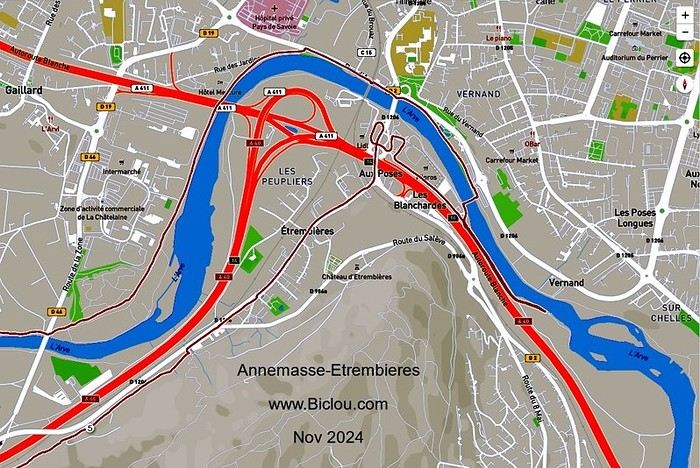
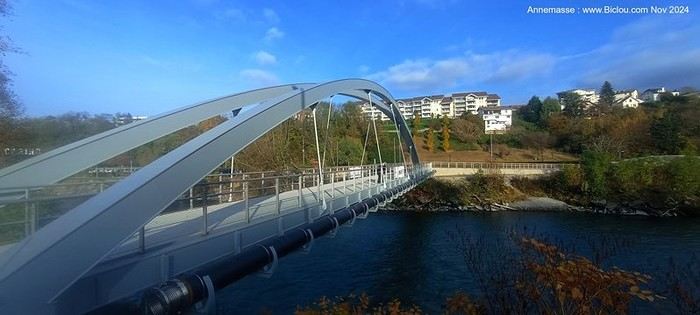
http://cbandiera.free.fr/vlsrt/bld-z.php?N=6359
French-language food and history tour in New Orleans
We're planning a trip through Louisiana and would love to do a food and history tour led by a guide—but I’m only finding options in English. Do any of you have recommendations for an experience where the guide spoke French and the food was good?
Thanks for your help
If you're passing through the Montreal area
If you're passing through the area (Montreal region), drop us a line in this thread. We’d love to say hello in person, you VFers, and maybe help you enjoy your time in Quebec even more. 😉
For lack of a better option, this is our way of celebrating this big comeback—we’re so happy to see this amazing platform, VoyageForum.com, active again! 🙂
Really looking forward to reconnecting with the regulars who used to contribute here too! 🙂
Right now, on this Friday, October 25th, the cold is starting to set in. Halloween decorations are everywhere. Winter will be back before we know it. 🤪
Naples, à moitié déçu... English translation pending
Bonjour à tous,
Me voilà revenu de Naples. Je ne savais pas où partager mon ressenti, les forums de Tripadvisor et du Routard semblent morts. J'espère qu'ici j'aurais des retours.
Grand amoureux de l'Italie, et surtout grand lecteur, je me suis rendu cette année à Naples pour la première fois. Autant vous dire que de Stendhal, à Goethe, en passant par Lamartine, Dumas ou plus récemment Jean-Noël Schifano, Naples me faisait "littéralement" rêver.
En ce qui me concerne, je suis un jeune qui tend vers la trentaine. Je parle encore mal l'italien, mais suffisamment assez pour maintenir de petites discussions, manger au restaurant, commander, ou comprendre ce qu'on me dit.
J'ai longtemps hésité avant d'aller à Naples avec tout ce qu'on pouvait lire sur Internet et dans les guides. Je ne suis pas du genre à m'habiller touriste. J'aime les beaux vêtements, même à l'étranger. Et emporter mon appareil photo ne me rassurait guère.
Arrivé sur place je me suis rendu compte que sur ce point tout était faux. Les jeunes napolitains aiment d'autant plus les beaux vêtements. Je n'ai pas compté le nombre de Balenciaga aux pieds des jeunes filles du Quartier Espagnol. Naples n'est pas plus, ni moins dangereuse que Paris. J'y rentrai tard le soir (avant minuit tout de même) entre les courses nocturnes de scooters sans que je sois embêté. J'ai néanmoins trouvé le centre historique et les alentours de la gare un peu plus suspects le soir. Certainement car ce sont des passages touristiques dans lesquels il est plus facile d'y repérer le touriste
Sur la question de l'insalubrité, même constat que le point précédent. Les Quartiers Espagnols et Rione Sanità sont étonnement propres comparés au centre historique, aux alentours de la gare, ou encore du Longomare qui pour le coup était vraiment sale. Mais ayant voyagé dans d'autres pays, ce n'est pas ce qui a retenu mon attention. De toute façon, j'étais prévenu. A titre de comparaison, Rome est une réelle déchetterie ! J'ai visité des capitales pauvres, et pourtant impeccables. Mais ce n'est pas le sujet
Nous arrivons aux points qui m'ont déçus. Mes amis m'ont vendu Naples comme "la ville la plus chaleureuse d'Italie" dans laquelle "Je me ferai des amis". J'ai personnellement jamais été aussi mal accueilli dans cette ville. Je pensais qu'après un confinement qui a fait du mal à l'Italie, et qu'en l'absence de plus de la moitié des touristes extra-européens, ils seraient "heureux" de me recevoir au restaurant. Pourtant, à chaque fois j'avais l'impression de déranger. On me poussait vers la sortie alors que le restaurant était vide à 12h, on ne faisait pas l'effort de me parler ni de me comprendre. J'étais souvent servi en dernier après les locaux
De même, en ce qui concerne l'amabilité générale, c'est l'unique ville d'Italie où je n'ai rencontré personne. J'ai été perdu une fois au début de mon voyage, j'ai du demander 5 fois avant que quelqu'un m'indique le chemin. Par chance, c'était une française expatriée ! Les autres se détournaient, et pourtant je demandais en Italien.
J'ai longtemps rêvé de Naples, d'y rencontrer ses gens, de pratiquer mon italien, de partager un café, de parler à un pêcheur, de faire le tour de la ville avec un local. Et me voilà rentré bredouille
J'ai certainement généralisé, mais sur toutes les villes que j'ai visité, c'est la première fois que ça m'arrive. J'aimerais y retourner néanmoins, j'ai beaucoup aimé l’atmosphère, les paysages, et surtout essayer de rencontrer 1 ou 2 napolitains. Je ne sais pas s'il existe des associations de bénévolat ou des choses similaires où je pourrai rencontrer du monde, je vais essayer de me renseigner
Que pensez-vous des napolitains, pour ceux qui y sont allés ? Peut-être que des gens y vivent ? Ou mieux, des napolitains seraient présents sur ce forum ?
Peut être que je n'ai juste pas eu de chance cette fois-ci, mais le ressenti était général, l'ambiance était "froide"...
Camping ou woofing en Martinique English translation pending
Bonjour,
Avec une amie, nous nous rendons en Martinique du 2 novembre au 17 décembre environ. Nous souhaiterions avoir quelques infos sur les campings:
- Est-ce qu'ils existent des campings "longue-durée" où nous pourrions avoir un prix au mois et non à la nuit? - Quels coins nous conseillez-nous? - La voiture est-elle nécessaire où existe-t'il un système de bus pour aller dans différents endroits de l'île?
Aussi, dans l'idéal, nous recherchons plutôt à faire du woofing dans des endroits de permacultures ou éco-construction où nous pourrions planter la tente. Nous avons quelques expériences en métropole et souhaiterions avoir une même expérience en Martinique.
- Connaissez-vous ce genre d'endroits là-bas?
Je vous remercie,
Leïla et Sarah
Dans quelle ville belge ne faut-il pas (encore?) porter le masque partout? English translation pending
Bonjour ,
Tout est dans le titre . Porter le masque dans les transports publics, dans les commerces et les endroits où il y a beaucoup de monde , d'accord . Mais l'obligation de le porter dans tout l'espace public à Bruxelles me dégoûte . Là c'est franchement trop . ....Pouvez-vous me dire dans quelles villes beges ce n'est-ce pas (encore ?) ainsi , histoire de marcher quelque part , sans devoir supporter un masque trempé de sueur sur le visage , ni devoir respirer l'air au travers de ce même masque ?
Tout est dans le titre . Porter le masque dans les transports publics, dans les commerces et les endroits où il y a beaucoup de monde , d'accord . Mais l'obligation de le porter dans tout l'espace public à Bruxelles me dégoûte . Là c'est franchement trop . ....Pouvez-vous me dire dans quelles villes beges ce n'est-ce pas (encore ?) ainsi , histoire de marcher quelque part , sans devoir supporter un masque trempé de sueur sur le visage , ni devoir respirer l'air au travers de ce même masque ?
Les meilleurs romans graphiques de voyage English translation pending
Bonjour à tous,
J'aime beaucoup les romans graphiques de Guy Delisle conçus à partir de ses séjours à l'étranger (Chroniques birmanes, Chroniques de Jérusalem, Pyongyang, Shenzhen). Je voulais savoir quels romans graphiques sur le voyage vous me conseilleriez ? Toutes les destinations me conviennent, c'est justement pour découvrir de nouveaux lieux que je pose la question...
Au plaisir de vous lire,
Caro
Le Kansai un peu différent avec de jeunes enfants (Japon) English translation pending
bonjour,
nous espérons pouvoir nous rendre au Japon avec nos 2 enfants (7 et presque 4 ans au moment du voyage). les billets sont réservés avec Finn Air
Arrivée Osaka le 20/02/21 retour Osaka le 03/03/21
Nous avons l'habitude de voyager sans courir, ni faire trop de déplacements. Nous préférons rester plus longtemps au même endroit et "errer" au grès de nos envies en nous baladant hors des sentiers battus plutôt que d'enchainer les lieux et les visites "incontournables"et dire "ça je l'ai visité".
Notre idées c'était de rester du 20 au 25 à Osaka
le 20: arrivée vers midi à l’hôtel , repos l’après midi + balade suivant la fatigue 21: visite d'osaka 22: visite d'osaka 23: parc Universal studio 24: hime-ji
puis du 25 au 3 : kyoto
25: départ pour kyoto depuis Oksaka + visites 26 au 2/03: visites et balades 3 au matin : départ pour l’aéroport et décollage à midi
côté logements: - sur Osaka, pour l'instant je n'ai rien trouvé intéressant, donc si vous avez des bons plans de logement familial, nous sommes preneurs... - sur Kyoto nous aimerions loger dans le quartier nord-ouest, nous souhaitons volontairement sortir du quartier touristique. quelqu'un a-t-il déjà pris un logement avec Ben's Guesthouse ? Nous aurions souhaité un logement avec 2 "chambres séparées" mais je n'arrive pas à trouver mon bonheur dans ce qui colle dans mon budget. si vous avez des idées ....
concernant les visites: -Sur Kyoto nous avons 2-3 points que chacun souhaite voir mais nous n'allons pas enchainer les longues journées surtout avec nos 2 petits marcheurs (vraiment, la marche ce n'est pas leur truc). Nous verrons en fonction des envies de chacun. Pour les enfants nous avions vu le studio de film samouraï , si quelqu'un l'a testé, combien de temps avez vous mis pour le visiter? Seulement, Mon fils de 7 ans me supplie pour aller visiter la maison de Totoro en banlieue de Nagoya ainsi que la ville de Iga qui est une ancienne ville de Ninja (avec maison à visiter et musée) mais je ne sais pas trop où les caser ? depuis Kyoto? sachant que dans les 2 cas il faudrait compter 1 journée chaque... Il resterait 3.5 jours pour Kyoto, cela semble jouable mais dans ce cas j’enlève le studio de film et la journée à Ohara...Aller sur Iga permettra, du coup de découvrir la campagne japonaise de ce côté là. Ces 2 destinations sont elles facilement accessibles? -Pour Osaka, nous n'avons pas d'objectifs particulier si ce n'est le château d'Osaka, Universal studio et Himeji. pour le reste, on verra sur place. si nous avions eu un peu plus de temps, nous aurions aimé pousser jusqu'à la région autour de wakayama et nous y "perdre" en train le temps de 2 jours.
Un temps nous avions penser visiter osaka en 1ere partie et remplacer Kyoto par kanazawa et takayama. Mais nous avons peur que pour les enfants cette partie soit moins attractive, enfin surtout moins variée pour eux.
merci d'avance pour vos conseils
Randonnée/balade sur deux jours près de Grenoble English translation pending
Bonjour,
Avec mon ami nous aimerions faire de la randonnée autour de Grenoble. Nous avons trouvé le lien suivant:https://www.altituderando.com/Traversee-des-hauts-plateaux-de-Chartreuse
qui permet de faire les hauts plateaux de Chartreuse en bivouac. On a pas trop l'habitude de faire de la randonnée, j'aimerais avoir un avis extérieur la dessus, ou si vous avez des idées de boucle à faire près de Grenoble.
Merci,
Cordialement
Mélanie
Voyage avec 3 enfants: 23 jours au Pérou pour débuter notre tour du monde en juillet 2019 English translation pending
Nous sommes rentrés il y a quelques mois d'un tour du monde en famille avec nos 3 enfants et j'ai enfin pris le temps de rédiger au propre nos carnets de voyage. Voici pour commencer le récit de nos 23 jours au Pérou en juillet 2019.
Jour 1 Après un départ chaotique, une correspndance loupée à Madrid, une courte dans la capitale espagnole, un 2ème vol non prévu pour Amsterdam, nous décollons enfin pour Lima. 12h de vol plus tard, nous y voilà. Même s'il n'est que 18h là-bas quand nous arrivons, il est 1h du matin en France. On trouve nos bagages et un bus rapidement mais les enfants sont crevés et s'écroulent dans le bus. La ville est bien embouteillée et il nous faut 1h pour rejoindre notre quartier. Les 500 mètres à faire à pied sont compliqués, ça râle dans tous les sens ! Il faut dire qu’il fait nuit, il bruine, ça fait 10 fois qu’on réveille les enfants pendant leur sommeil, mais on n’a pas le choix ! Nous prenons rapidement nos chambres, pas le top du confort cette 1ère auberge mais ça fera l'affaire pour une nuit. Il est presque 21h, tout le monde dors.
Jour 2
Malgré la fatigue, le décalage horaire nous fait réveiller assez tôt. On en profite pour réserver notre bus pour le soir.
Après une petite discussion avec le gérant de l'auberge pour quelques conseils, on part à la recherche d'un endroit où prendre un petit déjeuner. On trouve un café local qui nous parait pas mal, de bons jus de fruits frais et quelques sandwichs. Nous ne sommes encore pas très à l'aise avec l'espagnol et comme la personne ne parle pas du tout anglais, on prend plusieurs choses au hasard et on se retrouve avec un sandwich au fromage, à l'œuf et à l'avocat. Surprenant mais très bon !
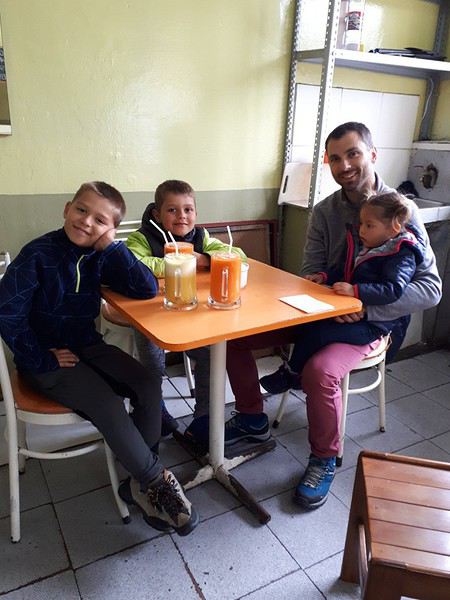
Nous n'avons pas beaucoup de temps à consacrer à Lima alors on se contente de se promener dans notre quartier, Miraflores. On va jusqu'à l'océan, on y trouve une aire de jeux pour les enfants.
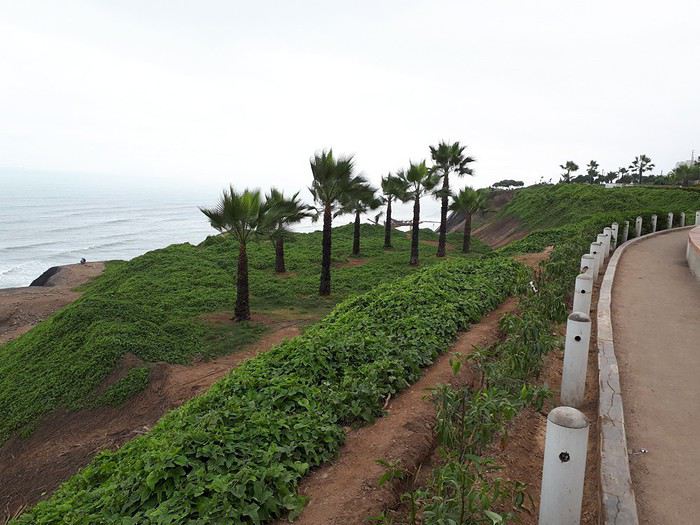
Retour à l’auberge, on saute dans un taxi direction la gare routière. On apprend que le repas du soir ainsi que le petit déjeuner sont servis à bord. On avait prévu quelques courses, tant pis ou tant mieux ! Nous embarquons donc pour Arequipa, notre prochaine étape, 19h de bus plus loin.

Jour 3
Nous nous réveillons en douceur dans le bus qui roule toujours. Les paysages qui défilent sont plutôt désertiques. On sait que la route est encore longue mais ça se passe bien. On nous sert un petit déjeuner basique mais appréciable. La grisaille laisse place peu à peu à un joli ciel bleu.
Il est midi lorsque nous arrivons à Arequipa. Un coup de taxi plus tard, nous découvrons notre hôtel pour les 3 prochaines nuits, une grande chambre confortable qui donne sur une jolie terrasse.
L’ambiance change complètement ici, il fait un grand soleil et une douce chaleur. Nous découvrons une ville plutôt calme avec des rues pavées et des bâtiments dans un style coloniale. C’est super sympa, on sent qu’on va s’y plaire ! Après avoir grignoté un morceau on part découvrir le centre-ville, on flâne, on boit du jus de fruit frais.
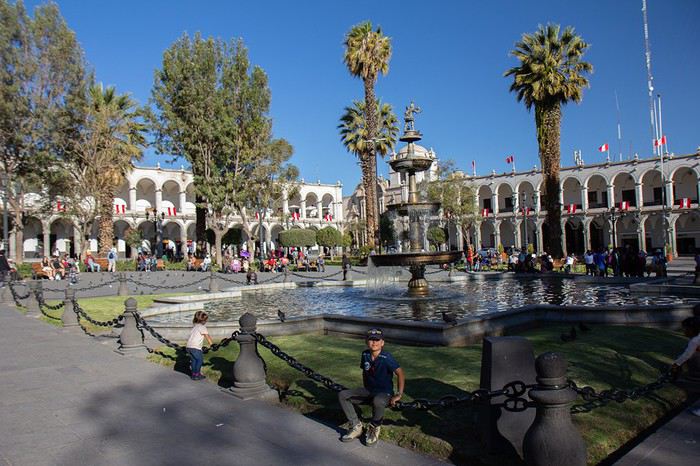
Le soir, on dîne dans un bar/restaurant qui diffuse la demi-finale de la Copa America, le Pérou joue contre le Chili, il y a de l’ambiance… Et c’est le Pérou qui se qualifie pour la finale 3-0 ! Déjà que les péruviens klaxonnent à longueur de journée, alors là c’était une symphonie !
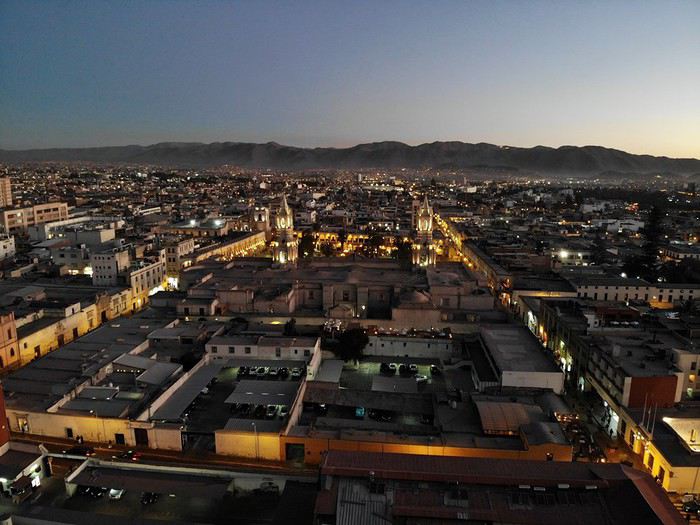
Jour 4
On découvre le copieux petit déjeuner de notre hôtel, on se régale et on prend des forces !
On part ensuite visiter le monastère Santa Catalina. C’était le lieu de résidences de religieuse jusqu’en 1969. Il est très bien préservé, ses murs sont colorés et l’endroit est très fleuri. C’est vraiment très beau. Les enfants ont aimé se perdre dans les nombreuses pièces qui communiquent entre-elles, jouer avec le grand lavoir ou encore se promener dans les étroites allées de ce beau monastère. On a bien pu se rendre compte de leurs conditions de vie.
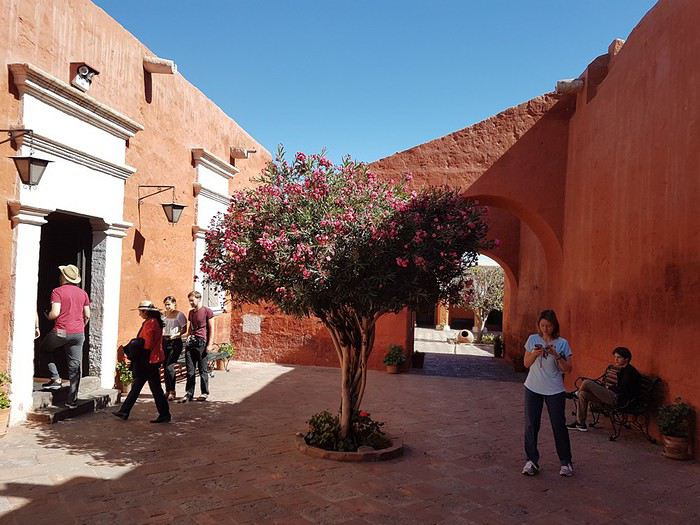
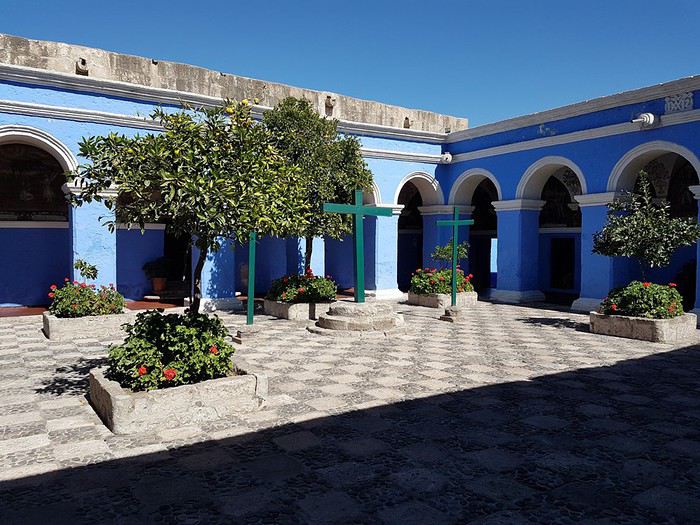
Pour le déjeuner, nous testons une adresse qui nous a été recommandé par d’autres voyageurs, le restaurant Ratatouille. Ils font de la cuisine française et les murs sont couverts de vieilles affiches de la côte d’Azur. On y mange très bien pour pas très cher. On reviendra !
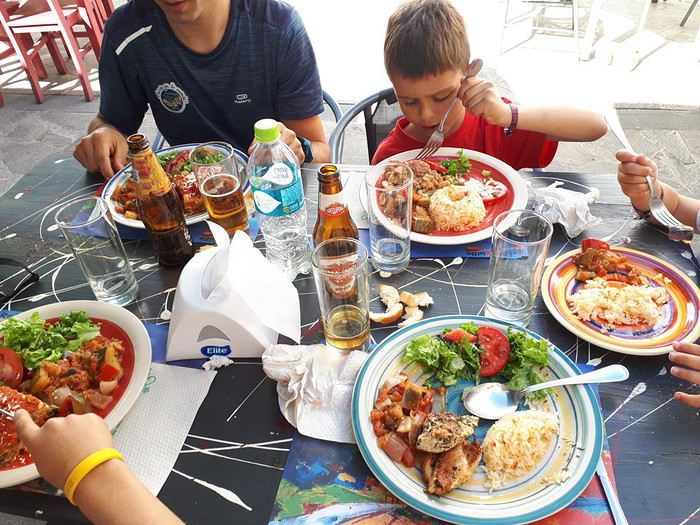
Les enfants fatiguent et on décide de rentrer pour une sieste. C’est l’occasion d’avancer les carnets de bord de chacun et pour d’autre de jouer avec le drone. On repart ensuite à la découverte des marchés couverts de souvenirs, un lieu de torture pour les enfants car ils voudraient tout acheter mais on ne peut plus rien mettre dans les sacs.
Jour 5
Nouveau petit déjeuner au calme sur notre terrasse. On se sent bien ici ! Ce matin, on décide de partir à la découverte d’un autre quartier d’Arequipa. On sort de la vieille ville. L’ambiance n’est pas la même, ça grouille de véhicules en tous genres, c’est bruyant et ça sent la pollution comme dirait Baptiste. On se dirige vers le quartier de Yanahueva qui a la particularité d’avoir une jolie petite place mais aussi un mirador avec une belle vue dégagée sur les volcans de la région. On confirme que la vue est superbe !
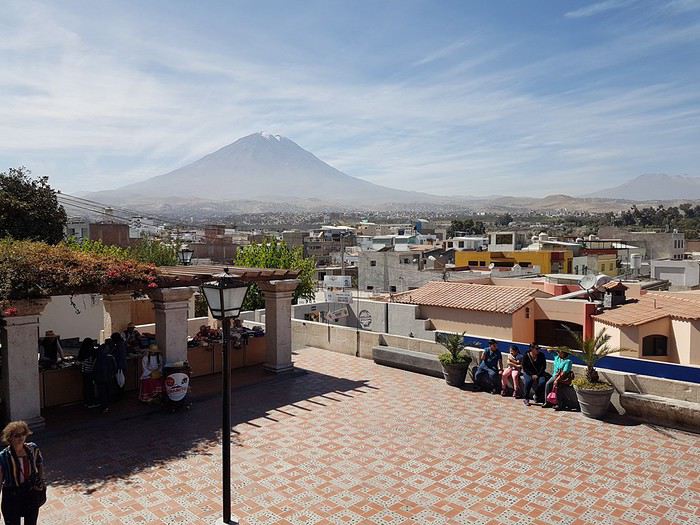
Puis les après-midis se suivent et se ressemblent, Julia fait la sieste, les garçons jouent aux cartes, on traîne et ça fait du bien après les semaines un peu speed d’avant le départ. On ressort ensuite se balader, cette ville est vraiment agréable, on découvre de nouveaux passages, on visite l’église de la Plaza de Armas.
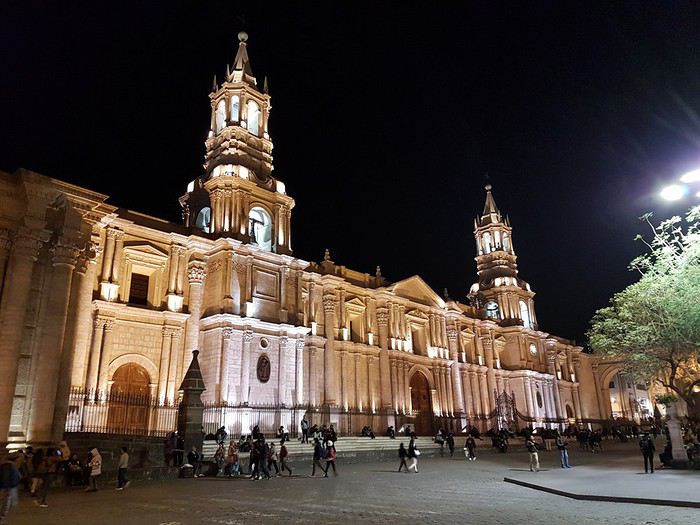
Puis il est temps de rentrer faire nos sacs, demain nous reprenons le bus pour une nouvelle destination : Yanque (dans un prochain article) !
Pour plus d'infos sur nos adresses et infos technique ICI.
Jour 1 Après un départ chaotique, une correspndance loupée à Madrid, une courte dans la capitale espagnole, un 2ème vol non prévu pour Amsterdam, nous décollons enfin pour Lima. 12h de vol plus tard, nous y voilà. Même s'il n'est que 18h là-bas quand nous arrivons, il est 1h du matin en France. On trouve nos bagages et un bus rapidement mais les enfants sont crevés et s'écroulent dans le bus. La ville est bien embouteillée et il nous faut 1h pour rejoindre notre quartier. Les 500 mètres à faire à pied sont compliqués, ça râle dans tous les sens ! Il faut dire qu’il fait nuit, il bruine, ça fait 10 fois qu’on réveille les enfants pendant leur sommeil, mais on n’a pas le choix ! Nous prenons rapidement nos chambres, pas le top du confort cette 1ère auberge mais ça fera l'affaire pour une nuit. Il est presque 21h, tout le monde dors.
Jour 2
Malgré la fatigue, le décalage horaire nous fait réveiller assez tôt. On en profite pour réserver notre bus pour le soir.
Après une petite discussion avec le gérant de l'auberge pour quelques conseils, on part à la recherche d'un endroit où prendre un petit déjeuner. On trouve un café local qui nous parait pas mal, de bons jus de fruits frais et quelques sandwichs. Nous ne sommes encore pas très à l'aise avec l'espagnol et comme la personne ne parle pas du tout anglais, on prend plusieurs choses au hasard et on se retrouve avec un sandwich au fromage, à l'œuf et à l'avocat. Surprenant mais très bon !
Nous n'avons pas beaucoup de temps à consacrer à Lima alors on se contente de se promener dans notre quartier, Miraflores. On va jusqu'à l'océan, on y trouve une aire de jeux pour les enfants.
Retour à l’auberge, on saute dans un taxi direction la gare routière. On apprend que le repas du soir ainsi que le petit déjeuner sont servis à bord. On avait prévu quelques courses, tant pis ou tant mieux ! Nous embarquons donc pour Arequipa, notre prochaine étape, 19h de bus plus loin.
Jour 3
Nous nous réveillons en douceur dans le bus qui roule toujours. Les paysages qui défilent sont plutôt désertiques. On sait que la route est encore longue mais ça se passe bien. On nous sert un petit déjeuner basique mais appréciable. La grisaille laisse place peu à peu à un joli ciel bleu.
Il est midi lorsque nous arrivons à Arequipa. Un coup de taxi plus tard, nous découvrons notre hôtel pour les 3 prochaines nuits, une grande chambre confortable qui donne sur une jolie terrasse.
L’ambiance change complètement ici, il fait un grand soleil et une douce chaleur. Nous découvrons une ville plutôt calme avec des rues pavées et des bâtiments dans un style coloniale. C’est super sympa, on sent qu’on va s’y plaire ! Après avoir grignoté un morceau on part découvrir le centre-ville, on flâne, on boit du jus de fruit frais.
Le soir, on dîne dans un bar/restaurant qui diffuse la demi-finale de la Copa America, le Pérou joue contre le Chili, il y a de l’ambiance… Et c’est le Pérou qui se qualifie pour la finale 3-0 ! Déjà que les péruviens klaxonnent à longueur de journée, alors là c’était une symphonie !
Jour 4
On découvre le copieux petit déjeuner de notre hôtel, on se régale et on prend des forces !
On part ensuite visiter le monastère Santa Catalina. C’était le lieu de résidences de religieuse jusqu’en 1969. Il est très bien préservé, ses murs sont colorés et l’endroit est très fleuri. C’est vraiment très beau. Les enfants ont aimé se perdre dans les nombreuses pièces qui communiquent entre-elles, jouer avec le grand lavoir ou encore se promener dans les étroites allées de ce beau monastère. On a bien pu se rendre compte de leurs conditions de vie.
Pour le déjeuner, nous testons une adresse qui nous a été recommandé par d’autres voyageurs, le restaurant Ratatouille. Ils font de la cuisine française et les murs sont couverts de vieilles affiches de la côte d’Azur. On y mange très bien pour pas très cher. On reviendra !
Les enfants fatiguent et on décide de rentrer pour une sieste. C’est l’occasion d’avancer les carnets de bord de chacun et pour d’autre de jouer avec le drone. On repart ensuite à la découverte des marchés couverts de souvenirs, un lieu de torture pour les enfants car ils voudraient tout acheter mais on ne peut plus rien mettre dans les sacs.
Jour 5
Nouveau petit déjeuner au calme sur notre terrasse. On se sent bien ici ! Ce matin, on décide de partir à la découverte d’un autre quartier d’Arequipa. On sort de la vieille ville. L’ambiance n’est pas la même, ça grouille de véhicules en tous genres, c’est bruyant et ça sent la pollution comme dirait Baptiste. On se dirige vers le quartier de Yanahueva qui a la particularité d’avoir une jolie petite place mais aussi un mirador avec une belle vue dégagée sur les volcans de la région. On confirme que la vue est superbe !
Puis les après-midis se suivent et se ressemblent, Julia fait la sieste, les garçons jouent aux cartes, on traîne et ça fait du bien après les semaines un peu speed d’avant le départ. On ressort ensuite se balader, cette ville est vraiment agréable, on découvre de nouveaux passages, on visite l’église de la Plaza de Armas.
Puis il est temps de rentrer faire nos sacs, demain nous reprenons le bus pour une nouvelle destination : Yanque (dans un prochain article) !
Pour plus d'infos sur nos adresses et infos technique ICI.
Le Cap d'Agde ou Port Leucate avec deux enfants English translation pending
Salut,
Pour nos vacances en août, avec mes 2 enfants et ma femme, on a le choix de 2 destinations pratiques niveau tarifs et disponibilités. Mes enfants veulent en plus aller dans un aqualand. Mais donc, on a le choix entre le Cap d'Agde ou Port Leucate. Je souhaiterais savoir, à ma place, ce que vous choisireriez.
Merci :)
Fêtes de fin d'année au Canada 2019-2020! English translation pending
Bonjour à tous,
Je poste enfin mon carnet de voyages de cet hiver passé.
Nous sommes partis en couple du 23/12/2019 au 04/01/2020 avec KLM/ Air France depuis Bordeaux à Montréal. Nous avons acheté les billets en Juillet 2019 pour 1286€ à 2 (inclus 1 bagage en soute chacun à l’aller et un seul pour le retour). ***j’ai ramené les skis à ma cousine*** Nous sommes arrivés à Montréal vers 17h00 (-2°C), ma cousine est venue nous chercher et nous a logés dans un appartement proche de la station de métro Namur (ligne orange). Pendant 3 jours, cet endroit était notre point de chute car le Condo de ma cousine était en travaux. Le premier soir, on a mangé Burger King (24 CAD pour 2) et on s’est couché tôt car nous étions fatigués du voyage.
Le lendemain (24/12), on s’est fait un bon petit déjeuner à l’appart et on est parti se balader au centre-ville : on a traversé le quartier chinois, on a flâné dans la rue St Paul Est, on a fait une pause sur la Place Jacques-Cartier, puis on est allé au Marché Bonsecours. On a également vu la Basilique Notre Dame de Montréal (où s’est mariée Céline DION) 😊
On s’est promené sur les quais du Vieux-Port et vu la Grande roue avec la patinoire aménagée pour la saison hivernale. A l’approche du réveillon de Noël, peu de monde dans les rues…. On a grignoté des Tacos vers 15h00, mais pas top ☹ (99 CAD pour 4 tout de même) on se rattrapera le soir 😊. Nous avons marché sur toute la rue Ste Catherine d’Ouest en Est et nous sommes remontés jusqu’à la station de métro Laurier en passant dans les rues du quartier Plateau Mont-royal fatigués nous avons pris le métro pour rentrer jusqu’à notre logement. (8 allers/retours = 26 CAD – à utiliser en plusieurs fois).
Nous avions décidé de réveillonner pour la première fois en amoureux (ma cousine partait dans sa belle-famille). Malheureusement, beaucoup de restaurants étaient fermés pour les fêtes et bien sûr j’avais oublié de lui demander conseil ! pfff ! … Après plusieurs appels (faute de trouver quelque chose qui nous convienne vraiment), on réserve au Rib’n Reef Steakhouse pour 21h30 non loin de l’appart (pensant que ce restaurant était équivalent à « La Boucherie »). Enfin, une sieste s’impose de 18h à 20h30 et nous voilà repartis à pieds au restau. De loin, ça ne payait pas de mine, un peu dans une zone commerciale, mais une fois arrivés devant on regarde sur le parking : que des voitures haut de gamme et un portier aussi devant l’entrée ! Une famille est arrivée en même temps que nous (ils avaient la classe !) et nous, on était en jeans, blouson de ski et boots 😊 (la honte !). Le restau était spacieux et rempli de monde, les serveurs et serveuses étaient bien apprêtés (robe sexy et costumes), et quasiment un par table…
Même si on n’était pas bien habillés, on savait qu’on allait finalement passer un bon moment romantique et se faire plaisir. Notre serveur était drôle et a bien mérité son pourboire. On a pris des huîtres en entrée : passables, on ne peut pas les comparer aux françaises bien sûr ! On a bu une bouteille de vin rouge californien « Cabernet Sauvignon 2016 » (conseillé par notre serveur) à un prix raisonnable (69 CAD) contrairement à celles notées sur la carte des vins (les prix s’envolaient), puis on a choisi une côte de bœuf chacun environ 400 gr accompagnés de légumes et purée. Hélas, la cuisson de la viande n’a pas été à la hauteur de nos espérances, elle n’était pas grillée comme on aurait pu l’imaginer mais cuite dans un jus/ bouillon. Elle était tendre, mais déçus ! ☹ La note finale avec 2 expressos = 350 CAD pour 2. Pour notre 1ère expérience dans un restaurant canadien et pour le réveillon de Noël, on a passé un très bon moment : c’était fort agréable et convivial ! Nous sommes rentrés vers 1h00 du matin (environ -9°C) gla-gla !
Le jour de Noël (25/12), nous avons un peu dormi, et ma cousine et son fiancé nous ont rejoints pour le petit déjeuner/ brunch. Ils avaient réservé un spa nordique à Rosemère pour la journée de Noël : « Spa Le Finlandais » (40 CAD/ pers + 22 CAD/ pers pour le prêt des peignoirs et serviettes). Journée très agréable et détente. Il faisait entre -1° et 2°C dehors et l’eau était à 38°C, trop génial ! La sensation de froid sur le visage et de chaud sur le reste du corps est excellent ! Il n’y avait pas trop de monde le matin, mais les gens sont arrivés en milieu d’après-midi. Le soir, nous étions invités chez des canadiens, des amis à ma cousine (comme elle dit : sa famille de cœur !) pour fêter Noël tous ensemble. Nous étions une quinzaine d’adultes et une dizaine d’enfants. Quel moment magique nous avons passé avec eux : nous avons été accueillis les bras grands ouverts, nous avons bu et mangé à outrance et quel repas délicieux ! Nous nous sommes bien amusés et sommes rentrés vers 4h du matin.
Boire des canons sympas à Amsterdam English translation pending
bjr
je pars fin aout visiter les pays bas avec madame
4° visite pour moi, 1er pour elle
on dors tous les soir à amsterdam
y aurait il des bars et restos sympas ni ruineux no touristiques
trip advisor me méfie un peu
merci
je pars fin aout visiter les pays bas avec madame
4° visite pour moi, 1er pour elle
on dors tous les soir à amsterdam
y aurait il des bars et restos sympas ni ruineux no touristiques
trip advisor me méfie un peu
merci
Hôtels pas chers à San Francisco English translation pending
Bonjour
Connaissez-vous des hôtels bons et pas chers, de préférence à San Francisco avec SDB privée et pas loin du centre ? Peut-êtreô difficile mais qui ne tente rien n'a rien...
Merci
Azteca
Connaissez-vous des hôtels bons et pas chers, de préférence à San Francisco avec SDB privée et pas loin du centre ? Peut-êtreô difficile mais qui ne tente rien n'a rien...
Merci
Azteca
Transfert de l'aéroport Marco Polo vers Venise English translation pending
Bonjour,
Mon vol arrive tardivement : 23 heures à l'aéroport Marco Polo le lundi 28 septembre.
Que me conseillez-vous pour me rendre en transport en commun à Venise. Mon logement est situé à proximité de la Palazzo Zeno.
Jusqu'à quelle heure fonctionne les transports en commun ?
Je vous remercie pour votre aide.
Myanmar un beau voyage au pays des pagodes English translation pending
Un voyage organisé en 16 jours, effectué à une belle période au Myanmar cad janvier-février 2018.
Circuit somme toute classique: Yangoon, lac inle, Bagan, Mandalay
Circuit somme toute classique: Yangoon, lac inle, Bagan, Mandalay
Poor, arm, pobre, ompofu, povero, pauvre... English translation pending
Deux copains devisaient :
Ils se sont rencontrés sur la route entre Agra et Jaipur et voyagent ensemble quelques jours.
« T’as vu ce type qui avance sur ses moignons sur sa planche à roulettes , c’est atroce hein ! » « Ouais, j’ai vu, on peut pas prendre la misère du monde sur les épaules, cool mec » « D’accord, mais quand tu vois cette jeune mère en guenilles avec son môme plein de croûtes, ça te choque pas ? »
« Fais pas ton rabat-joie, regarde, ils sont pauvres d’accord, mais t’as remarqué leur sourire, pis, ils sont habitués, pis c’est des réseaux, ils mettent leurs estropiés dans les endroits stratégiques pour que tu files des ronds parce que tu te sens coupable ? » « T’as peut-être raison, j’ai vu ça chez nous, des femmes qui sortent des voitures en groupe et qui vont faire la manche sur les trottoirs »
« Ben tu vois, c’est pareil, viens, on va chercher un hôtel clean, on n’est pas là pour se faire chier dans une guest-house pourrie, et pis j’ai lu qu’on n’était pas loin du quartier des bijoutiers, ça s’rait cool que je rapporte une bague à ma copine » « Moi je cherche des saris en soie, ma soeur veut en faire des rideaux »
« T’es parti où l’année dernière ? » « J’ai fais un trip au Brésil, p’…n les favellas, fallait voir çà. Un peu pareil qu’ici mais j’me sentais moins sécure » « C’est dingue tous ces pauvres dans le monde tu trouves pas ? »
« Sûr, mais t’es en vacances non. T’irais toi aux Tarterets, aux Minguettes, au Watts de L.A, ou à Marzahn à Berlin, c’est plein de pauvres aussi, là, c’est exotique. Encore que, t’as vu, y’a des gens qui visitent des bidonvilles, c’est tendance, mais des bidonvilles authentiques hein, pas des cités daubées remplies de drogués et super coupe-gorge.
« Moi je trouve qu’il y a de plus en plus de pauvres partout » « Ouais, mais vis ta vie, t’as bossé, économisé, t’as payé ton billet d’avion, t’as organisé ton séjour, alors tes sentiments à deux balles mets les au fond de ta poche et profite, vise un peu cette culture différente, tous ces monuments nickels et t’as vu ces paysages, incroyables non ?, T’es pas pauvre toi, alors arrête de bavasser »
« Mais je ne suis pas riche non plus ! » « Si t’es là, c’est que t’as de la thune, t’as déjà vu des pauvres voyager toi ? » « Ben oui, les migrants » « Oula, c’est au’t chose, arrête de me prendre la tête, viens on va bouffer »
« Ok, en plus on bouffe bien pour queue dalle mais ça me gêne quand même » « Tu veux faire quoi, aller construire des puits en Afrique, comme s’ils étaient des minables incapables de le faire eux-mêmes ?, va bosser chez MSF, ça lavera ta culpabilité et te donnera bonne conscience, bosse dans une assoc, change de job, bosse comme éduc dans les cités, bouge-toi ou alors savoure tes vacances et fous-moi la paix. »
Ainsi devisaient deux copains… Je crois que la nuit tombée, dans l’hôtel confortable où ils ont trouvé une chambre pour deux pour limiter les frais, sous le fan tournant à grande vitesse qui ainsi chassait les moustiques, ils ont, chacun dans leur lit songé à la conversation de la journée.
Ca veut dire quoi la pauvreté aujourd’hui ? Est-ce être indigent, précaire, en mauvaise santé, ne pas savoir lire écrire, ne pouvoir s’instruire ? Est-ce une servitude d’être pauvre, des incertitudes, de l’hébétude ? Est-ce aussi un manque d’amour, d’écoute, d’éducation ? Ne pas avoir un toit, du boulot, des vêtements et avoir faim ? Le pauvre des USA, celui d’Afrique, celui d’Asie, celui d’Europe ressent-il la même angoisse ?
Pauvres de toujours et nouveaux pauvres du 21ème siècle, p’être un tournant de l’histoire, tiers monde, quart monde, nouveau monde, un voyage en terre inconnue...bien plus inquiétant qu’un avion annulé, remboursé pas remboursé, des pépètes perdues, un projet momentanément cloué au sol !. Ca c’est une déception, une simple déception, une galère temporaire, un ajournement des rêves...
« Le pauvre a peu, le mendiant n’a rien, le riche a trop peu et nul n’a assez »
Voyage une semaine à Cuba en famille English translation pending
Bonjour à tous,
Je suis à la recherche de conseils pour Cuba, je n' arrive pas à me décider. Nous recherchons avec mon mari à partir pour la semaine qui suit Noël au soleil avec nos 3 jeunes garçons! Nous vivons à Toronto.
La Havane nous a toujours attiré et nous pensions que 2 jours autour du nouvel an pourraient être festif et les enfants adoraient l ambiance cubaine! Mais bcp de personnes ayant fait un voyage à Cuba nous déconseillent cette destination. Les critères sont que les plages ne sont pas spécialement belles mise a part Varadero, et que Varadero se trouve dénaturée par les complexes hoteliers..
Pour être honnête nous n aimons pas vraiment les stations balnéaires et sommes a la recherche d endroits sauvages et authentiques avec de belles plages pour ensuite se diriger vers la Havane.
On m a conseillé Jibacoa qui avait une belle plage mais je n' ai pas vu de casa. Auriez vous des recommandations ou des expériences à partager de votre expérience cubaine? Un petit paradis caché dans cette région pt être!
Merci d avance pour vos conseils!
Auriez vous un quartier à me conseiller pour la Havane?
Auriez vous un quartier à me conseiller pour la Havane?