Results for "gourde"
3523 results found.
Cadre rando acier 26" English translation pending
slt,
cyclocampeur depuis pas mal d'années, j'utilise un vtt classique très "slopping". Ca me pose deux problèmes, il n'est pas du tout roulant (chasse trop courte) et le slopping pose problème pour mettre un siège bébé.
Comme j'ai déjà tout l'équipement en 26", je cherche juste à changer le cadre. Mais en France il n'y a pas tellement le choix pour avoir un cadre à géométrie rando en 26" acier, sauf à se payer un sur-mesure... Rando-cycle propose un cadre villiger à moins de 500euros qui semblerait convenir, mais je n'ais pas le courrage d'aller voir sur place à Paris (je suis dans l'aveyron).
Est-ce que des voyageurs par ici ont pu essayer ce cadre ? D'autres solutions ?
Merci pour les tuyaux.
cyclocampeur depuis pas mal d'années, j'utilise un vtt classique très "slopping". Ca me pose deux problèmes, il n'est pas du tout roulant (chasse trop courte) et le slopping pose problème pour mettre un siège bébé.
Comme j'ai déjà tout l'équipement en 26", je cherche juste à changer le cadre. Mais en France il n'y a pas tellement le choix pour avoir un cadre à géométrie rando en 26" acier, sauf à se payer un sur-mesure... Rando-cycle propose un cadre villiger à moins de 500euros qui semblerait convenir, mais je n'ais pas le courrage d'aller voir sur place à Paris (je suis dans l'aveyron).
Est-ce que des voyageurs par ici ont pu essayer ce cadre ? D'autres solutions ?
Merci pour les tuyaux.
Médicaments et vaccins à Madagascar English translation pending
Salut a tous !
Je pars avec deux potes à madagascar fin septembre début octobre. Je voulais savoir quelle médication était nécéssaire (Quel traitement contre le pallu ? La savarine, ...) ainsi que les vaccins ? Y a t'il des régions où certaines précautions sont bonnes à prendre d'un point de vue médicale ?
En gors, que devons nous faire afin de ne pas tomber malade là-bas ?
Pour info, nous visiterons la partie Nord de la grande Île.
Merci de vos infos et mora mora ...
Yo, Frouf & Ludo 😉 !!!
Je pars avec deux potes à madagascar fin septembre début octobre. Je voulais savoir quelle médication était nécéssaire (Quel traitement contre le pallu ? La savarine, ...) ainsi que les vaccins ? Y a t'il des régions où certaines précautions sont bonnes à prendre d'un point de vue médicale ?
En gors, que devons nous faire afin de ne pas tomber malade là-bas ?
Pour info, nous visiterons la partie Nord de la grande Île.
Merci de vos infos et mora mora ...
Yo, Frouf & Ludo 😉 !!!
Tour du Manaslu English translation pending
Bonjour à tous,
je pars 4 semaines entre avril et mai pour un trek autour du Manslu au népal
comme c'est la première fois que j'y vais, j'aurais aimé savoir à quel type de temps
je dois m'attendre pour cette période là ... en effet je dois acheter un sac de couchage et des vêtements
adaptés ... question chaussures je suis bien équipés mais c'est plutôt en ce qui concerne
les pantalons, vestes, sous-vêtements et sac de couchage ...
amis voyageurs ... bonne route et merci d'avance pour vos conseils précieux😉
je pars 4 semaines entre avril et mai pour un trek autour du Manslu au népal
comme c'est la première fois que j'y vais, j'aurais aimé savoir à quel type de temps
je dois m'attendre pour cette période là ... en effet je dois acheter un sac de couchage et des vêtements
adaptés ... question chaussures je suis bien équipés mais c'est plutôt en ce qui concerne
les pantalons, vestes, sous-vêtements et sac de couchage ...
amis voyageurs ... bonne route et merci d'avance pour vos conseils précieux😉
Matériel qui tienne la route English translation pending
Salut les amis.
Je pars dans plusieurs mois arpenter le globe, muni d'un sac à dos, d'une tente, de vêtements, d'accessoires ... que je ne possède pas encore.
Le poids sera cruel, aussi je suis systématiquement à la recherche d'objets légers (mais néanmoins résistants et de qualité, j'ai choisi de payer plus cher s'il le faut).
La tente, je la voudrais pour deux et étanche.
Le sac, je le voudrais pratique et si possible sécurisable (dans la mesure du possible).
En accessoires, je suis intéressé par ce qui permet de porter sur soi en permanence, et à l'abri des regards, les effets les plus importants (passeport, billets d'avion, argent, etc...). Recherche également des conseils sur le transport de l'eau, de la nourriture, les vêtements, ...
Y a-t-il des endroits que vous me recommanderiez ? Une bonne période de l'année pour faire ses emplettes ?
Merci infiniment de vos réponses, et à tous : bonnes fêtes, bonne année et bonnes routes !
Merci infiniment de vos réponses, et à tous : bonnes fêtes, bonne année et bonnes routes !
Les pieds en Russie... et la tête dans les étoiles (Transsiberien)Russie) English translation pending
Un tour du monde ca commence comment, comme ca, maladroitement...
Mercredi 20 juillet 2005, sdrasvoutie Moscou
Surprise a bord, Moscou serait-il devenu la destination privilegiee du 3eme age americain, nous sommes pratiquement les seuls representants de la tranche - 60 ans. Esperons que ce ne soit pas le cas dans le transsiberien ou le voyage devrait durer 5 jours… Apres 1 h d attente a la douane, Sophie ne peut s'empecher de photographier "discretement" un flic bedonnant a la casquette imposante pendant que Christophe etait occupe a denicher un moyen economique de gagner le centre ville. Quand tout a coup… "j`me suis fait prendre, j`me suis fait prendre!", Sophie, paniquee, arrive suivie d'un individu en uniforme a la mine patibulaire: "passport pajalousta!". Quelques badauts et rabateurs de taxi s'agglutinent attires par le scandale. Christophe se lance maladroitement a son secours en baragouinant quelques formules de politesse apprises dans l'avion: "sdrasvoutie, eezveenitie… heu…que pasa?". Sophie en fouillant dans son sac fit tomber du sac appareil photo, camera etc… Devant tant de maladresse et notre ridicule, le policier esquissa un leger sourire. Grave erreur. Sophie sauta sur l'occasion et ne lacha plus sa prise: un sourire par-ci, quelques mots dans un melange de russo anglais, 2/3 clignements d'oeil… Il ne pouvait pas s'en sortir, Christophe en sait quelque chose. Le policier rigole en lui rendant son passeport et repart amuse, nous soulages. "Paka" (Salut) lance Sophie en confiance. Certaines fouilles anales ne viennent pas chercher leur origine beaucoup plus loin. Nouvelle epreuve: rejoindre le centre ville. Aucune info, personne ne parle anglais, tout est indique en cyrillique et nous avons oublie le guide a la maison; la tache semble difficile et le taxi beaucoup trop cher (100$). Un taxi soit disant agree nous met le grapin dessus. Il semble avoir autant besoin de nous que nous de lui. Apres d'astucieuses parlementations, nous nous en tirons pour 25 $. A la lumiere du jour on s'apercoit que l'individu est borgne et que sa voiture, une vieille Lada cabossee, illustre a elle seule la Perestroika… Avons-nous vraiment fait une bonne affaire? Dans les embouteillages, nous avons pu profiter des vapeurs d'essence non rafinee des vieux camions sovietiques au son d'une impevisible musette bien francaise! Ambiance surrealiste garantie. Nous arrivons chez Vladimir et Olga, une prof de francais chez qui nous allons passer la nuit.
Apres-midi visite, les classiques: la Place Rouge, la cathedrale de Basile le bienheureux (superbe), les jardins de l'hermitage, des mosnasteres orthodoxes et… les galeries commercantes! Durant nos promenades nous sommes surpris par la presence francaise sur les murs de la capitale: Pierre Richard, Gerard Depardieu, Lara Fabian et meme la soeur de Lio!!! La nuit blanche se faisant sentir, nous rentrons et rencontrons en chemin une artiste au francais balbutiant bien decide a s'ameliorer.
Jeudi 21 juillet 2005, Drole de rencontre
Quelle ne fut pas notre surprise de tomber sur Juliette a notre reveil! Nous l'avions rencontree au "Vieux Campeur" 2 semaines auparavant. Nos itinineraires se suivaient, mais de la à passer la nuit au meme endroit au meme moment… Nous passons la journee ensemble a visiter la ville: ses batiments a l'austerite tres communiste (universite, edifices gouvernementaux…), la colline aux moineux et son point de vue, le cirque de Moscou dont la devanture n'est malheureusement pas a l'image de la qualite de ses representations. Nous dejeunons dans un resto de specialites georgiennes. Comme la plupart des restaurants russes, touristiques ou de quartier, chic ou bouiibouis, nous sommes accueillis par de la danse musique. C est finalement assez carateristiques de cette russie au visage contraste, ou les Lada cotoient les Mercedes. Bon, retournons a table, au menu: crudites de toutes sortes, beignets fourres aux choux et a la viande, aubergine grillees, brochettes et… caviar. Le tout souvent assaisonne d'aneth et de coriandre, deja un parfum d Asie entre ds nos assiettes. Les "grands aventuriers" que nous sommes se sont meme essayes a un blind tests:"×ÑÝÍÆÓÁªÇØÎ". Resultat, du boudin aux trippes (heureusement que c'est tombe sur Christophe). Excepte le caviar ou nos avis sont partages, nous avons trouve la cuisine russe tres delicates et nous apprecions chaque bouchee en pensant au lait de Yak qui nous attend dans peu de temps.
Nous nous quittons le soir avec Juliette en laissant au destin le soin de croiser nos chemins a nouveau, chose probable puisque nous prenons le meme train au depart d'Ulaan Bator pour Pekin. We're living in a small world… Sophie reste impressionnee par Juliette qui entreprend seule son voyage d'un an, c est vrai qu'il faut "en avoir"… surtout pour une jeune femme. 20h30, nous arrivons en gare et embarquons pour le transsiberien…
Du vendredi 22 juillet au mardi 26 juillet: le transsiberien Le train
Nous voyageons en 2e classe, la cabine de 4 places est assez confortable avec matelas d'appoint et draps propres. Nous avons aussi un acces illimite au samovar (grosse bouilloire) du wagon qui nous fournit en eau chaude. Grace a cela, nous pourrons nous preparer the, cafe, soupes et pates a gogo.
En ce qui concerne l'hygiene, les toilettes sont plus ou moins propres, en tous cas nous avons eu la chance de ne pas passer derriere une 'tourista'! On se lave au gant de toilette et quand on n'en peut plus, on remplit nos gourdes avec l'eau chaude du samovar et c'est un pieds dans les toilettes et l autre sous le lavabot qu, on s'asperge d'eau. Elle est pas belle la vie! A part quelques odeurs de pieds occasionnelles dans le compartrtiment, on s y fait plutot bien. Nos compagnons de route: 2 autres personnes partagent notre nouvelle demeure: Andrej, russe dans la quarantaine, une bonne vieille carrie entre les chicots de devant, est conducteur de camion et ne balbutie que quelques mots en anglais. La communication fut assez difficile mais le Velleda, le langage des gestes et la mappemonde gonflable ont permis quelques echanges. La vodka et la biere ont eu aussi leur effet en "fluidifiant" la communication. Il ne restera qu'une nuit parmi nous mais notre nez s'en souviendra (et surtout le palais de Christophe): il a eu la bonne idee de nous faire connaitre les coutumes locales et notamment, la degustation de poisson seche et fume arrose de biere. La vodka sert alors de desinfectant et de desodorisant. Essayez et vous comprendrez! Kenny, 23 ans, americain de Philadelphie, en vadrouille pour quelques mois jusqu'a ce qu il n'ait plus un sou en poche, il table sur 4/5 mois avec un budget de 2500 $. C'est aussi un grand mangeur de "noodles" et un amateur de vodka (premier verre a midi, il est le champion du groupe en la matiere). Signe particulier: une morsure de crocodile australien a l'avant-bras. Sophie en profite pour lui donner quelques cours de francais. L'eleve est assidu et progresse a mesure que son carnet s'emplit d'expressions indispensables pour seduire la premiere frenchy venue, meme s'il reste incapable de prononcer le "r"! Nous avons aussi fait la rencontre des deux israeliens qui occupent le wagon voisin: Israel: comme son nom l'indique, il vient…d'Israel. 33 ans et diabetique au plus haut degree, il est avenant et tres sociable. Durant tout le trajet il sera a la recherche d'un briquet, modeste cadeau d'adieu que nous lui ferons. Lui aussi effectue un voyage de plusieurs mois. Signe particulier: cherche une femme pour faire un enfant (et si l'amour est inclu dans le package, tant mieux) Navet: 28 ans a fait son service militaire dans les forces de combat israeliennes pendant 3 ans, plus un an comme officier. Il est plus discret mais tres sympa aussi. Signe particulier: accent a couper au couteau. La cabine qui les accole est reservee a un trio belge; Sophie, mere celibataire de 37 ans qui voyage avec son fils Nicolae 3 ans 1/2 et assez turbulent. C'est une femme cultivee qui apprecie les echanges et les discutions animees. Photographe de profession, elle est accompagnee d'Antoine son ex. Signe particulier: bonne vivante, pas derniere sur la vodka non plus. Antoine: Photographe egalement, ils avaient organize ce voyage avec Sophie du temps ou ils etaient encore ensemble, ses engagements professionnels (reportage photo) ne lui ayant pas laisse d, alternative par la suite. Effraye la premiere journee par la perspective de ces 5 jours enferme dans un wagon, il s'est finalement tres bien acclimate a cette ambiance et ne voulait plus descendre a Irkoutz. Signe particulier: fan des tetes raides, un bon point monsieur.La vie a bord: La vie dans le wagon est rythmee par les repas et les quelques escales ou chacun se ravitaille aupres des babouchkas locales sur les quais. Au menu: oeufs durs, poissons seches, poulets grilles, panier de fruits des bois (framboise, fraise des bois…), pomme de terre, glaces, pelmeni (boulette) ou pirojki (beignets sales farcis). Finalement, on mange plutot bien et equilibre… Mais les Yaks ne sont plus tres loins. Attention a ne pas descendre sans son passeport et un peu d'argent; il se peut que le train parte sans prevenir, cela nous est arrive, nous sommes remontes juste a temps rappeles par notre "provonidsta" (chef de wagon). On a eu vent de touristes qui n'ont pas eu cette chance la. Entre deux arrets, de longues discutions, des siestes digestives et un brun de lecture occupent nos journees. Le soir, et cela deviendra d'ailleurs un rituel, vodka et musique avec nos compagnons de route. Le dernier soir, la partie endiablee de Jungle speed eut un franc succes. En tout cas pas le temps de s'ennuyer. Les fuseaux horaires defilent et le temps s'ecoule avec une douceur suave. Le 2eme soir nous avons appris avec etonnement que nous avions 3 heures de plus par rapport a Moscou. Lorsque l'on s'est couche a 04h00, le soleil se levait. Nous sommes un peu dephases mais ca n est pas desagreable: on mange quand on a faim, et on dort quand on a sommeil sans se soucier de l'heure qu'il est. Bizzarement, on ne trouve pas le temps de faire ce qu'on avait prevu de faire, c'est a dire rien.
Les paysages: Nous avons traverse l`Oural, region la plus industrialisee et donc la plus polluee de Russie, dont les montagnes marquent la separation entre l'Europe et l'Asie. Puis nous rentrons dans la vaste Siberie. Le ciel ensoleille et les 25 degres nous confortent dans notre choix de partir plein ete. La traversee de la Siberie couverte de neige doit etre magnifique, mais nous ne regrettons pas les -35 degres. Les paysages sont jolis malgre la monotonie car le changement est tres progressif. Des plaines parsemees de forets de coniferes ont succedees a une dense taiga a perte de vue. C'est ensuite un paysage valonne et herbeux qui a prit le relais. On guette l'apparition d'un ours, d'un loup ou du mythique tigre de Siberie…mais sans succes. On traverse ici et la des villes et villages ou bien des maisons isolees, les dachas. Faites de bois avec un toit en tole ondulee, elles pourraient semblees a l'abandon si les volets n'etaient pas fraichement peints en bleu et blanc. De temps en temps, des vestiges de la vieille URSS industrielle viennent faire "tache" dans ce beau paysage. Le temps semble s'etre arrete avec ces carcasses rouillees, ses vieux chars russes a la retraite et ces anciennes usines desafectees d'une epoque dechue. Mais, cette vision quasi apocalyptique bercee par le rythme lancinant du train est finallement assez representative de l'Histoire du pays et de son renouveau. Christophe y trouve meme une certaine poesie.
En arrivant a Irkoutz, le lac Baikal nous offre ses rivages superbes et son eau cristalline. Le train longe le lac le plus profond du monde (1647m) sur 200 km. Cette etendue d'eau douce, surgie au milieu de nulle part, represente 1/5e des reserves mondiales. Nous sommes a present en pays "bouriate", une ethnie qui se rapproche, par son mode de vie, des Mongols. Les paysages qui jalonnent le chemin jusqu'a Ulaan Bator sont superbes avec une alternance de fleuves, de rivieres et de collines.Le passage de la frontiere russo-mongole n'a posee aucun probleme si ce n'est les 5h30 de verification de sacs et de papiers qui nous firent attendre a l interieur en plein soleil et dans un chaleur etouffante (40 degres) sans pouvoir sortir sous peine de se faire aboyer dessus par le militaire en poste.
Mercredi 20 juillet 2005, sdrasvoutie Moscou
Surprise a bord, Moscou serait-il devenu la destination privilegiee du 3eme age americain, nous sommes pratiquement les seuls representants de la tranche - 60 ans. Esperons que ce ne soit pas le cas dans le transsiberien ou le voyage devrait durer 5 jours… Apres 1 h d attente a la douane, Sophie ne peut s'empecher de photographier "discretement" un flic bedonnant a la casquette imposante pendant que Christophe etait occupe a denicher un moyen economique de gagner le centre ville. Quand tout a coup… "j`me suis fait prendre, j`me suis fait prendre!", Sophie, paniquee, arrive suivie d'un individu en uniforme a la mine patibulaire: "passport pajalousta!". Quelques badauts et rabateurs de taxi s'agglutinent attires par le scandale. Christophe se lance maladroitement a son secours en baragouinant quelques formules de politesse apprises dans l'avion: "sdrasvoutie, eezveenitie… heu…que pasa?". Sophie en fouillant dans son sac fit tomber du sac appareil photo, camera etc… Devant tant de maladresse et notre ridicule, le policier esquissa un leger sourire. Grave erreur. Sophie sauta sur l'occasion et ne lacha plus sa prise: un sourire par-ci, quelques mots dans un melange de russo anglais, 2/3 clignements d'oeil… Il ne pouvait pas s'en sortir, Christophe en sait quelque chose. Le policier rigole en lui rendant son passeport et repart amuse, nous soulages. "Paka" (Salut) lance Sophie en confiance. Certaines fouilles anales ne viennent pas chercher leur origine beaucoup plus loin. Nouvelle epreuve: rejoindre le centre ville. Aucune info, personne ne parle anglais, tout est indique en cyrillique et nous avons oublie le guide a la maison; la tache semble difficile et le taxi beaucoup trop cher (100$). Un taxi soit disant agree nous met le grapin dessus. Il semble avoir autant besoin de nous que nous de lui. Apres d'astucieuses parlementations, nous nous en tirons pour 25 $. A la lumiere du jour on s'apercoit que l'individu est borgne et que sa voiture, une vieille Lada cabossee, illustre a elle seule la Perestroika… Avons-nous vraiment fait une bonne affaire? Dans les embouteillages, nous avons pu profiter des vapeurs d'essence non rafinee des vieux camions sovietiques au son d'une impevisible musette bien francaise! Ambiance surrealiste garantie. Nous arrivons chez Vladimir et Olga, une prof de francais chez qui nous allons passer la nuit.
Apres-midi visite, les classiques: la Place Rouge, la cathedrale de Basile le bienheureux (superbe), les jardins de l'hermitage, des mosnasteres orthodoxes et… les galeries commercantes! Durant nos promenades nous sommes surpris par la presence francaise sur les murs de la capitale: Pierre Richard, Gerard Depardieu, Lara Fabian et meme la soeur de Lio!!! La nuit blanche se faisant sentir, nous rentrons et rencontrons en chemin une artiste au francais balbutiant bien decide a s'ameliorer.
Jeudi 21 juillet 2005, Drole de rencontre
Quelle ne fut pas notre surprise de tomber sur Juliette a notre reveil! Nous l'avions rencontree au "Vieux Campeur" 2 semaines auparavant. Nos itinineraires se suivaient, mais de la à passer la nuit au meme endroit au meme moment… Nous passons la journee ensemble a visiter la ville: ses batiments a l'austerite tres communiste (universite, edifices gouvernementaux…), la colline aux moineux et son point de vue, le cirque de Moscou dont la devanture n'est malheureusement pas a l'image de la qualite de ses representations. Nous dejeunons dans un resto de specialites georgiennes. Comme la plupart des restaurants russes, touristiques ou de quartier, chic ou bouiibouis, nous sommes accueillis par de la danse musique. C est finalement assez carateristiques de cette russie au visage contraste, ou les Lada cotoient les Mercedes. Bon, retournons a table, au menu: crudites de toutes sortes, beignets fourres aux choux et a la viande, aubergine grillees, brochettes et… caviar. Le tout souvent assaisonne d'aneth et de coriandre, deja un parfum d Asie entre ds nos assiettes. Les "grands aventuriers" que nous sommes se sont meme essayes a un blind tests:"×ÑÝÍÆÓÁªÇØÎ". Resultat, du boudin aux trippes (heureusement que c'est tombe sur Christophe). Excepte le caviar ou nos avis sont partages, nous avons trouve la cuisine russe tres delicates et nous apprecions chaque bouchee en pensant au lait de Yak qui nous attend dans peu de temps.
Nous nous quittons le soir avec Juliette en laissant au destin le soin de croiser nos chemins a nouveau, chose probable puisque nous prenons le meme train au depart d'Ulaan Bator pour Pekin. We're living in a small world… Sophie reste impressionnee par Juliette qui entreprend seule son voyage d'un an, c est vrai qu'il faut "en avoir"… surtout pour une jeune femme. 20h30, nous arrivons en gare et embarquons pour le transsiberien…
Du vendredi 22 juillet au mardi 26 juillet: le transsiberien Le train
Nous voyageons en 2e classe, la cabine de 4 places est assez confortable avec matelas d'appoint et draps propres. Nous avons aussi un acces illimite au samovar (grosse bouilloire) du wagon qui nous fournit en eau chaude. Grace a cela, nous pourrons nous preparer the, cafe, soupes et pates a gogo.
En ce qui concerne l'hygiene, les toilettes sont plus ou moins propres, en tous cas nous avons eu la chance de ne pas passer derriere une 'tourista'! On se lave au gant de toilette et quand on n'en peut plus, on remplit nos gourdes avec l'eau chaude du samovar et c'est un pieds dans les toilettes et l autre sous le lavabot qu, on s'asperge d'eau. Elle est pas belle la vie! A part quelques odeurs de pieds occasionnelles dans le compartrtiment, on s y fait plutot bien. Nos compagnons de route: 2 autres personnes partagent notre nouvelle demeure: Andrej, russe dans la quarantaine, une bonne vieille carrie entre les chicots de devant, est conducteur de camion et ne balbutie que quelques mots en anglais. La communication fut assez difficile mais le Velleda, le langage des gestes et la mappemonde gonflable ont permis quelques echanges. La vodka et la biere ont eu aussi leur effet en "fluidifiant" la communication. Il ne restera qu'une nuit parmi nous mais notre nez s'en souviendra (et surtout le palais de Christophe): il a eu la bonne idee de nous faire connaitre les coutumes locales et notamment, la degustation de poisson seche et fume arrose de biere. La vodka sert alors de desinfectant et de desodorisant. Essayez et vous comprendrez! Kenny, 23 ans, americain de Philadelphie, en vadrouille pour quelques mois jusqu'a ce qu il n'ait plus un sou en poche, il table sur 4/5 mois avec un budget de 2500 $. C'est aussi un grand mangeur de "noodles" et un amateur de vodka (premier verre a midi, il est le champion du groupe en la matiere). Signe particulier: une morsure de crocodile australien a l'avant-bras. Sophie en profite pour lui donner quelques cours de francais. L'eleve est assidu et progresse a mesure que son carnet s'emplit d'expressions indispensables pour seduire la premiere frenchy venue, meme s'il reste incapable de prononcer le "r"! Nous avons aussi fait la rencontre des deux israeliens qui occupent le wagon voisin: Israel: comme son nom l'indique, il vient…d'Israel. 33 ans et diabetique au plus haut degree, il est avenant et tres sociable. Durant tout le trajet il sera a la recherche d'un briquet, modeste cadeau d'adieu que nous lui ferons. Lui aussi effectue un voyage de plusieurs mois. Signe particulier: cherche une femme pour faire un enfant (et si l'amour est inclu dans le package, tant mieux) Navet: 28 ans a fait son service militaire dans les forces de combat israeliennes pendant 3 ans, plus un an comme officier. Il est plus discret mais tres sympa aussi. Signe particulier: accent a couper au couteau. La cabine qui les accole est reservee a un trio belge; Sophie, mere celibataire de 37 ans qui voyage avec son fils Nicolae 3 ans 1/2 et assez turbulent. C'est une femme cultivee qui apprecie les echanges et les discutions animees. Photographe de profession, elle est accompagnee d'Antoine son ex. Signe particulier: bonne vivante, pas derniere sur la vodka non plus. Antoine: Photographe egalement, ils avaient organize ce voyage avec Sophie du temps ou ils etaient encore ensemble, ses engagements professionnels (reportage photo) ne lui ayant pas laisse d, alternative par la suite. Effraye la premiere journee par la perspective de ces 5 jours enferme dans un wagon, il s'est finalement tres bien acclimate a cette ambiance et ne voulait plus descendre a Irkoutz. Signe particulier: fan des tetes raides, un bon point monsieur.La vie a bord: La vie dans le wagon est rythmee par les repas et les quelques escales ou chacun se ravitaille aupres des babouchkas locales sur les quais. Au menu: oeufs durs, poissons seches, poulets grilles, panier de fruits des bois (framboise, fraise des bois…), pomme de terre, glaces, pelmeni (boulette) ou pirojki (beignets sales farcis). Finalement, on mange plutot bien et equilibre… Mais les Yaks ne sont plus tres loins. Attention a ne pas descendre sans son passeport et un peu d'argent; il se peut que le train parte sans prevenir, cela nous est arrive, nous sommes remontes juste a temps rappeles par notre "provonidsta" (chef de wagon). On a eu vent de touristes qui n'ont pas eu cette chance la. Entre deux arrets, de longues discutions, des siestes digestives et un brun de lecture occupent nos journees. Le soir, et cela deviendra d'ailleurs un rituel, vodka et musique avec nos compagnons de route. Le dernier soir, la partie endiablee de Jungle speed eut un franc succes. En tout cas pas le temps de s'ennuyer. Les fuseaux horaires defilent et le temps s'ecoule avec une douceur suave. Le 2eme soir nous avons appris avec etonnement que nous avions 3 heures de plus par rapport a Moscou. Lorsque l'on s'est couche a 04h00, le soleil se levait. Nous sommes un peu dephases mais ca n est pas desagreable: on mange quand on a faim, et on dort quand on a sommeil sans se soucier de l'heure qu'il est. Bizzarement, on ne trouve pas le temps de faire ce qu'on avait prevu de faire, c'est a dire rien.
Les paysages: Nous avons traverse l`Oural, region la plus industrialisee et donc la plus polluee de Russie, dont les montagnes marquent la separation entre l'Europe et l'Asie. Puis nous rentrons dans la vaste Siberie. Le ciel ensoleille et les 25 degres nous confortent dans notre choix de partir plein ete. La traversee de la Siberie couverte de neige doit etre magnifique, mais nous ne regrettons pas les -35 degres. Les paysages sont jolis malgre la monotonie car le changement est tres progressif. Des plaines parsemees de forets de coniferes ont succedees a une dense taiga a perte de vue. C'est ensuite un paysage valonne et herbeux qui a prit le relais. On guette l'apparition d'un ours, d'un loup ou du mythique tigre de Siberie…mais sans succes. On traverse ici et la des villes et villages ou bien des maisons isolees, les dachas. Faites de bois avec un toit en tole ondulee, elles pourraient semblees a l'abandon si les volets n'etaient pas fraichement peints en bleu et blanc. De temps en temps, des vestiges de la vieille URSS industrielle viennent faire "tache" dans ce beau paysage. Le temps semble s'etre arrete avec ces carcasses rouillees, ses vieux chars russes a la retraite et ces anciennes usines desafectees d'une epoque dechue. Mais, cette vision quasi apocalyptique bercee par le rythme lancinant du train est finallement assez representative de l'Histoire du pays et de son renouveau. Christophe y trouve meme une certaine poesie.
En arrivant a Irkoutz, le lac Baikal nous offre ses rivages superbes et son eau cristalline. Le train longe le lac le plus profond du monde (1647m) sur 200 km. Cette etendue d'eau douce, surgie au milieu de nulle part, represente 1/5e des reserves mondiales. Nous sommes a present en pays "bouriate", une ethnie qui se rapproche, par son mode de vie, des Mongols. Les paysages qui jalonnent le chemin jusqu'a Ulaan Bator sont superbes avec une alternance de fleuves, de rivieres et de collines.Le passage de la frontiere russo-mongole n'a posee aucun probleme si ce n'est les 5h30 de verification de sacs et de papiers qui nous firent attendre a l interieur en plein soleil et dans un chaleur etouffante (40 degres) sans pouvoir sortir sous peine de se faire aboyer dessus par le militaire en poste.
Produit pour clarifier l'eau sur place en Inde English translation pending
J'ai fait maintes recherches et je n'ai pas retrouvé le sujet d'une personne du forum qui m'a conseillé un produit qui se trouve en Inde pour purifier l'eau. Dans le sujet on parlait du problème de pollution qu'engendrait les nombreuses bouteilles en platstiques.
J'ai pris un seul paquett de micrpure car c'est quand même relativement cher...
Merci
J'ai pris un seul paquett de micrpure car c'est quand même relativement cher...
Merci
Hébergement et sac à dos pour le Chemin de Compostelle English translation pending
Je compte partir sur les route de St Jacques de Compostelle, (Le Puy jusque Moissac 450 km) sur le GR65
est ce que quelqun l'a déja fait avez vous des trucs et astuce pour la composiion du sac, pour l'hébergement et pour tenir convenablement les 4 semaines ?
Merci
Sahara algérien en février English translation pending
Bonjour,
je pars dans quinze jours pour le Sahara algérien (autour de Djanet). Je redoute un peu les températures nocturnes et matinales et voudrais savoir, si quelqu'un en revient ou l'a fait récemment, où elles en sont.
Et je profiterais aussi de tout conseil pratique concernant le contenu de mon sac à dos... Je ne suis jamais parti en hiver dans des régions avec une telle amplitude jour/nuit, je me demande si UN polaire est bien suffisant, etc...
Merci d'avance !
je pars dans quinze jours pour le Sahara algérien (autour de Djanet). Je redoute un peu les températures nocturnes et matinales et voudrais savoir, si quelqu'un en revient ou l'a fait récemment, où elles en sont.
Et je profiterais aussi de tout conseil pratique concernant le contenu de mon sac à dos... Je ne suis jamais parti en hiver dans des régions avec une telle amplitude jour/nuit, je me demande si UN polaire est bien suffisant, etc...
Merci d'avance !
Haïti et grande escapade English translation pending
Je souhaiterai faire un voyage en commencent par Haïti puis la Floride en remontant vers Canada.
Auriez vous des renseignement sur Haïti ?
Si l’aventure intéresse quelqu’un n’hésité pas a me contacter .
Auriez vous des renseignement sur Haïti ?
Si l’aventure intéresse quelqu’un n’hésité pas a me contacter .
Billet pas cher pour tour du monde English translation pending
salut a tous
en réponse a ceux qui cherche un billet pas cher, moi je pars en australie en octobre et avec les tours Operateurs francais je men tire avec a peu pres 6000ou 7000frs avec escale a hong kong, de tout mes voyages je suis toujours parti de LOndres et je vai continuer car les prix sont terribles et les anglais sont beaucoup plus en avance sur les voyages (que personne me disent le contraire!!)jai habiter a LOndres et faut voir toutes les agences font d ela pub pour les TDM alors qu'ici cest pas encore ca bref jai trouver un billet londre-hong kong-sydney-tahiti-los angeles-londres devine!!! 9000frs pour un an dans une agence de routard et étudiant super connues
n'hesitez pas si vous souhaitez l'adresse
a+
en réponse a ceux qui cherche un billet pas cher, moi je pars en australie en octobre et avec les tours Operateurs francais je men tire avec a peu pres 6000ou 7000frs avec escale a hong kong, de tout mes voyages je suis toujours parti de LOndres et je vai continuer car les prix sont terribles et les anglais sont beaucoup plus en avance sur les voyages (que personne me disent le contraire!!)jai habiter a LOndres et faut voir toutes les agences font d ela pub pour les TDM alors qu'ici cest pas encore ca bref jai trouver un billet londre-hong kong-sydney-tahiti-los angeles-londres devine!!! 9000frs pour un an dans une agence de routard et étudiant super connues
n'hesitez pas si vous souhaitez l'adresse
a+
Etat de routes en Asie Sud-Est à vélo (hiver 2004-2005) English translation pending
Bonjour a tous et a toutes,
cet hiver, je compte faire un tour a velo en asie du sud est (malaisie, thailande, cambodge, vietnam, laos) pour 3 mois environ. comment sont les routes ? est il possible de faire du camping sauvage ou faut il aller a l'hotel ? y a t il des campings ? je prefere de loin le camping. en effet, je ne connais pas du tout ces regions, ca sera la premiere fois que j'irai en asie. jusqu'a present, j'ai decouvert l'afrique australe, l'amerique du sud et du nord et l'europe.
merci pour vos reponses🙂
cet hiver, je compte faire un tour a velo en asie du sud est (malaisie, thailande, cambodge, vietnam, laos) pour 3 mois environ. comment sont les routes ? est il possible de faire du camping sauvage ou faut il aller a l'hotel ? y a t il des campings ? je prefere de loin le camping. en effet, je ne connais pas du tout ces regions, ca sera la premiere fois que j'irai en asie. jusqu'a present, j'ai decouvert l'afrique australe, l'amerique du sud et du nord et l'europe.
merci pour vos reponses🙂
Randonnée de 3 jours dans le Haut Atlas (Maroc) English translation pending
Bonjour,
Nous désirons faire une randonnée de 3 jours dans le Haut Atlas, mi-avril. Nous partirions de Imlil pour Setti Fatma en passant par Tizi n'Tacheddirt(3172 m.). Nous sommes 2 familles: 4 adultes, 4 ados et 2 enfants de 9 et 10 ans.Cette ballade est-elle envisageable à cette période de l'année? Connaissez-vous des guides sérieux qui pourraient nous accompagner, des gites sympas? Quels vetements et chaussures faut-il prévoir? Merci d'avance pour vos réponses.
Nous désirons faire une randonnée de 3 jours dans le Haut Atlas, mi-avril. Nous partirions de Imlil pour Setti Fatma en passant par Tizi n'Tacheddirt(3172 m.). Nous sommes 2 familles: 4 adultes, 4 ados et 2 enfants de 9 et 10 ans.Cette ballade est-elle envisageable à cette période de l'année? Connaissez-vous des guides sérieux qui pourraient nous accompagner, des gites sympas? Quels vetements et chaussures faut-il prévoir? Merci d'avance pour vos réponses.
Hébergement à Haïti English translation pending
Helloo
Je souhaiterai fortement voyager à Haïti cet hiver.. Le problème est que je suis activement à la recherche d'endroits où dormir mais la seule chose que j'ai trouvé c'est des hotels très dispendieux.
J'essaie de voyager pour le moins cher possible et le confort ne m'importe peu. Par contre, je pars seule alors je souhaiterai un minimun de sécurité....
Si quelqu'un connaît des hotels pas cher ou d'autres idées d'hébergement, svp faite le moi savoir.
Merci Beaucoup 🙂
Je souhaiterai fortement voyager à Haïti cet hiver.. Le problème est que je suis activement à la recherche d'endroits où dormir mais la seule chose que j'ai trouvé c'est des hotels très dispendieux.
J'essaie de voyager pour le moins cher possible et le confort ne m'importe peu. Par contre, je pars seule alors je souhaiterai un minimun de sécurité....
Si quelqu'un connaît des hotels pas cher ou d'autres idées d'hébergement, svp faite le moi savoir.
Merci Beaucoup 🙂
France: randonnée dans le Vercors English translation pending
Hello
Après avoir vu le film "Les Papillons" avec Michel Serrault, j'ai très envie de découvrir le Vercors... Je ne connais absolument pas... Je cherche des info sur cette région, surtout au niveau de la randonnée pédestre.... Alors tous vos conseils, avis, photos etc sont les bienvenus... Y a-t-il des camping dans la région ?
Merci d'avance 🙂
FeeBleue
Après avoir vu le film "Les Papillons" avec Michel Serrault, j'ai très envie de découvrir le Vercors... Je ne connais absolument pas... Je cherche des info sur cette région, surtout au niveau de la randonnée pédestre.... Alors tous vos conseils, avis, photos etc sont les bienvenus... Y a-t-il des camping dans la région ?
Merci d'avance 🙂
FeeBleue
Draw Me Your Japan...
Hi there!
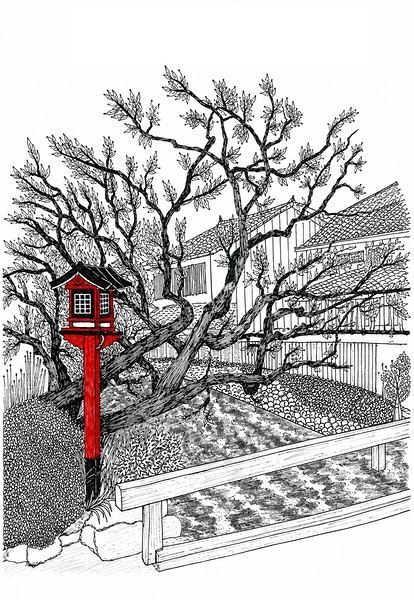 I’m inviting you on a stroll through my drawings—a completely subjective, far from exhaustive, and totally personal take, since it’s based on my own sketches. I put this travel journal together after returning in late 2024, mostly using felt-tip pens and pencils, with a few collages thrown in. I worked from our personal photos.
Let’s start with the shotengai...
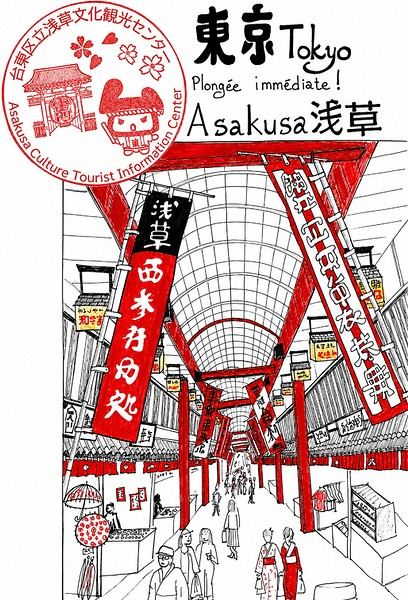
Our first "wow" moment came as we stepped out of the subway in Asakusa, the Tokyo neighborhood where we’d booked our hotel for our first five nights. Exhausted after our long flight, we finally arrived and took an exit that led straight into a shotengai—one of those covered shopping streets that pop up in city centers and flourished between the 1950s and 1980s.
It was an instant aesthetic shock, like a close encounter of the third kind between the modern city, a typical Asian market with its street stalls, the vintage vibe of the arcade, the sheer abundance of goods, and the bustling crowd—a mix of tourists, pilgrims (thanks to nearby Senso-ji Temple), and locals (it’s a very working-class area). In the end, it set the tone for a feeling we’d experience throughout the trip. Wherever we went, shotengai turned out to be fantastic spots for finding little restaurants, shops, or even fresh produce. Some are like real mazes, like in Kyoto, where we spent ages trying to relocate a restaurant we’d loved ;-)
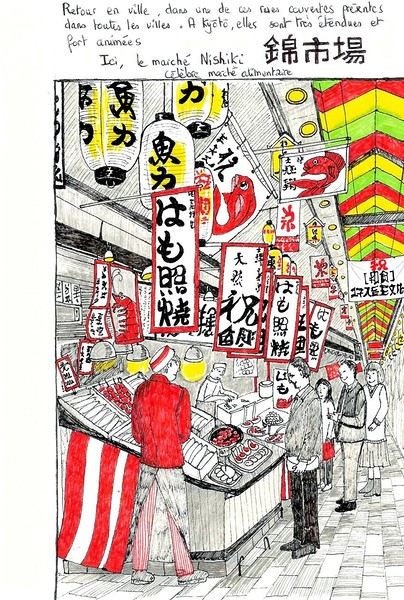
In Kanazawa, the Omicho Market: And in Kyoto, Nishiki Market:
To be continued...
I’m inviting you on a stroll through my drawings—a completely subjective, far from exhaustive, and totally personal take, since it’s based on my own sketches. I put this travel journal together after returning in late 2024, mostly using felt-tip pens and pencils, with a few collages thrown in. I worked from our personal photos.Let’s start with the shotengai...
Our first "wow" moment came as we stepped out of the subway in Asakusa, the Tokyo neighborhood where we’d booked our hotel for our first five nights. Exhausted after our long flight, we finally arrived and took an exit that led straight into a shotengai—one of those covered shopping streets that pop up in city centers and flourished between the 1950s and 1980s.
It was an instant aesthetic shock, like a close encounter of the third kind between the modern city, a typical Asian market with its street stalls, the vintage vibe of the arcade, the sheer abundance of goods, and the bustling crowd—a mix of tourists, pilgrims (thanks to nearby Senso-ji Temple), and locals (it’s a very working-class area). In the end, it set the tone for a feeling we’d experience throughout the trip. Wherever we went, shotengai turned out to be fantastic spots for finding little restaurants, shops, or even fresh produce. Some are like real mazes, like in Kyoto, where we spent ages trying to relocate a restaurant we’d loved ;-)
In Kanazawa, the Omicho Market:
And in Kyoto, Nishiki Market:
To be continued...
Adventure from La Cure to La Chaux-de-Fonds on foot with a dog
Hello, I’d like to embark on a little trip in my home country, Switzerland. I’ll start walking from La Cure, heading toward Le Noirmont first, then I’ll improvise my route—but it’ll probably follow the French border... at least as far as Lac de Joux.
I’ll decide day by day how much farther to go after that. My goal is to stay in nature as much as possible, wander around for as long as I can, and restock food in villages or towns along the way.
I’m thinking of mostly camping, but we’ll see if I end up in a hotel or another campsite depending on my route.
I’d love to reach La Chaux-de-Fonds on foot... maybe even Delémont. The whole thing should take about a week, give or take.
I’ll be bringing my dog, and I’m preparing for this as soon as I’m ready.
Any tips to make sure everything goes smoothly for us? Things I should know—or avoid? What about shepherds with their flocks of sheep? And isn’t hunting season open right now?
I’m not sure if what I’m planning is even doable, which is why I’m asking around.
This’ll be my first time doing something like this—wandering in nature *and* with a dog. I’m really excited for this adventure... and I need it. Thanks!
I’ll decide day by day how much farther to go after that. My goal is to stay in nature as much as possible, wander around for as long as I can, and restock food in villages or towns along the way.
I’m thinking of mostly camping, but we’ll see if I end up in a hotel or another campsite depending on my route.
I’d love to reach La Chaux-de-Fonds on foot... maybe even Delémont. The whole thing should take about a week, give or take.
I’ll be bringing my dog, and I’m preparing for this as soon as I’m ready.
Any tips to make sure everything goes smoothly for us? Things I should know—or avoid? What about shepherds with their flocks of sheep? And isn’t hunting season open right now?
I’m not sure if what I’m planning is even doable, which is why I’m asking around.
This’ll be my first time doing something like this—wandering in nature *and* with a dog. I’m really excited for this adventure... and I need it. Thanks!
Love at First Sight in Kenya
Hello,
After several years, I’ve finally decided to repost a travel journal on the forum. We returned a few weeks ago from an incredible trip to Kenya, and it’s reignited my desire to share our emotions in the face of these animals.
Kenya wasn’t originally a priority for us in terms of safari—we had the impression it was too touristy. So, we started with other destinations: Namibia, Tanzania, Botswana, and South Africa. But as I did more research, especially on the forum (thanks in part to Sylvie’s many trips), I eventually convinced myself that Kenya could be magnificent, as long as we chose our itinerary carefully and avoided peak seasons.
We ended up going in January, from the 17th to the 31st. We worked with a travel agency (TP) that crafted a custom itinerary for us: Samburu-Ol Pejeta-Naivasha-Maji Moto-Maasai Mara-Diani. They partnered with a local French-speaking agency, and everything was perfectly organized. Our trip exceeded all our expectations, and none of it would’ve been as amazing without our guide, Alfred. He accompanied us for 10 days and was a fantastic travel companion—professional, respectful of the animals, and always in good spirits. We formed a great bond with him in such a short time.
- **January 17th** After meeting up with Juliette and Charlotte in Rennes the night before, we left at 4 AM for Roissy Charles de Gaulle Airport. The thick fog made the drive pretty rough, but we arrived safely around 7:45 AM. A Blue Valet driver was waiting to take our car. Check-in went smoothly, and we waited patiently for our 10:40 AM flight. Unfortunately, despite boarding on time, a passenger was missing, and we had to find a replacement last minute. Then, another passenger who had checked in and dropped off their luggage wasn’t on the plane, so they had to unload their bags. After a long period of uncertainty and spotty communication from the crew, we finally took off over an hour late.
We arrived in Nairobi in the late afternoon, 45 minutes behind schedule. The administrative formalities were endless—it took nearly 1.5 hours from landing to leaving the airport with our luggage. When we stepped out, Alfred, our guide, was waiting with a big smile and drove us to the Eka Hotel, not far from the airport. Exhausted from the long journey, we fell asleep quickly.
- **January 18th** Alfred met us at 7 AM for a long drive to Samburu Reserve. We had a peaceful night, unlike the girls, who barely slept because their neighbors were talking loudly all night. Things even escalated when Charlotte started shouting insults to get them to quiet down, but it didn’t work.
It was Sunday, so traffic around Nairobi and along the route was light. Aside from a quick "technical stop," we drove straight through and arrived in Samburu after just under 6 hours. Because of the lower altitude (around 1,000m on average), it was hot—over 30°C in mid-January.
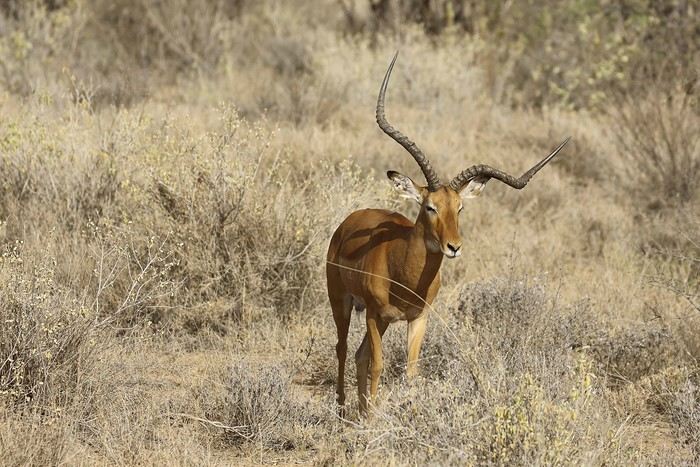
As soon as we entered the reserve, we spotted some impalas and quickly came across one of the region’s endemic species: the reticulated giraffe, which is absolutely stunning.
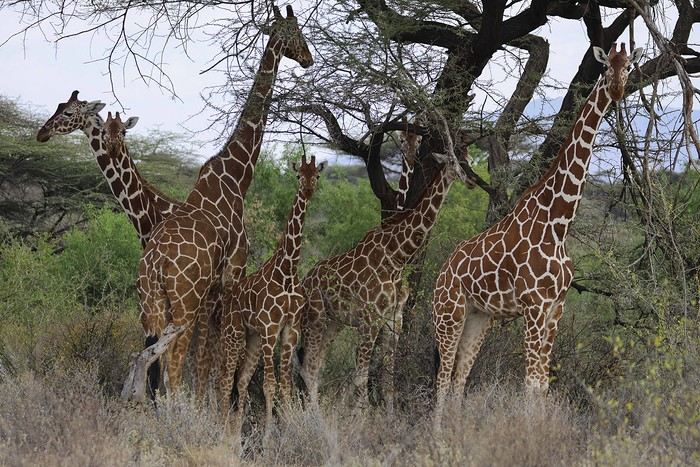
While heading to our camp for lunch, Alfred crossed paths with another vehicle and learned that a leopard was nearby. We started searching, and a few minutes later, Anny spotted a shape in a tree—it was our leopard!
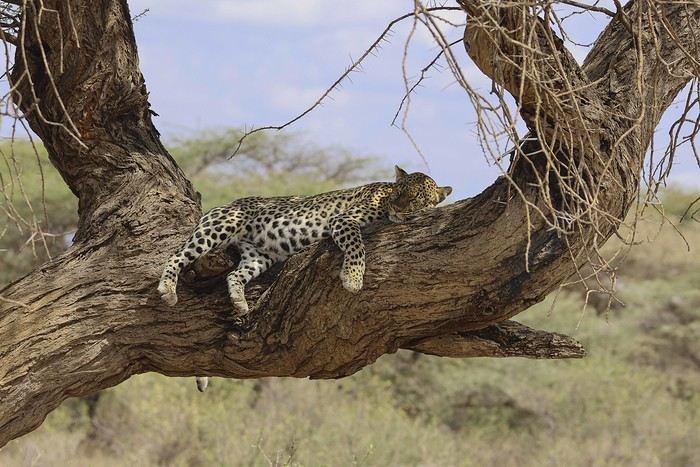
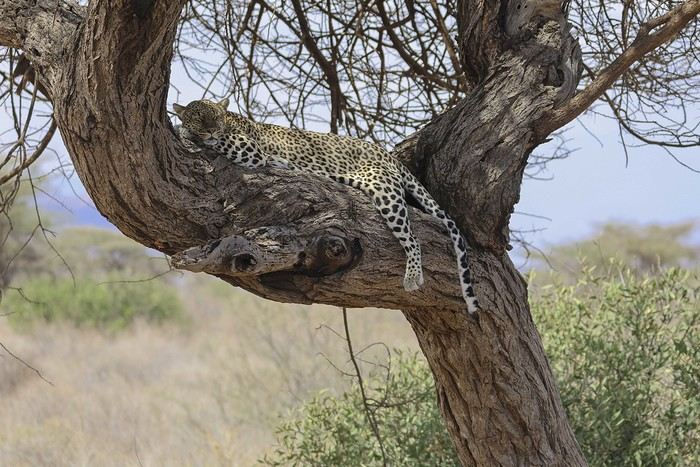
There were actually two of them—a mother and her adolescent. The young one was perched high in the tree, in the shade. We got to observe them for a good half-hour in excellent conditions, with just one other vehicle nearby.
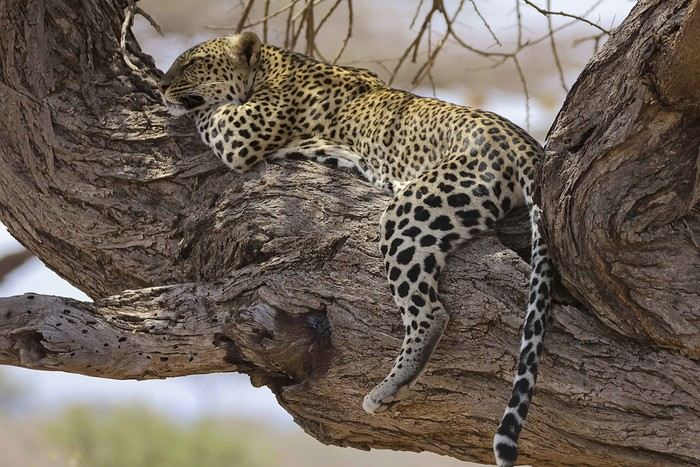
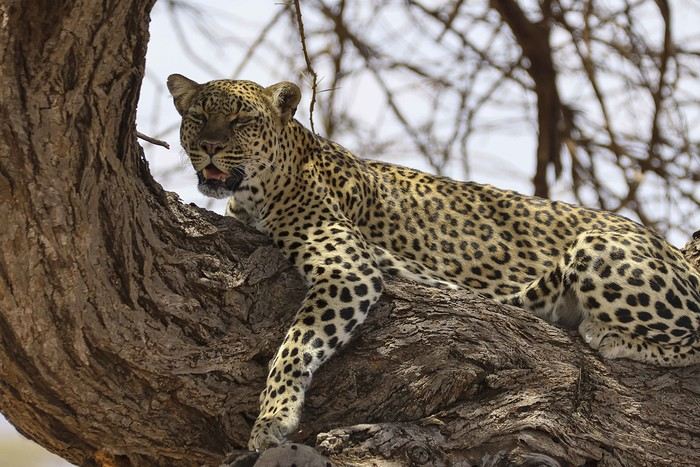
Alfred also noticed that the mother had hidden prey (a gerenuk gazelle) in the vegetation, away from prying eyes.
It was time to head to our camp, the Ashnil Samburu Camp, located in the Buffalo Springs area, by the river, in an idyllic setting surrounded by the region’s typical vegetation.
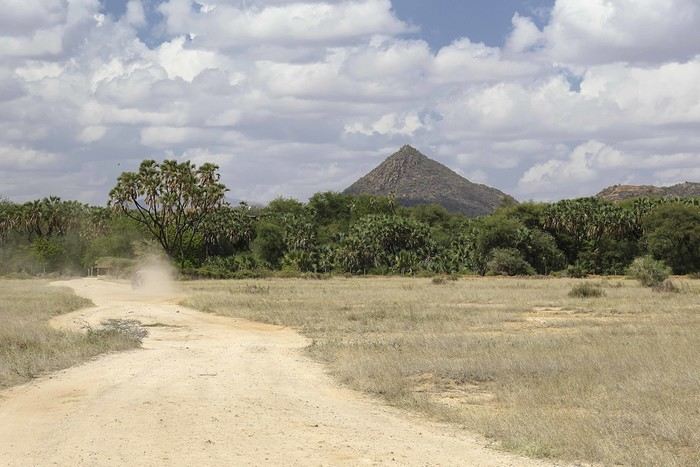
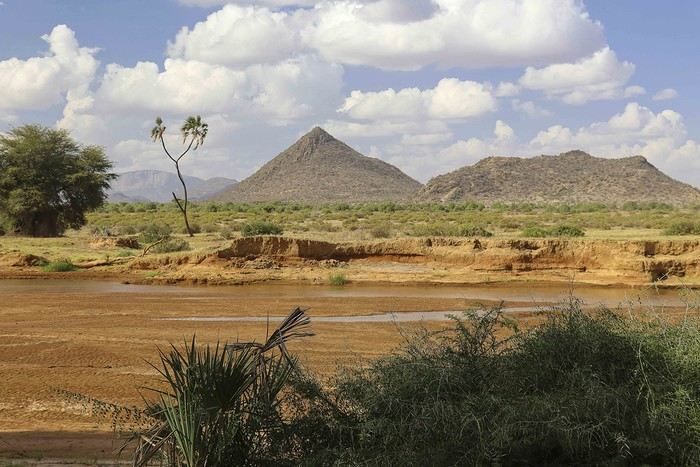
The welcome was fantastic—we immediately felt at home, and that feeling lasted throughout our 3-day stay in the reserve. It was 2 PM, but no one rushed us to the table. Our waitress, Sheila, who took care of us the whole time, was as lovely as the rest of the team. Barely seated, we were invited to watch an elephant passing right by the camp, in front of the restaurant. This trip was off to a great start!
After lunch, we relaxed by the pool. Monkeys, especially vervets, were everywhere, and a camp employee was assigned to keep an eye on them and shoo them away if needed (especially the baboons).
A little before 4 PM, we met up with Alfred for our first game drive. Just outside the camp, a few elephants were in the valley near the river.
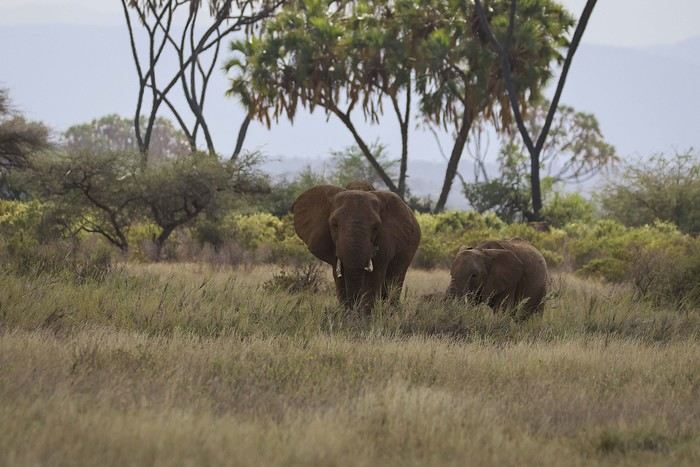
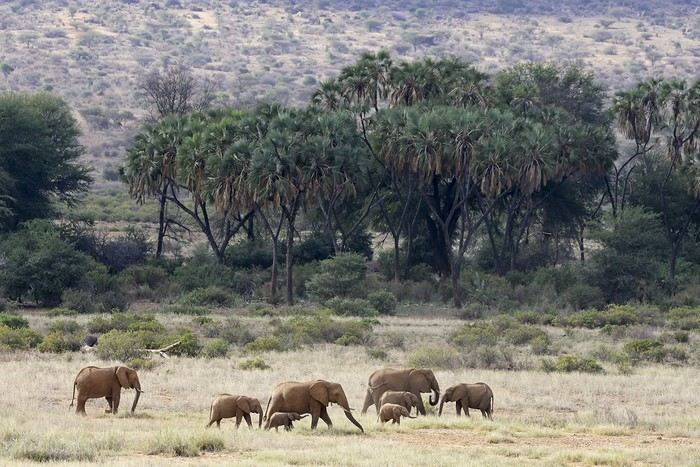
We’d see them in the same area almost every day. We also spotted some gazelles.
After several years, I’ve finally decided to repost a travel journal on the forum. We returned a few weeks ago from an incredible trip to Kenya, and it’s reignited my desire to share our emotions in the face of these animals.
Kenya wasn’t originally a priority for us in terms of safari—we had the impression it was too touristy. So, we started with other destinations: Namibia, Tanzania, Botswana, and South Africa. But as I did more research, especially on the forum (thanks in part to Sylvie’s many trips), I eventually convinced myself that Kenya could be magnificent, as long as we chose our itinerary carefully and avoided peak seasons.
We ended up going in January, from the 17th to the 31st. We worked with a travel agency (TP) that crafted a custom itinerary for us: Samburu-Ol Pejeta-Naivasha-Maji Moto-Maasai Mara-Diani. They partnered with a local French-speaking agency, and everything was perfectly organized. Our trip exceeded all our expectations, and none of it would’ve been as amazing without our guide, Alfred. He accompanied us for 10 days and was a fantastic travel companion—professional, respectful of the animals, and always in good spirits. We formed a great bond with him in such a short time.
- **January 17th** After meeting up with Juliette and Charlotte in Rennes the night before, we left at 4 AM for Roissy Charles de Gaulle Airport. The thick fog made the drive pretty rough, but we arrived safely around 7:45 AM. A Blue Valet driver was waiting to take our car. Check-in went smoothly, and we waited patiently for our 10:40 AM flight. Unfortunately, despite boarding on time, a passenger was missing, and we had to find a replacement last minute. Then, another passenger who had checked in and dropped off their luggage wasn’t on the plane, so they had to unload their bags. After a long period of uncertainty and spotty communication from the crew, we finally took off over an hour late.
We arrived in Nairobi in the late afternoon, 45 minutes behind schedule. The administrative formalities were endless—it took nearly 1.5 hours from landing to leaving the airport with our luggage. When we stepped out, Alfred, our guide, was waiting with a big smile and drove us to the Eka Hotel, not far from the airport. Exhausted from the long journey, we fell asleep quickly.
- **January 18th** Alfred met us at 7 AM for a long drive to Samburu Reserve. We had a peaceful night, unlike the girls, who barely slept because their neighbors were talking loudly all night. Things even escalated when Charlotte started shouting insults to get them to quiet down, but it didn’t work.
It was Sunday, so traffic around Nairobi and along the route was light. Aside from a quick "technical stop," we drove straight through and arrived in Samburu after just under 6 hours. Because of the lower altitude (around 1,000m on average), it was hot—over 30°C in mid-January.
As soon as we entered the reserve, we spotted some impalas and quickly came across one of the region’s endemic species: the reticulated giraffe, which is absolutely stunning.
While heading to our camp for lunch, Alfred crossed paths with another vehicle and learned that a leopard was nearby. We started searching, and a few minutes later, Anny spotted a shape in a tree—it was our leopard!
There were actually two of them—a mother and her adolescent. The young one was perched high in the tree, in the shade. We got to observe them for a good half-hour in excellent conditions, with just one other vehicle nearby.
Alfred also noticed that the mother had hidden prey (a gerenuk gazelle) in the vegetation, away from prying eyes.
It was time to head to our camp, the Ashnil Samburu Camp, located in the Buffalo Springs area, by the river, in an idyllic setting surrounded by the region’s typical vegetation.
The welcome was fantastic—we immediately felt at home, and that feeling lasted throughout our 3-day stay in the reserve. It was 2 PM, but no one rushed us to the table. Our waitress, Sheila, who took care of us the whole time, was as lovely as the rest of the team. Barely seated, we were invited to watch an elephant passing right by the camp, in front of the restaurant. This trip was off to a great start!
After lunch, we relaxed by the pool. Monkeys, especially vervets, were everywhere, and a camp employee was assigned to keep an eye on them and shoo them away if needed (especially the baboons).
A little before 4 PM, we met up with Alfred for our first game drive. Just outside the camp, a few elephants were in the valley near the river.
We’d see them in the same area almost every day. We also spotted some gazelles.
Nepal Feedback
NAMASTE NEPAL! PRACTICAL INFO AND EXPERIENCE FEEDBACK
Stay from March 25 to April 16, 2025
· Flight tickets Air India (via Delhi) (via Skyscanner) = 1130 € per person · Planned budget (and respected without too many restrictions and while buying a few small gifts) = 2000 € for the stay for two. Buses, taxis, and entrance fees to various sites represent a budget to consider. Meals are cheap. Drinks like beer/Coke, however, are not cheap and cost the equivalent of a meal. · Exchange rate of the rupee during our stay = 0.0064 € (the exchange rate is almost identical everywhere, including at the airport). · At the airport, purchase of two SIM cards (phone) = 1000 NPR x 2 for 28 days. · Kathmandu: we had booked the hotel upon arrival: Kathmandu Boutique Hotel (+977 015 357 446 – email: booking@kathmanduboutiquehotel.com), very well located in a quiet alley off the street, south of Thamel, a 10-minute walk from Durbar Square. A hotel like Nepal knows how to do, where tall people will have to duck. Night + breakfast = 18 € for two. Very warm welcome, great location, excellent value for money. · Bhaktapur: we had also booked a hotel for the end of our stay because the chance of the year 2025 made the Nepali New Year and Bisket Jatra particularly festive in Bhaktapur: Manju Baha Hotel School (+977 976 7234014 – email: manjubahahotel@gmail.com) located in an old monastery. "A social enterprise transforming an old monastery into a charming hotel, offering professional hospitality training to underprivileged Nepali youth." Night + breakfast = 32 € for two. Beautifully decorated room. Very warm welcome. Don’t miss the Changunarayan site (near Bhaktapur), it’s amazing. And if you’re lucky enough to be in Bhaktapur in mid-April for 3 days, there’s the Bisket Jatra festivities (Newari festival), joyful, noisy, fun, and wild… · Pokhara (hotel recommended by the Kathmandu hotel): Hotel Green Tara, Lakeside, 10th street, set back, quiet (Tel. +977 61 462698 – email: greentara_67@hotmail.com) · Trek permit (Lower Mustang, no need for an agency or guide, permits checked at Ghasa and Jomsom) = 2000 NPR per person (2 ID photos) · Bus Kathmandu/Pokhara and return = 2000 NPR per person · Bus Pokhara/Jomsom, 2 one-way tickets = 2800 NPR. · Taxi: negotiation with a driver we recommend, Vicky (+977 984 075 599). You explain what you want, negotiate the price, and he waits for you during the visit. Very charming, we used him several times. For example: departure from our hotel at 10 AM -> Boudhanath/Pashupatinath/Patan return at 5 PM to the hotel = 6500 NPR – Swayambhunath (round trip) = 1200 NPR · Site prices: https://ntb.gov.np/plan-your-trip/before-you-come/heritage-site-entry-fees o Visitor Pass for Kathmandu Durbar Square (for the duration of the stay, show your visa) = 1000 NPR per person (1 ID photo) o Bhaktapur Durbar Square (old town) = 1800 NPR per person o Patan = 1000 NPR per person o Swayambhu Stupa = 200 NPR per person o Boudha Stupa = 200 NPR per person o Pashupatinath Temple = 1000 NPR per person (interesting to take a guide) o Changunarayan Temple (6 km north of Bhaktapur) = 400 NPR per person o Mountain Museum in Pokhara = 750 NPR per person · E-cigarettes: e-cigarettes are banned in India and confiscated whether they’re in carry-on or checked luggage. On the way there, we had kept them in our carry-on, they were confiscated in Delhi. On the way back, learning from our previous experience, we put them in our checked luggage. Someone came to get us to take them out of our bags and confiscate them… You can find e-cigarettes and products in Kathmandu.
* * *
I’m 74 years old. I went to Nepal in 1982, 1983, and the last time in 1986. I wanted to introduce this beautiful and endearing country to my husband, and it was… now or never. So we decided it was now.
I knew the trek starting from Pokhara: Naudanda/Birethanti/Ghorepani/Tatopani/Kalopani. There was no way I was going to do that trek, especially the 1000-meter staircase to reach Ghorepani… You have to stay humble with age.
Back then, the road didn’t exist. I didn’t consider, with the construction of this road (NH48) along the western bank of the Kali Gandaki, doing a trek along a windy and dusty road. Was there an alternative hiking trail on the eastern bank? No one answered my question on VoyageForum, so I did my research online. And I found this site: "Andrées de Ruiter and Prem Rai - Trekking the Annapurna Circuit, including the new NATT trails that avoid the road - A guide to one of the most beautiful trekking regions in Nepal and the world (2011) - NATT = New Annapurna Trekking Trail".
Phew! A solution was emerging. This circuit from 2011 wasn’t fully marked. The idea was to go from Jomsom to Tatopani, so we needed to make sure the path was well-marked all the way, which we did, and the path exists, marked in red and white!
So, with the walking times information, we built our 8-day circuit:
· Jomsom/Thinigaon · Thinigaon/Chimang · Chimang/Saura · Saura/Kokhetanti · Rest day or, if in good shape: loop to Sekong Lake · Kokhetanti/Jhipra Deurali · Jhipra Deurali/Kopchepani · Kopchepani/Tatopani
It’s a senior trek, after all. So the walking times noted on the sites indicated 3 hours or even 4 hours for the two longest stages. That pace suited us fine.
On March 29, we left Kathmandu (1400m), after visiting the must-see sites, by bus to Pokhara: 200 km and 8.5 hours on a chaotic road under construction. I had a memory of Pokhara where it was the first city where you could see the Himalayan range, especially Machhapuchhare. But the pollution is such, the dust raised by traffic and construction, that no horizon is visible except the first hills around Pokhara.
We stayed 24 hours in Pokhara (820m), and on March 31, we left our luggage at the hotel and set off with our lightest backpacks: change of clothes, toiletries, first aid kit, anti-chafing cream, water bottle, sleeping bag liner, and light shoes for the stages.
We took the bus to Jomsom: 160 km/7.5 hours including stops for bathroom breaks, tea, and lunch. The road is nothing but a chaos of potholes, landslides, construction, dust, rebuilding, and mudslides. In Ghasa, the bus stops, and we’re told we’re at a checkpoint and that the two foreigners in the bus, my husband and I, need to have our permits checked, which takes a few minutes. The driving is rock-and-roll, surprising, and courteous. The drivers have their codes, and on these improbable roads, they’re virtuosos.
We could have chosen the plane, but several reasons dissuaded us: if there’s too much wind, the planes don’t take off; personally, I wasn’t reassured about landing in Jomsom, and this transport has a cost.
We arrived around 2 PM in Jomsom (2720m), and despite the early wake-up, the nearly 8 hours on the bus, and the altitude, we decided to head straight to Thinigaon (2840m). At the Jomsom checkpoint, they told us it was a 30-minute walk. Great! Except we took an hour and a half on an uphill road, bent over to fight a strong wind. But the Himalayan range is there! The Dhaulagiri, the Nilgiri, the Annapurnas as a reward.
In Thinigaon, we found a room at the "Nilgiri View Hotel" run by a didi (big sister in Nepali). From the lodge’s roof, she proudly showed us the different peaks surrounding the village and told us, worried, that it hadn’t snowed here for 3 years. She said there are very few tourists, that the season is rather in September/October/November. It seems there’s not a soul in this village, yet mules pass through the narrow street paved with large flat stones, their bells ringing. We dine at 6 PM and go to bed… Room = 1200 NPR and dinner, breakfast, and drinks = 2560 NPR.
On April 1, we set off at 9 AM, not for Chimang as planned but for Marpha! The didi from the Thinigaon lodge had said it was a 3-hour walk. The first part of this stage is attractive, the mountains are magnificent and imposing, the landscape is superb, there’s no one around, a feeling of being "alone in the world." We follow Dhumbra Tal, this small green lake. The path is a rocky track that climbs steeply. Then, around a hill, we start the big descent that joins the Kali Gandaki. We face the wind head-on, and the violent gusts take our breath away, throw us off balance, and envelop us in dust. We see the road on the other side of the Kali Gandaki. We arrive in the village of Chhairo at 2 PM, completely exhausted and with blistered feet, after 5 hours of walking instead of the planned 3.5 hours.
We’re welcomed by the village nurse, who tells us there’s a lodge in the village. Chhairo is a Tibetan village, a 20-minute walk from Marpha (according to the locals, multiply by 2 or even 3 for us…). We’re going to revise our trek plan and, first of all, spend the night in Chhairo.
The lodge is quite pleasant, and Karma, the hostess, is very friendly. She asks about our plans and suggests we stay in Chhairo the next day, from where we can visit Marpha and also Chimang, a 1-hour walk away, in light mode, meaning without backpacks. She invites us to participate in a village ceremony the next evening.
We immediately accept the proposal, as our feet need rest and the welcome is so warm… Dinner and bed!
We reworked our trek plan, which was too ambitious for our untrained bodies and, let’s face it… no longer in our first youth. In the initial plan, we thought there wouldn’t be too much elevation gain following the Kali Gandaki, but checking the map, we realize there might be significant elevation changes between Sauru and Sirkung. So we plan:
· Tomorrow: visit Marpha (2670m) and Chimang (2744m) · April 3: bus from Chhairo (2700m) to Kalopani (2530m) and continue on foot to Ghasa (2010m) · April 4: Ghasa/Pairataplo (1940m) · April 5: Pairatapla/Gadpar (1580m) · April 6: Gadpar/Narchyang (1510m) · April 7: Narchyang/Tatopani (1190m) · April 8: return to Pokhara.
Normally, it’s all downhill…
April 2, a rest day then… We set off in the morning to explore Marpha. We have to take a temporary bridge because the suspension bridge is closed due to road construction. We join the road and arrive in Marpha, a village famous for its apple orchards, brandy, cider, and apple juice production. This village is magnificent with its stone houses and monastery clinging to the hillside. The road construction spared it. There are people, but very few Western tourists.
We have lunch in Marpha and go back through Chhairo to take the path to Chimang. We cross a fragrant pine forest and find the rocky path; the landscape is splendid. We walk quietly, passing peaceful buffaloes and cows, and arrive at the foot of a stone staircase… 275 steps (which we counted on the way back) leading us to the village of Chimang. Chimang is an isolated Newari village that seems a bit desolate. Despite the slopes, there are crops on every little bit of land. Thankfully, we changed our initial program because there’s no lodge in this village, contrary to what we saw on a map… We wander through the village, which seems very deserted, have coffee in a house from another world, and then head back to Chhairo.
A rest day? = 5 hours of walking!!
Dinner and village ceremony. From what we understand, this ceremony is in honor of the Dalai Lama. Men, women, and children in traditional costumes gather twice a month; they dance, make, and offer small sweet cakes with Tibetan tea (made from tea, yak butter—often rancid—water, and salt). Surprising for first-timers…
Around 10 PM, we leave the ceremony; tomorrow morning, we need to be on the roadside by 7 AM to catch the bus to Kalopani…
This village of Chhairo is very pleasant and welcoming, no tourists, just two motorcyclists who arrived in the evening, one of whom participated in the ceremony and discreetly poured his Tibetan tea outside.
Lodge: "Norsang Tibetan Guesthouse and Restaurant". Total bill for 2 nights, 2 dinners, 2 breakfasts, and drinks = 8000 NPR.
April 3: bus from Chhairo to Kalopani, about 1.5 hours for the 20 km (200 NPR per person). We descend on the right bank of the Kali Gandaki. We find the red and white markings to resume the trek toward Ghasa. We’re in a fragrant pine forest, the Dhaulagiri on one side and the Annapurnas on the other, magnificent, and the path is pleasant and easy. We get a bit lost in this forest, always looking for the markings. Near Lete, two trekkers pass us, and we meet them again a little further on with two very young children, to whom we give the 2 hard-boiled eggs I didn’t eat this morning. They accepted them without hesitation.
We arrive in a village and ask for directions to Ghasa. The young girls point the way. But we come across a forest being logged, trees cut in all directions. We turn back and ask for confirmation. They confirm… But the two young girls catch up with us and clear the way. We have to step over, go around, and cross the felled trees, with no indication at all. Through this pick-up sticks of felled trees, the girls lead us to the top of a stone staircase, indicating that was the path. It’s the only place where we saw rhododendrons in bloom.
We descend the staircase. At the bottom, to the left, there’s a bridge to go toward Choyo, and to the right, a path to Ghasa. We take the right path and join the road. We should normally find the red and white markings, but we don’t… So we continue on the western bank road of the Kali Gandaki.
A little before the village of Misi, we see fumaroles on the opposite bank that seem to come from the ground. We don’t understand. We stopped to eat in the village of Misi (noodle soup = 600 NPR), but it’s hard to communicate with the elderly people running the guesthouse.
We continued on the road, not finding the marked path parallel to the road. Landslides, both on the left and right banks, seem to have taken over the marked routes. It’s a place where the Kali Gandaki gorge narrows, and on the opposite bank, the mountain smokes more and more, and we now hear the crackling of fire. Across from us, the mountain is burning… Our initial plan had us passing on that burning bank right now…
We arrive in Ghasa at 3:30 PM, a 6.5-hour stage but with a 1-hour stop at noon. We’re at the "Florida Guesthouse and Restaurant." From our room, we see the mountain smoking on the other side of the river, and at night, we see the flames. In this village, posters show Himalayan eagles and vultures that seem to be protected species. Indeed, we saw (and heard) 3 eagles circling today.
April 4 – Today, heading to Pairothapla or Kopchepani depending on our feet, accommodation options, and simply our desires.
No more smoke on the mountain this morning. It’s chilly, 7:45 AM, the sky is clear, just a smell of smoke outside.
Price of the lodge = 1000 NPR for the night + 3580 NPR for meals.
We cross Ghasa, which stretches over more than a kilometer. We have a drink at the last guesthouse in the village, and the didi, when she learns our destination, tells us to be careful because the villages we’re going to aren’t safe. Should we distribute our rupees in different pockets? Nah, we kept going.
At the exit of Ghasa, we find the red and white markings and take the suspension bridge to cross the boiling waters of the Kali Gandaki. The passage is impressive because the river is tumultuous. Lots of climbs and even more descents. We’re back on the eastern bank. It’s hot! On the narrow path, we meet a group of buffaloes. Who has the right of way? We decide to stick as close as possible to the rock wall and move forward calmly. The buffaloes look at us, chewing placidly, with no intention of jumping on us. Phew!
After a 5-hour stage (including stops), we arrive in Pairothapla, with hot feet and firm thighs, and decide we won’t go any further. It’s a good thing because there’s a lodge, the most basic so far, but with a great welcome. We have a meal and a short nap. The buffaloes we met on the way belong to this house. They come to drink at the fountain by the path.
Our host, very pleasant, doesn’t know what to do to please us and is very attentive. He wants to chat. He has two children, a 4-year-old girl and a 7-year-old boy. Where do they go to school? Do they go? He tells us that the fires in the mountain are caused by people, but for what reason? We won’t find out, but it’s illegal. From here, we can still see smoke rising in the distance. The wife is a bit less friendly. Corn kernels dry on a woven straw mat on the ground, and the mom sorts them.
From where we are, we overlook the valley and see the road under construction winding along the mountainside on the other bank.
Dinner on the terrace of the house overlooking the path, windbreaker and fleece on: dal bhat chicken for me and chicken curry for my husband: "organic" products, at least local production. There are small vegetable gardens everywhere with all sorts of vegetables.
April 5 – While we’re having breakfast on the terrace of our lodge, 5 porters, straps on their foreheads, heavily loaded, pass by on the path. A few minutes later, a group of 9 people appears. It must be said that since the beginning of our journey, we’ve met very few hikers. Two backpackers in Chhairo, the two hikers near Lete, two female hikers passed us before Pairothapla, a solo female hiker passed us…
The lodge in Pairothapla is called "Bimala Lodge & Thakali Kitchen" – Price for night + 4 meals + 2 breakfasts = 3000 NPR.
The descent toward the Kali Gandaki involves climbs whose steps we didn’t count. Clearly, the landslides on the mountain cause changes to the official ACAP trek marked in red and white, and the marking updates can’t keep up with the pace of these landslides. It’s almost always by chance that we find the markings. Fortunately, we can follow the power line that guides us somewhat.
Drink stop in Kopchepani, the legs are fine, but the feet don’t like being tightly enclosed. A group of trekkers with porters passes on the path. We met buffaloes that we kindly let pass; the path was wide enough, but it was a staircase going up, and we didn’t want to take any risks.
Across, a view of the magnificent Rupse Waterfall on the other bank of the Kali Gandaki, at the bottom, lots of vehicles and people.
Arrival in Gadpar after crossing a rather unwelcoming small village and cultivated gardens between dry stone walls, each better built than the last.
First lodge spotted, first lodge adopted to answer the call of our feet, and a very warm welcome from the owner. Since we hadn’t eaten at noon, we had Tibetan bread/jam. 6-hour stage including 1 hour of stops. Night + dinner + breakfast + drinks = 5060 NPR
April 6 – Today, heading to Narchyang.
For several days, we’ve seen banana trees with their bunches of fruit and even a prickly pear with large fruits ripening.
This stage is quite peaceful and pleasant. We take a suspension bridge to cross a tributary of the Kali Gandaki. While we’re resting for a moment before crossing the bridge, a couple of porters, a man and a woman, arrive and start across the bridge with their wood load in a basket held by a strap on their forehead, making them bend. We set off too… lighter than them.
On the other side of the bridge… a stone staircase, and it climbs steeply. The porter couple didn’t take this staircase; they went right on the path.
At the top of the staircase, we arrive in Narchyang after a 4-hour stage. A magnificent waterfall overlooks the village. We get lost in this fairly large village looking for a lodge. After wandering around for a while, we ask for directions, and an 84-year-old man takes us through the whole village and accompanies us to a very nice lodge run by a woman.
We chat with our hostess, who asks where we’re from and where we’re going. We explain that we want to reach Tatopani the next day and then return to Pokhara. She tells us there are 4x4s going directly to Pokhara and that it would probably be easier than taking a bus that might be full in Tatopani. After a quick consultation, we decide to return to Pokhara the next day by 4x4. She finds us a 4x4 with 2 seats left, departure at 8 AM – 5 hours on the road and 1500 NPR per person. A charming didi who does everything to be pleasant and helpful.
Narchyang community lodge = night + snacks + dinner + breakfast = 3000 NPR.
There you go, our trek ends tomorrow. Many necessary changes and adaptations to our initial trek, but no regrets, it was superb and a great experience that, for my part, I won’t be able to repeat. Always this encounter with the endearing, welcoming, curious, and very kind Nepali people. It was now or never, and we did it!
* * *
In conclusion, 3 full weeks in Nepal is a duration that allows visiting Kathmandu, Patan, and Bhaktapur, enjoying the various sites, and soaking in the atmosphere and urban Nepali life.
The trek, even revised and corrected, allowed us to get close to the impressive Annapurna and Dhaulagiri peaks. One or two acclimatization days might be necessary to get the body in tune with this magical and extraordinary land.
Stay from March 25 to April 16, 2025
· Flight tickets Air India (via Delhi) (via Skyscanner) = 1130 € per person · Planned budget (and respected without too many restrictions and while buying a few small gifts) = 2000 € for the stay for two. Buses, taxis, and entrance fees to various sites represent a budget to consider. Meals are cheap. Drinks like beer/Coke, however, are not cheap and cost the equivalent of a meal. · Exchange rate of the rupee during our stay = 0.0064 € (the exchange rate is almost identical everywhere, including at the airport). · At the airport, purchase of two SIM cards (phone) = 1000 NPR x 2 for 28 days. · Kathmandu: we had booked the hotel upon arrival: Kathmandu Boutique Hotel (+977 015 357 446 – email: booking@kathmanduboutiquehotel.com), very well located in a quiet alley off the street, south of Thamel, a 10-minute walk from Durbar Square. A hotel like Nepal knows how to do, where tall people will have to duck. Night + breakfast = 18 € for two. Very warm welcome, great location, excellent value for money. · Bhaktapur: we had also booked a hotel for the end of our stay because the chance of the year 2025 made the Nepali New Year and Bisket Jatra particularly festive in Bhaktapur: Manju Baha Hotel School (+977 976 7234014 – email: manjubahahotel@gmail.com) located in an old monastery. "A social enterprise transforming an old monastery into a charming hotel, offering professional hospitality training to underprivileged Nepali youth." Night + breakfast = 32 € for two. Beautifully decorated room. Very warm welcome. Don’t miss the Changunarayan site (near Bhaktapur), it’s amazing. And if you’re lucky enough to be in Bhaktapur in mid-April for 3 days, there’s the Bisket Jatra festivities (Newari festival), joyful, noisy, fun, and wild… · Pokhara (hotel recommended by the Kathmandu hotel): Hotel Green Tara, Lakeside, 10th street, set back, quiet (Tel. +977 61 462698 – email: greentara_67@hotmail.com) · Trek permit (Lower Mustang, no need for an agency or guide, permits checked at Ghasa and Jomsom) = 2000 NPR per person (2 ID photos) · Bus Kathmandu/Pokhara and return = 2000 NPR per person · Bus Pokhara/Jomsom, 2 one-way tickets = 2800 NPR. · Taxi: negotiation with a driver we recommend, Vicky (+977 984 075 599). You explain what you want, negotiate the price, and he waits for you during the visit. Very charming, we used him several times. For example: departure from our hotel at 10 AM -> Boudhanath/Pashupatinath/Patan return at 5 PM to the hotel = 6500 NPR – Swayambhunath (round trip) = 1200 NPR · Site prices: https://ntb.gov.np/plan-your-trip/before-you-come/heritage-site-entry-fees o Visitor Pass for Kathmandu Durbar Square (for the duration of the stay, show your visa) = 1000 NPR per person (1 ID photo) o Bhaktapur Durbar Square (old town) = 1800 NPR per person o Patan = 1000 NPR per person o Swayambhu Stupa = 200 NPR per person o Boudha Stupa = 200 NPR per person o Pashupatinath Temple = 1000 NPR per person (interesting to take a guide) o Changunarayan Temple (6 km north of Bhaktapur) = 400 NPR per person o Mountain Museum in Pokhara = 750 NPR per person · E-cigarettes: e-cigarettes are banned in India and confiscated whether they’re in carry-on or checked luggage. On the way there, we had kept them in our carry-on, they were confiscated in Delhi. On the way back, learning from our previous experience, we put them in our checked luggage. Someone came to get us to take them out of our bags and confiscate them… You can find e-cigarettes and products in Kathmandu.
* * *
I’m 74 years old. I went to Nepal in 1982, 1983, and the last time in 1986. I wanted to introduce this beautiful and endearing country to my husband, and it was… now or never. So we decided it was now.
I knew the trek starting from Pokhara: Naudanda/Birethanti/Ghorepani/Tatopani/Kalopani. There was no way I was going to do that trek, especially the 1000-meter staircase to reach Ghorepani… You have to stay humble with age.
Back then, the road didn’t exist. I didn’t consider, with the construction of this road (NH48) along the western bank of the Kali Gandaki, doing a trek along a windy and dusty road. Was there an alternative hiking trail on the eastern bank? No one answered my question on VoyageForum, so I did my research online. And I found this site: "Andrées de Ruiter and Prem Rai - Trekking the Annapurna Circuit, including the new NATT trails that avoid the road - A guide to one of the most beautiful trekking regions in Nepal and the world (2011) - NATT = New Annapurna Trekking Trail".
Phew! A solution was emerging. This circuit from 2011 wasn’t fully marked. The idea was to go from Jomsom to Tatopani, so we needed to make sure the path was well-marked all the way, which we did, and the path exists, marked in red and white!
So, with the walking times information, we built our 8-day circuit:
· Jomsom/Thinigaon · Thinigaon/Chimang · Chimang/Saura · Saura/Kokhetanti · Rest day or, if in good shape: loop to Sekong Lake · Kokhetanti/Jhipra Deurali · Jhipra Deurali/Kopchepani · Kopchepani/Tatopani
It’s a senior trek, after all. So the walking times noted on the sites indicated 3 hours or even 4 hours for the two longest stages. That pace suited us fine.
On March 29, we left Kathmandu (1400m), after visiting the must-see sites, by bus to Pokhara: 200 km and 8.5 hours on a chaotic road under construction. I had a memory of Pokhara where it was the first city where you could see the Himalayan range, especially Machhapuchhare. But the pollution is such, the dust raised by traffic and construction, that no horizon is visible except the first hills around Pokhara.
We stayed 24 hours in Pokhara (820m), and on March 31, we left our luggage at the hotel and set off with our lightest backpacks: change of clothes, toiletries, first aid kit, anti-chafing cream, water bottle, sleeping bag liner, and light shoes for the stages.
We took the bus to Jomsom: 160 km/7.5 hours including stops for bathroom breaks, tea, and lunch. The road is nothing but a chaos of potholes, landslides, construction, dust, rebuilding, and mudslides. In Ghasa, the bus stops, and we’re told we’re at a checkpoint and that the two foreigners in the bus, my husband and I, need to have our permits checked, which takes a few minutes. The driving is rock-and-roll, surprising, and courteous. The drivers have their codes, and on these improbable roads, they’re virtuosos.
We could have chosen the plane, but several reasons dissuaded us: if there’s too much wind, the planes don’t take off; personally, I wasn’t reassured about landing in Jomsom, and this transport has a cost.
We arrived around 2 PM in Jomsom (2720m), and despite the early wake-up, the nearly 8 hours on the bus, and the altitude, we decided to head straight to Thinigaon (2840m). At the Jomsom checkpoint, they told us it was a 30-minute walk. Great! Except we took an hour and a half on an uphill road, bent over to fight a strong wind. But the Himalayan range is there! The Dhaulagiri, the Nilgiri, the Annapurnas as a reward.
In Thinigaon, we found a room at the "Nilgiri View Hotel" run by a didi (big sister in Nepali). From the lodge’s roof, she proudly showed us the different peaks surrounding the village and told us, worried, that it hadn’t snowed here for 3 years. She said there are very few tourists, that the season is rather in September/October/November. It seems there’s not a soul in this village, yet mules pass through the narrow street paved with large flat stones, their bells ringing. We dine at 6 PM and go to bed… Room = 1200 NPR and dinner, breakfast, and drinks = 2560 NPR.
On April 1, we set off at 9 AM, not for Chimang as planned but for Marpha! The didi from the Thinigaon lodge had said it was a 3-hour walk. The first part of this stage is attractive, the mountains are magnificent and imposing, the landscape is superb, there’s no one around, a feeling of being "alone in the world." We follow Dhumbra Tal, this small green lake. The path is a rocky track that climbs steeply. Then, around a hill, we start the big descent that joins the Kali Gandaki. We face the wind head-on, and the violent gusts take our breath away, throw us off balance, and envelop us in dust. We see the road on the other side of the Kali Gandaki. We arrive in the village of Chhairo at 2 PM, completely exhausted and with blistered feet, after 5 hours of walking instead of the planned 3.5 hours.
We’re welcomed by the village nurse, who tells us there’s a lodge in the village. Chhairo is a Tibetan village, a 20-minute walk from Marpha (according to the locals, multiply by 2 or even 3 for us…). We’re going to revise our trek plan and, first of all, spend the night in Chhairo.
The lodge is quite pleasant, and Karma, the hostess, is very friendly. She asks about our plans and suggests we stay in Chhairo the next day, from where we can visit Marpha and also Chimang, a 1-hour walk away, in light mode, meaning without backpacks. She invites us to participate in a village ceremony the next evening.
We immediately accept the proposal, as our feet need rest and the welcome is so warm… Dinner and bed!
We reworked our trek plan, which was too ambitious for our untrained bodies and, let’s face it… no longer in our first youth. In the initial plan, we thought there wouldn’t be too much elevation gain following the Kali Gandaki, but checking the map, we realize there might be significant elevation changes between Sauru and Sirkung. So we plan:
· Tomorrow: visit Marpha (2670m) and Chimang (2744m) · April 3: bus from Chhairo (2700m) to Kalopani (2530m) and continue on foot to Ghasa (2010m) · April 4: Ghasa/Pairataplo (1940m) · April 5: Pairatapla/Gadpar (1580m) · April 6: Gadpar/Narchyang (1510m) · April 7: Narchyang/Tatopani (1190m) · April 8: return to Pokhara.
Normally, it’s all downhill…
April 2, a rest day then… We set off in the morning to explore Marpha. We have to take a temporary bridge because the suspension bridge is closed due to road construction. We join the road and arrive in Marpha, a village famous for its apple orchards, brandy, cider, and apple juice production. This village is magnificent with its stone houses and monastery clinging to the hillside. The road construction spared it. There are people, but very few Western tourists.
We have lunch in Marpha and go back through Chhairo to take the path to Chimang. We cross a fragrant pine forest and find the rocky path; the landscape is splendid. We walk quietly, passing peaceful buffaloes and cows, and arrive at the foot of a stone staircase… 275 steps (which we counted on the way back) leading us to the village of Chimang. Chimang is an isolated Newari village that seems a bit desolate. Despite the slopes, there are crops on every little bit of land. Thankfully, we changed our initial program because there’s no lodge in this village, contrary to what we saw on a map… We wander through the village, which seems very deserted, have coffee in a house from another world, and then head back to Chhairo.
A rest day? = 5 hours of walking!!
Dinner and village ceremony. From what we understand, this ceremony is in honor of the Dalai Lama. Men, women, and children in traditional costumes gather twice a month; they dance, make, and offer small sweet cakes with Tibetan tea (made from tea, yak butter—often rancid—water, and salt). Surprising for first-timers…
Around 10 PM, we leave the ceremony; tomorrow morning, we need to be on the roadside by 7 AM to catch the bus to Kalopani…
This village of Chhairo is very pleasant and welcoming, no tourists, just two motorcyclists who arrived in the evening, one of whom participated in the ceremony and discreetly poured his Tibetan tea outside.
Lodge: "Norsang Tibetan Guesthouse and Restaurant". Total bill for 2 nights, 2 dinners, 2 breakfasts, and drinks = 8000 NPR.
April 3: bus from Chhairo to Kalopani, about 1.5 hours for the 20 km (200 NPR per person). We descend on the right bank of the Kali Gandaki. We find the red and white markings to resume the trek toward Ghasa. We’re in a fragrant pine forest, the Dhaulagiri on one side and the Annapurnas on the other, magnificent, and the path is pleasant and easy. We get a bit lost in this forest, always looking for the markings. Near Lete, two trekkers pass us, and we meet them again a little further on with two very young children, to whom we give the 2 hard-boiled eggs I didn’t eat this morning. They accepted them without hesitation.
We arrive in a village and ask for directions to Ghasa. The young girls point the way. But we come across a forest being logged, trees cut in all directions. We turn back and ask for confirmation. They confirm… But the two young girls catch up with us and clear the way. We have to step over, go around, and cross the felled trees, with no indication at all. Through this pick-up sticks of felled trees, the girls lead us to the top of a stone staircase, indicating that was the path. It’s the only place where we saw rhododendrons in bloom.
We descend the staircase. At the bottom, to the left, there’s a bridge to go toward Choyo, and to the right, a path to Ghasa. We take the right path and join the road. We should normally find the red and white markings, but we don’t… So we continue on the western bank road of the Kali Gandaki.
A little before the village of Misi, we see fumaroles on the opposite bank that seem to come from the ground. We don’t understand. We stopped to eat in the village of Misi (noodle soup = 600 NPR), but it’s hard to communicate with the elderly people running the guesthouse.
We continued on the road, not finding the marked path parallel to the road. Landslides, both on the left and right banks, seem to have taken over the marked routes. It’s a place where the Kali Gandaki gorge narrows, and on the opposite bank, the mountain smokes more and more, and we now hear the crackling of fire. Across from us, the mountain is burning… Our initial plan had us passing on that burning bank right now…
We arrive in Ghasa at 3:30 PM, a 6.5-hour stage but with a 1-hour stop at noon. We’re at the "Florida Guesthouse and Restaurant." From our room, we see the mountain smoking on the other side of the river, and at night, we see the flames. In this village, posters show Himalayan eagles and vultures that seem to be protected species. Indeed, we saw (and heard) 3 eagles circling today.
April 4 – Today, heading to Pairothapla or Kopchepani depending on our feet, accommodation options, and simply our desires.
No more smoke on the mountain this morning. It’s chilly, 7:45 AM, the sky is clear, just a smell of smoke outside.
Price of the lodge = 1000 NPR for the night + 3580 NPR for meals.
We cross Ghasa, which stretches over more than a kilometer. We have a drink at the last guesthouse in the village, and the didi, when she learns our destination, tells us to be careful because the villages we’re going to aren’t safe. Should we distribute our rupees in different pockets? Nah, we kept going.
At the exit of Ghasa, we find the red and white markings and take the suspension bridge to cross the boiling waters of the Kali Gandaki. The passage is impressive because the river is tumultuous. Lots of climbs and even more descents. We’re back on the eastern bank. It’s hot! On the narrow path, we meet a group of buffaloes. Who has the right of way? We decide to stick as close as possible to the rock wall and move forward calmly. The buffaloes look at us, chewing placidly, with no intention of jumping on us. Phew!
After a 5-hour stage (including stops), we arrive in Pairothapla, with hot feet and firm thighs, and decide we won’t go any further. It’s a good thing because there’s a lodge, the most basic so far, but with a great welcome. We have a meal and a short nap. The buffaloes we met on the way belong to this house. They come to drink at the fountain by the path.
Our host, very pleasant, doesn’t know what to do to please us and is very attentive. He wants to chat. He has two children, a 4-year-old girl and a 7-year-old boy. Where do they go to school? Do they go? He tells us that the fires in the mountain are caused by people, but for what reason? We won’t find out, but it’s illegal. From here, we can still see smoke rising in the distance. The wife is a bit less friendly. Corn kernels dry on a woven straw mat on the ground, and the mom sorts them.
From where we are, we overlook the valley and see the road under construction winding along the mountainside on the other bank.
Dinner on the terrace of the house overlooking the path, windbreaker and fleece on: dal bhat chicken for me and chicken curry for my husband: "organic" products, at least local production. There are small vegetable gardens everywhere with all sorts of vegetables.
April 5 – While we’re having breakfast on the terrace of our lodge, 5 porters, straps on their foreheads, heavily loaded, pass by on the path. A few minutes later, a group of 9 people appears. It must be said that since the beginning of our journey, we’ve met very few hikers. Two backpackers in Chhairo, the two hikers near Lete, two female hikers passed us before Pairothapla, a solo female hiker passed us…
The lodge in Pairothapla is called "Bimala Lodge & Thakali Kitchen" – Price for night + 4 meals + 2 breakfasts = 3000 NPR.
The descent toward the Kali Gandaki involves climbs whose steps we didn’t count. Clearly, the landslides on the mountain cause changes to the official ACAP trek marked in red and white, and the marking updates can’t keep up with the pace of these landslides. It’s almost always by chance that we find the markings. Fortunately, we can follow the power line that guides us somewhat.
Drink stop in Kopchepani, the legs are fine, but the feet don’t like being tightly enclosed. A group of trekkers with porters passes on the path. We met buffaloes that we kindly let pass; the path was wide enough, but it was a staircase going up, and we didn’t want to take any risks.
Across, a view of the magnificent Rupse Waterfall on the other bank of the Kali Gandaki, at the bottom, lots of vehicles and people.
Arrival in Gadpar after crossing a rather unwelcoming small village and cultivated gardens between dry stone walls, each better built than the last.
First lodge spotted, first lodge adopted to answer the call of our feet, and a very warm welcome from the owner. Since we hadn’t eaten at noon, we had Tibetan bread/jam. 6-hour stage including 1 hour of stops. Night + dinner + breakfast + drinks = 5060 NPR
April 6 – Today, heading to Narchyang.
For several days, we’ve seen banana trees with their bunches of fruit and even a prickly pear with large fruits ripening.
This stage is quite peaceful and pleasant. We take a suspension bridge to cross a tributary of the Kali Gandaki. While we’re resting for a moment before crossing the bridge, a couple of porters, a man and a woman, arrive and start across the bridge with their wood load in a basket held by a strap on their forehead, making them bend. We set off too… lighter than them.
On the other side of the bridge… a stone staircase, and it climbs steeply. The porter couple didn’t take this staircase; they went right on the path.
At the top of the staircase, we arrive in Narchyang after a 4-hour stage. A magnificent waterfall overlooks the village. We get lost in this fairly large village looking for a lodge. After wandering around for a while, we ask for directions, and an 84-year-old man takes us through the whole village and accompanies us to a very nice lodge run by a woman.
We chat with our hostess, who asks where we’re from and where we’re going. We explain that we want to reach Tatopani the next day and then return to Pokhara. She tells us there are 4x4s going directly to Pokhara and that it would probably be easier than taking a bus that might be full in Tatopani. After a quick consultation, we decide to return to Pokhara the next day by 4x4. She finds us a 4x4 with 2 seats left, departure at 8 AM – 5 hours on the road and 1500 NPR per person. A charming didi who does everything to be pleasant and helpful.
Narchyang community lodge = night + snacks + dinner + breakfast = 3000 NPR.
There you go, our trek ends tomorrow. Many necessary changes and adaptations to our initial trek, but no regrets, it was superb and a great experience that, for my part, I won’t be able to repeat. Always this encounter with the endearing, welcoming, curious, and very kind Nepali people. It was now or never, and we did it!
* * *
In conclusion, 3 full weeks in Nepal is a duration that allows visiting Kathmandu, Patan, and Bhaktapur, enjoying the various sites, and soaking in the atmosphere and urban Nepali life.
The trek, even revised and corrected, allowed us to get close to the impressive Annapurna and Dhaulagiri peaks. One or two acclimatization days might be necessary to get the body in tune with this magical and extraordinary land.
What about crossing the Lofoten Islands on foot?
While planning a trip to the LOFOTEN for summer 2023 using the excellent guide *Hiking in the Lofoten*, we discovered this trek.
Sure, it’s rated as difficult, but it lets you cross the LOFOTEN on foot from north to south in 11 stages, covering 160 km and 9,193 m of elevation gain (or the reverse, of course).
So, it’s a multi-day hike, with wild camping, and no need to rent a car. Perfect...
What’s making us hesitate a bit are the island transfers (okay, I’ll admit, the difficulty is also a factor for me). These transfers require taking public transport and/or hitchhiking. But the stages are designed with this in mind, and the transfers are well explained. Plus, water isn’t an issue, and you can resupply several times, which helps keep the pack weight down.
For Jean Marie, my partner, this will be his first multi-day trek, but he’s an experienced and hardy hiker. As for me, even though I’m not as tough, I’ve already done some multi-day hikes. So, we should complement each other well.
So, are we going for it? Sold!!
Here’s the trek map: HERE
03/08 – Day 1 - Delp – Sandsletta 04/08 - Day 2 – Sandsletta – Svolvaer 05/08 - Day 3 – Svolvaer – Kleppstad + transfer to the start of Day 4 06/08 – Day 4 – Vikjorda hamlet – Store Lake 07/08 – Day 5 – Store Lake – Leknes - Transfer to Napp on Flakstadøya Island 08/08 – Day 6 – Napp – Nusfjord 09/08 – Day 7 – Nusfjord – Ramberg 10/08 – Day 8 – Ramberg – Selfjord Bay (Moskenesøya Island) 11/08 – Day 9 - Selfjord – Bunes Beach 12/08 – Day 10 - Bunes Beach - Krokvatnet Lake 13/08 – Day 11 - Krokvatnet Lake – Moskenes (campsite) and round trip to Å by bus 14/08 – Day 12 – Hike up Reinebringen – Reine – Tour of Agvatnet Lake 15/08 – Return to Bodø - flight back to France on 16/08 And here’s the inevitable recap
Sure, it’s rated as difficult, but it lets you cross the LOFOTEN on foot from north to south in 11 stages, covering 160 km and 9,193 m of elevation gain (or the reverse, of course).
So, it’s a multi-day hike, with wild camping, and no need to rent a car. Perfect...
What’s making us hesitate a bit are the island transfers (okay, I’ll admit, the difficulty is also a factor for me). These transfers require taking public transport and/or hitchhiking. But the stages are designed with this in mind, and the transfers are well explained. Plus, water isn’t an issue, and you can resupply several times, which helps keep the pack weight down.
For Jean Marie, my partner, this will be his first multi-day trek, but he’s an experienced and hardy hiker. As for me, even though I’m not as tough, I’ve already done some multi-day hikes. So, we should complement each other well.
So, are we going for it? Sold!!
Here’s the trek map: HERE
03/08 – Day 1 - Delp – Sandsletta 04/08 - Day 2 – Sandsletta – Svolvaer 05/08 - Day 3 – Svolvaer – Kleppstad + transfer to the start of Day 4 06/08 – Day 4 – Vikjorda hamlet – Store Lake 07/08 – Day 5 – Store Lake – Leknes - Transfer to Napp on Flakstadøya Island 08/08 – Day 6 – Napp – Nusfjord 09/08 – Day 7 – Nusfjord – Ramberg 10/08 – Day 8 – Ramberg – Selfjord Bay (Moskenesøya Island) 11/08 – Day 9 - Selfjord – Bunes Beach 12/08 – Day 10 - Bunes Beach - Krokvatnet Lake 13/08 – Day 11 - Krokvatnet Lake – Moskenes (campsite) and round trip to Å by bus 14/08 – Day 12 – Hike up Reinebringen – Reine – Tour of Agvatnet Lake 15/08 – Return to Bodø - flight back to France on 16/08 And here’s the inevitable recap
Discovering Assam and Nagaland 2025
Before I begin, I’d like to thank Michèle Buisson and her "Misha’s travel journals," which really helped me plan this trip. It’s tough to find information about this part of India, which is quite different from the "more traditional India." I’m so grateful to her for introducing me to a family who hosted me for 4 nights and 3 days. I can’t wait to return the favor and welcome you all to my place in early July!
Thursday, March 20th. The alarm goes off super early, but I’m already awake—I was too worried I’d sleep through it. I leave the house at 4:00 AM. The rain has stopped, and at this hour, there aren’t many trucks on the road. I arrive at Barcelona Airport easily by 6:20 AM, let the valet know I’m there, and he quickly picks up my car. This time, I’m flying with Etihad Airways again. I booked the ticket during my trip to Cambodia: Barcelona/Kolkata, Delhi/Barcelona for 567 €. At that price, I didn’t hesitate for long—I knew I had to take it. And I’m glad I did because, by the time I returned, the price had gone up to 700 €. I can already hear the reactions: "Wow, how’d you get a ticket for that price? What site did you use? You’re amazing, MarieJo!" One thing’s for sure—I’m really happy with this deal. The flights from Barcelona to Abu Dhabi and Abu Dhabi to Kolkata go smoothly, and we arrive on time at 2:55 AM. There aren’t many people at immigration, so I get through quickly. My luggage isn’t on the carousel yet. After collecting my bag, I check in for my next flight with IndiGo, a 5:40 AM flight to Guwahati, arriving at 7:00 AM. I’m starting to feel pretty tired, so I take a taxi from the airport to Gruham Sojourn Homestay. The house is upstairs, and the neighborhood seems quiet, with restaurants lining the street. The room won’t be ready until 10:00 AM, so I rest on the bench in the meantime. Once in the room, I take a shower—it really helps me feel refreshed. I need to exchange some euros, so I look up a nearby exchange bureau on Google and head out to find it. I locate it easily, and the staff are super friendly. I get a great rate (1 € = 90 INR). I wander around the neighborhood. The train station isn’t far, and small markets line the streets. I head back to my area, walking along the main avenue. About 500 meters from my street, I discover a museum. The visit is fascinating—I see the famous Majuli masks, among other things.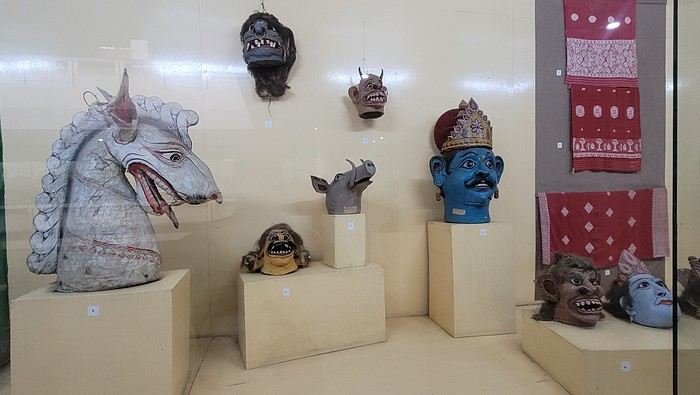

I’m not far from the Brahmaputra River, and the temptation to visit is too strong to resist. I’d hoped to find a promenade along the river, but that doesn’t exist here. I walk back calmly and notice several restaurants in my street. On the doorstep of my accommodation, I spot a pastry shop with cakes that look more like the ones we have in France than the typical ones here in India. A visit is a must, and I’m not disappointed!
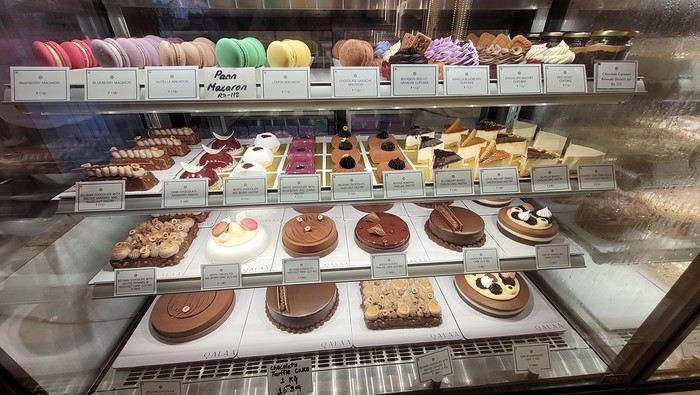
Tonight, I’m dining at a restaurant in the street. The menu is a bit disappointing—burgers, pizzas, pasta—nothing very Indian. So, I’ll go with tomato pasta.
Thursday, March 20th. The alarm goes off super early, but I’m already awake—I was too worried I’d sleep through it. I leave the house at 4:00 AM. The rain has stopped, and at this hour, there aren’t many trucks on the road. I arrive at Barcelona Airport easily by 6:20 AM, let the valet know I’m there, and he quickly picks up my car. This time, I’m flying with Etihad Airways again. I booked the ticket during my trip to Cambodia: Barcelona/Kolkata, Delhi/Barcelona for 567 €. At that price, I didn’t hesitate for long—I knew I had to take it. And I’m glad I did because, by the time I returned, the price had gone up to 700 €. I can already hear the reactions: "Wow, how’d you get a ticket for that price? What site did you use? You’re amazing, MarieJo!" One thing’s for sure—I’m really happy with this deal. The flights from Barcelona to Abu Dhabi and Abu Dhabi to Kolkata go smoothly, and we arrive on time at 2:55 AM. There aren’t many people at immigration, so I get through quickly. My luggage isn’t on the carousel yet. After collecting my bag, I check in for my next flight with IndiGo, a 5:40 AM flight to Guwahati, arriving at 7:00 AM. I’m starting to feel pretty tired, so I take a taxi from the airport to Gruham Sojourn Homestay. The house is upstairs, and the neighborhood seems quiet, with restaurants lining the street. The room won’t be ready until 10:00 AM, so I rest on the bench in the meantime. Once in the room, I take a shower—it really helps me feel refreshed. I need to exchange some euros, so I look up a nearby exchange bureau on Google and head out to find it. I locate it easily, and the staff are super friendly. I get a great rate (1 € = 90 INR). I wander around the neighborhood. The train station isn’t far, and small markets line the streets. I head back to my area, walking along the main avenue. About 500 meters from my street, I discover a museum. The visit is fascinating—I see the famous Majuli masks, among other things.
I’m not far from the Brahmaputra River, and the temptation to visit is too strong to resist. I’d hoped to find a promenade along the river, but that doesn’t exist here. I walk back calmly and notice several restaurants in my street. On the doorstep of my accommodation, I spot a pastry shop with cakes that look more like the ones we have in France than the typical ones here in India. A visit is a must, and I’m not disappointed!
Tonight, I’m dining at a restaurant in the street. The menu is a bit disappointing—burgers, pizzas, pasta—nothing very Indian. So, I’ll go with tomato pasta.
In MIKUMI and SELOUS, Southern Tanzania (June 2024)
Hi everyone,
I’m a newbie to this forum, passionate about wildlife, the landscapes of East Africa, and Tanzania in particular. This June 2024 trip/safari is our 7th visit to Tanzania and our 5th in the south, which has drawn us more than the north ever since we discovered it in 2015.
In 2024, the entrance fees for the reserves and services have gone up again since our last visit. I chose to return first to Mikumi Reserve, which was the very first one we visited in the south. Then, we’ll head to Selous (J. Nyerere N. P.) as usual. Initially, we wanted to spend 2/3 days on Mafia Island at the end of the trip, but it made the total cost too high, so we gave up... We usually go to Ruaha and Selous, but I wanted to mix it up a bit—also to save some money...
As for the timing, June is a new experience for us. I thought it might be interesting to come just after the lodges reopen... hoping for some great wildlife encounters??
The trip starts in Marseille with our first flight on Ethiopian Airlines to Addis Ababa, then continues to Dar es Salaam, where we’ll finally set foot on Tanzanian soil again.
In Addis... "our" A-350.
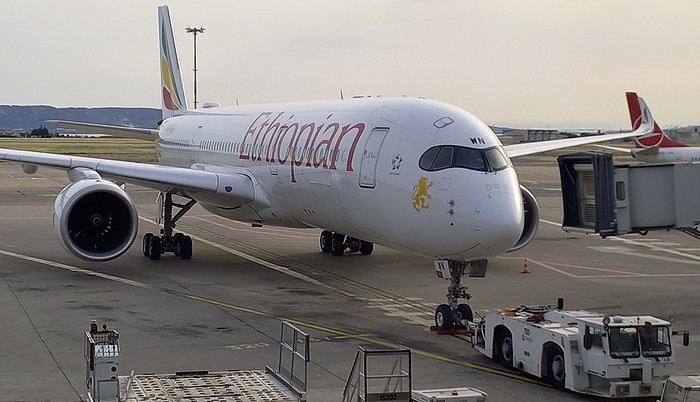
.....
After arriving in Dar, we spent one night at a hotel near the airport. The next morning, we headed to the domestic flights terminal, which hasn’t changed in years.
By mid-morning, we boarded a Cessna 208B Caravan with Safari Air Link, heading to the Kikoboga bush airstrip in Mikumi, which we reached 45 minutes later. Fun fact: the pilot was the same one as on our return flight two years ago.
Welcome on board:
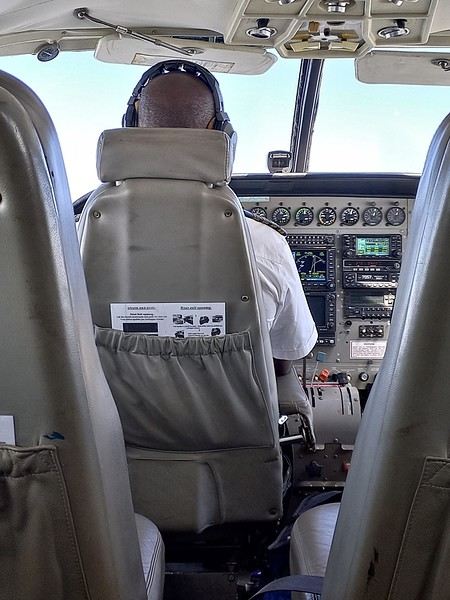
Of course, a driver/guide team from our chosen lodge was waiting for us upon arrival:
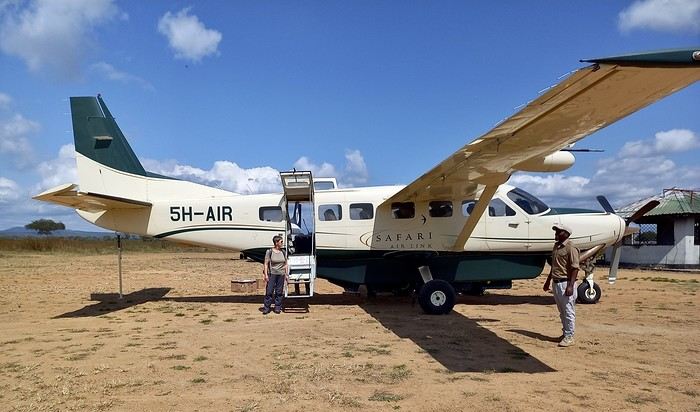
I was surprised to see so many aircraft parked there... even twin-engine Embraer Brasilias?? As a fan of vintage planes, I loved it...
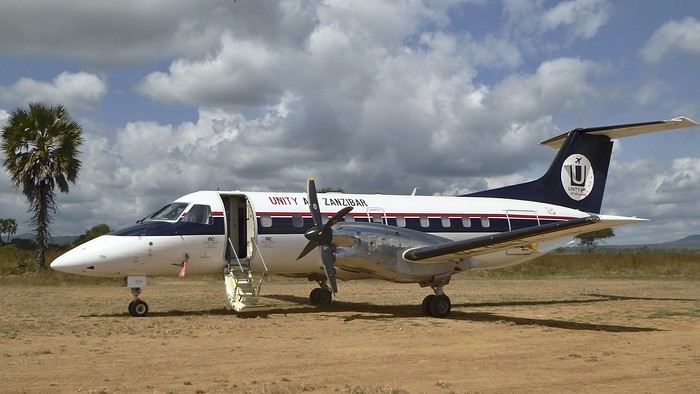
On the other hand, the light was incredibly harsh.....!! Our guides only speak English. We knew that in advance. In the south, it’s very rare to find someone who speaks French. This’ll force us to dig into our high school English memories... from 60 years ago... at least.
It’s noon, and we head toward the lodge. Near the airstrip, next to the Mikumi rangers’ base, there are quite a few herbivores. They find a bit more peace here—the big cats don’t venture this way...
Our first encounter was a group of Masai giraffes.
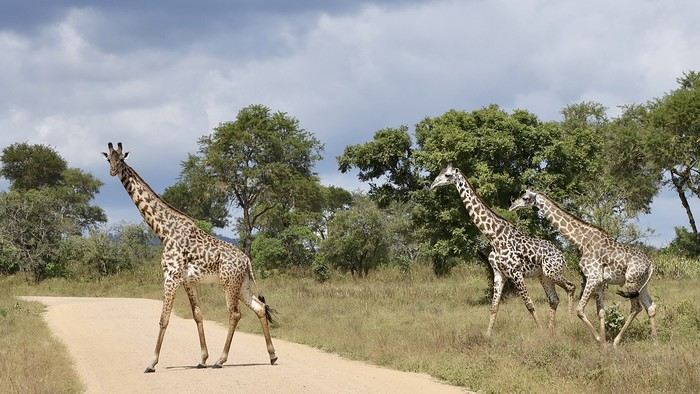
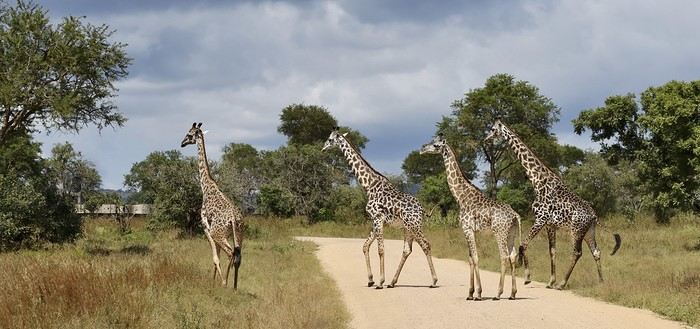
Rarer (for us), a savanna monitor lizard basking in the sun right in the middle of the track...??
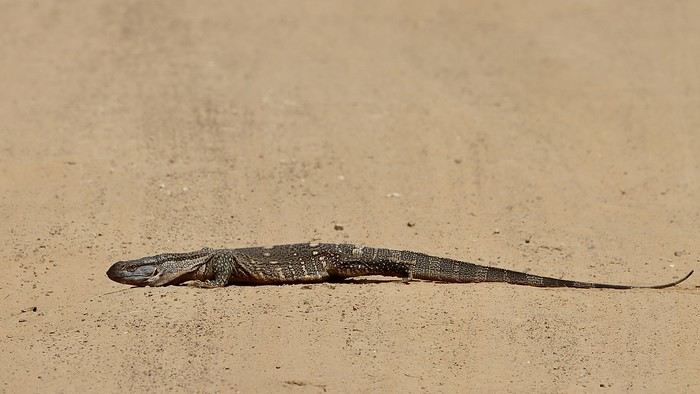
A large gathering of impalas (mostly males) along with a few blue wildebeest:
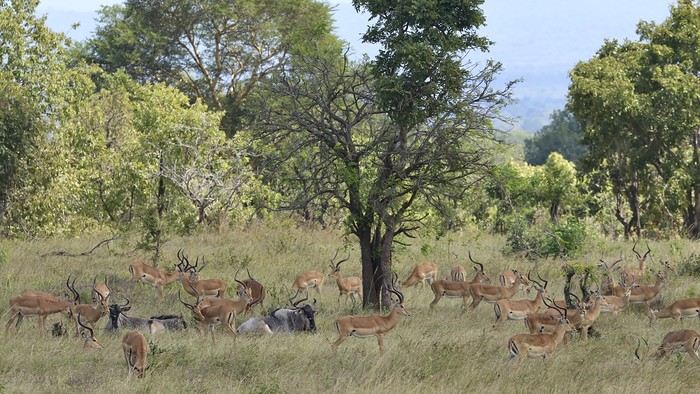

Also unusual: a African crowned hornbill taking a dust bath in the middle of the track...!!
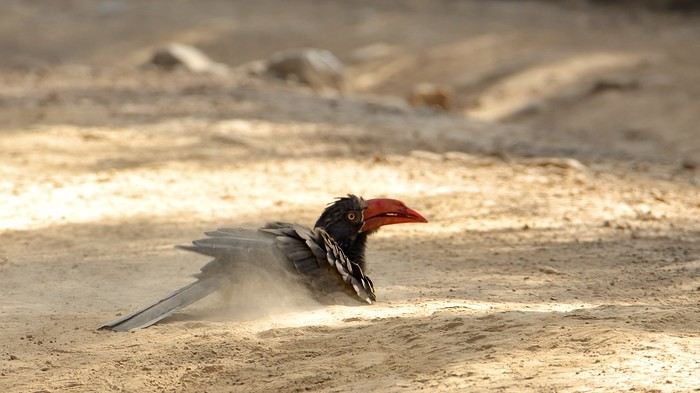
When it comes to identifying mammals or birds, I don’t know everything... so I might make mistakes. Please forgive me. I’m counting on my friend Blesl’s active participation... 😉
...
I’m a newbie to this forum, passionate about wildlife, the landscapes of East Africa, and Tanzania in particular. This June 2024 trip/safari is our 7th visit to Tanzania and our 5th in the south, which has drawn us more than the north ever since we discovered it in 2015.
In 2024, the entrance fees for the reserves and services have gone up again since our last visit. I chose to return first to Mikumi Reserve, which was the very first one we visited in the south. Then, we’ll head to Selous (J. Nyerere N. P.) as usual. Initially, we wanted to spend 2/3 days on Mafia Island at the end of the trip, but it made the total cost too high, so we gave up... We usually go to Ruaha and Selous, but I wanted to mix it up a bit—also to save some money...
As for the timing, June is a new experience for us. I thought it might be interesting to come just after the lodges reopen... hoping for some great wildlife encounters??
The trip starts in Marseille with our first flight on Ethiopian Airlines to Addis Ababa, then continues to Dar es Salaam, where we’ll finally set foot on Tanzanian soil again.
In Addis... "our" A-350.
.....
After arriving in Dar, we spent one night at a hotel near the airport. The next morning, we headed to the domestic flights terminal, which hasn’t changed in years.
By mid-morning, we boarded a Cessna 208B Caravan with Safari Air Link, heading to the Kikoboga bush airstrip in Mikumi, which we reached 45 minutes later. Fun fact: the pilot was the same one as on our return flight two years ago.
Welcome on board:
Of course, a driver/guide team from our chosen lodge was waiting for us upon arrival:
I was surprised to see so many aircraft parked there... even twin-engine Embraer Brasilias?? As a fan of vintage planes, I loved it...
On the other hand, the light was incredibly harsh.....!! Our guides only speak English. We knew that in advance. In the south, it’s very rare to find someone who speaks French. This’ll force us to dig into our high school English memories... from 60 years ago... at least.
It’s noon, and we head toward the lodge. Near the airstrip, next to the Mikumi rangers’ base, there are quite a few herbivores. They find a bit more peace here—the big cats don’t venture this way...
Our first encounter was a group of Masai giraffes.
Rarer (for us), a savanna monitor lizard basking in the sun right in the middle of the track...??
A large gathering of impalas (mostly males) along with a few blue wildebeest:
Also unusual: a African crowned hornbill taking a dust bath in the middle of the track...!!
When it comes to identifying mammals or birds, I don’t know everything... so I might make mistakes. Please forgive me. I’m counting on my friend Blesl’s active participation... 😉
...
Tanzania 2019 - Polé Polé
KARIBUUU
Over 5 years later, I’m finally getting around to writing the travel journal for our first trip to East Africa: Tanzania. *Polé Polé*, as they say! 😎
A trip I’d started planning just 6 years ago, in February 2019, for my post-internship exam vacation. After returning to South Africa in July 2019 with my family, this trip, planned for September 2019, would be all about discovery and a few firsts: first trip with friends, first trek, first time in East Africa. I really wanted to attempt the Kilimanjaro ascent, try to still see some of its "eternal" ice, and Alison wanted to do as much safari as possible. Unlike with the Zulus, Himbas, or San, visiting a Maasai village wasn’t on the agenda. Thanks to the Kessy Brothers agency, who were super responsive, Sandy from VF, and other members who helped prepare our trip, we settled on the following itinerary:
Day -1 (8/30): Departure from Pointe-à-Pitre Day 0 (8/31): Departure from Paris Day 1 (9/01): Arrival at Kilimanjaro Airport / Ameg Lodge (Moshi) DAY 2 (9/02): Machame gate / Machame camp DAY 3 (9/03): Shira / Shira camp DAY 4 (9/04): Baranco / Baranco camp DAY 5 (9/05): Barafu / Barafu camp DAY 6 (9/06): Barafu + Summit at midnight / Mweka camp DAY 7 (9/07): Mweka gate / Sal Salnero Hotel (Moshi) DAY 8 (9/08): Arusha National Park / Kanga camp DAY 9 (9/09): Tarangire National Park / Kanga camp DAY 10 (9/10): Tarangire National Park / Twiga Lodge DAY 11 (9/11): Lake Manyara / Twiga Lodge DAY 12 (9/12): Ngorongoro Crater / Simba campsite DAY 13 (9/13): Serengeti National Park / Seronera campsite DAY 14 (9/14): Serengeti National Park - Uoga Kuria Camp DAY 15 (9/15): Serengeti National Park / Waso campsite DAY 16 (9/16): Lake Natron / Maasai Giraffe Ecolodge DAY 17 (9/17): Kilimanjaro Airport Day 18 (9/18): Zanzibar Day 19 (9/19): Zanzibar Day 20 (9/20): Zanzibar Day 21 (9/21): Zanzibar
As I mentioned in my first travel journal about our South Africa trip, I’ve had a special connection to Tanzania for a long time. Growing up in the Indian Ocean without ever visiting Africa, those wildlife documentaries on TV when I skipped my pharmacy classes... I imagined and dreamed about this land and country so much.
The original plan was to go just the two of us with Alison, but somehow—though I don’t quite remember how—we ended up organizing the trip with our friends Mélissa and Doriane, who joined us in Arusha after our Kilimanjaro trek for the last two weeks and their very first safari. I think it was Melissa who had the idea to crash our trip, and she was right to do so! 😉 Flights: Pointe-à-Pitre-Grand Case and Grand Case-Paris with Air Caraïbes. Flights: Paris-JRO and ZNZ-Paris with Kenya Airways (layover in Nairobi). Flight: JRO-ZNZ with Air Tanzania.
Safe travels! !
Over 5 years later, I’m finally getting around to writing the travel journal for our first trip to East Africa: Tanzania. *Polé Polé*, as they say! 😎
A trip I’d started planning just 6 years ago, in February 2019, for my post-internship exam vacation. After returning to South Africa in July 2019 with my family, this trip, planned for September 2019, would be all about discovery and a few firsts: first trip with friends, first trek, first time in East Africa. I really wanted to attempt the Kilimanjaro ascent, try to still see some of its "eternal" ice, and Alison wanted to do as much safari as possible. Unlike with the Zulus, Himbas, or San, visiting a Maasai village wasn’t on the agenda. Thanks to the Kessy Brothers agency, who were super responsive, Sandy from VF, and other members who helped prepare our trip, we settled on the following itinerary:
Day -1 (8/30): Departure from Pointe-à-Pitre Day 0 (8/31): Departure from Paris Day 1 (9/01): Arrival at Kilimanjaro Airport / Ameg Lodge (Moshi) DAY 2 (9/02): Machame gate / Machame camp DAY 3 (9/03): Shira / Shira camp DAY 4 (9/04): Baranco / Baranco camp DAY 5 (9/05): Barafu / Barafu camp DAY 6 (9/06): Barafu + Summit at midnight / Mweka camp DAY 7 (9/07): Mweka gate / Sal Salnero Hotel (Moshi) DAY 8 (9/08): Arusha National Park / Kanga camp DAY 9 (9/09): Tarangire National Park / Kanga camp DAY 10 (9/10): Tarangire National Park / Twiga Lodge DAY 11 (9/11): Lake Manyara / Twiga Lodge DAY 12 (9/12): Ngorongoro Crater / Simba campsite DAY 13 (9/13): Serengeti National Park / Seronera campsite DAY 14 (9/14): Serengeti National Park - Uoga Kuria Camp DAY 15 (9/15): Serengeti National Park / Waso campsite DAY 16 (9/16): Lake Natron / Maasai Giraffe Ecolodge DAY 17 (9/17): Kilimanjaro Airport Day 18 (9/18): Zanzibar Day 19 (9/19): Zanzibar Day 20 (9/20): Zanzibar Day 21 (9/21): Zanzibar
As I mentioned in my first travel journal about our South Africa trip, I’ve had a special connection to Tanzania for a long time. Growing up in the Indian Ocean without ever visiting Africa, those wildlife documentaries on TV when I skipped my pharmacy classes... I imagined and dreamed about this land and country so much.
The original plan was to go just the two of us with Alison, but somehow—though I don’t quite remember how—we ended up organizing the trip with our friends Mélissa and Doriane, who joined us in Arusha after our Kilimanjaro trek for the last two weeks and their very first safari. I think it was Melissa who had the idea to crash our trip, and she was right to do so! 😉 Flights: Pointe-à-Pitre-Grand Case and Grand Case-Paris with Air Caraïbes. Flights: Paris-JRO and ZNZ-Paris with Kenya Airways (layover in Nairobi). Flight: JRO-ZNZ with Air Tanzania.
Safe travels! !
The "Must-Sees" of the American West
This adventure began during Covid... Yep, Covid turned a lot of things upside down, but most of all, it kept us cooped up for a few months and stopped us from traveling for a while—even longer for a die-hard fan of the American West like me.
While borders were closed, I started imagining what an ideal itinerary might look like—one that would string together all the Southwest must-sees in just two weeks, during the best time of year: September and October. When the U.S. announced in September 2021 that borders would reopen in the coming weeks, I regained hope and began scouting flight tickets for a departure in September 2022.
But here’s the thing: tackling solo hikes, each one tougher than the last, right in the heart of the Wilderness, could be a risky—even reckless—endeavor for a father of three. After a quick chat with some virtual friends who are just as passionate about the Southwest as I am, with good physical condition and nearly the same list of must-visit spots, Franck and his brother Sullivan were in! 🙂
In November, we snagged flight tickets from Nice to San Francisco for the modest sum of 400 €, and a few days later, I booked a Toyota Tacoma pickup for 840 € !
It’s not cheap for just 15 days, and a pickup isn’t exactly ideal for luggage, but the prices for full-size 4x4s have become totally outrageous! Due to border closures, rental companies had to offload a lot of these big 4x4s, which tourists love. Then, supply and demand did the rest !
Franck and I spent the winter and spring trying to cram the equivalent of three weeks of hikes into two. But even with physical limits, we had to stay reasonable! Three to four months before departure, we entered the lotteries for different must-see spots: The Subway, Coyote Buttes North (home to the famous Wave), and Coyote Buttes South (CBS).
The Wave is the holy grail for any Southwest enthusiast. Since 2015, we’ve tried our luck with the online and on-site lotteries about ten times, but the spots are unfortunately limited: just 20 per day. A glimmer of hope, though—since early 2022, that number has increased to 64 people allowed per day, with 48 spots awarded via the online lottery.
After all three of us tried our luck for The Wave, on June 1st at exactly 5 PM, I got an email that started with, "Congratulations! You were successful in the Coyote Buttes North (The Wave) September 2022 Permit Lottery at Coyote Buttes North (The Wave)...". At 5:01 PM, I called Franck, whose dream it’s been for over 20 years—ever since the first photos were published in a travel magazine! He didn’t believe me when I told him, and I had to forward the email for him to finally accept the unbelievable: we were going to The Wave and all the incredible spots scattered across the protected area of Coyote Buttes North.
I’ve already been to Coyote Buttes South twice, but there are areas I couldn’t explore in the middle of summer because they were too remote. So, I had no trouble letting my buddies convince me to go back for a third time. Plus, given how hard it is to access, we had no trouble securing a permit online as long as we logged in at exactly 8 PM on the dot!
For The Subway, all three of us struck out. No big deal—we won at CBN and CBS!
Among the sites to visit, there are two that I’m particularly attached to because I know my chances of wanting to see them again are slim. The first is Angel Arch, one of the most legendary arches in the Southwest, due to its remoteness from any trace of civilization. To get there, the recommended hike is Upper Salt Creek, and you’re looking at a 50 km round-trip in an area with no water (in September) and populated by bears.
The second site is the Hopi Salt Trail, in Navajo land, which, after a very tough hike, lets you marvel at the turquoise-blue waters of the Little Colorado before it meets the Colorado River. The Hopi Salt Trail is, like The Wave, the holy grail for any Southwest enthusiast, and the windows of opportunity to see the water in that magical color are very short each year. For this, you have to monitor the Little Colorado’s gauges downstream from Cameron: if the level stays at its lowest for 10 consecutive days—meaning no rain—you can hope for turquoise water. The ideal period rarely exceeds 30 days a year, and it’s usually in June that all the stars align.
But unfortunately, one month before departure, while the flow rate at Cameron looked promising, several storms in September dashed our hopes of doing the Hopi Salt Trail, even at the end of the road trip.
We still had two consolation prizes, though:
After a last-minute cancellation, while keeping an eye out for available spots for The Subway, it turned out that three spots opened up exactly on the day we’d planned to go—so we rushed to grab them!! Regarding the 4x4 rental, the prices for full-size models dropped by several hundred dollars, and we ended up finding a Chevrolet Tahoe for less than $1000. A steal and a serious boost in comfort, so we could store all our gear and food without worry!
Here’s the initial plan in a perfect world: D1 The White Domes - Camping D2 Sunrise at The White Domes - The Subway D3 Coyote Buttes North D4 Coyote Buttes South - White Pocket D5 Wahweap Hoodoos - Sidestep Canyon - Colourful Canyon - White Rocks - Sunset at Yellow Rock D6 Broken Bow Arch - Reflection Canyon D7 Coyote Gulch D8 The Volcano (or The Oasis - Zebra Slot Canyon if the weather’s good) - North Caineville Mesa D9 The Needles: Squaw Canyon - Lost Canyon combo - Druid Arch - Chesler Park D10 Upper Salt Creek Day 1 - Camping D11 Upper Salt Creek Day 2 D12 Hopi-Navajo Territory: Ha Ho No Geh Canyon, Coal Mine Canyon, Bends of the Little Colorado D13 Grand Canyon: South Kaibab Trail and Bright Angel Trail D14 Upper East Zion: East Temple Loop, Jughandle Arch, Center of the Universe, and Checkerboard Mesa Summit And several backup options in case of bad weather, including Spencer Trail, West Cove, and Buffington Pockets.
Enough talking—time for action!
While borders were closed, I started imagining what an ideal itinerary might look like—one that would string together all the Southwest must-sees in just two weeks, during the best time of year: September and October. When the U.S. announced in September 2021 that borders would reopen in the coming weeks, I regained hope and began scouting flight tickets for a departure in September 2022.
But here’s the thing: tackling solo hikes, each one tougher than the last, right in the heart of the Wilderness, could be a risky—even reckless—endeavor for a father of three. After a quick chat with some virtual friends who are just as passionate about the Southwest as I am, with good physical condition and nearly the same list of must-visit spots, Franck and his brother Sullivan were in! 🙂
In November, we snagged flight tickets from Nice to San Francisco for the modest sum of 400 €, and a few days later, I booked a Toyota Tacoma pickup for 840 € !
It’s not cheap for just 15 days, and a pickup isn’t exactly ideal for luggage, but the prices for full-size 4x4s have become totally outrageous! Due to border closures, rental companies had to offload a lot of these big 4x4s, which tourists love. Then, supply and demand did the rest !
Franck and I spent the winter and spring trying to cram the equivalent of three weeks of hikes into two. But even with physical limits, we had to stay reasonable! Three to four months before departure, we entered the lotteries for different must-see spots: The Subway, Coyote Buttes North (home to the famous Wave), and Coyote Buttes South (CBS).
The Wave is the holy grail for any Southwest enthusiast. Since 2015, we’ve tried our luck with the online and on-site lotteries about ten times, but the spots are unfortunately limited: just 20 per day. A glimmer of hope, though—since early 2022, that number has increased to 64 people allowed per day, with 48 spots awarded via the online lottery.
After all three of us tried our luck for The Wave, on June 1st at exactly 5 PM, I got an email that started with, "Congratulations! You were successful in the Coyote Buttes North (The Wave) September 2022 Permit Lottery at Coyote Buttes North (The Wave)...". At 5:01 PM, I called Franck, whose dream it’s been for over 20 years—ever since the first photos were published in a travel magazine! He didn’t believe me when I told him, and I had to forward the email for him to finally accept the unbelievable: we were going to The Wave and all the incredible spots scattered across the protected area of Coyote Buttes North.
I’ve already been to Coyote Buttes South twice, but there are areas I couldn’t explore in the middle of summer because they were too remote. So, I had no trouble letting my buddies convince me to go back for a third time. Plus, given how hard it is to access, we had no trouble securing a permit online as long as we logged in at exactly 8 PM on the dot!
For The Subway, all three of us struck out. No big deal—we won at CBN and CBS!
Among the sites to visit, there are two that I’m particularly attached to because I know my chances of wanting to see them again are slim. The first is Angel Arch, one of the most legendary arches in the Southwest, due to its remoteness from any trace of civilization. To get there, the recommended hike is Upper Salt Creek, and you’re looking at a 50 km round-trip in an area with no water (in September) and populated by bears.
The second site is the Hopi Salt Trail, in Navajo land, which, after a very tough hike, lets you marvel at the turquoise-blue waters of the Little Colorado before it meets the Colorado River. The Hopi Salt Trail is, like The Wave, the holy grail for any Southwest enthusiast, and the windows of opportunity to see the water in that magical color are very short each year. For this, you have to monitor the Little Colorado’s gauges downstream from Cameron: if the level stays at its lowest for 10 consecutive days—meaning no rain—you can hope for turquoise water. The ideal period rarely exceeds 30 days a year, and it’s usually in June that all the stars align.
But unfortunately, one month before departure, while the flow rate at Cameron looked promising, several storms in September dashed our hopes of doing the Hopi Salt Trail, even at the end of the road trip.
We still had two consolation prizes, though:
After a last-minute cancellation, while keeping an eye out for available spots for The Subway, it turned out that three spots opened up exactly on the day we’d planned to go—so we rushed to grab them!! Regarding the 4x4 rental, the prices for full-size models dropped by several hundred dollars, and we ended up finding a Chevrolet Tahoe for less than $1000. A steal and a serious boost in comfort, so we could store all our gear and food without worry!
Here’s the initial plan in a perfect world: D1 The White Domes - Camping D2 Sunrise at The White Domes - The Subway D3 Coyote Buttes North D4 Coyote Buttes South - White Pocket D5 Wahweap Hoodoos - Sidestep Canyon - Colourful Canyon - White Rocks - Sunset at Yellow Rock D6 Broken Bow Arch - Reflection Canyon D7 Coyote Gulch D8 The Volcano (or The Oasis - Zebra Slot Canyon if the weather’s good) - North Caineville Mesa D9 The Needles: Squaw Canyon - Lost Canyon combo - Druid Arch - Chesler Park D10 Upper Salt Creek Day 1 - Camping D11 Upper Salt Creek Day 2 D12 Hopi-Navajo Territory: Ha Ho No Geh Canyon, Coal Mine Canyon, Bends of the Little Colorado D13 Grand Canyon: South Kaibab Trail and Bright Angel Trail D14 Upper East Zion: East Temple Loop, Jughandle Arch, Center of the Universe, and Checkerboard Mesa Summit And several backup options in case of bad weather, including Spencer Trail, West Cove, and Buffington Pockets.
Enough talking—time for action!
Bike trip: from Carcans Maubuisson to Plaisir (Yvelines)
Monday, August 21, 2023 - Rochefort - Marans
No journal for the first two days. Day 1 - CARCANS-ROYAN Day 2 - ROYAN - ROCHEFORT Tonight I'm in MARANS in the "dry marsh" according to the campsite manager—it’s the first time I’ve heard of a "dry marsh"?!
Photos from the first two days
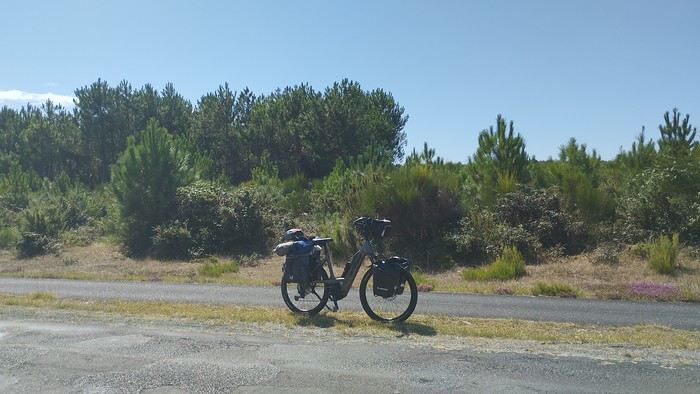 My gear
The Landes region—nothing extraordinary, but the calm and serenity are nice.

Le Verdon
The wild coast
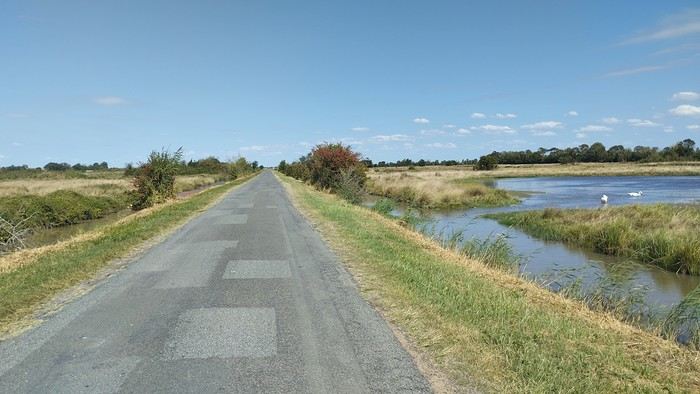
This marsh isn’t dry, though.
Today is the third day of my trip, and I’m writing to you from a campsite in Marans. I’ve set out to bike from Carcans Maubuisson back to Plaisir. Why Carcans? Because we spent a week there as a family—a great week that lets everyone reconnect for a long stretch. Also, on Saturday, we all headed home—some by car, and me by bike. This journey is about 850 km via bike paths and small cycling roads. It’s not a sporting feat, just a nice long ride for fun. As the old Chinese sage says, "The destination doesn’t matter—it’s the journey that counts." But he also told me, "Traveling is great, but what’s the point if you don’t share it?" You see, this old sage has told me a lot of things—he often keeps me company when I’m biking. Of course, he doesn’t pedal, but we travel in harmony. Sure, he can be a bit annoying sometimes, but we still get along. All this to say I’ve created a group to share my story. I’d be happy to share this experience with you—it’s an adventure for me. On Saturday, I wasn’t sure I’d even leave because I’d been dealing with sciatica for days. Luckily, Juliette, a friend of the old Chinese sage, recommended a lifesaving remedy: Alternately stretching your legs with an elastic band under your foot. Obviously, a jam jar rubber band won’t cut it.
From Marans - The mosquitoes are attacking; time to head back to shelter.
The first two legs took me to Royan and then Rochefort. The Sèvre Niortaise flows nearby, and I followed a canal from La Rochelle. You could say the area is as dry as the marsh, judging by the state of the crops.
As I mentioned, it’s the third day, and if Jesus rose again on this day, for me it was more like the crucifixion. The scorching heat—only bearable when you’re moving—combined with rough trail conditions, and the old Chinese sage says, "Terrible roads, slow speed, and watch your limbs." I set out to do 60 km but ended up doing 80, and the last 20 were tough. I kept checking the GPS to see how much farther until the campsite. Today: Rochefort to Marans, sticking to the coast until La Rochelle, then no notable towns after that—just a constant canal. But since the sky isn’t too low, it hasn’t gotten lost. I’ve still got plenty of anecdotes to share, but it’s pitch black out, and the mosquitoes are still around. This morning, I counted ten in my tent, all full of my blood. Yesterday, at the end of the leg to Rochefort, I was really looking forward to crossing the Charente using the transporter bridge, but a sneaky GPS conspiracy led me far from it. I ended up crossing the Charente on a completely ordinary bridge, watching the transporter bridge in the distance with disappointment.
End of the first episode. Until tomorrow, if you’d like!
No journal for the first two days. Day 1 - CARCANS-ROYAN Day 2 - ROYAN - ROCHEFORT Tonight I'm in MARANS in the "dry marsh" according to the campsite manager—it’s the first time I’ve heard of a "dry marsh"?!
Photos from the first two days
My gearThe Landes region—nothing extraordinary, but the calm and serenity are nice.
Le Verdon
The wild coast
This marsh isn’t dry, though.
Today is the third day of my trip, and I’m writing to you from a campsite in Marans. I’ve set out to bike from Carcans Maubuisson back to Plaisir. Why Carcans? Because we spent a week there as a family—a great week that lets everyone reconnect for a long stretch. Also, on Saturday, we all headed home—some by car, and me by bike. This journey is about 850 km via bike paths and small cycling roads. It’s not a sporting feat, just a nice long ride for fun. As the old Chinese sage says, "The destination doesn’t matter—it’s the journey that counts." But he also told me, "Traveling is great, but what’s the point if you don’t share it?" You see, this old sage has told me a lot of things—he often keeps me company when I’m biking. Of course, he doesn’t pedal, but we travel in harmony. Sure, he can be a bit annoying sometimes, but we still get along. All this to say I’ve created a group to share my story. I’d be happy to share this experience with you—it’s an adventure for me. On Saturday, I wasn’t sure I’d even leave because I’d been dealing with sciatica for days. Luckily, Juliette, a friend of the old Chinese sage, recommended a lifesaving remedy: Alternately stretching your legs with an elastic band under your foot. Obviously, a jam jar rubber band won’t cut it.
From Marans - The mosquitoes are attacking; time to head back to shelter.
The first two legs took me to Royan and then Rochefort. The Sèvre Niortaise flows nearby, and I followed a canal from La Rochelle. You could say the area is as dry as the marsh, judging by the state of the crops.
As I mentioned, it’s the third day, and if Jesus rose again on this day, for me it was more like the crucifixion. The scorching heat—only bearable when you’re moving—combined with rough trail conditions, and the old Chinese sage says, "Terrible roads, slow speed, and watch your limbs." I set out to do 60 km but ended up doing 80, and the last 20 were tough. I kept checking the GPS to see how much farther until the campsite. Today: Rochefort to Marans, sticking to the coast until La Rochelle, then no notable towns after that—just a constant canal. But since the sky isn’t too low, it hasn’t gotten lost. I’ve still got plenty of anecdotes to share, but it’s pitch black out, and the mosquitoes are still around. This morning, I counted ten in my tent, all full of my blood. Yesterday, at the end of the leg to Rochefort, I was really looking forward to crossing the Charente using the transporter bridge, but a sneaky GPS conspiracy led me far from it. I ended up crossing the Charente on a completely ordinary bridge, watching the transporter bridge in the distance with disappointment.
End of the first episode. Until tomorrow, if you’d like!
Southwest! 8 weeks with the family, Denver-to-Denver loop, 1st part...
Hey there, VoyageForum!!!
I’ve combed through this site up, down, and sideways to plan our two-month road trip across the American Southwest during the summer of 2022, so it only feels right to give back and revive the USA travel journal section—helping others prep, travel, or relive their own memories! 😏
A quick intro to the stars of this trip is coming soon... in an upcoming post!
Table of Contents:
Road trip introduction Day 1 & 2: the days we double-checked all our papers... Day 3 & 3 bis: The day we discovered Denver... Day 4: The day of the race, the carriage, and the little one’s cough... Day 5: the day the road trip truly began... Day 6 & 6 bis: the day of Nature’s first wonders... Day 7: the day the sky fell on our heads... Day 8 & 8 bis: the day we saw ghosts... Day 9: the day we climbed the mountain... Day 10: the day the theme song from "The Last Picture Show" played on loop in my head... Day 11: the day we lived like Native Americans... Day 12: the day we left civilization behind... Day 13 & 13 bis: the day we explored another planet... Day 14 & 14 bis: the day Caro reunited with HER rocks... Day 15 & 15 bis: the day of the fantastic ride... Day 16: the day we cooled off in Lake Powell... Day 17: the day the Colorado River’s meanders were all ours... Day 18: the day we dipped our feet in the Colorado... Day 19: the day the guys discovered true vastness... Day 20 & 20 bis: the day we covered a few acres of Route 66 before sunset... Day 21: the day the credit card said stop... right before the STRIP... Day 22: the day we finally discovered Cirque du Soleil... Day 23: the day we returned to calm... well, almost... Day 24: the day we reached our home base for 6 nights: Saint George Day 25: the day we should’ve explored Yant Flat... Day 26: the day it was 13°C at Cedar Breaks... Day 27: the day we explored The Narrows in Zion NP... Day 28: the day we discovered Snow Canyon... Day 29: the day we hiked to the "SUBWAY"... Day 30: the day we encountered the abyss—from the north this time... Day 31: the day we arrived in a place where dreams begin... Kanab... Day 32: the day we discovered the first treasures along House Rock Valley... 2nd part: the second part of the journey... Day 33: the day we discovered a magical place... Edmaier's Secret... Day 34: the day Cottonwood Road didn’t open up to us... Day 35: the day of the classic Queen’s Garden + Navajo Loop—and another event that became a classic... Day 36: the second day in Bryce... pure bliss!!! Day 37: the day we swam at the foot of Calf Creek Falls... Day 38: the day we took the Burr Trail, even with storms lurking... Day 39: The day of the goblins... Day 40: the day we enjoyed the peaceful Capitol Reef NP... Day 41: the day of the Rim Overlook and another letdown... Day 42: the day we arrived in... Moab... Day 43: the first day in Arches National Park... Day 44: the day of the Fisher Towers... Day 45: the day of Bow Tie & Corona Arches... Day 46: The day of Shafer Trail + Potash Road... Day 47: The second day in Arches NP... Day 48: the day we discovered Colorado NM in a flash... Day 49: the day of Black Canyon... Day 50: the day we passed through Durango before falling for Silverton... Day 51: the day we went through Ouray and ended up in Gunnison... Day 52: the day of Kebler Pass and arriving at the hot springs... Day 53: the day of hot springs II, then the road back to Denver... Day 54: the last day... Day 55: back home and the RECAP...
I’ve combed through this site up, down, and sideways to plan our two-month road trip across the American Southwest during the summer of 2022, so it only feels right to give back and revive the USA travel journal section—helping others prep, travel, or relive their own memories! 😏
A quick intro to the stars of this trip is coming soon... in an upcoming post!
Table of Contents:
Road trip introduction Day 1 & 2: the days we double-checked all our papers... Day 3 & 3 bis: The day we discovered Denver... Day 4: The day of the race, the carriage, and the little one’s cough... Day 5: the day the road trip truly began... Day 6 & 6 bis: the day of Nature’s first wonders... Day 7: the day the sky fell on our heads... Day 8 & 8 bis: the day we saw ghosts... Day 9: the day we climbed the mountain... Day 10: the day the theme song from "The Last Picture Show" played on loop in my head... Day 11: the day we lived like Native Americans... Day 12: the day we left civilization behind... Day 13 & 13 bis: the day we explored another planet... Day 14 & 14 bis: the day Caro reunited with HER rocks... Day 15 & 15 bis: the day of the fantastic ride... Day 16: the day we cooled off in Lake Powell... Day 17: the day the Colorado River’s meanders were all ours... Day 18: the day we dipped our feet in the Colorado... Day 19: the day the guys discovered true vastness... Day 20 & 20 bis: the day we covered a few acres of Route 66 before sunset... Day 21: the day the credit card said stop... right before the STRIP... Day 22: the day we finally discovered Cirque du Soleil... Day 23: the day we returned to calm... well, almost... Day 24: the day we reached our home base for 6 nights: Saint George Day 25: the day we should’ve explored Yant Flat... Day 26: the day it was 13°C at Cedar Breaks... Day 27: the day we explored The Narrows in Zion NP... Day 28: the day we discovered Snow Canyon... Day 29: the day we hiked to the "SUBWAY"... Day 30: the day we encountered the abyss—from the north this time... Day 31: the day we arrived in a place where dreams begin... Kanab... Day 32: the day we discovered the first treasures along House Rock Valley... 2nd part: the second part of the journey... Day 33: the day we discovered a magical place... Edmaier's Secret... Day 34: the day Cottonwood Road didn’t open up to us... Day 35: the day of the classic Queen’s Garden + Navajo Loop—and another event that became a classic... Day 36: the second day in Bryce... pure bliss!!! Day 37: the day we swam at the foot of Calf Creek Falls... Day 38: the day we took the Burr Trail, even with storms lurking... Day 39: The day of the goblins... Day 40: the day we enjoyed the peaceful Capitol Reef NP... Day 41: the day of the Rim Overlook and another letdown... Day 42: the day we arrived in... Moab... Day 43: the first day in Arches National Park... Day 44: the day of the Fisher Towers... Day 45: the day of Bow Tie & Corona Arches... Day 46: The day of Shafer Trail + Potash Road... Day 47: The second day in Arches NP... Day 48: the day we discovered Colorado NM in a flash... Day 49: the day of Black Canyon... Day 50: the day we passed through Durango before falling for Silverton... Day 51: the day we went through Ouray and ended up in Gunnison... Day 52: the day of Kebler Pass and arriving at the hot springs... Day 53: the day of hot springs II, then the road back to Denver... Day 54: the last day... Day 55: back home and the RECAP...
French company CFC
Hi
Has anyone sailed with the French company CFC? What do you think?
Haven’t seen many reviews about this company.
My Battle with Excess Weight (How I Lost 5 Kilos in 2 Days, by Bike)
New, seen on TV, you won't believe it. Click here.
During my recent trek, I found that my bike—and my luggage—were heavy. Until now, the weight of my gear hadn’t been an issue. Maybe I’m getting old, or maybe I just can’t handle the SNCF’s stairs anymore.
It hit me in Toulouse. A 3-minute stop turned into a 6-hour delay because of a fire that was hard to control between Toulouse and Montauban. Eventually, our train was canceled, and we were told to take another train that was also waiting for the same destination. It was my fourth train of the day. It was 9:30 PM, and I’d left at 9:30 AM that morning. Suddenly, exhaustion took over.
That’s when I met two bike-packers who, without hesitation, lifted their bikes with all their gear attached, carried them down the steps of the Corail train, and then down the stairs to the underground passage. They were young and fit (they smelled like warm sand), and I definitely wasn’t. It was in that scorching heat, struggling up and down all those stairs (Oh Toulouse, as Nougaro would say, may you be cursed for seven generations), that I decided to go on a diet.
It’s a diet anyone can do, it works, and it’s free. So I’m sharing it right away.
No need to exercise or restrict yourself. No, all you have to do is think and do some research. You need a chair, a table, a scale, a computer, and a spreadsheet. Make a list of everything you’ve brought and weigh it all. Set a goal based on the type of trek and your comfort level. Remove everything that doesn’t help you reach that goal.
My goal: - Trekking in France from May to September, in the plains or at most on a plateau like Mont Aubrac, where at 800 m altitude, it can drop to 10 °C at night even in the middle of summer.
- Sleeping in a tent on a good mattress in a sleeping bag (I’m not changing that). Someone suggested I could sleep under the stars on bubble wrap. No way, are you crazy?
- Not cooking. I buy lunch on the way in the morning and dinner on the way in the afternoon (I’m not changing that either). Someone suggested Ducasse delivers everywhere in France. Uh, have you been smoking lemon weed?
That’s how I lost 5 kg, going from 17.7 kg to 12.8 kg, including luggage but not food or water. But I also reduced the volume and quantity of my gear.
Here are the before photos:
https://photos.app.goo.gl/XDfKaoVvHFNxDXrq5
And after:
https://photos.app.goo.gl/STRVKaWuVcNVeCfS9
of my bike.
You can see that a duffel bag is gone, as well as the extra bags behind the panniers. I don’t even use the mesh pockets at the bottom of each pannier anymore. You can also see I’m still carrying my 1 kg U-lock. I know, it’s unforgivable. I’m on the verge of being banned.
So I might do another trek in September to validate my choices.
For the rear panniers, I can save between 1 and 1.5 kg depending on the solution: Arkel Dry-lites (28 L pair, 0.540 kg) or Vaude Aqua Light (38 L pair, 1.080 kg).
I also need to cut down on the tools I bring. I should be able to shave off about 0.5 kg.
And the bike? I’m thinking about it. Someone suggested the folding Savadeck Z2, which only weighs 10 kg. Carbon? Oh, don’t spread the word—it’s even more taboo than aluminum in some circles, and I won’t even mention the belt drive.
During my recent trek, I found that my bike—and my luggage—were heavy. Until now, the weight of my gear hadn’t been an issue. Maybe I’m getting old, or maybe I just can’t handle the SNCF’s stairs anymore.
It hit me in Toulouse. A 3-minute stop turned into a 6-hour delay because of a fire that was hard to control between Toulouse and Montauban. Eventually, our train was canceled, and we were told to take another train that was also waiting for the same destination. It was my fourth train of the day. It was 9:30 PM, and I’d left at 9:30 AM that morning. Suddenly, exhaustion took over.
That’s when I met two bike-packers who, without hesitation, lifted their bikes with all their gear attached, carried them down the steps of the Corail train, and then down the stairs to the underground passage. They were young and fit (they smelled like warm sand), and I definitely wasn’t. It was in that scorching heat, struggling up and down all those stairs (Oh Toulouse, as Nougaro would say, may you be cursed for seven generations), that I decided to go on a diet.
It’s a diet anyone can do, it works, and it’s free. So I’m sharing it right away.
No need to exercise or restrict yourself. No, all you have to do is think and do some research. You need a chair, a table, a scale, a computer, and a spreadsheet. Make a list of everything you’ve brought and weigh it all. Set a goal based on the type of trek and your comfort level. Remove everything that doesn’t help you reach that goal.
My goal: - Trekking in France from May to September, in the plains or at most on a plateau like Mont Aubrac, where at 800 m altitude, it can drop to 10 °C at night even in the middle of summer.
- Sleeping in a tent on a good mattress in a sleeping bag (I’m not changing that). Someone suggested I could sleep under the stars on bubble wrap. No way, are you crazy?
- Not cooking. I buy lunch on the way in the morning and dinner on the way in the afternoon (I’m not changing that either). Someone suggested Ducasse delivers everywhere in France. Uh, have you been smoking lemon weed?
That’s how I lost 5 kg, going from 17.7 kg to 12.8 kg, including luggage but not food or water. But I also reduced the volume and quantity of my gear.
Here are the before photos:
https://photos.app.goo.gl/XDfKaoVvHFNxDXrq5
And after:
https://photos.app.goo.gl/STRVKaWuVcNVeCfS9
of my bike.
You can see that a duffel bag is gone, as well as the extra bags behind the panniers. I don’t even use the mesh pockets at the bottom of each pannier anymore. You can also see I’m still carrying my 1 kg U-lock. I know, it’s unforgivable. I’m on the verge of being banned.
So I might do another trek in September to validate my choices.
For the rear panniers, I can save between 1 and 1.5 kg depending on the solution: Arkel Dry-lites (28 L pair, 0.540 kg) or Vaude Aqua Light (38 L pair, 1.080 kg).
I also need to cut down on the tools I bring. I should be able to shave off about 0.5 kg.
And the bike? I’m thinking about it. Someone suggested the folding Savadeck Z2, which only weighs 10 kg. Carbon? Oh, don’t spread the word—it’s even more taboo than aluminum in some circles, and I won’t even mention the belt drive.
Chemin de Saint-Guilhem le Désert (randonnée) English translation pending
Bonjour, bonjour,
Je pense partir faire une partie du chemin de Saint Guilhem le Désert avec ma fille de 14 ans et demi cet été. Nous démarrerions de Le Rozier. Je l'ai déjà fait il y a quelques années seule. Il ne m'a pas semblé "dangereux"... J'avais fais très attention aux chaussures, à l'hydratation, à l'aspivenin, à une petite trousse pharmacie ... Qu'en pensez-vous ? Dois-je avoir peur des patous ? (j'en avais pas croisé du tout), des incendies dans l'Hérault ? de n'être "qu'à deux" ?
Merci pour vos réponses... J'aimerai vraiment lui faire découvrir cela parce que j'avais trouvé que c'était magnifique, très ressourçant et cela permettait de prendre beaucoup de recul ...
Je pense partir faire une partie du chemin de Saint Guilhem le Désert avec ma fille de 14 ans et demi cet été. Nous démarrerions de Le Rozier. Je l'ai déjà fait il y a quelques années seule. Il ne m'a pas semblé "dangereux"... J'avais fais très attention aux chaussures, à l'hydratation, à l'aspivenin, à une petite trousse pharmacie ... Qu'en pensez-vous ? Dois-je avoir peur des patous ? (j'en avais pas croisé du tout), des incendies dans l'Hérault ? de n'être "qu'à deux" ?
Merci pour vos réponses... J'aimerai vraiment lui faire découvrir cela parce que j'avais trouvé que c'était magnifique, très ressourçant et cela permettait de prendre beaucoup de recul ...
Conseils pour une randonnée niveau débutant en Normandie English translation pending
Bonsoir tout le monde !🙂
J’ai pour projet de partir en randonner à pied sur plusieurs jours, je suis débutant dans le monde du trekking. J’aimerais partir de Normanville (27930) en me donnant comme point d’arrivé Etretat (76790). Ce projet se fera sur plusieurs jours de marches, en bivouaquant dans la nature. Je suis plutôt sportif, c’est ma première randonnée, je pense pouvoir faire entre 25-35km (cela reste à déterminer en fonction des reliefs du trajet. Ce projet a donné naissance à une multitude de questions, c’est pour cela que je me tourne vers vous pour en apprendre davantage sur le sujet et trouver réponses à mes questions.
Ou j’en suis ? Pour le moment je suis en train de réfléchir sur l’itinéraire, pour se faire je travaille avec le site Openrunner, peut(être avez vous un autre outil plus performant à me conseiller ? J’ai vu qu’il existe bon nombre de sentiers, avez-vous des petites idées sur lesquelles je pourrais potentiellement emprunter ? La grande question c'est , comment bien organiser son trajet ?
Concernant le bivouaqage, comment trouver de bon endroit ? Je vous remercie d’avance à la contribution que vous apporterez au sujet
Bonne soirée
J’ai pour projet de partir en randonner à pied sur plusieurs jours, je suis débutant dans le monde du trekking. J’aimerais partir de Normanville (27930) en me donnant comme point d’arrivé Etretat (76790). Ce projet se fera sur plusieurs jours de marches, en bivouaquant dans la nature. Je suis plutôt sportif, c’est ma première randonnée, je pense pouvoir faire entre 25-35km (cela reste à déterminer en fonction des reliefs du trajet. Ce projet a donné naissance à une multitude de questions, c’est pour cela que je me tourne vers vous pour en apprendre davantage sur le sujet et trouver réponses à mes questions.
Ou j’en suis ? Pour le moment je suis en train de réfléchir sur l’itinéraire, pour se faire je travaille avec le site Openrunner, peut(être avez vous un autre outil plus performant à me conseiller ? J’ai vu qu’il existe bon nombre de sentiers, avez-vous des petites idées sur lesquelles je pourrais potentiellement emprunter ? La grande question c'est , comment bien organiser son trajet ?
Concernant le bivouaqage, comment trouver de bon endroit ? Je vous remercie d’avance à la contribution que vous apporterez au sujet
Bonne soirée
Un voyage... une étape inattendue! English translation pending
Bonjour à tous,
Le voyage - pour ne pas trop sortir de VF - c'est bien sur la vie. L'étape inattendue, elle nous vient de l'orient et sans doute d' un Pangolin.
J'ai 72 ans, un peu d’hypertension, pas grand chose d'autre, alors, au delà du 11 mai je suis bon !
Bon pour continuer à voir mes petits enfants sur Skype, bon pour voir mes enfants masqués qui viennent nous voir de temps à autres à distance respectable, bon pour oublier les embrassades, les câlins, les gestes de tendresse, bon pour....un temps indéterminé à subir ces frustrations que portant je respecterait. Peu en parlent dans les médias, mais c'est une contrainte autre que de simplement porter un masque !!
Merci de m'avoir lu et belle journée confinée
Le voyage - pour ne pas trop sortir de VF - c'est bien sur la vie. L'étape inattendue, elle nous vient de l'orient et sans doute d' un Pangolin.
J'ai 72 ans, un peu d’hypertension, pas grand chose d'autre, alors, au delà du 11 mai je suis bon !
Bon pour continuer à voir mes petits enfants sur Skype, bon pour voir mes enfants masqués qui viennent nous voir de temps à autres à distance respectable, bon pour oublier les embrassades, les câlins, les gestes de tendresse, bon pour....un temps indéterminé à subir ces frustrations que portant je respecterait. Peu en parlent dans les médias, mais c'est une contrainte autre que de simplement porter un masque !!
Merci de m'avoir lu et belle journée confinée