Results for "Detroit+ou+Michigan+|+3+>+99"
5214 results found.
June 2026 Photo Contest Theme: Such a Beautiful Landscape
Hello,
It might not be very original, but I see it hasn’t been suggested—or at least not for a very long time. I’d like to invite you to discover the beauty of the great outdoors through landscape photos. Whether they’re desert, sea, countryside, or mountain scenes—with or without other elements (people, buildings, animals, etc.)—they should make us want to dive right in without hesitation.
To participate: Photo submissions until Wednesday, June 24 at 11:59 PM You can post up to 3 photos, numbered and shared in separate messages, along with a short description of the place and the story behind it.
To vote: from Thursday, June 25 at 12:01 AM to Monday, June 29 at 11:59 PM After the deadline, it’s too late!
Please include the photo number, username, and the points awarded: Photo #1 = 3 pts Photo #2 = 2 pts Photo #3 = 1 pt
All VF members can vote (even those who didn’t submit photos). In case of a tie for first place, the winning photo will be the one with the most first-place votes, then second-place votes! The lucky winner will get to organize July 2026’s photo contest.
For discussions about the theme, it’s here: Discussion thread for June 2026’s theme: Such a Beautiful Landscape
Good luck to everyone!
Philippe
Chumphon, Thailand: Doi Tapang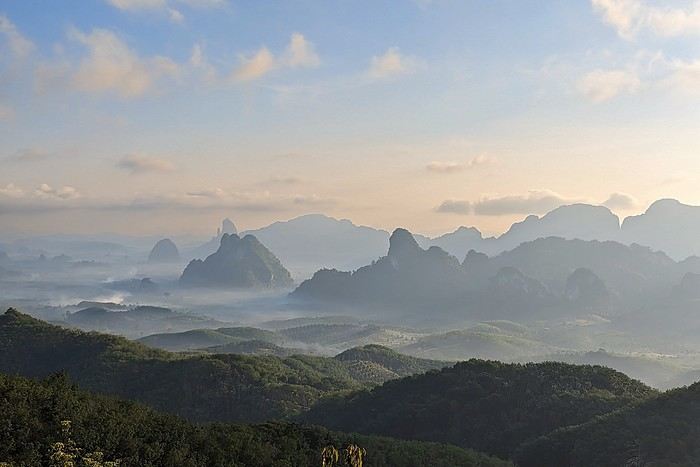
It might not be very original, but I see it hasn’t been suggested—or at least not for a very long time. I’d like to invite you to discover the beauty of the great outdoors through landscape photos. Whether they’re desert, sea, countryside, or mountain scenes—with or without other elements (people, buildings, animals, etc.)—they should make us want to dive right in without hesitation.
To participate: Photo submissions until Wednesday, June 24 at 11:59 PM You can post up to 3 photos, numbered and shared in separate messages, along with a short description of the place and the story behind it.
To vote: from Thursday, June 25 at 12:01 AM to Monday, June 29 at 11:59 PM After the deadline, it’s too late!
Please include the photo number, username, and the points awarded: Photo #1 = 3 pts Photo #2 = 2 pts Photo #3 = 1 pt
All VF members can vote (even those who didn’t submit photos). In case of a tie for first place, the winning photo will be the one with the most first-place votes, then second-place votes! The lucky winner will get to organize July 2026’s photo contest.
For discussions about the theme, it’s here: Discussion thread for June 2026’s theme: Such a Beautiful Landscape
Good luck to everyone!
Philippe
Chumphon, Thailand: Doi Tapang
Spitsbergen – A Night with the Walruses on Lågøya
Spitsbergen, 80° North latitude. A lost archipelago on the edge of the world, northeast of Greenland, the last lands before the pole. I’m aboard the *Grigoriy Mikheev*, a Russian ship from the Murmansk Polar Research Institute. Russian flag, Russian crew. Chartered by OceanWide Expeditions.
Last night, we were stuck in drifting pack ice in the long Hinlopen Strait. This incident led to an unforgettable barbecue and party on the ship’s foredeck, but we had to abandon our plan to head south and circle Spitsbergen. This summer, there’s too much ice in the strait, and it’s too thick. At dawn, the tide turned, allowing us to break free and head north again. The ship is now moving slowly through sea ice density that satellite maps estimate at around five-tenths. Our progress is punctuated by dull thuds: the ship’s bow constantly shoves and fractures enormous ice floes.
At breakfast, Tarik, our expedition leader, informs us that our program will be significantly altered. Since we can’t cross the strait, we’ll turn back and head north. To kick off our Plan B, Tarik plans a landing tonight on the small island of Låg (Lågøya), at 80°10' North. Last summer, he saw a large walrus colony there and hopes we’ll find them again. The weather is perfect—glorious sunshine—and walruses are truly addicted to sunbathing on the beaches.
We’ve now exited the strait and are sailing far from the coast. In case the walrus colony is there, we don’t want the ship’s approach to scare them into the water before we even see them. So, we scan the shore methodically with binoculars. We pass several bays, round a cape, and examine several shorelines littered with driftwood, but no walruses in sight. Several times, clusters of large rounded rocks trigger false alarms… but no, they’re just rocks…
Suddenly, Tarik spots them through his binoculars! On an isolated peninsula, our expedition leader’s highly trained eye has picked out, among those brown masses, the shape and white color of the enormous tusks of what he calls "the heavyweights of the Arctic!" Now, fifteen or twenty pairs of binoculars are pointed in the indicated direction… Sure enough, I see them now! They’re there, huge, sprawled in the sun on the beach. Without Tarik’s sharp eye, we might have missed them. They’re so tightly packed together that they really look like a mass of brown rocks. Only the white, saber-shaped tusks and the occasional furtive movements hint that they’re animals.
It’s 11 PM, and on the deck of the *Grigoriy Mikheev*, as you can imagine, excitement has ramped up several notches. Several of us have already rushed to our cabins to gear up, pulling on boots and life jackets in anticipation of a landing that promises to be absolutely amazing. Tarik reins in our enthusiasm a bit: Okay, so we were lucky to find them, but now we need to think about how to approach them. Not that they’re dangerous—at least not on land… Their enormous bulk and their pseudo-feet (flippers) only allow for very limited mobility. But when they feel threatened, their first instinct is to head for the water, where their perfect ease keeps them safe. So, the challenge will be not to scare them off, to avoid them bolting into the water in the first few seconds! That’s exactly what would happen if we arrived by Zodiac right in front of them.
So, Tarik decides we’ll make a wide detour to land on the other side of the peninsula where they are. From there, we’ll leave the Zodiacs on the beach and cross the peninsula on foot, about a kilometer and a half. That way, we’ll approach the herd from behind. This approach will also keep us downwind of them. There you go—with a few precautions, they shouldn’t hear us coming or catch our scent.
Everyone is geared up now and practically bursting with impatience… While the Zodiacs are being lowered into the water, Tarik and Delphine recap the approach rules: absolute silence, communication only by signs, no dragging feet on the rocks, watch your step, and strict coordination with slow movements.
Here we go… we’re off now! Spray flying from the Zodiac’s bow, icy air whipping our faces, gloves gripping the side ropes, freezing splashes, pure emotion… Ahh, I love this! We describe a wide curve offshore to round the peninsula. Ahead of us, the magnificent landscape of this intensely blue sea unfolds, with the hills of Lågøya and, in the distance, the ice-covered mountains of Nordaustlandet under the sun. It’s midnight now. In July, at 80 degrees North, the sun is just like midday.
This navigation takes us far from the walruses, on the other side of the cape. Easy landing on a shoreline of large pebbles covered in giant seaweed brought in by the currents. They look like long strips of plastic—sometimes translucent, sometimes white, beige, or orange. In places, there are huge tangled layers of it. Our boots sink into this material, which gives off a strong iodine smell. Unfortunately, there’s also some plastic waste—fishing floats and net debris. Seeing this here is crazy… A little farther on, in a cove, tides and storms have piled up numerous tree trunks from Siberia.
We begin crossing the peninsula on foot, staying close together. We’re walking on a nearly deserted polar tundra. We’re only ten degrees of latitude from the North Pole here. The violent winds and extreme temperatures that dominate this island for nine months of the year allow only a few rare plants to grow, close to the ground, between the rocks. In places, rocks are covered with large patches of black lichen.
Gérard, rifle slung over his shoulder, constantly scans the terrain. Tarik and Delphine are also very vigilant. We know no one ever lands here, and although this environment isn’t ideal for bears, you never know—better to be cautious. The terrain is mostly flat, but whenever a small rise blocks our view, Gérard moves ahead and only signals us to proceed when he’s sure there’s no "big man in fur" (tradition dictates we don’t name the polar bear).
After a few hundred meters, we find an enormous whale vertebra. Judging by the state of the bone, it’s likely a relic from the whaling era that ravaged this area in the 17th century and all over northern Spitsbergen. A little farther on, the remains of a grave catch our attention. The only human trace on this remote island, this burial is surely very old, also likely dating from the whalers’ time. But this whaler’s final resting place didn’t shelter him for long—there’s not much left, just a piece of skull and a few broken bones. Due to the permafrost, the body could only be buried a few dozen centimeters deep, between some planks held in place by large stones. This makeshift grave was probably ravaged by a bear shortly after the burial. Several stone blocks are overturned, the planks are broken open. We only linger for a minute to pay our respects to this whaler, whose poor remains now merge with the mineral landscape.
A slight rise bulges in the center of the peninsula, and here we are at the highest point. If our orientation is correct, we’re heading straight for the walrus colony. A moment of emotion… my heart’s pounding. Yes, they’re there, about three hundred meters ahead of us! They haven’t moved since we spotted them from the *Grigoriy Mikheev*’s deck. They’re sprawled in a heap, packed tightly together in the sun, on the shingle beach. The light breeze blowing in our faces confirms we’re on the right track—not to be sniffed out from afar by the big beasts.
By signs, Tarik tells us we’ll approach slowly, in stages, moving about thirty meters at a time, making as little noise as possible with our boots, then freezing completely for a minute or two, crouching down to let them forget us. This strategy proves excellent. We’re now less than a hundred meters away, and it doesn’t seem like our presence is perceived as a threat by the "heavyweights of the Arctic." At this distance, let’s not kid ourselves: we’re certainly spotted, but our way of approaching must seem reassuring—or at least manageable—since they’re only a few meters from the water and know they could dash into it in seconds if they felt the need.
We now advance in shorter stages—twenty meters at a time, then just ten, crouching, then freezing like statues, our breathing nearly held from emotion and concentration. We’re now thirty meters from the mastodons. Our presence must be starting to stress them because they’re moving more. While still sprawled against each other, some suddenly rear up on their flipper-feet, grunting and snorting like monstrous pigs. Their head shakes make their two enormous ivory sabers sway. They jab them into the fat of their neighbors, who in turn stir and emit irritated snorts.
At Tarik’s signal, we move a few more meters, "on velvet paws"… We’re right there now. I hold my breath, throat tight… Intense emotion, a fantastic spectacle—these enormous Arctic animals sprawled in the sun, with the magnificent backdrop of snow-covered mountains across the sound. I think to myself: *I’m here… this can’t be real!* It’s nearly 2 AM now, the air is crystal clear, and the Arctic sun bathes this scene in what might be the most beautiful light I’ve ever seen. We’re about fifteen meters away now. Tarik signals that we won’t go any closer. The walruses are still lying down, but occasionally, our close presence and the clicking of cameras trigger bouts of agitation that ripple through the herd, causing some jostling. They’re so tightly packed and tangled that it’s a bit hard to count them. In the end, we tally sixteen, plus one "little one," half-crushed in the general mass.
Seen from here, they’re truly impressive! The "sumo wrestlers of the Arctic!" According to Tarik, they must weigh about a ton—slightly more for the males than the females—and the "little one" must already be around 200 kg. When the weather’s nice like today, they love sprawling on the beaches to soak up the sun.
Walruses are marvels of Arctic adaptation. They can modify their blood circulation depending on thermal conditions. They withstand extreme cold by directing most of their circulation to vital organs (heart, lungs) and minimizing peripheral blood flow (skin and limbs) to prevent heat loss. Conversely, when they sunbathe, they direct most of their blood flow to the skin, turning themselves into true solar collectors.
At this latitude, there’s practically no difference in sunlight between day and night. Noon or midnight, the sun’s angle barely changes. Walruses make the most of these fair-weather phases by sprawling in the sun 23 hours out of 24… Enough to make siesta lovers dream, right? Twenty-three hours of lounging… and the twenty-fourth for eating!
And when we say "eating," what a feast! The proverb *"Who sleeps dines"* is fully justified here: when a walrus decides to feed, it gulps down between 50 and 60 kg of shellfish in an hour! Its food consists of large bivalve mollusks, which it tears from the seabed with its tusks and sucks up nonstop! A 50 kg meal certainly justifies a 23-hour nap for digestion, right? And speaking of digestion—it’s what the "big guys" in front of us are doing right now! You might wonder how we know this… Well, I’ll tell you: if you were here, downwind (or should I say *down the winds!*) of these marine giants, you’d have no doubt! Pfft… what flatulence! I can confirm that today’s scent is called *"Morsanus, from the North"* (*"Because I’m worth it!"*). Mmm, yeah… Tarik, you had a great idea putting us upwind… at least *they* can’t smell us, but we sure can!
But… heepp! Delphine discreetly signals to get our attention—she’s just spotted something: in the smooth water of the bay, a small V-shaped ripple runs along the beach, then turns toward the shore… So the colony wasn’t complete on the beach… Here’s an 800 kg bather stepping ashore now, right before our astonished eyes! She lifts her head and stays like that for a long moment, her enormous tusks half out of the water. She looks exhausted, resting a bit before coming out. Or more likely, she’s hesitating to climb onto the beach because she’s seen us… The shapeless head stays still for a moment, then violently snorts like a clogged drain! A misshapen head where you can’t make out anything that usually makes a head! No eyes, no ears, no mouth… A sort of monstrous cabbage! But the temptation to join the warmth of the "sunbathers" is too strong! Here’s our pachyderm bather climbing the few meters of the shore and sprawling right in the middle of her companions, who greet her with jostling, grunts, and tusk jabs! Then everything settles back into order—800 kg of fat and flesh added to the fifteen or so tons of local biomass. Welcome to the club!
It seems the walruses have gotten a bit used to us now. They’re moving and grunting much less. I realize it wasn’t obvious to approach them like this without scaring them into the water… It’s thanks to Tarik and Delphine’s advice that we managed it. It’s also, let’s be honest, because we’re all passionate here, and there’s been total discipline and cohesion from the start of this approach.
It’s past 2 AM now—time to head back… We’ll leave them to their wild world, to their life at the beginning of the world. We’re happy to have disturbed them as little as possible and not to have disrupted their nap too much. We leave stealthily, first backing up a few meters, then turning around and crossing the peninsula again, walking slowly, avoiding making noise with our boots as long as we’re still close.
We find the Zodiacs on the shoreline with the giant kelp. The sea is like a lake—easy boarding. We make another wide loop to round the cape, passing offshore. The sharp cold stings my cheeks and ears again—I put my hat back on. The cold—I hadn’t thought about it at all during our encounter with the walruses. In the Zodiac, with the engine noise, no one speaks. The faces and smiles are those of men and women who’ve just crossed an inner frontier—the one that separates dream from reality. But tonight, that frontier was porous, and the dream entered reality.
We return to the *Grigoriy Mikheev*, waiting at anchor. It’s past 3 AM, but I don’t feel any fatigue. A few minutes later, I’m in my bunk, rocked by a gentle swell and the hum of the engines. In the soft warmth of the blanket, a strange sleep overtakes me… A sleep filled with luminous, icy landscapes, with large beasts bearing saber-like tusks. Large beasts that sleep, snore, snort, grunt, and jostle in their sleep… in *my* sleep. An unforgettable memory. It was July 2004, in Spitsbergen.
Chris51.
Last night, we were stuck in drifting pack ice in the long Hinlopen Strait. This incident led to an unforgettable barbecue and party on the ship’s foredeck, but we had to abandon our plan to head south and circle Spitsbergen. This summer, there’s too much ice in the strait, and it’s too thick. At dawn, the tide turned, allowing us to break free and head north again. The ship is now moving slowly through sea ice density that satellite maps estimate at around five-tenths. Our progress is punctuated by dull thuds: the ship’s bow constantly shoves and fractures enormous ice floes.
At breakfast, Tarik, our expedition leader, informs us that our program will be significantly altered. Since we can’t cross the strait, we’ll turn back and head north. To kick off our Plan B, Tarik plans a landing tonight on the small island of Låg (Lågøya), at 80°10' North. Last summer, he saw a large walrus colony there and hopes we’ll find them again. The weather is perfect—glorious sunshine—and walruses are truly addicted to sunbathing on the beaches.
We’ve now exited the strait and are sailing far from the coast. In case the walrus colony is there, we don’t want the ship’s approach to scare them into the water before we even see them. So, we scan the shore methodically with binoculars. We pass several bays, round a cape, and examine several shorelines littered with driftwood, but no walruses in sight. Several times, clusters of large rounded rocks trigger false alarms… but no, they’re just rocks…
Suddenly, Tarik spots them through his binoculars! On an isolated peninsula, our expedition leader’s highly trained eye has picked out, among those brown masses, the shape and white color of the enormous tusks of what he calls "the heavyweights of the Arctic!" Now, fifteen or twenty pairs of binoculars are pointed in the indicated direction… Sure enough, I see them now! They’re there, huge, sprawled in the sun on the beach. Without Tarik’s sharp eye, we might have missed them. They’re so tightly packed together that they really look like a mass of brown rocks. Only the white, saber-shaped tusks and the occasional furtive movements hint that they’re animals.
It’s 11 PM, and on the deck of the *Grigoriy Mikheev*, as you can imagine, excitement has ramped up several notches. Several of us have already rushed to our cabins to gear up, pulling on boots and life jackets in anticipation of a landing that promises to be absolutely amazing. Tarik reins in our enthusiasm a bit: Okay, so we were lucky to find them, but now we need to think about how to approach them. Not that they’re dangerous—at least not on land… Their enormous bulk and their pseudo-feet (flippers) only allow for very limited mobility. But when they feel threatened, their first instinct is to head for the water, where their perfect ease keeps them safe. So, the challenge will be not to scare them off, to avoid them bolting into the water in the first few seconds! That’s exactly what would happen if we arrived by Zodiac right in front of them.
So, Tarik decides we’ll make a wide detour to land on the other side of the peninsula where they are. From there, we’ll leave the Zodiacs on the beach and cross the peninsula on foot, about a kilometer and a half. That way, we’ll approach the herd from behind. This approach will also keep us downwind of them. There you go—with a few precautions, they shouldn’t hear us coming or catch our scent.
Everyone is geared up now and practically bursting with impatience… While the Zodiacs are being lowered into the water, Tarik and Delphine recap the approach rules: absolute silence, communication only by signs, no dragging feet on the rocks, watch your step, and strict coordination with slow movements.
Here we go… we’re off now! Spray flying from the Zodiac’s bow, icy air whipping our faces, gloves gripping the side ropes, freezing splashes, pure emotion… Ahh, I love this! We describe a wide curve offshore to round the peninsula. Ahead of us, the magnificent landscape of this intensely blue sea unfolds, with the hills of Lågøya and, in the distance, the ice-covered mountains of Nordaustlandet under the sun. It’s midnight now. In July, at 80 degrees North, the sun is just like midday.
This navigation takes us far from the walruses, on the other side of the cape. Easy landing on a shoreline of large pebbles covered in giant seaweed brought in by the currents. They look like long strips of plastic—sometimes translucent, sometimes white, beige, or orange. In places, there are huge tangled layers of it. Our boots sink into this material, which gives off a strong iodine smell. Unfortunately, there’s also some plastic waste—fishing floats and net debris. Seeing this here is crazy… A little farther on, in a cove, tides and storms have piled up numerous tree trunks from Siberia.
We begin crossing the peninsula on foot, staying close together. We’re walking on a nearly deserted polar tundra. We’re only ten degrees of latitude from the North Pole here. The violent winds and extreme temperatures that dominate this island for nine months of the year allow only a few rare plants to grow, close to the ground, between the rocks. In places, rocks are covered with large patches of black lichen.
Gérard, rifle slung over his shoulder, constantly scans the terrain. Tarik and Delphine are also very vigilant. We know no one ever lands here, and although this environment isn’t ideal for bears, you never know—better to be cautious. The terrain is mostly flat, but whenever a small rise blocks our view, Gérard moves ahead and only signals us to proceed when he’s sure there’s no "big man in fur" (tradition dictates we don’t name the polar bear).
After a few hundred meters, we find an enormous whale vertebra. Judging by the state of the bone, it’s likely a relic from the whaling era that ravaged this area in the 17th century and all over northern Spitsbergen. A little farther on, the remains of a grave catch our attention. The only human trace on this remote island, this burial is surely very old, also likely dating from the whalers’ time. But this whaler’s final resting place didn’t shelter him for long—there’s not much left, just a piece of skull and a few broken bones. Due to the permafrost, the body could only be buried a few dozen centimeters deep, between some planks held in place by large stones. This makeshift grave was probably ravaged by a bear shortly after the burial. Several stone blocks are overturned, the planks are broken open. We only linger for a minute to pay our respects to this whaler, whose poor remains now merge with the mineral landscape.
A slight rise bulges in the center of the peninsula, and here we are at the highest point. If our orientation is correct, we’re heading straight for the walrus colony. A moment of emotion… my heart’s pounding. Yes, they’re there, about three hundred meters ahead of us! They haven’t moved since we spotted them from the *Grigoriy Mikheev*’s deck. They’re sprawled in a heap, packed tightly together in the sun, on the shingle beach. The light breeze blowing in our faces confirms we’re on the right track—not to be sniffed out from afar by the big beasts.
By signs, Tarik tells us we’ll approach slowly, in stages, moving about thirty meters at a time, making as little noise as possible with our boots, then freezing completely for a minute or two, crouching down to let them forget us. This strategy proves excellent. We’re now less than a hundred meters away, and it doesn’t seem like our presence is perceived as a threat by the "heavyweights of the Arctic." At this distance, let’s not kid ourselves: we’re certainly spotted, but our way of approaching must seem reassuring—or at least manageable—since they’re only a few meters from the water and know they could dash into it in seconds if they felt the need.
We now advance in shorter stages—twenty meters at a time, then just ten, crouching, then freezing like statues, our breathing nearly held from emotion and concentration. We’re now thirty meters from the mastodons. Our presence must be starting to stress them because they’re moving more. While still sprawled against each other, some suddenly rear up on their flipper-feet, grunting and snorting like monstrous pigs. Their head shakes make their two enormous ivory sabers sway. They jab them into the fat of their neighbors, who in turn stir and emit irritated snorts.
At Tarik’s signal, we move a few more meters, "on velvet paws"… We’re right there now. I hold my breath, throat tight… Intense emotion, a fantastic spectacle—these enormous Arctic animals sprawled in the sun, with the magnificent backdrop of snow-covered mountains across the sound. I think to myself: *I’m here… this can’t be real!* It’s nearly 2 AM now, the air is crystal clear, and the Arctic sun bathes this scene in what might be the most beautiful light I’ve ever seen. We’re about fifteen meters away now. Tarik signals that we won’t go any closer. The walruses are still lying down, but occasionally, our close presence and the clicking of cameras trigger bouts of agitation that ripple through the herd, causing some jostling. They’re so tightly packed and tangled that it’s a bit hard to count them. In the end, we tally sixteen, plus one "little one," half-crushed in the general mass.
Seen from here, they’re truly impressive! The "sumo wrestlers of the Arctic!" According to Tarik, they must weigh about a ton—slightly more for the males than the females—and the "little one" must already be around 200 kg. When the weather’s nice like today, they love sprawling on the beaches to soak up the sun.
Walruses are marvels of Arctic adaptation. They can modify their blood circulation depending on thermal conditions. They withstand extreme cold by directing most of their circulation to vital organs (heart, lungs) and minimizing peripheral blood flow (skin and limbs) to prevent heat loss. Conversely, when they sunbathe, they direct most of their blood flow to the skin, turning themselves into true solar collectors.
At this latitude, there’s practically no difference in sunlight between day and night. Noon or midnight, the sun’s angle barely changes. Walruses make the most of these fair-weather phases by sprawling in the sun 23 hours out of 24… Enough to make siesta lovers dream, right? Twenty-three hours of lounging… and the twenty-fourth for eating!
And when we say "eating," what a feast! The proverb *"Who sleeps dines"* is fully justified here: when a walrus decides to feed, it gulps down between 50 and 60 kg of shellfish in an hour! Its food consists of large bivalve mollusks, which it tears from the seabed with its tusks and sucks up nonstop! A 50 kg meal certainly justifies a 23-hour nap for digestion, right? And speaking of digestion—it’s what the "big guys" in front of us are doing right now! You might wonder how we know this… Well, I’ll tell you: if you were here, downwind (or should I say *down the winds!*) of these marine giants, you’d have no doubt! Pfft… what flatulence! I can confirm that today’s scent is called *"Morsanus, from the North"* (*"Because I’m worth it!"*). Mmm, yeah… Tarik, you had a great idea putting us upwind… at least *they* can’t smell us, but we sure can!
But… heepp! Delphine discreetly signals to get our attention—she’s just spotted something: in the smooth water of the bay, a small V-shaped ripple runs along the beach, then turns toward the shore… So the colony wasn’t complete on the beach… Here’s an 800 kg bather stepping ashore now, right before our astonished eyes! She lifts her head and stays like that for a long moment, her enormous tusks half out of the water. She looks exhausted, resting a bit before coming out. Or more likely, she’s hesitating to climb onto the beach because she’s seen us… The shapeless head stays still for a moment, then violently snorts like a clogged drain! A misshapen head where you can’t make out anything that usually makes a head! No eyes, no ears, no mouth… A sort of monstrous cabbage! But the temptation to join the warmth of the "sunbathers" is too strong! Here’s our pachyderm bather climbing the few meters of the shore and sprawling right in the middle of her companions, who greet her with jostling, grunts, and tusk jabs! Then everything settles back into order—800 kg of fat and flesh added to the fifteen or so tons of local biomass. Welcome to the club!
It seems the walruses have gotten a bit used to us now. They’re moving and grunting much less. I realize it wasn’t obvious to approach them like this without scaring them into the water… It’s thanks to Tarik and Delphine’s advice that we managed it. It’s also, let’s be honest, because we’re all passionate here, and there’s been total discipline and cohesion from the start of this approach.
It’s past 2 AM now—time to head back… We’ll leave them to their wild world, to their life at the beginning of the world. We’re happy to have disturbed them as little as possible and not to have disrupted their nap too much. We leave stealthily, first backing up a few meters, then turning around and crossing the peninsula again, walking slowly, avoiding making noise with our boots as long as we’re still close.
We find the Zodiacs on the shoreline with the giant kelp. The sea is like a lake—easy boarding. We make another wide loop to round the cape, passing offshore. The sharp cold stings my cheeks and ears again—I put my hat back on. The cold—I hadn’t thought about it at all during our encounter with the walruses. In the Zodiac, with the engine noise, no one speaks. The faces and smiles are those of men and women who’ve just crossed an inner frontier—the one that separates dream from reality. But tonight, that frontier was porous, and the dream entered reality.
We return to the *Grigoriy Mikheev*, waiting at anchor. It’s past 3 AM, but I don’t feel any fatigue. A few minutes later, I’m in my bunk, rocked by a gentle swell and the hum of the engines. In the soft warmth of the blanket, a strange sleep overtakes me… A sleep filled with luminous, icy landscapes, with large beasts bearing saber-like tusks. Large beasts that sleep, snore, snort, grunt, and jostle in their sleep… in *my* sleep. An unforgettable memory. It was July 2004, in Spitsbergen.
Chris51.
Middle East Conflict and Flights to the USA
Hi,
My friend is supposed to leave on June 26th for Philadelphia. American Airlines called him last night to ask him to cancel or postpone his flight because they’re canceling around a hundred flights from Europe, mainly due to fears of retaliatory attacks after the bombings in Iran. Their offer is either to postpone with compensation (the amount would be known once he accepts) or to cancel completely with a refund and the standard compensation for flights departing from Europe. The airline gave him until 24 hours before departure to decide. Otherwise, he can still go to the airport for now with no obligation to board since he’s traveling alone—they’re prioritizing families in case of overbooking due to some flight cancellations. The same goes for the return flight. In short, it’s total chaos. We’re waiting until tonight or tomorrow to decide whether to cancel outright.
My friend is supposed to leave on June 26th for Philadelphia. American Airlines called him last night to ask him to cancel or postpone his flight because they’re canceling around a hundred flights from Europe, mainly due to fears of retaliatory attacks after the bombings in Iran. Their offer is either to postpone with compensation (the amount would be known once he accepts) or to cancel completely with a refund and the standard compensation for flights departing from Europe. The airline gave him until 24 hours before departure to decide. Otherwise, he can still go to the airport for now with no obligation to board since he’s traveling alone—they’re prioritizing families in case of overbooking due to some flight cancellations. The same goes for the return flight. In short, it’s total chaos. We’re waiting until tonight or tomorrow to decide whether to cancel outright.
Cécile from the Salton Sea to Alcatraz
And off we go again for what’s certainly our last trip to the American West... After the disaster of September 2022, the diabetes flare-up, and the pulmonary embolism, we’re spending ten days in the spots we missed and some unlikely places.
After flying over Scotland, still English,
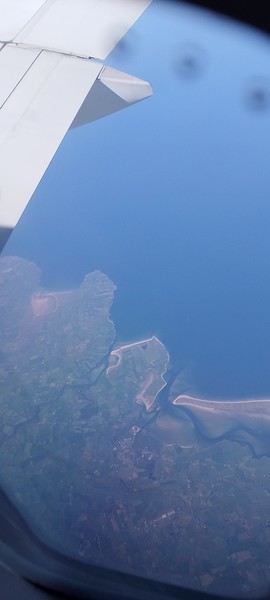 Greenland, still Danish,
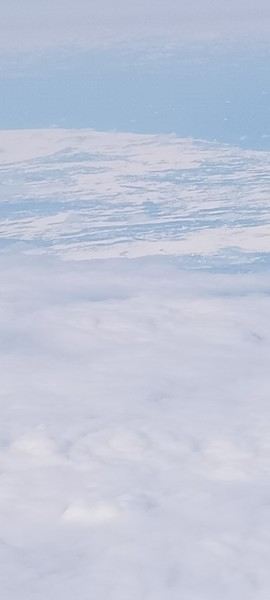
And Lake Huron, still half Canadian,
 We land early in Detroit... a nightmare of an airport. A long, dreadful baggage check process, but we still make it to gate A10 just in the nick of time—only for disaster to strike!
My passport has my first and last name, my boarding pass has my first and last name, BUT not on Delta’s computer—so we’re denied boarding!
We head to the Air France-Delta-KLM desk, where an employee listens to us sympathetically. He books us two seats on an 8:30 AM flight to SF...
Then passes us off to two colleagues who offer us a night in a hotel... and send a message to the baggage service to keep our checked luggage safe...
In the end, we go to bed earlier, wake up earlier, but since we’ll still get some sleep on the plane, we might be able to look back on this whole mess with a smile... well, we hope so, anyway.
10:17 PM in Detroit—time to sleep. Our clean clothes and toiletries are in the plane.
We’ll bounce back!!;
We land early in Detroit... a nightmare of an airport. A long, dreadful baggage check process, but we still make it to gate A10 just in the nick of time—only for disaster to strike!
My passport has my first and last name, my boarding pass has my first and last name, BUT not on Delta’s computer—so we’re denied boarding!
We head to the Air France-Delta-KLM desk, where an employee listens to us sympathetically. He books us two seats on an 8:30 AM flight to SF...
Then passes us off to two colleagues who offer us a night in a hotel... and send a message to the baggage service to keep our checked luggage safe...
In the end, we go to bed earlier, wake up earlier, but since we’ll still get some sleep on the plane, we might be able to look back on this whole mess with a smile... well, we hope so, anyway.
10:17 PM in Detroit—time to sleep. Our clean clothes and toiletries are in the plane.
We’ll bounce back!!;
Greenland, still Danish,And Lake Huron, still half Canadian,
We land early in Detroit... a nightmare of an airport. A long, dreadful baggage check process, but we still make it to gate A10 just in the nick of time—only for disaster to strike!
My passport has my first and last name, my boarding pass has my first and last name, BUT not on Delta’s computer—so we’re denied boarding!
We head to the Air France-Delta-KLM desk, where an employee listens to us sympathetically. He books us two seats on an 8:30 AM flight to SF...
Then passes us off to two colleagues who offer us a night in a hotel... and send a message to the baggage service to keep our checked luggage safe...
In the end, we go to bed earlier, wake up earlier, but since we’ll still get some sleep on the plane, we might be able to look back on this whole mess with a smile... well, we hope so, anyway.
10:17 PM in Detroit—time to sleep. Our clean clothes and toiletries are in the plane.
We’ll bounce back!!;Visiting Philadelphia and Washington in 8 days
Hi,
Do you think 8 days is enough to visit Philadelphia, especially the Rocky spots (my son is a huge fan), and the White House in Washington? For mid-April or mid-July.
Thanks
Traverser les fjords du Chili et d'Argentine English translation pending
Bonjour
je commence à préparer un voyage à 2 , pour traverser le fjord chilli argentine pour rejoindre Ushuaïa et rejoindre le cap Horn monument .le temps du voyage sur 3 semaines, est-ce suffisant?
j'ai vue des compagnies ferry (Navimag) . pour les vols depuis paris après je sais pas où on arrive ? La perfide la moins froide aussi qu'il vaut mieux pour y aller. enfin un peu dans le vague pour l'instant.
dans l'attente de vos expériences, merci à tous. Laurent
je commence à préparer un voyage à 2 , pour traverser le fjord chilli argentine pour rejoindre Ushuaïa et rejoindre le cap Horn monument .le temps du voyage sur 3 semaines, est-ce suffisant?
j'ai vue des compagnies ferry (Navimag) . pour les vols depuis paris après je sais pas où on arrive ? La perfide la moins froide aussi qu'il vaut mieux pour y aller. enfin un peu dans le vague pour l'instant.
dans l'attente de vos expériences, merci à tous. Laurent
Projet de voyage en Patagonie pour 3 semaines en famille en juillet/août 2021 English translation pending
Bonjour
je déterre un vieux sujet....
Je souhaite partir visiter la Patagonie des deux côtés avec une famille ayant des enfants de 7 et 9 ans pour trois semaines vers Juillet/ Août 2021.
j'aimerais voir
-les chutes d'iguazu - passez un ou deux jours dans une ferme pour voir les gauchos et manger les fameux bbq - le désert d'atacama, et l'endroit où l'on peut voir les grues - le lac avec la cave en marbre? -el Calafate, el chaiten le perito morino notamment - le parc torres del paine
Je suis amateur en photographie donc j'aimerais rester au moins 2 jours sur chaque endroit.
Pouvez-vous nous conseiller un ìtinéraire, les moyens de transport, hébergements confortables mais pas nécessairement des 4 étoiles etc
et le budget moyen
d'avance merci pour vos conseils
je déterre un vieux sujet....
Je souhaite partir visiter la Patagonie des deux côtés avec une famille ayant des enfants de 7 et 9 ans pour trois semaines vers Juillet/ Août 2021.
j'aimerais voir
-les chutes d'iguazu - passez un ou deux jours dans une ferme pour voir les gauchos et manger les fameux bbq - le désert d'atacama, et l'endroit où l'on peut voir les grues - le lac avec la cave en marbre? -el Calafate, el chaiten le perito morino notamment - le parc torres del paine
Je suis amateur en photographie donc j'aimerais rester au moins 2 jours sur chaque endroit.
Pouvez-vous nous conseiller un ìtinéraire, les moyens de transport, hébergements confortables mais pas nécessairement des 4 étoiles etc
et le budget moyen
d'avance merci pour vos conseils
Qui prépare son voyage pour cet été Québec - Canada - États-Unis (Chicago)? English translation pending
Bonjour,
Nous avons réservé nos vols pour fin juin/ mi-juillet 2020 arrivée Montréal puis départ Chicago (en début d´année). Une chose en entrainant une autre, nous avons trainé pour préparer et réserver nos différentes étapes. Et aujourd'hui nous sommes plus ou moins au point "mort" (cf crise actuelle). Je commence un peu à étudier le parcours mais timidement.
Préparez-vous ou avez-vous déjà préparé vos vacances de cet été ?
Nous voulions faire un road-trip Montréal - Chicago.
Et vous ?
Nous avons réservé nos vols pour fin juin/ mi-juillet 2020 arrivée Montréal puis départ Chicago (en début d´année). Une chose en entrainant une autre, nous avons trainé pour préparer et réserver nos différentes étapes. Et aujourd'hui nous sommes plus ou moins au point "mort" (cf crise actuelle). Je commence un peu à étudier le parcours mais timidement.
Préparez-vous ou avez-vous déjà préparé vos vacances de cet été ?
Nous voulions faire un road-trip Montréal - Chicago.
Et vous ?
Trois générations, 23 jours, 11 états, western happiness English translation pending
J’ai longtemps hésité à écrire ce carnet, au retour de ce merveilleux voyage, en Juillet, il m’a semblé que plusieurs autres carnets parlaient plus ou moins des mêmes lieux , et d’autres ont suivi les mois suivants, je les ai lu et continue à les lire avec beaucoup de Plaisir (encore merci bibouns51, marcalamar, marati et les autres, trop nombreux pour que je les cite tous), ils me rappellent ces endroits superbes et ces 3 semaines d’émerveillements.
Mais en décembre, mon père, le seul participant masculin à ce beau voyage, nous a quitté . Et en y réfléchissant, j’ai eu envie de raconter ce dernier road trip tous ensemble , pour moi c’est un rappel de bons souvenirs, et j’espère que pour certains ça donnera encore un autre exemple, les voyages à 3 générations n’étant pas si fréquents dans les carnets. Voyager avec les grands-parents et les enfants ados, ça force chacun à faire des concessions, à s’adapter au rythme et aux envies des uns et des autres…
C’était déjà le 6ème voyage dans l’Ouest pour moi, en une vingtaine d’année, et 3ème en trois ans:
En 2017, un trip à 9 avec un couple d’amis, ma soeur et nos 5 enfants, de San Francisco à Las Vegas en passant par les parcs les plus fréquemment visités (Grand Canyon, Bryce, …) sans passer par Los Angeles (https://voyageforum.com/v.f?post=8264822;#8264822 ).
En 2018, toute seule sans enfants, à la découverte du Yellowstone puis de Valley of fire, Cedar breaks et Snow Canyon entre autres (https://voyageforum.com/v.f?post=9100875;#9100875 )
Et 2019, l’objet de ce carnet, avec mes parents, mes deux filles de 14 et 16 ans et ma niece de 17 ans. Il y a eu plusieurs versions de l’itinéraire, j’avais fait une liste de nombreux endroits possibles et chacun a donné son classement. J’ai pris les lieux qui avaient le plus de voix de préférence et j’ai essayé de tous les mettre dans un itinéraire bien chargé mais je pense assez équilibré. Les incontournables étaient pour moi Yellowstone et Monument Valley que je voulais absolument leur faire découvrir à tous. Et pour les enfants, Universal Studios à Los Angeles et un nouveau passage à Las Vegas qu’elles avaient adoré deux ans plus tôt. Pour mes parents, le Mont Rushmore leur faisait envie. Le résultat a été un road trip de 23 jours, avec 2 vols intérieurs, 11 états traversés, 11 parcs nationaux, des lieux marqués par l’histoire indienne…on a beaucoup ri, un peu marché, et si souvent été éblouis.
Alors, après ce long préambule, comme on dit dans New-York Unité spéciale; voilà leur histoire . 😊
Comme nous avions un vol le 25 Juin au matin, un direct CDG-Los Angeles, on a décidé de rejoindre Paris en TGV le 24 au soir, pour dormir près de l’aéroport. Le 25, frais et dispos, nous voilà à l’aéroport. Pas de bagages à enregistrer, nous avons tous voyagé avec une valise cabine et un sac à dos. On monte bien à temps dans l’A380, et on attend le décollage…et on attend…et on attend…on nous parle d’un petit souci technique, on attend toujours…au bout d’un moment, on nous dit qu’on va nous faire sortir, que du personnel au sol nous prépare une salle climatisée (oui, il fait plutôt chaud ces jours-ci) pour nous recevoir en attendant de nous trouver un autre avion… Quand enfin on peut sortir, pas vraiment de salle climatisée mais du personnel qui nous traite un peu comme du bétail pour nous faire sortir au plus vite et nous dit de récupérer nos bagages (youpie, on n’en a pas à récupérer) et d’aller au comptoir air France où on va nous trouver un prochain vol. Mais c’est pas possible, on a nos places pour Universal demain nous! Au comptoir, on arrive dans les premiers, n’ayant pas de bagages à récupérer (mais ayant dû parcourir CDG de long en large) et là commence la recherche d’une solution pour nous 6. Première proposition: attendre minuit (on est 11h du matin à peu près là)pour prendre un vol ver Mexico, y attendre 8h puis avoir enfin un vol vers Los Angeles. Notre refus est clair, tant qu’à arriver demain, autant partir demain matin, au moins on aura une nuit de repos d’ici là. On finit par nous trouver un vol le lendemain matin, avec une escale à Detroit et arrivée en fin d’après-midi à Los Angeles. Bon, bein on fera avec…vous nous trouvez un hotel pour cette nuit? Euh…"on n’en trouve pas directement mais trouvez vous même et on vous remboursera…"je comprends qu’ils n’aient pas trouvé, il m’a fallu 2h pour finalement trouver des chambres à Chantilly, il n’y avait rien de libre plus près (les environs de l’aéroport étaient surbookés et on était six donc besoin de minimum 2 chambres). Franchement, la gestion de la situation par Air France ne nous a pas du tout impressionnés. Heureusement qu’ils ont fini par nous rembourser l’hotel et nous dédommager pour le vol 2 mois plus tard, une fois la plainte enregistrée et traitée sur leur site.
J’ai profité de l’après-midi et la soirée à l’hotel pour appeler Universal, et là, super service, ils ont accepté de changer la date des billets sans problème en apprenant la situation. J’ai aussi appelé pour changer la date de location de la voiture (prevue au depart pour 48h, on l’aura finalement prise juste 24h) et ça a été sans souci.
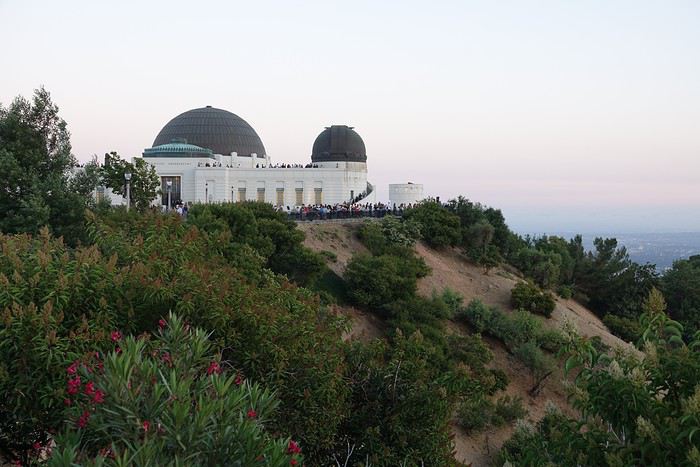
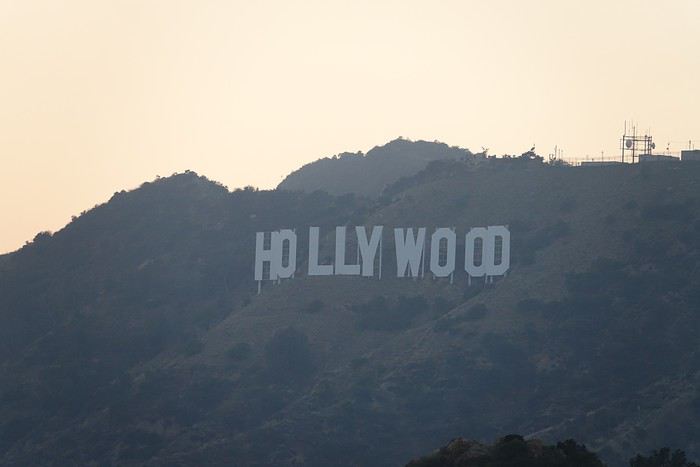
Le lendemain, 26 Juin, on retourne à l’aéroport avec une petite apprehension, mais tout se passe bien, premier vol ok, étape à Détroit rapide pour le passage à la douane et deuxième vol très bien également. A l’arrivée à Los Angeles, pour rejoindre notre hotel près de Universal, on fait un petit arrêt à Griffith Park, voir le signe Hollywood à la tombée du jour,
et après une pizza près de l’hotel, on s’effondre dans nos lits. Hotel : BLVD hotel and spa, très correct, jolie chambre, pas de petit déjeuner, bien situé (on peut aller à Universal à pieds).
Mais en décembre, mon père, le seul participant masculin à ce beau voyage, nous a quitté . Et en y réfléchissant, j’ai eu envie de raconter ce dernier road trip tous ensemble , pour moi c’est un rappel de bons souvenirs, et j’espère que pour certains ça donnera encore un autre exemple, les voyages à 3 générations n’étant pas si fréquents dans les carnets. Voyager avec les grands-parents et les enfants ados, ça force chacun à faire des concessions, à s’adapter au rythme et aux envies des uns et des autres…
C’était déjà le 6ème voyage dans l’Ouest pour moi, en une vingtaine d’année, et 3ème en trois ans:
En 2017, un trip à 9 avec un couple d’amis, ma soeur et nos 5 enfants, de San Francisco à Las Vegas en passant par les parcs les plus fréquemment visités (Grand Canyon, Bryce, …) sans passer par Los Angeles (https://voyageforum.com/v.f?post=8264822;#8264822 ).
En 2018, toute seule sans enfants, à la découverte du Yellowstone puis de Valley of fire, Cedar breaks et Snow Canyon entre autres (https://voyageforum.com/v.f?post=9100875;#9100875 )
Et 2019, l’objet de ce carnet, avec mes parents, mes deux filles de 14 et 16 ans et ma niece de 17 ans. Il y a eu plusieurs versions de l’itinéraire, j’avais fait une liste de nombreux endroits possibles et chacun a donné son classement. J’ai pris les lieux qui avaient le plus de voix de préférence et j’ai essayé de tous les mettre dans un itinéraire bien chargé mais je pense assez équilibré. Les incontournables étaient pour moi Yellowstone et Monument Valley que je voulais absolument leur faire découvrir à tous. Et pour les enfants, Universal Studios à Los Angeles et un nouveau passage à Las Vegas qu’elles avaient adoré deux ans plus tôt. Pour mes parents, le Mont Rushmore leur faisait envie. Le résultat a été un road trip de 23 jours, avec 2 vols intérieurs, 11 états traversés, 11 parcs nationaux, des lieux marqués par l’histoire indienne…on a beaucoup ri, un peu marché, et si souvent été éblouis.
Alors, après ce long préambule, comme on dit dans New-York Unité spéciale; voilà leur histoire . 😊
Comme nous avions un vol le 25 Juin au matin, un direct CDG-Los Angeles, on a décidé de rejoindre Paris en TGV le 24 au soir, pour dormir près de l’aéroport. Le 25, frais et dispos, nous voilà à l’aéroport. Pas de bagages à enregistrer, nous avons tous voyagé avec une valise cabine et un sac à dos. On monte bien à temps dans l’A380, et on attend le décollage…et on attend…et on attend…on nous parle d’un petit souci technique, on attend toujours…au bout d’un moment, on nous dit qu’on va nous faire sortir, que du personnel au sol nous prépare une salle climatisée (oui, il fait plutôt chaud ces jours-ci) pour nous recevoir en attendant de nous trouver un autre avion… Quand enfin on peut sortir, pas vraiment de salle climatisée mais du personnel qui nous traite un peu comme du bétail pour nous faire sortir au plus vite et nous dit de récupérer nos bagages (youpie, on n’en a pas à récupérer) et d’aller au comptoir air France où on va nous trouver un prochain vol. Mais c’est pas possible, on a nos places pour Universal demain nous! Au comptoir, on arrive dans les premiers, n’ayant pas de bagages à récupérer (mais ayant dû parcourir CDG de long en large) et là commence la recherche d’une solution pour nous 6. Première proposition: attendre minuit (on est 11h du matin à peu près là)pour prendre un vol ver Mexico, y attendre 8h puis avoir enfin un vol vers Los Angeles. Notre refus est clair, tant qu’à arriver demain, autant partir demain matin, au moins on aura une nuit de repos d’ici là. On finit par nous trouver un vol le lendemain matin, avec une escale à Detroit et arrivée en fin d’après-midi à Los Angeles. Bon, bein on fera avec…vous nous trouvez un hotel pour cette nuit? Euh…"on n’en trouve pas directement mais trouvez vous même et on vous remboursera…"je comprends qu’ils n’aient pas trouvé, il m’a fallu 2h pour finalement trouver des chambres à Chantilly, il n’y avait rien de libre plus près (les environs de l’aéroport étaient surbookés et on était six donc besoin de minimum 2 chambres). Franchement, la gestion de la situation par Air France ne nous a pas du tout impressionnés. Heureusement qu’ils ont fini par nous rembourser l’hotel et nous dédommager pour le vol 2 mois plus tard, une fois la plainte enregistrée et traitée sur leur site.
J’ai profité de l’après-midi et la soirée à l’hotel pour appeler Universal, et là, super service, ils ont accepté de changer la date des billets sans problème en apprenant la situation. J’ai aussi appelé pour changer la date de location de la voiture (prevue au depart pour 48h, on l’aura finalement prise juste 24h) et ça a été sans souci.
Le lendemain, 26 Juin, on retourne à l’aéroport avec une petite apprehension, mais tout se passe bien, premier vol ok, étape à Détroit rapide pour le passage à la douane et deuxième vol très bien également. A l’arrivée à Los Angeles, pour rejoindre notre hotel près de Universal, on fait un petit arrêt à Griffith Park, voir le signe Hollywood à la tombée du jour,
et après une pizza près de l’hotel, on s’effondre dans nos lits. Hotel : BLVD hotel and spa, très correct, jolie chambre, pas de petit déjeuner, bien situé (on peut aller à Universal à pieds).
Une semaine en février à Tanger avec deux enfants English translation pending
bonjour , je vais une semaine mi février seule avec mes Deux enfants de 4 et 5 ans à Tanger.
je pensais aller voir Chefchaouen ...
- ou loger à tanger ? centre , plage ? - comment se déplacer de Tanger à Chefchaouen ? transports co ou louer une voiture ? - faire une escale à Tetouan ? - ou faire une balade à dos d'ane ou chameau ?
merci à vous
- ou loger à tanger ? centre , plage ? - comment se déplacer de Tanger à Chefchaouen ? transports co ou louer une voiture ? - faire une escale à Tetouan ? - ou faire une balade à dos d'ane ou chameau ?
merci à vous
Meilleure route Montréal - Californie English translation pending
montreal californie en vr meilleurs route svp sans trop de montagnes
Maroc à vélo: carte bancaire et réchaud English translation pending
Bonjour,
Je part d'ici 1.5 mois jusqu'au Maroc à vélo. Je compte allez peu dans les grandes villes et d'avantage dans la montagne. Je pense arrivée au Maroc mi décembre et y rester 1 à 2 mois.
J'ai 2 questions : * pour les retrait en carte bleu, j'ai une mastercard. Les distributeurs les acceptes t-il ? ou vaut-il mieux avoir une mastercarte + une visa ? ou que une visa ? * Pour le réchaud, j’hésite entre alcool et le gaz. Quel combustible trouve t-on le plus facilement ? Pour le cas du gaz, avec perforation, visses ou valve camping gaz ?
Et puis s'il y a des lieux a ne pas manquer, des conseils, n'hésitez pas :)
Merci :)
Je part d'ici 1.5 mois jusqu'au Maroc à vélo. Je compte allez peu dans les grandes villes et d'avantage dans la montagne. Je pense arrivée au Maroc mi décembre et y rester 1 à 2 mois.
J'ai 2 questions : * pour les retrait en carte bleu, j'ai une mastercard. Les distributeurs les acceptes t-il ? ou vaut-il mieux avoir une mastercarte + une visa ? ou que une visa ? * Pour le réchaud, j’hésite entre alcool et le gaz. Quel combustible trouve t-on le plus facilement ? Pour le cas du gaz, avec perforation, visses ou valve camping gaz ?
Et puis s'il y a des lieux a ne pas manquer, des conseils, n'hésitez pas :)
Merci :)
Traversée Puerto Williams - Ushuaïa le 24 août 2019 English translation pending
Bonjour à toutes et à tous,
Nous avons réservé une croisière avec Transbordadora Austral Broom au départ de Punta Arenas le 22 août 18h à Puerto Williams, avec une arrivée prévue le 24 août 2019.
Nous recherchons une solution pour traverser de Puerto Williams vers Ushuaia le 24 août 2019. Nous avons contacté plusieurs compagnies mais aucune n'effectue la traversée à cette période. Auriez-vous une solution à nous proposer ? Ou nous faire part de votre expérience à cette période ? Pour information, nous avons déjà contacté les compagnies suivantes : Shila Turismo Adventures et Piratour.
Merci de votre aide. Bien à vous, Doriane
Nous avons réservé une croisière avec Transbordadora Austral Broom au départ de Punta Arenas le 22 août 18h à Puerto Williams, avec une arrivée prévue le 24 août 2019.
Nous recherchons une solution pour traverser de Puerto Williams vers Ushuaia le 24 août 2019. Nous avons contacté plusieurs compagnies mais aucune n'effectue la traversée à cette période. Auriez-vous une solution à nous proposer ? Ou nous faire part de votre expérience à cette période ? Pour information, nous avons déjà contacté les compagnies suivantes : Shila Turismo Adventures et Piratour.
Merci de votre aide. Bien à vous, Doriane
Trajet en voiture de Boston à Chicago English translation pending
Bonjour,
Nous partons du 9 au 28 aout prochain aux Etats Unis mon mari et moi avec notre ado de 12 ans.
Nous restons à New York jusqu'au 17 puis Boston. Nous souhaiterions avoir des conseils de stop et visites entre Boston et Chicago, sachant qu'on a prévu un stop aux chutes du Niagara.
A priori nous partons de Boston le 20 et avons prévu d'arriver à Chicago le 24 ou 25 avec trajet en voiture. On aimerait bien se poser autour d'un lac.
Merci de vos retours.
Billet ferry Algeciras - Tanger English translation pending
Bonjour,
je viens vers vous pour une question, j'aimerai aller au maroc a partir du 5 juillet, mais je ne sais pas quel est le mieux entre prendre le billet de ferry sur la route, ou réserver sur internet, on me dit souvent qu'il est mieux de l'acheter sur le trajet mais j'ai peur que les bateaux soient complet, ou hors de prix le jour j.
Merci à vous.
Croisière Chili - Argentine English translation pending
Bonjour à tous
Je pense acheter une croisière avec Holland America Line pour un départ en décembre 2019 🙂
L'itinéraire est : San Antonio (Santiago) du Chili Puerto Montt Purto Chacabuco les fjords chiliens, canal de Sarmiento, détroit de Magellan Puerta Arenas Glacier ALLEY, Ushuaia Cap Horn Iles Malouines Montevidéo Buenos Aires
J'ai besoin de votre aide sur plusieurs points :
- Comment va t on de l'aéroport de Santiago jusqu'au terminal de croisière ? - Quelles excursions puis je faire sans passer par HAL ? - Que mettre dans ma valise ? -Est ce que le passage du cap Horn est supportable ? 😉
Merci de vos réponses
Christine
Je pense acheter une croisière avec Holland America Line pour un départ en décembre 2019 🙂
L'itinéraire est : San Antonio (Santiago) du Chili Puerto Montt Purto Chacabuco les fjords chiliens, canal de Sarmiento, détroit de Magellan Puerta Arenas Glacier ALLEY, Ushuaia Cap Horn Iles Malouines Montevidéo Buenos Aires
J'ai besoin de votre aide sur plusieurs points :
- Comment va t on de l'aéroport de Santiago jusqu'au terminal de croisière ? - Quelles excursions puis je faire sans passer par HAL ? - Que mettre dans ma valise ? -Est ce que le passage du cap Horn est supportable ? 😉
Merci de vos réponses
Christine
Climat en Europe de l'Est en octobre English translation pending
Bonjour à tous,
J'envisage un séjour itinérant d'un mois environ en Europe de l'Est en octobre, voir novembre, et j'aurais souhaité savoir si le climat était encore ok à cette période, que ce soit dans les régions un peu plus montagneuses ou en bord de mer en Bulgarie dans les environs de Nessebar.
Merci d'avance pour vos réponses
J'envisage un séjour itinérant d'un mois environ en Europe de l'Est en octobre, voir novembre, et j'aurais souhaité savoir si le climat était encore ok à cette période, que ce soit dans les régions un peu plus montagneuses ou en bord de mer en Bulgarie dans les environs de Nessebar.
Merci d'avance pour vos réponses
Budget pour les Perhentian English translation pending
Bonjour,
Nous partons sur les îles perenthian en août pour 5 jours et sommes 4 personnes. L’hotel est déjà réservé. Pouvez vous me donner une idée du budget nécessaire (vu qu’il n’y a pas de distributeur sur place) sachant que nous ferons du snorkeling, des balades en bateau +nourriture et apéro correctement sans superflu.
Merci à vous:
Relier la Terre de Feu à vélo au mois de mai English translation pending
Bonjour à tous,
Parti pour un tour du monde à vélo, j'essaie en vain de trouver une information crucial pour moi.
Est-il possible de ralier la terre de feu direction Ushuaia au mois de mai. Les ferry ne circulant pas en cette saison.. Bus ? Avion ?
existe-il une route sans devoir prendre le ferry merci !! J'ai vu qu'il y avait des liaisons de bus, prennent-ils le ferry aussi ?
tks !!!
Parti pour un tour du monde à vélo, j'essaie en vain de trouver une information crucial pour moi.
Est-il possible de ralier la terre de feu direction Ushuaia au mois de mai. Les ferry ne circulant pas en cette saison.. Bus ? Avion ?
existe-il une route sans devoir prendre le ferry merci !! J'ai vu qu'il y avait des liaisons de bus, prennent-ils le ferry aussi ?
tks !!!
Road trip en Patagonie hors des parcs nationaux English translation pending
Bonjour a tous,
Mon conjoint, notre chien et moi même sommes installés en Bolivie, et nous envisageons d'effectuer un Road trip de 2 mois (entre decembre et février prochain) pour nous rendre en Patagonie avec notre 4x4 aménagé.
Seul problème, les chiens ne sont pas acceptés dans la plupart des parcs nationaux.
Notre question est donc la suivante :
- Le trajet depuis la Bolivie vaut-il le coup si nous restons en dehors des parcs nationaux ? -Qu'y a-t-il a voir dans cette zone en dehors des parcs nationaux ?
A vrai dire, nous ne sommes vraiment pas fan du tourisme de masse et apres lecture de plusieurs recits a propos de Tores del Plaine entre autre, nous ne regrettons pas vraiment de ne pouvpir y entrer. Nenamoins, nous aimerions nous assurer qu'il reste de belles choses a découvrir en dehors du circuit touristique interdit aux chiens.
Si certains d'entre vous ont visite la Patagone avec leur chien et/ou en dehors des parcs nationaux et circuits touristiques, nous sommes preneurs de toute information !
Merci pour votre aide et bons voyages a tous !
Melodie, Ivan et Sanka.
Mon conjoint, notre chien et moi même sommes installés en Bolivie, et nous envisageons d'effectuer un Road trip de 2 mois (entre decembre et février prochain) pour nous rendre en Patagonie avec notre 4x4 aménagé.
Seul problème, les chiens ne sont pas acceptés dans la plupart des parcs nationaux.
Notre question est donc la suivante :
- Le trajet depuis la Bolivie vaut-il le coup si nous restons en dehors des parcs nationaux ? -Qu'y a-t-il a voir dans cette zone en dehors des parcs nationaux ?
A vrai dire, nous ne sommes vraiment pas fan du tourisme de masse et apres lecture de plusieurs recits a propos de Tores del Plaine entre autre, nous ne regrettons pas vraiment de ne pouvpir y entrer. Nenamoins, nous aimerions nous assurer qu'il reste de belles choses a découvrir en dehors du circuit touristique interdit aux chiens.
Si certains d'entre vous ont visite la Patagone avec leur chien et/ou en dehors des parcs nationaux et circuits touristiques, nous sommes preneurs de toute information !
Merci pour votre aide et bons voyages a tous !
Melodie, Ivan et Sanka.
L'Airbus A350 pour l'Ouest américain? English translation pending
Bonjour à tous, un proche passionné d'avions regarde avec enthousiasme le nouveau A350. Souhaitant lui faire une surprise, j'aimerais savoir s'il est possible d'aller, d'Europe, dans l'Ouest américain avec cet appareil. J'ai cherché sur Google mais ne trouve pas. Merci d'avance aux spécialistes !
De Milan à Palermo en train English translation pending
Bonjour
Je souhaite faire intinéraire en train de Milan à Palermo en Sicile. Est-ce vous avez une idée sur le cout du billet de train et bateau?
Merci!
Je souhaite faire intinéraire en train de Milan à Palermo en Sicile. Est-ce vous avez une idée sur le cout du billet de train et bateau?
Merci!
Le sud Betong et Pattani (Thaïlande) English translation pending
Sawadi
Mon poto et moi avons chacun un scoot.
Après Hatyai Songkhla l'on souhaite suivre la côte jusqu'à Pattani et aller sur Betong en passant à l'aller ou retour sur Narathiwat et Yala.
C'est risqué ou pas ?
Ou faut il suivre une.route sécurisée pour Betong ? Personne n'a su nous dire ce qu'il en est pour des touristes en scoot. Hier sur Nakhon S.T les gens ne savent pas ne connaissent pas.
On aimerait rester 4 à 5 jours dans ce coin et repartir sur Satun et Lipe.
C'est risqué ou pas ?
Ou faut il suivre une.route sécurisée pour Betong ? Personne n'a su nous dire ce qu'il en est pour des touristes en scoot. Hier sur Nakhon S.T les gens ne savent pas ne connaissent pas.
On aimerait rester 4 à 5 jours dans ce coin et repartir sur Satun et Lipe.
Transports en commun à San Francisco English translation pending
Bonjour,
Je viens de finaliser ma dernière réservation d'hôtel pour notre road-trip de l'été prochain dans l'ouest américain, à San Francisco (Youpi !!!!!!)
Les hôtels de centre-ville étant au choix insalubres ou à des prix prohibitifs, nous avons choisi de nous excentrés. Nous avons donc choisi un hôtel situé à proximité d'une station du BART, qui, d'après nos infos, nous permettra de rejoindre le centre-ville en 20-30 min (station San Bruno). Nous avons prévu une demi-journée de visite à pied / transports en commun, avec l'objectif de rejoindre le Pier 39, l'après-midi, pour aller visiter Alcatraz. Ainsi, j'aurais souhaité avoir des conseils avisés pour circuler en transports en commun dans SF, en partant de cette station de départ (San Bruno) : existe-il une carte de transport incluant le Bart et les autres modes de transports (métro, cable-car, bus) et, si oui, à quel prix ? A quel endroit est-ce le plus simple de faire la correspondance entre le BART et les autres modes de transport pour rejoindre le quartier de Fisherman'swarf ? Quelle est la ligne de cable-car la plus sympa à faire ?
Et enfin, si vous avez des conseils à me donner en terme de visites, accessibles à pied ou en transports en commun, je suis preneuse, sachant que la veille, nous avons programmé une visite en voiture des points majeurs de la ville en suivant la 49 miles scenic drive.
Un futur voyage au Maroc English translation pending
Bonjour, je compte me rendre au maroc l'an prochain pour y passer l'hiver avec ma femme et mon chien (sptitz nian de 2,5kg).Nous habitons marseille et je voudrais savoir si le trajet pour agadir est faisable en voiture ou s'il est préférable de prendre l'avion.
Quel est le climat au mois de février ?
Ou peut-on trouver des locations sérieuses ?
Voilà quelques questions que je me pose et je remercie d'avance les personnes qui apporteront des réponses à mes attentes.
Modification d'adresse américaine d'un visa English translation pending
Bonjour tout le monde!
J'ai besoin de votre aide!! J'ai fais une demande de VISA pour les USA pour le mois de mars pour mon compagnon qui ne bénéficie pas de l'ESTA. Petit soucis, sur le VISA j'ai mis l'adresse d'un hôtel de MIAMI dans lequel j'ai réservé, sauf que depuis nous voulons plutôt partir a L.A. Le VISA est-il modifiable? Pour l'instant on a pas encore réglé les frais de VISA ni pris de rendez-vous avec le consulat pour l'entretien.
Merci à vous par avance!!
Have a good trip 😉
Avarie sur le Soléal English translation pending
Bonsoir tous,
Lu ce jour, le Soléal de Ponant a touché un haut fond et il semblerait qu'une hélice et peut être aussi l'arbre de celle ci soient endommagés ? Pas d'info de Ponant, si quelqu'un en sait plus ? Bonne soirée.
Lu ce jour, le Soléal de Ponant a touché un haut fond et il semblerait qu'une hélice et peut être aussi l'arbre de celle ci soient endommagés ? Pas d'info de Ponant, si quelqu'un en sait plus ? Bonne soirée.
Philippines: voyage avec 3 enfants English translation pending
Bonjour,
Nous avons l habitude de voyager version "sac à dos" avec nos enfants (14/12/10 ans) et je crois que c'est la première fois qu'organiser des vacances est aussi compliqué !
Bon je crois aussi que je ne suis pas très originale …
Nous voyageons de 17/02 ou 02/03, soit environ 2 semaines.
Au début je pensais aller dans les Visayas (APO; NEGROS …)
passer par Cebu puis rejoindre PALAWAN pour monter jusqu'à Coron.
Sauf que, suite à mes recherches, le timing m a l 'air très serré.
Donc je me dis qu'il faut choisir
2 semaines à Palawan (Baie Honda; Port Barton excursion 5 jours El Nido Coron)
La solution la moins chronophage mais aussi très chère avec l'expédition.
soit oublier Palawan et se concentrer sur les Visayas (APO NEGROS SIQUIJOR BOHOL …). J'ai peur de regretter de ne pas aller au nord de Palawan !!!!
Ce qui me fait hésiter c'est que je me dis que Palawan est déjà très touristique et que dans l'avenir ce sera encore plus et peut être encore moins accessible financièrement. Qu'en pensez vous?
Nous aimons bcp les beaux paysages, le snorkelling, les marches dans la nature, les belles rencontres … Nous n'aimons pas être dans le tourisme de masse ...
Merci vraiment à ceux qui voudront bien m'apporter un peu de recul car cela fait 1 mois que je n'arrive pas à me décider …
Bons voyages ! Anne Claire
soit oublier Palawan et se concentrer sur les Visayas (APO NEGROS SIQUIJOR BOHOL …). J'ai peur de regretter de ne pas aller au nord de Palawan !!!!
Ce qui me fait hésiter c'est que je me dis que Palawan est déjà très touristique et que dans l'avenir ce sera encore plus et peut être encore moins accessible financièrement. Qu'en pensez vous?
Nous aimons bcp les beaux paysages, le snorkelling, les marches dans la nature, les belles rencontres … Nous n'aimons pas être dans le tourisme de masse ...
Merci vraiment à ceux qui voudront bien m'apporter un peu de recul car cela fait 1 mois que je n'arrive pas à me décider …
Bons voyages ! Anne Claire
Patagonie hiver 2018 English translation pending
Bonjour à tous
Je prépare un voyage de décembre à mi janvier en Patagonie.
Dans les grandes lignes, vol Paris - Buenos Aires, puis une quinzaine de jour de trek dans le massif du Fitz Roy, puis une dizaine de jour autour d’Ushuaïa (sans doute un trek sur l'ile de Navarino), et un peu de temps en rab au cas où...
Quelques questions d'organisations me viennent à l'esprit, et si vous avez des réponses à certaines d'entre elles, n'hésitez pas !!!
Pour rallier El Calafae nous allons prendre un vol interne, mais si j'ai bien compris, les départs se font de Buenos Aires AEP et non de l'aéroport international EZE. Comment se fait la liaison entre les 2? Combien de temps cela prend il?
Une fois à El Calafate, nous prévoyons de nous rendre à El Chalten. Même question que ci-dessus: j'imagine qu'il y a des services de bu, navettes, taxi ... à quel coût? Faut-il réserver, ou peut on acheter les billets en arrivant (nous sommes 4)?
Comme nous prévoyons de réaliser le trek Cero Huemul dans le massif du Fitz Roy, nous aurons besoin de vivre de course. Peut-trouver facilement cela à El Chalten (plats lyophylisés, barres énergétiques ...)? De même que des bouteilles de gaz et/ou de l'alcool à bruler? En particulier pour le Cero Huemul, j'ai lu qu'il fallait traverser une rivière par une tyrolienne, et que l'on pouvait louer le matériel à El Chalten. Des infos à ce sujet? Ou d'autres idées de trek sur une dizaine de jours?
Pour la deuxième partie de notre séjour autour d’Ushuaïa, nous cherchons des idées de trek sur plusieurs jours. L'ile de Navarino, très sauvage et peu accessible nous paraît idéale. D'autres idées?
Voila, c'est tout pour l'instant, mais j'aurais sans doute d'autres questions à venir ;)
Bonne soirée tout le monde, et merci d’avance à celles et ceux qui nous ferons partager leur exérience.
Pour rallier El Calafae nous allons prendre un vol interne, mais si j'ai bien compris, les départs se font de Buenos Aires AEP et non de l'aéroport international EZE. Comment se fait la liaison entre les 2? Combien de temps cela prend il?
Une fois à El Calafate, nous prévoyons de nous rendre à El Chalten. Même question que ci-dessus: j'imagine qu'il y a des services de bu, navettes, taxi ... à quel coût? Faut-il réserver, ou peut on acheter les billets en arrivant (nous sommes 4)?
Comme nous prévoyons de réaliser le trek Cero Huemul dans le massif du Fitz Roy, nous aurons besoin de vivre de course. Peut-trouver facilement cela à El Chalten (plats lyophylisés, barres énergétiques ...)? De même que des bouteilles de gaz et/ou de l'alcool à bruler? En particulier pour le Cero Huemul, j'ai lu qu'il fallait traverser une rivière par une tyrolienne, et que l'on pouvait louer le matériel à El Chalten. Des infos à ce sujet? Ou d'autres idées de trek sur une dizaine de jours?
Pour la deuxième partie de notre séjour autour d’Ushuaïa, nous cherchons des idées de trek sur plusieurs jours. L'ile de Navarino, très sauvage et peu accessible nous paraît idéale. D'autres idées?
Voila, c'est tout pour l'instant, mais j'aurais sans doute d'autres questions à venir ;)
Bonne soirée tout le monde, et merci d’avance à celles et ceux qui nous ferons partager leur exérience.
Prix des billets d'avion France - États-Unis English translation pending
Bonjour,
Nous comptons partir en Juillet 2019 de Marseille à Buffalo, et faire le retour New York/Marseille en Août 2019.
Pourriez-vous me dire quel est le bon tarif pour des billets d'avion à cette période de l'année pour que je sache si l'affaire est bonne ou pas quand je vais commencer à chercher ?
En vous remerciant d'avance
Sandrine