Results for "bazar+|+123+>+233"
6759 results found.
Boosting the Travel Companions section on Voyage Forum
Hi everyone! We see some amazing plans and also posts that go unanswered despite being for pretty popular destinations. We want to liven things up to help you travel more often with companions and in complete safety. Let us know what’s missing for you!
What’s your main hurdle when it comes to using this section?
Fear of not sharing the same interests as the other person. Difficulty managing money and bookings as a group. Lack of seriousness (people who don’t respond or back out). Time spent organizing the itinerary from A to Z.
What would help you the most to take the plunge?
A system of "verified" profiles (identity/trust).[/li> Pre-built itineraries by the forum where you just need to join in.[/li>
What’s your main hurdle when it comes to using this section?
Fear of not sharing the same interests as the other person. Difficulty managing money and bookings as a group. Lack of seriousness (people who don’t respond or back out). Time spent organizing the itinerary from A to Z.
What would help you the most to take the plunge?
A system of "verified" profiles (identity/trust).[/li> Pre-built itineraries by the forum where you just need to join in.[/li>
Trip report: Albania, April 2026
A little trip report from an 11-day journey to Albania at the end of April 2026, with two friends in their early sixties and beyond...
Our route: Berat, Gjirokastër, Himarë, Tirana
Here are some opinions, tips, and great deals to share:
Flight Round-trip Beauvais-Tirana: Ryanair, 260 € with checked baggage (20 kg) and seat selection. Flight was fine and on time. 2h 30min flight.
Exchange: 1 € was worth 95 lek in April 2026. We were advised to exchange in the airport hall at the Illiria counter (98 lek outside the security zone), saying we wouldn’t find a better rate. However, the exchange rate was 93 lek for 1 euro, while in the city it was 95...
Car rental at Tirana airport for 9 days via Booking.com: 144 € (56 € for the car rental and 88 € for optional full insurance deductible waiver).
Wheego agency: the car was fine, but be careful when signing the contract—they tried to convince us that the insurance taken through Booking didn’t cover everything and insisted we take their own insurance for 250 €... We refused.
After reading about driving in Tirana, instead of starting our trip by visiting the capital, we decided to head straight to Berat upon arrival and return the car at the end of the trip to explore the city on foot. This turned out to be a great choice!
Accommodations: All our stays were booked via Booking.com. Everyone prefers to be paid in euros and in cash—they mention this when booking.
Berat: 2-hour drive from the airport.
Accommodation: Vila Arben Elezi: 135 € for 3 nights with breakfast and private parking. The room was decent and clean but a bit dark, located slightly below ground level near the parking. However, the breakfast on the rooftop was excellent, especially with the stunning view of the "city of a thousand windows." Great location.
Berat was our favorite—there are lovely walks through the different neighborhoods on both sides of the river, each with a very different vibe. The citadel visit is also fascinating, as it’s like a small town within the fortress.
The walk along the river is pleasant, with plenty of restaurant choices. Other restaurants in the old town are also very nice. The White House Restaurant, on the first floor along the road, is good and offers a great view of the Gorica district.
Gjirokastër:
Accommodation: Te Ajdini Guest House: 120 € for 3 nights with breakfast. A private home stay. There’s free parking just before entering the city, a 5-minute walk from the accommodation, which is very convenient since the cobblestone streets are narrow and parking is tricky. Yes, it’s a climb to get to the place, but everything in this city is uphill... The room was bright and clean. Breakfast was very good, hearty, and served in the courtyard with a view of the castle. The guesthouse is a 5-minute walk from the city center (the bazaar) but in a quiet area.
Restaurants: Rrapi and Kujtimi—good and affordable with their little pergolas.
The old town of Gjirokastër is charming but very touristy, with streets packed with souvenir shops and restaurant tables and chairs. Lots of people.
-The bunker visit (near the tourist office) is very interesting: Cold War Tunnel.
The castle offers a beautiful view of the city.
-Visit to the Ottoman house Skenduli: very well done. Don’t forget to climb the ladder facing a trapdoor in the ceiling to see the roof’s framework—it’s like a forest of beams: impressive!
-The bridge Ura e Ali Pasha: A steep 45-minute climb from the city to the site is worth it, but once you reach the viewpoint (which is stunning), you have to go back down a path to reach the bridge. You can drive to the viewpoint, but parking is very tricky.
Around Gjirokastër:
-Just outside the city: Lake Liqeni i Viroit: a nice, ordinary-looking lake, but at the end, there’s a natural spring making the water crystal clear and a brilliant blue—really spectacular, like photos of Blue Eye near Sarandë.
-Drive to Përmet along the gorges: beautiful viewpoints along the way and lovely countryside.
Himarë:
Accommodation: Vila Kosteli: 120 € for 2 nights with breakfast—slightly overpriced for this type of place but very close to a small beach and not far from the promenade with all the restaurants. Private parking, but very tight (4 cars on a tiny lot along the road). The "sea view" room is a bit obstructed by the building across the street. However, the rooftop breakfast view is beautiful. Friendly staff.
Himarë is a pleasant seaside resort, quite calm (but it was April...). There’s a cute promenade with restaurants along the beach. The castle on the heights of Himarë is worth a visit.
Around Himarë:
-Qeparo is worth a quick stop, but Qeparo village is really worth the detour: a village lost in the heights after a scenic drive up from the coastal road—narrow but well-maintained. Beautiful view from the top and a charming village.
-The Big Bunker and Llogora Panorama: take a right turn several kilometers after Dhermi—a road that climbs steeply from the start... A breathtaking winding road that reaches 900 meters in altitude. The view is stunning.
-Several small villages between Dhermi and Himarë are worth a quick stop.
-Porto Palermo Castle is somewhat disappointing.
Tirana:
Taxi from Tirana airport to the city center: 15 € with electric taxis (Green Taxi, Bee Taxi, Do Taxi).
Accommodation: Hotel Nevi Apartment: 63 € for 2 nights. A private apartment in an older building but very clean and well-equipped, with a kitchen and small enclosed balcony.
Great welcome and contact—the owner even booked a taxi for our departure. Very well located, close to the main square, shops, and restaurants. A small supermarket nearby is perfect for stocking up on breakfast supplies.
The city is lively and dynamic, with plenty of green spaces and promenades. Buildings are popping up everywhere, often with surprising architecture—like a building shaped like a face, a huge golden cube, and many others under construction.
-Sky Tower: at the top, a rotating bar offers a 360° view of the city and its buildings. Drinks are a bit pricier than usual, but it’s totally worth it (6 € for a beer or a glass of white wine, 3 € for coffee). We were there for sunset, and it was amazing! A must-do. Arrive early, as it fills up quickly.
-The House of Leaves: a house used for secret surveillance and interrogations during the dictatorship... A great way to learn about the surveillance systems of that era.
-Bunk’Art 2: a bunker in the heart of the city—very interesting, covering the dictatorship period and its system...
-The Pazari i Ri Bazaar: the new bazaar district. The large hall is worth a visit, but souvenir prices are often higher than elsewhere... The area is nice.
Restaurant: Kastrati Restaurant—a bit like a canteen with lots of traditional dishes. It’s on the first floor of a building. Excellent value for money, and the waitress explains the dishes in French.
That’s a little overview of our trip and my personal impressions! Albania is a beautiful and pleasant country to visit. If you have any questions, feel free to ask!
That’s a little overview of our trip and my personal impressions! Albania is a beautiful and pleasant country to visit. If you have any questions, feel free to ask!
What mental and physical preparation for a humanitarian trek to Everest Base Camp?
Hi everyone!
New to this forum, I’m planning a pretty big project for 2028. I’m heading to Nepal to do a trek from Kathmandu all the way to Everest Base Camp (a cool 5,300 m 😄). This trek is a bit special because even though I’ll be part of a group, I’m going solo (so far, no problem—I’m used to it). But it’s my first real trek, and it’s also a humanitarian one: once I reach base camp, I’ll stay an extra week to help clean up the waste left by tens of thousands of climbers! Since I’m originally from South America, from two countries that share the Andes, I have a deep respect for mountains—they fascinate me. So Everest… it’s kind of the trip of a lifetime!
So, a little question for those who’ve done treks to Everest before… any tips for good mental preparation (I’m already working on the physical side)?
Thanks in advance for your advice! 🙂
New to this forum, I’m planning a pretty big project for 2028. I’m heading to Nepal to do a trek from Kathmandu all the way to Everest Base Camp (a cool 5,300 m 😄). This trek is a bit special because even though I’ll be part of a group, I’m going solo (so far, no problem—I’m used to it). But it’s my first real trek, and it’s also a humanitarian one: once I reach base camp, I’ll stay an extra week to help clean up the waste left by tens of thousands of climbers! Since I’m originally from South America, from two countries that share the Andes, I have a deep respect for mountains—they fascinate me. So Everest… it’s kind of the trip of a lifetime!
So, a little question for those who’ve done treks to Everest before… any tips for good mental preparation (I’m already working on the physical side)?
Thanks in advance for your advice! 🙂
Do you know a nice restaurant in Kochi?
I'm looking for a small, not-too-touristy restaurant in Fort Kochi. Do you know one not too far from Jacob Road?
Thanks
7-week trip feedback: Rajasthan and Varanasi, October-November-December 2025
We traveled as a couple from October 20 to December 11, 2025, for our second trip to India and our first time in Rajasthan, plus Mathura and Agra, which are in Uttar Pradesh but right on the border, and a 4-day flight hop to Varanasi.
Here’s a non-detailed trip report—just to share some info we found useful for other travelers, along with a few places and addresses we particularly enjoyed.
First off, a big thank you to (I’m using usernames) Aleph240758, Solene40, Montagnard74, and Pagaljavab, who took the time to reply to me. Some of them even take the time to create detailed and illustrated travel stories. Since I only started planning the trip in mid-August, I didn’t have much time and used the trip reports on VoyageForum to build our itinerary.
One more note: everyone travels differently and has their own preferences... so I’ll just share our personal feelings, which are obviously subjective.
We bought a physical SIM card upon arriving at the airport. The Airtel stand only offers one package for 500 rupees (just under 5 €) for 28 days, with 1.5 GB of data, unlimited national SMS, and calls—more than enough. Contrary to what we’d read, we asked for activation at the counter, and it was active within 10 minutes. The SIM worked well everywhere. Watch out—like in all airports, there’s a tendency to take advantage of tourists. The Airtel counter offers to exchange money directly, and we saw people paying 20 € for the SIM.
Since we arrived at night, the metro wasn’t running anymore. Plus, if you don’t know the city, we’d recommend taking a prepaid taxi—the price is fixed, and the driver knows the destination. Be careful: the prepaid taxi counter is on the right as you exit the hall, with large fixed signs above. Many counters put out a card on the desk saying "prepaid taxi," and even the Airtel stand tries to offer supposedly prepaid taxis, which is completely false. The price they ask for could be double or triple.
Here’s an app that was super useful for us In most big cities, we used "Rapido," an Indian app like Uber, to book auto-rickshaws (you can also book motorbikes or cars). You need a local phone number for this. The big advantage? The price is fixed, though you can still leave a tip. It tracks your ride, and most importantly, the destination is entered—way more practical than hailing an auto-rickshaw on the street, where the driver says "yes, yes," gives a price, and then doesn’t know where to go once you’re on the way. No need to enter a credit card. There’s also OlaCabs, which is similar, but we couldn’t get it to work.
For transportation between stops, we used government buses (RSRTC, blue buses), sometimes taxis via apps or by asking the guesthouse for visits and hard-to-reach places. This choice was really personal and made on the spot. - **Pros:** Buses leave almost every 30 minutes everywhere, giving you a lot of freedom. Every time we left from the bus station (bus stand), we had seats. Several times, we even got to sit in the driver’s cabin! The trip takes longer than a taxi, but not *that* much longer. The price is ridiculously low—1.30 € for 100 km for men, 70 cents for women. The bus stations are in the city centers, unlike many private bus companies. We met some great people. - **Cons:** It’s not exactly clean, and you’re obviously not in the comfort of a taxi. It’s not door-to-door service, so you need to travel light. You can’t stop along the way. If you need to catch the bus mid-route, it’s usually full, and you’ll have to elbow your way in without hesitation. For a short trip, I think hiring a taxi for the whole stay makes sense. Like I said, there’s no one-size-fits-all choice, but there’s no need to be apprehensive about taking public buses.
Here’s our route map, showing the number of nights spent at each stop. Compared to our initial plan, we slept one night in Barmer instead of two because we had time to visit the market in the afternoon, saw the Kiradu site the next morning, and didn’t see the point in staying longer.
We cut two of the six nights in Shekhawati. After our flight to Varanasi was canceled, we had to stay in Delhi, which actually turned out well—it let us arrive in Varanasi earlier and more rested.
The timing worked well for us, with longer stops in Bundi and Udaipur.
Compared to our initial plan, we slept one night in Barmer instead of two because we had time to visit the market in the afternoon, saw the Kiradu site the next morning, and didn’t see the point in staying longer.
We cut two of the six nights in Shekhawati. After our flight to Varanasi was canceled, we had to stay in Delhi, which actually turned out well—it let us arrive in Varanasi earlier and more rested.
The timing worked well for us, with longer stops in Bundi and Udaipur.
I won’t go into detail about each stop here, but I’d be happy to answer any questions. The accommodations and restaurants mentioned are the ones that had that little something extra, and the hearts (❤️❤️❤️) mark the sites we particularly loved.
Tijana Fort Palace - Accommodation and recovery from the trip
Alwar - Palace with museum - Moosi Maharani Ki Chhatri - Large reservoir
Bharatpur Accommodation: Iora Guesthouse, 14 €/night without breakfast—great value, cheap, good meals, close to the reserve Morning at Keoladeo Reserve by bike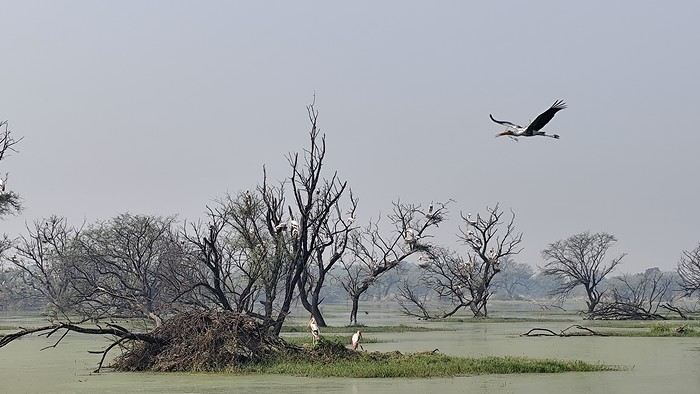
Mathura - Ghats (Yamuna Ghats, Vishram Ghat) to visit in the evening - Market (Chattu Bazar) - Hindu temple Shri Dwarkadheesh dedicated to Krishna - Vrindavan temple Banke Bihari, ❤️❤️❤️ a very important temple with incredible religious fervor - Vrindavan Hindu temple Balaram ISKCON
Agra Accommodation: Shivalayaa - The Divine Abode, 16 €/night with breakfast on Booking—welcoming, clean, close to the Taj Mahal - Mausoleum of Akbar the Great (in Sikandra) ❤️❤️❤️ - Mausoleum of Itimad-ud-Daulah (mini Taj) ❤️❤️❤️ - Visit the Taj early in the morning (closed on Fridays) ❤️❤️❤️ - Agra Fort ❤️❤️❤️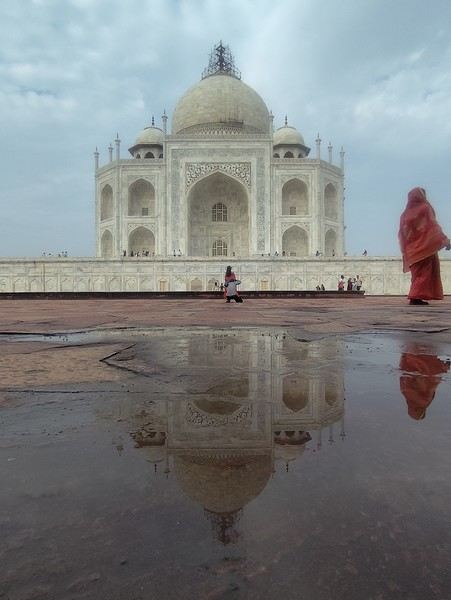
Dholpur - Machkund Temple with its water body - Clock Tower Ghanta Ghar - Royal stepwell Dhaulpur Bavdi
Karauli - City Palace, private visit with a guard ❤️❤️❤️ - Shri Madan Mohan Temple for the puja starting at 5:30 PM ❤️❤️❤️ - Wandering the streets We loved this stop, which is off the main tourist trail, for its pleasant atmosphere
Bhandarej This is a stop as a starting point to visit the Chand Baori stepwell in Abhaneri ❤️❤️❤️ Accommodation: Bhadrawati Palace, 53 €/night with breakfast in Bhandarej—nice, an old palace, warm welcome, booked via Hotels.com We were the only guests and had dinner with the current manager, the grandson of the Maharaja. There’s a pretty stepwell in the village, and we visited a tiny neighborhood temple where we were invited to join in the singing and dancing. Walking through the market was really enjoyable because of the kindness of the locals, who aren’t used to tourism ❤️❤️❤️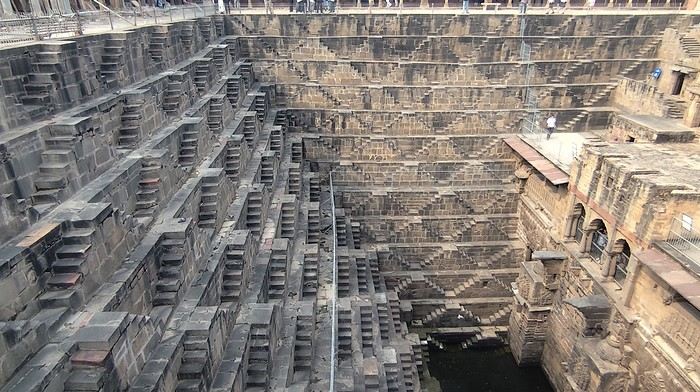
Jaipur - Hawa Mahal (Palace of Winds) - Jal Mahal - Gaitore Ki Chhatriyan ❤️❤️❤️ - Amber Fort ❤️❤️❤️ - Panna Meena Ka Kund stepwell - Galta Ji Temple (Monkey Temple) ❤️❤️❤️ - Bagru, 33 km away: visit to a fabric printing workshop with block prints (I’d noted some addresses on Google Maps). The first workshop wasn’t very welcoming and had no workers because of the humid weather. We were lucky to find another, more welcoming workshop. When the sun came out, the three female workers arrived and started their work—it was a great visit ❤️❤️❤️.
Bundi Accommodation: Hotel Bundi Inn, 25 €/night with breakfast—lovely room in a haveli, good meals with a rooftop view of the fort - Garh Palace Don’t miss: at the exit of the palace, to the left, you can access a beautiful garden with a pool and, at the back, a large hall called Chitrashala ❤️❤️❤️ - Raniji Ki Baori ❤️❤️❤️ - Nahar Dhunk Ki Baori - Chaurasi Khambun Ki Chhatri (cenotaph with 84 pillars) - Ksar Bagh, an interesting set of royal cenotaphs at the end of Jait Sagar Lake. On the other hand, we could’ve skipped Sukh Mahal and its museum. Bundi is still pleasant but is no longer a secret spot.
We bought a physical SIM card upon arriving at the airport. The Airtel stand only offers one package for 500 rupees (just under 5 €) for 28 days, with 1.5 GB of data, unlimited national SMS, and calls—more than enough. Contrary to what we’d read, we asked for activation at the counter, and it was active within 10 minutes. The SIM worked well everywhere. Watch out—like in all airports, there’s a tendency to take advantage of tourists. The Airtel counter offers to exchange money directly, and we saw people paying 20 € for the SIM.
Since we arrived at night, the metro wasn’t running anymore. Plus, if you don’t know the city, we’d recommend taking a prepaid taxi—the price is fixed, and the driver knows the destination. Be careful: the prepaid taxi counter is on the right as you exit the hall, with large fixed signs above. Many counters put out a card on the desk saying "prepaid taxi," and even the Airtel stand tries to offer supposedly prepaid taxis, which is completely false. The price they ask for could be double or triple.
Here’s an app that was super useful for us In most big cities, we used "Rapido," an Indian app like Uber, to book auto-rickshaws (you can also book motorbikes or cars). You need a local phone number for this. The big advantage? The price is fixed, though you can still leave a tip. It tracks your ride, and most importantly, the destination is entered—way more practical than hailing an auto-rickshaw on the street, where the driver says "yes, yes," gives a price, and then doesn’t know where to go once you’re on the way. No need to enter a credit card. There’s also OlaCabs, which is similar, but we couldn’t get it to work.
For transportation between stops, we used government buses (RSRTC, blue buses), sometimes taxis via apps or by asking the guesthouse for visits and hard-to-reach places. This choice was really personal and made on the spot. - **Pros:** Buses leave almost every 30 minutes everywhere, giving you a lot of freedom. Every time we left from the bus station (bus stand), we had seats. Several times, we even got to sit in the driver’s cabin! The trip takes longer than a taxi, but not *that* much longer. The price is ridiculously low—1.30 € for 100 km for men, 70 cents for women. The bus stations are in the city centers, unlike many private bus companies. We met some great people. - **Cons:** It’s not exactly clean, and you’re obviously not in the comfort of a taxi. It’s not door-to-door service, so you need to travel light. You can’t stop along the way. If you need to catch the bus mid-route, it’s usually full, and you’ll have to elbow your way in without hesitation. For a short trip, I think hiring a taxi for the whole stay makes sense. Like I said, there’s no one-size-fits-all choice, but there’s no need to be apprehensive about taking public buses.
Here’s our route map, showing the number of nights spent at each stop.
Compared to our initial plan, we slept one night in Barmer instead of two because we had time to visit the market in the afternoon, saw the Kiradu site the next morning, and didn’t see the point in staying longer.
We cut two of the six nights in Shekhawati. After our flight to Varanasi was canceled, we had to stay in Delhi, which actually turned out well—it let us arrive in Varanasi earlier and more rested.
The timing worked well for us, with longer stops in Bundi and Udaipur.I won’t go into detail about each stop here, but I’d be happy to answer any questions. The accommodations and restaurants mentioned are the ones that had that little something extra, and the hearts (❤️❤️❤️) mark the sites we particularly loved.
Tijana Fort Palace - Accommodation and recovery from the trip
Alwar - Palace with museum - Moosi Maharani Ki Chhatri - Large reservoir
Bharatpur Accommodation: Iora Guesthouse, 14 €/night without breakfast—great value, cheap, good meals, close to the reserve Morning at Keoladeo Reserve by bike
Mathura - Ghats (Yamuna Ghats, Vishram Ghat) to visit in the evening - Market (Chattu Bazar) - Hindu temple Shri Dwarkadheesh dedicated to Krishna - Vrindavan temple Banke Bihari, ❤️❤️❤️ a very important temple with incredible religious fervor - Vrindavan Hindu temple Balaram ISKCON
Agra Accommodation: Shivalayaa - The Divine Abode, 16 €/night with breakfast on Booking—welcoming, clean, close to the Taj Mahal - Mausoleum of Akbar the Great (in Sikandra) ❤️❤️❤️ - Mausoleum of Itimad-ud-Daulah (mini Taj) ❤️❤️❤️ - Visit the Taj early in the morning (closed on Fridays) ❤️❤️❤️ - Agra Fort ❤️❤️❤️
Dholpur - Machkund Temple with its water body - Clock Tower Ghanta Ghar - Royal stepwell Dhaulpur Bavdi
Karauli - City Palace, private visit with a guard ❤️❤️❤️ - Shri Madan Mohan Temple for the puja starting at 5:30 PM ❤️❤️❤️ - Wandering the streets We loved this stop, which is off the main tourist trail, for its pleasant atmosphere
Bhandarej This is a stop as a starting point to visit the Chand Baori stepwell in Abhaneri ❤️❤️❤️ Accommodation: Bhadrawati Palace, 53 €/night with breakfast in Bhandarej—nice, an old palace, warm welcome, booked via Hotels.com We were the only guests and had dinner with the current manager, the grandson of the Maharaja. There’s a pretty stepwell in the village, and we visited a tiny neighborhood temple where we were invited to join in the singing and dancing. Walking through the market was really enjoyable because of the kindness of the locals, who aren’t used to tourism ❤️❤️❤️
Jaipur - Hawa Mahal (Palace of Winds) - Jal Mahal - Gaitore Ki Chhatriyan ❤️❤️❤️ - Amber Fort ❤️❤️❤️ - Panna Meena Ka Kund stepwell - Galta Ji Temple (Monkey Temple) ❤️❤️❤️ - Bagru, 33 km away: visit to a fabric printing workshop with block prints (I’d noted some addresses on Google Maps). The first workshop wasn’t very welcoming and had no workers because of the humid weather. We were lucky to find another, more welcoming workshop. When the sun came out, the three female workers arrived and started their work—it was a great visit ❤️❤️❤️.
Bundi Accommodation: Hotel Bundi Inn, 25 €/night with breakfast—lovely room in a haveli, good meals with a rooftop view of the fort - Garh Palace Don’t miss: at the exit of the palace, to the left, you can access a beautiful garden with a pool and, at the back, a large hall called Chitrashala ❤️❤️❤️ - Raniji Ki Baori ❤️❤️❤️ - Nahar Dhunk Ki Baori - Chaurasi Khambun Ki Chhatri (cenotaph with 84 pillars) - Ksar Bagh, an interesting set of royal cenotaphs at the end of Jait Sagar Lake. On the other hand, we could’ve skipped Sukh Mahal and its museum. Bundi is still pleasant but is no longer a secret spot.
Salvador da Bahia, the history of Brazil's first capital
History of Salvador da Bahia:
In the 1920s, the Barra Lighthouse area had a tram (which provided a direct connection to the upper city, the historic center) and there were even farms along the coastline.
There are quite a few anecdotal descriptions from that era by Bahia's iconic author, Jorge Amado (in his book *Baía de Todos os Santos*). For those interested, I can lend you an original version (from 1946, in PDF) or an EPUB version (for those who understand Portuguese, of course).
For those who want to learn more about this historical side of Salvador, check out the full article published in today's *Correio* newspaper: https://www.correio24horas.com.br/salvador/farol-da-barra-na-decada-de-1920-tinha-bondinho-e-sitios-na-orla-veja-imagens-1025
Tropical greetings from Salvador,
@ivanbahiaguide
Traveling to Madagascar with Neos
Hi there, we’re planning a trip to Nosy Be next summer and we’ve come across Neos Air, which offers direct flights from Rome and Milan. It looks really appealing, but how reliable are they, especially in terms of punctuality—particularly for evening departures?
Middle East Conflict and Flights to the USA
Hi,
My friend is supposed to leave on June 26th for Philadelphia. American Airlines called him last night to ask him to cancel or postpone his flight because they’re canceling around a hundred flights from Europe, mainly due to fears of retaliatory attacks after the bombings in Iran. Their offer is either to postpone with compensation (the amount would be known once he accepts) or to cancel completely with a refund and the standard compensation for flights departing from Europe. The airline gave him until 24 hours before departure to decide. Otherwise, he can still go to the airport for now with no obligation to board since he’s traveling alone—they’re prioritizing families in case of overbooking due to some flight cancellations. The same goes for the return flight. In short, it’s total chaos. We’re waiting until tonight or tomorrow to decide whether to cancel outright.
My friend is supposed to leave on June 26th for Philadelphia. American Airlines called him last night to ask him to cancel or postpone his flight because they’re canceling around a hundred flights from Europe, mainly due to fears of retaliatory attacks after the bombings in Iran. Their offer is either to postpone with compensation (the amount would be known once he accepts) or to cancel completely with a refund and the standard compensation for flights departing from Europe. The airline gave him until 24 hours before departure to decide. Otherwise, he can still go to the airport for now with no obligation to board since he’s traveling alone—they’re prioritizing families in case of overbooking due to some flight cancellations. The same goes for the return flight. In short, it’s total chaos. We’re waiting until tonight or tomorrow to decide whether to cancel outright.
Meghalaya: A Very Rainy Week
Friday, April 18
Night in Guwahati
Before leaving the guesthouse, I drop off a small bag that I’ll pick up when I return.
I take a tuk-tuk at 7:40 AM to get to the sumo departure point for Shillong, the capital of Meghalaya.
My bag is loaded onto the roof, my seat is assigned, and we have to wait for the car to fill up.
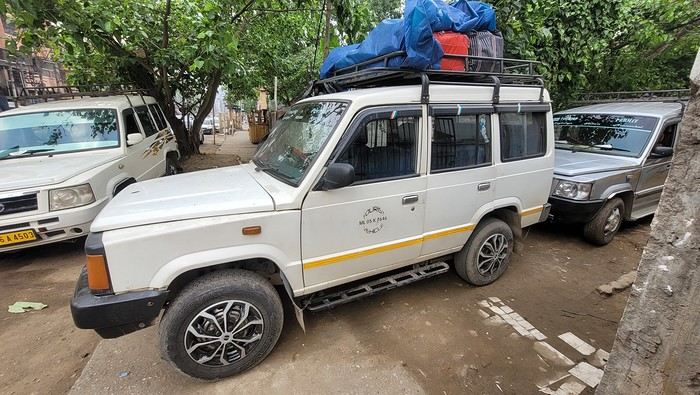
While waiting, I watch the street come to life. I have fun photographing the different modes of transport passing by.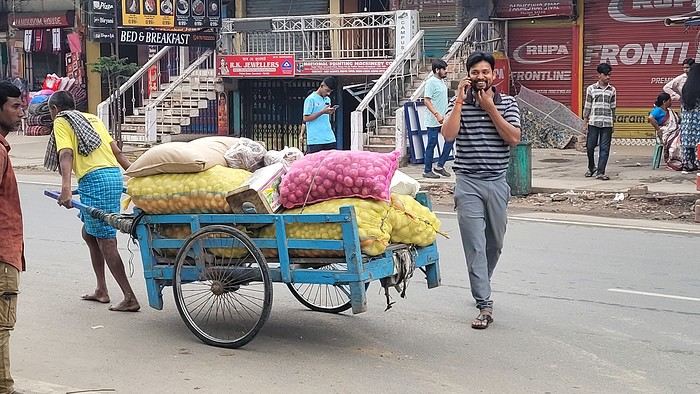
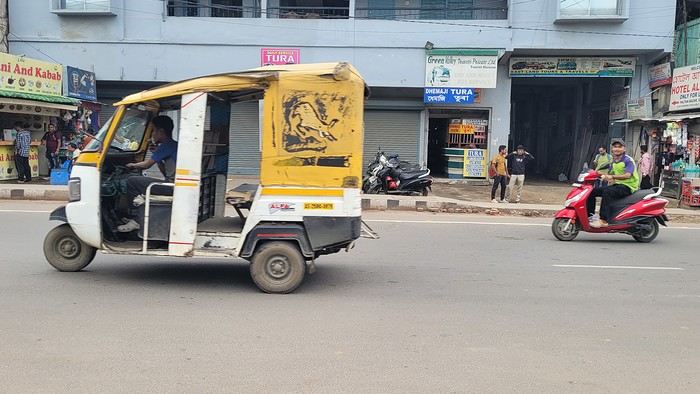
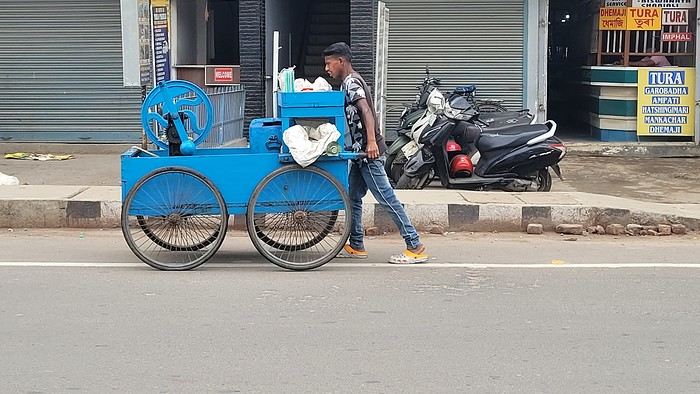
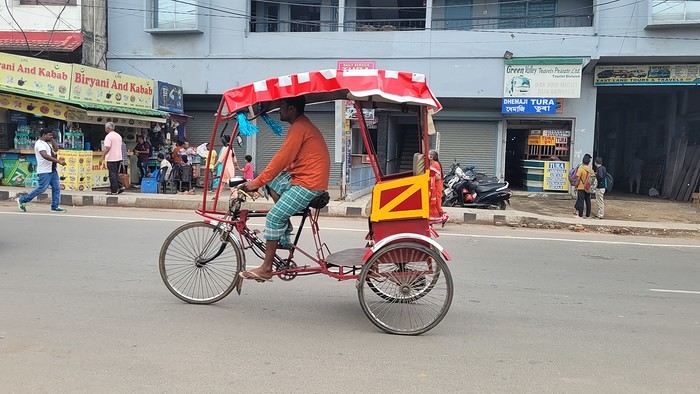
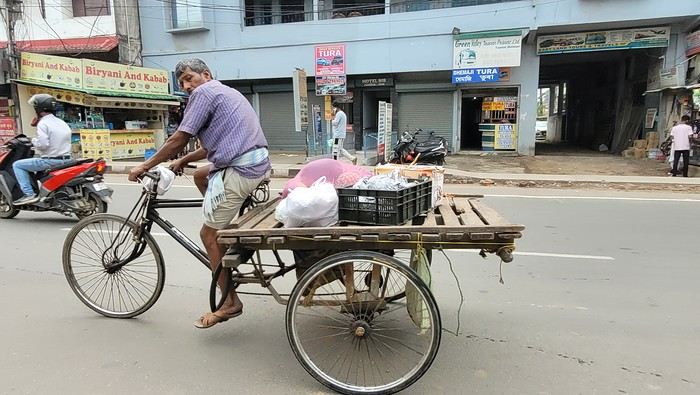
Time passes faster when you’re occupied. We leave at 8:20 AM, and the driver does door-to-door service along the way. We make our first stop for 25 minutes at 9:10 AM, then another for breakfast at 10:10 AM. The scenery is very different from Assam and Nagaland. We drive alongside a pine forest and a large lake. There are beautiful viewpoints, but the driver isn’t stopping for sightseeing, so I have to settle for looking through the car windows.
We finally arrive in Shillong at 11:45 AM. The driver stops in the middle of nowhere, so I have to walk up the street to find a taxi. I flag one down, and he agrees to take me to my new guesthouse, the Rockski Boutique Bed & Breakfast. No sooner do I arrive than a storm with a heavy downpour welcomes me. When I arrived in Guwahati at the end of October, I’d booked a guide with a car for this week. There’s no public transport to get from village to village, so I had to take a car to visit. The tourism manager, Sachin, sent me a message to let me know that the driver, Welbis, will pick me up tomorrow morning at 8 AM. The temperature is much cooler here—only 19°C. At 2:30 PM, the rain stops, and I take the opportunity to explore the city. I start with the cathedral. Today is Good Friday, so I’m going to see how it’s celebrated here. Meghalaya is a Catholic state. The cathedral isn’t far from the guesthouse—it’s huge and all blue.
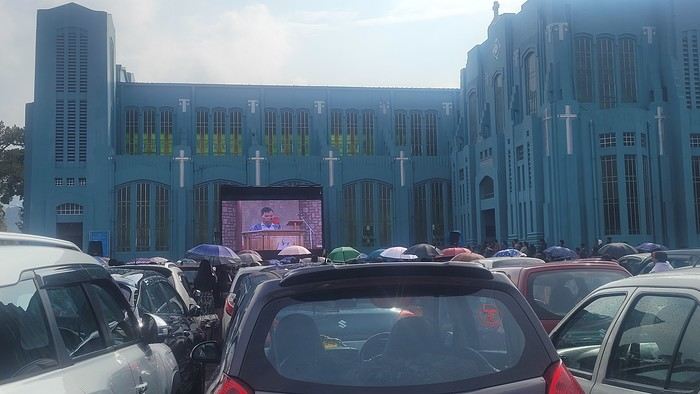
I arrive during mass, and it’s impossible to enter—the faithful are numerous outside in the parking lot. Giant screens broadcast the ceremony.

While waiting, I watch the street come to life. I have fun photographing the different modes of transport passing by.
Time passes faster when you’re occupied. We leave at 8:20 AM, and the driver does door-to-door service along the way. We make our first stop for 25 minutes at 9:10 AM, then another for breakfast at 10:10 AM. The scenery is very different from Assam and Nagaland. We drive alongside a pine forest and a large lake. There are beautiful viewpoints, but the driver isn’t stopping for sightseeing, so I have to settle for looking through the car windows.
We finally arrive in Shillong at 11:45 AM. The driver stops in the middle of nowhere, so I have to walk up the street to find a taxi. I flag one down, and he agrees to take me to my new guesthouse, the Rockski Boutique Bed & Breakfast. No sooner do I arrive than a storm with a heavy downpour welcomes me. When I arrived in Guwahati at the end of October, I’d booked a guide with a car for this week. There’s no public transport to get from village to village, so I had to take a car to visit. The tourism manager, Sachin, sent me a message to let me know that the driver, Welbis, will pick me up tomorrow morning at 8 AM. The temperature is much cooler here—only 19°C. At 2:30 PM, the rain stops, and I take the opportunity to explore the city. I start with the cathedral. Today is Good Friday, so I’m going to see how it’s celebrated here. Meghalaya is a Catholic state. The cathedral isn’t far from the guesthouse—it’s huge and all blue.
I arrive during mass, and it’s impossible to enter—the faithful are numerous outside in the parking lot. Giant screens broadcast the ceremony.
15 days in Texas in October 2022
Ah! This trip to Texas, postponed so many times because of Covid. I wanted to discover this state, but not in the summer due to the temperatures.
I’ll try to dig into my memories since I didn’t take any notes.
Day 1: Departure
Early morning flight from Lyon to Frankfurt (I often fly with Lufthansa). We only have a 50-minute layover, but I trust German organization—it’s not just talk, since it took us only 30 minutes to get to the boarding gate. Arriving in Houston, we’re excited because it’s been 3 years since we last visited the USA, and we’ve missed it.
Everything goes smoothly with the formalities and the car rental, so 1.5 hours after landing, I park near Sam Houston Park to start our discovery. The park is pretty, clean, and has the unique feature of housing some well-preserved Victorian houses. The sun is shining, and it’s always fun to see old wooden houses surrounded by gleaming skyscrapers. A quick drive to the Rothko Chapel, which is dedicated to all faiths. There are also modern artworks in an annex building and outside. Then we head to Pasadena to reach our hotel and go to bed since we’ve been awake for a while!
Hotel: A classic Days Inn. It’s standard, but the beds are comfortable, and it’s a quiet place. The + of the day: We're back in the USA The -: Nothing
Day 2: NASA and then Galveston
Of course, we wake up super early. A quick trip to the nearby Walmart for the usual small purchases. Surprise—I can’t buy a bottle of California white wine because in Texas, there are set hours for buying alcohol. Talk about a bummer for my apéro! Next, we head to Kemah, a small, hyper-touristy port where everything is kitschy but clean and nice. It’s a bit overdone, but since NASA doesn’t open until 10 AM and it’s still early, we might as well enjoy the good weather in a pleasant spot.
We arrive at the NASA Houston center without any issues. It’s smaller than the one in Florida and organized a bit differently. There are trains that take passengers to the different sites, but you need to get tickets (included in the price), and once you’ve finished visiting one site, you have to return to the center to get a ticket for another. Not very practical.
We choose to visit the training center and the rockets, skipping the control room, which, based on the photos, looks like the one at Cape Canaveral. The training center is a cool place because it’s still in use. Engineers are working on machines and computers. We don’t see any astronauts training, but we see the space chair, the shuttle’s robotic arm, and lots of gadgets—this hangar is like Gyro Gearloose’s or Doc’s domain!
Next, we head to the rocket hangar, featuring the Saturn V, the same one as at Cape Canaveral. Finally, we wrap up our tour by returning to the center, where a Boeing 747 with a shuttle attached to its back dominates the outside. We can visit the shuttle, and we don’t miss the chance.
A few exhibits inside complete the experience and satisfy our thirst for knowledge. I love the space exploration era, and gotta say, the Americans do it right. Then we drive to Galveston, about 100 km away. Why Galveston? It’s by the sea, so swimming in late October isn’t unpleasant, and there’s a neighborhood called East End Historic District filled with stunning Victorian houses, each more beautiful than the last. Plus, it’s Halloween season, so the decorations are over the top! They really go all out!
Madame takes a swim, but I find the water too cold for my taste. Apéro (they didn’t trick me twice—I had time to go back to another Walmart!) Dinner + bedtime
Hotel: A classic Quality Inn. No issues. The +: NASA, even if it’s smaller than Cape Canaveral The -: I would’ve preferred the water in the Gulf of Mexico to be a bit warmer
Day 1: Departure
Early morning flight from Lyon to Frankfurt (I often fly with Lufthansa). We only have a 50-minute layover, but I trust German organization—it’s not just talk, since it took us only 30 minutes to get to the boarding gate. Arriving in Houston, we’re excited because it’s been 3 years since we last visited the USA, and we’ve missed it.
Everything goes smoothly with the formalities and the car rental, so 1.5 hours after landing, I park near Sam Houston Park to start our discovery. The park is pretty, clean, and has the unique feature of housing some well-preserved Victorian houses. The sun is shining, and it’s always fun to see old wooden houses surrounded by gleaming skyscrapers. A quick drive to the Rothko Chapel, which is dedicated to all faiths. There are also modern artworks in an annex building and outside. Then we head to Pasadena to reach our hotel and go to bed since we’ve been awake for a while!
Hotel: A classic Days Inn. It’s standard, but the beds are comfortable, and it’s a quiet place. The + of the day: We're back in the USA The -: Nothing
Day 2: NASA and then Galveston
Of course, we wake up super early. A quick trip to the nearby Walmart for the usual small purchases. Surprise—I can’t buy a bottle of California white wine because in Texas, there are set hours for buying alcohol. Talk about a bummer for my apéro! Next, we head to Kemah, a small, hyper-touristy port where everything is kitschy but clean and nice. It’s a bit overdone, but since NASA doesn’t open until 10 AM and it’s still early, we might as well enjoy the good weather in a pleasant spot.
We arrive at the NASA Houston center without any issues. It’s smaller than the one in Florida and organized a bit differently. There are trains that take passengers to the different sites, but you need to get tickets (included in the price), and once you’ve finished visiting one site, you have to return to the center to get a ticket for another. Not very practical.
We choose to visit the training center and the rockets, skipping the control room, which, based on the photos, looks like the one at Cape Canaveral. The training center is a cool place because it’s still in use. Engineers are working on machines and computers. We don’t see any astronauts training, but we see the space chair, the shuttle’s robotic arm, and lots of gadgets—this hangar is like Gyro Gearloose’s or Doc’s domain!
Next, we head to the rocket hangar, featuring the Saturn V, the same one as at Cape Canaveral. Finally, we wrap up our tour by returning to the center, where a Boeing 747 with a shuttle attached to its back dominates the outside. We can visit the shuttle, and we don’t miss the chance.
A few exhibits inside complete the experience and satisfy our thirst for knowledge. I love the space exploration era, and gotta say, the Americans do it right. Then we drive to Galveston, about 100 km away. Why Galveston? It’s by the sea, so swimming in late October isn’t unpleasant, and there’s a neighborhood called East End Historic District filled with stunning Victorian houses, each more beautiful than the last. Plus, it’s Halloween season, so the decorations are over the top! They really go all out!
Madame takes a swim, but I find the water too cold for my taste. Apéro (they didn’t trick me twice—I had time to go back to another Walmart!) Dinner + bedtime
Hotel: A classic Quality Inn. No issues. The +: NASA, even if it’s smaller than Cape Canaveral The -: I would’ve preferred the water in the Gulf of Mexico to be a bit warmer
Uzbekistan - Finally made it - Summer 2022
Another trip planned during Covid. Actually, for 2020, I had three trips booked, with tickets purchased and everything.
This one to Uzbekistan was planned for April 2020. We postponed it to April 2021, but it was canceled again, and we couldn’t reschedule for April 2022 because our friends who were coming with us were busy. So, we chose summer, knowing the temperatures would likely be very high.
We left as a group of five: a couple we usually travel with and one of their friends, whom I knew. She was traveling alone and had dreamed of this trip but didn’t want to go by herself.
For organization, we went through an agency to handle the train tickets and our trip to the Aral Sea. It’s not my usual style, but back in 2020, we were already in touch with them, and they were very understanding during the two cancellations. It wasn’t easy, given the economic crisis Covid caused, especially in Uzbekistan.
Again, I’m writing this travel journal from memory since I didn’t take any notes. (It’s good to give your brain a workout now and then!)
Day 1: Off to Tashkent
We flew in the afternoon to Istanbul, had a 2-hour-15-minute layover in Turkey, and then took an overnight flight to arrive early in the morning in Tashkent. Problem (again): just before taking off from Saint-Exupéry, the plane had an issue with the landing gear. We waited two hours, and after a few hammer and wrench adjustments, we finally took off. Of course, by the time we arrived in Istanbul, it was a mad dash through the airport to catch our connecting flight. We landed at 7:30 AM in Tashkent, and of the five suitcases in our little group, two were missing (one of ours and the solo traveler’s). Big problem because we were leaving at 2:30 PM by train for the Aral Sea, and we wouldn’t be near an airport again for three days. Plus, at the small airport in the Uzbek capital, no one spoke English (or French, or the Ardèche dialect). Fortunately, we had booked a guide for a quick morning tour of the capital. We had seven hours to kill, and it seemed smart to do it this way (and yes, sometimes we do think ahead). With him speaking English and, more importantly, Uzbek, the delivery of our suitcases was arranged.
So, we set off to explore the capital. It’s very Soviet in design—wide avenues and ugly buildings.
We visited the Khasti Imam historical complex (first name to pronounce at your own risk—there will be plenty more during the trip). Lots of "oohs" and "aahs" about how beautiful it was, but in the end, compared to what we saw later, it was really just small potatoes.
We checked out Chorsu Bazaar, the city’s large covered market. The guide was friendly and gave us plenty of tips for the rest of the trip. He suggested a restaurant, which we accepted, so we could get familiar with local customs. The good thing was, it didn’t seem like a tourist trap.
Next, we headed to the train station because our train was at 2:30 PM. The guide left us, and then another problem arose. While going through security, one of the staff made it clear that our train was canceled and our ticket needed to be changed to the train leaving around 8:20 PM. Heatwave moment (it was 38°C). Our issue was that we were supposed to arrive in Nukus (our destination) at 6:00 AM and take a minibus for a round trip to Moynaq and the Aral Sea (four hours each way). The plan was to spend 2-3 hours there and return, so a 10-11-hour timeline. Leaving at 6:00 AM made it doable, but with the train now leaving at 8:20 PM, we’d arrive in Nukus at noon, which messed up the rest of the plan.
I was fuming at the agency (I really don’t like using agencies), so I called the local contact, who quickly sent our guide back (because trying to communicate, change tickets, and get information was tough).
I asked the manager to find us flight tickets to make up for the delay, but nothing—zilch—was possible. We were stuck! My buddy and I were determined to get to Moynaq, but the women in the group were less motivated.
No choice but to board the train for an overnight journey. We had a cabin for two (and our friend had one to herself). Big scare at first—no AC, and it felt like 150°. They told us it would work once the train started moving, which it did. A frugal meal in the dining car (spaghetti with meat—the only dish on offer) and we had a good night’s sleep.
The +: Finally, we’re here! The -: A lot of hassles to start the trip
We left as a group of five: a couple we usually travel with and one of their friends, whom I knew. She was traveling alone and had dreamed of this trip but didn’t want to go by herself.
For organization, we went through an agency to handle the train tickets and our trip to the Aral Sea. It’s not my usual style, but back in 2020, we were already in touch with them, and they were very understanding during the two cancellations. It wasn’t easy, given the economic crisis Covid caused, especially in Uzbekistan.
Again, I’m writing this travel journal from memory since I didn’t take any notes. (It’s good to give your brain a workout now and then!)
Day 1: Off to Tashkent
We flew in the afternoon to Istanbul, had a 2-hour-15-minute layover in Turkey, and then took an overnight flight to arrive early in the morning in Tashkent. Problem (again): just before taking off from Saint-Exupéry, the plane had an issue with the landing gear. We waited two hours, and after a few hammer and wrench adjustments, we finally took off. Of course, by the time we arrived in Istanbul, it was a mad dash through the airport to catch our connecting flight. We landed at 7:30 AM in Tashkent, and of the five suitcases in our little group, two were missing (one of ours and the solo traveler’s). Big problem because we were leaving at 2:30 PM by train for the Aral Sea, and we wouldn’t be near an airport again for three days. Plus, at the small airport in the Uzbek capital, no one spoke English (or French, or the Ardèche dialect). Fortunately, we had booked a guide for a quick morning tour of the capital. We had seven hours to kill, and it seemed smart to do it this way (and yes, sometimes we do think ahead). With him speaking English and, more importantly, Uzbek, the delivery of our suitcases was arranged.
So, we set off to explore the capital. It’s very Soviet in design—wide avenues and ugly buildings.
We visited the Khasti Imam historical complex (first name to pronounce at your own risk—there will be plenty more during the trip). Lots of "oohs" and "aahs" about how beautiful it was, but in the end, compared to what we saw later, it was really just small potatoes.
We checked out Chorsu Bazaar, the city’s large covered market. The guide was friendly and gave us plenty of tips for the rest of the trip. He suggested a restaurant, which we accepted, so we could get familiar with local customs. The good thing was, it didn’t seem like a tourist trap.
Next, we headed to the train station because our train was at 2:30 PM. The guide left us, and then another problem arose. While going through security, one of the staff made it clear that our train was canceled and our ticket needed to be changed to the train leaving around 8:20 PM. Heatwave moment (it was 38°C). Our issue was that we were supposed to arrive in Nukus (our destination) at 6:00 AM and take a minibus for a round trip to Moynaq and the Aral Sea (four hours each way). The plan was to spend 2-3 hours there and return, so a 10-11-hour timeline. Leaving at 6:00 AM made it doable, but with the train now leaving at 8:20 PM, we’d arrive in Nukus at noon, which messed up the rest of the plan.
I was fuming at the agency (I really don’t like using agencies), so I called the local contact, who quickly sent our guide back (because trying to communicate, change tickets, and get information was tough).
I asked the manager to find us flight tickets to make up for the delay, but nothing—zilch—was possible. We were stuck! My buddy and I were determined to get to Moynaq, but the women in the group were less motivated.
No choice but to board the train for an overnight journey. We had a cabin for two (and our friend had one to herself). Big scare at first—no AC, and it felt like 150°. They told us it would work once the train started moving, which it did. A frugal meal in the dining car (spaghetti with meat—the only dish on offer) and we had a good night’s sleep.
The +: Finally, we’re here! The -: A lot of hassles to start the trip
Looking for companions for Manaslu Circuit trek in November 2025
Hi everyone. I’ve been dreaming of this trek since my first trip to Nepal: either joining an existing group (I’m 70, so the pace will be adjusted accordingly...), or organizing it myself with the same guide who accompanied me on the Annapurna Circuit and in Mustang (putting together a group of 2 or 3 people). Who’s interested??? Jules. Agnes
Train from Charleroi to Orly Airport (Terminal 4)
Hi,
I'm looking for a train to get to Orly Terminal 4—I'm leaving from Charleroi in Belgium.
Does it seem complicated?
I'm looking for a train to get to Orly Terminal 4—I'm leaving from Charleroi in Belgium.
Does it seem complicated?
Princes' Islands or Bursa near Istanbul?
Hi there, I’ll be in Istanbul from May 8 to 17, 2025.
I’ve got one free day. I’m torn between the Princes' Islands or Bursa.... If you had to choose, where would you go???
Thanks so much for your suggestions and opinions.
Oman for backpackers: trip report
So happy to be back with you all that I’m rushing to share my trip report!
We chose to stay exactly 14 days to avoid paying for a visa. As a result, we didn’t have time to explore the south—we’ll be back because Oman is a great destination in January. Temperatures were a perfect 25–27°C during the day. No rain for us, but it can happen.
We bought the *Évasion Oman* guidebook. We started with the Jebels (the mountains), abandoned villages, then the desert, wadis along the coast, and finished in the capital. For us, it was easier to go from cold (2,000 meters, after all) to hot before returning to our freezing Normandy in January.
The people were incredibly welcoming and lovely. We camped in natural camping areas where you can make a fire (free, no facilities or water). Easy to find—just search "camping" on Google Maps (an essential app). We traveled as a group of five and rented a 4x4 seven-seater from Europcar before leaving (price included our insurance): 800 euros for 14 days. Essential for getting everywhere, as there are lots of dirt tracks. We brought our camping gear from France since the baggage allowance is 30 kg. Oh, and also two liters of rum and a box of white wine—also essential.
Food was tricky if you don’t like spicy dishes or just chicken. You have to eat at international restaurants, which cost about the same as back home. We’d packed vacuum-sealed meat for the first three days and a few cans. For beaches, stick to the ones marked on Google for swimming—otherwise, they can be dirty and full of oil.
We arrived at 6:30 AM, bought a SIM card (make sure to remove yours before arriving and tape it to the back of your phone), exchanged money (not great rates at the airport—better in malls or souks; no exchanges in banks), and picked up the car. Then we headed to a Carrefour supermarket, but it was closed. We drove to Jebel Al Akhdar, the Sayq Plateau, where we found markets along the way. There are also bazaar shops where you can get gas bottles—they’re everywhere in mid-sized towns. There are even hypermarkets.
We hiked the well-marked old Sayq trail (red and white markings). Our return was improvised. We camped on the plateau and got cold—bring 0°C sleeping bags! The next day, we visited the abandoned villages of Wadi Bani Habib: juniper forests, canyon viewpoints. Then Birkat Al Maws on the way down—a beautiful palm grove. Next, Nizwa Hotel. The beds were really hard there—ask to see the rooms and test the beds before booking. There’s always availability, with prices starting at 35 euros for two.
On the third day, we went to Jebel Shams. Hiked along the canyon starting from Ghul, then descended. Camped on the road to Balha Fortress, which we visited the next morning (stunning!). Then we explored Nizwa before heading to the Wahiba Desert. Camped along the way, then drove to our accommodation: two days in the desert. We found the Thousand Nights Camp 40% cheaper a month before. Note: you have to leave by 1 PM in a convoy to reach the hotel.
On the sixth day, we hiked in the desert on our own because the activity prices were outrageous.
On the seventh day, we headed to a wadi, Bani Khalid, then to Sur, a seaside hotel. We booked just one room for five of us—hotel apartments are huge, and since we had our camping mattresses, it wasn’t a problem to set up in the living room. There’s even a kitchen. In cities, camping spots are poorly located—near intersections, etc.
Beach time and sightseeing on the eighth day, then we drove to the white sand beach in Fins, where we stayed for two nights (we left the tents set up but empty). This was our favorite campsite—go all the way to the end of the road, there’s a small cove and a stunning spot.
On the ninth day, we visited Wadi Shab and the Salma Plateau to find the tombs. The hike up from Fins was way too long—probably better to take the route suggested in the guidebook for a round trip. Meh, no one really enjoyed it.
On the tenth day, we went to Wadi Al Arbiyyin and drove to Seeb Al Mouj to book a diving trip. Stayed at Al Ferdous Hotel Apartments until the end—well-located for visiting Muscat and a great value. Just make sure to check the room first, as some beds are very hard and others aren’t.
Eleventh day: diving and beach time.
Twelfth day: visited the Grand Mosque (unlucky—first day it became paid, and not just a little: 8 OMR). Then explored the old city.
Thirteenth day: the Grand Opera and beach at The Village, where we found a great pizzeria: pizzawifi.com.
Fourteenth day: And that’s it—back home, thrilled to have discovered this magical country. We’ll be back!
We bought the *Évasion Oman* guidebook. We started with the Jebels (the mountains), abandoned villages, then the desert, wadis along the coast, and finished in the capital. For us, it was easier to go from cold (2,000 meters, after all) to hot before returning to our freezing Normandy in January.
The people were incredibly welcoming and lovely. We camped in natural camping areas where you can make a fire (free, no facilities or water). Easy to find—just search "camping" on Google Maps (an essential app). We traveled as a group of five and rented a 4x4 seven-seater from Europcar before leaving (price included our insurance): 800 euros for 14 days. Essential for getting everywhere, as there are lots of dirt tracks. We brought our camping gear from France since the baggage allowance is 30 kg. Oh, and also two liters of rum and a box of white wine—also essential.
Food was tricky if you don’t like spicy dishes or just chicken. You have to eat at international restaurants, which cost about the same as back home. We’d packed vacuum-sealed meat for the first three days and a few cans. For beaches, stick to the ones marked on Google for swimming—otherwise, they can be dirty and full of oil.
We arrived at 6:30 AM, bought a SIM card (make sure to remove yours before arriving and tape it to the back of your phone), exchanged money (not great rates at the airport—better in malls or souks; no exchanges in banks), and picked up the car. Then we headed to a Carrefour supermarket, but it was closed. We drove to Jebel Al Akhdar, the Sayq Plateau, where we found markets along the way. There are also bazaar shops where you can get gas bottles—they’re everywhere in mid-sized towns. There are even hypermarkets.
We hiked the well-marked old Sayq trail (red and white markings). Our return was improvised. We camped on the plateau and got cold—bring 0°C sleeping bags! The next day, we visited the abandoned villages of Wadi Bani Habib: juniper forests, canyon viewpoints. Then Birkat Al Maws on the way down—a beautiful palm grove. Next, Nizwa Hotel. The beds were really hard there—ask to see the rooms and test the beds before booking. There’s always availability, with prices starting at 35 euros for two.
On the third day, we went to Jebel Shams. Hiked along the canyon starting from Ghul, then descended. Camped on the road to Balha Fortress, which we visited the next morning (stunning!). Then we explored Nizwa before heading to the Wahiba Desert. Camped along the way, then drove to our accommodation: two days in the desert. We found the Thousand Nights Camp 40% cheaper a month before. Note: you have to leave by 1 PM in a convoy to reach the hotel.
On the sixth day, we hiked in the desert on our own because the activity prices were outrageous.
On the seventh day, we headed to a wadi, Bani Khalid, then to Sur, a seaside hotel. We booked just one room for five of us—hotel apartments are huge, and since we had our camping mattresses, it wasn’t a problem to set up in the living room. There’s even a kitchen. In cities, camping spots are poorly located—near intersections, etc.
Beach time and sightseeing on the eighth day, then we drove to the white sand beach in Fins, where we stayed for two nights (we left the tents set up but empty). This was our favorite campsite—go all the way to the end of the road, there’s a small cove and a stunning spot.
On the ninth day, we visited Wadi Shab and the Salma Plateau to find the tombs. The hike up from Fins was way too long—probably better to take the route suggested in the guidebook for a round trip. Meh, no one really enjoyed it.
On the tenth day, we went to Wadi Al Arbiyyin and drove to Seeb Al Mouj to book a diving trip. Stayed at Al Ferdous Hotel Apartments until the end—well-located for visiting Muscat and a great value. Just make sure to check the room first, as some beds are very hard and others aren’t.
Eleventh day: diving and beach time.
Twelfth day: visited the Grand Mosque (unlucky—first day it became paid, and not just a little: 8 OMR). Then explored the old city.
Thirteenth day: the Grand Opera and beach at The Village, where we found a great pizzeria: pizzawifi.com.
Fourteenth day: And that’s it—back home, thrilled to have discovered this magical country. We’ll be back!
4 friends discover a piece of North India
Hello fellow travelers!
I’m adding my small contribution to the reopening celebration by posting this travel journal from India, made in January 2024. We’re 4 friends (2 couples), and we did a 3-week loop in Rajasthan, stopping by Delhi and Agra (which, as everyone knows, aren’t in Rajasthan 😛). Delhi - Agra - Jaipur - Bundi - Udaipur - Jodhpur - Jaisalmer - Delhi
We rented a car with a driver from Agra to Jaisalmer, 550 € for 14 days. https://chauffeurpriveeninde.com/fr/
We took the train from Delhi to Agra and the plane (Spicejet) from Jaisalmer to Delhi.
Most of the accommodations were booked on Booking before we left.
I’m sharing this story written by Richard and illustrated by me. We dedicate it to Nathalie and Bruno, our amazing travel companions.
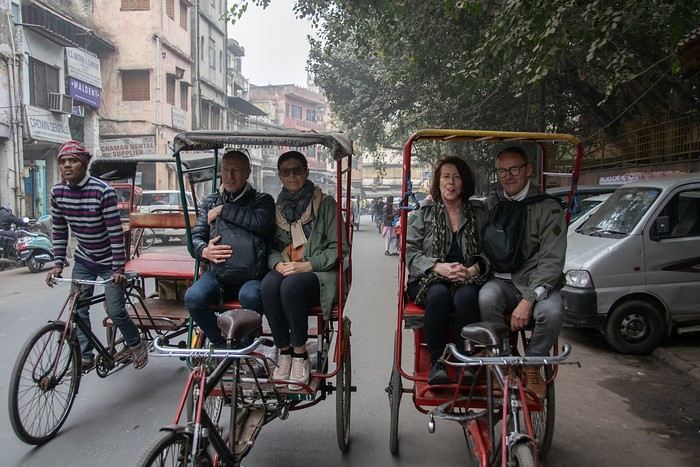
I’m adding my small contribution to the reopening celebration by posting this travel journal from India, made in January 2024. We’re 4 friends (2 couples), and we did a 3-week loop in Rajasthan, stopping by Delhi and Agra (which, as everyone knows, aren’t in Rajasthan 😛). Delhi - Agra - Jaipur - Bundi - Udaipur - Jodhpur - Jaisalmer - Delhi
We rented a car with a driver from Agra to Jaisalmer, 550 € for 14 days. https://chauffeurpriveeninde.com/fr/
We took the train from Delhi to Agra and the plane (Spicejet) from Jaisalmer to Delhi.
Most of the accommodations were booked on Booking before we left.
I’m sharing this story written by Richard and illustrated by me. We dedicate it to Nathalie and Bruno, our amazing travel companions.
Trip report: 3 weeks in India in January 2024
Hello everyone,
Here’s a little recap of our 3-week trip to India (retired couple) in January 2024. This is our personal experience and how we felt at the time. This is the 7th time we’ve been to India, and after experiencing public transport day and night—and with age catching up—we opted for a more "chill" pace this time, prioritizing flights and taxis while slightly increasing our accommodation budget. Regarding that accommodation budget (double room), we chose a range between 30 and 40 €, and we didn’t really notice much difference compared to the lower range we used to book on previous trips (between 20 and 30 €). But prices have likely gone up since my last visit in 2018.
So here are some personal tips and opinions, good addresses, and others to avoid. Exchange rate: In January 2024, 100 rupees were worth about 1.12 euros (1 euro = 89 INR at exchange bureaus). To convert rupees to euros: X rupees divided by 89 = X euros. For simplicity, we divided the price in rupees by 100 and added about 10% to get the equivalent in euros.
Our itinerary: Mumbai/Aurangabad (Ellora and Ajanta) / Badami / Hampi / Goa (Agonda) / Mumbai Flight: With British Airways—very (too) short layover in London (2 hours in theory...) for the connection to Mumbai, but a 1-hour delay on the flight from CDG, so we had to rush in London with two shuttles to take and security to clear before reaching the departure gate. We had a 15-minute margin by speeding... same stress on the way back...
Mumbai: On the day we arrived in Mumbai, we took a flight to Aurangabad with Indigo. **Note:** Terminal change for this flight. Free buses connect T2 to T1. The flight was fine, even with a 2-hour delay...
Aurangabad: Accommodation: Hotel JP International (35 €/night): Large, "decorated" room with comfortable bedding. But the hotel is showing its age. The air conditioning is a bit noisy, and the faucets and shower have seen better days... Breakfast is included in the price with a buffet—it’s decent. You just have to ask for toast, jam, and eggs, as it’s mostly an Indian buffet... The rooftop restaurant is okay. The hotel is a bit pricey for what it is... The owner, a bit gruff at first, was helpful and assisted us with taxis for visiting the Ellora and Ajanta sites, as it’s hard to find taxis for those trips on the street—no travel agencies in this area. Restaurant: Le Great Sagar (on the main street): Close to the hotel, good food, and plenty of choices. Exchange: We struggled to exchange euros in Aurangabad. No banks exchange money (we tried five...). Only Thomas Cook does: Jalna Road near the Ramgiri Hotel.
Ellora: A magnificent site 25 km from Aurangabad. **Tip:** Arrive early (by 9 AM max) and visit the Kailasha Temple first—it’s the world’s largest monolithic structure—and it gets much busier later.
Ajanta: About a 2-hour drive. **Great tip for this visit:** Ask your taxi to drop you off at the Ajanta View Point. Not only do you get a beautiful overview of the cliff and caves, but you can also walk down gently to the site. The descent is easy with stairs and paths, and you approach the site with stunning views. Cross the bridge, and you’re there (start from the end, as it’s less crowded: after crossing the bridge and paying at the ticket counter, turn left and go to the far end to begin your visit). The taxi waited for us at the "official" entrance after we finished exploring the caves.
Badami: To get to Badami, we took an early-morning flight from Aurangabad to Hubli with Indigo (scheduled takeoff at 6:20 AM...) to arrive in Hubli in the early afternoon and find a taxi to Badami. We found a taxi quickly at Hubli Airport. About 2.5 hours (3,400 INR). Hotel: KSTDC Hotel Mayura Chalukya (38 €/night): A state-run hotel that’s a bit dated, located 15 minutes from the center but quiet compared to the chaotic main street in Badami. Large room, a bit dark, slightly worn walls, rustic bathroom... The air conditioning is very noisy. The owner was very friendly and helped with transport. The staff was also very nice. The hotel restaurant is decent, which saves you from going back "into town." A bit pricey for the quality, but it’s peaceful... The visit to the sculpted caves is worth it, as is a walk around the lake. The short climb to the top of the hill from the museum is also worth it—you pass through small gorges. A relaxing atmosphere in these places.
Hampi: Trip from Badami to Hampi by taxi (3,500 INR) – 3 hours. Booked through the Badami hotel, as we couldn’t find taxis on the street or at reasonable prices... Accommodation: Thilak Home Stay (33 €/night): Located in Hampi Bazaar, a small guesthouse with 4 rooms. Simple room with two single beds and a nightstand. The owner was very helpful, making our stay easier with services like tuk-tuks for sightseeing, laundry, bus booking to Goa, and a tuk-tuk to Hospet. A bit pricey for the room quality, but recommended for the owner’s kindness. It was hard to find accommodation in Hampi Bazaar through booking platforms, as they all offer places outside the city, several kilometers away—which is a shame. But we realized you can find places directly on-site. **You must stay in Hampi Bazaar**—the atmosphere changes from morning to night (in the evening, around 9 PM, go into the courtyard of the main temple in Hampi Bazaar, which turns into a huge dormitory—it’s impressive...). Restaurant: Archana Roof Restaurant: Small restaurant on the 1st floor overlooking a banana field with the Hampi rocks in the background. Very friendly welcome, quiet, and excellent thalis. The Hampi site is in a magical natural setting among temples, pilgrims, ochre rocks, and rice fields. We did a one-day circuit with a tuk-tuk to visit the main sites (1,500 INR). We also rented a scooter on the other side of the river (to avoid a long detour from Hampi Bazaar) for a day trip around the area. Some places we visited: Anegondi village, Durga Temple, Hanuman Temple (go early—it’s a climb...), Sanapur Lake. The accommodations on the other side of the river, called "Hippie Island," have been completely destroyed.
Goa (Agonda Beach): Trip from Hampi to Agonda: Booked a sleeper bus with two beds! (1,300 INR/person). Departure at 9 PM from Hospet, theoretical arrival at 4 AM (for us, it was 6 AM) in Canacona, then a 20-minute tuk-tuk ride to Agonda. Comfortable bus with real berths, but the many speed bumps made sleep difficult... The train would have been much longer and more complicated to reach Agonda.
Agonda: Accommodation: New Common Home (35 €/night): Business-like welcome. Decent and fairly large room, rustic bathroom. Breakfast included in the price—it was okay. We only booked one night to choose accommodation afterward, right on the beach. But we didn’t account for the Indian national holiday at the end of the week—everything was fully booked... We found Saxony (44 €/night) at the far end of the beach (left when facing the sea), but only for 2 nights—after that, it was reserved... Decent room, average bathroom, but a beautiful terrace facing the sea. Then 2 nights at Agonda Holiday Home Stay (36 €/night), not on the beach: Very average, bathroom in poor condition, almost no view—but it was all that was left... Restaurant: The Rhino for dinner (not on the beach): Excellent tandoori, chicken tikka, and masala. Great value for money. Cool and friendly atmosphere. Agonda is a beautiful, long, quiet, and family-friendly beach for relaxing, with lovely walks to take. Beautiful sunset!
Mumbai: Trip from Agonda to Mumbai: Flight: We chose Vistara because the departure was in the late afternoon, while Indigo offered flights very early or very late. Bad choice... because this Vistara flight leaves from Mopa Airport, at the very north of Goa state. And from Agonda, it’s a 3-hour taxi ride... (3,700 INR...) **Always check which airport your flight leaves from to reach Mumbai!**
Mumbai: Accommodation: Broadway Hotel Bombay (39 €/night): Very well-located hotel in Colaba, on a street perpendicular to the busy main road. Ask for quiet rooms... Friendly, helpful, and accommodating staff. Very small room with a tiny window and little space to put bags or move around... Small but clean bathroom. Mumbai is expensive for accommodation, and cleanliness often leaves something to be desired... Restaurant: Delhi Darbar, very close to the hotel on the main street. Good, clean, not too noisy... and good value for money. Sightseeing: Mumbai is a bustling city, but the traffic is completely chaotic, and the horn often replaces the brake... The architecture is quite unique and worth a look, with some must-see visits: Crawford Market and its surroundings... Null Bazar and Chor Bazar, where poverty and dirt are quite present... Mani Bhavan: Gandhi’s house in Mumbai, with a very special atmosphere... Balbunath Temple, with its religious fervor. The beautiful Jain temple (Walkeshwar Mandir), where the atmosphere is very different from other temples and full of serenity. The Dhobi Ghats, the laundry district—very impressive. For a few hundred rupees, a "guide" will take you through these washhouses and thousands of clothes. Banganga Tank: A basin surrounded by ghats with a village-like (but quite poor) atmosphere, where Indians come to pray. The dabbawallahs: Their departure around 11 AM and the transport by bicycle of hundreds of lunchboxes from Churchgate Station. **Note:** It’s not easy to find them—we almost missed them, as it seems to be disappearing. They’re on the other side of the road where taxis usually drop you off for Churchgate Station, under some trees. They’re recognizable by their white attire and a crowd. Few passersby seemed to know about them... All these visits can be done easily by taking taxis, which are really cheap—**as long as they agree to use the meter.**
So here are some great tips to share, knowing that every trip is unique, and India remains a magnificent, often disconcerting, elusive country that challenges you. It’s unlike any other country we’ve visited but so fascinating... Good luck with your preparations, and if you need more info, don’t hesitate! I really regret that the new 2024/2025 South India GDR only includes Mumbai for Maharashtra and nothing else... and nothing on Karnataka or Goa. These states don’t seem to be selling points for the GDR anymore... Guy
Here’s a little recap of our 3-week trip to India (retired couple) in January 2024. This is our personal experience and how we felt at the time. This is the 7th time we’ve been to India, and after experiencing public transport day and night—and with age catching up—we opted for a more "chill" pace this time, prioritizing flights and taxis while slightly increasing our accommodation budget. Regarding that accommodation budget (double room), we chose a range between 30 and 40 €, and we didn’t really notice much difference compared to the lower range we used to book on previous trips (between 20 and 30 €). But prices have likely gone up since my last visit in 2018.
So here are some personal tips and opinions, good addresses, and others to avoid. Exchange rate: In January 2024, 100 rupees were worth about 1.12 euros (1 euro = 89 INR at exchange bureaus). To convert rupees to euros: X rupees divided by 89 = X euros. For simplicity, we divided the price in rupees by 100 and added about 10% to get the equivalent in euros.
Our itinerary: Mumbai/Aurangabad (Ellora and Ajanta) / Badami / Hampi / Goa (Agonda) / Mumbai Flight: With British Airways—very (too) short layover in London (2 hours in theory...) for the connection to Mumbai, but a 1-hour delay on the flight from CDG, so we had to rush in London with two shuttles to take and security to clear before reaching the departure gate. We had a 15-minute margin by speeding... same stress on the way back...
Mumbai: On the day we arrived in Mumbai, we took a flight to Aurangabad with Indigo. **Note:** Terminal change for this flight. Free buses connect T2 to T1. The flight was fine, even with a 2-hour delay...
Aurangabad: Accommodation: Hotel JP International (35 €/night): Large, "decorated" room with comfortable bedding. But the hotel is showing its age. The air conditioning is a bit noisy, and the faucets and shower have seen better days... Breakfast is included in the price with a buffet—it’s decent. You just have to ask for toast, jam, and eggs, as it’s mostly an Indian buffet... The rooftop restaurant is okay. The hotel is a bit pricey for what it is... The owner, a bit gruff at first, was helpful and assisted us with taxis for visiting the Ellora and Ajanta sites, as it’s hard to find taxis for those trips on the street—no travel agencies in this area. Restaurant: Le Great Sagar (on the main street): Close to the hotel, good food, and plenty of choices. Exchange: We struggled to exchange euros in Aurangabad. No banks exchange money (we tried five...). Only Thomas Cook does: Jalna Road near the Ramgiri Hotel.
Ellora: A magnificent site 25 km from Aurangabad. **Tip:** Arrive early (by 9 AM max) and visit the Kailasha Temple first—it’s the world’s largest monolithic structure—and it gets much busier later.
Ajanta: About a 2-hour drive. **Great tip for this visit:** Ask your taxi to drop you off at the Ajanta View Point. Not only do you get a beautiful overview of the cliff and caves, but you can also walk down gently to the site. The descent is easy with stairs and paths, and you approach the site with stunning views. Cross the bridge, and you’re there (start from the end, as it’s less crowded: after crossing the bridge and paying at the ticket counter, turn left and go to the far end to begin your visit). The taxi waited for us at the "official" entrance after we finished exploring the caves.
Badami: To get to Badami, we took an early-morning flight from Aurangabad to Hubli with Indigo (scheduled takeoff at 6:20 AM...) to arrive in Hubli in the early afternoon and find a taxi to Badami. We found a taxi quickly at Hubli Airport. About 2.5 hours (3,400 INR). Hotel: KSTDC Hotel Mayura Chalukya (38 €/night): A state-run hotel that’s a bit dated, located 15 minutes from the center but quiet compared to the chaotic main street in Badami. Large room, a bit dark, slightly worn walls, rustic bathroom... The air conditioning is very noisy. The owner was very friendly and helped with transport. The staff was also very nice. The hotel restaurant is decent, which saves you from going back "into town." A bit pricey for the quality, but it’s peaceful... The visit to the sculpted caves is worth it, as is a walk around the lake. The short climb to the top of the hill from the museum is also worth it—you pass through small gorges. A relaxing atmosphere in these places.
Hampi: Trip from Badami to Hampi by taxi (3,500 INR) – 3 hours. Booked through the Badami hotel, as we couldn’t find taxis on the street or at reasonable prices... Accommodation: Thilak Home Stay (33 €/night): Located in Hampi Bazaar, a small guesthouse with 4 rooms. Simple room with two single beds and a nightstand. The owner was very helpful, making our stay easier with services like tuk-tuks for sightseeing, laundry, bus booking to Goa, and a tuk-tuk to Hospet. A bit pricey for the room quality, but recommended for the owner’s kindness. It was hard to find accommodation in Hampi Bazaar through booking platforms, as they all offer places outside the city, several kilometers away—which is a shame. But we realized you can find places directly on-site. **You must stay in Hampi Bazaar**—the atmosphere changes from morning to night (in the evening, around 9 PM, go into the courtyard of the main temple in Hampi Bazaar, which turns into a huge dormitory—it’s impressive...). Restaurant: Archana Roof Restaurant: Small restaurant on the 1st floor overlooking a banana field with the Hampi rocks in the background. Very friendly welcome, quiet, and excellent thalis. The Hampi site is in a magical natural setting among temples, pilgrims, ochre rocks, and rice fields. We did a one-day circuit with a tuk-tuk to visit the main sites (1,500 INR). We also rented a scooter on the other side of the river (to avoid a long detour from Hampi Bazaar) for a day trip around the area. Some places we visited: Anegondi village, Durga Temple, Hanuman Temple (go early—it’s a climb...), Sanapur Lake. The accommodations on the other side of the river, called "Hippie Island," have been completely destroyed.
Goa (Agonda Beach): Trip from Hampi to Agonda: Booked a sleeper bus with two beds! (1,300 INR/person). Departure at 9 PM from Hospet, theoretical arrival at 4 AM (for us, it was 6 AM) in Canacona, then a 20-minute tuk-tuk ride to Agonda. Comfortable bus with real berths, but the many speed bumps made sleep difficult... The train would have been much longer and more complicated to reach Agonda.
Agonda: Accommodation: New Common Home (35 €/night): Business-like welcome. Decent and fairly large room, rustic bathroom. Breakfast included in the price—it was okay. We only booked one night to choose accommodation afterward, right on the beach. But we didn’t account for the Indian national holiday at the end of the week—everything was fully booked... We found Saxony (44 €/night) at the far end of the beach (left when facing the sea), but only for 2 nights—after that, it was reserved... Decent room, average bathroom, but a beautiful terrace facing the sea. Then 2 nights at Agonda Holiday Home Stay (36 €/night), not on the beach: Very average, bathroom in poor condition, almost no view—but it was all that was left... Restaurant: The Rhino for dinner (not on the beach): Excellent tandoori, chicken tikka, and masala. Great value for money. Cool and friendly atmosphere. Agonda is a beautiful, long, quiet, and family-friendly beach for relaxing, with lovely walks to take. Beautiful sunset!
Mumbai: Trip from Agonda to Mumbai: Flight: We chose Vistara because the departure was in the late afternoon, while Indigo offered flights very early or very late. Bad choice... because this Vistara flight leaves from Mopa Airport, at the very north of Goa state. And from Agonda, it’s a 3-hour taxi ride... (3,700 INR...) **Always check which airport your flight leaves from to reach Mumbai!**
Mumbai: Accommodation: Broadway Hotel Bombay (39 €/night): Very well-located hotel in Colaba, on a street perpendicular to the busy main road. Ask for quiet rooms... Friendly, helpful, and accommodating staff. Very small room with a tiny window and little space to put bags or move around... Small but clean bathroom. Mumbai is expensive for accommodation, and cleanliness often leaves something to be desired... Restaurant: Delhi Darbar, very close to the hotel on the main street. Good, clean, not too noisy... and good value for money. Sightseeing: Mumbai is a bustling city, but the traffic is completely chaotic, and the horn often replaces the brake... The architecture is quite unique and worth a look, with some must-see visits: Crawford Market and its surroundings... Null Bazar and Chor Bazar, where poverty and dirt are quite present... Mani Bhavan: Gandhi’s house in Mumbai, with a very special atmosphere... Balbunath Temple, with its religious fervor. The beautiful Jain temple (Walkeshwar Mandir), where the atmosphere is very different from other temples and full of serenity. The Dhobi Ghats, the laundry district—very impressive. For a few hundred rupees, a "guide" will take you through these washhouses and thousands of clothes. Banganga Tank: A basin surrounded by ghats with a village-like (but quite poor) atmosphere, where Indians come to pray. The dabbawallahs: Their departure around 11 AM and the transport by bicycle of hundreds of lunchboxes from Churchgate Station. **Note:** It’s not easy to find them—we almost missed them, as it seems to be disappearing. They’re on the other side of the road where taxis usually drop you off for Churchgate Station, under some trees. They’re recognizable by their white attire and a crowd. Few passersby seemed to know about them... All these visits can be done easily by taking taxis, which are really cheap—**as long as they agree to use the meter.**
So here are some great tips to share, knowing that every trip is unique, and India remains a magnificent, often disconcerting, elusive country that challenges you. It’s unlike any other country we’ve visited but so fascinating... Good luck with your preparations, and if you need more info, don’t hesitate! I really regret that the new 2024/2025 South India GDR only includes Mumbai for Maharashtra and nothing else... and nothing on Karnataka or Goa. These states don’t seem to be selling points for the GDR anymore... Guy
Trek au camp de base de l'Everest en septembre 2021 English translation pending
Bonjour
je parts effectuer le trek du camp de base de l Everest en passant par les 3 cols(Renjo pass, les lacs gokyo, le kalapattar) je devais effectuer cette randonnée en Octobre mais vu la covid et le transport aérien interdit . j' espère effectuer fin Mars début Avril 2021 , je recherche des personnes , déjà effectuer 3 treks au Nepal , sans guide peut etre un porteur
pour plus de renseignements veuillez me contacter
cordialement
laurent
Photo Contest, September 2020: Departure or Arrival Scenes and Places
Hello everyone, 🙂
This month’s theme is: places, departure or arrival scenes.
The places include: train or bus stations, passenger ports, and airports.
Here, for example, is Beijing West Railway Station
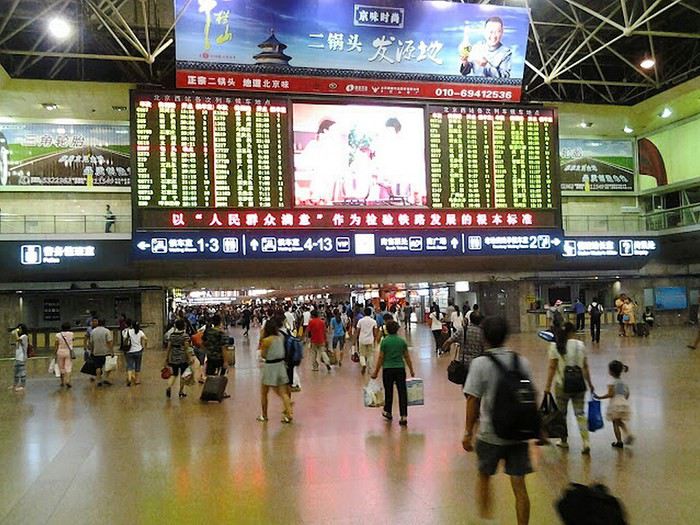 This is Beijing West Railway Station.
You can submit a photo of the whole place, a part of it (inside or outside, the platforms), or a detail (like a station clock) as long as it clearly shows it’s a departure or arrival spot—such as a timetable display.
Or here’s another example:
This is Beijing West Railway Station.
You can submit a photo of the whole place, a part of it (inside or outside, the platforms), or a detail (like a station clock) as long as it clearly shows it’s a departure or arrival spot—such as a timetable display.
Or here’s another example:
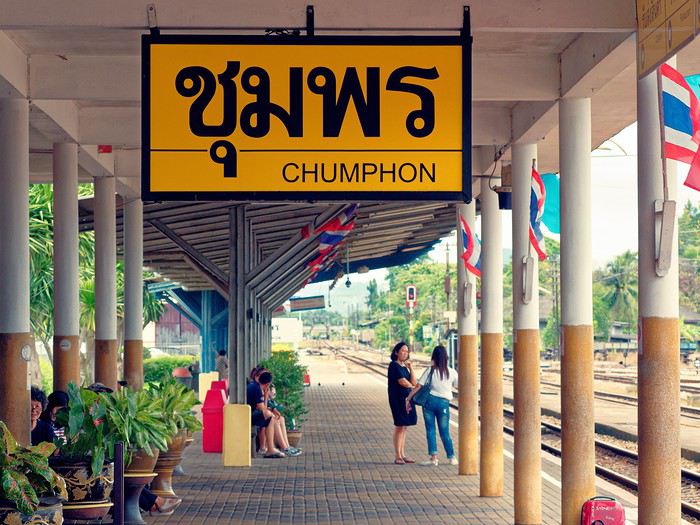
Even if you’re not in one of these places, a departure or arrival scene is welcome: Example: Early morning departure from a pagoda at Inle Lake (Myanmar) as people head back to their villages in the surrounding hills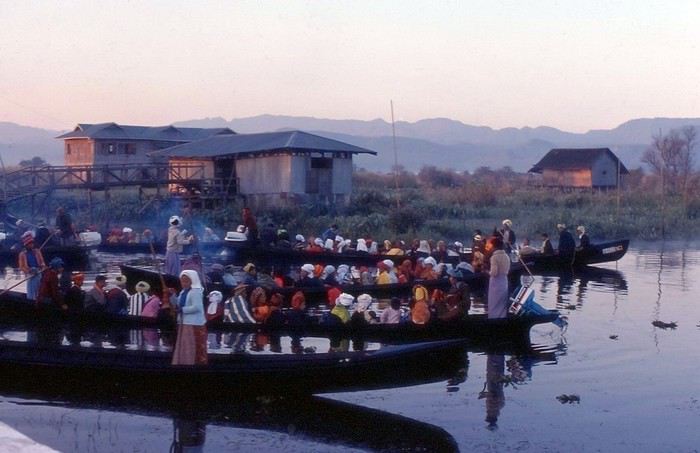
A vehicle about to leave: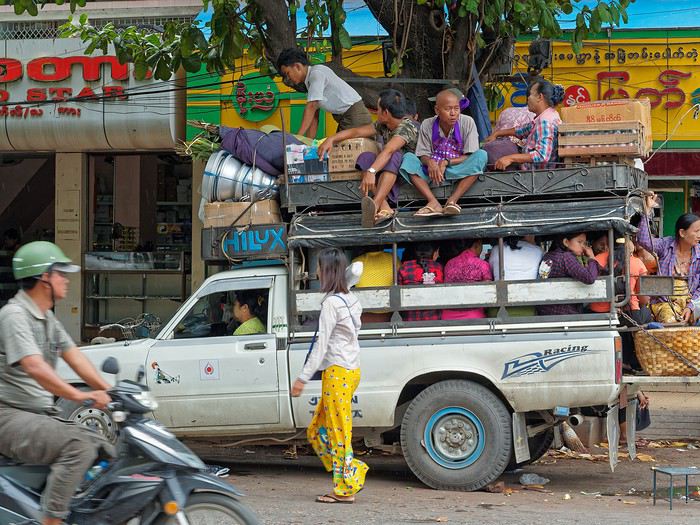
People are also allowed, as long as they’re clearly identified as travelers about to depart or who have just arrived. Bus station in Thailand (a photo I’d shared for the "solitude" theme)
Another example: in the foreground, a boat docked, and just above, another that has just left (Rangoon, Myanmar—these boats serve cities in the Irrawaddy Delta, and in some areas, they’re still the only means of transport for locals).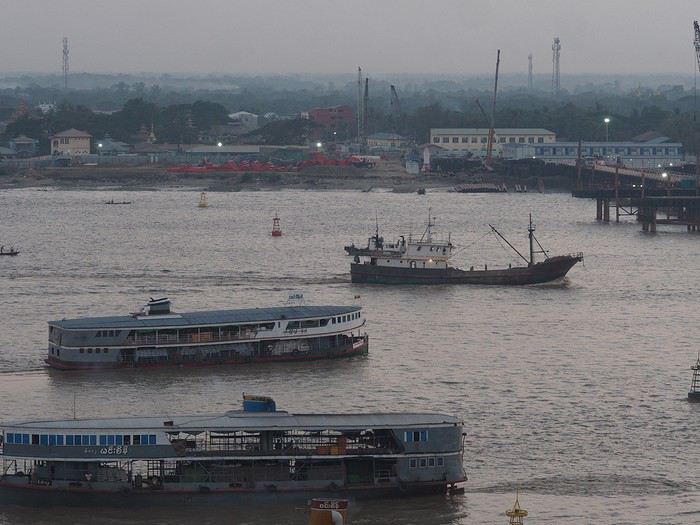
You can also include departures or arrivals from races, but again, it must be at the start or finish, not during the race: Boats before the start of the Route du Rhum in Saint-Malo: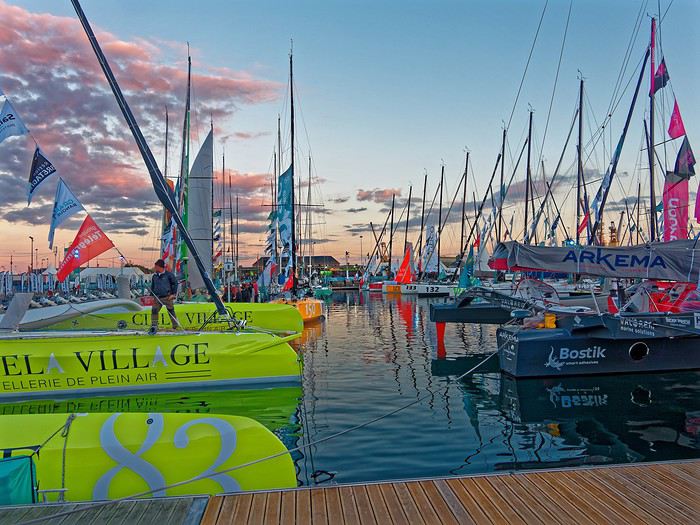
Participation: Each participant can submit up to 3 photos, until Tuesday, September 22 at 11:59 PM Paris time. Each photo must be posted in a separate message, with its number (1, 2, or 3). Don’t forget to add a short description (comment, location, etc.).
Voting: Every VoyageForum member can vote for the 4 photos they think are the best, based on their own criteria and the theme (I’m trying this format this month). Voting will take place from Wednesday, September 23 to Tuesday, September 29 at 11:59 PM Paris time.
Photos should be ranked in order of preference: - 1st photo: 4 points - 2nd: 3 points - 3rd: 2 points - 4th: 1 point
Each member can vote only once for 4 photos. No ties for 4th place with half a point each.
The winner is the photographer whose photo receives the most points. Results will be announced on September 30. In case of a tie, the number of first-place votes will decide. The winner will have the honor of organizing October’s contest.
Give me two or three days to put together the slideshow—I’ll definitely reach out to Masterpo via PM for advice if I’m stuck (and if he’s willing).
Good luck to everyone—may the best photographer win! Let’s get started! For discussion, it’s here
This is Beijing West Railway Station.
You can submit a photo of the whole place, a part of it (inside or outside, the platforms), or a detail (like a station clock) as long as it clearly shows it’s a departure or arrival spot—such as a timetable display.
Or here’s another example:
Even if you’re not in one of these places, a departure or arrival scene is welcome: Example: Early morning departure from a pagoda at Inle Lake (Myanmar) as people head back to their villages in the surrounding hills
A vehicle about to leave:
People are also allowed, as long as they’re clearly identified as travelers about to depart or who have just arrived. Bus station in Thailand (a photo I’d shared for the "solitude" theme)
Another example: in the foreground, a boat docked, and just above, another that has just left (Rangoon, Myanmar—these boats serve cities in the Irrawaddy Delta, and in some areas, they’re still the only means of transport for locals).
You can also include departures or arrivals from races, but again, it must be at the start or finish, not during the race: Boats before the start of the Route du Rhum in Saint-Malo:
Participation: Each participant can submit up to 3 photos, until Tuesday, September 22 at 11:59 PM Paris time. Each photo must be posted in a separate message, with its number (1, 2, or 3). Don’t forget to add a short description (comment, location, etc.).
Voting: Every VoyageForum member can vote for the 4 photos they think are the best, based on their own criteria and the theme (I’m trying this format this month). Voting will take place from Wednesday, September 23 to Tuesday, September 29 at 11:59 PM Paris time.
Photos should be ranked in order of preference: - 1st photo: 4 points - 2nd: 3 points - 3rd: 2 points - 4th: 1 point
Each member can vote only once for 4 photos. No ties for 4th place with half a point each.
The winner is the photographer whose photo receives the most points. Results will be announced on September 30. In case of a tie, the number of first-place votes will decide. The winner will have the honor of organizing October’s contest.
Give me two or three days to put together the slideshow—I’ll definitely reach out to Masterpo via PM for advice if I’m stuck (and if he’s willing).
Good luck to everyone—may the best photographer win! Let’s get started! For discussion, it’s here
Cumuler randonnées à la Réunion et visites des îles alentours English translation pending
Bonjour,
L'été 2021 nous aimerions randonner à la Réunion (faire les 3 cirques au moins) pour cela j'ai trouvé pas mal de circuits, mais auriez vous un prestataire local à me conseiller ?
Après environ 10 jours de rando, que ne faut-il pas louper à visiter sur l'ile ?
Ensuite j'hésite entre Mayotte Madagascar et Maurice, sachant 2 ou 3 jours de balnéaires sont mon max. Que me conseillez vous pour le plus grand dépaysement
Pour finir je me demande s'il est judicieux de prendre un vol en boucle (paris, la réunion, mayotte, paris) ou s'il existe des AR genre : paris, la réunion, mayotte, paris ?
Merci pour toutes vos suggestions
Quand l'été s'achève... English translation pending
Ce n’est pas un carnet de voyage.
C’est un petit carnet de vacances.
Et, peut-être, avez-vous aussi vécu des instants, des heures, des jours, des semaines comme les miennes.
Sur place, sans voiture, sans train, sans avion, sans vélo.
Enveloppé de joie, de vie, de sourires, de douceur, de tendresse.
Un été entre parenthèse.
...
Dans la grange, la deuxième couvée d’hirondelles apprend à voler. Les parents perchés sur la poutre, pépient avec ardeur et les oisillons semblent écouter. Encore quinze jours et c’est l’envol pour l’Afrique.
Dans la maison, notre volière estivale, le silence s’est installé. Enfants et petits-enfant ont migré vers la ville. Un silence si parfait que j’entends Tiko, l’animal favori de Petit Jules. Tiko est un escargot des haies. Sa coquille jaune vif cerclée de fines bandes noires à ne pas confondre avec l’escargot des jardins, arbore un minuscule morceau de sparadrap. J’ai la garde de Tiko jusqu’en Octobre, nouvelles vacances d’automne. Il croque la salade vert tendre et l’infime bruit de ses mandibules fait écho aux touches de mon clavier.
Notre saison s’est achevée sur le spectacle de théâtre, rituel familial. Pour la première fois les enfants étaient les seuls scénaristes et je n’ai fait qu’orchestrer les répétitions. L’affiche était : « Les virus et les médecins » et l’action se déroulait en 1398 durant la peste noire entre le médecin à cape et bec noir et le médecin du futur, 2020. Les cinq plus jeunes étaient des virus et avaient fabriqué de larges masques ronds et colorés avec deux trous pour les yeux, attachés avec de la ficelle. C’étaient Zika, Ebola, chikungunya, variole et covid (corona pour les intimes, dans le texte). Tous les adultes présents, les parents, ont beaucoup ri et la parodie était parfaite sans qu'ils en aient conscience.
La conclusion était qu’il fallait utiliser les moyens connus au moyen âge et ceux d’aujourd’hui et ils ont fabriqué sur scène une poudre de rat malade à boire diluée dans de l’eau. Astucieux ces petits. Zika, Ebola, chikungunya, les virus africains, trépignaient en disant « pour nous aussi, on nous oublie toujours, c’est pas juste »
Bref, quelle longue digression pour vous dire que même dans le monde magique de l’enfance, ceux-ci sont bien marqués par l’épidémie dont on nous remplit le tête et les oreilles. Ils appréhendent la rentrée masquée au collège, craignent de ne pas se reconnaître dans les nouvelles classes constituées et se demandent comment les profs les reconnaîtront. Et des questions fusaient : « Comment on va faire l’hiver, faudra mette le masque par-dessus l’écharpe dans le bus ? » « Et quand il pleut, comment mon masque va tenir quand il est tout mouillé » « Et pourquoi on peut manger tous ensemble à la cantine sans masque, on est tous collés à la cantine » « Et si j’ai pas ma règle, je pourrais prendre celle de ma copine ? » « Et Jules, il a dix ans et il sera au collège avec ceux de 11ans, il sera obligé de mettre le masque ? ».
Ici dans notre Morvan écrasé de chaleur, pourtant, tout l’été nous avons voyagé. Voyage immobile, sans avion, sans test, sans masque, dans les rires, les cris, les cavalcades, un bazar, un souk, un cirque permanent.
Italie : pizza maison (ahhh les pizzas de Papiluc!) Japon : sushi (beurq, c’était pas ma fête) Inde :poulet byriani (tu mets pas du piment hein mamido) Russie : pelmini ( 480 pelmini, 32 mains pour les faire, 6h pour les préparer) Argentine : asado (souvent et pratique) Grèce : moussaka France : ratatouille
Ainsi, les enfants fabriquaient les petits drapeaux correspondants pour décorer la table et les adultes inventaient des mini quizz sur chaque pays.
On s’est bien marré et l’été s’achève.
Notre maison, comme un coeur palpitant depuis mars, où se sont retrouvés toutes les générations, est redevenue silencieuse.
Je me sens remplie et vide. J’crois bien que si l’on approche un doigt sur mes antennes, j’vais rentrer dans ma coquille, comme Tiko. Mais pour l’heure, ce n’est pas le temps de l’hibernation et je ne vais pas fabriquer mon épiphragme protecteur.
On est bien sur vf, chuis en vacances, en vacance. Contente de vous retrouver.
Crouchhhh, crouchhhh, Tiko poursuit son festin.
A bientôt !
...
Dans la grange, la deuxième couvée d’hirondelles apprend à voler. Les parents perchés sur la poutre, pépient avec ardeur et les oisillons semblent écouter. Encore quinze jours et c’est l’envol pour l’Afrique.
Dans la maison, notre volière estivale, le silence s’est installé. Enfants et petits-enfant ont migré vers la ville. Un silence si parfait que j’entends Tiko, l’animal favori de Petit Jules. Tiko est un escargot des haies. Sa coquille jaune vif cerclée de fines bandes noires à ne pas confondre avec l’escargot des jardins, arbore un minuscule morceau de sparadrap. J’ai la garde de Tiko jusqu’en Octobre, nouvelles vacances d’automne. Il croque la salade vert tendre et l’infime bruit de ses mandibules fait écho aux touches de mon clavier.
Notre saison s’est achevée sur le spectacle de théâtre, rituel familial. Pour la première fois les enfants étaient les seuls scénaristes et je n’ai fait qu’orchestrer les répétitions. L’affiche était : « Les virus et les médecins » et l’action se déroulait en 1398 durant la peste noire entre le médecin à cape et bec noir et le médecin du futur, 2020. Les cinq plus jeunes étaient des virus et avaient fabriqué de larges masques ronds et colorés avec deux trous pour les yeux, attachés avec de la ficelle. C’étaient Zika, Ebola, chikungunya, variole et covid (corona pour les intimes, dans le texte). Tous les adultes présents, les parents, ont beaucoup ri et la parodie était parfaite sans qu'ils en aient conscience.
La conclusion était qu’il fallait utiliser les moyens connus au moyen âge et ceux d’aujourd’hui et ils ont fabriqué sur scène une poudre de rat malade à boire diluée dans de l’eau. Astucieux ces petits. Zika, Ebola, chikungunya, les virus africains, trépignaient en disant « pour nous aussi, on nous oublie toujours, c’est pas juste »
Bref, quelle longue digression pour vous dire que même dans le monde magique de l’enfance, ceux-ci sont bien marqués par l’épidémie dont on nous remplit le tête et les oreilles. Ils appréhendent la rentrée masquée au collège, craignent de ne pas se reconnaître dans les nouvelles classes constituées et se demandent comment les profs les reconnaîtront. Et des questions fusaient : « Comment on va faire l’hiver, faudra mette le masque par-dessus l’écharpe dans le bus ? » « Et quand il pleut, comment mon masque va tenir quand il est tout mouillé » « Et pourquoi on peut manger tous ensemble à la cantine sans masque, on est tous collés à la cantine » « Et si j’ai pas ma règle, je pourrais prendre celle de ma copine ? » « Et Jules, il a dix ans et il sera au collège avec ceux de 11ans, il sera obligé de mettre le masque ? ».
Ici dans notre Morvan écrasé de chaleur, pourtant, tout l’été nous avons voyagé. Voyage immobile, sans avion, sans test, sans masque, dans les rires, les cris, les cavalcades, un bazar, un souk, un cirque permanent.
Italie : pizza maison (ahhh les pizzas de Papiluc!) Japon : sushi (beurq, c’était pas ma fête) Inde :poulet byriani (tu mets pas du piment hein mamido) Russie : pelmini ( 480 pelmini, 32 mains pour les faire, 6h pour les préparer) Argentine : asado (souvent et pratique) Grèce : moussaka France : ratatouille
Ainsi, les enfants fabriquaient les petits drapeaux correspondants pour décorer la table et les adultes inventaient des mini quizz sur chaque pays.
On s’est bien marré et l’été s’achève.
Notre maison, comme un coeur palpitant depuis mars, où se sont retrouvés toutes les générations, est redevenue silencieuse.
Je me sens remplie et vide. J’crois bien que si l’on approche un doigt sur mes antennes, j’vais rentrer dans ma coquille, comme Tiko. Mais pour l’heure, ce n’est pas le temps de l’hibernation et je ne vais pas fabriquer mon épiphragme protecteur.
On est bien sur vf, chuis en vacances, en vacance. Contente de vous retrouver.
Crouchhhh, crouchhhh, Tiko poursuit son festin.
A bientôt !
Planning juillet-août du groupe Lufthansa English translation pending
Bonjour
Pour ceux que cela intéressent
https://www.lufthansaexperts.com/shared/files/lufthansa/public/mcms/folder_102/folder_6073/file_147741.pdf
Conférence de presse du directeur de MSC France English translation pending
Bonjour
A 10 heure ce matin sur Youtube conference de presse du directeur France de Msc.
Mich74
Promenades au Rwanda English translation pending
C'est un voyage qui date un peu, mais il se trouve que les circonstances de la vie m'offrent du temps libre... L'occasion de replonger dans mes souvenirs et partager un voyage qui reste probablement d’actualité même si nous habitons un monde qui change de plus en plus vite...
dimanche 4 juin 2017 Mulhouse-Kigali
Le décollage approche, il faut choisir son Macron, heu, je voulais dire, son livre, pardon. Bon, dans la France du mois de juin 2017, cela revient strictement au même…

09:30 embarquement 11:20 Départ Basel Turkish Airlines (TK1924) 3 heures de vol 15:20 Arrivée Istanbul (heure locale) Changement d'Avion 18:35 TK 569 Turkich Airline
durée 6h30
00:05 Arrivée: Kigali (KGL), Kigali, Rwanda
Je précise que le mobile de ce voyage est que ma sœur vit à Kigali depuis quelques années. Son mari travaille "dans la diplomatie". Nous sommes attendus à l’aéroport par un chauffeur de l’ambassade. Ma soeur nous avait dit qu’ils seraient au lit, que la maison était ouverte et des infos pour retrouver sans aide notre chambre. Ceux qui connaissent mon célèbre sens de l’orientation ont déjà deviné que je suis allé me vautrer directement dans la chambre de nos hôtes…
lundi 5 juin 2017
Kigali C’est le lendemain qu’on a vraiment réalisé qu’on était en Afrique...
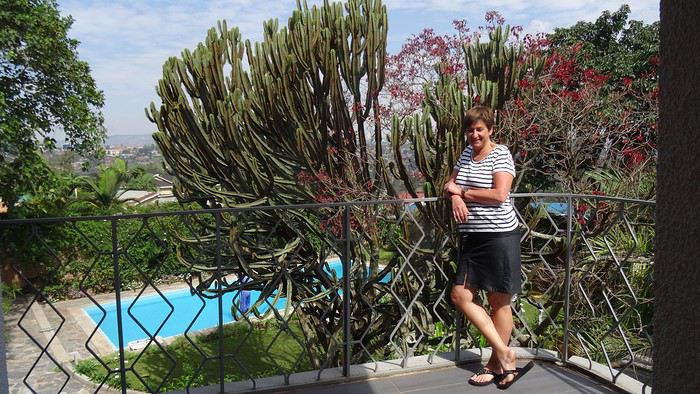
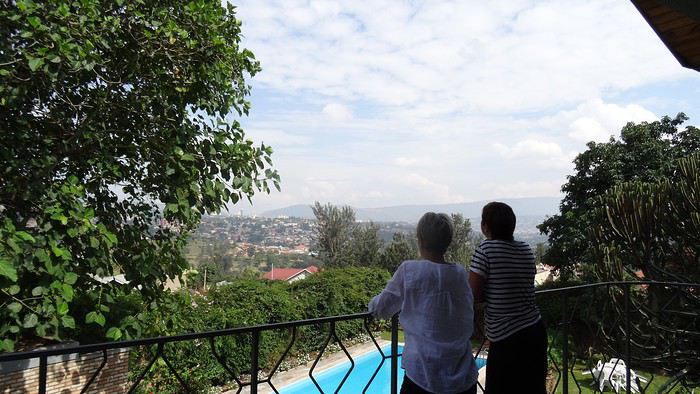
Bon, mais faut manger…On part faire des courses en ville, excellent moyen de prendre la température de l’endroit…Avec ma soeur, c’est tout de suite magouilles et compagnies…Elle me fait changer ma bonne vieille puce Bouygues contre une puce MTN locale. Elle alpague ensuite un gamin dans la rue qui tape sur mon clavier des suites de chiffres cabalistiques pour m’ouvrir les chemins d’une 3g low cost…
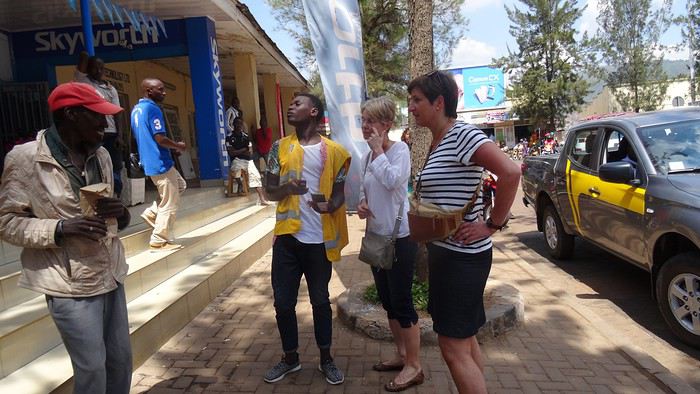
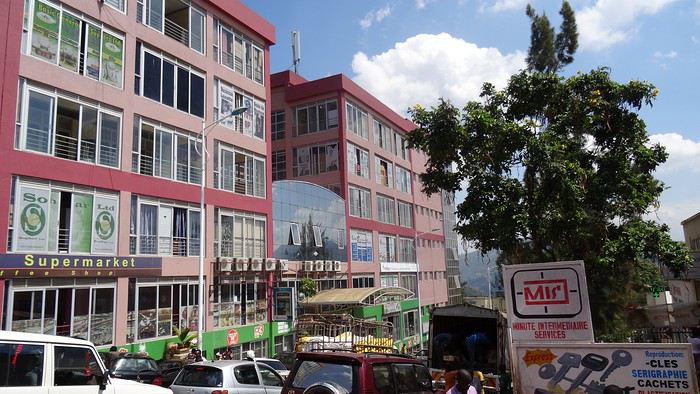
Comme souvent dans les pays qui se sont déversés dans le courant consumériste trop vite, les villes sont un gigantesque foutoir où l’architecture s’inspire beaucoup des gâteaux à la meringue, on côtoie le pire et le meilleur, un flot d’humains qui se débattent pour survivre, des raz de marée de véhicules, gigantesques 4*4 en concurrence avec des myriades de deux roues hétéroclites…C’est une ambiance, à l’africaine, des sonos déversent de la rumba congolaise, des types jouent au tam-tam…
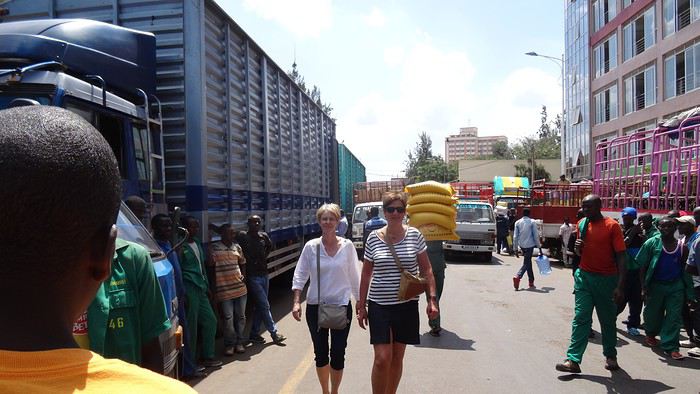
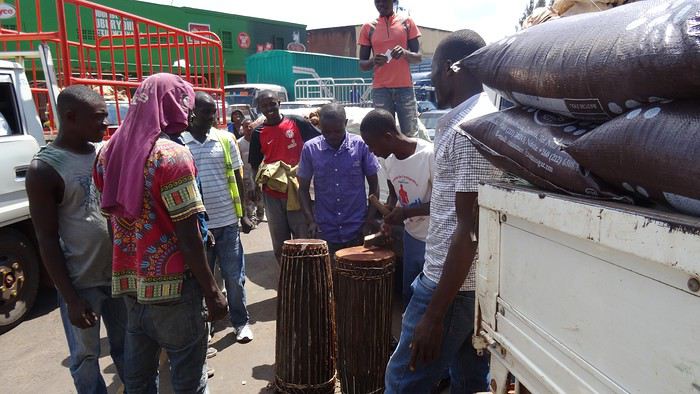
Partout des portefaix s’activent avec des montagnes posées sur la tête…
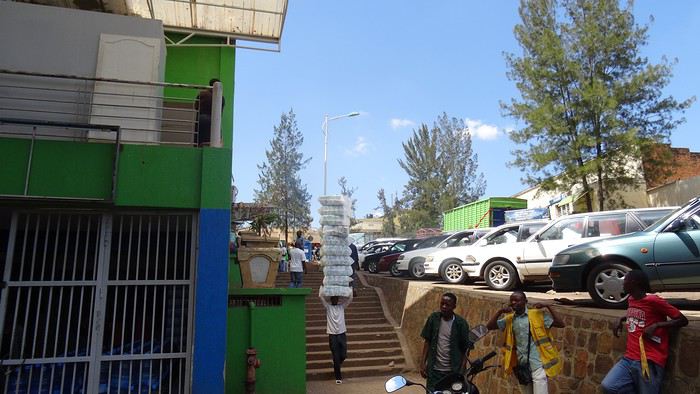
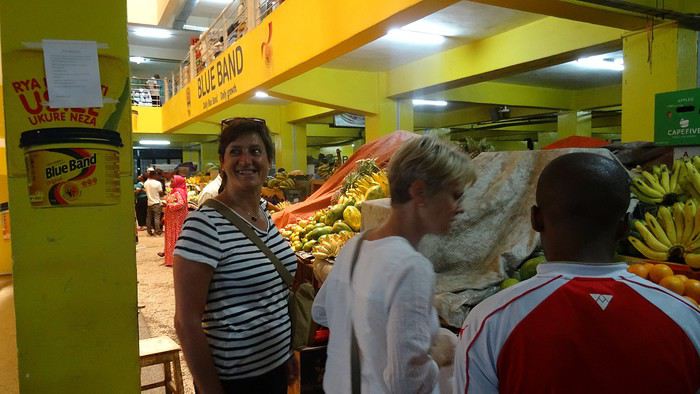
On arrive au marché. Ma sœur y est en territoire connu, négocie, interpelle
dimanche 4 juin 2017 Mulhouse-Kigali
Le décollage approche, il faut choisir son Macron, heu, je voulais dire, son livre, pardon. Bon, dans la France du mois de juin 2017, cela revient strictement au même…
09:30 embarquement 11:20 Départ Basel Turkish Airlines (TK1924) 3 heures de vol 15:20 Arrivée Istanbul (heure locale) Changement d'Avion 18:35 TK 569 Turkich Airline
durée 6h30
00:05 Arrivée: Kigali (KGL), Kigali, Rwanda
Je précise que le mobile de ce voyage est que ma sœur vit à Kigali depuis quelques années. Son mari travaille "dans la diplomatie". Nous sommes attendus à l’aéroport par un chauffeur de l’ambassade. Ma soeur nous avait dit qu’ils seraient au lit, que la maison était ouverte et des infos pour retrouver sans aide notre chambre. Ceux qui connaissent mon célèbre sens de l’orientation ont déjà deviné que je suis allé me vautrer directement dans la chambre de nos hôtes…
lundi 5 juin 2017
Kigali C’est le lendemain qu’on a vraiment réalisé qu’on était en Afrique...
Bon, mais faut manger…On part faire des courses en ville, excellent moyen de prendre la température de l’endroit…Avec ma soeur, c’est tout de suite magouilles et compagnies…Elle me fait changer ma bonne vieille puce Bouygues contre une puce MTN locale. Elle alpague ensuite un gamin dans la rue qui tape sur mon clavier des suites de chiffres cabalistiques pour m’ouvrir les chemins d’une 3g low cost…
Comme souvent dans les pays qui se sont déversés dans le courant consumériste trop vite, les villes sont un gigantesque foutoir où l’architecture s’inspire beaucoup des gâteaux à la meringue, on côtoie le pire et le meilleur, un flot d’humains qui se débattent pour survivre, des raz de marée de véhicules, gigantesques 4*4 en concurrence avec des myriades de deux roues hétéroclites…C’est une ambiance, à l’africaine, des sonos déversent de la rumba congolaise, des types jouent au tam-tam…
Partout des portefaix s’activent avec des montagnes posées sur la tête…
On arrive au marché. Ma sœur y est en territoire connu, négocie, interpelle
La traversée intégrale du Népal à pied English translation pending
Bonjour à tous,
J’ai traversé, fin 2018, l’Himalaya népalais à pied en suivant la trace du Great Himalaya Trail (Cultural Road). Peut-être que certain ont ce projet en tête, peut-être que d’autres ne connaissent pas alors je trouve intéressant de partager cette expérience et de mettre en lumière cette trace qui reste finalement assez accessible, si on a le temps ! 😉
Le Great Himalaya Trail permet de relier entre elles une dizaine de régions du Nord du Népal. En vérité, il ne s’agit pas d’une trace continue et balisée comme ça peut être le cas des treks longues distances aux Etats-Unis. C’est plutôt une mise bout à bout des différents sentiers de trek et de ceux, beaucoup moins empruntés, mais utilisés par les locaux. Il y a deux possibilités principales : la haute route, en altitude, assez technique par endroit et très isolée et la basse route ou route culturelle qui passe plutôt dans les vallées habitées et qui rend beaucoup plus facile le ravitaillement. Nous on a fait un petit mix des deux afin de faire le trek des trois cols dans le Khumbu et le tour Nord des Annapurnas.
En quelques chiffres : 87 jours, 1500 km et 65 000 mètres de dénivelé.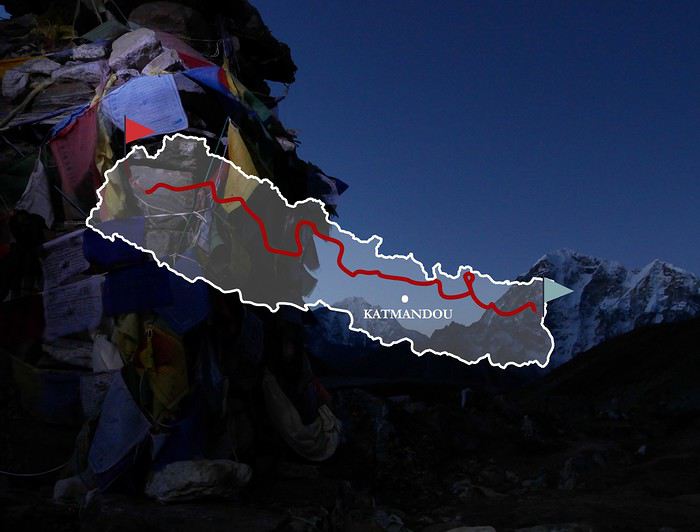
Sur le moment on tenait un journal de bord/blog/photo très précis donc je me permets de mettre les liens pour ceux qui veulent en savoir plus. On a réalisé un petit film qu’on voudrait projeter à l’automne dans des petits festivals, voici la bande-annonce : https://www.youtube.com/watch?v=WI-t785qpU4 Sur la chaîne youtube, vous pouvez trouver quelques petites vidéos bonus du genre “Avez-vous eu froid ?”, “Que mangiez-vous ?”, ...
Départ donc le 22 septembre 2018 de Taplejung dans l’Est népalais. Ce fut déjà une aventure en soi de nous rendre à cet endroit du fait d’une grève des conducteurs dans les districts avoisinants. Nous sommes restés bloqués à Birtamod puis à Ilam mais ça nous a permis de visiter ces endroits qui sont en temps normal de simples zones de passage. De Taplejung nous avons rejoint Khadbari en 6 jours. Portion assez humide à cause de la fin de mousson mais ça nous aura permis de rencontrer les petits habitants de la jungle comme les sangsues et de belles araignées !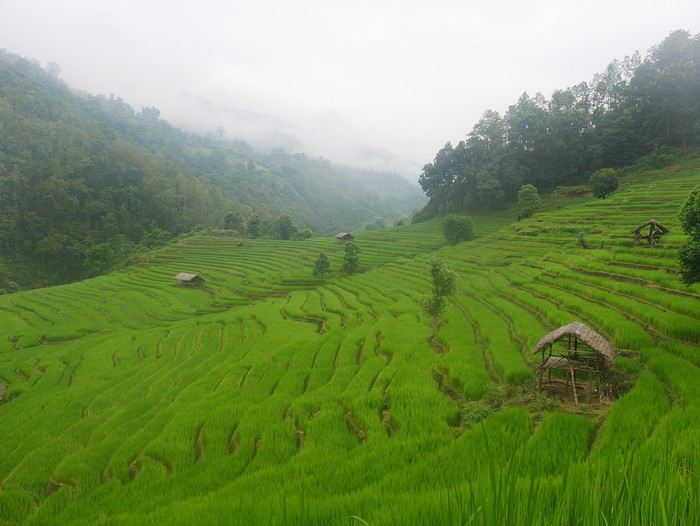
Détails des journées avec photos : https://400lieuessurlaterre.wordpress.com/2018/10/01/kangchenjunga-makalu-sous-la-moiteur-des-tropiques-🎶/
La portion suivante nous a permis de rejoindre le Khumbu en 7 jours. Pas mal de montagnes russes car on coupe les vallées qui viennent du nord alors que l’on marche vers l’Ouest. Il est assez courant de descendre 1000 m et de les remonter tout de suite après pour passer un petit col à 3000 dans le brouillard. Nous n’avons pas croisé grand monde et c’est assez plaisant pour le moral d’arrivée dans la zone de l’Everest.
Détails des journées avec photos : https://400lieuessurlaterre.wordpress.com/2018/10/06/makalu-solu-khumbu-rendez-vous-en-terre-sherpa/
Comme dit précédemment, nous avons fait le trek très connu des trois cols dans le sens horaire. Nous avons particulièrement apprécié la vallée de Thame/Lumde, avec peu de randonneurs et des contrastes saisissant entre le rouge des pelouses, le blanc des sommets et le noir des rochers. On a moins apprécié le hausse des prix ! 😉 Un dhal bat qui coûtait 100/200 roupies dans les portions précédentes grimpe jusqu’à 850 roupies à Lobuche !
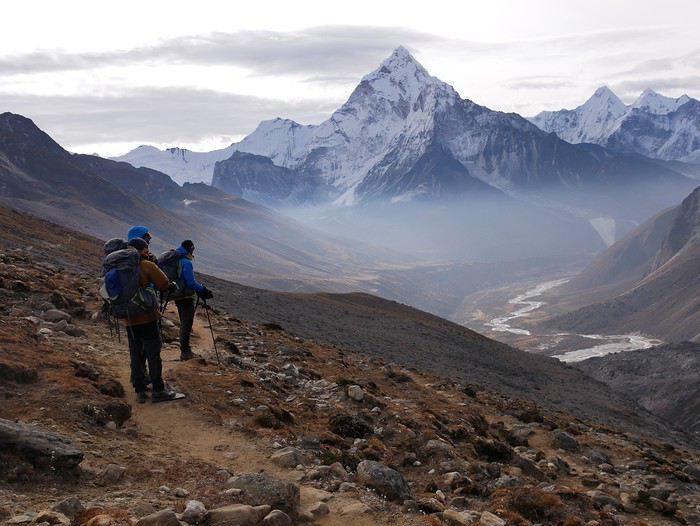
Détails des journées avec photos : https://400lieuessurlaterre.wordpress.com/2018/10/16/solu-khumbu-visite-a-la-deesse-mere-des-vents/
On quitte le Khumbu pour le Rolwaling. Retour en basse altitude (2000/3000) et dans des zones plus reculées. Nous faisons différentes rencontres marquantes telles que Bijay et sa famille qui fait un bout de route avec nous. Chaque soir nous dormons chez l’habitant et malgré la barrière de la langue, ces moments sont précieux tant nous avons à apprendre de ceux qui vivent en autarcie avec la nature.
Détails des journées avec photos : https://400lieuessurlaterre.wordpress.com/2018/11/04/solu-khumbu-rolwaling-how-are-you-my-friends/
S’en suit la traversée de l’Helambu et du Manaslu de Barabise à Besisahar. On retrouve de fortes séquelles du séisme de 2015 près de Arughat Bazar. Un soir, nous sommes accueillis chez Patam Sherpa dans sa petite maison en tôle, une rencontre qui restera longtemps gravée. Nous apercevons le Manaslu et au loin, les Annapurnas qui sont notre prochain objectif.
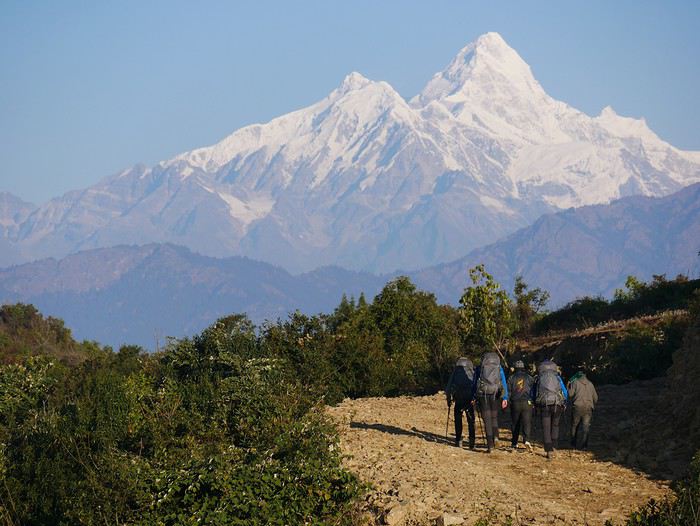
Détails des journées avec photos : https://400lieuessurlaterre.wordpress.com/2018/11/13/helambu-manaslu-a-la-poursuite-du-soleil/
De Besisahar nous partons pour le Thorong La avec comme objectif Béni. La portion est malheureusement marquée par la maladie d’Aubin qui reste au lit 4 jours à Manang. On en profite pour marcher dans les alentours et aller aux Ice Lake. Le passage par Ghyaru avant Manang est vraiment à faire ! Au col, nous passons dans un univers très aride et entamons une longue descente. De Jomson, on peut éviter la route par un sentier en rive gauche, ça vaut le coup !
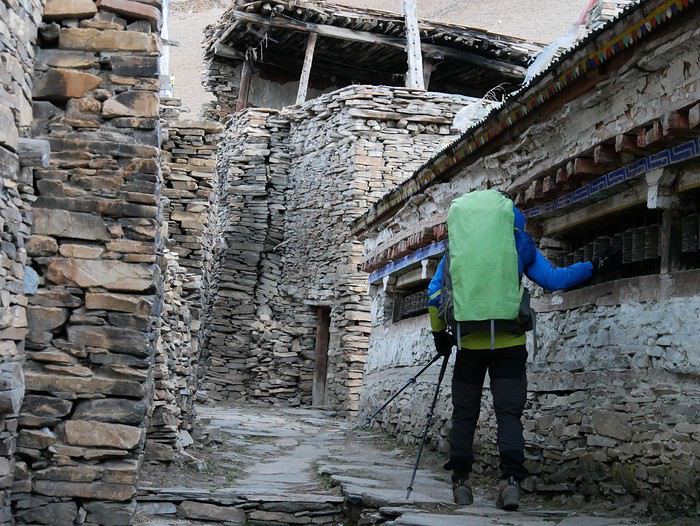
Détails des journées avec photos : https://400lieuessurlaterre.wordpress.com/2018/11/28/annapurnas-mon-dernier-8000/
De Béni nous souhaitions rejoindre Dunai dans le Dolpo en traversant la réserve du Dhorpatan. Surement la portion la plus appréciée de l’aventure. Les paysages n’ont rien à envier au Khumbu et on se retrouve plongé dans le sauvage avec un ou deux villages croisés chaque jour. Tous les soirs on se retrouve avec la maisonnée au coin du feu, c’est magique ! Le passage de Dhule à Dunai est très très isolé !
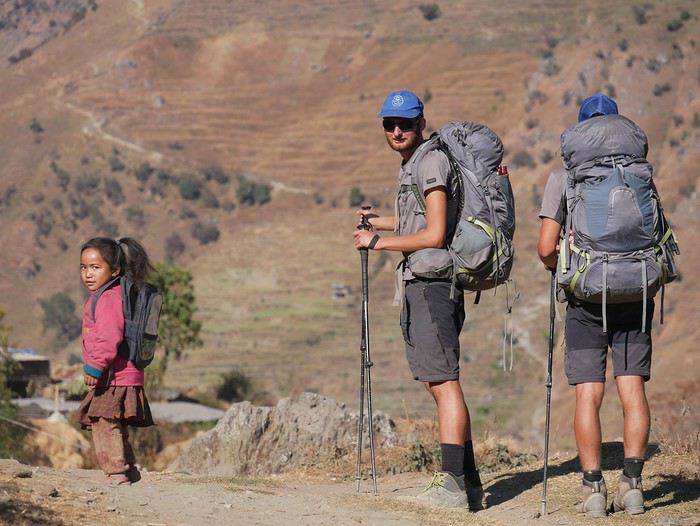
Détails des journées avec photos : https://400lieuessurlaterre.wordpress.com/2018/12/13/dhorpatan-livres-a-nous-memes/
Dunai, est, à l’époque, seulement accessible à pied ou en avion. On rentre vraiment dans une zone où les locaux n’ont pas l’habitude de voir des touristes. Nous passons de nombreux cols pour rejoindre Jumla puis le lac Rara.
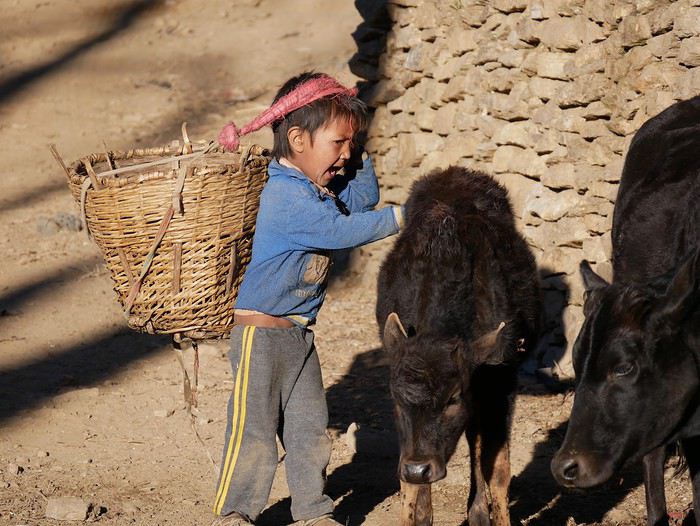
Détails des journées avec photos : https://400lieuessurlaterre.wordpress.com/2018/12/20/rara-jumla-lhiver-sinstalle/
La fin de notre marche est avortée une nouvelle fois à cause de la maladie. Nous parvenons à rejoindre Martadi. On dirait que certains n’ont jamais vu d’étranger de leur vie. A chaque fois les locaux nous aident à trouver un endroit où dormir. On pousse un dernier jour jusqu'à Guomol (pas sur la carte) mais impossible pour nous de passer le col qui mène à Chainpur. On est vidé ! On retourne à Martadi et de là on prend un bus de 30h (1h de pause en tout 🤪) jusqu’à Mugling.
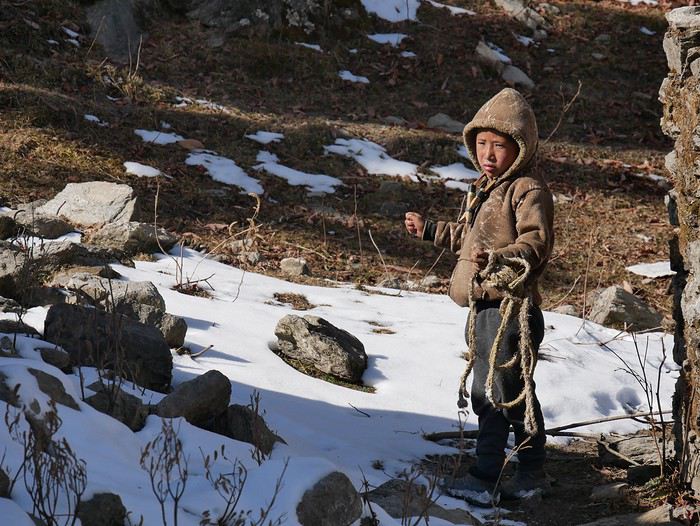
Détails des journées avec photos : https://400lieuessurlaterre.wordpress.com/2019/01/01/far-west-clap-de-fin/
Voilà, les articles du blog sont beaucoup plus complet, j'espère que ça donnera des idées à certains ! Au plaisir d’échanger à ce sujet,
Jérémy
J’ai traversé, fin 2018, l’Himalaya népalais à pied en suivant la trace du Great Himalaya Trail (Cultural Road). Peut-être que certain ont ce projet en tête, peut-être que d’autres ne connaissent pas alors je trouve intéressant de partager cette expérience et de mettre en lumière cette trace qui reste finalement assez accessible, si on a le temps ! 😉
Le Great Himalaya Trail permet de relier entre elles une dizaine de régions du Nord du Népal. En vérité, il ne s’agit pas d’une trace continue et balisée comme ça peut être le cas des treks longues distances aux Etats-Unis. C’est plutôt une mise bout à bout des différents sentiers de trek et de ceux, beaucoup moins empruntés, mais utilisés par les locaux. Il y a deux possibilités principales : la haute route, en altitude, assez technique par endroit et très isolée et la basse route ou route culturelle qui passe plutôt dans les vallées habitées et qui rend beaucoup plus facile le ravitaillement. Nous on a fait un petit mix des deux afin de faire le trek des trois cols dans le Khumbu et le tour Nord des Annapurnas.
En quelques chiffres : 87 jours, 1500 km et 65 000 mètres de dénivelé.
Sur le moment on tenait un journal de bord/blog/photo très précis donc je me permets de mettre les liens pour ceux qui veulent en savoir plus. On a réalisé un petit film qu’on voudrait projeter à l’automne dans des petits festivals, voici la bande-annonce : https://www.youtube.com/watch?v=WI-t785qpU4 Sur la chaîne youtube, vous pouvez trouver quelques petites vidéos bonus du genre “Avez-vous eu froid ?”, “Que mangiez-vous ?”, ...
Départ donc le 22 septembre 2018 de Taplejung dans l’Est népalais. Ce fut déjà une aventure en soi de nous rendre à cet endroit du fait d’une grève des conducteurs dans les districts avoisinants. Nous sommes restés bloqués à Birtamod puis à Ilam mais ça nous a permis de visiter ces endroits qui sont en temps normal de simples zones de passage. De Taplejung nous avons rejoint Khadbari en 6 jours. Portion assez humide à cause de la fin de mousson mais ça nous aura permis de rencontrer les petits habitants de la jungle comme les sangsues et de belles araignées !
Détails des journées avec photos : https://400lieuessurlaterre.wordpress.com/2018/10/01/kangchenjunga-makalu-sous-la-moiteur-des-tropiques-🎶/
La portion suivante nous a permis de rejoindre le Khumbu en 7 jours. Pas mal de montagnes russes car on coupe les vallées qui viennent du nord alors que l’on marche vers l’Ouest. Il est assez courant de descendre 1000 m et de les remonter tout de suite après pour passer un petit col à 3000 dans le brouillard. Nous n’avons pas croisé grand monde et c’est assez plaisant pour le moral d’arrivée dans la zone de l’Everest.
Détails des journées avec photos : https://400lieuessurlaterre.wordpress.com/2018/10/06/makalu-solu-khumbu-rendez-vous-en-terre-sherpa/
Comme dit précédemment, nous avons fait le trek très connu des trois cols dans le sens horaire. Nous avons particulièrement apprécié la vallée de Thame/Lumde, avec peu de randonneurs et des contrastes saisissant entre le rouge des pelouses, le blanc des sommets et le noir des rochers. On a moins apprécié le hausse des prix ! 😉 Un dhal bat qui coûtait 100/200 roupies dans les portions précédentes grimpe jusqu’à 850 roupies à Lobuche !
Détails des journées avec photos : https://400lieuessurlaterre.wordpress.com/2018/10/16/solu-khumbu-visite-a-la-deesse-mere-des-vents/
On quitte le Khumbu pour le Rolwaling. Retour en basse altitude (2000/3000) et dans des zones plus reculées. Nous faisons différentes rencontres marquantes telles que Bijay et sa famille qui fait un bout de route avec nous. Chaque soir nous dormons chez l’habitant et malgré la barrière de la langue, ces moments sont précieux tant nous avons à apprendre de ceux qui vivent en autarcie avec la nature.
Détails des journées avec photos : https://400lieuessurlaterre.wordpress.com/2018/11/04/solu-khumbu-rolwaling-how-are-you-my-friends/
S’en suit la traversée de l’Helambu et du Manaslu de Barabise à Besisahar. On retrouve de fortes séquelles du séisme de 2015 près de Arughat Bazar. Un soir, nous sommes accueillis chez Patam Sherpa dans sa petite maison en tôle, une rencontre qui restera longtemps gravée. Nous apercevons le Manaslu et au loin, les Annapurnas qui sont notre prochain objectif.
Détails des journées avec photos : https://400lieuessurlaterre.wordpress.com/2018/11/13/helambu-manaslu-a-la-poursuite-du-soleil/
De Besisahar nous partons pour le Thorong La avec comme objectif Béni. La portion est malheureusement marquée par la maladie d’Aubin qui reste au lit 4 jours à Manang. On en profite pour marcher dans les alentours et aller aux Ice Lake. Le passage par Ghyaru avant Manang est vraiment à faire ! Au col, nous passons dans un univers très aride et entamons une longue descente. De Jomson, on peut éviter la route par un sentier en rive gauche, ça vaut le coup !
Détails des journées avec photos : https://400lieuessurlaterre.wordpress.com/2018/11/28/annapurnas-mon-dernier-8000/
De Béni nous souhaitions rejoindre Dunai dans le Dolpo en traversant la réserve du Dhorpatan. Surement la portion la plus appréciée de l’aventure. Les paysages n’ont rien à envier au Khumbu et on se retrouve plongé dans le sauvage avec un ou deux villages croisés chaque jour. Tous les soirs on se retrouve avec la maisonnée au coin du feu, c’est magique ! Le passage de Dhule à Dunai est très très isolé !
Détails des journées avec photos : https://400lieuessurlaterre.wordpress.com/2018/12/13/dhorpatan-livres-a-nous-memes/
Dunai, est, à l’époque, seulement accessible à pied ou en avion. On rentre vraiment dans une zone où les locaux n’ont pas l’habitude de voir des touristes. Nous passons de nombreux cols pour rejoindre Jumla puis le lac Rara.
Détails des journées avec photos : https://400lieuessurlaterre.wordpress.com/2018/12/20/rara-jumla-lhiver-sinstalle/
La fin de notre marche est avortée une nouvelle fois à cause de la maladie. Nous parvenons à rejoindre Martadi. On dirait que certains n’ont jamais vu d’étranger de leur vie. A chaque fois les locaux nous aident à trouver un endroit où dormir. On pousse un dernier jour jusqu'à Guomol (pas sur la carte) mais impossible pour nous de passer le col qui mène à Chainpur. On est vidé ! On retourne à Martadi et de là on prend un bus de 30h (1h de pause en tout 🤪) jusqu’à Mugling.
Détails des journées avec photos : https://400lieuessurlaterre.wordpress.com/2019/01/01/far-west-clap-de-fin/
Voilà, les articles du blog sont beaucoup plus complet, j'espère que ça donnera des idées à certains ! Au plaisir d’échanger à ce sujet,
Jérémy
Annulation vol et "avoir" Air France English translation pending
Air France, annonce que l'on peut annuler ou reporter de vols prévus jusqu'au 3 juillet prochain. Les propositions en face sont un report ou un avoir.
Et là je pose une question: Comment s'utilise un avoir?
Air France signale une validité d'un an à partir la date d'émission.
Puis je avec un tel avoir, obtenu disons le 15 avril prochain, réserver un vol le 15 ou 20 juin 2021?
Ou dois je tout bêtement attendre l'annulation par la compagnie?
Merci pour vos réponses.
De retour du Ladakh, 3 semaines de Leh à Delhi English translation pending
De retour d’un premier séjour au Ladakh…je me décide enfin à écrire quelques lignes.
En effet le voyage date déjà de quelques mois, l’été 2019. Mieux vaut tard que jamais…
Beaucoup de montagnards chevronnés sur cette destination (il y a peut être une certaine logique à cela), je dois avouer que je n’entre pas dans cette catégorie… ce qui ne m’empêche pas d’apprécier de grandioses paysages de montagne !! Mes motivations premières pour cette destination étaient donc : la découverte de la région et des ses habitants, bien entendu ; l’Himalaya bien sûr, mais sans forcément penser à faire de grandes marches / de grands escalades ; les monastères bouddhistes, cela va sans dire ; et les routes mythiques, en particulier la route ralliant Leh à Manali qui est bien haut dans ma wish-list depuis un certain nombre d’années…
Avant de rentrer dans le vif du sujet, un grand merci à tous ceux qui ont répondu à mes messages et m’ont aidé à dans ma préparation. Et des very special thanks au grand spécialiste de la destination, Djullé84, qui, m’a grandement aidé dans mon itinéraire, et qui a aussi influé sur le contenu de mon voyage. On en reparlera !
Donc, les grandes lignes de ce voyage ont été : - Leh (inévitablement) et les monastères de la vallée de l’Indus - Le festival de Lamayuru - Le trek de la Markha - Une virée dans la vallée de la Nubra - Le trajet de retour en bus de Leh à Delhi. Pour les déplacements, les transports publics sont privilégiés, autant que possible.
Durée / période : ~3 semaines, fin juin / mi-juillet
Le voyage jusqu'à Leh : vol jusqu’à Delhi sur Lufthansa via Munich (Lufthansa est très concurrentiel vers les destinations asiatiques depuis ma province). Arrivée Delhi peu avant minuit, passage à l’immigration sans problème pour valider mon visa à entrées multiples sur un an obtenu sur internet. Je traîne quelques heures dans l’aéroport puis je m’aperçois qu’il me faut changer de terminal pour prendre mon vol SpiceJet du petit matin. Le terminal 1D est loin, la navette en bus est gratuite en montrant sa carte d’embarquement du vol précédent et sa réservation du vol suivant (à prendre près du pilier 10 accessible par la sortie 4, le monsieur dans la cabane donne le ticket). Heureusement, j’avais été attentif lors de ma réservation et je n’avais pas acheté mon billet avec une CB virtuelle : il faut effectivement montrer la CB avec laquelle on a fait l’achat pour obtenir sa boarding card…(Spicejet) Vol sans histoire, mais… le ciel très couvert ne permet aucun spectacle, c’est une déception car ça aurait pu être pire : le vol n’a pas été annulé… Avion jusqu'à Leh, donc : d'une part en juin, c'est encore tôt dans la saison pour prendre la route ; et d'autre part, la route Delhi-Manali-Leh me paraît très haute pour l'emprunter sans aucune acclimatation, je la réserve pour le retour... Et l'autre possibilité par Amritsar et Srinagar était très tentante, mais d'une part elle exigeait beaucoup de temps, et d'autre part cet itinéraire fait emprunter des trajets qui se situent dans la zone rouge du ministère des affaires étrangères...
Depuis l'aéroport, le taxi pour le centre de Leh coûte 450 Rs (flat price), installation à la GH, réservée sur booking, dans le vieux Leh, entre le terrain de polo et la rue principale.
La 1ère journée se passe au ralenti, sous un ciel couvert, il me faut récupérer du voyage et de la nuit dans l’aéroport de Delhi, et m’acclimater à l’altitude. Premières découvertes de Leh qui au premier abord et sous le ciel gris, n’est pas vraiment enthousiasmante (ça me rassure un peu d’avoir lu quelque part (n’est ce pas, Djullé84) que « chaque journée passée à Leh est une journée de moins passée au Ladakh »…). Ah tous ces toutous en train de roupiller… La première nuit est un peu difficile, mal de tête avec l’altitude… Et les chiens donnent un concert dès le coucher du soleil. Je comprends pourquoi les chiens dormaient dans la journée : à Leh, le chien est un animal nocturne, qui dort le jour et qui passe ses nuits à aboyer… Ah, il y a le chant du muezzin aussi…
Temps pluvieux le matin (et j’apprends qu’il n’y a aucun vol depuis/vers Leh aujourd’hui…), il me faut récupérer des infos pratiques pour organiser la suite du voyage (les jours et heures des bus, en particulier …). Le temps s’arrange, location de scooter l’après midi, je parviens à en obtenir un bien que je n’aie pas pu avoir mon permis de conduire international en temps et en heure. Je vais aller jusqu’à Phyang. Une fois sorti des embouteillages et du bazar de Leh, la ballade permet les premières vues spectaculaires sur les montagnes himalayennes et sur l’Indus. Et les premiers convois militaires à croiser aussi, ils seront omniprésents sur les routes…Et la possibilité de voir de près le 1er monastère ! (mais pas de le visiter à l’heure de mon arrivée) Côté organisation, j’ai pu planifier les choses : dans les prochains jours, ce sera une virée Alchi – Likir – Lamayuru et retour sur Leh : le lendemain je prendrai un premier bus pour Alchi ; mon périple continuera en prenant le bus qui repart pour Leh ; en descendant à la bifurcation pour Likir, je pourrai ensuite monter à pied pour la fin d’après-midi et la nuit à Likir. Le jour suivant je redescendrai à pied à la highway prendre le bus pour Lamayuru, où je resterai deux jours et demi (dont une pleine journée de festival) avant de rentrer en bus pour Leh. J’en repartirai le lendemain pour la vallée de la Markha. Leh sera donc ma plaque tournante, ce qui me permet de m’alléger en demandant à la GH de garder une partie de mes affaires lors de chacune de mes escapades.
(à suivre)
En effet le voyage date déjà de quelques mois, l’été 2019. Mieux vaut tard que jamais…
Beaucoup de montagnards chevronnés sur cette destination (il y a peut être une certaine logique à cela), je dois avouer que je n’entre pas dans cette catégorie… ce qui ne m’empêche pas d’apprécier de grandioses paysages de montagne !! Mes motivations premières pour cette destination étaient donc : la découverte de la région et des ses habitants, bien entendu ; l’Himalaya bien sûr, mais sans forcément penser à faire de grandes marches / de grands escalades ; les monastères bouddhistes, cela va sans dire ; et les routes mythiques, en particulier la route ralliant Leh à Manali qui est bien haut dans ma wish-list depuis un certain nombre d’années…
Avant de rentrer dans le vif du sujet, un grand merci à tous ceux qui ont répondu à mes messages et m’ont aidé à dans ma préparation. Et des very special thanks au grand spécialiste de la destination, Djullé84, qui, m’a grandement aidé dans mon itinéraire, et qui a aussi influé sur le contenu de mon voyage. On en reparlera !
Donc, les grandes lignes de ce voyage ont été : - Leh (inévitablement) et les monastères de la vallée de l’Indus - Le festival de Lamayuru - Le trek de la Markha - Une virée dans la vallée de la Nubra - Le trajet de retour en bus de Leh à Delhi. Pour les déplacements, les transports publics sont privilégiés, autant que possible.
Durée / période : ~3 semaines, fin juin / mi-juillet
Le voyage jusqu'à Leh : vol jusqu’à Delhi sur Lufthansa via Munich (Lufthansa est très concurrentiel vers les destinations asiatiques depuis ma province). Arrivée Delhi peu avant minuit, passage à l’immigration sans problème pour valider mon visa à entrées multiples sur un an obtenu sur internet. Je traîne quelques heures dans l’aéroport puis je m’aperçois qu’il me faut changer de terminal pour prendre mon vol SpiceJet du petit matin. Le terminal 1D est loin, la navette en bus est gratuite en montrant sa carte d’embarquement du vol précédent et sa réservation du vol suivant (à prendre près du pilier 10 accessible par la sortie 4, le monsieur dans la cabane donne le ticket). Heureusement, j’avais été attentif lors de ma réservation et je n’avais pas acheté mon billet avec une CB virtuelle : il faut effectivement montrer la CB avec laquelle on a fait l’achat pour obtenir sa boarding card…(Spicejet) Vol sans histoire, mais… le ciel très couvert ne permet aucun spectacle, c’est une déception car ça aurait pu être pire : le vol n’a pas été annulé… Avion jusqu'à Leh, donc : d'une part en juin, c'est encore tôt dans la saison pour prendre la route ; et d'autre part, la route Delhi-Manali-Leh me paraît très haute pour l'emprunter sans aucune acclimatation, je la réserve pour le retour... Et l'autre possibilité par Amritsar et Srinagar était très tentante, mais d'une part elle exigeait beaucoup de temps, et d'autre part cet itinéraire fait emprunter des trajets qui se situent dans la zone rouge du ministère des affaires étrangères...
Depuis l'aéroport, le taxi pour le centre de Leh coûte 450 Rs (flat price), installation à la GH, réservée sur booking, dans le vieux Leh, entre le terrain de polo et la rue principale.
La 1ère journée se passe au ralenti, sous un ciel couvert, il me faut récupérer du voyage et de la nuit dans l’aéroport de Delhi, et m’acclimater à l’altitude. Premières découvertes de Leh qui au premier abord et sous le ciel gris, n’est pas vraiment enthousiasmante (ça me rassure un peu d’avoir lu quelque part (n’est ce pas, Djullé84) que « chaque journée passée à Leh est une journée de moins passée au Ladakh »…). Ah tous ces toutous en train de roupiller… La première nuit est un peu difficile, mal de tête avec l’altitude… Et les chiens donnent un concert dès le coucher du soleil. Je comprends pourquoi les chiens dormaient dans la journée : à Leh, le chien est un animal nocturne, qui dort le jour et qui passe ses nuits à aboyer… Ah, il y a le chant du muezzin aussi…
Temps pluvieux le matin (et j’apprends qu’il n’y a aucun vol depuis/vers Leh aujourd’hui…), il me faut récupérer des infos pratiques pour organiser la suite du voyage (les jours et heures des bus, en particulier …). Le temps s’arrange, location de scooter l’après midi, je parviens à en obtenir un bien que je n’aie pas pu avoir mon permis de conduire international en temps et en heure. Je vais aller jusqu’à Phyang. Une fois sorti des embouteillages et du bazar de Leh, la ballade permet les premières vues spectaculaires sur les montagnes himalayennes et sur l’Indus. Et les premiers convois militaires à croiser aussi, ils seront omniprésents sur les routes…Et la possibilité de voir de près le 1er monastère ! (mais pas de le visiter à l’heure de mon arrivée) Côté organisation, j’ai pu planifier les choses : dans les prochains jours, ce sera une virée Alchi – Likir – Lamayuru et retour sur Leh : le lendemain je prendrai un premier bus pour Alchi ; mon périple continuera en prenant le bus qui repart pour Leh ; en descendant à la bifurcation pour Likir, je pourrai ensuite monter à pied pour la fin d’après-midi et la nuit à Likir. Le jour suivant je redescendrai à pied à la highway prendre le bus pour Lamayuru, où je resterai deux jours et demi (dont une pleine journée de festival) avant de rentrer en bus pour Leh. J’en repartirai le lendemain pour la vallée de la Markha. Leh sera donc ma plaque tournante, ce qui me permet de m’alléger en demandant à la GH de garder une partie de mes affaires lors de chacune de mes escapades.
(à suivre)
De Tokyo à Osaka en passant par Ishigaki English translation pending
En lisant le chouette carnet de voyage de Nathalie971 je me suis dit que c'était vraiment bien de partager son parcours. Bon je serai sans doute moins détaillé ;)
Jour 1 jeudi 20 fevrier. Nous partons en famille à 4 : mon conjoint et mes enfants qui ont 11 et 14 ans. Arrivée à Tokyo le soir. Nous rejoignons la famille de mon conjoint qui vit et travaille à Tokyo. Quartier de Minato-ku joli quartier résidentiel : petites rues très étroites et immeubles assez bas. Soirée donc familiale avec repas quasi français ;)
Jour 2 nous devons faire traduire nos permis à la Jaf. je conseille d'ailleurs de le faire plutôt depuis la France car cela fait perdre quand même un peu de temps. On y est vers 11 heures et ils seront prêts en fin de journée.
A pied on rejoint le Hama-rikyu gardens. On l'avait déjà beaucoup aimé lors de notre premier voyage il y a 6 ans.... Il fait très beau et on se balade entre les arbres déjà en fleurs pour certains. J'aime beaucoup ce parc : les verts intenses qui se détachent des grands immeubles qui bordent le parc. Il y a très peu de monde.
Ensuite nous prenons le Yurikamone rail pour rejoindre Odaiba. La plage est en travaux : les ouvriers préparent les gradins pour les JO de cet été. Les anneaux eux sont déjà tout prêts ! Le petit restau de plage est fermé alors On déjeune dans le centre commercial. Et c'est très bon ! avant de repartir séance photo devant le robot de 20 mètres de haut. On voulait poursuivre en bateau vers Asakusa mais on est obligé de repasser à la Jaf pour nos permis :(
On en profite pour se balader dans le quartier au pied de la Tokyo Tower.
Islande hiver 2020 English translation pending
C'est la troisième fois que nous allons en Islande en hiver . Nous partons avec un couple d'amis marseillais pour qui c'est la dixième fois et une première pour des amis vosgiens.
Nous partons avec 1 jour d'avance, car ICELANDAIR a avancé notre vol suite à l'interdiction de vol du boeing 737 Max. Ca ne nous arrange pas beaucoup car la voiture de location et les premiers hôtels étaient réservés. Mais bon un jour de vacances supplémentaires, ça ne se refuse pas !
Nous réservons via Rental Car un petit véhicule pour une journée afin d'être autonome jusqu'à l'arrivée du reste du groupe, car à ce moment nous switchons vers un 4X4. Nous réservons également deux nuits à l'hôtel Kriunes à Kòpavogur en périphérie de Reykjavik, près d'un lac.
Nous n'avons pas d'itinéraire précis, on suivra le soleil c'est ce que nous avions convenu. L'hiver, il y a moins de monde et donc, moins de difficulté à trouver de petits hôtels rapidement pour la nuit suivante même pour 6 personnes. Une chose est certaine : fin de semaine, bon temps annoncé on sera au Jokülsarlon !!
La nuit a été agitée, une nouvelle tempête a traversé la Belgique avec des vents assez violents. Nous nous levons un peu inquiets : à Londres des dizaines de vols sont déjà annulés. A priori à Bruxelles ça vole.
Romain nous dépose à l’aéroport. Le vent reste fort, on s’engouffre rapidement dans le terminal. Check in : on ne reçoit pas de boarding pass, il faut les demander à la gate, étrange. On décide donc de passer rapidement les contrôles et de nous rendre directement à la porte d’embarquement. Un quart d’heure plus tard, deux employés arrivent, 1h45 avant l’embarquement …
Nous semblons les seuls à ne pas avoir ou à demander des cartes d’embarquement.
L’employé nous dit que c’est le bazar complet depuis une semaine, que tous les vols sont overbookés. En fait, il reste neuf places pour 10 personnes. Bon ben nous on les aura, mais une victime malchanceuse va avoir une sacrée surprise. Ce sera une jeune fille qui restera sur le carreau. Elle avait l’air assez au bout de sa vie, on peut le comprendre. Il faut un temps fou avant d’entrer dans l’avion. Nous sommes installés près de la sortie de secours, donc full place pour les jambes, par-fait ! Après le décollage, l’hôtesse se libère de son siège et y installe un passager. Mais il était où lui au décollage ? Le siège est super inconfortable, il est droit comme un i, une armoire à glace en plus, mais il est certainement heureux d’avoir une place.
On s’attendait à être secoués, le pilote aussi apparemment mais tout se passe sans encombre. Nous atterrissons à Keflavik sous le soleil et 0°. Il ne fait pas froid mais on a perdu presque 10° tout de même ! Fermeture des vestes et réajustement des écharpes.
A peine dans l’aéroport, on oublie les bagages et direction le shop pour acheter des bières pour les prochains jours, une bonne Gull ça réchauffe les cœurs.
Il faut maintenant s’occuper de récupérer notre petite Toyota Aygo réservée pour un jour chez InterRent. Dans le hall des loueurs, pas de trace d’un InterRent, ça commence bien. On traverse le parking pour aller au shuttle des voitures de location, mais les chauffeurs ne connaissent pas. Surtout ne pas passer en mode panique ! Nous retournons dans le hall de l’aéroport et demandons notre chemin au guichet info. En fait InterRent c’est Europcar, ben oui bien sûr !
Au guichet un jeune italien parlant très bien le français nous accueille. Papier, consignes, bla bla et dernière épreuve de la journée, trouver la voiture dans ces immenses parkings. On tourne un peu, avec les sacs et notre bazar, on peut imaginer, et nous trouvons enfin notre cacahuète rouge. On roule à peine 50 m, ça bippe dans la voiture, grrr. Ce sont les sacs sur le siège arrière qui déclenchent l’alarme pour les ceintures de sécurité. On s’arrête, empilement des sacs sur le semblant de coffre et on part enfin, direction Kopavogur.
La chcoumoune continue, le Waze de Christophe ne semble pas fonctionner. On se retrouve dans la banlieue de Hafnarfjördur un peu largués. On switche de GSM et là ça va mieux, le petit monsieur me parle ! Ici il y a de la neige, pas des mètres mais la route est verglacée. On apprécie les pneus cloutés même si sur le verglas, ... y a pas grand chose qui fonctionne à part la prudence.
L’hôtel est super chouette au bord d’un lac gelé. On jette nos sacs, on sort les appareils photo et oups passage par la porte-fenêtre avant que la nuit tombe. L’endroit est très joli.
On s’inscrit au réveil automatique pour les aurores boréales à la réception, passage par le repas buffet de l’hôtel. Comprends pas très bien. Le cuistot apporte à manger au compte-goutte. Du coup tu vois tous les charognards se ruer vers le bahut dès qu’il dépose un truc et ces raclures vident les plats aussi vite qu’ils arrivent. Avec un peu de patience, nous parviendrons à manger correctement. C’est de bonne augure pour le petit déjeuner !
Nous terminons la soirée dans le salon avec un thé/café en feuilletant un livre sur les aurores boréales. Qu’est-ce qu’on est bien.
Nous partons avec 1 jour d'avance, car ICELANDAIR a avancé notre vol suite à l'interdiction de vol du boeing 737 Max. Ca ne nous arrange pas beaucoup car la voiture de location et les premiers hôtels étaient réservés. Mais bon un jour de vacances supplémentaires, ça ne se refuse pas !
Nous réservons via Rental Car un petit véhicule pour une journée afin d'être autonome jusqu'à l'arrivée du reste du groupe, car à ce moment nous switchons vers un 4X4. Nous réservons également deux nuits à l'hôtel Kriunes à Kòpavogur en périphérie de Reykjavik, près d'un lac.
Nous n'avons pas d'itinéraire précis, on suivra le soleil c'est ce que nous avions convenu. L'hiver, il y a moins de monde et donc, moins de difficulté à trouver de petits hôtels rapidement pour la nuit suivante même pour 6 personnes. Une chose est certaine : fin de semaine, bon temps annoncé on sera au Jokülsarlon !!
La nuit a été agitée, une nouvelle tempête a traversé la Belgique avec des vents assez violents. Nous nous levons un peu inquiets : à Londres des dizaines de vols sont déjà annulés. A priori à Bruxelles ça vole.
Romain nous dépose à l’aéroport. Le vent reste fort, on s’engouffre rapidement dans le terminal. Check in : on ne reçoit pas de boarding pass, il faut les demander à la gate, étrange. On décide donc de passer rapidement les contrôles et de nous rendre directement à la porte d’embarquement. Un quart d’heure plus tard, deux employés arrivent, 1h45 avant l’embarquement …
Nous semblons les seuls à ne pas avoir ou à demander des cartes d’embarquement.
L’employé nous dit que c’est le bazar complet depuis une semaine, que tous les vols sont overbookés. En fait, il reste neuf places pour 10 personnes. Bon ben nous on les aura, mais une victime malchanceuse va avoir une sacrée surprise. Ce sera une jeune fille qui restera sur le carreau. Elle avait l’air assez au bout de sa vie, on peut le comprendre. Il faut un temps fou avant d’entrer dans l’avion. Nous sommes installés près de la sortie de secours, donc full place pour les jambes, par-fait ! Après le décollage, l’hôtesse se libère de son siège et y installe un passager. Mais il était où lui au décollage ? Le siège est super inconfortable, il est droit comme un i, une armoire à glace en plus, mais il est certainement heureux d’avoir une place.
On s’attendait à être secoués, le pilote aussi apparemment mais tout se passe sans encombre. Nous atterrissons à Keflavik sous le soleil et 0°. Il ne fait pas froid mais on a perdu presque 10° tout de même ! Fermeture des vestes et réajustement des écharpes.
A peine dans l’aéroport, on oublie les bagages et direction le shop pour acheter des bières pour les prochains jours, une bonne Gull ça réchauffe les cœurs.
Il faut maintenant s’occuper de récupérer notre petite Toyota Aygo réservée pour un jour chez InterRent. Dans le hall des loueurs, pas de trace d’un InterRent, ça commence bien. On traverse le parking pour aller au shuttle des voitures de location, mais les chauffeurs ne connaissent pas. Surtout ne pas passer en mode panique ! Nous retournons dans le hall de l’aéroport et demandons notre chemin au guichet info. En fait InterRent c’est Europcar, ben oui bien sûr !
Au guichet un jeune italien parlant très bien le français nous accueille. Papier, consignes, bla bla et dernière épreuve de la journée, trouver la voiture dans ces immenses parkings. On tourne un peu, avec les sacs et notre bazar, on peut imaginer, et nous trouvons enfin notre cacahuète rouge. On roule à peine 50 m, ça bippe dans la voiture, grrr. Ce sont les sacs sur le siège arrière qui déclenchent l’alarme pour les ceintures de sécurité. On s’arrête, empilement des sacs sur le semblant de coffre et on part enfin, direction Kopavogur.
La chcoumoune continue, le Waze de Christophe ne semble pas fonctionner. On se retrouve dans la banlieue de Hafnarfjördur un peu largués. On switche de GSM et là ça va mieux, le petit monsieur me parle ! Ici il y a de la neige, pas des mètres mais la route est verglacée. On apprécie les pneus cloutés même si sur le verglas, ... y a pas grand chose qui fonctionne à part la prudence.
L’hôtel est super chouette au bord d’un lac gelé. On jette nos sacs, on sort les appareils photo et oups passage par la porte-fenêtre avant que la nuit tombe. L’endroit est très joli.
On s’inscrit au réveil automatique pour les aurores boréales à la réception, passage par le repas buffet de l’hôtel. Comprends pas très bien. Le cuistot apporte à manger au compte-goutte. Du coup tu vois tous les charognards se ruer vers le bahut dès qu’il dépose un truc et ces raclures vident les plats aussi vite qu’ils arrivent. Avec un peu de patience, nous parviendrons à manger correctement. C’est de bonne augure pour le petit déjeuner !
Nous terminons la soirée dans le salon avec un thé/café en feuilletant un livre sur les aurores boréales. Qu’est-ce qu’on est bien.
10 jours en Syrie - Février 2020 English translation pending
Bonjour,
Je reviens tout juste d'un séjour de 10j en Syrie. Je me suis décidé à visiter ce pays, dans la mesure où de plus en plus de zones sont denouveau ouvertes au tourisme. En 10j, et pratiquement 2400km parcouru, j'ai pu visiter : Damas, Maaloula, le Krak des Chevaliers, Aleppo, Hama, Homs, Latakié, Kesab, Tartus, l'île d'Arwad, Palmyra - il était possible de se rendre à Busra, mais j'ai préféré passer ma dernière journée plus tranquillement à Damas. Le pays est sublime et l'accueil absolument grandiose. Certaines zones ont bien entendu été horriblement affectées par les combats (une bonne partie de Aleppo, de Homs, de la ville de la Palmyre, les villes et villages le long de la ligne de front (Autoroute M5, qu il a été possible d'emprunter) - on y voit néanmoins un volonté des populations locales de reconstruire, de rouvrir les commerces. Les sites Historiques majeurs ont été relativement bien conservés (La Palmyre, la centre Historique de Damas, n'a pas été affecté, le Krak des Chevalier….). Aleppo a beaucoup souffert mais les travaux de reconstruction démarrent, je pense au grand souk, à la fameuse Mosquée des Omeyyades ou de différentes églises.
Pas de soucis de sécurité dans les lieux visités - Il y a bien entendu de nombreux check points à passer aux entrées et sorties des villes, mais rien de très contraignant.
Quelques petites photos en pièce jointe.
Lukasz
Je reviens tout juste d'un séjour de 10j en Syrie. Je me suis décidé à visiter ce pays, dans la mesure où de plus en plus de zones sont denouveau ouvertes au tourisme. En 10j, et pratiquement 2400km parcouru, j'ai pu visiter : Damas, Maaloula, le Krak des Chevaliers, Aleppo, Hama, Homs, Latakié, Kesab, Tartus, l'île d'Arwad, Palmyra - il était possible de se rendre à Busra, mais j'ai préféré passer ma dernière journée plus tranquillement à Damas. Le pays est sublime et l'accueil absolument grandiose. Certaines zones ont bien entendu été horriblement affectées par les combats (une bonne partie de Aleppo, de Homs, de la ville de la Palmyre, les villes et villages le long de la ligne de front (Autoroute M5, qu il a été possible d'emprunter) - on y voit néanmoins un volonté des populations locales de reconstruire, de rouvrir les commerces. Les sites Historiques majeurs ont été relativement bien conservés (La Palmyre, la centre Historique de Damas, n'a pas été affecté, le Krak des Chevalier….). Aleppo a beaucoup souffert mais les travaux de reconstruction démarrent, je pense au grand souk, à la fameuse Mosquée des Omeyyades ou de différentes églises.
Pas de soucis de sécurité dans les lieux visités - Il y a bien entendu de nombreux check points à passer aux entrées et sorties des villes, mais rien de très contraignant.
Quelques petites photos en pièce jointe.
Lukasz