Results for "archéologique+Istanbul+|+123+>+233"
6504 results found.
9-Day Road Trip in the Yucatán Peninsula
Hi everyone,
In late February to early March 2025, we were lucky enough to spend about ten days in Mexico—heading to Cancún. We then embarked on a 9-day road trip to explore the Yucatán Peninsula! Since planning a trip isn’t always easy, we’re sharing our original itinerary (different from the "classic" loop) and our feedback on the places we visited.
With a few photos to illustrate each day, we hope to wow you 🙂! Here’s our loop itinerary starting from Cancún (a packed schedule, but it let us see so much): Day 1 - Cancún’s beach and Holbox Island
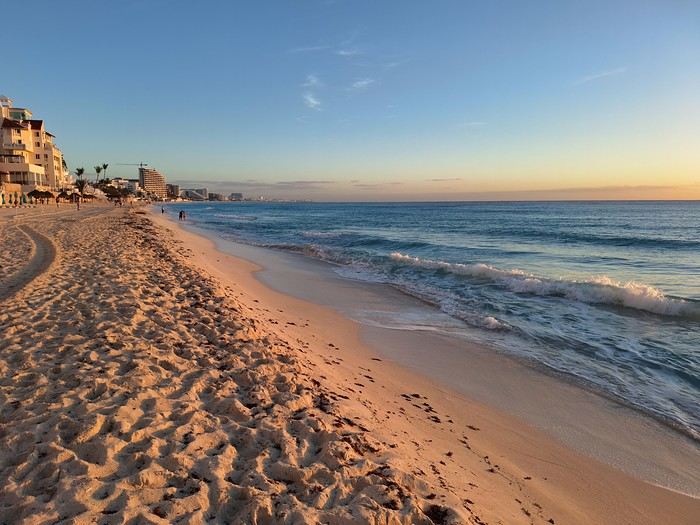
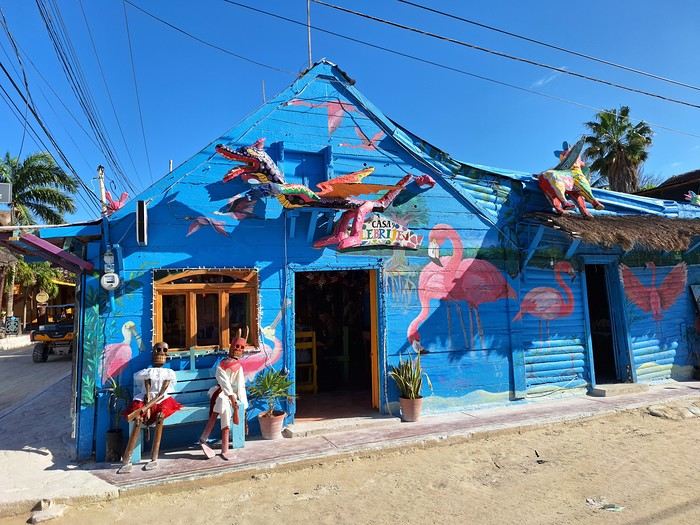
×768 214 KB
Day 2 - Holbox Island and the fishing village of Río Lagartos
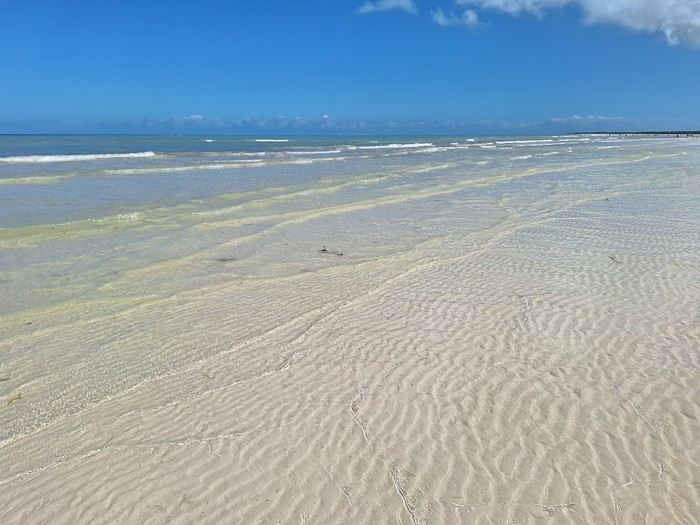
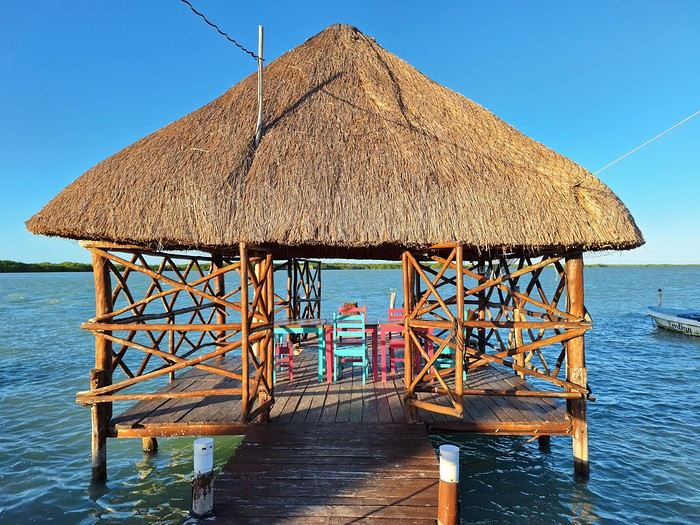
6 KB
Day 3 - The Río Lagartos nature reserve, Las Coloradas salt flats, the Ek'Balam Mayan site, the church of Uayma, and the colonial city of Valladolid
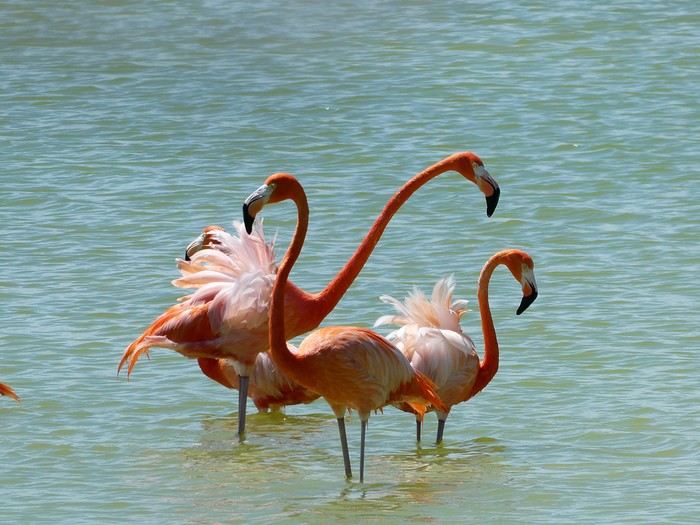
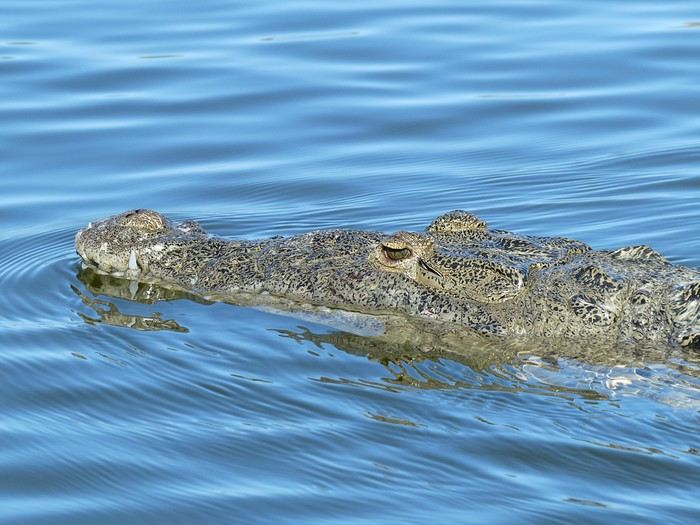
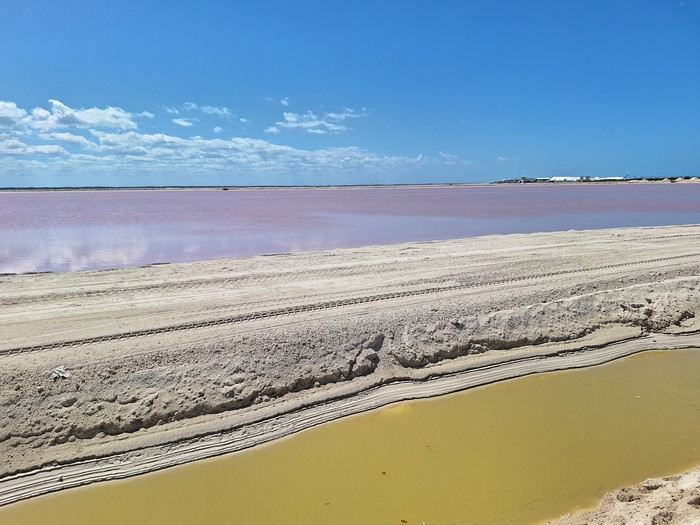
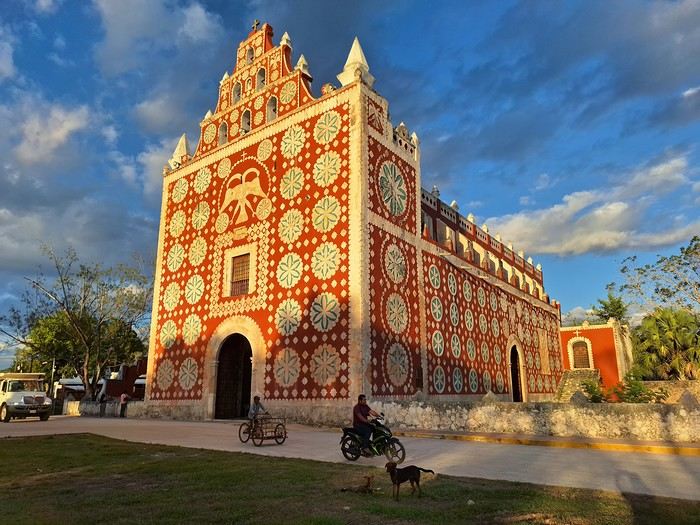
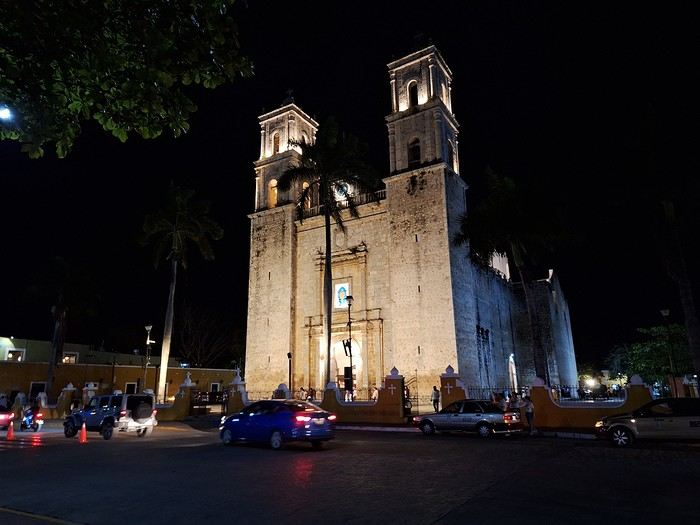
With a few photos to illustrate each day, we hope to wow you 🙂! Here’s our loop itinerary starting from Cancún (a packed schedule, but it let us see so much): Day 1 - Cancún’s beach and Holbox Island
×768 214 KB
Day 2 - Holbox Island and the fishing village of Río Lagartos
6 KB
Day 3 - The Río Lagartos nature reserve, Las Coloradas salt flats, the Ek'Balam Mayan site, the church of Uayma, and the colonial city of Valladolid
Sri Lanka itinerary with kids
Hi,
We’re planning a trip to Sri Lanka with our kids in July (ages 5 and 9). Could I get your thoughts on this itinerary?
D0. Arrival in Sri Lanka at 10 PM, hotel nearby (we’re coming from a stopover in Dubai) D1. Depart for Galle, visit Galle in the afternoon. Overnight in Galle D2. Depart for Tangalle, beach time, then drive to Udawalawa. Overnight in Udawalawa D3. Udawalawa NP, then drive to Ella. Overnight in Ella D4. Ella. Overnight in Ella D5. Drive to Kandy. Visit Kandy. Overnight in Kandy D6. Explore Kandy, then drive to Polonnaruwa. Overnight in Polonnaruwa D7. Polonnaruwa. Overnight in Polonnaruwa D8. Minneriya NP, then Sigiriya. Overnight in Polonnaruwa D9. Drive to Trincomalee. Beach time. Overnight in Trincomalee D10. Whale-watching excursion, Pigeon Island. Overnight in Trincomalee D11. Drive to Anuradhapura. Sightseeing. Overnight in Anuradhapura D12. Wilpattu NP D13. Return to the airport. Flight at 5 PM
I’ll admit the last few days feel a bit rushed. We’d be traveling by car with a driver.
Thanks so much for your help! Bruno
D0. Arrival in Sri Lanka at 10 PM, hotel nearby (we’re coming from a stopover in Dubai) D1. Depart for Galle, visit Galle in the afternoon. Overnight in Galle D2. Depart for Tangalle, beach time, then drive to Udawalawa. Overnight in Udawalawa D3. Udawalawa NP, then drive to Ella. Overnight in Ella D4. Ella. Overnight in Ella D5. Drive to Kandy. Visit Kandy. Overnight in Kandy D6. Explore Kandy, then drive to Polonnaruwa. Overnight in Polonnaruwa D7. Polonnaruwa. Overnight in Polonnaruwa D8. Minneriya NP, then Sigiriya. Overnight in Polonnaruwa D9. Drive to Trincomalee. Beach time. Overnight in Trincomalee D10. Whale-watching excursion, Pigeon Island. Overnight in Trincomalee D11. Drive to Anuradhapura. Sightseeing. Overnight in Anuradhapura D12. Wilpattu NP D13. Return to the airport. Flight at 5 PM
I’ll admit the last few days feel a bit rushed. We’d be traveling by car with a driver.
Thanks so much for your help! Bruno
Where to stay between Tarifa and Cadiz for hiking along the beaches?
Hi there!
We’re heading to Andalusia for a week in early April. We’ll spend 3 days in Seville and 1 day in Córdoba. After that, we’d like to rent a car for the remaining 3 days to explore the Costa de la Luz.
We’d love to do some great hikes along the beaches between Tarifa and Cadiz and visit Cadiz itself. Is 3 full days enough to do this? Is it better to stay in Cadiz and explore the area from there, or should we move around to different villages? Do you have any hiking suggestions? We’ve spotted some hikes in Barbate, Trafalgar Beach, and Bolonia.
Thanks for your tips and hiking ideas! :-)
We’d love to do some great hikes along the beaches between Tarifa and Cadiz and visit Cadiz itself. Is 3 full days enough to do this? Is it better to stay in Cadiz and explore the area from there, or should we move around to different villages? Do you have any hiking suggestions? We’ve spotted some hikes in Barbate, Trafalgar Beach, and Bolonia.
Thanks for your tips and hiking ideas! :-)
7-day mini road trip in Corsica: your thoughts?
Hi everyone, after a stay in the South and one in the North, I’m planning a mini road trip in Corsica (Bastia-Bastia) in June to explore places I haven’t seen yet. Since we’re heading to the mountains later this year, we’ve deliberately skipped the Corsican mountains. Could you share your thoughts and, most importantly, suggest things to see? We love nature, reasonable hikes, peaceful spots, and small villages. No cities. No boat excursions (yes, that includes Piana and Scandola). We already know the area between Bastia and Calvi.
June 7 Flight arrival in Bastia and night at the hotel
June 8 Drive to Calvi (beach and/or fortress) Meal at Les Boucaniers restaurant Night in Calvi
June 9 Walk from Calvi fortress to Alga beach Charcuterie platter at A Casetta Calvi Night in Calvi
June 10 Drive from Calvi to Piana Buvette du col de la Croix and visit the orientation table Chemin des muletiers (Muleteers’ Path) Or Sentier de la source des roches bleues (Blue Rocks Spring Trail) counterclockwise Or (less scenic) Tête du chien (Dog’s Head, starting at the parking lot) Dinner at Épicerie Castellani in Piana Night in Piana
June 11 Drive from Piana to Propriano Arone beach and meal at Le Café de la plage Drive along the coast, stopping wherever we like Night in Propriano
June 12 Hike starting from Campomoro in the Jardin du Vent (Wind Garden), and visit the Genoese tower of Campomoro Meal in Campomoro: restaurant Chez Pierre Paul U spuntinu Night in Propriano
June 13 Around Propriano (avoid Capu Laurosu beach—sewage treatment plant...) Night in Propriano
June 14 Drive from Propriano to Bastia airport Meal at L’Éternisula in Zonza Aiguilles de Bavella (Hole of the Bomb) Night at the same hotel as arrival
June 15 Departure
June 7 Flight arrival in Bastia and night at the hotel
June 8 Drive to Calvi (beach and/or fortress) Meal at Les Boucaniers restaurant Night in Calvi
June 9 Walk from Calvi fortress to Alga beach Charcuterie platter at A Casetta Calvi Night in Calvi
June 10 Drive from Calvi to Piana Buvette du col de la Croix and visit the orientation table Chemin des muletiers (Muleteers’ Path) Or Sentier de la source des roches bleues (Blue Rocks Spring Trail) counterclockwise Or (less scenic) Tête du chien (Dog’s Head, starting at the parking lot) Dinner at Épicerie Castellani in Piana Night in Piana
June 11 Drive from Piana to Propriano Arone beach and meal at Le Café de la plage Drive along the coast, stopping wherever we like Night in Propriano
June 12 Hike starting from Campomoro in the Jardin du Vent (Wind Garden), and visit the Genoese tower of Campomoro Meal in Campomoro: restaurant Chez Pierre Paul U spuntinu Night in Propriano
June 13 Around Propriano (avoid Capu Laurosu beach—sewage treatment plant...) Night in Propriano
June 14 Drive from Propriano to Bastia airport Meal at L’Éternisula in Zonza Aiguilles de Bavella (Hole of the Bomb) Night at the same hotel as arrival
June 15 Departure
Discovering South India: Tamil Nadu and Kerala
Hello everyone!
We're off! After exploring the north, the four friends have now discovered the south. We’re excited to share this new travel journal, dedicated to our little group and our strong friendship, written by Richard and illustrated with Kate’s photos. I’ll chime in from time to time with practical tips.
First of all, a big thank you to everyone on VoyageForum who helped us plan this trip. It would’ve been quite different if we’d just relied on guidebooks.
The itinerary lasted just over 3 weeks: Mahabalipuram, Pondicherry, Thanjavur, the Chettinad region, Madurai, Munnar, Munroe Island, Cochin, and Chennai. We traveled by train, taxi, and private car with a driver, took a domestic flight, and stayed in guesthouses, Airbnb apartments, and hotels. For each of us, including flights, the total budget barely reached 2000 €, and we didn’t hold back—knowing we avoid resorts and love street food and small Indian restaurants.
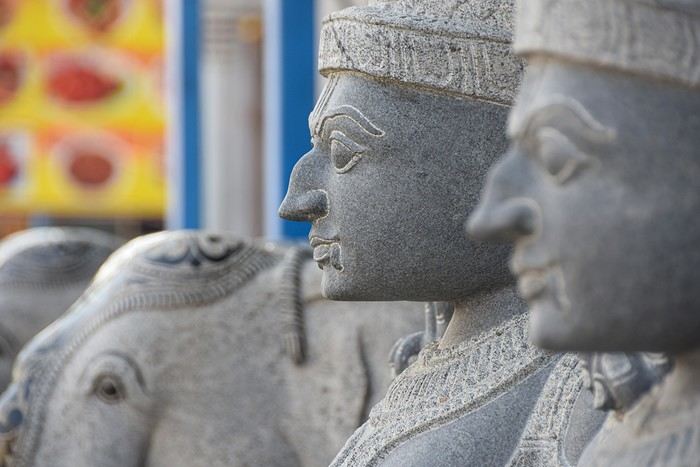
We're off! After exploring the north, the four friends have now discovered the south. We’re excited to share this new travel journal, dedicated to our little group and our strong friendship, written by Richard and illustrated with Kate’s photos. I’ll chime in from time to time with practical tips.
First of all, a big thank you to everyone on VoyageForum who helped us plan this trip. It would’ve been quite different if we’d just relied on guidebooks.
The itinerary lasted just over 3 weeks: Mahabalipuram, Pondicherry, Thanjavur, the Chettinad region, Madurai, Munnar, Munroe Island, Cochin, and Chennai. We traveled by train, taxi, and private car with a driver, took a domestic flight, and stayed in guesthouses, Airbnb apartments, and hotels. For each of us, including flights, the total budget barely reached 2000 €, and we didn’t hold back—knowing we avoid resorts and love street food and small Indian restaurants.
Two weeks in the Cyclades
The Cyclades attract a lot (a LOT) of people in the summer, and it's not always clear how to visit them.
For our first family trip to the Cyclades (in 2016), we took a route that seems great for discovering the islands: - Flight Paris / Santorini (Transavia) - 3 nights in Santorini - Ferry Santorini / Milos - 4 nights in Milos - Ferry Milos / Sifnos - 4 nights in Sifnos - Ferry Sifnos / Athens - 3 nights in Athens - Flight Athens / Paris
Santorini is the postcard image of the Cyclades... but not really any beaches for kids. My tip: you should stay in Oia because it's really "the spot" on the island. We chose the Pension "The Flower": simple but very well located and with a pool for the kids. Another tip: rent a car as soon as you arrive at the airport because the island is vast.
Our favorite moment: Oia around 6:00 AM, a paradise for photographers. It’s nothing like the daytime, or especially the evening when all the crowds rush in for the famous "sunset." Another favorite, the hike between Fira and Oia, 10 km, 4 hours of walking with extraordinary views (especially around Imerovigli). For the rest, we toured the island—it’s nice but nothing to marvel at.
After a 2.5-hour ferry ride, we arrived in Milos, home of the famous Venus de Milo. This is our favorite island in the Cyclades (though we haven’t seen them all!). In the port of Adamantas, we stayed at the Liogerma Hotel (very well located near the port).
Our favorite experience: the boat tour around the island (and swimming at Kleftiko). Absolutely a must-do, but book it as soon as you arrive because it’s often fully booked for the next two days.
I also recommend renting a car to explore this island. Other favorites: the incredible fishing village of Klima with its colorful boat houses, the rocks of Sarakiniko (best in the morning sun), the beach at Tsigrado (with its ladder access through the rocks), Plaka, the caves of Papafragas, the waters of Firopotamos, and Fyriplaka...
Just a 1-hour ferry ride, and you’re already in Sifnos. A small island with a bus network that means you don’t need to rent a vehicle. We stayed in Kamares (Hotel Afroditi).
Sifnos has charming villages typical of the Cyclades (Kastro, Apollonia), beautiful chapels (Chrisopigi, the Church of the Seven Martyrs...), and lovely beaches (Cherronissos, Platis Galios...). Our favorite: hiking around Faros and the Chrisopigi Monastery.
A 3-hour ferry ride takes you back to the port of Piraeus to visit Athens: the Acropolis, its museums, and the Plaka district. A little favorite of ours: the Archaeological Museum, slightly off the tourist trail... With this route, you’ll see the diversity of the Cyclades and Athens without wasting too much time on ferries.
PS: We also did the loop Mykonos / Paros / Amorgos / Mykonos, but that’s a good idea... for a second trip ;)
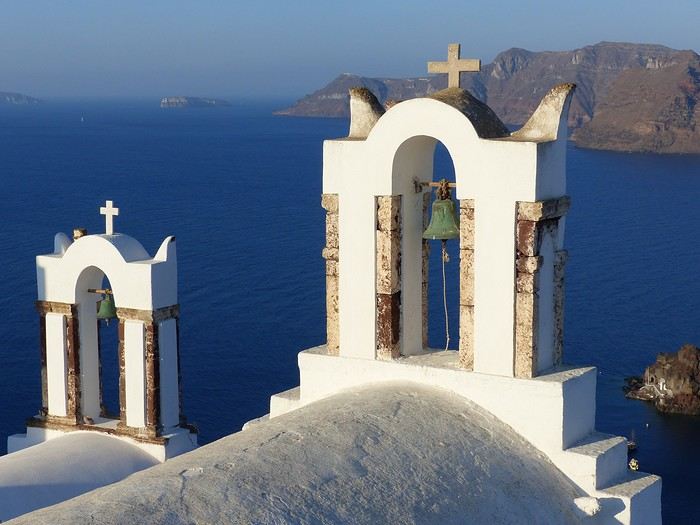
For our first family trip to the Cyclades (in 2016), we took a route that seems great for discovering the islands: - Flight Paris / Santorini (Transavia) - 3 nights in Santorini - Ferry Santorini / Milos - 4 nights in Milos - Ferry Milos / Sifnos - 4 nights in Sifnos - Ferry Sifnos / Athens - 3 nights in Athens - Flight Athens / Paris
Santorini is the postcard image of the Cyclades... but not really any beaches for kids. My tip: you should stay in Oia because it's really "the spot" on the island. We chose the Pension "The Flower": simple but very well located and with a pool for the kids. Another tip: rent a car as soon as you arrive at the airport because the island is vast.
Our favorite moment: Oia around 6:00 AM, a paradise for photographers. It’s nothing like the daytime, or especially the evening when all the crowds rush in for the famous "sunset." Another favorite, the hike between Fira and Oia, 10 km, 4 hours of walking with extraordinary views (especially around Imerovigli). For the rest, we toured the island—it’s nice but nothing to marvel at.
After a 2.5-hour ferry ride, we arrived in Milos, home of the famous Venus de Milo. This is our favorite island in the Cyclades (though we haven’t seen them all!). In the port of Adamantas, we stayed at the Liogerma Hotel (very well located near the port).
Our favorite experience: the boat tour around the island (and swimming at Kleftiko). Absolutely a must-do, but book it as soon as you arrive because it’s often fully booked for the next two days.
I also recommend renting a car to explore this island. Other favorites: the incredible fishing village of Klima with its colorful boat houses, the rocks of Sarakiniko (best in the morning sun), the beach at Tsigrado (with its ladder access through the rocks), Plaka, the caves of Papafragas, the waters of Firopotamos, and Fyriplaka...
Just a 1-hour ferry ride, and you’re already in Sifnos. A small island with a bus network that means you don’t need to rent a vehicle. We stayed in Kamares (Hotel Afroditi).
Sifnos has charming villages typical of the Cyclades (Kastro, Apollonia), beautiful chapels (Chrisopigi, the Church of the Seven Martyrs...), and lovely beaches (Cherronissos, Platis Galios...). Our favorite: hiking around Faros and the Chrisopigi Monastery.
A 3-hour ferry ride takes you back to the port of Piraeus to visit Athens: the Acropolis, its museums, and the Plaka district. A little favorite of ours: the Archaeological Museum, slightly off the tourist trail... With this route, you’ll see the diversity of the Cyclades and Athens without wasting too much time on ferries.
PS: We also did the loop Mykonos / Paros / Amorgos / Mykonos, but that’s a good idea... for a second trip ;)
Has overtourism changed your relationship with travel?
Good evening! 🙂,
I’m paraphrasing the title of discussions that were popping up back in 2020. Back then, the obstacles were travel restrictions and all sorts of often very arbitrary "health" rules. Today, it feels like we’re facing an epidemic of wanderlust that’s piling up in certain places—places that keep expanding. Places that end up feeling like wallpaper, just part of the scenery, more or less exotic, since the people, the dominant crowd, are always the same. And they’re especially overwhelming in limited spaces like villages, museums, and other remarkable sites.
Personally, it tends to send my cortisol levels through the roof, leading to desperate attempts to salvage what I can (the stress when I saw a travel journal about eastern Crete—then, phew, at least this little piece of old Greece hasn’t been exposed yet. Maybe it’ll survive a little longer). So, no more weekends in beautiful European cities. So, adjusted visiting hours, but that’s not always enough (I’ll still have to say goodbye to Caravaggio’s *Madeleine* since I can’t have a quiet moment with her anymore, even late in the day). So, outright giving up: I’ll never see Machu Picchu. Too late. So, shifting travel dates to minimize the damage (Uzbekistan was originally planned for Easter—with April 24th and May 1st to limit vacation days—but the anxiety of tourist crowds during that mild climate period, with few days off, led me to reschedule the trip for winter. Short days and possible rain are a thousand times better).
Avoiding crowds has become a fundamental criterion for choosing destinations and timing.
And you? Are you able to tune out this identical crowd everywhere, or has it changed your relationship with travel/tourism?
Catherine
I’m paraphrasing the title of discussions that were popping up back in 2020. Back then, the obstacles were travel restrictions and all sorts of often very arbitrary "health" rules. Today, it feels like we’re facing an epidemic of wanderlust that’s piling up in certain places—places that keep expanding. Places that end up feeling like wallpaper, just part of the scenery, more or less exotic, since the people, the dominant crowd, are always the same. And they’re especially overwhelming in limited spaces like villages, museums, and other remarkable sites.
Personally, it tends to send my cortisol levels through the roof, leading to desperate attempts to salvage what I can (the stress when I saw a travel journal about eastern Crete—then, phew, at least this little piece of old Greece hasn’t been exposed yet. Maybe it’ll survive a little longer). So, no more weekends in beautiful European cities. So, adjusted visiting hours, but that’s not always enough (I’ll still have to say goodbye to Caravaggio’s *Madeleine* since I can’t have a quiet moment with her anymore, even late in the day). So, outright giving up: I’ll never see Machu Picchu. Too late. So, shifting travel dates to minimize the damage (Uzbekistan was originally planned for Easter—with April 24th and May 1st to limit vacation days—but the anxiety of tourist crowds during that mild climate period, with few days off, led me to reschedule the trip for winter. Short days and possible rain are a thousand times better).
Avoiding crowds has become a fundamental criterion for choosing destinations and timing.
And you? Are you able to tune out this identical crowd everywhere, or has it changed your relationship with travel/tourism?
Catherine
Eastern Crete in September 2024
Travel journal in Eastern Crete from September 8th to 29th, 2024
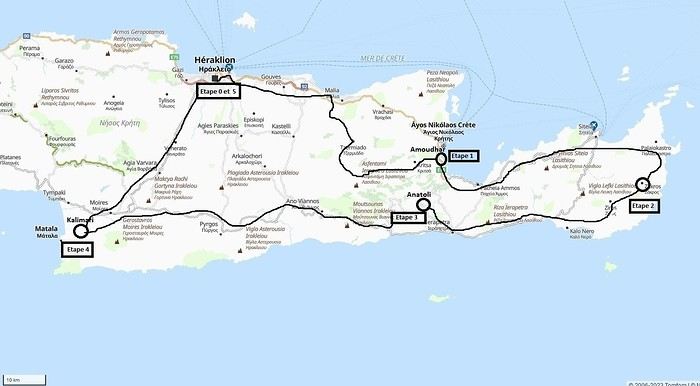 Our 21-day itinerary
Sunday, 08/09: Once again—and this is the eighth time—we’re setting off, the four of us: Patrick, Michelle, Jacques, and Monique, for the Greek islands. This time, we’ve chosen Crete. No need to wake up at 3 or 4 a.m. to reach Basel-Mulhouse Airport at dawn to catch the first flight to Greece at 6 a.m.! Given the prohibitive prices charged by EasyJet, we found flights that were half the price from Zurich Airport, which is accessible in 3 hours by train from Colmar. Pierre-Paul drives all four of us to Colmar train station, where we take the train to Basel and then, 20 minutes later, the direct train to Zurich Airport. After wandering around the airport, we go for a coffee at 6 € each! We’re in Switzerland, after all. The other dining areas all have vending machines for selecting and paying for meals—soon, there won’t be anyone left to serve you! After a short wait, we take off at 7:45 p.m. (20 minutes late) in an Aegean Airbus A321. Free in-flight meal service isn’t bad either! We land in Heraklion around 11:15 p.m. We pick up our rental car (a red Seat Ibiza) at the airport and head straight to our apartment, located 2 km from the city center. Thanks to the GPS, we find it quickly. It’s a beautiful, fully renovated apartment with all the comforts and well-equipped. On the table, there’s wine, bottles of water, jam, coffee, etc. Given the late hour, we won’t stay up long.
Monday, 09/09: To enhance our breakfast, Michelle and Monique set off to find a bakery nearby. They return with croissants and donuts—yum... Then we head to the west coast. The highway follows the coastline, but we prefer taking the old road to Malia, our first stop. We visit the major archaeological site of this Minoan city under the hot sun. The site covers a vast area, but the ruins aren’t very evocative except for a few beautiful amphorae scattered around. The explanations in a small house at the entrance are interesting and help us better understand the organization of the ancient city with its different districts. From there, we head toward the nearby mountains to see the thousand-year-old plane tree in the village of Krasi. We take the opportunity to enjoy an excellent lunch of moussaka and delicious gemista at the Krassopsychia taverna in the village center. Pleasant surprise: the prices are still reasonable, with a bill of 70 € for four, including wine and water. The friendly tradition of complimentary dessert and glasses of raki continues—great! We’ve set the bar high right away! Let’s hope the rest lives up to it! On the way back toward the Lassithi Plateau, we stop at the Kardiotisa Monastery perched high on the mountain to enjoy a magnificent view of the entire region. Just a little further, we arrive at the Lassithi Plateau: the presence of small windmills used to pump water from the ground is the typical feature of this plateau. We complete a full loop around the plateau, passing by numerous orchards and vegetable gardens that occupy the entire space. At the end of the plateau, we once again cross mountain passes via winding roads that bring us near Agios Nikolaos. Our apartment is located about ten kilometers further south in Amoudhara. The owner, who was notified, waits for us and shows us her superb apartment, whose large terrace overlooks the entire Mirabello Bay. She then gives us valuable information about the different beaches in the area. Dinner will be frugal, given our hearty lunch in Krasi!
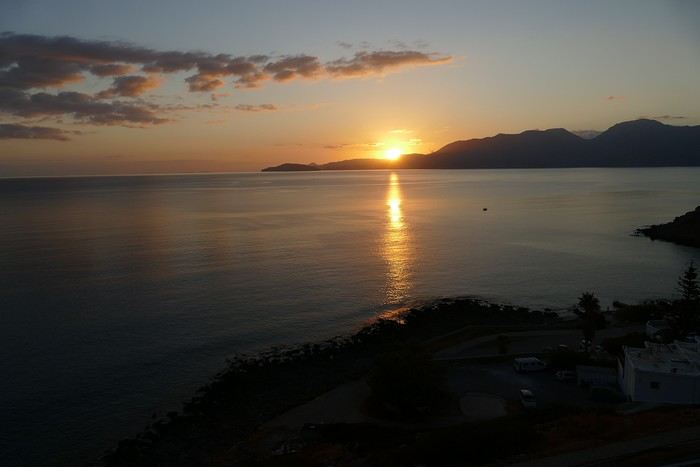 Sunset over Mirabello Bay
Tuesday, 10/09: A bit of a gray sky when we wake up around 8 a.m., but the sun will soon triumph over the scattered clouds. For our first swim, we opt for Voulisma Beach, even though our host warned us it was a bit “crowdy.” That’s understandable given the beautiful emerald color of the sea and the lovely curve of the beach. To avoid the big crowds, we move toward the eastern part of the beach, accessible via a steep staircase. The water is very warm, and this first dip is very pleasant. Before returning to the apartment, we stop at the bakery to buy spinach pies, essential ingredients to accompany our Greek salad for lunch. Of course, everything will be washed down with ouzo, which will remain our favorite drink for the next three weeks—but in moderation!!! A nap is in order after all that effort. In the late afternoon, we drive to Agios Nikolaos, the main seaside resort in Crete. We’re not too enthusiastic about visiting this mass-tourism resort, but the center of Agios, concentrated around the small inner harbor, is pleasant to see despite the plethora of shops and restaurants. We dine a little outside the harbor in the shaded courtyard of the Avli taverna: the oven-baked lamb, squid with spinach, and cuttlefish ink orzo pasta are all highly appreciated. We still stay under a 75 € bill for four.
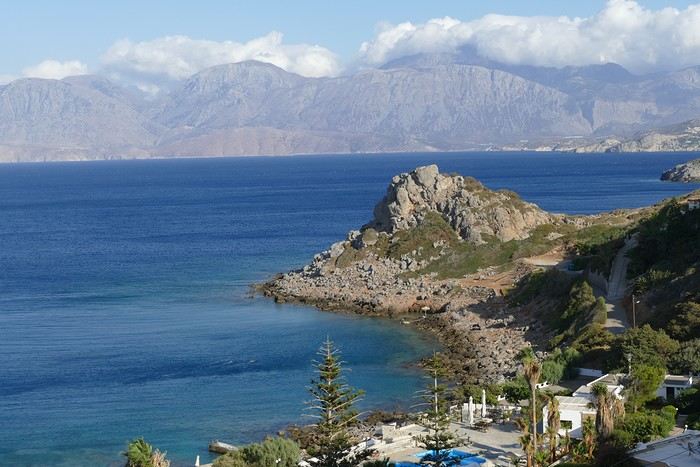 Mirabello Bay seen from our terrace
Wednesday, 11/09: At 8 a.m., the terrace is already bathed in sunlight, and it’s already quite hot. The small parasol barely gives us enough shade, but we’re not complaining! For our second swim, we head to a tiny beach recommended by our host, just 3 minutes by car from our place. The path leading to it is very discreet, and we don’t find it right away! It’s a small sandy cove with a few welcome tamarisk trees for shade. When we arrive, there are two swimmers, and there won’t be more than five or six in the morning. After lunch and a nap, we head to the beautiful village of Kritsa, just a few kilometers away. It’s too late to visit the beautiful church of Kera Panagia, which is already closed. We settle for the exterior, which is worth a look. The weather is clouding over, and big clouds are gathering. Upon arriving in Kritsa, a heavy shower forces us to take shelter in the Platanos taverna in the village center, and since it’s nearly 7 p.m., we decide to stay and dine there. Good choice—excellent meze: croquettes and stuffed zucchini flowers, gigantes beans, grilled tomatoes and feta, and pancetta as the main dish. The rain stops just as we decide to head back.
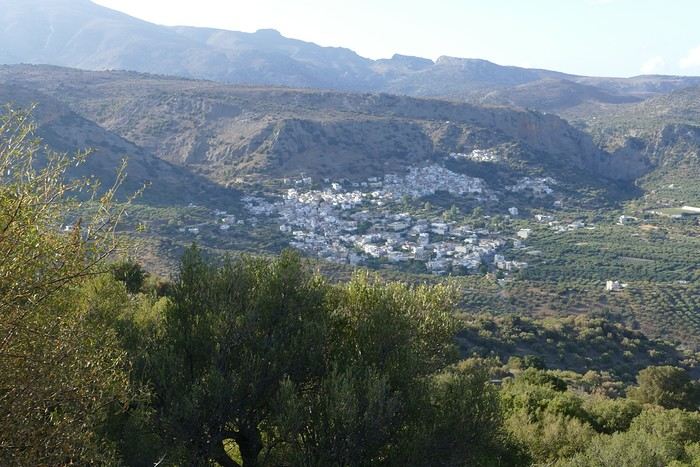 Village of Kritsa
Thursday, 12/09: Our terrace faces east, so we get to watch the sunrise around 7 a.m.—it’s truly a beautiful sight we never tire of. Around 9 a.m., we head to the village of Plaka, where boats depart for the island of Spinalonga, located north of Agios Nikolaos. We board the first boat, which sets sail at 10 a.m., and we’re not alone—the boat is practically full. After 10 minutes, we land on the island at the same time as several other boats from Elounda or Agios. Needless to say, there are already quite a few people walking through the streets of the leper village. The visit remains interesting and moving as we read the explanatory panels recounting the island’s history under Byzantine and then Turkish rule, followed by its transformation into a leper colony. As soon as we climb toward the top of the island via more or less maintained paths, there’s almost no one left. The 360° view from up there is stunning.
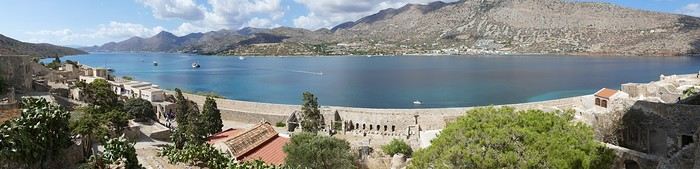
Spinalonga Island
The heat is now unbearable, and we can’t wait to get back home to have lunch on our terrace and rest. In the late afternoon, we go grocery shopping at the AB supermarket at the entrance of Agios. We had spotted another nice restaurant in our guide, but unfortunately, there’s a different one at the indicated location that doesn’t inspire us. So, we return to the Avli taverna for another dinner just as good as the first.
Friday, 13/09: We repeat yesterday’s successful program: a swim in our little cove, lunch on the terrace, a nap, and then, in the late afternoon, we discover another nearby village, Kroustas, nestled in the olive groves near Kritsa. Much less touristy than Kritsa, it’s mostly inhabited by locals, especially the elderly who are enjoying the cool air on their chairs—if you can call it cool given the still-high temperatures in the late afternoon! We then return to visit Kritsa, which we hadn’t been able to explore due to the rain. Dinner at a taverna in the village center at a very reasonable price.
Saturday, 14/09: Today, we move to our new base further east. We start with a high viewpoint at the Faneromeni Monastery, which overlooks Mirabello Bay. The monastery itself is of little interest as it’s under renovation with excessive concrete work. We continue to the village of Kavoussi to see another exceptional tree after a few kilometers on a dusty, bumpy track. It’s an olive tree said to be about 3,200 years old—impressive, and the countryside is very beautiful. It’s time to find a place for lunch. We find one in the charming little port of Mohlos, where a few tavernas surround a very nice small beach. Our choice falls on the Bogazzi taverna, where we enjoy fried fish. To reach our new base in Zakros, we still have to drive through the mountains before reaching Sitia, Paleokastro, and finally Zakros. The region is beautiful, with olive groves and rows of wind turbines taking advantage of the strong wind near the northern tip of the island. In Zakros, we’re greeted by our very friendly host. Here too, we have all the comforts and a beautiful terrace overlooking the village. The apartment has reversible air conditioners, but the overly simple instructions leave us puzzled. Thinking we’ve set it correctly, we realize a little too late that it’s blowing hot air over 30°C! After numerous attempts and testing several confusing programs, we finally succeed! Dinner on our new terrace.
Sunday, 15/09: This morning, we get up early to hike in the “Gorge of the Dead” while it’s still cool. The sky is blue as usual! We park in the nearest parking lot and start our descent via a beautiful path winding through the olive groves. A little further on, the landscape opens up, and the path, now a stony trail, begins the descent to the dry riverbed. On either side of the riverbed rise beautiful reddish cliffs.
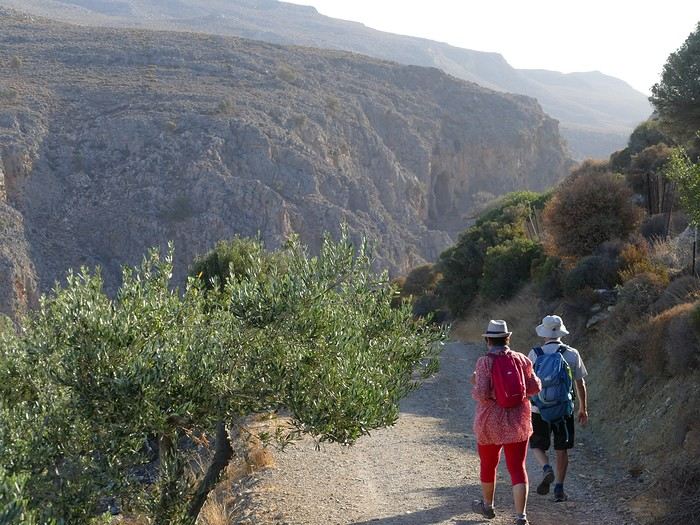
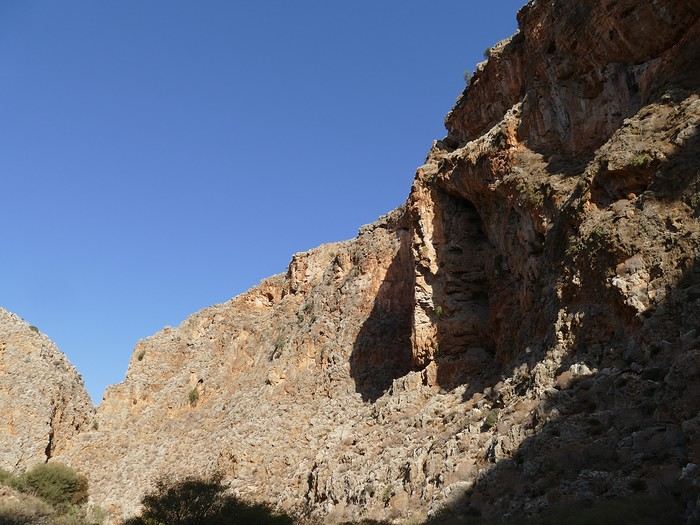
Gorge of the Dead
The trail winds its way through this narrow gorge with difficulty. It was in the many caves visible halfway up the slope that the Minoans buried their dead, hence the name “Gorge of the Dead.” The gorge opens onto a beautiful small pebble beach. A swim is welcome after this hike that made us sweat. The hike took us 1 hour and 25 minutes, and a little less on the way back. Meanwhile, Monique did some shopping and prepared an excellent lunch. In the late afternoon, we go down to dine at Platanakis, a taverna in the small village of Kato Zakros.
Monday, 16/09: This morning, we explore the northern part of the east coast near Palekastro. We start with a dip at the beautiful Hionia Beach near Palekastro. The water is still just as nice, but a light breeze is blowing—not enough to spoil our fun! Seeing all the wind turbines lining the ridges, it’s no surprise.
 Grocery shopping in Palekastro and return to Zakros. A little rain in the late afternoon and an excellent dinner at Iannis Mitsakakis’ Taverna in Adravastis. These are the kind of small tavernas we love—unpretentious, a few tables on a terrace, a warm welcome, a short menu guaranteeing freshness, tasty dishes prepared by the server’s mom, and a light bill. What more could you ask for!
Tuesday, 17/09: We head back toward Palekastro to do some shopping, but it’s also the road to the Toplou Monastery. There, we see a collection of magnificent icons dating from the 15th to the 20th century. We can also admire drawings of Orthodox religious architecture. We continue toward the Mavros Akrotiri headland to enjoy the view of the sea and rocky capes. On the way back to our place, we make a small detour to see the famous Vai palm grove. Meh... As for Vai Beach, it’s filled with paid umbrellas and sunbeds, and there are so many people that we flee. Plus, having to pay for parking is another reason to snub this trendy beach. We prefer our Hionia Beach, which we already appreciated the other day. In the late afternoon, Pat and I start the trail that begins at Kato Zakros Beach heading south. The poorly marked path crosses a plateau of sharp limestone. The paint and cairn markings are no longer very visible, and with dusk approaching, we turn back toward Kato Zakros. Dinner at the Platanakis taverna—less good than last time.
Wednesday, 18/09: To avoid the scorching sun, Pat, Mimi, and I get up earlier than usual to hike the Hohlakies Gorge. At this early hour, the sky is quite cloudy, and it’s drizzling. When we arrive in the village of Hohlakies, we park in front of a small chapel, the start of the hike. The sky is now completely clear. The trail starts among the olive groves, then after passing through a gate, we descend into the gorge filled with large rocks. We’re alone in the world, and the landscape is magnificent. A few wild goats clinging to the cliff watch us from above. After 1 hour and 15 minutes, we emerge onto the wonderful Karoumès Beach. A pleasant swim, then back to civilization! A walk in the late afternoon in Zakros to discover the beautiful springs route. Dinner in Adravastis.
Thursday, 19/09: Another move: Before heading to our next stop, we make a detour to see the beautiful Keratokampos Beach and can’t resist a swim in the still-warm, clear water. We continue our journey via Ziros, then reach the south coast and have lunch at the Stephi taverna in Ferma—excellent meal! The south coast is quite urbanized and has much less charm than the east coast we’ve just left! The numerous plastic greenhouses are partly to blame. We stop for groceries in Ierapetra. Around 3 p.m., we arrive at our destination in the small perched village of Anatoli. Our lodging is at the top of the village, and from the path leading to it, we have a magnificent view of the coastal plain, unfortunately overloaded with plastic greenhouses. It reminds us of the landscapes of El Ejido in Andalusia.
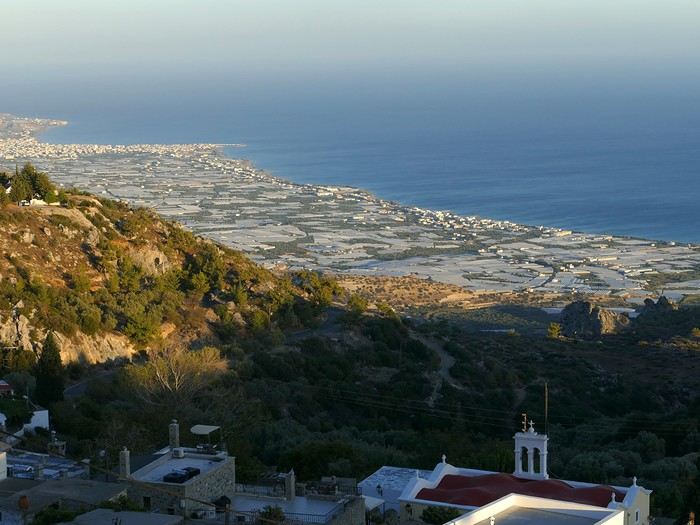 View of the Ierapetra coast from Anatoli
Friday, 20/09: A walk and discovery of the hamlet of Anatoli. There are few services—a tiny grocery store, a taverna, and that’s it. Fortunately, the traveling baker arrives and honks. We take the opportunity to buy fresh bread. Leaving the village, we take a path that should lead us to the hamlet of Drygies. The landscape is beautiful. We walk through a lovely pine forest before arriving at the hamlet. The path continues to a taverna that’s closed today, with a superb terrace overlooking the coast. Luckily, the owner arrives and informs us that the taverna will be open next Sunday and that we can enjoy barbecued meat. Noted! We head back to Anatoli via the small paved road with, fortunately, very limited traffic. Lunch on our terrace, then a dip in our private pool! The water is noticeably cooler than at the beach. Dinner at the village taverna: there’s only one menu—meze starters, souvlaki, water, wine, and bread—all for 35 €! We think we’re dreaming—was there a mistake? No.
Saturday, 21/09: We discover the beach of the village of Myrtos, a small seaside resort that’s quite touristy but on a human scale. We swim in the western part of the beach, and once again, we’re alone in the water. The best part: warm water and tamarisk trees for welcome shade. There’s even a shower to rinse off! In the late afternoon, Pat and I decide to go for a hike in the Selakano pine forest. To get there, we take a narrow, winding, and poorly paved road after the village of Christos. Plus, at this altitude, we encounter clouds clinging to the mountain, so it’s drizzling, and visibility is reduced. We decide to turn back and return to Anatoli. As compensation, we take the path that passes in front of the lodging and leads us to the Timios Stavros chapel, which crowns the summit of the nearby mountain. We arrive at the summit just in time for the sunset at 7 p.m. Breathtaking 360° panorama and magnificent colors!
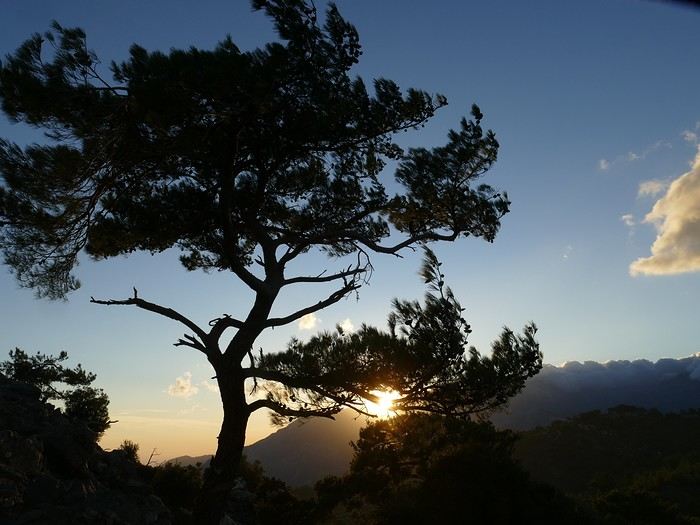 Sunset from Anatoli
Sunday, 22/09: This morning, Pat, Mimi, and I go for a hike in the Sarakina Gorge, located about 12 km from Anatoli via a beautiful road winding through irrigated olive groves. We park in the small parking lot before the trail. At the start, the path follows a levada (small irrigation canal) and quickly enters a very narrow gorge flanked by high cliffs. The riverbed is cluttered with huge rocks blocking the passage. No matter—in the technical sections, ropes or ladders allow us to overcome these obstacles with a bit of skill. You can imagine how quickly the riverbed must rise during a storm, given the narrowness of the gorge!
We progress slowly through this magnificent and impressive rocky chaos. At the exit of the gorge, we take another return path that partly follows the paved road. Back in Anatoli, we go to lunch at the Drygies taverna. We sit at the edge of the terrace under a huge tree that covers almost the entire terrace and order grilled lamb dishes prepared according to the ancient “antikristo” method.
Monday, 23/09: Departure for our last stop before Heraklion. We thought about swimming at Tertsa Beach, but it turns out to be less pleasant than expected, with pebbles and an uneven rocky plateau. So, we return to Myrtos Beach, which we know well and suits us perfectly. We head west, leaving the coast a bit. Around 3:30 p.m., we arrive at our destination in the village of Kamilari, near the famous Matala spot. We’ve rented a beautiful, modern, well-equipped apartment with a lovely shaded terrace. The owner is very friendly and explains everything necessary for a good stay. We explore the quite touristy village with its few tavernas, all full of tourists, mostly Germans.
Tuesday, 24/09: Visit to the village of Sivas, well restored thanks to the Germans, who have invested a lot here. We take the opportunity to scout out “friendly” tavernas, then go for a swim at Kalamaki Beach. Apart from a small sandy access, you have to enter the water via a chaotic limestone plateau—proof of this is that Monique trips slightly when entering the water. A group of very unfriendly German women blocks the sandy passage and doesn’t hesitate to push swimmers they deem too close. Back home, lunch, and a nap. In the late afternoon, we drive to visit the nearby Phaistos site. We benefit from very beautiful lighting. From the elevated site, we overlook the Messara Plain with a beautiful view of the olive grove checkerboards highlighted by the late afternoon sun. The site itself is quite vast, but to appreciate it, it’s better to read the explanatory panels placed throughout the different quarters. At this hour, the site is almost empty, and the beautiful light adds charm to the visit.
Wednesday, 25/09: Departure for the village of Matala, which doesn’t interest us in itself, having been there during the “hippie” era in 1976. However, going to Red Beach, only accessible by taking a path overlooking this area, appeals to us much more. We park in the large parking lot just outside the village and start our climb, which brings us to a pass from where we can admire this beautiful red-sand beach framed by beautiful cliffs plunging into the sea. The weather is magnificent, and at this early hour, there aren’t many people yet. We swim in the free part located near the cliff on the right when arriving at the beach. The sea is like glass, warm, and without a single ripple—a real treat! After half an hour, we turn back, and now there are many people rushing on this path, not at all made for feet in sandals or flip-flops, yet many vacationers venture out like this! Matala lives up to its image—a trendy place, full of shops, bars, and restaurants. You could be in any seaside resort with a standard global urbanism, lacking particular charm. Back home. In the late afternoon, a walk through the olive groves surrounding Kamilari, then dinner at Evangelina’s, who runs the Minoan Parassies taverna in the middle of the olive groves. Evangelina is quite a character: we came to reserve a table for 8 p.m. when it was only 7 p.m., but since we lingered near her restaurant, she prepares a table for us and urges us to sit down! And there she takes our order, and a little later, the meze arrive, followed by the main dishes. We finish this good dinner with several generous glasses of raki, accompanied by Evangelina’s encouragements, repeating “poya poya bravo bravo” in a loop. We’re in great shape too, by the way! We return in the middle of the night, on foot, fortunately, with the path vaguely lit by our phones...
Thursday, 26/09: This morning, we discover a new beach, Kommos Beach, not far from Kamilari either. It’s a long sandy beach, a small part of which is dedicated to paid umbrellas and sunbeds, and the rest is free. We spot a tamarisk tree to take shelter from the still-hot sun, and once again, we enjoy clear, warm water. The few swimmers spread out easily over nearly 500 meters of beach. In the late afternoon, Pat and I go to admire the sunset from the hill near our lodging. The hill, covered with olive trees, is threatened by a planned housing development of large cubic villas—trends dictate. Concrete never stops...
Friday, 27/09: We thought about leaving the car at the Odiyitria Monastery, the end of the paved road, but since the track descending to the cave remains drivable, we park 3 km further at the junction of the track leading to Kali Limenes Beach. We still have to walk for half an hour on a less drivable track, and then we’re at the entrance of the Farango Gorge. It’s a beautiful, easy hike since we follow the dry pebble riverbed. Before arriving at the beach, there’s a very beautiful small chapel sheltered under a large cliff, beautifully lit at this early hour.
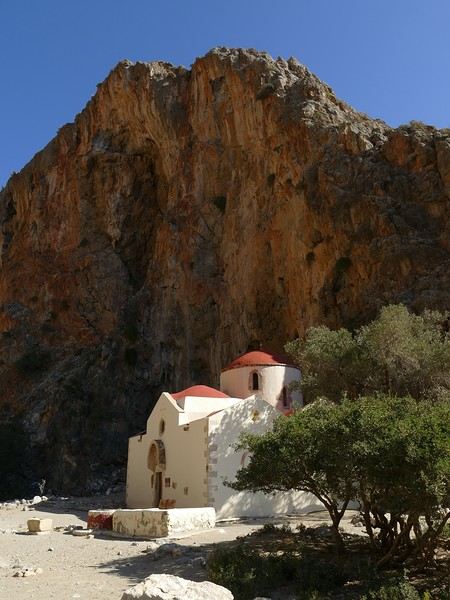
Agio Farango Chapel
A few climbers are scaling the cliff, and about ten swimmers are enjoying the sea. Return to the car under the hot sun. In the late afternoon, we all return to visit the interesting Odiyitria Monastery. Last swim at Kommos Beach and an excellent dinner at the Sigelakis taverna in Sivas.
Saturday, 28/09: There’s an end-of-vacation atmosphere... We pack our bags and head north. A short stop to see the village of Vorri, and a little over an hour later, we arrive in the big city of Heraklion. Since it’s too early to check into the apartment, we park in the city center to visit the famous archaeological museum. It’s indeed a must-see highlight of our stay in Crete. All four of us are amazed by the quantity and quality of the objects presented from the Minoan civilization. After more than 2 hours, we come out without having seen everything, but we’re a bit overwhelmed by all these wonders. Lunch at a nice little taverna very close to the Titus Church. We go to take possession of our apartment—the same as on the way there, still just as satisfying. In the late afternoon, I go alone for a walk in the historic district of the city, passing by the Morosini Fountain, which is bustling with people—some seated at café terraces, others standing and chatting. There’s a lively atmosphere here. A little further on are the Venetian loggia and the Agios Titos Church. I walk down to the old Venetian port to stroll along the jetty and admire the fortifications under beautiful late-afternoon lighting, then return to the apartment. Dinner near our place at Kiriakis, a “chic” restaurant but with very reasonable prices and excellent cuisine.
Sunday, 29/09: Wake-up at 3:30 a.m., quick coffee, and drive to the nearby airport. We leave the car in the parking lot. Already a lot of people at this early hour. Since we don’t have checked luggage, we go straight to security, which goes fairly quickly, then it’s waiting time and takeoff on time in an Airbus A321 for a 45-minute flight to Athens. We take off again in another Airbus A321 with a 50-minute delay to arrive in Zurich at 11:10 a.m. local time. Then we have to take the train to Basel and then the one to Colmar. With fewer Sunday services, we won’t arrive in Colmar until around 4 p.m.
Conclusion All four of us returned very satisfied with this stay in Crete for several reasons: - We found superb beaches with clear, warm water and often very few vacationers. - The few hikes we did were magnificent, especially those where the trails went through gorges leading to deserted beaches. - We greatly appreciated Cretan gastronomy—there were so few disappointments that we can count them on one hand. - All the accommodations we booked turned out to be superb, with the icing on the cake being the very friendly welcome from our hosts. - Generally, contacts with Cretans were always very warm despite the language barrier—we speak a little Greek. - We also appreciated the diversity of landscapes in this eastern part of Crete, with plateaus and mountains with splendid rugged reliefs.
Note: The photo album is available by clicking on this link: https://photos.app.goo.gl/hfdjQndA5eXkL5k7 Captions are only visible per photo by clicking on the circled “i” in the top right. Budget: approximately 3,300 € per couple for 21 days, including train and flights Budget details per couple: - Flight Zurich-Heraklion: 440 € - Trains Colmar-Basel-Zurich round trip for 4: 442.40 € (221 € per couple) - Accommodation: 2,431 € / 21 = 115.80 € per night for 4 (1,216 € per couple) - Car rental for 21 days: 684 € + 145 € fuel (1,150 km) (414 € per couple) - Restaurants, food, etc.: 1,009 €
Our 21-day itinerarySunday, 08/09: Once again—and this is the eighth time—we’re setting off, the four of us: Patrick, Michelle, Jacques, and Monique, for the Greek islands. This time, we’ve chosen Crete. No need to wake up at 3 or 4 a.m. to reach Basel-Mulhouse Airport at dawn to catch the first flight to Greece at 6 a.m.! Given the prohibitive prices charged by EasyJet, we found flights that were half the price from Zurich Airport, which is accessible in 3 hours by train from Colmar. Pierre-Paul drives all four of us to Colmar train station, where we take the train to Basel and then, 20 minutes later, the direct train to Zurich Airport. After wandering around the airport, we go for a coffee at 6 € each! We’re in Switzerland, after all. The other dining areas all have vending machines for selecting and paying for meals—soon, there won’t be anyone left to serve you! After a short wait, we take off at 7:45 p.m. (20 minutes late) in an Aegean Airbus A321. Free in-flight meal service isn’t bad either! We land in Heraklion around 11:15 p.m. We pick up our rental car (a red Seat Ibiza) at the airport and head straight to our apartment, located 2 km from the city center. Thanks to the GPS, we find it quickly. It’s a beautiful, fully renovated apartment with all the comforts and well-equipped. On the table, there’s wine, bottles of water, jam, coffee, etc. Given the late hour, we won’t stay up long.
Monday, 09/09: To enhance our breakfast, Michelle and Monique set off to find a bakery nearby. They return with croissants and donuts—yum... Then we head to the west coast. The highway follows the coastline, but we prefer taking the old road to Malia, our first stop. We visit the major archaeological site of this Minoan city under the hot sun. The site covers a vast area, but the ruins aren’t very evocative except for a few beautiful amphorae scattered around. The explanations in a small house at the entrance are interesting and help us better understand the organization of the ancient city with its different districts. From there, we head toward the nearby mountains to see the thousand-year-old plane tree in the village of Krasi. We take the opportunity to enjoy an excellent lunch of moussaka and delicious gemista at the Krassopsychia taverna in the village center. Pleasant surprise: the prices are still reasonable, with a bill of 70 € for four, including wine and water. The friendly tradition of complimentary dessert and glasses of raki continues—great! We’ve set the bar high right away! Let’s hope the rest lives up to it! On the way back toward the Lassithi Plateau, we stop at the Kardiotisa Monastery perched high on the mountain to enjoy a magnificent view of the entire region. Just a little further, we arrive at the Lassithi Plateau: the presence of small windmills used to pump water from the ground is the typical feature of this plateau. We complete a full loop around the plateau, passing by numerous orchards and vegetable gardens that occupy the entire space. At the end of the plateau, we once again cross mountain passes via winding roads that bring us near Agios Nikolaos. Our apartment is located about ten kilometers further south in Amoudhara. The owner, who was notified, waits for us and shows us her superb apartment, whose large terrace overlooks the entire Mirabello Bay. She then gives us valuable information about the different beaches in the area. Dinner will be frugal, given our hearty lunch in Krasi!
Sunset over Mirabello BayTuesday, 10/09: A bit of a gray sky when we wake up around 8 a.m., but the sun will soon triumph over the scattered clouds. For our first swim, we opt for Voulisma Beach, even though our host warned us it was a bit “crowdy.” That’s understandable given the beautiful emerald color of the sea and the lovely curve of the beach. To avoid the big crowds, we move toward the eastern part of the beach, accessible via a steep staircase. The water is very warm, and this first dip is very pleasant. Before returning to the apartment, we stop at the bakery to buy spinach pies, essential ingredients to accompany our Greek salad for lunch. Of course, everything will be washed down with ouzo, which will remain our favorite drink for the next three weeks—but in moderation!!! A nap is in order after all that effort. In the late afternoon, we drive to Agios Nikolaos, the main seaside resort in Crete. We’re not too enthusiastic about visiting this mass-tourism resort, but the center of Agios, concentrated around the small inner harbor, is pleasant to see despite the plethora of shops and restaurants. We dine a little outside the harbor in the shaded courtyard of the Avli taverna: the oven-baked lamb, squid with spinach, and cuttlefish ink orzo pasta are all highly appreciated. We still stay under a 75 € bill for four.
Mirabello Bay seen from our terraceWednesday, 11/09: At 8 a.m., the terrace is already bathed in sunlight, and it’s already quite hot. The small parasol barely gives us enough shade, but we’re not complaining! For our second swim, we head to a tiny beach recommended by our host, just 3 minutes by car from our place. The path leading to it is very discreet, and we don’t find it right away! It’s a small sandy cove with a few welcome tamarisk trees for shade. When we arrive, there are two swimmers, and there won’t be more than five or six in the morning. After lunch and a nap, we head to the beautiful village of Kritsa, just a few kilometers away. It’s too late to visit the beautiful church of Kera Panagia, which is already closed. We settle for the exterior, which is worth a look. The weather is clouding over, and big clouds are gathering. Upon arriving in Kritsa, a heavy shower forces us to take shelter in the Platanos taverna in the village center, and since it’s nearly 7 p.m., we decide to stay and dine there. Good choice—excellent meze: croquettes and stuffed zucchini flowers, gigantes beans, grilled tomatoes and feta, and pancetta as the main dish. The rain stops just as we decide to head back.
Village of KritsaThursday, 12/09: Our terrace faces east, so we get to watch the sunrise around 7 a.m.—it’s truly a beautiful sight we never tire of. Around 9 a.m., we head to the village of Plaka, where boats depart for the island of Spinalonga, located north of Agios Nikolaos. We board the first boat, which sets sail at 10 a.m., and we’re not alone—the boat is practically full. After 10 minutes, we land on the island at the same time as several other boats from Elounda or Agios. Needless to say, there are already quite a few people walking through the streets of the leper village. The visit remains interesting and moving as we read the explanatory panels recounting the island’s history under Byzantine and then Turkish rule, followed by its transformation into a leper colony. As soon as we climb toward the top of the island via more or less maintained paths, there’s almost no one left. The 360° view from up there is stunning.
Spinalonga Island
The heat is now unbearable, and we can’t wait to get back home to have lunch on our terrace and rest. In the late afternoon, we go grocery shopping at the AB supermarket at the entrance of Agios. We had spotted another nice restaurant in our guide, but unfortunately, there’s a different one at the indicated location that doesn’t inspire us. So, we return to the Avli taverna for another dinner just as good as the first.
Friday, 13/09: We repeat yesterday’s successful program: a swim in our little cove, lunch on the terrace, a nap, and then, in the late afternoon, we discover another nearby village, Kroustas, nestled in the olive groves near Kritsa. Much less touristy than Kritsa, it’s mostly inhabited by locals, especially the elderly who are enjoying the cool air on their chairs—if you can call it cool given the still-high temperatures in the late afternoon! We then return to visit Kritsa, which we hadn’t been able to explore due to the rain. Dinner at a taverna in the village center at a very reasonable price.
Saturday, 14/09: Today, we move to our new base further east. We start with a high viewpoint at the Faneromeni Monastery, which overlooks Mirabello Bay. The monastery itself is of little interest as it’s under renovation with excessive concrete work. We continue to the village of Kavoussi to see another exceptional tree after a few kilometers on a dusty, bumpy track. It’s an olive tree said to be about 3,200 years old—impressive, and the countryside is very beautiful. It’s time to find a place for lunch. We find one in the charming little port of Mohlos, where a few tavernas surround a very nice small beach. Our choice falls on the Bogazzi taverna, where we enjoy fried fish. To reach our new base in Zakros, we still have to drive through the mountains before reaching Sitia, Paleokastro, and finally Zakros. The region is beautiful, with olive groves and rows of wind turbines taking advantage of the strong wind near the northern tip of the island. In Zakros, we’re greeted by our very friendly host. Here too, we have all the comforts and a beautiful terrace overlooking the village. The apartment has reversible air conditioners, but the overly simple instructions leave us puzzled. Thinking we’ve set it correctly, we realize a little too late that it’s blowing hot air over 30°C! After numerous attempts and testing several confusing programs, we finally succeed! Dinner on our new terrace.
Sunday, 15/09: This morning, we get up early to hike in the “Gorge of the Dead” while it’s still cool. The sky is blue as usual! We park in the nearest parking lot and start our descent via a beautiful path winding through the olive groves. A little further on, the landscape opens up, and the path, now a stony trail, begins the descent to the dry riverbed. On either side of the riverbed rise beautiful reddish cliffs.
Gorge of the Dead
The trail winds its way through this narrow gorge with difficulty. It was in the many caves visible halfway up the slope that the Minoans buried their dead, hence the name “Gorge of the Dead.” The gorge opens onto a beautiful small pebble beach. A swim is welcome after this hike that made us sweat. The hike took us 1 hour and 25 minutes, and a little less on the way back. Meanwhile, Monique did some shopping and prepared an excellent lunch. In the late afternoon, we go down to dine at Platanakis, a taverna in the small village of Kato Zakros.
Monday, 16/09: This morning, we explore the northern part of the east coast near Palekastro. We start with a dip at the beautiful Hionia Beach near Palekastro. The water is still just as nice, but a light breeze is blowing—not enough to spoil our fun! Seeing all the wind turbines lining the ridges, it’s no surprise.
Grocery shopping in Palekastro and return to Zakros. A little rain in the late afternoon and an excellent dinner at Iannis Mitsakakis’ Taverna in Adravastis. These are the kind of small tavernas we love—unpretentious, a few tables on a terrace, a warm welcome, a short menu guaranteeing freshness, tasty dishes prepared by the server’s mom, and a light bill. What more could you ask for!Tuesday, 17/09: We head back toward Palekastro to do some shopping, but it’s also the road to the Toplou Monastery. There, we see a collection of magnificent icons dating from the 15th to the 20th century. We can also admire drawings of Orthodox religious architecture. We continue toward the Mavros Akrotiri headland to enjoy the view of the sea and rocky capes. On the way back to our place, we make a small detour to see the famous Vai palm grove. Meh... As for Vai Beach, it’s filled with paid umbrellas and sunbeds, and there are so many people that we flee. Plus, having to pay for parking is another reason to snub this trendy beach. We prefer our Hionia Beach, which we already appreciated the other day. In the late afternoon, Pat and I start the trail that begins at Kato Zakros Beach heading south. The poorly marked path crosses a plateau of sharp limestone. The paint and cairn markings are no longer very visible, and with dusk approaching, we turn back toward Kato Zakros. Dinner at the Platanakis taverna—less good than last time.
Wednesday, 18/09: To avoid the scorching sun, Pat, Mimi, and I get up earlier than usual to hike the Hohlakies Gorge. At this early hour, the sky is quite cloudy, and it’s drizzling. When we arrive in the village of Hohlakies, we park in front of a small chapel, the start of the hike. The sky is now completely clear. The trail starts among the olive groves, then after passing through a gate, we descend into the gorge filled with large rocks. We’re alone in the world, and the landscape is magnificent. A few wild goats clinging to the cliff watch us from above. After 1 hour and 15 minutes, we emerge onto the wonderful Karoumès Beach. A pleasant swim, then back to civilization! A walk in the late afternoon in Zakros to discover the beautiful springs route. Dinner in Adravastis.
Thursday, 19/09: Another move: Before heading to our next stop, we make a detour to see the beautiful Keratokampos Beach and can’t resist a swim in the still-warm, clear water. We continue our journey via Ziros, then reach the south coast and have lunch at the Stephi taverna in Ferma—excellent meal! The south coast is quite urbanized and has much less charm than the east coast we’ve just left! The numerous plastic greenhouses are partly to blame. We stop for groceries in Ierapetra. Around 3 p.m., we arrive at our destination in the small perched village of Anatoli. Our lodging is at the top of the village, and from the path leading to it, we have a magnificent view of the coastal plain, unfortunately overloaded with plastic greenhouses. It reminds us of the landscapes of El Ejido in Andalusia.
View of the Ierapetra coast from AnatoliFriday, 20/09: A walk and discovery of the hamlet of Anatoli. There are few services—a tiny grocery store, a taverna, and that’s it. Fortunately, the traveling baker arrives and honks. We take the opportunity to buy fresh bread. Leaving the village, we take a path that should lead us to the hamlet of Drygies. The landscape is beautiful. We walk through a lovely pine forest before arriving at the hamlet. The path continues to a taverna that’s closed today, with a superb terrace overlooking the coast. Luckily, the owner arrives and informs us that the taverna will be open next Sunday and that we can enjoy barbecued meat. Noted! We head back to Anatoli via the small paved road with, fortunately, very limited traffic. Lunch on our terrace, then a dip in our private pool! The water is noticeably cooler than at the beach. Dinner at the village taverna: there’s only one menu—meze starters, souvlaki, water, wine, and bread—all for 35 €! We think we’re dreaming—was there a mistake? No.
Saturday, 21/09: We discover the beach of the village of Myrtos, a small seaside resort that’s quite touristy but on a human scale. We swim in the western part of the beach, and once again, we’re alone in the water. The best part: warm water and tamarisk trees for welcome shade. There’s even a shower to rinse off! In the late afternoon, Pat and I decide to go for a hike in the Selakano pine forest. To get there, we take a narrow, winding, and poorly paved road after the village of Christos. Plus, at this altitude, we encounter clouds clinging to the mountain, so it’s drizzling, and visibility is reduced. We decide to turn back and return to Anatoli. As compensation, we take the path that passes in front of the lodging and leads us to the Timios Stavros chapel, which crowns the summit of the nearby mountain. We arrive at the summit just in time for the sunset at 7 p.m. Breathtaking 360° panorama and magnificent colors!
Sunset from AnatoliSunday, 22/09: This morning, Pat, Mimi, and I go for a hike in the Sarakina Gorge, located about 12 km from Anatoli via a beautiful road winding through irrigated olive groves. We park in the small parking lot before the trail. At the start, the path follows a levada (small irrigation canal) and quickly enters a very narrow gorge flanked by high cliffs. The riverbed is cluttered with huge rocks blocking the passage. No matter—in the technical sections, ropes or ladders allow us to overcome these obstacles with a bit of skill. You can imagine how quickly the riverbed must rise during a storm, given the narrowness of the gorge!
We progress slowly through this magnificent and impressive rocky chaos. At the exit of the gorge, we take another return path that partly follows the paved road. Back in Anatoli, we go to lunch at the Drygies taverna. We sit at the edge of the terrace under a huge tree that covers almost the entire terrace and order grilled lamb dishes prepared according to the ancient “antikristo” method.
Monday, 23/09: Departure for our last stop before Heraklion. We thought about swimming at Tertsa Beach, but it turns out to be less pleasant than expected, with pebbles and an uneven rocky plateau. So, we return to Myrtos Beach, which we know well and suits us perfectly. We head west, leaving the coast a bit. Around 3:30 p.m., we arrive at our destination in the village of Kamilari, near the famous Matala spot. We’ve rented a beautiful, modern, well-equipped apartment with a lovely shaded terrace. The owner is very friendly and explains everything necessary for a good stay. We explore the quite touristy village with its few tavernas, all full of tourists, mostly Germans.
Tuesday, 24/09: Visit to the village of Sivas, well restored thanks to the Germans, who have invested a lot here. We take the opportunity to scout out “friendly” tavernas, then go for a swim at Kalamaki Beach. Apart from a small sandy access, you have to enter the water via a chaotic limestone plateau—proof of this is that Monique trips slightly when entering the water. A group of very unfriendly German women blocks the sandy passage and doesn’t hesitate to push swimmers they deem too close. Back home, lunch, and a nap. In the late afternoon, we drive to visit the nearby Phaistos site. We benefit from very beautiful lighting. From the elevated site, we overlook the Messara Plain with a beautiful view of the olive grove checkerboards highlighted by the late afternoon sun. The site itself is quite vast, but to appreciate it, it’s better to read the explanatory panels placed throughout the different quarters. At this hour, the site is almost empty, and the beautiful light adds charm to the visit.
Wednesday, 25/09: Departure for the village of Matala, which doesn’t interest us in itself, having been there during the “hippie” era in 1976. However, going to Red Beach, only accessible by taking a path overlooking this area, appeals to us much more. We park in the large parking lot just outside the village and start our climb, which brings us to a pass from where we can admire this beautiful red-sand beach framed by beautiful cliffs plunging into the sea. The weather is magnificent, and at this early hour, there aren’t many people yet. We swim in the free part located near the cliff on the right when arriving at the beach. The sea is like glass, warm, and without a single ripple—a real treat! After half an hour, we turn back, and now there are many people rushing on this path, not at all made for feet in sandals or flip-flops, yet many vacationers venture out like this! Matala lives up to its image—a trendy place, full of shops, bars, and restaurants. You could be in any seaside resort with a standard global urbanism, lacking particular charm. Back home. In the late afternoon, a walk through the olive groves surrounding Kamilari, then dinner at Evangelina’s, who runs the Minoan Parassies taverna in the middle of the olive groves. Evangelina is quite a character: we came to reserve a table for 8 p.m. when it was only 7 p.m., but since we lingered near her restaurant, she prepares a table for us and urges us to sit down! And there she takes our order, and a little later, the meze arrive, followed by the main dishes. We finish this good dinner with several generous glasses of raki, accompanied by Evangelina’s encouragements, repeating “poya poya bravo bravo” in a loop. We’re in great shape too, by the way! We return in the middle of the night, on foot, fortunately, with the path vaguely lit by our phones...
Thursday, 26/09: This morning, we discover a new beach, Kommos Beach, not far from Kamilari either. It’s a long sandy beach, a small part of which is dedicated to paid umbrellas and sunbeds, and the rest is free. We spot a tamarisk tree to take shelter from the still-hot sun, and once again, we enjoy clear, warm water. The few swimmers spread out easily over nearly 500 meters of beach. In the late afternoon, Pat and I go to admire the sunset from the hill near our lodging. The hill, covered with olive trees, is threatened by a planned housing development of large cubic villas—trends dictate. Concrete never stops...
Friday, 27/09: We thought about leaving the car at the Odiyitria Monastery, the end of the paved road, but since the track descending to the cave remains drivable, we park 3 km further at the junction of the track leading to Kali Limenes Beach. We still have to walk for half an hour on a less drivable track, and then we’re at the entrance of the Farango Gorge. It’s a beautiful, easy hike since we follow the dry pebble riverbed. Before arriving at the beach, there’s a very beautiful small chapel sheltered under a large cliff, beautifully lit at this early hour.
Agio Farango Chapel
A few climbers are scaling the cliff, and about ten swimmers are enjoying the sea. Return to the car under the hot sun. In the late afternoon, we all return to visit the interesting Odiyitria Monastery. Last swim at Kommos Beach and an excellent dinner at the Sigelakis taverna in Sivas.
Saturday, 28/09: There’s an end-of-vacation atmosphere... We pack our bags and head north. A short stop to see the village of Vorri, and a little over an hour later, we arrive in the big city of Heraklion. Since it’s too early to check into the apartment, we park in the city center to visit the famous archaeological museum. It’s indeed a must-see highlight of our stay in Crete. All four of us are amazed by the quantity and quality of the objects presented from the Minoan civilization. After more than 2 hours, we come out without having seen everything, but we’re a bit overwhelmed by all these wonders. Lunch at a nice little taverna very close to the Titus Church. We go to take possession of our apartment—the same as on the way there, still just as satisfying. In the late afternoon, I go alone for a walk in the historic district of the city, passing by the Morosini Fountain, which is bustling with people—some seated at café terraces, others standing and chatting. There’s a lively atmosphere here. A little further on are the Venetian loggia and the Agios Titos Church. I walk down to the old Venetian port to stroll along the jetty and admire the fortifications under beautiful late-afternoon lighting, then return to the apartment. Dinner near our place at Kiriakis, a “chic” restaurant but with very reasonable prices and excellent cuisine.
Sunday, 29/09: Wake-up at 3:30 a.m., quick coffee, and drive to the nearby airport. We leave the car in the parking lot. Already a lot of people at this early hour. Since we don’t have checked luggage, we go straight to security, which goes fairly quickly, then it’s waiting time and takeoff on time in an Airbus A321 for a 45-minute flight to Athens. We take off again in another Airbus A321 with a 50-minute delay to arrive in Zurich at 11:10 a.m. local time. Then we have to take the train to Basel and then the one to Colmar. With fewer Sunday services, we won’t arrive in Colmar until around 4 p.m.
Conclusion All four of us returned very satisfied with this stay in Crete for several reasons: - We found superb beaches with clear, warm water and often very few vacationers. - The few hikes we did were magnificent, especially those where the trails went through gorges leading to deserted beaches. - We greatly appreciated Cretan gastronomy—there were so few disappointments that we can count them on one hand. - All the accommodations we booked turned out to be superb, with the icing on the cake being the very friendly welcome from our hosts. - Generally, contacts with Cretans were always very warm despite the language barrier—we speak a little Greek. - We also appreciated the diversity of landscapes in this eastern part of Crete, with plateaus and mountains with splendid rugged reliefs.
Note: The photo album is available by clicking on this link: https://photos.app.goo.gl/hfdjQndA5eXkL5k7 Captions are only visible per photo by clicking on the circled “i” in the top right. Budget: approximately 3,300 € per couple for 21 days, including train and flights Budget details per couple: - Flight Zurich-Heraklion: 440 € - Trains Colmar-Basel-Zurich round trip for 4: 442.40 € (221 € per couple) - Accommodation: 2,431 € / 21 = 115.80 € per night for 4 (1,216 € per couple) - Car rental for 21 days: 684 € + 145 € fuel (1,150 km) (414 € per couple) - Restaurants, food, etc.: 1,009 €
Lascaux Caves: Which Replica Should We Visit?
Hi there,
We're really into prehistory and want to visit the cave replica. But there are two—Lascaux 2 and Lascaux 4. What are the differences, and which one should we visit? Plus, there’s also the Prehistory Museum in Les Eyzies. Is that worth checking out too? Thanks for your advice!
We're really into prehistory and want to visit the cave replica. But there are two—Lascaux 2 and Lascaux 4. What are the differences, and which one should we visit? Plus, there’s also the Prehistory Museum in Les Eyzies. Is that worth checking out too? Thanks for your advice!
Wild Colombia off the tourist trail
Hi,
I'd love to know where we can observe wildlife, birds, and nature in Colombia... Like going on a hike without a guide, immersing ourselves in the forest, far from tourist spots. I want to avoid places that are specially set up, since you usually don’t see much there.
Thanks in advance!
Bernard
Itinéraire de 3 semaines en Grèce continentale en août English translation pending
Bonjour,
Nous avions programmé de passer 1 mois au Nicaragua en aout ..voyage annulé ( plutôt reporté). Du coup, je viens de prendre un vol pour Thessalonique afin de faire un périple de 3 semaines en Grèce avec nos 3 enfants de 7, 9 et 13 ans, entre mer et montagne. Voiture de location pour les 3 semaines.
J'aimerais avoir votre avis sur les 2 itinéraires suivants:
itinéraire 1: j1 a 4 : Sithonia ( au sud de la presqu'ile) J 4 a 9 : Thassos J 9 à 11 : lac Kerkini J 11 à 15 : Zagorias J 15 à 16 : meteores J 16 à 21 : Pelion
ou alors itinéraire 2: j1 a 4 : Sithonia ( au sud de la presqu'ile) J 4 à 6 : lac Kerkini J 6 à 9: Kastoria J 9 à 13 : Zagorias J 13 à 14 : meteores J 14 à 21 : Pelion
comme tous le monde, nous voulons éviter les endroits trop bondés, même si en Aout, j' en suis bien conscient, cela ne sera pas facile ( mais, grâce au forum, nous avions passé 3 super semaines en crête il y a quelques année en plein été, et avions eu trés peu de monde avec un peu d'organisation et en évitant la cote nord, matala etc.. https://voyageforum.com/v.f?post=8776585;#8776585 )
Merci d'avance
Sébastien
Nous avions programmé de passer 1 mois au Nicaragua en aout ..voyage annulé ( plutôt reporté). Du coup, je viens de prendre un vol pour Thessalonique afin de faire un périple de 3 semaines en Grèce avec nos 3 enfants de 7, 9 et 13 ans, entre mer et montagne. Voiture de location pour les 3 semaines.
J'aimerais avoir votre avis sur les 2 itinéraires suivants:
itinéraire 1: j1 a 4 : Sithonia ( au sud de la presqu'ile) J 4 a 9 : Thassos J 9 à 11 : lac Kerkini J 11 à 15 : Zagorias J 15 à 16 : meteores J 16 à 21 : Pelion
ou alors itinéraire 2: j1 a 4 : Sithonia ( au sud de la presqu'ile) J 4 à 6 : lac Kerkini J 6 à 9: Kastoria J 9 à 13 : Zagorias J 13 à 14 : meteores J 14 à 21 : Pelion
comme tous le monde, nous voulons éviter les endroits trop bondés, même si en Aout, j' en suis bien conscient, cela ne sera pas facile ( mais, grâce au forum, nous avions passé 3 super semaines en crête il y a quelques année en plein été, et avions eu trés peu de monde avec un peu d'organisation et en évitant la cote nord, matala etc.. https://voyageforum.com/v.f?post=8776585;#8776585 )
Merci d'avance
Sébastien
Voyage de 25 jours dans le continent et les îles grecques English translation pending
Bonjour,
Ma femme et moi (60 et 66 ans ) programmons un itineraire en grece pour le mois de septembre 2020 , si non au mois de mai 2021.
On prendra. le temps qu'il faut pour apprécier les lieux à visiter.
En louant une voiture à l'aéroport de Thessalonique(arrivée matinale) , nous voudrions d'sbord aller à Kastoria en visitant en cours de route vergina et peut être Edessa avec une nuité à nymfaio , si ça vaut le coup d'y passer la nuit (1 nuit).
Durant un séjour à kastoria (3 nuits) , nous prévoyons de visiter les lacs de prespa à la journée .Certains préconisent d'y passer la nuit (1 nuit).
Aprés kastoria , on vistera ioannina (2 nuits ) et ( 3 nuits )au pays de zagoria . Ensuite 2 nuits à Parga et sur le chemin de retour pour les Météores , nous avons prévu de visiter Sivota et passer la nuit à Metsovo (1 nuit). Puis les Météores (2 nuits ).
Retour à Thessaloniki pour rendre la voiture et y passer( 2 nuits) . Total (15 nuitées).
Après il y 'a 4 options:
Premiere option: -Bus de Thessaloniki à Volos puis le ferry pour skopelos (5 nuits) Alonissos (1 nuit) et skiathos ( 3 nuits). Retour at home de Skhiathos via Athens airport.
Deuxieme option:
-Envol de Thessalonique à l'aéroport d'Ahenes , location de voiture pour un séjour au peloponnese de 10 jours( 1 nuit à Paralia Epidavros pour visiter le theatre,1 nuit à l'ile de poros ,1 nuit à Nauplie que jnous avions visitée avant ou bien rester les 3 nuits à Nauplie comme base.
Ensuite route vers Pylos (3 nuits ) , Koroni (2 nuits ), visite de l'ancienne Messina et 1 nuit à Kalamata avant le retour à Athenes.
Troisieme option:
Envol de Thessalonique à Lesbos pour y passer 10 jours
Quatrieme option:Envol a Athenes aeroport , ferry pour Syros (3 nuits, Amorgos (4 nuits et Astypalea 3 ( nuits). Puis vol de retour d'Astypaléa
Nous aimons la nature , visiter de beaux villages et de charmants ports animés le soir ( s'attabler sur des terrasses de cafés, restaurants ) , faire des promenades romantiques en bord des lacs , de la mer et des rivières, visiter des sites archeologiques et historiques et faire quelques baignades ..) .Donc la premiere préoccupation n'est pas la farniente.Nous aimons bouger et explorer de nouveaux lieux en prenant du temps pour les visites et profiter des belles plages pour y passer une ou deux heures pour nous refraichir et passer l'aprés midi après la sieste grecque dans de charmants bars ou cafés en bord de mer ou de lacs où on entend de la musique grecque ou du jazz en assistant à de superbes couchers de soleil si le lieu le permet. Merci d'avance
Ma femme et moi (60 et 66 ans ) programmons un itineraire en grece pour le mois de septembre 2020 , si non au mois de mai 2021.
On prendra. le temps qu'il faut pour apprécier les lieux à visiter.
En louant une voiture à l'aéroport de Thessalonique(arrivée matinale) , nous voudrions d'sbord aller à Kastoria en visitant en cours de route vergina et peut être Edessa avec une nuité à nymfaio , si ça vaut le coup d'y passer la nuit (1 nuit).
Durant un séjour à kastoria (3 nuits) , nous prévoyons de visiter les lacs de prespa à la journée .Certains préconisent d'y passer la nuit (1 nuit).
Aprés kastoria , on vistera ioannina (2 nuits ) et ( 3 nuits )au pays de zagoria . Ensuite 2 nuits à Parga et sur le chemin de retour pour les Météores , nous avons prévu de visiter Sivota et passer la nuit à Metsovo (1 nuit). Puis les Météores (2 nuits ).
Retour à Thessaloniki pour rendre la voiture et y passer( 2 nuits) . Total (15 nuitées).
Après il y 'a 4 options:
Premiere option: -Bus de Thessaloniki à Volos puis le ferry pour skopelos (5 nuits) Alonissos (1 nuit) et skiathos ( 3 nuits). Retour at home de Skhiathos via Athens airport.
Deuxieme option:
-Envol de Thessalonique à l'aéroport d'Ahenes , location de voiture pour un séjour au peloponnese de 10 jours( 1 nuit à Paralia Epidavros pour visiter le theatre,1 nuit à l'ile de poros ,1 nuit à Nauplie que jnous avions visitée avant ou bien rester les 3 nuits à Nauplie comme base.
Ensuite route vers Pylos (3 nuits ) , Koroni (2 nuits ), visite de l'ancienne Messina et 1 nuit à Kalamata avant le retour à Athenes.
Troisieme option:
Envol de Thessalonique à Lesbos pour y passer 10 jours
Quatrieme option:Envol a Athenes aeroport , ferry pour Syros (3 nuits, Amorgos (4 nuits et Astypalea 3 ( nuits). Puis vol de retour d'Astypaléa
Nous aimons la nature , visiter de beaux villages et de charmants ports animés le soir ( s'attabler sur des terrasses de cafés, restaurants ) , faire des promenades romantiques en bord des lacs , de la mer et des rivières, visiter des sites archeologiques et historiques et faire quelques baignades ..) .Donc la premiere préoccupation n'est pas la farniente.Nous aimons bouger et explorer de nouveaux lieux en prenant du temps pour les visites et profiter des belles plages pour y passer une ou deux heures pour nous refraichir et passer l'aprés midi après la sieste grecque dans de charmants bars ou cafés en bord de mer ou de lacs où on entend de la musique grecque ou du jazz en assistant à de superbes couchers de soleil si le lieu le permet. Merci d'avance
Baignade en Ardèche avec des enfants English translation pending
bonjour
je cherche des lieux de baignade avec des enfants dans le Sud de l'Ardèche, la dernière semaine de juillet.
Alors j'ai vu qu'il y avait le Pont d'Arc, le cirque de Gens. mais je me doute qu'il y aura du monde là bas.
j'ai par ailleurs vu le forum suivant : https://voyageforum.com/v.f?post=9071432;search_string=gorge%20ardeche%20baignade qui m'a donné des infos
bon voilà, ça c'est pour le constat.
De là je me pose plusieurs questions,
est-ce qu'il y a d'autres coins de baignade, facilement accessibles avec des enfants, sans que ce soit trop bondé, à 1h d'Orange max ?
savez-vous si à cause du Covid il y a eu des mesures qui vont être prises pour gérer l'afflux ?
merci pour votre aide
Marcin
je cherche des lieux de baignade avec des enfants dans le Sud de l'Ardèche, la dernière semaine de juillet.
Alors j'ai vu qu'il y avait le Pont d'Arc, le cirque de Gens. mais je me doute qu'il y aura du monde là bas.
j'ai par ailleurs vu le forum suivant : https://voyageforum.com/v.f?post=9071432;search_string=gorge%20ardeche%20baignade qui m'a donné des infos
bon voilà, ça c'est pour le constat.
De là je me pose plusieurs questions,
est-ce qu'il y a d'autres coins de baignade, facilement accessibles avec des enfants, sans que ce soit trop bondé, à 1h d'Orange max ?
savez-vous si à cause du Covid il y a eu des mesures qui vont être prises pour gérer l'afflux ?
merci pour votre aide
Marcin
Idées de visites pour road trip en Bourgogne English translation pending
Bonjour à tous.
Je vous espère tous en forme pendant ce confinement.
Qui aurait fait un road trip en Bourgogne ?
Les states sont reportés. Nous allons donc anticiper notre visite de la France un peu plus tôt que prévu. Et comme cela fait des années que nous parlions de la Bourgogne nous allons nous y plonger.
Merci à vous si vous avez aime ou si vous avez des idées de visites
Prenez soin de vous et de vos proches 😛
Lisbeth
Documentaire: les dernières heures de Pompéi English translation pending
Pour vous changer les idées... Enfin presque.
France 5 propose ce soir 26 mars à 20h50 et dimanche 29 à 14h05 Les dernières heures de Pompéi produit par GEDEON Programmes.
Une diffusion en lien avec l'exposition immersive Pompéi dont l'ouverture était initialement programmée hier au Grand Palais. En attendant de pouvoir accueillir le public, le musée vous en offre un avant-goût avec Pompéi chez vous. Bonne visite !
Une diffusion en lien avec l'exposition immersive Pompéi dont l'ouverture était initialement programmée hier au Grand Palais. En attendant de pouvoir accueillir le public, le musée vous en offre un avant-goût avec Pompéi chez vous. Bonne visite !
Back from 2 weeks in Mexico (Yucatan Peninsula) with toddlers
Hi everyone,
I’d like to share my thoughts on my recent trip to Mexico (just before the COVID lockdown), specifically in the Yucatan Peninsula, with my twin toddlers (2 and a half years old).
The itinerary is super classic, and I’ll focus mostly on tips and tricks for traveling with young kids.
For the winter of 2019-2020, we were looking for a sunny destination. After going to Guadeloupe when our kids were 6 months old and then Martinique last year (the French West Indies had the advantage of being able to rent a house and easily explore from there, plus having the same standards as mainland France for kids), we decided to try a bit of adventure by heading to the Yucatan. This destination has several advantages: - Very "Americanized" (I never thought I’d list that as an advantage one day), so it’s easy for kids; - Varied activities and sightseeing opportunities; - Easy house rentals on Airbnb; - Direct flights from Paris; - Ability to explore from one base without having to move every 2-3 days.
After buying our flight tickets to Cancun on Air France, we decided to base our house rental in two places: Tulum and Mérida. Needless to say, we didn’t stray off the beaten path at all.
Spoiler alert: the vacation went really well, and we were able to enjoy it fully with the kids.
02/28: Flight from CDG to Cancun on Air France. A 10.5-hour flight is long with kids, so we tried to keep them busy as best we could: games, coloring, walking around the plane, meals, a little nap, etc. At that age, it’s hard to get them to focus on a screen. We arrived in Cancun around 6 PM, picked up our rental car from Alamo. Watch out for a scam attempt at Alamo where the person at the counter wanted us to pay taxes and surcharges that don’t exist! We resisted, but they insisted. In the end, we got away without paying anything extra. We had paid 285 € for the 14-day car rental. Then we drove to Tulum, which is about 1.5 hours from Cancun Airport. The road was in perfect condition, no complaints, and we arrived at our Airbnb: https://www.airbnb.fr/rooms/35334526?source_impression_id=p3_1584888418_t6pB%2BGyeDwqqkvA0 A really beautiful, spacious house with two large bedrooms and a big pool so parents could relax while the kids napped. The house is in a residential neighborhood in Tulum pueblo, away from restaurants and bars. Bikes were available, but we used our car (no baby seats or helmets provided).
02/29: A quiet day to recover from the trip and jet lag: grocery shopping at Chedraui supermarket in Tulum. Morning at the pool and late afternoon at Tulum Beach.
About the beach: it’s 3 km from Tulum town. Most of the beach is privatized, and there are only 2 or 3 public access points (though you can walk freely along the entire beach afterward). No parking issues at the times we went—usually around 9 AM and after nap time at 5 PM.
03/01: Let’s get motivated! We tried visiting an archaeological site with the kids to see how it went... So we started modestly with the ruins of Tulum. I won’t go into detail about the ruins—they’re super well-known and very touristy. I’ll just mention that when we arrived at the site around 9:30 AM, there was already a 10-minute line at the ticket booth, and by the time we left at noon, the line had grown to at least 45 minutes to an hour under the blazing sun. Like all the Mayan sites we visited, we appreciated that a large part was accessible for people with reduced mobility (at least the main paths), which also made it stroller-friendly! No problem walking around with the kids or using the stroller when they were tired, and we could store their stuff in it (water bottles, snacks, sunscreen, hats, sunglasses, etc.). Lunch at home, then nap time and late afternoon at the pool.
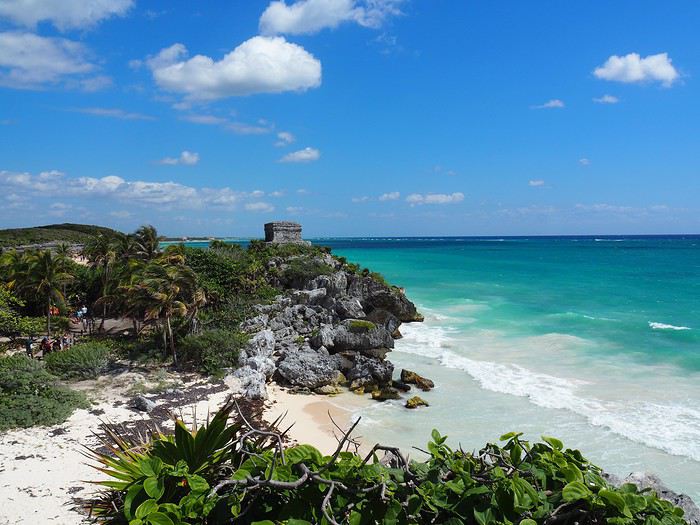
03/02: Today the weather is gray, so we decided to visit a cenote. Since accessibility was key, we didn’t go for the most remote or wild one (like we usually would) but headed to the Grand Cenote, which is beautiful, well-organized, and relatively quiet when you arrive around 9:30 AM. The upside of having kids is that they wake you up early, so you can still enjoy the sites without too many people!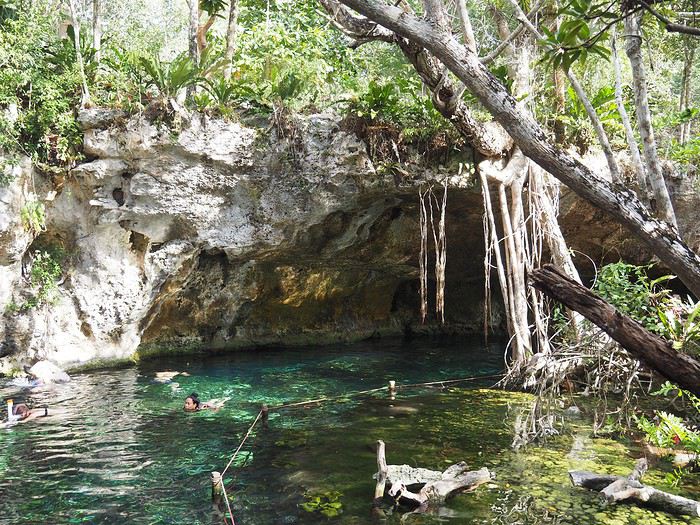
Lunch at home, then nap time and pool time. Note that in Tulum, near the town hall, there’s a playground where Mexican families go, with lots of swings and slides—our kids loved it.
03/03: Encouraged by our experience at the Tulum ruins, we decided to go all out and visit the ruins of Coba. Even though the access isn’t as PMR-friendly, the site is still manageable with a double stroller, especially since it’s huge and the main pyramid is only reachable after a 20-minute walk through the jungle. The kids loved running around and climbing on some of the structures, but we didn’t let them climb the main pyramid (over 40 meters high) because the stairs were uneven and slippery.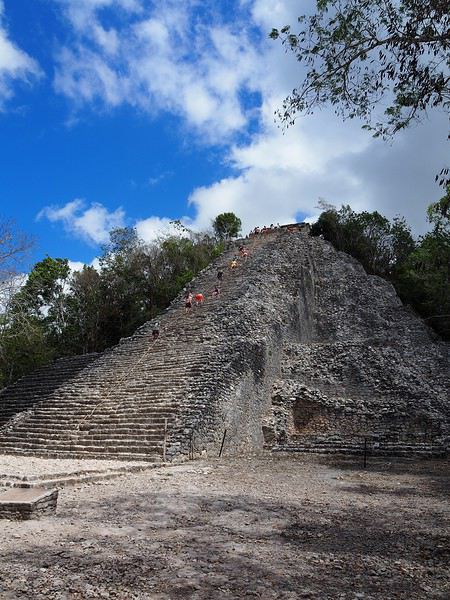
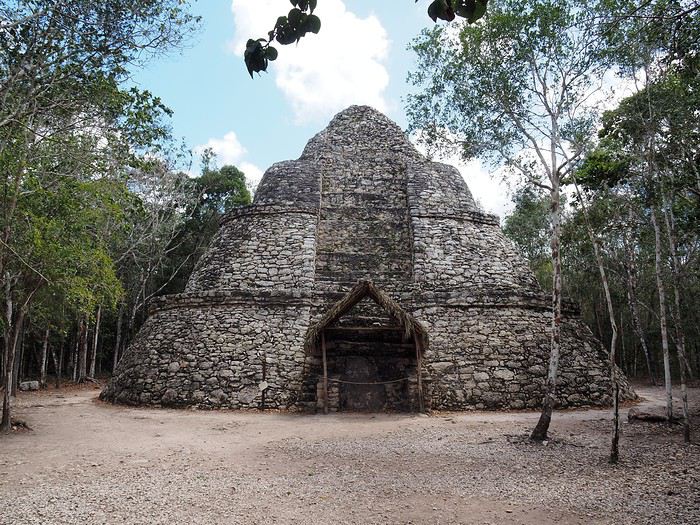
We then had lunch at a restaurant near the parking lot with a view of the lake before heading home for nap time and an afternoon at the pool.
03/04 and 03/05: Two beautiful days spent at Tulum Beach. The beach is really stunning, with white sand and gorgeous turquoise water. There were quite a few seaweed patches when we were there, but not enough to ruin the scenery or the swim.
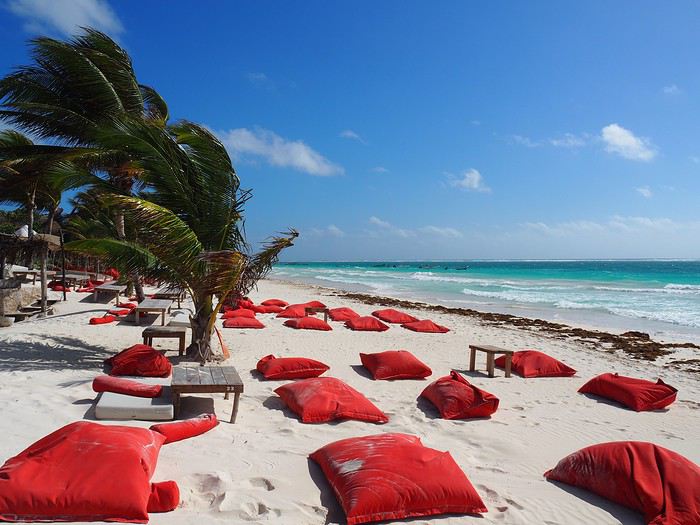
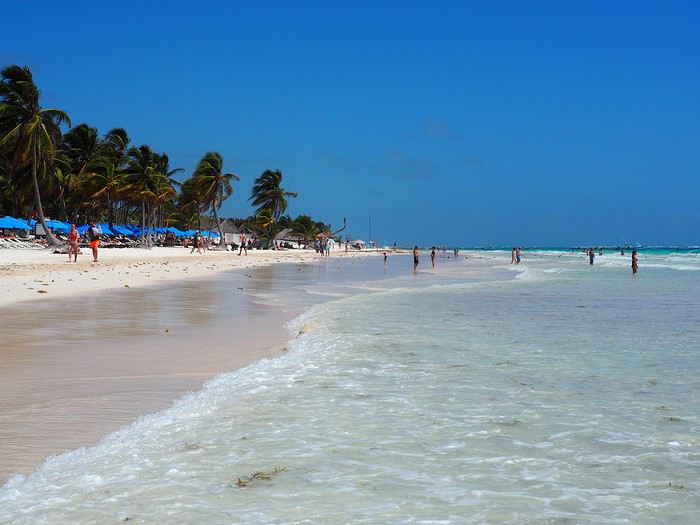
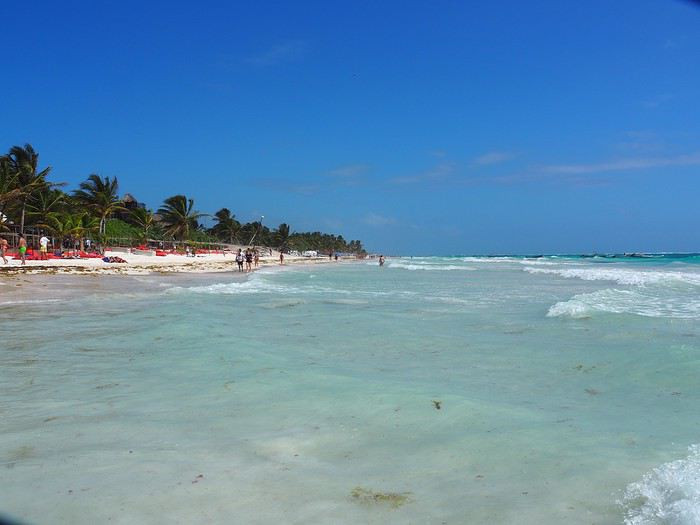
03/06: Second part of the vacation—today we’re heading to Mérida! To break up the drive, we decided to stop at Chichen Itza. We arrived at the site around noon, and wow—it was packed! It felt like the Louvre in the middle of summer (well, almost). We queued to buy tickets and decided to start with lunch at one of the restaurants at the entrance. The upside of everything being so Americanized is that it’s easy to find food on-site, there are restrooms everywhere (super handy with toddlers who can’t hold it for long), and everything is stroller-accessible. We then visited Chichen Itza, which was a bit disappointing: souvenir vendors all over the site ruined the vibe, and there were crowds everywhere... but the kids loved running around, so we powered through and explored the huge, well-preserved site.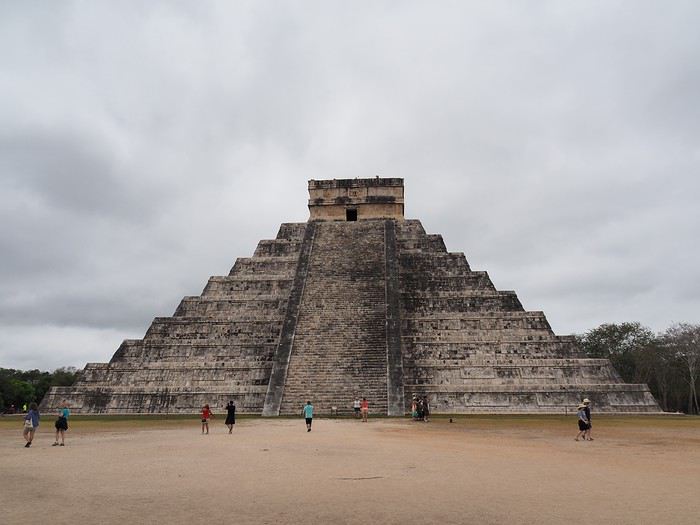
We then hit the road to Mérida, and the kids fell asleep in the car since they hadn’t napped during the Chichen Itza visit.
We arrived at our Airbnb, which was really beautiful: https://www.airbnb.fr/rooms/38632543?source_impression_id=p3_1584891113_XTnbrcb2G3pcuD6C A gorgeous colonial-style house with a private patio and small pool, right in the center of Mérida, a 20-minute walk north of the main square but just 5 minutes from a Walmart for groceries.
03/07: Morning stroll in Mérida, afternoon nap, and—at the kids’ insistence—a horse-drawn carriage ride through the city in the late afternoon. They loved it!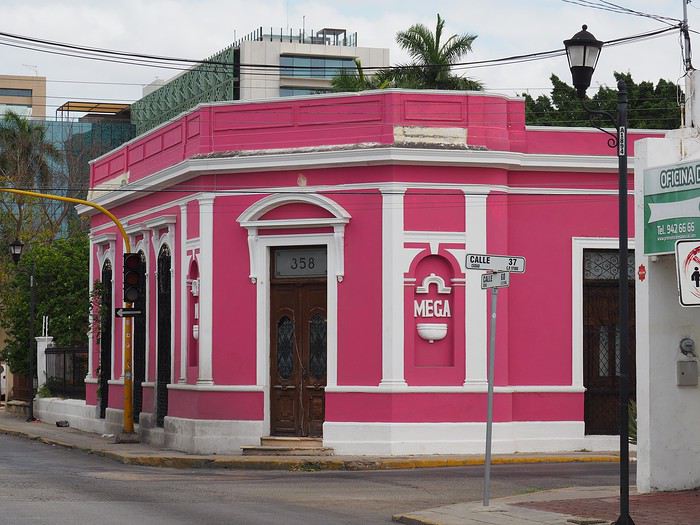
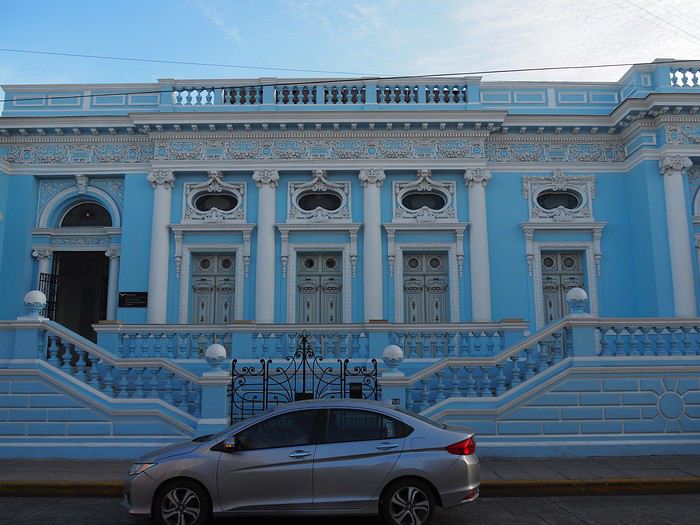
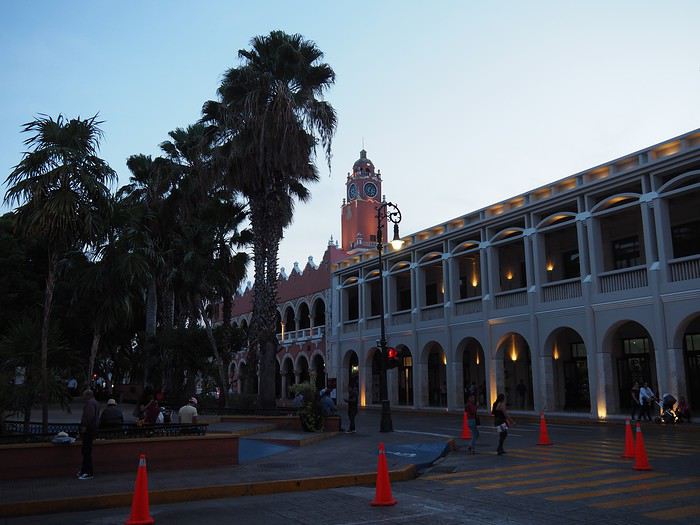
03/08: We decided to visit the beautiful town of Izamal, about an hour’s drive from Mérida. This all-yellow town is worth the detour—it’s stunning and almost tourist-free! We had lunch at a restaurant on the main square, then took another post-lunch carriage ride (again!) before heading back to Mérida with the kids napping in the car.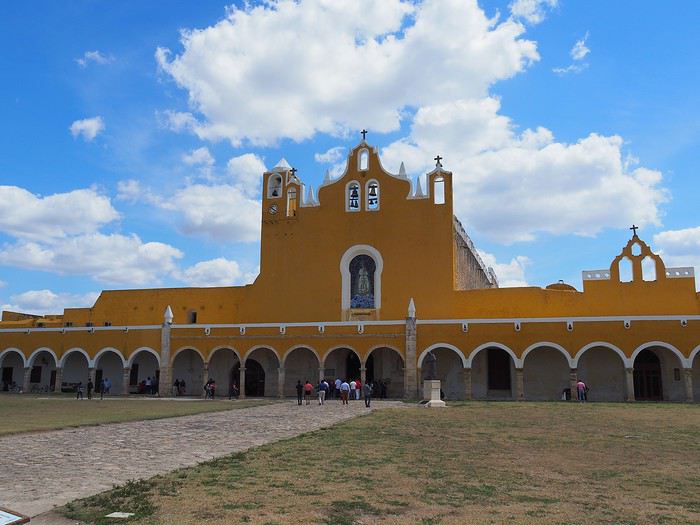
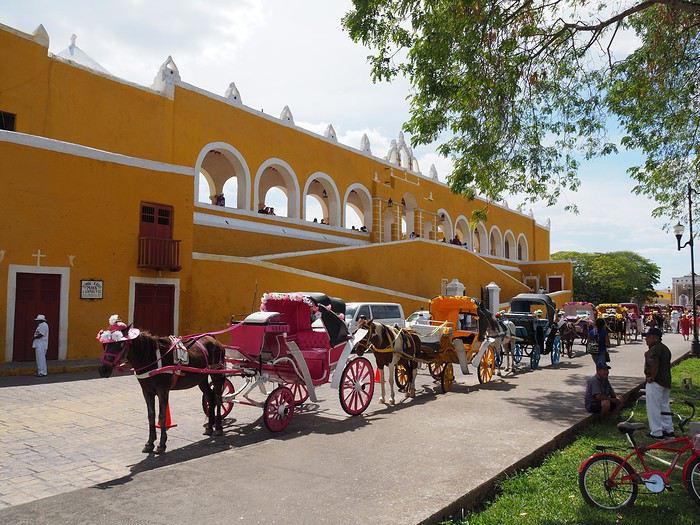
03/09: Nature day today with a visit to the Celestun Reserve, also about an hour from Mérida. The kids loved the boat ride along the river and through the mangroves, spotting pink flamingos, cormorants, and other birds. We were also lucky enough to see crocodiles. For info, renting a boat costs 1800 pesos, and you can share it with other tourists to split the cost (kids don’t count). We then had lunch at a beachside shack before heading back to Mérida in the late afternoon. The beach at Celestun is also really beautiful and surprisingly empty. However, it was very windy when we were there, so we didn’t swim.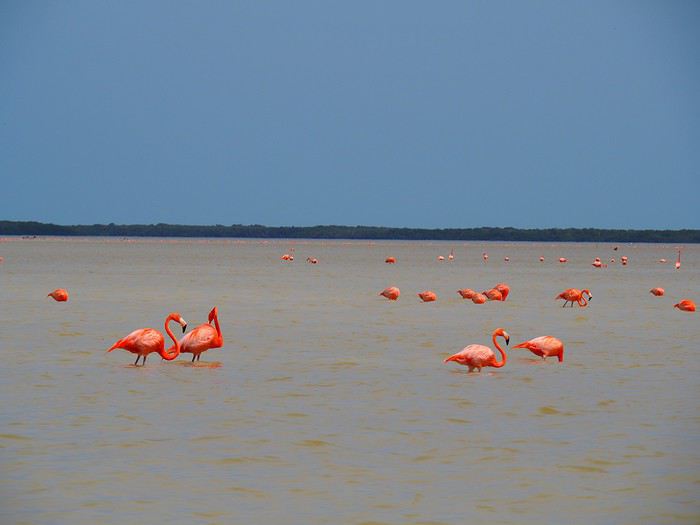
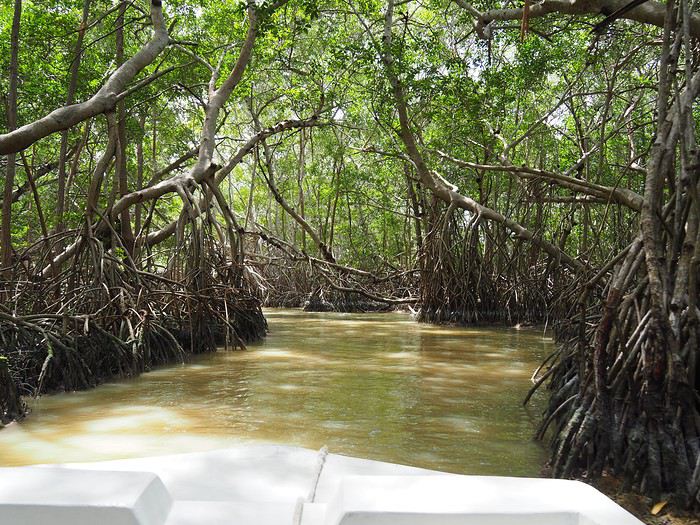
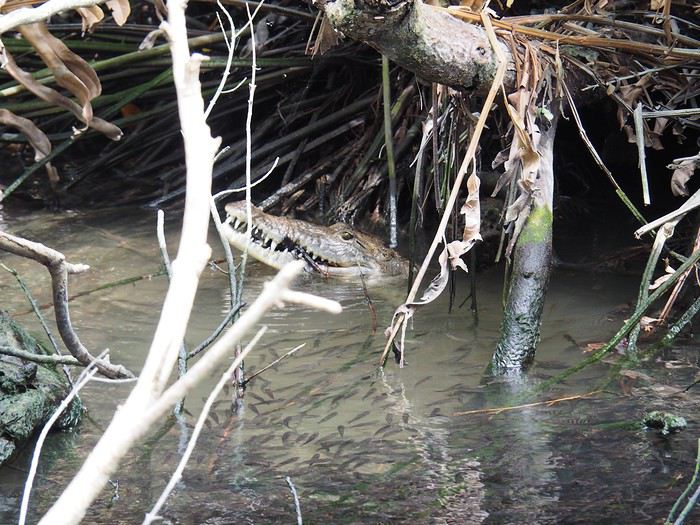
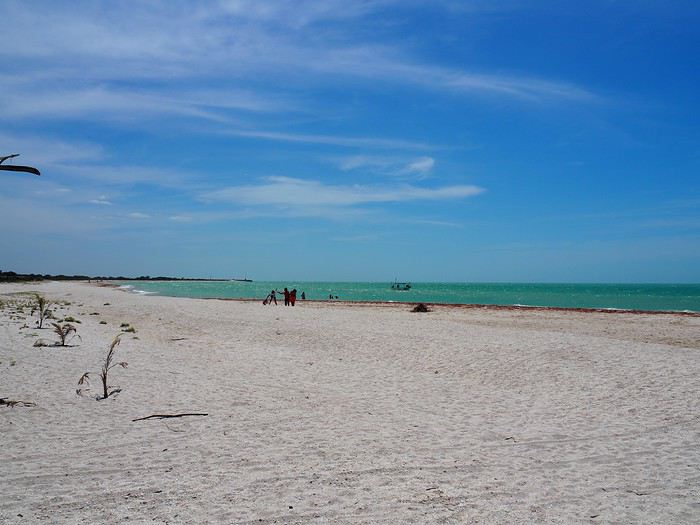
03/10: Last day of sightseeing, and we chose to visit the Mayan site of Uxmal. Like the other sites, most of it is easily accessible by stroller, but there are many parts where it’s not possible (stairs, tree roots on the path, etc.). No big deal, though, because this site was probably our favorite along with Coba: it’s huge, beautiful, with well-preserved/restored ruins, very few tourists, and you can climb to the top of the last pyramid for a panoramic view of the site. Plus, the iguanas all over the place made our kids’ day. What more could you ask for? We then had lunch at the restaurant of the resort across from the parking lot, which offered a pretty good buffet (quick service for the kids) and a pool that restaurant guests could use! Unfortunately, we hadn’t planned ahead and left our swimsuits at home...
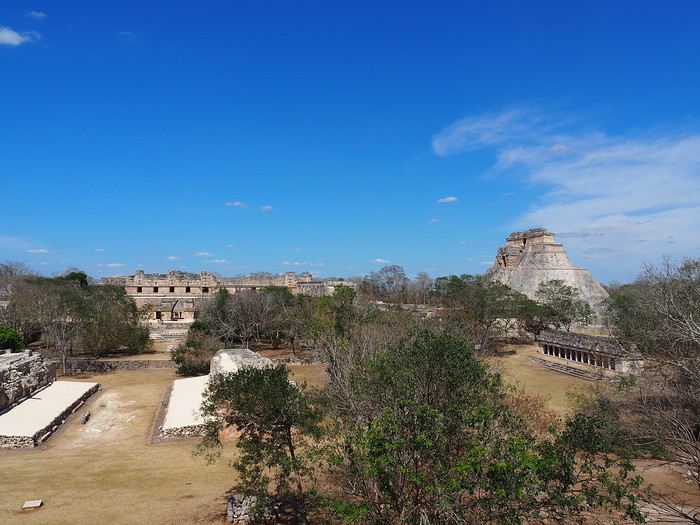
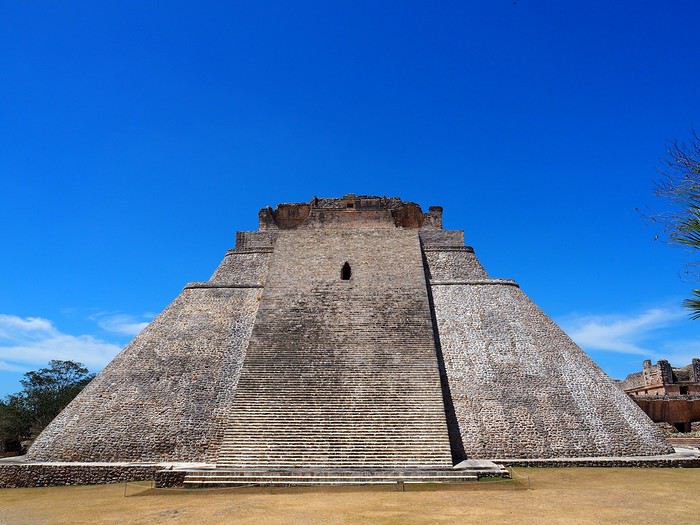
03/11: For our last day in Mérida, we decided to take it easy. We spent the morning at the zoo (free entry), which has lots of playground equipment (slides, climbing structures, etc.) and a few animals, kind of like the Ménagerie at the Jardin des Plantes. After the kids’ nap, we went to Progreso Beach, which is big but not as pretty as the photos online suggest. A bit of a letdown, but the kids had fun playing in the sand and were thrilled.
03/12: Our flight left Cancun at 5:45 PM. We had a 3.5-hour drive on the highway from Mérida to Cancun. The road was easy, and we were often alone. We stopped in Valladolid for a quick lunch to break up the drive but didn’t really have time to explore the town since we were pressed for time. Be careful: there’s a 1-hour time difference between Mérida and Cancun, so factor that in when calculating your flight departure time.
All in all, it was a great trip with the kids—we mixed relaxation, beach time, pool time, and a few visits, adapting to their pace. They seemed happy and had no trouble adjusting to the time difference or the local food.
See you soon,
Antoine
I’d like to share my thoughts on my recent trip to Mexico (just before the COVID lockdown), specifically in the Yucatan Peninsula, with my twin toddlers (2 and a half years old).
The itinerary is super classic, and I’ll focus mostly on tips and tricks for traveling with young kids.
For the winter of 2019-2020, we were looking for a sunny destination. After going to Guadeloupe when our kids were 6 months old and then Martinique last year (the French West Indies had the advantage of being able to rent a house and easily explore from there, plus having the same standards as mainland France for kids), we decided to try a bit of adventure by heading to the Yucatan. This destination has several advantages: - Very "Americanized" (I never thought I’d list that as an advantage one day), so it’s easy for kids; - Varied activities and sightseeing opportunities; - Easy house rentals on Airbnb; - Direct flights from Paris; - Ability to explore from one base without having to move every 2-3 days.
After buying our flight tickets to Cancun on Air France, we decided to base our house rental in two places: Tulum and Mérida. Needless to say, we didn’t stray off the beaten path at all.
Spoiler alert: the vacation went really well, and we were able to enjoy it fully with the kids.
02/28: Flight from CDG to Cancun on Air France. A 10.5-hour flight is long with kids, so we tried to keep them busy as best we could: games, coloring, walking around the plane, meals, a little nap, etc. At that age, it’s hard to get them to focus on a screen. We arrived in Cancun around 6 PM, picked up our rental car from Alamo. Watch out for a scam attempt at Alamo where the person at the counter wanted us to pay taxes and surcharges that don’t exist! We resisted, but they insisted. In the end, we got away without paying anything extra. We had paid 285 € for the 14-day car rental. Then we drove to Tulum, which is about 1.5 hours from Cancun Airport. The road was in perfect condition, no complaints, and we arrived at our Airbnb: https://www.airbnb.fr/rooms/35334526?source_impression_id=p3_1584888418_t6pB%2BGyeDwqqkvA0 A really beautiful, spacious house with two large bedrooms and a big pool so parents could relax while the kids napped. The house is in a residential neighborhood in Tulum pueblo, away from restaurants and bars. Bikes were available, but we used our car (no baby seats or helmets provided).
02/29: A quiet day to recover from the trip and jet lag: grocery shopping at Chedraui supermarket in Tulum. Morning at the pool and late afternoon at Tulum Beach.
About the beach: it’s 3 km from Tulum town. Most of the beach is privatized, and there are only 2 or 3 public access points (though you can walk freely along the entire beach afterward). No parking issues at the times we went—usually around 9 AM and after nap time at 5 PM.
03/01: Let’s get motivated! We tried visiting an archaeological site with the kids to see how it went... So we started modestly with the ruins of Tulum. I won’t go into detail about the ruins—they’re super well-known and very touristy. I’ll just mention that when we arrived at the site around 9:30 AM, there was already a 10-minute line at the ticket booth, and by the time we left at noon, the line had grown to at least 45 minutes to an hour under the blazing sun. Like all the Mayan sites we visited, we appreciated that a large part was accessible for people with reduced mobility (at least the main paths), which also made it stroller-friendly! No problem walking around with the kids or using the stroller when they were tired, and we could store their stuff in it (water bottles, snacks, sunscreen, hats, sunglasses, etc.). Lunch at home, then nap time and late afternoon at the pool.
03/02: Today the weather is gray, so we decided to visit a cenote. Since accessibility was key, we didn’t go for the most remote or wild one (like we usually would) but headed to the Grand Cenote, which is beautiful, well-organized, and relatively quiet when you arrive around 9:30 AM. The upside of having kids is that they wake you up early, so you can still enjoy the sites without too many people!
Lunch at home, then nap time and pool time. Note that in Tulum, near the town hall, there’s a playground where Mexican families go, with lots of swings and slides—our kids loved it.
03/03: Encouraged by our experience at the Tulum ruins, we decided to go all out and visit the ruins of Coba. Even though the access isn’t as PMR-friendly, the site is still manageable with a double stroller, especially since it’s huge and the main pyramid is only reachable after a 20-minute walk through the jungle. The kids loved running around and climbing on some of the structures, but we didn’t let them climb the main pyramid (over 40 meters high) because the stairs were uneven and slippery.
We then had lunch at a restaurant near the parking lot with a view of the lake before heading home for nap time and an afternoon at the pool.
03/04 and 03/05: Two beautiful days spent at Tulum Beach. The beach is really stunning, with white sand and gorgeous turquoise water. There were quite a few seaweed patches when we were there, but not enough to ruin the scenery or the swim.
03/06: Second part of the vacation—today we’re heading to Mérida! To break up the drive, we decided to stop at Chichen Itza. We arrived at the site around noon, and wow—it was packed! It felt like the Louvre in the middle of summer (well, almost). We queued to buy tickets and decided to start with lunch at one of the restaurants at the entrance. The upside of everything being so Americanized is that it’s easy to find food on-site, there are restrooms everywhere (super handy with toddlers who can’t hold it for long), and everything is stroller-accessible. We then visited Chichen Itza, which was a bit disappointing: souvenir vendors all over the site ruined the vibe, and there were crowds everywhere... but the kids loved running around, so we powered through and explored the huge, well-preserved site.
We then hit the road to Mérida, and the kids fell asleep in the car since they hadn’t napped during the Chichen Itza visit.
We arrived at our Airbnb, which was really beautiful: https://www.airbnb.fr/rooms/38632543?source_impression_id=p3_1584891113_XTnbrcb2G3pcuD6C A gorgeous colonial-style house with a private patio and small pool, right in the center of Mérida, a 20-minute walk north of the main square but just 5 minutes from a Walmart for groceries.
03/07: Morning stroll in Mérida, afternoon nap, and—at the kids’ insistence—a horse-drawn carriage ride through the city in the late afternoon. They loved it!
03/08: We decided to visit the beautiful town of Izamal, about an hour’s drive from Mérida. This all-yellow town is worth the detour—it’s stunning and almost tourist-free! We had lunch at a restaurant on the main square, then took another post-lunch carriage ride (again!) before heading back to Mérida with the kids napping in the car.
03/09: Nature day today with a visit to the Celestun Reserve, also about an hour from Mérida. The kids loved the boat ride along the river and through the mangroves, spotting pink flamingos, cormorants, and other birds. We were also lucky enough to see crocodiles. For info, renting a boat costs 1800 pesos, and you can share it with other tourists to split the cost (kids don’t count). We then had lunch at a beachside shack before heading back to Mérida in the late afternoon. The beach at Celestun is also really beautiful and surprisingly empty. However, it was very windy when we were there, so we didn’t swim.
03/10: Last day of sightseeing, and we chose to visit the Mayan site of Uxmal. Like the other sites, most of it is easily accessible by stroller, but there are many parts where it’s not possible (stairs, tree roots on the path, etc.). No big deal, though, because this site was probably our favorite along with Coba: it’s huge, beautiful, with well-preserved/restored ruins, very few tourists, and you can climb to the top of the last pyramid for a panoramic view of the site. Plus, the iguanas all over the place made our kids’ day. What more could you ask for? We then had lunch at the restaurant of the resort across from the parking lot, which offered a pretty good buffet (quick service for the kids) and a pool that restaurant guests could use! Unfortunately, we hadn’t planned ahead and left our swimsuits at home...
03/11: For our last day in Mérida, we decided to take it easy. We spent the morning at the zoo (free entry), which has lots of playground equipment (slides, climbing structures, etc.) and a few animals, kind of like the Ménagerie at the Jardin des Plantes. After the kids’ nap, we went to Progreso Beach, which is big but not as pretty as the photos online suggest. A bit of a letdown, but the kids had fun playing in the sand and were thrilled.
03/12: Our flight left Cancun at 5:45 PM. We had a 3.5-hour drive on the highway from Mérida to Cancun. The road was easy, and we were often alone. We stopped in Valladolid for a quick lunch to break up the drive but didn’t really have time to explore the town since we were pressed for time. Be careful: there’s a 1-hour time difference between Mérida and Cancun, so factor that in when calculating your flight departure time.
All in all, it was a great trip with the kids—we mixed relaxation, beach time, pool time, and a few visits, adapting to their pace. They seemed happy and had no trouble adjusting to the time difference or the local food.
See you soon,
Antoine
Itinéraire trois semaines en Israël et Palestine en août English translation pending
Bonjour à tous,
Cette année nous avons décidé de visiter ce petit coin de la terre qui nous intrigue depuis quelques années 😏
Voici l'itinéraire programmé à ce jour, tout est encore modulable sauf les vols évidemment.
1/8: Arrivée en milieu d'après-midi à l'aéroport national TLV et transfert à HAIFA 2-6/8 : Logement à HAIFA pour faire le nord (Tibériade, St Jean d'accre, Nazareth, la Galilée, etc...) 7-9/8 : Tel Aviv (repos plage, Jaffa, ...) 10-13/8 : Jerusalem - Bethléem 14-15/8 : Mer morte - Ein Gedi 15-19/8 : Eilat 19-20/8 : Mitzpe Ramon (défet) 20-22/8 : A DEFINIR - vol retour le le 22/8 en soirée
Nous sommes 3 (2 adultes et un ado de 14 ans). Nous sommes croyants et pratiquants mais ce voyage ne se veut pas non plus un " pèlerinage ", voilà pourquoi vous remarquerez que le côté plage et détente est également présent (Tel Aviv, Haifa, Eilat) Nous louerons un véhicule sur place et pour les visites côté Palestine nous nous déplacerons très probablement en bus locaux. Que ne doit-on pas rater , à part bien sur les grands classiques ? je trouve les hôtels très chers, c'est pourquoi les 6 premiers jours c'est un appartement front de mer qui est prévu à Haifa, ça sera plus simple pour rayonner la journée et se détendre le soir. Nous aimerions également faire 2 ou 3 randonnées assez faciles, que nous conseillez-vous? J'ai réduit la mer morte à 1 seule nuit car il y fera très très chaud en aout. J'oubliais de vous préciser : on ne souffre pas (trop) des grosses chaleurs (voir nos précédents voyages en signature toujours en aout et sans aucun souci malgré ce que certains nous disaient)
Voilà, comme à mon habitude je vous laisse nous conseiller, vous les grand experts de la destination :-)
Merci d'avance !!!
SHALOM :-) Nella
Cette année nous avons décidé de visiter ce petit coin de la terre qui nous intrigue depuis quelques années 😏
Voici l'itinéraire programmé à ce jour, tout est encore modulable sauf les vols évidemment.
1/8: Arrivée en milieu d'après-midi à l'aéroport national TLV et transfert à HAIFA 2-6/8 : Logement à HAIFA pour faire le nord (Tibériade, St Jean d'accre, Nazareth, la Galilée, etc...) 7-9/8 : Tel Aviv (repos plage, Jaffa, ...) 10-13/8 : Jerusalem - Bethléem 14-15/8 : Mer morte - Ein Gedi 15-19/8 : Eilat 19-20/8 : Mitzpe Ramon (défet) 20-22/8 : A DEFINIR - vol retour le le 22/8 en soirée
Nous sommes 3 (2 adultes et un ado de 14 ans). Nous sommes croyants et pratiquants mais ce voyage ne se veut pas non plus un " pèlerinage ", voilà pourquoi vous remarquerez que le côté plage et détente est également présent (Tel Aviv, Haifa, Eilat) Nous louerons un véhicule sur place et pour les visites côté Palestine nous nous déplacerons très probablement en bus locaux. Que ne doit-on pas rater , à part bien sur les grands classiques ? je trouve les hôtels très chers, c'est pourquoi les 6 premiers jours c'est un appartement front de mer qui est prévu à Haifa, ça sera plus simple pour rayonner la journée et se détendre le soir. Nous aimerions également faire 2 ou 3 randonnées assez faciles, que nous conseillez-vous? J'ai réduit la mer morte à 1 seule nuit car il y fera très très chaud en aout. J'oubliais de vous préciser : on ne souffre pas (trop) des grosses chaleurs (voir nos précédents voyages en signature toujours en aout et sans aucun souci malgré ce que certains nous disaient)
Voilà, comme à mon habitude je vous laisse nous conseiller, vous les grand experts de la destination :-)
Merci d'avance !!!
SHALOM :-) Nella
Rethymnon ou Chania pour terminer notre road trip en Grèce? English translation pending
Bonsoir,
Nous partons 3 semaines en octobre pour un road trip dans l'ouest de la Crète. L'itinéraire est bouclé, j'hésite juste pour la fin.
Notre avion arrive et repart de Chania. A l'aller, nous arrivons un soir et y passons 3 nuits. Nous louons la voiture le jour où nous quittons Chania.
Au retour, nous reprenons l'avion un mardi soir et j'hésite à passer les 2 dernières nuits à Rethymnon ou l'avant-dernière à Rethymnon et la dernière à Chania.
Nous aurons sans doute quelques souvenirs, cadeaux à acheter. Laquelle des 2 villes offre le plus de choix ?
Y a t'il des parkings gratuits pas loin du centre à Rethymnon et à Chania ?
Ou vaut-il mieux rendre la voiture à Rethymnon pour économiser 2 jours de location et faire le trajet Rethymnon -Chania (ville ou aéroport selon qu'on y passe notre dernière nuit ou pas) en bus ? J'attends vos conseils pour réserver ces 2 dernières nuits 😉
Claire
Nous aurons sans doute quelques souvenirs, cadeaux à acheter. Laquelle des 2 villes offre le plus de choix ?
Y a t'il des parkings gratuits pas loin du centre à Rethymnon et à Chania ?
Ou vaut-il mieux rendre la voiture à Rethymnon pour économiser 2 jours de location et faire le trajet Rethymnon -Chania (ville ou aéroport selon qu'on y passe notre dernière nuit ou pas) en bus ? J'attends vos conseils pour réserver ces 2 dernières nuits 😉
Claire
Itinéraire pour visiter le nord d’Israël en une journée English translation pending
Bonjour
Qui pourrait me proposer un itinéraire pour visiter le nord d Israël, en 1 journée? sans intégrer Haïfa et Saint Jean D'Acre. Avec des sites historiques mais pas que ! Je vous remercie pour tous vos conseils.
Qui pourrait me proposer un itinéraire pour visiter le nord d Israël, en 1 journée? sans intégrer Haïfa et Saint Jean D'Acre. Avec des sites historiques mais pas que ! Je vous remercie pour tous vos conseils.
Premier séjour en Israël cet été avec escapade en Jordanie pour visiter Pétra English translation pending
Bonjour amis voyageurs,
Je suis entrain de réfléchir à un voyage de deux semaines en Israël au mois de juillet prochain. De ce fait, je me renseigne, et je m'interroge, d'où l'ouverture de cette discussion.
Avec ma compagne, on aime bien se fixer à un endroit et rayonner ensuite sans avoir à bouger tous les deux jours. C'est pourquoi je pensais louer un appartement sur airbnb à Tel Aviv une dizaine de jours et donc sillonner depuis TA avec une voiture de location (Jérusalem, le nord, Ein Gedi, mer morte, Masada, etc.) et 5 jours sur Eilat pour profiter de la mer rouge, du désert de Neguev et faire une escapade en Jordanie pour aller voir le site de Petra.
Comme toute préparation à un voyage j'ai des interrogations et j'espère que vous pourrez m'aider à y répondre.
- Concernant la location de voiture j'ai entendu (lu) parler d'une taxe d'aéroport, à quoi est-ce-que cela correspond et comment faire pour savoir si elle est comprise dans le prix de la location de voiture (je pensais à Budget) ?
- Est-il facilement possible de faire une escapade à Bethléem depuis Tel Aviv ? Tramway TA-Jérusalem, passage en Cisjordanie et ensuite un bus pour Bethléem ? (Toute façon, je ne compte pas prendre de voiture pour aller à Jérusalem).
- Si je visite donc depuis Tel Aviv, combien de jours prévoir pour visiter Jérusalem ?
- En étant basé 10 jours sur TA, qu'est-ce que vous conseillerez comme programme par jour pour un premier voyage en Israël ?
- Une petite voiture type Twingo/108 ça suffit pour pouvoir se déplacer dans le pays et les principaux sites ?
- Que faire dans le désert de Néguev depuis Eliat ? Sachant que l'on aura toujours notre voiture de loc pour se déplacer.
- Une journée pour Petra depuis Eliat c'est faisable ? Avec le passage de la frontière, le bus et la visite du site ? Combien faut-il compter en terme de budget ? Combien de temps sur place pour Petra ?
J'aurai sûrement d'autres questions mais j'ai déjà fait le tour des principales qui me venaient à l'idée et je ne vais pas vous en rajouter pour le moment.
Je suis entrain de réfléchir à un voyage de deux semaines en Israël au mois de juillet prochain. De ce fait, je me renseigne, et je m'interroge, d'où l'ouverture de cette discussion.
Avec ma compagne, on aime bien se fixer à un endroit et rayonner ensuite sans avoir à bouger tous les deux jours. C'est pourquoi je pensais louer un appartement sur airbnb à Tel Aviv une dizaine de jours et donc sillonner depuis TA avec une voiture de location (Jérusalem, le nord, Ein Gedi, mer morte, Masada, etc.) et 5 jours sur Eilat pour profiter de la mer rouge, du désert de Neguev et faire une escapade en Jordanie pour aller voir le site de Petra.
Comme toute préparation à un voyage j'ai des interrogations et j'espère que vous pourrez m'aider à y répondre.
- Concernant la location de voiture j'ai entendu (lu) parler d'une taxe d'aéroport, à quoi est-ce-que cela correspond et comment faire pour savoir si elle est comprise dans le prix de la location de voiture (je pensais à Budget) ?
- Est-il facilement possible de faire une escapade à Bethléem depuis Tel Aviv ? Tramway TA-Jérusalem, passage en Cisjordanie et ensuite un bus pour Bethléem ? (Toute façon, je ne compte pas prendre de voiture pour aller à Jérusalem).
- Si je visite donc depuis Tel Aviv, combien de jours prévoir pour visiter Jérusalem ?
- En étant basé 10 jours sur TA, qu'est-ce que vous conseillerez comme programme par jour pour un premier voyage en Israël ?
- Une petite voiture type Twingo/108 ça suffit pour pouvoir se déplacer dans le pays et les principaux sites ?
- Que faire dans le désert de Néguev depuis Eliat ? Sachant que l'on aura toujours notre voiture de loc pour se déplacer.
- Une journée pour Petra depuis Eliat c'est faisable ? Avec le passage de la frontière, le bus et la visite du site ? Combien faut-il compter en terme de budget ? Combien de temps sur place pour Petra ?
J'aurai sûrement d'autres questions mais j'ai déjà fait le tour des principales qui me venaient à l'idée et je ne vais pas vous en rajouter pour le moment.
Programme 13 jours autour de Split avec deux enfants (1 an et 4 ans) fin mai English translation pending
Bonjour à tous,
Nous avons booké nos vols secs pour passer 2 semaines en famille autour de Split à la fin du mois de mai 2020 et il est maintenant temps de caler le parcours pour réserver nos logements !
Pour info nous avions déjà été à Split, Dubrovnik, Korcula et Hvar en 2014 et ça nous avait vraiment plu.
L'objectif ce coup ci est d'y aller "tranquille", sans courir partout puisque nous aurons nos 2 enfants (1 an et 4 ans) et qu'il faudra couper en journée pour respecter le temps de sieste.
La vieille ville de Split et sa riva nous avait beaucoup plu, de même que la ville de Hvar.
Nous n'aurons pas pour objectif de tirer jusqu'à Dubrovnik ce coup ci.
Pour nos 12 nuits on imaginait 3 points de chute maximum : SPLIT, HVAR et ? Nous n'avons pas vu le parc de KRKA ni Sibenik et Primosten, est-il préférable d'y aller depuis Split ou bien vaut-il mieux prévoir de loger à Sibenik? Le coin de Makarska vaut il également le coup de s'y arrêter? Pour le moment nous n'imaginons pas louer une voiture car, de mémoire, le réseau bus fonctionnait bien. Du coup pourriez-vous me donner vos avis sur l'itinéraire suivant : J1 : arrivée à l'aéroport de Split à 14h30 --> direction SIBENIK ? J2 : visite de Sibenik - nuit à Sibenik J3 : virée en bus au Parc de KRKA - nuit à Sibenik J4 : virée en bus à Primosten - nuit à Sibenik J5 (samedi 23/05) : départ pour Split - nuit à Split J6 (dimanche 24/05) : visite Split - nuit à Split J7 : visite Trogir - nuit à Split J8 : visite Omis ou autre - nuit à Split J9 : départ pour Hvar en catamaran - nuit à Hvar J10 : Hvar - nuit Hvar J11 : Hvar - nuit Hvar J12 (samedi 30/05) : retour bateau à Split - nuit à Split J13 (dimanche 31/05) : dernier jour puis direction aéroport vers 18h
Pourriez vous me donner des conseils pour alimenter notre programme? Nous imaginons déambuler dans les vieilles villes et en bord de mer, découvrir les parcs avec jeux pour enfants. Que me conseillez vous comme visites incontournables autour de Split sans faire 2h de route? et à Split même? Merci d'avance de tout conseil !
Pour nos 12 nuits on imaginait 3 points de chute maximum : SPLIT, HVAR et ? Nous n'avons pas vu le parc de KRKA ni Sibenik et Primosten, est-il préférable d'y aller depuis Split ou bien vaut-il mieux prévoir de loger à Sibenik? Le coin de Makarska vaut il également le coup de s'y arrêter? Pour le moment nous n'imaginons pas louer une voiture car, de mémoire, le réseau bus fonctionnait bien. Du coup pourriez-vous me donner vos avis sur l'itinéraire suivant : J1 : arrivée à l'aéroport de Split à 14h30 --> direction SIBENIK ? J2 : visite de Sibenik - nuit à Sibenik J3 : virée en bus au Parc de KRKA - nuit à Sibenik J4 : virée en bus à Primosten - nuit à Sibenik J5 (samedi 23/05) : départ pour Split - nuit à Split J6 (dimanche 24/05) : visite Split - nuit à Split J7 : visite Trogir - nuit à Split J8 : visite Omis ou autre - nuit à Split J9 : départ pour Hvar en catamaran - nuit à Hvar J10 : Hvar - nuit Hvar J11 : Hvar - nuit Hvar J12 (samedi 30/05) : retour bateau à Split - nuit à Split J13 (dimanche 31/05) : dernier jour puis direction aéroport vers 18h
Pourriez vous me donner des conseils pour alimenter notre programme? Nous imaginons déambuler dans les vieilles villes et en bord de mer, découvrir les parcs avec jeux pour enfants. Que me conseillez vous comme visites incontournables autour de Split sans faire 2h de route? et à Split même? Merci d'avance de tout conseil !
Itinéraire de 27 jours en voiture dans le Tyrol autrichien depuis Lyon cet été English translation pending
Hello everybody !
Cet été, je pars - ou plutôt - nous partons, j'emmène femme et enfants (2 et 4 ans) dans un nouveau périple dans le Tyrol Autrichien, départ de Lyon mi-juillet pour 27 jours, en voiture, en passant par le sud de la Suisse, dans l'ouest (pas Américain mais) Autrichien puis dans les Dolomites Italiennes.
Cela fait plusieurs années que nous partons aux Etats-Unis et c'est un peu avec amertume que je n'irai pas là-bas cette année mais nous souhaitons aussi voir autre chose et nous avons plus qu'un faible pour les montagnes. Avec un rythme en douceur pour les enfants.
Il y a très peu de retours sur cette destination sur voyageforum, aussi je vous soumets un petit itinéraire pour les curieux peut-être, pour les connaisseurs aussi - si vous avez des conseils ou avis ? J'ai mentionné les centres d'intérêts tout personnels que j'ai pu trouver jusque là, je ne sais pas encore ce que nous ferons ou pas dans cette liste. Nous sommes plutôt nature et randonnée évidemment, équipés pour porter les enfants, nous n'en sommes pas à notre 1ère expérience et rando avec eux. Les hébergements ne sont pas encore choisis, nous prendrons probablement des logements entiers par airbnb.
2N à Samoëns, France Randonnée fer à cheval 9km 3h
3N vers Evolène dans le Val d'Hérens, Suisse Pyramides d’Euseigne (sentier fermé ?) Rando Lac Bleu (1h30) Rando Glacier du Mont Miné (1h30) Rando La Forclaz – Ferpècle (1h15 aller, retour bus ?) Sources d'eaux chaudes de Combioula
3N Lac Majeur, Italie ou Suisse ? Lac Majeur Iles de Brissago ?
3N Lac de Constance ou Bodensee, Autriche Feldkirch (ville médiévale) Vers Brand : Lake Lünersee in the Raetikon (6,1km, 2h – après téléphérique) Sommet du Pfänder (1064 m) par téléphérique : Pfänder alpine wildlife park + rando - descente (1h15 à 2h selon trajet) Marché de Dornbirn (samedi) Rappenlochschlucht (chutes d'eau), 1h15
5N Vers Sautens, Vallée de l'Oetz, Autriche Route du glacier de Kaunertal, téléphérique Village Ötzi-Dorf à Umhausen Niederthai Lac de Piburger see Area 47 Téléphérique de Gaislachkogel depuis Solden - rando de l'ice Q au lac Gaislacher See, 2km, 2h Aquadome Eoferme de Längenfeld Stuibenfall (lplus grandes chutes d'eau du Tyrol), 1h Abbaye de Stams Innsbruck - palais impérial, église impériale
3N Vers Achensee, Autriche Hall in Tirol Mines d'argent de Schwaz Château de Tratzberg Alpbach Lac d'Achensee
4N Depuis Misurina, Dolomites, Italie Lago di Braies (Pragser Wildsee) Lago di Dobbiaco (Toblachersee) Les Tre Cime di lavadero, rando par les refuges de Auronzo, Lavaredo et Locatelli, boucle de 10km, 3h20 Les Cinque Torri, téléphérique, redescente en marchant (2h)
4N Depuis Trente, Dolomites, Italie Lago di Carreza (Karersee) ? tour du lac 30 min Lago di Tovel - tour du lac 1h30 Trente Lago di Molveno, lac de Nembia Massif de Brenta ? Lac de garde Vérone ?
Retour à Lyon, avec une nuit sur le chemin pour couper la route (Modane ?)
Je suis preneur de tous les avis sur la question. Hasta luego !!
Fabien
Cet été, je pars - ou plutôt - nous partons, j'emmène femme et enfants (2 et 4 ans) dans un nouveau périple dans le Tyrol Autrichien, départ de Lyon mi-juillet pour 27 jours, en voiture, en passant par le sud de la Suisse, dans l'ouest (pas Américain mais) Autrichien puis dans les Dolomites Italiennes.
Cela fait plusieurs années que nous partons aux Etats-Unis et c'est un peu avec amertume que je n'irai pas là-bas cette année mais nous souhaitons aussi voir autre chose et nous avons plus qu'un faible pour les montagnes. Avec un rythme en douceur pour les enfants.
Il y a très peu de retours sur cette destination sur voyageforum, aussi je vous soumets un petit itinéraire pour les curieux peut-être, pour les connaisseurs aussi - si vous avez des conseils ou avis ? J'ai mentionné les centres d'intérêts tout personnels que j'ai pu trouver jusque là, je ne sais pas encore ce que nous ferons ou pas dans cette liste. Nous sommes plutôt nature et randonnée évidemment, équipés pour porter les enfants, nous n'en sommes pas à notre 1ère expérience et rando avec eux. Les hébergements ne sont pas encore choisis, nous prendrons probablement des logements entiers par airbnb.
2N à Samoëns, France Randonnée fer à cheval 9km 3h
3N vers Evolène dans le Val d'Hérens, Suisse Pyramides d’Euseigne (sentier fermé ?) Rando Lac Bleu (1h30) Rando Glacier du Mont Miné (1h30) Rando La Forclaz – Ferpècle (1h15 aller, retour bus ?) Sources d'eaux chaudes de Combioula
3N Lac Majeur, Italie ou Suisse ? Lac Majeur Iles de Brissago ?
3N Lac de Constance ou Bodensee, Autriche Feldkirch (ville médiévale) Vers Brand : Lake Lünersee in the Raetikon (6,1km, 2h – après téléphérique) Sommet du Pfänder (1064 m) par téléphérique : Pfänder alpine wildlife park + rando - descente (1h15 à 2h selon trajet) Marché de Dornbirn (samedi) Rappenlochschlucht (chutes d'eau), 1h15
5N Vers Sautens, Vallée de l'Oetz, Autriche Route du glacier de Kaunertal, téléphérique Village Ötzi-Dorf à Umhausen Niederthai Lac de Piburger see Area 47 Téléphérique de Gaislachkogel depuis Solden - rando de l'ice Q au lac Gaislacher See, 2km, 2h Aquadome Eoferme de Längenfeld Stuibenfall (lplus grandes chutes d'eau du Tyrol), 1h Abbaye de Stams Innsbruck - palais impérial, église impériale
3N Vers Achensee, Autriche Hall in Tirol Mines d'argent de Schwaz Château de Tratzberg Alpbach Lac d'Achensee
4N Depuis Misurina, Dolomites, Italie Lago di Braies (Pragser Wildsee) Lago di Dobbiaco (Toblachersee) Les Tre Cime di lavadero, rando par les refuges de Auronzo, Lavaredo et Locatelli, boucle de 10km, 3h20 Les Cinque Torri, téléphérique, redescente en marchant (2h)
4N Depuis Trente, Dolomites, Italie Lago di Carreza (Karersee) ? tour du lac 30 min Lago di Tovel - tour du lac 1h30 Trente Lago di Molveno, lac de Nembia Massif de Brenta ? Lac de garde Vérone ?
Retour à Lyon, avec une nuit sur le chemin pour couper la route (Modane ?)
Je suis preneur de tous les avis sur la question. Hasta luego !!
Fabien
Itinéraire pour 2 ou 3 semaines en voiture en Crète English translation pending
Bonjour,
ma copine et moi commençons à penser aller en Crète, en juin 2020, pour probablement 2 semaines (peut être un peu plus). Possiblement entre le 8 juin et le 25 juin.
On ne s'intéresse pas particulièrement à la plage. On préfères les randonnées, les sites archéologiques et les paysages. Nous prévoyons louer une voiture pour la plupart des déplacements.
J'ai plusieurs questions :
1. Quel est le meilleur moyen de se rendre en Crète ? Nous partons de Montréal (Québec). Nous pensons prendre un vol Montréal-Athènes, puis un 2e vol Athènes-Héraklion (ou Chania). Quel est le coût pour un vol intérieur ? Ou est-ce mieux de prendre un ferry de Athènes à la Crète ? Combien de temps ça prendrait ?
2. En Crète, quel itinéraire pouvez-vous nous suggérer ? Quels sont les lieux qui valent vraiment le détour ? Quels sont les sites incontournables à voir, à mettre sur une liste pour 2 semaines ?
3. Quel est le coût typique d'un bon repas, sur l'ensemble de l'île ?
4. Quel est le coût de la location d'une voiture pour 2 semaines ?
5. Quel est le coût typique d'une chambre de qualité, à Héraklion (1ere grande ville) et Chania (2e grande ville), et dans les petits villages, sans chercher le gros luxe ?
6. Quelles températures prévoir pour cette période de l'année (entre le 8 juin et le 25 juin) ? Très chaud ? Sec et venteux ?
ma copine et moi commençons à penser aller en Crète, en juin 2020, pour probablement 2 semaines (peut être un peu plus). Possiblement entre le 8 juin et le 25 juin.
On ne s'intéresse pas particulièrement à la plage. On préfères les randonnées, les sites archéologiques et les paysages. Nous prévoyons louer une voiture pour la plupart des déplacements.
J'ai plusieurs questions :
1. Quel est le meilleur moyen de se rendre en Crète ? Nous partons de Montréal (Québec). Nous pensons prendre un vol Montréal-Athènes, puis un 2e vol Athènes-Héraklion (ou Chania). Quel est le coût pour un vol intérieur ? Ou est-ce mieux de prendre un ferry de Athènes à la Crète ? Combien de temps ça prendrait ?
2. En Crète, quel itinéraire pouvez-vous nous suggérer ? Quels sont les lieux qui valent vraiment le détour ? Quels sont les sites incontournables à voir, à mettre sur une liste pour 2 semaines ?
3. Quel est le coût typique d'un bon repas, sur l'ensemble de l'île ?
4. Quel est le coût de la location d'une voiture pour 2 semaines ?
5. Quel est le coût typique d'une chambre de qualité, à Héraklion (1ere grande ville) et Chania (2e grande ville), et dans les petits villages, sans chercher le gros luxe ?
6. Quelles températures prévoir pour cette période de l'année (entre le 8 juin et le 25 juin) ? Très chaud ? Sec et venteux ?
Croisière MSC Splendida Dubaï - Gênes du 12 mars 2020 et escale au Pirée English translation pending
Bonjour
Nous allons effectuer la croisière Dubai Génes du 12 au 29 mars 2020 sur le MSC SPLENDIDA
Pour l'escale au Pirée le 26 mars, nous avons réservé le tour d'athènes avec Piraeus express bus (20€), y aurait t-il des membres interéssés par cette visite ou déjà inscrits?
Merci d'avance
Pour l'escale au Pirée le 26 mars, nous avons réservé le tour d'athènes avec Piraeus express bus (20€), y aurait t-il des membres interéssés par cette visite ou déjà inscrits?
Merci d'avance
Trek au Pérou avec de jeunes enfants English translation pending
Bonjour!
Je me demandais si certains d'entre vous avait déjà organiser un trecking de quelques jours au Pérou avec de jeunes enfants ? Idéalement en basse altitude...(je regardais par exemple dans le Cayon) En fait, j'aurais aimé trouver une agence qui transporte les bagages et qui nous attends pour le dodo (un peu comme la treck du Salkantay que nous avons déjà fait) et donc... qu'on a pas a marcher tous ensemble en tout moment! Et qui permet d'avoir des ânes ou cheval pour aider sur la distance avec les enfants! Ils auront 5 & 8 ans. Si vous avez des coups de coeurs, expériences (bonnes ou mauvaises) à me partager je suis preneuse! Nous serions sur place une quinzaine de jours.... donc pas assez de temps pour une vraie acclimatation pour des enfants. Merci! Ca fait 9 ans que j'ai pas mis les pieds la-bas donc... est-ce toujours sécuritaire ? J'en garde un souvenir mémorable...
Excursions à Fatu Hiva et Nuku Hiva en 4x4 louer (Polynésie) English translation pending
Bonjour,
En novembre prochain, dans le cadre d'une croisière, nous passerons une journée sur Fatu Hiva et Nuku Hiva. Nous prévoyons de louer un 4x4, pour Nuku Hiva j'ai contacté Tonyloc pour Fatu Hiva si vous avez une adresse, je suis preneuse. Pour ceux qui l'ont déjà fait, je pense notamment à Max68, quels itinéraires me conseillez vous pour des balades d'environ 6 heures qui permettent de découvrir de beaux paysages, (pas de randonnée pour cause de problème de genou). Merci d'avance pour vos suggestions.
En novembre prochain, dans le cadre d'une croisière, nous passerons une journée sur Fatu Hiva et Nuku Hiva. Nous prévoyons de louer un 4x4, pour Nuku Hiva j'ai contacté Tonyloc pour Fatu Hiva si vous avez une adresse, je suis preneuse. Pour ceux qui l'ont déjà fait, je pense notamment à Max68, quels itinéraires me conseillez vous pour des balades d'environ 6 heures qui permettent de découvrir de beaux paysages, (pas de randonnée pour cause de problème de genou). Merci d'avance pour vos suggestions.
Angkor: l'École Française d'Extrême-Orient (EFEO) English translation pending
Ce post se compose de trois parties
Première partie
Sources :
- "Les monuments du Groupe d'Angkor" de Maurice Glaize. Dans ce livre il y a le chapitre suivant : "L'œuvre de l'Ecole Française d'Extrême-Orient"
- "Angkor résidences des dieux", de Claude Jacques et Michael Freeman.
- "Un siècle d'histoire. L'Ecole Française d'Extrême-Orient et le Cambodge" (Editions Magellan & Cie – EFEO)
- Le site de l'EFEO
- Différents BEFEO (Bulletins de l'EFEO)
Le site de l'EFEO : https://www.efeo.fr/ - En haut dans la partie EFEO, dans ACCUEIL, cliquer sur CHERCHEURS D'ASIE, cliquer ensuite sur "Cliquez ici". On peut alors accéder aux différents membres (par pays ou index alphabétique). Pour chaque membre on y trouve une biographie et leurs publications avec des références :
• BEFEO, voir le site Persée BEFEO.
• Pour les Arts asiatiques : https://www.persee.fr/collection/arasi
• Comptes rendus des séances de l'Académie des Inscriptions et Belles-Lettres : https://www.persee.fr/collection/crai
• Journal des Savants : https://www.persee.fr/collection/jds
- En haut, dans la partie CENTRES on trouve la liste des villes où l'EFEO est présente
Le site Persée BEFEO : https://www.persee.fr/collection/befeo • Dans certains livres ou documents on trouve le nom de l'auteur, le titre, l'année de publication et éventuellement les numéros des pages. Cela facilite la recherche. Il en est de même pour les autres sites Persée (Arts asiatiques…). • Le BEFEO apparait sous forme de Pdf. En haut à gauche de l'article il y a plusieurs icônes. Cliquer sur l'icône en dessous de Pdf, on passe alors sur la "version texte", cela facilite la lecture de l'article et on peut alors faire un copier-coller (à mettre par exemple dans un document Word)
"En 1860, l’explorateur et naturaliste Henri Mouhot redécouvrit les temples d’Angkor au Cambodge. Cet événement fit alors grande impression sur l’opinion publique en Occident. Dès lors, la beauté et la majesté de ces monuments n’ont cessé de fasciner les amateurs d’art oriental. La cité khmère d’Angkor fut le centre d’une civilisation qui, au sommet de sa puissance, englobait une région allant, à l’Ouest, jusqu’à l’actuelle Birmane et, au Nord, jusqu’au Vat Phu, situé au Laos.…Il est vrai que l’Occident ignorait tout des ruines khmères, n’ayant pas prêté attention aux notes de voyage des Espagnols et des Portugais. Rien n’en transparaît dans les récits écrits par les français qui vinrent à Ayutthaya à la fin du XVIIème siècle. En fait le premier européen à signaler l’existence des monuments d’Angkor au XIXème siècle ne fut d’ailleurs pas le célèbre botaniste Henri Mouhot comme on le dit trop souvent, mais un missionnaire français, le père Charles-Emile Bouillevaux, établi à Battambang, alors sous la juridiction des Thaïs" ("Angkor résidences des dieux", de Claude Jacques et Michael Freeman).
- Décembre 1850 : Le Père Charles-Emile Bouillevaux (1823-1913), visita les ruines d'Angkor, qu'il signala à l'attention du monde savant. Il a écrit "Voyage en Indo-Chine, 1848 – 1856", édité en 1858, ce livre n'a pas eu un grand succès. Cet ouvrage a été réédité en 2012 aux éditions "Hachette – Livre BNF". Dans son livre, Charles-Emile Bouillevaux parle très peu des temples d'Angkor. Un peu décevant. Je ne recommande pas cet ouvrage.
- Henri MOUHOT (1826–1861) : naturaliste et explorateur français, en mission pour la British Royal Géographique Society. En Janvier 1860, Il arriva à Angkor Vat. Il fut le premier occidental à vanter auprès du grand public les merveilles d'Angkor. Ses descriptions publiées en France dans le journal le "Tour du Monde" et la "Bibliothèque Rose" après sa mort au Laos firent sensation. Ses écrits ont été rassemblés par Patrick Salès et publiés après sa mort en 1868 sous le titre "Voyage dans les royaumes de Siam, de Cambodge, de Laos, et autres parties centrales de l'Indochine, 1858-1861". Réédité à plusieurs reprises. Voir "Laos – Henri Mouhot, ce méconnu" http://www.souvenir-francais-asie.com/2009/12/04/laos-henri-mouhot-ce-meconnu/
- 1863 : début du protectorat français
- 1886-1868 : La mission Doudart de Lagrée - Garnier (1866-1868) : Le but principal de cette mission était de reconnaitre les voies navigables pour rejoindre la Chine. Au cours de cette mission les participants ont visité les ruines d'Angkor.
- Louis DELAPORTE a participé à la mission de Doudard de Lagrée. Il a été émerveillé par les temples d'Angkor. Il a fait connaitre l'art khmer. C'est aussi un peu grâce à lui et à l'intérêt qu'il a su éveiller pour les arts du Cambodge qu'en 1898 est fondée à Hanoï la M.A.I. (Mission Archéologique d'Indo-Chine) qui deviendra l'EFEO en 1900.
• Pour plus de détails voir mon post "L'art khmer dans les collections du Musée Guimet" https://voyageforum.com/v.f?post=6703899#6703899
• Les plâtres de Louis Delaporte D'Octobre 2013 à Janvier 2014 il y a eu une exposition au Musée Guimet "Angkor, naissance d'un mythe" où l'on pouvait voir une partie des plâtres que Louis Delaporte avait fait faire. Un livre avait alors été édité :"Angkor naissance d'un mythe, Louis Delaporte et le Cambodge" de Pierre Baptiste et Thierry Zéphir. J'ai trouvé ce livre très intéressant. Lors de cette exposition on pouvait voir l'excellent documentaire "Angkor redécouvert" Voir le post d'Enrodage https://voyageforum.com/v.f?post=6266628#6266628
- Etienne François AYMONIER (1844 – 1929). Officier et administrateur colonial français, spécialiste des cultures khmères et Cham. Il est l'auteur d'une étude en trois volumes sur le Cambodge qui donne pour la première fois les traductions des inscriptions trouvées sur le site. Il mène de multiples travaux épigraphiques, notamment des relevés systématiques d'inscriptions khmères qui précisent la chronologie des anciens royaumes. Il innove sur le plan technique en utilisant la méthode d'estampage (*) pour reproduire une inscription gravée dans la pierre
(*) L’estampage : une feuille de papier de soie est appliquée sur une pierre à l’aide d’une brosse humide, afin d’épouser la gravure dans ses moindres détails. On tamponne ensuite la surface redevenue sèche avec de l’encre : les parties qui ont épousé les creux de la gravure apparaîtront en blanc sur fond noir.
Il joue aussi un rôle en 1899 dans la fondation de la M.A.I. (EFEO)
Œuvres : "I – Le Cambodge. Le royaume actuel" : Editions Leroux, Paris, 1900-1904. Réédité en 2014 par la BNF. Disponible sur "Gallica": gallica.bnf.fr/...0s.r=cambodge.langEN "II – Le Cambodge. Les provinces siamoises". Réédité en 2014 par la BNF. Disponible sur "Gallica": gallica.bnf.fr/...14.r=cambodge.langEN "III - Le Cambodge. Le groupe d'Angkor et l'histoire, (Editions Leroux, 1900-1904). Réédité en 2014 par la BNF. Disponible sur "Gallica" : gallica.bnf.fr/...2g.r=cambodge.langEN Voir le BEFEO de George Cœdès : "Étienne-François Aymonier (1844-1929)". BEFEO, 1929, pp. 542-548
Voir le BEFEO année 1929 – 29 – pp. 542 548. De George Coedès "Etienne-François Aymonier (1844-1929) https://www.persee.fr/doc/befeo_0336-1519_1929_num_29_1_3305
Jacques
- "Angkor résidences des dieux", de Claude Jacques et Michael Freeman.
- "Un siècle d'histoire. L'Ecole Française d'Extrême-Orient et le Cambodge" (Editions Magellan & Cie – EFEO)
- Le site de l'EFEO
- Différents BEFEO (Bulletins de l'EFEO)
Le site de l'EFEO : https://www.efeo.fr/ - En haut dans la partie EFEO, dans ACCUEIL, cliquer sur CHERCHEURS D'ASIE, cliquer ensuite sur "Cliquez ici". On peut alors accéder aux différents membres (par pays ou index alphabétique). Pour chaque membre on y trouve une biographie et leurs publications avec des références :
• BEFEO, voir le site Persée BEFEO.
• Pour les Arts asiatiques : https://www.persee.fr/collection/arasi
• Comptes rendus des séances de l'Académie des Inscriptions et Belles-Lettres : https://www.persee.fr/collection/crai
• Journal des Savants : https://www.persee.fr/collection/jds
- En haut, dans la partie CENTRES on trouve la liste des villes où l'EFEO est présente
Le site Persée BEFEO : https://www.persee.fr/collection/befeo • Dans certains livres ou documents on trouve le nom de l'auteur, le titre, l'année de publication et éventuellement les numéros des pages. Cela facilite la recherche. Il en est de même pour les autres sites Persée (Arts asiatiques…). • Le BEFEO apparait sous forme de Pdf. En haut à gauche de l'article il y a plusieurs icônes. Cliquer sur l'icône en dessous de Pdf, on passe alors sur la "version texte", cela facilite la lecture de l'article et on peut alors faire un copier-coller (à mettre par exemple dans un document Word)
"En 1860, l’explorateur et naturaliste Henri Mouhot redécouvrit les temples d’Angkor au Cambodge. Cet événement fit alors grande impression sur l’opinion publique en Occident. Dès lors, la beauté et la majesté de ces monuments n’ont cessé de fasciner les amateurs d’art oriental. La cité khmère d’Angkor fut le centre d’une civilisation qui, au sommet de sa puissance, englobait une région allant, à l’Ouest, jusqu’à l’actuelle Birmane et, au Nord, jusqu’au Vat Phu, situé au Laos.…Il est vrai que l’Occident ignorait tout des ruines khmères, n’ayant pas prêté attention aux notes de voyage des Espagnols et des Portugais. Rien n’en transparaît dans les récits écrits par les français qui vinrent à Ayutthaya à la fin du XVIIème siècle. En fait le premier européen à signaler l’existence des monuments d’Angkor au XIXème siècle ne fut d’ailleurs pas le célèbre botaniste Henri Mouhot comme on le dit trop souvent, mais un missionnaire français, le père Charles-Emile Bouillevaux, établi à Battambang, alors sous la juridiction des Thaïs" ("Angkor résidences des dieux", de Claude Jacques et Michael Freeman).
- Décembre 1850 : Le Père Charles-Emile Bouillevaux (1823-1913), visita les ruines d'Angkor, qu'il signala à l'attention du monde savant. Il a écrit "Voyage en Indo-Chine, 1848 – 1856", édité en 1858, ce livre n'a pas eu un grand succès. Cet ouvrage a été réédité en 2012 aux éditions "Hachette – Livre BNF". Dans son livre, Charles-Emile Bouillevaux parle très peu des temples d'Angkor. Un peu décevant. Je ne recommande pas cet ouvrage.
- Henri MOUHOT (1826–1861) : naturaliste et explorateur français, en mission pour la British Royal Géographique Society. En Janvier 1860, Il arriva à Angkor Vat. Il fut le premier occidental à vanter auprès du grand public les merveilles d'Angkor. Ses descriptions publiées en France dans le journal le "Tour du Monde" et la "Bibliothèque Rose" après sa mort au Laos firent sensation. Ses écrits ont été rassemblés par Patrick Salès et publiés après sa mort en 1868 sous le titre "Voyage dans les royaumes de Siam, de Cambodge, de Laos, et autres parties centrales de l'Indochine, 1858-1861". Réédité à plusieurs reprises. Voir "Laos – Henri Mouhot, ce méconnu" http://www.souvenir-francais-asie.com/2009/12/04/laos-henri-mouhot-ce-meconnu/
- 1863 : début du protectorat français
- 1886-1868 : La mission Doudart de Lagrée - Garnier (1866-1868) : Le but principal de cette mission était de reconnaitre les voies navigables pour rejoindre la Chine. Au cours de cette mission les participants ont visité les ruines d'Angkor.
- Louis DELAPORTE a participé à la mission de Doudard de Lagrée. Il a été émerveillé par les temples d'Angkor. Il a fait connaitre l'art khmer. C'est aussi un peu grâce à lui et à l'intérêt qu'il a su éveiller pour les arts du Cambodge qu'en 1898 est fondée à Hanoï la M.A.I. (Mission Archéologique d'Indo-Chine) qui deviendra l'EFEO en 1900.
• Pour plus de détails voir mon post "L'art khmer dans les collections du Musée Guimet" https://voyageforum.com/v.f?post=6703899#6703899
• Les plâtres de Louis Delaporte D'Octobre 2013 à Janvier 2014 il y a eu une exposition au Musée Guimet "Angkor, naissance d'un mythe" où l'on pouvait voir une partie des plâtres que Louis Delaporte avait fait faire. Un livre avait alors été édité :"Angkor naissance d'un mythe, Louis Delaporte et le Cambodge" de Pierre Baptiste et Thierry Zéphir. J'ai trouvé ce livre très intéressant. Lors de cette exposition on pouvait voir l'excellent documentaire "Angkor redécouvert" Voir le post d'Enrodage https://voyageforum.com/v.f?post=6266628#6266628
- Etienne François AYMONIER (1844 – 1929). Officier et administrateur colonial français, spécialiste des cultures khmères et Cham. Il est l'auteur d'une étude en trois volumes sur le Cambodge qui donne pour la première fois les traductions des inscriptions trouvées sur le site. Il mène de multiples travaux épigraphiques, notamment des relevés systématiques d'inscriptions khmères qui précisent la chronologie des anciens royaumes. Il innove sur le plan technique en utilisant la méthode d'estampage (*) pour reproduire une inscription gravée dans la pierre
(*) L’estampage : une feuille de papier de soie est appliquée sur une pierre à l’aide d’une brosse humide, afin d’épouser la gravure dans ses moindres détails. On tamponne ensuite la surface redevenue sèche avec de l’encre : les parties qui ont épousé les creux de la gravure apparaîtront en blanc sur fond noir.
Il joue aussi un rôle en 1899 dans la fondation de la M.A.I. (EFEO)
Œuvres : "I – Le Cambodge. Le royaume actuel" : Editions Leroux, Paris, 1900-1904. Réédité en 2014 par la BNF. Disponible sur "Gallica": gallica.bnf.fr/...0s.r=cambodge.langEN "II – Le Cambodge. Les provinces siamoises". Réédité en 2014 par la BNF. Disponible sur "Gallica": gallica.bnf.fr/...14.r=cambodge.langEN "III - Le Cambodge. Le groupe d'Angkor et l'histoire, (Editions Leroux, 1900-1904). Réédité en 2014 par la BNF. Disponible sur "Gallica" : gallica.bnf.fr/...2g.r=cambodge.langEN Voir le BEFEO de George Cœdès : "Étienne-François Aymonier (1844-1929)". BEFEO, 1929, pp. 542-548
Voir le BEFEO année 1929 – 29 – pp. 542 548. De George Coedès "Etienne-François Aymonier (1844-1929) https://www.persee.fr/doc/befeo_0336-1519_1929_num_29_1_3305
Jacques
12 jours au Yucatan en self drive English translation pending
Petit retour sur une douzaine de jour en self drive dans la péninsule du Yucatan.
Notre itinéraire : J1 : Vol Paris - Cancun J2 : Cancun - Valladolid J3 : Valladolid (Chichen Itza) - Mérida J4 : Mérida J5 : Mérida - Campeche J6 : Campeche - Palenque J7 : Palenque J8 : Palenque - Chicanna J9 : Chicanna - Calakmul - Chicanna J10 : Chicanna - Becan - Playa del Carmen J11 : Playa del Carmen - Tulum ou Coba - Playa del Carmen J12 - 13: Playa del Carmen - Cancun - Paris
Nous avons loué un véhicule pour ce périple, nous avons fait approximativement 3000 km, les routes sont en bon état globalement, il est nécessaire d'être vigilant vous rencontrez beaucoup de dos d'âne plus ou moins "violent" et quelques trous sur la route.
L'essence n'est pas cher et attention sur certaines "autoroutes" il se peux que vous deviez faire 200 km pour faire le plein d'essence, les stations se situant systématiquement à l'entrée et la sortie d'une ville.
Vous trouverez facilement des hôtels avec de bons rapport qualité/prix, la nourriture est excellente et bon marché, en tout cas en dehors de Cancun ou Playa Del Carmen.
Notre itinéraire : J1 : Vol Paris - Cancun J2 : Cancun - Valladolid J3 : Valladolid (Chichen Itza) - Mérida J4 : Mérida J5 : Mérida - Campeche J6 : Campeche - Palenque J7 : Palenque J8 : Palenque - Chicanna J9 : Chicanna - Calakmul - Chicanna J10 : Chicanna - Becan - Playa del Carmen J11 : Playa del Carmen - Tulum ou Coba - Playa del Carmen J12 - 13: Playa del Carmen - Cancun - Paris
Nous avons loué un véhicule pour ce périple, nous avons fait approximativement 3000 km, les routes sont en bon état globalement, il est nécessaire d'être vigilant vous rencontrez beaucoup de dos d'âne plus ou moins "violent" et quelques trous sur la route.
L'essence n'est pas cher et attention sur certaines "autoroutes" il se peux que vous deviez faire 200 km pour faire le plein d'essence, les stations se situant systématiquement à l'entrée et la sortie d'une ville.
Vous trouverez facilement des hôtels avec de bons rapport qualité/prix, la nourriture est excellente et bon marché, en tout cas en dehors de Cancun ou Playa Del Carmen.
Itinéraire pour trois semaines au Pérou English translation pending
Bonjour a tous,
J'aimerais avoir votre avis sur cet itinéraire:
-Samedi 05/09: Arrivé a Lima -Dimanche 06/09: Vol le matin Lima - Cusco -Lundi 07/09: visite de Cusco -Mardi 08/09: Trajet en bus pour Agua Caliente -Mercredi 09/09: Visite Machu Picchu le matin et retour en train pour Cusco -Jeudi 10/09: rien de prévu pour le moment -Vendredi 11/09: idem -Samedi 12/09: idem -Dimanche 13/09: Rainbow Mountain -Lundi 14/09: vol Cusco - Lima -Mardi 15/09: trajet Lima - Huaraz -Mercredi 16/09: Huaraz -Jeudi 17/09: Glacier Pastoruri -Vendredi 18/09: Laguna Churup -Samedi 19/09: Laguna 69 -Dimanche 20/09: trek Santa Cruz -Lundi 21/09: trek Santa Cruz -Mardi 22/09: trek Santa Cruz -Mercredi 23/09: trek Santa Cruz -Jeudi 24/09: trajet Huaraz - Lima -Vendredi 25/09: départ pour Paris a 23h57
Cet itinéraire vous parait t'il cohérent et sympa ouchangeriez vous des choses? Sinon le trajet Cusco -Agua Caliente se fait t'il en une journée sans prendre le train?
Merci d'avance pour votre aide
J'aimerais avoir votre avis sur cet itinéraire:
-Samedi 05/09: Arrivé a Lima -Dimanche 06/09: Vol le matin Lima - Cusco -Lundi 07/09: visite de Cusco -Mardi 08/09: Trajet en bus pour Agua Caliente -Mercredi 09/09: Visite Machu Picchu le matin et retour en train pour Cusco -Jeudi 10/09: rien de prévu pour le moment -Vendredi 11/09: idem -Samedi 12/09: idem -Dimanche 13/09: Rainbow Mountain -Lundi 14/09: vol Cusco - Lima -Mardi 15/09: trajet Lima - Huaraz -Mercredi 16/09: Huaraz -Jeudi 17/09: Glacier Pastoruri -Vendredi 18/09: Laguna Churup -Samedi 19/09: Laguna 69 -Dimanche 20/09: trek Santa Cruz -Lundi 21/09: trek Santa Cruz -Mardi 22/09: trek Santa Cruz -Mercredi 23/09: trek Santa Cruz -Jeudi 24/09: trajet Huaraz - Lima -Vendredi 25/09: départ pour Paris a 23h57
Cet itinéraire vous parait t'il cohérent et sympa ouchangeriez vous des choses? Sinon le trajet Cusco -Agua Caliente se fait t'il en une journée sans prendre le train?
Merci d'avance pour votre aide
Itinéraire en Israël pour 7 jours English translation pending
Bonjour à tous,
Avec ma femme, nous avons résérvé un voyage en Israel entre le samedi 7 et le samedi 14 mars. C'est un pays qui nous a toujours interessé!
Est ce que vous aurez des conseils d'itinéraire pour voir un maximum sachant que nous allons attérir et repartir de Tel Aviv?
Est ce que vous conseillez la location de voiture? est ce que l'on peux aller en Cisjordanie/Palestine avec une plaque israellienne?
Quel est la sécurité sur place? est-ce la cisjordanie/Palestine dangereuse?
Je vous remercie!
Avec ma femme, nous avons résérvé un voyage en Israel entre le samedi 7 et le samedi 14 mars. C'est un pays qui nous a toujours interessé!
Est ce que vous aurez des conseils d'itinéraire pour voir un maximum sachant que nous allons attérir et repartir de Tel Aviv?
Est ce que vous conseillez la location de voiture? est ce que l'on peux aller en Cisjordanie/Palestine avec une plaque israellienne?
Quel est la sécurité sur place? est-ce la cisjordanie/Palestine dangereuse?
Je vous remercie!