Results for "Part-Dieu+|+127"
182123 results found.
Température en république dominicaine en janvier? English translation pending
salut tous le monde,
moi je part avec ma belle soeur cette hivers a en republique mon hotel c'est le casa marina reef, c'est mon premier voyage a vie alors jaimerais savoir si la temperature las bas au mois de janv si elle est belle, jaimerais savoir si y fais chaud, si leau est chaude( environ a combien) si lhotel est belle, comment sont les gens alors merci a lavance 😉
jou_lyly
Pierres et coraux à Riviera Maya? English translation pending
salut a tous
ce serait sympa de votre part si vous pouviez m indiquer l etat de la mer devant l hotel iberostar playa paraiso ou le palladium kantenah resort (anciennement colonial resort et spa), c est a dire si il y des roches et des coraux ds l eau et si c vraiment genant comme au bahia principe akumal par exemple.
merci de m eclairer
bisous
Météo d'octobre à janvier dans la cordillère (Pérou) English translation pending
Bonjour,
certains ont peut être vu un message de ma part, je vais faire avec un pote un bon bout de chemin de santiago à Lima en vélo à partir du 12 octobre 2003. Il existe d'ailleurs un site qui présente ce voyage, si vous voulez y jeter un coup d'oeil :
htp://andalose.free.fr
Je voudrais avoir votre avis sur le temps qu'il fait vers mi-octobre dans la cordillère entre Santiago et Mendoza. Il semblerait que dans ce coin il y ait des pistes de ski. Or mi octobre là bas correspond à mi avril en hémisphère nord, et donc la toute fin de la saison de ski et de la neige. Nénamoins, au col Bermejo à 3800 m il reste sûrement de la neige. Peut- être peut on prendre le tunnel à vélo, mais ça ne me dit rien qui vaille !
En conclusion, tunnel ou pas tunnel ? Températures et précipitations à prévoir ? Neige persistante ou non ??
Si vous avez de bons conseils, ça nous serait utile pour savoir si ès le début on aura besoin d'affaire très chaude ou pas?
Merci d'avance
Ed
Le vaccin contre la rage pour la Bolivie? English translation pending
bonjour a tous,
je m'appelle silvère et je part dans un mois et demi en Bolivie.En ce moment je m'occupe de mes vaccins:
voilà, mon medecin me dis que c'est peut etre bien de faire le vaccin contre la rage mais je ne suis pas pour multiplier les vaccin;j'en fait déja assez comme ca et en plus ca coute une fortune.Est ce vraiment nécessaire???
Pendant que j'y suis, pour ceux qui sont partis quelque temps dans la selva:pour le palu, est-ce que ca va avec Savarine??(je ne veut pas prendre Lariam et Malariam est hors de prix)
MERCI!! de votre aide. Bon voyage a tous, tchao.
Silvère
Hôtels sans surcharge pour personne seule? English translation pending
Je suis un peu frustrée de voir que quand on part seule on doit payer plus cher.. même que des fois... c'est pas mal poussé.. genre que tu dois payer 250$ de plus si tu es seule.. c'est fou... je voulais savoir si vous connaissez des hotels à Cayo Guillermo, Varadero et Punta Cana qui ne charge pas de suppl. pendant la semaine du 17 octobre au 25octobre... merci...
Le 6e sens des femmes, seule en Hollande English translation pending
J'ai 19 ans et je part dans 10 jour en hollande toute seule....Je me demande si c'est moi qui est écervelé mais je n'ai aucunement peur car si la femme n'est point muni du power physique de l'homme elle possède tout de même une force qu'on apelle le 6e sens
Quelle île au sud de la Thaïlande? English translation pending
Salut!!
Y a-t-il quelqu'un, quelque part, qui soit deja alle dans le Sud de la Thailande? Si oui, avez-vous des suggestions d'iles moins touristiques que Phuket?
Merci beaucoup!!!!!
Mari
Y a-t-il quelqu'un, quelque part, qui soit deja alle dans le Sud de la Thailande? Si oui, avez-vous des suggestions d'iles moins touristiques que Phuket?
Merci beaucoup!!!!!
Mari
Negative Portrait of Mauritius in Lonely Planet
Hey everyone,
After a crazy intense work year, we’re heading off soon to relax for a week in Mauritius.
It’s great to unwind, but it’d be a shame to just lie around on a sun lounger the whole time.
So I grabbed my favorite (little) travel guide, the Lonely Planet, a few days ago, and the picture it paints isn’t exactly inspiring. Word for word: - Pamplemousses Garden: “more or less well-maintained, it’s lost its former glory” - Île aux Cerfs: tourists “flock there in crowds” - Blue Bay Marine Park: “some now call it a morning cemetery” (given the state of the coral garden) - Le Morne Peninsula: “big hotel chains have taken over the beaches”
Not sure what to make of all this :/
Naha & Osaka, Japan - June 2025
It’s an understatement to say that Japan is a world apart. All around me, people exclaim: "How lucky you are to be able to go there! I’ve always dreamed of visiting, of finding myself in that culture blending tradition and technology!" Yes, they’re right. Until the moment their dreams become reality and things appear as they truly are, without the filter of fantasized preconceptions. Because in the collective unconscious, Japan indeed seems like a civilization—if not neutral—at least stripped of any social maturation. As if it had emerged all at once from its canonical ages, offering only the best of its traditions, and as if those traditions were undoubtedly the foundation of its extraordinary discipline. Yet, as always, the truth is far more complex. Modern Japan is likely shaped by its millennia-old traditions. But that Japan is also the result of its own uncertainties and contradictions. I’ve always been wary. I’ve never understood why the cleaning women on the platform bow when the train arrives. At some point, too much discipline, too much deference—it makes you smile, it raises questions.
Finally, thanks to F., a dream is coming true! Not the dream of going to Japan—a country I’ve visited more than any other, except for Réunion and the UK—but the dream of completing the fastest round-the-world trip of my career. Indeed, due to the restrictions imposed by the Russians*, the plane flies over the Caucasus and China on the way there; on the return, it gracefully heads toward the Arctic after skirting the Aleutian Islands, Alaska, and Greenland. So, in nearly 26 hours of flight, I complete my 6th round-the-world trip. A round-the-world trip with just one stopover. Or two, if you count our impromptu detour to Okinawa.
(* In response to Western sanctions, Russia closed its airspace to Western airlines on February 28, 2022, except for Air Serbia, Turkish Airlines, Pegasus, and Belavia. This decision adds 2 to 3 hours to flight times and, incidentally, increases operating costs.)
The empire of noise. The empire that dazzles. In Japan, the auditory and visual space is constantly fed. No respite. You have to be strong. Navigating public transport feels like playing the most advanced video game: moving between language barriers and a different organization, the hero tries to ignore the numerous visual and auditory distractions. Mostly auditory, though. Because in Japan, there’s a culture of noise that has undoubtedly inspired our national railways. Everything must be announced. So, here and there, all along the route, we find agents whose sole role is to endlessly repeat safety messages through megaphones more or less suited to the situation. The result is a constant murmur, a kind of tinnitus, a subtle but incessant buzz that fades only at bedtime and returns with a vengeance at first light, when we descend back into the supposedly sterile depths of Osaka’s subway. "To go right, please turn right, kudasaï. When descending the stairs, please mind the steps, kudasaï. To go straight, please take the left corridor, kudasaï." That *kudasaï* ("please" in Japanese), I assure you, has permanently lodged itself in my auditory cells.
Screens are no exception; the brain is constantly stimulated. But paradoxically, passengers massively retreat into their own worlds via their screens. Literally glued to their phones, earbuds firmly in place, people escape into the virtual aisles of a furniture store, a game, a movie... In the train cars, raised voices are rare. The field is clear for announcements and other jingles. Each stop is announced by a little tune unique to each station. Simply incredible.
If we usually judge a country by the welcome its inhabitants offer, in Japan, we’re left wanting. Indeed, the Lost in Translation* spirit doesn’t just apply to verbal exchanges—it applies to everything, especially non-verbal communication. In Japan, me, the slightly North African Corsican, I’m at a loss. I speak loudly, I gesture, in front of a hotel concierge just as lost. Each for our own reasons. Yes, he speaks some English, but we can’t seem to connect. It’s a losing battle trying to find a bit of compassion from a local who’s far from familiar with Western concerns. I try to buy tickets for the World Expo? I run into a systematization as rigid as it is abrupt, which the concierge can’t seem to navigate. While we might still have a shred of common sense, here in Japan, everything is digitized. Soon, no one will be surprised that a QR code becomes essential just to go to the bathroom.
(* Film by Sofia Coppola, released in 2003, which explores isolation, unease, Japanese culture, and language through the experiences of two protagonists.)
In the end, we get that ticket for the Expo. After providing personal information on yet another account created for the occasion, we buy electronic tickets—a QR code, then—to regulate the comings and goings, the souls and aspirations of all these wandering beings scattered across the globe. And it’s probably for the best... Because we’ll be tens of thousands of visitors—100,000 to 150,000 per day—walking the aisles of this enormous improvised amusement park, a kind of delirious superstructure surrounded by the Grand Ring, the largest wooden construction in the world. Inside the park, the pavilions, flagship vessels of their respective countries, compete in ingenuity, proportionate to their GDP, to attract visitors. But you have to wait up to two hours to visit the most popular ones! Fortunately, about a hundred countries can be explored without waiting in shared, more spacious areas. What will I remember from this adventure? The beauty of that wooden structure, despite any environmental or financial considerations—200M € for barely renewable elements; a certain poetry, even magic, in the expression of this event—conversing with Juliette Petit, the splendid representative of Vanuatu, had something indescribable; a close-up experience of Japanese discipline when it came time to return to the subway after that epic evening—thousands upon thousands of people converging at the same time toward a single place without any interruption in the flow.
But my real passion is the countryside. So, I’ll especially remember that brief escape, on the very first day, to the Mino-o waterfall, where the journey itself was already enchanting. Quickly leaving the underground lines, our train speeds through the city’s endless expanse and drops us at the foot of a hill, the abrupt edge of the urban sprawl. The slope was too steep to build anything? We leave behind an impressive hotel, a capitalist eyesore defying the laws of elevation to tackle the climb toward the waterfall. A bucolic walk where the stroller can choose between a paved path or more epic trails. Here and there, stalls, temples, everywhere, a certain serenity. The city’s pulse gives way to a magnificent spectacle magnified by giant sequoias. From the depths of a ravine, we try to glimpse the sky beyond the foliage. Everything is oversized. Here, you can breathe.
***
In reality, Japan has never undertaken any real work of memory. Aside from a few feeble gestures to appease Washington in its choice of Asian partners, one wonders if the Japanese have ever truly grasped the horror they were forced to participate in. While our Judeo-Christian society has more or less assimilated the notions of forgiveness and self-questioning, where does Japanese society stand, juggling a millennia-old Zen philosophy and the unabashed Machiavellianism of an emperor utterly possessed? Is it just me, or does there float in the atmosphere a kind of unease, a malaise, an awkward relationship with reality? For me, bowing to a train as it enters the station is just the result of a poorly directed moral dilemma...
Ah, how distant is the time of sakoku, that closure of the country—both concrete and ideological—that was in vogue for two centuries. Because if no one could enter, no one could leave either! A boon for neighboring countries. But from 1854, following the skirmishes of Commodore Matthew Perry, who demanded Japan’s participation in trade, the country suddenly became aware of the disparities separating it from the West. Bring Japan up to the level of other nations? Industrialization, competition, search for raw materials... Hirohito (1901–1989) emerges on the scene, a bit expansionist and willing to stop at nothing to achieve his goals. Above all, he knew how to use, in his own way, the incredible capacity for self-sacrifice of his people...
We protest, we condemn, we all rally behind an acceptable discourse when it comes to discussing the use of the atomic bomb. Yet, we forget one essential thing: Hiroshima wasn’t enough to make Hirohito yield. While we’re bombarded with anti-fascist elements, as if the sole purpose of school curricula were to prevent us from voting for the National Rally, we completely overlook those events of rare cruelty that took place on the other side of the globe at a time contemporary with Nazi atrocities. Why? Because it was farther away, on the other side of the world? Because we must both condemn the use of nuclear weapons and Nazism? What a dangerous game. Killing civilians is beyond comprehension, everyone agrees on that. But hasn’t Japan ever been guilty of such atrocities? Our empathy is legitimate; it won’t, however, remove from my mind the idea that there was no other solution. Nagasaki is the most telling proof of that.
At least in France, in school textbooks, Hitler will have completely overshadowed the existence of people crueler and more abject than him. Certainly, Adolf was a deeply disturbed man whom events propelled to power. But I’m justified in believing that his approach was probably more humane than that of Joseph Stalin at the height of his art*. And if Hirohito followed the same line as Hitler, in the sense that he represented the superior race, he would apply with conviction what was Stalin’s credo: contempt for his own people when sending them to slaughter, and an even fiercer contempt for the human race when it didn’t have the good fortune to be Japanese. Just look at how China was invaded and by what means millions of Chinese were annihilated, burned, deported, buried alive! Operation Scorched Earth or Three Alls Policy for kill all, burn all, loot all? No comment. Even today, the Japanese are convinced they waged a patriotic war, when clearly, that war served only vague ideological (and certainly economic) interests.
(* "In many ways, Hitler’s National Socialism was far more humane than Communism: it wasn’t unthinkable to speak to the SS or the Gestapo, and dissuading them from sending you to a prison camp wasn’t utopian. To some extent (compared to the Communists), you could still expect a semblance of justice. All those who lived under Hitler and under Communism will tell you: as the front lines shifted, they always managed to end up in Germany, where, though it was a strange place ruled by a madman, life went on. Under Communism, there was no life; totalitarianism was absolute. Probably, Hitler’s conservatism prevented him from fully imitating Bolshevism." Seraphim Rose in The Revolutions of the 19th and 20th Centuries (circa 1970))
In Naha, we visit two strategic sites: the Imperial Navy headquarters and Maeda Escarpment, in Urasoe, better known as Hacksaw Ridge. I love this confrontation with history. In the hand-dug tunnels of the headquarters, we meet Japanese people seeking information. They’re not responsible for this tragedy. Neither are we. I would have liked to tell them that, to hug them, to move on. To finally believe in those peace messages displayed here and there. Yes, it’s curious to read those calls for peace* when no real work of memory** has been undertaken. Two civilizations, two perspectives, a profound misunderstanding. When I analyze the waste of that war—and particularly the waste of those Pacific battles—like Peleliu in autumn 1944 and Okinawa in spring 1945—I can’t bring myself to share in the pathological patriotism that reigns within these walls. There, the room where the last message of Admiral Minoru Ōta was transmitted in Morse, praising the merits of the archipelago’s people. A tangled mix that, yes, is charged with positive emotions but, no, won’t remove from my mind the idea that this people was completely conditioned, completely disconnected from reality. Allying with the Axis powers? Invading the South Pacific? And finding that noble! Everyone sees things through their own lens.
(* Peace Declaration by Denny Tamaki, Governor of Okinawa, June 2020. ** "Recognizing the atrocities committed by one’s country requires a mix of democratic culture and self-confidence that is more the exception than the rule." Dominique Moïsi in Les Échos, April 30, 2015)
Okinawa. 200,000 dead. Stemming from bushido, the way of the warrior, this conditioning reached its peak with the kamikaze philosophy in particular and suicide in general. So, schematically, here’s how things went: as the island was encircled—Peleliu, Iwo Jima, Okinawa—and all hope was lost, the order was given to kill ten American soldiers before taking one’s own life. The deceit of this system, where surrender is synonymous with dishonor, involves creating tunnels and secret pockets where Japanese soldiers hide and from which they emerge. Long before the atomic bomb, the knell of their war had sounded. Hiroshima and Nagasaki are just the result of human pride, of which Hirohito’s reign is the finest example. Why was this henchman of Satan left in place until his death? I don’t understand. While the humiliation inflicted on Germany repeatedly was abject, especially for its people, the absence of any real and pressing accountability for Hirohito in this large-scale carnage he instigated leaves room for the wildest interpretations. As if to underscore my point, Emperor Naruhito visited Okinawa the same day we did, paying his respects to the inhabitants who fell in battle. I looked at the faces in the monorail serving the south of the island. There were elderly people who undoubtedly lost their parents eighty years ago. To what extent can they blame this tragedy on the delusional visions of their leaders?
On Maeda Escarpment, I salute the courage of Desmond Doss, that conscientious objector who fought to serve his country while refusing to ever carry a weapon. There, at the top of a steep ridge, you can see to the north the Allies’ advance, while to the south, the slope is gentler down to Shuri, in front of the headquarters. The underground is a Swiss cheese filled with enemies. Desmond works as a medic. He manages to save 75 wounded from certain death by evacuating them at night from the battlefield using makeshift ropes. Back in Osaka, far from the somewhat dilapidated tropical islands, I rediscover the splendor and grandeur of Japan’s second-largest city. To tell the truth, and this applies to Okinawa too, the density is so insane on this archipelago that you sometimes wonder if it’s not just one giant city spread across the vast territory. Because between Tokyo and Osaka, while there are some mountains and forests, it’s the city that dominates; during rush hour, a rapid train connects the two cities every five minutes. We get lost in rather quiet alleys parallel to the main streets, only to find ourselves in the covered and lively galleries of Dōtonbori. We’re looking for a place to eat—above all, we’re trying to navigate the unlimited options stretching endlessly along the sidewalks. It’s absolutely mind-blowing. And while I introduce F. to a part of history that our Western societies have quickly forgotten, he initiates me into Japanese gastronomy despite my well-known aversion to Asian food. But nothing beats having a master in the field! We feast on okonomiyaki, Japanese pancakes expertly prepared and served on a teppan embedded in our table.
Night falls on Japan, and I still haven’t found the answer. Like in Singapore, one can praise the calm and serenity of human relationships, the delicacy that may just be hypocrisy, the politeness, the discipline. But above all, we notice that in the absence of freedom, in the absence of madness, poetry struggles to take root, boredom looms, as does real madness. Bushido still exists, honor is there and must be preserved. But the youth drowns in electronics and in willingly sterile cults (otaku), unable to discern what’s essential, failing to believe in their dreams. You have to succeed? Young people commit suicide because of school bullying, the slightly older ones because of work-related difficulties or marital problems. Nothing exceptional, we might say—average*—but you’d expect better from a country so well-organized, a country that makes so many Westerners dream. Yes, night falls on Japan. Empire of noise, empire of the senses, a very strange land where you find clean toilets in subway corridors but where the very meaning of life seems stifled by the mirages of technology. Above all, a civilization deprived of a penance that would prove salutary. We’re caught between two waters. Those of a shallow modernity without depth or anchor; those of a past that was majestic but irreparably tainted by the demonic madness of an overly adored emperor.
How can one fully thrive when guilt has no outlet?
(* France and Japan share a common statistic of 17 suicides per 100,000 inhabitants, which, depending on density, means 30 per day in France and 70 in Japan...)
Where to stay quietly in Zanzibar for Christmas?
Hi everyone,
We have the opportunity to spend about ten days somewhere for Christmas, and I’m really tempted by Zanzibar. I’ve been dreaming for a long time about the Spice Island, Stone Town, diving...
Which hotels could you recommend? Not a big "resort"—we’re more into "boutique hotels" or even an Airbnb house. Somewhere quiet (we’re not party animals).
I’m thinking of staying the first few nights in Stone Town and then moving to a beach, preferably one where we can swim regardless of the tides, without ending up in seaweed and mud at low tide.
I’m a bit lost with all the beaches because apparently, the north is very crowded, the south is very windy, and the east has some good and some not-so-good spots, with big tides or not... HELP! 🤪
I’d like to limit myself to a maximum of 2 different places to stay over the 10 days.
Thanks in advance! 😉
Timing Paris transport to Roissy for an 8:30 AM flight
Hi,
I saw that the first tram from Pont du Garigliano leaves at 5:15 AM, and by taking the RER B at Cité Universitaire afterward, I’d arrive at Roissy at 6:30 AM—2 hours before my international flight.
Is this doable, or not? If anyone’s done this before, I’d love to hear about it.
Thanks
Are the Celebes and Togian Islands still exceptional destinations?
Hey everyone,
I travel quite a bit, and I’m here to share my thoughts about an upcoming trip to Indonesia, specifically the Togian Islands.
I’m planning to go for 3 or 4 weeks in July-August and looking for a sunny destination that’s not too expensive (flights + cost of living), with varied points of interest. About fifteen years ago, I had planned a trip to the Togian Islands, but it didn’t happen, so I’m revisiting this destination (Sulawesi, Toraja country) + maybe others? Given that in Indonesia, I’ve already done volcanoes in Java, Bali, part of Lombok, and the Gili Islands. The issue is that I’ve read some posts about the plastic waste problems around the Togians, and it seems like they’re not the paradise islands they once were.
So, I have a few questions: I’d love to hear recent feedback from travelers who’ve been to the Togians to get an objective opinion (?) or if you’d recommend other paradise-like islands in Indonesia (not overcrowded).
If you confirm that it’s still an exceptional destination, what did you pair it with? The Moluccas and which islands in particular? Or Flores/Komodo? For my part, I don’t scuba dive—just snorkeling.
Finally, if you have other dream-island destinations (affordable and sunny), I’m all ears.
Thanks in advance!
Quebec Itinerary for Indian Summer
Hi everyone! 🙂
My partner would love to discover Quebec, while I’ve already been there over 15 years ago (Quebec City, Tadoussac, the Fjords, Lac Saint-Jean).
This time, of course, we’d want to do something different.
Quebec City would still be a must for my partner in this plan.
With the tight budget we have right now🤪, we’re thinking of spending several days in Quebec City, then maybe renting bikes to explore the surrounding areas—aside from Montmorency Falls, what other nice spots are worth visiting? I remember there being tons of bike paths.
After that, we’d rent a car (for a few days to visit the parks) and use trains or buses for the rest of the trip. From what I recall, cars aren’t super fuel-efficient there.
Since we’ve never seen Niagara Falls, I’d like to include it in this itinerary.
For a roughly 15-day trip in September, I was thinking of a multi-destination flight: France-Quebec / Toronto-France, so it’d look something like this:
Quebec City: 5 days (including arrival day)
Pick up the car
La Mauricie National Park (or others?) 1 day
Mont-Tremblant 1 day
Montreal 4 days
Drop off the car in Montreal
By train/bus
Toronto 2 days
By train/bus
Buffalo-Niagara Falls 1 day
Toronto 1 day (return to France)
I was planning one night at Niagara Falls—is that enough, or is a single day sufficient?
If our finances don’t stretch that far, we’d shorten the trip from Montreal (so long, Niagara🙁), adding extra nights between Quebec City and Montreal.
Anyway, thanks in advance for all your great tips!
Looking for a travel companion to spend New Year's Eve far from Paris.
I’m open to anything: either abroad or somewhere in France. Not specifically to party, just to get away from Paris—being near a beach would be ideal.
Slovak travel journal
Hello and welcome aboard this travel journal.
We’re heading to Slovakia together!
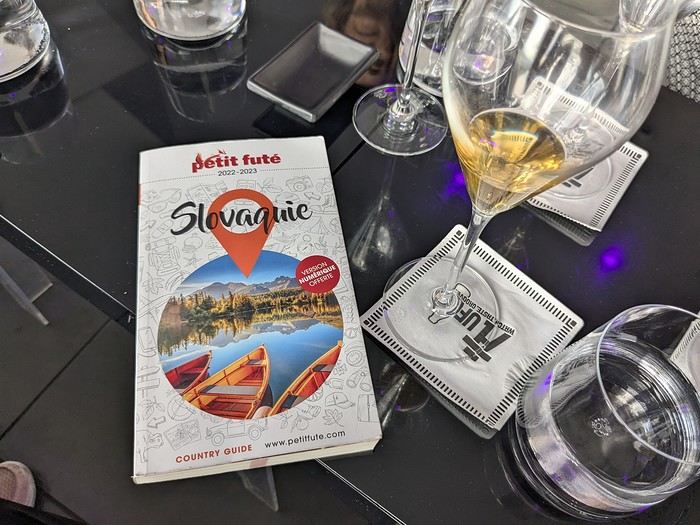 Why this country?
After visiting Hungary, Slovenia, Romania, and Poland in recent years, I’ve fallen in love with Eastern European countries. I adore the Slavic soul, its Austro-Hungarian villages, the gentle landscapes, the Carpathian Mountains, and that slightly mysterious atmosphere.
Slovakia evokes a certain imagination with its deep forests, medieval castles, and cobbled villages.
After seeing photos of the High Tatras—especially Lake Štrbské Pleso and Spiš Castle—I thought, "Let’s do it! We’re going!"
So, will Slovakia live up to what I imagine?
We’ll find out together.
We decided to travel as a group of six (five adults and a six-year-old child), by car (we needed two).
Here’s the day-by-day itinerary for this family trip, which started with a 3-day stay in Vienna (see the dedicated travel journal):
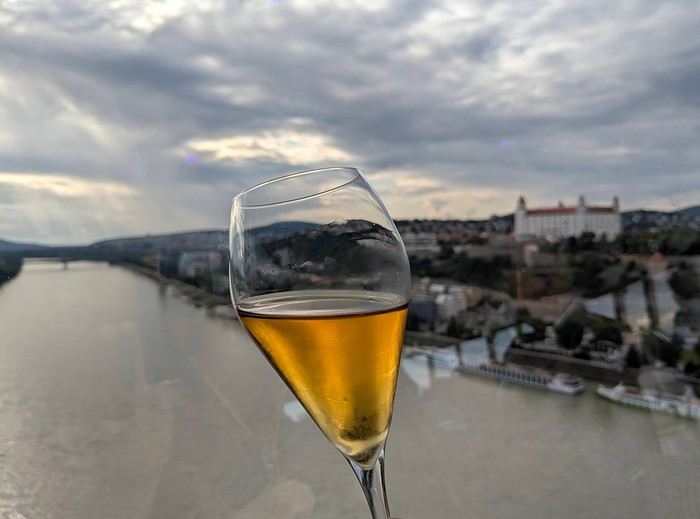
The itinerary: Day 1: Drive from Vienna to Banská Štiavnica and visit the town, then drive to Handlová Day 2: Bojnice Castle, the village of Čičmany, and a walk in the treetops at Bojnice, return to Handlová Day 3: Depart for Orava, visit Orava Castle and the Orava Skansen, drive to Veľký Slavkov Day 4: Visit Slovak Paradise—its gorges, lakes, and ice cave—overnight in Veľký Slavkov Day 5: Visit Bardejov, the "Death Road," wooden churches, and Ľubovňa Castle, overnight in Veľký Slavkov Day 6: Walks and hikes in the High Tatras, Lake Štrbské Pleso, Solisko summit, treetop walk in Ždiar, overnight in Veľký Slavkov Day 7: Drive to Košice, visit Spiš Castle, Tokaj wine route in Veľká Trňa, overnight in Košice Day 8: Visit Košice, overnight in Košice Day 9: Drive to Bratislava, stop at the Aragonite Cave in the Slovak Karst, overnight in Bratislava Day 10: Visit Bratislava, overnight stay Day 11 and 12: Return to France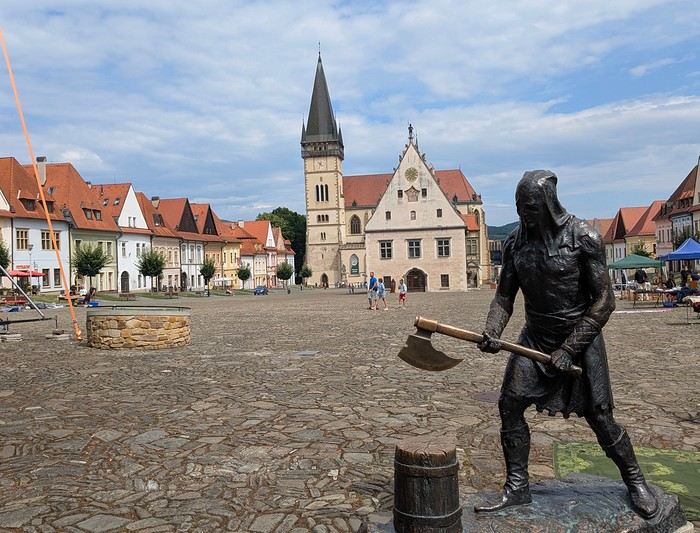
Budget: I’m giving prices for 2 adults / 1 child. Slovakia is more expensive than it seems, and some expenses shouldn’t be underestimated. Transportation: Tolls and gas from France: 500 € round trip Slovak vignette for one month: 17.10 € Gas is fixed at 1.49 € per liter (E10) Parking at sites (all paid by the day, even in the most remote villages, even if you stay for just an hour). Payment is often required in cash upon arrival: total 63 € We didn’t pay at Spiš (we arrived before the cashier) or Ľubovňa (we arrived after the cashier left). Parking at Orava Village was free. In Košice and Bratislava, we parked for free at our accommodations. Public transport in Bratislava and Košice: 1-1.2 € for a bus ticket. Vending machines are available at some stops; otherwise, buy via SMS (Slovak phones only) or official sales points.
Accommodation: We mostly chose houses so we could cook ourselves and save on food. I’ve rated our satisfaction with these accommodations from 1 to 5 stars. Padua: DC Hotel: 1 night, 77 € ***** Handlová: Chata Remata: 2 nights, 120 € ***** Veľký Slavkov: Aplend: 4 nights, 220 € ** Košice: Luxury Old Town Loft 320m²: 2 nights, 120 € ***** Bratislava: Hotel Viktor: 2 nights, 138 € *** Brescia: Hotel Antica Fonte: 1 night, 82 € ***** Total: 757 €
Food: Groceries at Lidl for 5 meals for 3: 100 € (really cheap) Restaurants: 10-15 € per dish, ice cream 1-2.4 € per scoop, crêpes 8-12 €, a glass of wine 6-10 €... total: 500 €
Visits: There are discounts for seniors and children, which is great. We spent nearly 600 € in total, which is a lot. However, it’s a cultural destination with many castles, museums, caves, wine cellars, and nature activities: cable cars, canopy walks, paid hikes (Slovak Paradise gorges)... In the end, this trip to Slovakia cost nearly 2500 € for 3. We also need to add the Vienna portion to that. Now, here’s the day-by-day account of this beautiful journey.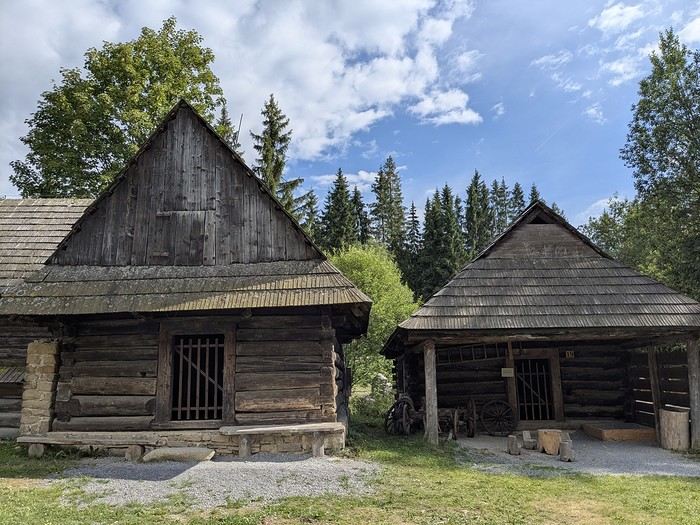
Why this country?
After visiting Hungary, Slovenia, Romania, and Poland in recent years, I’ve fallen in love with Eastern European countries. I adore the Slavic soul, its Austro-Hungarian villages, the gentle landscapes, the Carpathian Mountains, and that slightly mysterious atmosphere.
Slovakia evokes a certain imagination with its deep forests, medieval castles, and cobbled villages.
After seeing photos of the High Tatras—especially Lake Štrbské Pleso and Spiš Castle—I thought, "Let’s do it! We’re going!"
So, will Slovakia live up to what I imagine?
We’ll find out together.
We decided to travel as a group of six (five adults and a six-year-old child), by car (we needed two).
Here’s the day-by-day itinerary for this family trip, which started with a 3-day stay in Vienna (see the dedicated travel journal):
The itinerary: Day 1: Drive from Vienna to Banská Štiavnica and visit the town, then drive to Handlová Day 2: Bojnice Castle, the village of Čičmany, and a walk in the treetops at Bojnice, return to Handlová Day 3: Depart for Orava, visit Orava Castle and the Orava Skansen, drive to Veľký Slavkov Day 4: Visit Slovak Paradise—its gorges, lakes, and ice cave—overnight in Veľký Slavkov Day 5: Visit Bardejov, the "Death Road," wooden churches, and Ľubovňa Castle, overnight in Veľký Slavkov Day 6: Walks and hikes in the High Tatras, Lake Štrbské Pleso, Solisko summit, treetop walk in Ždiar, overnight in Veľký Slavkov Day 7: Drive to Košice, visit Spiš Castle, Tokaj wine route in Veľká Trňa, overnight in Košice Day 8: Visit Košice, overnight in Košice Day 9: Drive to Bratislava, stop at the Aragonite Cave in the Slovak Karst, overnight in Bratislava Day 10: Visit Bratislava, overnight stay Day 11 and 12: Return to France
Budget: I’m giving prices for 2 adults / 1 child. Slovakia is more expensive than it seems, and some expenses shouldn’t be underestimated. Transportation: Tolls and gas from France: 500 € round trip Slovak vignette for one month: 17.10 € Gas is fixed at 1.49 € per liter (E10) Parking at sites (all paid by the day, even in the most remote villages, even if you stay for just an hour). Payment is often required in cash upon arrival: total 63 € We didn’t pay at Spiš (we arrived before the cashier) or Ľubovňa (we arrived after the cashier left). Parking at Orava Village was free. In Košice and Bratislava, we parked for free at our accommodations. Public transport in Bratislava and Košice: 1-1.2 € for a bus ticket. Vending machines are available at some stops; otherwise, buy via SMS (Slovak phones only) or official sales points.
Accommodation: We mostly chose houses so we could cook ourselves and save on food. I’ve rated our satisfaction with these accommodations from 1 to 5 stars. Padua: DC Hotel: 1 night, 77 € ***** Handlová: Chata Remata: 2 nights, 120 € ***** Veľký Slavkov: Aplend: 4 nights, 220 € ** Košice: Luxury Old Town Loft 320m²: 2 nights, 120 € ***** Bratislava: Hotel Viktor: 2 nights, 138 € *** Brescia: Hotel Antica Fonte: 1 night, 82 € ***** Total: 757 €
Food: Groceries at Lidl for 5 meals for 3: 100 € (really cheap) Restaurants: 10-15 € per dish, ice cream 1-2.4 € per scoop, crêpes 8-12 €, a glass of wine 6-10 €... total: 500 €
Visits: There are discounts for seniors and children, which is great. We spent nearly 600 € in total, which is a lot. However, it’s a cultural destination with many castles, museums, caves, wine cellars, and nature activities: cable cars, canopy walks, paid hikes (Slovak Paradise gorges)... In the end, this trip to Slovakia cost nearly 2500 € for 3. We also need to add the Vienna portion to that. Now, here’s the day-by-day account of this beautiful journey.
Costa Deliziosa Cruise Review – Feedback for Future Cruisers
I’ve just returned from a cruise on the COSTA DELIZIOSA and wanted to share my thoughts for anyone considering this cruise line.
**Boarding in VENICE:** AVOID – it took a total of 3 hours before we could finally board!
**CABINS:** Our group had booked cabins with portholes. These were on the first deck, around cabins 1230 to 1257, and they were fine—no complaints. BUT some of us had cabins in the 13xx range, and that was a completely different story. These were right next to the engines, with an UNBEARABLE noise level!!! Those guests had to fight to get their cabins changed. One couple, after two days of hassle and endless discussions, finally got a balcony cabin. However, another couple was DOWNGRADED to a tiny INTERIOR CABIN—even though they had originally booked a porthole cabin!
COSTA clearly doesn’t care about its customers. Of course, these guests are still pursuing compensation, but their cruise was ruined.
Now, let’s talk about meals, the MY DRINK package, and the shows.
**Self-service meals:** NOT GREAT AT ALL. The buffets were chaotic—no pizza buffets like on MSC (because if you want pizza, you have to pay for it!). No pasta buffets either, unlike MSC.
**Restaurant meals:** Overall, they were okay, but whatever you do, don’t order the "3 Chefs" dishes—you’ll be very disappointed! And if you dine at the 3 Chefs restaurant, the menu costs 59 €!
**MY DRINK package:** In theory, ALL DRINKS ARE INCLUDED except for certain alcohols. They leave a large bottle of mineral water in your cabin, but if you drink it, they charge you for it despite the package. And on top of that, you’re only allowed 7 small bottles of water, while the number of alcoholic or non-alcoholic cocktails is unlimited?????
**SHOWS:** HUGE DISAPPOINTMENT! They only lasted half an hour, with no elaborate costumes, no real choreography—just one or two singers or a juggler on stage performing the entire evening’s show.
And the sound system? UNBEARABLE—so loud!
We had dinner during the second seating—which we really didn’t appreciate—and since meals ended at 10:30 PM, we’d look for a quiet spot afterward, but there wasn’t one! Music was blasting everywhere, and it was WAY too loud!
Another issue: The satisfaction survey. **Would you recommend COSTA to your friends and family?** Then the presenter gives you this whole speech about how the staff works 24/7 and that if you say you’re not satisfied, you’re punishing the hardworking crew. It’s emotional blackmail—unbelievable!!!
The staff, though, was absolutely lovely—housekeeping, waiters, everyone was so kind!
**Final verdict:** NEVER AGAIN with COSTA. For them, it’s all about MAXIMIZING PROFITS. If I ever go on another cruise, it’ll be with MSC or another line.
Santiago Airport Bus: Recent Experience Feedback
Hi there,
This topic has come up before, but I wanted to share a fresh experience from early 2025.
For those of you looking to take the bus to Santiago Airport, I recommend taking the Centropuerto bus from their departure point, which is located in the middle of Alameda, Santiago’s main avenue, just outside Line 1 of the Los Héroes metro station. If you board the bus anywhere else, it’ll most likely be full, and if you have luggage, that can be a hassle.
During daytime hours on weekdays, these buses run every 10 to 15 minutes. Plan for anywhere between 30 minutes to an hour to reach the airport from this spot, depending on the time and traffic.
The ticket costs 2000 CLP pesos, payable in cash in the local currency—about 2 € or $2 USD per person.
Gravel bike route from Tafraout to M'haech Pass
Hi everyone, could someone give me info on the track that starts from Tafraout toward M’harch Pass and then continues to Mcissi to join the national road heading west to Alnif? I’m planning to go in April 2025 by gravel bike/MTB. Is it doable? Is there a lot of soft sand??? How many km???? Thanks for any tips, and happy end of the year to all! Best, Rv.
Cycling the Via Francigena
Never heard of the Via Francigena? It’s a pilgrimage route from Canterbury to Rome, which you can do on foot or by bike. I walked part of it (meh!) as far as Reims. Now I’m looking for a partner to continue all the way to Rome, passing through Switzerland and the Great St. Bernard Pass! Everything’s up for discussion: stages, dates, accommodations... Feel free to get in touch via VF or at 0685054720. See you soon.
Road network conditions in Corsica
Hello,
We’re planning a trip in May-June 2025.
Could you share your driving experiences on the main road network with a motorhome (our vehicle is 7.2 m long and 2.25 m wide)?
What basic route would you recommend for a tour of Corsica? We’re also planning to rent a small car locally to visit spots that are harder to access with the motorhome.
Thanks for your feedback, and kind regards.
Michel Droux
Mise à jour Esta: est-ce suite aux mesures prises envers les Européen? English translation pending
Bonjour à tous
J’ai reçu le mail ci dessous de la part du cap.gov/esta :
There has been an update to your ESTA Travel Authorization Status submitted on June 01, 2019. Please visit https://esta.cbp.dhs.gov/esta to check your application.
ESTA Program Office
https://esta.cbp.dhs.gov/esta www.cbp.gov/esta
E-mail Security: If you are concerned about clicking the above link, ESTA can be accessed by typing https://esta.cbp.dhs.gov in the address bar of your browser.
Suis-je la seule ou est ce que tout ceux qui on un Esta en cours l’on reçu ? Merci pour vos réponses
Quand annoncer un tour du monde aux enfants? English translation pending
Bonjour,
Ca y ait, la décision est prise depuis plusieurs mois.on part en avril 2021, 4 mois, faire 1 petit tour du monde avec nos 3 enfants (6, 9 et 11ans). Avec mon mari on avance sur le choix de l itineraire, le budget, l annonce à son employeur début avril.Et la, grande question: quand est ce qu on l annonce aux enfants???? On leur a dit qu on partirait en voyage en 2021, mais c est loin pour eux même si chacun essaye de deviner la destination...j ai tres envie de leur en parler mais on part "que " 4 mois et J ai peur qu ils trouvent ça trop long 1 an à attendre...mon mari voudrait attendre cet été.. Qu est ce que vous en pensez?
Circuit 15 jours Québec - Ontario avec 3 enfants en mai English translation pending
Bonjour tout le monde,
J’ai le plaisir de vous faire part de mon plan de circuit pour mon prochain séjour en famille au Québec principalement en mai prochain, afin de profiter de vos expériences, mise à jour et commentaires pour amélioration, avant de passer aux réservations.
Séjour du 01/05/2020 au 15/05/2020, 14 nuits. Départ de CDG le 01, arrivé à YUL à 16h30. 3 nuits à Montréal 1 nuit à Québec 3 nuits à Tadoussac/ Saguenay 3 nuits dans un chalet au bord d’un lac en Mauricie, près de Saint Alexis des Monts par exemple Soit 10 nuits au Québec
Ensuite on irait dans l’Ontario pour 4 nuits 2 nuits à Toronto 1 nuits à Niagara 1 nuit en motel sur la route vers Kingston/ Gananoque, pour retour sur YUL Vol de retour à 21h30 le 15/05.
Pour info on est 7, 2 couples avec 3 enfants entre 5 et 11 ans.
Ça fait pas mal de route avec les enfants mais on a pas vraiment d’autres alternatives. L’avion entre Montréal et Toronto plomberait le budget. Vous en pensez quoi, ça vous semble raisonnable ? Normalement le moi de mais est de plus en plus doux ces dernières années mais on n'est pas à l'abris de chutes de neige.
Voyage en Espagne et Portugal via Bordeaux English translation pending
Bonjour à tous,
Je suis à planifier un voyage qui part de Montréal, Qc jusqu'à Bordeaux en France et ensuite on veux visiter l'Espagne et le Portugal à partir du 24 mai 2020 au 25 juin 2020.
Ma question est: Pour visiter l'Espagne et le Portugal que me conseiller vous? location d'un camping-car ou location d'une voiture et coucher dans les gites
Merci à l'avance
Bertrand
Document voyage pour mineur seul pour aller-retour Marseille - Béjaïa (Algérie) English translation pending
Bonjour, je m'appelle Liam j'ai 17 ans et je part bientôt en Algérie. Je voudrait savoir exactement quel document il faut pour faire un allez retour Marseille <-> Bejaia seul sans personne.
je vous remercie d'avance
je vous remercie d'avance
Croisière MSC Opera, départ de Gênes le 21 mars et visite guidée à Jérusalem English translation pending
Bonjour, Avec une amie, nous faisons la croisière MSC opéra qui part de gênes le 21 mars et qui fera escale à HAIFA le 26 Mars. J'ai contacté un guide francophone qui a été recomandé dans le forum et d'après les discussions, les tarifs seraient équivalent à ceux de MSC pour un groupe de 6.
Je recherche donc 4 croisiéristes qui seraient intéressés par une visite guidée à Jérusalem et Betléem ou Nazareth
Merci de me contacter pour plus d'informations
Résultats de recherche
Résultats Web
Navette aéroport de Dakar - Thiès (Sénégal) English translation pending
Bonjour à tous,
Je voudrais savoir si il y a bien une navette qui part de l'aeroport de dakar jusqu'à thies? et si oui jusqu'à quelle heure est elle en fonction? On devrait arriver vers 21h et je voudrais être sur qu'elle soit encore op. Merci d'avance
Je voudrais savoir si il y a bien une navette qui part de l'aeroport de dakar jusqu'à thies? et si oui jusqu'à quelle heure est elle en fonction? On devrait arriver vers 21h et je voudrais être sur qu'elle soit encore op. Merci d'avance
Le GR48 dans la Sierra Morena en Andalousie English translation pending
Bonjour,
Simplement pour vous recommander ce GR dans l’Andalousie plus sauvage. Ce sentier part de Barrancos (dernier village portugais avant d’entrer en Espagne). Après vous traverserez toutes les provinces ( comme les départements en France) de l’Andalousie, côté nord, en suivant toute la Sierra Morena. Un territoire où on peut trouver encore le lynx ibérique, le félin le plus menacé au monde. Personnellement j’ai fait la partie qui va de Barrancos jusqu’à Córdoba et c’était incroyable. C’est un GR sauvage où on croise presque personne (seulement on trouve du monde dans la partie qui partage avec el camino de la Plata, le chemin de pèlerinage de St Jacques qui va du sud au nord c’est-à-dire de Sevilla à Compostela en Galice. Cependant, c’est un chemin où c’est très facile de trouver du logement (si vous êtes intéressé, je peux vous filer des adresses. En plus, comme on est dans l’Andalousie, les prix sont très bas. 20-30€ par nuit.
De tous les GR que j’ai fait en Espagne, que je connais bien, c’est celui qui m’a plus impressionné. Aussi le GR de Serra de Tramuntana à Majorque.
La distance de celui de Sierra Morena est de 550km entre Barrancos et Santa Elena à Jaen, mais c’est possible de faire des petits morceaux si on est fatigué comme c’est mon cas. L’avantage, que tu peux sortir du chemin et aller visiter des grandes villes comme Sevilla ou comme dans mon cas, Córdoba.
Carles
Erreur de dates du visa Schengen pour l'Allemagne English translation pending
Bonsoir à tous,
J’ai reçu mon visa tourisme aujourd’hui de la part du consulat d’Allemagne, j’ai remarqué qu’il y avait une erreur au niveau de la date de validité : du 20/01/2020 au 03/02/2020 au lieu de 20/12/2019 au 12/01/2020. J’ai bien renseigné mes dates dans le formulaire et je les ai également communiqué à la dame lors de mon rdv de visa. Auriez-vous svp une idée pour régler ce problème ? Merci beaucoup
J’ai reçu mon visa tourisme aujourd’hui de la part du consulat d’Allemagne, j’ai remarqué qu’il y avait une erreur au niveau de la date de validité : du 20/01/2020 au 03/02/2020 au lieu de 20/12/2019 au 12/01/2020. J’ai bien renseigné mes dates dans le formulaire et je les ai également communiqué à la dame lors de mon rdv de visa. Auriez-vous svp une idée pour régler ce problème ? Merci beaucoup
Zoo à Ranua (Finlande) English translation pending
Bonjour,
Si vous avez visité ce zoo, merci de me faire part de votre expérience. J'ai consulté le site et leur ai demandé des précisions. Sur le Routard, Il y a un tarif entrée - un circuit de 3kms... Peut-on y observer les ours blancs et autres animaux, ou avez-vous dû acheter des safaris spéciaux? Merci. Chabcha
Si vous avez visité ce zoo, merci de me faire part de votre expérience. J'ai consulté le site et leur ai demandé des précisions. Sur le Routard, Il y a un tarif entrée - un circuit de 3kms... Peut-on y observer les ours blancs et autres animaux, ou avez-vous dû acheter des safaris spéciaux? Merci. Chabcha