Results for "Arica+|+101+>+127"
4506 results found.
Compagnie pour Togo Bénin ou Ghana? English translation pending
Merci de m'indiquer des noms et adresse email de compagnie aérienne pas chere vers le ghana, togo ou bénin. Nous souhaitons que nos deux grandes filles nous rejoignent pour les fetes de noel dans un de ses pays, de notre coté nous y serons par véhicule. Merci bcp.
Review of our family safari in Tanzania and Zanzibar
Jambo! I organized my trip through this kind of group, so I thought I’d share my experience here. We traveled as a group of four, including two kids aged 9 and 11. After requesting around twenty quotes, I decided to book the safari portion with MAKING MEMORIES IN AFRICA. Ally responded quickly and listened to all my requests—unlike other agencies—such as having a French-speaking guide, the order of park visits (Tarangire, Manyara, Serengeti, then Ngorongoro), and a mix of budget hotels and camping to keep costs down. There were still four agencies in the running, and price was the deciding factor. Even though they were the cheapest, I felt better taken care of than with others. For example, all meals were prepared by a Maasai chef, Louis, who accompanied us throughout the trip, while some others ate meals out of cardboard boxes. Samuel, our guide, explained so many things and answered all our questions. José drove us safely the whole way. Everything was done with great cheer!
At the end of the stay, Ally came to meet us and gave us t-shirts with the agency’s logo—we loved that they took the time to hear our feedback in person. In short, I highly recommend them +++, especially since it’s a local agency that also supports a charity for women and children.
For Zanzibar, I organized everything myself. I hesitated for a long time but eventually booked all four nights at the same place. We don’t like crowds, so I initially considered Jambiani but ended up choosing EVERGREEN BUNGALOWS in Bwejuu. We took their first airport-to-hotel transfer since we arrived at night, and it felt safer. Great value for money, in our opinion. Just be aware that it’s quite isolated—perfect for relaxing and going on excursions. There were very few beach vendors, unlike what I’d read about Zanzibar. We lived with our feet in the sand from morning to night, with a small basin of water outside our room to rinse off. Such a lovely spot!
I had asked for some excursion prices before leaving but ended up booking on-site. Not at our hotel, but at a nearby restaurant that was cheaper. After some thought, since we were based in Bwejuu, I wanted to do Blue Lagoon and Pungume (both departing from the south of Zanzibar).
Blue Lagoon: About 3 hours total, with snorkeling on a small reef full of fish (coral wasn’t great) and a stop at a spot with tons of starfish, plus local snacks, fruit, and drinks.
Pungume: An amazing day with a 50% chance of seeing dolphins (we missed them), a visit to the mangroves, then snorkeling at a spot with some nice coral and, of course, fish. We ended with a fantastic grill (tuna, shrimp, squid, lobster, and fries) on a sandbank in the shade.
Finally, before heading to Stone Town, we visited Paje Cave, which is much less known than Maalum. It’s smaller, but we saw bats, went for a swim, and fed the chickens and rabbits (great for the kids). To finish, we explored Stone Town on our own and had dinner at Forodhani Market.
For flights, we flew with Turkish Airlines from Barcelona to Kilimanjaro and back from Zanzibar—no issues there. However, I don’t recommend the Kilimanjaro-Zanzibar leg with Precision Air. Our luggage didn’t arrive, and according to the hotel, this happens often. We only got it back a day and a half later.
At the end of the stay, Ally came to meet us and gave us t-shirts with the agency’s logo—we loved that they took the time to hear our feedback in person. In short, I highly recommend them +++, especially since it’s a local agency that also supports a charity for women and children.
For Zanzibar, I organized everything myself. I hesitated for a long time but eventually booked all four nights at the same place. We don’t like crowds, so I initially considered Jambiani but ended up choosing EVERGREEN BUNGALOWS in Bwejuu. We took their first airport-to-hotel transfer since we arrived at night, and it felt safer. Great value for money, in our opinion. Just be aware that it’s quite isolated—perfect for relaxing and going on excursions. There were very few beach vendors, unlike what I’d read about Zanzibar. We lived with our feet in the sand from morning to night, with a small basin of water outside our room to rinse off. Such a lovely spot!
I had asked for some excursion prices before leaving but ended up booking on-site. Not at our hotel, but at a nearby restaurant that was cheaper. After some thought, since we were based in Bwejuu, I wanted to do Blue Lagoon and Pungume (both departing from the south of Zanzibar).
Blue Lagoon: About 3 hours total, with snorkeling on a small reef full of fish (coral wasn’t great) and a stop at a spot with tons of starfish, plus local snacks, fruit, and drinks.
Pungume: An amazing day with a 50% chance of seeing dolphins (we missed them), a visit to the mangroves, then snorkeling at a spot with some nice coral and, of course, fish. We ended with a fantastic grill (tuna, shrimp, squid, lobster, and fries) on a sandbank in the shade.
Finally, before heading to Stone Town, we visited Paje Cave, which is much less known than Maalum. It’s smaller, but we saw bats, went for a swim, and fed the chickens and rabbits (great for the kids). To finish, we explored Stone Town on our own and had dinner at Forodhani Market.
For flights, we flew with Turkish Airlines from Barcelona to Kilimanjaro and back from Zanzibar—no issues there. However, I don’t recommend the Kilimanjaro-Zanzibar leg with Precision Air. Our luggage didn’t arrive, and according to the hotel, this happens often. We only got it back a day and a half later.
Question about gorilla permit agencies in Uganda
Hi there,
I’d love to hear your thoughts on the agencies you used to plan your trip to Uganda.
There’s the whole issue of gorilla permits, which need to be booked in advance and involve a significant financial commitment. That’s where I’m at with my trip planning. Between checking lutb.go.ug/ and reading online reviews, it’s hard to move forward with confidence.
I contacted the French Embassy, but they don’t provide any recommendations. I almost booked with an agency that had a really bad review from February specifically about the permit process.
How did you go about choosing your agency? Given the large sum involved, I’m this close to booking through a travel agency in France for this part.
From what I understand, no matter which agency books the permit, you’re ultimately guided by professionals trained for gorilla trekking based on the permit itself? I’m assuming that’s how it works.
Thanks for your feedback, and I’m really happy to see the forum’s new energy—it’s been super helpful to me in the past.
I’d love to hear your thoughts on the agencies you used to plan your trip to Uganda.
There’s the whole issue of gorilla permits, which need to be booked in advance and involve a significant financial commitment. That’s where I’m at with my trip planning. Between checking lutb.go.ug/ and reading online reviews, it’s hard to move forward with confidence.
I contacted the French Embassy, but they don’t provide any recommendations. I almost booked with an agency that had a really bad review from February specifically about the permit process.
How did you go about choosing your agency? Given the large sum involved, I’m this close to booking through a travel agency in France for this part.
From what I understand, no matter which agency books the permit, you’re ultimately guided by professionals trained for gorilla trekking based on the permit itself? I’m assuming that’s how it works.
Thanks for your feedback, and I’m really happy to see the forum’s new energy—it’s been super helpful to me in the past.
Africa: A Heartfelt Love for a Continent
“When the Whites came to Africa, we had the land and they had the Bible. They taught us to pray with our eyes closed: when we opened them, the Whites had the land and we had the Bible.” Jomo Kenyatta (p.7)
The Maggi cube, an unchallenged hegemony, and so much more
“The hopeless continent,” headlined The Economist, a British magazine, in July 2000 about Africa. Eleven years later, the same magazine headlined “Africa rising” instead. Images of Africa in the prosperous North constantly oscillate between apocalyptic scenarios and enthusiastic projections. A key issue with such images lies in the generalization they entail. If you look at the continent, considerable contrasts emerge depending on space and time. It’s no surprise that a region of the world encompassing such diverse ecological zones, maintaining such varied ties with other continents, comprising nearly fifty nation-states in sub-Saharan Africa alone, and characterized by a great diversity of languages, belief systems, and historical paths, doesn’t share a single destiny.
And yet, for many people outside Africa, as well as for many Africans, the continent constitutes a single entity, defined by criteria such as skin color, a colonial past, poverty, and the art of survival. Until now, these perspectives were generally accompanied by the idea that Africa had to—or should have—followed a single path together, sometimes called development, sometimes modernization, sometimes liberation, then a market economy. None of these paths delivered on their promises.
The two writers Alain Mabanckou and Abdourahman Waberi—one from Congo, the other raised in Djibouti, both long settled in France and now professors at renowned North American universities (Los Angeles, Washington)—have had enough of pessimistic scenarios: “We are aware that Africa is in the world and the world is in Africa. The same goes for all other continents, as our destinies are inextricably linked for better or worse. We refuse to see Africa as a reservoir of misfortunes or a continent cursed by atavistic misfortune and characterized by ethnic conflicts. [...] It’s this passionate flame we wanted to capture in a book [...] a kind of stroll through African cultures, without any demands, each letter of the alphabet leading us to a notion, a practice, a concept, a moment in history, literature, painting, politics, economics, cuisine, etc.” (p.10-11). Africa, they write, is on the verge of “imposing a signature, a style, a way of being in the world and in relation to the rest of the world.” (p.11) To put words to the continent’s diversity and dynamism, the two authors created a “rambling ABC,” a kind of portrait—or more precisely, a mythography—that lets you see and feel the pulse of a vast continent whose cultural power is unfolding before our eyes. Once marginalized or even mocked, the voice and importance of the Continent in global affairs are now undeniable” (p.11), containing over a hundred entries, mostly concise, written in a relaxed and casual style. The optimistic, even exuberant tone is set from the brief introduction. The duo of authors wants to “sing a love song to the cultures of our continent, to its inhabitants past and present, to its exceptional resources and its spectacular globalization despite a certain pollution that still clouds our skies due to the unmatched duration of dictatorships in some of our regions.” (p.12) In doing so, they don’t want to be too distracted by today’s Afewerki-Biya-Bongo-Déby & Co. ...
Of course, you’ll find tributes to great precursors like Frantz Fanon (“[...] it was a love story and admiration that wasn’t dimmed by the four decades separating his birth from ours. Let’s add that we were born while the native of Fort-de-France had left the world’s stage four years earlier, in the prime of life” p.141), Mongo Beti (“You must read and reread Mongo Beti, a genius who used his fame to support often just causes in Africa, like defending oppressed groups. His place is already in History. His oppressors, like the dictators Ahmadou Ahidjo and Paul Biya, can’t compete in the same category” p.64), the Malian Amadou Hampâté Bâ
(“Posterity remembers him mainly as an tireless defender of African cultures. His plea for the collection and preservation of traditional African knowledge remains a major event for all men and women of good will. One day in 1960, at the UNESCO podium, the native of Bandiagara sounded the alarm: ‘[...] Since we’ve admitted that the humanity of each people is the heritage of all humanity, if African traditions aren’t collected in time and written down, they’ll one day be missing from the universal archives of humanity.’” p.51),
Kwame Nkrumah, “one of the founders of Pan-Africanism, father of Ghana’s independence” (p.239), as well as the historian Cheikh Anta Diop, the writer, poet, and politician Aimé Césaire, and the economist and thinker Samir Amin, but also very warm tributes to certain contemporary African intellectuals like Souleymane Bachir Diagne and Achille Mbembe
(“A few years ago, in dominant economic circles, a rumor often resurfaced, usually disguised as a cold and scientifically proven analysis: Africa is useless. It’s a burden for the rest of the human community. With its 2% share in world trade, it would disappear from stock market radars without anyone noticing. So? Maybe it’ll be pulled up by other continents. Wanting to surpass itself is a crazy bet for Africans, they concluded. Arrogant or clueless, President Nicolas Sarkozy declared before an audience of students and teachers at Cheikh Anta Diop University in Dakar: ‘The African man hasn’t entered history enough [...] He only knows the eternal repetition of time marked by the endless repetition of the same gestures and words.’ That was in 2007. For decades, armed only with reason, an intellectual often steps up to debunk prejudices, lazy readings, and dishonest frameworks used as false fronts by those who, like Nicolas Sarkozy or former journalist Stephen Smith, out of ignorance, contempt, or condescension, distort African reality. This intellectual is none other than the historian and political scientist Achille Mbembe. This heir of Frantz Fanon, Amílcar Cabral, Jean-Marc Ela, and Fabien Eboussi-Boulaga was born in 1957 in Cameroon, in the Bassa region. Marked early by the upheavals of a fratricidal war, Achille Mbembe became the guardian of the memory of martyrs. After brilliant studies in Paris, he went on to teach at the best American universities, but the call of the Continent was stronger than anything else. In Dakar, he once directed CODESRIA (Council for the Development of Social Science Research in Africa) before joining the University of the Witwatersrand in Johannesburg, South Africa. Even though the author of *Critique of Black Reason* (Éditions La Découverte, 2015) spends a few months at Duke University in North Carolina, his observation post remains South Africa. From Johannesburg, Achille Mbembe scrutinizes Africa and the whole world. A lucid observer with an elegant and generous pen, Achille Mbembe knows how to blend big and small history: ‘I was born one day in July, as the month was drawing to a close. It was 1957, in that part of Africa recently named ‘Cameroon,’ a memory of the wonder that seized Portuguese sailors in the 15th century when, sailing up the river near Douala, they couldn’t help but note the presence of a multitude of crustaceans, and named it *Rio dos Camarões*, meaning ‘River of Shrimp.’ I grew up in the shadow of this nameless land, since, in a way, the name it bears is only the product of someone else’s astonishment: a lexical mistake, if you will.’ From this mistake or wound, he made leaven, a springboard to compose a rich work, recognized worldwide. To denounce barriers and barbarians too. But that’s not enough. Among his peers in circles of thought and action, Achille Mbembe passionately and consistently defends human dignity and the beauty of the world. In doing so, he fulfills the mission Frantz Fanon entrusted to him.” (p.227-229),
as well as entries dedicated to lesser-known artists and intellectuals, like the French journalist and activist Rokhaya Diallo, daughter of Senegalese and Gambian parents, or the Ethiopian filmmaker Haile Gerima, who has long lived in the United States. Other names from politics, sports, music, art, and literature: Kofi Annan, p.36; Barack Obama, p.243; Thomas Sankara, p.277; Ousmane Sow, p.285; Yambo Ouologuem, p.250; Léopold Sédar Senghor, p.282; Muhammad Ali, p.30; Nuruddin Farah, p.146; Salif Keita, p.203; Ahmadou Kourouma, p.206; Ngũgĩ wa Thiong’o, p.236; Winnie Mandela, p.224; Kylian Mbappé, p.226 ...
The authors, who resolutely commit to a “mythography” (p.11) of Africa, also pay special attention to local social movements, cultural events, and aspects of daily life. *Y’en a marre*, “which also meant ‘we’re fed up with sitting on our hands’” (p.320-321), emerged about a decade ago in Senegal as a citizen movement of peaceful resistance and symbolizes, the authors emphasize, the fact that African youth are increasingly fed up “with the political circus deployed in Africa since independence, as our parents would say, ‘since the White man left’...” (p.321). A full entry is dedicated to the Maggi bouillon cube, which has flooded African markets for about forty years and enjoys immense popularity (“It’s everywhere in Africa, from Dakar to Djibouti, and from Tangier to Cape Town. It’s in every pot, every stew. Little hands put it in every sauce, every local or adapted dish. An unchallenged hegemony! You’ll find it in diasporas too. The culinary strolls in Paris, in the [...] neighborhood” p.90). Critics blame it not only for impoverishing the aromatic diversity of local dishes but also for being harmful to health. And yet, “he poorest Africans, those who eat only once a day, a few spoonfuls of white beans and a ball of *foufou*, for example, are the most fervent users of the magic cube.” (p.92-93)
For *fonio*, “the new trendy cereal. [...] From the millet family, fonio is probably the oldest cereal cultivated in West Africa, and mainly in its sub-Saharan part, for millennia. [...] Easy to grow, water-efficient, fonio grows everywhere except on clay soils. Long neglected because it was considered the poor man’s crop, fonio is now a source of pride for the farmers who cultivate it and cherish it like the apple of their eye” (p.156-157), the authors immediately offer a detailed recipe, letting the reader know that “e can’t resist sharing this fonio with chicken recipe from Mali with you:
Ingredients: 1 chicken 3 large ripe red tomatoes 4 tbsp tomato paste 4 large onions 1 garlic clove 1/2 cup oil 2 Maggi cubes or salt 2 large carrots 1 turnip 1 large cabbage 2 large potatoes 1 celery stalk 1 packet pre-cooked fonio 4 okra (or okra powder) salt, pepper
Preparation: 1. Prepare the sauce: wash and cut the chicken. Peel the onions, garlic, and vegetables. 2. In a pot, fry the chicken pieces. 3. Dice the onions, tomatoes, carrots, and turnip very small and add them to the pot. 4. Add the tomato paste, salt, and pepper. 5. Simmer for 15 min, then add 2 L of water and the cooked chicken pieces. 6. Simmer for 30 min, then add the crushed garlic and celery, plus the cabbage cut into 4 and the potatoes cut in half. 7. Prepare the fonio: cover it with warm water, let it rest for 15 min, and cook it over low heat. 8. In a small pot, boil the okra and crush them. 9. Mix the crushed okra with the cooked fonio, then salt. Serve hot.” (p.158-159)
The comedy *Black Mic Mac*, released in French theaters in 1986 and addressing France’s increasingly restrictive immigration policy at the time, also gets an entry, as do *Tintin in the Congo*, the popular comic, and *Jip’s Café* (“[...] a little Africa in the heart of Paris, with passersby stopping to admire the ‘ambianceurs’ on the dance floor or attend the cultural events offered by the place” (p.194), an African establishment in Paris that Alain Mabanckou already immortalized in one of his novels.
The duo of authors also tackles thorny subjects like jihadism (p.119), the Rwandan genocide (p.272), the CFA franc (p.82), and dictatorship (p.110). While the two strike the right tone here, many entries leave a slightly bitter taste. Two examples: why doesn’t the text on Barack Obama mention the great disappointment of many people in Africa, who expected more from the African policy of the first U.S. president with African roots than just occasional warm words? Why do the comments on Winnie Mandela gloss over the fact that she was a highly controversial icon of the anti-apartheid movement due to her involvement in kidnappings, acts of torture, and murders of alleged apartheid collaborators? Instead, there’s a compassion that brings tears to the eyes: “She was often reduced to a secondary role, the wife of a great man” or “When victory came, she didn’t taste its fruits. Divorced, isolated. She would never be a ‘first lady’ in an evening gown, posing before a bed of chrysanthemums. They’d keep her far from the circles of power” (p.224-225). At this point, I would’ve liked the authors to take a slightly more critical stance...
That said, these “weaknesses” (if you can call them that) shouldn’t overshadow the book as a whole. It remains an informative, sometimes very entertaining, and often even original work in its own way.
Book information (the original French and the German translation):
Alain Mabanckou/Abdourahman Waberi. Dictionnaire enjoué des cultures africaines. Fayard, 2019. Alain Mabanckou/Abdourahman Waberi. Der Puls Afrikas. Eine Liebeserklärung von A bis Z. Reclam, 2022.
Hery
The Maggi cube, an unchallenged hegemony, and so much more
“The hopeless continent,” headlined The Economist, a British magazine, in July 2000 about Africa. Eleven years later, the same magazine headlined “Africa rising” instead. Images of Africa in the prosperous North constantly oscillate between apocalyptic scenarios and enthusiastic projections. A key issue with such images lies in the generalization they entail. If you look at the continent, considerable contrasts emerge depending on space and time. It’s no surprise that a region of the world encompassing such diverse ecological zones, maintaining such varied ties with other continents, comprising nearly fifty nation-states in sub-Saharan Africa alone, and characterized by a great diversity of languages, belief systems, and historical paths, doesn’t share a single destiny.
And yet, for many people outside Africa, as well as for many Africans, the continent constitutes a single entity, defined by criteria such as skin color, a colonial past, poverty, and the art of survival. Until now, these perspectives were generally accompanied by the idea that Africa had to—or should have—followed a single path together, sometimes called development, sometimes modernization, sometimes liberation, then a market economy. None of these paths delivered on their promises.
The two writers Alain Mabanckou and Abdourahman Waberi—one from Congo, the other raised in Djibouti, both long settled in France and now professors at renowned North American universities (Los Angeles, Washington)—have had enough of pessimistic scenarios: “We are aware that Africa is in the world and the world is in Africa. The same goes for all other continents, as our destinies are inextricably linked for better or worse. We refuse to see Africa as a reservoir of misfortunes or a continent cursed by atavistic misfortune and characterized by ethnic conflicts. [...] It’s this passionate flame we wanted to capture in a book [...] a kind of stroll through African cultures, without any demands, each letter of the alphabet leading us to a notion, a practice, a concept, a moment in history, literature, painting, politics, economics, cuisine, etc.” (p.10-11). Africa, they write, is on the verge of “imposing a signature, a style, a way of being in the world and in relation to the rest of the world.” (p.11) To put words to the continent’s diversity and dynamism, the two authors created a “rambling ABC,” a kind of portrait—or more precisely, a mythography—that lets you see and feel the pulse of a vast continent whose cultural power is unfolding before our eyes. Once marginalized or even mocked, the voice and importance of the Continent in global affairs are now undeniable” (p.11), containing over a hundred entries, mostly concise, written in a relaxed and casual style. The optimistic, even exuberant tone is set from the brief introduction. The duo of authors wants to “sing a love song to the cultures of our continent, to its inhabitants past and present, to its exceptional resources and its spectacular globalization despite a certain pollution that still clouds our skies due to the unmatched duration of dictatorships in some of our regions.” (p.12) In doing so, they don’t want to be too distracted by today’s Afewerki-Biya-Bongo-Déby & Co. ...
Of course, you’ll find tributes to great precursors like Frantz Fanon (“[...] it was a love story and admiration that wasn’t dimmed by the four decades separating his birth from ours. Let’s add that we were born while the native of Fort-de-France had left the world’s stage four years earlier, in the prime of life” p.141), Mongo Beti (“You must read and reread Mongo Beti, a genius who used his fame to support often just causes in Africa, like defending oppressed groups. His place is already in History. His oppressors, like the dictators Ahmadou Ahidjo and Paul Biya, can’t compete in the same category” p.64), the Malian Amadou Hampâté Bâ
(“Posterity remembers him mainly as an tireless defender of African cultures. His plea for the collection and preservation of traditional African knowledge remains a major event for all men and women of good will. One day in 1960, at the UNESCO podium, the native of Bandiagara sounded the alarm: ‘[...] Since we’ve admitted that the humanity of each people is the heritage of all humanity, if African traditions aren’t collected in time and written down, they’ll one day be missing from the universal archives of humanity.’” p.51),
Kwame Nkrumah, “one of the founders of Pan-Africanism, father of Ghana’s independence” (p.239), as well as the historian Cheikh Anta Diop, the writer, poet, and politician Aimé Césaire, and the economist and thinker Samir Amin, but also very warm tributes to certain contemporary African intellectuals like Souleymane Bachir Diagne and Achille Mbembe
(“A few years ago, in dominant economic circles, a rumor often resurfaced, usually disguised as a cold and scientifically proven analysis: Africa is useless. It’s a burden for the rest of the human community. With its 2% share in world trade, it would disappear from stock market radars without anyone noticing. So? Maybe it’ll be pulled up by other continents. Wanting to surpass itself is a crazy bet for Africans, they concluded. Arrogant or clueless, President Nicolas Sarkozy declared before an audience of students and teachers at Cheikh Anta Diop University in Dakar: ‘The African man hasn’t entered history enough [...] He only knows the eternal repetition of time marked by the endless repetition of the same gestures and words.’ That was in 2007. For decades, armed only with reason, an intellectual often steps up to debunk prejudices, lazy readings, and dishonest frameworks used as false fronts by those who, like Nicolas Sarkozy or former journalist Stephen Smith, out of ignorance, contempt, or condescension, distort African reality. This intellectual is none other than the historian and political scientist Achille Mbembe. This heir of Frantz Fanon, Amílcar Cabral, Jean-Marc Ela, and Fabien Eboussi-Boulaga was born in 1957 in Cameroon, in the Bassa region. Marked early by the upheavals of a fratricidal war, Achille Mbembe became the guardian of the memory of martyrs. After brilliant studies in Paris, he went on to teach at the best American universities, but the call of the Continent was stronger than anything else. In Dakar, he once directed CODESRIA (Council for the Development of Social Science Research in Africa) before joining the University of the Witwatersrand in Johannesburg, South Africa. Even though the author of *Critique of Black Reason* (Éditions La Découverte, 2015) spends a few months at Duke University in North Carolina, his observation post remains South Africa. From Johannesburg, Achille Mbembe scrutinizes Africa and the whole world. A lucid observer with an elegant and generous pen, Achille Mbembe knows how to blend big and small history: ‘I was born one day in July, as the month was drawing to a close. It was 1957, in that part of Africa recently named ‘Cameroon,’ a memory of the wonder that seized Portuguese sailors in the 15th century when, sailing up the river near Douala, they couldn’t help but note the presence of a multitude of crustaceans, and named it *Rio dos Camarões*, meaning ‘River of Shrimp.’ I grew up in the shadow of this nameless land, since, in a way, the name it bears is only the product of someone else’s astonishment: a lexical mistake, if you will.’ From this mistake or wound, he made leaven, a springboard to compose a rich work, recognized worldwide. To denounce barriers and barbarians too. But that’s not enough. Among his peers in circles of thought and action, Achille Mbembe passionately and consistently defends human dignity and the beauty of the world. In doing so, he fulfills the mission Frantz Fanon entrusted to him.” (p.227-229),
as well as entries dedicated to lesser-known artists and intellectuals, like the French journalist and activist Rokhaya Diallo, daughter of Senegalese and Gambian parents, or the Ethiopian filmmaker Haile Gerima, who has long lived in the United States. Other names from politics, sports, music, art, and literature: Kofi Annan, p.36; Barack Obama, p.243; Thomas Sankara, p.277; Ousmane Sow, p.285; Yambo Ouologuem, p.250; Léopold Sédar Senghor, p.282; Muhammad Ali, p.30; Nuruddin Farah, p.146; Salif Keita, p.203; Ahmadou Kourouma, p.206; Ngũgĩ wa Thiong’o, p.236; Winnie Mandela, p.224; Kylian Mbappé, p.226 ...
The authors, who resolutely commit to a “mythography” (p.11) of Africa, also pay special attention to local social movements, cultural events, and aspects of daily life. *Y’en a marre*, “which also meant ‘we’re fed up with sitting on our hands’” (p.320-321), emerged about a decade ago in Senegal as a citizen movement of peaceful resistance and symbolizes, the authors emphasize, the fact that African youth are increasingly fed up “with the political circus deployed in Africa since independence, as our parents would say, ‘since the White man left’...” (p.321). A full entry is dedicated to the Maggi bouillon cube, which has flooded African markets for about forty years and enjoys immense popularity (“It’s everywhere in Africa, from Dakar to Djibouti, and from Tangier to Cape Town. It’s in every pot, every stew. Little hands put it in every sauce, every local or adapted dish. An unchallenged hegemony! You’ll find it in diasporas too. The culinary strolls in Paris, in the [...] neighborhood” p.90). Critics blame it not only for impoverishing the aromatic diversity of local dishes but also for being harmful to health. And yet, “he poorest Africans, those who eat only once a day, a few spoonfuls of white beans and a ball of *foufou*, for example, are the most fervent users of the magic cube.” (p.92-93)
For *fonio*, “the new trendy cereal. [...] From the millet family, fonio is probably the oldest cereal cultivated in West Africa, and mainly in its sub-Saharan part, for millennia. [...] Easy to grow, water-efficient, fonio grows everywhere except on clay soils. Long neglected because it was considered the poor man’s crop, fonio is now a source of pride for the farmers who cultivate it and cherish it like the apple of their eye” (p.156-157), the authors immediately offer a detailed recipe, letting the reader know that “e can’t resist sharing this fonio with chicken recipe from Mali with you:
Ingredients: 1 chicken 3 large ripe red tomatoes 4 tbsp tomato paste 4 large onions 1 garlic clove 1/2 cup oil 2 Maggi cubes or salt 2 large carrots 1 turnip 1 large cabbage 2 large potatoes 1 celery stalk 1 packet pre-cooked fonio 4 okra (or okra powder) salt, pepper
Preparation: 1. Prepare the sauce: wash and cut the chicken. Peel the onions, garlic, and vegetables. 2. In a pot, fry the chicken pieces. 3. Dice the onions, tomatoes, carrots, and turnip very small and add them to the pot. 4. Add the tomato paste, salt, and pepper. 5. Simmer for 15 min, then add 2 L of water and the cooked chicken pieces. 6. Simmer for 30 min, then add the crushed garlic and celery, plus the cabbage cut into 4 and the potatoes cut in half. 7. Prepare the fonio: cover it with warm water, let it rest for 15 min, and cook it over low heat. 8. In a small pot, boil the okra and crush them. 9. Mix the crushed okra with the cooked fonio, then salt. Serve hot.” (p.158-159)
The comedy *Black Mic Mac*, released in French theaters in 1986 and addressing France’s increasingly restrictive immigration policy at the time, also gets an entry, as do *Tintin in the Congo*, the popular comic, and *Jip’s Café* (“[...] a little Africa in the heart of Paris, with passersby stopping to admire the ‘ambianceurs’ on the dance floor or attend the cultural events offered by the place” (p.194), an African establishment in Paris that Alain Mabanckou already immortalized in one of his novels.
The duo of authors also tackles thorny subjects like jihadism (p.119), the Rwandan genocide (p.272), the CFA franc (p.82), and dictatorship (p.110). While the two strike the right tone here, many entries leave a slightly bitter taste. Two examples: why doesn’t the text on Barack Obama mention the great disappointment of many people in Africa, who expected more from the African policy of the first U.S. president with African roots than just occasional warm words? Why do the comments on Winnie Mandela gloss over the fact that she was a highly controversial icon of the anti-apartheid movement due to her involvement in kidnappings, acts of torture, and murders of alleged apartheid collaborators? Instead, there’s a compassion that brings tears to the eyes: “She was often reduced to a secondary role, the wife of a great man” or “When victory came, she didn’t taste its fruits. Divorced, isolated. She would never be a ‘first lady’ in an evening gown, posing before a bed of chrysanthemums. They’d keep her far from the circles of power” (p.224-225). At this point, I would’ve liked the authors to take a slightly more critical stance...
That said, these “weaknesses” (if you can call them that) shouldn’t overshadow the book as a whole. It remains an informative, sometimes very entertaining, and often even original work in its own way.
Book information (the original French and the German translation):
Alain Mabanckou/Abdourahman Waberi. Dictionnaire enjoué des cultures africaines. Fayard, 2019. Alain Mabanckou/Abdourahman Waberi. Der Puls Afrikas. Eine Liebeserklärung von A bis Z. Reclam, 2022.
Hery
Accommodation with parking in a good neighborhood in Saga and Northern Kyushu itinerary
Hello everyone, dear community members,
After several trips to Tokyo and the surrounding areas, as well as Osaka Bay, we’re heading to Northern Kyushu for a week in mid-October (we’ll be in China the other week). We’re a couple with two kids, aged 7 and 9. We’ll arrive at Saga Airport and plan to stay there for a few days to explore Arita, Imari, Karatsu, Hirado, and Dazaifu. We’re thinking Saga isn’t too touristy, so it might be a good choice to find accommodation for 3 or 4 days there and immerse ourselves in a typical Japanese city in the evenings with fewer tourists. 1) Is this a good idea?
My second question is: 2) What are the best neighborhoods in Saga where I can find accommodation (preferably an Airbnb) with free parking but still close to the city center, please? 3) Would you recommend Fukuoka instead?
4) Here’s my first draft of the itinerary:
Saga Airport (we leave straight away) → Beppu Onsen (2-hour drive, we stay one night + Mount Yufu) → Kurokawa Onsen (we stay one night + Mount Kuju) → we pass by Mount Aso (just a drive-around and short walk) → then we go to Suizenji Jojuen in Kumamoto (park in a paid parking lot nearby) → return to Saga in the evening, where we stay this time. Stay in Saga for 3 or 4 nights in an Airbnb with convenient parking in the city center, not too far out, and explore the surrounding areas (Imari, Arita, Karatsu, Hirado, Dazaifu...).
Saga to Nagasaki (minimum 2 nights, ideally 3). Then return to Saga. 5) Same question: where to stay in Nagasaki in accommodation where we can park the car for free and be near or easily accessible to the city center? 6) For all these places, what do you recommend doing with the kids?
Thanks so much to everyone!
After several trips to Tokyo and the surrounding areas, as well as Osaka Bay, we’re heading to Northern Kyushu for a week in mid-October (we’ll be in China the other week). We’re a couple with two kids, aged 7 and 9. We’ll arrive at Saga Airport and plan to stay there for a few days to explore Arita, Imari, Karatsu, Hirado, and Dazaifu. We’re thinking Saga isn’t too touristy, so it might be a good choice to find accommodation for 3 or 4 days there and immerse ourselves in a typical Japanese city in the evenings with fewer tourists. 1) Is this a good idea?
My second question is: 2) What are the best neighborhoods in Saga where I can find accommodation (preferably an Airbnb) with free parking but still close to the city center, please? 3) Would you recommend Fukuoka instead?
4) Here’s my first draft of the itinerary:
Saga Airport (we leave straight away) → Beppu Onsen (2-hour drive, we stay one night + Mount Yufu) → Kurokawa Onsen (we stay one night + Mount Kuju) → we pass by Mount Aso (just a drive-around and short walk) → then we go to Suizenji Jojuen in Kumamoto (park in a paid parking lot nearby) → return to Saga in the evening, where we stay this time. Stay in Saga for 3 or 4 nights in an Airbnb with convenient parking in the city center, not too far out, and explore the surrounding areas (Imari, Arita, Karatsu, Hirado, Dazaifu...).
Saga to Nagasaki (minimum 2 nights, ideally 3). Then return to Saga. 5) Same question: where to stay in Nagasaki in accommodation where we can park the car for free and be near or easily accessible to the city center? 6) For all these places, what do you recommend doing with the kids?
Thanks so much to everyone!
Agency for a safari in Tanzania
Hi there,
I'm looking for a reliable agency for a safari in Tanzania starting from Arusha.
I was considering Sumbi Extra Miles Safari. Has anyone got any feedback on them? Thanks in advance! Arnaud
I'm looking for a reliable agency for a safari in Tanzania starting from Arusha.
I was considering Sumbi Extra Miles Safari. Has anyone got any feedback on them? Thanks in advance! Arnaud
Where to rent a small car in Cape Town? Your agency recommendations
Hi there,
It’s quite urgent—we land in Cape Town on September 26th and need to rent a small car for 6 weeks. The reviews we’re reading for just about any agency are terrible. So I’m really hoping you can share your experiences to help us make the least bad choice. I’m counting on you to help with this super tough decision!
Tollebp
It’s quite urgent—we land in Cape Town on September 26th and need to rent a small car for 6 weeks. The reviews we’re reading for just about any agency are terrible. So I’m really hoping you can share your experiences to help us make the least bad choice. I’m counting on you to help with this super tough decision!
Tollebp
Question about Northern Namibia itinerary
Hello,
We already did a self-organized trip to Namibia in March 2019, covering Windhoek and the southern part up to the South African border, then heading back via Lüderitz, the dunes, the Atlantic coast, Swakopmund, and Erongo.
We’ve organized a second trip for May 2026. Here’s our itinerary and the bookings we’ve made directly or through Booking. The 4x4 Toyota Hilux is reserved with Africa on Wheels in Windhoek—we used them five years ago and were happy with the service.
May 9: Arrival in Windhoek via Lufthansa; Okahandja Country Hotel in Okahandja May 10: Spitzkoppe, Spitzkoppe Tented Camp May 11: Brandberg, White Lady Lodge Tree House May 12 & 13: Twyfelfontein, Twyfelfontein Adventure Camp May 14 & 15: Palmwag, Grootberg Lodge May 16: Opuwo, Opuwo Country Lodge May 17 & 18: Epupa Falls, Omarunga Epupa Falls May 19: Etosha, Dolomite Resort May 20: Okaukuejo, NWR waterhole chalet May 21: Onguma, Mushara Bush Camp May 22 & 23: Waterberg, Waterberg Wilderness Valley Lodge May 24: Brakwater, Windhoek Gama Camp May 25: Return to Windhoek and flight home
- My first question is about the route between Opuwo and Epupa Falls. We’ll take the C43 and D3700. According to the Tracks4Africa map, it’s about a 3-hour drive. What’s the condition of the road? I’ve also heard that the local population, including children and adults, can be insistent and sometimes exhibit dangerous behavior toward tourists and vehicles, asking for food or other things. Is this accurate? After our stay in Epupa, we’ll retrace our steps back to Opuwo, then take the C41 to Galton Gate to enter Etosha National Park. - Do you know what time Galton Gate at Hobatere closes? We’ll need to leave Epupa very early to arrive before the gate shuts, as we’re heading straight to Dolomite Resort.
Thanks for your advice and experiences! Christine
May 9: Arrival in Windhoek via Lufthansa; Okahandja Country Hotel in Okahandja May 10: Spitzkoppe, Spitzkoppe Tented Camp May 11: Brandberg, White Lady Lodge Tree House May 12 & 13: Twyfelfontein, Twyfelfontein Adventure Camp May 14 & 15: Palmwag, Grootberg Lodge May 16: Opuwo, Opuwo Country Lodge May 17 & 18: Epupa Falls, Omarunga Epupa Falls May 19: Etosha, Dolomite Resort May 20: Okaukuejo, NWR waterhole chalet May 21: Onguma, Mushara Bush Camp May 22 & 23: Waterberg, Waterberg Wilderness Valley Lodge May 24: Brakwater, Windhoek Gama Camp May 25: Return to Windhoek and flight home
- My first question is about the route between Opuwo and Epupa Falls. We’ll take the C43 and D3700. According to the Tracks4Africa map, it’s about a 3-hour drive. What’s the condition of the road? I’ve also heard that the local population, including children and adults, can be insistent and sometimes exhibit dangerous behavior toward tourists and vehicles, asking for food or other things. Is this accurate? After our stay in Epupa, we’ll retrace our steps back to Opuwo, then take the C41 to Galton Gate to enter Etosha National Park. - Do you know what time Galton Gate at Hobatere closes? We’ll need to leave Epupa very early to arrive before the gate shuts, as we’re heading straight to Dolomite Resort.
Thanks for your advice and experiences! Christine
Best time to visit Isimangaliso?
Hi there,
We arrived in St Lucia today and started with a classic boat excursion to see the hippos. It was amazing!
Tomorrow, we're heading to Isimangaliso up to Cape Vidal. Quick question: what time do you recommend going?
Thanks so much!
Have a great evening! !
Route to Blyde River Canyon and visiting time
Hi there,
First question: We're leaving Kruger Park from Olifants camp to head to BRC.
I know the drive is long (about 4 hours, especially since I think the part through the park will be slow due to animals). We're exiting the park via Phalaborwa Gate, but I can't find a map, so it's hard to tell if we'll arrive at the top of the Canyon or via Graskop to then drive up the Panorama Route.
Second question: I booked 1 night at Forever Resort, but if we arrive from the top and then drive down the Panorama Route, I'm not sure that's the best choice.
Third question: Since we're leaving Kruger early in the morning, I think we can plan to explore the area in the afternoon. We'll sleep there, and then we need to be at our lodge in the Balule private reserve by late morning (Imagine Africa) to catch the afternoon safari. I'm worried it might be too short if we want to do a boat trip on the dam! What do you think? Should I add another night? It's still possible since I haven't planned the rest yet, and we have 7 nights left in Cape Town, including Hermanus! Do you think I should cut short the Cape Town stay? If so, I could break the BRC trip into two parts—one night after leaving Kruger before the private safari, and then come back this way (since it's not too far, I think) after the two nights on safari before heading to Cape Town. But how can I organize the visits logically?
I can already hear Michel telling me I'm overcomplicating things!! 😉
Anyway, it's all a bit confusing—don't hesitate to ask for clarification if you need it. I'd understand! Thanks, Dan
Second question: I booked 1 night at Forever Resort, but if we arrive from the top and then drive down the Panorama Route, I'm not sure that's the best choice.
Third question: Since we're leaving Kruger early in the morning, I think we can plan to explore the area in the afternoon. We'll sleep there, and then we need to be at our lodge in the Balule private reserve by late morning (Imagine Africa) to catch the afternoon safari. I'm worried it might be too short if we want to do a boat trip on the dam! What do you think? Should I add another night? It's still possible since I haven't planned the rest yet, and we have 7 nights left in Cape Town, including Hermanus! Do you think I should cut short the Cape Town stay? If so, I could break the BRC trip into two parts—one night after leaving Kruger before the private safari, and then come back this way (since it's not too far, I think) after the two nights on safari before heading to Cape Town. But how can I organize the visits logically?
I can already hear Michel telling me I'm overcomplicating things!! 😉
Anyway, it's all a bit confusing—don't hesitate to ask for clarification if you need it. I'd understand! Thanks, Dan
International driver's permit in Namibia for renting a 4x4
Hi there,
Could anyone give me some info about the international driver's permit in Namibia?
Is it mandatory to rent a 4x4 with or without a roof tent, or is an English translation of my French license enough to get around the whole country?
Thanks in advance for your replies!
Road maps and GPS in Namibia
Hello, what’s the best road map? How reliable are GPS devices, and what downloads do you recommend before departure in case Wi-Fi isn’t available?
Warm January in Kerala (and a bit of Karnataka)
Hi everyone,
We're back in India for the 7th time (for the other trips, check here:
https://www.unendroitoualler.fr/asie/) ... But this time, no more exploring or trekking! With age, we're just spending a quiet month in southern India, a country we particularly love...
Our journey starts in Kovalam, then Monroe Island, Varkala, Kochi, Kannur, Udupi, and finally, as in recent years, Gokarna.
No problem getting around—there’s the train all along the coast...
Night in Trivandrum
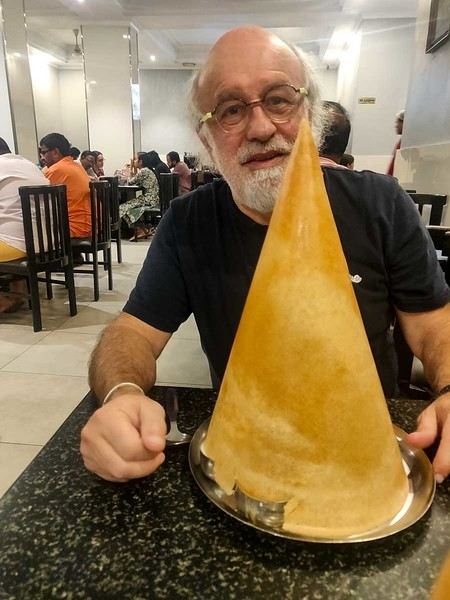
Prepaid taxi to the « Safire Residency », where we stayed last year. This hotel is still just as nice and welcoming (980 INR). Then, dinner at the restaurant « Ariya Niwas » where we enjoyed those delicious dosas again! (We missed them!)
Night in Trivandrum
Prepaid taxi to the « Safire Residency », where we stayed last year. This hotel is still just as nice and welcoming (980 INR). Then, dinner at the restaurant « Ariya Niwas » where we enjoyed those delicious dosas again! (We missed them!)
Layover in Barcelona: how to get to the football stadium?
Hi, I’m on a layover in Barcelona—what’s the best way to get to Barcelona’s football stadium? Thanks
Private Safari in Tanzania
hi everyone,
we’re a young couple planning a safari in Tanzania in 2026.
We can’t wait to discover the beauty of the Ngorongoro Crater in Serengeti National Park and so many other places.
Is it safe to travel in Tanzania, and what precautions should we take?
Has anyone used the services of Kiwoito Africa Safaris before? Is it a reliable company?
Your personal experiences and tips are welcome—thanks for your help
before? Is it a reliable company?
Your personal experiences and tips are welcome—thanks for your help
before? Is it a reliable company?
Your personal experiences and tips are welcome—thanks for your helpKyushu between Fukuoka and Nagasaki in autumn 2024 (Japan)
Fellow travelers,
Don’t they say "never two without three"? It seems so. Here I am again on the forum to share—and let’s be honest, indulge a bit of selfish pleasure—by recounting the story of this third installment in the Land of the Rising Sun.
Where? It’s all in the title. On the island of Kyushu in southern Japan, more precisely in the northwest between Fukuoka and Nagasaki. I hope to take you along with me for 19 nights and 18 full days this autumn of 2024. On the itinerary: gastronomy, crafts, festivals, waterfalls, encounters, and leisurely strolls in all simplicity.
A last-minute flight booked just 7 days before departure, and the route evolved regularly based on whims and accommodation availability, eventually settling on this:
- 5 nights in Fukuoka: Fukuoka city, Ukiha, Itoshima, Dazaifu, Yanagawa - 4 nights in Hasami, Nagasaki Prefecture: Okawachiyama, Arita, Takeo, Kashima, Yobuko, Karatsu, Kabeshima - 6 nights in Nagasaki: Ureshino, Higashi-Sonogi, Nagasaki city, Unzen, Sotome - 4 nights in Fukuoka: Karatsu, Fukuoka city
Most of the trip was done by car for practical reasons—easier access to certain places and freedom of movement—but also for the sheer joy of it. Despite slow traffic at times, driving in rural Japan is a delight.
If the program interests you, see you soon for the start of the journey.
Don’t they say "never two without three"? It seems so. Here I am again on the forum to share—and let’s be honest, indulge a bit of selfish pleasure—by recounting the story of this third installment in the Land of the Rising Sun.
Where? It’s all in the title. On the island of Kyushu in southern Japan, more precisely in the northwest between Fukuoka and Nagasaki. I hope to take you along with me for 19 nights and 18 full days this autumn of 2024. On the itinerary: gastronomy, crafts, festivals, waterfalls, encounters, and leisurely strolls in all simplicity.
A last-minute flight booked just 7 days before departure, and the route evolved regularly based on whims and accommodation availability, eventually settling on this:
- 5 nights in Fukuoka: Fukuoka city, Ukiha, Itoshima, Dazaifu, Yanagawa - 4 nights in Hasami, Nagasaki Prefecture: Okawachiyama, Arita, Takeo, Kashima, Yobuko, Karatsu, Kabeshima - 6 nights in Nagasaki: Ureshino, Higashi-Sonogi, Nagasaki city, Unzen, Sotome - 4 nights in Fukuoka: Karatsu, Fukuoka city
Most of the trip was done by car for practical reasons—easier access to certain places and freedom of movement—but also for the sheer joy of it. Despite slow traffic at times, driving in rural Japan is a delight.
If the program interests you, see you soon for the start of the journey.
Mannarino, Italian singer-songwriter
Hey everyone!
Nothing in this section since 2020? Well, I’ll jump in. With Italy—completely random, of course .
Have you heard of Alessandro Mannarino? He’s something else compared to Toto Cotugno or Eros Ramazzotti...
A young-ish guy (45 years old), handsome like a bad boy , who started his musical journey on the streets of Rome, sleeping in squats with people from all walks of life, before being discovered by a journalist and recording 5 albums.
His music is super *orrechiabile* (how do you say that in French?... easy to listen to...?) with diverse influences. And his lyrics—simple but powerful.
A few examples from his different albums:
Svegliatevi italiani
Translation, not bad.
Maddalena
Translation, very rough, but it gives you an idea. PS for Masterpo if you’re reading this: an answer to *Noli me tangere*! Mado had other things to do. Something human, wonderfully human.
Arca di Noè
No translation available for this song, which sings of a lost Noah’s Ark world adrift. So, uh, the chorus? Let’s go, let’s go. But where are we going? Who knows? Who knows? I’m not afraid. This life is all I have, and the shorter it is, the louder I’ll sing: Eu quero viver como um beija-flor
Agua
No translation for this one either. Just two lines: At night, you can search in an embrace for something that doesn’t taste like rage.
Hope this inspires some of you to listen more, in the winter light.
Nothing in this section since 2020? Well, I’ll jump in. With Italy—completely random, of course .
Have you heard of Alessandro Mannarino? He’s something else compared to Toto Cotugno or Eros Ramazzotti...
A young-ish guy (45 years old), handsome like a bad boy , who started his musical journey on the streets of Rome, sleeping in squats with people from all walks of life, before being discovered by a journalist and recording 5 albums.
His music is super *orrechiabile* (how do you say that in French?... easy to listen to...?) with diverse influences. And his lyrics—simple but powerful.
A few examples from his different albums:
Svegliatevi italiani
Translation, not bad.
Maddalena
Translation, very rough, but it gives you an idea. PS for Masterpo if you’re reading this: an answer to *Noli me tangere*! Mado had other things to do. Something human, wonderfully human.
Arca di Noè
No translation available for this song, which sings of a lost Noah’s Ark world adrift. So, uh, the chorus? Let’s go, let’s go. But where are we going? Who knows? Who knows? I’m not afraid. This life is all I have, and the shorter it is, the louder I’ll sing: Eu quero viver como um beija-flor
Agua
No translation for this one either. Just two lines: At night, you can search in an embrace for something that doesn’t taste like rage.
Hope this inspires some of you to listen more, in the winter light.
Itinerary in Kyushu (Japan) from north to west
Departure imminent on 10/27. The trip will be a full 18 days.
I still have a few questions about transportation for certain legs:
Day 1: Arrival in Fukuoka in the evening at 7:30 PM
Day 2: Fukuoka city
Day 3: Ukiha (car or train?)
Day 4: Itoshima
Day 5: 11/01/2024: Okawa, Omuta (forge), and Yanagawa for the Yanagawa Hakushu Matsuri. A bit ambitious for a single day?
Day 6: Arita / Owakachiyama / rice fields in the evening: Is it better to go from Fukuoka to Arita by car or train?
Day 7: Sasebo + Kujukushima Pearl + fireworks show Day 8: Karatsu (Yobuko market + cave + cape) + Matsuri Kanchi Day 9: Kashima + garden + Tara Day 10: Higashi Sonogi, overnight in Nagasaki. Is it better to return the car in Arita or Nagasaki? Day 11: Nagasaki Day 12: Nagasaki, overnight in Fukuoka, so departure by train from Nagasaki Day 13: Munakata and Oshima, and in the evening, Hanabi Kama
Day 14: Mount Hiko, Toho, Soeda. Is there a pottery village? With or without hands-on experience?
Day 15: Yame (Hoshino tea visit) and Kurume Masure workshop
Days 16, 17, 18, 19: Fukuoka city and maybe Nokonoshima or Kitakyushu
Any suggestions? Does this seem balanced?
Thanks and have a great day
Day 1: Arrival in Fukuoka in the evening at 7:30 PM
Day 2: Fukuoka city
Day 3: Ukiha (car or train?)
Day 4: Itoshima
Day 5: 11/01/2024: Okawa, Omuta (forge), and Yanagawa for the Yanagawa Hakushu Matsuri. A bit ambitious for a single day?
Day 6: Arita / Owakachiyama / rice fields in the evening: Is it better to go from Fukuoka to Arita by car or train?
Day 7: Sasebo + Kujukushima Pearl + fireworks show Day 8: Karatsu (Yobuko market + cave + cape) + Matsuri Kanchi Day 9: Kashima + garden + Tara Day 10: Higashi Sonogi, overnight in Nagasaki. Is it better to return the car in Arita or Nagasaki? Day 11: Nagasaki Day 12: Nagasaki, overnight in Fukuoka, so departure by train from Nagasaki Day 13: Munakata and Oshima, and in the evening, Hanabi Kama
Day 14: Mount Hiko, Toho, Soeda. Is there a pottery village? With or without hands-on experience?
Day 15: Yame (Hoshino tea visit) and Kurume Masure workshop
Days 16, 17, 18, 19: Fukuoka city and maybe Nokonoshima or Kitakyushu
Any suggestions? Does this seem balanced?
Thanks and have a great day
Quel camping-car ou 4x4 avec cellule pour l'Amérique du Sud en famille avec deux enfants English translation pending
Bonjour nous sommes une famille de 2 adultes et 2 enfants 4 et 7 ans nous souhaitons partir en Amérique du sud en juin 2022 pour 1 an (on est pas en retard !) , nous aimerions déjà choisir un véhicule et nous hésitons entre un camping car classique mais nous avons peur de rater de beaux coins isolés , le camping car 4x4 mais quel modéle ?? ou le 4x4 avec cellule , mais il parait que celui ci n'est pas trés stable ... le but étant de tester le véhicule quelques fois avant de nous lancer pour une année entiére .
Pouvez vous me donner des conseils ? Des modéles ...
Merci et bonne journée
Julie
Merci et bonne journée
Julie
Mon voyage pour le Cameroun en voiture depuis la Suisse (en 4x4) English translation pending
Bonjour,
j'aimerais me rendre au Cameroun dans un mois en voiture si les frontière sont ouverte bien sur. est ce faisable niveau sécurité? Si oui quelle route faut-il emprunter? Il y a t'il des personnes intéresser pour faire la route avec moi? je partirai depuis la Suisse.
Merci d'avance pour vos réponses Happi
Merci d'avance pour vos réponses Happi
Annulation de vols vers le Botswana English translation pending
Bonjour,
Nous avions prévu un séjour au Botswana en novembre prochain. Tout est réservé y compris les billets d'avion et la réservation des sièges. J'ai versé un acompte au guide pour ses services, la réservation des emplacements dans les parcs, les entrées ...
Budgetair vient de me prévenir que la compagnie LUFTHANSA vient d'annuler les vols A/R et qu'ils procéderont plus tard au remboursement des billets. Seul reste maintenu le vol Johannesburg/Maun (le vol retour Kasane/Johannesbourg est annulé aussi.
J'attends maintenant de notre guide qu'il me dise si nous devons tout annuler ou s'il faut attendre. D'ici novembre on peut espérer que l'épidémie sera terminée en Europe mais qu'en sera-t-il en Afrique?
Je ne sais pas si je dois faire ouvrir un dossier d'annulation dés maintenant chez ALLIANZ où j'ai pris une assurance voyage. C'est stressant.
Je suis doublement déçu car après un magnifique voyage organisé par Africa coeur safaris (2 français) en 2017, j'ai déjà du annuler le voyage prévu en 2018 pour cause de maladie.
Je recommande cette agence qui nous a proposé le circuit idéal pour découvrir le Botswana depuis le delta de l'Okavongo jusqu'aux chutes Victoria au Zimbabwe.
Tanzanie – Février 2020 English translation pending
Mise en garde habituelle pour éviter toute déconvenue : le récit qui suit est bien davantage un recueil d’infos pratiques qu’un carnet de voyage …
C’est pour assister à la Grande Migration des gnous que nous avons choisi cette période, cette destination et ces parcs. Nous voulions un safari entièrement axé sur l’observation des animaux. Juma, responsable d’une agence locale, a parfaitement répondu à nos attentes.
NOTRE SAFARI DE 11 JOURS :
Mar 18 Février – Vol Ethiopian Airlines Paris/Addis Abeba/Kilimandjaro - Arrivée à 12:50pm – Hôtel Tulia à Arusha Mer – PN Arusha – Hôtel Tulia à Arusha Jeu – PN Tarangire – Sangaiwe Tented Lodge Ven – PN Tarangire – Eileen’s Trees Inn Sam – PN Tarangire – Bougainvillea Safari Lodge Dim – PN Serengeti - Seronera – Into Wild Africa Tented Lodge Lun – PN Serengeti - Seronera – Into Wild Africa Tented Lodge Mar – PN Serengeti – Seronera et Ndutu – Savannah Camp Mer – PN Serengeti - Ndutu – Savannah Camp Jeu – PN Serengeti - Ndutu – Savannah Camp Ven – PN Ngorongoro Crater – Marera Valley Lodge Sam – PN Lake Manyara – Hôtel Tulia à Arusha Dim 1er Mars – Vol de retour à 5:35pm
BUDGET :
Dépenses préalables : Vols Ethiopian Airlines : 645 € l’A/R Visa : 50 $ /p
Dépenses sur place : Prestation Safari : 8 000 $ Tips Driver : 325 $ Autres (boissons + tips lodges) : 120 €
J’avais changé 100 € en shillings dans un petit bureau de change à Arusha. Ils m’ont été bien utiles pour les petites dépenses dans les lodges (boissons et staff tip). Cela dit, ce n’était pas indispensable, on peut tout régler en US$. Pensez dans ce cas à avoir des petites coupures.
Budget total tout compris (pour nous 2, hors achats de souvenirs perso) : 9 000 € Oui, c’est une grosse somme. C’est un voyage qui se prévoit. On arrive à un tel montant pour 3 raisons : la longue durée du safari (11 jours dans les Parcs Nationaux), le choix de privatiser un 4X4 à 2, la qualité des lodges. C’est un luxe qui se paie mais ça vaut le coup.
GUIDES (papier) : Aucun. J’ai obtenu toutes les informations que je cherchais en fouillant sur internet. Et j’ai délégué toute l’organisation à Juma.
VISAS : J’ai fait la demande en ligne ici : https://eservices.immigration.go.tz/visa Fiable et rapide.
VOLS : Vols réguliers sur Ethiopian Airlines, avec escale à Addis Abeba. Horaires intéressants. Achetés directement sur leur site. Le petit aéroport Kilimandjaro (JRO) est situé à 1h de route de Arusha, proche des parcs du Nord de la Tanzanie. Attention, l’aéroport est sous-dimensionné. Prévoyez de la marge pour votre retour, les formalités prennent du temps (sécurité, check-in, douanes, re-sécurité …)
PRESTATION : Après plusieurs demandes de devis, j’ai fini par confier notre projet à Juma qui gère la petite agence locale Sumbi Extra Miles Safari avec 4 véhicules et 4 guides. C’est d’ailleurs sur VF que j’ai trouvé les coordonnées de Juma. Son excellente réputation (sur VF, Trip Advisor, GdR) n’est pas surfaite. Nous avons concocté notre programme ensemble par échange de mails quelques mois à l’avance. Échanges en français, rapide et efficace. Juma a su être à l’écoute de nos demandes particulières. Paiement d’un acompte de 30% par virement (en passant par notre banque) pour assurer la prestation. Le reste est payé sur place en US$ cash à l’arrivée. Aucune mauvaise surprise. En dehors des pourboires et de la petite bière du soir, tout est inclus, de l’arrivée à l’aéroport jusqu’à son retour.
Le pourboire du guide : c’est un budget important qu’il ne faut pas négliger. Juma nous avait conseillé de donner 25$ par jour de safari, pour nous 2. Tellement contents de la prestation d’Issa, notre chauffeur, nous avons été un peu plus généreux.
LODGE : On parle souvent de lodge. C’est en fait un ensemble de bungalows, en dur ou en toile de tente. Toutes les chambres que nous avons eues (que ce soit en dur ou en tente) étaient très spacieuses (vraiment spacieuses, parfois >30m² !) et disposaient de toutes les commodités en termes de sanitaires. Nous y avions de nombreuses prises électriques pour pouvoir recharger nos appareils, sauf à Savannah Camp où les prises étaient rassemblées sous la tente commune de restauration (et là, un chargeur multiple USB est bien utile). Tous disposent du wifi dans les parties communes. La qualité de tous ces lodges a de loin dépassé nos attentes. Sans être luxueux, c’est du très très bon niveau, confortables, plaisants, charmants, dans de beaux endroits.
Hôtel Tulia à Arusha Hôtel classique ici. Simple mais confortable. Trop excentré pour pouvoir profiter de la ville. Belle piscine agréable. Wifi partout y compris dans la chambre (c’est la seule fois).
Sangaiwe Tented Lodge Magnifique ensemble de tentes accrochées à flanc de montagne. Chaque tente est montée sur pilotis et terrasse de bois d’où l’on a une magnifique vue sur le lac Manyara. Piscine. Très proche d’une entrée du PN Tarangire. Une superbe adresse. C’était notre premier lodge, on a véritablement halluciné !
Eileen’s Trees Inn Ici, c’est du dur (pas des tentes). Chambre immense, toute confort, un poil monacal. Belle piscine dans un beau jardin. Un peu trop loin du PN Tarangire d’où nous venions et où nous retournions le lendemain. Nous aurions vraiment préféré rester au Sangaiwe mais manque de dispo nous a expliqué Juma.
Bougainvillea Safari Lodge Encore un ensemble en dur. Et encore une très belle piscine dans un beau jardin. Très jolie chambre, superbement décorée.
Into Wild Africa Tented Lodge Une grande tente commune pour les repas et les tentes des clients de part et d’autre pour y dormir. En pleine brousse ! D’ailleurs, après le repas, par sécurité, un membre du staff nous raccompagne jusqu’à notre tente. Devant notre entrée, nous découvrons un hippopotame, bien occupé à brouter. On s’incline et retournons prendre un thé à la tente commune en attendant que Monsieur veuille bien nous laisser rentrer chez nous ! Pas banal !
Savannah Camp Il s’agit ici d’un camp de tentes plus spartiate mais bourré de charme. Bien sûr, nous disposons toujours de WC, lavabo et douche. Néanmoins, la douche se prévoit puisqu’il faut demander à remplir le réservoir d’eau (mais le responsable devine et devance notre besoin). On est ici aussi en pleine savane. La sécurité est assurée par 2 adorables Masais. C’est ici que nous avons passé nos nuits les plus animés par les animaux (lions, hyènes, …) et dégusté nos meilleurs repas le soir.
Marera Valley Lodge En dur. Un gros coup de cœur pour ce magnifique lodge. Quasi luxueux. Grande piscine.
REPAS : Tous les repas sont inclus dans le coût du safari. Matin : petit déjeuner buffet (sauf à Savannah Camp mais on commandait ce qu’on voulait). Midi : lunch box, boite picnic fourni par le lodge. C’est copieux, un peu répétitif quand même au bout de 11 jours … Au Eileen’s et au Marera, on constitue sa boite soi-même à partir d’un buffet. C’est sympa. Dans les parcs, il existe des sites de picnic qui permettent de se dégourdir les jambes. Soir : repas au lodge. Toujours délicieux. La bière Serengeti est douce, la bouteille de 500ml est généralement à 3 $. Une remarque sur l’eau : nous n’en avons jamais manqué. Toutes les chambres sont garnies de bouteilles d’eau offertes, encore une bouteille dans le lunch box et une grosse provision dans le 4x4. Impossible d’être à court. On peut regretter toutefois l’utilisation massive des petites bouteilles en plastique. Nous avions apporté des gourdes pour un usage plus écolo. Elles sont restées dans le sac.
LE SAFARI : Les 4X4 sont quasiment tous les mêmes. Ce sont des Toyota Land Cruisers de 8 ou 9 places selon qu’ils disposent ou non d’une glacière : une place passager à côté du chauffeur puis 3 rangs de sièges (2, 2 et 3 places). A l’arrière, un hayon permet de charger nos sacs qu’Issa a toujours recouverts d’une couverture pour les protéger efficacement de la poussière. Le grand toit plat est escamotable. Dès l’entrée du parc, Issa le remonte en le soulevant verticalement de 60-70 cm. Debout, on peut ainsi profiter pleinement de la vue. Pour les plus petits (comme moi), il suffit de grimper sur les sièges pour avoir la tête et les bras à l’air libre. N’ayez pas de scrupule, tout le monde le fait. A 2 dans un 4X4, nous avions une liberté totale, naviguant entre les 3 rangées pour profiter du meilleur angle. Même quand le 4X4 roulait, nous restions debout, cheveux (ou ce qu’il en reste 😛) au vent. C’est magique ! Et grâce au toit qui reste en place, nous étions protégés du soleil. Les 4X4 disposent de prises électriques qui permettent de recharger les appareils. Pensez quand même à avoir un adaptateur (prise anglaise). Le nôtre ne disposait pas de glacière, ça ne nous a pas manqué.
Issa nous promène dans les parcs à un rythme lent qui permet de débusquer les animaux. Une CIBI l’aide à communiquer avec ses collègues et à être prévenu d’un bon plan (entendez par là, des fauves !). Dans ce cas, les 4X4 vont arriver et s’agglutiner autour des animaux en bonne harmonie. Personne ne se gêne. L’observation peut durer autant qu’on le souhaite : pour attendre que le léopard descende de son arbre, que la lionne accepte un nouveau câlin de son lion, que les guépards reprennent leurs jeux, que les éléphants terminent leur bain de boue, que les tisserins finissent l’élaboration de leur nid ou simplement, que la lumière soit meilleure pour la 36ème photo … La patience paie. A l’abri du soleil dans notre 4X4, nous avons ainsi profité de magnifiques scènes de vie. Parfois à quelques mètres des sujets.
Quelques conseils : - Vérifiez bien que votre 4X4 dispose d’un toit ouvrant. C’est essentiel. - Lors des safaris, portez des sandales, plus faciles et plus rapides à retirer pour monter sur les sièges. - Que vous soyez ou non amateurs de photos, procurez-vous une bonne paire de jumelles. Un téléobjectif ne les remplace pas. Pour l’occasion, nous avions acheté des Bushnell 10X42 (120€ environ). Parfaitement adaptées et, encore une fois, nécessaires. - Le cas échéant, apportez des serviettes de toilette qui permettront de protéger vos appareils photos de la poussière quand vous ne les utiliserez pas. - Soyez bien conscients qu’on passe de très longues heures à l’intérieur du 4X4 et qu’à 6, 7 ou 8, la liberté de mouvement et la facilité d’observation ne sont pas les mêmes qu’à 2, 3 ou 4. Bien sûr, le budget n’est pas le même.
Quelques mots sur les Parcs : PN Arusha : petit parc dans une belle forêt tropicale. Nous y verrons avec bonheur plusieurs groupes de remarquables singes colobes guérézas noir et blanc (seul endroit où les voir). PN Tarangire : le paradis des éléphants et des baobabs. PN Serengeti : la région centrale (Seronera) est très différente du sud (Ndutu). Nous voulions profiter de la Grande Migration et, à cette époque, les grands troupeaux de gnous sont dans le Ndutu pour la mise bas. C’est un spectacle unique. Attention, la Grande Migration est une boucle que les immenses troupeaux de gnous suivent immuablement tout au long de l’année. À chaque période de l’année correspond une région pour les y trouver. Cratère du Ngorongoro : très impressionnant, avec une belle diversité d’animaux. On s’y trouve un peu comme sur l’arche de Noé. PN de Manyara : splendide parc autour du grand lac Manyara. L’épaisse forêt tropicale y est splendide, peuplée de calaos à joues argent (quel nom !) et de grands groupes de singes (vervets, bleus, babouins) dont les facéties nous ont amusés pendant de longs moments.
Les parcs Tarangire et Serengeti sont suffisamment grands pour que, même en y passant plusieurs jours, on ne refasse pas le même circuit. Par exemple, le spectacle de la migration des gnous nous a occupés une grosse matinée. L’après-midi et le lendemain ont été consacrés à d’autre parties de la région. Une petite journée suffit pour descendre et traverser le Cratère du Ngorongoro. Les parcs d’Arusha et Manyara sont plus petits. Il nous a plu de commencer et de terminer par ces 2 parcs, moins riches en animaux mais tout mignons. Belle introduction en la matière, belle conclusion en douceur.
Chaque parc a son intérêt, sa végétation, ses spécificités et ses animaux de prédilection. Nous avons aussi apprécié la diversité des paysages, certains endroits sont absolument magnifiques. Nous avons eu la chance de voir tous les animaux que nous espérions observer dont de nombreux lions et lionnes (quasiment tous les jours), des léopards (à 4 reprises) et une fratrie de 3 jeunes guépards. Pour ne parler que des fauves. Soyez patients, attendez qu’ils se réveillent et qu’ils bougent. C’est alors toujours magique. Nous avons été très surpris de voir aussi nombre d’oiseaux multicolores merveilleux : rollier, choucador, barbican … tous plus colorés les uns que les autres. On n’y pense pas forcément quand on prépare un safari en Afrique.
Nous n’avons pas visité de villages Masai. C’était un choix délibéré. Notre objectif était l’observation des animaux, et cela seul.
SI C’ÉTAIT À REFAIRE : Même programme, même prestataire, même guide ! Rien à redire, pour nous, ce fut un sans-faute ! Non, 11 jours de safari ne nous ont pas lassés. Pas une seule minute. Les jours se suivent sans jamais se ressembler. Et c’est le cœur lourd que nous avons quitté Manyara, heureux mais jamais rassasiés de toutes ces belles rencontres. Nous sommes particulièrement sensibles au monde animal et très contemplatifs. Nous pourrions passer des heures à regarder les singes vervets s’amuser entre eux. Et plus d’une fois, les larmes me sont montées aux yeux tant la scène était belle et émouvante. Nous nous sommes souvent félicités d’avoir apporté des jumelles (vous remarquerez que j’insiste).
Comme notre vol était à 17h35, plutôt que de dormir à Arusha, nous aurions pu rester une nuit supplémentaire au Marera Valley Lodge (bien plus agréable que l’hôtel Tulia) tout proche du Lac Manyara, et être déposés le lendemain directement à l’aéroport. Mais c’est juste un détail.
DIVERS : L’accueil : très amical et très souriant. Nous avons vite appris quelques mots : jambo (bonjour), karibu (bienvenue), hakuna matata (pas de souci), asante (merci), polé polé (doucement) … La carte bancaire : inutilisée ! Je crois que c’est le 1er voyage où je n’ai pas eu besoin de la sortir. Le climat à cette époque : très agréable : 20-22°C en journée, un peu plus frais matin et soir. De fortes pluies pendant quelques nuits, rien dans la journée. Mais on sentait que la saison des pluies arrivait. Je pense que c’était limite. Malgré le toit, protégez-vous du soleil, notamment les avant-bras. Vêtements : lors des sorties, dans le 4X4 ouvert, on se salit beaucoup. Transpiration, vent et poussière ne font pas bon ménage. Le soir, un petit gilet peut parfois être le bienvenu mais polaire inutile L’affluence touristique à cette époque : on était en basse saison, et pourtant on croise déjà pas mal de 4X4 dans certains coins des grands parcs. Alors, qu’est-ce que ça doit être en haute saison ?... Les problèmes de santé : aucun Les moustiques : une vraie calamité ! On s’est fait dévorer ! Protégez-vous avec du 5/5 noir ou mieux … couvrez-vous. Des chaussettes notamment. Photos : vive le numérique ! Pour cette occasion, nous avions investi dans du gros matériel. On est rentré avec près de 4 000 photos ! On en a pour des semaines à les trier (zut) et à revivre notre voyage (chouette). Électricité : adaptateur pour prise anglaise. Pensez au chargeur USB multiple, le LENCENT 4 ports est à 15 € sur Amazon. L'artisanat : peu de boutiques en brousse.
ON A BEAUCOUP AIME : 🙂 La gentillesse de l’accueil des locaux partout Les rencontres avec toute cette vie animale, du plus gros au plus petit La variété et la beauté des paysages, la douceur du climat, la pureté de l’atmosphère, la lumière de l’Afrique Rouler debout dans le 4X4, la tête au vent, à admirer ces paysages grandioses et à attendre la prochaine rencontre
ON A MOINS AIME : 😕 La voracité des moustiques Me prendre un méchant coup de soleil sur les avant-bras lors de notre première sortie dans le PN Arusha (pourtant en pleine forêt). Comme une débutante ! Ça m’a vexée !
EN CONCLUSION : Pour beaucoup, c’est le voyage d’une vie. Et c’est un bon choix. Que d’émotions, au pluriel. Et qu’il est dur de quitter ces animaux si attachants, ces paysages si variés, cette lumière si pure, ces ciels si particuliers. Nous qui sommes de grands amateurs de cultures anciennes et de vieilles pierres, nous avons trouvé ici une autre forme d’émotion. Face à la vie.
C’est pour assister à la Grande Migration des gnous que nous avons choisi cette période, cette destination et ces parcs. Nous voulions un safari entièrement axé sur l’observation des animaux. Juma, responsable d’une agence locale, a parfaitement répondu à nos attentes.
NOTRE SAFARI DE 11 JOURS :
Mar 18 Février – Vol Ethiopian Airlines Paris/Addis Abeba/Kilimandjaro - Arrivée à 12:50pm – Hôtel Tulia à Arusha Mer – PN Arusha – Hôtel Tulia à Arusha Jeu – PN Tarangire – Sangaiwe Tented Lodge Ven – PN Tarangire – Eileen’s Trees Inn Sam – PN Tarangire – Bougainvillea Safari Lodge Dim – PN Serengeti - Seronera – Into Wild Africa Tented Lodge Lun – PN Serengeti - Seronera – Into Wild Africa Tented Lodge Mar – PN Serengeti – Seronera et Ndutu – Savannah Camp Mer – PN Serengeti - Ndutu – Savannah Camp Jeu – PN Serengeti - Ndutu – Savannah Camp Ven – PN Ngorongoro Crater – Marera Valley Lodge Sam – PN Lake Manyara – Hôtel Tulia à Arusha Dim 1er Mars – Vol de retour à 5:35pm
BUDGET :
Dépenses préalables : Vols Ethiopian Airlines : 645 € l’A/R Visa : 50 $ /p
Dépenses sur place : Prestation Safari : 8 000 $ Tips Driver : 325 $ Autres (boissons + tips lodges) : 120 €
J’avais changé 100 € en shillings dans un petit bureau de change à Arusha. Ils m’ont été bien utiles pour les petites dépenses dans les lodges (boissons et staff tip). Cela dit, ce n’était pas indispensable, on peut tout régler en US$. Pensez dans ce cas à avoir des petites coupures.
Budget total tout compris (pour nous 2, hors achats de souvenirs perso) : 9 000 € Oui, c’est une grosse somme. C’est un voyage qui se prévoit. On arrive à un tel montant pour 3 raisons : la longue durée du safari (11 jours dans les Parcs Nationaux), le choix de privatiser un 4X4 à 2, la qualité des lodges. C’est un luxe qui se paie mais ça vaut le coup.
GUIDES (papier) : Aucun. J’ai obtenu toutes les informations que je cherchais en fouillant sur internet. Et j’ai délégué toute l’organisation à Juma.
VISAS : J’ai fait la demande en ligne ici : https://eservices.immigration.go.tz/visa Fiable et rapide.
VOLS : Vols réguliers sur Ethiopian Airlines, avec escale à Addis Abeba. Horaires intéressants. Achetés directement sur leur site. Le petit aéroport Kilimandjaro (JRO) est situé à 1h de route de Arusha, proche des parcs du Nord de la Tanzanie. Attention, l’aéroport est sous-dimensionné. Prévoyez de la marge pour votre retour, les formalités prennent du temps (sécurité, check-in, douanes, re-sécurité …)
PRESTATION : Après plusieurs demandes de devis, j’ai fini par confier notre projet à Juma qui gère la petite agence locale Sumbi Extra Miles Safari avec 4 véhicules et 4 guides. C’est d’ailleurs sur VF que j’ai trouvé les coordonnées de Juma. Son excellente réputation (sur VF, Trip Advisor, GdR) n’est pas surfaite. Nous avons concocté notre programme ensemble par échange de mails quelques mois à l’avance. Échanges en français, rapide et efficace. Juma a su être à l’écoute de nos demandes particulières. Paiement d’un acompte de 30% par virement (en passant par notre banque) pour assurer la prestation. Le reste est payé sur place en US$ cash à l’arrivée. Aucune mauvaise surprise. En dehors des pourboires et de la petite bière du soir, tout est inclus, de l’arrivée à l’aéroport jusqu’à son retour.
Le pourboire du guide : c’est un budget important qu’il ne faut pas négliger. Juma nous avait conseillé de donner 25$ par jour de safari, pour nous 2. Tellement contents de la prestation d’Issa, notre chauffeur, nous avons été un peu plus généreux.
LODGE : On parle souvent de lodge. C’est en fait un ensemble de bungalows, en dur ou en toile de tente. Toutes les chambres que nous avons eues (que ce soit en dur ou en tente) étaient très spacieuses (vraiment spacieuses, parfois >30m² !) et disposaient de toutes les commodités en termes de sanitaires. Nous y avions de nombreuses prises électriques pour pouvoir recharger nos appareils, sauf à Savannah Camp où les prises étaient rassemblées sous la tente commune de restauration (et là, un chargeur multiple USB est bien utile). Tous disposent du wifi dans les parties communes. La qualité de tous ces lodges a de loin dépassé nos attentes. Sans être luxueux, c’est du très très bon niveau, confortables, plaisants, charmants, dans de beaux endroits.
Hôtel Tulia à Arusha Hôtel classique ici. Simple mais confortable. Trop excentré pour pouvoir profiter de la ville. Belle piscine agréable. Wifi partout y compris dans la chambre (c’est la seule fois).
Sangaiwe Tented Lodge Magnifique ensemble de tentes accrochées à flanc de montagne. Chaque tente est montée sur pilotis et terrasse de bois d’où l’on a une magnifique vue sur le lac Manyara. Piscine. Très proche d’une entrée du PN Tarangire. Une superbe adresse. C’était notre premier lodge, on a véritablement halluciné !
Eileen’s Trees Inn Ici, c’est du dur (pas des tentes). Chambre immense, toute confort, un poil monacal. Belle piscine dans un beau jardin. Un peu trop loin du PN Tarangire d’où nous venions et où nous retournions le lendemain. Nous aurions vraiment préféré rester au Sangaiwe mais manque de dispo nous a expliqué Juma.
Bougainvillea Safari Lodge Encore un ensemble en dur. Et encore une très belle piscine dans un beau jardin. Très jolie chambre, superbement décorée.
Into Wild Africa Tented Lodge Une grande tente commune pour les repas et les tentes des clients de part et d’autre pour y dormir. En pleine brousse ! D’ailleurs, après le repas, par sécurité, un membre du staff nous raccompagne jusqu’à notre tente. Devant notre entrée, nous découvrons un hippopotame, bien occupé à brouter. On s’incline et retournons prendre un thé à la tente commune en attendant que Monsieur veuille bien nous laisser rentrer chez nous ! Pas banal !
Savannah Camp Il s’agit ici d’un camp de tentes plus spartiate mais bourré de charme. Bien sûr, nous disposons toujours de WC, lavabo et douche. Néanmoins, la douche se prévoit puisqu’il faut demander à remplir le réservoir d’eau (mais le responsable devine et devance notre besoin). On est ici aussi en pleine savane. La sécurité est assurée par 2 adorables Masais. C’est ici que nous avons passé nos nuits les plus animés par les animaux (lions, hyènes, …) et dégusté nos meilleurs repas le soir.
Marera Valley Lodge En dur. Un gros coup de cœur pour ce magnifique lodge. Quasi luxueux. Grande piscine.
REPAS : Tous les repas sont inclus dans le coût du safari. Matin : petit déjeuner buffet (sauf à Savannah Camp mais on commandait ce qu’on voulait). Midi : lunch box, boite picnic fourni par le lodge. C’est copieux, un peu répétitif quand même au bout de 11 jours … Au Eileen’s et au Marera, on constitue sa boite soi-même à partir d’un buffet. C’est sympa. Dans les parcs, il existe des sites de picnic qui permettent de se dégourdir les jambes. Soir : repas au lodge. Toujours délicieux. La bière Serengeti est douce, la bouteille de 500ml est généralement à 3 $. Une remarque sur l’eau : nous n’en avons jamais manqué. Toutes les chambres sont garnies de bouteilles d’eau offertes, encore une bouteille dans le lunch box et une grosse provision dans le 4x4. Impossible d’être à court. On peut regretter toutefois l’utilisation massive des petites bouteilles en plastique. Nous avions apporté des gourdes pour un usage plus écolo. Elles sont restées dans le sac.
LE SAFARI : Les 4X4 sont quasiment tous les mêmes. Ce sont des Toyota Land Cruisers de 8 ou 9 places selon qu’ils disposent ou non d’une glacière : une place passager à côté du chauffeur puis 3 rangs de sièges (2, 2 et 3 places). A l’arrière, un hayon permet de charger nos sacs qu’Issa a toujours recouverts d’une couverture pour les protéger efficacement de la poussière. Le grand toit plat est escamotable. Dès l’entrée du parc, Issa le remonte en le soulevant verticalement de 60-70 cm. Debout, on peut ainsi profiter pleinement de la vue. Pour les plus petits (comme moi), il suffit de grimper sur les sièges pour avoir la tête et les bras à l’air libre. N’ayez pas de scrupule, tout le monde le fait. A 2 dans un 4X4, nous avions une liberté totale, naviguant entre les 3 rangées pour profiter du meilleur angle. Même quand le 4X4 roulait, nous restions debout, cheveux (ou ce qu’il en reste 😛) au vent. C’est magique ! Et grâce au toit qui reste en place, nous étions protégés du soleil. Les 4X4 disposent de prises électriques qui permettent de recharger les appareils. Pensez quand même à avoir un adaptateur (prise anglaise). Le nôtre ne disposait pas de glacière, ça ne nous a pas manqué.
Issa nous promène dans les parcs à un rythme lent qui permet de débusquer les animaux. Une CIBI l’aide à communiquer avec ses collègues et à être prévenu d’un bon plan (entendez par là, des fauves !). Dans ce cas, les 4X4 vont arriver et s’agglutiner autour des animaux en bonne harmonie. Personne ne se gêne. L’observation peut durer autant qu’on le souhaite : pour attendre que le léopard descende de son arbre, que la lionne accepte un nouveau câlin de son lion, que les guépards reprennent leurs jeux, que les éléphants terminent leur bain de boue, que les tisserins finissent l’élaboration de leur nid ou simplement, que la lumière soit meilleure pour la 36ème photo … La patience paie. A l’abri du soleil dans notre 4X4, nous avons ainsi profité de magnifiques scènes de vie. Parfois à quelques mètres des sujets.
Quelques conseils : - Vérifiez bien que votre 4X4 dispose d’un toit ouvrant. C’est essentiel. - Lors des safaris, portez des sandales, plus faciles et plus rapides à retirer pour monter sur les sièges. - Que vous soyez ou non amateurs de photos, procurez-vous une bonne paire de jumelles. Un téléobjectif ne les remplace pas. Pour l’occasion, nous avions acheté des Bushnell 10X42 (120€ environ). Parfaitement adaptées et, encore une fois, nécessaires. - Le cas échéant, apportez des serviettes de toilette qui permettront de protéger vos appareils photos de la poussière quand vous ne les utiliserez pas. - Soyez bien conscients qu’on passe de très longues heures à l’intérieur du 4X4 et qu’à 6, 7 ou 8, la liberté de mouvement et la facilité d’observation ne sont pas les mêmes qu’à 2, 3 ou 4. Bien sûr, le budget n’est pas le même.
Quelques mots sur les Parcs : PN Arusha : petit parc dans une belle forêt tropicale. Nous y verrons avec bonheur plusieurs groupes de remarquables singes colobes guérézas noir et blanc (seul endroit où les voir). PN Tarangire : le paradis des éléphants et des baobabs. PN Serengeti : la région centrale (Seronera) est très différente du sud (Ndutu). Nous voulions profiter de la Grande Migration et, à cette époque, les grands troupeaux de gnous sont dans le Ndutu pour la mise bas. C’est un spectacle unique. Attention, la Grande Migration est une boucle que les immenses troupeaux de gnous suivent immuablement tout au long de l’année. À chaque période de l’année correspond une région pour les y trouver. Cratère du Ngorongoro : très impressionnant, avec une belle diversité d’animaux. On s’y trouve un peu comme sur l’arche de Noé. PN de Manyara : splendide parc autour du grand lac Manyara. L’épaisse forêt tropicale y est splendide, peuplée de calaos à joues argent (quel nom !) et de grands groupes de singes (vervets, bleus, babouins) dont les facéties nous ont amusés pendant de longs moments.
Les parcs Tarangire et Serengeti sont suffisamment grands pour que, même en y passant plusieurs jours, on ne refasse pas le même circuit. Par exemple, le spectacle de la migration des gnous nous a occupés une grosse matinée. L’après-midi et le lendemain ont été consacrés à d’autre parties de la région. Une petite journée suffit pour descendre et traverser le Cratère du Ngorongoro. Les parcs d’Arusha et Manyara sont plus petits. Il nous a plu de commencer et de terminer par ces 2 parcs, moins riches en animaux mais tout mignons. Belle introduction en la matière, belle conclusion en douceur.
Chaque parc a son intérêt, sa végétation, ses spécificités et ses animaux de prédilection. Nous avons aussi apprécié la diversité des paysages, certains endroits sont absolument magnifiques. Nous avons eu la chance de voir tous les animaux que nous espérions observer dont de nombreux lions et lionnes (quasiment tous les jours), des léopards (à 4 reprises) et une fratrie de 3 jeunes guépards. Pour ne parler que des fauves. Soyez patients, attendez qu’ils se réveillent et qu’ils bougent. C’est alors toujours magique. Nous avons été très surpris de voir aussi nombre d’oiseaux multicolores merveilleux : rollier, choucador, barbican … tous plus colorés les uns que les autres. On n’y pense pas forcément quand on prépare un safari en Afrique.
Nous n’avons pas visité de villages Masai. C’était un choix délibéré. Notre objectif était l’observation des animaux, et cela seul.
SI C’ÉTAIT À REFAIRE : Même programme, même prestataire, même guide ! Rien à redire, pour nous, ce fut un sans-faute ! Non, 11 jours de safari ne nous ont pas lassés. Pas une seule minute. Les jours se suivent sans jamais se ressembler. Et c’est le cœur lourd que nous avons quitté Manyara, heureux mais jamais rassasiés de toutes ces belles rencontres. Nous sommes particulièrement sensibles au monde animal et très contemplatifs. Nous pourrions passer des heures à regarder les singes vervets s’amuser entre eux. Et plus d’une fois, les larmes me sont montées aux yeux tant la scène était belle et émouvante. Nous nous sommes souvent félicités d’avoir apporté des jumelles (vous remarquerez que j’insiste).
Comme notre vol était à 17h35, plutôt que de dormir à Arusha, nous aurions pu rester une nuit supplémentaire au Marera Valley Lodge (bien plus agréable que l’hôtel Tulia) tout proche du Lac Manyara, et être déposés le lendemain directement à l’aéroport. Mais c’est juste un détail.
DIVERS : L’accueil : très amical et très souriant. Nous avons vite appris quelques mots : jambo (bonjour), karibu (bienvenue), hakuna matata (pas de souci), asante (merci), polé polé (doucement) … La carte bancaire : inutilisée ! Je crois que c’est le 1er voyage où je n’ai pas eu besoin de la sortir. Le climat à cette époque : très agréable : 20-22°C en journée, un peu plus frais matin et soir. De fortes pluies pendant quelques nuits, rien dans la journée. Mais on sentait que la saison des pluies arrivait. Je pense que c’était limite. Malgré le toit, protégez-vous du soleil, notamment les avant-bras. Vêtements : lors des sorties, dans le 4X4 ouvert, on se salit beaucoup. Transpiration, vent et poussière ne font pas bon ménage. Le soir, un petit gilet peut parfois être le bienvenu mais polaire inutile L’affluence touristique à cette époque : on était en basse saison, et pourtant on croise déjà pas mal de 4X4 dans certains coins des grands parcs. Alors, qu’est-ce que ça doit être en haute saison ?... Les problèmes de santé : aucun Les moustiques : une vraie calamité ! On s’est fait dévorer ! Protégez-vous avec du 5/5 noir ou mieux … couvrez-vous. Des chaussettes notamment. Photos : vive le numérique ! Pour cette occasion, nous avions investi dans du gros matériel. On est rentré avec près de 4 000 photos ! On en a pour des semaines à les trier (zut) et à revivre notre voyage (chouette). Électricité : adaptateur pour prise anglaise. Pensez au chargeur USB multiple, le LENCENT 4 ports est à 15 € sur Amazon. L'artisanat : peu de boutiques en brousse.
ON A BEAUCOUP AIME : 🙂 La gentillesse de l’accueil des locaux partout Les rencontres avec toute cette vie animale, du plus gros au plus petit La variété et la beauté des paysages, la douceur du climat, la pureté de l’atmosphère, la lumière de l’Afrique Rouler debout dans le 4X4, la tête au vent, à admirer ces paysages grandioses et à attendre la prochaine rencontre
ON A MOINS AIME : 😕 La voracité des moustiques Me prendre un méchant coup de soleil sur les avant-bras lors de notre première sortie dans le PN Arusha (pourtant en pleine forêt). Comme une débutante ! Ça m’a vexée !
EN CONCLUSION : Pour beaucoup, c’est le voyage d’une vie. Et c’est un bon choix. Que d’émotions, au pluriel. Et qu’il est dur de quitter ces animaux si attachants, ces paysages si variés, cette lumière si pure, ces ciels si particuliers. Nous qui sommes de grands amateurs de cultures anciennes et de vieilles pierres, nous avons trouvé ici une autre forme d’émotion. Face à la vie.
Vol retour annulé au départ de Maurice par South African Airways English translation pending
J’ai acheté un vol chez MisterFly de Marseille à Maurice par la Lufthansa le vol de retour à été annulé par la compagnie south african Airways c’est un vol Lufthansa - 9551 - Opéré par South African Airways - Qui doit s’occuper de mon vol retour prévu le 18 mars 2020
15 jours au Cambodge avec 2 enfants et ébauche d'itinéraire English translation pending
Hello,
Ayant presque trouvé mes billets d'avion, j'en profite pour commencer sérieusement mon itinéraire.
Date: du 15 au 31 octobre 2020 Qui: moi +lui + 2 nenettes de 10 et 12 ans Logements: je vais revoir les récits ça et la et booker en fonction des retours. Itinéraire:
16 arrivee a PNH à 20h40 nuit PNH
17 visite de PNH + coucou à l'école Happy Chandra TBC nuit PNH 18 visite journée Koh Dach nuit PNH 19 am: trajet bus vers Kampong Cham (2h30)+ pm: balades nuit KC 20 Cheung Kok, par Amica – des retours ? nuit CK 21 pm: trajet vers Kratie / Kaoh Trong (3h) nuit KT 22 visite Kaoh Trong nuit KT 23 trajet Sieam Reap (comment ?) nuit SR 24 temples d’Angkor, visites SR nuit SR 25 temples d’Angkor, visites SR nuit SR 26 Kampong Khleang ou Prek Toal nuit KK 27 KK + temples d’Angkor nuit SR 28 avion / au pire bus de nuit la veille: sihanouville puis bus vers kampot nuit K 29 kampot nuit K 30 kep nuit K 31 PNH : retour en matinée, avion 17h00 Questions: a - c'est assez condensé avec des enfants et le trajet kratie -> Siem reap a l'air pas commode et très long: je pense l'abondonner et passer 1 journée en plus a SR + 1 a Kampot/Kep ? bonne idée ? b- en fonction de la méteo: Koh Rong sanloem pour 2 journées (a soustraire de kampot): bonne idée ou complexité en plus ? si complexité il y a une adresse recommandable a cette période ? (en back up j'ai l'adresse de Maxicool a Otres :D ) c- pour le sud: je sais que la méteo va etre determinante et mieux vaut ne pas booker le trajet d'avance (si la meteo est une cata on restera dans le nord entre SR et PNH en passant Battambang...), mais l'avion de SR a Sihanoukville, j'ai peur de plus plus avoir de place et bon prix: alors booker rapidement quand meme ? d- meme chose que c- pour les logements dans la partie sud: mieux vaut booker un truc ou ca ira a cette periode de l'année ? encore une fois si la meteo est moyenne je prefererais aller plutot vers kampot que Koh Rong /Otres donc rester flexible.
merci d'avance 🙂 pour votre retour.
Ayant presque trouvé mes billets d'avion, j'en profite pour commencer sérieusement mon itinéraire.
Date: du 15 au 31 octobre 2020 Qui: moi +lui + 2 nenettes de 10 et 12 ans Logements: je vais revoir les récits ça et la et booker en fonction des retours. Itinéraire:
16 arrivee a PNH à 20h40 nuit PNH
17 visite de PNH + coucou à l'école Happy Chandra TBC nuit PNH 18 visite journée Koh Dach nuit PNH 19 am: trajet bus vers Kampong Cham (2h30)+ pm: balades nuit KC 20 Cheung Kok, par Amica – des retours ? nuit CK 21 pm: trajet vers Kratie / Kaoh Trong (3h) nuit KT 22 visite Kaoh Trong nuit KT 23 trajet Sieam Reap (comment ?) nuit SR 24 temples d’Angkor, visites SR nuit SR 25 temples d’Angkor, visites SR nuit SR 26 Kampong Khleang ou Prek Toal nuit KK 27 KK + temples d’Angkor nuit SR 28 avion / au pire bus de nuit la veille: sihanouville puis bus vers kampot nuit K 29 kampot nuit K 30 kep nuit K 31 PNH : retour en matinée, avion 17h00 Questions: a - c'est assez condensé avec des enfants et le trajet kratie -> Siem reap a l'air pas commode et très long: je pense l'abondonner et passer 1 journée en plus a SR + 1 a Kampot/Kep ? bonne idée ? b- en fonction de la méteo: Koh Rong sanloem pour 2 journées (a soustraire de kampot): bonne idée ou complexité en plus ? si complexité il y a une adresse recommandable a cette période ? (en back up j'ai l'adresse de Maxicool a Otres :D ) c- pour le sud: je sais que la méteo va etre determinante et mieux vaut ne pas booker le trajet d'avance (si la meteo est une cata on restera dans le nord entre SR et PNH en passant Battambang...), mais l'avion de SR a Sihanoukville, j'ai peur de plus plus avoir de place et bon prix: alors booker rapidement quand meme ? d- meme chose que c- pour les logements dans la partie sud: mieux vaut booker un truc ou ca ira a cette periode de l'année ? encore une fois si la meteo est moyenne je prefererais aller plutot vers kampot que Koh Rong /Otres donc rester flexible.
merci d'avance 🙂 pour votre retour.
Voyage Mongolie - Belgique 2021 à moto English translation pending
Bonjour à tous,
Je pensais être fou d'avoir eu ce projet, mais le fait de tomber sur ce forum me fait voir que je ne suis absolument pas le seul.
L'idée de base est de faire expédier la moto a Oulan-Bator et faire le trajet retour à moto.
J'aimerais rentrer par le Kazakhstan et faire le tour de la mer noire.
Grâce au forum, j'ai déjà trouvé pas mal d'informations, mais je souhaiterais tout de même vos conseils.
Je pensais faire expédier la moto par transporteur en caisse à Oulan-Bator, mais je ne sais pas si c'est une bonne idée.
La moto est une africa twin. Est-il nécessaire de prendre un jeu de pneu de rechange avec ?
Quels conseils auriez-vous en point d’intérêts et administratif pour ce tour ?
D'avance merci
Je pensais être fou d'avoir eu ce projet, mais le fait de tomber sur ce forum me fait voir que je ne suis absolument pas le seul.
L'idée de base est de faire expédier la moto a Oulan-Bator et faire le trajet retour à moto.
J'aimerais rentrer par le Kazakhstan et faire le tour de la mer noire.
Grâce au forum, j'ai déjà trouvé pas mal d'informations, mais je souhaiterais tout de même vos conseils.
Je pensais faire expédier la moto par transporteur en caisse à Oulan-Bator, mais je ne sais pas si c'est une bonne idée.
La moto est une africa twin. Est-il nécessaire de prendre un jeu de pneu de rechange avec ?
Quels conseils auriez-vous en point d’intérêts et administratif pour ce tour ?
D'avance merci
Voyage à moto au Maroc, de Paris vers Agadir English translation pending
BOnjour
J'envisage un ride en moto au Maroc pour Avril 2020, de PAris vers Agadir . Avec ma "Little big moto" , un Transalp 650 , j'hésite un peu entre la traversée de l'Espagne , un peu long , un peu "frais" debut avril ...ou la traversée Sete-Tanger avec 45 h de bateau, . Ensuite je descends sur Casa ( j'y recupère ma femme) et soit Marrakech, Ouarzazate , Dades ... ou Safi esssaouira, Agadir ....
Peut-être que quelqu'un a des informations/conseils sur ce voyage . MErci Tiairi75
J'envisage un ride en moto au Maroc pour Avril 2020, de PAris vers Agadir . Avec ma "Little big moto" , un Transalp 650 , j'hésite un peu entre la traversée de l'Espagne , un peu long , un peu "frais" debut avril ...ou la traversée Sete-Tanger avec 45 h de bateau, . Ensuite je descends sur Casa ( j'y recupère ma femme) et soit Marrakech, Ouarzazate , Dades ... ou Safi esssaouira, Agadir ....
Peut-être que quelqu'un a des informations/conseils sur ce voyage . MErci Tiairi75
Traverser le Nigéria en voiture depuis le Bénin pour la Namibie English translation pending
Bonjour à tous voyageurs et voyageuses,
Nous sommes actuellement au Ghana avec notre voiture particulière. Nous souhaitons aller en Namibie.
Nous avons des questions concernant la traversée du Nigéria depuis le Bénin puis direction Cameroun. Qui l'a tentée ces derniers mois/semaines? Où avez-vous obtenu votre visa? État des routes? Papiers pour le véhicule.
Avec grand plaisir, nous pouvons essayer de vous aider si vous entamez la même route que nous : France/Espagne/Maroc/Mauritanie/Mali/Côte d'Ivoire/Ghana.
Un grand merci pour vos réponses.
Bien voyageusement.
Mélanie
Nous sommes actuellement au Ghana avec notre voiture particulière. Nous souhaitons aller en Namibie.
Nous avons des questions concernant la traversée du Nigéria depuis le Bénin puis direction Cameroun. Qui l'a tentée ces derniers mois/semaines? Où avez-vous obtenu votre visa? État des routes? Papiers pour le véhicule.
Avec grand plaisir, nous pouvons essayer de vous aider si vous entamez la même route que nous : France/Espagne/Maroc/Mauritanie/Mali/Côte d'Ivoire/Ghana.
Un grand merci pour vos réponses.
Bien voyageusement.
Mélanie
Prix d'un billet pour vol Johannesburg - Victoria Falls English translation pending
Bonjour,
Nous avons déjà réservé un vol Bruxelles--johannesburg du 2 au 21 août 2020.
Nous avons un programme de circuit de 15 jours en Afrique du Sud, passant par kruger, Swaziland, Sainte Lucie et le Drakensberg.
Nous souhaitons terminer notre voyage en prenant un vol interne johannesburg--victoria falls du 16 au 19 août.
Nous sommes étonnés du prix des billets, le moins cher étant de 350 euros avec British airways ou south Africa airways.
Savez vous si ce prix est correct ou doit on attendre que d'autres compagnies ouvrent des vols pour bénéficier d'un prix plus intéressant ?
Merci d'avance pour vos réponses.
Céline
Quelles cartes de Namibie avec routes et pistes détaillées? (en 4x4) English translation pending
Bonjour à tous,
Nous louons un Nissan avec tente sur le toit chez Campingonline.
Voyage 15 décembre 2019/14 janvier 2020.
Je cherche les meilleures cartes à acheter sachant que nous voulons faire le maximum de pistes et le minimum de goudron (nous avons un TOYOTA HDJ80 en France et avons l'habitude des pistes y compris dans les déserts).
J'ai repéré celle-ci :
Carte routière de la Namibie NAMIBIA ROAD MAP (1:1.160.000), Livret pratique A4, clair et fiable, idéal pour la planification et le voyage, toutes les routes, logements et lieux d'intérêt Carte – 2019
Claudia du Plessis (Auteur), Wynand du Plessis (Auteur)
Qu'en pensez-vous?
Merci d'avance pour vos réponses. Bonne journée à tous.
État de la route 62 Cape Town - Huisrivier Pass - George (en 4x4) English translation pending
Bonjour à tous,
Nous prévoyons d'aller au Garden Route NP depuis le Cap début décembre.
La route 62 permet d'éviter de faire l'aller-retour par la N2.
Quel est l'état de cette route passant par Barrydale et Huisrivier Pass pour finir Outeniqua Pass ?
Un 4x4 est-il nécessaire ?
Merci d'avance pour vos avis.