Results for "Santa+Cruz+|+4+>+269"
51472 results found.
Rejoindre la Bolivie à partir d'Argentine English translation pending
Bonjour,
souhaitant rejoindre ma moitie pour lui faire une surprise pour son anniversaire, j'aurais besoin de vos conseils. Elle est actuellement en Argentine du cote de Salta et devrait prochainement passer en Bolivie. J'ai trouve un billet d'avion soit pour buenos aires, soit pour Lima à un prix correct (La Paz etant hors de prix). Que vaut il mieux que je fasse? Buenos aires puis salta en car puis Bolivie ou Lima et prendre un avion ou un bus pour rejoindre la Bolivie??
La difference d eprix du billet n'est que de 30 euros, ce qui est determinant serait le cout pour ensuite rejoindre la bolivie...
Voilà mon pb, j'attends vos suggestions avec impatience!!! Merci.
Titi
souhaitant rejoindre ma moitie pour lui faire une surprise pour son anniversaire, j'aurais besoin de vos conseils. Elle est actuellement en Argentine du cote de Salta et devrait prochainement passer en Bolivie. J'ai trouve un billet d'avion soit pour buenos aires, soit pour Lima à un prix correct (La Paz etant hors de prix). Que vaut il mieux que je fasse? Buenos aires puis salta en car puis Bolivie ou Lima et prendre un avion ou un bus pour rejoindre la Bolivie??
La difference d eprix du billet n'est que de 30 euros, ce qui est determinant serait le cout pour ensuite rejoindre la bolivie...
Voilà mon pb, j'attends vos suggestions avec impatience!!! Merci.
Titi
Carte des lignes aeriennes argentines English translation pending
Redevenons serieux de temps a autres !
Voici surement une info qui vous aidera (vous inconditionels des vols aeriens ....a bas l avion, vive le bus ! )
La carte ( datée d aout 2003 ...deja un an, mais bon ! ) de tous les vols au depart d Aeroparque ainsi que tous les vols transversaux province - province .
Imprimez la, et accrochez la au dessus de votre ordi...comme ca fini les questions " existe t'il un vol entre Santa Nitouche et Puerto Crado ? "
Voici deja la liste de tous les aeroports d'Argentine avec leurs codes IATA, si la ville que vous cherchez n est pas sur cette liste c est qu il n y a pas de vols reguliers.
Aeroparque AEP Alto Río Senguerr ARR Bahia Blanca BHI C.Rivadavia CRD Chapelco CPC Concordia COC Córdoba COR Corrientes CNQ Cutral Co CUT El Bolson EHL El Calafate FTE El Maitén EMX Esquel EQS Ezeiza EZE Formosa FMA Gob. Gregores Goya OYA Gral. Pico GPO Gral. Roca GNR J. San Martín JSM Junín JNI La Rioja IRJ Malargüe LGS Mar del Plata MDQ Mendoza MDZ Merlo MLR Necochea NEC Neuquén NQN R. Saenz Peña PRQ Paraná PRA Paso de los Libres AOL Perito Moreno PMQ Posadas PSS Pt. Deseado PDU Pt. Iguazú IGR Pt. Madryn PMY Reconquista RCQ Resistencia RES Río Cuarto RCU Río Gallegos RGL Río Grande RGA Río Mayo RDY Río Turbio RYO Rosario ROS S.C.Bariloche BRC S.F.Catamarca CTC Salta SLA San Fernando FDO GGS San Juan UAQ San Luis LUQ S.M. Tucumán TUC San Rafael AFA S.S. de Jujuy JUJ Santa Cruz RZA Santa Rosa RSA San Julián ULA Santa Fé SFN Sta. Teresita SST Sgo. del Estero SDE Tandil TDL Tartagal TTG Trelew REL Ushuaia USH Viedma VDM Villa Gesell VLG Va. Mercedes/ Va.Reynolds VME
Pour la carte d Argentine veuillez vous connecter sur :
http://www.aeropuertosarg.com.ar/Rutas_Aereas/rutasaereas.html
Ciao che ! Herge !
Voici surement une info qui vous aidera (vous inconditionels des vols aeriens ....a bas l avion, vive le bus ! )
La carte ( datée d aout 2003 ...deja un an, mais bon ! ) de tous les vols au depart d Aeroparque ainsi que tous les vols transversaux province - province .
Imprimez la, et accrochez la au dessus de votre ordi...comme ca fini les questions " existe t'il un vol entre Santa Nitouche et Puerto Crado ? "
Voici deja la liste de tous les aeroports d'Argentine avec leurs codes IATA, si la ville que vous cherchez n est pas sur cette liste c est qu il n y a pas de vols reguliers.
Aeroparque AEP Alto Río Senguerr ARR Bahia Blanca BHI C.Rivadavia CRD Chapelco CPC Concordia COC Córdoba COR Corrientes CNQ Cutral Co CUT El Bolson EHL El Calafate FTE El Maitén EMX Esquel EQS Ezeiza EZE Formosa FMA Gob. Gregores Goya OYA Gral. Pico GPO Gral. Roca GNR J. San Martín JSM Junín JNI La Rioja IRJ Malargüe LGS Mar del Plata MDQ Mendoza MDZ Merlo MLR Necochea NEC Neuquén NQN R. Saenz Peña PRQ Paraná PRA Paso de los Libres AOL Perito Moreno PMQ Posadas PSS Pt. Deseado PDU Pt. Iguazú IGR Pt. Madryn PMY Reconquista RCQ Resistencia RES Río Cuarto RCU Río Gallegos RGL Río Grande RGA Río Mayo RDY Río Turbio RYO Rosario ROS S.C.Bariloche BRC S.F.Catamarca CTC Salta SLA San Fernando FDO GGS San Juan UAQ San Luis LUQ S.M. Tucumán TUC San Rafael AFA S.S. de Jujuy JUJ Santa Cruz RZA Santa Rosa RSA San Julián ULA Santa Fé SFN Sta. Teresita SST Sgo. del Estero SDE Tandil TDL Tartagal TTG Trelew REL Ushuaia USH Viedma VDM Villa Gesell VLG Va. Mercedes/ Va.Reynolds VME
Pour la carte d Argentine veuillez vous connecter sur :
http://www.aeropuertosarg.com.ar/Rutas_Aereas/rutasaereas.html
Ciao che ! Herge !
Second trip to Curaçao Island
Returning to Curaçao is a bit like reopening a book whose pages still smell of sun and salt.
As soon as the plane descends toward the island, the familiar colors reappear: the dazzling turquoise of the sea, the pastel facades of Willemstad, and that unique light that seems to soften everything.
For this second trip, we no longer arrive as hesitant explorers, but as confirmed lovers of this warm island.
We already know that the warm wind will welcome us as soon as we step out of the airport, that the beaches will once again offer their infinite shades of blue, and that each day will have that unhurried pace that makes you forget the rest of the world.
Yet, despite this sense of déjà vu, Curaçao always manages to surprise. A new cove to discover, a different sunset, a smile shared with a local...
The island has that rare talent for reinventing itself without ever betraying what makes it so endearing.
This second trip isn’t a repetition, then, but a reunion: a chance to rediscover Curaçao with more attentive, more connected, and perhaps even more amazed eyes.
I invite you to keep reading this travel journal and watch the videos that will help you learn a little more about the island’s different attractions.
Just click on the video image to start watching.
To go to a specific post, here are the appropriate links:
Exploring Willemstad’s colorful neighborhoods The Most Beautiful Beaches in Curaçao Hike at Boka Sint Michiel | Flamingos & panoramic views Climbing Christoffel Mountain Den Dunki & Flamingos of Jan Thiel Must-see spots in Curaçao Snorkeling at Playa Kenepa Chiki: Turquoise Water & Tropical Fish Snorkeling at Porto Mari: One of Curaçao’s Best Spots Snorkeling at Mambo Beach, the Perfect Spot Snorkeling at Daaibooi Beach, a diverse marine world
As soon as the plane descends toward the island, the familiar colors reappear: the dazzling turquoise of the sea, the pastel facades of Willemstad, and that unique light that seems to soften everything.
For this second trip, we no longer arrive as hesitant explorers, but as confirmed lovers of this warm island.
We already know that the warm wind will welcome us as soon as we step out of the airport, that the beaches will once again offer their infinite shades of blue, and that each day will have that unhurried pace that makes you forget the rest of the world.
Yet, despite this sense of déjà vu, Curaçao always manages to surprise. A new cove to discover, a different sunset, a smile shared with a local...
The island has that rare talent for reinventing itself without ever betraying what makes it so endearing.
This second trip isn’t a repetition, then, but a reunion: a chance to rediscover Curaçao with more attentive, more connected, and perhaps even more amazed eyes.
I invite you to keep reading this travel journal and watch the videos that will help you learn a little more about the island’s different attractions.
Just click on the video image to start watching.
To go to a specific post, here are the appropriate links:
Exploring Willemstad’s colorful neighborhoods The Most Beautiful Beaches in Curaçao Hike at Boka Sint Michiel | Flamingos & panoramic views Climbing Christoffel Mountain Den Dunki & Flamingos of Jan Thiel Must-see spots in Curaçao Snorkeling at Playa Kenepa Chiki: Turquoise Water & Tropical Fish Snorkeling at Porto Mari: One of Curaçao’s Best Spots Snorkeling at Mambo Beach, the Perfect Spot Snorkeling at Daaibooi Beach, a diverse marine world
Back from my Bolivia itinerary
Hey everyone,
I just got back from a trip to Bolivia and wow—what a wake-up call. It’s not the easiest country, but it’s absolutely stunning.
I started with Isla del Sol, perfect for easing into the altitude at a relaxed pace. Try to stay in the northern part of the island—it’s quieter and the views are insane. And the trout there? Unreal. Quick tip: bring cash in small bills; they almost never have change, and cards are rarely accepted.
Next up, La Paz. The city’s pretty wild, built in every direction. I did a few hikes in the area, including the famous Charquini Lagoon (the blue lake) at over 5,000 m—let’s just say I struggled 😅 but it was so beautiful it was totally worth it.
After that, I headed to Sajama. It’s cool, especially for the hot springs, and I stayed in Tomarapi. But honestly, if you’re short on time, you can skip it without too many regrets.
The highlight of the trip: the Salar. I did it starting from Tupiza, and I *highly* recommend going Tupiza → Uyuni. Way less crowded at the start and the landscapes are super varied. For the tour, I used SplitYourGuide to find a group, and it worked out great. Super handy for splitting costs and meeting people.
I wrapped up in Sucre—this city is gorgeous, all white, with such a chill vibe. And the salteñas + ice cream? Next level 😋
Bottom line: Bolivia’s a bit rough around the edges, sometimes exhausting (shoutout to the altitude), but it’s 1000% worth it.
If you’ve got questions or need tips, I’m happy to help! Martin
I just got back from a trip to Bolivia and wow—what a wake-up call. It’s not the easiest country, but it’s absolutely stunning.
I started with Isla del Sol, perfect for easing into the altitude at a relaxed pace. Try to stay in the northern part of the island—it’s quieter and the views are insane. And the trout there? Unreal. Quick tip: bring cash in small bills; they almost never have change, and cards are rarely accepted.
Next up, La Paz. The city’s pretty wild, built in every direction. I did a few hikes in the area, including the famous Charquini Lagoon (the blue lake) at over 5,000 m—let’s just say I struggled 😅 but it was so beautiful it was totally worth it.
After that, I headed to Sajama. It’s cool, especially for the hot springs, and I stayed in Tomarapi. But honestly, if you’re short on time, you can skip it without too many regrets.
The highlight of the trip: the Salar. I did it starting from Tupiza, and I *highly* recommend going Tupiza → Uyuni. Way less crowded at the start and the landscapes are super varied. For the tour, I used SplitYourGuide to find a group, and it worked out great. Super handy for splitting costs and meeting people.
I wrapped up in Sucre—this city is gorgeous, all white, with such a chill vibe. And the salteñas + ice cream? Next level 😋
Bottom line: Bolivia’s a bit rough around the edges, sometimes exhausting (shoutout to the altitude), but it’s 1000% worth it.
If you’ve got questions or need tips, I’m happy to help! Martin
Off to find Andalusian spring (Granada, Ronda, Seville)
It's been 39 years since we last came back to Andalusia...
For this last week of March, we waited until the end of the "votes" in France to go soak up some sun in southern Spain. And spring is the ideal season.
Our itinerary was a very (very) classic loop: Seville / Granada / Ronda and the white villages / Seville (with the start of Holy Week as a bonus gift!).
We flew from Lyon with Transavia (no issues) and landed in Seville on Monday. We rented a car (Goldcar), drove for 3 hours, and there we were in Granada, charmed by its ZTL (limited traffic zone) that Waze made us discover in detail (a nightmare!). Our hotel: Hotel Monjas del Carmen (perfectly located and with parking).
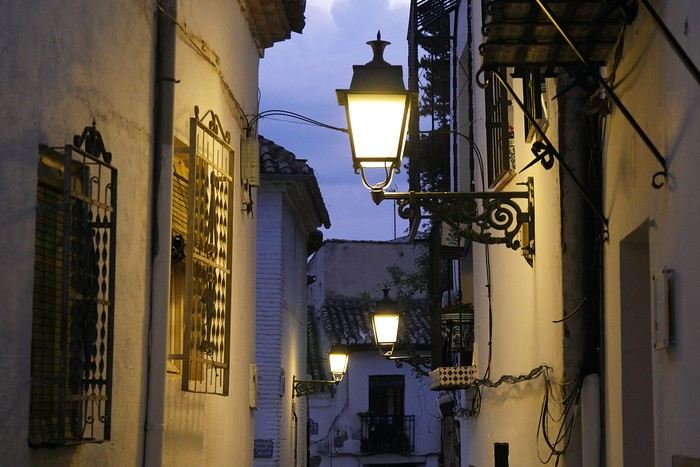
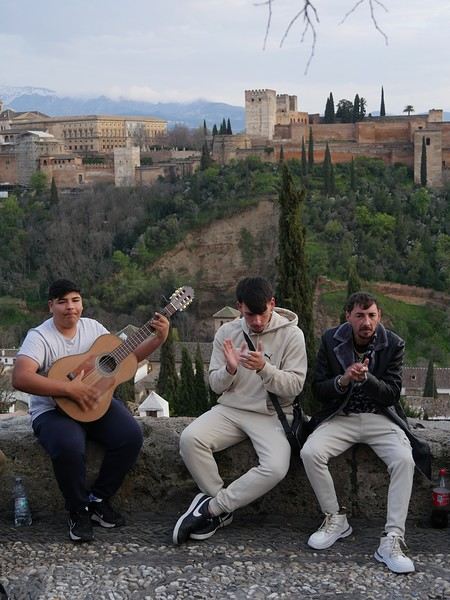
The weather was overcast, but a little stroll through the Albaicín district was a must. In the evening, we had dinner at "Restaurant Arabe Ambar" to get into the Nasrid atmosphere—we recommend it!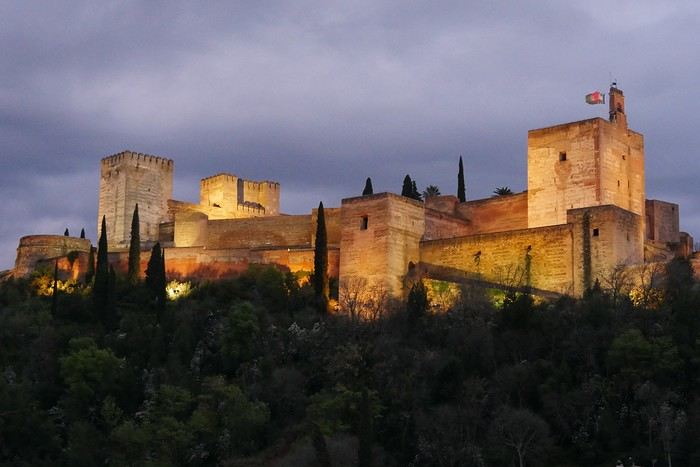
For this last week of March, we waited until the end of the "votes" in France to go soak up some sun in southern Spain. And spring is the ideal season.
Our itinerary was a very (very) classic loop: Seville / Granada / Ronda and the white villages / Seville (with the start of Holy Week as a bonus gift!).
We flew from Lyon with Transavia (no issues) and landed in Seville on Monday. We rented a car (Goldcar), drove for 3 hours, and there we were in Granada, charmed by its ZTL (limited traffic zone) that Waze made us discover in detail (a nightmare!). Our hotel: Hotel Monjas del Carmen (perfectly located and with parking).
The weather was overcast, but a little stroll through the Albaicín district was a must. In the evening, we had dinner at "Restaurant Arabe Ambar" to get into the Nasrid atmosphere—we recommend it!
15 days in La Palma, a hidden gem with a thousand contrasts
Hello,
First attempt at a travel journal for me and first post after 7 years away from this forum. 😮 I went to the island of La Palma for 15 days in September 2025. After visiting Lanzarote in February, I was looking for a different and greener island. Well, I wasn’t disappointed. 😎
We stayed in Breña Baja on the east coast of the island, 5 minutes from the airport. This choice was mainly motivated by the desire not to change accommodation during the stay and to be in a "central" location close to amenities. It worked out well, but if I were to do it again, I’d split the stay in two by getting another place in the north of the island to explore that area, which really appeals to me. Note that the island is "climatically divided in two": the west coast is sunnier and drier, while the east coast is often foggy or cloudy. It’s quite impressive when you come out of the LP-3 road tunnel connecting the two sides—you feel like you’ve changed regions even though it’s less than 3 km apart.
Flight options weren’t plentiful (no direct flights from France), so I went with Iberia, connecting in Madrid for 250 € round-trip per person excluding checked baggage (80 € round-trip for one 23 kg suitcase on this route). Make sure to buy the checked baggage at the same time as your flight, as it’ll cost about 15 € more if you add it later. I booked the tickets 5 months in advance directly on Iberia’s website. You could also take a low-cost airline to Tenerife or Gran Canaria and then a flight with a Canarian carrier, but in my opinion, that only makes sense if you’re visiting one of those islands first, as the connection isn’t "guaranteed." The ferry is an option from Tenerife (about 2.5 hours crossing).
Our departure from Lyon was initially scheduled for 6 AM but took off at 9 AM so the crew could rest after the late arrival of the previous flight. This let us grab breakfast on the airline’s dime—thanks, EU Regulation (EC) No 261/2004. 😉 Iberia took a week to reimburse me after I submitted my passport, receipts, and bank details via their online claim form.
Our small but spacious CRJ-1000 Air Nostrum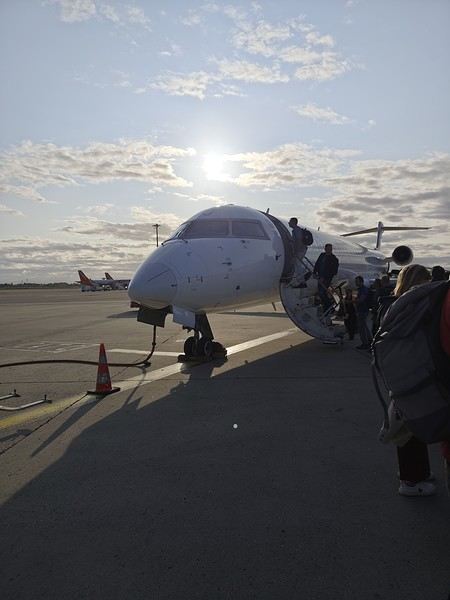 Bye-bye, Bugey nuclear plant
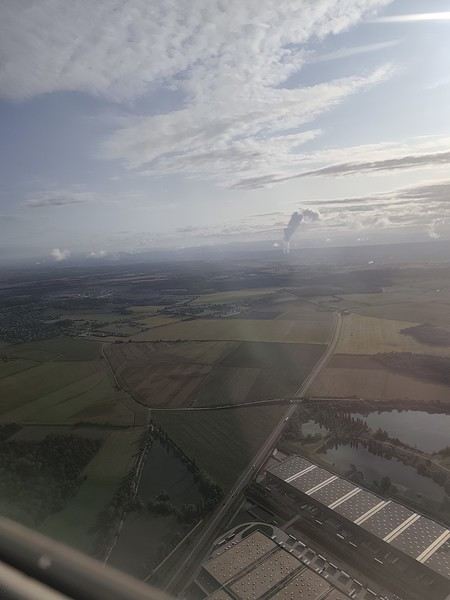 And hello, Madrid—or rather, its very dry region.
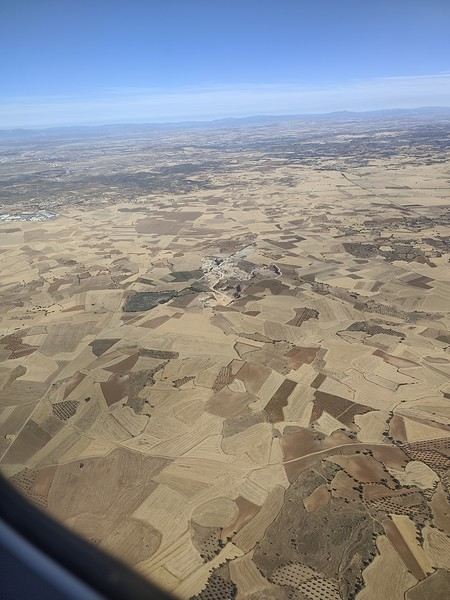
Our layover was initially 4 hours but shrank to 1 hour due to the previous flight’s delay. That worked out for us because Terminal 4 at Barajas is way less comfortable for resting than Lyon’s T1.
And hello, Madrid—or rather, its very dry region.
Our layover was initially 4 hours but shrank to 1 hour due to the previous flight’s delay. That worked out for us because Terminal 4 at Barajas is way less comfortable for resting than Lyon’s T1.
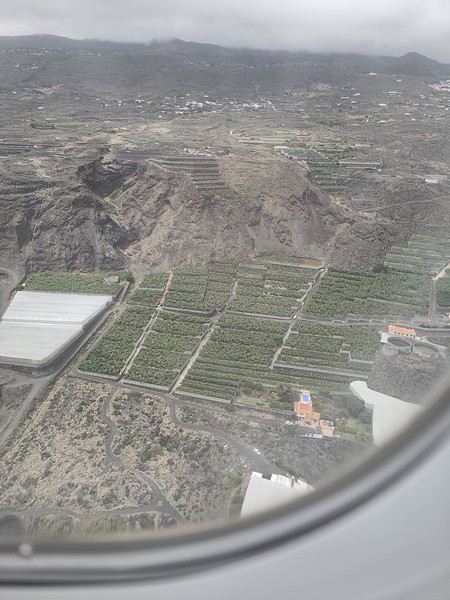
Landing with a view of Playa de la Cangrejera and del Pozo. When I say the east coast is often cloudy... 😇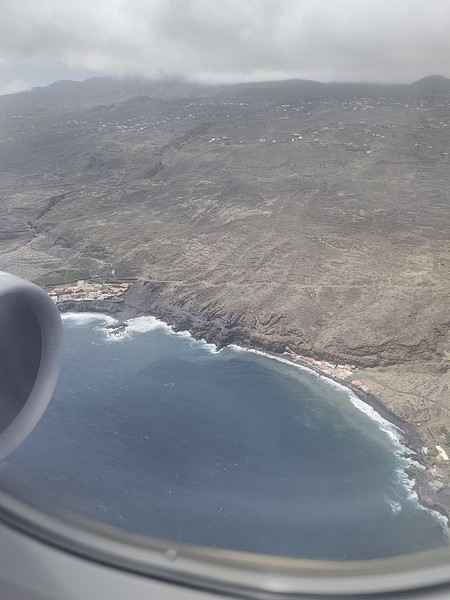 First sight of "plátano" plantations. Banana farming makes up 50% of the island’s GDP!
More to come soon. [;]
First attempt at a travel journal for me and first post after 7 years away from this forum. 😮 I went to the island of La Palma for 15 days in September 2025. After visiting Lanzarote in February, I was looking for a different and greener island. Well, I wasn’t disappointed. 😎
We stayed in Breña Baja on the east coast of the island, 5 minutes from the airport. This choice was mainly motivated by the desire not to change accommodation during the stay and to be in a "central" location close to amenities. It worked out well, but if I were to do it again, I’d split the stay in two by getting another place in the north of the island to explore that area, which really appeals to me. Note that the island is "climatically divided in two": the west coast is sunnier and drier, while the east coast is often foggy or cloudy. It’s quite impressive when you come out of the LP-3 road tunnel connecting the two sides—you feel like you’ve changed regions even though it’s less than 3 km apart.
Flight options weren’t plentiful (no direct flights from France), so I went with Iberia, connecting in Madrid for 250 € round-trip per person excluding checked baggage (80 € round-trip for one 23 kg suitcase on this route). Make sure to buy the checked baggage at the same time as your flight, as it’ll cost about 15 € more if you add it later. I booked the tickets 5 months in advance directly on Iberia’s website. You could also take a low-cost airline to Tenerife or Gran Canaria and then a flight with a Canarian carrier, but in my opinion, that only makes sense if you’re visiting one of those islands first, as the connection isn’t "guaranteed." The ferry is an option from Tenerife (about 2.5 hours crossing).
Our departure from Lyon was initially scheduled for 6 AM but took off at 9 AM so the crew could rest after the late arrival of the previous flight. This let us grab breakfast on the airline’s dime—thanks, EU Regulation (EC) No 261/2004. 😉 Iberia took a week to reimburse me after I submitted my passport, receipts, and bank details via their online claim form.
Our small but spacious CRJ-1000 Air Nostrum
Bye-bye, Bugey nuclear plant
And hello, Madrid—or rather, its very dry region.
Our layover was initially 4 hours but shrank to 1 hour due to the previous flight’s delay. That worked out for us because Terminal 4 at Barajas is way less comfortable for resting than Lyon’s T1.
Landing with a view of Playa de la Cangrejera and del Pozo. When I say the east coast is often cloudy... 😇
First sight of "plátano" plantations. Banana farming makes up 50% of the island’s GDP!
More to come soon. [;]
Tips for beginners on a 3-month trip to South America
Hi everyone,
With a friend, we’re planning a big trip to South America from January to mid-April 2026.
Our planned itinerary:
Argentina Chile Brazil (for Rio’s Carnival) Peru Then heading to Costa Rica to wrap up the trip.
We don’t have a precise route yet, but here are the key stops we’d absolutely love to include:
Iguazu Falls (Foz de Iguaçu) Patagonia (especially the Perito Moreno Glacier) Atacama Desert Rio Carnival Machu Picchu
This is our first time taking a trip of this scale, and we’d love some advice from more experienced travelers. To narrow it down, here are the main things we’re worried about:
1. Travel agency
For a trip this big, do you think a travel agency is helpful, or is it better to organize everything ourselves? If so, which ones would you recommend for a tight budget? We were considering G Adventures for parts of the trip. Any feedback on them?
2. Practical tips and money
For luggage, would you recommend a small rolling suitcase or a big backpack?
About payments: Is it easy to pay by card, or is cash the way to go? If cash is king, how do you manage your budget—do you use services like Western Union for transfers? Currency exchange: Is it easy to exchange money on the spot? Which places are best for that? For costs, what’s a reasonable monthly budget for average travelers?
3. Accommodation
Is it easy to find hotels/hostels on the fly, or is it better to book a few days/weeks in advance (especially in high season)?
4. Transportation
Same question for buses: Can you buy tickets the same day, or should you book a few days/weeks (or even months) ahead for certain routes? Any recommendations for reliable companies between these countries and within them?
5. Phone service
How do you handle mobile networks, especially when crossing borders? Do you need a SIM card per country? Are there plans that cover multiple countries? Are eSIMs available? What’s the best way to set it up? Thanks in advance for your tips and experiences! We’re all ears for any great tips, hacks, or pitfalls to avoid.
Argentina Chile Brazil (for Rio’s Carnival) Peru Then heading to Costa Rica to wrap up the trip.
We don’t have a precise route yet, but here are the key stops we’d absolutely love to include:
Iguazu Falls (Foz de Iguaçu) Patagonia (especially the Perito Moreno Glacier) Atacama Desert Rio Carnival Machu Picchu
This is our first time taking a trip of this scale, and we’d love some advice from more experienced travelers. To narrow it down, here are the main things we’re worried about:
1. Travel agency
For a trip this big, do you think a travel agency is helpful, or is it better to organize everything ourselves? If so, which ones would you recommend for a tight budget? We were considering G Adventures for parts of the trip. Any feedback on them?
2. Practical tips and money
For luggage, would you recommend a small rolling suitcase or a big backpack?
About payments: Is it easy to pay by card, or is cash the way to go? If cash is king, how do you manage your budget—do you use services like Western Union for transfers? Currency exchange: Is it easy to exchange money on the spot? Which places are best for that? For costs, what’s a reasonable monthly budget for average travelers?
3. Accommodation
Is it easy to find hotels/hostels on the fly, or is it better to book a few days/weeks in advance (especially in high season)?
4. Transportation
Same question for buses: Can you buy tickets the same day, or should you book a few days/weeks (or even months) ahead for certain routes? Any recommendations for reliable companies between these countries and within them?
5. Phone service
How do you handle mobile networks, especially when crossing borders? Do you need a SIM card per country? Are there plans that cover multiple countries? Are eSIMs available? What’s the best way to set it up? Thanks in advance for your tips and experiences! We’re all ears for any great tips, hacks, or pitfalls to avoid.
Help choosing itinerary: Chile - Argentina - Brazil
Hello,
How good it feels to be back on this forum!!!!
Today, we started looking into traveling in April 2026, either to Chile or Argentina. It’s our first trip to South America. I’ve only been to French Guiana once, about ten years ago, for the space center. In recent years, we’ve usually gone to Asia during the spring holidays.
Based on the flight tickets I’ve found, two arrival and departure options are available: - Arriving in Buenos Aires and departing from Salvador de Bahia. - Arriving in Santiago, Chile, and still departing from Salvador de Bahia.
We’re considering flying business class on the outbound flight so we arrive a bit more rested. The travel class might influence our choice between itinerary A or B.
We’d like to spend two days at Iguazu Falls (both the Argentine and Brazilian sides), which explains the departure from Brazil.
Initially, we thought about arriving in Buenos Aires and staying in Argentina before heading to Iguazu. However, the itinerary forces us to go back through Buenos Aires.
We love nature. The El Calafate region seems to offer beautiful, easily accessible landscapes. Maybe there’s another area we should prioritize.
Here are two itineraries—what do you think? I know it’s short, but we can’t add any more days. We’ll have to make it work.
Option A: D1(Sat): Flight from France to Buenos Aires – arrival at 9:55 PM. D2(Sun): Visit Buenos Aires D3(Mon): Visit Buenos Aires. D4(Tue): Flight from Buenos Aires to El Calafate – 3.5-hour flight – arrival around midday. D4(Tue) – until D11(Tue) – visit the El Calafate region: El Calafate / 121km / El Chaltén / 12km / Mount Fitz Roy / 4km / Cerro Torre Mountain / 132km / Perito Moreno Glacier / 57km / El Calafate. D11(Tue): Flight to Buenos Aires D12(Wed): Morning flight to Iguazu (Argentine side) – flight at 6:40 AM or 8:10 AM – 2-hour flight. D13(Thu): Half-day on the Brazilian side – flight around 7:00 PM to Salvador de Bahia. D14(Fri): Visit Salvador de Bahia (downtown) D15(Sat): Morning visit + midday departure for the airport – flight at 5:45 PM from Salvador de Bahia D16(Sun): Arrival in France.
This itinerary forces us to pass through Buenos Aires twice.
Option B: D0(Fri): Flight from France to Santiago, Chile – departure at 11:20 PM from CDG. D1(Sat): Arrival at 7:45 AM in Santiago, Chile – hotel + city visit. D2(Sun): Visit Santiago, Chile D3(Mon): Departure for Puerto Natales, Punta Arenas, or El Calafate – to be decided. There’s about a 3-hour flight. We need to check the drop-off fees if we pick up the car in Chile and return it in Argentina – see ADEL RENT A CAR. D3(Mon) – until D10(Mon) – visit the El Calafate region: El Calafate / 121km / El Chaltén / 12km / Mount Fitz Roy / 4km / Cerro Torre Mountain / 132km / Perito Moreno Glacier / 57km / El Calafate. D10(Mon): 3.5-hour flight + visit Buenos Aires. D11(Tue): Visit Buenos Aires D12(Wed): Morning flight to Iguazu (Argentine side) – flight at 6:40 AM or 8:10 AM – 2-hour flight. D13(Thu): Half-day on the Brazilian side – flight around 7:00 PM to Salvador de Bahia. D14(Fri): Visit Salvador de Bahia (downtown) D15(Sat): Morning visit + midday departure for the airport – flight at 5:45 PM from Salvador de Bahia D16(Sun): Arrival in France.
The end of the itinerary is the same. This option avoids passing through Buenos Aires twice. Thanks for your feedback.
Today, we started looking into traveling in April 2026, either to Chile or Argentina. It’s our first trip to South America. I’ve only been to French Guiana once, about ten years ago, for the space center. In recent years, we’ve usually gone to Asia during the spring holidays.
Based on the flight tickets I’ve found, two arrival and departure options are available: - Arriving in Buenos Aires and departing from Salvador de Bahia. - Arriving in Santiago, Chile, and still departing from Salvador de Bahia.
We’re considering flying business class on the outbound flight so we arrive a bit more rested. The travel class might influence our choice between itinerary A or B.
We’d like to spend two days at Iguazu Falls (both the Argentine and Brazilian sides), which explains the departure from Brazil.
Initially, we thought about arriving in Buenos Aires and staying in Argentina before heading to Iguazu. However, the itinerary forces us to go back through Buenos Aires.
We love nature. The El Calafate region seems to offer beautiful, easily accessible landscapes. Maybe there’s another area we should prioritize.
Here are two itineraries—what do you think? I know it’s short, but we can’t add any more days. We’ll have to make it work.
Option A: D1(Sat): Flight from France to Buenos Aires – arrival at 9:55 PM. D2(Sun): Visit Buenos Aires D3(Mon): Visit Buenos Aires. D4(Tue): Flight from Buenos Aires to El Calafate – 3.5-hour flight – arrival around midday. D4(Tue) – until D11(Tue) – visit the El Calafate region: El Calafate / 121km / El Chaltén / 12km / Mount Fitz Roy / 4km / Cerro Torre Mountain / 132km / Perito Moreno Glacier / 57km / El Calafate. D11(Tue): Flight to Buenos Aires D12(Wed): Morning flight to Iguazu (Argentine side) – flight at 6:40 AM or 8:10 AM – 2-hour flight. D13(Thu): Half-day on the Brazilian side – flight around 7:00 PM to Salvador de Bahia. D14(Fri): Visit Salvador de Bahia (downtown) D15(Sat): Morning visit + midday departure for the airport – flight at 5:45 PM from Salvador de Bahia D16(Sun): Arrival in France.
This itinerary forces us to pass through Buenos Aires twice.
Option B: D0(Fri): Flight from France to Santiago, Chile – departure at 11:20 PM from CDG. D1(Sat): Arrival at 7:45 AM in Santiago, Chile – hotel + city visit. D2(Sun): Visit Santiago, Chile D3(Mon): Departure for Puerto Natales, Punta Arenas, or El Calafate – to be decided. There’s about a 3-hour flight. We need to check the drop-off fees if we pick up the car in Chile and return it in Argentina – see ADEL RENT A CAR. D3(Mon) – until D10(Mon) – visit the El Calafate region: El Calafate / 121km / El Chaltén / 12km / Mount Fitz Roy / 4km / Cerro Torre Mountain / 132km / Perito Moreno Glacier / 57km / El Calafate. D10(Mon): 3.5-hour flight + visit Buenos Aires. D11(Tue): Visit Buenos Aires D12(Wed): Morning flight to Iguazu (Argentine side) – flight at 6:40 AM or 8:10 AM – 2-hour flight. D13(Thu): Half-day on the Brazilian side – flight around 7:00 PM to Salvador de Bahia. D14(Fri): Visit Salvador de Bahia (downtown) D15(Sat): Morning visit + midday departure for the airport – flight at 5:45 PM from Salvador de Bahia D16(Sun): Arrival in France.
The end of the itinerary is the same. This option avoids passing through Buenos Aires twice. Thanks for your feedback.
Come discover the island of Aruba in the Caribbean
Aruba is a small island in the Dutch Caribbean located off the coast of Venezuela. It’s part of the ABC islands (Aruba, Bonaire, Curaçao).
After visiting the island of Curaçao a few years earlier, we decided to explore Aruba in November 2023.
We stayed for three weeks in an Airbnb-style accommodation and rented a vehicle for the entire period to visit the various tourist attractions on the island.
These are listed below.
You’ll find several supermarkets (Carrefour, Super Food, Jumbo, etc.) as well as a wide variety of restaurants.
*****
Note:
Please be aware that since July 2024, Aruba has implemented a $20 sustainable development tax for visitors arriving by air.
This tax is payable via the online ED Card platform during the ED card application process to enter Aruba.
I invite you to continue reading this travel journal and watch the videos that will help you discover this sunny destination.
*****
Videos are embedded throughout the summary. Click on the image to start the video.
To jump to a specific post, here are the relevant links:
Noord - California Lighthouse Noord - Bubali Bird Sanctuary Paradera - Casibari Rock Formations Santa Cruz - Ayo Rock Formations Bushiribana - New Natural Pool (Cave Pool) Noord - Bushiribana Gold Mill Ruins Santa Cruz - Natural Bridge Oranjestad - Hooiberg San Nicolas - Seroe Colorado Natural Bridge Spanish Lagoon Mangrove Trail Shoco Habitat - Spanish Lagoon Oranjestad - Balashi Gold Mill Ruins San Nicolas - Lourdes Grotto Arikok National Park - Daimari Beach, Boka Keto Beach (Moro), Conchi Natural Pool Arikok National Park - Boca Prins Beach Arikok National Park - Fontein Cave Arikok National Park – Quadirikiri Cave Arikok National Park – Hike to Sero Arikok Oranjestad & Noord - Walking tour San Nicolas and its murals San Nicolas and its mosaic street benches The famous seafood restaurant Zeerover Noord - Snorkeling around the Baboo shipwreck Noord - Arashi Beach Noord - Boca Catalina Beach Noord - Boca Catalina Beach - Snorkeling Noord - Snorkeling at Tres Tapi - Turtle and Ray Noord - Snorkeling at Malmok Beach - Flying gurnards Noord - Hadicurari Beach (Fishermen's Huts) Noord - Palm Beach Noord - Eagle Beach Noord – Manchebo Beach Oranjestad - Divi Beach Oranjestad - Druif Beach Oranjestad - Surfside Beach Pos Chiquito - Mangel Halto Beach Savaneta - Santo Largo Beach Savaneta - Battata Beach San Nicolas - Rodgers Beach San Nicolas - Baby Beach San Nicolas - Baby Beach - Snorkeling San Nicolas - Bachelor’s Beach (Boca Tabla) San Nicolas - Boca Grandi Beach San Nicolas - Colorado Point - Snorkeling at Bachelors Beach San Nicolas - Grapefield Beach Hike - Blackstone Beach via Natural Bridge Noord - Wariruri Beach
After visiting the island of Curaçao a few years earlier, we decided to explore Aruba in November 2023.
We stayed for three weeks in an Airbnb-style accommodation and rented a vehicle for the entire period to visit the various tourist attractions on the island.
These are listed below.
You’ll find several supermarkets (Carrefour, Super Food, Jumbo, etc.) as well as a wide variety of restaurants.
*****
Note:
Please be aware that since July 2024, Aruba has implemented a $20 sustainable development tax for visitors arriving by air.
This tax is payable via the online ED Card platform during the ED card application process to enter Aruba.
I invite you to continue reading this travel journal and watch the videos that will help you discover this sunny destination.
*****
Videos are embedded throughout the summary. Click on the image to start the video.
To jump to a specific post, here are the relevant links:
Noord - California Lighthouse Noord - Bubali Bird Sanctuary Paradera - Casibari Rock Formations Santa Cruz - Ayo Rock Formations Bushiribana - New Natural Pool (Cave Pool) Noord - Bushiribana Gold Mill Ruins Santa Cruz - Natural Bridge Oranjestad - Hooiberg San Nicolas - Seroe Colorado Natural Bridge Spanish Lagoon Mangrove Trail Shoco Habitat - Spanish Lagoon Oranjestad - Balashi Gold Mill Ruins San Nicolas - Lourdes Grotto Arikok National Park - Daimari Beach, Boka Keto Beach (Moro), Conchi Natural Pool Arikok National Park - Boca Prins Beach Arikok National Park - Fontein Cave Arikok National Park – Quadirikiri Cave Arikok National Park – Hike to Sero Arikok Oranjestad & Noord - Walking tour San Nicolas and its murals San Nicolas and its mosaic street benches The famous seafood restaurant Zeerover Noord - Snorkeling around the Baboo shipwreck Noord - Arashi Beach Noord - Boca Catalina Beach Noord - Boca Catalina Beach - Snorkeling Noord - Snorkeling at Tres Tapi - Turtle and Ray Noord - Snorkeling at Malmok Beach - Flying gurnards Noord - Hadicurari Beach (Fishermen's Huts) Noord - Palm Beach Noord - Eagle Beach Noord – Manchebo Beach Oranjestad - Divi Beach Oranjestad - Druif Beach Oranjestad - Surfside Beach Pos Chiquito - Mangel Halto Beach Savaneta - Santo Largo Beach Savaneta - Battata Beach San Nicolas - Rodgers Beach San Nicolas - Baby Beach San Nicolas - Baby Beach - Snorkeling San Nicolas - Bachelor’s Beach (Boca Tabla) San Nicolas - Boca Grandi Beach San Nicolas - Colorado Point - Snorkeling at Bachelors Beach San Nicolas - Grapefield Beach Hike - Blackstone Beach via Natural Bridge Noord - Wariruri Beach
Back from Paraguay
hi everyone, I just got back from 3 weeks in Paraguay. If you'd like any info, feel free to ask!
Tenerife or Rhodes in mid-April
Hi everyone. I’m really torn between Tenerife and Rhodes for the week of April 12–19. I’m worried Rhodes might still be a bit chilly in mid-April, and I’m afraid there won’t be much to do in Tenerife?
I’d love to see beautiful sights—whether it’s towns or landscapes—but also lounge by the pool in shorts (or even a swimsuit if possible??). What do you recommend?
Will it be possible to swim in the pool at either (or both) of these destinations?
Thanks for your help!
I’d love to see beautiful sights—whether it’s towns or landscapes—but also lounge by the pool in shorts (or even a swimsuit if possible??). What do you recommend?
Will it be possible to swim in the pool at either (or both) of these destinations?
Thanks for your help!
3 weeks camping in the Azores, August 2024
Hi everyone,
So glad this forum is back up! Here’s a recap of our three little weeks in the Azores in August 2024, camping on Terceira, Flores/Corvo, and São Miguel, with a special focus on the camping side—something I struggled to find info on before we left.
As others have mentioned, a trip to the Azores isn’t something you can improvise last-minute, especially in August. The rental car fleet is limited, so prices go up as availability drops, and vacation rentals/hotels are scarce. Plus, inter-island flights and ferries aren’t exactly frequent. I picked our destination in mid-April, and there were already few rental car options left (some local companies had nothing), and no accommodations on Flores for our dates—or only very expensive ones requiring multiple location changes. Since we love camping, we decided to bring our gear without really knowing what to expect.
Flight with TAP (426 €): Outbound: Lyon → Lisbon → Terceira Return: São Miguel → Lisbon (9-hour stopover for a quick visit) → Lyon
Inter-island flights with SATA: Terceira → Flores (via Horta): 87 € Flores → São Miguel: 90 €
I rented all three cars from the same local company, Ilha Grande—they weren’t picky about the car’s condition. For a Clio (or similar): Terceira (4 days): 461 € Flores (5 days): 623 € São Miguel (8 days): 730 €
Weather: The first two weeks were gorgeous—blue skies, no rain, and even hotter than we expected, around 30°C (temperatures barely dropped at night). The last week of August brought more fine rain (mostly at night) and temps between 20 and 25°C (a light jacket was nice in the mornings and evenings).
TERCEIRA: A great introduction! When I looked at what each island had to offer, Terceira wasn’t at the top of my list, but flying into Terceira cut costs and fit our schedule well, so we spent 4 days there. It turned out to be a lovely start.
For camping, we stayed at Salga Campismo in Porto Judeu, 20 minutes from the airport. We discovered that the island’s campsites were packed with locals—extended families or groups of friends having big, festive gatherings with barbecues and long tables. They spend their summers camping instead of at home, and some even commute to work from there. They had huge tents for sleeping, plus tarps for cooking and relaxing—way more gear than the tourists. Since the week of August 15th is peak vacation time (like in France), we struggled to find a spot, and the nights were pretty noisy. This was the only campsite of the trip with numbered pitches. It’s right by the ocean, next to natural pools. Facilities were decent, with hot showers and picnic tables. Lots of shaded spots. Cost: 4 € per small tent + 2 € per person. Electrical outlets were free (20 € deposit). During our explorations, we passed by Cinco Ribeiras campsite (west coast), which seemed similar.
Camping gas: Always ask the campsite reception if any travelers left a gas canister before buying a new one! Before the trip, I emailed each island’s tourism office, and they gave me addresses for Campingaz bottles. On Terceira, No. 13 Rua João Vaz Corte Real in Angra do Heroísmo (an agricultural store in the industrial zone). CV300 cartridge: 10 €. Note: The tourism office gave me the name of the neighboring store, which didn’t carry that brand.
Fridge: No fridges at any campsite on any island. We had a foldable cooler and found bags of crushed ice in supermarkets’ fish sections.
Things to see: Key takeaway: Do the must-see spots early in your stay in case the weather doesn’t cooperate. We were lucky and saw all the viewpoints without clouds—apparently not always the case!
Our main visits/hikes on Terceira: Miradouro Serra do Cume (a must—*the* iconic Terceira photo)
Furnas do Enxofre (free): Few fumaroles, but a pretty 1 km walk through moss and endemic plants. Hike PRC01 TER – Misterios Negros (some acrobatic sections, but a very scenic path). Monte Brasil + Angra do Heroísmo: Lovely town. Hike PR02 TER – Baía da Agualva: Nice, but not much shade (along the coast). Quatro Ribeiras: Church and swimming in natural pools. Biscoitos natural pools: Too touristy (but still free).
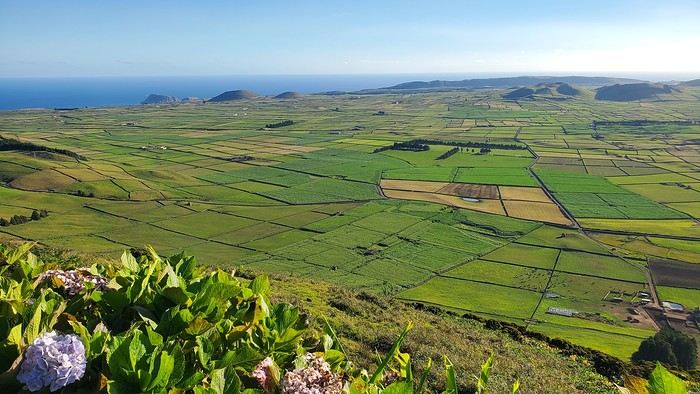
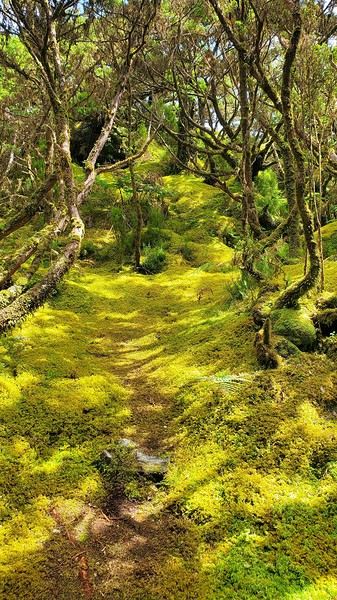
FLORES: Our favorite! This was the island I *had* to visit, and we weren’t disappointed—no mass tourism, just stunning nature.
For camping, we chose Santa Cruz campsite. Unlike Terceira, it was only tourists here. Very little shade, but ocean views. Modern facilities with hot showers, clotheslines, and a charging station. A big area with picnic tables, each with a barbecue and sink, all sheltered. Right across from gorgeous natural pools. FREE (you can leave a tip for the caretaker).
For Campingaz, the campsite manager stores canisters and gear left by campers. Otherwise, you can find them at Movipesca.
During a hike, we passed by Fajã Grande campsite (campsites here double as picnic spots for everyone). It’s terraced, with no shade, but very clean facilities and a small bar/restaurant nearby. Natural pools across the street. When we stopped by midday, there were only a few tents. Fajã Grande felt even quieter than Santa Cruz, with just one supermarket.
We also picnicked at Ponta Delgada campsite in the north. Impeccable facilities, lots of picnic tables with barbecues. Empty when we were there. A bit out of the way.
Rental car or not on Flores? Given the high cost, I really debated whether we needed a car. In Santa Cruz, the port, airport, and supermarkets are walkable, and the most famous hikes are one-way, not loops. So I contacted a taxi (the tourism office emails a list of drivers—they don’t wait for customers; you have to call). Prices were around 20 € for Santa Cruz to Fajã Grande, for example. That means you could take several taxi trips before the rental car (over 100 €/day) pays off. But it does mean planning your route and schedule in advance, leaving little room for spontaneity. The taxi I contacted was already booked solid in July, so I decided to keep the car and adjust our hikes to make loops. (FYI, we’re in our 50s, two couples splitting costs—maybe a different calculation if we were 25!) No regrets—it gave us way more freedom.
Our main visits/hikes:
Hike (amazing): Poço da Ribeira do Ferreiro (the iconic waterfalls) → Fajã Grande → Poço do Bacalhau (swim in the waterfall) → Aldeia da Cuada → Poço da Ribeira do Ferreiro. Hike PR04: Loop from Miradouro da Fajã de Lopo Vaz, then down to the beach via the trail. Return along the pebble beach before climbing back up. Worth it, but the descent and ascent are steep.
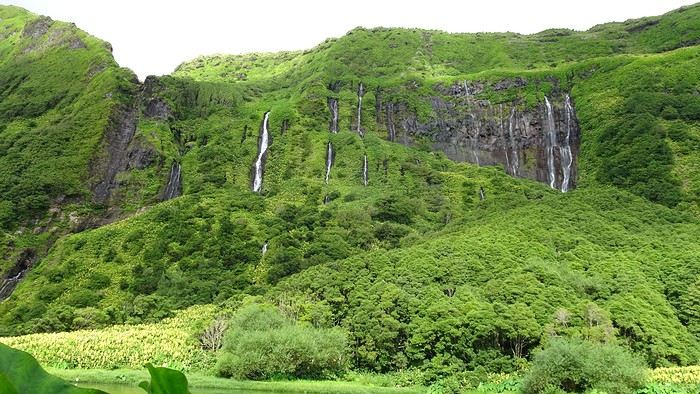 By car: Miradouro do Portal (great view of the coast to Fajã Grande) – Rocha dos Bordões (basalt columns) – Miradouro das Lagoas Rasa e Funda (a must) – Miradouro da Fajã do Conde.
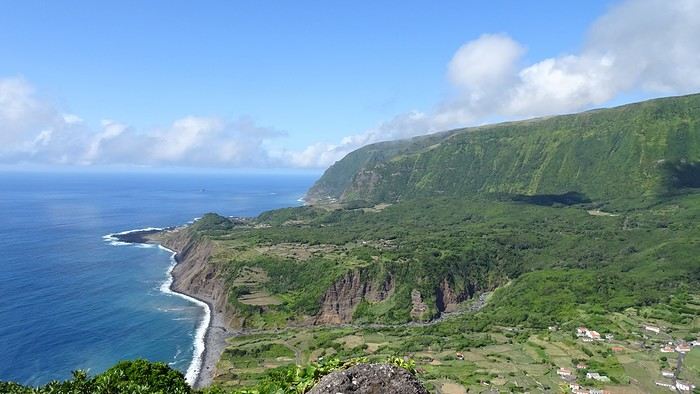 Hike: Miradouro das Lagoas Funda e Comprida, Lagoa Negra, Seca e Branda, Lagoa Branca. A bit muddy and not as memorable as other hikes. The best part (a must) is the view from the starting miradouro.
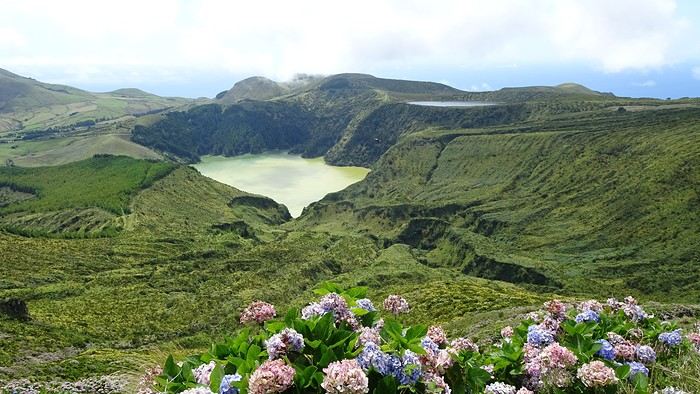
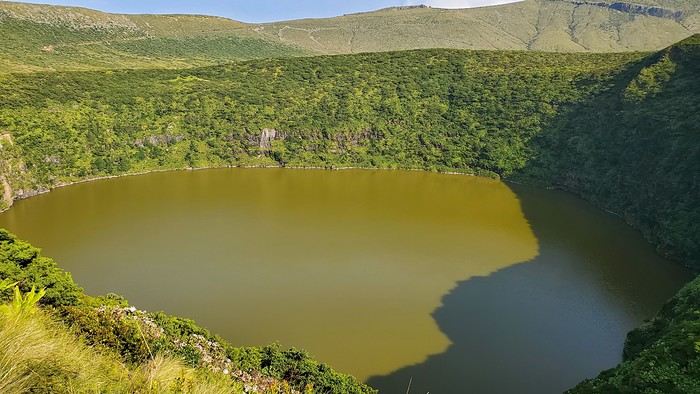
By car: The north of the island.
CORVO: Stunning!!
No spots left on the ferry (12 seats), so we took a tourist zodiac (booked a few weeks ahead by email, but there were still spots the day of—several boats make the trip). On the way out, we cruised along Flores’ coast to see waterfalls and caves. On the return, they looked for dolphins (we saw some! 🙂 ). Boat price: 35 € per person. At Corvo, minibuses shuttle between the port and the top of the caldera (10 € round-trip per person). Lots of people just stop at the viewpoint when the shuttle arrives, so we weren’t too crowded on the caldera hike. But it’s too tight on time to walk back down to the port. If you really want to, I think you’d need to stay overnight. All boats spend the same amount of time on the island.
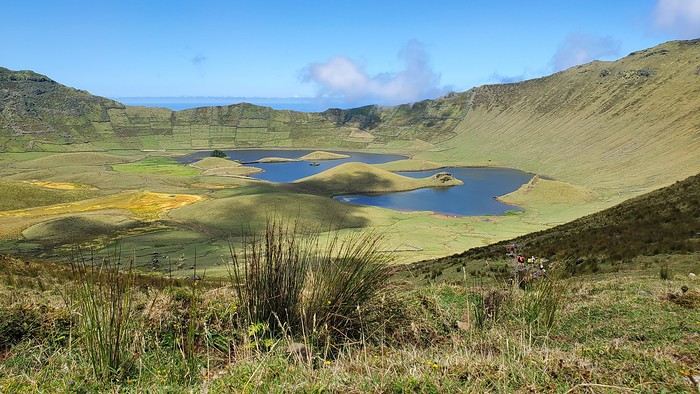
SÃO MIGUEL: Back to civilization—but not just that! São Miguel is way more touristy than the other islands (though still nothing compared to other destinations), but it’s worth it for all the natural sites.
For camping, to avoid long drives, we started at Sete Cidades campsite on the west side. A big, free, terraced campsite with some shade. We were there the last week of August, when crowds start thinning, so there was space—a mix of tourists and locals. A few picnic tables with barbecues. For facilities, one side for men, one for women, each with one toilet (cleaned regularly) and three outdoor cold showers (swimsuits recommended). You can charge your phone in the caretaker’s hut.
After exploring the west, we moved to Furnas for the rest of the trip. We arrived on a Friday night, and the campsite was packed with locals spending the weekend. It emptied out Sunday afternoon. A large, shady campsite with several bathroom blocks (hot showers). There’s a restaurant, but only two picnic tables. Cost: 3.5 € per small tent + 3.5 € per person.
Campingaz: We bought canisters at Decathlon in Ponta Delgada (next to Decathlon, there’s a big shopping center for groceries). Didn’t ask at Sete Cidades, but at Furnas, there was a closet full of gas bottles of all sizes left by campers.
Main visits/hikes: Sete Cidades and the surrounding lakes (lots of viewpoints and short hikes): Beautiful.
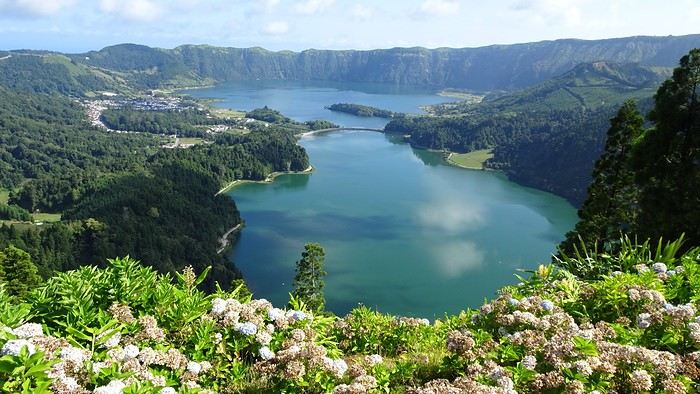
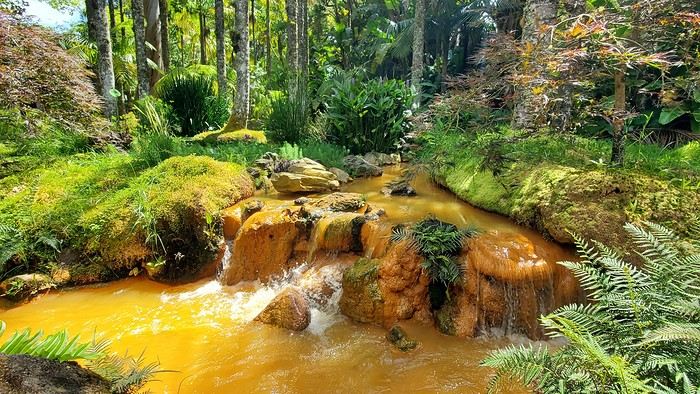
Swimming in the hot springs at Ponta da Ferraria (west side of the island).

Furnas: The lake, fumaroles, and parks (like Terra Nostra).
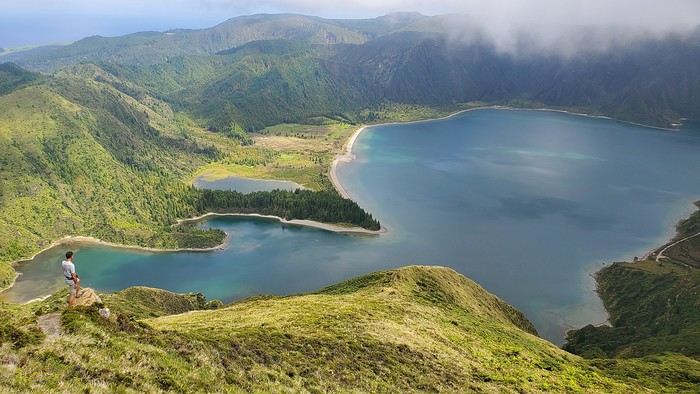
Lagoa do Fogo (gorgeous).
Gorreana tea factory (nice hike through the tea fields + guided tour), Ribeira Grande, Ermida de Nossa Senhora da Paz. The east coast and Ribeira dos Caldeirões park. Ponta Delgada.
Final thoughts: The Azores are a fantastic discovery for nature lovers—lakes, waterfalls, and tranquility. Almost all sites are accessible without hiking (though it’s a shame not to). The “miradouros” (viewpoints) have parking, often with toilets and picnic tables (always very clean), which helps protect nature. Camping is totally doable and really enjoyable! Our only disappointment: Not finding good fruits and veggies (except for São Miguel’s delicious but expensive pineapples).
If you have any questions, I’d be happy to help! Christine
So glad this forum is back up! Here’s a recap of our three little weeks in the Azores in August 2024, camping on Terceira, Flores/Corvo, and São Miguel, with a special focus on the camping side—something I struggled to find info on before we left.
As others have mentioned, a trip to the Azores isn’t something you can improvise last-minute, especially in August. The rental car fleet is limited, so prices go up as availability drops, and vacation rentals/hotels are scarce. Plus, inter-island flights and ferries aren’t exactly frequent. I picked our destination in mid-April, and there were already few rental car options left (some local companies had nothing), and no accommodations on Flores for our dates—or only very expensive ones requiring multiple location changes. Since we love camping, we decided to bring our gear without really knowing what to expect.
Flight with TAP (426 €): Outbound: Lyon → Lisbon → Terceira Return: São Miguel → Lisbon (9-hour stopover for a quick visit) → Lyon
Inter-island flights with SATA: Terceira → Flores (via Horta): 87 € Flores → São Miguel: 90 €
I rented all three cars from the same local company, Ilha Grande—they weren’t picky about the car’s condition. For a Clio (or similar): Terceira (4 days): 461 € Flores (5 days): 623 € São Miguel (8 days): 730 €
Weather: The first two weeks were gorgeous—blue skies, no rain, and even hotter than we expected, around 30°C (temperatures barely dropped at night). The last week of August brought more fine rain (mostly at night) and temps between 20 and 25°C (a light jacket was nice in the mornings and evenings).
TERCEIRA: A great introduction! When I looked at what each island had to offer, Terceira wasn’t at the top of my list, but flying into Terceira cut costs and fit our schedule well, so we spent 4 days there. It turned out to be a lovely start.
For camping, we stayed at Salga Campismo in Porto Judeu, 20 minutes from the airport. We discovered that the island’s campsites were packed with locals—extended families or groups of friends having big, festive gatherings with barbecues and long tables. They spend their summers camping instead of at home, and some even commute to work from there. They had huge tents for sleeping, plus tarps for cooking and relaxing—way more gear than the tourists. Since the week of August 15th is peak vacation time (like in France), we struggled to find a spot, and the nights were pretty noisy. This was the only campsite of the trip with numbered pitches. It’s right by the ocean, next to natural pools. Facilities were decent, with hot showers and picnic tables. Lots of shaded spots. Cost: 4 € per small tent + 2 € per person. Electrical outlets were free (20 € deposit). During our explorations, we passed by Cinco Ribeiras campsite (west coast), which seemed similar.
Camping gas: Always ask the campsite reception if any travelers left a gas canister before buying a new one! Before the trip, I emailed each island’s tourism office, and they gave me addresses for Campingaz bottles. On Terceira, No. 13 Rua João Vaz Corte Real in Angra do Heroísmo (an agricultural store in the industrial zone). CV300 cartridge: 10 €. Note: The tourism office gave me the name of the neighboring store, which didn’t carry that brand.
Fridge: No fridges at any campsite on any island. We had a foldable cooler and found bags of crushed ice in supermarkets’ fish sections.
Things to see: Key takeaway: Do the must-see spots early in your stay in case the weather doesn’t cooperate. We were lucky and saw all the viewpoints without clouds—apparently not always the case!
Our main visits/hikes on Terceira: Miradouro Serra do Cume (a must—*the* iconic Terceira photo)
Furnas do Enxofre (free): Few fumaroles, but a pretty 1 km walk through moss and endemic plants. Hike PRC01 TER – Misterios Negros (some acrobatic sections, but a very scenic path). Monte Brasil + Angra do Heroísmo: Lovely town. Hike PR02 TER – Baía da Agualva: Nice, but not much shade (along the coast). Quatro Ribeiras: Church and swimming in natural pools. Biscoitos natural pools: Too touristy (but still free).
FLORES: Our favorite! This was the island I *had* to visit, and we weren’t disappointed—no mass tourism, just stunning nature.
For camping, we chose Santa Cruz campsite. Unlike Terceira, it was only tourists here. Very little shade, but ocean views. Modern facilities with hot showers, clotheslines, and a charging station. A big area with picnic tables, each with a barbecue and sink, all sheltered. Right across from gorgeous natural pools. FREE (you can leave a tip for the caretaker).
For Campingaz, the campsite manager stores canisters and gear left by campers. Otherwise, you can find them at Movipesca.
During a hike, we passed by Fajã Grande campsite (campsites here double as picnic spots for everyone). It’s terraced, with no shade, but very clean facilities and a small bar/restaurant nearby. Natural pools across the street. When we stopped by midday, there were only a few tents. Fajã Grande felt even quieter than Santa Cruz, with just one supermarket.
We also picnicked at Ponta Delgada campsite in the north. Impeccable facilities, lots of picnic tables with barbecues. Empty when we were there. A bit out of the way.
Rental car or not on Flores? Given the high cost, I really debated whether we needed a car. In Santa Cruz, the port, airport, and supermarkets are walkable, and the most famous hikes are one-way, not loops. So I contacted a taxi (the tourism office emails a list of drivers—they don’t wait for customers; you have to call). Prices were around 20 € for Santa Cruz to Fajã Grande, for example. That means you could take several taxi trips before the rental car (over 100 €/day) pays off. But it does mean planning your route and schedule in advance, leaving little room for spontaneity. The taxi I contacted was already booked solid in July, so I decided to keep the car and adjust our hikes to make loops. (FYI, we’re in our 50s, two couples splitting costs—maybe a different calculation if we were 25!) No regrets—it gave us way more freedom.
Our main visits/hikes:
Hike (amazing): Poço da Ribeira do Ferreiro (the iconic waterfalls) → Fajã Grande → Poço do Bacalhau (swim in the waterfall) → Aldeia da Cuada → Poço da Ribeira do Ferreiro. Hike PR04: Loop from Miradouro da Fajã de Lopo Vaz, then down to the beach via the trail. Return along the pebble beach before climbing back up. Worth it, but the descent and ascent are steep.
By car: Miradouro do Portal (great view of the coast to Fajã Grande) – Rocha dos Bordões (basalt columns) – Miradouro das Lagoas Rasa e Funda (a must) – Miradouro da Fajã do Conde.
Hike: Miradouro das Lagoas Funda e Comprida, Lagoa Negra, Seca e Branda, Lagoa Branca. A bit muddy and not as memorable as other hikes. The best part (a must) is the view from the starting miradouro.By car: The north of the island.
CORVO: Stunning!!
No spots left on the ferry (12 seats), so we took a tourist zodiac (booked a few weeks ahead by email, but there were still spots the day of—several boats make the trip). On the way out, we cruised along Flores’ coast to see waterfalls and caves. On the return, they looked for dolphins (we saw some! 🙂 ). Boat price: 35 € per person. At Corvo, minibuses shuttle between the port and the top of the caldera (10 € round-trip per person). Lots of people just stop at the viewpoint when the shuttle arrives, so we weren’t too crowded on the caldera hike. But it’s too tight on time to walk back down to the port. If you really want to, I think you’d need to stay overnight. All boats spend the same amount of time on the island.
SÃO MIGUEL: Back to civilization—but not just that! São Miguel is way more touristy than the other islands (though still nothing compared to other destinations), but it’s worth it for all the natural sites.
For camping, to avoid long drives, we started at Sete Cidades campsite on the west side. A big, free, terraced campsite with some shade. We were there the last week of August, when crowds start thinning, so there was space—a mix of tourists and locals. A few picnic tables with barbecues. For facilities, one side for men, one for women, each with one toilet (cleaned regularly) and three outdoor cold showers (swimsuits recommended). You can charge your phone in the caretaker’s hut.
After exploring the west, we moved to Furnas for the rest of the trip. We arrived on a Friday night, and the campsite was packed with locals spending the weekend. It emptied out Sunday afternoon. A large, shady campsite with several bathroom blocks (hot showers). There’s a restaurant, but only two picnic tables. Cost: 3.5 € per small tent + 3.5 € per person.
Campingaz: We bought canisters at Decathlon in Ponta Delgada (next to Decathlon, there’s a big shopping center for groceries). Didn’t ask at Sete Cidades, but at Furnas, there was a closet full of gas bottles of all sizes left by campers.
Main visits/hikes: Sete Cidades and the surrounding lakes (lots of viewpoints and short hikes): Beautiful.
Swimming in the hot springs at Ponta da Ferraria (west side of the island).
Furnas: The lake, fumaroles, and parks (like Terra Nostra).
Lagoa do Fogo (gorgeous).
Gorreana tea factory (nice hike through the tea fields + guided tour), Ribeira Grande, Ermida de Nossa Senhora da Paz. The east coast and Ribeira dos Caldeirões park. Ponta Delgada.
Final thoughts: The Azores are a fantastic discovery for nature lovers—lakes, waterfalls, and tranquility. Almost all sites are accessible without hiking (though it’s a shame not to). The “miradouros” (viewpoints) have parking, often with toilets and picnic tables (always very clean), which helps protect nature. Camping is totally doable and really enjoyable! Our only disappointment: Not finding good fruits and veggies (except for São Miguel’s delicious but expensive pineapples).
If you have any questions, I’d be happy to help! Christine
Has anyone done the Canary Islands and Madeira with Costa?
Hi there,
Has anyone taken a cruise to the Canary Islands and Madeira with Costa?
Thanks for your replies!
Jibé
Une semaine au départ de San Francisco English translation pending
Bonjour , nous somme une famille de 4 : parents et 2 enfants de 13 et 9 ans. Théoriquement nous irons à San Francisco fin avril. Nous avons avons de la famille sur place ( les enfants sont plus jeunes). Premier séjour aux États-Unis. Pour cause professionnelle la durée sur place est limitée.
les vols sont achetés aux horaires qui nous conviennent:
arrivée à SF dimanche 13h35 , départ le mardi 23h00. Après un road trip Nous souhaitons être de retour à SF le samedi soir: visites avec les 2 familles le dimanche, puis entre nous le lundi et mardi
j'envisage cet esquisse de programme:
dimanche soir :nuit à Midpines
Lundi visite de Yosemite park , nuit à Fresno
mardi visite de Sequoia park nuit à Three Rivers
mercredi route et visite de Trona Pinnacles nuit à Ridgecrest
jeudi visite Death Valley Furnace Creek nuit à Las Végas
pour le vendredi : le Grand Canyon donne vraiment envie d''être visité , nuit au Grand Canyon?
samedi retour vers Las Vegas puis vol vers SF en fin d’après-midi ( je ne prends pas le risque de réserver ce vol plusieurs semaines à l'avance) ou route toute la journée vers SF.
votre avis trop chargé , je supprime soit Death Valley , soit le Grand Canyon , les 2 ?
j'ai regardé pour arriver directement à Las Vegas plutôt que San Francisco le premier jour mais il faut ajouté presque 600€ ( j'ai eu les 4 aller-retour Paris SF à 1240€). Si le premier jour je vais à LV en avion en partant de SF quelle marge prendre entre le départ du 2eme vol et l'arrivée du premier? Pour les hébergements j'essaie de trouver sur hotel.com car j'ai un programme fidélité lors de mes déplacements pro. Merci pour vos conseils William
j'ai regardé pour arriver directement à Las Vegas plutôt que San Francisco le premier jour mais il faut ajouté presque 600€ ( j'ai eu les 4 aller-retour Paris SF à 1240€). Si le premier jour je vais à LV en avion en partant de SF quelle marge prendre entre le départ du 2eme vol et l'arrivée du premier? Pour les hébergements j'essaie de trouver sur hotel.com car j'ai un programme fidélité lors de mes déplacements pro. Merci pour vos conseils William
La Bolivie, un voyage riche en émotions! English translation pending
Bonjour à tous,
Ce carnet, je ne pensais pas le rédiger, à mon retour de Bolivie. Certains d’entre vous le savent d’ailleurs. Trop amère, trop choquée.
Et puis heureusement, le temps fait son affaire et estompe les mauvais souvenirs pour laisser principalement les bons. Rédiger ce carnet m’aide aussi je pense à tourner la page sur certains (très) mauvais moments, quand bien même ils datent déjà de huit mois. Certains épisodes auront été riches en émotions….
La Bolivie, j’en rêvais depuis plusieurs années. Envie de grands espaces, de nature, de kaléidoscope coloré. Envie de voir des lamas, des viscaches, des vigognes, des condors. Envie de voir les lagunes, LE salar, les couleurs du désert de Dali. Envie de découvrir l’Amérique du Sud et ce pays encore peu prisé des touristes. Envie de réaliser ce voyage tel que nous le pouvons sans nos enfants : peu de réservations d’hôtels, du camping sauvage et un itinéraire décidé pour les grandes étapes mais ajusté au jour le jour selon nos coups de cœur.
Les carnets lus au fil des mois confirmaient que le Sud Lipez reste accessible en individuel et autonome, même s’il est évidemment préférable de voyager à deux voitures. Mes beaux-parents acceptant de venir garder nos fils quelques jours avant le début des vacances scolaires de la Toussaint, je commence à organiser dès le mois de mai un périple de 16 jours entiers sur place. Depuis plusieurs mois, je m’étais forgé un début d’itinéraire selon ces différents critères :
J’exclus La Paz. Nous visiterons la capitale lors d’un futur voyage au Pérou où nous ajouterons quelques étapes nord-boliviennes. Je choisis d’atterrir à Santa Cruz de la Sierra avant de reprendre dans la foulée un avion pour Sucre. En effet, notre loueur de voiture, Biz Rent a Car, est situé à Sucre et a bonne réputation sur forum, notamment grâce à l’une des employées, Alejandra et sa maîtrise du français. Je prévois la majorité de notre temps dans le Sud Lipez afin de pouvoir admirer notamment les lagunes et le salar. Le carnet d’AirOne me donne envie de découvrir Tajira, région viticole et par conséquent plus verdoyante que le Sud Lipez désertique. Je réserve auprès de Vicente deux nuits dans sa ferme-auberge à Rosillas et un trek d’une journée permettant d’observer les condors Difficultés d’acclimatation liées à l’altitude : ne pas atterrir à La Paz permet déjà d’éviter une mise dans le bain d’entrée à 3600 mètres. Il sera plus aisé d’atterrir à Santa Cruz (416 mètres) et même Sucre (2750 mètres), d’autant que nous prévoyons de partir rapidement sur la région de Tajira (1900 mètres).
L’Amérique du Sud offrant plusieurs pays nous attirant depuis quelques années, mon mari a commencé à apprendre l’espagnol deux ans auparavant. Heureusement, car nous n’avons rencontré que très peu de Boliviens parlant (un peu) l’anglais. Comme beaucoup de voyageurs, nous avions téléchargé des cartes sous Maps.me qui une fois stockées sur les téléphones permettent de circuler sans accès au réseau.
J’apprends dans le courant de l’été 2019 que les élections présidentielles auront lieu pendant notre séjour. Soit ! Ce ne sera pas notre premier voyage en pleine campagne présidentielle. Au départ, je n’y prête pas tellement attention. Et puis fin août, Carmen (Ticapi) m’apprend qu’il sera interdit de circuler lors du premier tour des élections, le dimanche 20 octobre. Après consultation de mon ébauche d’itinéraire, nous avions justement prévu de repartir ce jour-là de Rosillas pour rejoindre Tupiza avant d’enchaîner sur le Sud Lipez. Avec seize jours sur place, nous n’avions pas envie de « perdre » une journée à Rosillas et reporter notre départ d’une journée. Il était également difficile de prévoir le trek le dimanche 20 car Vincent nous a précisé qu’en raison des élections, les villageois ne seraient pas disponibles pour faire office de guide dans la montagne. Il nous fallait trouver un endroit où nous pourrions passer la journée entière sans utiliser la voiture. Pas si simple. Alors finalement, plutôt qu’entamer notre séjour par Rosillas, cette étape sera la dernière de notre voyage. Nous devons atterrir à Sucre le matin du mercredi 17 et je prévois d’y séjourner deux jours. Direction ensuite Tupiza puis Guadalupe et enfin la laguna Celeste où nous resterons la fameuse journée des élections présidentielles à randonner dans les environs. Ça, c’était le programme initial. Ça ne s’est pas tout à fait déroulé ainsi !
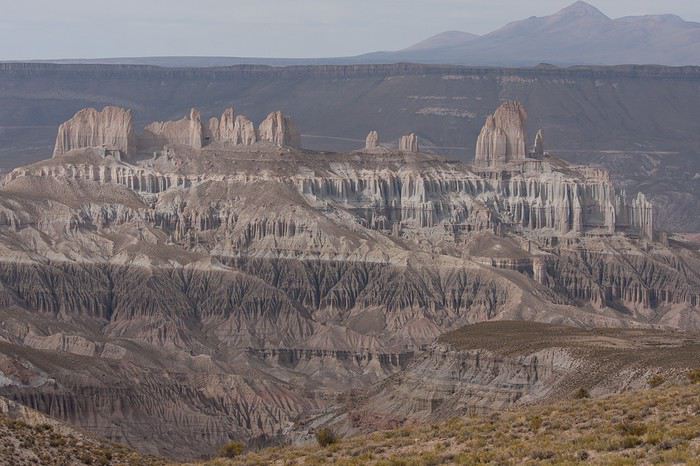
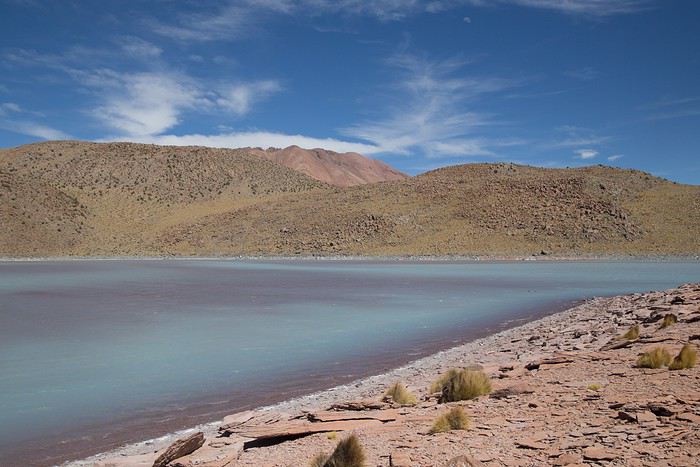
Allez, quelques photos pour, peut-être, vous donner envie de poursuivre la lecture de ce carnet 🙂
Et puis heureusement, le temps fait son affaire et estompe les mauvais souvenirs pour laisser principalement les bons. Rédiger ce carnet m’aide aussi je pense à tourner la page sur certains (très) mauvais moments, quand bien même ils datent déjà de huit mois. Certains épisodes auront été riches en émotions….
La Bolivie, j’en rêvais depuis plusieurs années. Envie de grands espaces, de nature, de kaléidoscope coloré. Envie de voir des lamas, des viscaches, des vigognes, des condors. Envie de voir les lagunes, LE salar, les couleurs du désert de Dali. Envie de découvrir l’Amérique du Sud et ce pays encore peu prisé des touristes. Envie de réaliser ce voyage tel que nous le pouvons sans nos enfants : peu de réservations d’hôtels, du camping sauvage et un itinéraire décidé pour les grandes étapes mais ajusté au jour le jour selon nos coups de cœur.
Les carnets lus au fil des mois confirmaient que le Sud Lipez reste accessible en individuel et autonome, même s’il est évidemment préférable de voyager à deux voitures. Mes beaux-parents acceptant de venir garder nos fils quelques jours avant le début des vacances scolaires de la Toussaint, je commence à organiser dès le mois de mai un périple de 16 jours entiers sur place. Depuis plusieurs mois, je m’étais forgé un début d’itinéraire selon ces différents critères :
J’exclus La Paz. Nous visiterons la capitale lors d’un futur voyage au Pérou où nous ajouterons quelques étapes nord-boliviennes. Je choisis d’atterrir à Santa Cruz de la Sierra avant de reprendre dans la foulée un avion pour Sucre. En effet, notre loueur de voiture, Biz Rent a Car, est situé à Sucre et a bonne réputation sur forum, notamment grâce à l’une des employées, Alejandra et sa maîtrise du français. Je prévois la majorité de notre temps dans le Sud Lipez afin de pouvoir admirer notamment les lagunes et le salar. Le carnet d’AirOne me donne envie de découvrir Tajira, région viticole et par conséquent plus verdoyante que le Sud Lipez désertique. Je réserve auprès de Vicente deux nuits dans sa ferme-auberge à Rosillas et un trek d’une journée permettant d’observer les condors Difficultés d’acclimatation liées à l’altitude : ne pas atterrir à La Paz permet déjà d’éviter une mise dans le bain d’entrée à 3600 mètres. Il sera plus aisé d’atterrir à Santa Cruz (416 mètres) et même Sucre (2750 mètres), d’autant que nous prévoyons de partir rapidement sur la région de Tajira (1900 mètres).
L’Amérique du Sud offrant plusieurs pays nous attirant depuis quelques années, mon mari a commencé à apprendre l’espagnol deux ans auparavant. Heureusement, car nous n’avons rencontré que très peu de Boliviens parlant (un peu) l’anglais. Comme beaucoup de voyageurs, nous avions téléchargé des cartes sous Maps.me qui une fois stockées sur les téléphones permettent de circuler sans accès au réseau.
J’apprends dans le courant de l’été 2019 que les élections présidentielles auront lieu pendant notre séjour. Soit ! Ce ne sera pas notre premier voyage en pleine campagne présidentielle. Au départ, je n’y prête pas tellement attention. Et puis fin août, Carmen (Ticapi) m’apprend qu’il sera interdit de circuler lors du premier tour des élections, le dimanche 20 octobre. Après consultation de mon ébauche d’itinéraire, nous avions justement prévu de repartir ce jour-là de Rosillas pour rejoindre Tupiza avant d’enchaîner sur le Sud Lipez. Avec seize jours sur place, nous n’avions pas envie de « perdre » une journée à Rosillas et reporter notre départ d’une journée. Il était également difficile de prévoir le trek le dimanche 20 car Vincent nous a précisé qu’en raison des élections, les villageois ne seraient pas disponibles pour faire office de guide dans la montagne. Il nous fallait trouver un endroit où nous pourrions passer la journée entière sans utiliser la voiture. Pas si simple. Alors finalement, plutôt qu’entamer notre séjour par Rosillas, cette étape sera la dernière de notre voyage. Nous devons atterrir à Sucre le matin du mercredi 17 et je prévois d’y séjourner deux jours. Direction ensuite Tupiza puis Guadalupe et enfin la laguna Celeste où nous resterons la fameuse journée des élections présidentielles à randonner dans les environs. Ça, c’était le programme initial. Ça ne s’est pas tout à fait déroulé ainsi !
Allez, quelques photos pour, peut-être, vous donner envie de poursuivre la lecture de ce carnet 🙂
Voyage de deux mois en Amérique du Sud English translation pending
Bonjour à tous, aficionados du voyage !
Après avoir arpenté 90% de l'europe, je compte partir pour 2 mois en Amérique latine avec ma compagne en 2021.
Je commence à m'intéresser petit à petit à des lieux à visiter et j'aurai comme première ébauche le trajet suivant : Arrivée en Argentine, Buenos Aires passage par Santiago de Chile, remontée jusqu'en Bolivie pour la Paz, finir par le titicaca, Cuzco, Macchu Picchu et retour en France par Lima.
Plusieurs interrogations se posent : Est ce un itinéraire viable sur 2 mois ? 1 mois ? Sur quel tranche de budget devrais je partir hors billets d'avion sur la base de 2 personnes ? Des immanquables a voir sur cette feuille de route ? Des coins insolites ? Quelle période serait la plus propice ? Sur un précédent échange, on m'a dit d'éviter de janvier à mars. Est ce que mars avril mai serait une bonne période ?
On a tout les deux 28 ans, pas fada d'auberges de jeunesse mais on se fiche royalement de dormir dans du super hôtel Vip. On préfère largement le contact local !
Merci par avance pour vos retours !
Après avoir arpenté 90% de l'europe, je compte partir pour 2 mois en Amérique latine avec ma compagne en 2021.
Je commence à m'intéresser petit à petit à des lieux à visiter et j'aurai comme première ébauche le trajet suivant : Arrivée en Argentine, Buenos Aires passage par Santiago de Chile, remontée jusqu'en Bolivie pour la Paz, finir par le titicaca, Cuzco, Macchu Picchu et retour en France par Lima.
Plusieurs interrogations se posent : Est ce un itinéraire viable sur 2 mois ? 1 mois ? Sur quel tranche de budget devrais je partir hors billets d'avion sur la base de 2 personnes ? Des immanquables a voir sur cette feuille de route ? Des coins insolites ? Quelle période serait la plus propice ? Sur un précédent échange, on m'a dit d'éviter de janvier à mars. Est ce que mars avril mai serait une bonne période ?
On a tout les deux 28 ans, pas fada d'auberges de jeunesse mais on se fiche royalement de dormir dans du super hôtel Vip. On préfère largement le contact local !
Merci par avance pour vos retours !
Hôtel ou lieux pour deux semaines seul en Tunisie English translation pending
Je n'ai aucune expérience de la Tunisie
pourriez-vous me conseiller un hotel ou un endroit SVP ?
il faudrait que je change d'environnement deux semaines d'urgence . je pete les plombs
merci
Pascal
Pascal
Liaison inter-îles par avion aux Galapagos English translation pending
bonsoir, nous arriverons (mon épouse et moi) le 16/04/20 à San Cristobal. Notre départ vers Isabela est prévu le 20/04 par "avionetas".
Nous prévoyons acheter les billets dés notre arrivée à San Cristobal , des billets "last minute".
L'achat "on line" est possible mais plus coûteux du fait de frais liés au payement par carte de crédit.
Nous aimerions savoir si cet achat sur place , n'est pas trop risqué, y a t il en général des places de dernières minutes?
Merci de nous orienter en fonction de vos expériences.
Bolivia: Exploring the South Lipez by Self-Drive
Hi everyone,
The idea of traveling to Bolivia came to me after seeing Jean-François (Max68)’s photos on his website. I thought we *had* to see those stunning landscapes with the colorful lagoons for ourselves. But a self-drive trip didn’t seem doable at first. A few years ago, everyone advised against going to the South Lipez with just one car.
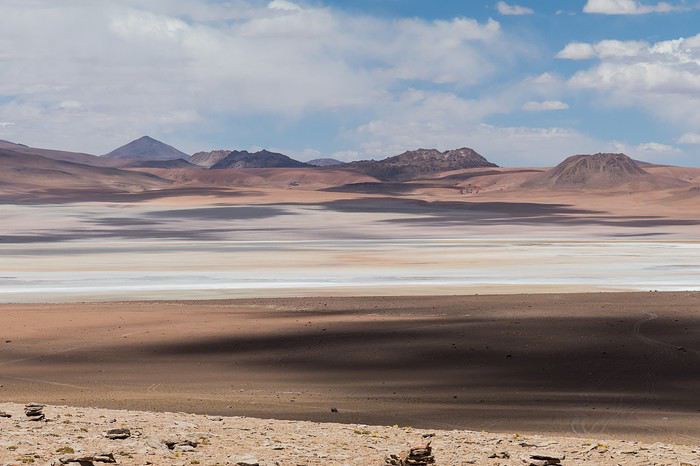 Laguna Kara
It was only after reading Laurent (Lolobe) and Pascal (Pepe874)’s travel journals—who explored the South Lipez solo with a car from Biz Rent a Car—that I thought we might be able to do the same. Meanwhile, we’d already contacted a local agency to organize a trip with a driver and guide. But the idea of a self-drive adventure really appealed to us. With encouragement and tips from Thierry (Tbernay) and Jean-François (Max68), we decided to plan our own self-drive trip. I’d like to thank them for their advice—it was *super* helpful. And a big thanks to all the other forum members for the info shared during our prep!
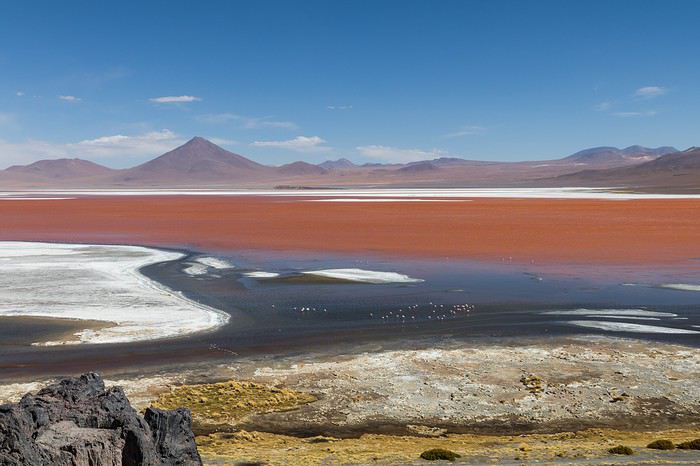 Laguna Colorada
Planning this trip happened during a tough time for our family. My mother-in-law’s illness and passing, plus a few health issues of my own, made us doubt the trip multiple times and nearly scrap the whole thing.
We booked our international flights in February with Swiss. They offered the best balance of travel time and price from Switzerland. Swiss operates Zurich–São Paulo with their own fleet, and São Paulo–Santa Cruz with GOL. In June, GOL canceled the Saturday flight and rebooked us on Sunday. Spending over 24 hours in that huge Brazilian city didn’t work for us at all, so we asked Swiss to put us on the next Zurich–São Paulo flight. Too bad—we lost a day in Bolivia and had to skip the Tarabucco market on Sunday.
Right after, we also booked the car in February. After contacting Imbex and Biz, we went with Biz. Not speaking Spanish, we were relieved to communicate with Alejandra in French. The contact was great—she answered all our questions patiently. Sometimes it took a few days to get a reply, but we could also reach her on WhatsApp. After our trip, we can *only* recommend Biz for rentals in Bolivia. The cars are well-prepped for the South Lipez tracks. The agency is reliable, and the vehicles are new and well-maintained.
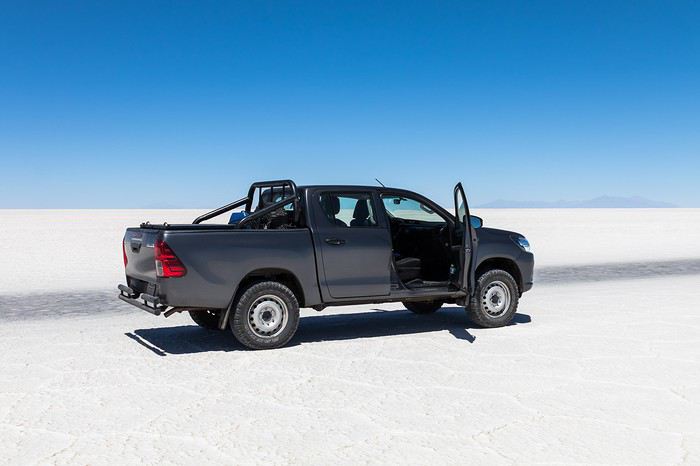 “Our” car, a Toyota Hilux
While planning, we realized the presidential elections would happen while we were in Bolivia. The risk of *bloqueos* (roadblocks and protests) was very real. But in Bolivia, *bloqueos* seem common—you always have to account for that kind of hassle. In late August/early September, Uyuni and the Salar region were blocked for days, leading to food, fuel, and cash shortages. Worried about a blockade in Uyuni and missing the Salar, we decided to visit it first *just in case*.
On election day, the whole country shut down. Planes were grounded, buses and taxis couldn’t circulate, and private cars were banned. There were a few exceptions—ambulances, police, or certain professions—but as tourists, we couldn’t get permission to drive. We asked the embassy, and Biz even requested a permit from the electoral office. So we had to plan to be somewhere with things to do *without* the car.
We decided not to book any accommodations in advance—a first for us. Usually, we plan our stops and reserve lodges, hotels, or campgrounds well ahead. This time, only the room in Sucre was booked, so we’d have a base when we arrived.
In July, Alex (Delhenry) reached out to propose joining part of the trip. He didn’t realize we were leaving in October. Still, we got fresh updates when he returned from the South Lipez. Thanks, Alex—your tips, especially about the Guadalupe–Tupiza stretch, were *super* useful.
In September, we connected with Jean-Louis (Avx) and Anne (Xeta), who were also heading to Bolivia in October, one and two weeks after us. We had dinner with Jean-Louis and his friend after our South Lipez trip and stayed in touch with Anne. It was great to chat with them! Unfortunately, Anne and her husband had a much rockier trip—they got hit hard by post-election issues.
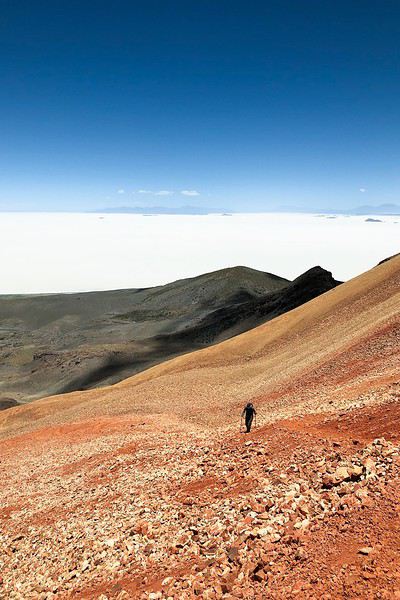 Climbing Volcán Tunupa
Our itinerary wasn’t set in stone—we decided to wing it on the spot. Two weeks before departure, I reconnected with Alejandra at Biz to move the car rental up by a day. With the elections, we wanted to leave Sucre ASAP and focus on the South Lipez. Outside Uyuni and Tupiza, the risk of blockades was zero. We also planned a two-night buffer in Sucre before our flights, just in case. It might sound overcautious, but in hindsight, we made the right call. If we’d left Sucre a day later, we wouldn’t have made it to Potosí—it was completely blocked. On the way back, we *just* dodged blockades in Potosí and elsewhere. Sometimes, you’ve gotta trust your gut.
Here’s our route—only the first two nights in Sucre were booked ahead:
D1 Departure from Switzerland
D2 Sucre (La Selenita)
D3 Sucre (La Selenita)
D4 Colchani (Hotel de Sal Luna Salada)
D5 Jirira (Auberge Doña Lupe)
D6 On the Salar (in the car)
D7 A few kilometers from Estancia Catal (in the car)
D8 Laguna Hedionda (Hotel Los Flamencos)
D9 Laguna Colorada (Lodge by the lagoon)
D10 Middle of nowhere, en route Laguna Verde–Mina Horsu–Quetena Chico (in the car)
D11 Quetena Chico (Lamphaya Lodge Andino)
D12 Quetena Chico (Lamphaya Lodge Andino)
D13 Guadalupe (Guest room at Celia’s)
D14 Along the Rio Grande (in the car)
D15 Tupiza (Hotel Mitru)
D16 Tupiza (Hotel Mitru)
D17 Sucre (La Selenita)
D18 Sucre (La Selenita)
D19 Santa Cruz (Hotel Sun)
D20 Departure from Santa Cruz
D21 Arrival in Switzerland
As you can see, we spent 13 nights in the South Lipez. Initially, we’d planned for nine, but Jean-François (Max68) suggested staying longer. Great advice—we didn’t regret it one bit. We could’ve even added 2–3 more days without getting bored.
Self-driving in the South Lipez takes some prep and a good GPS. We kept it simple and used maps.me to navigate. It’s a solid app—just save your waypoints ahead of time. For some stretches, I used Google Earth to visualize the tracks and sites. If you stick to the tour operator routes, you *almost* can’t get lost. But we often veered off the beaten path and took different routes. Some days, we didn’t see another car. So in case of a breakdown, it’s key to have water and food for several days. In some spots, there’s *zero* signal—your phone won’t work. Another must: it gets *cold* in the South Lipez, and a good sleeping bag is essential. We brought down sleeping bags rated for -10°C and didn’t regret it during our car nights.
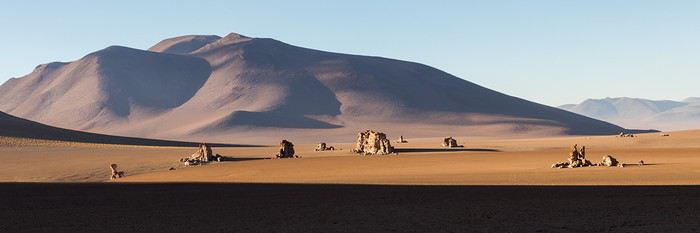 The Dalí Desert
Some tracks are *super* rocky—flat tires are a real risk. On those stretches, maps.me’s estimated travel time was way off. Some sections barely let us go over 15 km/h.
Lots of forum members recommend doing the South Lipez “loop” from Tupiza to Uyuni—ending with the Salar—to avoid Uyuni’s crowds. That might work for organized tours, but for self-drive, the direction *doesn’t* matter. I’ll say this: the few vehicles we saw mostly came from Tupiza and Chile, not Uyuni. So if starting from Uyuni works better for you, go for it! Ending in Tupiza means heading toward warmer weather. For our planned stops and climbs, starting in Uyuni helped with acclimatization. Spending a few nights between 3,600–3,800 m before going over 4,000 m is a smart move.
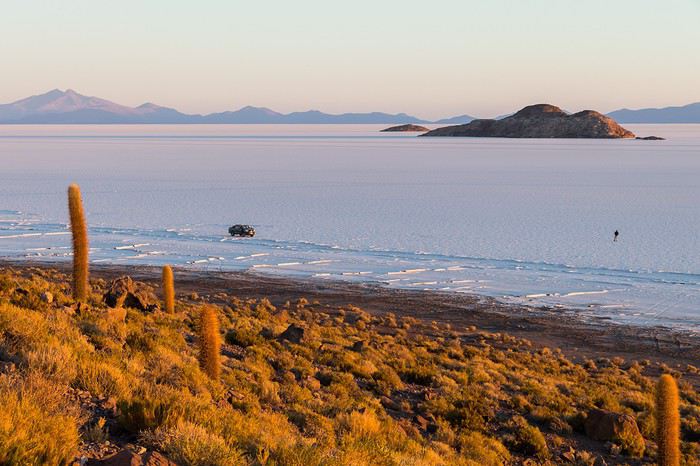 Uyuni Salt Flats in the morning
Overall, we barely saw anyone—except at Laguna Hedionda and Chalviri. There were several tour groups at Hotel Los Flamencos (Laguna Hedionda), but we didn’t cross paths during the day. Hardly anyone on the Salar, on the roads, or at the lodges in the evenings. The *only* place that shocked us was Chalviri. We’d planned to stay there, but it was fully booked—and we counted *forty* tour jeeps on-site. This was around noon! At the Polques hot springs (Chalviri), it was *packed*—we quickly nixed the idea of a dip. Plus, the vibe wasn’t great: soaking right by the road with lodges and restaurants in the background? Meh. Still, lots of tourists love it, so it’s up to you.
For the photos, I kept the colors and mood we saw. The lagoons’ hues are often stunning, but some online photos are *way* over-edited and oversaturated. The South Lipez’s landscapes are breathtaking—no need for excessive retouching.
If you don’t want to read all the details, the start of the travel journal is here: https://voyageforum.com/v.f?post=9888761;a=9888761
The idea of traveling to Bolivia came to me after seeing Jean-François (Max68)’s photos on his website. I thought we *had* to see those stunning landscapes with the colorful lagoons for ourselves. But a self-drive trip didn’t seem doable at first. A few years ago, everyone advised against going to the South Lipez with just one car.
Laguna KaraIt was only after reading Laurent (Lolobe) and Pascal (Pepe874)’s travel journals—who explored the South Lipez solo with a car from Biz Rent a Car—that I thought we might be able to do the same. Meanwhile, we’d already contacted a local agency to organize a trip with a driver and guide. But the idea of a self-drive adventure really appealed to us. With encouragement and tips from Thierry (Tbernay) and Jean-François (Max68), we decided to plan our own self-drive trip. I’d like to thank them for their advice—it was *super* helpful. And a big thanks to all the other forum members for the info shared during our prep!
Laguna ColoradaPlanning this trip happened during a tough time for our family. My mother-in-law’s illness and passing, plus a few health issues of my own, made us doubt the trip multiple times and nearly scrap the whole thing.
We booked our international flights in February with Swiss. They offered the best balance of travel time and price from Switzerland. Swiss operates Zurich–São Paulo with their own fleet, and São Paulo–Santa Cruz with GOL. In June, GOL canceled the Saturday flight and rebooked us on Sunday. Spending over 24 hours in that huge Brazilian city didn’t work for us at all, so we asked Swiss to put us on the next Zurich–São Paulo flight. Too bad—we lost a day in Bolivia and had to skip the Tarabucco market on Sunday.
Right after, we also booked the car in February. After contacting Imbex and Biz, we went with Biz. Not speaking Spanish, we were relieved to communicate with Alejandra in French. The contact was great—she answered all our questions patiently. Sometimes it took a few days to get a reply, but we could also reach her on WhatsApp. After our trip, we can *only* recommend Biz for rentals in Bolivia. The cars are well-prepped for the South Lipez tracks. The agency is reliable, and the vehicles are new and well-maintained.
“Our” car, a Toyota HiluxWhile planning, we realized the presidential elections would happen while we were in Bolivia. The risk of *bloqueos* (roadblocks and protests) was very real. But in Bolivia, *bloqueos* seem common—you always have to account for that kind of hassle. In late August/early September, Uyuni and the Salar region were blocked for days, leading to food, fuel, and cash shortages. Worried about a blockade in Uyuni and missing the Salar, we decided to visit it first *just in case*.
On election day, the whole country shut down. Planes were grounded, buses and taxis couldn’t circulate, and private cars were banned. There were a few exceptions—ambulances, police, or certain professions—but as tourists, we couldn’t get permission to drive. We asked the embassy, and Biz even requested a permit from the electoral office. So we had to plan to be somewhere with things to do *without* the car.
We decided not to book any accommodations in advance—a first for us. Usually, we plan our stops and reserve lodges, hotels, or campgrounds well ahead. This time, only the room in Sucre was booked, so we’d have a base when we arrived.
In July, Alex (Delhenry) reached out to propose joining part of the trip. He didn’t realize we were leaving in October. Still, we got fresh updates when he returned from the South Lipez. Thanks, Alex—your tips, especially about the Guadalupe–Tupiza stretch, were *super* useful.
In September, we connected with Jean-Louis (Avx) and Anne (Xeta), who were also heading to Bolivia in October, one and two weeks after us. We had dinner with Jean-Louis and his friend after our South Lipez trip and stayed in touch with Anne. It was great to chat with them! Unfortunately, Anne and her husband had a much rockier trip—they got hit hard by post-election issues.
Climbing Volcán TunupaOur itinerary wasn’t set in stone—we decided to wing it on the spot. Two weeks before departure, I reconnected with Alejandra at Biz to move the car rental up by a day. With the elections, we wanted to leave Sucre ASAP and focus on the South Lipez. Outside Uyuni and Tupiza, the risk of blockades was zero. We also planned a two-night buffer in Sucre before our flights, just in case. It might sound overcautious, but in hindsight, we made the right call. If we’d left Sucre a day later, we wouldn’t have made it to Potosí—it was completely blocked. On the way back, we *just* dodged blockades in Potosí and elsewhere. Sometimes, you’ve gotta trust your gut.
Here’s our route—only the first two nights in Sucre were booked ahead:
D1 Departure from Switzerland
D2 Sucre (La Selenita)
D3 Sucre (La Selenita)
D4 Colchani (Hotel de Sal Luna Salada)
D5 Jirira (Auberge Doña Lupe)
D6 On the Salar (in the car)
D7 A few kilometers from Estancia Catal (in the car)
D8 Laguna Hedionda (Hotel Los Flamencos)
D9 Laguna Colorada (Lodge by the lagoon)
D10 Middle of nowhere, en route Laguna Verde–Mina Horsu–Quetena Chico (in the car)
D11 Quetena Chico (Lamphaya Lodge Andino)
D12 Quetena Chico (Lamphaya Lodge Andino)
D13 Guadalupe (Guest room at Celia’s)
D14 Along the Rio Grande (in the car)
D15 Tupiza (Hotel Mitru)
D16 Tupiza (Hotel Mitru)
D17 Sucre (La Selenita)
D18 Sucre (La Selenita)
D19 Santa Cruz (Hotel Sun)
D20 Departure from Santa Cruz
D21 Arrival in Switzerland
As you can see, we spent 13 nights in the South Lipez. Initially, we’d planned for nine, but Jean-François (Max68) suggested staying longer. Great advice—we didn’t regret it one bit. We could’ve even added 2–3 more days without getting bored.
Self-driving in the South Lipez takes some prep and a good GPS. We kept it simple and used maps.me to navigate. It’s a solid app—just save your waypoints ahead of time. For some stretches, I used Google Earth to visualize the tracks and sites. If you stick to the tour operator routes, you *almost* can’t get lost. But we often veered off the beaten path and took different routes. Some days, we didn’t see another car. So in case of a breakdown, it’s key to have water and food for several days. In some spots, there’s *zero* signal—your phone won’t work. Another must: it gets *cold* in the South Lipez, and a good sleeping bag is essential. We brought down sleeping bags rated for -10°C and didn’t regret it during our car nights.
The Dalí DesertSome tracks are *super* rocky—flat tires are a real risk. On those stretches, maps.me’s estimated travel time was way off. Some sections barely let us go over 15 km/h.
Lots of forum members recommend doing the South Lipez “loop” from Tupiza to Uyuni—ending with the Salar—to avoid Uyuni’s crowds. That might work for organized tours, but for self-drive, the direction *doesn’t* matter. I’ll say this: the few vehicles we saw mostly came from Tupiza and Chile, not Uyuni. So if starting from Uyuni works better for you, go for it! Ending in Tupiza means heading toward warmer weather. For our planned stops and climbs, starting in Uyuni helped with acclimatization. Spending a few nights between 3,600–3,800 m before going over 4,000 m is a smart move.
Uyuni Salt Flats in the morningOverall, we barely saw anyone—except at Laguna Hedionda and Chalviri. There were several tour groups at Hotel Los Flamencos (Laguna Hedionda), but we didn’t cross paths during the day. Hardly anyone on the Salar, on the roads, or at the lodges in the evenings. The *only* place that shocked us was Chalviri. We’d planned to stay there, but it was fully booked—and we counted *forty* tour jeeps on-site. This was around noon! At the Polques hot springs (Chalviri), it was *packed*—we quickly nixed the idea of a dip. Plus, the vibe wasn’t great: soaking right by the road with lodges and restaurants in the background? Meh. Still, lots of tourists love it, so it’s up to you.
For the photos, I kept the colors and mood we saw. The lagoons’ hues are often stunning, but some online photos are *way* over-edited and oversaturated. The South Lipez’s landscapes are breathtaking—no need for excessive retouching.
If you don’t want to read all the details, the start of the travel journal is here: https://voyageforum.com/v.f?post=9888761;a=9888761
Flamenco y Alcazar à Séville avec un enfant de 4 ans English translation pending
Bonjour à tous !
Nous partons à Séville pour une semaine au mois de février. Nous voudrions assister à un spectacle de danse de flamenco. Même si c'est une performance de rue ou un bar, on cherche un endroit éloigné des circuits touristiques et dans lequel on peut rentrer avec un enfant de 4 ans. Au contraire, on voudrait reprendre le circuit touristique pour visiter l'Alcazar et nous avons été surpris par le prix. Il y a t-il moyen de se procurer des tickets au marché noir 😉 ? Les enfants doivent-ils également payer ? Mieux vaut acheter les tickets online ou sur place ?
D'avance merci à tous pour les infos que vous pourrez nous donner. Il y aura peut-être d'autres questions pus tard 😄.
Virginia
Nous partons à Séville pour une semaine au mois de février. Nous voudrions assister à un spectacle de danse de flamenco. Même si c'est une performance de rue ou un bar, on cherche un endroit éloigné des circuits touristiques et dans lequel on peut rentrer avec un enfant de 4 ans. Au contraire, on voudrait reprendre le circuit touristique pour visiter l'Alcazar et nous avons été surpris par le prix. Il y a t-il moyen de se procurer des tickets au marché noir 😉 ? Les enfants doivent-ils également payer ? Mieux vaut acheter les tickets online ou sur place ?
D'avance merci à tous pour les infos que vous pourrez nous donner. Il y aura peut-être d'autres questions pus tard 😄.
Virginia
Qu'enlever à cet itinéraire aux États-Unis pour moins rouler et supprimer 10 jours? English translation pending
Bonjour, ayant initialement envisagé un voyage de deux mois dans l'Ouest à partir de fin mai 2023, je suis contraint de réduire sa durée à environ 5 semaines. J'ai énormément amputé l'itinéraire initial, notamment en supprimant Yellowstone et Grand Teton, qui feront l'objet d'un voyage spécifique, mais j'arrive quand même à un itinéraire de 45 jours. De plus, ne voulant ni rouler trop lors des étapes de transition, ni changer de lieu tous les jours, sauf exception, je ne suis pas satisfait de mon ébauche. Après trois road trips, nous pensons qu'il est important de se poser régulièrement au minimum 3 nuits, pour avoir le temps de visiter les alentours et aussi avoir le temps de souffler avec des journées sans rien de prévu. Nous voulons aussi faire une boucle LA-LA car nous aimons profiter du littoral et éviter les frais de drop charge.
Est-ce que les spécialistes pourraient me suggérer des idées pour raccourcir l'itinéraire suivant sans le vider de ses points d'intérêt majeurs et surtout de sa grande variété? Quelques endroits paraissent peut-être insignifiants mais j'y tenais de par leur côté Amérique profonde et isolement.
LA 2 nuits Pines to Palms scenic Byway jusqu’à Palm Springs. Nuit à Palm Springs Palm Springs 3 nuits (Joshua Tree, ville) Route 66 (Amboy, Oatman, Kingman). Nuit à Kingman Route Kingman-Meteor Crater-Sedona. Nuits à Sedona Sedona 3 nuits Route Sedona-Phoenix en passant par Apache Trail. Nuit à Phoenix Route Phoenix-Tucson en passant par West Saguaro NP. Nuit à Tucson. Tucson 3 nuits (Arizona-Sonora Desert Museum, ville de Tucson, Tombstone et Bisbee) Route Tucson-Alamogordo. Nuits à Alamogordo White Sands le matin puis route vers Santa Fe en passant par Three Rivers petroglyph site et Turquoise Trail. Nuit à Santa Fe. Santa Fe 3 nuits (ville de Santa Fe, Kasha-Katuwe Tent Rocks, Bandelier (les deux, un seul, aucun, les deux le même jour ?)) High Road to Taos, Rio Grande Gorge Bridge. Nuit à Taos Visite Taos puis route jusqu’à Great Sand Dunes. Nuit à Great Sand Dunes Le matin, ascension de Star Dune puis route vers Durango. Nuit à Durango Durango 3 nuits (Silverton, ville de Durango) Route Durango-Cortez en passant par Mesa Verde. Nuit à Cortez Route Cortez-Chinle en passant par Canyon de Chelly. South Rim drive, White House trail en fin d'après-midi. Nuit à Chinle Route Chinle-Kanab en passant par First Mesa/Walpi, Old Oraibi, Marble Canyon. Nuit à Kanab. Kanab 3 nuits (Buckskin Gulch par Wire Pass, journée de repos). Route Kanab-Escalante en passant par Cottonwood canyon road (Yellow rock, Kodachrome. Nuit à Escalante. Escalante 3 nuits (jour 1: Hole in the Rock road avec Peek a Boo et Spooky puis Devils garden au coucher soleil. Jour 2: Lower Calf Creek, Petrified Forest SP). Route Escalante-Boulder-Burr trail-Strike Valley Overlook-Fruita-Torrey. Nuit à Torrey Route Torrey-Mount Pleasant. Soirée cinéma au Basin Drive-in Theatre, Mount Pleasant. Nuit à Mount Pleasant Route Mount Pleasant-Baker en passant par Great Basin NP.Nuit à Baker Route Baker-Austin en passant par Ely. Nuit à Austin. Route Austin-South Lake Tahoe en passant par Virginia City. Nuit à South Lake Tahoe South Lake Tahoe 3 nuits ( Jour 1: tour du lac, jour 2: Glen Alpine Falls et balade au départ de Glen Alpine trailhead) Route South Lake Tahoe-SF en passant par Sacramento (vieille ville), Point Reyes Lighthouse, Bolinas, Marin Headlands Vista Point. Nuit à SF Sausalito en vélo par Golden Gate et retour en ferry puis Alcatraz et SF. Nuit à SF SF-Monterey en passant par Pacifica (Devil’s Slide Trail), Half Moon Bay, Pescadero, Pigeon Point Lighthouse, Wilder Ranch State Park et Santa Cruz (Lighthouse Field SP et musée du surf, boardwalk). Nuit à Monterey Aquarium de Monterey et nuit à Monterey Route Monterey-San Luis Obispo en passant par 17 mile drive, Carmel, Point Lobos, Big Sur, Pfeiffer Beach, McWay Falls. Piedras Blancas colony. Nuit à San Luis Obispo Route SLO-LA en passant par mission la Purissima et Santa Barbara. Laguna Beach 3 nuits
LA 2 nuits Pines to Palms scenic Byway jusqu’à Palm Springs. Nuit à Palm Springs Palm Springs 3 nuits (Joshua Tree, ville) Route 66 (Amboy, Oatman, Kingman). Nuit à Kingman Route Kingman-Meteor Crater-Sedona. Nuits à Sedona Sedona 3 nuits Route Sedona-Phoenix en passant par Apache Trail. Nuit à Phoenix Route Phoenix-Tucson en passant par West Saguaro NP. Nuit à Tucson. Tucson 3 nuits (Arizona-Sonora Desert Museum, ville de Tucson, Tombstone et Bisbee) Route Tucson-Alamogordo. Nuits à Alamogordo White Sands le matin puis route vers Santa Fe en passant par Three Rivers petroglyph site et Turquoise Trail. Nuit à Santa Fe. Santa Fe 3 nuits (ville de Santa Fe, Kasha-Katuwe Tent Rocks, Bandelier (les deux, un seul, aucun, les deux le même jour ?)) High Road to Taos, Rio Grande Gorge Bridge. Nuit à Taos Visite Taos puis route jusqu’à Great Sand Dunes. Nuit à Great Sand Dunes Le matin, ascension de Star Dune puis route vers Durango. Nuit à Durango Durango 3 nuits (Silverton, ville de Durango) Route Durango-Cortez en passant par Mesa Verde. Nuit à Cortez Route Cortez-Chinle en passant par Canyon de Chelly. South Rim drive, White House trail en fin d'après-midi. Nuit à Chinle Route Chinle-Kanab en passant par First Mesa/Walpi, Old Oraibi, Marble Canyon. Nuit à Kanab. Kanab 3 nuits (Buckskin Gulch par Wire Pass, journée de repos). Route Kanab-Escalante en passant par Cottonwood canyon road (Yellow rock, Kodachrome. Nuit à Escalante. Escalante 3 nuits (jour 1: Hole in the Rock road avec Peek a Boo et Spooky puis Devils garden au coucher soleil. Jour 2: Lower Calf Creek, Petrified Forest SP). Route Escalante-Boulder-Burr trail-Strike Valley Overlook-Fruita-Torrey. Nuit à Torrey Route Torrey-Mount Pleasant. Soirée cinéma au Basin Drive-in Theatre, Mount Pleasant. Nuit à Mount Pleasant Route Mount Pleasant-Baker en passant par Great Basin NP.Nuit à Baker Route Baker-Austin en passant par Ely. Nuit à Austin. Route Austin-South Lake Tahoe en passant par Virginia City. Nuit à South Lake Tahoe South Lake Tahoe 3 nuits ( Jour 1: tour du lac, jour 2: Glen Alpine Falls et balade au départ de Glen Alpine trailhead) Route South Lake Tahoe-SF en passant par Sacramento (vieille ville), Point Reyes Lighthouse, Bolinas, Marin Headlands Vista Point. Nuit à SF Sausalito en vélo par Golden Gate et retour en ferry puis Alcatraz et SF. Nuit à SF SF-Monterey en passant par Pacifica (Devil’s Slide Trail), Half Moon Bay, Pescadero, Pigeon Point Lighthouse, Wilder Ranch State Park et Santa Cruz (Lighthouse Field SP et musée du surf, boardwalk). Nuit à Monterey Aquarium de Monterey et nuit à Monterey Route Monterey-San Luis Obispo en passant par 17 mile drive, Carmel, Point Lobos, Big Sur, Pfeiffer Beach, McWay Falls. Piedras Blancas colony. Nuit à San Luis Obispo Route SLO-LA en passant par mission la Purissima et Santa Barbara. Laguna Beach 3 nuits
Restaurants ouverts les 24 et 25 décembre à Séville et livraisons des courses English translation pending
Bonjour
je voudrais savoir si les restaurants sont ouverts les 24 ET 25 Décembre a Seville
J'ai cherché pour faire une réservation mais je n'ai rien trouvé de disponible ,
Notre vol atterit a 16H30 a Séville le 24 du fait je voulais prendre les devants , en réservant quelque chose , Sinon y a t il des services de livraisons de courses la encore je n'ai pas trouvé , afin de remplir le frigo de notre location , et avoir un minimum merci beaucoup pour votre aide , bonne journée
je voudrais savoir si les restaurants sont ouverts les 24 ET 25 Décembre a Seville
J'ai cherché pour faire une réservation mais je n'ai rien trouvé de disponible ,
Notre vol atterit a 16H30 a Séville le 24 du fait je voulais prendre les devants , en réservant quelque chose , Sinon y a t il des services de livraisons de courses la encore je n'ai pas trouvé , afin de remplir le frigo de notre location , et avoir un minimum merci beaucoup pour votre aide , bonne journée
Mono-plateau pour le voyage (à vélo) English translation pending
Selon vous, votre expérience, le mono plateau est-il un choix judicieux pour voyager ? Je l'envisage de plus en plus, car n'y a quasiment que des avantages :
- gain de poids
- moins de problèmes mécaniques et de risques de casse
- Poste de pilotage simplifié
- plus besoin de devoir gérer 2 dérailleurs : esprit plus libre pour le pilotage
Le seul inconvénient qui me vienne à l'esprit : Devoir renoncer à l'un des extrêmes : tirer un gros braquet ou un tout petit. Mais il me semble qu'en voyage on utilise très peu les gros braquets... Donc cet inconvénient disparaît.
Qu'en pensez-vous ?
Le seul inconvénient qui me vienne à l'esprit : Devoir renoncer à l'un des extrêmes : tirer un gros braquet ou un tout petit. Mais il me semble qu'en voyage on utilise très peu les gros braquets... Donc cet inconvénient disparaît.
Qu'en pensez-vous ?
Un mois dingue en Bolivie et au Pérou English translation pending
Voici le récit de notre extra voyage d’1 mois en Bolivie- Perou sac à dos, mon pote Christian et moi, Patrick (chacun 58 ans)
Tout d’abord le circuit fait en juillet 2017- oui je sais j’ai mis du temps à cette mise en ligne mais depuis j’ai été au Myanmar, Canada, Oman, Vietnam. Et maintenant que notre futur trip en Namibie l’été prochain est booké, je me lance dans ce retour arrière de 2 ans. Après énormément de recherches sur de nombreux blogs perso, carnets de voyages et forum de voyages, on a finalisé notre circuit :
J1 : départ de Bruxelles J2 :arrivée La Paz- transfert le soir sur Uyuni J3 :Uyuni-Tupiza J4 :Tupiza J5 :Tupiza- sud Lipez J6 :sud Lipez J7 :sud Lipez J8 :sud Lipez- Uyuni-La Paz J9 :La Paz-Rurrenabaque J10 :Amazonie J11 :Amazonie J12 :Amazonie J13 :Amazonie J14 :Amazonie J15 :Amazonie-Rurrenabaque J16 :Rurrenabaque-La Paz- Copacabana J17 :Copacabana-isla del sol J18 :isla del sol-Puno J19 :Puno- Cusco J20 :Cusco J21 :Cusco-Ollantaytambo J22 :Ollantaytambo- Pisac J23 :Pisac- Cusco J24 :inca trail J25 :inca trail J26 :inca trail J27 :Machu picchu- Cusco J28:Cusco J29 :Cusco-La paz J30 :La Paz- départ J31 :arrivée
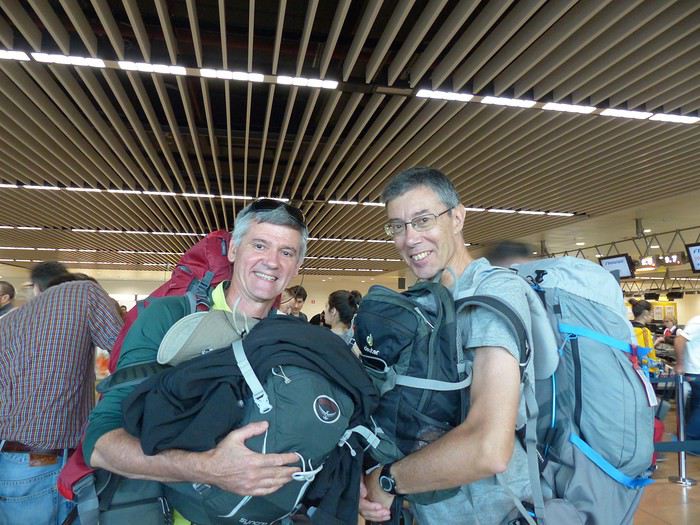
Tout d’abord le circuit fait en juillet 2017- oui je sais j’ai mis du temps à cette mise en ligne mais depuis j’ai été au Myanmar, Canada, Oman, Vietnam. Et maintenant que notre futur trip en Namibie l’été prochain est booké, je me lance dans ce retour arrière de 2 ans. Après énormément de recherches sur de nombreux blogs perso, carnets de voyages et forum de voyages, on a finalisé notre circuit :
J1 : départ de Bruxelles J2 :arrivée La Paz- transfert le soir sur Uyuni J3 :Uyuni-Tupiza J4 :Tupiza J5 :Tupiza- sud Lipez J6 :sud Lipez J7 :sud Lipez J8 :sud Lipez- Uyuni-La Paz J9 :La Paz-Rurrenabaque J10 :Amazonie J11 :Amazonie J12 :Amazonie J13 :Amazonie J14 :Amazonie J15 :Amazonie-Rurrenabaque J16 :Rurrenabaque-La Paz- Copacabana J17 :Copacabana-isla del sol J18 :isla del sol-Puno J19 :Puno- Cusco J20 :Cusco J21 :Cusco-Ollantaytambo J22 :Ollantaytambo- Pisac J23 :Pisac- Cusco J24 :inca trail J25 :inca trail J26 :inca trail J27 :Machu picchu- Cusco J28:Cusco J29 :Cusco-La paz J30 :La Paz- départ J31 :arrivée
Séjour aux Galapagos, randonnées, budget et sécurité pour femme seule English translation pending
Bonjour cher voyageur,
Une idée folle vient de me traverser l'esprit.
Si j'ai envie de partir au Galapagos, disons pour un séjour de 10-14jours.
Est-ce qu'il y a possibilité de faire plusieurs randonnées? Quel budget devrais-je prévoir (excluant le billet d'avion)? Est-ce sécuritaire pour une femme seule? Autres infos pertinentes?
Merci
Est-ce qu'il y a possibilité de faire plusieurs randonnées? Quel budget devrais-je prévoir (excluant le billet d'avion)? Est-ce sécuritaire pour une femme seule? Autres infos pertinentes?
Merci
Agence locale de trek au Pérou English translation pending
bonjour
nous sommes intéressés pour partir en famille au Pérou cet été et nous souhaiterions faire un trek de 8 jours avec un guide local , avez vous un contact à nous recommander ?
merci
ED
Une semaine à Cuba avec 3 jeunes enfants English translation pending
Bonjour à tous,
Nous prévoyons de nous faire une semaine en Mars avec nos trois enfants à Cuba. Nous pensons atterrir à Varadero. Nous recherchons une semaine de détente avec au programme plage et petits restaurants et bien sûr une visite de la Havane. Nous aimons les voyages authentiques loin des complexes all inclusive et souhaitons voir la culture cubaine, auriez vous un spot à me conseiller pour passer notre semaine? Si jamais vous connaissez un petit hôtel sympa sur la plage je suis aussi preneuse! Merci à tous!
Aller de la Bolivie au Belize autrement qu'en avion English translation pending
Bonjour,
Nous partons pour deux mois avec ma meilleure amie et nous traverserons le Perou puis la Bolivie. Mais notre vol retour est au Belize. Nous avons pensé à prendre un vol Bolivie/Belize mais c'est très cher. Connaissez vous un autre moyen d'y aller ?
Bateau ? (En partant d'un autre pays)
Merci à vous
Merci à vous
Croisière transatlantique Favolosa du 30 novembre ou 1er décembre 2019 English translation pending
Bonjour,
J'ouvre ce Topic pour que nous puissions échanger nos expériences, nous réunir sur le bateau...
C'est notre septième transatlantique … presque toutes vers les caraïbes .
Nous restons 22 jours .. retour Pointe à pitre .
Les années précédentes... Les échanges sur le forum et bateau ont été très sympa;
Nous connaissons, toutes les escales .. nous n'aimons pas les excursions , nous nous déplaçons en bus ….si vous avez besoin d' informations , ce sera volontiers que je vous les donnerai..
Jean Claude (le mari) joue au tarot …. y a t il des joueurs ?
à bientôt
Jocelyne
Météo de janvier à mars en Bolivie et au Pérou English translation pending
Bonjour,
Nous aimerions partir 7 semaines en Bolivie-Perou entre mi-Janvier et mi-Mars. Est-ce la bonne période? Pourrons nous faire des randos sans être trempés? Pourrons-nous prendre des pistes avec un 4x4?
Merci de vos réponses.