Results for "Bois+Plage+|+127"
21413 results found.
Hôtel Casa del Mar à Bayahibe English translation pending
je dois partir a L'hotel casa del mar a la fin fevier J'aimerais savoir si au buffet il y a des langouste ou au restaurant a la carte et le prix car on adore les fruits de mer ou quel hotel on peux en mange 😄
Mes commentaires sur Super Club Breezes Holguin English translation pending
Nous étions parti un groupe d'amis du 20 au 27 décembre... Mon chum et moi avons amener notre fille de 2 ans. En en rediscutant avec lui, j'ai pu constater que nous n'avions pas beaucoup de point positifs pour cet hotel.
Les chambres sont jolies et assez grandes! Mais dans la nôtre, la salle de bain sentait la pourriture... Est-ce un problème d'humidité??? Assez répugnant.
Le site est très grand... un peu trop. Tout est loin. Nous devions marcher assez longtemps pour se rendre aux restos ou à la plage. Pas très commode car je suis enceinte de 6 mois et avec un enfant de 2 ans c'est pas la joie. C'est plate quand tu oublies qqc dans ta chambre.
Ensuite, il y a les chauffeurs de "mini-bus" qui roulent sur le site comme sur une autoroute. Je suis prête à parier qu'il y a déjà eu des morts!!!
Il n'y a aucune toilette sur la plage... Avis aux adeptes de la "turista" La plage est jolie mais trop petite pour l'hotel. Ou peut-être qu'il y avait trop de monde... je sais pas trop. J'ai trouvé qu'on était empilé les uns sur les autres. Adieu la tranquilité. C'est certain que je compare avec Punta Cana à la mi-janvier... mais quand même. Il y a 2 petites barrières de corail tout près du bord. C'est bien pour les adeptes d'apnée... mais attention aux oursins... eh oui, en faisant de l'apnée j'en ai croisé un à 6 pieds de la plage à peine! Paraitrait que c'est très douloureux des épines d'oursin dans le pied! Il y a le bateau à moteur qui circule sans arrêt. Je suis allée plus loin avec mon chum en apnée et on devait faire sans arrêt attention pour ne pas se faire foncer dessus par le bateau. En fait une dame en planche à voile m'a rentrée dedans! La zonea de baignade n'est pas délimitée! J'ai trouvé ça très dangeureux!
Pour ce qui est de la nourriture, très décevant! Les fruits pas très beaux (peut-être étions nous hors saison) Chaque soir il y a des thèmes différents mais rien d'extraordinaire. Pour les restos à la carte, il y en a 3 (Cubain, japonais et italien) Pas extra là non plus, sauf peut-être le cubain qui se démarque des autres. On dit que l'eau est potable mais que certaine personne ont des intolérences au changement d'eau 🤪... C'est ça la "turista" 😐!!! Ben ne buvez pas l'eau quand même!!! Par expérience! Il donne une bouteille d'eau minérale pour tout le séjour... Payez-vous en à la petite boutique de l'hotel!!! Pour les restos, il faut les réserver à l'avance. Vous avez droit à une fois chacun par semaine. Patience pour réserver. Il sagit là d'une activité longue et compliquée. Leur système information est nulle ou bien c'est la personne qui fais les réservations. Pour réserver un resto, j'ai du attendre 1h00 et il n'y avait que 5 personnes en ligne!
Nous sommes arrivé le samedi et avons eu des nuages jusqu'au lundi. Il s'est mis à pleuvoir averse le lundi à 18h00 jusque dans la nuit. Résultat: toutes les chambres qui étaient les plus près de la plage ont été inondées!!! 2 pouces d'eau! Attention quand je dis les chambres les plus près de la plage, ça ne veut pas dire sur la plage. Il y a une zone protégée entre l'hotel et la plage. On accède à la plage par une pacerelle de bois qui traverse un marécage. C'est ce marécage qui a débordé!
J'ai été très déçue par l'hotel. Peut-être que c'est parce que nous étions dans une période très achalandée! Pour moi, le 4, 5* c'est vraiment exagéré. Je donnerais un 3, 5* maximum!
Judith
P.S. n'oubliez pas votre "OFF" "muskol" et compagnie car les moustiques sont voraces et pratiquement invisibles! Je me suis fait piquer partout sur les jambes sans jamais voir une foutue bestiole!
Les chambres sont jolies et assez grandes! Mais dans la nôtre, la salle de bain sentait la pourriture... Est-ce un problème d'humidité??? Assez répugnant.
Le site est très grand... un peu trop. Tout est loin. Nous devions marcher assez longtemps pour se rendre aux restos ou à la plage. Pas très commode car je suis enceinte de 6 mois et avec un enfant de 2 ans c'est pas la joie. C'est plate quand tu oublies qqc dans ta chambre.
Ensuite, il y a les chauffeurs de "mini-bus" qui roulent sur le site comme sur une autoroute. Je suis prête à parier qu'il y a déjà eu des morts!!!
Il n'y a aucune toilette sur la plage... Avis aux adeptes de la "turista" La plage est jolie mais trop petite pour l'hotel. Ou peut-être qu'il y avait trop de monde... je sais pas trop. J'ai trouvé qu'on était empilé les uns sur les autres. Adieu la tranquilité. C'est certain que je compare avec Punta Cana à la mi-janvier... mais quand même. Il y a 2 petites barrières de corail tout près du bord. C'est bien pour les adeptes d'apnée... mais attention aux oursins... eh oui, en faisant de l'apnée j'en ai croisé un à 6 pieds de la plage à peine! Paraitrait que c'est très douloureux des épines d'oursin dans le pied! Il y a le bateau à moteur qui circule sans arrêt. Je suis allée plus loin avec mon chum en apnée et on devait faire sans arrêt attention pour ne pas se faire foncer dessus par le bateau. En fait une dame en planche à voile m'a rentrée dedans! La zonea de baignade n'est pas délimitée! J'ai trouvé ça très dangeureux!
Pour ce qui est de la nourriture, très décevant! Les fruits pas très beaux (peut-être étions nous hors saison) Chaque soir il y a des thèmes différents mais rien d'extraordinaire. Pour les restos à la carte, il y en a 3 (Cubain, japonais et italien) Pas extra là non plus, sauf peut-être le cubain qui se démarque des autres. On dit que l'eau est potable mais que certaine personne ont des intolérences au changement d'eau 🤪... C'est ça la "turista" 😐!!! Ben ne buvez pas l'eau quand même!!! Par expérience! Il donne une bouteille d'eau minérale pour tout le séjour... Payez-vous en à la petite boutique de l'hotel!!! Pour les restos, il faut les réserver à l'avance. Vous avez droit à une fois chacun par semaine. Patience pour réserver. Il sagit là d'une activité longue et compliquée. Leur système information est nulle ou bien c'est la personne qui fais les réservations. Pour réserver un resto, j'ai du attendre 1h00 et il n'y avait que 5 personnes en ligne!
Nous sommes arrivé le samedi et avons eu des nuages jusqu'au lundi. Il s'est mis à pleuvoir averse le lundi à 18h00 jusque dans la nuit. Résultat: toutes les chambres qui étaient les plus près de la plage ont été inondées!!! 2 pouces d'eau! Attention quand je dis les chambres les plus près de la plage, ça ne veut pas dire sur la plage. Il y a une zone protégée entre l'hotel et la plage. On accède à la plage par une pacerelle de bois qui traverse un marécage. C'est ce marécage qui a débordé!
J'ai été très déçue par l'hotel. Peut-être que c'est parce que nous étions dans une période très achalandée! Pour moi, le 4, 5* c'est vraiment exagéré. Je donnerais un 3, 5* maximum!
Judith
P.S. n'oubliez pas votre "OFF" "muskol" et compagnie car les moustiques sont voraces et pratiquement invisibles! Je me suis fait piquer partout sur les jambes sans jamais voir une foutue bestiole!
Hôtel Occidental Gran Bahia à Samana English translation pending
Bonjour,
Je suis à la recherche d'info sur l'Hotel Occidental Gran Bahia à Samana.
qualité, accueil, ambiance, animation, activités, distance de la ville la plus proche etc...
et sur ce qu'il y a à visiter dans la région .
Je vous remercie par avance pour vos réponses
A+
Thierry 🙂
Je suis à la recherche d'info sur l'Hotel Occidental Gran Bahia à Samana.
qualité, accueil, ambiance, animation, activités, distance de la ville la plus proche etc...
et sur ce qu'il y a à visiter dans la région .
Je vous remercie par avance pour vos réponses
A+
Thierry 🙂
Excursions Puerto Plata English translation pending
Bonjour,
Je part pour Puerto Plata le 26 janvier 2004 et j'aimerais savoir si il y a quelque chose à faire et que nous devons absolument pas manquer 😎
Ou une activité ? promenade, club, équitation, plongée ... etc
J'ai entendu parlé du Outback Safari ? Est-ce que quelqu'un l'a fait et le suggère ?
MERCI 😉
Niki
Je part pour Puerto Plata le 26 janvier 2004 et j'aimerais savoir si il y a quelque chose à faire et que nous devons absolument pas manquer 😎
Ou une activité ? promenade, club, équitation, plongée ... etc
J'ai entendu parlé du Outback Safari ? Est-ce que quelqu'un l'a fait et le suggère ?
MERCI 😉
Niki
Bons plans sur le resort Occidental Gran Flamenco English translation pending
salut,
je me rends pour la 1ère fois sur cette île qui serait paradisiaque;
Je cherche les bons tuyaus et autres bons plans pour faire de mes 15 jours un super souvenir, je remercie d'avance les habitués de cette destination de me conseiller les leurs !
Je cherche aussi à y pratiquer du kite-surf et de la plongée sachant que je serai basé dans un resort (l'hôtel Occidental Grand Flamenco).
Merci à tous ceux et celles qui me répondront !
Bises from Toulouse.
je me rends pour la 1ère fois sur cette île qui serait paradisiaque;
Je cherche les bons tuyaus et autres bons plans pour faire de mes 15 jours un super souvenir, je remercie d'avance les habitués de cette destination de me conseiller les leurs !
Je cherche aussi à y pratiquer du kite-surf et de la plongée sachant que je serai basé dans un resort (l'hôtel Occidental Grand Flamenco).
Merci à tous ceux et celles qui me répondront !
Bises from Toulouse.
Holguin ou Cayo Coco? English translation pending
Bonjour!
Je prévois aller à Cuba le 6 ou 7 septembre (1 semaine), mais j'hésite entre Holguin (Breezes Costa Verde ou autre) et Cayo Coco (Tryp Cayo Coco ou autre). Ce serait mon premier voyage dans le sud. J'aimerais avoir vos commentaires sur ces hôtels, surtout en fonction d'une fille de 24 ans voyageant seule, qui veut relaxer et se prélasser sur une belle plage, mais qui veut aussi rencontrer des gens intéressants (et pas seulement du monde en voyage de noces!). Quels facteurs je devrais considérer? Est-ce que 1000$ (ou 950$) tout inclus est un prix raisonnable ou si ca peut tomber beaucoup plus bas quelques jours avant le départ? Bref, si vous avez des commentaires ou suggestions, ce serait apprécié! :) Aussi, tout conseil "pratico-pratique" serait utile ! :)
MERCI!
Qui a séjourné à l'hôtel Reina Cumayasa? English translation pending
Bonjour,
Nous sommes très tentés par la "pub" sur partirpascher pour un séjour de 8 jours mi septembre à l'hotel Reina Cumayasa. Nous sommes à la recherche de tranquilité, belle plage et bonne bouffe 😉 L'hotel parait prometeur mais nous aimerions avoir des avis non professionels sur cet hotel et surtout la réponse à quelques questions : allons nous trouver la tranquilité, la belle plage et la bonne bouffe ? La mini plage de l'hotel donne bien sur une rivière ? moustiques ? on peut s'y baigner ou faut il absoluement aller sur l'ile en face pour se baigner .... combien de temps d'ailleurs en bateau ? La piscine est elle très fréquentée? le fait qu'elle soit d'eau de mer est-il gênant.
Je précise que nous sommes un couple de trentenaires et non de retraités comme peut le laisser croire les questions que nous posons mais nous avons vraiment besoin d'un break où rien n'est imposé (bruit discothèque, animations, foule ...) et ou il fait bon resté toute une semaine (je sais je sais c'est dommage d'aller si loin pour rester à l'hotel) mais on veut vraiment se poser et voir le temps passer car on le fait si rarement.
Merci par avance de vos réponses.
Bonnes vacances à toutes et à tous.
Christine et Gilles
Nous sommes très tentés par la "pub" sur partirpascher pour un séjour de 8 jours mi septembre à l'hotel Reina Cumayasa. Nous sommes à la recherche de tranquilité, belle plage et bonne bouffe 😉 L'hotel parait prometeur mais nous aimerions avoir des avis non professionels sur cet hotel et surtout la réponse à quelques questions : allons nous trouver la tranquilité, la belle plage et la bonne bouffe ? La mini plage de l'hotel donne bien sur une rivière ? moustiques ? on peut s'y baigner ou faut il absoluement aller sur l'ile en face pour se baigner .... combien de temps d'ailleurs en bateau ? La piscine est elle très fréquentée? le fait qu'elle soit d'eau de mer est-il gênant.
Je précise que nous sommes un couple de trentenaires et non de retraités comme peut le laisser croire les questions que nous posons mais nous avons vraiment besoin d'un break où rien n'est imposé (bruit discothèque, animations, foule ...) et ou il fait bon resté toute une semaine (je sais je sais c'est dommage d'aller si loin pour rester à l'hotel) mais on veut vraiment se poser et voir le temps passer car on le fait si rarement.
Merci par avance de vos réponses.
Bonnes vacances à toutes et à tous.
Christine et Gilles
Amener un enfant au Népal English translation pending
Bonjour, je voudrais amener ma fille au Népal avec moi. Au moment du départ, elle aura 2 ans et demi. Je voudrais savoir quelles sont les raisons possibles de m'empêcher de l'amener ou les raisons qui font que ce ne serait pas une bonne idée. Est-ce que quelqu'un pourrait m'en dire plus sur le fait de voyager avec de jeunes enfants? Et quelles activités sont préférables pour un enfant de cet âge au Népal?
Merci beaucoup, Joannie😉
Merci beaucoup, Joannie😉
Magnifique séjour à Boca Chica English translation pending
😎 bonjour a tous! nous sommes 2 couples d'amis qui arrivons de boca chica. nous avons sejourne a la villa sans soucy! quoi que nous avions lu sur boca chica nous on c eclater on a meme adore pour y retourne l'an prochain. l'hotel ou ns avons sejourne est de toute beaute c pas un all mais un petit hotel familial avec des gens super sympathique!
le resto a meme l'hotel serve une bouffe vraiment delicieuse et fraiche, que dire de la plage magnifique!! quoi qu'il ya un peu trop de vendeur mais au bout de quelques jours tout ce tasse.
cote temperature 15jours de soleil sans un nuage avec un beau 33 degre la belle vie quoi!!!
alors hesitez pas a passe un sejour a boca chica et si vous debarquer a la villa sans soucy salue les propio de notre part!
lucie, geraldine, luc et pierrot!
le resto a meme l'hotel serve une bouffe vraiment delicieuse et fraiche, que dire de la plage magnifique!! quoi qu'il ya un peu trop de vendeur mais au bout de quelques jours tout ce tasse.
cote temperature 15jours de soleil sans un nuage avec un beau 33 degre la belle vie quoi!!!
alors hesitez pas a passe un sejour a boca chica et si vous debarquer a la villa sans soucy salue les propio de notre part!
lucie, geraldine, luc et pierrot!
Hôtel Decameron Playa Blanca English translation pending
Bonjour,
En janvier j'irai au Panama pour la première fois. J'irai au Decameron à Playa Blanca. Avez-vous des informations sur cet hotel ? Aussi j'aimerai savoir les choses à ne pas manquer.
Merci🙂
En janvier j'irai au Panama pour la première fois. J'irai au Decameron à Playa Blanca. Avez-vous des informations sur cet hotel ? Aussi j'aimerai savoir les choses à ne pas manquer.
Merci🙂
Staircases. Photo contest theme for May 2026.
Hello
This month’s photo contest theme for May 2026 is "Staircases"
Plural or singular? Does it really matter as long as you’re told you’ve gone up or down them well?
Anyway, it’s not that complicated, even though I’m sure some will manage to overcomplicate it—after all, why keep things simple when making them complicated is so much more fun (as an Indian proverb goes).
To participate: Submit your photos until Monday, May 25 at 11:59 PM You can post up to 3 photos, numbered and shared in separate messages, along with a short description of the location and the story behind it.
To vote: From Tuesday, May 26 at 12:01 AM until Saturday, May 30 at 11:59 PM After the deadline, it’s too late.
Please include the photo number, username, and the points awarded: Photo #1 = 3 pts Photo #2 = 2 pts Photo #3 = 1 pt
All VF members can vote (even those who didn’t submit photos). In case of a tie for first place, the winning photo will be the one with the most first-place votes, then second-place votes! The lucky winner will get to organize June 2026’s photo contest.
For discussions about the theme, click here: Discussion thread for May 2026’s theme: Staircases
This month’s photo contest theme for May 2026 is "Staircases"
Plural or singular? Does it really matter as long as you’re told you’ve gone up or down them well?
Anyway, it’s not that complicated, even though I’m sure some will manage to overcomplicate it—after all, why keep things simple when making them complicated is so much more fun (as an Indian proverb goes).
To participate: Submit your photos until Monday, May 25 at 11:59 PM You can post up to 3 photos, numbered and shared in separate messages, along with a short description of the location and the story behind it.
To vote: From Tuesday, May 26 at 12:01 AM until Saturday, May 30 at 11:59 PM After the deadline, it’s too late.
Please include the photo number, username, and the points awarded: Photo #1 = 3 pts Photo #2 = 2 pts Photo #3 = 1 pt
All VF members can vote (even those who didn’t submit photos). In case of a tie for first place, the winning photo will be the one with the most first-place votes, then second-place votes! The lucky winner will get to organize June 2026’s photo contest.
For discussions about the theme, click here: Discussion thread for May 2026’s theme: Staircases
Sumatra and Bali in 20 days: possible with kids?
Hi there, we're planning our vacation in Indonesia. We're a family with two kids aged 11 and 14. We leave on July 26th and return on August 17th, 2026.
We initially planned to visit Bali, Komodo, and Flores, but after looking into it more, we came across Sumatra, which is less touristy... a real plus for us. However, skipping Bali might be a shame.
I was wondering if spending 12 days in Sumatra and finishing with about 7 days in Bali is a doable plan.
Thanks for your feedback!
We initially planned to visit Bali, Komodo, and Flores, but after looking into it more, we came across Sumatra, which is less touristy... a real plus for us. However, skipping Bali might be a shame.
I was wondering if spending 12 days in Sumatra and finishing with about 7 days in Bali is a doable plan.
Thanks for your feedback!
Trip to Morocco in September-October 2025, in our camper van
Hi everyone,
We’re just back from a month-long trip to Morocco in our camper van.
After crossing France (we left from the Nantes area) and Spain, we arrived in Algeciras where we bought our boat tickets to Tangier. When we got to Tangier, as we were going through customs, you can imagine our surprise when the customs officer took our road map of Morocco and pointed out the label "Western Sahara" (just like in the forum’s destination section, by the way!).
He wanted it to say "Moroccan Sahara" instead!!! But there was nothing we could do—it was an old map... He wouldn’t listen, and after long discussions with the other (younger) customs officers, he finally gave it back and let us through... Unbelievable! Later, we heard that other travelers had their maps confiscated outright.
So, hide it well if you want to keep yours!!!
Anyway, we skirted around Tangier’s suburbs—pretty grim—and finally arrived in Asilah.
Following the coast and the long promenade along the beach, we reached the campsite. It was a bit crowded, not much shade, but it wasn’t far from the medina or the beach, and it wasn’t expensive. There’s some life here: Moroccan families seem to live on-site, in tents or basic bungalows. A woman was cooking tagine on a brazier—we were right in the atmosphere! The night was quiet, and we slept well. We set off on foot, walking along the seafront to the medina... We’d already been here in 2009. It was less touristy back then! Still, at this early hour, the little streets inside were very quiet. The walls had been freshly whitewashed, and there were even more murals than before. Around 11:30 AM, we strolled along the ramparts by the sea. There was a nice breeze! And a lot more people around. We enjoyed a milkshake on the terrace of a café overlooking the beach that stretches out at the foot of the medina. Some young guys were having fun diving off the rocks—and even off the top of the wall!
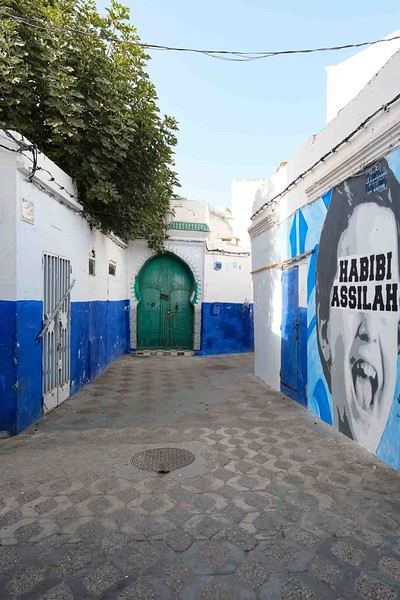
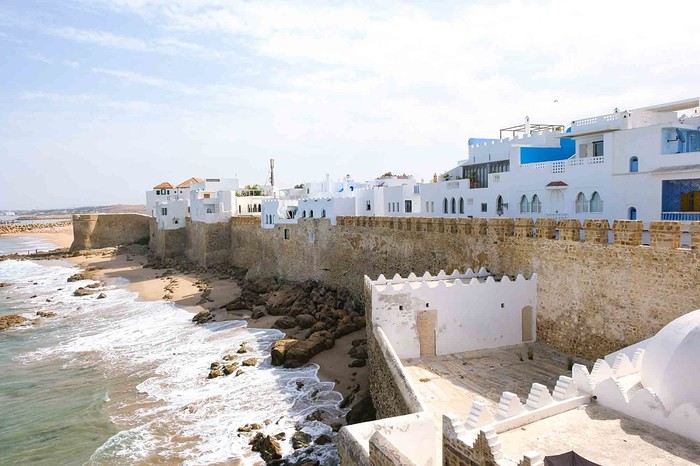
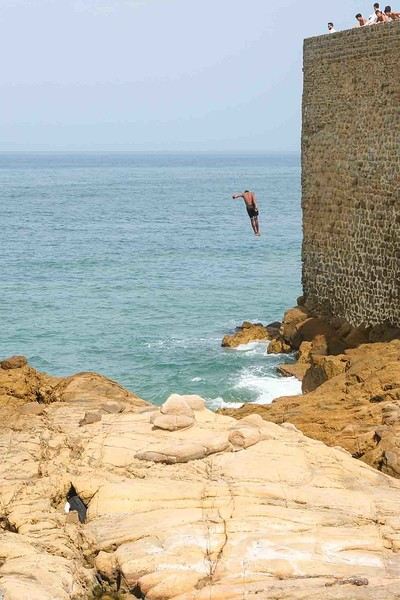
Anyway, we skirted around Tangier’s suburbs—pretty grim—and finally arrived in Asilah.
Following the coast and the long promenade along the beach, we reached the campsite. It was a bit crowded, not much shade, but it wasn’t far from the medina or the beach, and it wasn’t expensive. There’s some life here: Moroccan families seem to live on-site, in tents or basic bungalows. A woman was cooking tagine on a brazier—we were right in the atmosphere! The night was quiet, and we slept well. We set off on foot, walking along the seafront to the medina... We’d already been here in 2009. It was less touristy back then! Still, at this early hour, the little streets inside were very quiet. The walls had been freshly whitewashed, and there were even more murals than before. Around 11:30 AM, we strolled along the ramparts by the sea. There was a nice breeze! And a lot more people around. We enjoyed a milkshake on the terrace of a café overlooking the beach that stretches out at the foot of the medina. Some young guys were having fun diving off the rocks—and even off the top of the wall!
One or More Towers: December Photo Contest
I suggest we compete with photos of towers. No magic tricks or potter’s wheels—we’re talking about "tour" as in the feminine noun. So, a kind of tall building, round, square, or polygonal, or a high structure that could be metallic, or a flat-topped bell tower (campanile), or a high-rise building (building)...
You can find them almost everywhere in the world and from all eras.
The tower(s) must be the main subject of the photo.
Examples:
The first photo, which is Saint Mark’s Square (with the Campanile), won’t be accepted.
The second one, where the Campanile tower is the main subject, will be accepted.
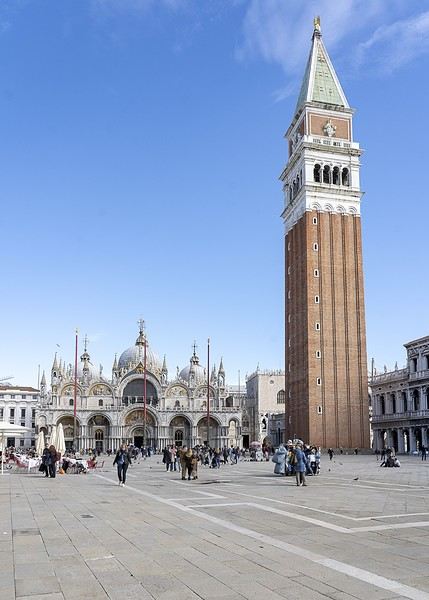
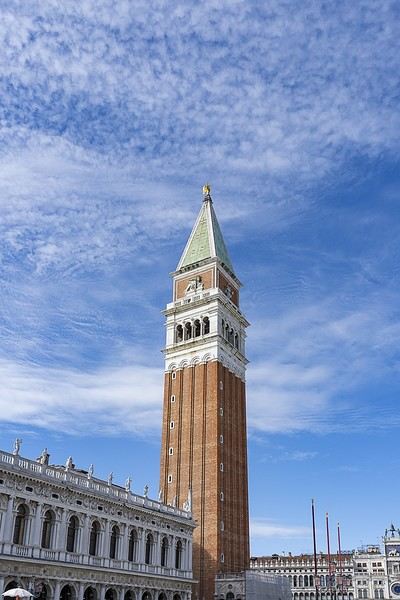 Have fun and surprise us! Photos of computer towers are excluded 😏
Have fun and surprise us! Photos of computer towers are excluded 😏Spitsbergen – A Night with the Walruses on Lågøya
Spitsbergen, 80° North latitude. A lost archipelago on the edge of the world, northeast of Greenland, the last lands before the pole. I’m aboard the *Grigoriy Mikheev*, a Russian ship from the Murmansk Polar Research Institute. Russian flag, Russian crew. Chartered by OceanWide Expeditions.
Last night, we were stuck in drifting pack ice in the long Hinlopen Strait. This incident led to an unforgettable barbecue and party on the ship’s foredeck, but we had to abandon our plan to head south and circle Spitsbergen. This summer, there’s too much ice in the strait, and it’s too thick. At dawn, the tide turned, allowing us to break free and head north again. The ship is now moving slowly through sea ice density that satellite maps estimate at around five-tenths. Our progress is punctuated by dull thuds: the ship’s bow constantly shoves and fractures enormous ice floes.
At breakfast, Tarik, our expedition leader, informs us that our program will be significantly altered. Since we can’t cross the strait, we’ll turn back and head north. To kick off our Plan B, Tarik plans a landing tonight on the small island of Låg (Lågøya), at 80°10' North. Last summer, he saw a large walrus colony there and hopes we’ll find them again. The weather is perfect—glorious sunshine—and walruses are truly addicted to sunbathing on the beaches.
We’ve now exited the strait and are sailing far from the coast. In case the walrus colony is there, we don’t want the ship’s approach to scare them into the water before we even see them. So, we scan the shore methodically with binoculars. We pass several bays, round a cape, and examine several shorelines littered with driftwood, but no walruses in sight. Several times, clusters of large rounded rocks trigger false alarms… but no, they’re just rocks…
Suddenly, Tarik spots them through his binoculars! On an isolated peninsula, our expedition leader’s highly trained eye has picked out, among those brown masses, the shape and white color of the enormous tusks of what he calls "the heavyweights of the Arctic!" Now, fifteen or twenty pairs of binoculars are pointed in the indicated direction… Sure enough, I see them now! They’re there, huge, sprawled in the sun on the beach. Without Tarik’s sharp eye, we might have missed them. They’re so tightly packed together that they really look like a mass of brown rocks. Only the white, saber-shaped tusks and the occasional furtive movements hint that they’re animals.
It’s 11 PM, and on the deck of the *Grigoriy Mikheev*, as you can imagine, excitement has ramped up several notches. Several of us have already rushed to our cabins to gear up, pulling on boots and life jackets in anticipation of a landing that promises to be absolutely amazing. Tarik reins in our enthusiasm a bit: Okay, so we were lucky to find them, but now we need to think about how to approach them. Not that they’re dangerous—at least not on land… Their enormous bulk and their pseudo-feet (flippers) only allow for very limited mobility. But when they feel threatened, their first instinct is to head for the water, where their perfect ease keeps them safe. So, the challenge will be not to scare them off, to avoid them bolting into the water in the first few seconds! That’s exactly what would happen if we arrived by Zodiac right in front of them.
So, Tarik decides we’ll make a wide detour to land on the other side of the peninsula where they are. From there, we’ll leave the Zodiacs on the beach and cross the peninsula on foot, about a kilometer and a half. That way, we’ll approach the herd from behind. This approach will also keep us downwind of them. There you go—with a few precautions, they shouldn’t hear us coming or catch our scent.
Everyone is geared up now and practically bursting with impatience… While the Zodiacs are being lowered into the water, Tarik and Delphine recap the approach rules: absolute silence, communication only by signs, no dragging feet on the rocks, watch your step, and strict coordination with slow movements.
Here we go… we’re off now! Spray flying from the Zodiac’s bow, icy air whipping our faces, gloves gripping the side ropes, freezing splashes, pure emotion… Ahh, I love this! We describe a wide curve offshore to round the peninsula. Ahead of us, the magnificent landscape of this intensely blue sea unfolds, with the hills of Lågøya and, in the distance, the ice-covered mountains of Nordaustlandet under the sun. It’s midnight now. In July, at 80 degrees North, the sun is just like midday.
This navigation takes us far from the walruses, on the other side of the cape. Easy landing on a shoreline of large pebbles covered in giant seaweed brought in by the currents. They look like long strips of plastic—sometimes translucent, sometimes white, beige, or orange. In places, there are huge tangled layers of it. Our boots sink into this material, which gives off a strong iodine smell. Unfortunately, there’s also some plastic waste—fishing floats and net debris. Seeing this here is crazy… A little farther on, in a cove, tides and storms have piled up numerous tree trunks from Siberia.
We begin crossing the peninsula on foot, staying close together. We’re walking on a nearly deserted polar tundra. We’re only ten degrees of latitude from the North Pole here. The violent winds and extreme temperatures that dominate this island for nine months of the year allow only a few rare plants to grow, close to the ground, between the rocks. In places, rocks are covered with large patches of black lichen.
Gérard, rifle slung over his shoulder, constantly scans the terrain. Tarik and Delphine are also very vigilant. We know no one ever lands here, and although this environment isn’t ideal for bears, you never know—better to be cautious. The terrain is mostly flat, but whenever a small rise blocks our view, Gérard moves ahead and only signals us to proceed when he’s sure there’s no "big man in fur" (tradition dictates we don’t name the polar bear).
After a few hundred meters, we find an enormous whale vertebra. Judging by the state of the bone, it’s likely a relic from the whaling era that ravaged this area in the 17th century and all over northern Spitsbergen. A little farther on, the remains of a grave catch our attention. The only human trace on this remote island, this burial is surely very old, also likely dating from the whalers’ time. But this whaler’s final resting place didn’t shelter him for long—there’s not much left, just a piece of skull and a few broken bones. Due to the permafrost, the body could only be buried a few dozen centimeters deep, between some planks held in place by large stones. This makeshift grave was probably ravaged by a bear shortly after the burial. Several stone blocks are overturned, the planks are broken open. We only linger for a minute to pay our respects to this whaler, whose poor remains now merge with the mineral landscape.
A slight rise bulges in the center of the peninsula, and here we are at the highest point. If our orientation is correct, we’re heading straight for the walrus colony. A moment of emotion… my heart’s pounding. Yes, they’re there, about three hundred meters ahead of us! They haven’t moved since we spotted them from the *Grigoriy Mikheev*’s deck. They’re sprawled in a heap, packed tightly together in the sun, on the shingle beach. The light breeze blowing in our faces confirms we’re on the right track—not to be sniffed out from afar by the big beasts.
By signs, Tarik tells us we’ll approach slowly, in stages, moving about thirty meters at a time, making as little noise as possible with our boots, then freezing completely for a minute or two, crouching down to let them forget us. This strategy proves excellent. We’re now less than a hundred meters away, and it doesn’t seem like our presence is perceived as a threat by the "heavyweights of the Arctic." At this distance, let’s not kid ourselves: we’re certainly spotted, but our way of approaching must seem reassuring—or at least manageable—since they’re only a few meters from the water and know they could dash into it in seconds if they felt the need.
We now advance in shorter stages—twenty meters at a time, then just ten, crouching, then freezing like statues, our breathing nearly held from emotion and concentration. We’re now thirty meters from the mastodons. Our presence must be starting to stress them because they’re moving more. While still sprawled against each other, some suddenly rear up on their flipper-feet, grunting and snorting like monstrous pigs. Their head shakes make their two enormous ivory sabers sway. They jab them into the fat of their neighbors, who in turn stir and emit irritated snorts.
At Tarik’s signal, we move a few more meters, "on velvet paws"… We’re right there now. I hold my breath, throat tight… Intense emotion, a fantastic spectacle—these enormous Arctic animals sprawled in the sun, with the magnificent backdrop of snow-covered mountains across the sound. I think to myself: *I’m here… this can’t be real!* It’s nearly 2 AM now, the air is crystal clear, and the Arctic sun bathes this scene in what might be the most beautiful light I’ve ever seen. We’re about fifteen meters away now. Tarik signals that we won’t go any closer. The walruses are still lying down, but occasionally, our close presence and the clicking of cameras trigger bouts of agitation that ripple through the herd, causing some jostling. They’re so tightly packed and tangled that it’s a bit hard to count them. In the end, we tally sixteen, plus one "little one," half-crushed in the general mass.
Seen from here, they’re truly impressive! The "sumo wrestlers of the Arctic!" According to Tarik, they must weigh about a ton—slightly more for the males than the females—and the "little one" must already be around 200 kg. When the weather’s nice like today, they love sprawling on the beaches to soak up the sun.
Walruses are marvels of Arctic adaptation. They can modify their blood circulation depending on thermal conditions. They withstand extreme cold by directing most of their circulation to vital organs (heart, lungs) and minimizing peripheral blood flow (skin and limbs) to prevent heat loss. Conversely, when they sunbathe, they direct most of their blood flow to the skin, turning themselves into true solar collectors.
At this latitude, there’s practically no difference in sunlight between day and night. Noon or midnight, the sun’s angle barely changes. Walruses make the most of these fair-weather phases by sprawling in the sun 23 hours out of 24… Enough to make siesta lovers dream, right? Twenty-three hours of lounging… and the twenty-fourth for eating!
And when we say "eating," what a feast! The proverb *"Who sleeps dines"* is fully justified here: when a walrus decides to feed, it gulps down between 50 and 60 kg of shellfish in an hour! Its food consists of large bivalve mollusks, which it tears from the seabed with its tusks and sucks up nonstop! A 50 kg meal certainly justifies a 23-hour nap for digestion, right? And speaking of digestion—it’s what the "big guys" in front of us are doing right now! You might wonder how we know this… Well, I’ll tell you: if you were here, downwind (or should I say *down the winds!*) of these marine giants, you’d have no doubt! Pfft… what flatulence! I can confirm that today’s scent is called *"Morsanus, from the North"* (*"Because I’m worth it!"*). Mmm, yeah… Tarik, you had a great idea putting us upwind… at least *they* can’t smell us, but we sure can!
But… heepp! Delphine discreetly signals to get our attention—she’s just spotted something: in the smooth water of the bay, a small V-shaped ripple runs along the beach, then turns toward the shore… So the colony wasn’t complete on the beach… Here’s an 800 kg bather stepping ashore now, right before our astonished eyes! She lifts her head and stays like that for a long moment, her enormous tusks half out of the water. She looks exhausted, resting a bit before coming out. Or more likely, she’s hesitating to climb onto the beach because she’s seen us… The shapeless head stays still for a moment, then violently snorts like a clogged drain! A misshapen head where you can’t make out anything that usually makes a head! No eyes, no ears, no mouth… A sort of monstrous cabbage! But the temptation to join the warmth of the "sunbathers" is too strong! Here’s our pachyderm bather climbing the few meters of the shore and sprawling right in the middle of her companions, who greet her with jostling, grunts, and tusk jabs! Then everything settles back into order—800 kg of fat and flesh added to the fifteen or so tons of local biomass. Welcome to the club!
It seems the walruses have gotten a bit used to us now. They’re moving and grunting much less. I realize it wasn’t obvious to approach them like this without scaring them into the water… It’s thanks to Tarik and Delphine’s advice that we managed it. It’s also, let’s be honest, because we’re all passionate here, and there’s been total discipline and cohesion from the start of this approach.
It’s past 2 AM now—time to head back… We’ll leave them to their wild world, to their life at the beginning of the world. We’re happy to have disturbed them as little as possible and not to have disrupted their nap too much. We leave stealthily, first backing up a few meters, then turning around and crossing the peninsula again, walking slowly, avoiding making noise with our boots as long as we’re still close.
We find the Zodiacs on the shoreline with the giant kelp. The sea is like a lake—easy boarding. We make another wide loop to round the cape, passing offshore. The sharp cold stings my cheeks and ears again—I put my hat back on. The cold—I hadn’t thought about it at all during our encounter with the walruses. In the Zodiac, with the engine noise, no one speaks. The faces and smiles are those of men and women who’ve just crossed an inner frontier—the one that separates dream from reality. But tonight, that frontier was porous, and the dream entered reality.
We return to the *Grigoriy Mikheev*, waiting at anchor. It’s past 3 AM, but I don’t feel any fatigue. A few minutes later, I’m in my bunk, rocked by a gentle swell and the hum of the engines. In the soft warmth of the blanket, a strange sleep overtakes me… A sleep filled with luminous, icy landscapes, with large beasts bearing saber-like tusks. Large beasts that sleep, snore, snort, grunt, and jostle in their sleep… in *my* sleep. An unforgettable memory. It was July 2004, in Spitsbergen.
Chris51.
Last night, we were stuck in drifting pack ice in the long Hinlopen Strait. This incident led to an unforgettable barbecue and party on the ship’s foredeck, but we had to abandon our plan to head south and circle Spitsbergen. This summer, there’s too much ice in the strait, and it’s too thick. At dawn, the tide turned, allowing us to break free and head north again. The ship is now moving slowly through sea ice density that satellite maps estimate at around five-tenths. Our progress is punctuated by dull thuds: the ship’s bow constantly shoves and fractures enormous ice floes.
At breakfast, Tarik, our expedition leader, informs us that our program will be significantly altered. Since we can’t cross the strait, we’ll turn back and head north. To kick off our Plan B, Tarik plans a landing tonight on the small island of Låg (Lågøya), at 80°10' North. Last summer, he saw a large walrus colony there and hopes we’ll find them again. The weather is perfect—glorious sunshine—and walruses are truly addicted to sunbathing on the beaches.
We’ve now exited the strait and are sailing far from the coast. In case the walrus colony is there, we don’t want the ship’s approach to scare them into the water before we even see them. So, we scan the shore methodically with binoculars. We pass several bays, round a cape, and examine several shorelines littered with driftwood, but no walruses in sight. Several times, clusters of large rounded rocks trigger false alarms… but no, they’re just rocks…
Suddenly, Tarik spots them through his binoculars! On an isolated peninsula, our expedition leader’s highly trained eye has picked out, among those brown masses, the shape and white color of the enormous tusks of what he calls "the heavyweights of the Arctic!" Now, fifteen or twenty pairs of binoculars are pointed in the indicated direction… Sure enough, I see them now! They’re there, huge, sprawled in the sun on the beach. Without Tarik’s sharp eye, we might have missed them. They’re so tightly packed together that they really look like a mass of brown rocks. Only the white, saber-shaped tusks and the occasional furtive movements hint that they’re animals.
It’s 11 PM, and on the deck of the *Grigoriy Mikheev*, as you can imagine, excitement has ramped up several notches. Several of us have already rushed to our cabins to gear up, pulling on boots and life jackets in anticipation of a landing that promises to be absolutely amazing. Tarik reins in our enthusiasm a bit: Okay, so we were lucky to find them, but now we need to think about how to approach them. Not that they’re dangerous—at least not on land… Their enormous bulk and their pseudo-feet (flippers) only allow for very limited mobility. But when they feel threatened, their first instinct is to head for the water, where their perfect ease keeps them safe. So, the challenge will be not to scare them off, to avoid them bolting into the water in the first few seconds! That’s exactly what would happen if we arrived by Zodiac right in front of them.
So, Tarik decides we’ll make a wide detour to land on the other side of the peninsula where they are. From there, we’ll leave the Zodiacs on the beach and cross the peninsula on foot, about a kilometer and a half. That way, we’ll approach the herd from behind. This approach will also keep us downwind of them. There you go—with a few precautions, they shouldn’t hear us coming or catch our scent.
Everyone is geared up now and practically bursting with impatience… While the Zodiacs are being lowered into the water, Tarik and Delphine recap the approach rules: absolute silence, communication only by signs, no dragging feet on the rocks, watch your step, and strict coordination with slow movements.
Here we go… we’re off now! Spray flying from the Zodiac’s bow, icy air whipping our faces, gloves gripping the side ropes, freezing splashes, pure emotion… Ahh, I love this! We describe a wide curve offshore to round the peninsula. Ahead of us, the magnificent landscape of this intensely blue sea unfolds, with the hills of Lågøya and, in the distance, the ice-covered mountains of Nordaustlandet under the sun. It’s midnight now. In July, at 80 degrees North, the sun is just like midday.
This navigation takes us far from the walruses, on the other side of the cape. Easy landing on a shoreline of large pebbles covered in giant seaweed brought in by the currents. They look like long strips of plastic—sometimes translucent, sometimes white, beige, or orange. In places, there are huge tangled layers of it. Our boots sink into this material, which gives off a strong iodine smell. Unfortunately, there’s also some plastic waste—fishing floats and net debris. Seeing this here is crazy… A little farther on, in a cove, tides and storms have piled up numerous tree trunks from Siberia.
We begin crossing the peninsula on foot, staying close together. We’re walking on a nearly deserted polar tundra. We’re only ten degrees of latitude from the North Pole here. The violent winds and extreme temperatures that dominate this island for nine months of the year allow only a few rare plants to grow, close to the ground, between the rocks. In places, rocks are covered with large patches of black lichen.
Gérard, rifle slung over his shoulder, constantly scans the terrain. Tarik and Delphine are also very vigilant. We know no one ever lands here, and although this environment isn’t ideal for bears, you never know—better to be cautious. The terrain is mostly flat, but whenever a small rise blocks our view, Gérard moves ahead and only signals us to proceed when he’s sure there’s no "big man in fur" (tradition dictates we don’t name the polar bear).
After a few hundred meters, we find an enormous whale vertebra. Judging by the state of the bone, it’s likely a relic from the whaling era that ravaged this area in the 17th century and all over northern Spitsbergen. A little farther on, the remains of a grave catch our attention. The only human trace on this remote island, this burial is surely very old, also likely dating from the whalers’ time. But this whaler’s final resting place didn’t shelter him for long—there’s not much left, just a piece of skull and a few broken bones. Due to the permafrost, the body could only be buried a few dozen centimeters deep, between some planks held in place by large stones. This makeshift grave was probably ravaged by a bear shortly after the burial. Several stone blocks are overturned, the planks are broken open. We only linger for a minute to pay our respects to this whaler, whose poor remains now merge with the mineral landscape.
A slight rise bulges in the center of the peninsula, and here we are at the highest point. If our orientation is correct, we’re heading straight for the walrus colony. A moment of emotion… my heart’s pounding. Yes, they’re there, about three hundred meters ahead of us! They haven’t moved since we spotted them from the *Grigoriy Mikheev*’s deck. They’re sprawled in a heap, packed tightly together in the sun, on the shingle beach. The light breeze blowing in our faces confirms we’re on the right track—not to be sniffed out from afar by the big beasts.
By signs, Tarik tells us we’ll approach slowly, in stages, moving about thirty meters at a time, making as little noise as possible with our boots, then freezing completely for a minute or two, crouching down to let them forget us. This strategy proves excellent. We’re now less than a hundred meters away, and it doesn’t seem like our presence is perceived as a threat by the "heavyweights of the Arctic." At this distance, let’s not kid ourselves: we’re certainly spotted, but our way of approaching must seem reassuring—or at least manageable—since they’re only a few meters from the water and know they could dash into it in seconds if they felt the need.
We now advance in shorter stages—twenty meters at a time, then just ten, crouching, then freezing like statues, our breathing nearly held from emotion and concentration. We’re now thirty meters from the mastodons. Our presence must be starting to stress them because they’re moving more. While still sprawled against each other, some suddenly rear up on their flipper-feet, grunting and snorting like monstrous pigs. Their head shakes make their two enormous ivory sabers sway. They jab them into the fat of their neighbors, who in turn stir and emit irritated snorts.
At Tarik’s signal, we move a few more meters, "on velvet paws"… We’re right there now. I hold my breath, throat tight… Intense emotion, a fantastic spectacle—these enormous Arctic animals sprawled in the sun, with the magnificent backdrop of snow-covered mountains across the sound. I think to myself: *I’m here… this can’t be real!* It’s nearly 2 AM now, the air is crystal clear, and the Arctic sun bathes this scene in what might be the most beautiful light I’ve ever seen. We’re about fifteen meters away now. Tarik signals that we won’t go any closer. The walruses are still lying down, but occasionally, our close presence and the clicking of cameras trigger bouts of agitation that ripple through the herd, causing some jostling. They’re so tightly packed and tangled that it’s a bit hard to count them. In the end, we tally sixteen, plus one "little one," half-crushed in the general mass.
Seen from here, they’re truly impressive! The "sumo wrestlers of the Arctic!" According to Tarik, they must weigh about a ton—slightly more for the males than the females—and the "little one" must already be around 200 kg. When the weather’s nice like today, they love sprawling on the beaches to soak up the sun.
Walruses are marvels of Arctic adaptation. They can modify their blood circulation depending on thermal conditions. They withstand extreme cold by directing most of their circulation to vital organs (heart, lungs) and minimizing peripheral blood flow (skin and limbs) to prevent heat loss. Conversely, when they sunbathe, they direct most of their blood flow to the skin, turning themselves into true solar collectors.
At this latitude, there’s practically no difference in sunlight between day and night. Noon or midnight, the sun’s angle barely changes. Walruses make the most of these fair-weather phases by sprawling in the sun 23 hours out of 24… Enough to make siesta lovers dream, right? Twenty-three hours of lounging… and the twenty-fourth for eating!
And when we say "eating," what a feast! The proverb *"Who sleeps dines"* is fully justified here: when a walrus decides to feed, it gulps down between 50 and 60 kg of shellfish in an hour! Its food consists of large bivalve mollusks, which it tears from the seabed with its tusks and sucks up nonstop! A 50 kg meal certainly justifies a 23-hour nap for digestion, right? And speaking of digestion—it’s what the "big guys" in front of us are doing right now! You might wonder how we know this… Well, I’ll tell you: if you were here, downwind (or should I say *down the winds!*) of these marine giants, you’d have no doubt! Pfft… what flatulence! I can confirm that today’s scent is called *"Morsanus, from the North"* (*"Because I’m worth it!"*). Mmm, yeah… Tarik, you had a great idea putting us upwind… at least *they* can’t smell us, but we sure can!
But… heepp! Delphine discreetly signals to get our attention—she’s just spotted something: in the smooth water of the bay, a small V-shaped ripple runs along the beach, then turns toward the shore… So the colony wasn’t complete on the beach… Here’s an 800 kg bather stepping ashore now, right before our astonished eyes! She lifts her head and stays like that for a long moment, her enormous tusks half out of the water. She looks exhausted, resting a bit before coming out. Or more likely, she’s hesitating to climb onto the beach because she’s seen us… The shapeless head stays still for a moment, then violently snorts like a clogged drain! A misshapen head where you can’t make out anything that usually makes a head! No eyes, no ears, no mouth… A sort of monstrous cabbage! But the temptation to join the warmth of the "sunbathers" is too strong! Here’s our pachyderm bather climbing the few meters of the shore and sprawling right in the middle of her companions, who greet her with jostling, grunts, and tusk jabs! Then everything settles back into order—800 kg of fat and flesh added to the fifteen or so tons of local biomass. Welcome to the club!
It seems the walruses have gotten a bit used to us now. They’re moving and grunting much less. I realize it wasn’t obvious to approach them like this without scaring them into the water… It’s thanks to Tarik and Delphine’s advice that we managed it. It’s also, let’s be honest, because we’re all passionate here, and there’s been total discipline and cohesion from the start of this approach.
It’s past 2 AM now—time to head back… We’ll leave them to their wild world, to their life at the beginning of the world. We’re happy to have disturbed them as little as possible and not to have disrupted their nap too much. We leave stealthily, first backing up a few meters, then turning around and crossing the peninsula again, walking slowly, avoiding making noise with our boots as long as we’re still close.
We find the Zodiacs on the shoreline with the giant kelp. The sea is like a lake—easy boarding. We make another wide loop to round the cape, passing offshore. The sharp cold stings my cheeks and ears again—I put my hat back on. The cold—I hadn’t thought about it at all during our encounter with the walruses. In the Zodiac, with the engine noise, no one speaks. The faces and smiles are those of men and women who’ve just crossed an inner frontier—the one that separates dream from reality. But tonight, that frontier was porous, and the dream entered reality.
We return to the *Grigoriy Mikheev*, waiting at anchor. It’s past 3 AM, but I don’t feel any fatigue. A few minutes later, I’m in my bunk, rocked by a gentle swell and the hum of the engines. In the soft warmth of the blanket, a strange sleep overtakes me… A sleep filled with luminous, icy landscapes, with large beasts bearing saber-like tusks. Large beasts that sleep, snore, snort, grunt, and jostle in their sleep… in *my* sleep. An unforgettable memory. It was July 2004, in Spitsbergen.
Chris51.
Road Trip USA 2023 - Part 2
HIGHWAY 1
Highway 1 runs along the Pacific coast of California from Leggett in the north to Dana Point in the south. It's the longest state route in California, stretching 1,050 km.
It's famous for its breathtaking ocean views. That’s actually why it’s become such a popular route for road trips, with tons of attractions and points of interest all along the way.
After crossing the U.S. interior on our way out (see Road Trip USA 2023 - Part 1), we’re starting our return trip along this route from Leggett.
Videos are embedded throughout the summary. Please click on the image to start the video. To jump to a specific post, here are the appropriate links:
CALIFORNIA:
Scenic Overlooks on Route 1 Between Leggett and Fort Bragg The Pudding Creek Trestle Bridge in Fort Bragg Glass Beach - Fort Bragg Jenner Lookout Point - Highway 1 Goat Rock Beach - Sonoma Coast State Park - Jenner Point Reyes National Seashore - White House Pool Trail Point Reyes National Seashore - Limantour Beach Point Reyes National Seashore - Point Reyes Shipwreck Point Reyes National Seashore - Kehoe Beach Trail Point Reyes National Seashore - McClures Beach Trail Point Reyes National Seashore - Cypress Tree Tunnel Point Reyes National Seashore - Point Reyes Beach North Point Reyes National Seashore - Elephant Seals on Drakes Beach Point Reyes National Seashore - Point Reyes Beach South Point Reyes National Seashore – Elephant Seals Overlooks Point Reyes National Seashore - Chimney Rock Trail Point Reyes National Seashore - Point Reyes Lighthouse Trail Point Reyes National Seashore – Tule Elk Observation Point Bonita Lighthouse Trail - Sausalito Hawk Hill - Sausalito Battery Spencer Trail - Sausalito Rodeo Beach - Sausalito Point Cavallo - Golden Gate View - Sausalito Exploring Downtown Sausalito Visiting Sausalito’s Houseboats Crossing the Golden Gate Bridge - San Francisco Golden Gate Bridge Viewpoints - San Francisco Cruise to Alcatraz Island - San Francisco Visiting Alcatraz Island - San Francisco Civic Center - Downtown San Francisco Market Street & Yerba Buena Gardens - Downtown San Francisco Union Square & Financial District - Downtown San Francisco Fisherman's Wharf, Pier 39 & Embarcadero - San Francisco Sea Lion Observation - Pier 39 - San Francisco Lombard Street & Cable Car - Russian Hill - San Francisco Macondray Lane Historic District - Russian Hill - San Francisco Grace Cathedral & Huntington Park - Nob Hill - San Francisco Telegraph Hill - San Francisco Chinatown - San Francisco Alamo Square & Painted Ladies - Western Addition - San Francisco Palace of Fine Arts - Marina District - San Francisco Presidio of San Francisco California Coastal Trail - Lincoln Park - San Francisco California Palace of the Legion of Honor - Lincoln Park - San Francisco Sutro Baths - Lincoln Park - San Francisco Queen Wilhelmina Garden - Golden Gate Park - San Francisco Bison Paddock - Golden Gate Park - San Francisco Portals of the Past - Golden Gate Park - San Francisco Strawberry Hill - Golden Gate Park – San Francisco Prayerbook Cross & Robin Williams Meadow - Golden Gate Park - San Francisco Hidden Garden Steps & 16th Avenue Tiled Steps - San Francisco Grandview Park - San Francisco Hike - Twin Peaks Three Summits - San Francisco Longboarding Down Twin Peaks Blvd in San Francisco Haight-Ashbury - San Francisco Corona Heights Park - San Francisco Mission Dolores - San Francisco Mural Frescoes (Part 1) - Mission District - San Francisco Mural Frescoes (Part 2) - Mission District - San Francisco Devil's Slide Bunker - Pacifica Mavericks Beach - Half Moon Bay Martins Beach - Half Moon Bay Pigeon Point Lighthouse State Historic Park - Pescadero What to See in Santa Cruz Visiting Capitola What to See in Monterey Carmel-by-the-Sea Lovers Point Park - Pacific Grove Castle Rock, Hurricane Point & Little Sur River Viewpoints Pfeiffer Falls Trail Julia Pfeiffer Burns State Park Vista Point & McWay Falls Highway 1 - Big Sur Viewpoints Salmon Creek Falls San Carpoforo Creek Trail Elephant Seal Vista Point - San Simeon San Simeon Pier Moonstone Beach Boardwalk Shipwreck - Estero Bluffs State Park Surfing Competition in Morro Bay Port San Luis Pier - San Luis Obispo Pismo Beach Monarch Butterfly Grove - Pismo State Beach Nojoqui Falls Park - Solvang Arroyo Hondo Vista Point Solvang, a Charming Danish Town in California Chumash Painted Cave - Santa Barbara Goleta San Marcos Rd & Cachuma Lake Vista Points - Santa Barbara Old Santa Barbara Mission Walking Tour of Santa Barbara’s Historic Downtown West Beach - Santa Barbara What to See in Ventura Paradise Falls - Wildwood Regional Park - Thousand Oaks Sandy Dune & El Matador State Beach - Malibu Point Dume Nature Reserve - Malibu Malibu Pier Road Trip in the Malibu Mountains Los Liones Trail - Santa Monica Santa Monica Pier Rodeo Drive - Beverly Hills Greystone Mansion - Beverly Hills Hollywood Walk of Fame - Los Angeles Griffith Observatory - Los Angeles Hollywood Forever Cemetery - Los Angeles What to See in Venice Beach Venice Beach Skatepark ShoreLine Aquatic Park - Long Beach Alamitos Beach - Long Beach Naples Island - Long Beach Crescent Bay Point Park & Helser Park Kiosk - Laguna Beach Shell Beach at Twin Points - Laguna Beach Prairie Dogs at Agra Vista Point Top Gun House & Oceanside Pier Annie's Canyon Trail - Solana Beach (Via North Rios Trailhead Loop) Old Town San Diego La Jolla Coastal Trail - San Diego Balboa Park - San Diego Pacific Beach - San Diego Mission Beach - San Diego Ocean Beach Tide Pools - San Diego Sunset Cliffs Natural Park - San Diego Tuna Harbor Park - San Diego Seaport Village & Embarcadero Marina Park - San Diego Gaslamp Quarter - Downtown San Diego Coronado Island - San Diego Dead Dolly Lane - Alpine Galleta Meadows Metal Sculptures - Borrego Springs What to See in Palm Springs Robolights - Palm Springs Andreas Canyon Trail - Indian Canyons - Palm Springs Palm Canyon Trail - Indian Canyons - Palm Springs West Fork Falls Trail - Indian Canyons - Palm Springs Tahquitz Canyon Loop Trail - Indian Canyons - Palm Springs Desert Christ Park - Yucca Valley Pioneertown Salvation Mountain - Niland Slab City - Niland
Highway 1 runs along the Pacific coast of California from Leggett in the north to Dana Point in the south. It's the longest state route in California, stretching 1,050 km.
It's famous for its breathtaking ocean views. That’s actually why it’s become such a popular route for road trips, with tons of attractions and points of interest all along the way.
After crossing the U.S. interior on our way out (see Road Trip USA 2023 - Part 1), we’re starting our return trip along this route from Leggett.
Videos are embedded throughout the summary. Please click on the image to start the video. To jump to a specific post, here are the appropriate links:
CALIFORNIA:
Scenic Overlooks on Route 1 Between Leggett and Fort Bragg The Pudding Creek Trestle Bridge in Fort Bragg Glass Beach - Fort Bragg Jenner Lookout Point - Highway 1 Goat Rock Beach - Sonoma Coast State Park - Jenner Point Reyes National Seashore - White House Pool Trail Point Reyes National Seashore - Limantour Beach Point Reyes National Seashore - Point Reyes Shipwreck Point Reyes National Seashore - Kehoe Beach Trail Point Reyes National Seashore - McClures Beach Trail Point Reyes National Seashore - Cypress Tree Tunnel Point Reyes National Seashore - Point Reyes Beach North Point Reyes National Seashore - Elephant Seals on Drakes Beach Point Reyes National Seashore - Point Reyes Beach South Point Reyes National Seashore – Elephant Seals Overlooks Point Reyes National Seashore - Chimney Rock Trail Point Reyes National Seashore - Point Reyes Lighthouse Trail Point Reyes National Seashore – Tule Elk Observation Point Bonita Lighthouse Trail - Sausalito Hawk Hill - Sausalito Battery Spencer Trail - Sausalito Rodeo Beach - Sausalito Point Cavallo - Golden Gate View - Sausalito Exploring Downtown Sausalito Visiting Sausalito’s Houseboats Crossing the Golden Gate Bridge - San Francisco Golden Gate Bridge Viewpoints - San Francisco Cruise to Alcatraz Island - San Francisco Visiting Alcatraz Island - San Francisco Civic Center - Downtown San Francisco Market Street & Yerba Buena Gardens - Downtown San Francisco Union Square & Financial District - Downtown San Francisco Fisherman's Wharf, Pier 39 & Embarcadero - San Francisco Sea Lion Observation - Pier 39 - San Francisco Lombard Street & Cable Car - Russian Hill - San Francisco Macondray Lane Historic District - Russian Hill - San Francisco Grace Cathedral & Huntington Park - Nob Hill - San Francisco Telegraph Hill - San Francisco Chinatown - San Francisco Alamo Square & Painted Ladies - Western Addition - San Francisco Palace of Fine Arts - Marina District - San Francisco Presidio of San Francisco California Coastal Trail - Lincoln Park - San Francisco California Palace of the Legion of Honor - Lincoln Park - San Francisco Sutro Baths - Lincoln Park - San Francisco Queen Wilhelmina Garden - Golden Gate Park - San Francisco Bison Paddock - Golden Gate Park - San Francisco Portals of the Past - Golden Gate Park - San Francisco Strawberry Hill - Golden Gate Park – San Francisco Prayerbook Cross & Robin Williams Meadow - Golden Gate Park - San Francisco Hidden Garden Steps & 16th Avenue Tiled Steps - San Francisco Grandview Park - San Francisco Hike - Twin Peaks Three Summits - San Francisco Longboarding Down Twin Peaks Blvd in San Francisco Haight-Ashbury - San Francisco Corona Heights Park - San Francisco Mission Dolores - San Francisco Mural Frescoes (Part 1) - Mission District - San Francisco Mural Frescoes (Part 2) - Mission District - San Francisco Devil's Slide Bunker - Pacifica Mavericks Beach - Half Moon Bay Martins Beach - Half Moon Bay Pigeon Point Lighthouse State Historic Park - Pescadero What to See in Santa Cruz Visiting Capitola What to See in Monterey Carmel-by-the-Sea Lovers Point Park - Pacific Grove Castle Rock, Hurricane Point & Little Sur River Viewpoints Pfeiffer Falls Trail Julia Pfeiffer Burns State Park Vista Point & McWay Falls Highway 1 - Big Sur Viewpoints Salmon Creek Falls San Carpoforo Creek Trail Elephant Seal Vista Point - San Simeon San Simeon Pier Moonstone Beach Boardwalk Shipwreck - Estero Bluffs State Park Surfing Competition in Morro Bay Port San Luis Pier - San Luis Obispo Pismo Beach Monarch Butterfly Grove - Pismo State Beach Nojoqui Falls Park - Solvang Arroyo Hondo Vista Point Solvang, a Charming Danish Town in California Chumash Painted Cave - Santa Barbara Goleta San Marcos Rd & Cachuma Lake Vista Points - Santa Barbara Old Santa Barbara Mission Walking Tour of Santa Barbara’s Historic Downtown West Beach - Santa Barbara What to See in Ventura Paradise Falls - Wildwood Regional Park - Thousand Oaks Sandy Dune & El Matador State Beach - Malibu Point Dume Nature Reserve - Malibu Malibu Pier Road Trip in the Malibu Mountains Los Liones Trail - Santa Monica Santa Monica Pier Rodeo Drive - Beverly Hills Greystone Mansion - Beverly Hills Hollywood Walk of Fame - Los Angeles Griffith Observatory - Los Angeles Hollywood Forever Cemetery - Los Angeles What to See in Venice Beach Venice Beach Skatepark ShoreLine Aquatic Park - Long Beach Alamitos Beach - Long Beach Naples Island - Long Beach Crescent Bay Point Park & Helser Park Kiosk - Laguna Beach Shell Beach at Twin Points - Laguna Beach Prairie Dogs at Agra Vista Point Top Gun House & Oceanside Pier Annie's Canyon Trail - Solana Beach (Via North Rios Trailhead Loop) Old Town San Diego La Jolla Coastal Trail - San Diego Balboa Park - San Diego Pacific Beach - San Diego Mission Beach - San Diego Ocean Beach Tide Pools - San Diego Sunset Cliffs Natural Park - San Diego Tuna Harbor Park - San Diego Seaport Village & Embarcadero Marina Park - San Diego Gaslamp Quarter - Downtown San Diego Coronado Island - San Diego Dead Dolly Lane - Alpine Galleta Meadows Metal Sculptures - Borrego Springs What to See in Palm Springs Robolights - Palm Springs Andreas Canyon Trail - Indian Canyons - Palm Springs Palm Canyon Trail - Indian Canyons - Palm Springs West Fork Falls Trail - Indian Canyons - Palm Springs Tahquitz Canyon Loop Trail - Indian Canyons - Palm Springs Desert Christ Park - Yucca Valley Pioneertown Salvation Mountain - Niland Slab City - Niland
Planning 3 weeks in Sulawesi
My kids are dreaming of discovering Indonesia this summer—they’ll be celebrating their 15th and 20th birthdays! For the occasion, I was thinking of Sulawesi, a bit farther from Bali’s crowds.
I usually plan my trips myself, but I’ll admit I’m a little lost when it comes to transportation and logistics. We’d be there for about 18 days.
I’ve looked into guided tours, but the prices are pretty high. North or south for 3 weeks? Anyone have any firsthand experience to share?
I usually plan my trips myself, but I’ll admit I’m a little lost when it comes to transportation and logistics. We’d be there for about 18 days.
I’ve looked into guided tours, but the prices are pretty high. North or south for 3 weeks? Anyone have any firsthand experience to share?
Back from a 3-week trip to South Africa and Mozambique
Hi everyone,
We’ve just returned from a 3-week trip to South Africa:
2 weeks in Kruger Park, Manyeleti, and White River
5 days in Vilankulo
1 day in Johannesburg
If you have any questions or are planning your trip, don’t hesitate! 🙂
Two weeks in Corfu with the family – our feedback
Hi everyone,
Here’s a little account of our two-week family trip (with two boys aged 7 and 10) to Corfu. I hope it helps other travelers! We chose Corfu because there are direct flights from Paris, and we were looking for a destination where it’d be easy to swim with the kids. We were there from August 14 to 28.
Since I wasn’t sure about the distances and had read quite a bit about Greek driving and the state of the roads, I decided to split the trip into three parts: Corfu Town, the North, and the South.
Corfu Town (3 nights) Day 1: We landed in the late afternoon. Booked three nights via Booking on the edge of the old town (Sueno Garden Apartment), which is walkable from the airport—no need to rent a car for the first few days or stay in Corfu Town. First evening in the old town, dinner at Pane e Souvlaki on Dimarchiou Square. Touristy, but good vibes.
Day 2: Visited the Old Fort. Nice for the Church of St. George, which looks like an ancient Greek temple, and especially for the 360° view from the top. By 11 a.m., the sun was already beating down. Left the fort and strolled through the People’s Gardens. Lunch at Mouragia a bit further away, then backtracked to let the kids swim at Faliraki Bathing Beach.
Day 3: We took bus line 2A from Spinada (in front of the Old Fort) to the end of the runway (stop ΚΑΛΟΚΑΙΡΙ Ε). Poorly signposted when you’re at the top—you have to go down via the bar. Not well set up, which is a shame. The Panagia Vlacherna Monastery is pretty on its little island, but don’t turn around—the landings are impressive. Returned via the 2A with a stop at Mon Repos Beach, where the kids loved jumping off the pier.
North (6 nights) Day 4: Headed to Sidari, rented a small Fiat Panda from Europcar—no issues with this rental company (I booked late, so it’s probably possible to find cheaper). We’d also booked via Booking at Blue Dreams Apartment, just south of Sidari. A family-run hotel with a nice pool, we had a great stay (it’s just been taken over by Belgians who speak French). We wandered around Sidari to the Canal d’Amour. Not easy to access—you have to walk through all the bars, and the tiny beach is pretty dirty. Still, it’s fun for a swim and exploring the cave.
Day 5: Quick breakfast to be at Cap Drastis by 9 a.m. Parked at the top, but there’s very little space (we couldn’t park on the way back), and it’s a dirt road. The signs saying “To the sea” actually lead to a boat dock for a cape tour. You only see the cape from above, not below. A bit of a letdown, but since it was early and no one was down there yet, we treated ourselves to a quick swim. Brunch back in Sidari at Eviva—I recommend it: not Greek at all, but high quality. Agios Stefanos in the late afternoon after the heat. The port is awful (dirty and uninteresting), but there’s a swimming spot just before the beach, near the old port (park above, by the church). No one was there—great moment with the kids.
Day 6: Left around 9 a.m. for Mount Pantokrator. A bit of a climb at the end in the Fiat Panda—it’s steep! The road is long, but I think it’s worth it for the lunar landscape at the top, the monastery-antenna, and the 360° view. Then down to Kassiopi (we paid 5 euros for the Kassiopi Car Park—I think it’s the best option, as there’s no big free parking like in Sidari) and a swim at Paralia Mpataria (small but nice). Really relaxing in the late afternoon. Walked around the peninsula and saw several dolphin pods with amazing jumps. Unforgettable. Kassiopi is more family-friendly than Sidari and has more charm (Sidari has none, so that’s easy!).
Day 7: Morning off at the hotel, then afternoon at Paralia Kalamaki for the inflatable playground the kids had spotted on the way back from Kassiopi. 10 euros per person for an hour, not many people around 4 p.m., and we had a blast. Shallow sandy beach. Not much marine life, but safe for young kids. Note: free freshwater shower. Dinner at Nikos Family Restaurant in Roda. Great welcome and atmosphere. The stifado and soutzoukakia were delicious, and the Greek desserts were amazing too. Next door, at Roda Park restaurant, there was a Greek party with traditional dancing and plaster plate-smashing. Even though we didn’t eat there, everyone was invited to join in the street—it was fun. Probably touristy, but pretty spontaneous, and it was a good time.
Day 8: I’d booked two dives in Paleokastritsa with Achilleon Diving Center, directly via WhatsApp. Great international vibe, two easy but interesting dives (a barracuda school and a “cow” nudibranch at Colovri Reefs, cool crevasses and holes at Donald’s Place). In the afternoon, we visited the Paleokastritsa Monastery (well-maintained, pretty nice) and spent some time at the beach (very crowded).
Day 9: Day off—we enjoyed the hotel pool and went to Olea next door to buy a small olive wood souvenir. Note that the old man who works the wood doesn’t have many fingers left…
South (5 nights) Day 10: Headed to Lefkimmi. Stopped at Achilleion on the way. I knew from reviews that only the gardens were accessible, but I think it’s worth it, even at 7 euros. We passed by the French military cemetery nearby (nothing special, poorly signposted but quiet and peaceful) and ate at Elia Tavern right next door: super good, best calamari of the trip. We’d booked our accommodation at Villa Rosa South Corfu, a bit outside Lefkimmi, near Alikes. Pretty isolated, but the beach is a 3-minute walk away, right next to the old salt pans. On the way, we saw a poster (use Google Lens to translate) for a local festival near Linia. We went that evening: barbecue, concert, and local dancing. Lots of people, but only locals—it was a great time.
Day 11: Short “hike” to Arkoudilas. We parked at the exit of Kavos, just before The Rose Tree restaurant. Some people drive all the way to the beach, but it’s very rocky. We followed the “Monastery” path to see Cape Asprokavos and the ruins of the monastery nearby. To avoid backtracking, we continued through the woods after the monastery to reach Arkoudilas Beach. Nice shaded walk, but dusty road. Dinner at Agali on the Potami Canal (friendly family vibe, but long wait).
Day 12: Boat trip to Sivota with Pegasus. A wooden boat, human-sized. Crowded, but not cramped. Two swimming stops (Blue Lagoon in the morning and a beach in the afternoon) and a 2-hour stop at noon in Sivota. We knew it’d be touristy, but the vibe was good, with some dancing on the way back. Not too many people at the swimming stops.
Day 13: Kouris Museum in Lefkimmi. Okay, don’t go for the history—the guide cracks more jokes than gives rational explanations. Still, we laughed a lot and had a great time. Lunch at The Village on the main road: very fresh, very good. Perfect homemade dip platter. Not the best location since it’s right on the road, but it’s worth it. Free ice cream for the kids, super-friendly owner. Fresh ratatouille (finally, some veggies!). Afternoon at Paralia Issos. View of Korission Lagoon and a walk through the sand dunes, a bit like the Sahara in places (hard to do before 5 p.m., even 6 p.m., because of the heat).
Day 14: I’d booked a visit/tasting at Pontiglio Winery. Short tour of the small site and tasting of the 4 wines produced there: 2 whites, 1 red, 1 rosé. Fresh homemade snacks, fruit for the kids, great welcome. Then to Paralia Kanoula Beach. Mikro Nisi Bar, sunbeds at 20 euros—expensive. But a nice beach with some rocks, so a bit of marine life. We saw octopuses while snorkeling with the kids—great moment.
Honest take on Corfu The island is dirty—not just at the garbage sites, which aren’t collected often enough and overflow constantly, but everywhere. Not a single square meter without cigarette butts, even if you get off the main paths. Stray cats everywhere, wasps everywhere, sewage smells often.
The natural heritage is stunning but ruined by private encroachment on the coastline. Bars and restaurants take over the land right up to the sea. I’d only been to Santorini and Paros about ten years ago, and I don’t remember it being like this at all. Maybe the Cyclades are different now. From talking to a few tourists here and there, it seems Crete is better managed. We still had a good vacation, even if it was sometimes hard to overlook the dirtiness.
Here’s a little account of our two-week family trip (with two boys aged 7 and 10) to Corfu. I hope it helps other travelers! We chose Corfu because there are direct flights from Paris, and we were looking for a destination where it’d be easy to swim with the kids. We were there from August 14 to 28.
Since I wasn’t sure about the distances and had read quite a bit about Greek driving and the state of the roads, I decided to split the trip into three parts: Corfu Town, the North, and the South.
Corfu Town (3 nights) Day 1: We landed in the late afternoon. Booked three nights via Booking on the edge of the old town (Sueno Garden Apartment), which is walkable from the airport—no need to rent a car for the first few days or stay in Corfu Town. First evening in the old town, dinner at Pane e Souvlaki on Dimarchiou Square. Touristy, but good vibes.
Day 2: Visited the Old Fort. Nice for the Church of St. George, which looks like an ancient Greek temple, and especially for the 360° view from the top. By 11 a.m., the sun was already beating down. Left the fort and strolled through the People’s Gardens. Lunch at Mouragia a bit further away, then backtracked to let the kids swim at Faliraki Bathing Beach.
Day 3: We took bus line 2A from Spinada (in front of the Old Fort) to the end of the runway (stop ΚΑΛΟΚΑΙΡΙ Ε). Poorly signposted when you’re at the top—you have to go down via the bar. Not well set up, which is a shame. The Panagia Vlacherna Monastery is pretty on its little island, but don’t turn around—the landings are impressive. Returned via the 2A with a stop at Mon Repos Beach, where the kids loved jumping off the pier.
North (6 nights) Day 4: Headed to Sidari, rented a small Fiat Panda from Europcar—no issues with this rental company (I booked late, so it’s probably possible to find cheaper). We’d also booked via Booking at Blue Dreams Apartment, just south of Sidari. A family-run hotel with a nice pool, we had a great stay (it’s just been taken over by Belgians who speak French). We wandered around Sidari to the Canal d’Amour. Not easy to access—you have to walk through all the bars, and the tiny beach is pretty dirty. Still, it’s fun for a swim and exploring the cave.
Day 5: Quick breakfast to be at Cap Drastis by 9 a.m. Parked at the top, but there’s very little space (we couldn’t park on the way back), and it’s a dirt road. The signs saying “To the sea” actually lead to a boat dock for a cape tour. You only see the cape from above, not below. A bit of a letdown, but since it was early and no one was down there yet, we treated ourselves to a quick swim. Brunch back in Sidari at Eviva—I recommend it: not Greek at all, but high quality. Agios Stefanos in the late afternoon after the heat. The port is awful (dirty and uninteresting), but there’s a swimming spot just before the beach, near the old port (park above, by the church). No one was there—great moment with the kids.
Day 6: Left around 9 a.m. for Mount Pantokrator. A bit of a climb at the end in the Fiat Panda—it’s steep! The road is long, but I think it’s worth it for the lunar landscape at the top, the monastery-antenna, and the 360° view. Then down to Kassiopi (we paid 5 euros for the Kassiopi Car Park—I think it’s the best option, as there’s no big free parking like in Sidari) and a swim at Paralia Mpataria (small but nice). Really relaxing in the late afternoon. Walked around the peninsula and saw several dolphin pods with amazing jumps. Unforgettable. Kassiopi is more family-friendly than Sidari and has more charm (Sidari has none, so that’s easy!).
Day 7: Morning off at the hotel, then afternoon at Paralia Kalamaki for the inflatable playground the kids had spotted on the way back from Kassiopi. 10 euros per person for an hour, not many people around 4 p.m., and we had a blast. Shallow sandy beach. Not much marine life, but safe for young kids. Note: free freshwater shower. Dinner at Nikos Family Restaurant in Roda. Great welcome and atmosphere. The stifado and soutzoukakia were delicious, and the Greek desserts were amazing too. Next door, at Roda Park restaurant, there was a Greek party with traditional dancing and plaster plate-smashing. Even though we didn’t eat there, everyone was invited to join in the street—it was fun. Probably touristy, but pretty spontaneous, and it was a good time.
Day 8: I’d booked two dives in Paleokastritsa with Achilleon Diving Center, directly via WhatsApp. Great international vibe, two easy but interesting dives (a barracuda school and a “cow” nudibranch at Colovri Reefs, cool crevasses and holes at Donald’s Place). In the afternoon, we visited the Paleokastritsa Monastery (well-maintained, pretty nice) and spent some time at the beach (very crowded).
Day 9: Day off—we enjoyed the hotel pool and went to Olea next door to buy a small olive wood souvenir. Note that the old man who works the wood doesn’t have many fingers left…
South (5 nights) Day 10: Headed to Lefkimmi. Stopped at Achilleion on the way. I knew from reviews that only the gardens were accessible, but I think it’s worth it, even at 7 euros. We passed by the French military cemetery nearby (nothing special, poorly signposted but quiet and peaceful) and ate at Elia Tavern right next door: super good, best calamari of the trip. We’d booked our accommodation at Villa Rosa South Corfu, a bit outside Lefkimmi, near Alikes. Pretty isolated, but the beach is a 3-minute walk away, right next to the old salt pans. On the way, we saw a poster (use Google Lens to translate) for a local festival near Linia. We went that evening: barbecue, concert, and local dancing. Lots of people, but only locals—it was a great time.
Day 11: Short “hike” to Arkoudilas. We parked at the exit of Kavos, just before The Rose Tree restaurant. Some people drive all the way to the beach, but it’s very rocky. We followed the “Monastery” path to see Cape Asprokavos and the ruins of the monastery nearby. To avoid backtracking, we continued through the woods after the monastery to reach Arkoudilas Beach. Nice shaded walk, but dusty road. Dinner at Agali on the Potami Canal (friendly family vibe, but long wait).
Day 12: Boat trip to Sivota with Pegasus. A wooden boat, human-sized. Crowded, but not cramped. Two swimming stops (Blue Lagoon in the morning and a beach in the afternoon) and a 2-hour stop at noon in Sivota. We knew it’d be touristy, but the vibe was good, with some dancing on the way back. Not too many people at the swimming stops.
Day 13: Kouris Museum in Lefkimmi. Okay, don’t go for the history—the guide cracks more jokes than gives rational explanations. Still, we laughed a lot and had a great time. Lunch at The Village on the main road: very fresh, very good. Perfect homemade dip platter. Not the best location since it’s right on the road, but it’s worth it. Free ice cream for the kids, super-friendly owner. Fresh ratatouille (finally, some veggies!). Afternoon at Paralia Issos. View of Korission Lagoon and a walk through the sand dunes, a bit like the Sahara in places (hard to do before 5 p.m., even 6 p.m., because of the heat).
Day 14: I’d booked a visit/tasting at Pontiglio Winery. Short tour of the small site and tasting of the 4 wines produced there: 2 whites, 1 red, 1 rosé. Fresh homemade snacks, fruit for the kids, great welcome. Then to Paralia Kanoula Beach. Mikro Nisi Bar, sunbeds at 20 euros—expensive. But a nice beach with some rocks, so a bit of marine life. We saw octopuses while snorkeling with the kids—great moment.
Honest take on Corfu The island is dirty—not just at the garbage sites, which aren’t collected often enough and overflow constantly, but everywhere. Not a single square meter without cigarette butts, even if you get off the main paths. Stray cats everywhere, wasps everywhere, sewage smells often.
The natural heritage is stunning but ruined by private encroachment on the coastline. Bars and restaurants take over the land right up to the sea. I’d only been to Santorini and Paros about ten years ago, and I don’t remember it being like this at all. Maybe the Cyclades are different now. From talking to a few tourists here and there, it seems Crete is better managed. We still had a good vacation, even if it was sometimes hard to overlook the dirtiness.
Two-week family trip to Colombia in August with 8-year-olds
Hi everyone,
I’d like to share my family trip to Colombia with kids aged 8. After spending hours browsing the forum and only having two weeks there, we decided to focus on two regions: the Coffee Zone for one week and the Caribbean coast for another. We traveled from August 8 to 23.
Day 1 – First stop: Bogotá
We arrived in Bogotá in the evening on an Air France flight—nothing to complain about, decent service, comfortable, and on time. However, the first night was a miss. We’d booked a hotel near the airport (Abitel Prime) for convenience, but the soundproofing was almost nonexistent; we heard planes as if we were on the runway. Luckily, exhaustion helped us sleep well anyway.
Day 2 – Off to the Coffee Zone and Salento
The next morning, we headed to the airport for a domestic flight to Pereira with LATAM. No issues: punctual and efficient, and in 30 minutes, we landed in Pereira. The landing already set a different mood: lush valleys, endless plantations, and humid air. We picked up our rental car from Localiza. Unfortunately, the experience wasn’t smooth—the paperwork took forever, and the wait tested our patience. Finally free, we hit the road to Salento, one of Quindío’s gems. We arrived in the late afternoon and discovered a colorful village bustling with artisan shops and cafés. Our first stroll helped us soak in the atmosphere before dinner at Bambú restaurant—a great surprise with careful cooking and local flavors. We spent the night at Casa Serafín, a charming little hotel, nicely decorated and well-located… but unfortunately very noisy.
Day 3 – The magic of Cocora Valley
This was one of the trip’s highlights. We set off early for Cocora Valley, famous for its giant wax palms, Colombia’s emblem. We chose the 12 km loop recommended by the *Routard*. The landscapes were spectacular: towering palms, rivers, suspension bridges. It felt like walking through a postcard. The weather was perfect. That evening, we dined at Barnabé restaurant—pleasant setting, decent food, but the bill was a bit steep for what it was. Back to Casa Serafín.
Day 4 – Coffee and panoramic views
The plan was a visit to Finca El Ocaso. For 1.5 hours, we followed a passionate guide who explained the entire coffee process, from harvest to cup. Very educational, accessible for both kids and adults, all in a stunning setting. The tour was in English for us, and we translated for our kids, who aren’t bilingual yet. In the afternoon, we climbed to Salento’s viewpoint. The valley view was superb. That evening, we ate at Veggie Garden, a simple and pleasant spot that was a nice change from the heavier meals of previous days.
Day 5 – Horseback ride to Santa Rita Waterfall
We booked a horseback ride with Cocora Magic. It was a real success: calm horses, a beautiful trail, mountain and meadow landscapes, and finally the refreshing and wild Santa Rita Waterfall. Without a doubt, one of the best moments of our time in the region. We even got a bonus ride up a 300-meter hill. We then headed to Filandia, less known than Salento but just as charming. We spent the late afternoon enjoying the pool at MuchoSur Filandia. The hotel is beautiful, in an idyllic setting. However, we also had soundproofing issues and could hear our neighbors.
Day 6 – Rainy detour through Filandia and Manizales
Rain caught up with us in the early morning: torrents of water made it impossible to go out. We stayed at the hotel, reading quietly. By noon, the rain let up: a quick walk in Filandia, a quick lunch, then off to Manizales. We chose to stay at El Otoño hot springs. Great choice: as soon as we arrived, we plunged into the hot pools, perfect after hours on the road.
Day 7 – Hiking and hot springs
In the morning, we hiked the Camino de Super Coco (found somewhat randomly on Google). A pleasant trail with mountain views and a peaceful atmosphere. The afternoon was spent in the hotel’s thermal pools, with a short marked hike down to the river. Dinner on-site at the hot springs’ restaurant. A simple but very relaxing day.
Day 8 – Rain, jacuzzi, and games
We continued to Finca Los Alpes. The rain greeted us again, but this time it turned into an asset: nothing like a steaming jacuzzi with a view of the misty mountains. The kids enjoyed the facilities too: mini-golf, ping-pong, billiards. Dinner and night at the hotel, cozy vibes.
Day 9 – Off to the Caribbean coast
Back to the airport to return the car (still a bit long). Flight to Cartagena with Avianca: punctual and comfortable. Upon arrival, we picked up another car and headed straight to the Hyatt Regency, a modern hotel with a pool. That evening, we dined at the hotel—practical after a travel day.
Day 10 – Colonial Cartagena
We set off to explore Cartagena’s old town. It was enchanting: colorful facades, flowered balconies, colonial charm—just magical. However, the heat was stifling and very humid. Afternoon relaxation by the pool. Dinner at Gestlani, a good restaurant in town.
Day 11 – Road to Barú
A hearty breakfast, then one last swim in the pool before heading to Barú. We checked into Las Islas Hotel. The setting was enchanting: wooden cabins nestled in the vegetation, a private beach, turquoise sea, impeccable service. Dinner at the hotel’s restaurant.
Day 12 – Beach and relaxation
A full beach day in Barú. Warm water, white sand, coconut trees, peace and quiet. A real postcard scene with iguanas and birds.
Day 13 – On to Santa Marta
Another morning at the beach before hitting the road to Santa Marta. The drive was a bit long (6 hours), especially with traffic jams in Barranquilla. It was the longest car ride of the trip. We spent the night at Villa María Tayrona, a beautiful place near the park.
Day 14 – Tayrona Park
We left early for Tayrona Park. We entered through **El Zaino**, parked the car, and set off on a hike to La Piscina (about 2 hours). We stopped along the way at Playa Arenilla, a stunning little beach, to rest. Lunch on-site, a swim, then back by 4 PM. The hike was a bit tiring, but the nature was spectacular: dense jungle, the sound of waves, and even a monkey encounter along the way. Evening and dinner at the hotel.
Day 15 – Last swim and return flight to Bogotá
Our last morning was split between the pool and the beach (the hotel has direct access via a 7-minute trail through vegetation and flowers)—hard to leave this paradise. We drove to Santa Marta’s airport to return the car, then flew back to Bogotá. We spent the night at Casa Dann Carlton, a comfortable hotel. We simply ordered room service, arriving too late to go out.
Day 16 – Bogotá and the end of the trip
Our last day in Colombia. After a good breakfast, we explored La Candelaria. Its cobbled streets and colorful houses were worth the visit. We visited the Botero Museum (free) and the Gold Museum, both fascinating. Back to the airport for our 11:55 PM Air France flight.
That’s a wrap on a varied trip—lush mountains, colorful villages, dream beaches, and tropical jungle. The pace was pretty relaxed, well-suited for our kids. They absolutely loved the trip to Colombia. Driving in Colombia was very easy, and we didn’t regret renting a car at all—it gave us more freedom to get around.
If I were to do it again, here’s what I’d change: - I’d spend less time in the Coffee Zone to stay a bit longer on the Caribbean coast, which was more relaxing for the kids. Or I’d head to Medellín, but I didn’t think the city was very kid-friendly. - Bogotá is a city that deserves a day’s visit, but it’s not a must-see. Maybe I’d have taken the KLM flight from Cartagena to Amsterdam instead.
If you have any questions, don’t hesitate!
Antoine
I’d like to share my family trip to Colombia with kids aged 8. After spending hours browsing the forum and only having two weeks there, we decided to focus on two regions: the Coffee Zone for one week and the Caribbean coast for another. We traveled from August 8 to 23.
Day 1 – First stop: Bogotá
We arrived in Bogotá in the evening on an Air France flight—nothing to complain about, decent service, comfortable, and on time. However, the first night was a miss. We’d booked a hotel near the airport (Abitel Prime) for convenience, but the soundproofing was almost nonexistent; we heard planes as if we were on the runway. Luckily, exhaustion helped us sleep well anyway.
Day 2 – Off to the Coffee Zone and Salento
The next morning, we headed to the airport for a domestic flight to Pereira with LATAM. No issues: punctual and efficient, and in 30 minutes, we landed in Pereira. The landing already set a different mood: lush valleys, endless plantations, and humid air. We picked up our rental car from Localiza. Unfortunately, the experience wasn’t smooth—the paperwork took forever, and the wait tested our patience. Finally free, we hit the road to Salento, one of Quindío’s gems. We arrived in the late afternoon and discovered a colorful village bustling with artisan shops and cafés. Our first stroll helped us soak in the atmosphere before dinner at Bambú restaurant—a great surprise with careful cooking and local flavors. We spent the night at Casa Serafín, a charming little hotel, nicely decorated and well-located… but unfortunately very noisy.
Day 3 – The magic of Cocora Valley
This was one of the trip’s highlights. We set off early for Cocora Valley, famous for its giant wax palms, Colombia’s emblem. We chose the 12 km loop recommended by the *Routard*. The landscapes were spectacular: towering palms, rivers, suspension bridges. It felt like walking through a postcard. The weather was perfect. That evening, we dined at Barnabé restaurant—pleasant setting, decent food, but the bill was a bit steep for what it was. Back to Casa Serafín.
Day 4 – Coffee and panoramic views
The plan was a visit to Finca El Ocaso. For 1.5 hours, we followed a passionate guide who explained the entire coffee process, from harvest to cup. Very educational, accessible for both kids and adults, all in a stunning setting. The tour was in English for us, and we translated for our kids, who aren’t bilingual yet. In the afternoon, we climbed to Salento’s viewpoint. The valley view was superb. That evening, we ate at Veggie Garden, a simple and pleasant spot that was a nice change from the heavier meals of previous days.
Day 5 – Horseback ride to Santa Rita Waterfall
We booked a horseback ride with Cocora Magic. It was a real success: calm horses, a beautiful trail, mountain and meadow landscapes, and finally the refreshing and wild Santa Rita Waterfall. Without a doubt, one of the best moments of our time in the region. We even got a bonus ride up a 300-meter hill. We then headed to Filandia, less known than Salento but just as charming. We spent the late afternoon enjoying the pool at MuchoSur Filandia. The hotel is beautiful, in an idyllic setting. However, we also had soundproofing issues and could hear our neighbors.
Day 6 – Rainy detour through Filandia and Manizales
Rain caught up with us in the early morning: torrents of water made it impossible to go out. We stayed at the hotel, reading quietly. By noon, the rain let up: a quick walk in Filandia, a quick lunch, then off to Manizales. We chose to stay at El Otoño hot springs. Great choice: as soon as we arrived, we plunged into the hot pools, perfect after hours on the road.
Day 7 – Hiking and hot springs
In the morning, we hiked the Camino de Super Coco (found somewhat randomly on Google). A pleasant trail with mountain views and a peaceful atmosphere. The afternoon was spent in the hotel’s thermal pools, with a short marked hike down to the river. Dinner on-site at the hot springs’ restaurant. A simple but very relaxing day.
Day 8 – Rain, jacuzzi, and games
We continued to Finca Los Alpes. The rain greeted us again, but this time it turned into an asset: nothing like a steaming jacuzzi with a view of the misty mountains. The kids enjoyed the facilities too: mini-golf, ping-pong, billiards. Dinner and night at the hotel, cozy vibes.
Day 9 – Off to the Caribbean coast
Back to the airport to return the car (still a bit long). Flight to Cartagena with Avianca: punctual and comfortable. Upon arrival, we picked up another car and headed straight to the Hyatt Regency, a modern hotel with a pool. That evening, we dined at the hotel—practical after a travel day.
Day 10 – Colonial Cartagena
We set off to explore Cartagena’s old town. It was enchanting: colorful facades, flowered balconies, colonial charm—just magical. However, the heat was stifling and very humid. Afternoon relaxation by the pool. Dinner at Gestlani, a good restaurant in town.
Day 11 – Road to Barú
A hearty breakfast, then one last swim in the pool before heading to Barú. We checked into Las Islas Hotel. The setting was enchanting: wooden cabins nestled in the vegetation, a private beach, turquoise sea, impeccable service. Dinner at the hotel’s restaurant.
Day 12 – Beach and relaxation
A full beach day in Barú. Warm water, white sand, coconut trees, peace and quiet. A real postcard scene with iguanas and birds.
Day 13 – On to Santa Marta
Another morning at the beach before hitting the road to Santa Marta. The drive was a bit long (6 hours), especially with traffic jams in Barranquilla. It was the longest car ride of the trip. We spent the night at Villa María Tayrona, a beautiful place near the park.
Day 14 – Tayrona Park
We left early for Tayrona Park. We entered through **El Zaino**, parked the car, and set off on a hike to La Piscina (about 2 hours). We stopped along the way at Playa Arenilla, a stunning little beach, to rest. Lunch on-site, a swim, then back by 4 PM. The hike was a bit tiring, but the nature was spectacular: dense jungle, the sound of waves, and even a monkey encounter along the way. Evening and dinner at the hotel.
Day 15 – Last swim and return flight to Bogotá
Our last morning was split between the pool and the beach (the hotel has direct access via a 7-minute trail through vegetation and flowers)—hard to leave this paradise. We drove to Santa Marta’s airport to return the car, then flew back to Bogotá. We spent the night at Casa Dann Carlton, a comfortable hotel. We simply ordered room service, arriving too late to go out.
Day 16 – Bogotá and the end of the trip
Our last day in Colombia. After a good breakfast, we explored La Candelaria. Its cobbled streets and colorful houses were worth the visit. We visited the Botero Museum (free) and the Gold Museum, both fascinating. Back to the airport for our 11:55 PM Air France flight.
That’s a wrap on a varied trip—lush mountains, colorful villages, dream beaches, and tropical jungle. The pace was pretty relaxed, well-suited for our kids. They absolutely loved the trip to Colombia. Driving in Colombia was very easy, and we didn’t regret renting a car at all—it gave us more freedom to get around.
If I were to do it again, here’s what I’d change: - I’d spend less time in the Coffee Zone to stay a bit longer on the Caribbean coast, which was more relaxing for the kids. Or I’d head to Medellín, but I didn’t think the city was very kid-friendly. - Bogotá is a city that deserves a day’s visit, but it’s not a must-see. Maybe I’d have taken the KLM flight from Cartagena to Amsterdam instead.
If you have any questions, don’t hesitate!
Antoine
6-Day Tokyo Visit Itinerary
Hi there! 😉
I’ve already created a post for our entire trip to Japan, but I’d love to focus specifically on our stay in Tokyo here. We (two couples of friends) will be spending 6 full days there in early November. Here’s what we’ve planned so far. We’d really appreciate your feedback to validate—or not—our schedule, and especially to hear your tips. Thanks in advance! 😉
DAY 0: Arrival in Tokyo in the evening, so rest and dinner near the hotel.
DAY 1:
09:00 – Shinjuku Gyoen Park
Must-see: ✔ Japanese garden (red bridge, pond) ✔ French garden (perspective and rose garden) ✔ English garden (lawns and maple trees) Photo spot: Red bridge + red maples (koyo).
11:00 – Harajuku & Takeshita Street
Walking route:
Start with Takeshita-dori (kawaii fashion, Japanese crepes). Walk up to Omotesandō (designer architecture: Dior, Prada).
Don’t miss: ✔ Kiddy Land (toys, souvenirs) ✔ Tokyu Plaza Omotesandō (entrance with escalators and mirrors → iconic photo)
12:30 – Lunch
Afuri Harajuku (yuzu ramen, light and fragrant). Alternative: Uogashi Nihon-Ichi (standing sushi, quick and fresh).
14:00 – Meiji-jingū (optional but recommended)
Access: From Omotesandō, enter through the large wooden torii. Must-see: ✔ Decorative sake barrels ✔ Forest path (zen atmosphere) ✔ Main pavilion (respect the purification ritual at the entrance). Duration: 45 min.
16:30 – Return to hotel / rest
JR Yamanote Line from Harajuku → Shinjuku (5 min).
18:30 – Evening in Yurakucho (Gado-shita)
DAY 2 09:00 – Visit to Asakusa
Walking route:
Kaminarimon Gate → photo under the large red lantern. Nakamise-dori → shopping street (souvenirs, snacks: melon pan, senbei). Sensō-ji Temple → main pavilion, five-story pagoda.
Don’t miss: ✔ Omikuji (fortune-telling draw) ✔ Photo with the pagoda and Tokyo Skytree in the background.
11:30 – Akihabara
Walking route: ✔ Yodobashi Camera (gadgets, electronics) ✔ Mandarake (figurines, manga) ✔ Super Potato (retro games)
13:00 – Lunch
Quick option: Ichiran Ramen (Akihabara). Local option: Tendon Tenya (affordable tempura).
14:30 – Free time / shopping
Explore the small alleys for anime shops, figurines, gashapon.
16:30 – Departure for Toyosu (teamLab Planets)
Transport:
JR Yamanote Line from Akihabara → Shimbashi (15 min) Yurikamome Line from Shimbashi → Shin-Toyosu (15 min)
Tip: Book a 6:30 PM slot to enjoy the evening atmosphere.
18:30 – teamLab Planets
Duration: 1.5 to 2 hours. Tip: Bring a towel (barefoot experience in water). Mandatory reservation: (official website).
20:30 – Dinner
Option on-site: DMM Café (Toyosu). Option back in Shinjuku: Izakaya (Torikizoku or Teyandei).
DAY 3:
Excursion to Mount Fuji (Kawaguchiko)
DAY 4:
09:00 – East Gardens of the Imperial Palace
Must-see: ✔ Ruins of Edo Castle ✔ Nijubashi Bridge (iconic photo) ✔ Museum of the Imperial Collections (free) Duration: 1h15. Tip: Open exceptionally this day (public holiday).
10:30 – Walk to Ginza
Walk: 15 min via Marunouchi Naka-dori (chic street with shops and cafés). Tip: Enjoy the autumn decorations and designer façades.
11:00 – Ginza
Must-see: ✔ Ginza Six (modern shopping center) ✔ Nissan Crossing (futuristic car exhibit) ✔ Wako Clock Tower (iconic photo)
14:30 – Shibuya
Walking route: ✔ Shibuya Crossing (photo from Starbucks Tsutaya) ✔ Hachikō Statue ✔ Shibuya Scramble Square → Shibuya Sky (panoramic view of Tokyo and Mount Fuji if the sky is clear). Shopping: Loft, Tokyu Hands, Shibuya 109 (fashion).
17:30 – Return to hotel / rest
JR Yamanote Line from Shibuya → Shinjuku (7 min).
19:30 – Dinner
Izakaya option: Izakaya Tofuro Shinjuku (traditional atmosphere). Modern option: Nabezo Shinjuku (all-you-can-eat shabu-shabu).
DAY 5:
10:00 – Ghibli Museum
Duration: 2 hours. Must-see: ✔ Permanent exhibits (Totoro, My Neighbor Totoro, Spirited Away) ✔ Exclusive short films (Saturn Theater) Tip: Photos are not allowed inside, but there are beautiful spots outside.
12:00 – Stroll in Inokashira Park
Must-see: ✔ Central pond (boat rental available) ✔ Benzaiten Shrine Duration: 30 min.
14:30 – Nakameguro & Daikanyama
Transport: JR Chuo Line from Mitaka → Shibuya, then Tokyu Toyoko Line → Nakameguro (40 min). Must-see: ✔ Walk along the Meguro River (trendy cafés, design shops) ✔ T-Site Daikanyama (magnificent architecture) Coffee break: Onibus Coffee Nakameguro (artisanal coffee).
17:30 – Return to Shinjuku
Transport: Tokyu Toyoko Line → Shibuya → JR Yamanote Line → Shinjuku.
DAY 6:
Free morning (shopping or relaxation)
Suggestions: ✔ Shopping at Lumine Shinjuku or Isetan ✔ Stop by Don Quijote for souvenirs ✔ Or Thermae-Yu Onsen (if you want a relaxing morning before departure).
14:45 – Arrival in Odaiba
Walking route: ✔ Aqua City (shopping, bay view) ✔ Statue of Liberty (photo with Rainbow Bridge) ✔ DiverCity Tokyo Plaza (giant Gundam statue) Immersive option: Immersive Fort Tokyo (if you want a fun indoor activity).
16:30 – Sunset over Rainbow Bridge
Best spot: Esplanade in front of Aqua City or Odaiba Beach. Photo tip: Wait for the bridge lights to turn on (around 5 PM).
18:30 – Dinner in Odaiba 20:00 – Departure for Tokyo Tower
Transport:
Yurikamome Line from Daiba → Shimbashi → Oedo Line → Akabanebashi (30 min).
Tokyo Tower: ✔ Incredible night view of illuminated Tokyo. ✔ Duration: 45 min to 1 hour.
21:30 – Return to Shinjuku
Transport: Oedo Line → Shinjuku (15 min).
And there you have it—I hope I didn’t go on too long! 😉 Thanks everyone for your advice....
I’ve already created a post for our entire trip to Japan, but I’d love to focus specifically on our stay in Tokyo here. We (two couples of friends) will be spending 6 full days there in early November. Here’s what we’ve planned so far. We’d really appreciate your feedback to validate—or not—our schedule, and especially to hear your tips. Thanks in advance! 😉
DAY 0: Arrival in Tokyo in the evening, so rest and dinner near the hotel.
DAY 1:
09:00 – Shinjuku Gyoen Park
Must-see: ✔ Japanese garden (red bridge, pond) ✔ French garden (perspective and rose garden) ✔ English garden (lawns and maple trees) Photo spot: Red bridge + red maples (koyo).
11:00 – Harajuku & Takeshita Street
Walking route:
Start with Takeshita-dori (kawaii fashion, Japanese crepes). Walk up to Omotesandō (designer architecture: Dior, Prada).
Don’t miss: ✔ Kiddy Land (toys, souvenirs) ✔ Tokyu Plaza Omotesandō (entrance with escalators and mirrors → iconic photo)
12:30 – Lunch
Afuri Harajuku (yuzu ramen, light and fragrant). Alternative: Uogashi Nihon-Ichi (standing sushi, quick and fresh).
14:00 – Meiji-jingū (optional but recommended)
Access: From Omotesandō, enter through the large wooden torii. Must-see: ✔ Decorative sake barrels ✔ Forest path (zen atmosphere) ✔ Main pavilion (respect the purification ritual at the entrance). Duration: 45 min.
16:30 – Return to hotel / rest
JR Yamanote Line from Harajuku → Shinjuku (5 min).
18:30 – Evening in Yurakucho (Gado-shita)
DAY 2 09:00 – Visit to Asakusa
Walking route:
Kaminarimon Gate → photo under the large red lantern. Nakamise-dori → shopping street (souvenirs, snacks: melon pan, senbei). Sensō-ji Temple → main pavilion, five-story pagoda.
Don’t miss: ✔ Omikuji (fortune-telling draw) ✔ Photo with the pagoda and Tokyo Skytree in the background.
11:30 – Akihabara
Walking route: ✔ Yodobashi Camera (gadgets, electronics) ✔ Mandarake (figurines, manga) ✔ Super Potato (retro games)
13:00 – Lunch
Quick option: Ichiran Ramen (Akihabara). Local option: Tendon Tenya (affordable tempura).
14:30 – Free time / shopping
Explore the small alleys for anime shops, figurines, gashapon.
16:30 – Departure for Toyosu (teamLab Planets)
Transport:
JR Yamanote Line from Akihabara → Shimbashi (15 min) Yurikamome Line from Shimbashi → Shin-Toyosu (15 min)
Tip: Book a 6:30 PM slot to enjoy the evening atmosphere.
18:30 – teamLab Planets
Duration: 1.5 to 2 hours. Tip: Bring a towel (barefoot experience in water). Mandatory reservation: (official website).
20:30 – Dinner
Option on-site: DMM Café (Toyosu). Option back in Shinjuku: Izakaya (Torikizoku or Teyandei).
DAY 3:
Excursion to Mount Fuji (Kawaguchiko)
DAY 4:
09:00 – East Gardens of the Imperial Palace
Must-see: ✔ Ruins of Edo Castle ✔ Nijubashi Bridge (iconic photo) ✔ Museum of the Imperial Collections (free) Duration: 1h15. Tip: Open exceptionally this day (public holiday).
10:30 – Walk to Ginza
Walk: 15 min via Marunouchi Naka-dori (chic street with shops and cafés). Tip: Enjoy the autumn decorations and designer façades.
11:00 – Ginza
Must-see: ✔ Ginza Six (modern shopping center) ✔ Nissan Crossing (futuristic car exhibit) ✔ Wako Clock Tower (iconic photo)
14:30 – Shibuya
Walking route: ✔ Shibuya Crossing (photo from Starbucks Tsutaya) ✔ Hachikō Statue ✔ Shibuya Scramble Square → Shibuya Sky (panoramic view of Tokyo and Mount Fuji if the sky is clear). Shopping: Loft, Tokyu Hands, Shibuya 109 (fashion).
17:30 – Return to hotel / rest
JR Yamanote Line from Shibuya → Shinjuku (7 min).
19:30 – Dinner
Izakaya option: Izakaya Tofuro Shinjuku (traditional atmosphere). Modern option: Nabezo Shinjuku (all-you-can-eat shabu-shabu).
DAY 5:
10:00 – Ghibli Museum
Duration: 2 hours. Must-see: ✔ Permanent exhibits (Totoro, My Neighbor Totoro, Spirited Away) ✔ Exclusive short films (Saturn Theater) Tip: Photos are not allowed inside, but there are beautiful spots outside.
12:00 – Stroll in Inokashira Park
Must-see: ✔ Central pond (boat rental available) ✔ Benzaiten Shrine Duration: 30 min.
14:30 – Nakameguro & Daikanyama
Transport: JR Chuo Line from Mitaka → Shibuya, then Tokyu Toyoko Line → Nakameguro (40 min). Must-see: ✔ Walk along the Meguro River (trendy cafés, design shops) ✔ T-Site Daikanyama (magnificent architecture) Coffee break: Onibus Coffee Nakameguro (artisanal coffee).
17:30 – Return to Shinjuku
Transport: Tokyu Toyoko Line → Shibuya → JR Yamanote Line → Shinjuku.
DAY 6:
Free morning (shopping or relaxation)
Suggestions: ✔ Shopping at Lumine Shinjuku or Isetan ✔ Stop by Don Quijote for souvenirs ✔ Or Thermae-Yu Onsen (if you want a relaxing morning before departure).
14:45 – Arrival in Odaiba
Walking route: ✔ Aqua City (shopping, bay view) ✔ Statue of Liberty (photo with Rainbow Bridge) ✔ DiverCity Tokyo Plaza (giant Gundam statue) Immersive option: Immersive Fort Tokyo (if you want a fun indoor activity).
16:30 – Sunset over Rainbow Bridge
Best spot: Esplanade in front of Aqua City or Odaiba Beach. Photo tip: Wait for the bridge lights to turn on (around 5 PM).
18:30 – Dinner in Odaiba 20:00 – Departure for Tokyo Tower
Transport:
Yurikamome Line from Daiba → Shimbashi → Oedo Line → Akabanebashi (30 min).
Tokyo Tower: ✔ Incredible night view of illuminated Tokyo. ✔ Duration: 45 min to 1 hour.
21:30 – Return to Shinjuku
Transport: Oedo Line → Shinjuku (15 min).
And there you have it—I hope I didn’t go on too long! 😉 Thanks everyone for your advice....
Another side of my trip to Thailand: Villages, nature, countryside, mountains...
February 9th is a pivotal day during my trip to Thailand. Up until this date, my focus had been on cities, temples, and other urban landmarks. Starting February 10th, I’ll finally leave the city behind for the outskirts—one town, one life, farther from tourism, more real, more authentic... Then comes the bucolic surroundings of Chiang Mai, nature, the countryside, the mountains.
This morning, I head to visit the ethnographic museum. I’d been told about another one, but it’s permanently closed. I wonder if it’s the same one that might have changed its name and location.
I thoroughly enjoy visiting this museum. At first, I’m a bit annoyed because the place is packed with noisy school groups blocking the display cases without even showing the slightest interest. But soon, their chaperones manage to lead them into another room, giving me some peace. They maintain this distance throughout the tour, allowing me to explore the museum in complete tranquility. I really appreciate their tact.
I’m amazed by the absolutely stunning fabric displays and the countless everyday objects, especially the very old pottery. There’s so much beautiful basketry and intricately carved wood. The statues are also incredible... After seeing all of them, I no longer feel like buying any from the shops.
On my way back, not far from my hotel, I discover a rather unique place that only serves one drink, which they’ve made their specialty: egg coffee! A pretty surprising novelty. I have to try it.

At the bottom of the cup, they pour a layer of milk, topped with a layer of liquid coffee, followed by a layer of egg yolk, and finally a top layer that turns out to be a mix of coffee and cocoa powder. It’s a cold drink that, in the end, doesn’t have much flavor, and the price is pretty steep for such a small cup. You’re paying for the exclusivity!
Later in the day, I venture once again into small alleys, something I love doing when exploring a new city—no specific goal, just wandering east of the city, outside the walls.

I encounter very few tourists there and discover unsuspected little shops overflowing with lovely items, much cheaper than what you find in the heart of the tourist district. Then I wander through the floors of Warorot Market. I discover another kind of temple there: the temple of good deals. I love finding clothes that are really original for locals, not the flood of shirts and pants that tourists love but no Thai would ever buy, which invade the shops in the "Historic Square." I stop in my tracks in front of a stall with beautiful shirts featuring stunning geometric patterns in elegant color combinations and very short sleeves. Hmm, these would be perfect for showing off my biceps, one of which is adorned with the magnificent Ganesh tattoo I got last year in Bali. "When you’ve got nice things, you’ve got to show them off!" he said. 😜🙏💪 I pick out two for 380 baht and negotiate them down to 300. But the seller won’t go any lower. I understand I’ve reached the limit of her commercial possibilities. Just as I’m leaving the shop, happy with my purchase, my ever-helpful inner voice, Petite Voix, suggests: - You didn’t try them on because you were too lazy to take off the one you’re wearing and also because of the sweat, but you could just put one on over the one you’re wearing. It’s light enough that it won’t bother you.
I go back to the two sellers, who burst out laughing when I ask to try them on. - Oh no, it’s way too small for you! It’s a women’s shirt! - But they don’t look particularly feminine in style! And I chose XXL... I put the shirt on, and of course, it won’t close. Then I notice the buttons are on the wrong side. That’s why the sleeves seemed so short!!! They put the shirts back on the rack and refund me without any fuss, commenting amid total hilarity: - Well, thank goodness you tried it on just as you were leaving the shop!
Since I don’t want to walk too much before tomorrow’s first Big Outing with the driver, I end my stroll with a visit to two very pretty temples recommended by Joël.

I’d rather not post more temple photos. But these ones smell like village and countryside...


I’ve never seen anything like Wat Ket Karam, so extravagant...


And I end my day with two other lesser-known temples: Wat Noung Kham, simple and finally free of gold and glitter,

and Wat Dap Phai, where an intimate ceremony is taking place at the end of the day.
This morning, I head to visit the ethnographic museum. I’d been told about another one, but it’s permanently closed. I wonder if it’s the same one that might have changed its name and location.
I thoroughly enjoy visiting this museum. At first, I’m a bit annoyed because the place is packed with noisy school groups blocking the display cases without even showing the slightest interest. But soon, their chaperones manage to lead them into another room, giving me some peace. They maintain this distance throughout the tour, allowing me to explore the museum in complete tranquility. I really appreciate their tact.
I’m amazed by the absolutely stunning fabric displays and the countless everyday objects, especially the very old pottery. There’s so much beautiful basketry and intricately carved wood. The statues are also incredible... After seeing all of them, I no longer feel like buying any from the shops.
On my way back, not far from my hotel, I discover a rather unique place that only serves one drink, which they’ve made their specialty: egg coffee! A pretty surprising novelty. I have to try it.
At the bottom of the cup, they pour a layer of milk, topped with a layer of liquid coffee, followed by a layer of egg yolk, and finally a top layer that turns out to be a mix of coffee and cocoa powder. It’s a cold drink that, in the end, doesn’t have much flavor, and the price is pretty steep for such a small cup. You’re paying for the exclusivity!
Later in the day, I venture once again into small alleys, something I love doing when exploring a new city—no specific goal, just wandering east of the city, outside the walls.
I encounter very few tourists there and discover unsuspected little shops overflowing with lovely items, much cheaper than what you find in the heart of the tourist district. Then I wander through the floors of Warorot Market. I discover another kind of temple there: the temple of good deals. I love finding clothes that are really original for locals, not the flood of shirts and pants that tourists love but no Thai would ever buy, which invade the shops in the "Historic Square." I stop in my tracks in front of a stall with beautiful shirts featuring stunning geometric patterns in elegant color combinations and very short sleeves. Hmm, these would be perfect for showing off my biceps, one of which is adorned with the magnificent Ganesh tattoo I got last year in Bali. "When you’ve got nice things, you’ve got to show them off!" he said. 😜🙏💪 I pick out two for 380 baht and negotiate them down to 300. But the seller won’t go any lower. I understand I’ve reached the limit of her commercial possibilities. Just as I’m leaving the shop, happy with my purchase, my ever-helpful inner voice, Petite Voix, suggests: - You didn’t try them on because you were too lazy to take off the one you’re wearing and also because of the sweat, but you could just put one on over the one you’re wearing. It’s light enough that it won’t bother you.
I go back to the two sellers, who burst out laughing when I ask to try them on. - Oh no, it’s way too small for you! It’s a women’s shirt! - But they don’t look particularly feminine in style! And I chose XXL... I put the shirt on, and of course, it won’t close. Then I notice the buttons are on the wrong side. That’s why the sleeves seemed so short!!! They put the shirts back on the rack and refund me without any fuss, commenting amid total hilarity: - Well, thank goodness you tried it on just as you were leaving the shop!
Since I don’t want to walk too much before tomorrow’s first Big Outing with the driver, I end my stroll with a visit to two very pretty temples recommended by Joël.
I’d rather not post more temple photos. But these ones smell like village and countryside...
I’ve never seen anything like Wat Ket Karam, so extravagant...
And I end my day with two other lesser-known temples: Wat Noung Kham, simple and finally free of gold and glitter,
and Wat Dap Phai, where an intimate ceremony is taking place at the end of the day.
Come discover the Gaspésie with me
Introduction
In this travel journal, you’ll find a list of all the activities we did during our road trip through the Gaspésie.
Videos are embedded throughout the summary. Just click on the image to start the video.
To jump to a specific post, here are the relevant links:
Gaspé - Forillon National Park - Interpretation Center Gaspé - Forillon National Park - Mont-Saint-Alban Trail Gaspé - Forillon National Park - La Chute Trail Gaspé - Forillon National Park - Les Graves Trail Percé - Rivière-aux-Émeraudes Waterfall Percé - Bonaventure Island National Park Percé - Hike at the Foot of Percé Rock Percé Geopark - Suspended Glass Platform Percé Geopark - Magic Forest Loop Percé Geopark - Belvedere Trails Percé Geopark - Springs and Les Pieds Croches Trails Percé Geopark - Crevasse Trail Percé Geopark - Grande Coupe Trail Percé Geopark - Grotto Path Bonaventure - Le Malin de la Rivière Bonaventure Maria - Grand Sault Waterfall Carleton-sur-Mer - Les Saults Waterfall - Éperlan Trail Matapédia - Two Rivers Belvedere Saint-Alexis-de-Matapédia - Dream Horizon Belvedere Saint-André-de-Restigouche - Heart of the Plateaus Belvedere Saint-André-de-Restigouche - Picot Waterfalls Saint-Alexis-de-Matapédia - Robitaille Stream Waterfalls Trail Saint-Alexandre-des-Lacs - Philomène Waterfall Saint-Ulric - Ti-Mé Waterfall
In this travel journal, you’ll find a list of all the activities we did during our road trip through the Gaspésie.
Videos are embedded throughout the summary. Just click on the image to start the video.
To jump to a specific post, here are the relevant links:
Gaspé - Forillon National Park - Interpretation Center Gaspé - Forillon National Park - Mont-Saint-Alban Trail Gaspé - Forillon National Park - La Chute Trail Gaspé - Forillon National Park - Les Graves Trail Percé - Rivière-aux-Émeraudes Waterfall Percé - Bonaventure Island National Park Percé - Hike at the Foot of Percé Rock Percé Geopark - Suspended Glass Platform Percé Geopark - Magic Forest Loop Percé Geopark - Belvedere Trails Percé Geopark - Springs and Les Pieds Croches Trails Percé Geopark - Crevasse Trail Percé Geopark - Grande Coupe Trail Percé Geopark - Grotto Path Bonaventure - Le Malin de la Rivière Bonaventure Maria - Grand Sault Waterfall Carleton-sur-Mer - Les Saults Waterfall - Éperlan Trail Matapédia - Two Rivers Belvedere Saint-Alexis-de-Matapédia - Dream Horizon Belvedere Saint-André-de-Restigouche - Heart of the Plateaus Belvedere Saint-André-de-Restigouche - Picot Waterfalls Saint-Alexis-de-Matapédia - Robitaille Stream Waterfalls Trail Saint-Alexandre-des-Lacs - Philomène Waterfall Saint-Ulric - Ti-Mé Waterfall
Croatia, Montenegro – two victims of overtourism?
Mid-June, two Auvergnats on the starting blocks—off we go to the former Yugoslavia!
We’d already explored some nooks and crannies of northern Croatia back in 2019, so we’re keeping the momentum going by planning a trip to the south of the country and then Montenegro.
On the way back, we’ll drift into Bosnia-Herzegovina just to mix things up a bit!
We’re a little unsure about what to expect in terms of tourist crowds.
Dubrovnik has a reputation for being the hardest-hit city by overtourism, and Kotor and the whole Dalmatian coast aren’t exactly empty...
Luckily, most European countries haven’t started school holidays yet, and some measures seem to have been put in place to limit the flow (like restrictions on the number of cruise ships allowed to dock at the same time).
Maybe we’ll manage to escape the promised hell?
For now, we’re slamming the doors of the Scirocco and heading off to our first stop: northern Italy!
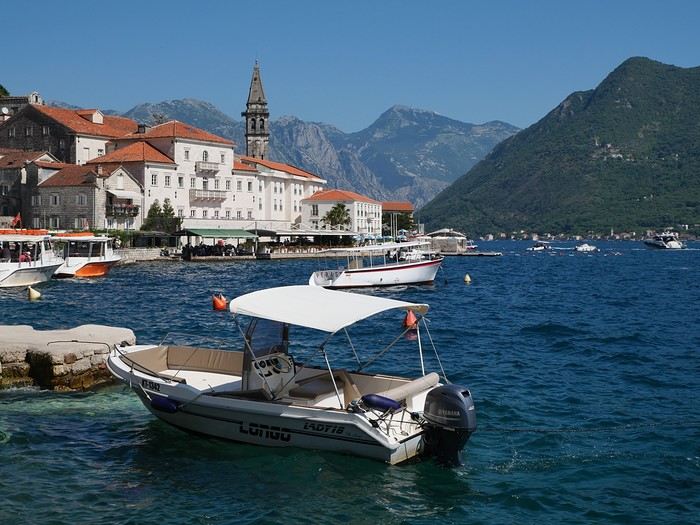
On the way back, we’ll drift into Bosnia-Herzegovina just to mix things up a bit!
We’re a little unsure about what to expect in terms of tourist crowds.
Dubrovnik has a reputation for being the hardest-hit city by overtourism, and Kotor and the whole Dalmatian coast aren’t exactly empty...
Luckily, most European countries haven’t started school holidays yet, and some measures seem to have been put in place to limit the flow (like restrictions on the number of cruise ships allowed to dock at the same time).
Maybe we’ll manage to escape the promised hell?
For now, we’re slamming the doors of the Scirocco and heading off to our first stop: northern Italy!
Newfoundland - Hikes in the Avalon Peninsula
The Avalon Peninsula, located in the southeast of Newfoundland Island, isn't just a picturesque place—it's also teeming with natural wonders: icebergs, whales, migratory seabirds, and wild caribou.
It was the first region of the province to be settled. Moreover, it's rich in legends, traditions, and the history of the early adventurers who conquered the New World.
St. John's, the capital, is one of the oldest and easternmost cities in North America. With its colorful houses nestled in the heart of steep rocky hills, it has the traditional charm of a small port town.
Below are the hikes we did in this region. A link is attached to each hike to give you quicker access to the relevant information.
Videos are embedded throughout the summary. Please click on the image to start the video.
Chance Cove Coastal Hiking Trail Cape St. Mary's Ecological Reserve Holyrood - Salmonier Nature Park La Manche Provincial Park - Suspension Bridge Trail Cape Spear - Lighthouse Trail St. John's - Deadman's Bay Trail Quidi Vidi - Sugarloaf Trail St. John's - Signal Hill National Historic Site St. John's - North Head Trail Loop - Signal Hill Salmon Cove - Salmon Cove Sands Provincial Park
It was the first region of the province to be settled. Moreover, it's rich in legends, traditions, and the history of the early adventurers who conquered the New World.
St. John's, the capital, is one of the oldest and easternmost cities in North America. With its colorful houses nestled in the heart of steep rocky hills, it has the traditional charm of a small port town.
Below are the hikes we did in this region. A link is attached to each hike to give you quicker access to the relevant information.
Videos are embedded throughout the summary. Please click on the image to start the video.
Chance Cove Coastal Hiking Trail Cape St. Mary's Ecological Reserve Holyrood - Salmonier Nature Park La Manche Provincial Park - Suspension Bridge Trail Cape Spear - Lighthouse Trail St. John's - Deadman's Bay Trail Quidi Vidi - Sugarloaf Trail St. John's - Signal Hill National Historic Site St. John's - North Head Trail Loop - Signal Hill Salmon Cove - Salmon Cove Sands Provincial Park
Warm January in Kerala (and a bit of Karnataka)
Hi everyone,
We're back in India for the 7th time (for the other trips, check here:
https://www.unendroitoualler.fr/asie/) ... But this time, no more exploring or trekking! With age, we're just spending a quiet month in southern India, a country we particularly love...
Our journey starts in Kovalam, then Monroe Island, Varkala, Kochi, Kannur, Udupi, and finally, as in recent years, Gokarna.
No problem getting around—there’s the train all along the coast...
Night in Trivandrum
Prepaid taxi to the « Safire Residency », where we stayed last year. This hotel is still just as nice and welcoming (980 INR). Then, dinner at the restaurant « Ariya Niwas » where we enjoyed those delicious dosas again! (We missed them!)
Night in Trivandrum
Prepaid taxi to the « Safire Residency », where we stayed last year. This hotel is still just as nice and welcoming (980 INR). Then, dinner at the restaurant « Ariya Niwas » where we enjoyed those delicious dosas again! (We missed them!)
Sidi Ifni Hotel Suerte Loca: Avoid (Morocco)
Hotel La suerte loca in Sidi Ifni.
Move along quickly!
LIAR AND DISHONEST.
Not to mention the state of the rooms. That’ll come later.
I booked three nights on-site without a bathroom in room (No. 16). I had called the day before to check availability. The next day, they told me I couldn’t stay in that room on the third night but offered to move me to another room—even more run-down than this one—and without a bathroom. They claimed there had been a mistake and the room was already booked, which is completely false. I’ve been traveling for 20 years and can spot hoteliers’ tricks. The woman running the place checked all her online sites and her schedule before confirming the room was available. She was sure. Especially since they display the booking schedule in front of each room to avoid mistakes. So, a pure lie. For what reason?
For me, two options: either take the run-down room for cheaper without a bathroom or leave. Great customer service. I found another hotel, Safa, a bit further away, at the same price with breakfast—100 times more luxurious and comfortable than this place. Or just down on the beach, Hotel Aït Baamrane, same price or even negotiable, and still much more comfortable.
When I left in the morning, they barely said goodbye, not a word of apology, no gesture to make up for kicking me out. NOTHING, NADA!
The woman running the place, with her fake friendliness and hypocrisy, only cares about one thing: money.
Otherwise, the place could be great if it were properly maintained. Instead of repainting the balconies, they should replace the mattresses, which are completely wrecked. The only good thing about this hotel is its location above the sea.
Otherwise, Room No. 16 was recently repainted. Every time someone uses the water, there’s a huge noise from the pipes and vibrations. The walls are paper-thin (figuratively speaking)—when neighbors talked or coughed, it was like they were in the room with me.
I had to wait to check in because of cleaning, but once inside, the bedside tables and the table were filthy (see photo). In the bathroom, there’s a stale smell of old urine and sewage due to the worn-out toilet pipes (see photo), with minimal lighting. The showerhead is disgustingly dirty. The gray duvet is dirty and very old, as are the blankets, which are dusty and grimy. The Wi-Fi worked in the room the first day but not the next.
And finally, the worst part: the mattress is completely wrecked and sagging. The springs dig into your body. Horrible! Instead of repainting, they’d do better to change the mattresses.
As for meals, the prices are outrageous. This hotel relies on its old popularity, but it’s not worth 190 dirhams for this room. I’d say it’s barely worth over 100 dirhams. Since I’ve been in Morocco, I’ve stayed in palaces for 130 dirhams with breakfast.
So, my advice: don’t trust the reviews and avoid this place. You’ll find much better at the same price, as mentioned above.

I booked three nights on-site without a bathroom in room (No. 16). I had called the day before to check availability. The next day, they told me I couldn’t stay in that room on the third night but offered to move me to another room—even more run-down than this one—and without a bathroom. They claimed there had been a mistake and the room was already booked, which is completely false. I’ve been traveling for 20 years and can spot hoteliers’ tricks. The woman running the place checked all her online sites and her schedule before confirming the room was available. She was sure. Especially since they display the booking schedule in front of each room to avoid mistakes. So, a pure lie. For what reason?
For me, two options: either take the run-down room for cheaper without a bathroom or leave. Great customer service. I found another hotel, Safa, a bit further away, at the same price with breakfast—100 times more luxurious and comfortable than this place. Or just down on the beach, Hotel Aït Baamrane, same price or even negotiable, and still much more comfortable.
When I left in the morning, they barely said goodbye, not a word of apology, no gesture to make up for kicking me out. NOTHING, NADA!
The woman running the place, with her fake friendliness and hypocrisy, only cares about one thing: money.
Otherwise, the place could be great if it were properly maintained. Instead of repainting the balconies, they should replace the mattresses, which are completely wrecked. The only good thing about this hotel is its location above the sea.
Otherwise, Room No. 16 was recently repainted. Every time someone uses the water, there’s a huge noise from the pipes and vibrations. The walls are paper-thin (figuratively speaking)—when neighbors talked or coughed, it was like they were in the room with me.
I had to wait to check in because of cleaning, but once inside, the bedside tables and the table were filthy (see photo). In the bathroom, there’s a stale smell of old urine and sewage due to the worn-out toilet pipes (see photo), with minimal lighting. The showerhead is disgustingly dirty. The gray duvet is dirty and very old, as are the blankets, which are dusty and grimy. The Wi-Fi worked in the room the first day but not the next.
And finally, the worst part: the mattress is completely wrecked and sagging. The springs dig into your body. Horrible! Instead of repainting, they’d do better to change the mattresses.
As for meals, the prices are outrageous. This hotel relies on its old popularity, but it’s not worth 190 dirhams for this room. I’d say it’s barely worth over 100 dirhams. Since I’ve been in Morocco, I’ve stayed in palaces for 130 dirhams with breakfast.
So, my advice: don’t trust the reviews and avoid this place. You’ll find much better at the same price, as mentioned above.
Da Nang and Hoi An (Vietnam)
DANANG
A big city in the midst of an economic boom. The setting is stunning, with its large bay, the Son Tra Peninsula, and the Annamite Mountains on the horizon.
Where to stay and eat? Da Nang is a bustling business hub, so hotels are pricier and often fully booked. I was lucky to find a motorbike taxi driver who, after six full hotels, took me to Mai Son Hotel, 113 Nguyen Van Linh, a spotless 2-star place. Plus, right next door, there’s a great restaurant that seems popular with locals, and a good Chinese restaurant just a 5-minute walk away, Phi Lu (178 Nguyen Van Linh), recommended by the *Guide du Routard*. So, I’d definitely recommend this hotel. For a pricier option, the very Christian Dai A Hotel, near the tiny pink cathedral, is nice, but why pay more?
Actually, why stay in Da Nang when the gorgeous Hoi An is just 34 km to the south?
What to see? - The lovely Cham Museum (small, takes at most an hour) - The climb up Son Tra Peninsula (great views of the whole area) - The “tour” of the peninsula—quotation marks because the road stops two-thirds of the way. There’s an interesting little museum on the left before reaching the base of the huge statue, the Đong Đinh (large entrance on the left side of the hill), with traditional houses in the jungle holding artifacts over 2,000 years old (Sa Huynh culture; if you’re interested, check out the small Sa Huynh Museum in Hoi An, just before the Japanese Bridge). However, the big Linh Ung Pagoda is just colorful concrete! A beautiful resort, the Son Tra Beach Resort and Spa, sits on a pristine beach and isn’t too expensive: $120 for a garden room and $200–$270 for duplexes with a pool, where you can sleep six. Before reaching the resort, you’ll find two excellent seafood restaurants with large beachfront terraces on your right. - On the way to Hoi An, Marble Mountain, where I loved the village of marble sculpture workshops, the pretty pagodas and caves, and the stunning view from the top of the last promontory (the stairs are steep!). However, you can skip the famous China Beach and its resorts—all pretentious and expensive, not to mention the ones under construction on both sides of the road (they’re multiplying like crazy!). So, when traveling from Da Nang to Hoi An, I recommend two stops: the Cham Museum and Marble Mountain. - The beautiful drive to the Hai Van Pass (there weren’t any clouds!), offering spectacular views of the Da Nang region to the south and the coast to the north. The descent leads to the fishing village and beach of Lang Co, which is lovely but destined for rampant resort development, judging by the huge projects advertised on billboards along the road after the village. - Some affordable guesthouses ($15) and big resorts, including the lovely Lang Co Beach Resort, with a large pool and great value given the beautiful gardens and elegant bungalows. Recommended in Lang Co: lunch at one of the two stilt restaurants over the lagoon—great views and fresh seafood.
The public bus to Hoi An, 34 km south of Da Nang, takes 45 minutes for 50,000 dong. There’s one every half hour.
HOI AN This is a “must-see” for so many reasons: stunning old houses, temples, and pagodas; a colorful daily open-air and covered market near the bridge; charming little streets in the old quarter—especially at night, with all the multicolored lanterns and riverside restaurant terraces, it’s very romantic. The local food is delicious, the people are friendly and kind, there are two beautiful beaches, and attractions like the Cham ruins of My Son. Some say Hoi An is overrun with tourists and should be avoided. That’s true for the historic center and An Bang Beach, but not at all once you step outside.
WHERE TO STAY For a 2-star option, I recommend Ngo House Villa (99 Nguyen Phuc Tan St), very quiet on the island just across from the Old Quarter: 3-star rooms + suites, a large “Family” room, and a nice pool, all for $20 ($40 for the “Family” room). The same charming owner has a second hotel 20 meters away (No. 74), Phan Ngô, which is older but has a large terrace and a small pool—I prefer this one. For 3 stars, Thuy Duong 3 (92 Ba Trieu) is perfect, with a pool and garden ($40–$60). A bit pricier but great is A Han on Phan Bai Chau, with a large garden and terrace restaurant.
For those with a bigger budget, I recommend two riverside spots with rooms, suites, and pools, priced at $200–$350: the secluded Coco River Resort (formerly Ancient House River, with a large wooden terrace for romantic dinners by the river) and Anantara, (formerly Heritage), with bungalows close to the old town—but pricey.
Outside the city, my favorite hotel is Villa Loan, the new place from the famous Loan of Tam Coc, very quiet in the countryside, 15 minutes by bike from Old Hoi An and An Bang Beach. Beautiful rooms ($35), a Family room with two double beds ($55), two 65 m² twins that can sleep six (two large beds + two single beds—$80), a terrace restaurant, and a lovely pool. Prices include a buffet breakfast and a bike.
Also great is Daisy Anbang on An Bang Beach, elegant with a pool and beach just 50 meters away (skip the Aira next door—too expensive).
WHERE TO EAT Hoi An is Vietnam’s culinary capital. For Vietnamese food, I recommend Dao Tien, 21 Phan Bai Chau. No surprise—the chef is a former chef at the luxury 4-star Victoria Hoi An, a solid reference. The restaurant now has a beautiful terrace by the river (take the alley on the right side of the main street Dao Tien). Plus, you’re doing a good deed: a large part of the profits goes toward educating underprivileged children—one year of free hospitality, cooking, and English training, followed by job placement in local establishments. Madame Hien Hoi An (formerly Co Mai), 2 Nguyen Thai Hoc (left of the market), is another great spot—the chef is Didier Corlou, formerly of the famous *Porte d’Annam* and *Madame Hien* in Hanoi (closed in March 2022 due to COVID, so foreign tourists are still scarce). Also worth checking out is Secret Garden, in the Phuong Minh An alley (entrance at 60 Le Loi), set in a beautiful space. One of my favorites is Madam Kieu, 43 Nguyen Phuc Chu, right on the river across from the little bridge—very elegant with excellent Vietnamese cuisine. Unfortunately, all the restaurants on this esplanade blast “music” (boom boom boom yeah yeah yeah) in the evenings, so it’s impossible to talk—go for lunch instead.
For a break from Vietnamese food, try Good Morning Vietnam, a ridiculous name for an excellent Italian restaurant (11 Le Loi). The cheerful chef is from Bologna, the “Lyon of Italy”: lasagna like an Italian *mama*’s, delicious tagliatelle ai porcini (porcini mushrooms imported from Italy), and a divine homemade tiramisu (pro tip: order a grappa and drizzle a few drops on the tiramisu). It’s also one of the few places where you can get an excellent bottle of red wine for 350,000 dong instead of the usual 600,000–800,000 dong (South African Robertson Chapel). Another gem: the Japanese restaurant Samurai Kitchen (no sushi, but divine gyoza), 21 Phan Chau Trinh—the street on the right side of the market when you turn your back to the river. Finally, Ganesh, which I consider the best Indian restaurant in Vietnam (99 Tran Hung Dao St).
At An Bang, there are plenty of beachfront restaurants. The two best are the large one at the far right of the parking lot (huge seafood selection) and the fantastic La Luna d’Autumno, owned by the same person as the Italian restaurant of the same name, once considered the best in Vietnam but closed in 2020 due to COVID. Divine pizzas, including the vegetariana.
WHAT TO VISIT The Japanese Bridge and all the old Chinese houses, temples, and pagodas in the three historic streets. Don’t miss the extraordinary gallery-museum of the great French photographer Réhahn, the Precious Heritage Museum at 26 Phan Boi Chau. His remarkable photo collection—including the famous shot of the little Cham girl with clear blue eyes—has graced the covers of many magazines. His Montagnard Museum is a wonder, with a larger collection of tribal women’s costumes than the Museum of Ethnology in Hanoi. Free entry.
THE BEACHES Cua Dai Beach has mostly disappeared, a victim of the waves, except in a few spots. The beautiful An Bang Beach remains, with great beachfront restaurants, or you can head to Cham Island.
MY SON A beautiful complex of Cham ruins surrounded by mountains, 50 km southwest of Hoi An via a scenic road. You can rent a motorbike, take a motorbike taxi, or join a half-day organized tour. It’s best to go in the afternoon—less crowded than in the morning.
CHAM ISLANDS (Cu Lao Cham) Wow, I loved it! It reminded me of St. Barts 35 years ago. The archipelago, 19 km from Hoi An, consists of eight small islands within the Cu Lao Cham Marine Reserve, declared a “Biosphere Reserve” by UNESCO. The largest and only inhabited island, Hon Lao (Pearl Island), covers 1,317 hectares, and its highest peak reaches 517 meters. Hon Lao has two villages: Bai Lang, where the boats from Hoi An dock, and the charming little fishing port of Bai Huong. Part of the island is a military zone, so only the east coast is accessible to tourists.
To get there, you have three options: - The public boat (100,000 dong) that leaves from in front of Café des Amis at 7:30 AM. The catch is it returns to Hoi An at noon, so to enjoy the charm of the place, you’ll need to spend a night on the island (which I highly recommend). - Organized tours by Cham Diving Club, with two options: diving or snorkeling only. - A private speedboat, but it’s not cheap: $200 for the day!
Note: Even if the weather seems fine, the large public boat won’t leave if the sea is too rough. The only solution is to go to the port around 7:30 AM and check (easy, since it brings all the supplies for the island’s locals—if it’s leaving, it’ll be loading up). Avoid weekends—it gets swarmed with locals.
Small coves with dreamy beaches, as they say. Two are very close to Bai Lang: one to the left (facing the village), Bai Ong, lined with restaurants, and a tiny one to the right of the village. The other two beaches, including Bai Chong and the little fishing port of Bai Huong, are accessible by motorbike or boat. I recommend renting a motorbike (biking is tough due to steep hills) and taking the road that overlooks the coast—it’s stunning.
Great diving. The Cham Diving Club is superbly organized by a very friendly Italian, Lodovico, and two French guys (www.chamislanddiving.com).
When you arrive at Bai Lang’s pier, they’ll offer you TWO family-run guesthouses in the village. There are also homestays, but they’re really basic (usually bamboo mats on wooden planks as beds), no English or French is spoken, and locals speak a dialect that’s hard to understand even if you’re decent at Vietnamese. Anyway, I don’t recommend staying in Bai Lang because of the public loudspeakers. Two options if you want a quiet night: - A small guesthouse facing the tiny rice field on the way to Bai Ong Beach. Very clean rooms and a large terrace overlooking the “rice field.” 300,000 dong, with meals available on the terrace. Nha Nghi Vu Truong Tel: 235 386 4783 Mobile: 01 67 76 63 110. - Homestays in the little fishing port of Bai Huong.
Where to stay and eat? Da Nang is a bustling business hub, so hotels are pricier and often fully booked. I was lucky to find a motorbike taxi driver who, after six full hotels, took me to Mai Son Hotel, 113 Nguyen Van Linh, a spotless 2-star place. Plus, right next door, there’s a great restaurant that seems popular with locals, and a good Chinese restaurant just a 5-minute walk away, Phi Lu (178 Nguyen Van Linh), recommended by the *Guide du Routard*. So, I’d definitely recommend this hotel. For a pricier option, the very Christian Dai A Hotel, near the tiny pink cathedral, is nice, but why pay more?
Actually, why stay in Da Nang when the gorgeous Hoi An is just 34 km to the south?
What to see? - The lovely Cham Museum (small, takes at most an hour) - The climb up Son Tra Peninsula (great views of the whole area) - The “tour” of the peninsula—quotation marks because the road stops two-thirds of the way. There’s an interesting little museum on the left before reaching the base of the huge statue, the Đong Đinh (large entrance on the left side of the hill), with traditional houses in the jungle holding artifacts over 2,000 years old (Sa Huynh culture; if you’re interested, check out the small Sa Huynh Museum in Hoi An, just before the Japanese Bridge). However, the big Linh Ung Pagoda is just colorful concrete! A beautiful resort, the Son Tra Beach Resort and Spa, sits on a pristine beach and isn’t too expensive: $120 for a garden room and $200–$270 for duplexes with a pool, where you can sleep six. Before reaching the resort, you’ll find two excellent seafood restaurants with large beachfront terraces on your right. - On the way to Hoi An, Marble Mountain, where I loved the village of marble sculpture workshops, the pretty pagodas and caves, and the stunning view from the top of the last promontory (the stairs are steep!). However, you can skip the famous China Beach and its resorts—all pretentious and expensive, not to mention the ones under construction on both sides of the road (they’re multiplying like crazy!). So, when traveling from Da Nang to Hoi An, I recommend two stops: the Cham Museum and Marble Mountain. - The beautiful drive to the Hai Van Pass (there weren’t any clouds!), offering spectacular views of the Da Nang region to the south and the coast to the north. The descent leads to the fishing village and beach of Lang Co, which is lovely but destined for rampant resort development, judging by the huge projects advertised on billboards along the road after the village. - Some affordable guesthouses ($15) and big resorts, including the lovely Lang Co Beach Resort, with a large pool and great value given the beautiful gardens and elegant bungalows. Recommended in Lang Co: lunch at one of the two stilt restaurants over the lagoon—great views and fresh seafood.
The public bus to Hoi An, 34 km south of Da Nang, takes 45 minutes for 50,000 dong. There’s one every half hour.
HOI AN This is a “must-see” for so many reasons: stunning old houses, temples, and pagodas; a colorful daily open-air and covered market near the bridge; charming little streets in the old quarter—especially at night, with all the multicolored lanterns and riverside restaurant terraces, it’s very romantic. The local food is delicious, the people are friendly and kind, there are two beautiful beaches, and attractions like the Cham ruins of My Son. Some say Hoi An is overrun with tourists and should be avoided. That’s true for the historic center and An Bang Beach, but not at all once you step outside.
WHERE TO STAY For a 2-star option, I recommend Ngo House Villa (99 Nguyen Phuc Tan St), very quiet on the island just across from the Old Quarter: 3-star rooms + suites, a large “Family” room, and a nice pool, all for $20 ($40 for the “Family” room). The same charming owner has a second hotel 20 meters away (No. 74), Phan Ngô, which is older but has a large terrace and a small pool—I prefer this one. For 3 stars, Thuy Duong 3 (92 Ba Trieu) is perfect, with a pool and garden ($40–$60). A bit pricier but great is A Han on Phan Bai Chau, with a large garden and terrace restaurant.
For those with a bigger budget, I recommend two riverside spots with rooms, suites, and pools, priced at $200–$350: the secluded Coco River Resort (formerly Ancient House River, with a large wooden terrace for romantic dinners by the river) and Anantara, (formerly Heritage), with bungalows close to the old town—but pricey.
Outside the city, my favorite hotel is Villa Loan, the new place from the famous Loan of Tam Coc, very quiet in the countryside, 15 minutes by bike from Old Hoi An and An Bang Beach. Beautiful rooms ($35), a Family room with two double beds ($55), two 65 m² twins that can sleep six (two large beds + two single beds—$80), a terrace restaurant, and a lovely pool. Prices include a buffet breakfast and a bike.
Also great is Daisy Anbang on An Bang Beach, elegant with a pool and beach just 50 meters away (skip the Aira next door—too expensive).
WHERE TO EAT Hoi An is Vietnam’s culinary capital. For Vietnamese food, I recommend Dao Tien, 21 Phan Bai Chau. No surprise—the chef is a former chef at the luxury 4-star Victoria Hoi An, a solid reference. The restaurant now has a beautiful terrace by the river (take the alley on the right side of the main street Dao Tien). Plus, you’re doing a good deed: a large part of the profits goes toward educating underprivileged children—one year of free hospitality, cooking, and English training, followed by job placement in local establishments. Madame Hien Hoi An (formerly Co Mai), 2 Nguyen Thai Hoc (left of the market), is another great spot—the chef is Didier Corlou, formerly of the famous *Porte d’Annam* and *Madame Hien* in Hanoi (closed in March 2022 due to COVID, so foreign tourists are still scarce). Also worth checking out is Secret Garden, in the Phuong Minh An alley (entrance at 60 Le Loi), set in a beautiful space. One of my favorites is Madam Kieu, 43 Nguyen Phuc Chu, right on the river across from the little bridge—very elegant with excellent Vietnamese cuisine. Unfortunately, all the restaurants on this esplanade blast “music” (boom boom boom yeah yeah yeah) in the evenings, so it’s impossible to talk—go for lunch instead.
For a break from Vietnamese food, try Good Morning Vietnam, a ridiculous name for an excellent Italian restaurant (11 Le Loi). The cheerful chef is from Bologna, the “Lyon of Italy”: lasagna like an Italian *mama*’s, delicious tagliatelle ai porcini (porcini mushrooms imported from Italy), and a divine homemade tiramisu (pro tip: order a grappa and drizzle a few drops on the tiramisu). It’s also one of the few places where you can get an excellent bottle of red wine for 350,000 dong instead of the usual 600,000–800,000 dong (South African Robertson Chapel). Another gem: the Japanese restaurant Samurai Kitchen (no sushi, but divine gyoza), 21 Phan Chau Trinh—the street on the right side of the market when you turn your back to the river. Finally, Ganesh, which I consider the best Indian restaurant in Vietnam (99 Tran Hung Dao St).
At An Bang, there are plenty of beachfront restaurants. The two best are the large one at the far right of the parking lot (huge seafood selection) and the fantastic La Luna d’Autumno, owned by the same person as the Italian restaurant of the same name, once considered the best in Vietnam but closed in 2020 due to COVID. Divine pizzas, including the vegetariana.
WHAT TO VISIT The Japanese Bridge and all the old Chinese houses, temples, and pagodas in the three historic streets. Don’t miss the extraordinary gallery-museum of the great French photographer Réhahn, the Precious Heritage Museum at 26 Phan Boi Chau. His remarkable photo collection—including the famous shot of the little Cham girl with clear blue eyes—has graced the covers of many magazines. His Montagnard Museum is a wonder, with a larger collection of tribal women’s costumes than the Museum of Ethnology in Hanoi. Free entry.
THE BEACHES Cua Dai Beach has mostly disappeared, a victim of the waves, except in a few spots. The beautiful An Bang Beach remains, with great beachfront restaurants, or you can head to Cham Island.
MY SON A beautiful complex of Cham ruins surrounded by mountains, 50 km southwest of Hoi An via a scenic road. You can rent a motorbike, take a motorbike taxi, or join a half-day organized tour. It’s best to go in the afternoon—less crowded than in the morning.
CHAM ISLANDS (Cu Lao Cham) Wow, I loved it! It reminded me of St. Barts 35 years ago. The archipelago, 19 km from Hoi An, consists of eight small islands within the Cu Lao Cham Marine Reserve, declared a “Biosphere Reserve” by UNESCO. The largest and only inhabited island, Hon Lao (Pearl Island), covers 1,317 hectares, and its highest peak reaches 517 meters. Hon Lao has two villages: Bai Lang, where the boats from Hoi An dock, and the charming little fishing port of Bai Huong. Part of the island is a military zone, so only the east coast is accessible to tourists.
To get there, you have three options: - The public boat (100,000 dong) that leaves from in front of Café des Amis at 7:30 AM. The catch is it returns to Hoi An at noon, so to enjoy the charm of the place, you’ll need to spend a night on the island (which I highly recommend). - Organized tours by Cham Diving Club, with two options: diving or snorkeling only. - A private speedboat, but it’s not cheap: $200 for the day!
Note: Even if the weather seems fine, the large public boat won’t leave if the sea is too rough. The only solution is to go to the port around 7:30 AM and check (easy, since it brings all the supplies for the island’s locals—if it’s leaving, it’ll be loading up). Avoid weekends—it gets swarmed with locals.
Small coves with dreamy beaches, as they say. Two are very close to Bai Lang: one to the left (facing the village), Bai Ong, lined with restaurants, and a tiny one to the right of the village. The other two beaches, including Bai Chong and the little fishing port of Bai Huong, are accessible by motorbike or boat. I recommend renting a motorbike (biking is tough due to steep hills) and taking the road that overlooks the coast—it’s stunning.
Great diving. The Cham Diving Club is superbly organized by a very friendly Italian, Lodovico, and two French guys (www.chamislanddiving.com).
When you arrive at Bai Lang’s pier, they’ll offer you TWO family-run guesthouses in the village. There are also homestays, but they’re really basic (usually bamboo mats on wooden planks as beds), no English or French is spoken, and locals speak a dialect that’s hard to understand even if you’re decent at Vietnamese. Anyway, I don’t recommend staying in Bai Lang because of the public loudspeakers. Two options if you want a quiet night: - A small guesthouse facing the tiny rice field on the way to Bai Ong Beach. Very clean rooms and a large terrace overlooking the “rice field.” 300,000 dong, with meals available on the terrace. Nha Nghi Vu Truong Tel: 235 386 4783 Mobile: 01 67 76 63 110. - Homestays in the little fishing port of Bai Huong.
Eco-lodges: the new hipster trend
Hi there, I’m currently on Isla Fuerte in the Colombian Caribbean. I ended up here kind of by chance, and I stumbled upon one of the very few hotels that accepts credit cards and has branded itself as an "eco-lodge."
At first, I thought the idea of "environmentally friendly" hotels wasn’t too bad... but now it’s become a full-blown trend, and the clientele at these places almost always fits the same profile: thirty-something, eco-conscious, vegan or vegetarian, working remotely or at least glued to their laptop, morning yoga classes, mate at aperitif, and meditation at the end of the day.
Personally, after visiting a few, I’ve found that everything about them feels fake. I’ve even seen "meditation sessions" with music playing, even though the hotel was in the middle of a forest with all the natural sounds around. There’s also a lot to say about their so-called eco-friendly products in the bathrooms.
The rooms, terraces, etc.—where people used to sit, read, or chat—are now called "social spaces" or co-working zones...
I’m not holding back with these hotels, but my take is that eco-hipsterism is really taking off in the hospitality industry.
What do you fellow travelers think?
At first, I thought the idea of "environmentally friendly" hotels wasn’t too bad... but now it’s become a full-blown trend, and the clientele at these places almost always fits the same profile: thirty-something, eco-conscious, vegan or vegetarian, working remotely or at least glued to their laptop, morning yoga classes, mate at aperitif, and meditation at the end of the day.
Personally, after visiting a few, I’ve found that everything about them feels fake. I’ve even seen "meditation sessions" with music playing, even though the hotel was in the middle of a forest with all the natural sounds around. There’s also a lot to say about their so-called eco-friendly products in the bathrooms.
The rooms, terraces, etc.—where people used to sit, read, or chat—are now called "social spaces" or co-working zones...
I’m not holding back with these hotels, but my take is that eco-hipsterism is really taking off in the hospitality industry.
What do you fellow travelers think?
What if we start with Mont Saint-Michel?
Hello everyone,
Here’s the account of the start of our 5/7-day trip in Normandy (then off to the neighbors in... Brittany):
Day 01 from Valenciennes to Mont Saint-Michel: Sunday, September 6, 2020.
After a detour through the south of Lille (picking up our son), we head southwest around 10:00 AM, taking the highways via Amiens, the Pont de Normandie, and Avranches to arrive at "the Mount" around 4:00 PM after 515 km. Parking P3 (14.20 € for 24 hours) for residents and hotels, located 50 meters from the start of the free round-trip shuttle included in the parking price (not too many tourists at this "late" Sunday hour), and we arrive at the hotel around 4:30 PM. Triple room with a view of the bay at Hôtel Du Guesclin for 1 night. From 5:15 PM to 6:30 PM, we tackle the complete tour of the ramparts counterclockwise from the Porte de l’Avancée, via the Tour du Nord (near the abbey entrance), passing in front of the abbey to reach the Tour Gabriel, and back to the start: stunning, not crowded, great weather, and amazing views. Dinner in the beautiful panoramic restaurant of the hotel, with a bay view at a "window" table (such a nice touch!). Of course, the day isn’t over, and we can then wander through a deserted main street and its unique atmosphere (photos below labeled "night" even though it’s only 9:15/9:30 PM). What a privilege!
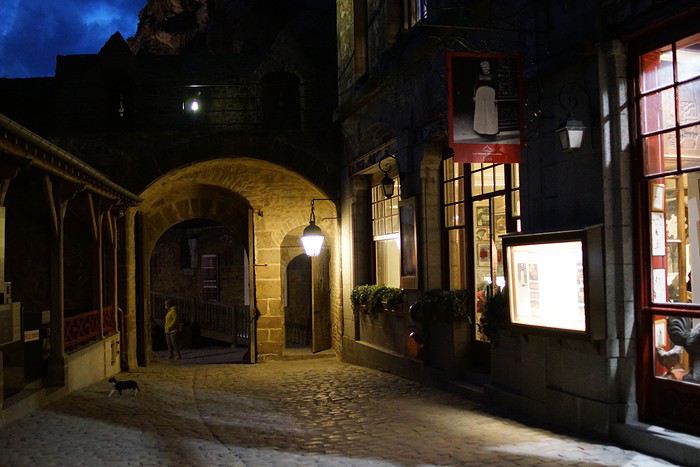
Day 02 from Mont Saint-Michel to Saint-Cast: Monday, September 7, 2020.
After a memorable sunrise over the bay and a sit-down breakfast, we climb the steps to the Abbey for our online-reserved time slot (9:30 AM, 11 € per person). The "masked group" is quite large, though within normal limits, and the one-way Covid-marked route (with a small brochure) prevents crowds. No need to rush, and 1 hour 15 minutes later, we’re done. Sure, it doesn’t have the charm of a guided tour, but we’re not complaining about being there! We pick up our bags at the hotel, take the shuttle back, grab the car at Parking P3, and head "south" to Dol-de-Bretagne, 26 km/25 minutes away. Around noon, the small town is very quiet, and parking in front of the Saint-Samson Cathedral** is free. Across the street, the tourist office is generous with info and gives us a great walking map/circuit: Cathedral, a stroll near the ramparts, the historic center** with its typical shopping streets and half-timbered houses, all covered at a leisurely pace in 45 minutes. Then a picnic on-site. It’s another 50 km/50 minutes to Saint-Cast-le-Guildo and the Armor Conseil agency for the apartment keys (Résidence du Casino, 72 m², 5th floor, 2 bedrooms, beach 20 meters away, insane morning and evening views, bed linen rental at Ohier 50 meters away, Carrefour City supermarket, and a bakery 200 meters away, plus a town center that hasn’t changed much in 25/30 years. Really, really nice. After settling in, a short walk is a must up to the heights of the Isle neighborhood behind the seaside residence... memories. Strangely, the well-known Crêperie Bretan’Or seems to be closed, as does the venerable Hôtel du Centre et des Plages (formerly "des Voyageurs")?? And for this reunion evening with the resort, a great crêpe/galette dinner at La Régal’ette, just 100 meters away. Day’s total: 12 km of walking for sightseeing.
A few photos at the bottom of the page...
* Read the rest on the blog: https://blogs.crespel.me/bretagne/
Here’s the account of the start of our 5/7-day trip in Normandy (then off to the neighbors in... Brittany):
Day 01 from Valenciennes to Mont Saint-Michel: Sunday, September 6, 2020.
After a detour through the south of Lille (picking up our son), we head southwest around 10:00 AM, taking the highways via Amiens, the Pont de Normandie, and Avranches to arrive at "the Mount" around 4:00 PM after 515 km. Parking P3 (14.20 € for 24 hours) for residents and hotels, located 50 meters from the start of the free round-trip shuttle included in the parking price (not too many tourists at this "late" Sunday hour), and we arrive at the hotel around 4:30 PM. Triple room with a view of the bay at Hôtel Du Guesclin for 1 night. From 5:15 PM to 6:30 PM, we tackle the complete tour of the ramparts counterclockwise from the Porte de l’Avancée, via the Tour du Nord (near the abbey entrance), passing in front of the abbey to reach the Tour Gabriel, and back to the start: stunning, not crowded, great weather, and amazing views. Dinner in the beautiful panoramic restaurant of the hotel, with a bay view at a "window" table (such a nice touch!). Of course, the day isn’t over, and we can then wander through a deserted main street and its unique atmosphere (photos below labeled "night" even though it’s only 9:15/9:30 PM). What a privilege!
Day 02 from Mont Saint-Michel to Saint-Cast: Monday, September 7, 2020.
After a memorable sunrise over the bay and a sit-down breakfast, we climb the steps to the Abbey for our online-reserved time slot (9:30 AM, 11 € per person). The "masked group" is quite large, though within normal limits, and the one-way Covid-marked route (with a small brochure) prevents crowds. No need to rush, and 1 hour 15 minutes later, we’re done. Sure, it doesn’t have the charm of a guided tour, but we’re not complaining about being there! We pick up our bags at the hotel, take the shuttle back, grab the car at Parking P3, and head "south" to Dol-de-Bretagne, 26 km/25 minutes away. Around noon, the small town is very quiet, and parking in front of the Saint-Samson Cathedral** is free. Across the street, the tourist office is generous with info and gives us a great walking map/circuit: Cathedral, a stroll near the ramparts, the historic center** with its typical shopping streets and half-timbered houses, all covered at a leisurely pace in 45 minutes. Then a picnic on-site. It’s another 50 km/50 minutes to Saint-Cast-le-Guildo and the Armor Conseil agency for the apartment keys (Résidence du Casino, 72 m², 5th floor, 2 bedrooms, beach 20 meters away, insane morning and evening views, bed linen rental at Ohier 50 meters away, Carrefour City supermarket, and a bakery 200 meters away, plus a town center that hasn’t changed much in 25/30 years. Really, really nice. After settling in, a short walk is a must up to the heights of the Isle neighborhood behind the seaside residence... memories. Strangely, the well-known Crêperie Bretan’Or seems to be closed, as does the venerable Hôtel du Centre et des Plages (formerly "des Voyageurs")?? And for this reunion evening with the resort, a great crêpe/galette dinner at La Régal’ette, just 100 meters away. Day’s total: 12 km of walking for sightseeing.
A few photos at the bottom of the page...
* Read the rest on the blog: https://blogs.crespel.me/bretagne/