Results for "location+ou+échange+|+53"
66865 results found.
Article paru dans le magazine Lire du mois de décembre English translation pending
La face cachée du Routard
 Révélations sur les méthodes pas très orthodoxes d'un guide pas comme les autres.
Mélange des genres? Comment réagirait le public s'il apprenait que le Michelin avait décerné trois étoiles à un restaurant appartenant en sous-main à la famille... Michelin? C'est pourtant ce que fait le Routard depuis des années dans son guide Martinique. A la page 196 de l'édition 2004, on peut en effet lire un éloge enthousiaste de l'Hôtel Résidence Océane, situé sur la presqu'île de la Caravelle: «superbes bungalows en bois magnifiquement situés au bord de l'une des plus belles plages de la Martinique», «piscine à débordement», «meilleur spot de l'île pour les surfeurs»... Cette notice élogieuse n'omet qu'un détail: cet hôtel appartient à Philippe Gloaguen, le patron des Guides du routard!
Selon un acte du tribunal de commerce de Martinique daté du 29 septembre 1997, dont Lire a pu prendre connaissance, il est détenteur de 150 des 500 parts du capital, soit de 30% de l'établissement, les 70% restants appartenant à deux de ses amis. Un investissement qui bénéficie des généreuses défiscalisations de la loi Pons. Bon prince, l'hôtelier Philippe Gloaguen accorde 10% de réduction aux lecteurs du Routard...
Un hôtel voisin, le Manguier, bénéficiant lui aussi d'une critique dithyrambique, est géré par la même équipe, qui s'occupe également de la location d'une superbe villa, acquise trois millions de francs en 1998 par Philippe Gloaguen et son épouse. Du coup, le commentaire moralisateur du Routard sur ce petit coin de paradis prend une saveur particulière: «Bref, on adore ce village encore préservé et on croise les doigts pour que les requins (de la finance) ne s'intéressent pas à cette côte...»
A quelle fréquence le Routard est-il actualisé? Cette question est au cœur de la guerre sans merci que se livrent les éditeurs du secteur tourisme: envoyer un lecteur dans un musée en travaux ou dans un restaurant fermé depuis trois ans ne fait jamais très sérieux. La politique du Routard en la matière s'affiche en préambule de tous les guides: «D'une année sur l'autre, les modifications atteignent et dépassent souvent les 40%.» Ce chiffre impressionnant justifie la présence d'un «millésime» bien en vue sur la couverture de chaque Routard (Alpes 2004-2005, etc.), incitant le voyageur à renouveler régulièrement sa collection.
La réalité est un peu plus nuancée. «Il m'est arrivé, en Asie ou en Amérique du Sud, de réactualiser un guide qui ne l'avait plus été depuis quatre ans», révèle un enquêteur du Routard. Si les régions françaises sont en effet revisitées presque chaque année, les destinations lointaines le sont plus épisodiquement. Une comparaison des guides Autriche 2000/2001 et 2003/2004, par exemple, montre que les restaurants et les hôtels sont les mêmes à 95% et que les notices sont identiques mot pour mot. Seule la maquette et certains prix ont été modifiés. Il en va de même pour de très nombreux volumes. Que penser de ce guide Népal-Tibet 2005-2006 (!), sorti en août dernier, et dont les informations sur le terrain auront au mieux été collectées fin 2003? Devant les plaintes régulières de lecteurs, Philippe Gloaguen a d'ailleurs récemment modifié la formule qui orne la couverture de tous ses guides: «remis à jour chaque année» est devenu un plus prudent: «remis à jour chaque année, de notre mieux...»
«Le problème, au Routard, c'est que nous n'avons plus le temps de musarder et de découvrir de nouvelles adresses, déplore un collaborateur, qui affiche des dizaines de "missions" au compteur. Nous partons avec une liasse de lettres de lecteurs et nous vérifions leurs témoignages à la chaîne.» Ces voyages de réactualisation durent en général une quinzaine de jours à l'étranger et un peu moins pour une région française. Originalité appréciable du Routard, l'enquêteur a le droit d'être accompagné par un proche de son choix.
Le Routard passe-t-il de la publicité clandestine? Dans le jargon, on appelle cela du «publi-rédactionnel»: un annonceur paie non pas pour un encart publicitaire, mais pour que son produit soit vanté dans le corps même du guide. Le lecteur n'est évidemment pas au courant qu'il y a eu tractation commerciale. Depuis des années, le Routard dit ainsi le plus grand bien, dans tous ses guides, de la société Photo Service, spécialisée dans les tirages photographiques. Aucun concurrent n'est jamais évoqué. Il semble que Photo Service paie une redevance à la régie publicitaire d'Hachette en échange de cette critique favorable. «Pour nous, l'important, c'est que nos lecteurs bénéficient d'une réduction chez Photo Service», élude-t-on au Routard.
Comment sont rémunérés les collaborateurs? Contrairement au Lonely Planet, où ils ont droit à une petite biographie et à leur photo, les véritables auteurs des Guides du routard ne sont jamais mentionnés. Philippe Gloaguen est le seul et unique auteur officiel de toute la collection. Il perçoit donc 100% des droits. Par ailleurs, une «clause particulière» de l'accord qui le lie à Hachette stipule que, pour les créations de nouveaux guides, l'éditeur lui verse «une somme exceptionnelle pour frais». Enfin, le Routard bénéficie d' «échanges-marchandises» avec des compagnies aériennes ou des tour- opérateurs: contre une page de publicité dans un guide, ces derniers offrent une série de billets ou de séjours.
En théorie, la rémunération des collaborateurs est prélevée sur les royalties de Philippe Gloaguen, sous forme de forfaits - entre 80 et 100 euros la journée. En échange, ils renoncent par contrat à tous droits d'auteur. «Mais il m'est arrivé fréquemment d'être payé sous forme de billets d'avion ou de bons d'échange dans une agence de voyages», révèle un rédacteur. Certains pigistes-étudiants sont ainsi ravis de s'offrir un Paris-New York «à l'œil». «Nous avons longtemps utilisé cette pratique, nous avons arrêté», se défend-on à la direction.
Autre originalité du Routard: selon des contrats dont Lire a pu prendre connaissance, les permanents de l'équipe (sauf un) sont payés en droits d'auteur et non en salaires, même s'ils ne participent pas à la rédaction des guides proprement dite. Ce système réduit considérablement les charges patronales mais fragilise le personnel (absence de couverture sociale, impossibilité de percevoir le chômage en cas de licenciement...). «De la part d'un guide qui adopte toujours la posture de l'opprimé face au méchant capitaliste sauvage, cela fait un peu sourire», remarque un collaborateur...

Révélations sur les méthodes pas très orthodoxes d'un guide pas comme les autres.Mélange des genres? Comment réagirait le public s'il apprenait que le Michelin avait décerné trois étoiles à un restaurant appartenant en sous-main à la famille... Michelin? C'est pourtant ce que fait le Routard depuis des années dans son guide Martinique. A la page 196 de l'édition 2004, on peut en effet lire un éloge enthousiaste de l'Hôtel Résidence Océane, situé sur la presqu'île de la Caravelle: «superbes bungalows en bois magnifiquement situés au bord de l'une des plus belles plages de la Martinique», «piscine à débordement», «meilleur spot de l'île pour les surfeurs»... Cette notice élogieuse n'omet qu'un détail: cet hôtel appartient à Philippe Gloaguen, le patron des Guides du routard!
Selon un acte du tribunal de commerce de Martinique daté du 29 septembre 1997, dont Lire a pu prendre connaissance, il est détenteur de 150 des 500 parts du capital, soit de 30% de l'établissement, les 70% restants appartenant à deux de ses amis. Un investissement qui bénéficie des généreuses défiscalisations de la loi Pons. Bon prince, l'hôtelier Philippe Gloaguen accorde 10% de réduction aux lecteurs du Routard...
Un hôtel voisin, le Manguier, bénéficiant lui aussi d'une critique dithyrambique, est géré par la même équipe, qui s'occupe également de la location d'une superbe villa, acquise trois millions de francs en 1998 par Philippe Gloaguen et son épouse. Du coup, le commentaire moralisateur du Routard sur ce petit coin de paradis prend une saveur particulière: «Bref, on adore ce village encore préservé et on croise les doigts pour que les requins (de la finance) ne s'intéressent pas à cette côte...»
A quelle fréquence le Routard est-il actualisé? Cette question est au cœur de la guerre sans merci que se livrent les éditeurs du secteur tourisme: envoyer un lecteur dans un musée en travaux ou dans un restaurant fermé depuis trois ans ne fait jamais très sérieux. La politique du Routard en la matière s'affiche en préambule de tous les guides: «D'une année sur l'autre, les modifications atteignent et dépassent souvent les 40%.» Ce chiffre impressionnant justifie la présence d'un «millésime» bien en vue sur la couverture de chaque Routard (Alpes 2004-2005, etc.), incitant le voyageur à renouveler régulièrement sa collection.
La réalité est un peu plus nuancée. «Il m'est arrivé, en Asie ou en Amérique du Sud, de réactualiser un guide qui ne l'avait plus été depuis quatre ans», révèle un enquêteur du Routard. Si les régions françaises sont en effet revisitées presque chaque année, les destinations lointaines le sont plus épisodiquement. Une comparaison des guides Autriche 2000/2001 et 2003/2004, par exemple, montre que les restaurants et les hôtels sont les mêmes à 95% et que les notices sont identiques mot pour mot. Seule la maquette et certains prix ont été modifiés. Il en va de même pour de très nombreux volumes. Que penser de ce guide Népal-Tibet 2005-2006 (!), sorti en août dernier, et dont les informations sur le terrain auront au mieux été collectées fin 2003? Devant les plaintes régulières de lecteurs, Philippe Gloaguen a d'ailleurs récemment modifié la formule qui orne la couverture de tous ses guides: «remis à jour chaque année» est devenu un plus prudent: «remis à jour chaque année, de notre mieux...»
«Le problème, au Routard, c'est que nous n'avons plus le temps de musarder et de découvrir de nouvelles adresses, déplore un collaborateur, qui affiche des dizaines de "missions" au compteur. Nous partons avec une liasse de lettres de lecteurs et nous vérifions leurs témoignages à la chaîne.» Ces voyages de réactualisation durent en général une quinzaine de jours à l'étranger et un peu moins pour une région française. Originalité appréciable du Routard, l'enquêteur a le droit d'être accompagné par un proche de son choix.
Le Routard passe-t-il de la publicité clandestine? Dans le jargon, on appelle cela du «publi-rédactionnel»: un annonceur paie non pas pour un encart publicitaire, mais pour que son produit soit vanté dans le corps même du guide. Le lecteur n'est évidemment pas au courant qu'il y a eu tractation commerciale. Depuis des années, le Routard dit ainsi le plus grand bien, dans tous ses guides, de la société Photo Service, spécialisée dans les tirages photographiques. Aucun concurrent n'est jamais évoqué. Il semble que Photo Service paie une redevance à la régie publicitaire d'Hachette en échange de cette critique favorable. «Pour nous, l'important, c'est que nos lecteurs bénéficient d'une réduction chez Photo Service», élude-t-on au Routard.
Comment sont rémunérés les collaborateurs? Contrairement au Lonely Planet, où ils ont droit à une petite biographie et à leur photo, les véritables auteurs des Guides du routard ne sont jamais mentionnés. Philippe Gloaguen est le seul et unique auteur officiel de toute la collection. Il perçoit donc 100% des droits. Par ailleurs, une «clause particulière» de l'accord qui le lie à Hachette stipule que, pour les créations de nouveaux guides, l'éditeur lui verse «une somme exceptionnelle pour frais». Enfin, le Routard bénéficie d' «échanges-marchandises» avec des compagnies aériennes ou des tour- opérateurs: contre une page de publicité dans un guide, ces derniers offrent une série de billets ou de séjours.
En théorie, la rémunération des collaborateurs est prélevée sur les royalties de Philippe Gloaguen, sous forme de forfaits - entre 80 et 100 euros la journée. En échange, ils renoncent par contrat à tous droits d'auteur. «Mais il m'est arrivé fréquemment d'être payé sous forme de billets d'avion ou de bons d'échange dans une agence de voyages», révèle un rédacteur. Certains pigistes-étudiants sont ainsi ravis de s'offrir un Paris-New York «à l'œil». «Nous avons longtemps utilisé cette pratique, nous avons arrêté», se défend-on à la direction.
Autre originalité du Routard: selon des contrats dont Lire a pu prendre connaissance, les permanents de l'équipe (sauf un) sont payés en droits d'auteur et non en salaires, même s'ils ne participent pas à la rédaction des guides proprement dite. Ce système réduit considérablement les charges patronales mais fragilise le personnel (absence de couverture sociale, impossibilité de percevoir le chômage en cas de licenciement...). «De la part d'un guide qui adopte toujours la posture de l'opprimé face au méchant capitaliste sauvage, cela fait un peu sourire», remarque un collaborateur...
Hôtel Playa Coco (Cayo Coco)? English translation pending
Est-ce qu'il y a des personnes qui ont déjà séjourné à cet hôtel? Est-il nouveau??? Il serait situé entre Cayo Coco et Cayo Guillermo... Comment est le confort de la chambre. le choix de restos et la PLAGE??? Est-il à conseiller avec un adolescent ?? Au plaisir de vous lirel Et Merci🙂
Hôtel Hesperia Playa El Agua Margarita English translation pending
Bonjour j'aimerais avoir des informations sur le hesperia playa el agua, sur l'ile de margarita.. je pars pour une semaine la-bas le 6 janvier..
Partir en Nouvelle-Zélande English translation pending
Salut !
Je m'appelle Rémi, je suis étudiant et j'adore voyager. Je suis déjà parti au Canada et j'ai maintenant le projet de partir en Nlle-Zélande.
Je pense partir 2 mois durant les vacances d'été 2005 car c'est la seule longue période que j'ai durant l'année. Le problème, c'est que je ne croit pas que ce soit la meilleure période vu que c'est l'hiver là-bas à ce moment...?
J'aimerai aussi trouver du travail sur place pour payer un peu les frais du voyage. Je pense donc travailler 1 mois (ou un peu plus) et ensuite visiter le pays en itinérance.
Comme je part de zéro (je ne connais rien ni personne en NZ...), j'aurai voulu avoir des avis, des conseils ou des petits tuyaux pour m'aider à préparer ce voyage.
Peut-être d'autres personnes ont-elles le même projet que moi ??
Je suis donc intéressé par la moindre information qui pourrai m'aider...
MERCI d'avance !!
Rémi
Mon mail est : remi.hermant@orange.fr
Mon mail est : remi.hermant@orange.fr
Birmanie en vélo à mains (handbike) English translation pending
bonjour a tous,
je suis handicapé et je voyage avec un handbike.
(sorte de tricycle avec le pédalier situé au niveau des mains, la traction étant sur la roue avant).
je veux partir quelques mois en asie du sud-est mais l'état des routes est primordiales. y'a t il un réseau routier asphalté en birmanie permettant d'effectuer la visite des principaux sites? Je resterai sur les axes principaux (à mon grand regret d'ailleurs). J'ai aussi la meme question pour le Laos et le Cambodge.
un morceau de piste est toujours possible si c'est à peu près plat.
merci, max 😛
je suis handicapé et je voyage avec un handbike.
(sorte de tricycle avec le pédalier situé au niveau des mains, la traction étant sur la roue avant).
je veux partir quelques mois en asie du sud-est mais l'état des routes est primordiales. y'a t il un réseau routier asphalté en birmanie permettant d'effectuer la visite des principaux sites? Je resterai sur les axes principaux (à mon grand regret d'ailleurs). J'ai aussi la meme question pour le Laos et le Cambodge.
un morceau de piste est toujours possible si c'est à peu près plat.
merci, max 😛
Voyage au Québec en avril English translation pending
Bonjour,
Mon ami et moi souhaitons partir pour 15 jours au mois d'Avril 2005 pour Montréal et Québec:
* Est-il mieux de louer une voiture et de loger dans un hôtel hors de la ville
* Les parkings sont ils chers?
* Où d'utiliser les transports en commun et de loger en ville.
Par contre pour visiter les alentours et la campgne, la voiture s'impose. Je pense que pour 1 première fois, ces 2 villes sont intéressantes. Car nous avons un projet de venir vivre au Quebec. Qu'en pensez-vous?
Merci à tous.
Eve et Romu 🙂
Mon ami et moi souhaitons partir pour 15 jours au mois d'Avril 2005 pour Montréal et Québec:
* Est-il mieux de louer une voiture et de loger dans un hôtel hors de la ville
* Les parkings sont ils chers?
* Où d'utiliser les transports en commun et de loger en ville.
Par contre pour visiter les alentours et la campgne, la voiture s'impose. Je pense que pour 1 première fois, ces 2 villes sont intéressantes. Car nous avons un projet de venir vivre au Quebec. Qu'en pensez-vous?
Merci à tous.
Eve et Romu 🙂
La Namibie en 15 jours English translation pending
Bonjour!
Je suis actuellement en pleine préparation d'un voyage en Namibie avec un départ prévu dans un peu plus d'un mois (option sur un vol sec déjà faite) et j'aurais souhaité avoir certains conseils et avis.
Le choix de parcours s'orienterait vers :
1 - une semaine dédiée au Khaudom Game Reserve, en passant par le Parc du Plateau de Waterberg (1jour) - organisée depuis la France au départ de Windhoek en 4x4 via une agence locale
2 - une semaine dans le Parc du Namib-Naukluft (sesriem) + (Keetmanshop-Luderitz ou Walvis Bay-Cap Cross), avec location d'un Toyota Tazz
Nous passerions la plupart des nuits en camping (budget existant mais pas très extensible).
Que pensez-vous des choix dans ce périple compte-tenu de sa courte durée (15 j)?
Conseillez-vous des sites à ne pas manquer sur ce parcours, ou à privilégier dans la durée?
Auriez-vous des contacts intéressants en terme de rapport qualité/prix pour l'organisation de la découverte du Khaudom Game Reserve?
Est-ce facile de voyager en Namibie pour deux jeunes femmes dans ces conditions?
Merci pour vos réponses.
A bientôt,
Lesgirls 😉
Je suis actuellement en pleine préparation d'un voyage en Namibie avec un départ prévu dans un peu plus d'un mois (option sur un vol sec déjà faite) et j'aurais souhaité avoir certains conseils et avis.
Le choix de parcours s'orienterait vers :
1 - une semaine dédiée au Khaudom Game Reserve, en passant par le Parc du Plateau de Waterberg (1jour) - organisée depuis la France au départ de Windhoek en 4x4 via une agence locale
2 - une semaine dans le Parc du Namib-Naukluft (sesriem) + (Keetmanshop-Luderitz ou Walvis Bay-Cap Cross), avec location d'un Toyota Tazz
Nous passerions la plupart des nuits en camping (budget existant mais pas très extensible).
Que pensez-vous des choix dans ce périple compte-tenu de sa courte durée (15 j)?
Conseillez-vous des sites à ne pas manquer sur ce parcours, ou à privilégier dans la durée?
Auriez-vous des contacts intéressants en terme de rapport qualité/prix pour l'organisation de la découverte du Khaudom Game Reserve?
Est-ce facile de voyager en Namibie pour deux jeunes femmes dans ces conditions?
Merci pour vos réponses.
A bientôt,
Lesgirls 😉
Infos sur l'Ethiopie English translation pending
je dois partir en janvier prochain sur l ethiopie 4 semaines j aimerai avoir des infos 😉
sur la route historique du nord
sur le sud ballade le long du rift
merci
sur la route historique du nord
sur le sud ballade le long du rift
merci
Voyage en France avec 3 enfants English translation pending
Bonjour,
Nous projetons un séjour de quatre à six semaines en France l'été 2005. Il s'agira d'un voyage familial avec nos enfants, qui auront alors 10, 8 et 5 ans.
Nous sommes donc à la recherche d'idées et de suggestions pour planifier notre itinéraire. Nos plans sont encore assez flous pour l'instant mais nous rêvons de la Provence, du Dauphiné, de la Bretagne et bien entendu de la Corse.
Quelle(s) région(s) devrions-nous cibler compte tenu que nous serons accompagnés d'enfants ?
Quel type d'hébergement offrirait, dans ces circonstances, un bon rapport qualité-prix ?
Est-ce que la location achat-rachat d'une auto constitue toujours une bonne option ?
Bref, bien des questions nous trottent dans la tête...
Nous sommes ouverts aux échanges avec une autre famille qui aimerait visiter le Québec. Merci à l'avance pour vos commentaires.
Nous projetons un séjour de quatre à six semaines en France l'été 2005. Il s'agira d'un voyage familial avec nos enfants, qui auront alors 10, 8 et 5 ans.
Nous sommes donc à la recherche d'idées et de suggestions pour planifier notre itinéraire. Nos plans sont encore assez flous pour l'instant mais nous rêvons de la Provence, du Dauphiné, de la Bretagne et bien entendu de la Corse.
Quelle(s) région(s) devrions-nous cibler compte tenu que nous serons accompagnés d'enfants ?
Quel type d'hébergement offrirait, dans ces circonstances, un bon rapport qualité-prix ?
Est-ce que la location achat-rachat d'une auto constitue toujours une bonne option ?
Bref, bien des questions nous trottent dans la tête...
Nous sommes ouverts aux échanges avec une autre famille qui aimerait visiter le Québec. Merci à l'avance pour vos commentaires.
Cherche informations sur Zanzibar English translation pending
😕 Suis un peu déçue. Beaucoup d'entre vous ont lu mon message mais personne n'y a répondu. Celui-ci était peut-etre trop spécifique. Donc, je reformule ma demande. Qui peut me donner des informations sur Zanzibar ? Merci d'avance.
Chypre: superbe destination à découvrir! English translation pending
Personne ne parle de Chypre sur ce forum pourtant c'est une île magnifique et à decouvrir vraiment : plages desertes, habitants extra, ambiance assurés, nourriture ( j'en reve encore!!) etc etc. Une idée pour tous ceux qui ne savent pas ou partir !!!😉
Nouvelle-Zélande - Novembre 2002 English translation pending
Je rentre d'un voyage de 4 semaines en NZ. Voici quelques infos pratiques qui vous aideront peut-être à préparer ce magnifique voyage.
Je répondrai avec plaisir à toutes vos questions complémentaires.
TRANSPORTS :
1 - Vols Nous avons fait le choix de Singapore Airlines : http://www.singaporeair.com/saa/app/saa Billets achetés auprès de Voyageurs du Monde (Charlotte Lesartre) : http://www.vdm.com/vdm/index.asp A l'aller Paris/Singapour/Christchurch (8 ou 9 heures d'escale à Singapour - Hôtel et navette mis à disposition gracieusement par Singapor Airline - Nous a permis la visite de la ville) Au retour Auckland/Singapour/Paris (2 heures d'escale) Environ 24 heures de vol (hors escale) à chaque voyage. Pas forcément le moins cher (1300 € l'A/R), mais un des plus rapides par une compagnie fiable et en vol de nuit.
2 - Ferry inter ïles A réserver à l'avance, surtout s'il faut passer un camping car http://www.interislandline.co.nz/ Simple et pratique via internet ; attention, ils encaissent le montant dès la réservation
3 - Sur place Nous avions opté pour la location de voiture. Catégorie B (Ka, Ford - 2 portes !) chez Hertz (environ 1700 NZ$ pour 4 semaines) Professionalisme de Hertz - voiture quasi neuve Présent dans les aéroports et aux ports d'embarquement des ferrys (pas de passage de la voiture sur le ferry) Permis internationaux nécessaires - Pas de surcoût pour le conducteur additionnel Réservation effectuée en France par tel au 01.39.38.38.38 Essence : 1 litre = 1NZ$ Réseau routier excellent - Pompes à essence fréquentes, un peu moins dans le sud de l'île du Sud Conduite à gauche - Facile même en ville, les NZ sont cools au volant. Location de camping car également très répandue.
BUDGET :
1 NZ$ = 0, 5 € Distributeurs de cash partout - Paiement avec CB très très répandu (Visa-Eurocard-un peu moins fréquent Amex) Niveau de vie élevé. Un des moyens pour limiter les dépenses est de faire soi-même ses repas. A la différence des USA, l'entrée dans les Parcs Nationaux est gratuite, les randonnées sont elles-aussi gratuites. Par contre, les sites volcaniques de l'ile du N sont payants et chers (toutes les activités payantes sont chères). C'est globalement un voyage qui coûte cher (en comparaison à l'Asie ou l'Amérique du Sud) ...
HEBERGEMENT : Les B&B sont chers (100 - 150 $) Motels : pour les camping cars, les tentes ou les voitures !.... Chaîne Holiday Park Top 10 - Carte Club à 20$ = 10% de réduc (+ réduc sur bcp de sites dans lîle du N), hyper rentable Logements spacieux (de 30 à 50 m2 : 1 coin salon, 1 parfois 2 chambres, 1sdb, 1 cuisine équipée), modernes, pratiques, bon marché (45 à 95 $, 70 $ en moyenne) Réservation indispensable assurée par leurs soins, gratuitement et toujours très gentiment Possibilité de louer des cabines : logement simple avec lit et matelas uniquement. Ca suppose qu'on a un sac de couchage et qu'on utilise les parties communes (toujours propres)
REPAS :
Restaurants chers : plat principal autour de 20 $ Gastronomie quelconque, anglo-saxone : pané et frit ... pas géniale ... Fast food, surtout MacDo, Pizza Hut, Kentucky Fried Chicken très présents Bons plans : les chinois et les indiens (notamment la chaine Little India, excellente qualité), Pizza Hut formule à volonté pas chère ... Le diner se tient plus tôt que chez nous : les restaurants ouvrent le soir parfois à 17h30 ! Possibilité de cuisiner dans les logements des motels (cuisine perso complète : plaques électriques, micro-onde, frigo, vaiselle ...) Eau du robinet potable et bonne. Vins agréables, très souvent vendus au verre (entre 6 et 8 $ le verre), à partir de 15 $ une bonne bouteille au supermarché. Pratique répandue du BYO (Bring Your Own) qui consiste à apporter sa propre bouteille de vin au restaurant. En bons Français, ... on ne l'a jamais fait ... à tort !
ACTIVITES :
Un bon réflexe : dès l'arrivée dans un nouveau coin, aller faire un tour au DOC (Visitors Center). Ce sont des mines d'informations, très agréables. Ils proposent, entre autres, pour chaque région des brochures détaillant les randos du coin. Aucune brochure en Français. Attention, ils ferment parfois très tôt (16h30). De nombreuses possibilités de randonnées, partout. De 10 minutes à plusieurs heures, voire plusieurs jours (mais, dans ce cas, résa des gîtes à l'avance nécessaire) Les randos sont toujours bien fléchées, propres (ultra propres !), extrêmement agréables et toujours gratuites !
Les points forts de notre voyage :
D'une façon générale, la beauté et la variété des paysages, les sommets enneigés, la Rain Forest, les phénomènes volcaniques, la beauté et le soin avec lequel les randonnées sont aménagées, la qualité de vie (douceur et serviabilité des NZ).
L'ile du N et l'ile du S sont très différentes et très complémentaires. Je n'ai pas de préférence ...
ILE DU SUD
Punakaïki : en plus des Pancakes Rocks, rando sympa le long du torrent. Un petit café/restau, en face du sentier menant à Pancakes Rocks a l'excellente idée de servir des ... pancakes ... absolument délicieuses !
Glaciers (Franz Joseph et Fox Glacier) : attention, on reste à qq dizaines de mètres du front des glaciers ... un peu frustrant. Pour aller plus loin, il faut prévoir une rando accompagnée (et payante) sur le glacier. Pas fait ... (trop mauvais temps)
Fjordland : Croisière sur Milford Sound - Incontournable s'il fait beau ! En plus, la route jusqu'à Milford Sound est très belle.
Pas fait Doubtful Sound. Un peu cher ...
Grotte de Te Anau : glowworm (vers luisants) : cher (traversée du lac) et moins spectaculaire que Waitomo (Ile du N) -
Catlins NP et Southern Scenic Drive : attention, assez longue partie de la route gravillonnée (pénible surtout par mauvais temps - prévoir du temps). Nous, on a fait Te Anau/Dunedin par cette route en une seule étape, c'était épuisant !
Nugget Point : colonie de fur seals et de sea lions en contre bas (prévoir jumelles et coupe-vent !). Ils sont loin mais nombreux et dans un très bel environnement. Sympa.
Péninsule d'Otago : paysages superbes ! Le DOC de Dunedin offre une carte de la péninsule indiquant les endroits où se trouve la faune. Nous avons réussi à voir les fameux mais craintifs Yellow Eyed Pingouins dans une réserve, en milieu naturel. Assez cher (27 $ je crois) mais seul moyen pour nous ... Mieux et gratuit pour ceux qui ont le temps : sur les plages, mais seulement en fin d'apm quand ils remontent de leur journée de pêche en mer ...
Moeraki Boulders : phénomène géologique extraordinaire. De gros rochers hémi-sphériques ou sphériques parsemés sur une plage. Surréaliste et très photogénique !
Kaikoura : petite ville balnéaire "offrant" (!) la logistique pour approcher les mammifères marins (baleines et dauphins) Nous avions réservé depuis Paris un tour pour nager avec les dauphins (plus petits que Flipper !) : http://www.dolphin.co.nz/ (98 $ / p) Réservation obligatoire - Départ dépendant des conditions météo ... Carte débitée après l'activité. Moment magique mais attention au mal de mer !!... . Pas vu de baleines : http://www.whalewatch.co.nz/ - Trop cher.
Abel Tasman NP : superbes plages dorées ... où les touristes portaient, non pas un maillot de bain, mais des chaussures de marche ! Rando le long de la côte magnifique. Incontournable. Rando à la journée possible en organisant son transport avec Aqua Taxi. Résa conseillée (les bateaux sont tout petits !) Rando Bark Bay - Torrent Bay splendide !! Prévoir un bon bouquin pour attendre ensuite la navette. Dans un tel cadre, c'est un plaisir.
ILE DU NORD
Tongariro NP : Le DOC de Whakapapa fournit une excellente brochure sur la Tongariro Crossing, the most famous NZ's one day trek ! Logistique assurée à Whakapapa pour cette randonée INCONTOURNABLE S'IL FAIT BEAU !! Paysages hallucinants, à couper le souffle. 17 km, 800 mètres de dénivelé, 6h30 de marche, 2 pentes très raides dont une sur des scories ... Chaussures de marche indispensables, bonne condition physique (pas besoin d'être marathonien non plus ...) et plusieurs pellicules photos ! Cette randonnée, à elle seule, justifie le voyage en NZ. S'il fait beau !
Tama Lakes : rando de 5 heures dans un paysage de buissons (tussocks). 2 beaux lacs récompensent l'effort fourni. Bonne préparation pour la TCrossing.
Rotorua : Petite ville, morte après 18h, au coeur d'une région volcanique. Nombreux parcs (payants, assez chers, entre 15 et 20 $). Prévoir 2 heures pour chacun, un peu plus pour Wai O Tapu. Wai O Tapu (Le geyser Lady Knox, à qq km du parc, est déclenché "manuellement" tous les jours à 10h15). Parc désert avant 10h15 (et on peut y retourner après Lady Knox) - Le plus coloré, très photogénique - A ne pas manquer. Whakawerawera : attention 2 entrées distinctes qui ne communiquent pas. Entrer par l'institut et non pas par le village pour voir de près l'attraction majeure, le Pohutu, beau geyser. La visite du village n'est pas intéressante sauf pour y voir le petit concert maori (30 minutes). Hell's Gate : ambiance démoniaque assurée. A faire, même s'il pleut. Orakei Korako : accès sympathique par un petit bateau (qq minutes pour traverser un petit lac). En retrait, peu de monde. Craters of the moon (dans Wharakei NP - Taupo - entrée libre) : de vrais grands cratères. Encore une balade dans un paysage tourmenté et vaporeux. Waimangu : pas vu (mauvais temps) mais je pense que le grand lac bouillonnnant vaut le coup.
Waitomo Caves : à 2 heures à l'Ouest de Rotorua. Une grotte que l'on découvre d'abord à pied, puis dans un canot. Voute couverte de glowworms. Entrée chère (25$). Vraiment surprenant et assez émouvant. Petit film au musée expliquant le phénomène. Par ailleurs, à quelques km, une randonnée en boucle dans le bush permet d'admirer les glowworms dans un autre environnement (sur les falaises, sous les roches, dans des tunnels naturels) à la nuit tombée. Ambiance garantie. Gratuit. Spectacle inoubliable et finalement aussi impressionnant (plus peut-être) que la grotte. L'intérêt de cette rando par rapport à la grotte : on peut voir les glowworms de tout près en leur mettant un coup de torche dans la figure et voir les fameux "fils de pêche". Autre intérêt, majeur à mon goût : on est seul !
Les points faibles :
D'une façon générale, la gastronomie, la pluie trop fréquente et les petites villes sans charme et bien peu animées. L'artisanat de qualité est absolument hors de prix et ce qui est abordable est assez banal ... Enfin, 4 semaines, c'est encore trop court et on n'a pas eu le temps de faire un tour dans le Northland (Nord de l'ile du N) ....
Wellington : le musée Te Papa ne nous a pas plu. Pas suffisamment didactique à notre goût, notamment concernant l'histoire et la culture des Maoris.
Rotorua : Whakarewarewa, côté village et surtout la soirée Hangi (concert et repas traditionnel). Le concert est à peine mieux que celui du village de Whaka (gratuit !) et le repas traditionnel est un buffet sympathique mais qui n'a rien de traditionnel !.... Le seul vrai regret de notre voyage.
Bon voyage à tous !!
TRANSPORTS :
1 - Vols Nous avons fait le choix de Singapore Airlines : http://www.singaporeair.com/saa/app/saa Billets achetés auprès de Voyageurs du Monde (Charlotte Lesartre) : http://www.vdm.com/vdm/index.asp A l'aller Paris/Singapour/Christchurch (8 ou 9 heures d'escale à Singapour - Hôtel et navette mis à disposition gracieusement par Singapor Airline - Nous a permis la visite de la ville) Au retour Auckland/Singapour/Paris (2 heures d'escale) Environ 24 heures de vol (hors escale) à chaque voyage. Pas forcément le moins cher (1300 € l'A/R), mais un des plus rapides par une compagnie fiable et en vol de nuit.
2 - Ferry inter ïles A réserver à l'avance, surtout s'il faut passer un camping car http://www.interislandline.co.nz/ Simple et pratique via internet ; attention, ils encaissent le montant dès la réservation
3 - Sur place Nous avions opté pour la location de voiture. Catégorie B (Ka, Ford - 2 portes !) chez Hertz (environ 1700 NZ$ pour 4 semaines) Professionalisme de Hertz - voiture quasi neuve Présent dans les aéroports et aux ports d'embarquement des ferrys (pas de passage de la voiture sur le ferry) Permis internationaux nécessaires - Pas de surcoût pour le conducteur additionnel Réservation effectuée en France par tel au 01.39.38.38.38 Essence : 1 litre = 1NZ$ Réseau routier excellent - Pompes à essence fréquentes, un peu moins dans le sud de l'île du Sud Conduite à gauche - Facile même en ville, les NZ sont cools au volant. Location de camping car également très répandue.
BUDGET :
1 NZ$ = 0, 5 € Distributeurs de cash partout - Paiement avec CB très très répandu (Visa-Eurocard-un peu moins fréquent Amex) Niveau de vie élevé. Un des moyens pour limiter les dépenses est de faire soi-même ses repas. A la différence des USA, l'entrée dans les Parcs Nationaux est gratuite, les randonnées sont elles-aussi gratuites. Par contre, les sites volcaniques de l'ile du N sont payants et chers (toutes les activités payantes sont chères). C'est globalement un voyage qui coûte cher (en comparaison à l'Asie ou l'Amérique du Sud) ...
HEBERGEMENT : Les B&B sont chers (100 - 150 $) Motels : pour les camping cars, les tentes ou les voitures !.... Chaîne Holiday Park Top 10 - Carte Club à 20$ = 10% de réduc (+ réduc sur bcp de sites dans lîle du N), hyper rentable Logements spacieux (de 30 à 50 m2 : 1 coin salon, 1 parfois 2 chambres, 1sdb, 1 cuisine équipée), modernes, pratiques, bon marché (45 à 95 $, 70 $ en moyenne) Réservation indispensable assurée par leurs soins, gratuitement et toujours très gentiment Possibilité de louer des cabines : logement simple avec lit et matelas uniquement. Ca suppose qu'on a un sac de couchage et qu'on utilise les parties communes (toujours propres)
REPAS :
Restaurants chers : plat principal autour de 20 $ Gastronomie quelconque, anglo-saxone : pané et frit ... pas géniale ... Fast food, surtout MacDo, Pizza Hut, Kentucky Fried Chicken très présents Bons plans : les chinois et les indiens (notamment la chaine Little India, excellente qualité), Pizza Hut formule à volonté pas chère ... Le diner se tient plus tôt que chez nous : les restaurants ouvrent le soir parfois à 17h30 ! Possibilité de cuisiner dans les logements des motels (cuisine perso complète : plaques électriques, micro-onde, frigo, vaiselle ...) Eau du robinet potable et bonne. Vins agréables, très souvent vendus au verre (entre 6 et 8 $ le verre), à partir de 15 $ une bonne bouteille au supermarché. Pratique répandue du BYO (Bring Your Own) qui consiste à apporter sa propre bouteille de vin au restaurant. En bons Français, ... on ne l'a jamais fait ... à tort !
ACTIVITES :
Un bon réflexe : dès l'arrivée dans un nouveau coin, aller faire un tour au DOC (Visitors Center). Ce sont des mines d'informations, très agréables. Ils proposent, entre autres, pour chaque région des brochures détaillant les randos du coin. Aucune brochure en Français. Attention, ils ferment parfois très tôt (16h30). De nombreuses possibilités de randonnées, partout. De 10 minutes à plusieurs heures, voire plusieurs jours (mais, dans ce cas, résa des gîtes à l'avance nécessaire) Les randos sont toujours bien fléchées, propres (ultra propres !), extrêmement agréables et toujours gratuites !
Les points forts de notre voyage :
D'une façon générale, la beauté et la variété des paysages, les sommets enneigés, la Rain Forest, les phénomènes volcaniques, la beauté et le soin avec lequel les randonnées sont aménagées, la qualité de vie (douceur et serviabilité des NZ).
L'ile du N et l'ile du S sont très différentes et très complémentaires. Je n'ai pas de préférence ...
ILE DU SUD
Punakaïki : en plus des Pancakes Rocks, rando sympa le long du torrent. Un petit café/restau, en face du sentier menant à Pancakes Rocks a l'excellente idée de servir des ... pancakes ... absolument délicieuses !
Glaciers (Franz Joseph et Fox Glacier) : attention, on reste à qq dizaines de mètres du front des glaciers ... un peu frustrant. Pour aller plus loin, il faut prévoir une rando accompagnée (et payante) sur le glacier. Pas fait ... (trop mauvais temps)
Fjordland : Croisière sur Milford Sound - Incontournable s'il fait beau ! En plus, la route jusqu'à Milford Sound est très belle.
Pas fait Doubtful Sound. Un peu cher ...
Grotte de Te Anau : glowworm (vers luisants) : cher (traversée du lac) et moins spectaculaire que Waitomo (Ile du N) -
Catlins NP et Southern Scenic Drive : attention, assez longue partie de la route gravillonnée (pénible surtout par mauvais temps - prévoir du temps). Nous, on a fait Te Anau/Dunedin par cette route en une seule étape, c'était épuisant !
Nugget Point : colonie de fur seals et de sea lions en contre bas (prévoir jumelles et coupe-vent !). Ils sont loin mais nombreux et dans un très bel environnement. Sympa.
Péninsule d'Otago : paysages superbes ! Le DOC de Dunedin offre une carte de la péninsule indiquant les endroits où se trouve la faune. Nous avons réussi à voir les fameux mais craintifs Yellow Eyed Pingouins dans une réserve, en milieu naturel. Assez cher (27 $ je crois) mais seul moyen pour nous ... Mieux et gratuit pour ceux qui ont le temps : sur les plages, mais seulement en fin d'apm quand ils remontent de leur journée de pêche en mer ...
Moeraki Boulders : phénomène géologique extraordinaire. De gros rochers hémi-sphériques ou sphériques parsemés sur une plage. Surréaliste et très photogénique !
Kaikoura : petite ville balnéaire "offrant" (!) la logistique pour approcher les mammifères marins (baleines et dauphins) Nous avions réservé depuis Paris un tour pour nager avec les dauphins (plus petits que Flipper !) : http://www.dolphin.co.nz/ (98 $ / p) Réservation obligatoire - Départ dépendant des conditions météo ... Carte débitée après l'activité. Moment magique mais attention au mal de mer !!... . Pas vu de baleines : http://www.whalewatch.co.nz/ - Trop cher.
Abel Tasman NP : superbes plages dorées ... où les touristes portaient, non pas un maillot de bain, mais des chaussures de marche ! Rando le long de la côte magnifique. Incontournable. Rando à la journée possible en organisant son transport avec Aqua Taxi. Résa conseillée (les bateaux sont tout petits !) Rando Bark Bay - Torrent Bay splendide !! Prévoir un bon bouquin pour attendre ensuite la navette. Dans un tel cadre, c'est un plaisir.
ILE DU NORD
Tongariro NP : Le DOC de Whakapapa fournit une excellente brochure sur la Tongariro Crossing, the most famous NZ's one day trek ! Logistique assurée à Whakapapa pour cette randonée INCONTOURNABLE S'IL FAIT BEAU !! Paysages hallucinants, à couper le souffle. 17 km, 800 mètres de dénivelé, 6h30 de marche, 2 pentes très raides dont une sur des scories ... Chaussures de marche indispensables, bonne condition physique (pas besoin d'être marathonien non plus ...) et plusieurs pellicules photos ! Cette randonnée, à elle seule, justifie le voyage en NZ. S'il fait beau !
Tama Lakes : rando de 5 heures dans un paysage de buissons (tussocks). 2 beaux lacs récompensent l'effort fourni. Bonne préparation pour la TCrossing.
Rotorua : Petite ville, morte après 18h, au coeur d'une région volcanique. Nombreux parcs (payants, assez chers, entre 15 et 20 $). Prévoir 2 heures pour chacun, un peu plus pour Wai O Tapu. Wai O Tapu (Le geyser Lady Knox, à qq km du parc, est déclenché "manuellement" tous les jours à 10h15). Parc désert avant 10h15 (et on peut y retourner après Lady Knox) - Le plus coloré, très photogénique - A ne pas manquer. Whakawerawera : attention 2 entrées distinctes qui ne communiquent pas. Entrer par l'institut et non pas par le village pour voir de près l'attraction majeure, le Pohutu, beau geyser. La visite du village n'est pas intéressante sauf pour y voir le petit concert maori (30 minutes). Hell's Gate : ambiance démoniaque assurée. A faire, même s'il pleut. Orakei Korako : accès sympathique par un petit bateau (qq minutes pour traverser un petit lac). En retrait, peu de monde. Craters of the moon (dans Wharakei NP - Taupo - entrée libre) : de vrais grands cratères. Encore une balade dans un paysage tourmenté et vaporeux. Waimangu : pas vu (mauvais temps) mais je pense que le grand lac bouillonnnant vaut le coup.
Waitomo Caves : à 2 heures à l'Ouest de Rotorua. Une grotte que l'on découvre d'abord à pied, puis dans un canot. Voute couverte de glowworms. Entrée chère (25$). Vraiment surprenant et assez émouvant. Petit film au musée expliquant le phénomène. Par ailleurs, à quelques km, une randonnée en boucle dans le bush permet d'admirer les glowworms dans un autre environnement (sur les falaises, sous les roches, dans des tunnels naturels) à la nuit tombée. Ambiance garantie. Gratuit. Spectacle inoubliable et finalement aussi impressionnant (plus peut-être) que la grotte. L'intérêt de cette rando par rapport à la grotte : on peut voir les glowworms de tout près en leur mettant un coup de torche dans la figure et voir les fameux "fils de pêche". Autre intérêt, majeur à mon goût : on est seul !
Les points faibles :
D'une façon générale, la gastronomie, la pluie trop fréquente et les petites villes sans charme et bien peu animées. L'artisanat de qualité est absolument hors de prix et ce qui est abordable est assez banal ... Enfin, 4 semaines, c'est encore trop court et on n'a pas eu le temps de faire un tour dans le Northland (Nord de l'ile du N) ....
Wellington : le musée Te Papa ne nous a pas plu. Pas suffisamment didactique à notre goût, notamment concernant l'histoire et la culture des Maoris.
Rotorua : Whakarewarewa, côté village et surtout la soirée Hangi (concert et repas traditionnel). Le concert est à peine mieux que celui du village de Whaka (gratuit !) et le repas traditionnel est un buffet sympathique mais qui n'a rien de traditionnel !.... Le seul vrai regret de notre voyage.
Bon voyage à tous !!
Two weeks under the Puglia sun
After a pretty disastrous weather-wise trip to Gran Canaria, we’re hoping this time the sun will shine in Puglia.
It’s not a sure thing, though—the weather’s been awful all over Europe in early May.
For those who’d like to (re)read the story without the digressions, it’s here.
Saturday, May 16: This time we’re flying out of Charleroi (Brussels South): the ticket prices, flight times, and proximity all worked for us. The airport (Ryanair) was recently renovated... but it’s still not very well organized. There are hardly any seats in the boarding areas, and... the restrooms cost money!!! The flight goes smoothly, though, and we land in Bari a little late.
We quickly pick up our rental car, a very local-looking Pandina (even more so than the Fiat 500 in this region), and hit the Italian roads... and their unique driving quirks (like the fact that the countless road signs along the streets and in towns are purely decorative 😏, and that Italian cars don’t have turn signals 😮... except for rental cars).
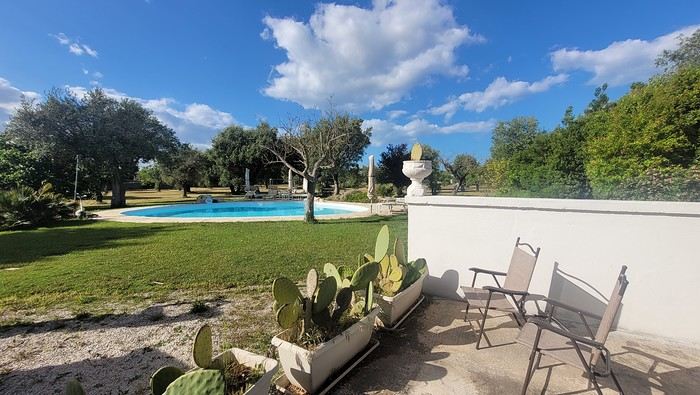
About an hour later, we arrive at our first accommodation, right in the middle of the countryside near Monopoli. The owner isn’t there, but they’ve left us a ton of info via messages and even turned on the space heater, which is a nice touch. We explore the property:
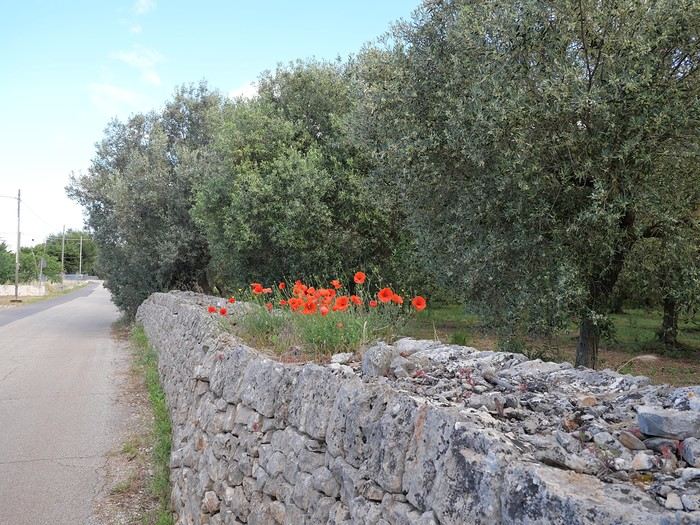
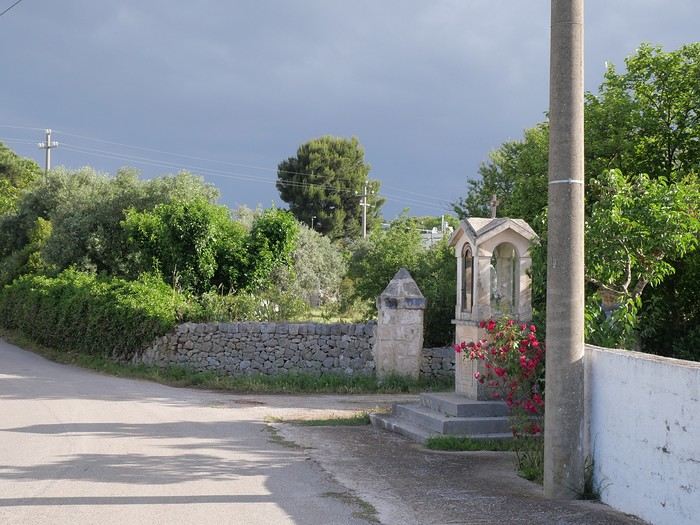
And the next morning before breakfast, its immediate surroundings:
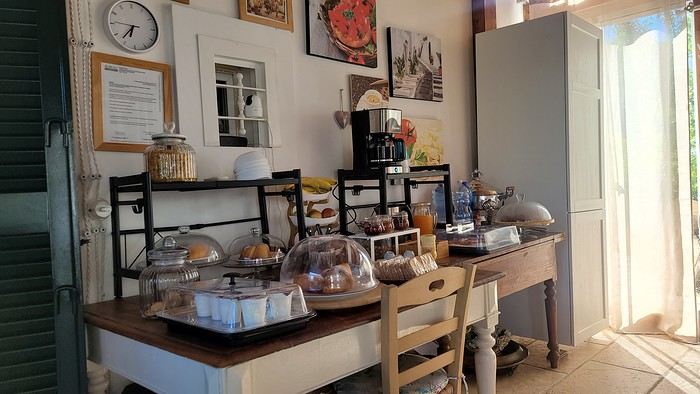
Sunday, May 17: After our "seaside" experience in Gran Canaria last weekend (packed with people and locals), we decide to start inland. After a hearty breakfast,
we head toward Alberobello, a super touristy village famous for its trulli—those stone houses with conical roofs. We easily find a free parking spot on a street near the Aia Piccola district, where some trulli are still lived in year-round.
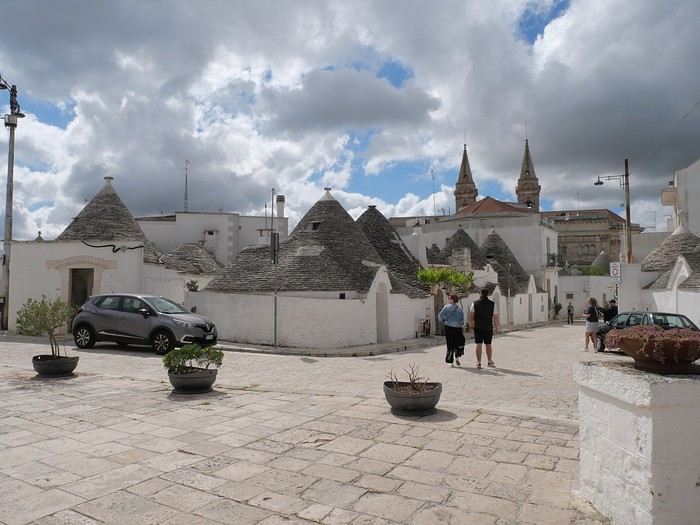
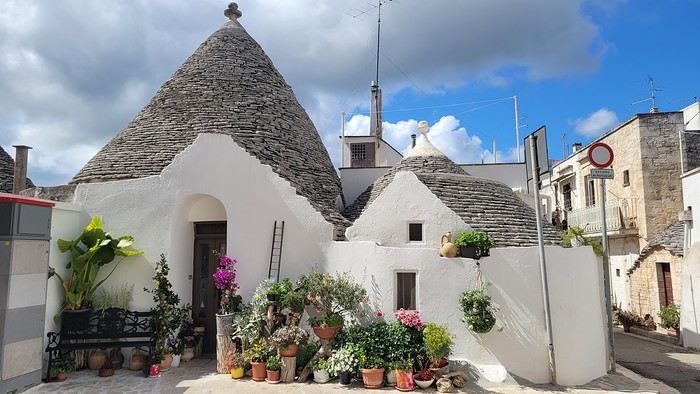
We almost immediately come across the Trullo Sovrano (the only two-story one), which you can visit (but we skip it—it’s opening time, and there’s already a line).
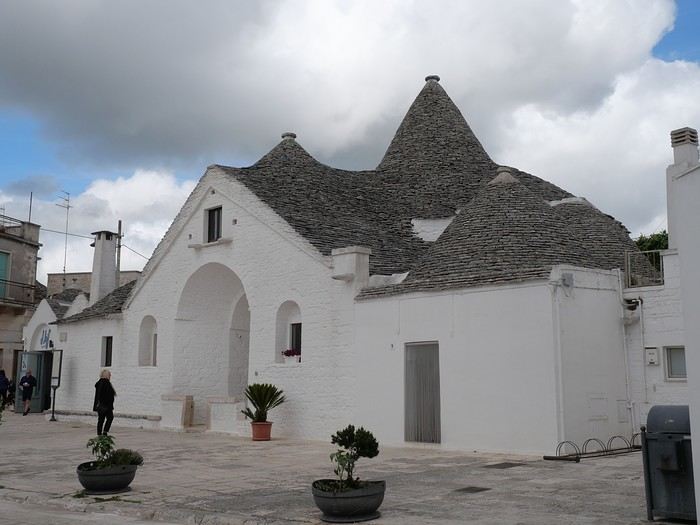
From there, we head down toward the Basilica of Cosma e Damiano... but we don’t go in because there’s a mass.
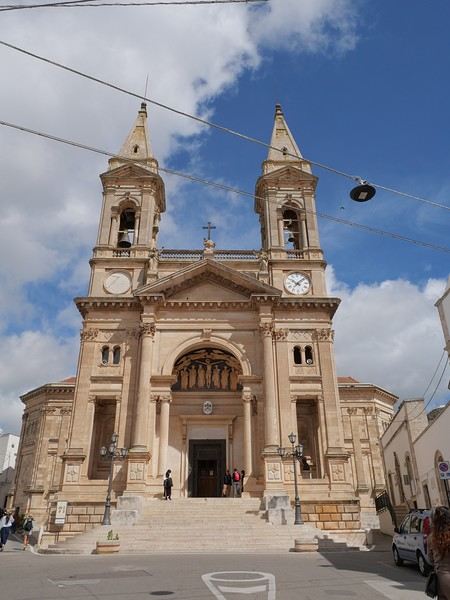
Now we’re on the main Piazza del Popolo, which connects the two districts of Alberobello: Rione Aia Piccola and Rione Monti, the more touristy one.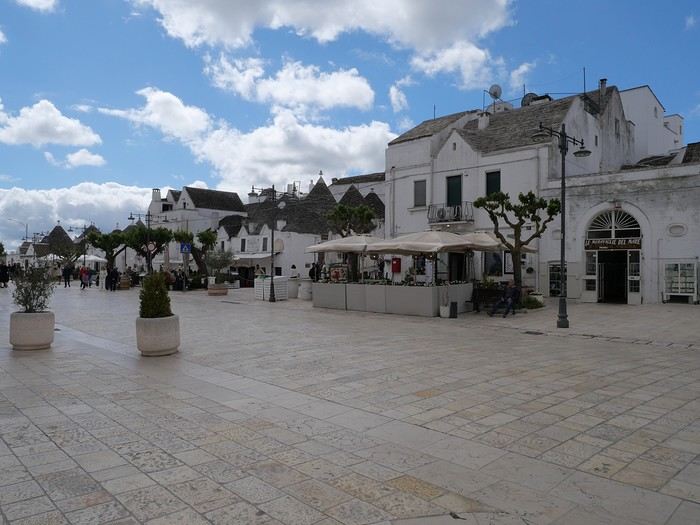
For those who’d like to (re)read the story without the digressions, it’s here.
Saturday, May 16: This time we’re flying out of Charleroi (Brussels South): the ticket prices, flight times, and proximity all worked for us. The airport (Ryanair) was recently renovated... but it’s still not very well organized. There are hardly any seats in the boarding areas, and... the restrooms cost money!!! The flight goes smoothly, though, and we land in Bari a little late.
We quickly pick up our rental car, a very local-looking Pandina (even more so than the Fiat 500 in this region), and hit the Italian roads... and their unique driving quirks (like the fact that the countless road signs along the streets and in towns are purely decorative 😏, and that Italian cars don’t have turn signals 😮... except for rental cars).
About an hour later, we arrive at our first accommodation, right in the middle of the countryside near Monopoli. The owner isn’t there, but they’ve left us a ton of info via messages and even turned on the space heater, which is a nice touch. We explore the property:
And the next morning before breakfast, its immediate surroundings:
Sunday, May 17: After our "seaside" experience in Gran Canaria last weekend (packed with people and locals), we decide to start inland. After a hearty breakfast,
we head toward Alberobello, a super touristy village famous for its trulli—those stone houses with conical roofs. We easily find a free parking spot on a street near the Aia Piccola district, where some trulli are still lived in year-round.
We almost immediately come across the Trullo Sovrano (the only two-story one), which you can visit (but we skip it—it’s opening time, and there’s already a line).
From there, we head down toward the Basilica of Cosma e Damiano... but we don’t go in because there’s a mass.
Now we’re on the main Piazza del Popolo, which connects the two districts of Alberobello: Rione Aia Piccola and Rione Monti, the more touristy one.
Java itinerary ideas (excluding Yogyakarta, Bromo, and Ijen)
We’ve already explored Bali, eastern Java, and its volcanoes back in 2013, and we’d love to return to Java to discover other spots that aren’t so "mainstream." There’ll be three of us—a couple and our 25-year-old son. We love nature, small towns, villages, beautiful landscapes, and a bit of beach time... We’re used to backpacking around Southeast Asia. Any tips for exploring some great spots in Java in a coherent way, with 3 or 4 bases for a 3-week trip from late June to mid-July? We don’t want to revisit Bromo or Ijen (they seem way too crowded compared to 2013), and we might swing by Djogja but won’t redo Borobudur or Prambanan (same issue...). Looking forward to your tips! Thanks 🙂
11-Day Trip to Jordan in Late October 2025 – Recap
Let’s be clear—it was a fantastic time to visit, and Jordan is an amazing country!
100% sunshine and temperatures between 25 and 35°C, depending on the altitude.
No stress at all: Jordanians live up to their reputation as a charming, helpful, and fun-loving people. No hassles, no pushy sales—just pure joy sharing time and laughter with them.
Over 11 days, we intentionally skipped the north to spend more time in Petra, Wadi Rum, Dana, and diving in Aqaba. No regrets whatsoever 😄
Practical tips at the end of the travel journal.
Road trip: Arrived at 10 PM (Nantes-Frankfurt/Amman in under 9 hours). Spent the night near the airport.
Day 1: Left at 8 AM for Mount Nebo and the Dead Sea Center—picnic in the middle of the lovely Wadi Himara (great spot, 2-hour round trip—thanks to the GPS coordinates from the agency. It takes guts to leave your car parked alone with all the luggage inside, but honestly, no stress at all). Afternoon at the Movenpick (pricey but nice) to enjoy the Dead Sea. Dinner on-site. Perfect relaxation for a first day.


Day 2: Drove south along the Dead Sea. First stop at Wadi Mujib (great, fun, and full of water—max 2-hour round trip). Then a second swim in the Dead Sea, 10 km past the Wadi Mujib Center, which we preferred over the Movenpick spot because it felt wilder. Just pull over when you see tents along the road where you can take a shower after swimming (a must! Cost: 3 JOD per shower). The scenery is stunning, and the swim feels more natural than at the hotels. A really cool experience.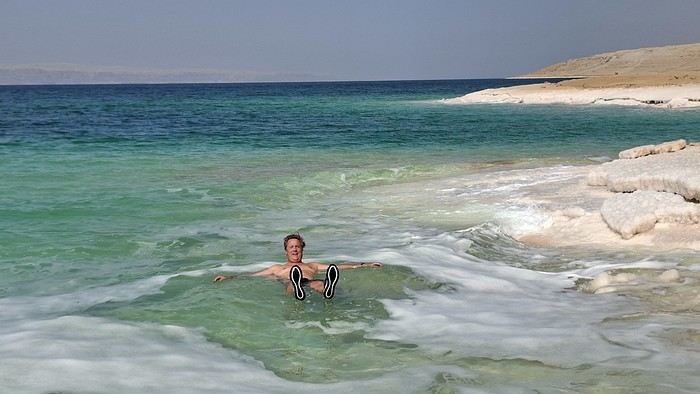
Around 3 PM, took the scenic route after the Dead Sea toward Little Petra (1.5 hours). Don’t take the King’s Highway directly—instead, continue on the Wadi Arabia road, then turn left (Route 60) after the town of Feifa and the ‘Jo Petrol’ gas station. Worth it! Visited Little Petra in the late afternoon and had dinner + stayed overnight at the Seven Wonder Luxury Camp. TOP: warm welcome and great advice on the best order for hikes in Petra based on sunlight and avoiding backtracking. We regretted not staying two nights…
Day 3: PETRA Petra info: Not many people around, so we really enjoyed it (thanks to the geopolitical situation). We’ll share the times of our circuits since we were able to catch the sun on the key sites (9:30 AM for the Treasury). As amateur photographers, we took our time on all the visits and circuits—you can shave off about 25% of the suggested times. But rushing can ruin Petra’s magic! For us, two full days is the minimum.

First day in Petra with arrival at 7:30 AM. Free parking in front of the visitor center… Program: Siq, Khazneh (40 min), then the amazing “High Place of Sacrifice” circuit between 9:30 AM and 12:30 PM, starting directly to the left before the theater. This avoids climbing in the sun (great tip from our camp host the night before!).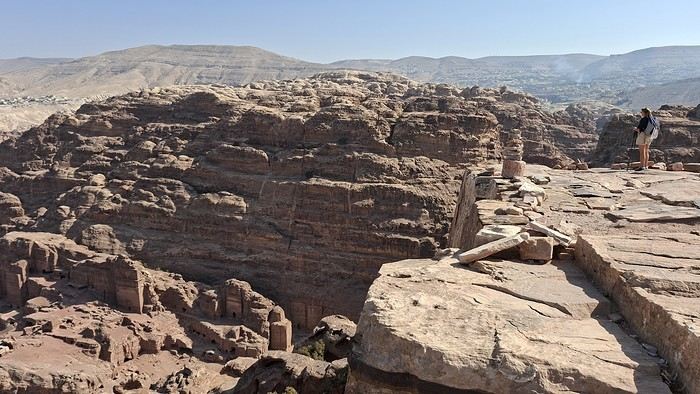
Arrived at the Great Temple, lunch at the ‘The Bassin’ self-service (17 JOD per person!). Expensive, but it’s a good place to rest 😉 Then visited the churches with viewpoints over the temples, accompanied by two friends 🙂, the Colonnaded Street, and the tombs (in the sun at 4 PM), the Theater… then back via the Khazneh and the Siq (another 40 min!).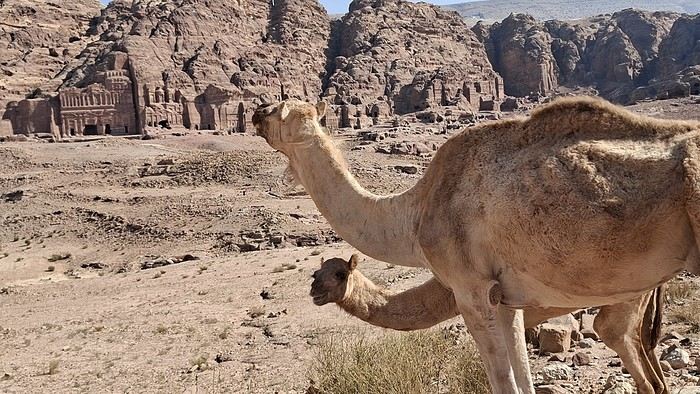
Arrived at the Seven Wonder Hotel in Petra at 5 PM, exhausted!! Good hotel, simple room, but an amazing rooftop with a pool—perfect for relaxing after Petra. A car is necessary to reach the visitor center and possibly downtown for dinner (the hotel dining room isn’t cozy at all). Two great places to eat: Mr. Falafel for lunch or dinner (also makes takeaway meals for 4 JOD)—simple but delicious! My Mom's Recipe Restaurant—great decor on the terrace and really tasty food. Day 4: Little Petra to the Monastery circuit. You need a special ticket issued on the road to Little Petra (you can get there by taxi from the visitor center for 10 JOD or by shuttle), where they take you in a 4x4 to the start of the trail. This saves an hour of walking in the sun but costs 5 JOD per person. Started the trail around 8:30 AM. Count 3 hours to get all the way down. Great circuit that avoids climbing the 800 steps (just descending them!).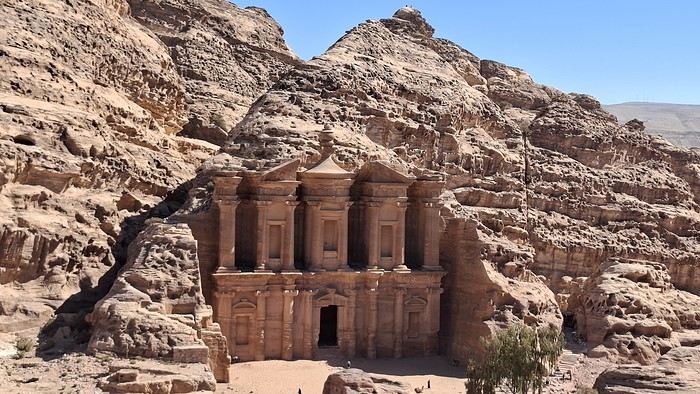
Before reaching the Monastery, tea break at the “End of the World Coffee” following the “best view” sign—the name isn’t exaggerated!!!! Breathtaking desert views in a charming setting. We could’ve stayed forever!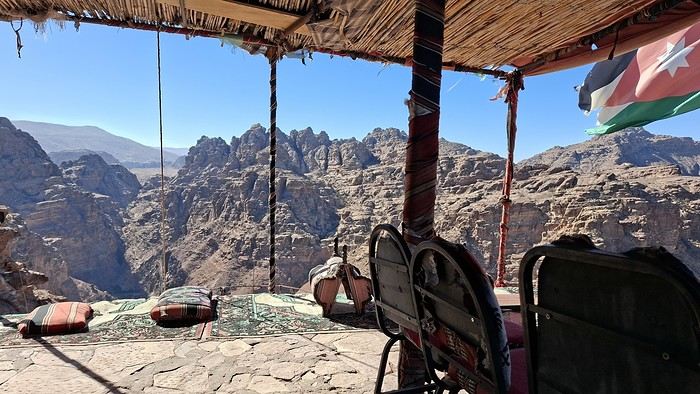
Great tip: Picnic at Petra (free tables available next to the BASIN restaurant, and sandwiches for sale—though not great—if you didn’t bring your own). Then we wandered around the site: a small circuit behind the Nabatean Restaurant with a view of the entire site, returning via the path that runs above Qasr al-Bint, the Great Temple, and the Colonnaded Street to reach the Street of Facades. This path offers another stunning view overlooking the temples and tombs. We took our time, and it was amazing… Back to Seven Wonder by 3:30 PM… The call of the pool, and we were exhausted!
Day 5: Last day in Petra with the Al Khubtha Trail circuit to see the Khazneh from above. Really fun to do (2.5-hour round trip, including 30 minutes of contemplation 😊. Best in the morning to see the Khazneh in the sun 👉 9:15 AM). Return via the tombs, and we recommend going straight up while staying left of the main path (amazing circuit with the best view of the theater—gorgeous).
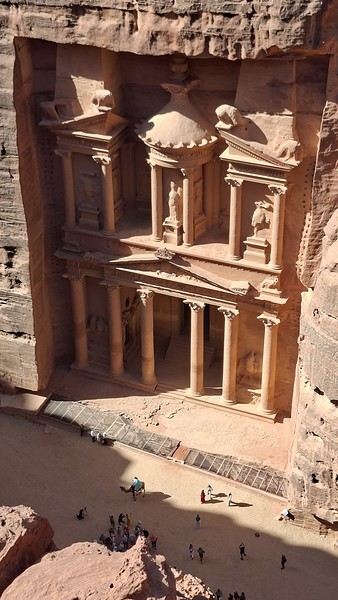
Back to the car at 1 PM, lunch at Mr. Falafel, and headed to Aqaba via Little Petra and the Dead Sea (the Wadi Arabia road we loved!) to take the “Rift Valley—West Route” to Aqaba. The scenery loses its charm once you hit Route 65—we ended up regretting not taking the shorter route… but if you haven’t taken the Wadi Arabia road before, don’t miss it! Arrived at the Bedouin Garden Village at 5 PM (Aqaba, South Beach), and diving briefing 😊! Simple hotel with a great vibe and a nice little pool. However, not the cleanest (rooms and common areas)—you can tell there’s been a lack of guests lately, which is a shame because the location, decor, and atmosphere are all great. On the other hand, disappointed by the southern beaches—dirty and almost deserted, with nothing open for dinner in the evening.
Day 6-7: Morning dives (great marine life, easy shore dives with unique wrecks—cargo ship, tank, plane sunk near the shore). Lots of colorful fish, though small. Afternoons and evenings in Aqaba, which turned out to be a lively and pleasant city. Sunset drinks by the embankment near the giant flag—a great mix of local life, loud racing boats, music… we loved it. Dinner at Al Shami Restaurant—delicious, affordable, and a really nice terrace with a view of the beautiful Sharif Hussein bin Ali Mosque. Perfect lemon-mint juice!
Day 8: Two final dives in the morning, then drove to Wadi Rum (1 hour). Welcomed by Khaled and Claire from Mars on Earth (a top agency we highly recommend—they put together a “semi-custom” stay based on our schedule and desire to avoid crowds. Claire is French, which makes booking and planning ahead via email much easier). Afternoon in a private 4x4 in northern Wadi Rum to see the most famous and visited sites (lots of improbable selfies 😠!). Gorgeous sunset with Bedouin tea over the fire. Khaled is amazing, with a beautiful smile… Arrived at the tent camp for the night. Great location, unique dinner, and a fun evening around the fire with Khaled leading cool games that got everyone chatting. Beautiful tent with a view of the stars…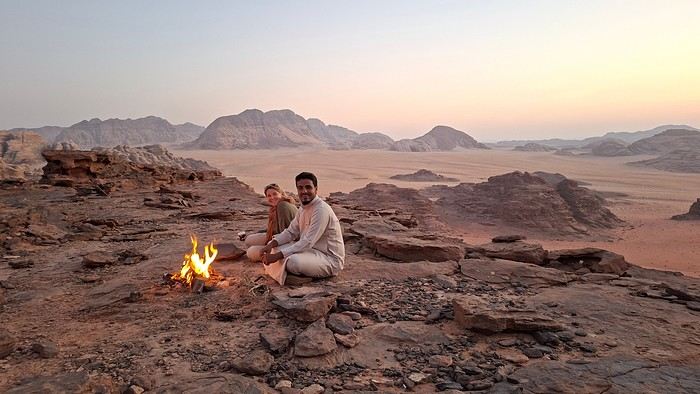
Day 9: Trek to Burdah Rock Bridge (3 hours)—for sporty types only, as it’s a tough climb and descent with no protection or pitons… basically climbing with just a 3-meter rope held by our guide to help us! But what an amazing memory, incredible views, and a real adventure for my 57 years! Would do it again in a heartbeat 😊!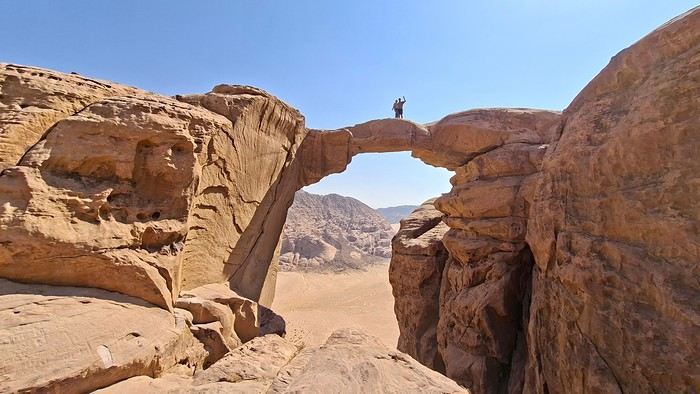
Then headed south in Wadi Rum. Let’s just say it was our favorite area… we strongly recommend spending a full day there… Wild, red, and empty—another planet! Salem, our climbing guide, took us to wonderful spots with breathtaking views. We wished the day could’ve lasted 48 hours!
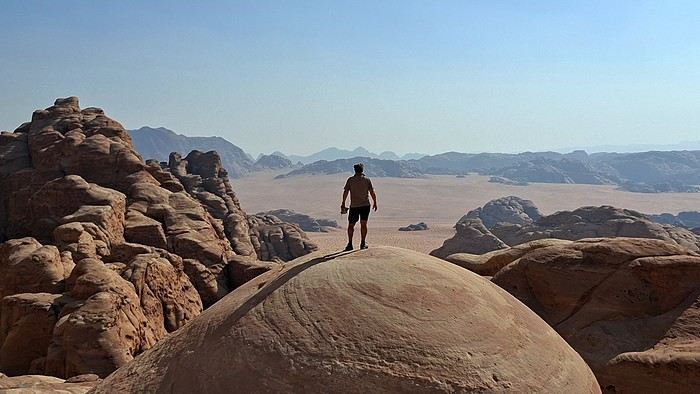
End of the day: sunset, Bedouin tea, beautiful views… Just the classics 😉, but we loved it! Then spent the night under the stars. Salem set up comfortable mattresses and thick blankets, prepared tea and dinner over the wood fire. An amazing experience—like being a kid again, with a sky so stunning we fought sleep just to keep our eyes open.
Day 10: Woke up around 7 AM after a great night under the stars! Breakfast… and then it was time to head back to Claire and Khaled’s to pick up our car. Drove to Wadi Ghuweir (2.5 hours from the King’s Highway). A truly magnificent wadi reached after a steep descent (don’t take a Fiat 500 for the climb back up!). Make sure to hike 2 hours in to reach a lush oasis with water where you can swim in the middle of the wadi… We didn’t know and stopped 15 minutes too early… I still regret it!! If there’s no water at the start of the hike, it’s because it’s flowing underground—don’t give up thinking the wadi is dry! That’s why it’s Claire’s and Family in Jordan’s favorite wadi. A must-do! Picnic in the wadi. Around 4 PM, headed to Dana—visited this tiny, unique village, half in ruins and half restored while keeping its old-world charm. Stayed overnight and had dinner at Dana Luxury Huts (amazing view with a private balcony, great triangular rooms—though the bathroom is tiny). Run by a family. Delicious food cooked by the mom. Bedouin tea after dinner around the fire—such a nice moment.
Day 11: “Sheq Al Reesh” trek in Dana Valley booked through the Luxury Huts hotel. Four hours in a totally different landscape from the desert—unique and guided by a fantastic guide who prepared a memorable lunch over a fire on the cliffside. We really loved this hike and the peacefulness of Dana. A great stop to break up the long drive back to the airport. Left Dana at 2 PM for Kerak Castle (2.5-hour drive). Nice visit, especially the underground passages. Then drove to Madaba (1.5 hours) to explore the city by night, do some last-minute shopping, and wait for our 3:30 AM flight… not fun!
Good to know:
Late October was a perfect time—temperatures between 25 and 35°C depending on location (mountains or sea), with lows of 13°C at night in Wadi Rum 👉 A fleece is enough; it’s not that cold in the desert, and the blankets are amazing. Eleven days is the perfect amount of time to take it slow, stop for "Bedouin tea" invitations in unexpected places, and soak in the colors! We don’t regret doing the trip "backwards"—starting with the Dead Sea and ending with Wadi Rum and Dana (usually, people start with the King’s Highway). We recommend the ‘Family In Jordan’ guide for those who want an easy way to find trailheads and routes. Don’t hesitate to explore multiple wadis—not just Wadi Mujib! We highly recommend Mars on Earth for organizing your Wadi Rum stay. Very professional, with great bivouac and camp locations. No pushy salespeople. Jordanians are very respectful (especially toward women), super smiley, and helpful. We felt completely at ease—almost too much so 😉 Renting a car is a great option, but if possible, choose a mid-size category with a "real" engine and check the tires. The hills are tough, and some roads turn into semi-off-road for 500 meters… No issues driving—roads are in good condition. The only problem is the aggressive speed bumps everywhere. The Dana-Madaba King’s Highway is long (4 hours). Budget varies a lot depending on your choices: from a simple lunch for 4 JOD to a dinner for 30 JOD, depending on how touristy the restaurant is… On average, 8–10 JOD for a good local or seafood dish + drink, and 30–40 JOD for a night in a hotel (except the Movenpick, unfortunately ☹). Watch out for Fridays—it’s really hard to find picnic supplies! If you’re still hesitant, the Jordan Pass is a must and very cost-effective since it includes your visa. Get it online. Consider hubs like Madrid or Frankfurt—often faster and cheaper than flying via Paris and Air France if you live in the provinces!
Road trip: Arrived at 10 PM (Nantes-Frankfurt/Amman in under 9 hours). Spent the night near the airport.
Day 1: Left at 8 AM for Mount Nebo and the Dead Sea Center—picnic in the middle of the lovely Wadi Himara (great spot, 2-hour round trip—thanks to the GPS coordinates from the agency. It takes guts to leave your car parked alone with all the luggage inside, but honestly, no stress at all). Afternoon at the Movenpick (pricey but nice) to enjoy the Dead Sea. Dinner on-site. Perfect relaxation for a first day.
Day 2: Drove south along the Dead Sea. First stop at Wadi Mujib (great, fun, and full of water—max 2-hour round trip). Then a second swim in the Dead Sea, 10 km past the Wadi Mujib Center, which we preferred over the Movenpick spot because it felt wilder. Just pull over when you see tents along the road where you can take a shower after swimming (a must! Cost: 3 JOD per shower). The scenery is stunning, and the swim feels more natural than at the hotels. A really cool experience.
Around 3 PM, took the scenic route after the Dead Sea toward Little Petra (1.5 hours). Don’t take the King’s Highway directly—instead, continue on the Wadi Arabia road, then turn left (Route 60) after the town of Feifa and the ‘Jo Petrol’ gas station. Worth it! Visited Little Petra in the late afternoon and had dinner + stayed overnight at the Seven Wonder Luxury Camp. TOP: warm welcome and great advice on the best order for hikes in Petra based on sunlight and avoiding backtracking. We regretted not staying two nights…
Day 3: PETRA Petra info: Not many people around, so we really enjoyed it (thanks to the geopolitical situation). We’ll share the times of our circuits since we were able to catch the sun on the key sites (9:30 AM for the Treasury). As amateur photographers, we took our time on all the visits and circuits—you can shave off about 25% of the suggested times. But rushing can ruin Petra’s magic! For us, two full days is the minimum.
First day in Petra with arrival at 7:30 AM. Free parking in front of the visitor center… Program: Siq, Khazneh (40 min), then the amazing “High Place of Sacrifice” circuit between 9:30 AM and 12:30 PM, starting directly to the left before the theater. This avoids climbing in the sun (great tip from our camp host the night before!).
Arrived at the Great Temple, lunch at the ‘The Bassin’ self-service (17 JOD per person!). Expensive, but it’s a good place to rest 😉 Then visited the churches with viewpoints over the temples, accompanied by two friends 🙂, the Colonnaded Street, and the tombs (in the sun at 4 PM), the Theater… then back via the Khazneh and the Siq (another 40 min!).
Arrived at the Seven Wonder Hotel in Petra at 5 PM, exhausted!! Good hotel, simple room, but an amazing rooftop with a pool—perfect for relaxing after Petra. A car is necessary to reach the visitor center and possibly downtown for dinner (the hotel dining room isn’t cozy at all). Two great places to eat: Mr. Falafel for lunch or dinner (also makes takeaway meals for 4 JOD)—simple but delicious! My Mom's Recipe Restaurant—great decor on the terrace and really tasty food. Day 4: Little Petra to the Monastery circuit. You need a special ticket issued on the road to Little Petra (you can get there by taxi from the visitor center for 10 JOD or by shuttle), where they take you in a 4x4 to the start of the trail. This saves an hour of walking in the sun but costs 5 JOD per person. Started the trail around 8:30 AM. Count 3 hours to get all the way down. Great circuit that avoids climbing the 800 steps (just descending them!).
Before reaching the Monastery, tea break at the “End of the World Coffee” following the “best view” sign—the name isn’t exaggerated!!!! Breathtaking desert views in a charming setting. We could’ve stayed forever!
Great tip: Picnic at Petra (free tables available next to the BASIN restaurant, and sandwiches for sale—though not great—if you didn’t bring your own). Then we wandered around the site: a small circuit behind the Nabatean Restaurant with a view of the entire site, returning via the path that runs above Qasr al-Bint, the Great Temple, and the Colonnaded Street to reach the Street of Facades. This path offers another stunning view overlooking the temples and tombs. We took our time, and it was amazing… Back to Seven Wonder by 3:30 PM… The call of the pool, and we were exhausted!
Day 5: Last day in Petra with the Al Khubtha Trail circuit to see the Khazneh from above. Really fun to do (2.5-hour round trip, including 30 minutes of contemplation 😊. Best in the morning to see the Khazneh in the sun 👉 9:15 AM). Return via the tombs, and we recommend going straight up while staying left of the main path (amazing circuit with the best view of the theater—gorgeous).
Back to the car at 1 PM, lunch at Mr. Falafel, and headed to Aqaba via Little Petra and the Dead Sea (the Wadi Arabia road we loved!) to take the “Rift Valley—West Route” to Aqaba. The scenery loses its charm once you hit Route 65—we ended up regretting not taking the shorter route… but if you haven’t taken the Wadi Arabia road before, don’t miss it! Arrived at the Bedouin Garden Village at 5 PM (Aqaba, South Beach), and diving briefing 😊! Simple hotel with a great vibe and a nice little pool. However, not the cleanest (rooms and common areas)—you can tell there’s been a lack of guests lately, which is a shame because the location, decor, and atmosphere are all great. On the other hand, disappointed by the southern beaches—dirty and almost deserted, with nothing open for dinner in the evening.
Day 6-7: Morning dives (great marine life, easy shore dives with unique wrecks—cargo ship, tank, plane sunk near the shore). Lots of colorful fish, though small. Afternoons and evenings in Aqaba, which turned out to be a lively and pleasant city. Sunset drinks by the embankment near the giant flag—a great mix of local life, loud racing boats, music… we loved it. Dinner at Al Shami Restaurant—delicious, affordable, and a really nice terrace with a view of the beautiful Sharif Hussein bin Ali Mosque. Perfect lemon-mint juice!
Day 8: Two final dives in the morning, then drove to Wadi Rum (1 hour). Welcomed by Khaled and Claire from Mars on Earth (a top agency we highly recommend—they put together a “semi-custom” stay based on our schedule and desire to avoid crowds. Claire is French, which makes booking and planning ahead via email much easier). Afternoon in a private 4x4 in northern Wadi Rum to see the most famous and visited sites (lots of improbable selfies 😠!). Gorgeous sunset with Bedouin tea over the fire. Khaled is amazing, with a beautiful smile… Arrived at the tent camp for the night. Great location, unique dinner, and a fun evening around the fire with Khaled leading cool games that got everyone chatting. Beautiful tent with a view of the stars…
Day 9: Trek to Burdah Rock Bridge (3 hours)—for sporty types only, as it’s a tough climb and descent with no protection or pitons… basically climbing with just a 3-meter rope held by our guide to help us! But what an amazing memory, incredible views, and a real adventure for my 57 years! Would do it again in a heartbeat 😊!
Then headed south in Wadi Rum. Let’s just say it was our favorite area… we strongly recommend spending a full day there… Wild, red, and empty—another planet! Salem, our climbing guide, took us to wonderful spots with breathtaking views. We wished the day could’ve lasted 48 hours!
End of the day: sunset, Bedouin tea, beautiful views… Just the classics 😉, but we loved it! Then spent the night under the stars. Salem set up comfortable mattresses and thick blankets, prepared tea and dinner over the wood fire. An amazing experience—like being a kid again, with a sky so stunning we fought sleep just to keep our eyes open.
Day 10: Woke up around 7 AM after a great night under the stars! Breakfast… and then it was time to head back to Claire and Khaled’s to pick up our car. Drove to Wadi Ghuweir (2.5 hours from the King’s Highway). A truly magnificent wadi reached after a steep descent (don’t take a Fiat 500 for the climb back up!). Make sure to hike 2 hours in to reach a lush oasis with water where you can swim in the middle of the wadi… We didn’t know and stopped 15 minutes too early… I still regret it!! If there’s no water at the start of the hike, it’s because it’s flowing underground—don’t give up thinking the wadi is dry! That’s why it’s Claire’s and Family in Jordan’s favorite wadi. A must-do! Picnic in the wadi. Around 4 PM, headed to Dana—visited this tiny, unique village, half in ruins and half restored while keeping its old-world charm. Stayed overnight and had dinner at Dana Luxury Huts (amazing view with a private balcony, great triangular rooms—though the bathroom is tiny). Run by a family. Delicious food cooked by the mom. Bedouin tea after dinner around the fire—such a nice moment.
Day 11: “Sheq Al Reesh” trek in Dana Valley booked through the Luxury Huts hotel. Four hours in a totally different landscape from the desert—unique and guided by a fantastic guide who prepared a memorable lunch over a fire on the cliffside. We really loved this hike and the peacefulness of Dana. A great stop to break up the long drive back to the airport. Left Dana at 2 PM for Kerak Castle (2.5-hour drive). Nice visit, especially the underground passages. Then drove to Madaba (1.5 hours) to explore the city by night, do some last-minute shopping, and wait for our 3:30 AM flight… not fun!
Good to know:
Late October was a perfect time—temperatures between 25 and 35°C depending on location (mountains or sea), with lows of 13°C at night in Wadi Rum 👉 A fleece is enough; it’s not that cold in the desert, and the blankets are amazing. Eleven days is the perfect amount of time to take it slow, stop for "Bedouin tea" invitations in unexpected places, and soak in the colors! We don’t regret doing the trip "backwards"—starting with the Dead Sea and ending with Wadi Rum and Dana (usually, people start with the King’s Highway). We recommend the ‘Family In Jordan’ guide for those who want an easy way to find trailheads and routes. Don’t hesitate to explore multiple wadis—not just Wadi Mujib! We highly recommend Mars on Earth for organizing your Wadi Rum stay. Very professional, with great bivouac and camp locations. No pushy salespeople. Jordanians are very respectful (especially toward women), super smiley, and helpful. We felt completely at ease—almost too much so 😉 Renting a car is a great option, but if possible, choose a mid-size category with a "real" engine and check the tires. The hills are tough, and some roads turn into semi-off-road for 500 meters… No issues driving—roads are in good condition. The only problem is the aggressive speed bumps everywhere. The Dana-Madaba King’s Highway is long (4 hours). Budget varies a lot depending on your choices: from a simple lunch for 4 JOD to a dinner for 30 JOD, depending on how touristy the restaurant is… On average, 8–10 JOD for a good local or seafood dish + drink, and 30–40 JOD for a night in a hotel (except the Movenpick, unfortunately ☹). Watch out for Fridays—it’s really hard to find picnic supplies! If you’re still hesitant, the Jordan Pass is a must and very cost-effective since it includes your visa. Get it online. Consider hubs like Madrid or Frankfurt—often faster and cheaper than flying via Paris and Air France if you live in the provinces!
15-Day Road Trip Recap: Colorado and New Mexico
Hello, here’s a totally subjective recap of our 15-day road trip between Colorado and New Mexico, from late September to mid-October.
Our main interests are culture, museums, and landscapes—no hiking or trails for us. Personally, I’m pretty contemplative, and luckily, there’s always something to see out there! We’re pretty used to the US; we’ve been going there often for a long time (let’s just say we’re not exactly young anymore).
Budget: Even though we don’t set a strict budget beforehand, we try to keep costs as low as possible. This time, we managed to spend around 4000 € for two, all included. To do this: avoid expensive accommodations, staying between 60 and 120 € per night with an average of 90 €/night, mixing Airbnb and motels. And skip the “real” restaurants, which are pretty pricey in the US: sandwiches for lunch, takeout or cooking in the Airbnb in the evening. We shop at Sprouts or Whole Foods—organic-style chains that are pricier than Walmart but better. In the evenings, Sprouts has discounts on items that didn’t sell during the day. Also, avoid toll roads, paid parking, and overly expensive attractions or sites. The dispensary budget is separate…
Route: Denver/Colorado Springs/Alamosa/Raton/Santa Fe/Cuba/Cortez/Grand Junction/Glenwood Springs/Denver This wasn’t too planned in advance—we booked a few nights upon arrival and went with the flow. Flight from CDG to Denver with AF/Delta, car rental at Dollar for a standard SUV. The guy at the Dollar counter upsold me on extra insurance for flat tires (and since I knew we’d be off-roading, I took it). Without telling me, he upgraded me to a Jeep Sahara 4X4 Hybrid. Nice.
Listening to the news upon arrival, the anchor announced, “It’s officially fall now.” We hadn’t really thought about that before leaving, but yeah—it’s the time when the trees turn fluorescent yellow and red. Amazing.
Colorado Springs: Garden of the Gods is a free park with paved trails winding through red/orange rock formations. Magical at sunrise—groups of deer roam around, along with birds and rabbits. It’s small but wow! Didn’t try the Manitou Incline in Manitou Springs, a staircase with thousands of steps going straight up the mountain. Impressive from the bottom, but the parking is paid, which is a downside for those willing to tackle it. The Cog Railway goes up to the summit of Pikes Peak—around $100 when we were there. No thanks. And of course, the parking is paid too. For fans, Maggie’s Farm dispensary is great.
On Route 24, Eleven Mile Canyon Recreation Area is fly-fishing paradise—just like in the movie *A River Runs Through It*. Entry is $11, and a trail follows the river at the bottom of the canyon to the dam. Dozens of people in waders are in the water, casting their lines over and over. You can see the salmon in the clear water, and we had a picnic in the sun, imagining Brad Pitt catching a fish.
Buena Vista: A cute little tourist town with an Outdoor Fair that day—some pretty impressive vehicles for sale, set up for mountain living (like Juniper outfitting a RAM).
Alamosa: The closest town to Great Sand Dunes National Park, crossed by the Rio Grande (and let’s be real—it’s more of a stream than a river!). Park access was free because it was National Park Day. A park with massive dunes—climbing them is pretty exhausting, with lots of wind and sinking sand. Glad we didn’t do it in summer; I can’t imagine how tough it’d be in the heat. It’s a bit deceptive: it looks easy to get to the top of a dune, but it’s really not. The campsites were nice, and it was busy that weekend. We passed the “Point of No Return,” a sandy trail winding through the hills and connecting to Route 559 from above. Didn’t go all the way, but it’s possible the entrance is free from that side. However, you need a 4X4 with good ground clearance. After 1 or 2 km on the trail, you’re alone between the dunes and hills—hardly anyone around. But tricky to turn around or pass other vehicles; the trail isn’t wide. We crossed paths with a Hanomag (registered in the Netherlands—impressive!) coming down without stopping, or risking getting stuck.
On the way out, we took the small Route 403, which quickly turns into a trail crossing the mountain. Entire sections of forest were turning fluorescent yellow with patches of green and red—an incredible sight.
Raton: A small town that probably peaked in the late 19th century and has been in slow decline ever since. The Raton Pass Motor Inn is the kind of place that makes the US legendary—entirely 50s and 60s decor, really well done. I had the Betty Page room—too cool. Felt like we were on Route 66. Even better.
Santa Fe: A small city with no high-rises—almost all low-rise buildings, many in adobe, blending perfectly into the landscape. The old downtown is touristy but nice, with its plaza and church. There’s a really cool vibe—we loved it. For drinks, the bar at the top of La Fonda Hotel was packed for sunset, with a diverse crowd. Not overpriced for the location. SITE Santa Fe is a contemporary art space near the train station. It’s free, and the temporary exhibit was really good—high quality. Museum Hill is, as the name suggests, where several museums are located. We visited the Museum of Indian Art and Culture—great if you’re into “First Nations” history. Saw The Dandy Warhols at The Bridge—an outdoor venue, one of the last concerts of the season before winter makes it too cold. Oddly, there was no bag check, just an ID required (even though it was obvious we were over 21!). Tickets were reasonable, around $30 (concerts in the US can be crazy expensive). The band was good, with fewer than 300 people in front. A sign at the bar warned: Don’t forget you’re at 1,500 meters—alcohol hits harder up here!
Albuquerque: A sprawling city with an old historic center that feels a bit like Disneyland—too perfect for my taste. The real highlight is the Sandia Peak Tramway, which goes up to the old ski resort above the city. Tickets are around $35, and it’s worth it—the ride over the canyons is pretty wild. The ski resort is a bit abandoned; apparently, like elsewhere, there’s no snow anymore. I asked several people about the lack of snow, and the answer was always the same: “It’s cyclical.” Okay then. We arrived for the start of the International Balloon Fiesta (one of the world’s largest hot-air balloon gatherings), hoping to see hundreds of balloons in the sky. Nope—windy today, so no one took off. Bummer.
Las Vegas: New Mexico has its own Las Vegas, but it’s nothing like the other one—a sleepy little town with a perfectly preserved 19th-century Historic Plaza Hotel, brick buildings, and vintage streetlights. Everything is so well-preserved it’s often used as a filming location. NM attracts a lot of productions thanks to tax incentives and its Western landscapes—and it’s cheaper than California! That day, a huge Texas flag was flying in the wind: they were filming the second season of *Ransom Canyon* for Netflix in the town center. If we’d been dressed more “Western,” we could’ve been extras.
Jemez Springs: Its Jemez Hot Springs is super cute—several thermal pools at different temperatures, a New Age vibe. The pools are surrounded by big rocks, and you’re asked to speak softly. A place where you could spend hours. $50 for two hours for two.
Los Alamos: A town made legendary by the bomb, the movie, etc. Heads up: It’s still a research center, and to cross part of the town, you need to show ID. No stopping or taking photos allowed. Other than the Oppenheimer House (currently closed—only the neighboring house is open to visitors), there’s not much to see. There’s a replica of the camp entrance, but it’s been turned into restrooms.
Georgia O’Keeffe Trail (American painter, 1887–1986): Her museum in Santa Fe is pretty good, even if they don’t have tons of works. Entry is $20. Her house in Abiquiu is open for visits, but it’s way overpriced at $65. So we skipped it. You can get an idea of it by stopping at the Welcome Center on Route 84. Further down the same road, Ghost Ranch is worth a visit—beautiful setting, free to enter, with trails to explore and a great atmosphere.
Chaco Culture National Historical Park: A pretty isolated park—25 km of trails to get there, with only a small section paved. The road is decent except for the last few kilometers, which have potholes. I can’t imagine it being accessible after rain, though that doesn’t happen often! This park, in the middle of a desert plain with a few canyons, is one of the rare places where you can find multi-story structures from pre-Columbian civilizations—so, before the “current” tribes. But cruel disappointment: it’s been shut down for a few days. We met a Native ranger—tall, with long hair—who explained that even though he wasn’t being paid, he was still guarding the park and had closed all access to the sites. Darn. Turned around and headed back down the trail.
Same story in the next town, Aztec (a funny name, right?): Aztec Ruins National Monument was closed too.
We passed Ship Rock, the Navajo’s sacred mountain—really impressive. Couldn’t find a trail to get closer, but it’s better from a distance anyway! The town of Shiprock itself is pretty depressing—poor living conditions for some Natives, with rundown mobile homes and piles of junk cars.
Stopped in Cortez to visit Mesa Verde National Park. Ate at Denny’s—hadn’t been there in ages (though it’s the kind of place I should feel at home in!). The customers all looked like they’d stepped out of *The Addams Family*—a little creepy. Or funny, depending on your perspective. For Mesa Verde, after discussing it on this forum with the honorable member Caussat (who didn’t find it that amazing), we were on the fence. Problem solved: it was closed too. Back on the road.
Durango: Really nice with its Main Ave and its shops, cafés—touristy but with local life. Famous for its tourist train to Silverton, but we didn’t do it—way too expensive. Choice between a steam locomotive or diesel (which belches black, stinky smoke—yuck). The diesel should be replaced with electric as soon as they get the funds.
Million Dollar Highway: The road winds through the mountains, and every turn (and there are a lot) is breathtaking—unbelievable landscapes with fluorescent yellow, green, and snow-capped mountains. Just wow.
Silverton: A Western town nestled between two mountains, preserved in its original state despite the tourists arriving by train. Around it, abandoned mines and old wooden ties—must’ve been tough for the 19th-century miners.
Grand Junction: The city is surrounded by giant mesas—pretty impressive. The old downtown is *too* clean—almost sterile.
Colorado National Monument: Just outside the city, a winding road climbs between stunning canyons, with sweeping views of the valley. Entry was free that day due to the shutdown.
Route 330, which we took to get back to the highway, passes through a place called “Cowboy Country”—and it’s true. We saw guys in Stetsons with huge pickups, the road turned into a trail with cows wandering on it, and we had to honk to get them to move. The trail to I-70 was full of potholes—the 4X4 came in handy. Had a picnic by Vega Reservoir: the booth at the entrance was empty, but people left cash in envelopes for camping fees. Anyone passing by could’ve taken it, but it’s an example of US trust and honesty!
Glenwood Springs: A small town famous for its hot springs pool—they claim it’s the largest in the world. I don’t know about that, but it has a great look. Unfortunately, it was closed for maintenance those days! Blew our budget by staying at the Hotel Colorado, a huge 1893 building with a real atmosphere in its grand lobby and fake fireplaces. Fire pits in front of wooden chairs in the garden with mountain views—just really great.
Aspen: The billionaires’ ski resort, but surprisingly, parking was free for 2 hours. Rare to see a place for the super-rich that doesn’t scream “not for you” (like Palm Beach, for example). A former mining town completely redone, every shop occupied by a luxury brand. There’s even a thrift shop run by sweet retirees—funny as hell. Two ski lifts to start directly with your skis, but we didn’t see the price—they were still closed. Lots of houses that aren’t huge but are cute, though looking at real estate prices made us think, “Is there an extra zero on that listing?” A 6-bedroom villa for $52 million? Wow. The mountains around are gorgeous—no wonder it became what it is.
Another fancy resort nearby: Vail, more modern in its construction. The restaurants opted for a “Schwarzwald” decor—kind of odd.
Denver: Nothing really stood out for us in this city, except the Design Museum—the Kirkland, where a local painter collected furniture and supplies from Arts and Crafts to Postmodern. Just really great. Entry is included with a visit to the Denver Art Museum, which has diverse collections—from Impressionism (they have a Manet, a Van Gogh, a Cézanne, several Sisleys) to photography. The best part for me was the “Ancient Americas” totems—huge, impressive wooden sculptures, painted, the kind you’re more used to seeing in Polynesia or Easter Island. Personally, I didn’t know Natives made them too. That’s what museums are for!
Back at the airport, where I had to tag my own luggage (you have to do everything yourself with these US airlines). The tag said SLC/CDG! But we were supposed to connect through JFK. Turns out, they’d put us on a DEN/SLC/CDG flight without telling us. In the end, we gained 30 minutes on our original arrival time in Paris!
There you go—hope this inspires other travelers! !
Our main interests are culture, museums, and landscapes—no hiking or trails for us. Personally, I’m pretty contemplative, and luckily, there’s always something to see out there! We’re pretty used to the US; we’ve been going there often for a long time (let’s just say we’re not exactly young anymore).
Budget: Even though we don’t set a strict budget beforehand, we try to keep costs as low as possible. This time, we managed to spend around 4000 € for two, all included. To do this: avoid expensive accommodations, staying between 60 and 120 € per night with an average of 90 €/night, mixing Airbnb and motels. And skip the “real” restaurants, which are pretty pricey in the US: sandwiches for lunch, takeout or cooking in the Airbnb in the evening. We shop at Sprouts or Whole Foods—organic-style chains that are pricier than Walmart but better. In the evenings, Sprouts has discounts on items that didn’t sell during the day. Also, avoid toll roads, paid parking, and overly expensive attractions or sites. The dispensary budget is separate…
Route: Denver/Colorado Springs/Alamosa/Raton/Santa Fe/Cuba/Cortez/Grand Junction/Glenwood Springs/Denver This wasn’t too planned in advance—we booked a few nights upon arrival and went with the flow. Flight from CDG to Denver with AF/Delta, car rental at Dollar for a standard SUV. The guy at the Dollar counter upsold me on extra insurance for flat tires (and since I knew we’d be off-roading, I took it). Without telling me, he upgraded me to a Jeep Sahara 4X4 Hybrid. Nice.
Listening to the news upon arrival, the anchor announced, “It’s officially fall now.” We hadn’t really thought about that before leaving, but yeah—it’s the time when the trees turn fluorescent yellow and red. Amazing.
Colorado Springs: Garden of the Gods is a free park with paved trails winding through red/orange rock formations. Magical at sunrise—groups of deer roam around, along with birds and rabbits. It’s small but wow! Didn’t try the Manitou Incline in Manitou Springs, a staircase with thousands of steps going straight up the mountain. Impressive from the bottom, but the parking is paid, which is a downside for those willing to tackle it. The Cog Railway goes up to the summit of Pikes Peak—around $100 when we were there. No thanks. And of course, the parking is paid too. For fans, Maggie’s Farm dispensary is great.
On Route 24, Eleven Mile Canyon Recreation Area is fly-fishing paradise—just like in the movie *A River Runs Through It*. Entry is $11, and a trail follows the river at the bottom of the canyon to the dam. Dozens of people in waders are in the water, casting their lines over and over. You can see the salmon in the clear water, and we had a picnic in the sun, imagining Brad Pitt catching a fish.
Buena Vista: A cute little tourist town with an Outdoor Fair that day—some pretty impressive vehicles for sale, set up for mountain living (like Juniper outfitting a RAM).
Alamosa: The closest town to Great Sand Dunes National Park, crossed by the Rio Grande (and let’s be real—it’s more of a stream than a river!). Park access was free because it was National Park Day. A park with massive dunes—climbing them is pretty exhausting, with lots of wind and sinking sand. Glad we didn’t do it in summer; I can’t imagine how tough it’d be in the heat. It’s a bit deceptive: it looks easy to get to the top of a dune, but it’s really not. The campsites were nice, and it was busy that weekend. We passed the “Point of No Return,” a sandy trail winding through the hills and connecting to Route 559 from above. Didn’t go all the way, but it’s possible the entrance is free from that side. However, you need a 4X4 with good ground clearance. After 1 or 2 km on the trail, you’re alone between the dunes and hills—hardly anyone around. But tricky to turn around or pass other vehicles; the trail isn’t wide. We crossed paths with a Hanomag (registered in the Netherlands—impressive!) coming down without stopping, or risking getting stuck.
On the way out, we took the small Route 403, which quickly turns into a trail crossing the mountain. Entire sections of forest were turning fluorescent yellow with patches of green and red—an incredible sight.
Raton: A small town that probably peaked in the late 19th century and has been in slow decline ever since. The Raton Pass Motor Inn is the kind of place that makes the US legendary—entirely 50s and 60s decor, really well done. I had the Betty Page room—too cool. Felt like we were on Route 66. Even better.
Santa Fe: A small city with no high-rises—almost all low-rise buildings, many in adobe, blending perfectly into the landscape. The old downtown is touristy but nice, with its plaza and church. There’s a really cool vibe—we loved it. For drinks, the bar at the top of La Fonda Hotel was packed for sunset, with a diverse crowd. Not overpriced for the location. SITE Santa Fe is a contemporary art space near the train station. It’s free, and the temporary exhibit was really good—high quality. Museum Hill is, as the name suggests, where several museums are located. We visited the Museum of Indian Art and Culture—great if you’re into “First Nations” history. Saw The Dandy Warhols at The Bridge—an outdoor venue, one of the last concerts of the season before winter makes it too cold. Oddly, there was no bag check, just an ID required (even though it was obvious we were over 21!). Tickets were reasonable, around $30 (concerts in the US can be crazy expensive). The band was good, with fewer than 300 people in front. A sign at the bar warned: Don’t forget you’re at 1,500 meters—alcohol hits harder up here!
Albuquerque: A sprawling city with an old historic center that feels a bit like Disneyland—too perfect for my taste. The real highlight is the Sandia Peak Tramway, which goes up to the old ski resort above the city. Tickets are around $35, and it’s worth it—the ride over the canyons is pretty wild. The ski resort is a bit abandoned; apparently, like elsewhere, there’s no snow anymore. I asked several people about the lack of snow, and the answer was always the same: “It’s cyclical.” Okay then. We arrived for the start of the International Balloon Fiesta (one of the world’s largest hot-air balloon gatherings), hoping to see hundreds of balloons in the sky. Nope—windy today, so no one took off. Bummer.
Las Vegas: New Mexico has its own Las Vegas, but it’s nothing like the other one—a sleepy little town with a perfectly preserved 19th-century Historic Plaza Hotel, brick buildings, and vintage streetlights. Everything is so well-preserved it’s often used as a filming location. NM attracts a lot of productions thanks to tax incentives and its Western landscapes—and it’s cheaper than California! That day, a huge Texas flag was flying in the wind: they were filming the second season of *Ransom Canyon* for Netflix in the town center. If we’d been dressed more “Western,” we could’ve been extras.
Jemez Springs: Its Jemez Hot Springs is super cute—several thermal pools at different temperatures, a New Age vibe. The pools are surrounded by big rocks, and you’re asked to speak softly. A place where you could spend hours. $50 for two hours for two.
Los Alamos: A town made legendary by the bomb, the movie, etc. Heads up: It’s still a research center, and to cross part of the town, you need to show ID. No stopping or taking photos allowed. Other than the Oppenheimer House (currently closed—only the neighboring house is open to visitors), there’s not much to see. There’s a replica of the camp entrance, but it’s been turned into restrooms.
Georgia O’Keeffe Trail (American painter, 1887–1986): Her museum in Santa Fe is pretty good, even if they don’t have tons of works. Entry is $20. Her house in Abiquiu is open for visits, but it’s way overpriced at $65. So we skipped it. You can get an idea of it by stopping at the Welcome Center on Route 84. Further down the same road, Ghost Ranch is worth a visit—beautiful setting, free to enter, with trails to explore and a great atmosphere.
Chaco Culture National Historical Park: A pretty isolated park—25 km of trails to get there, with only a small section paved. The road is decent except for the last few kilometers, which have potholes. I can’t imagine it being accessible after rain, though that doesn’t happen often! This park, in the middle of a desert plain with a few canyons, is one of the rare places where you can find multi-story structures from pre-Columbian civilizations—so, before the “current” tribes. But cruel disappointment: it’s been shut down for a few days. We met a Native ranger—tall, with long hair—who explained that even though he wasn’t being paid, he was still guarding the park and had closed all access to the sites. Darn. Turned around and headed back down the trail.
Same story in the next town, Aztec (a funny name, right?): Aztec Ruins National Monument was closed too.
We passed Ship Rock, the Navajo’s sacred mountain—really impressive. Couldn’t find a trail to get closer, but it’s better from a distance anyway! The town of Shiprock itself is pretty depressing—poor living conditions for some Natives, with rundown mobile homes and piles of junk cars.
Stopped in Cortez to visit Mesa Verde National Park. Ate at Denny’s—hadn’t been there in ages (though it’s the kind of place I should feel at home in!). The customers all looked like they’d stepped out of *The Addams Family*—a little creepy. Or funny, depending on your perspective. For Mesa Verde, after discussing it on this forum with the honorable member Caussat (who didn’t find it that amazing), we were on the fence. Problem solved: it was closed too. Back on the road.
Durango: Really nice with its Main Ave and its shops, cafés—touristy but with local life. Famous for its tourist train to Silverton, but we didn’t do it—way too expensive. Choice between a steam locomotive or diesel (which belches black, stinky smoke—yuck). The diesel should be replaced with electric as soon as they get the funds.
Million Dollar Highway: The road winds through the mountains, and every turn (and there are a lot) is breathtaking—unbelievable landscapes with fluorescent yellow, green, and snow-capped mountains. Just wow.
Silverton: A Western town nestled between two mountains, preserved in its original state despite the tourists arriving by train. Around it, abandoned mines and old wooden ties—must’ve been tough for the 19th-century miners.
Grand Junction: The city is surrounded by giant mesas—pretty impressive. The old downtown is *too* clean—almost sterile.
Colorado National Monument: Just outside the city, a winding road climbs between stunning canyons, with sweeping views of the valley. Entry was free that day due to the shutdown.
Route 330, which we took to get back to the highway, passes through a place called “Cowboy Country”—and it’s true. We saw guys in Stetsons with huge pickups, the road turned into a trail with cows wandering on it, and we had to honk to get them to move. The trail to I-70 was full of potholes—the 4X4 came in handy. Had a picnic by Vega Reservoir: the booth at the entrance was empty, but people left cash in envelopes for camping fees. Anyone passing by could’ve taken it, but it’s an example of US trust and honesty!
Glenwood Springs: A small town famous for its hot springs pool—they claim it’s the largest in the world. I don’t know about that, but it has a great look. Unfortunately, it was closed for maintenance those days! Blew our budget by staying at the Hotel Colorado, a huge 1893 building with a real atmosphere in its grand lobby and fake fireplaces. Fire pits in front of wooden chairs in the garden with mountain views—just really great.
Aspen: The billionaires’ ski resort, but surprisingly, parking was free for 2 hours. Rare to see a place for the super-rich that doesn’t scream “not for you” (like Palm Beach, for example). A former mining town completely redone, every shop occupied by a luxury brand. There’s even a thrift shop run by sweet retirees—funny as hell. Two ski lifts to start directly with your skis, but we didn’t see the price—they were still closed. Lots of houses that aren’t huge but are cute, though looking at real estate prices made us think, “Is there an extra zero on that listing?” A 6-bedroom villa for $52 million? Wow. The mountains around are gorgeous—no wonder it became what it is.
Another fancy resort nearby: Vail, more modern in its construction. The restaurants opted for a “Schwarzwald” decor—kind of odd.
Denver: Nothing really stood out for us in this city, except the Design Museum—the Kirkland, where a local painter collected furniture and supplies from Arts and Crafts to Postmodern. Just really great. Entry is included with a visit to the Denver Art Museum, which has diverse collections—from Impressionism (they have a Manet, a Van Gogh, a Cézanne, several Sisleys) to photography. The best part for me was the “Ancient Americas” totems—huge, impressive wooden sculptures, painted, the kind you’re more used to seeing in Polynesia or Easter Island. Personally, I didn’t know Natives made them too. That’s what museums are for!
Back at the airport, where I had to tag my own luggage (you have to do everything yourself with these US airlines). The tag said SLC/CDG! But we were supposed to connect through JFK. Turns out, they’d put us on a DEN/SLC/CDG flight without telling us. In the end, we gained 30 minutes on our original arrival time in Paris!
There you go—hope this inspires other travelers! !
3 weeks in Bali in 2025
We’ve read it all about Bali: mass tourism, non-stop parties, ferry disasters, the kingdom of “Instagrammers,” pollution, “Bali belly”... But luckily, this island isn’t just about Kuta’s beaches and the Lempuyang Temple.
Sure, it’s not as exotic or off-the-beaten-path as other Indonesian islands (the Moluccas, Timor, Flores...), but we spent 3 weeks there and loved it!
Our (planned) itinerary in 7 stops: - Ubud (4 nights) - Sidemen (2 nights) - Gili Meno (3 nights) - Amed (2 nights) - Pemuteran (4 nights) - Munduk (2 nights) - Jatiluwih (2 nights)
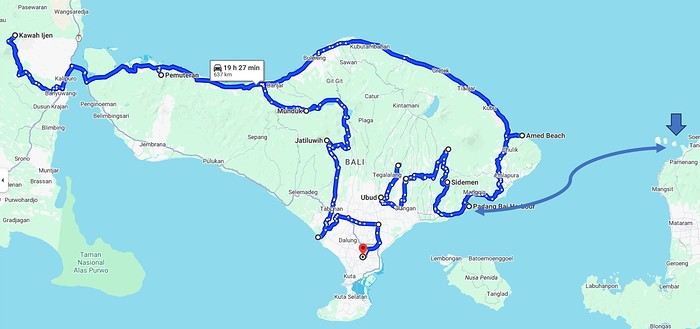
We booked our accommodations in advance, and for the rest (drivers, activities...), we took it day by day with help from the homestays (making sure to contact them a few days ahead via WhatsApp).
In the end, it’s an “easy” destination, very affordable, and one that’s managed to keep a certain authenticity.
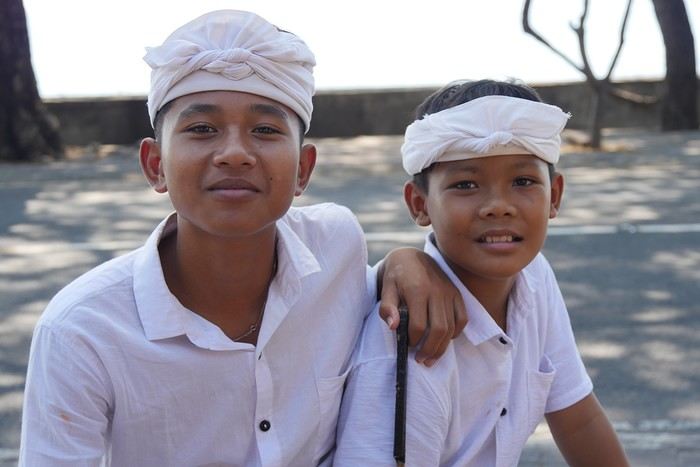
Sure, it’s not as exotic or off-the-beaten-path as other Indonesian islands (the Moluccas, Timor, Flores...), but we spent 3 weeks there and loved it!
Our (planned) itinerary in 7 stops: - Ubud (4 nights) - Sidemen (2 nights) - Gili Meno (3 nights) - Amed (2 nights) - Pemuteran (4 nights) - Munduk (2 nights) - Jatiluwih (2 nights)
We booked our accommodations in advance, and for the rest (drivers, activities...), we took it day by day with help from the homestays (making sure to contact them a few days ahead via WhatsApp).
In the end, it’s an “easy” destination, very affordable, and one that’s managed to keep a certain authenticity.
Kattegat Tour and Norway’s Majestic Fjords – 32 Days (Denmark, Sweden, Norway)
Kattegat isn’t just the name of the village in the TV series *Vikings*—it’s also the stretch of water separating Denmark from Sweden... the sea, basically! And further north, you’ve got Norway and its fjords!
Originally, I’d planned to just do a loop around Kattegat, with the *Under* restaurant in Lindesnes as our anniversary treat... but along the way, we thought, why not "push" a little further north, keeping an eye on the budget since we’d chosen to travel by car in June 2025 through Scandinavia.
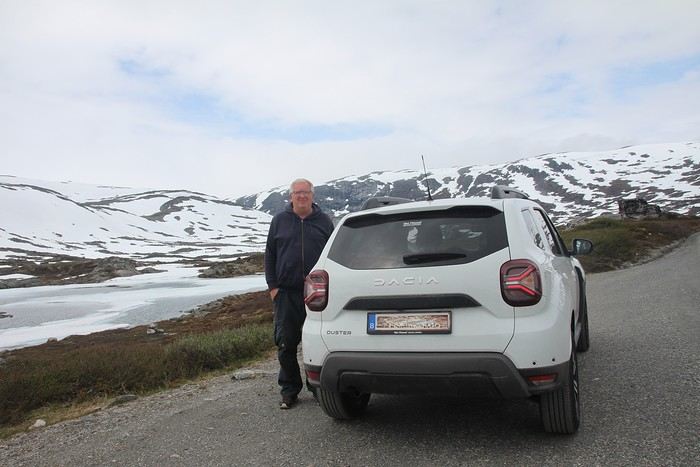
Why by car when most travelers opt for a camper van, while others prefer the comfort of cruises? Well, because we don’t own a camper van, renting one is pricey, and then you’ve got to add fuel costs (those things guzzle gas!), ferry fees, and other "tolls." All things considered, we went for mostly rentals—especially since there were four of us at the start of the trip. We spent the first week in Denmark with our daughter and son-in-law. Then they flew back to Belgium, and we continued our adventure as a couple. For accommodation, we mainly booked Airbnb apartments, which helped keep costs down and, most importantly, let us prepare our own meals (diet, diet!). In this travel journal, you’ll discover (or rediscover, for those who followed my older ones) our unbridled love for theme parks, museums, unique experiences, and—especially in Denmark—Legos! Unfortunately, we didn’t do any hikes this year because the unpredictable weather had made the trails slippery, and since I’d already taken three tumbles during the trip, I didn’t want to risk another! In the end, we traveled for 32 days, covered 6,200 km, and most importantly, discovered the charming country of Denmark, marveled at Norway’s breathtaking fjords—all without suffering the heatwave that hit France and Belgium that June! If you’ve got any questions, don’t hesitate to ask!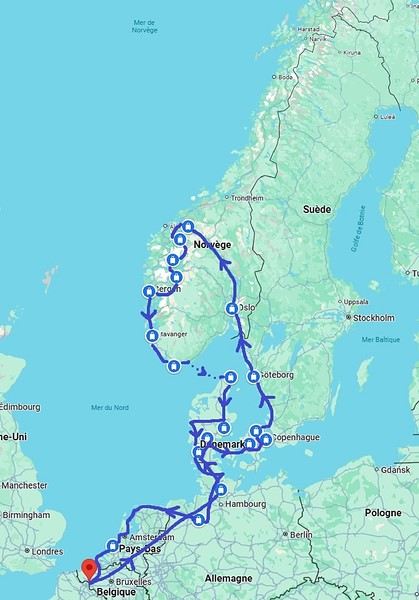
Why by car when most travelers opt for a camper van, while others prefer the comfort of cruises? Well, because we don’t own a camper van, renting one is pricey, and then you’ve got to add fuel costs (those things guzzle gas!), ferry fees, and other "tolls." All things considered, we went for mostly rentals—especially since there were four of us at the start of the trip. We spent the first week in Denmark with our daughter and son-in-law. Then they flew back to Belgium, and we continued our adventure as a couple. For accommodation, we mainly booked Airbnb apartments, which helped keep costs down and, most importantly, let us prepare our own meals (diet, diet!). In this travel journal, you’ll discover (or rediscover, for those who followed my older ones) our unbridled love for theme parks, museums, unique experiences, and—especially in Denmark—Legos! Unfortunately, we didn’t do any hikes this year because the unpredictable weather had made the trails slippery, and since I’d already taken three tumbles during the trip, I didn’t want to risk another! In the end, we traveled for 32 days, covered 6,200 km, and most importantly, discovered the charming country of Denmark, marveled at Norway’s breathtaking fjords—all without suffering the heatwave that hit France and Belgium that June! If you’ve got any questions, don’t hesitate to ask!
Ten dream days at Disney World in Florida
Hi there!
It’s been nearly 6 years since I last posted here or on my travel blog. But I’m back, at least for one post! I’m returning with a dream trip we took in April 2023: a stay at Walt Disney World in Florida.
We went for 10 days. Ten days at an amusement park might seem like a lot, but you should know that Disney isn’t just one park—it’s 4 parks and 2 water parks (only one was open during our trip). So we split those 10 days across 5 parks, which worked out to about 2 days per park.
The four main parks each have a different vibe:
Magic Kingdom: The most famous one, the one that most resembles our Disneyland Paris. It’s home to several "lands" (Adventureland, Frontierland, Fantasyland, Tomorrowland, Liberty Square, and Main Street USA). This is the park where you’ll find the iconic castle, the symbol of the parks. Disney’s Hollywood Studios: It’s a bit like the studios at Disneyland Paris, with the well-known Tower of Terror and Toy Story Land. It also features the stunning Star Wars: Galaxy’s Edge (a must-see, even if you’re not a Star Wars fan). Animal Kingdom: A very nature-focused park, divided into several sections, including representations of Africa and Asia, as well as the breathtaking Pandora – The World of Avatar. Epcot: The park of countries, where different nations are represented around a large circular lake—including France!
 The water park that was open during our stay was Typhoon Lagoon. We spent a morning there lounging and swimming before heading to Disney Springs (the equivalent of Disney Village in France). We’re not big on pools or chilling out, so we didn’t stay long, but there was no time limit.
 We chose to stay at the Disney’s Art of Animation hotel, a Resort (huge, like everything there!) with 4 themed areas: Nemo, Cars, The Lion King, and The Little Mermaid (where the rooms for 4 people or fewer are located).
Here’s the itinerary we followed for those 10 days:
Day 1: Flight at 7:35 AM–4:40 PM (with a layover in London), stroller pickup, then shuttle bus to our hotel Day 2: Day at Magic Kingdom Day 3: Day at Hollywood Studios Day 4: Day at Animal Kingdom Day 5: Day at Epcot Day 6: Day at Hollywood Studios Day 7: Relaxing day at Typhoon Lagoon and Disney Springs Day 8: Day at Magic Kingdom Day 9: Day at Epcot Day 10: Day at Magic Kingdom Day 11: Morning at Hollywood Studios, then shuttle bus to the airport, stroller return at the airport, flight at 7:05 PM–1:50 PM (next day)
We rented the stroller from Kingdom Stroller. The rental process was super easy—everything was done online. On the day we arrived and the day we left, there was no staff at the counter, but the stroller was ready with a tag bearing our name. When we left, we just dropped it off at the designated spot, still with no one checking... We used the Mears Connect shuttle: you pick a day and time for them to pick you up at the airport and your hotel. Everything went smoothly, no surprises.
For planning, you’ll need to decide in advance which parks you’ll visit each day because a reservation is required (just like in Paris now). I’d recommend making a schedule ahead of time. Same goes for restaurants—figure out which ones you’d like to eat at beforehand. Some work like fast food and don’t require reservations, while others, the "Table Service" restaurants, operate like traditional restaurants and need to be booked in advance to guarantee a spot. These can be reserved 60 days before the first day of your visit, and that applies to all the restaurants for your entire stay (e.g., if you’re going from February 1st to 11th, you can make reservations for the whole trip 60 days before February 1st).
Not essential, but we found them super handy: MagicBands. These are connected bracelets you buy on-site (not cheap, of course) that let you, once linked to your account in the app, open your hotel room, enter the parks, validate Lightning Lane reservations at attraction entrances, and even make purchases (if you’ve linked a credit card). We got the cheapest ones and loved them!
As for the trip’s wrap-up, if I were to do it again, ... I’d do almost everything the same: The schedule and restaurant reservations I planned were perfect! ... I’d change one thing: Maybe I wouldn’t plan two full days at Epcot because it was the park we enjoyed the least. Some attractions (like the amazing Guardians of the Galaxy: Cosmic Rewind) were great, but it was really hot, the park isn’t shaded, and it felt stifling when the weather was scorching. That said, I don’t regret it because a big storm hit on our second day, forcing us back to the hotel.
That’s all for now—I’ll be back soon with photos from each park and the hotel. You’ll see, it was incredible! See you soon! :)
Magic Kingdom: The most famous one, the one that most resembles our Disneyland Paris. It’s home to several "lands" (Adventureland, Frontierland, Fantasyland, Tomorrowland, Liberty Square, and Main Street USA). This is the park where you’ll find the iconic castle, the symbol of the parks. Disney’s Hollywood Studios: It’s a bit like the studios at Disneyland Paris, with the well-known Tower of Terror and Toy Story Land. It also features the stunning Star Wars: Galaxy’s Edge (a must-see, even if you’re not a Star Wars fan). Animal Kingdom: A very nature-focused park, divided into several sections, including representations of Africa and Asia, as well as the breathtaking Pandora – The World of Avatar. Epcot: The park of countries, where different nations are represented around a large circular lake—including France!
The water park that was open during our stay was Typhoon Lagoon. We spent a morning there lounging and swimming before heading to Disney Springs (the equivalent of Disney Village in France). We’re not big on pools or chilling out, so we didn’t stay long, but there was no time limit.
We chose to stay at the Disney’s Art of Animation hotel, a Resort (huge, like everything there!) with 4 themed areas: Nemo, Cars, The Lion King, and The Little Mermaid (where the rooms for 4 people or fewer are located).Here’s the itinerary we followed for those 10 days:
Day 1: Flight at 7:35 AM–4:40 PM (with a layover in London), stroller pickup, then shuttle bus to our hotel Day 2: Day at Magic Kingdom Day 3: Day at Hollywood Studios Day 4: Day at Animal Kingdom Day 5: Day at Epcot Day 6: Day at Hollywood Studios Day 7: Relaxing day at Typhoon Lagoon and Disney Springs Day 8: Day at Magic Kingdom Day 9: Day at Epcot Day 10: Day at Magic Kingdom Day 11: Morning at Hollywood Studios, then shuttle bus to the airport, stroller return at the airport, flight at 7:05 PM–1:50 PM (next day)
We rented the stroller from Kingdom Stroller. The rental process was super easy—everything was done online. On the day we arrived and the day we left, there was no staff at the counter, but the stroller was ready with a tag bearing our name. When we left, we just dropped it off at the designated spot, still with no one checking... We used the Mears Connect shuttle: you pick a day and time for them to pick you up at the airport and your hotel. Everything went smoothly, no surprises.
For planning, you’ll need to decide in advance which parks you’ll visit each day because a reservation is required (just like in Paris now). I’d recommend making a schedule ahead of time. Same goes for restaurants—figure out which ones you’d like to eat at beforehand. Some work like fast food and don’t require reservations, while others, the "Table Service" restaurants, operate like traditional restaurants and need to be booked in advance to guarantee a spot. These can be reserved 60 days before the first day of your visit, and that applies to all the restaurants for your entire stay (e.g., if you’re going from February 1st to 11th, you can make reservations for the whole trip 60 days before February 1st).
Not essential, but we found them super handy: MagicBands. These are connected bracelets you buy on-site (not cheap, of course) that let you, once linked to your account in the app, open your hotel room, enter the parks, validate Lightning Lane reservations at attraction entrances, and even make purchases (if you’ve linked a credit card). We got the cheapest ones and loved them!
As for the trip’s wrap-up, if I were to do it again, ... I’d do almost everything the same: The schedule and restaurant reservations I planned were perfect! ... I’d change one thing: Maybe I wouldn’t plan two full days at Epcot because it was the park we enjoyed the least. Some attractions (like the amazing Guardians of the Galaxy: Cosmic Rewind) were great, but it was really hot, the park isn’t shaded, and it felt stifling when the weather was scorching. That said, I don’t regret it because a big storm hit on our second day, forcing us back to the hotel.
That’s all for now—I’ll be back soon with photos from each park and the hotel. You’ll see, it was incredible! See you soon! :)
One-month itinerary in Central Asia
Hello! I’m so excited to be back on this forum—it’s helped me so much in the past! I need your expert advice for our next trip, which will take us to Central Asia: Uzbekistan, Tajikistan, Kyrgyzstan, and Kazakhstan.
We have a month, and here’s the itinerary I have in mind: Arrival in Tashkent – 2 days Bukhara – 2 days Samarkand – 3 days Panjakent – 1 day The Seven Lakes + Iskanderkul – 3 days Khujand – 2 days Fergana Valley – 3 days Song Kol Lake – 2 days Issyk-Kul Lake – 3 days Charyn Canyon – 1 day Kaindy Lake – 1 day Altyn Emel Park – 1 day Almaty – 1 day and departure
I know the travel times, especially in the mountains, can be long, but I’ve tried to optimize it so we can rest after the long drives. Our family includes three kids aged 5, 13, and 17. We’re used to backpacking. But I have *so* many questions: -Will it be extremely hot in Uzbekistan, but manageable in the other regions on my itinerary? -I’ve read conflicting things about trains in Uzbekistan: is it possible to book train tickets in advance from France? -For the Seven Lakes and Iskanderkul, do I need to hire a driver? Is it easy to find one? Since there are five of us, we’d need a large car… or is it possible to rent a car in Panjakent and drop it off in Khujand? -What’s worth visiting in the Fergana Valley? -I’d prefer to avoid domestic flights, so I planned to break up the Osh-Issyk-Kul Lake route by stopping at Song Kol Lake and taking a horseback ride. Is that realistic? Again, do I need to find a driver, or can we do it independently? -Where’s the best base for Issyk-Kul Lake? The main goal is to relax and swim (is it acceptable for women to wear swimsuits in these regions?) -For the last part of the trip—Charyn Canyon and Kaindy Lake from Issyk-Kul—is it doable, or do I need a driver once more? -Is Altyn Emel Park doable in the summer, or is it too hot? The idea is to see the views and do a short 3-hour hike.
Thanks so much for any firsthand tips or experiences you can share!
We have a month, and here’s the itinerary I have in mind: Arrival in Tashkent – 2 days Bukhara – 2 days Samarkand – 3 days Panjakent – 1 day The Seven Lakes + Iskanderkul – 3 days Khujand – 2 days Fergana Valley – 3 days Song Kol Lake – 2 days Issyk-Kul Lake – 3 days Charyn Canyon – 1 day Kaindy Lake – 1 day Altyn Emel Park – 1 day Almaty – 1 day and departure
I know the travel times, especially in the mountains, can be long, but I’ve tried to optimize it so we can rest after the long drives. Our family includes three kids aged 5, 13, and 17. We’re used to backpacking. But I have *so* many questions: -Will it be extremely hot in Uzbekistan, but manageable in the other regions on my itinerary? -I’ve read conflicting things about trains in Uzbekistan: is it possible to book train tickets in advance from France? -For the Seven Lakes and Iskanderkul, do I need to hire a driver? Is it easy to find one? Since there are five of us, we’d need a large car… or is it possible to rent a car in Panjakent and drop it off in Khujand? -What’s worth visiting in the Fergana Valley? -I’d prefer to avoid domestic flights, so I planned to break up the Osh-Issyk-Kul Lake route by stopping at Song Kol Lake and taking a horseback ride. Is that realistic? Again, do I need to find a driver, or can we do it independently? -Where’s the best base for Issyk-Kul Lake? The main goal is to relax and swim (is it acceptable for women to wear swimsuits in these regions?) -For the last part of the trip—Charyn Canyon and Kaindy Lake from Issyk-Kul—is it doable, or do I need a driver once more? -Is Altyn Emel Park doable in the summer, or is it too hot? The idea is to see the views and do a short 3-hour hike.
Thanks so much for any firsthand tips or experiences you can share!
A long journey around Australia
Sunday, October 1st, 2023
Mulhouse-London
We dumped our trash on our neighbors. We hugged, overflowing with emotion. Then Léa from Taxis S showed up. She knows us well. For ages, she’s been our driver. She was practically the official taxiwoman for the trips of the company where Dom and I met. She knew us when we were single! Almost teenagers! She knows everyone and fills in the biographies of people we’d forgotten.
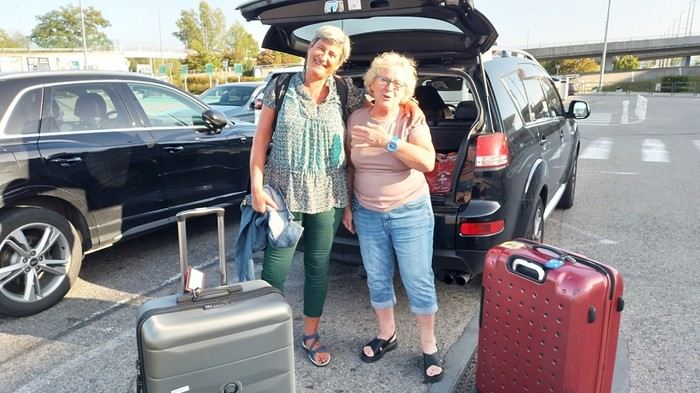 Across the street, while we loaded the luggage, S., perched in his window frame, waved a handkerchief. This wasn’t just any trip.
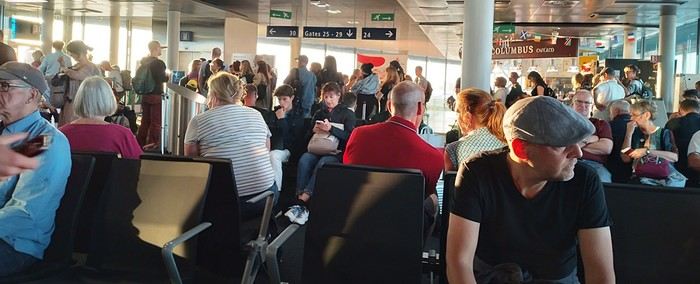 Then things got tricky. It’s funny how fate sinks its teeth into our happy moments—there’s this whole intermediate phase where the poison seeps in unnoticed because you’re still in the dark...
First, there was a delay on our flight to London. Dom immediately went on high alert, while I stayed calm. In my mind, we had two hours. I knew we had to go from Terminal 5 to Terminal 4, but two hours—come on, that’s plenty, right?
Then things got tricky. It’s funny how fate sinks its teeth into our happy moments—there’s this whole intermediate phase where the poison seeps in unnoticed because you’re still in the dark...
First, there was a delay on our flight to London. Dom immediately went on high alert, while I stayed calm. In my mind, we had two hours. I knew we had to go from Terminal 5 to Terminal 4, but two hours—come on, that’s plenty, right?
Bad calculation! Because those two hours were between the first flight’s landing and the second’s takeoff. But flights close at least half an hour before departure. Getting from one terminal to another means taking a shuttle bus. We waited for the one going to Terminal 4... until a young guy paid to direct people (who hadn’t seen us) informed us it was no longer possible to access Terminal 4 without going through Terminal 2 first for a connection! That really cranked up the pressure. We started installing a mental countdown with a programmed explosion at the end—guaranteed stress with added beads of sweat. The terminal bus was driven by a young Pakistani guy. We were *so* tense we bombarded him with our frantic, repetitive questions. “So? When are we getting there? What’s happening? Why aren’t we moving?” Our eyes were glued to our watches. The poor guy knew. Perfectly. Because it was obvious—no way around it. We weren’t going to make it. It was impossible. But Dom and I stubbornly refused to believe it. Then the kid stopped the bus. Me, hysterical: “What are you doing? What’s going on? Our plane takes off in... in... 4 minutes!!!! We’re gonna miss iiiiiit!” He wasn’t calm either. “You’ve already missed it!” He explained we had to cross a zone that required an escort car to clear a path through the runways. Impossible to do without. It’s forbidden. We had to WAIT (!!!). Then he got a radio call—he had to rush to Terminal 3 to pick up a passenger who was *super* tight on time. “Amir!!!! It’s RIGHT NOW!” they yelled in his already-red ears, thanks to the complaints of two hysterical Frenchies. Dom and I were in overdrive, hallucinating! We wanted to stop him, maybe even hit him to prevent him from turning around. He picked up the girl, whom we instantly hated like the most despicable witch. I turned on my data, searched for Malaysia Airlines’ number at Terminal 4, called, and actually got someone—quite a feat. A woman cut off my frantic rambling with a blunt “It’s over, the check-in is closed, the plane is about to take off.” I heard her but refused to accept it. I yelled, “We’re coming!” She shot back her monolithic “It’s over.” Finally at the doors of that damn Terminal 4, we ran—*really* ran—a marathon, Gate 6, security checks, pat-downs, “Take off your belts,” we asked questions, everyone seemed confident, we ran with one hand holding up our pants, the other clutching our belt, Gate 6—the room was empty. A girl was sitting there, calmly on the phone. We pounced on her. She calmed us down. Little by little, the light came back. Our brains rebooted. We finally understood it was over. We’d have to start crafting a new plan with the new reality. It started with a return to Terminal 5 to talk to British Airways, which took a good hour. With the same driver as before. We were alone with him. He took the time to apologize, to assure us it wasn’t his fault, that our problem had no solution, that nothing could’ve changed the outcome. At BA, we were exhausted. We were greeted by a handsome young man in a navy-blue uniform with gold stripes everywhere. We could’ve made a scene, but we were just relieved to find someone who’d take charge of our story. It was a minimal response, but it was *a* response. I suppose we could’ve demanded a business-class upgrade or a free trip, but we were just happy with a few vouchers for food, a hotel room with breakfast, and a little bag with plastic toys, a razor, toothbrush, hygiene products, and a T-shirt... Trinkets... But we were fine with it all—we said thank you eagerly because the essential was assured. He found us seats on flights tomorrow. *Tomorrow.* We were afraid to hope! We had the exact same flights but a day later. The same crappy times, but it was all good. We felt saved from the shipwreck, like survivors. - And what about the luggage? - .... !!!!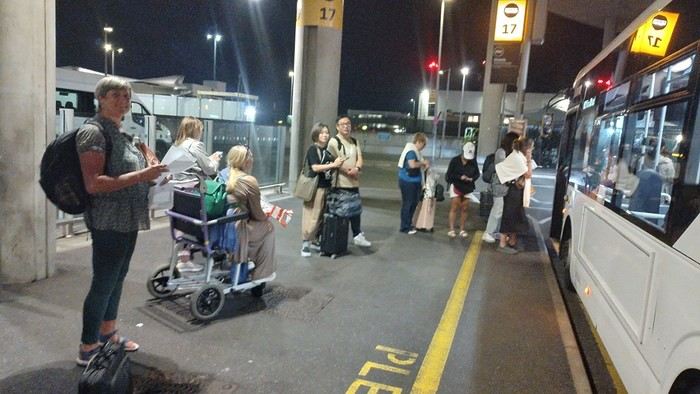
Monday, October 2nd, 2023 London - Kuala Lumpur
It wasn’t the Ritz, but with exhaustion on our side, we slept well. The continental breakfast was way better than we’d expected from an Ibis Budget. Still, it wasn’t enough to restore my joy for life. The course correction had turned into an arduous obstacle course. I scoured the car rental site every which way. Couldn’t reschedule the car. I’d done it before, but this time... Not to mention the laptop battery was complaining—the Brits have this quirk of making their power outlets incompatible with our chargers. Frustrated, I called them but ended up with a girl who declared herself incompetent and offered to have someone from Avis in Perth call me back—someone who’d supposedly handle rentals better. I decided to wait while taking a bath. Barely settled in, the phone rang. I was soaking wet, of course, and asked Dom to answer. Unfortunately, she’s known for disliking my phone, and in a clumsy move, she hung up. We got annoyed. She put dry towels on the edge of the bathtub, but—another false move—they fell in the water. The phone rang again... I completely redid the plans for the next two days, then transferred the files to my phone to consult them later offline. I plugged in my USB cable... *Plop!* The battery died abruptly—my PC shut down without any of the usual polite warnings! I looked around, hoping to find someone to strangle... Long story short, you can tell the day started under the worst omens. I was in a foul mood and spread my bad vibes to Dominique, who was initially in much better spirits... I called Mastercard, hoping to get a refund for the non-refundable night in Perth we’d already paid for. Same old song: “We’ll call you back”... Then... I’ll cut it short—buses, trains, lots of waiting... We rushed to reach the infamous Terminal 4.
We tried new options and convinced ourselves that a delayed departure flight is unrecoverable, no matter the scenario. We were furious that BA hadn’t bothered to tell us, leaving us to run around like rats in a burning house.
Tuesday, October 3rd, 2023 Kuala Lumpur-Perth
The flight was pretty nice. 13 hours, though. Dom and I were facing each other across the aisle. We could get up easily whenever we wanted without bothering anyone and chat when we felt like it. Besides, their chicken was amazing. They were kind enough to offer Dom a truly remarkable glass of rum. Good movies too, including the excellent *Prisoners* by Denis Villeneuve. At KL, during boarding, we developed a nagging worry about our luggage. We checked with some Malaysian Airlines staff. I sensed their hesitation. They made calls. Then changed their minds, giving us smiles and thumbs up...
Wednesday, October 4th, 2023 Perth
*Happy is the man who, like Ulysses, has had a fine voyage.* Well, for us, it wasn’t that. Finally arrived, we experienced the loneliness of tourists watching the baggage carousel spin, emptying of its precious containers one by one, until only a handful of travelers were left, staring at each other in disbelief. Without luggage, you’re kinda screwed. Not even a change of socks—our feet had been swimming in the same shoes for 3 days. No adapter, so no laptop. No toiletries. We could’ve cried! The lost luggage guy played his part. If you want compensation, fill out the disclaimer on the website made for that. And then, “Don’t worry, your luggage will arrive tomorrow!” “Don’t worry?!” From the start of the trip, we’ve been jerked around, fed lies. Tomorrow is the *absolute* last chance to get them back. Beyond that, we’d have to scramble a whole new trip. And lose a lot in the process! I have no idea how to go about it. Tomorrow... OMG... Tomorrow... We landed at 1 AM. Avis, the car rental place, opens at 6:30. Luckily, we found some decent breakfast. It cheered us up and gave us a second wind. Incorrigible, we started believing again! Well, then we just killed time. What else was there to do?

In front of Avis’s little shack, we were freezing. We’d been there since dawn. The girl who showed up, a Latina, immediately saw us as a nuisance who’d ruin her hopes of a peaceful start. Her face and tone were as unwelcoming as possible. You know us—it ended with hugs. She gave us a gorgeous, brand-new car! A hybrid with ultra-sophisticated features, all buttons you shouldn’t touch if you want to drive this thing without causing irreparable damage! We’re off! Driving on the left is easy at first. You think about it constantly. It’s counterintuitive, it takes effort. It’s later, when you get used to it and confidence sets in, that it becomes dangerous—old reflexes can send you into a wall. Anyway, the car and I immediately clicked.
In Perth, underground parking next to the hotel, friendly welcome—we ended up forgetting all the morning’s mishaps. Should we go sightseeing?
https://voyageforum.com/images/posts/small/1733767537-5Nwk6t3DsBZNOzf.jpg
Across the street, while we loaded the luggage, S., perched in his window frame, waved a handkerchief. This wasn’t just any trip.
Then things got tricky. It’s funny how fate sinks its teeth into our happy moments—there’s this whole intermediate phase where the poison seeps in unnoticed because you’re still in the dark...
First, there was a delay on our flight to London. Dom immediately went on high alert, while I stayed calm. In my mind, we had two hours. I knew we had to go from Terminal 5 to Terminal 4, but two hours—come on, that’s plenty, right?
Bad calculation! Because those two hours were between the first flight’s landing and the second’s takeoff. But flights close at least half an hour before departure. Getting from one terminal to another means taking a shuttle bus. We waited for the one going to Terminal 4... until a young guy paid to direct people (who hadn’t seen us) informed us it was no longer possible to access Terminal 4 without going through Terminal 2 first for a connection! That really cranked up the pressure. We started installing a mental countdown with a programmed explosion at the end—guaranteed stress with added beads of sweat. The terminal bus was driven by a young Pakistani guy. We were *so* tense we bombarded him with our frantic, repetitive questions. “So? When are we getting there? What’s happening? Why aren’t we moving?” Our eyes were glued to our watches. The poor guy knew. Perfectly. Because it was obvious—no way around it. We weren’t going to make it. It was impossible. But Dom and I stubbornly refused to believe it. Then the kid stopped the bus. Me, hysterical: “What are you doing? What’s going on? Our plane takes off in... in... 4 minutes!!!! We’re gonna miss iiiiiit!” He wasn’t calm either. “You’ve already missed it!” He explained we had to cross a zone that required an escort car to clear a path through the runways. Impossible to do without. It’s forbidden. We had to WAIT (!!!). Then he got a radio call—he had to rush to Terminal 3 to pick up a passenger who was *super* tight on time. “Amir!!!! It’s RIGHT NOW!” they yelled in his already-red ears, thanks to the complaints of two hysterical Frenchies. Dom and I were in overdrive, hallucinating! We wanted to stop him, maybe even hit him to prevent him from turning around. He picked up the girl, whom we instantly hated like the most despicable witch. I turned on my data, searched for Malaysia Airlines’ number at Terminal 4, called, and actually got someone—quite a feat. A woman cut off my frantic rambling with a blunt “It’s over, the check-in is closed, the plane is about to take off.” I heard her but refused to accept it. I yelled, “We’re coming!” She shot back her monolithic “It’s over.” Finally at the doors of that damn Terminal 4, we ran—*really* ran—a marathon, Gate 6, security checks, pat-downs, “Take off your belts,” we asked questions, everyone seemed confident, we ran with one hand holding up our pants, the other clutching our belt, Gate 6—the room was empty. A girl was sitting there, calmly on the phone. We pounced on her. She calmed us down. Little by little, the light came back. Our brains rebooted. We finally understood it was over. We’d have to start crafting a new plan with the new reality. It started with a return to Terminal 5 to talk to British Airways, which took a good hour. With the same driver as before. We were alone with him. He took the time to apologize, to assure us it wasn’t his fault, that our problem had no solution, that nothing could’ve changed the outcome. At BA, we were exhausted. We were greeted by a handsome young man in a navy-blue uniform with gold stripes everywhere. We could’ve made a scene, but we were just relieved to find someone who’d take charge of our story. It was a minimal response, but it was *a* response. I suppose we could’ve demanded a business-class upgrade or a free trip, but we were just happy with a few vouchers for food, a hotel room with breakfast, and a little bag with plastic toys, a razor, toothbrush, hygiene products, and a T-shirt... Trinkets... But we were fine with it all—we said thank you eagerly because the essential was assured. He found us seats on flights tomorrow. *Tomorrow.* We were afraid to hope! We had the exact same flights but a day later. The same crappy times, but it was all good. We felt saved from the shipwreck, like survivors. - And what about the luggage? - .... !!!!
Monday, October 2nd, 2023 London - Kuala Lumpur
It wasn’t the Ritz, but with exhaustion on our side, we slept well. The continental breakfast was way better than we’d expected from an Ibis Budget. Still, it wasn’t enough to restore my joy for life. The course correction had turned into an arduous obstacle course. I scoured the car rental site every which way. Couldn’t reschedule the car. I’d done it before, but this time... Not to mention the laptop battery was complaining—the Brits have this quirk of making their power outlets incompatible with our chargers. Frustrated, I called them but ended up with a girl who declared herself incompetent and offered to have someone from Avis in Perth call me back—someone who’d supposedly handle rentals better. I decided to wait while taking a bath. Barely settled in, the phone rang. I was soaking wet, of course, and asked Dom to answer. Unfortunately, she’s known for disliking my phone, and in a clumsy move, she hung up. We got annoyed. She put dry towels on the edge of the bathtub, but—another false move—they fell in the water. The phone rang again... I completely redid the plans for the next two days, then transferred the files to my phone to consult them later offline. I plugged in my USB cable... *Plop!* The battery died abruptly—my PC shut down without any of the usual polite warnings! I looked around, hoping to find someone to strangle... Long story short, you can tell the day started under the worst omens. I was in a foul mood and spread my bad vibes to Dominique, who was initially in much better spirits... I called Mastercard, hoping to get a refund for the non-refundable night in Perth we’d already paid for. Same old song: “We’ll call you back”... Then... I’ll cut it short—buses, trains, lots of waiting... We rushed to reach the infamous Terminal 4.
We tried new options and convinced ourselves that a delayed departure flight is unrecoverable, no matter the scenario. We were furious that BA hadn’t bothered to tell us, leaving us to run around like rats in a burning house.
Tuesday, October 3rd, 2023 Kuala Lumpur-Perth
The flight was pretty nice. 13 hours, though. Dom and I were facing each other across the aisle. We could get up easily whenever we wanted without bothering anyone and chat when we felt like it. Besides, their chicken was amazing. They were kind enough to offer Dom a truly remarkable glass of rum. Good movies too, including the excellent *Prisoners* by Denis Villeneuve. At KL, during boarding, we developed a nagging worry about our luggage. We checked with some Malaysian Airlines staff. I sensed their hesitation. They made calls. Then changed their minds, giving us smiles and thumbs up...
Wednesday, October 4th, 2023 Perth
*Happy is the man who, like Ulysses, has had a fine voyage.* Well, for us, it wasn’t that. Finally arrived, we experienced the loneliness of tourists watching the baggage carousel spin, emptying of its precious containers one by one, until only a handful of travelers were left, staring at each other in disbelief. Without luggage, you’re kinda screwed. Not even a change of socks—our feet had been swimming in the same shoes for 3 days. No adapter, so no laptop. No toiletries. We could’ve cried! The lost luggage guy played his part. If you want compensation, fill out the disclaimer on the website made for that. And then, “Don’t worry, your luggage will arrive tomorrow!” “Don’t worry?!” From the start of the trip, we’ve been jerked around, fed lies. Tomorrow is the *absolute* last chance to get them back. Beyond that, we’d have to scramble a whole new trip. And lose a lot in the process! I have no idea how to go about it. Tomorrow... OMG... Tomorrow... We landed at 1 AM. Avis, the car rental place, opens at 6:30. Luckily, we found some decent breakfast. It cheered us up and gave us a second wind. Incorrigible, we started believing again! Well, then we just killed time. What else was there to do?
In front of Avis’s little shack, we were freezing. We’d been there since dawn. The girl who showed up, a Latina, immediately saw us as a nuisance who’d ruin her hopes of a peaceful start. Her face and tone were as unwelcoming as possible. You know us—it ended with hugs. She gave us a gorgeous, brand-new car! A hybrid with ultra-sophisticated features, all buttons you shouldn’t touch if you want to drive this thing without causing irreparable damage! We’re off! Driving on the left is easy at first. You think about it constantly. It’s counterintuitive, it takes effort. It’s later, when you get used to it and confidence sets in, that it becomes dangerous—old reflexes can send you into a wall. Anyway, the car and I immediately clicked.
In Perth, underground parking next to the hotel, friendly welcome—we ended up forgetting all the morning’s mishaps. Should we go sightseeing?
https://voyageforum.com/images/posts/small/1733767537-5Nwk6t3DsBZNOzf.jpg
Kyushu between Fukuoka and Nagasaki in autumn 2024 (Japan)
Fellow travelers,
Don’t they say "never two without three"? It seems so. Here I am again on the forum to share—and let’s be honest, indulge a bit of selfish pleasure—by recounting the story of this third installment in the Land of the Rising Sun.
Where? It’s all in the title. On the island of Kyushu in southern Japan, more precisely in the northwest between Fukuoka and Nagasaki. I hope to take you along with me for 19 nights and 18 full days this autumn of 2024. On the itinerary: gastronomy, crafts, festivals, waterfalls, encounters, and leisurely strolls in all simplicity.
A last-minute flight booked just 7 days before departure, and the route evolved regularly based on whims and accommodation availability, eventually settling on this:
- 5 nights in Fukuoka: Fukuoka city, Ukiha, Itoshima, Dazaifu, Yanagawa - 4 nights in Hasami, Nagasaki Prefecture: Okawachiyama, Arita, Takeo, Kashima, Yobuko, Karatsu, Kabeshima - 6 nights in Nagasaki: Ureshino, Higashi-Sonogi, Nagasaki city, Unzen, Sotome - 4 nights in Fukuoka: Karatsu, Fukuoka city
Most of the trip was done by car for practical reasons—easier access to certain places and freedom of movement—but also for the sheer joy of it. Despite slow traffic at times, driving in rural Japan is a delight.
If the program interests you, see you soon for the start of the journey.
Don’t they say "never two without three"? It seems so. Here I am again on the forum to share—and let’s be honest, indulge a bit of selfish pleasure—by recounting the story of this third installment in the Land of the Rising Sun.
Where? It’s all in the title. On the island of Kyushu in southern Japan, more precisely in the northwest between Fukuoka and Nagasaki. I hope to take you along with me for 19 nights and 18 full days this autumn of 2024. On the itinerary: gastronomy, crafts, festivals, waterfalls, encounters, and leisurely strolls in all simplicity.
A last-minute flight booked just 7 days before departure, and the route evolved regularly based on whims and accommodation availability, eventually settling on this:
- 5 nights in Fukuoka: Fukuoka city, Ukiha, Itoshima, Dazaifu, Yanagawa - 4 nights in Hasami, Nagasaki Prefecture: Okawachiyama, Arita, Takeo, Kashima, Yobuko, Karatsu, Kabeshima - 6 nights in Nagasaki: Ureshino, Higashi-Sonogi, Nagasaki city, Unzen, Sotome - 4 nights in Fukuoka: Karatsu, Fukuoka city
Most of the trip was done by car for practical reasons—easier access to certain places and freedom of movement—but also for the sheer joy of it. Despite slow traffic at times, driving in rural Japan is a delight.
If the program interests you, see you soon for the start of the journey.
Saving time with just a carry-on bag on a cruise
Hi everyone,
I’d love to hear from your experience—does having just a carry-on bag actually save time during boarding and disembarking?
Thanks in advance!
Muriel
Southwest! 8 weeks with the family, Denver-to-Denver loop, 1st part...
Hey there, VoyageForum!!!
I’ve combed through this site up, down, and sideways to plan our two-month road trip across the American Southwest during the summer of 2022, so it only feels right to give back and revive the USA travel journal section—helping others prep, travel, or relive their own memories! 😏
A quick intro to the stars of this trip is coming soon... in an upcoming post!
Table of Contents:
Road trip introduction Day 1 & 2: the days we double-checked all our papers... Day 3 & 3 bis: The day we discovered Denver... Day 4: The day of the race, the carriage, and the little one’s cough... Day 5: the day the road trip truly began... Day 6 & 6 bis: the day of Nature’s first wonders... Day 7: the day the sky fell on our heads... Day 8 & 8 bis: the day we saw ghosts... Day 9: the day we climbed the mountain... Day 10: the day the theme song from "The Last Picture Show" played on loop in my head... Day 11: the day we lived like Native Americans... Day 12: the day we left civilization behind... Day 13 & 13 bis: the day we explored another planet... Day 14 & 14 bis: the day Caro reunited with HER rocks... Day 15 & 15 bis: the day of the fantastic ride... Day 16: the day we cooled off in Lake Powell... Day 17: the day the Colorado River’s meanders were all ours... Day 18: the day we dipped our feet in the Colorado... Day 19: the day the guys discovered true vastness... Day 20 & 20 bis: the day we covered a few acres of Route 66 before sunset... Day 21: the day the credit card said stop... right before the STRIP... Day 22: the day we finally discovered Cirque du Soleil... Day 23: the day we returned to calm... well, almost... Day 24: the day we reached our home base for 6 nights: Saint George Day 25: the day we should’ve explored Yant Flat... Day 26: the day it was 13°C at Cedar Breaks... Day 27: the day we explored The Narrows in Zion NP... Day 28: the day we discovered Snow Canyon... Day 29: the day we hiked to the "SUBWAY"... Day 30: the day we encountered the abyss—from the north this time... Day 31: the day we arrived in a place where dreams begin... Kanab... Day 32: the day we discovered the first treasures along House Rock Valley... 2nd part: the second part of the journey... Day 33: the day we discovered a magical place... Edmaier's Secret... Day 34: the day Cottonwood Road didn’t open up to us... Day 35: the day of the classic Queen’s Garden + Navajo Loop—and another event that became a classic... Day 36: the second day in Bryce... pure bliss!!! Day 37: the day we swam at the foot of Calf Creek Falls... Day 38: the day we took the Burr Trail, even with storms lurking... Day 39: The day of the goblins... Day 40: the day we enjoyed the peaceful Capitol Reef NP... Day 41: the day of the Rim Overlook and another letdown... Day 42: the day we arrived in... Moab... Day 43: the first day in Arches National Park... Day 44: the day of the Fisher Towers... Day 45: the day of Bow Tie & Corona Arches... Day 46: The day of Shafer Trail + Potash Road... Day 47: The second day in Arches NP... Day 48: the day we discovered Colorado NM in a flash... Day 49: the day of Black Canyon... Day 50: the day we passed through Durango before falling for Silverton... Day 51: the day we went through Ouray and ended up in Gunnison... Day 52: the day of Kebler Pass and arriving at the hot springs... Day 53: the day of hot springs II, then the road back to Denver... Day 54: the last day... Day 55: back home and the RECAP...
I’ve combed through this site up, down, and sideways to plan our two-month road trip across the American Southwest during the summer of 2022, so it only feels right to give back and revive the USA travel journal section—helping others prep, travel, or relive their own memories! 😏
A quick intro to the stars of this trip is coming soon... in an upcoming post!
Table of Contents:
Road trip introduction Day 1 & 2: the days we double-checked all our papers... Day 3 & 3 bis: The day we discovered Denver... Day 4: The day of the race, the carriage, and the little one’s cough... Day 5: the day the road trip truly began... Day 6 & 6 bis: the day of Nature’s first wonders... Day 7: the day the sky fell on our heads... Day 8 & 8 bis: the day we saw ghosts... Day 9: the day we climbed the mountain... Day 10: the day the theme song from "The Last Picture Show" played on loop in my head... Day 11: the day we lived like Native Americans... Day 12: the day we left civilization behind... Day 13 & 13 bis: the day we explored another planet... Day 14 & 14 bis: the day Caro reunited with HER rocks... Day 15 & 15 bis: the day of the fantastic ride... Day 16: the day we cooled off in Lake Powell... Day 17: the day the Colorado River’s meanders were all ours... Day 18: the day we dipped our feet in the Colorado... Day 19: the day the guys discovered true vastness... Day 20 & 20 bis: the day we covered a few acres of Route 66 before sunset... Day 21: the day the credit card said stop... right before the STRIP... Day 22: the day we finally discovered Cirque du Soleil... Day 23: the day we returned to calm... well, almost... Day 24: the day we reached our home base for 6 nights: Saint George Day 25: the day we should’ve explored Yant Flat... Day 26: the day it was 13°C at Cedar Breaks... Day 27: the day we explored The Narrows in Zion NP... Day 28: the day we discovered Snow Canyon... Day 29: the day we hiked to the "SUBWAY"... Day 30: the day we encountered the abyss—from the north this time... Day 31: the day we arrived in a place where dreams begin... Kanab... Day 32: the day we discovered the first treasures along House Rock Valley... 2nd part: the second part of the journey... Day 33: the day we discovered a magical place... Edmaier's Secret... Day 34: the day Cottonwood Road didn’t open up to us... Day 35: the day of the classic Queen’s Garden + Navajo Loop—and another event that became a classic... Day 36: the second day in Bryce... pure bliss!!! Day 37: the day we swam at the foot of Calf Creek Falls... Day 38: the day we took the Burr Trail, even with storms lurking... Day 39: The day of the goblins... Day 40: the day we enjoyed the peaceful Capitol Reef NP... Day 41: the day of the Rim Overlook and another letdown... Day 42: the day we arrived in... Moab... Day 43: the first day in Arches National Park... Day 44: the day of the Fisher Towers... Day 45: the day of Bow Tie & Corona Arches... Day 46: The day of Shafer Trail + Potash Road... Day 47: The second day in Arches NP... Day 48: the day we discovered Colorado NM in a flash... Day 49: the day of Black Canyon... Day 50: the day we passed through Durango before falling for Silverton... Day 51: the day we went through Ouray and ended up in Gunnison... Day 52: the day of Kebler Pass and arriving at the hot springs... Day 53: the day of hot springs II, then the road back to Denver... Day 54: the last day... Day 55: back home and the RECAP...
How surprising this Sultanate of Oman is
Hey fellow travelers,
We’re a couple in our fifties who’ve been traveling independently for ages—mostly in Asia, a bit in Africa, very little in the Americas, and never ever in West Asia until November 2023, when we discovered the Sultanate of Oman.
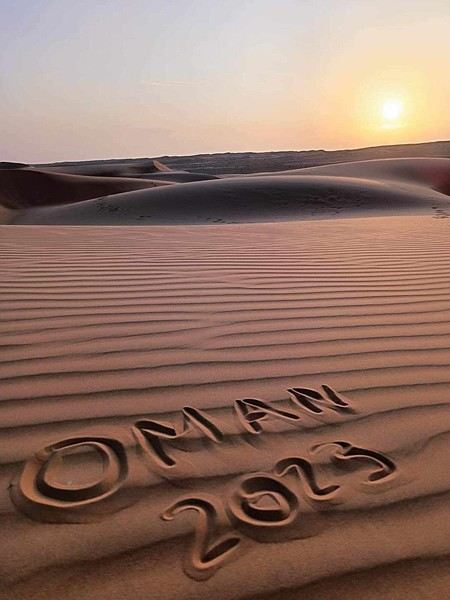
If we waited so long to explore this part of the world, it’s because a few questions were nagging at us, like: Can two Landais party lovers like us survive 15 days without apéro 😄? Or, more seriously: Can a feminist like me enjoy traveling in such a conservative country?
That is the question (and I feel your pain with this unbearable suspense 😅).
Ready to dive in?
PS: Apologies in advance for the casual tone of this travel journal—it’s the one I shared with our loved ones in real time, which explains everything.
We’re a couple in our fifties who’ve been traveling independently for ages—mostly in Asia, a bit in Africa, very little in the Americas, and never ever in West Asia until November 2023, when we discovered the Sultanate of Oman.
If we waited so long to explore this part of the world, it’s because a few questions were nagging at us, like: Can two Landais party lovers like us survive 15 days without apéro 😄? Or, more seriously: Can a feminist like me enjoy traveling in such a conservative country?
That is the question (and I feel your pain with this unbearable suspense 😅).
Ready to dive in?
PS: Apologies in advance for the casual tone of this travel journal—it’s the one I shared with our loved ones in real time, which explains everything.
Cost of withdrawals in Albania, using euros and bank cards
Hi there,
I’ve read that Albanian merchants (hotels, restaurants, gas stations, etc.) aren’t big fans of card payments and that the euro is widely accepted.
How is it these days? Should I plan to pay only in cash (which feels pretty unusual these days...)?
Also, all ATMs seem to charge a minimum withdrawal fee of 5 €. Which networks are the least expensive? And what’s the maximum amount you can withdraw?
Thanks to recent travelers for your answers! 🙂
I’ve read that Albanian merchants (hotels, restaurants, gas stations, etc.) aren’t big fans of card payments and that the euro is widely accepted.
How is it these days? Should I plan to pay only in cash (which feels pretty unusual these days...)?
Also, all ATMs seem to charge a minimum withdrawal fee of 5 €. Which networks are the least expensive? And what’s the maximum amount you can withdraw?
Thanks to recent travelers for your answers! 🙂
Itinéraire sur l'île de Kyushu (Japon) English translation pending
Bonjour,
Je prépare un voyage à Kyushu du 24/03 au 08/04 inclus.
Voici une ébauche de mon itinéraire, j' aimerais avoir vos avis sur celui çi. Arrivée le 25/03 à Fukuoka 3nuits Départ le 28 pour Yanagawa, kurume, yame 3nuits Départ le 31 pour Kumamoto 2nuits Départ le 02 pour Kagoshima 2nuits Retour le 04 à Fukuoka 4nuits (Visite de Beppu, Usiki, Itoshi, Hoshino et Kitakyushu)
Pensez-vous qu'il soit possible de tout visiter? Je ne sais pas trop comment organiser mon itinéraire par rapport aux distances des villes. Mes centres d'intêrets sont la visites de temples, les toris sur la mer, les rizières , les plantations de thé, être proche des habitants, la nature...
Je cherche aussi un ryokan assez sympa mais pas hors de prix mais je ne sais pas dans quel endroit il vaut mieux le prendre.
Merci pour votre aide qui me sera bien précieuse😉 Françou
Voici une ébauche de mon itinéraire, j' aimerais avoir vos avis sur celui çi. Arrivée le 25/03 à Fukuoka 3nuits Départ le 28 pour Yanagawa, kurume, yame 3nuits Départ le 31 pour Kumamoto 2nuits Départ le 02 pour Kagoshima 2nuits Retour le 04 à Fukuoka 4nuits (Visite de Beppu, Usiki, Itoshi, Hoshino et Kitakyushu)
Pensez-vous qu'il soit possible de tout visiter? Je ne sais pas trop comment organiser mon itinéraire par rapport aux distances des villes. Mes centres d'intêrets sont la visites de temples, les toris sur la mer, les rizières , les plantations de thé, être proche des habitants, la nature...
Je cherche aussi un ryokan assez sympa mais pas hors de prix mais je ne sais pas dans quel endroit il vaut mieux le prendre.
Merci pour votre aide qui me sera bien précieuse😉 Françou
Ouverture des frontières aux États-Unis pour les Européens English translation pending
Bonjour ma famille et moi même devont partir le 09 juillet pour faire un trip en Californie pour 3 semaines le souci je n’arrive pas à voir des informations sur l’ouverture des frontières américaines pour nous les européens. Quelqu’un aurait il une réponse à me donner . Merci
Vos photos du Maroc English translation pending
bonjour
merci de partager si vous le voulez , vos photos et adresses sympa !
en premier évidemment mon village préféré !
AÏt Benhaddou , découvert en 202015 ...2 ou 3 auberges à l'époque ! j'étais à la Baraka ! à l'entrée du village ! c'était tellement cool à cette époque ! je faisais la cuisine avec Mohamed le cuisinier , dans la cuisine de l'auberge !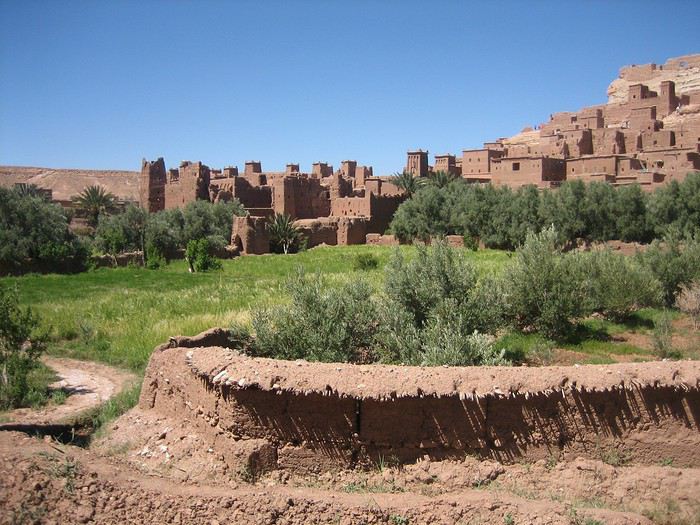
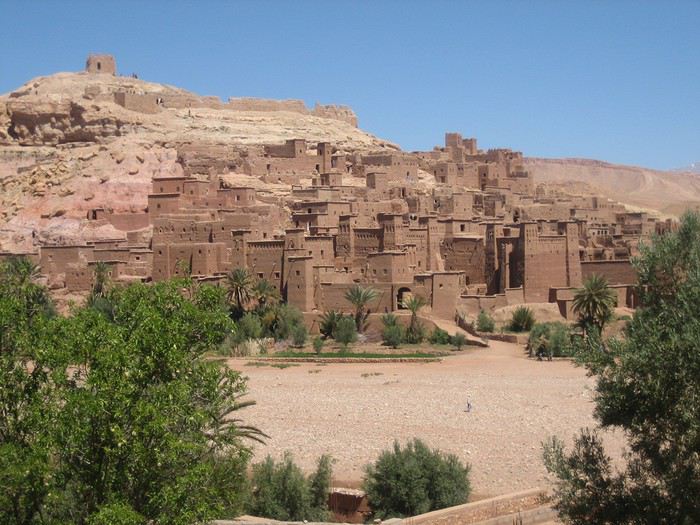
l'équipe de l'auberge " la baraka "
 A gauche , Brahim Bolkaid qui est le patron de l'auberge actuelle " maison d'hôtes panoramic "
en bas à droite le cuisinier !
j'en ai passer des heures dans la cuisine !
à cette période , il y avait des énormes bus d'Allemands , qui arrivaient avec toute leur nourriture !
ils consommaient très peu !
mais on leur servaient surtout des salades fraiches , des boisons ...
ils restaient 3 heures : boissons , pipi , visite du ksar et hop ils repartaient !
A gauche , Brahim Bolkaid qui est le patron de l'auberge actuelle " maison d'hôtes panoramic "
en bas à droite le cuisinier !
j'en ai passer des heures dans la cuisine !
à cette période , il y avait des énormes bus d'Allemands , qui arrivaient avec toute leur nourriture !
ils consommaient très peu !
mais on leur servaient surtout des salades fraiches , des boisons ...
ils restaient 3 heures : boissons , pipi , visite du ksar et hop ils repartaient !
la fresque chez Brahim !
AÏt Benhaddou , découvert en 202015 ...2 ou 3 auberges à l'époque ! j'étais à la Baraka ! à l'entrée du village ! c'était tellement cool à cette époque ! je faisais la cuisine avec Mohamed le cuisinier , dans la cuisine de l'auberge !
l'équipe de l'auberge " la baraka "
A gauche , Brahim Bolkaid qui est le patron de l'auberge actuelle " maison d'hôtes panoramic "
en bas à droite le cuisinier !
j'en ai passer des heures dans la cuisine !
à cette période , il y avait des énormes bus d'Allemands , qui arrivaient avec toute leur nourriture !
ils consommaient très peu !
mais on leur servaient surtout des salades fraiches , des boisons ...
ils restaient 3 heures : boissons , pipi , visite du ksar et hop ils repartaient !la fresque chez Brahim !
Véhicule, itinéraire, budget... pour road trip en Amérique du Sud English translation pending
Hello tout le monde!
Après avoir beaucoup lu et appris sur ce forum, je me lance à mon tour à poser nos questions car nous sommes un peu perdus.
Nous aimerions faire un road trip avec ma fille (qui aura 3 ans) et mon copain pendant quelques mois (max. 6 mois). Idéalement nous pensions partir en Amérique du Sud en octobre 2020 (avant ce ne serait pas possible, mais plus tard ça l'est).
Nous avons plein de questions (pardon 😛) mais vous nous aideriez énormément en répondant à celles que vous pouvez.
Véhicule:
Nous ne savons pas quoi choisir comme véhicule. Il nous faut un minimum de confort et voulons une certaine liberté, pouvoir nous balader peu importe l'état des routes. Pour l'achat du véhicule nous avons un budget de 6'000 euros. Mon copain s'y connait un peu en mécanique. L'achat de la voiture se fera dans le Sud de l'Argentine (mon copain étant résident argentin)
Quelle voiture serait le plus adaptée? Comment économiser (autant que possible) niveau essence? 6'000 euros est-ce suffisant pour une voiture de qualité qui ne tombera pas en panne au bout d'une semaine? À quoi faut-il faire attention pour le choix du véhicule?
Itinéraire:
Nous n'avons pas d'itinéraire précis, je pensais partir du Sud de l'Argentine jusqu'en Colombie, redescendre à Iquitos (Pérou), aller au Brésil (par le fleuve) et redescendre par les côtes brésiliennes, Paraguay et côtes argentines. Pour faire la boucle. Concernant le transport de voiture sur le fleuve Amazone, j'ai trouvé très peu d'informations. L'itinéraire pourrait aussi être fait dans l'autre sens.
Auriez-vous un meilleur itinéraire à me proposer? Auriez-vous plus d'informations sur le transport de véhicules sur le fleuve depuis Iquitos (selon ce que j'ai pu lire sur internet, mais si vous connaissez un autre endroit depuis lequel on pourrait aller directement au Brésil dites-le moi svp). Faites-moi s'il vous plaît part de votre expérience si vous avez fait cette (ou une autre) traversée.
Budget:
Nous avons un budget de 6'000 euros pour le véhicule. Pour le voyage nous disposons d'environ 2'000 euros par mois. Billet d'avion Au delà de faire de la route et de voyager un peu à la "roots" nous aimerions pouvoir avoir des moments tout-confort; manger dans des restaurants, dormir dans un hôtel, faire des activités chères comme par exemple le survol des Lignes de Nazca, la visite des Chute de l'Iguazu, de la plongée, etc. Cependant nous pensions aussi travailler/aider dans certains endroits en l'échange de l'hospitalité afin d'être complètement immergée dans la culture de chaque pays et d'avoir des échanges avec les locaux car c'est le désavantage de voyager en véhicule il me semble..
Pensez-vous que le budget soit suffisant?
Moyen de paiement:
Le meilleur moyen et le plus sur serait la carte de crédit j'imagine? Y a-t-il certaines restrictions? À quoi faut-il que nous fassions attention? Auriez-vous des conseils notamment sur les montants à retirer, les lieux, garder des dollar et la monnaie du pays ou la monnaie locale suffit?
Climat:
Selon notre itinéraire, pensez-vous que le climat nous soit favorable? Tout en sachant que nous craignons beaucoup plus le froid que le chaud. Nous devons être de retour de ce voyage au maximum en juin 2020. Donc nous pouvons encore changer les dates et en choisir des meilleures.
Sécurité:
Ce qui me fait un peu peur je dois l'avouer c'est que nous allons faire un tour de l'Amérique du Sud avec une espèce de maison ambulante. J'ai l'impression que c'est très tape-à-l'oeil et que sur une route un peu reculée on pourrait avoir des soucis au niveau de notre sécurité, ou surtout de la sécurité de nos affaires.
Comment me rassurer de ce côté-là? Comment savoir si nous pouvons nous arrêter et dormir sans qu'il ne nous arrive quelque chose (mis-à-part le bon sens)? Il ne me semble pas que ceux qui partent en Road Trip s'arrêtent toujours dans des campings... Comment font-ils pour trouver des endroits sûrs? Auriez-vous des conseils là-dessus? Ca parait bête, ou peut-être il faut être sur place pour le savoir mais ça me parait vraiment être quelque chose de compliqué..
Voilà voilà, rien que de poser toutes ces questions ça concrétisent notre voyage et ça fait rêver. Si vous avez d'autres idées, conseils, astuces, recommandations à me faire je vous lirai avec grand plaisir! Tout ce que vous nous direz sera un réel plus pour nous.
Ce voyage est un projet et un rêve, bien sûr nous partirons uniquement si la situation sanitaire nous le permet.
J'ai hâte de vous lire.. Je vous remercie d'avance! 😎
Après avoir beaucoup lu et appris sur ce forum, je me lance à mon tour à poser nos questions car nous sommes un peu perdus.
Nous aimerions faire un road trip avec ma fille (qui aura 3 ans) et mon copain pendant quelques mois (max. 6 mois). Idéalement nous pensions partir en Amérique du Sud en octobre 2020 (avant ce ne serait pas possible, mais plus tard ça l'est).
Nous avons plein de questions (pardon 😛) mais vous nous aideriez énormément en répondant à celles que vous pouvez.
Véhicule:
Nous ne savons pas quoi choisir comme véhicule. Il nous faut un minimum de confort et voulons une certaine liberté, pouvoir nous balader peu importe l'état des routes. Pour l'achat du véhicule nous avons un budget de 6'000 euros. Mon copain s'y connait un peu en mécanique. L'achat de la voiture se fera dans le Sud de l'Argentine (mon copain étant résident argentin)
Quelle voiture serait le plus adaptée? Comment économiser (autant que possible) niveau essence? 6'000 euros est-ce suffisant pour une voiture de qualité qui ne tombera pas en panne au bout d'une semaine? À quoi faut-il faire attention pour le choix du véhicule?
Itinéraire:
Nous n'avons pas d'itinéraire précis, je pensais partir du Sud de l'Argentine jusqu'en Colombie, redescendre à Iquitos (Pérou), aller au Brésil (par le fleuve) et redescendre par les côtes brésiliennes, Paraguay et côtes argentines. Pour faire la boucle. Concernant le transport de voiture sur le fleuve Amazone, j'ai trouvé très peu d'informations. L'itinéraire pourrait aussi être fait dans l'autre sens.
Auriez-vous un meilleur itinéraire à me proposer? Auriez-vous plus d'informations sur le transport de véhicules sur le fleuve depuis Iquitos (selon ce que j'ai pu lire sur internet, mais si vous connaissez un autre endroit depuis lequel on pourrait aller directement au Brésil dites-le moi svp). Faites-moi s'il vous plaît part de votre expérience si vous avez fait cette (ou une autre) traversée.
Budget:
Nous avons un budget de 6'000 euros pour le véhicule. Pour le voyage nous disposons d'environ 2'000 euros par mois. Billet d'avion Au delà de faire de la route et de voyager un peu à la "roots" nous aimerions pouvoir avoir des moments tout-confort; manger dans des restaurants, dormir dans un hôtel, faire des activités chères comme par exemple le survol des Lignes de Nazca, la visite des Chute de l'Iguazu, de la plongée, etc. Cependant nous pensions aussi travailler/aider dans certains endroits en l'échange de l'hospitalité afin d'être complètement immergée dans la culture de chaque pays et d'avoir des échanges avec les locaux car c'est le désavantage de voyager en véhicule il me semble..
Pensez-vous que le budget soit suffisant?
Moyen de paiement:
Le meilleur moyen et le plus sur serait la carte de crédit j'imagine? Y a-t-il certaines restrictions? À quoi faut-il que nous fassions attention? Auriez-vous des conseils notamment sur les montants à retirer, les lieux, garder des dollar et la monnaie du pays ou la monnaie locale suffit?
Climat:
Selon notre itinéraire, pensez-vous que le climat nous soit favorable? Tout en sachant que nous craignons beaucoup plus le froid que le chaud. Nous devons être de retour de ce voyage au maximum en juin 2020. Donc nous pouvons encore changer les dates et en choisir des meilleures.
Sécurité:
Ce qui me fait un peu peur je dois l'avouer c'est que nous allons faire un tour de l'Amérique du Sud avec une espèce de maison ambulante. J'ai l'impression que c'est très tape-à-l'oeil et que sur une route un peu reculée on pourrait avoir des soucis au niveau de notre sécurité, ou surtout de la sécurité de nos affaires.
Comment me rassurer de ce côté-là? Comment savoir si nous pouvons nous arrêter et dormir sans qu'il ne nous arrive quelque chose (mis-à-part le bon sens)? Il ne me semble pas que ceux qui partent en Road Trip s'arrêtent toujours dans des campings... Comment font-ils pour trouver des endroits sûrs? Auriez-vous des conseils là-dessus? Ca parait bête, ou peut-être il faut être sur place pour le savoir mais ça me parait vraiment être quelque chose de compliqué..
Voilà voilà, rien que de poser toutes ces questions ça concrétisent notre voyage et ça fait rêver. Si vous avez d'autres idées, conseils, astuces, recommandations à me faire je vous lirai avec grand plaisir! Tout ce que vous nous direz sera un réel plus pour nous.
Ce voyage est un projet et un rêve, bien sûr nous partirons uniquement si la situation sanitaire nous le permet.
J'ai hâte de vous lire.. Je vous remercie d'avance! 😎