Results for "Nil+|+1+>+50"
6944 results found.
Moustiques au Québec English translation pending
Bonjour,
Nous venons en famille, en vacances, au Quebec la seconde quinzaine d'aout 2004.Nous comptons circuler dans le sud de votre province. Une de mes fille est tres sensible aux attaques de moustiques.On m'a annoncé que les moustiques sont un fléaux chez vous.Pourriez-vous me donner une info fiable sur ce probleme.Petite précision, nous voyagerons en motorisé.Merci de votre aide.
Nous venons en famille, en vacances, au Quebec la seconde quinzaine d'aout 2004.Nous comptons circuler dans le sud de votre province. Une de mes fille est tres sensible aux attaques de moustiques.On m'a annoncé que les moustiques sont un fléaux chez vous.Pourriez-vous me donner une info fiable sur ce probleme.Petite précision, nous voyagerons en motorisé.Merci de votre aide.
Anti-moustique? English translation pending
Hello!
je rebondis sur toutes ces question concernant le palu : la plupart d'entre vous pense qu'il vaut mieux privilégier une bonne protection (moustiquaire, anti-moustique) à un traitement médicamenteux.
Pour ce qui est de l'anti-moustique, je me pose encore quelques questions : d'abord parce que le premier anti-moustique que j'ai utilisé m'a généré une giga allergie 🤪🤪. Le toubib m'a alors conseillé de changer de produit insecticide et je me suis tournée vers le 5 sur 5. Produit qui a super bien marché en Equateur (moi qui suis la victime favorite de ces bestioles, pas une ne s'est aventurée à venir me piquer!!). Par contre, effet ZERO en Thailande pour mon homme et moi!! Je lui avais clamé les vertus de ce produit miracle en long, large et travers et on a passé 8 jours à concourir pour le prix du nombre de piqûres.....
Alors, si on reste dans l'idée qu'on ne fait pas de prévention et donc pas de médoc de type lariam, malarone.... qu'en est-il si, sur place, le produit qui doit éviter que les mosquitos te transmettent la maladie se révèle innefficace?
je rebondis sur toutes ces question concernant le palu : la plupart d'entre vous pense qu'il vaut mieux privilégier une bonne protection (moustiquaire, anti-moustique) à un traitement médicamenteux.
Pour ce qui est de l'anti-moustique, je me pose encore quelques questions : d'abord parce que le premier anti-moustique que j'ai utilisé m'a généré une giga allergie 🤪🤪. Le toubib m'a alors conseillé de changer de produit insecticide et je me suis tournée vers le 5 sur 5. Produit qui a super bien marché en Equateur (moi qui suis la victime favorite de ces bestioles, pas une ne s'est aventurée à venir me piquer!!). Par contre, effet ZERO en Thailande pour mon homme et moi!! Je lui avais clamé les vertus de ce produit miracle en long, large et travers et on a passé 8 jours à concourir pour le prix du nombre de piqûres.....
Alors, si on reste dans l'idée qu'on ne fait pas de prévention et donc pas de médoc de type lariam, malarone.... qu'en est-il si, sur place, le produit qui doit éviter que les mosquitos te transmettent la maladie se révèle innefficace?
Hôtels de luxe incontournables pour barroudeurs... English translation pending
Les voyageurs ouverts d'esprit ne se cantonnent pas qu'aux auberges de jeunesse, hôtels bas de gamme ou chambres d'hôtes. Parfois, manger ou dormir dans un hôtel de luxe peut se révéler être un moment incontournable d'un voyage réussi. Je commence :
PALMYRE : L'hôtel "SHAMS", pour y déguster ses mezzehs fins et délicats dans son immense réstaurant souvent vide aux tentures orientales. La vue sur le site archéologique y est imprenable. Se baigner dans la piscine après le repas, en plein désert est un autre moment unique à vivre absolument.
L'hôtel "Zénobie" pour y manger sur la terrasse à l'ombre des oliviers, sur des chapiteaux de temples ou de palais faisant office de tables. C'est le seul hôtel de Tadmor se trouvant sur le site de Palmyre. Du jardin restaurant ou de sa chambre l'on voit le site.
ISPAHAN : L'hôtel "Shah Abbas". C'est un ancien caravansérail transformé en hôtel luxueux. manger dans son jardin bordé de lauriers roses et blancs est un luxe tout à fait abordable pour tout voyageur, y dormir l'est moins mais pour ceux qui peuvent se le permettre, il serait dommage de s'en priver.
à vous ...
PALMYRE : L'hôtel "SHAMS", pour y déguster ses mezzehs fins et délicats dans son immense réstaurant souvent vide aux tentures orientales. La vue sur le site archéologique y est imprenable. Se baigner dans la piscine après le repas, en plein désert est un autre moment unique à vivre absolument.
L'hôtel "Zénobie" pour y manger sur la terrasse à l'ombre des oliviers, sur des chapiteaux de temples ou de palais faisant office de tables. C'est le seul hôtel de Tadmor se trouvant sur le site de Palmyre. Du jardin restaurant ou de sa chambre l'on voit le site.
ISPAHAN : L'hôtel "Shah Abbas". C'est un ancien caravansérail transformé en hôtel luxueux. manger dans son jardin bordé de lauriers roses et blancs est un luxe tout à fait abordable pour tout voyageur, y dormir l'est moins mais pour ceux qui peuvent se le permettre, il serait dommage de s'en priver.
à vous ...
Je croyais... English translation pending
Je croyais que le desert, c'etait seulement des dunes à perte de vue.
J'ai traversé des champs de cailloux, slalomé dans des palmeraies, grimpé des plateaux, recouvert les chaussures de terre, ecrasé une multitude de coquillages.
J'ai decouvert plein de noms magiques : oued, reg, erg, guelta, aklé, barkhane...
Je croyais que les dunes etaient monotones.
Non seulement elles sont tres belles, mais nous charment par leurs rondeurs, leurs hauteurs-modestes ou immenses-, leurs lignes plus ou moins courbes, leur couleurs du jaune pale au blanc en passant par l'ocre et le rouge.
Je croyais que les dunes n'etaient que du mineral de sable et de poussiere.
J'ai ete surprise par la végétation fragile et cependant resistante qui se niche ca et la pour ajouter une nouvelle couleur à la palette deja riche.
Je croyais que marcher sur les dunes etait facile.
J'ai beaucoup souffert le premier jour, grimper, glisser, s'enfoncer jusqu'au genou, se laisser tomber, soulever les chaussures de plus en plus lourde de ce sable pourtant si leger. Impression d'evoluer sur de la neige, tantot glacée, tantot poudreuse.
Ensuite l'experience d'où placer ses pas, la sagesse de suivre la trace plutot que de vouloir tracer la sienne, le bonheur de sentir le sable fin sous les pieds nus. Les longues cretes ont ete domptées avec plaisir et j'en redemande encore !
Je croyais que Theodore Monod exagerait quand dans "Meharée", il compare l'immensité des dunes à la mer, la meharée à un bateau et le puit à un port où l'on refait la provision d'eau et de nourriture.
Il n'avait pas tort.
J'ai surfé des vagues, traversé des oceans, eprouvé le plaisir d'arriver à bon port et trouver une halte sur la terre ferme mais pas subi de tempetes ni croisé de pirates ou corsaires.
Je croyais que le desert c'est que du ciel bleu et du soleil.
J'ai resisté contre le vent d'est suivant tant bien que mal le nord, j'ai pesté contre les nuages bas et gris qui gachent le paysage, j'ai ete surprise au milieu d'une nuit à la belle etoile par quelques gouttes de pluie.
J'ai connu dans la meme journee 13 degres à 8h et 45 degres à 13h.
Je croyais que le desert, c'etait peu de verdure.
J'ai vu des palmiers bien verts, des acacias bien piquants, des arbustes bien resitants, des arbres au lait blanc.
Je croyais que le desert, ce n'etait que des chameaux, des chevres et des hommes.
J'ai croisé un fennec en pleine course, senti une gerbille escalader mon pied, observé les oeuvres d'art des traces de scarabee, mangé du mouton, coiffé le bonnet d'âne et pesté contre toutes les mouches posées sur mon sac à dos.
J'ai echangé des "bonjour, ca va", "tu as quel age?", "tu as un bic", "tu me donnes tes lunettes" avec des gamins souriants et peu timides, refusé de nombreuses fois les objets artisanaux des femmes, accepté le fait que les hommes ne serrent pas la main des charmantes demoiselles.
Je croyais ne visiter que la Mauritanie.
J'ai marché sur la Lune, foulé la terre rouge de Mars, evolué dans les grands canyons, apercu la vallee du Nil et revé de John Wayne.
J'ai decouvert des villes riches en histoire, envahies par les dunes, assechees par le manque d'eau.
Ne Croyez pas les Deserts, Allez les Voir !
Mauritanie, decembre 2002
J'ai traversé des champs de cailloux, slalomé dans des palmeraies, grimpé des plateaux, recouvert les chaussures de terre, ecrasé une multitude de coquillages.
J'ai decouvert plein de noms magiques : oued, reg, erg, guelta, aklé, barkhane...
Je croyais que les dunes etaient monotones.
Non seulement elles sont tres belles, mais nous charment par leurs rondeurs, leurs hauteurs-modestes ou immenses-, leurs lignes plus ou moins courbes, leur couleurs du jaune pale au blanc en passant par l'ocre et le rouge.
Je croyais que les dunes n'etaient que du mineral de sable et de poussiere.
J'ai ete surprise par la végétation fragile et cependant resistante qui se niche ca et la pour ajouter une nouvelle couleur à la palette deja riche.
Je croyais que marcher sur les dunes etait facile.
J'ai beaucoup souffert le premier jour, grimper, glisser, s'enfoncer jusqu'au genou, se laisser tomber, soulever les chaussures de plus en plus lourde de ce sable pourtant si leger. Impression d'evoluer sur de la neige, tantot glacée, tantot poudreuse.
Ensuite l'experience d'où placer ses pas, la sagesse de suivre la trace plutot que de vouloir tracer la sienne, le bonheur de sentir le sable fin sous les pieds nus. Les longues cretes ont ete domptées avec plaisir et j'en redemande encore !
Je croyais que Theodore Monod exagerait quand dans "Meharée", il compare l'immensité des dunes à la mer, la meharée à un bateau et le puit à un port où l'on refait la provision d'eau et de nourriture.
Il n'avait pas tort.
J'ai surfé des vagues, traversé des oceans, eprouvé le plaisir d'arriver à bon port et trouver une halte sur la terre ferme mais pas subi de tempetes ni croisé de pirates ou corsaires.
Je croyais que le desert c'est que du ciel bleu et du soleil.
J'ai resisté contre le vent d'est suivant tant bien que mal le nord, j'ai pesté contre les nuages bas et gris qui gachent le paysage, j'ai ete surprise au milieu d'une nuit à la belle etoile par quelques gouttes de pluie.
J'ai connu dans la meme journee 13 degres à 8h et 45 degres à 13h.
Je croyais que le desert, c'etait peu de verdure.
J'ai vu des palmiers bien verts, des acacias bien piquants, des arbustes bien resitants, des arbres au lait blanc.
Je croyais que le desert, ce n'etait que des chameaux, des chevres et des hommes.
J'ai croisé un fennec en pleine course, senti une gerbille escalader mon pied, observé les oeuvres d'art des traces de scarabee, mangé du mouton, coiffé le bonnet d'âne et pesté contre toutes les mouches posées sur mon sac à dos.
J'ai echangé des "bonjour, ca va", "tu as quel age?", "tu as un bic", "tu me donnes tes lunettes" avec des gamins souriants et peu timides, refusé de nombreuses fois les objets artisanaux des femmes, accepté le fait que les hommes ne serrent pas la main des charmantes demoiselles.
Je croyais ne visiter que la Mauritanie.
J'ai marché sur la Lune, foulé la terre rouge de Mars, evolué dans les grands canyons, apercu la vallee du Nil et revé de John Wayne.
J'ai decouvert des villes riches en histoire, envahies par les dunes, assechees par le manque d'eau.
Ne Croyez pas les Deserts, Allez les Voir !
Mauritanie, decembre 2002
Egypte en routard English translation pending
😎Bonjour a tous,
J'aimerais avoir des infos sur la possibilite et le risque de faire la Haute Egypte en routard, entre les convois des cars de touriste, la possibilite de flanner ds les villes, l'acces a la mer rouge seul ... Bref, quels sont les conditions d'un routard en Haute Egypte ...??
Merci
J'aimerais avoir des infos sur la possibilite et le risque de faire la Haute Egypte en routard, entre les convois des cars de touriste, la possibilite de flanner ds les villes, l'acces a la mer rouge seul ... Bref, quels sont les conditions d'un routard en Haute Egypte ...??
Merci
Bons plans à Assouan (Egypte) English translation pending
nous partons à ASSOUAN pour quelques jours.
souhaitons bien sur se rendre à ABOU SIMBEL et comptons s'organiser pour le faire sur place : avez vous des tuyaux, des bons plans à recommander ?
sinon restaus et lieux sympas sur ASSOUAN ? merci de votre aide ! bon réveillon :-)
sinon restaus et lieux sympas sur ASSOUAN ? merci de votre aide ! bon réveillon :-)
Caraibes avec enfant de 2ans et demi English translation pending
Bonsoir à tous!
je suis désespéremment à la recherche de LA formule miracle qui nous permettrait de passer une ou deux semaines aux caraïbes dans un hotel avec un club enfant pour pouvoir se reposer 2-3 heures par jour. connaissez-vous un hôtel qui propose un club pour les enfants de 2 ans et demi? La plupart commencent à 4 ans. Nous avions pensé à la République Dominicaine mais il y a tant d'avis divergents sur la qualité des hôtels all-inclusive et les maladies que nous sommes ouverts à toute bonne idée (nous regardons aussi les croisières ...)
Merci de me conseiller, nous souhaitons partir début décembre.
😉
je suis désespéremment à la recherche de LA formule miracle qui nous permettrait de passer une ou deux semaines aux caraïbes dans un hotel avec un club enfant pour pouvoir se reposer 2-3 heures par jour. connaissez-vous un hôtel qui propose un club pour les enfants de 2 ans et demi? La plupart commencent à 4 ans. Nous avions pensé à la République Dominicaine mais il y a tant d'avis divergents sur la qualité des hôtels all-inclusive et les maladies que nous sommes ouverts à toute bonne idée (nous regardons aussi les croisières ...)
Merci de me conseiller, nous souhaitons partir début décembre.
😉
Climat en Egypte au mois de novembre? English translation pending
Bonjour à tous !
L'Egypte est un pays qui me fait rêver et j'ai enfin l'occasion de m'y rendre.
J'ai constaté qu'il y avait de nombreuses personnes calées sur ce lieu magique et j'ai besoin de leur avis...
J'ai choisi pour ma première visite du pays de faire une croisière, point de vu temps et budget c'est la formule qui m'a semblé la mieux adaptée. Mais je me pose la question suivante est ce que le mois de novembre est une période agréable ?
merci par avance de vos réponses 🙂
Levenez
L'Egypte est un pays qui me fait rêver et j'ai enfin l'occasion de m'y rendre.
J'ai constaté qu'il y avait de nombreuses personnes calées sur ce lieu magique et j'ai besoin de leur avis...
J'ai choisi pour ma première visite du pays de faire une croisière, point de vu temps et budget c'est la formule qui m'a semblé la mieux adaptée. Mais je me pose la question suivante est ce que le mois de novembre est une période agréable ?
merci par avance de vos réponses 🙂
Levenez
Transport et coût pour excursion à Abu Simbel en Egypte (13 personnes) English translation pending
bonjour
nous partons avec notre nombreuse famille en Egypte cet hiver en croisière organisée modèle touriste allemand! Mais bon, nous sommes nombreux, certains jeunes d'autres agés et cela nous est apparu comme la moins mauvaise solution. Simplement le tarif de l'excursion à Abu simbel nous semble redibitoire! J'ai vu que l'on pouvait negocier avec les hôtels pour un transport independant, cependant je ne pense pas qu'ils nous prennent à treize en pleine saison!
Je ne sais pas non plus de combien de temps nous disposerons pour organiser ce petit periple.
Pouvez vous me donner des tuyaux. Existe-t-il une possibilité de louer un mini bus pour une dizaine? (tout le monde ne voudra peut etre pas venir)
Quel prix cela doit il coûter? (prix maximum, je ne veux pas negocier pendant très longtemps et j'accepte de payer un peu plus cher les gens du "cru")
merci
nous partons avec notre nombreuse famille en Egypte cet hiver en croisière organisée modèle touriste allemand! Mais bon, nous sommes nombreux, certains jeunes d'autres agés et cela nous est apparu comme la moins mauvaise solution. Simplement le tarif de l'excursion à Abu simbel nous semble redibitoire! J'ai vu que l'on pouvait negocier avec les hôtels pour un transport independant, cependant je ne pense pas qu'ils nous prennent à treize en pleine saison!
Je ne sais pas non plus de combien de temps nous disposerons pour organiser ce petit periple.
Pouvez vous me donner des tuyaux. Existe-t-il une possibilité de louer un mini bus pour une dizaine? (tout le monde ne voudra peut etre pas venir)
Quel prix cela doit il coûter? (prix maximum, je ne veux pas negocier pendant très longtemps et j'accepte de payer un peu plus cher les gens du "cru")
merci
Resto éthiopien à Paris English translation pending
Et là, super resto aussi, dans le genre de celui que FranceQuebec vient de décrire.
Godjo, qui veut dire paysan, je crois en Ethiopien, rue de l'Ecole Polythechnique, dans le 5e à Paris. Minuscule à l'intérieur, mais super sympa, super chaleureux, super bon, très original, dépaysant, on mange dans des plats en forme de bassines, en osier, pour deux, avec les mains. Le couple qui le tient est très sympa, et les deux sont super beaux. Si tous les éthiopiens sont aussi beaux, rien que pour ça, il faut aller là bas. Et cette culture a l'air vraiment fascinante. Je ne peux que vous conseiller d'y aller. Mais vu comment c'est petit, attention à la place. Bon signe, la plupart des clients sont des éthiopiens! C'est que ce n'est pas un truc à touriste (même si le quartier...).
Certains d'entre vous connaissent? Qu'en pensez vous?
Godjo, qui veut dire paysan, je crois en Ethiopien, rue de l'Ecole Polythechnique, dans le 5e à Paris. Minuscule à l'intérieur, mais super sympa, super chaleureux, super bon, très original, dépaysant, on mange dans des plats en forme de bassines, en osier, pour deux, avec les mains. Le couple qui le tient est très sympa, et les deux sont super beaux. Si tous les éthiopiens sont aussi beaux, rien que pour ça, il faut aller là bas. Et cette culture a l'air vraiment fascinante. Je ne peux que vous conseiller d'y aller. Mais vu comment c'est petit, attention à la place. Bon signe, la plupart des clients sont des éthiopiens! C'est que ce n'est pas un truc à touriste (même si le quartier...).
Certains d'entre vous connaissent? Qu'en pensez vous?
Croisière de Louxor à Assouan (Égypte) English translation pending
bonjour,
je pars en egypte pour une croisière de Louxor à Assouan. Je cherche des conseils sur les choses à ne pas oublier d'apporter, et les visites à ne pas louper.
par exemple, toutes les visites sont comprises sauf la visite du temple d'Abou Simbel et deux sons et lumières. ce forfait rajoute 110 euros au total. je voudrais savoir si cela vaut le coup de suivre le groupe, ou si je peux me débrouiller par moi même pour aller d'assouan à abou simbel? y a t il des taxis, des bus... etc ? à combien ça me reviendrait environ pour 2 personnes avec la visite du temple ?
Pensez vous que les sons et lumières soient eux aussi inmanquables ?
Quels sont les objets à ne pas oublier à part la crème solaire, le répulsif à moustique, et l'immodium ?
Merci pour vos réponses. Je pars dans quelques jours.
je pars en egypte pour une croisière de Louxor à Assouan. Je cherche des conseils sur les choses à ne pas oublier d'apporter, et les visites à ne pas louper.
par exemple, toutes les visites sont comprises sauf la visite du temple d'Abou Simbel et deux sons et lumières. ce forfait rajoute 110 euros au total. je voudrais savoir si cela vaut le coup de suivre le groupe, ou si je peux me débrouiller par moi même pour aller d'assouan à abou simbel? y a t il des taxis, des bus... etc ? à combien ça me reviendrait environ pour 2 personnes avec la visite du temple ?
Pensez vous que les sons et lumières soient eux aussi inmanquables ?
Quels sont les objets à ne pas oublier à part la crème solaire, le répulsif à moustique, et l'immodium ?
Merci pour vos réponses. Je pars dans quelques jours.
Mon voyage en Egypte en avril 2000 English translation pending
Vacances de pâques, avril 2000.
Tout d'abord une semaine de croisière. Nous étions un groupe de 20 personnes.
En attendant le passage de l'écluse d'Esna, nous avons été distraits par des vendeurs en barques qui s'arrêtent le long des bateaux de touristes et envoient leur marchandise (nappes et djellabas) par-dessus bord. Original...
Première visite pour le temple de Philae à Assouan. Ah ! Belle Isis, que ton destin fut tragique mais grandiose ! Notre guide nous a raconté son histoire grâce à un petit jeu de rôle.
Passage par le haut barrage - impressionnant ! et par la carrière où gît toujours l'obélisque inachevé d'Hatshepsout . Bizarre de se dire qu'il y a 3500 ans qu'il existe et de penser aux ouvriers qui se sont échinés longtemps pour rien, que dalle !
Après-midi, départ en felouque pour la visite du jardin botanique de l'île Kitchener, escortés par des enfants en barquette propulsée à force d'huile de bras, qui nous chantent" Il était un petit navire" et se réjouissent de recevoir quelques bics en cadeau...
Lendemain petit matin, départ en avion pour le site d'Abou Simbel. Tout simplement FABULEUX !!! Dans le grand temple, j'étais carrément 3250 ans en arrière, sur les traces de Ramsès et sa chère Néfertari (elle a eu de la chance d'être aimée au point de se voir dédier un si beau temple...) Dire qu'ils ont été creusés à même la roche et 3200 ans plus tard, démontés en 1036 blocs et remontés 64 mètres plus haut...
Petit détour par la classique école de papyrus où l'on ne peut que se laisser tenter par une de ses créations que l'on pourrait croire d'époque pharaonique.
Profitons du soleil sur le bateau pendant que l'on nous conduit à Kom Ombo où l'on visite le temple à la tombée de la nuit. Je crois que c'est le seul temple double : 2 divinités - Sobek et Haroeris - salle d'attente pour la visite du peuple au prêtre-médecin de l'époque et ses momies de crocodiles.
Sur le bateau, soirée djellaba et dans les cabines, les stewards - tout le personnel est masculin - fabriquent des animaux à l'aide de serviettes de bain (crocodiles, singes etc)... super bien fait !
Départ en calèche pour le temple d'Edfou dédié à Horus, un des temples les mieux conservés car longtemps enfoui dans le sable.
Ensuite navigation vers Esna où l'on visite le temple de Khnoum qui a gardé quelques jolies couleurs.
Enfin LOUXOR et ses merveilles : Karnak (visite de jour et son et lumière le soir comme à Philae) où l'on se sent tout petit au milieu de la salle hypostyle avec ses 134 colonnes de 23 mètres, l'obélisque d'Hatshepsout ma reine préférée, le scarabée d'Aménophis III autour duquel les célibataires doivent tourner 7 fois pour trouver l'âme soeur, le lac sacré, la chapelle blanche dédiée surtout à Amon Min. Escapade à la bijouterie Radwan pour acheter un ankh, un cartouche et autres babioles. Temple de Louxor où subsiste une partie du dromos (allée de sphinx qui jadis le reliait à Karnak) Musée de Louxor qui recèle de vrais trésors, notamment une tête d'Akhenaton devant laquelle je suis restée pantoise. Etre ainsi face à face avec ce drôle de pharaon... troublant...Cinq heures du mat pour éviter les grosses chaleurs, direction la vallée des rois (tombes de Ramsès III, IX et Aménophis II - indescriptibles je vous renvoie aux illustrations) ; très jolies aussi les tombes dans la vallée des artisans, près des ruines du village de Deir el Medineh, peut-être les plus colorées, ainsi que la vallée des reines. Malheureusement, personne n'allait voir Néfertari et nous nous sommes seulement arrêtés devant le temple d'Hatshepsout sans le visiter. D'après notre guide, il est très abîmé à l'intérieur. Temple de millions d'années de Ramsès III à Medinet Abou et salutations aux colosses de Memnon ont clôturé cette croisière puis nous avons quitté le groupe.Repos bien mérité à l'hôtel Mövenpick sur l'île du crocodile à Louxor. Au bord du Nil, petits bungalows disséminés dans un jardin luxuriant, super piscine, navette gratuite pour le centre ville, couchers de soleil imprenables... Le paradis pendant 3 jours... Changement de décor : mégalopole du Caire - mais une guide rien que pour nous : citadelle de Salah al Din, mosquée du sultan Hassan, visite trop rapide au musée (masque d'or du roi Tout bien sûr incontournable et très émouvant- le contenu de sa tombe occupe tout le premier étage - Akhenaton et Néfertiti, Aménophis III et Tiyi, Khephren...)
Pyramides de Gizeh avec leur gardien sphinx (impressionnant !). Je ne suis pas entrée dans la pyramide, j'ai préféré voir la barque solaire de Kheops découverte en 1955 (grandiose !).
Memphis et son colosse couché de Ramsès II (il est vraiment partout !)
Et pour terminer, la pyramide de Djoser et le temple de Saqqarah.
Malheureusement, les plus belles choses ont une fin - et c'est le coeur lourd que je suis rentrée en Belgique car j'ignore si j'aurai encore la chance de retourner là-bas... Tout ce que j'ai vu dépassait de loin mes espérances les plus folles. Les Egyptiens malgré leur relative misère sont très souriants, accueillants, jamais pots de colle, et paraissent plus heureux que nous.
Grâce à ce récit, j'ai pu un peu revivre 2 semaines idylliques. J'espère que la longueur de mon message ne vous a paru rébarbative et que ceux qui ont déjà visité l'Egypte ont pu retrouver des souvenirs ; quant à ceux qui n'y sont pas encore allés, ils puissent avoir eu un avant-goût de cette superbe aventure qu'ils vivront peut-être un jour.
Sécurité en Egypte English translation pending
Quelqu'un peut il nous donner des infos sur la situation en Egypte avec la Guerre prévue par Bush ???
Peut on partir en relative sécurité et circuler librement au Caire et dans l'Egypte (train, bus, etc.) . Comment est la population vis à vis des touristes français ? 🙂
Peut on partir en relative sécurité et circuler librement au Caire et dans l'Egypte (train, bus, etc.) . Comment est la population vis à vis des touristes français ? 🙂
Climat de l'Egypte (Hurghada) pendant l'hiver English translation pending
j'envisage cet hiver, de partir à Hurghada, mais je n'ai aucune idée du climat à cette période.
si quelqu'un peut me renseigner.😕
température de l'air, mer, etc...j'hésite avec le sénegal.
merci de vos réponses
isabelle😉
si quelqu'un peut me renseigner.😕
température de l'air, mer, etc...j'hésite avec le sénegal.
merci de vos réponses
isabelle😉
Greece or Canary Islands for swimming and partying at the end of October?
Hi everyone!!
I’d love to get your opinions and advice on a destination. It’s actually for my 19-year-old son who wants to go to Greece with his cousin, who’s the same age. They’re looking at leaving on October 24th for 7 to 10 days. For their trip, they want gorgeous beaches where they can swim, beautiful typical villages and historic cities, stunning landscapes, but also lively spots for their nights out. In short, they’re not just going there to laze around—they want to make the most of it...
But here’s the thing: will the weather be too iffy at that time, especially for swimming? Also, would Crete be the best choice for what they’re looking for? Then, a travel agent suggested Tenerife instead because of the weather at that time of year—he said the climate there is the same all year round. But will they find landscapes and beaches as beautiful as in Crete?
Thanks in advance for your help
I’d love to get your opinions and advice on a destination. It’s actually for my 19-year-old son who wants to go to Greece with his cousin, who’s the same age. They’re looking at leaving on October 24th for 7 to 10 days. For their trip, they want gorgeous beaches where they can swim, beautiful typical villages and historic cities, stunning landscapes, but also lively spots for their nights out. In short, they’re not just going there to laze around—they want to make the most of it...
But here’s the thing: will the weather be too iffy at that time, especially for swimming? Also, would Crete be the best choice for what they’re looking for? Then, a travel agent suggested Tenerife instead because of the weather at that time of year—he said the climate there is the same all year round. But will they find landscapes and beaches as beautiful as in Crete?
Thanks in advance for your help
3 weeks in Laos, stress-free
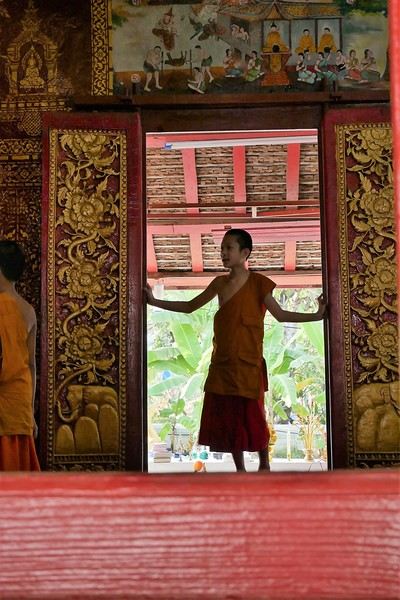 Come along, I'm taking you to this country where it's so nice to wander and slow down...
This trip was in 2023, but when I wanted to write my travel journal, VF was still closed to contributions... So, now that I've just finished my Japan travel journal here, I figured it was high time to honor this destination we came back from so enchanted. Disclaimer 1: This is a written travel journal. There’ll be text! Too much, for some! Disclaimer 2: This is an illustrated travel journal. There’ll be photos! Too many, for some!
I have to say, every time I try to discipline myself, to keep it shorter, to include fewer photos... I end up adding more. It feels like my dear Aunt Nicole, who exhausted us with her slide-show evenings in the 70s/80s, decided to take her revenge. The upside for you, readers, is that you can slip away anytime without offending Aunt Nicole. I won’t even notice!
Anyway, since I love maps, here’s one to give you an idea of where I’m taking you. As you can see, we only saw a tiny part of Laos (the areas circled in red); we only had 3 weeks for ourselves (my husband’s newly retired, I still work), and we prefer taking our time over rushing around like crazy.
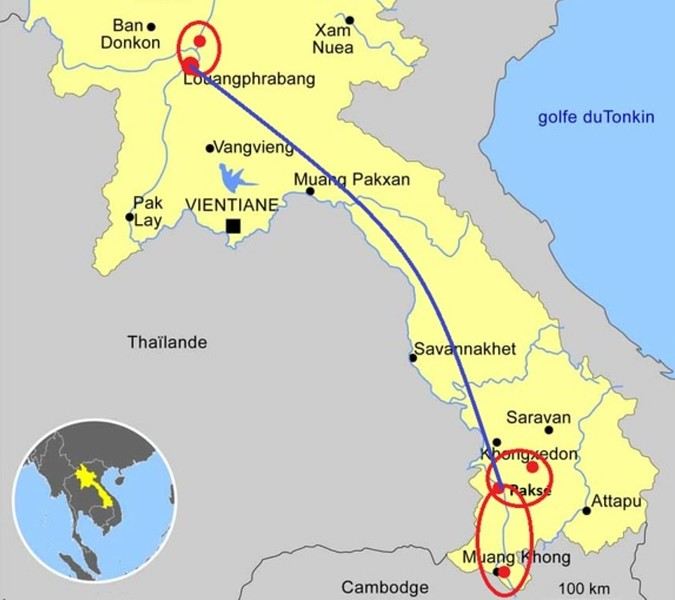
In broad strokes, it was very classic:
First, we “settled in” at Luang Prabang (8 days), because we wanted and needed to. From there, we took three days to venture a little further north—not far in kilometers, but as we know, distances aren’t just about km! Then we flew south to Paksé, letting ourselves drift down to the 4,000 Islands while stopping by the pre-Angkorian archaeological sites. We wrapped up with the Bolaven Plateau.
A few practical notes: We arrived via Bangkok, then took a Bangkok-Luang Prabang flight, having picked up our luggage in Bangkok to check it in for Luang Prabang. No issues—the Bangkok airport, which many of you know, is very well organized. We got our visas on arrival in Luang Prabang. Quick, but to be fair, we were on a “small” plane, and the big flights had arrived earlier, so we weren’t too crowded in line! At the end of our trip, we didn’t fly out of Paksé but from the nearby airport in Thailand, Ubon Ratchathani (a 2.5-hour drive from Paksé), then Bangkok and Paris. You’ll notice we skipped Vientiane to stay longer in Luang Prabang. That said, there’s now a high-speed train between Vientiane and Luang Prabang—good to know—and soon the (Chinese) train will go all the way to Bangkok and even Kuala Lumpur!
With that intro out of the way, let’s dive into the heart of the matter. To be continued: Slowing down the pace... in Luang Prabang
Tanzania: Discovering Ruaha and Nyerere (formerly Selous)
Hello,
We got back from Tanzania a month ago, on March 5th. I’ve started this trip report at the link the moderator asked me to use:
https://voyageforum.com/forum/decouverte-ruaha-nyerere-ex-selous-en-fevrier-mars-2026-d11466010/
You’ll find a video of our trip on my YouTube channel there.
Now I’ll tell you about our 10-night trip in Tanzania, with 8 nights spent in two parks we didn’t know. Tanzania isn’t new to us—it was even our first African safari destination back in 2012. https://www.youtube.com/@lolodetoul54 Since then, we’ve visited several East and Southern African countries: Kenya, South Africa, Namibia, Botswana, some of them multiple times. We usually travel in September during the dry season. We tried March 2024 for nine nights in the Okavango and loved it, except everything was dry, which wasn’t normal for the rainy season.
So for this second March trip during the wet season, we really got what we asked for… rain. But before that, we had to fight just to get to Tanzania.
Saturday, February 21, 2026:
It’s D-Day—the departure. What a hassle to organize flights to and within Tanzania! I’ll tell you all about it in another post: https://voyageforum.com/forum/toutes-compagnies-aeriennes-tanzaniennes-interdites-d10758360/ On top of that, Rwandair canceled our outbound flight a month before departure. They offered to reschedule us 3-4 days later—ridiculous for a 10-night trip we’d already booked. We had to cancel our tickets and buy new ones with Kenya Airways. We’re still waiting for our refund from Rwandair!!!!!!! So on Saturday, February 1st, our bags were packed. We headed to the Lorraine TGV station, about 30 km from home.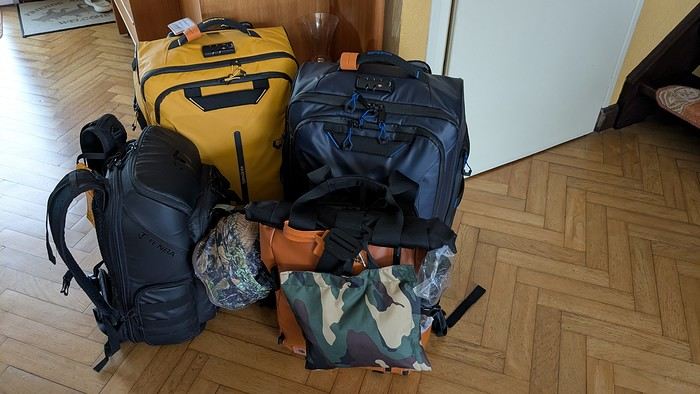 Direct train to Roissy—just 1h15. Quick and efficient.
All that was left was to wait for our overnight flight. We took off on time, just before 11 PM. Smooth flight, nothing unusual. Arrived in Nairobi around 9 AM. A few hours’ wait, then a flight to Dar es Salaam, landing at our first destination around 12:45 PM.
Our local contact, Anne from Asanterra agency, picked us up at the airport. It was hot and humid—it was raining.
Direct train to Roissy—just 1h15. Quick and efficient.
All that was left was to wait for our overnight flight. We took off on time, just before 11 PM. Smooth flight, nothing unusual. Arrived in Nairobi around 9 AM. A few hours’ wait, then a flight to Dar es Salaam, landing at our first destination around 12:45 PM.
Our local contact, Anne from Asanterra agency, picked us up at the airport. It was hot and humid—it was raining.
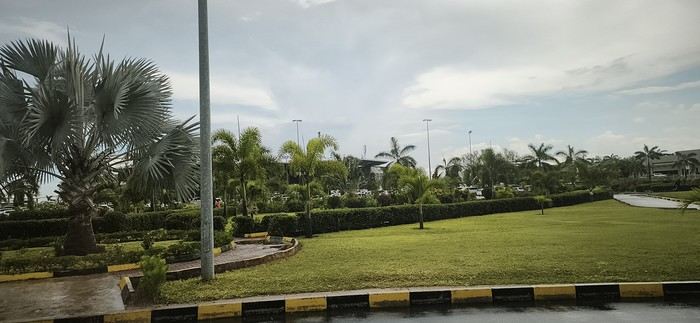
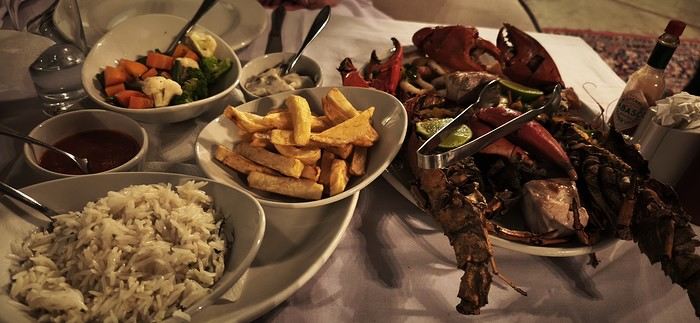
Our first night was at the Alexander Hotel. That evening, we treated ourselves to fish and shellfish at the hotel restaurant:
Sunday, February 22, 2026:
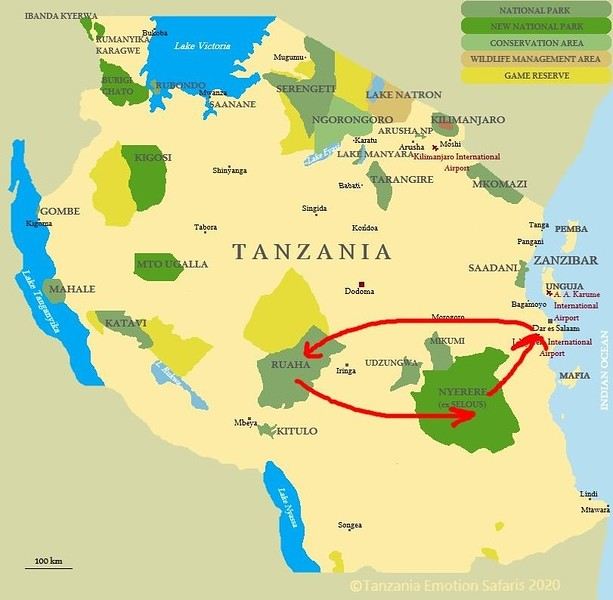
A driver picked us up at dawn to take us to the domestic airport so we could finally head to our first destination: Ruaha National Park. We flew with Auric.air for a 2-hour flight with two stops (Nyerere and Zkima airstrips).
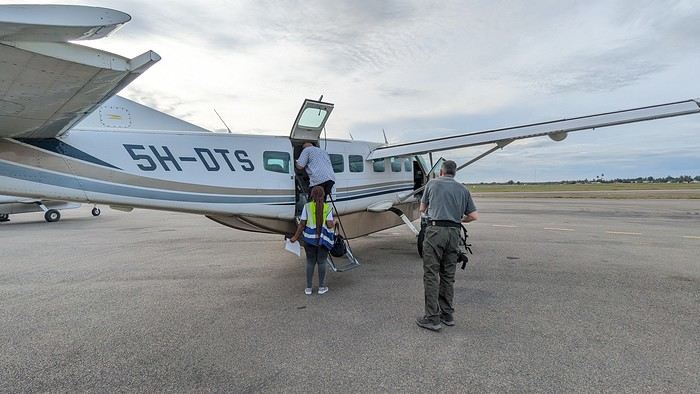
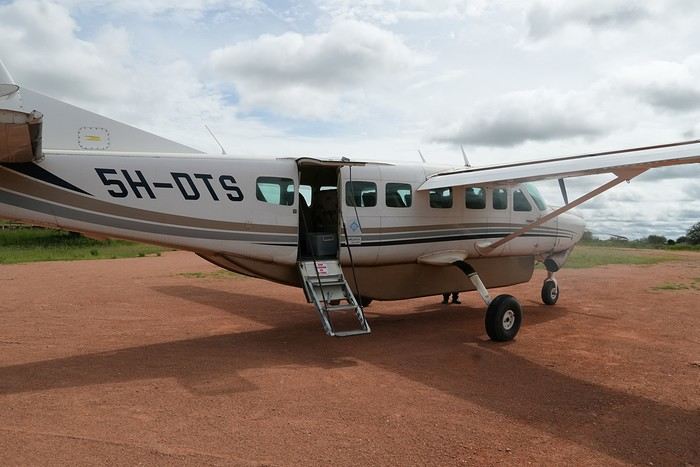
I’m always amazed at how easily these Cessnas take off and land on dirt runways—especially when they’re wet:
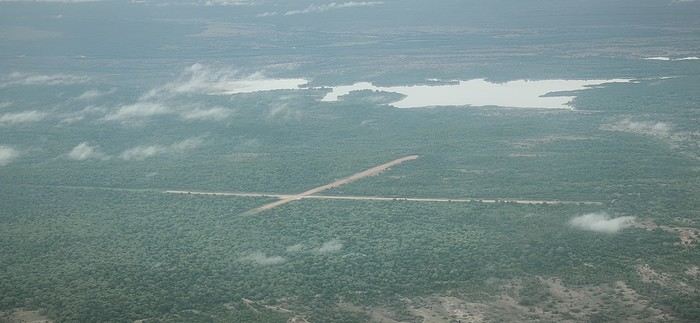
Aerial view of Zkima airstrip, where we’d landed just minutes earlier:
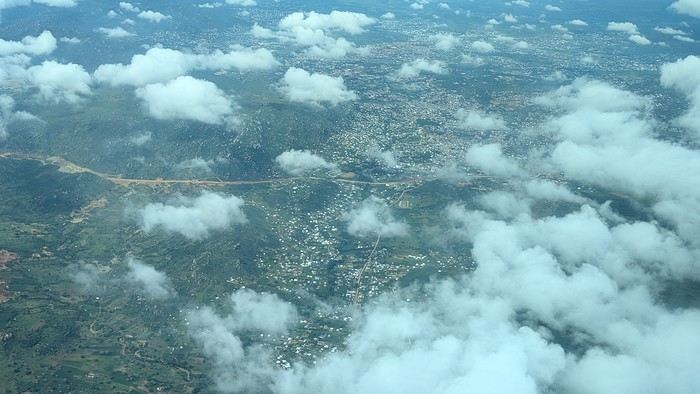
Flyover of Iringa, a "big" city in the country near Ruaha National Park:
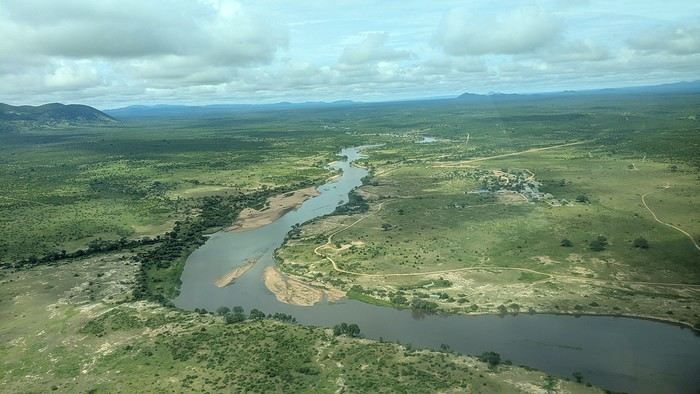
We’re getting close. The plane descends and flies over the Ruaha River, which gave the park its name:
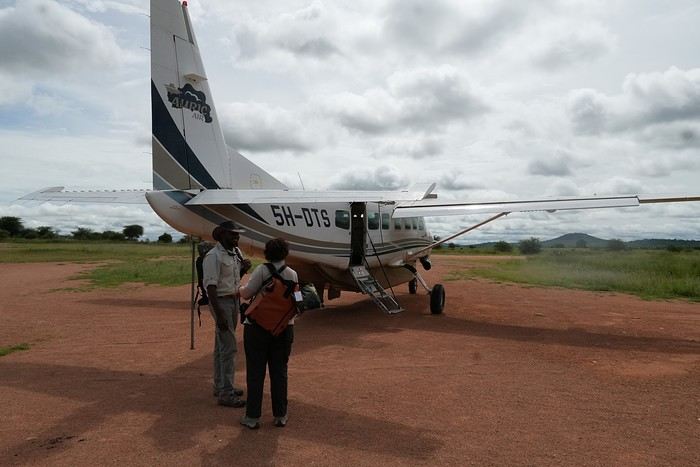
We land for the third and final time that day, reaching our destination: Msembe airstrip, the gateway to Ruaha.
We got back from Tanzania a month ago, on March 5th. I’ve started this trip report at the link the moderator asked me to use:
https://voyageforum.com/forum/decouverte-ruaha-nyerere-ex-selous-en-fevrier-mars-2026-d11466010/
You’ll find a video of our trip on my YouTube channel there.
Now I’ll tell you about our 10-night trip in Tanzania, with 8 nights spent in two parks we didn’t know. Tanzania isn’t new to us—it was even our first African safari destination back in 2012. https://www.youtube.com/@lolodetoul54 Since then, we’ve visited several East and Southern African countries: Kenya, South Africa, Namibia, Botswana, some of them multiple times. We usually travel in September during the dry season. We tried March 2024 for nine nights in the Okavango and loved it, except everything was dry, which wasn’t normal for the rainy season.
So for this second March trip during the wet season, we really got what we asked for… rain. But before that, we had to fight just to get to Tanzania.
Saturday, February 21, 2026:
It’s D-Day—the departure. What a hassle to organize flights to and within Tanzania! I’ll tell you all about it in another post: https://voyageforum.com/forum/toutes-compagnies-aeriennes-tanzaniennes-interdites-d10758360/ On top of that, Rwandair canceled our outbound flight a month before departure. They offered to reschedule us 3-4 days later—ridiculous for a 10-night trip we’d already booked. We had to cancel our tickets and buy new ones with Kenya Airways. We’re still waiting for our refund from Rwandair!!!!!!! So on Saturday, February 1st, our bags were packed. We headed to the Lorraine TGV station, about 30 km from home.
Direct train to Roissy—just 1h15. Quick and efficient.
All that was left was to wait for our overnight flight. We took off on time, just before 11 PM. Smooth flight, nothing unusual. Arrived in Nairobi around 9 AM. A few hours’ wait, then a flight to Dar es Salaam, landing at our first destination around 12:45 PM.
Our local contact, Anne from Asanterra agency, picked us up at the airport. It was hot and humid—it was raining.Our first night was at the Alexander Hotel. That evening, we treated ourselves to fish and shellfish at the hotel restaurant:
Sunday, February 22, 2026:
A driver picked us up at dawn to take us to the domestic airport so we could finally head to our first destination: Ruaha National Park. We flew with Auric.air for a 2-hour flight with two stops (Nyerere and Zkima airstrips).
I’m always amazed at how easily these Cessnas take off and land on dirt runways—especially when they’re wet:
Aerial view of Zkima airstrip, where we’d landed just minutes earlier:
Flyover of Iringa, a "big" city in the country near Ruaha National Park:
We’re getting close. The plane descends and flies over the Ruaha River, which gave the park its name:
We land for the third and final time that day, reaching our destination: Msembe airstrip, the gateway to Ruaha.
In the midst of Kenya's wildlife, October 2025
Hello everyone,
After sharing some safari photos from southern Tanzania, I’d like to show you those from our latest safari in Kenya in October 2025.
First, I’d like to thank Sylvie56, whose previous travel journals about this country inspired our trip choices. Thanks also for the info you sent us via PM. THANK YOU!
The following account is from a simple wildlife enthusiast. You won’t find anything here but images of landscapes, mammals, and birds. The stated purpose of this trip was purely and solely wildlife-focused. (It was in no way a discovery of the country or its people).
This stay/safari began (and ended) in Nairobi, with flights between France and Kenya operated by Qatar Airways departing from Nice.
Over two weeks, we first visited the reserves of Tsavo West and Tsavo East, then after a long road trip, the two reserves of Buffalo Springs and Samburu.
= Please wait until the end of the journal to ask any specific questions (or send them via PM) to keep the story flowing without interruptions or off-topic comments.
Thanks for your understanding.
...
Previous Kenya safari trip in 2017, here:
http://www.image-nature.com/forum/viewtopic.php?f=162&t=61119
...
After sharing some safari photos from southern Tanzania, I’d like to show you those from our latest safari in Kenya in October 2025.
First, I’d like to thank Sylvie56, whose previous travel journals about this country inspired our trip choices. Thanks also for the info you sent us via PM. THANK YOU!
The following account is from a simple wildlife enthusiast. You won’t find anything here but images of landscapes, mammals, and birds. The stated purpose of this trip was purely and solely wildlife-focused. (It was in no way a discovery of the country or its people).
This stay/safari began (and ended) in Nairobi, with flights between France and Kenya operated by Qatar Airways departing from Nice.
Over two weeks, we first visited the reserves of Tsavo West and Tsavo East, then after a long road trip, the two reserves of Buffalo Springs and Samburu.
= Please wait until the end of the journal to ask any specific questions (or send them via PM) to keep the story flowing without interruptions or off-topic comments.
Thanks for your understanding.
...
Previous Kenya safari trip in 2017, here:
http://www.image-nature.com/forum/viewtopic.php?f=162&t=61119
...
Questions about planning a 3-week self-drive trip to Uganda with kids
Hi everyone!
We’re heading to Uganda next summer for three weeks with our two kids, who’ll be 7 and 9 years old. We’ve been to Southern Africa before but not East Africa, and after a trip to South Africa two years ago, the kids wanted to return to Africa, while we wanted to explore a new region while staying independent... Uganda’s been catching our eye for a while, and with Rwandair offering relatively attractive prices, we’re going for it!
We’ll be traveling in a 4x4 (self-drive) with roof tents. I don’t have any 4x4 driving experience, so it’ll be a first for me, but we’ll manage 😉 No great apes for us—kids need to be 15, and we don’t want to do that experience without them.
I don’t usually ask the forum much for trip planning, but this time, I’d love your thoughts and advice!
First question: Karamoja or not? At first glance, if we want to add it to a "classic" loop in the southwest, it doesn’t seem realistic—too packed, too much driving. We could consider doing the full loop via Kidepo and then heading down to Murchison, but I’m worried the trip might feel less varied and less kid-friendly. That said, the region looks stunning, and I’m struggling to accept not going at all... What do you think?
If we skip Karamoja, we’d do a loop: Murchison/Fort Portal/QENP/Bunyonyi/Mburo, which seems pretty comprehensive and would let us take our time, which is nice. A few random questions: - How much time should we plan for the Fort Portal area? I was thinking at least 3 days to visit Bigodi Swamp, walk around the craters, and maybe do a community walk (any thoughts on that?). - Between Murchison Falls and the Fort Portal area, is it worth breaking up the drive? I spotted Lake Albert Safari Lodge on the shores of Lake Albert—it’s not too expensive and looks nice. - I’d love to do some easy walks/hikes at the foot of the Rwenzori Mountains, ideally without a guide, but it doesn’t seem straightforward. Do you know if it’s possible to do nice walks independently? I’ve read about hikes in the hills near Kilembe but nothing very specific. Maybe staying somewhere at the foot of the mountains, like Ruboni Community Camp, would allow that. - Lake Mutanda looks really cool, and so does Lake Bunyonyi... Ideally, I’d like to see both, but won’t that feel repetitive? Is Lake Mutanda worth the detour?
Last practical question, since we don’t have experience with this: for the car with kids, would you recommend two tents (a bit more space) or a four-person tent?
I’ll stop here—already a lot of questions...
Thanks in advance for your feedback, and looking forward to exchanging ideas! Gabriel
We’re heading to Uganda next summer for three weeks with our two kids, who’ll be 7 and 9 years old. We’ve been to Southern Africa before but not East Africa, and after a trip to South Africa two years ago, the kids wanted to return to Africa, while we wanted to explore a new region while staying independent... Uganda’s been catching our eye for a while, and with Rwandair offering relatively attractive prices, we’re going for it!
We’ll be traveling in a 4x4 (self-drive) with roof tents. I don’t have any 4x4 driving experience, so it’ll be a first for me, but we’ll manage 😉 No great apes for us—kids need to be 15, and we don’t want to do that experience without them.
I don’t usually ask the forum much for trip planning, but this time, I’d love your thoughts and advice!
First question: Karamoja or not? At first glance, if we want to add it to a "classic" loop in the southwest, it doesn’t seem realistic—too packed, too much driving. We could consider doing the full loop via Kidepo and then heading down to Murchison, but I’m worried the trip might feel less varied and less kid-friendly. That said, the region looks stunning, and I’m struggling to accept not going at all... What do you think?
If we skip Karamoja, we’d do a loop: Murchison/Fort Portal/QENP/Bunyonyi/Mburo, which seems pretty comprehensive and would let us take our time, which is nice. A few random questions: - How much time should we plan for the Fort Portal area? I was thinking at least 3 days to visit Bigodi Swamp, walk around the craters, and maybe do a community walk (any thoughts on that?). - Between Murchison Falls and the Fort Portal area, is it worth breaking up the drive? I spotted Lake Albert Safari Lodge on the shores of Lake Albert—it’s not too expensive and looks nice. - I’d love to do some easy walks/hikes at the foot of the Rwenzori Mountains, ideally without a guide, but it doesn’t seem straightforward. Do you know if it’s possible to do nice walks independently? I’ve read about hikes in the hills near Kilembe but nothing very specific. Maybe staying somewhere at the foot of the mountains, like Ruboni Community Camp, would allow that. - Lake Mutanda looks really cool, and so does Lake Bunyonyi... Ideally, I’d like to see both, but won’t that feel repetitive? Is Lake Mutanda worth the detour?
Last practical question, since we don’t have experience with this: for the car with kids, would you recommend two tents (a bit more space) or a four-person tent?
I’ll stop here—already a lot of questions...
Thanks in advance for your feedback, and looking forward to exchanging ideas! Gabriel
Hurghada and Luxor in July
Hi there,
I’m planning my next trip outside Europe for next year, but unfortunately, I don’t have a choice with the dates—it’s late June to early July. Last year, I went to Japan for three weeks, and it was constantly 36-37°C with over 90% humidity. It wasn’t easy, but it wasn’t impossible either.
For Egypt, I know it’s a period to avoid if possible, but I’m thinking that by the sea, it might be manageable. Otherwise, I’ll consider another destination.
Day 1: Arrival in Hurghada in the evening Day 2, 3, 4: Hurghada Day 5: Hurghada, then drive to Luxor in the early afternoon Day 6: Luxor Day 7: Luxor, then drive back to Hurghada in the late afternoon Day 8, 9, 10, 11: Hurghada Day 12: Return flight
For the Hurghada trip, either rent a car or—easier—a private car/van. Is it worth adding an extra day in Luxor?
During the stay, we’re planning activities like camel rides, quad biking, jeep tours, snorkeling, and jet skiing.
Thanks for your replies
I’m planning my next trip outside Europe for next year, but unfortunately, I don’t have a choice with the dates—it’s late June to early July. Last year, I went to Japan for three weeks, and it was constantly 36-37°C with over 90% humidity. It wasn’t easy, but it wasn’t impossible either.
For Egypt, I know it’s a period to avoid if possible, but I’m thinking that by the sea, it might be manageable. Otherwise, I’ll consider another destination.
Day 1: Arrival in Hurghada in the evening Day 2, 3, 4: Hurghada Day 5: Hurghada, then drive to Luxor in the early afternoon Day 6: Luxor Day 7: Luxor, then drive back to Hurghada in the late afternoon Day 8, 9, 10, 11: Hurghada Day 12: Return flight
For the Hurghada trip, either rent a car or—easier—a private car/van. Is it worth adding an extra day in Luxor?
During the stay, we’re planning activities like camel rides, quad biking, jeep tours, snorkeling, and jet skiing.
Thanks for your replies
Off on an adventure to Java (and a bit of Bali)
Hey there, community! Back this weekend, below is my travel journal from my adventure in Indonesia. Enjoy the read!!!
Day 1 - August 10, 2025 New life downloading for three weeks! And for that, Flo and I launched a public tender... A public tender? What’s that got to do with a travel journal???... Well, when you think about it, few destinations tick all the boxes for an August adventure: Meaning, finding a place that’s exotic in the middle of August, not too expensive, not too packed with tourists, warm but not *too* warm, with postcard-perfect landscapes, dreamy beaches, tasty cuisine with a hint of exoticism, friendly and welcoming locals, where you’re free to sleep under the stars among the mosquitos, take transport surrounded by chickens, and even eat from a pig trough if you feel like it—well, turns out it’s not that easy to find! I’d even say, given how thick the list of requirements is, there’s a big risk the tender could be declared unsuccessful for failing to meet just one criterion. Let’s just say the candidates better submit a rock-solid proposal!
After reviewing all the responses and presentations from the candidates, the obvious choice for us is... Indonesia! Except that trying to explore a country as vast as Indonesia and its 17,504 islands in less than five years is a bit like reading the summary of a Proust novel without taking the time to savor each of its 950 pages! Don’t worry, I won’t name them all here. Besides, do they even all have names? No! Only 7,870 have been named—their parents clearly ran out of ideas for the rest. Anyway, our society, which worships the "work more to earn more" mantra, unfortunately limits our adventure time. So we’ll only get to see a small part of Indonesia, and we’ll have to make a tough choice to head for the best of the best in this archipelago of over seventeen thousand islands. Each one has its own selling points: Sumatra, Sulawesi, Java, the Celebes, Bali, Borneo, Papua, Timor, the Moluccas... So many names that smell of adventure... Another tender, another list of requirements, another review of proposals... Drumroll... Splash splash... And the lucky winner is... Ta-da... Java, Bali’s big sister, where I’ve already been eight years ago... Java the programming language. The Java of Broadway. We’re gonna *do* the Java. Java the coffee. And yes, Java is also an island!
This island, four times smaller than France, is home to 136 million people, making it the most populated island in the world! Fun fact: Indonesia, with its 260 million inhabitants, is just shy of the podium for the world’s most populated countries, after the winning trio of India, China, and the United States. And it’s on this island of Java that you’ll find Jakarta, the (soon-to-be-former) capital and main airport of the country, where we’ll soon land after our nineteen-hour flight! Yep, nineteen hours! I mean, Indonesia in general—and Java in particular—is a *tad* farther than going on vacation to Grandma Yoyo’s! Not sure where it is? Easy. Grab a map. Plant your finger on the big island at the bottom right—aka Australia for those who struggle with geography—move it up two centimeters, and bam, welcome to Indonesia!
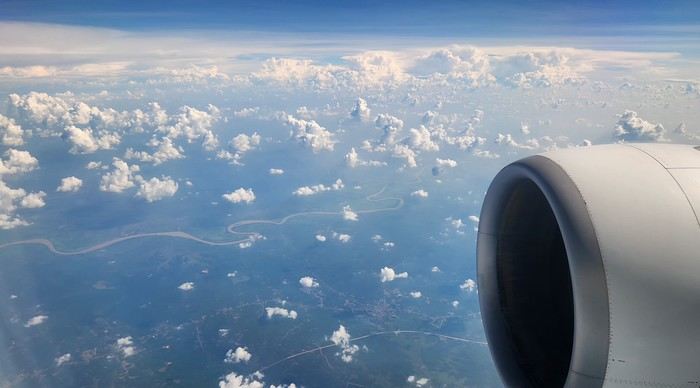
Nice transition, right? Because "Welcome to Indonesia" is exactly what the friendly flight attendant just said to me as we got off the plane! That’s it, our chakras are open, we’ve arrived at our (air)port. Time for rest, pool, cocktails, and a beach with our toes spread out... Wait, if you bought that, you clearly don’t know us yet! Since we still have energy to burn and need to adjust to the flight and time difference, we tackle the long administrative formalities to enter Indonesia, just to earn the right to hop in a 45-minute Grab taxi to the train station. The train station? What train station?... What do you usually do at a train station? Take a train, of course! Off we go for a three-hour train ride to Bandung, where we’ll officially start our adventure tomorrow after our first Indonesian night...
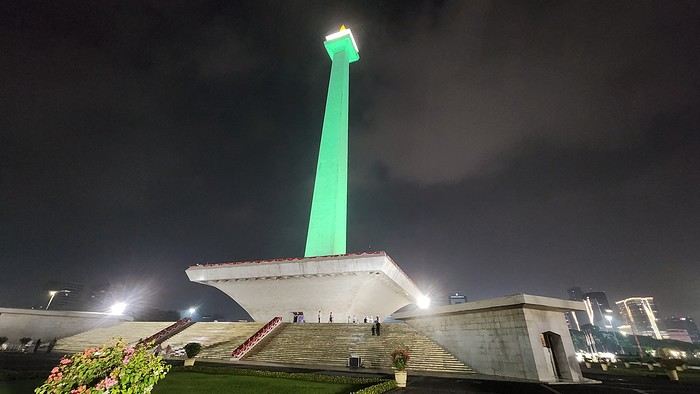
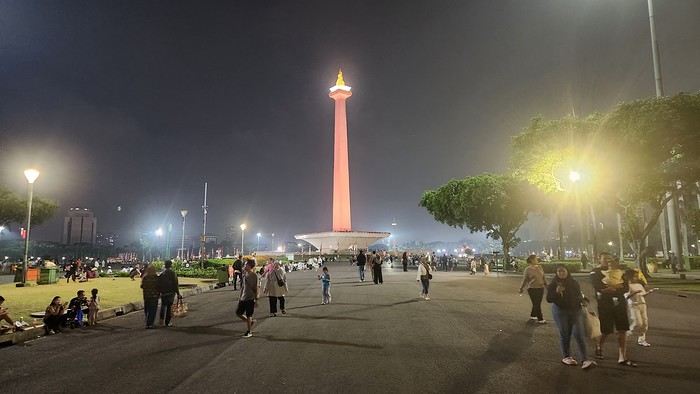
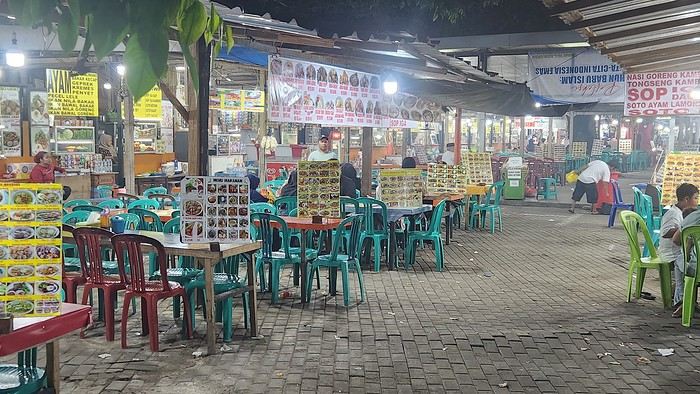
Unfortunately, we were a bit slow off the mark, which meant we missed the 6:25 PM train by two minutes. Oh well, we’ll have to wait until 11 PM. We take the opportunity to stretch our legs in Jakarta, soak up the atmosphere, and enjoy the delicious smells wafting from the *warungs*—those little typical street restaurants. A quick stop at the National Monument, a detour to a night market to devour our first *kwetiaw goreng* and *teh manis* for 60,000 rupiahs (that’s 3 € for two), and just like that, our penalty is lifted, and we’re allowed to hit the road again. Off to Bandung, where we arrive at 2 AM for... a *very* short night...
Day 1 - August 10, 2025 New life downloading for three weeks! And for that, Flo and I launched a public tender... A public tender? What’s that got to do with a travel journal???... Well, when you think about it, few destinations tick all the boxes for an August adventure: Meaning, finding a place that’s exotic in the middle of August, not too expensive, not too packed with tourists, warm but not *too* warm, with postcard-perfect landscapes, dreamy beaches, tasty cuisine with a hint of exoticism, friendly and welcoming locals, where you’re free to sleep under the stars among the mosquitos, take transport surrounded by chickens, and even eat from a pig trough if you feel like it—well, turns out it’s not that easy to find! I’d even say, given how thick the list of requirements is, there’s a big risk the tender could be declared unsuccessful for failing to meet just one criterion. Let’s just say the candidates better submit a rock-solid proposal!
After reviewing all the responses and presentations from the candidates, the obvious choice for us is... Indonesia! Except that trying to explore a country as vast as Indonesia and its 17,504 islands in less than five years is a bit like reading the summary of a Proust novel without taking the time to savor each of its 950 pages! Don’t worry, I won’t name them all here. Besides, do they even all have names? No! Only 7,870 have been named—their parents clearly ran out of ideas for the rest. Anyway, our society, which worships the "work more to earn more" mantra, unfortunately limits our adventure time. So we’ll only get to see a small part of Indonesia, and we’ll have to make a tough choice to head for the best of the best in this archipelago of over seventeen thousand islands. Each one has its own selling points: Sumatra, Sulawesi, Java, the Celebes, Bali, Borneo, Papua, Timor, the Moluccas... So many names that smell of adventure... Another tender, another list of requirements, another review of proposals... Drumroll... Splash splash... And the lucky winner is... Ta-da... Java, Bali’s big sister, where I’ve already been eight years ago... Java the programming language. The Java of Broadway. We’re gonna *do* the Java. Java the coffee. And yes, Java is also an island!
This island, four times smaller than France, is home to 136 million people, making it the most populated island in the world! Fun fact: Indonesia, with its 260 million inhabitants, is just shy of the podium for the world’s most populated countries, after the winning trio of India, China, and the United States. And it’s on this island of Java that you’ll find Jakarta, the (soon-to-be-former) capital and main airport of the country, where we’ll soon land after our nineteen-hour flight! Yep, nineteen hours! I mean, Indonesia in general—and Java in particular—is a *tad* farther than going on vacation to Grandma Yoyo’s! Not sure where it is? Easy. Grab a map. Plant your finger on the big island at the bottom right—aka Australia for those who struggle with geography—move it up two centimeters, and bam, welcome to Indonesia!
Nice transition, right? Because "Welcome to Indonesia" is exactly what the friendly flight attendant just said to me as we got off the plane! That’s it, our chakras are open, we’ve arrived at our (air)port. Time for rest, pool, cocktails, and a beach with our toes spread out... Wait, if you bought that, you clearly don’t know us yet! Since we still have energy to burn and need to adjust to the flight and time difference, we tackle the long administrative formalities to enter Indonesia, just to earn the right to hop in a 45-minute Grab taxi to the train station. The train station? What train station?... What do you usually do at a train station? Take a train, of course! Off we go for a three-hour train ride to Bandung, where we’ll officially start our adventure tomorrow after our first Indonesian night...
Unfortunately, we were a bit slow off the mark, which meant we missed the 6:25 PM train by two minutes. Oh well, we’ll have to wait until 11 PM. We take the opportunity to stretch our legs in Jakarta, soak up the atmosphere, and enjoy the delicious smells wafting from the *warungs*—those little typical street restaurants. A quick stop at the National Monument, a detour to a night market to devour our first *kwetiaw goreng* and *teh manis* for 60,000 rupiahs (that’s 3 € for two), and just like that, our penalty is lifted, and we’re allowed to hit the road again. Off to Bandung, where we arrive at 2 AM for... a *very* short night...
Thailand trip: What to do if visa-free stay drops from 60 to 30 days?
Hey everyone, hope you're doing well! :)
I’m planning to go back to Thailand at the start of next year—once just wasn’t enough 😅
I’ve seen that nothing’s official yet, but they’re considering reducing the visa-free stay from 60 to 30 days. If I book for 58 days like last time and they change the rules last minute, what happens?
It takes forever to get a visa—I saw you have to prove you have enough funds to cover your stay. How much money do you need in your account?
Thanks!
What's the best way to get from Abu Simbel to Cairo?
Hi everyone,
I’ve got a bit of a dilemma about our return trip from Abu Simbel to Cairo.
On November 24th, we want to travel from Aswan to Abu Simbel during the day, arriving between 2 and 4 PM to check into our hotel and see the Sound and Light show at the temples. This transfer isn’t booked yet—I still need to find ground transportation for two. We also want to visit the two temples early on November 25th, before the minibuses arrive.
That’s when things get tricky for the return to Cairo!
- **PLANE from Abu Simbel**: There’s an EgyptAir flight at 1:30 PM, but it stops in Aswan at 2:10 PM and doesn’t leave again until 8:20 PM, arriving in Cairo at 9:50 PM. Since it’s a combined flight, I assume our luggage will follow. We *could* wander around the airport area, but that doesn’t thrill me—plus, we’ll have already seen the Kalabsha Temple.
- **GROUND TRANSPORT back to Aswan** (with prior authorization, like on the way there).
- **PLANE from Aswan**: Take the same flight mentioned above, but from Aswan at 8:20 PM. But what do we do with our luggage while waiting for the flight?
- **TRAIN from Aswan at 9:05 PM**, arriving in Cairo—or even Alexandria—at 6:05 AM, since we need to go there too! This could be a fun experience if the conditions are decent. The only catch: we’d need to book the train 17 days in advance, meaning by November 8th, when we’ll be in Kharga (the last leg of our 5-day desert trip). Our French-speaking guide might be able to help reserve the tickets, though???
Which option seems the most enjoyable 😉, the least hassle 😕...
Thanks so much for your help! Sylvie.
I’ve got a bit of a dilemma about our return trip from Abu Simbel to Cairo.
On November 24th, we want to travel from Aswan to Abu Simbel during the day, arriving between 2 and 4 PM to check into our hotel and see the Sound and Light show at the temples. This transfer isn’t booked yet—I still need to find ground transportation for two. We also want to visit the two temples early on November 25th, before the minibuses arrive.
That’s when things get tricky for the return to Cairo!
- **PLANE from Abu Simbel**: There’s an EgyptAir flight at 1:30 PM, but it stops in Aswan at 2:10 PM and doesn’t leave again until 8:20 PM, arriving in Cairo at 9:50 PM. Since it’s a combined flight, I assume our luggage will follow. We *could* wander around the airport area, but that doesn’t thrill me—plus, we’ll have already seen the Kalabsha Temple.
- **GROUND TRANSPORT back to Aswan** (with prior authorization, like on the way there).
- **PLANE from Aswan**: Take the same flight mentioned above, but from Aswan at 8:20 PM. But what do we do with our luggage while waiting for the flight?
- **TRAIN from Aswan at 9:05 PM**, arriving in Cairo—or even Alexandria—at 6:05 AM, since we need to go there too! This could be a fun experience if the conditions are decent. The only catch: we’d need to book the train 17 days in advance, meaning by November 8th, when we’ll be in Kharga (the last leg of our 5-day desert trip). Our French-speaking guide might be able to help reserve the tickets, though???
Which option seems the most enjoyable 😉, the least hassle 😕...
Thanks so much for your help! Sylvie.
In MIKUMI and SELOUS, Southern Tanzania (June 2024)
Hi everyone,
I’m a newbie to this forum, passionate about wildlife, the landscapes of East Africa, and Tanzania in particular. This June 2024 trip/safari is our 7th visit to Tanzania and our 5th in the south, which has drawn us more than the north ever since we discovered it in 2015.
In 2024, the entrance fees for the reserves and services have gone up again since our last visit. I chose to return first to Mikumi Reserve, which was the very first one we visited in the south. Then, we’ll head to Selous (J. Nyerere N. P.) as usual. Initially, we wanted to spend 2/3 days on Mafia Island at the end of the trip, but it made the total cost too high, so we gave up... We usually go to Ruaha and Selous, but I wanted to mix it up a bit—also to save some money...
As for the timing, June is a new experience for us. I thought it might be interesting to come just after the lodges reopen... hoping for some great wildlife encounters??
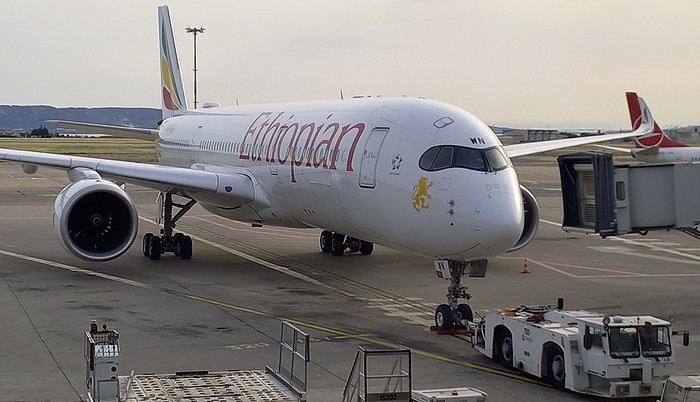
The trip starts in Marseille with our first flight on Ethiopian Airlines to Addis Ababa, then continues to Dar es Salaam, where we’ll finally set foot on Tanzanian soil again.
In Addis... "our" A-350.
.....
After arriving in Dar, we spent one night at a hotel near the airport. The next morning, we headed to the domestic flights terminal, which hasn’t changed in years.
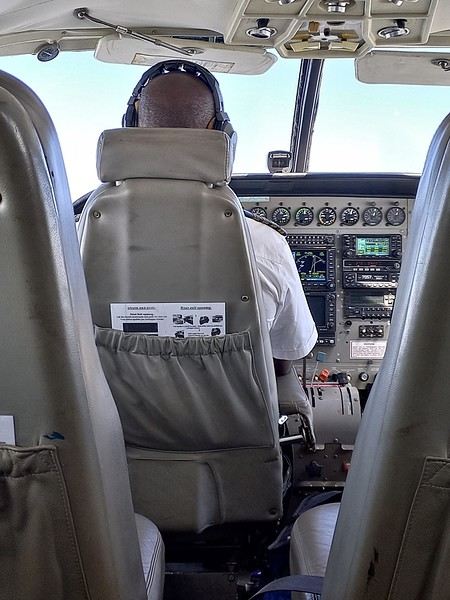
By mid-morning, we boarded a Cessna 208B Caravan with Safari Air Link, heading to the Kikoboga bush airstrip in Mikumi, which we reached 45 minutes later. Fun fact: the pilot was the same one as on our return flight two years ago.
Welcome on board:
Of course, a driver/guide team from our chosen lodge was waiting for us upon arrival:
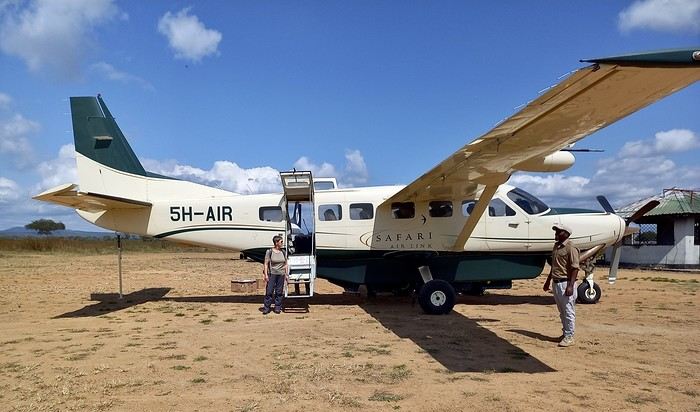
I was surprised to see so many aircraft parked there... even twin-engine Embraer Brasilias?? As a fan of vintage planes, I loved it...
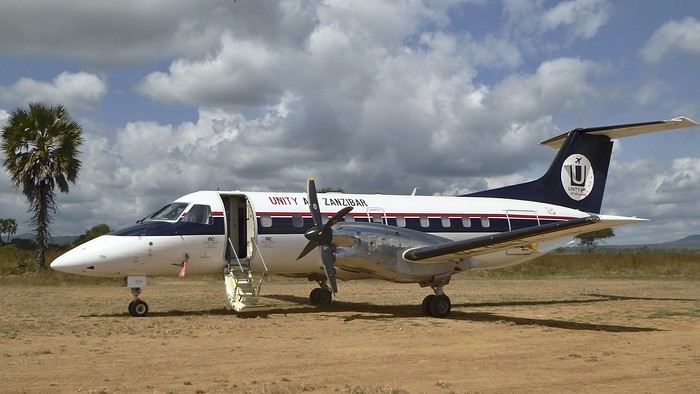
On the other hand, the light was incredibly harsh.....!! Our guides only speak English. We knew that in advance. In the south, it’s very rare to find someone who speaks French. This’ll force us to dig into our high school English memories... from 60 years ago... at least.
It’s noon, and we head toward the lodge. Near the airstrip, next to the Mikumi rangers’ base, there are quite a few herbivores. They find a bit more peace here—the big cats don’t venture this way...
Our first encounter was a group of Masai giraffes.
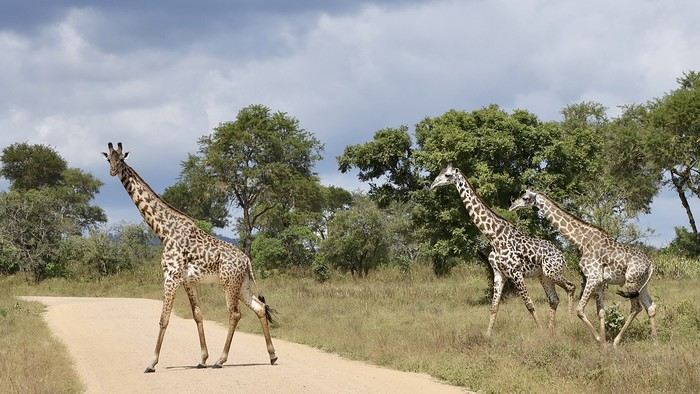
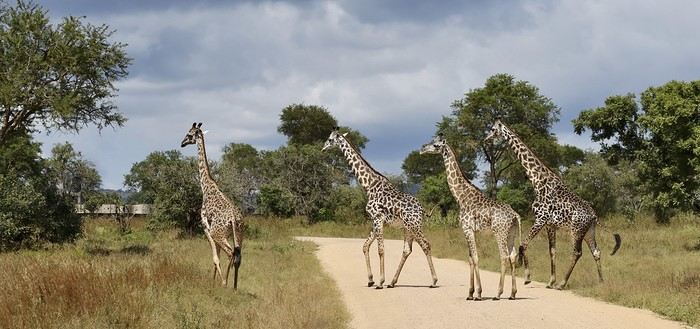
Rarer (for us), a savanna monitor lizard basking in the sun right in the middle of the track...??
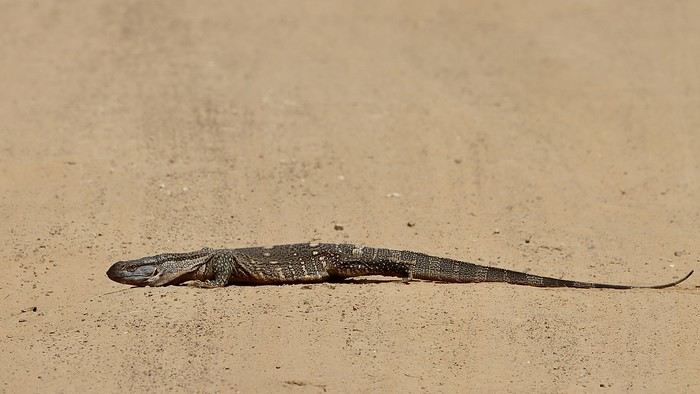
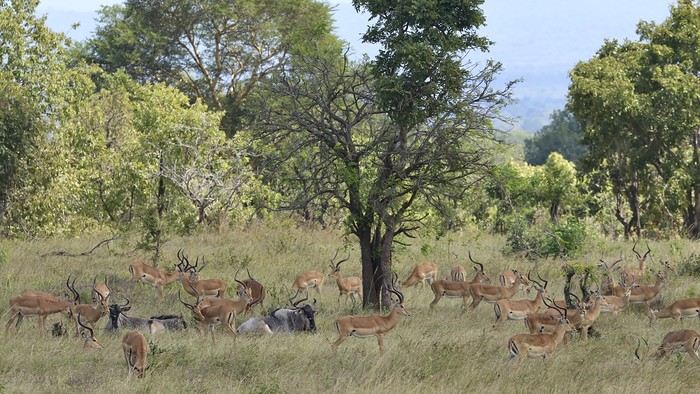
A large gathering of impalas (mostly males) along with a few blue wildebeest:

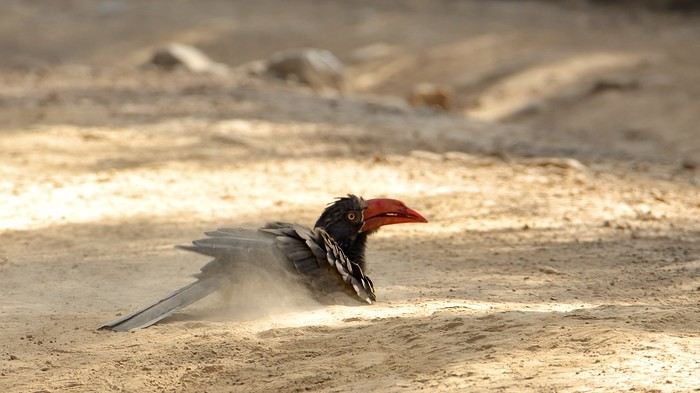
Also unusual: a African crowned hornbill taking a dust bath in the middle of the track...!!
When it comes to identifying mammals or birds, I don’t know everything... so I might make mistakes. Please forgive me. I’m counting on my friend Blesl’s active participation... 😉
...
I’m a newbie to this forum, passionate about wildlife, the landscapes of East Africa, and Tanzania in particular. This June 2024 trip/safari is our 7th visit to Tanzania and our 5th in the south, which has drawn us more than the north ever since we discovered it in 2015.
In 2024, the entrance fees for the reserves and services have gone up again since our last visit. I chose to return first to Mikumi Reserve, which was the very first one we visited in the south. Then, we’ll head to Selous (J. Nyerere N. P.) as usual. Initially, we wanted to spend 2/3 days on Mafia Island at the end of the trip, but it made the total cost too high, so we gave up... We usually go to Ruaha and Selous, but I wanted to mix it up a bit—also to save some money...
As for the timing, June is a new experience for us. I thought it might be interesting to come just after the lodges reopen... hoping for some great wildlife encounters??
The trip starts in Marseille with our first flight on Ethiopian Airlines to Addis Ababa, then continues to Dar es Salaam, where we’ll finally set foot on Tanzanian soil again.
In Addis... "our" A-350.
.....
After arriving in Dar, we spent one night at a hotel near the airport. The next morning, we headed to the domestic flights terminal, which hasn’t changed in years.
By mid-morning, we boarded a Cessna 208B Caravan with Safari Air Link, heading to the Kikoboga bush airstrip in Mikumi, which we reached 45 minutes later. Fun fact: the pilot was the same one as on our return flight two years ago.
Welcome on board:
Of course, a driver/guide team from our chosen lodge was waiting for us upon arrival:
I was surprised to see so many aircraft parked there... even twin-engine Embraer Brasilias?? As a fan of vintage planes, I loved it...
On the other hand, the light was incredibly harsh.....!! Our guides only speak English. We knew that in advance. In the south, it’s very rare to find someone who speaks French. This’ll force us to dig into our high school English memories... from 60 years ago... at least.
It’s noon, and we head toward the lodge. Near the airstrip, next to the Mikumi rangers’ base, there are quite a few herbivores. They find a bit more peace here—the big cats don’t venture this way...
Our first encounter was a group of Masai giraffes.
Rarer (for us), a savanna monitor lizard basking in the sun right in the middle of the track...??
A large gathering of impalas (mostly males) along with a few blue wildebeest:
Also unusual: a African crowned hornbill taking a dust bath in the middle of the track...!!
When it comes to identifying mammals or birds, I don’t know everything... so I might make mistakes. Please forgive me. I’m counting on my friend Blesl’s active participation... 😉
...
Mexico: The Magic of the Yucatán
Hello everyone,
What a pleasure to be back on VF after a few difficult years 😎 So, before diving into the topic, welcome back to VF and above all... keep going!
Well, I’m finally picking up my old habit of posting a new travel journal.
Before heading to Mexico in the summer of 2023 with my family (my partner and our two boys, aged 18 and 16), I had somehow convinced myself—though I can’t even remember why—that the Yucatán was too touristy, too cliché, too expensive, and overrated!
The country didn’t particularly appeal to me, but faced with my wife’s insistence—she’d been there years ago, before we met, and had promised to show our sons this incredible place—my arguments didn’t hold much weight.
And thank goodness, because I have to admit she was absolutely right to take us there! In the end, we encountered far fewer tourists than we’d feared (except at a few sites), and the prices, which we’d been told were geared toward American neighbors (US), turned out to be quite affordable. In short, it was pure joy on both counts. All that was left was for the trip itself to be beautiful and memorable—and it was...
1st stop: Isla Holbox and the whale sharks
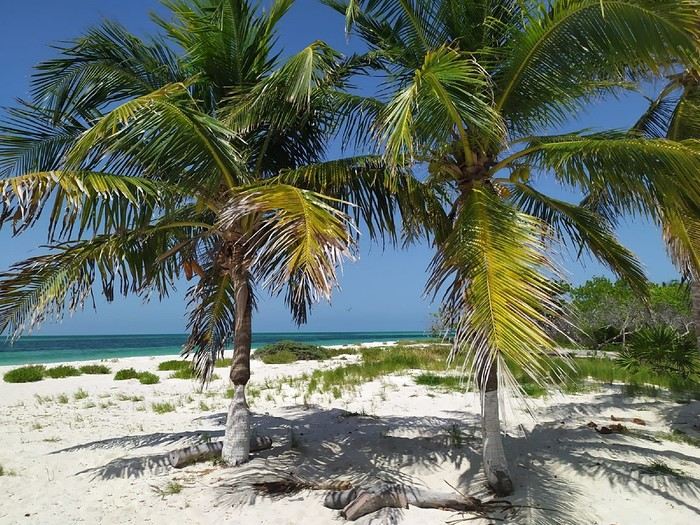
Holbox (pronounced “Hol-bosh”) is a stunning island where you can relax in an enchanting setting.
Our main goal in coming to Holbox was to swim with whale sharks. So, the first thing we told our hotel, Los Arcos Holbox, upon arrival was to arrange an excursion with one of the island’s many tour operators: Glendy Tours Holbox. We set off the next morning, bright and early.
The itinerary for this outing is the same for all tour operators (and there are about thirty of them!): roughly two hours by speedboat, then snorkeling with the whale sharks, followed by another boat ride to Cabo Catoche for lunch, then more boating to a fish-filled snorkeling spot before heading back. In total, the excursion can take eight hours—or even longer.
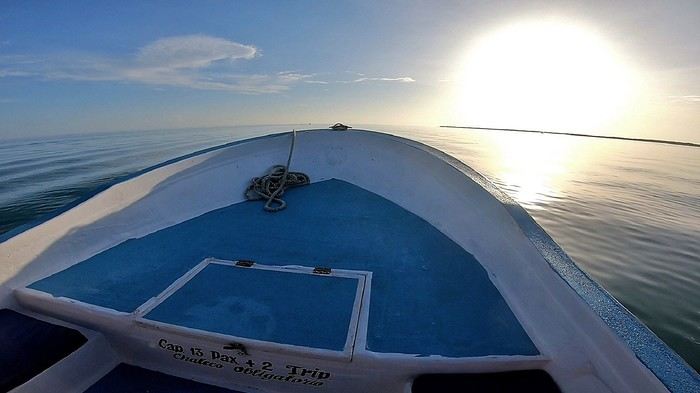
Besides my two sons and me, there were only two other clients on board—a French couple. Our boat was one of the very first to leave, but after ten minutes, the pilot got a radio call. We turned back without any explanation, returning to the departure dock.
There, a young woman who clearly fancied herself a diva was waiting for us. She was Mexican and boarded the boat, snubbing all five of us while flirting with the pilot and guide, who were suddenly all eyes for her. We couldn’t understand how this diva had convinced our tour operator to turn the boat around just to pick her up when she hadn’t even booked and we were already far out. We left 20 minutes late.
The two-hour journey passed surprisingly quickly, and for good reason: we spotted dolphins six times! They were leaping out of the water as they moved. Pure joy. We stopped whenever they were near the boat.
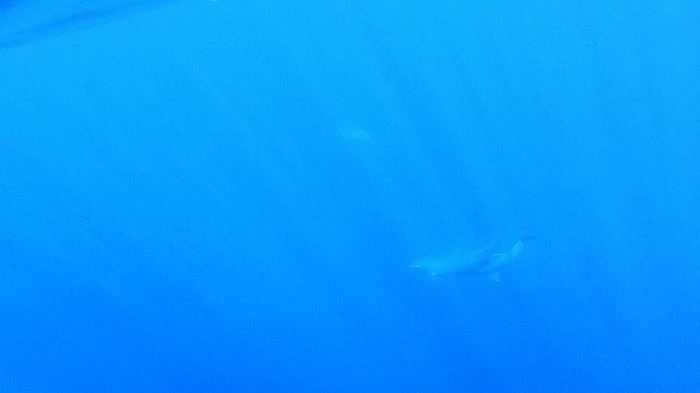
The photo isn’t great—the ultra-wide-angle lens on my GoPro makes the dolphins look smaller—but at least I got a souvenir.
A few flying fish (exocets) also glided a meter or two above the water as we sped along. The false start was forgotten, and the day was off to a fantastic start in this stunning marine environment...
When we reached the area where the whale sharks were supposed to be, the guide explained that we’d now have to scan the sea until we spotted one. It could take five minutes or forty-five, he said, and if we were unlucky, we might not see any at all!
An hour and a half later—still nothing! The captain then headed toward a distant area where about twenty other boats were already gathered.
Sure enough, there was a juvenile whale shark (still a good eight meters long) there, and all the boats were lining up to approach it slowly, one by one, so as not to scare the animal. Each boat got about thirty seconds within a few meters of it, engine idling, before making way for the next. We were allowed to approach three times, but we weren’t permitted to dive in. That’s normal—such a crowd of divers around a single animal would stress it out, and here, whale sharks are protected by regulations: swimming with them is strictly controlled. There was even a coast guard boat with us at all times, monitoring everyone’s behavior.
We were torn between the luck of seeing such a magnificent animal, even from the surface, and the discomfort we felt about the absurd situation. All those boats lined up just to catch a fleeting glimpse of the shark for a few seconds—let’s be honest, it was ridiculous. In short, the whole thing was unpleasant, and probably even more so for the shark than for us, though it did keep gulping down kilos of plankton as if nothing were happening...
When it was our turn to approach, I dipped my GoPro into the water at arm’s length and framed the shot blindly, hoping for a decent image of the shark.
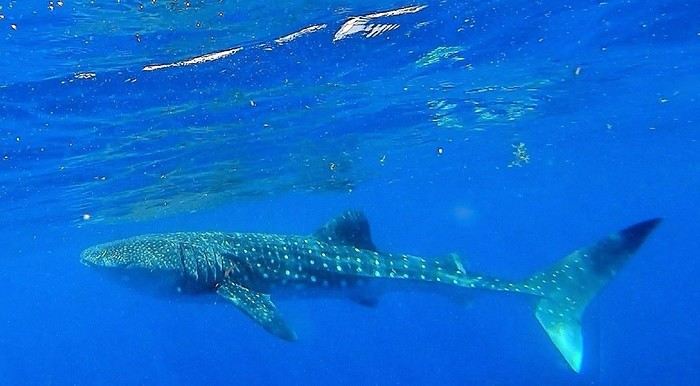
On the third and final approach, the sixth passenger on board—the one we’d had to turn back for ten minutes after departure—quietly spoke to the guide and captain after putting on her flippers (even though, I’ll remind you, no one was allowed to dive). She wanted them to ask the coast guard for permission to dive with the shark—just her! She whispered so we couldn’t hear what she was offering in exchange.
The two lackeys complied and shouted the request to the officials in front of all the other boats, with no shame whatsoever. With so many witnesses, the coast guard had no choice but to refuse. The diva wouldn’t let it go and asked them to insist, which they did, but the refusal was firm and final.
On the nearest boats, everyone had heard and was stunned. They openly mocked this bimbo who clearly had no shame. Hidden behind her star sunglasses, she responded with a dismissive smile. Pathetic.
The encounter with the shark ended, and we set off for Cabo Catoche, a site on Holbox Island where we were to have lunch.
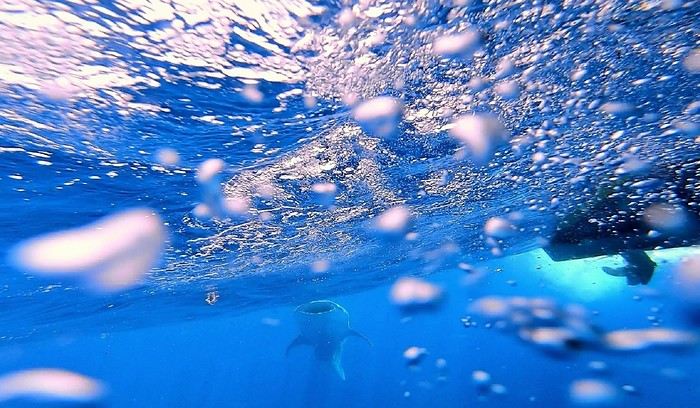
We were a little disappointed not to have had the chance to see the usual school of whale sharks (they’re often dozens swimming together!), but that’s nature’s way, and we knew it.
And then, an unlikely stroke of luck: a boat ahead of us was putting divers in the water with a pair of adult whale sharks. We joined them, and while we were putting on our masks and snorkels, the guide briefed us. He said my sons and I would go first, followed by the French couple and the diva.
But Miss World, clearly unhappy with this order, quietly complained to the guide, who eventually switched the order. It didn’t bother us since we’d only get a minute in the water anyway—what’s a minute more or less?
So the three of them got in the water, and a moment later, they were done. My two sons and I, sitting on the edge of the boat with masks on and snorkels in our mouths, were ready to finally take the plunge. But instead of continuing to follow the shark, the captain was suddenly all eyes for Miss Silicone! He even let go of the wheel for a moment to help her back on board.
One of the two sharks had already left minutes earlier, and the second was swimming farther away. Other boats were arriving, and the captain went to join the queue 100 meters from the shark. Soon, even more boats showed up. There were way too many people, the shark left, and diving was no longer possible.
I was, of course, a little disappointed not to have fulfilled my long-time dream of swimming with a whale shark, even briefly. But I was mostly disgusted for my two boys, who had been so excited about it. I told the guide exactly what I thought and asked for compensation—not for missing out on swimming with the shark (you can never guarantee seeing one, nature isn’t at our beck and call), but for clearly skipping our turn to dive. He promised a refund.
At the end of the day, back on land, he dropped us all off, and as he was about to leave, I reminded him about the refund. He agreed again, calmly got back on board, and sped off as if nothing had happened—just him and the captain, two total cowards. I couldn’t believe it.
Of course, back at our hotel (which had booked this tour operator—Glendy Tours), I explained the situation and asked for my refund again. The receptionist called the manager, who arrived with the guide. Our runaway wasn’t so cocky anymore. Inside, I was fuming, but I kept my cool during the discussion that followed.
Right off the bat, I made a point of looking the so-called guide in the eyes while telling him he’d run off like a coward. I did my best to stay calm, speaking clearly, staring him down the whole time, and repeating several times that he was a coward, in front of the manager, who didn’t say a word. The guide had clearly been told by his boss to keep quiet because he didn’t utter a word during the entire twenty-minute conversation.
Anyway, I’ll spare you the details, but in the end, the manager only offered us another excursion the next day as compensation for the “inconvenience.” It was just snorkeling with fish, not another whale shark trip. He admitted their fault, but since we had to leave early the next morning and had other bookings for the rest of the trip, we couldn’t accept. And he refused to refund us.
On Tripadvisor, Glendy Tours has a mediocre rating (3 out of 5), but more importantly, it ranks 29th out of 36 nautical tour operators rated by customers. I was pretty upset with the hotel for booking such an amateur for us.

If you want to swim with whale sharks in Holbox, you might end up with Glendy Tours. And it might go well—I certainly hope so. But given the price of such an excursion (3,000 pesos per person, about 160 €!), I’d still suggest quickly checking online before you go to see which providers have the best ratings. You’ll have a much better chance of things going smoothly with the top-rated ones than with those as poorly ranked as Glendy Tours.
On the other hand, if you’re a beautiful young woman, you can choose them without worry—you’ll get better treatment than the rest of us...
To wrap up this excursion, I have to mention the “respect for nature” angle that all these tour operators highlight. They tell us they respect the whale sharks: only two or three people can dive at a time, and only for a few minutes, so as not to disturb these gentle giants...
We believed them before we left, but that’s not what we saw. When the sharks are hard to find except for one, everyone rushes it, and only the constant presence of the coast guard prevents the tour operators from putting their clients in the water.
Because for the second shark we saw, when the divers from our boat got out of the water and we left to join the queue while it was our turn to dive, other boats quickly arrived and started swarming the poor shark, which eventually left.
In other words, it’s clear these companies only respect the sharks when they’re being watched.
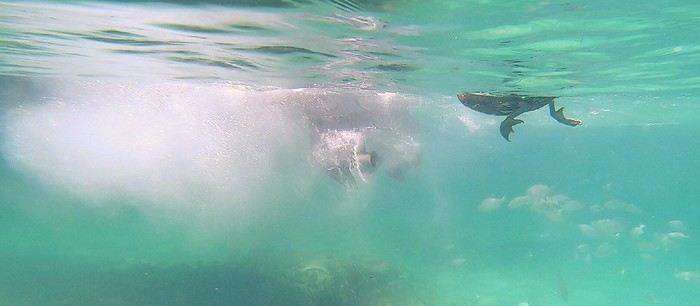 Boat reversing a meter away from a pelican
And for the snorkeling near Cabo Catoche, they attract fish daily by feeding them—a practice that’s normally discouraged. Afterward, these fish can’t feed naturally anymore and become dependent on Glendy Tours and its competitors.
A quick note on the rest of the excursion: Cabo Catoche (the site where we had lunch, on Holbox Island) is the northernmost point of the entire Yucatán. The place is paradise.
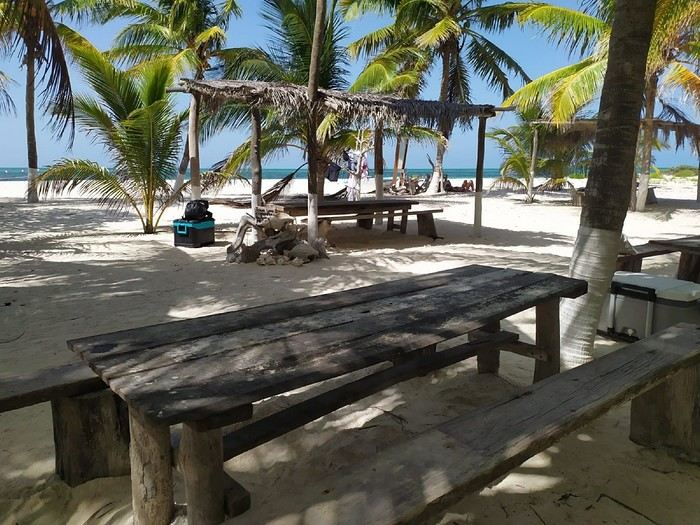
On the way back, we spent half an hour snorkeling at a site that turned out to be fish-filled only because the tour operators had the bad habit of feeding the fish. But this practice, which isn’t respectful of nature, is normally discouraged.
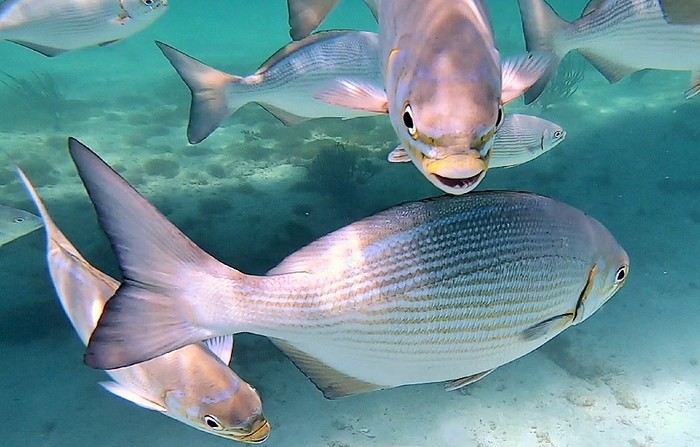
Plus, life jackets—like in many places in the Yucatán—are mandatory!!
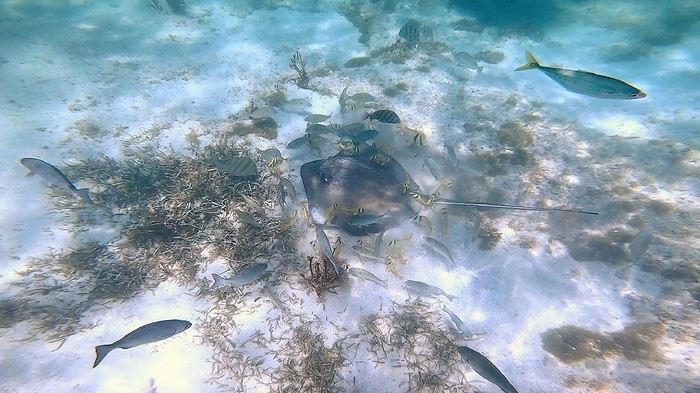
As divers, we didn’t find the site very interesting, but objectively, it should delight those who aren’t used to putting their heads underwater in beautiful dive spots.
We hated feeling trapped in those life jackets, stuck at the surface, and for me, the highlight was swimming next to a pelican that wasn’t too shy—it was paddling right beside me in green water.
Anyway, it seems we can’t post more than 10 photos at once on VF, so I’ll come back with the rest of the journal in another message. Because after these early trip mishaps, the rest of the journey turned out to be magnificent...
What a pleasure to be back on VF after a few difficult years 😎 So, before diving into the topic, welcome back to VF and above all... keep going!
Well, I’m finally picking up my old habit of posting a new travel journal.
Before heading to Mexico in the summer of 2023 with my family (my partner and our two boys, aged 18 and 16), I had somehow convinced myself—though I can’t even remember why—that the Yucatán was too touristy, too cliché, too expensive, and overrated!
The country didn’t particularly appeal to me, but faced with my wife’s insistence—she’d been there years ago, before we met, and had promised to show our sons this incredible place—my arguments didn’t hold much weight.
And thank goodness, because I have to admit she was absolutely right to take us there! In the end, we encountered far fewer tourists than we’d feared (except at a few sites), and the prices, which we’d been told were geared toward American neighbors (US), turned out to be quite affordable. In short, it was pure joy on both counts. All that was left was for the trip itself to be beautiful and memorable—and it was...
1st stop: Isla Holbox and the whale sharks
Holbox (pronounced “Hol-bosh”) is a stunning island where you can relax in an enchanting setting.
Our main goal in coming to Holbox was to swim with whale sharks. So, the first thing we told our hotel, Los Arcos Holbox, upon arrival was to arrange an excursion with one of the island’s many tour operators: Glendy Tours Holbox. We set off the next morning, bright and early.
The itinerary for this outing is the same for all tour operators (and there are about thirty of them!): roughly two hours by speedboat, then snorkeling with the whale sharks, followed by another boat ride to Cabo Catoche for lunch, then more boating to a fish-filled snorkeling spot before heading back. In total, the excursion can take eight hours—or even longer.
Besides my two sons and me, there were only two other clients on board—a French couple. Our boat was one of the very first to leave, but after ten minutes, the pilot got a radio call. We turned back without any explanation, returning to the departure dock.
There, a young woman who clearly fancied herself a diva was waiting for us. She was Mexican and boarded the boat, snubbing all five of us while flirting with the pilot and guide, who were suddenly all eyes for her. We couldn’t understand how this diva had convinced our tour operator to turn the boat around just to pick her up when she hadn’t even booked and we were already far out. We left 20 minutes late.
The two-hour journey passed surprisingly quickly, and for good reason: we spotted dolphins six times! They were leaping out of the water as they moved. Pure joy. We stopped whenever they were near the boat.
The photo isn’t great—the ultra-wide-angle lens on my GoPro makes the dolphins look smaller—but at least I got a souvenir.
A few flying fish (exocets) also glided a meter or two above the water as we sped along. The false start was forgotten, and the day was off to a fantastic start in this stunning marine environment...
When we reached the area where the whale sharks were supposed to be, the guide explained that we’d now have to scan the sea until we spotted one. It could take five minutes or forty-five, he said, and if we were unlucky, we might not see any at all!
An hour and a half later—still nothing! The captain then headed toward a distant area where about twenty other boats were already gathered.
Sure enough, there was a juvenile whale shark (still a good eight meters long) there, and all the boats were lining up to approach it slowly, one by one, so as not to scare the animal. Each boat got about thirty seconds within a few meters of it, engine idling, before making way for the next. We were allowed to approach three times, but we weren’t permitted to dive in. That’s normal—such a crowd of divers around a single animal would stress it out, and here, whale sharks are protected by regulations: swimming with them is strictly controlled. There was even a coast guard boat with us at all times, monitoring everyone’s behavior.
We were torn between the luck of seeing such a magnificent animal, even from the surface, and the discomfort we felt about the absurd situation. All those boats lined up just to catch a fleeting glimpse of the shark for a few seconds—let’s be honest, it was ridiculous. In short, the whole thing was unpleasant, and probably even more so for the shark than for us, though it did keep gulping down kilos of plankton as if nothing were happening...
When it was our turn to approach, I dipped my GoPro into the water at arm’s length and framed the shot blindly, hoping for a decent image of the shark.
On the third and final approach, the sixth passenger on board—the one we’d had to turn back for ten minutes after departure—quietly spoke to the guide and captain after putting on her flippers (even though, I’ll remind you, no one was allowed to dive). She wanted them to ask the coast guard for permission to dive with the shark—just her! She whispered so we couldn’t hear what she was offering in exchange.
The two lackeys complied and shouted the request to the officials in front of all the other boats, with no shame whatsoever. With so many witnesses, the coast guard had no choice but to refuse. The diva wouldn’t let it go and asked them to insist, which they did, but the refusal was firm and final.
On the nearest boats, everyone had heard and was stunned. They openly mocked this bimbo who clearly had no shame. Hidden behind her star sunglasses, she responded with a dismissive smile. Pathetic.
The encounter with the shark ended, and we set off for Cabo Catoche, a site on Holbox Island where we were to have lunch.
We were a little disappointed not to have had the chance to see the usual school of whale sharks (they’re often dozens swimming together!), but that’s nature’s way, and we knew it.
And then, an unlikely stroke of luck: a boat ahead of us was putting divers in the water with a pair of adult whale sharks. We joined them, and while we were putting on our masks and snorkels, the guide briefed us. He said my sons and I would go first, followed by the French couple and the diva.
But Miss World, clearly unhappy with this order, quietly complained to the guide, who eventually switched the order. It didn’t bother us since we’d only get a minute in the water anyway—what’s a minute more or less?
So the three of them got in the water, and a moment later, they were done. My two sons and I, sitting on the edge of the boat with masks on and snorkels in our mouths, were ready to finally take the plunge. But instead of continuing to follow the shark, the captain was suddenly all eyes for Miss Silicone! He even let go of the wheel for a moment to help her back on board.
One of the two sharks had already left minutes earlier, and the second was swimming farther away. Other boats were arriving, and the captain went to join the queue 100 meters from the shark. Soon, even more boats showed up. There were way too many people, the shark left, and diving was no longer possible.
I was, of course, a little disappointed not to have fulfilled my long-time dream of swimming with a whale shark, even briefly. But I was mostly disgusted for my two boys, who had been so excited about it. I told the guide exactly what I thought and asked for compensation—not for missing out on swimming with the shark (you can never guarantee seeing one, nature isn’t at our beck and call), but for clearly skipping our turn to dive. He promised a refund.
At the end of the day, back on land, he dropped us all off, and as he was about to leave, I reminded him about the refund. He agreed again, calmly got back on board, and sped off as if nothing had happened—just him and the captain, two total cowards. I couldn’t believe it.
Of course, back at our hotel (which had booked this tour operator—Glendy Tours), I explained the situation and asked for my refund again. The receptionist called the manager, who arrived with the guide. Our runaway wasn’t so cocky anymore. Inside, I was fuming, but I kept my cool during the discussion that followed.
Right off the bat, I made a point of looking the so-called guide in the eyes while telling him he’d run off like a coward. I did my best to stay calm, speaking clearly, staring him down the whole time, and repeating several times that he was a coward, in front of the manager, who didn’t say a word. The guide had clearly been told by his boss to keep quiet because he didn’t utter a word during the entire twenty-minute conversation.
Anyway, I’ll spare you the details, but in the end, the manager only offered us another excursion the next day as compensation for the “inconvenience.” It was just snorkeling with fish, not another whale shark trip. He admitted their fault, but since we had to leave early the next morning and had other bookings for the rest of the trip, we couldn’t accept. And he refused to refund us.
On Tripadvisor, Glendy Tours has a mediocre rating (3 out of 5), but more importantly, it ranks 29th out of 36 nautical tour operators rated by customers. I was pretty upset with the hotel for booking such an amateur for us.
If you want to swim with whale sharks in Holbox, you might end up with Glendy Tours. And it might go well—I certainly hope so. But given the price of such an excursion (3,000 pesos per person, about 160 €!), I’d still suggest quickly checking online before you go to see which providers have the best ratings. You’ll have a much better chance of things going smoothly with the top-rated ones than with those as poorly ranked as Glendy Tours.
On the other hand, if you’re a beautiful young woman, you can choose them without worry—you’ll get better treatment than the rest of us...
To wrap up this excursion, I have to mention the “respect for nature” angle that all these tour operators highlight. They tell us they respect the whale sharks: only two or three people can dive at a time, and only for a few minutes, so as not to disturb these gentle giants...
We believed them before we left, but that’s not what we saw. When the sharks are hard to find except for one, everyone rushes it, and only the constant presence of the coast guard prevents the tour operators from putting their clients in the water.
Because for the second shark we saw, when the divers from our boat got out of the water and we left to join the queue while it was our turn to dive, other boats quickly arrived and started swarming the poor shark, which eventually left.
In other words, it’s clear these companies only respect the sharks when they’re being watched.
Boat reversing a meter away from a pelicanAnd for the snorkeling near Cabo Catoche, they attract fish daily by feeding them—a practice that’s normally discouraged. Afterward, these fish can’t feed naturally anymore and become dependent on Glendy Tours and its competitors.
A quick note on the rest of the excursion: Cabo Catoche (the site where we had lunch, on Holbox Island) is the northernmost point of the entire Yucatán. The place is paradise.
On the way back, we spent half an hour snorkeling at a site that turned out to be fish-filled only because the tour operators had the bad habit of feeding the fish. But this practice, which isn’t respectful of nature, is normally discouraged.
Plus, life jackets—like in many places in the Yucatán—are mandatory!!
As divers, we didn’t find the site very interesting, but objectively, it should delight those who aren’t used to putting their heads underwater in beautiful dive spots.
We hated feeling trapped in those life jackets, stuck at the surface, and for me, the highlight was swimming next to a pelican that wasn’t too shy—it was paddling right beside me in green water.
Anyway, it seems we can’t post more than 10 photos at once on VF, so I’ll come back with the rest of the journal in another message. Because after these early trip mishaps, the rest of the journey turned out to be magnificent...
Preparing for a one-month road trip in Uganda
Yiiihiiiiii😎
Hey everyone, and warm greetings to all you Southern African wanderers exploring the eastern lands of this African forum!
Four years later, I can finally create a new thread about my next trip—and not just any trip: Uganda! 🙂 A destination that’s been making me dream more and more over the past few years. Originally planned for 2019 but swapped for Tanzania, Kilimanjaro, and Zanzibar. Then pushed aside for another well-known African destination, Namibia, with 6 friends in 2021 (but ultimately done with just 2 because of Covid). 2022 was supposed to be the year of our Canada trip (initially planned for 2020 and canceled two years in a row for the same health reasons). The 2021 safari with friends finally happened in South Africa in 2023—a classic loop that didn’t require much planning and let me start dreaming about my next African destination while devouring all the Uganda travel journals, frustrated I couldn’t reply or comment. Uganda was then reconsidered for 2024 as a follow-up to a 6-week road trip in Finland and Norway, starting from Paris to save time, money, and the ecological footprint of a transatlantic round trip—but ultimately canceled due to budget constraints, the start of my freelance work (no more paid leave), the high cost of 6 weeks in Scandinavia, and no desire to cheapen our first Uganda trip.
Uganda will be the absolute priority for 2025! 😉 And I plan to use this time to prepare for the trip properly. I also hope to use this period to get back to writing our travel journals. By absolute priority, I mean minimal restrictions and compromises on budget and travel time. 🙂
So, we’re planning to spend a month in Uganda next summer (2025). The exact month will be decided in the coming weeks. Why a month? To explore a good part of the country (really want to go up to Kidepo), enjoy the stops, and avoid putting ourselves at risk on the roads. Also, several rental companies offered me 4x4 quotes with a 10% discount for 30+ days of rental...
Here’s my humble draft itinerary:
Day 1: Late arrival in Entebbe around 11 PM. Day 2: Pick up 4x4 vehicle. Night in Jinja.
Day 3: Drive and night in Sipi Falls. Day 4: Night in Sipi Falls. Day 5: Night in Moroto. Day 6: Night in Moroto. Day 7: Drive to Kidepo NP. Day 8: Safari in Kidepo NP. Day 9: Safari in Kidepo NP. Day 10: Full day drive to Murchison Falls. Day 11: Safari in Murchison Falls. Day 12: Safari in Murchison Falls. Day 13: Ziwa Rhino Sanctuary. Day 14: Lake Albert. Day 15: Full day drive to Kibale Forest. Day 16: Kibale Forest NP. Day 17: Drive to Kilembe (Rwenzori NP). Day 18: Hike in southern Rwenzori region. OR start Weismann’s Peak trek (Day 1). Day 19: Weismann’s Peak trek (Day 2). Day 20: Weismann’s Peak trek (Day 3). Day 21: Weismann’s Peak trek (Day 4). Day 22: Weismann’s Peak trek (Day 5), night in QENP. Day 23: QENP. Day 24: Visit Ishasha and drive to Lake Bunyonyi. Day 25: Drive to Ruhija. Day 26: Ruhija, Bwindi NP, gorilla tracking. Day 27: Mgahinga Gorilla NP... Day 28: Morning trek (gorillas or golden monkeys). Drive and night in Mburo NP.
Day 31: Visit Mburo NP and drive to Entebbe. Mabamba Swamp if we haven’t seen shoebills yet? Return 4x4 (30 days rental). Day 32: Departure from Entebbe (flight at 7:30 PM direct to Johannesburg with Uganda Airlines).
It’s not easy to visualize such a long itinerary. In terms of nights, it would look like this:
● Entebbe (1 night)
● Jinja (1 night)
● Sipi Falls (2 nights) ● Moroto (2 nights) ● Kidepo NP (3 nights) ● Murchison Falls (3 nights)
● Ziwa Rhino Sanctuary (1 night)
● Lake Albert (1 night) ● Kibale Forest (2 nights)
● Rwenzori NP (5 nights) ● QENP (2 nights)
● Lake Bunyonyi (1 night)
● Ruhija (2 nights)
● Mgahinga Gorilla NP (1 night?)
● Mburo NP (2 nights)
● Entebbe (1 night)
Obviously, I already have a lot of questions .
A question I really like: Where would you add extra nights? Keeping the 5 days in Rwenzori, we still have at least 2 nights to add to this itinerary.
Also, I don’t really have a clear idea about the loop’s direction. Instinctively, I thought of doing the gorillas last to end on a high note, but given the state of rental vehicles and traveler feedback, it seems we might not even make it to the end of the trip . Is there a meteorologically better direction? Given we’re likely leaving from early August to early September.
We’ve debated a lot about renting a vehicle with or without a guide, RAV4 or a proper 4x4, rooftop tent or not... In the end, after testing the guided experience in Tanzania and noting the relatively reasonable prices of hard lodgings (compared to Tanzania, Namibia, or Botswana, for example), the high cost of equipped 4x4s, and their unpredictable condition... We’re currently leaning toward a non-equipped 4x4, opting for the newest and most reliable vehicle possible to minimize breakdowns and missed stops. Any agencies/vehicles you’d recommend? Any recent feedback from the past few years?
Where’s the best place to see golden monkeys? I read that the southern part of QENP is no longer accessible. Can’t we go to Ishasha anymore? I’ve seen a lot of disappointed reviews about QENP, but it still seems like a good place to spot leopards and hyenas. If we stick with hard lodgings, which lodge is worth it in QENP, and how many nights should we plan? Are there night drives in Uganda to observe nocturnal wildlife? Initially, I thought of doing two gorilla treks—one in Bwindi (Ruhija) and another in Mgahinga Gorilla NP. But I got excited about Rwenzori (especially with the option to extend the stay a bit) and now I’m considering a trek there instead. However, the trek to Margherita Peak’s summit takes at least 7 days at 1580 $/person (plus extra rental days...), so I’m leaning toward the 5-day Weismann’s Peak trek. Has anyone done the Weissman’s Peak trek? If we skip the gorilla trek, is Mgahinga Gorilla NP still worth visiting?
Thanks in advance for all your comments, answers, feedback, favorite spots, and tips! 🙂
Looking forward to chatting with you all on this forum again! 😉
Pierre & Alison
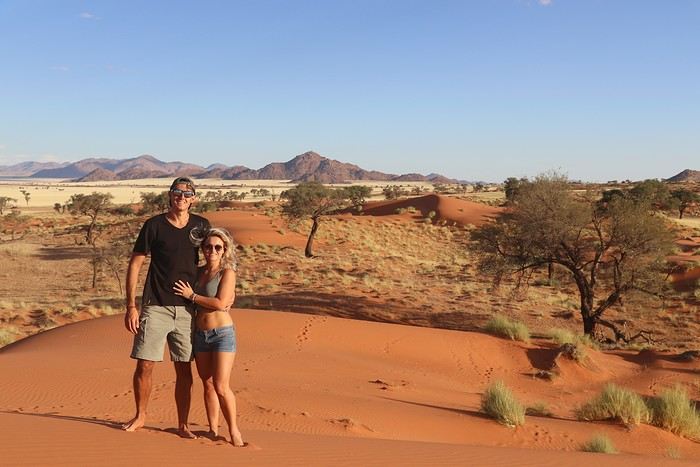
Hey everyone, and warm greetings to all you Southern African wanderers exploring the eastern lands of this African forum!
Four years later, I can finally create a new thread about my next trip—and not just any trip: Uganda! 🙂 A destination that’s been making me dream more and more over the past few years. Originally planned for 2019 but swapped for Tanzania, Kilimanjaro, and Zanzibar. Then pushed aside for another well-known African destination, Namibia, with 6 friends in 2021 (but ultimately done with just 2 because of Covid). 2022 was supposed to be the year of our Canada trip (initially planned for 2020 and canceled two years in a row for the same health reasons). The 2021 safari with friends finally happened in South Africa in 2023—a classic loop that didn’t require much planning and let me start dreaming about my next African destination while devouring all the Uganda travel journals, frustrated I couldn’t reply or comment. Uganda was then reconsidered for 2024 as a follow-up to a 6-week road trip in Finland and Norway, starting from Paris to save time, money, and the ecological footprint of a transatlantic round trip—but ultimately canceled due to budget constraints, the start of my freelance work (no more paid leave), the high cost of 6 weeks in Scandinavia, and no desire to cheapen our first Uganda trip.
Uganda will be the absolute priority for 2025! 😉 And I plan to use this time to prepare for the trip properly. I also hope to use this period to get back to writing our travel journals. By absolute priority, I mean minimal restrictions and compromises on budget and travel time. 🙂
So, we’re planning to spend a month in Uganda next summer (2025). The exact month will be decided in the coming weeks. Why a month? To explore a good part of the country (really want to go up to Kidepo), enjoy the stops, and avoid putting ourselves at risk on the roads. Also, several rental companies offered me 4x4 quotes with a 10% discount for 30+ days of rental...
Here’s my humble draft itinerary:
Day 1: Late arrival in Entebbe around 11 PM. Day 2: Pick up 4x4 vehicle. Night in Jinja.
Day 3: Drive and night in Sipi Falls. Day 4: Night in Sipi Falls. Day 5: Night in Moroto. Day 6: Night in Moroto. Day 7: Drive to Kidepo NP. Day 8: Safari in Kidepo NP. Day 9: Safari in Kidepo NP. Day 10: Full day drive to Murchison Falls. Day 11: Safari in Murchison Falls. Day 12: Safari in Murchison Falls. Day 13: Ziwa Rhino Sanctuary. Day 14: Lake Albert. Day 15: Full day drive to Kibale Forest. Day 16: Kibale Forest NP. Day 17: Drive to Kilembe (Rwenzori NP). Day 18: Hike in southern Rwenzori region. OR start Weismann’s Peak trek (Day 1). Day 19: Weismann’s Peak trek (Day 2). Day 20: Weismann’s Peak trek (Day 3). Day 21: Weismann’s Peak trek (Day 4). Day 22: Weismann’s Peak trek (Day 5), night in QENP. Day 23: QENP. Day 24: Visit Ishasha and drive to Lake Bunyonyi. Day 25: Drive to Ruhija. Day 26: Ruhija, Bwindi NP, gorilla tracking. Day 27: Mgahinga Gorilla NP... Day 28: Morning trek (gorillas or golden monkeys). Drive and night in Mburo NP.
Day 31: Visit Mburo NP and drive to Entebbe. Mabamba Swamp if we haven’t seen shoebills yet? Return 4x4 (30 days rental). Day 32: Departure from Entebbe (flight at 7:30 PM direct to Johannesburg with Uganda Airlines).
It’s not easy to visualize such a long itinerary. In terms of nights, it would look like this:
● Entebbe (1 night)
● Jinja (1 night)
● Sipi Falls (2 nights) ● Moroto (2 nights) ● Kidepo NP (3 nights) ● Murchison Falls (3 nights)
● Ziwa Rhino Sanctuary (1 night)
● Lake Albert (1 night) ● Kibale Forest (2 nights)
● Rwenzori NP (5 nights) ● QENP (2 nights)
● Lake Bunyonyi (1 night)
● Ruhija (2 nights)
● Mgahinga Gorilla NP (1 night?)
● Mburo NP (2 nights)
● Entebbe (1 night)
Obviously, I already have a lot of questions .
A question I really like: Where would you add extra nights? Keeping the 5 days in Rwenzori, we still have at least 2 nights to add to this itinerary.
Also, I don’t really have a clear idea about the loop’s direction. Instinctively, I thought of doing the gorillas last to end on a high note, but given the state of rental vehicles and traveler feedback, it seems we might not even make it to the end of the trip . Is there a meteorologically better direction? Given we’re likely leaving from early August to early September.
We’ve debated a lot about renting a vehicle with or without a guide, RAV4 or a proper 4x4, rooftop tent or not... In the end, after testing the guided experience in Tanzania and noting the relatively reasonable prices of hard lodgings (compared to Tanzania, Namibia, or Botswana, for example), the high cost of equipped 4x4s, and their unpredictable condition... We’re currently leaning toward a non-equipped 4x4, opting for the newest and most reliable vehicle possible to minimize breakdowns and missed stops. Any agencies/vehicles you’d recommend? Any recent feedback from the past few years?
Where’s the best place to see golden monkeys? I read that the southern part of QENP is no longer accessible. Can’t we go to Ishasha anymore? I’ve seen a lot of disappointed reviews about QENP, but it still seems like a good place to spot leopards and hyenas. If we stick with hard lodgings, which lodge is worth it in QENP, and how many nights should we plan? Are there night drives in Uganda to observe nocturnal wildlife? Initially, I thought of doing two gorilla treks—one in Bwindi (Ruhija) and another in Mgahinga Gorilla NP. But I got excited about Rwenzori (especially with the option to extend the stay a bit) and now I’m considering a trek there instead. However, the trek to Margherita Peak’s summit takes at least 7 days at 1580 $/person (plus extra rental days...), so I’m leaning toward the 5-day Weismann’s Peak trek. Has anyone done the Weissman’s Peak trek? If we skip the gorilla trek, is Mgahinga Gorilla NP still worth visiting?
Thanks in advance for all your comments, answers, feedback, favorite spots, and tips! 🙂
Looking forward to chatting with you all on this forum again! 😉
Pierre & Alison
Ethiopia and Two Endemic Animals
The reopening of the forum is great news—let's keep it going! I’m going to share a little story about this 12-day trip, which was my second-to-last journey and my most recent one in Africa for now.
I went to this country for one very specific reason: to see two endemic animal species. A little suspense… you’ll find out what they are soon if you don’t already know!
The country is poor, very poor even. And it hits you even harder when you arrive in the capital: a massive open-air construction site that gives an impression of prosperity. A lot of roads were built by the Chinese, but to be honest, they’re far from perfect… and I mean *far*!
When it comes to restaurants, it’s pretty much the same story. Most offer endless menus, but in reality, there aren’t many choices. Once, I was flat-out told: “No rice today!” Ordering a dish? It’s a real gamble! The food is *very* spicy—I’m warning you, it’s intense! There’s chili in almost everything, so it’s best to ask beforehand if you don’t want your mouth on fire. Actually, this was the first time I didn’t like the food in a country I visited. Had to happen eventually, right?
Their national dish? Injera. A large flatbread topped with sauces, vegetables, and meat. The taste is really unique—some love it, others… not so much.
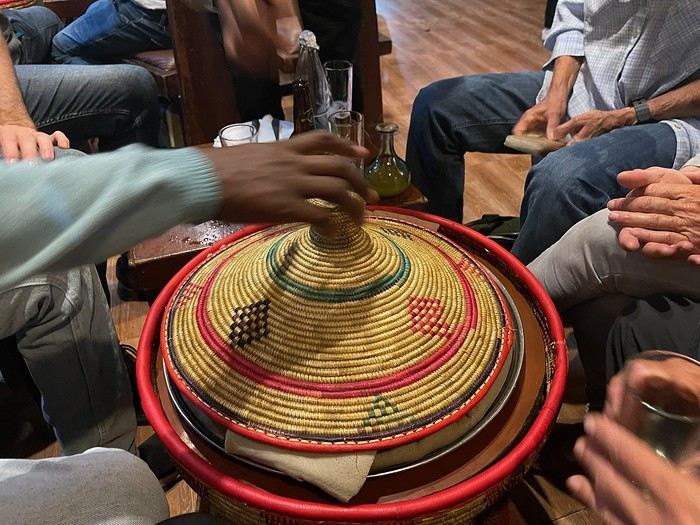
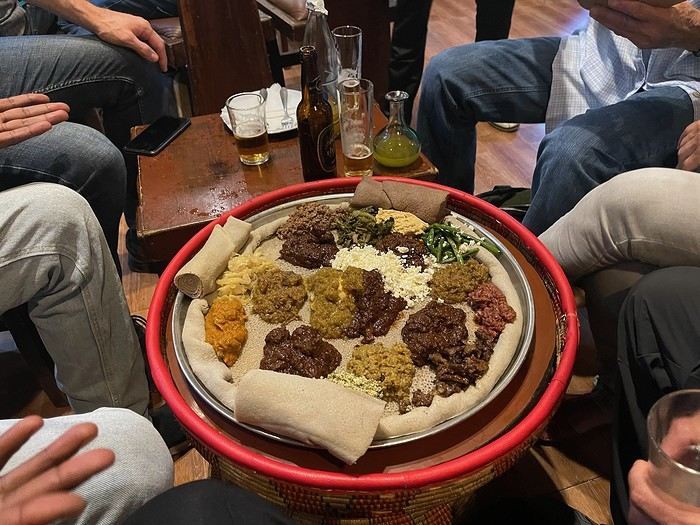
I went to this country for one very specific reason: to see two endemic animal species. A little suspense… you’ll find out what they are soon if you don’t already know!
The country is poor, very poor even. And it hits you even harder when you arrive in the capital: a massive open-air construction site that gives an impression of prosperity. A lot of roads were built by the Chinese, but to be honest, they’re far from perfect… and I mean *far*!
When it comes to restaurants, it’s pretty much the same story. Most offer endless menus, but in reality, there aren’t many choices. Once, I was flat-out told: “No rice today!” Ordering a dish? It’s a real gamble! The food is *very* spicy—I’m warning you, it’s intense! There’s chili in almost everything, so it’s best to ask beforehand if you don’t want your mouth on fire. Actually, this was the first time I didn’t like the food in a country I visited. Had to happen eventually, right?
Their national dish? Injera. A large flatbread topped with sauces, vegetables, and meat. The taste is really unique—some love it, others… not so much.
Quinze jours au Soudan en février 2020 English translation pending
Bonjour 😏
Le temps du confinement me permet de me mettre à jour dans mes carnets de voyage.
Une nouvelle aventure. Je pars avec Justine, une ancienne élève qui a 28 ans. Son premier voyage à part des hôtels club..
La location de voiture sans chauffeur est impossible au Soudan. J’ai décidé de louer une voiture avec chauffeur. Je suis donc passé par une agence, 90 euros par jour pour voiture, pétrole, chauffeur (son logement et sa nourriture comprise). Aucune autre prestation.
Je ne voulais pas me contenter du Nord et des sites archéologiques, circuit classique que font les quelques touristes qui vont au Soudan et mais partir vers le sud, dans le Kordofan pour aller dans les nubas mountains. Dans cette partie du soudan, il y a eu pendant des années, une guerre intense avec le gouvernement central. Le mouvement de rébellion existe toujours, le SPLM. L’armée de ce mouvement est toujours en place. Elle réclame un égal développement pour cette partie du territoire dans lequel il n’y a aucun investissement. Dans cette région, le peuple Nuba comprend une mosaïque de tribus. Je voulais aller dans cette région et avait construit un itinéraire que l’agence avait accepté. Hélas, je n’ai pas pu faire tout ce que je voulais car il fallait des autorisations du SPLM que nous n’avons pas eu. 10 jours avant de partir, toujours pas de certitude de pouvoir faire la boucle prévue. Alors que j’avais dit que je ne voulais pas de guide, l’agence m’a parlé d’un gars, dit guide, natif de cette région. Je l’ai contacté directement et nous nous sommes mis d’accord sur sa prestation ! Sur la route, pour les arrêts dans les villages, il n’était pas indispensable, car je n’ai aucun souci pour aller à la rencontre de la population. C’est souvent moi qui disais, on s’arrête là et là… Mais il avait pris des contacts avec les autorités locales. Cela nous a permis de vivre dans un village, impossible sans lui.
1èr partie du voyage : LE KORDOFAN ET LE PAYS NUBAS, au sud de Khartoum
Cela a été le must de notre voyage pour les contacts avec la population. Je voyage beaucoup mais je n’avais pas vécu cela depuis longtemps. Partout l’accueil a été extraordinaire et jamais on ne nous a demandé quoique ce soit.
1er jour KHARTOUN/DILLING
Longue route puisque nous sommes partis à 7 h et arrivés à 17 h 30, mais avec plusieurs arrêts ! En voici quelques uns.
Marché des chameaux "El molih camel market". Le grand marché est le samedi, nous y passons un lundi… Pas beaucoup d’effervescence mais pour notre premier marché de chameaux, on apprécie !
Arrêt dans un village de la tribu Ahamada. Excellent accueil. Nous sommes accueillis dans 3 maisons. Une des familles était très chaleureuse. Nous étions au début du voyage, je ne maîtrisais pas la suite de la journée. Mais à refaire, j’aurais accepté leur invitation de partager un moment ensemble.
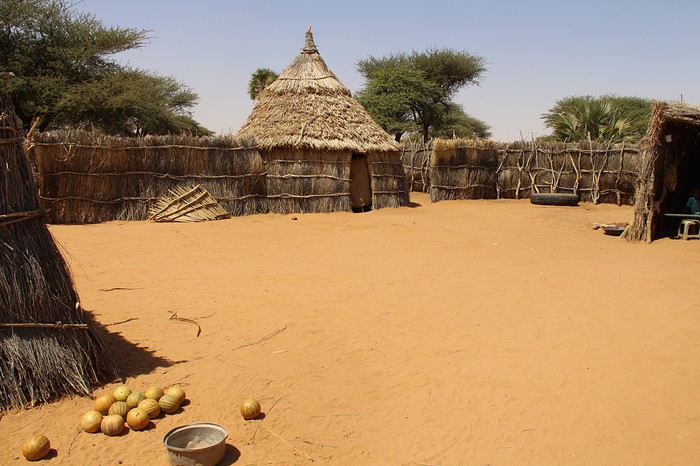
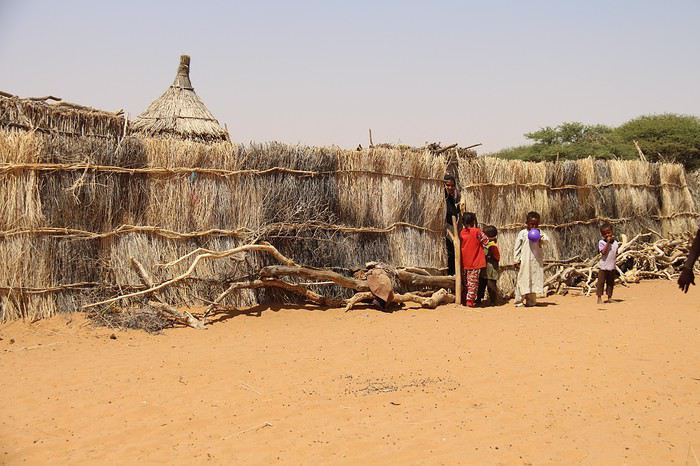
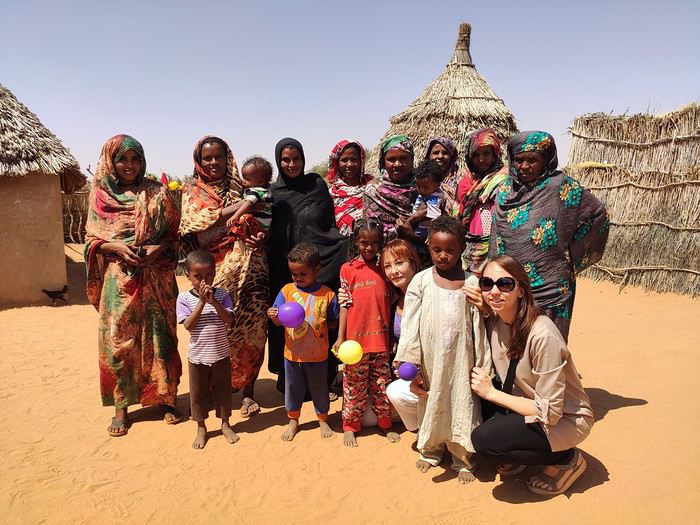
Arrêt à ville de Barra. Nous sommes en début d’après-midi. Notre premier marché. Le souk est animé. Les gens sont étonnés de voir des « blancs » et nous regardaient avec de grands yeux.
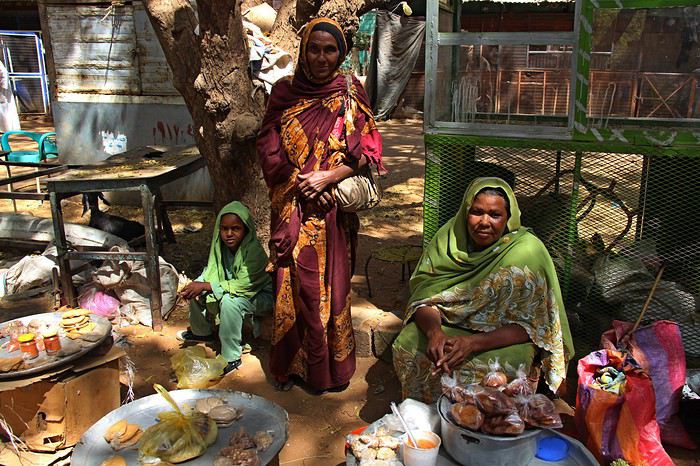
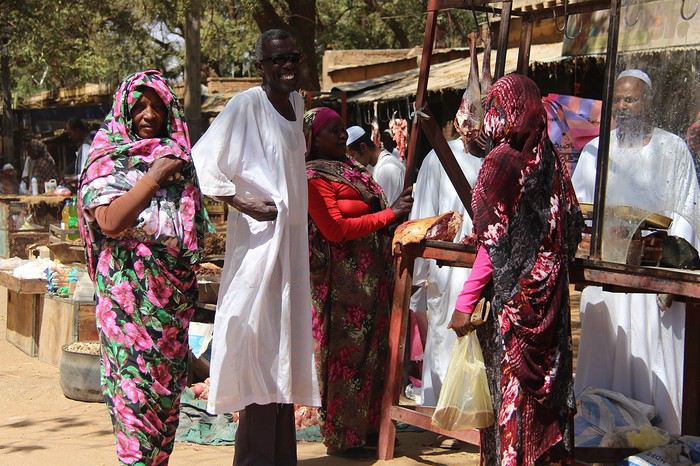
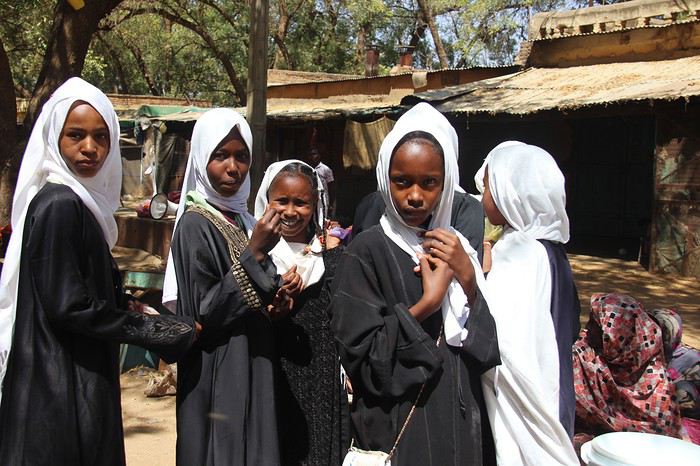
Puis arrêt dans un autre village. A nouveau un très bon accueil.
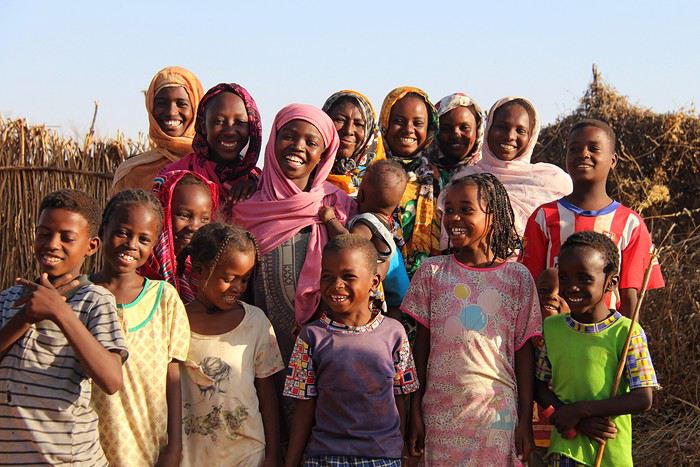
Bien sûr, il faut prendre son temps pour créer le contact
Ce qui m’a passionné sur cette route macadamisée, en très bon état, un peu monotone car les paysages sont plats, pas vraiment jolis, ce sont les camions, avec leur hauteur de marchandises. C’est vraiment très impressionnant. Je vous livre quelques spécimens.
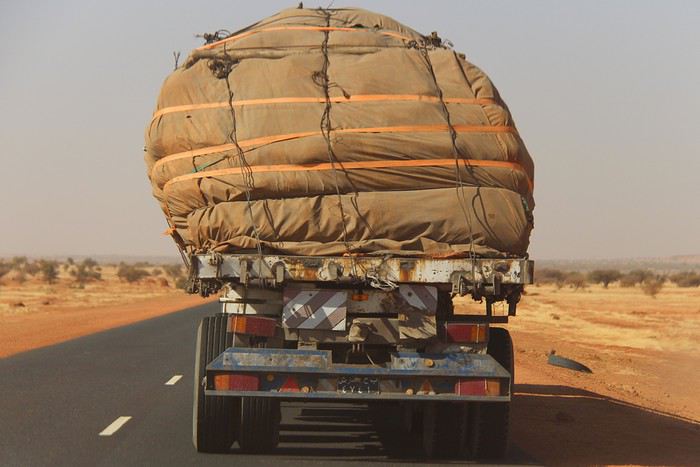
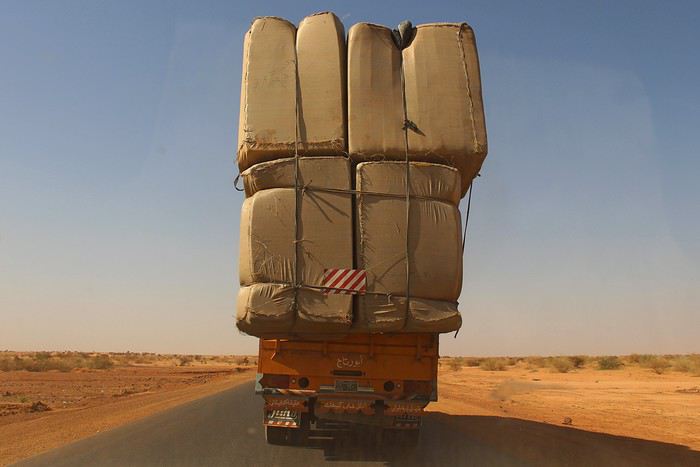
Le temps du confinement me permet de me mettre à jour dans mes carnets de voyage.
Une nouvelle aventure. Je pars avec Justine, une ancienne élève qui a 28 ans. Son premier voyage à part des hôtels club..
La location de voiture sans chauffeur est impossible au Soudan. J’ai décidé de louer une voiture avec chauffeur. Je suis donc passé par une agence, 90 euros par jour pour voiture, pétrole, chauffeur (son logement et sa nourriture comprise). Aucune autre prestation.
Je ne voulais pas me contenter du Nord et des sites archéologiques, circuit classique que font les quelques touristes qui vont au Soudan et mais partir vers le sud, dans le Kordofan pour aller dans les nubas mountains. Dans cette partie du soudan, il y a eu pendant des années, une guerre intense avec le gouvernement central. Le mouvement de rébellion existe toujours, le SPLM. L’armée de ce mouvement est toujours en place. Elle réclame un égal développement pour cette partie du territoire dans lequel il n’y a aucun investissement. Dans cette région, le peuple Nuba comprend une mosaïque de tribus. Je voulais aller dans cette région et avait construit un itinéraire que l’agence avait accepté. Hélas, je n’ai pas pu faire tout ce que je voulais car il fallait des autorisations du SPLM que nous n’avons pas eu. 10 jours avant de partir, toujours pas de certitude de pouvoir faire la boucle prévue. Alors que j’avais dit que je ne voulais pas de guide, l’agence m’a parlé d’un gars, dit guide, natif de cette région. Je l’ai contacté directement et nous nous sommes mis d’accord sur sa prestation ! Sur la route, pour les arrêts dans les villages, il n’était pas indispensable, car je n’ai aucun souci pour aller à la rencontre de la population. C’est souvent moi qui disais, on s’arrête là et là… Mais il avait pris des contacts avec les autorités locales. Cela nous a permis de vivre dans un village, impossible sans lui.
1èr partie du voyage : LE KORDOFAN ET LE PAYS NUBAS, au sud de Khartoum
Cela a été le must de notre voyage pour les contacts avec la population. Je voyage beaucoup mais je n’avais pas vécu cela depuis longtemps. Partout l’accueil a été extraordinaire et jamais on ne nous a demandé quoique ce soit.
1er jour KHARTOUN/DILLING
Longue route puisque nous sommes partis à 7 h et arrivés à 17 h 30, mais avec plusieurs arrêts ! En voici quelques uns.
Marché des chameaux "El molih camel market". Le grand marché est le samedi, nous y passons un lundi… Pas beaucoup d’effervescence mais pour notre premier marché de chameaux, on apprécie !
Arrêt dans un village de la tribu Ahamada. Excellent accueil. Nous sommes accueillis dans 3 maisons. Une des familles était très chaleureuse. Nous étions au début du voyage, je ne maîtrisais pas la suite de la journée. Mais à refaire, j’aurais accepté leur invitation de partager un moment ensemble.
Arrêt à ville de Barra. Nous sommes en début d’après-midi. Notre premier marché. Le souk est animé. Les gens sont étonnés de voir des « blancs » et nous regardaient avec de grands yeux.
Puis arrêt dans un autre village. A nouveau un très bon accueil.
Bien sûr, il faut prendre son temps pour créer le contact
Ce qui m’a passionné sur cette route macadamisée, en très bon état, un peu monotone car les paysages sont plats, pas vraiment jolis, ce sont les camions, avec leur hauteur de marchandises. C’est vraiment très impressionnant. Je vous livre quelques spécimens.
Été 1985 : un voyage de noces hors du commun dans la Chine pop English translation pending
Deuxième séjour à Pékin en 2018, je discute à l'auberge avec une voyageuse :
"Pékin ! Ici on vit vraiment dans un autre monde."
"Peut-être, mais alors que dire du Pékin des années 80. Une autre planète !"
Ceux qui découvrent cette Chine du 21° siècle ne retrouveront guère que des fragments de celle que je vais raconter ici, comme j'ai pu le constater par moi-même. (Voir mes carnets sur la route de la soie.)
Ce sera donc un carnet "impressions de Chine", ce qui m'est resté de plus marquant. Les quelques photos jaunies que j'ai pu sauver sont scannées et de mauvaise qualité. Merci à Jacqueline et Jean-Pierre pour leur contribution photographique, entièrement d'époque elle aussi.
AU MENU
Préambule - le contexte politique et économique du pays Chapitre 1 - Un voyage qui s'annonce pas très romantique, c'était prévu... Chapitre 2 - Pékin : le trafic de monnaie. Illégal mais indispensable. Chapitre 3 - Pékin 1985-2018 : du Moyen-Age à la révolution technologique. Immersion comparative. Chapitre 4 - Pékin : un billet de train pour Xi'an ? Pas si simple que ça. Chapitre 5 - Le "qi feng shui". Le soigneur se fait soigner. Chapitre 6 - Xi'an : «mei yo», la réponse favorite des fonctionnaires. Chapitre 7 - Vol au-dessus de la jungle. Le coucou arrivera-t-il à bon port ? Chapitre 8 - Chongqing : le bal, ou la vie sexuelle des jeunes chinois. Chapitre 9 - Croisière pop sur le Yangtse. Chapitre 10 - L'hôtel à rats. C'est à Wuhan, comme par hasard. Chapitre 11 - Canton : à la recherche de xiao Wu. Chapitre 12 - Canton : un train sous haute surveillance. Chapitre 13 - Hong Kong : dur retour à la civilisation. Albums : les photos d'époque signées Jacqueline et Jean-Pierre. A partir de la page 5 Témoignages et photos d'époque. Merci aux différents contributeurs. A partir de la page 6. Ne manquez pas le Tibet et le Xinjiang !
PREAMBULE : le contexte politique et économique Comment voyager dans ce pays encore très fermé, obscur, énigmatique, dont en Europe on ne connaît guère la mentalité, les règles de fonctionnement, dont on ne perçoit à l'étranger que quelques images soigneusement filtrées par la censure. Comment se déplacer, se loger, se nourrir, sans moyen de communication, sans réservation d'hôtel ou de train, sans connaître la langue , sans aide, sans guide, sans assistance, sans carte bleue...
1984, date clé pour le voyageur Après trente années de communisme à marche forcée, de campagnes idéologiques calamiteuses pour les populations, de luttes intestines pour le pouvoir, le pays n'arrive pas à décoller économiquement. L'écart grandit avec les nations développées. Mais avec le rétablissement des relations diplomatiques avec les Etats Unis en 1979, le nouveau président, Deng Xiaoping, tient enfin sa revanche et entame sa longue marche vers le progrès. Les fossiles maoïstes de la "longue marche", des "cent fleurs", du "grand bond en avant", les criminels de la "grande révolution culturelle prolétarienne", représentés par la "bande des quatre", tous ceux qui l'avaient évincé du pouvoir et condamné à l'oubli au fin fond d'une province, le sont à leur tour.
Le "révisionniste", comme l'a appelé la veuve Mao, lance ses réformes de libéralisation et d'ouverture de l'économie : « Peu importe qu'un chat soit blanc ou noir, l'essentiel est qu'il attrape les souris ! » Parole du maître.
Parmi ces réformes : l'ouverture au tourisme. Jusqu'à présent, pour visiter le pays, il fallait obligatoirement, soit passer par un tour opérateur avec guide et circuit programmé, soit demander des autorisations de voyage pour un nombre limité de destinations. Très peu pour moi. Mais en 1984, monsieur Deng supprime le permis de circuler et ouvre quasiment tout le pays aux visiteurs. L'info provoque un déclic : - C'est l'occasion ou jamais. L'année prochaine, ce sera la Chine. Et en sac à dos! Et ce sera aussi notre voyage de noces...
Nous aurons le privilège d'être parmi les premiers voyageurs occidentaux à tenter l'aventure. Je pourrai enfin mettre en pratique ce que j'ai appris de chinois à la fac et réaliser un vieux rêve. A nous la Chine, à nous la découverte de ce pays mystérieux et fascinant. Quelle réalité se cache derrière ces images édulcorées de bonheur populaire que nous distillent les images officielles ? Comment vit-on réellement dans ce pays ? Quel accueil réserve-t-on aux impérialistes occidentaux ?

Wuhan, 1985 : slogans révolutionnaires pour mini gardes rouges
CHAPITRE 1 : un voyage qui s'annonce pas très romantique, c'était prévu... Eh oui, juste mariés, il y a peut-être plus glamour comme destination. Bon, Venise, on connaît déjà. Quoi de mieux qu'une telle aventure pour forger un couple ? Pendant toute l'année, je peaufine le projet : itinéraire, transports, hébergements... Les guides de voyage sur la Chine ne sont pas nombreux, il n'en existe d'ailleurs qu'un en français. Pour ce qui est de l'itinéraire, c'est à peu près établi, pour le reste, ce sera au coup par coup, improvisation et opportunités. L'aventure quoi. Juste qu'on dispose d'un mois entre l'atterrissage et le retour à Hong-Kong. Pour l'itinéraire, ce sera donc Pékin - Hong Kong, mais par où et comment ? C'est le grand mystère, même si certains incontournables sont au programme : la Grande Muraille, Xi'an et son armée en terre cuite, la croisière sur le Yang Tse Kiang...
Août 1985 : Hong Kong, premiers pas en extrême-orient Munis d'un joli visa sur notre passeport et d'un billet d'avion Hong Kong - Pékin acheté en agence en France, nous débarquons à Hong Kong pour y passer une nuit avant de repartir pour Pékin le lendemain, L'atterrissage au-dessus de la ville est spectaculaire, l'avion louvoie entre les immeubles pour plonger vers la piste au raz de l'océan, un véritable tour de manège à sensations. Pas trop le temps d'explorer la ville, mais le dépaysement est déjà total. Et pourtant, ce n'est rien à côté de ce qui nous attend...
Ca commence plutôt mal Aéroport de Hong Kong, le lendemain. Nos billets sont valables, pas de problème, seulement : - Désolé, mais vous n'avez pas confirmé votre vol, l'avion est complet. Il va falloir attendre deux ou trois jours... Eh oui, en 1985, il faut confirmer son vol la veille par téléphone. Dans l'excitation et l'émotion, nous avions complètement oublié la consigne. Zut alors, deux ou trois jours de perdus sur le projet, c'est beaucoup trop. - Attendez ici, peut-être il y aura des places si des voyageurs ne se présentent pas. Longue attente plutôt anxieuse, et quelques minutes avant le décollage, petit signe de l'employé : - C'est bon, il reste deux places, vous pouvez partir.
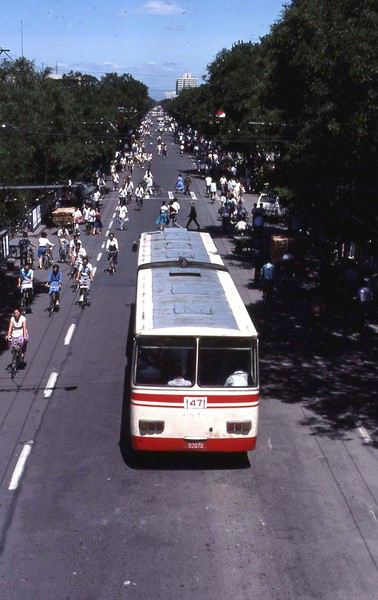
Pékin : avenue Xidan. Photo : Jacqueline et Jean-Pierre
Dès l'aéroport, j'ai senti le choc... Une simple piste en béton, pas d'avion en attente, un trafic aérien quasi nul, un bâtiment à la chinoise, usé et vieillot à souhait, des gardes en uniforme. L'aéroport est encore une base militaire, accessoirement civile pour quelques rares liaisons vers l'URSS et les pays d'Asie. Il n'y a rien dans ce qui fait office de hall d'accueil, une pièce de quelques dizaines de mètres carré tout au plus.
Contrôles minutieux, file d'attente, les militaires ne sont pas très souriants, et le comité d'accueil pas très... accueillant. On n'est pas là pour rigoler, surtout avec ces étrangers qui débarquent de Hong Kong, la zone capitaliste. Eh oui, Hong Kong chinois, ce sera dans une dizaine d'années. D'ici là...
Des billets de Monopoly ?! Un simple bureau dans un recoin fait office de banque. Vite, changer nos travelers chèques en dollars. Ben oui, la carte bleue, ça n'existe pas encore. Derrière son boulier, l'employé fait ses calculs à une vitesse incroyable et me rend le change. Surprise : j'ai une liasse de jolis billets tout neufs dans la main, mais ils n'ont rien à voir avec la monnaie locale. La preuve, il n'y a pas le portrait du grand timonier, mais des jolis dessins de monuments et paysages ! Ca ressemble davantage à des billets de Monopoly.
C'est quoi ce truc ?
Une bonne affaire, mais un gros risque En fait, c'est une monnaie spéciale réservée aux étrangers. Nous allons vite apprendre deux choses. - Un, cette monnaie n'est pas utilisée (et même interdite) par les chinois dans leur vie quotidienne. Elle est réservée aux étrangers et ils doivent payer avec. - Deux, elle est très recherchée par quelques autochtones, car c'est la seule monnaie ayant un équivalent dollar. A l'époque, le yuan chinois ne vaut absolument rien, il n'est pas convertible dans une autre monnaie. Pire que le kopeck. Du coup, notre monnaie "spécial étrangers" fait l'objet d'un trafic formellement interdit et sévèrement réprimé par les autorités.
Mais comment faire si tu veux voyager en dehors des circuits touristiques et des grands hôtels, juste prendre le bus par exemple ou manger dans une gargote. Ca, les autorités n'en ont cure. Un étranger, ça dort dans les hôtels de luxe, ça prend l'avion ou le train en première classe, ça mange dans les grands restaurants. Mieux encore, ça voyage en groupe avec un guide.
Pas d'autre solution, il faudra changer au black Dans la rue, avec les petits trafiquants locaux. Il y a même un cours « officiel » du change : un yuan de Monopoly contre trois yuans de monnaie populaire. A l'époque, un yuan, c'est à peu près un franc. Une sacrée bonne affaire ! Le tout, c'est de ne pas se faire pincer. Les rumeurs les plus folles courent sur les peines encourues pour les trafiquants, mais aussi pour les étrangers qui se font pincer. C'est d'ailleurs marqué sur certains documents. Si les peines de prison ferme ont de quoi dissuader le voyageur, il faudra quand même prendre le risque, pas le choix. Une des nombreuses absurdités du système.
Pékin : place Tian An Men. Photo : Jacqueline et Jean-Pierre
Mise à l'épreuve 1 : trouver un hébergement... Sortie de l'aéroport, c'est l'après-midi. Quelques taxis attendent, réservés aux privilégiés du régime et aux étrangers. Mais nous ne savons même pas où nous allons, juste en ville, et on verra après. Donc ce sera le bus, celui-ci prend la monnaie de Monopoly. C'est notre premier transport en commun, direction le centre ville, à une vingtaine de kilomètres. Très bien, mais où aller, à qui demander un tuyau, un renseignement, une bonne adresse ?
L'aéroport étant en rase campagne, la route bordée d'arbres qui conduit à Pékin centre ressemble à une de nos départementales. De part et d'autres, c'est le défilé des paysans, le plus souvent à pied, tirant des charrettes à bras, quelques fois à bicyclette ou en tracteur. Pour nous occidentaux déjà rodés aux autoroutes, c'est un choc. Ici, pas de voiture individuelle : les véhicules à moteur, c'est juste des camions, quelques bus et de rares taxi, c'est tout .
La carte de Pékin n'indique rien d'autre que le nom des rues, impossible de savoir où se trouve tel service, hôtel, restaurant... Il faut se débrouiller. Les quelques éléments écrits et oraux de chinois que je possède, je vais vite devoir les mettre à l'épreuve. L'anglais ici, on connaît pas.
Juste à côté de nous est assise une jeune femme, bien de sa personne, sans doute un cadre du parti ou d'une grande entreprise. Elle semble plus amène que les autres voyageurs, plus disposée à rendre service. J'entame la conversation comme je peux. Après les échanges d'usage : - Nous sommes français, c'est notre premier voyage en Chine. Connaissez-vous un hôtel sur le trajet du bus qui nous accepterait ? Coup de chance, la femme nous en indique un non loin d'un arrêt, elle nous dira quand il faudra descendre.
Mise à l'épreuve 2 : et qui accepte les étrangers... L'hôtel n'est pas facile à trouver, tout se ressemble ici et rien ne permet de discerner au premier coup d'oeil la fonction d'un bâtiment. Ce n'est même pas écrit « hôtel » à l'entrée. Finalement nous poussons la porte de ce qui semble être ce que nous cherchons. Un étroit couloir sombre, un guichet, une sorte de réception, on dirait un peu un hôtel. Le type de l'accueil est très surpris de nous voir ici, mais oui, c'est bien un hôtel, sauf que : - C'est interdit aux étrangers, vous ne devez pas rester ici ! - Mais comment faire alors ? Le type décroche son téléphone, puis, au bout d'un moment : - Prenez le bus et descendez à cet arrêt, vous y trouverez un hôtel pour vous.
C'est ainsi que nous découvrons que nous ne pourrons pas loger comme on veut dans le pays. La plupart des hôtels sont interdits aux étrangers, il faut toujours aller à l'hôtel spécial « wai guo ren». Oui, mais ce n'est pas forcément indiqué. Quant à dormir chez l'habitant, ce n'est même pas la peine d'y songer, c'est interdit. De plus, quand on voit dans quoi vivent les gens en ville, le peu d'espace dont ils disposent, ça ne donne pas vraiment envie de se faire inviter.
Je ne me souviens plus comment nous avons fait pour trouver le bon bus et le bon arrêt, juste que ça n'a pas été facile du tout. La contrôleuse du bus a tiré une drôle de tronche quand je lui ai tendu le billet de Monoploy, mais elle n'avait pas le choix. Un mao le ticket, dix centimes de franc. Premier aperçu du coup de la vie : trois fois rien. Dans le bus, tous les regards sont fixés sur nous...
Pas de doute, il faut absolument trouver de la monnaie locale, et le plus vite possible. On ne va rien pouvoir faire avec cette monnaie de m... Et quand par hasard ils sont acceptés, on y perd sacrément au change, car ils nous rendent l'argent en monnaie locale. C'est une arnaque gouvernementale bien calculée !
Prochain épisode : le trafic de monnaie
Ce sera donc un carnet "impressions de Chine", ce qui m'est resté de plus marquant. Les quelques photos jaunies que j'ai pu sauver sont scannées et de mauvaise qualité. Merci à Jacqueline et Jean-Pierre pour leur contribution photographique, entièrement d'époque elle aussi.
AU MENU
Préambule - le contexte politique et économique du pays Chapitre 1 - Un voyage qui s'annonce pas très romantique, c'était prévu... Chapitre 2 - Pékin : le trafic de monnaie. Illégal mais indispensable. Chapitre 3 - Pékin 1985-2018 : du Moyen-Age à la révolution technologique. Immersion comparative. Chapitre 4 - Pékin : un billet de train pour Xi'an ? Pas si simple que ça. Chapitre 5 - Le "qi feng shui". Le soigneur se fait soigner. Chapitre 6 - Xi'an : «mei yo», la réponse favorite des fonctionnaires. Chapitre 7 - Vol au-dessus de la jungle. Le coucou arrivera-t-il à bon port ? Chapitre 8 - Chongqing : le bal, ou la vie sexuelle des jeunes chinois. Chapitre 9 - Croisière pop sur le Yangtse. Chapitre 10 - L'hôtel à rats. C'est à Wuhan, comme par hasard. Chapitre 11 - Canton : à la recherche de xiao Wu. Chapitre 12 - Canton : un train sous haute surveillance. Chapitre 13 - Hong Kong : dur retour à la civilisation. Albums : les photos d'époque signées Jacqueline et Jean-Pierre. A partir de la page 5 Témoignages et photos d'époque. Merci aux différents contributeurs. A partir de la page 6. Ne manquez pas le Tibet et le Xinjiang !
PREAMBULE : le contexte politique et économique Comment voyager dans ce pays encore très fermé, obscur, énigmatique, dont en Europe on ne connaît guère la mentalité, les règles de fonctionnement, dont on ne perçoit à l'étranger que quelques images soigneusement filtrées par la censure. Comment se déplacer, se loger, se nourrir, sans moyen de communication, sans réservation d'hôtel ou de train, sans connaître la langue , sans aide, sans guide, sans assistance, sans carte bleue...
1984, date clé pour le voyageur Après trente années de communisme à marche forcée, de campagnes idéologiques calamiteuses pour les populations, de luttes intestines pour le pouvoir, le pays n'arrive pas à décoller économiquement. L'écart grandit avec les nations développées. Mais avec le rétablissement des relations diplomatiques avec les Etats Unis en 1979, le nouveau président, Deng Xiaoping, tient enfin sa revanche et entame sa longue marche vers le progrès. Les fossiles maoïstes de la "longue marche", des "cent fleurs", du "grand bond en avant", les criminels de la "grande révolution culturelle prolétarienne", représentés par la "bande des quatre", tous ceux qui l'avaient évincé du pouvoir et condamné à l'oubli au fin fond d'une province, le sont à leur tour.
Le "révisionniste", comme l'a appelé la veuve Mao, lance ses réformes de libéralisation et d'ouverture de l'économie : « Peu importe qu'un chat soit blanc ou noir, l'essentiel est qu'il attrape les souris ! » Parole du maître.
Parmi ces réformes : l'ouverture au tourisme. Jusqu'à présent, pour visiter le pays, il fallait obligatoirement, soit passer par un tour opérateur avec guide et circuit programmé, soit demander des autorisations de voyage pour un nombre limité de destinations. Très peu pour moi. Mais en 1984, monsieur Deng supprime le permis de circuler et ouvre quasiment tout le pays aux visiteurs. L'info provoque un déclic : - C'est l'occasion ou jamais. L'année prochaine, ce sera la Chine. Et en sac à dos! Et ce sera aussi notre voyage de noces...
Nous aurons le privilège d'être parmi les premiers voyageurs occidentaux à tenter l'aventure. Je pourrai enfin mettre en pratique ce que j'ai appris de chinois à la fac et réaliser un vieux rêve. A nous la Chine, à nous la découverte de ce pays mystérieux et fascinant. Quelle réalité se cache derrière ces images édulcorées de bonheur populaire que nous distillent les images officielles ? Comment vit-on réellement dans ce pays ? Quel accueil réserve-t-on aux impérialistes occidentaux ?
Wuhan, 1985 : slogans révolutionnaires pour mini gardes rouges
CHAPITRE 1 : un voyage qui s'annonce pas très romantique, c'était prévu... Eh oui, juste mariés, il y a peut-être plus glamour comme destination. Bon, Venise, on connaît déjà. Quoi de mieux qu'une telle aventure pour forger un couple ? Pendant toute l'année, je peaufine le projet : itinéraire, transports, hébergements... Les guides de voyage sur la Chine ne sont pas nombreux, il n'en existe d'ailleurs qu'un en français. Pour ce qui est de l'itinéraire, c'est à peu près établi, pour le reste, ce sera au coup par coup, improvisation et opportunités. L'aventure quoi. Juste qu'on dispose d'un mois entre l'atterrissage et le retour à Hong-Kong. Pour l'itinéraire, ce sera donc Pékin - Hong Kong, mais par où et comment ? C'est le grand mystère, même si certains incontournables sont au programme : la Grande Muraille, Xi'an et son armée en terre cuite, la croisière sur le Yang Tse Kiang...
Août 1985 : Hong Kong, premiers pas en extrême-orient Munis d'un joli visa sur notre passeport et d'un billet d'avion Hong Kong - Pékin acheté en agence en France, nous débarquons à Hong Kong pour y passer une nuit avant de repartir pour Pékin le lendemain, L'atterrissage au-dessus de la ville est spectaculaire, l'avion louvoie entre les immeubles pour plonger vers la piste au raz de l'océan, un véritable tour de manège à sensations. Pas trop le temps d'explorer la ville, mais le dépaysement est déjà total. Et pourtant, ce n'est rien à côté de ce qui nous attend...
Ca commence plutôt mal Aéroport de Hong Kong, le lendemain. Nos billets sont valables, pas de problème, seulement : - Désolé, mais vous n'avez pas confirmé votre vol, l'avion est complet. Il va falloir attendre deux ou trois jours... Eh oui, en 1985, il faut confirmer son vol la veille par téléphone. Dans l'excitation et l'émotion, nous avions complètement oublié la consigne. Zut alors, deux ou trois jours de perdus sur le projet, c'est beaucoup trop. - Attendez ici, peut-être il y aura des places si des voyageurs ne se présentent pas. Longue attente plutôt anxieuse, et quelques minutes avant le décollage, petit signe de l'employé : - C'est bon, il reste deux places, vous pouvez partir.
Pékin : avenue Xidan. Photo : Jacqueline et Jean-Pierre
Dès l'aéroport, j'ai senti le choc... Une simple piste en béton, pas d'avion en attente, un trafic aérien quasi nul, un bâtiment à la chinoise, usé et vieillot à souhait, des gardes en uniforme. L'aéroport est encore une base militaire, accessoirement civile pour quelques rares liaisons vers l'URSS et les pays d'Asie. Il n'y a rien dans ce qui fait office de hall d'accueil, une pièce de quelques dizaines de mètres carré tout au plus.
Contrôles minutieux, file d'attente, les militaires ne sont pas très souriants, et le comité d'accueil pas très... accueillant. On n'est pas là pour rigoler, surtout avec ces étrangers qui débarquent de Hong Kong, la zone capitaliste. Eh oui, Hong Kong chinois, ce sera dans une dizaine d'années. D'ici là...
Des billets de Monopoly ?! Un simple bureau dans un recoin fait office de banque. Vite, changer nos travelers chèques en dollars. Ben oui, la carte bleue, ça n'existe pas encore. Derrière son boulier, l'employé fait ses calculs à une vitesse incroyable et me rend le change. Surprise : j'ai une liasse de jolis billets tout neufs dans la main, mais ils n'ont rien à voir avec la monnaie locale. La preuve, il n'y a pas le portrait du grand timonier, mais des jolis dessins de monuments et paysages ! Ca ressemble davantage à des billets de Monopoly.
C'est quoi ce truc ?
Une bonne affaire, mais un gros risque En fait, c'est une monnaie spéciale réservée aux étrangers. Nous allons vite apprendre deux choses. - Un, cette monnaie n'est pas utilisée (et même interdite) par les chinois dans leur vie quotidienne. Elle est réservée aux étrangers et ils doivent payer avec. - Deux, elle est très recherchée par quelques autochtones, car c'est la seule monnaie ayant un équivalent dollar. A l'époque, le yuan chinois ne vaut absolument rien, il n'est pas convertible dans une autre monnaie. Pire que le kopeck. Du coup, notre monnaie "spécial étrangers" fait l'objet d'un trafic formellement interdit et sévèrement réprimé par les autorités.
Mais comment faire si tu veux voyager en dehors des circuits touristiques et des grands hôtels, juste prendre le bus par exemple ou manger dans une gargote. Ca, les autorités n'en ont cure. Un étranger, ça dort dans les hôtels de luxe, ça prend l'avion ou le train en première classe, ça mange dans les grands restaurants. Mieux encore, ça voyage en groupe avec un guide.
Pas d'autre solution, il faudra changer au black Dans la rue, avec les petits trafiquants locaux. Il y a même un cours « officiel » du change : un yuan de Monopoly contre trois yuans de monnaie populaire. A l'époque, un yuan, c'est à peu près un franc. Une sacrée bonne affaire ! Le tout, c'est de ne pas se faire pincer. Les rumeurs les plus folles courent sur les peines encourues pour les trafiquants, mais aussi pour les étrangers qui se font pincer. C'est d'ailleurs marqué sur certains documents. Si les peines de prison ferme ont de quoi dissuader le voyageur, il faudra quand même prendre le risque, pas le choix. Une des nombreuses absurdités du système.
Pékin : place Tian An Men. Photo : Jacqueline et Jean-Pierre
Mise à l'épreuve 1 : trouver un hébergement... Sortie de l'aéroport, c'est l'après-midi. Quelques taxis attendent, réservés aux privilégiés du régime et aux étrangers. Mais nous ne savons même pas où nous allons, juste en ville, et on verra après. Donc ce sera le bus, celui-ci prend la monnaie de Monopoly. C'est notre premier transport en commun, direction le centre ville, à une vingtaine de kilomètres. Très bien, mais où aller, à qui demander un tuyau, un renseignement, une bonne adresse ?
L'aéroport étant en rase campagne, la route bordée d'arbres qui conduit à Pékin centre ressemble à une de nos départementales. De part et d'autres, c'est le défilé des paysans, le plus souvent à pied, tirant des charrettes à bras, quelques fois à bicyclette ou en tracteur. Pour nous occidentaux déjà rodés aux autoroutes, c'est un choc. Ici, pas de voiture individuelle : les véhicules à moteur, c'est juste des camions, quelques bus et de rares taxi, c'est tout .
La carte de Pékin n'indique rien d'autre que le nom des rues, impossible de savoir où se trouve tel service, hôtel, restaurant... Il faut se débrouiller. Les quelques éléments écrits et oraux de chinois que je possède, je vais vite devoir les mettre à l'épreuve. L'anglais ici, on connaît pas.
Juste à côté de nous est assise une jeune femme, bien de sa personne, sans doute un cadre du parti ou d'une grande entreprise. Elle semble plus amène que les autres voyageurs, plus disposée à rendre service. J'entame la conversation comme je peux. Après les échanges d'usage : - Nous sommes français, c'est notre premier voyage en Chine. Connaissez-vous un hôtel sur le trajet du bus qui nous accepterait ? Coup de chance, la femme nous en indique un non loin d'un arrêt, elle nous dira quand il faudra descendre.
Mise à l'épreuve 2 : et qui accepte les étrangers... L'hôtel n'est pas facile à trouver, tout se ressemble ici et rien ne permet de discerner au premier coup d'oeil la fonction d'un bâtiment. Ce n'est même pas écrit « hôtel » à l'entrée. Finalement nous poussons la porte de ce qui semble être ce que nous cherchons. Un étroit couloir sombre, un guichet, une sorte de réception, on dirait un peu un hôtel. Le type de l'accueil est très surpris de nous voir ici, mais oui, c'est bien un hôtel, sauf que : - C'est interdit aux étrangers, vous ne devez pas rester ici ! - Mais comment faire alors ? Le type décroche son téléphone, puis, au bout d'un moment : - Prenez le bus et descendez à cet arrêt, vous y trouverez un hôtel pour vous.
C'est ainsi que nous découvrons que nous ne pourrons pas loger comme on veut dans le pays. La plupart des hôtels sont interdits aux étrangers, il faut toujours aller à l'hôtel spécial « wai guo ren». Oui, mais ce n'est pas forcément indiqué. Quant à dormir chez l'habitant, ce n'est même pas la peine d'y songer, c'est interdit. De plus, quand on voit dans quoi vivent les gens en ville, le peu d'espace dont ils disposent, ça ne donne pas vraiment envie de se faire inviter.
Je ne me souviens plus comment nous avons fait pour trouver le bon bus et le bon arrêt, juste que ça n'a pas été facile du tout. La contrôleuse du bus a tiré une drôle de tronche quand je lui ai tendu le billet de Monoploy, mais elle n'avait pas le choix. Un mao le ticket, dix centimes de franc. Premier aperçu du coup de la vie : trois fois rien. Dans le bus, tous les regards sont fixés sur nous...
Pas de doute, il faut absolument trouver de la monnaie locale, et le plus vite possible. On ne va rien pouvoir faire avec cette monnaie de m... Et quand par hasard ils sont acceptés, on y perd sacrément au change, car ils nous rendent l'argent en monnaie locale. C'est une arnaque gouvernementale bien calculée !
Prochain épisode : le trafic de monnaie
Merveilles d'Abyssinie English translation pending
Au moment de Noël 2019, c'est l'occasion de me faire un cadeau. Je fouille une nouvelle fois dans mes rêves d'enfant et l'Abyssinie sort de mon chapeau.
Toute la magie à l'évocation de ce nom me revient en pleine face : Les hauts plateaux, le loup, la reine Saba, Salomon, Lalibela, l'homme aux semelles de vent ...
Et puis je ne suis plus allé en Afrique depuis 2011. Cela me manque.
C'est décidé, j'irai en Ethiopie avant la saison des pluies. Je peux poser 2 semaines de vacances après le 7 mars.
Je me rapproche d'une agence avec qui je définis un itinéraire classique dans le Nord du Pays qui sera affiné grâce aux renseignements et conseils glanés sur ce forum. Je précise que je me mets bien avec un 4x4, un chauffeur et un guide francophone.
Le 9 mars, je suis donc à CDG dans la file d'enregistrement du vol Ethiopian Airlines avec mon sac léger : quelques affaires, quelques médicaments, du saucisson sec et des pastilles Ricola à l'orange, le livre l'Abyssin de Ruffier, le guide Olizane, et mon smartphone ( je regrette de ne pas avoir pris un vrai appareil photo !!!) . J'ai aussi un bon paquet de tshirt et sweat, des paquets de stylos qui alourdissent mon bagage mais qui feront nombre d'heureux sur les routes des hauts plateaux.
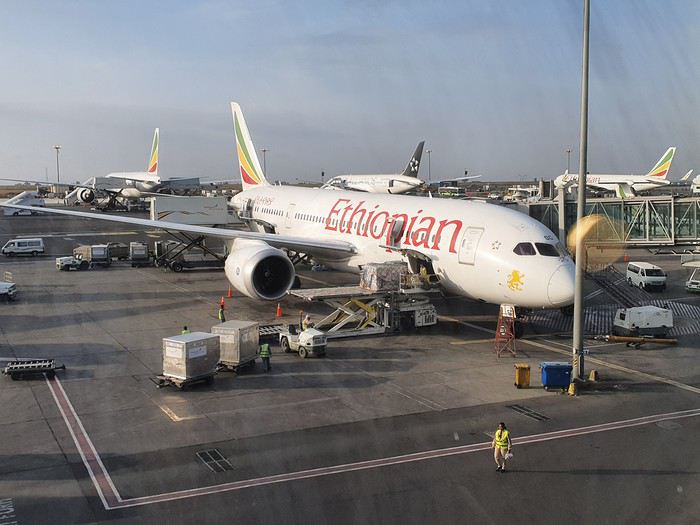
Le 10 mars au petit matin, après avoir changé des euros au rutilant terminal international de l'aéroport d'Adis , je rejoins le terminal des vols domestiques, moins rutilant. Je cherche un peu pour rejoindre ce terminal, je repasse par les contrôles de sécurité par lesquels je viens de passer mais cette fois ci à l'envers.
Et j'attends mon vol pour Lalibela. Attendre, c'est aussi ce que j'aime en Afrique, cette conception du temps tellement différente de la notre. Je m'y cale rapidement et éprouve une certaine joie à contempler tantôt le monde extérieur, tantôt mon monde intérieur. Je dois contempler trop longtemps une jolie jeune fille. Quelques minutes après, elle vient briser mon silence et s’asseoir à coté de moi. La salle d'embarquement se vide, le vol pour Baher Dar va décoller. Ma jolie voisine reste, elle habite Lalibela et va prendre comme moi le prochain vol.
Je me rapproche d'une agence avec qui je définis un itinéraire classique dans le Nord du Pays qui sera affiné grâce aux renseignements et conseils glanés sur ce forum. Je précise que je me mets bien avec un 4x4, un chauffeur et un guide francophone.
Le 9 mars, je suis donc à CDG dans la file d'enregistrement du vol Ethiopian Airlines avec mon sac léger : quelques affaires, quelques médicaments, du saucisson sec et des pastilles Ricola à l'orange, le livre l'Abyssin de Ruffier, le guide Olizane, et mon smartphone ( je regrette de ne pas avoir pris un vrai appareil photo !!!) . J'ai aussi un bon paquet de tshirt et sweat, des paquets de stylos qui alourdissent mon bagage mais qui feront nombre d'heureux sur les routes des hauts plateaux.
Le 10 mars au petit matin, après avoir changé des euros au rutilant terminal international de l'aéroport d'Adis , je rejoins le terminal des vols domestiques, moins rutilant. Je cherche un peu pour rejoindre ce terminal, je repasse par les contrôles de sécurité par lesquels je viens de passer mais cette fois ci à l'envers.
Et j'attends mon vol pour Lalibela. Attendre, c'est aussi ce que j'aime en Afrique, cette conception du temps tellement différente de la notre. Je m'y cale rapidement et éprouve une certaine joie à contempler tantôt le monde extérieur, tantôt mon monde intérieur. Je dois contempler trop longtemps une jolie jeune fille. Quelques minutes après, elle vient briser mon silence et s’asseoir à coté de moi. La salle d'embarquement se vide, le vol pour Baher Dar va décoller. Ma jolie voisine reste, elle habite Lalibela et va prendre comme moi le prochain vol.