Results for "vêtement+ou+chaussures+|+99+>+44"
22318 results found.
Choix de matériel de randonnée pour la Bolivie? English translation pending
Salut à tous,
Je pars en Bolivie (principalement les zones aride, Titicaca et région de la Paz (et ensuite dans le nord ouest de l'Argentine) en septembre prochain.
Je n'arrive pas à me décider sur le choix des chaussures et des vêtements que je veux emporter avec moi.
J'ai toujours randonné avec des chaussures de trail et ça c'est toujours bien passé. Seulement cette fois ci j'aurais plus de poids sur le dos (je pense 12kg).Je compte principalement faire des treks de quelques jours et la visite de certaines villes.
Pensez vous que des chaussures de rando montantes sont nécessaires dans ce genre d'endroits ou est ce que mes chaussures de trail pourraient faire l'affaire? Pour les vetements, une polaire et une veste gore tex et des sous vetements chaud suffisent?
Merci de votre aide.
Météo actuelle au Sri Lanka? (fin décembre 2010) English translation pending
je dois partir le 2 janvier peux t on me dire le temps actuellement pour prevoir les vetements car lorsque l on voit la meteo a la tele c est le deluge merci😉😉😉😉😉
Trek au camp de base de l'Everest au Népal English translation pending
bjr a tous , envie de realiser un trek au nepal camp de base de l everest (periode mars avril 2011. plusieurs sujets me tarabustent en premier materiel un sac leger et un autre avec duvet 2emepaire de chaussures y a t il une bonne idee pou r une paire legere midle genre gtx salomon ou asolo? pour le duvet sarcophage-20°)? chaussettes? une sous paire? le soir superposer 2 paires? et pour les gants? suis aussi interesse par une montre altimetre (suntoo? ou autres) et un autre sujet de reflexion complement alimentaires barres nutritionelles 1000calories? lait nestle en tube? et surtout medicaments essentiels pour le mal d altitude voir ventoline? merci pour vos reponses qui vont m aider a faire les bons choix afin de realiser au mieux cette expedition je ne pars pas seul. pour boire combien de gourdes? existe t il des compagnies aeriennes moins cheres pour katmandou et est il preferable de partir d un autre endroit que paris(belgique allemagne)
Températures au Vénézuela en février? English translation pending
Bonjour,
Je compte me rendre en février au Vénézuéla, j'aimerai savoir les températures à Mérida doit-on prévoir des vétements d'hiver? D'autre part, peut-on circuler facilement et sans encombres en bus ou taxi? C'est la première fois que je voyage en Amérique latine, la sécurité est-elle moins bonne qu'en Afrique ou qu'en Asie où j'ai toujours voyagé sans problèmes ? Merci
Je compte me rendre en février au Vénézuéla, j'aimerai savoir les températures à Mérida doit-on prévoir des vétements d'hiver? D'autre part, peut-on circuler facilement et sans encombres en bus ou taxi? C'est la première fois que je voyage en Amérique latine, la sécurité est-elle moins bonne qu'en Afrique ou qu'en Asie où j'ai toujours voyagé sans problèmes ? Merci
Croisière en Méditerranée fin avril: que mettre dans ma valise? English translation pending
Tout est dans le titre ou presque : je pars la semaine prochaine (du 25/04 au 02/05) pour une croisière en méditerranée (Bleu de France) direction olbia, palerme, malte, tunis, ibiza ; et je n'ai pas la moindre idée des températures à cette époque là de l'année donc je ne sais pas quoi emmener ? manches longues, courtes, pulls en laine, pantacourt ou pantalon, manteau chaud ou juste imper, etc.
Parce que parti comme je suis je pourrai bien emmener 3 valises rien que moi...
Alors, quelqu'un pourrait-il éclairer ma lanterne que je puisse remplir mes valises ? 😉
Merci d'avance...
Circuit dans l'Est canadien en juin: équipement? English translation pending
Bonjour,
je parts en juin faire un circuit dans l'Est Canadien et j'aimerai savoir quelles sont les choses à prévoir côté vêtements, chaussures, équipements, afin de préparer au mieu ma valise (c'est mon premier circuit).
Le départ est prévu le 6 juin, et l'intinéraire est de Toronto, chute du Niagara, les Milles iles, Ottawa, Montréal, Lac St Jean, Quebec...
S'il y a des chose à savoir des conseils je suis preuneuse.
Merci d'avance.
Matériel pour trek au Népal? English translation pending
bonjour,
. je m'apprête à faire un tour du monde en 2010 et je compte m'arrêter au népal pour faire, notamment, un trek. je traverse des pays avant et après le népal relativement chaud (en température, je parle). donc les vêtements nécessaires pour le trek ne me serviront qu'au népal (hormis les chaussures de rando!) que me conseillez vous? dois je venir avec mes propres affaires de trek (vêtements chauds....), sachant qu'actuellement je n'ai rien, donc il faudrait que j'achète le tout en france avant de partir. ou est il préférable d'acheter tout le matériel nécessaire pour le trek au népal? est ce moins cher? quid de la qualité? merci pour vos réponses
. je m'apprête à faire un tour du monde en 2010 et je compte m'arrêter au népal pour faire, notamment, un trek. je traverse des pays avant et après le népal relativement chaud (en température, je parle). donc les vêtements nécessaires pour le trek ne me serviront qu'au népal (hormis les chaussures de rando!) que me conseillez vous? dois je venir avec mes propres affaires de trek (vêtements chauds....), sachant qu'actuellement je n'ai rien, donc il faudrait que j'achète le tout en france avant de partir. ou est il préférable d'acheter tout le matériel nécessaire pour le trek au népal? est ce moins cher? quid de la qualité? merci pour vos réponses
Prévisions météo pour Milan à partir du 22 mai? English translation pending
Bonjour
je vais à MILAN EN ITALIE vendredi le 22mai pour la premiere fois.
je voudrais savoir quel temps il fera là bas en ce moment, afin de faire ma valise, j'ai vu sur yahoo aux alentours de 30° mais j'ai du mal à croire.
jai appris que je peux vraiment faire du shopping là bas(vetements et chaussures);je voudrais connaitre des astuces, des magasins pas cher ou meme des marchés(comment y acceder).
je serai au centre de milan dans un hotel.
Merci de vos tuyaux.
Préparatifs pour faire du trekking en Thaïlande English translation pending
Bonjour, 😏
Comme le titre l'indique je souhaiterai avoir l'avis de personnes ayant pratiqués le trekking dans le nord où dans les iles de Thaïlande et cela afin de savoir :
1- Arrivé a Bangkok y a t'il des revendeurs de chaussures de trek à des prix plus intéressant qu'en France, sans bien évidement négliger la qualité ?
2- Ce type de chaussure est il utile a savoir qu'une bonne paire de basket de course au semelle antidérapante pourrait largement suffire ?
3- Pour la période de Mars et Avril est il primordial de se "bourrer" de médoc antipallu trés cher, à savoir que que le risque est assez minime ?
Je sais que mes questions pourrait m'apporter des reponses subjectifs mais si possible j'aimerai eviter les conseils du genres "Une chaussures à 100 Euros avec clim et mp3 c'est le minimum pour etre tranquille, d'aileur j'ai un pote (comme par hasard) qui en vend à ce site xxxx !" ou d'eventuels hypocombriaques qui me conseilleraient ballade en moustiquaire matin/midi/soir 😕.
J'espere ne pas avoir offencer qui que ce soit mais ayant un budget limite je me dois de considerer que l'essentiel et d'eviter tous achats supperficiels, encore merci a vous😉
Je sais que mes questions pourrait m'apporter des reponses subjectifs mais si possible j'aimerai eviter les conseils du genres "Une chaussures à 100 Euros avec clim et mp3 c'est le minimum pour etre tranquille, d'aileur j'ai un pote (comme par hasard) qui en vend à ce site xxxx !" ou d'eventuels hypocombriaques qui me conseilleraient ballade en moustiquaire matin/midi/soir 😕.
J'espere ne pas avoir offencer qui que ce soit mais ayant un budget limite je me dois de considerer que l'essentiel et d'eviter tous achats supperficiels, encore merci a vous😉
Sortir à New York? English translation pending
Slt,
Je vais a NY demain pour 3 jrs et je voudrais savoir ou sortir je serez à manhattan ?
Si vous pouviez m'indiquer aussi les coins pour faire de bons achats et si quelqu'un sur place fais quelquechose vendredi soir j'suis preneur !!!!
Merci
PS: G chercher en vain sur le site pour les personnes fans de recherche !!!
Merci
PS: G chercher en vain sur le site pour les personnes fans de recherche !!!
Achat de Converses et Crocs sur Los Angeles et San Francisco? English translation pending
Pouvez-vous m'indiquer dans quels magasins acheter des Converses et Crocs sur LOS ANGELES et SAN FRANCISCO ?
Climat en Russie en mars? English translation pending
Bonjour,
J'aimerais savoir :
1) Si la température est supportable début mars .... que faut il prévoir en vetements ?
2) Si les trottoires sont praticables ou bien complètement gelés ?
3) Faut-il prévoir des crampons?
4) Ou bien est-il préféravlez de le faire à une saison plus propice.
D'avance merci pour vos précisions
Randonner sur l'Etna et le Stromboli en Sicile English translation pending
Bonjour tout le monde,
Je pars en Sicile la semaine prochaine et j'ai l'intention de voir l'Etna et le Stromboli (avec un guide).
D'après vous, pour ces ascensions, une paire de basket suffit ou bien faut il une paire de chaussures de rando ?
Cela ne fait pas le même poids dans le sac à dos... 😉
Je pars en Sicile la semaine prochaine et j'ai l'intention de voir l'Etna et le Stromboli (avec un guide).
D'après vous, pour ces ascensions, une paire de basket suffit ou bien faut il une paire de chaussures de rando ?
Cela ne fait pas le même poids dans le sac à dos... 😉
Equipement pour trek en Indonésie English translation pending
bonjours je pars pour l indonesie et souhaiterai savoir comment m 'équiper pour un eventuel trek en montagne faut t il un poller, es ce que des tennis sufisse, ..
meci d'avance pour votre aide.🙂
Climat en mai à Paris, en Normandie et Bretagne? English translation pending
Nous allons visiter notre fils à Caen à la mi-mai.Quelques jours à Paris, ensuite Normandie et Bretagne.Il semble que la température peut varier beaucoup dans l'espace de quelques jours.Comme nous devons limiter le poids des bagages on ne sait vraiment pas quoi apporter .Comme chaussures est-ce que les sandales seront de mise ou il est préférable de mettre des espadrilles pour visiter et les vêtements que devons -nous apporter?
Nous avons hâte de visiter la Normandie car dans notre famille il y a des gens qui ont participé au débarquement.
Merci de toutes vos réponses et apprécions beaucoup les français.
Marirose
Nous avons hâte de visiter la Normandie car dans notre famille il y a des gens qui ont participé au débarquement.
Merci de toutes vos réponses et apprécions beaucoup les français.
Marirose
Hôtel Filitheyo Island Resort: que mettre dans ses bagages? (Maldives) English translation pending
Bonjour,
Nous partons le 24 février au Filitheyo. Question bête 😉: quels vêtements emporter ? Nous sommes allés il y a dix ans dans deux autres îles, nous sommes rentrés avec nos quelques vêtements toujours pliés, nous avions en effet passé deux semaines en short, paréo, maillot de bain ! En est-il de même au Filitheyo, ou faut-il "s'habiller" (surtout pour le dîner le soir) ? Nous ne voulons pas nous charger inutilement... on emporte surtout notre matériel de plongée et des bouquins ! Mais on ne veut pas nous sentir mal à l'aise s'il est coûtume de se vêtir plus "chic" le soir !
Merci pour votre réponse
Hiver en Ouzbékistan English translation pending
Je passe 5 jours en Ouzbékistan en fin d'année (y compris réveillon du nouvel an) : Tashkent, Samarcande, Boukhara.
Quelqu'un a-t-il une expérience directe de cette région en hiver : températures de jour et de nuit, neige, etc. ?
Tous conseils quant aux vêtements et chaussures à prévoir seraient les bienvenus.
D'avance, merci
Ascension du Vésuve (Italie) English translation pending
Bonjour,
Je pars bientôt pour Naples avec des copines et nous aimerions faire l'ascension du Vésuve.
Quel est le niveau de difficulté ? Est-ce que des baskets suffisent ou vaut-il mieux prendre des chaussures de rando ?
Merci beaucoup,
Sabrina
Voyage en Patagonie (Argentine et Chili) en octobre English translation pending
Tout d'abord, bonjour à tous, je suis nouveau sur ce forum.
J'aurais aimé avoir quelques conseils.
Nous partons avec mon amie en Patagonie (Argentine - Chili) entre le 08/10 et 22/10/2007 en voyage organisé avec trekking de 2 et 3 jours. Nous aurions savoir quel est le sac type de voyage (types de vêtements, chaussures....).
Merci pour vos réponses et bon voyages à ceux qui partent.....
J'aurais aimé avoir quelques conseils.
Nous partons avec mon amie en Patagonie (Argentine - Chili) entre le 08/10 et 22/10/2007 en voyage organisé avec trekking de 2 et 3 jours. Nous aurions savoir quel est le sac type de voyage (types de vêtements, chaussures....).
Merci pour vos réponses et bon voyages à ceux qui partent.....
Shopping en tout genre à Bangkok? English translation pending
Bonjour à tous
je sais qu'il y a déjà quelques messages sur ce sujet, mais je voulais vous demander (car on part 3 jours 2 nuits à Bangkok avant de partir pour 13jours sur Kho Samui) si on trouve également des montres, chaussures etc à Bangkok? si oui, partout ou dans des endroits en particuliers?
Si j'ai bien compris, tout les centres commerciaux sont a faire! ;) ou seulement certains qui en valent vraiment la peine? on a pas envie d'acheter au même prix qu'ici quoi...
Il y a aussi beaucoup de faux non?
Merci pour toutes vos réponses, ça nous aidera beaucoup ;)
David
Si j'ai bien compris, tout les centres commerciaux sont a faire! ;) ou seulement certains qui en valent vraiment la peine? on a pas envie d'acheter au même prix qu'ici quoi...
Il y a aussi beaucoup de faux non?
Merci pour toutes vos réponses, ça nous aidera beaucoup ;)
David
Randonnée dans les parcs de l'ouest des États-Unis: préparation du sac English translation pending
Notre départ approche et nous songeons à la préparation du sac. Nous allons prendre toutes sortes de vêtements pour avoir suffisamment chaud à San Francisco mais pas trop à Las Vegas.
Ma question, très terre-à-terre, concerne les chaussures !
Nous avons prévu de faire des randonnées dans les parcs : Grand Canyon, Canyonlands, Capitol Reef, Bryce, Zion, randos de quelques heures maximum. Ce sera entre le 17 mai et le 27 mai.
Nous hésitons alors à emporter : soit des chaussures de rando, soit des sandalettes de rando (vous savez, ces trucs pas très beaux mais tellement appréciables pour avoir les orteils à l'air tout en étant assez bien chaussé pour les rando quand il fait très chaud)
Comme notre sac à dos n'est pas extensible, et que plus c'est lourd, plus c'est dur à porter, il faut faire un choix.
Comment sont les sentiers de rando dans ces parcs ? Trop accidentés pour porter des sandalettes ? Il ne fera finalement pas suffisamment chauds pour en avoir l'utilité ?
Merci d'avance pour vos réponses
Ma question, très terre-à-terre, concerne les chaussures !
Nous avons prévu de faire des randonnées dans les parcs : Grand Canyon, Canyonlands, Capitol Reef, Bryce, Zion, randos de quelques heures maximum. Ce sera entre le 17 mai et le 27 mai.
Nous hésitons alors à emporter : soit des chaussures de rando, soit des sandalettes de rando (vous savez, ces trucs pas très beaux mais tellement appréciables pour avoir les orteils à l'air tout en étant assez bien chaussé pour les rando quand il fait très chaud)
Comme notre sac à dos n'est pas extensible, et que plus c'est lourd, plus c'est dur à porter, il faut faire un choix.
Comment sont les sentiers de rando dans ces parcs ? Trop accidentés pour porter des sandalettes ? Il ne fera finalement pas suffisamment chauds pour en avoir l'utilité ?
Merci d'avance pour vos réponses
Bruges en Belgique English translation pending
Bonjour,
Nous partons deux jours à Bruges en avril, quelques questions : nous arriverons par le train (merci les promos du Thalys), la gare est elle loin du centre ville ?
Comme j'aime beaucoup les vêtements et les chaussures, et que je cherche une tenue pour un mariage et qu' à Bruxelles j'ai craqué pour quelques trucs originaux, y a t il des bonnes adresses à Bruges ??? (pas trop chères quand même)
Aves vous des bons plans pour un diner un peu romantique ?
y a t il des spécialités (à part le chocolat) culinaire (biscuits, confitures...)
Comme j'aime beaucoup les vêtements et les chaussures, et que je cherche une tenue pour un mariage et qu' à Bruxelles j'ai craqué pour quelques trucs originaux, y a t il des bonnes adresses à Bruges ??? (pas trop chères quand même)
Aves vous des bons plans pour un diner un peu romantique ?
y a t il des spécialités (à part le chocolat) culinaire (biscuits, confitures...)
Trekking au Sikkim English translation pending
bonjour a tous
je suis en route pour le sikkim en passant par darjeeling
j'aimerais savoir s'il est possible de trouver du matos genre chaussures et polaires a darjeeling ou dans le coin
merci
a+
Idées de cadeaux pour les enfants marocains? English translation pending
Nous partons en vacance au Maroc et nous aimerions emporter avec nous quelques présents pour les enfantsb ou habitants des villages que nous allons visiter. Que devons nous ammener en priorité: vêtements, affaires d'écoles... ?. Merci
Hong kong achats interessants? English translation pending
Bonjour,
avez vous des infos sur les achats possibles à Hong kong? ça vaut le coup de partir avec une valise vide? et d'acheter sur place?
vetements, chaussures, appareil photos, camera?
merci de votre réponse!
avez vous des infos sur les achats possibles à Hong kong? ça vaut le coup de partir avec une valise vide? et d'acheter sur place?
vetements, chaussures, appareil photos, camera?
merci de votre réponse!
Equipement pour gravir le mont Moise English translation pending
Je vais retourner en Egypte samedi et cette fois avec un détour par Sharm incluant la visite de Sainte Catherine et la montée du mont Moise.
Pouvez-vous me dire s'il faut vraiment des chaussures de marche et des vêtements très chauds ? J'ai vu dans un documentaire récemment sur Arte des touristes emmitouflés dans des couvertures. Est-ce que ça se louerait dans les hotels ?
Merci pour vos expériences en tout genre sur cette excursion et sur Sharm.
Pouvez-vous me dire s'il faut vraiment des chaussures de marche et des vêtements très chauds ? J'ai vu dans un documentaire récemment sur Arte des touristes emmitouflés dans des couvertures. Est-ce que ça se louerait dans les hotels ?
Merci pour vos expériences en tout genre sur cette excursion et sur Sharm.
Arusha, Tanzania - October 2025
I would wish never to go to bed where I had woken up, to wander my tent from the shores of Egypt to those of the Persian Gulf; to have no goal for the evening other than the evening itself; to traverse on foot, with my eyes and my heart, all these unknown lands, all these races of people so different from my own; to contemplate humanity, God’s finest creation, in all its forms.
Lamartine in Fatalla Sayeghir’s Account (1861)
As soon as it’s about flying, I lose all willpower. Being reasonable and thoughtful, I still lose all my composure at the mere possibility of a flight—especially if it’s piloted by F.—and even more so if that flight can take me to unexplored lands. I’ve long wanted to unravel the mystery of animal tourism, and why not in Tanzania, following up on my trip from four years ago, when I was already questioning the glaring inequalities in Zanzibar: the coastal strip sacrificed to capitalism, and the inland areas, just a hundred meters from the waves, where you find—though a bit more peaceful than elsewhere on the continent—the chaos of Africa.
I’m an adventurer at heart. When it comes to the terrain, though, it’s a whole different story. I see people setting off for months at a time; I know my endurance doesn’t last beyond three days. It’s not that I’m afraid of this unfamiliar environment when it comes to embracing different realities. I’m mostly afraid of myself—of this heightened sensitivity that makes me see things I’d rather not see and understand others that sometimes overwhelm me.
After an absolutely fantastic daytime flight, I land in Zanzibar and have to resign myself—this is the whole point of the trip—to what feels like a real spacewalk. I’m alone. My lucky star, backed up by my phone, will serve as my lifeline. I step out of the airport and breathe in the scent of Africa full-on: a mix of exotic perfumes, baked earth, and poorly refined fuel, inevitably mingled with the smell of wood smoke. So many images come flooding back. So many stories. Another world.
I head to Arusha the very next day. The gateway to the country’s northern national parks, this city of half a million offers one of those rare breath-holding dives that Africa keeps secret. As the only white person walking the streets, I know I’m visible and vulnerable, yet I move forward confidently, barely bothered. But where are all my fellow Westerners? While this city draws countless tourists, I only cross paths with one white couple in nearly three hours of walking. Because you have to hold on tight to wander here. You have to stay alert. The traffic is dense and erratic—don’t even trust the fact that in Tanzania, people drive on the left. That can change from one minute to the next, especially with motorbikes. With barely centimeters between vehicles, I weave my way through the urban jungle, trying not to stumble into the huge ditch on my left or get sideswiped by cars brushing past me on the right. Speakers blare music, ads, or political speeches at will—the explosion of yellow and green tells us we’re on the eve of the presidential election—but they barely compete with the calls to prayer, nearly nonstop on this holy Friday. The vital space is as saturated as the sound. Imagine an unbroken line of shops and stalls of every kind—supermarkets haven’t made it here yet—where you can find just about anything: phones, copper pipes, Chinese-made hardware, shoes, clothes, basins, and professional tools… The luckiest own a big store; others spend their lives trying to survive on the profits from selling toothbrushes one at a time on the streets. But maybe it’s more lucrative than spending the day slumped on the sidewalk, preferably missing a limb, trusting your survival to the mercy of passersby.
I think I’ll escape the street by slipping into the narrow alleys of the central market. Here, I know I won’t run into anyone like me! The vendors’ stalls start at waist height; the sellers, perched higher up, haggle or not while discussing prices. Here, colorful fruits and vegetables; there, huge piles of dried fish. Spices, seeds, roots. Smells. Noises. Africa. Life. Further on, the fresh fish aisle makes a right angle with the butchers’. Everywhere, flies—everywhere, the same gesture from vendors swatting blindly at these relentless pests. Aware that I’ll be eating this same meat within the hour, displayed with total disregard for basic hygiene, I reassure myself that Arusha sits at 1400m altitude. Yes, we can probably do without a fridge.
*
It’s time to leave the city and go wildlife spotting in the surrounding parks. To that end, I’ve negotiated a package deal with a local agency that prides itself on grouping solo travelers into a vehicle meant for seven. We leave behind the imposing masses of Mount Meru and Kilimanjaro, peaking at 4565m and 5895m respectively, and head west to conquer Tarangire and Ngorongoro parks. I’ve been promised a spectacle; I remain cautious. I’ve read rave reviews; I know how to temper my expectations. Above all, I know what I came for—and paradoxically, my hopes are less about animals than strictly anthropological. So I’m sure I won’t go home disappointed.
I’m in the thick of it. Since 2021, tourism has been booming: I’m one of the two million tourists who come here every year seeking thrills. I also contribute, in a small way, to the 20% of the country’s GDP generated by tourism revenue. Around 3 billion € annually… Tanzania has 16 national parks, twice as many reserves; it charges meticulously for every entry, every night, every activity, to the tune of several dozen euros. I calculated that Tarangire Park alone rakes in around 15 million € a year. Mind-boggling. Yet to get there, a dusty, rickety old track is used daily by hundreds of vehicles that literally saturate the surrounding area with white dust and exhaust fumes. At the park entrance, we wait a good hour while the driver pays the entry fees. Then it’s a free-for-all: dozens of 4x4s try to enter at the same time through the single access point, to the left of the building, while the three barriers are stuck due to a computer glitch. It’s pure chaos: no way to buy your ticket in advance—the QR code revolution hasn’t arrived; no smart layout before the barriers; nothing smooth, nothing practical, everything improvised.
So, the animals? Given the time and money involved, I’d be tempted to say it’s not worth the hassle and there’s really no need to break five legs off one of the too-many zebras we pass. Hours and hours of travel to get to Tanzania, specifically Arusha; hours and hours on the road—up to 12 hours a day—to spend barely three in the parks; at least 200 € per day for the most basic option, so 400 € in my case, and up to several thousand for those wealthy couples opting for the luxury package with a private vehicle. Sure, I saw zebras and elephants in their natural habitat, wildebeest, buffalo, and a few hippos, but I didn’t feel the thrill touted in the articles or even by my two-day trip organizer. Would I have been more satisfied if I’d seen the lion, the leopard, and the rhino? Maybe. But the story won’t be rewritten in light of those assumptions.
Yet I’m not disappointed. As I said earlier: I know what I came for. I wanted to see the world as it is with my own eyes. And the safari world fascinates me more for its anthropological aspect than for what it offers. Yes, the fact that people from all over the world come here, juggling hotels and big 4x4s—while notably avoiding the streets of cities and villages—truly fascinates me. Two worlds coexist on either side of a barely porous border. As soon as the tourist sets foot in the airport, they’re whisked away, sight unseen, into a tourist vehicle. Dropped off at the hotel, they rest there, shielded from view, until the 4x4 departs. Then they speed through those same cities and villages they scorn out of fear or disdain, leaving on the roadside the Maasai herding their flocks and all those poignant or mundane scenes that make up daily African life. In the evening, in their lodge, far from the city’s pulse, they fall asleep thinking about the images they’ve collected, those long hours on the road, the wait for the animals. And the days go by… Maybe the term *luxury*, whether for food or accommodation, refers to what we experience as utterly ordinary in the West? Forgetting that you’re there, in Africa, just steps away from poverty and a certain arbitrariness. And at the end of the journey: back to the airport, back to normal life.
Maybe we need to take a broader view. All that money seems invisible, yet it must serve the population at some point, right? The main roads are passable, the power grid seems well-maintained—I can tell by the excellent condition of the high-voltage transmission towers. Is it really too expensive to significantly improve all the infrastructure? I hoped this windfall would truly serve the people’s interests. The driver taking me back to the airport on the last evening dashes my sweet illusions: « All this is bad. Africa is bad. But you have no choice. The hospitals don’t work, the schools don’t work, the roads don’t work (just as he says this, roadworks force us onto a terrible detour for several kilometers—a rutted track, in fact), and if you say anything, if you speak up too much, they come for you and then you disappear. » That’s just one opinion. Nothing empirical. But I don’t need to be a West Point graduate to realize how rampant corruption is in these regions: while the muezzin bellows the greatness of Allah, I consider the dilapidated equipment and the energy expended by the masses just to survive here. But maybe all that money keeps the country afloat by paying civil servants’ salaries? Meanwhile, one thing is certain: regardless of where the profits go, tourism supports millions of people, and I’m in no position to judge this system too harshly. Maybe I’m too much of an aesthete to appreciate the almost exclusive use of corrugated iron at its true value…
*
I’ll give this system credit for one thing: the chance to set foot in spaces impossible to visit otherwise. At one point, in the heart of the Ngorongoro Crater—a vast 20km-wide plain topped by a 600m-high caldera—I was simply happy to be there. Barely bothered by the constant ballet of 4x4s—the space is vast—I contemplate the simple life of the local animals. Buffalo, wildebeest, zebras as numerous as the flamingos patiently standing on one leg, waiting for the day to pass. Over there, you can make out a few hyenas with vultures circling above. Finally, in a large body of water, hippos surface at regular intervals. I’m aware of my luck. I’m especially aware that, unlike all the people I’ve met there, a lot of money and a little resourcefulness greatly favor the luck factor.
I’m heading home. I soak up the last images of this improbable Africa as night falls quickly over the countryside. I’m fascinated by the number of Maasai herding their livestock along the main road. Some pass the time, globalization obliges, on an old phone; others, sometimes as young as my eldest—barely 10 years old—watch us pass, indifferent. We overtake or are overtaken; the two-lane road is the stage for a majestic ballet of semi-trailers, *dalas-dalas*, and other 4x4s, as numerous as the names of their companies: Leopard Tours, Climbing Kilimanjaro, Smiling Zebra, Nomad Life Enhanced, Elephant Roaming, Mountain Warrior, Master of the Ambush… They drop me off at the hotel, where I have an hour to shower and change into clean clothes before my return flight. Already, I’m slipping back into my own world without really seeing it, leaving behind the hotel’s glass window that African life to which nothing truly binds me. Then that chaotic, suffocating nighttime drive to the airport. Check-in; the stupid questions (« Where are you going? »); the slow police officer who, in the end, stamps my passport anywhere; the idiocy of the security agent (my empty 33cl bottle is forbidden); the rather shabby lounge at Kilimanjaro Airport. Then the return to the vessel—to the Air France plane that left Zanzibar an hour earlier—after this 72-hour spacewalk without a real lifeline. I’ve never been so happy to see F. again.
As soon as it’s about flying, I lose all willpower. Being reasonable and thoughtful, I still lose all my composure at the mere possibility of a flight—especially if it’s piloted by F.—and even more so if that flight can take me to unexplored lands. I’ve long wanted to unravel the mystery of animal tourism, and why not in Tanzania, following up on my trip from four years ago, when I was already questioning the glaring inequalities in Zanzibar: the coastal strip sacrificed to capitalism, and the inland areas, just a hundred meters from the waves, where you find—though a bit more peaceful than elsewhere on the continent—the chaos of Africa.
I’m an adventurer at heart. When it comes to the terrain, though, it’s a whole different story. I see people setting off for months at a time; I know my endurance doesn’t last beyond three days. It’s not that I’m afraid of this unfamiliar environment when it comes to embracing different realities. I’m mostly afraid of myself—of this heightened sensitivity that makes me see things I’d rather not see and understand others that sometimes overwhelm me.
After an absolutely fantastic daytime flight, I land in Zanzibar and have to resign myself—this is the whole point of the trip—to what feels like a real spacewalk. I’m alone. My lucky star, backed up by my phone, will serve as my lifeline. I step out of the airport and breathe in the scent of Africa full-on: a mix of exotic perfumes, baked earth, and poorly refined fuel, inevitably mingled with the smell of wood smoke. So many images come flooding back. So many stories. Another world.
I head to Arusha the very next day. The gateway to the country’s northern national parks, this city of half a million offers one of those rare breath-holding dives that Africa keeps secret. As the only white person walking the streets, I know I’m visible and vulnerable, yet I move forward confidently, barely bothered. But where are all my fellow Westerners? While this city draws countless tourists, I only cross paths with one white couple in nearly three hours of walking. Because you have to hold on tight to wander here. You have to stay alert. The traffic is dense and erratic—don’t even trust the fact that in Tanzania, people drive on the left. That can change from one minute to the next, especially with motorbikes. With barely centimeters between vehicles, I weave my way through the urban jungle, trying not to stumble into the huge ditch on my left or get sideswiped by cars brushing past me on the right. Speakers blare music, ads, or political speeches at will—the explosion of yellow and green tells us we’re on the eve of the presidential election—but they barely compete with the calls to prayer, nearly nonstop on this holy Friday. The vital space is as saturated as the sound. Imagine an unbroken line of shops and stalls of every kind—supermarkets haven’t made it here yet—where you can find just about anything: phones, copper pipes, Chinese-made hardware, shoes, clothes, basins, and professional tools… The luckiest own a big store; others spend their lives trying to survive on the profits from selling toothbrushes one at a time on the streets. But maybe it’s more lucrative than spending the day slumped on the sidewalk, preferably missing a limb, trusting your survival to the mercy of passersby.
I think I’ll escape the street by slipping into the narrow alleys of the central market. Here, I know I won’t run into anyone like me! The vendors’ stalls start at waist height; the sellers, perched higher up, haggle or not while discussing prices. Here, colorful fruits and vegetables; there, huge piles of dried fish. Spices, seeds, roots. Smells. Noises. Africa. Life. Further on, the fresh fish aisle makes a right angle with the butchers’. Everywhere, flies—everywhere, the same gesture from vendors swatting blindly at these relentless pests. Aware that I’ll be eating this same meat within the hour, displayed with total disregard for basic hygiene, I reassure myself that Arusha sits at 1400m altitude. Yes, we can probably do without a fridge.
*
It’s time to leave the city and go wildlife spotting in the surrounding parks. To that end, I’ve negotiated a package deal with a local agency that prides itself on grouping solo travelers into a vehicle meant for seven. We leave behind the imposing masses of Mount Meru and Kilimanjaro, peaking at 4565m and 5895m respectively, and head west to conquer Tarangire and Ngorongoro parks. I’ve been promised a spectacle; I remain cautious. I’ve read rave reviews; I know how to temper my expectations. Above all, I know what I came for—and paradoxically, my hopes are less about animals than strictly anthropological. So I’m sure I won’t go home disappointed.
I’m in the thick of it. Since 2021, tourism has been booming: I’m one of the two million tourists who come here every year seeking thrills. I also contribute, in a small way, to the 20% of the country’s GDP generated by tourism revenue. Around 3 billion € annually… Tanzania has 16 national parks, twice as many reserves; it charges meticulously for every entry, every night, every activity, to the tune of several dozen euros. I calculated that Tarangire Park alone rakes in around 15 million € a year. Mind-boggling. Yet to get there, a dusty, rickety old track is used daily by hundreds of vehicles that literally saturate the surrounding area with white dust and exhaust fumes. At the park entrance, we wait a good hour while the driver pays the entry fees. Then it’s a free-for-all: dozens of 4x4s try to enter at the same time through the single access point, to the left of the building, while the three barriers are stuck due to a computer glitch. It’s pure chaos: no way to buy your ticket in advance—the QR code revolution hasn’t arrived; no smart layout before the barriers; nothing smooth, nothing practical, everything improvised.
So, the animals? Given the time and money involved, I’d be tempted to say it’s not worth the hassle and there’s really no need to break five legs off one of the too-many zebras we pass. Hours and hours of travel to get to Tanzania, specifically Arusha; hours and hours on the road—up to 12 hours a day—to spend barely three in the parks; at least 200 € per day for the most basic option, so 400 € in my case, and up to several thousand for those wealthy couples opting for the luxury package with a private vehicle. Sure, I saw zebras and elephants in their natural habitat, wildebeest, buffalo, and a few hippos, but I didn’t feel the thrill touted in the articles or even by my two-day trip organizer. Would I have been more satisfied if I’d seen the lion, the leopard, and the rhino? Maybe. But the story won’t be rewritten in light of those assumptions.
Yet I’m not disappointed. As I said earlier: I know what I came for. I wanted to see the world as it is with my own eyes. And the safari world fascinates me more for its anthropological aspect than for what it offers. Yes, the fact that people from all over the world come here, juggling hotels and big 4x4s—while notably avoiding the streets of cities and villages—truly fascinates me. Two worlds coexist on either side of a barely porous border. As soon as the tourist sets foot in the airport, they’re whisked away, sight unseen, into a tourist vehicle. Dropped off at the hotel, they rest there, shielded from view, until the 4x4 departs. Then they speed through those same cities and villages they scorn out of fear or disdain, leaving on the roadside the Maasai herding their flocks and all those poignant or mundane scenes that make up daily African life. In the evening, in their lodge, far from the city’s pulse, they fall asleep thinking about the images they’ve collected, those long hours on the road, the wait for the animals. And the days go by… Maybe the term *luxury*, whether for food or accommodation, refers to what we experience as utterly ordinary in the West? Forgetting that you’re there, in Africa, just steps away from poverty and a certain arbitrariness. And at the end of the journey: back to the airport, back to normal life.
Maybe we need to take a broader view. All that money seems invisible, yet it must serve the population at some point, right? The main roads are passable, the power grid seems well-maintained—I can tell by the excellent condition of the high-voltage transmission towers. Is it really too expensive to significantly improve all the infrastructure? I hoped this windfall would truly serve the people’s interests. The driver taking me back to the airport on the last evening dashes my sweet illusions: « All this is bad. Africa is bad. But you have no choice. The hospitals don’t work, the schools don’t work, the roads don’t work (just as he says this, roadworks force us onto a terrible detour for several kilometers—a rutted track, in fact), and if you say anything, if you speak up too much, they come for you and then you disappear. » That’s just one opinion. Nothing empirical. But I don’t need to be a West Point graduate to realize how rampant corruption is in these regions: while the muezzin bellows the greatness of Allah, I consider the dilapidated equipment and the energy expended by the masses just to survive here. But maybe all that money keeps the country afloat by paying civil servants’ salaries? Meanwhile, one thing is certain: regardless of where the profits go, tourism supports millions of people, and I’m in no position to judge this system too harshly. Maybe I’m too much of an aesthete to appreciate the almost exclusive use of corrugated iron at its true value…
*
I’ll give this system credit for one thing: the chance to set foot in spaces impossible to visit otherwise. At one point, in the heart of the Ngorongoro Crater—a vast 20km-wide plain topped by a 600m-high caldera—I was simply happy to be there. Barely bothered by the constant ballet of 4x4s—the space is vast—I contemplate the simple life of the local animals. Buffalo, wildebeest, zebras as numerous as the flamingos patiently standing on one leg, waiting for the day to pass. Over there, you can make out a few hyenas with vultures circling above. Finally, in a large body of water, hippos surface at regular intervals. I’m aware of my luck. I’m especially aware that, unlike all the people I’ve met there, a lot of money and a little resourcefulness greatly favor the luck factor.
I’m heading home. I soak up the last images of this improbable Africa as night falls quickly over the countryside. I’m fascinated by the number of Maasai herding their livestock along the main road. Some pass the time, globalization obliges, on an old phone; others, sometimes as young as my eldest—barely 10 years old—watch us pass, indifferent. We overtake or are overtaken; the two-lane road is the stage for a majestic ballet of semi-trailers, *dalas-dalas*, and other 4x4s, as numerous as the names of their companies: Leopard Tours, Climbing Kilimanjaro, Smiling Zebra, Nomad Life Enhanced, Elephant Roaming, Mountain Warrior, Master of the Ambush… They drop me off at the hotel, where I have an hour to shower and change into clean clothes before my return flight. Already, I’m slipping back into my own world without really seeing it, leaving behind the hotel’s glass window that African life to which nothing truly binds me. Then that chaotic, suffocating nighttime drive to the airport. Check-in; the stupid questions (« Where are you going? »); the slow police officer who, in the end, stamps my passport anywhere; the idiocy of the security agent (my empty 33cl bottle is forbidden); the rather shabby lounge at Kilimanjaro Airport. Then the return to the vessel—to the Air France plane that left Zanzibar an hour earlier—after this 72-hour spacewalk without a real lifeline. I’ve never been so happy to see F. again.
The 8 Most Beautiful Hikes to Do in Réunion Island
Réunion Island, this paradise in the Indian Ocean, is a must-visit destination for hiking enthusiasts. With its active volcanoes, majestic cirques, and impressive peaks, there’s plenty to delight nature and adventure lovers. This article takes you on a journey to discover the eight most beautiful hikes the island has to offer. Lace up your hiking boots—let’s go!
1- Piton des Neiges: The Summit of Réunion
Piton des Neiges is the highest point on Réunion Island at 3,070 meters. It’s an iconic hike that attracts a large number of hikers every year. Climbing Piton des Neiges is like stepping into a unique atmosphere where volcanic landscapes blend with lush vegetation.
The hike usually starts from the picturesque village of Cilaos. It takes about six hours to reach the summit, so good physical condition is a must. Once at the top, you’ll be rewarded with a breathtaking panoramic view of the entire island. A simple flight from Paris to Saint-Denis and you’re ready for this stunning adventure.
Here are a few tips:
Bring warm clothes—it can get very cold at the summit. Pack enough water and food. Start before dawn to catch the sunrise from the summit.
2- Piton de la Fournaise: A Volcanic Walk
You can’t visit Réunion without stopping by Piton de la Fournaise, one of the world’s most active volcanoes. The hike usually begins at Pas de Bellecombe, accessible after a winding road that already offers spectacular views. The well-marked trail first takes you through lunar landscapes to the Enclos Fouqué, then continues toward the Dolomieu crater. Frequent eruptions often change the scenery, making each visit unique. Piton de la Fournaise is a grand natural spectacle you won’t want to miss during your trip.
Here are a few tips:
Check the volcano’s current activity before heading out. Wear sturdy shoes for walking on solidified lava. Always bring maps or a GPS, as signs may be damaged by eruptions.
3- Cirque de Mafate: In the Heart of Nature
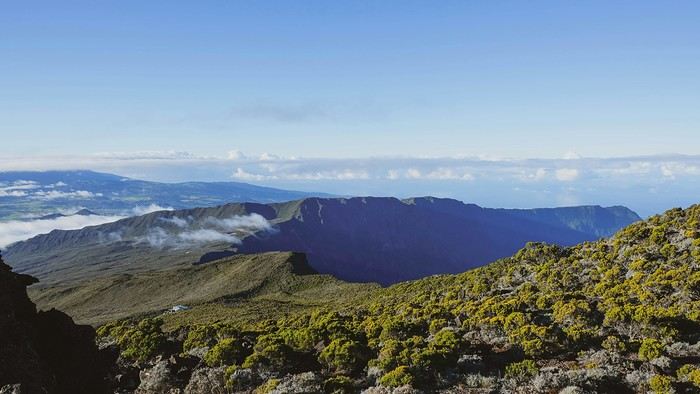
Accessible only on foot or by helicopter, the Cirque de Mafate is a true paradise for hikers. This isolated area offers a multitude of trails leading to authentic villages, stunning viewpoints, and untouched nature. The Sentier Scout is one of the most popular routes for exploring Mafate. It starts at Le Bélier, passes through the Col des Bœufs, and then descends into the cirque. Get ready to be amazed by the enchanting panoramas and majestic peaks along the way. It’s a full immersion into the tranquility of Mafate.
Here are a few tips:
Wear good hiking shoes, as some sections can be steep. Book your nights in a gîte in advance if you’re planning a multi-day hike. Respect the environment and locals by taking all your trash with you.
4- Cirque de Cilaos: Between Mountains and Vineyards
The Cirque de Cilaos, with its waterfalls and lush forests, also offers magnificent hiking opportunities. One of the most remarkable trails leads to Grand Bénare, the island’s third-highest peak.
The hike usually starts from the Plateau des Chênes. This moderate-difficulty hike takes about five hours to reach the summit. Once there, you’ll be treated to a breathtaking view of the Cirque de Cilaos and Piton des Neiges.
Here are a few tips:
Start early to avoid clouds that can quickly envelop the summit. Don’t forget your camera to capture the stunning landscapes. Visit the vineyards of Cilaos after your hike to taste local wine.
5- Cirque de Salazie: The Valley of Waterfalls
Known for its humid climate, the Cirque de Salazie is filled with impressive waterfalls and lush tropical forests. One of the most popular hikes leads to the Trou de Fer.
The trail starts in Hell-Bourg, ranked among France’s most beautiful villages. After a few hours of hiking through primary forest, you’ll reach a viewpoint offering an incredible view of the Trou de Fer’s abyss and its dizzying waterfalls.
Here are a few tips:
Wear waterproof and mosquito-repellent clothing. Bring a headlamp and compass, as fog can make the trail hard to follow. Check trail conditions before heading out, especially after heavy rain.
6- Grand Bénare: A Stunning Panorama
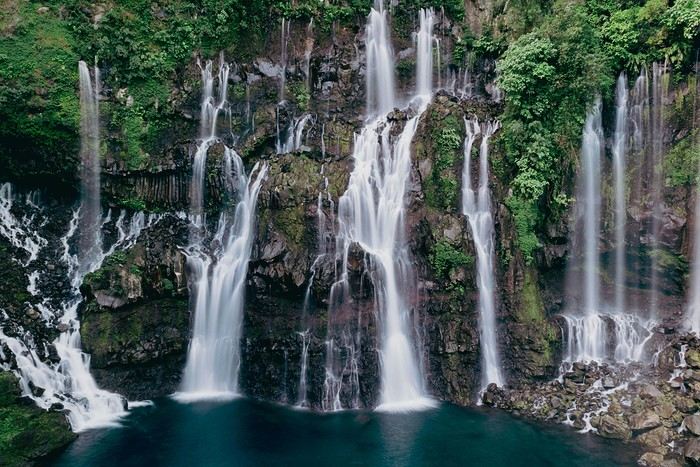
Grand Bénare offers a spectacular hike that’s a must-do on Réunion Island. Starting from the well-known viewpoint of Maïdo, the challenging yet rewarding ascent leads to the summit.
Over about ten kilometers of climbing through varied vegetation, the summit reveals a breathtaking panorama of the three cirques—Mafate, Cilaos, and Salazie. It’s a true feast for the eyes and a memorable experience for mountain lovers.
Here are a few tips:
Go when the weather is clear to fully enjoy the view from the summit. Wear good hiking shoes and bring trekking poles to make the climb easier. Don’t underestimate the duration—prepare physically for this long hike.
7- Roche Écrite: Biodiversity at Altitude
Located between the Cirque de Salazie and the Cirque de Mafate, Roche Écrite offers a hike that lets you discover exceptional flora and fauna. The hike often starts at Le Colorado, near Saint-Denis, the island’s capital.
After several hours of walking through tropical forests and varied landscapes, you’ll reach the summit at 2,276 meters. From there, you can enjoy a spectacular view of the two adjacent cirques and even spot Piton des Neiges in the distance. A must for adventurers and budding biologists.
Here are a few tips:
Check the weather forecast before heading out, as conditions can change quickly at altitude. Bring binoculars to observe endemic birds and other wildlife. Take regular breaks to soak in the scenery and recharge your energy.
8- Col des Bœufs: The Gateway to Mafate
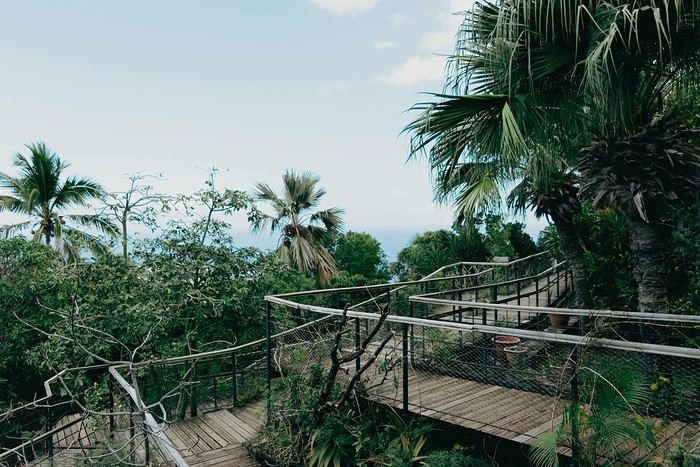
Col des Bœufs is another popular starting point for accessing the Cirque de Mafate. This comfortable hike offers beautiful views along the way and leads to picturesque villages like Marla and La Nouvelle.
The trail starts gently from the Col des Bœufs parking lot, climbing slightly before revealing a panoramic view of Mafate. Perfect for a relaxed day hike, this route is suitable for all levels of hikers.
Here are a few tips:
Bring a picnic to enjoy a lunch break with a view. Start early to avoid crowds and the afternoon heat. Check local bus schedules to avoid any surprises at the end of your hike.
In conclusion, Réunion Island offers a multitude of exceptional hikes that let you discover breathtaking landscapes—volcanoes, cirques, tropical forests, and waterfalls. Whether you’re a beginner or an experienced hiker, the island will amaze you with the diversity of its trails. Get ready for unforgettable adventures in the heart of preserved nature while admiring the unique beauty of this volcanic island.
1- Piton des Neiges: The Summit of Réunion
Piton des Neiges is the highest point on Réunion Island at 3,070 meters. It’s an iconic hike that attracts a large number of hikers every year. Climbing Piton des Neiges is like stepping into a unique atmosphere where volcanic landscapes blend with lush vegetation.
The hike usually starts from the picturesque village of Cilaos. It takes about six hours to reach the summit, so good physical condition is a must. Once at the top, you’ll be rewarded with a breathtaking panoramic view of the entire island. A simple flight from Paris to Saint-Denis and you’re ready for this stunning adventure.
Here are a few tips:
Bring warm clothes—it can get very cold at the summit. Pack enough water and food. Start before dawn to catch the sunrise from the summit.
2- Piton de la Fournaise: A Volcanic Walk
You can’t visit Réunion without stopping by Piton de la Fournaise, one of the world’s most active volcanoes. The hike usually begins at Pas de Bellecombe, accessible after a winding road that already offers spectacular views. The well-marked trail first takes you through lunar landscapes to the Enclos Fouqué, then continues toward the Dolomieu crater. Frequent eruptions often change the scenery, making each visit unique. Piton de la Fournaise is a grand natural spectacle you won’t want to miss during your trip.
Here are a few tips:
Check the volcano’s current activity before heading out. Wear sturdy shoes for walking on solidified lava. Always bring maps or a GPS, as signs may be damaged by eruptions.
3- Cirque de Mafate: In the Heart of Nature
Accessible only on foot or by helicopter, the Cirque de Mafate is a true paradise for hikers. This isolated area offers a multitude of trails leading to authentic villages, stunning viewpoints, and untouched nature. The Sentier Scout is one of the most popular routes for exploring Mafate. It starts at Le Bélier, passes through the Col des Bœufs, and then descends into the cirque. Get ready to be amazed by the enchanting panoramas and majestic peaks along the way. It’s a full immersion into the tranquility of Mafate.
Here are a few tips:
Wear good hiking shoes, as some sections can be steep. Book your nights in a gîte in advance if you’re planning a multi-day hike. Respect the environment and locals by taking all your trash with you.
4- Cirque de Cilaos: Between Mountains and Vineyards
The Cirque de Cilaos, with its waterfalls and lush forests, also offers magnificent hiking opportunities. One of the most remarkable trails leads to Grand Bénare, the island’s third-highest peak.
The hike usually starts from the Plateau des Chênes. This moderate-difficulty hike takes about five hours to reach the summit. Once there, you’ll be treated to a breathtaking view of the Cirque de Cilaos and Piton des Neiges.
Here are a few tips:
Start early to avoid clouds that can quickly envelop the summit. Don’t forget your camera to capture the stunning landscapes. Visit the vineyards of Cilaos after your hike to taste local wine.
5- Cirque de Salazie: The Valley of Waterfalls
Known for its humid climate, the Cirque de Salazie is filled with impressive waterfalls and lush tropical forests. One of the most popular hikes leads to the Trou de Fer.
The trail starts in Hell-Bourg, ranked among France’s most beautiful villages. After a few hours of hiking through primary forest, you’ll reach a viewpoint offering an incredible view of the Trou de Fer’s abyss and its dizzying waterfalls.
Here are a few tips:
Wear waterproof and mosquito-repellent clothing. Bring a headlamp and compass, as fog can make the trail hard to follow. Check trail conditions before heading out, especially after heavy rain.
6- Grand Bénare: A Stunning Panorama
Grand Bénare offers a spectacular hike that’s a must-do on Réunion Island. Starting from the well-known viewpoint of Maïdo, the challenging yet rewarding ascent leads to the summit.
Over about ten kilometers of climbing through varied vegetation, the summit reveals a breathtaking panorama of the three cirques—Mafate, Cilaos, and Salazie. It’s a true feast for the eyes and a memorable experience for mountain lovers.
Here are a few tips:
Go when the weather is clear to fully enjoy the view from the summit. Wear good hiking shoes and bring trekking poles to make the climb easier. Don’t underestimate the duration—prepare physically for this long hike.
7- Roche Écrite: Biodiversity at Altitude
Located between the Cirque de Salazie and the Cirque de Mafate, Roche Écrite offers a hike that lets you discover exceptional flora and fauna. The hike often starts at Le Colorado, near Saint-Denis, the island’s capital.
After several hours of walking through tropical forests and varied landscapes, you’ll reach the summit at 2,276 meters. From there, you can enjoy a spectacular view of the two adjacent cirques and even spot Piton des Neiges in the distance. A must for adventurers and budding biologists.
Here are a few tips:
Check the weather forecast before heading out, as conditions can change quickly at altitude. Bring binoculars to observe endemic birds and other wildlife. Take regular breaks to soak in the scenery and recharge your energy.
8- Col des Bœufs: The Gateway to Mafate
Col des Bœufs is another popular starting point for accessing the Cirque de Mafate. This comfortable hike offers beautiful views along the way and leads to picturesque villages like Marla and La Nouvelle.
The trail starts gently from the Col des Bœufs parking lot, climbing slightly before revealing a panoramic view of Mafate. Perfect for a relaxed day hike, this route is suitable for all levels of hikers.
Here are a few tips:
Bring a picnic to enjoy a lunch break with a view. Start early to avoid crowds and the afternoon heat. Check local bus schedules to avoid any surprises at the end of your hike.
In conclusion, Réunion Island offers a multitude of exceptional hikes that let you discover breathtaking landscapes—volcanoes, cirques, tropical forests, and waterfalls. Whether you’re a beginner or an experienced hiker, the island will amaze you with the diversity of its trails. Get ready for unforgettable adventures in the heart of preserved nature while admiring the unique beauty of this volcanic island.
Marchés à Bangkok English translation pending
Bonjour, nous serons à Bangkok pour le dernier jour de notre voyage et mes enfants souhaitent faire un marché de vêtements pour ramener des tee shirts pour eux et leurs amis.
Nous y serons un vendredi.
Quels marchés me conseillez vous.
Merci.
Cédric.
Pyrénées françaises: matériel randonnée pour novices English translation pending
Bonjour/bonsoir
Je souhaite savoir où je peux acheter du bon matériel pour faire des randonnées dans les Pyrénées essentiellement aux alentours de la Toussaint et des vacances de Printemps (en gros il fait assez frisquet !).
Je cherche une tente légère et des sac de couchage pour températures assez fraîche pas trop encombrant à trimbaler dans les sacs à dos. Je ne veux pas faire de pub pour les marques mais juste avoir des pistes pour être sûre d'avoir de bon conseils de personnes qui ont utiliser du bons matos.
Merci merci de vos précieux conseils!!
Kenavo, Émilie
Je souhaite savoir où je peux acheter du bon matériel pour faire des randonnées dans les Pyrénées essentiellement aux alentours de la Toussaint et des vacances de Printemps (en gros il fait assez frisquet !).
Je cherche une tente légère et des sac de couchage pour températures assez fraîche pas trop encombrant à trimbaler dans les sacs à dos. Je ne veux pas faire de pub pour les marques mais juste avoir des pistes pour être sûre d'avoir de bon conseils de personnes qui ont utiliser du bons matos.
Merci merci de vos précieux conseils!!
Kenavo, Émilie