Results for "Termez+|+6+>+182"
31289 results found.
Brûlée à cause d'une dot - Inde English translation pending
La Fondation NAGWA offre un soutien médical ainsi que juridique aux femmes en Inde qui à cause d’une dot sont brûlée avec préméditation par époux ou les beaux-parents et sont mutilées à vie.
La fondation travaille dans et autour de la ville Varanasi en Inde du Nord. Le but final est de contribuer à la prise de conscience et à long terme peut-être même l’expulsion du système de dot en Inde. La fondation tente d’atteindre son but par la diffusion d’informations et en donnant des instructions à travers le théâtre de la rue éducatif et en organisant des groupes de discussions, où femmes et enfants peuvent apprendre à se faire entendre à haute voix et lutter pour leurs droits.


La Fondation NAGWA a publié une nouvelle série de 4 cartes postales. Les cartes sont doubles, à l’intérieur blanc (16, 5 x 12 cm) et accompagnées d’enveloppes créées à la main, éditées dans une petite société familiale. En commandant ces cartes, vous soutiendrez le travail de la Fondation NAGWA. http://www.nagwa.nl
La fondation travaille dans et autour de la ville Varanasi en Inde du Nord. Le but final est de contribuer à la prise de conscience et à long terme peut-être même l’expulsion du système de dot en Inde. La fondation tente d’atteindre son but par la diffusion d’informations et en donnant des instructions à travers le théâtre de la rue éducatif et en organisant des groupes de discussions, où femmes et enfants peuvent apprendre à se faire entendre à haute voix et lutter pour leurs droits.
La Fondation NAGWA a publié une nouvelle série de 4 cartes postales. Les cartes sont doubles, à l’intérieur blanc (16, 5 x 12 cm) et accompagnées d’enveloppes créées à la main, éditées dans une petite société familiale. En commandant ces cartes, vous soutiendrez le travail de la Fondation NAGWA. http://www.nagwa.nl
Bénévolat international en Amérique Centrale et du Sud English translation pending
Bonjour,
J'envisage de voyager en Amérique Centrale et du Sud entre Juin et Aout 2003. J'aimerai voyager 'utile'... si vous connaissez des associations qui recherchent des bénévoles sur place notamment dans le développement durable ou la protection de l'environnement, ou qui souhaiteraient préparer un projet, je suis partante ! Je suis prête a m'impliquer sur le long terme, avant et après mon voyage. J'aimerai aussi faire la meme chose en Asie a partir de Septembre.
Merci d'avance pour votre aide.
Isabelle
J'envisage de voyager en Amérique Centrale et du Sud entre Juin et Aout 2003. J'aimerai voyager 'utile'... si vous connaissez des associations qui recherchent des bénévoles sur place notamment dans le développement durable ou la protection de l'environnement, ou qui souhaiteraient préparer un projet, je suis partante ! Je suis prête a m'impliquer sur le long terme, avant et après mon voyage. J'aimerai aussi faire la meme chose en Asie a partir de Septembre.
Merci d'avance pour votre aide.
Isabelle
Which routes to take and which hikes to do in the Bernese Oberland?
Hello,
We’re planning a short trip at the end of July to explore the legendary mountains and valleys of the Bernese Oberland: round trip from Nancy (Swiss highway vignette planned), 2 nights in a room with a small kitchen in Adelboden, then 2 nights in a hotel at the Gletscherblick in Grindelwald, both with half-board included. Could you share some tips on the best road routes to take, as well as some walking hikes (we’re not as fit as we used to be, so nothing longer than 2-3 hours)? Maybe also 1 or 2 cable car rides—I was thinking of Oeschinensee Lake above Kandersteg and the First gondola above Grindelwald for better panoramic views of the Eiger, Mönch, and Jungfrau... all while keeping it doable with our schedule. We’ve ruled out the "premium" trip up to the Jungfraujoch for this time. I’m also guessing that paying to access Wengen or Mürren only makes sense if we’re staying there for a few days, right? - Is the road through the narrow valley of the White Lütschine toward Lauterbrunnen and beyond still worth it in terms of views and scenery?
On the way back, if we have a little time to explore Bern’s historic old town, what’s the best parking plan for a 1- or 2-hour stop?
Thanks in advance for your advice, fellow travelers familiar with this beautiful region! 😉
We’re planning a short trip at the end of July to explore the legendary mountains and valleys of the Bernese Oberland: round trip from Nancy (Swiss highway vignette planned), 2 nights in a room with a small kitchen in Adelboden, then 2 nights in a hotel at the Gletscherblick in Grindelwald, both with half-board included. Could you share some tips on the best road routes to take, as well as some walking hikes (we’re not as fit as we used to be, so nothing longer than 2-3 hours)? Maybe also 1 or 2 cable car rides—I was thinking of Oeschinensee Lake above Kandersteg and the First gondola above Grindelwald for better panoramic views of the Eiger, Mönch, and Jungfrau... all while keeping it doable with our schedule. We’ve ruled out the "premium" trip up to the Jungfraujoch for this time. I’m also guessing that paying to access Wengen or Mürren only makes sense if we’re staying there for a few days, right? - Is the road through the narrow valley of the White Lütschine toward Lauterbrunnen and beyond still worth it in terms of views and scenery?
On the way back, if we have a little time to explore Bern’s historic old town, what’s the best parking plan for a 1- or 2-hour stop?
Thanks in advance for your advice, fellow travelers familiar with this beautiful region! 😉
Single Russia-Belarus visa and new train routes
Since last year, the unification of the Russian visa with Belarus has been in effect.
For reference, EU citizens haven’t needed a visa for Belarus for two years. However, it wasn’t possible to travel to Russia. Only Belarusian and Russian citizens could move freely within the union.
With the unified system, if you enter one of the two countries with a visa from either, you can now travel between them freely.
In the case of a Russian visa, it must be a paper visa glued into your passport—not an electronic visa.
This opens up the possibility of traveling to Russia from Lithuania via Minsk, for example, starting from Vilnius.
It also allows for travel circuits that would otherwise be difficult, despite the proximity of the cities.
So, I’m leaving on June 12th for Vilnius. A one-hour flight for around thirty euros with a carry-on bag, and from Vilnius Airport, there’s a bus to Minsk. My planned route for now is Vilnius-Minsk-Smolensk-Vitebsk-Polotsk-Pskov-Riga.
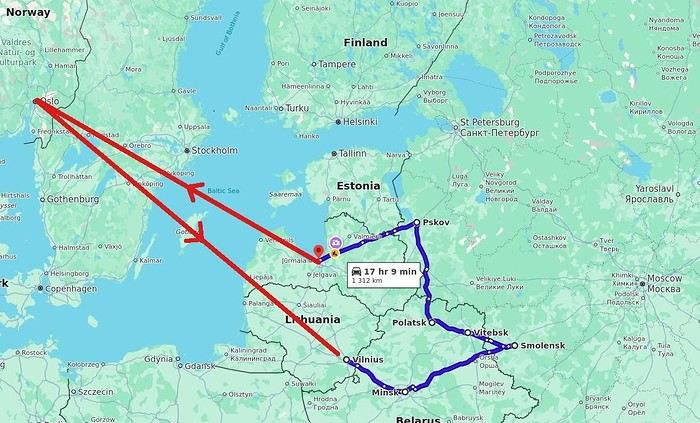
This crosses the Belarus-Russia border three times: from Minsk to Smolensk, then from Smolensk to Vitebsk, and finally from Polotsk to Pskov.
The region of this itinerary was, a thousand years ago, essentially that of the Krivichs, a local Slavic political entity. The term comes from "blood," *krew* in Polish, *krov* in Russian—basically "blood brothers." In Latvian, the word for Russians is *krievu*, by the way. Historically, the region corresponds to some of the old Russian principalities. Later, what marks Belarusian regions in general is, after the Great Schism of 1054, the division between Catholic and Orthodox zones, particularly as the Polish-Lithuanian Commonwealth expanded and contracted. In architecture, this corresponds to variations in Baroque styles, for example.
Vitebsk is known in France as the birthplace of Chagall. Born Russian, he first trained at the art school in Vitebsk, which was also attended by Malevich and Lissitzky, before completing his studies in Saint Petersburg, then moving to Berlin and later Paris. In Paris, Chagall met Cendrars, who had spent three years in Russia before and spoke enough Russian to help the newcomer get by a bit.
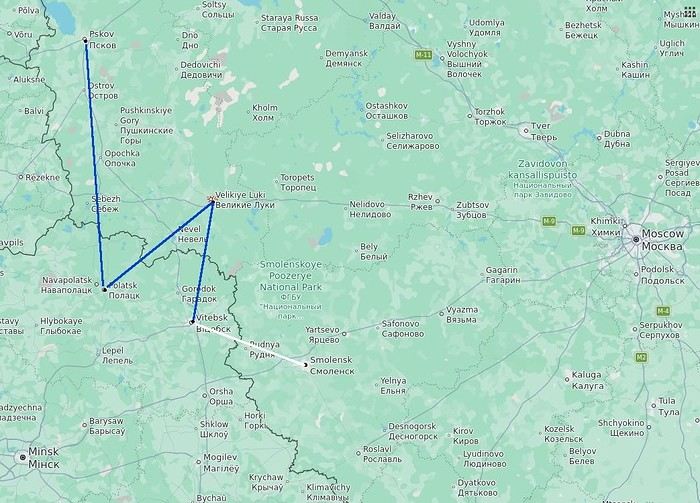
Back to the practical travel aspects: a local Pskov newspaper mentions that the Russian and Belarusian governments have a project for a Pskov-Polotsk train line. Previously, there were also plans for lines between Veliky Luki and Vitebsk, and Polotsk. A recently launched railway is Smolensk-Vitebsk, shown in white on the map, with projected lines in blue. https://pln-pskov.ru/society/583817.html https://pln-pskov.ru/society/578335.html
These will likely be "Hirondelle"—that is, *Lastochka*—the fast, spacious regional trains in Russia. Currently, all of this is done by bus, so the train is a very appealing and comfortable option. We’ll see how it goes.
With the unified system, if you enter one of the two countries with a visa from either, you can now travel between them freely.
In the case of a Russian visa, it must be a paper visa glued into your passport—not an electronic visa.
This opens up the possibility of traveling to Russia from Lithuania via Minsk, for example, starting from Vilnius.
It also allows for travel circuits that would otherwise be difficult, despite the proximity of the cities.
So, I’m leaving on June 12th for Vilnius. A one-hour flight for around thirty euros with a carry-on bag, and from Vilnius Airport, there’s a bus to Minsk. My planned route for now is Vilnius-Minsk-Smolensk-Vitebsk-Polotsk-Pskov-Riga.
This crosses the Belarus-Russia border three times: from Minsk to Smolensk, then from Smolensk to Vitebsk, and finally from Polotsk to Pskov.
The region of this itinerary was, a thousand years ago, essentially that of the Krivichs, a local Slavic political entity. The term comes from "blood," *krew* in Polish, *krov* in Russian—basically "blood brothers." In Latvian, the word for Russians is *krievu*, by the way. Historically, the region corresponds to some of the old Russian principalities. Later, what marks Belarusian regions in general is, after the Great Schism of 1054, the division between Catholic and Orthodox zones, particularly as the Polish-Lithuanian Commonwealth expanded and contracted. In architecture, this corresponds to variations in Baroque styles, for example.
Vitebsk is known in France as the birthplace of Chagall. Born Russian, he first trained at the art school in Vitebsk, which was also attended by Malevich and Lissitzky, before completing his studies in Saint Petersburg, then moving to Berlin and later Paris. In Paris, Chagall met Cendrars, who had spent three years in Russia before and spoke enough Russian to help the newcomer get by a bit.
Back to the practical travel aspects: a local Pskov newspaper mentions that the Russian and Belarusian governments have a project for a Pskov-Polotsk train line. Previously, there were also plans for lines between Veliky Luki and Vitebsk, and Polotsk. A recently launched railway is Smolensk-Vitebsk, shown in white on the map, with projected lines in blue. https://pln-pskov.ru/society/583817.html https://pln-pskov.ru/society/578335.html
These will likely be "Hirondelle"—that is, *Lastochka*—the fast, spacious regional trains in Russia. Currently, all of this is done by bus, so the train is a very appealing and comfortable option. We’ll see how it goes.
Tips for a one-month solo trip itinerary in Japan?
Hi everyone, I’m Julien!
This summer, from late June to late July, I’m planning a one-month solo trip to Japan—my first time!
I’d love to hear your thoughts and advice on the itinerary I’ve put together to explore this amazing country.
Here are the routes I’m considering:
**Option 1: More mountain and nature-focused**
Tokyo: 8 nights, with day trips to Nikko and maybe the Izu Peninsula Kawaguchiko (Lake Kawaguchi/Mt. Fuji): 1 night. The place looks stunning, but I’m worried Mt. Fuji might not be visible due to the weather Kyoto: 6–7 nights (including a trip to Nara) Osaka: 1–2 nights, where I’d like to drop off my things to make the Kumano Kodo easier Kumano Kodo: 3 nights—an experience I haven’t seen much elsewhere, but I thought it sounded really interesting Hiroshima: 2 nights Miyajima: 1 night Takayama: 3 days Kanazawa: 3 days (From what I understand, the Osaka–Takayama–Kanazawa–Tokyo route is convenient for transport) Tokyo: 1 night (return)
**Option 2: More varied but a bit vague in parts**
Tokyo: 8 nights Kyoto: 7 nights (+ Nara) Osaka: 2 nights Kobe + Himeji: just passing through—I’m not sure if it’s worth a night Naoshima: 1 night—still pretty unclear for me Takamatsu: 2 nights. An interesting city, but I’m not sure how long to stay Shimanami Kaido: biking from Imabari to Onomichi, then heading to Hiroshima Hiroshima: 2 nights Miyajima: 1 night Kyushu road trip (Aso + onsens + Fukuoka): 5 nights (also pretty vague—I could fly from Fukuoka back to Tokyo) Tokyo: 1 night
**Option 3: More balanced/simplified**
Tokyo: 8 nights Kawaguchiko: 1 night Kyoto: 7 nights (+ Nara) Osaka: 2 nights Koya-san: 1 night Kumano Kodo: 3 nights Takayama: 3 nights Kanazawa: 3 nights Tokyo: 1 night
A few key points: I haven’t made any reservations yet, except for the flight tickets. I know my plans are too packed and will need to be adjusted. I’m specifically looking for advice on which stops to cut or shorten.
Here are the routes I’m considering:
**Option 1: More mountain and nature-focused**
Tokyo: 8 nights, with day trips to Nikko and maybe the Izu Peninsula Kawaguchiko (Lake Kawaguchi/Mt. Fuji): 1 night. The place looks stunning, but I’m worried Mt. Fuji might not be visible due to the weather Kyoto: 6–7 nights (including a trip to Nara) Osaka: 1–2 nights, where I’d like to drop off my things to make the Kumano Kodo easier Kumano Kodo: 3 nights—an experience I haven’t seen much elsewhere, but I thought it sounded really interesting Hiroshima: 2 nights Miyajima: 1 night Takayama: 3 days Kanazawa: 3 days (From what I understand, the Osaka–Takayama–Kanazawa–Tokyo route is convenient for transport) Tokyo: 1 night (return)
**Option 2: More varied but a bit vague in parts**
Tokyo: 8 nights Kyoto: 7 nights (+ Nara) Osaka: 2 nights Kobe + Himeji: just passing through—I’m not sure if it’s worth a night Naoshima: 1 night—still pretty unclear for me Takamatsu: 2 nights. An interesting city, but I’m not sure how long to stay Shimanami Kaido: biking from Imabari to Onomichi, then heading to Hiroshima Hiroshima: 2 nights Miyajima: 1 night Kyushu road trip (Aso + onsens + Fukuoka): 5 nights (also pretty vague—I could fly from Fukuoka back to Tokyo) Tokyo: 1 night
**Option 3: More balanced/simplified**
Tokyo: 8 nights Kawaguchiko: 1 night Kyoto: 7 nights (+ Nara) Osaka: 2 nights Koya-san: 1 night Kumano Kodo: 3 nights Takayama: 3 nights Kanazawa: 3 nights Tokyo: 1 night
A few key points: I haven’t made any reservations yet, except for the flight tickets. I know my plans are too packed and will need to be adjusted. I’m specifically looking for advice on which stops to cut or shorten.
Already twenty years...
« Ali is not dead; he continues to inspire many talented musicians. There’s a new generation of artists who have their own style, but they’ve all listened to Ali Farka Touré. » (Ms. Kuypers-Touré, widow of Ali Farka Touré)
Ali Farka Touré (1939-2006)
Recognized worldwide as one of the most important musicians from Africa, his guitar playing earned him the nickname “the African John Lee Hooker.” But Ali Farka Touré preferred to flip the script and highlight the roots of Southern U.S. music in the Sahel region: « I have the roots and the trunk; they only have the leaves and branches. » In other words, what John Lee Hooker played was an echo of a distant African past. Ali Farka Touré was the guardian of traditions, and even though his sound resembled the blues, it remained deeply tied to the land of his ancestors—in Africa, in Mali. A farmer at heart, the famous Malian singer and guitarist continued to cultivate the land until his hospitalization for cancer, from which he passed away on March 7, 2006, in Bamako at the age of 66.
The son of a soldier who fell in combat while serving in the French army, he was born in 1939 in Kanau, near Timbuktu, then part of French Sudan (a subdivision of French West Africa, now Mali). He was raised by an uncle with harsh teaching methods and a grandmother who was “strong in voodoo,” communicating with spirits. At ten years old, he had a revelation for the single-string lute djurkel, “the instrument of the spirits,” and for the fiddle njarka. Seven years later, while training as a driver at a clinic, he fell in love with a colleague’s guitar. It wasn’t until 1968, when he was to represent Mali in Bulgaria, that he finally had the chance to acquire his first six-string guitar. International acclaim came later, following numerous concerts in the UK in the mid-1980s, at the invitation of World Circuit, the independent English label to which he remained loyal his entire life.
Several times, Ali Farka Touré announced his plan to stop making music. « It’s time for me to focus on my own. I don’t want Europe to tear me away from Africa. [...] Me, I love cultivating the land. In my life, if I’m not in the fields, I’m fishing or in the garden! »
Yet, Ali Farka Touré regularly returned to perform in Europe and the U.S. In 1995, he won his first Grammy Award for the album Talking Timbuktu, recorded in 1993 with bassist John Patitucci, percussionist Jim Keltner, the great Californian guitarist Ry Cooder, and the venerable guitarist Clarence Gatemouth Brown. His last three years were extraordinarily productive. Back to back, he recorded his best albums: In the Heart of the Moon (2004), Ali & Toumani (released in 2010), both duets with kora player Toumani Diabaté, and Savane (2005), dedicated to the traditional Peul and Songhai repertoires. At the same time, he tirelessly devoted himself to his agricultural work and his duties as mayor, a role he had held since 2004.
A multi-instrumentalist, he was a self-taught musician with an impressive musical culture. His discography includes around fifteen albums and several timeless hits used in films or as TV program themes. A universal symbol of West African sound heritage, his presence and his role in spreading a centuries-old legacy are undeniable. His son, also a musician, Vieux Farka Touré, now bears the heavy responsibility of carrying on his illustrious father’s message and legacy. His album Les Racines, released in 2002, is his contribution to preserving an instantly recognizable sound.
Meanwhile, his country, Mali, has paid tribute to him: for several years now, a square and a street in Bamako, the capital of Mali, have borne his name (both located in the Lafiabougou district).
In 2023, World Circuit released a new posthumous album, Voyageur, the first to feature previously unreleased tracks since 2010. It includes pieces composed and recorded spontaneously over the last 15 years, whether during his many tours or in the studio. These tracks once again showcase Touré’s passion for the musical traditions of his homeland and for the creativity and cultural diversity of West Africa. Below, an excerpt from this album: the beautiful song Chérie (with a very young Oumou Sangaré)—magnificent!!!
hgb
Ali Farka Touré feat. Oumou Sangaré: Chérie
Ali Farka Touré (1939-2006)
Recognized worldwide as one of the most important musicians from Africa, his guitar playing earned him the nickname “the African John Lee Hooker.” But Ali Farka Touré preferred to flip the script and highlight the roots of Southern U.S. music in the Sahel region: « I have the roots and the trunk; they only have the leaves and branches. » In other words, what John Lee Hooker played was an echo of a distant African past. Ali Farka Touré was the guardian of traditions, and even though his sound resembled the blues, it remained deeply tied to the land of his ancestors—in Africa, in Mali. A farmer at heart, the famous Malian singer and guitarist continued to cultivate the land until his hospitalization for cancer, from which he passed away on March 7, 2006, in Bamako at the age of 66.
The son of a soldier who fell in combat while serving in the French army, he was born in 1939 in Kanau, near Timbuktu, then part of French Sudan (a subdivision of French West Africa, now Mali). He was raised by an uncle with harsh teaching methods and a grandmother who was “strong in voodoo,” communicating with spirits. At ten years old, he had a revelation for the single-string lute djurkel, “the instrument of the spirits,” and for the fiddle njarka. Seven years later, while training as a driver at a clinic, he fell in love with a colleague’s guitar. It wasn’t until 1968, when he was to represent Mali in Bulgaria, that he finally had the chance to acquire his first six-string guitar. International acclaim came later, following numerous concerts in the UK in the mid-1980s, at the invitation of World Circuit, the independent English label to which he remained loyal his entire life.
Several times, Ali Farka Touré announced his plan to stop making music. « It’s time for me to focus on my own. I don’t want Europe to tear me away from Africa. [...] Me, I love cultivating the land. In my life, if I’m not in the fields, I’m fishing or in the garden! »
Yet, Ali Farka Touré regularly returned to perform in Europe and the U.S. In 1995, he won his first Grammy Award for the album Talking Timbuktu, recorded in 1993 with bassist John Patitucci, percussionist Jim Keltner, the great Californian guitarist Ry Cooder, and the venerable guitarist Clarence Gatemouth Brown. His last three years were extraordinarily productive. Back to back, he recorded his best albums: In the Heart of the Moon (2004), Ali & Toumani (released in 2010), both duets with kora player Toumani Diabaté, and Savane (2005), dedicated to the traditional Peul and Songhai repertoires. At the same time, he tirelessly devoted himself to his agricultural work and his duties as mayor, a role he had held since 2004.
A multi-instrumentalist, he was a self-taught musician with an impressive musical culture. His discography includes around fifteen albums and several timeless hits used in films or as TV program themes. A universal symbol of West African sound heritage, his presence and his role in spreading a centuries-old legacy are undeniable. His son, also a musician, Vieux Farka Touré, now bears the heavy responsibility of carrying on his illustrious father’s message and legacy. His album Les Racines, released in 2002, is his contribution to preserving an instantly recognizable sound.
Meanwhile, his country, Mali, has paid tribute to him: for several years now, a square and a street in Bamako, the capital of Mali, have borne his name (both located in the Lafiabougou district).
In 2023, World Circuit released a new posthumous album, Voyageur, the first to feature previously unreleased tracks since 2010. It includes pieces composed and recorded spontaneously over the last 15 years, whether during his many tours or in the studio. These tracks once again showcase Touré’s passion for the musical traditions of his homeland and for the creativity and cultural diversity of West Africa. Below, an excerpt from this album: the beautiful song Chérie (with a very young Oumou Sangaré)—magnificent!!!
hgb
Ali Farka Touré feat. Oumou Sangaré: Chérie
Paris-Windhoek flight via Johannesburg: connection time
Hi everyone,
I'm heading to Namibia next May. I'm planning to take a first flight from Paris to Johannesburg with Air France, departing at 11:20 PM and arriving at 11:05 AM in Johannesburg. Then a second flight from Johannesburg to Windhoek at 3:25 PM with South African Airways.
Four hours between the two flights seems enough to catch my connection, but a friend told me I should maybe take the 5:30 PM flight instead because I need to go through immigration, collect my luggage, and check in again. Apparently, I have to do this because I bought the two tickets separately (it's actually much cheaper).
What do you think?
Also, in terms of South African airlines, which one do you think is the most reliable between South African Airways and Airlink?
Thanks for your advice!!
Brazilian airline GOL announces European routes
Hello, some (potentially) good news for Brazil lovers—GOL airline is launching a route to Europe from Rio, starting in September for Lisbon, then Paris at a later date that hasn’t been announced yet.
They’ll be using their new A330-900 neo.
No prices have been announced so far, but hopefully we’ll find direct flights from GIG at a more interesting fare than AF or Latam…
Thailand itinerary advice for island visits
Hello,
We’re heading to Thailand for 26 days (excluding flights) next July with our two teens (12 and 15 years old).
My husband and I have been there several times before they were born—so that’s 15 years ago—and I’m a bit worried about some of the changes that might have happened since, especially with the rise in tourism...
I’d also like to keep a pace that allows us to settle in a bit and enjoy local life beyond just the main sights. Plus, we’re pretty active.
For now, our plan looks like this:
Arrival in Bangkok, where we’re thinking of spending several days (minimum 4) Chiang Mai for about a week 2 or 3 islands in the Gulf Return to Bangkok for 2 days before departure.
We’re pretty set on Bangkok and Chiang Mai, but we’re unsure about which islands to visit—I’ve read such mixed things that I’m even wondering if we should consider the coast instead. Organization-wise, I’d love any tips or feedback on whether we need to book in advance at this time of year, which transport options to prioritize (train, bus, or plane), and of course, any suggestions for stops or routes. Thanks in advance to anyone kind enough to help us prepare for this amazing trip!
Arrival in Bangkok, where we’re thinking of spending several days (minimum 4) Chiang Mai for about a week 2 or 3 islands in the Gulf Return to Bangkok for 2 days before departure.
We’re pretty set on Bangkok and Chiang Mai, but we’re unsure about which islands to visit—I’ve read such mixed things that I’m even wondering if we should consider the coast instead. Organization-wise, I’d love any tips or feedback on whether we need to book in advance at this time of year, which transport options to prioritize (train, bus, or plane), and of course, any suggestions for stops or routes. Thanks in advance to anyone kind enough to help us prepare for this amazing trip!
Feedback on 10-day Tuscany itinerary with kids
Hi there,
I’ll be traveling to Tuscany with my family (my wife and two kids, aged 6 and 8) from April 26 to May 5. Here’s a rough draft of our potential itinerary—I’d love to hear your thoughts and suggestions so I can tweak and improve it. We haven’t finalized our accommodations yet, but they’ll likely be near Florence (2 nights), Lucca (2 nights), Monteriggioni (2 nights), Pienza, Montalcino, and Greve in Chianti.
- April 26: o Arrival in Florence around 12:00 PM - April 27: o Florence - April 28: o Florence – Pistoia – Lucca - April 29: o Lucca – Pisa – Lucca - April 30: o Lucca – Volterra – San Gimignano – Monteriggioni - May 1: o Monteriggioni – Siena – Monteriggioni - May 2: o Monteriggioni – Abbey of Santa Maria di Monte Oliveto – Baccoleno – Castelmuzio – Chapel of Madonna di Vitaleta (San Quirico d’Orcia) – Pienza - May 3: o Pienza – Montepulciano – Montichiello – Abbey of Sant’Antimo – Bagno Vignoni Thermal Baths – Montalcino - May 4: o Montalcino – Castellina in Chianti – Radda in Chianti – Badia a Coltibuono – Volpaia – Montefioralle – Greve in Chianti - May 5: o Greve in Chianti – Florence airport
Thanks for any insights! 😉
I’ll be traveling to Tuscany with my family (my wife and two kids, aged 6 and 8) from April 26 to May 5. Here’s a rough draft of our potential itinerary—I’d love to hear your thoughts and suggestions so I can tweak and improve it. We haven’t finalized our accommodations yet, but they’ll likely be near Florence (2 nights), Lucca (2 nights), Monteriggioni (2 nights), Pienza, Montalcino, and Greve in Chianti.
- April 26: o Arrival in Florence around 12:00 PM - April 27: o Florence - April 28: o Florence – Pistoia – Lucca - April 29: o Lucca – Pisa – Lucca - April 30: o Lucca – Volterra – San Gimignano – Monteriggioni - May 1: o Monteriggioni – Siena – Monteriggioni - May 2: o Monteriggioni – Abbey of Santa Maria di Monte Oliveto – Baccoleno – Castelmuzio – Chapel of Madonna di Vitaleta (San Quirico d’Orcia) – Pienza - May 3: o Pienza – Montepulciano – Montichiello – Abbey of Sant’Antimo – Bagno Vignoni Thermal Baths – Montalcino - May 4: o Montalcino – Castellina in Chianti – Radda in Chianti – Badia a Coltibuono – Volpaia – Montefioralle – Greve in Chianti - May 5: o Greve in Chianti – Florence airport
Thanks for any insights! 😉
Stays from Divundu (Namibia) to Maun via Khwai/Moremi
Hi everyone,
I’m finalizing my trip starting from Namibia. When I arrive in Divundu, I’d like to head straight to the Khwai area early in the morning to one of the campsites in the Khwai Development Trust. Is the drive doable with a good 4x4 in a day? We’ll spend 2 nights in Khwai, then 2 or maybe 3 nights in the Moremi area (Third Bridge/Xakanaxa/Mboma) before heading back to Maun to wrap up our journey. Is that too much time to spend in each place?
We’d also like to do one or two boat excursions in the delta. Any suggestions for the best options and operators?
Thanks in advance for your tips and advice! Best, Patrick
I’m finalizing my trip starting from Namibia. When I arrive in Divundu, I’d like to head straight to the Khwai area early in the morning to one of the campsites in the Khwai Development Trust. Is the drive doable with a good 4x4 in a day? We’ll spend 2 nights in Khwai, then 2 or maybe 3 nights in the Moremi area (Third Bridge/Xakanaxa/Mboma) before heading back to Maun to wrap up our journey. Is that too much time to spend in each place?
We’d also like to do one or two boat excursions in the delta. Any suggestions for the best options and operators?
Thanks in advance for your tips and advice! Best, Patrick
Prepping for our first 4x4 road trip in Morocco
Hi everyone,
My wife and I are planning our very first 4x4 trip. We recently bought a used Toyota Land Cruiser 150, still completely stock but in great condition. This is a big first for us—until now, our travels have been more hiking-focused, but the idea of trying out a 4x4 has been itching at me for a few years.
We’re thinking of heading to Morocco for a few weeks, probably in the spring. The plan is to mix the Atlas Mountains, southern valleys, and some easy trails between Merzouga, Tata, Foum Zguid, or the Draa Valley. Nothing extreme—we’re total beginners.
I’m in the middle of outfitting the vehicle and could really use your input, especially from those who know the country or have prepped a 4x4 for this kind of itinerary.
For a trip like this, is a stock Land Cruiser 150 enough, or should we consider a few upgrades (AT tires, sand ladders, compressor) to feel more confident on the southern trails?
For a first off-road adventure: would you recommend bringing a kit of wear-and-tear parts (filters, belts, hoses), or is a good pre-trip inspection with just the bare essentials enough in Morocco?
Finally, I’m torn between three roof tent brands: James Baroud, Autohome, and Roof Space. For heavy use in Morocco (heat, wind, daily setup), which brand do you think is best in terms of ventilation and mechanism durability? Are there any key criteria to consider when choosing?
Thanks in advance for your advice! We’re finalizing the budget and gearing up the vehicle, so all real-world feedback is welcome.
Julien
My wife and I are planning our very first 4x4 trip. We recently bought a used Toyota Land Cruiser 150, still completely stock but in great condition. This is a big first for us—until now, our travels have been more hiking-focused, but the idea of trying out a 4x4 has been itching at me for a few years.
We’re thinking of heading to Morocco for a few weeks, probably in the spring. The plan is to mix the Atlas Mountains, southern valleys, and some easy trails between Merzouga, Tata, Foum Zguid, or the Draa Valley. Nothing extreme—we’re total beginners.
I’m in the middle of outfitting the vehicle and could really use your input, especially from those who know the country or have prepped a 4x4 for this kind of itinerary.
For a trip like this, is a stock Land Cruiser 150 enough, or should we consider a few upgrades (AT tires, sand ladders, compressor) to feel more confident on the southern trails?
For a first off-road adventure: would you recommend bringing a kit of wear-and-tear parts (filters, belts, hoses), or is a good pre-trip inspection with just the bare essentials enough in Morocco?
Finally, I’m torn between three roof tent brands: James Baroud, Autohome, and Roof Space. For heavy use in Morocco (heat, wind, daily setup), which brand do you think is best in terms of ventilation and mechanism durability? Are there any key criteria to consider when choosing?
Thanks in advance for your advice! We’re finalizing the budget and gearing up the vehicle, so all real-world feedback is welcome.
Julien
Quebec Itinerary for Indian Summer
Hi everyone! 🙂
My partner would love to discover Quebec, while I’ve already been there over 15 years ago (Quebec City, Tadoussac, the Fjords, Lac Saint-Jean).
This time, of course, we’d want to do something different.
Quebec City would still be a must for my partner in this plan.
With the tight budget we have right now🤪, we’re thinking of spending several days in Quebec City, then maybe renting bikes to explore the surrounding areas—aside from Montmorency Falls, what other nice spots are worth visiting? I remember there being tons of bike paths.
After that, we’d rent a car (for a few days to visit the parks) and use trains or buses for the rest of the trip. From what I recall, cars aren’t super fuel-efficient there.
Since we’ve never seen Niagara Falls, I’d like to include it in this itinerary.
For a roughly 15-day trip in September, I was thinking of a multi-destination flight: France-Quebec / Toronto-France, so it’d look something like this:
Quebec City: 5 days (including arrival day)
Pick up the car
La Mauricie National Park (or others?) 1 day
Mont-Tremblant 1 day
Montreal 4 days
Drop off the car in Montreal
By train/bus
Toronto 2 days
By train/bus
Buffalo-Niagara Falls 1 day
Toronto 1 day (return to France)
I was planning one night at Niagara Falls—is that enough, or is a single day sufficient?
If our finances don’t stretch that far, we’d shorten the trip from Montreal (so long, Niagara🙁), adding extra nights between Quebec City and Montreal.
Anyway, thanks in advance for all your great tips!
Is it possible not to book in advance for a trip to Sulawesi in July-August with kids?
Hi there,
We’re planning a solid six-week trip (July/August) to Sulawesi with our two kids, aged 5 and 7.
I’ve been browsing various forums and have a lot of questions:
Can we "improvise"? We love traveling without planning every step, going with the flow based on fatigue, encounters, and discoveries. So, can we book NO accommodations in advance (except maybe our arrival in Makassar)? On the Togian Islands—is that possible? Same question—can we "improvise" local transport like buses, taxis, or scooter rentals, and book flight tickets (e.g., Makassar-Luwuk) or ferry tickets just a few days ahead? Is it safe enough to travel by scooter for day trips with the kids? Do they generally have child-sized helmets available? We’re struggling to map out an itinerary. Our priorities are hiking (trekking) in the Mamasa Valley and Toraja region, and seeing at least one volcano. Then, of course, we’d love to enjoy the water—easy snorkeling. The Togian Islands look dreamy, but are they the best for "easy" snorkeling (from the beach) with young kids? The journey there is long, too. The Banggai Islands look amazing—could they be a good alternative to the Togian Islands (where finding accommodation might be trickier)? Any feedback?
Other questions: My oldest is crazy about crystals and geology. Has anyone explored the karst region north of Makassar? I also just learned there’s a volcano in the Togian Islands—Una Una (Colo Volcano). Any feedback on that?
Thanks so much for your insights!
Can we "improvise"? We love traveling without planning every step, going with the flow based on fatigue, encounters, and discoveries. So, can we book NO accommodations in advance (except maybe our arrival in Makassar)? On the Togian Islands—is that possible? Same question—can we "improvise" local transport like buses, taxis, or scooter rentals, and book flight tickets (e.g., Makassar-Luwuk) or ferry tickets just a few days ahead? Is it safe enough to travel by scooter for day trips with the kids? Do they generally have child-sized helmets available? We’re struggling to map out an itinerary. Our priorities are hiking (trekking) in the Mamasa Valley and Toraja region, and seeing at least one volcano. Then, of course, we’d love to enjoy the water—easy snorkeling. The Togian Islands look dreamy, but are they the best for "easy" snorkeling (from the beach) with young kids? The journey there is long, too. The Banggai Islands look amazing—could they be a good alternative to the Togian Islands (where finding accommodation might be trickier)? Any feedback?
Other questions: My oldest is crazy about crystals and geology. Has anyone explored the karst region north of Makassar? I also just learned there’s a volcano in the Togian Islands—Una Una (Colo Volcano). Any feedback on that?
Thanks so much for your insights!
New Navi Mumbai International Airport
India inaugurates the new Navi Mumbai International Airport and the final phase of Mumbai’s Metro Line 3—a major turning point for the country’s infrastructure.
Mumbai, India’s economic capital, is entering a new era of modernization. The Indian government has officially inaugurated the Navi Mumbai International Airport, one of the country’s most ambitious infrastructure projects, along with the final phase of Metro Line 3, a key axis to ease congestion in the megacity.
The Navi Mumbai International Airport (NMIA), located about 35 km from the city center, aims to eventually handle up to 60 million passengers per year. Built to reduce pressure on the already saturated Chhatrapati Shivaji Maharaj Airport, it features ultra-modern facilities, sustainable design, and cutting-edge technologies for air traffic management and energy efficiency.
At the same time, the completion of Mumbai’s Metro Line 3, connecting Colaba to Bandra-SEEPZ, marks a major advancement in urban mobility. This 33.5 km underground section will significantly reduce travel time and congestion in a city known for its chronic traffic jams.
These two projects reflect the Indian government’s commitment to transforming Mumbai into a global hub, combining connectivity, sustainability, and economic development.
The Navi Mumbai International Airport (NMIA), a project two decades in the making, has finally come to fruition. Phase one of the airport was inaugurated Wednesday by Prime Minister Narendra Modi, in the presence of Chief Minister Devendra Fadnavis and Deputy Chief Ministers Eknath Shinde and Ajit Pawar. Although the first phase, which includes Terminal 1 and Runway 1 with 10 bus gates and 29 aero bridges, has been inaugurated, flight operations will not begin immediately.
"Post-inauguration, the airport will be handed over to the Central Industrial Security Force (CISF) for a security sweep, which could take 30 to 45 days. We also need to mobilize customs and immigration teams and complete end-to-end testing, which is a 45-60-day process," said Arun Bansal, CEO of Adani Airports Holdings Ltd, developer and operator of the NMIA, during a press briefing at the NMIA premises Monday. Even though an exact date hasn’t been announced, NMIA CEO Captain B V J K Sharma and Bansal said commercial flights are expected to begin in December 2025. Plans of major carriers Three major airlines—Air India, Akasa Air, and IndiGo—have already signed on to shift part of their operations to NMIA. Last month, Air India announced plans to start with 20 daily departures (40 air traffic movements) through Air India Express, connecting 15 Indian cities in the first phase. By mid-2026, it aims to scale up to 55 daily departures, including up to five international flights. IndiGo, which made its announcement in May, plans to operate 18 daily flights to more than 15 cities from the first day of commercial operations and intends to expand to 140 daily flights—30 of which will be international—within 18 months. In June, Akasa Air said it will start with 15 daily domestic flights, scaling up to over 300 domestic and 50 international flights a week within a few months. When asked which airline will operate the first flight, Bansal said, "We want all three airlines to be there on Day 1. It depends on who has the earliest slot that day, and the destination choice lies entirely with the airlines." Operations to begin with 12-hour window In the first month, flights will operate between 8 am and 8 pm, with the 12-hour window likely to be extended as operations stabilize. Although NMIA’s full capacity is 40 air traffic movements (ATMs) per hour, the initial phase will handle 10 ATMs—allowing 10 aircraft to land or take off every hour. Airlines are expected to announce routes and ticket sales soon. Touted as an international aviation hub, NMIA positions Mumbai alongside global twin-airport cities such as London, Dubai, and New York, and plans to launch both domestic and international operations from Day 1. Concession for international carriers When asked if international carriers will be given any concessions, Bansal said, "For international airlines, we will not charge them parking fees for the first year." The duo added that NMIA aims to reclaim Mumbai’s rightful place on the global aviation map. "For a decade… travelers didn’t have a choice—airlines couldn’t get additional slots (at the Mumbai airport), so traffic shifted to Delhi. We are course-correcting that with NMIA. It won’t happen overnight, but over the next five–seven years, you’ll see the change," said Bansal. He noted that Mumbai currently lacks direct flights to major destinations in Europe and the U.S., something NMIA hopes to change. "If you see east-to-west flights, Mumbai is a natural stop," added Sharma. As reported earlier, NMIA will eventually feature four terminals and two parallel runways, with a total capacity to handle up to 90 million passengers per annum (MPPA), compared to 20 MPPA in the first phase. In the long term, the airport aims to serve as a key transfer hub between the East and the West, enabling passengers from Southeast Asia to connect seamlessly to Europe and North America.
The Navi Mumbai International Airport (NMIA), a project two decades in the making, has finally come to fruition. Phase one of the airport was inaugurated Wednesday by Prime Minister Narendra Modi, in the presence of Chief Minister Devendra Fadnavis and Deputy Chief Ministers Eknath Shinde and Ajit Pawar. Although the first phase, which includes Terminal 1 and Runway 1 with 10 bus gates and 29 aero bridges, has been inaugurated, flight operations will not begin immediately.
"Post-inauguration, the airport will be handed over to the Central Industrial Security Force (CISF) for a security sweep, which could take 30 to 45 days. We also need to mobilize customs and immigration teams and complete end-to-end testing, which is a 45-60-day process," said Arun Bansal, CEO of Adani Airports Holdings Ltd, developer and operator of the NMIA, during a press briefing at the NMIA premises Monday. Even though an exact date hasn’t been announced, NMIA CEO Captain B V J K Sharma and Bansal said commercial flights are expected to begin in December 2025. Plans of major carriers Three major airlines—Air India, Akasa Air, and IndiGo—have already signed on to shift part of their operations to NMIA. Last month, Air India announced plans to start with 20 daily departures (40 air traffic movements) through Air India Express, connecting 15 Indian cities in the first phase. By mid-2026, it aims to scale up to 55 daily departures, including up to five international flights. IndiGo, which made its announcement in May, plans to operate 18 daily flights to more than 15 cities from the first day of commercial operations and intends to expand to 140 daily flights—30 of which will be international—within 18 months. In June, Akasa Air said it will start with 15 daily domestic flights, scaling up to over 300 domestic and 50 international flights a week within a few months. When asked which airline will operate the first flight, Bansal said, "We want all three airlines to be there on Day 1. It depends on who has the earliest slot that day, and the destination choice lies entirely with the airlines." Operations to begin with 12-hour window In the first month, flights will operate between 8 am and 8 pm, with the 12-hour window likely to be extended as operations stabilize. Although NMIA’s full capacity is 40 air traffic movements (ATMs) per hour, the initial phase will handle 10 ATMs—allowing 10 aircraft to land or take off every hour. Airlines are expected to announce routes and ticket sales soon. Touted as an international aviation hub, NMIA positions Mumbai alongside global twin-airport cities such as London, Dubai, and New York, and plans to launch both domestic and international operations from Day 1. Concession for international carriers When asked if international carriers will be given any concessions, Bansal said, "For international airlines, we will not charge them parking fees for the first year." The duo added that NMIA aims to reclaim Mumbai’s rightful place on the global aviation map. "For a decade… travelers didn’t have a choice—airlines couldn’t get additional slots (at the Mumbai airport), so traffic shifted to Delhi. We are course-correcting that with NMIA. It won’t happen overnight, but over the next five–seven years, you’ll see the change," said Bansal. He noted that Mumbai currently lacks direct flights to major destinations in Europe and the U.S., something NMIA hopes to change. "If you see east-to-west flights, Mumbai is a natural stop," added Sharma. As reported earlier, NMIA will eventually feature four terminals and two parallel runways, with a total capacity to handle up to 90 million passengers per annum (MPPA), compared to 20 MPPA in the first phase. In the long term, the airport aims to serve as a key transfer hub between the East and the West, enabling passengers from Southeast Asia to connect seamlessly to Europe and North America.
Looking for feedback on Southeast Asia road trip itinerary
Hey everyone,
I’m planning a road trip through Southeast Asia with my girlfriend starting in mid-January 2026, and I’m torn between two possible itineraries.
The goal of the trip is to explore the region before catching a flight to Tokyo at the end. The main difference between my two options is the order in which I’d visit Thailand, Malaysia, Cambodia, Vietnam, and Laos.
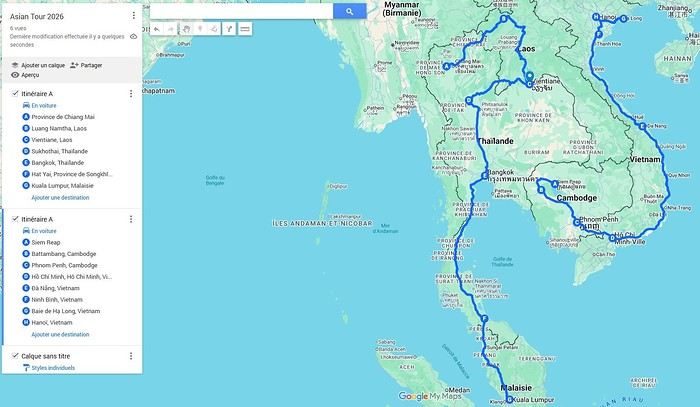
👉 Itinerary A: Paris > Thailand (Chiang Mai) > Southern Thailand > Malaysia > Flight from Kuala Lumpur to Siem Reap in Cambodia > Cambodia > Southern to Northern Vietnam > Flight to Tokyo
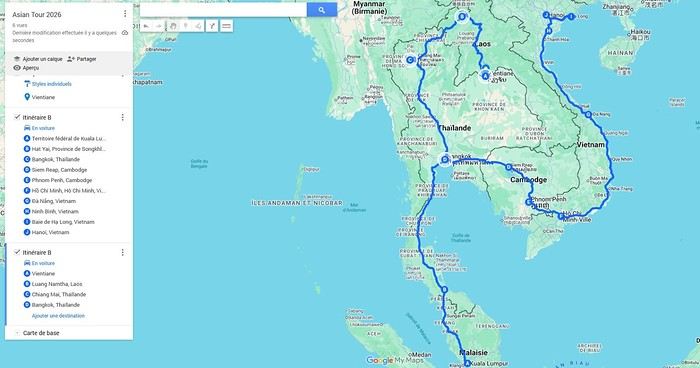
👉 Itinerary B: Paris > Malaysia (Kuala Lumpur) > Southern Thailand and Bangkok > Cambodia > Southern to Northern Vietnam > Flight from Hanoi to Vientiane (Laos) > Laos > Northern Thailand > Flight from Bangkok to Tokyo
Initially, I thought about doing Malaysia > Thailand > Laos > Vietnam > Cambodia, but after looking into it, it’s tricky to get to Tokyo from Cambodia—there’s no direct flight.
My questions: - Which of these itineraries seems the most logical/smooth in terms of transportation? - Which one do you think offers the best overall experience? - Do you have any other route suggestions or visit orders?
Thanks in advance for your feedback! 🙏
I’m planning a road trip through Southeast Asia with my girlfriend starting in mid-January 2026, and I’m torn between two possible itineraries.
The goal of the trip is to explore the region before catching a flight to Tokyo at the end. The main difference between my two options is the order in which I’d visit Thailand, Malaysia, Cambodia, Vietnam, and Laos.
👉 Itinerary A: Paris > Thailand (Chiang Mai) > Southern Thailand > Malaysia > Flight from Kuala Lumpur to Siem Reap in Cambodia > Cambodia > Southern to Northern Vietnam > Flight to Tokyo
👉 Itinerary B: Paris > Malaysia (Kuala Lumpur) > Southern Thailand and Bangkok > Cambodia > Southern to Northern Vietnam > Flight from Hanoi to Vientiane (Laos) > Laos > Northern Thailand > Flight from Bangkok to Tokyo
Initially, I thought about doing Malaysia > Thailand > Laos > Vietnam > Cambodia, but after looking into it, it’s tricky to get to Tokyo from Cambodia—there’s no direct flight.
My questions: - Which of these itineraries seems the most logical/smooth in terms of transportation? - Which one do you think offers the best overall experience? - Do you have any other route suggestions or visit orders?
Thanks in advance for your feedback! 🙏
The unique characteristics of French regions
Hello everyone.
First and foremost, I hope this topic won’t just focus on my region—the South of France—and that those of you who enjoy exchanging ideas will share what makes your own regions special.
Personally, I’ve often wanted to push back when people call us vulgar (though I’ll admit I sometimes play it up). At heart, we pure-blooded Southerners just have our own way of expressing ourselves, which differs from other regions. We also get heated in conversations pretty easily (some researchers say it’s the influence of the sun and climate in general).
What some perceive as vulgar, we don’t see that way at all.
Do you want a uniform world with no differences? If so, how do you handle traveling to places with cultures completely different from your own?
In the travel community, the word "authenticity" comes up a lot, and it often takes priority in people’s searches.
In my specific case, speaking a purely regional language without having gone to school for it doesn’t help with understanding on this forum. That’s what creates what you call controversies—and what I call passionate exchanges.
I remember a reply from a member in this thread: https://voyageforum.com/forum/ma-vie-en-camargue-pays-origine-en-colombie-pays-c-ur-d10778555/
It left me speechless and ended the conversation because, for him, that’s just how he sees things, and he refuses to debate it, sticking to his position. I’ll quote him, hoping he won’t hold it against me:
"For me, things like bullfighting, boxing, football, and MMA are just tangible proof that human evolution is still at a primitive stage."
For him, our Latin-origin bullfights are barbaric customs. For us *taurins*, we need to see men face wild beasts (bulls and *toros*) at the risk of their lives every day. Does that make us barbarians?
We’ve always had this need to confront death—it’s in our genes.
Take the example he gave about football: fans of the sport would be considered mentally underdeveloped. But what about a kid who’s passionate about the game and has that drive to be a winner, just like a boxer or athletes in other violent sports?
As a traveler myself, passionate about old stones and beautiful historic buildings, I’ve visited Rome but couldn’t fully appreciate it. Religion is everywhere, and I felt like I had a lead weight on my head realizing that millions of people worldwide have believed in a god for millennia.
I’ve also judged believers for basing their faith on archaic texts that don’t prove a god (or gods) ever existed—I still think that, but I’m open to being proven wrong so I can say, "You’ve convinced me I was mistaken."
- If everyone clings to their own ideas and positions, no discussion is possible, and that’s a shame.
I’ll take away two things from my forum interactions: some accuse me of being omnipresent when I just love exchanging ideas. My way of speaking is misunderstood (regional differences), even if I’ll admit I sometimes turn up the heat—or rather, the *aïoli* —which for me is just lively debates 🔥 (a regional specialty).
And my "mocking" side, which I really need to work on.
This topic isn’t just about me—I hope other forum members will share their own regional "specialties" . For example, in Alsace, some older folks switch to their local language when they don’t want outsiders to understand, and I still don’t know if it’s German or something else.
https://www.marseille-tourisme.com/decouvrez-marseille/traditions/le-parler-marseillais/
https://www.lexpress.fr/informations/accent-du-midi-ave-ou-sans_642635.html
First and foremost, I hope this topic won’t just focus on my region—the South of France—and that those of you who enjoy exchanging ideas will share what makes your own regions special.
Personally, I’ve often wanted to push back when people call us vulgar (though I’ll admit I sometimes play it up). At heart, we pure-blooded Southerners just have our own way of expressing ourselves, which differs from other regions. We also get heated in conversations pretty easily (some researchers say it’s the influence of the sun and climate in general).
What some perceive as vulgar, we don’t see that way at all.
Do you want a uniform world with no differences? If so, how do you handle traveling to places with cultures completely different from your own?
In the travel community, the word "authenticity" comes up a lot, and it often takes priority in people’s searches.
In my specific case, speaking a purely regional language without having gone to school for it doesn’t help with understanding on this forum. That’s what creates what you call controversies—and what I call passionate exchanges.
I remember a reply from a member in this thread: https://voyageforum.com/forum/ma-vie-en-camargue-pays-origine-en-colombie-pays-c-ur-d10778555/
It left me speechless and ended the conversation because, for him, that’s just how he sees things, and he refuses to debate it, sticking to his position. I’ll quote him, hoping he won’t hold it against me:
"For me, things like bullfighting, boxing, football, and MMA are just tangible proof that human evolution is still at a primitive stage."
For him, our Latin-origin bullfights are barbaric customs. For us *taurins*, we need to see men face wild beasts (bulls and *toros*) at the risk of their lives every day. Does that make us barbarians?
We’ve always had this need to confront death—it’s in our genes.
Take the example he gave about football: fans of the sport would be considered mentally underdeveloped. But what about a kid who’s passionate about the game and has that drive to be a winner, just like a boxer or athletes in other violent sports?
As a traveler myself, passionate about old stones and beautiful historic buildings, I’ve visited Rome but couldn’t fully appreciate it. Religion is everywhere, and I felt like I had a lead weight on my head realizing that millions of people worldwide have believed in a god for millennia.
I’ve also judged believers for basing their faith on archaic texts that don’t prove a god (or gods) ever existed—I still think that, but I’m open to being proven wrong so I can say, "You’ve convinced me I was mistaken."
- If everyone clings to their own ideas and positions, no discussion is possible, and that’s a shame.
I’ll take away two things from my forum interactions: some accuse me of being omnipresent when I just love exchanging ideas. My way of speaking is misunderstood (regional differences), even if I’ll admit I sometimes turn up the heat—or rather, the *aïoli* —which for me is just lively debates 🔥 (a regional specialty).
And my "mocking" side, which I really need to work on.
This topic isn’t just about me—I hope other forum members will share their own regional "specialties" . For example, in Alsace, some older folks switch to their local language when they don’t want outsiders to understand, and I still don’t know if it’s German or something else.
https://www.marseille-tourisme.com/decouvrez-marseille/traditions/le-parler-marseillais/
https://www.lexpress.fr/informations/accent-du-midi-ave-ou-sans_642635.html
Mexico itinerary in February
Hi everyone, absolute travel lovers after our 20 trips to the USA, we’ve decided to head to Mexico in February (flight already booked: Nice to Cancun on February 20th, returning on the evening of March 1st).
I’m mainly hesitating about trying to do too much, as usual when discovering a new country. Here’s my itinerary—I’m unsure about a few things: - **Day 1**: Should we stay relaxed at the resort we booked, or should we do Isla Mujeres instead? If we stay, when’s the best time to visit the island? - **Day 3**: If we visit Chichén Itzá right at opening, will the Ik-Kil cenote be quieter in terms of tourists? If not, which cenote nearby would you recommend? - **Big decision**: Should we go all the way down to Bacalar or not? After that, it feels a bit rushed. **Day 6** is mandatory, or are there other options? Honestly, I’m counting on your advice!
For context, we’re a family of four (with very grown-up kids who are used to traveling), and we’ve already rented an SUV for this period. Thanks in advance for your help—it’ll be invaluable!
**Departure – February 20th**: Arrival in Cancún
Arrival at 8:20 PM, pick up rental car. Overnight in Cancún.
**Day 1 – February 21st**: Isla Mujeres
Ferry from Cancún to Isla Mujeres. Playa Norte, snorkeling, golf cart tour. Return to Cancún. Overnight in Cancún.
**Day 2 – February 22nd**: Ek’ Balam + Cenote X’Canché → Valladolid
Drive from Cancún to Ek’ Balam (~2h). Visit the archaeological site. Swim at Cenote X’Canché. Drive to Valladolid (~30 min). Overnight in Valladolid.
**Day 3 – February 23rd**: Chichén Itzá → Bacalar
Early departure to Chichén Itzá (~45 min). Guided tour + optional visit to Ik-Kil cenote. Drive to Bacalar (~4h). Overnight in Bacalar.
**Day 4 – February 24th**: Bacalar
Boat excursion to the "Laguna of Seven Colors." Cenote Azul + Fuerte San Felipe. Overnight in Bacalar.
**Day 5 – February 25th**: Bacalar → Tulum + Ruins, Cenote & Beach
Drive (~3.5h). Settle in Tulum. Visit the Mayan ruins of Tulum (stunning ocean view). Swim in Gran Cenote or Cenote Calavera. End the day at Playa Paraíso. Overnight in Tulum.
**Day 6 – February 26th**: Sian Ka’an Reserve
Guided excursion:
Option Muyil (half-day): boat tour + swim in the Mayan canal. Option Punta Allen (full-day): dolphins, turtles, snorkeling on the reef.
Overnight in Tulum.
**Day 7 – February 27th**: Tulum → Akumal → Playa del Carmen
Morning: snorkeling with turtles in Akumal. Lunch, then drive to Playa del Carmen. Evening on 5th Avenue. Overnight in Playa del Carmen.
**Day 8 – February 28th**: Playa del Carmen → Puerto Morelos
Free morning in Playa del Carmen (beach or Cenotes Azul & Cristalino). Afternoon: drive to Puerto Morelos (~30 min). Overnight in Puerto Morelos.
**Day 9 – March 1st**: Puerto Morelos → Cancún → Return flight
Relaxing morning in Puerto Morelos. Drive (~30 min) to Cancún Airport. Return rental car. Return flight.
I’m mainly hesitating about trying to do too much, as usual when discovering a new country. Here’s my itinerary—I’m unsure about a few things: - **Day 1**: Should we stay relaxed at the resort we booked, or should we do Isla Mujeres instead? If we stay, when’s the best time to visit the island? - **Day 3**: If we visit Chichén Itzá right at opening, will the Ik-Kil cenote be quieter in terms of tourists? If not, which cenote nearby would you recommend? - **Big decision**: Should we go all the way down to Bacalar or not? After that, it feels a bit rushed. **Day 6** is mandatory, or are there other options? Honestly, I’m counting on your advice!
For context, we’re a family of four (with very grown-up kids who are used to traveling), and we’ve already rented an SUV for this period. Thanks in advance for your help—it’ll be invaluable!
**Departure – February 20th**: Arrival in Cancún
Arrival at 8:20 PM, pick up rental car. Overnight in Cancún.
**Day 1 – February 21st**: Isla Mujeres
Ferry from Cancún to Isla Mujeres. Playa Norte, snorkeling, golf cart tour. Return to Cancún. Overnight in Cancún.
**Day 2 – February 22nd**: Ek’ Balam + Cenote X’Canché → Valladolid
Drive from Cancún to Ek’ Balam (~2h). Visit the archaeological site. Swim at Cenote X’Canché. Drive to Valladolid (~30 min). Overnight in Valladolid.
**Day 3 – February 23rd**: Chichén Itzá → Bacalar
Early departure to Chichén Itzá (~45 min). Guided tour + optional visit to Ik-Kil cenote. Drive to Bacalar (~4h). Overnight in Bacalar.
**Day 4 – February 24th**: Bacalar
Boat excursion to the "Laguna of Seven Colors." Cenote Azul + Fuerte San Felipe. Overnight in Bacalar.
**Day 5 – February 25th**: Bacalar → Tulum + Ruins, Cenote & Beach
Drive (~3.5h). Settle in Tulum. Visit the Mayan ruins of Tulum (stunning ocean view). Swim in Gran Cenote or Cenote Calavera. End the day at Playa Paraíso. Overnight in Tulum.
**Day 6 – February 26th**: Sian Ka’an Reserve
Guided excursion:
Option Muyil (half-day): boat tour + swim in the Mayan canal. Option Punta Allen (full-day): dolphins, turtles, snorkeling on the reef.
Overnight in Tulum.
**Day 7 – February 27th**: Tulum → Akumal → Playa del Carmen
Morning: snorkeling with turtles in Akumal. Lunch, then drive to Playa del Carmen. Evening on 5th Avenue. Overnight in Playa del Carmen.
**Day 8 – February 28th**: Playa del Carmen → Puerto Morelos
Free morning in Playa del Carmen (beach or Cenotes Azul & Cristalino). Afternoon: drive to Puerto Morelos (~30 min). Overnight in Puerto Morelos.
**Day 9 – March 1st**: Puerto Morelos → Cancún → Return flight
Relaxing morning in Puerto Morelos. Drive (~30 min) to Cancún Airport. Return rental car. Return flight.
Second trip to Japan: what itinerary for July-August?
Hi everyone,
I’m planning another trip to Japan next July-August (three and a half to four weeks). We were lucky enough to visit the country back in 2012 and explored Tokyo, Kyoto, Osaka, Nara, Hiroshima, and Miyajima Island.
This time, we’d like to spend a few days in Tokyo again and then discover other regions and cities. I really want to see Himeji Castle and Naoshima Island, but I haven’t decided on the rest yet.
Since we’ll be in Japan mostly in July (three weeks) and a bit in August (first week), I’m also thinking about the weather, which seems more favorable in the north (northern Honshu and Hokkaido), though the south (Shikoku, Kyushu) is tempting too.
I’d love to hear your advice on an itinerary, keeping in mind that we love variety—some history, temples, nature, and big cities.
I’m planning another trip to Japan next July-August (three and a half to four weeks). We were lucky enough to visit the country back in 2012 and explored Tokyo, Kyoto, Osaka, Nara, Hiroshima, and Miyajima Island.
This time, we’d like to spend a few days in Tokyo again and then discover other regions and cities. I really want to see Himeji Castle and Naoshima Island, but I haven’t decided on the rest yet.
Since we’ll be in Japan mostly in July (three weeks) and a bit in August (first week), I’m also thinking about the weather, which seems more favorable in the north (northern Honshu and Hokkaido), though the south (Shikoku, Kyushu) is tempting too.
I’d love to hear your advice on an itinerary, keeping in mind that we love variety—some history, temples, nature, and big cities.
Should I book hotels well in advance in Hanoi and Da Nang?
Hi there,
I’m heading to Hanoi and Da Nang for the first time for about ten days in mid-January 2026.
Should I book hotels in advance, or can I find decent places available from one day to the next?
Same question for prices—do rates vary depending on when you book?
Hiring a driver-guide vehicle in Tana
Hello,
After over 40 years of traveling, I’ve never used a driver-guide before.
Given my age, this time I’d like to avoid being squeezed into a bush taxi. I’ve never rented a 4x4 but usually go for sedans.
So, for my upcoming trip to Madagascar, I decided to hire a 4x4 with a driver. I contacted about ten agencies and guides listed in the GR, LP, and travel forums. The quotes I got for 20 days range from 6000 € to 1300 €, with or without fuel included. Most ask for either a full bank transfer upfront or a mobile wallet payment (30%, etc.) from France.
Personally, I’d prefer to see the vehicle and the driver before making any payment.
Also, I’d rather pay at the end of my trip.
Is it possible to find a provider in Tana upon arrival for around 50 or 60 € per day, including fuel, with short notice, some flexibility in my itinerary, and without being forced to accept the dictates of agencies or drivers recommended on certain forums?
Thanks for your replies.
Where to rent a car in Djerba?
We’re planning a week-long trip to southern Tunisia in early September and we’d like to rent a car in Djerba. We don’t have a credit card, only a debit card.
Any good tips on rates and reliability?
Mumbai - Nashik - Gokarna in October 2025
Hello everyone,
I’ve booked a round-trip flight to Mumbai from October 4th to 24th, 2025. I haven’t finalized my itinerary yet, but my plan is to spend 2 nights in Mumbai (hotel booked in Colaba), a few nights in Nashik, and then head down to Gokarna. I’m a young-at-heart sixty-something who stays very active and loves traveling. This will be my third trip to "southern" India, so I know what to expect in terms of cultural differences. Plus, my native language is English, so I have no trouble understanding or being understood, no matter the accent over there. I’d be happy to meet up and share some moments with you—young or not-so-young—if you’re up for it.
See you soon, I hope!
Charlie
I’ve booked a round-trip flight to Mumbai from October 4th to 24th, 2025. I haven’t finalized my itinerary yet, but my plan is to spend 2 nights in Mumbai (hotel booked in Colaba), a few nights in Nashik, and then head down to Gokarna. I’m a young-at-heart sixty-something who stays very active and loves traveling. This will be my third trip to "southern" India, so I know what to expect in terms of cultural differences. Plus, my native language is English, so I have no trouble understanding or being understood, no matter the accent over there. I’d be happy to meet up and share some moments with you—young or not-so-young—if you’re up for it.
See you soon, I hope!
Charlie
Where can I find a touring bike for beginners?
Hi everyone,
I don’t bike much, but I live on the VéloRoute 6, and I dream of adventure. I’m 51 and my old hybrid bike from 20 years ago no longer suits me.
I’d like to get a new bike at a reasonable price, but I don’t know where to look besides Decathlon and Intersport. I’m not after a racing bike—I want something a bit comfortable in terms of riding position (not recumbent) and with a luggage rack. 🙂
All your tips are welcome, with a budget of... let’s say 800 € max.
Looking forward to reading your suggestions!
Richard
I don’t bike much, but I live on the VéloRoute 6, and I dream of adventure. I’m 51 and my old hybrid bike from 20 years ago no longer suits me.
I’d like to get a new bike at a reasonable price, but I don’t know where to look besides Decathlon and Intersport. I’m not after a racing bike—I want something a bit comfortable in terms of riding position (not recumbent) and with a luggage rack. 🙂
All your tips are welcome, with a budget of... let’s say 800 € max.
Looking forward to reading your suggestions!
Richard
Flights to Salt Lake City or Jackson Hole
Hi there,
We're planning to visit Yellowstone between mid and late September (yes, I'm leaving it to the last minute for bookings...). I was initially planning to arrive and depart from Salt Lake City, which I’d also like to explore. It turns out that flights to SLC are 300 € more expensive than flights to Jackson Hole, even though the connection goes through... SLC! I’ve checked on several comparison sites from different locations, and these prices remain pretty consistent.
Does anyone know what it would cost if I skip the connection to Jackson Hole from SLC to take advantage of the cheaper fare and then fly back from JH instead?
Thanks in advance!
Sylvain.
We're planning to visit Yellowstone between mid and late September (yes, I'm leaving it to the last minute for bookings...). I was initially planning to arrive and depart from Salt Lake City, which I’d also like to explore. It turns out that flights to SLC are 300 € more expensive than flights to Jackson Hole, even though the connection goes through... SLC! I’ve checked on several comparison sites from different locations, and these prices remain pretty consistent.
Does anyone know what it would cost if I skip the connection to Jackson Hole from SLC to take advantage of the cheaper fare and then fly back from JH instead?
Thanks in advance!
Sylvain.
Where to travel in Southeast Asia with a 5-month-old baby?
hi,
I had planned to take a gap year with my 4-year-old daughter starting this fall. A happy but unplanned event is changing the plans: a new baby arriving in just a few days.
So now I’ll be waiting until she’s 5 MONTHS old. Which countries would you recommend for traveling in Southeast Asia where I’d have adequate healthcare infrastructure in case of any issues?
What travel insurance do you suggest?
What itineraries have you done?
thanks
What to see and do on Réunion Island?
Hey there,
I’m moving to Réunion Island in September and I’d love to hear about your experiences there. What’s there to do and what should I avoid?
Do you have any great tips for budget-friendly accommodation or places to stay?
Any advice on how to save money while I’m there?
Thanks in advance!
Kenya - January 2025 - Tsavo East - Tsavo West - Samburu - Meru NP - Aberdare NP
Hello everyone,
I’d like to invite you on a new adventure in Kenya.
Back in 2010, my husband Ben and I fell in love with Kenya, and we’ve been traveling there regularly ever since. This 2025 safari marked the first weeks of an important milestone in my life: retirement.
Of course, Felix—our guide and friend for all these years, whom some of you may even know from this forum—joined us again.
We chose an itinerary that takes us through the parks and reserves we particularly love in Kenya: Tsavo East (3 nights), Tsavo West (2 nights), a transition day in Embu, Samburu (5 nights), Meru NP (4 nights), Nanuyki to visit the Mount Kenya Animal Orphanage (https://mountkenyawildlifeconservancy.org/) (1 night), and Aberdare NP (2 nights).
This safari wasn’t our most prolific in terms of wildlife sightings and photos (all taken by Ben), but I still think it’s worth sharing our experiences and impressions of the places we visited. Maybe other travelers will find useful information here to help them fulfill their dream of a Kenyan safari one day...
Living in Brittany, we left from Nantes on Wednesday, January 8, 2025, on the 6 AM Air France flight to CDG, then took the direct flight to Nairobi at 10:50 AM. No issues this time on either flight (unlike in October 2023...).
We arrived in Nairobi at 9:20 PM local time (there’s a two-hour time difference with France at this time of year). Going through passport control and collecting our luggage went smoothly. The hotel shuttle (https://67airporthotel.co.ke/) was waiting for us. We shared it with a friendly Swiss couple who were there to climb Mount Kenya. We arrived at the hotel around midnight. The 67 Airport Hotel is 10-15 minutes from Jomo Kenyatta Airport and offers great value for money. Plus, it’s close to the Mombasa road, which is handy when heading that way the next morning.
On Thursday, January 9, we had breakfast at the hotel restaurant at 6:30 AM, and as planned, Felix arrived around 7 AM. We got to check out his brand-new 4x4 Nissan—we’d be the first to test it! 🙂
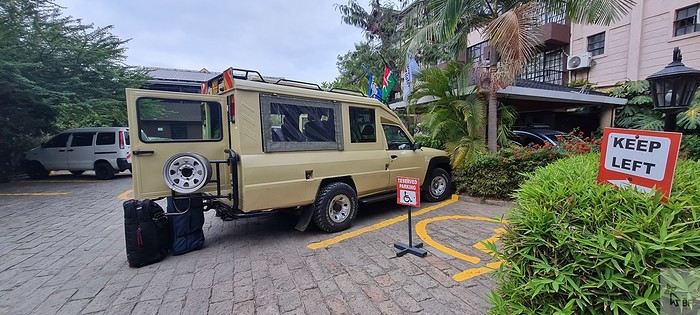
We set off for Voi, making our usual stop in Mtito Andei. Traffic was heavy on the Mombasa road, with lots of trucks.
We arrived at the entrance of Tsavo East around 1 PM and made it to Sentrim Camp (https://www.sentrim-hotels.com/sentrim-tsavo.html) just in time for lunch.
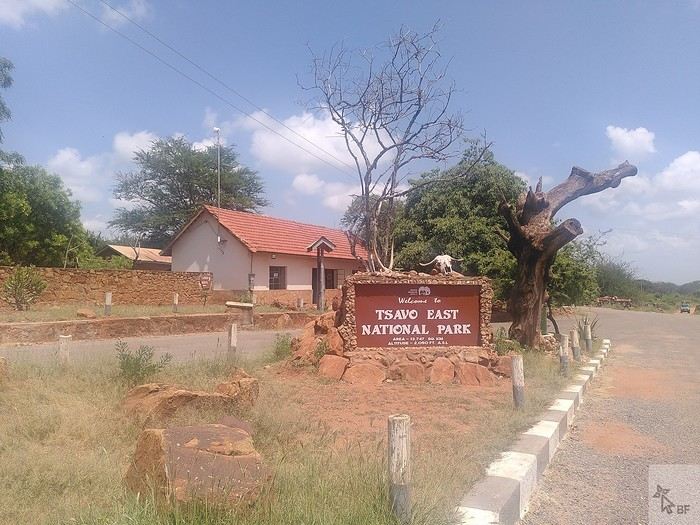
We found Tsavo East unusually green—there had been heavy rains in December, which isn’t typical. As a result, the animals were scattered and harder to spot. The watering hole visible from the camp’s dining area was completely deserted, whereas it’s usually bustling with herds of elephants and other mammals.
Our tent, No. 9, for 3 nights.
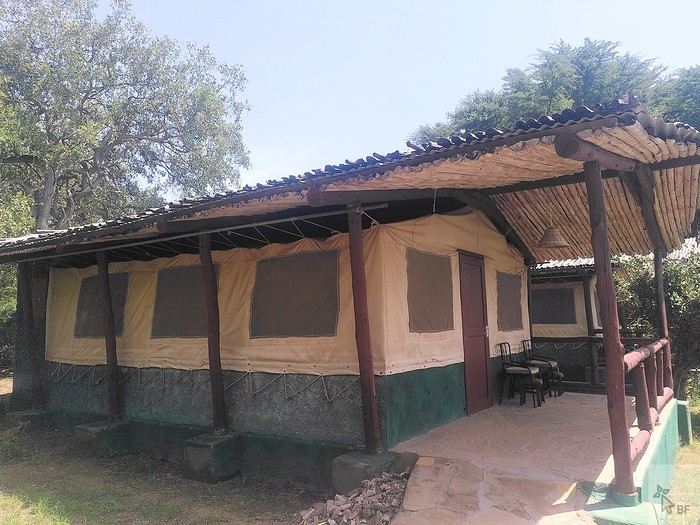
This camp is well-located inside the park. It’s simple but comfortable enough for our tastes, the staff is super friendly (as is often the case in Kenya), and the buffet-style meals are varied and good. Tsavo is the main destination for tourists staying on the coast who come for a night or two on safari. In January, some days at the camp are very quiet, while some evenings, the restaurant is packed with groups (lots of Italians, in particular).
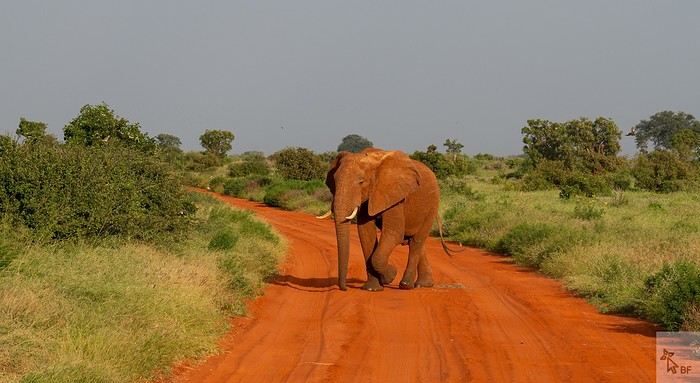
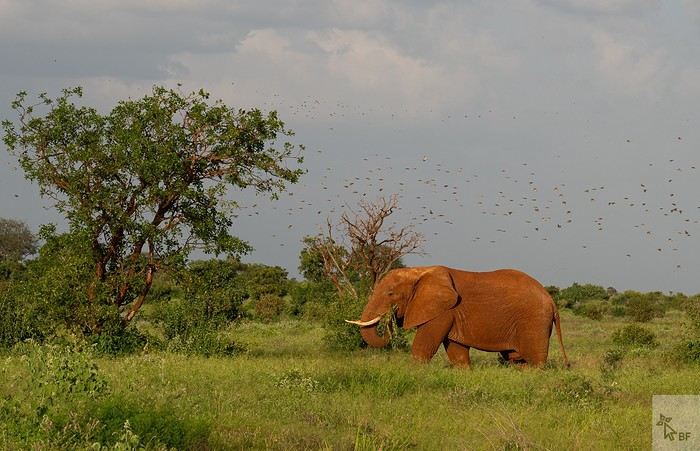
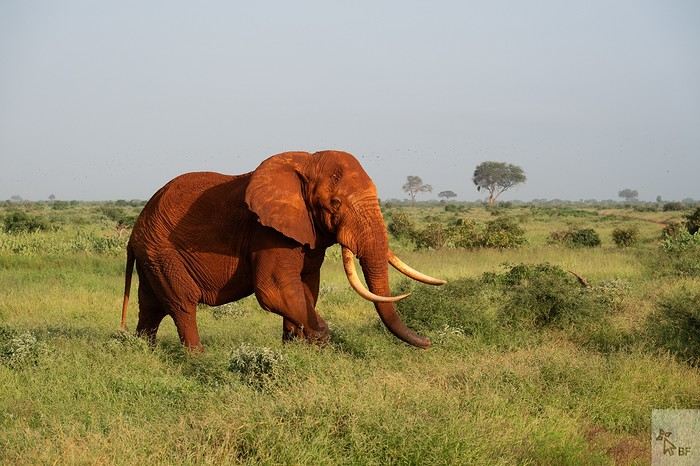
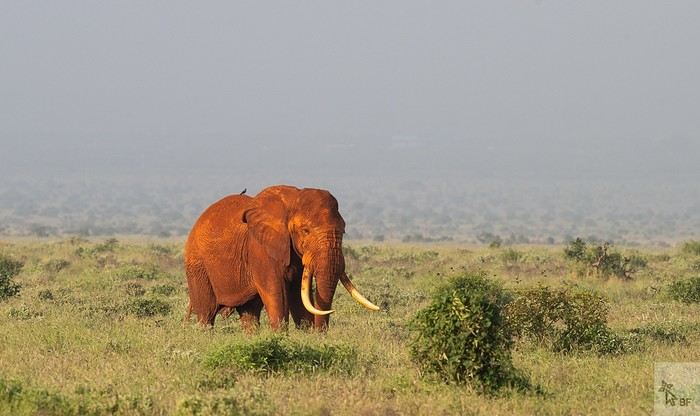
Tsavo is, of course, famous for its elephants. This time, we didn’t see many large herds, but we did have some great encounters with solitary males.
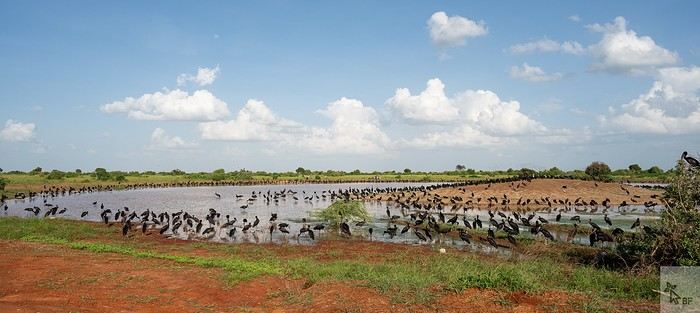
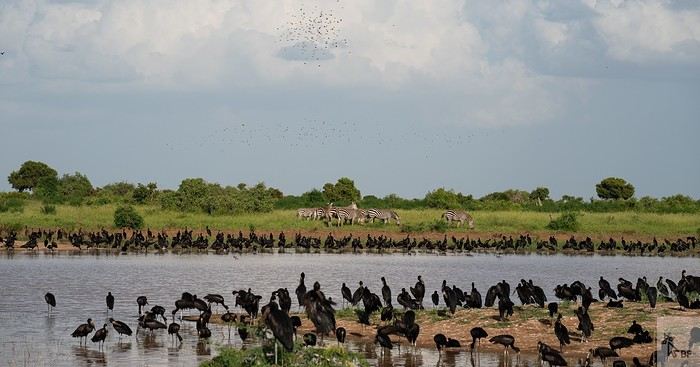
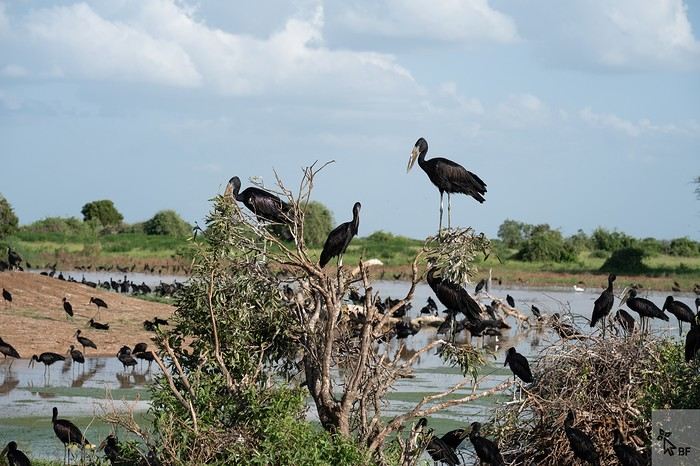
Around this small watering hole, we saw a gathering of African open-billed storks—we’d never seen so many before!
I’d like to invite you on a new adventure in Kenya.
Back in 2010, my husband Ben and I fell in love with Kenya, and we’ve been traveling there regularly ever since. This 2025 safari marked the first weeks of an important milestone in my life: retirement.
Of course, Felix—our guide and friend for all these years, whom some of you may even know from this forum—joined us again.
We chose an itinerary that takes us through the parks and reserves we particularly love in Kenya: Tsavo East (3 nights), Tsavo West (2 nights), a transition day in Embu, Samburu (5 nights), Meru NP (4 nights), Nanuyki to visit the Mount Kenya Animal Orphanage (https://mountkenyawildlifeconservancy.org/) (1 night), and Aberdare NP (2 nights).
This safari wasn’t our most prolific in terms of wildlife sightings and photos (all taken by Ben), but I still think it’s worth sharing our experiences and impressions of the places we visited. Maybe other travelers will find useful information here to help them fulfill their dream of a Kenyan safari one day...
Living in Brittany, we left from Nantes on Wednesday, January 8, 2025, on the 6 AM Air France flight to CDG, then took the direct flight to Nairobi at 10:50 AM. No issues this time on either flight (unlike in October 2023...).
We arrived in Nairobi at 9:20 PM local time (there’s a two-hour time difference with France at this time of year). Going through passport control and collecting our luggage went smoothly. The hotel shuttle (https://67airporthotel.co.ke/) was waiting for us. We shared it with a friendly Swiss couple who were there to climb Mount Kenya. We arrived at the hotel around midnight. The 67 Airport Hotel is 10-15 minutes from Jomo Kenyatta Airport and offers great value for money. Plus, it’s close to the Mombasa road, which is handy when heading that way the next morning.
On Thursday, January 9, we had breakfast at the hotel restaurant at 6:30 AM, and as planned, Felix arrived around 7 AM. We got to check out his brand-new 4x4 Nissan—we’d be the first to test it! 🙂
We set off for Voi, making our usual stop in Mtito Andei. Traffic was heavy on the Mombasa road, with lots of trucks.
We arrived at the entrance of Tsavo East around 1 PM and made it to Sentrim Camp (https://www.sentrim-hotels.com/sentrim-tsavo.html) just in time for lunch.
We found Tsavo East unusually green—there had been heavy rains in December, which isn’t typical. As a result, the animals were scattered and harder to spot. The watering hole visible from the camp’s dining area was completely deserted, whereas it’s usually bustling with herds of elephants and other mammals.
Our tent, No. 9, for 3 nights.
This camp is well-located inside the park. It’s simple but comfortable enough for our tastes, the staff is super friendly (as is often the case in Kenya), and the buffet-style meals are varied and good. Tsavo is the main destination for tourists staying on the coast who come for a night or two on safari. In January, some days at the camp are very quiet, while some evenings, the restaurant is packed with groups (lots of Italians, in particular).
Tsavo is, of course, famous for its elephants. This time, we didn’t see many large herds, but we did have some great encounters with solitary males.
Around this small watering hole, we saw a gathering of African open-billed storks—we’d never seen so many before!
Destination choice for a family trip: Malaysia or Indonesia?
Hi everyone,
We’re a family with two kids who’ll be 3½ and 6½ years old at the time of the trip. We live in the city, and the little ones aren’t big hikers in nature, but they’re pretty cool with transportation. Travel month: May 2026 for 3 weeks (round trip) What we’re looking for: a relaxed trip combining nature, culture, beautiful beaches with snorkeling, and sunshine! We want to take our time with the kids and avoid driving 6 hours every couple of days. We’ve traveled as a couple before but not much with the kids (in Europe, by car).
Choices: I ruled out Mexico for various reasons. I’d also dismissed Indonesia because it seemed more tiring with kids in terms of transportation, but it’s back in my top 2 now! 😊 I also crossed off Sri Lanka because of the monsoon on the west coast in May. So, I’m left with Malaysia (KL-Malacca-Selangor-Borneo Sabah-Perhentian Islands area) or Java (Yogyakarta-Bromo-Karimunjawa Islands)... This list isn’t exhaustive—just some rough ideas.
Budget-wise, we’d like to stay in small hotels with pools for under 100 € in cities, but no need for a pool at the beach. Thanks in advance for your tips! Hélène
We’re a family with two kids who’ll be 3½ and 6½ years old at the time of the trip. We live in the city, and the little ones aren’t big hikers in nature, but they’re pretty cool with transportation. Travel month: May 2026 for 3 weeks (round trip) What we’re looking for: a relaxed trip combining nature, culture, beautiful beaches with snorkeling, and sunshine! We want to take our time with the kids and avoid driving 6 hours every couple of days. We’ve traveled as a couple before but not much with the kids (in Europe, by car).
Choices: I ruled out Mexico for various reasons. I’d also dismissed Indonesia because it seemed more tiring with kids in terms of transportation, but it’s back in my top 2 now! 😊 I also crossed off Sri Lanka because of the monsoon on the west coast in May. So, I’m left with Malaysia (KL-Malacca-Selangor-Borneo Sabah-Perhentian Islands area) or Java (Yogyakarta-Bromo-Karimunjawa Islands)... This list isn’t exhaustive—just some rough ideas.
Budget-wise, we’d like to stay in small hotels with pools for under 100 € in cities, but no need for a pool at the beach. Thanks in advance for your tips! Hélène
Feedback on 15-day Malaysia itinerary
Hi there,
My partner and I are heading to Malaysia in early July. We arrive in KL on 03/07 in the late afternoon and leave from KL on 18/07 in the evening.
We’ve planned: Day 1: KL Day 2: Cameron Highlands day trip from KL Day 3: KL → Taman Negara (bus) Day 4 & 5: Trek in Taman Negara Day 6: Taman Negara → Perhentians (bus + boat) Day 7 & 8: Perhentians Day 9: Perhentians → Pulau Redang (boat + bus + boat) Day 10 & 11: Pulau Redang Day 12: Pulau Redang → George Town (flight) Day 13: George Town Day 14: George Town → KL (flight) Day 15: KL + return flight at 23:45
I feel like this might not be the most efficient route. Any tips on how to optimize the order of things (even though I’d prefer to start with Taman Negara)? How’s the best way to travel between places?
Should we book everything (transport, accommodation, activities) in advance, or can we figure it out day by day? I prefer spontaneous travel to keep things flexible, but will there be availability, or will we be struggling constantly?
Thanks in advance for any advice you can share!
My partner and I are heading to Malaysia in early July. We arrive in KL on 03/07 in the late afternoon and leave from KL on 18/07 in the evening.
We’ve planned: Day 1: KL Day 2: Cameron Highlands day trip from KL Day 3: KL → Taman Negara (bus) Day 4 & 5: Trek in Taman Negara Day 6: Taman Negara → Perhentians (bus + boat) Day 7 & 8: Perhentians Day 9: Perhentians → Pulau Redang (boat + bus + boat) Day 10 & 11: Pulau Redang Day 12: Pulau Redang → George Town (flight) Day 13: George Town Day 14: George Town → KL (flight) Day 15: KL + return flight at 23:45
I feel like this might not be the most efficient route. Any tips on how to optimize the order of things (even though I’d prefer to start with Taman Negara)? How’s the best way to travel between places?
Should we book everything (transport, accommodation, activities) in advance, or can we figure it out day by day? I prefer spontaneous travel to keep things flexible, but will there be availability, or will we be struggling constantly?
Thanks in advance for any advice you can share!