Results for "chasse+ou+pêche+|+11+>+245"
50447 results found.
Réflexion: les hôtels et le peuple cubain! English translation pending
bonjour
vous vous demandez dans quel hotel vous allez trouver la meilleure ambiance, la meilleure bouffe etc.....
n oubliez pas que vous allez dans un pays communiste !!
le pays est pauvre, votre hotel est climatisé?pour cela l'électricité est coupée pour les cubains parfois tous les jours pendant des heures(la climatisation est interdite chez les particuliers)
la nourriture ?les cubains mangent du riz et des haricots noirs tous les jours de l année!! la production locale de fruits et légumes alimente d abord les hotels, s'il y a un surplus ce sera pour les cubains (en juin il n'y avait pas une seule tomate sur les marchés )
le boeuf?un cubain n'a pas le droit d'en consommer la célèbre langouste de cuba?les cubains n'ont pas le droit de la pécher (on va en prison pour ça !)
le lait ?seules les familles avec un enfant de moins de 7 ans ont droit à une ration de lait en poudre
la femme de ménage de votre hotel 5 étoiles gagne 225 pesos cubains par mois !(soit environ 9 euros)
tous les cubains veulent travailler dans le tourisme, c'est l'activité qui rapporte le plus et s'ils se débrouillent bien ils peuvent sympathiser avec les touristes et par la suite avoir une lettre d'invitation pour quitter cuba ou mieux se marier avec un étranger! ça donne une idée du régime quand on est pret à se marier pour quitter son pays !!
je pourrai continuer comme ça pendant des heures, alors quand vous etes à cuba sachez que tout ce dont vous bénéficiez dans votre hotel est au détriment du peuple cubain
vous vous demandez dans quel hotel vous allez trouver la meilleure ambiance, la meilleure bouffe etc.....
n oubliez pas que vous allez dans un pays communiste !!
le pays est pauvre, votre hotel est climatisé?pour cela l'électricité est coupée pour les cubains parfois tous les jours pendant des heures(la climatisation est interdite chez les particuliers)
la nourriture ?les cubains mangent du riz et des haricots noirs tous les jours de l année!! la production locale de fruits et légumes alimente d abord les hotels, s'il y a un surplus ce sera pour les cubains (en juin il n'y avait pas une seule tomate sur les marchés )
le boeuf?un cubain n'a pas le droit d'en consommer la célèbre langouste de cuba?les cubains n'ont pas le droit de la pécher (on va en prison pour ça !)
le lait ?seules les familles avec un enfant de moins de 7 ans ont droit à une ration de lait en poudre
la femme de ménage de votre hotel 5 étoiles gagne 225 pesos cubains par mois !(soit environ 9 euros)
tous les cubains veulent travailler dans le tourisme, c'est l'activité qui rapporte le plus et s'ils se débrouillent bien ils peuvent sympathiser avec les touristes et par la suite avoir une lettre d'invitation pour quitter cuba ou mieux se marier avec un étranger! ça donne une idée du régime quand on est pret à se marier pour quitter son pays !!
je pourrai continuer comme ça pendant des heures, alors quand vous etes à cuba sachez que tout ce dont vous bénéficiez dans votre hotel est au détriment du peuple cubain
Train Kunming (Chine) -Vientiane (Laos) English translation pending
salut
je suis actuellement en stage a beijing, je pensais consacrer mes courtes vacances (une semaine accolée à 2 week ends) à rejoindre un pote à HK, puis aller dans le Gansu me reposer 3 jours dans un village perdu, avant de rentrer à beijing
mais l'avion revient trop cher à un pauvre stagiaire qui bosse 4 mois à l'ambassade pour rien du tout, et en train, ca bloque 4 jours quasiment pour faire Hk-lanzhou-beijing
donc, j'ai pensé rejoindre un collègue (stagiaire non payé lui aussi, mais à l'ambassade de Vientiane🙁). est-ce possible, Kunming-Vientiane? Combien de temps et d'argent nécessaires?
sinon, niveau visa, je peux voir à beijing à le faire vite fait, mais est-ce possible à la frontière?
merci de vos infos🙂
je suis actuellement en stage a beijing, je pensais consacrer mes courtes vacances (une semaine accolée à 2 week ends) à rejoindre un pote à HK, puis aller dans le Gansu me reposer 3 jours dans un village perdu, avant de rentrer à beijing
mais l'avion revient trop cher à un pauvre stagiaire qui bosse 4 mois à l'ambassade pour rien du tout, et en train, ca bloque 4 jours quasiment pour faire Hk-lanzhou-beijing
donc, j'ai pensé rejoindre un collègue (stagiaire non payé lui aussi, mais à l'ambassade de Vientiane🙁). est-ce possible, Kunming-Vientiane? Combien de temps et d'argent nécessaires?
sinon, niveau visa, je peux voir à beijing à le faire vite fait, mais est-ce possible à la frontière?
merci de vos infos🙂
Votre avis sur notre parcours dans le Nord du Pérou English translation pending
Bonjour à tous,
Mon amie et moi partons au Pérou fin août jusqu’à mi-septembre (un vingtaine de jours) et comptons voyager dans le Nord du pays. Ayant déjà consulté plusieurs discussions sur le sujet et sur conseil de Chachapoya, nous envisageons l’itinéraire suivant :
Lima - Trujillo (1 ou 2 jours) - Chiclayo (1 ou 2 jours) - Chachapoyas (une semaine) – Leimebamba - Cajamarca (1 jour) - * -Huaraz (4 ou 5 jours) - * - Lima
Les astérisques sont placés aux endroits qui nous posent un peu problème à l’heure actuelle. Je m’explique : nous voudrions aller à Huaraz (pour y passer une petite semaine et faire un trek ou deux) en revenant de la région de Chachapoyas, mais nous ne savons pas s’il est possible (en particulier dans le temps qui nous est disponible) de rejoindre la cordillère blanche en restant dans les terres sans repasser par Trujillo. Nous retournerions ensuite vers Lima par Cerro de Pasco et La Oroya si c’est faisable en assez peu de temps.
Notre parcours vous semble-t-il réalisable ? Le trouvez-vous équilibré en ce qui concerne le temps passé aux différents endroits (les durées sont estimées largement) ? Avez-vous d’autres suggestions ?
Merci de vos réponses, et à bientôt.
Mon amie et moi partons au Pérou fin août jusqu’à mi-septembre (un vingtaine de jours) et comptons voyager dans le Nord du pays. Ayant déjà consulté plusieurs discussions sur le sujet et sur conseil de Chachapoya, nous envisageons l’itinéraire suivant :
Lima - Trujillo (1 ou 2 jours) - Chiclayo (1 ou 2 jours) - Chachapoyas (une semaine) – Leimebamba - Cajamarca (1 jour) - * -Huaraz (4 ou 5 jours) - * - Lima
Les astérisques sont placés aux endroits qui nous posent un peu problème à l’heure actuelle. Je m’explique : nous voudrions aller à Huaraz (pour y passer une petite semaine et faire un trek ou deux) en revenant de la région de Chachapoyas, mais nous ne savons pas s’il est possible (en particulier dans le temps qui nous est disponible) de rejoindre la cordillère blanche en restant dans les terres sans repasser par Trujillo. Nous retournerions ensuite vers Lima par Cerro de Pasco et La Oroya si c’est faisable en assez peu de temps.
Notre parcours vous semble-t-il réalisable ? Le trouvez-vous équilibré en ce qui concerne le temps passé aux différents endroits (les durées sont estimées largement) ? Avez-vous d’autres suggestions ?
Merci de vos réponses, et à bientôt.
le chien l'ennemi du cycliste et le meilleur ami de l'homme English translation pending
bonjour a tous
j'aimerai savoir comment vous faîtes pour eviter les attaques des chiens, j'ai deja essayé la fuite mais c'est idiots te rattrape toujours. je sais qu'il existe des siflets avec ultra son mais bon ? ensuite il existe aussi des bonbes au poivres mais est ce efficace ? je sais que certains cyclo campeurs utilise un baton ou des pierres mais bon c'est pas tres pratique a transporter. paraît que la meilleur solution c'est de s'arreter mais bon quand 1 chien ( voir 4 dans un village des prairies au canada avec un mettre qui ne bronche pas ). essaye de mordre tes mollets tu pense a tous sauf a descendre de ton velo pour voir si ils sont vraiment mechant. voila merçi d'avance. tchao
j'aimerai savoir comment vous faîtes pour eviter les attaques des chiens, j'ai deja essayé la fuite mais c'est idiots te rattrape toujours. je sais qu'il existe des siflets avec ultra son mais bon ? ensuite il existe aussi des bonbes au poivres mais est ce efficace ? je sais que certains cyclo campeurs utilise un baton ou des pierres mais bon c'est pas tres pratique a transporter. paraît que la meilleur solution c'est de s'arreter mais bon quand 1 chien ( voir 4 dans un village des prairies au canada avec un mettre qui ne bronche pas ). essaye de mordre tes mollets tu pense a tous sauf a descendre de ton velo pour voir si ils sont vraiment mechant. voila merçi d'avance. tchao
Hotel Sirenis Cocotal English translation pending
Bonjour!! je pars au mois d' octobre avec mon fiancé à l' hotel Sirenis Cocotal, et j' aimerai avoir vos avis sur cet hotel!!
Merci 😉
Merci 😉
Croisière sur le destiny English translation pending
je pars en croisière sur le destiny de carnival, j'entends beaucoup de choses négatives concernant cette croisière... est-ce quelqu'un pourrait me donner des informations ...C'est ma première croisière et j'ai très peur de l'eau...
Voyager avec des enfants de façon économique English translation pending
Bonjour,
j aimerais savoir sil existe des facon de voyager avec 2enfants de facon economique...???
En tout cass plus economique que de loger ds des hotels a chaque jours ...
Existe t il des facon ...des echanges de familles...je ne sais pas ..pour pouvoir voyager souvent et sans que ca coute la peau de fesses???!!🤪
merci et bonne journee
j aimerais savoir sil existe des facon de voyager avec 2enfants de facon economique...???
En tout cass plus economique que de loger ds des hotels a chaque jours ...
Existe t il des facon ...des echanges de familles...je ne sais pas ..pour pouvoir voyager souvent et sans que ca coute la peau de fesses???!!🤪
merci et bonne journee
J'habite à Playa del Carmen English translation pending
alors si vous avez des questions, n'hésitez pas. Mais soyez précis svp... De meme, je ne connais pas la couleur du couvre-lit de tel ou tel hotel... 😛
Amicalement
Philippe
Amicalement
Philippe
Que voir avant de mourir? English translation pending
🙂Ce We, je suis tombée sur un livre qui avait à peu près ce titre là... Genre "100 choses à voir ou à vivre dans le monde avant de mourir"... J'ouvre.... curieuse.....
Et là! déception! L'hôtel 4 étoiles de la station super balnéaire, le plus grand palace du monde avec un lit à eau bouillonnante (😐bon, c est rigolo, mais ce serait pas ma dernière volonté non plus...) dans la suite royale plus plus...etc etc... (je précise que c'était à Londres... ce sont donc peut être les choix des anglais 😉)
Je suis sûre qu'à nous tous, on aura AUCUN mal à trouver 100 choses à voir qui nous font rêver POUR DE VRAI...
Voilà mes idées, j'en mets 5 pour vous laisser de la place : les chutes d'Iguacu (mon côté préféré : l'argentin, parce qu'il nous renvoit à notre.... petitesse au sens propre 😉) les fonds sous-marins de Pulau Bunaken (nord de Sulawesi, Indonésie) Rio de Janeiro depuis le Christ Rédempteur quand quelques nuages s'accrochent encore aux Dos Irmaos Venise, la place San Marco sous la neige au petit jour le temple de Borobudur sur Java
A vous!!! (j'ai encore plein d'idées mais bon..) ET QUE CE QUE VOUS AVEZ VU... sinon c est trop facile!!!🙂
Et là! déception! L'hôtel 4 étoiles de la station super balnéaire, le plus grand palace du monde avec un lit à eau bouillonnante (😐bon, c est rigolo, mais ce serait pas ma dernière volonté non plus...) dans la suite royale plus plus...etc etc... (je précise que c'était à Londres... ce sont donc peut être les choix des anglais 😉)
Je suis sûre qu'à nous tous, on aura AUCUN mal à trouver 100 choses à voir qui nous font rêver POUR DE VRAI...
Voilà mes idées, j'en mets 5 pour vous laisser de la place : les chutes d'Iguacu (mon côté préféré : l'argentin, parce qu'il nous renvoit à notre.... petitesse au sens propre 😉) les fonds sous-marins de Pulau Bunaken (nord de Sulawesi, Indonésie) Rio de Janeiro depuis le Christ Rédempteur quand quelques nuages s'accrochent encore aux Dos Irmaos Venise, la place San Marco sous la neige au petit jour le temple de Borobudur sur Java
A vous!!! (j'ai encore plein d'idées mais bon..) ET QUE CE QUE VOUS AVEZ VU... sinon c est trop facile!!!🙂
Etat des routes entre Las Galeras et Las Terrenas (République Dominicaine) English translation pending
bonjour a tous
Quelqu'un peut il me renseigner sur l'etat de la route entre las galeras et las terrenas, combien de temps faut il compter en voiture et y a t il des navettes entre ces 2 villages merci du renseignement.
Quelqu'un peut il me renseigner sur l'etat de la route entre las galeras et las terrenas, combien de temps faut il compter en voiture et y a t il des navettes entre ces 2 villages merci du renseignement.
Pensions en Polynésie française English translation pending
bonjour,
nous allons donc là bas 3 semaines en mars, on va faire plusiers iles, on sait pas lesquelles encore exactement, quelle pension de famille conseillez pour un jeune couple ou lesquelles vous nous deconseiller,
je pense qu'on alternera les catégories,
pouvez vous me precisez si ds ces pensions il y a des moustiquaires
merci, je suis preneuse de toutes vos info
merci, je suis preneuse de toutes vos info
Nice Acte III... 11 Septembre 2004 English translation pending
A la demande de quelques forumistes du coin et des habitués, une nouvelle rencontre aura lieu à Nice ou ses environs le Samedi 11, et voulant cette fois ci l'ouvrir à tout le monde, au contraire de l'Acte II qui était une surprise pour Merlin je le rappelle ...... on me demande de me faire le porte parole pour rameuter la foule des inconditionnels du forum ..... 🙂
Seront présents surs : Alan, Darkette, Chris51 et MF, Fabricia et Bernard, Douya, Seshat et je pense ....... Gayatri et Suresh, Mireille06, Chriso6 et sa femme, Mély ....... etje souhaiterais plein d'autres membres qui n'ont pas l'habitude encore de ces rencontres .......
J'attends vos confirmations avant Lundi ..... je sais, c'est speed mais je serais absent la semaine prochaine et j'ai besoin de réserver quelquepart, d'aucun me suggérent encore mon fief le Lou Balico, avantage du tarif ( 20 Euros tout compris ), on y mange bien, service sympa, facilité pour discuter au calme ........ inconvénient, celà fairait la troisième fois, à vous de me dire .......
A bientôt les petits,
Seront présents surs : Alan, Darkette, Chris51 et MF, Fabricia et Bernard, Douya, Seshat et je pense ....... Gayatri et Suresh, Mireille06, Chriso6 et sa femme, Mély ....... etje souhaiterais plein d'autres membres qui n'ont pas l'habitude encore de ces rencontres .......
J'attends vos confirmations avant Lundi ..... je sais, c'est speed mais je serais absent la semaine prochaine et j'ai besoin de réserver quelquepart, d'aucun me suggérent encore mon fief le Lou Balico, avantage du tarif ( 20 Euros tout compris ), on y mange bien, service sympa, facilité pour discuter au calme ........ inconvénient, celà fairait la troisième fois, à vous de me dire .......
A bientôt les petits,
Tout inclus et argent de poche English translation pending
Coucou !
Je ne suis jamais partie en formule tout inclus, et je me demandais quelle somme prévoir environ pour un séjour de 2 semaines ?
Merci à vous !
Ellina😊
Je ne suis jamais partie en formule tout inclus, et je me demandais quelle somme prévoir environ pour un séjour de 2 semaines ?
Merci à vous !
Ellina😊
Hôtel 5* à Djerba en Tunisie English translation pending
BONJOUR
J' ENVISAGE DE PARTIR CET ETE A DJERBA ET JE RECHERCHE UN HOTEL 5* QUI SOIT VERITABLEMENT BIEN ET AGREABLE A TOUS NIVEAUX (nourriture, ambiance, plage, thalasso...). L' OFFRE ETANT PARTICULIEREMENT IMPORTANTE ( Hotel Vinci el Kantara, Hotel Yadis Beach, Hotel Sofitel Palm Djerba, Hotel Movenpick, etc ) JE NE SAIS VERS LEQUEL ME DIRIGER. JE VOUS REMERCIE DE BIEN VOULOIR ME FAIRE PART DE VOTRE EXPERIENCE. MERCI D' AVANCE. VINCENT
J' ENVISAGE DE PARTIR CET ETE A DJERBA ET JE RECHERCHE UN HOTEL 5* QUI SOIT VERITABLEMENT BIEN ET AGREABLE A TOUS NIVEAUX (nourriture, ambiance, plage, thalasso...). L' OFFRE ETANT PARTICULIEREMENT IMPORTANTE ( Hotel Vinci el Kantara, Hotel Yadis Beach, Hotel Sofitel Palm Djerba, Hotel Movenpick, etc ) JE NE SAIS VERS LEQUEL ME DIRIGER. JE VOUS REMERCIE DE BIEN VOULOIR ME FAIRE PART DE VOTRE EXPERIENCE. MERCI D' AVANCE. VINCENT
Autochtones au Québec English translation pending
Bonjour à tous,
Cet été, je vais au québec et j'aimerai bien apprendre à connaitre la culture autochtones... Que me conseillez vous de faire? Il a l'air d'exister pas mal de truc mais je sens que cela n'est pas vrai... trop artificiel... pour les touristes quoi.... enfin bon si vous avez des pistes je vous remercie d'avance.
Et bon voyage à tous 🙂
Cet été, je vais au québec et j'aimerai bien apprendre à connaitre la culture autochtones... Que me conseillez vous de faire? Il a l'air d'exister pas mal de truc mais je sens que cela n'est pas vrai... trop artificiel... pour les touristes quoi.... enfin bon si vous avez des pistes je vous remercie d'avance.
Et bon voyage à tous 🙂
J'AN HAIT MARE! English translation pending
Salut,
Loin de moi de vouloir jouer le vieux schnock (après tout, je n'ai que 32 ans) ou le prof de français, mais c'est plus fort que moi, quand un post est truffé de fautes d'orthographe ou de conjugaison, je décroche totalement. Je sais qu'une langue qui n'évolue pas est une langue qui se meurt, mais quand on en vient à ne même plus saisir le sens d'une phrase ou même d'un post entier, je trouve cela triste. Je me demande si certains se relisent avant d'envoyer leurs messages.
A mes yeux, l'écriture est un peu une image que l'on donne de soi-même, au même titre que son apparence physique. Les fautes d'orthographe et de conjugaison ne sont pas si dures à coriger avec un minimum de relecture et ce sont ainsi autant de tâches sur son image que l'on évite.
Privilègier le fond à la forme c'est bien, mais quand la forme devient repoussante... Comment donner envie ? Comment inspirer un minimum de crédit sur sa personne ?
Voilà, mes prochains posts seront moins pontifiants, c'est promis !
PS : Philobate, ce post ne t'es en aucun cas destiné !
Loin de moi de vouloir jouer le vieux schnock (après tout, je n'ai que 32 ans) ou le prof de français, mais c'est plus fort que moi, quand un post est truffé de fautes d'orthographe ou de conjugaison, je décroche totalement. Je sais qu'une langue qui n'évolue pas est une langue qui se meurt, mais quand on en vient à ne même plus saisir le sens d'une phrase ou même d'un post entier, je trouve cela triste. Je me demande si certains se relisent avant d'envoyer leurs messages.
A mes yeux, l'écriture est un peu une image que l'on donne de soi-même, au même titre que son apparence physique. Les fautes d'orthographe et de conjugaison ne sont pas si dures à coriger avec un minimum de relecture et ce sont ainsi autant de tâches sur son image que l'on évite.
Privilègier le fond à la forme c'est bien, mais quand la forme devient repoussante... Comment donner envie ? Comment inspirer un minimum de crédit sur sa personne ?
Voilà, mes prochains posts seront moins pontifiants, c'est promis !
PS : Philobate, ce post ne t'es en aucun cas destiné !
Voyage en France avec 3 enfants English translation pending
Bonjour,
Nous projetons un séjour de quatre à six semaines en France l'été 2005. Il s'agira d'un voyage familial avec nos enfants, qui auront alors 10, 8 et 5 ans.
Nous sommes donc à la recherche d'idées et de suggestions pour planifier notre itinéraire. Nos plans sont encore assez flous pour l'instant mais nous rêvons de la Provence, du Dauphiné, de la Bretagne et bien entendu de la Corse.
Quelle(s) région(s) devrions-nous cibler compte tenu que nous serons accompagnés d'enfants ?
Quel type d'hébergement offrirait, dans ces circonstances, un bon rapport qualité-prix ?
Est-ce que la location achat-rachat d'une auto constitue toujours une bonne option ?
Bref, bien des questions nous trottent dans la tête...
Nous sommes ouverts aux échanges avec une autre famille qui aimerait visiter le Québec. Merci à l'avance pour vos commentaires.
Nous projetons un séjour de quatre à six semaines en France l'été 2005. Il s'agira d'un voyage familial avec nos enfants, qui auront alors 10, 8 et 5 ans.
Nous sommes donc à la recherche d'idées et de suggestions pour planifier notre itinéraire. Nos plans sont encore assez flous pour l'instant mais nous rêvons de la Provence, du Dauphiné, de la Bretagne et bien entendu de la Corse.
Quelle(s) région(s) devrions-nous cibler compte tenu que nous serons accompagnés d'enfants ?
Quel type d'hébergement offrirait, dans ces circonstances, un bon rapport qualité-prix ?
Est-ce que la location achat-rachat d'une auto constitue toujours une bonne option ?
Bref, bien des questions nous trottent dans la tête...
Nous sommes ouverts aux échanges avec une autre famille qui aimerait visiter le Québec. Merci à l'avance pour vos commentaires.
Voyage de noces à Bali English translation pending
Nous préparons notre voyage de noces en juillet à Bali.
Après un petit périple sur l'île, nous souhaitons passer quelques jours dans un bel hôtel au bord de la plage.
Nous hésitons entre deux hôtels : le Pensea et le Nusa Dua Beach. Le premier semble avoir plus de charme que le second mais c'est plus cher. Nous nous interrogeons sur l'ambiance à proximité du Nusa Dua Beach (hôtels de luxe sans rien autour?).
Si quelqu'un peut nous éclairer sur la qualité des hôtels et des plages avoisinantes.
Autre question : est-il facile d'accéder à des spas en dehors des hôtels (tarifs?)?
Merci de vos réponses.
Après un petit périple sur l'île, nous souhaitons passer quelques jours dans un bel hôtel au bord de la plage.
Nous hésitons entre deux hôtels : le Pensea et le Nusa Dua Beach. Le premier semble avoir plus de charme que le second mais c'est plus cher. Nous nous interrogeons sur l'ambiance à proximité du Nusa Dua Beach (hôtels de luxe sans rien autour?).
Si quelqu'un peut nous éclairer sur la qualité des hôtels et des plages avoisinantes.
Autre question : est-il facile d'accéder à des spas en dehors des hôtels (tarifs?)?
Merci de vos réponses.
Bleu Majorelle (Maroc) English translation pending
Deja sur les jeans on utilisait de l'indigo pour colorer en bleu
Pour avoir du rouge, allons cueillir un coquelicot
Un petit detour par les epices de la cuisine, du safran pour la paella mais aussi pour le jaune
Ne pas confondre la menthe du whisky berbere avec sa verte version sauvage
Du henne marron pour decorer les mains en toutes saisons
Et le khol pour noircir les yeux des galantes dames
La neige fraiche a seulement 80 km de Marrakech, 2700 m d'altitude
L'herbe bien verte, bien tendre de la vallee de l'Ourika, petit paradis tranquille
Au bonheur des surfeurs, l'eau salee d'Essaouira, ville maritime plein de charme
Que nous sommes petits au pied des gorges du Todra, 300m de roche verticale
Le mystere de cette terre rouge, au fond de la vallee du Dades
Ces merveilleuses portes en bois decouvertes au detour d'une ruelle
La finesse architecturale, la richesse des motifs en stuc au coeur de la medersa Ben Youssef
A Ouarzazate, a la croisee des chemins, les mosaiques au plafond d'une vieille kasbah
La douceur d'un jus d'orange presse au milieu de la foule de Djema el Fna
Le reconfort d'une assiete berbere apres tant de route entre Atlas et Sargho
Apres de longues deambulations dans les souks, un the a la menthe pour rafraichir
Grand peche de gourmandise, mais qui peut resister aux patisseries marocaines face a la mer
Et les inombrables tajines au poulet, au poisson, a la viande ou kefta
Sentir les amandiers en fleur dans la palmeraie de Tinehir
Jeter un oeil rapide dans une tannerie, odeur indescriptible de cuir, de peau et de graisse
Medina, mellah, jardins, ... de l'encens pour nous suivre partout
Le calme serein, le bleu mysterieux, les bougainvilliers envoutants du jardin Majorelle
Ksar de Ait Benhadou, les incontournables chameaux pour les touristes en manque de photos
Les babouches jaunes, rouges, roses, marrons, noires aux pieds de cette foule immense
Et les "Inch Allah" qui nous accompagnent partout et resonnent encore dans nos oreilles
En melangeant toutes ces couleurs, ces saveurs, ces matieres, ces odeurs..
Nous obtenons un fabuleux pays...
Le MAROC tout simplement !
Pour avoir du rouge, allons cueillir un coquelicot
Un petit detour par les epices de la cuisine, du safran pour la paella mais aussi pour le jaune
Ne pas confondre la menthe du whisky berbere avec sa verte version sauvage
Du henne marron pour decorer les mains en toutes saisons
Et le khol pour noircir les yeux des galantes dames
La neige fraiche a seulement 80 km de Marrakech, 2700 m d'altitude
L'herbe bien verte, bien tendre de la vallee de l'Ourika, petit paradis tranquille
Au bonheur des surfeurs, l'eau salee d'Essaouira, ville maritime plein de charme
Que nous sommes petits au pied des gorges du Todra, 300m de roche verticale
Le mystere de cette terre rouge, au fond de la vallee du Dades
Ces merveilleuses portes en bois decouvertes au detour d'une ruelle
La finesse architecturale, la richesse des motifs en stuc au coeur de la medersa Ben Youssef
A Ouarzazate, a la croisee des chemins, les mosaiques au plafond d'une vieille kasbah
La douceur d'un jus d'orange presse au milieu de la foule de Djema el Fna
Le reconfort d'une assiete berbere apres tant de route entre Atlas et Sargho
Apres de longues deambulations dans les souks, un the a la menthe pour rafraichir
Grand peche de gourmandise, mais qui peut resister aux patisseries marocaines face a la mer
Et les inombrables tajines au poulet, au poisson, a la viande ou kefta
Sentir les amandiers en fleur dans la palmeraie de Tinehir
Jeter un oeil rapide dans une tannerie, odeur indescriptible de cuir, de peau et de graisse
Medina, mellah, jardins, ... de l'encens pour nous suivre partout
Le calme serein, le bleu mysterieux, les bougainvilliers envoutants du jardin Majorelle
Ksar de Ait Benhadou, les incontournables chameaux pour les touristes en manque de photos
Les babouches jaunes, rouges, roses, marrons, noires aux pieds de cette foule immense
Et les "Inch Allah" qui nous accompagnent partout et resonnent encore dans nos oreilles
En melangeant toutes ces couleurs, ces saveurs, ces matieres, ces odeurs..
Nous obtenons un fabuleux pays...
Le MAROC tout simplement !
Cayo Coco: hotel El Senador English translation pending
Bonjour je suis nouveau ici.
Nous allons à Cayo Coco (El Senador) au mois de février et je voulais savoir quel genre d'excursions que l'on peux faire à Cayo Coco ??
Merci à tous
TooNZ
Nous allons à Cayo Coco (El Senador) au mois de février et je voulais savoir quel genre d'excursions que l'on peux faire à Cayo Coco ??
Merci à tous
TooNZ
Vacances à Varadero English translation pending
Bonjour à vous tous,
Je suis sur le point de planifier un voyage à Varadero. J'y suis allé en 1999, donc je prévois refaire le même voyage car la dernière fois j'y suis aller avec ma mère et mes déplacements étaient limités. Maintenant j'y retourne avec mon conjoint et lui aime beaucoup visiter. Ma préférence est Varadero, 4 étoiles et plus, adulte seulement ou 16 ans et plus.
J'aimerais vos suggestion.
En 99 j'hébergais au Las Sirenas Varadero que j'ai beaucoup apprécier.
Maintenant je voudrais autre chose.
P.S. besoin suggestion d'un bon resto de fruits mer ( Langouste )
J'attend avec impatience vos commentaires
Je suis sur le point de planifier un voyage à Varadero. J'y suis allé en 1999, donc je prévois refaire le même voyage car la dernière fois j'y suis aller avec ma mère et mes déplacements étaient limités. Maintenant j'y retourne avec mon conjoint et lui aime beaucoup visiter. Ma préférence est Varadero, 4 étoiles et plus, adulte seulement ou 16 ans et plus.
J'aimerais vos suggestion.
En 99 j'hébergais au Las Sirenas Varadero que j'ai beaucoup apprécier.
Maintenant je voudrais autre chose.
P.S. besoin suggestion d'un bon resto de fruits mer ( Langouste )
J'attend avec impatience vos commentaires
Off on a winter adventure in the American West!
Day 1 – February 14
We all have two lives. And the second one kicks off the day you realize you only have one, with the determination to spend the time you have left on what truly adds sparkle to your life, Kevin! I like to elegantly introduce a trip with a philosophical quote. First, it gives you the illusion that I’m some kind of deep thinker, and second, it lets me fill up the first few lines of my blank page when I don’t know how to tell you I’m diving back into what really lights up my life: another adventure beyond the horizon! And nearly every other year, like a toxic relationship, my horizon tends to take shape in Uncle Sam’s backyard. And this, despite his cousin Donald calling the shots. Speaking of which, it was partly that impulsive guy who pushed us to be just as impulsive and snag our four flight tickets at a ridiculously low price—a direct result of foreign tourism taking a hit from BetaMax’s repeated antics... Four tickets? Who are the other lucky ones? In this case, our lucky ones are actually lucky ladies: My Flo, always up for exploring the world with me on foot, camelback, or scooter, is obviously in on the fun. The other two seats went to our daughters, Sasha and Luna, both thrilled to be part of this new American adventure...
But what’s the American West like in February?... A gamble. Let’s call it Russian roulette since we’re not landing during peak weather season. That’s why we encouraged our transportation and accommodation to get cozy and produce a little camper van, so we can stay ultra-flexible in the face of any weather tantrums. We’ll be roaming in Kara the van with the motto "Follow the sun!" Bad weather? We bolt. Snow? We speed up. Sunny? We act like it was the plan all along and soak it up.
"Okay, but why keep coming back to the same corner of the globe? After ten American adventures, you must be tired of seeing the same things, right?" But I’m not crazy, you know!... The American West is like making love to your gorgeous wife over and over, always enjoying it just as much. And contrary to what you might think, the American West isn’t just the Grand Canyon, Monument Valley, Las Vegas, and Bryce Canyon. Proof is, after ten trips to the U.S., my retinas are still untouched by three-quarters of the places I scribbled on a napkin for this adventure... Oh, and add to that my wife, who I’ve easily converted to my religion, and boom... relapse is even easier! Because yes, we’ve landed in Los Angeles after a sunny flight over Greenland, still under Danish flag for now. And we’re already heading east through the XXL traffic of L.A.’s eight-lane highways, eager to dive into our first discoveries. But first, night is taking over the sky, and second, we’ve been officially awake for 24 hours, so I suggest wrapping up this intro. I’ll tell you more tomorrow morning. Sound good?
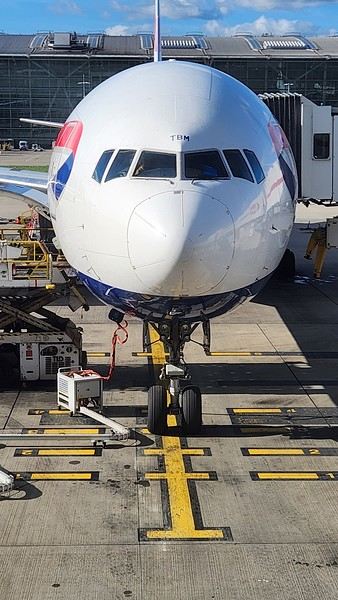

We all have two lives. And the second one kicks off the day you realize you only have one, with the determination to spend the time you have left on what truly adds sparkle to your life, Kevin! I like to elegantly introduce a trip with a philosophical quote. First, it gives you the illusion that I’m some kind of deep thinker, and second, it lets me fill up the first few lines of my blank page when I don’t know how to tell you I’m diving back into what really lights up my life: another adventure beyond the horizon! And nearly every other year, like a toxic relationship, my horizon tends to take shape in Uncle Sam’s backyard. And this, despite his cousin Donald calling the shots. Speaking of which, it was partly that impulsive guy who pushed us to be just as impulsive and snag our four flight tickets at a ridiculously low price—a direct result of foreign tourism taking a hit from BetaMax’s repeated antics... Four tickets? Who are the other lucky ones? In this case, our lucky ones are actually lucky ladies: My Flo, always up for exploring the world with me on foot, camelback, or scooter, is obviously in on the fun. The other two seats went to our daughters, Sasha and Luna, both thrilled to be part of this new American adventure...
But what’s the American West like in February?... A gamble. Let’s call it Russian roulette since we’re not landing during peak weather season. That’s why we encouraged our transportation and accommodation to get cozy and produce a little camper van, so we can stay ultra-flexible in the face of any weather tantrums. We’ll be roaming in Kara the van with the motto "Follow the sun!" Bad weather? We bolt. Snow? We speed up. Sunny? We act like it was the plan all along and soak it up.
"Okay, but why keep coming back to the same corner of the globe? After ten American adventures, you must be tired of seeing the same things, right?" But I’m not crazy, you know!... The American West is like making love to your gorgeous wife over and over, always enjoying it just as much. And contrary to what you might think, the American West isn’t just the Grand Canyon, Monument Valley, Las Vegas, and Bryce Canyon. Proof is, after ten trips to the U.S., my retinas are still untouched by three-quarters of the places I scribbled on a napkin for this adventure... Oh, and add to that my wife, who I’ve easily converted to my religion, and boom... relapse is even easier! Because yes, we’ve landed in Los Angeles after a sunny flight over Greenland, still under Danish flag for now. And we’re already heading east through the XXL traffic of L.A.’s eight-lane highways, eager to dive into our first discoveries. But first, night is taking over the sky, and second, we’ve been officially awake for 24 hours, so I suggest wrapping up this intro. I’ll tell you more tomorrow morning. Sound good?
Havana, Cuba / January 2026
I got into music with the will
To light up many hearths like Che could do,
To circulate ideas, to advance utopia
Alternating barricades, sharp thought, and poetry.
Mc Solaar, Guérilla
Subscribing without a fight to the slightest line of my itinerary sometimes feels like an illusion. Because there are countries where, despite the fever and enthusiasm, despite the triumphant revolution, certain elements block my path. And if I had planned, for F. and me, a beautiful ascent up Tabouret Hill (Loma del Taburete, 453m), it was without accounting for vegetation as dense as it was thorny, which barred our way after just a few quarters of an hour of walking. Exhausted, I had to face the facts: we wouldn’t go any further. I needed to come up with some kind of Plan B.
But what is this country, an unwitting laboratory of the worst that white civilization has done during its reign? What is this magnificent place—yet another—entrusted to the care of oblivion, just 150 km from the land of freedom? According to Donald Trump, a country supporting terrorism; according to the locals, the vast battlefield of 20th-century ideologies; according to the average tourist, a hot country, a beautiful country, a country where the last illusions of a lost paradise are dying.
On the other side of Havana Bay, we love that statue of Christ blessing the city. There’s something gentle, soothing, in that patriarchal gesture. You’d almost be tempted to forget that at the dawn of the 16th century, those who claimed to represent the Church had no scruples about eradicating the Ciboney and Taíno populations. Worse, you’ll find magnificent this cathedral dedicated to the Virgin Mary, right in the heart of the old city. Under the guise of a civilizing necessity, Havana became, like so many other places, the gilded seat of European pretensions, at the expense of local populations doomed to extermination, then enslaved populations—more or less indigenous—who, you can imagine, didn’t often set foot in this holy place.
Lost in my thoughts, I try to push through this tangled vegetation. Nature reclaims its rights; nature abhors a vacuum. Yes, the well-trodden path of revolution couldn’t stay free of weeds! The road is buried. We give up and turn back, until that fork I’d noted before leaving, which would let us reach the top of the hill by skirting its northern slope.
So the white man arrives, settles, and gets rid of everything that bothers him. He has two unstoppable forces at his disposal: gunpowder and the spiritual certainty of being on the side of an all-powerful god. While the first gives him an unmatched material advantage over his new enemy, the second lets him use the first without feeling too guilty. That’s the magic of this supreme Church: it condemns all forms of pleasure—calling them impurity—while promoting plunder and crime under the cover of evangelization.
Walking through the city, you find a bit of Algiers, except that here, the decay is almost irreversible. You feel the splendor of the past, a disconcerting image of all vanity, from an era when men knew how to build beauty—especially if they didn’t have to share it. We’ll debate the benefits of colonialism for a long time, while glossing over the fact that those benefits often stopped at the city limits, limits all too obvious to the indigenous people. Havana isn’t just one or a few buildings; it’s an impressive collection of works of art built one after another, in what I think was a spirit of healthy competition. Yes, you find Algiers in this exuberance. As if these distant cities were the receptacle of everything that was best in the lands of origin. Atlantes and lintels, golds, blues, ogives, and monumental windows—exceptional architecture in an exceptional place.
Some streets are clean, swept with care; others are not, scattered here and there with potholes filled with water. A rather persistent smell of urine invades us regularly. We move on. And we look up: Havana is visited with your nose in the air. Because the beauty is truly up there, on those magnificent balconies and terracotta arches. Also because it’s not impossible that a piece of that balcony might suddenly detach, hurling our ends into an overseas tragedy we’d rather avoid. On the ground, here and there, rubble. Inexorably, this city is returning to dust.
My Plan B turns out to be no more successful than the first attempt. After a cheerful progression of a few hundred meters, same outcome, same struggle—the vegetation opposes any revolution: impossible to go around the hill! Once again, we have to turn back. We’ll try Plan C. I reassure myself by convincing myself to stay in the logic of this country: Cuba has been searching for itself for five centuries.
Coffee, tobacco, and sugarcane—the green gold of the colonies—so that money could flow and Europe could enjoy itself. Cuba’s history isn’t original. In reality, all the hot lands at these latitudes suffer the same fate: to serve the white man. While waiting for the awakening of consciences, UN Resolution 1514 and more or less affirmed revolutionary desires. Except that—and this reflection is just my own—if the awakening of consciences and the revolutionary will don’t play into what Resolution 1514 hides, there’s a good chance the said state will become a pariah. Those who don’t follow the American doctrine risk a lot; those who decide to follow Moscow risk everything. Independence was only the barely discreet instrument of American views. Patrice Lumumba will gladly enlighten us on the subject.
Turning back is good. Setting up Plan C is better. I won’t deviate from my goal: we will reach the top of Tabouret, whatever the cost! Near a small country road, I hesitate to change the program. Time is ticking—is it really reasonable to attempt the ascent? Then a tricycle taxi appears, a kind of tuk-tuk powered by an electric moped. I take it as a sign from fate, and we board for the starting point of Plan C.
In Cuba, even before Resolution 1514, independence was assured by a pawn of the United States, Fulgencio Batista. There’s no need to go over the whole history here; we’ll just remember that if you know how to give without counting to your former masters, you can enjoy a facade of freedom. Fidel Castro, on the other hand, didn’t know how to give. It never even occurred to him. That’s why the United States harbors such terrible hatred for this rebellious state, opposed to capitalist values and political prostitution. From there to slowly killing its people for nearly seventy years, one can legitimately cry injustice. But there are other priorities. Oh yes! Greenland...
Do Cubans eat their fill? Does seeing overweight people mean opulence? Food grows, no doubt about it. The soil is fertile, the climate favorable. No, what shocks here is the absolute precarity, the feeling of a people living in survival mode, and the decay of both goods and hope. Where to go? What’s the point? The stubbornness of the United States in wanting to impose its views on the Cuban government is felt much more by an overwhelmed people than by those few elites—caricatures of communism—who instill their vision of happiness with a crowbar. The embargo imposed in 1960; the false-flag attacks—American planes flying the colors of the Cuban revolution during the Bay of Pigs invasion in 1961—the exasperation of placing Cuba on the list of countries supporting terrorism. More recently, Donald Trump decided to heavily tax countries supplying Cuba with fuel. The last time I saw such long lines near gas stations was during my first trip to Romania... in 1991. It’s not for me to judge whether Raúl and his clique are playing fair by thumbing their noses at the West. I don’t hold the ins and outs of this war of egos that keeps the world’s great powers awake. I only caught a glimpse of the poverty of an island in 2026, while we in Europe are buried under an avalanche of the useless and superficial.
At the start of the San Juan baths, we find the trailhead. It climbs steeply. But the weather is relatively mild, thanks to a cold wave hitting higher up in the United States. Dallas is under snow; we’re walking in 16°C, a stroke of luck. We climb over rocks, under fairly decent vegetation, sometimes low but passable. And we succeed in the ascent in an hour. Up there, the top of the hill is somewhat maintained, at a minimum, but maintained, as if to honor Che through an awful monument erected in his glory—a stubborn specimen from those years when good taste was inversely proportional to the delusional ideas of those being honored. Birds of prey (raptors?) circle overhead; the monument is dying, crumbling, falling into ruin. *Hasta siempre*—forever—will be for the words. Nature, erosion, life itself will have the last word over all revolutions.
Back at the foot of the hill, just before a memorable swim, we talk with a family living there in miserable shacks whose stability wasn’t unlike that of the Leaning Tower of Pisa. The grandmother holds an animal, a rodent, by its feet. The grandfather has just killed it; she’s plucking its fur. A few steps away, water boils in a pot. She plunges the beast into the container. Tonight, the family will eat ragondin stew. Further on, another shack where, in a disorder rivaling the filth, a mother breastfeeds while sitting on the edge of a bed. Then, on the way down, we’ll meet a middle-aged man carrying a large jerrycan of water on his shoulder. Are these people happy here, far from the cities and their stakes? Is it too much to ask that they at least have access to electricity, running water, and decent, safe housing?
Outside the old city, Havana reveals wide avenues serving imposing institutions here and there. But whether in the colorful alleys of the old town or on the majestic and austere Plaza de la Revolución, the same feeling moves me: sadness. Seeing that only chaos has come from ideas crushes me. We praise, we sing the revolution—above all, we impose it in people’s minds as a necessity, when it’s nothing of the sort. Revolution is just the fruit of a few tortured minds who, once in power, do nothing better than all those before them. Enjoy power. Impose their views. It’s just a matter of color. Fidel saw red and knew how to persuade—or silence forever—his many detractors. The West sees everything in white, through the prism of human rights, and also knows how to persuade and silence its slightest detractors forever.
Paradoxically, Cuba survives largely thanks to tourism, a key element—let’s not be afraid to say it—of capitalism. And when a few players pick up the crumbs from transactions, the lion’s share and the foreign currency go to the government. So we won’t go to Varadero, the high place of relaxation overrun by Canadians. Instead, we’ll limit ourselves to crossing the ocean 30 minutes from the capital, at Santa María del Mar, to get an idea of cheaper tourism and to splash around for a few minutes in turquoise water invaded by sargassum. At the heart of the tourist season, we’ll meet few people. Like Havana, and according to its inhabitants, the high season is rather dead. But we won’t have come for nothing: we particularly love this return where, feverish, the taxi driver pushes his Moskvitch 2140 to the max on the highway, singing karaoke versions of hits at the top of his lungs from an onboard DVD player. East/West, the culture clash with a hint of Latino.
It’s time to leave this country of resourcefulness where extremes are very present. We’re leaving a 5-star hotel in front of yet another crumbling building. We’ve known restaurants at 40,000 pesos while in the street people eat for 400. We’ve seen those countless cars from another era and another culture—Pontiac, Lada, Chevrolet, Moskvitch—being overtaken by gleaming Mercedes and other Porsche Cayennes, the prerogative—if it still needed to be demonstrated—of the newly rich in search of recognition. Boarding the plane, we also understand that we’re not just traveling with tourists: there’s undoubtedly a rich and prosperous diaspora, just as there are relatively wealthy Cubans—well, wealthy enough to travel comfortably in the front of the aircraft. Meanwhile, on all the country’s roads, other Cubans try hitchhiking, their wives and children perched on a suitcase by the roadside. The father holds out his arm and holds a few bills in his hand like a card game. Where are they going? Who will pick them up?
Behind me, the gold of the Capitol. I’m told this gold comes from Russia. Like Marx and Lenin’s smoky theories? Like Stalin’s subtle and delicate paternalism? Let’s bet that, like the other buildings crumbling around it, the Capitol will also collapse one day, to avenge the Indians who perished from the diseases and guns of the whites, to avenge the Africans who obliterated their lives so Europeans could enjoy themselves, finally, to avenge all this abandoned people, left to the arbitrariness of democratic or non-democratic elections.
A sign in the street: We understand history. This is the revolution! We understand history. That’s the revolution.
No comment.
Subscribing without a fight to the slightest line of my itinerary sometimes feels like an illusion. Because there are countries where, despite the fever and enthusiasm, despite the triumphant revolution, certain elements block my path. And if I had planned, for F. and me, a beautiful ascent up Tabouret Hill (Loma del Taburete, 453m), it was without accounting for vegetation as dense as it was thorny, which barred our way after just a few quarters of an hour of walking. Exhausted, I had to face the facts: we wouldn’t go any further. I needed to come up with some kind of Plan B.
But what is this country, an unwitting laboratory of the worst that white civilization has done during its reign? What is this magnificent place—yet another—entrusted to the care of oblivion, just 150 km from the land of freedom? According to Donald Trump, a country supporting terrorism; according to the locals, the vast battlefield of 20th-century ideologies; according to the average tourist, a hot country, a beautiful country, a country where the last illusions of a lost paradise are dying.
On the other side of Havana Bay, we love that statue of Christ blessing the city. There’s something gentle, soothing, in that patriarchal gesture. You’d almost be tempted to forget that at the dawn of the 16th century, those who claimed to represent the Church had no scruples about eradicating the Ciboney and Taíno populations. Worse, you’ll find magnificent this cathedral dedicated to the Virgin Mary, right in the heart of the old city. Under the guise of a civilizing necessity, Havana became, like so many other places, the gilded seat of European pretensions, at the expense of local populations doomed to extermination, then enslaved populations—more or less indigenous—who, you can imagine, didn’t often set foot in this holy place.
Lost in my thoughts, I try to push through this tangled vegetation. Nature reclaims its rights; nature abhors a vacuum. Yes, the well-trodden path of revolution couldn’t stay free of weeds! The road is buried. We give up and turn back, until that fork I’d noted before leaving, which would let us reach the top of the hill by skirting its northern slope.
So the white man arrives, settles, and gets rid of everything that bothers him. He has two unstoppable forces at his disposal: gunpowder and the spiritual certainty of being on the side of an all-powerful god. While the first gives him an unmatched material advantage over his new enemy, the second lets him use the first without feeling too guilty. That’s the magic of this supreme Church: it condemns all forms of pleasure—calling them impurity—while promoting plunder and crime under the cover of evangelization.
Walking through the city, you find a bit of Algiers, except that here, the decay is almost irreversible. You feel the splendor of the past, a disconcerting image of all vanity, from an era when men knew how to build beauty—especially if they didn’t have to share it. We’ll debate the benefits of colonialism for a long time, while glossing over the fact that those benefits often stopped at the city limits, limits all too obvious to the indigenous people. Havana isn’t just one or a few buildings; it’s an impressive collection of works of art built one after another, in what I think was a spirit of healthy competition. Yes, you find Algiers in this exuberance. As if these distant cities were the receptacle of everything that was best in the lands of origin. Atlantes and lintels, golds, blues, ogives, and monumental windows—exceptional architecture in an exceptional place.
Some streets are clean, swept with care; others are not, scattered here and there with potholes filled with water. A rather persistent smell of urine invades us regularly. We move on. And we look up: Havana is visited with your nose in the air. Because the beauty is truly up there, on those magnificent balconies and terracotta arches. Also because it’s not impossible that a piece of that balcony might suddenly detach, hurling our ends into an overseas tragedy we’d rather avoid. On the ground, here and there, rubble. Inexorably, this city is returning to dust.
My Plan B turns out to be no more successful than the first attempt. After a cheerful progression of a few hundred meters, same outcome, same struggle—the vegetation opposes any revolution: impossible to go around the hill! Once again, we have to turn back. We’ll try Plan C. I reassure myself by convincing myself to stay in the logic of this country: Cuba has been searching for itself for five centuries.
Coffee, tobacco, and sugarcane—the green gold of the colonies—so that money could flow and Europe could enjoy itself. Cuba’s history isn’t original. In reality, all the hot lands at these latitudes suffer the same fate: to serve the white man. While waiting for the awakening of consciences, UN Resolution 1514 and more or less affirmed revolutionary desires. Except that—and this reflection is just my own—if the awakening of consciences and the revolutionary will don’t play into what Resolution 1514 hides, there’s a good chance the said state will become a pariah. Those who don’t follow the American doctrine risk a lot; those who decide to follow Moscow risk everything. Independence was only the barely discreet instrument of American views. Patrice Lumumba will gladly enlighten us on the subject.
Turning back is good. Setting up Plan C is better. I won’t deviate from my goal: we will reach the top of Tabouret, whatever the cost! Near a small country road, I hesitate to change the program. Time is ticking—is it really reasonable to attempt the ascent? Then a tricycle taxi appears, a kind of tuk-tuk powered by an electric moped. I take it as a sign from fate, and we board for the starting point of Plan C.
In Cuba, even before Resolution 1514, independence was assured by a pawn of the United States, Fulgencio Batista. There’s no need to go over the whole history here; we’ll just remember that if you know how to give without counting to your former masters, you can enjoy a facade of freedom. Fidel Castro, on the other hand, didn’t know how to give. It never even occurred to him. That’s why the United States harbors such terrible hatred for this rebellious state, opposed to capitalist values and political prostitution. From there to slowly killing its people for nearly seventy years, one can legitimately cry injustice. But there are other priorities. Oh yes! Greenland...
Do Cubans eat their fill? Does seeing overweight people mean opulence? Food grows, no doubt about it. The soil is fertile, the climate favorable. No, what shocks here is the absolute precarity, the feeling of a people living in survival mode, and the decay of both goods and hope. Where to go? What’s the point? The stubbornness of the United States in wanting to impose its views on the Cuban government is felt much more by an overwhelmed people than by those few elites—caricatures of communism—who instill their vision of happiness with a crowbar. The embargo imposed in 1960; the false-flag attacks—American planes flying the colors of the Cuban revolution during the Bay of Pigs invasion in 1961—the exasperation of placing Cuba on the list of countries supporting terrorism. More recently, Donald Trump decided to heavily tax countries supplying Cuba with fuel. The last time I saw such long lines near gas stations was during my first trip to Romania... in 1991. It’s not for me to judge whether Raúl and his clique are playing fair by thumbing their noses at the West. I don’t hold the ins and outs of this war of egos that keeps the world’s great powers awake. I only caught a glimpse of the poverty of an island in 2026, while we in Europe are buried under an avalanche of the useless and superficial.
At the start of the San Juan baths, we find the trailhead. It climbs steeply. But the weather is relatively mild, thanks to a cold wave hitting higher up in the United States. Dallas is under snow; we’re walking in 16°C, a stroke of luck. We climb over rocks, under fairly decent vegetation, sometimes low but passable. And we succeed in the ascent in an hour. Up there, the top of the hill is somewhat maintained, at a minimum, but maintained, as if to honor Che through an awful monument erected in his glory—a stubborn specimen from those years when good taste was inversely proportional to the delusional ideas of those being honored. Birds of prey (raptors?) circle overhead; the monument is dying, crumbling, falling into ruin. *Hasta siempre*—forever—will be for the words. Nature, erosion, life itself will have the last word over all revolutions.
Back at the foot of the hill, just before a memorable swim, we talk with a family living there in miserable shacks whose stability wasn’t unlike that of the Leaning Tower of Pisa. The grandmother holds an animal, a rodent, by its feet. The grandfather has just killed it; she’s plucking its fur. A few steps away, water boils in a pot. She plunges the beast into the container. Tonight, the family will eat ragondin stew. Further on, another shack where, in a disorder rivaling the filth, a mother breastfeeds while sitting on the edge of a bed. Then, on the way down, we’ll meet a middle-aged man carrying a large jerrycan of water on his shoulder. Are these people happy here, far from the cities and their stakes? Is it too much to ask that they at least have access to electricity, running water, and decent, safe housing?
Outside the old city, Havana reveals wide avenues serving imposing institutions here and there. But whether in the colorful alleys of the old town or on the majestic and austere Plaza de la Revolución, the same feeling moves me: sadness. Seeing that only chaos has come from ideas crushes me. We praise, we sing the revolution—above all, we impose it in people’s minds as a necessity, when it’s nothing of the sort. Revolution is just the fruit of a few tortured minds who, once in power, do nothing better than all those before them. Enjoy power. Impose their views. It’s just a matter of color. Fidel saw red and knew how to persuade—or silence forever—his many detractors. The West sees everything in white, through the prism of human rights, and also knows how to persuade and silence its slightest detractors forever.
Paradoxically, Cuba survives largely thanks to tourism, a key element—let’s not be afraid to say it—of capitalism. And when a few players pick up the crumbs from transactions, the lion’s share and the foreign currency go to the government. So we won’t go to Varadero, the high place of relaxation overrun by Canadians. Instead, we’ll limit ourselves to crossing the ocean 30 minutes from the capital, at Santa María del Mar, to get an idea of cheaper tourism and to splash around for a few minutes in turquoise water invaded by sargassum. At the heart of the tourist season, we’ll meet few people. Like Havana, and according to its inhabitants, the high season is rather dead. But we won’t have come for nothing: we particularly love this return where, feverish, the taxi driver pushes his Moskvitch 2140 to the max on the highway, singing karaoke versions of hits at the top of his lungs from an onboard DVD player. East/West, the culture clash with a hint of Latino.
It’s time to leave this country of resourcefulness where extremes are very present. We’re leaving a 5-star hotel in front of yet another crumbling building. We’ve known restaurants at 40,000 pesos while in the street people eat for 400. We’ve seen those countless cars from another era and another culture—Pontiac, Lada, Chevrolet, Moskvitch—being overtaken by gleaming Mercedes and other Porsche Cayennes, the prerogative—if it still needed to be demonstrated—of the newly rich in search of recognition. Boarding the plane, we also understand that we’re not just traveling with tourists: there’s undoubtedly a rich and prosperous diaspora, just as there are relatively wealthy Cubans—well, wealthy enough to travel comfortably in the front of the aircraft. Meanwhile, on all the country’s roads, other Cubans try hitchhiking, their wives and children perched on a suitcase by the roadside. The father holds out his arm and holds a few bills in his hand like a card game. Where are they going? Who will pick them up?
Behind me, the gold of the Capitol. I’m told this gold comes from Russia. Like Marx and Lenin’s smoky theories? Like Stalin’s subtle and delicate paternalism? Let’s bet that, like the other buildings crumbling around it, the Capitol will also collapse one day, to avenge the Indians who perished from the diseases and guns of the whites, to avenge the Africans who obliterated their lives so Europeans could enjoy themselves, finally, to avenge all this abandoned people, left to the arbitrariness of democratic or non-democratic elections.
A sign in the street: We understand history. This is the revolution! We understand history. That’s the revolution.
No comment.
In the land... of Senegambia
Hey fellow travelers!
So, a new year has begun. It’s time to reconnect with the VF buddies and wish you all my best for 2026—a year I hope is obviously full of travel, since, as I just made up: "If travel’s good, everything’s good" 😄.
To celebrate, I’m inviting you into my new "travel journal," the one from our latest trip in November 2025, a little two-week adventure.
This time, we headed to The Gambia, a tiny country tucked right in the middle of Senegal, before making our way to Casamance.
The Gambia is English-speaking, Senegal is French-speaking, but the locals? They couldn’t care less—because in this part of the world, they mostly speak Wolof, Fula, Jola, or Mandinka. Hence the title: Senegambia 😉.
As usual, I’m sharing the live updates I sent to friends and family—super casual, of course.
I know this isn’t the kind of destination that draws crowds, but if you love adventure, laughter, and emotion, it might just be your thing 😊.
Hugs 😘
So, a new year has begun. It’s time to reconnect with the VF buddies and wish you all my best for 2026—a year I hope is obviously full of travel, since, as I just made up: "If travel’s good, everything’s good" 😄.
To celebrate, I’m inviting you into my new "travel journal," the one from our latest trip in November 2025, a little two-week adventure.
This time, we headed to The Gambia, a tiny country tucked right in the middle of Senegal, before making our way to Casamance.
The Gambia is English-speaking, Senegal is French-speaking, but the locals? They couldn’t care less—because in this part of the world, they mostly speak Wolof, Fula, Jola, or Mandinka. Hence the title: Senegambia 😉.
As usual, I’m sharing the live updates I sent to friends and family—super casual, of course.
I know this isn’t the kind of destination that draws crowds, but if you love adventure, laughter, and emotion, it might just be your thing 😊.
Hugs 😘
Exploring Senja Island and the Lofoten Archipelago
Hi everyone,
We traveled to Norway in the summer of 2025, from July 17 to 29, to visit Senja Island and the Lofoten archipelago with a rental car. The common thread of these twelve days was clearly hiking, along with a few visits and experiences, and nights spent in a tent or in the car (which made it possible). We chose Narvik Airport for both arrival and departure for several complementary reasons: the desire to visit nearby Senja Island, slightly more affordable airfare, and finally, the rental price of the vehicle—especially the car model we were looking for. We only made one reservation, for the first campsite, as sleeping in a tent made things much easier. But we had the whole structure of the trip planned, a flexible outline that could adapt to the weather conditions we’d encounter. Senja Island isn’t part of the Lofoten archipelago, and during the early stages of planning this trip, we hadn’t planned to visit it. But its relative proximity to Narvik Airport and, above all, its unique geography definitely made us change our minds. We arrived in Evenes, where Narvik Airport is located, nearly 60 km from the city itself. Our first stop was 40 km further in Bjerkvik on the way to Senja, where there’s a Rema 1000 (a very common supermarket chain in Norway). We needed to buy some food and a gas cartridge for our stove. I’d emailed the store manager beforehand, who told me they didn’t sell them but that the two gas stations in the village were likely to have some in stock.
It was only at the Esso station that I found what I needed, but unfortunately, only one cartridge. Luckily, we quickly realized that most campsites (like in Iceland) have a shared kitchen with hotplates. That single small cartridge was just enough for the few nights we spent outside of campsites... We got our first taste of Norway’s characteristic landscapes: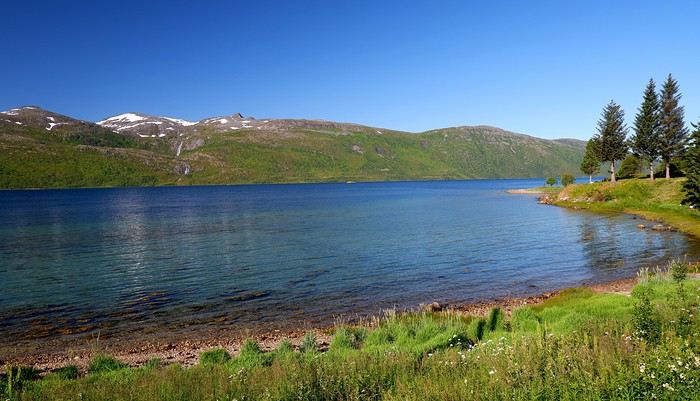
When we arrived at the Senja campsite, it was already 9:30 PM. A sign announced it was full, but luckily, I’d booked it 10 days earlier. By 10:30 PM, as we settled in to eat, it was still broad daylight, and the thermometer read 25°C—despite being at a latitude of 69° North! We went to bed around midnight, exhausted but under the light of a sun that was still very much present. Thanks to Earth’s tilted axis. We’d anticipated this by buying opaque sleep masks because, yes, at this time of year, it’s daylight all the time.
Friday, July 18:
Today, we planned two hikes on the island and a few stops along the way. The map clearly shows that the deepest fjords are in the north and west. Due to time and accessibility, we focused on the northern part of the island. Our first stop was at the viewing platform in Bergbotn:
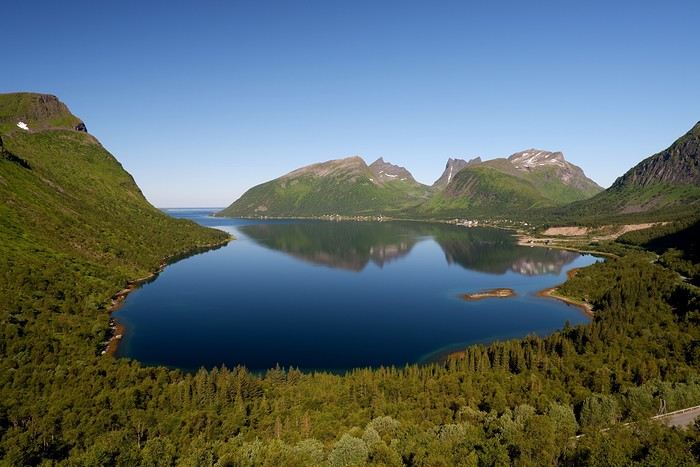
Then we headed toward Skaland, the starting point for our first hike. Along the way, we found plenty of reasons to stop—especially since, on this first day of travel, our thirst for Nordic landscapes was far from quenched.
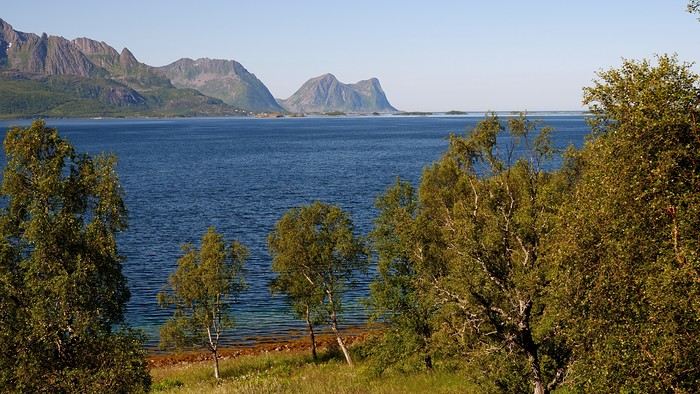
The town of Skaland is very practical: free parking, picnic tables for after the hike, and a Joker convenience store right next door. Our goal was the summit of Husfjellet: 670 m of elevation gain, between 8 and 9 km in length, and an estimated 4 hours and 30 minutes.
This hike offers two major viewpoints. The first overlooks the Bergsoyan islands to the west:
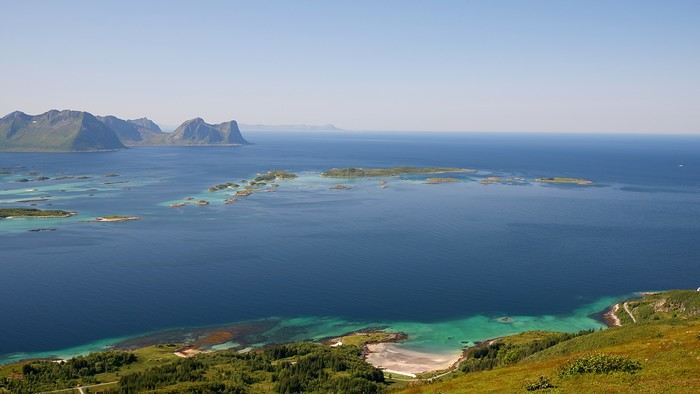
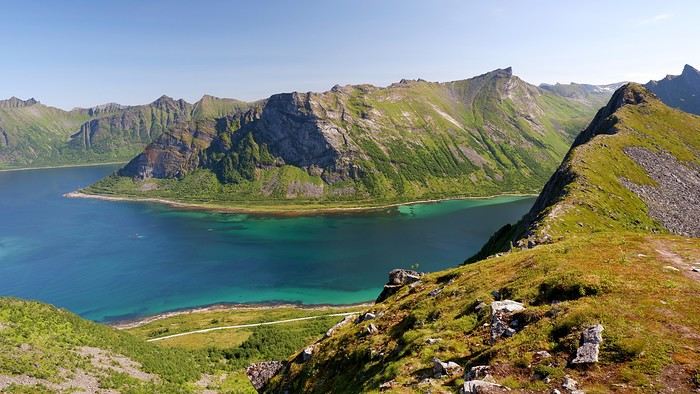
At the summit, the view shifts to the Steinfjorden fjord:
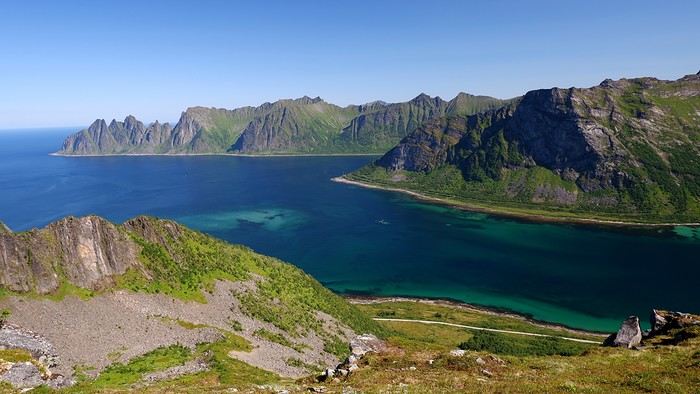
You can even clearly see the "Devil’s Teeth," which we’d see from below later:
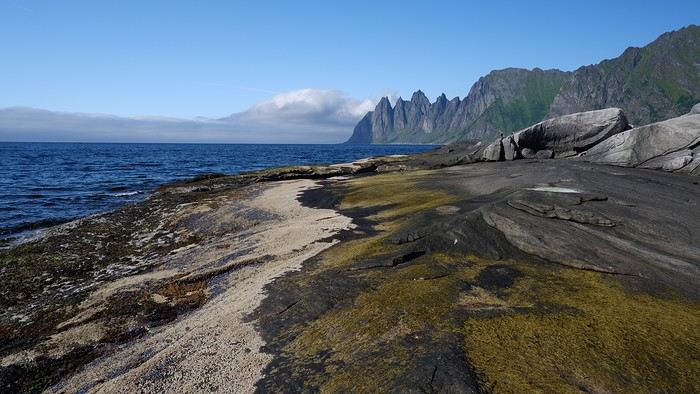
In total, the hike took us 4 hours and 30 minutes, including all the breaks. We treated ourselves to an ice cream in Skaland to recharge for the next hike. We hit the road again and stopped at Tungeneset to get a closer look at the Devil’s Teeth:
We continued to Fjordgard, the starting point for our second hike. Fjordgard isn’t very welcoming. There was a time when you could park right at the start of the hike up Mount Segla. Now, everything’s blocked off, and locals have even taken to blocking all possible parking spots nearby. You now have to park outside the town at a paid parking lot (90 NOK for 3 hours), adding an extra 2 km (round trip) of walking. Still, that was just a minor inconvenience because the hike that followed quickly made us forget all about it. The hike is fairly short (2 hours) but still has 520 m of elevation gain. This hike was a stark contrast to the first. This morning, we had sweeping views of the vast landscape. Here, Mount Segla, perched on the edge of the cliff, dominates the foreground:
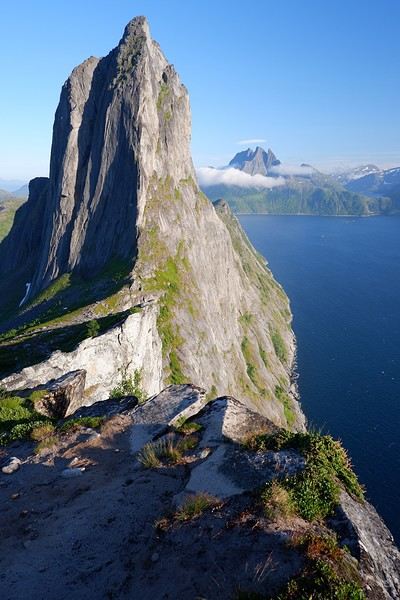
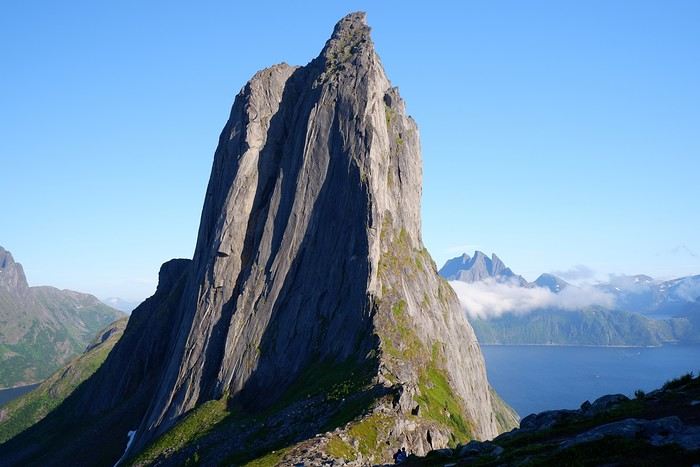
For those prone to vertigo, it might be best to stay at the foot of the mountain, as the trail climbs right along the cliff edge. And from that point on, you quickly understand what verticality really means...
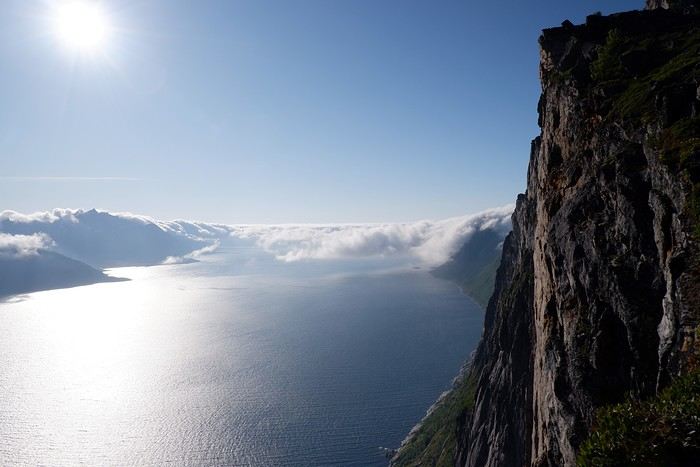
In total, we took 2 hours and 50 minutes, including breaks and the extra walk to the parking lot. The day was already well underway, and with 1,200 m of cumulative elevation gain, it was time to find a spot to eat and sleep. Since we hadn’t made any reservations, we’d planned to bivouac for the night. We weren’t too picky—just practical—so we decided to sleep in the car at the parking lot for tomorrow morning’s hike, just 5 km from Fjordgard.
We traveled to Norway in the summer of 2025, from July 17 to 29, to visit Senja Island and the Lofoten archipelago with a rental car. The common thread of these twelve days was clearly hiking, along with a few visits and experiences, and nights spent in a tent or in the car (which made it possible). We chose Narvik Airport for both arrival and departure for several complementary reasons: the desire to visit nearby Senja Island, slightly more affordable airfare, and finally, the rental price of the vehicle—especially the car model we were looking for. We only made one reservation, for the first campsite, as sleeping in a tent made things much easier. But we had the whole structure of the trip planned, a flexible outline that could adapt to the weather conditions we’d encounter. Senja Island isn’t part of the Lofoten archipelago, and during the early stages of planning this trip, we hadn’t planned to visit it. But its relative proximity to Narvik Airport and, above all, its unique geography definitely made us change our minds. We arrived in Evenes, where Narvik Airport is located, nearly 60 km from the city itself. Our first stop was 40 km further in Bjerkvik on the way to Senja, where there’s a Rema 1000 (a very common supermarket chain in Norway). We needed to buy some food and a gas cartridge for our stove. I’d emailed the store manager beforehand, who told me they didn’t sell them but that the two gas stations in the village were likely to have some in stock.
It was only at the Esso station that I found what I needed, but unfortunately, only one cartridge. Luckily, we quickly realized that most campsites (like in Iceland) have a shared kitchen with hotplates. That single small cartridge was just enough for the few nights we spent outside of campsites... We got our first taste of Norway’s characteristic landscapes:
When we arrived at the Senja campsite, it was already 9:30 PM. A sign announced it was full, but luckily, I’d booked it 10 days earlier. By 10:30 PM, as we settled in to eat, it was still broad daylight, and the thermometer read 25°C—despite being at a latitude of 69° North! We went to bed around midnight, exhausted but under the light of a sun that was still very much present. Thanks to Earth’s tilted axis. We’d anticipated this by buying opaque sleep masks because, yes, at this time of year, it’s daylight all the time.
Friday, July 18:
Today, we planned two hikes on the island and a few stops along the way. The map clearly shows that the deepest fjords are in the north and west. Due to time and accessibility, we focused on the northern part of the island. Our first stop was at the viewing platform in Bergbotn:
Then we headed toward Skaland, the starting point for our first hike. Along the way, we found plenty of reasons to stop—especially since, on this first day of travel, our thirst for Nordic landscapes was far from quenched.
The town of Skaland is very practical: free parking, picnic tables for after the hike, and a Joker convenience store right next door. Our goal was the summit of Husfjellet: 670 m of elevation gain, between 8 and 9 km in length, and an estimated 4 hours and 30 minutes.
This hike offers two major viewpoints. The first overlooks the Bergsoyan islands to the west:
At the summit, the view shifts to the Steinfjorden fjord:
You can even clearly see the "Devil’s Teeth," which we’d see from below later:
In total, the hike took us 4 hours and 30 minutes, including all the breaks. We treated ourselves to an ice cream in Skaland to recharge for the next hike. We hit the road again and stopped at Tungeneset to get a closer look at the Devil’s Teeth:
We continued to Fjordgard, the starting point for our second hike. Fjordgard isn’t very welcoming. There was a time when you could park right at the start of the hike up Mount Segla. Now, everything’s blocked off, and locals have even taken to blocking all possible parking spots nearby. You now have to park outside the town at a paid parking lot (90 NOK for 3 hours), adding an extra 2 km (round trip) of walking. Still, that was just a minor inconvenience because the hike that followed quickly made us forget all about it. The hike is fairly short (2 hours) but still has 520 m of elevation gain. This hike was a stark contrast to the first. This morning, we had sweeping views of the vast landscape. Here, Mount Segla, perched on the edge of the cliff, dominates the foreground:
For those prone to vertigo, it might be best to stay at the foot of the mountain, as the trail climbs right along the cliff edge. And from that point on, you quickly understand what verticality really means...
In total, we took 2 hours and 50 minutes, including breaks and the extra walk to the parking lot. The day was already well underway, and with 1,200 m of cumulative elevation gain, it was time to find a spot to eat and sleep. Since we hadn’t made any reservations, we’d planned to bivouac for the night. We weren’t too picky—just practical—so we decided to sleep in the car at the parking lot for tomorrow morning’s hike, just 5 km from Fjordgard.
Trip report: Our South Africa journey in July
Hi there,
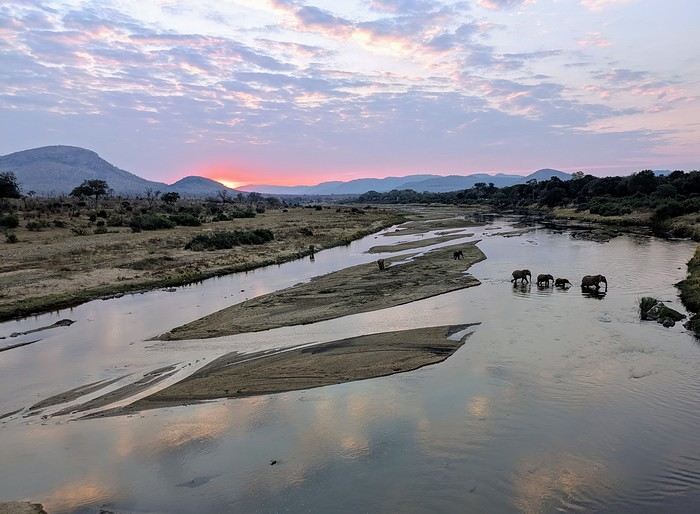
We’re back from our 3-week trip to South Africa in July. It was a family trip with our four grown-up kids (ages 18 to 25).
First off, I’d like to thank everyone on this forum for their great tips—they really helped us plan this trip!
The trip: We spent 15 days between Port Elizabeth and Cape Town, then a week around Kruger (including Blyde River Canyon). We found South Africans to be welcoming and always ready to help. We never felt unsafe (just followed basic safety rules). The police are very visible, especially on the roads.
Logistics: We’d booked our accommodations in advance but made a few changes on the spot based on how we felt at the time. We rented two vehicles from Firefly (Hertz). No complaints—recent cars, quick returns, and the deposit wasn’t charged. We’d gotten our international driver’s permits... which stayed in France! Luckily, no one asked for them. Driving on the left wasn’t an issue (it wasn’t our first time). The roads we took were in good, even great, condition. Only a few tracks to lodges or parks were rough and required extra caution. Lots of pedestrians on the sides of roads, even highways. And plenty of very slow trucks. But they pull over to let you pass. It’s also common for cars to cross into the opposite lane to overtake, even with white lines. We took two domestic flights: one early in the morning (Johannesburg to Port Elizabeth) and one in the late afternoon (Cape Town to Johannesburg) to save time.
We had some highlights and a few disappointments—all part of the journey! More details coming soon.
We’re back from our 3-week trip to South Africa in July. It was a family trip with our four grown-up kids (ages 18 to 25).
First off, I’d like to thank everyone on this forum for their great tips—they really helped us plan this trip!
The trip: We spent 15 days between Port Elizabeth and Cape Town, then a week around Kruger (including Blyde River Canyon). We found South Africans to be welcoming and always ready to help. We never felt unsafe (just followed basic safety rules). The police are very visible, especially on the roads.
Logistics: We’d booked our accommodations in advance but made a few changes on the spot based on how we felt at the time. We rented two vehicles from Firefly (Hertz). No complaints—recent cars, quick returns, and the deposit wasn’t charged. We’d gotten our international driver’s permits... which stayed in France! Luckily, no one asked for them. Driving on the left wasn’t an issue (it wasn’t our first time). The roads we took were in good, even great, condition. Only a few tracks to lodges or parks were rough and required extra caution. Lots of pedestrians on the sides of roads, even highways. And plenty of very slow trucks. But they pull over to let you pass. It’s also common for cars to cross into the opposite lane to overtake, even with white lines. We took two domestic flights: one early in the morning (Johannesburg to Port Elizabeth) and one in the late afternoon (Cape Town to Johannesburg) to save time.
We had some highlights and a few disappointments—all part of the journey! More details coming soon.
Traveling to Cuba and its impact on ESTA applications
Hi everyone.
For those traveling to Cuba and then planning to go to the USA, you won’t be able to get your ESTA for the United States (same applies) if you’ve been to Cuba after 2021 due to a law passed by Donald Trump (a law that Biden later repealed).
You’ll have no choice but to apply for a visa, which costs 200 € (and approval isn’t guaranteed even after payment).
If you’re in this situation, the process to get this visa will be a real hassle—you’ll need to book an appointment at the U.S. Embassy in Paris. It’s the only embassy in France authorized to handle your application after you’ve filled out the visa request on the official website.
If you try to cheat by applying for an ESTA for the USA, just know that the American administration has ways of finding out if you’ve been to Cuba. 😉
Zambia in Summer 2024 – Self-Drive Trip
Well, here we go,
despite the lack of info on Zambia, I managed to pull off this pretty special trip.
I’d posted asking for tips but got very few replies. So I leaned heavily on Giradhino’s travel journal to plan the route.
The context: After visiting Kenya, then Namibia, then Botswana, I wanted to see another Southern African country—hence Zambia. This time, we’re two couples: us (of course) and our friends we’ve traveled with to the last two countries mentioned. The idea was to do a self-drive trip, picking up a 4x4 at the airport and figuring it out as we went.
We rented our fully equipped vehicle from Hemingways, an agency in Livingstone. Great agency (really), I’ll talk more about them later. It came with rooftop tents and all the gear for cooking and everything... However, our goal was to sleep in lodges and only use the tents as a last resort. Mission accomplished—we never even unfolded the tents. Guess we’re getting old 🙂
The route (summary): Lusaka - Kasanka NP - Bangweulu NP - Mutinondo - Kapishya - North Luangwa - South Luangwa and back to Lusaka.
That said, let’s hit the road for this travel journal of a pretty lively trip. Reminder: I’m more of a filmmaker, so I’ve got tons of footage but very few photos. The ones I have were taken on my phone, so they’re not great quality. My wife’s the one who handles that side of things.
Day 1:
At 9 a.m. sharp (or close enough), we leave the Lyon area, heading to Paris CDG. Our flight’s at 9:30 p.m., but it’s a busy Saturday with holiday traffic, so we play it safe to avoid jams—especially since the Olympics (hosted in Paris, in case you didn’t know) are causing extra traffic issues.
We’re relaxed and happy to be on our way. The drive goes smoothly. We take the eastern route around Paris to reach a hotel with parking at a better price than the airport lots. We leave the car there, and a shuttle takes us to Terminal 2. Bad luck—we’re actually flying from Terminal 1! The transfer between terminals is quick, though, so no stress.
After the usual formalities (with Rwandair), we end up in the Duty Free.
A rare rant-free moment: Usually, I let off steam in my travel journals now and then, but this time it’s the opposite. I had a terrible memory of CDG and had been avoiding it for years. But this time—Olympics effect? A big change? What a pleasant surprise! The staff were plentiful and super friendly at every pre-flight step, making everything easier. Comfortable seats for waiting to board. Well done, CDG!
We buy Ricard, Jack Daniel’s, and Get 27 to handle any situation that might come up. We board on time, and that’s when our adventures with Rwandair really begin. Yep, the first hiccup!
We’d booked our tickets back in October and (since we don’t hold back!) had paid extra for preferred seats on all our flights. Since October, we’d received emails about schedule changes—just a few minutes here and there. Unfortunately, we never got an email saying that *on top of* the schedule change, the plane’s configuration had also changed. So when we boarded with our seats (all four of us together at row 25), we were furious to see that the preferred seats were now row 23. We’d been *completely* scammed. We’d paid extra to end up in seats we’d been trying to avoid! You could say Rwandair double-dipped on the same seats. What a rip-off! We tried to negotiate an upgrade, but the flight was full. So our flight to Kigali started with a real sense of anger.
The +: We’re on our way The -: Rwandair
The context: After visiting Kenya, then Namibia, then Botswana, I wanted to see another Southern African country—hence Zambia. This time, we’re two couples: us (of course) and our friends we’ve traveled with to the last two countries mentioned. The idea was to do a self-drive trip, picking up a 4x4 at the airport and figuring it out as we went.
We rented our fully equipped vehicle from Hemingways, an agency in Livingstone. Great agency (really), I’ll talk more about them later. It came with rooftop tents and all the gear for cooking and everything... However, our goal was to sleep in lodges and only use the tents as a last resort. Mission accomplished—we never even unfolded the tents. Guess we’re getting old 🙂
The route (summary): Lusaka - Kasanka NP - Bangweulu NP - Mutinondo - Kapishya - North Luangwa - South Luangwa and back to Lusaka.
That said, let’s hit the road for this travel journal of a pretty lively trip. Reminder: I’m more of a filmmaker, so I’ve got tons of footage but very few photos. The ones I have were taken on my phone, so they’re not great quality. My wife’s the one who handles that side of things.
Day 1:
At 9 a.m. sharp (or close enough), we leave the Lyon area, heading to Paris CDG. Our flight’s at 9:30 p.m., but it’s a busy Saturday with holiday traffic, so we play it safe to avoid jams—especially since the Olympics (hosted in Paris, in case you didn’t know) are causing extra traffic issues.
We’re relaxed and happy to be on our way. The drive goes smoothly. We take the eastern route around Paris to reach a hotel with parking at a better price than the airport lots. We leave the car there, and a shuttle takes us to Terminal 2. Bad luck—we’re actually flying from Terminal 1! The transfer between terminals is quick, though, so no stress.
After the usual formalities (with Rwandair), we end up in the Duty Free.
A rare rant-free moment: Usually, I let off steam in my travel journals now and then, but this time it’s the opposite. I had a terrible memory of CDG and had been avoiding it for years. But this time—Olympics effect? A big change? What a pleasant surprise! The staff were plentiful and super friendly at every pre-flight step, making everything easier. Comfortable seats for waiting to board. Well done, CDG!
We buy Ricard, Jack Daniel’s, and Get 27 to handle any situation that might come up. We board on time, and that’s when our adventures with Rwandair really begin. Yep, the first hiccup!
We’d booked our tickets back in October and (since we don’t hold back!) had paid extra for preferred seats on all our flights. Since October, we’d received emails about schedule changes—just a few minutes here and there. Unfortunately, we never got an email saying that *on top of* the schedule change, the plane’s configuration had also changed. So when we boarded with our seats (all four of us together at row 25), we were furious to see that the preferred seats were now row 23. We’d been *completely* scammed. We’d paid extra to end up in seats we’d been trying to avoid! You could say Rwandair double-dipped on the same seats. What a rip-off! We tried to negotiate an upgrade, but the flight was full. So our flight to Kigali started with a real sense of anger.
The +: We’re on our way The -: Rwandair
Warm January in Kerala (and a bit of Karnataka)
Hi everyone,
We're back in India for the 7th time (for the other trips, check here:
https://www.unendroitoualler.fr/asie/) ... But this time, no more exploring or trekking! With age, we're just spending a quiet month in southern India, a country we particularly love...
Our journey starts in Kovalam, then Monroe Island, Varkala, Kochi, Kannur, Udupi, and finally, as in recent years, Gokarna.
No problem getting around—there’s the train all along the coast...
Night in Trivandrum
Prepaid taxi to the « Safire Residency », where we stayed last year. This hotel is still just as nice and welcoming (980 INR). Then, dinner at the restaurant « Ariya Niwas » where we enjoyed those delicious dosas again! (We missed them!)
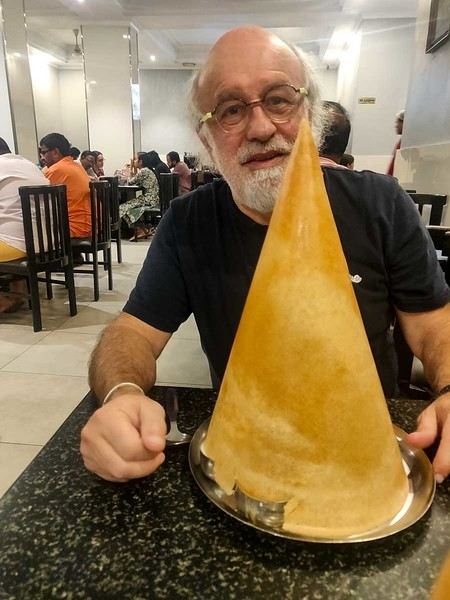
Night in Trivandrum
Prepaid taxi to the « Safire Residency », where we stayed last year. This hotel is still just as nice and welcoming (980 INR). Then, dinner at the restaurant « Ariya Niwas » where we enjoyed those delicious dosas again! (We missed them!)
Around Cape Town in 15 days in May
Hi there,
I’ve got a bit of time to share my latest Cape Town – Cape Town trip... A fairly short itinerary, but it was just before heading to Kruger for an extension. In May... Honestly, I’d usually recommend a different time to visit CT—I’ve been there in August, September, and October before. But as they say, "Do as I say, not as I do" or "Only fools never change their minds." Why? Whale season peaks from August to October... and seeing whales right by the shore or breaching out of the water is absolutely spectacular. The end-of-year holiday period—take this year, for example—can get absolutely packed, with beaches closed due to overcrowding, etc. June and July are freezing (for me)... early August isn’t always great either. That said, 2024 saw a September-October with rain, cold, and fog like never before. The Postberg section of West Coast National Park (WCNP) is only open in August and September. Flower season is roughly from mid-August to mid-September.
So, May... The weather? Gorgeous (lucky me!). The route... Not super original (I’ve done it before, though it’s been a while). I didn’t go too far from CT because I prefer slow travel. Cape Town – Langebaan (for WCNP, again) – Cederberg (at Mountain Ceder, again) – Bontebok NP (new to me, and on the way) – De Hoop NR (at De Hoop) – Agulhas NP – Boulders (for Boulders Beach and the peninsula, again and again).
The trip started off badly due to storms in Frankfurt... My overnight flight was delayed until the next day, but via Amsterdam, so a daytime flight instead. A bit stressful, but Lufthansa and KLM handled it well. Now it was my turn to sort things out... "Well, I need you to keep the car for me... I’m arriving tonight!" (aroundaboutcars, a Chinese Haval, blue and 4x4—though I didn’t actually need the 4x4... which waited for me).
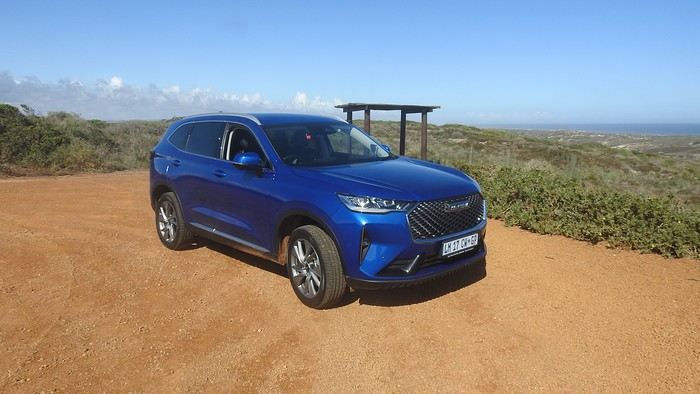
"Well, I need you to keep my room for me... I’m arriving *very* late tonight." A hotel perfectly located by the lagoon, right by the gates of WCNP, but still close to Langebaan and its restaurants. I spotted it myself and booked it during Black Friday...
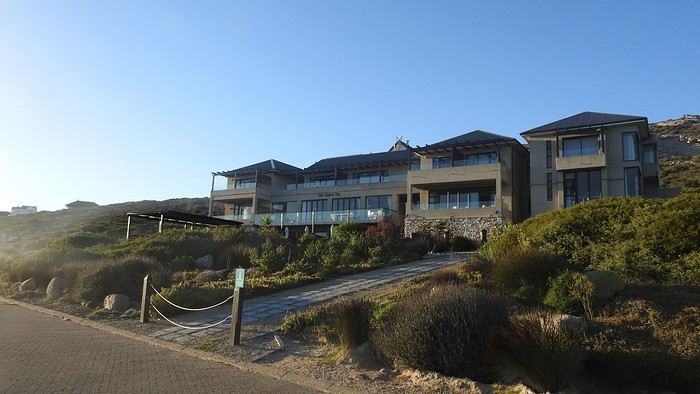
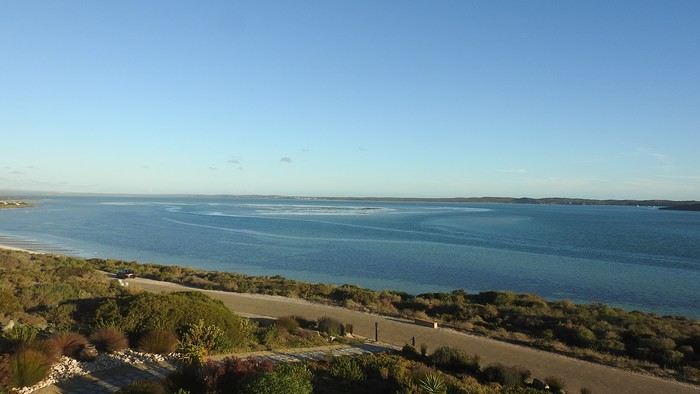
Yep, what was normally a short 1.5-hour drive *in daylight* from the Mother City to Langebaan... was now *at night*. And here I am, usually the one telling people, "Don’t drive at night, folks!" Well, I know the route, and Google won’t let me get lost... until Langebaan, that is. The last few kilometers were rough—"Don’t they put up signs? Don’t they have streetlights?"
Alright, it’s late, the day’s been long—time for bed! !
I’ve got a bit of time to share my latest Cape Town – Cape Town trip... A fairly short itinerary, but it was just before heading to Kruger for an extension. In May... Honestly, I’d usually recommend a different time to visit CT—I’ve been there in August, September, and October before. But as they say, "Do as I say, not as I do" or "Only fools never change their minds." Why? Whale season peaks from August to October... and seeing whales right by the shore or breaching out of the water is absolutely spectacular. The end-of-year holiday period—take this year, for example—can get absolutely packed, with beaches closed due to overcrowding, etc. June and July are freezing (for me)... early August isn’t always great either. That said, 2024 saw a September-October with rain, cold, and fog like never before. The Postberg section of West Coast National Park (WCNP) is only open in August and September. Flower season is roughly from mid-August to mid-September.
So, May... The weather? Gorgeous (lucky me!). The route... Not super original (I’ve done it before, though it’s been a while). I didn’t go too far from CT because I prefer slow travel. Cape Town – Langebaan (for WCNP, again) – Cederberg (at Mountain Ceder, again) – Bontebok NP (new to me, and on the way) – De Hoop NR (at De Hoop) – Agulhas NP – Boulders (for Boulders Beach and the peninsula, again and again).
The trip started off badly due to storms in Frankfurt... My overnight flight was delayed until the next day, but via Amsterdam, so a daytime flight instead. A bit stressful, but Lufthansa and KLM handled it well. Now it was my turn to sort things out... "Well, I need you to keep the car for me... I’m arriving tonight!" (aroundaboutcars, a Chinese Haval, blue and 4x4—though I didn’t actually need the 4x4... which waited for me).
"Well, I need you to keep my room for me... I’m arriving *very* late tonight." A hotel perfectly located by the lagoon, right by the gates of WCNP, but still close to Langebaan and its restaurants. I spotted it myself and booked it during Black Friday...
Yep, what was normally a short 1.5-hour drive *in daylight* from the Mother City to Langebaan... was now *at night*. And here I am, usually the one telling people, "Don’t drive at night, folks!" Well, I know the route, and Google won’t let me get lost... until Langebaan, that is. The last few kilometers were rough—"Don’t they put up signs? Don’t they have streetlights?"
Alright, it’s late, the day’s been long—time for bed! !