Results for "Garzê+|+112+>+171"
77912 results found.
Itinerary tips for 2 weeks in Northern Italy with kids
Hi everyone,
I’m planning a trip to Northern Italy for 2 weeks in August 2025. Here’s my itinerary: MILAN – 2 days LAKE MAGGIORE – 2 days LAKE COMO – 3 days BERGAMO – 1 day LAKE GARDA – 2 days VERONA – 1 day DOLOMITES – 2 days BOLOGNA – 1 day CINQUE TERRE – 2 days TURIN – 1 day Return to France
Let me know your thoughts, and any kid-friendly attractions would be great!
I’m planning a trip to Northern Italy for 2 weeks in August 2025. Here’s my itinerary: MILAN – 2 days LAKE MAGGIORE – 2 days LAKE COMO – 3 days BERGAMO – 1 day LAKE GARDA – 2 days VERONA – 1 day DOLOMITES – 2 days BOLOGNA – 1 day CINQUE TERRE – 2 days TURIN – 1 day Return to France
Let me know your thoughts, and any kid-friendly attractions would be great!
Hotel near Saint-Exupéry Airport
Hi everyone!
I need to spend a short night near the airport to catch a 6:00 AM flight on June 18th.
Do you have any suggestions for me? I'm looking for a simple but clean hotel! With a reasonable price, of course, 🙂 and especially a transfer option from Saint-Exupéry train station the night before and to the airport the next morning.
Thanks in advance for your tips and experiences.
Bush taxi from Ampefy to Tana
Hi
Could you tell me how often the bush taxis run from Ampefy to Tana?
1.5-hour layover at Paris Roissy
we’ve got a 1.5-hour layover in Paris—we’re arriving by TGV and then catching an Air France flight to MONTREAL
Connection at Lyon Part-Dieu
Hi there
I’m traveling from Geneva to Marseille in May and only have 18 minutes to change trains in Lyon. Do you think that’s doable?
Thanks and have a great day
I’m traveling from Geneva to Marseille in May and only have 18 minutes to change trains in Lyon. Do you think that’s doable?
Thanks and have a great day
How Supratours Works for Rabat - Tangier - Tétouan Route
Hi,
I’d like to travel from Rabat to Tétouan. Besides the CTM option, which takes 4 hours from the CTM station, there’s the Supratours option that combines a train from Rabat to Tangier and then a bus from Tangier to Tétouan. From what I understand, Supratours is the bus company affiliated with Morocco’s national railway. My question is: where do we catch the bus after arriving at Tangier Ville train station? Is it right at the train station in Tangier Ville, or do we need to go to the bus station, which is pretty far from the train station? Thanks!
Daniel
Visiting Cinque Terre by Train During a Cruise
Hi there. We want to visit the Cinque Terre by train.
Could anyone tell me if the distance between the ship and the first bus stop in town to take us to La Spezia station is far? Thanks
Could anyone tell me if the distance between the ship and the first bus stop in town to take us to La Spezia station is far? Thanks
Hiking step between Matsumoto and Tsumago
Hello,
I'm planning to travel from Matsumoto to Tsumago to hike to Magome. Is it reasonable to leave early in the morning from Matsumoto by train, stop in Narai for a stroll (knowing we'll have our big backpacks, I hope there's a luggage locker at the station), and then continue to Tsumago to do the hike to Magome?
Or is it better to stop and sleep halfway in Kiso-Fukushima? (I looked for accommodations in Narai but couldn't find any.)
Thanks in advance for your advice.
I'm planning to travel from Matsumoto to Tsumago to hike to Magome. Is it reasonable to leave early in the morning from Matsumoto by train, stop in Narai for a stroll (knowing we'll have our big backpacks, I hope there's a luggage locker at the station), and then continue to Tsumago to do the hike to Magome?
Or is it better to stop and sleep halfway in Kiso-Fukushima? (I looked for accommodations in Narai but couldn't find any.)
Thanks in advance for your advice.
Two weeks in Bangkok: your off-the-beaten-path suggestions
Hello,
After a lot of searching, exchanging ideas, and thinking it over, I’ve decided to go back to my original plan of spending two weeks in Bangkok. From January 19th to February 2nd. I’ll also take a quick trip for one night/two days to Ayutthaya (and return to Bangkok, where I’ll have kept the apartment I booked), and possibly the same for Kanchanaburi, depending on how I feel once I’m there—whether I find something more interesting in Bangkok or nearby.
The key word is: taking my time to take photos, observe, taste, savor (in every sense of the word), and most importantly, not rushing.
Beyond the must-see tourist spots, I’d love to wander around the city and maybe within a 40 to 50 km radius for a day trip to discover unusual and lesser-known streets, houses, temples, markets, gardens, and more.
I’ll also be spending two weeks in Chiang Mai and two weeks in Nan.
I’m open to any suggestions. Thank you so much!
Arriving in Bangkok in January 2025: where to store my winter coat?
Hi, I’m arriving in BKK in early January 2025 for 2 months. What should I do with my warm clothes? A locker? Sell them?
Thanks!
Getting to Pisa during a layover in Livorno
Hi there.
During a layover in Livorno, I’d like to take the train or bus to Pisa.
Could anyone tell me how to get to Livorno train station and then from Pisa station to the Leaning Tower of Pisa?
Thanks in advance for your great tips
Train from Bangkok (Thailand) to Vientiane (Laos)
Hi there,
I’m heading to Laos at the end of the year. We’ll be landing in Bangkok, and from there, we’d like to hop straight on a train to Vientiane. I think the line exists now. I’m guessing it’s from the new station, which I don’t know yet. Can anyone tell me about it, as well as the visa for Laos if I take this mode of transport?
Thanks
China, a forgotten destination?
There’s a similar discussion about India, by the way...
I really, really want to go back to China, but since the country is evolving at lightning speed, I’m wondering. I went there nearly 20 years ago. It was already undergoing a lot of changes, slowly but surely, but I still have wonderful memories of the country, which I found so endearing at the time. I visited Beijing, Sichuan, Guangxi, Hainan, and also Tibet by train, then Xinjiang. Now, we’re mainly considering Gansu and Hunan.
It was still possible to get 60-day visas back then, which isn’t the case anymore since they’re now limited to 30 days. But at the same time, the country seems more accessible. Many hotels are open to foreign tourists, sophisticated transport options have developed everywhere, and it’s possible to visit for up to 15 days without a visa... Tourists can easily travel by train or plane, but to reach places "off the beaten path," it seems you need to rent a vehicle with a driver. There used to be plenty of day-trip group tours, but that doesn’t seem to be the case anymore.
It’s hard to find info on whether certain routes are feasible for independent travel.
From what I’ve gathered here and there, "high tech" has taken over the entire country, the countryside has given way to imposing buildings, cities are increasingly industrialized and polluted—basically, the country has become dehumanized... In short, are there still beautiful places left—dare I say preserved—to see?
Add to this the bad reputation, not always justified, that China suffers from. It seems like the country is being boycotted by travel agencies, as if it’s not "politically correct" to visit. Maybe I’m exaggerating, but I’ve noticed this with French agencies like Nomade, Allibert, etc., which used to offer a wide range of itineraries everywhere, especially in Yunnan. Now, they’ve limited themselves to the classics: Beijing, Xi’an, Shanghai, water towns, or Tibet. Yunnan, Gansu, Qinghai, and many other Chinese provinces are no longer on the menu. Maybe it’s due to COVID...
The destination isn’t exactly a hit on forums either...
So, is it still worth going in 2025? I’d love to hear from those who’ve been there recently. Looking forward to exchanging thoughts on this fascinating destination (from my point of view, of course).
Anne-Claire
I really, really want to go back to China, but since the country is evolving at lightning speed, I’m wondering. I went there nearly 20 years ago. It was already undergoing a lot of changes, slowly but surely, but I still have wonderful memories of the country, which I found so endearing at the time. I visited Beijing, Sichuan, Guangxi, Hainan, and also Tibet by train, then Xinjiang. Now, we’re mainly considering Gansu and Hunan.
It was still possible to get 60-day visas back then, which isn’t the case anymore since they’re now limited to 30 days. But at the same time, the country seems more accessible. Many hotels are open to foreign tourists, sophisticated transport options have developed everywhere, and it’s possible to visit for up to 15 days without a visa... Tourists can easily travel by train or plane, but to reach places "off the beaten path," it seems you need to rent a vehicle with a driver. There used to be plenty of day-trip group tours, but that doesn’t seem to be the case anymore.
It’s hard to find info on whether certain routes are feasible for independent travel.
From what I’ve gathered here and there, "high tech" has taken over the entire country, the countryside has given way to imposing buildings, cities are increasingly industrialized and polluted—basically, the country has become dehumanized... In short, are there still beautiful places left—dare I say preserved—to see?
Add to this the bad reputation, not always justified, that China suffers from. It seems like the country is being boycotted by travel agencies, as if it’s not "politically correct" to visit. Maybe I’m exaggerating, but I’ve noticed this with French agencies like Nomade, Allibert, etc., which used to offer a wide range of itineraries everywhere, especially in Yunnan. Now, they’ve limited themselves to the classics: Beijing, Xi’an, Shanghai, water towns, or Tibet. Yunnan, Gansu, Qinghai, and many other Chinese provinces are no longer on the menu. Maybe it’s due to COVID...
The destination isn’t exactly a hit on forums either...
So, is it still worth going in 2025? I’d love to hear from those who’ve been there recently. Looking forward to exchanging thoughts on this fascinating destination (from my point of view, of course).
Anne-Claire
Renting a car at the cruise terminal in Pointe-à-Pitre (Guadeloupe)
Hi there,
I’m looking to rent a car at the Pointe-à-Pitre cruise terminal.
Any tips?
Thanks
Oman - Choosing the Right Type of Vehicle for Different Places to Visit
Hi there,
I’m planning a 3-week trip to Oman this coming November. As I list the different places I’d like to visit, I’m trying to match each one with whether:
- a basic sedan is enough
- a small SUV with higher ground clearance is really necessary
- a 4x4 is absolutely essential.
This is to keep costs down and avoid renting a vehicle that’s too expensive for the whole trip.
Would you have any thoughts on the vehicle choices in the attached file?
Thanks for your insights, and have a great evening! Christophe
This is to keep costs down and avoid renting a vehicle that’s too expensive for the whole trip.
Would you have any thoughts on the vehicle choices in the attached file?
Thanks for your insights, and have a great evening! Christophe
De l'aéroport de Bologne à Firenze par train English translation pending
Bonjour à tous les forumeurs,
La faute au Corona, je ne trouve pas de vol direct pour Florence en octobre. Je vais donc prendre un billet pour Bologne. Quelqu'un sait-il si depuis l'aéroport, on peut aller en train directement à Florence ou faut il déjà rejoindre la gare centrale de Bologne avant de prendre un train pour Florence ?
Merci de votre aide. Anne
La faute au Corona, je ne trouve pas de vol direct pour Florence en octobre. Je vais donc prendre un billet pour Bologne. Quelqu'un sait-il si depuis l'aéroport, on peut aller en train directement à Florence ou faut il déjà rejoindre la gare centrale de Bologne avant de prendre un train pour Florence ?
Merci de votre aide. Anne
Recap of our family trip to Romania in 2019
Hi everyone,
Better late than never—I’m finally getting around to sharing our trip to Romania from last year.
Before I start, I have a personal history with this country: I lived there in 2004 for three and a half months during a student internship. I still have friends there and a decent grasp of Romanian. That helps. But more than anything, I’ve grown attached to the country. It’s well-deserved—Romania gives back just as much. That said, when I talk about it, maybe I see things differently than someone visiting for the first time.
This was my third trip to Romania. This time, I brought my wife and our two daughters. After years of wanting to take a family trip there, this was finally the right moment. My wife wasn’t exactly thrilled at first—she’d been hesitant for years. But she ended up loving it, and we’ll definitely go back together. For our 6- and 8-year-old girls, the trip was fascinating in so many ways: the sights, learning about communism and totalitarian regimes, the Roma community, how different religions coexist, the Saxon minorities...
We landed in Bucharest last July. We spent two and a half weeks in the country. We took off from Toulouse early in the morning and arrived at Bucharest airport around noon. We flew with Lufthansa because it’s a solid airline and the cheapest option we found.
We rented a car. I don’t remember the rental agency’s name, but we got scammed a bit. We’d booked insurance through Booking, but when we arrived, we couldn’t print a credit card receipt. The issue? We only had debit cards, not credit cards (or vice versa), and without one, we couldn’t pick up the car without buying their on-site insurance. It was buried in the fine print—I’d read it but naively assumed a gold card would work. So, we had to take extra insurance. Basically, we threw 120 € in insurance fees out the window. Still, we got a Dacia Logan, and it ran like a dream the whole trip.
Here’s our rough itinerary: - Bucharest Airport => Sinaia => Brasov - Brasov => Viscri => Sighișoara => Sovata - Sovata => Bicaz Gorge => Iași - Iași => Bucharest
**Sinaia** We started in Sinaia, in the Carpathians. It’s an old Romanian vacation spot from the country’s golden age. A really nice place with great hikes. The mountains are stunning, covered in tall fir trees. There are beautiful buildings and old houses—it’s all very charming. We took the cable car up to the summit (no time to hike with the kids). It’s an old 1960s cable car with two sections (there are also detachable chairlifts). The view from the top is amazing. Then, Peles Castle—a must-see.
**On the road to Brasov** We stayed in a homestay in the village of Purcareni (15 minutes from Brasov by car) through an association called "L’Arbre de Joie." We spent a few days there. The association was founded by a French woman in the 90s and runs local projects. The family we stayed with was Hungarian. The price was around 90 € per day, including breakfast and dinner. The host spoke a little French, and her 16-year-old daughter spoke English fluently. We had great conversations. This family lives like a typical French family—they work at a clinic and a factory, own a car, and have a small chalet in the nearby mountains. From Purcareni, we explored: - **Bran Castle**: The iconic castle. There are way more tourist stalls now than when I first visited in 2004, but it’s still charming and worth seeing. - **Zărnești Bear Reserve**: Interesting—you learn a lot about bears. But it’s expensive, and it’s sad to see these beautiful animals in captivity. - **Râșnov Citadel**: Right near Zărnești. We did Bran, the bears, and this citadel all in one day last year. It’s pretty—you hike up a trail to get there. The view is gorgeous, but the site feels a bit neglected (or not fully restored yet). Some people love it, others don’t, but at least it’s authentic and not some Disneyland with fry stands everywhere. - **Brasov**: Of course! We went twice. It’s beautiful and nothing like what you’d imagine Romania to look like. We hiked up the hill overlooking the city—about 45 to 60 minutes with the kids. The view from the top is incredible, especially over the medieval rooftops. I wasn’t expecting much—I thought we’d see rundown buildings, but the "new" part of town is built farther to the right, so you barely notice it. - One day, we took a horse-drawn carriage (a touristy thing to do for the kids) to our hosts’ second home. It was still really fun. The area is super wild—just a few kilometers from the village, so close to Brasov. We ate *amazingly* with them. Traditional Romanian food is best enjoyed in people’s homes, not restaurants. So, I’d recommend eating at small guesthouses or homestays as much as possible.
**On the road to Viscri** No stops—just straight to Viscri. I found Viscri just as I’d left it in 2004. Maybe a few more tourists, maybe one or two new restaurants. The road still isn’t paved in the village. Viscri is my favorite place in Romania—a simple village with colorful houses. We found a reasonably priced Airbnb and had a great evening with our hosts. They were fascinating people, and we talked about Romania, Saxon minorities, Europe... The next morning, I went for a run and found a trail in the nearby forest. I followed it for a while before turning back. We also visited the fortified church.
**Sighișoara** I’d been there in 2004 and wasn’t particularly moved or impressed. I felt the same way in 2019. But that’s just our take.
**Sovata** In Sovata, we traveled the way I love—arriving around 5 PM with nothing booked and finding a place to stay by asking around. We ended up in homestays for two nights, and both were great. It’s a Hungarian-Romanian thermal spa town. The place is nice but nothing extraordinary, except when you get closer (but not too close) to the thermal complexes. There, you’ll find beautiful mansions and hotels from the early 19th century. It’s touristy, but only Romanians go there. We visited a warm-water lake—it was fun for the folklore, though the water wasn’t exactly inviting. Apparently, there’s another lake higher up that’s so salty you float in it, but we didn’t go. In the afternoon, we took the tourist steam train ("mocăniță" in Romanian). It was a blast—we chatted with people in the carriage. The train covers about 20 kilometers, then turns around (the locomotive detaches, spins, and reattaches). Everyone gets off at the halfway point, where people grill corn on the cob. Then the train heads back. The scenery isn’t breathtaking, but the fields were full of flowers, and the ride was lovely.
**Toward Bicaz Gorge** The next day, we headed to Bicaz Gorge and the Ceahlău Massif in Neamț (pronounced "Nyamts"). We passed through Corund, a village known for local crafts. Whether it’s actually made there or not is always up for debate in a society where cutting corners is common. Still, we found some nice plates, dishes, and souvenirs to bring home. Funny story: I was chatting with a young saleswoman in Romanian and was shocked to realize she didn’t understand me—not because my Romanian was bad, but because she *didn’t speak Romanian at all*. She only spoke Hungarian. Mind-blowing: you’re Romanian and don’t speak Romanian? We crossed a mountain (or big hill) before reaching the Gheorgheni plain—a small town nestled in the mountains, feeling like the end of the world. Was it the season? We saw *so many* storks, and they were *so close*. It was adorable.
**Bicaz Gorge** We stopped at "Lacul Roșu" (Red Lake) to take a boat ride with the kids. (Yeah, we did things we don’t usually do—gotta keep everyone engaged! And maybe that’s why they have such great memories of the trip.) Then, the Bicaz Gorge—one of my favorite spots in Romania. We stayed at Pensiunea Paleu in Bicazu Ardelean, a place I already knew. I think the price for four people, half-board (with delicious home-cooked meals), was around 90 € per day. The rooms are clean and simple, and there’s a big garden with a vegetable patch, a cow, and a pig. Most of the food served comes straight from the garden.
In the afternoon, after much hesitation, we headed to Ceahlău National Park. About 30 minutes by car, we entered the park (after waking up the park ranger, who reeked of booze and was napping). We drove to the end of the road, and then—against all odds—the four of us made it to the summit of Toaca Peak. This peak towers over the surrounding mountains. It was a great hike—starting in the Carpathian fir forests, then crossing a plateau covered in flowers (mid-July). We stopped for a drink at Cabana Dochia before heading up. The summit is a bit unusual because they’ve installed a big metal staircase. It’s steep in places—straight up, and I wouldn’t want to fall. There’s a sturdy railing, though. Even if the "normal route" doesn’t seem too hard. The view from the top is stunning—you can see the entire Carpathian region, vast forests, and the Bicaz Lake below.
**Iași** I used to live in Iași. We stayed with my former internship supervisor and his family. It’s not the first time we’ve crashed at people’s places. In Iași, we visited: - **The Opera House**: A beautiful building from the early 20th century, if I’m not mistaken. Our friends arranged a tour with the firefighters, who let us in and showed us around. It was fun. - **The "Hall of Lost Steps"**: You enter a massive room with stunning woodwork. It’s a huge university library, home to around a million books. The whole place is meticulously decorated. Visiting this room makes you wonder how Romania could have such a grand image. This country, in its golden age, had universities and thinkers. When you build something like this for knowledge and science, you’ve come a long way. - **The Palace of Culture**: This building was completely run-down in 2004 but has since been fully renovated. Where it was once gray, dull, and dirty, it now shines in the sunlight. It’s magnificent.
Beyond these three sights, we explored parks, wandered the city, went treetop climbing, and spent time with friends. Sure, Iași is way over in the east on a map of Romania, but it’s worth the detour.
After Iași, we headed back.
**In conclusion**, we spent three weeks in Romania. Here’s a rough breakdown of expenses (in €, all taxes included): - Flight tickets: 660 € - Car rental for 2.5 weeks: 250 € - Everything else (accommodation, food, activities, etc.): around 1,500 €
All in all, the trip wasn’t exactly cheap—around 2,500 to 2,800 € total. But we had a blast, and that’s what matters.
I had tons of great photos and wanted to share some, but I couldn’t upload them. If anyone’s interested, I can send them along.
Better late than never—I’m finally getting around to sharing our trip to Romania from last year.
Before I start, I have a personal history with this country: I lived there in 2004 for three and a half months during a student internship. I still have friends there and a decent grasp of Romanian. That helps. But more than anything, I’ve grown attached to the country. It’s well-deserved—Romania gives back just as much. That said, when I talk about it, maybe I see things differently than someone visiting for the first time.
This was my third trip to Romania. This time, I brought my wife and our two daughters. After years of wanting to take a family trip there, this was finally the right moment. My wife wasn’t exactly thrilled at first—she’d been hesitant for years. But she ended up loving it, and we’ll definitely go back together. For our 6- and 8-year-old girls, the trip was fascinating in so many ways: the sights, learning about communism and totalitarian regimes, the Roma community, how different religions coexist, the Saxon minorities...
We landed in Bucharest last July. We spent two and a half weeks in the country. We took off from Toulouse early in the morning and arrived at Bucharest airport around noon. We flew with Lufthansa because it’s a solid airline and the cheapest option we found.
We rented a car. I don’t remember the rental agency’s name, but we got scammed a bit. We’d booked insurance through Booking, but when we arrived, we couldn’t print a credit card receipt. The issue? We only had debit cards, not credit cards (or vice versa), and without one, we couldn’t pick up the car without buying their on-site insurance. It was buried in the fine print—I’d read it but naively assumed a gold card would work. So, we had to take extra insurance. Basically, we threw 120 € in insurance fees out the window. Still, we got a Dacia Logan, and it ran like a dream the whole trip.
Here’s our rough itinerary: - Bucharest Airport => Sinaia => Brasov - Brasov => Viscri => Sighișoara => Sovata - Sovata => Bicaz Gorge => Iași - Iași => Bucharest
**Sinaia** We started in Sinaia, in the Carpathians. It’s an old Romanian vacation spot from the country’s golden age. A really nice place with great hikes. The mountains are stunning, covered in tall fir trees. There are beautiful buildings and old houses—it’s all very charming. We took the cable car up to the summit (no time to hike with the kids). It’s an old 1960s cable car with two sections (there are also detachable chairlifts). The view from the top is amazing. Then, Peles Castle—a must-see.
**On the road to Brasov** We stayed in a homestay in the village of Purcareni (15 minutes from Brasov by car) through an association called "L’Arbre de Joie." We spent a few days there. The association was founded by a French woman in the 90s and runs local projects. The family we stayed with was Hungarian. The price was around 90 € per day, including breakfast and dinner. The host spoke a little French, and her 16-year-old daughter spoke English fluently. We had great conversations. This family lives like a typical French family—they work at a clinic and a factory, own a car, and have a small chalet in the nearby mountains. From Purcareni, we explored: - **Bran Castle**: The iconic castle. There are way more tourist stalls now than when I first visited in 2004, but it’s still charming and worth seeing. - **Zărnești Bear Reserve**: Interesting—you learn a lot about bears. But it’s expensive, and it’s sad to see these beautiful animals in captivity. - **Râșnov Citadel**: Right near Zărnești. We did Bran, the bears, and this citadel all in one day last year. It’s pretty—you hike up a trail to get there. The view is gorgeous, but the site feels a bit neglected (or not fully restored yet). Some people love it, others don’t, but at least it’s authentic and not some Disneyland with fry stands everywhere. - **Brasov**: Of course! We went twice. It’s beautiful and nothing like what you’d imagine Romania to look like. We hiked up the hill overlooking the city—about 45 to 60 minutes with the kids. The view from the top is incredible, especially over the medieval rooftops. I wasn’t expecting much—I thought we’d see rundown buildings, but the "new" part of town is built farther to the right, so you barely notice it. - One day, we took a horse-drawn carriage (a touristy thing to do for the kids) to our hosts’ second home. It was still really fun. The area is super wild—just a few kilometers from the village, so close to Brasov. We ate *amazingly* with them. Traditional Romanian food is best enjoyed in people’s homes, not restaurants. So, I’d recommend eating at small guesthouses or homestays as much as possible.
**On the road to Viscri** No stops—just straight to Viscri. I found Viscri just as I’d left it in 2004. Maybe a few more tourists, maybe one or two new restaurants. The road still isn’t paved in the village. Viscri is my favorite place in Romania—a simple village with colorful houses. We found a reasonably priced Airbnb and had a great evening with our hosts. They were fascinating people, and we talked about Romania, Saxon minorities, Europe... The next morning, I went for a run and found a trail in the nearby forest. I followed it for a while before turning back. We also visited the fortified church.
**Sighișoara** I’d been there in 2004 and wasn’t particularly moved or impressed. I felt the same way in 2019. But that’s just our take.
**Sovata** In Sovata, we traveled the way I love—arriving around 5 PM with nothing booked and finding a place to stay by asking around. We ended up in homestays for two nights, and both were great. It’s a Hungarian-Romanian thermal spa town. The place is nice but nothing extraordinary, except when you get closer (but not too close) to the thermal complexes. There, you’ll find beautiful mansions and hotels from the early 19th century. It’s touristy, but only Romanians go there. We visited a warm-water lake—it was fun for the folklore, though the water wasn’t exactly inviting. Apparently, there’s another lake higher up that’s so salty you float in it, but we didn’t go. In the afternoon, we took the tourist steam train ("mocăniță" in Romanian). It was a blast—we chatted with people in the carriage. The train covers about 20 kilometers, then turns around (the locomotive detaches, spins, and reattaches). Everyone gets off at the halfway point, where people grill corn on the cob. Then the train heads back. The scenery isn’t breathtaking, but the fields were full of flowers, and the ride was lovely.
**Toward Bicaz Gorge** The next day, we headed to Bicaz Gorge and the Ceahlău Massif in Neamț (pronounced "Nyamts"). We passed through Corund, a village known for local crafts. Whether it’s actually made there or not is always up for debate in a society where cutting corners is common. Still, we found some nice plates, dishes, and souvenirs to bring home. Funny story: I was chatting with a young saleswoman in Romanian and was shocked to realize she didn’t understand me—not because my Romanian was bad, but because she *didn’t speak Romanian at all*. She only spoke Hungarian. Mind-blowing: you’re Romanian and don’t speak Romanian? We crossed a mountain (or big hill) before reaching the Gheorgheni plain—a small town nestled in the mountains, feeling like the end of the world. Was it the season? We saw *so many* storks, and they were *so close*. It was adorable.
**Bicaz Gorge** We stopped at "Lacul Roșu" (Red Lake) to take a boat ride with the kids. (Yeah, we did things we don’t usually do—gotta keep everyone engaged! And maybe that’s why they have such great memories of the trip.) Then, the Bicaz Gorge—one of my favorite spots in Romania. We stayed at Pensiunea Paleu in Bicazu Ardelean, a place I already knew. I think the price for four people, half-board (with delicious home-cooked meals), was around 90 € per day. The rooms are clean and simple, and there’s a big garden with a vegetable patch, a cow, and a pig. Most of the food served comes straight from the garden.
In the afternoon, after much hesitation, we headed to Ceahlău National Park. About 30 minutes by car, we entered the park (after waking up the park ranger, who reeked of booze and was napping). We drove to the end of the road, and then—against all odds—the four of us made it to the summit of Toaca Peak. This peak towers over the surrounding mountains. It was a great hike—starting in the Carpathian fir forests, then crossing a plateau covered in flowers (mid-July). We stopped for a drink at Cabana Dochia before heading up. The summit is a bit unusual because they’ve installed a big metal staircase. It’s steep in places—straight up, and I wouldn’t want to fall. There’s a sturdy railing, though. Even if the "normal route" doesn’t seem too hard. The view from the top is stunning—you can see the entire Carpathian region, vast forests, and the Bicaz Lake below.
**Iași** I used to live in Iași. We stayed with my former internship supervisor and his family. It’s not the first time we’ve crashed at people’s places. In Iași, we visited: - **The Opera House**: A beautiful building from the early 20th century, if I’m not mistaken. Our friends arranged a tour with the firefighters, who let us in and showed us around. It was fun. - **The "Hall of Lost Steps"**: You enter a massive room with stunning woodwork. It’s a huge university library, home to around a million books. The whole place is meticulously decorated. Visiting this room makes you wonder how Romania could have such a grand image. This country, in its golden age, had universities and thinkers. When you build something like this for knowledge and science, you’ve come a long way. - **The Palace of Culture**: This building was completely run-down in 2004 but has since been fully renovated. Where it was once gray, dull, and dirty, it now shines in the sunlight. It’s magnificent.
Beyond these three sights, we explored parks, wandered the city, went treetop climbing, and spent time with friends. Sure, Iași is way over in the east on a map of Romania, but it’s worth the detour.
After Iași, we headed back.
**In conclusion**, we spent three weeks in Romania. Here’s a rough breakdown of expenses (in €, all taxes included): - Flight tickets: 660 € - Car rental for 2.5 weeks: 250 € - Everything else (accommodation, food, activities, etc.): around 1,500 €
All in all, the trip wasn’t exactly cheap—around 2,500 to 2,800 € total. But we had a blast, and that’s what matters.
I had tons of great photos and wanted to share some, but I couldn’t upload them. If anyone’s interested, I can send them along.
Week-end de 4 jours à Rome entre amis English translation pending
Bonjour à tous
Je pars à Rome vendredi pour 4 jours pleins avec 3 amis et je voudrais savoir si les personnes qui sont déjà allés dans cette ville pourraient partager leurs bons plans et leurs coups de coeur?
Le meilleur moyen de rejoindre la gare depuis l'aéroport est le Leonardo Express ou vous auriez quelque chose de moins onéreux à conseiller?
Est-ce que vous avez des lieux un peu hors des sentiers battus à visiter? (J'ai déjà en tête les monuments connus tels que le Colisée, la fontaine de Trevi, le Vatican...) Est-ce que vous auriez des restaurants ou bars à recommander? Merci d'avance pour votre aide ;)
Je pars à Rome vendredi pour 4 jours pleins avec 3 amis et je voudrais savoir si les personnes qui sont déjà allés dans cette ville pourraient partager leurs bons plans et leurs coups de coeur?
Le meilleur moyen de rejoindre la gare depuis l'aéroport est le Leonardo Express ou vous auriez quelque chose de moins onéreux à conseiller?
Est-ce que vous avez des lieux un peu hors des sentiers battus à visiter? (J'ai déjà en tête les monuments connus tels que le Colisée, la fontaine de Trevi, le Vatican...) Est-ce que vous auriez des restaurants ou bars à recommander? Merci d'avance pour votre aide ;)
La banque de Thaïlande tire la sonnette d'alarme au niveau du tourisme English translation pending
La banque de Thaïlande demande au gouvernement de trouver rapidement un compromis entre retour des touristes et covid sous peine d'un effondrement encore plus fort de l'économie.
https://siamactu.fr/la-banque-de-thailande-met-en-garde-contre-un-desastre-touristique/
https://siamactu.fr/la-banque-de-thailande-met-en-garde-contre-un-desastre-touristique/
Photo Contest, September 2020: Departure or Arrival Scenes and Places
Hello everyone, 🙂
This month’s theme is: places, departure or arrival scenes.
The places include: train or bus stations, passenger ports, and airports.
Here, for example, is Beijing West Railway Station
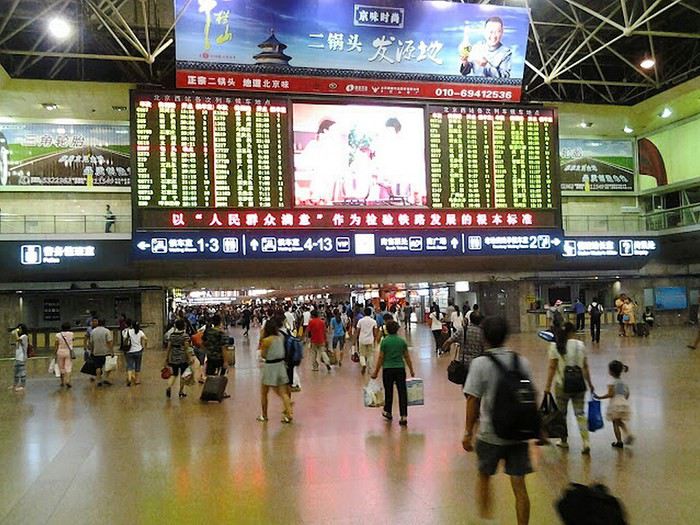 This is Beijing West Railway Station.
You can submit a photo of the whole place, a part of it (inside or outside, the platforms), or a detail (like a station clock) as long as it clearly shows it’s a departure or arrival spot—such as a timetable display.
Or here’s another example:
This is Beijing West Railway Station.
You can submit a photo of the whole place, a part of it (inside or outside, the platforms), or a detail (like a station clock) as long as it clearly shows it’s a departure or arrival spot—such as a timetable display.
Or here’s another example:
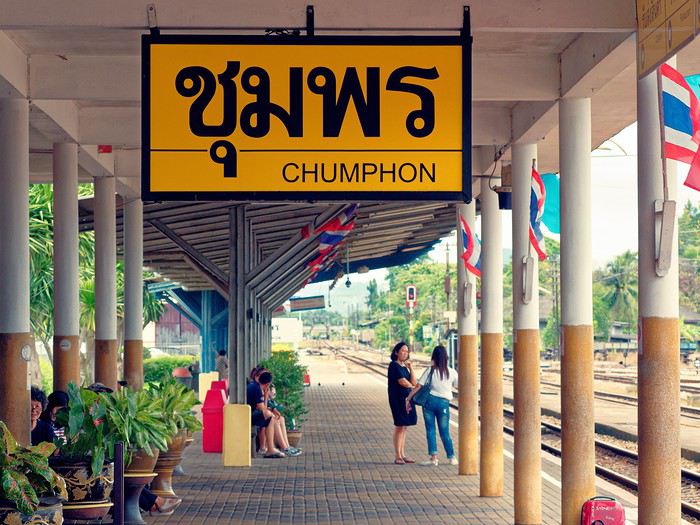
Even if you’re not in one of these places, a departure or arrival scene is welcome: Example: Early morning departure from a pagoda at Inle Lake (Myanmar) as people head back to their villages in the surrounding hills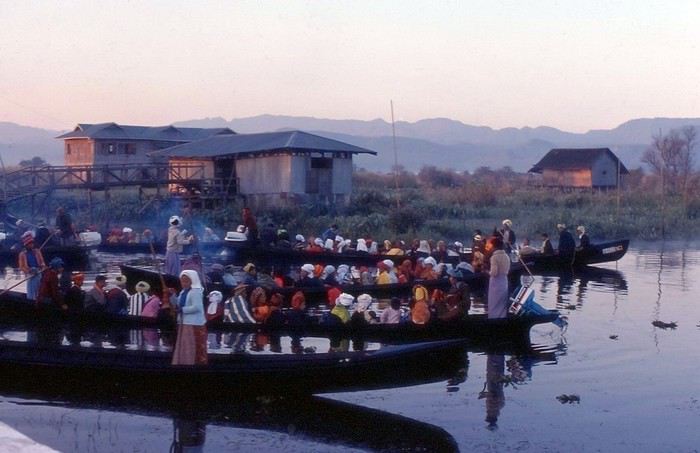
A vehicle about to leave: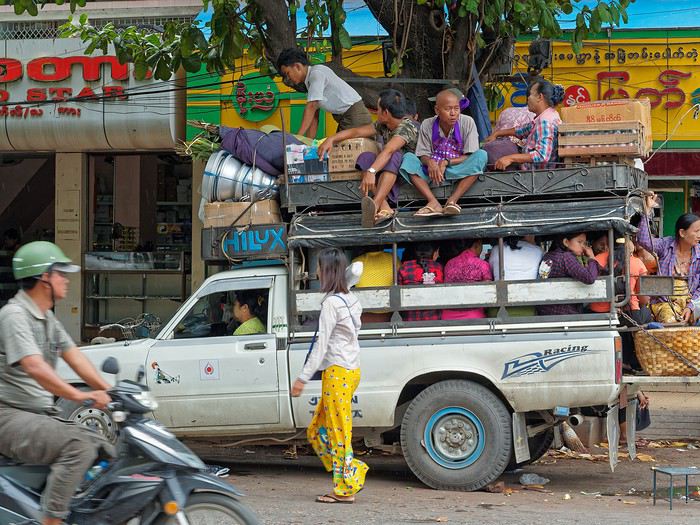
People are also allowed, as long as they’re clearly identified as travelers about to depart or who have just arrived. Bus station in Thailand (a photo I’d shared for the "solitude" theme)
Another example: in the foreground, a boat docked, and just above, another that has just left (Rangoon, Myanmar—these boats serve cities in the Irrawaddy Delta, and in some areas, they’re still the only means of transport for locals).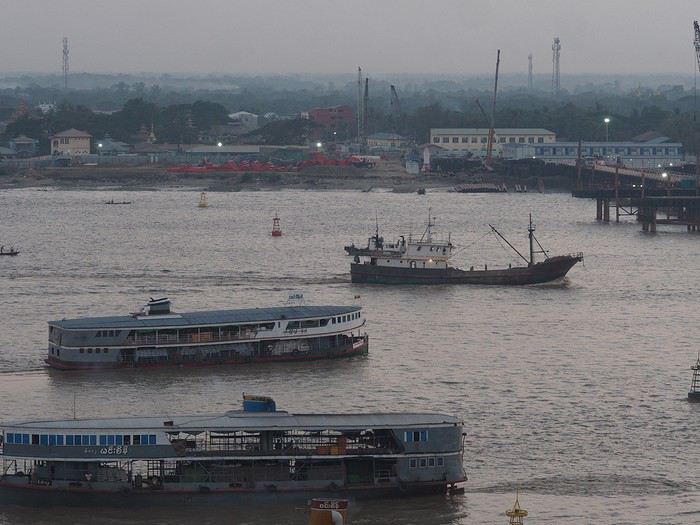
You can also include departures or arrivals from races, but again, it must be at the start or finish, not during the race: Boats before the start of the Route du Rhum in Saint-Malo: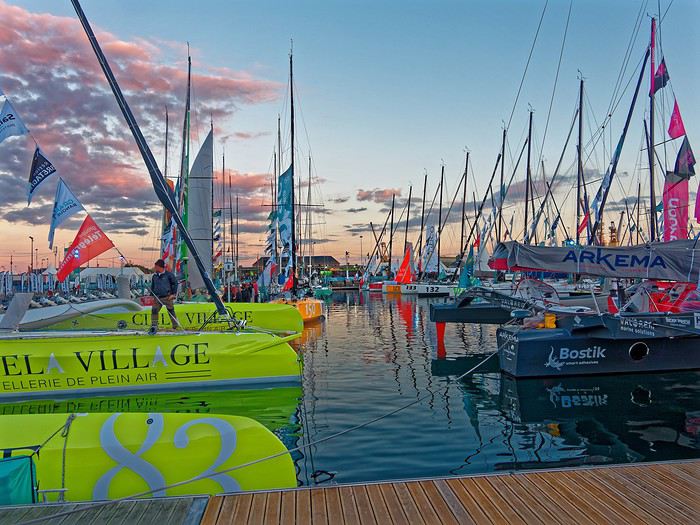
Participation: Each participant can submit up to 3 photos, until Tuesday, September 22 at 11:59 PM Paris time. Each photo must be posted in a separate message, with its number (1, 2, or 3). Don’t forget to add a short description (comment, location, etc.).
Voting: Every VoyageForum member can vote for the 4 photos they think are the best, based on their own criteria and the theme (I’m trying this format this month). Voting will take place from Wednesday, September 23 to Tuesday, September 29 at 11:59 PM Paris time.
Photos should be ranked in order of preference: - 1st photo: 4 points - 2nd: 3 points - 3rd: 2 points - 4th: 1 point
Each member can vote only once for 4 photos. No ties for 4th place with half a point each.
The winner is the photographer whose photo receives the most points. Results will be announced on September 30. In case of a tie, the number of first-place votes will decide. The winner will have the honor of organizing October’s contest.
Give me two or three days to put together the slideshow—I’ll definitely reach out to Masterpo via PM for advice if I’m stuck (and if he’s willing).
Good luck to everyone—may the best photographer win! Let’s get started! For discussion, it’s here
This is Beijing West Railway Station.
You can submit a photo of the whole place, a part of it (inside or outside, the platforms), or a detail (like a station clock) as long as it clearly shows it’s a departure or arrival spot—such as a timetable display.
Or here’s another example:
Even if you’re not in one of these places, a departure or arrival scene is welcome: Example: Early morning departure from a pagoda at Inle Lake (Myanmar) as people head back to their villages in the surrounding hills
A vehicle about to leave:
People are also allowed, as long as they’re clearly identified as travelers about to depart or who have just arrived. Bus station in Thailand (a photo I’d shared for the "solitude" theme)
Another example: in the foreground, a boat docked, and just above, another that has just left (Rangoon, Myanmar—these boats serve cities in the Irrawaddy Delta, and in some areas, they’re still the only means of transport for locals).
You can also include departures or arrivals from races, but again, it must be at the start or finish, not during the race: Boats before the start of the Route du Rhum in Saint-Malo:
Participation: Each participant can submit up to 3 photos, until Tuesday, September 22 at 11:59 PM Paris time. Each photo must be posted in a separate message, with its number (1, 2, or 3). Don’t forget to add a short description (comment, location, etc.).
Voting: Every VoyageForum member can vote for the 4 photos they think are the best, based on their own criteria and the theme (I’m trying this format this month). Voting will take place from Wednesday, September 23 to Tuesday, September 29 at 11:59 PM Paris time.
Photos should be ranked in order of preference: - 1st photo: 4 points - 2nd: 3 points - 3rd: 2 points - 4th: 1 point
Each member can vote only once for 4 photos. No ties for 4th place with half a point each.
The winner is the photographer whose photo receives the most points. Results will be announced on September 30. In case of a tie, the number of first-place votes will decide. The winner will have the honor of organizing October’s contest.
Give me two or three days to put together the slideshow—I’ll definitely reach out to Masterpo via PM for advice if I’m stuck (and if he’s willing).
Good luck to everyone—may the best photographer win! Let’s get started! For discussion, it’s here
Trois jours à Genève English translation pending
Bonjour
svp un bon plan pour 3 jour a Genève a partir du 26/08 avec le telepherrique le plus proche sachant que mon hôtel est près de la gare de Genève
Merci
Des activités avec ados entre lacs de Côme et Venise? English translation pending
Bonjour,
Nous partirons 2 semaines en Italie, de Chamonix à Venise puis Florence - Sienne les 5 terres et retour en France. Nous sommes 9, donc 4 ados de 11 à 16 ans.
Auriez-vous des suggestions d'activités autour des lacs de Côme? du lac de Garde et entre les Alpes et Venise svp? Puis des visites plus adaptées et ludiques ?
J'ai par exemple vu le parc d'attractions Gardaland
Merci
La Loire de Angers à Nantes à vélo English translation pending
J'envisage de partir faire un petit bout de la Loire en vélo de Angers à Nantes
Qui peut me renseigner sur cette distance ?
Paris-Fontainebleau-Remiremont à vélo English translation pending
Bonjour fin septembre j'envisage avec un camarade de faire Fontainebleau-les Vosges jusqu'à Remiremont à vélo, je suis preneur de tous les conseils d'itinéraires.
La veille, des Vosges j'irai à Paris gare de l'est en train et, de là j'envisage de rejoindre Fontainebleau à vélo. Là aussi, je suis preneur de tous les conseils sur un itinéraire au plus près de la Seine. Quelle circulation y-at-il? Parfois l'itinéraire suit-il un chemin le long de la rive? Serai-je obligé parfois de me trouver sur des routes à forte circulation? L'itinéraire est-il difficile à suivre?
Voilà un certain nombre de questions que je me pose.
Merci par avance de vos suggestions et conseils
Luc
Europe: le réseau EuroVelo devient le réseau transeuropéen de transport English translation pending
Le réseau Eurovélo devient réseau transeuropéen de transport à l'égal des réseaux routiers et ferroviaire. Bientôt ?
https://ecf.com/news-and-events/news/eurovelo-and-ten-t-network-tandem-fight
https://ecf.com/news-and-events/news/eurovelo-and-ten-t-network-tandem-fight
Croisière MSC Magnifica en Mer du Nord fin septembre English translation pending
bonjour, je suis en recherche de toute information pour MSC Magnifica (Rotterdam, Hambourg, Southampton, Zeebrugge) et le conditions meteo fin septembre de la mer du Nord!
merci à vous😉
Canal du Midi à vélo avec petits-enfants en juillet English translation pending
Bonjour à la communauté,
Nous partons du 12 au 24 juillet avec 4 petits-enfants et nous cherchons un lieu pour garer notre véhicule + remorque vélos près de Montgiscard ou un peu plus loin en direction de l'est, le long du canal ou pas très loin d'une gare (pas nécessairement abrité. Prés, champ etc....) Nous allons jusqu'à Vias. Mon mari reviendra en train pour récupérer le tout le 23 juillet. Quelqu'un peut-il nous dépanner ? Par avance merci pour vos réponses.
Le loueur Hertz en faillite aux USA et Canada: attention à la sous-traitance au Maroc English translation pending
Depuis samedi Hertz s’est déclaré en faillite aux USA et au Canada , ça correspond chez nous à une mesure de sauvegarde de justice , 20 000salaries ont été licenciés .
Cette mesure doit nous mettre en garde au regard de la sous traitance au Maroc d’Hertz et de ses filiales Trifty et Dollar .
https://www.lemonde.fr/economie/article/2020/05/23/criblee-de-dette-hertz-se-declare-en-faillite_6040512_3234.html
30ème anniversaire de la mort de Luigi Nono (Italie) English translation pending
« Luigi Nono : un nom. Une œuvre musicale. La musique d’un nom. Le nom d’une musique » (Edmond Jabès, poète et ami de L.N.)
En souvenir d’un grand compositeur
Ses œuvres sont provocantes et tout de même destinées au peuple : le compositeur Luigi Nono est l’un des plus grands représentants de l’avant-garde d’après-guerre, qui a donné des impulsions importantes pour la Nouvelle Musique. Le 8 mai 1990, il est décédé dans sa ville natale, Venise. Trop tôt...
Depuis les années 50 – la grande époque de la musique d’avant-garde se forgeant essentiellement à Darmstadt et Donaueschingen –, Luigi Nono fait sans aucun doute partie des compositeurs les plus importants de l’histoire de la musique contemporaine (avec Pierre Boulez, Karlheinz Stockhausen, Luciano Berio, György Ligeti, etc.). Désigné comme le compositeur le plus politisé de sa génération, Nono et sa musique ont été le carrefour des débats esthétiques et idéologiqes les plus importants : musique et politique, texte et musique, signification textuelle et sémantique musicale, technique sérielle et expression artistique, technologie moderne et idéologies, les problèmes essentiels de la musique sont fortement remis en question. Estimé par les professionnels de la musique contemporaine, utilisé et de la même façon abusé pour des enjeux politiques, Nono reste une figure énigmatique extrêmement attrayante, trop peu comprise par ses contemporains, et ce fait est encore valable même trois décennies après sa mort...
Luigi Nono reconnaît très tôt la parenté entre les musiques des différentes époques et les arts : son grand-père était peintre, son oncle Urbano sculpteur. Au Conservatoire de Venise, Nono entre en contact avec la musique vocale polyphonique de la Renaissance. De plus, la Seconde Ecole de Vienne (Schönberg, Berg, Webern) et des compositeurs comme Strawinsky et Bartók ont également une influence énorme sur lui dès le début. Etudiant des Cours d‘été internationaux de Darmstadt, il s’associe à des étudiants d’Arnold Schönberg. En 1955, une fille de Schönberg, Nuria, devient son épouse.
Ses œuvres des années 50-70 peuvent être considérées en fonction de leur inscription dans une idéologie marxiste et gramscienne (Il canto sospeso / Canti per 13 / La terra e la compagna / Varianti), et on rencontre les thèmes qui préoccupaient la Gauche européenne à l’époque : la guerre d’Algérie (Intolleranza), l’assassinat de Malcolm X (Contrappunto dialettico alla mente), la guerre de Vietnam (Siamo la gioventù del Vietnam), le mai 1968 (Musica-Manifesto n.1 : Un volto, del mare – Non consumiamo Marx), le Holocaust (Ricorda cosa ti hanno fatto in Auschwitz), des mouvements de libération en Amérique du Sud (Como una ola de fuerza et luz), le monde du travail au capitalisme (La fabbrica illuminata) etc.
Dans la deuxieme moitié des années 70, Nono change lui-même le cap : des œuvres comme Con Luigi Dallapiccola (1979), le quatuor à cordes Fragments: Silence, A Diotima (1979-80) ou le deuxième journal polonais Quando stanno morendo (1981) dépassent même les attentes de ceux qui ne le soupçonnent pas d’être un "compositeur engagé", étant d’abord perplexes face à un Luigi Nono changé aussi bien sur les plans humain que compositionnel, jugeant les quelques idées d’autrefois obsolètes et démodées et exigeant absolument de "mettre l'imagination autant que possible en avant".
La période artistique de Nono qui suit et dure jusqu’à sa mort, est en particulier marquée par une seule œuvre monumentale, Prometeo. Tragedia dell’ascolto, un drame qui ne se passe que dans et avec les sons, un drame entre la musique et les auditeurs. Pour le compositeur, ce "Prométhée", basé sur un collage de textes fragmentés qui vont d’Äschylus jusqu’à Walter Benjamin, en passant par Goethe, Rilke, Hölderlin et Nietzsche, et cela en italien, grec et allemand, ce Prométhée donc correspond à "un voyage d’une île à une autre île", à un labyrinthe dans lequel les chemins se croisent et se perdent. Prométhée incarne la situation humaine actuelle : "L’homme et la loi, l’homme et sa recherche continuelle de l’inconnu, l’homme et la construction des nouvelles lois et leur transgression. Prométhée, c’est l’homme avec son éternelle soif de nouvelles terres et de nouvelles frontières. C’est la révolte contre la restauration qui empêche l’arrivée des temps nouveaux" (Luigi Nono).
Fondazione Archivio Luigi Nono
Voici mes "charts Nono" (pas dans cet ordre, mais tout à recommander vivement !) :
i) Il canto sospeso* : Barbara Bonney, Susanne Otto, Marek Torzewski, Rundfunkchor Berlin, Berliner Philharmoniker, Dir. Claudio Abbado (Sony) ii) Polifonica – Monodia – Ritmica / Canti per 13 / Canciones a Guiomar : Angelika Luz, United Voices, Ensemble UnitedBerlin, Dir. Peter Hirsch (Wergo) iii) Como una ola de fuerza y de luz / …sofferte onde serene… / Contrappunto dialettico alla mente : Slavka Taskova, Maurizio Pollini, Sinfonieorchester des Bayerischen Rundfunks, Dir. Claudio Abbado (Deutsche Grammophon) iv) Prometeo. Tragedia dell’ascolto : Ingrid Ade-Jesemann, Susanne Otto, Helena Rasker, Peter Hall, Solistenchor Freiburg, Ensemble Modern, EdHSS, Dir. André Richard, Ingo Metzmacher, Peter Rundel (EMI Classics) v) La fabbrica illuminata / Ha venido, Canciones para Silva / Ricorda cosa ti hanno fatto in Auschwitz : Carla Henius, Barbara Miller, Kinderchor des Piccolo Teatro, Chor des RAI Mailand, Schola Cantorum Stuttgart (Wergo) vi) Al gran sole carico d’amore : Claudia Barainsky, Maraile Lichdi, Melinda Liebermann, Staatsopernchor und Staatsorchester Stuttgart, Dir. Lothar Zagrosek (Teldec/Warner) vii) Fragmente: Stille – An Diotima : Arditti String Quartet (Montaigne)
Hery
https://www.youtube.com/watch?v=58YmocJewH0
*Il canto sospeso est une cantate pour soprano, contralto, ténor, chœur et orchestre, écrite entre 1955 et 1956, à partir d’extraits de lettres de condamnés à mort de la résistance européenne.
En souvenir d’un grand compositeur
Ses œuvres sont provocantes et tout de même destinées au peuple : le compositeur Luigi Nono est l’un des plus grands représentants de l’avant-garde d’après-guerre, qui a donné des impulsions importantes pour la Nouvelle Musique. Le 8 mai 1990, il est décédé dans sa ville natale, Venise. Trop tôt...
Depuis les années 50 – la grande époque de la musique d’avant-garde se forgeant essentiellement à Darmstadt et Donaueschingen –, Luigi Nono fait sans aucun doute partie des compositeurs les plus importants de l’histoire de la musique contemporaine (avec Pierre Boulez, Karlheinz Stockhausen, Luciano Berio, György Ligeti, etc.). Désigné comme le compositeur le plus politisé de sa génération, Nono et sa musique ont été le carrefour des débats esthétiques et idéologiqes les plus importants : musique et politique, texte et musique, signification textuelle et sémantique musicale, technique sérielle et expression artistique, technologie moderne et idéologies, les problèmes essentiels de la musique sont fortement remis en question. Estimé par les professionnels de la musique contemporaine, utilisé et de la même façon abusé pour des enjeux politiques, Nono reste une figure énigmatique extrêmement attrayante, trop peu comprise par ses contemporains, et ce fait est encore valable même trois décennies après sa mort...
Luigi Nono reconnaît très tôt la parenté entre les musiques des différentes époques et les arts : son grand-père était peintre, son oncle Urbano sculpteur. Au Conservatoire de Venise, Nono entre en contact avec la musique vocale polyphonique de la Renaissance. De plus, la Seconde Ecole de Vienne (Schönberg, Berg, Webern) et des compositeurs comme Strawinsky et Bartók ont également une influence énorme sur lui dès le début. Etudiant des Cours d‘été internationaux de Darmstadt, il s’associe à des étudiants d’Arnold Schönberg. En 1955, une fille de Schönberg, Nuria, devient son épouse.
Ses œuvres des années 50-70 peuvent être considérées en fonction de leur inscription dans une idéologie marxiste et gramscienne (Il canto sospeso / Canti per 13 / La terra e la compagna / Varianti), et on rencontre les thèmes qui préoccupaient la Gauche européenne à l’époque : la guerre d’Algérie (Intolleranza), l’assassinat de Malcolm X (Contrappunto dialettico alla mente), la guerre de Vietnam (Siamo la gioventù del Vietnam), le mai 1968 (Musica-Manifesto n.1 : Un volto, del mare – Non consumiamo Marx), le Holocaust (Ricorda cosa ti hanno fatto in Auschwitz), des mouvements de libération en Amérique du Sud (Como una ola de fuerza et luz), le monde du travail au capitalisme (La fabbrica illuminata) etc.
Dans la deuxieme moitié des années 70, Nono change lui-même le cap : des œuvres comme Con Luigi Dallapiccola (1979), le quatuor à cordes Fragments: Silence, A Diotima (1979-80) ou le deuxième journal polonais Quando stanno morendo (1981) dépassent même les attentes de ceux qui ne le soupçonnent pas d’être un "compositeur engagé", étant d’abord perplexes face à un Luigi Nono changé aussi bien sur les plans humain que compositionnel, jugeant les quelques idées d’autrefois obsolètes et démodées et exigeant absolument de "mettre l'imagination autant que possible en avant".
La période artistique de Nono qui suit et dure jusqu’à sa mort, est en particulier marquée par une seule œuvre monumentale, Prometeo. Tragedia dell’ascolto, un drame qui ne se passe que dans et avec les sons, un drame entre la musique et les auditeurs. Pour le compositeur, ce "Prométhée", basé sur un collage de textes fragmentés qui vont d’Äschylus jusqu’à Walter Benjamin, en passant par Goethe, Rilke, Hölderlin et Nietzsche, et cela en italien, grec et allemand, ce Prométhée donc correspond à "un voyage d’une île à une autre île", à un labyrinthe dans lequel les chemins se croisent et se perdent. Prométhée incarne la situation humaine actuelle : "L’homme et la loi, l’homme et sa recherche continuelle de l’inconnu, l’homme et la construction des nouvelles lois et leur transgression. Prométhée, c’est l’homme avec son éternelle soif de nouvelles terres et de nouvelles frontières. C’est la révolte contre la restauration qui empêche l’arrivée des temps nouveaux" (Luigi Nono).
Fondazione Archivio Luigi Nono
Voici mes "charts Nono" (pas dans cet ordre, mais tout à recommander vivement !) :
i) Il canto sospeso* : Barbara Bonney, Susanne Otto, Marek Torzewski, Rundfunkchor Berlin, Berliner Philharmoniker, Dir. Claudio Abbado (Sony) ii) Polifonica – Monodia – Ritmica / Canti per 13 / Canciones a Guiomar : Angelika Luz, United Voices, Ensemble UnitedBerlin, Dir. Peter Hirsch (Wergo) iii) Como una ola de fuerza y de luz / …sofferte onde serene… / Contrappunto dialettico alla mente : Slavka Taskova, Maurizio Pollini, Sinfonieorchester des Bayerischen Rundfunks, Dir. Claudio Abbado (Deutsche Grammophon) iv) Prometeo. Tragedia dell’ascolto : Ingrid Ade-Jesemann, Susanne Otto, Helena Rasker, Peter Hall, Solistenchor Freiburg, Ensemble Modern, EdHSS, Dir. André Richard, Ingo Metzmacher, Peter Rundel (EMI Classics) v) La fabbrica illuminata / Ha venido, Canciones para Silva / Ricorda cosa ti hanno fatto in Auschwitz : Carla Henius, Barbara Miller, Kinderchor des Piccolo Teatro, Chor des RAI Mailand, Schola Cantorum Stuttgart (Wergo) vi) Al gran sole carico d’amore : Claudia Barainsky, Maraile Lichdi, Melinda Liebermann, Staatsopernchor und Staatsorchester Stuttgart, Dir. Lothar Zagrosek (Teldec/Warner) vii) Fragmente: Stille – An Diotima : Arditti String Quartet (Montaigne)
Hery
https://www.youtube.com/watch?v=58YmocJewH0
*Il canto sospeso est une cantate pour soprano, contralto, ténor, chœur et orchestre, écrite entre 1955 et 1956, à partir d’extraits de lettres de condamnés à mort de la résistance européenne.
Grosse grosse grosse frustration... English translation pending
Bon Ok... Je n'aurai peut être aucun écho dans ce poste dépressif. Mais je me dis que je ne suis peut être pas la seule et ça me fera au moins du bien d'en parler.... voir de le hurler !
Je tente de garder chaque jour le sourire et pourtant... Je dis à tout le monde que je garde la pèche et pourtant...
Je fais partie de ces globe-trotters qui ont mis leur besoin de grands espaces de côté au profit d'une vie familiale paisible et bien rangée. Je fais partie de ces gens qui malgré une hyperactivité notoire, sont capables de s'adapter à 3 hommes casaniers pour qui le voyage rime avec inconfort et danger. Et comme souvent, je fais partie de ceux qui, à la quarantaine et les enfants suffisamment grands pour affronter le monde extérieur, décident de tout plaquer pour enfin partager ça en famille.
Enfin, en octobre 2019, j'ai passé le pas et tout plaqué comme ce burn-out qui pointait le bout de son nez et mes 3 hommes ont accepté l'aventure, histoire de ne pas faire partie de ce qui passait à la trappe. Comble du bonheur d'autant qu'il ne reste plus que deux ans avant que mes enfants passent le bac, après ils partiront. Nous programmons donc un voyage d'un an à partir de Juillet 2020. Tout est sur des roulettes, il n'y a plus qu'à.
On tombe d'accord, nous parcourrons l’Europe à Vélo : France - Turquie par le nord à l'allée et retour par le sud. Nous avons à peine le temps de poser nos démissions, de gérer les écoles et d'afficher nos premières punaises sur la vieille carte du salon que la nouvelle tombe... Covid - Confinement... Je fais un blocage. Tout disparait dans ma tête. Je me plonge dans mon travail pour oublier, les jours avancent et je garde le front haut, le nez pointé au nord. Mais à chaque allocutions ministérielles, mon entourage y va de sa pitié ou de son conseil... Et personne dans mon entourage ne sait ce que c'est d'être suspendu.... Tout mon élan de vie s'est stoppé net. Je me sens comme dans une quatrième dimension où mon corps, mon coeur, mon cerveau sont à l'arrêt. Sans savoir au jour le jour de quoi sera fait le lendemain. Toute analyse protectionnelle sous forme d'oracle me donne la nausée....
Et des jours comme aujourd'hui, des jours ensoleillés de week end prolongé... Je me souviens que j'avais programmé que nous testerions notre matériel au complet sur une randonnée de 3 jours... Je me rends compte que mes garçons ont encore l'adolescence silencieuse, celle qui n'a pas encore découvert le besoin de s'éloigner inexorablement de ses parents et de crier à la liberté. Je sais que nous avons la chance d'avoir 1 an d'arrêt professionnel programmé que nous n'arriverons pas financièrement à renouveler....
Et je ne peux pas m’empêcher d'avoir le moral dans les chaussettes. Évidemment, ce n'est pas la fin du monde. Évidemment, mon entourage est en bonne santé et je ne peux que m'en réjouir. Évidemment, on pourra toujours s'adapter et peut être même découvrir d'autres choses... Évidemment....
Mais j'avais l'occasion de vivre cette folle aventure d'un an non stop avec mes proches.... Et tout s'effrite, reste flou. Je perds déjà la simple excitation de la préparation du voyage. Ma vie bascule dans moins de 2 mois, mais c'est dans un inconnu assez peu reluisant. On pourra peut être sortir, mais on n'est pas sûr. On pourra peut être aller au delà de 100 km, mais c'est pas sûr. Nous ne savons pas quand les frontières ouvriront... Mais nous ne savons pas si nous serons de toutes façons les bienvenus. Et pour combien de temps ? Quand reviendra la seconde vague et devront nous à nouveau nous confiner ?...
Bref, je dois faire le deuil de ce projet si beau, si chaud que je m'étais rêvé depuis près de 15 ans et voir partir en fumée la meilleure occasion de faire cela en famille....
Je sais qu'il y a plus grave, je sais que ce n'est pas essentiel... Mais je suis si triste et tellement frustrée....
Y a-t-il d'autres personnes traversant ce "deuil" ?
Je tente de garder chaque jour le sourire et pourtant... Je dis à tout le monde que je garde la pèche et pourtant...
Je fais partie de ces globe-trotters qui ont mis leur besoin de grands espaces de côté au profit d'une vie familiale paisible et bien rangée. Je fais partie de ces gens qui malgré une hyperactivité notoire, sont capables de s'adapter à 3 hommes casaniers pour qui le voyage rime avec inconfort et danger. Et comme souvent, je fais partie de ceux qui, à la quarantaine et les enfants suffisamment grands pour affronter le monde extérieur, décident de tout plaquer pour enfin partager ça en famille.
Enfin, en octobre 2019, j'ai passé le pas et tout plaqué comme ce burn-out qui pointait le bout de son nez et mes 3 hommes ont accepté l'aventure, histoire de ne pas faire partie de ce qui passait à la trappe. Comble du bonheur d'autant qu'il ne reste plus que deux ans avant que mes enfants passent le bac, après ils partiront. Nous programmons donc un voyage d'un an à partir de Juillet 2020. Tout est sur des roulettes, il n'y a plus qu'à.
On tombe d'accord, nous parcourrons l’Europe à Vélo : France - Turquie par le nord à l'allée et retour par le sud. Nous avons à peine le temps de poser nos démissions, de gérer les écoles et d'afficher nos premières punaises sur la vieille carte du salon que la nouvelle tombe... Covid - Confinement... Je fais un blocage. Tout disparait dans ma tête. Je me plonge dans mon travail pour oublier, les jours avancent et je garde le front haut, le nez pointé au nord. Mais à chaque allocutions ministérielles, mon entourage y va de sa pitié ou de son conseil... Et personne dans mon entourage ne sait ce que c'est d'être suspendu.... Tout mon élan de vie s'est stoppé net. Je me sens comme dans une quatrième dimension où mon corps, mon coeur, mon cerveau sont à l'arrêt. Sans savoir au jour le jour de quoi sera fait le lendemain. Toute analyse protectionnelle sous forme d'oracle me donne la nausée....
Et des jours comme aujourd'hui, des jours ensoleillés de week end prolongé... Je me souviens que j'avais programmé que nous testerions notre matériel au complet sur une randonnée de 3 jours... Je me rends compte que mes garçons ont encore l'adolescence silencieuse, celle qui n'a pas encore découvert le besoin de s'éloigner inexorablement de ses parents et de crier à la liberté. Je sais que nous avons la chance d'avoir 1 an d'arrêt professionnel programmé que nous n'arriverons pas financièrement à renouveler....
Et je ne peux pas m’empêcher d'avoir le moral dans les chaussettes. Évidemment, ce n'est pas la fin du monde. Évidemment, mon entourage est en bonne santé et je ne peux que m'en réjouir. Évidemment, on pourra toujours s'adapter et peut être même découvrir d'autres choses... Évidemment....
Mais j'avais l'occasion de vivre cette folle aventure d'un an non stop avec mes proches.... Et tout s'effrite, reste flou. Je perds déjà la simple excitation de la préparation du voyage. Ma vie bascule dans moins de 2 mois, mais c'est dans un inconnu assez peu reluisant. On pourra peut être sortir, mais on n'est pas sûr. On pourra peut être aller au delà de 100 km, mais c'est pas sûr. Nous ne savons pas quand les frontières ouvriront... Mais nous ne savons pas si nous serons de toutes façons les bienvenus. Et pour combien de temps ? Quand reviendra la seconde vague et devront nous à nouveau nous confiner ?...
Bref, je dois faire le deuil de ce projet si beau, si chaud que je m'étais rêvé depuis près de 15 ans et voir partir en fumée la meilleure occasion de faire cela en famille....
Je sais qu'il y a plus grave, je sais que ce n'est pas essentiel... Mais je suis si triste et tellement frustrée....
Y a-t-il d'autres personnes traversant ce "deuil" ?